This Week in Photography: Understanding China


Part 1. The Intro


Consider yourself warned.

We’re going deep today.

I’m writing on Thanksgiving, you’re reading on Black Friday, and these are highly-loaded days in America.

In their honor, today, we’re doing a proper examination of these perilous, political times in the United States and China, Earth’s dueling super-powers.

For my American analysis, you already know I’ve got the goods, as I’ve been spewing on about American politics since Rob gave me this platform. (Or, more accurately, since Thanksgiving 2011.)

With respect to China, I’ve got a BA in History from Duke, I studied Chinese art history at the undergrad and graduate levels, taught elements of its art history at the college level, watched more Hong Kong action films than I could ever count, learned bits about Buddhism, and studied Chinese martial arts as well.

(Tai Chi, Kung Fu, and I’m familiar with Qi Gong.)

Finally, on the subject of my Chinese street cred, I wrote an article here in 2011, after artist Ai Weiwei was unjustly kidnapped and imprisoned by the Chinese government, that was highly critical of China’s rulers.

(I called them assholes.)

After we published, I battled Chinese government trolls in the comment section for a few hours, which Rob and I still talk about. (And we wondered, will they return today?)

This time, though, I’m going to sit down in the nuance.

This will NOT be a story in which I only call the Chinese government to task, condescending in my moral superiority, confident I know better.

Not today.

Rather, we’re going to look at the bigger picture.

Because China in #2019 is as impossible to ignore, (and as good at generating headlines,) as Donald J. Trump.

And that’s saying something!

In preparation for this article, I read almost everything I could the last two weeks, and encountered some excellent journalism in the New York Times, the Washington Post, and this amazing piece by the ICIJ that focuses on the second major leak coming out of China in the past month.

But even more impressive, (I think,) is that we’re also going to offer you some actual, unpublished, hot-off-the-presses documentary photography, straight from the front lines in Hong Kong, which has been roiled by massive protests this year.

My Antidote student, Hillary Johnson, has strong ties to the martial arts community in Hong Kong, and has spent a significant amount of time there over many years.

She recently put together a small Go Fund me campaign to raise money to get to Hong Kong to document the protest movement, and just got back.

These photographs are current, is what I’m saying.

And she both knows the city, and has deep ties there.

The Hong Kong protests are only part of what I want to discuss, but it’s exciting to be able to share Hillary’s work while it’s all happening.
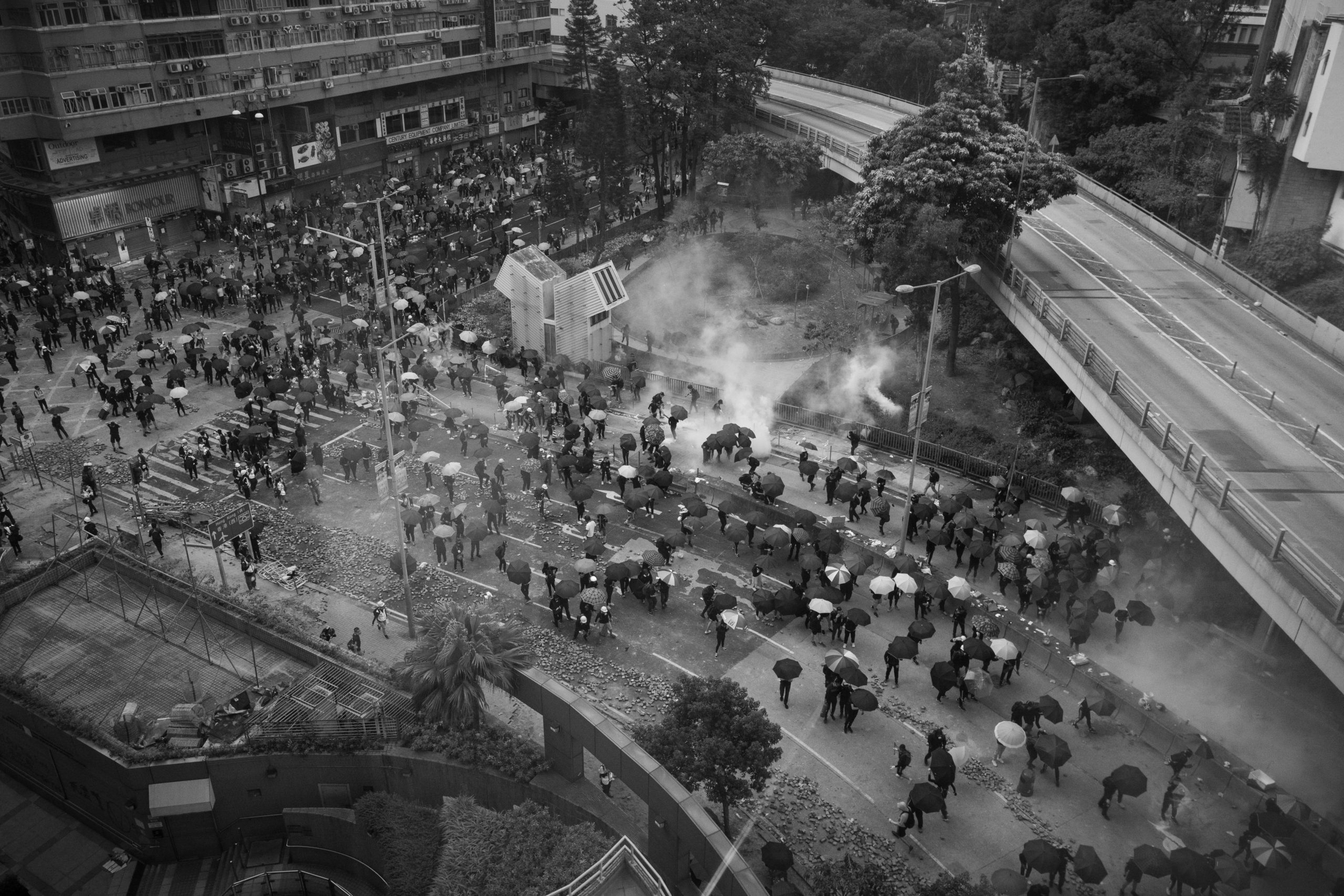
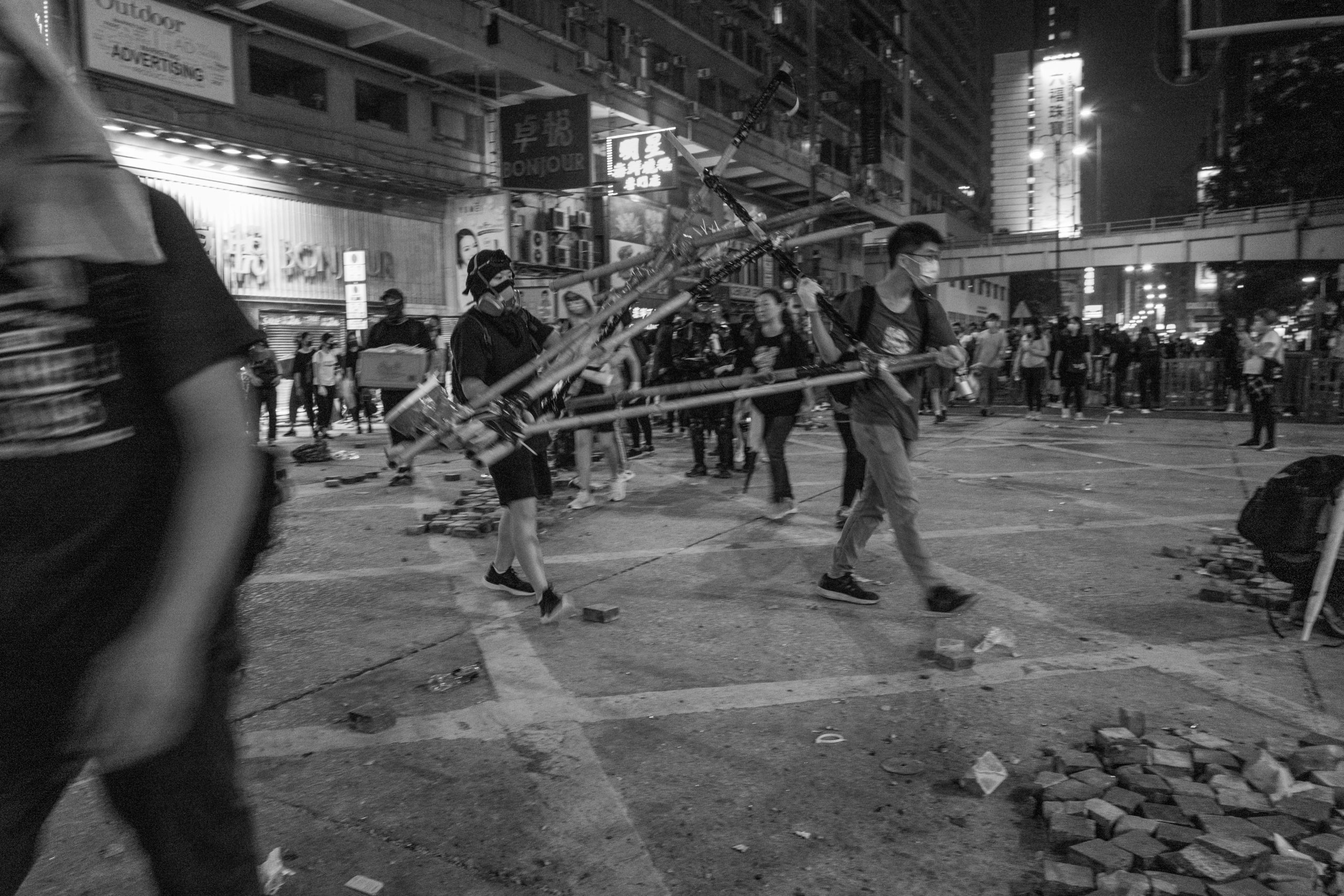
Photo from the 7th floor of the Eaton Hotel that sits right at the intersection where the battle took place at Nathan Rd and Gascoigne Rd. Flowing in and out of the intersection like a murmuration of birds, throughout the day and night of fighting with the police, the protesters worked together tirelessly and with great courage to keep the police at bay. It seemed clear they had studied military history and tactics, particularly Roman battle techniques. They made a phalanx at the barrier and inched towards the police under cover of umbrellas which protected them from the tear gas. They were finally driven out by police around 3 or 4 am.
On November 18th protesters used anything they could find to make barricades during the battle that went on for more than 24 hours at Nathan Rd and Gascoigne Rd. They pulled bricks from sidewalks and broke them in half, bamboo from scaffolding, street signs, anything they could get their hands on was immediately transformed into a weapon, shield or barrier. The sound of things being dismantled was a relentless, unearthly tapping of brick against brick, metal against metal.


Part 2. Understanding China


When I wrote the Ai Weiwei article, I rememberer mentioning the movie “Hero,” and how it had chilled me to hear the phrase “Our Land,” and then see Jet Li’s character (spoiler alert) give up his life to allow an Emperor to rule a united China.

I thought it meant they were coming for us, (which they kind of are, but more on that later,) but in the ensuing years, I’ve come to see the film differently.

What I now know of Chinese history is that, as long as it is, the periods of Chinese unity led to prosperity and relative peace.

But when smaller powers were jostling within, in a country as big as China, with a historically huge population, wars broke out, and tens of millions of people died.

(This happened a lot.)

In the late 19th Century, most recently, the Taiping Rebellion killed an estimated 60-70 million people.

And that was an uprising against the Qing Dynasty, a weak power that conquered “China” from Manchuria, in the Far North.

There was also the time when the Mongols defeated China and ruled in the Southern Song Dynasty, in the 13th Century.

The pride of the dominant Han was damaged then too.

Fast forward again, and China in the Qing Dynasty was so underpowered that England carved it up, during the Opium wars, imposing the drug on the country, and taking territory, like Hong Kong.

When the Qing Dynasty finally collapsed, just before World War I, the Japanese came in as conquerors, and from then though World War II, (featuring things like the Rape of Nanjing,) China was humiliated by a neighbor, and again millions of people died.

Next, there was the violence during the Communist Revolution, when Mao Zedong took over, which led to the partition of China and Taiwan. (Which China does not recognize.)

And millions more starved when Mao did as he pleased with the Centralized economy.

(Even in a united China, under Mao, lots of people died, back in the day.)

So here we are in #2019, and China is now united, but with the resources of a mega-power, due to its embrace of Western Capitalism.

The leadership under the unapologetic dictatorship, (more on that later,) consistently stresses the value of a united, powerful China, and its citizens, many of whom have left poverty for the middle class, (or outright wealth,) appreciate the stability.

Xi Jinping, China’s power-hungry ruler, stepped in at this time of unprecedented prosperity, and decided China was ready to embrace its role as a Superpower, rather than cloak it, as had been the case since Deng Xiaoping.

So now Xi has an axe to grind with the Europeans, the Japanese, and the Americans.

(Russia, with whom it shares a border, is a natural rival as well, but certainly they have things in common too.)

Xi also lived through watching his father get taken down, and reeducated, so he has a chip on his shoulder there as well.

Given all I’ve written so far, are we really surprised that a guy who had the rules re-written so he can be dictator-for-life would claim some rocks in the South China Sea, engage in a huge trade war with a super-power, lock up and torture 1 million Muslim minorities in concentration camps, or try to take Hong Kong’s (partial) democracy in plain view of the world?


Part 3: The War on Terror


After 9/11, the United States of America started two ground wars, one in Afghanistan, and the other in Iraq.

(One is still ongoing, and the other wrapped up under President Obama, but we sent troops back in country this Fall.)

After the attacks that killed 2000+ Americans, and cost untold billions, travel in airports changed forever. Privacy laws changed, (remember the Patriot Act?,) and though George W. Bush admirably argued against it, Anti-Muslim sentiment in this country increased.

Overall, the US spent TRILLIONS of dollars on those Middle-Eastern wars, killed tens of thousands of people, and locked some up indefinitely in Guantanamo Bay too.

Today, in #2019, we are currently running our own detention (or concentration) camps for illegal immigrants, depending on your preferred term.

Children get sexually abused there, or taken from their parents forever.

They sleep on cold concrete floors, and are denied hygiene and occasionally health care.

(The US Government actually defended the lack of hygiene in a video clip that went viral.)

We also incarcerate millions of Americans for a drug war that is destroying our neighbor, Mexico, and a massive percentage of our overcrowded prison population is comprised of people of color.

Plus, our police, (at least in Dallas,) now shoot African-American people in their homes, while they’re playing video games, or eating ice cream.

You really can’t make this shit up, but doesn’t make it any less tragic.

Honestly, the only thing I like about Vladimir Putin is that he’s always calling us out for our hypocrisy.

We’ve taken territory.
We’ve removed governments.
We’ve meddled in elections.

On this, he’s not wrong.

Can we really look at what China is doing with the (mostly) Uighur population in Xinjiang and say we’re that much better than they are at the moment?

The Uighurs were killing Han Chinese, in terrorist attacks in 2009 and 2014, and then Xi Jinping said make it stop.

He said, use the power of the Dictatorship to make it stop.

And so they did.

They built camps from scratch, increased facial recognition surveillance, locked up 1 million people, torturing them, threatening their free relatives to stay quiet, and went about brainwashing the Islam and Uighur out of them.

All since 2017!!!

And again, I ask, in this age of Trump, with our camps, and our history of locking up the Japanese in World War II, slavery, and the genocide of Native America, are we so sure we’re superior? .

We did lots of torture in those CIA black sites during the War on Terror, in addition to waterboarding, sound and light torture, sleep deprivation, and many other goodies.

No wonder we’re all getting headaches from the complexity of #2019.


Part 4: Defending Democracy


I take my freedom of speech very seriously. (As you know.)

I’m thankful to Rob Haggart, my amazing editor, for supporting those rights for the last 9.5 years, and for paying me to share my opinion with you.

He has never censored or edited me, in all these years.

Not once.

And when I suggested this column, he said go for it!

Because I’ve been thinking a lot about China’s threat to our free speech lately.

As Xi flexes his muscles, (and all these countries become interdependent,) like with anything else, might makes right. It’s why Pakistan and other Muslim countries stay silent as China jails and tortures other Muslims in Xinjiang.

They’re addicted to Chinese money, and the customer, (and boss) is always right.

So I was immediately concerned the second I read that China had come down so hard on Houston Rockets GM Darryl Morey’s Pro-Hong-Kong-protestor tweet back in October.

Mr. Morey had only retweeted a generic message of support from his personal account, and it literally turned into an international incident overnight.

I cannot overstate how big a deal it became, both to China, the NBA, and US-Chinese relations.

Joe Tsai, an Alibaba founder, and new owner of my beloved Brooklyn Nets, wrote a long, open letter on Facebook echoing some of the history I mentioned in Part 1, and calling the protestors separatists. (Ironically, he’s Taiwanese, and was educated in the US.)

Chinese power has come into America, and apparently pressed for Mr. Morey to be fired.

Several times in the aftermath, China made clear in writing that it believes free speech does NOT include criticizing its government, and that it also now feels that practice should not be limited within its national borders.

People outside China, workers within the American Capitalist system, should have their freedom of expression limited, says the People’s Republic of China.

If you’re not a little concerned by that, I think you should be.

And I told all of that to Hillary Johnson, my intrepid student, before she left to support the Hong Kong democracy movement this month.

I told her Xi Jinping was willing to do anything to win.

That these protestors did not stand a chance.

That it would be dangerous.

She said she knew all these things, and was determined to go anyway. She wanted to be there with David, against Goliath.

I told her I admired the hell out of her bravery, and that I’d support her as I could.

The photographs Hillary made, over the course of a week+ in Hong Kong in November 2019, are her vision of a community she, (and I) desperately appreciate. (Or a part of her vision. She had hardrive drama, so this is only a small sample of what she shot.)

China came along earlier this year, and wanted to expand its power to extradite anyone from Hong Kong to the mainland judicial system.

Hong Kong’s citizens, especially the young, realized this was not a power-grab, but a complete takeover.

If it had succeeded, if Carrie Lam, (the puppet) had gotten her way, then any freedom would have evaporated.

You say the wrong thing, and you can all-of-a-sudden end up locked up forever in a Chinese political prison.

It would be the same implicit threat hanging over folks in Beijing, Shanghai, or Shenzhen. (Because the mainland Chinese made a devil’s bargain, of wealth and security for human rights and freedom.)

Here in the United States, we have, for most of our history, preferenced the latter at all costs.

Do we still?

Trump wants to be President for life.

He jokes about it all the time.

The dictators Putin, Xi, and Erdogan are his friends.

And now he’s about to face an impeachment trial, with an election coming up next year.

Where does it all end?

I have no idea.

But the Hong Kong protestors forced China to back down on the extradition law, and just supported the pro-democracy movement in local elections.

What happens next?

Again, I have no idea.

Happy Black Friday!

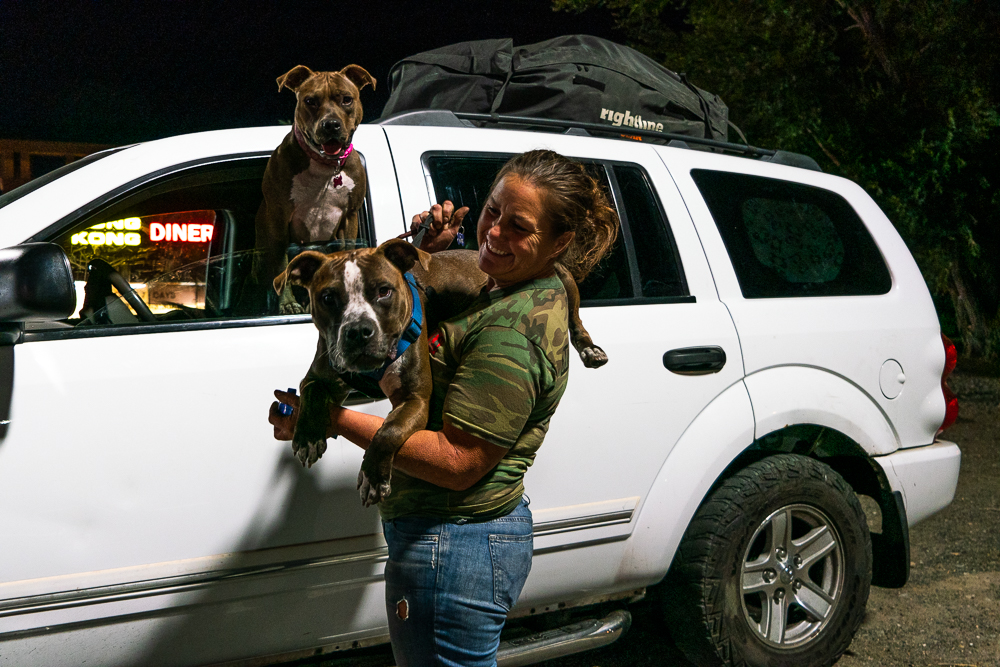
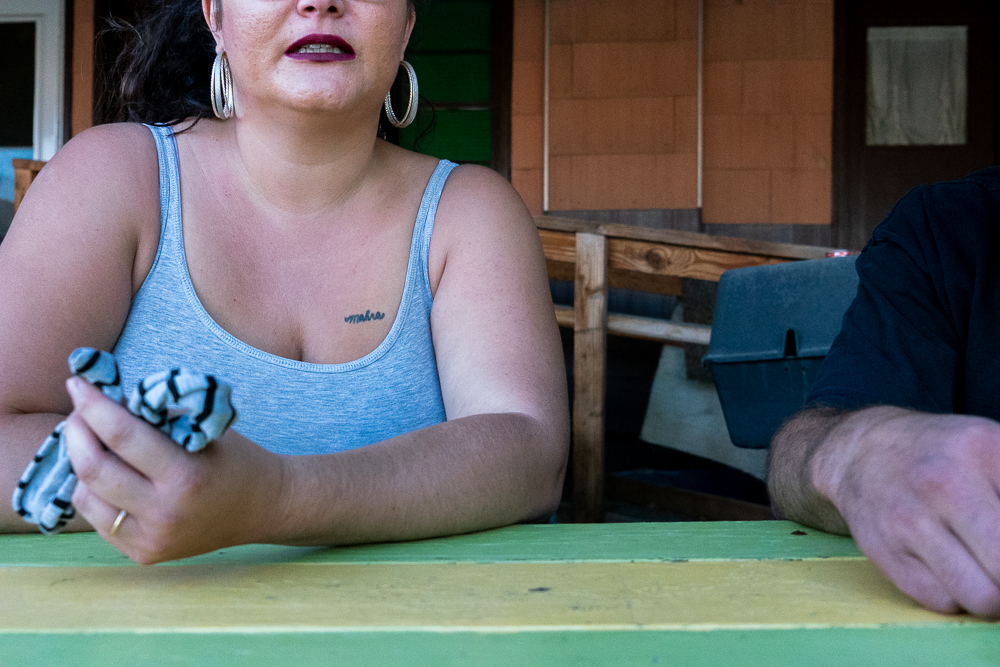
A nurse who must remain anonymous, photographed on November 18th during a battle between protesters and police for the intersection of Nathan Rd and Gascoigne Rd in the Jordan neighborhood in Kowloon, Hong Kong SAR. She volunteered to care for protesters overcome by teargas or suffering from other injuries. The police shot a mix of tear gas canisters, rubber bullets as well as live rounds directly at protesters.
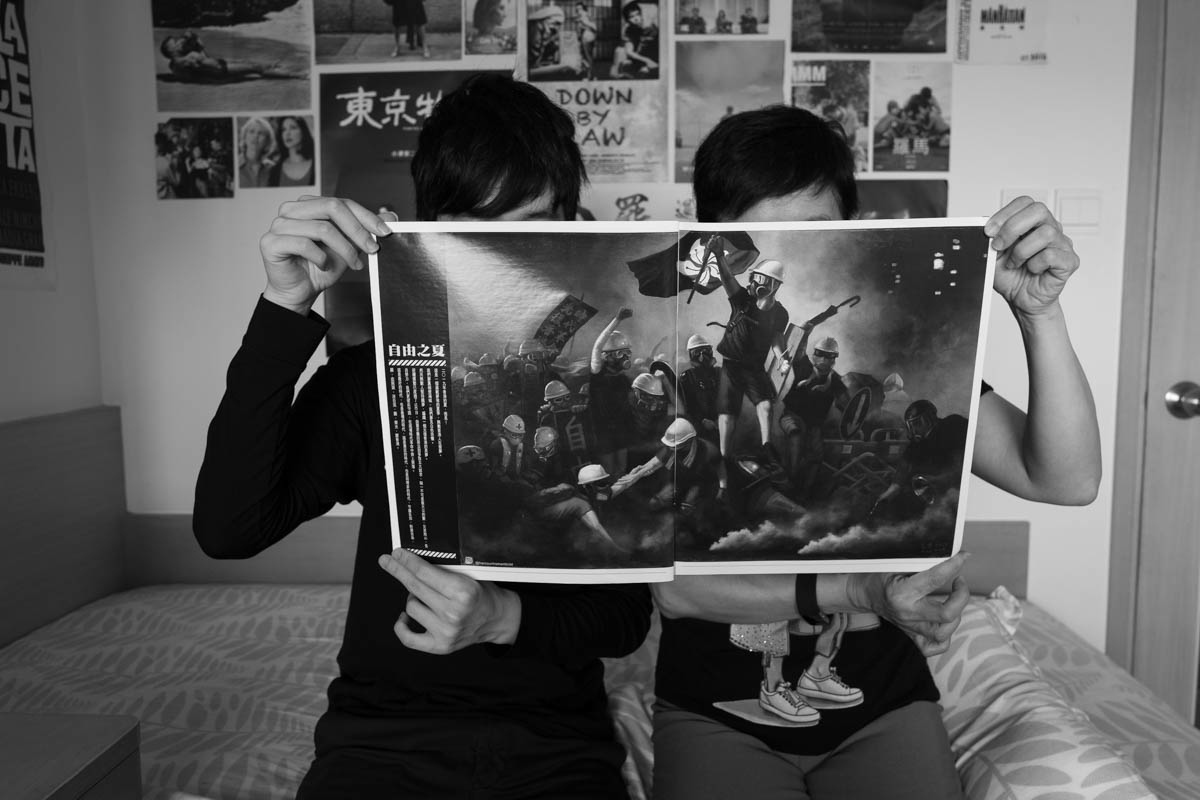
The mother of the young protester who both must remain anonymous pose for a portrait holding a copy of Apple Daily, a pro-democracy magazine. This page features a heroic painting of the protesters by @harcourtromanticist. They are a rare example of a family stronger together now than before. Many parents have disowned their children for being involved in the protests.
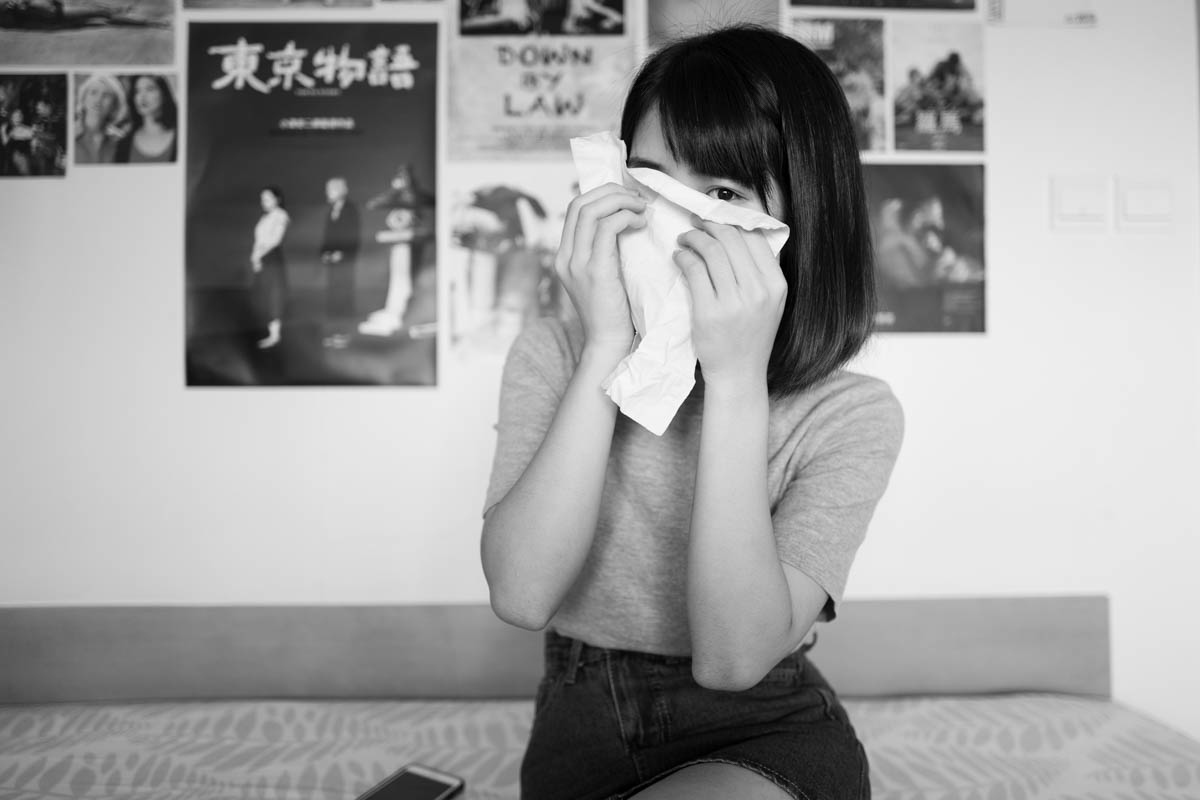
Anonymous young woman. She is a college student and her boyfriend is a front line protester. She said, “I am not as brave as him but I want to help so I am learning first aid, so I can help them when they go to the front line.” She was inside the Prince Edward MTR station when the police locked the station down, trapping riders and innocent people for over an hour while triad thugs, dressed in all black so they could look like protesters, came in and beat ordinary people, (who were not protesters,) indiscriminately with blunt instruments and batons.
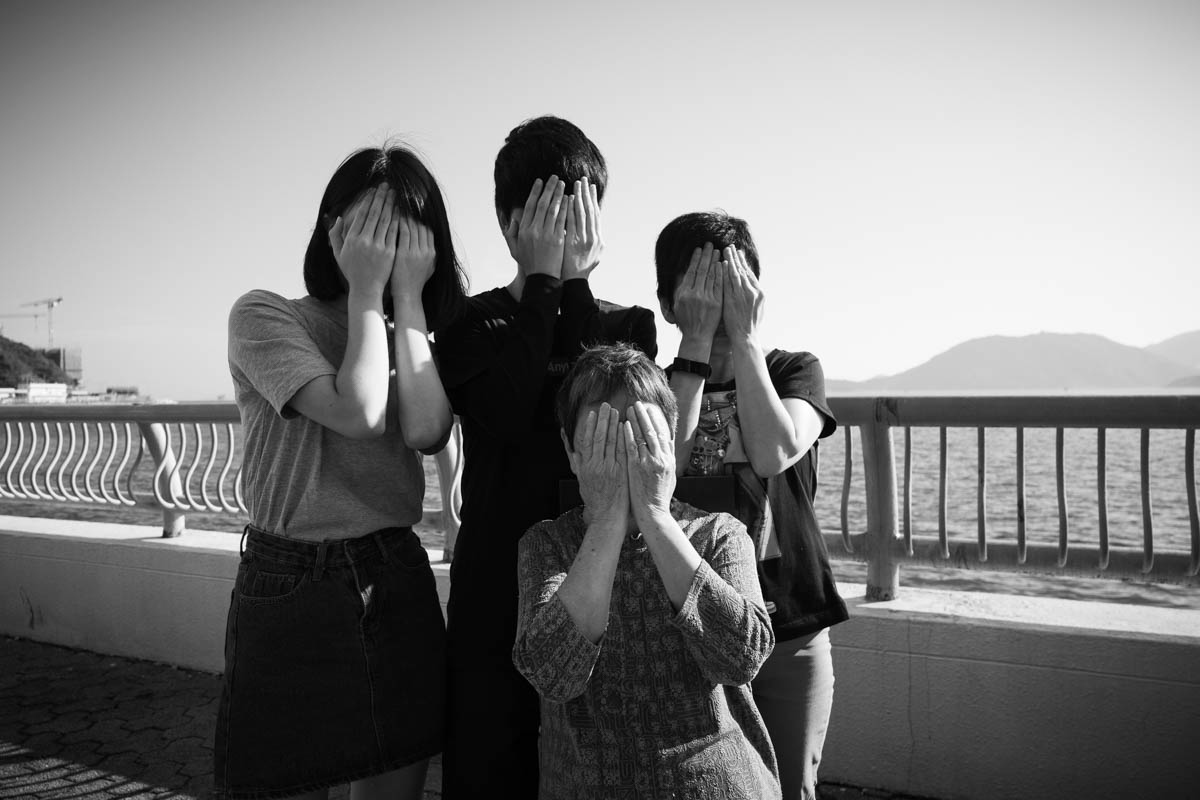
A family of a front line protester. He is just 21 and lives with his mother and grandmother. His mother worked at Police headquarters for 11 years. In the beginning of the movement, she and her mother didn’t believe the stories about police brutality and were against the son protesting. It almost split the family apart. They finally came to see the stories were true and though she worries about him every time he goes out she supports the movement and feels that in her job she can keep an eye on things and know what is really going on.
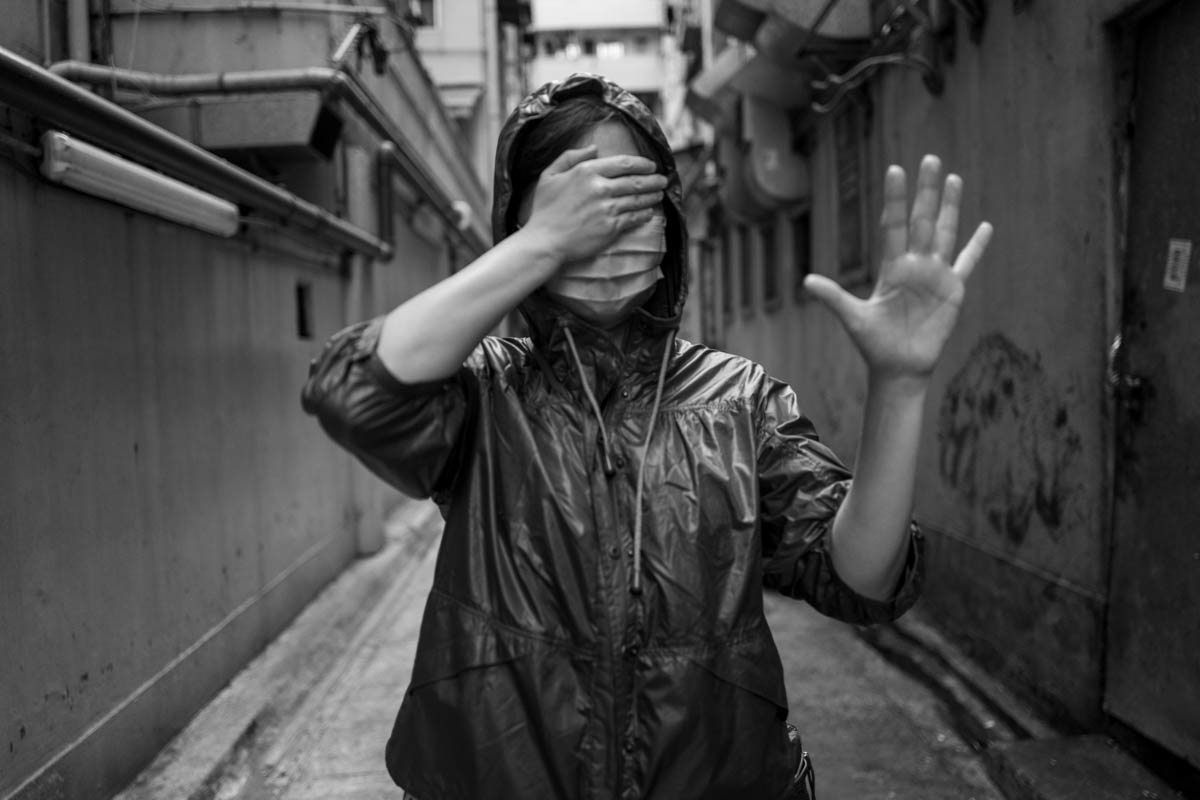
This woman so fears the police that this is the only we she could be photographed for publication. Because of her work, so many people know her, some of them police, it was completely unsafe to show her face or photograph her any recognizable place that could be identified. Her husband could not be photographed at all for fear of reprisals.
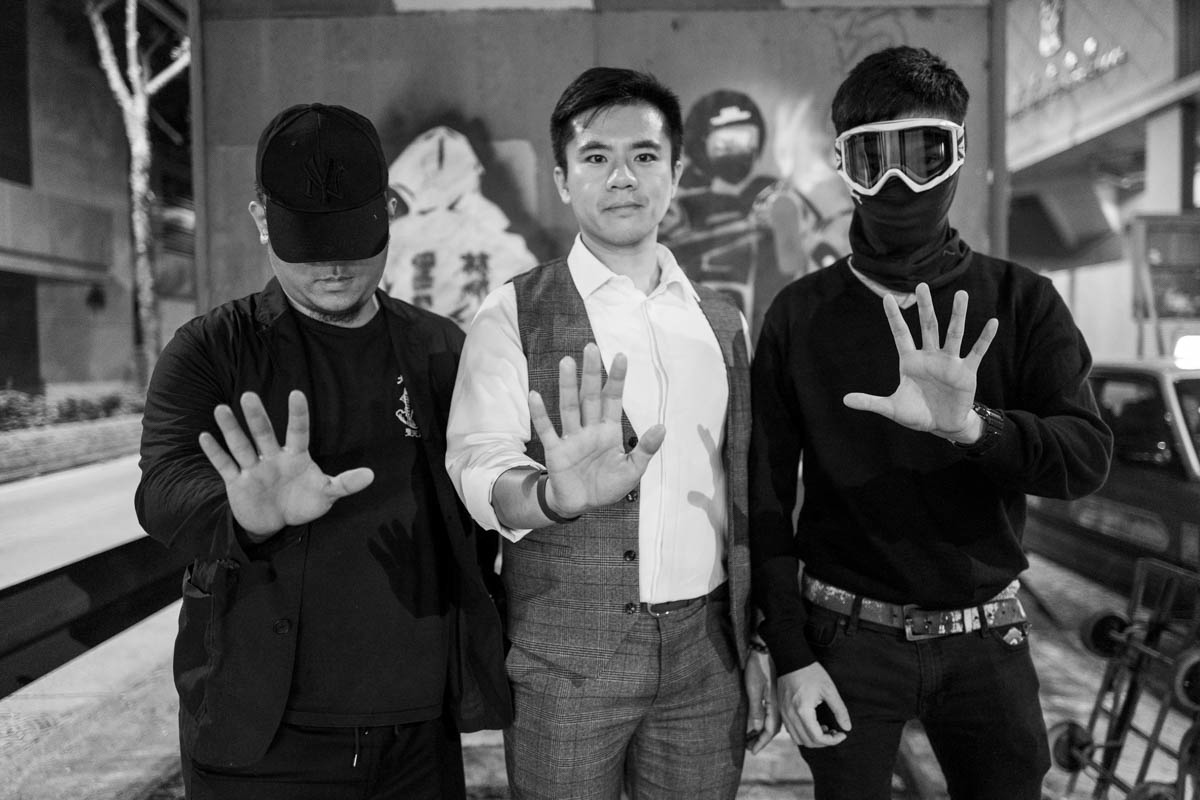
These three gentlemen are part of a confederation of labor unions representing different industries. The two wearing masks have been deeply involved in the movement. To show their faces would put them at risk of arrest and imprisonment. Thousands of people have already been arrested and there are reports of intense police brutality including beatings, arrest and rape. Of the election, one from the Cross Sector Resistance said, “It showed that the people will not submit to pandering or terrorism, but recognize that human rights are non-negotiable.”
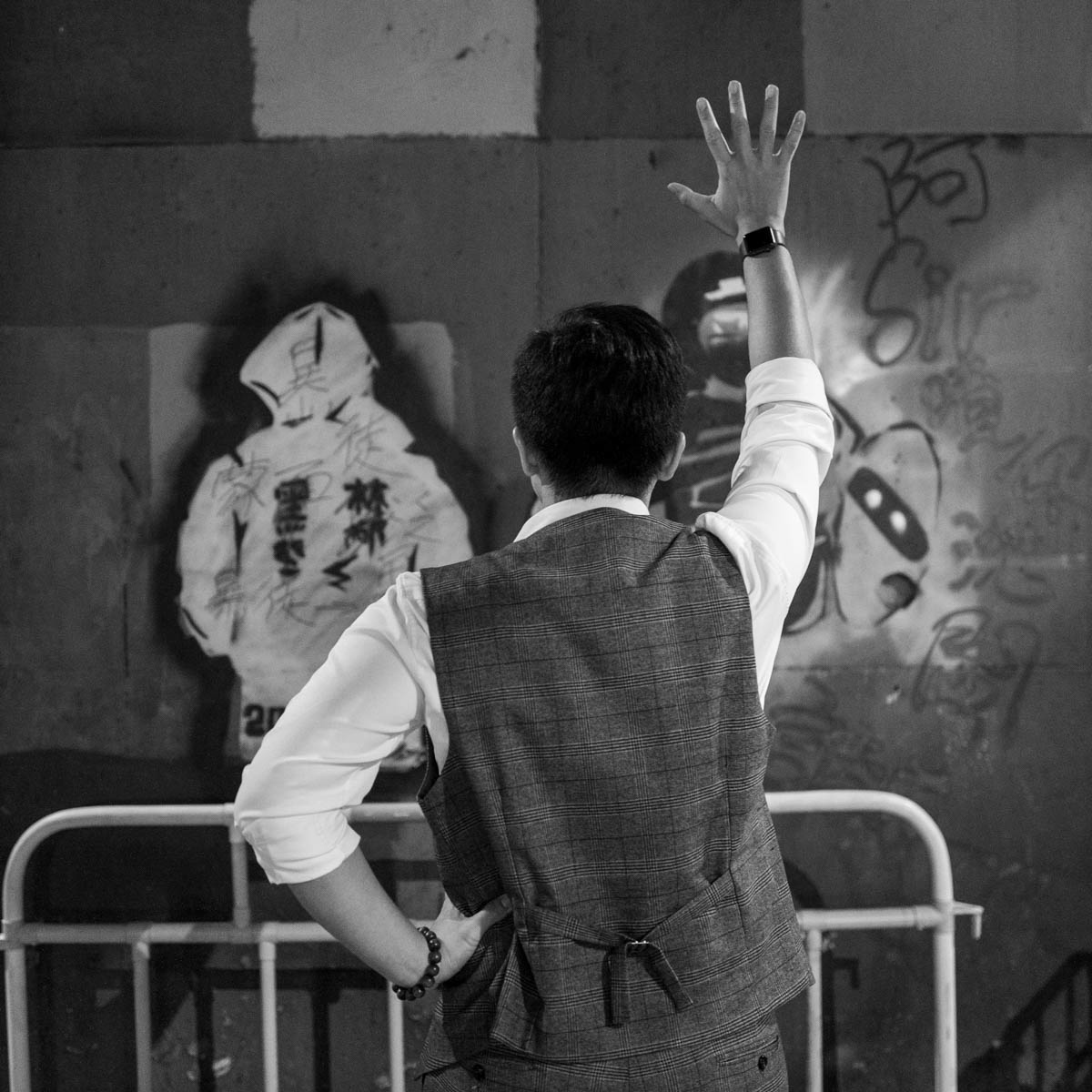
This man is an organizer and labor leader in Hong Kong. He said, “The Chinese government has already seen my face, so I’m already dead! Let’s do one photo facing away from the camera anyway.” The five raised fingers stands for 5 demands and not one less. He sees labor issues as being inextricably tied to fundamental concepts of freedoms embodied in the five demands and the pro-democracy movement.
The Art of the Personal Project: Christ Chavez (repeat to remember those in El Paso)

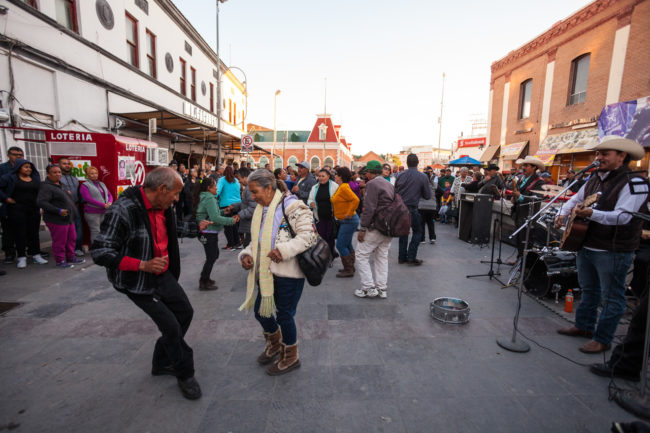
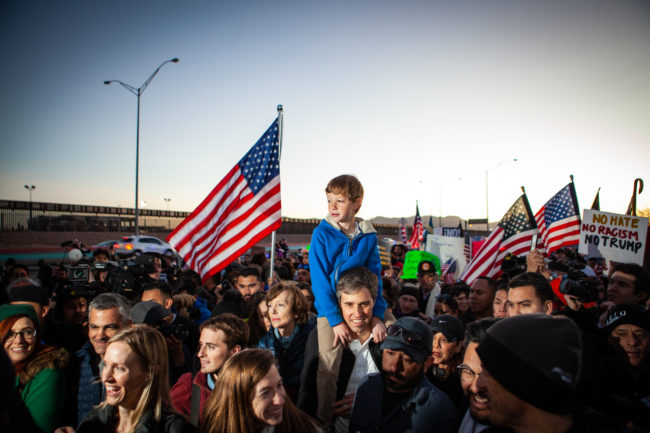
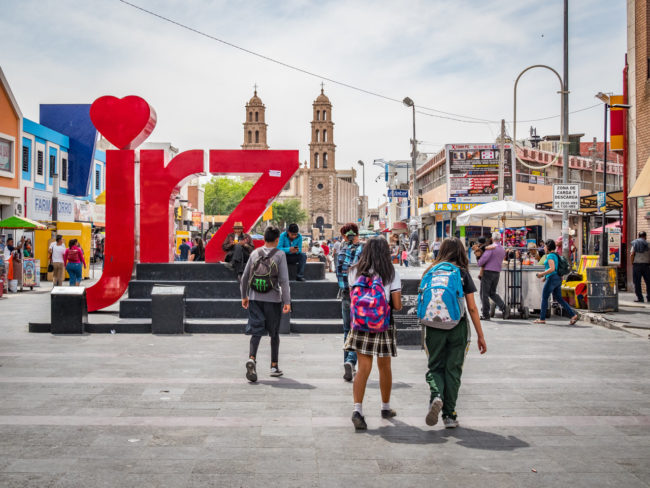
The Art of the Personal Project is a crucial element to let potential buyers see how you think creatively on your own.  I am drawn to personal projects that have an interesting vision or that show something I have never seen before.  In this thread, I’ll include a link to each personal project with the artist statement so you can see more of the project. Please note: This thread is not affiliated with any company; I’m just featuring projects that I find.  Please DO NOT send me your work.  I do not take submissions.


Today’s featured artist:  Christ  Chavez

How to hold the power of light in a dark time in my binational bicultural region?

For the past 20 years I’ve been photographing tender moments in my beloved frontera as they fade away. Beyond the politics, strong woman figure, activist, the rituals that Fronterizos still embrace-I try not to force the gentlest moment of an image. As I look back at my work, I have come to understand that to stay grounded and out of this darkness we must remain in search of the light.


To see more of this project, click here.

APE contributor Suzanne Sease currently works as a consultant for photographers and illustrators around the world. She has been involved in the photography and illustration industry since the mid 80s.  After establishing the art buying department at The Martin Agency, then working for Kaplan-Thaler, Capital One, Best Buy and numerous smaller agencies and companies, she decided to be a consultant in 1999. She has a new Twitter feed with helpful marketing information because she believes that marketing should be driven by brand and not by specialty.  Follow her at @SuzanneSeaseInstagram

Success is more than a matter of your talent. It’s also a matter of doing a better job presenting it.  And that is what I do with decades of agency and in-house experience.


The Daily Edit
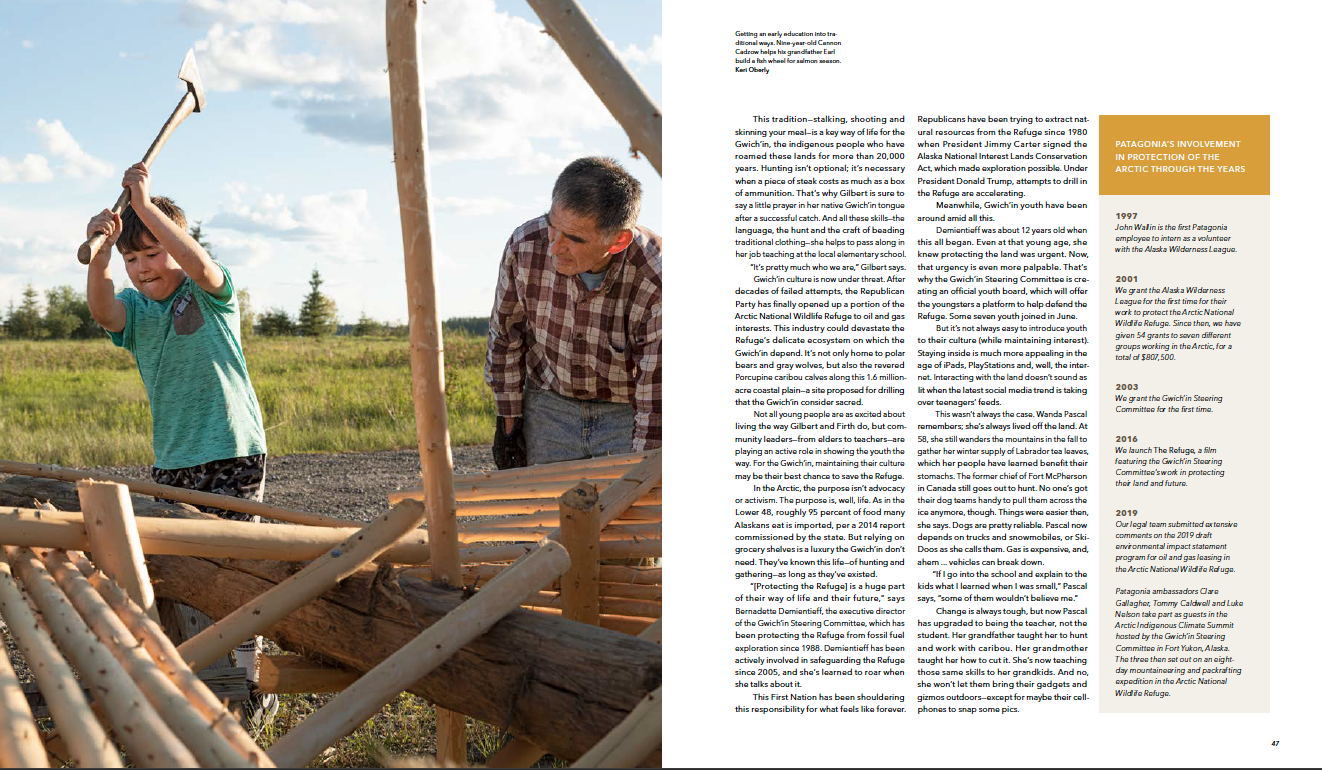
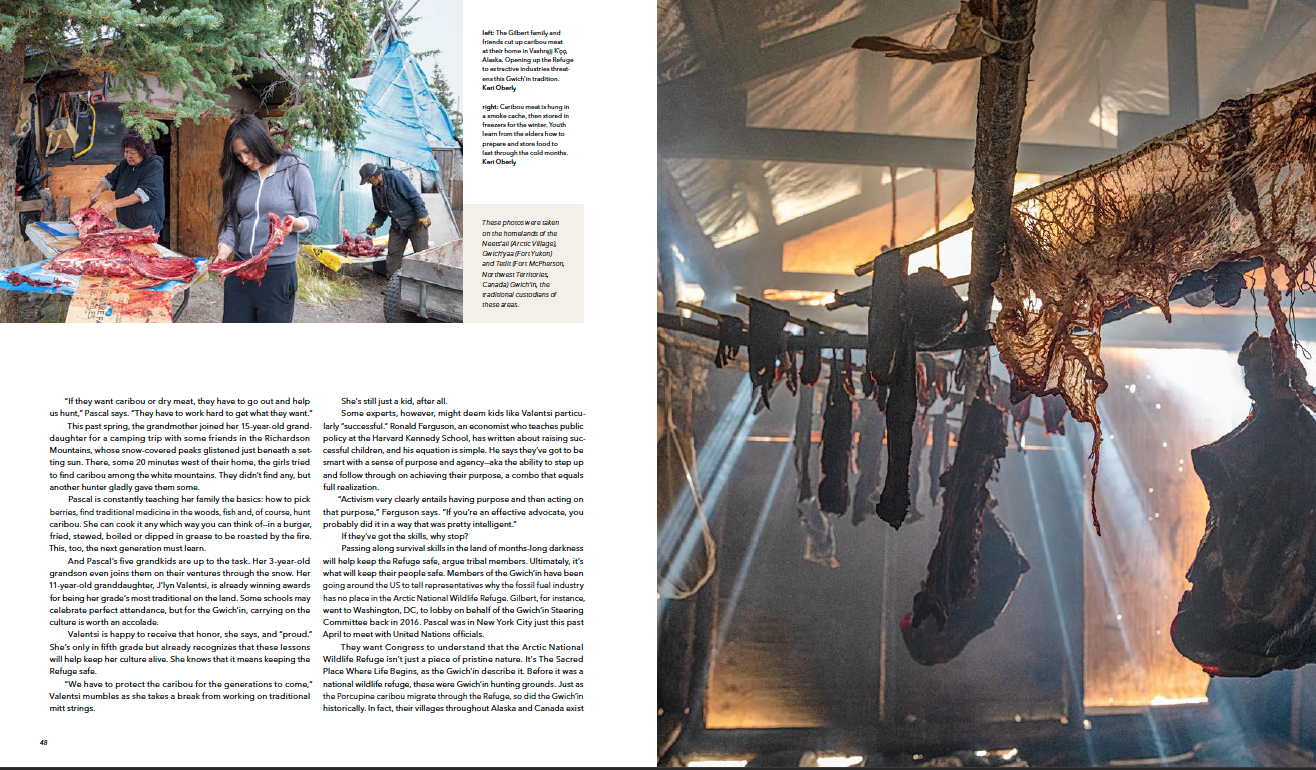
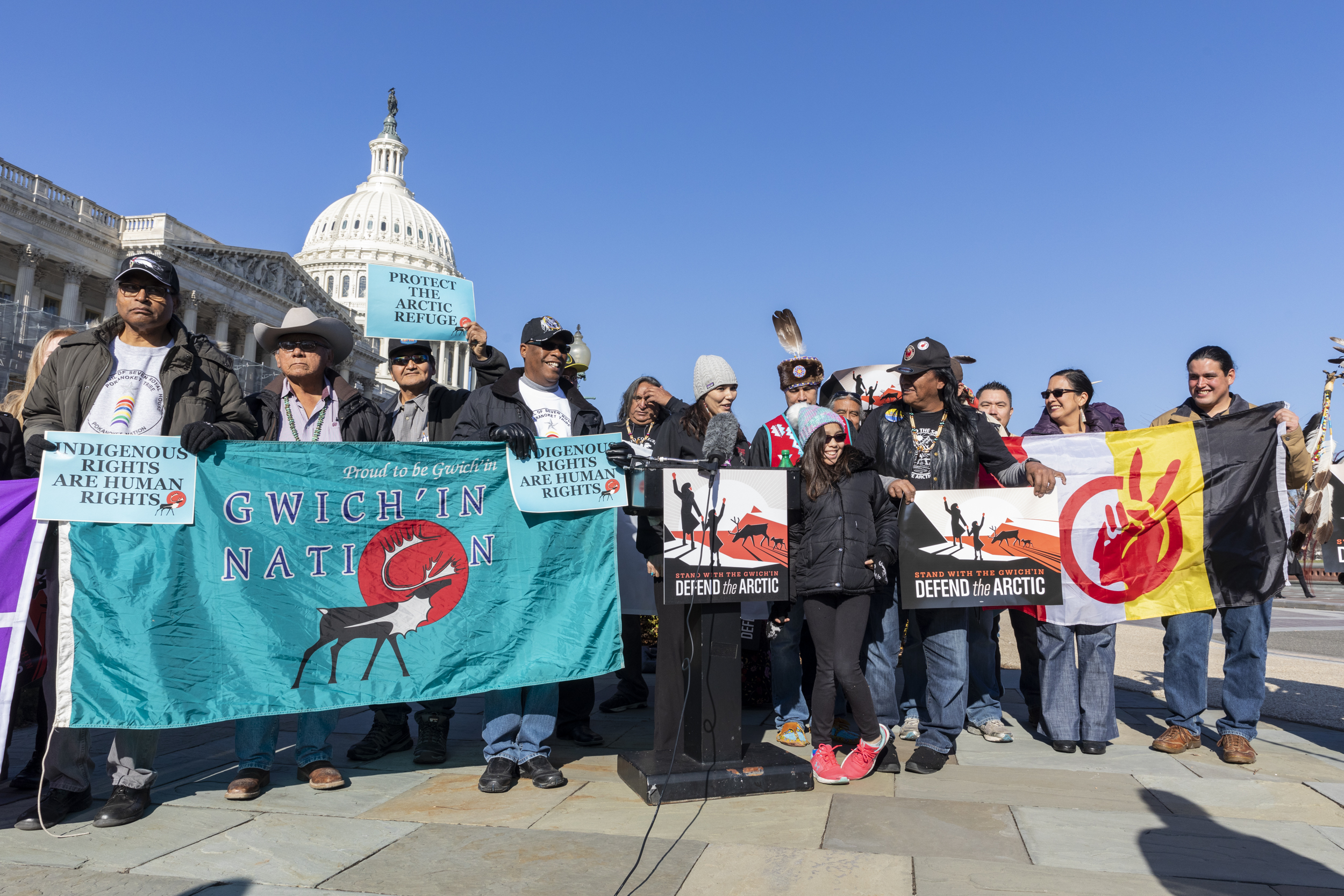
Patagonia Journal November 2019: Keri Oberly Part 1

Patagonia Journal

Creative Director: Kyle McCarthy
Designer: Annette Scheid
Photo Editor: Kyle Sparks
Photographers: Keri Oberly, Austin Siadak

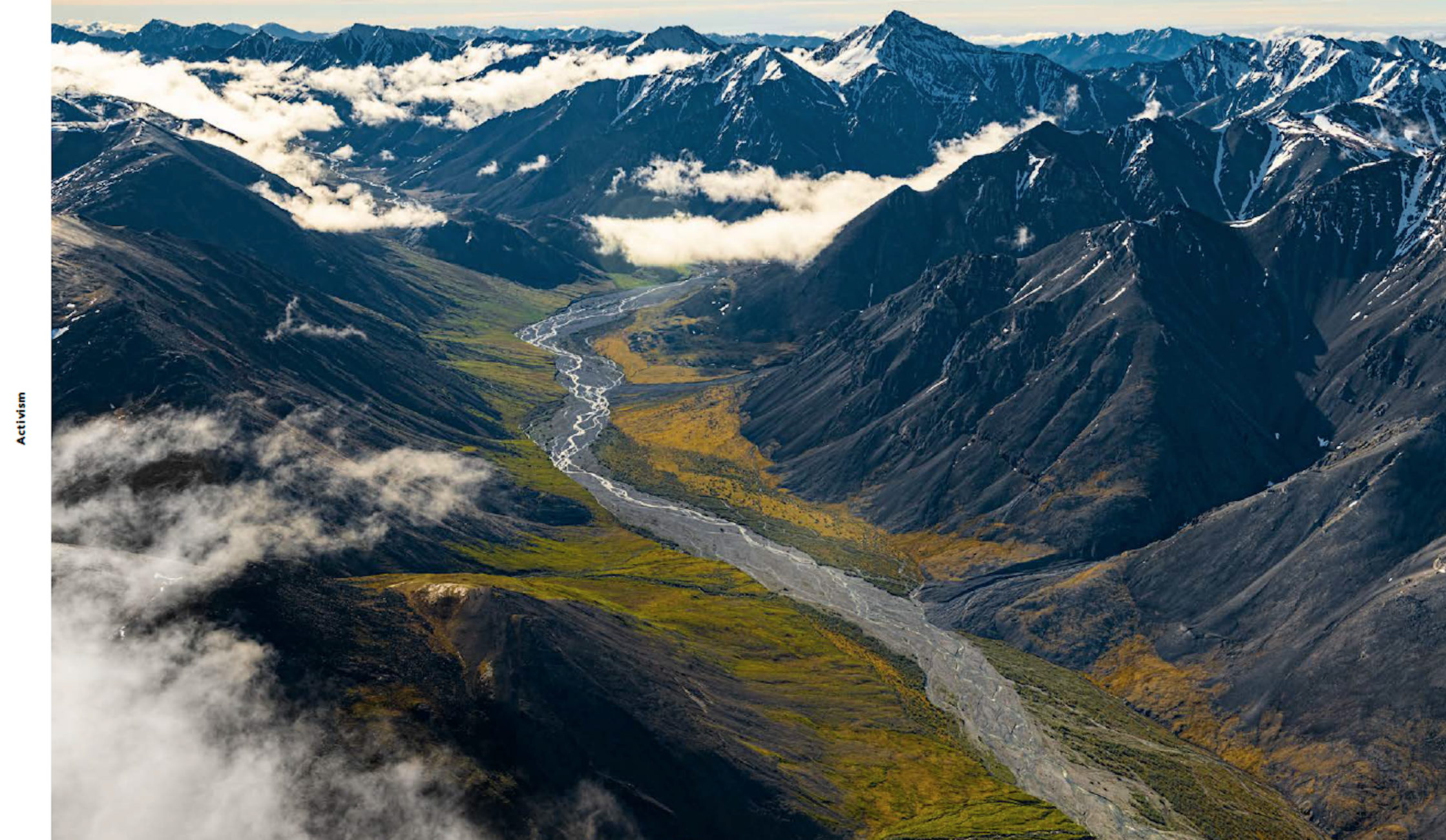
Note: Arctic Refuge image (spread  one), wolf image (top right spread two); caribou image (left page spread five) photographed by Austin Siadak and will be posted in Part 2 next week Tuesday Dec 3rd.

Heidi: The Gwich’in tribe harvest the land and animals they are spiritually connected to, how did that unfold for you on this trip?
Keri: When I went to Arctic Village to document the Porcupine caribou harvest, I went in with locals Jewels Gilbert and Brennan Firth in mid-August, a time when the caribou are usually starting to migrate through. However, with climate change, the migration patterns have become unpredictable. I ended up being in the village 2 weeks before the herd started to migrate through. There was still a lot going on in the village. Lives revolve around harvesting food, medicine, fixing and building things and preparing for winter. It was peak season for blueberries. My first evening, I got invited to go pick blueberries and here I thought we would be gone for a couple of hours, we were out until 3 a.m., under the Arctic sun. That is what we did every night. We would prep dinner then go into the woods, pick blueberries, take a break for moose soup, play games with the kids, then continue until the berry harvest ended and the caribou came. The Gwich’in live off the land, this is how they sustain their culture and identity from the caribou, moose, fish, and berries.

Was the harvest difficult to witness? 
When the Porcupine caribou did start to migrate through, I wasn’t sure how I would handle the harvest, being a former vegetarian for 10 years and having only witnessed the death of an animal once. I found it to be a peaceful experience to watch someone with a deep spiritual connection harvest an animal. I did put my camera down a couple of times to simply watch. It was beautiful to witness someone with so much respect for an animal harvest and handle it. You could feel the love and happiness. They always thank the creator and animal for the food that nourishes their body, mind, and spirit. They also use every part of the caribou, the only part they leave is the stomach, which Jewels says, you have to leave something for the land and other animals – wolves, fox, ravens – they are hungry too.

Since this was the first time Jeffery and Lexine were in the city, what was their reaction?
Since so much of the work the Gwich’in do to fight for their way of life involves traveling on trips across the country and the world to educate people about the importance of protecting the Arctic Refuge, I wanted to cover that as well. Bernadette Demientieff, executive director of the Gwich’in Steering Committee, is a seasoned traveler but likes to bring other Gwich’in on these trips. This trip she brought her daughter, Lexine, 11, and traditional Gwich’in hunter Jeffery John from Venetie. This was Lexine and Jeffery’s first time to a big city, their first time on long plane rides, and Jeffery’s first time out of Alaska.

Jeffery was constantly surprised by the number of people living in Washington D.C. It was something he couldn’t wrap his head around. He asked multiple times throughout the four-day trip, “So how many people live here? Wow, that many.” Mind you, he comes from a village in rural Alaska with a population of around 180.

How did they react to the lack of nature?
On trips like this to Washington D.C., they get no nature. It is a full day of travel, then straight into preparation, then back to back meetings and press conferences, then home. It’s non-stop. I think if Jeffery had been there any longer than four days he would have gone crazy. I remember being in Sierra Club’s office with him, which is on the 8th floor, and he looked at the windows and said, “How do you open the windows?” I told him you can’t, and he said shaking his head, “Well how do people get fresh air in here?”  At one point he looked at the people working in the high rise building across the street and said, “So all those people are working inside like that with no fresh air for 8 hours a day?” He seemed to be in constant surprise and would give me looks like I don’t understand why people live like this.

What was overarching narrative arc for this frontline community?
I wanted to focus on the Gwich’in people and their way of life. I think a lot of work that comes out about protecting the Arctic National Wildlife Refuge focuses on the environmental and adventurous aspect, not about the people living on the frontlines. To the Gwich’in this is a human rights issue, their identity and food are tied to the land. Oil and gas development would destroy their sacred land and food security. I wanted to show they aren’t what many would consider activists or environmentalists, they are fighting for the right to live the way their ancestors have since time immemorial.

What struck you the most about their fight?
An important part of the story are the sacrifices the Gwich’in make for this fight. So much of the work they do is traveling across the country and the world to educate others about the importance of protecting the Arctic Refuge and the Gwich’in way of life. They make huge personal, financial, and family sacrifices to fight for their people and future generations. One that can be rewarding, but also very emotional and draining.

Let’s remember, these sacrifices aren’t just made by the Gwich’in, this is happening to all indigenous and frontline communities across the world, having to fight for their human rights in 2019.


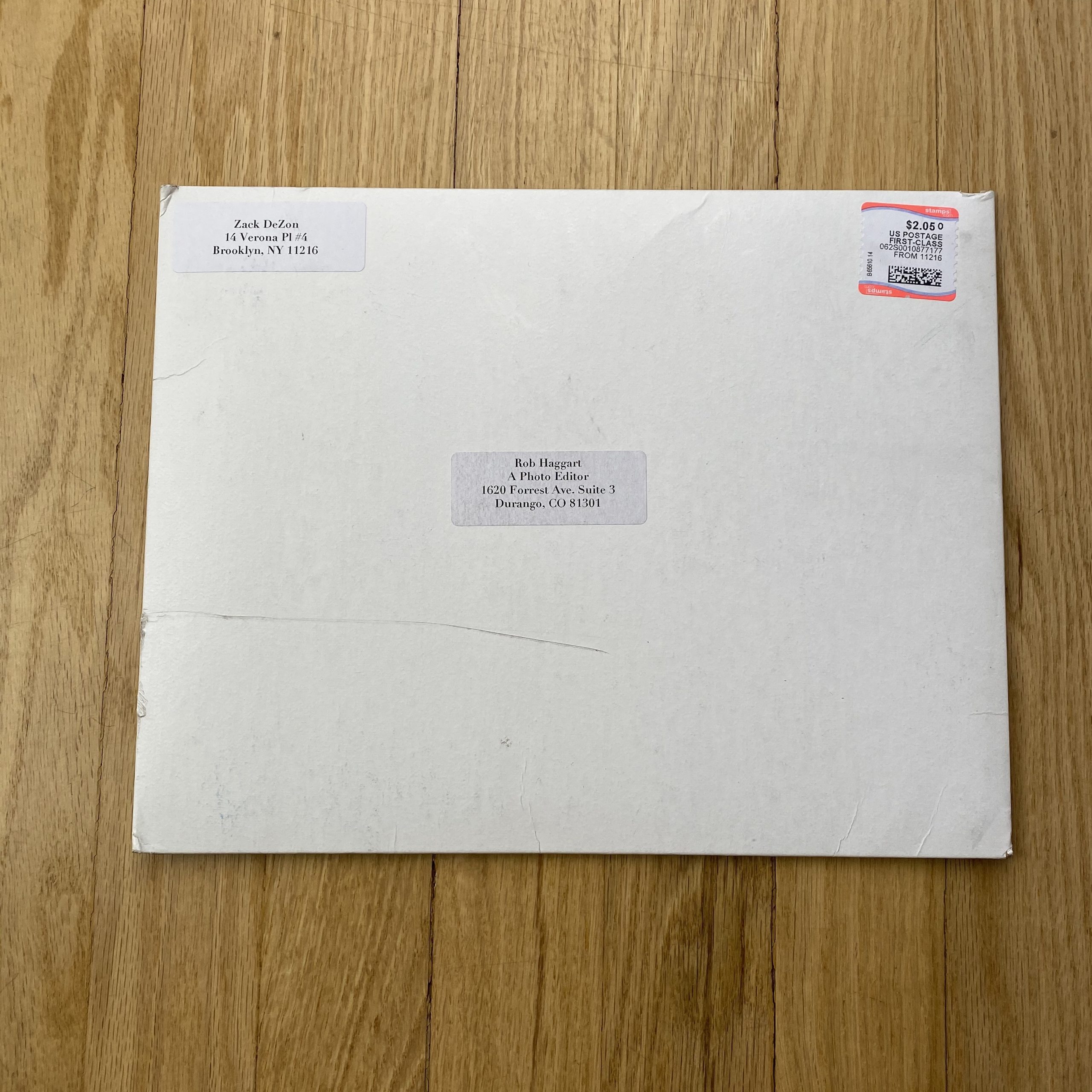
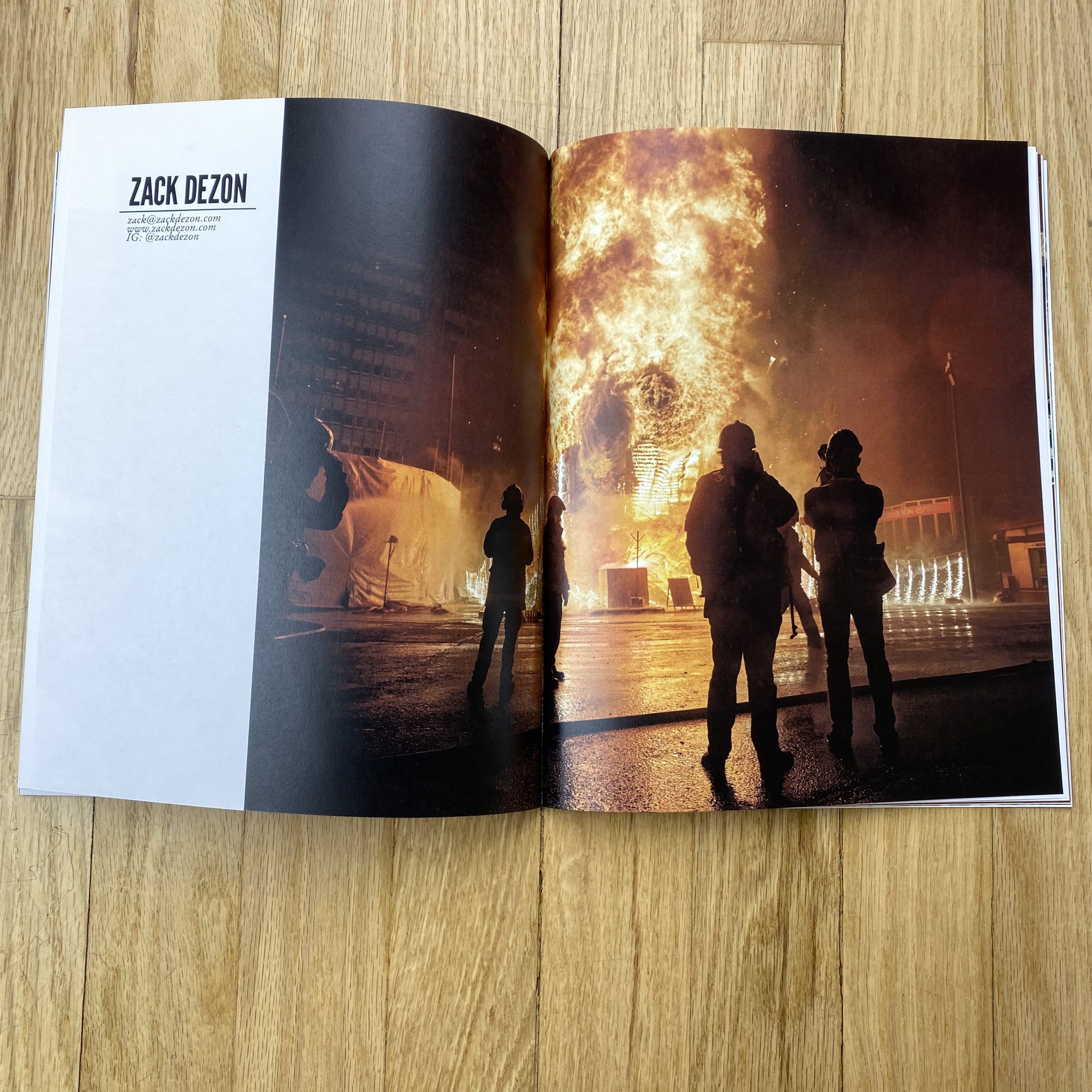
The Daily Promo – Zack DeZon

Zack DeZon

Who printed it?
Rolling Press in Brooklyn! In addition to being a green printer, they were great to work with, putting up with a number of annoying revisions from me.
Who designed it?
I did, though I heavily cribbed from a few of my favorite promos on this site…

Tell me about the images?
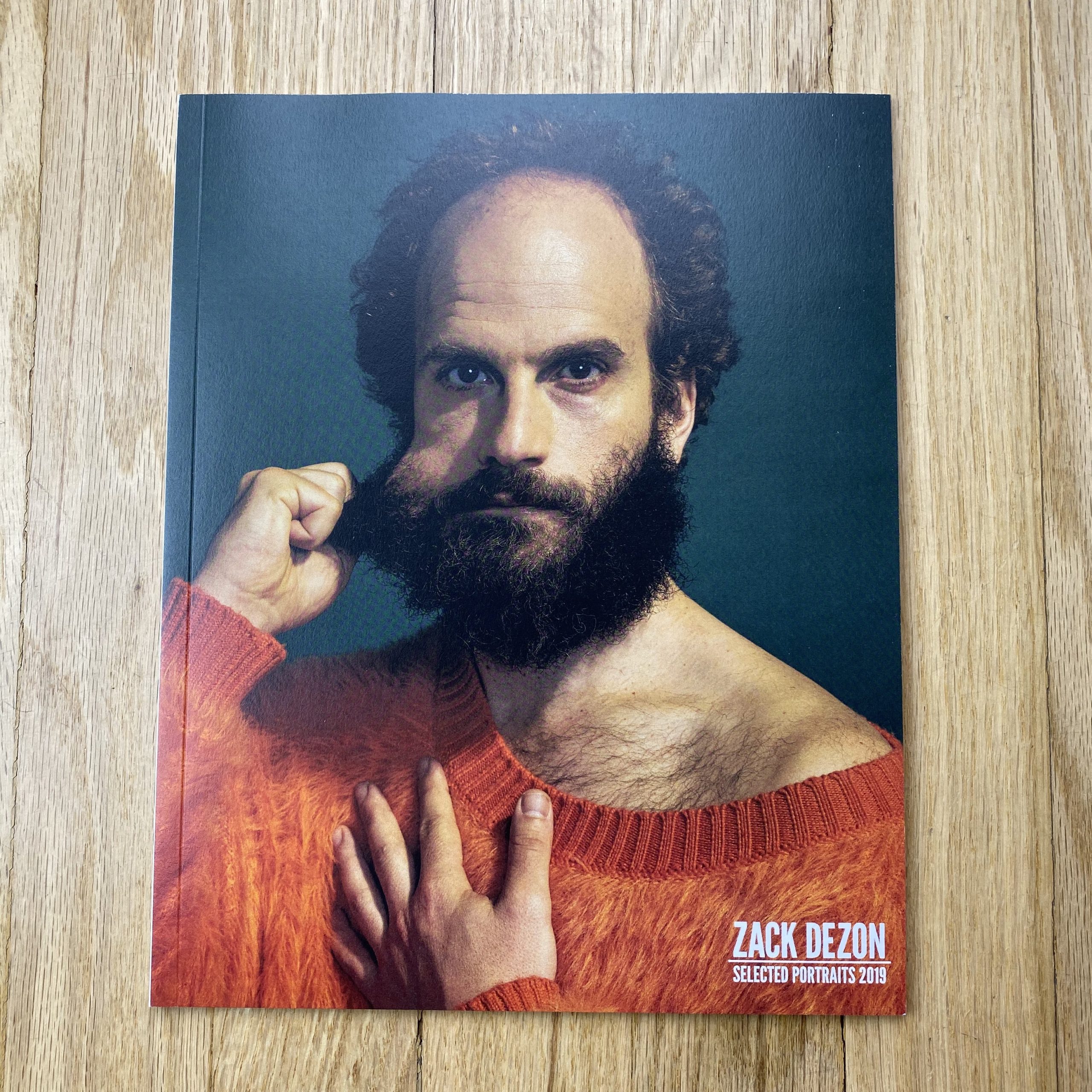
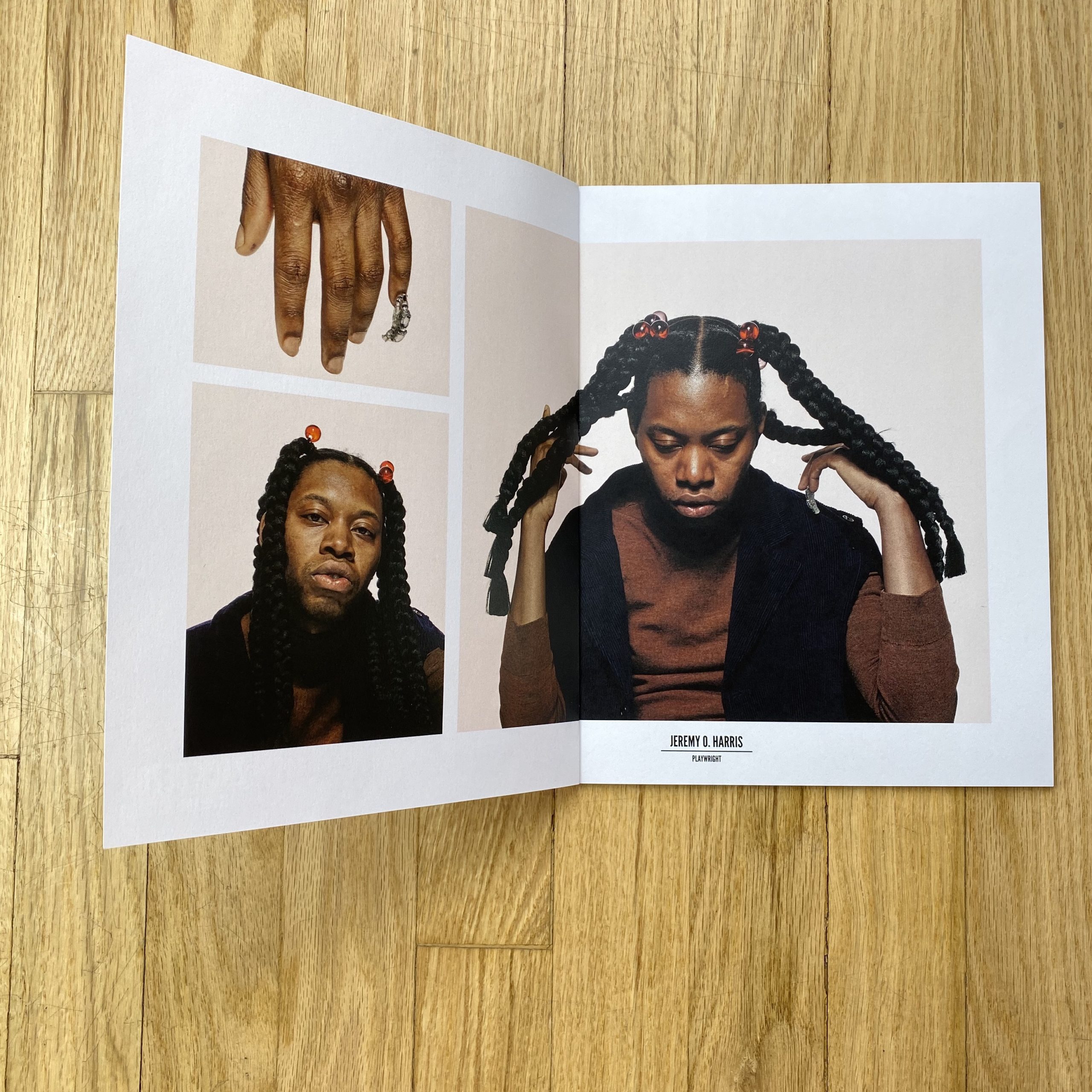
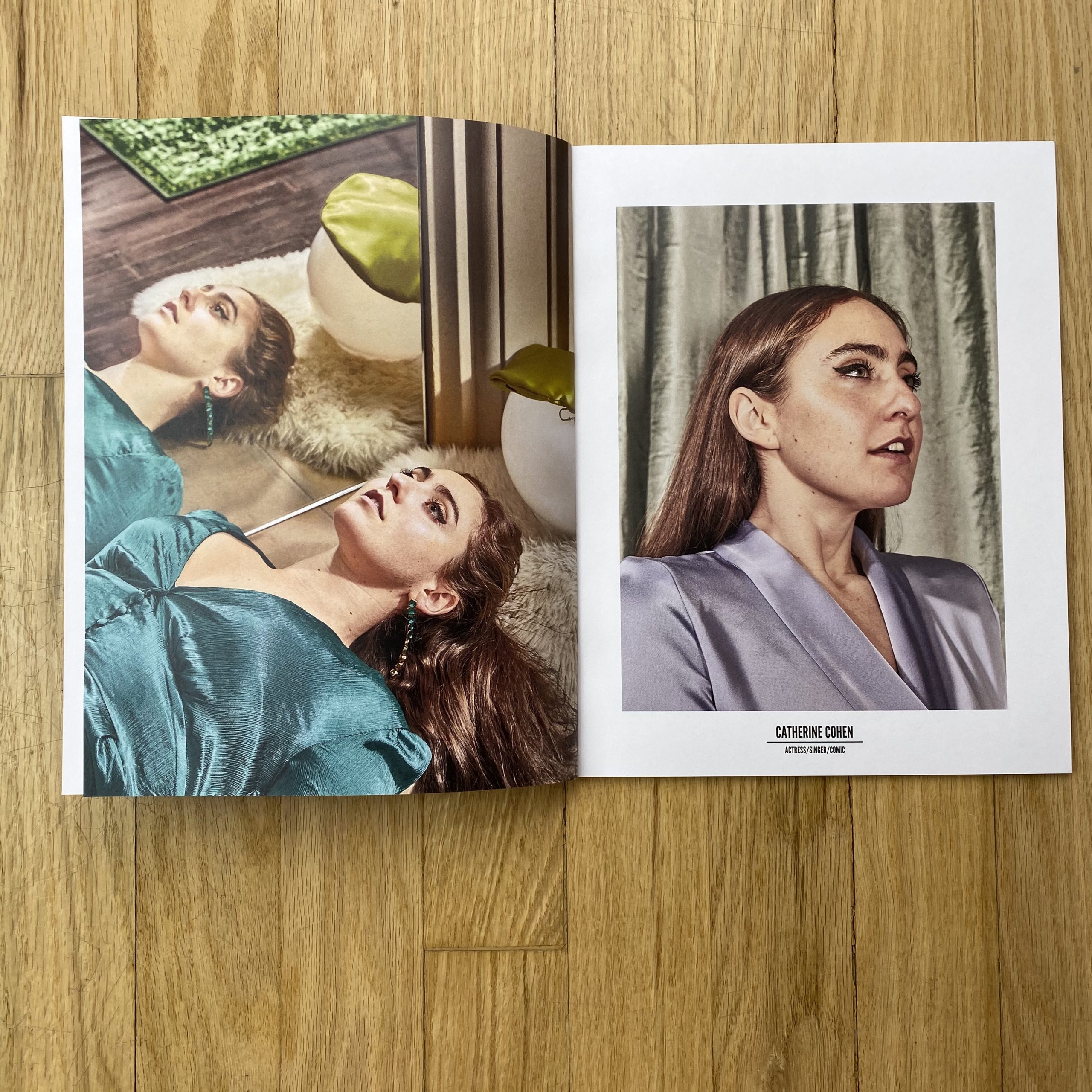
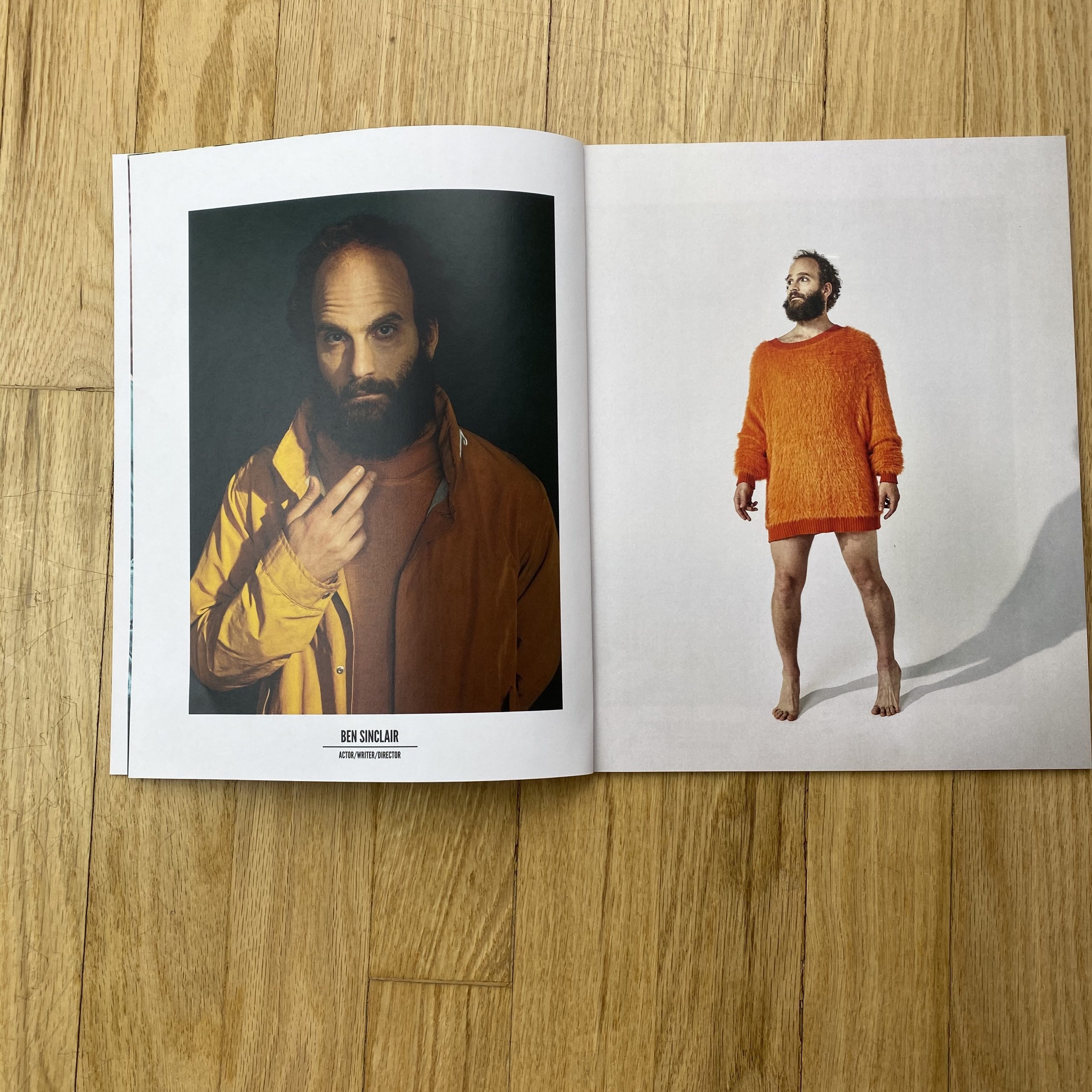
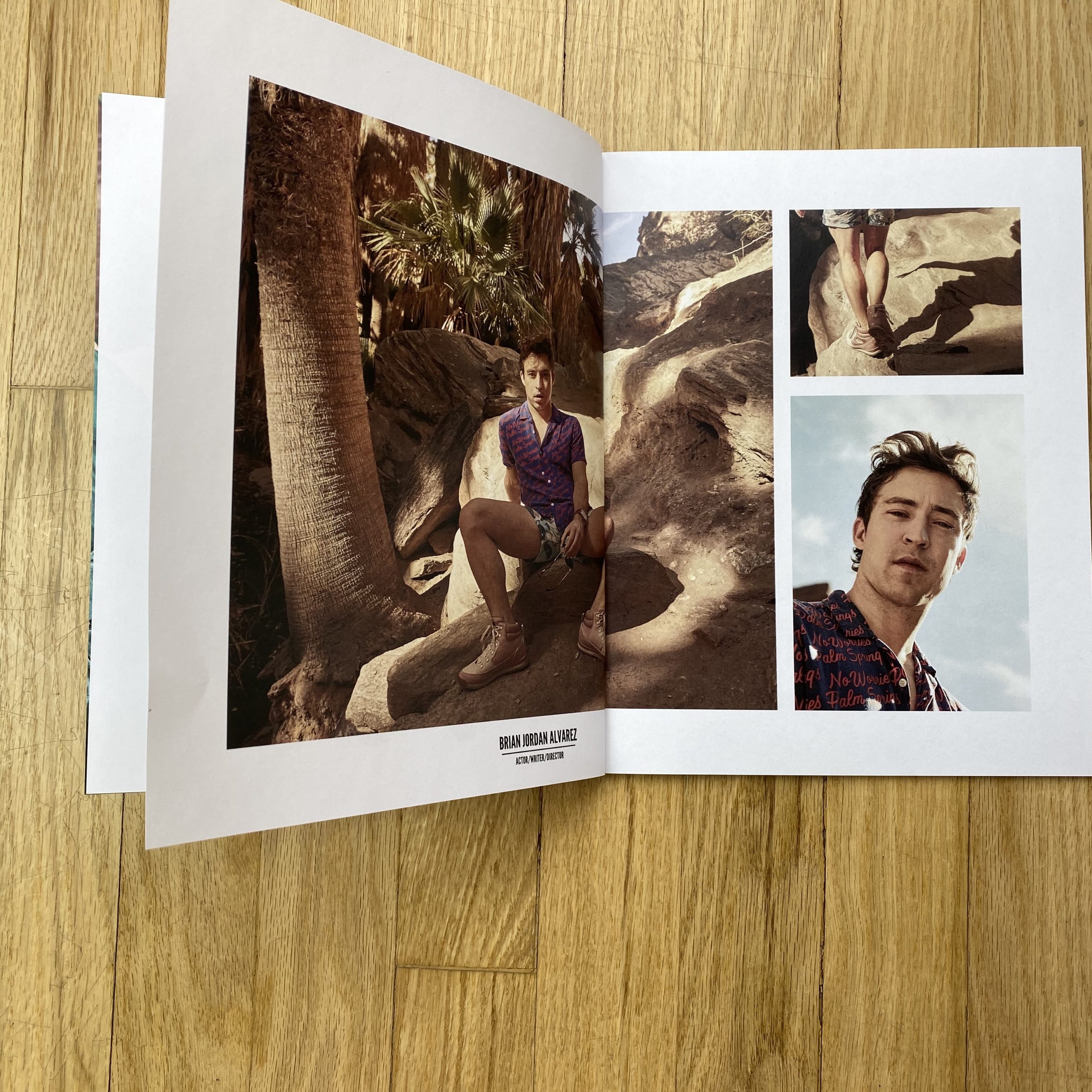
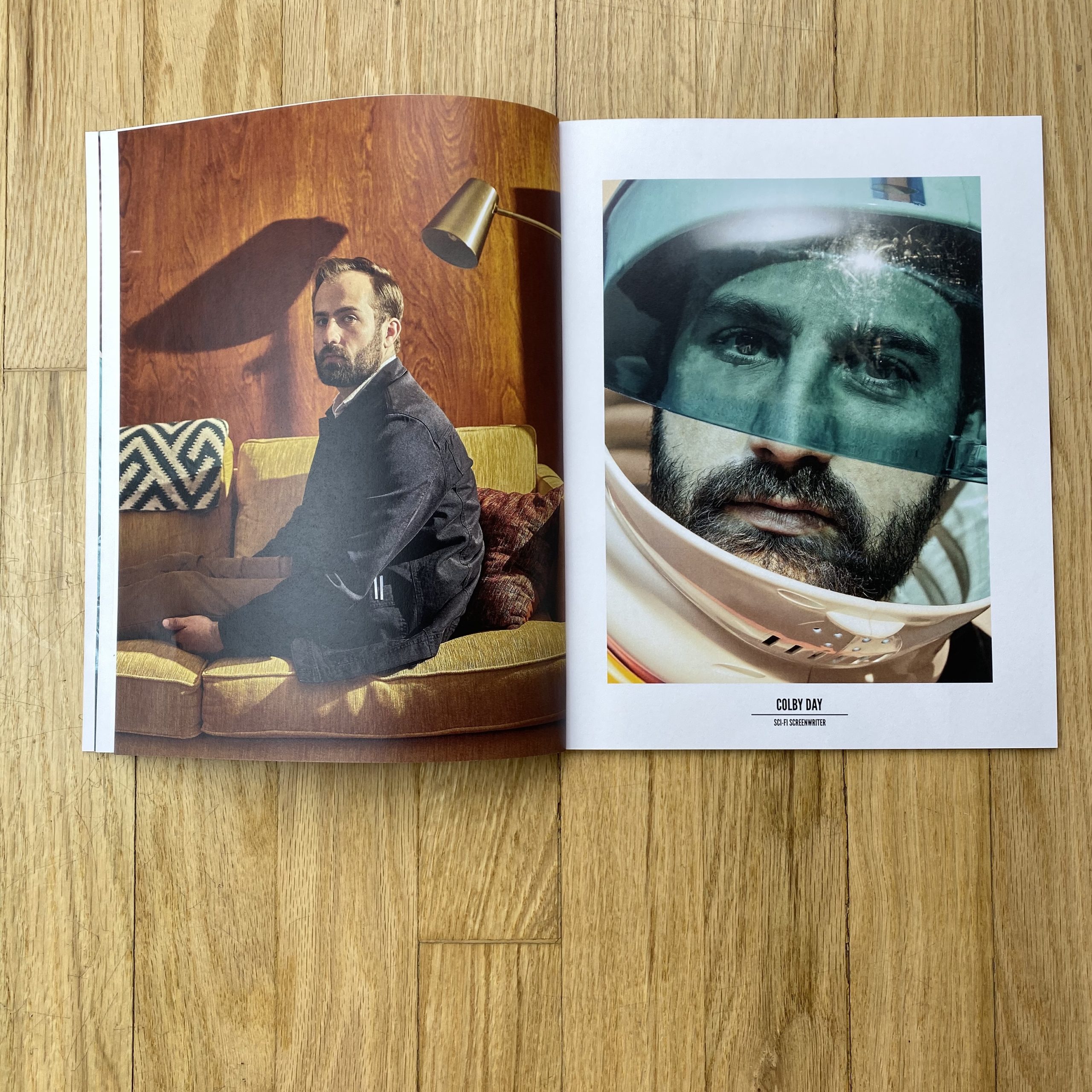
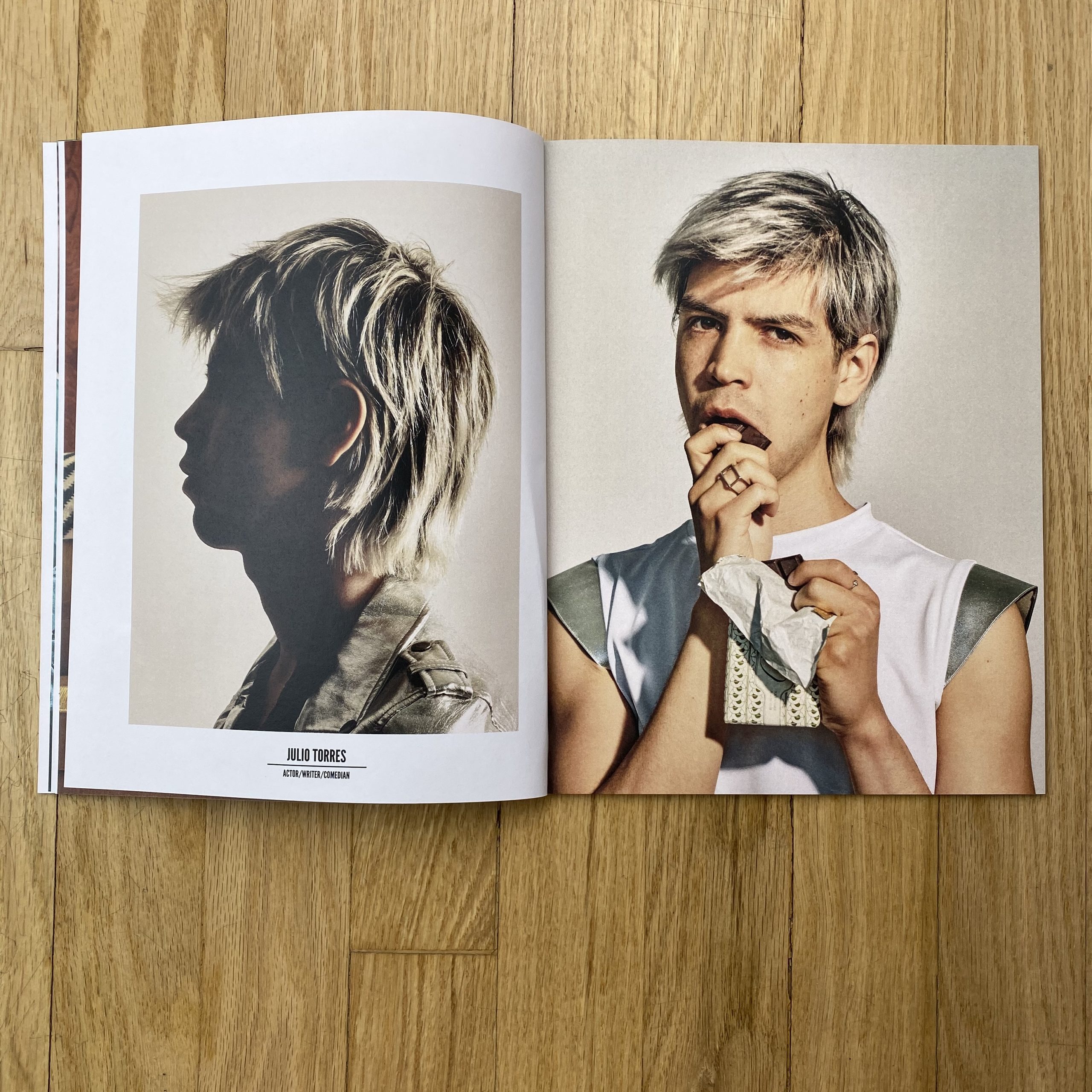
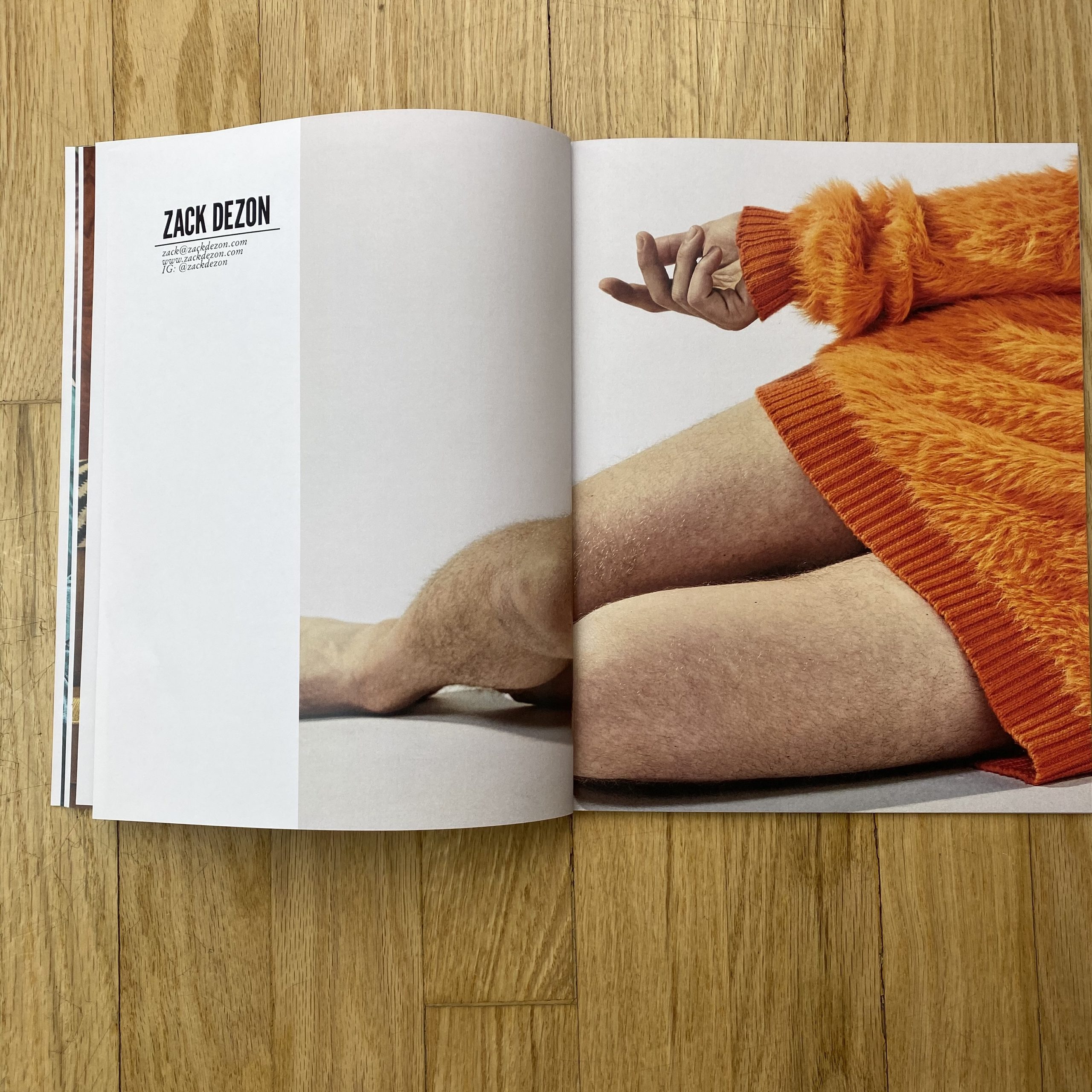
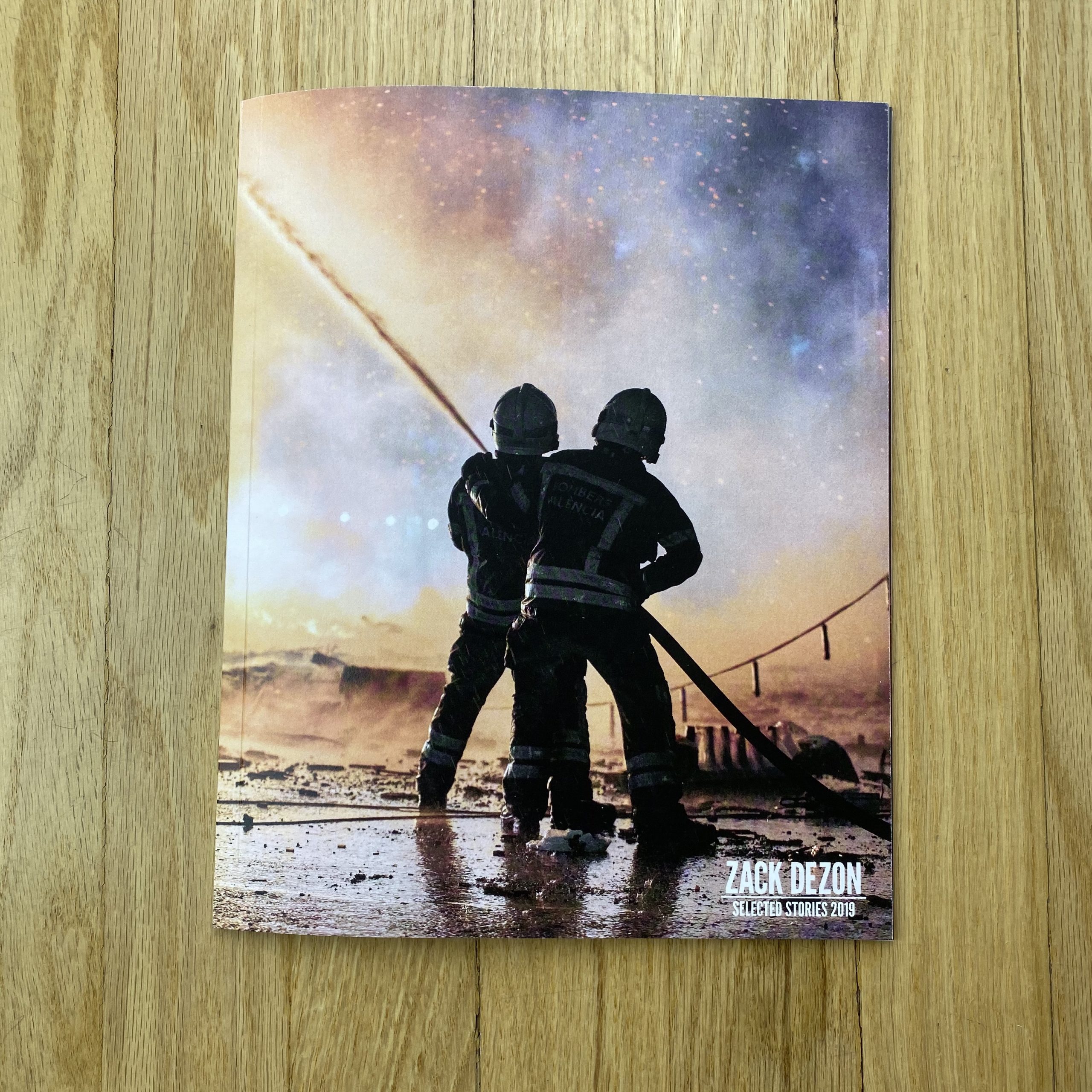
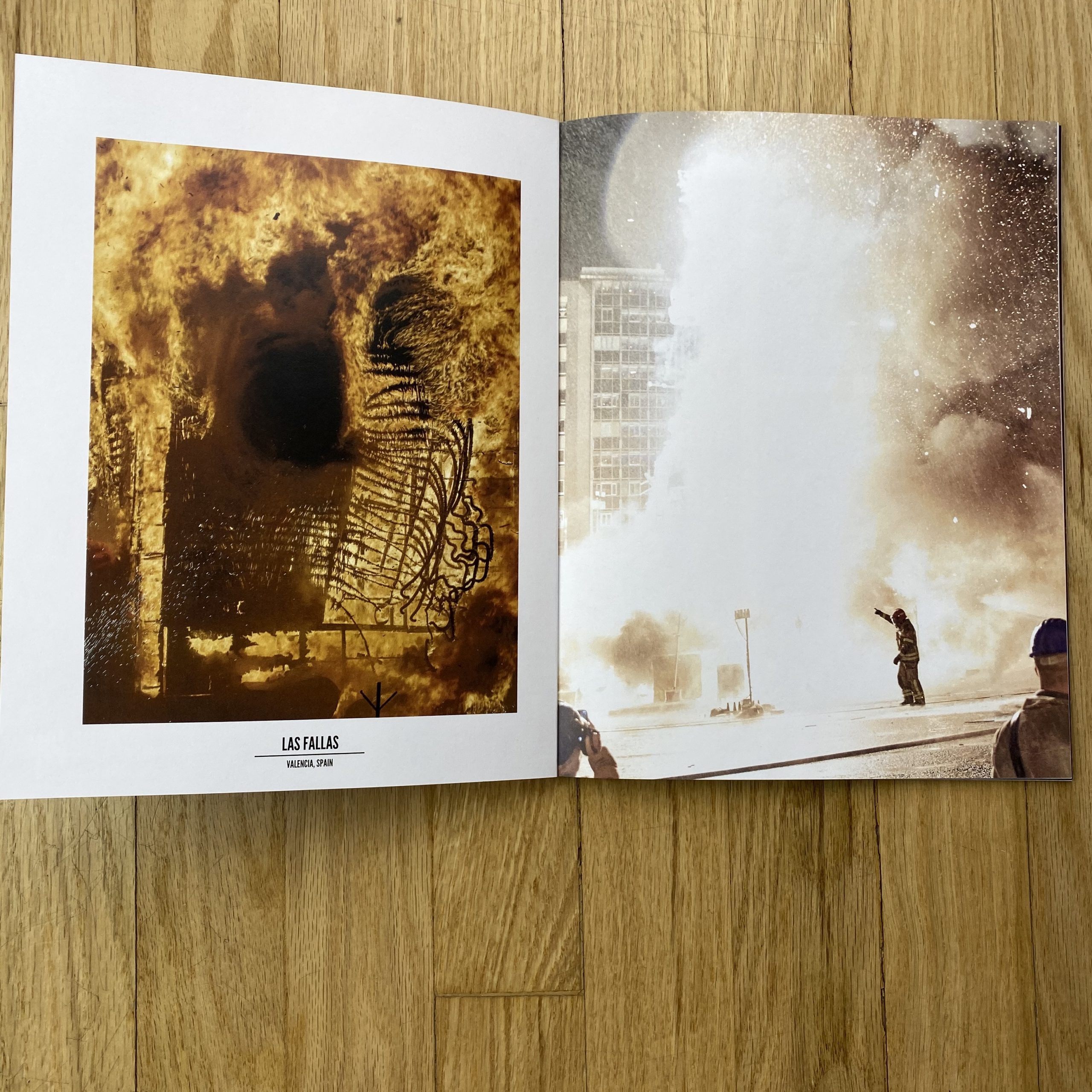
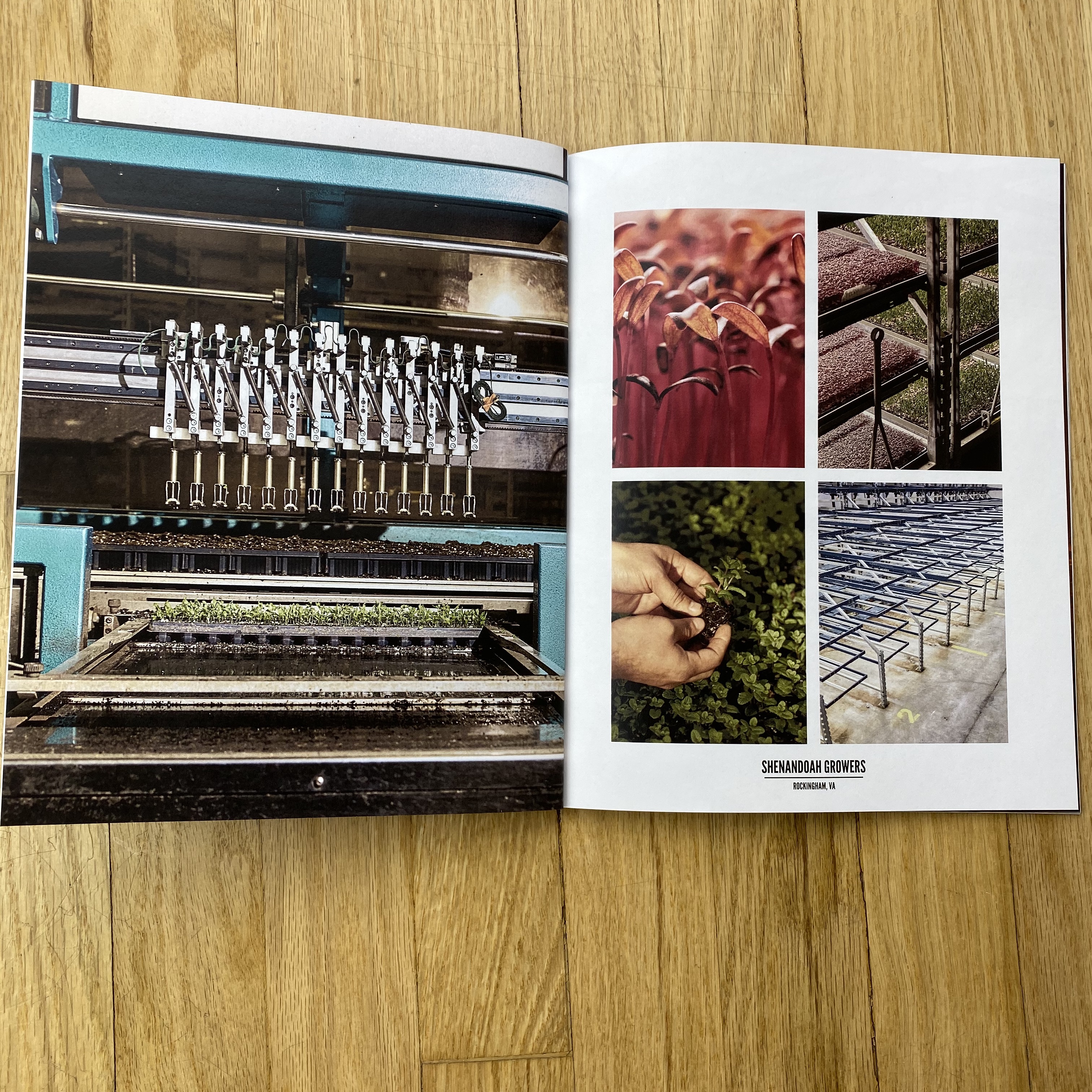
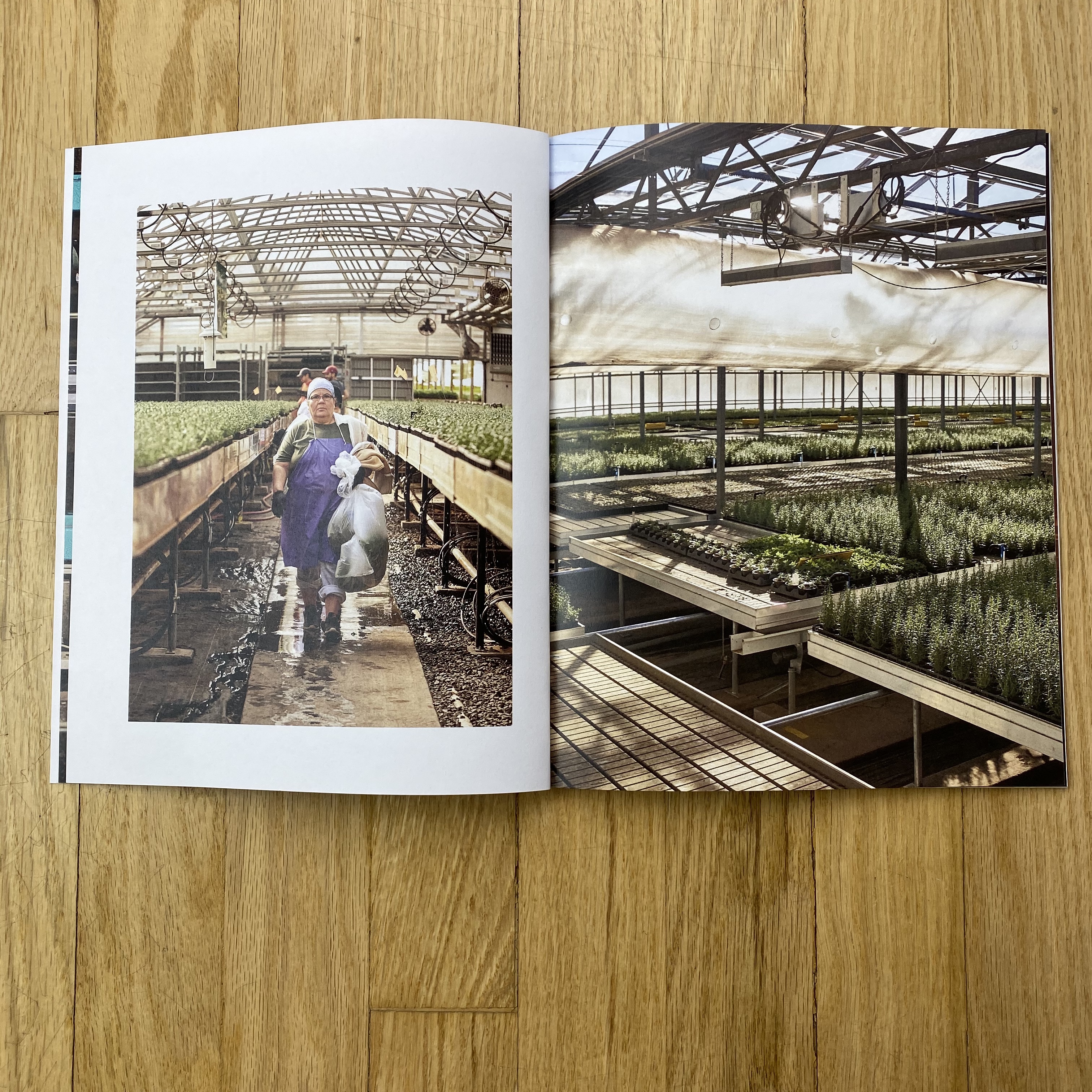
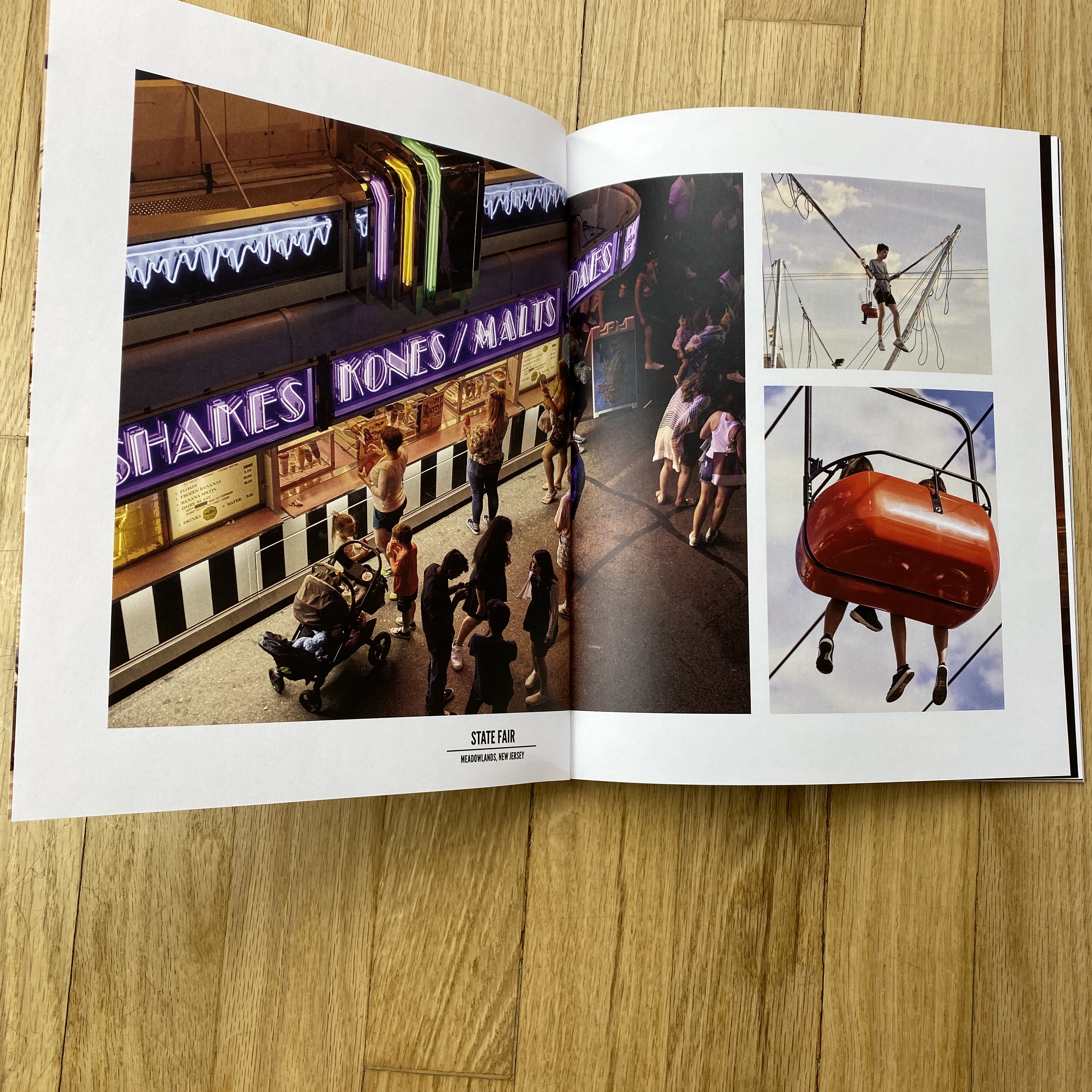
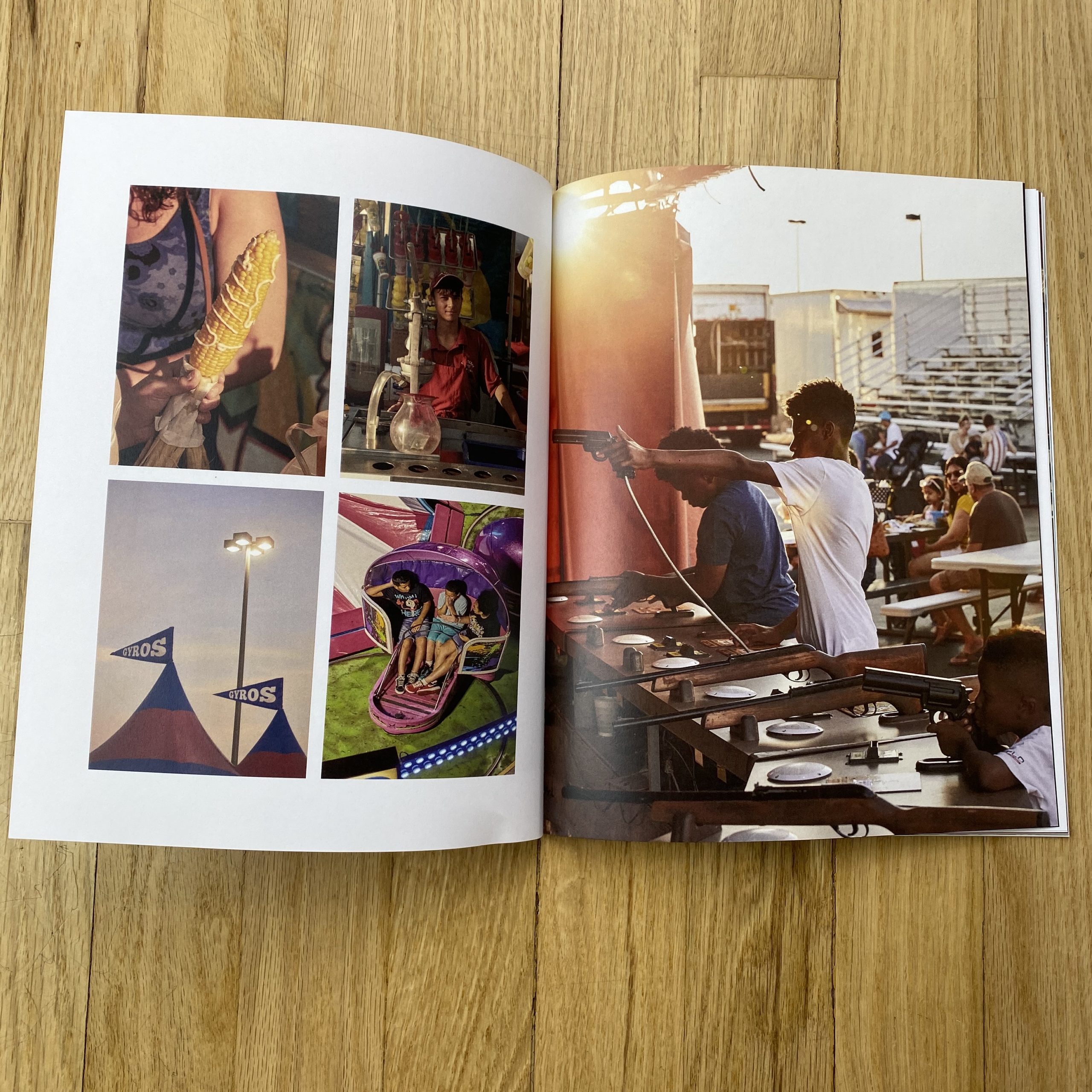
I made a lot of work this year I was super proud of, so I wanted to make a promo that celebrated that. After a long time trying to figure out what makes me tick as a photog, I’m finally crystallizing around portraits (my original love) and documentary, so I built this promo as a two-cover reversible booklet to emphasize that these are two complementary sides of my personality. The portraits are mostly of performers—I went to school for acting, so they’re my favorite—who are coming up in the scene but not quite yet household names. That’s something of an extension of a self-published book project I did back in 2013. I’m especially proud of the Ben Sinclair shots. This was the second time I photographed him—the first was back when I was making the book, and High Maintenance was just a little web series, and now it’s on HBO (and wonderful as ever). On the Documentary side, I think it reflects my loves of travel and unique, specialized situations (I especially like odd equipment, like you might find in a greenhouse or state fair). The Las Fallas story is my favorite there—I took the initiative to plan a trip to Spain to photograph it and Culture Trip picked it up and helped turn it into an award-winning story.

How many did you make?
50!

How many times a year do you send out promos?
I admittedly am not the most dedicated or successful marketer, but about once a year I make an attempt. This has probably been my most successful, though, and will definitely encourage me to make more going forward!

Do you think printed promos are effective for marketing your work?
I think so! I’ve tried the email-campaign thing and they just feel so spammy. Not helped by the fact that they’re frequently picked up by spam filters, and all the tips they give you on how to get around them just make your messages sound gimmicky. With a printed promo, I try to make something I’d be happy to have on my desk; I really want to feel like I’m giving a gift to these editors, or I’m just going to be too self-conscious to even try.

The Best Work I Saw at the Filter Photo Festival: Part 2


I never have a hard time writing.

It’s true.

It must be muscle memory, as words normally flow from my brain to my fingers, like wet snow dropping from a gray sky.

Then, we get to this time of year, when the days are shorter, the light is less intense, and the column gets more difficult.

Especially as I’m spent, having just finished a run of 8 big trips in 8 months.

It ended a few days ago, when we returned from a family Bar Mitzvah in Boulder. (Partying with the same extended family for the third time this year.)

It was both exhausting and perfunctory, which is an odd combination.

(And if my cousins are reading this, apologies, you threw a great shindig.)

Rather, the joy and surprise of such family reunion-type-events lie in the typical time-gap between them: people change, and have new stories to tell.

By the third get-together in a year, it’s only natural that people have run through their prime “life-story” material, and the conversations get a bit stale.

What I found, though, is that it’s not always the big, dramatic moments that burn their way into memory. Or that are even the most pleasurable, necessarily.

I told my kids about, and then actively noticed, the random, seemingly-meaningless-in-between moments that can come to feel important in a family bonding narrative.

Like the time we were sprinting though an underground parking garage, the four of us, desperate not to be late for (always boring) Temple, and I heard our shoes clicking on the concrete as I looked at my daughter and smiled.

Or the four of us huddled over a few plates of Thai noodles, sucking up the city-food-goodness, while the mountains and shopping malls of Boulder looked on beyond the fifth floor, hotel windows.

It’s not always the glamour, I’ve found, that pulls us out of our respective reveries, and helps us revel in the moment.

Right now, I’m actually thinking of a perfect moment in Chicago, back in September, when I visited for the Filter Photo Festival.

If you’ve been reading this year, you know I used food, architecture, and travel as methods of inspiration, rather than just photographs, paintings and sculptures.

As an artist, I’ve done more writing, drawing and installation work lately than I have photography.

(Each step in our creative journey is different, and things change over time.)

But rather than repeating my old patterns in Chicago, (as I discussed last week,) I went to Pilsen to have a Kung Fu lesson with a great teacher in town.

It took two subway trains and a bus to get there, and wouldn’t you know, but that’s where one of those little moments managed to find me.

On the bus heading North.

I was late, (again,) but this time, I’d texted Sifu to give him a heads up, and I was assured it was no drama. (So I settled in for the ride.)

By the time I got to that bus, though, I was ready to be there.

It wasn’t a long journey, only a mile, and I’d normally walk, but again, I was late, and didn’t know where I was going.

So after the third or fourth bus stop in a row, I was properly impatient, and must have had a sour look on my face.

Then the fifth stop was the doozy.

An elderly Latino man got on the bus, walking very slowly. He had on a dapper hat, (not a fedora, more short and peaked,) a sharp outfit, and these glittery, oversized sunglasses.

(If Elton John had ever looked as good in his sunglasses as this guy did, I’d be surprised.)

I noticed him immediately, and then time stopped.

Literally.

Because the man had his bus ticket in his wallet, in his back pocket, but he couldn’t get it out to save his life.

I watched as his hand slowly tried to work the wallet back and forth, bit by bit hoping it would slide out from its overstuffed home.

He stood there, motionless, but for the little bit his arm and hand moved, as they fruitlessly tried to access his bus pass.

30 seconds went by.

Then a minute.

I was transfixed.

90 seconds, and finally he had progress.

The last bit was easier than you might think, he paid his fare, then came and sat down near me.

It was like I was in the presence of a proper showman, a rock star from a previous era, and I’d watched him in a mini-life movie, right there on the bus in Chicago.

I tell you this story, today, while I’m fighting off the winter blues, because as much as I’m thrilled to be facing a 4 month travel break, to recharge and restore…sometimes we do need to get out of our own little worlds to realize how big it is out there.

In the best case, art can help us do that too.

It’s the reason people like these portfolio review articles, I think, because it allows you to see so many different viewpoints and perspectives in each piece.

And at every festival I go to, the range of photographic work I see is as broad as Lake Michigan.

So here were are, speak of the devil, in Part 2 of “The Best Work I Saw at the Filter Photo Festival.”

As usual, the artists are in no particular order.

We’ll begin today with one of my favorite Chicago photographers, Yvette Marie Dostatni. We met at a festival a few years ago, and I loved her quirky, funny, and definitely absurd series, “The Conventioneers,” which I wrote about at the time.

Yvette and I stayed in touch, and I admit I’m a big fan of her work. But when I saw her at Photolucida this past Spring, I didn’t love some of what she showed me, and gave her a tough critique.

In the follow up, Yvette told me about a project she’d done visiting Indiana, where her family comes from, which she thought I might like.

(Boy, did I.)

As I didn’t get to feature Yvette in my Portland series, and she’s both Chicago through-and-through, and a former Filter participant, I thought it would be perfect to include her in this series.

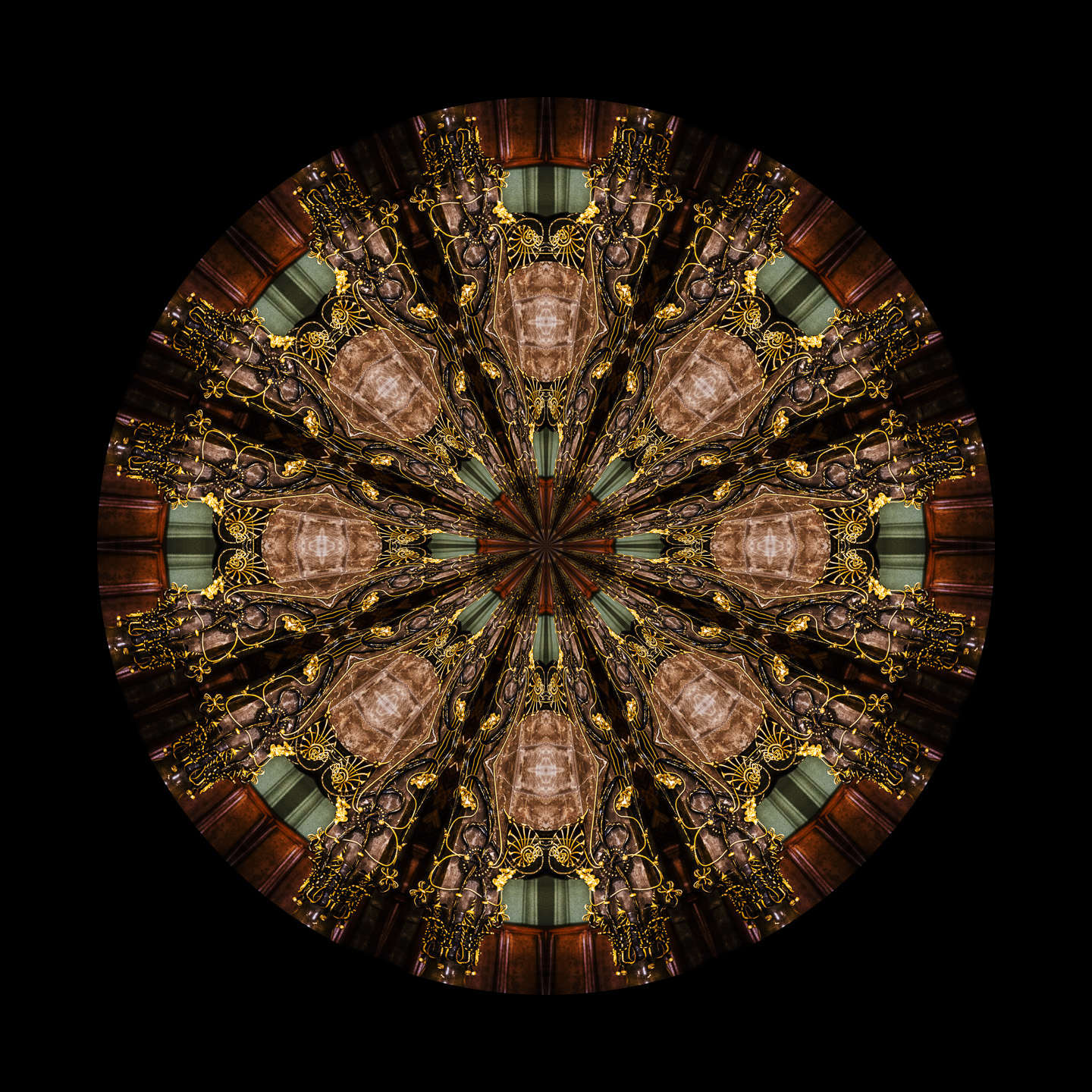
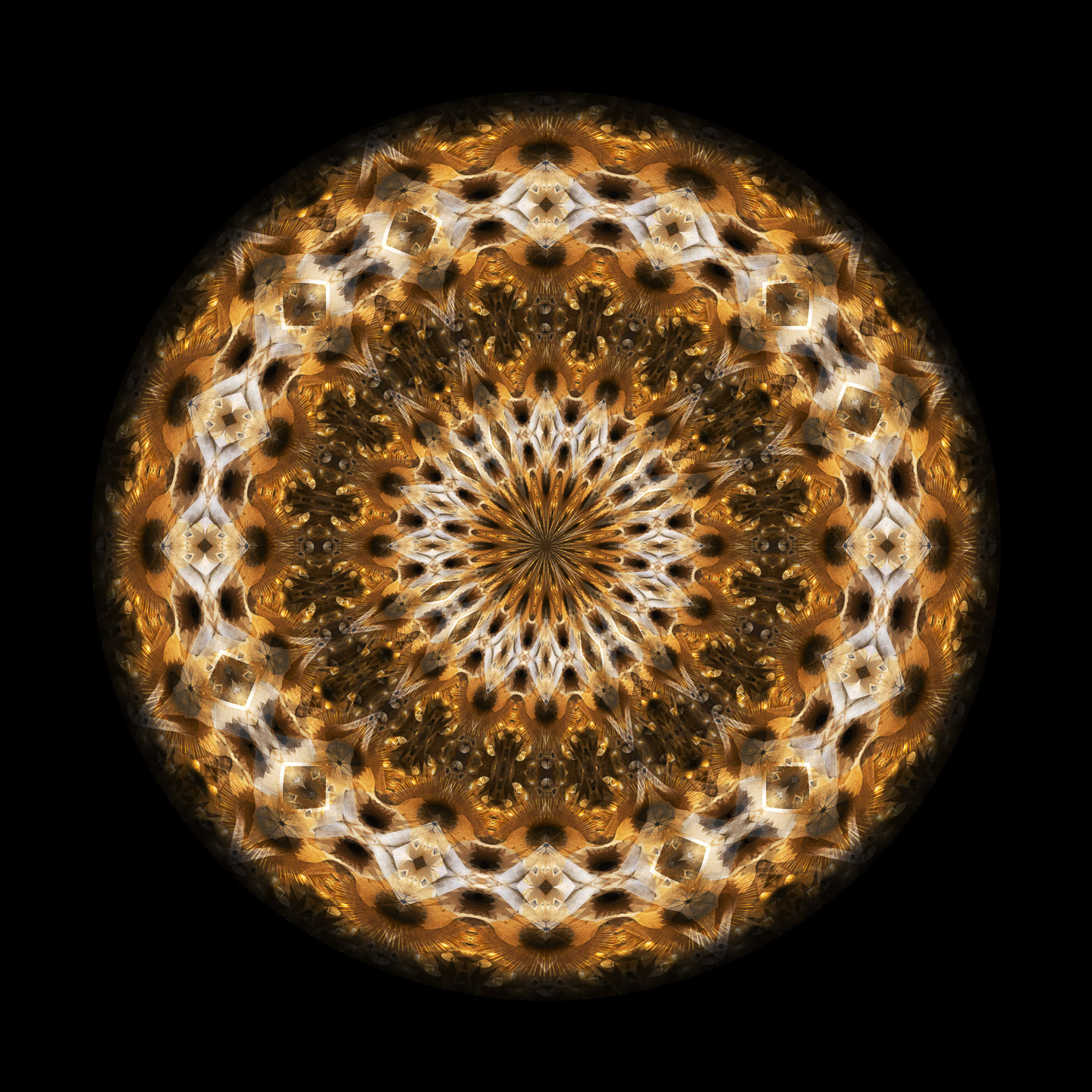
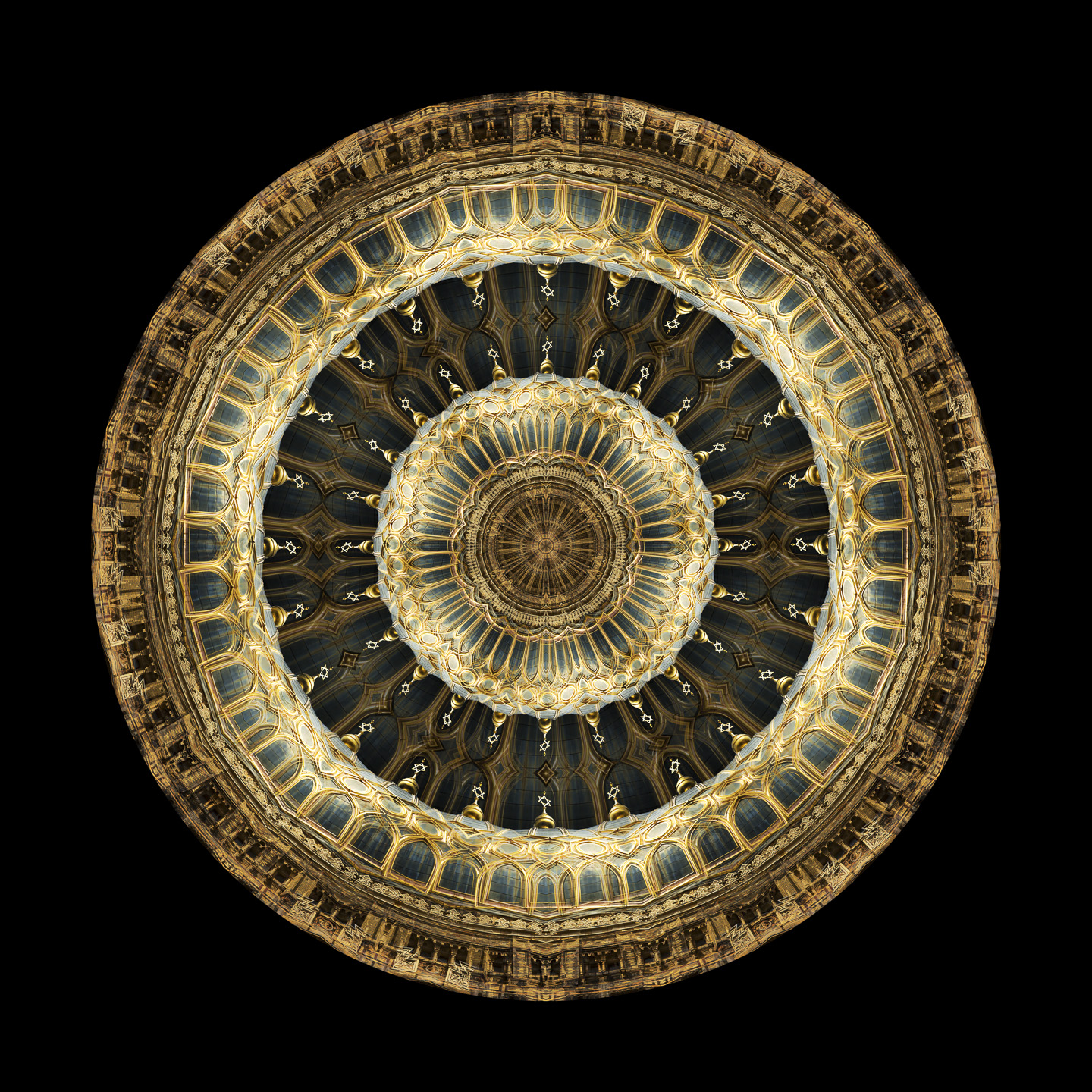
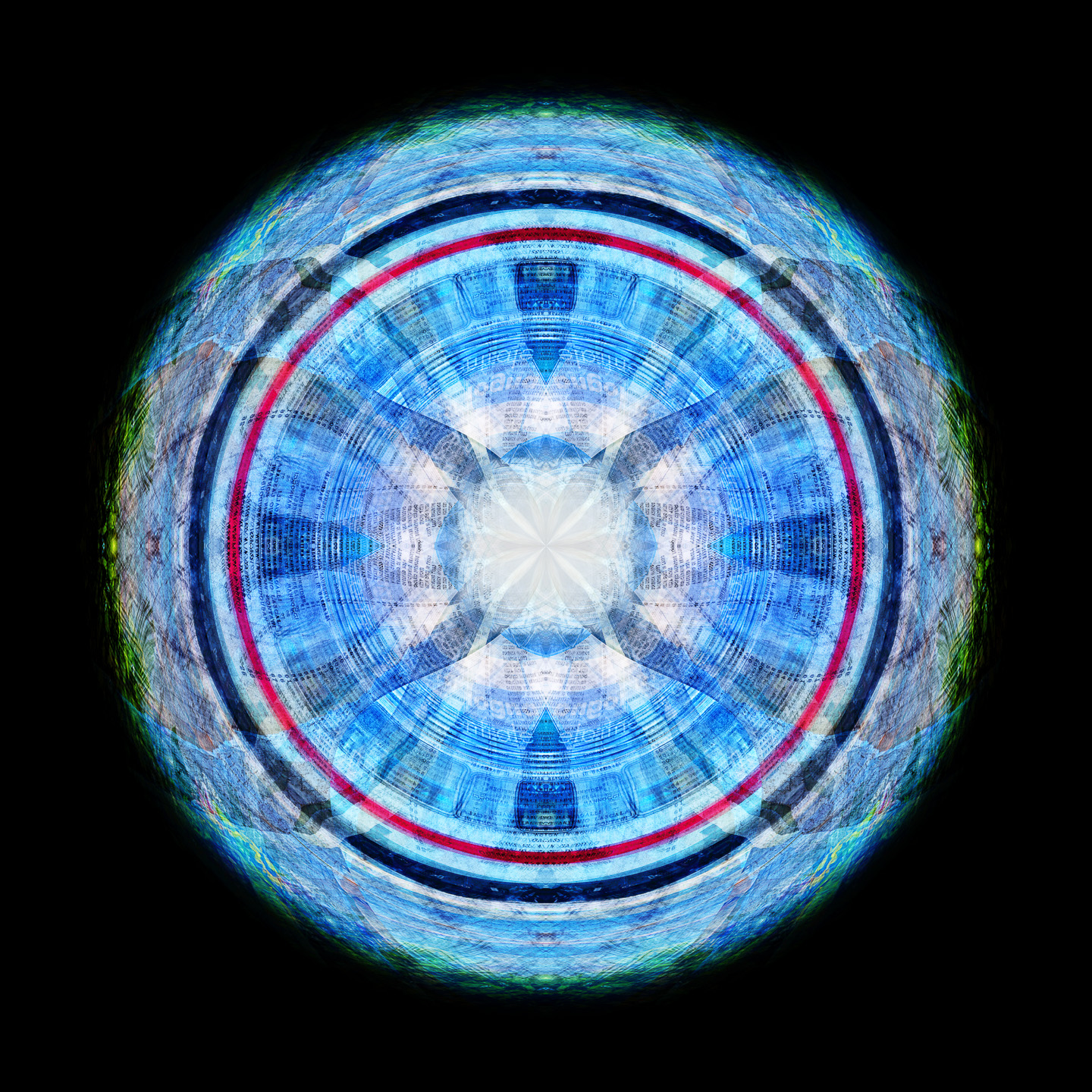
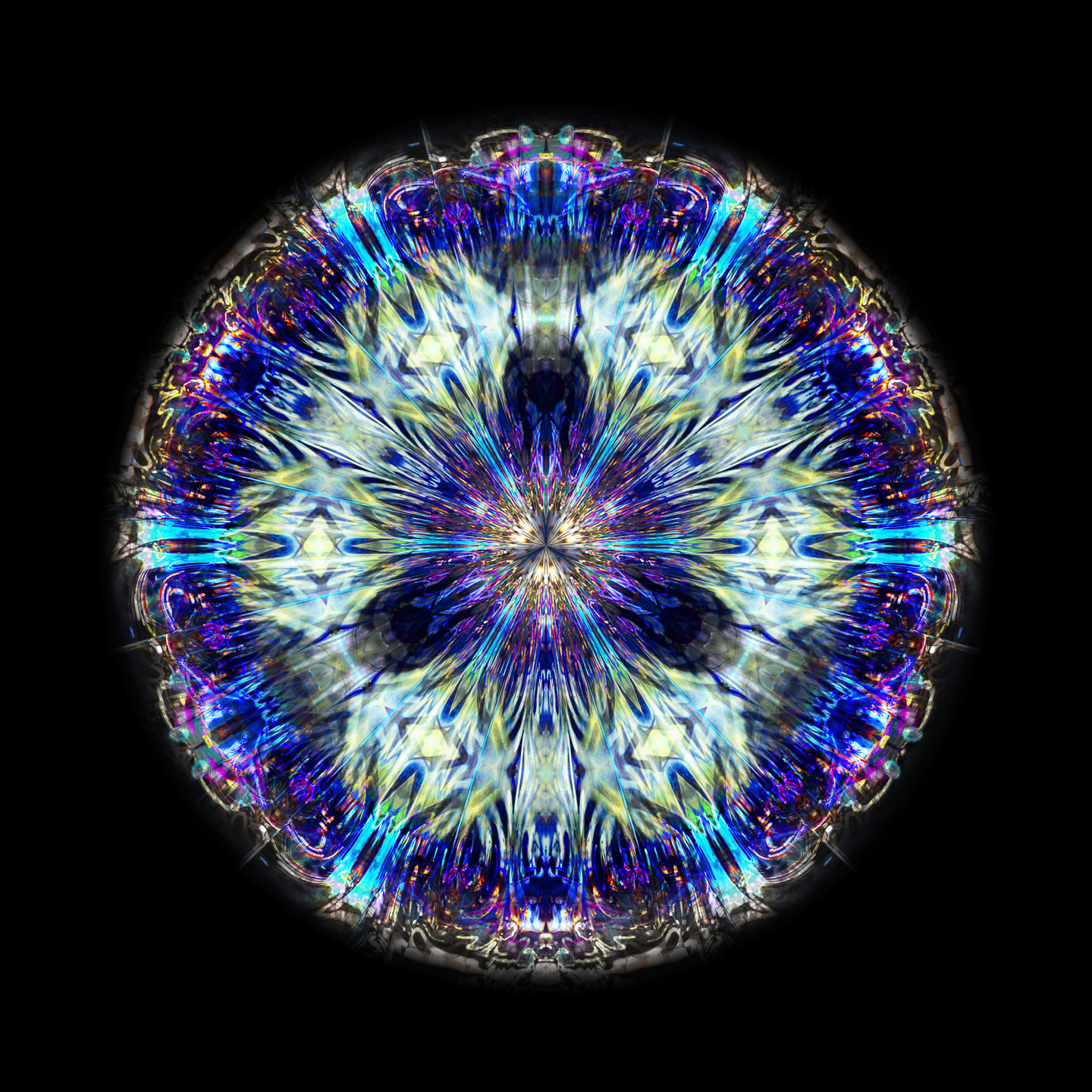
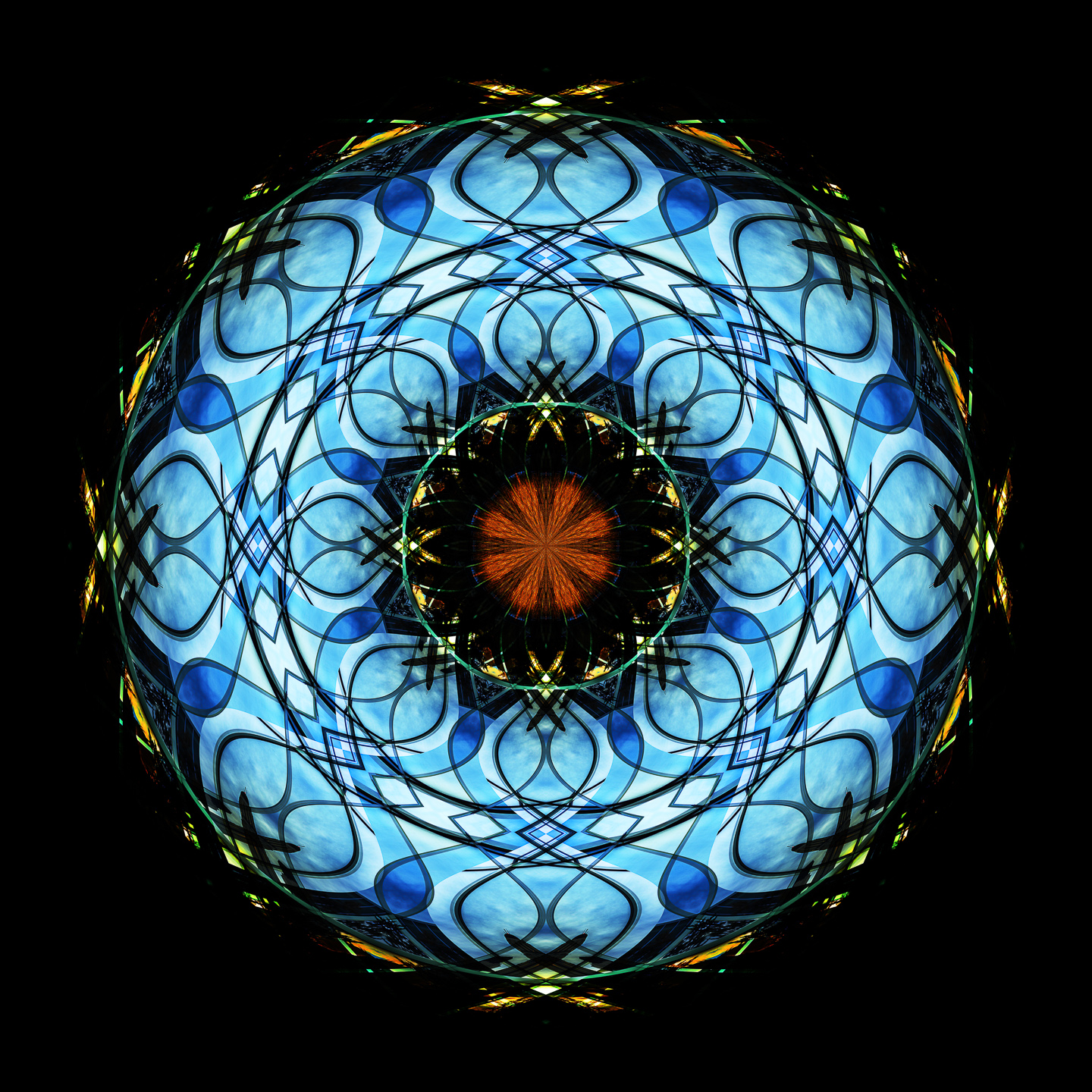
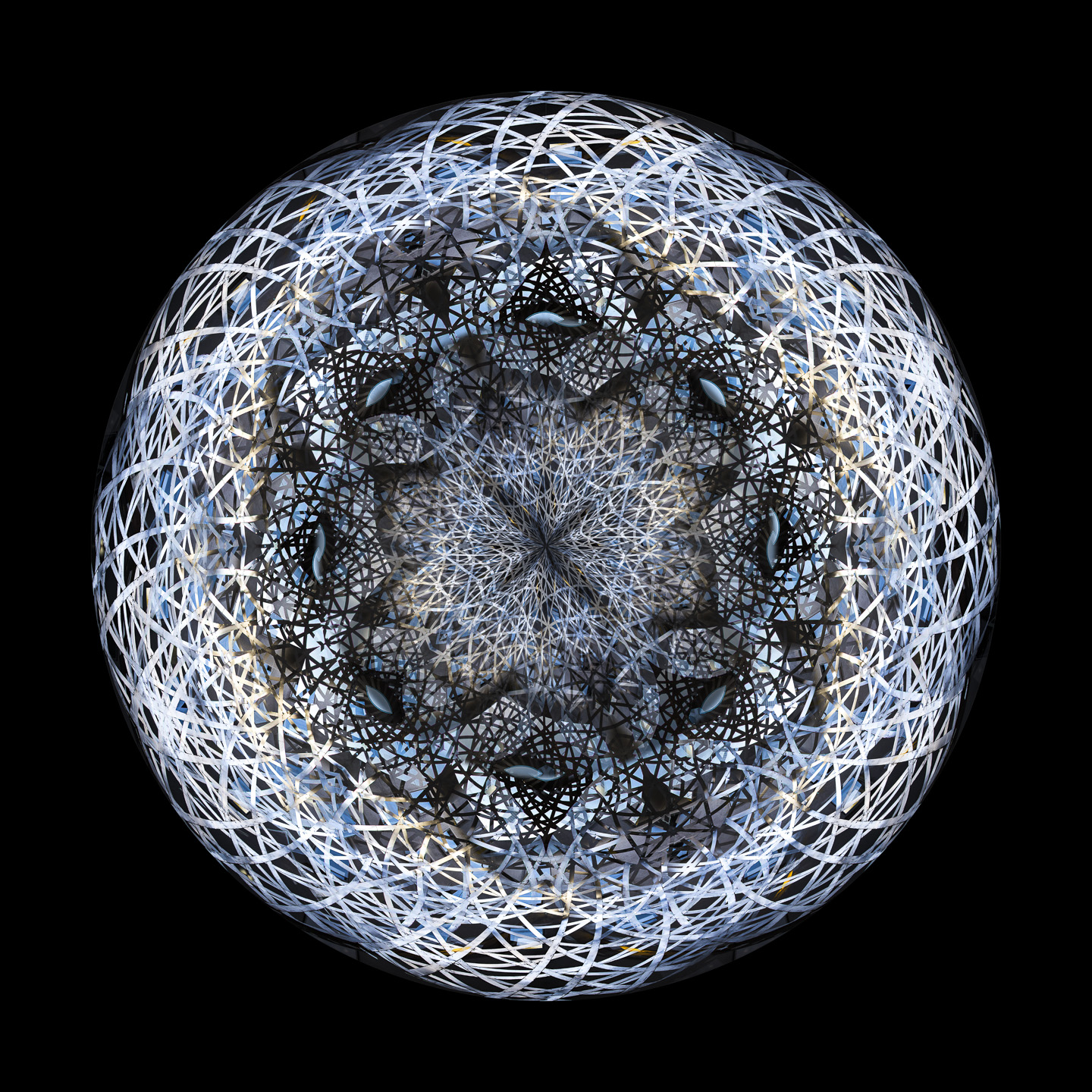
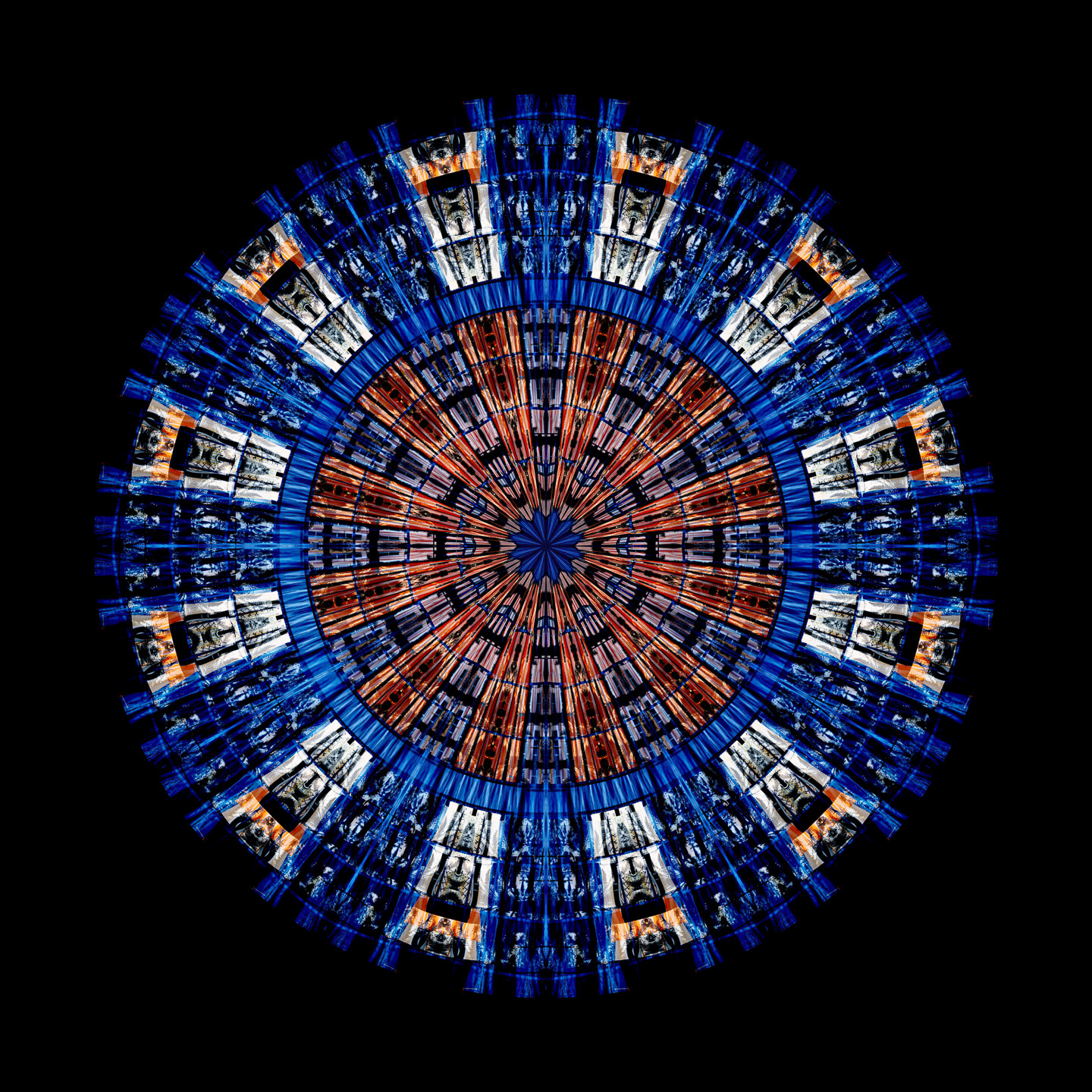
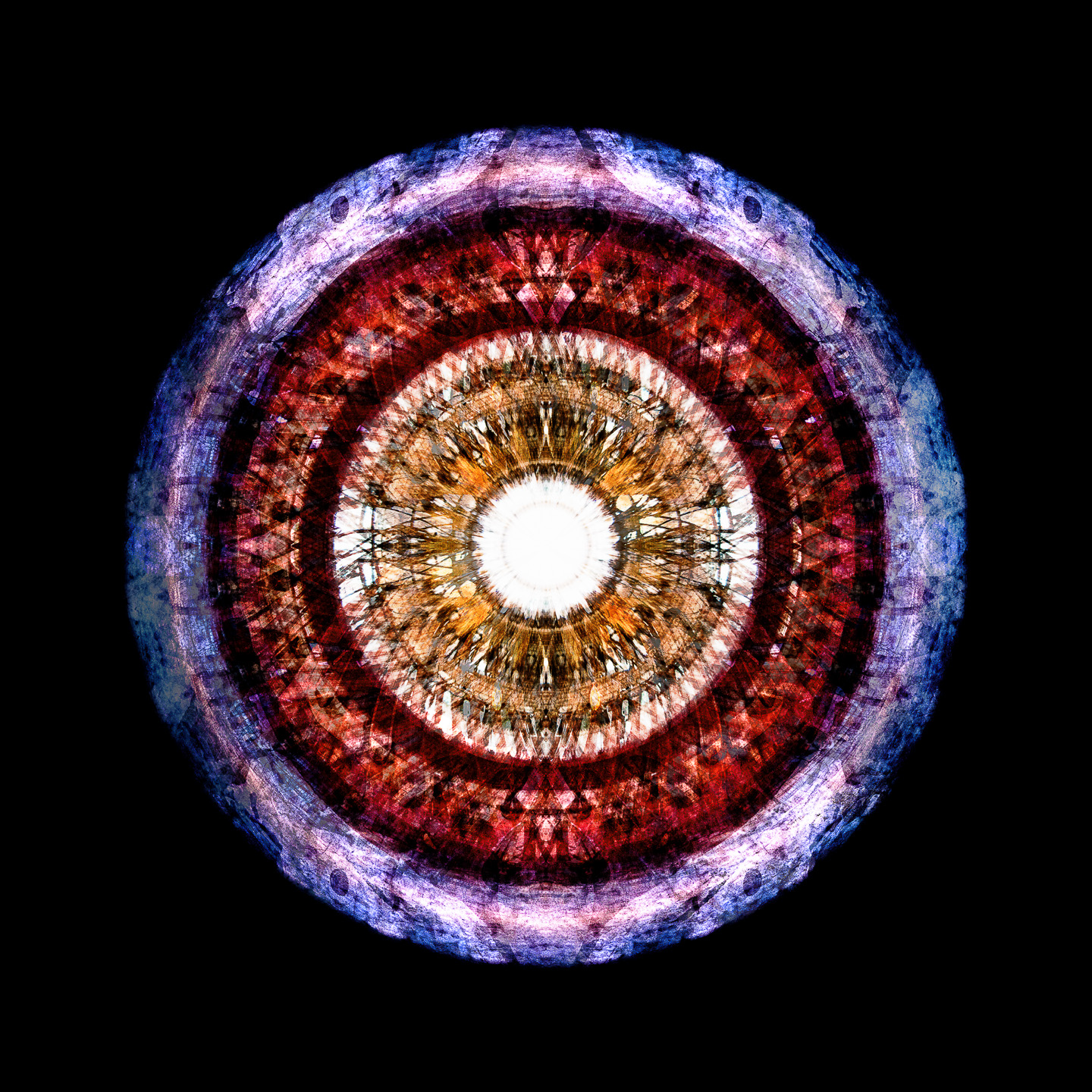
I admired Thomas Brasch’s intention in his work immediately, as he described his desire to make healing, positive work out of terrorism against humanity.

Not an easy goal, to be sure.

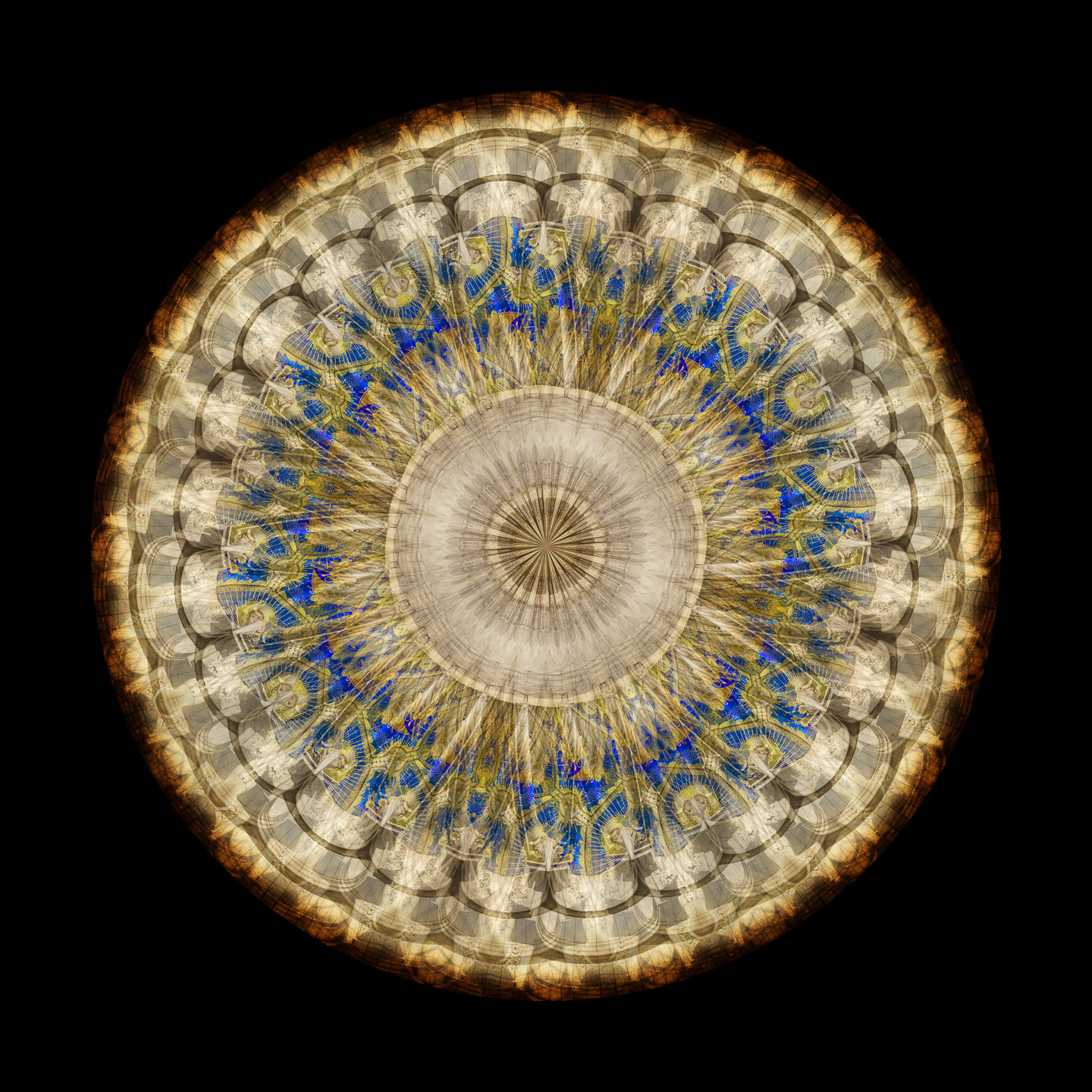
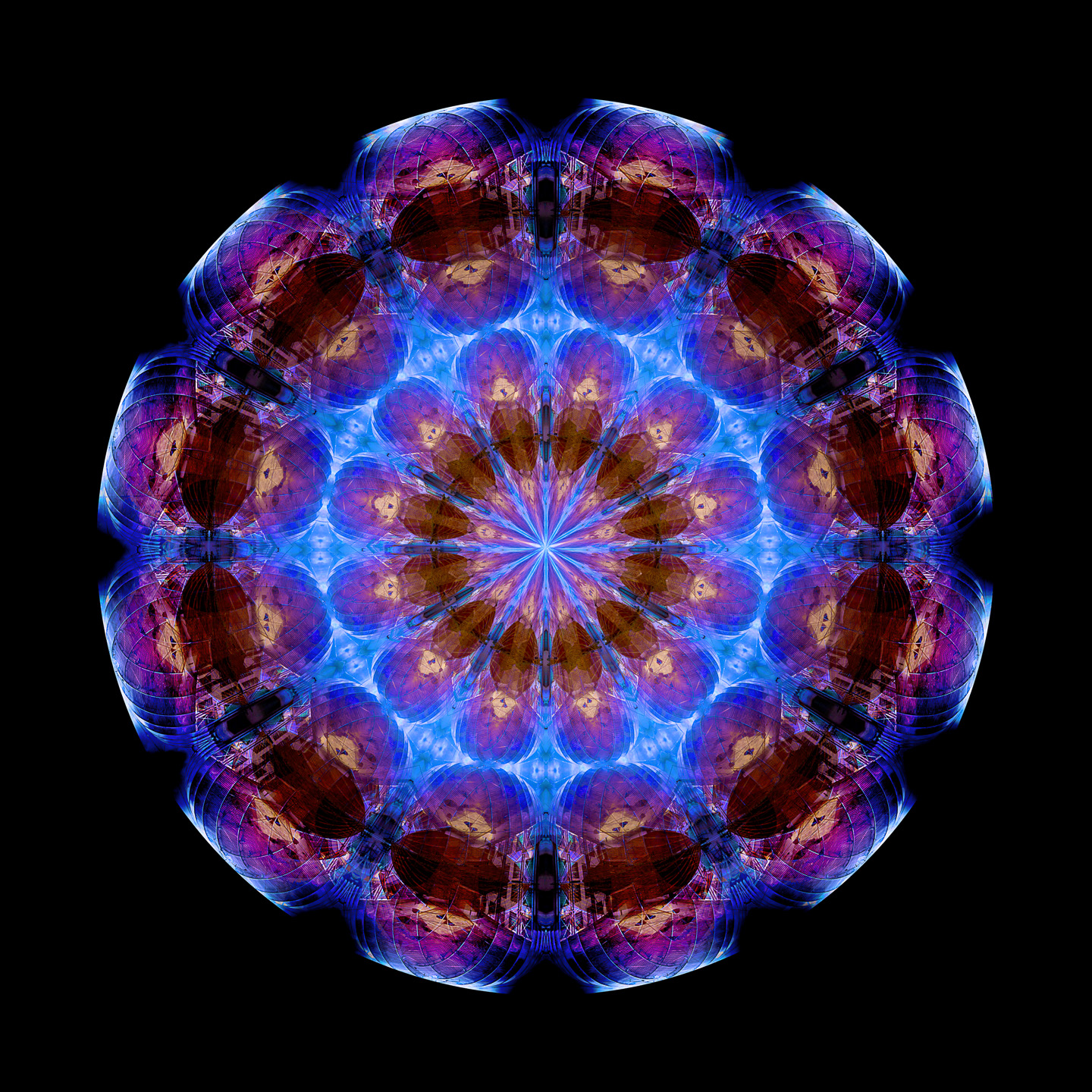
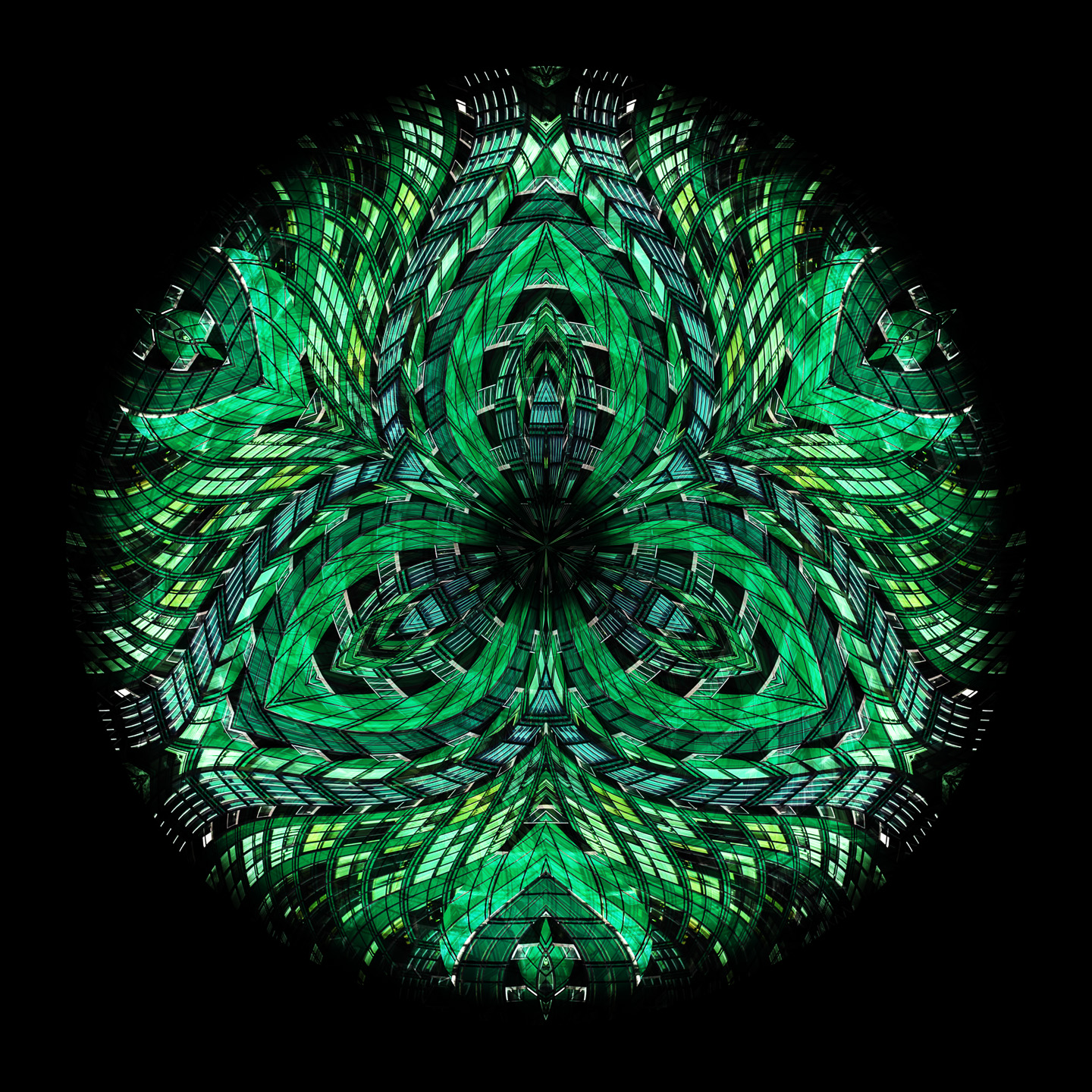
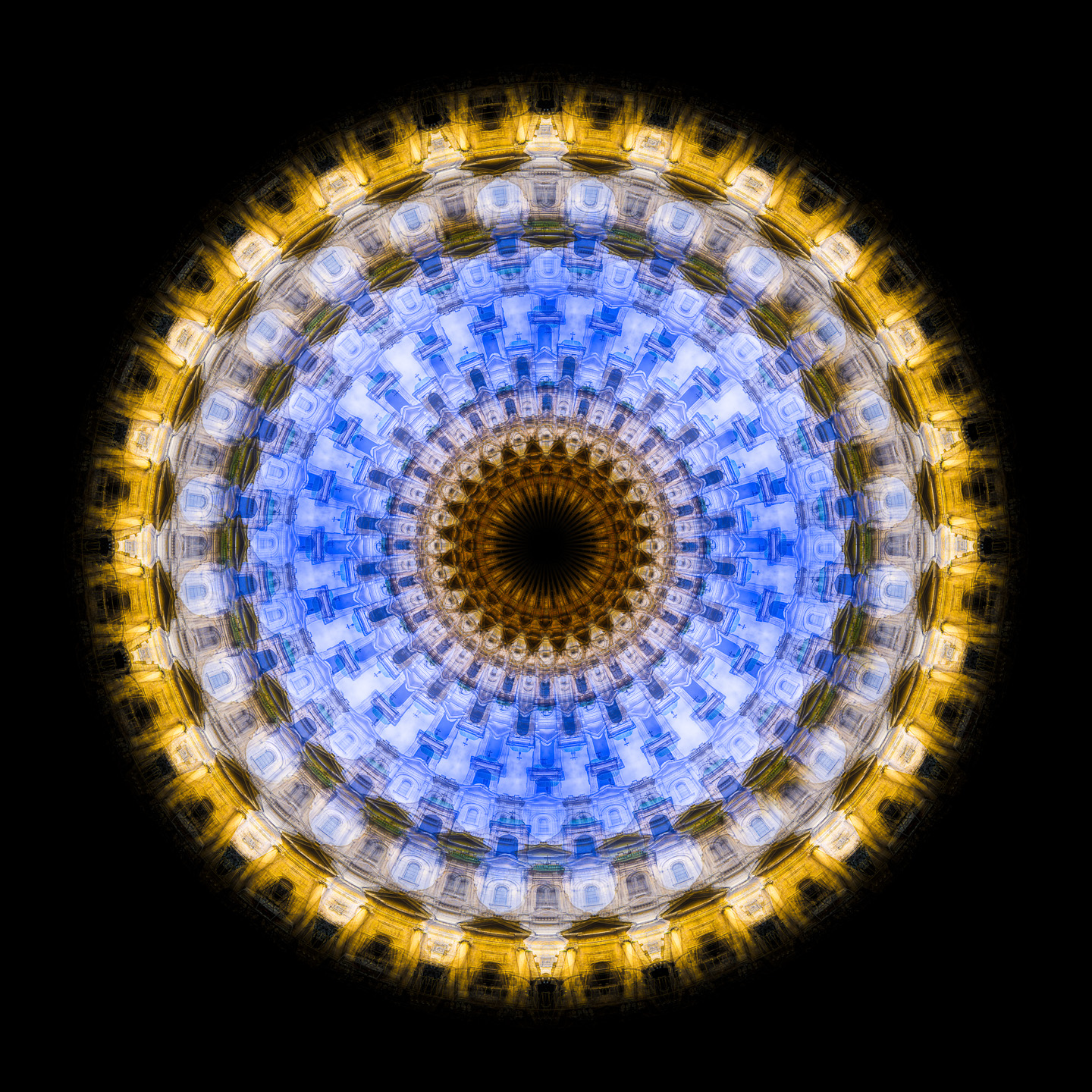
He described an intensive digital process through which photographs taken at or near the scene of mass shootings were digitally manipulated into mandala-like creations.

I liked some more than others, but as I got to look at them consecutively, I got a sense of the good juju coming off of them. I’m actually showing a large selection below, because it creates a pretty cool sensation.

Thomas and I had a great chat about how such restrictions, (on process and form/shape,) which originally inspire us, eventually can be constraining, so it’s good to stay fluid.

Like Margaret LeJeune last week, I had one of “those” chats with Nina Riggio. The one where I explain why I think one project falls short, only to have the artist show me, with the next series in the box, that they had it all sorted already.

In Nina’s case, she had a documentary photo project about some Venus flytrap poachers in North Carolina that felt very “parachute journalism” to me, despite her passion.

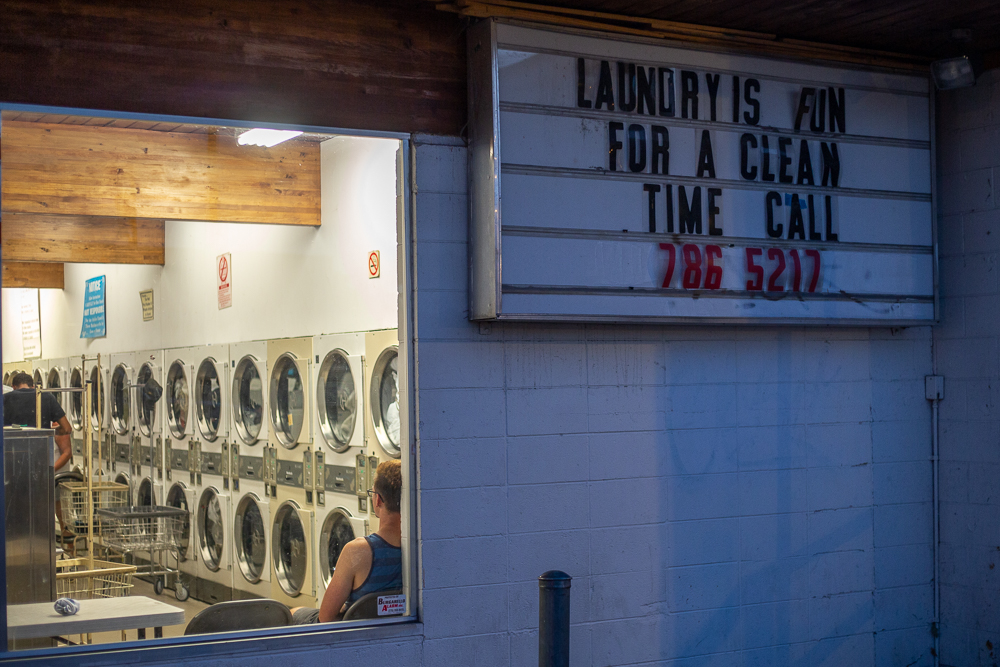
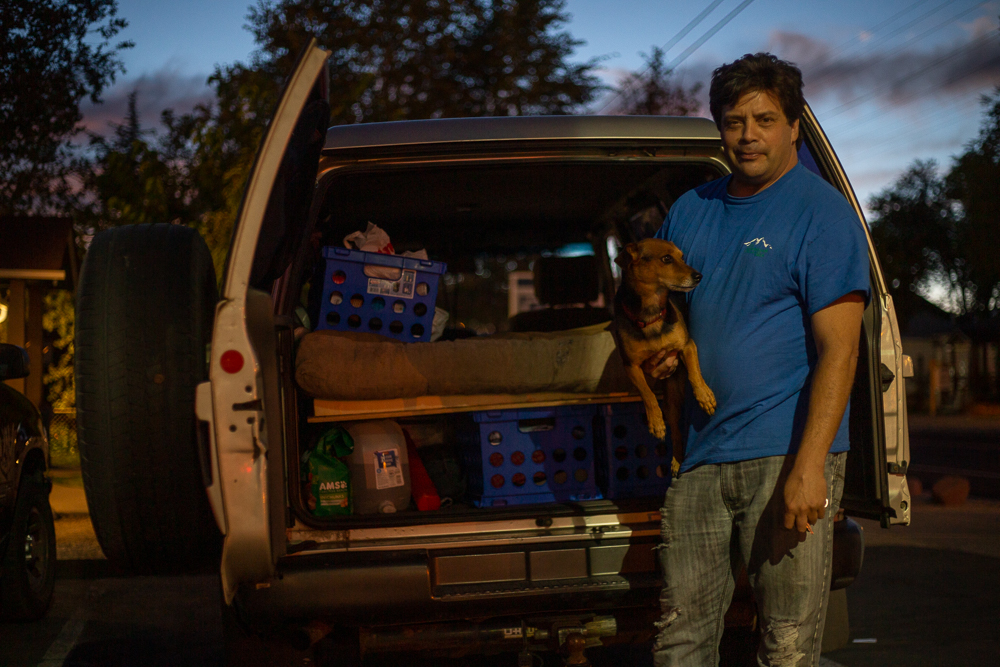
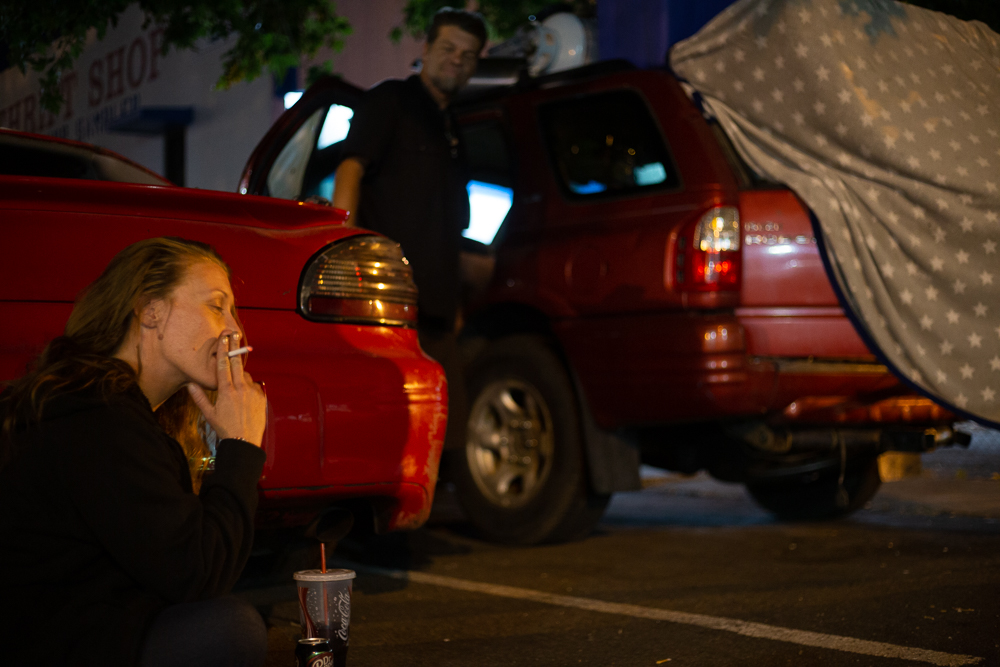
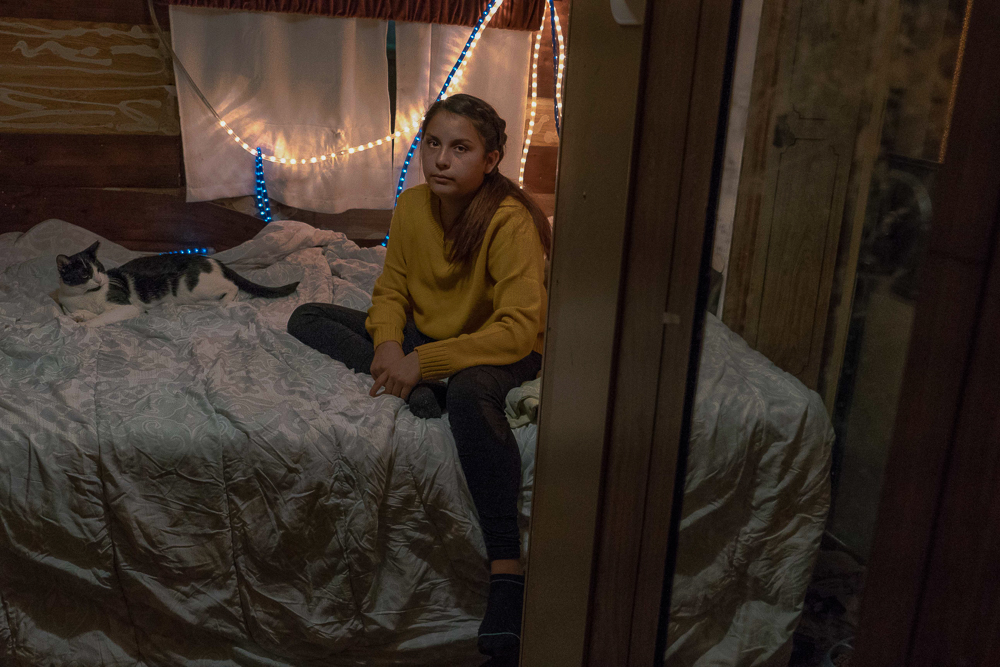
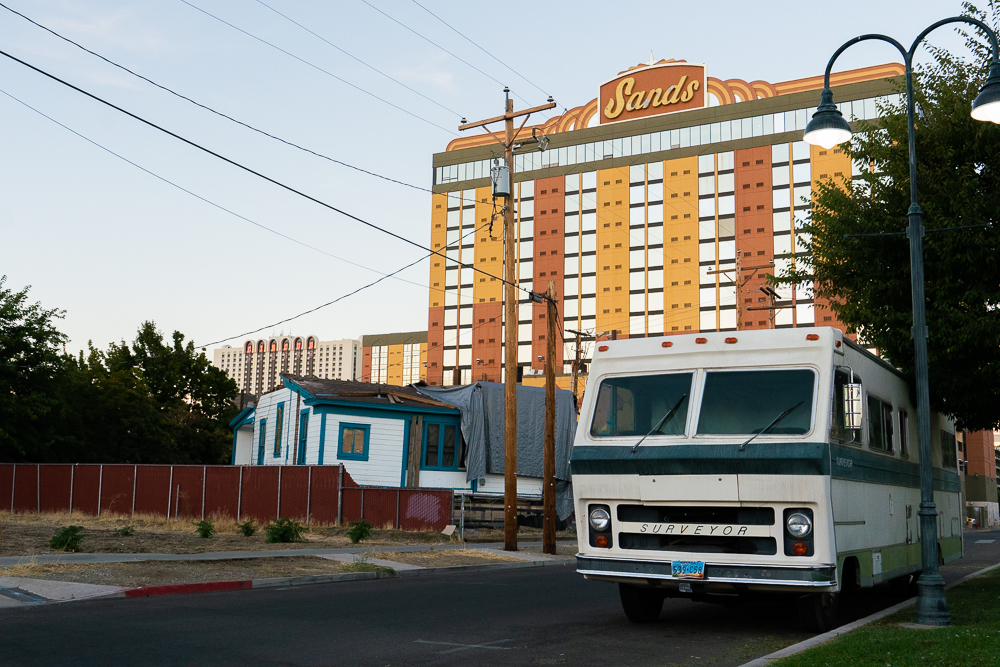
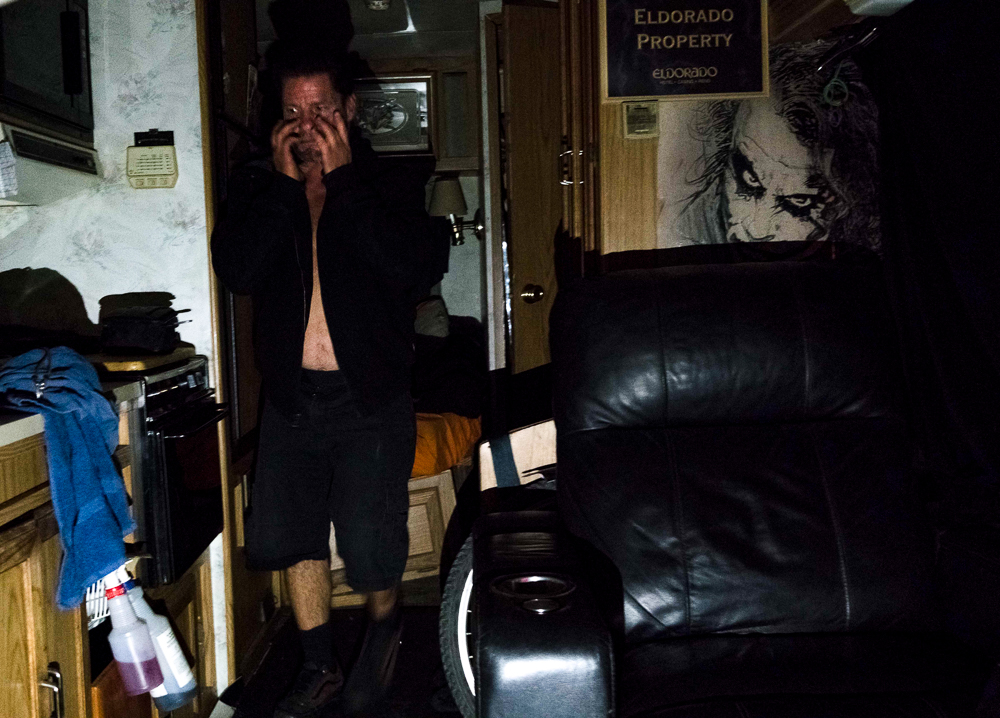
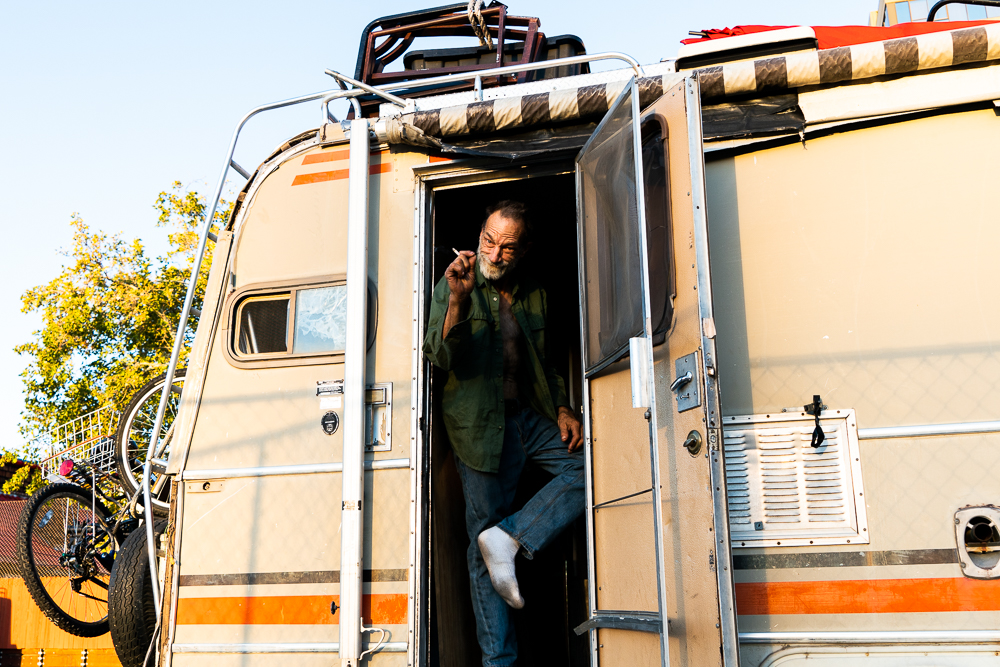
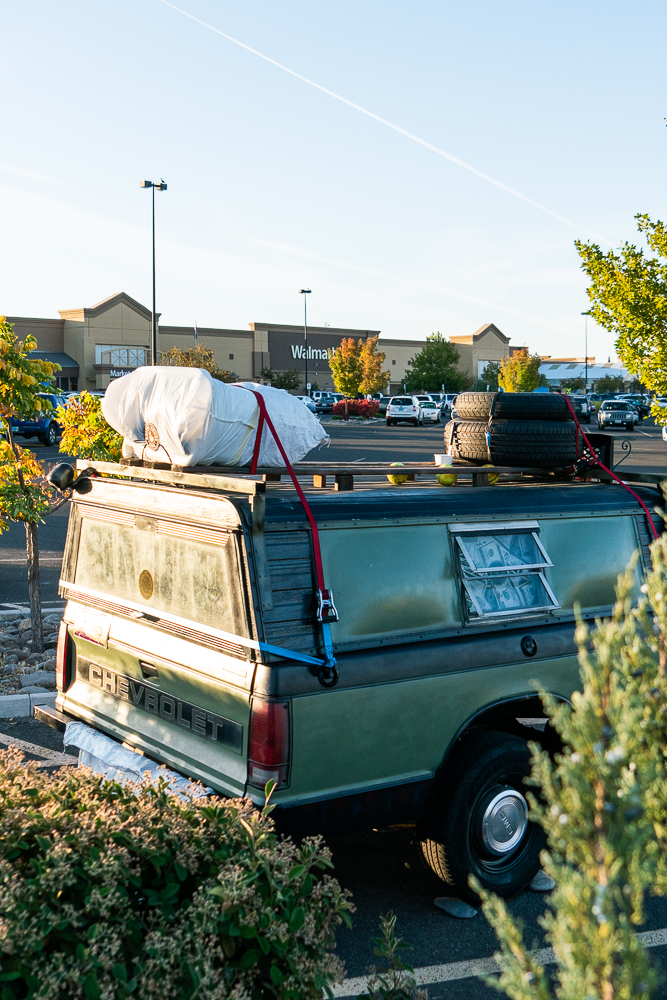
I asked about things more personal, or connected to her life experience, and she brought out these images of Tesla factory workers who live in their vehicles.

As Nina had already told me she is based in a van, the intersection was powerful. I’ve written a lot about the West Coast, (and perhaps American) homelessness epidemic, and this is a really intriguing, poignant and visceral way to convey a part of the story.

Next, we’ve got Ruth Lauer Manenti, from the Catskills in NY, whom I met early on the first day of the festival. Ruth is a great example of what I wrote earlier, as she told me she was trained in painting and drawing, but had come to photography when she inherited an old large format camera.

Much as I’m currently using my photo skills to learn how to draw, (seeing is seeing,) Ruth figured out her own way of communicating photographically.

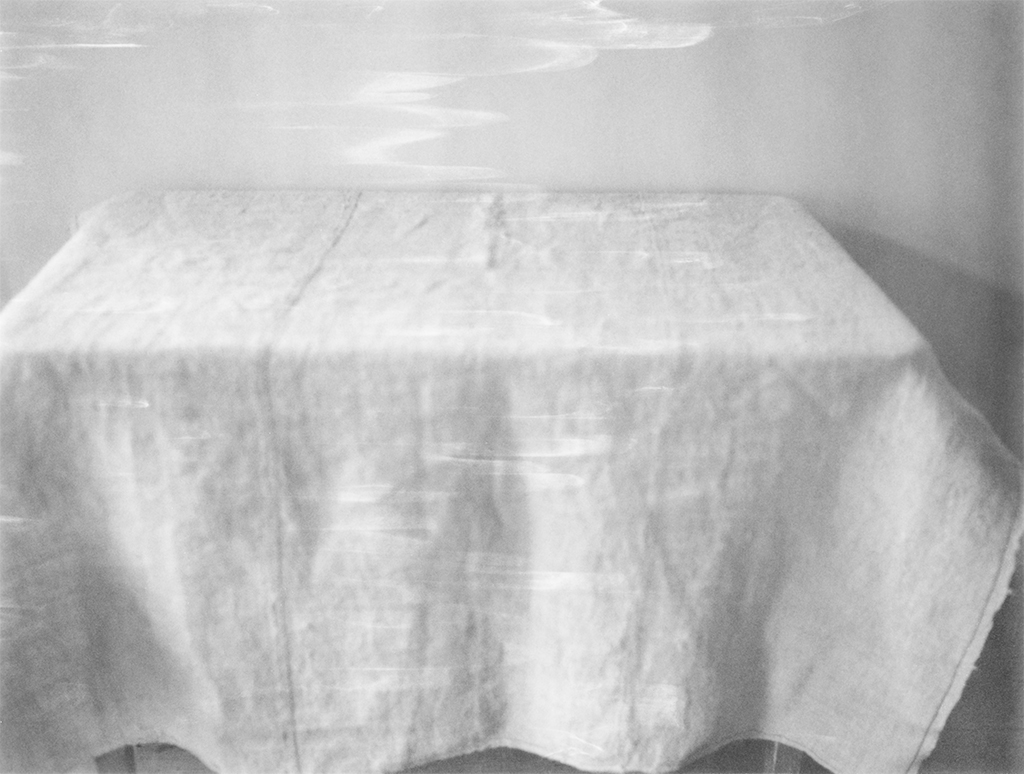
It’s spare, Zen, and very, very beautiful.

Love it!


Sam Scoggins is back in the column, as likely the first person to be featured twice, with different work, from two different festivals in the same year.

(Quite the achievement, if you think about it.)

After Photolucida, I published Sam’s black and white documentary photographs of Upstate NY night time party creatures. Then, he went on to have success with a artificial, digital landscape project.

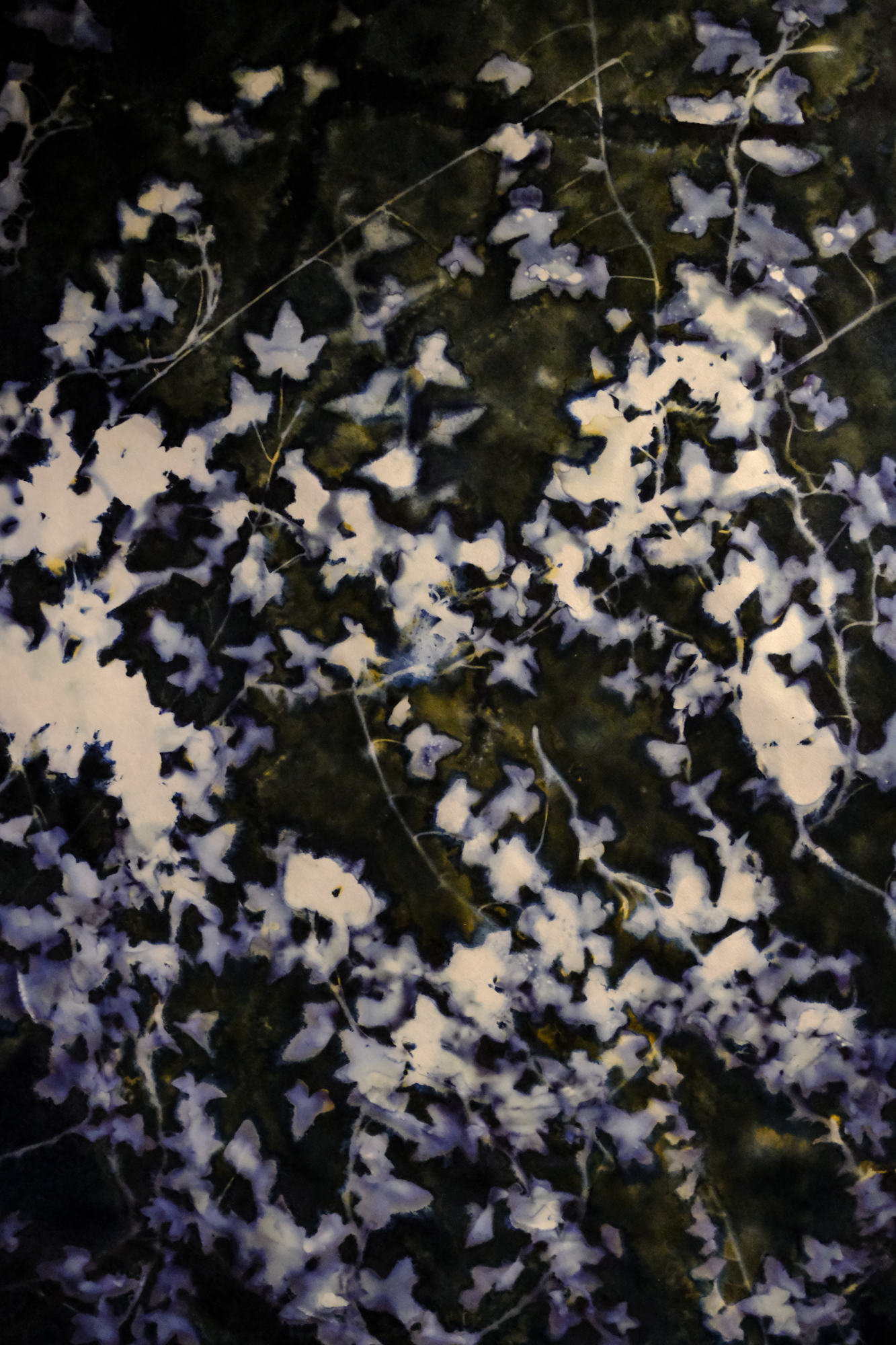
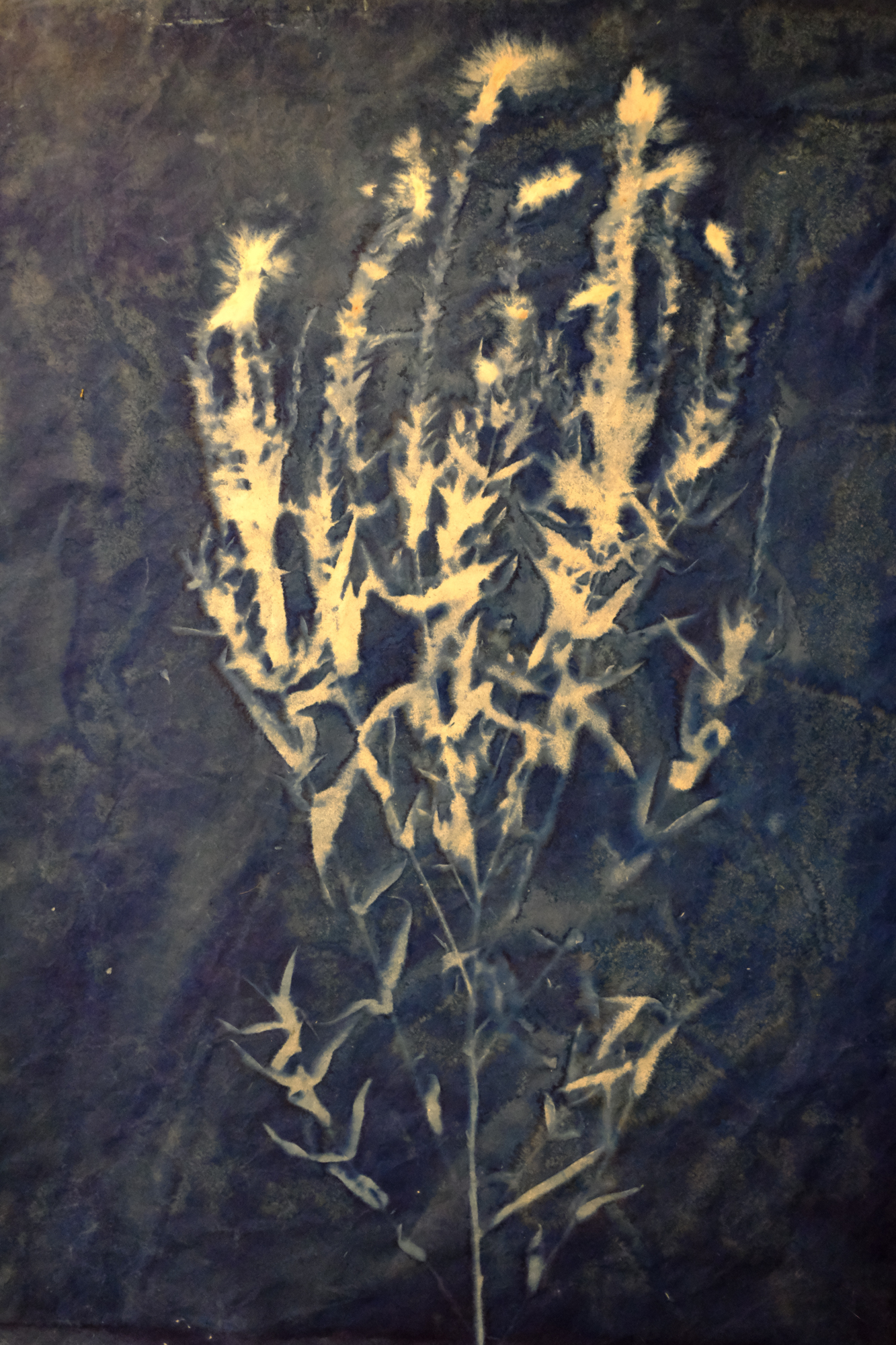
But in Chicago, I noted him toting around a huge box of prints, but couldn’t see what they were. During the portfolio walk on Saturday night, based on their size and the edges that stuck out, I found that Sam had also been working on a cyanotype series as well.

Talk about prolific!

There are two groups, featuring endangered native species toned in oil, and then an invasive species bunch as well, all from near his home.

What a talented guy.

Native species plants


Invasive plants


Finally, we have Sarah Pfohl, who is a photo professor in Indianapolis.

Sara told me that she was working on a very a personal documentary series on her family’s property in Upstate New York, as she did not expect to ever inherit it.

For her, the place represented home, but Sara felt there was limited amount of time that she’d be able to access it, and those feelings.

So her work amounted to memory-creation and capture, but also a quiet elegy to the death of her childhood, in a way. It’s a sad place to leave you, today, but then again, it’s November, with all the sad light.

See you next week!

The Art of the Personal Project: Dana Hursey

The Art of the Personal Project is a crucial element to let potential buyers see how you think creatively on your own.  I am drawn to personal projects that have an interesting vision or that show something I have never seen before.  In this thread, I’ll include a link to each personal project with the artist statement so you can see more of the project. Please note: This thread is not affiliated with any company; I’m just featuring projects that I find.  Please DO NOT send me your work.  I do not take submissions.

Today’s featured artist:  Dana Hursey

The 14 Days Documentary Project is a collaboration of photography and film with the goal of unifying people through our commonality and shared humanity. This collection of imagery is from the “Great Britain” project and is but a small sampling of the over 600 portraits that Dana created during his “14 Days in Great Britain”. For more information on the 14 Days Project… visit: www.14daysproject.com

“14 Days in Great Britain” was as much an emotional journey for me as a physical one. To be touched so deeply by such brief encounters speaks to the heart of this incredible project. -Dana Hursey

To see more of this project, click here.

APE contributor Suzanne Sease currently works as a consultant for photographers and illustrators around the world. She has been involved in the photography and illustration industry since the mid 80s.  After establishing the art buying department at The Martin Agency, then working for Kaplan-Thaler, Capital One, Best Buy and numerous smaller agencies and companies, she decided to be a consultant in 1999. She has a new Twitter feed with helpful marketing information because she believes that marketing should be driven by brand and not by specialty.  Follow her at @SuzanneSeaseInstagram

Success is more than a matter of your talent. It’s also a matter of doing a better job presenting it.  And that is what I do with decades of agency and in-house experience.


The Daily Edit – One Portrait a Day, Everyday: Brian Molyneaux

Brian Molyneaux

How long have you been doing this?
Almost 4 years – I started on January 6, 2016. I’ve posted almost 1500 portraits since then. At first, I envisioned doing it for only a few months, but a friend suggested making it a 6-months or year-long project. When I got to 6 months, I felt like there was more to do. When I got to a year, I couldn’t stop. My commitment to myself and the people I haven’t yet met was too strong to stop. Here I am now, still doing it once a day, and I have no plan to stop.

This project allows me to create content every day and allows me to feel that I’ve accomplished something special every day, which has built confidence in other areas of my life. I think the project has benefits to my overall mental health too. My mother was diagnosed with early on-set dementia/Alzheimer’s several years ago. She has digressed a lot over the past few years and one thing I’ve heard from doctors is that having a good social network of friends throughout one’s life will help stave off the effects of Alzheimer’s. There are physical and mental health benefits of walking around, genuinely connecting with someone new, and photographing them. Every day.

Heidi: How much time do you have with each subject?
Brian: The process goes pretty quickly and a lot of it is based on intuition. I’m always on the lookout for interesting people on the street. When I spot a potential subject, I introduce myself, talk to them about the project, and invite them to participate. Then I let our connection unfold organically. I have to convince them that I’m not too weird, allow them to share with me what’s happening in their life at that moment, and get a proper portrait of quality within a few minutes. Usually I allow between 2-5 minutes to do all of this and have them sign the model release on my phone.

It still surprises me how we can as humans can get so vulnerable and truly honest within minutes. Sometimes, I am so taken up by the connection, I don’t think about it as a process. Those interactions usually result in the best portraits. But as much as I love the portraits, I love the connections I’m making more than anything else. I thrive on being able to capture that moment in someone’s life and I am floored that people trust me as much as they do. I prefer not to hammer the shutter. I don’t ever worry about whether I can get the shot. Once the connection is there I know the photo will come.

How has your process and imagery refined now that you are almost 4 years in?
The first day I used my iPhone. It wasn’t planned it just sort of happened. I was leaving the grocery store and there was this guy cutting flowers in the flower department holding a knife. I approached him and asked if I could photograph him in that same position. He agreed and the project was born. I switched to photographing with my Nikon the next day on the street.

For a bit I used an AE-S Nikkor 24-70mm 2.8, but mainly I’ve used a manual Nikkor 50mm 1.4. The entire project has been photographed at 50mm. I wanted to honor how I learned to shoot with film years ago so I’ve added challenges, like getting the shot in 24 frames or less. I often come away with several selects from those 24. The constraints I have added have helped me a lot.

I’ve also developed better skills at reading people, which has translated into having a high success rate. I’ve only had 67 rejections. Recently I started using video to ask people one relatively deep question after we finish the portrait. I like expanding the experience to literally give voice to the people in the photos. All the verbal cues, changes in facial expression and intonation that video allows captures a thicker slice of their story than just the photo and the blurb I write.

Any plans for a book with images and stories?
Yes. I am talking with a couple publishing houses about creating a book or book series of this project. I’d like to take the project on the road to places that I haven’t spent much time in, like the Deep South and Cuba. I’m excited for the possibilities of meeting new people everywhere I visit.

What is the drive to continue?
Total world domination. Well, not really. To connect and tell stories through photos and words. I am fascinated about people and human behavior and the stories that connect and unite us. I want to capture that as much as I possibly can. Here we are – floating around on this ball in space – all unique but sharing bonds of commonality. I want to expose what makes us similar and connected. There’s plenty of noise out there about what divides us. I’m all about connecting people.

The Daily Promo – Nils Ericson

Nils Ericson

Who printed it?
We used a company out of the UK called Newspaper Club. We had looked locally at a couple of different printers here in the Portland area and they looked amazing but taking into account turnaround and price we ultimately went with Newspaper Club.

Who designed it?
After we went back and forth regarding what project/which images, she designed it and laid everything out. I was in the enviable position of simply taking the photographs and working on the color.

Tell me about the images?
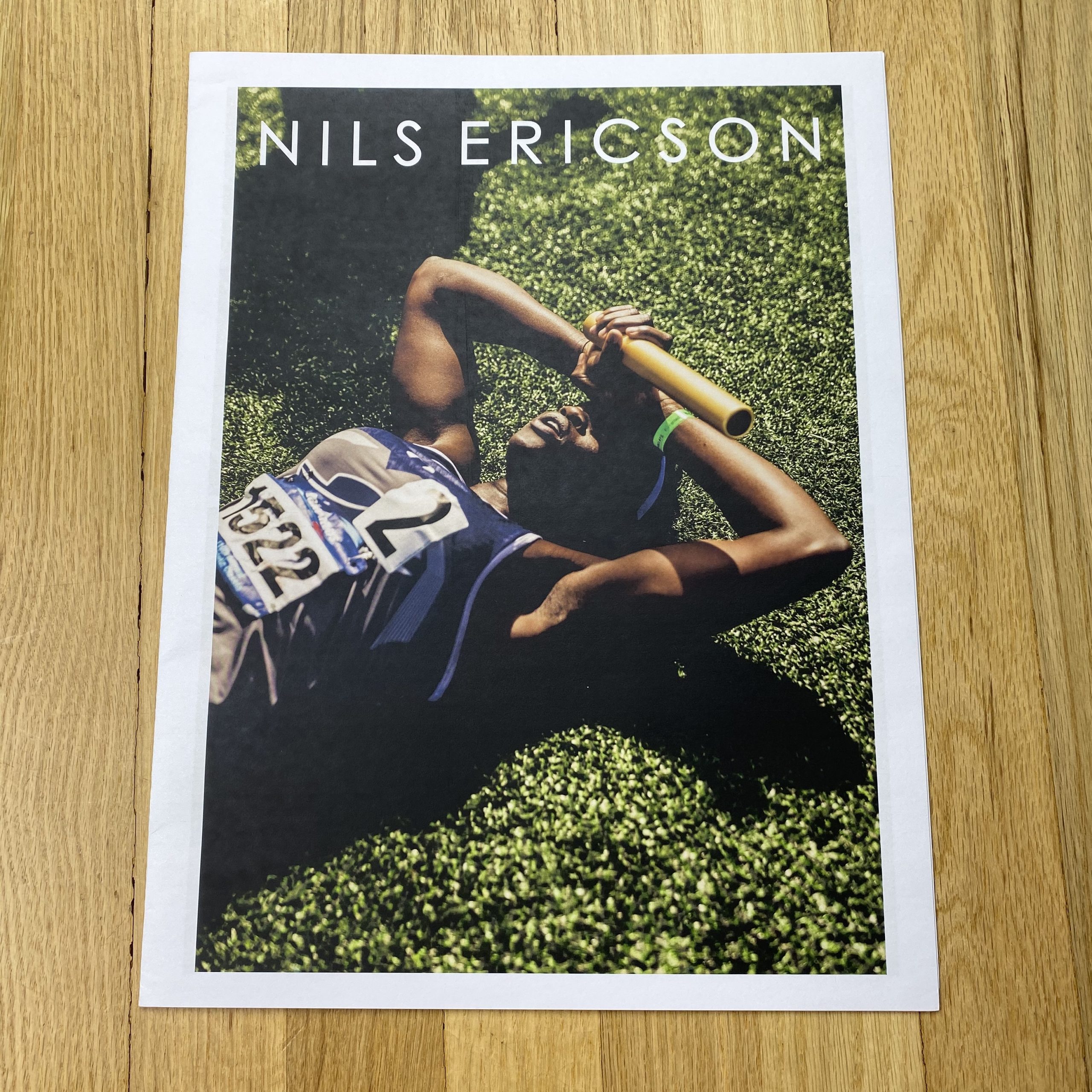
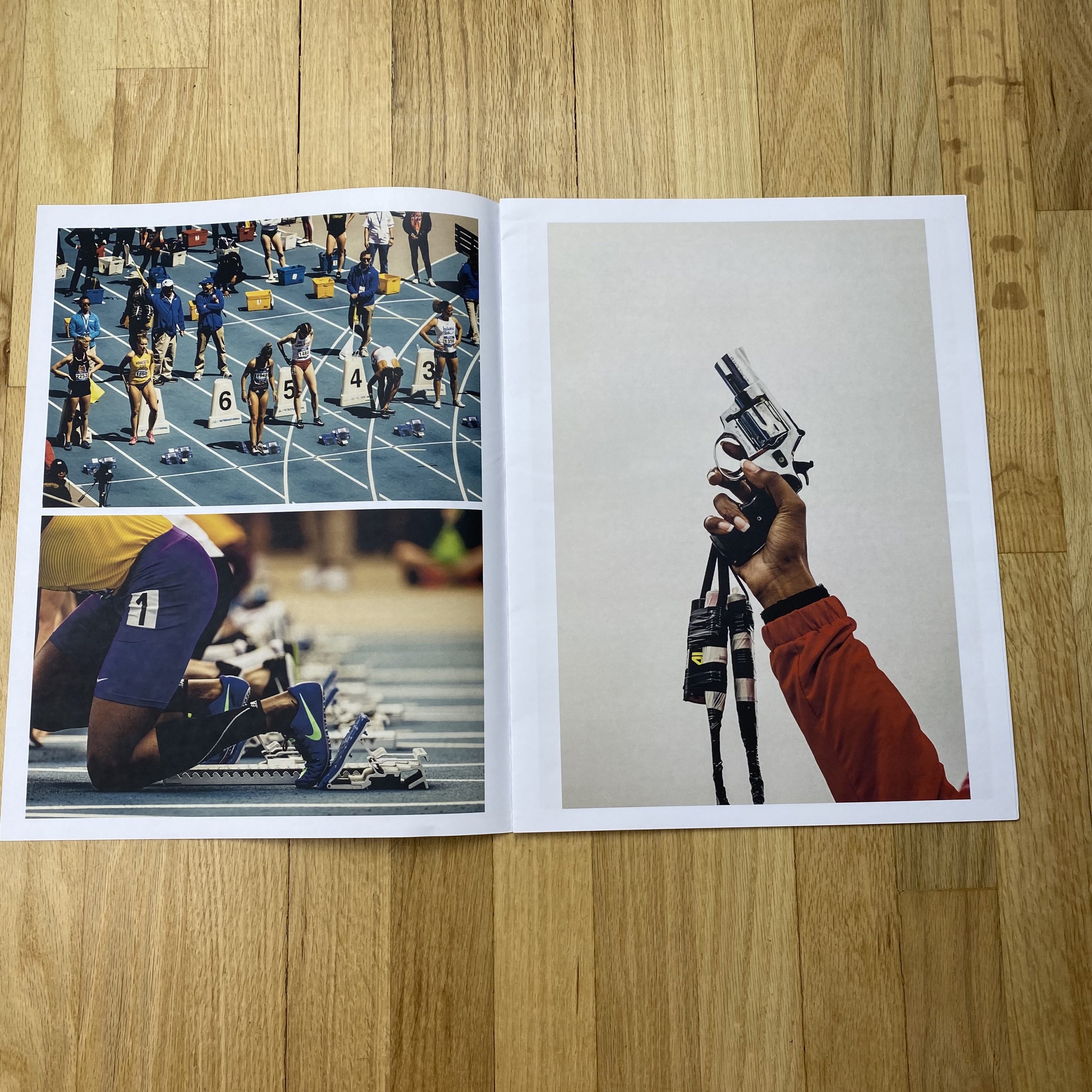
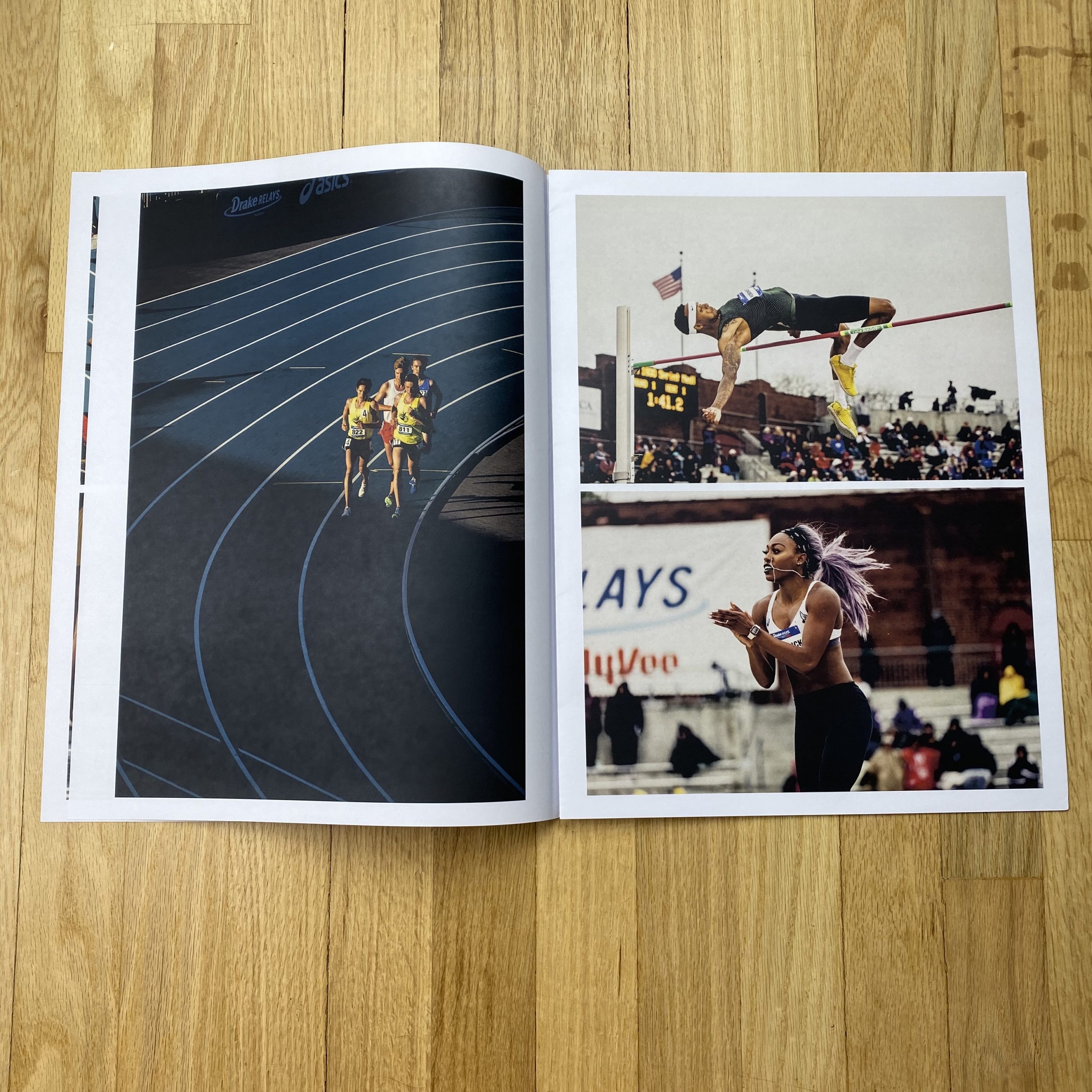
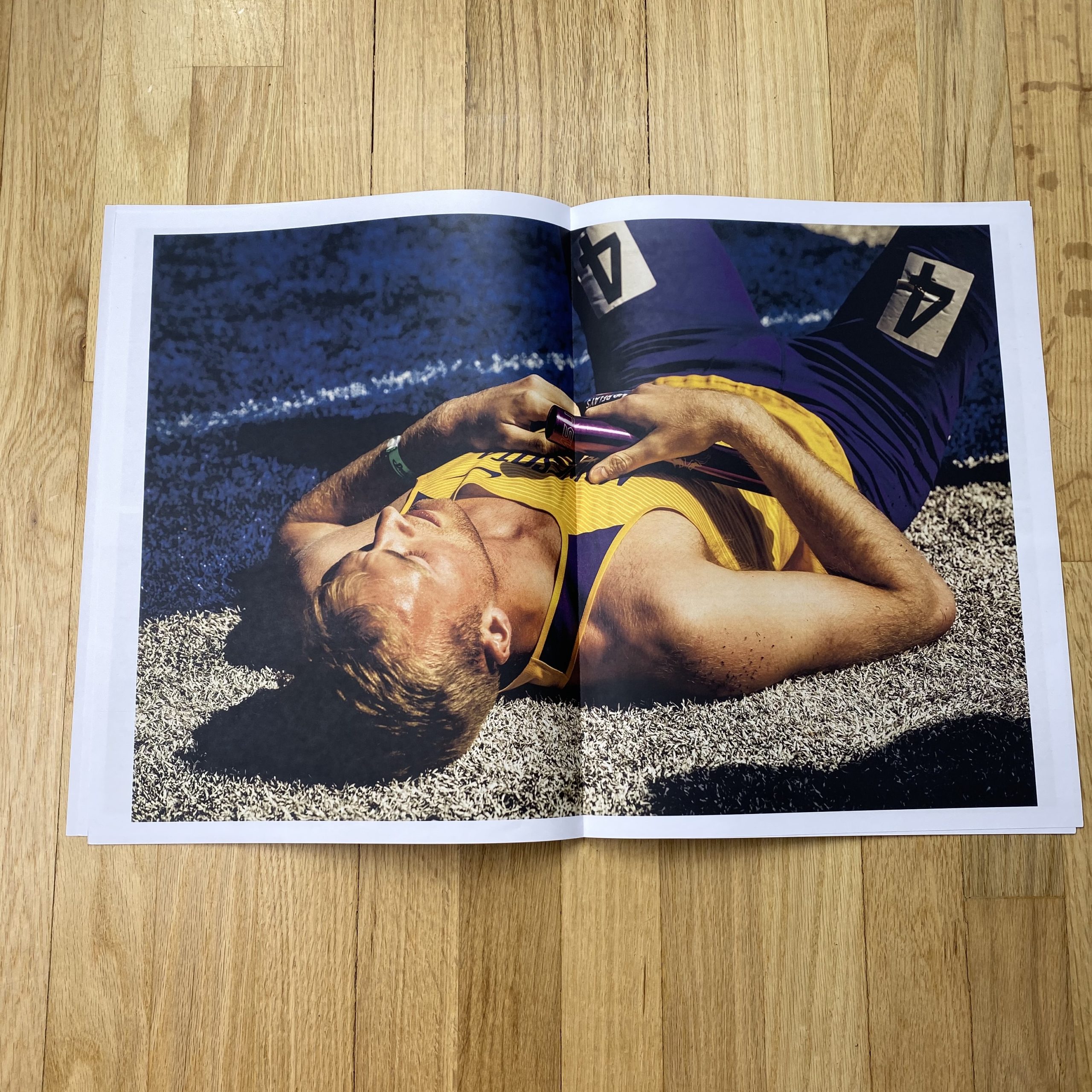
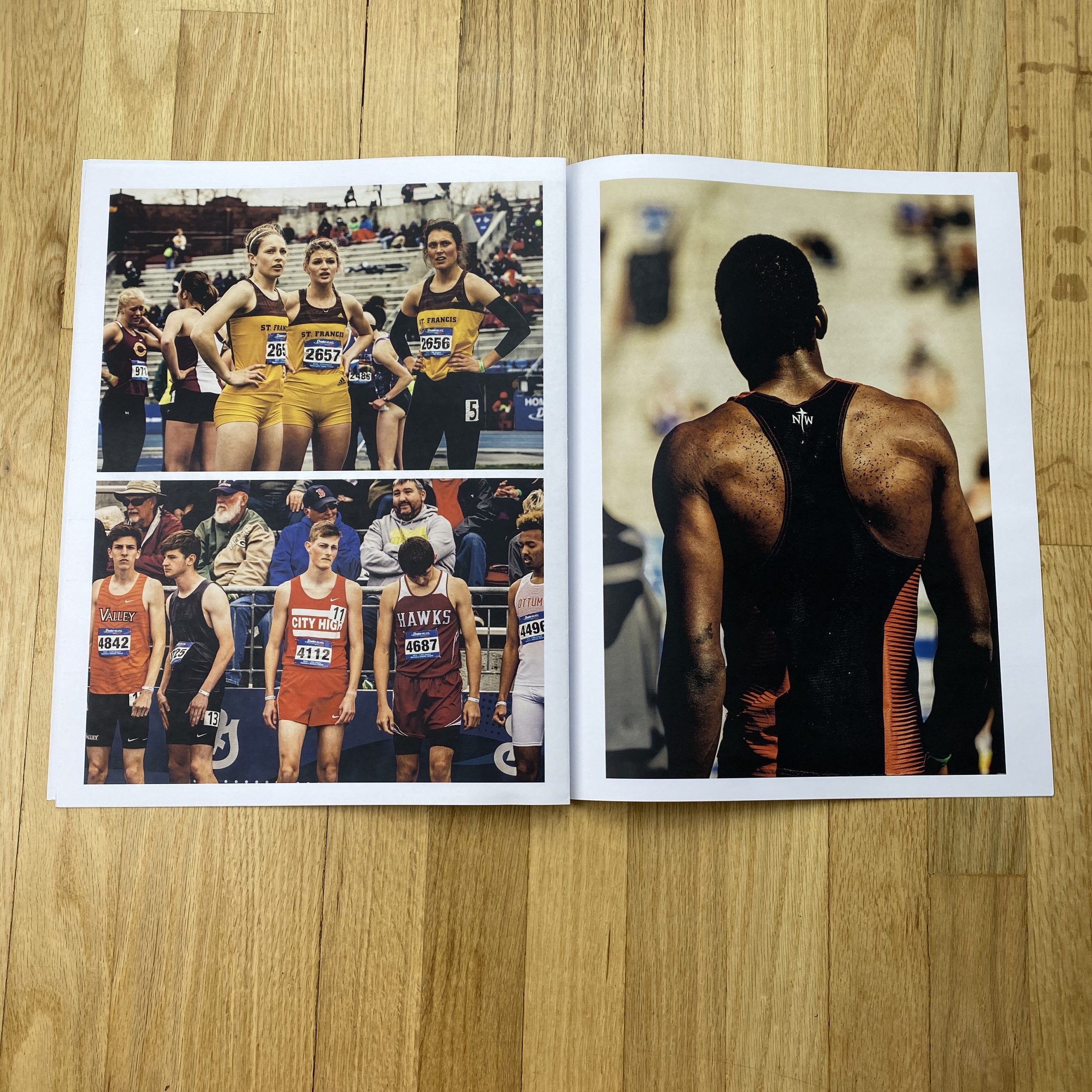
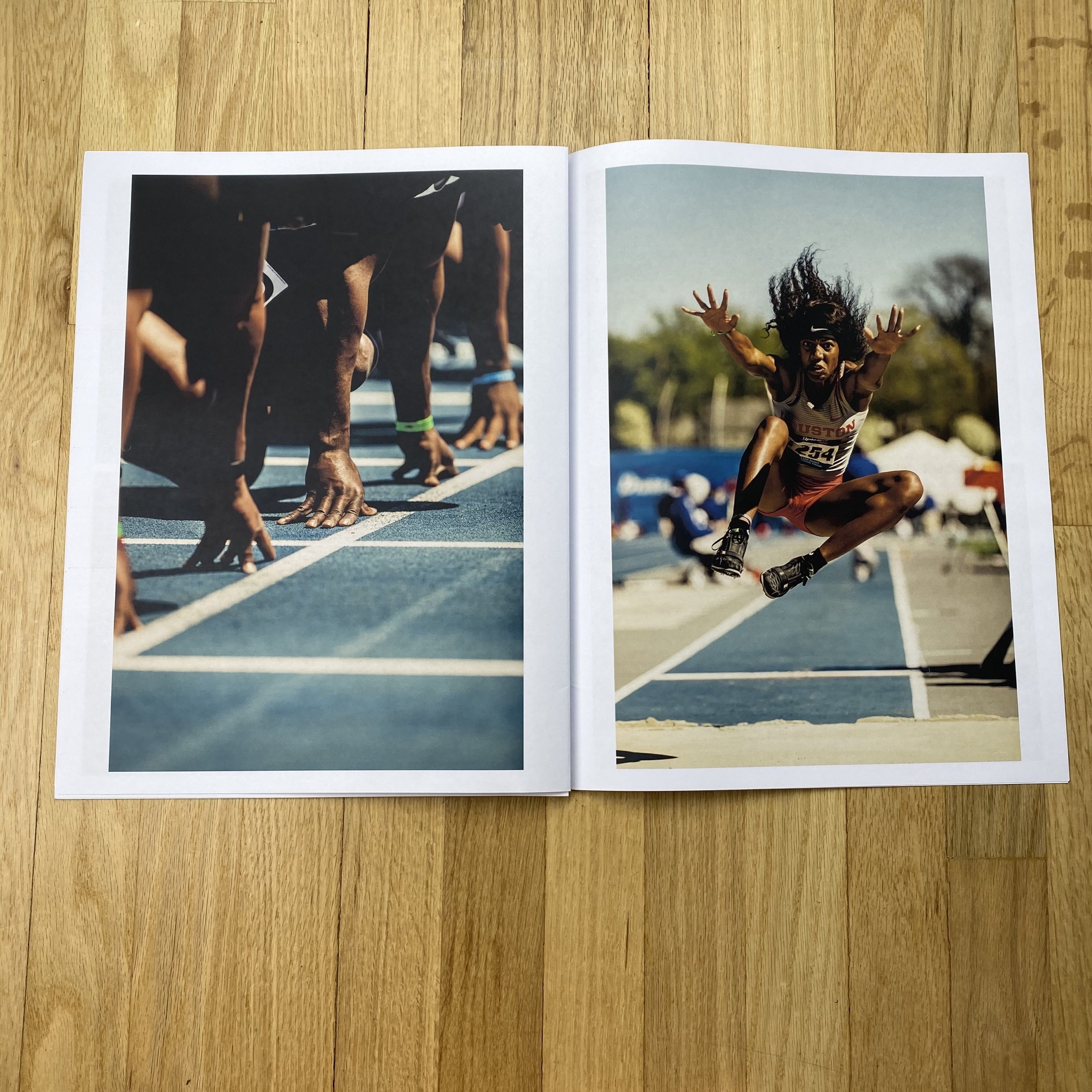
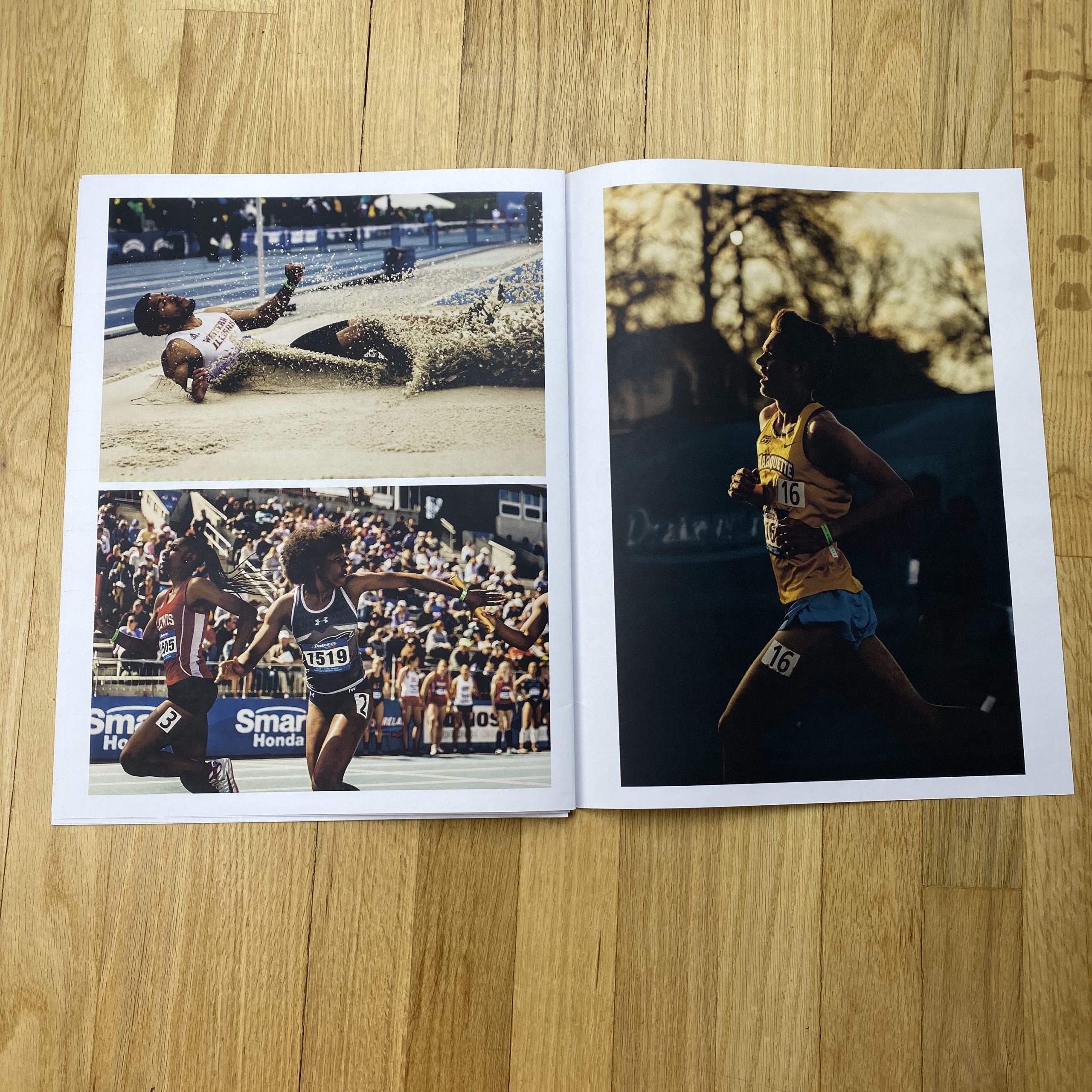
I grew up in Des Moines, Iowa and would get out of school for a couple of days every Spring for the Drake Relays. I was never fast enough to run on the blue oval but did grow up running track and cross country. In any case, I’ve photographed some track and field in the past and for the last few years couldn’t shake the idea of going back home, staying with my folks, walking to and photographing the Drake Relays. It’s a special event. The weather is a mix of amazing and miserable – think snow, rain, wind, and sun – and the athletes range from high school to professional. I called my friend Amy Wolff at Runners World and she pulled a credential in the hopes it might turn into a story. The story didn’t work out but it made for a beautiful promo.

How many did you make?
100 finals plus 3 rounds of proofs to iron out the color.

How many times a year do you send out promos?
Truth be told, this was basically the first. I’d toyed with a promo forever ago but this was my first stab and making something that felt well-conceived and concise and hopefully apropos considering the Olympics coming this summer. In the future, I’d like to send out no more than 2/year. Honestly, 1 per year is probably all I have in the tank with everything else going on.

Do you think printed promos are effective for marketing your work?
I’m undecided, largely because this is my first go around. In my heart of hearts, I want to believe that making something special that conveys real emotion and sending it to a very core group of people is effective but time will tell.

The Best Work I Saw at the Filter Photo Festival: Part 1


I was doing some math last week.

Adding up the number of days I’ve spent in Chicago over the last four years.

I was talking to my son about it, and realized that 5 trips at 5-6 days each equates to almost a month.

A month!
In a city I barely knew.

I’ve gone from not knowing where I was going, to almost remembering the landmarks but getting a little turned around, to kind-of-remembering and mostly going in the right direction, to knowing where I was and walking with a military march in my step.

What can I tell you?

Chicago is a beautiful city, and the large downtown area, filled with gorgeous skyscrapers, is set up against a blue lake as big as an ocean. There are green waterways criss-crossing the city as well, things you’ve seen in movies, with building reflections shimmering in the water below bridge-crossings.

People are friendly, and though it bears a resemblance to Manhattan, with the 20th Century, period nature of a lot of the buildings, it’s much cleaner.

An Über driver from Morocco told me he thinks Chicago is still much cheaper, and therefore more livable, than its East and West Coast mega-city competition.

But this September, at the 2019 Filter Photo Festival, I couldn’t help thinking it was strange how quickly something can go from new and fascinating to comfortable and nostalgic.

Here’s an example.

On Thursday night, after a long first day of reviewing portfolios, there was a little gap in the schedule before a reception at the Museum of Contemporary Photography at Columbia College, where Teju Cole’s fantastic, curated exhibition “Go Down Moses” was on display.

Rather than Übering or Lyfting, cabbing, bussing, or taking the subway, I chose to walk, alone, to gather my thoughts.

It’s about two miles, and I’ve done it before, so I know the way.

And I was also hoping I’d bump into someone.

Sure enough, on a street corner opposite Millennium Park, (before you get to the Art Institute,) I saw blues singer/guitar player/drummer Brian Doroba, in the same spot he was a couple of years before, when I stumbled upon his act, awestruck.

I had left early enough to be able to stop and listen, (just in case,) and got a ten minute concert of some genuinely killer street blues.

I dropped a couple of bucks in the hat, made a video to remember the moment, and sunk into the music, bopping my head as I leaned back against the side of a building.

Other people stopped, breaking their routines to engage with the blues, right there amid the theater of the street.

It was pretty excellent, as far as moments go.

And it felt symbolic of my view towards the Filter festival: I have incredibly high expectations, and they’re consistently met, even if I can’t be surprised, like I was when everything was new.

At this point, the Filter crew has their mission dialed in, and the festival is hyper-well run.

Their systems work, their venue is great, and the members of their team complement each other well. (Which I wrote about in last week’s team-building column.)

Filter has lectures, workshops, exhibitions and parties, along with four days of reviews.

Things just work so well.

People arrive at your table on time, never late, and leave when they’re supposed to. The breaks come at just the right time. The food is amazing, and the vibe in the reviewing room is positive.

To establish this level of excellence, in the heart of a world-class city, is to be commended.

But we all know I went to Filter to look at portfolios to publish here. I scouted some great stuff, and am thrilled to be able to share it with you now.

That’s right: we’re officially opening the series, “The Best Work I saw at the Filter Photo Festival,” and this is only part one.

As usual, the artists are in no particular order.

Let’s get to it!

I totally loved Adam Frint’s work, and can even say it inspired me.

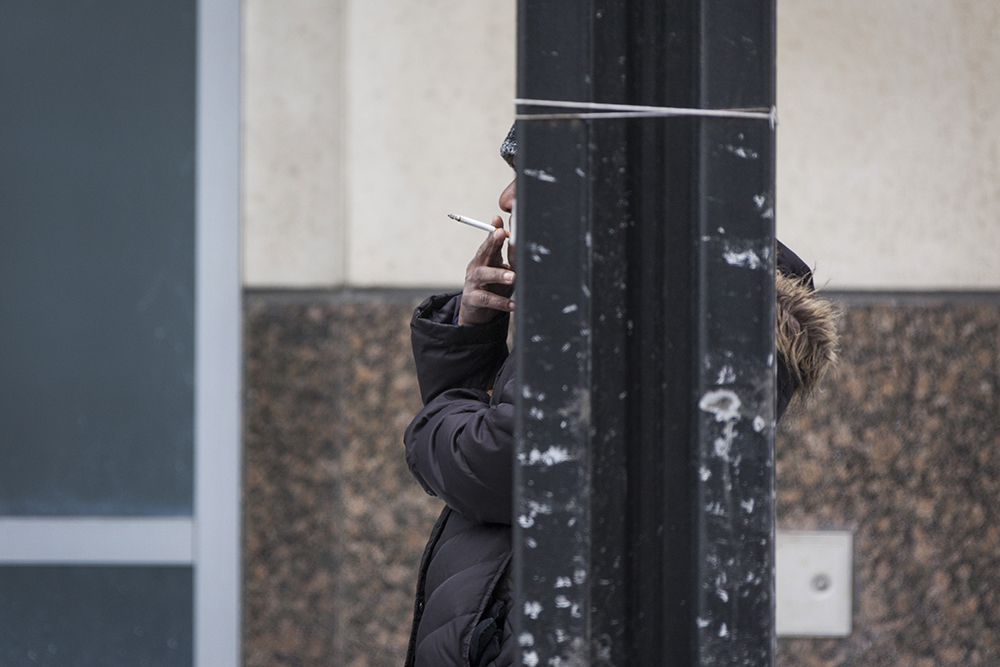
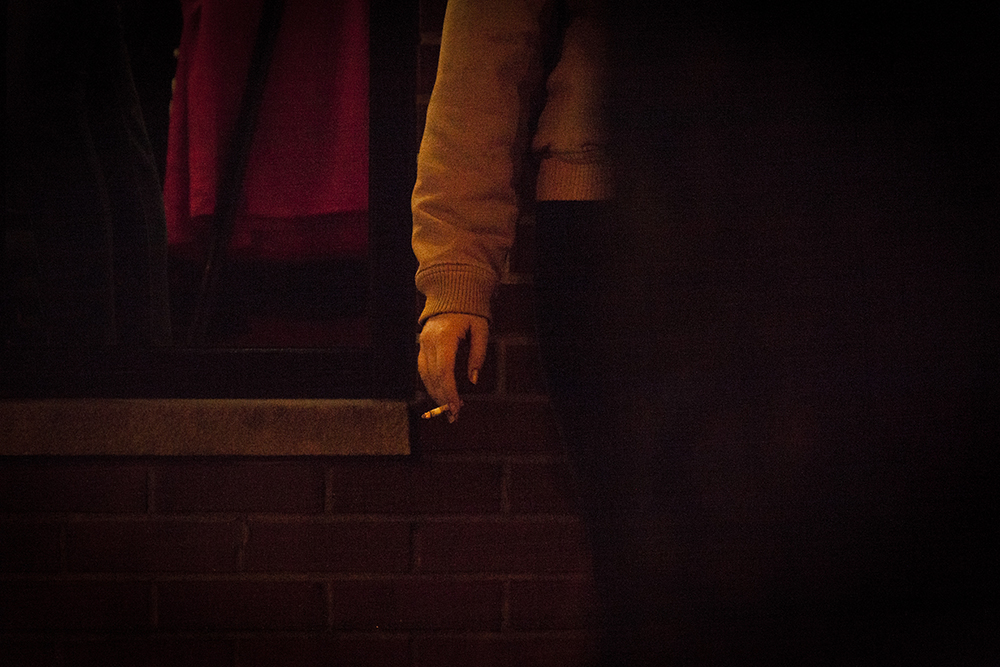
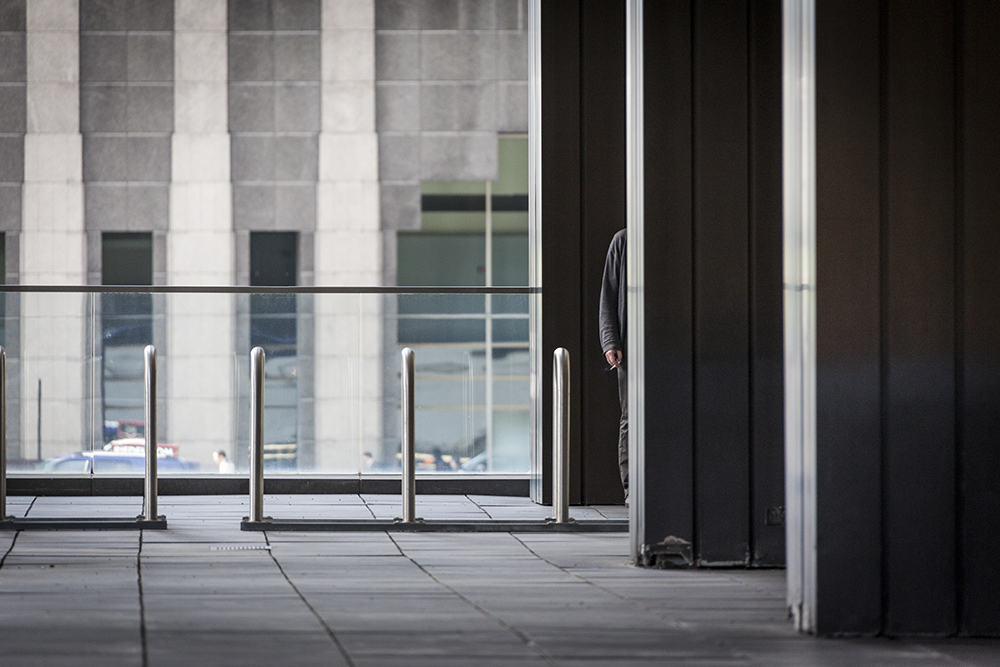
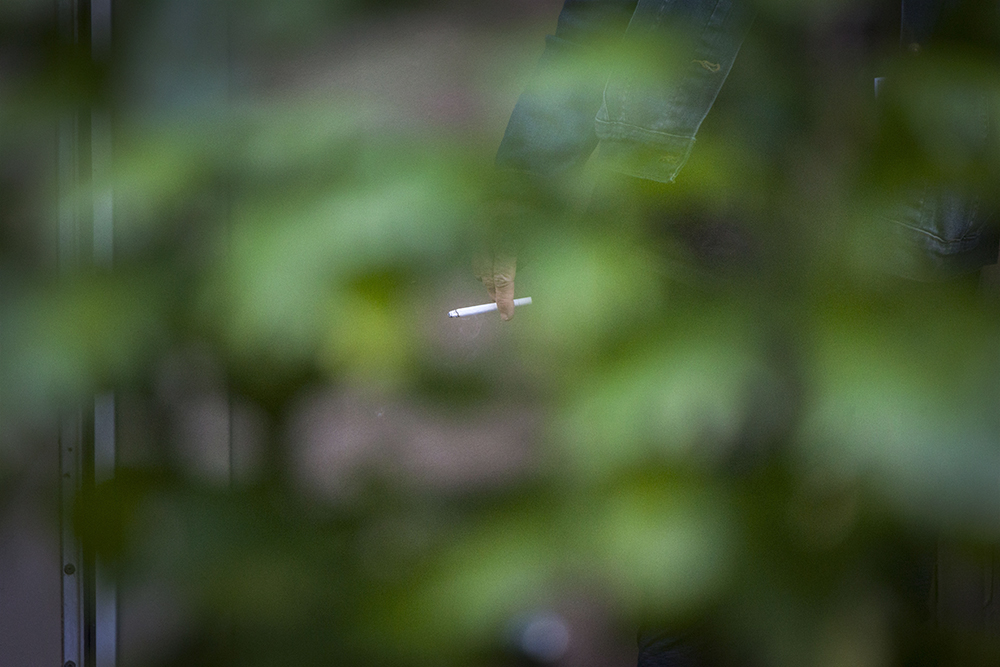
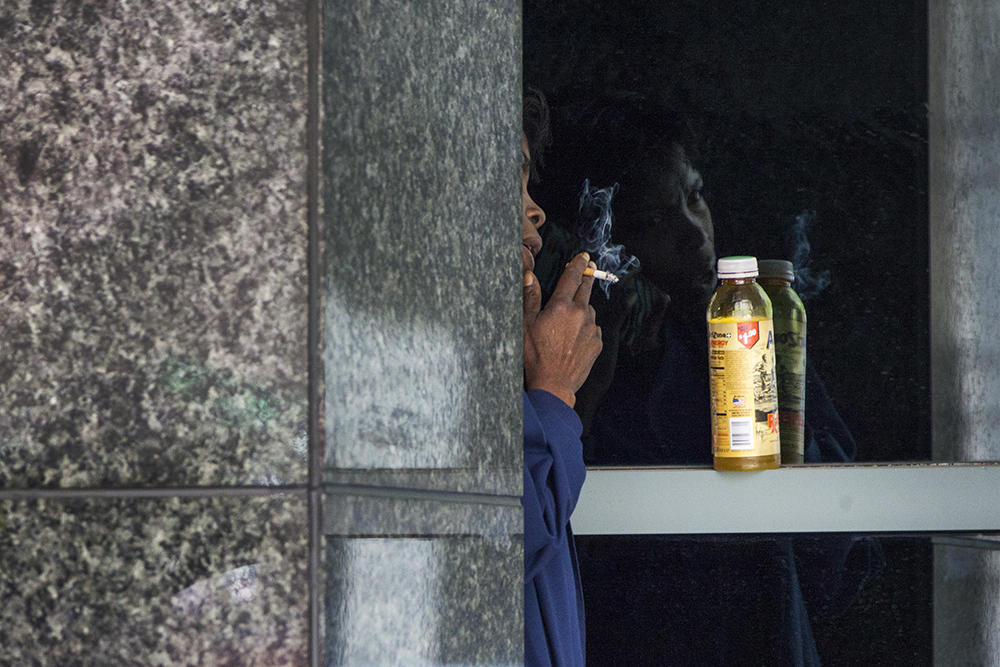
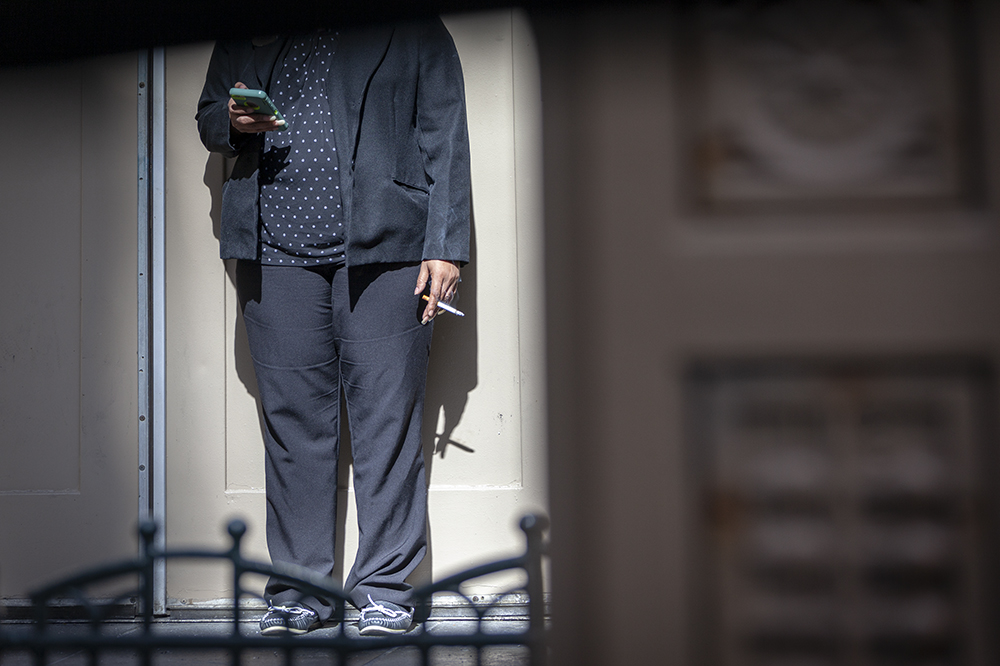
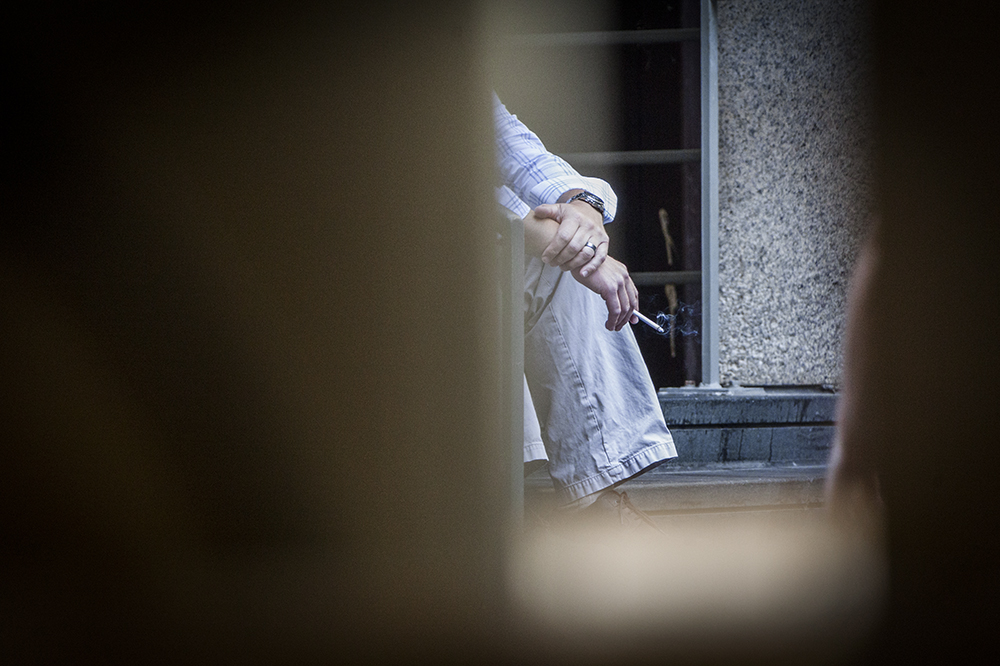
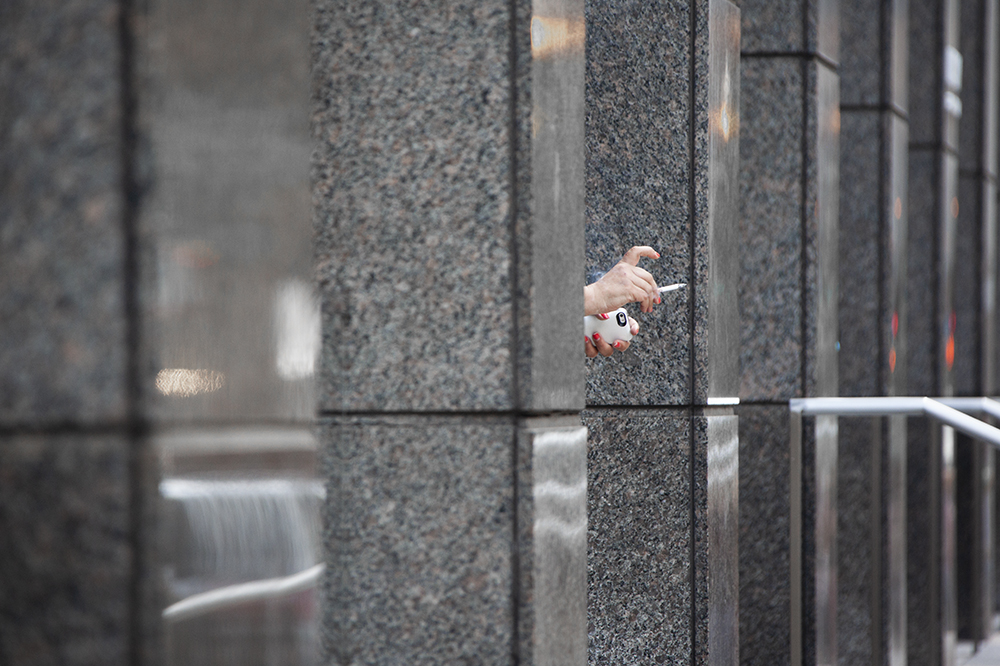
Adam showed me a series called “Smoke Break,” in which he’d skulked around Chicago, watching people on their aforementioned alone time. And then he photographed them.

The concept is simple, but the pictures are dynamic and mysterious.

Then he showed me a different idea, which he had worked out as drawings. (He’s trained as a designer, and works in various media.)

Loved them too.

I’ve had a drawing project in mind for a while, and recently started, and I’d like to think Adam’s work triggered my confidence.

There was a lot of strong photography at Filter, so you may find me throwing compliments around. But I was really struck by Crystal Tursich’s work, and thought they were some of the best matte paper prints I’d ever seen.

I caught one or two out of the corner of my eye at the portfolio walk, the night before I had a review with her, so they looked amazing at a distance, and up close.

At these meetings, I often critique matte prints that are flat, or oversaturated. Most everyone presents prints that limit the illusion of 3 dimensional space.

But not Crystal. Her prints were extraordinary.

She seemed to appreciate the compliments, and let me know it was no accident, but that she worked hard at her craft.

As for the subject matter, the images are personal, and inspired by a miscarriage. They were super-impressive in person, but show well digitally too.


Whitney Bradshaw was another Chicago artist, and had a project that was getting buzz and attention, and had been exhibited a lot lately too. (Hopefully with more opportunities ahead.)

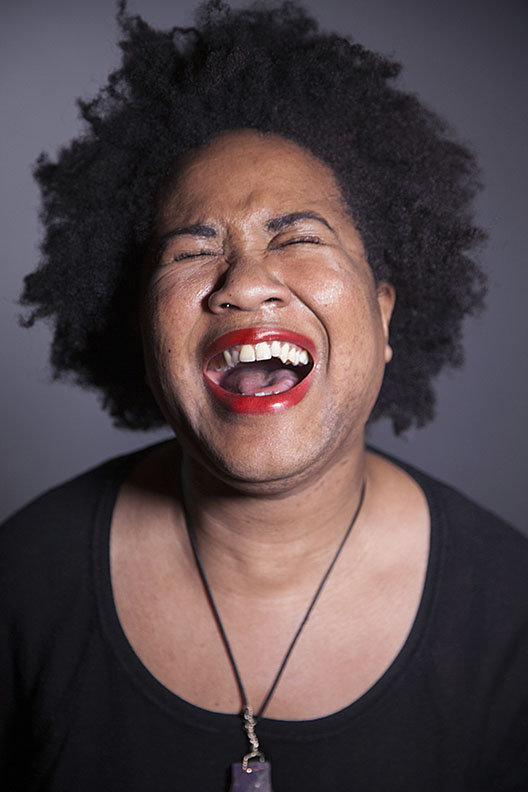
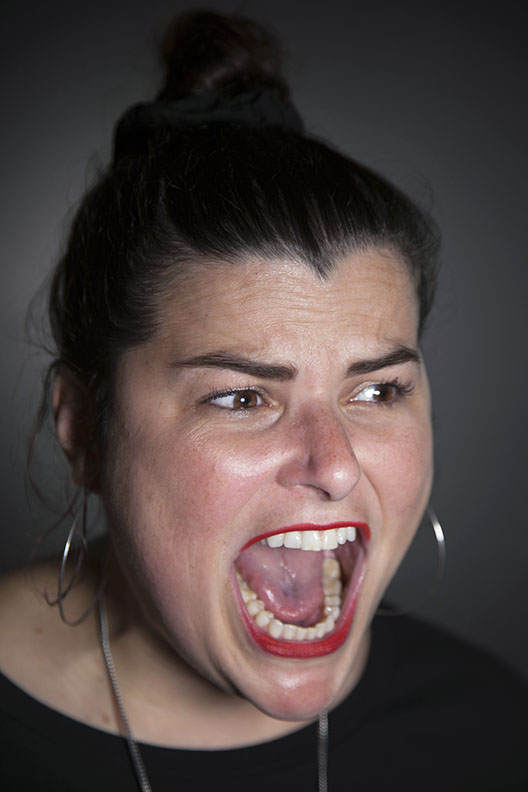
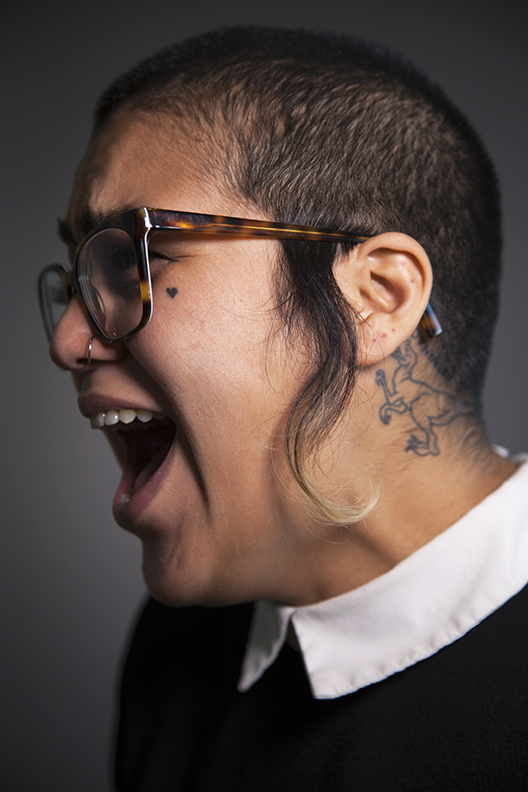
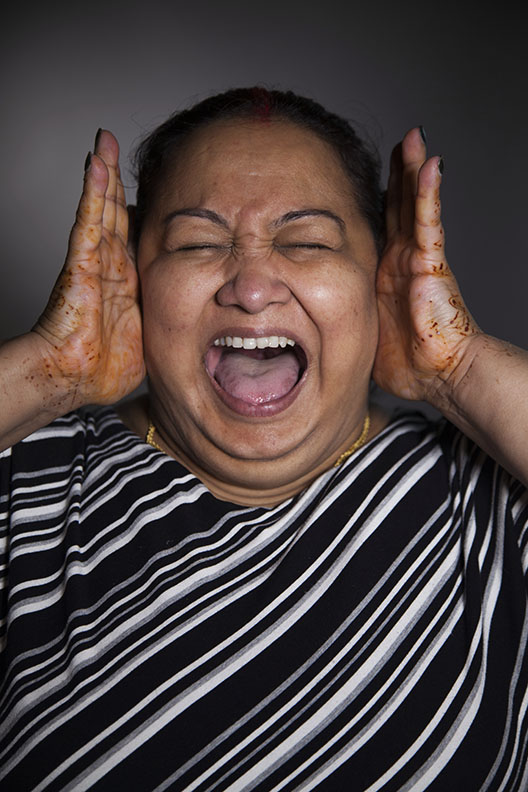
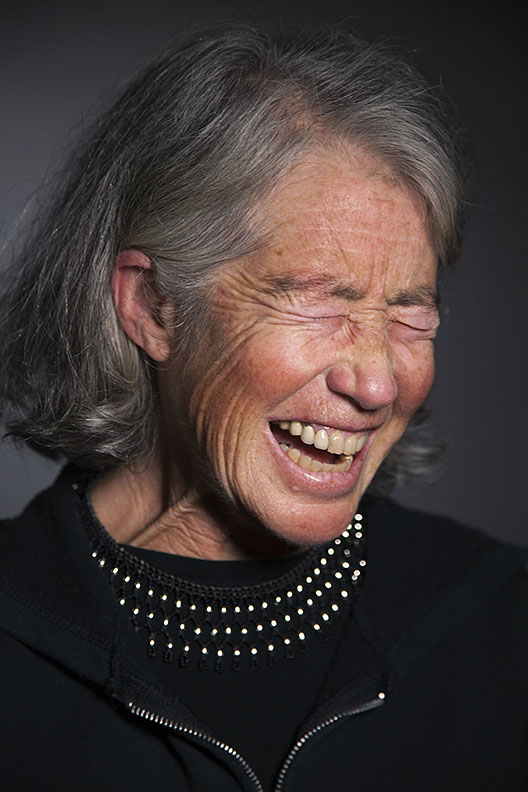
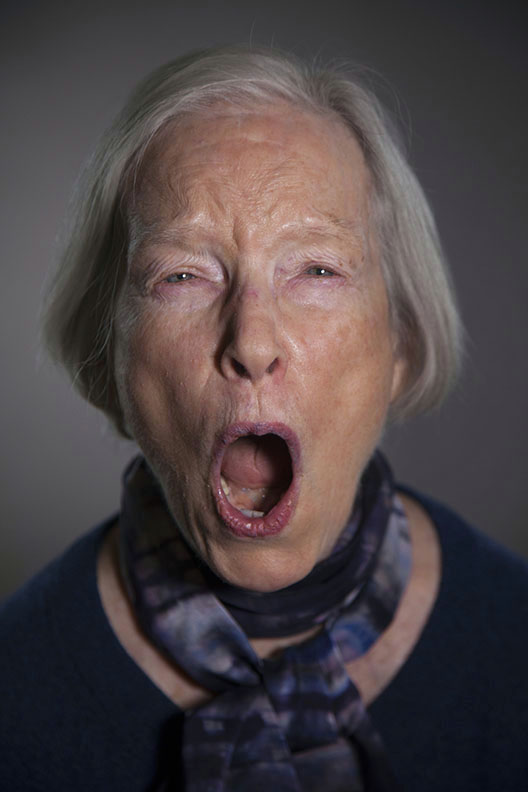
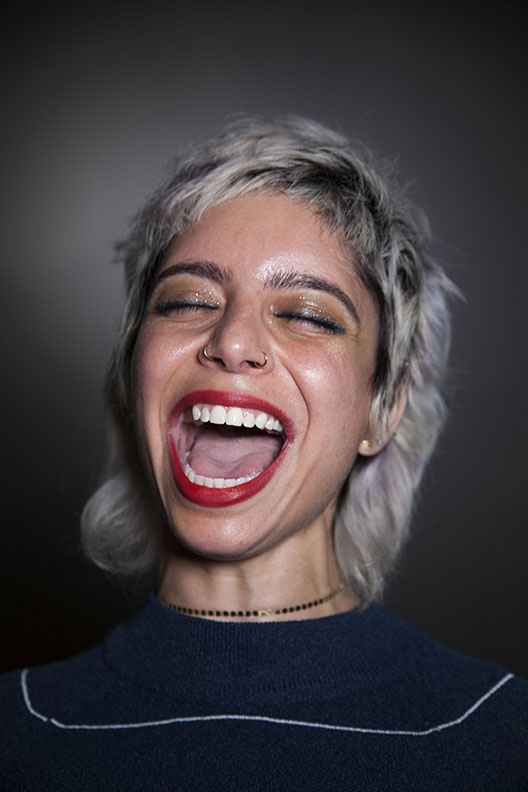
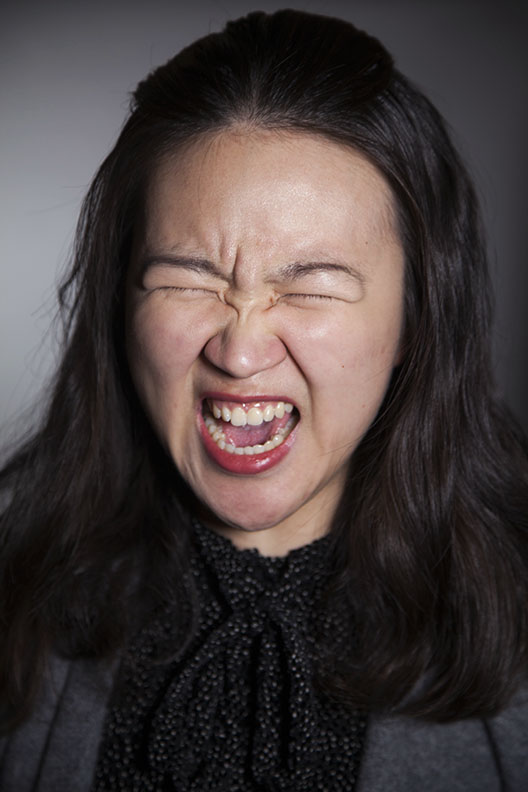
The project, “Outcry,”  is based on meet-ups that Whitney organizes, predominantly at her own home, where different women from various backgrounds come together to scream; communing around their own personal experience, or broader experience, with sexual violence. (Meaning most, but not all women are survivors.)

Whitney, who was a social worker, and has an MFA from Columbia College, then photographs the women when they’re screaming.

It’s intense, and apparently cathartic. I think it’s phenomenal as social practice work, and large format photographic installation.

I’ve seen Jim Ferguson’s work before, because we have a mutual friend in common. I even remembered the premise, which is the he doesn’t have proper depth perception in his vision.

So he makes work that visually communicates the way he sees. (Here were are with the flattened picture plane again.)

While I liked his previous black and white work, these color pictures were very cool. I told Jim about my critique of “headache” art at Photolucida, but his pictures make you see differently, without the need for ibuprofen.

I’m very curious to see what he comes up with next.

Margaret LeJeune had my favorite story of the festival. Or, rather, the story of our encounter was most memorable.

She told me, straight off, that she’d lived on a boat in the Atlantic Ocean for 14 months, sailing around the seas, making art.

I was hooked.

And she also let me know she’d been trained at the Visual Studies Workshop, so I expected high level technical skills.

I was crestfallen when the first thing she showed me were OK, documentary photo-style images, done with a not-special camera, shot around coast lines, and they didn’t give me any specificity.

Honestly, I didn’t understand how she didn’t do something more original, given what she seemed capable of.

She got a smile on her face, which is always a good sign, and told me about her other project, harvesting bioluminescent creatures from the sea, raising them back home in a studio lab, and using them in her photographs.

Say what now?

They are genius, and maybe for once I’m not exaggerating by using that word.

Last but not least, we have Vaune Trachtman.

I’ve written before that it’s important to judge the right time to approach someone at a festival, if you don’t have a review with them.

Well, I got into an elevator with Vaune, and she was super nice about letting me know she’d hoped to show me her work, but hadn’t had the chance.

Nothing pushy, totally genuine, and it allowed me to be a nice guy, which is always my preference.

So I gave her my card, and told her I’d look at her website if she dropped me a line. She did follow up, with an email and a thank you note, and once I got a proper set of jpegs, I knew they would look great here.

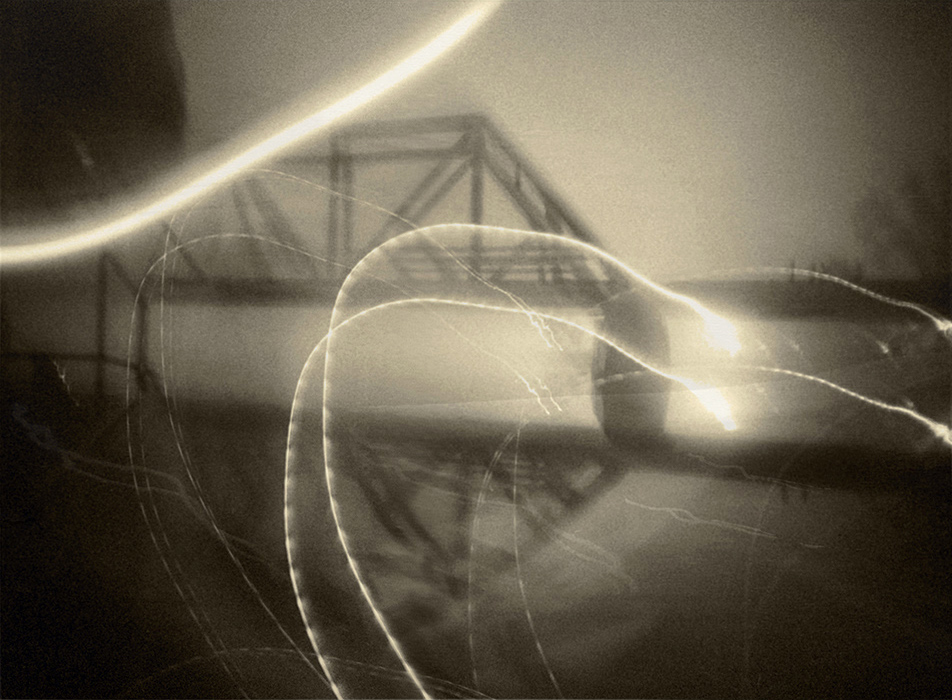
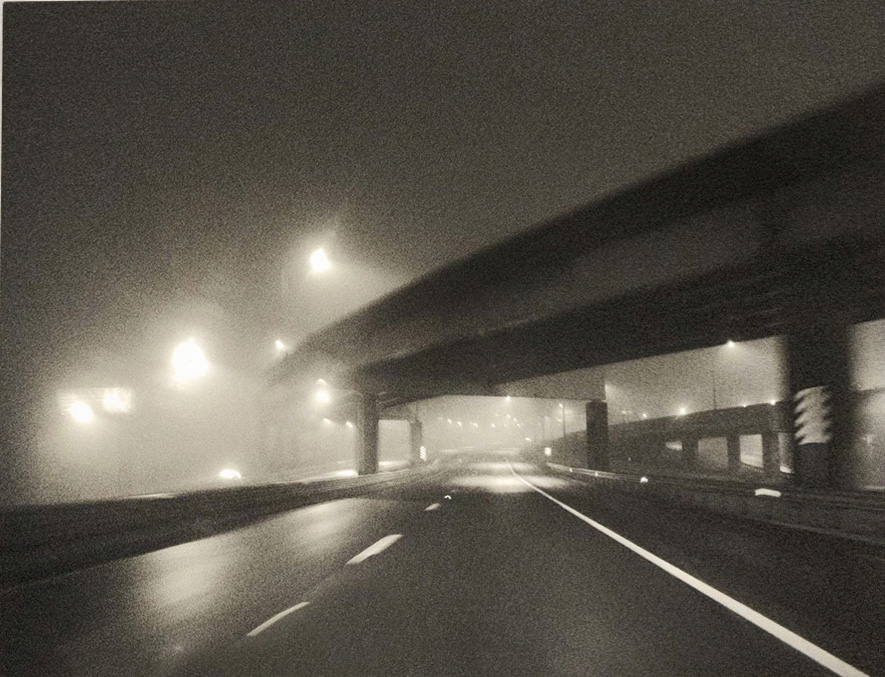
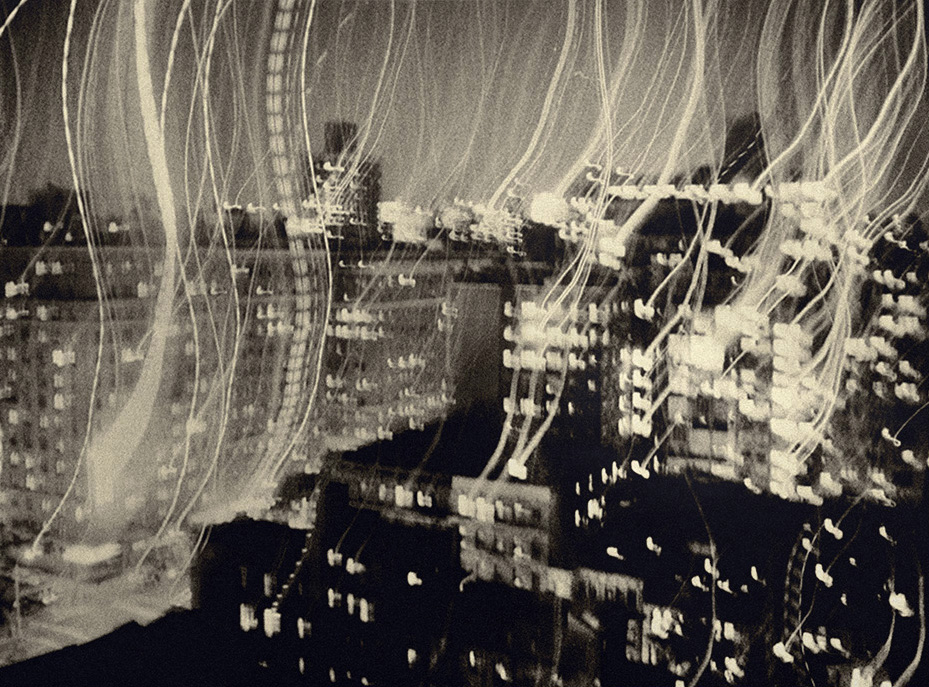
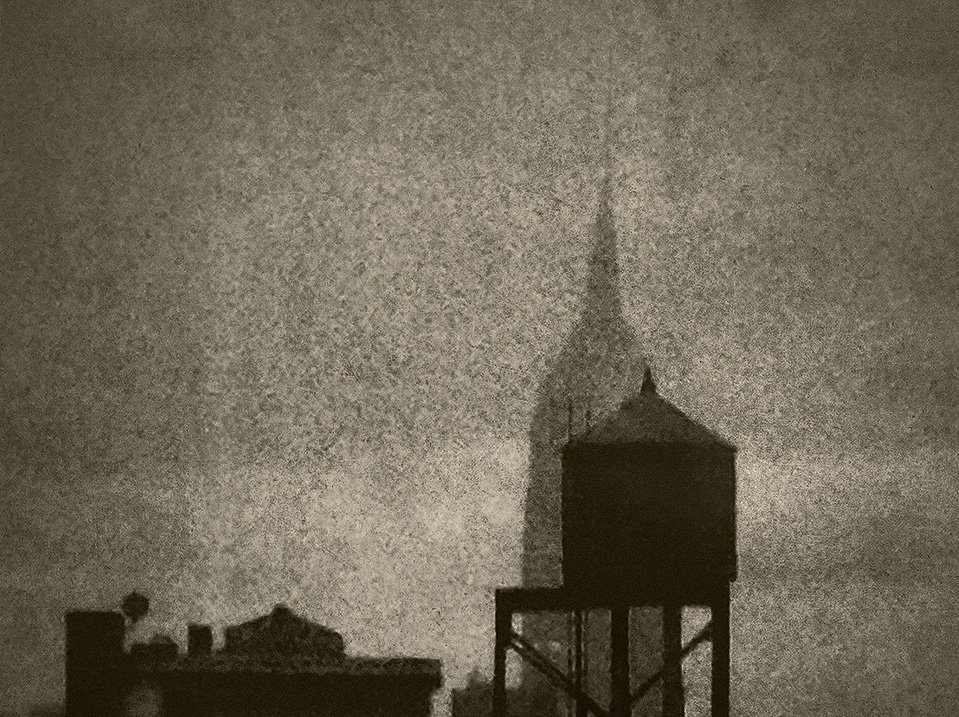
These images are trippy, suggesting a November, nocturnal voyage. They have a gravitas, and a sense of purpose that I really like. Normally, I think light trails are kitschy, but here they work.

Hope you enjoy them, and I’ll have more for you next week!

The Art of The Personal Project: Kate Woodman

In honor of those who fought, served in the military and for Veteran’s Day (yes that was Monday but Thursdays are my day to post)

The Art of the Personal Project is a crucial element to let potential buyers see how you think creatively on your own.  I am drawn to personal projects that have an interesting vision or that show something I have never seen before.  In this thread, I’ll include a link to each personal project with the artist statement so you can see more of the project. Please note: This thread is not affiliated with any company; I’m just featuring projects that I find.  Please DO NOT send me your work.  I do not take submissions.


Today’s featured artist:  Kate Woodman

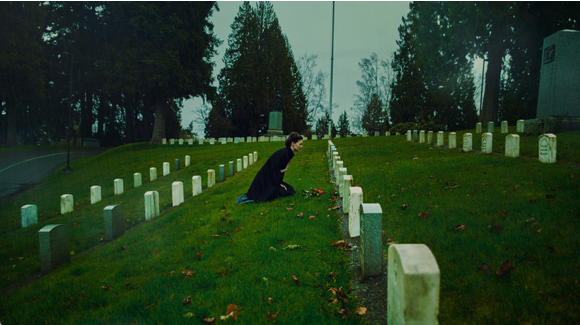
To many, Veteran’s Day is a day of remembrance; it is a day to embrace and experience to the fullest extent the freedoms and opportunities afforded to us by the sacrifice of many. To some however, it is a day of grief and loss, a reminder of the hole that no amount of patriotic pride can fill.

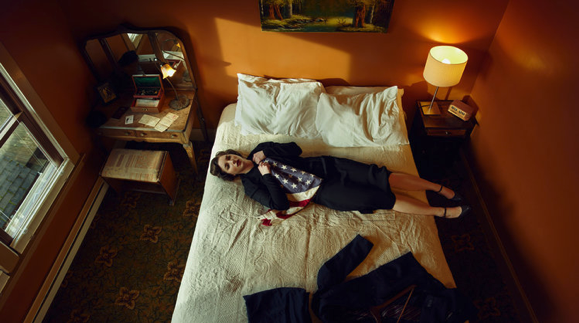
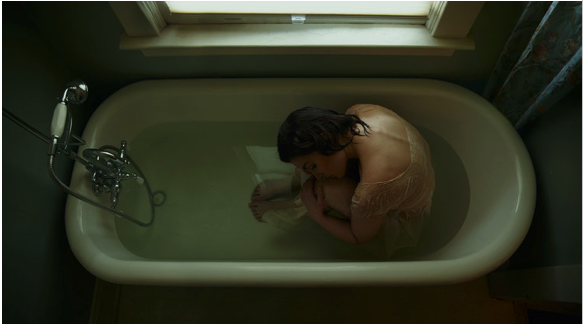
I wanted to capture that grief in my project War Widow, which documents the life of a woman as she learns of and copes with the death of her husband. War Widow deals more specifically with those moments of isolation—where she is alone with her denial, vulnerability, loneliness and even a bit of madness.

We often see those who have lost someone putting on a brave face in public, setting aside their own agony for the sake of other’s discomfort and being praised for their “strength”.  This leaves no room for grief except in extreme isolation, which further compounds the feeling that you are on your own.

War Widow is meant to challenge the expectation and veneration of stoicism after suffering loss to normalize and destigmatize grief as a very human process and show that though we all may be suffering by ourselves, we are not suffering alone.


To see more of this project, click here.

APE contributor Suzanne Sease currently works as a consultant for photographers and illustrators around the world. She has been involved in the photography and illustration industry since the mid 80s.  After establishing the art buying department at The Martin Agency, then working for Kaplan-Thaler, Capital One, Best Buy and numerous smaller agencies and companies, she decided to be a consultant in 1999. She has a new Twitter feed with helpful marketing information because she believes that marketing should be driven by brand and not by specialty.  Follow her at @SuzanneSeaseInstagram

Success is more than a matter of your talent. It’s also a matter of doing a better job presenting it.  And that is what I do with decades of agency and in-house experience.


The Daily Edit – Bello Magazine: Stan Evans

Bello Magazine

Photo Editor: Aleksandar Tomovic
Photographer:
Stan Evans


Heidi: What was the photo direction?
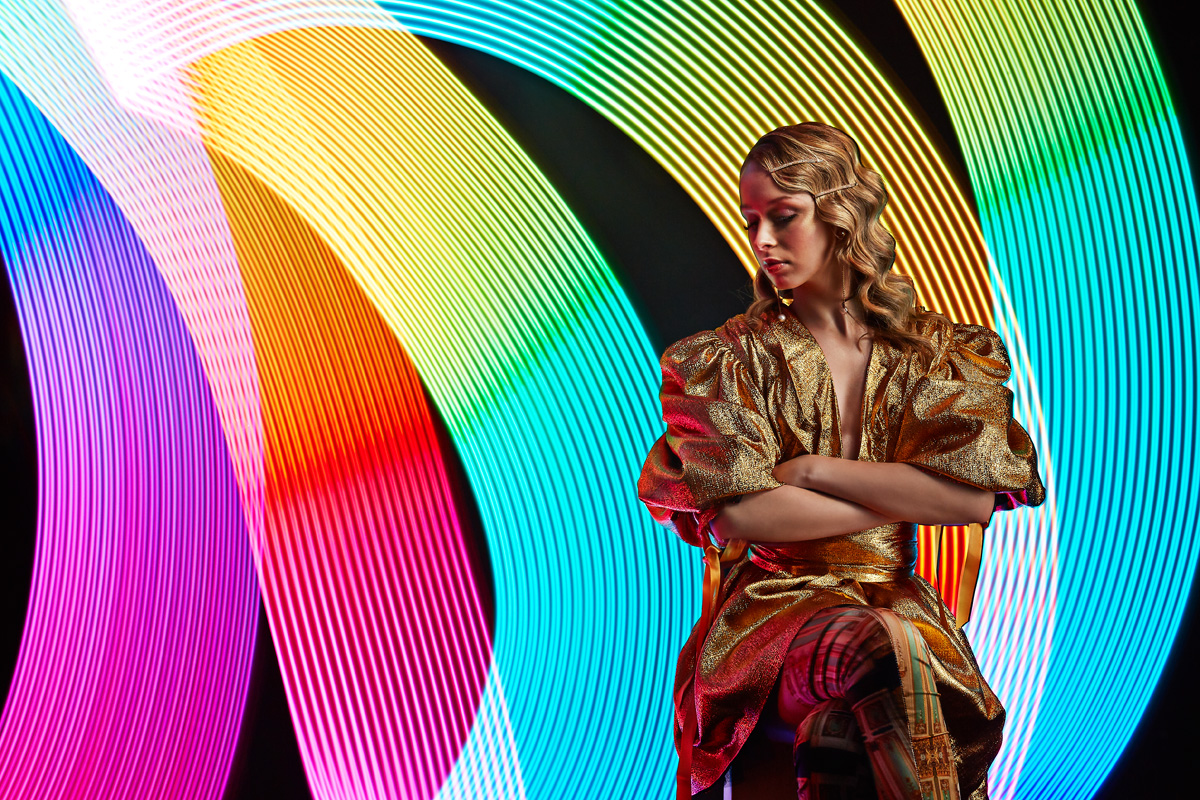
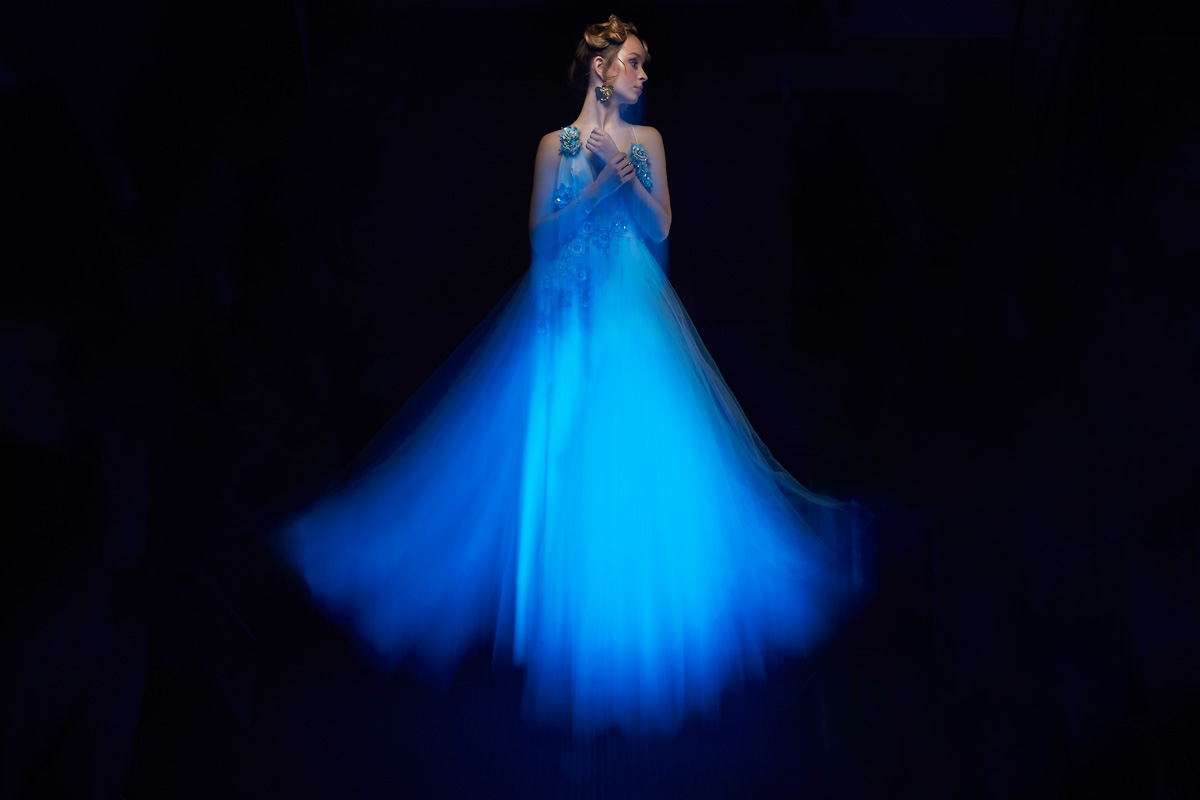
Stan: Taylor Hatala is a dancer who’s worked with some of the best in the biz. She’s toured with Janet Jackson, and been featured on The Ellen DeGeneres Show. I wanted to get inside her head and show that motion but also the stillness of maturing.  I figured every time she gets off a plane, someone is probably asking her to move on the spot. I wondered if we could show her expression of dance through light painting? The concept would give her a break “per se” from performing and it would be a new challenge as an artist for both of us.

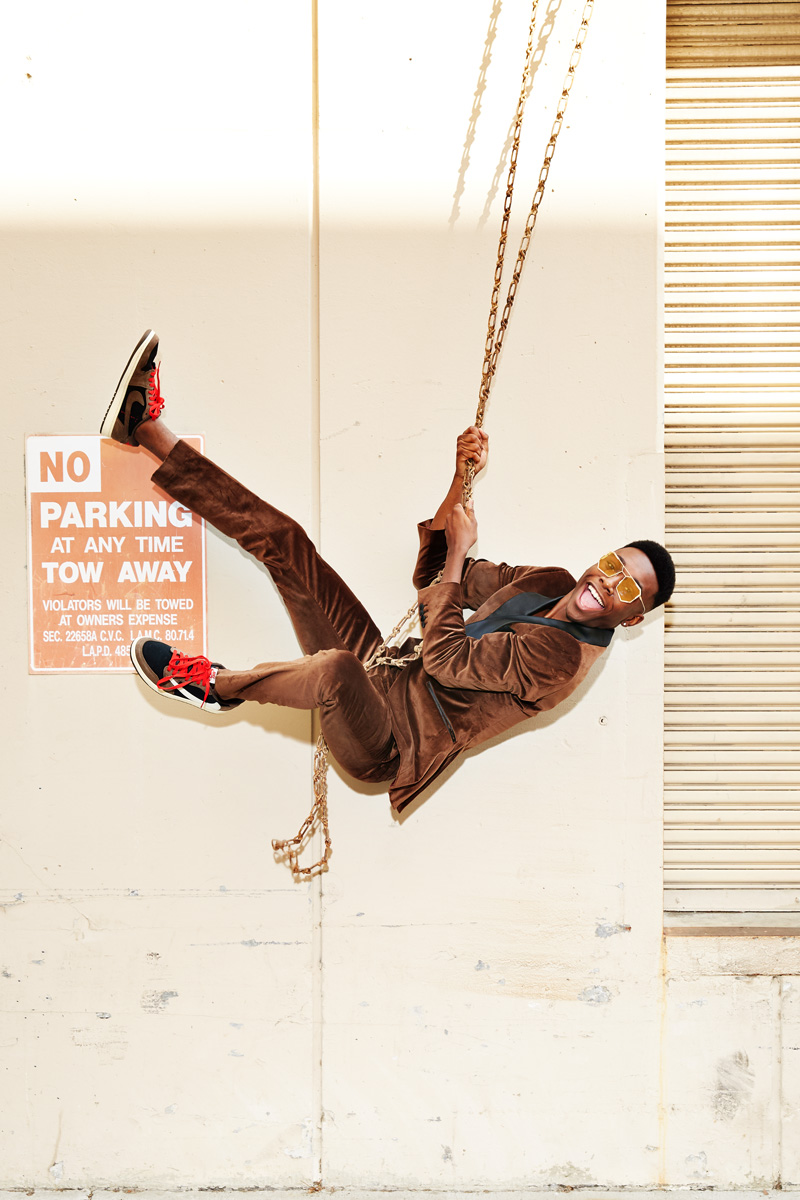
For Niles Fitch (This is Us), it was more of exploration of attitude and maturing. He’s got a great smile that he can knock that out of the park in frame or two so that was easy.  He’d played a darker roll in a pretty intense episode of Law and Order so I asked him to go there at times to show a range of his skills.  We discussed some older actors like Idris Elba, Denzel Washington, Shameik Moore John Boyega and I asked him how he sees himself in 5-10 years? We got into a good vibe as he projected his own future.  It was cool to see that side of him and he had so many good outtakes.

How did you interact with the subjects?
I think the biggest thing is letting subjects know you are on their team and today I am here to try and shoot the best photos I can. I’m here to represent them (and myself) well and achieve the common goal. You have Publicists, Managers and Parents all looking out for their kids’ welfare. If you get them to understand “help me help you” things get elevated. Hopefully then you can keep everyone happy and walk out with a couple images that are magic.

These subjects are transitions from kids to young adults, how did you approach the portrait to illustrate that transition?
With both subjects I asked them about how they wanted to be perceived. How do you see yourself in the future? I know, as a teenager there are a lot of people telling what to do and how to do it so talking to them from a place of mutual respect is important.  These kids have achieved a lot in a short time and keeping if fun with a bit of room for them to improvise was key.

Tell us about the background
I went to a workshop presented By Kwaku Alston and Arri at their headquarters in Burbank.  I chatted a bit with Kwaku about how he’d been using the Skypanels and some of the techs at Arri.

A bit later this editorial came up and unfortunately we didn’t have the budget to really get a bunch of skypanels. I went to Samy’s on a Sunday in LA looking for some cheap continuous light options to rent or buy just to come up with some ambient effects and found this Savage RGB LIGHT Painter for about $150.

I read the manual that evening sent my assistant Seth Mower some reference photos and I think our shoot was on Tues. I had some ideas for patterns I wanted to try and the wand was programmable so we tried to key in colors that would accentuate the fashion styling.

All the motion and color is in camera and I simply removed some of Seth’s shadows and background elements (as we were in a really tight space) It’s a lot of old school camera film tricks like second curtain sync, adjusting flash and continuous lighting ratios and having our subject Taylor stand really still. We worked really hard to have a high budget impression with some low budget tricks and I’m really happy with the results.

The Daily Promo – Andrea Fremiotti

Andrea Fremiotti

Who printed it?
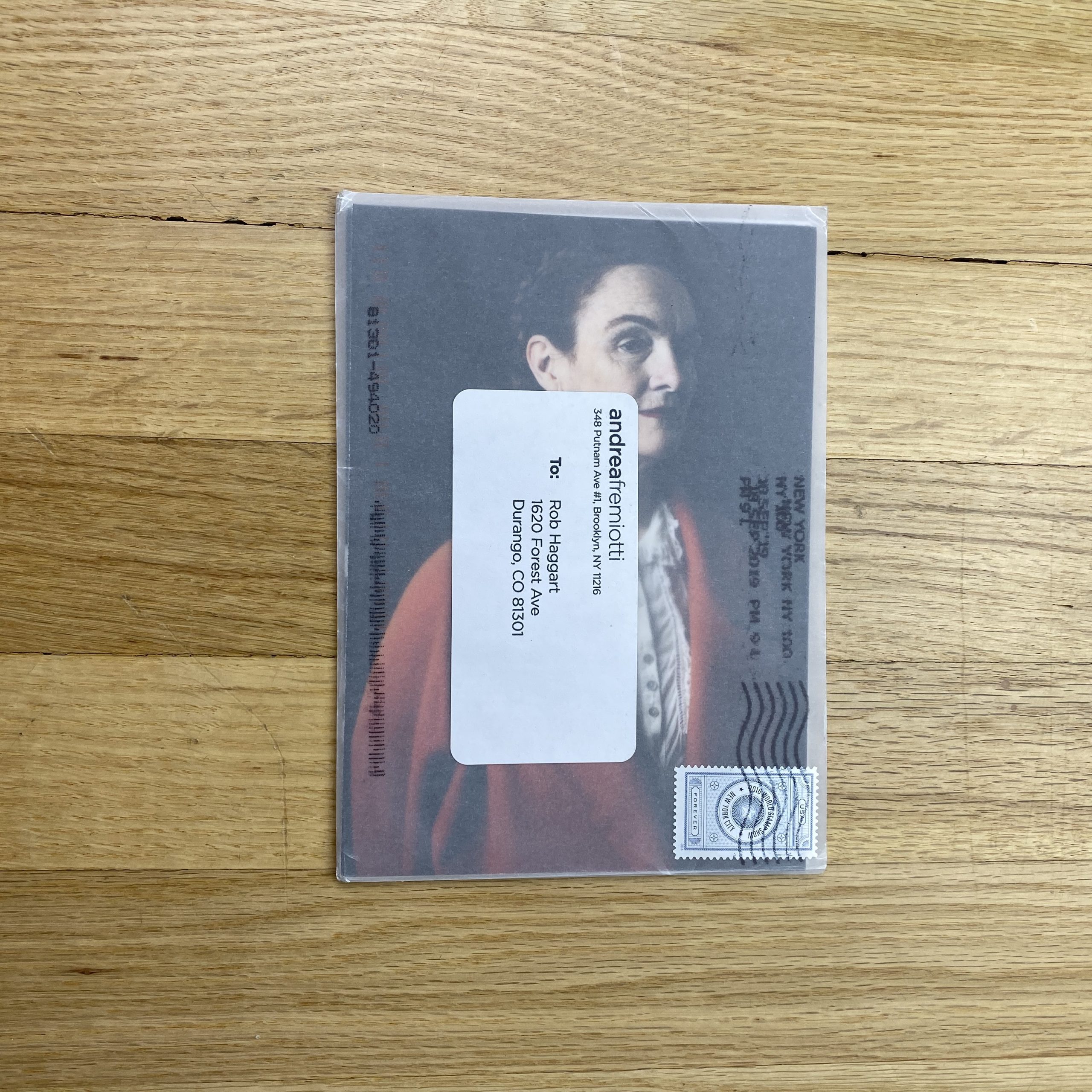
I’m really particular about color and paper quality, and since each postcard is basically a 5 x 7 art print that I hope the recipients will keep, I went the labor-intensive route and printed the promos in my home studio. I used an Epson Stylus Pro 3880 and Moab entrada rag bright 300 gsm double-sided paper. I took turns with my wife, Jeanée (who is also my studio manager and creative collaborator), printing, sealing, and slicing the 17 x 22-inch sheets.

Who designed it?
Jeanée makes my marketing materials; she taught herself basic graphic design and photo editing. The vellum envelopes are from JAM Paper. My brother-in-law Seth Kelly of Helmet Studio designed my logo and website.

Tell me about the images.
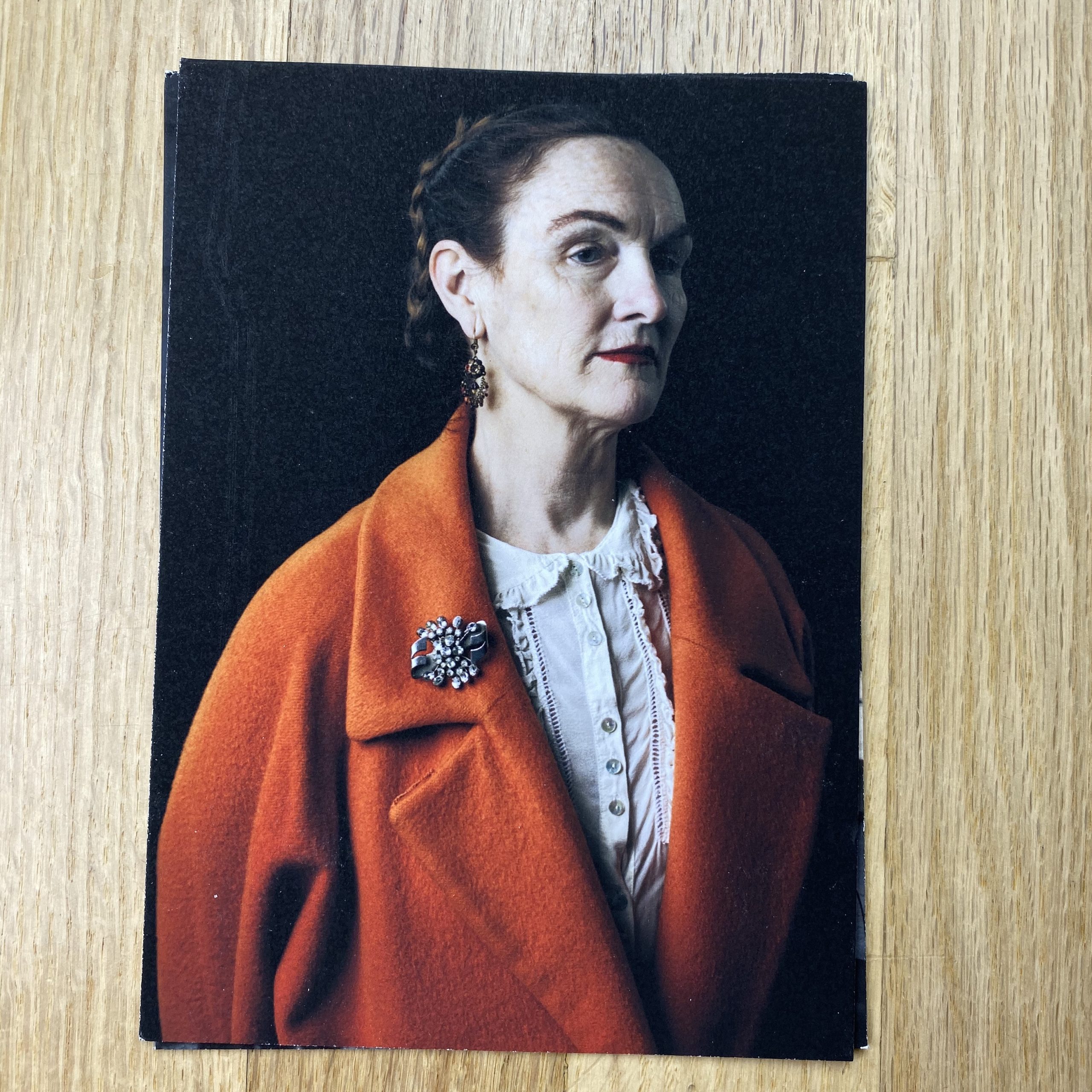
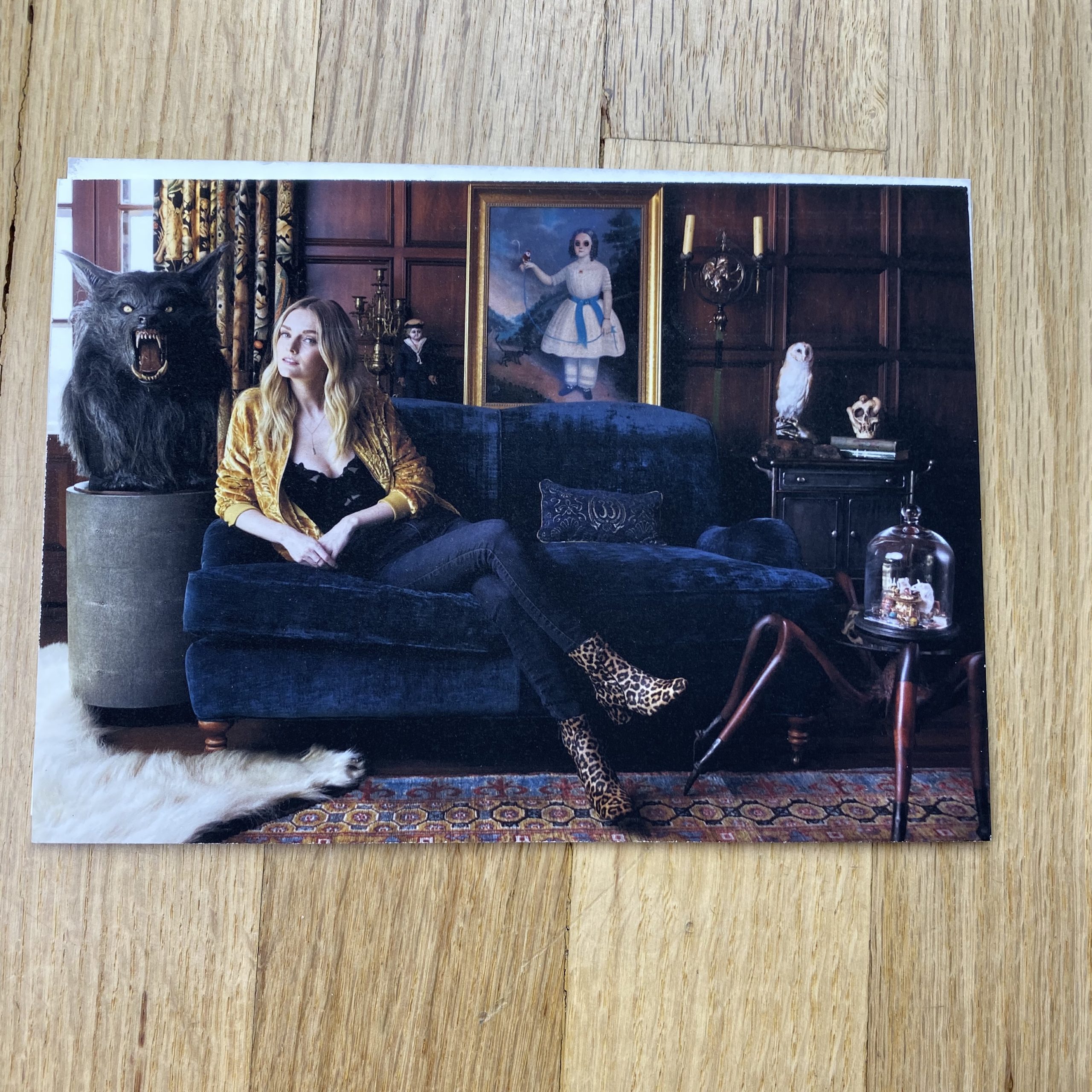
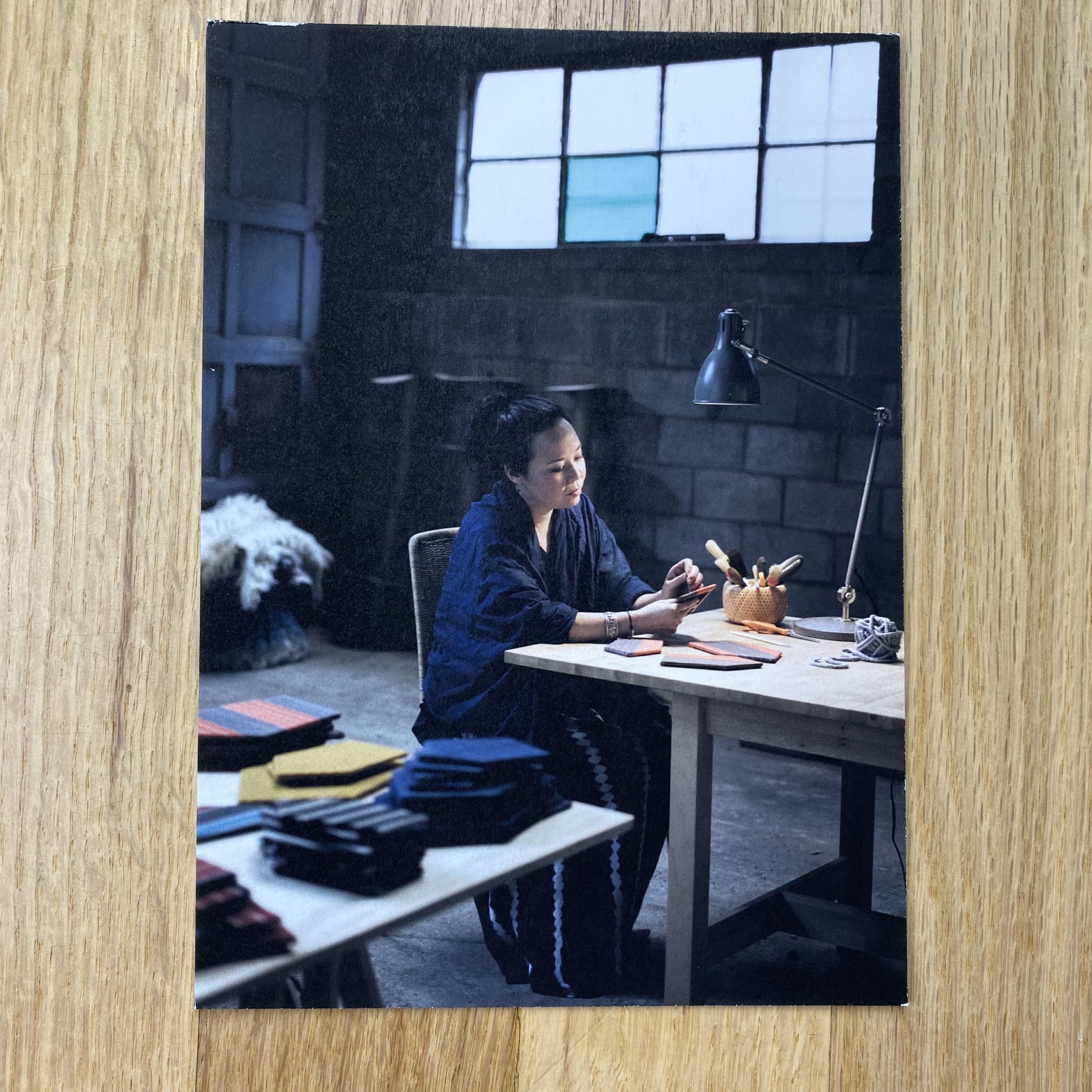
We chose 10 images — mostly portraits related by color, lighting, and mood — and custom picked 3 for each recipient. That way, we can remind people of photos they liked before or show them something new that’s relevant to what they’re looking for. Here’s what we sent you: 1) The woman in the orange coat is my former Brooklyn neighbor Amanda Smith, an artist and vintage clothing enthusiast I shot in my home studio. 2) On the sofa is the model/actress/media heiress Lydia Hearst with her collection of horror memorabilia, shot for a “Domino” magazine Halloween story. 3) Starting as a personal project, I photographed the Atlanta fiber artist Sonya Yong James over a year while she worked on a huge sculpture commissioned by the U.S. Embassy in Mauritania. I shared the images with some editors and ended up publishing some in “The Atlantan” and “Uppercase” magazines to illustrate stories about Sonya.

How many did you make?
We made about 200 packets, with half going to editorial outlets and half to advertising agencies and entertainment companies.

How many times a year do you send out promos?
This was my first physical mailing in a few years. I plan to do them twice a year and monitor the impact. I may also make a book for a small number of recipients who are most aligned with my style.

Do you think promos are effective for marketing your work?
I don’t know yet whether physical promos are more effective than e-mails. The last time I sent physical mailers, which was a few years ago, I outsourced postcards and did not write anything personal to the recipients. The response rate was close to zero. This time, I printed the cards myself, presented them as little art pieces, and hand-wrote everyone a note. I’ve had a couple of enthusiastic replies.

I think that whether I’m emailing someone images or snail-mailing them prints, what I say is just as important as what I send. For example, referencing a conversation we had during a portfolio review is more impactful than just saying “here’s some new work.”

This Week in Photography: Building Your Team


Part 1. Team-building


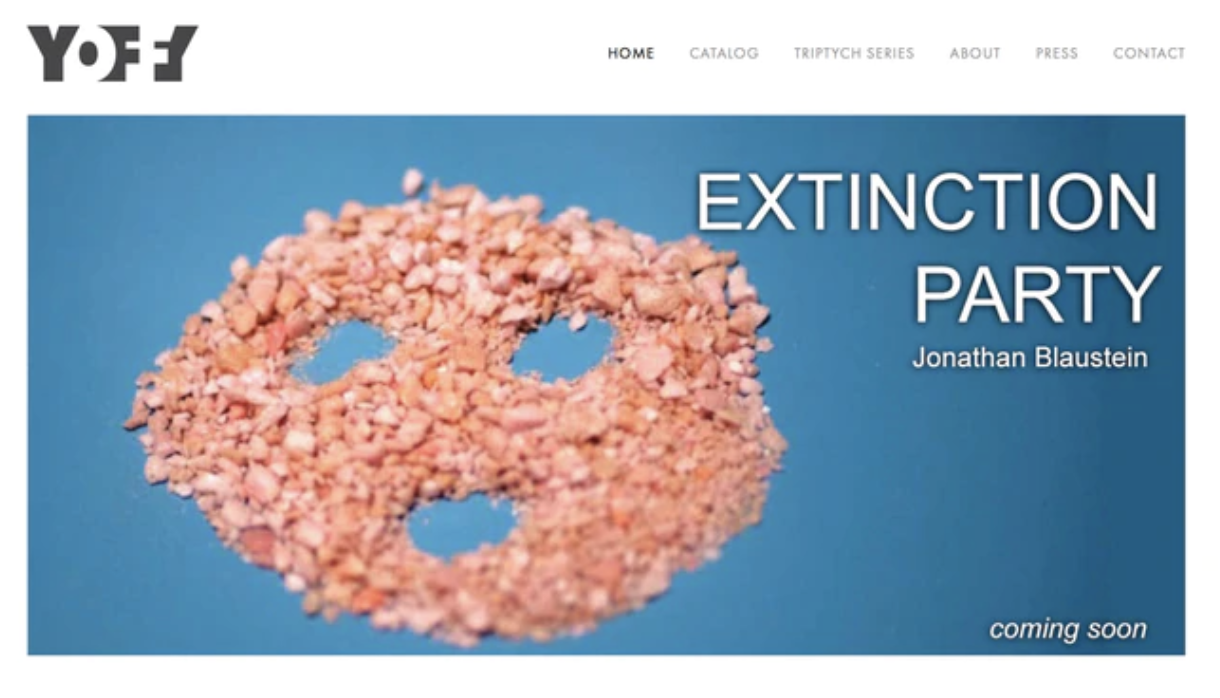
Two of four covers for “Extinction Party”


I spoke to some students the other week, as they came to my museum exhibition.

I tend to lecture the way I write, (off the cuff, spontaneous,) and soon found myself pointing to one of the photographs on the wall.

“People think artists work by themselves, as individuals,” I said. “They envision the lone wolf, quiet in the studio, but that’s not the way it works.”

“Just to get this print on the wall,” I continued, “takes an entire team of people. It requires tons of help.

No one does it alone.”

Now, you know this column is getting strange when I start quoting myself, (be forewarned,) but the message is important, and I’m going to lean into it today for a few reasons.

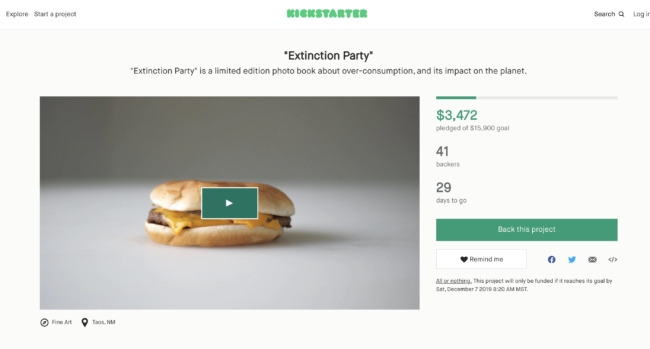
The biggest of them, (and the one driving today’s column,) is that I just launched a Kickstarter campaign for “Extinction Party,” my very first photo book, which will be published by Yoffy Press in Atlanta.

(Assuming we raise the needed funds.)

You, our audience, come here each week to see photographs, and read my musings about art, politics, food, travel, pop culture, sports, or whatever else is on my mind at a given time.

(Again with the stream of consciousness.)

So I’m here to ask you, directly, if you’d please be willing to help support me, (and my team,) as we’re hoping make an important book that symbolizes how human behavior is leading to planetary destruction.

For the hundreds of columns I’ve written here, this will be my first book, and I’d like to think all the practice critiquing will make it special.

(We also have an original essay by “Crazy Rich Asians” author Kevin Kwan, an expert on over-consumption.)

The project required so much work from other people, including my publisher, Jennifer Yoffy, who edited and proposed the book when she came to ski in Taos last February.

People often wonder how a book gets made, or what to search for in a publisher, and I recommend working with someone you respect and trust. So many people want that first book, it can lead to ethical or financial compromises, and I encourage people to look out for that.

I’ve known Jennifer a long while, and she mentioned several times over the preceding year that she was open to publishing my work, once I had the right idea.

While many artists want a book for each project, I waited 10 years, deciding, (after some great advice from Dewi Lewis,) that I should not make a book until I felt compelled.

Until the idea was strong enough to build the proper motivation.

When Jennifer first came here, I told her I had the raw material for a book, but was too close to make the edit, as there were too many connections for me to focus.

So when she asked to take a stab at editing for me after dinner, (but before we’d agreed to work together,) I said “Yes, please.”

I can’t stress enough, we all need colleagues, friends and collaborators who get what we’re doing. (The age of begging powerful people to take pity on you is over.)

It’s DIY, these days, and having learned a thing or two about team-building, with Antidote, I am starting to get the hang of things.

Work with people you like, appreciate and respect, of course, but don’t forget to look for complementary skill sets.

Can your teammates do things for you that you can’t do yourself?

In my case, my publisher is a master-marketer, a great editor, and has experience executing her vision, so it’s a good fit.

As for my designer, it was my best friend Caleb Cain Marcus, who’s also helped me develop and build our Antidote programming.

Oddly, we met less than 4 years ago, (at a photography festival,) but I’ve found that many of my closest friends are not my oldest friends.

The more we get know ourselves, the better our judgement can be, with respect to choosing friends and colleagues wisely.

In order to make a book, you need help with the making, and these days, with the funding.

As much as I feared having to ask the global photo community for help, (as I’m doing now,) I always tell you that getting out of your comfort zone makes you stronger.

And this about as far out of my zone as I can get, at the end of #2019, the busiest year of my career.

If you’d please be willing to help with our pre-sale and buy a book, a print, or just make a small donation, I’d be very grateful.


Part 2: The Perfect Partner


I’ve mentioned Caleb here many times, and at first, I reviewed his books without knowing him at all.

(He’s super-talented as an artist, digital guru, master-printer, book designer, and editor.)

Eventually, once we became good friends, I reviewed another of his books here, but then, I added a disclaimer.

So I found it amusing last week, when I was raiding my book pile, (which I wrote about in the column,) and came across a package, from early 2019, sent by a PR agent who normally submits good stuff.

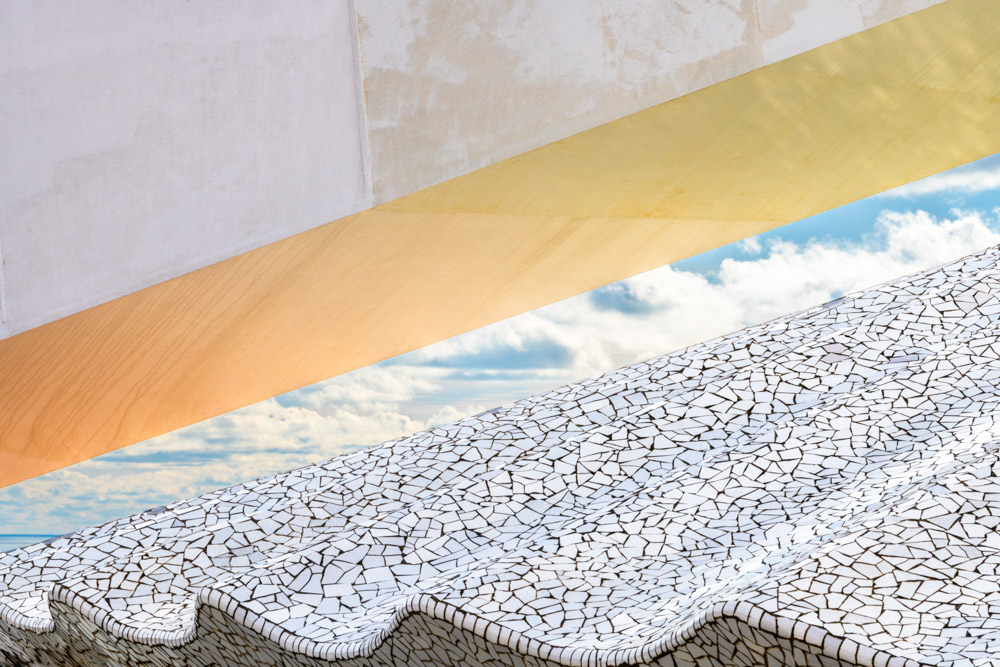
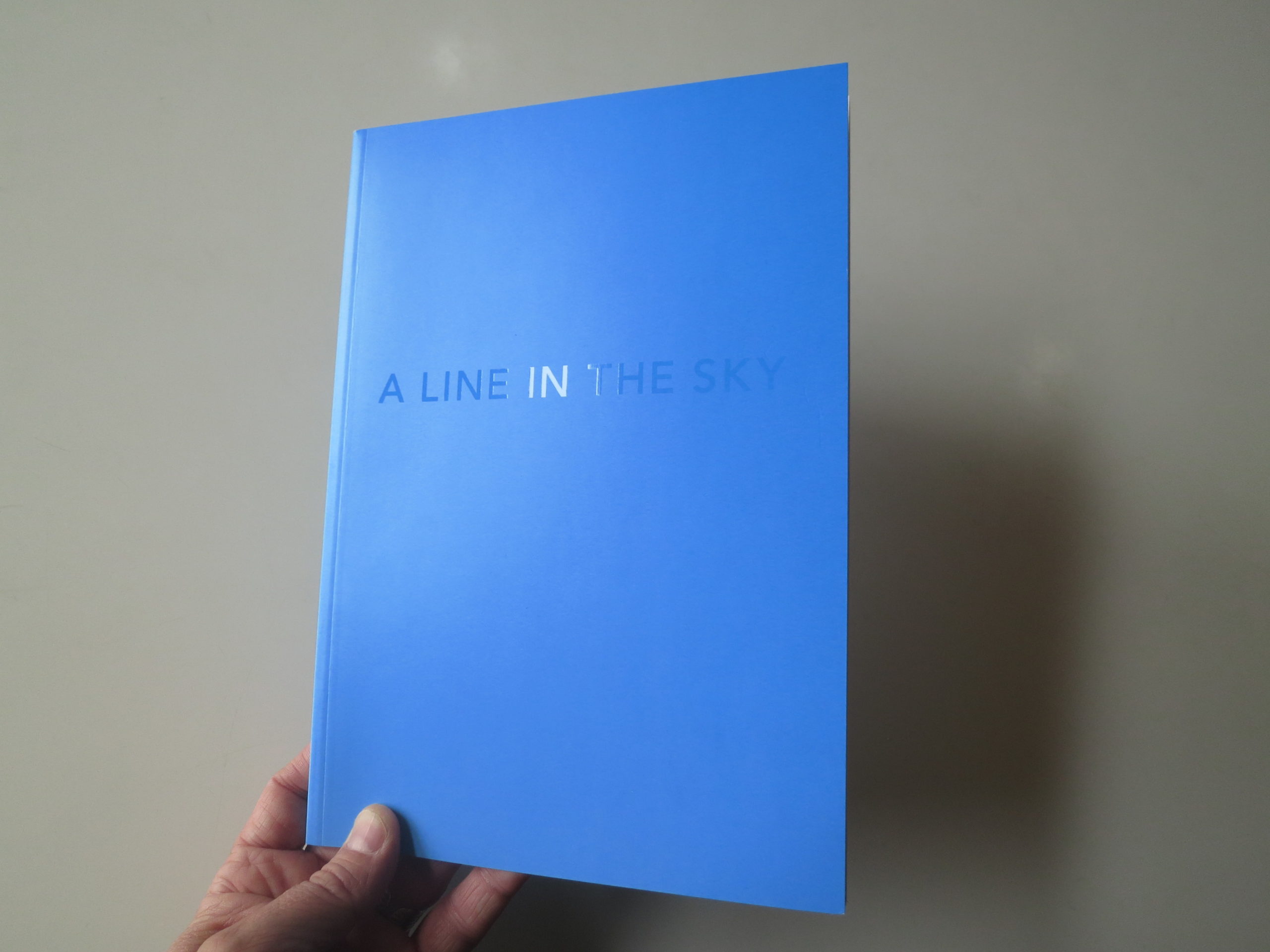
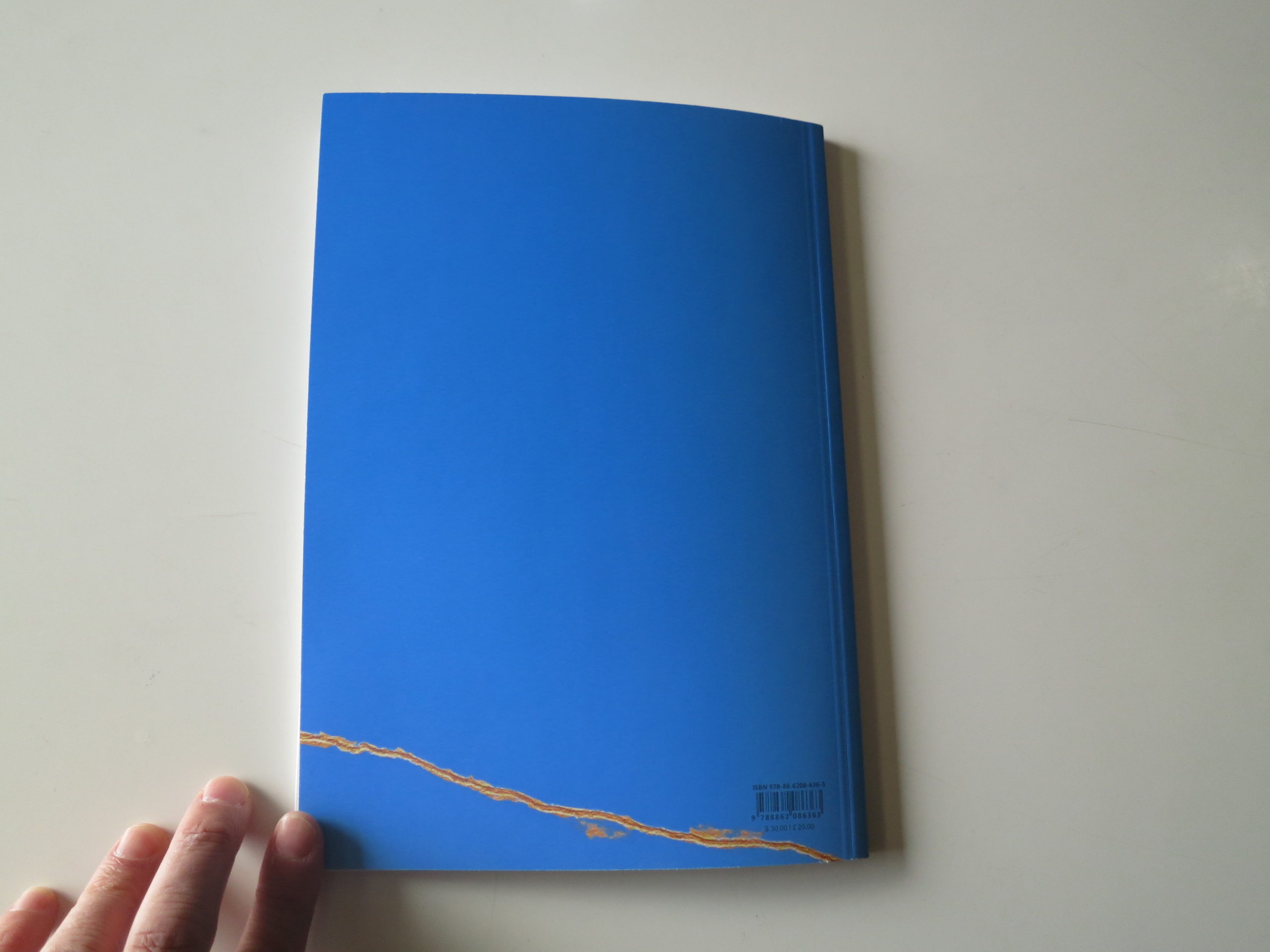
I tore open the envelope, and wouldn’t you know it, but Caleb’s recent Damiani book, “A Line in the Sky” slipped out, along with a note asking me to consider another review.

Though we’re super-close, Caleb never mentioned the book had been sent, nor did he ask for a write-up.

He never even checked in to see what I thought.

And then, looking at it, I wondered how to review it, since I’d need to be open about our friendship, but also, I wasn’t sure the book was entirely necessary.

Unlike me, Caleb has made a book for each project, (more or less,) which means he’s many books into his publishing career, and doesn’t have to use crowdfunding to publish them.

Eventually, most established publishers will provide funding, when they’ve worked with an artist multiple times, and have a proven track record of selling the books.

I also helped Caleb a bit on this one, provoking him to think about how to approach the writing.

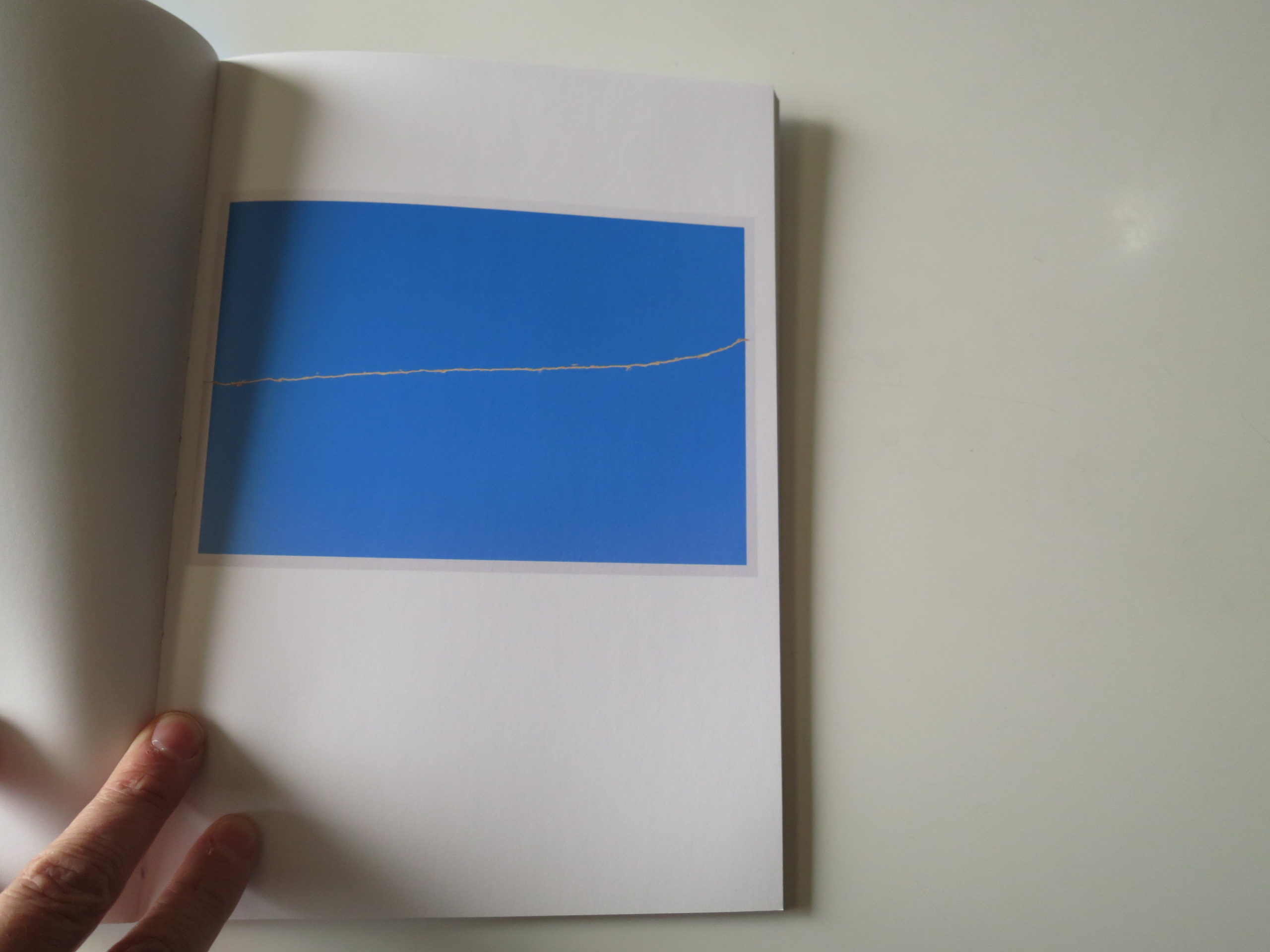
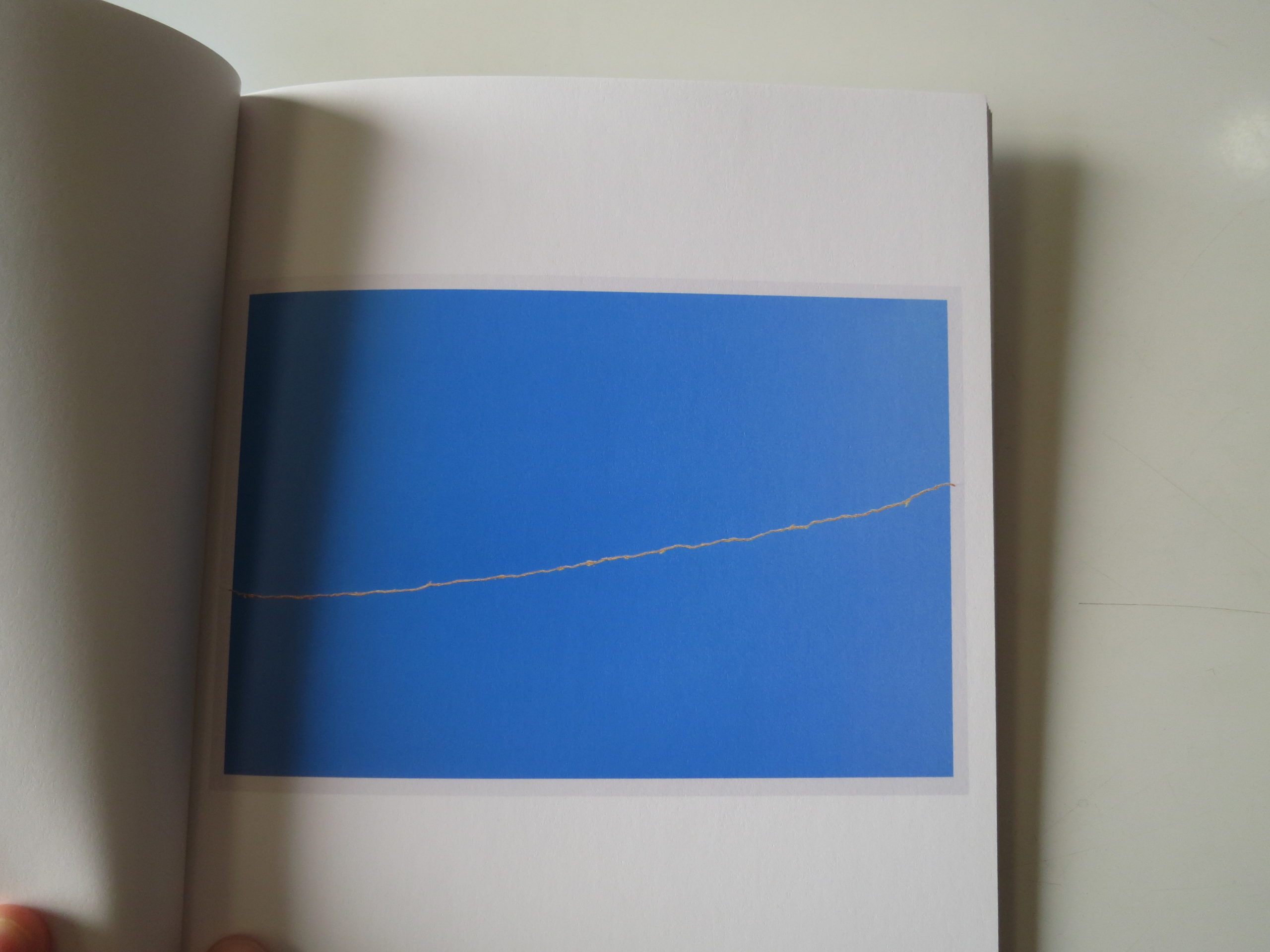
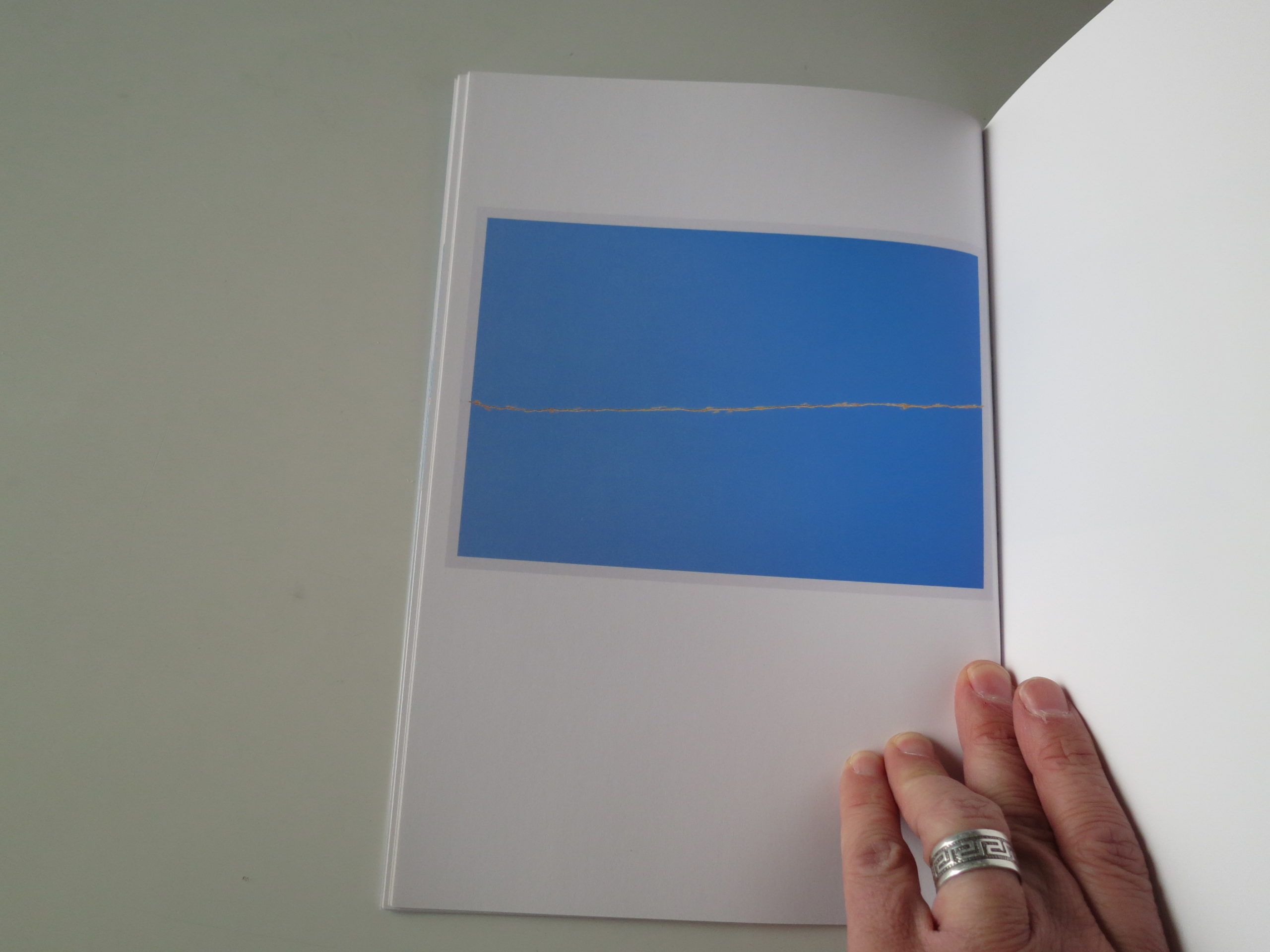
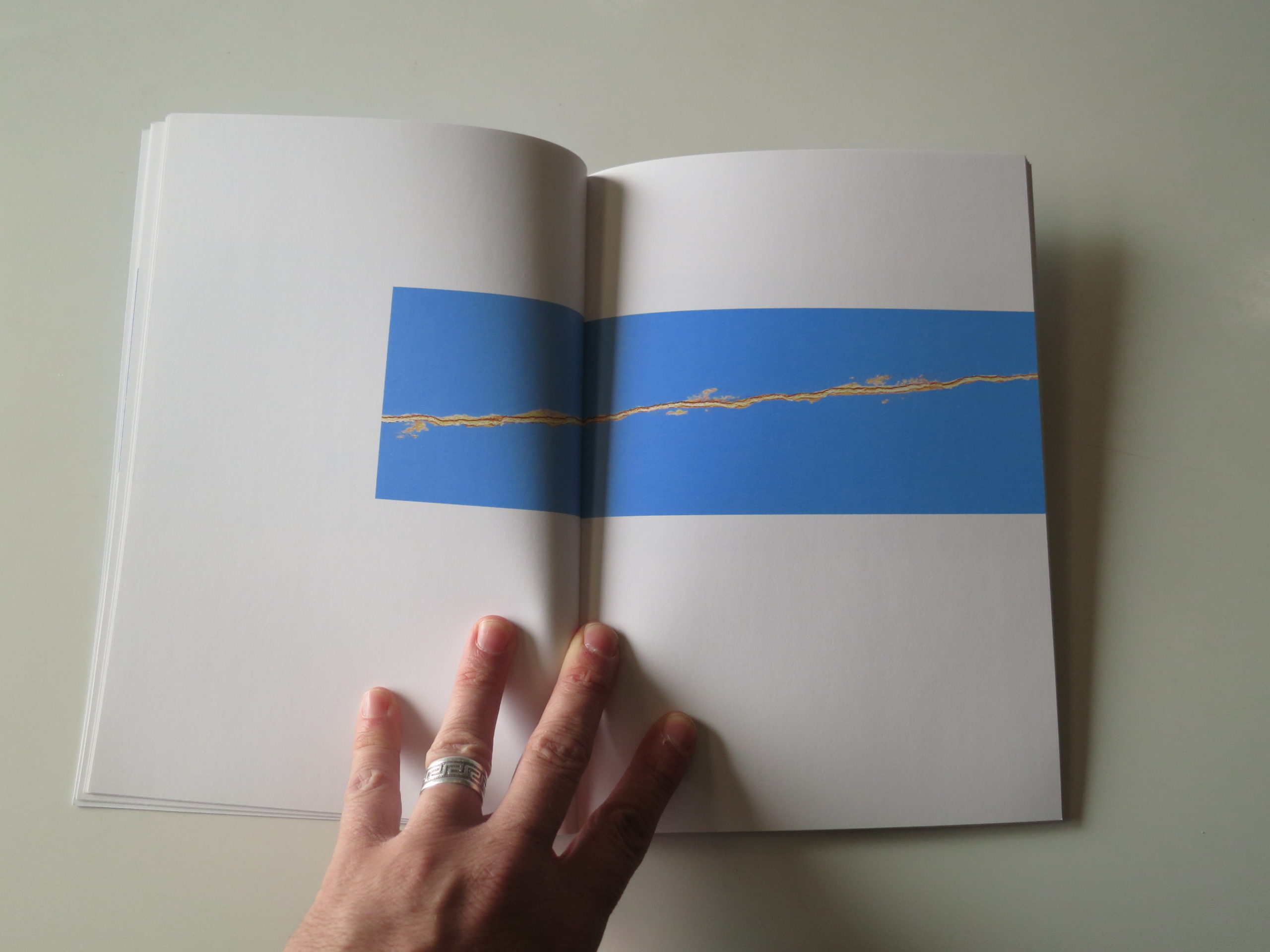
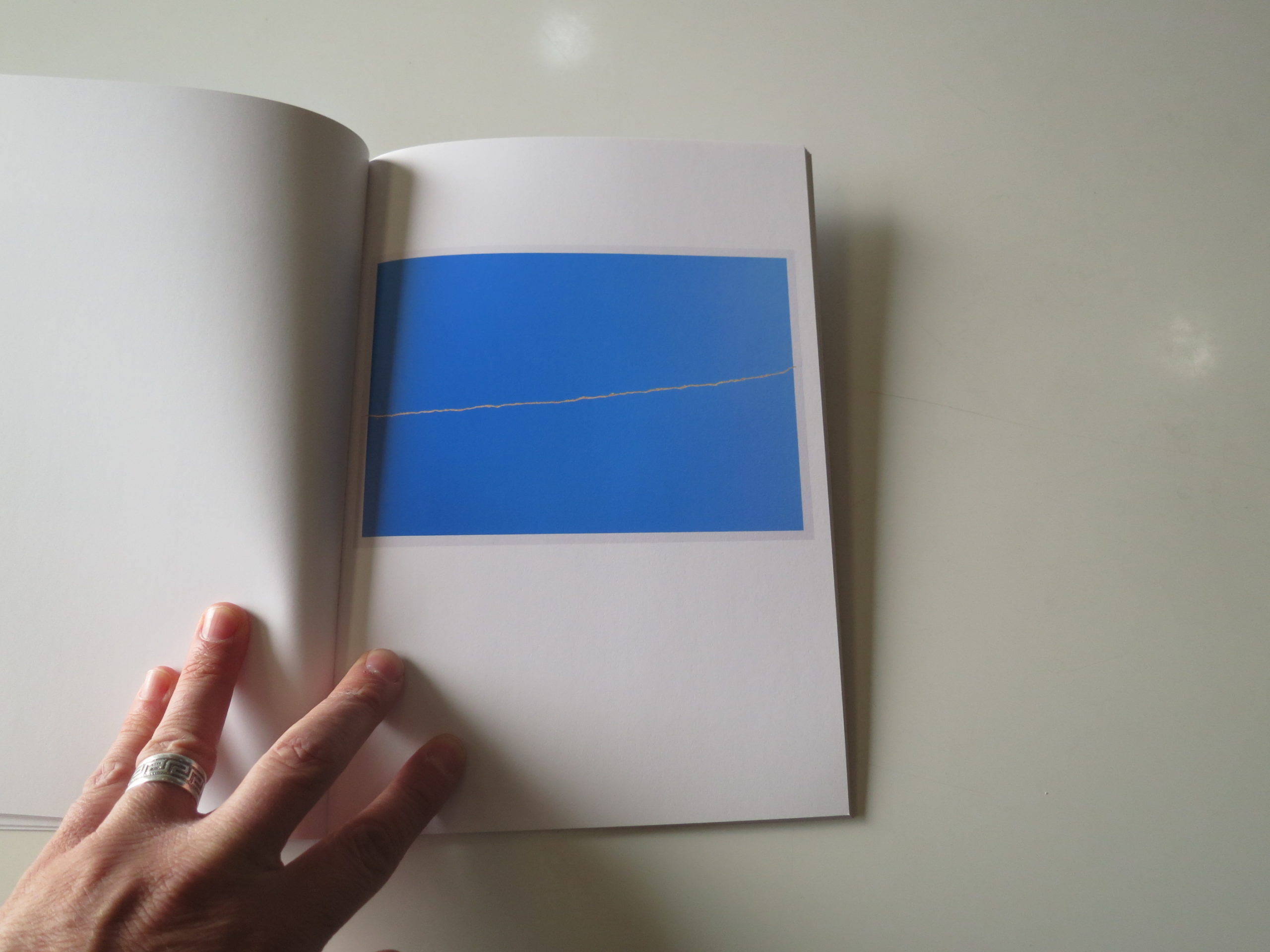
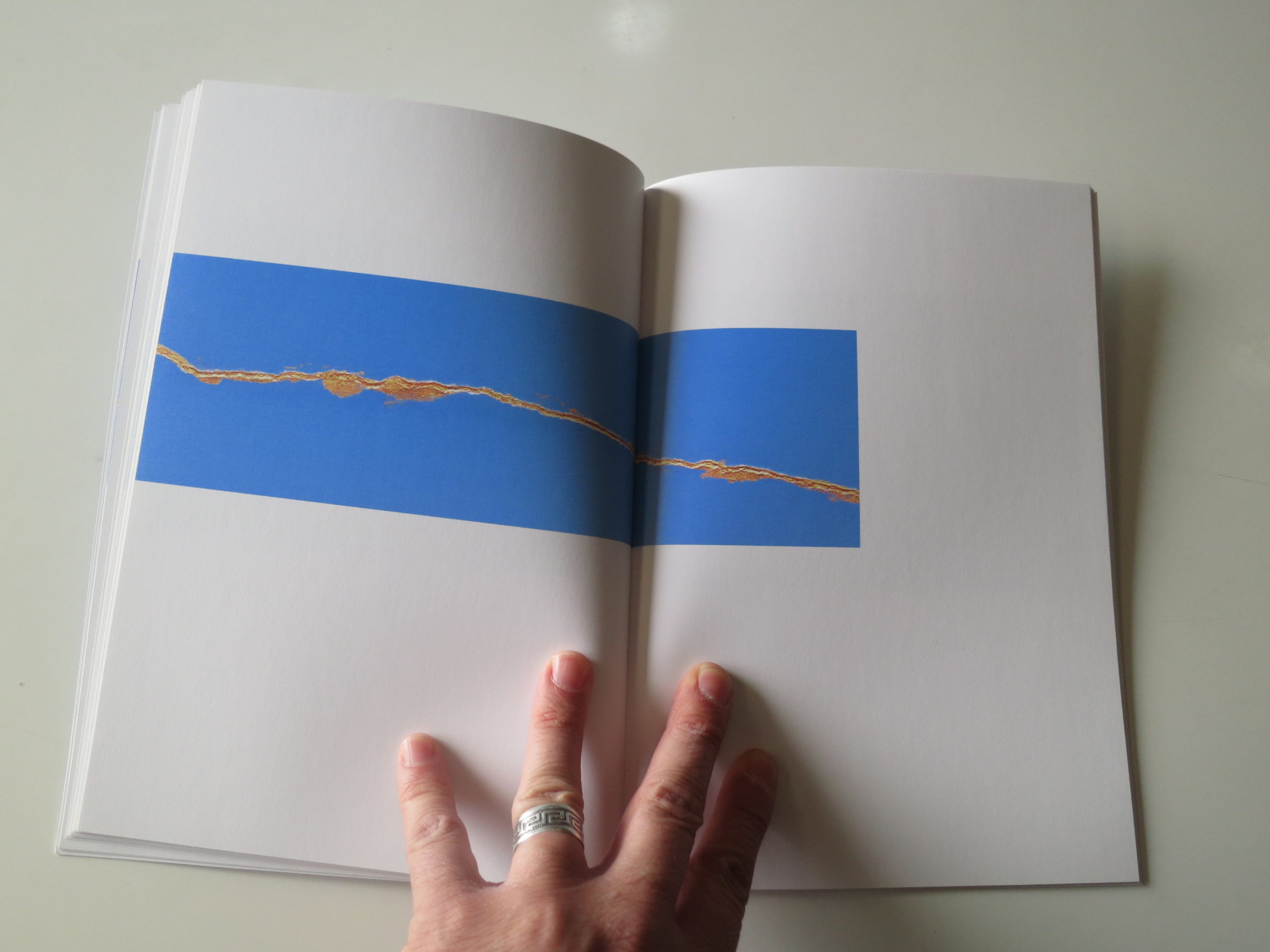
Looking through the book, nearly a year later, I was struck by the raw, tranquil beauty of the images. A rift in blue, a set of skies torn asunder by gold leaf.

Though there is a nice dance among the rectangles, from page to page, the repetition of form, and the very-slight subtlety, made me think the work would be more powerful as an exhibition.

I could see myself surrounded by the images, like in the Agnes Martin gallery at the Harwood Museum here in town. (It’s octagonal, and all her paintings are slight variations on a theme.)

He opens the book with a lovely poem, which is cool, as he studied poetry years ago, but wasn’t using that skill set lately.

And in the end, a brief, super-clear statement of intent, discussing the sundering of America in the Trump era.

As a metaphor, I love it.

But then, I know Caleb and his life.

I’m aware that only a few months after this quiet, personal book came out, his own life was ripped in two, when someone in his family developed a serious illness.

Context is key, as I always say, and I found it creepy that I could only understand the book, now, as the calm before the storm.

Even if it was meant to represent the chaos.

(Life was easy for him, when this book came out, compared to now.)

“A Line in the Sky” is certainly worth showing here, as it’s a beautiful, sad little object, and also demonstrates the range of Caleb’s talents.

I’m lucky to have him as a friend, and a charter member of my “art” team.


Part 3: Supporting your community


It wouldn’t be my column if I only made it about me and my buddy.

Having to blatantly self-promote is so hard, given that I try to collaborate, and help out my photo community whenever possible.

It’s the reason I made Antidote a group teaching endeavor, rather than naming it after me, and trying to do it all myself. (Again, doesn’t work.)

So last night, even though I was launching the Kickstarter today, and was tired to the bone, I went to a fundraiser at the UNM Art Museum in Albuquerque.

I even gave them some money, even though I need raise so much myself.

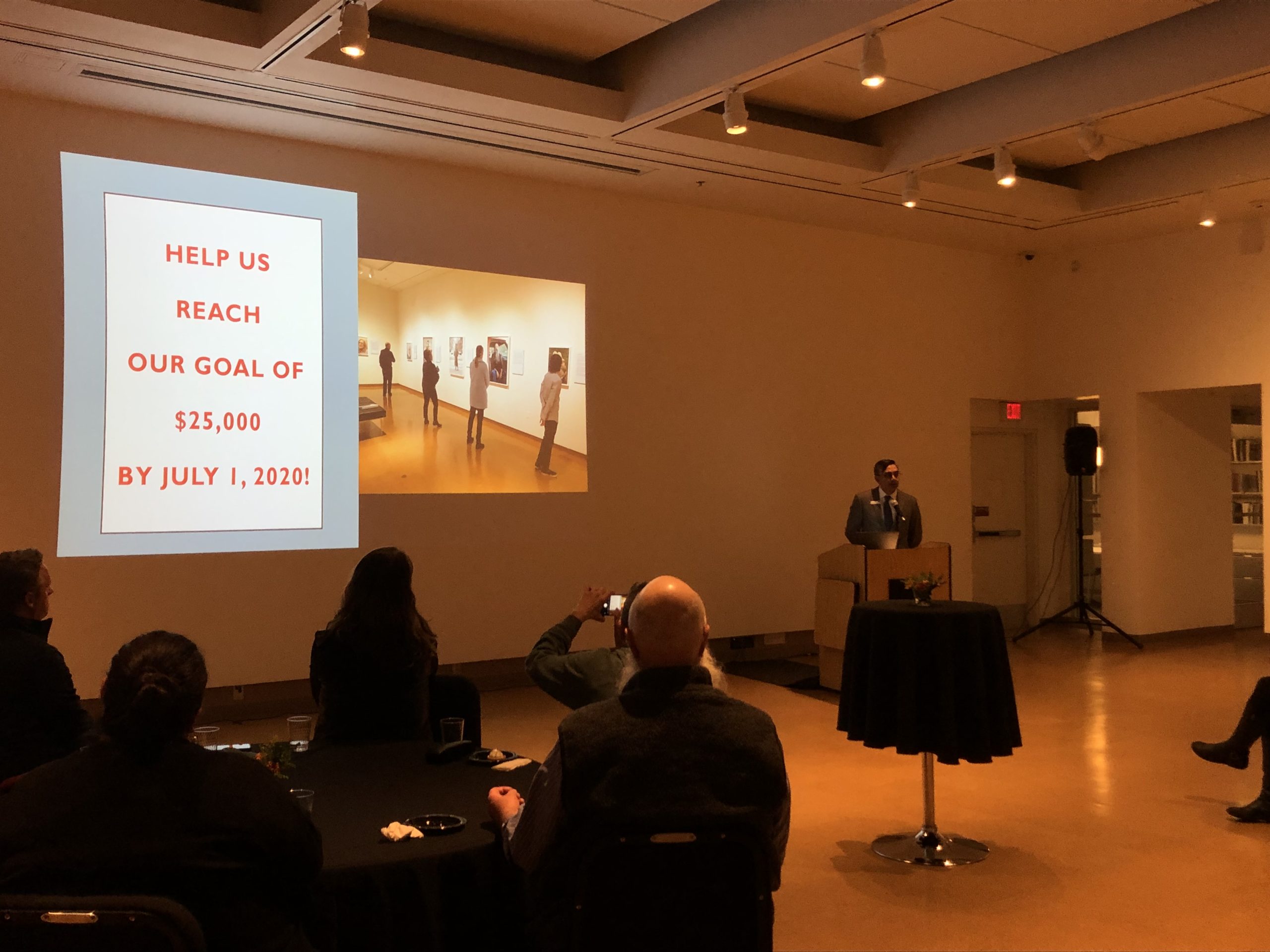
It was important to squeeze it in, as the museum’s new Director, Arif Khan, wrote me a personal email, asking if I’d come support the institution.

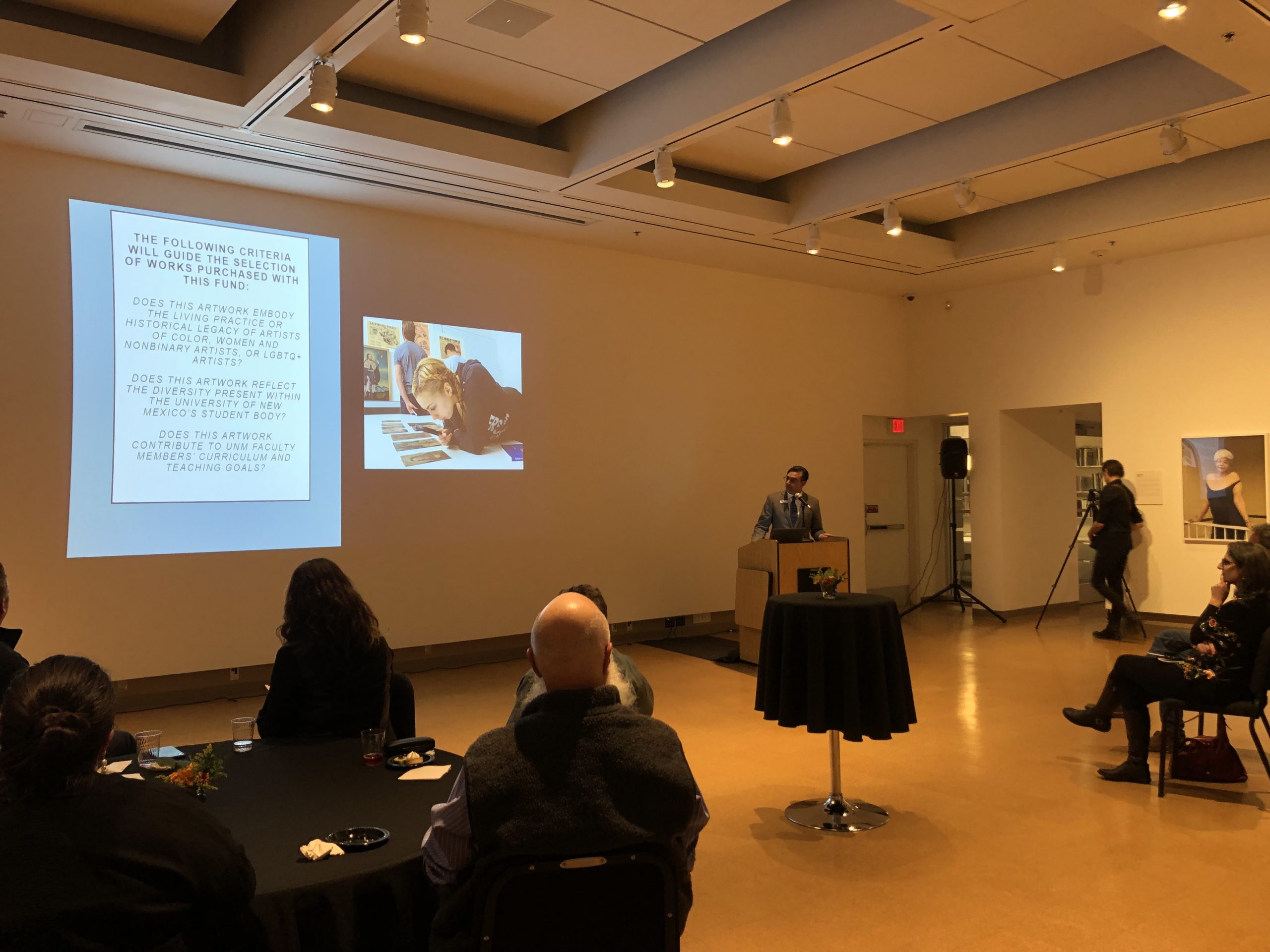
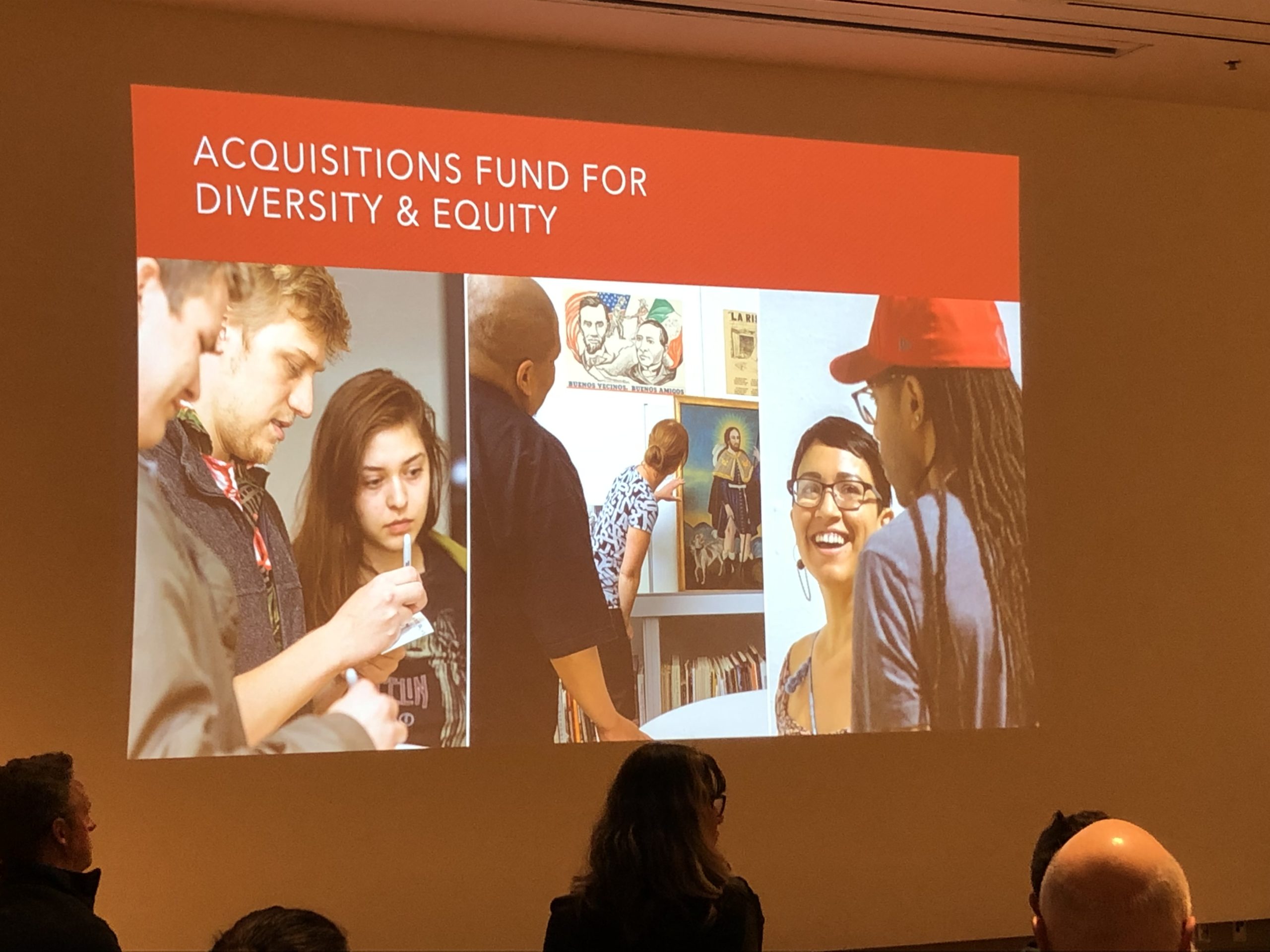
Not only that, but the event was on behalf of the new Diversity and Equity fund, which he recently launched with curator Mary Statzer, and the first recipient was photographer Jess Dugan, who was in town for the night.

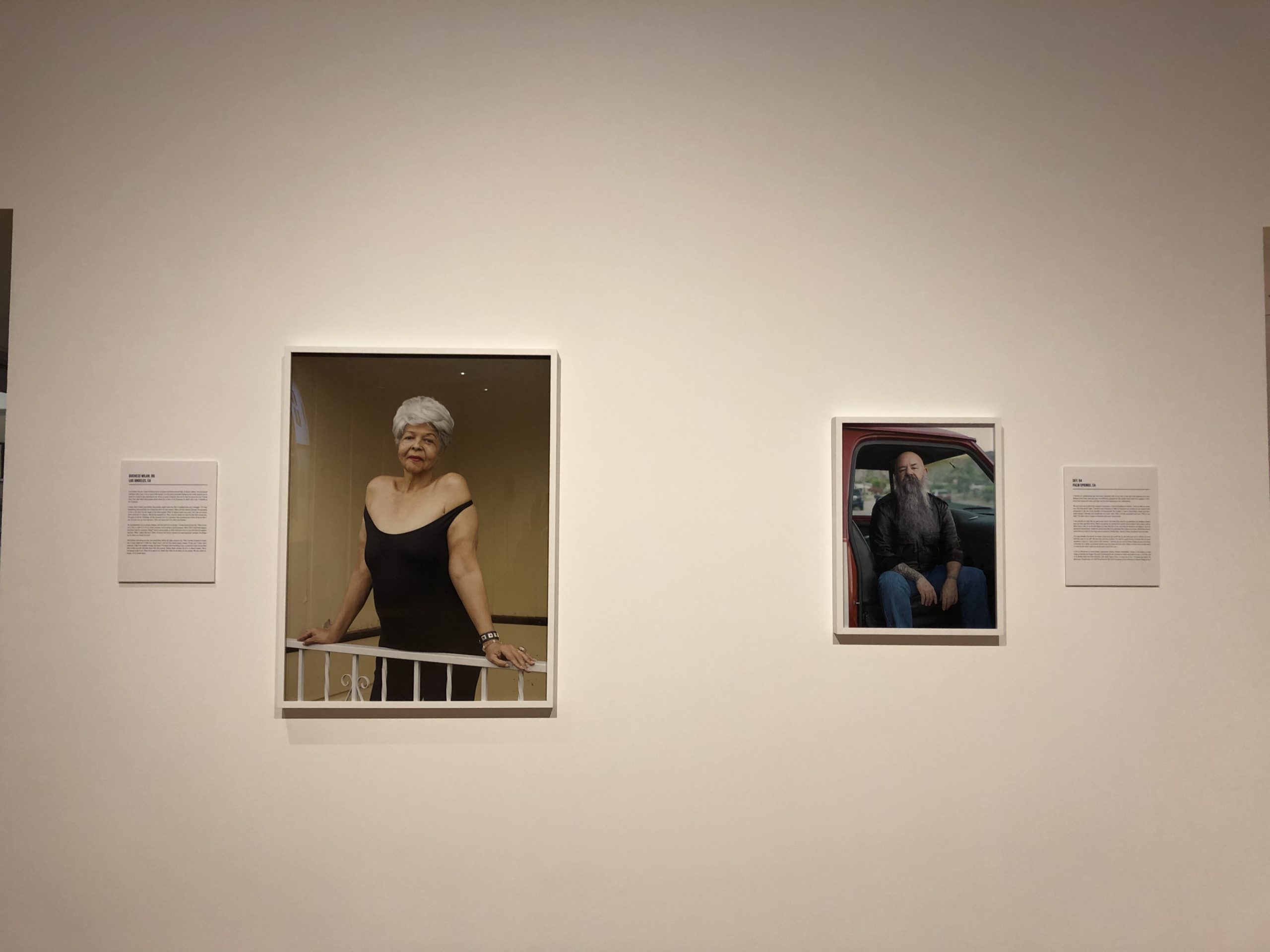
The UNM Art Museum has been exhibiting her major traveling exhibition, “To Survive on this Shore,” which was done in collaboration with her partner, Vanessa Fabbre, who’s trained as a social worker. (Like my wife.)

They interviewed and photographed 88 (if I remember right,) older transgender or gender nonconforming people, in particular many who identify as Trans.

In order to be down with the proper nomenclature, I asked Jess how she identified, and she told me “non-binary” or “queer,” and that she did not primarily use the pronouns they/them.

But one of the images being acquired, from a separate series, heavily implied that Jess has had gender-related chest reconstruction surgery, so the entire subject is personal for her, as well as political.

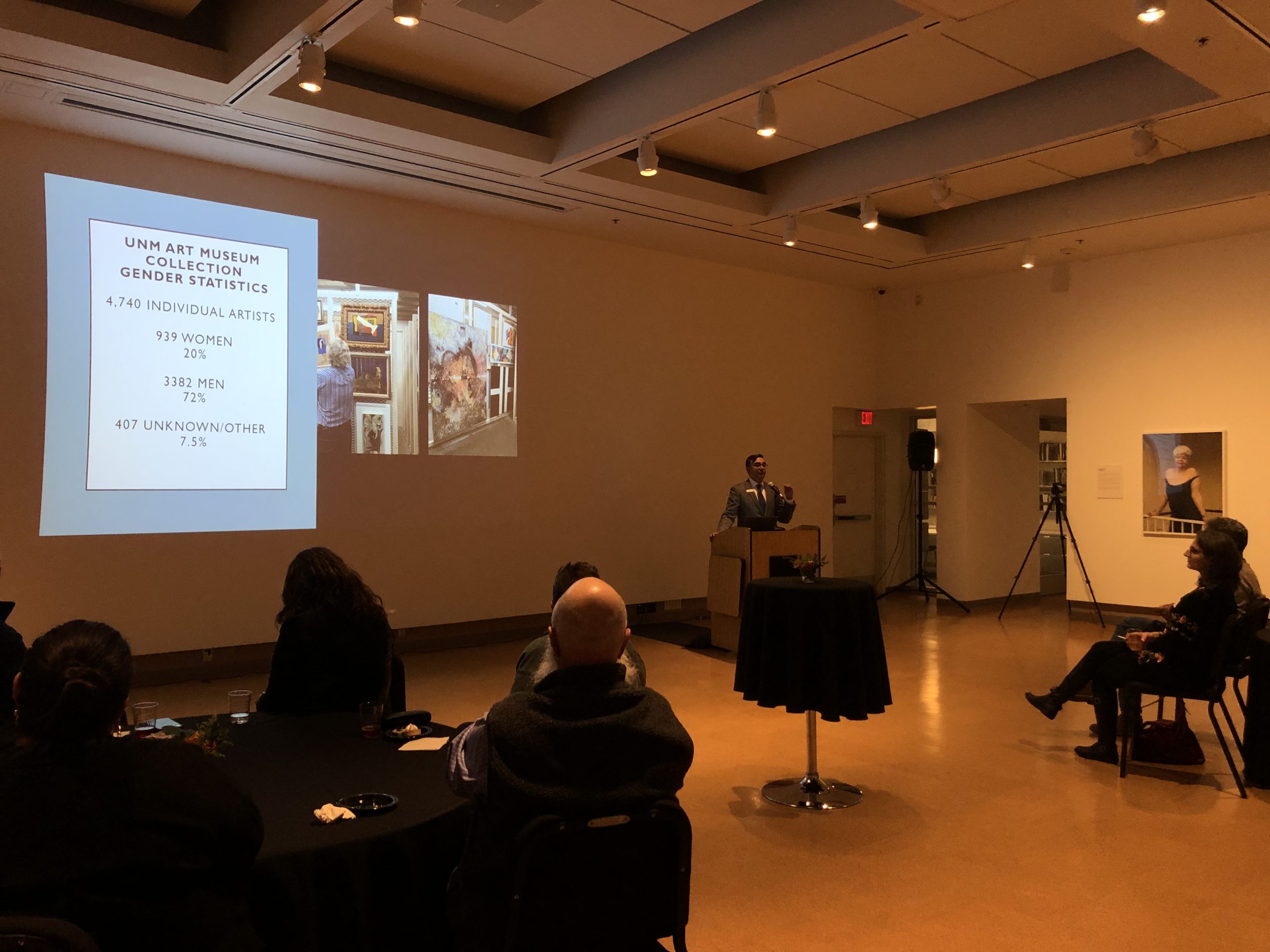
Arif gave a lecture in which he projected certain statistics about the paucity of women, and people of color, who are represented in museum collections.

The numbers were stark.


Then he asked people to support the fund, and put up a goal that was only slightly higher than we need to make our book.

I felt a pang of guilt for asking people to support my work right now, as a Jewish-American man, given my demographic is the one that’s supposed to have all the opportunities already.

I quickly shook off that line of thinking, though, as I work hard each week to support other people, and my photographs, with their strong environmental commentary, bear messages that also need to be disseminated.

But hearing from students and faculty, and listening to flamenco guitar played by one of Jess’s trans photo subjects, everyone was so proud to be a part of an endeavor that was righting an obvious wrong.

The energy in the room was deeply positive, and made me glad to have driven five hours to spend two at a museum fundraiser.

As I told someone last night, Northern New Mexico is one big community, from Taos to ABQ. Hell, our Colorado cousins come down a lot too, so maybe it’s one big Rocky Mountain happy place.

The truth is, I need other people for guidance, and conversation. For inspiration, and challenge.

We all do.

So if you don’t want to support my Kickstarter, I’ll certainly understand.

Hopefully, though, you’ll go out of your way to help someone this week, and then they might help you back.

(Karma!)

The Art of the Personal Project: Doug McGoldrick

The Art of the Personal Project is a crucial element to let potential buyers see how you think creatively on your own.  I am drawn to personal projects that have an interesting vision or that show something I have never seen before.  In this thread, I’ll include a link to each personal project with the artist statement so you can see more of the project. Please note: This thread is not affiliated with any company; I’m just featuring projects that I find.  Please DO NOT send me your work.  I do not take submissions.

Today’s featured artist:  Doug McGoldrick

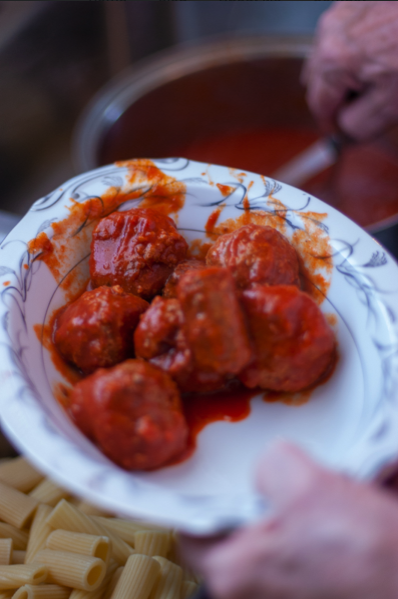
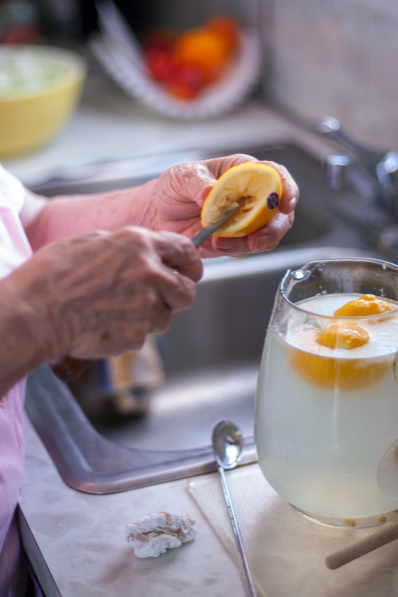
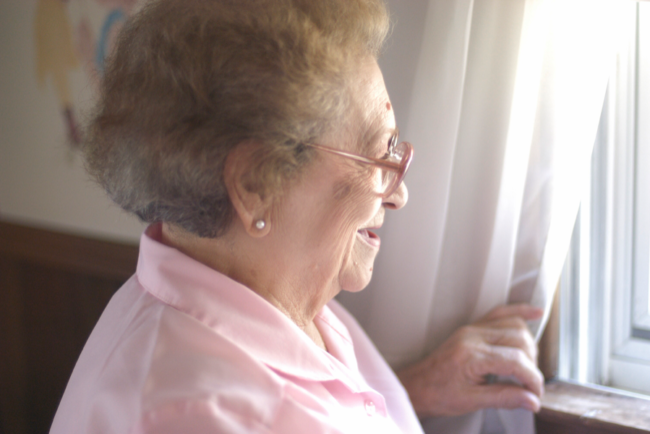
Dinner with Mom-mom

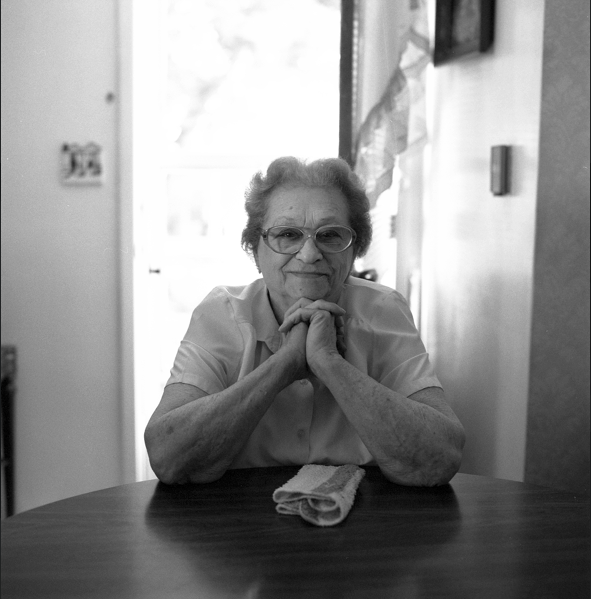
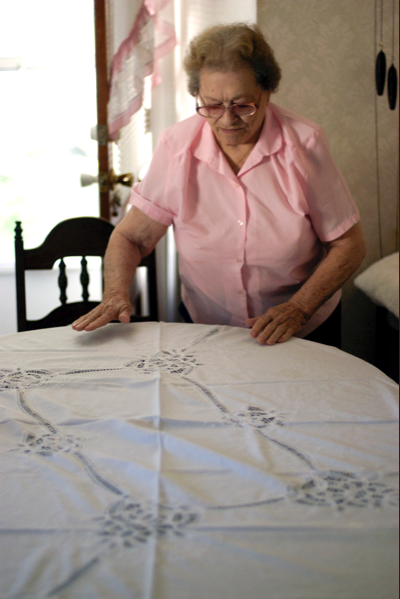
Like many people who make a living in photography most of my work involves carefully planned images, that are being made to achieve a set goal for a client. Given my choice though I love to just go into a situation and capture what’s happening in front of me and telling a story, sometimes long stories and sometimes short stories. For this project it was a short story spending a single day with my Grandmother (Mom-mom) as she prepared a large family meal for our family, in these images she is in her early 90’s and it is one of the last large family meals she would prepare for my family before she passed. Mom-mom had quite a life, she spent her childhood in an orphanage in Philadelphia after her mother passed away shortly after arriving in the United states from Italy. After leaving the orphanage in her teens with her older sister she worked as a hair stylist and then sold tickets on the boardwalk in Wildwood New Jersey until her late 80’s, never slowing down while raising her two children. Being Italian cooking was constant in her life, bringing food from the old country to new generations of family. This meal fed 4 generations of family, passing that food culture forward. Mom-mom cooked simple meals of red sauce and pasta with few ingredients but mixed to perfection. I’m incredibly grateful I was able to capture this day when I could and only wish I had more time to spend with Mom-mo. All the recipes for the dinner I have posted on my website, dougphoto.com

To see more of this project, click here.

APE contributor Suzanne Sease currently works as a consultant for photographers and illustrators around the world. She has been involved in the photography and illustration industry since the mid 80s.  After establishing the art buying department at The Martin Agency, then working for Kaplan-Thaler, Capital One, Best Buy and numerous smaller agencies and companies, she decided to be a consultant in 1999. She has a new Twitter feed with helpful marketing information because she believes that marketing should be driven by brand and not by specialty.  Follow her at @SuzanneSeaseInstagram

Success is more than a matter of your talent. It’s also a matter of doing a better job presenting it.  And that is what I do with decades of agency and in-house experience.


Photo Directories & Sourcebook Review

Guest Post by Amy V. Cooper

Sourcebooks, Photography Directories, Listings… What are the differences between them, and which one will give me the highest return on investment? You asked, so I did the research.

I interviewed dozens of photographers and directory agents and conclude that there are no best or worst.  Your genre of photography, location, target market, how you prefer to interact, and of course your marketing budget will collectively determine which one (or more) of these resources is right for you. This review will help you decide which resources are best for your business.

The most important thing to know is, the more you put into it, the more you get out of it. As with all of your marketing efforts, you have to be consistent, you have to be the squeaky wheel, and you have to be patient.

The majority of these source books and directories are by invitation or selective review, and I do not recommend them for photographers who do not yet have commercial or editorial experience.

Below you will find an abbreviated version of my full report which is available to my clients or subscribe to my newsletter to receive a download. Numbers and costs are based on research completed in October 2019.

THE ESTABLISHMENT

WORKBOOK is one of the oldest and perhaps most well-known bi-annual print directories for photographers and illustrators. Their hefty books are ubiquitous at most ad agencies and Workbook is known for great customer service and ROI. ”We are still relevant to creative buyers after 41 years. The Workbook is the most recognizable direct mail pieces in the world.” BORN1978 COST: Between $2000 (website) –$7500 (Pro tier includes a 2-page spread in spring and fall books as well as online and free portfolio presentations). Current number of photographers: 321

Best for (IMO/In My Opinion): Advertising photographers interested in print and online marketing support willing to update their work regularly.

LE BOOK is another one of the print originals, born in Paris in 1982, expanding to New York (1995) and further in Europe (1999) to include film, photography and other production and event resources. I actually purchased my one and only source book listing in Le Book as a photographer in 2007. Le Book still publishes directories annually in four markets but their business model seems to be more focused on events and production. BORN1982 COST$110/mo. Current number of photographers: 126 in the U.S. (more internationally).

Best for (IMO): Fashion Photographers in larger markets.

ATEDGE is a series of print publications (5 books/year) sent to agencies and major brands in the U.S.  By invitation only, AtEdge limits their roster to 150 artists so that they can promote and provide their members with individual attention. “We focus on the most innovative photographers, directors and CGI/post-production studios and always make your image the hero. The AtEdge marketing program sets the bar for talent on our digital platforms, in our books, and at our exclusive industry events. Creatives know and love us for that reason.” BORN2003 COST$8340/year (includes a spread in all 5 sourcebooks, a web portfolio, consulting, and one face-to-face portfolio event with 4-6 senior-level creatives.) Number of photographers/directors: 150.

Best for (IMO): Advertising photographers wanting a more personalized collaboration.

THE DISRUPTORS

WONDERFUL MACHINE began as a photography collective and has expanded into a global online-only directory of photographers in more than 40 countries. In my opinion, Wonderful Machine is one of the few directories that has an intentional foot in the editorial and reportage space (not solely focused on advertising agencies and direct-to-brand.) They also do a lot of production. ”We take a personalized approach when marketing, estimating, and producing for our photographers. We have a lot of photographers that have been with us for many years, lasting relationships. We enjoy seeing their careers grow.” BORN2010 (as a directory) COST$192-$240/month (listing only.) Number of artists: 595.

Best for (IMO): Photographers wanting more global and editorial reach with the availability of a full suite of services like bidding and production.

FOUND ARTISTS is an online and print directory known as one of the best in design and user experience. It’s also one of the more affordable options. Found is unique in that it hosts portfolios showings without the artists in attendance. If you are an introvert, this might be your jam. Found Artists print curated sourcebooks twice per year (100 artists per book) and “Decks” (unbound) six times per year (50 artists per deck).  ”We’re unique in our team and passion as well as our price point. We know what it takes to market our artists and we’ve built rapport with clients over time and in doing so many portfolio reviews.” BORN2016 COST$40/month (does not include portfolio reviews nor placement in print books) up to $3995/year. Current number of photographers: ~700.

Best for (IMO): Advertising photographers needing flexibility with their marketing budgets, wanting help with bids, less interested in or unable to attend in-person reviews.

BOULEVARD Artists is (more than) an online directory of photographers created by the founders of Fotoworks. They host in-person portfolio reviews several times per year in multiple cities. Although you do not have to be a BLVD Artist to attend some of these reviews, their members receive priority and discounts. ”We see ourselves more as a roster than a directory, we host portfolio reviews and focus on personal relationships.” BORN2014 COST$1399/year or $4200/year for Select members, buy up to $6950 to include 3 portfolio review events. Number of photographers: ~40.

Best for (IMO): Advertising photographers & directors willing to hustle their physical portfolios, travel to meetings, and make face-to-face connections.

PRODUCTION PARADISE is one of the most internationally recognized online resources for finding photographers, stylists, producers and almost every category of production service you could hope to discover in 55 directories around the globe.  ”We are unique in our reach and have the highest number of email subscribers out of all of the online photo directories (over 200K).” BORN2002 COST$2-$5K/year for photographers (less for stylists and other production resources, prices are determined by profession and location.) Number of photographers: ~500 in North America & the Caribbean (more internationally, supporting over 2500 creative businesses worldwide.)

Best for (IMO): Photographers wanting broader online reach and promotion.

THE NEW PIONEERS

KOMYOON is a digital directory offering services and tools for professional artists & the people who hire them. The app and soon to be desktop version allow artists to customize a searchable digital profile. Paid membership includes profile curation, portfolio/website reviews, spotlights on social media and access to varied in-person events. ”Our commitment to better unify our industry is aimed at addressing current pay for play models and making it easier for decision makers to find and track artists. We provide an affordable, useful solution that works fairly for qualified commercial artists of all levels.” BORN2019 COSTFree up to $3450 (4 tiers). Current number of artists: 265

Best for (IMO): Advertising photographers with zero to large marketing budgets who enjoy the social media model/experience of sharing their work, and are willing to stay active and update their content.

PHOTOPOLITIC began as a production services company in 2012 and expanded into its current online directory model in 2017. More than a photographer directory, PhotoPolitic is rapidly forming as an all-in-one stop for promotion, production, consulting, marketing, design, and soon to be direct casting model. PhotoPolitic is unique in many ways but notably in its mission to connect photographers to each other with a members-only discussion group and fireside chat style events. ”Our website is state of the art in functionality and speed. We make it easy for art buyers to find new photographers. Artists who join PhotoPolitic are side by side with some of the top photographers in the world.” BORN2017 (as a directory) COST$900/year (going up to $1200 in 2020). Current number of photographers: 272 (limited to 25 photographers per category per major market)

Best for (IMO): Advertising photographers interested in community and more direct support.

The companies that I researched for this blog are the most well known in the space of promoting commercial/advertising photographers. I’ve discovered numerous other artist directories and listings in addition to the ones included here. There are many resources that blur or dilate the lines of what might be considered a directory, some that are free and many that are niche. So as not to overwhelm here, I will be posting future blogs to share what I have learned about these additional resources. Please sign up for my newsletter to be notified.

***

Pro-tips before spending your money:

1. Prepare and ask lots of questions. This is not a vending machine. Make sure to get a phone call or face to face meeting with a rep or salesperson before deciding to commit to a listing. Consider the professional background, experience, and vibe of the people you speak with. Some of these agents may be representing you and your work to potential clients in the future or advising you on your career and portfolio, make sure it’s a great fit. Take your time.

2. Look at the caliber of other artists in each directory that you are considering. They should be as good as or better than you. Call or email several artists using the same directories you are considering who are in your same genre and/or location and ask about their experience. Ask yourself if there are a lot of competing artists in the same directory, that can be a good or bad thing.

3. Define your goals and expectations. Different directories have different resources available to photographers. Some are more hands-on than others. Decide if you want to drop and run or if you are the type of artist who prefers a bit of handholding. Know if you are willing to attend reviews and if it’s realistic in your schedule and budget to travel and also update/submit/print new work regularly.

4. Know your budget. Some directories might start cheap, but ROI usually grows with “buy-ups” (buying in to email or print promotions, portfolio reviews, editing services, etc.) A sourcebook or directory should never consume your entire marketing budget.

5. Ask for a discount (politely). Most of these directories have discounts available, it can’t hurt to ask!

Still confused about which directories to choose? Shoot me an email or jump on my calendar here.

Hey, #ImRootingForYou!

                                                                             V.

Never miss a blog or event, sign up for my newsletter here.

Get inspired, keep up with my pro-tips, and meet some of my favorite clients and artists: follow me on Instagram @amyvcooper.

The Daily Edit – Frank Ockenfels: Volume 3


Frank Ockenfels 3

Frank has been a friend of the blog for sometime now. Our first of eight posts with him was in 2009, we’re excited for Frank’s new book, Volume 3 published by teNeues.

Heidi: Why did you want to pull this body of work together?
Frank: It all started with a conversation with David and Nicholas Fahey. They asked me what was my plan for all of my personal and published work I had created over the past 34 years. I went home and put together four bodies of work I wanted to share and realized that they all  went together seamlessly. My portraits went with my David Bowie work that connected to my journals that lead me to my drawing and collage work. I felt after seeing this it was time to make a book that was reflected how I see.

How do you see your earlier work now that you’ve had distance on it?
I see the simple act of failure and growth, to not be afraid to go outside the box of what is comfortable. I can look back and say I could have done better or I will never be that person again or see that way again which is good. I accepted and kept myself from fixing or changing older work because I feel in the moment they were true to who i was at that time, I think that’s important.

Has your “eye” changed and what are the benefits of time as one looks their at life’s work?
I would say it’s part of my life’s work and because of what I have seen and done there is so much further I will go.  I am at about 75% of understanding where it is I’m going and what I’m still trying to say and create. At 59 I am still open to trying different and new things that scare me, this is very exciting and l look forward to my failures as much as my success in the years I have left.

December 5th: Fahey Klein show
December 7th: Gallery Talk
November 7th: Art Center College of Design Talk

The Daily Promo – Jennifer Chong

Jennifer Chong

Who printed it?
I printed at Mixam. I really wanted to do a unique print piece but those get costly quickly. I used Mixam and hand-trimmed pages for something a little unexpected. They have a nice paper quality without breaking the bank.

Who designed it?
I designed the promo. I worked as a designer and art director before shifting to photography. After helping other photographer friends work on their promo, I figured it was time for me to work on my own (it’s always harder to design for yourself)! The designer in me wanted to explore fun paper, textures and printing options but ultimately those end up being costly. I focused on highlighting my photography while also mixing in some playful typography.

Tell me about the images?
This is the first promo piece I’ve done that wasn’t a simple one-sided postcard and I wanted to show the breadth of my work while also maintaining a good flow. With the help of friends and family, I selected a mix of personal projects and client work to showcase.

How many did you make?
I printed 50, but once I send these out I will print more. I wanted to see how the initial run would look and feel before printing more.

How many times a year do you send out promos?
This is my first time sending something other than a postcard, My goal for the new year is to send out a printed promo 2-3 times a year.

Do you think printed promos are effective for marketing your work?
While I haven’t gotten a specific job from the piece I can say that the printed promo has attracted potential clients which I’d say is a win! I think a nice printed piece can stand out through the noise of our busy inboxes – and I appreciate and enjoy having a printed piece to showcase my work.

This Week in Photography: A Halloween Tribute


It’s been a strange Halloween so far.

I sat in the back of an SUV outside a weed shop across the Colorado State line, listening to a plot synopsis of the original Rambo movie while a very cool bud-tender smoked a joint.

I saw a huge, black cow walking along the side of the road, by itself, and then a little later, a white dog the size of a bear trotted along the highway in the opposite direction. (Also alone.)

I perused an article about the world’s scariest haunted house.

Deer, ravens, hawks, and horses appeared.

Deer on the road


My daughter kept changing her mind, unsure whether her costume was too scary, or not scary enough.

A colleague told me she knew a person who might have become a serial killer, under different circumstances.

One of my best friends called, (as a surprise,) and since we only talk once or twice a year, and he’s famously hard to get a hold of, I’ve nicknamed him “the Ghost.”

Struggling, I looked through four books and pondered numerous anecdotes in my mind, trying to decide what to write for you.

To get in the mood, I put on “Garvey’s Ghost,” by Burning Spear, and only after a minute or two did I make the connection to the holiday.

BOO! (Did I scare you?)

The truth is, there’s something about the quality of light this time of year that lends itself to getting the willies.

The creeps.

The heebie-jeebies.

(I could do this all day.)

On Sunday, I was on the Eastern side of the Rocky Mountains, in the village of Chacon, where there were so many abandoned adobe structures, (including multi-story homes, which I had not seen before,) that I thought some zombies were going to pop up and eat my face off.

While I was in Colorado today, on the Western side of the mountains, I stopped at a little lake park that is so small and local it doesn’t have a sign.

Mile marker only.


Mile marker 12


There were geese and gulls sitting atop the rapidly freezing lake, as it was barely above 10 degrees F.


West
North
South
West


One year dying so a new one can be born.

I drove by ghost structures on the way home, hollowed out dreams from someone’s Wild West adventure.


Ghost house


Like I said before, it’s been a strange Halloween, and I haven’t even gotten to the book.

Searching for inspiration, I went to the bookshelf, looking for gifts from over the years that I never thought to write about.

One caught my eye, as I had no idea what it was from the spine, which is called, “Nothing but the Clouds Unchanged,” published by the Getty Museum, (Getty Publications) in 2015.

If you know how much I love California, (and this museum in particular,) it gives me no pleasure to have to wish them well with the fire that takes its name from the amazing, hilltop institution on the north side of LA, just above the 405.

I’ve visited many times, and know some excellent people who work there.

Today’s column, therefore, is in their honor.

The subtitle for this book, (and the Getty Research Institute show on which it was based,) is “Artists in World War I,” another historical period in which great technological upheaval led to massive global disturbance.

One hundred years ago, we got a big fat lesson on what can happen when violent forces are unleashed that get so big, like these fires, that they can no longer be controlled. Given the chess pieces moving around the board now, and the hyper-cunning, (Putin,) intractability, (Xi,) and instability (Trump) of the players, we can only hope the world averts the worst this time around.

But for all the deep-dive articles I’ve done over the last six months, all the intricate travel tales and hardcore analysis, I kind of feel like this book just doesn’t need it.

If you can’t figure out why it’s right for a Halloween and Dia de los Muertos week, then go watch “Coco,” and come back to me. We’ll talk about whether you cried or not, and if you have a soul.

Night night.

Don’t let the bedbugs bite.

Bottom Line: Creepy-cool academic publication about art from World War I

To purchase “Nothing But the Word Unchanged” click here 


If you’d like to submit a book for potential review, please email me directly at jonathanblaustein@gmail.com. We are interested in presenting books from as wide a range of perspectives as possible.