This Week in Photography: Drowning in Noise


May you live in interesting times.

It’s an old adage, a thing people say, or at least it seems that way.

Maybe it’s a curse?

I think the opposite is likely true, and that periods of calm, (in the world beyond my mini-alligator-filled moat,) are relatively rare.

For every brief Pax Americana, (Post WWII,) there are a thousand Hundred Years Wars. And if plagues come around every 100 years, then many (if not most) people will live through one too.

In the early days of our COVID-19 pandemic, someone asked me if I’d ever seen anything quite like this before.

I had to answer honestly, and said “No.”

“However,” I followed up, “I have seen bits of this that add up to Frankenstein’s monster. If you throw in one part 70’s gas lines, add 9/11 with a dash of the Great Recession, and then chuck in the AIDS epidemic and some SARS/Ebola fear.”

Now, I’m the first to admit, that’s one hell of a witches brew, and I’d prefer we had avoided this mess entirely. But we can’t take the pangolin out of the stomach that ate it, any more than we can seal the virus up behind a brick wall and leave it to rot.

(I had no intention of dropping all these horror references today, but as I’ve told you before, the creativity is the boss, and I’m the vessel.)

A month + into the situation, and the comparisons are to The Great Depression, but I’m not sure if that’s how this will go. (Time will tell.)

Businesses didn’t go out of business, en masse, they were closed for a public health emergency. And as awful as some people have it, financially, there are resources being thrown at the problem: unemployment payments, $1200 IRS checks, small business loans, freelancer grants.

(Not enough, I know.)

There exists at least the possibility of this being a recession that ends gradually, (rather than a lengthy depression,) as most businesses re-open.

Will some not re-open? Will some people go out of business because of this virus economy?

Yes. Definitely.

But I went of business, with my commercial digital studio here in Taos in 2010, because of the Great Recession. And it was the best thing that could have happened, (eventually,) as I shifted my intellectual resources to writing and building my art and teaching careers, all of which have paid off.

Would I have predicted how gig economy that would be? 3 side hustles making one creative living?

Of course not. I hadn’t heard of the gig economy in 2010 because it didn’t exist yet.

Do you catch my drift?

People can’t tell you what comes next, not even the great Dr. Fauci, because no one knows. (Speaking of Italian-Americans, I never knew, nor knew of NY sports photographer Anthony Cauci, who passed away from the virus, but it sounds like he was an amazing guy. Here’s a link to the Go Fund Me page for his family.)

Sorry. Where was I?

This is new ground on which we’re walking, yet it has also been trod by other humans in the past, be it Spanish Flu, Bubonic Plague or Trumpsanity. (Yes, I made that last one up.)

Speaking of Trump, I’ve avoided criticizing him the last month or two, waiting to see if there was any chance he miraculously became a different person because of this crisis.

I remember doing that with W Bush too, after 9/11, when he courageously said nice things defending Muslim Americans. But his general incompetence won the day, leading to two wars, and the aforementioned Great Recession.

So I gave Trump the benefit of the doubt, but numbers don’t lie. The United States of America has lead the world in the number of cases, as a significant anti-science cohort holds sway here.

Tens of thousands of vulnerable people, sick and old, people of color in particular, are dying, and at this point, it would be unconscionable not to point the finger at the federal government, for America’s lack of preparedness.

These days, people want the truth more than anything. They want things to make sense. They want to trust that higher authorities know how to handle this, and that a smart, cogent response will allow the world to move forward.

That’s what people want.

But what they get is a lot of noise.

Trump’s still name-calling on Twitter, like he always has, and now angry hordes in MAGA hats are storming the castles?

Some preacher insisted on keeping his church open and then he died?

The virus is caused by 5G poles, or can be prevented by smoking, or it came from a lab in Wuhan, or Facebook let 40 million misleading posts go through, or Ozzy Osborne bit the head off an infected bat at a party in Florida and started the whole thing there. (I made the last one up, but if somehow it could all be Florida’s fault, that would be apropos.)

Just when we want things to make sense the most, they make sense the least.

We want a Hardy Boys novel, with its satisfying conclusion, and instead we get a fucking Zen koan.

(Welcome to #2020.)

So when I went to my book pile today, I reached again for something I knew to be old. It was a bit unfair to people who submitted books in Spring 2019, as I’d been reviewing books each week forever.

But then Rob and I agreed to try the travel writing, and few books were perused until late last year.

Anything I pull from Spring 2019, by its nature, cannot be made directly for this moment. In fact, when this book arrived, I’d barely begun working on my own book, and I put so many things I’ve learned here into making mine.

If all goes well, today, “Extinction Party” is being featured in the Washington Post, in their In Sight blog, and I was asked to write the article myself. (One of the biggest honors of my career, by far.)

I’ll be telling you plenty about the making of my book, as it’s a big part of the Amsterdam travel series, and I want to share the knowledge I accrued.

Foremost in my bookmaking decisions, as you might expect, was when to give contextual information, and how much to give.

I write about that all the time here. Second big move? Making sure there were connections between images, and sets of images. (My editor, Jennifer Yoffy, was brilliant at building the spine that way.)

Essays at the start, not too long, and titles on each page, to give context throughout. It’s ten years of my work, in different projects that we brought together in rhythm, with intention.

Imagine my surprise, then, when I pulled a box from Radius Books, down the way in Santa Fe, as they’re among the best photo book publishers in the world.

Quality wise.

(I also know they have a strong Arizona slant with some of their artists, like Mike Lundgren and David Taylor.)

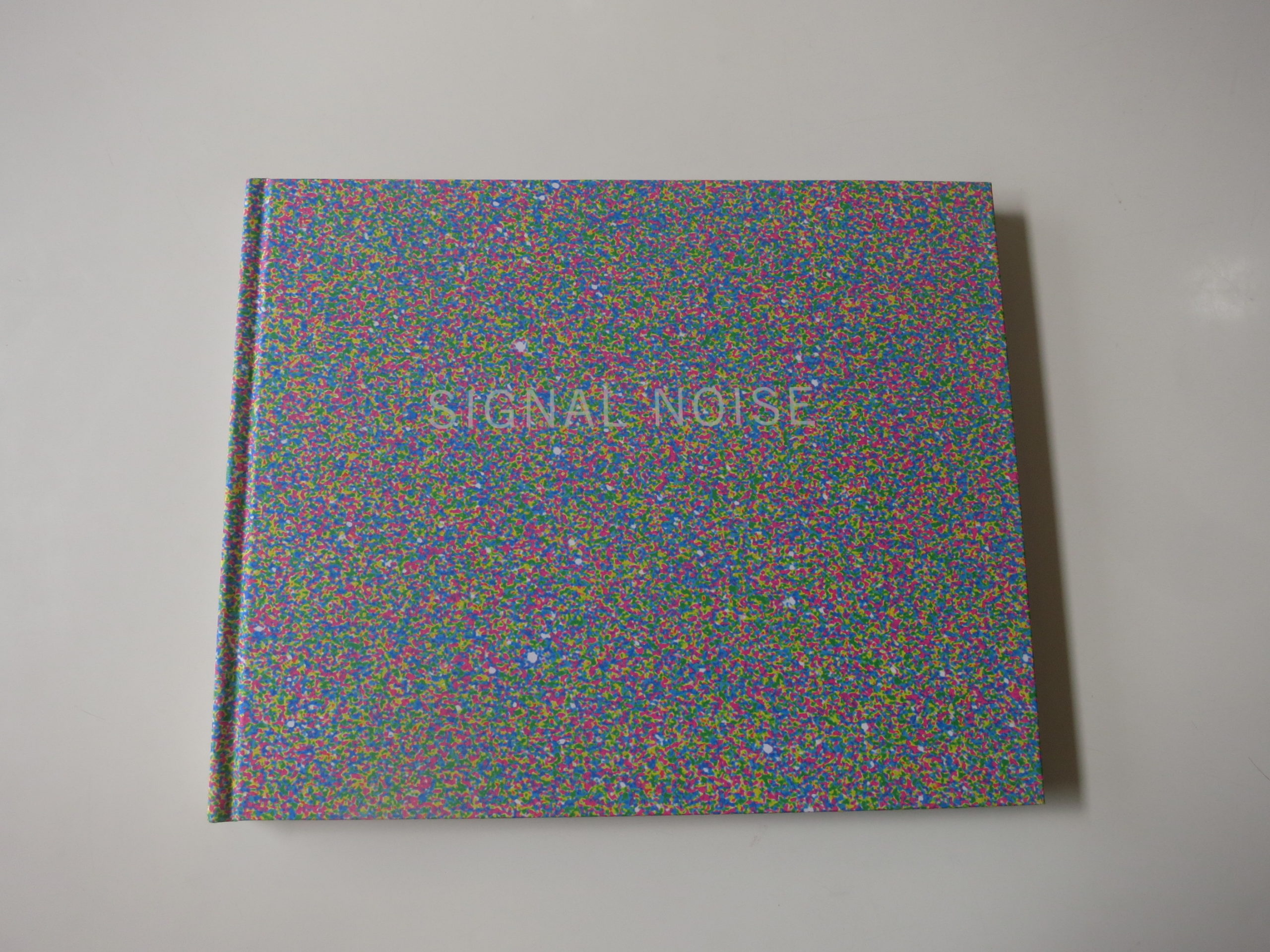
It was an unsolicited submission, so I had no idea what was inside, but I was hooked by the cover for sure.

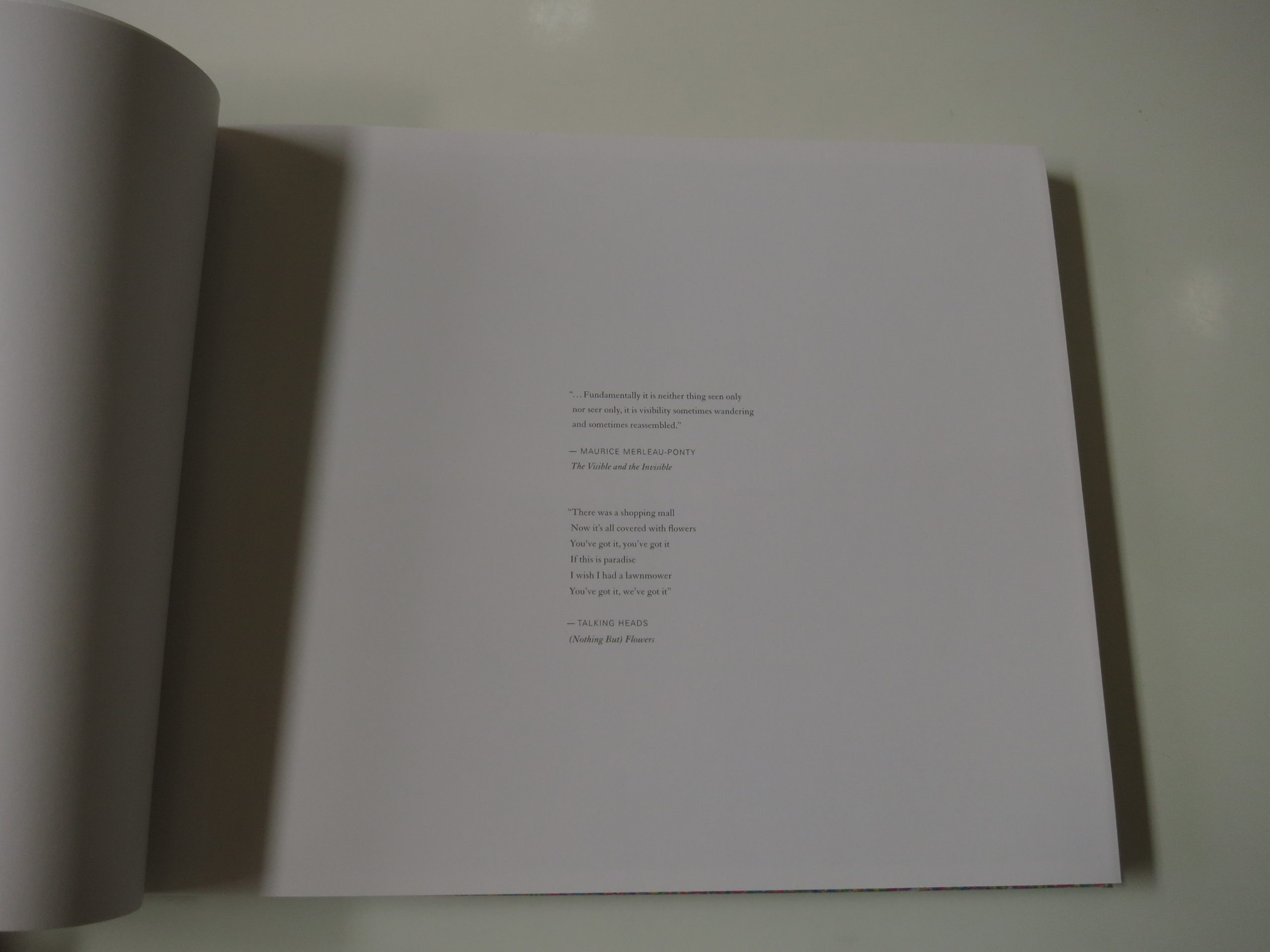
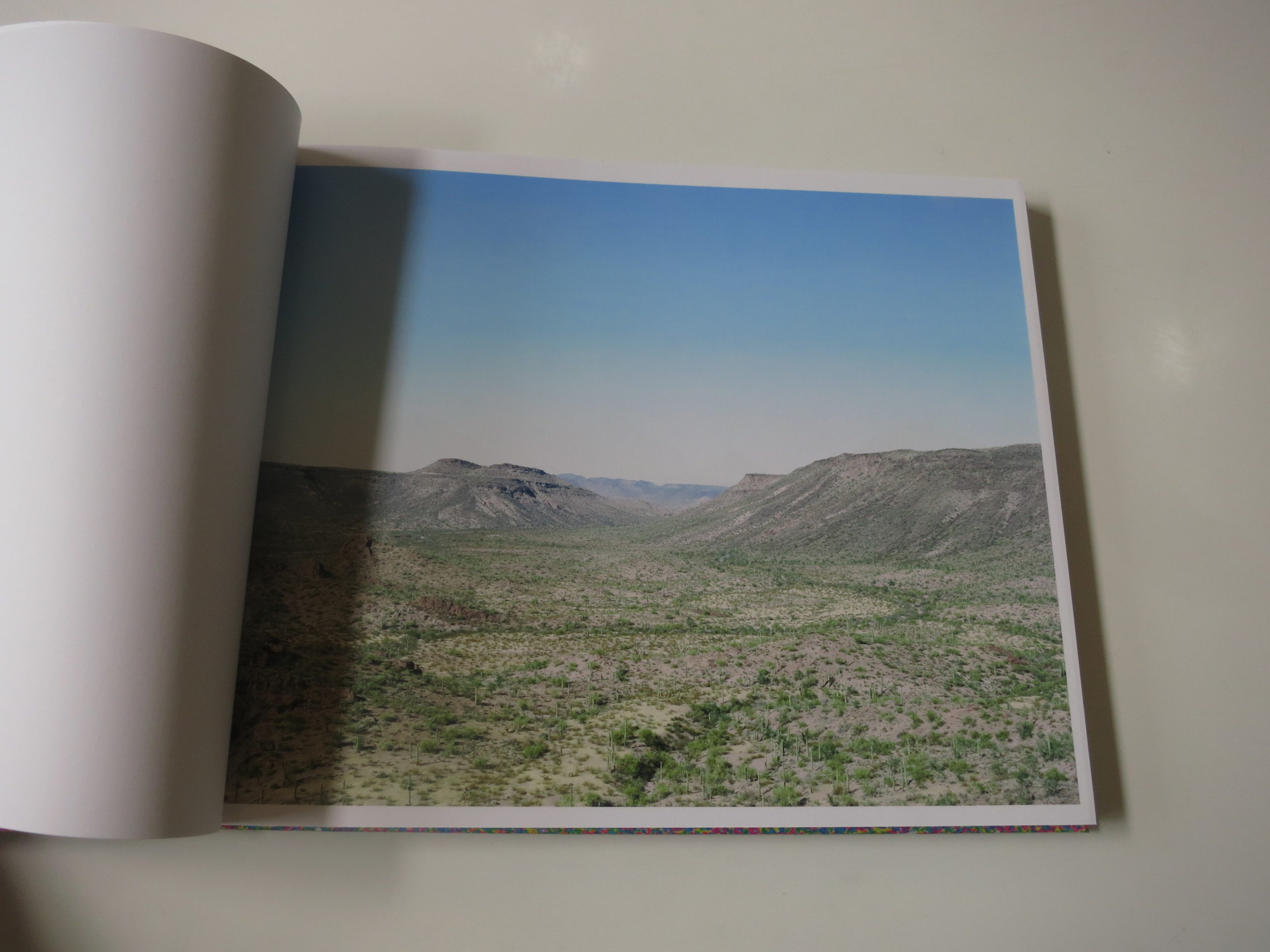
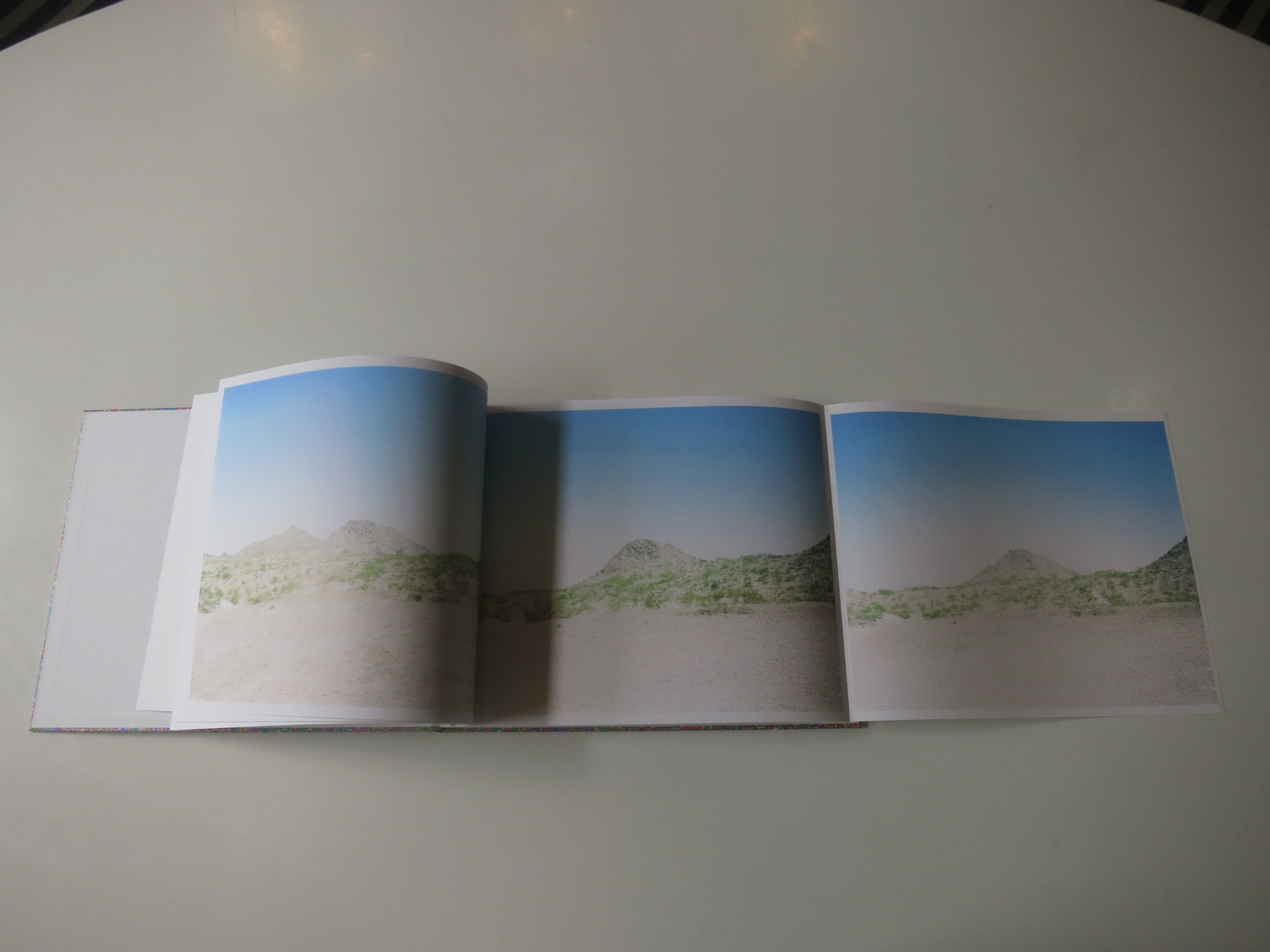
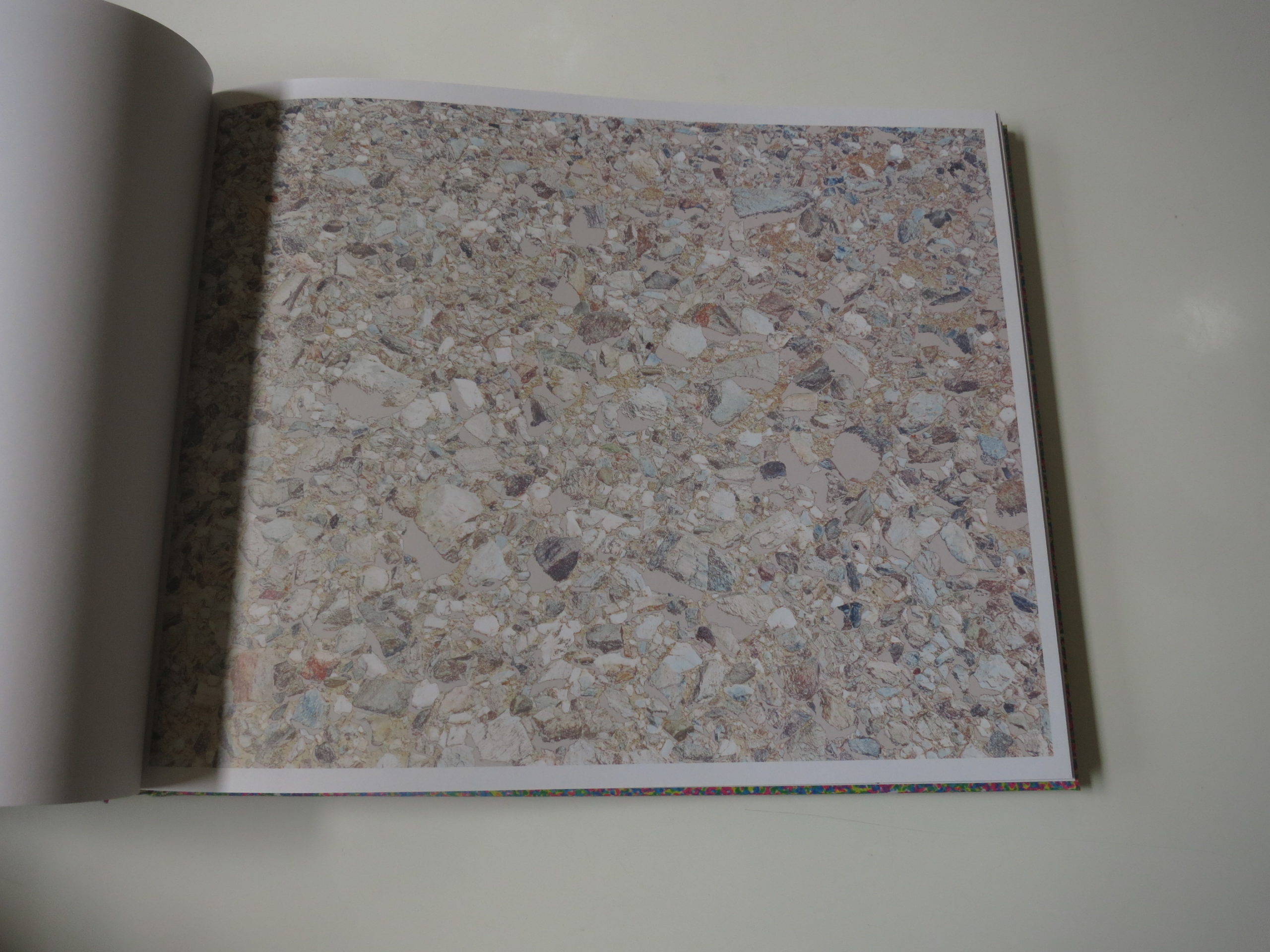
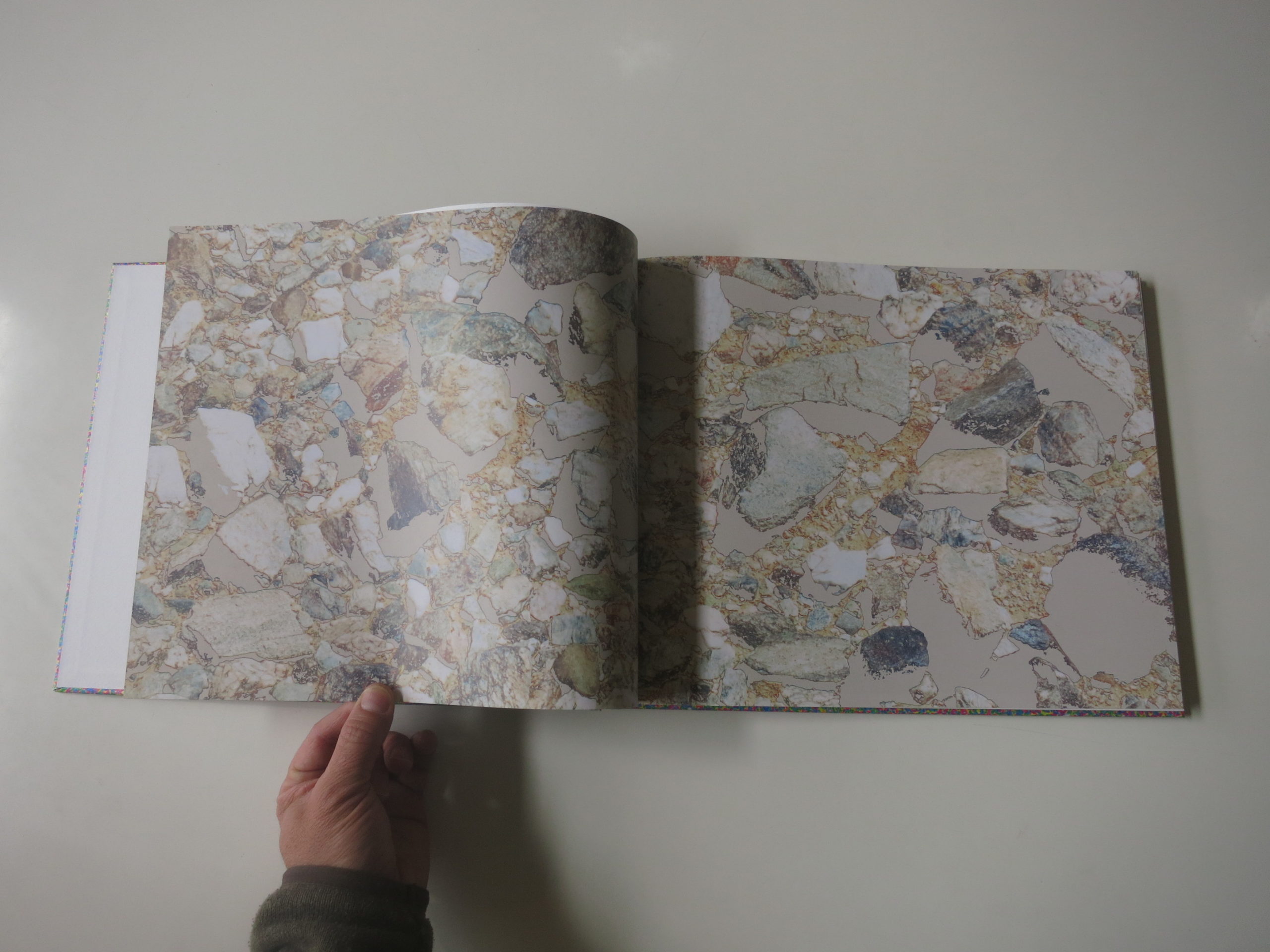
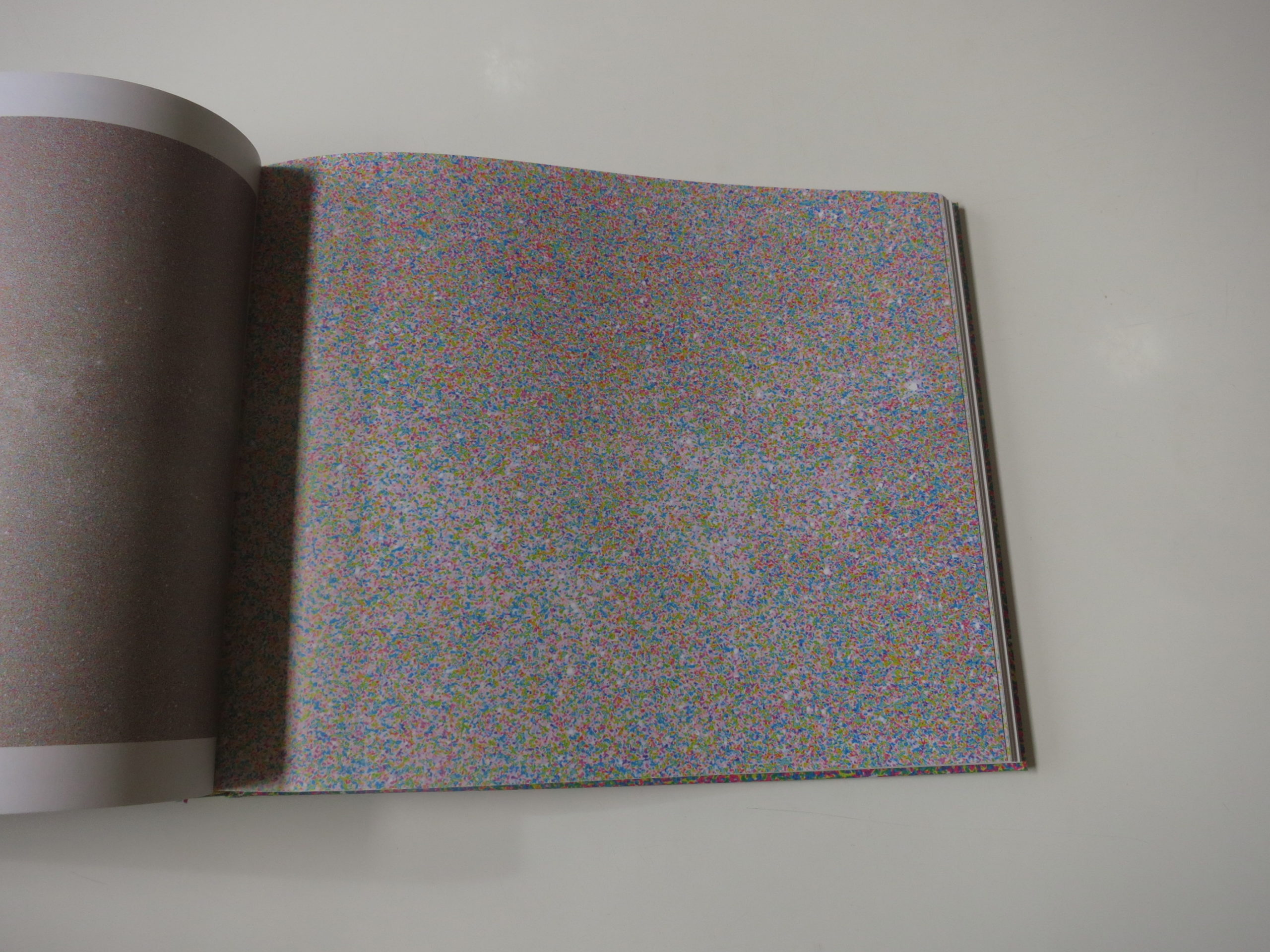
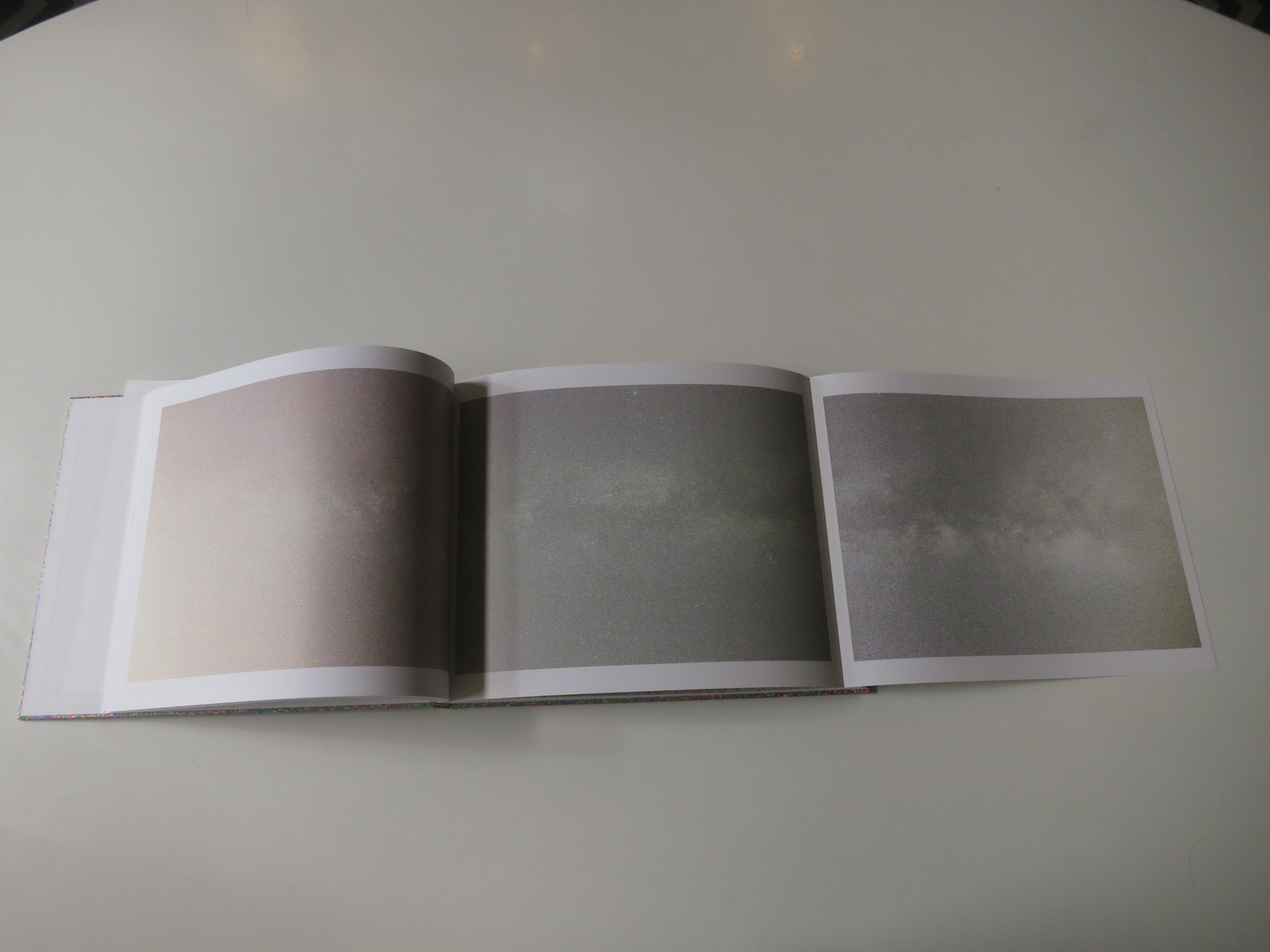
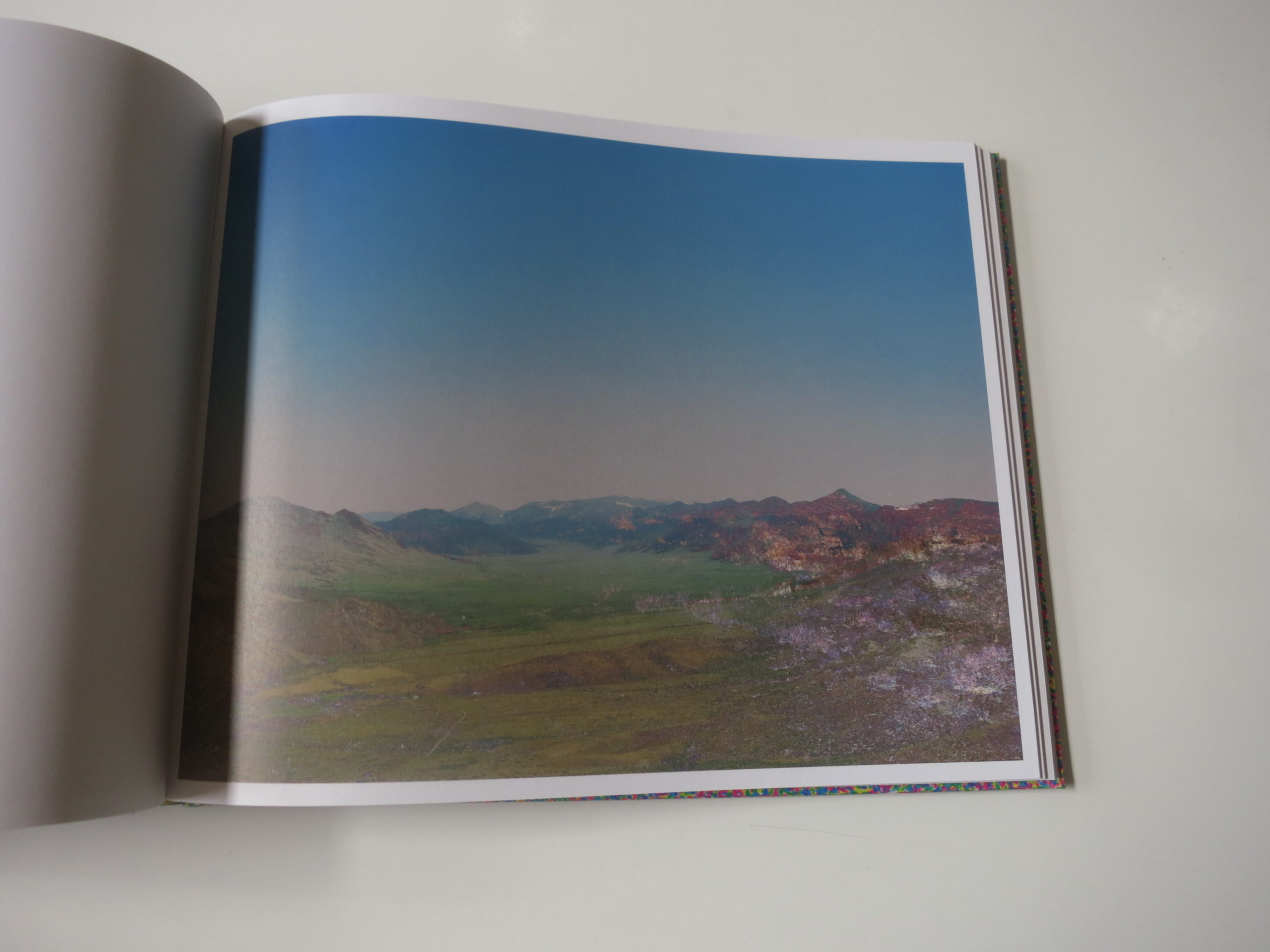
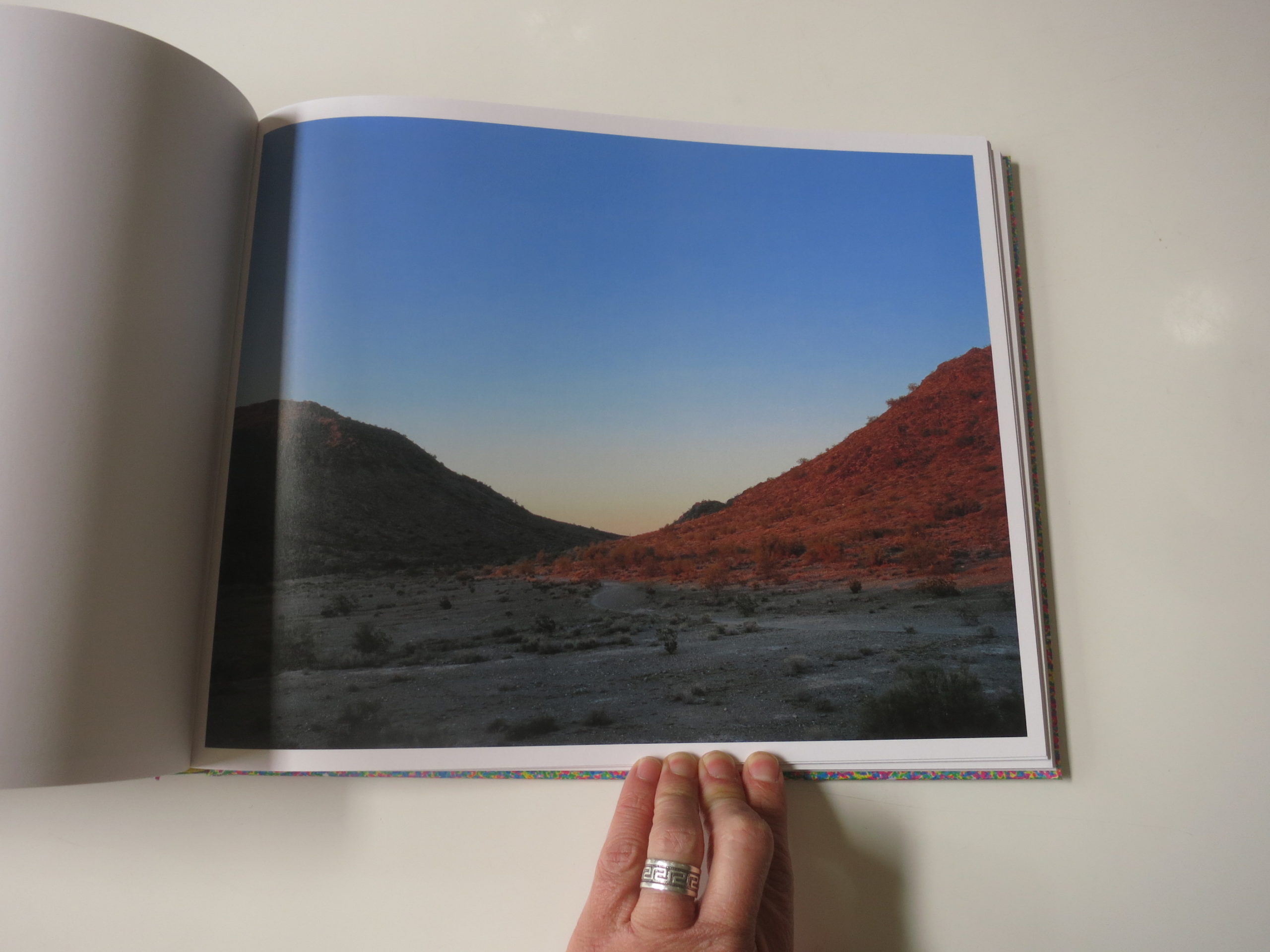
It was “Signal Noise,” by Arizona artist Aaron Rothman, published in 2018 by Radius.

First thought?

Great cover.
No doubt.

And for everyone who says “Don’t judge a book by it’s cover,” I say bullshit. A great cover is a necessity for a great book.

This, despite its great cover, is not a great book.

At least, not by my standards.

(Though I expect the artist, his dealers and collectors, and the publisher probably give it a 10/10.)

Open it up, and turn the pages.

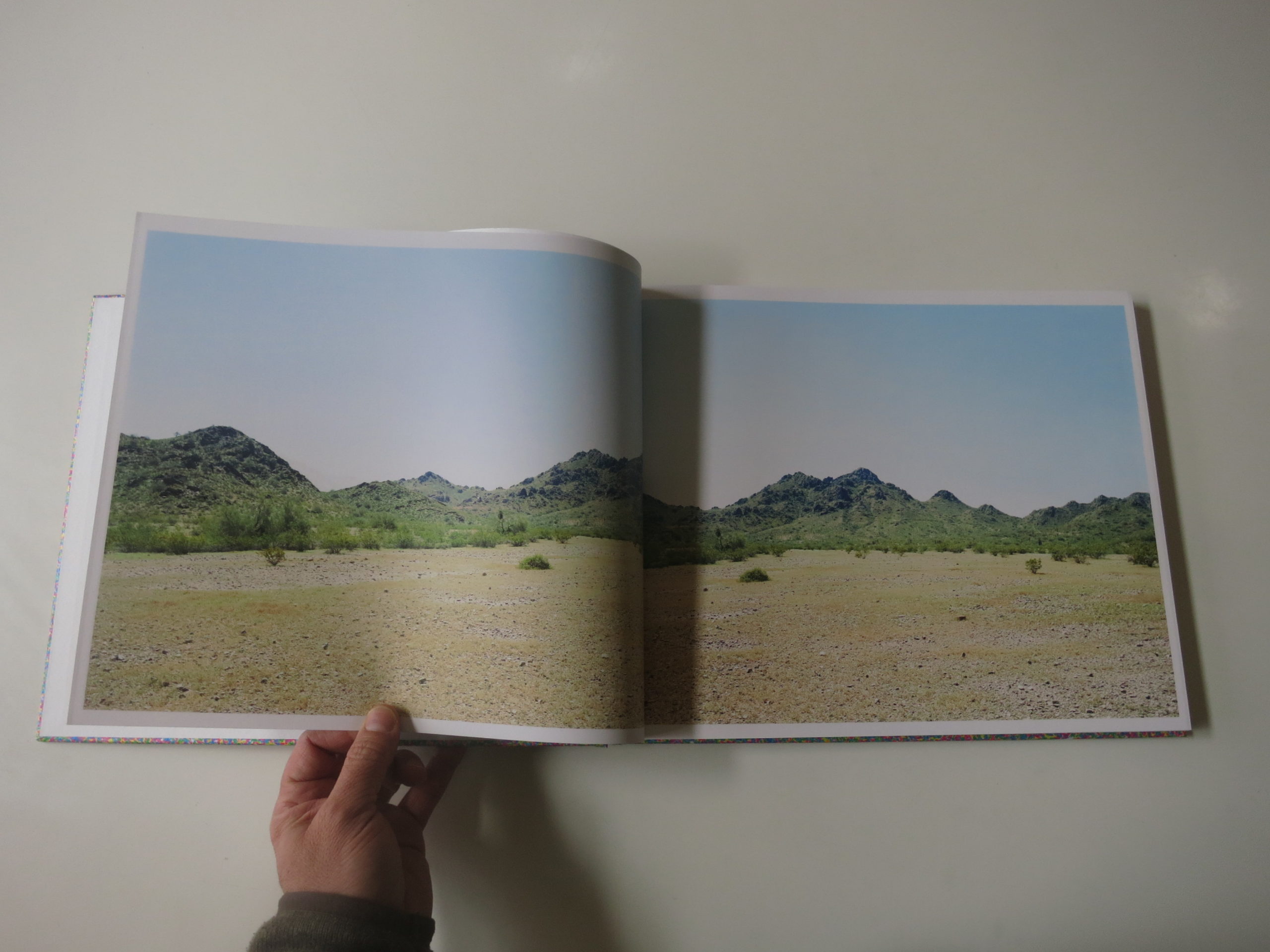
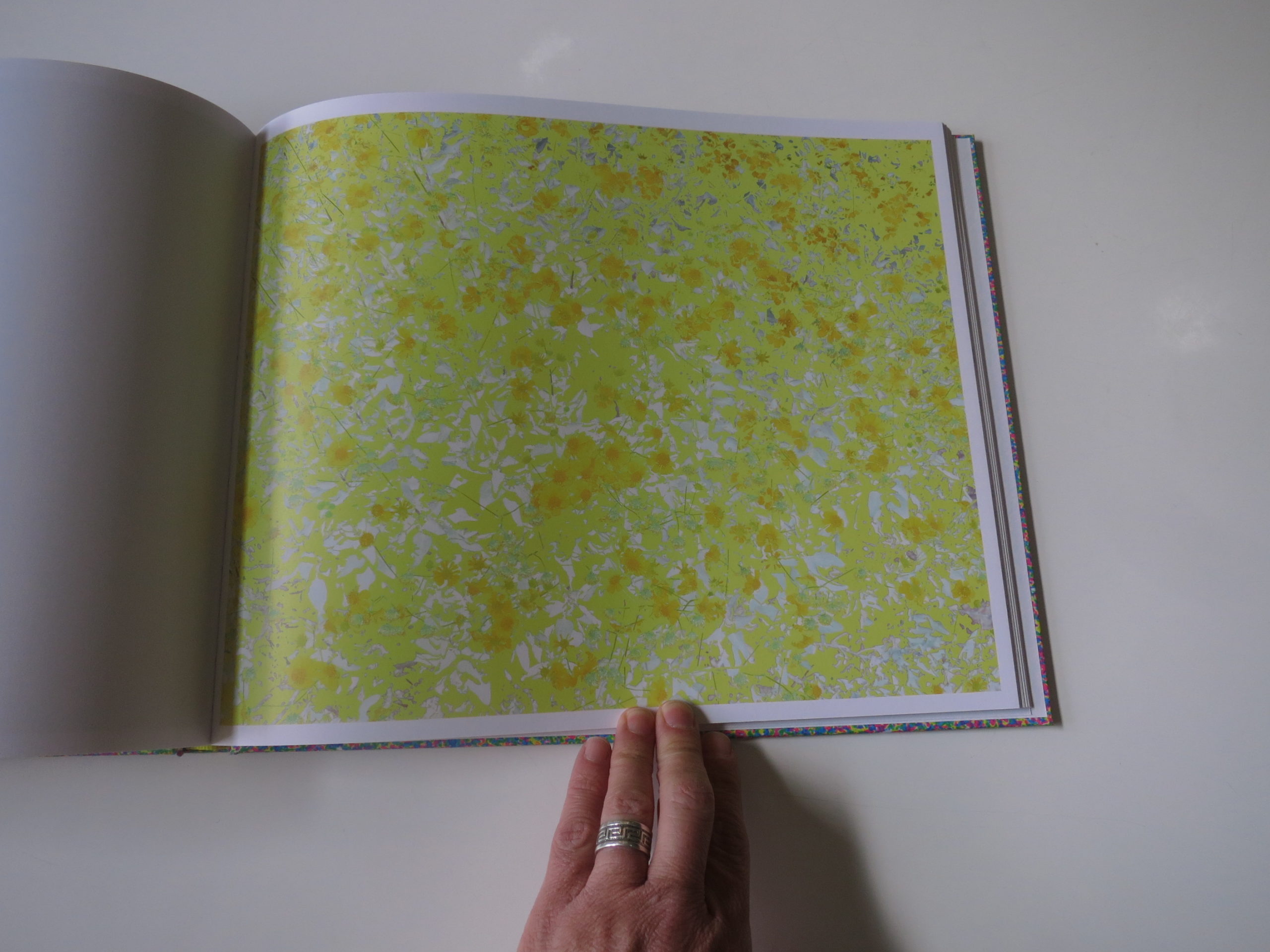
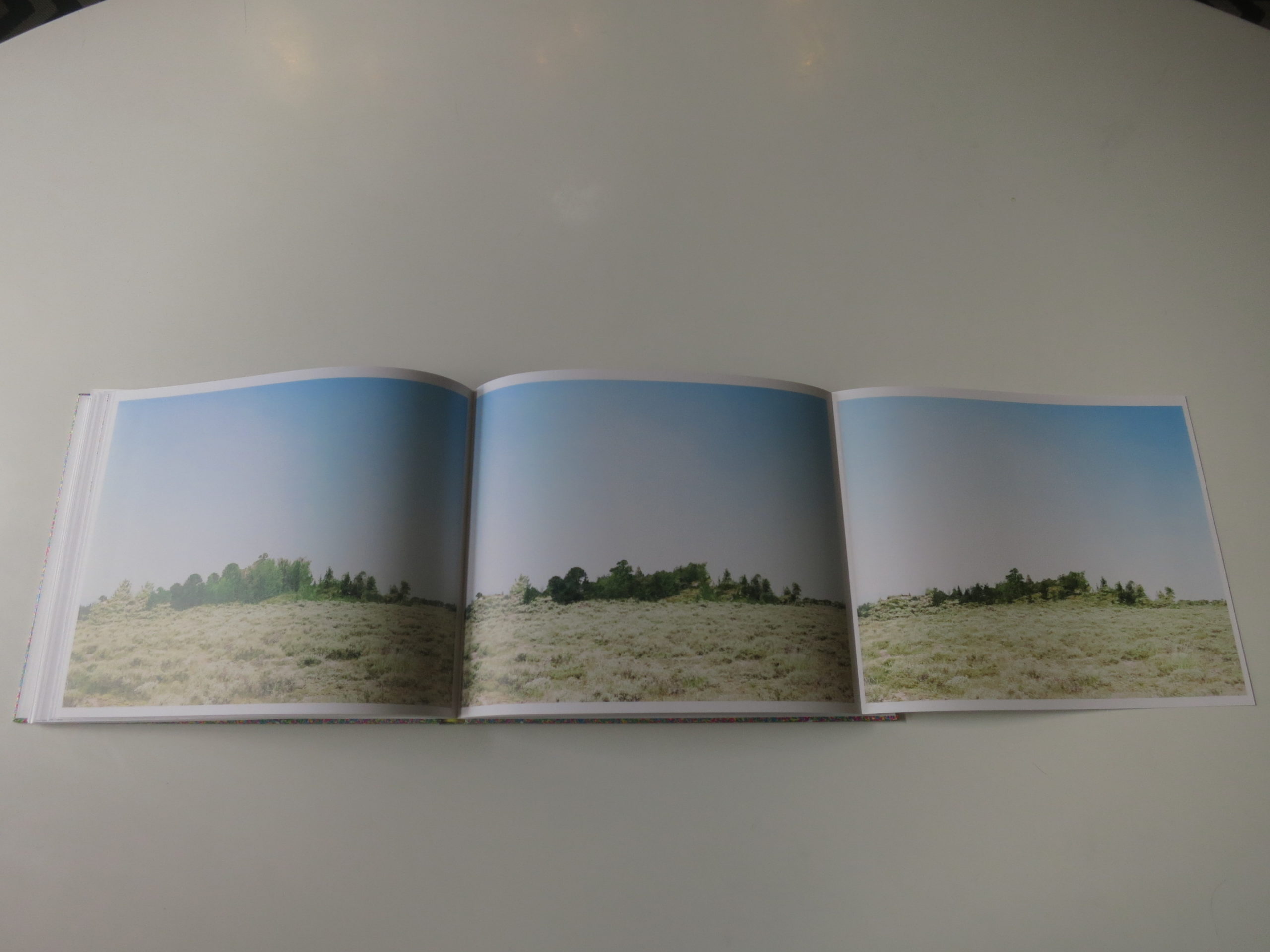
You see straight landscape images, in the harsh Arizona desert sun, and then some are triptychs. It’s like an anti-aesthetic Cezanne, the repetition with slight changes.

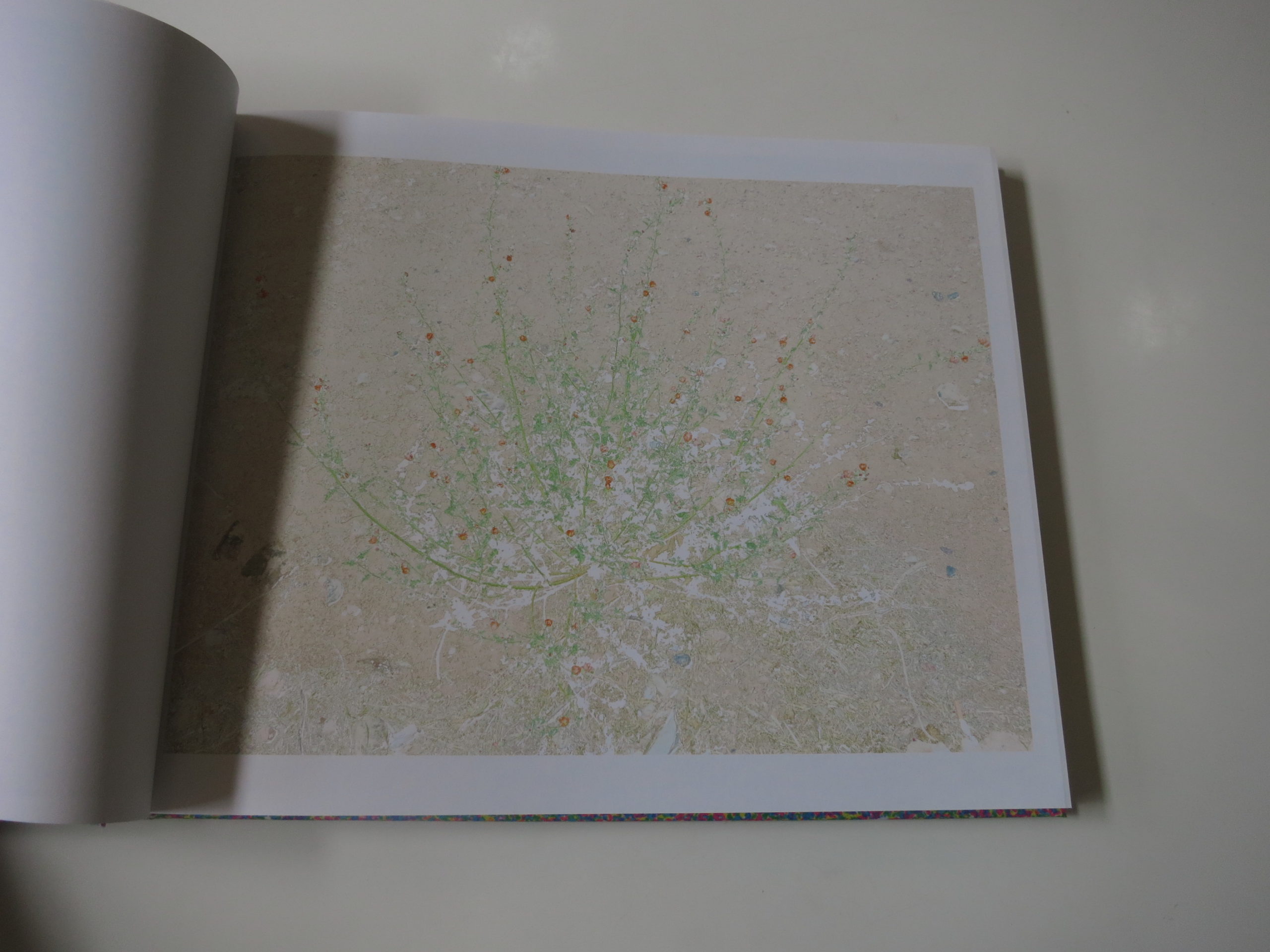
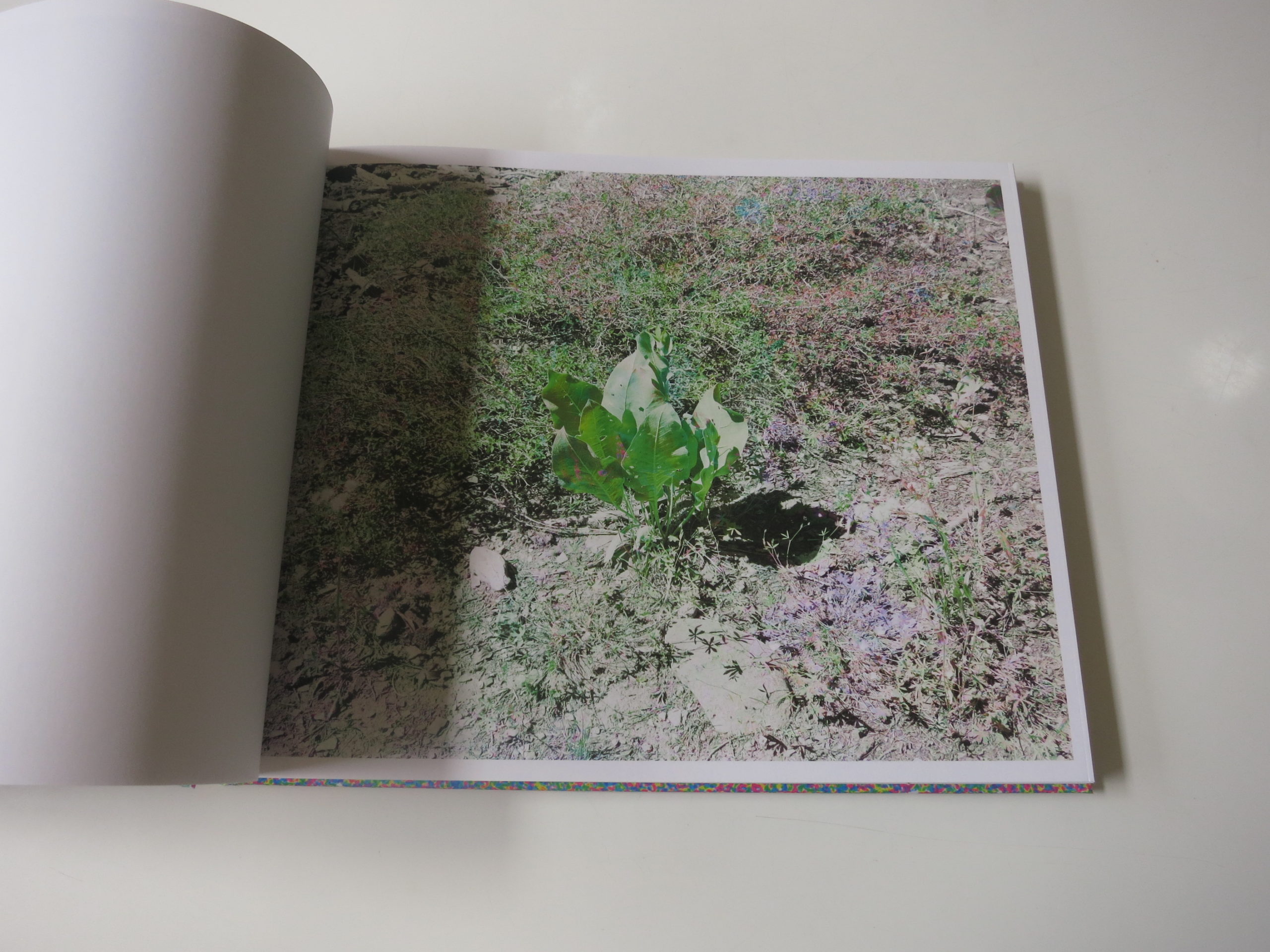
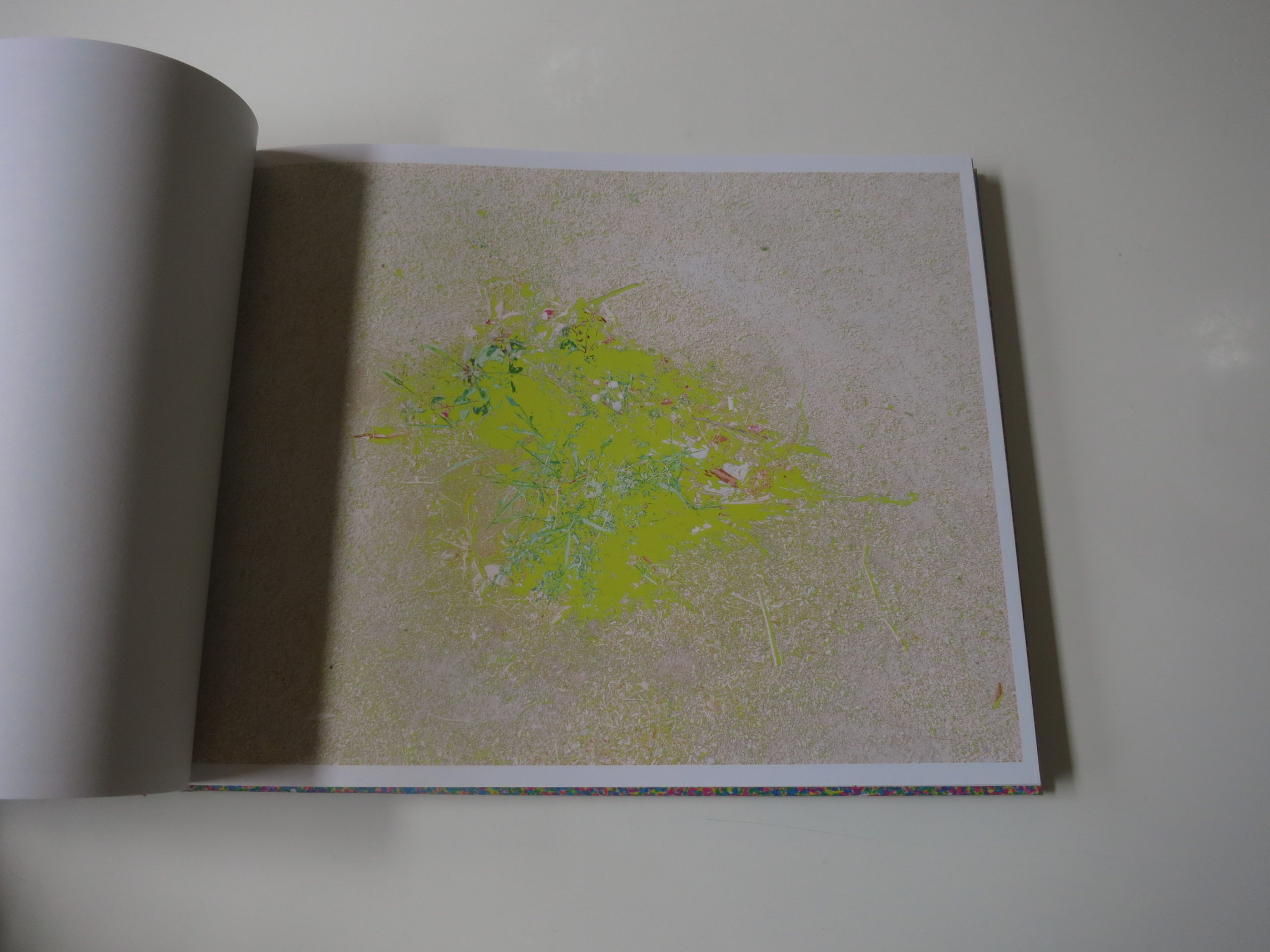
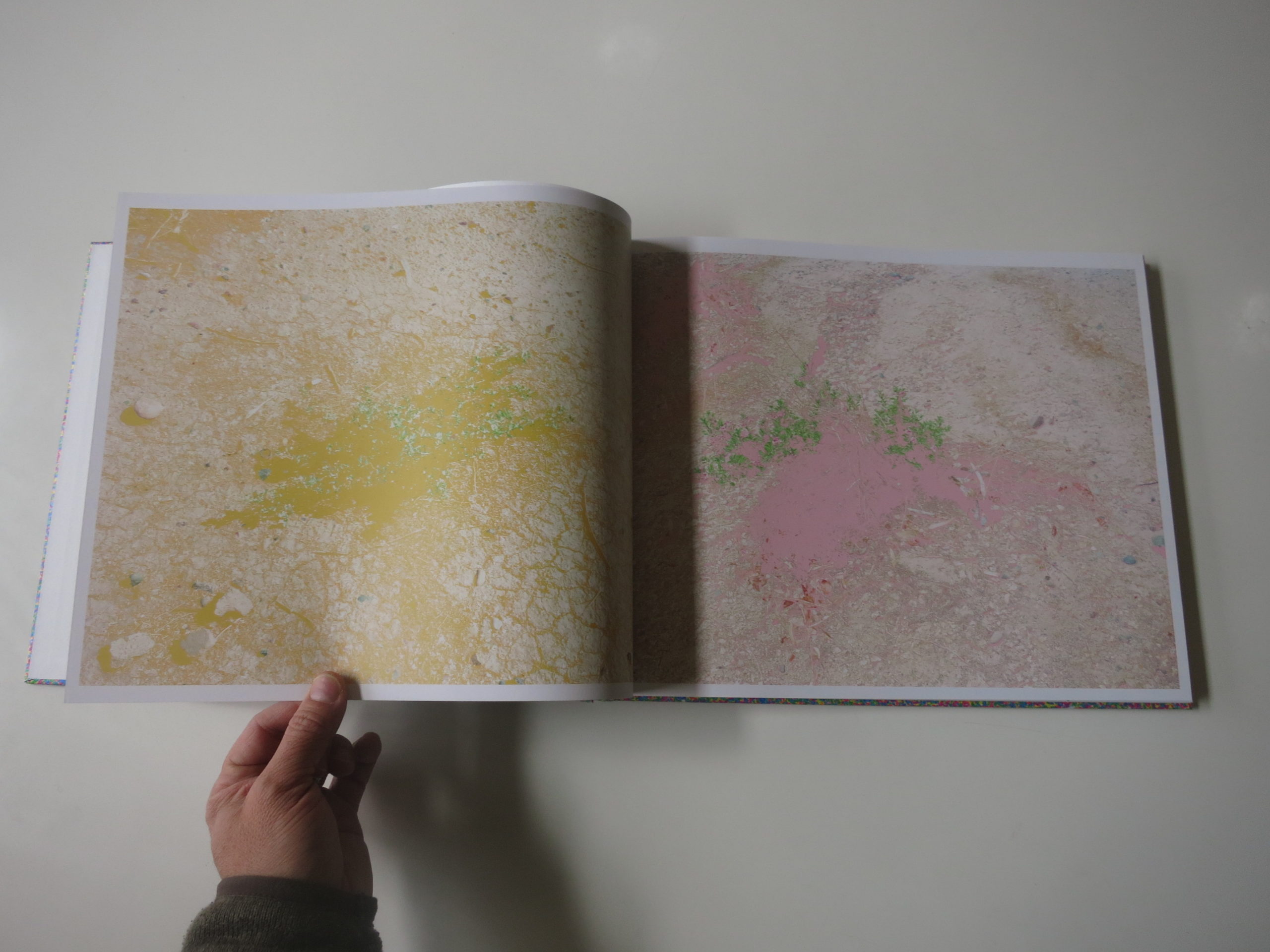
Then landscapes turn digital, and manipulations are obvious.

What is the deal?

There are no words to explain.

More digital effects, like solarizing, and things bounce and weave between styles.

What does it mean?
What is the connection?

You know I treat books like a detective, and as a book maker, I gave all the clues.

This denied me all clues.

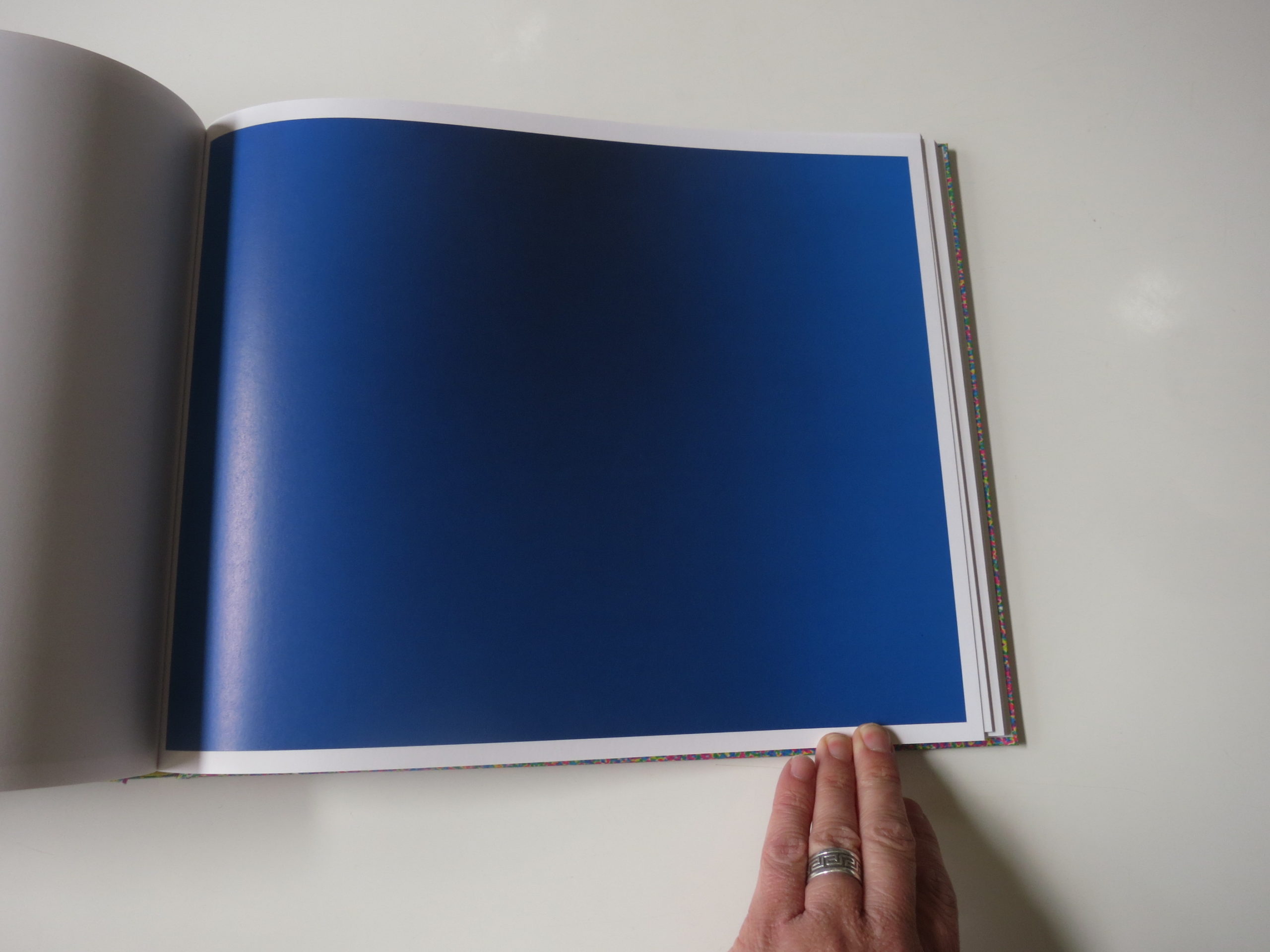
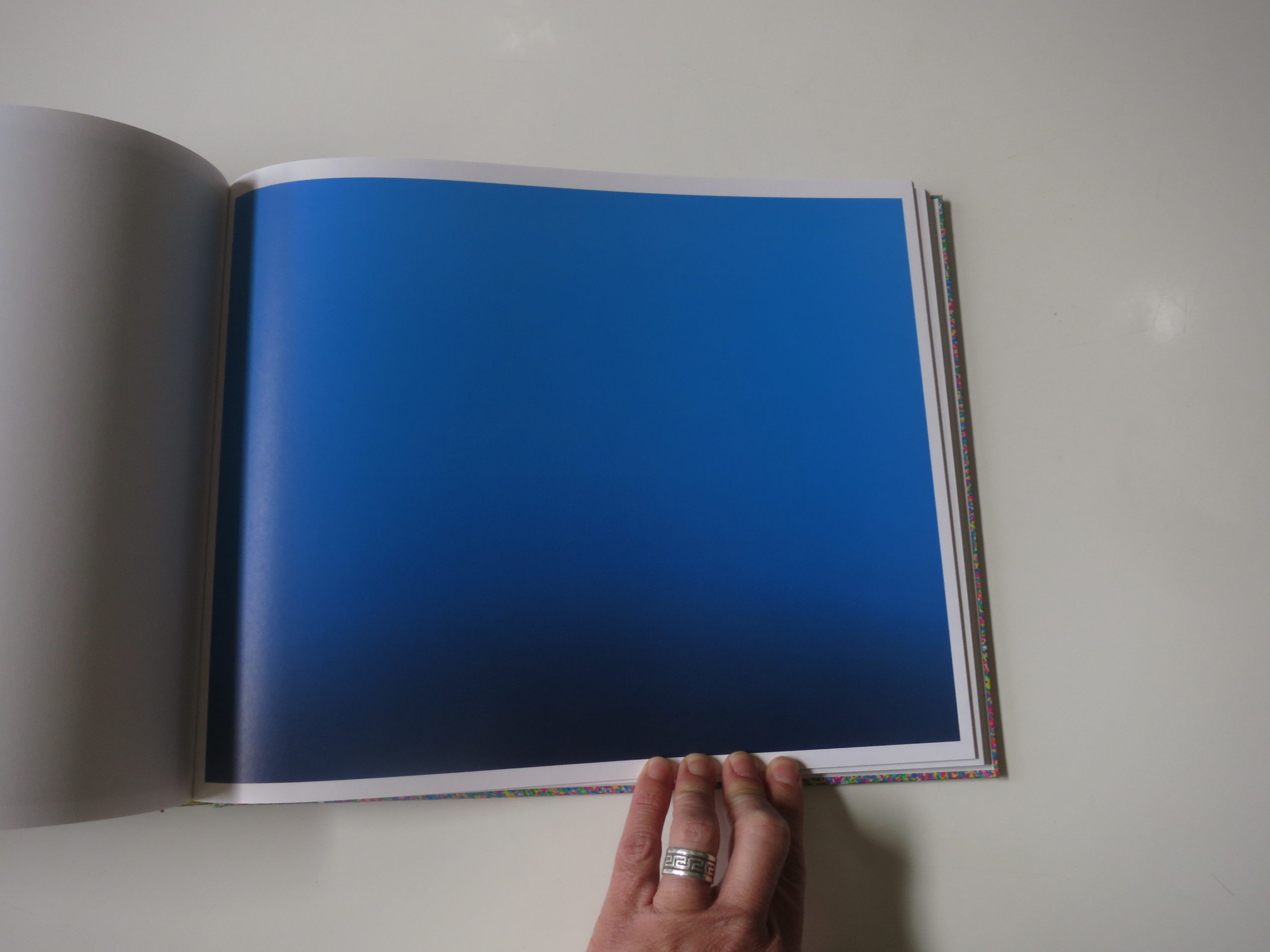
Then a series of beautiful blue sky shots, like Richard Misrach, one of the biggest inspirations of the Arizona crew.

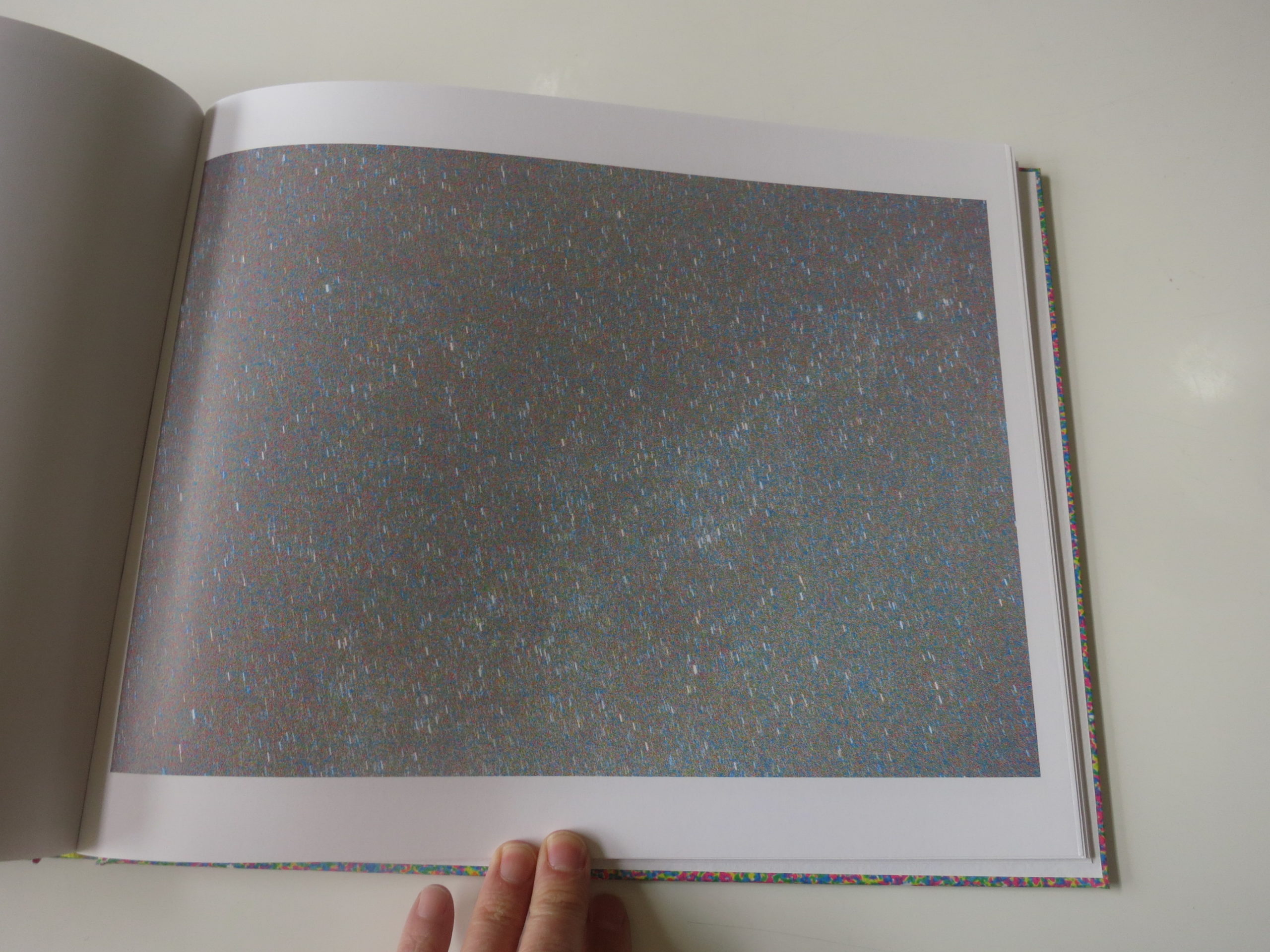
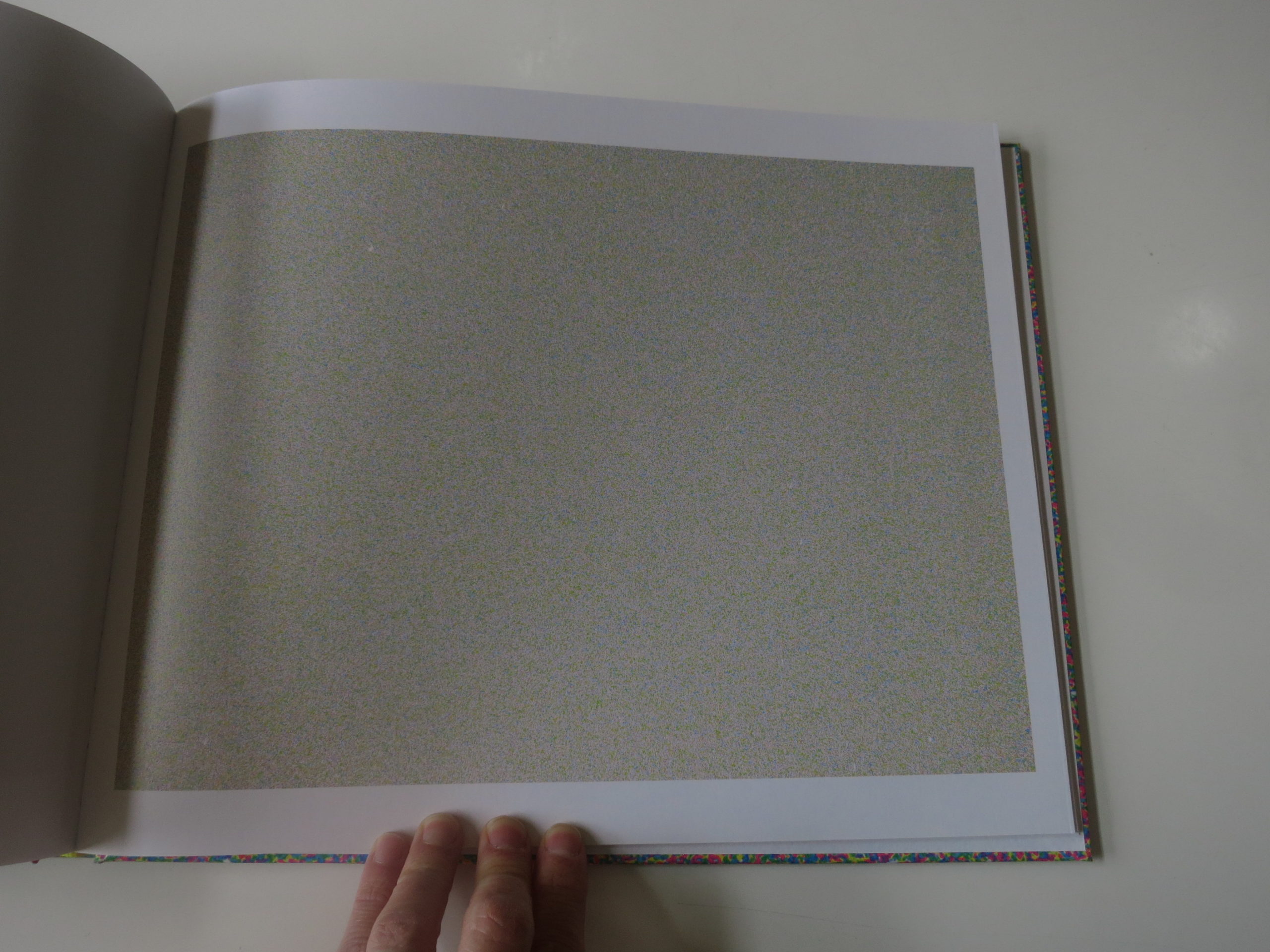
Overall, I like the colors, and the noise pictures, when they come, look like digital camera noise. (Hence the book’s title.)

I fell and hit my head last week, (I’m OK,) and have had headaches all week. I’ve also written here, before, of headache art.

This is a headache-inducing book, because trying to figure it out is pointless.

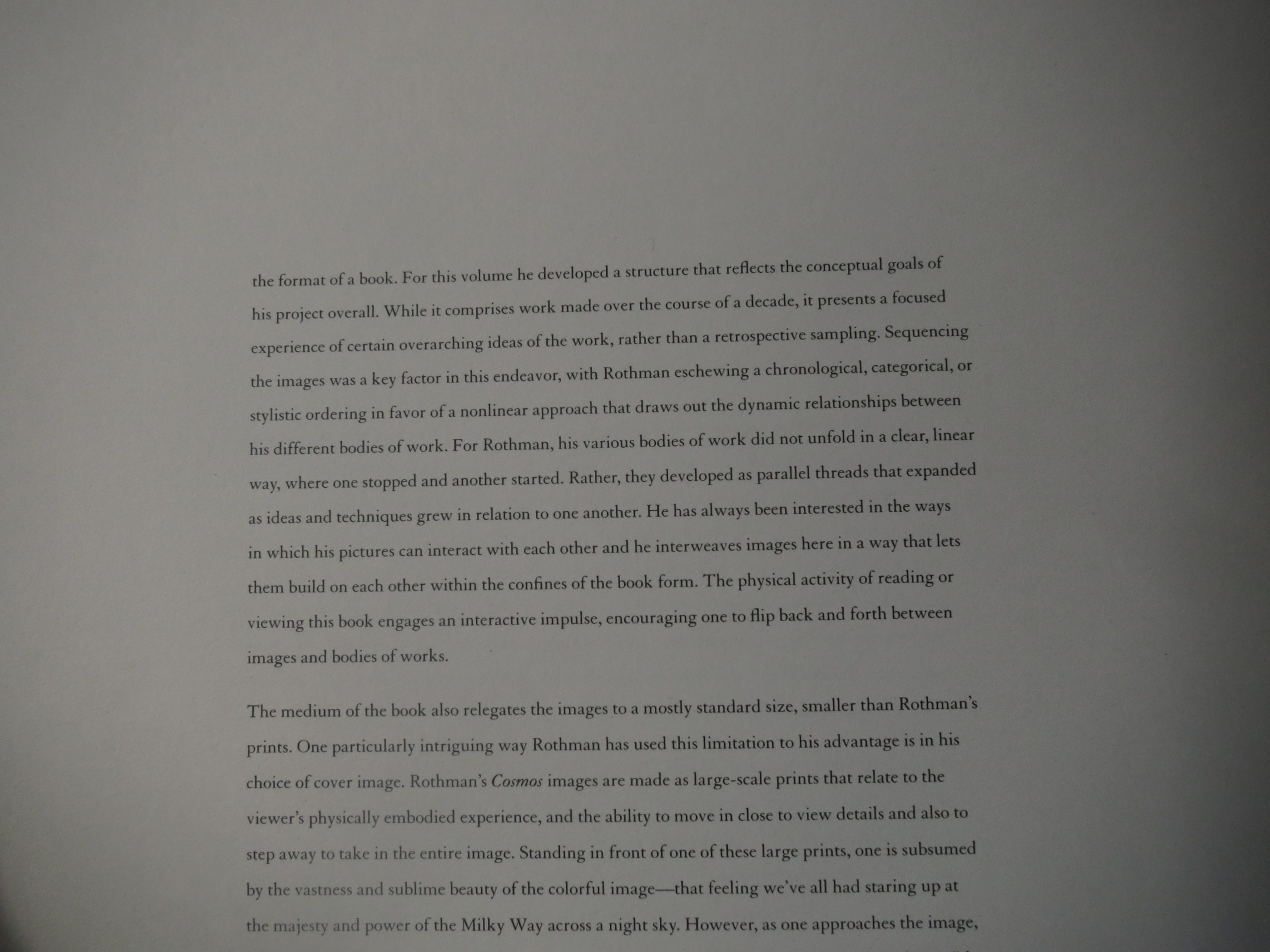
I know this, because the text, in the back, admits it’s a jumble of different projects, made over ten years. (Like mine.)

But it’s designed not to make sense.

At least until the end.

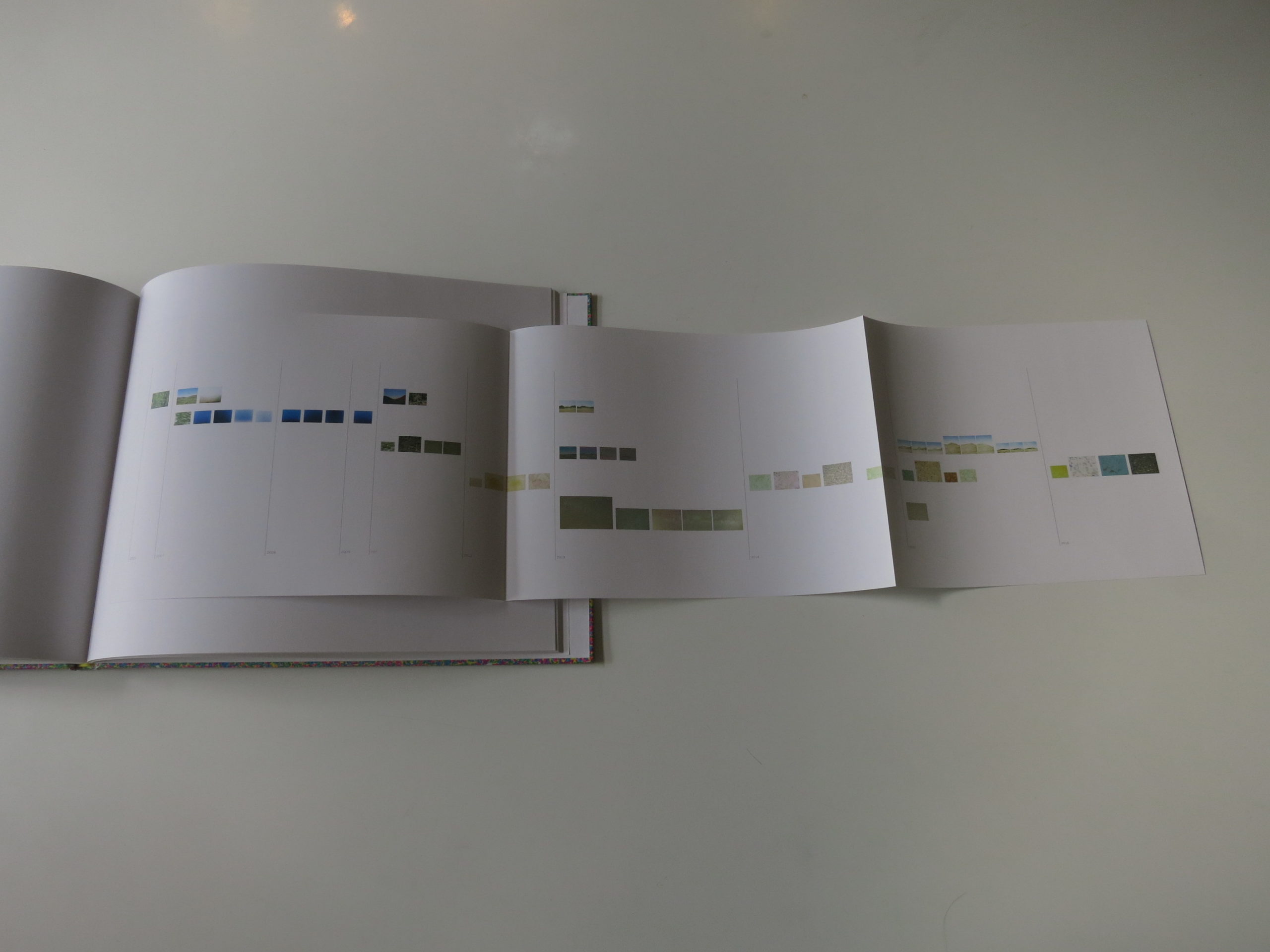
They add a visual map at the finish, alluding to exhibition print sizes, making sure people get that these are big pieces seen on the wall.

As a mini catalog raisonne, I think it’s a hit. (That’s why I said earlier the dealers/collectors would love it.)

And I must admit they do clear up the confusion at the end, with an essay and artist interview, which are meant to answer questions that were up-until-then unanswerable.

This book is the koan for the moment.

The signal and the noise.

So #2020.

Bottom Line: Well-crafted book of several art projects, confusing in its narrative

To purchase “Signal Noise” click here 
If you’d like to submit a book for potential review, please email me directly at jonathanblaustein@gmail.com. We are interested in presenting books from as wide a range of perspectives as possible.
The Art of the Personal Project: Cade Martin

The Art of the Personal Project is a crucial element to let potential buyers see how you think creatively on your own.  I am drawn to personal projects that have an interesting vision or that show something I have never seen before.  In this thread, I’ll include a link to each personal project with the artist statement so you can see more of the project. Please note: This thread is not affiliated with any company; I’m just featuring projects that I find.  Please DO NOT send me your work.  I do not take submissions.


Today’s featured artist:  Cade Martin

THE CREATIVE NOW

As a kid I spent many a dinner at a table surrounded by parents’ friends, an eclectic cast of characters — sculptors, writers, painters, and creatives. That thread of creative community has remained in our offices, our teams, and our collaborations. But that thread feels thinner at this moment.

So I’m asking, with the purpose of sharing, and of supporting and caring for this creative community in its current, uncertain reality. I asked what people are doing, how they are feeling, how they are sparking creativity. It feels important to share what we do when we can’t do all our doing.

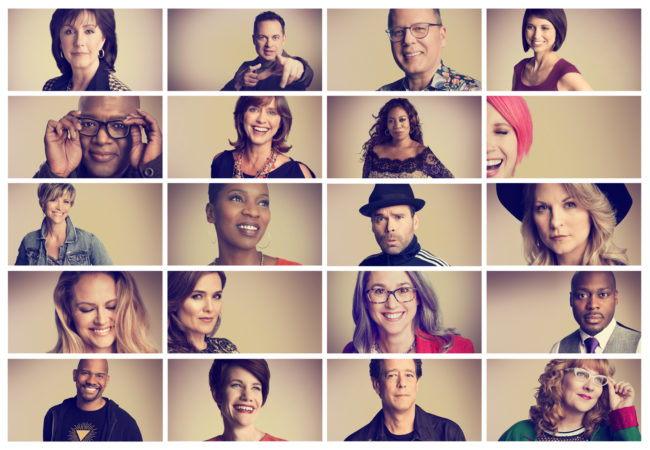
Reaching out first to some of the 200-ish talented people in the Mid-Atlantic that I’ve had the good fortune to profile through the Capitol Communicator portrait series. Capitol Communicator serves as a resource to the region’s creative community and this is my version of a virtual dinner table of sorts. Grab a chair and come back often.

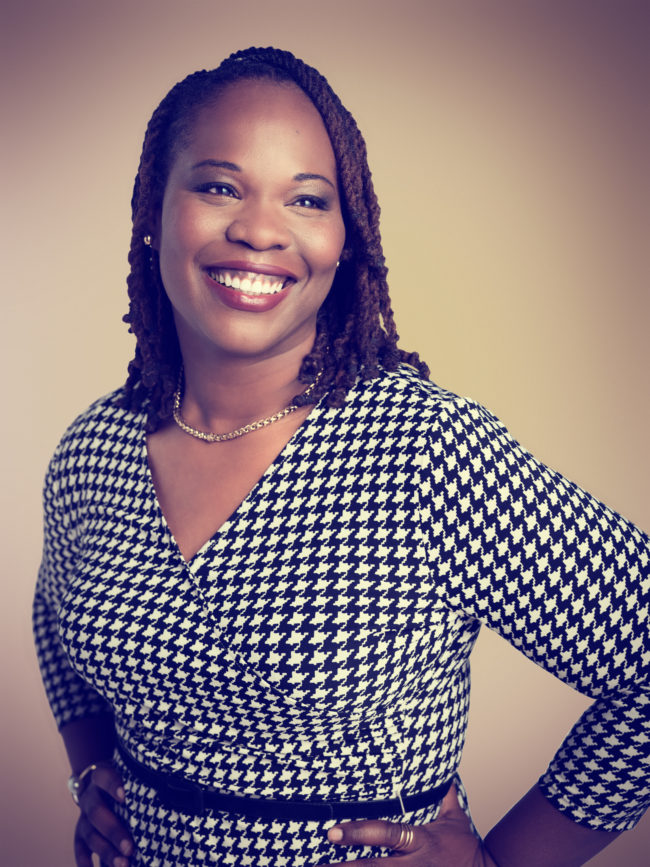
Kerry-Ann Hamilton, KAH Consulting Group

 “With more breaths, I am taking the time to see more in nature and it gives me hope that things will be normal again; but a new normal, filled with gratitude and a deep appreciation for friends, family and freedom.”

Learn more              


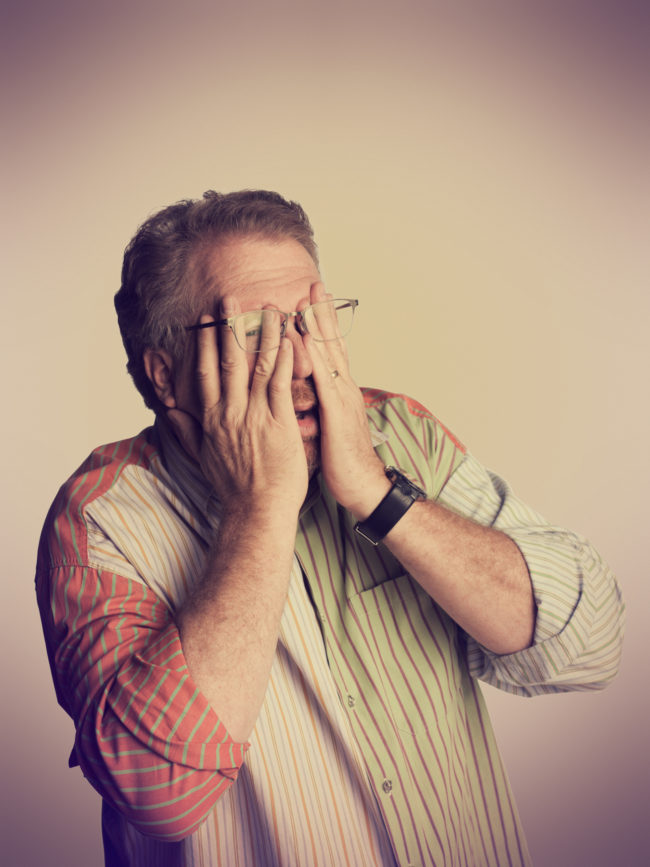
Matt Smith, SmithGifford

“Sudden change is inspiring for me, it’s energizing, and open for opportunities. I have found myself being far more passionate about ideas and how to help.”

Learn more                 

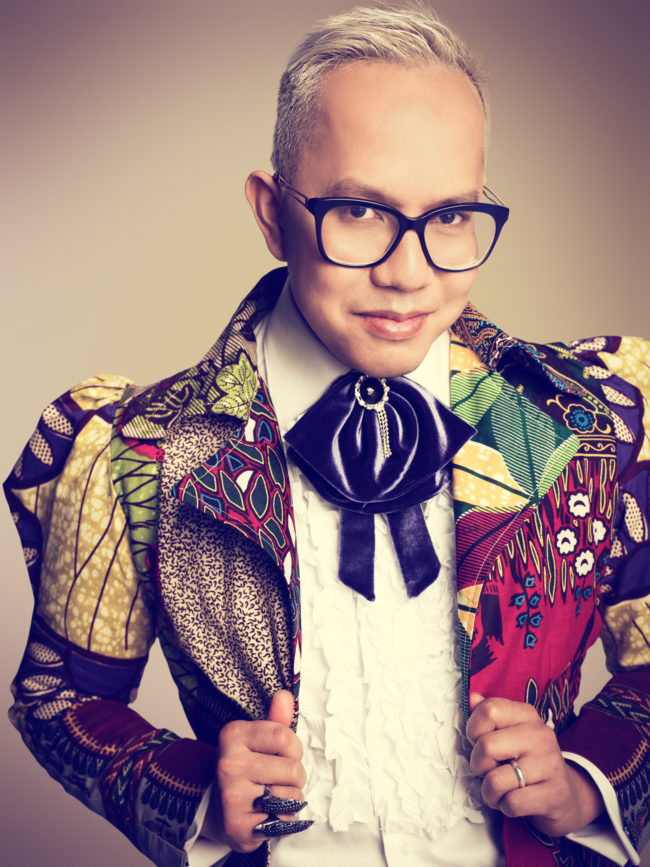
Michael Dumlao – Corporate Affairs Booz Allen

 “My life’s greatest creative moments tend to come from struggle and introspection so I’m using this time to rediscover my roots as an artist,…”

Learn more               

Sean Flanagan, Philadelphia Eagles

“…it’s keeping as much of my former routine as possible. That’s what works for me. This is a psychological battle as much as a physical one.”

Learn more                 


To see more of this project, click here.

APE contributor Suzanne Sease currently works as a consultant for photographers and illustrators around the world. She has been involved in the photography and illustration industry since the mid 80s.  After establishing the art buying department at The Martin Agency, then working for Kaplan-Thaler, Capital One, Best Buy and numerous smaller agencies and companies, she decided to be a consultant in 1999. She has a new Twitter feed with helpful marketing information because she believes that marketing should be driven by brand and not by specialty.  Follow her at @SuzanneSeaseInstagram

Success is more than a matter of your talent. It’s also a matter of doing a better job presenting it.  And that is what I do with decades of agency and in-house experience.


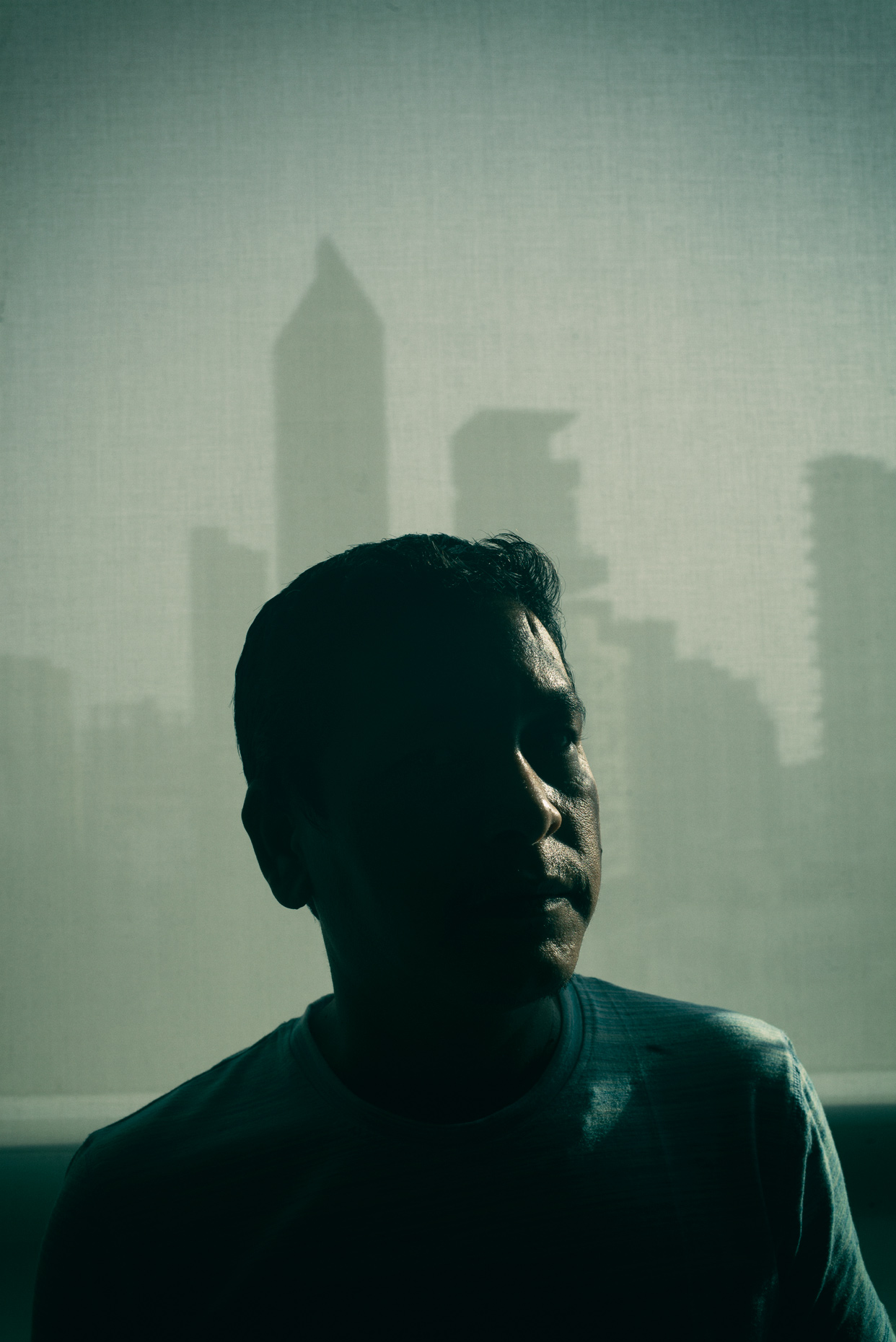
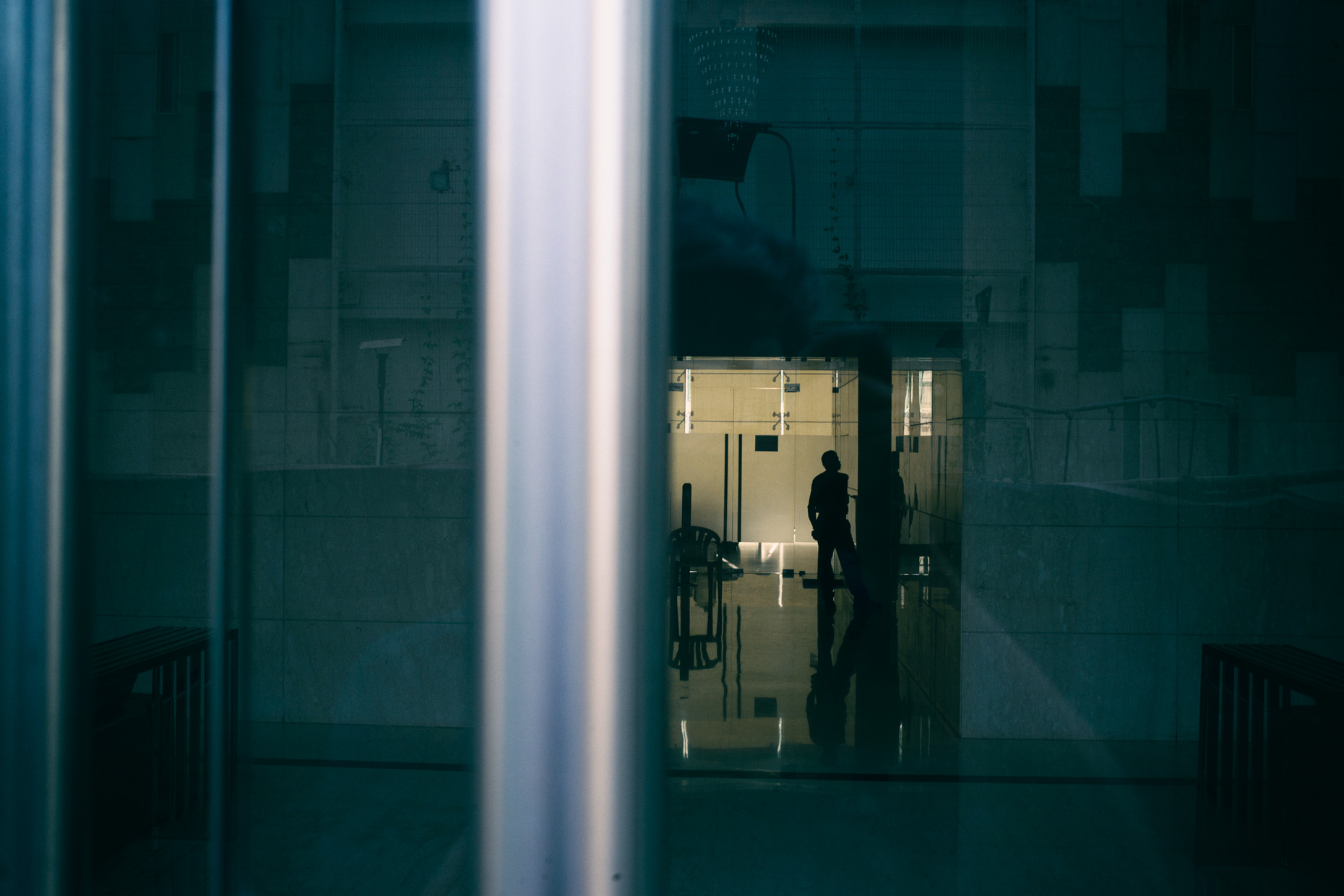
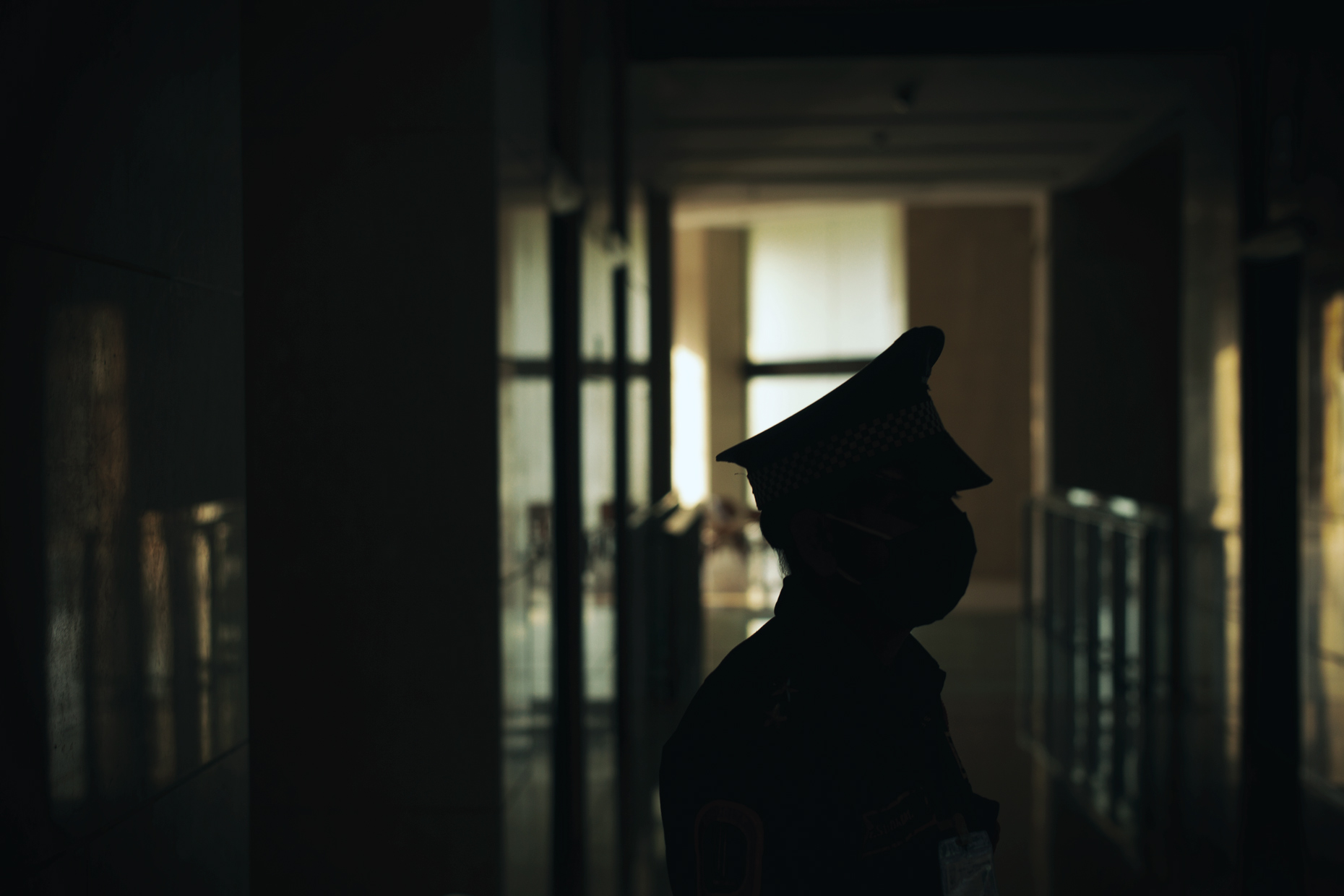
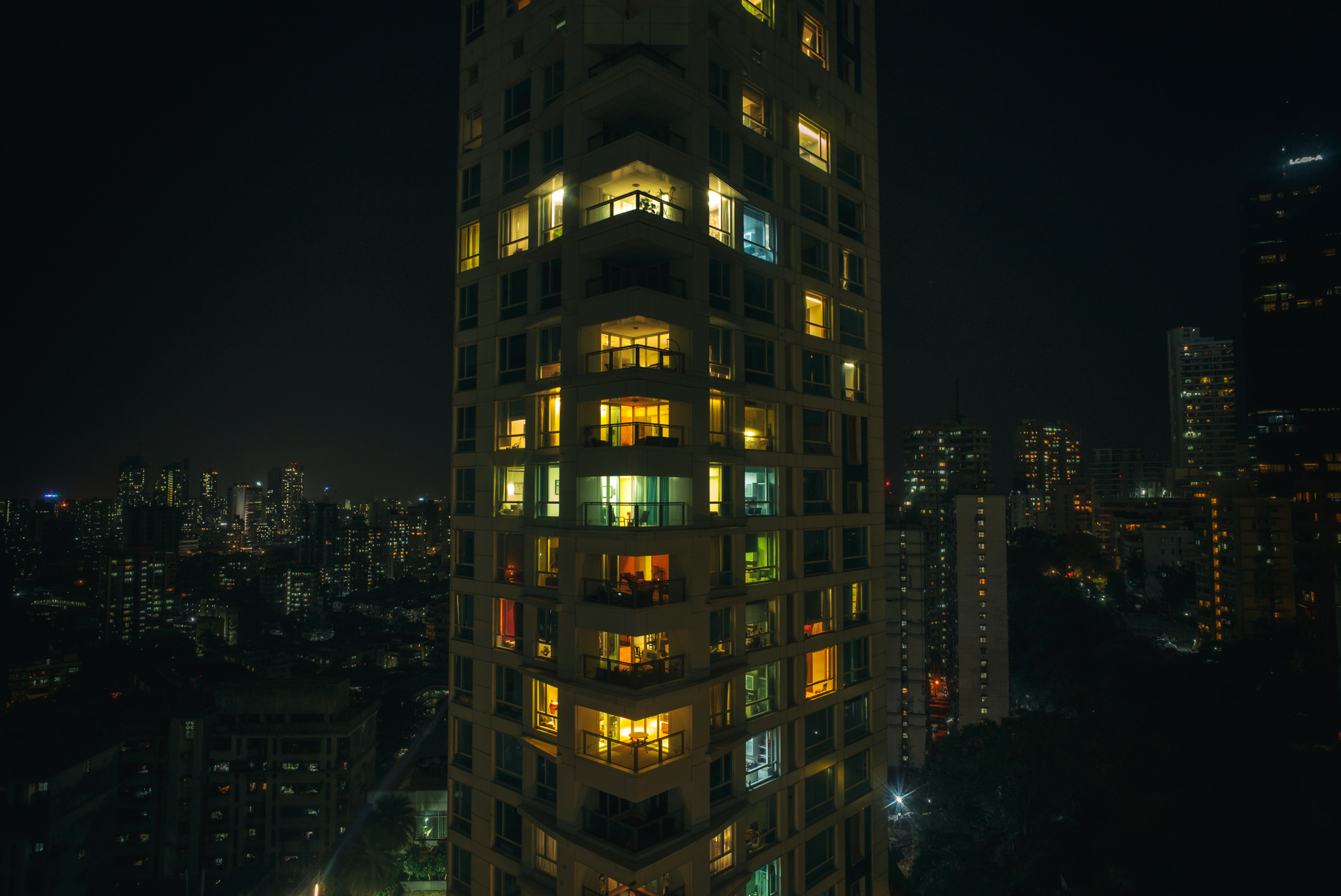
The Daily Edit – Sunhil Sippy: Mumbai Lockdown


Sunhil Sippy: Lockdown Diaries

Heidi: How was this work a result of recent growth or a maturing eye?
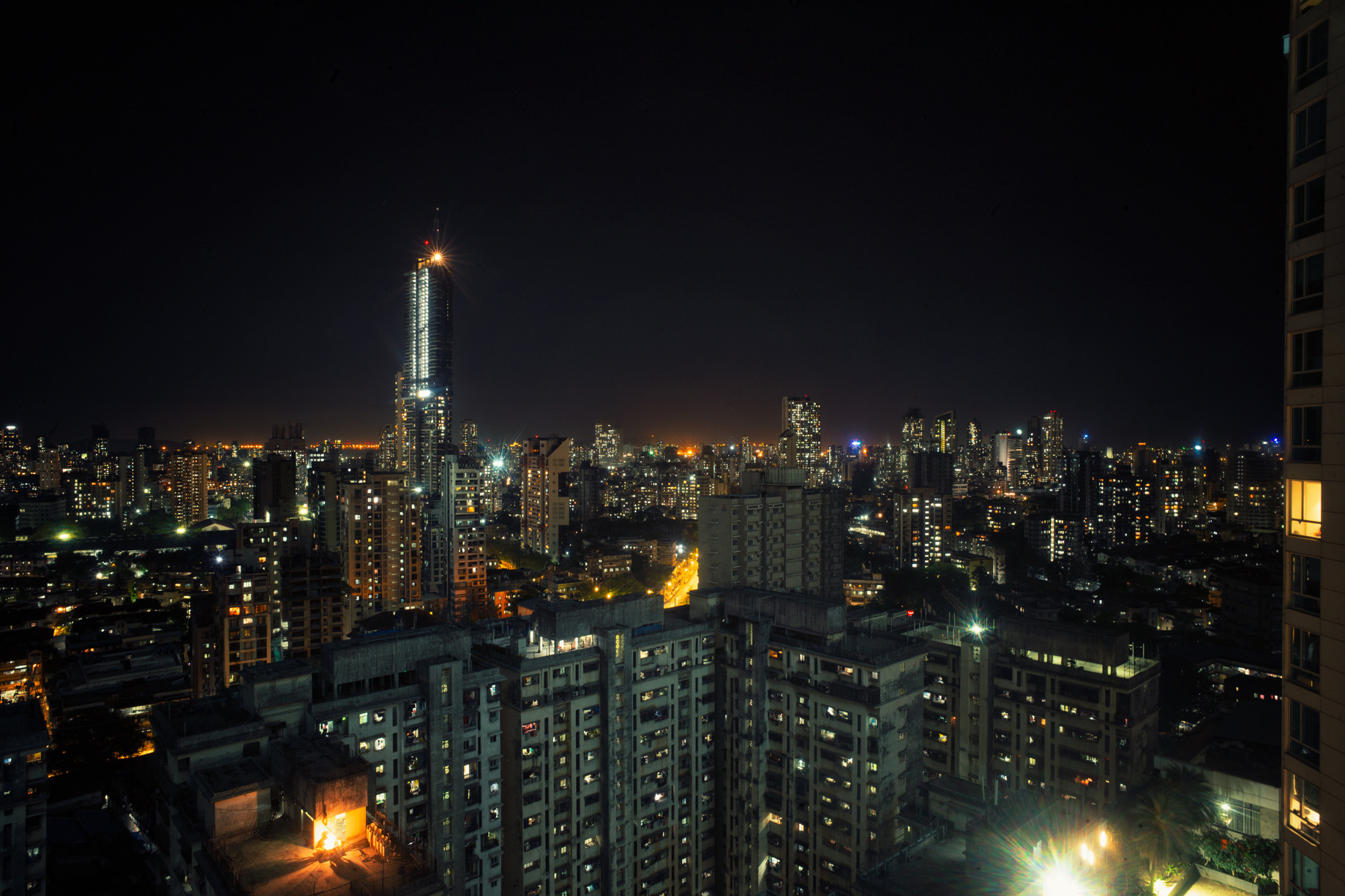
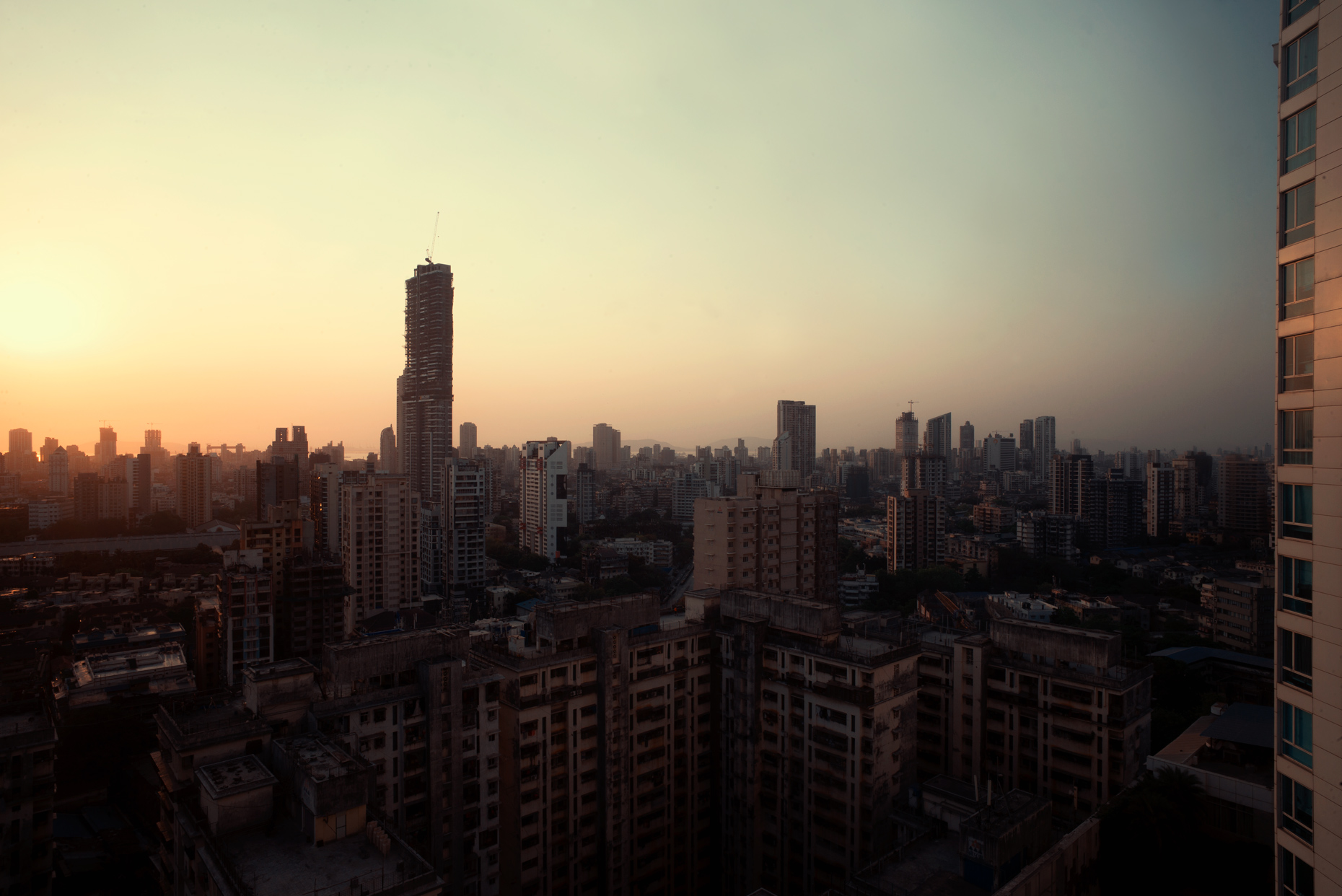
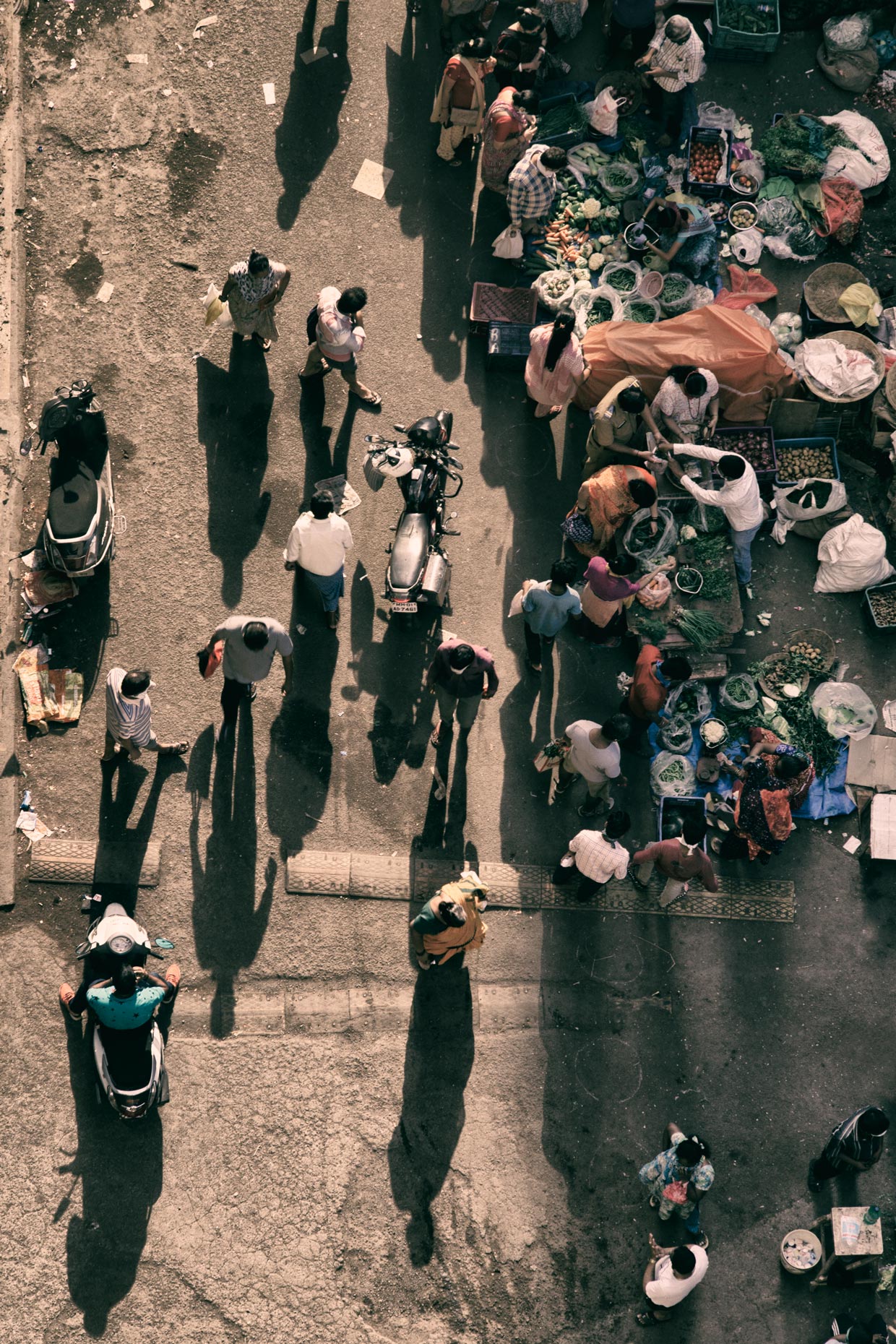
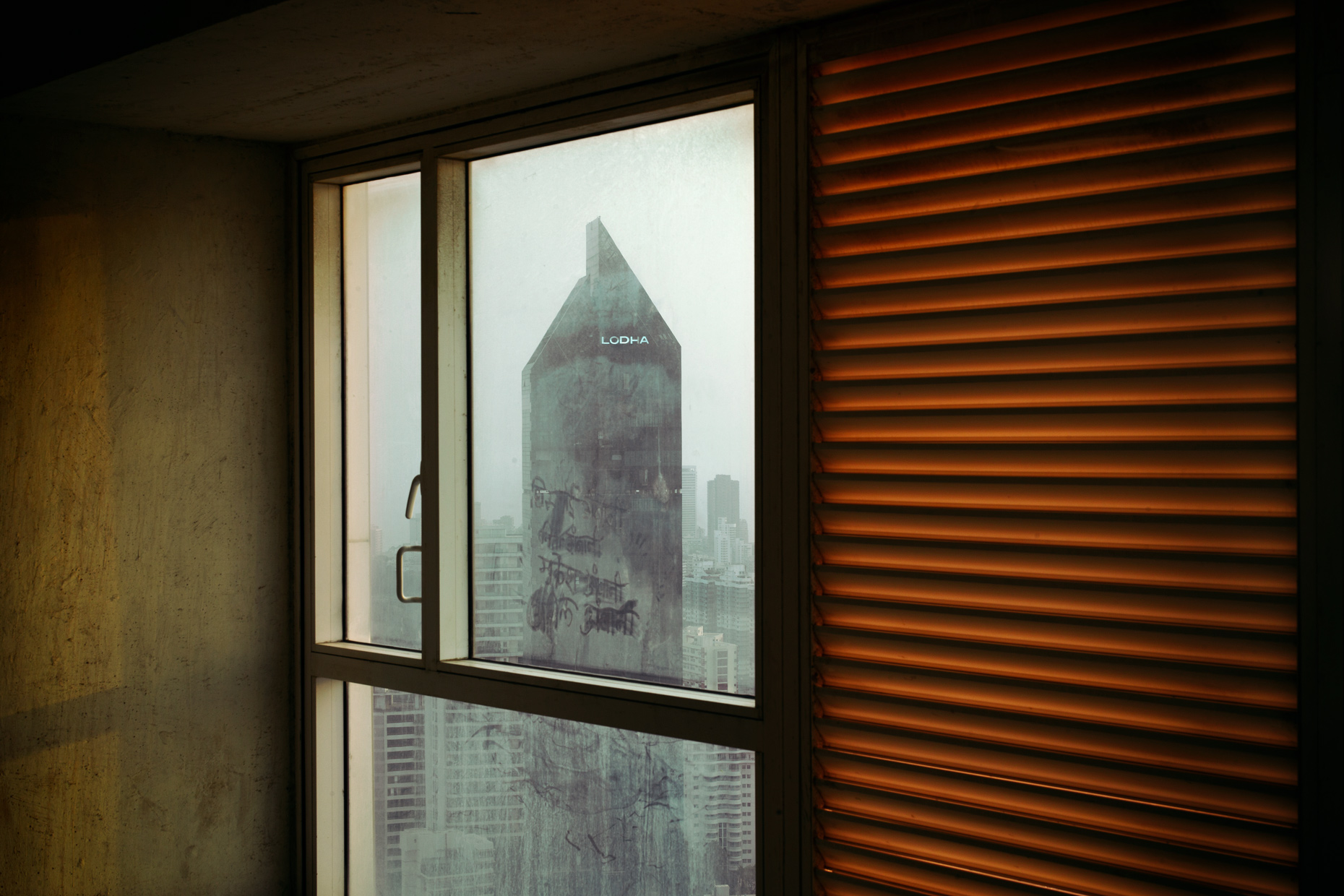
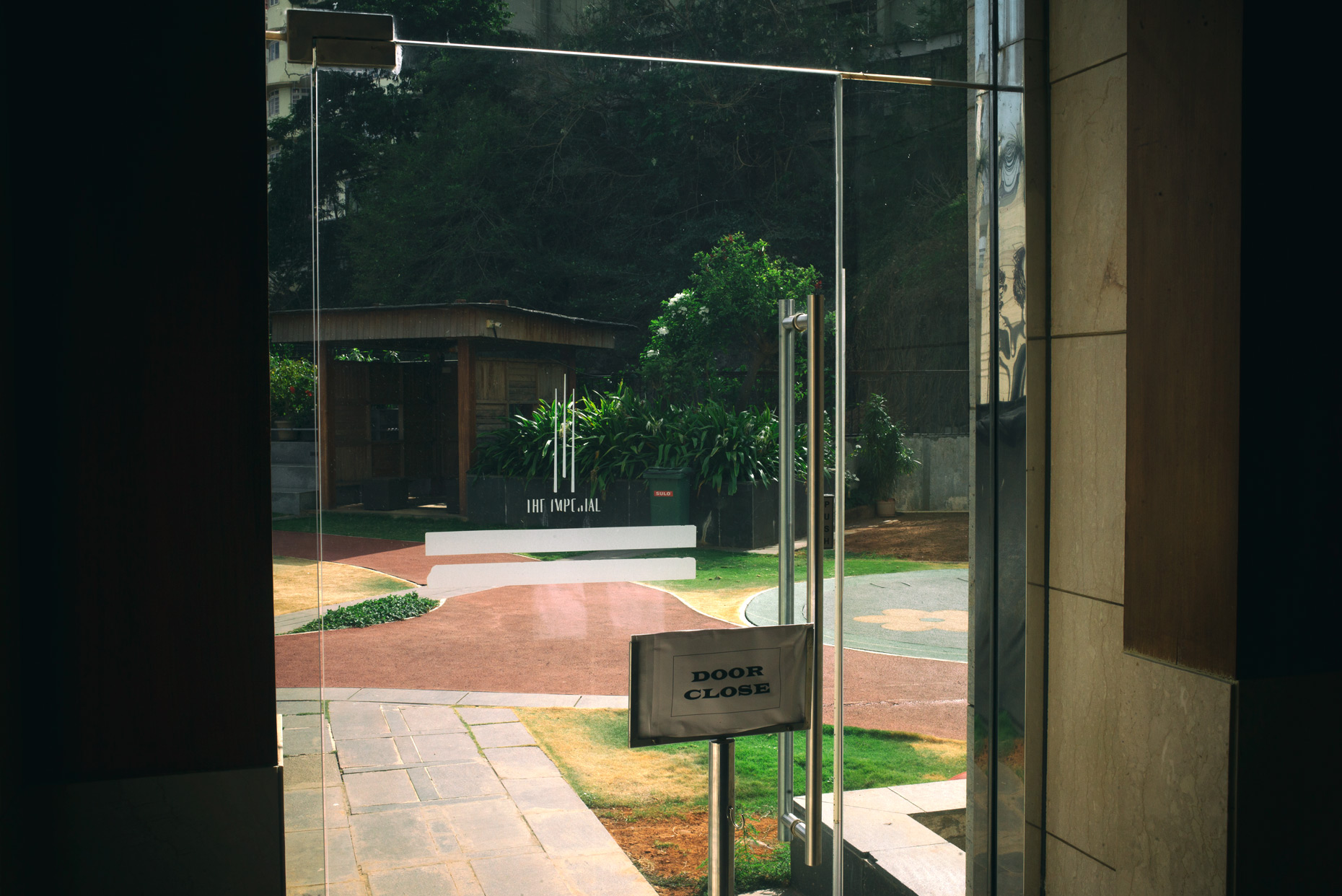
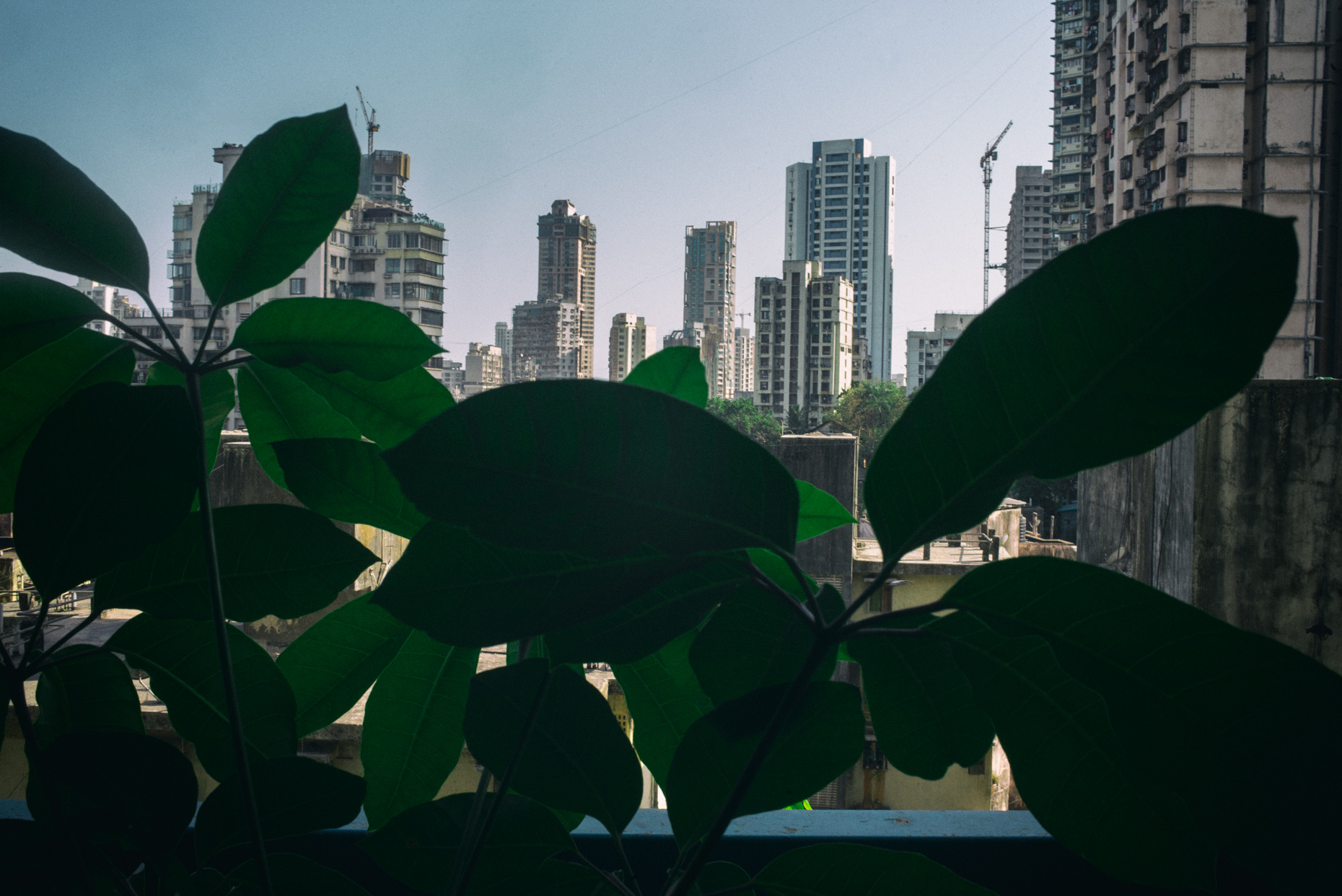
Sunhil: On March 13th I returned prematurely from a photo workshop in Oaxaca, Mexico. I cut my trip short amidst growing unease about the spread of the coronavirus, making it back into India with hours to spare before the border closed. I live in an unusual tower block in the city, a sequestered and self-contained “oasis”, one of many new developments dotted around the city in a bid to bring “quality of life” to people in a city that has burst out of its seams. The building itself was constructed on the plot of an old and sprawling slum, and under current law the developer must rehouse the slum dwellers in the form of low cost housing on 2/3 of the plot, with 1/3 being used for the new construction.

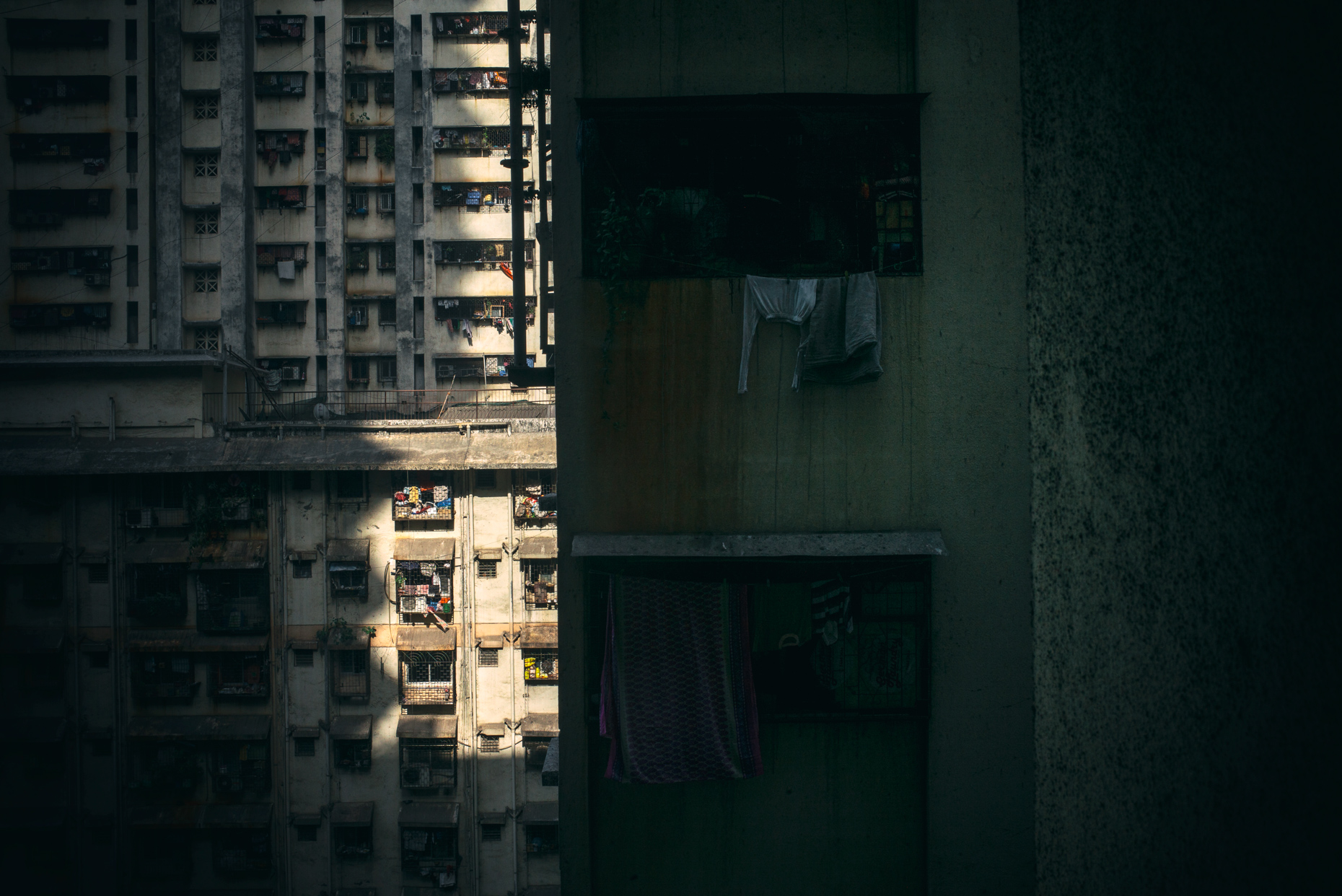
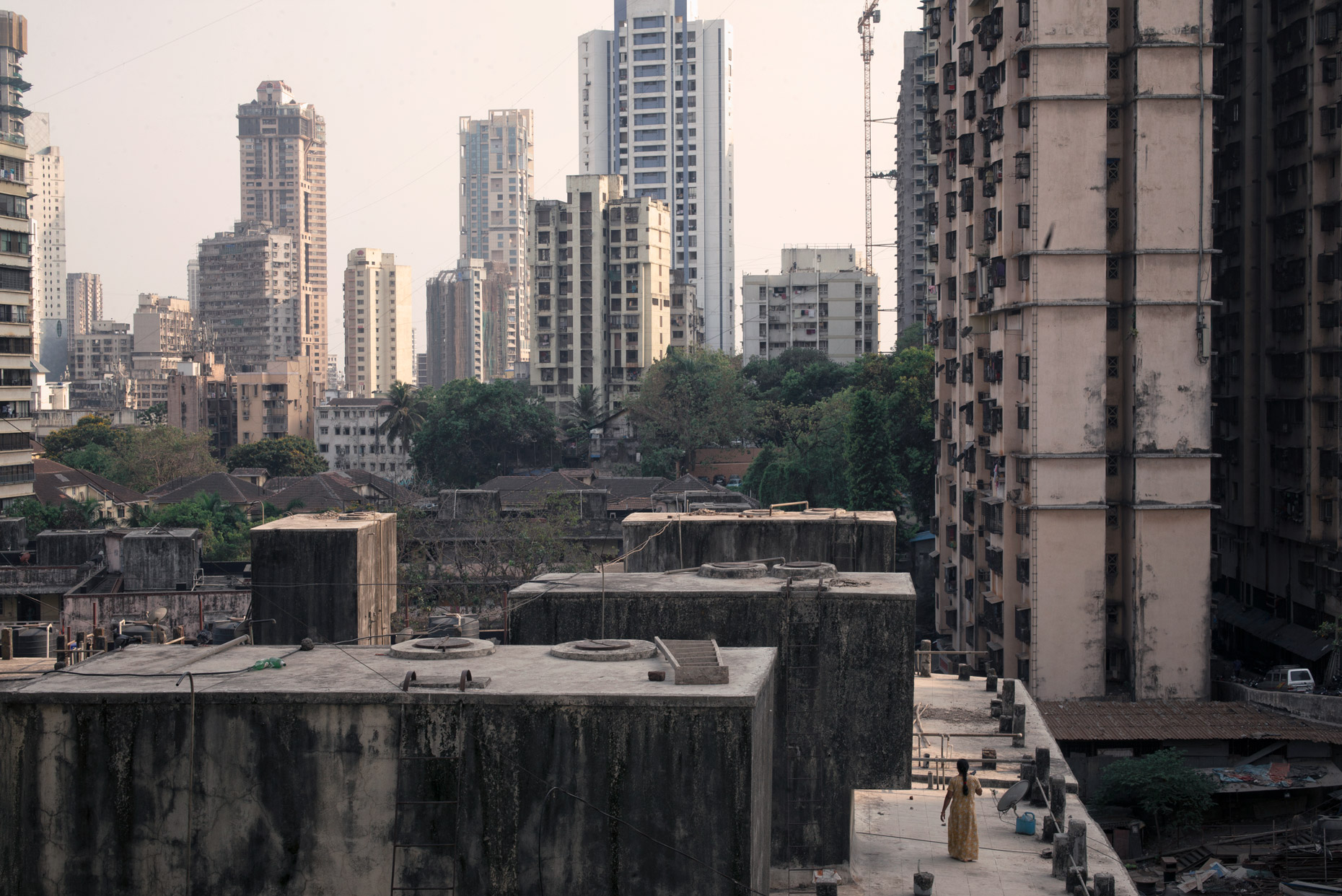
So what you have are an elite and well to do group of CEO’s and Investment Bankers living cheek by jowl with some of the city’s poorest inhabitants. There is nothing unusual about this in a city like Mumbai, which has always broadly been the case. However, while the slums used to lie flat and spread over large plots of land, many are now vertical in nature, with poorer sanitation, more divided and with a weaker sense of community. I think I’ve been trying to push myself out of comfort zones for a while, but this situation has made the place I live a perfect, if uncomfortable subject to explore.

When was the last time you left your apartment, and what are the latest restrictions?
I did a quick grocery shopping run about 4 days ago having been within the apartment for close to 20 days. I was lucky to find some food on the shelves. Yesterday the rules of the lockdown became more severe and I’m no longer allowed to be in a car on the street if travelling less than 2km, and only allowed out for a medical emergency or for provisions. However, all street vendors have been forced to close, and my suspicion is that the supply chains have been completely broken down. I don’t imagine there would be easy availability of food, fruit or vegetables any longer. One of my key concerns is drinking water and the fact that we have filters in our homes that need regular servicing by  specialists. Obviously with a lockdown this severe nobody is able to carry out any of this work. Having said all this, I do believe this kind of a lockdown is necessary in a city like Mumbai and I think broadly speaking it has been effective if deeply uncomfortable.

How do these photos make you feel?
This juxtaposition has often made me feel uneasy, and while constructing my first and still incomplete body of work, A Disappearing City, I’ve spent an inordinate amount of time wandering through many of these constructions in various parts of the city. I always come home with a sense of unease, being so directly segregated from the people living beside me cheek by jowl. And I think the photos do give a sense of discomfort.

What were you feeling making them? Do the two align?
While I have enjoyed photographing the city outside my doorstep, I’ve never had the courage to turn the camera inwards on to the place I live, out of a subtle feeling of guilt and shame at having the privilege of living in what a lot of people might call luxury. However, “luxury” for me is the ability to be able to walk on the streets of your city, and a good “quality of life” is less about an air-conditioned gym on your premises, and more about having a park to walk in nearby. Nevertheless, not a day goes by on which I do not say a prayer of gratitude for the comfort in which I live in a city where the blanket nationwide lockdown has left hundreds of thousands of migrant workers in the lurch, unable to return home, without food living displaced, like refugees living in camps on the border of their home states.

However even comfort and luxury develops its own spirit-crushing mundanity after an extended period in isolation. I live alone with a fine house help, Mohan, who looks after the home with love and dedication, allowing me to freely carry on with my professional and artistic pursuits. So it’s just the two of us, and no visitors.

What has the forced isolation made you confront?
I’ve always been comfortable in my own company and over the past few years have been less and less inclined towards larger social gatherings. I’ve also been learning, though it’s a complex and difficult journey, to embrace both uncertainty and the concept of discomfort. I’m not talking about physical discomfort, though living with a reconstructed left heel is certainly a physical challenge for a photographer, and physical pain is a part of my daily life. I’m talking much more about the upsetting of routines. I think as a society we have developed a disproportionate sense of dependency on “predictable” and “certain” outcomes.  And we now have all types of artificial methods of coping with “pain”. This period is helping me to confront some these questions. And while I have been struggling with these kinds of issues for years, there is once again both a kind of luxury and struggle in being able to contemplate these in isolation, given the fact that the one commodity many of us seem to have copious amounts of, is time. On a more practical level, I completed the initial work on several new photo projects. I then decided to pick up the camera and document life in the lockdown from my reasonably unique perspective.

During my time in India, I became very familiar with your personal work, this marks for me a colorful and soulful evolution for you, what do you see?
When I look at the photos I do see a major evolution, having worked in monochrome for the better part of ten years. It has also given me a sense of confidence about finding “beauty” in what I consider to be a very ordinary an aesthetically displeasing universe. It’s arguably “easy” to make a monochrome picture on a grungy street, or create a sense of both “romance” and “otherness” in high contrast black and white, but to turn your camera inward in straightforward colour, can be both unsettling and challenging, forcing you to confront much of your complex inner feelings about your own privilege.

We often talked about belonging, has that shifted?
I’ve spent much of my life feeling like an outsider, whether it was growing up as a South Asian schoolboy in a predominantly Jewish, North London neighbourhood, or being brown-skinned in a white-skinned elite British Boarding School, or struggling with the language and culture in a tough-as-nails Hindi speaking film industry. And now perhaps that feeling of unbelonging continues to pervade my current habitat, as an aspiring artist in a deeply corporate universe. Making these photographs has given me a deeper sense of understanding of who I am, and helps me to believe in the fact that beauty is all around us even when we feel claustrophobic and constrained, frightened and uncertain.


The Daily Promo – Kelly Allison

Kelly Allison

Who printed it?
Graphic Arts Studio, https://www.gasink.net/, a suburban print shop on the west side of Chicago. They’ve been printing my promos for years and I’m always so happy with their color.

Who designed it?
The piece was both art directed and designed by my friends at Letterform, a Chicago graphic design firm, http://www.letterform.net/. They’re also the ones who created my entire business system, so it helps to have them a part of the conversation from the ground up. Since Letterform starts with a deep understanding of the end goal, we can align to make sure our content both relates to and expounds upon my studio’s brand voice.

Tell me about the images?
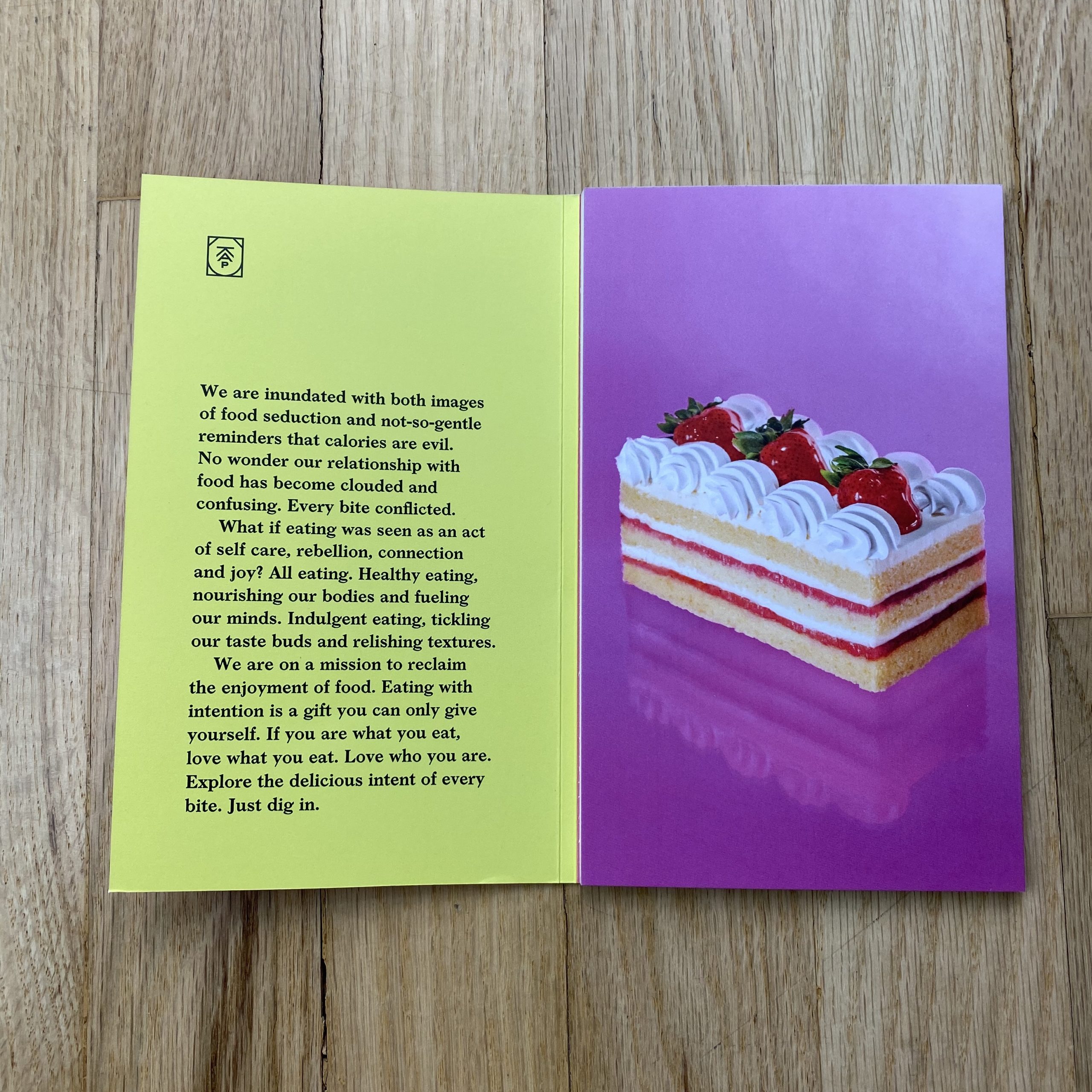
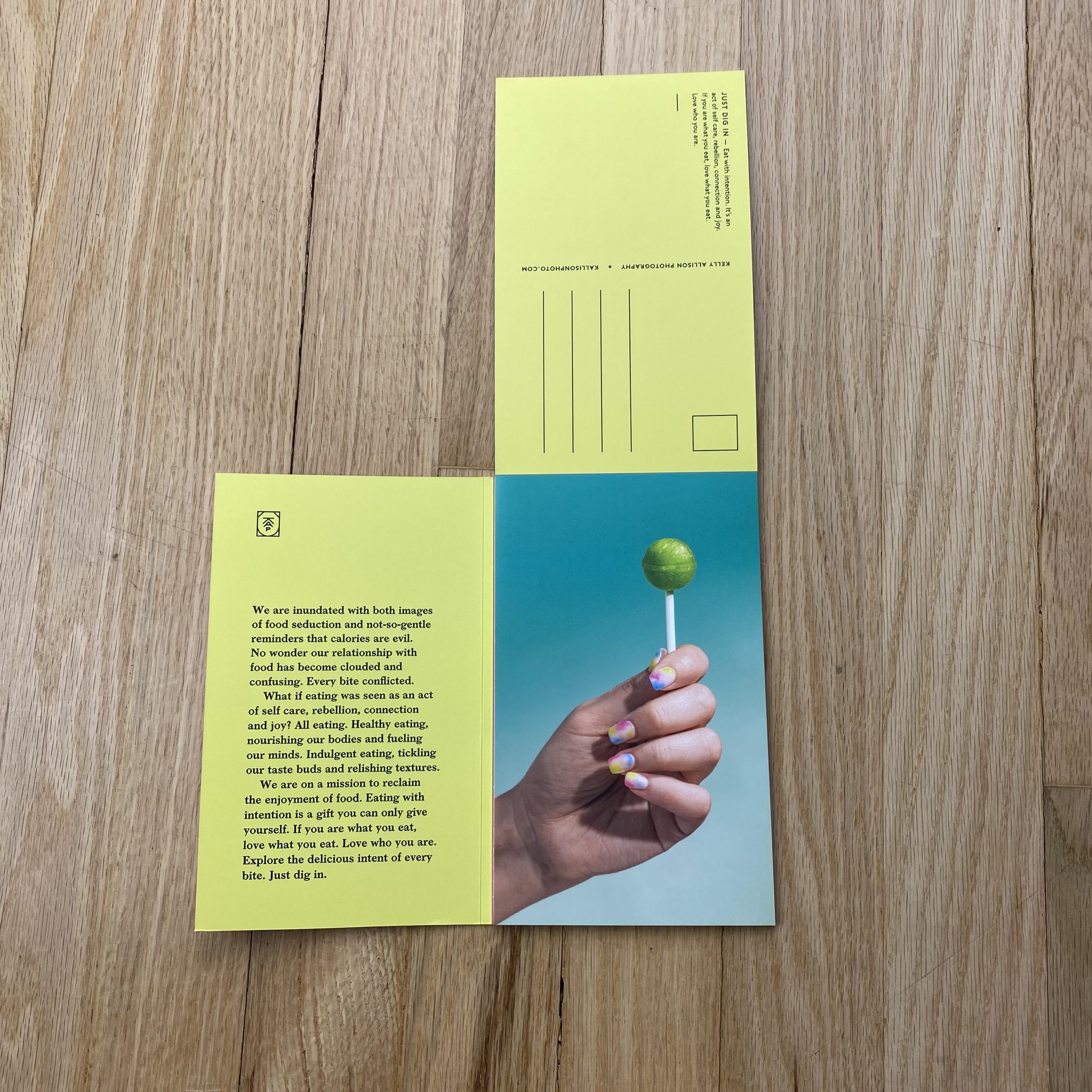
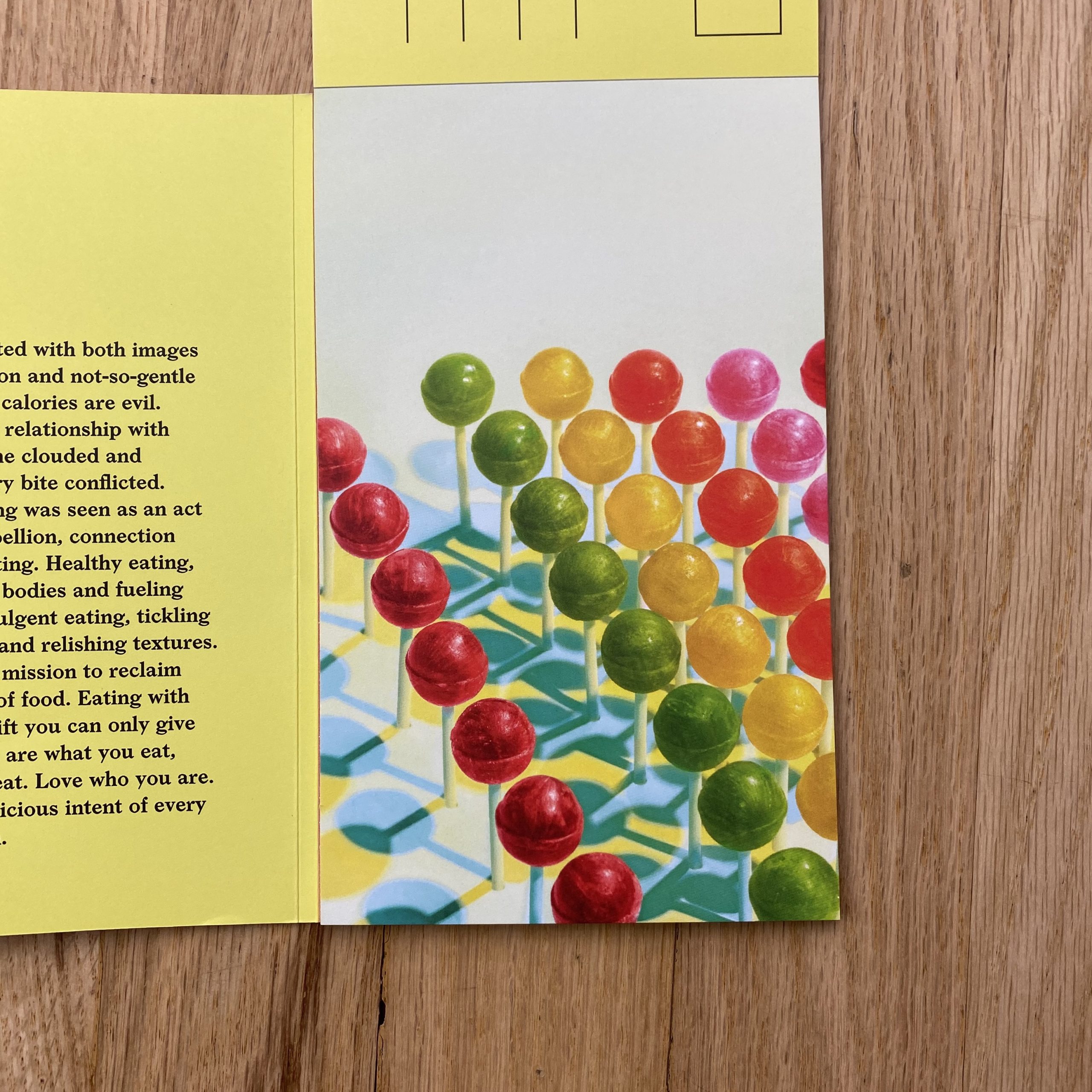
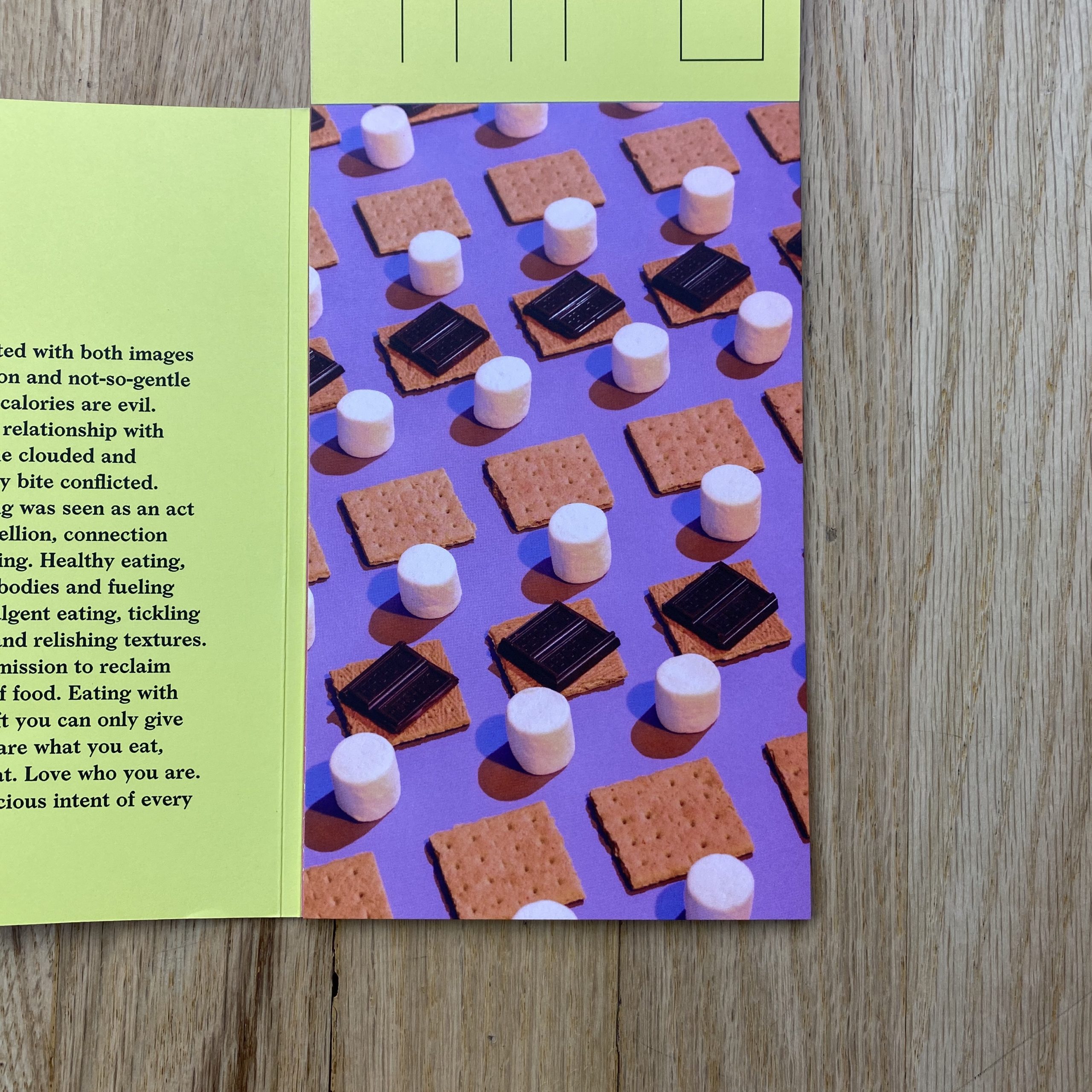
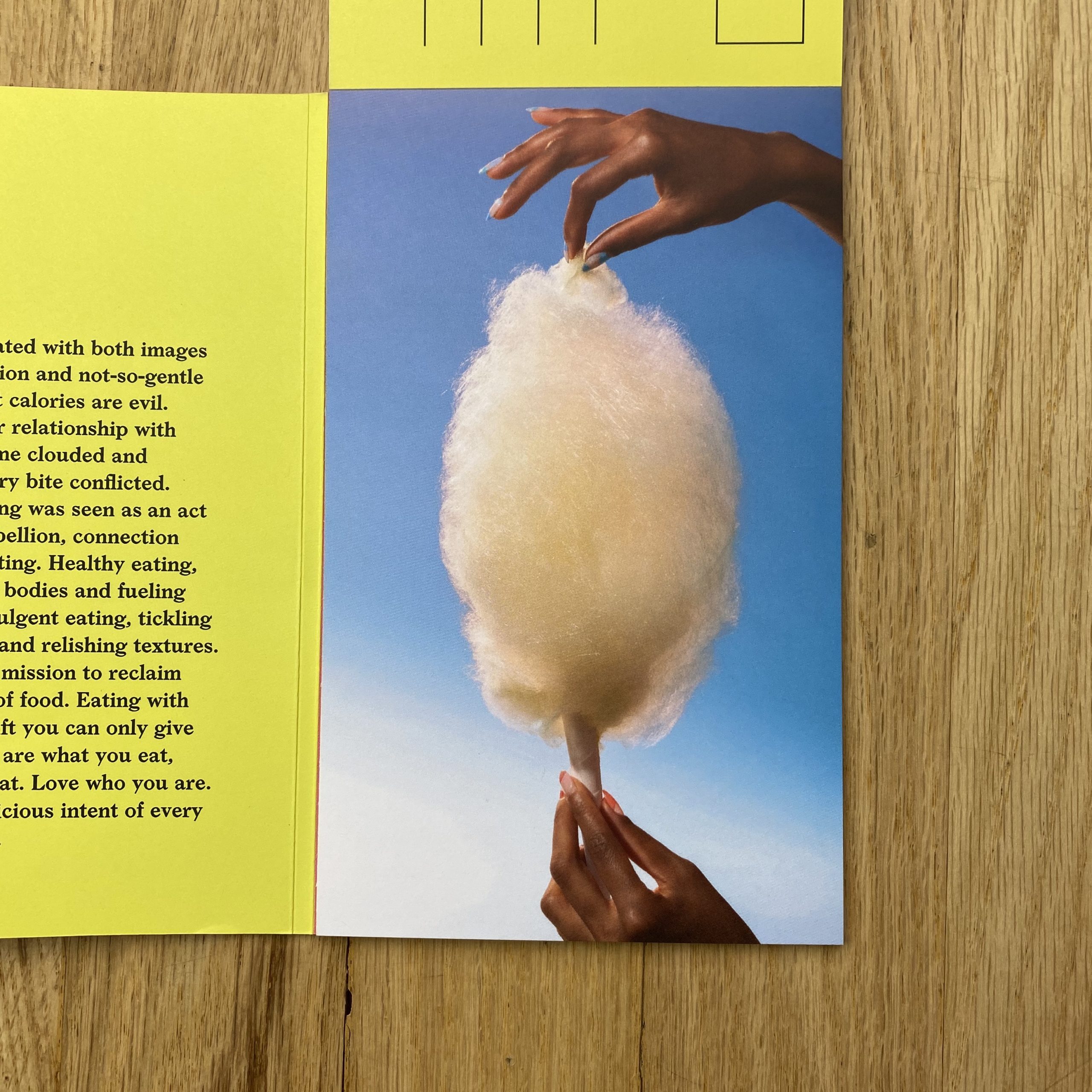
The inspiration behind Just Dig In stems from my experience of societal notions around food consumption as being duplicitous at best. Within our highly digital culture there’s an increased propensity to spend time ingesting images of rich, delicious, and seemingly ‘naughty’ food. Meanwhile we’re barraged with messages (often subversive or subliminal) that tout the importance of unrealistic body expectations, and food becomes evil. Food should bring enjoyment, energy, and nourishment for the soul and the body. Yet for many people in the US, especially women and girls, every interaction with food comes with a whole host of physical, emotional, and stress responses. The advertising world has a great amount of influence on how we relate to food as a culture. I see it as our communal responsibility to reclaim the beauty and power of food on all levels, and to promote messages of positivity around food and food enjoyment.

Our aim in developing this collection was to challenge the idea that food in any form is bad, as long as it adds goodness to the human experience. We wanted to create a collection of images that responsibly gives permission to the viewer to enjoy the experience of their taste buds, while sharing a message that ‘guilty’ pleasure doesn’t need to be so.

How many did you make?
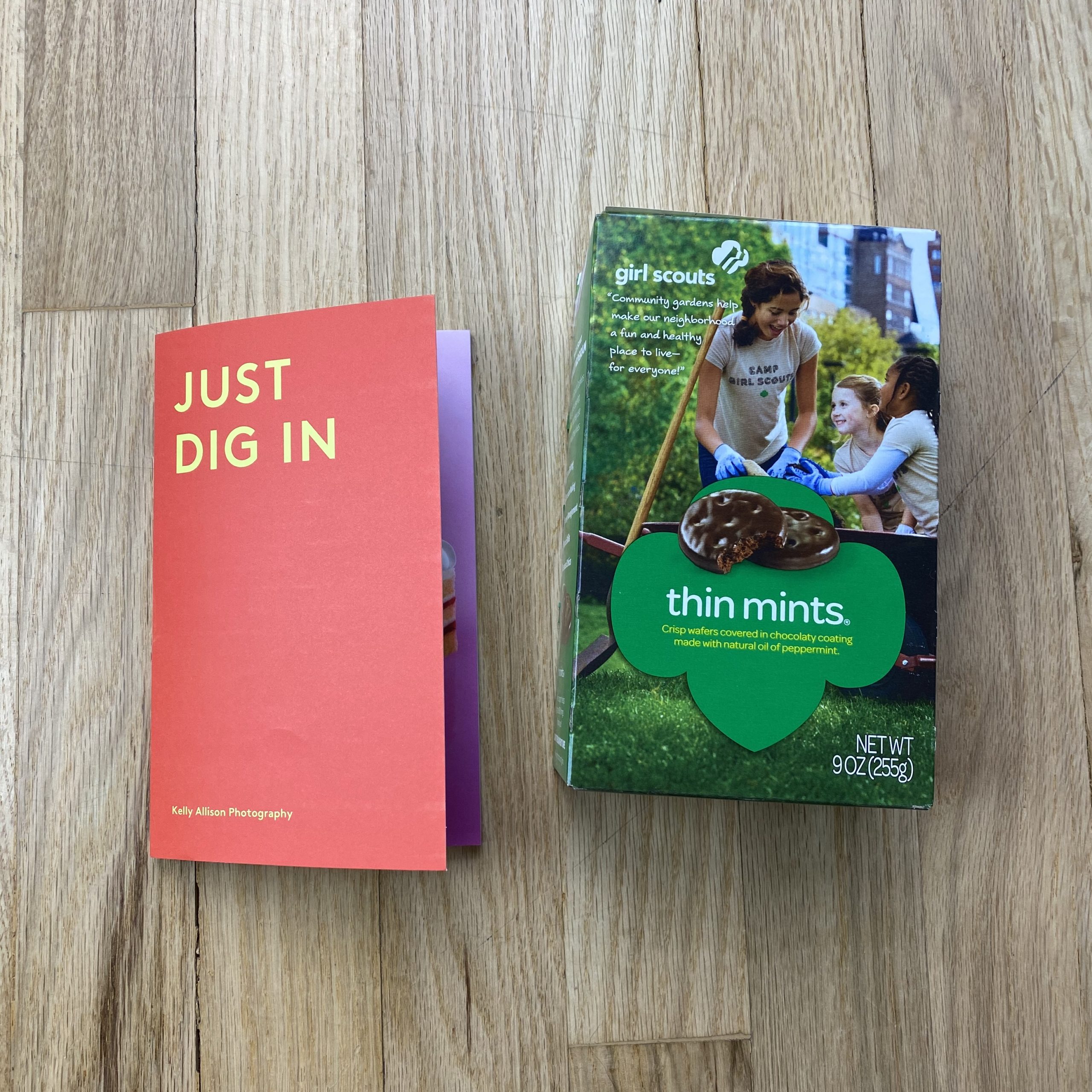
There were 1,000 booklets produced in total, 500 of which were sent (like yours) with a box of Girl Scout Thin Mint cookies. For the past few years I’ve been inspired to send Girl Scout cookies with my promos for a couple of reasons: With so many amazing promotional pieces hitting the desks of creatives each day, it’s often hard to stand out. By aligning with a strong brand that’s deeply rooted in nostalgia, I’m pinning my name to an immediately recognizable entity (and one which happens to be one of those ‘guilty’ pleasure) in the hopes of creating a longer lasting impression. More importantly, the iconic nature of the annual cookie release gives me a great opportunity to support local troops in my neighborhood, and give back to an organization that is actively changing the way that girls see themselves and their potential. I believe strongly in the positioning of the Girl Scouts organization and their messages of solidarity, community, global citizenship, and sisterhood.

We have another 500 pieces (sans cookies) that were scheduled to ship at the end of March, but instead we are patiently awaiting a safer time to send them.

How many times a year do you send out promos?
I send one promo each year, usually in the spring or fall.

Do you think printed promos are effective for marketing your work?
Absolutely. There is something powerful about the tactile experience of a well-designed and beautifully executed printed piece, especially when thoughtfully produced and well-strategized. With a mutual desire to both showcase my work and also limit our environmental footprint, we always try to create pieces that serve a useful purpose. I want each promo to live longer than a quick peruse, and toss into a pile (if you’re lucky) or the recycling bin. Timing also matters when planning to send a physical promo – if it’s a time of increased mail, like around the winter holidays, there may be more pieces that never reach their intended recipient, or get buried and overlooked. Despite the possible obstacles of sending promotional pieces, I’m confident that the benefit far outweighs the negative. There’s no way to accurately account for the impact of an individual promo, but we have definitely heard many stories (even years later) of clients who hire us because our promo ended up in their hands.

This Week in Photography: Surveillance is Everywhere


Each week, I write about what’s happening in my life.

And in the wider world around me.

It’s the way of the columnist, and as you know, I’ve been doing it a while. (Is my constant humblebrag about the length of my APE tenure a running joke yet?)

But at times like these, it’s much less fun to write about what transpires outside my moat and gates.

(In case you’re wondering, my moat is stocked with mini-alligators. And they have huge appetites! Stay back, motherfuckers!)

I’m making myself laugh right now, sitting cross-legged on the floor of my bedroom, with the fan on for white noise.

Like many work-from-homers, I used to have the run of the place, five days a week, while my wife was at work and the kids at school, but no longer.

We’ve all been together for a month now, and I must say, we’re holding up pretty well, mentally. (Though we do have a lot of space, this being rural New Mexico.)

So I’m sitting here, alone, unobserved. The shades are drawn, and I have total privacy.

Right?

But what about the webcam on my computer, which I have not taped over?

Is it possible someone’s hijacked it, and they’re watching me? (If so, should I put on proper pants?)

Now I’m staring directly into the camera, (and not at the words typed on the screen,) but with autocorrect, I think I’m doing OK.

Could someone be watching me through my own computer?

A hacker?
Facebook?
Amazon?

Am I OK with it, knowing this COULD be happening, even though I know it’s unlikely?

(Pause.)

I don’t know if I’m OK with it, but I would say I accept the machines are watching us, and the algorithms are processing what the machines are watching.

In China, the level of surveillance they’ve created meant the government could threaten to kill you if you inappropriately interrupted medical workings during their quarantine.

In America, we can barely seem to organize a block party at the national level right now, so I don’t think our algorithms are tracking Uncle Wilbur when he takes the family truck out for a joyride in Northwest Nebraska on a fine Spring Sunday afternoon.

And… Scene:

Aunt Martha: Wilbur, what in the hell do you think you’re doing? You know you’re supposed to be staying at home like the rest of us.

Uncle Wilbur: Martha, you stay out of it, you hear.

AM: What do you mean stay out of it? I live with you, you hardheaded boar! How am I supposed to stay out it? Your germs are my germs.

UW: Well, I’m not going to get any germs. I’m just going out for a ride is all. I need to clear my head. What’s it to you, anyway?

AM: You mean you’re not gonna stop anywhere? No talking to people? No getting in anyone’s space? You are 73 years old, and I see this as an unnecessary risk is all.

UW: Well, thank you for speaking your peace, Mother. I’m going to ride for ten miles, no more, and I won’t even roll down the window more than three inches.

You have my word.

And… Scene.

So that’s how Uncle Wilbur ended up out on the highway. Where it was quiet.

And he was unobserved.

As to the rest of us, surveillance is real. Online and in the physical world.

(Someone is always watching.)

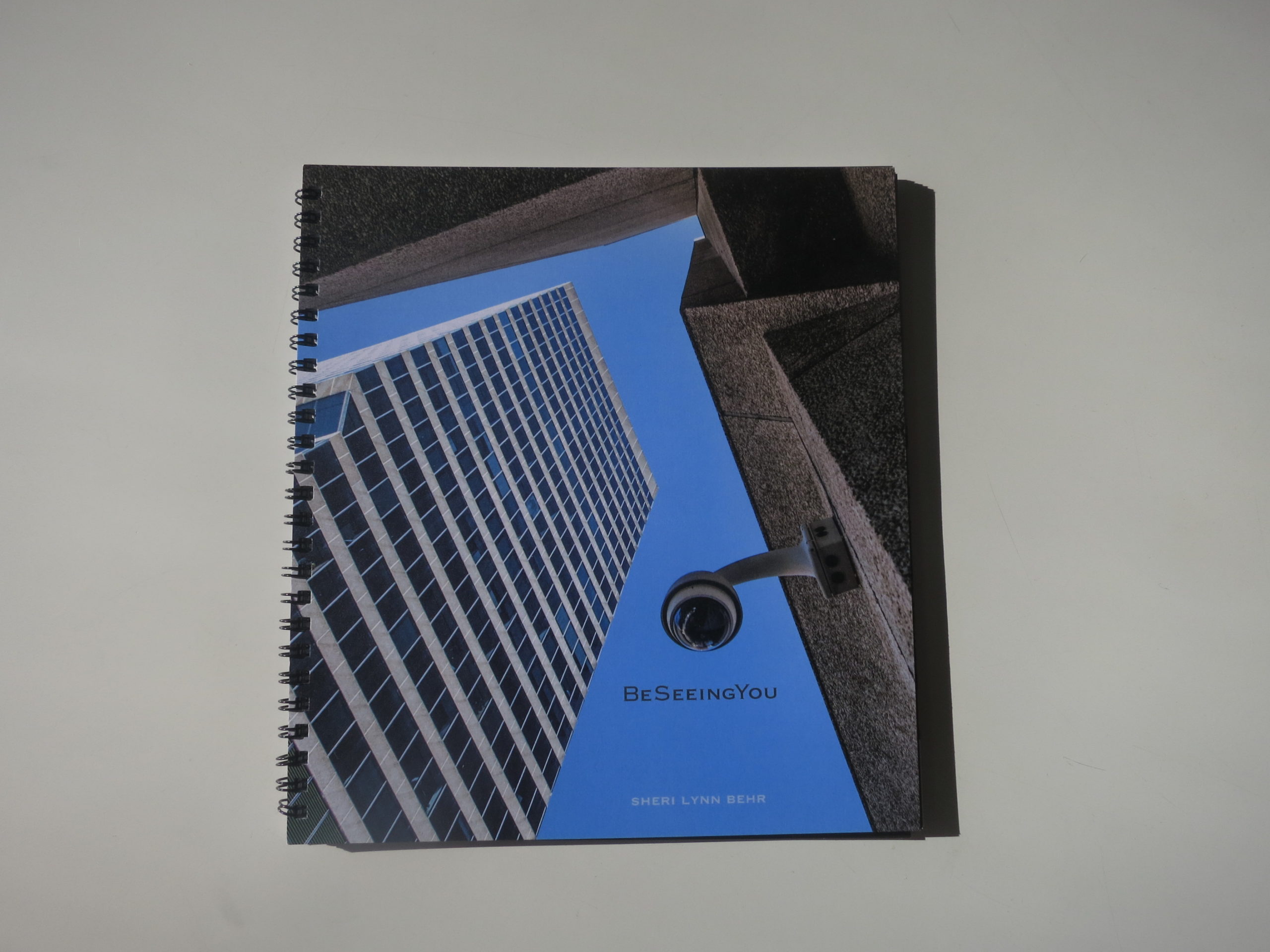
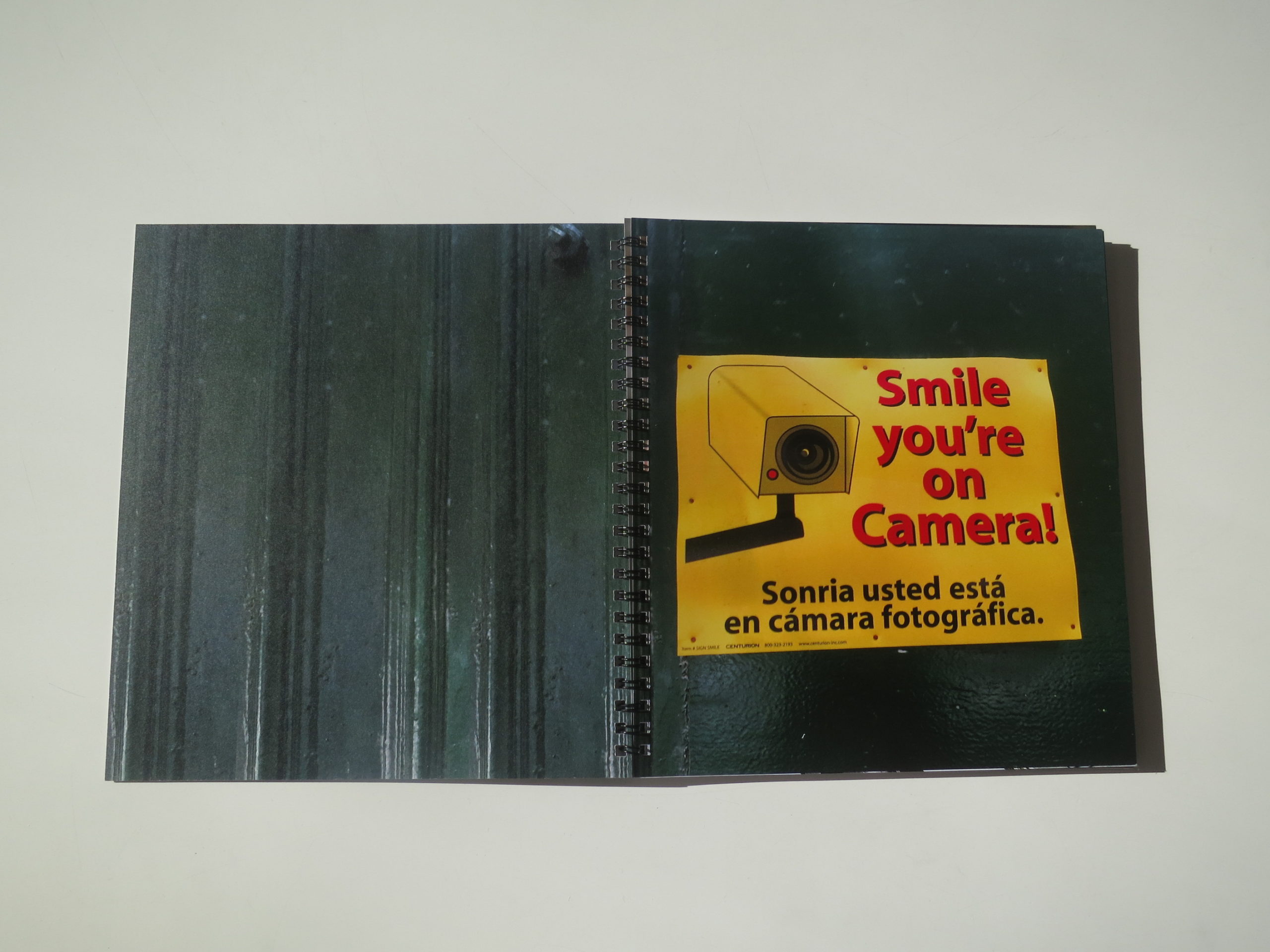
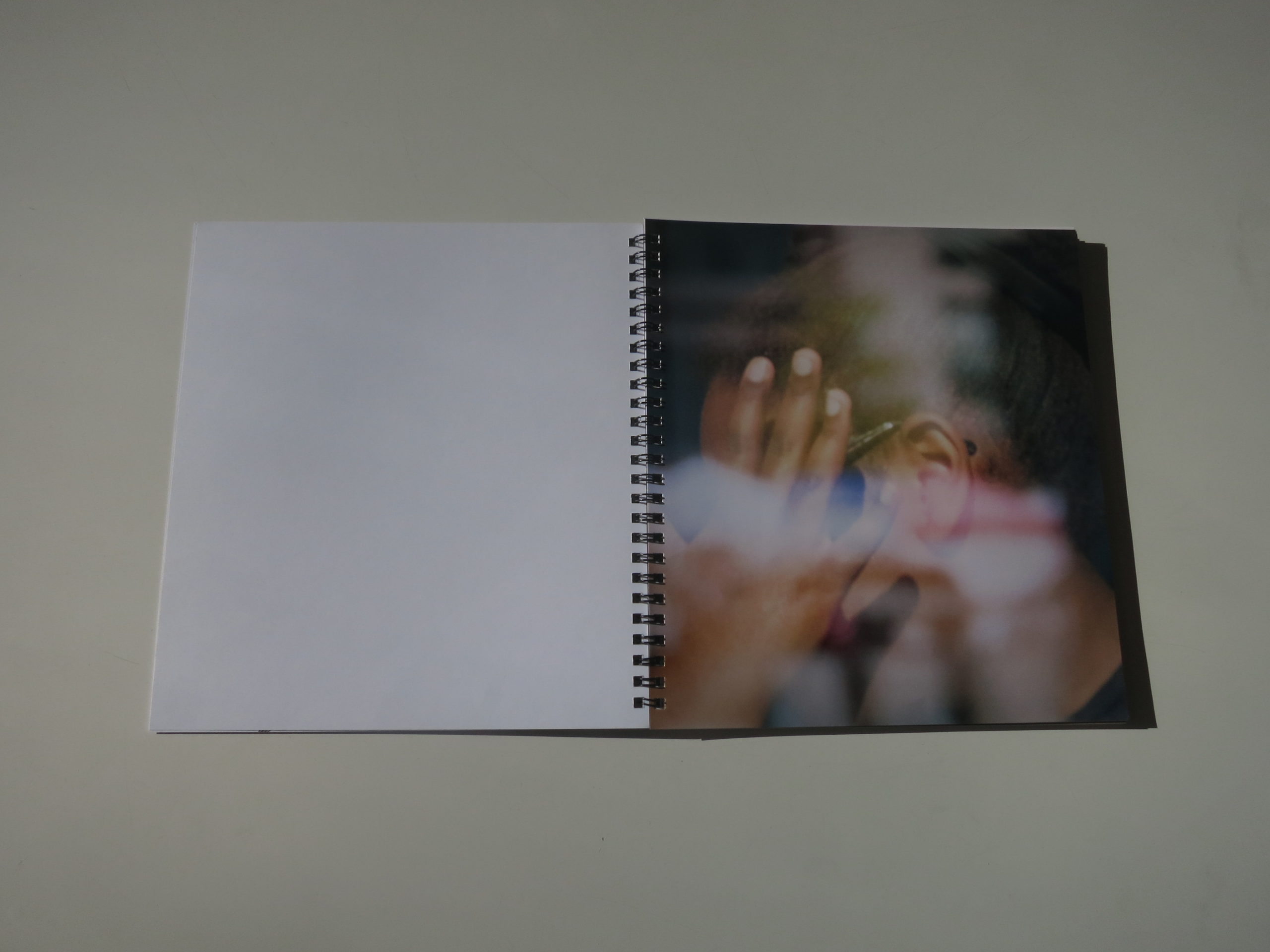
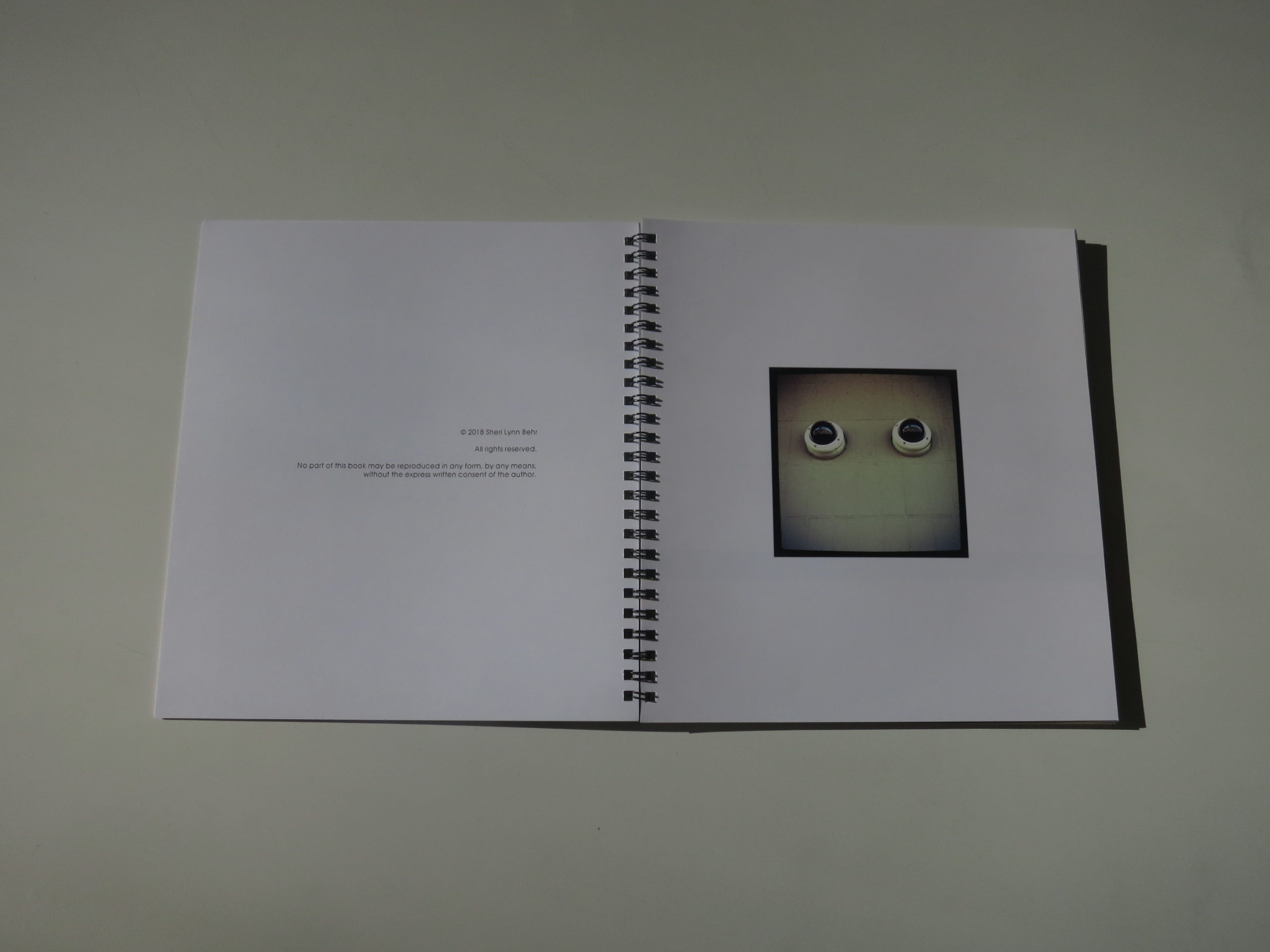
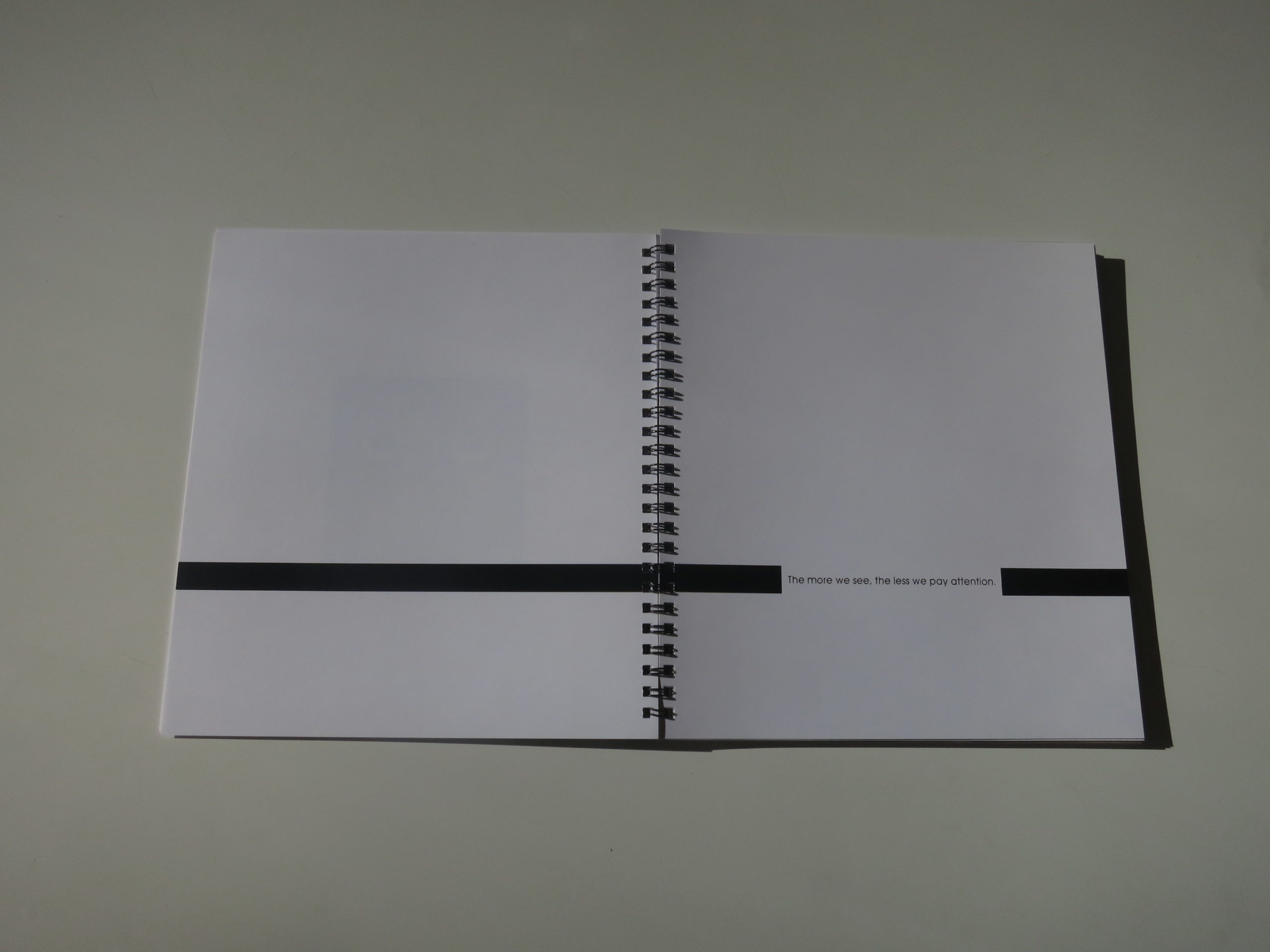
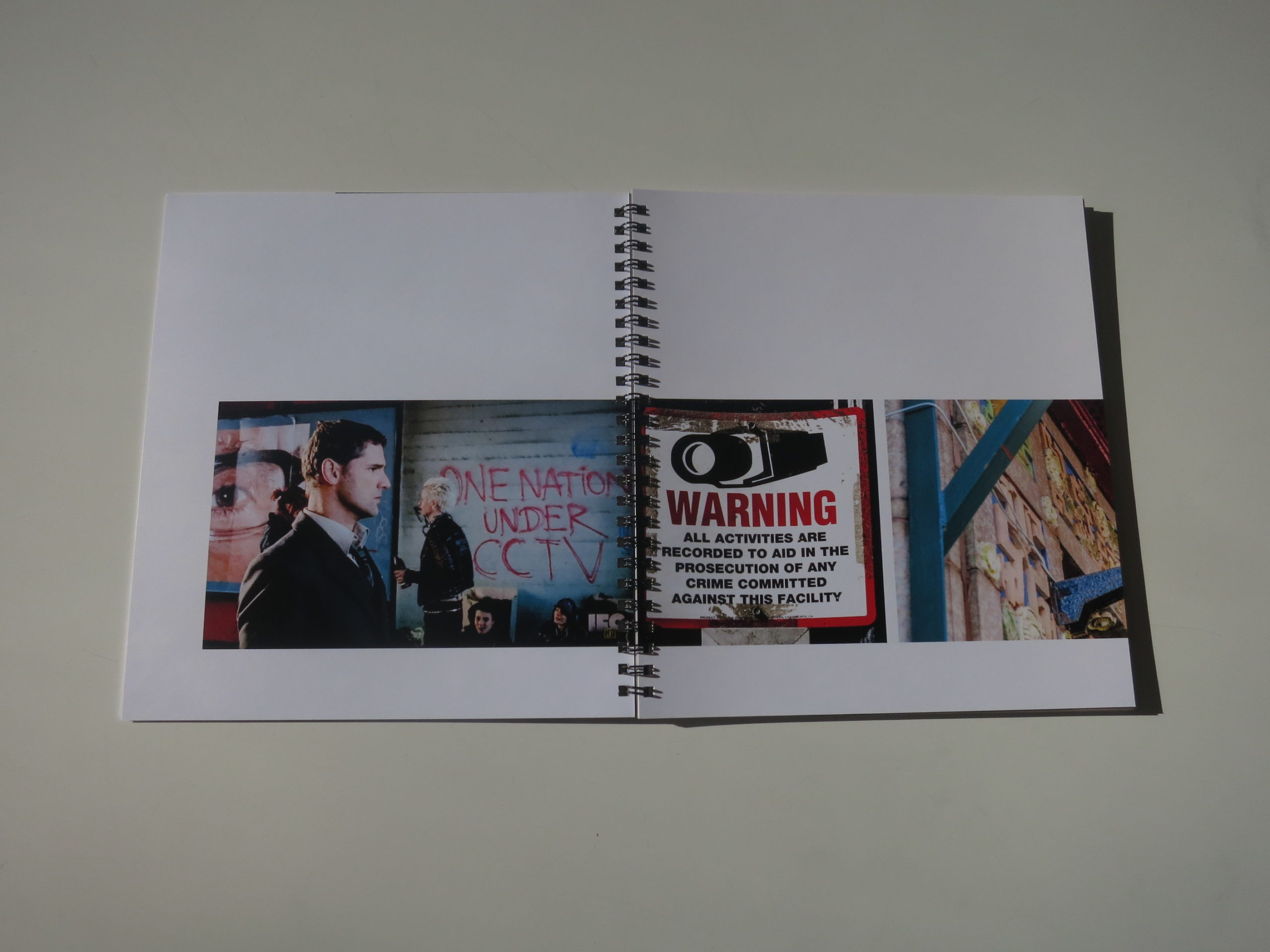
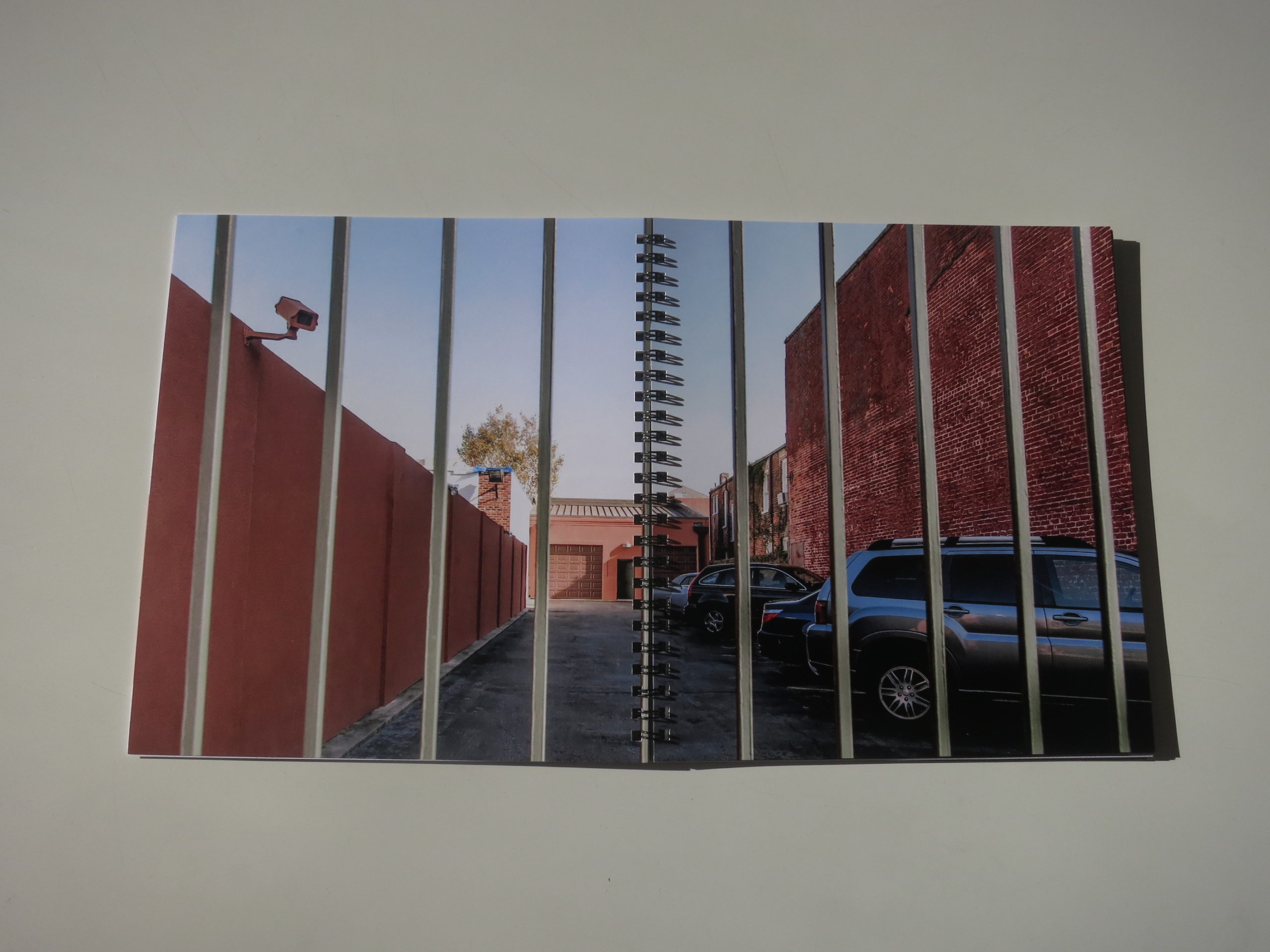
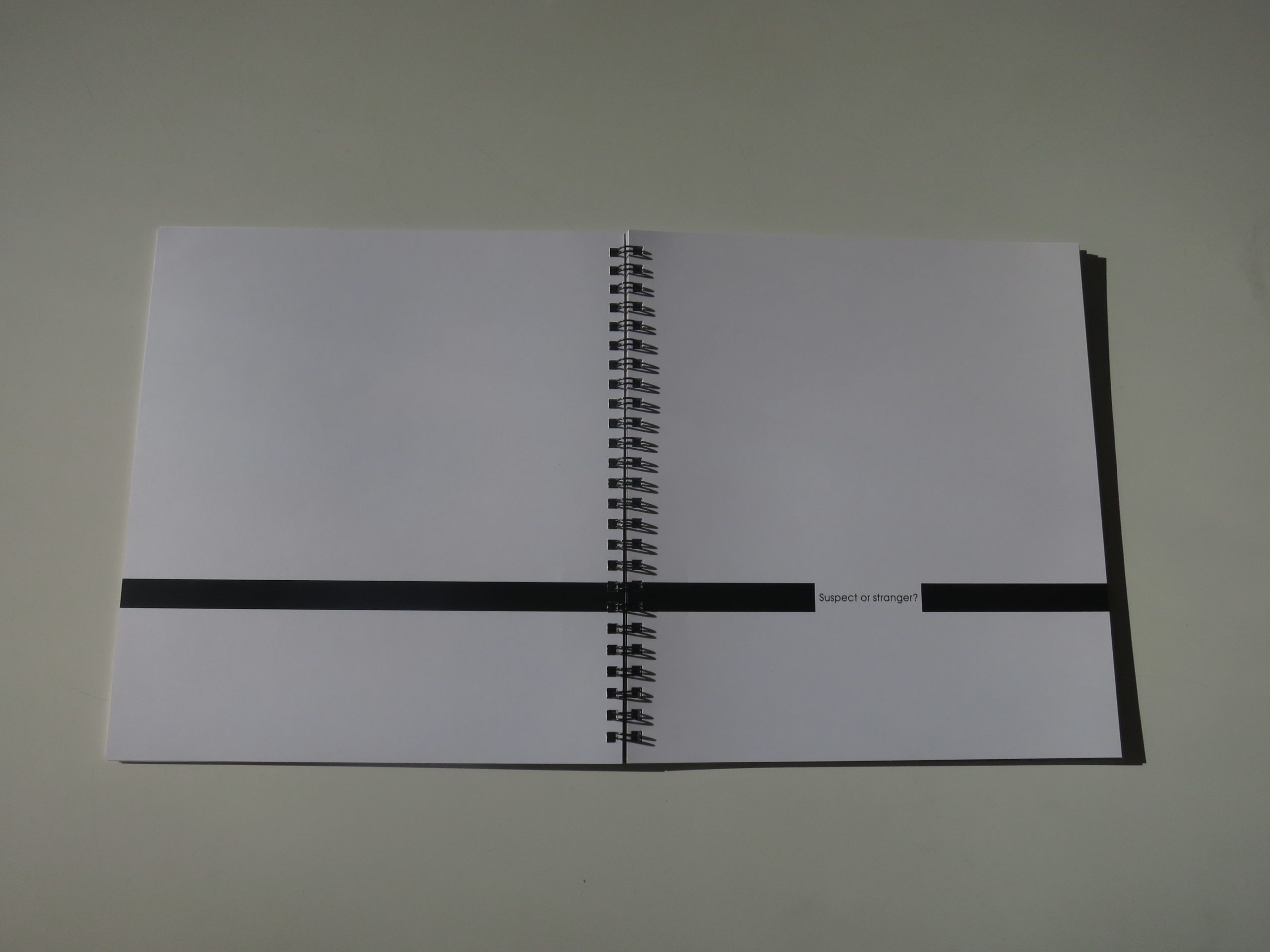
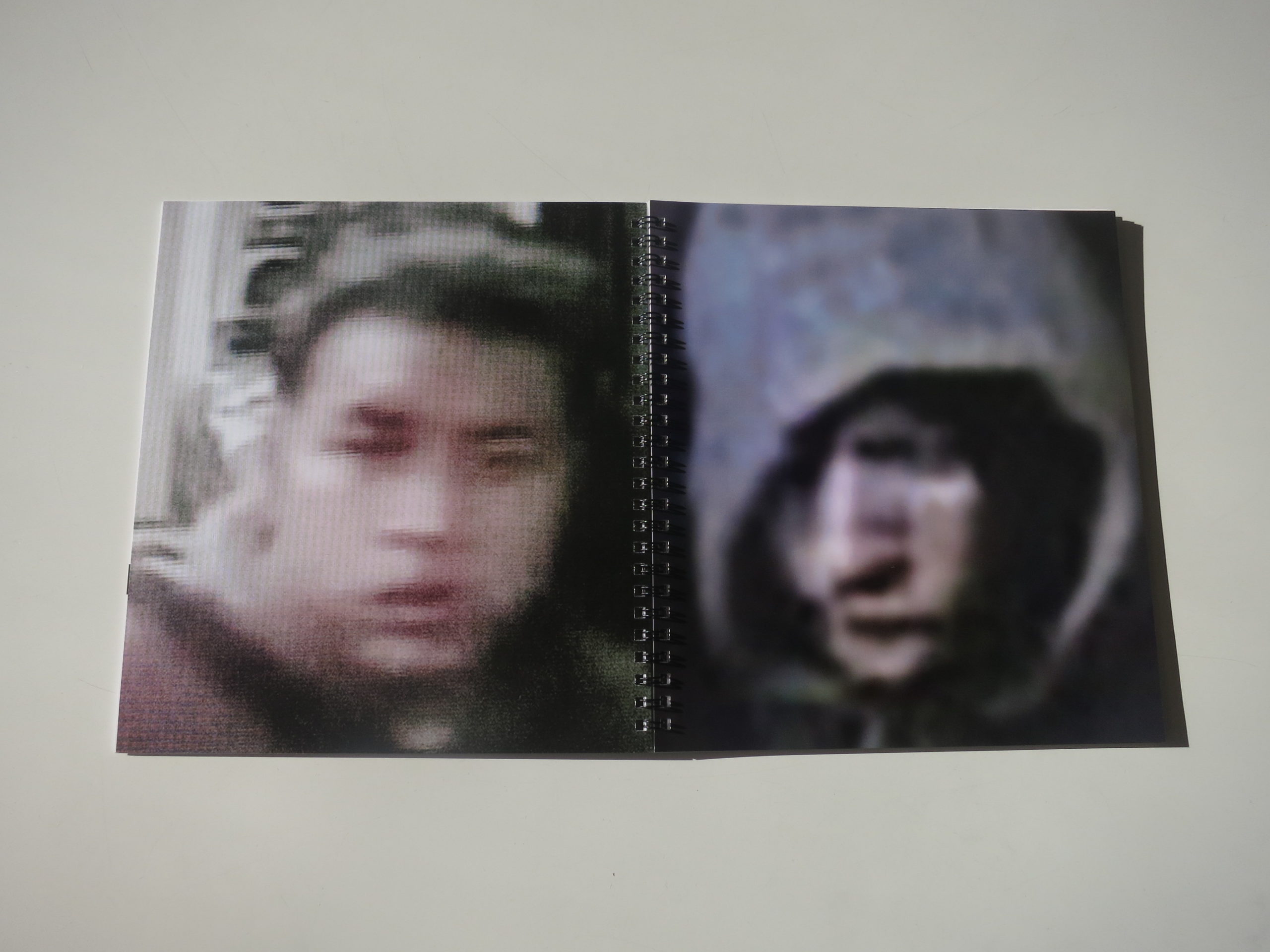
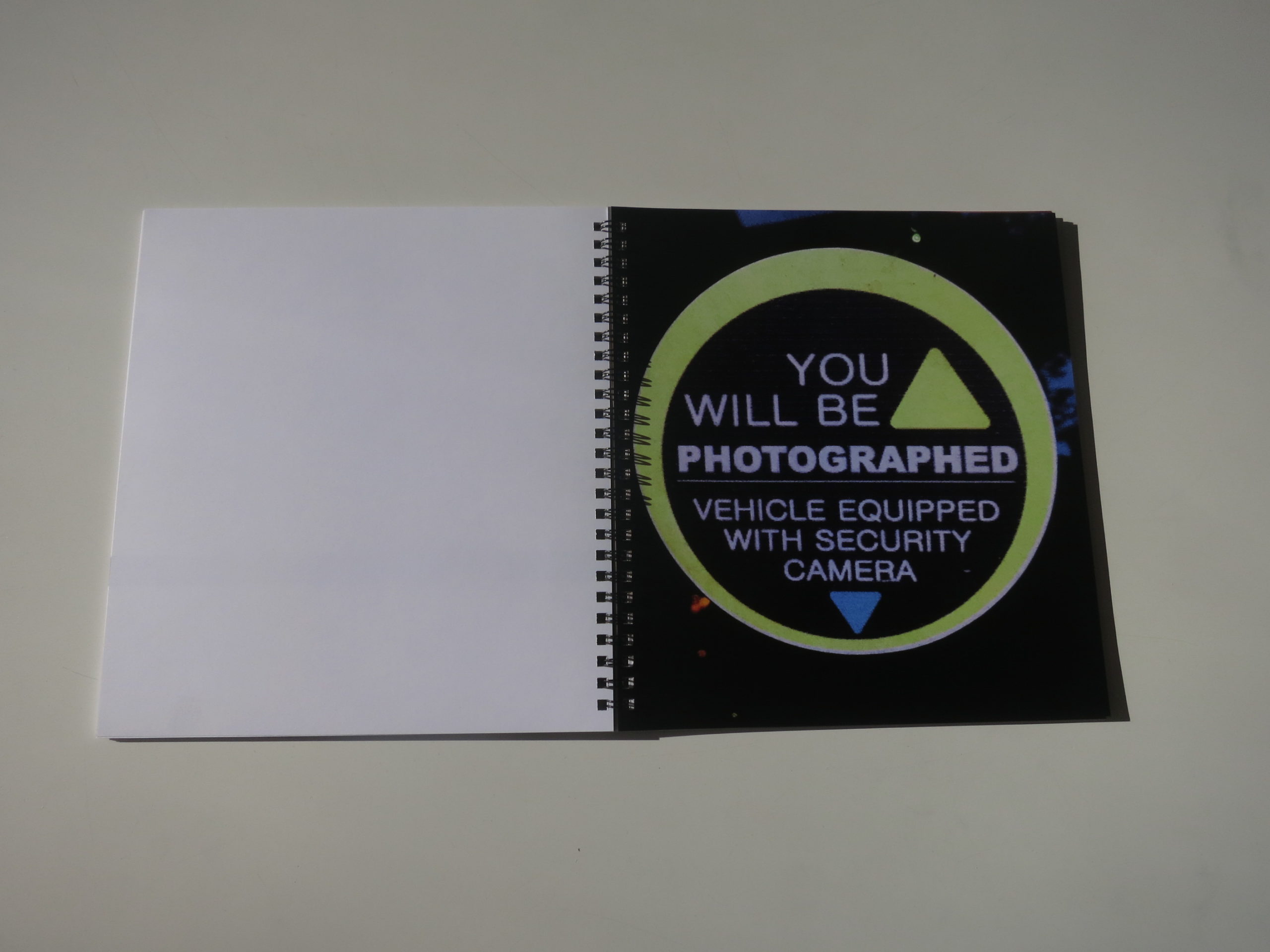
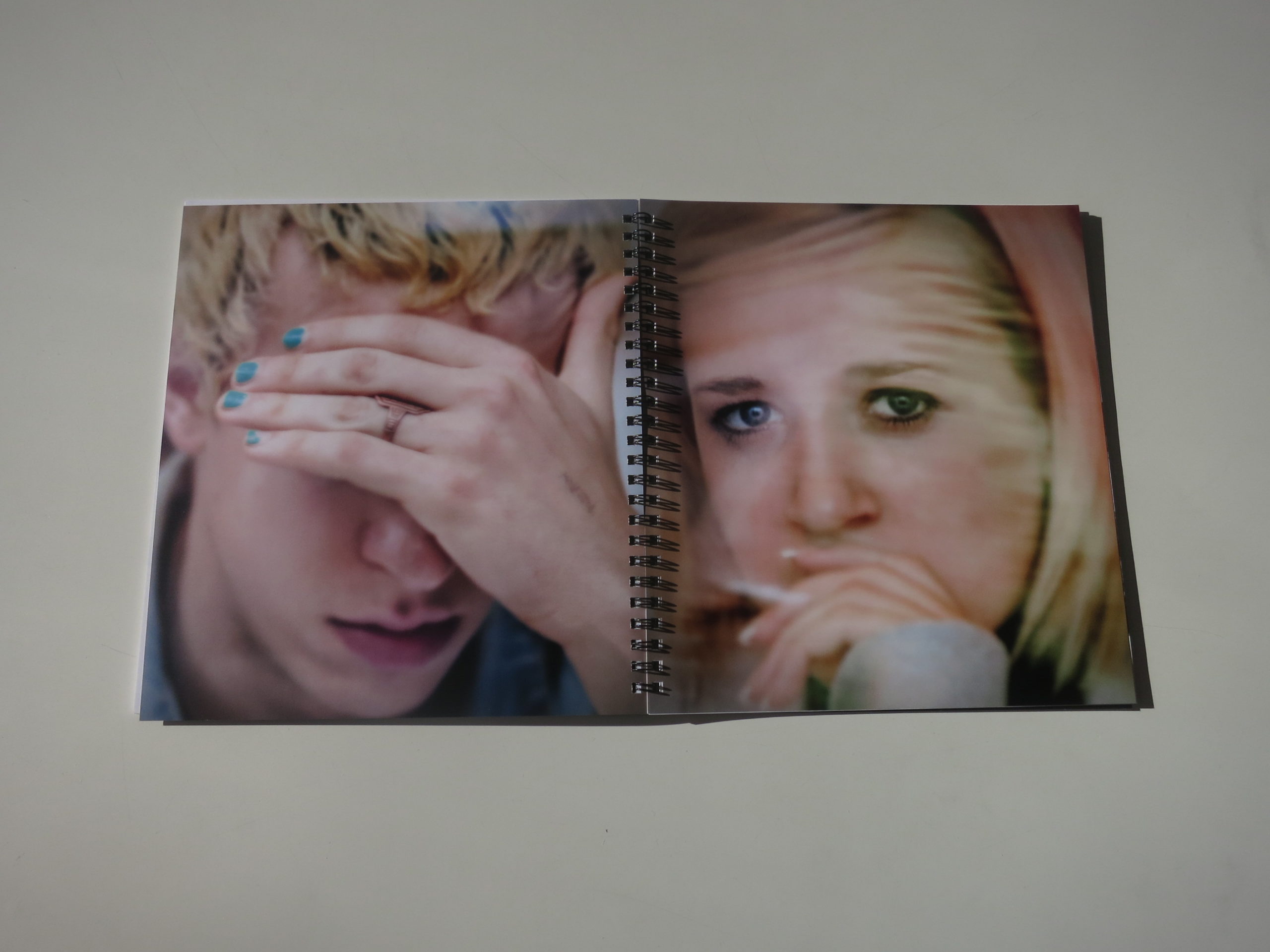
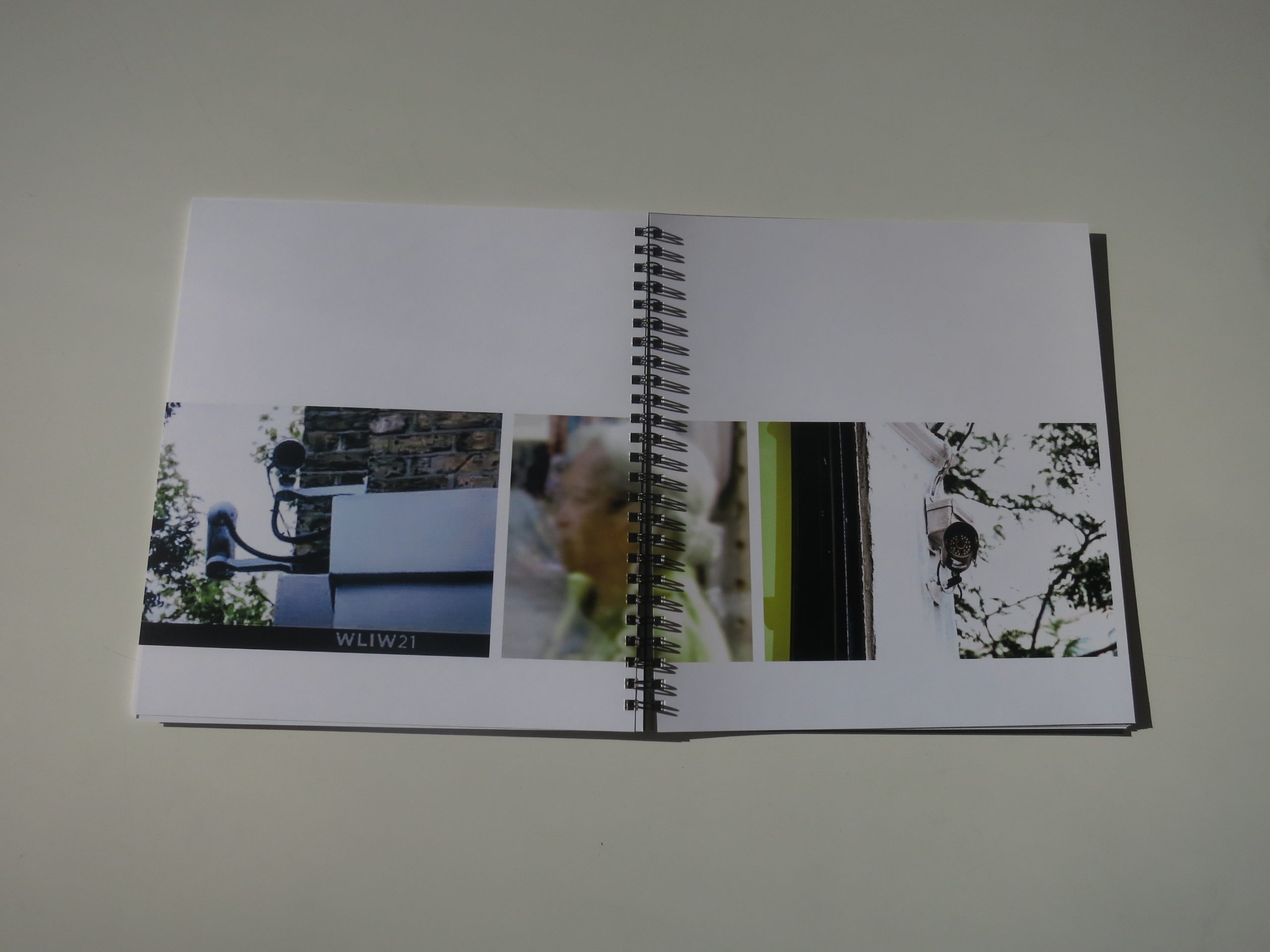
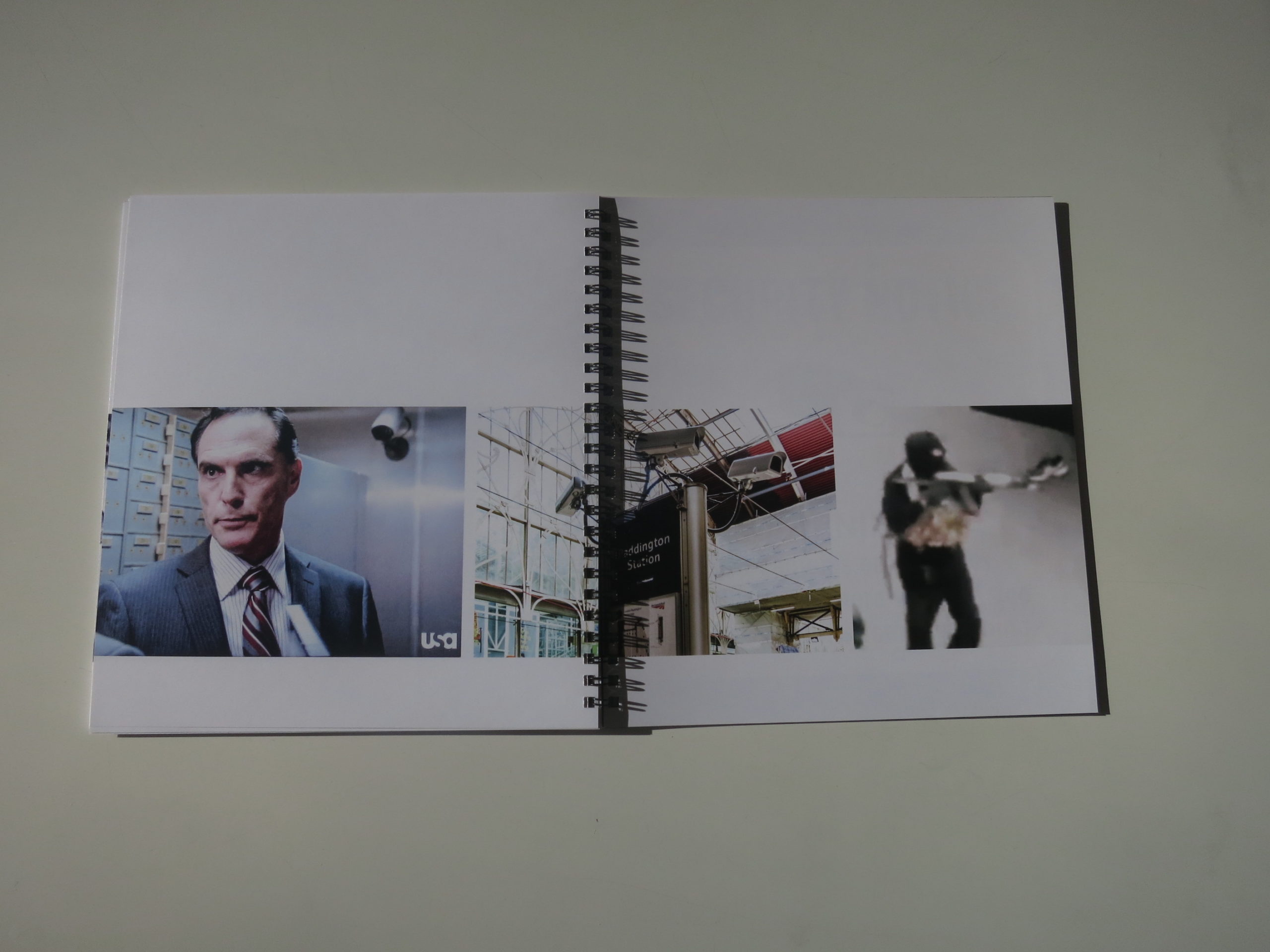
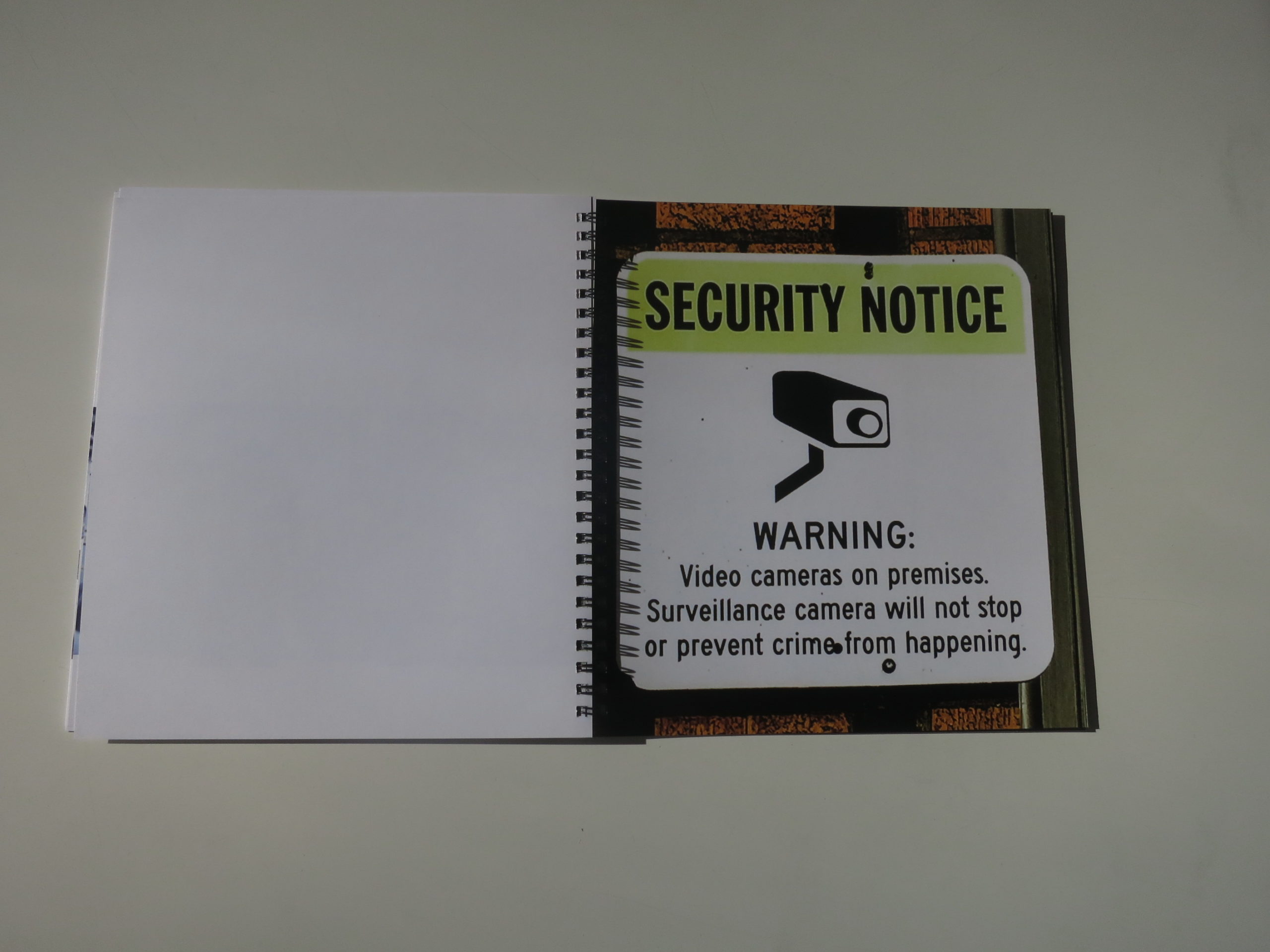
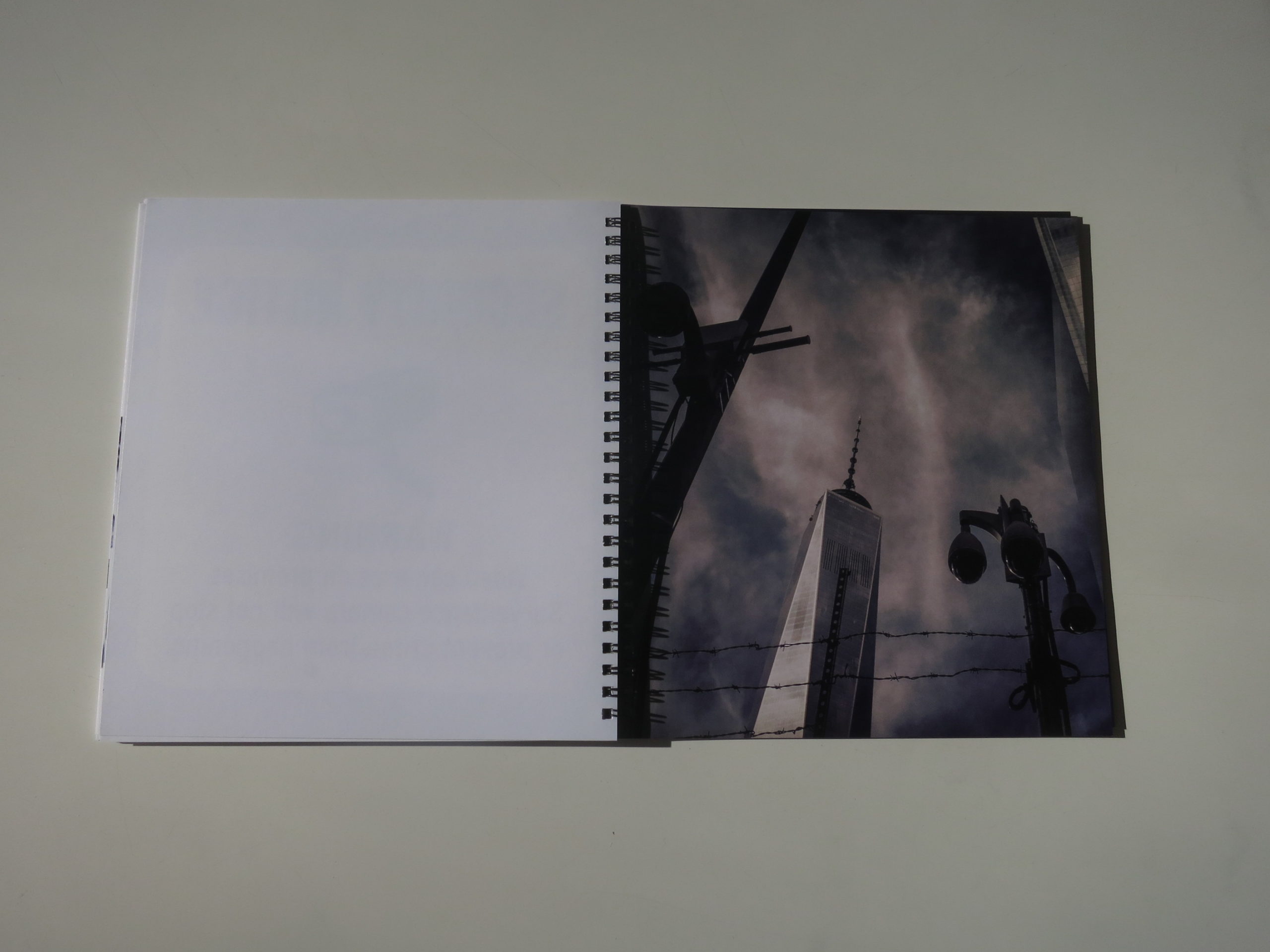
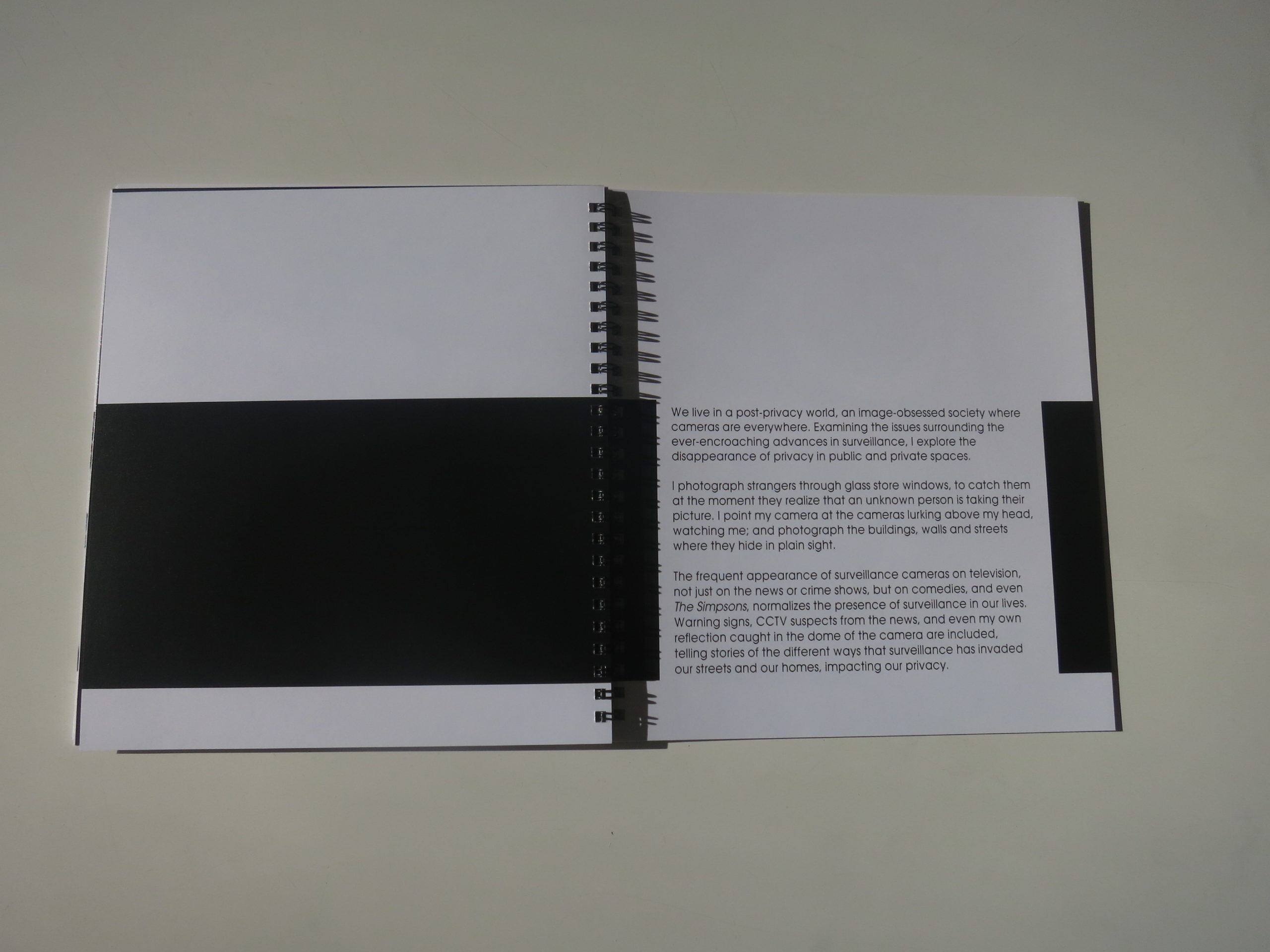
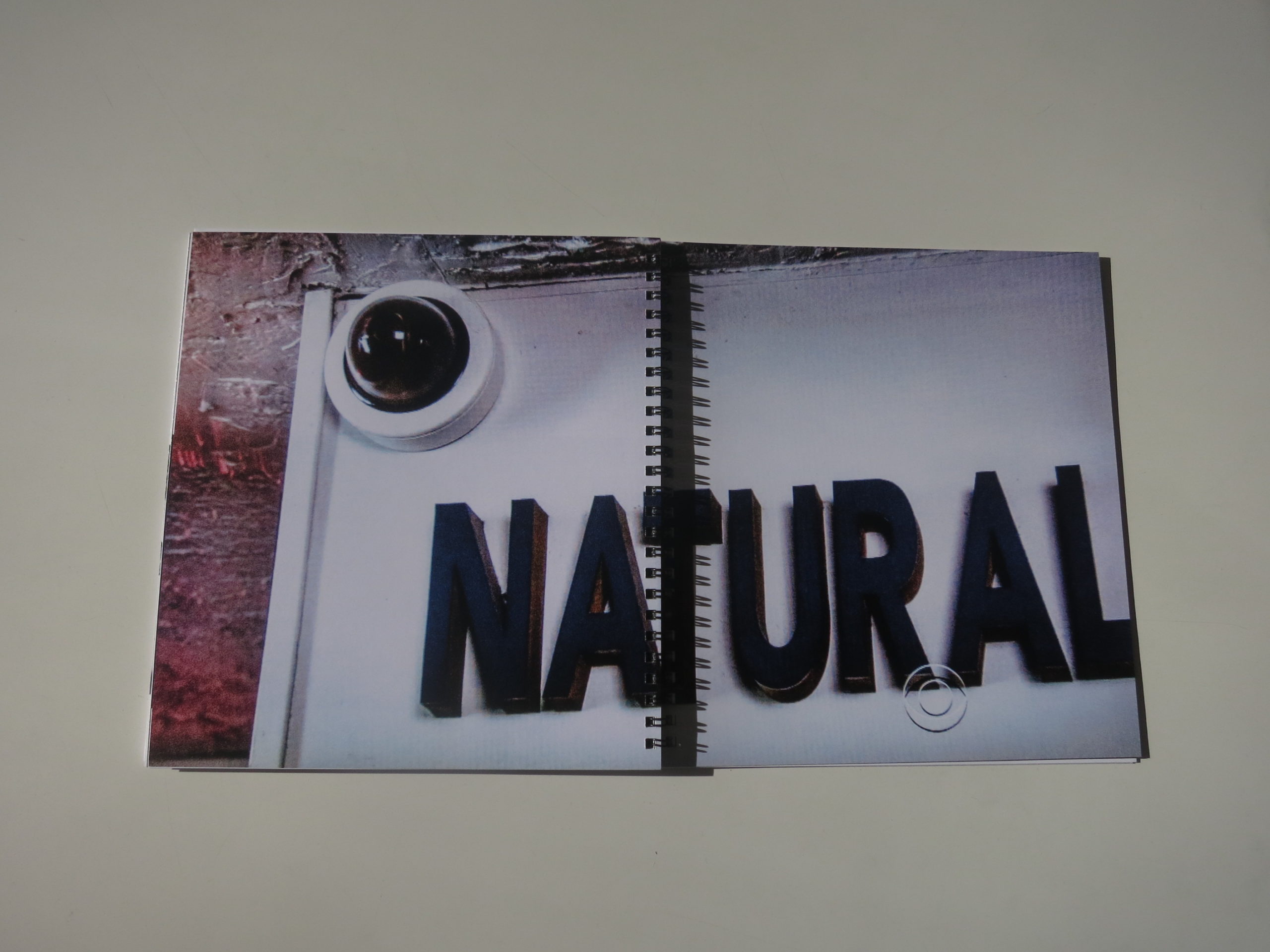
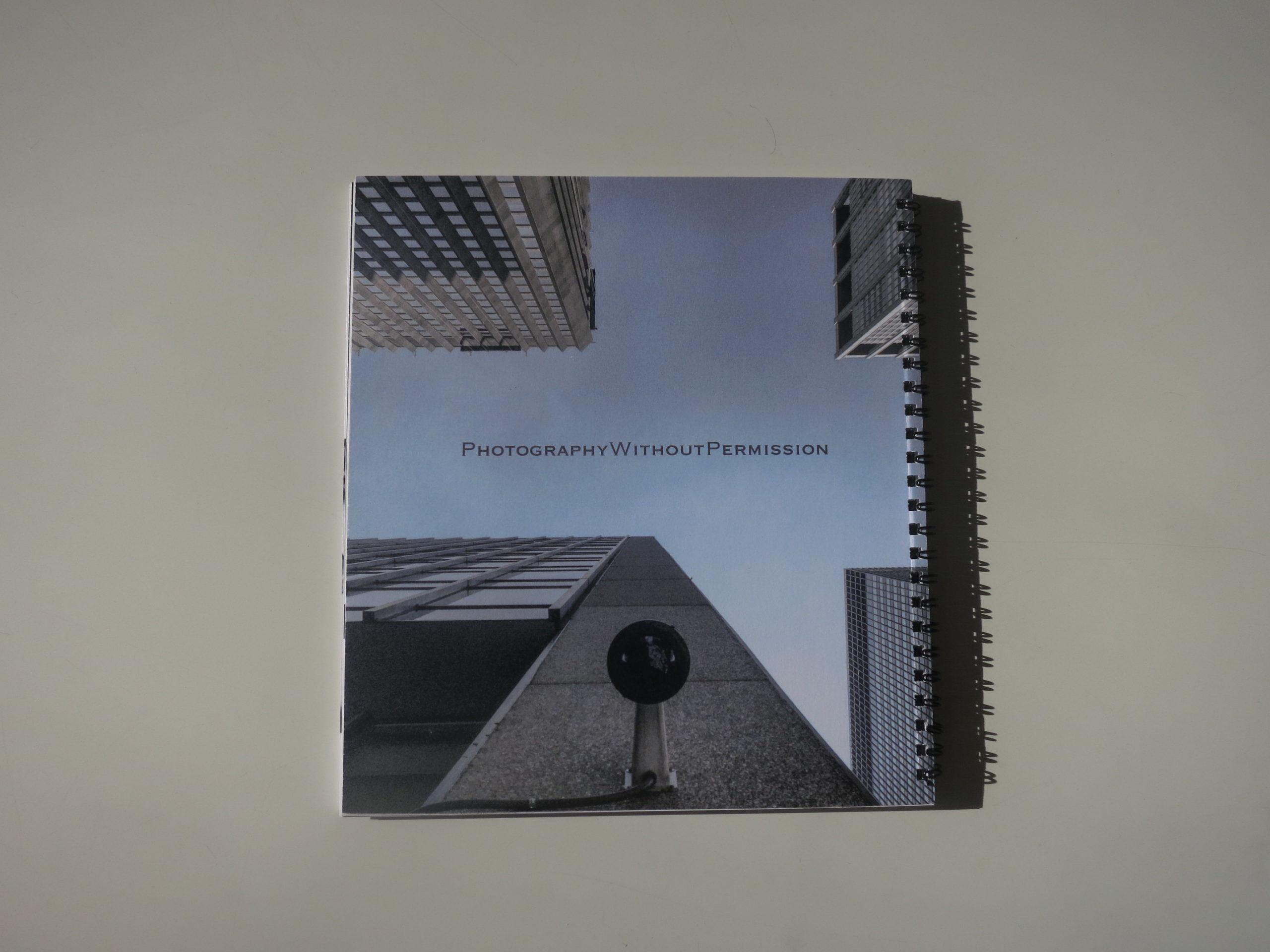
I’m thinking on the subject because I’ve just finished looking at Sheri Lynn Behr’s excellent “Be Seeing You,” a self-published book that turned up in the mail in Spring 2019, just after I took a break from writing about photo books.

Thankfully, the art gods have been kind to us again, as I think this is the perfect time to see this book, in current context.

It’s very well thought-out, in terms of pacing, how much information it gives, and when it gives it.

As I’m always recommending you think about such things, when you make your book, I wanted to highlight the strength here.

From the title, cover, and first four images or so, you know what this book is about, (surveillance) and that there will likely be a mix of photographic styles within.

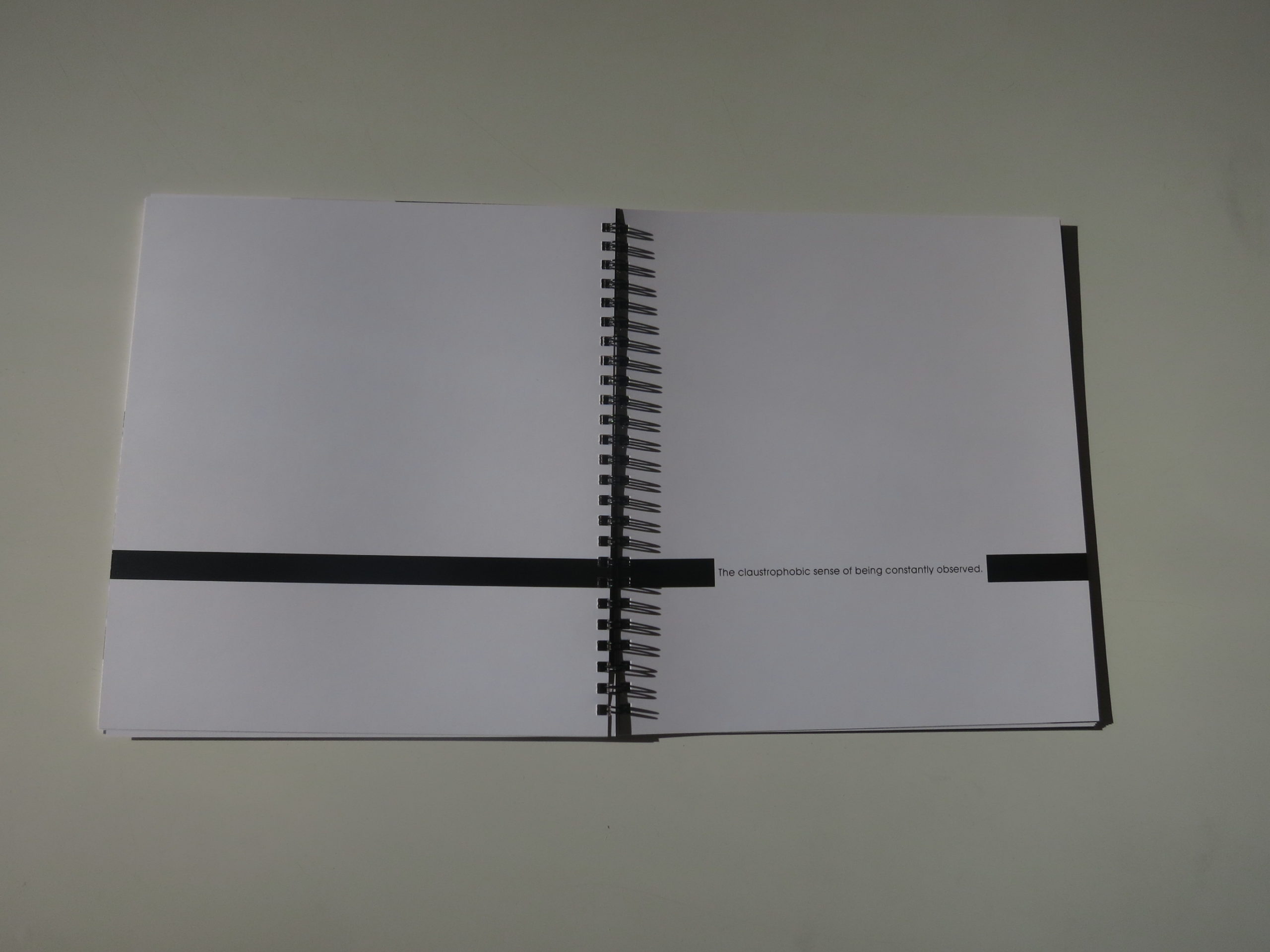
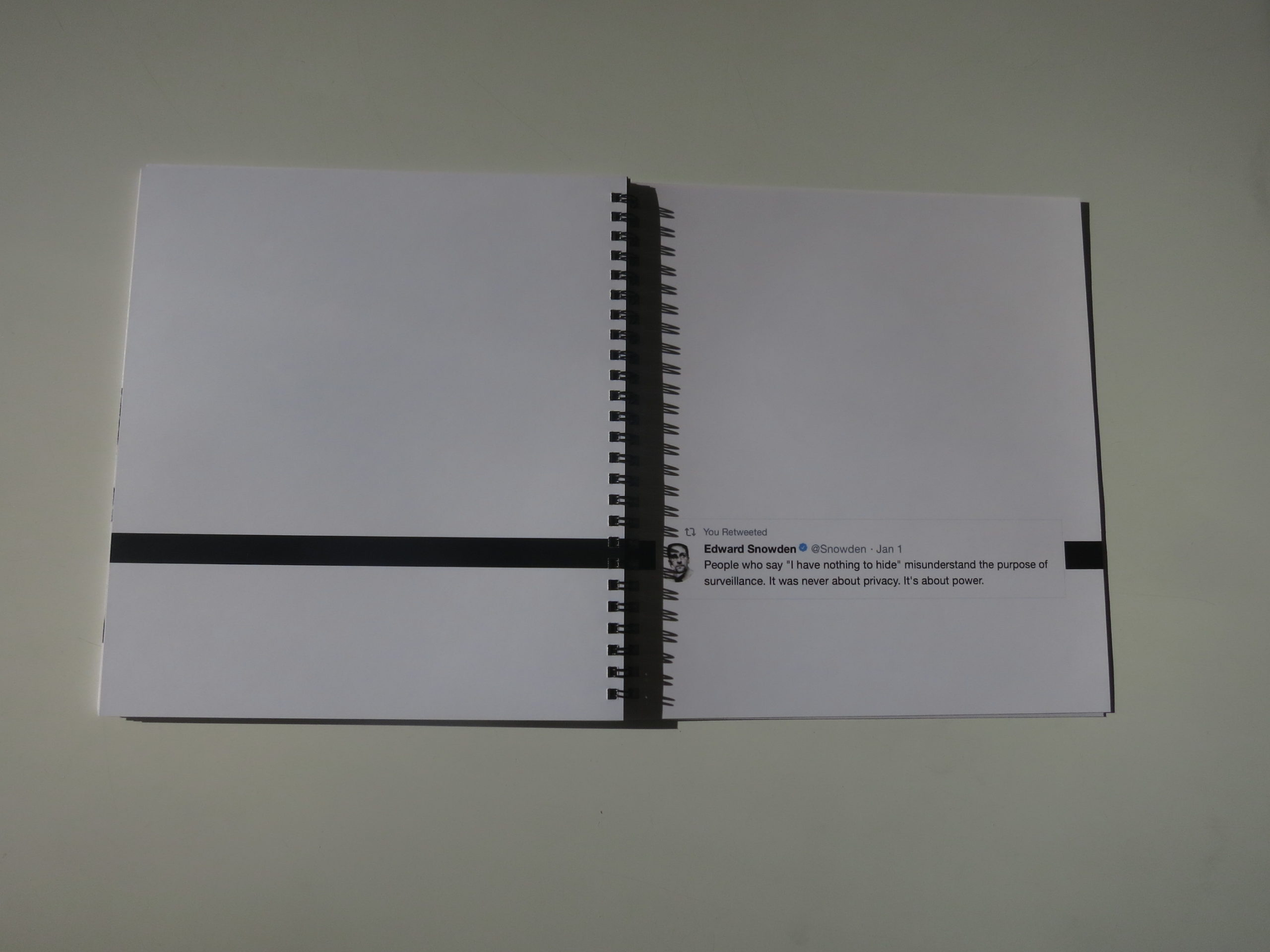
There are text interruptions, with some black graphic accents against stark white, and the first says “The more we see, the less we pay attention.”

Meaning, the more information that floods our brain, the less any one detail is ever likely to pop out. (Small needle, big haystack.)

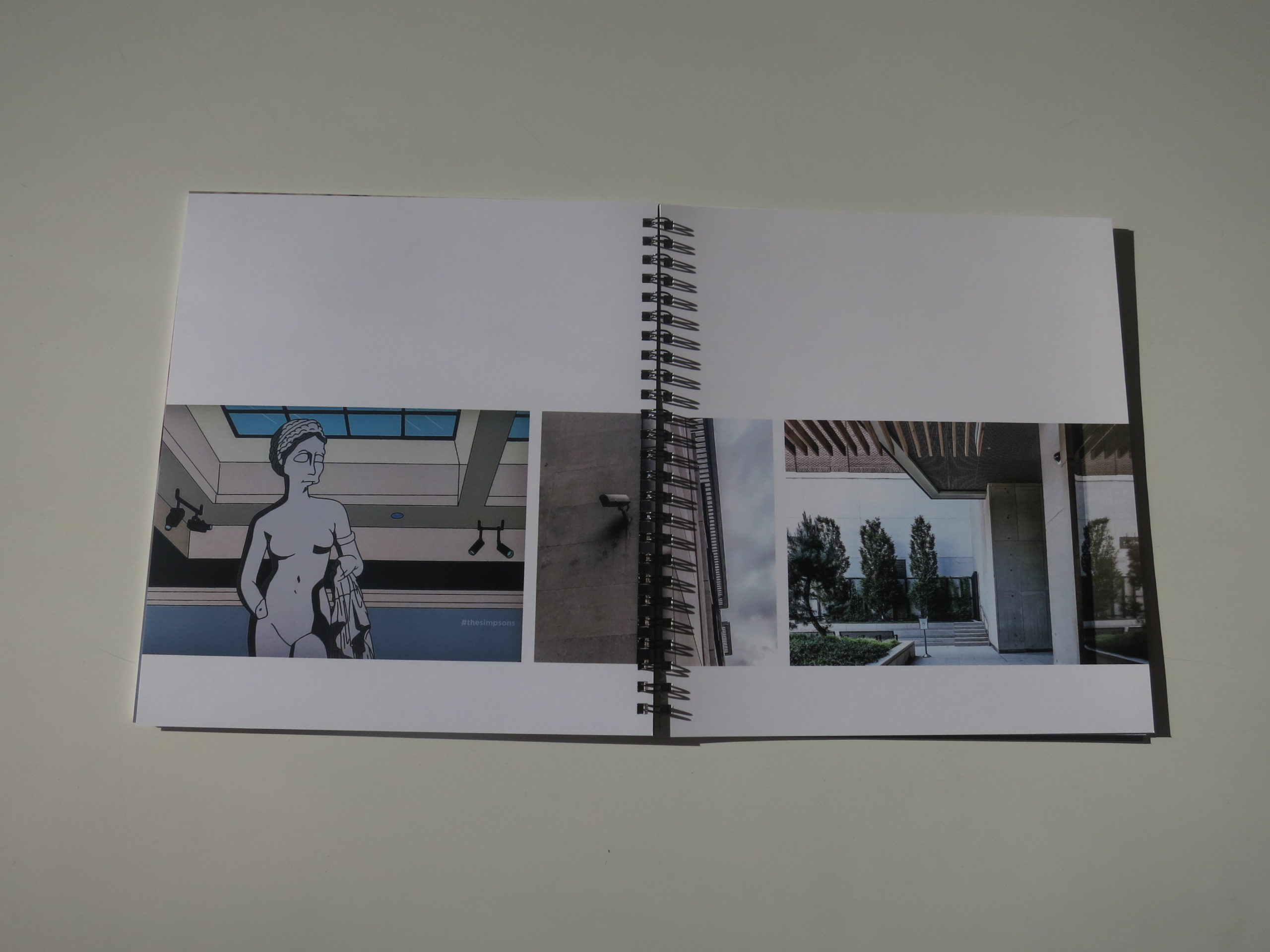
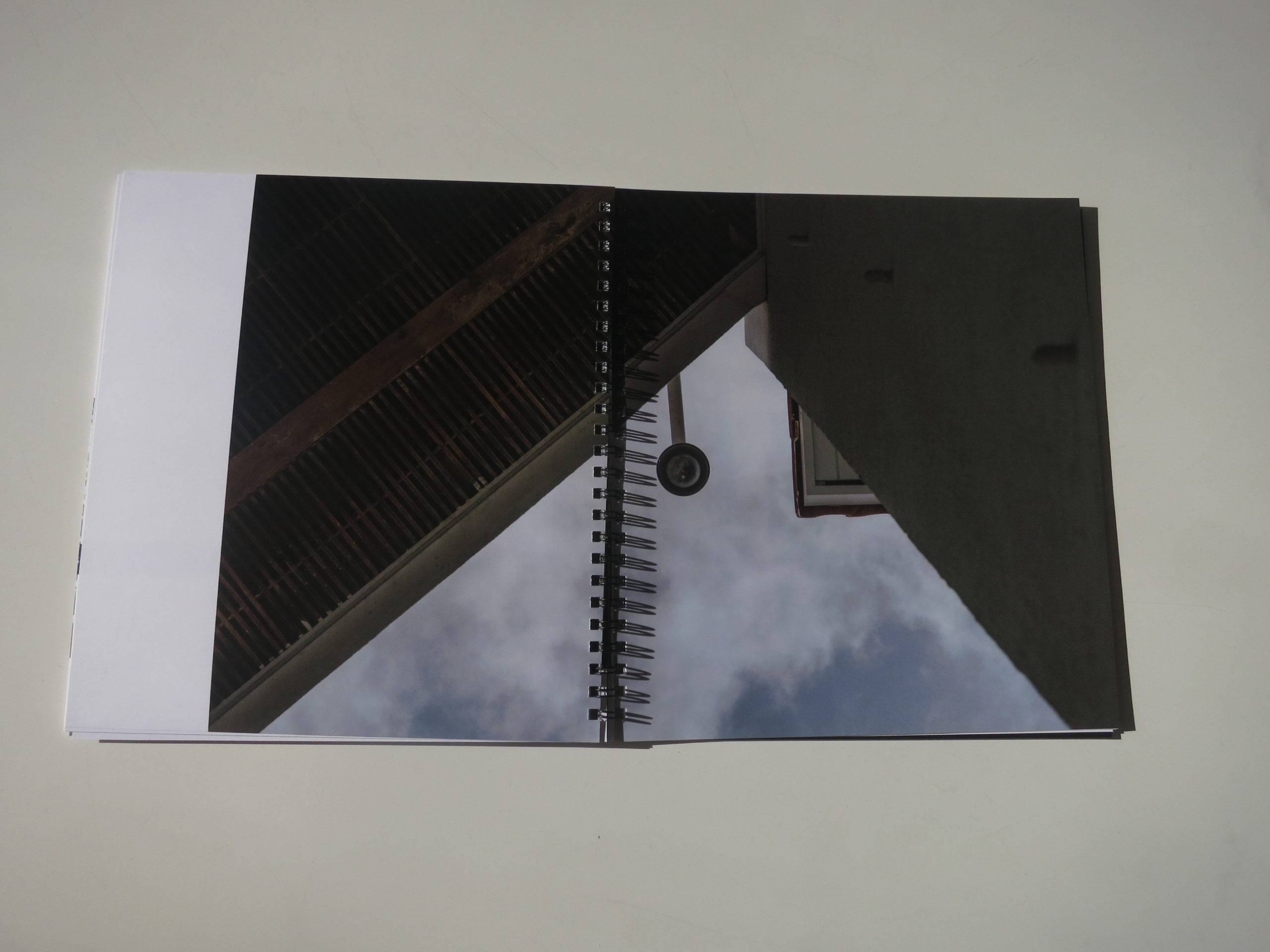
The next image is from the outside staircase at the Broad building at LACMA, in LA. (It was once new, but now I’m not even sure if it’s still a part of the newest masterplan there? Does anyone know?)

Of course I’ve been there, and never saw the cameras watching me, as I’ve been to certain places from the book like NYC, of course, or Padding Station in London.

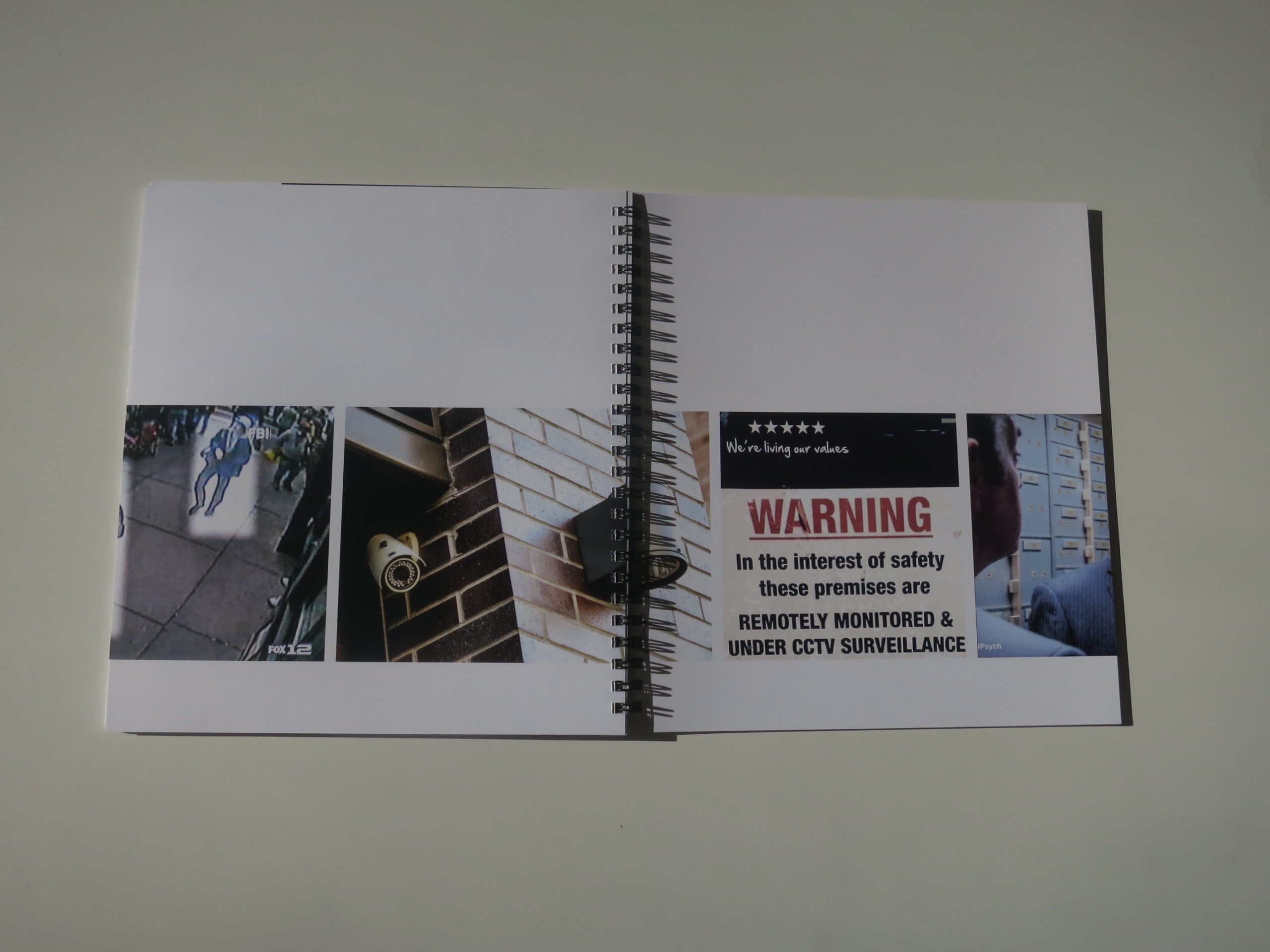
I’ve also watched “Luther,” and “The Simpsons,” and both are featured, as one subset of photographs seems to be the representation of surveillance culture on TV screens.

Those pictures are melded with documentary images of cameras out in the culture, and then pictures of real people in the real world as well.

There’s a menace in this book that shows Sheri takes this subject personally, where I guess I’ve been rather lazy about caring before.

Now that there are real news stories about tracking people by their antibodies, of course the world has grown much closer to seeing things Sheri’s way.

I’m using her first name casually, as she and I have met at festivals many times over the years. I’ve published her stuff here before, but also been critical of it at the review table, as she well knows.

I love that this book closes with a description of the various projects, just so people know what they saw. And then an Edward Snowden tweet, and a selfie in a mirror-dome.

This one’s really strong.

But I’m creeped out now, and maybe it’s time to tape over the webcam?

Bottom Line: Killer, self-published gem about 21C surveillance

To purchase “Be Seeing You” click here 

If you’d like to submit a book for potential review, please email me directly at jonathanblaustein@gmail.com. We are interested in presenting books from as wide a range of perspectives as possible.
The Art of the Personal Project: Robin O’Neill

The Art of the Personal Project is a crucial element to let potential buyers see how you think creatively on your own.  I am drawn to personal projects that have an interesting vision or that show something I have never seen before.  In this thread, I’ll include a link to each personal project with the artist statement so you can see more of the project. Please note: This thread is not affiliated with any company; I’m just featuring projects that I find.  Please DO NOT send me your work.  I do not take submissions.


Today’s featured artist:  Robin O’Neill

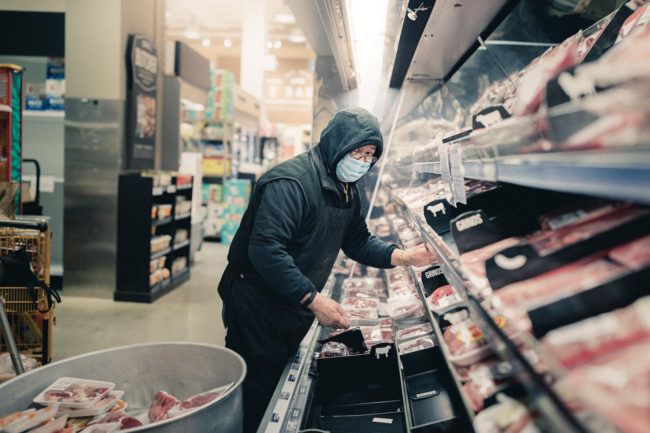
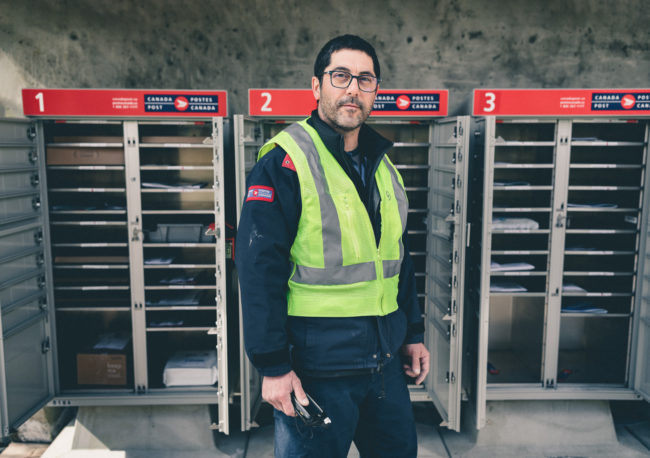
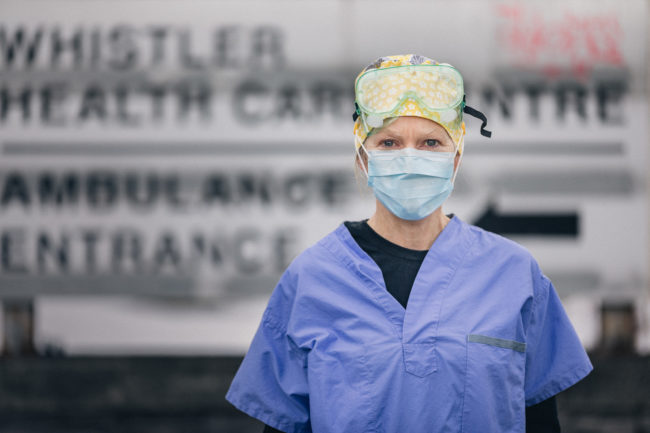
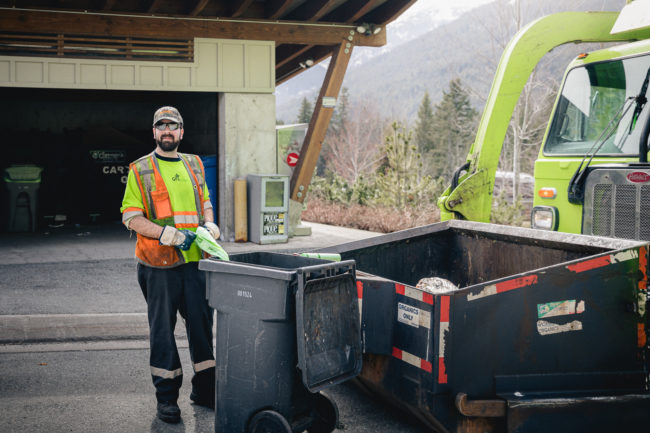
I am compelled to create images of people who are making the world a better place. During the global state of emergency and the mandate for self-isolation and distancing, I couldn’t help but turn my heart to the people still working to provide our essential services.

Trying to balance my own responsibility for social distance with my desire to give faces to the people still risking infection to care for the rest of us, I began to bring my camera along on my necessary outings. From a safe distance I took portraits of front-line workers at the grocery store, and at our community mail and waste depots. I have since extended the project to include other professionals who aren’t in my direct path, including medical workers and hospital janitorial staff. I plan to continue capturing these portraits of the unsung heroes of this unprecedented time.

Thank you to Arc’teryx for offering jackets as appreciation to some of the people I have captured and for sharing my images in their global campaign.

To see more of this project, click here.

Robin O’Neill is an outdoor lifestyle and action photographer based in Whistler, British Columbia. Her editorial and social documentary backgrounds have helped Robin develop a unique view into the wild landscapes and wilder personalities that surround her. By translating her passion for outdoor adventures into exciting visual stories and dramatic imagery, she has found success in working with many reputable outdoor brands, as well as winning the Whistler Deep Winter and Deep Summer Photo Showdowns, People’s Choice at WSSF 2019, and a finalist at Red Bull Illume 2019. Robin’s insatiable curiosity and addiction to mountain life have perfectly combined to ensure ongoing grand adventures and a growing portfolio of outstanding images captured in the wild outdoors.

APE contributor Suzanne Sease currently works as a consultant for photographers and illustrators around the world. She has been involved in the photography and illustration industry since the mid 80s.  After establishing the art-buying department at The Martin Agency, then working for Kaplan-Thaler, Capital One, Best Buy and numerous smaller agencies and companies, she decided to be a consultant in 1999. She has a new Twitter feed with helpful marketing information because she believes that marketing should be driven by brand and not by specialty.  Follow her at @SuzanneSeaseInstagram

Success is more than a matter of your talent. It’s also a matter of doing a better job presenting it.  And that is what I do with decades of agency and in-house experience.


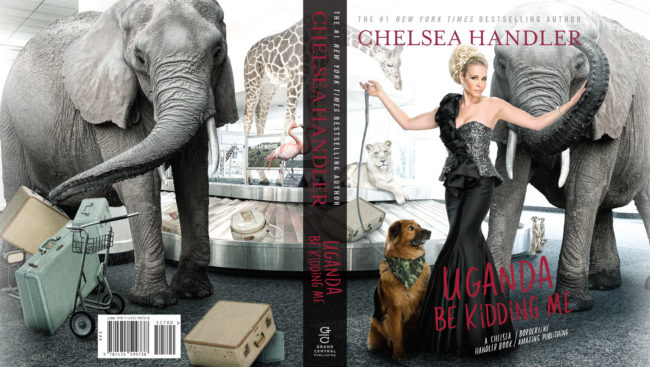
How a personal project led to the book cover of Chelsea Handler’s New York Times Best Sellers List by James Quantz

How I used a personal project to learn a new skill, gain confidence directing behind the camera, and even open a few doors for new work.

So often working in this business you can be more of a tool for someone else’s creative vision than of you own. In order to maintain my creative drive I try my best to jump out of that box with side or what you might call personal projects. For myself, I wouldn’t say the motivation would be to gain more work from these projects but more so to just connect with something inspiring.  If I can learn something new, have fun doing it, and possibly add a new tool in my creative toolbox then I would consider a project successful.

About thirteen years ago I used that out of the box motivation to try and learn something new while creating unique images by photographing animals and compositing them into preconceived scenes within Photoshop. Within a couple years of practice I was able to convert that newly developed skill and confidence into creating unique scenes with people instead of animals. My video discusses the biggest example of all those hours paying off with the cover of Chelsea Handler’s book “Uganda Be Kidding Me”

James created a video about the whole process: click here  Video

James Quantz, Jr work can be seen here


APE contributor Suzanne Sease currently works as a consultant for photographers and illustrators around the world. She has been involved in the photography and illustration industry since the mid 80s.  After establishing the art buying department at The Martin Agency, then working for Kaplan-Thaler, Capital One, Best Buy and numerous smaller agencies and companies, she decided to be a consultant in 1999. She has a new Twitter feed with helpful marketing information because she believes that marketing should be driven by brand and not by specialty.  Follow her at @SuzanneSeaseInstagram

Success is more than a matter of your talent. It’s also a matter of doing a better job presenting it.  And that is what I do with decades of agency and in-house experience.


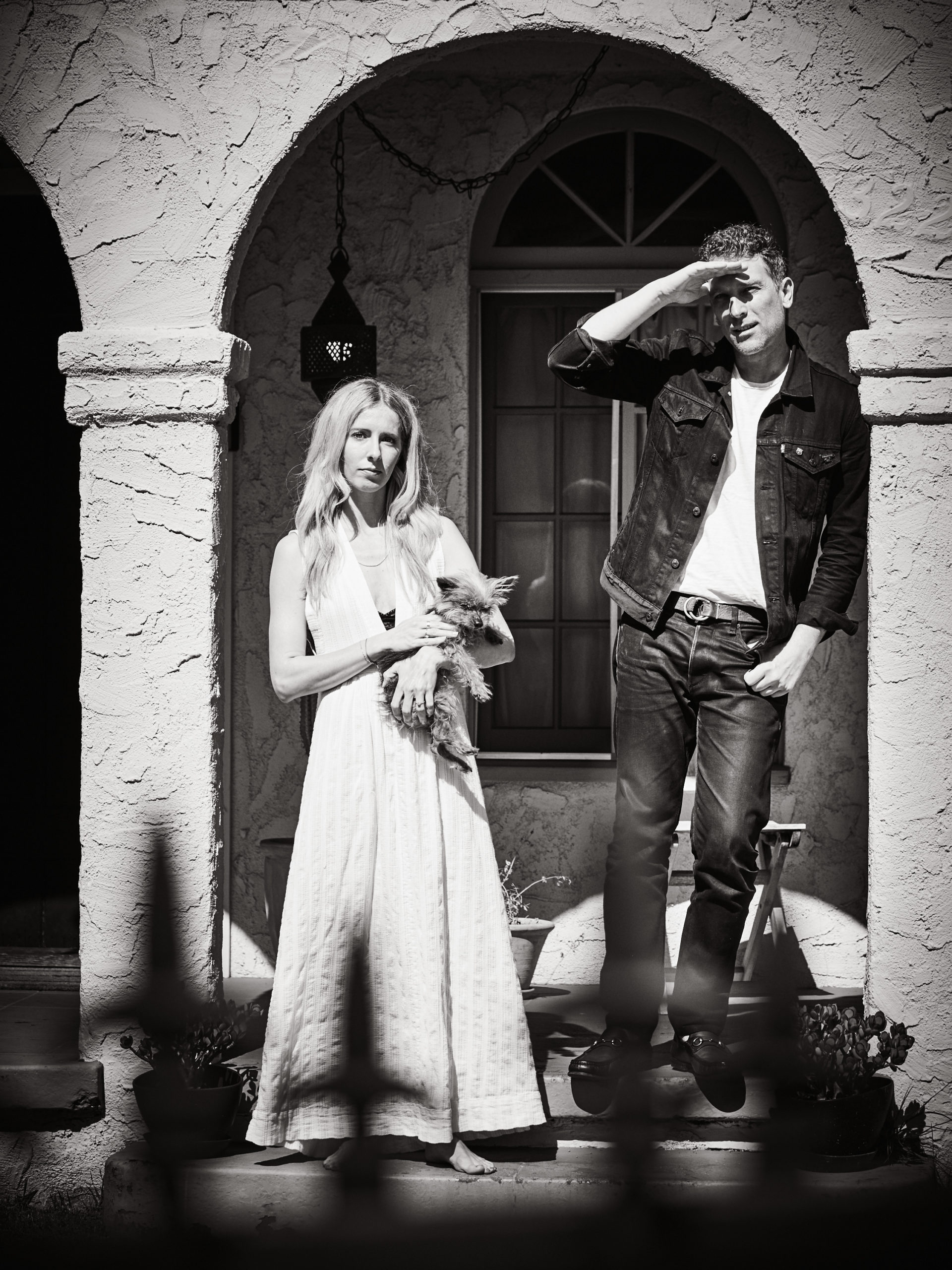
The Daily Edit – Virtual Portraits: Jonas Jungblut


virtual portraits photographed by Jonas Jungblut


Jonas Jungblut

Heidi: Is this satisfying your creative spirit?
Jonas: Overall I have to say I’ve had an incredible boost in creative thinking and sense of opportunity through this thing. I always preach that if you want to move forward you want to go down the rapids, less comfort but faster progress. This really feels like that. Just this morning, by 10 am, I had done a portrait session in Capetown, Lugano, Switzerland, Antigua and Los Angeles, pretty exhilarating.

Describe the project.
This project is all about everyday people during this crisis. There are no stylists, make up artists or prop stylists. The subjects are in full control of what I get to photograph and I just document. They aren’t models and mostly don’t know how to move for the camera so I have to pose them pretty diligently to get specific images.

What are the common themes in responses?
All of the subjects tell me about concerns with the situation or how the government is enforcing shut downs, we have a genuine conversation, exchange information, ideas and concerns. And then we laugh when we try get a certain shot and things are lost in communication or something. This project really has taken me away from worrying too much and I think most subjects enjoy the distraction and doing something creative. It’s good for the soul.

Do you direct the subjects?
The whole process is totally foreign and freeing at the same time. No technical control (exposure, lens, etc…) which, once you let go of it, makes the session become fully about communication. I have to move the camera with words not my hands. Years of building intuition and motor skills to get where you want to be are useless and you have to explain to someone who, often times, has no idea about composition how to position the camera. It’s not easy but at the same time entertaining. There are a lot of laughs. It is a little like directing but every shoot you have a different camera operator so you never get groovy with each other on that part.

What was your main takeaway?
My main takeaway would be that it is really nice connecting with people during this time and doing a fun project together even though you are, sometimes, on the other end of the globe. Sessions take anywhere from 10 minutes to a half hour, depending on how much chatting happens. Also, sometimes it takes a while to find the right background/light/composition.

Is the lo-fi quality freeing?
The quality of the final images is brutal but it is also kind of charming, like really early digital files or badly digitized film images. These will never be printed large but creating compilations or possibly doing collage type prints will help with that. But if you are strictly going for a phone screen, or any normal size screen for that matter, it is also kind of scary to realize that this is a valid option. With the right light, internet connection and some experience you can get pretty clear images that just have a vintage, romantic, artsy type look to them. I took one this morning of a teenager in Lugano, Switzerland and when I looked at the final image I was really surprised.

Tell us how this scaled for you.
Obviously these are not medium format super beauty portraits but being able to do shoots across the globe in a single day is nuts, probably a sign of things to come. Not sure if I like it but it is what it is. If they somehow figure out how to get a 20 megapixel file out of this and maybe add selective exposure and focus I would definitely keep doing this. Actually I already have one of my magazine clients voice interest in potentially doing these in the future. And again, I love to get on the road and experience new places, not to mention the energy that exists between subject and photographer when faced in real life. But the environmental as well as economic impact of flying around the world to take a portrait (or product, etc…) will surely be challenged after this crisis. Things will change. They always do anyways.

The Daily Promo – Louise Hagger

Louise Hagger

Who printed it?
A Carp in the Tub Fold Out Identity Print Booklet Mixam Print,
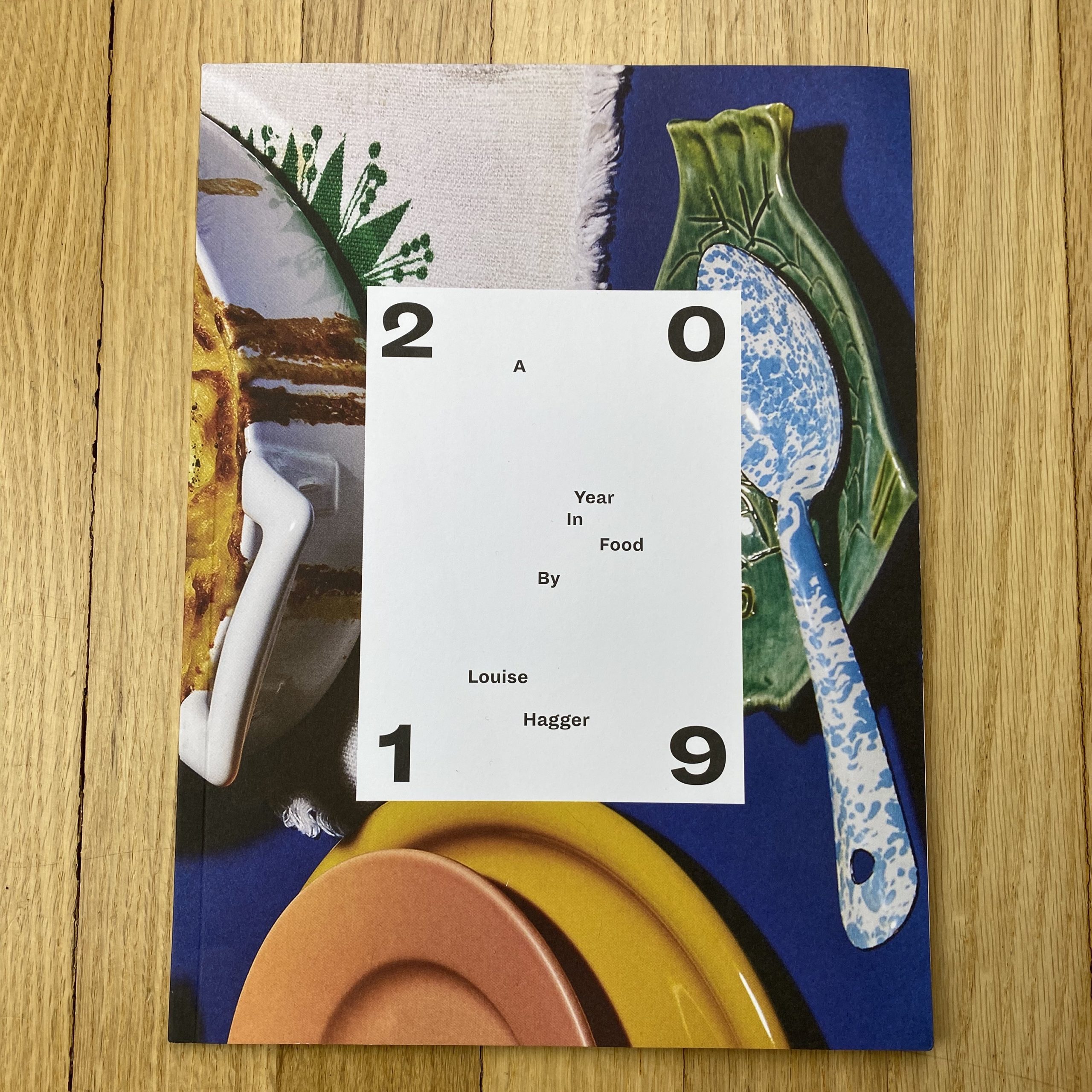
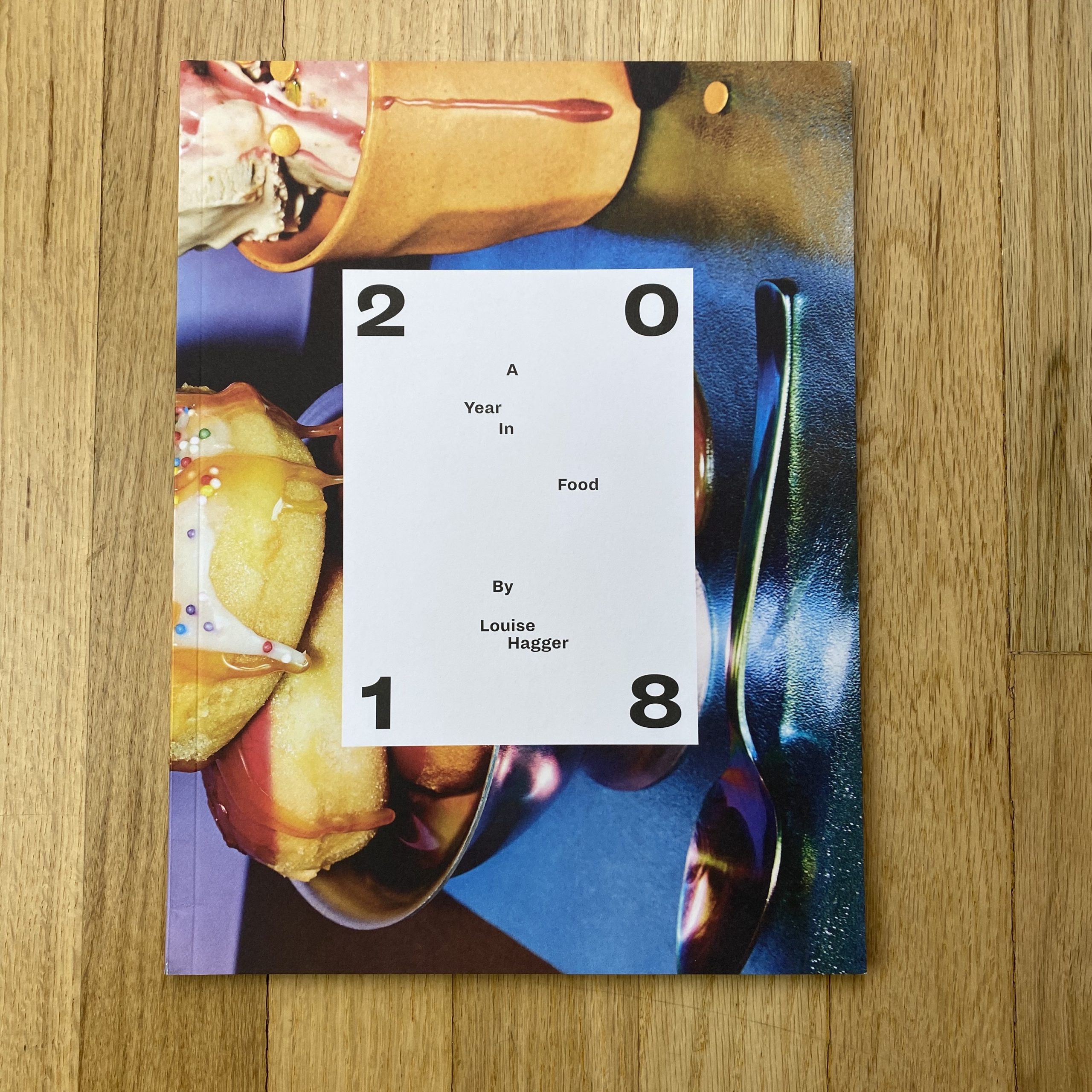
A Year in Food annuals Mixam Print

Who designed it?
All designed by Owen Evans

Tell me about the images?

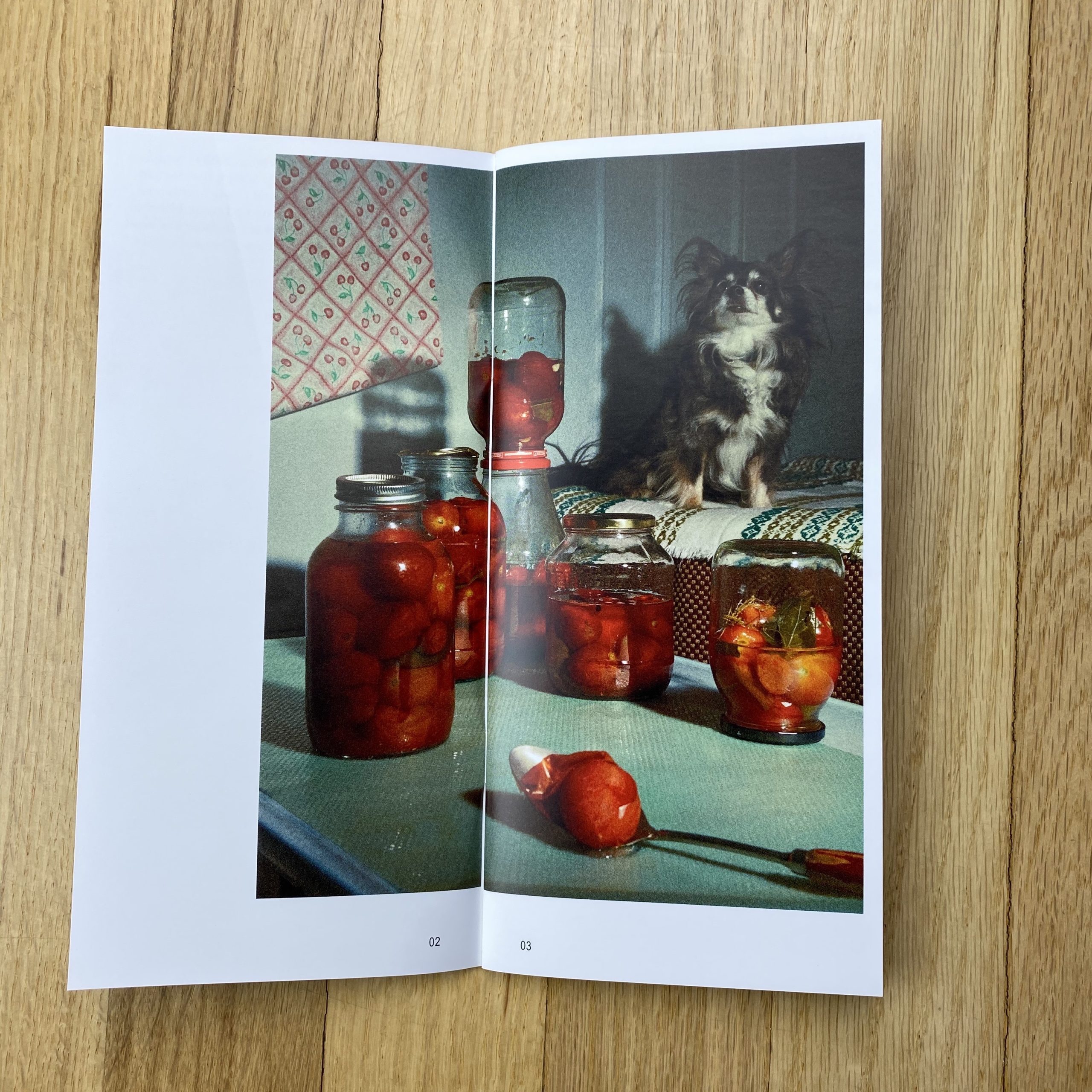
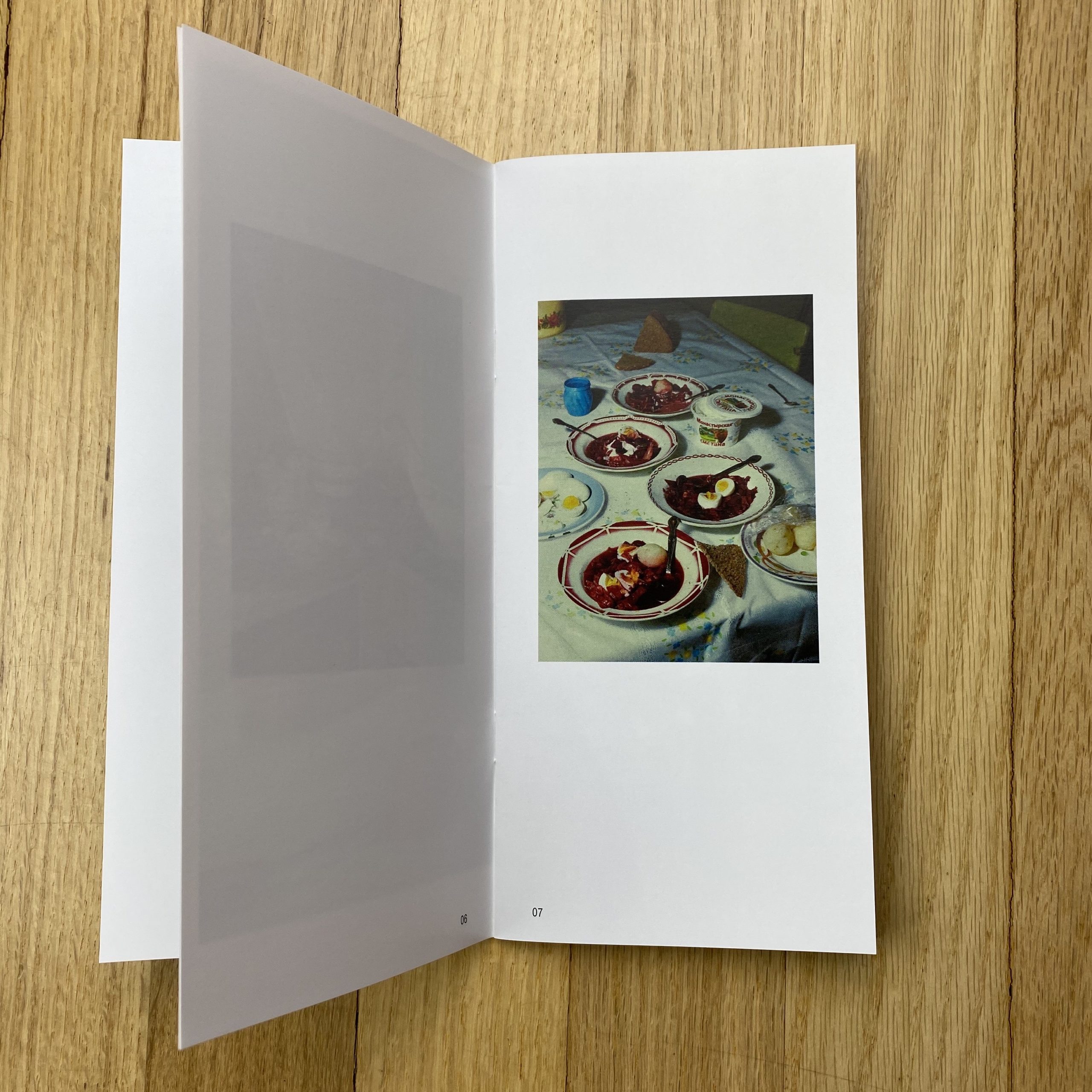
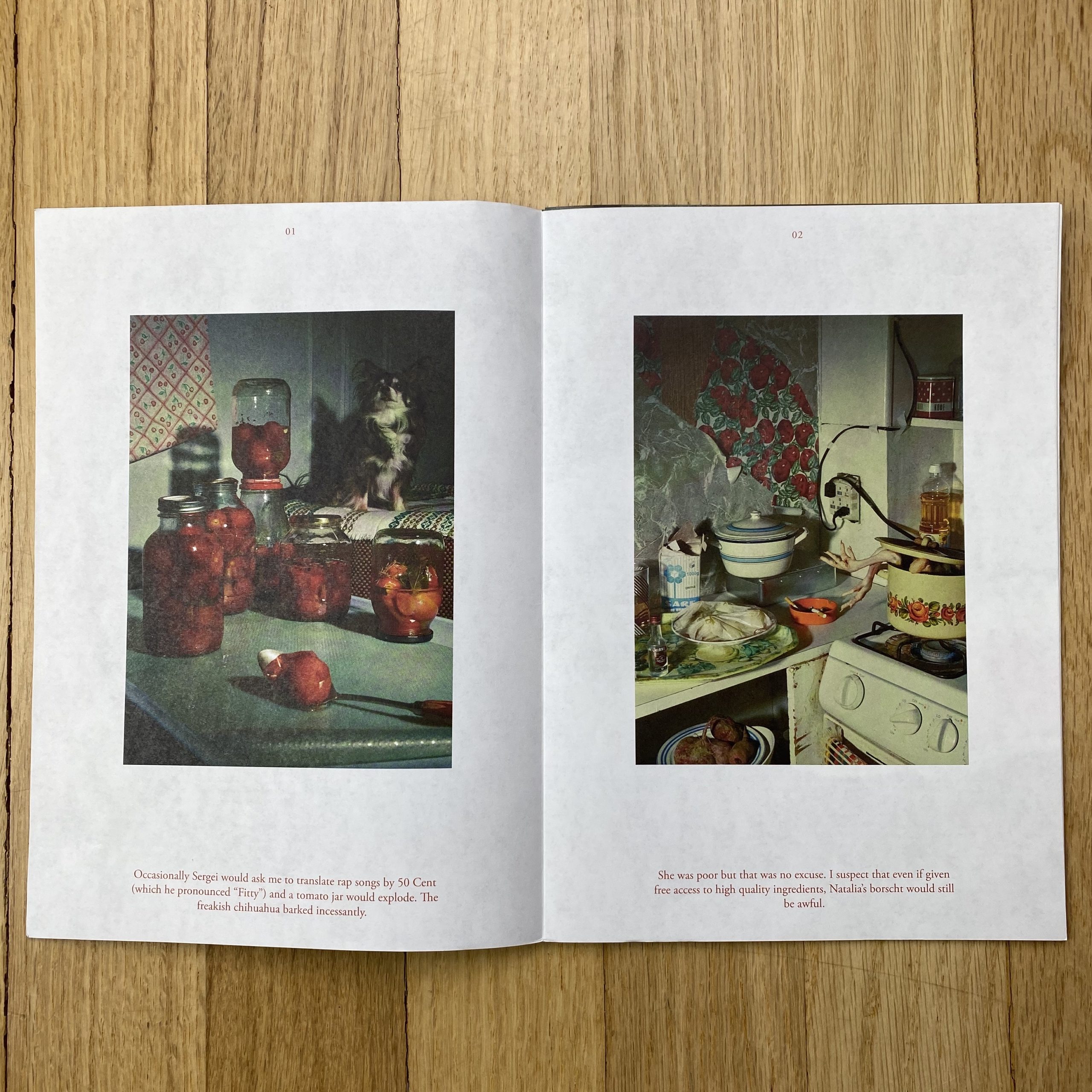
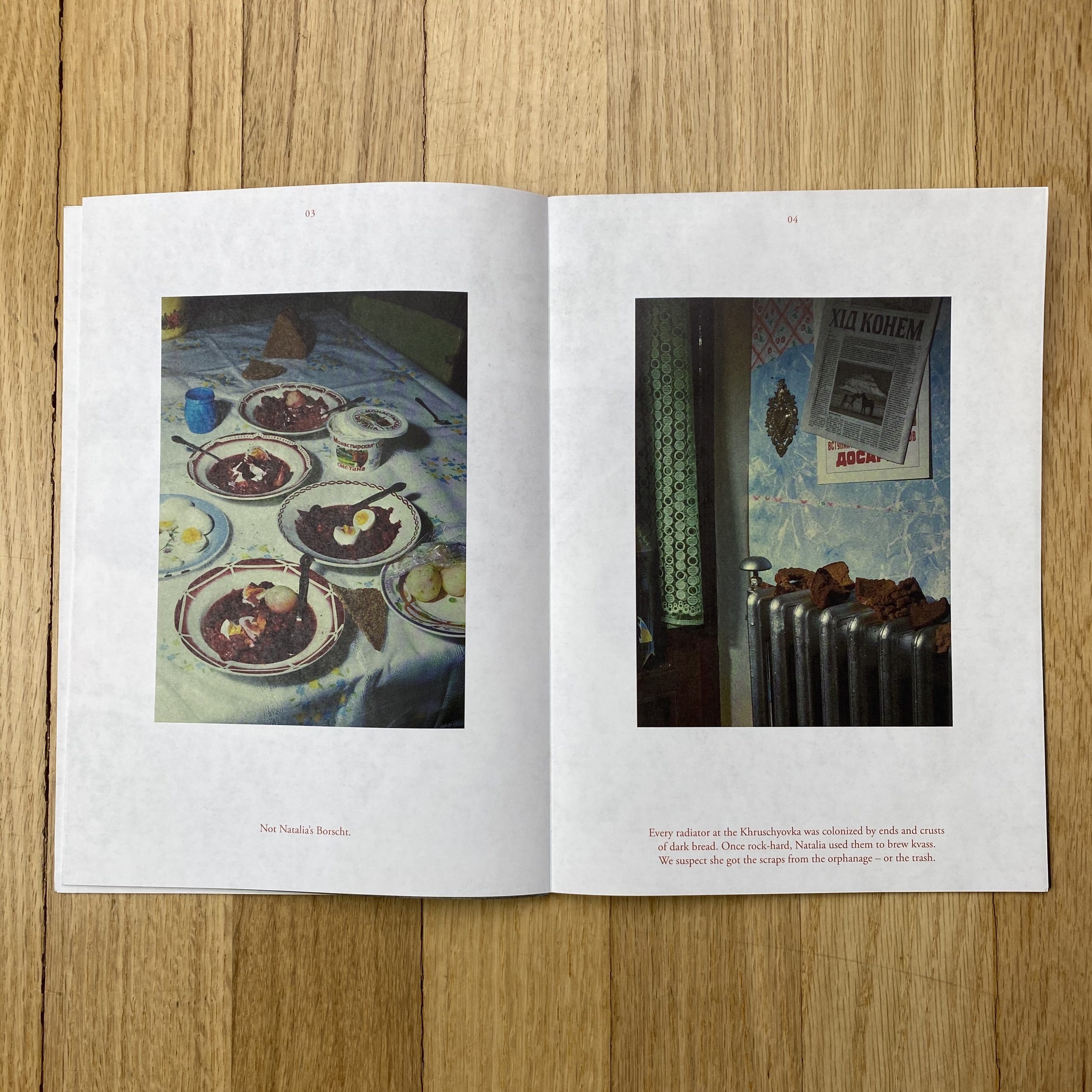
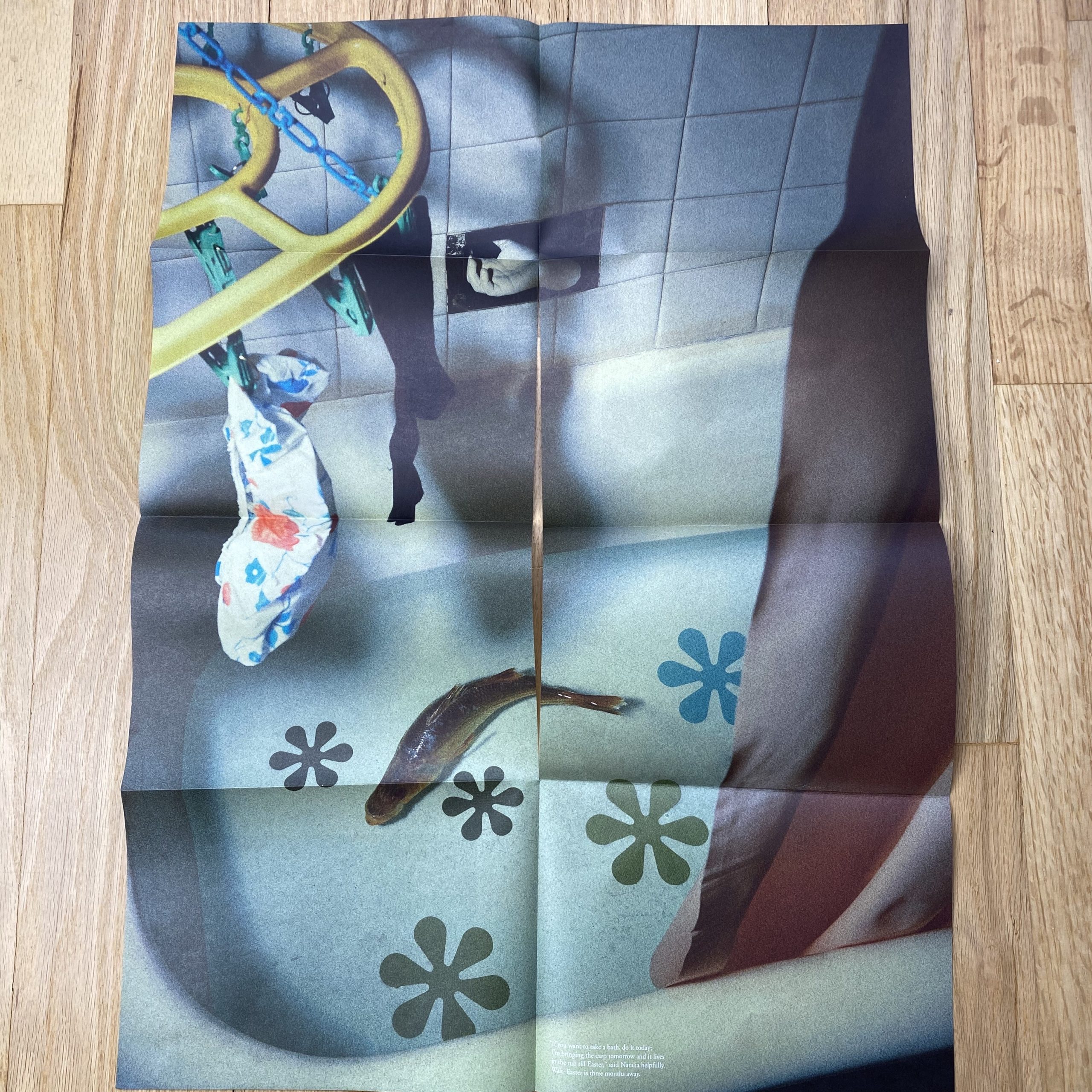
A Carp in the Tub: “If you want to take a bath, do it today; I’m bringing the carp tomorrow and it lives in the tub till Easter,” said Natalia helpfully. WAIT. Easter is three months away.

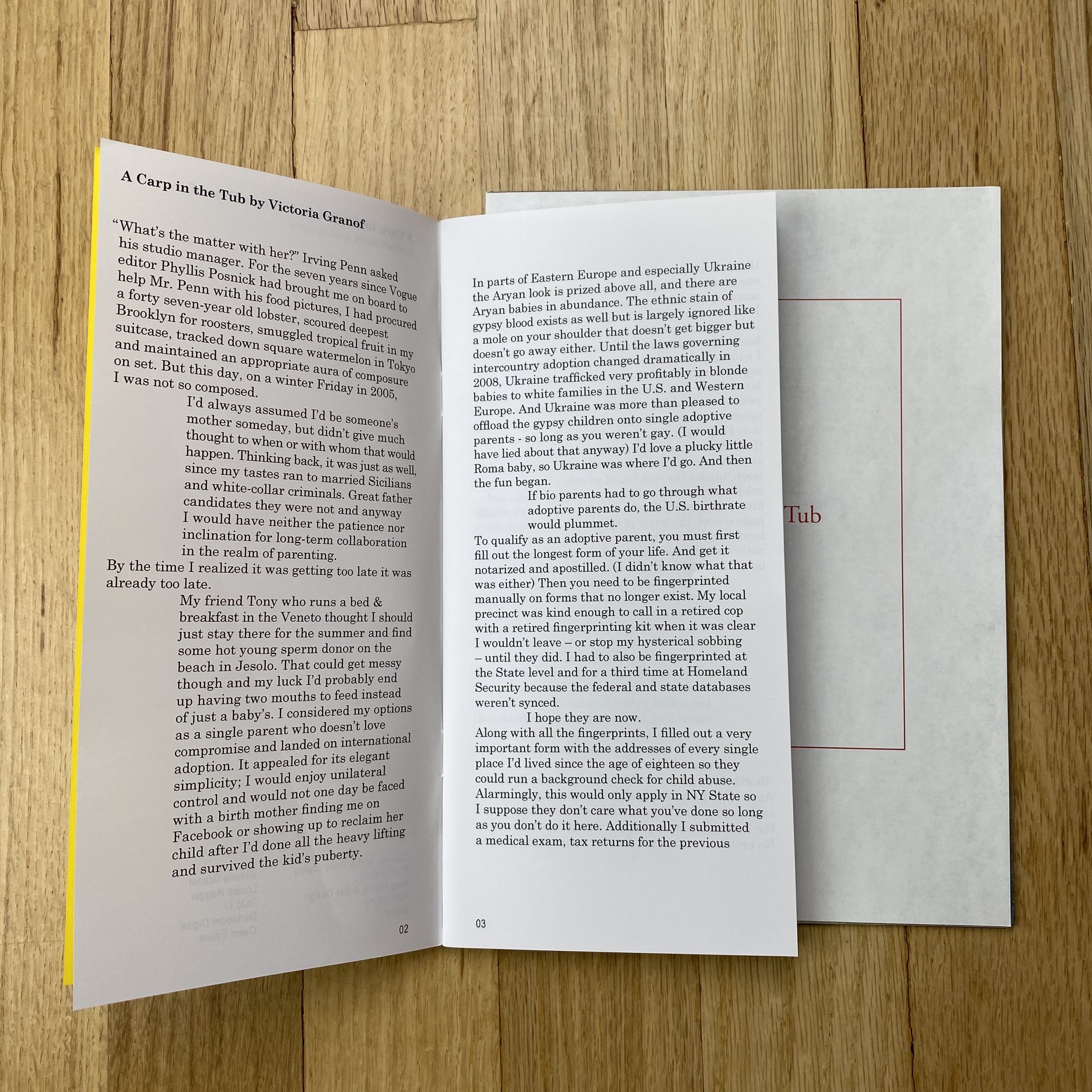
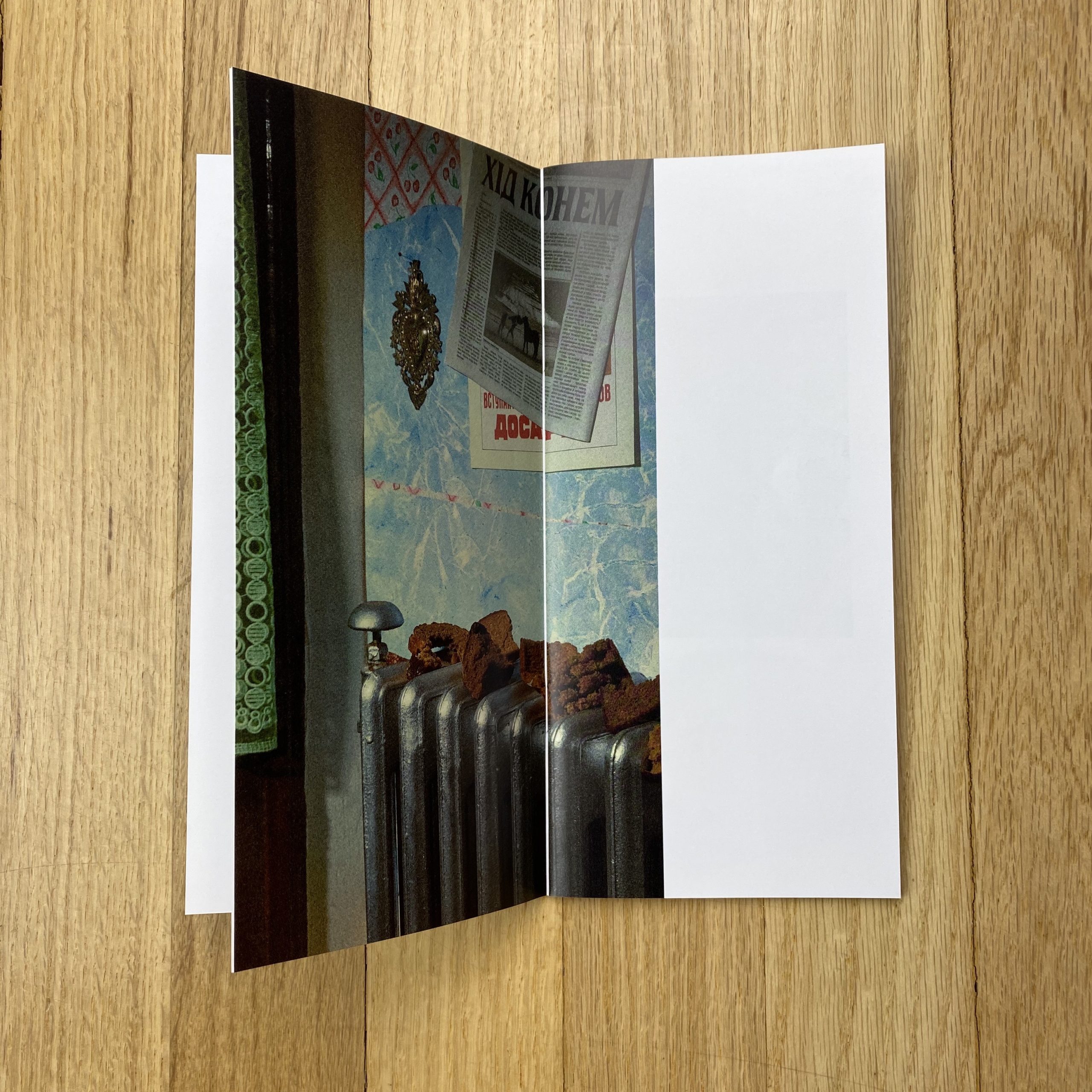
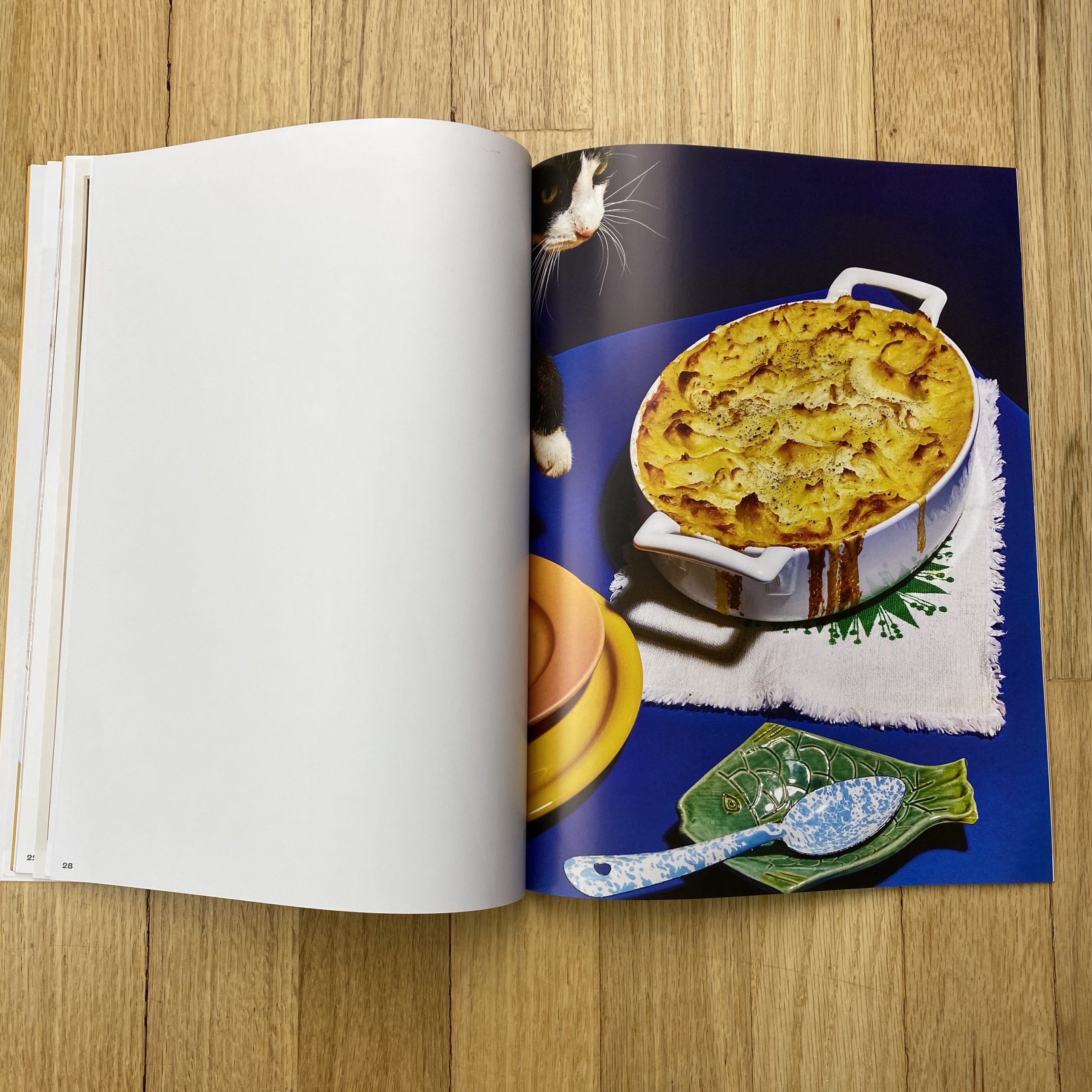
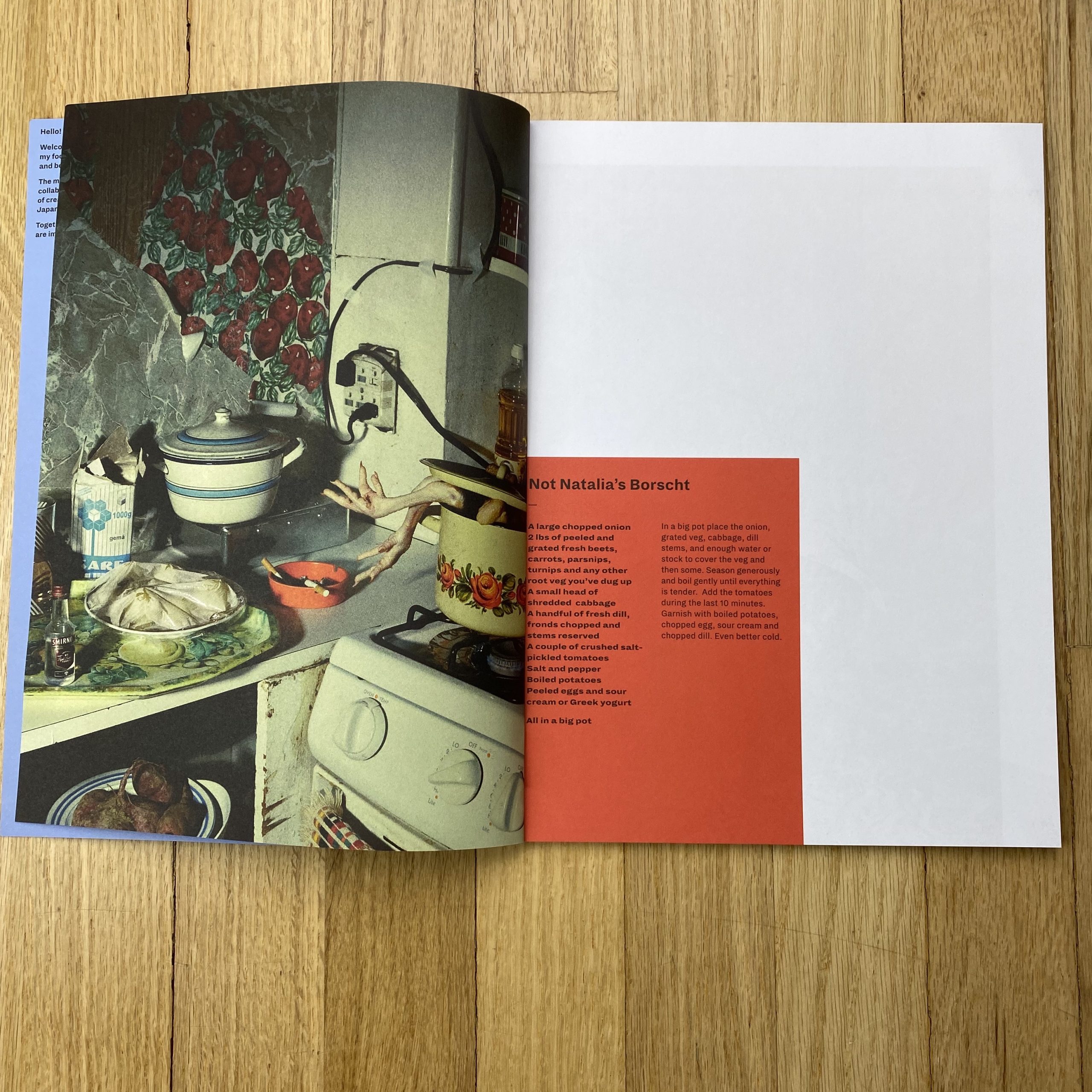
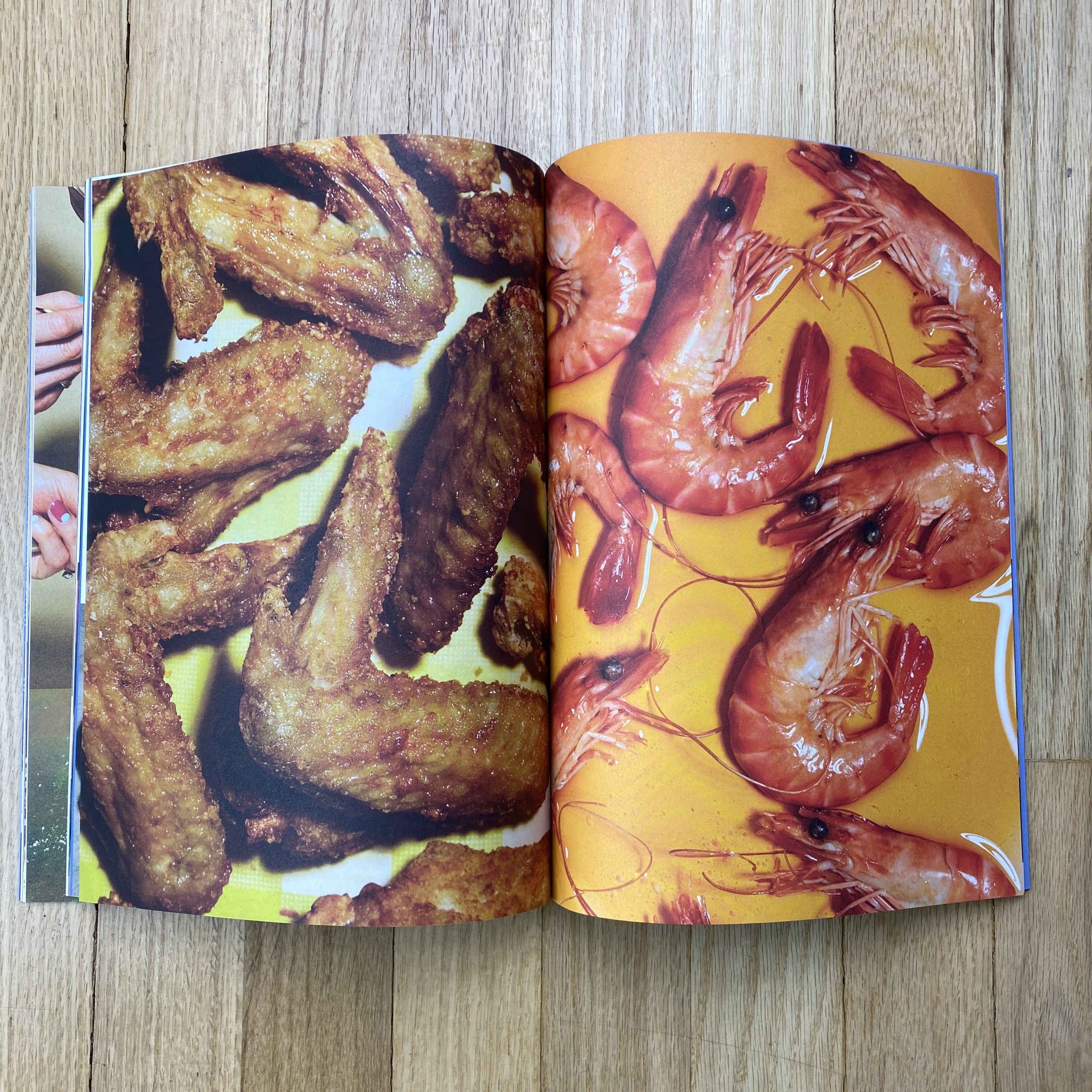
A Carp in the Tub is an artist collaboration by Food Stylist Victoria Granof, Photographer Louise Hagger and Prop Stylist JoJo Li. In words, pictures and recipes, it tells the weird and wonderful story of Granof’s winter-long journey to adopt her infant son in Ukraine.

The work is presented as a set: a folded poster and a booklet. Inside the booklet are a suite of seven photographs with corresponding recipes, and a not funny-but funny essay written by Granof. The poster unfolds into an A3 size to reveal the carp in the tub.

Whole Skinny Chicken from the series was an OpenWalls Finalist and exhibited at Les Rencontres d’Arles last Summer. The work won First Place ‘Professional Personal Work’ at PDN Taste Awards last year and is stocked at The Photographers’ Gallery bookshop, Magma, Mag Culture. Donlon Books, Ti Pi Tin Books and it’s part of Self Publish Be Happy’s library. You can find more info here and hear the song that Victoria Granof chose that compliments the work.

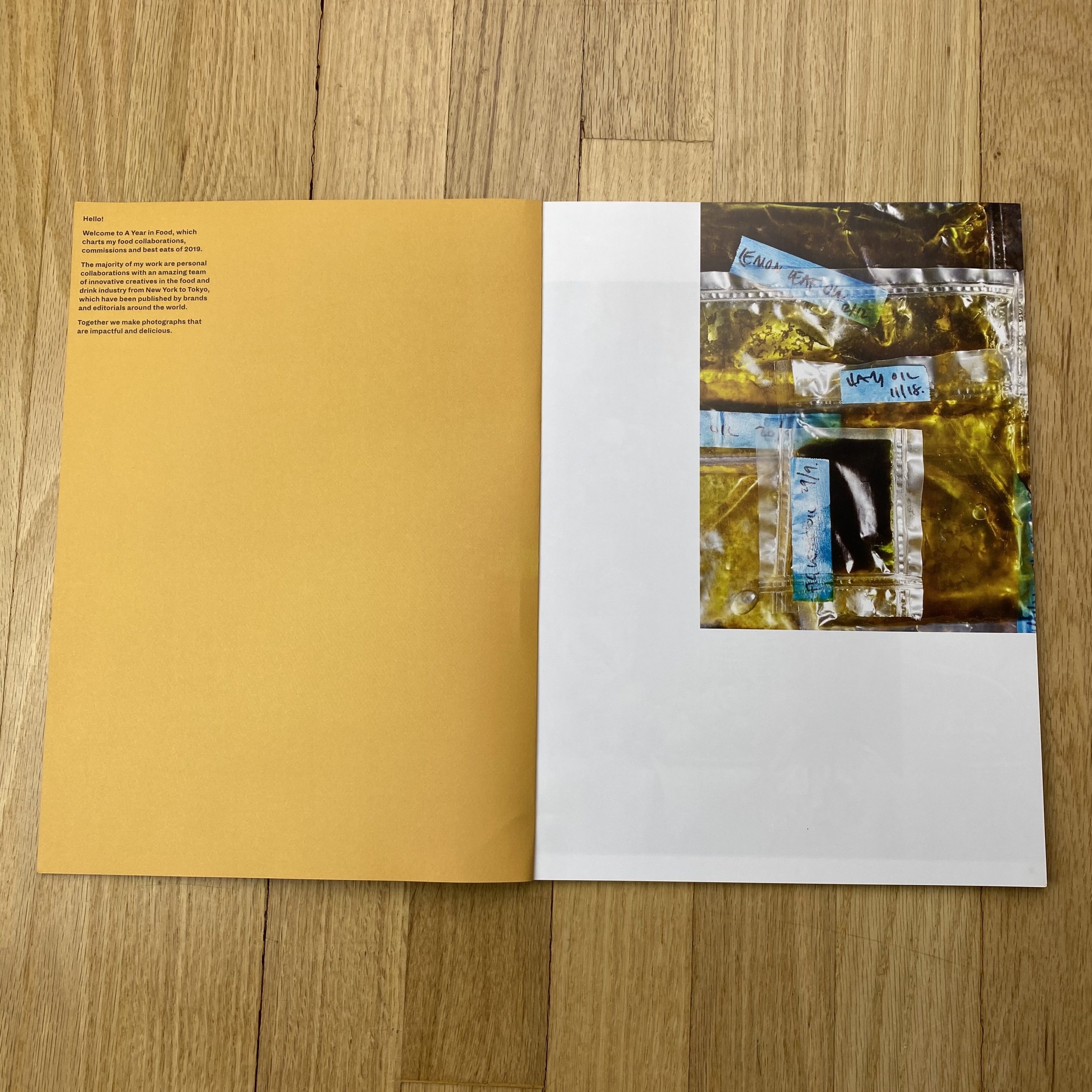
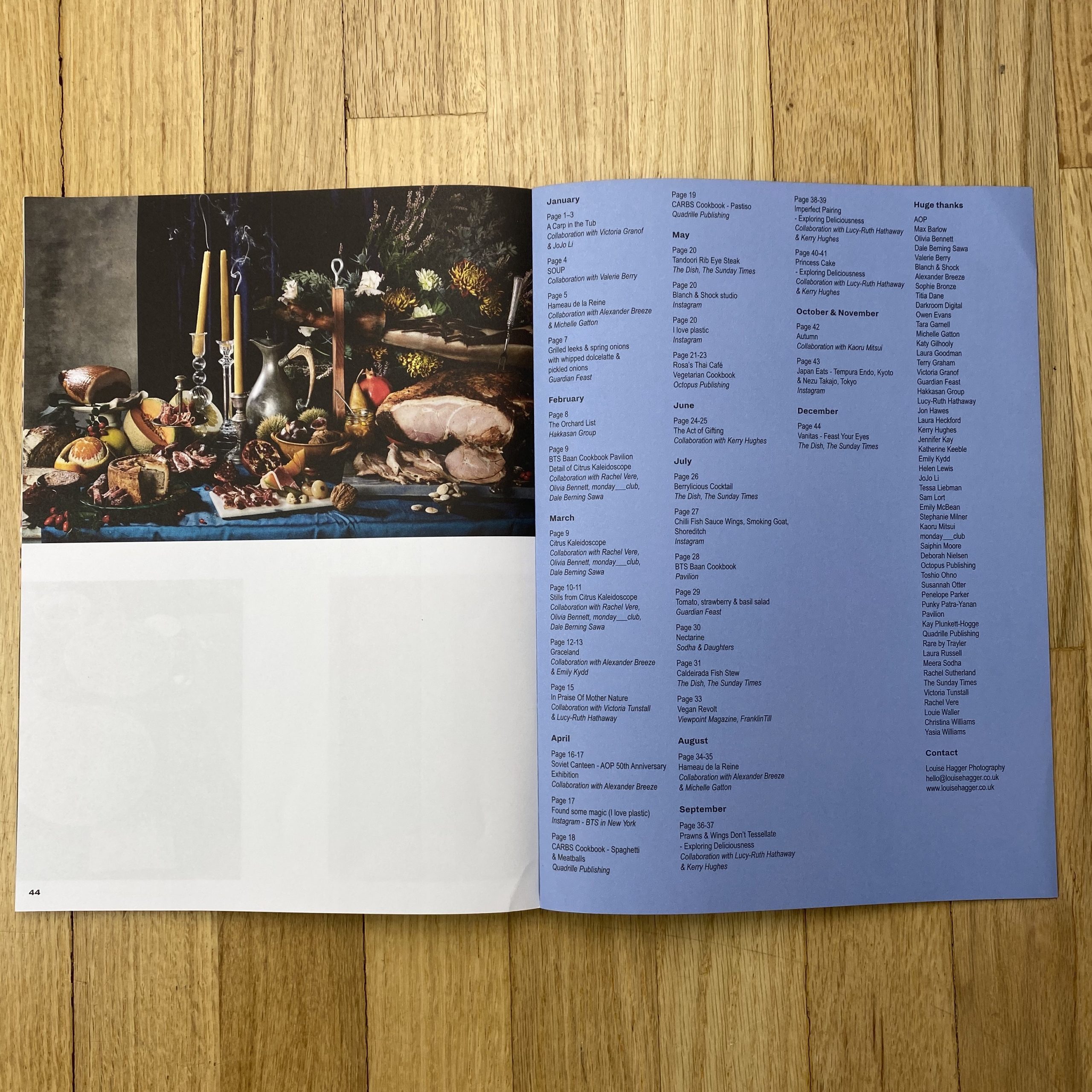
A Year in Food is my food annual which charts my food collaborations, commissions and best eats that year. The majority of my work are personal collaborations with an amazing team of innovative creatives in the food and drink industry from New York to Tokyo, which have been published by brands and editorials around the world. Together we make photographs that are impactful and delicious.

It is stocked in The Photographers’ Gallery bookshop, Magma and Daikanyama Tsutaya Books in Tokyo.

How many did you make?
A Carp in the Tub edition of 200
A Year in Food 2018 500 copies
A Year in Food 2019: 350 copies.

How many times a year do you send out promos?
1-2. My food annual A Year in Food is my main printed promo. I wanted to make A Carp in the Tub into a book to create a more intimate relationship with the viewer. It was the perfect way to share Victoria’s story and create space to share her essay and the recipes she wrote from the photographs we created, which document her memories from that time. I wanted to have an interactive element to the work so that’s why there is a fold-out poster to reveal the carp and also the rotation to see the poster in my food annual.

Do you think printed promos are effective for marketing your work?
Absolutely! The response is really positive to receiving something that is considered and in print. It makes people take the time and really look and to ask questions, to share stories, rather that just swipe or scroll. It’s wonderful to hold something tangible that we’ve created from a conversation.

I post out A Year in Food in January with a handwritten postcards to wish my clients, art buyers, agencies and creatives I’d like to collaborate with a happy New Year and hope the work inspires them for upcoming projects that we can work together on. I have had commercial commissions from my food annual, particularly from my personal projects like my kaleidoscope motion work which provided inspiration for Rekorderlig’s online summer campaign.

This year for Chinese New Year I posted out the recipe cards as a preview to the forthcoming Hakka zine Eat Bitter in lucky red envelopes which Roo Williams designed. He made and hand printed the stamp of the Chinese calligraphy (which was designed by Henry Chung). Lydia’s family stuffed the envelopes over the Christmas break in Portland and I met up with her sister in London who brought mine over.

EAT BITTER 吃苦
“Endure pain to taste sweetness.”

A collaboration between two female, half Chinese creatives; Louise Hagger and Lydia Pang, celebrating their love of food and storytelling. Each based in London and Portland, Oregon, this collaboration spanned timezones.

The creative direction was born out of the Hakka spirit. Punk zine references echo the progressive and independent culture, lucky Chinese red tones hero but with a purposeful nod into the blood-red of meat. Bold and blocky typography mirrors Chinese script and is paired with human hand elements, calligraphy by Lydia’s Pawpaw and sketches taken directly from Lydia’s dad’s recipe books. The imagery is visceral, textural and immediately grounds you in a sense of place and time, a feeling. This work is deeply personal, sensorial and aims to shine a light on a culture long ignored.

At Chinese New Year, we want to share the preview to Lydia Pang’s Hakka Zine. A collection of short stories told through recipes that are not for the faint-hearted.

Because it’s time for everyone to know what Hakka tastes like.
I didn’t know Lydia personally but heard her on Creative Director Gem Fletcher’s The Messy Truth podcast and then read her interview on Ladies, Wine & Design talking about her Hakka zine. I’m interested in telling the stories behind food imagery within domestic scenes and around food memories so reached out to her on instagram saying that I would love to photograph her grandmother’s recipes. My work is very colourful and Lydia is a Goth so I wasn’t sure if she would think I would be the right person for the project, but we immediately connected on the story telling aspect, a passion for food and collaboration and sharing similar food memories from growing up as we’re both half Chinese. We met up when she was in London and after sharing ideas online, moodboards and numerous calls, we refined the art direction so we were all aligned before the shoot. I photographed the recipes in London with my team, food stylist Valerie Berry, assisted by Song Soo Kim, stylist Alexander Breeze and photo assistant and retoucher Sam Reeves. As Lydia is 8 hours behind in Portland, we had already photographed some before she had woken up. She loved what we had done and it was wonderful to taste her grandmother’s recipes on the shoot after we had photographed them. My regular collaborators have become friends and so we work very intuitively together. That’s the perfect kind of shoot when each creative is working in perfect synergy to create the work. You can feel the energy, working harmoniously to elevate one another’s work. I can’t wait to share all the images later this year!

Visiting Amsterdam, Part 2


Part 1. The Intro


Why do people travel?

Why do we go places?

Right now, it’s a good question, because we can’t.
Go places.

(Those of us not headed to “life essential” jobs each day, I mean.)

Speaking of which, two of my former photo students work at the local Smith’s Grocery store. I haven’t been there in three weeks, but I’m assuming they’re still at it, and hope they’re safe.

Big shout outs to Jason and Dylan! And to my father-in-law Mike, and sister-in-law Jemery, who are both Taos doctors.

The rest of us, anyway, are stuck at home.

Not going places.

And even though the uncertainty of it all makes it feel like this pandemic will be permanent, that’s not the way these things go.

Humans hate uncertainty more than anything else, which is what gave rise to monarchs and autocrats and totalitarians in the first place.

In China, for instance, as I have previously written, the depth of the bloodbaths that would occur under disorder caused many people to trade freedom for security, from certain Emperors to Mao on down.

Hitler came to Germany after the shitfuck of WWI and the Great Depression, (Please watch Babylon Berlin on Netflix,) and ancient royalty, from Egypt to England to Guatemala, has claimed to have a relationship with, and blessings from the divine.


So where we are now, with no clear answer as to how long “this” will all last, humans do lean into the hunker mentality. (Rhymes with bunker.)

But life will go back to some semblance of normal again.

It might be a different normal, like life was never quite the same after the Great Recession.

(You know I’m right.)

The Gig Economy, Uber, the permanent street class.
The first African-American President.

Donald Trump.

All of that came Post-Great-Recession.

Wait, I’m getting depressing again.

Sorry.

What I mean is, this scary phase will end.
It will.

And we’ll be able to travel again.

So, to get back on topic, why do we do it?


Part 2. The asshole


What kind of asshole writer opens a section with a question, and ends it with the same question, without ever answering the question?

Me.

So, here’s my answer.

I think we all love a proper adventure.

All of us.

It’s why we’re binge-watching all these shows and movies, and reading all these books.

We escape into the fantasy of adventure and drama.

Traveling to other cities, towns and countries, with different languages, foods and landscapes.

It is the hero’s journey.

It is the “actual reality” version of “virtual reality” that so many people like in their stories and video games.

(Minus the murder and mayhem, of course.)

When you’re out there, somewhere new, you never know what’s around the next bend?

How could you?

There is an inherent and proper romance in a great voyage, and somehow, even after the insanity that was #2019, I got to have a perfect, rambling, symbol-laden adventure in Amsterdam in February of #2020.


Though I am writing on April Fool’s Day, (just so you know,) I promise all stories told in this series are true.

And to be clear, I’m not saying I was James Bond, nor that it felt like my trip should be made into a movie or anything.

It’s just that it was MY movie.
My story.

And to relive it in my head right now, on lockdown, is kind of fun.


Part 3. Take my last Euro


When last I left you, I was departing the Jolly Joker, jet-lagged, on my first half-day in Amsterdam.

Saturday, February 15.

As an experienced traveler, I knew I was likely to need a bit of quiet time, and some food, to chill out before I hit the city hard again.

So I popped into a cute looking bakery/cafe, (they’re everywhere,) and got a bresaola, arugula, and fresh mozzarella sandwich, on fresh baked bread, with a chocolate croissant and a cappuccino to go.

(General advice, of the many munchies on offer in the city, including some with silly names, the bakeries and delis seemed to have the most consistent, high-end Euro product, that I observed.)


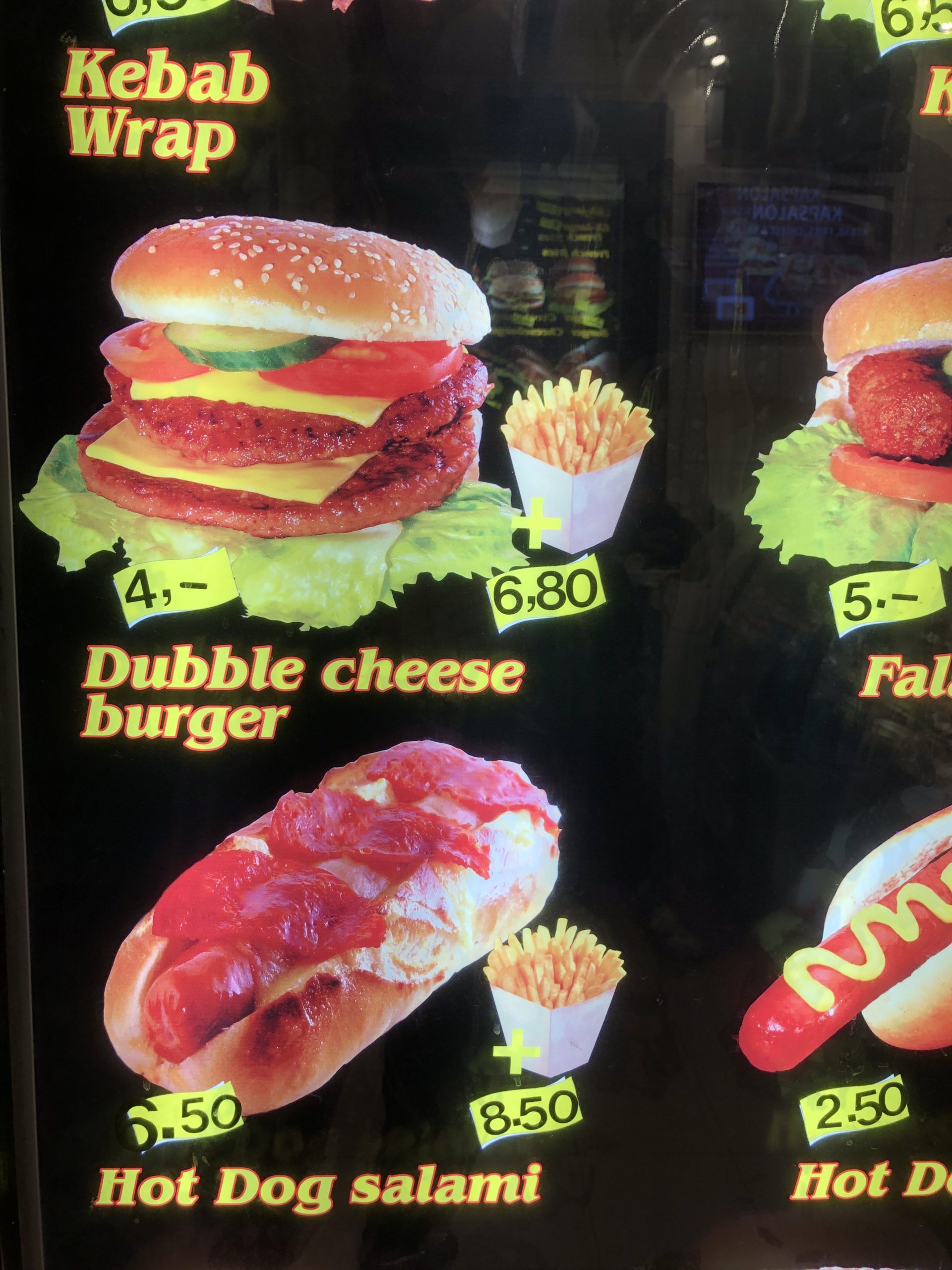
Dubble Trouble

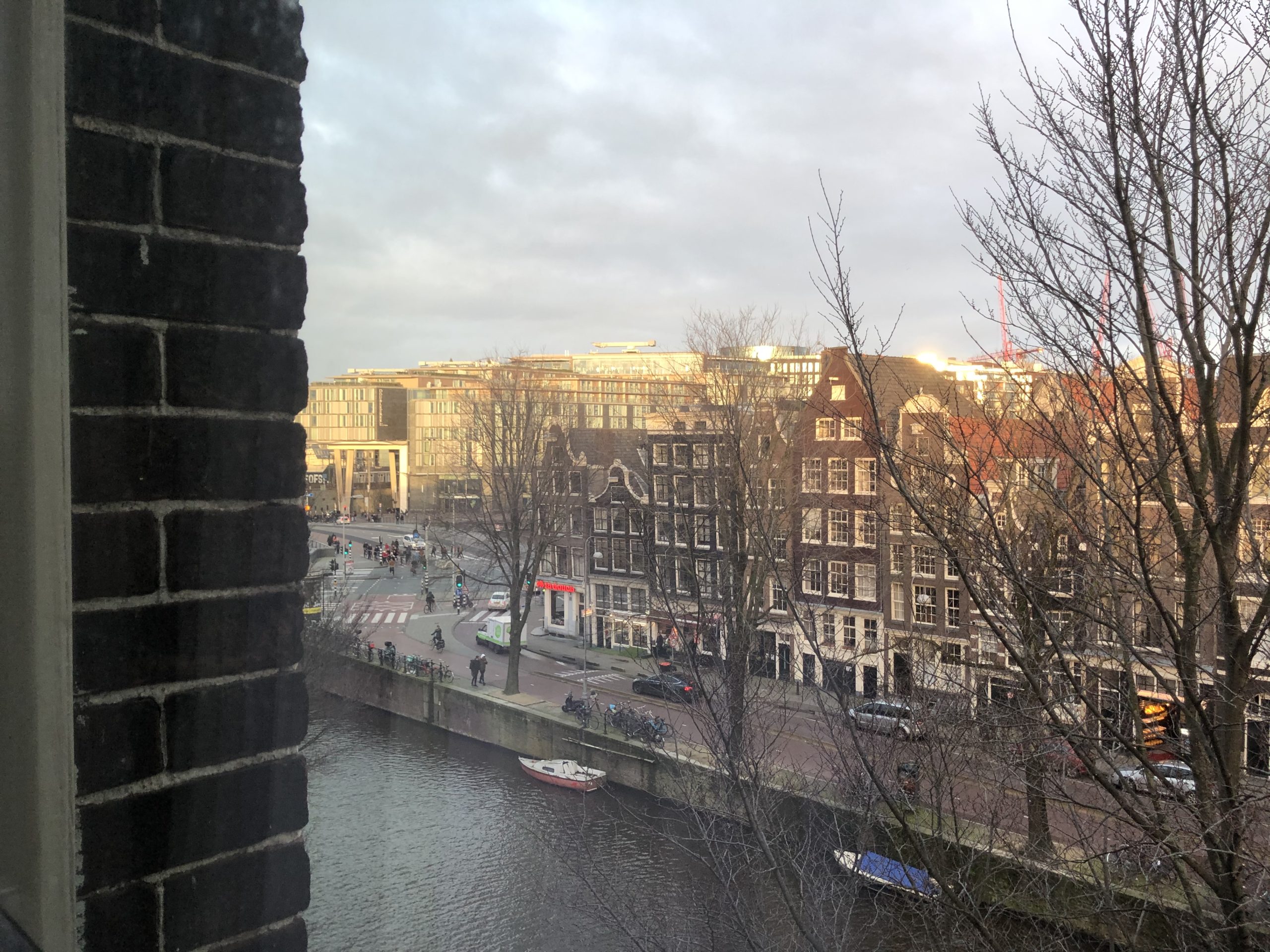
It set me up for the afternoon, looking out the my window on the shimmering canal, watching a spot of local tv, and getting a bit of jet-lag-rest.


Hotel Room View


Once done, I left the Hotel Mai for my first big walk.

Is it creepy that I could consult my iPhone now and see how long I walked that day? (5 miles. It only went up from there.)

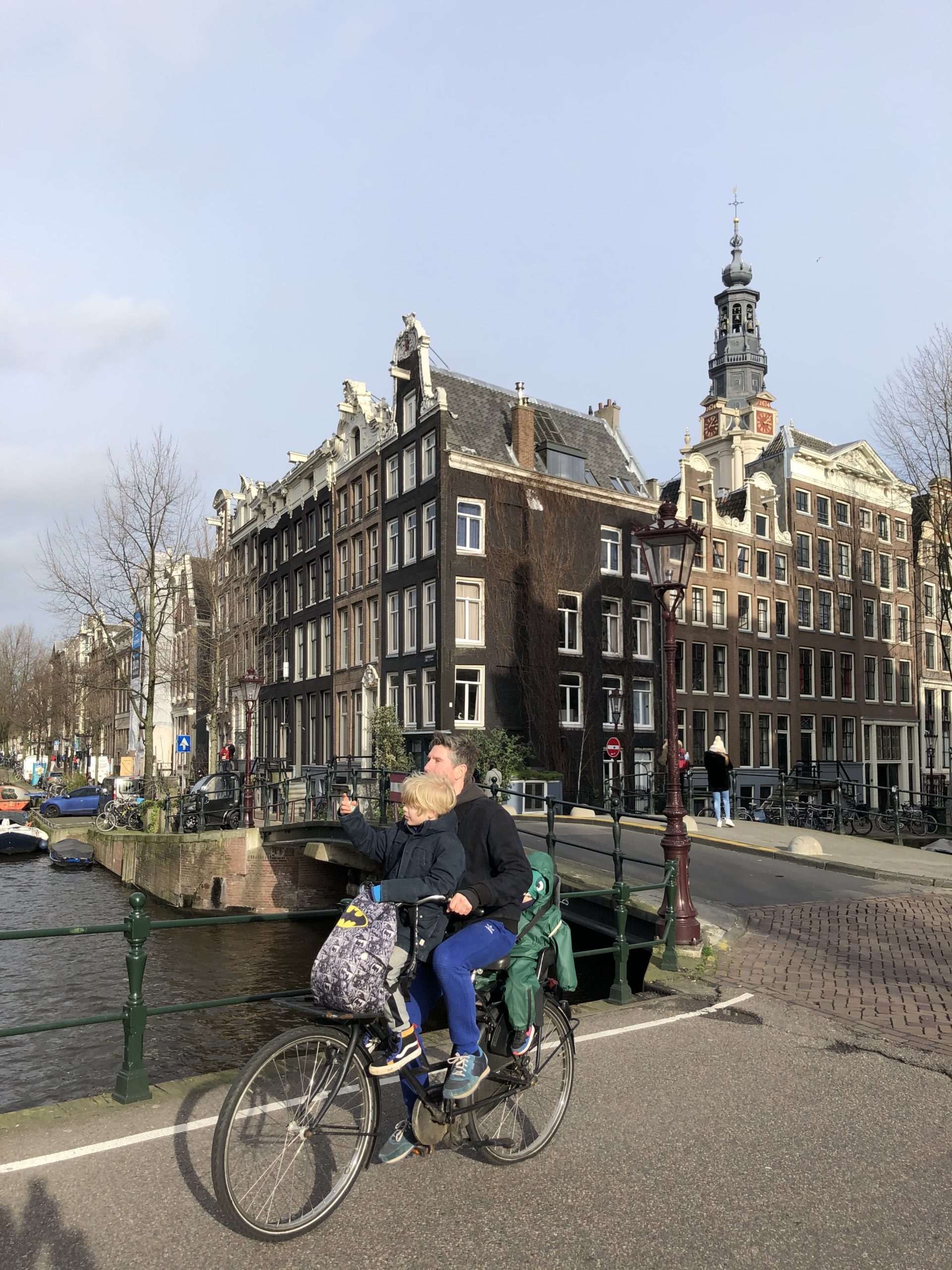
I remember that I cut through Dam Square, headed West a block or two, and then and just let whimsy be my guide.

Twisting and turning through the canal ring.

There really are few better feelings.

Turn here.
Look there.

Stop in a coffee shop and get stoned.

After a couple of hours, it got dark, and I realized I’d need food and another smoke.

I had 20 Euro left.

Decisions, decisions.

Coffee shop or restaurant?

There’s nothing wrong with having a smoke in the street, (except for the constant devil-wind,) so I opted to go with my grinding stomach.

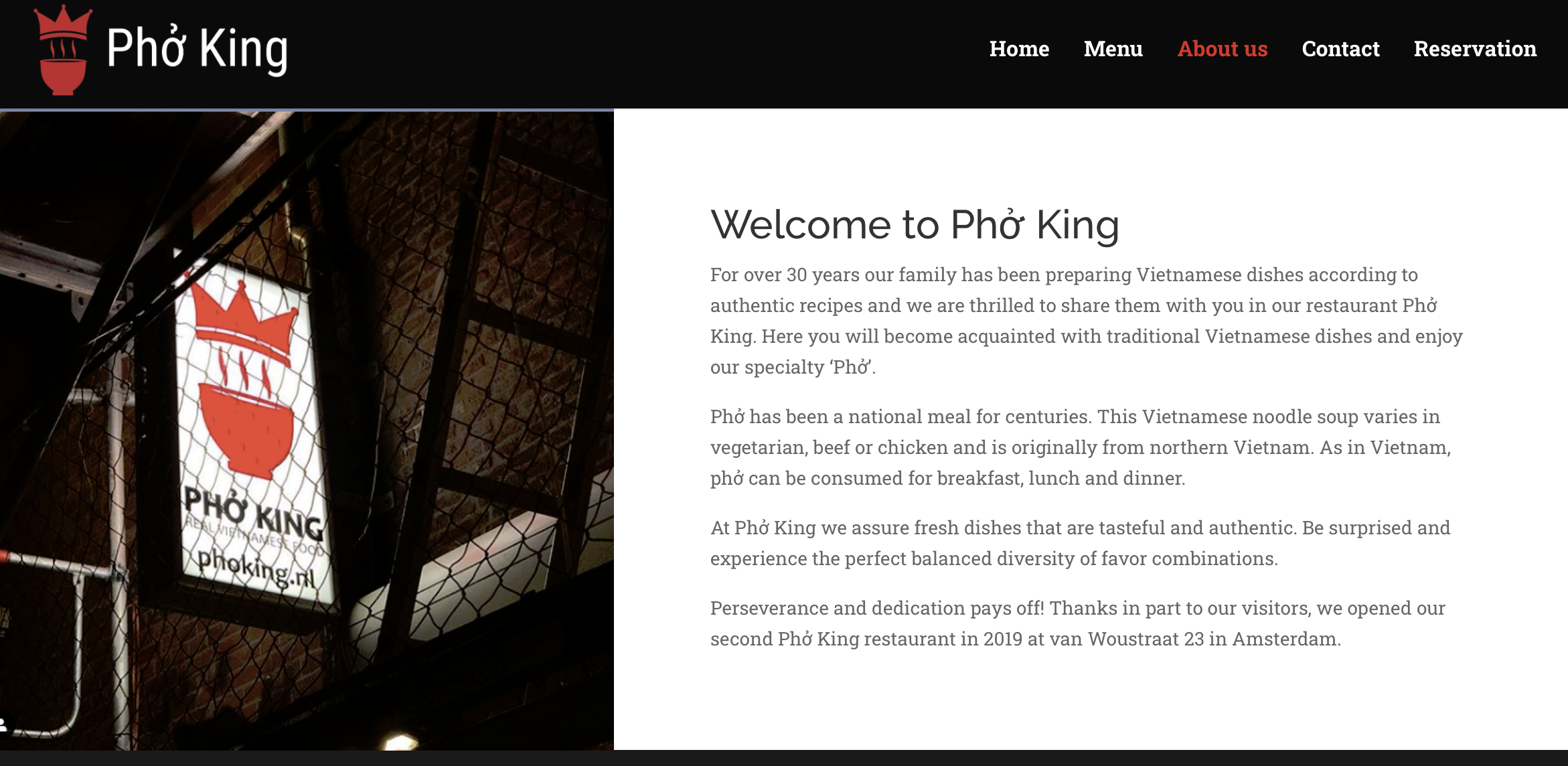
Before me stood a Vietnamese restaurant with a cute name, Pho King.

Say it fast.
Get it?


It was cash only, which meant my commitment was complete, because I was hungry, it was relatively early, 7 or 8pm, and I wanted to be done purchasing food for the night.

To say the place had a great vibe is not an undersell. It was small, but clean, and my spider-sense tingled that it was going to be good.

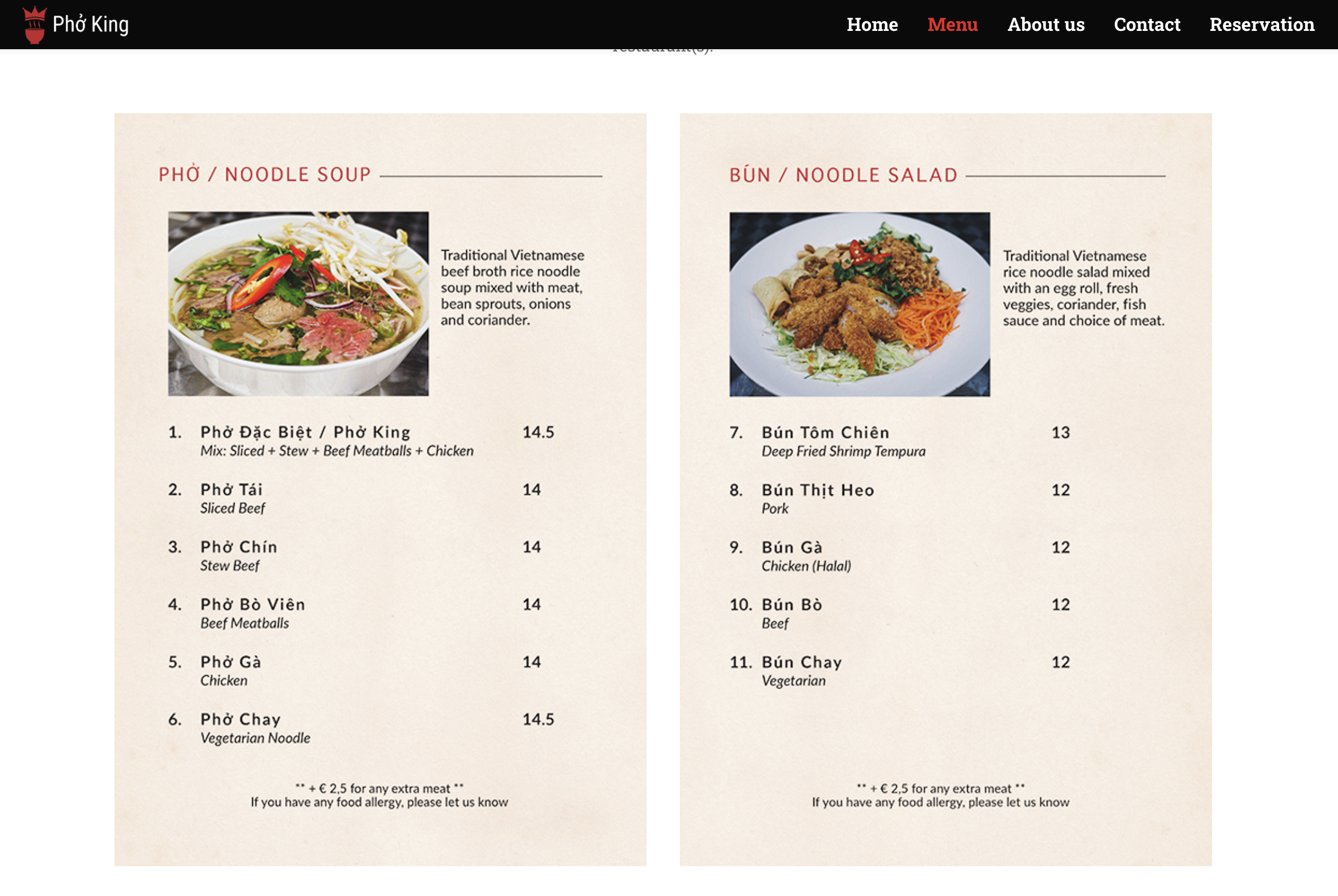
I asked for some recommendations, and the smart, young Vietnamese woman behind the counter said the Pho was the best thing.

She was serious in all the right ways, and after I made a few jokes, all the ladies behind the counter liked me.

“OK,” I said. “I’ve got only 20 Euro. You’re the boss, now. I’ll do what you say, and you can use up all the money, including a small tip.”

I looked at the menu.


I love BBQ pork bun, and there it was. The meat is served over cold, or room temperature, rice noodles, typically with shredded carrots and cucumber, with crushed peanut, and then you add a cold, sweet fish sauce, nuoc cham.

“I love that,” I said. “It’s my favorite.”

The young woman behind the counter shook her head no.

“No?” I said. “I can’t get that.”

She shook her head no.

“No,” she said.

“But you have my best interests at heart, right?”

“Yes,” she said. “I do. We’re gonna get you a Beef Pho, with all three kinds of beef. It’s what we do best.”

“Great. Fine. But I can’t have the BBQ Pork Bun. It’s my favorite.”

“No,” she said.

I was bummed out, but keeping the faith.

She smiled.

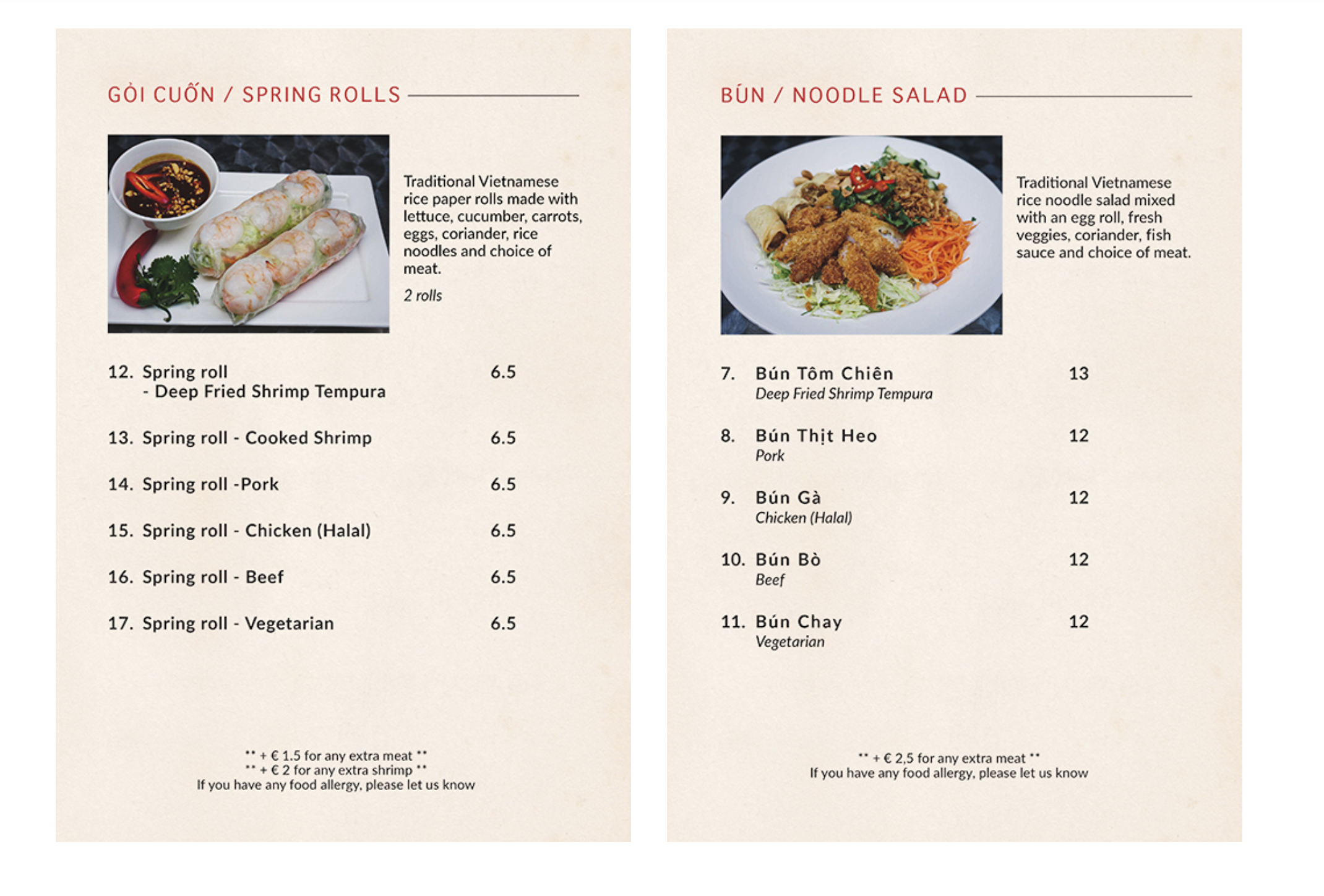
“But look. The fresh spring roll. Look at number 14.”

I looked down, took a second, the marijuana and hash slowing me perceptibly.

I read: BBQ pork, rice noodle, shredded vegetable, peanuts, dipping sauce. Inside the fresh spring roll wrapper!

I looked at the price: about half of what I was badgering her to let me order.

“It’s the same thing,” I said, “but in a spring roll, and cheaper.”

She smiled.

Meaning: I could have the soup, and the spring rolls for my 20 Euro, including a small tip. (But no drink.)

I asked for it to go, and again, she shook her head, No.

“No,” I said? “I can’t take it to go?”

“No,” she said. “You eat the spring rolls now, while they’re fresh, and I’ll pack up the soup for you to go.”

“OK,” I replied. “If you say so. Like I said, I’m in your hands.”

The spring rolls, when they came, were a meal in themselves, and as good as any version I’ve had. The bbq pork was sweet, and succulent, and I didn’t think I’d have room for soup later. (I did.)

Nor that I’d eat BBQ pork this good again that week.
(I did.)

But after I cleaned the plate, I said thanks to my new friend, and headed back out into the night with my goodie bag.

Pho King, 2 locations in Amsterdam, Cheap eats, Highly recommended.


Part 4: I have a question


Were any of you drunken slobs in college?

I know I was.

(Thank you, Duke University. You trained me so well.)

I used to sleep until 1 or 2 in the afternoon each day, if I could.

Not since then, not since the mid-90’s, have is slept until 1pm.

Until Sunday morning, February 16th, when my jet-lag, weed-hangover, and a properly silent hotel room conspired to let me sleep.

Long and deep.

When I finally woke up, rather than food, I needed some tea, and then a fresh smoke.

The Hotel Mai had opened only a week or two before I got there, so the rooms were properly fresh. With a no-smoking policy.

They had a tea kettle and a Nespresso maker included, with green tea and coffee replacements each day.

Very classy, this hotel. (I hope they make it…)

In addition to the no-smoking policy, the windows were sealed shut. Jimmy at the front desk said it was because the city had too many jumpers, tourists high on magic mushrooms, and made a law sealing the hotel windows up.

So out the door I went.

For a moment, I stared at the water.


Then, down to the Jolly Joker I went, and as always it was crowded.

I spotted a seat up top and sat down next to an young Indian guy, wedging myself into the corner of a wooden banquette.

Like Gerrit had the day before, I introduced myself, since there were open seats around.

He asked if he could use my lighter, which I’d bought at the local head shop. It was black plastic, and said I heart Amsterdam.

“That depends,” I replied.

“That depends?” he asked, looking at me like I had a hole in my head.

“Yes,” I said. “It depends upon your answer to a question.”

“It depends upon my answer to a question?” Again, he looked at me like I was a two-year old.”

“Yes,” I said.

“OK,” he said, “what is the question?”

“Do you love Amsterdam,” I asked?

“Do I love Amsterdam?” he said? At that point, he looked at me like I didn’t speak English. What kind of a stranger asks that question, in these circumstances?

“Yes,” I said. “Do you love Amsterdam? If you answer correctly, you can use my lighter.”

“OK,” he said. “OK. OK. Yes, I love Amsterdam. Are you satisfied.?”

I showed him the lighter, he laughed, and then I passed it his way, as he had just rolled a joint with tobacco and marijuana, as was the custom in the city.

(There were little rolling paper dispensers on the bar, like napkin dispensers in a traditional cafe, and most people took them.)

His name was Yogesh, he was from India, on a business trip that took him to Poland, among other places.

He was in Amsterdam to get high and have fun, more or less.

My kind of guy.

The bar man was playing Travis Scott.
Drake.
And lots of trap music.

Things I listen to at home.

And there I was again, chatting up a stranger, listening to brilliant music, out in public, in a crowded, life-affirming, gorgeous, historic, European city.

Shout out to you, Amsterdam!

In the end, after an hour or so of chatting, we made plans to have dinner, but it wasn’t meant to be, as our timing was off.

So my final shout out today is to Yogesh, my erstwhile stoner buddy.

I hope he, and all of you, are safe out there!


The Art of the Personal Project: Kendrick Brinson

The Art of the Personal Project is a crucial element to let potential buyers see how you think creatively on your own.  I am drawn to personal projects that have an interesting vision or that show something I have never seen before.  In this thread, I’ll include a link to each personal project with the artist statement so you can see more of the project. Please note: This thread is not affiliated with any company; I’m just featuring projects that I find.  Please DO NOT send me your work.  I do not take submissions.


Today’s featured artist:  Kendrick Brinson  Brinson/Banks

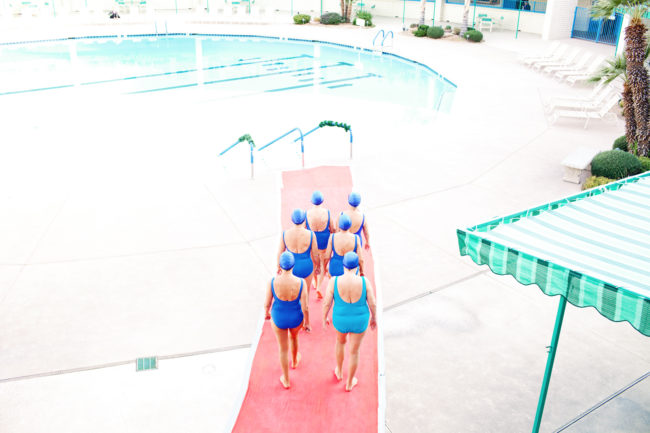
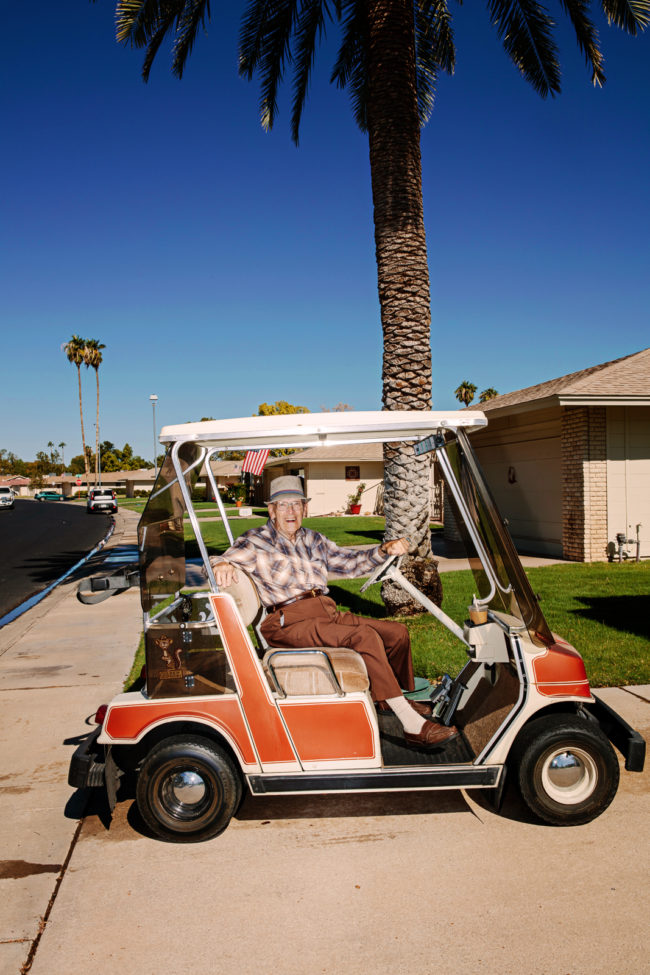
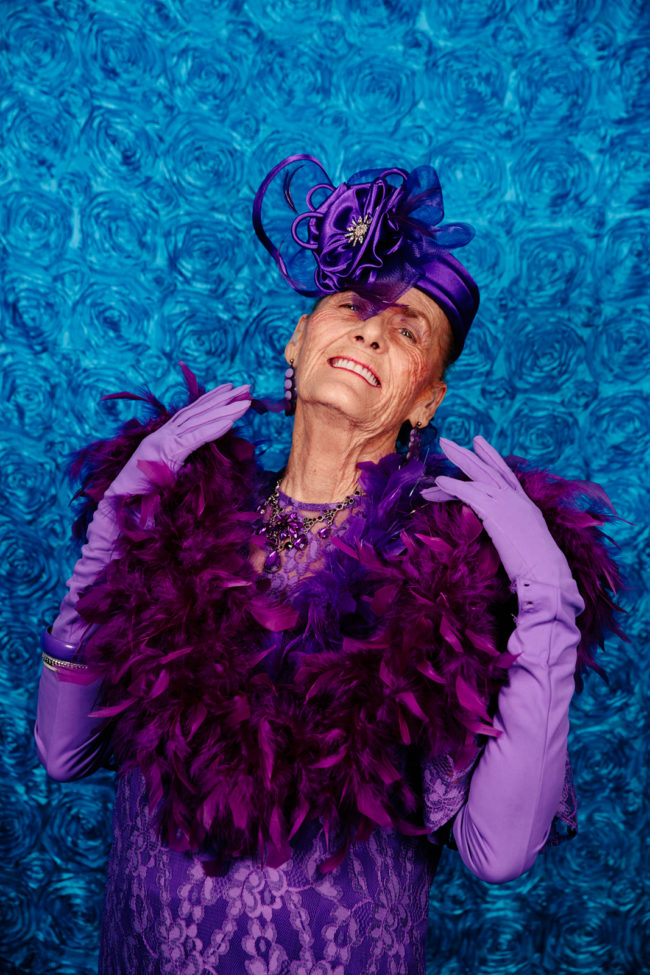
“I call this community: “Life after Life”. There are people well into 80’s and 90’s enjoying their life as if they were 50’s and 60’s. You can actually look forward to growing old. There is a lot to do. A reason to live,” said Vera MacIntosh, on a Sun City blog.

The first time I went to Sun City, Arizona was December 2009. I was a new freelancer after having left my last staff photojournalist job at a newspaper and I’d read about the age-restricted city of 40,000 retirees, and then read about the Sun City Poms, a cheerleading squad made up of women all the way in their 80s, and I read about the 50th anniversary of the place that would begin the next month, and I knew I had to go and take photos there. I never would have thought that December that I’d be returning with my camera for a decade, but I have.

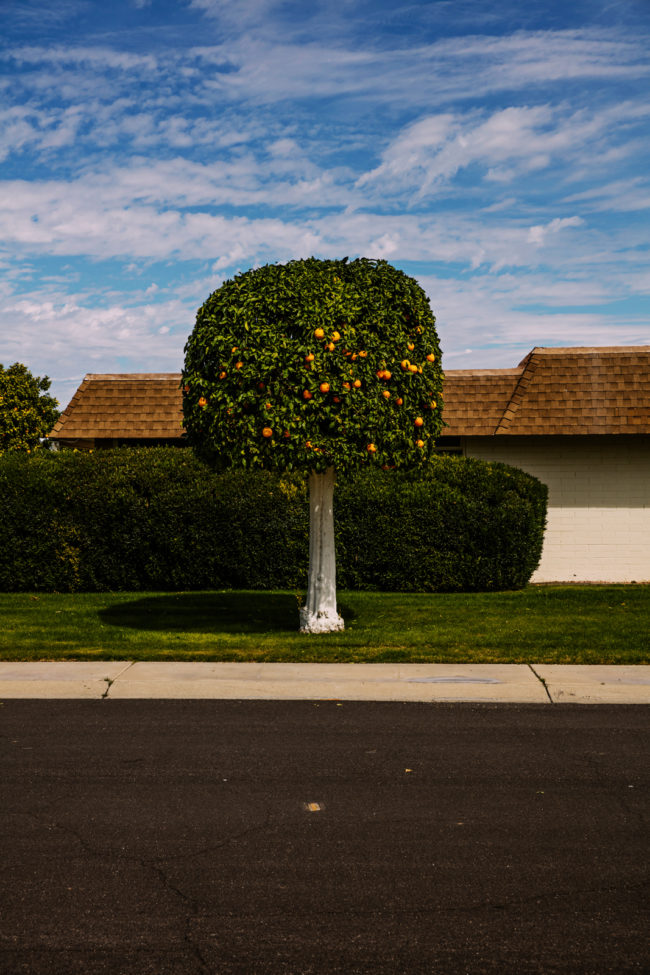
For 60 years, those 55 and older have relocated to Sun City, Arizona, a city self-governed, a city unlike any other in the world. Sun City was the first place of its kind and it is still the largest. The city is 14 square miles of a retirement paradise of palm tree lined streets, each with a golf cart lane.  Sun City provides seniors with a life after work and a life after raising children.  Sun City is a life of enjoying friends and being active, in spite of age.

There are more than 100 active clubs in Sun City and the days are filled with lawn bowling and group swim classes and the nights are filled with dancing. All this living comes with loss, however. Friends and spouses die, and the singles dance night are just as full as the couples dance night for obvious reasons. Yet, there’s optimism everywhere.

“Enjoy your youth, I’ll tell ya, you never know how much you have left,” resident Tom Woods told me.

People can see more my work here:

Yes, I do intend to make a book of the project I just have to decide when I’m done going 😂

To see more of this project, click here.

APE contributor Suzanne Sease currently works as a consultant for photographers and illustrators around the world. She has been involved in the photography and illustration industry since the mid 80s.  After establishing the art buying department at The Martin Agency, then working for Kaplan-Thaler, Capital One, Best Buy and numerous smaller agencies and companies, she decided to be a consultant in 1999. She has a new Twitter feed with helpful marketing information because she believes that marketing should be driven by brand and not by specialty.  Follow her at @SuzanneSeaseInstagram

Success is more than a matter of your talent. It’s also a matter of doing a better job presenting it.  And that is what I do with decades of agency and in-house experience.


Joe Baraban – One exposure, one frame, one click… shot on Kodachrome 25

Sometimes you think you’ve shot just about everything!!

I got a call from an Art Director I had worked with before, telling me that he’s now at a new agency. The agency he was at lost a big account, so everyone got the proverbial boot!

If you professionals out there ever thought that being a free-lance photographer was/is a precarious occupation, you should try being an Art Director back in the day. Your portfolio was always up to date and under your desk.

You went home on Friday after a successful meeting with the client (third in agency billing) who had just approved a new campaign, and over the weekend the client decides they no longer want to go in that direction and fires the agency. You come to work an hour late on Monday and twenty-five percent of the agency is gone; happened all the time.

I’ve seen it happen because I was going to be the photographer that was chosen to shoot an (eight day) new big campaign on a Friday for Bud Light and by Monday the agency had lost the account.
OUCH!!!!!

The creative team usually consists of a writer and Art Director. The writer usually comes up with a concept, and the Art Director makes it come to life; sometimes the other way around.

This client was fairly new to the agency, so it was important that the Art Director/writer team deliver “the goods”, as they sometimes said. The reason I was called was that I had “delivered the goods” once before.

The client was an insurance company whose customers were owners of expensive sailboats and motor yachts.

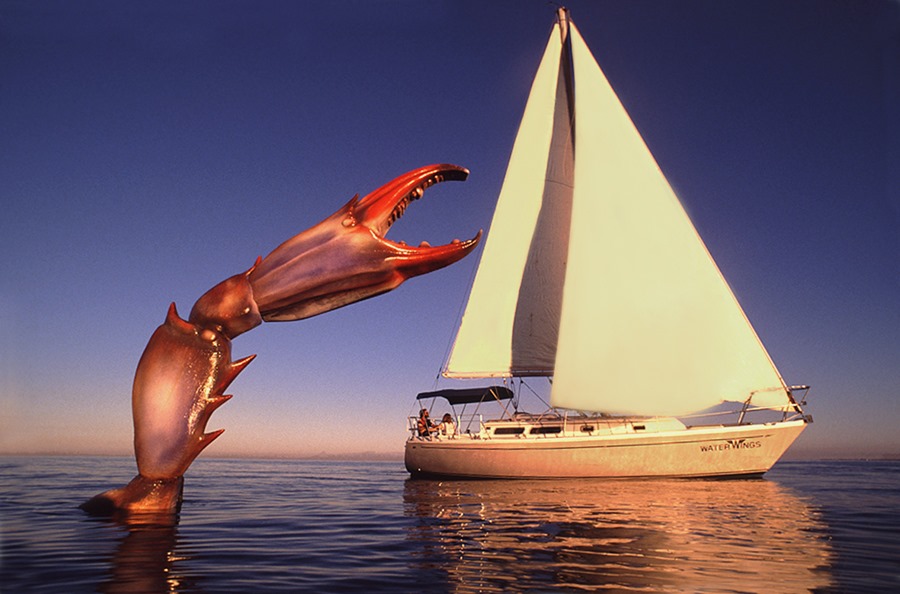
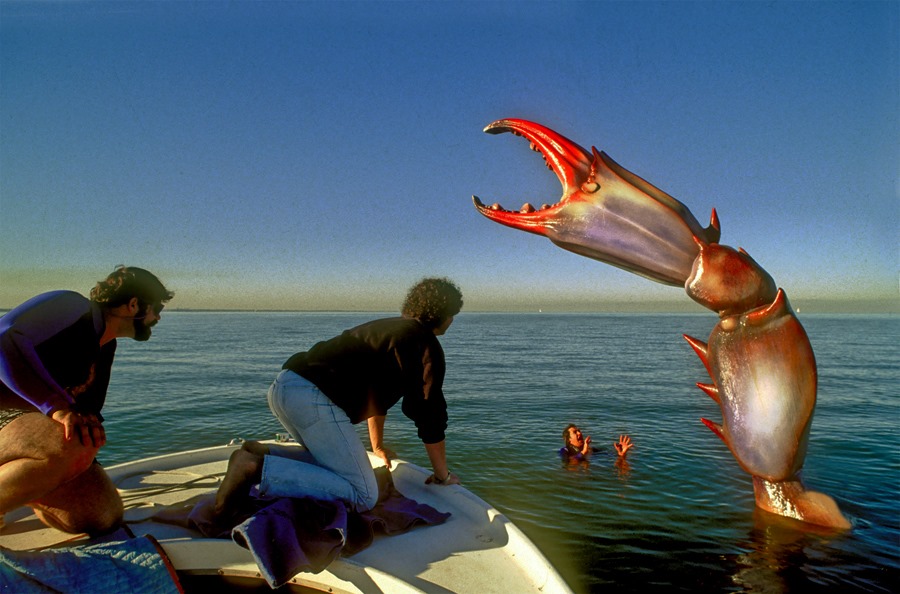
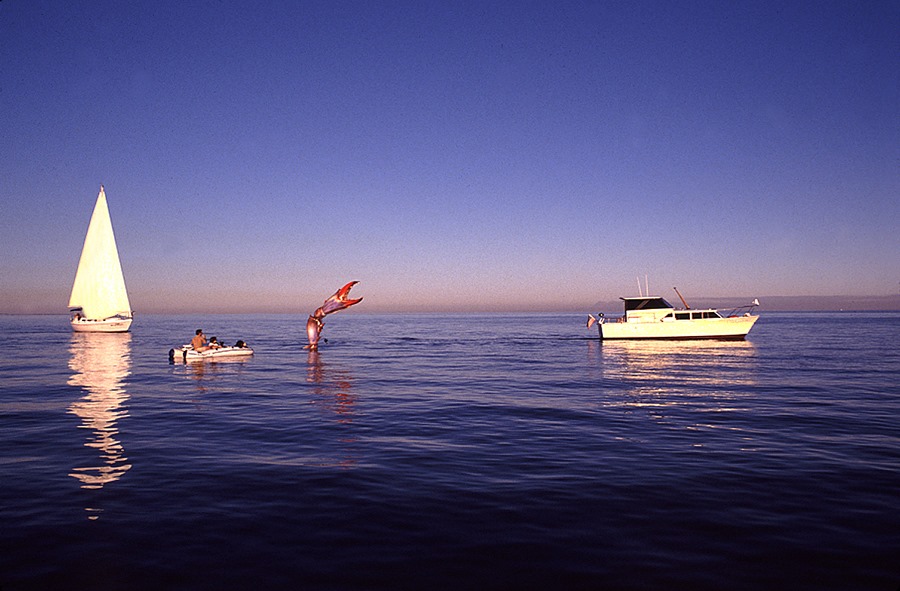
The approved concept, that also went into focus groups, was that you never knew when trouble was coming so you had to be ready for anything; even when you are about to be attacked by a giant crab. Whoever came up with this idea was probably stoned…everybody must have been stoned for this one!!

And that’s where I came in.  The Art director asked me if I thought I could make a giant claw attack a boat…” Hell yes!”

I learned a long time ago that the secret to the success I have had was/is because I always surround myself with the best (most talented) people possible, and I still believe it.

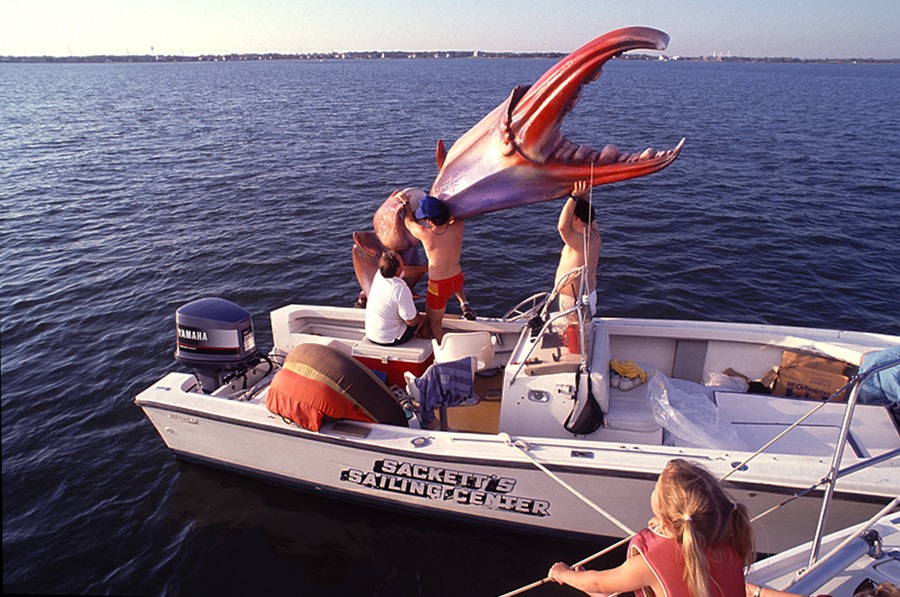
Having said that, I hired Danny Harries, a good friend and an amazing model maker/illustrator, to create a giant claw that we could position where it looked like it was about to attack both a sailboat and motor yacht.

Danny carved it out of a huge block of foam (to make it light), painted it, and from one end to the other it was eighteen feet long.

We took it down to a bay near Houston whose depth was only about four feet deep and tried to set it up…it wouldn’t stand upright, and as a result we missed a beautiful sunset!!!!!!

Since there wasn’t a plan ‘B’, we had to keep working with what we had…the original ‘A’ plan. We took it to a nearby garage so Danny could figure out what went wrong and what he needed to do. While he was scratching his head the Art Director and I were toasting to the Photo Gods with a few beers, thinking that it couldn’t hurt.

The next day we went out again to a great sky and this time it worked like a charm; Danny had worked his magic, much to the relief of the Art Director whose color had returned to his face…and of course, yours truly.

While my assistant and I were lying in a Zodiac, I had the sailboat and motor yacht follow directly behind one another, so I could take full advantage of the last rays before the sun hit the water…as in the sunset. I was very close to the claw with a 20mm lens on, so it would appear larger than life; the Art Director’s words, not mine!!

Those were great days where you could actually use your imagination and then create those ideas in the camera, and having a hell of a lot of fun doing it. Now, the claw would be about eight inches long, shot against a green screen, and with post-processing it would be added to the shot…computer art…UGH!!!

We finished the shoot and had a couple of celebration beers while loading up the claw. After about a mile I had to make a pit stop. Luckily, I pulled over on the shoulder next to a semi-dense forest to disappear into it.

As I was getting out I told the Art director that I had to see “a man about a horse”. When I got back everyone was laughing, especially the Art director.

It seems that while I was gone the account executive, a young woman named Beth (fake name to protect the innocent) said to the Art Director, “Oh I want to go, I love horses”.

One exposure, one frame, one click…shot on Kodachrome 25

To read more of Joe’s stories visit his Facebook page: https://www.facebook.com/joe.baraban

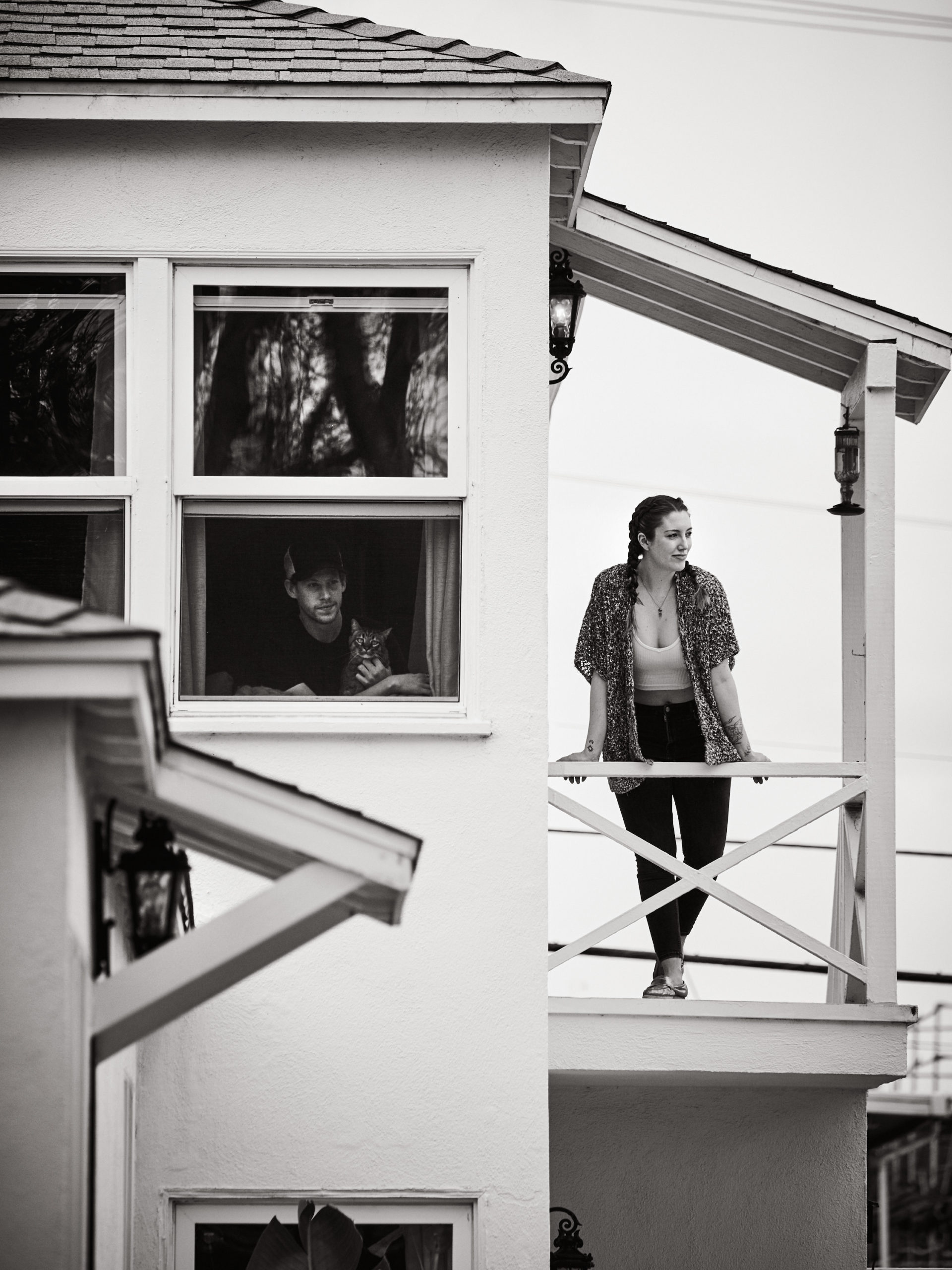
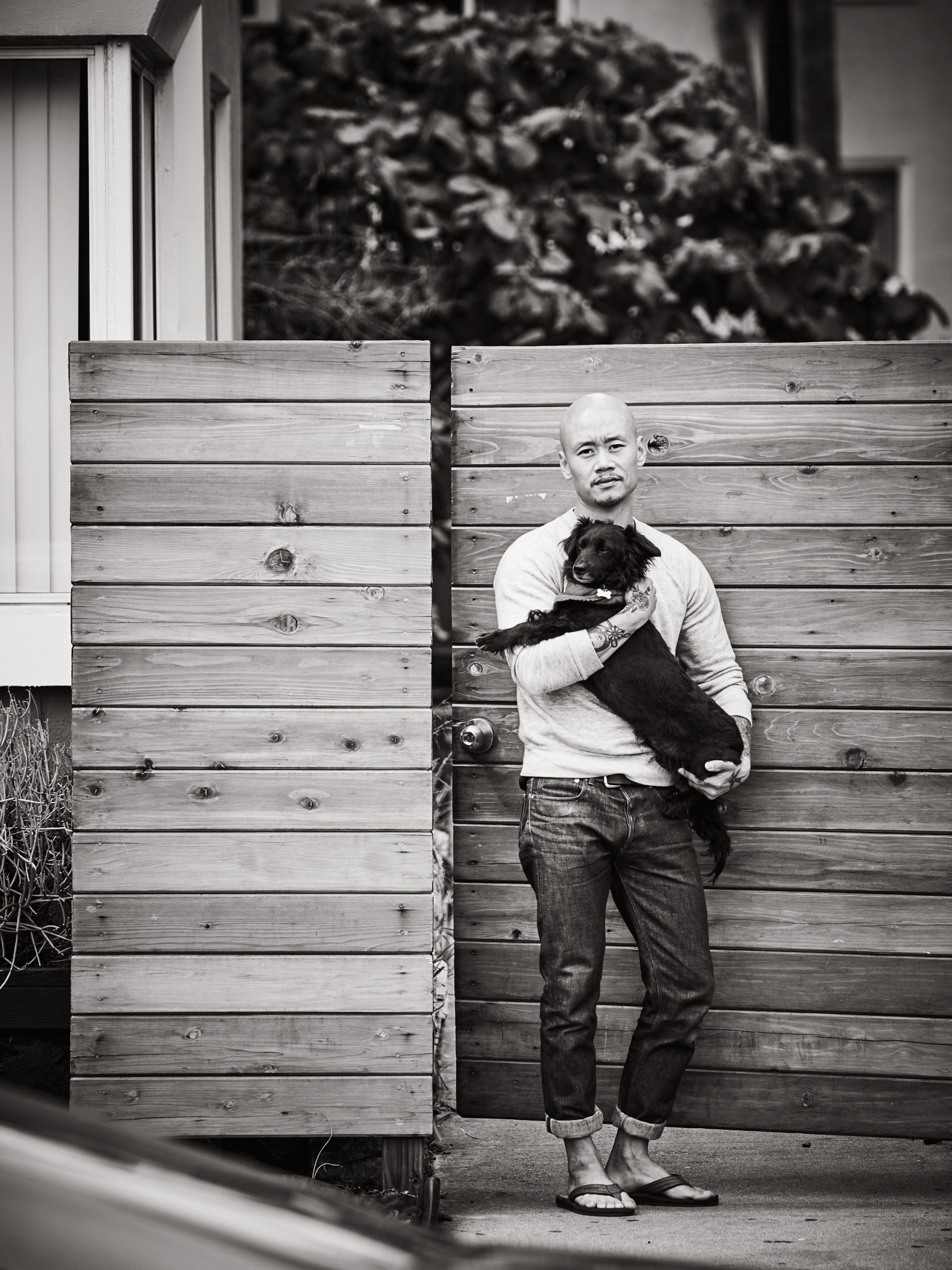
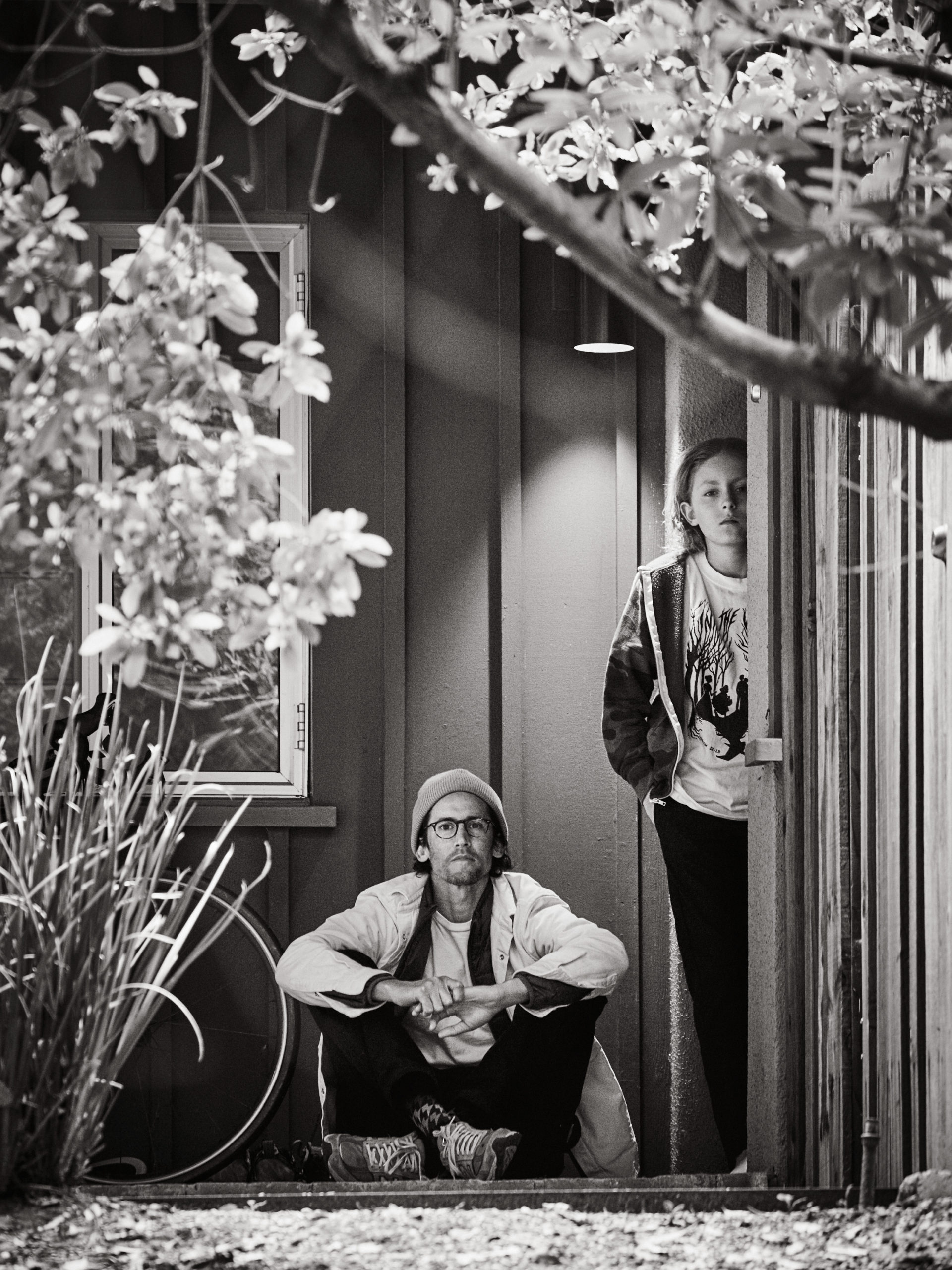
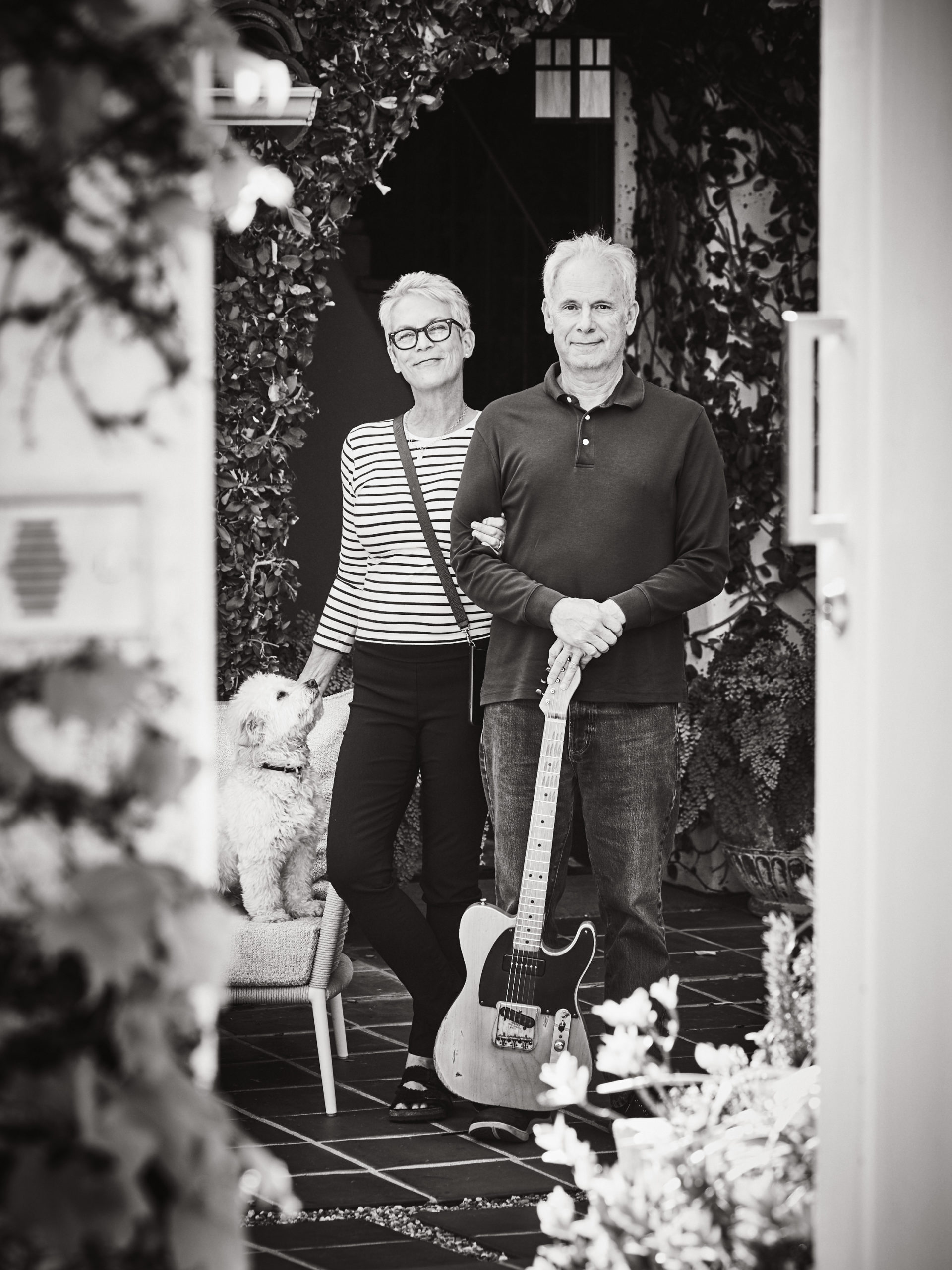
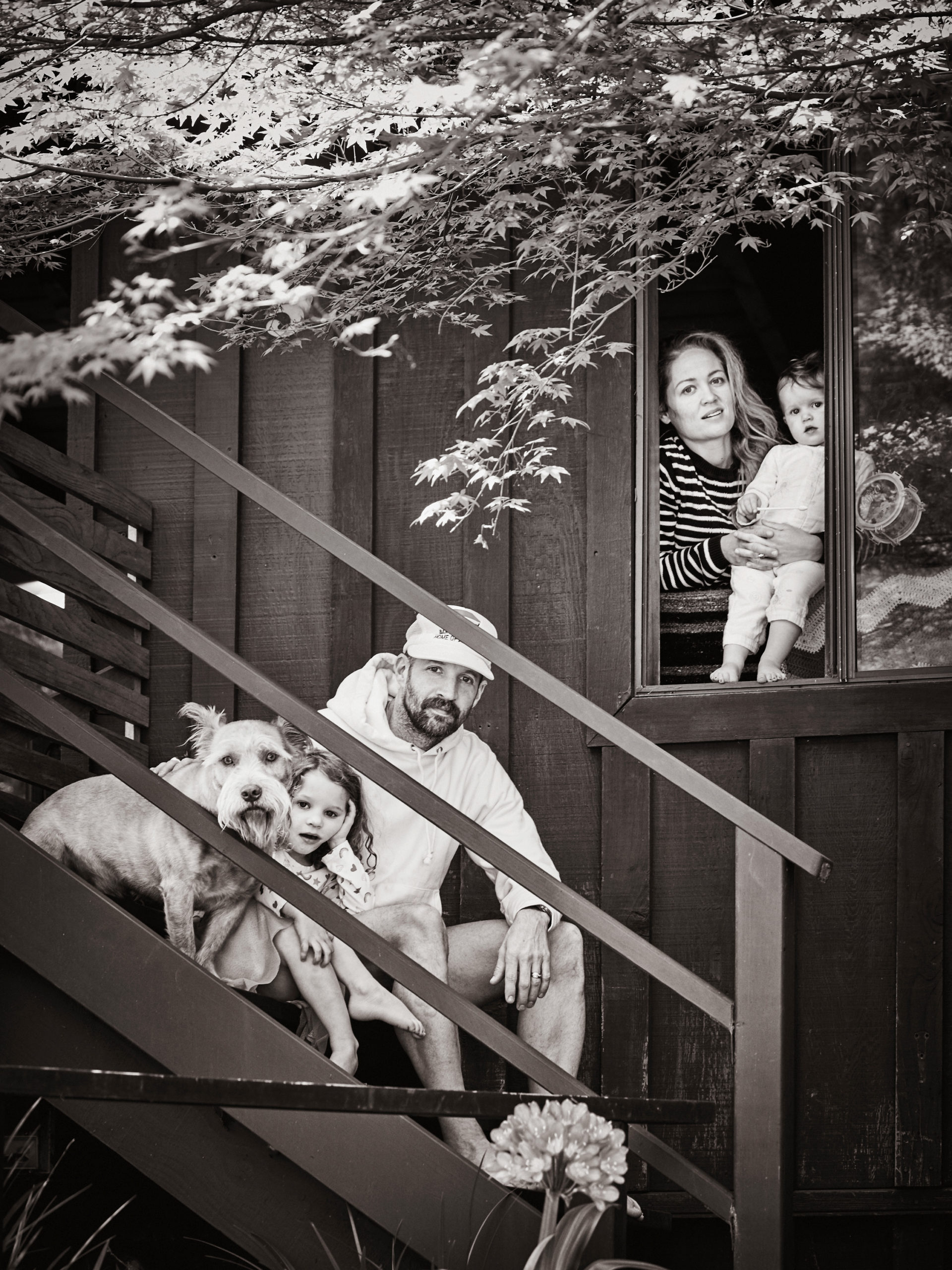
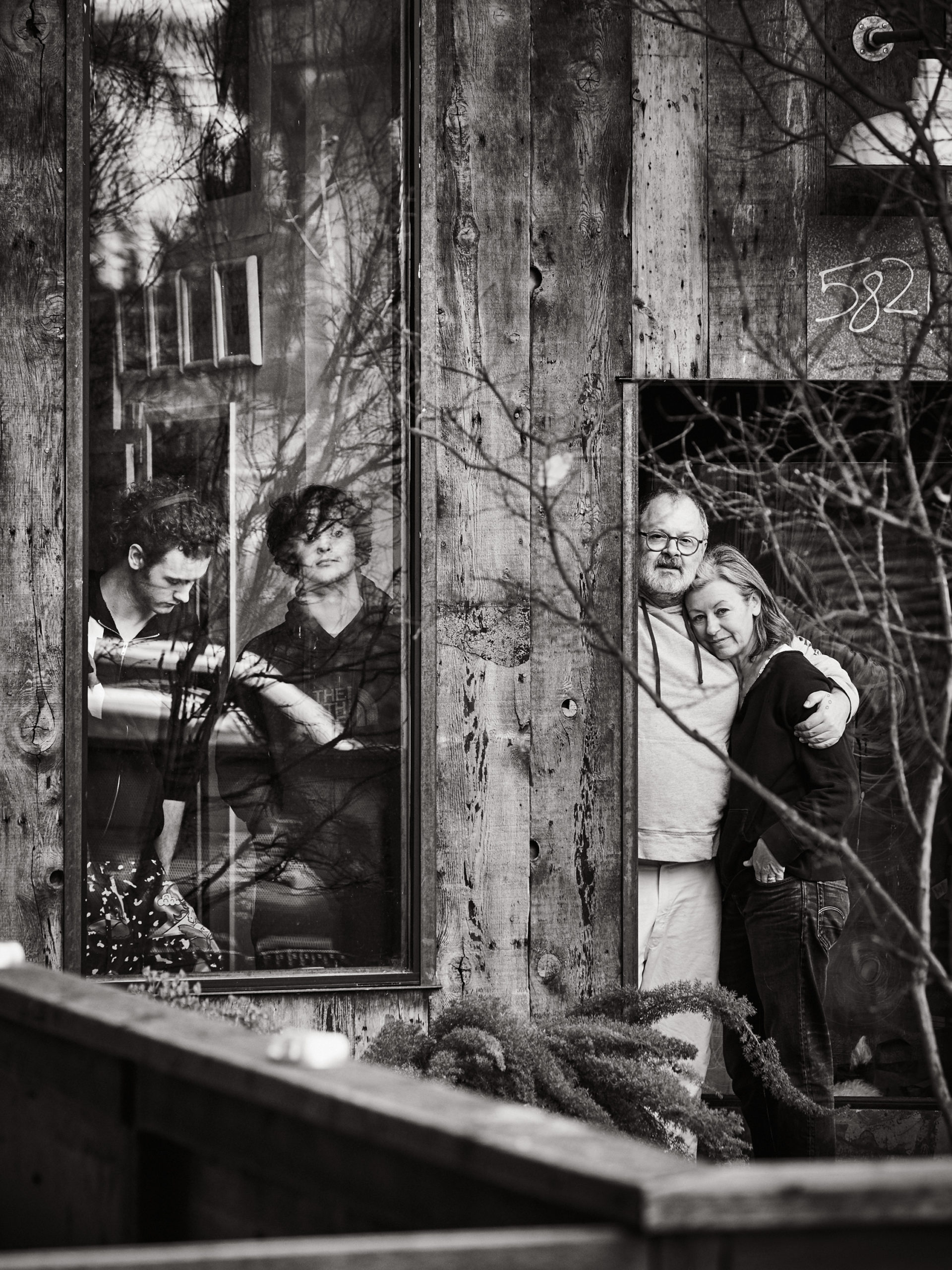
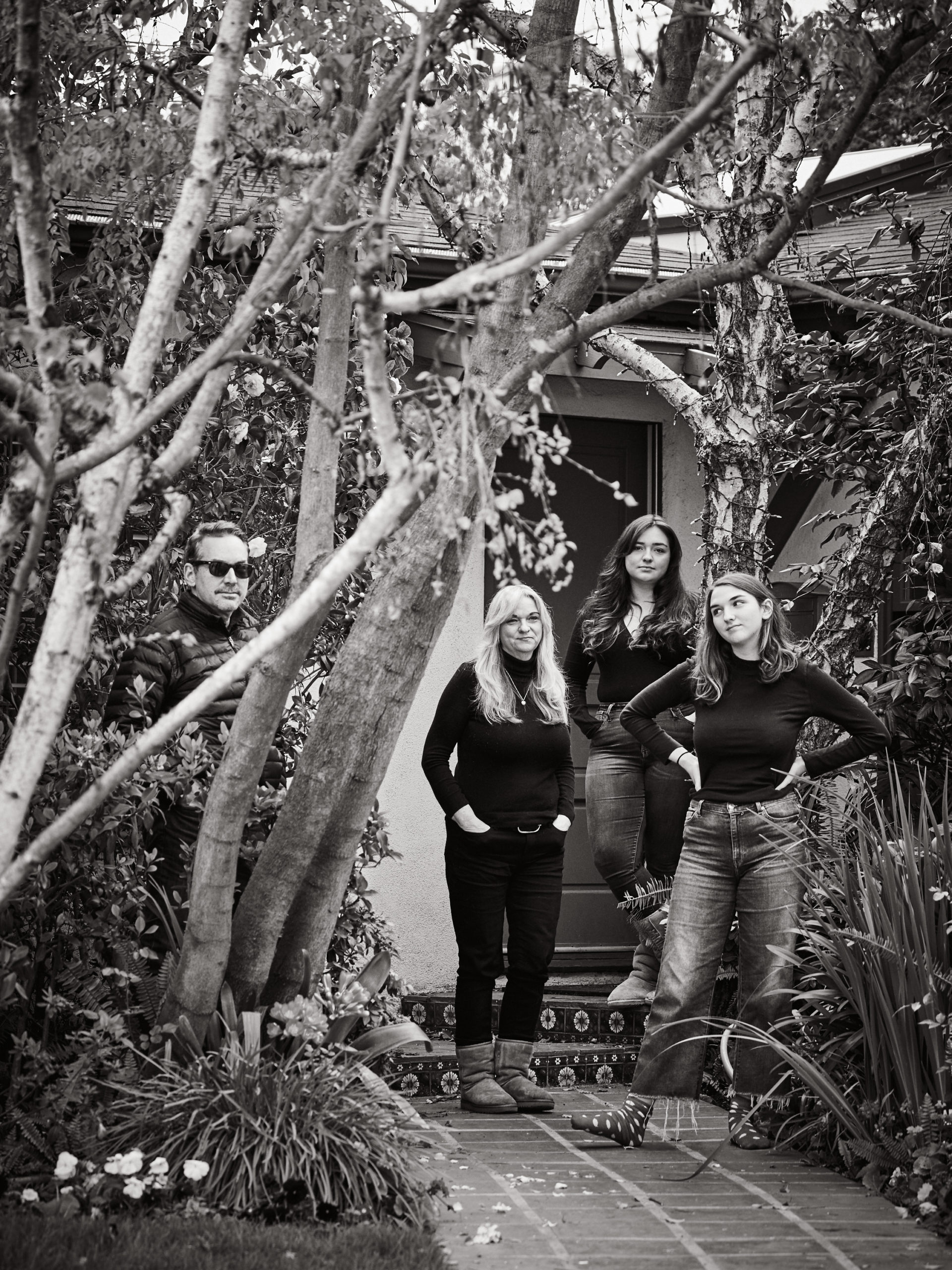
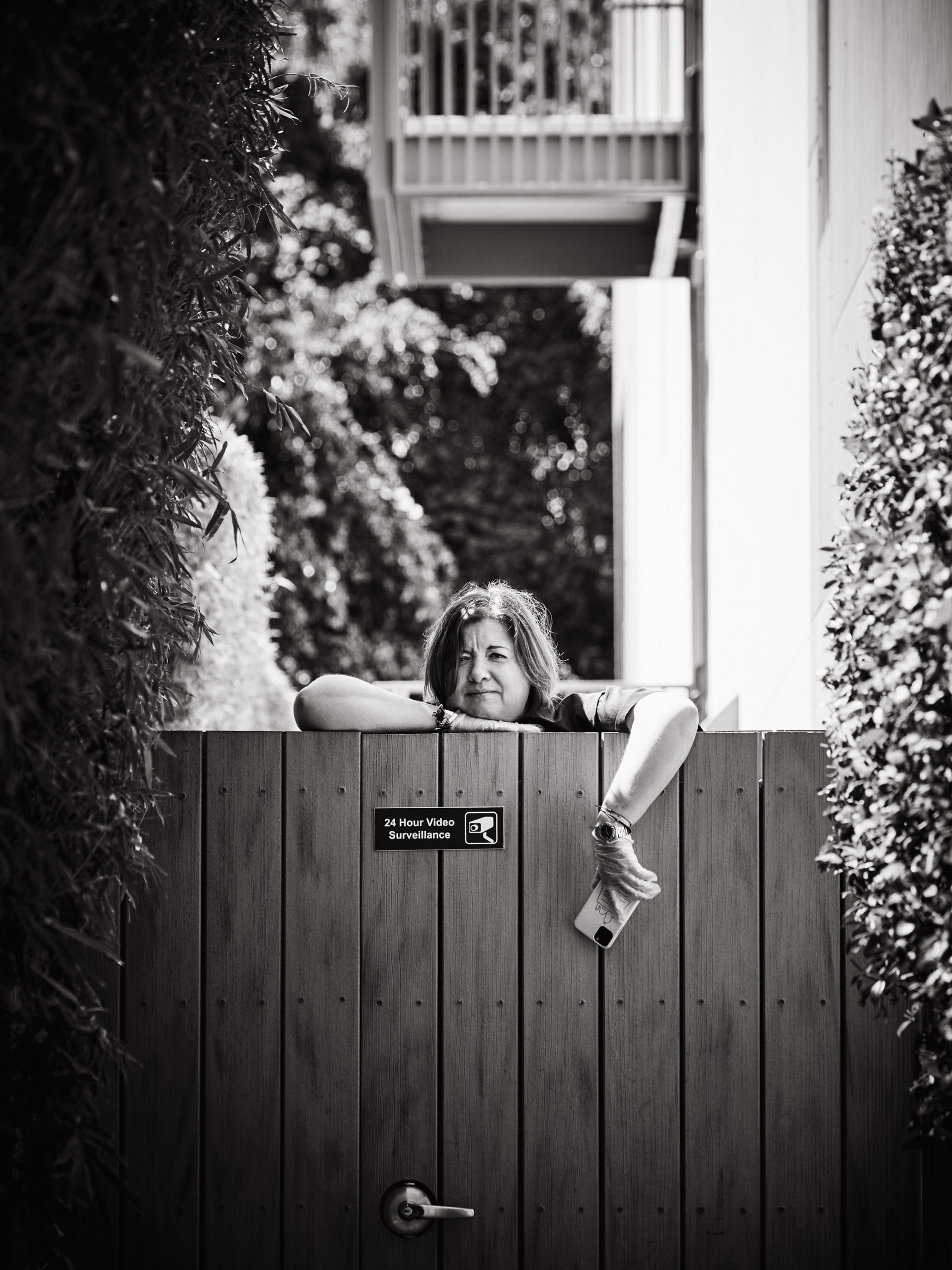
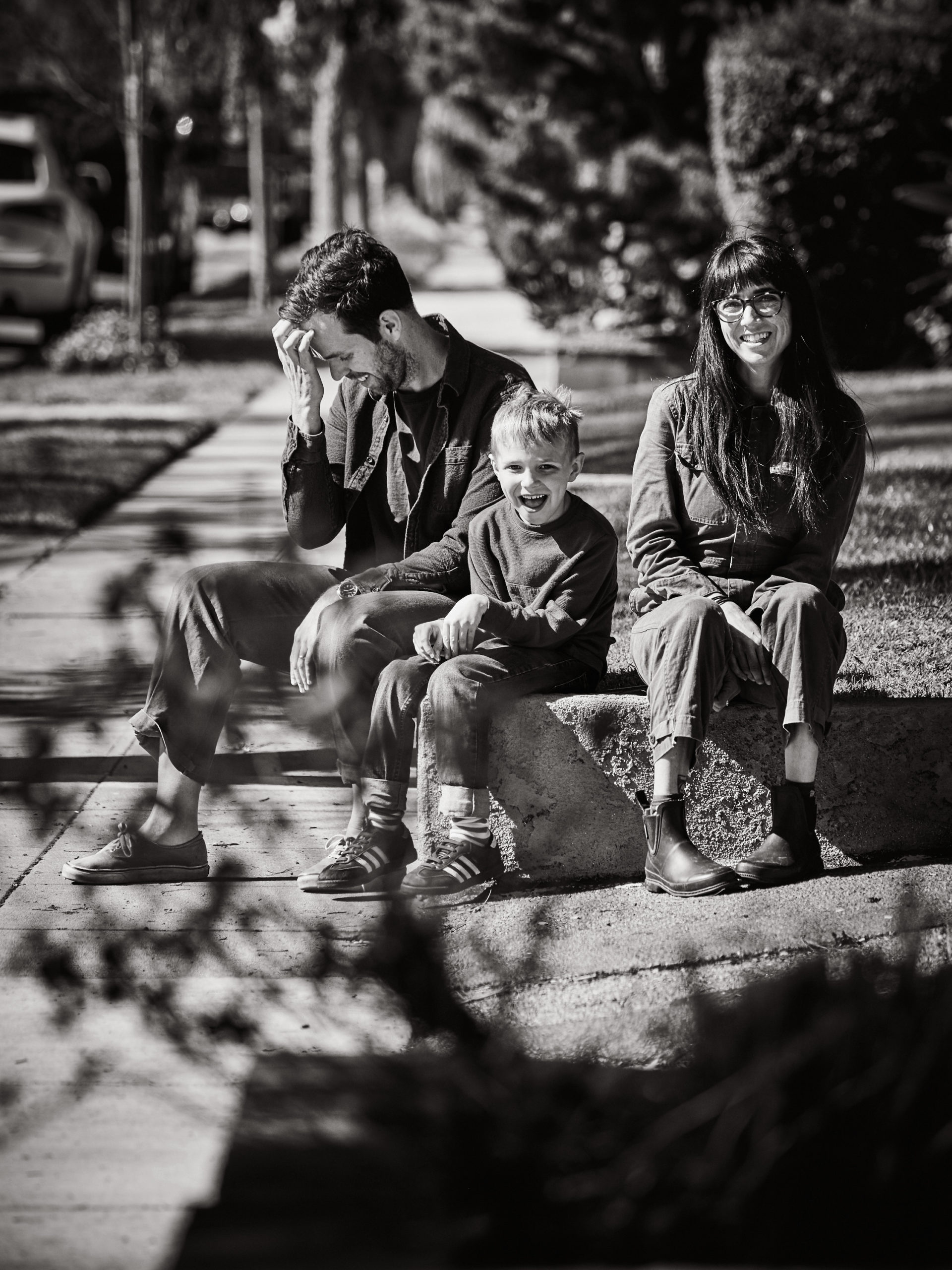
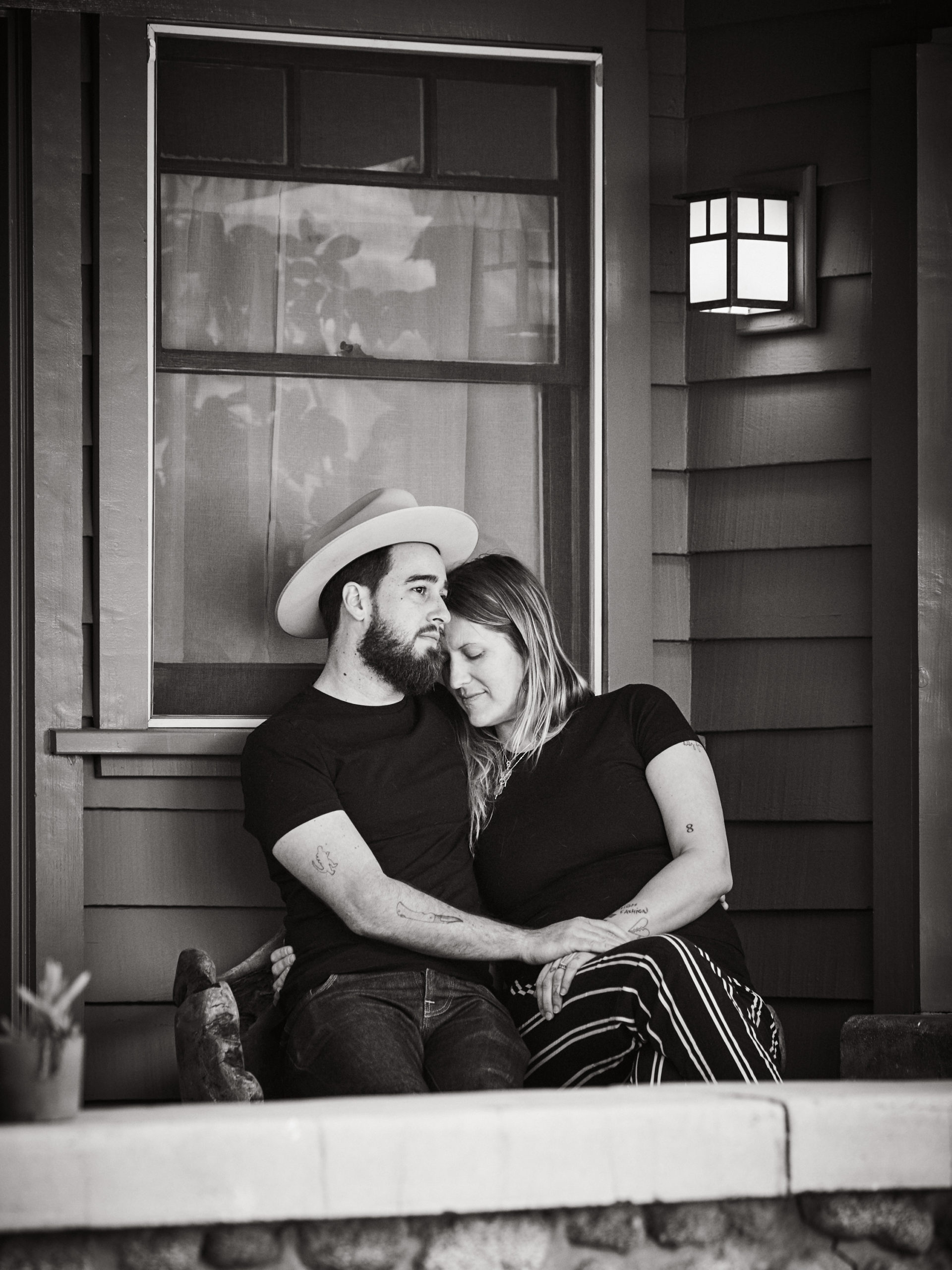
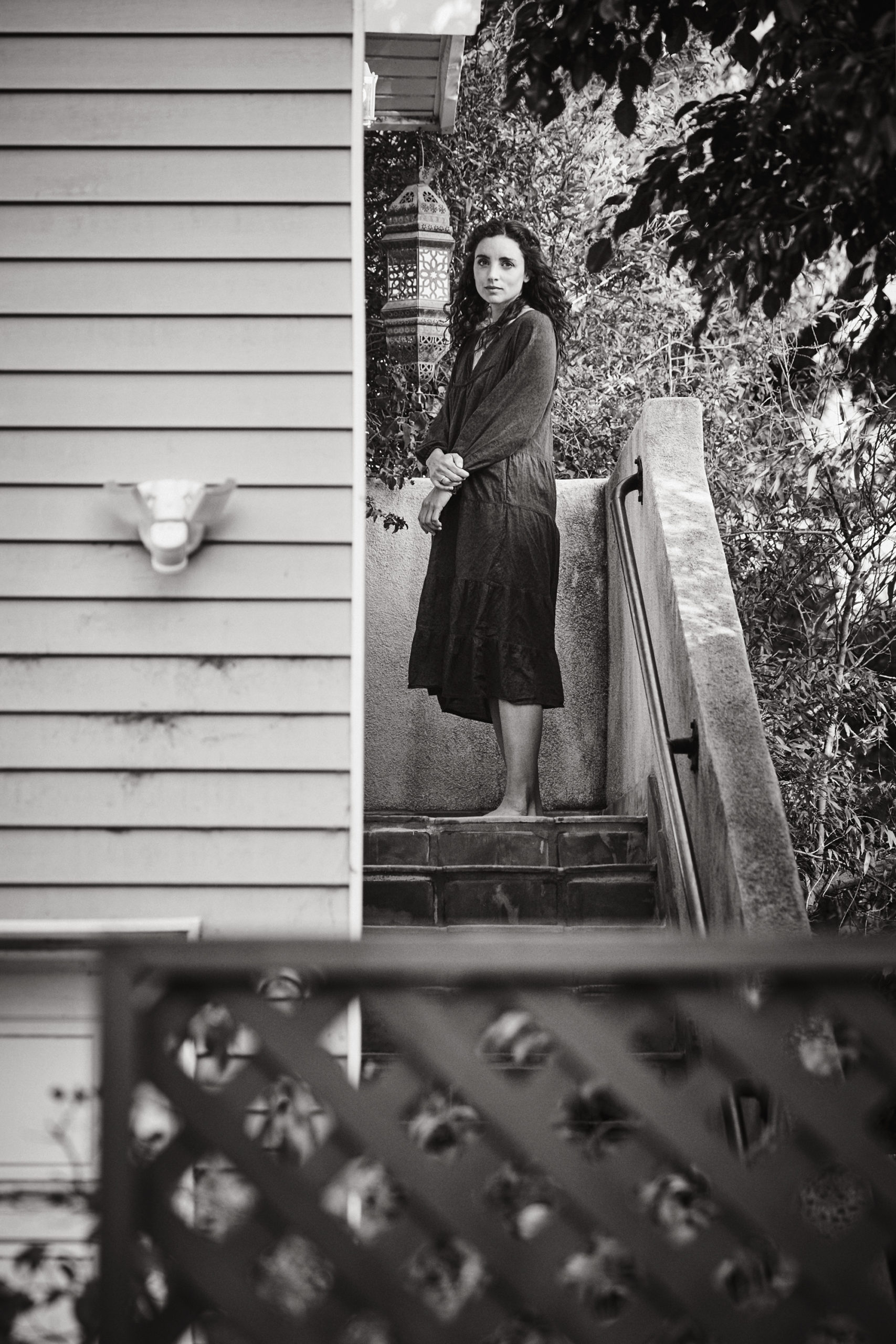
The Daily Edit – Joe Pugliese: Social Distancing Portraits


Joe Pugliese


Heidi: Which was your first image, and how did they build on one another?
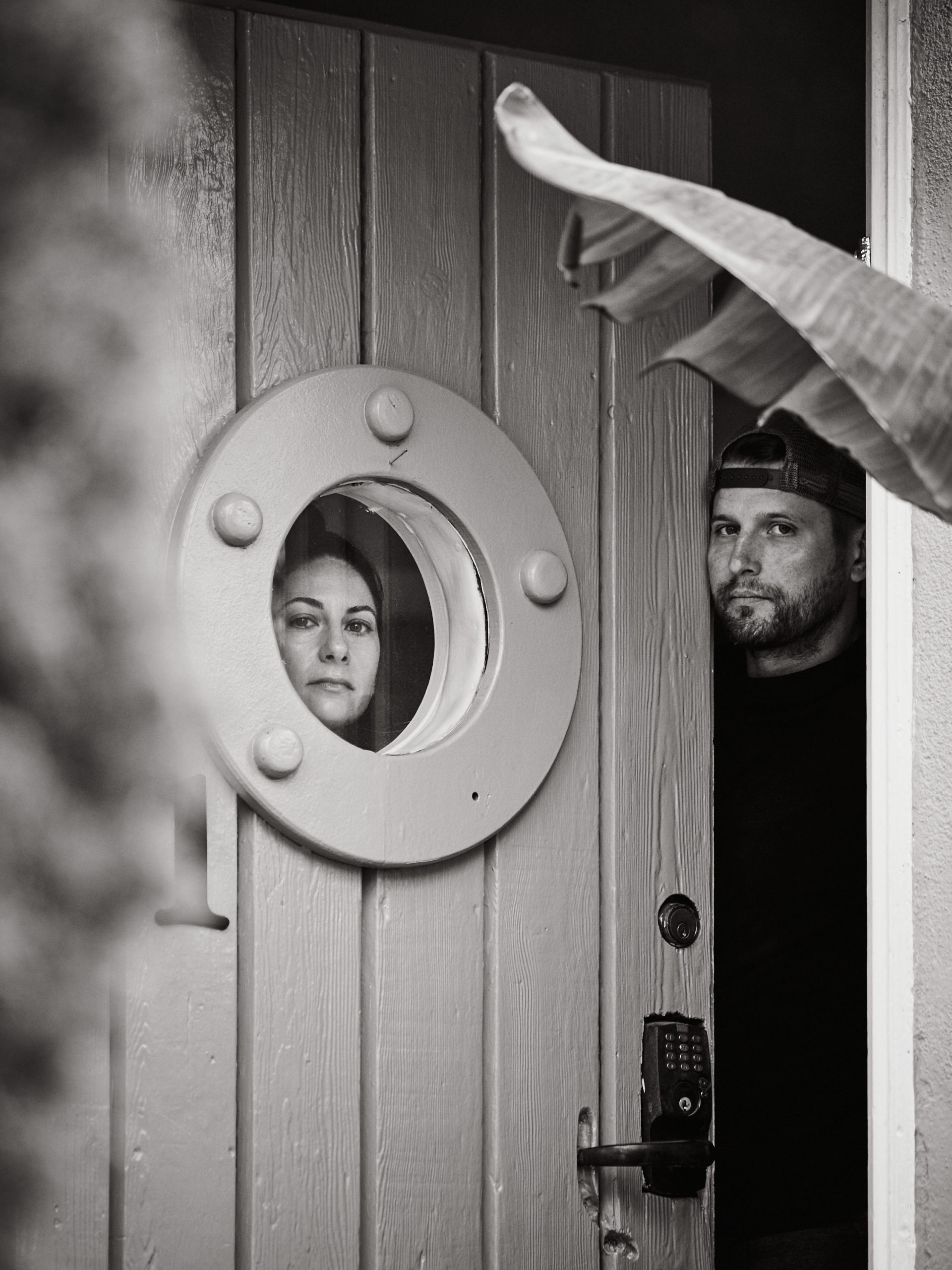
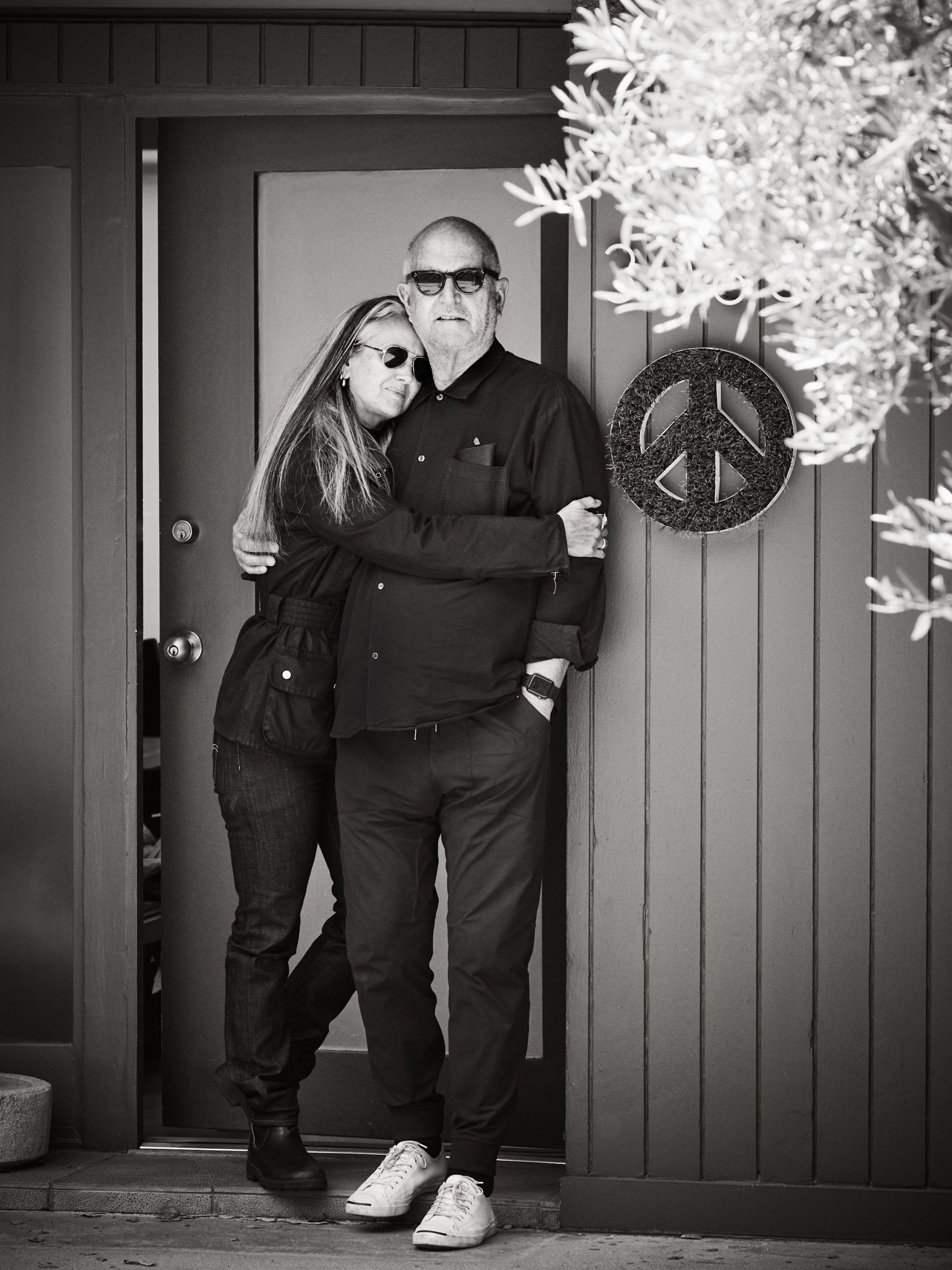
Joe: I started with a couple of my immediate neighbors, who are longtime friends and collaborators. As with all personal work, for me the biggest challenge is just getting the ball rolling. There is a huge unknown of what it will feel like to make the work and how the subjects will receive the experience. As I did a few of them, it became clear that it felt good and that I was being responsible in terms of my safety and that of my subjects, so I continued to reach out.

What was going through your mind during these portraits?
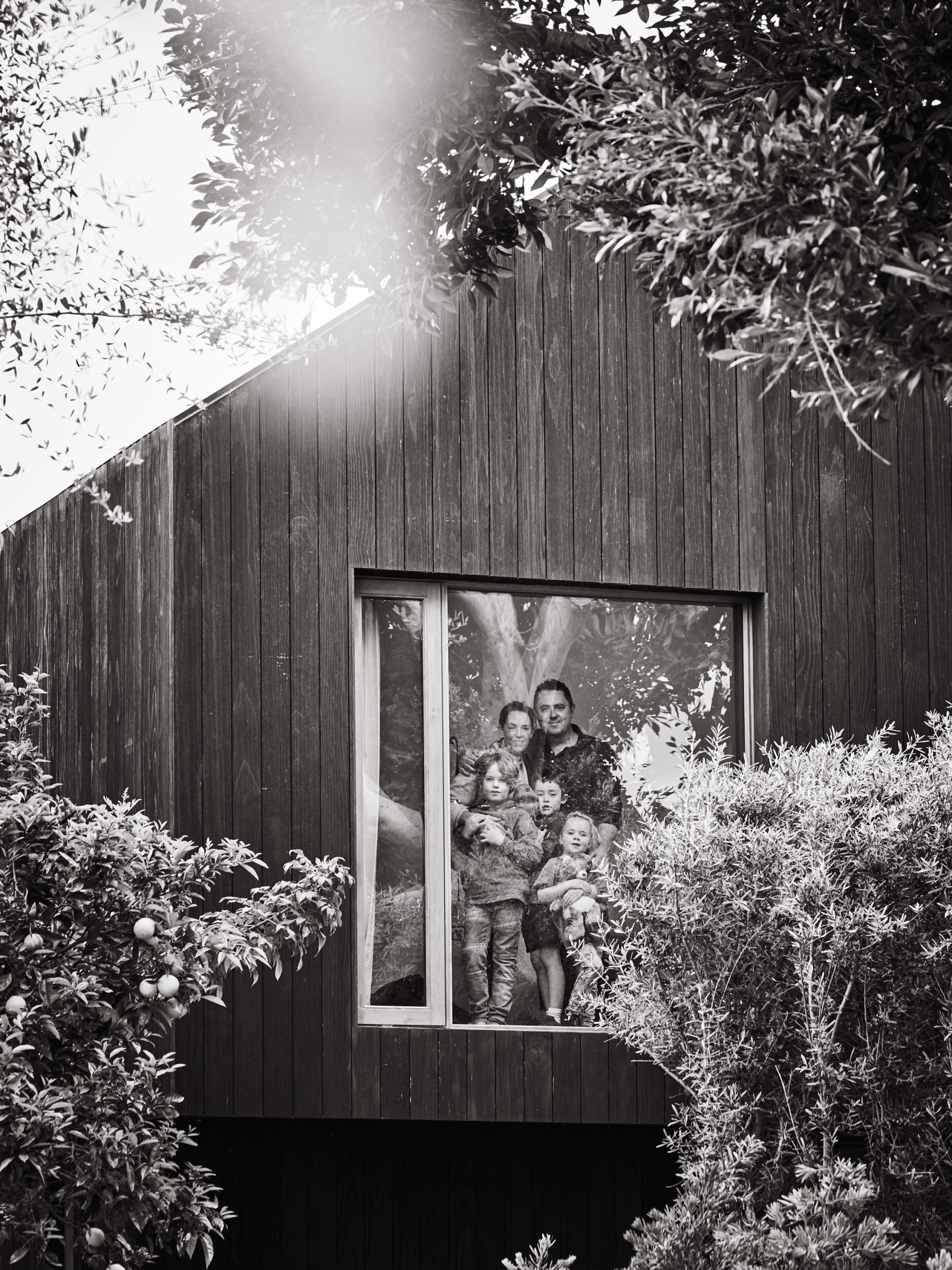
I tried not to overthink it. I had to disengage completely with any normal approach that I am used to, and that was challenging but refreshing. For instance, when my friends would come out to see where I was, they pretty much landed in a place that looked perfect for the photo. I did make some suggestions of moving to the left or right, etc but it was shouted from so far away that it  was easier for the subjects to just be however they wanted to be. For the images of people inside looking out, I suggested that and  they  had to direct themselves since I was  too far away to make any changes. The whole experience was fairly organic.

The magic of a portrait is the intimacy, describe the distance.
The approach here was to just record my friends in this odd moment. Luckily, there was a built-in trust that already existed since they are all close friends and know that I will not be taking advantage of them for my purposes. So even from 30 feet away there was this delicate exchange and I was surprised how similar it felt to an intimate portrait. In some ways, it may have made them more comfortable that I actually wasn’t so close. I’m learning a lot through this, and one of the things is that it takes radical change to understand how or why we do anything the way we do.

How much did you responsibly interact with each person?
Knowing that we are encouraged to get a moment or two of fresh air each day helped me wrap my head around the fact that I could do this in a very responsible way. The guidelines say to stay 6 or 10 feet from each other when outside but I wasn’t interested in pushing that in any way. I don’t think I got closer than 20ft to anyone that I photographed. I strongly believe in strict quarantine measures to quell this problem so I didn’t want to exacerbate the situation in any way. I also wanted to point out my distance and solo approach when I wrote the captions for my posts. I’m trying not to encourage a wave of photographers practicing unsafe methods to document the people in their lives.

Why do you feel people resonated with this work?
I think that it was inspired by the feeling I was having of not seeing new work of people for a couple weeks. Most of the photo coverage revolves mourned emptiness, empty streets, empty shelves, anonymous people wearing masks, etc and I craved some honest images of people doing what needs to be done, and maintaining dignity while doing it.

The Daily Promo – Myles McGuinness

Myles McGuinness

Who printed it?
PaperChase

Who designed it?
Me, I used my previous design skills as an Art Director.

Tell me about the images?
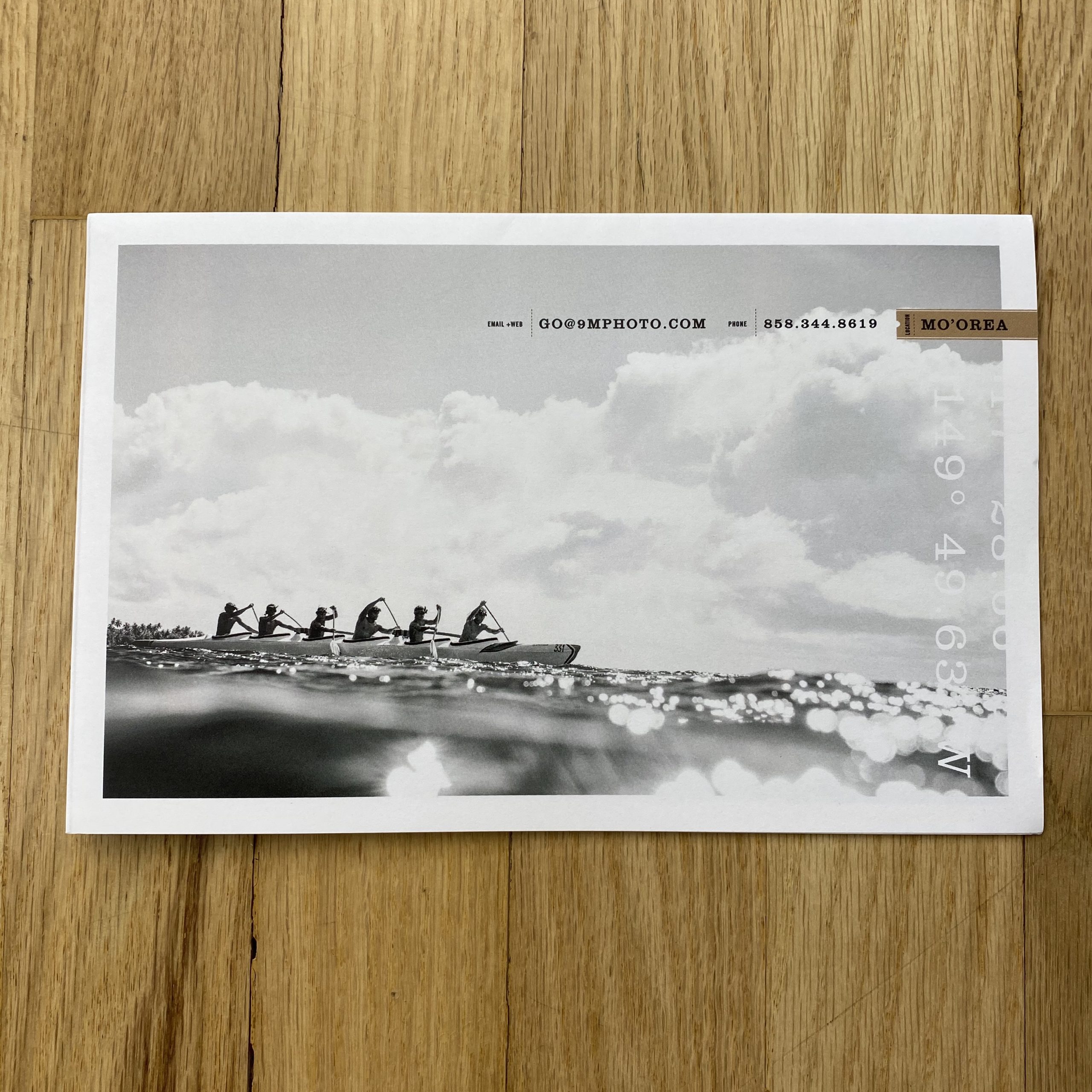
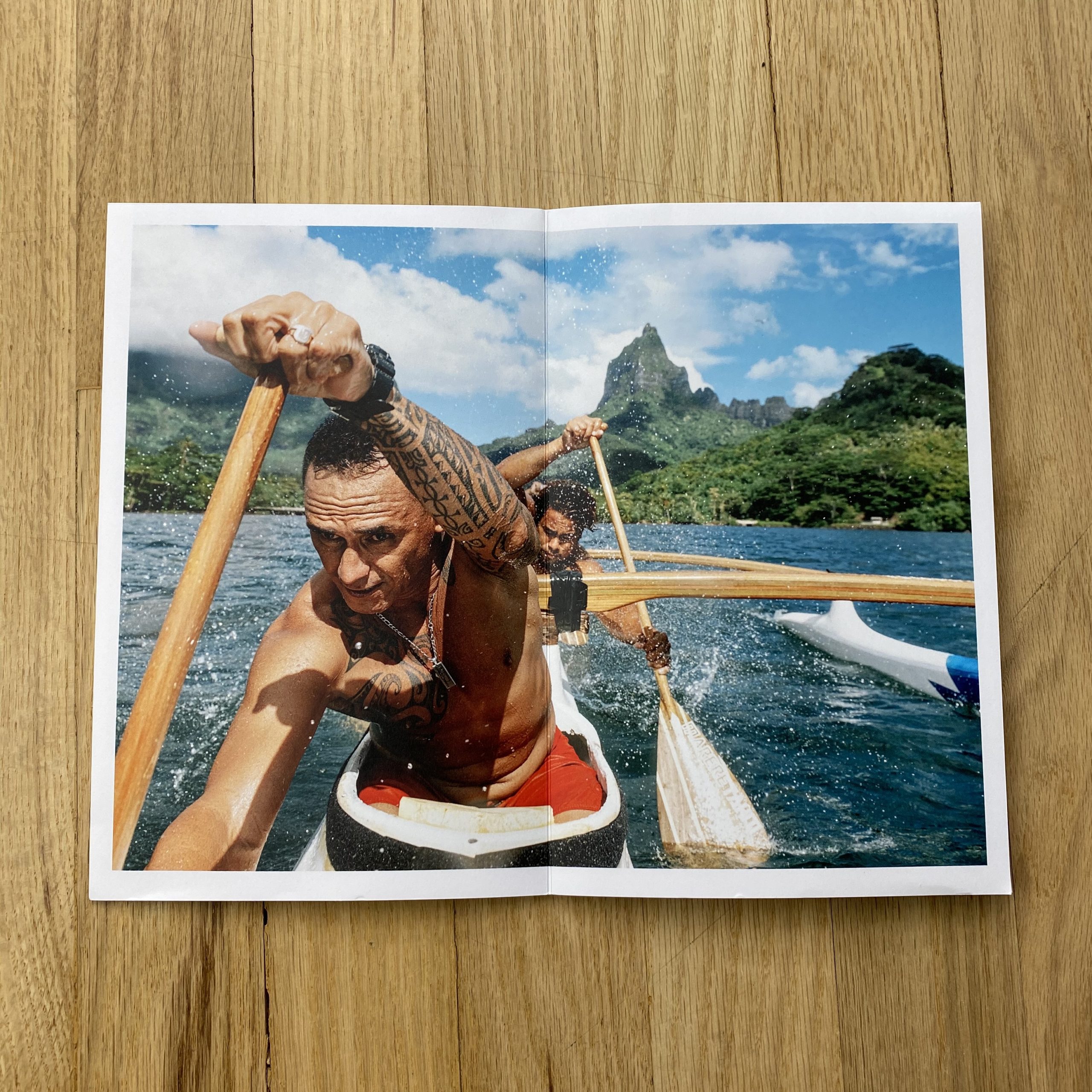
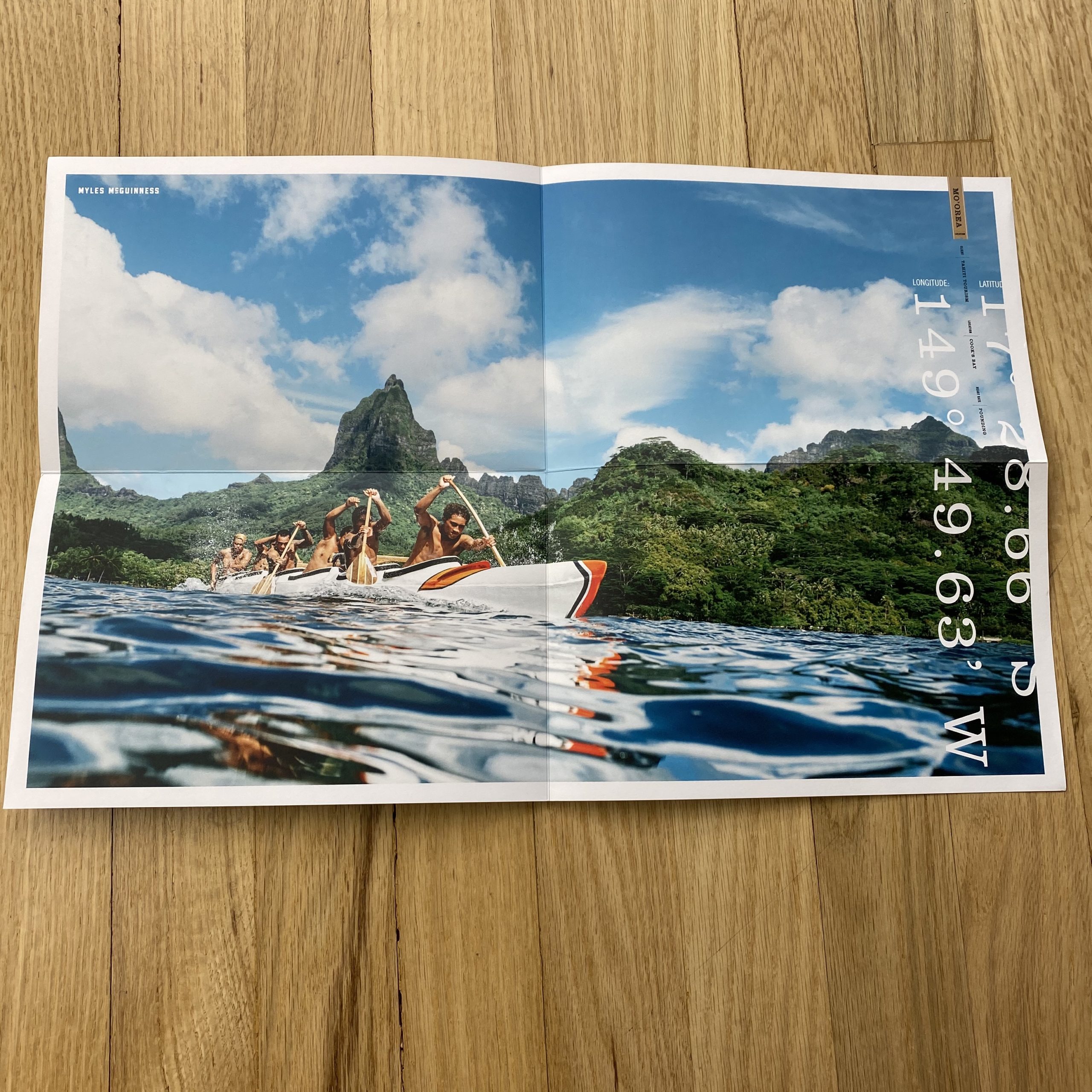
Series of images captured for Tahiti Tourism’s “Embraced by Mana” campaign. The ad featured opposing micro and macro photos.

Ad headlines read: MOVE / BE MOVED
As the Cradle of Polynesian Culture, The Islands of Tahiti are alive with expressions of craftsmanship, traditions, and history. Come immerse yourself and discover what it means to be Embraced By Mana.

Lots of great energy with this group of local guys. They all brought it and made for a super fun shoot in Cooks Bay, on the island of Mo’orea. There are many sides to The Islands of Tahiti. Yet they are all connected by Mana. Mana is a life force and spirit that surrounds us. You can see it. Touch it. Taste it. Feel it. And from the moment you arrive, you will understand why we say our Islands are Embraced by Mana.

How many did you make?
500

How many times a year do you send out promos?
Twice

Do you think printed promos are effective for marketing your work?
Yes, it certainly helps to share your all mediums. There isn’t golden arrow, but maybe it’s just me but I think print is special again, and when done right can stand out more than an email blast or social media whatever’s. Measuring and trying to maximize investment is key, I’m always fine-tuning lists to match clients who might actually hire me. Shooting for the stars, ha.

This Week in Photography: A Vision of Italy


It was hard to motivate today.

(That’s the truth.)

I get so much joy from this column, all year long, but there are always one or two dips, per year, when my strategic-creativity-reserve drops precipitously.

I’m not alone, as most of you don’t want to work today either. (I’m writing on Thursday, as deadlines are deadlines.)

We’re living through exceptional times, and it takes so much mental and physical energy just to process it all without going crazy.

Let’s call it 60% of our total energy output?

Throw in parenting, working, home-schooling, cooking, cleaning, and all the rest, and how much energy is left for self-care?

For trying to feel good, rather than not-terrified?

Obviously, the answer is very little. We’re all going about, each day, doing the best we can, and some of us have it easier than others. (Geographically speaking.)

Right now, I think we all need to empathize with each other, more than ever, and expect a lot less from ourselves too. (In terms of our work productivity, anyway.) Hell, I just got up off the floor, (literally,) to write this column for three reasons:

1. Rob pays me, and it’s my job.
2. I have a responsibility to you, the audience.
3. I knew that any and all art practice always makes me feel better.

It’s that last one I want to harp on today. (Yes, I’m going into inspirational-professor-mode.)

When our energy drops and our spirits lag, blowing off exercise, or creative practice, is the easiest thing to do. Laziness can feel like a rational response to our current state of affairs, and I’ve allowed myself a fair bit.

I know a hard-core Yogi who admitted he wasn’t doing his yoga, so I gave him a little nudge, because I know how happy it makes him. (The dude glows.)

I’m certainly preaching to the choir, (to some extent,) as I’ve seen lots of social media posts about people cooking, drawing, or meditating.

We all KNOW this, on some level.

When much of normal life is stripped away, and we have so many emotions to process, (without our usual expressive outlets,) you have to give yourself permission to feel like shit, from time to time, while remembering that art makes it better.

Let me say that again: Art makes it better.

When was the last time you picked up your camera, or a pen, or a paintbrush, made some art, and then said, “Fuck! I totally regret that. What a waste of time! Heavens to Mergatroyd!

My guess?
Never.

I’m lucky, as this column forces me to make art each week. I can’t not be creative, as it’s my job to keep coming back at you.

With the benefit of that rigor, I wanted to share the message with you: Make art.

Make art!
Now.

Simply by making it now, you’ll be recording energy from a historic place in time.

Some of it will necessarily be interesting later on, because it was made now, and it will give a context.

Or then again, maybe a new context will change the work?

Am I simply speculating?

No.
I’m not.

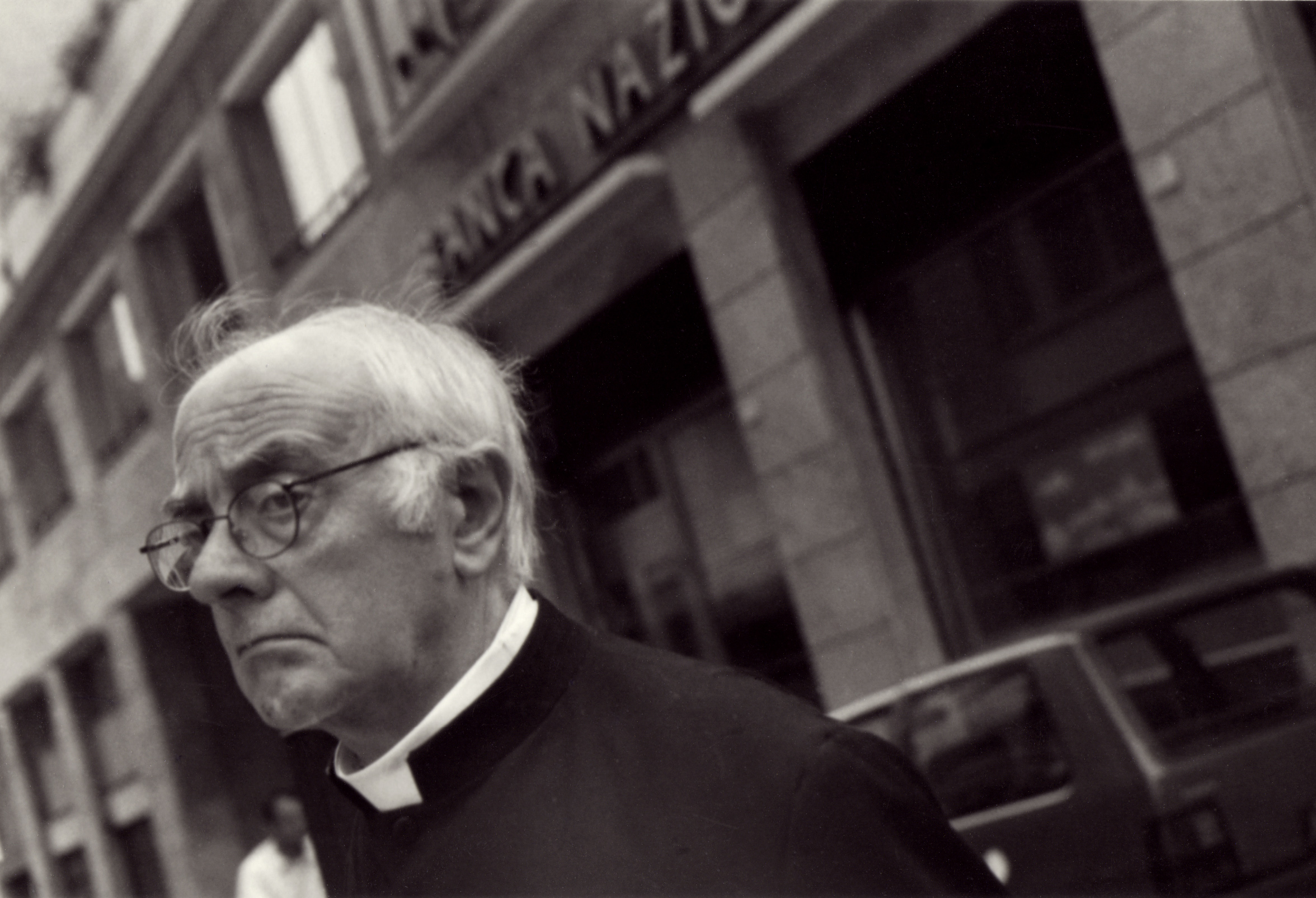
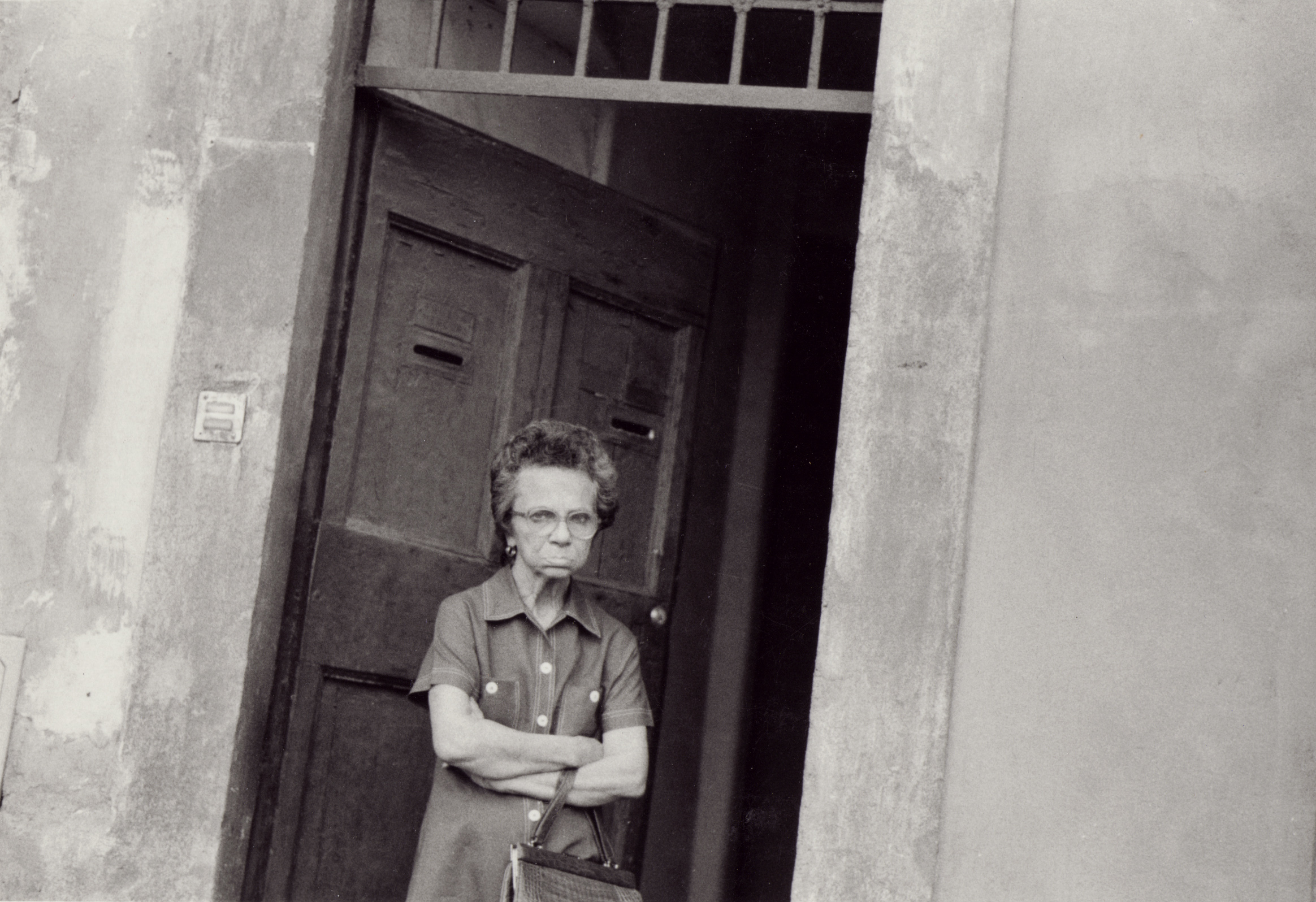
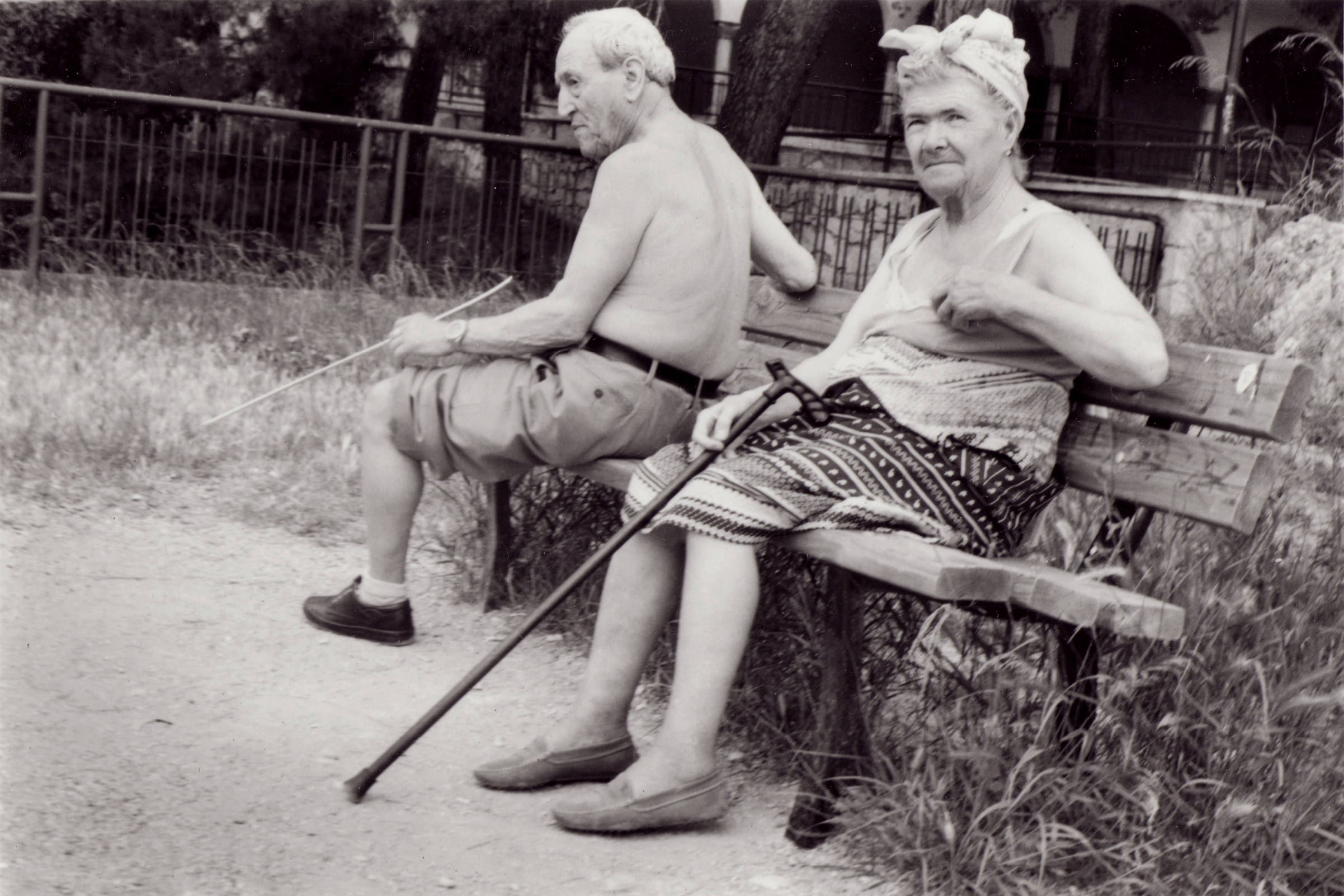
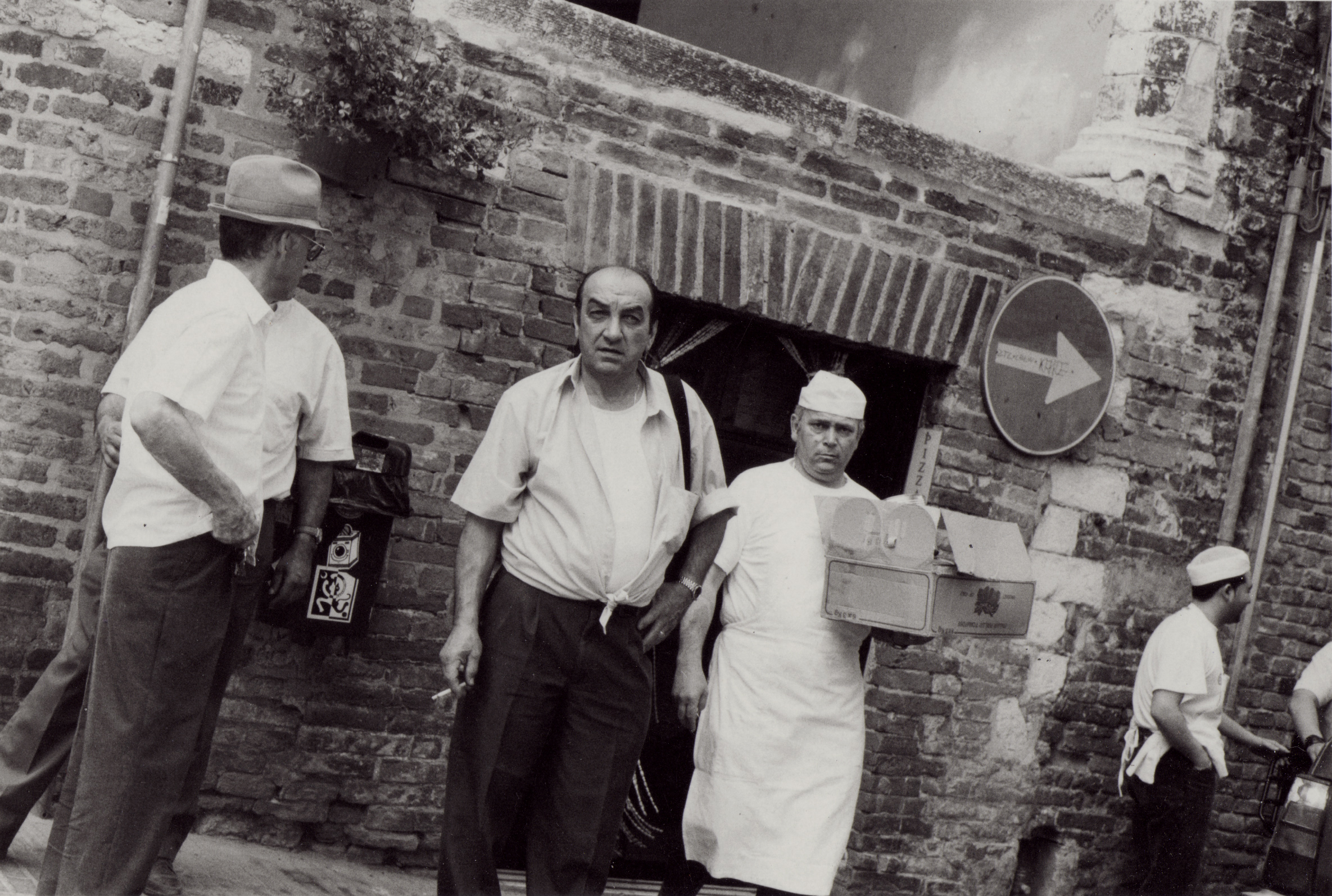
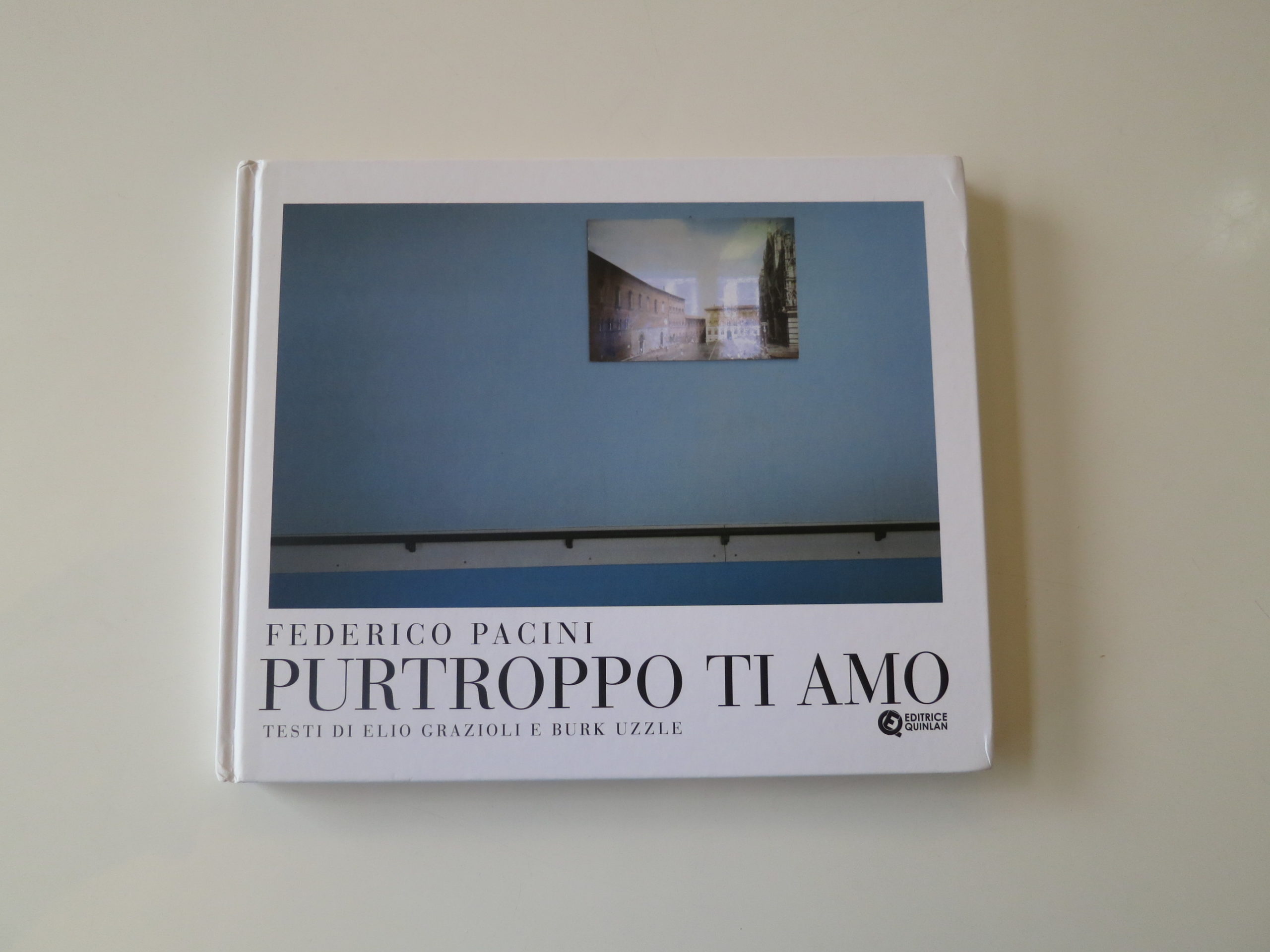
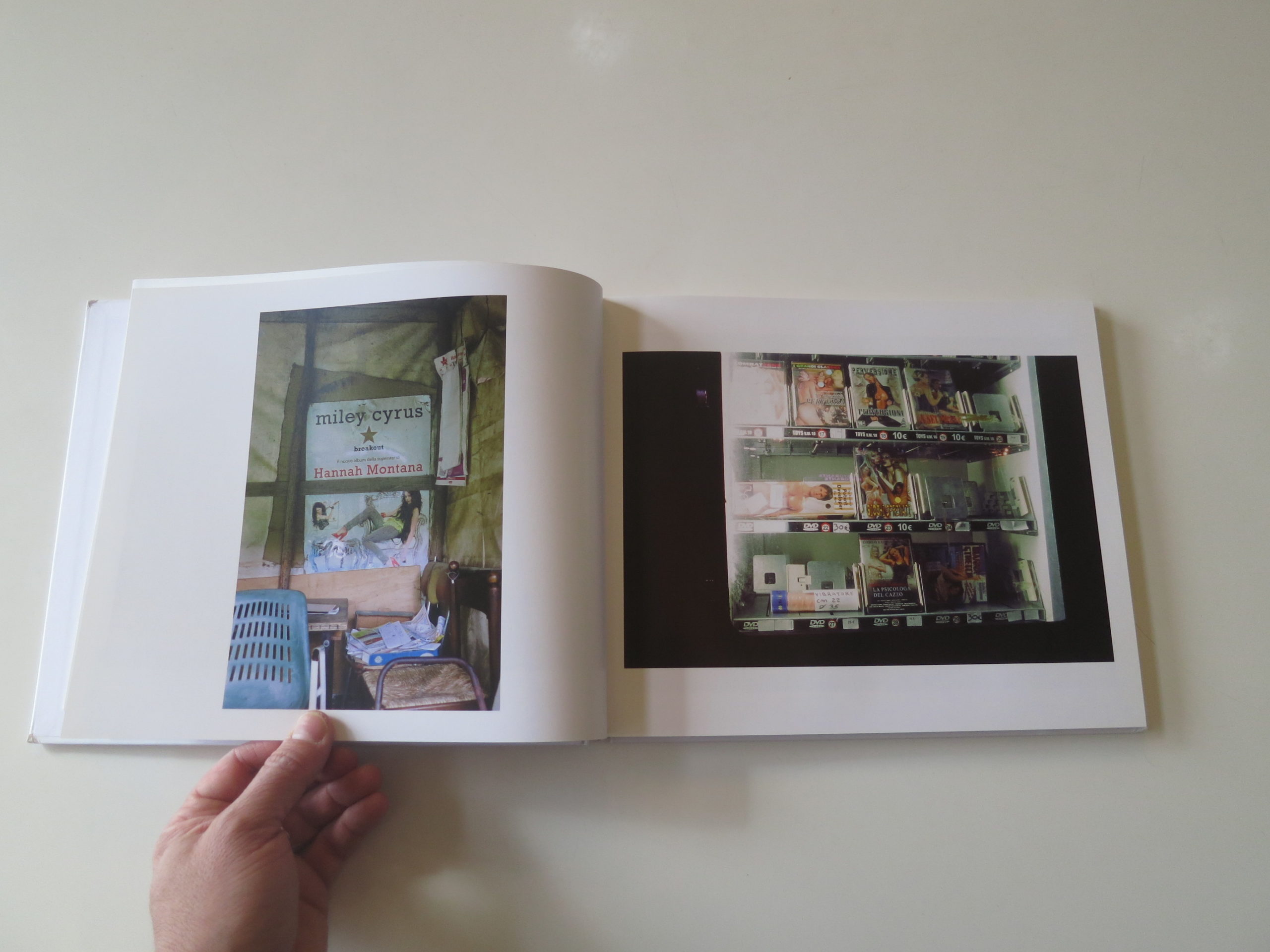
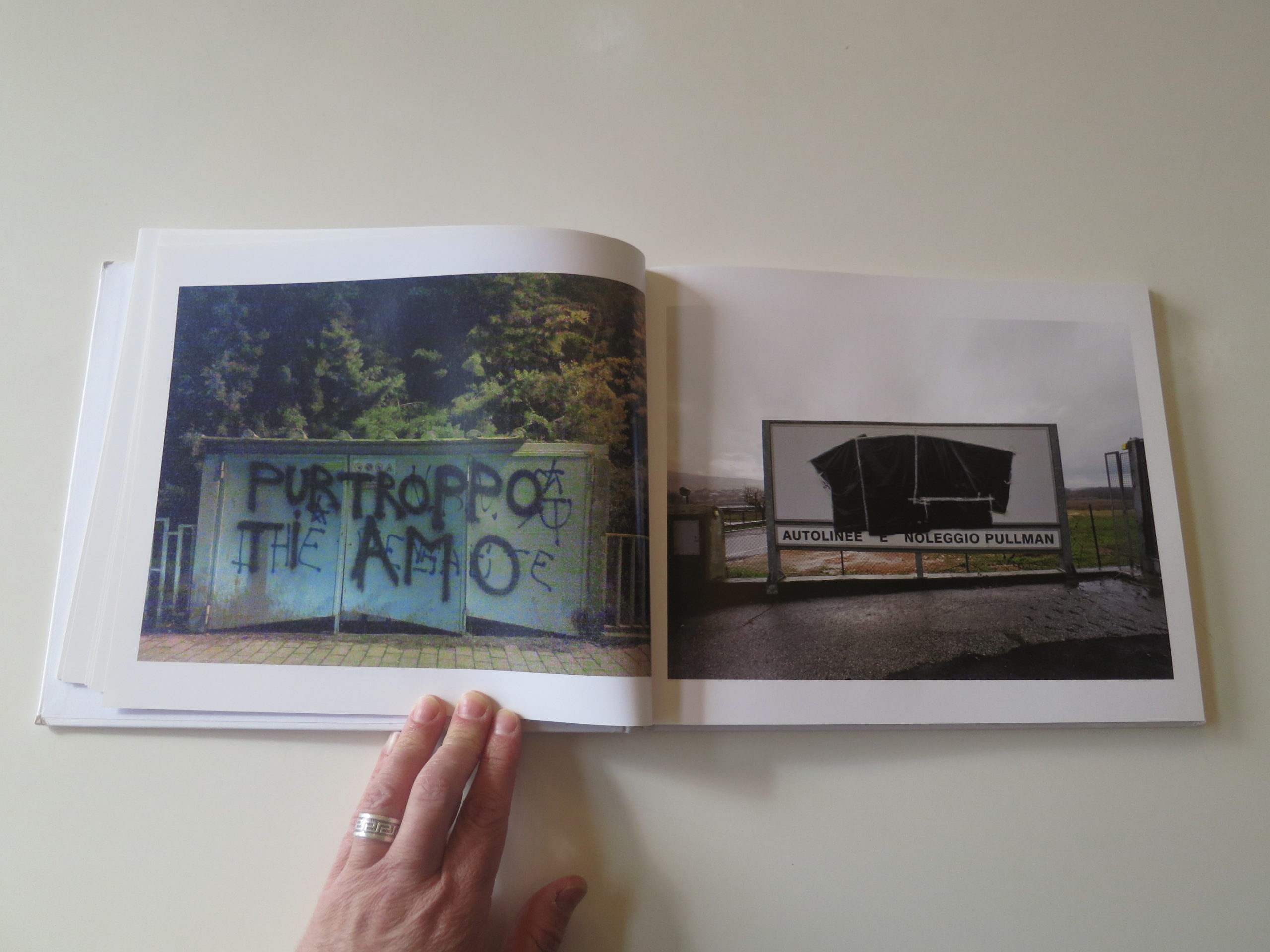
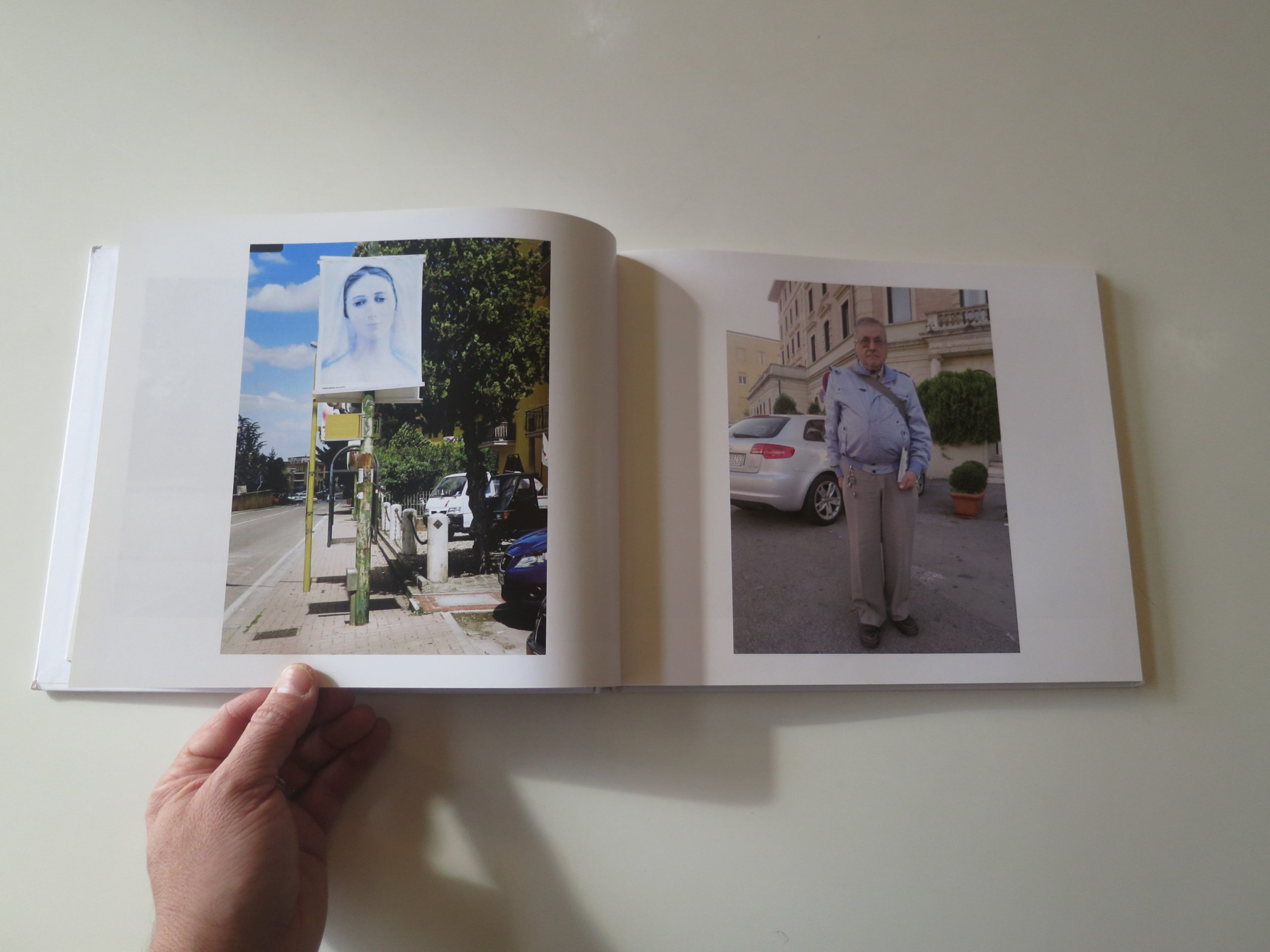
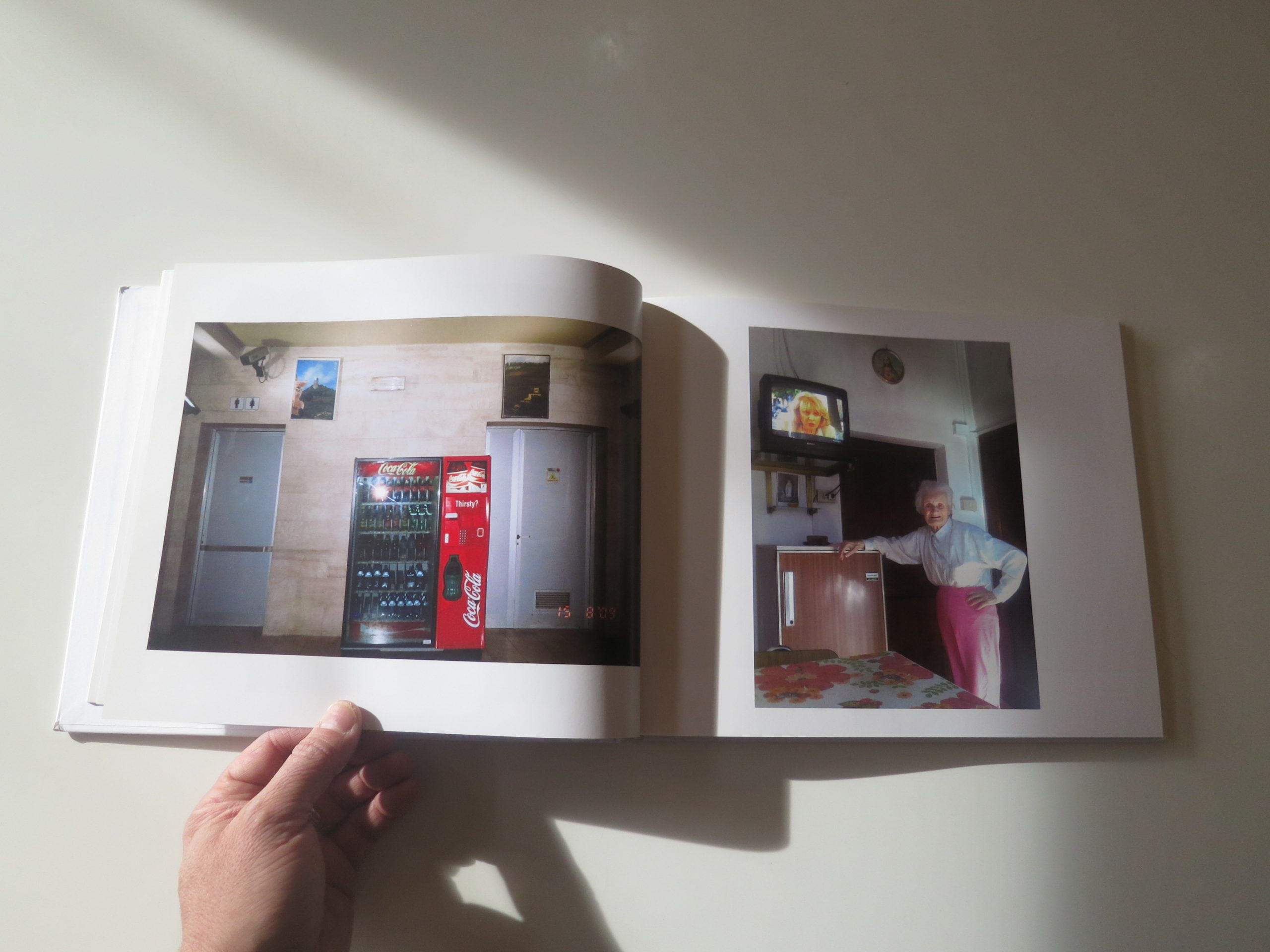
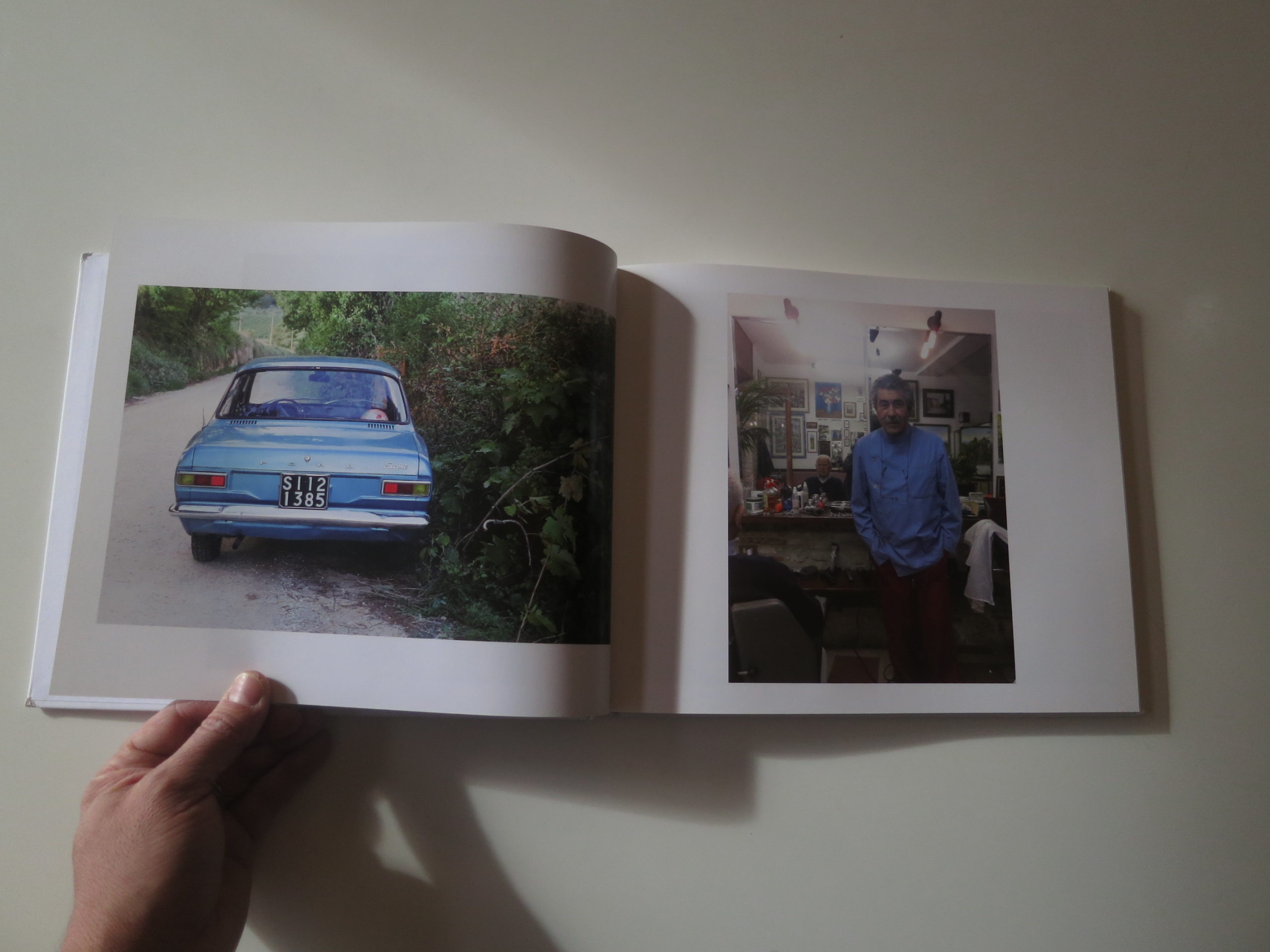
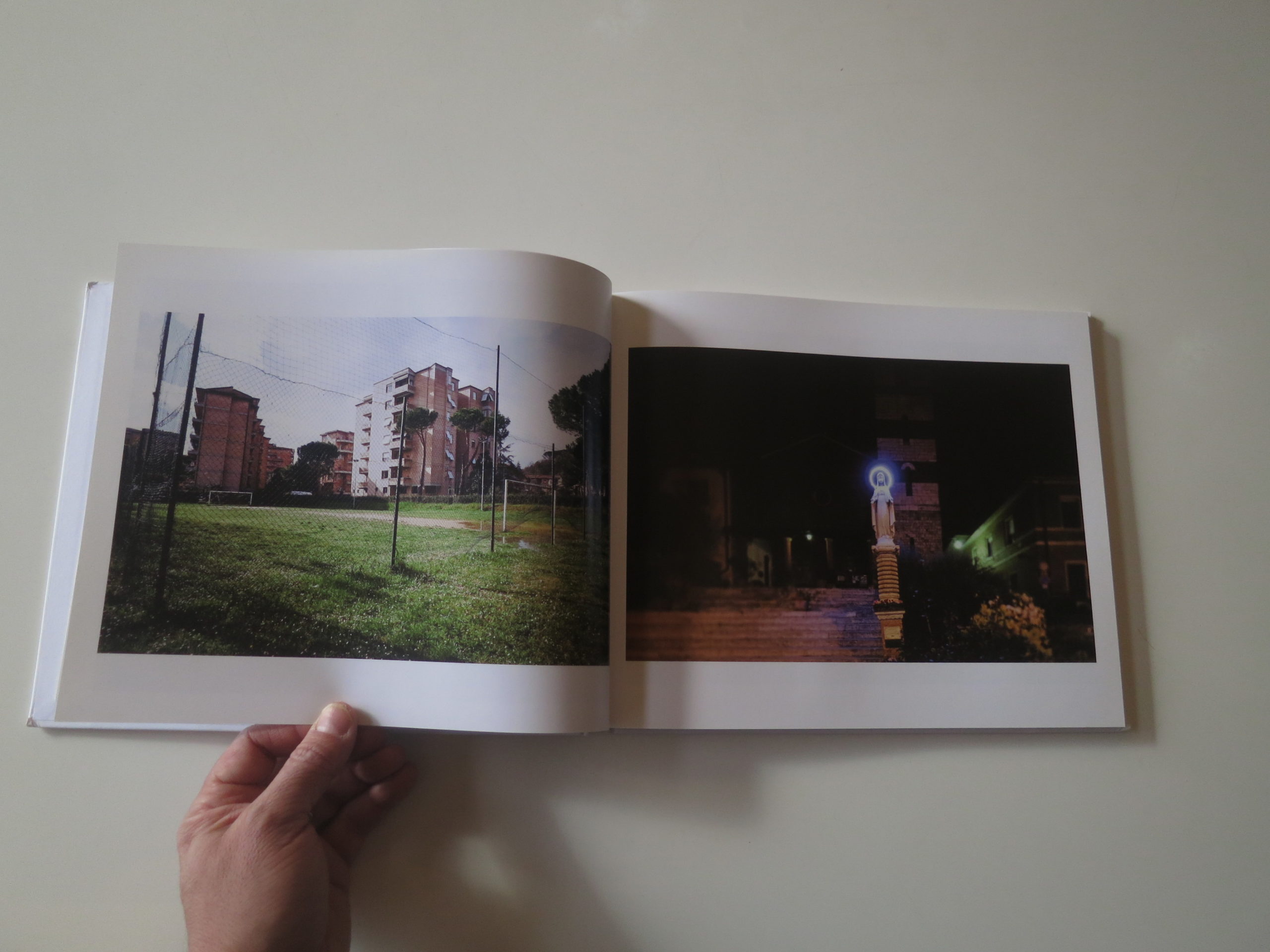
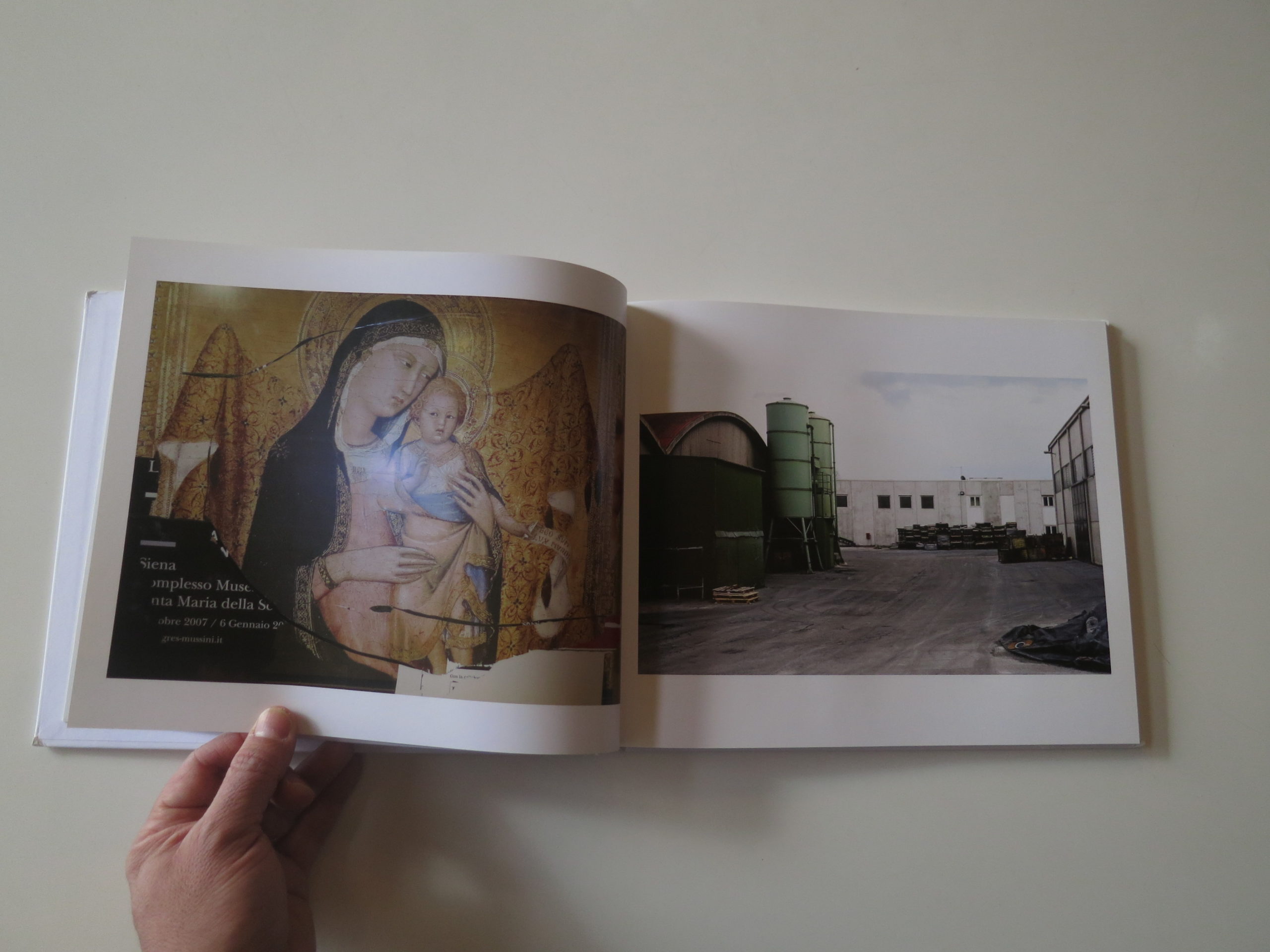
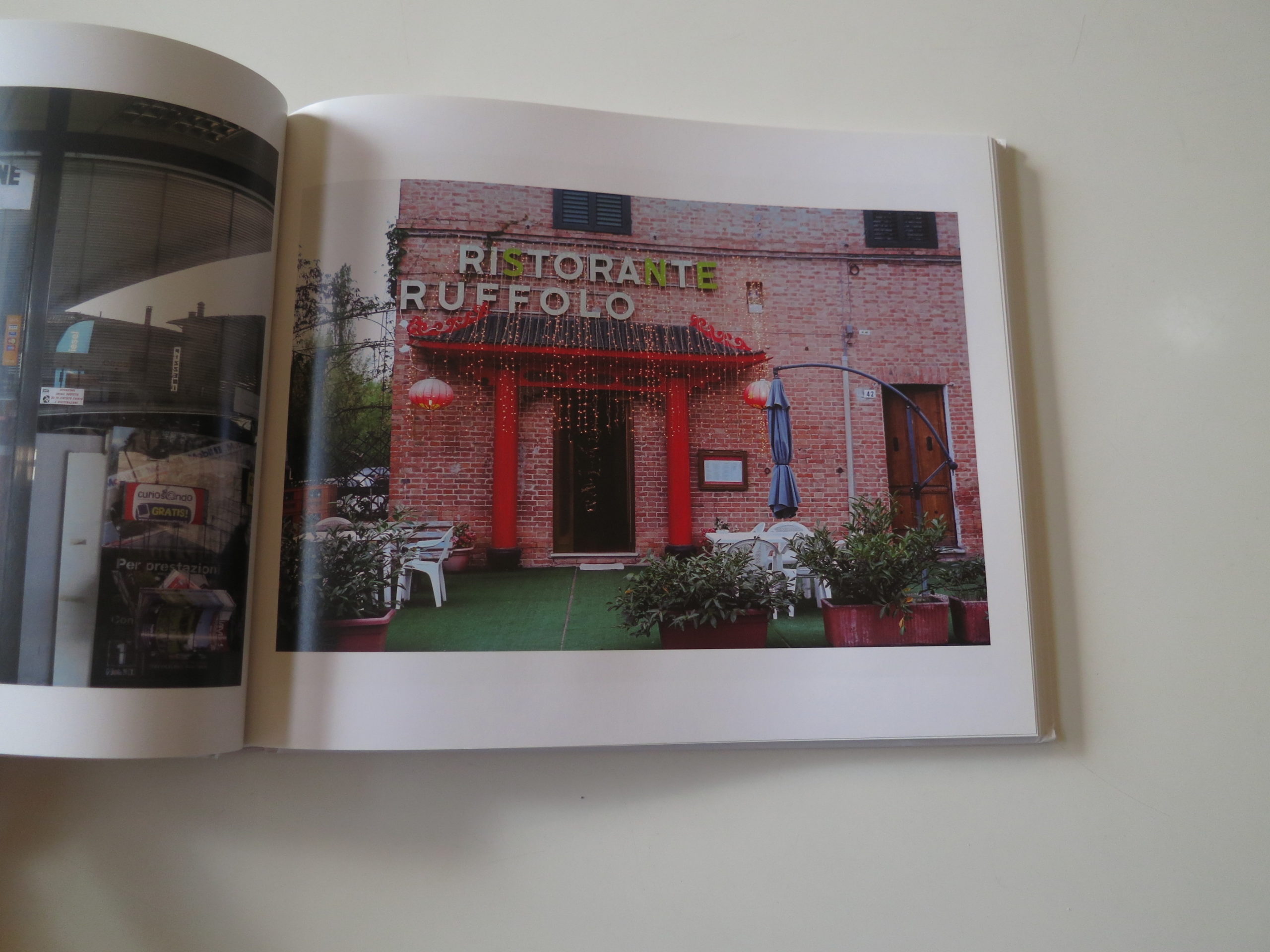
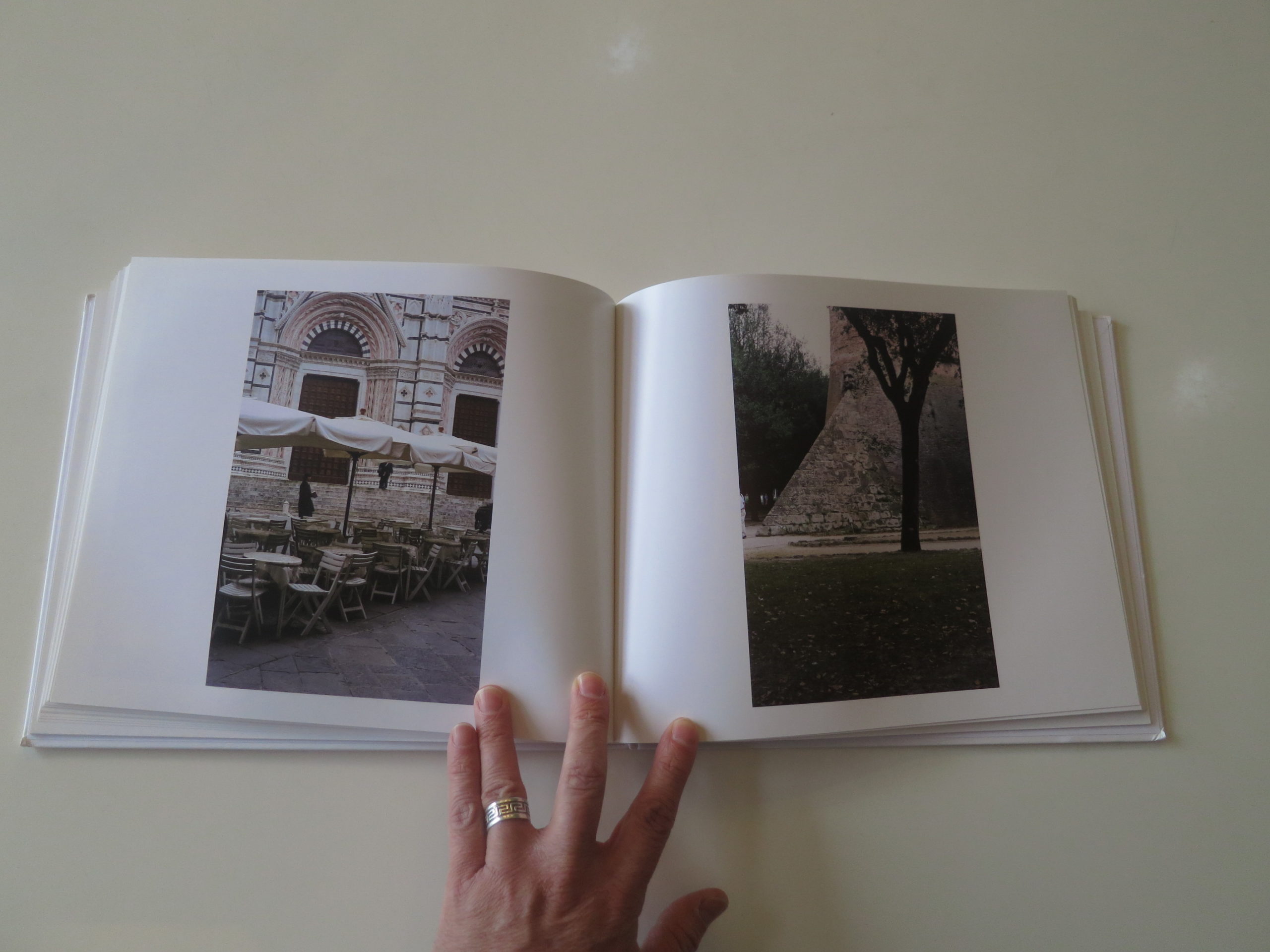
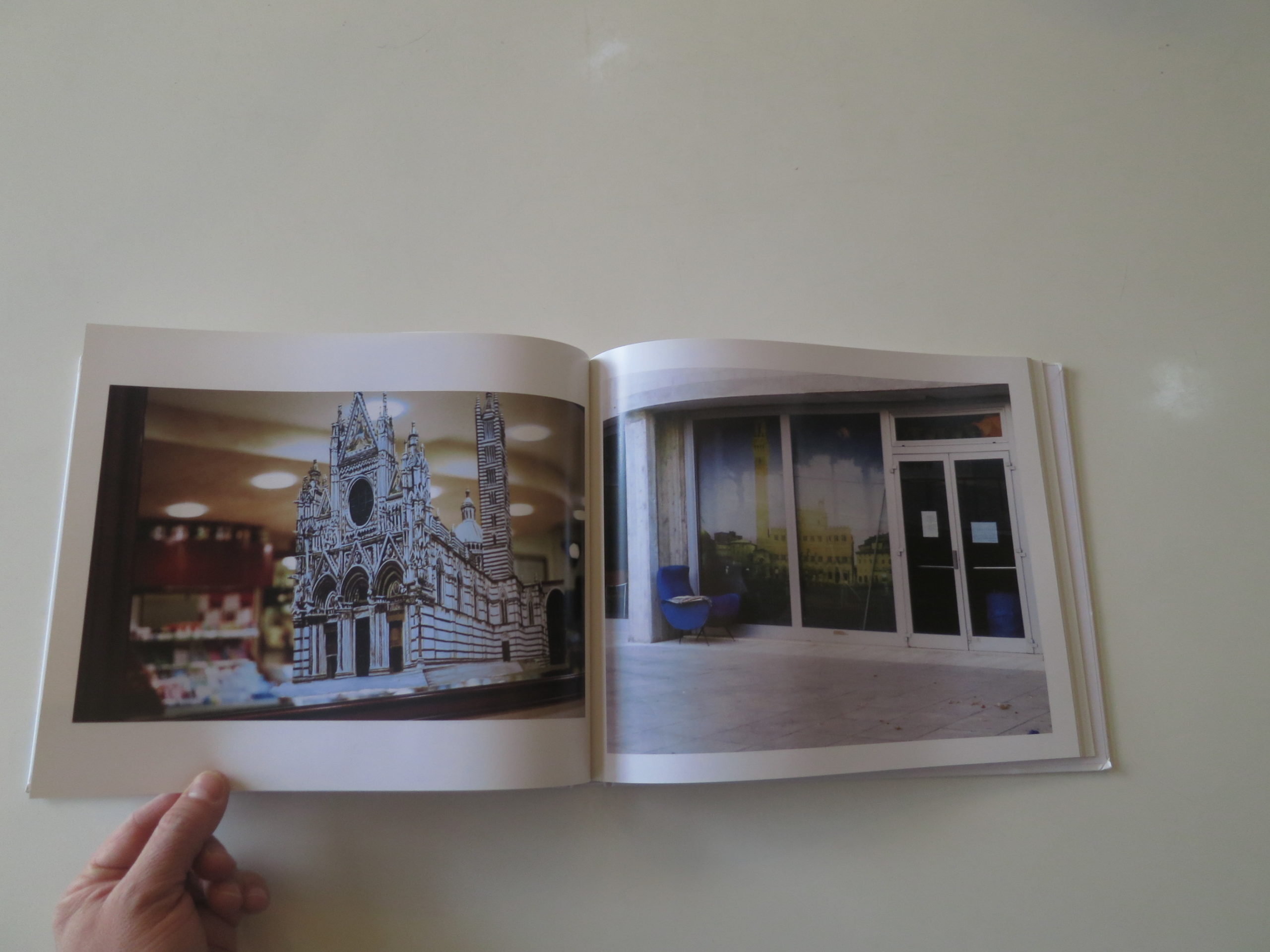
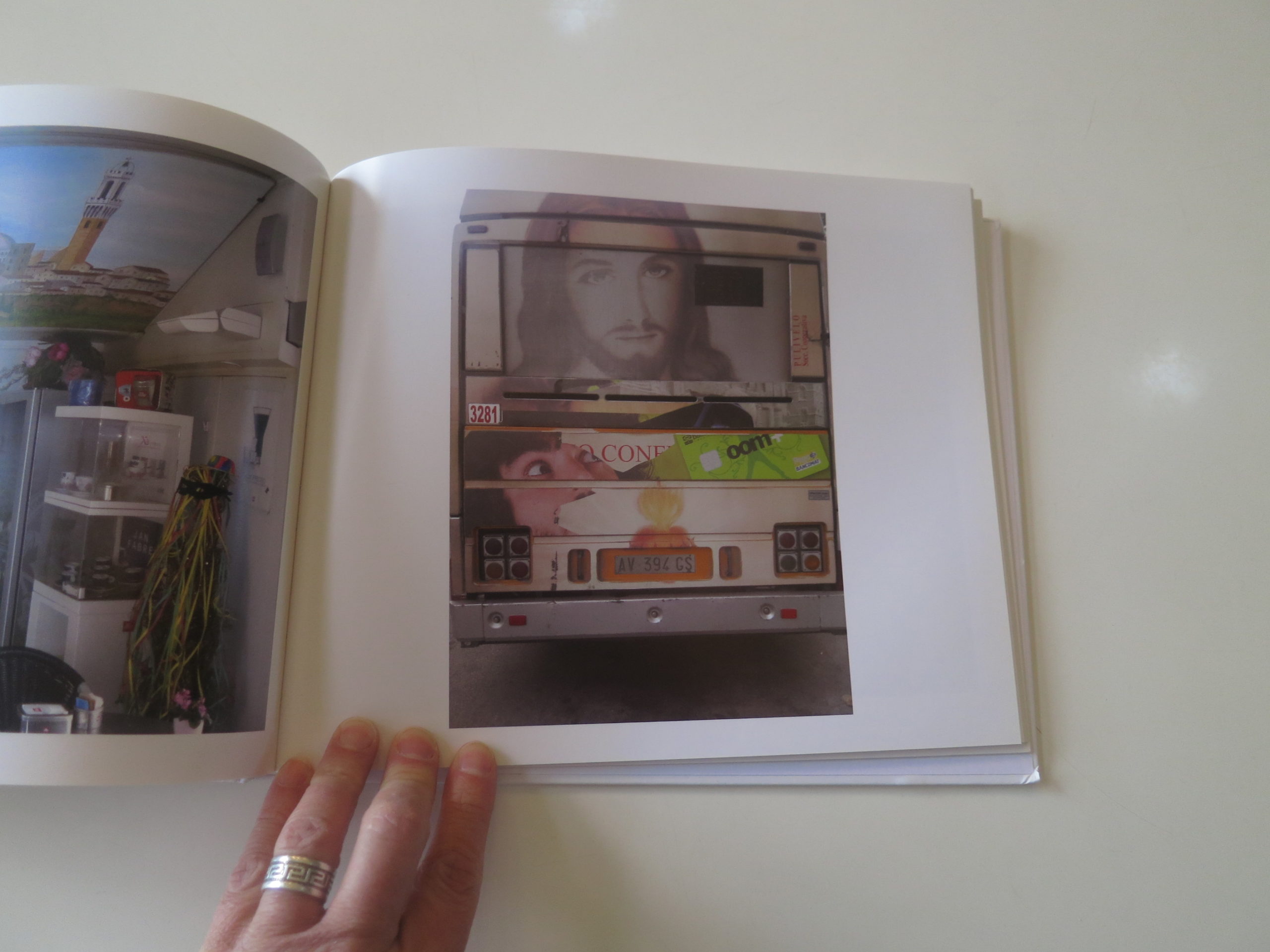
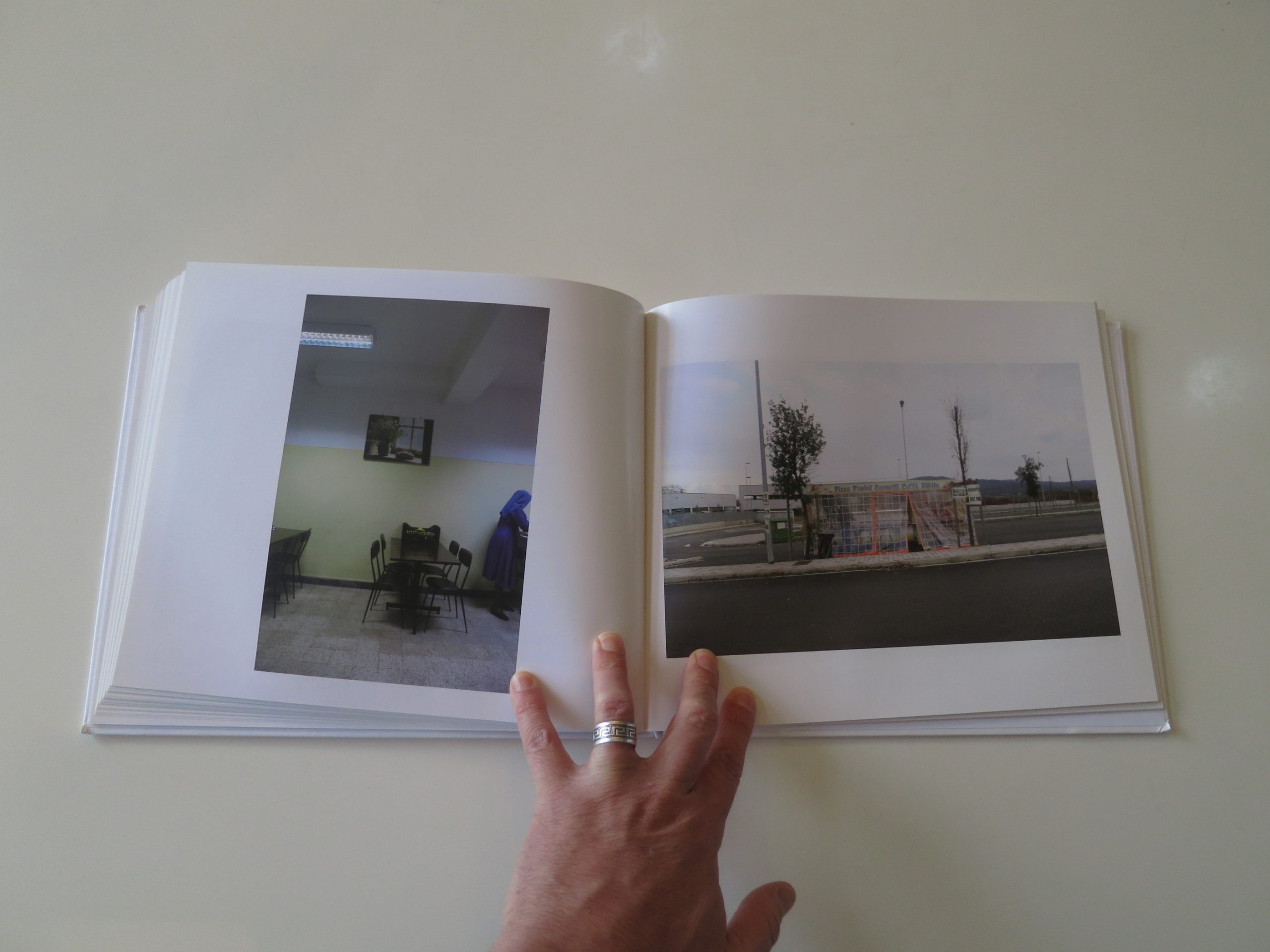
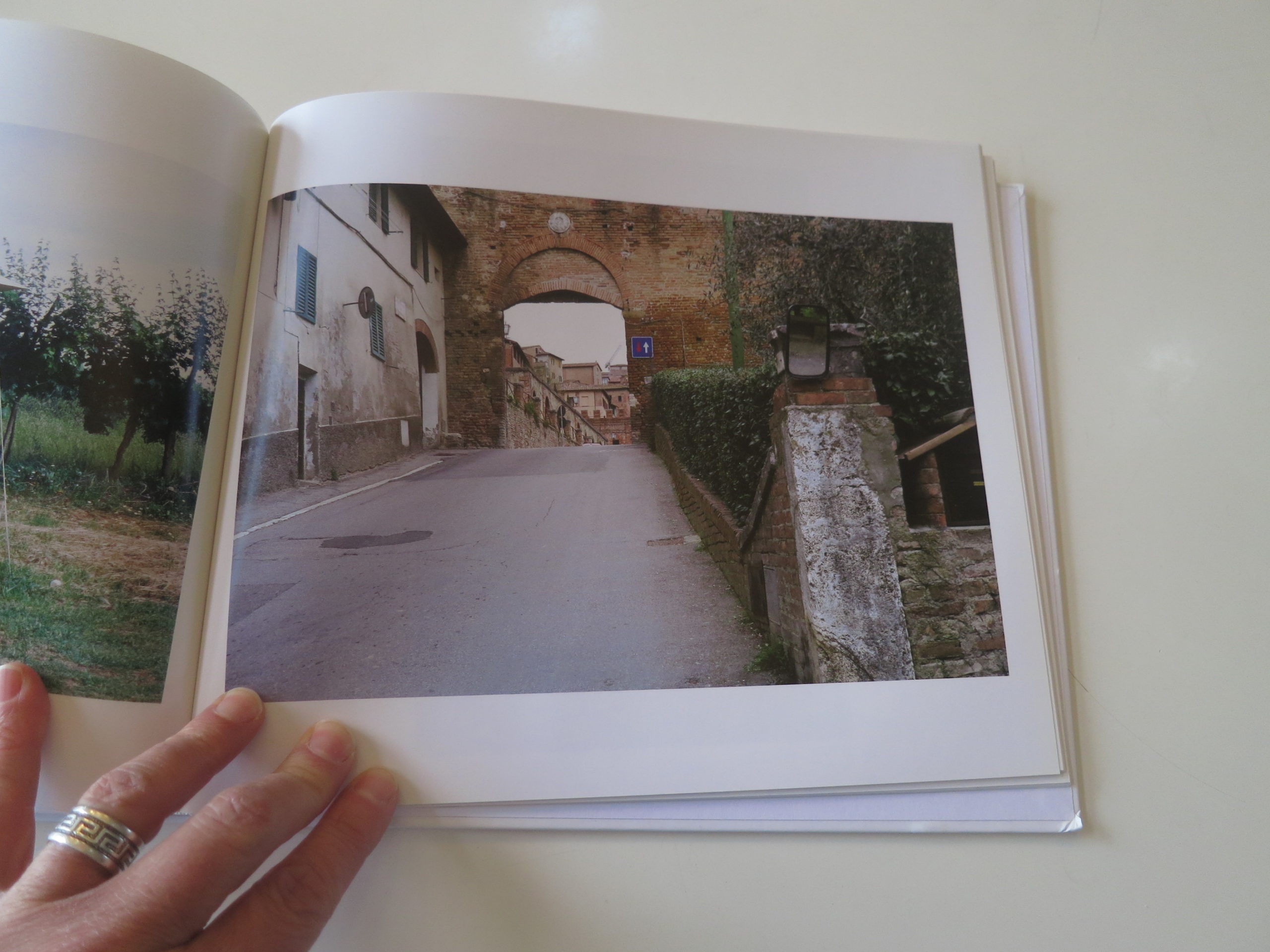
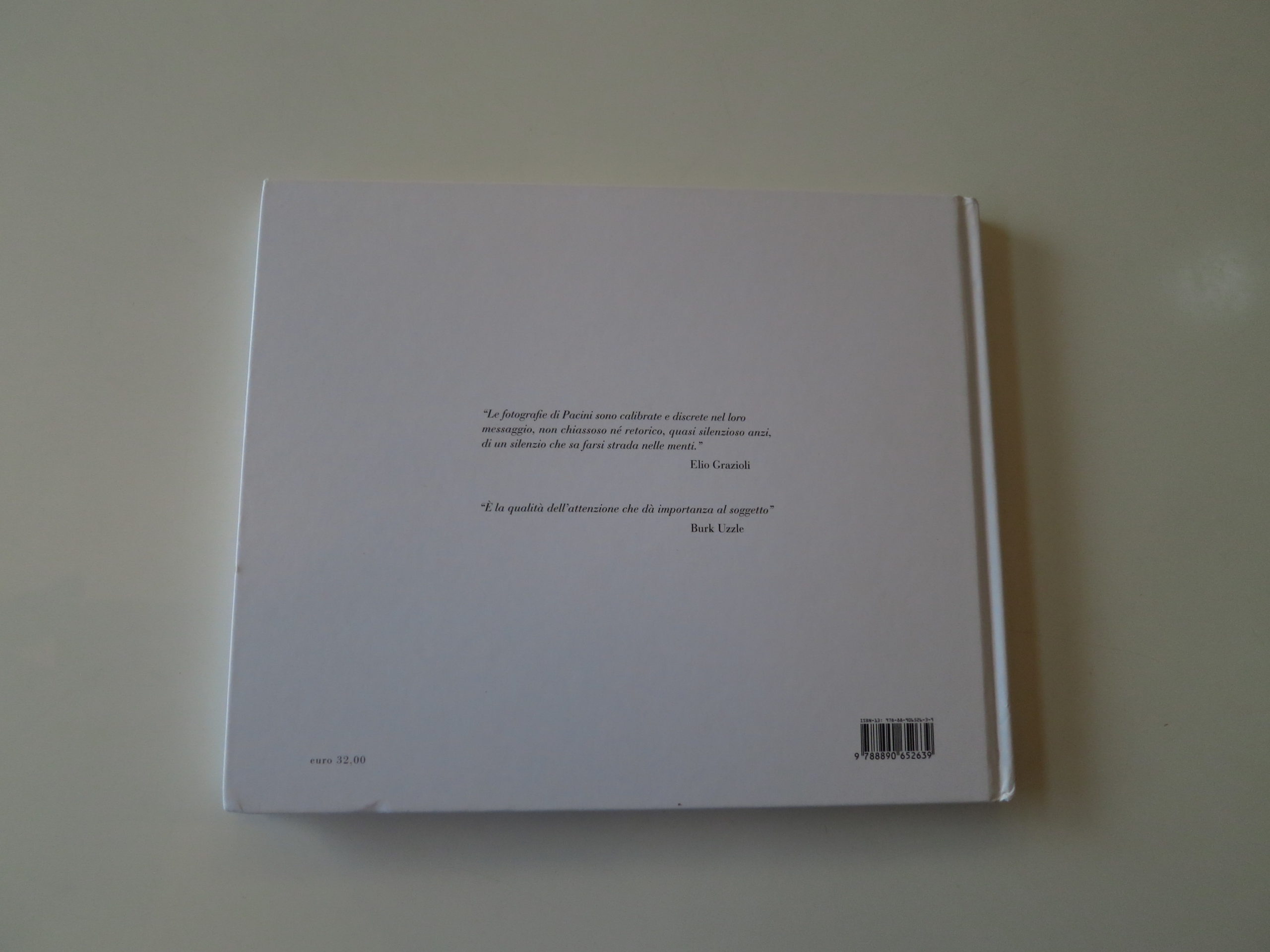
I just got done looking at “Purtroppo Ti Amo,” (Unfortunately, I love you,) a photo-book submitted several years ago, by Federico Pacini in Italy, published by Editrice Quinlan.

(Yes, we’re going there.)

Just now, if I’m being honest, I’ve realized part of my coping mechanism has been to tamp down my heart. To lock away my vulnerability. I’ve put up the chest shield, and protected the emotions, because though I cried before leaving for Amsterdam, I haven’t cried since coming home.

All those poor people in Italy, suffering.

Dying alone.

Losing loved ones, no funerals, all the dread, all the death.

I lived in Rome for a seminal time in my life, and it made me an artist. Then I went back, in 1998, and made street photographs of the elderly culture, as old people were engaged and active in a way I’d never seen before.

Riding scooters, shopping with vigor, doing the passagiatta.


Why have I not cried for their loss?

You might get choked up when you see these pictures below, because it’s just too hard not to view them in the new context.

And what are they?

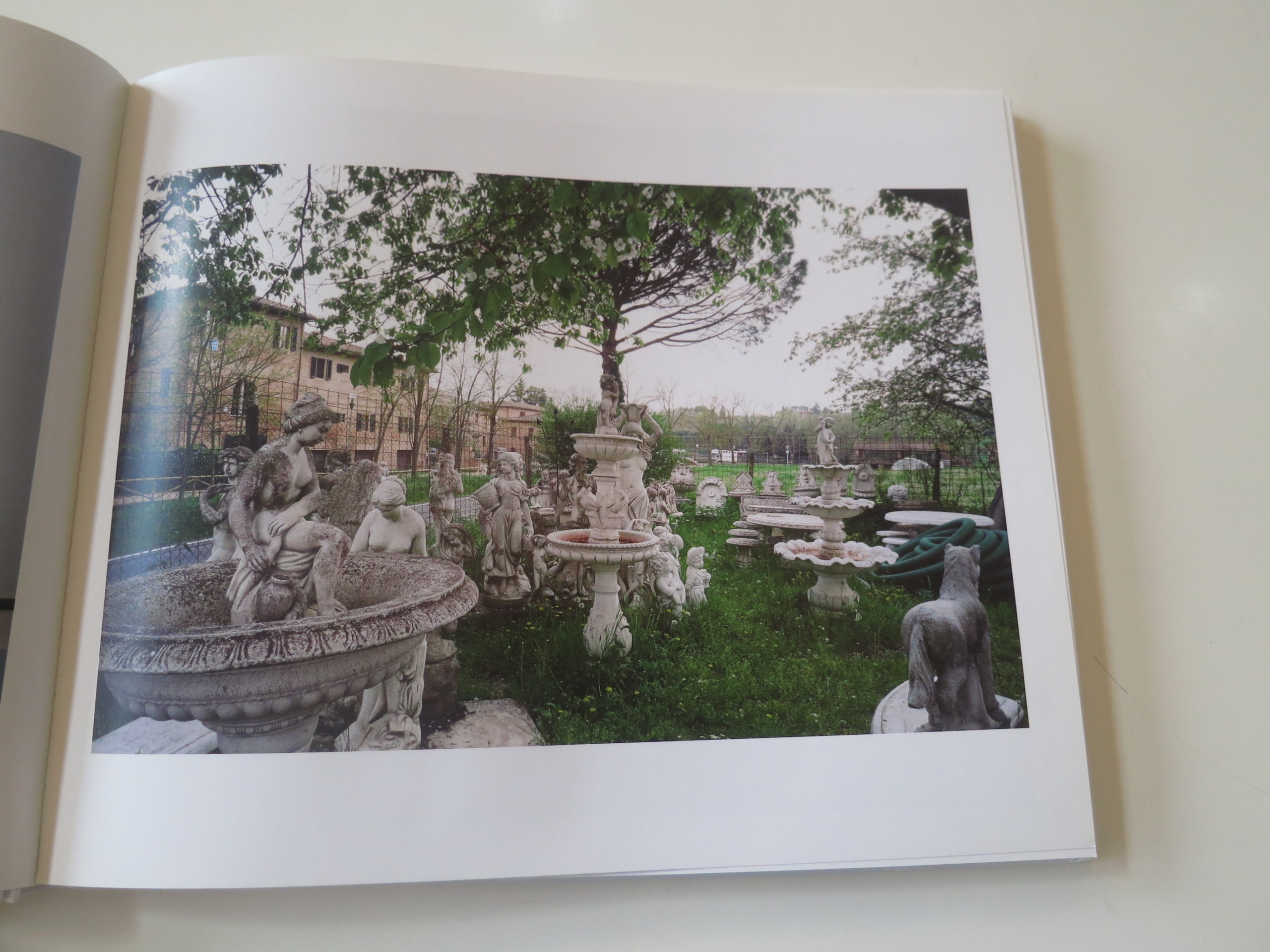
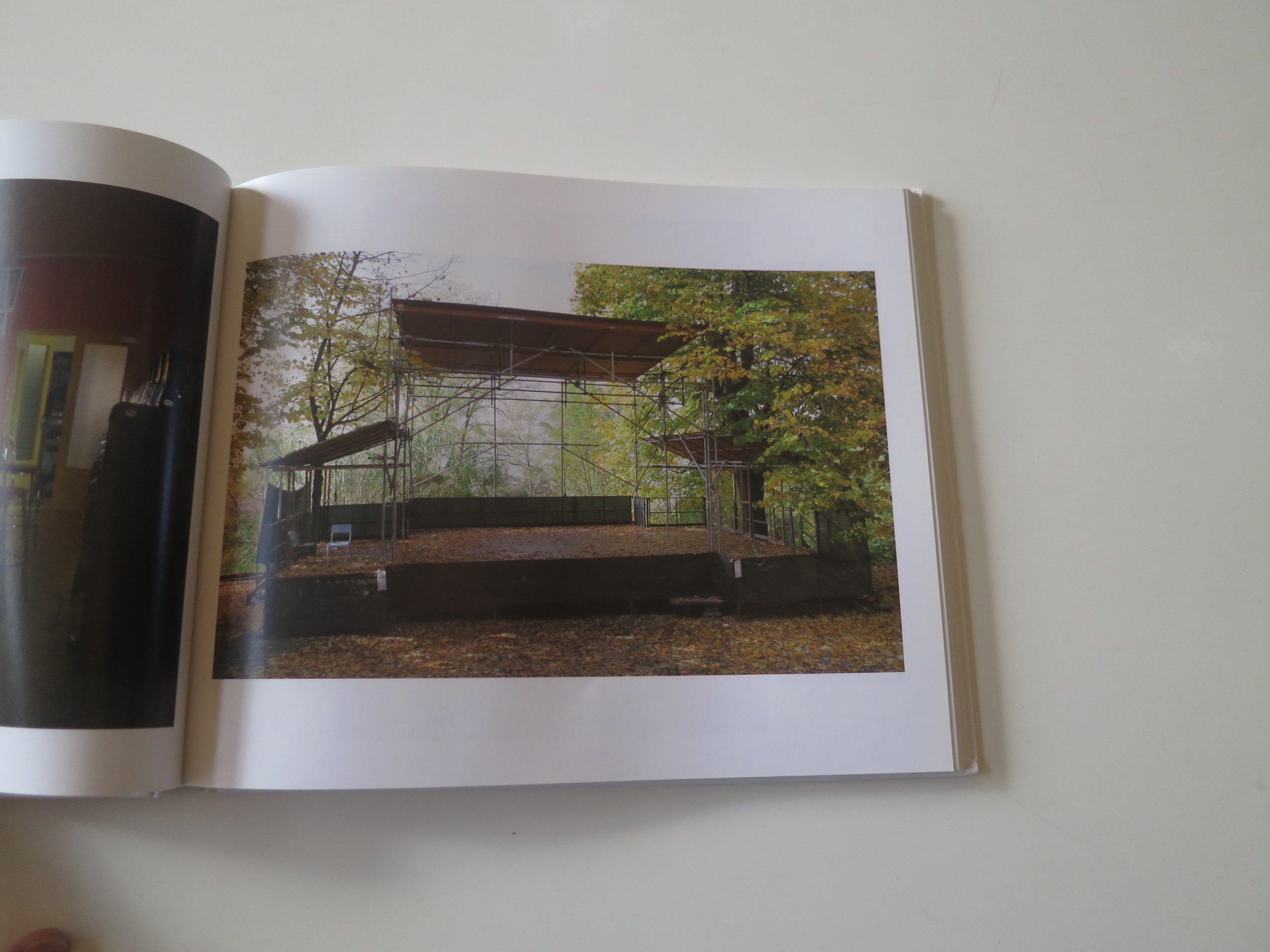
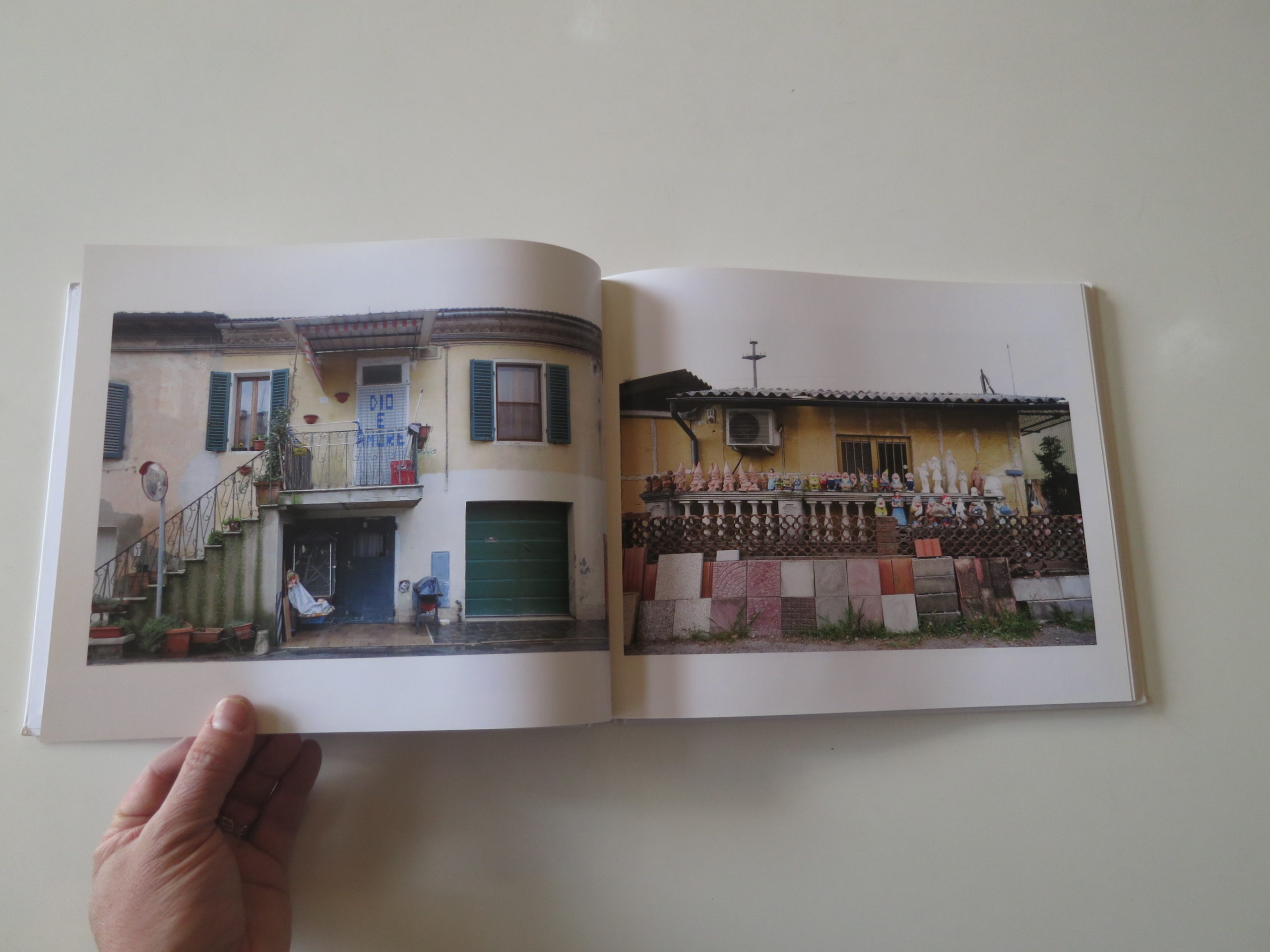
The entire book, near as I can tell, was shot in and around the artist’s hometown of Siena. A place, famed as any for its beauty, in the architecture and surrounding Tuscan countryside.

If most of us wanted to idealize a locale’s beauty, we might go with a place like Tuscany.

But that’s not what we see in this book.

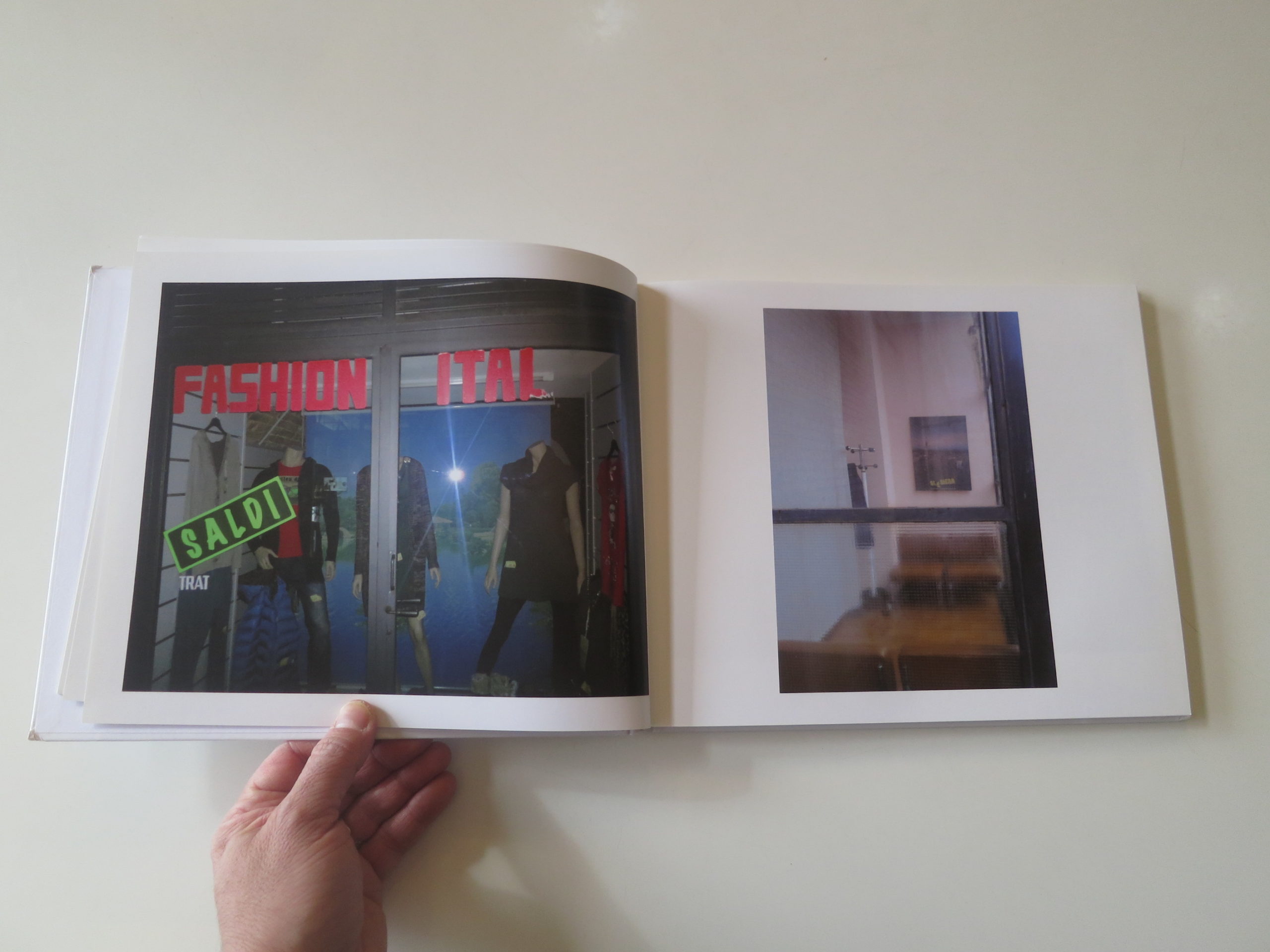
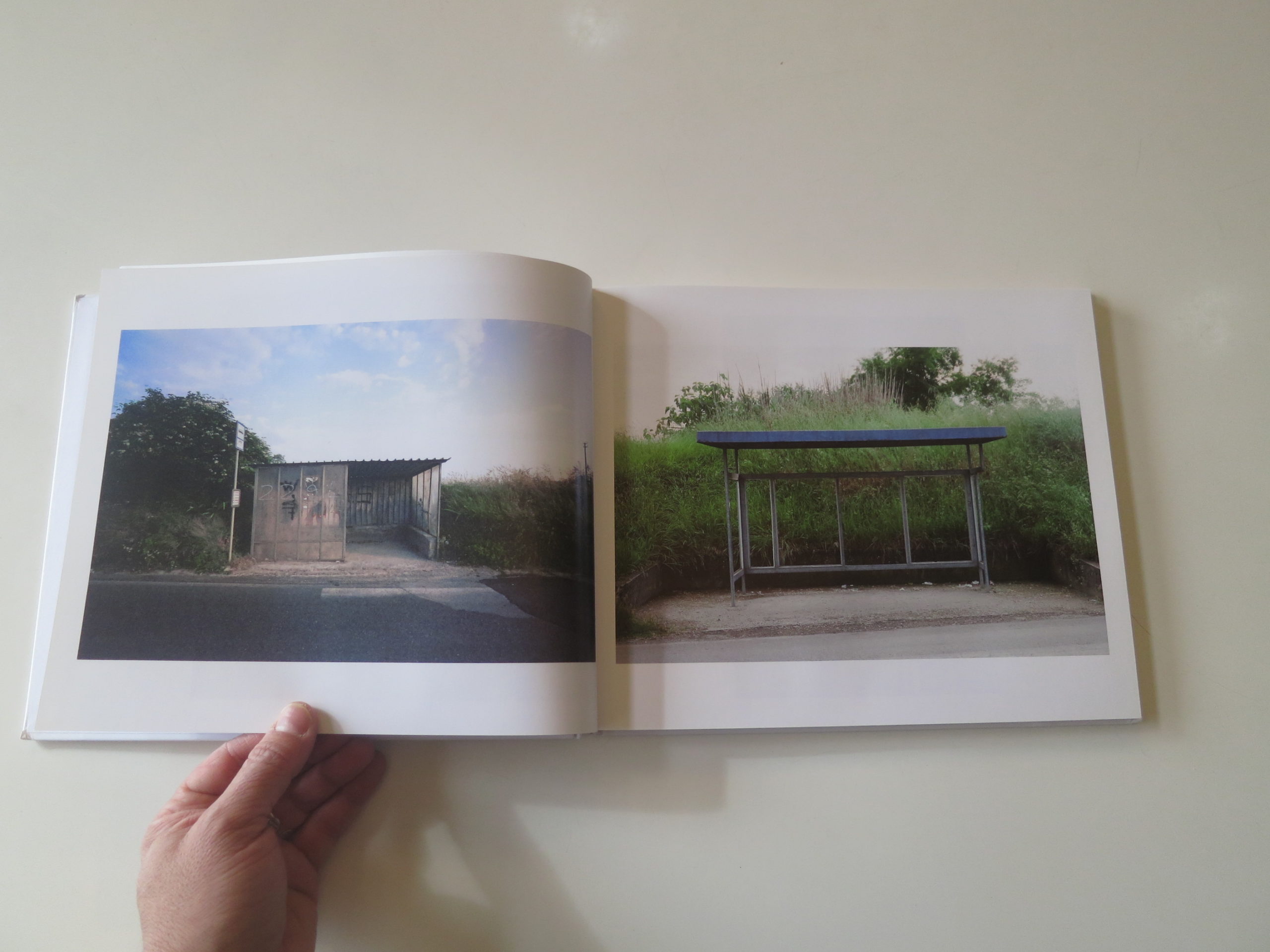
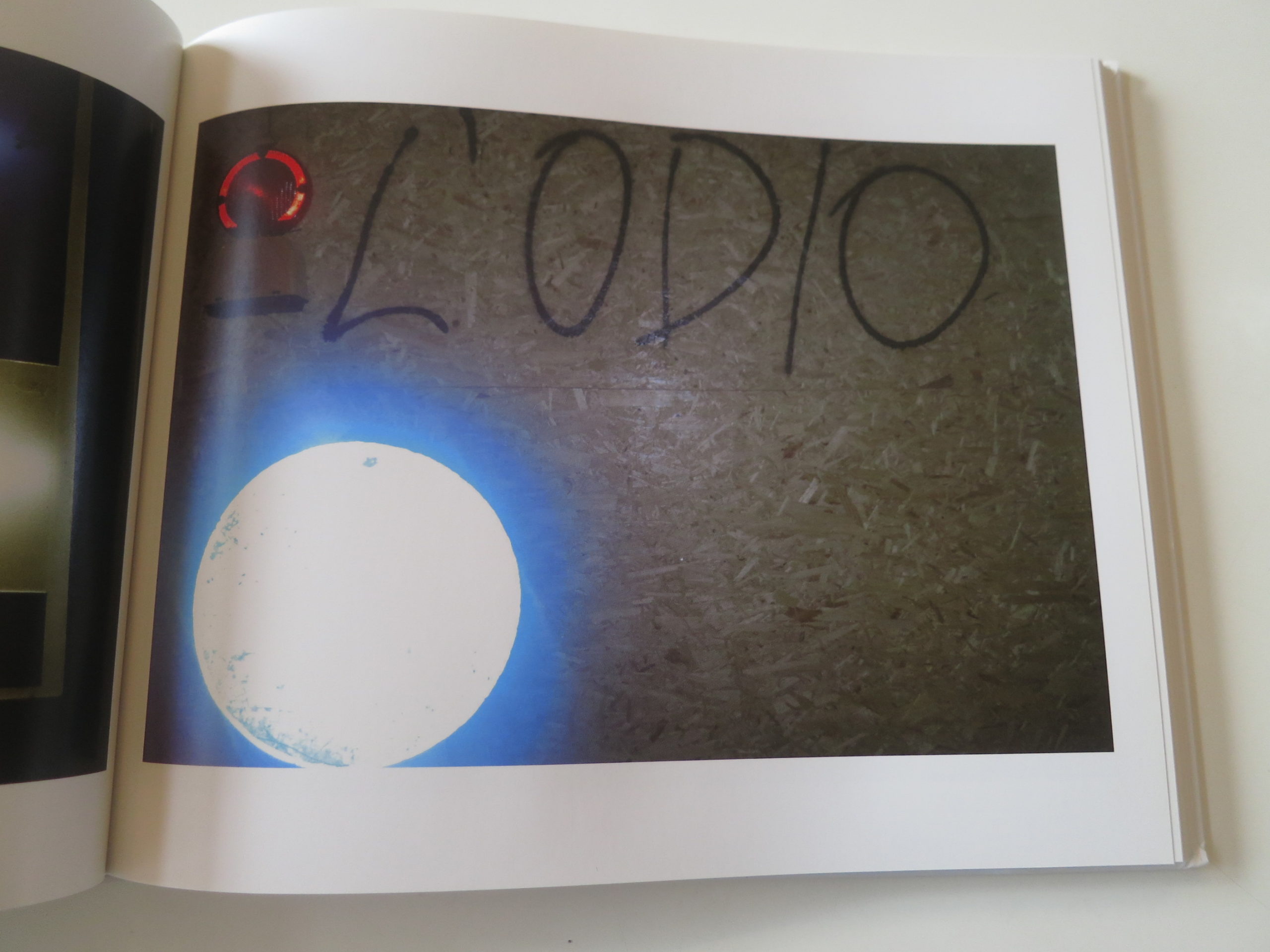
Photograph after photograph of bleak, banal, real places. It is Italy, but not the Italy we’re accustomed to. This is all anti-aesthetic, no pretty.

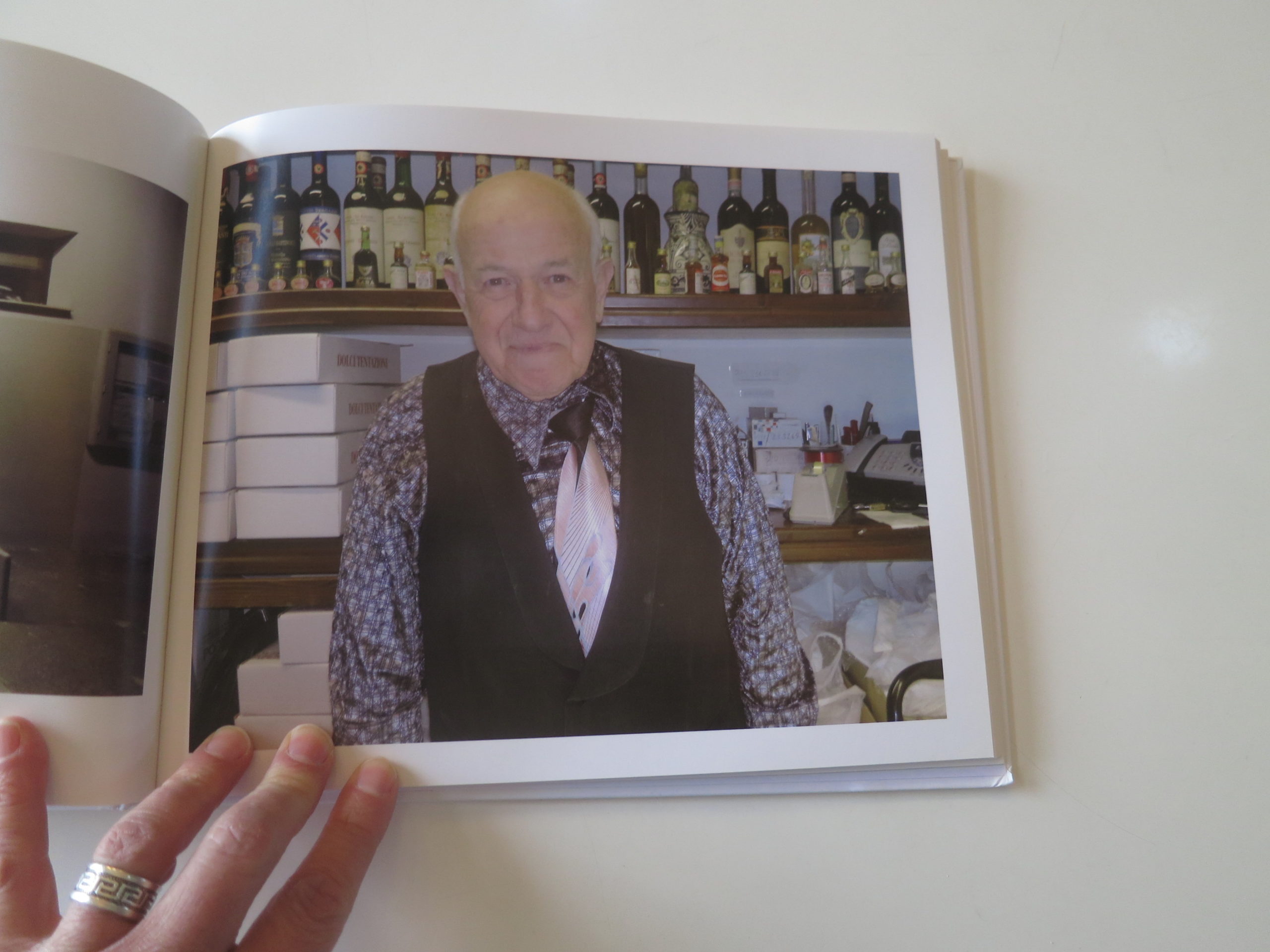
When people do show up, and it’s rare, they’re often elderly. And when was the book made?

2013.

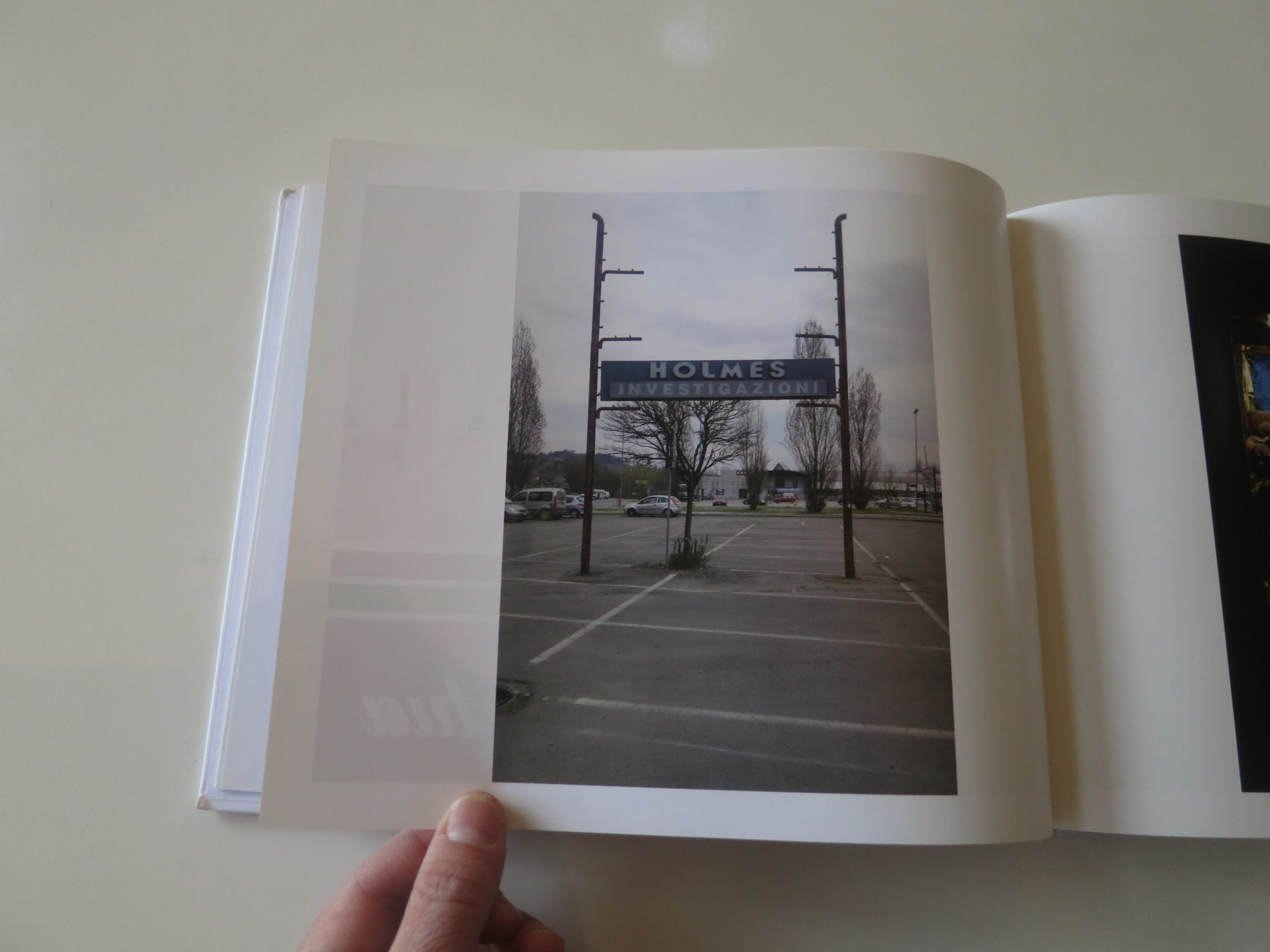
We see porn DVD’s and old parking lots. Miley Cyrus posters, and suave barbers.

But most of it is empty.
And sad.

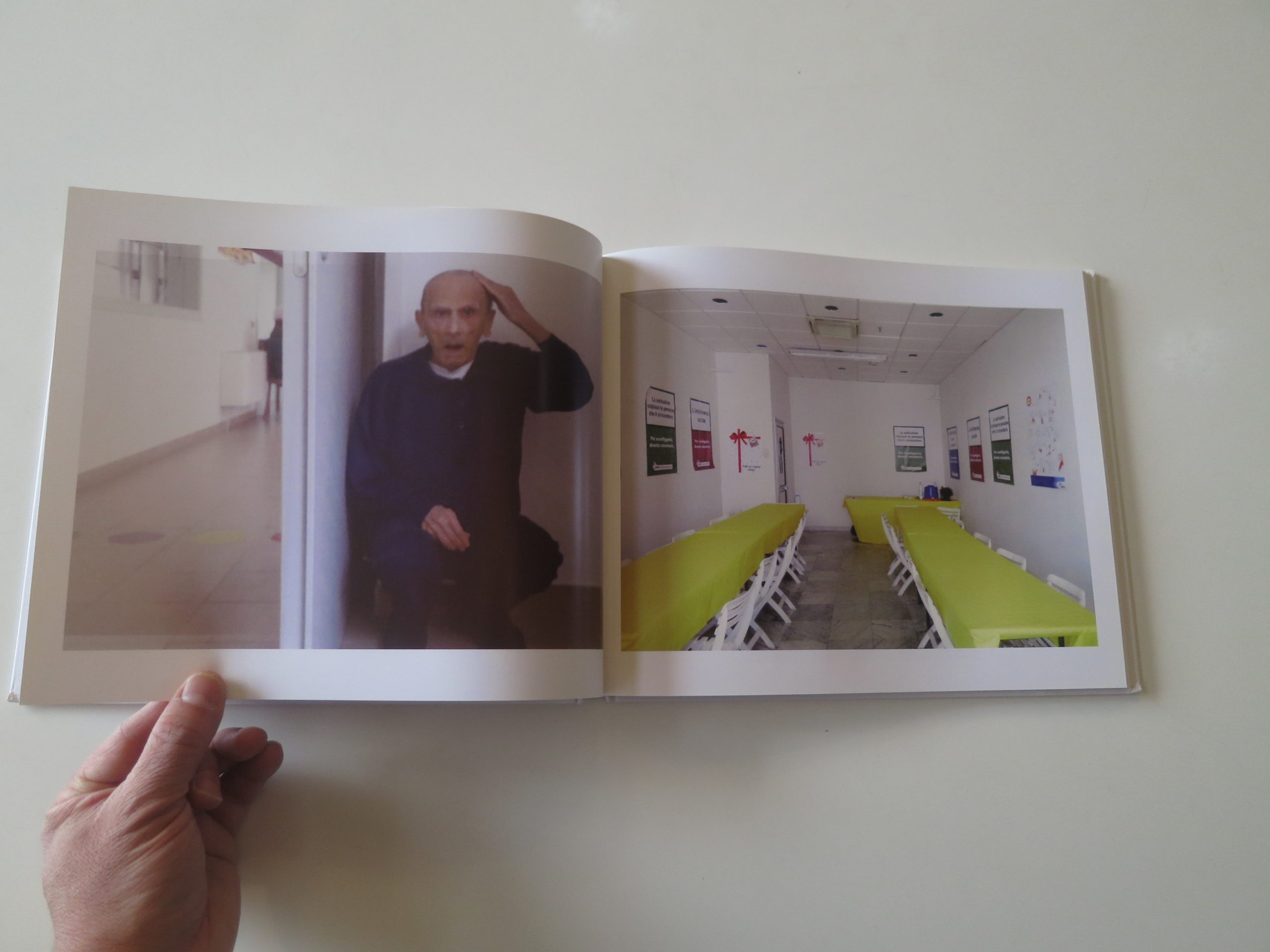
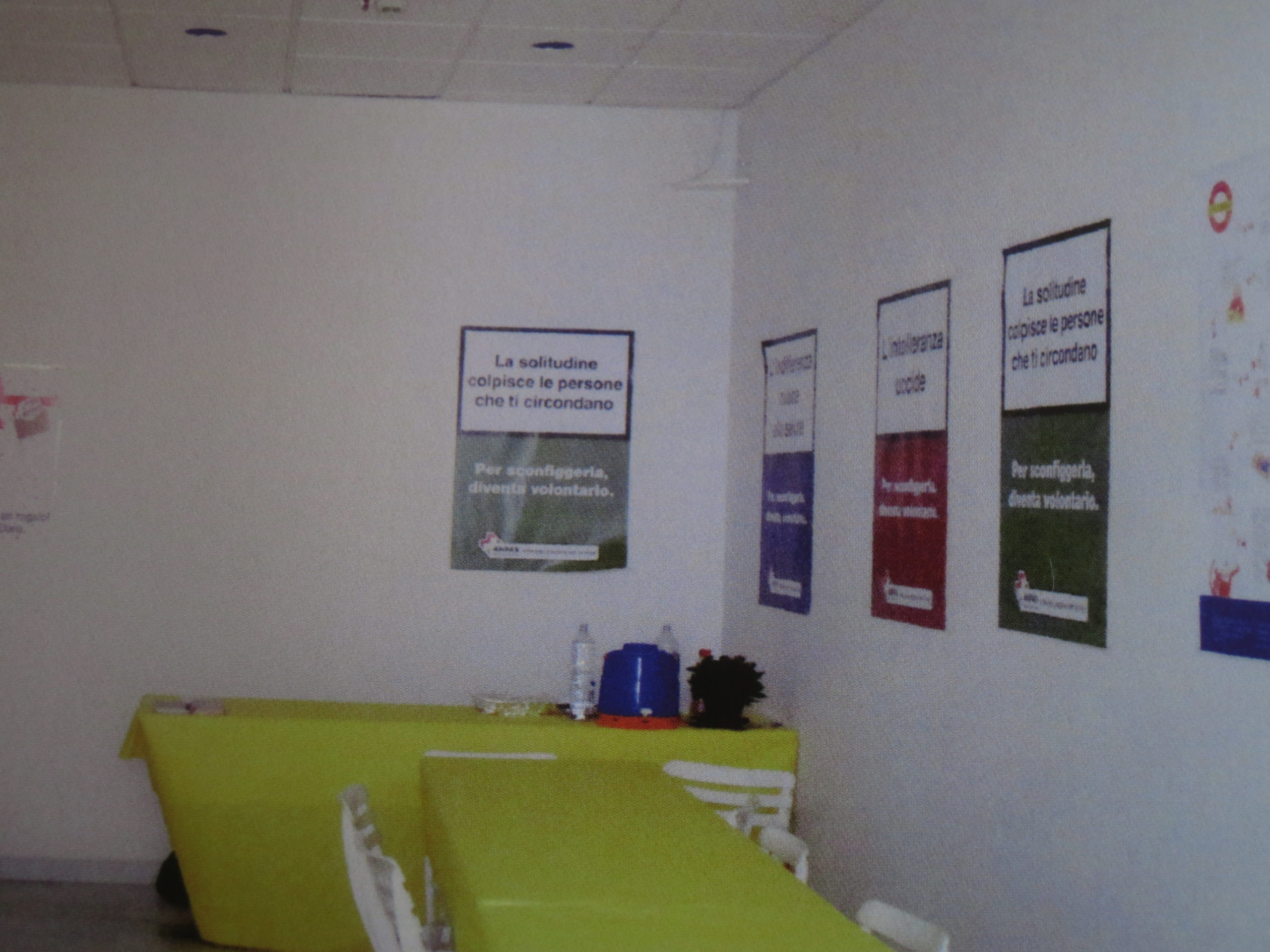
About 1/3 of the way through, on the left hand page, we see a low-res image of an old man, looking disconcerted. On the right, an empty room, maybe in a Church basement, community center, or nursing home?

I strain to read one sign, and then translate it. My Italian is rusty, so I turn to Google:

“Le solitudine colpisce le persone che ti circondano,” which means…

“Loneliness affects the people around you.”

How was this book not made 3 days ago?

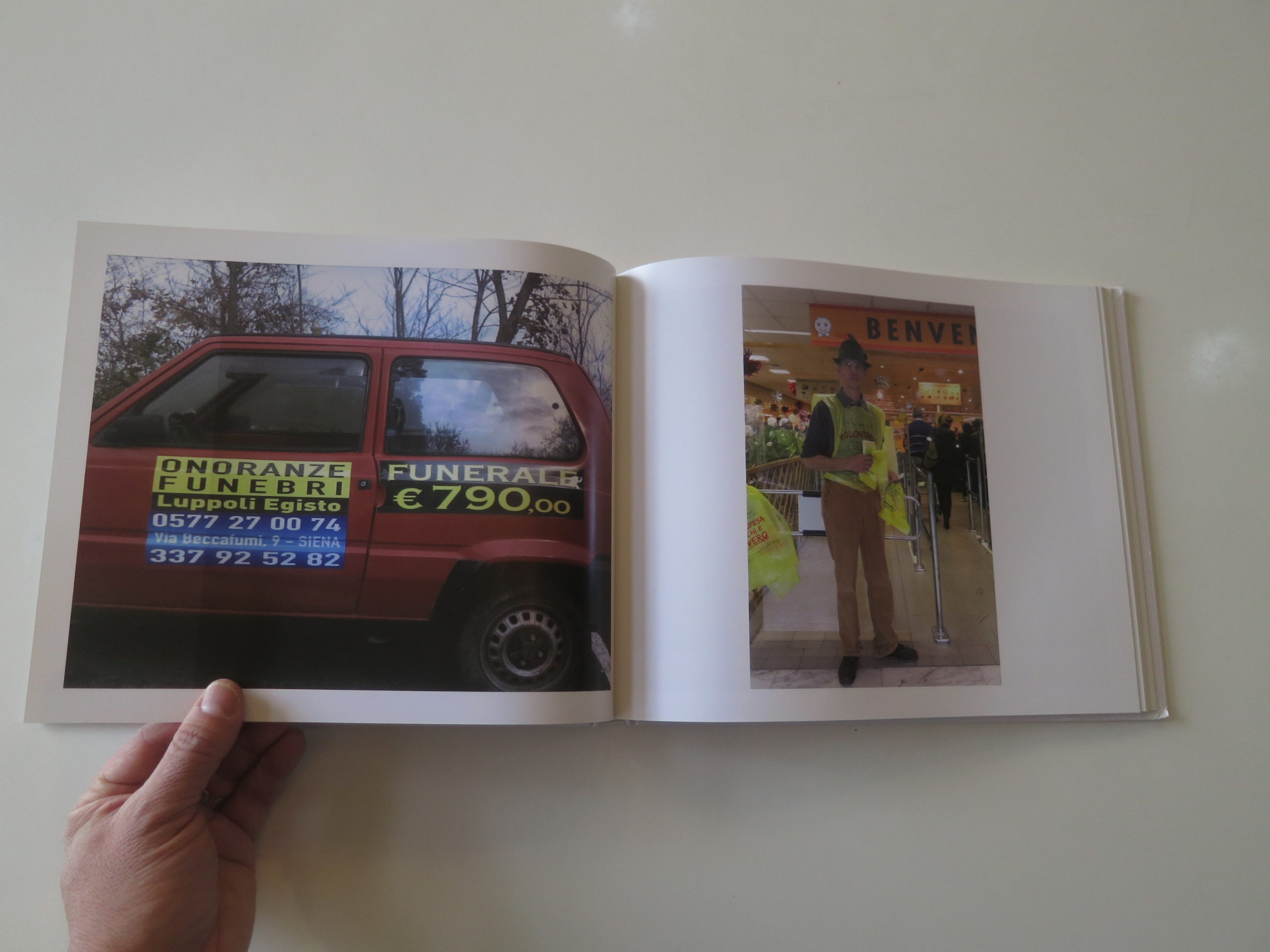
There is a juxtaposition, not much later on, of a small, 2-door-mini-Euro-car with a door-sign advertising funerals, next to a man, in a yellow, plastic volunteer vest, guarding the entrance to a supermarket.

How was this book not made 2 days ago?

There are empty restaurants, empty parks, empty streets.

How was this book not made yesterday?

I’m not sure there’s is much more for me to say about this one. The photographs below will tell the story better, from here on out.

So let’s all think good thoughts for the poor people in Italy and NYC, or New Orleans, Madrid.

We’ll all get through this eventually, so while you’re in the middle of it, don’t forget to make art.

Bottom Line: Bleak vision of empty Siena 

To purchase “Purtroppo Ti Amo,” click here 


If you’d like to submit a book for potential review, please email me directly at jonathanblaustein@gmail.com. We are interested in presenting books from as wide a range of perspectives as possible.
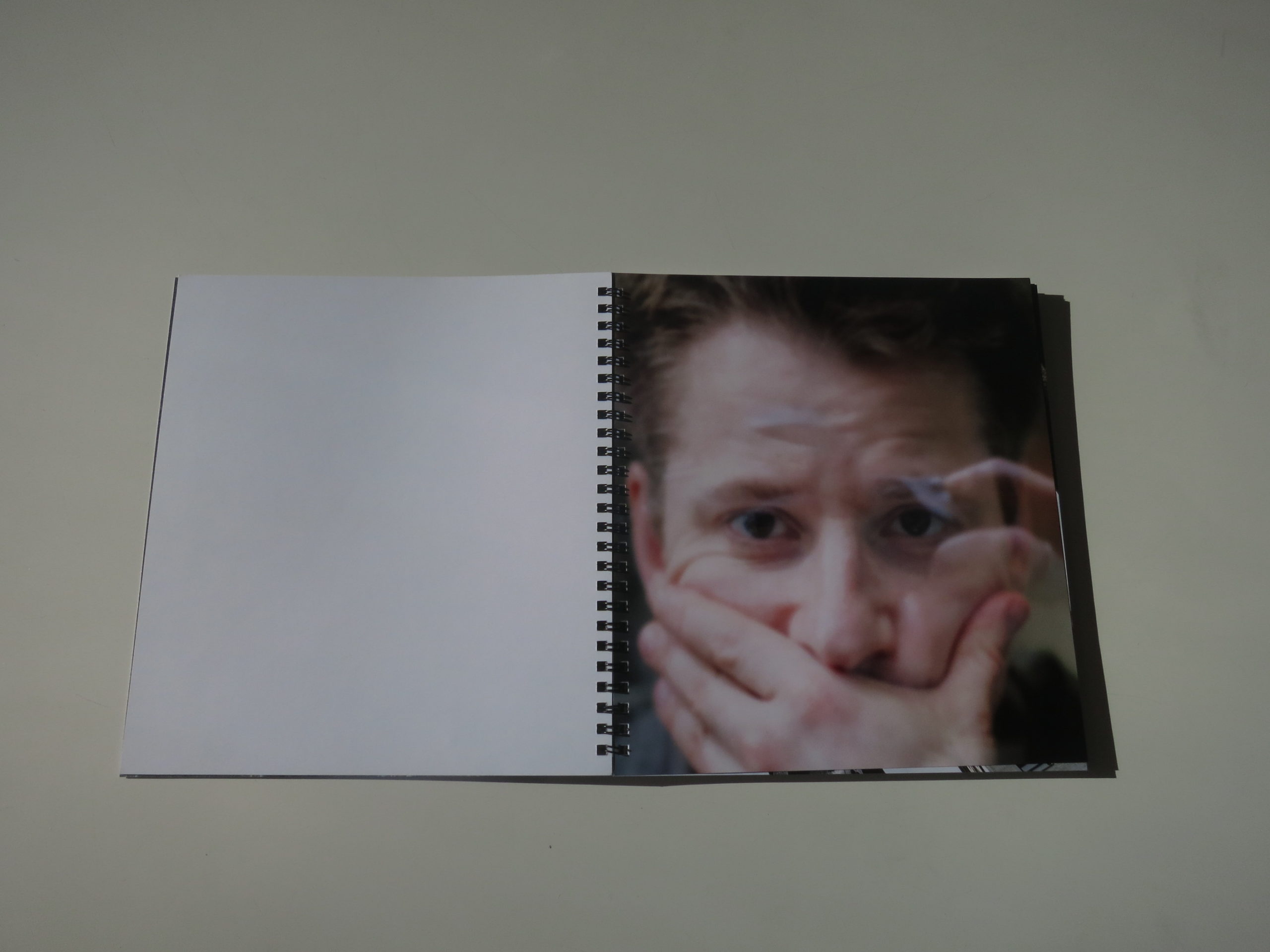
The Art of the Personal Project: Andy Batt

The Art of the Personal Project is a crucial element to let potential buyers see how you think creatively on your own.  I am drawn to personal projects that have an interesting vision or that show something I have never seen before.  In this thread, I’ll include a link to each personal project with the artist statement so you can see more of the project. Please note: This thread is not affiliated with any company; I’m just featuring projects that I find.  Please DO NOT send me your work.  I do not take submissions.
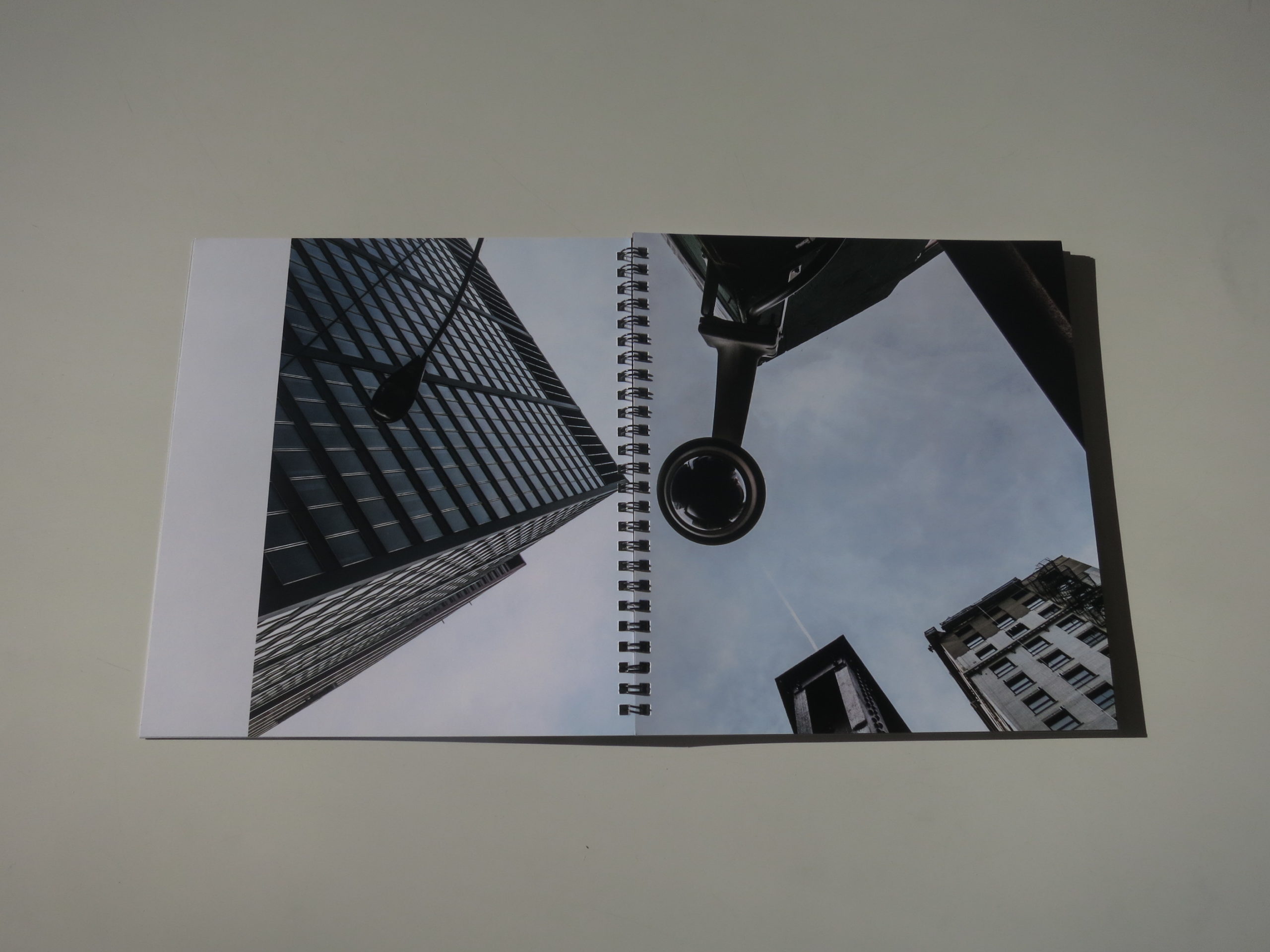
 

Today’s featured artist:  Andy Batt

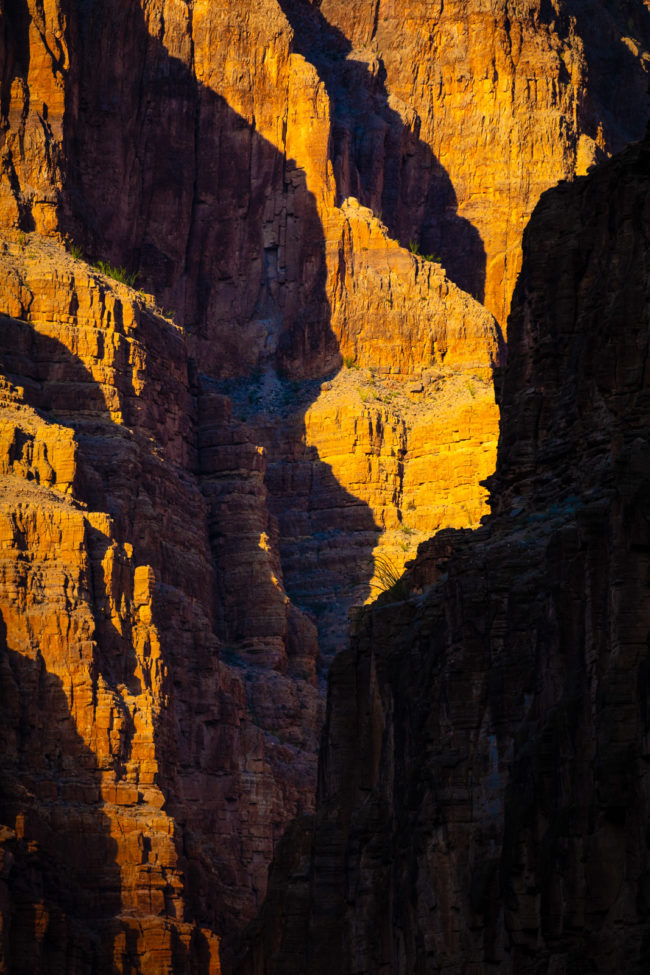
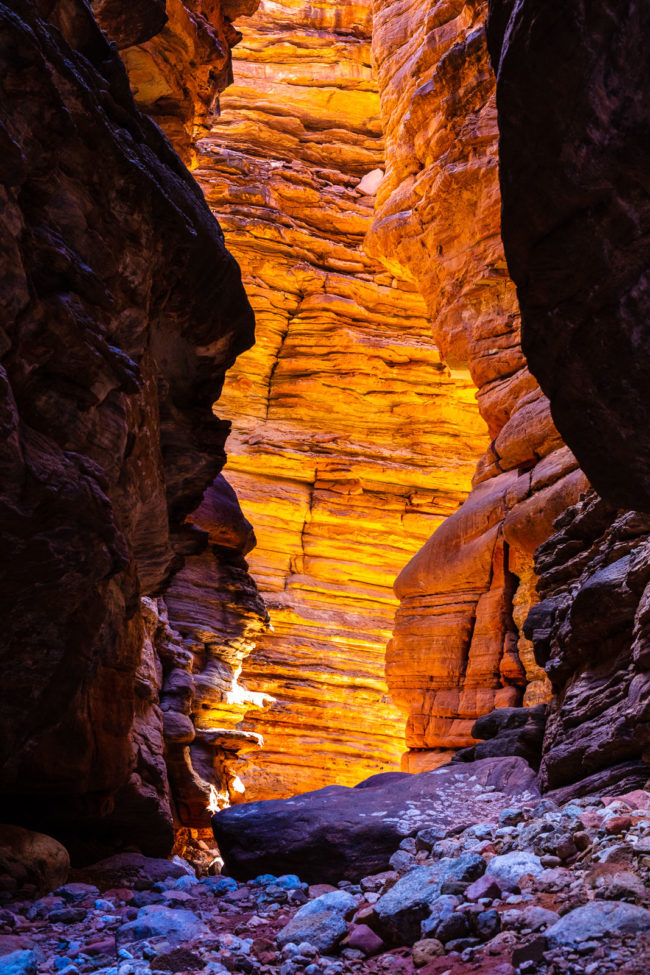
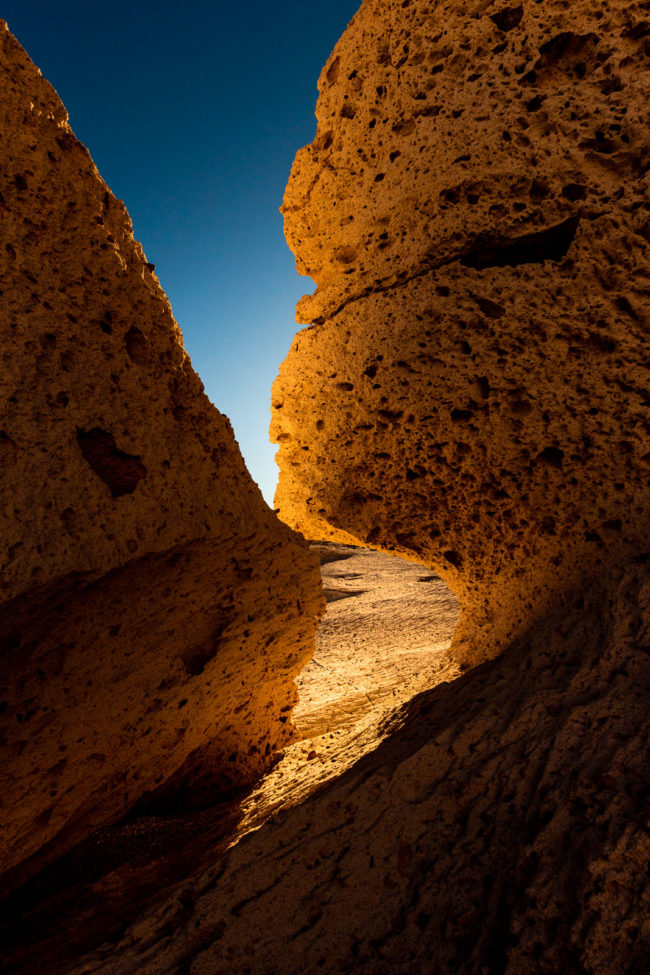
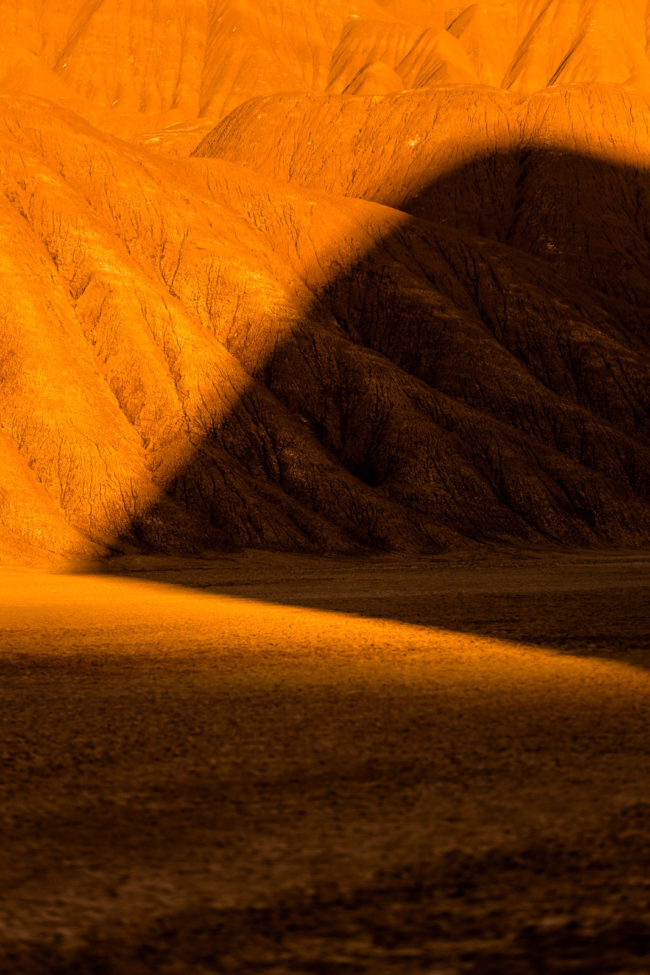
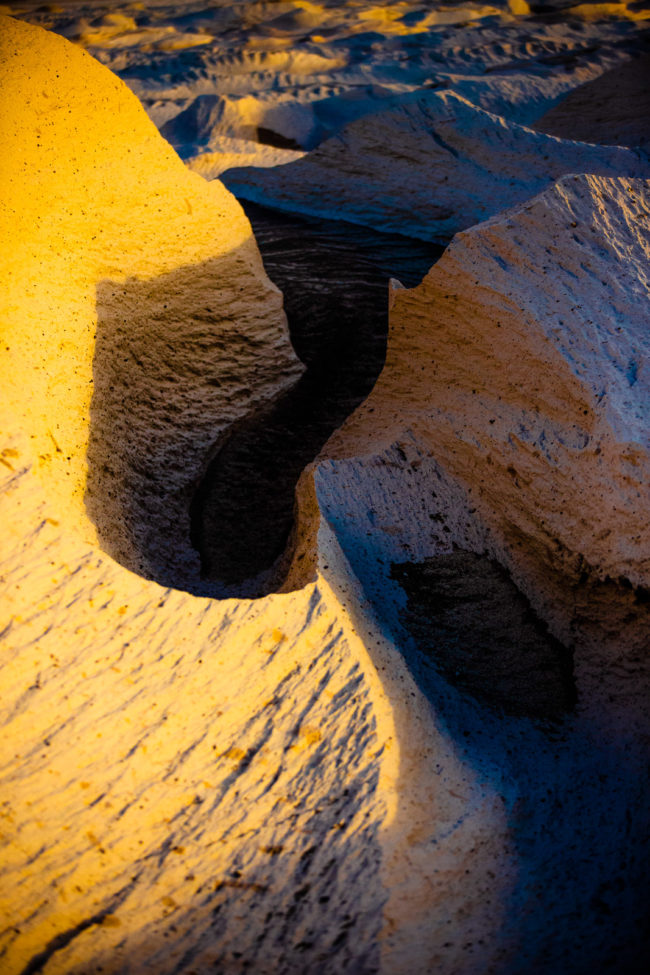
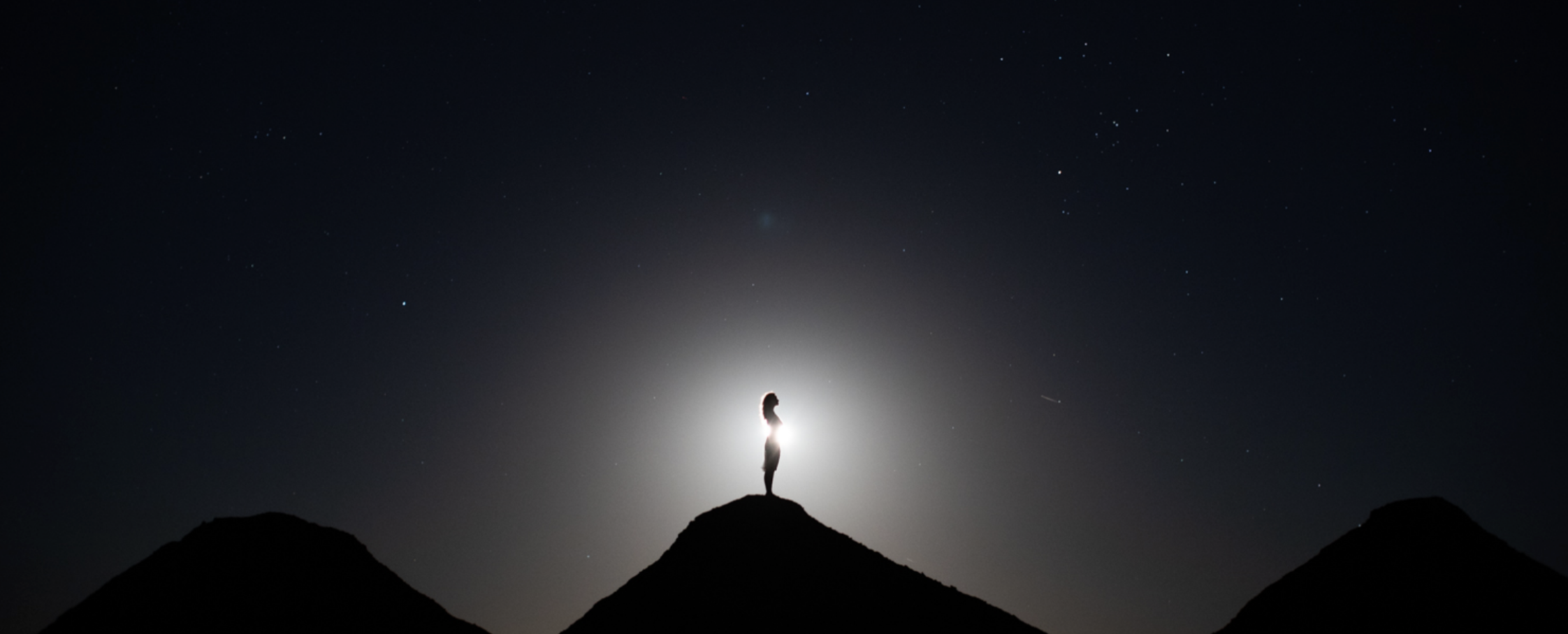
I’m very much a non-traditional landscape photographer. I don’t carefully scout or go anywhere with the idea of making “that shot”. I just wander with my camera, and occasionally get to do it in amazing places.

I spend a lot of time just looking when I’m wandering. It’s a search for a reaction in whatever’s in front of me— usually nebulous and poorly defined, but it’s what I’ve come to think of as getting an emotional reaction from a rocks.

My landscapes feel like an exploration of myself as much as they are about the land. I’m looking for resonance with shapes, light, and form. There’s an acknowledgement that each moment is fleeting and different—not better or worse. It’s about opening myself up and being receptive to that moment and taking the photo without judgment or criticism.
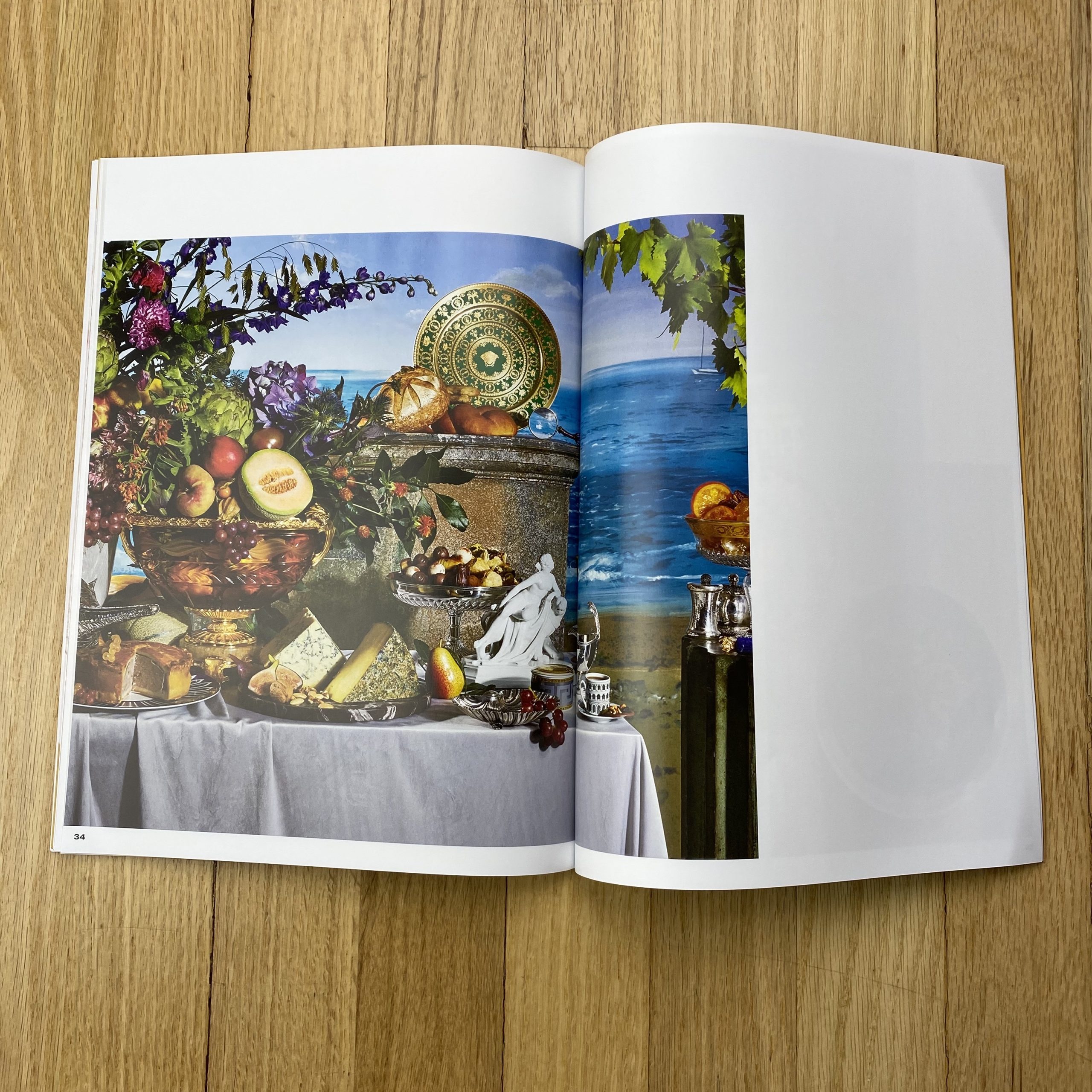
Landscape work gives me the freedom to simply be in the moment. It has a sort of artistic healing effect on myself—it bleeds over into my commercial photography, giving me much needed perspective.

There’s something calming and inspiring about being reminded that the world is a much bigger and older place than I often remember. I feel humbled being down in a canyon that’s been carved out over millennia or standing on a pumice field that’s been shaped by ancient volcanos and the constant scouring of wind. Creating art in these places connects me to them—it gives me a touchstone I can return to over and over.


To see more of this project, click here.

APE contributor Suzanne Sease currently works as a consultant for photographers and illustrators around the world. She has been involved in the photography and illustration industry since the mid 80s.  After establishing the art buying department at The Martin Agency, then working for Kaplan-Thaler, Capital One, Best Buy and numerous smaller agencies and companies, she decided to be a consultant in 1999. She has a new Twitter feed with helpful marketing information because she believes that marketing should be driven by brand and not by specialty.  Follow her at @SuzanneSeaseInstagram

Success is more than a matter of your talent. It’s also a matter of doing a better job presenting it.  And that is what I do with decades of agency and in-house experience.


The Daily Edit – Art of Freelance addresses the COVID-19 world


Photo by Art of Freelance Alum Gina Cholick

Art of Freelance

CEO & Founder: Mathieu Young

Heidi: When and why did you start this organization?
Mathieu: Art of Freelance has been running 10-week online workshops since 2016. This spring will be our 10th. I love being a freelance photographer (well, maybe a little less so in the past two weeks), but was looking for a way to provide the accountability, community, feedback loops and deadlines that people working a normal 9-to-5 have baked into their lives, and we do not.  So we break into small groups, check in weekly, and help each other stay accountable to the goals we set for the 10 weeks. The workshop culminates in a Showcase where we can all show off the work we’ve made. It’s amazing how much more people get done when there is some structure, a deadline, accountability, and support.

What has this taught you about the industry and yourself?
Short term, I feel like COVID-19 just revealed our industry as fragile, and not particularly well organized. There is no one advocating for creative freelancers at a national scale, the way you see in other countries. Congress is discussing a massive bailout package for major industries, “small” businesses (which probably don’t include sole proprietors that don’t have payroll costs), and people who qualify for Unemployment Insurance, but independent contractors that have been getting paid via a 1099 may fall through the cracks. You have people literally wondering how they’re going to pay their rent next month, and not a lot of good answers. We’ve been trying to research and aggregate some info on FEMA/SBA loans, emergency grants, rent moratoriums and mortgage forbearance programs, etc, to share with the community.

Long term, I think that this crisis will force us to be the kind of intrepid  innovative, creative problem solvers that we naturally are, and develop interesting solutions to continue to provide the world with creative content. I also think that this crisis is going to push a lot of us to reassess the age old wisdom that you should specialize specialize specialize, and make a diversification of skill sets something to aim for. I think this crisis may push a lot of people to reassess their careers, and potentially pivot, or add additional layers to increase that resiliency in tough times like these.

Who are your members?
We’ve had hundreds of creative freelancers from all different industries participants in the workshop, and stay active in the community. Photographers make up a good portion of the participants, but there are also musicians, writers, directors, designers, illustrators, and entrepreneurs of all kinds. Part of what makes it unique is the cross pollination between people with divergent skill sets, interested, and backgrounds.

How are you coping with the current climate?
We’re hosting a free Zoom call at 12p PST this Thursday to discuss “freelancing in a COVID-19 world”, and I’ll be interviewing Andrea Stern (@asksternreps), Joe Pugliese (@joepug), and Hannah Soto (@greyhouseproductions).

There are also a couple spots open in the Spring 2020 workshop still available if people are interested in some additional community, accountability, and support over the next 10 weeks. The registration link is on the homepage here

And we’ve continued to update our resources for freelancers page here, and will continue to do so leading up to Thursday.