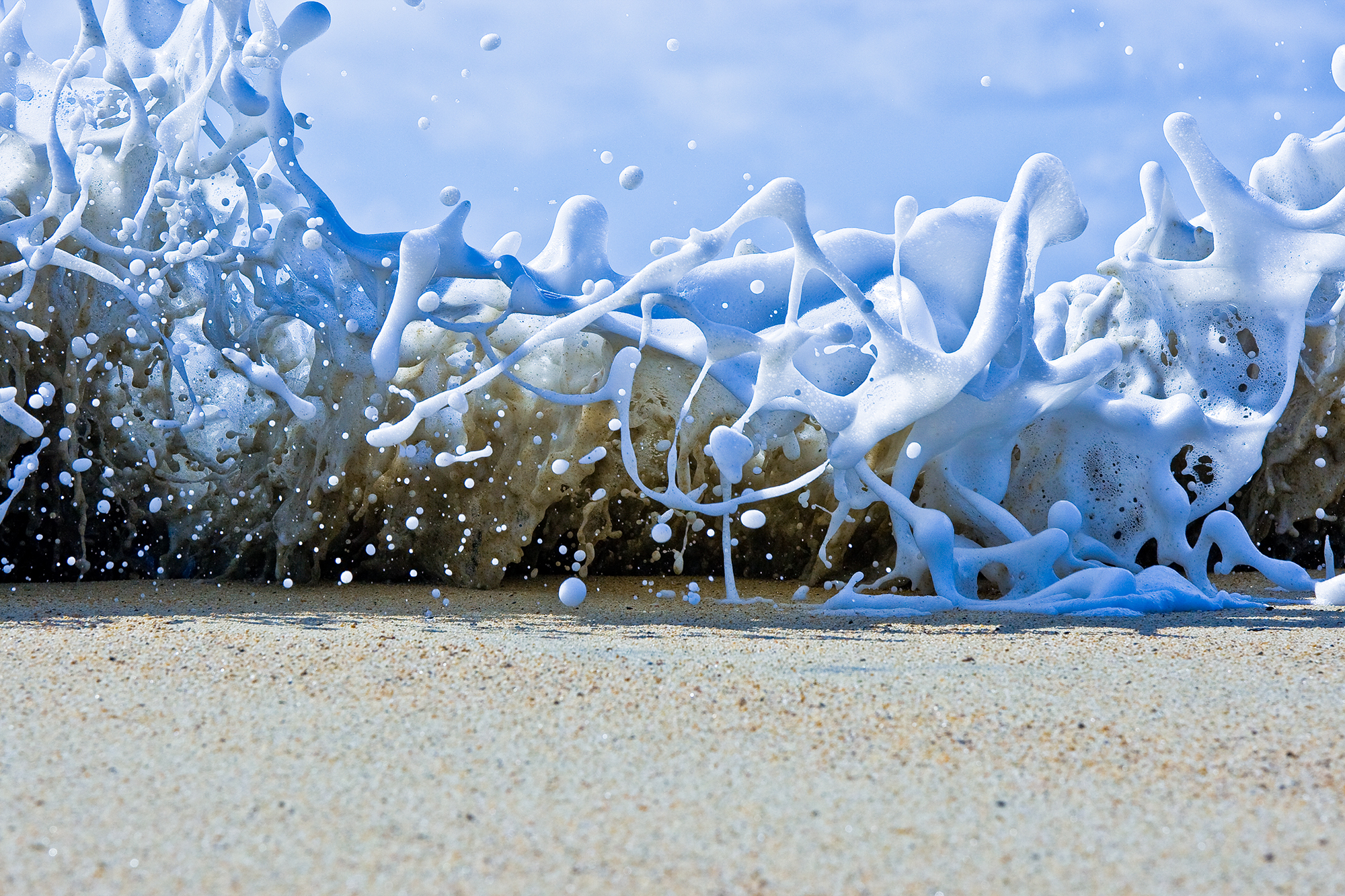
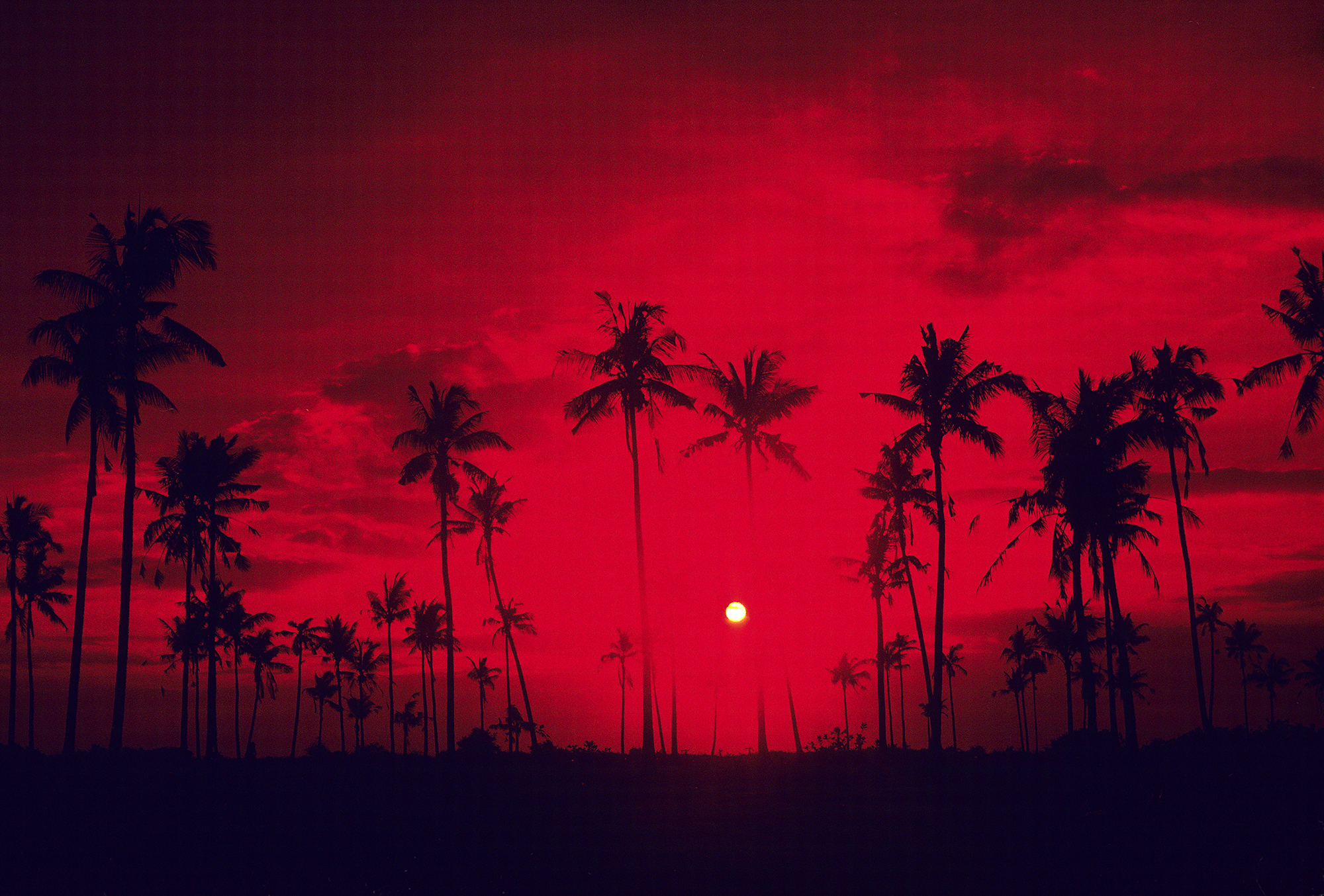
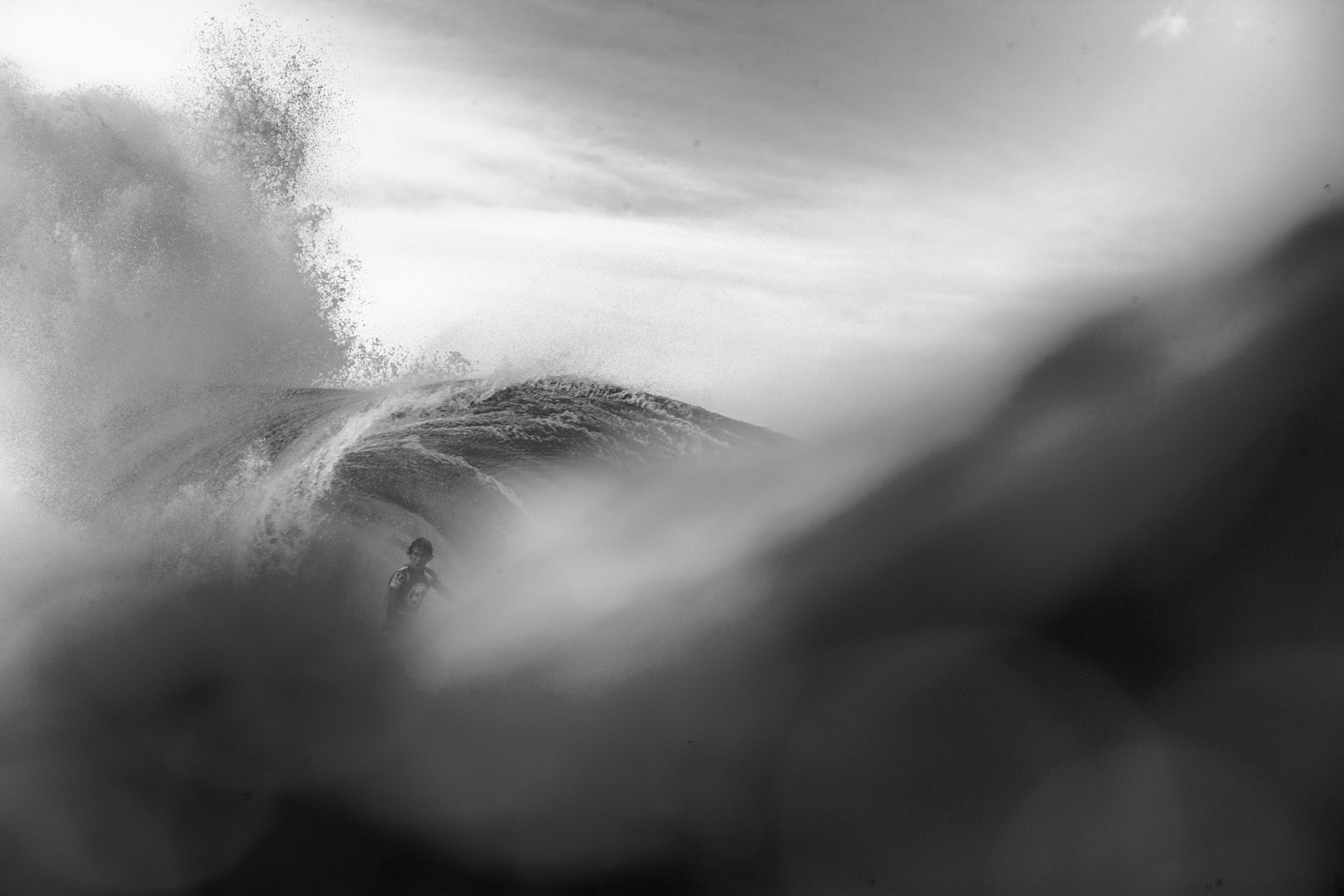
The Daily Edit – Brian Bielmann: The Eddie

Screen Shot 2016-03-01 at 4.24.19 PM

Screen Shot 2016-03-01 at 4.24.28 PM

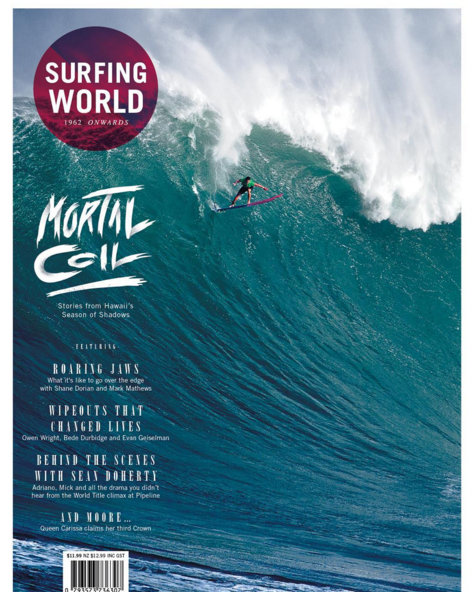
Surfing World

Editor and Photo Editor: Vaughan Blakey
Designer: Corbin Nash
Photographer: Brian Bielmann

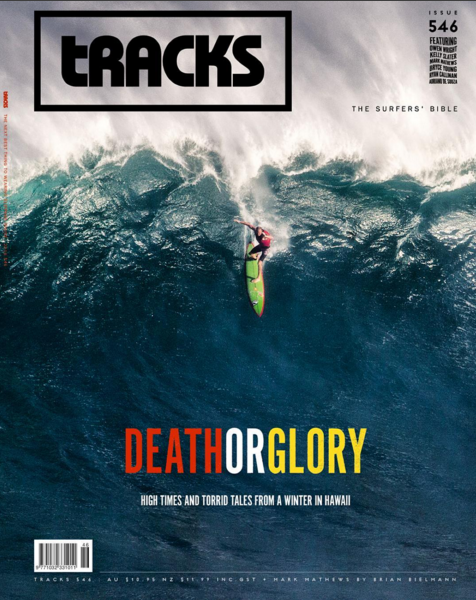
Tracks

Editor: Luke Kennedy
Art Director: Mat Macready
Photo Editor: Ben Bugden
Photographer: Brian Bielmann

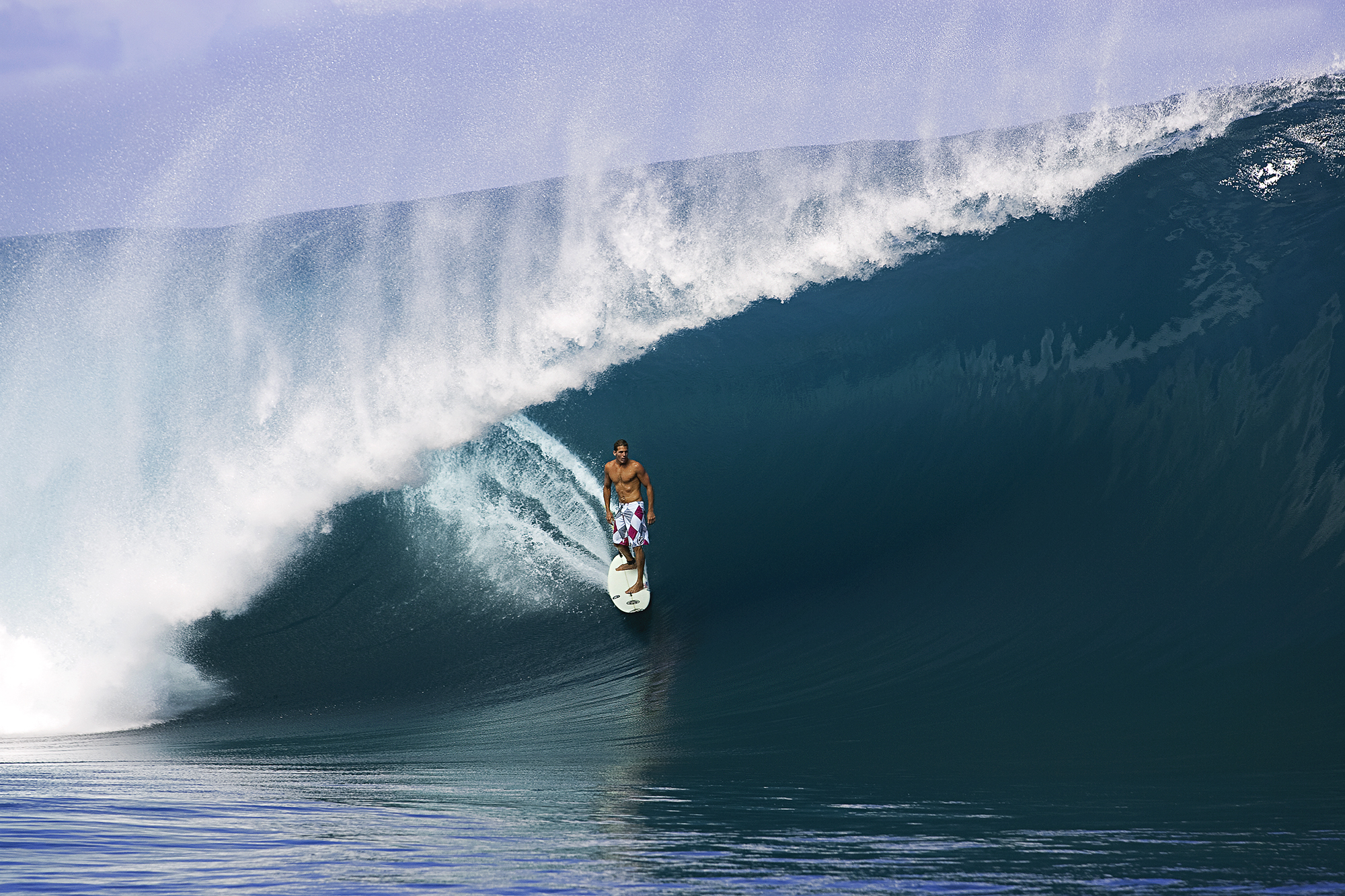
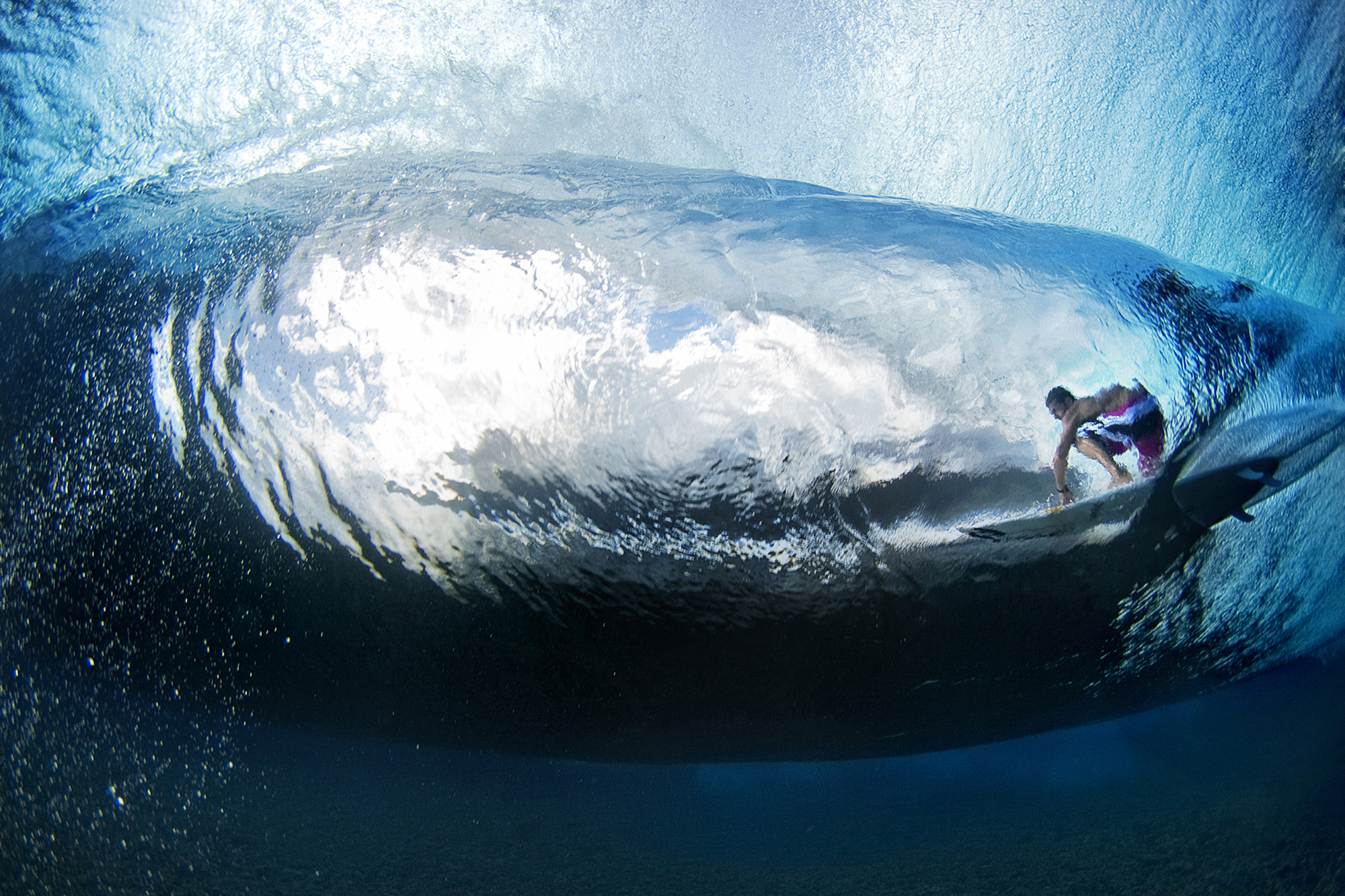
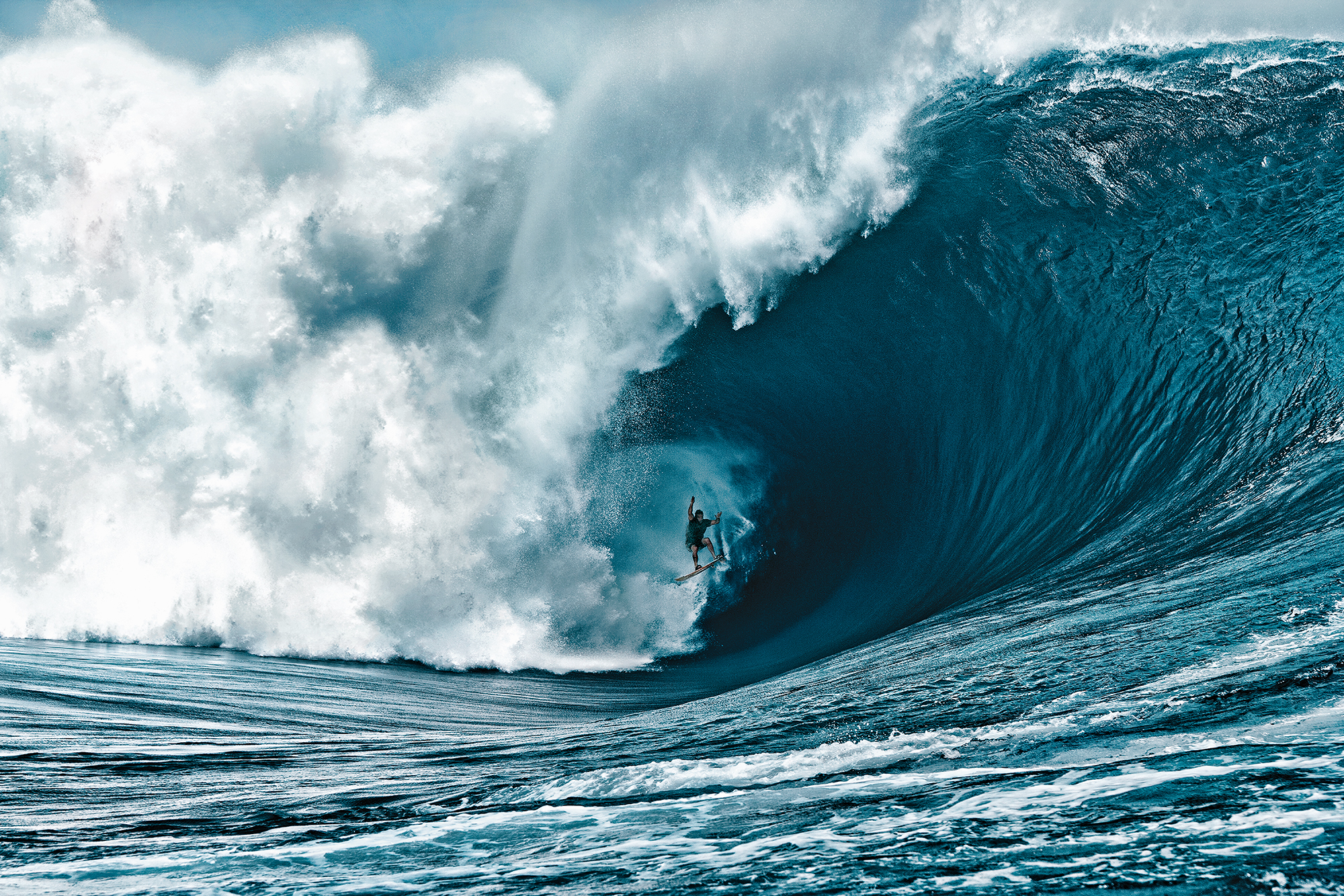
Tow WAVES in Tahiti/2005
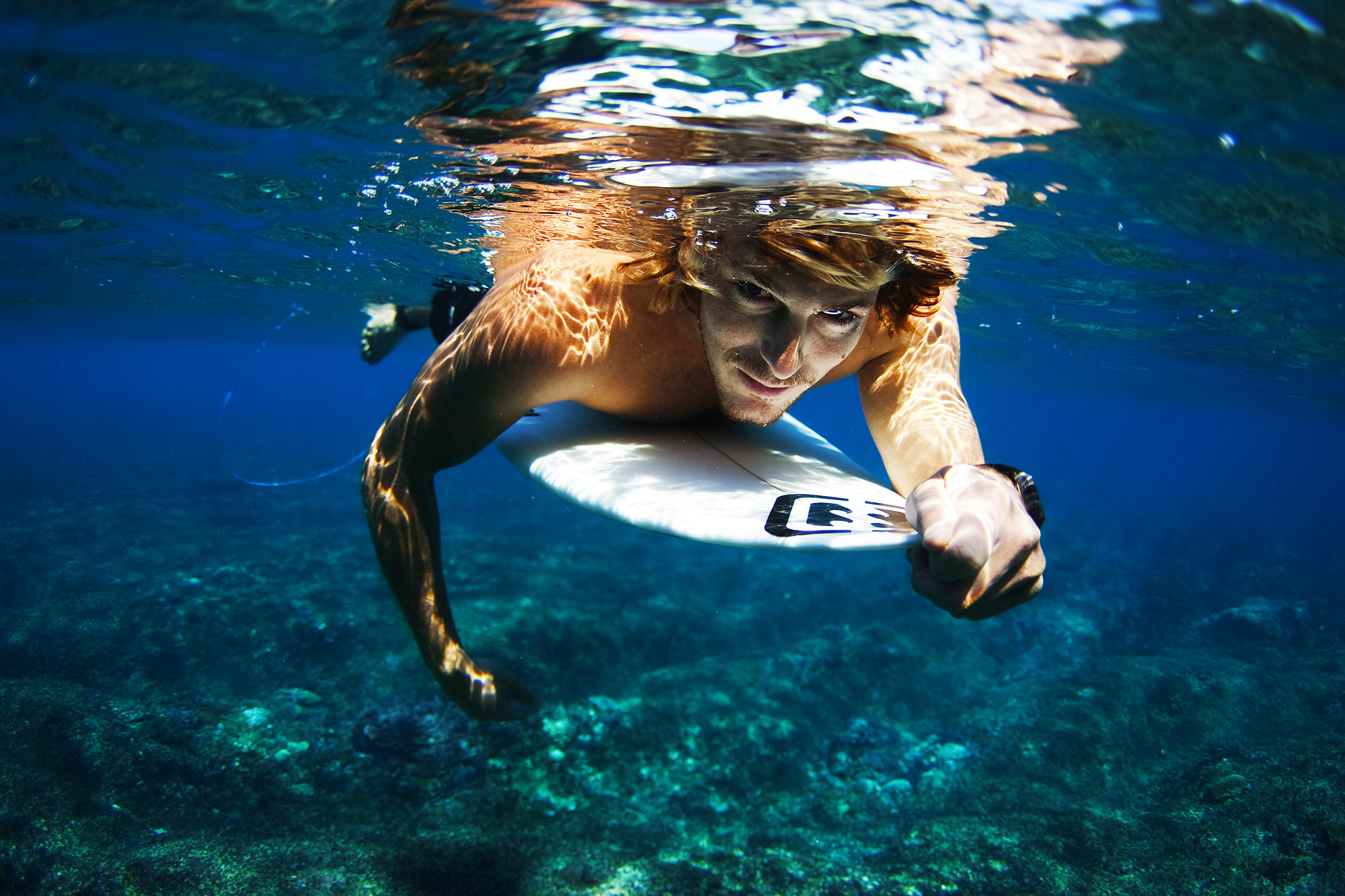
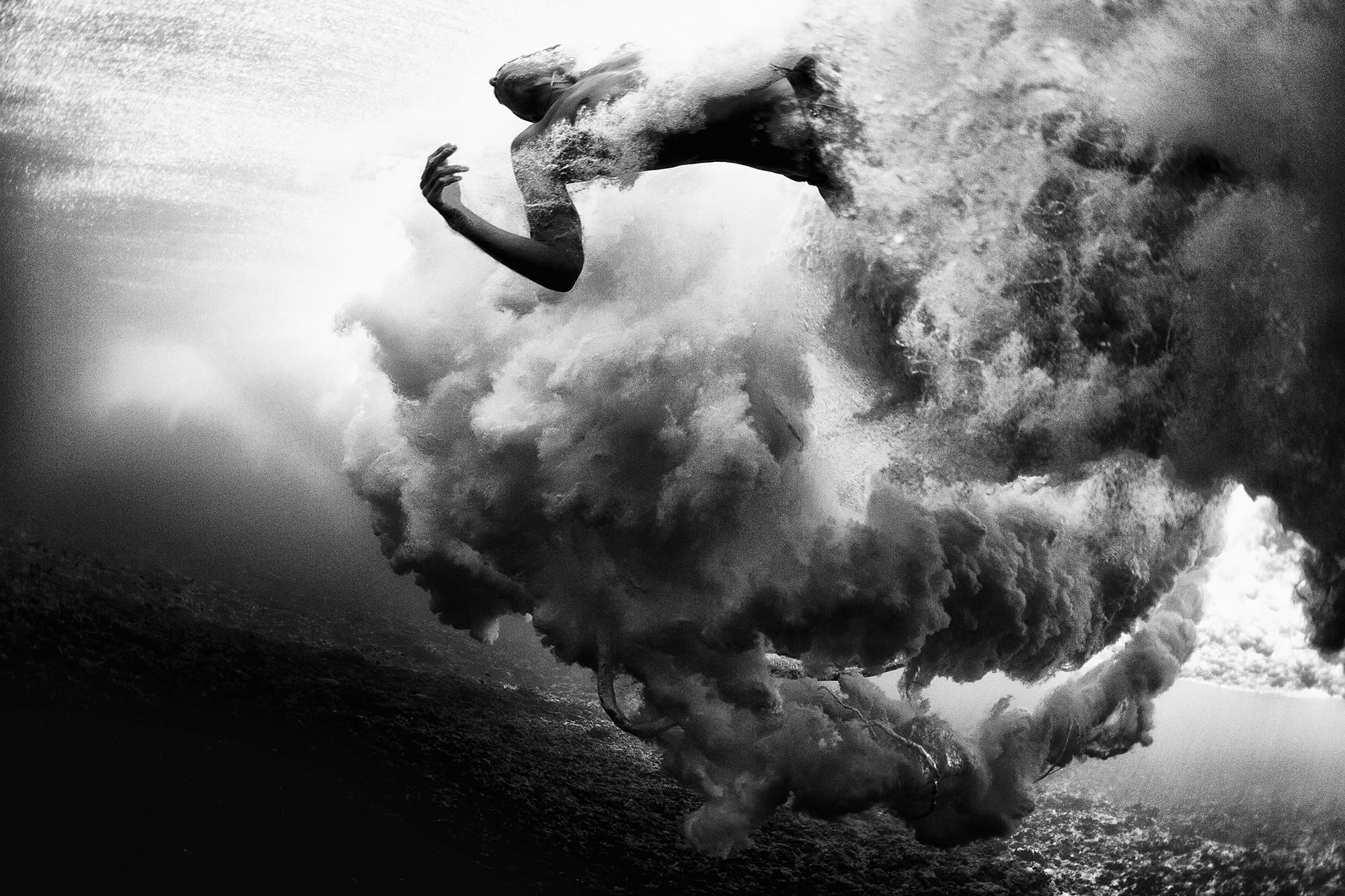
Hands down one of my favorite underwater shots ever , picking thru my photos to put this web gallery together was really hard because a lot of my best shots got left behind and I realized how many of my favorite shots were Bruce and Andy
Hands down one of my favorite underwater shots ever, picking through my photos to put this web gallery together was really hard because a lot of my best shots got left behind and I realized how many of my favorite shots were Bruce and Andy

AI19

Andy Irons Underwater Portrait005

BRIAN 2

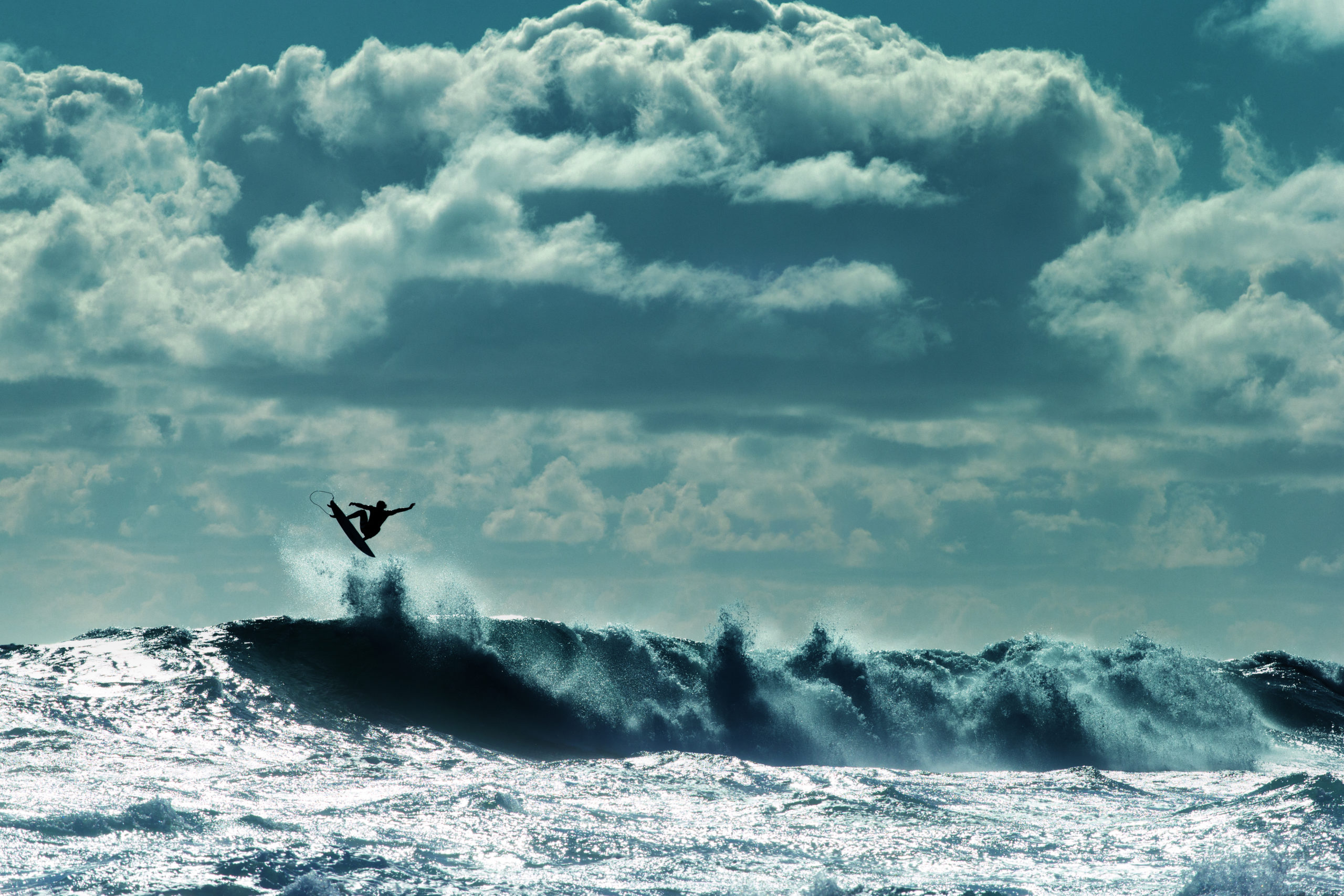
John John Florence in West Australia

scenics

underwater

underwater

VC274

north shore winter 2014
North Shore Winter 2014

Surf photography has come a long way since you chased down your first big wave on a boogie board. Tell us about the changes and how it’s changed you. 
You were on your own out there. I had a canon all manual camera, which meant you actually had to set exposure yourself; more importantly you had to focus, and you had 36 photos on your roll of film.

I remember paddling out next to another photographer Denjiro Sato of Japan, we made it through the shore break and were almost out to the lineup when one of the surfers wiped out and his board came flying out of control right towards us and hit Sato. I can’t remember where, but he got cut by the surfers fins on his board. After that, Denjiro was done and had to paddle back in.

Think about it, after all the effort to get out and then BAM! you’re on your way back to the beach. I remember trying to make every shot count, but that roll of film went in about an hour. I had stayed to watch the rest of the event, mainly because we were terrified to have to get back in through the shore break. The whole time out there, you were just dreading knowing that you would have to get back through that, sometimes if you didn’t time it right, you would not make it in.

You see, the current would suck you down to the far left inside on the other side of the bay, to the rocks, known as “jump rock” because in the summer, when the surf is flat, everyone jumps off the rocks, but in the winter, it’s the spot you don’t want to get caught in. So you swim your ass off to get back out and as far away from that are as you can, so you would have to paddle back out to the lineup and start swimming in on the right side all over. It could take hours to get in, NIGHTMARE. Fast forward to today, you have jet skis to get you in the lineup, an all-automatic everything camera and it has 2000 photos, not to mention a ski ride back in straight to the beach. It’s actually awesome. Honestly, I would never go back out there if I had to do all that again. That said, compared to how we had it, now all those concerns are gone. The other big difference is all the technology, the limits are being pushed big time. If it was 10 years ago, the Eddie would never have run at this size. One of those closeout sets would have come through and taken everyone out: surfers, photographers, everyone back to the beach and they would have said too big, it’s over. But with the incredible Hawaiian Water Patrol with their skis, the surfers can push their limits. The surfers are the stars; so badass. the ski drivers the rescue team. I think it has to be the most dangerous contest in the sporting world. Just crazy.

Certainly you’ve been in some life threatening situations, now that you’re a seasoned pro, how are your choices different? What gives you pause?
Well, I’m 58 years old, at Pipeline there are about 30-40 photographers out there for each swell. Since there are not many magazines these days and very limited space for photos, it’s mostly the internet that showcases the work.  Most of those photographers careers will begin and end with instagram. I consider things differently now. How long do I want to be out there?how is it breaking? I look at the conditions and decide, if I’m going to swim my ass off through nine waves to shoot one. To me, that’s not worth it. I wait till the days when conditions are good, and the percentage rate is going to be worthwhile; only then I go. I end up looking like I’m out there all the time because I pick the best days! I’m not one of the top dogs out there anymore. There are guys who that’s all they do is shoot out there constantly; I pick the right days and get some gems and that’s good enough for me. Just never imagined at 58 I would still be swimming out at Pipe. It’s funny, there are very, very few guys still out there who were out there when I started, for the most part it’s all the young guns.

Screen Shot 2016-03-23 at 6.52.19 PM

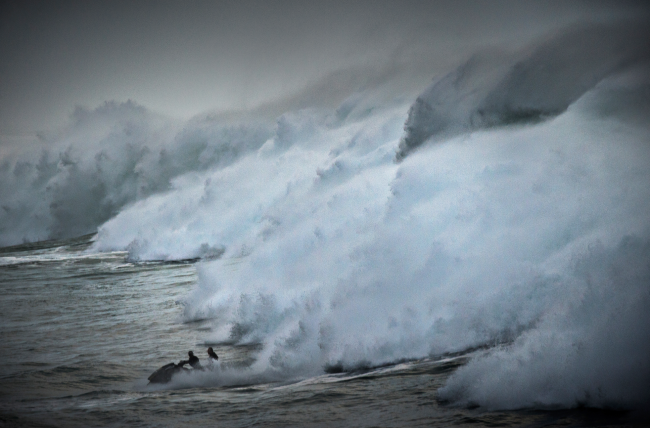
Brain and Craig trying to out run the wall of water. Photo by Clark Little

Chasing down this wall of water was the biggest wave you’ve out-run, tell us about that day at “The Eddie.” 
Thank God I did not turn around to look at that wave, when I saw the picture I think I said a prayer right then thanking God for keeping me safe.  I was nervous the few days leading up to the event knowing I was going to be out on a ski; everyone was saying it might be too big to actually run the event. This meant if it went, it was going to be the biggest Eddie that had ever gone.

I had actually never been out in the water during clean up sets on a big swell before at Waimea Bay. A clean up set is when the waves close out across the entire Bay and there is literally no escape. I’d been out before when it was really big but never this big, so yeah I was nervous. The morning of the event as the sun came up, we could see a lot of closeouts, tensions were high amongst the competitors, jet drivers. It turned out that there were too many photographers that were supposed to be out there and not enough skis. (I actually contemplated taking myself out of the equation and shooting from the point.) The Director of the event, Glen Moncata said, “You shoot whatever you want, you don’t have to go out there.” I don’t know what it was; but something came over me and I ran for my truck, quickly put on my wetsuit, flotation vest, put my camera in my waterhousing, grabbed my fins and ran for the beach. The skis were being put in the water so I hustled down to the corner and waited for the lull with another photographer, Zak Noyle. As soon as there was a small break in the sets, we jumped in the water and swam quickly to the waiting jet ski, jumped on the boogie connected to the ski; as he hauled ass through the surf before we got caught by a set, we were out in no time, thank God.

Had you been with the driver before?
No first time with the driver, Craig Anderson, he goes by the instagram name of @MakahaCraiger. We probably met but never really talked before, but didn’t take long to bond. When you’re on a ski and you’re going over 20 footers, and they are the small ones, you realize instantly that the driver is the guy who is gonna save your life.  You get intimate very quick.  Hearing the water patrol on the beach, Mel Puu starts yelling on the radio to all the water patrol in the water, (8 skis probably, all on the same frequency), “There’s a closeout set, it’s big guys, get moving now! Get everyone out fast! This one is really big! Go! Go! Go!”

You go.

I had a strap on the back of the ski that had been ripped, so it was loosely tied and had a lot of play, kind of like the reins of a horse, so it was hard holding on with one hand and my other hand holding a big camera in a water housing.  We start heading for the horizon, and when we can see the sets, they are huge mountains of water moving at us and we start heading for the shoulder as fast as we can we are riding sideways on this beast waiting for a place on the wave that’s not already feathering. (this is when the wave is already breaking and there is already whitewater at the top of the wave and there is nowhere to get over as it’s really hard for the skis to get over the wave when there is whitewater at the top)  so we continue going full on as far as we can till we are on the far side of the bay, we can’t get over this thing.

” Hold on!” Craig yells, “We gotta ride it in!” We turn at the top of the wave and actually ride this thing all the way to the bottom going as fast as the ski will go. We’re bouncing like hell and Craig is yelling “Hold on! Don’t let go!” I’m holding tight with my arm on the strap, trying to hold on through the bumps and bouncing off the seat, I’ve got my legs as tight on the ski as I can, not even sure how long it took us to get in but I could hear the wave breaking right behind us like a waterfall.

We barely stayed in front of it, just a mountain of whitewater that could overtake us at any moment, about half-way in Craig yells to me, “You may have to jump!” I’m gonna do whatever he tells me, I pause for a second, yell back, “Just tell me when!”

I have no idea what this means, I’m just following orders and hope I survive.

I’m waiting for the word to jump and then a little farther in and he yells, “Wait! Hold On! I think we might make it!”

We literally get 30 feet from the beach and he swings the Ski around hard and we blast right thru a huge shore break wave, we barely make it through, I manage to hold on to the ski strap, but fall backwards off the seat; still holding the strap I manage to pull myself back up, just in time to go through a second one, and the exact same thing: Blast through, fall off but holding the strap and again pulled myself up, and we gun the damn thing side to side getting around the wave on either side, finally we are back outside and realize we made it.

We both start screaming. “We made it! Shit! we made it! AHHHHHHH!!!! Screaming at the top of our lungs, “that’s the craziest thing I’ve ever done my whole life!” I yell. He yells back,”Yes! That was definitely one of the craziest things I have ever done!”

I’m thinking: Wait, Craig’s a water patrol jet ski driver in Hawaii, and he’s a Hollywood stunt man and he’s says this was one of the craziest things he’s ever done. Shit. Thank you God!

We had around 20 more waves come through, almost as big as this and we had to run alongside of, but we were able to find an exit each time. I was out for 3 heats of surfers, almost 1/2 of the contest and we got a call that I had to come in, as there weren’t enough skis and I had to let another photographer have a turn. The jet ski brought me in and I was on the beach, I seriously wanted to kiss the shore.

There were thousands of people lined up as I walked back towards the stands and some of them started applauding me and whistling, one guy came up and took my photo with him.

It’s funny, I think they thought we were all fearless out there but we were not, we had plenty of fear, we just pushed through it and went out there. I got back through this sea of people and was under the shower when I heard the announcer say, look all the skis are coming in being chased by another huge wave, but this time they made sure they were farther in front of the wall of water, and they had no escape on the inside as we did on our wave.

They had to ride the skis right up on to the beach. I looked out and saw how big the sets were and I immediately thought, “What the hell was I doing out there?” and my next thought was “I’m so happy they told me to come in 5 minutes before that set, I did not want to go through that again.”

It was time to finish shooting the second half of the contest from the point.  The nice safe point, the closest spot to the waves you could get, and not a drop of water on me.

How does a surf shot land on L’Uomo Vogue?
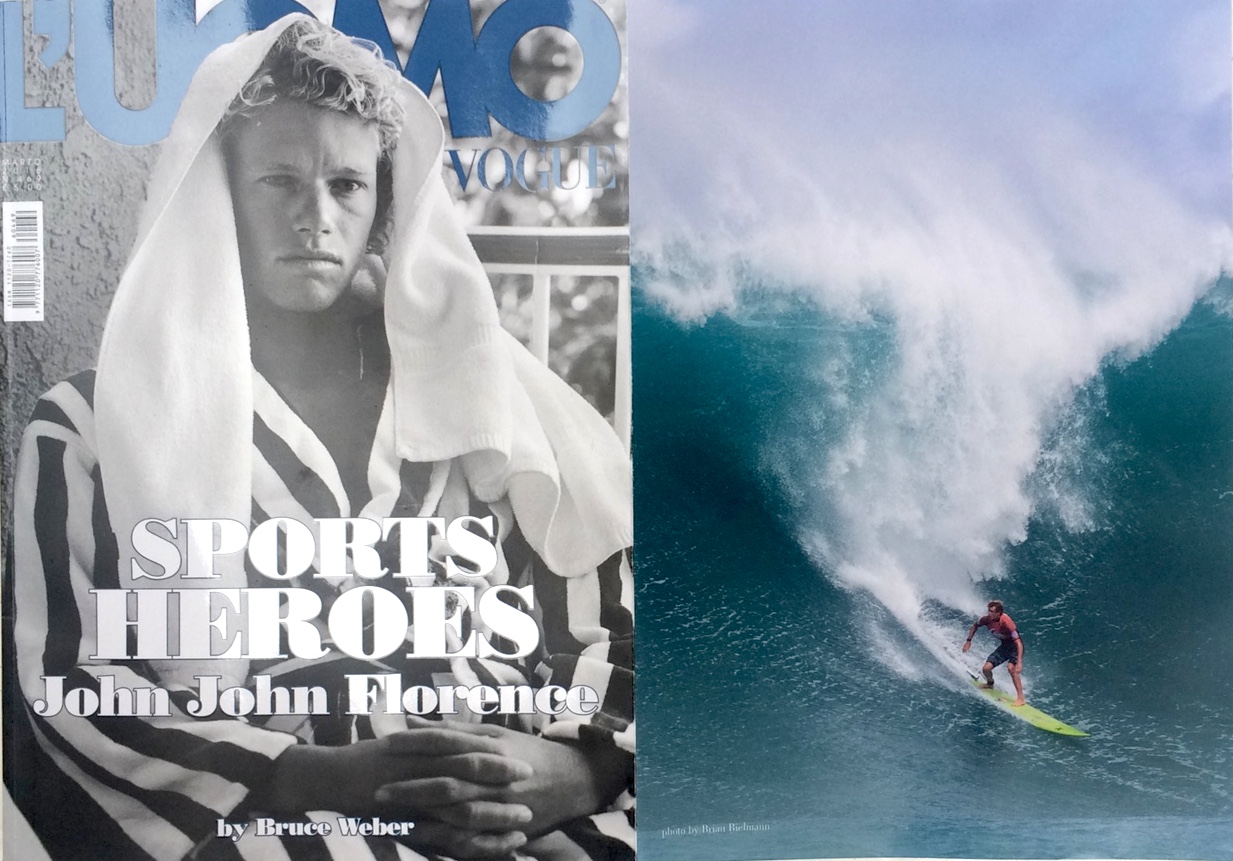
Yes , I’ve got a photo on the cover of L’Uomo Vogue magazine right next to Bruce Weber. It’s a shot of John John Florence from a ski in the water during the Quiksilver Eddie Aikau Contest. I’m so stoked! Bruce has been my hero for years as far as a fashion photographer goes, my favorite; and Herbie Fletcher has some shots in there, Dibi Fletcher wrote the story. It’s about The Best Surfer in the World!  doesn’t get any better than that for me. I think I can claim to be the only surf photographer with a shot on the cover of Vogue, it’s a shared cover with Bruce and that’s what makes it awesome! I was on the phone with him while I was shooting the shore break and when I hung up I was so excited to tell everyone, “I was just on the phone with Bruce Weber!” none of the surf photographers knew who he is, luckily Buzzy Kerbox was there, and he is good friends with Bruce. Bruce started Buzzy’s career back in the 80s with his Ralph Lauren Campaign.

image1

The Daily Promo – Lisa Shin

Screen Shot 2016-03-08 at 3.26.26 PM

Screen Shot 2016-03-08 at 3.26.12 PM
Lisa Shin

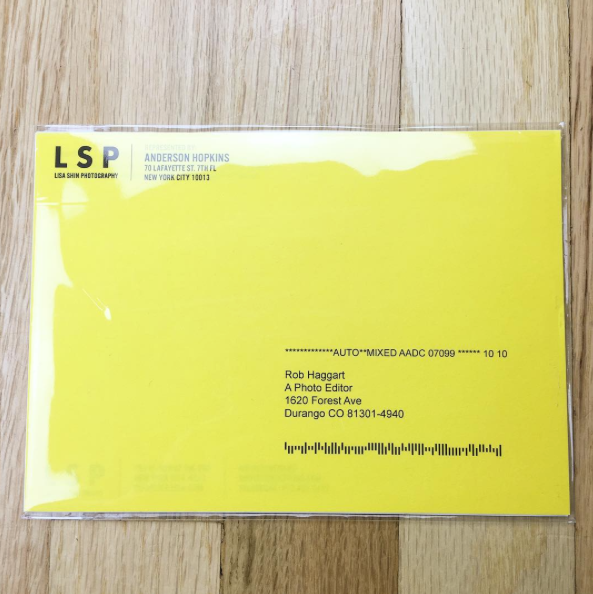
Who printed it?
Agency Access printed, inserted, sealed and mailed the entire project with considerable customer service.

Who designed it?
The talented Mr. Christopher Lee. Check him out!

Who edited the images?
I did with the feedback of my fabulous agency, Anderson Hopkins.

How many did you make?
2000 were printed and mailed, 200 held for leave behinds.

How many times a year do you send out promos?
This is the first print promo we have done in a while. We aim to send out 3 more mailers by the end of the year.

Who did you decide who to send the promo to?
Our mailing list is comprised of advertising agencies nationally and local editorial. My agency worked to understand who the best audience was given our total numbers. We hope to expand the list in future mailings.

This Week In Photography Books: Haley Morris-Cafiero

by Jonathan Blaustein

I used to be overweight as a kid.

Not always, but often. I would gain and lose weight, in phases, but I never had a perfect body.

I still don’t.

Hell, at my wedding, I must have weighed 20 pounds more than I do now, courtesy of Tony’s Pizza in East Williamsburg, Brooklyn.

Sample conversation:

“Tonys!”

“Hi, I’d like to order a large grandpa pizza for delivery please.”

“No prahlem.”

Do that every Friday for six months, and you too can pack on the pounds. The aftermath might not be pretty, but damn, that shit tastes good.

All kidding aside, any discussion of the concurrent obesity and diabetes epidemics in the United States is likely to be fraught. It almost perfectly pits the personal against the societal, and that’s not a battle that can be won.

In one corner, we have identity politics and issues around body shaming. Who are you to tell me how I should look? Or to judge me because of how much I weigh? It’s discrimination, it’s wrong, and you are an asshole for even thinking that my body is your business.

In the opposite corner, we have a genuine public health crisis, with millions of people eating themselves into disease. Why that happens is related to poverty, culture, access to healthy food, cooking knowledge, government subsidies for corn production, and the insidious advertising and food science efforts put forth by large multinational corporations peddling crap food.

Like I said, this issue is a field of quicksand suspended above a Florida-sink-hole. (Good intentions get sucked down faster than a shrimp-head at a Louisiana crawfish boil.)

Enter Art into the discussion, a notoriously subjective product that revels in ambiguity, and you’re guaranteed to draw some attention. And so it has been, for three projects I’ve noticed over the last few years.

Jen Davis, and then Samantha Geballe, have both photographed their large bodies in a self-portraiture format. Ms. Davis, whose work I saw at the Library of Congress, and wrote about, uses color. Samantha, whom I met at the Medium Festival a couple of years ago, and also wrote about, prefers black and white.

They both made striking, uncomfortable, compelling images of their own bodies. They stood in for the masses with weight issues and said, “Here I am. Look! Don’t avert your gaze. I am worthy of your attention, every bit as much as a skinny model with vapid eyes!”

Both artists subsequently underwent gastro-bypass surgery. (How’s that for ambiguity?)

I’m not sure about Ms. Davis, but Samantha has also documented her new body, and the vestiges of her old one. The pictures are great, and will be on display at the Houston Center of Photography from May 13-June 10.

Really striking stuff.

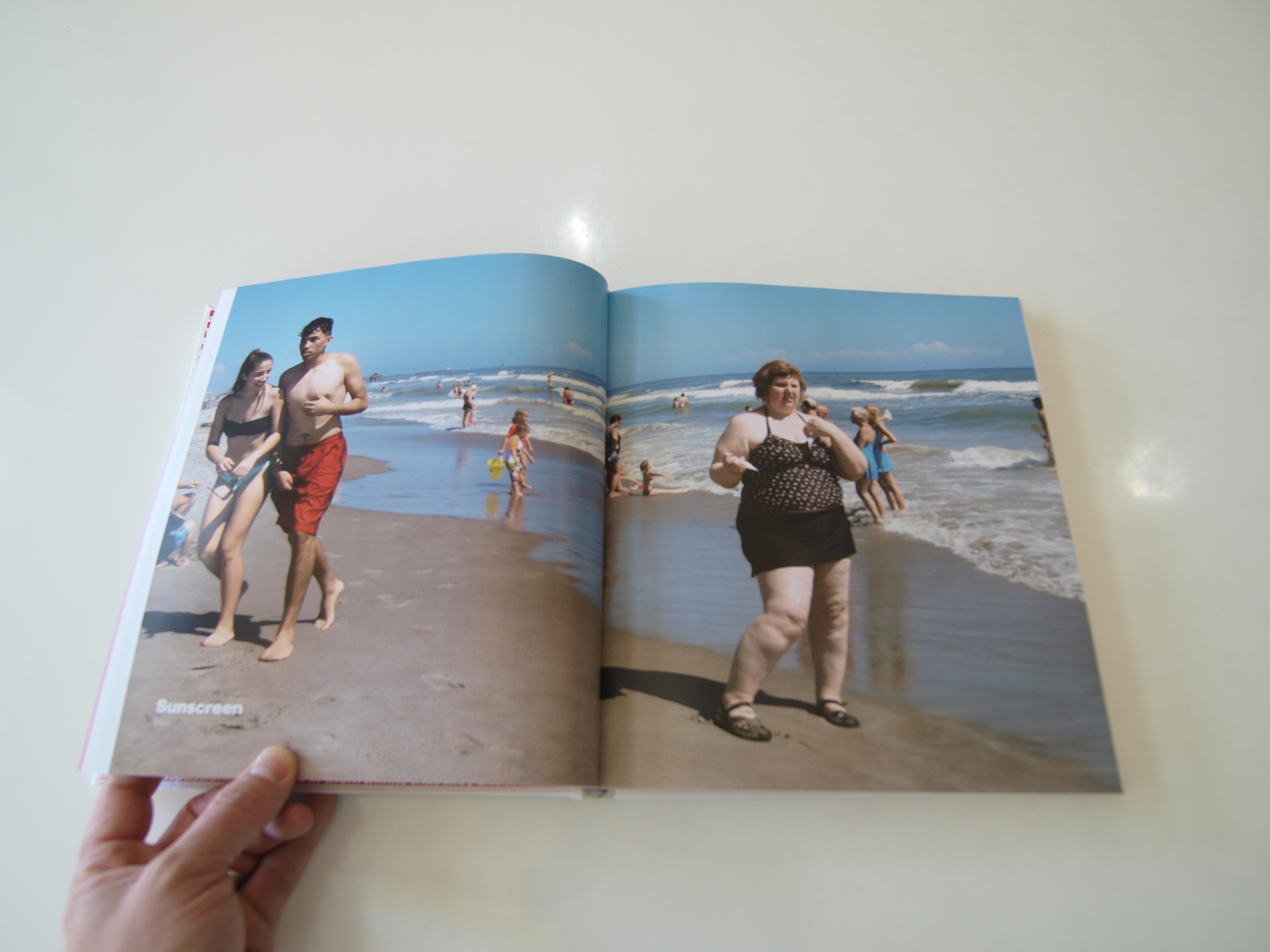
There is one other artist I know of working with these themes: Haley Morris-Cafiero. I heard about her project, “Weight Watchers,” but as sometimes happens, I knew of it, saw tweets about it, but never caught the pictures themselves, beyond a social media thumbnail. (The iconic pic of her walking on the beach.)

A few weeks ago, a respected colleague wrote to see if Ms. Morris-Cafiero could send me a book for a potential review.

I said sure, as I always do, with the caveat that I never know what I’ll review until I pick it up. This one, most definitely, is worth discussing here.

So let’s get on with it.

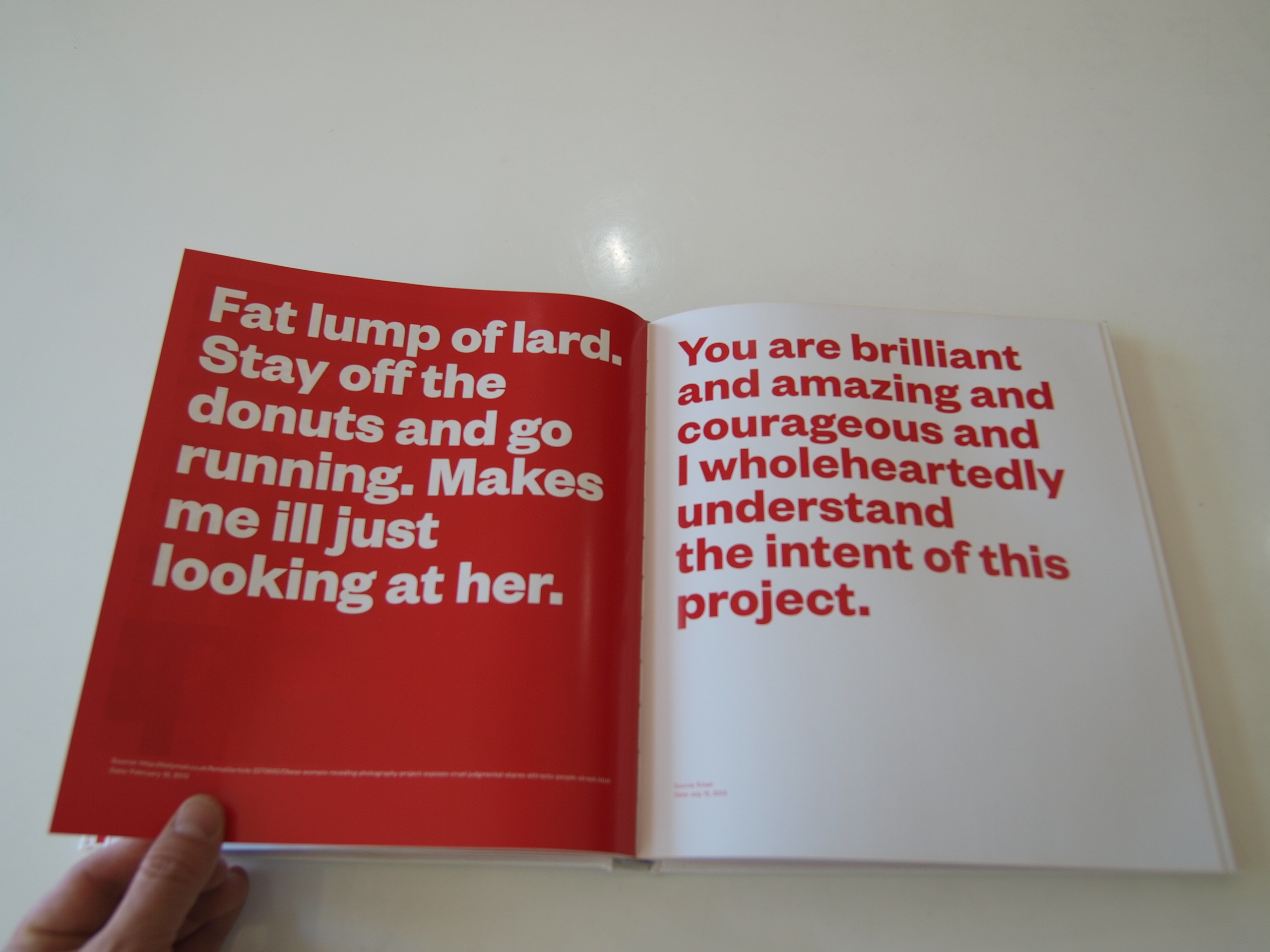
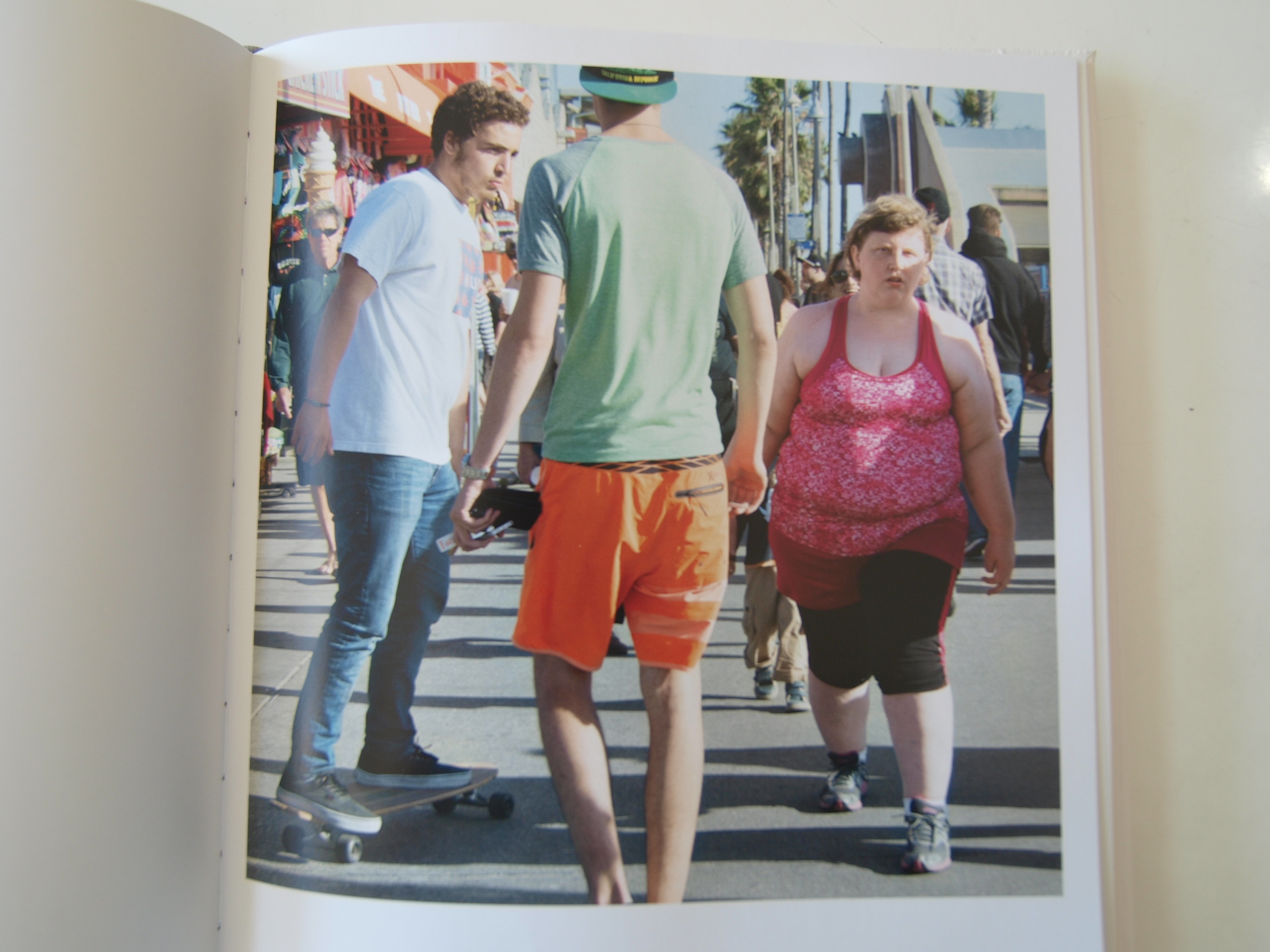
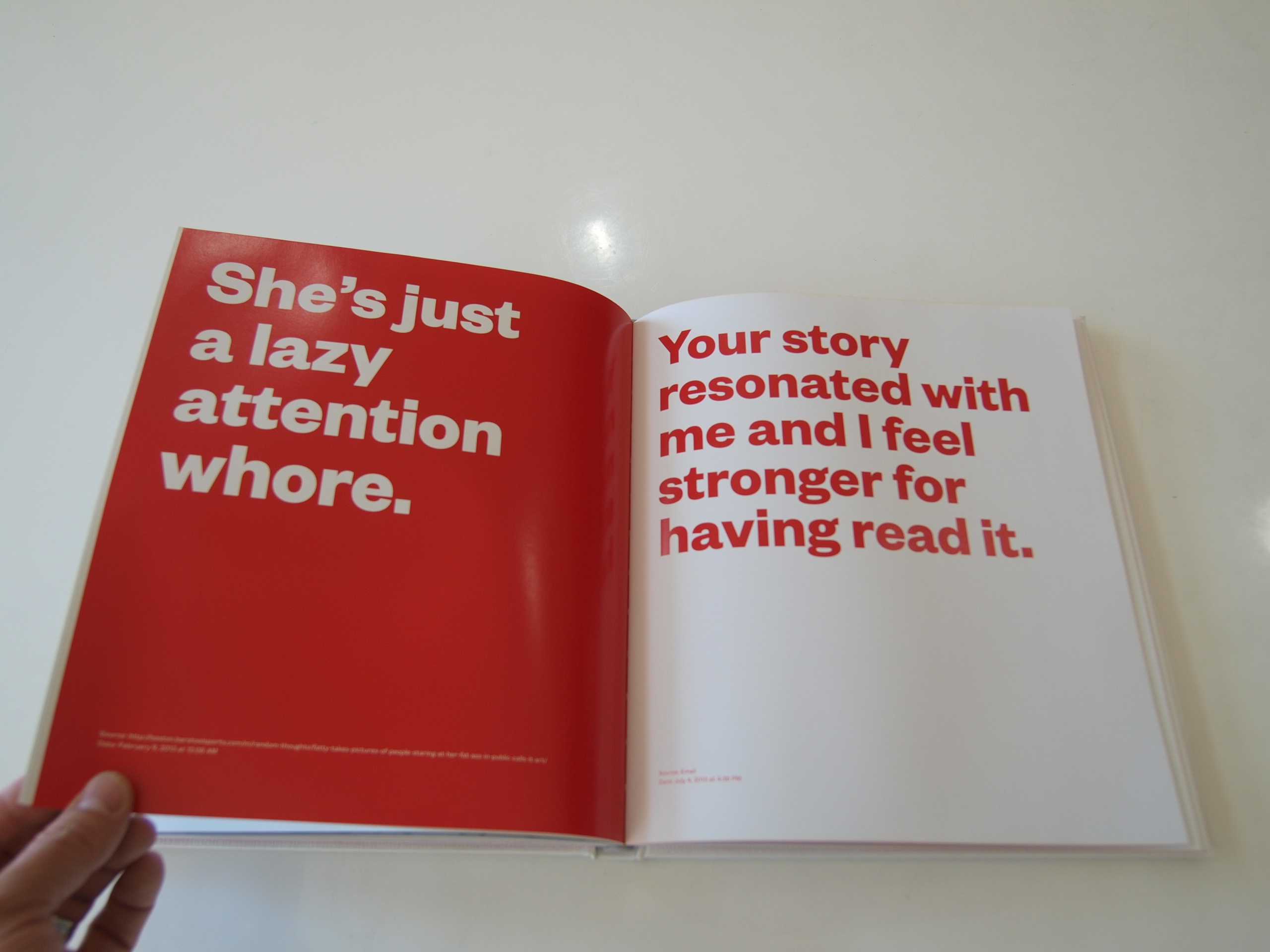
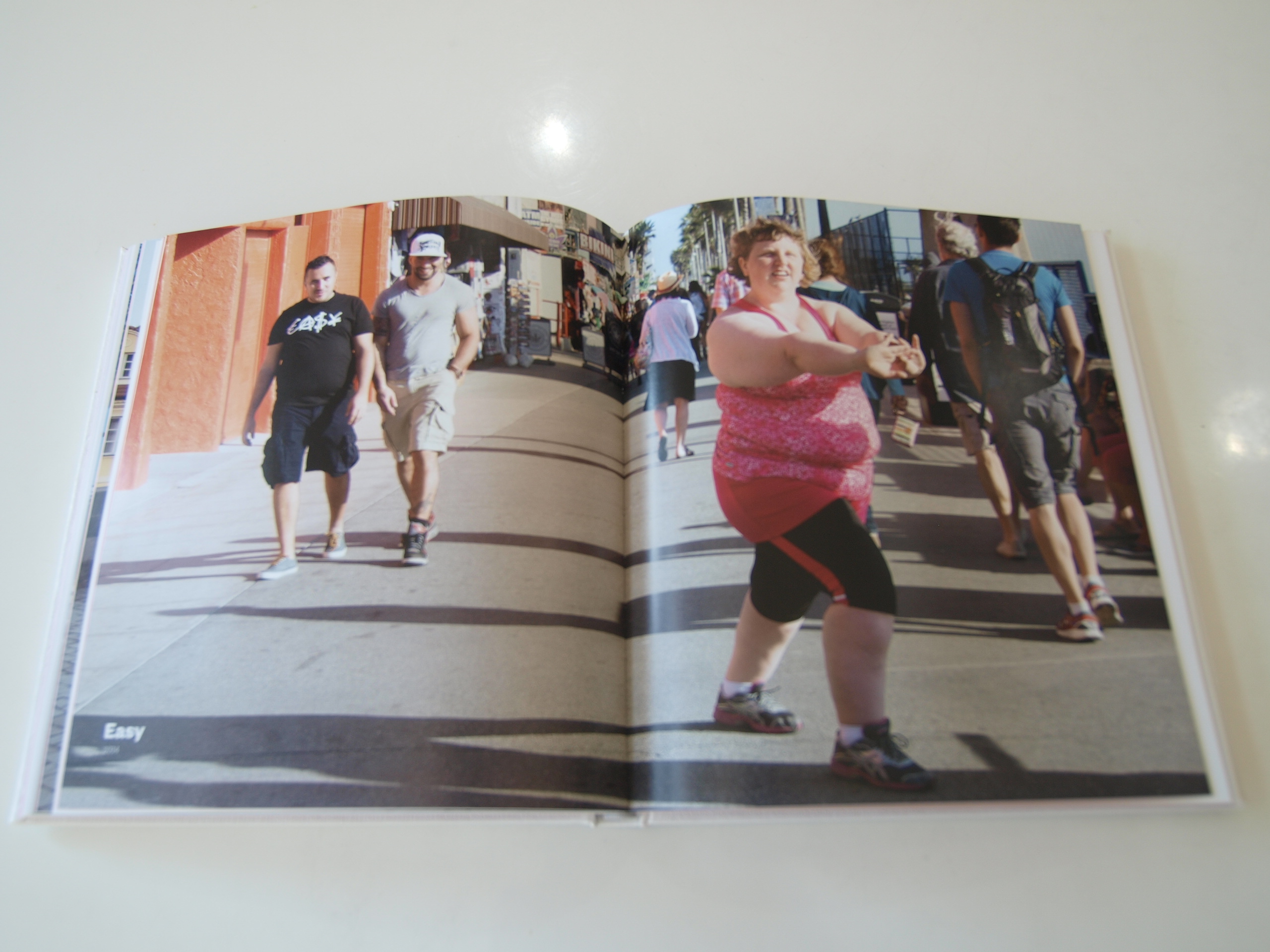
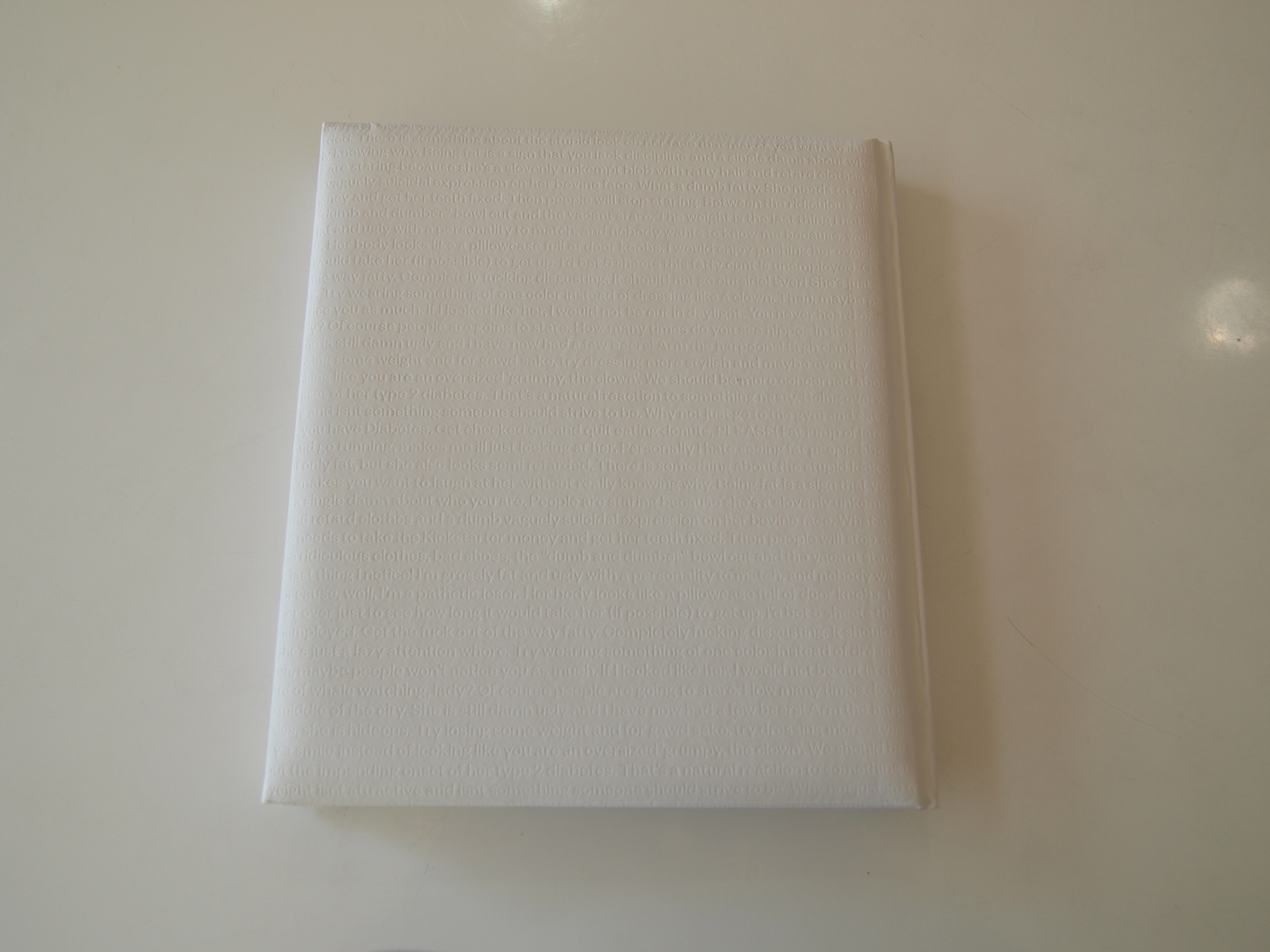
“The Watchers,” published by the Magenta Foundation, is a book that grabs you from the cover, quite literally. There are words embossed into the white rubber/plastic coating, and red text leaps off in the other direction. The words seem to come from comments about the project, and are a little incendiary.

(Sample: “You are courageous. You rule. Fuck everyone.”)

The overall design is excellent, as the red text on white returns again and again, as Internet comments are juxtaposed against each other. Negative trolls on the left hand side, positive supporters on the right. According to this format, this artist seems to summon wrath and kindness in equal measure.

But what does she do? What is her take on this very tricky subject?

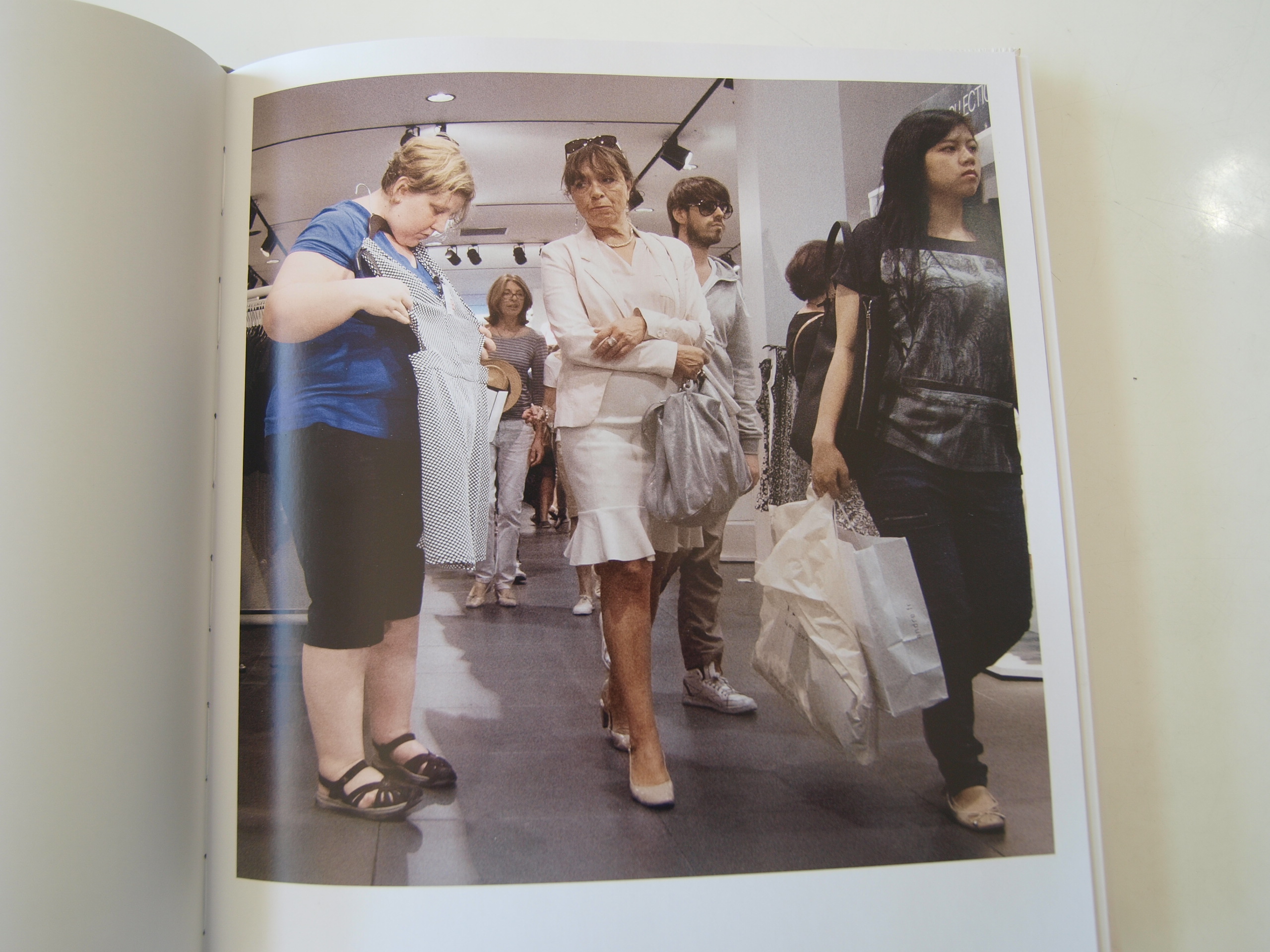
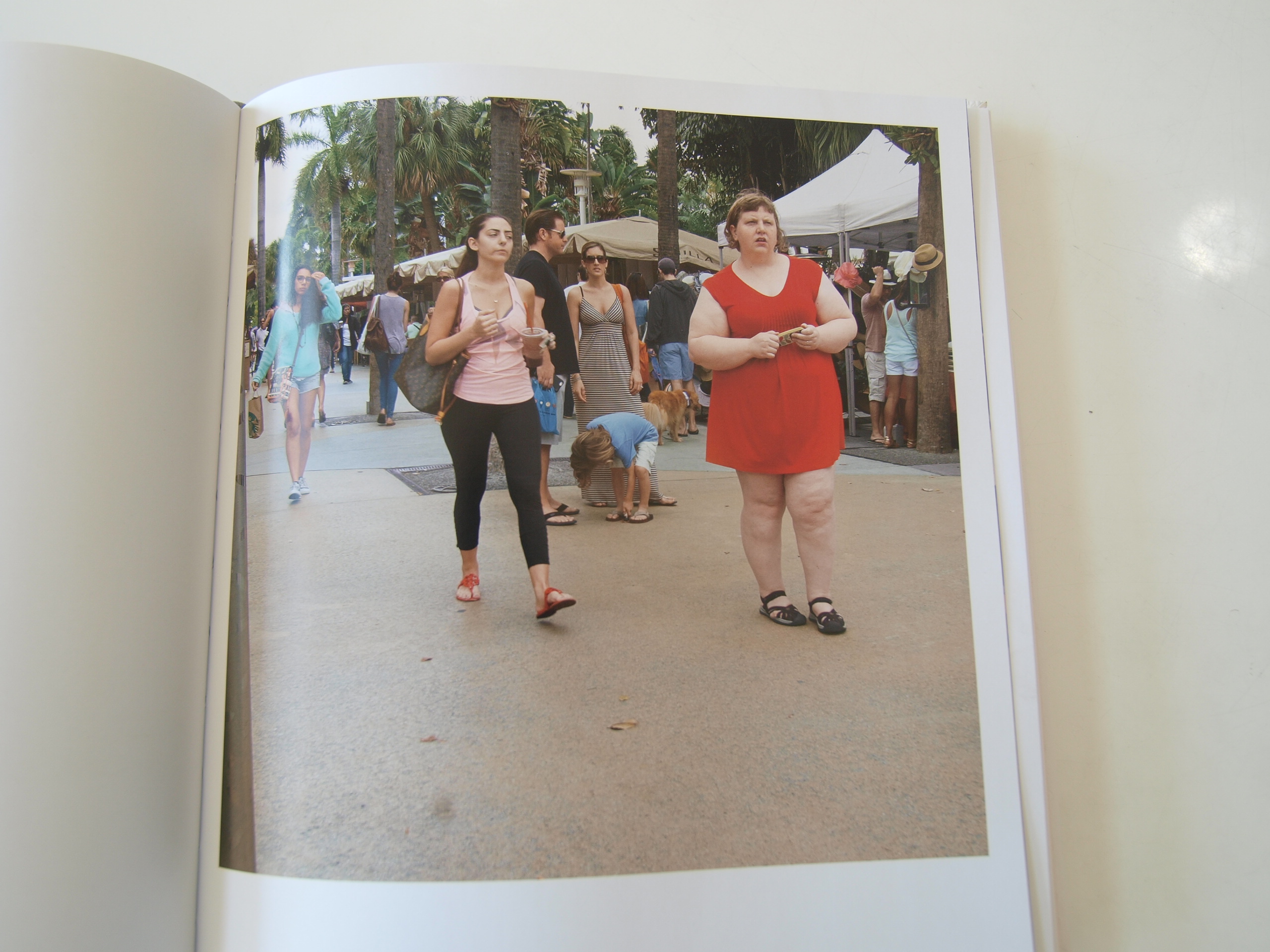
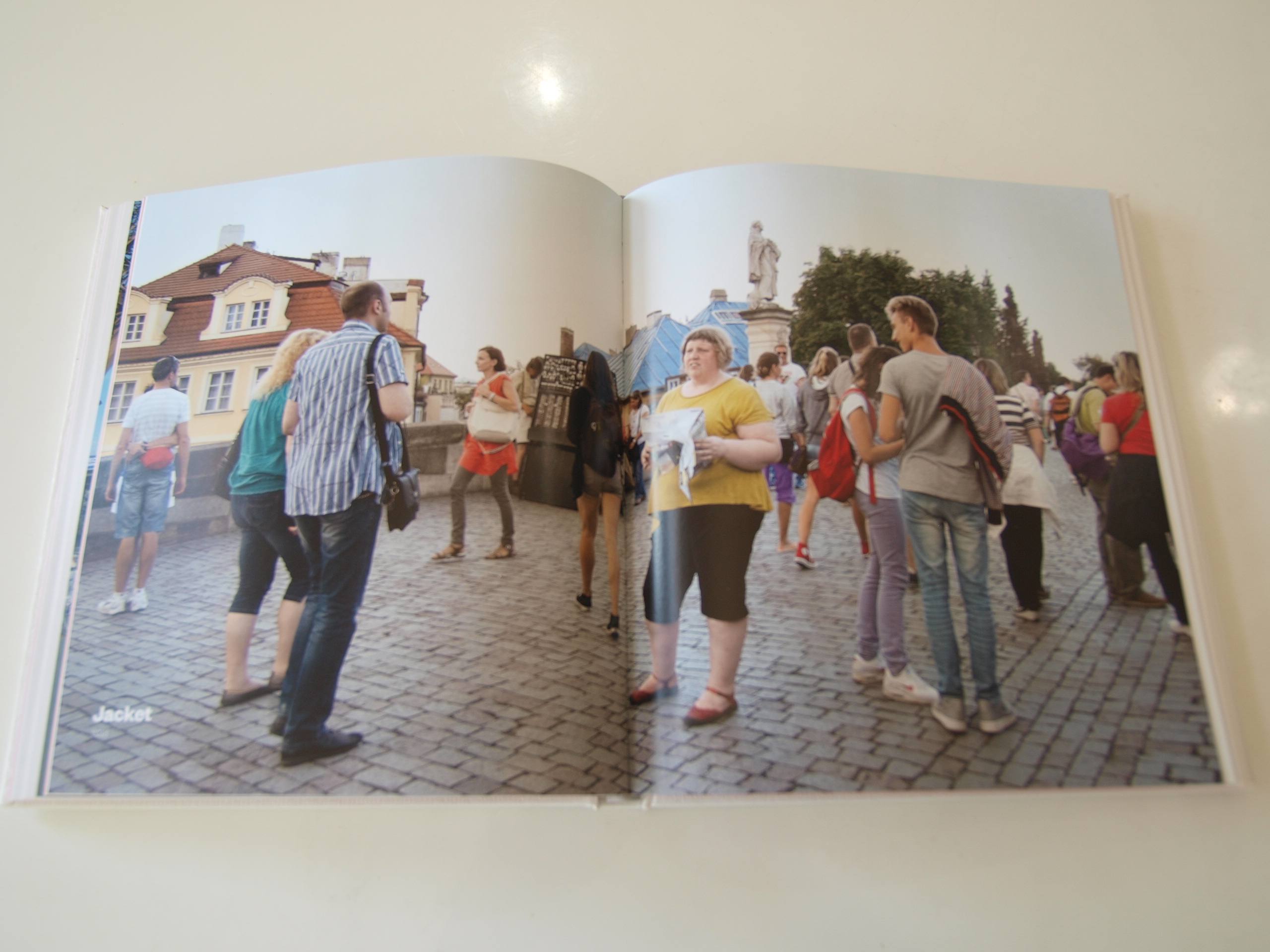
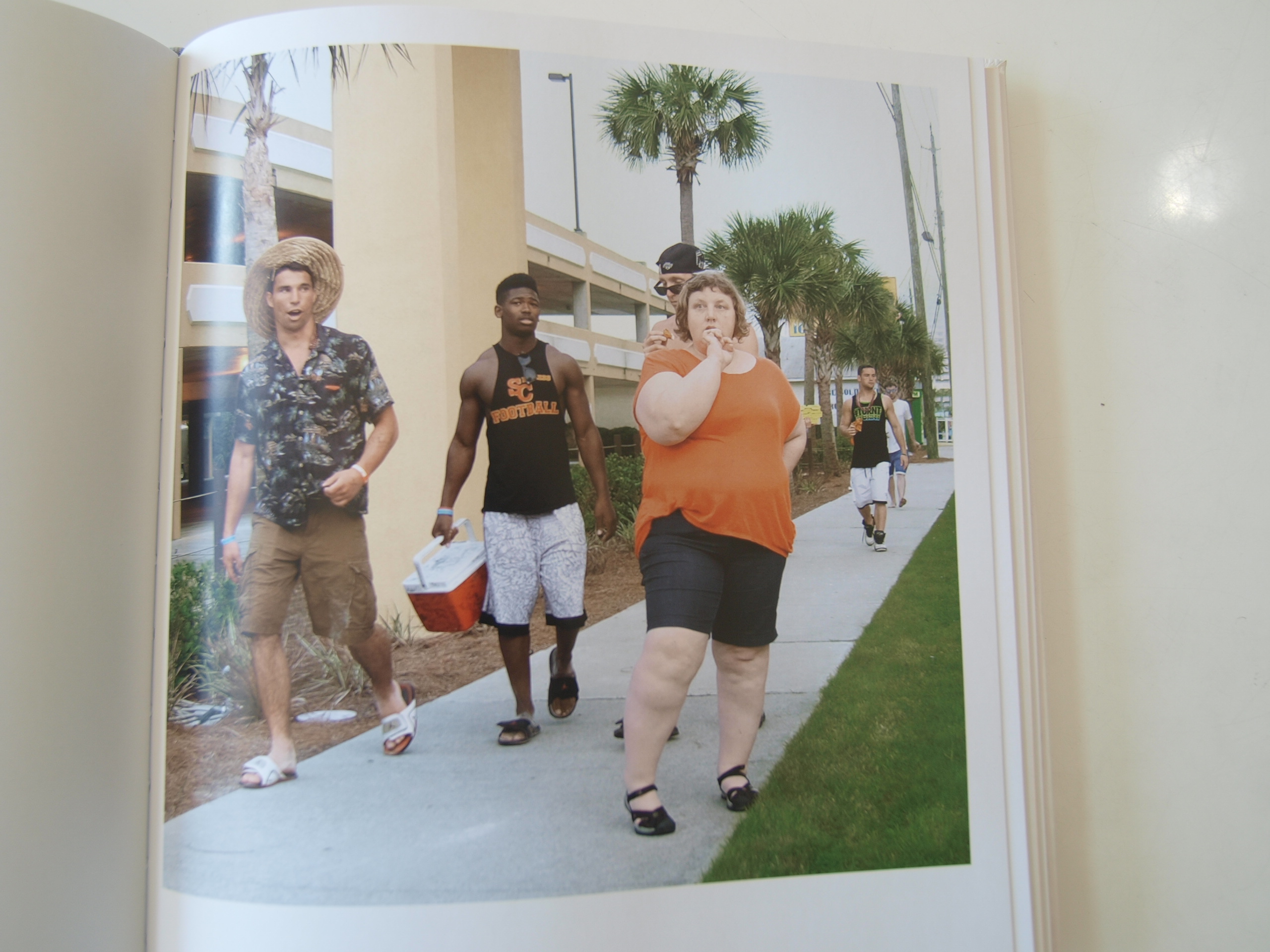
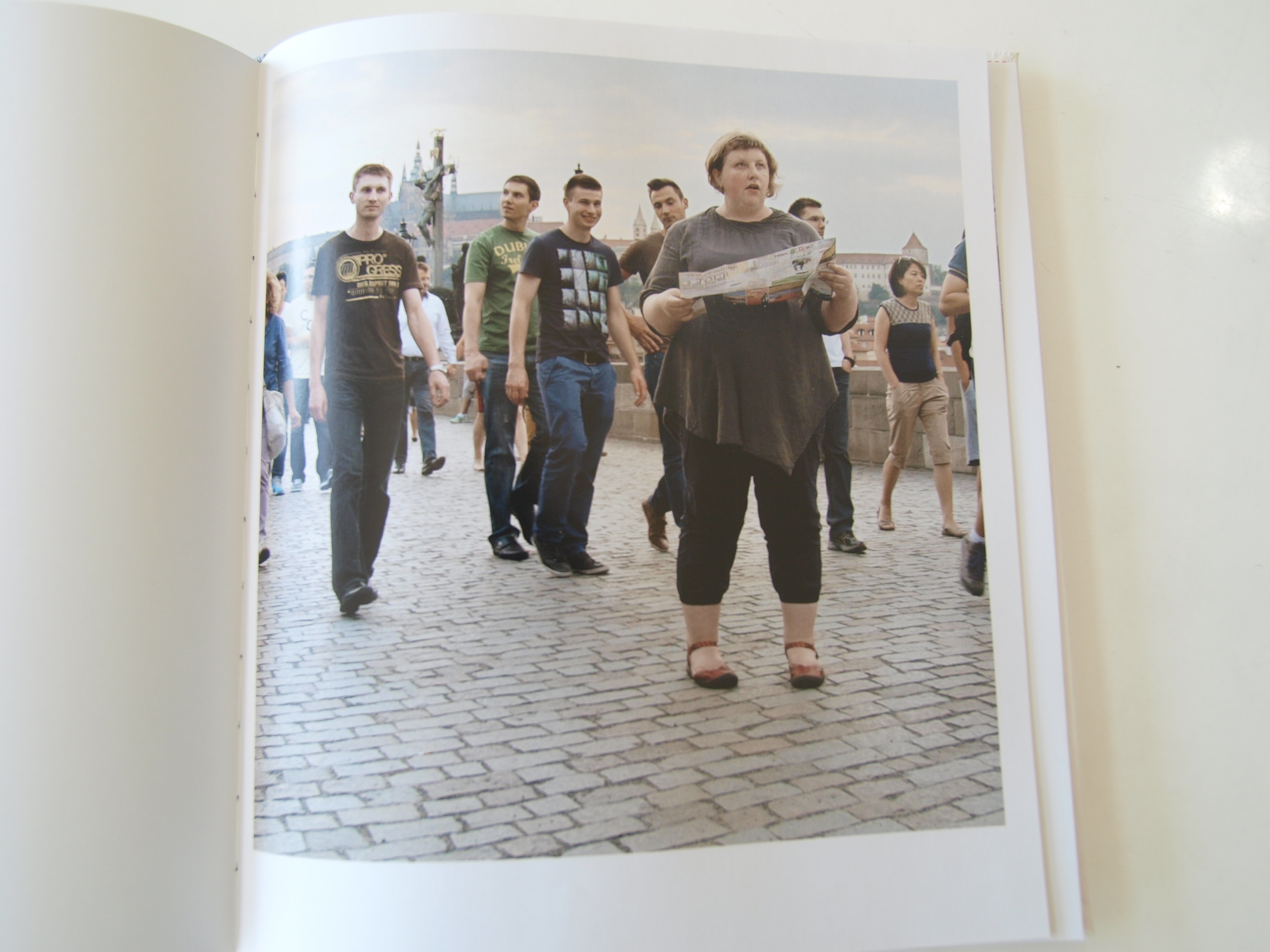
Well, near as I can tell, she walks or stands around, while an assistant waits to snap the shutter the second someone looks askance at Ms. Morris-Cafiero.

Really, that’s the gist of it.

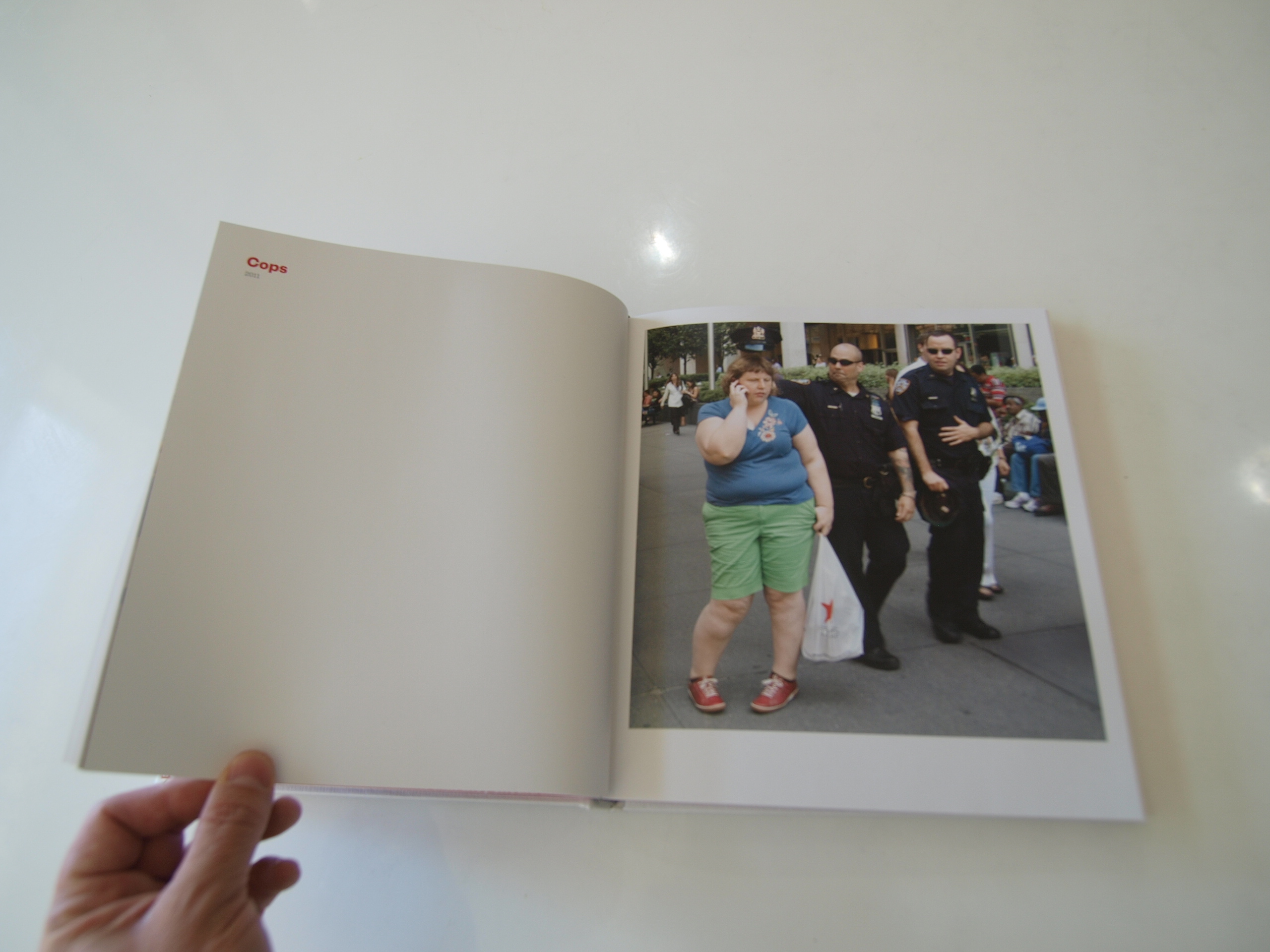
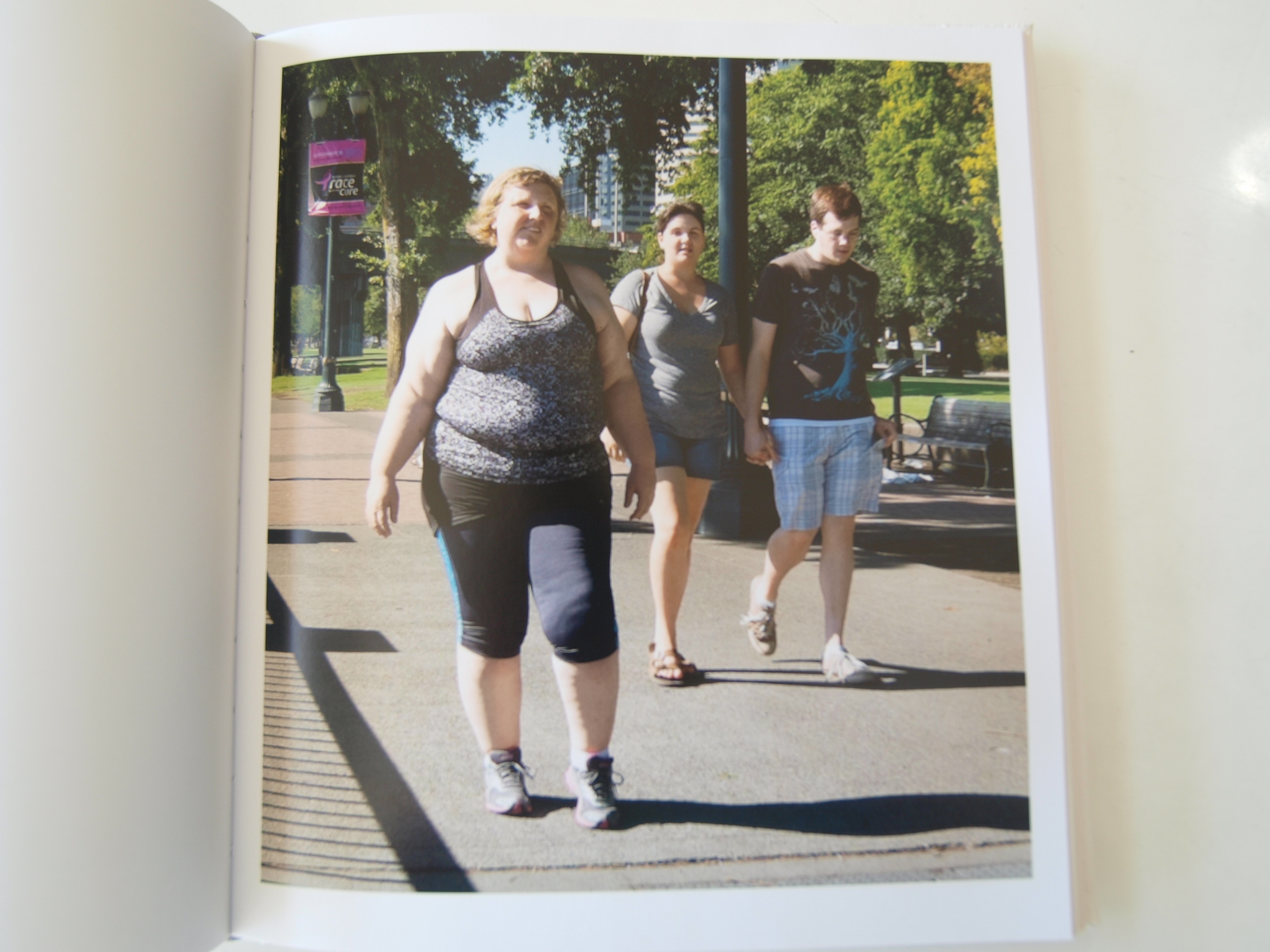
Ms. Morris-Cafiero, who is overweight, stands around by the side of a walkway, or in Times Square, or under the Eiffel Tower, and the camera-person captures people who look at her.

The obvious message is that people are put off by her body, which is often visible, as she wears bathing suits or workout clothes. The picture quality is good-but-not-amazing, as it seems as if these were snapped with a compact point and shoot camera, or maybe a digital SLR?

Things like light quality, color palette, and formal compositions are understated, I gather, to enhance the feeling of reality as it happens. But by gutting the efforts of technique, it puts a lot of pressure on content.

This is obviously a very smart idea, but I’m not sure it stands up to deeper scrutiny. There are several images in which passersby shoot Ms. Morris-Cafiero some serious shade; pictures in which you can tell that random strangers are being rude.

A few, yes.

But there are other images in which the strangers’ intentions are much less clear. A sideways glance is not an indictment of someone else’s character.

Furthermore, in many of the set-ups, Ms. Morris-Cafiero adopts very noticeable body positions. Her feet are splayed, or she looks confused, or dazed. Then there are the pictures in which she is holding a map, and looking confused, which will certainly draw the attention of many a person walking down a city street.

Despite the fact that I’ve already admitted this is a complicated subject, I’ll openly state that people who body-shame, or mad-dog someone else just because of how much they weigh?

Those people are dickheads.

There.
I said it.

But just because it happens to Haley Morris-Cafiero does not mean that I have to love her art project. Especially as I’ve seen, and written about, other projects that deal better in nuance.

This feels more like a Jackass outtake, to me. It’s clever, original, and clearly means well. I get the ideas it wants me to get. So it’s successful in that regard.

Maybe it’s even intentional? A viral-esque style for a project that was always going to go viral?

But it also feels like it’s taking advantage of some of the strangers, judging them the way Ms. Morris-Cafiero feels judged. I was inclined to like this project, but came away feeling unsure.

Or maybe it’s just that by making it a book, she included images that don’t support her message? Too many pictures made me think: “That’s not a dirty look. That’s just someone turning his/her head.”

What this book did is put me in an uncomfortable place, and I think that’s a big part of its allure. (Structural metaphor, anyone?) Do anything other than lavish praise, and I set myself up to be accused of being disrespectful, or biased. As I’ve written at length about so many difficult issues over the years, I’m clearly not afraid to offend.

So let me end thusly: This is a very interesting, edgy book, that draws attention to a murky, difficult subject. I think this artist has done something smart, if flawed, and I look forward to seeing what comes next.

Bottom Line: Edgy, well-designed, but imperfect book

To Purchase “The Watchers” Visit Photo-Eye

OLYMPUS DIGITAL CAMERA

OLYMPUS DIGITAL CAMERA

OLYMPUS DIGITAL CAMERA

OLYMPUS DIGITAL CAMERA

OLYMPUS DIGITAL CAMERA

OLYMPUS DIGITAL CAMERA

OLYMPUS DIGITAL CAMERA

OLYMPUS DIGITAL CAMERA

OLYMPUS DIGITAL CAMERA

OLYMPUS DIGITAL CAMERA

OLYMPUS DIGITAL CAMERA

OLYMPUS DIGITAL CAMERA

OLYMPUS DIGITAL CAMERA

OLYMPUS DIGITAL CAMERA

OLYMPUS DIGITAL CAMERA

OLYMPUS DIGITAL CAMERA

OLYMPUS DIGITAL CAMERA

OLYMPUS DIGITAL CAMERA

OLYMPUS DIGITAL CAMERA

OLYMPUS DIGITAL CAMERA

The Art of the Personal Project: Hollis Bennett

As a former Art Producer, I have always been drawn to personal projects because they are the sole vision of the photographer and not an extension of an art director, photo editor, or graphic designer. This new column, “The Art of the Personal Project” will feature the personal projects of photographers using the Yodelist marketing database. You can read their blog at http://yodelist.wordpress.com. Projects are discovered online and submissions are not accepted.

Today’s featured photographer is: Hollis Bennett

_B__0077

_B__0098

_B__0115

_B__0825

_B__0983

_B__1013

_B__1042

_B__1128-Edit

_B__9741

_B__9762

_B__9810

_B__9868

_B__9956

DSC00127-Edit

DSC00329

DSC00447

DSC00846

DSC00894

DSC00918

DSC01034

DSC01070

DSC01306

DSC01356

DSC01383

DSC01424

How long have you been shooting?
For myself, about 5 years.

Are you self-taught or photography school taught?
I went to photo school but the only thing it taught me was that school can’t teach you real world experience.

With this particular project, what was your inspiration to shoot it?
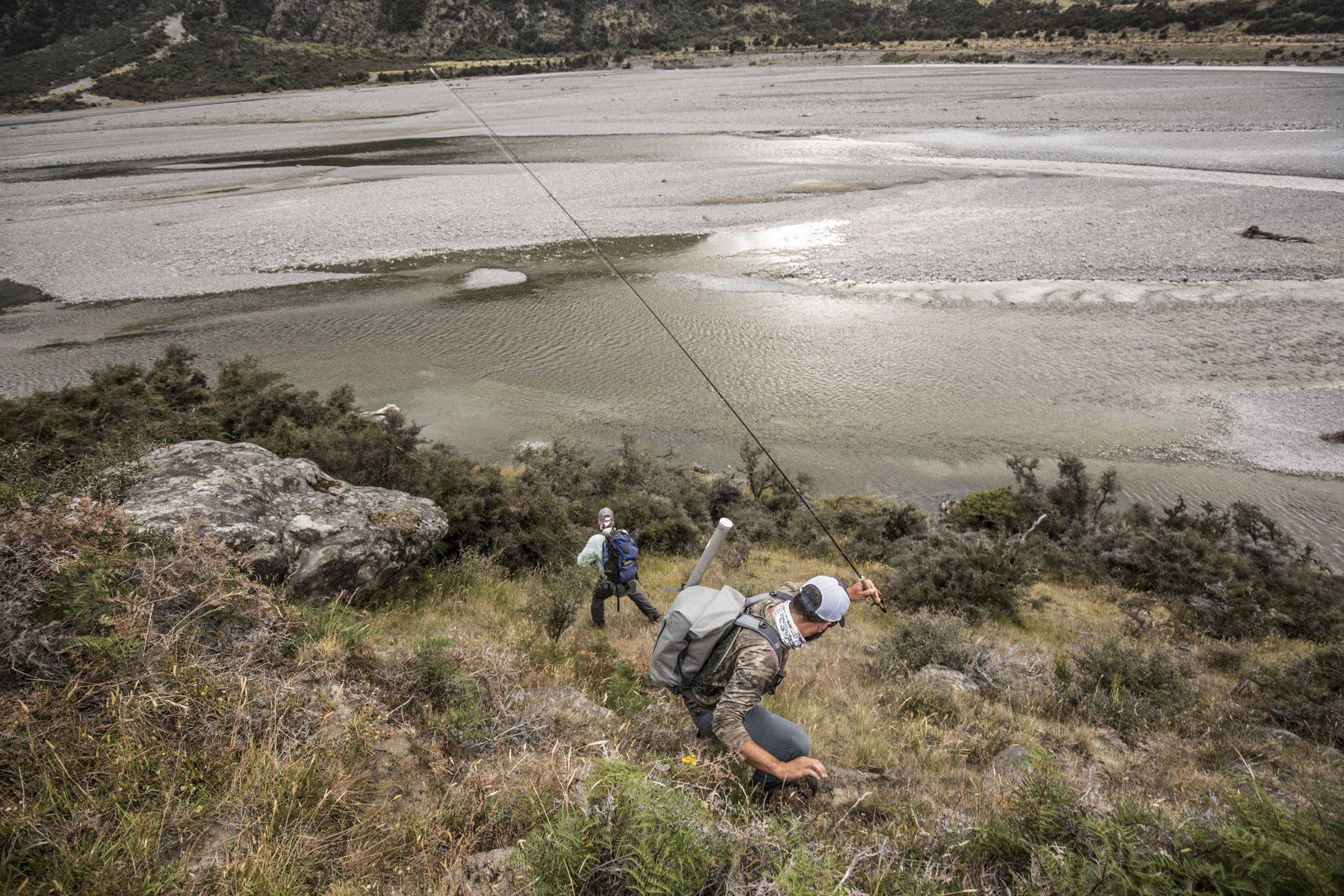
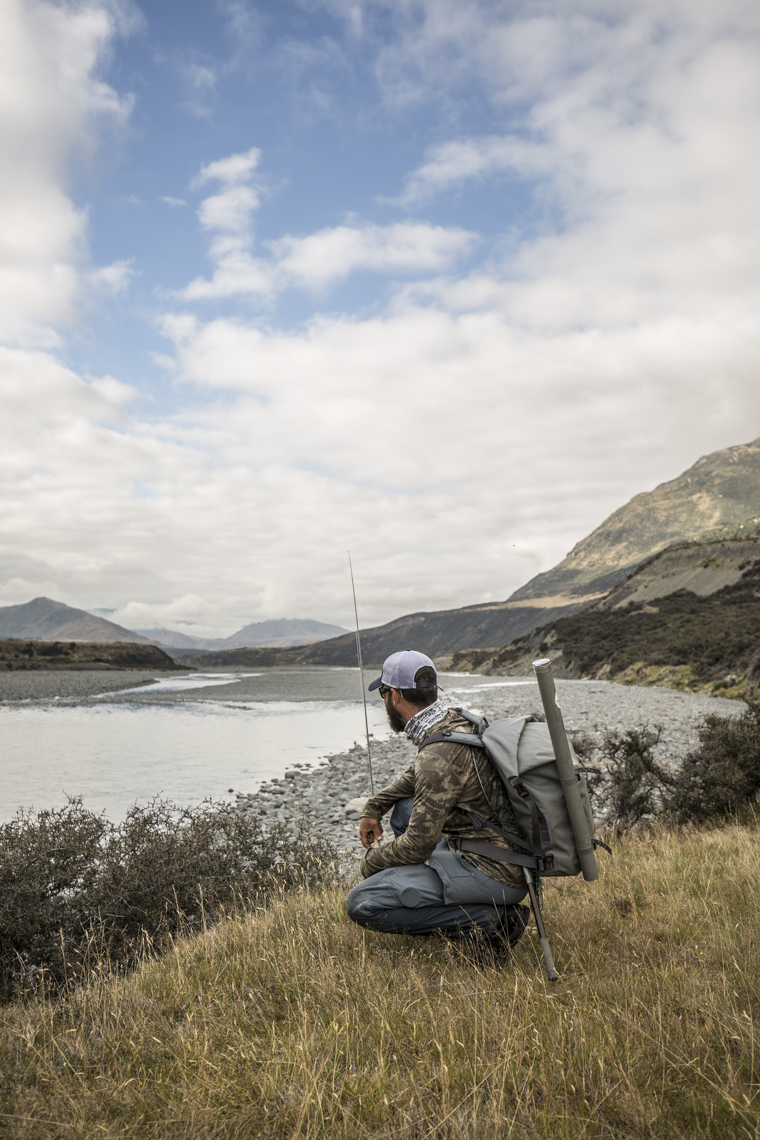
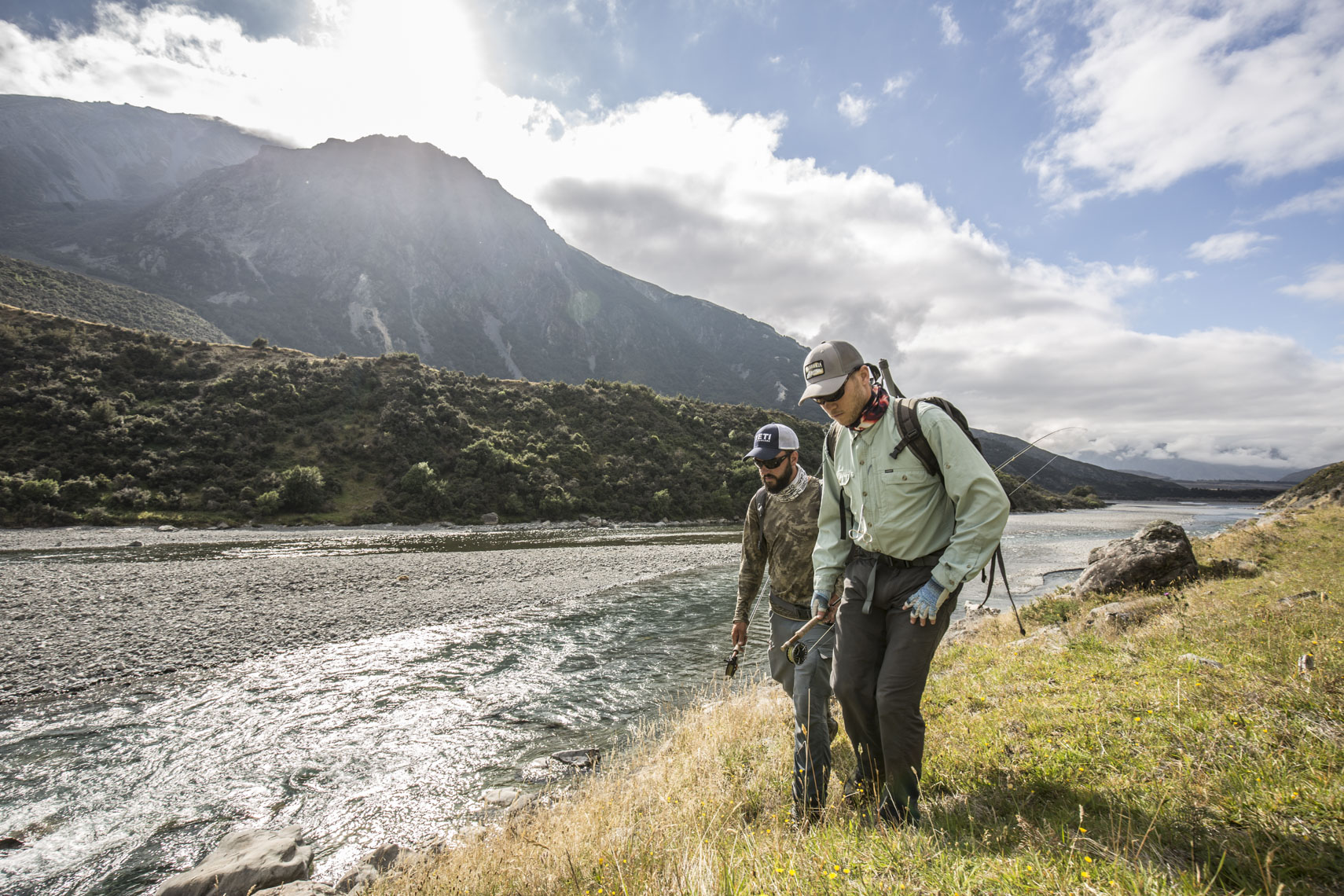
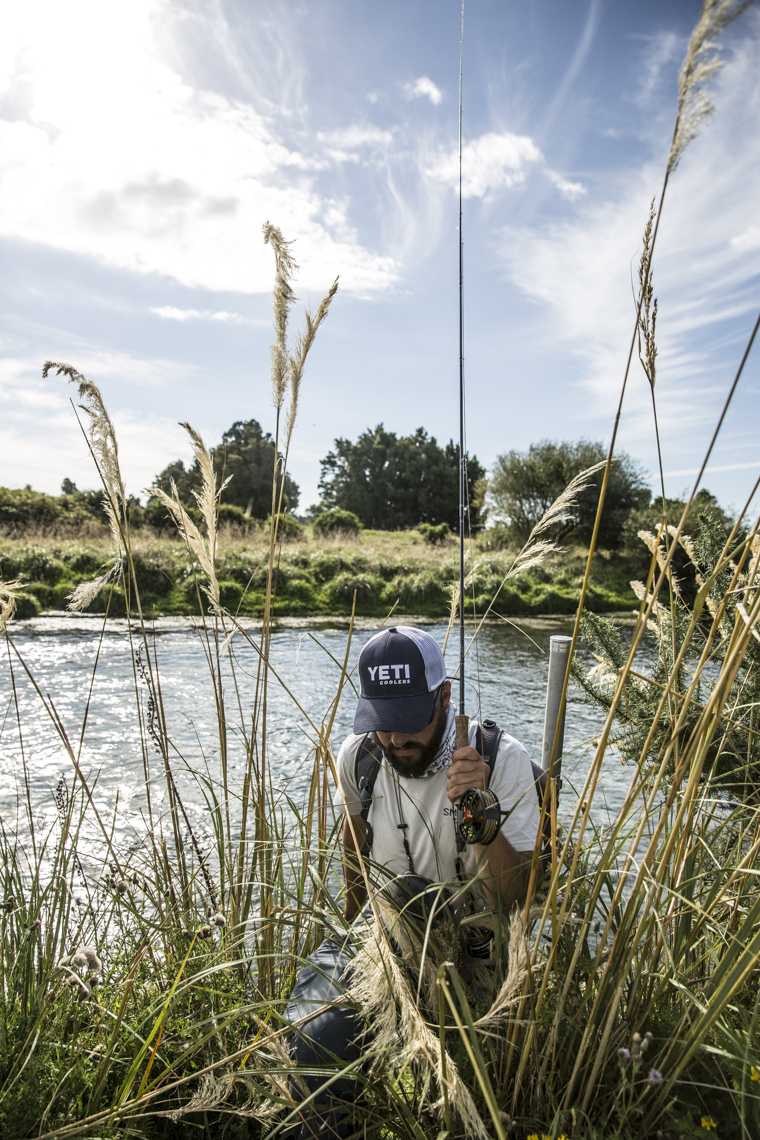
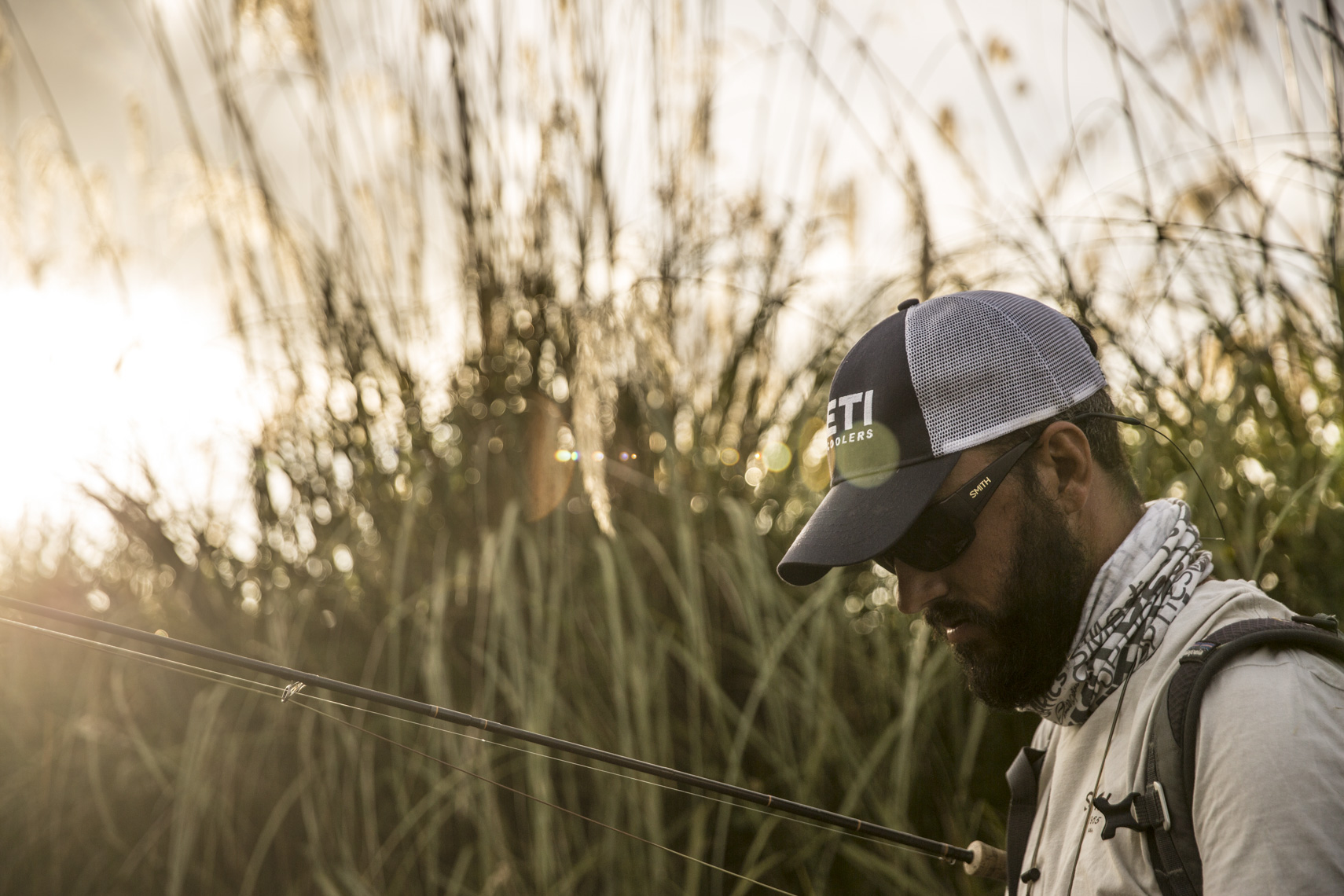
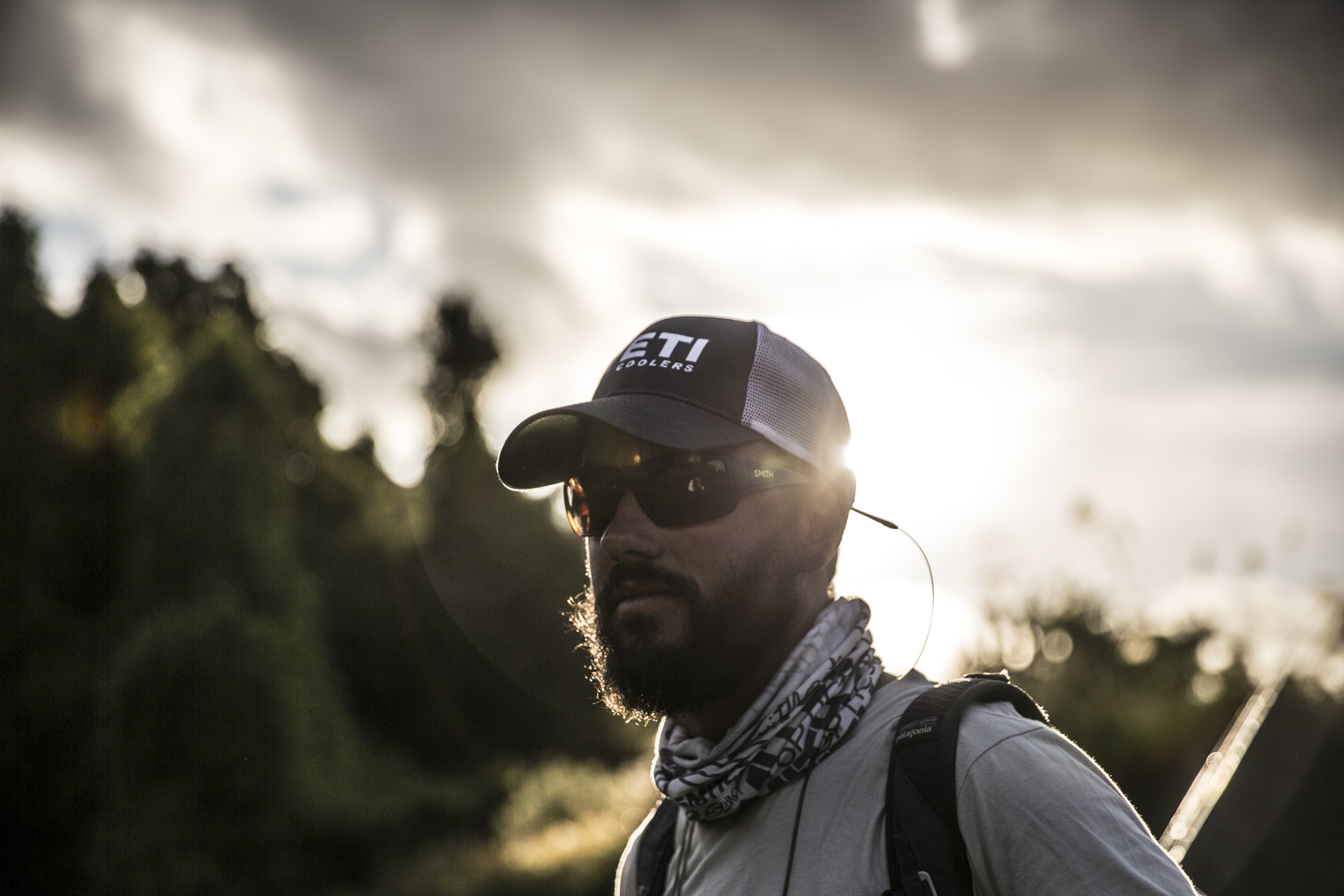
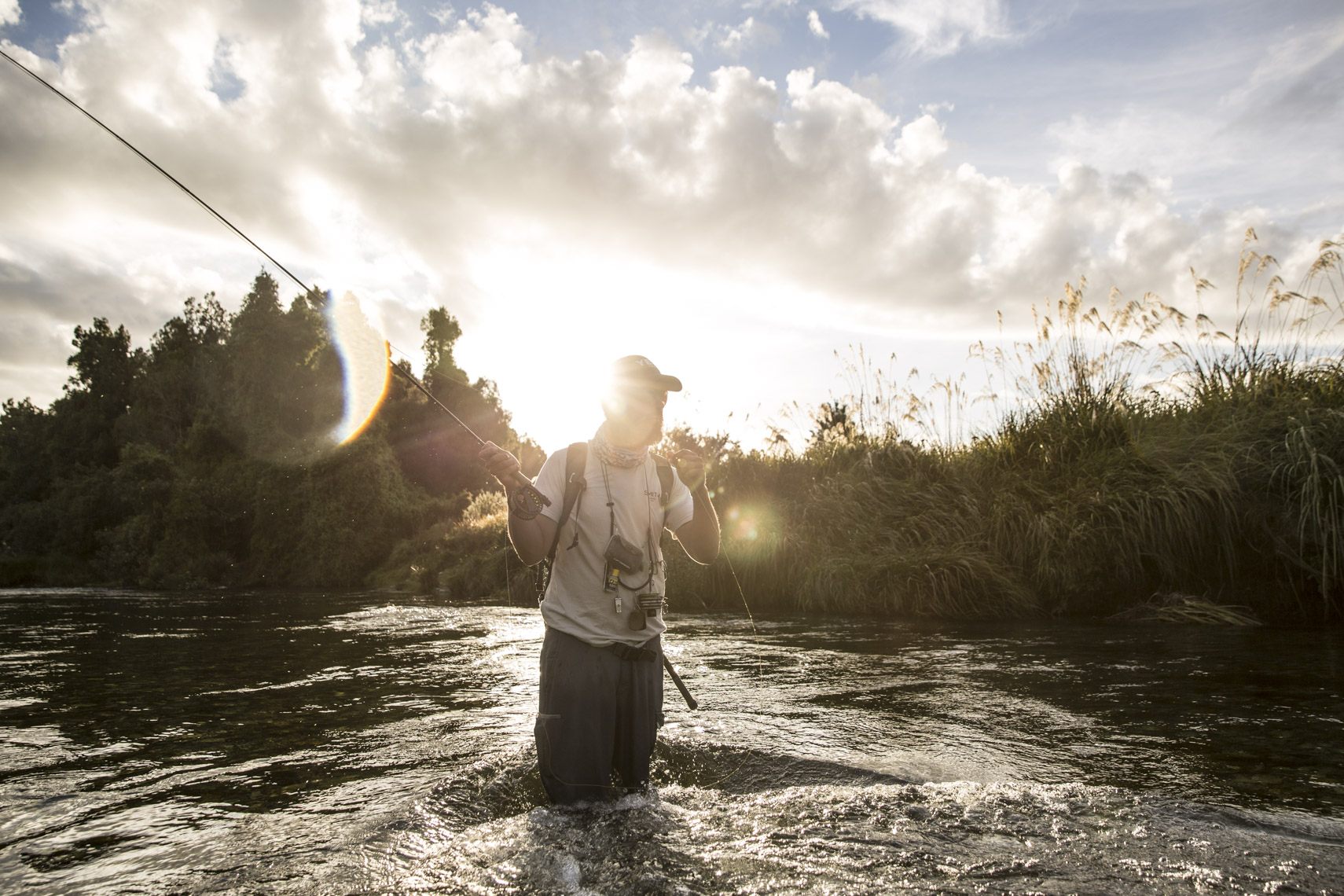
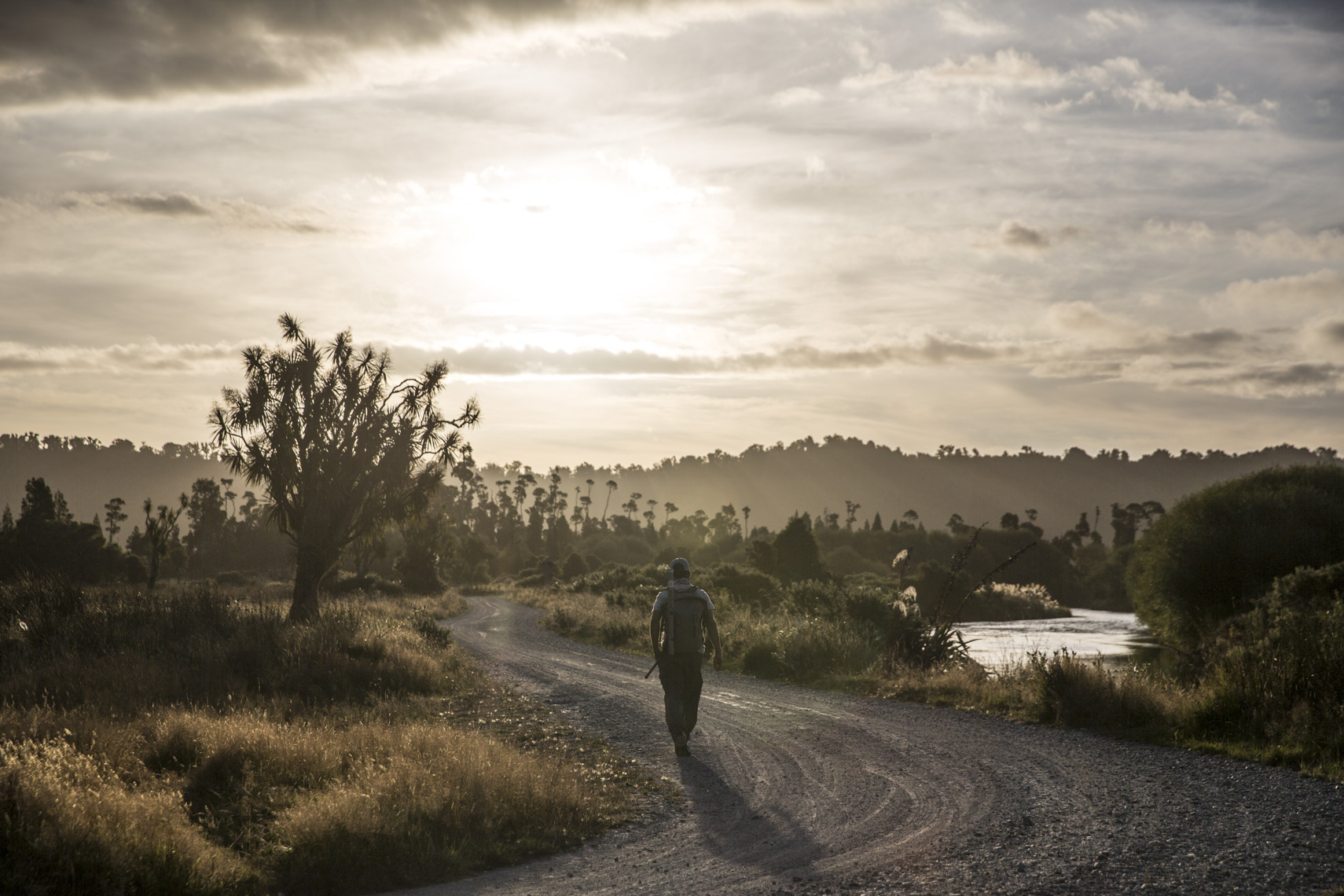
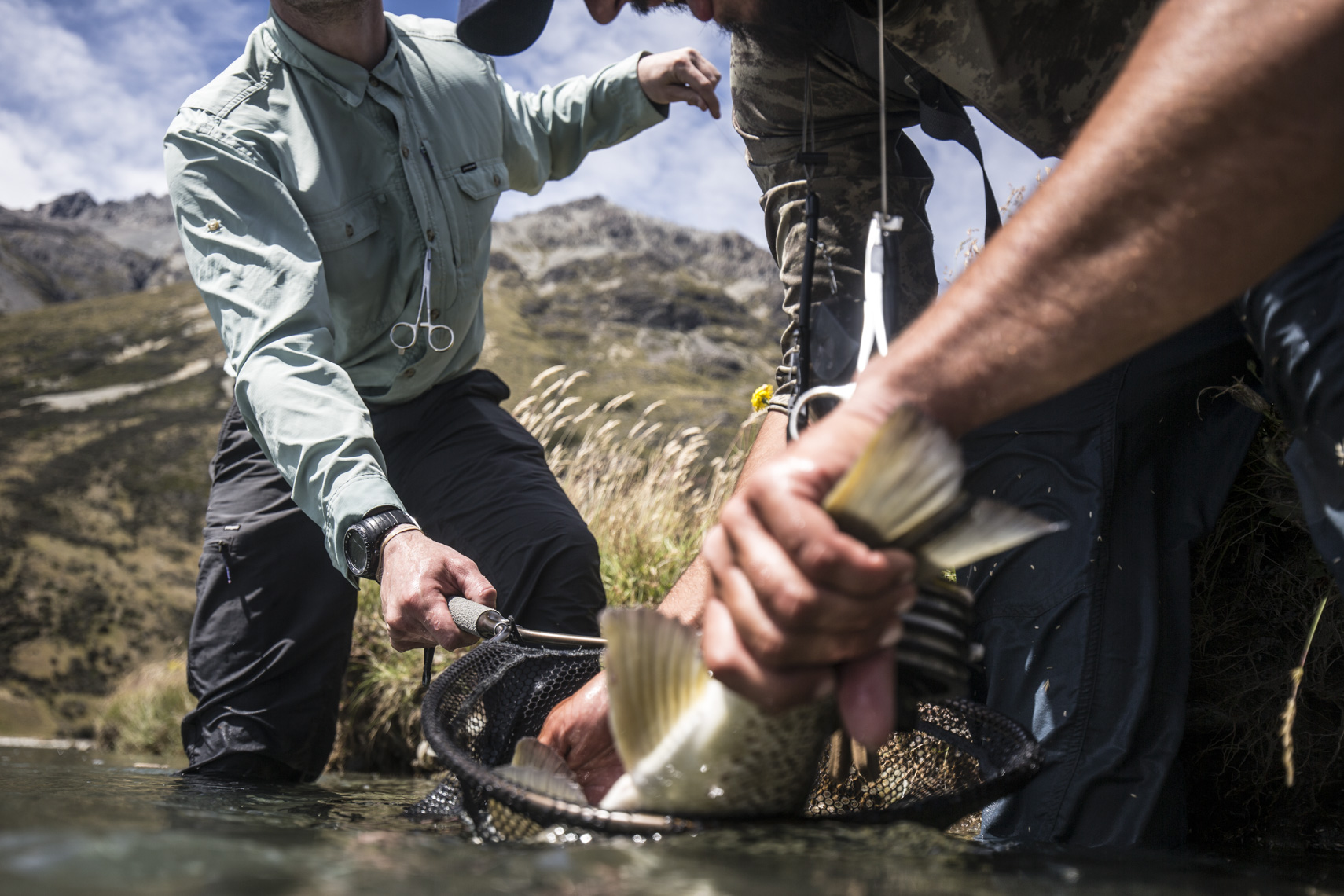
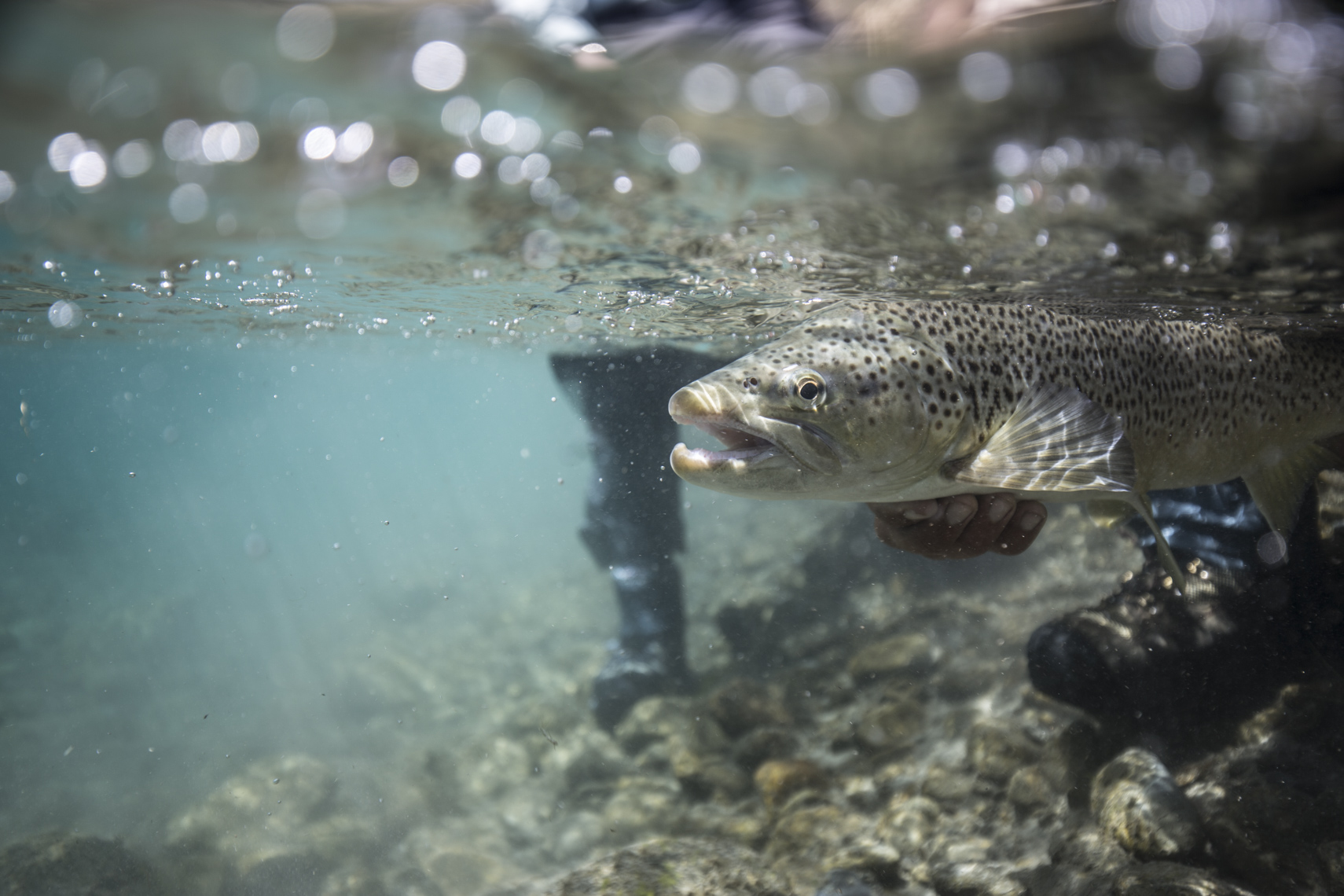
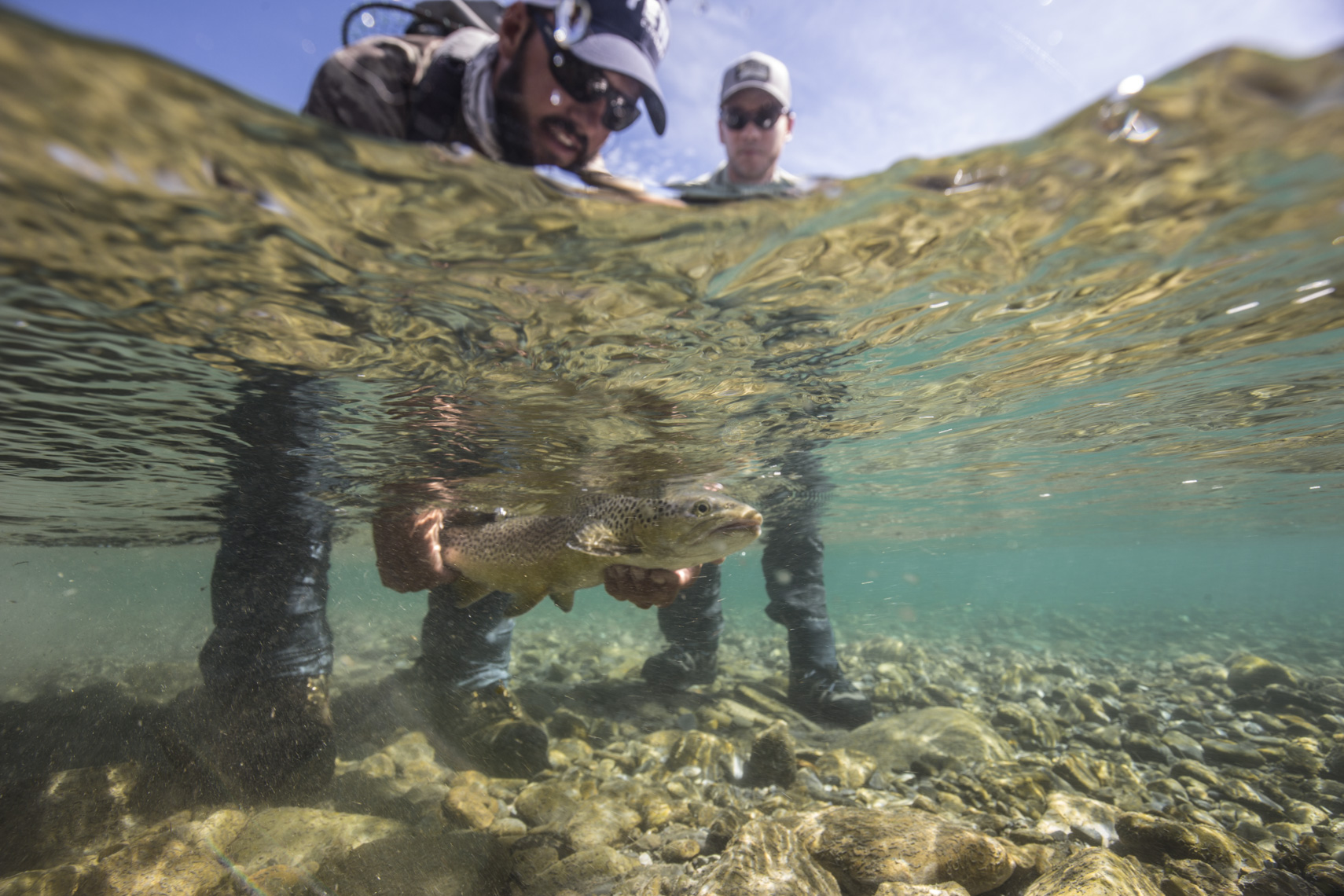
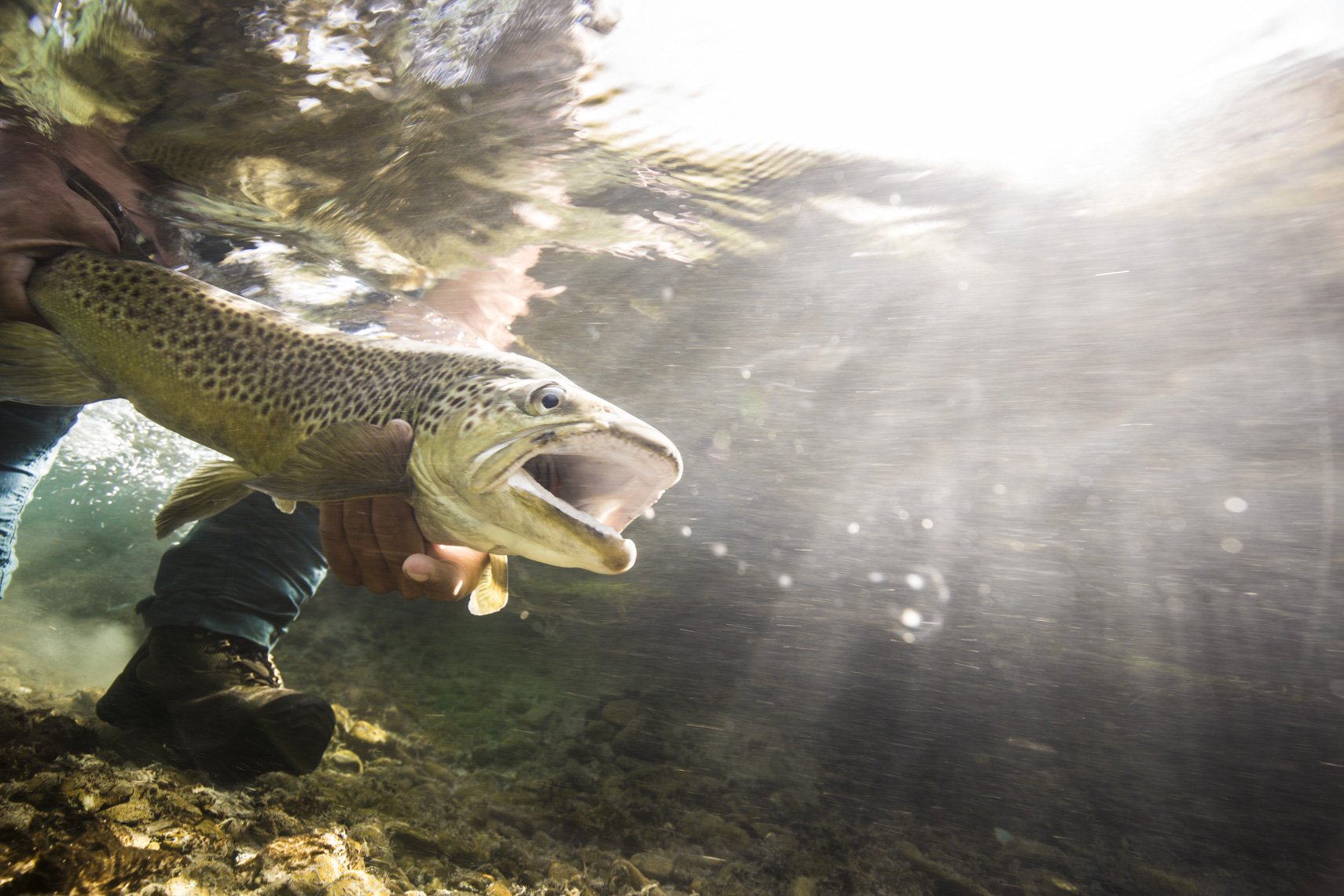
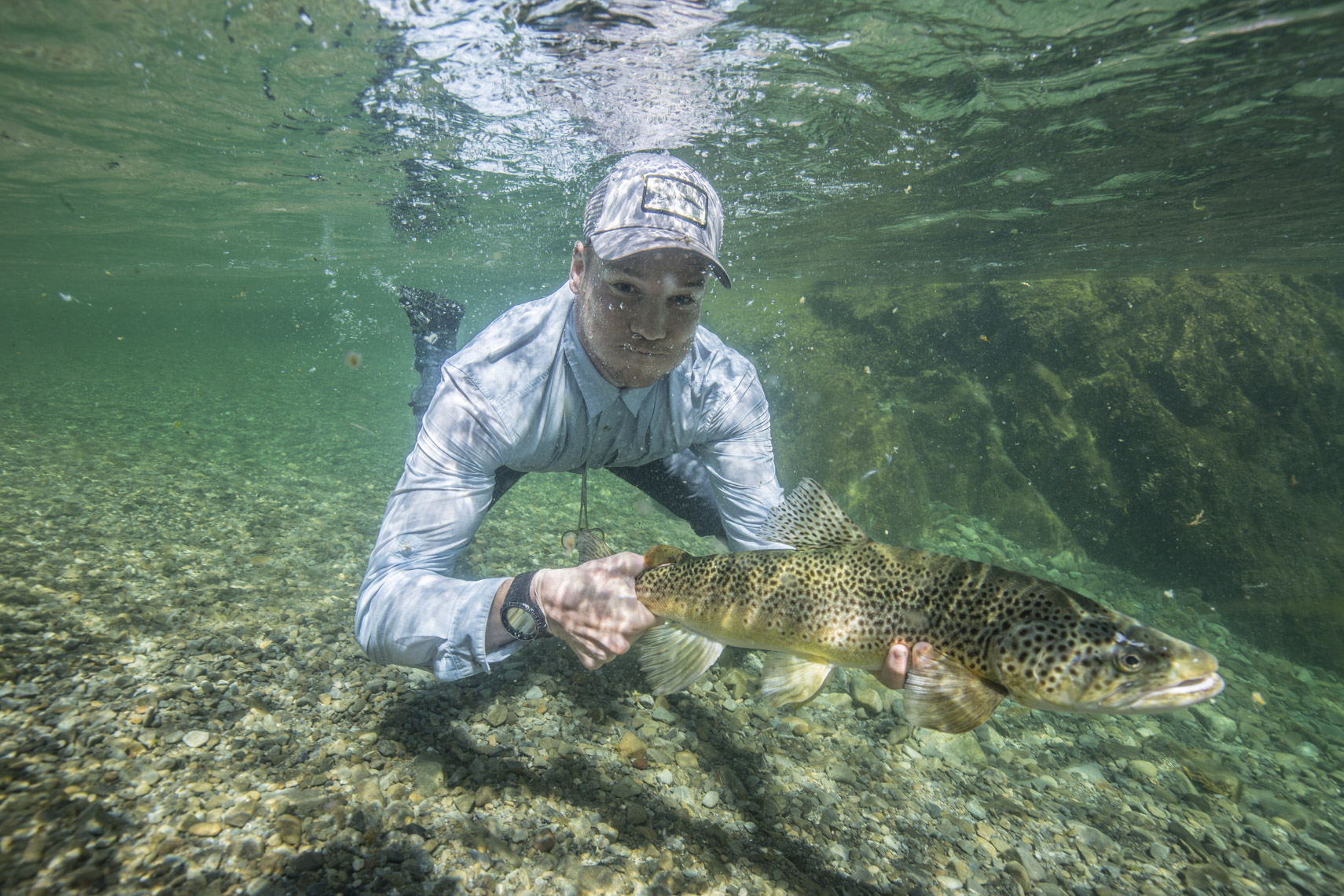
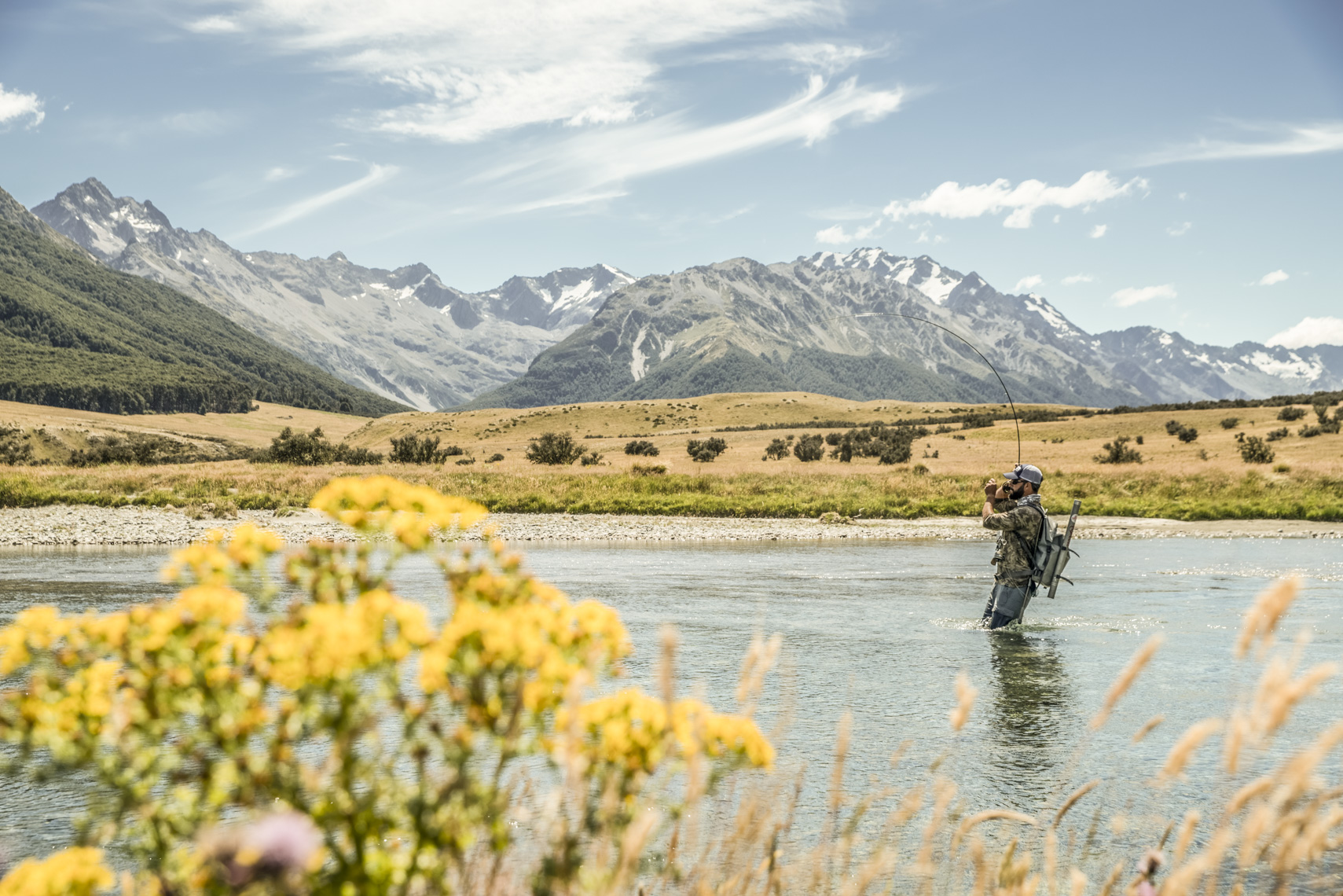
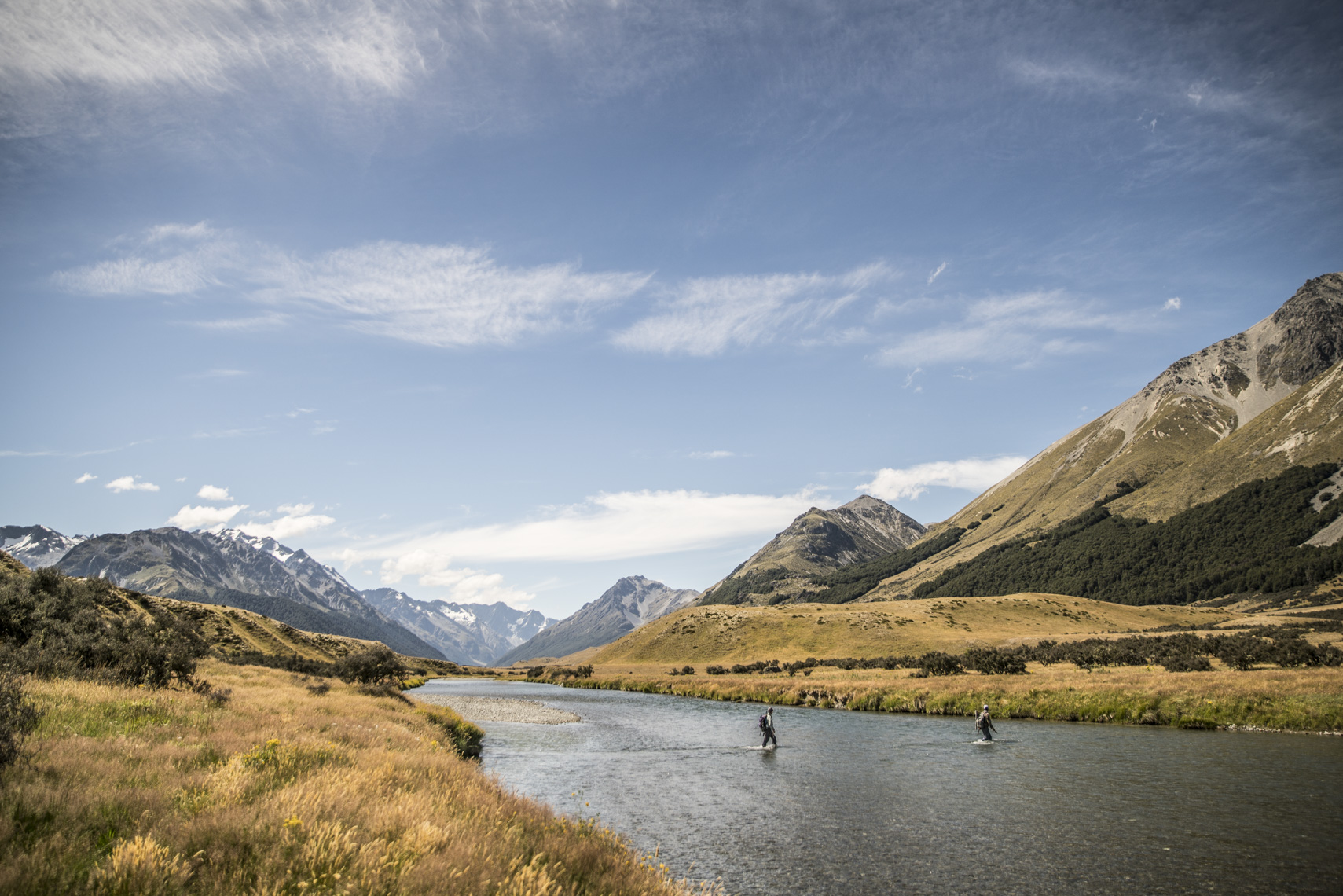
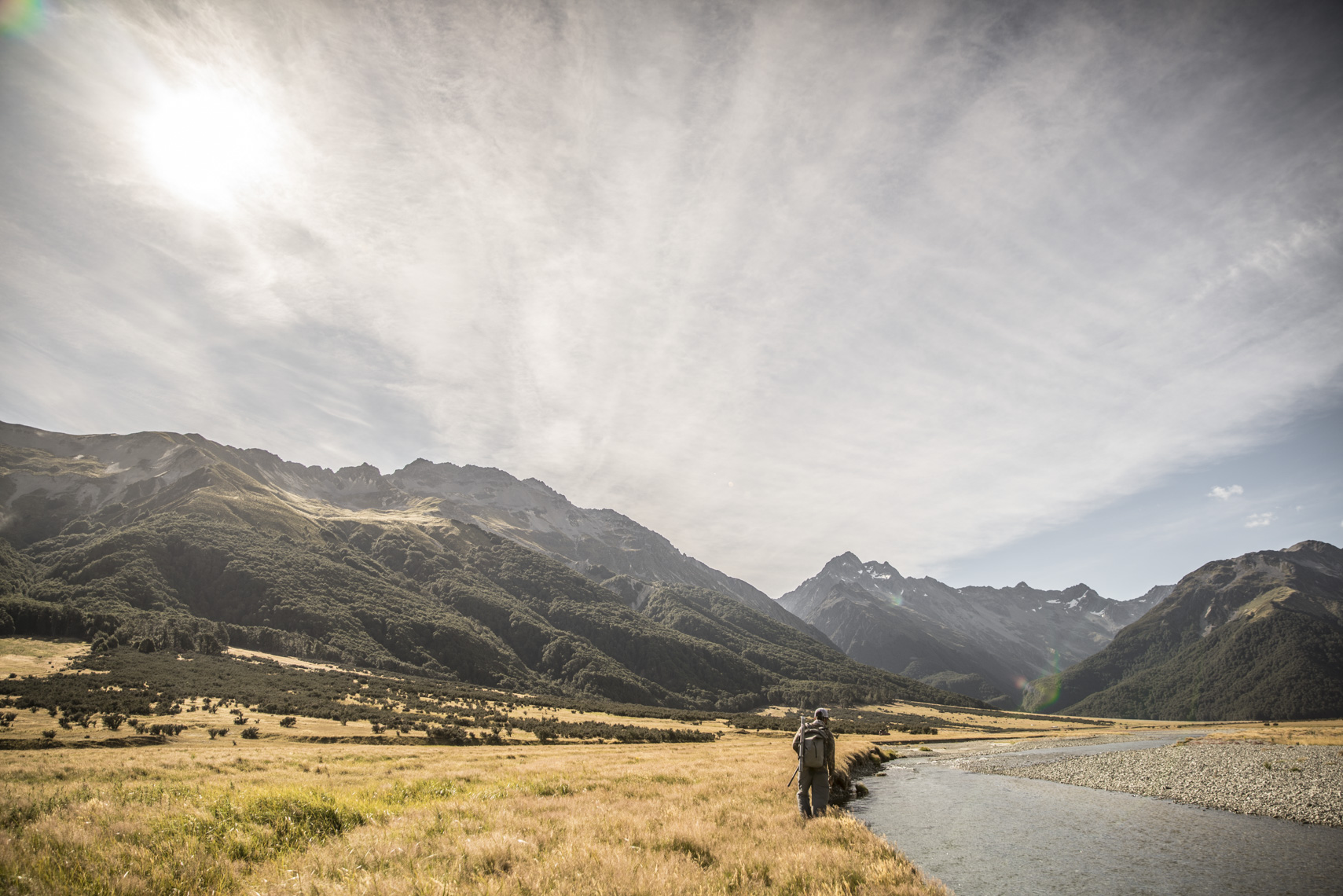
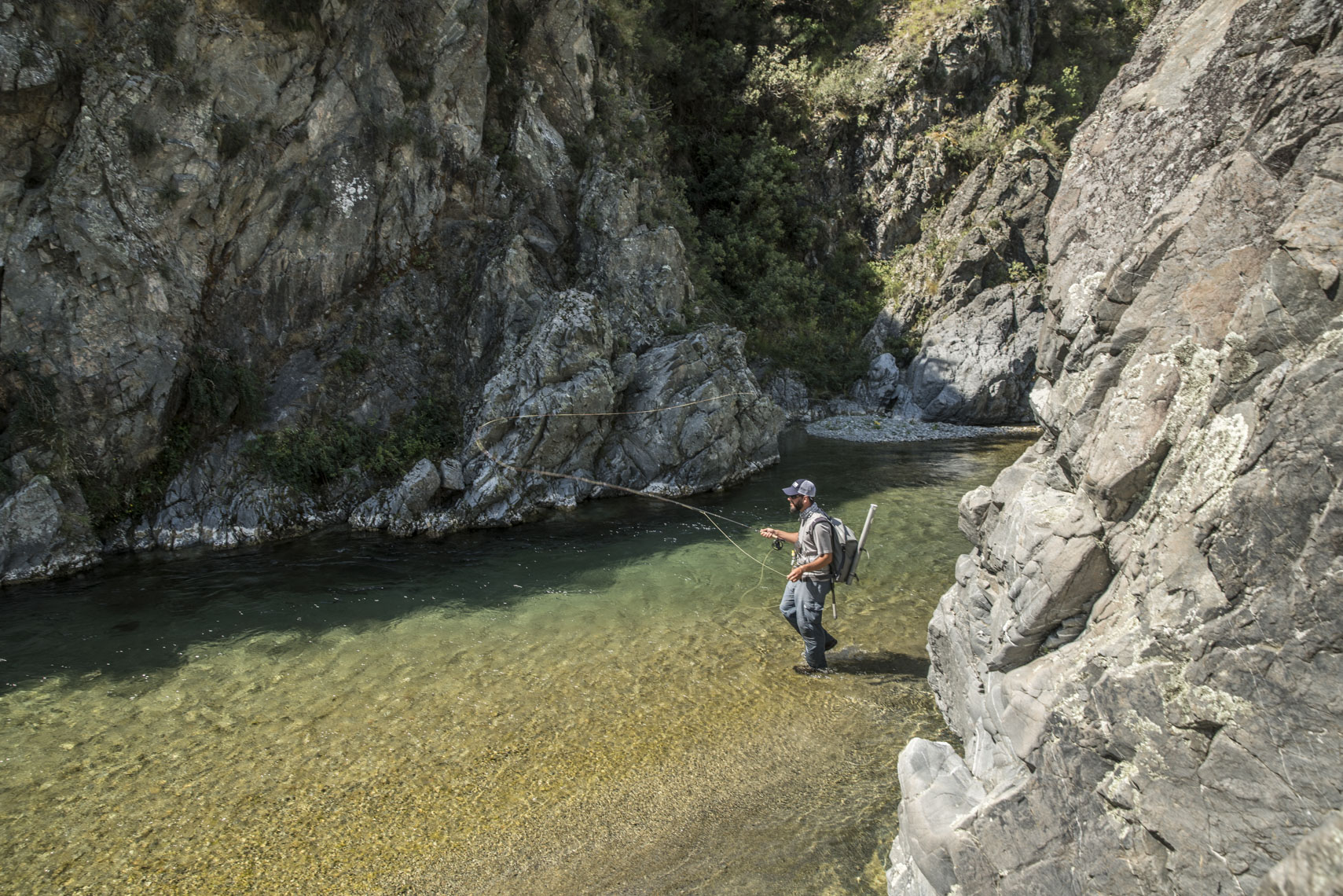
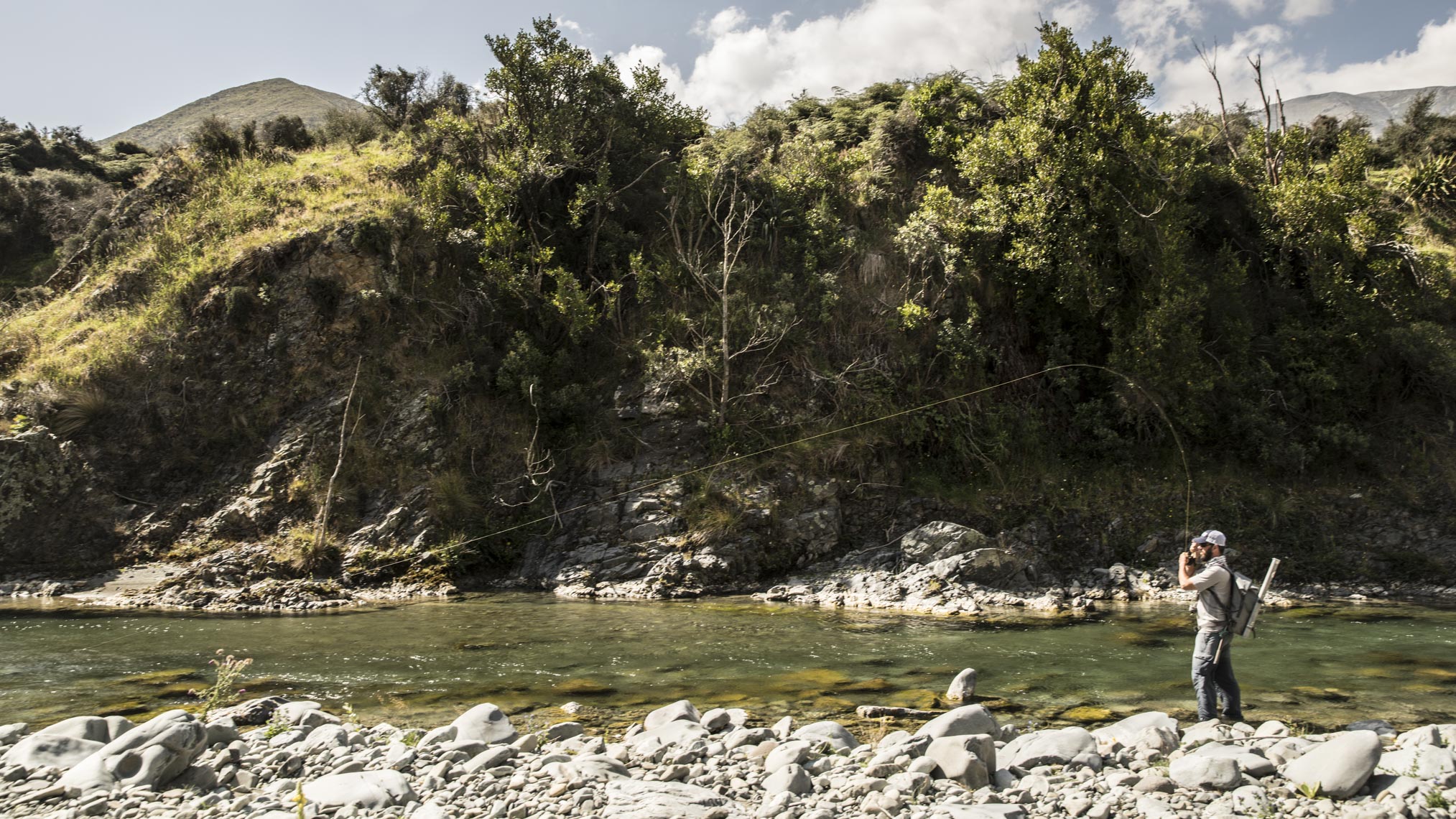
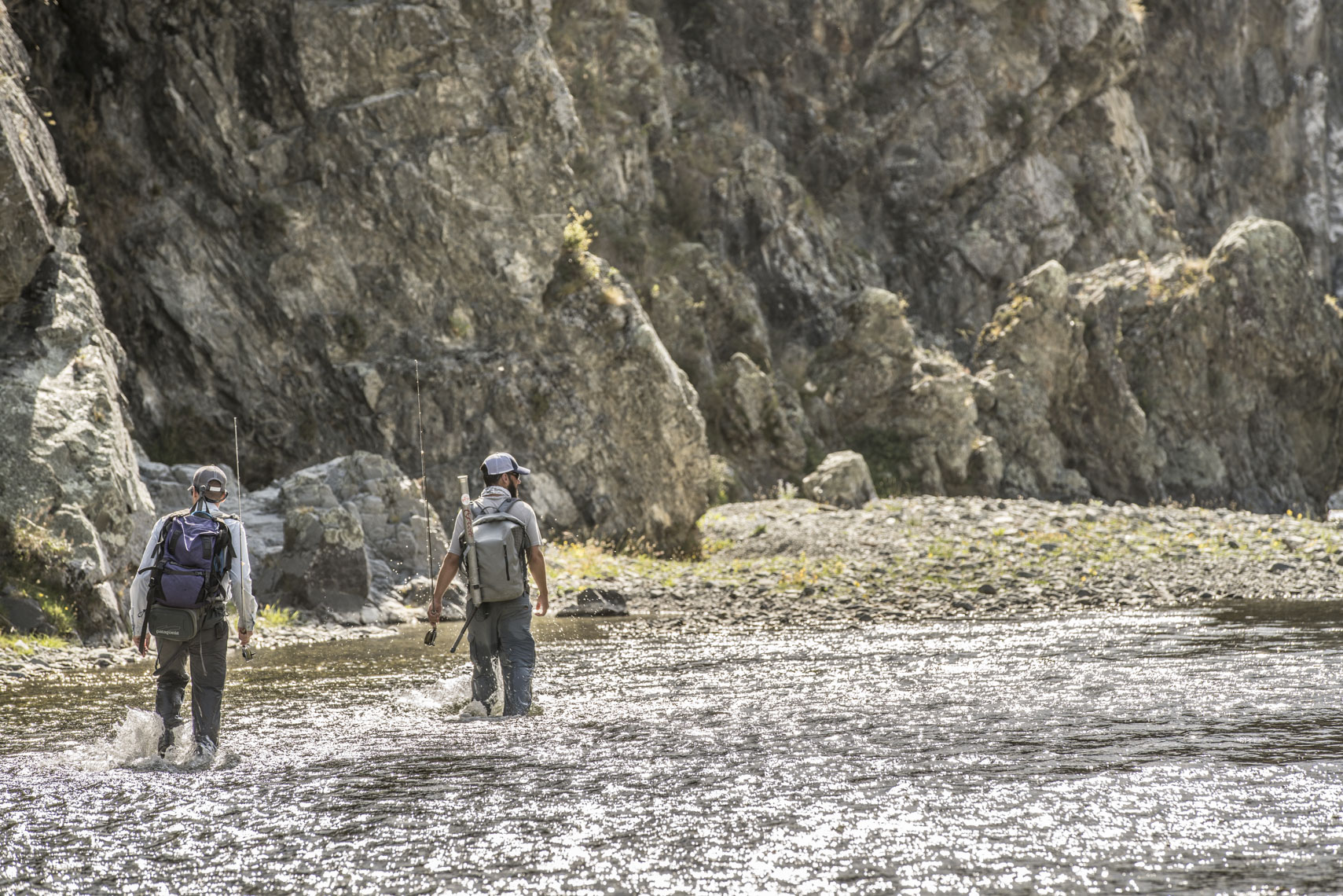
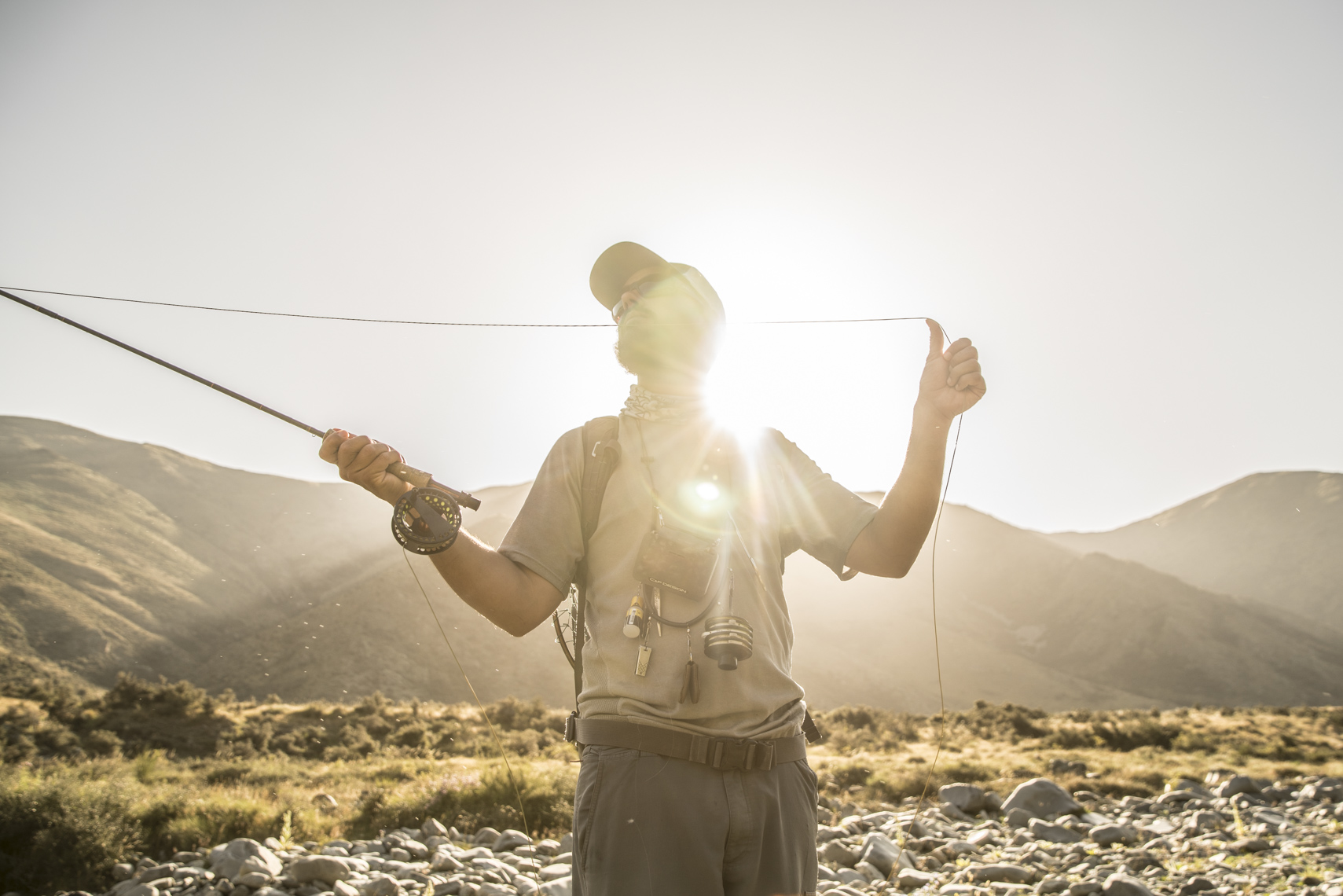
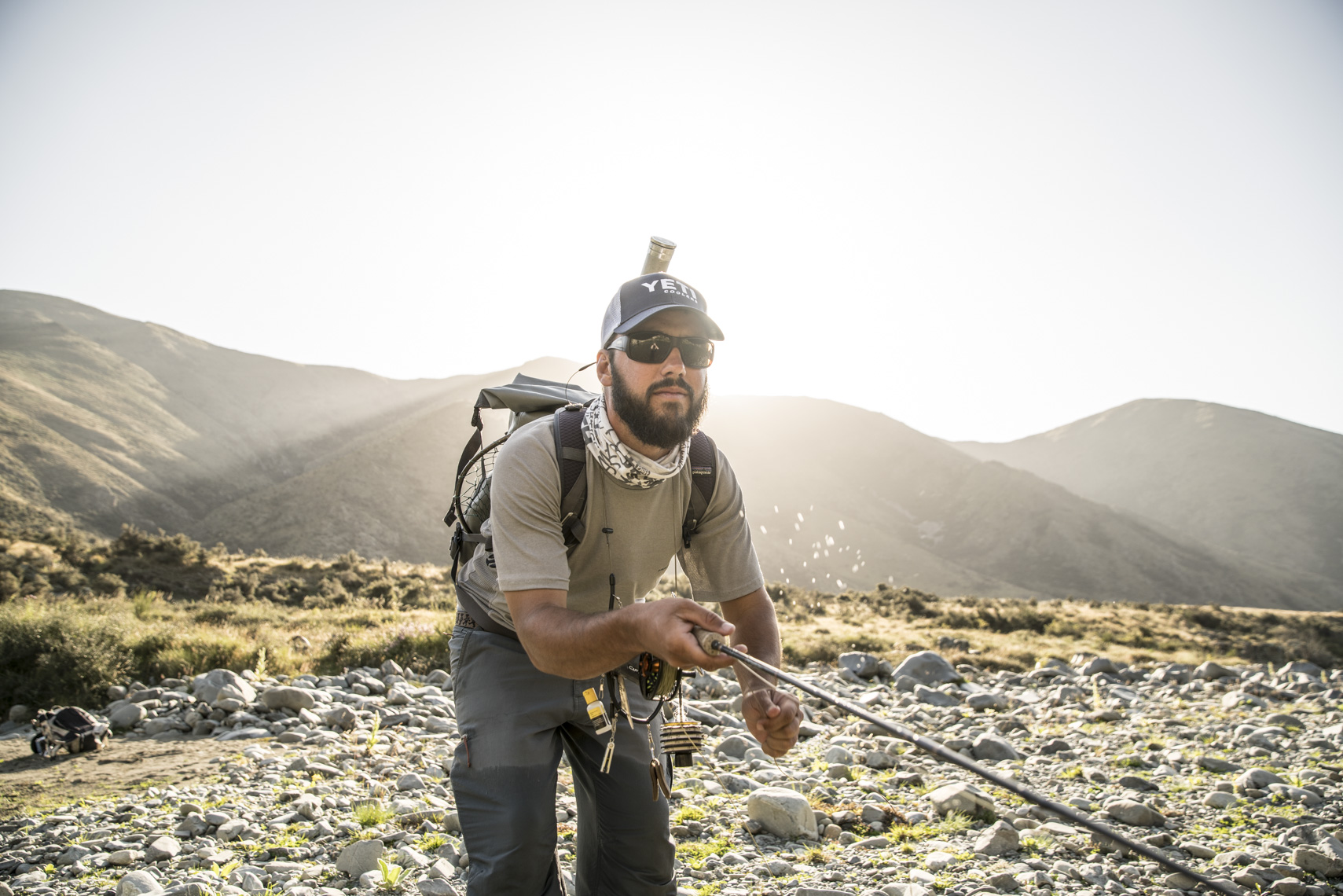
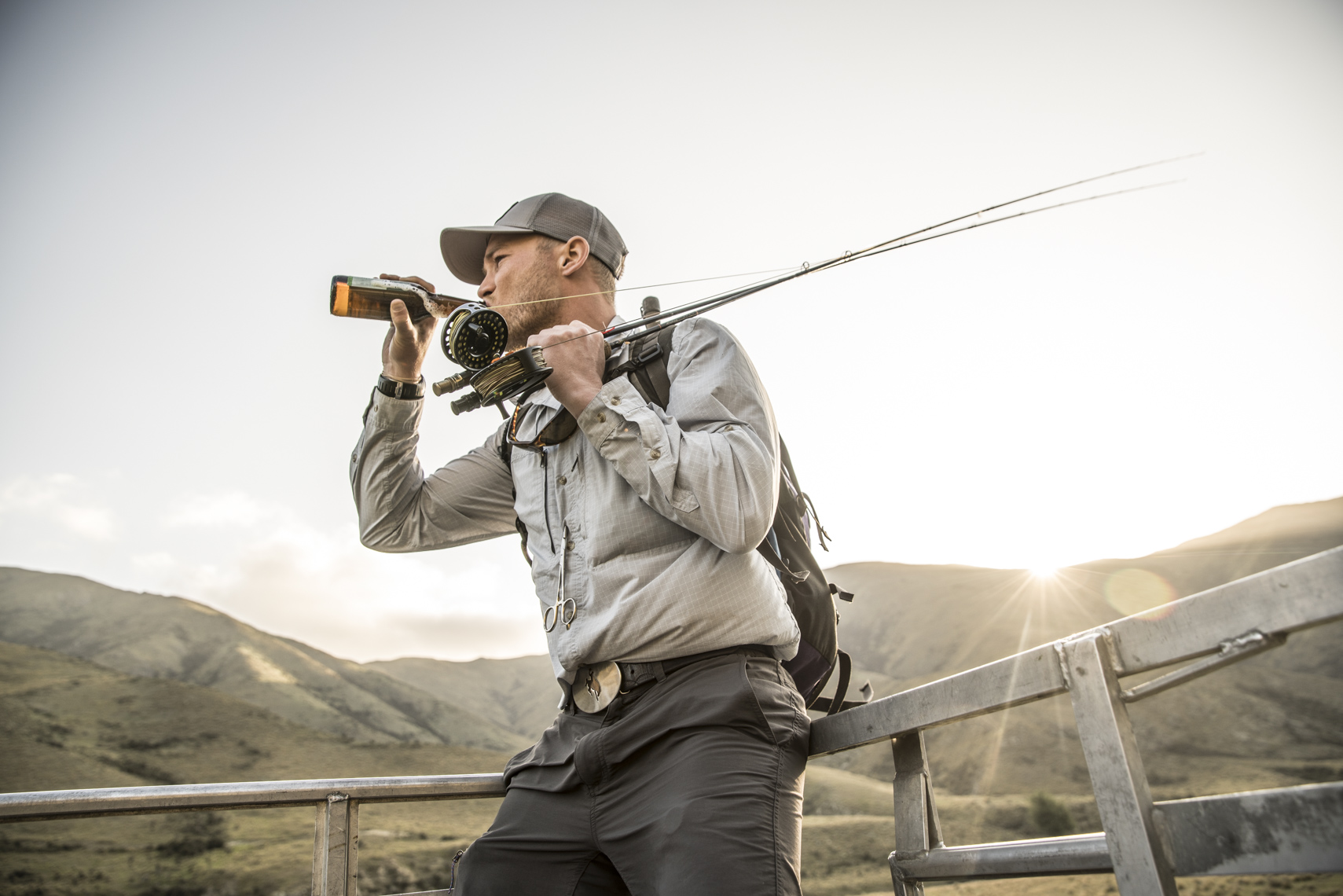
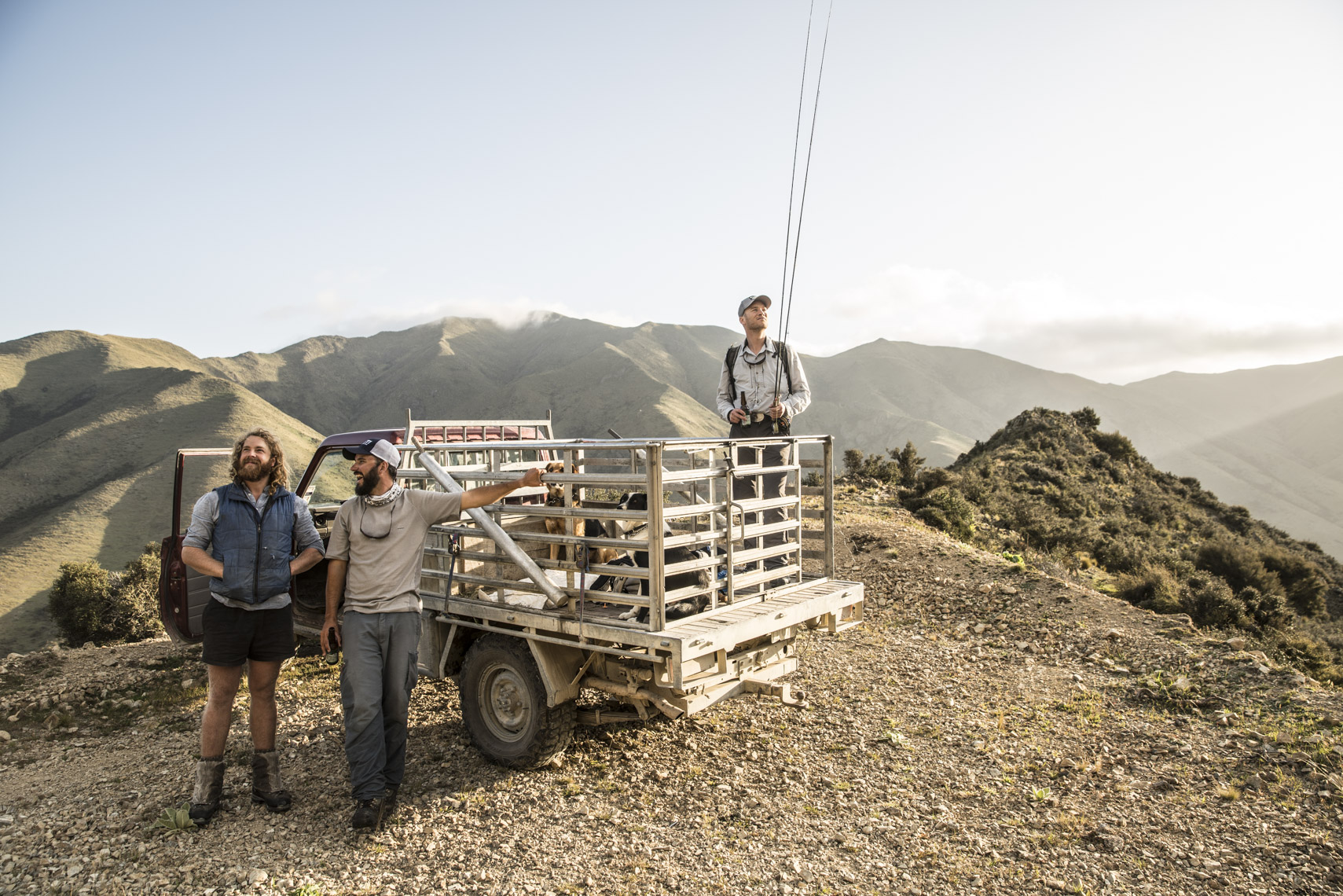
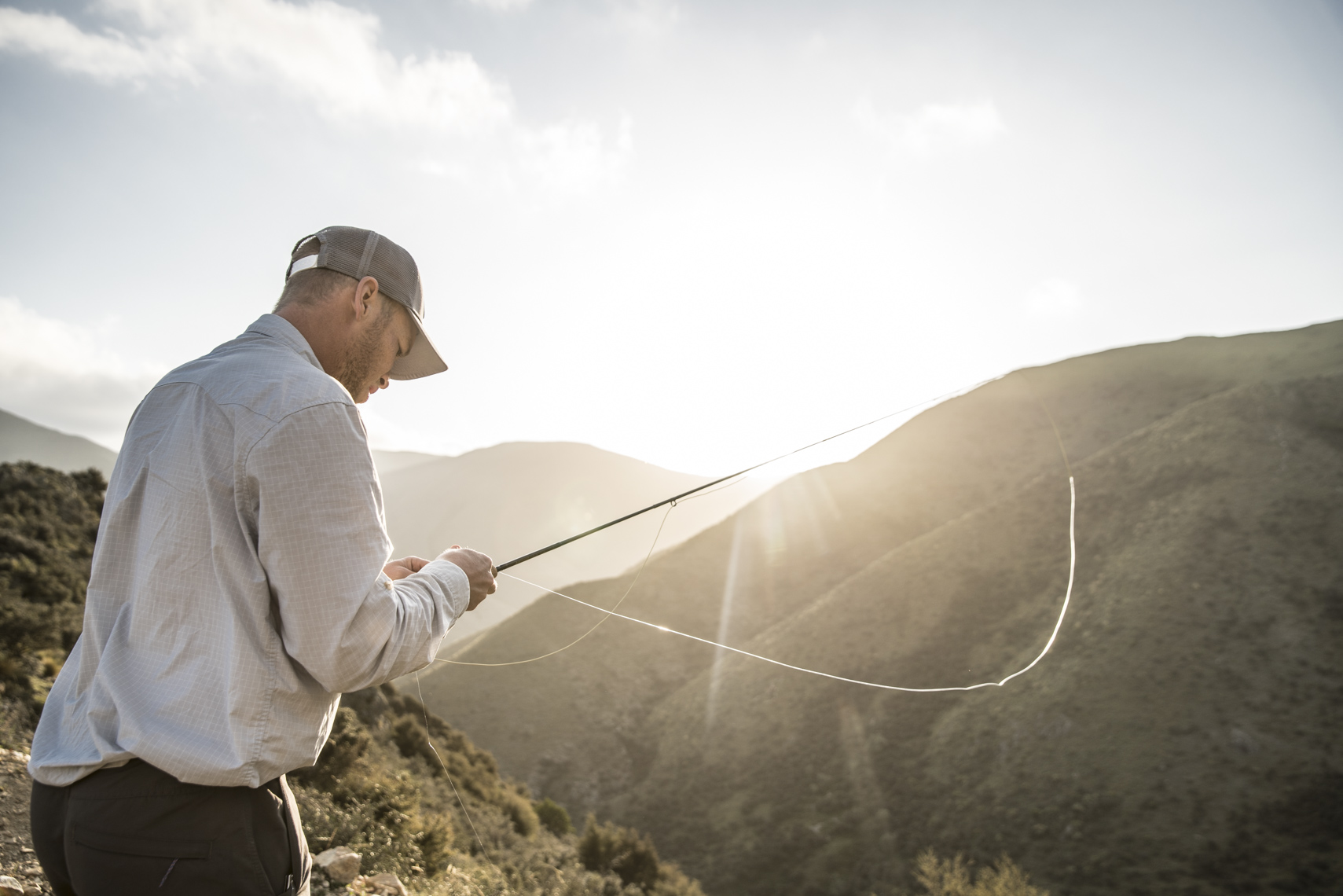
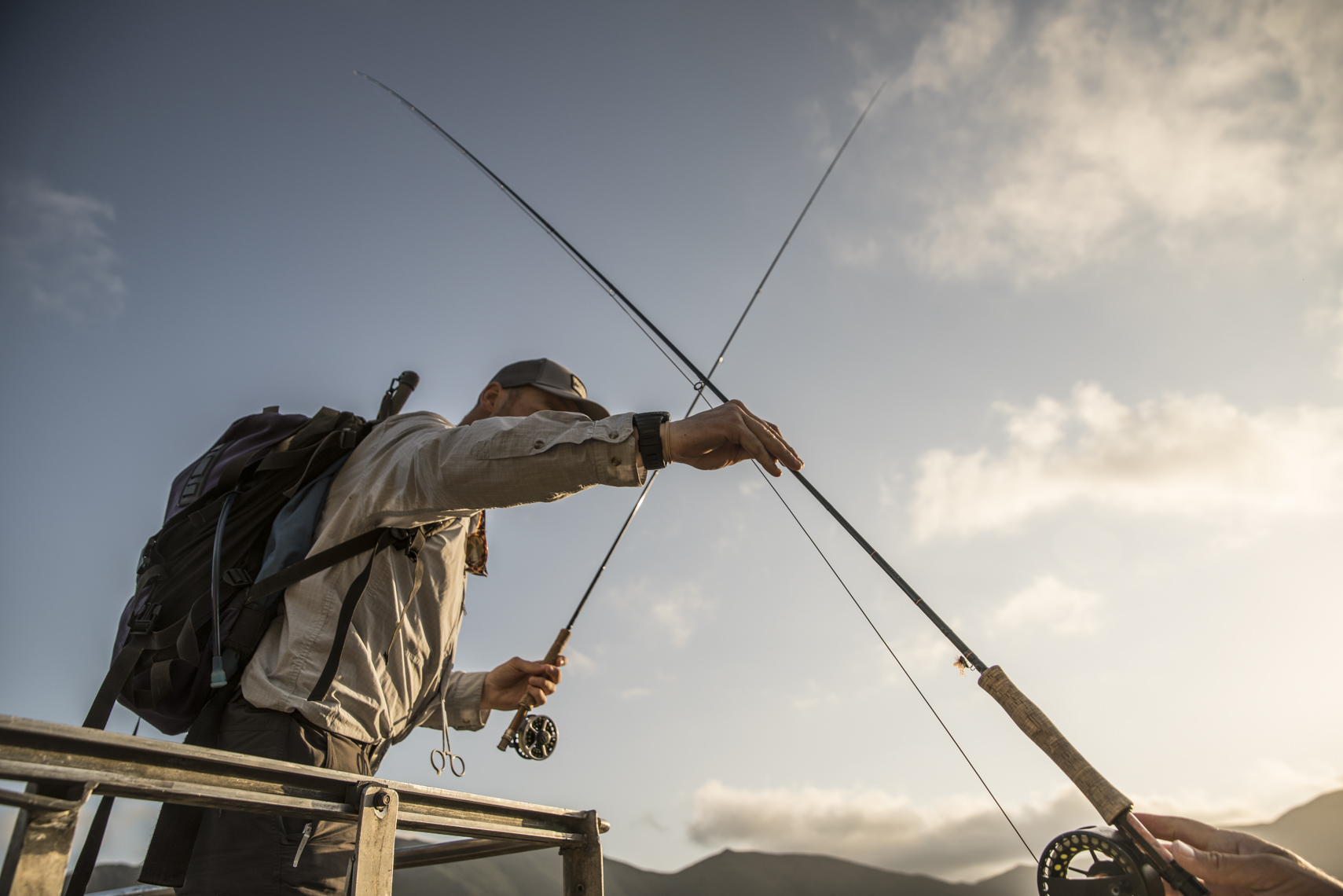
I’ve always been a fisherman and love all aspects of it and I have been working on building a body of work around Fly Fishing around the world because honestly, it’s one hell of a way to get outside, travel the world and have a damn blast while making solid images.

How many years have you been shooting this project before you decided to present it?
Well, this specific body of work that you see here was just completed in the last month as I was in New Zealand working on these images. Overall, I have been shooting fly fishing for about 3 years now.

How long do you spend on a personal project before deciding if it is working?
That’s a tough one – some projects are much more self-evident and reveal their failures (or success) quite quickly, and others take a bit more digging to find out. I give all my projects at least 2 or 3 attempts, but if it’s not working past that, I move on. It can be tough to stay focused at times too – I’m like a cat chasing a laser pointer at times…

Since shooting for your portfolio is different from personal work, how do you feel when the work is different?
Is it different? I don’t think it should be. Sure, you might be able to take liberties with your ‘personal work’ but in the end, it should all matter and fit in your portfolio somewhere.

Have you ever posted your personal work on social media venues such as Reddit, Tumblr, Instagram or Facebook?
I am a huge Instagram whore. I love the immediacy of it and I (try) to treat it as a rolling, evolving portfolio. I think that it’s great to be able to post something to the masses and add a bit of humor/insight/intrigue to the images via the captions.

If so, has the work ever gone viral and possibly with great press?
I’ve had images picked up by brands interested in what I’m doing and it has led to some success for sure.

Have you printed your personal projects for your marketing to reach potential clients?
Of course. I can’t think of a time when I haven’t used at least one image from a personal shoot on a promo. I don’t always call it out as such, but again, this goes to ‘brand’ consistency with my work. I want to show people that you are hiring me for a certain look, and a certain aesthetic and that will come across no matter the image or project.

——————–

Hollis Bennett is an award winning photographer based in Nashville Tennessee. Originally from Tennessee, he has lived on 3 coasts (E, W, and Alaska) in the largest cities to the smallest remote communities.

He specializes in real people doing real things. His style carries over from editorial to advertising and back again, and he loves to tell stories, in any manner possible.

A life lived out of doors fishing, hunting, traveling and exploring allows him to relate to these situations and see them from the perspective of someone who has been there and experienced it first hand.


APE contributor Suzanne Sease currently works as a consultant for photographers and illustrators around the world. She has been involved in the photography and illustration industry since the mid 80s, after establishing the art buying department at The Martin Agency then working for Kaplan-Thaler, Capital One, Best Buy and numerous smaller agencies and companies. She has a new Twitter feed with helpful marketing information believing that marketing should be driven by a brand and not specialty. Follow her on twitter at SuzanneSease.

The Daily Edit – Brinson+Banks

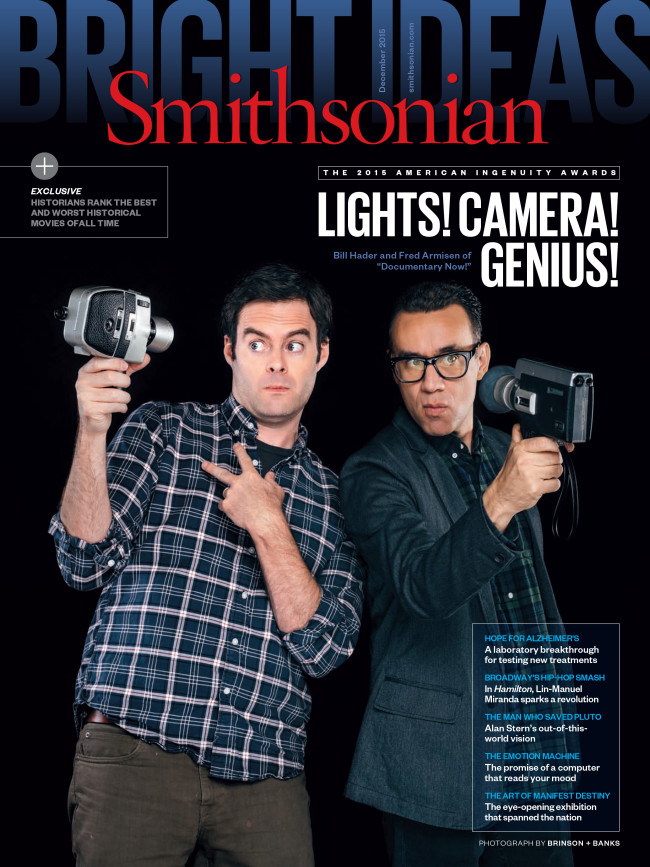
Smithsonian_Cover_Spread-1

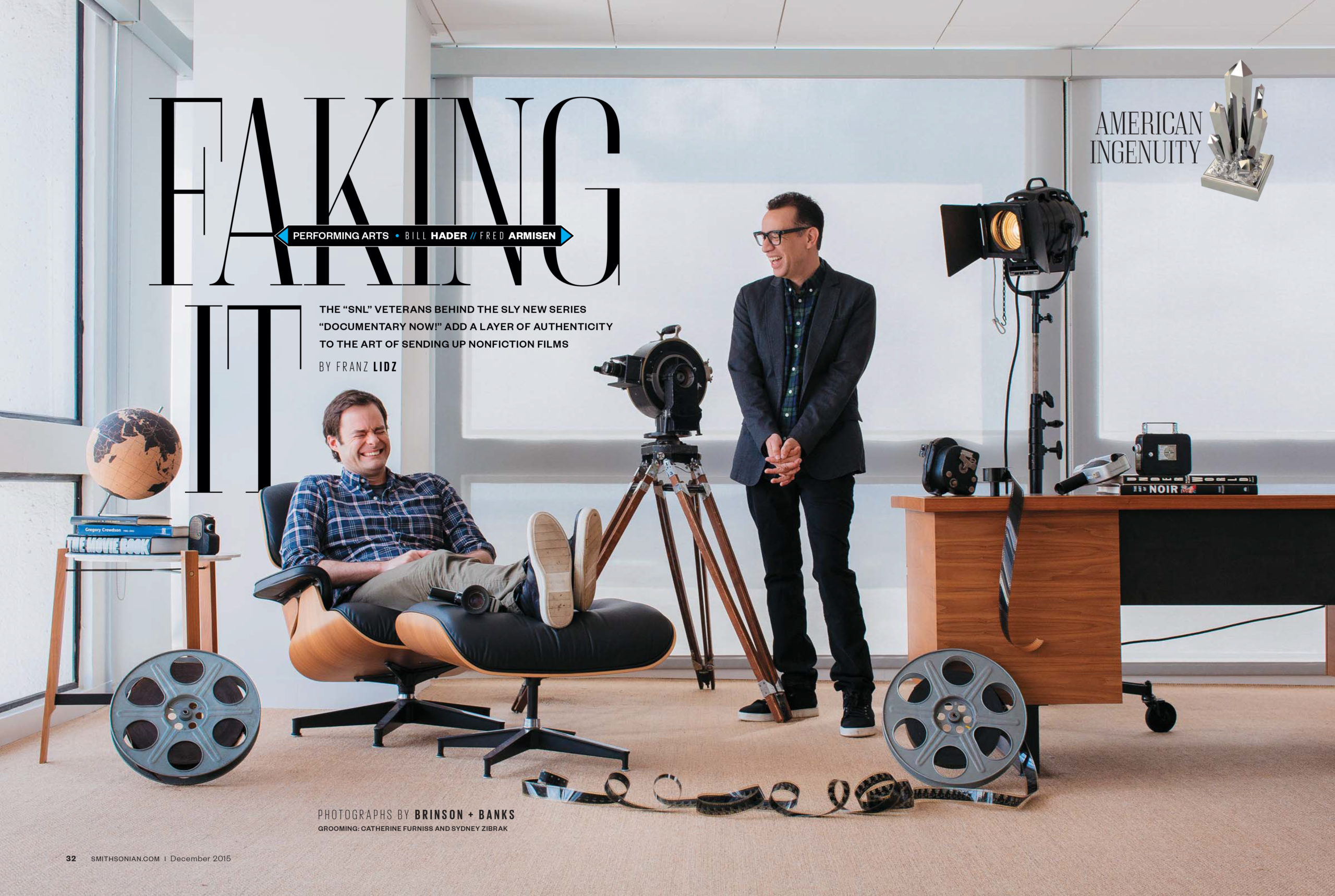
Smithsonian_Cover_Spread-2

px

px

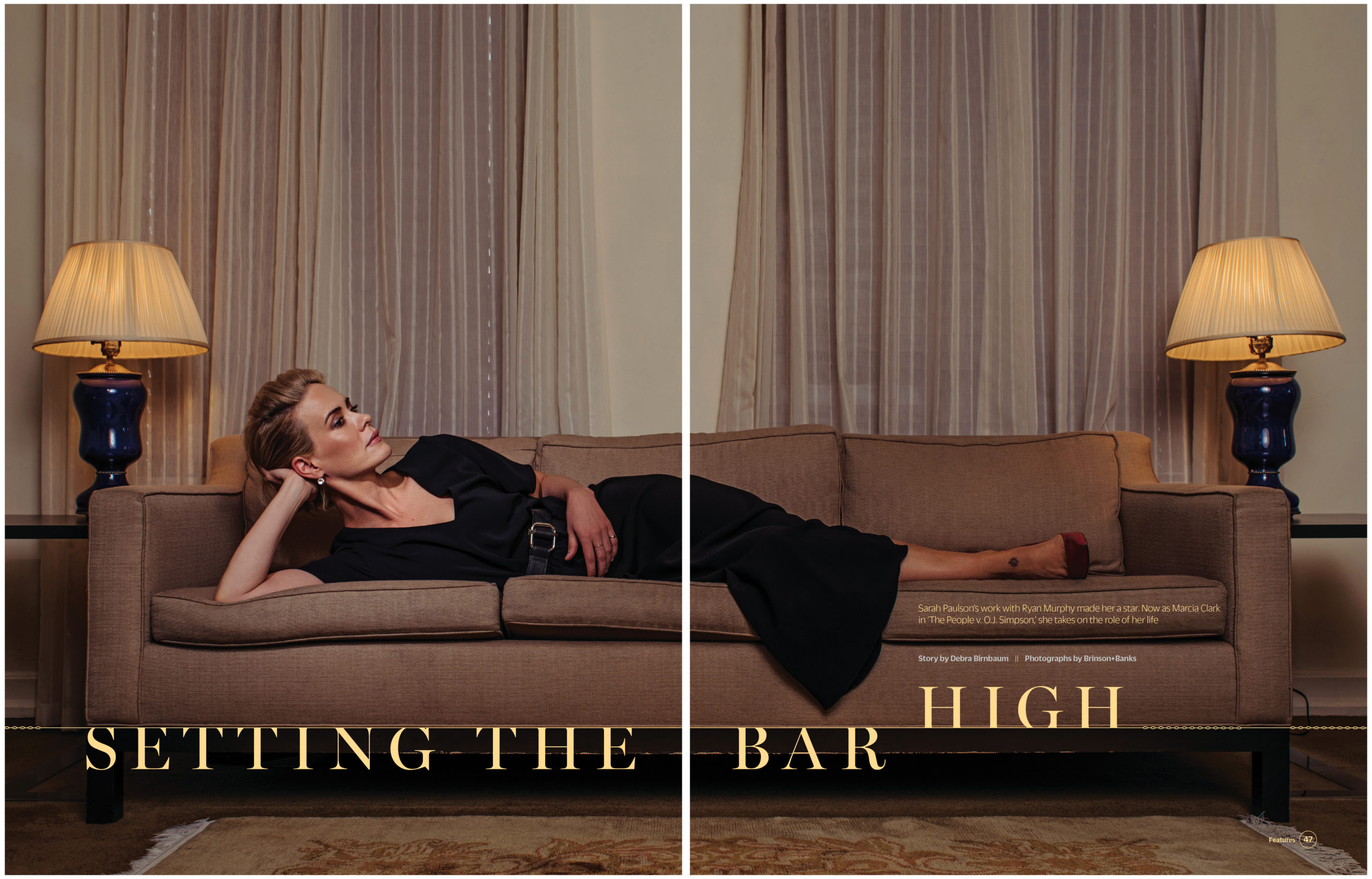
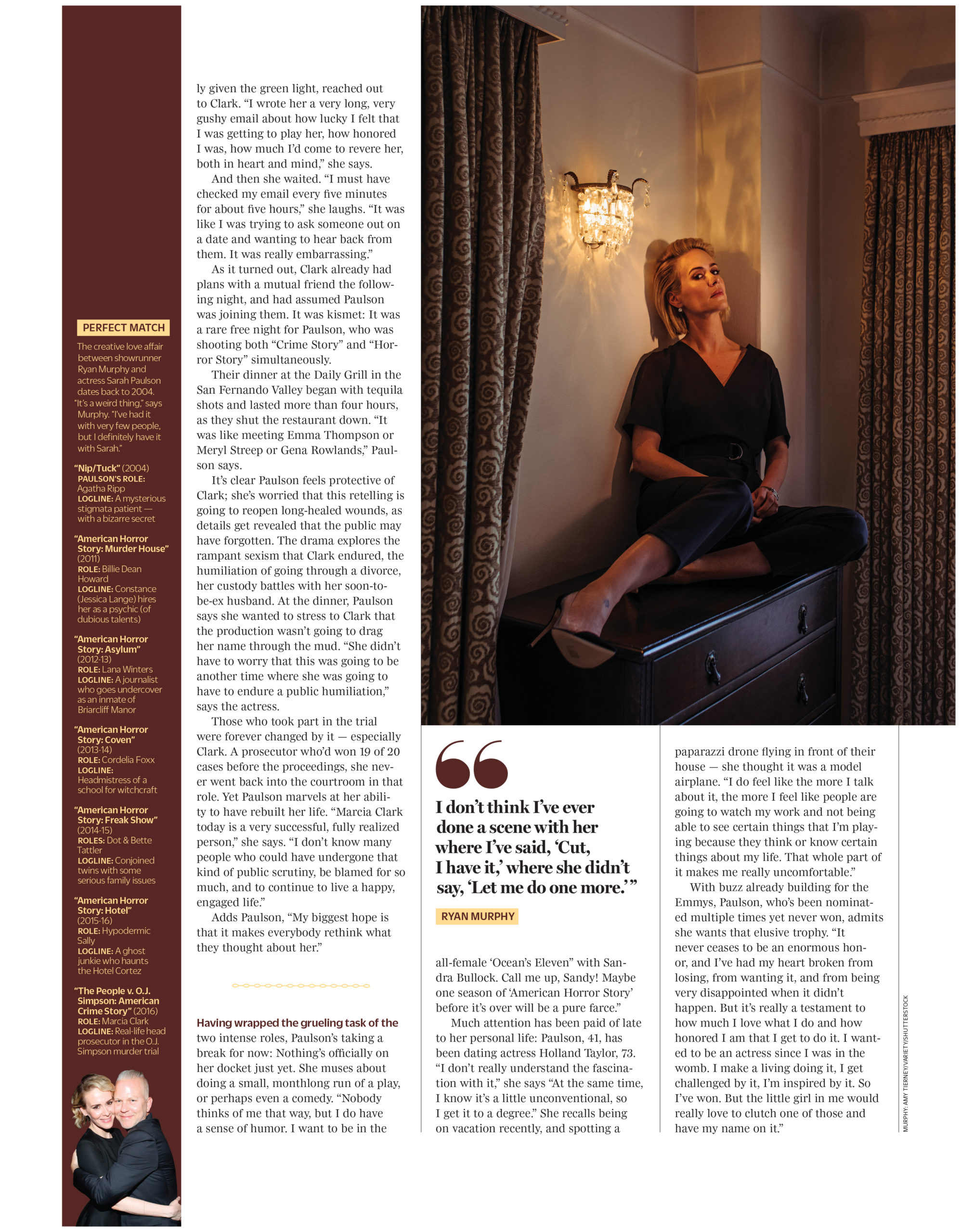
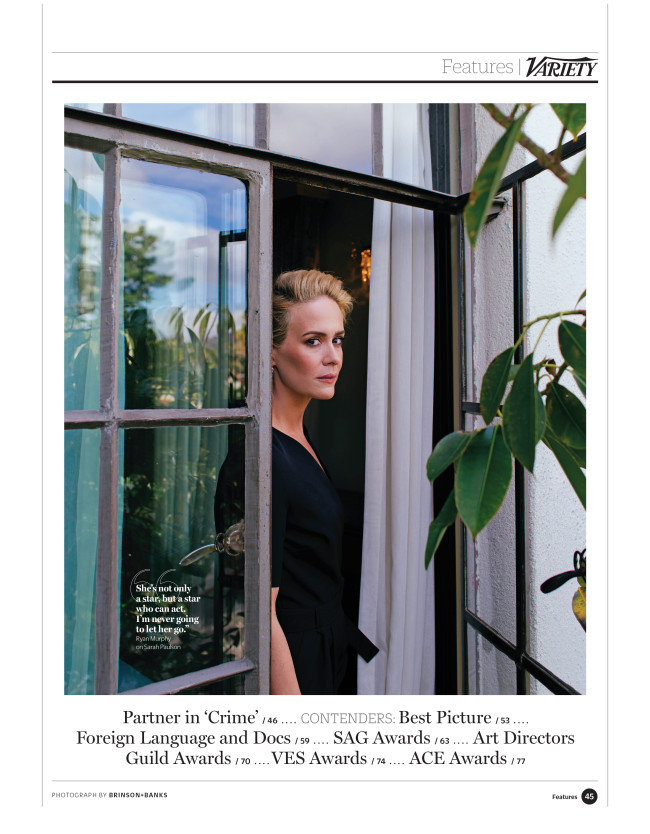
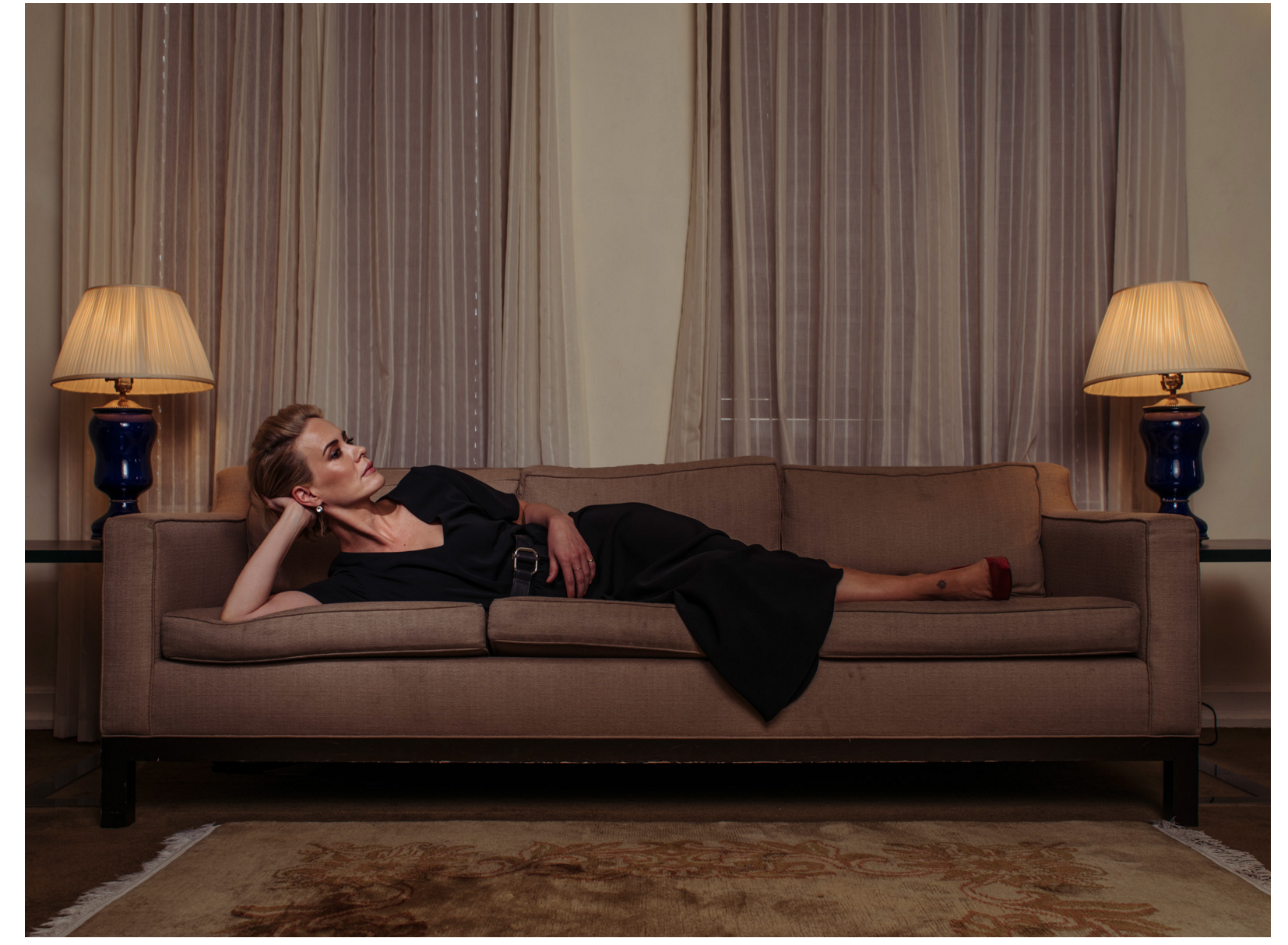
Variety_SarahPaulson_002

Variety_SarahPaulson_003

Variety_SarahPaulson_001

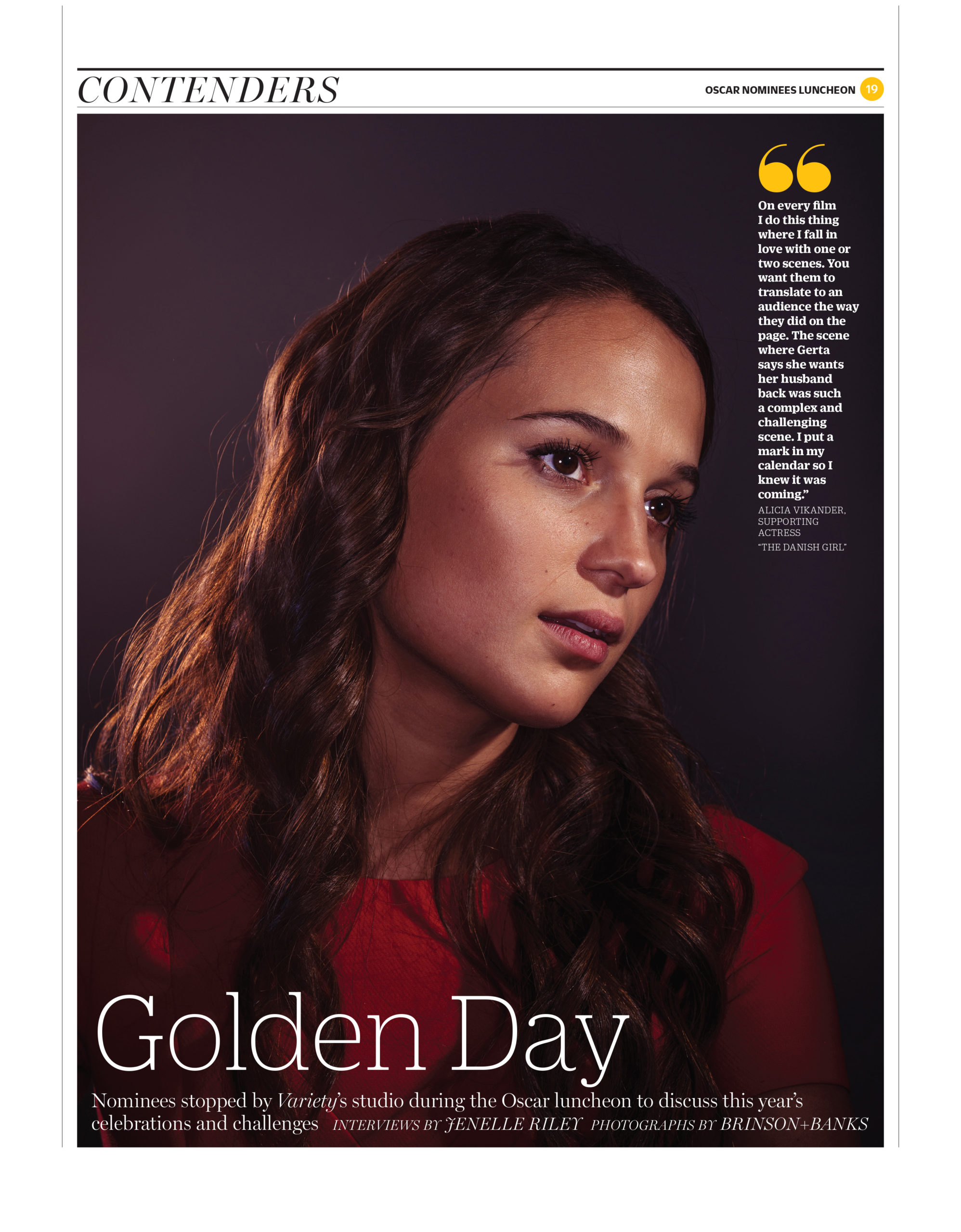
Variety_Oscars_001

Variety_Oscars_002

Variety_Oscars_003

Variety_Oscars_004

Variety_Oscars_005

Variety_Oscars_006

Brinson+Banks

Smithsonian Magazine
Photography Director: Molly Roberts

Variety Magazine
Director of Photography: Bailey Franklin

The Washington Post
Features Photo Editor: Nicole Crowder

The New York Times
Photo Editor: Jolie Ruben/Arts & Leisure

The New York Times
Photo Editor/ Styles Department: Eve Lyons

I know you met in photo journalism class in college. Fast forward to today. Married, photo duo and shooting celebrities. Tell us how this unfolded.
We started off at small newspapers learning the ropes living nine hours apart when we first began dating. Those were really our training grounds where we got a sense of who we were as photographers while learning to shoot and handle literally everything in the book. At this point the newspaper industry was undergoing mass layoffs, and rather than become another statistic we jumped ship to pursue a documentary freelance career, based in Atlanta, GA. We founded and ran a photographic cooperative for 5 years with 4 other photographers, garnering journalistic assignments from outlets like TIME, Mother Jones, Sports Illustrated, FADER, and Rolling Stone to name a few.

By this point we were married home-owners in Atlanta living a pretty comfortable life. So, about a little over two years ago, we decided to turn all that on its proverbial head, start a new company doing something completely different, and we relocated across the entire country to Los Angeles. We threw caution to the wind, loaded up our two dogs, two cats, and road tripped towards our new lives. And while it was a terrifying first year, we couldn’t be happier that we left what was comfortable to follow new dreams.

When we decided to form Brinson+Banks as a new photographic entity to pursue lifestyle advertising we may have been starting over, but not from scratch. We already knew how to market, act professional with a client, and the importance of things like personal work and even sheer drive. So as we set-up meetings with ad agencies in our new home, we also completely revamped and created our new portfolio, creating a new vision as a team. The documentary work we still hold so dear fed the way we approach our lifestyle work. The new style we created together also translated into our portrait work, pushing the limits of the foundation we built for years telling stories through portraits of everyday people for places like The New York Times and The Wall Street Journal. This new style, and our long history of musician portraiture made us a perfect fit for celebrity work. Our journalistic background and the relationship we built with the New York Times, mixed with our new aesthetic, presented us with our first celebrity portraiture assignment. From there, it is just a matter of capitalizing on every single shoot of this nature to prove that we are the person (or persons) that can be creative, fast, reliable, and the type of photographer/director that can work with talent of this magnitude. Even without time or a budget backing us up, which has often been the case as we started down this new path.

Screen Shot 2016-03-20 at 8.16.58 PM

Screen Shot 2016-03-20 at 8.17.15 PM

Screen Shot 2016-03-20 at 8.17.43 PM

Screen Shot 2016-03-20 at 8.17.50 PM


Screen Shot 2016-03-20 at 8.18.09 PM

With all the celebrity management does one of you handle the team while the other is focused on creative need be?
As two creatives of equal skill and a shared mindset, we have a unique flexibility on set. We approach each shoot differently depending on the players, expectations, and space involved. In some cases, one of us will shoot one scene while the other pays more attention directing and loosening up the subject, and then we trade for the next set up. Sometimes one of us shoots while the other is adjusting lights, fine-tuning the next shot, or even handling the publicist, client or others on set. In many cases we split these duties, and both shoot from different angles as long as it does not feel intimidating to the subject. More often than not, we reverse these roles from one setup to the next, or even trade the camera off when one of us has an idea the other may not have covered off on.

Are you able to turn off your photographic minds and conversation when you’re not working?
HA! We wish, but should remain grateful that we have such an amazing job that we don’t want to turn it off. But yes, when you spend the whole day talking creative concepts, budget, marketing, etc., it’s hard to turn it off at the end of the day, especially when a self-employed commercial/editorial photographer is basically on call 24/7. As newbies to the West Coast of only a couple years, we solve this dilemma by loading up our VW camper van with our dogs and escaping to explore the beaches, deserts, mountains and forests our new home has to offer. It seems to be the best way for us to turn off our work minds and be inspired in another way. That said, we still shoot photos the whole time, and definitely had a creative conference call today for an ad shoot while sitting in the front seat of the van looking at the Pacific. So I guess we will let you know when we find that magic off-switch, but to be completely honest, we met each other in a photojournalism class and that’s where the first sparks flew. At risk of sounding completely cheesy, we fell in love with each other’s photos before we became a couple so photography has always been intertwined in our relationship.

Do you both shoot for each project? 
YES. I won’t say we are competitive with one another, but let’s assume that’s a lie by omission. We both do this because it is our passion, and love few things more than creating a new image. We have learned to check our ego at the door over who is pushing the button since the final image belongs to us both, but we still have to each shoot to fill our creative soul. Really it’s more than that though. We have created a shared vision, but we are both still integral to that, and while our images may compliment each other very well, we still each add distinctive views to the project. So whether we are shooting tethered in a lit studio passing the camera back and forth, or shooting in tandem in natural light, we find it important to both contribute.

Are you realizing you turn in twice as much good work?
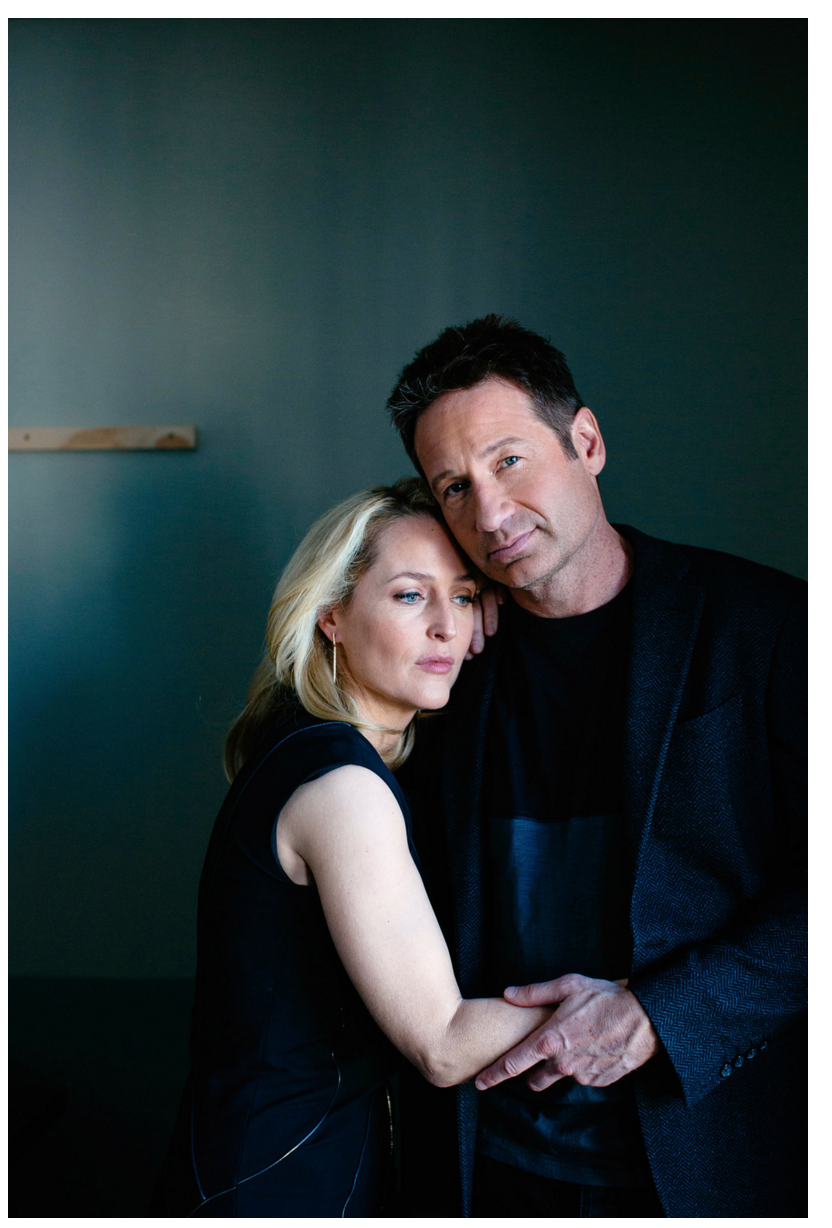
We are noticing that we have an ability to produce more work at an intense pace that is hard to maintain alone. We have also noticed that clients with a specific shot list end up with a library and want to license more images. But for us, it is more than just a higher quantity. The most value we see added is in the currency of ideas. One of us may have a concept that seems great, but just doesn’t feel right until the other adds their two cents. We shot an image of Gillian Anderson and David Duchovny that we really liked recently. David set up lights, transforming a beige hotel room and hallway into blues and greens, and it felt completely wrong until Kendrick suggested reversing the gelled colors, and suddenly that small difference in opinion made it all come together. Not to mention that we all have off days and these super quick celebrity shoots bring a certain new level of pressure because of time and status, and it is amazing to have someone to lean on, to BE on when you are not.

I’d imagine there is some complementary /contrast between you two. What is each of your strengths and why?
Totally. We share so many taste preferences that our images work seamlessly together, but we are also hyper-focused on very different things. We share a love for natural light, but David is more obsessed with artificial lighting, and things lining up with technical precision. Kendrick is more about the moment and a sense of looseness, which is a perfect balance. David is a bit more serious in his direction of subjects while Kendrick is more adept at building a humorous repertoire throughout the shoot. The strange part about these differences is that despite who shot the image or what approach was taken, we agree on the editing floor nine times out of ten. And another funny note, editors rarely know who took what photo, but often when more than one photo is published for a story, we will both have an image in print for each story.

What are the best aspects of shooting as a team?
While it may be hard to turn work off, we feel lucky to shoot as a team for one reason first and foremost. On top of being a team in business and art, we are in a devoted relationship, and feel so lucky to share this amazing photographic life with the person we love most in the world. So many couples spend but minutes a day together, so we look at what we have as a gift.

As I mentioned before, it is amazing as an artist to let go of your ego enough to create something and collaborate with another artist. We get to do this all the time. And while we are both equally competent photographers in our own right, and even split up to shoot on the same job occasionally, it is incredible to have someone there who can look at your idea, your direction, your shot, and make it even better. Part of it is also just easy logic, too – what client wouldn’t be happy to have the photographer’s first assistant be as good as they are, and shooting at the same time. I fully believe it would be more common if it were not for the facts that you must check your ego at the door, split a paycheck, and share a creative mind and common goals to a freakish degree.

Best advice for any photo duo?
Yes, and that would be to really be honest with yourselves and each other about this endeavor. In many senses you are trying to become one, and you need to make sure your drive, beliefs, goals, and intentions line up, and not just your aesthetic. This is a long term relationship you are entering and should be treated as such. And if you are a couple, you need to ask yourself if your relationship can handle the amount of time and additional stress you are about to spend together, and if you can keep the perspective that you as a couple is more important than you as a business.

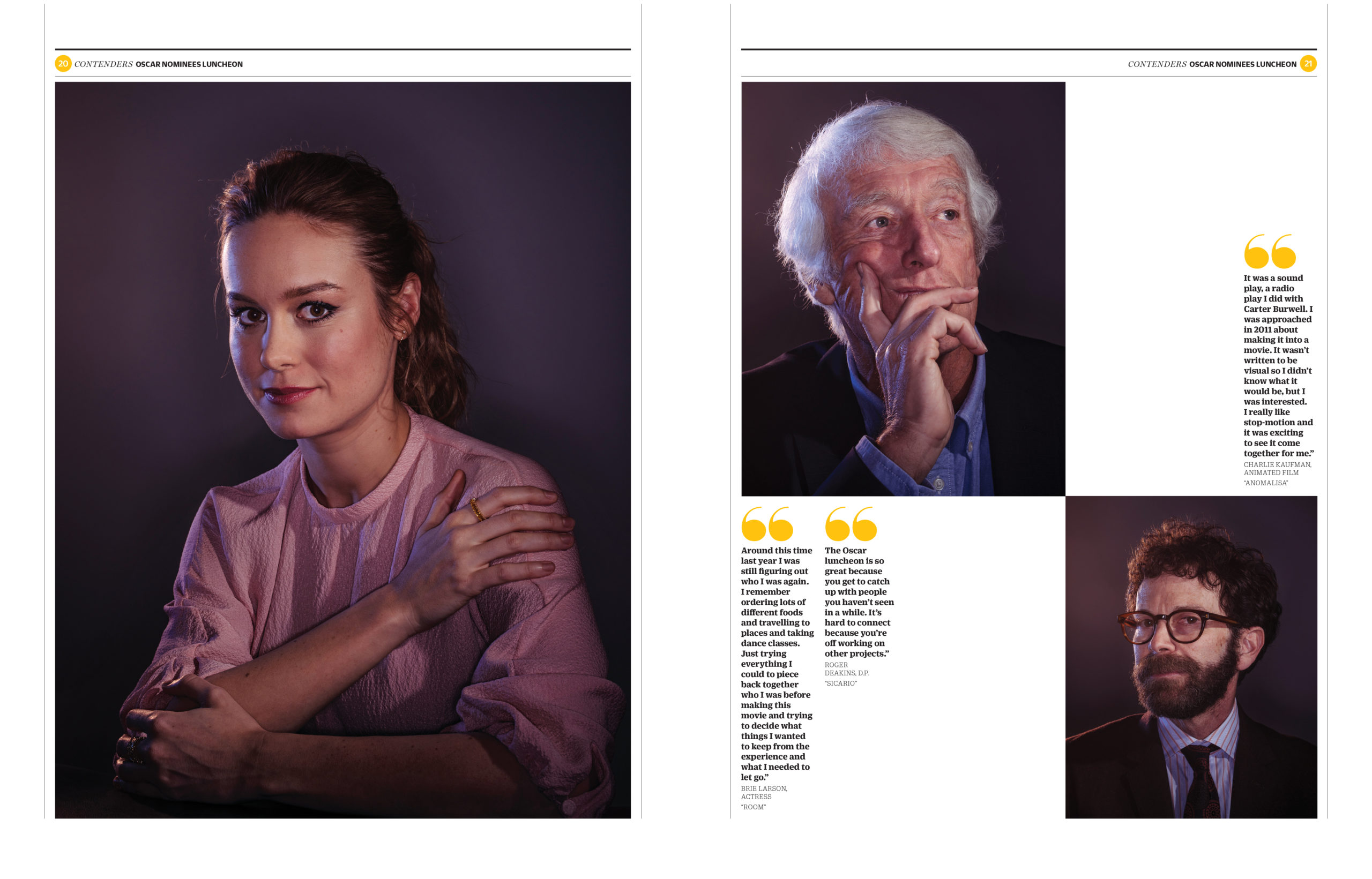
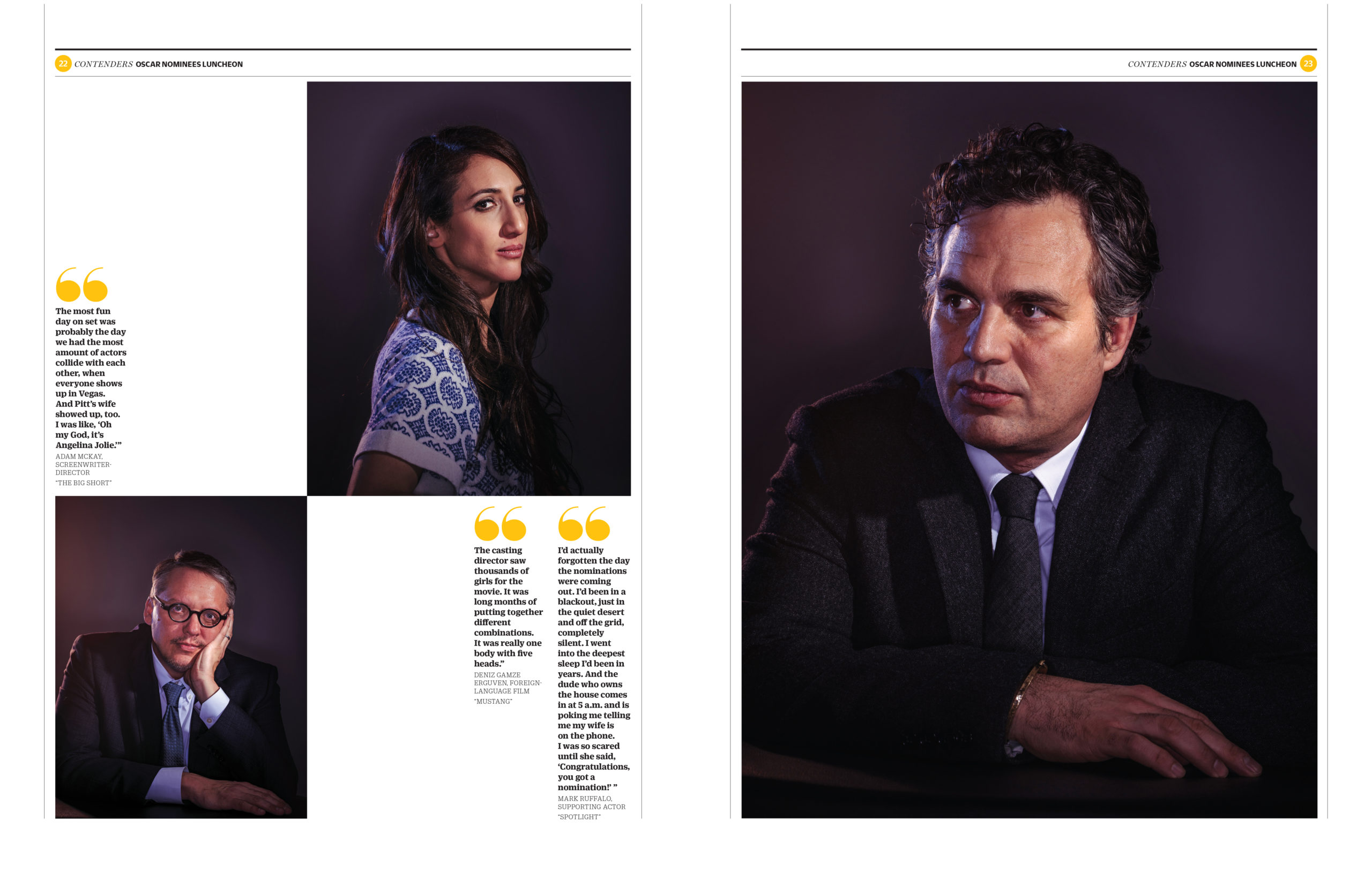
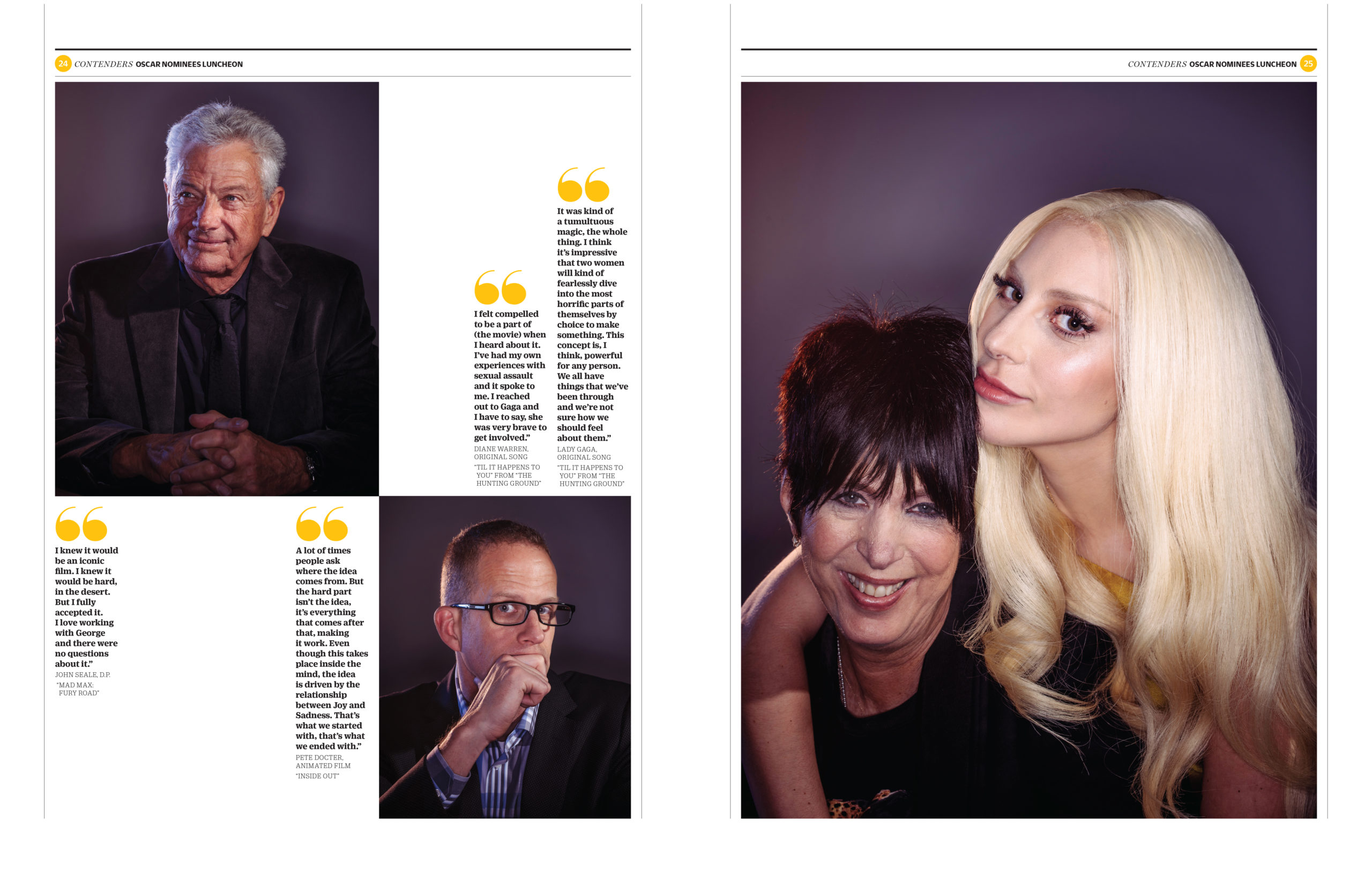
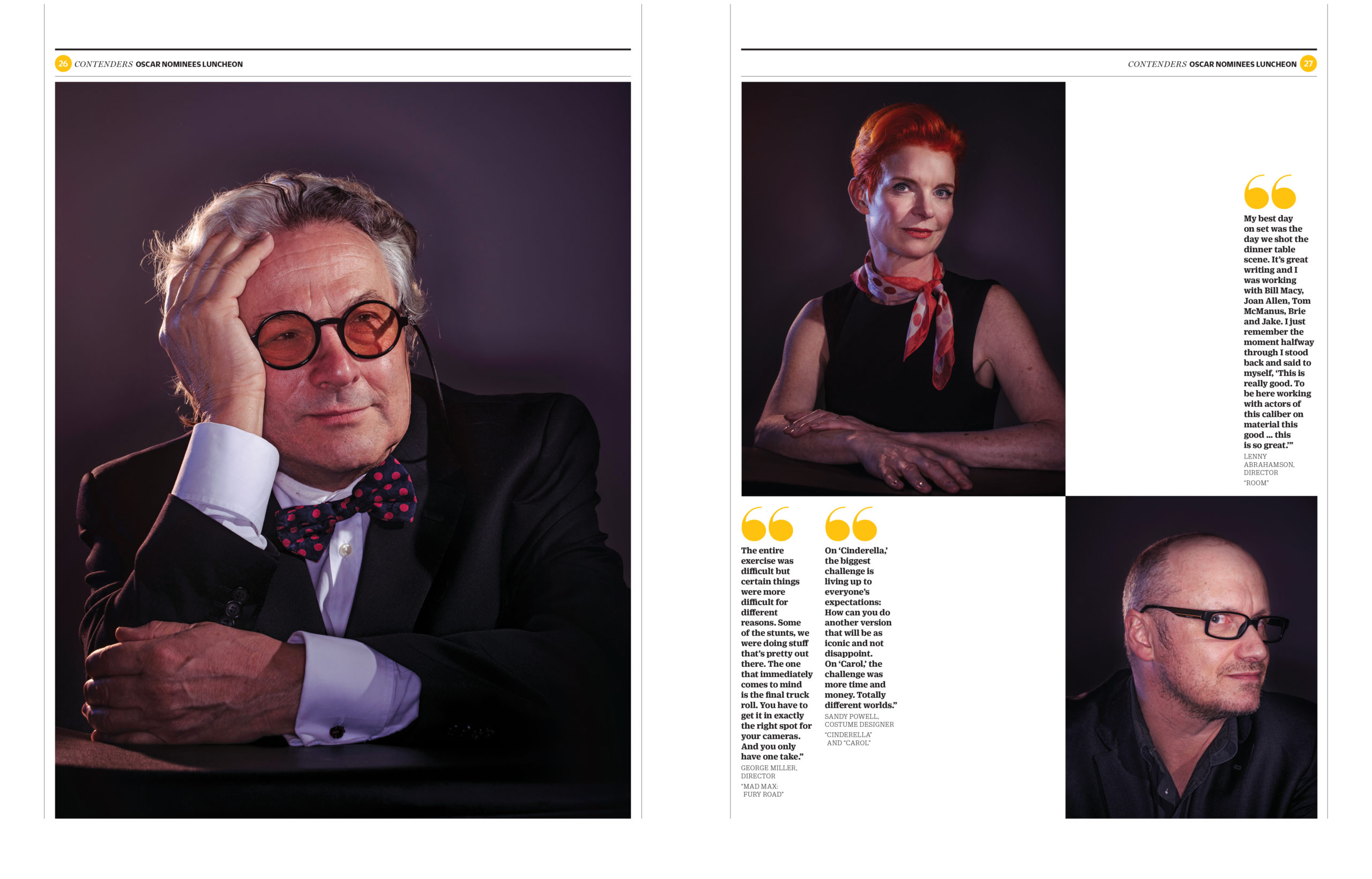
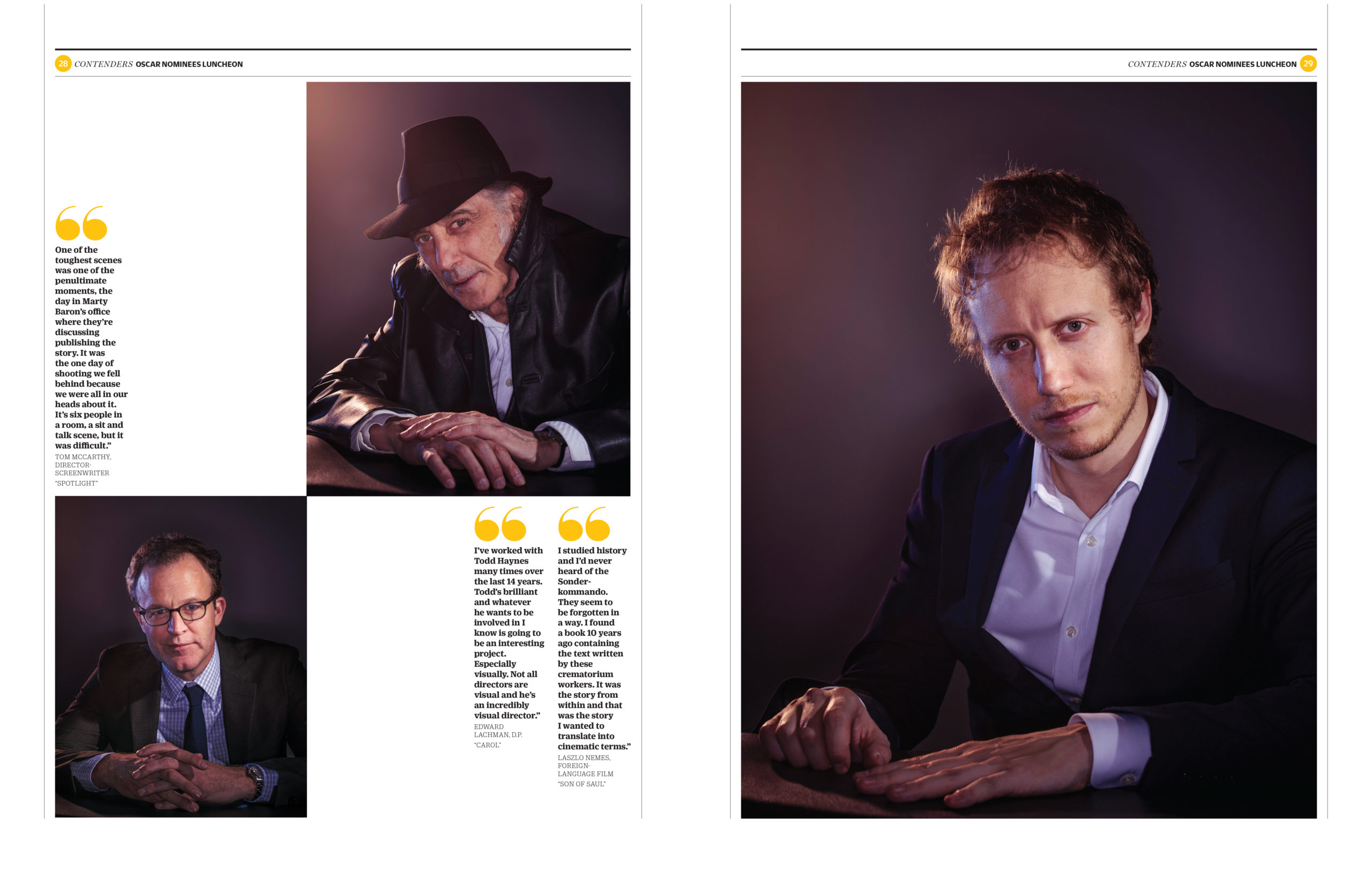
For the second concept on our shoot with Bill Hader and Fred Armisen for Smithsonian, we had the props and space to shoot, but it would be nothing without the emotion. We had already built a rapport with our subjects for the cover shot, and the tension was gone by our second setup. Instead of directing, we just placed Hader and Armisen and left them to their own devices. They started an improv dialogue going back and forth impersonating Obama talking about his LA shopping trip at The Grove, a popular outdoor mall. As we laughed behind the camera, they gave us real laughter that spoke to their comedic triumphs without the need for either to hold a rubber chicken.

How much time did you have for the Contender’s shoot with Variety with the subjects?
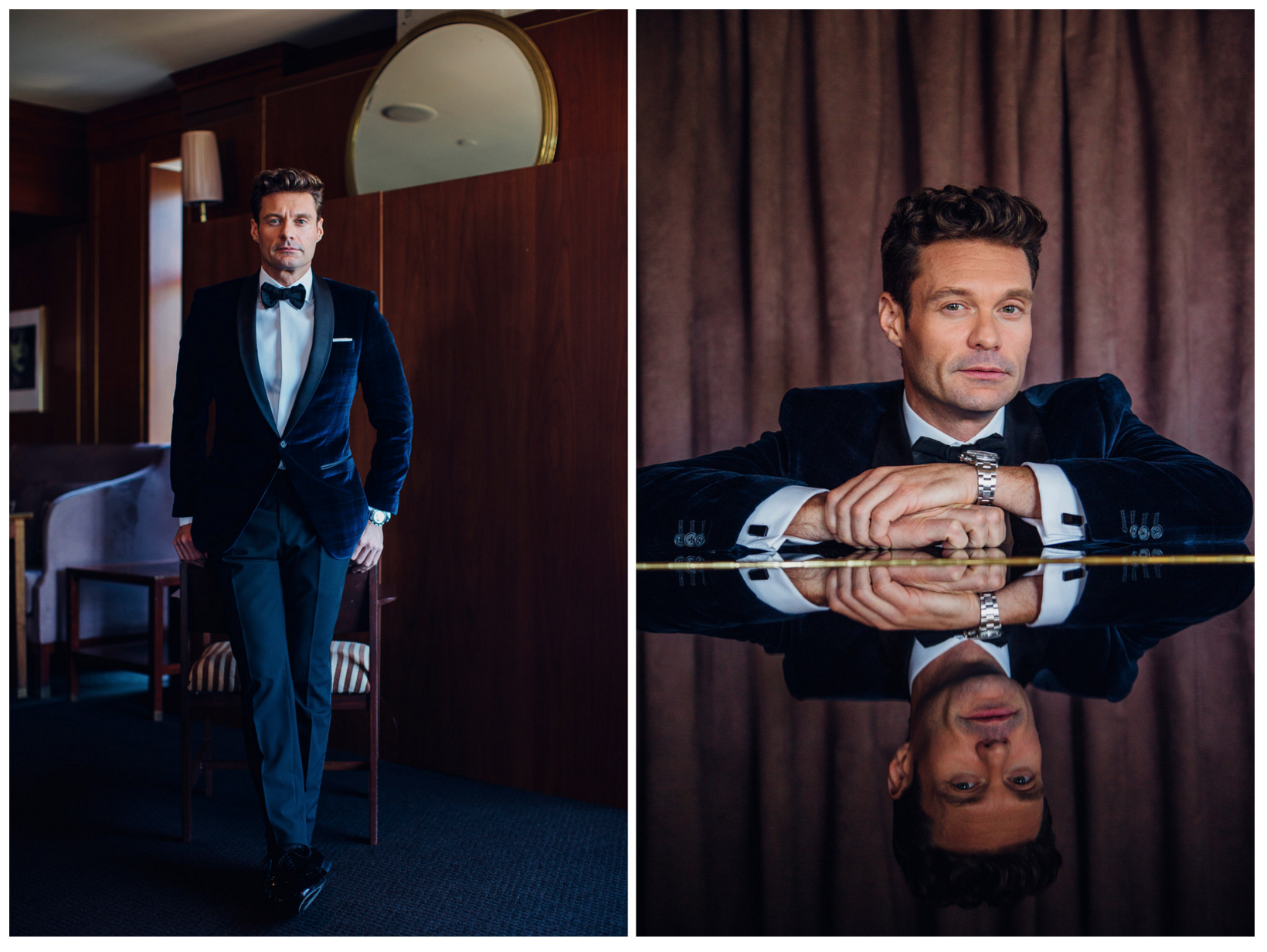
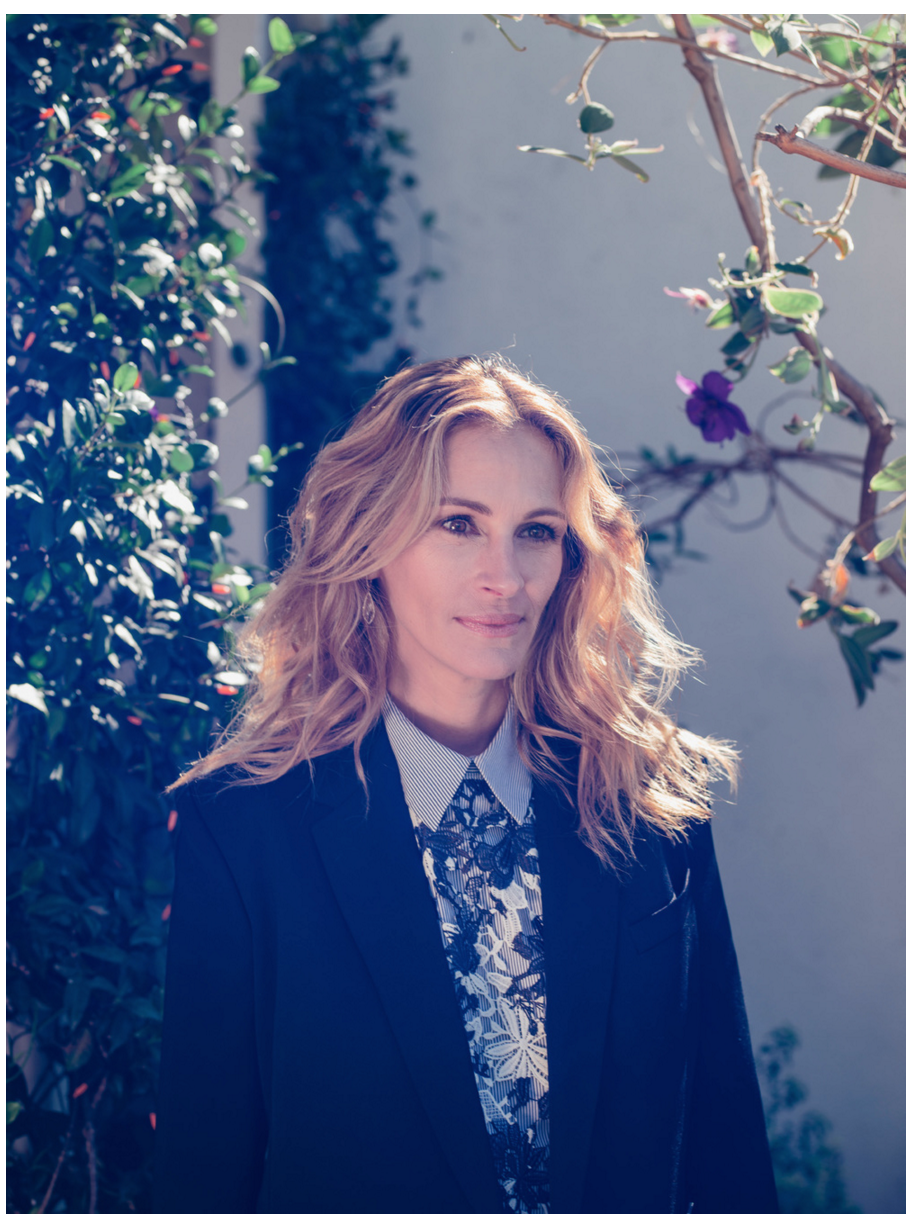
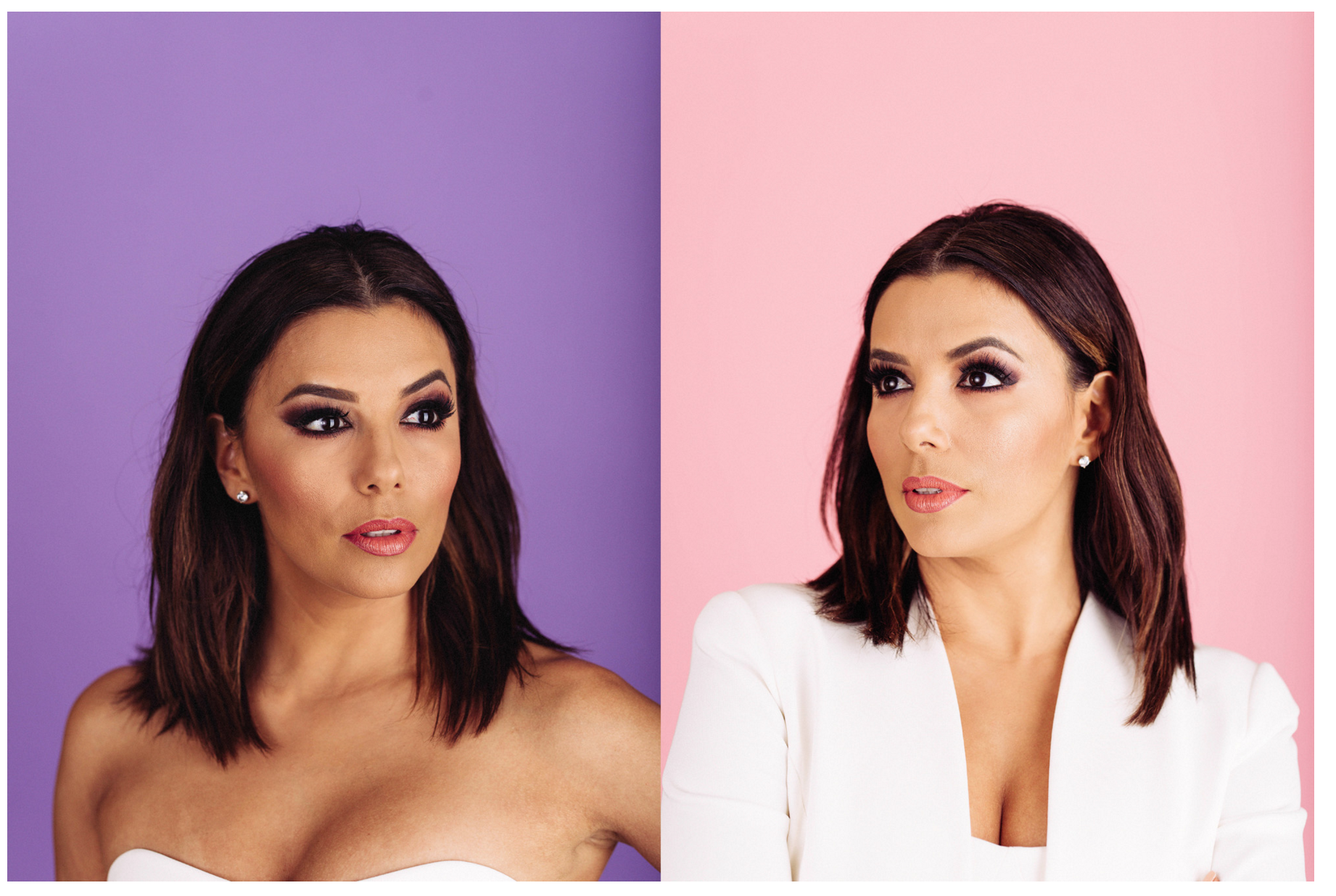
A couple minutes per subject for the most part, and even less in some instances. We have had celebrity shoots with easy time tables, but this one was all about preparation, and a head-first dive into connecting with subjects. We shot 48 subjects in all that day, so there was not a lot of time or margin for error. To prepare for the shoot we brainstormed, and even setup a light test at our home the week before the shoot. This gave us the ability to secure the additional grip and gear we needed for our concept ahead of time, and walk in relatively confident. We still arrived hours early to transform a hotel suite into our studio and fine-tune our concept. Once the subject arrives it is all about feeling out their energy, personality, and quickly reacting in a way that they will respond to.

How did the set(s) work? Did you both shoot different set ups?
For that particular shoot, we just had space for one setup, so we traded off shooting per subject. This was actually kind of vital though as we had a constant stream of subjects, sometimes in line outside our V-flats. So not only did we have to stay on point, building a new dialogue every few minutes, but we were shooting handheld with a digital medium format camera and a ring flash which is a surprisingly heavy rig. For this shoot, trading off helped us each stay in peak form for the duration. Because of the limited space we could only do one setup, but knew we needed three for one specific subject (singer Sam Smith). So we solved that by using the V-Flats we had to block light as a black backdrop, utilizing the natural light form the curtain behind our main setup. For the third, we added a little color gelled flare magic sparkle dust to the black backdrop – a Brinson+Banks trade secret ;-)

What’s the biggest difference for you in shooting news journalism vs. commercial magazines? How different is your creative approach, if at all?
The approach is different in that now we are expected to control the situation, and make the image instead of assess the situation and take the image. It’s really all the same – we are still looking for the same light, color, and emotion as we were before, but just with a different directive. It is a different world working with a publicist, and a crew, and a sharp time table as opposed to photographing a chicken catcher in rural Alabama or a political campaign trail, but all the same general principles and sensibilities apply. We are still just trying to connect, feel, and create.

That being said, it does take getting used to to have someone over your shoulder looking at your photos as you take them. There’s a looseness where everything is up to you on where you point your camera and what lens you use and who you focus on in a documentary shoot that can feel amazing versus the truly collaborative feel of a commercial or portrait shoot–the personality is as important as the photography, as are the creative ideas beforehand.

How was living in LA shaped your personal work?
We both grew up in the South so that became our visual language–greens and giant trees and a certain kind of light. Los Angeles has greatly re-shaped our personal work and personal lives and just being in such a diverse new landscape really inspired us right when we arrived. The light is different, the plants are different, being in a new place can really put an extra pep in your photographic step (that’s why traveling can be so fun). But beyond living in a huge city, LA has been the gateway to the West Coast and the deserts, beaches, mountains and vast in-between it has to offer. We take our rare free time to load up our dogs into our VW van and to camp and hike and just generally wander and that has been the fuel that has fed us creatively and given us new perspective, and a much-needed reprieve from our work hive-mind. Just to catalogue our own lives, we created our Instagram hashtag #westcoastexplorersclub to remind us of the importance to always lead a life well lived while we build our career (even if we’re still doing client calls from inside the van).

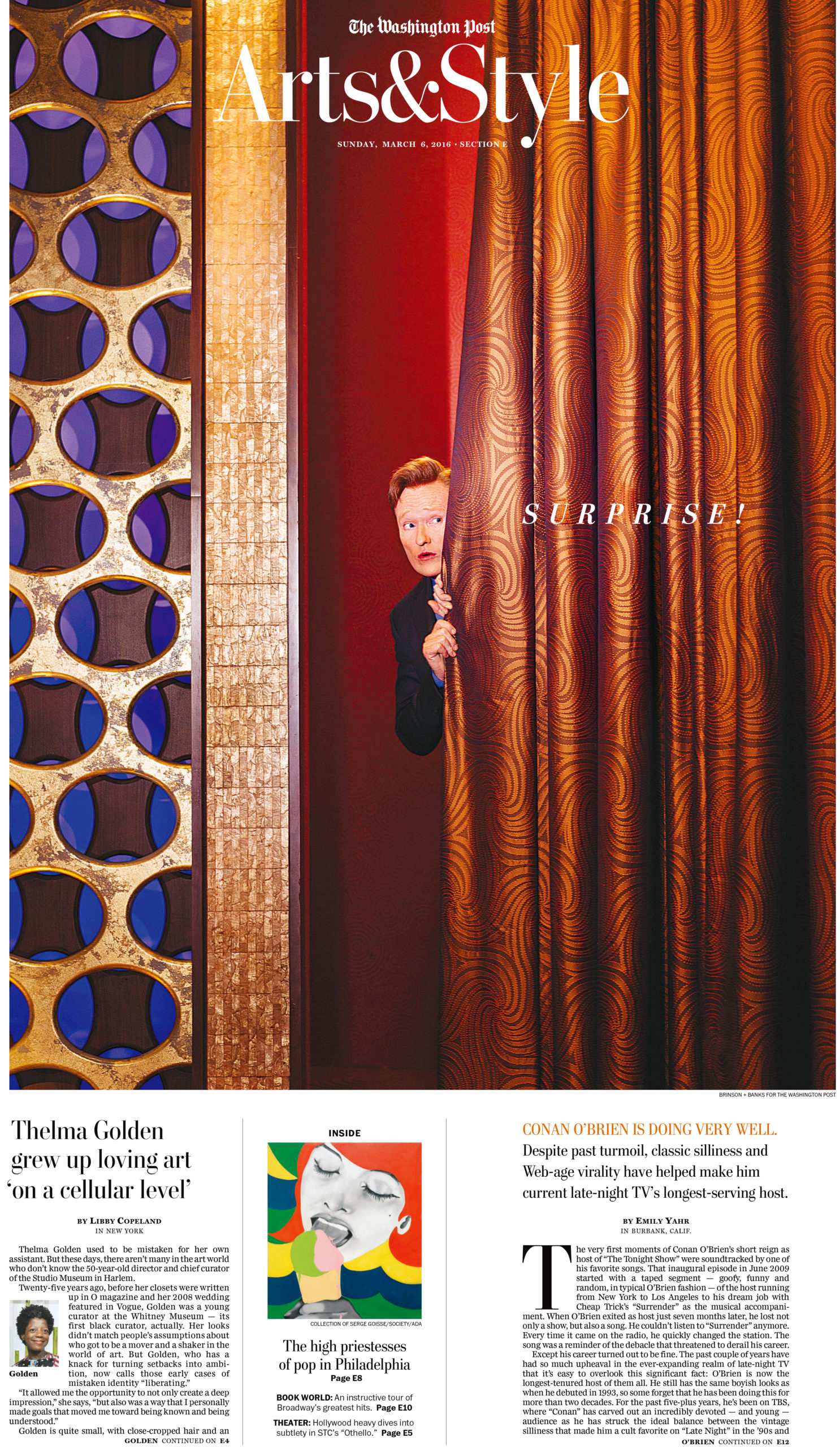
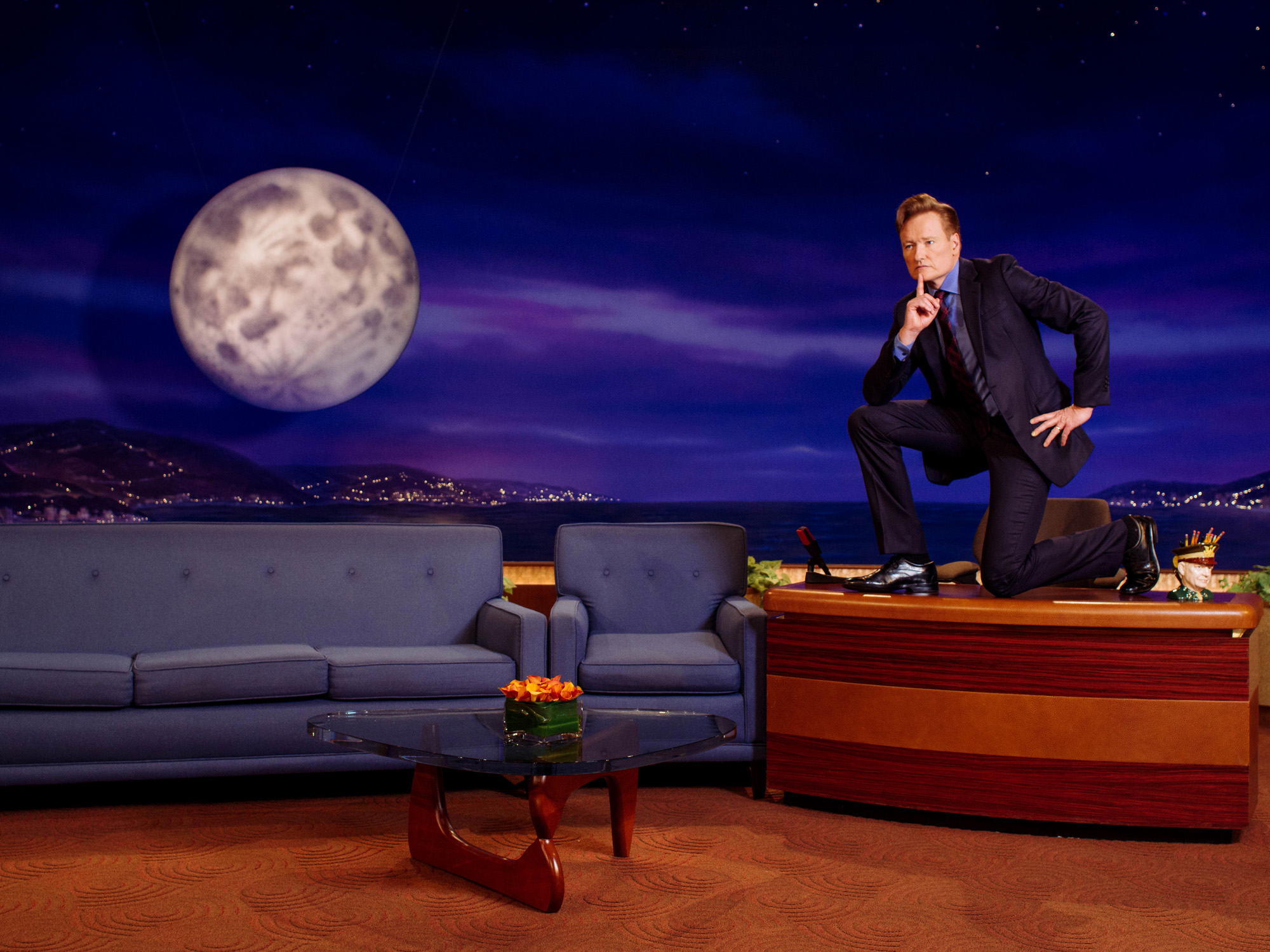
Conan O'Brien poses for a portrait on the set of his television show Conan in Burbank, California February 9, 2016. Photo Credit: Brinson+Banks

How did the Conan O’Brien shoot unfold as a favorite?
Our shoot with Conan O’Brien was our favorite in a long while, which is saying a lot because there’s some steep competition. We got to play on his set and have fun with it. Conan ended up interviewing us about how we met after he noticed and mentioned our chemistry on set. It doesn’t hurt that two of the three of us were redheads, which doesn’t happen often so Kendrick and Conan got to talk about their ” gingervitis.”

Our shot list with O’Brien included one shot on his mark where he delivers his monologue and one in his dressing room. As it goes with so many well-laid plans we got to the Burbank studio and the mark shot felt boring, and his dressing room was too busy to make the dramatic image we envisioned. Fortunately for us, we started the day by making friendly with everyone we met, and were given a tour around to see other options. We came across a mirror standing alone backstage with the quintessential vanity mirror lights where Conan quietly reflects before he goes on stage, and we instantly knew it was our new spot.

We also found another space to the side of the stage that we liked simply because of the color and shapes it offered. As we setup our lights, we made friends with the director of stage lighting who kindly supplemented our strobes with continuous lighting used for the show. It was also this new friend who helped us flood the stage wall with blue light with Conan reflected in the warm light of the off-stage mirror through an open door. Despite the fact it wasn’t used in print, it was still one of our favorites, and wouldn’t have come about without the new relationship we made.

And as a side note, while David was shooting that setup, Kendrick was directing Conan from backstage, and told him to turn around and repeat a move in the mirror and said it should be his new signature move, to which he replied, “No, that’s David’s signature move. We call it The David.”

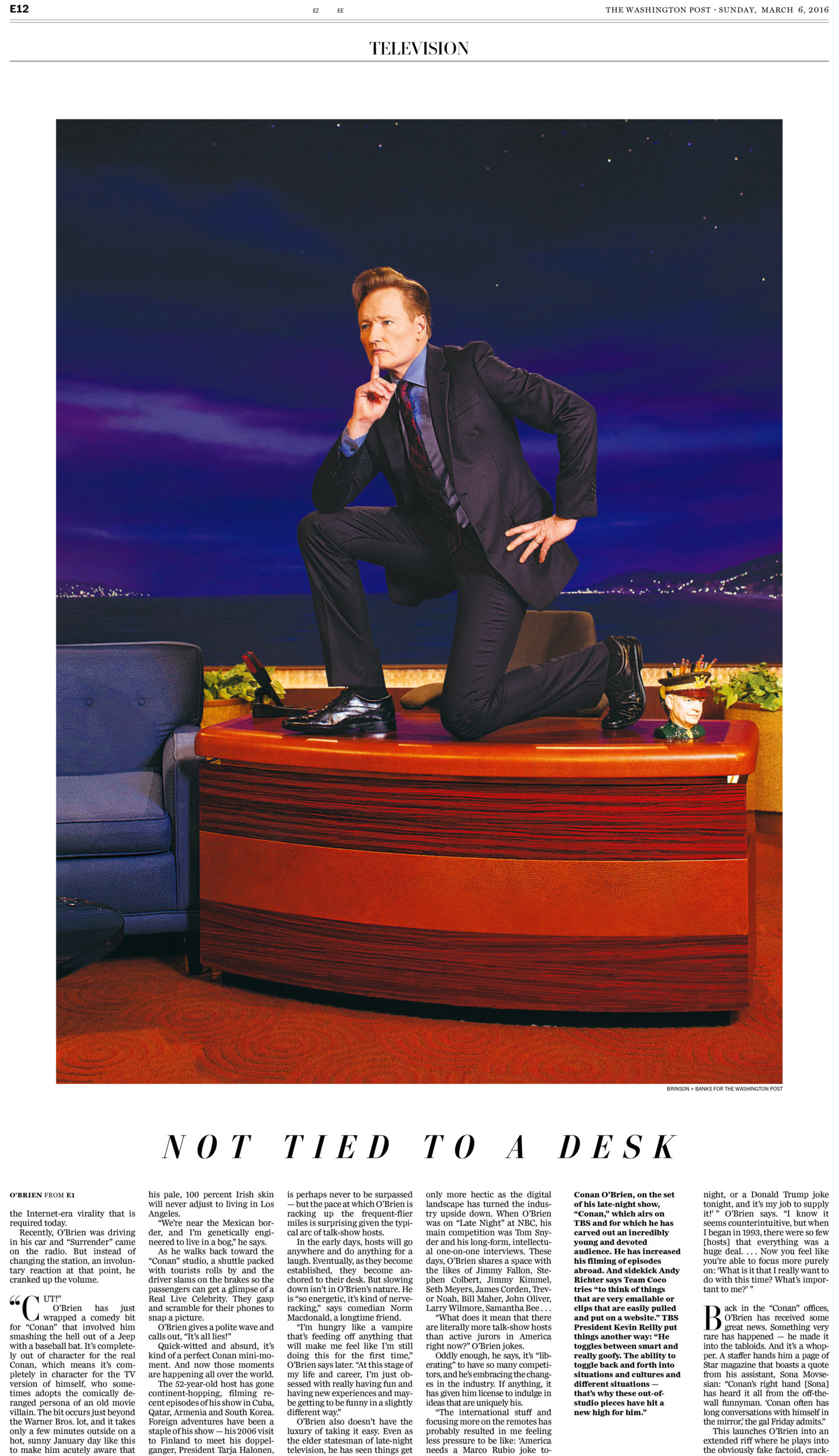
 20160209_Conan_OBrien_428

Tell us how you ended up on Conan O’Brien’s set, I thought you were the photographers?
Before the shoot, Kendrick said out loud that she wanted something fun like Conan standing on his desk, but we held back because we were told not to ask for goofiness. What we did instead was build a rapport with our subject while standing at his mark, and then open the door to him for something more collaborative. And what does he do but offer to pose as the thinking man on his desk. So we got our funny photo after all because we connected with our subject – that and the universe smiled on us.

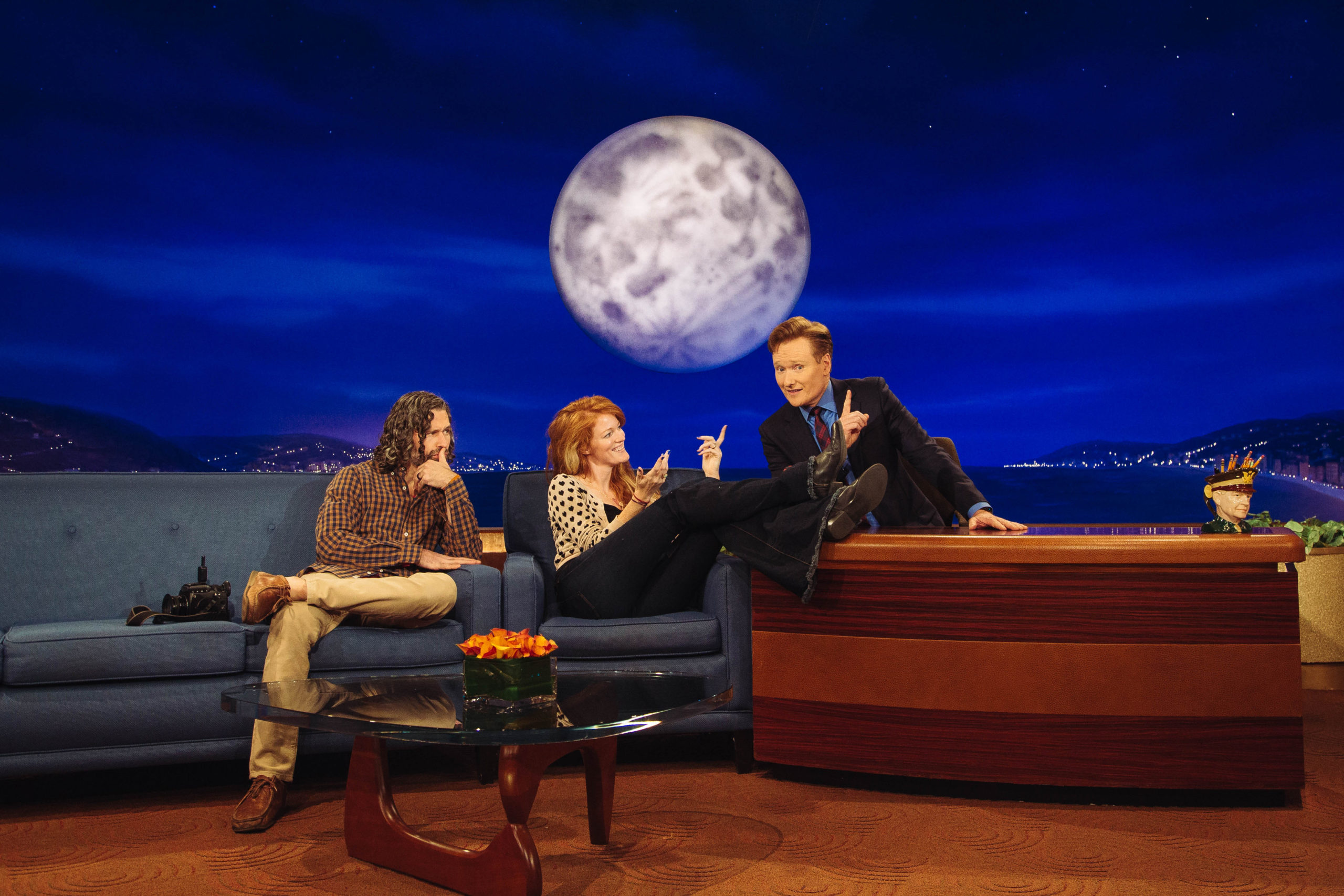
Then to take the cake at the end of the shoot, rather than take a bad selfie, Conan offered us a seat on stage for a faux interview and a memory that really made our day. And then of course, we ended the day with a group hug – seriously though, we did.
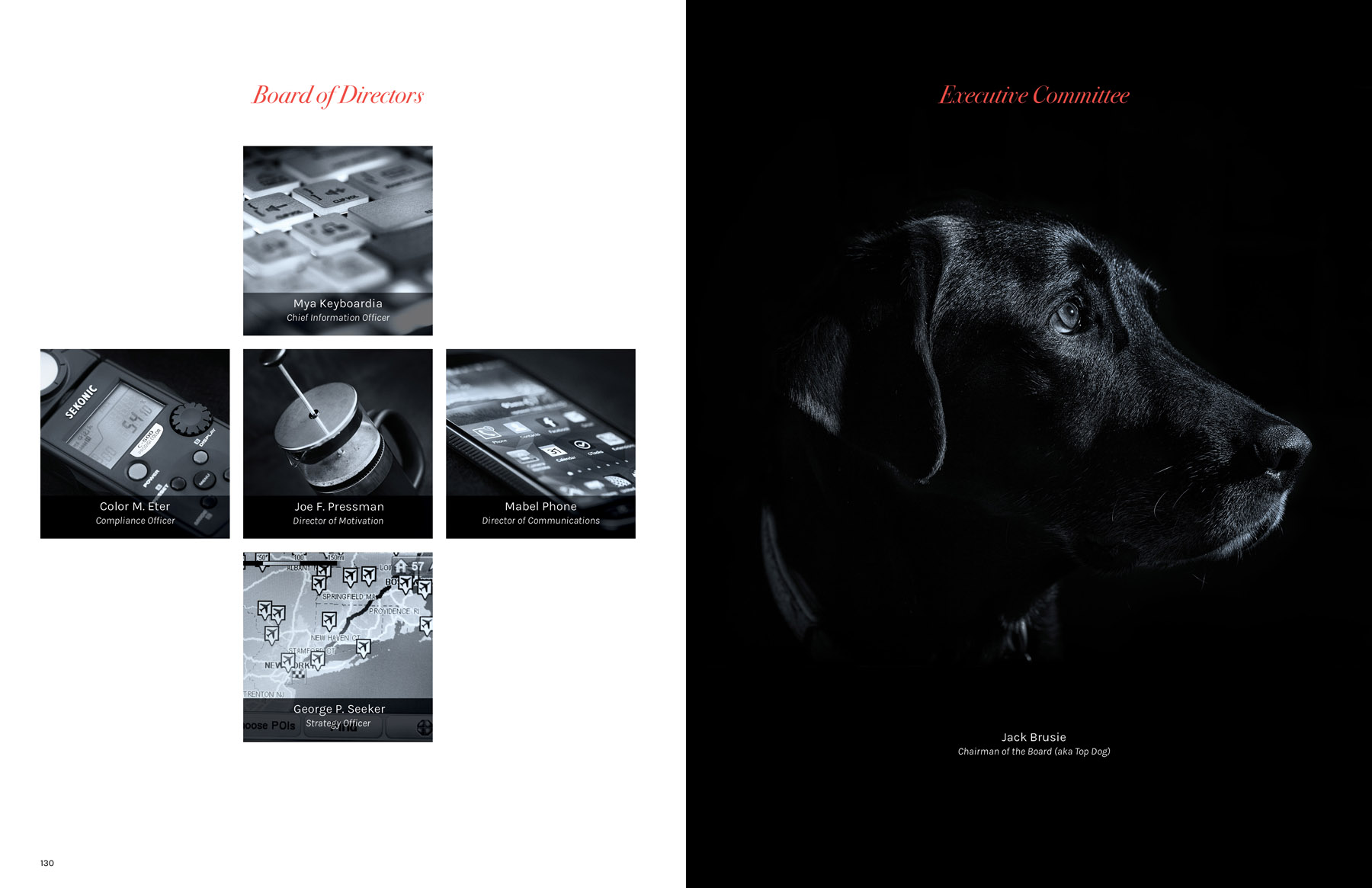
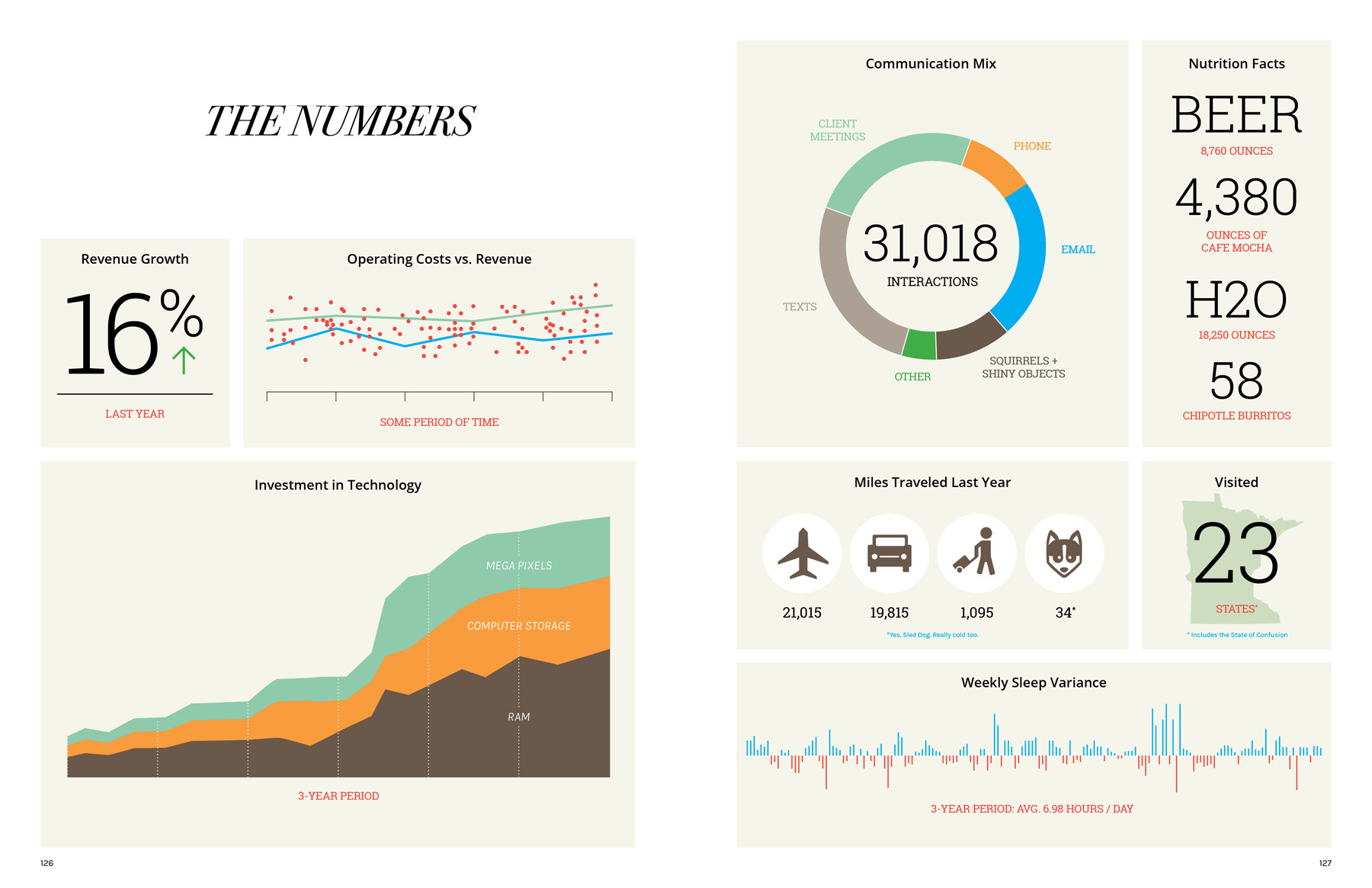
The Daily Promo: Kevin Brusie

Kevin_Brusie_AR_001
Kevin_Brusie_AR_066 Kevin_Brusie_AR_064


Kevin_Brusie_AR_012

Kevin_Brusie_AR_009

Kevin_Brusie_AR_022

Kevin_Brusie_AR_030

Kevin_Brusie_AR_007


Kevin_Brusie_AR_055

Kevin_Brusie_AR_051

Kevin_Brusie_AR_048

Kevin_Brusie_AR_050
Kevin_Brusie_AR_063

Kevin_Brusie_AR_065

Kevin_Brusie_AR_067

Kevin Brusie


Who printed it?
It is being printed by Blurb, using their ‘Magazine’ format. 81/2”x11”, perfect bound, with some surprisingly nice stock. We were quite impressed.

Who designed it?
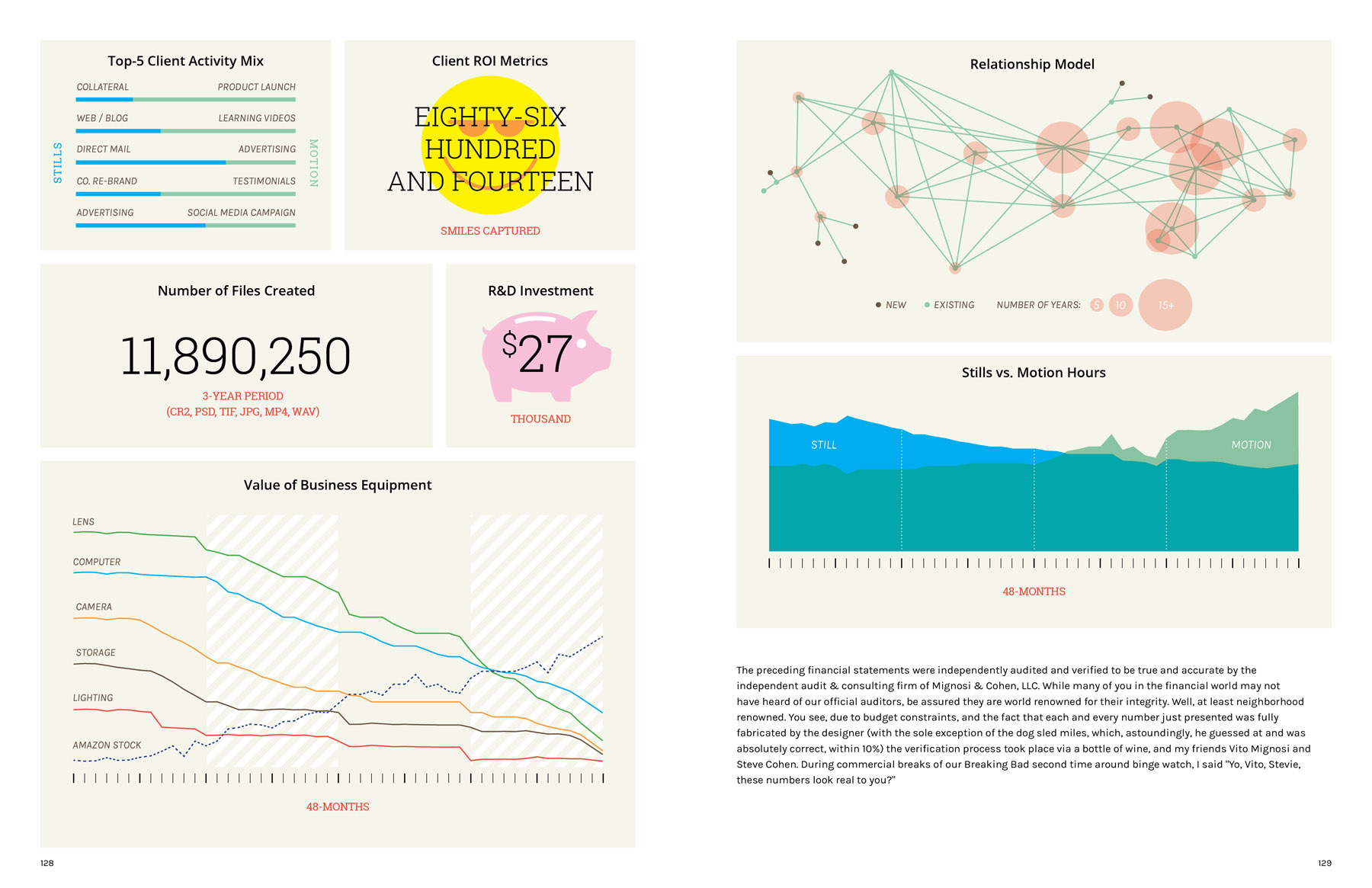
The {current year} Annual Report – which by definition never becomes obsolete – was designed by a long time collaborator and friend, designer Travis Goulder. I have had this concept in my head for quite a few years, and never was able to bring it to fruition. I knew I needed a talented and patient, designer to pull it together. So the summer of 2015 found Travis ‘under-employed’, so he graciously volunteered to help out. We finally wrapped up in December. His contributions really defined the style and refined my direction. This would not have been as successful without his vision. His extensive corporate experience brought sophistication and authenticity to the book, It also enabled the 4 pages of totally meaningless graphs, charts, and “financial” graphics, filled with small smile provoking visuals. And, believe it or not – not a single photograph!

Who edited the images?
The initial images were selected by me and my studio manager, Heather Noonan-Kelly. We assembled folders of files based on categories of the book: assignment types; personal work; pro bono and let Travis have at it. I really let go of control, which any photographer will tell you can be difficult, and let the design drive the image selection.  We had a few meetings where the three of us would toss around ideas for this or that spread and somewhat democratically decided on the major image choices, like cover and big chapter spreads. I know I was overruled by vote more than once.

We finalized the design, and then printed just two copies to ponder for a few days as proofs. We changed a few images up, at that point, mostly due to gutter placement or bleed through from paper opacity issues. Then the next version was our final.

How many did you make?
I wanted this promo to be more than just another photographer’s promo. I know buyers get inundated with them. The beauty of Blurb is ‘print on demand’.  We have been printing them in batches of 12 or so. Then we mail them out to selected high value prospects, or current clients. We want to be able to follow up closely with every recipient. So we are probably around 100 printed so far but we will keep this campaign going all year. The on demand printing makes it easy to manage the budget too. You don’t have thousands of dollars worth of print pieces sitting in a corner in boxes.

How many times a year do you send out promos?
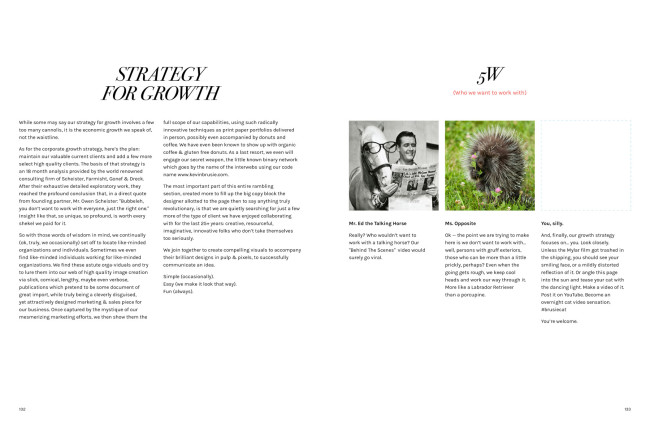
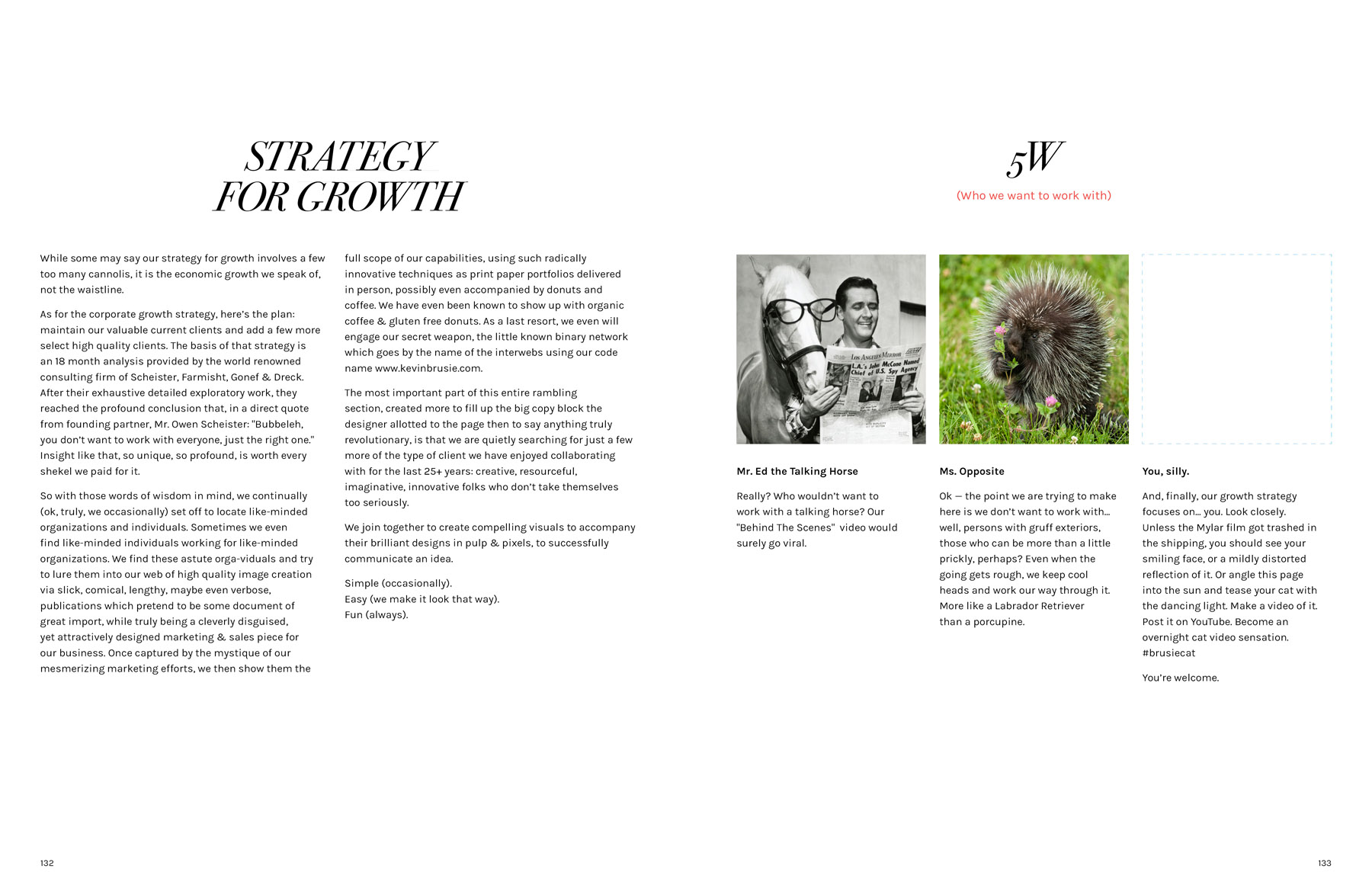
I have been a professional commercial photographer since 1990. I have probably created 5 serious print promos in those 26 years. Yeah. 5. I know, that’s pretty low; so when I do something, I really try to make it memorable and unique. I am not a fan of big number mass mailings. I don’t want to waste the time of buyers looking at cards or emails that just don’t matter. I do my research, look at the work I see that I really respect, and then share my best stuff with them. This Annual Report seems like a perfect way to do that. Our hope is the book is just too nice and entertaining to toss in the bin. One twist we did, we have a page right at the end called “5W” “Who We Want to Work With” – for most books we have three small “2×2” boxes with photos of some comical version of an ideal client, but the last box is a silver mylar film, serving as a mirror, with the copy “You, silly.”  For more personalized prospects, we acquire a photo from social media of our prospect, and drop that into the box. We add a custom message about this person, and then just print one copy at Blurb. We have gotten a couple of nice meetings out of that approach.

What type of reaction have you gotten from your clients?
So far, recipients seem to love it. It is dense enough that it needs to be digested. We packed it full of copy – which is different for a photo promo – that was mostly, for better or worse, written by me. Travis surprised me with some funny copy blocks placed about that I never would have thought of…

I see you’ve added some levity to the promo by poking fun of the annual report genre, how was that received?
I have been shooting, in both still & video, Annual Reports for years. It’s all so serious. Convincing the shareholders all is well with the world and management is thoughtful and contemplative. Clients are grateful and successful. I know the designers of these projects are bright, funny, creative people. I am sure when they are three glasses of vino into a Friday night, they just think of all sorts of crazy stuff they wish they could really do (I guess I do too. ) So why not make it happen for MY own Annual Report? Here’s an excerpt from an email I received from one client in late December:
This is to notify you that your recent so-called Annual Report does not conform to Financial Accounting Standards Board (FASB) regulations. It is not clearly associated with a defined accounting year, lacks elementary mathematical consistency, and seems to be irresponsibly flippant about the whole business of accounting. We are deeply hurt and plan to publish a photographic compilation using our best cell phone work in retaliation…..Great piece, Kevin. Hope we can work together in the new year.”

That’s exactly the response I hoped for. I have a motto in my work – “If we’re not having fun, then why do it?” Why not show that in my promo? I worked for 12 years in banking in NYC, pre 1990.  I know how to be professional. I can hold my own with the exec’s…I left that world to pursue my passion, having a shitload of fun in the process.

How did this idea come about?
MANY years ago (mid 1990s?) I saw a paper company sample, which was a beautiful Annual Report for a fictitious company, named something like “Clown, Inc.” It was shot, written, designed, like the best of the Annual Reports of the time but every photo of an executive or employee was a clown. In suits, around the board room table, with white makeup, red noses, floppy shoes, walking off the corporate jet, every stereotype Annual Report photo was recreated with finely dressed clowns. It was brilliant. That stuck in my head, and I knew I needed to have some fun with the genre.

This Week In Photography Books: Maud Sulter

by Jonathan Blaustein

I have a lot of opinions.

As I make my living as a columnist, (along with many other jobs,) it helps to have strong convictions. I share them each week, to entertain you, but also to discuss important ideas in digestible bits.

Occasionally, when you throw your opinions out there into the digi-sphere, you’re going to be wrong. Sometimes, spectacularly so.

C’est la vie.

In this case, I thought it best to admit my mistake. (Man up, if you will.) Better to face the error than to pretend it didn’t happen.

Right?

About a month ago, in the immediate aftermath of the Iowa Caucuses, I declared the death of the Donald Trump phenomenon. Marco Rubio was on the ascendancy, so I thought, and Mr. Trump’s high polling numbers would vanish, like indigestion after a nice constitutional.

The day after my article was published, Marco Rubio went off the rails in a debate, outing himself as a robot, (or maybe just a cyborg,) and the rest, as they say, is history.

I’ve lost track of how many times I’ve made fun of Donal Trump in this column. Some of my best one-liners have come at his expense.

But I’m not laughing anymore.

Though I rarely stick my neck into the morass of American politics, today, I’ll make an exception. I turned 42 a couple of weeks ago, and I can’t ever remember this particular feeling before: despair mixed with fear and a touch of embarrassment.

The fact that we’re witnessing a major party candidate courting votes from the Ku Klux Klan seems more surreal than the Dali painting I dreamed about last night. How could such a thing happen in 2016? What does that say about America, that so many white people have lined up on one side, glad to be unaffiliated with the rest of the races that make up this country.

It’s just. So. Wrong.

I’m aware that Mr. Trump’s chances of becoming President are small, but any chance > 0 is scary. France can have Marine Le Pen, and England the UKIP assholes, but seeing a large chunk of America embrace racism to this degree has taken me by surprise.

Yes, I was wrong to dismiss Donald Trump. He’s a narcissist, and will never hear the voice of reason. Said voice could be blasted into his ears by the world’s biggest BOSE bluetooth speaker, and still he’d only hear his inner monologue. (As he said this week, his most trusted advisor is himself.)

Part of what’s so crazy, to me, is the difference between his spoken and written words. I heard Mr. Trump say, on a video clip, that his followers need to be “gentle” with the protestors. In a transcript, he’s disavowing violence.

But his voice dripped with sarcasm. His tone and inflection screamed, “Kick the shit out of those hippies and blacks. They deserve it!”

And the violence has begun in earnest. We have the sucker-punch heard round the world, the Chicago protests, and now, Mr. Trump is actually “predicting” riots if they try to take the nomination away from him at the Republican convention. Millions of his followers will take to the streets, he assures us.

What is that, if not the extortion of a nation, by a budding strongman. Nasty business, this.

Nasty.

The reality is that even though 2016 feels modern and futuristic, and gay people can get married in the United States, our history of violence and theft still lingers.

We stole people from their homes, entire cultures from their homelands, and our homeland from its original occupants.

Wishing away the vestiges of Colonialism simply won’t work.

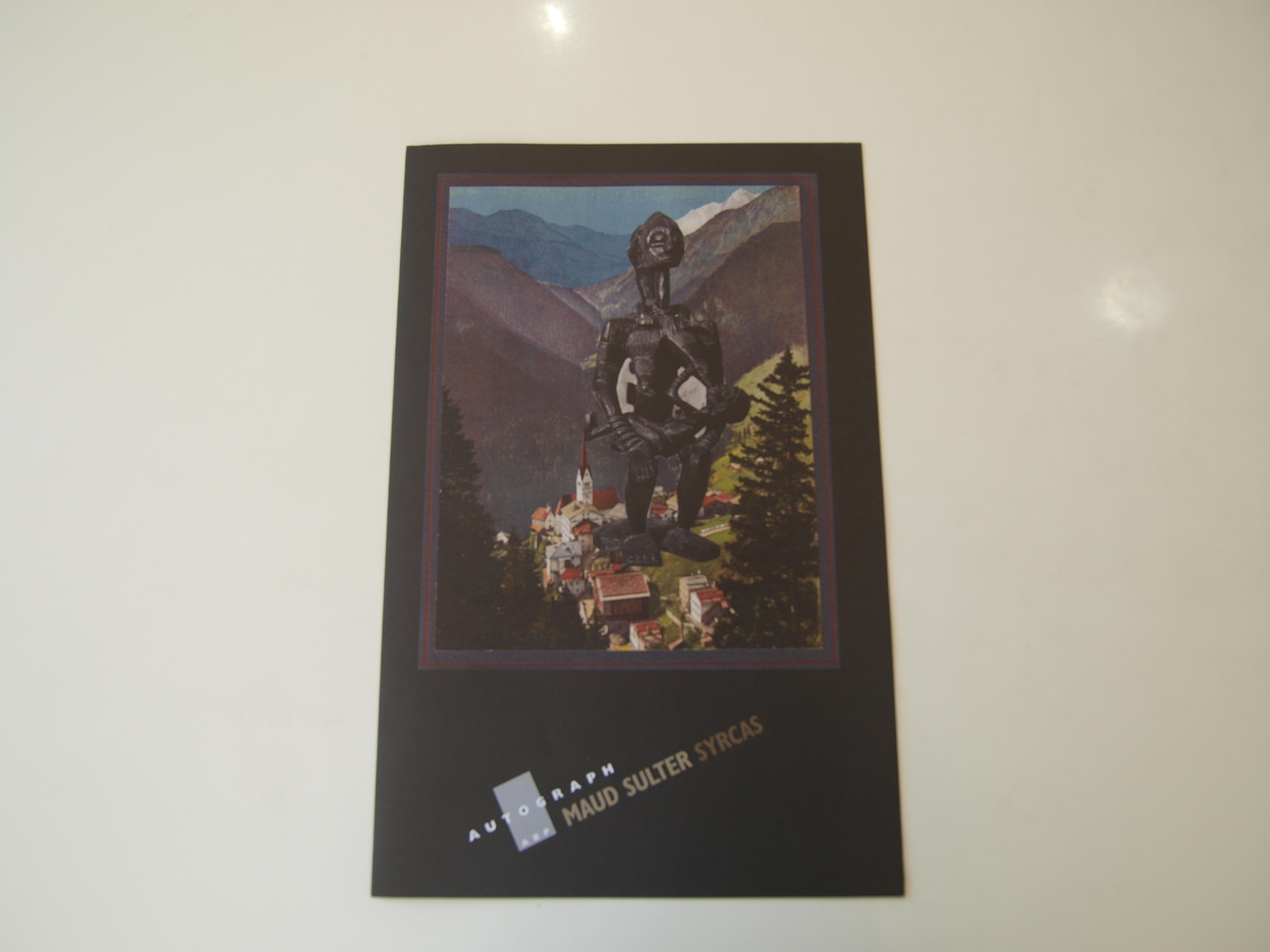
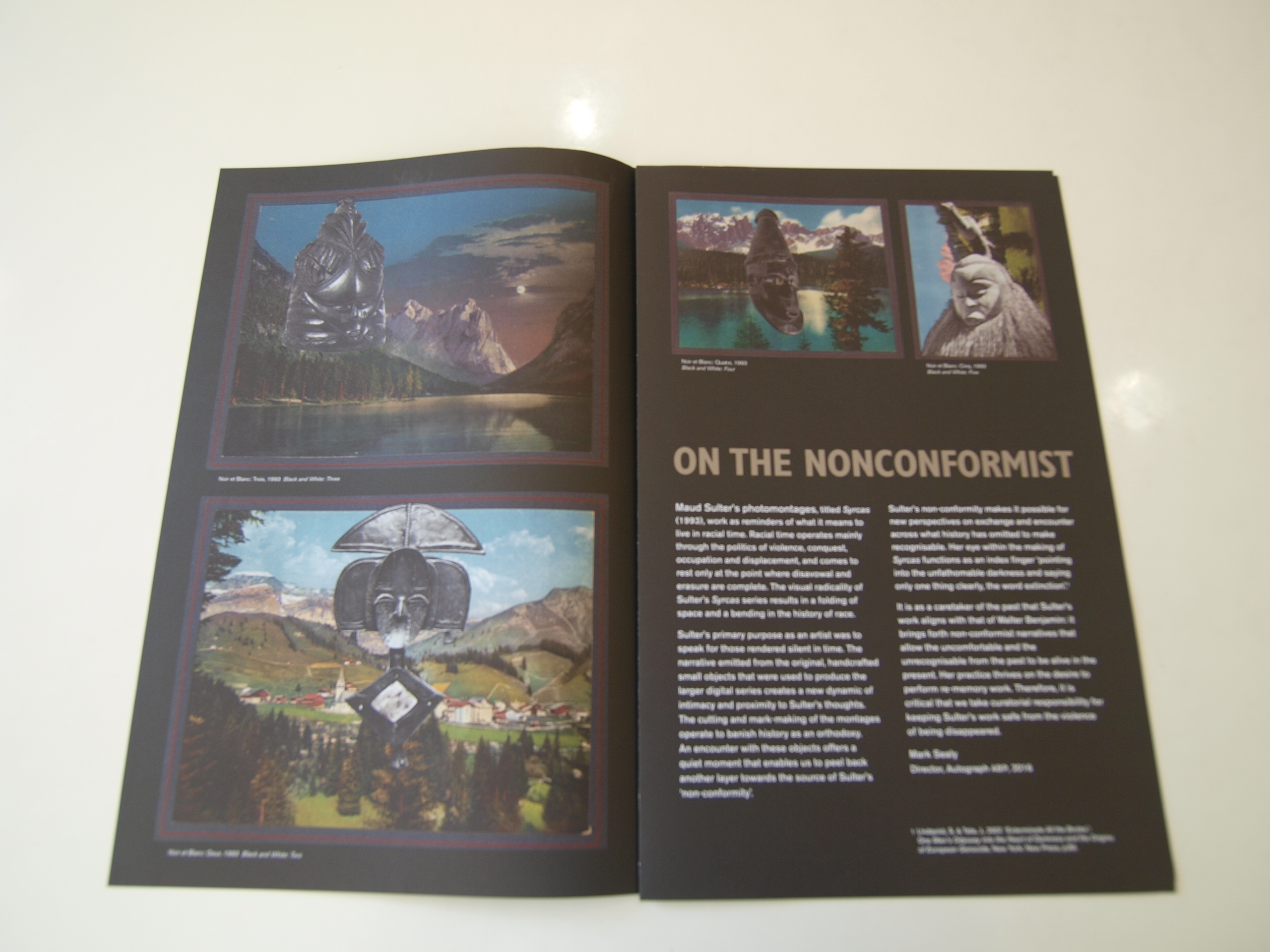
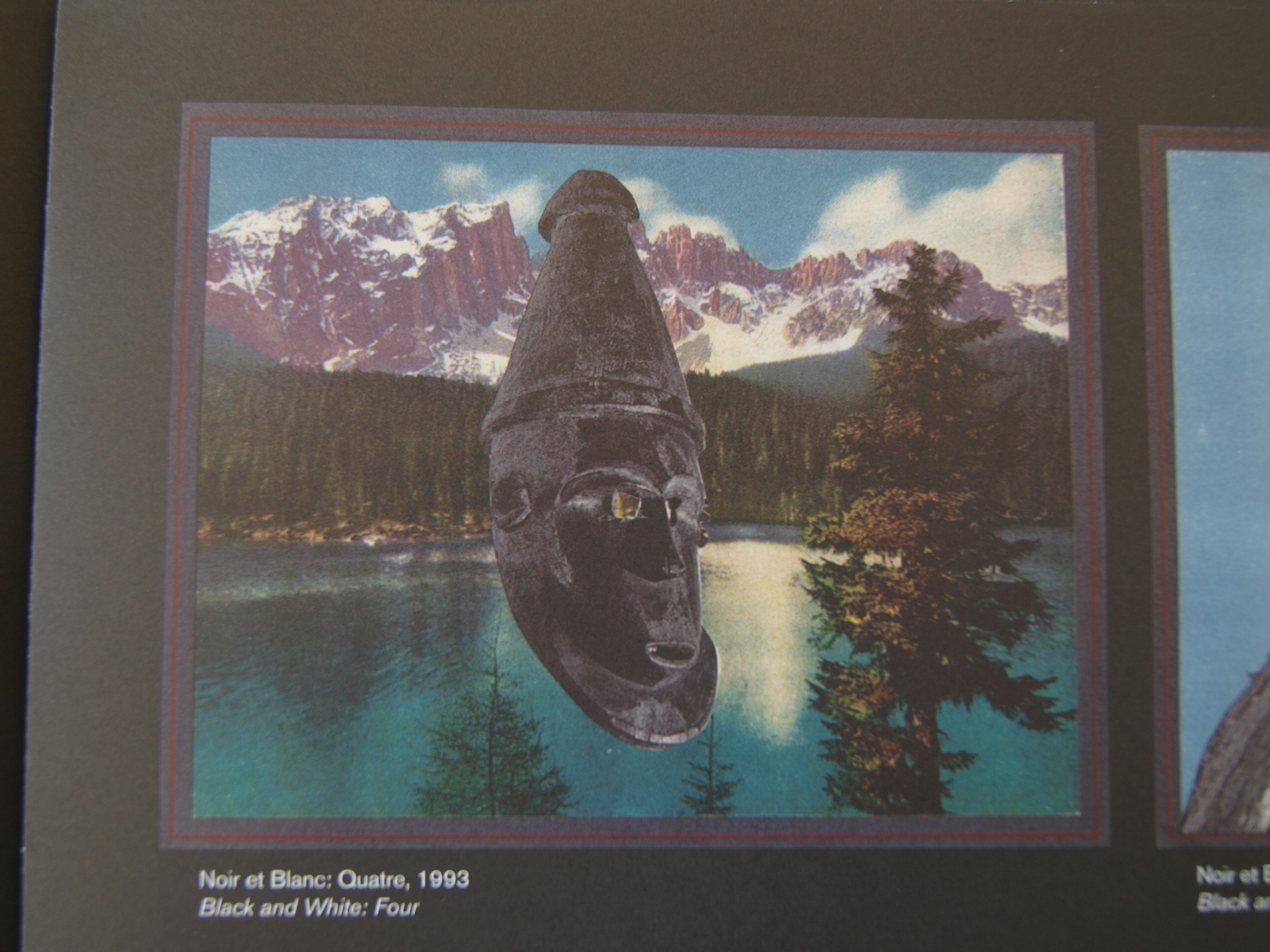
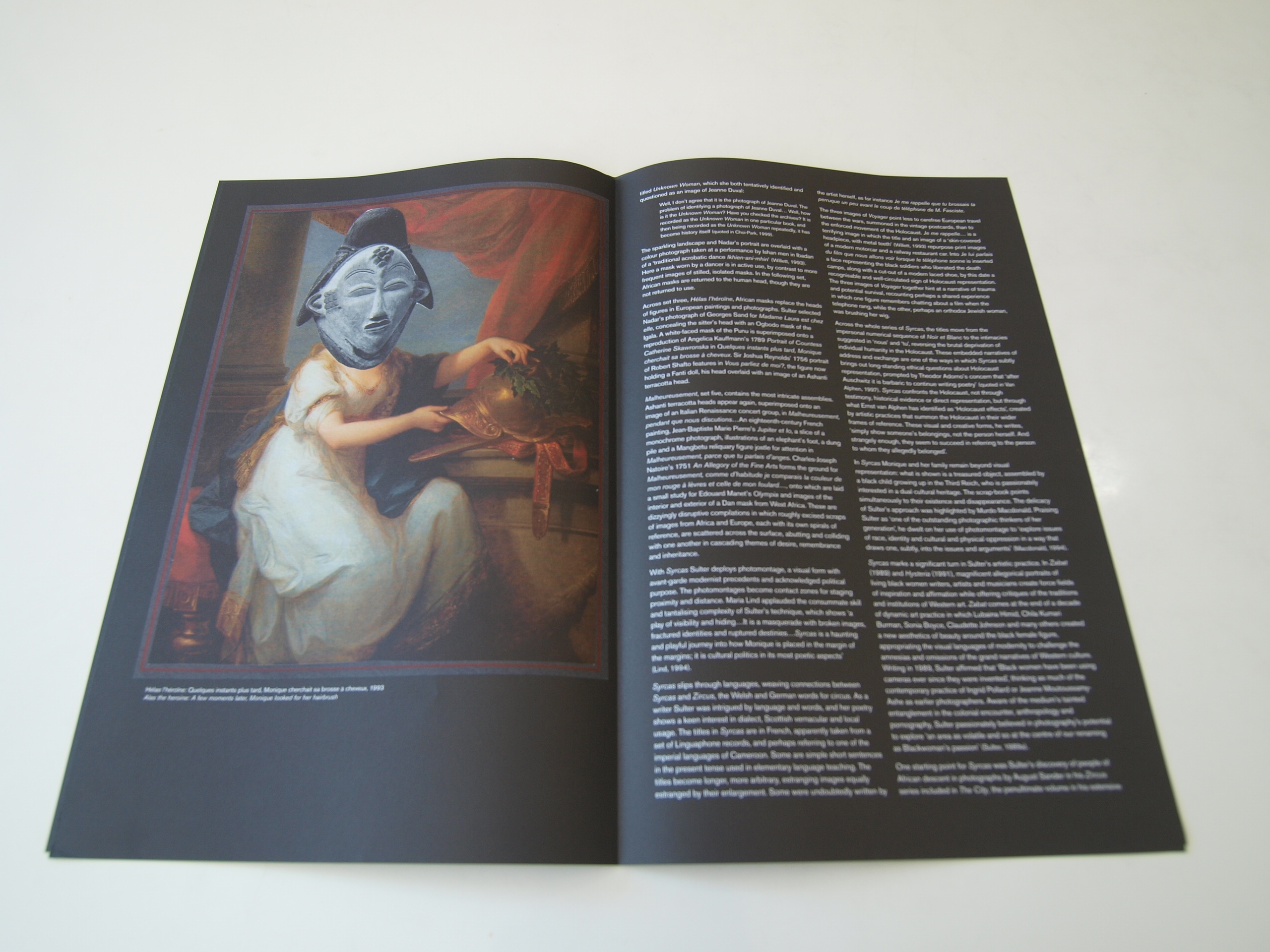
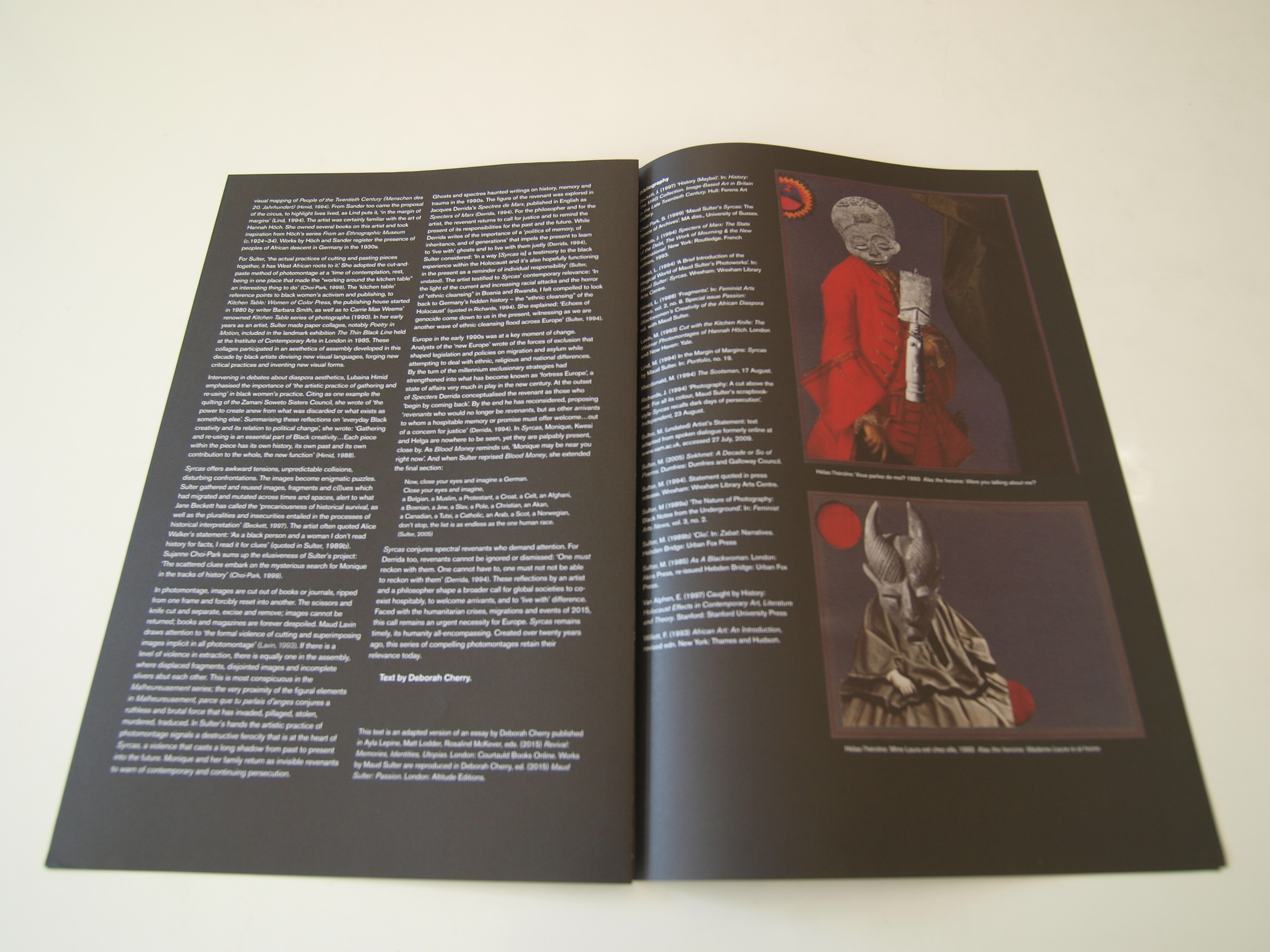
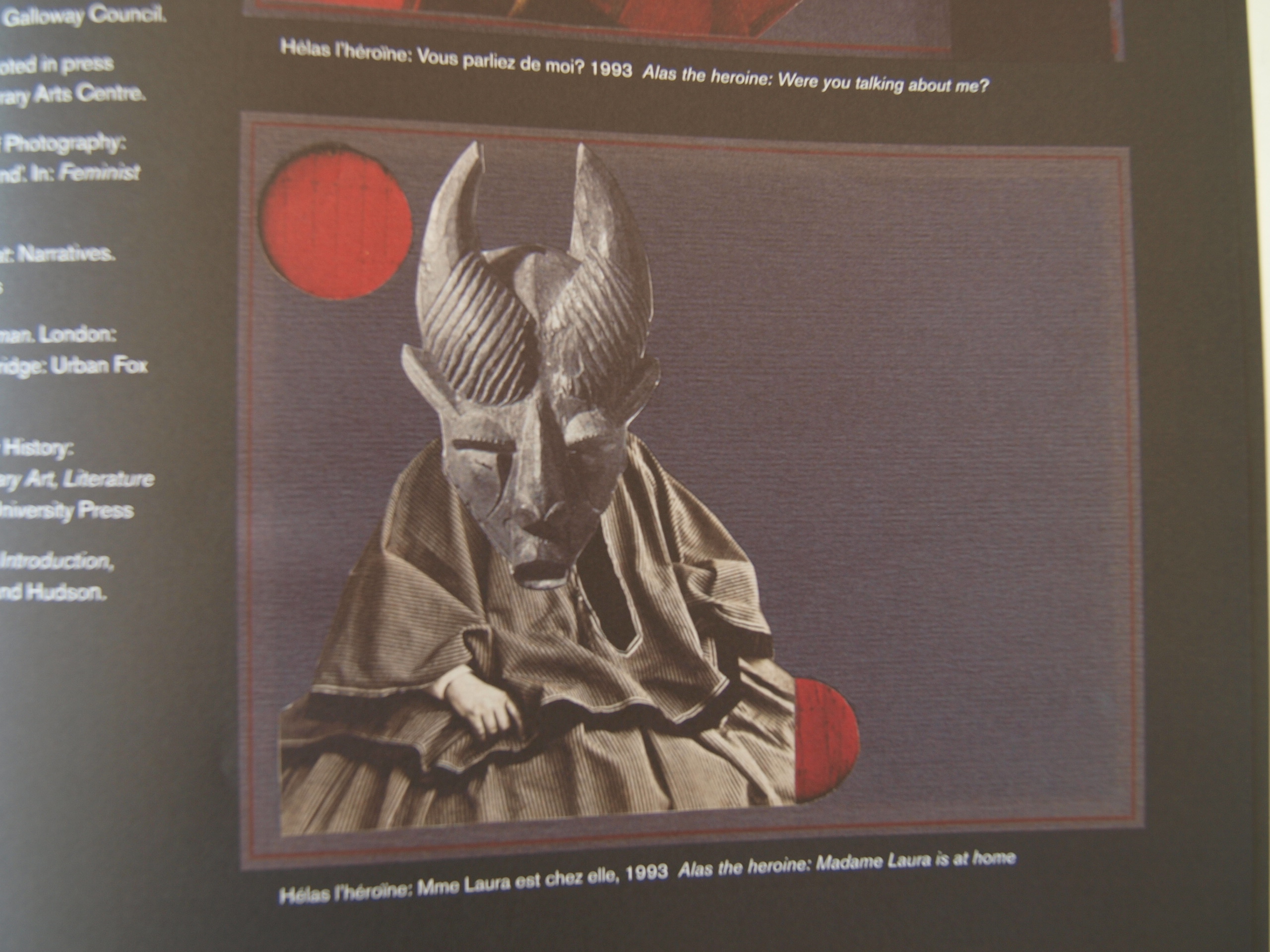
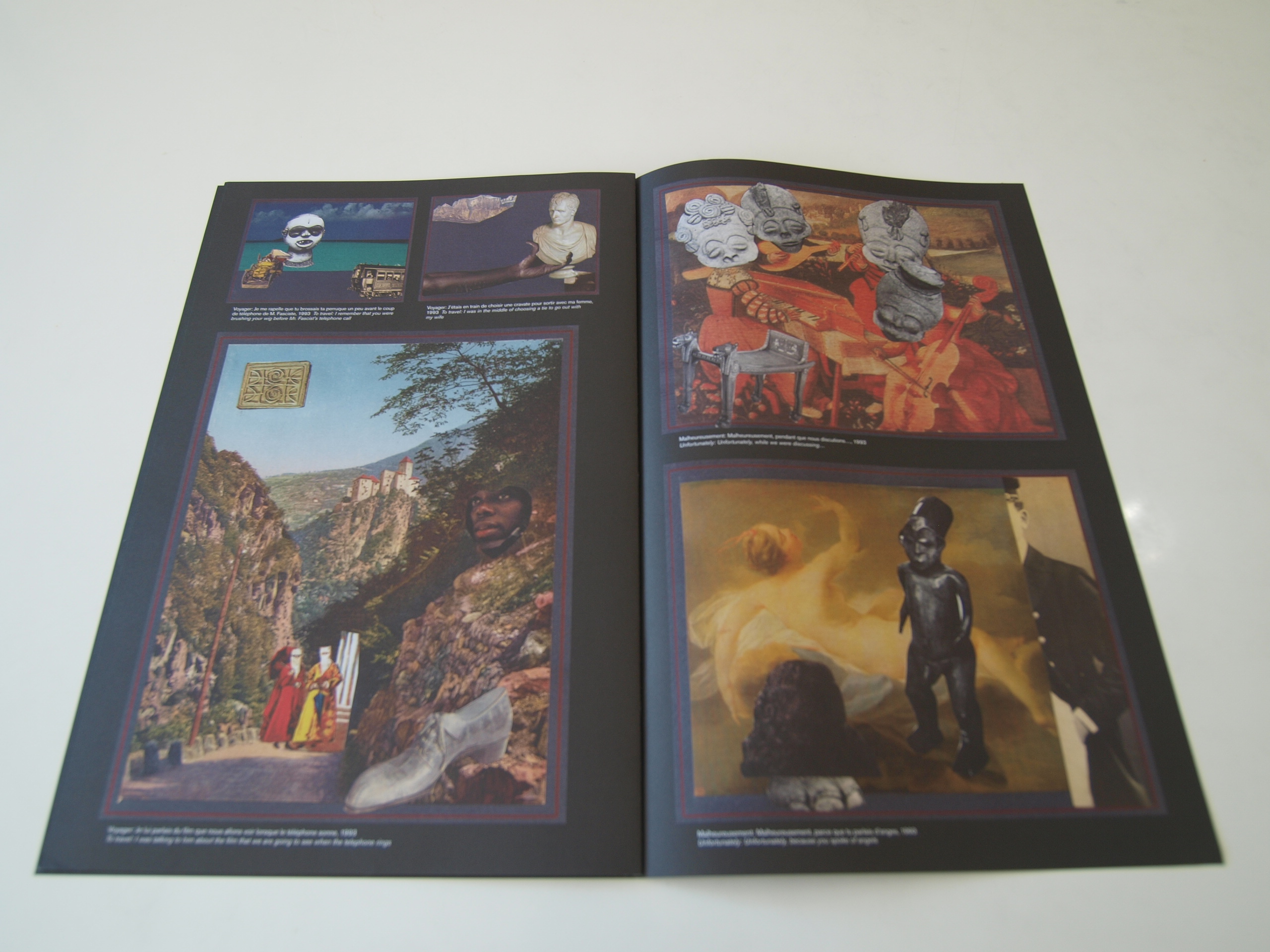
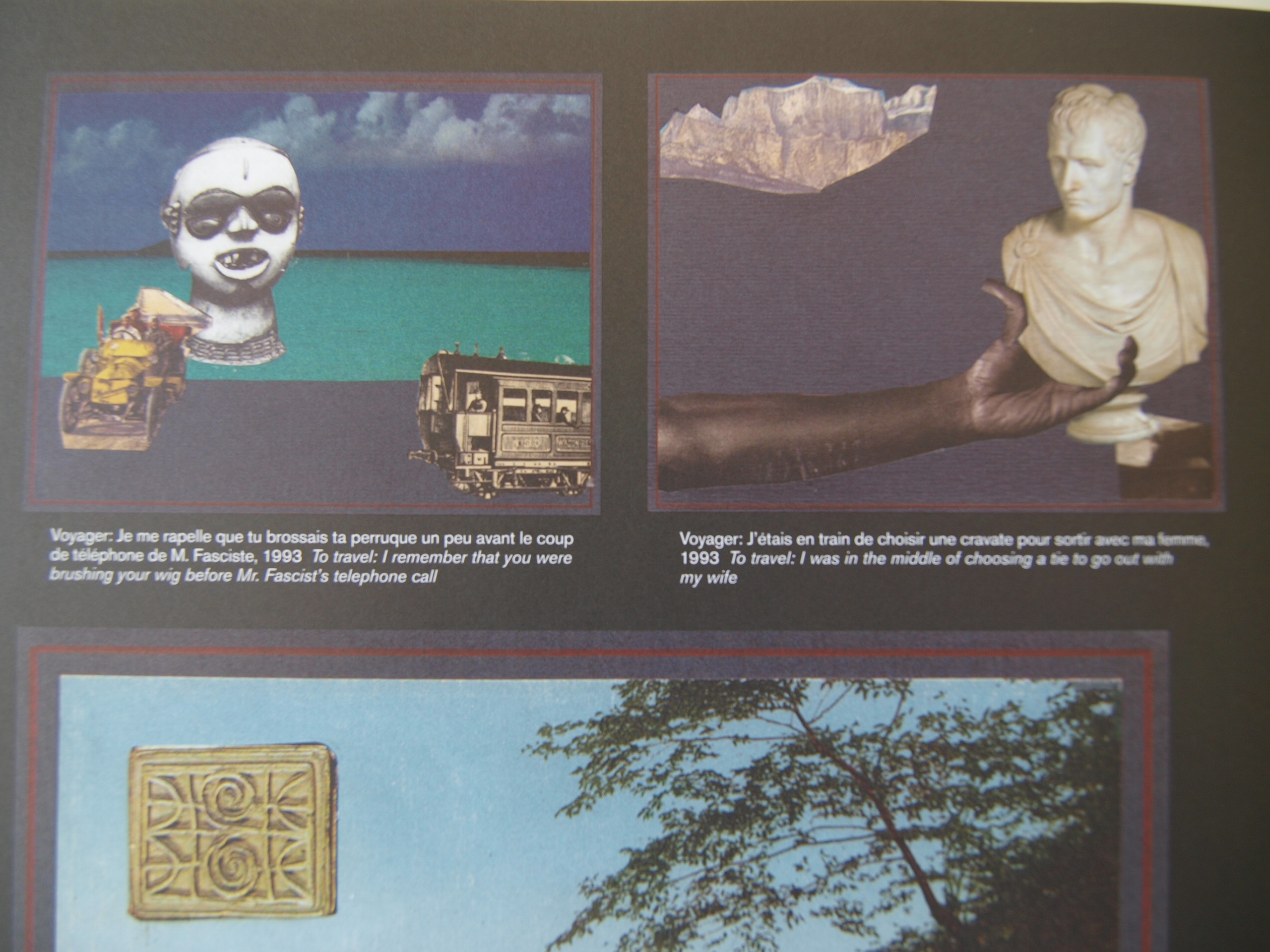
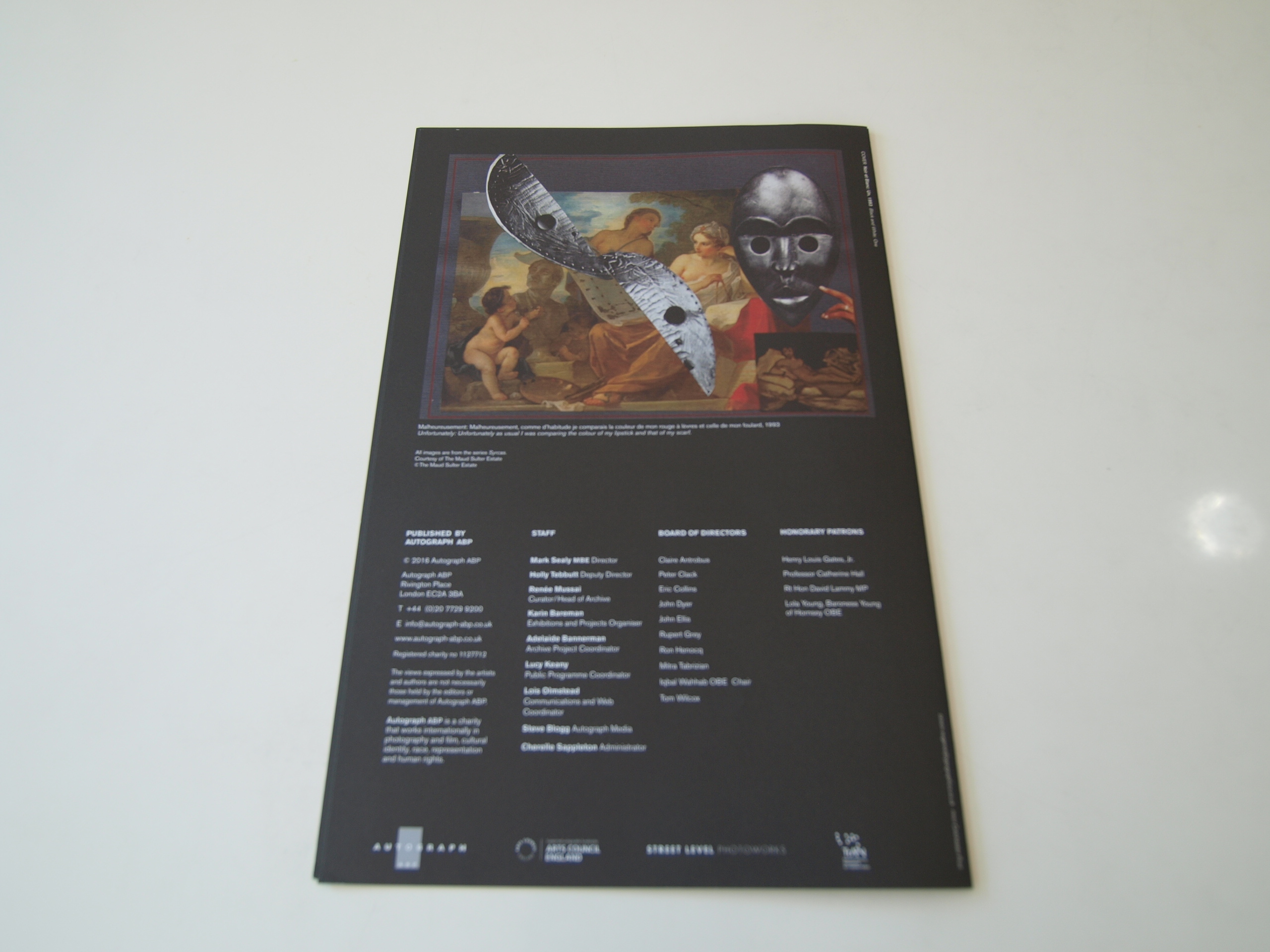
Sadly, I’m in mind of such things, having just put down a lovely newspaper/exhibition catalogue, “Syrcas,” featuring work by Maud Sulter, recently published by Autograph ABP in London.

This little volume turned up in the mail recently, as last summer I’d met with Karin Bareman, one of their curatorial staff, and she thought I might like it. Fortunately for us, she was right.

We’re constantly hearing about the dearth of non-white voices in the Photo community, and these pictures are proof positive that a diversity of talented perspectives is vital. These images are cool as hell.

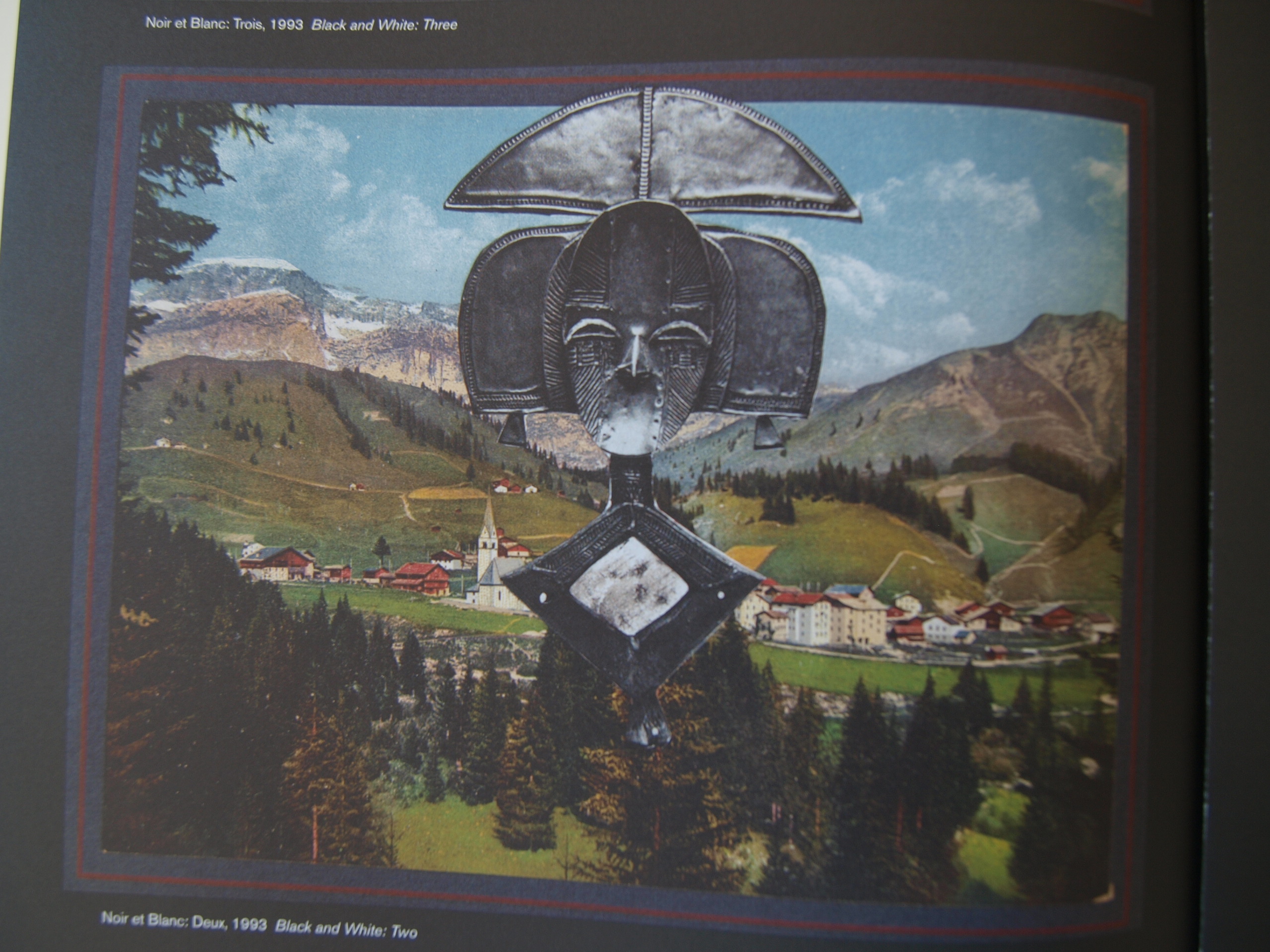
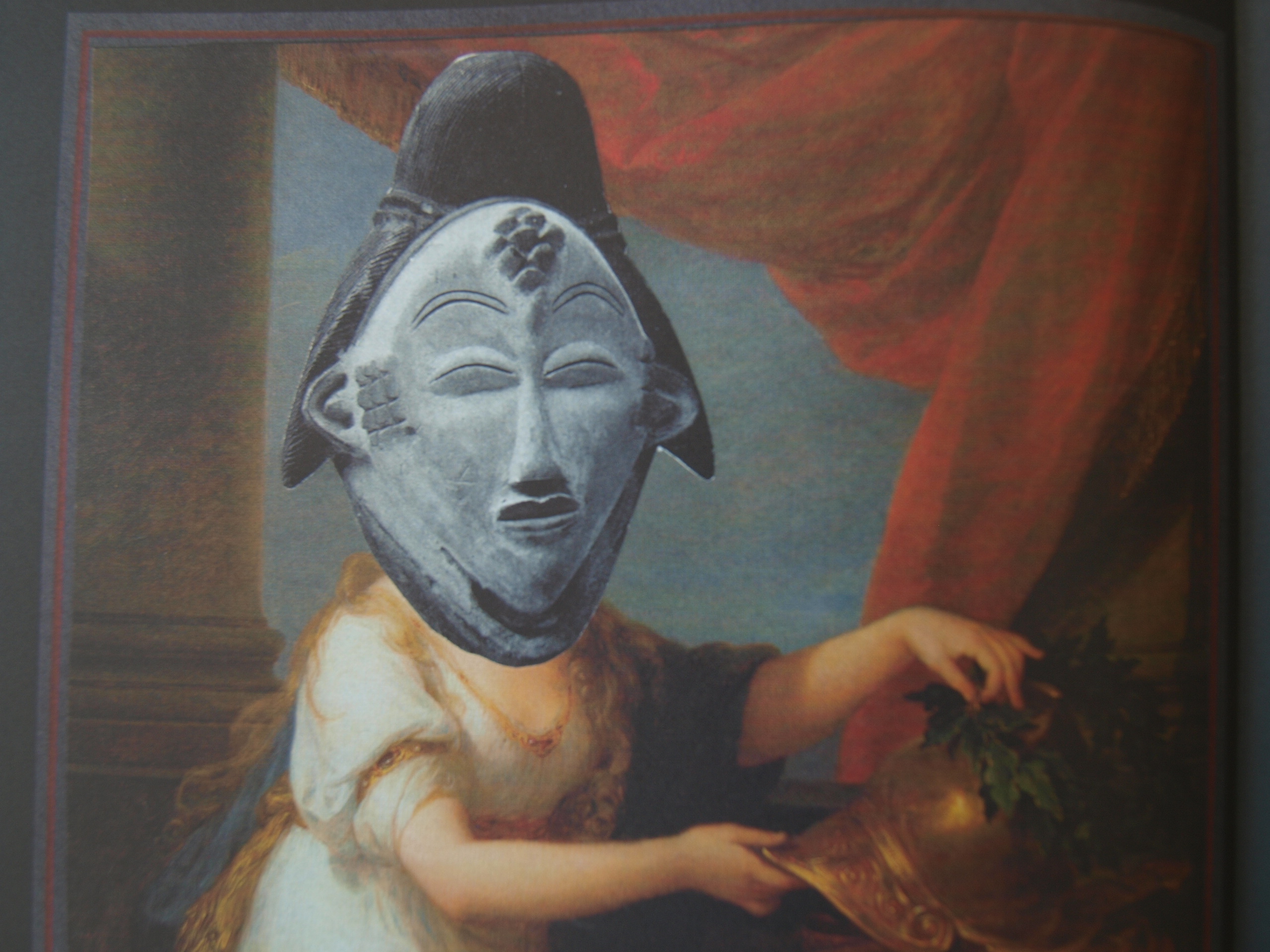
This project, which is on display at Autograph ABP until April 2nd, mashes up totemic African iconography with pastoral, entitled European art vernacular. Though they were made in the early 90’s, by the Scottish/Ghanaian artist, these photos feel totally relevant and current.

Mashups are a part of the global cultural lexicon now, as are digital compilations. Appropriation maintains its fascination as well. It’s all here for us, should we care to look.

These pictures carry a tension that I really love, and I wish I could see them in person. The African masks and symbols are proudly laid “on top” of generic mountain scenes and fancy ladies.

Defiance!

You will see me, they say. You will acknowledge my heritage. You will accept that we, and our history, are a part of your culture!

Whether we’ve discussed the tragic lot of poor, migrant communities on the outskirts of European mega-cities, or the lack of non-white faces at portfolio reviews, here at APE, we do our best to speak important truths. (Even though I am an entitled white guy myself.)

I didn’t write about a book today. Instead it’s a slim catalogue on newsprint. (But at least it has pictures.) And no, I don’t think my little diatribe will have any impact on the outcome of America’s Presidential election. (Unlike Mr. Trump, I harbor no delusions of grandeur.)

But I do get to show you cool things, when they pop up in my mailbox. That’s what this column is about. If you live in England, go see this show, and then tell me all about it. If you’re curious to learn more, fire up your Google and see what else is out there.

Bottom Line: Super-cool exhibition catalogue of a show I wish I could see

To Purchase “Syrcas” Go Here

The Art of the Personal Project: Sasha Nialla

As a former Art Producer, I have always been drawn to personal projects because they are the sole vision of the photographer and not an extension of an art director, photo editor, or graphic designer. This new column, “The Art of the Personal Project” will feature the personal projects of photographers using the Yodelist marketing database. You can read their blog at http://yodelist.wordpress.com. Projects are discovered online and submissions are not accepted.

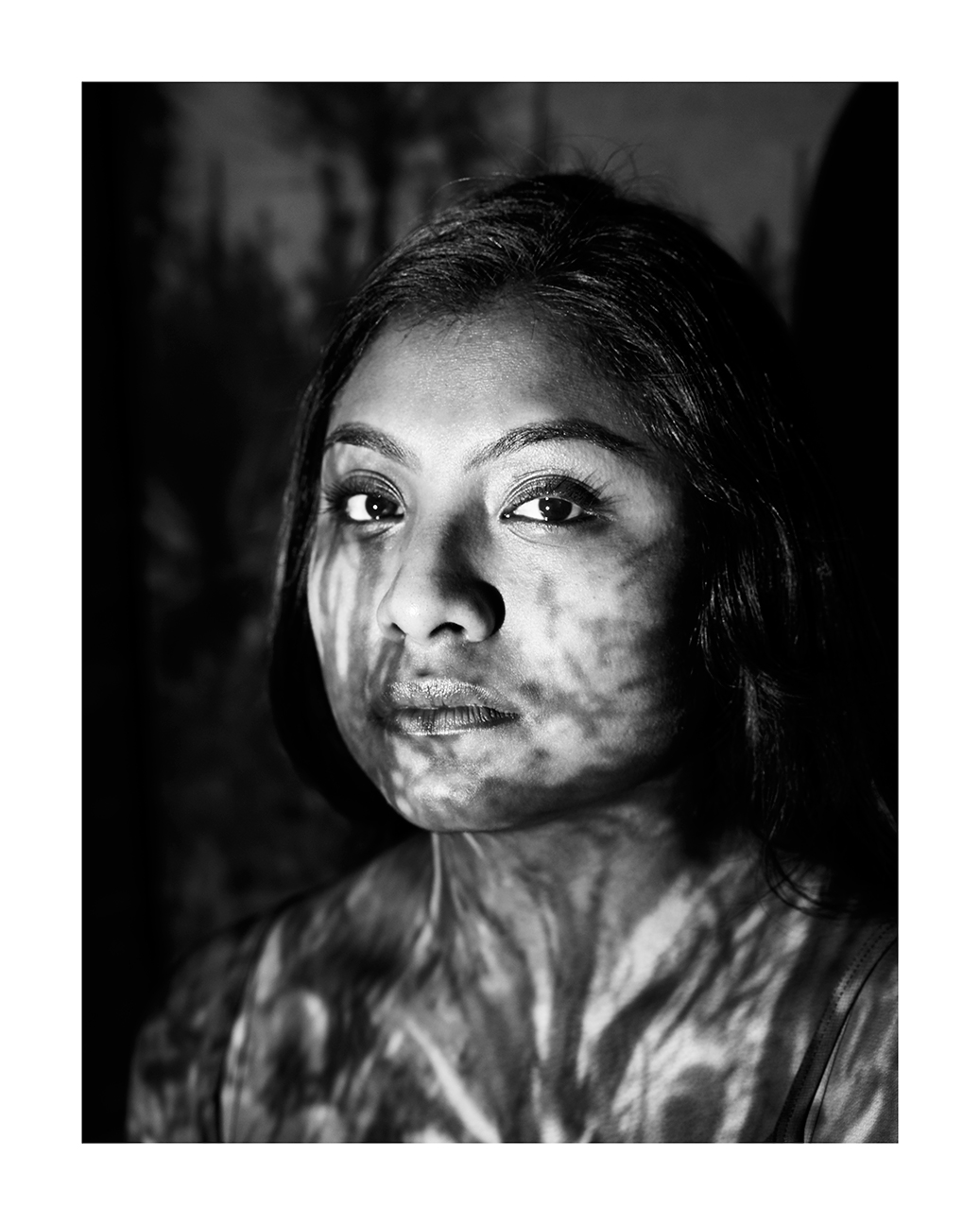
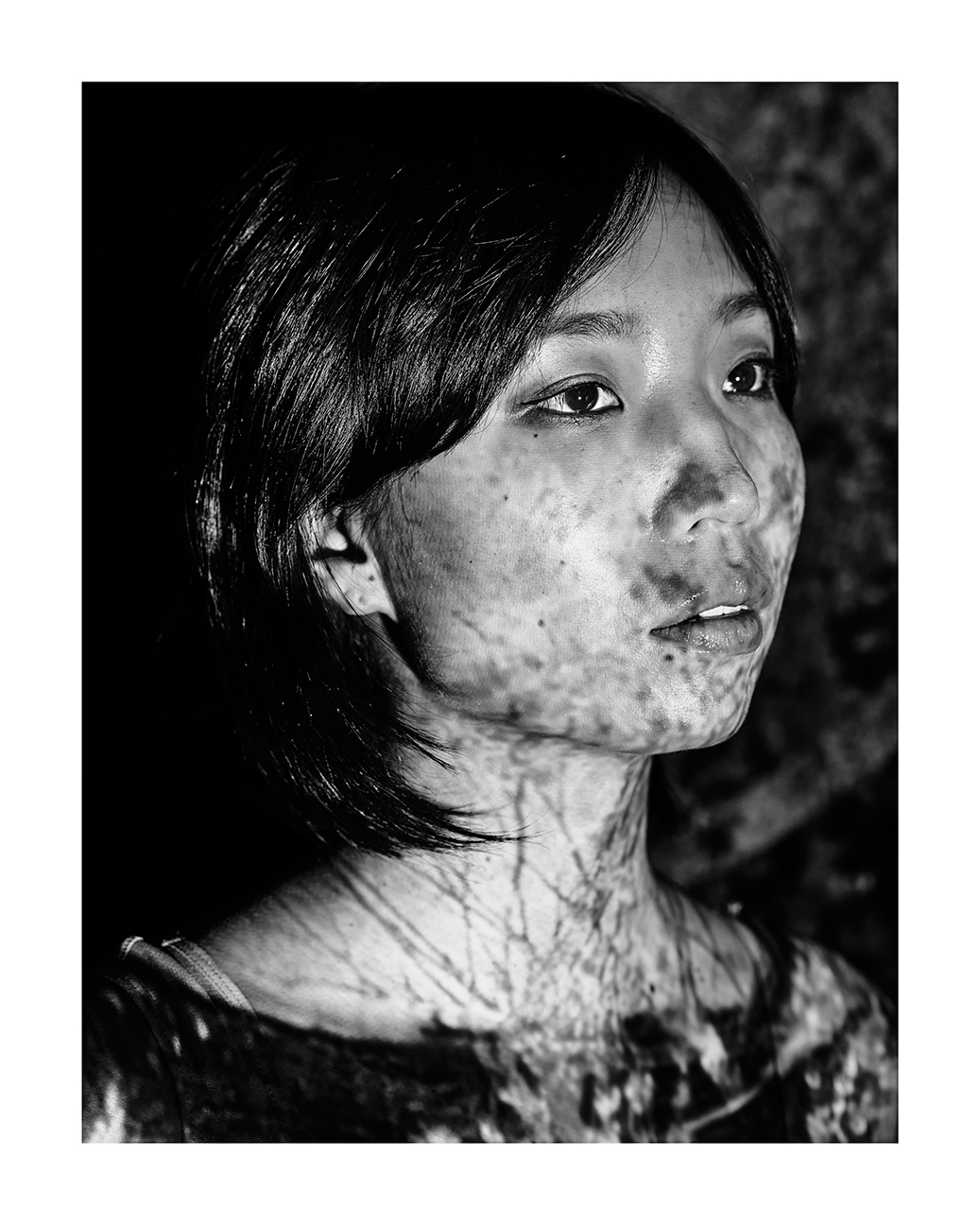
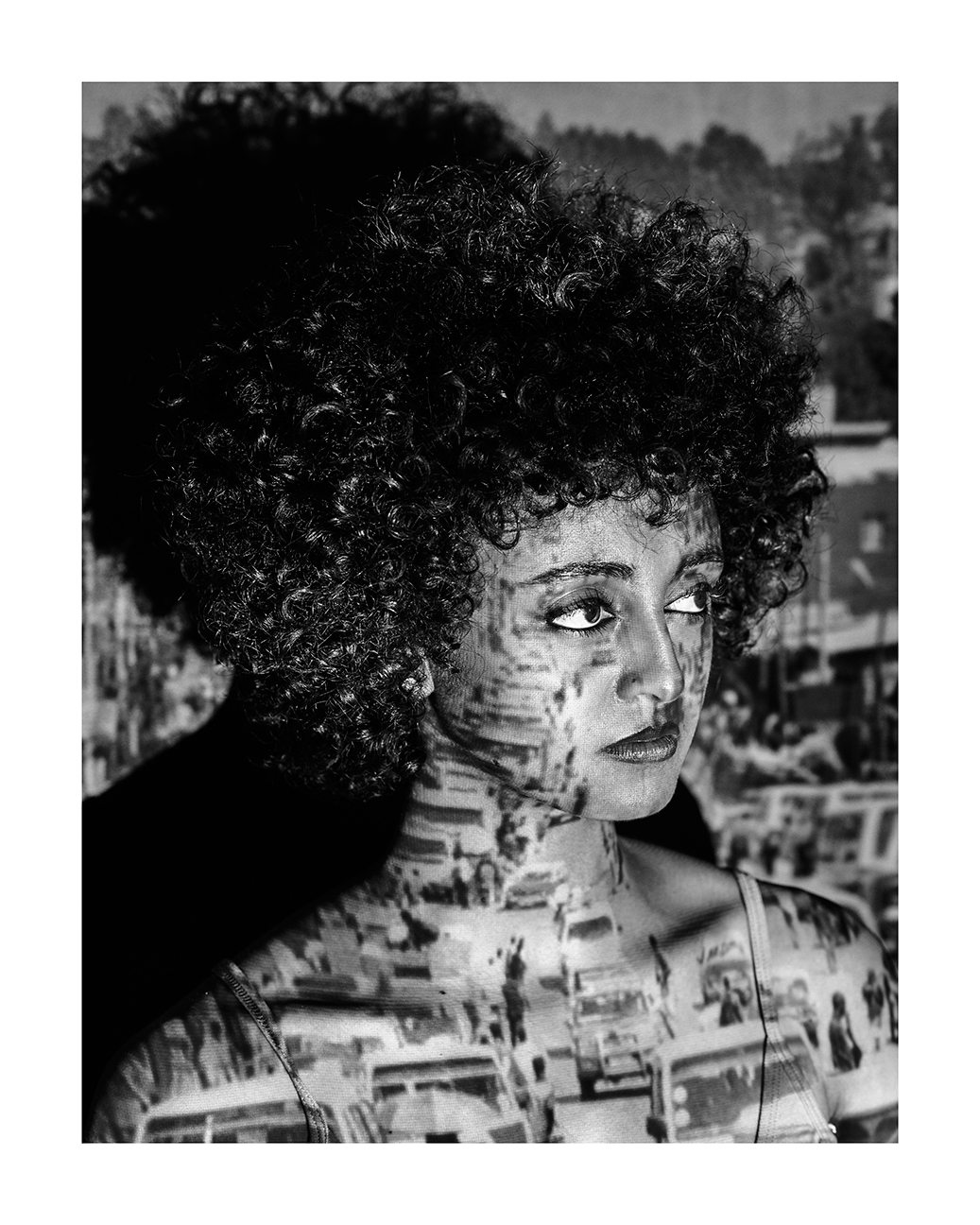
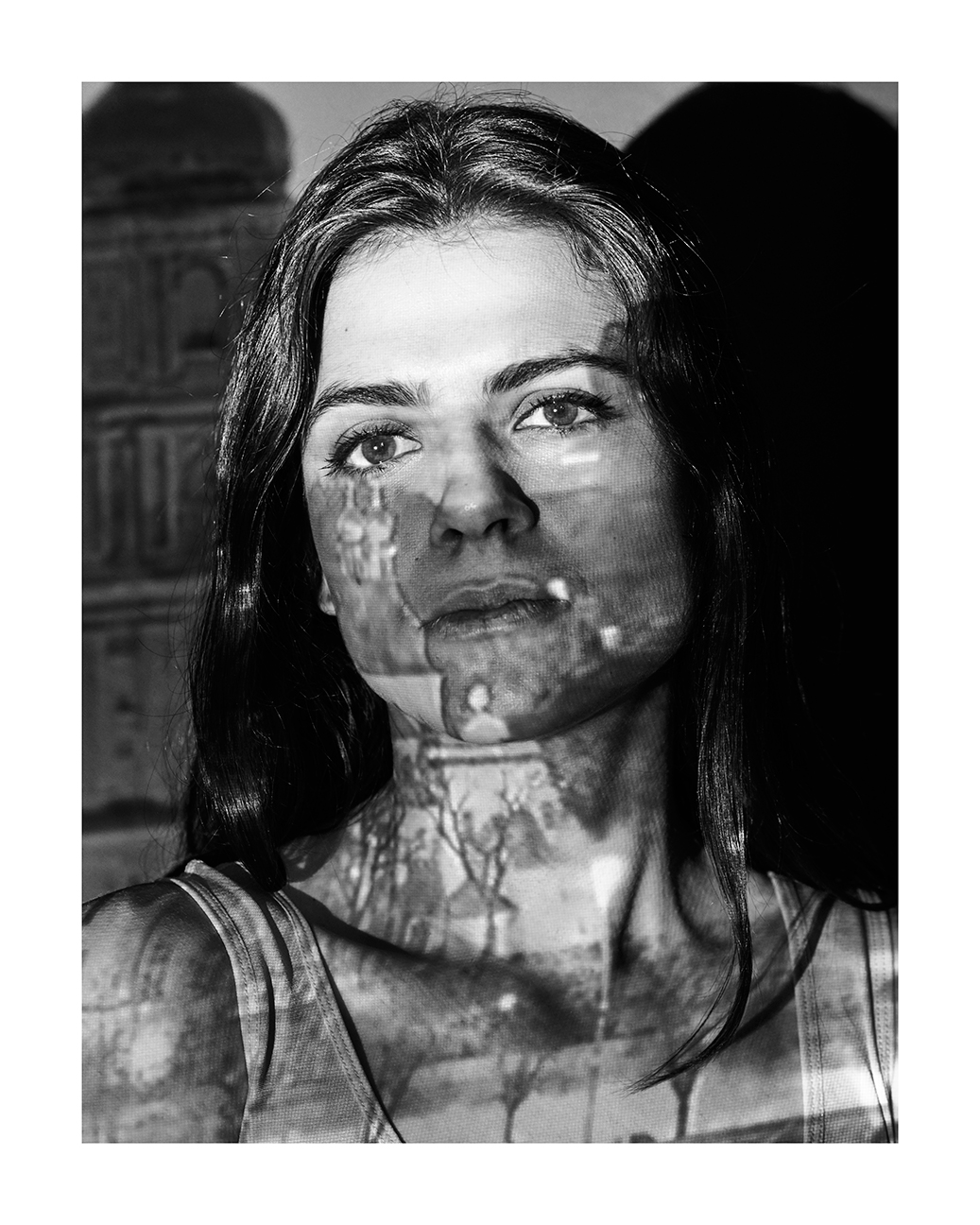
Today’s featured photographer is: Sasha Nialla

ADRIANA191

AKSANA027

FATOUMATA219

KRIPA036

MARTINA278

MIKA279COPY

NETSANET266

OLYA088-copy

STINE186

VITORIA087

How long have you been shooting?
I have been shooting for 13 years. I’ve been working solely as a photographer for 10 years.

Are you self-taught or photography school taught?
I’m self-taught. I took one photography class at The New School to learn how to use the camera and one black and white printing class to learn about lighting, shading, how to look at a negative, that the film is just a blueprint…I also read lots of books. And of course, the never-ending class of ‘trial and error.’

With this particular project, what was your inspiration to shoot it?
I am constantly getting involved in projects that bring awareness to different causes and life experiences. With immigration being one of the top issues on people’s minds today, I wanted to create a project that shows immigrants and refugees as people and not as social-political data.

How many years have you been shooting this project before you decided to present it?
I contacted New Women New Yorkers with a photo concept. We decided to make it into a photo exhibition to raise awareness about women immigrants in New York City. I photographed this series over 20 days. The exhibition is on Thursday, March 24 from 6-9pm at Centre for Social Innovation, 601 West 26th Street, Fl. 3.

How long do you spend on a personal project before deciding if it is working?
I jump into projects with both feet. I make all the commitments and agreements before I have even picked up the camera. So I shoot the whole project, usually over the course of a few days, and then walk away from it for a few days. With a clear head I start viewing the images and seeing how it affects me. Sometimes it works and sometimes it’s just great for the people involved but not for my portfolio. That is ok, because a huge part of why I shoot personal projects is the experience with my subjects. I love learning about other people, what makes them tick. To me, if that experience went well, I believe the work went well.

Since shooting for your portfolio is different from personal work, how do you feel when the work is different?
I view them as the same. I shoot personal projects with the intention of it going in my portfolio. I try to present work that I would like to get hired doing. Since I produce, art direct, photograph, and retouch all my personal projects I feel it is a good representation of my style.

Have you ever posted your personal work on social media venues such as Reddit, Tumblr, Instagram or Facebook?
Yes, I do post on Facebook and Instagram (@snialla). I’ve gotten assignments and kept contacts this way. I feel it’s a good way to stay in front of people without being annoying. If they want to look at my page, great.

If so, has the work ever gone viral and possibly with great press?
I’ve yet to have a piece go viral…

Have you printed your personal projects for your marketing to reach potential clients?
Yes, I almost always print my personal projects for marketing. I made a black and white magazine of portraits I took for Dance Theatre of Harlem. I mailed some out and kept some to leave behind at meetings. It was mentioned on PDN’s Promos We Kept and the series placed in the self-promotion category of the PDN Photo Annual 2015.

Artist Statement
Now more than ever, immigration is one of the top issue’s on people’s minds. Women immigrants and refugees constantly face sacrifices and challenges that deserve attention and recognition. Learning unknown customs, speaking a new language and adapting to different cultural norms is extremely hard. Establishing a career in the US workforce as a foreigner is even harder.

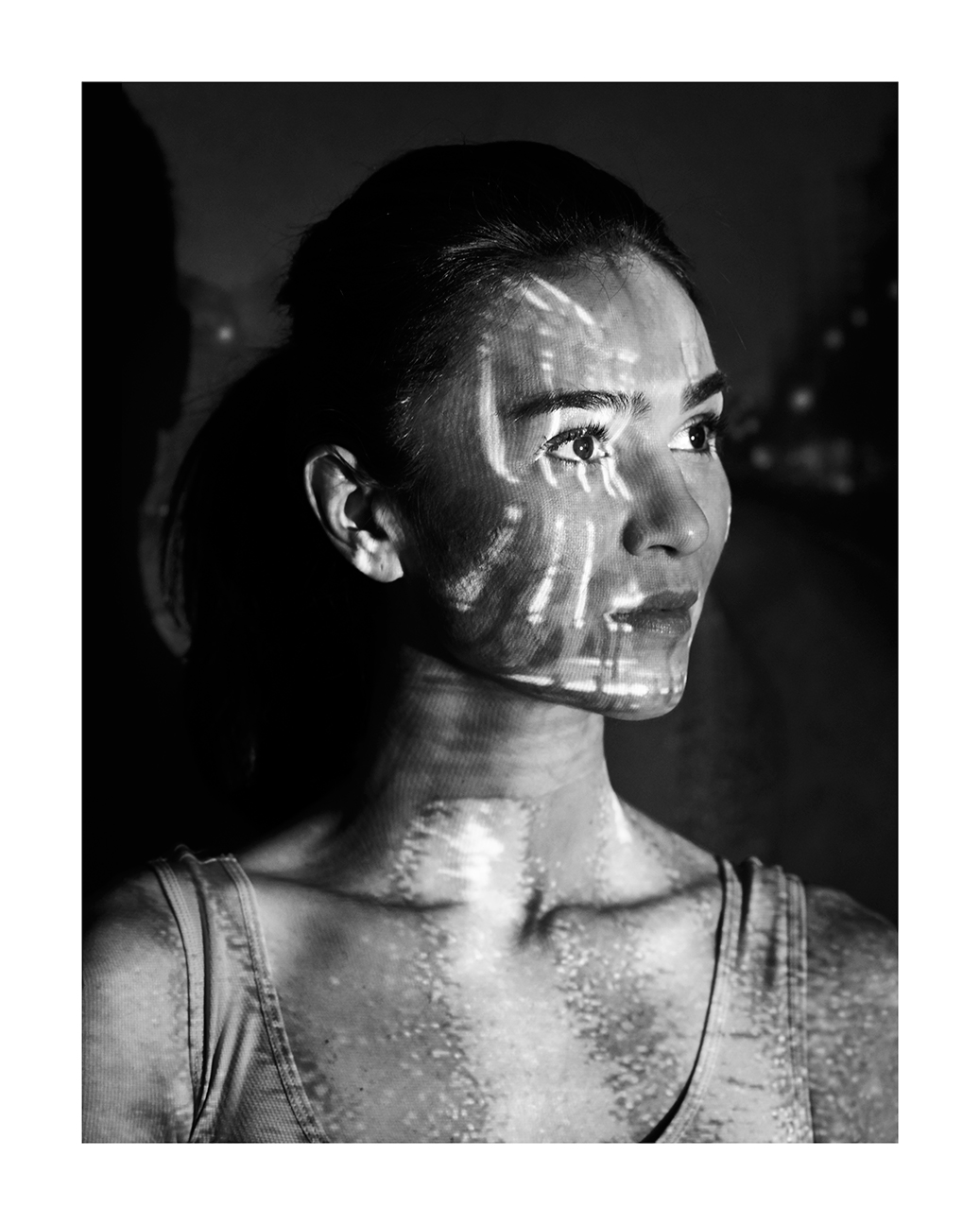
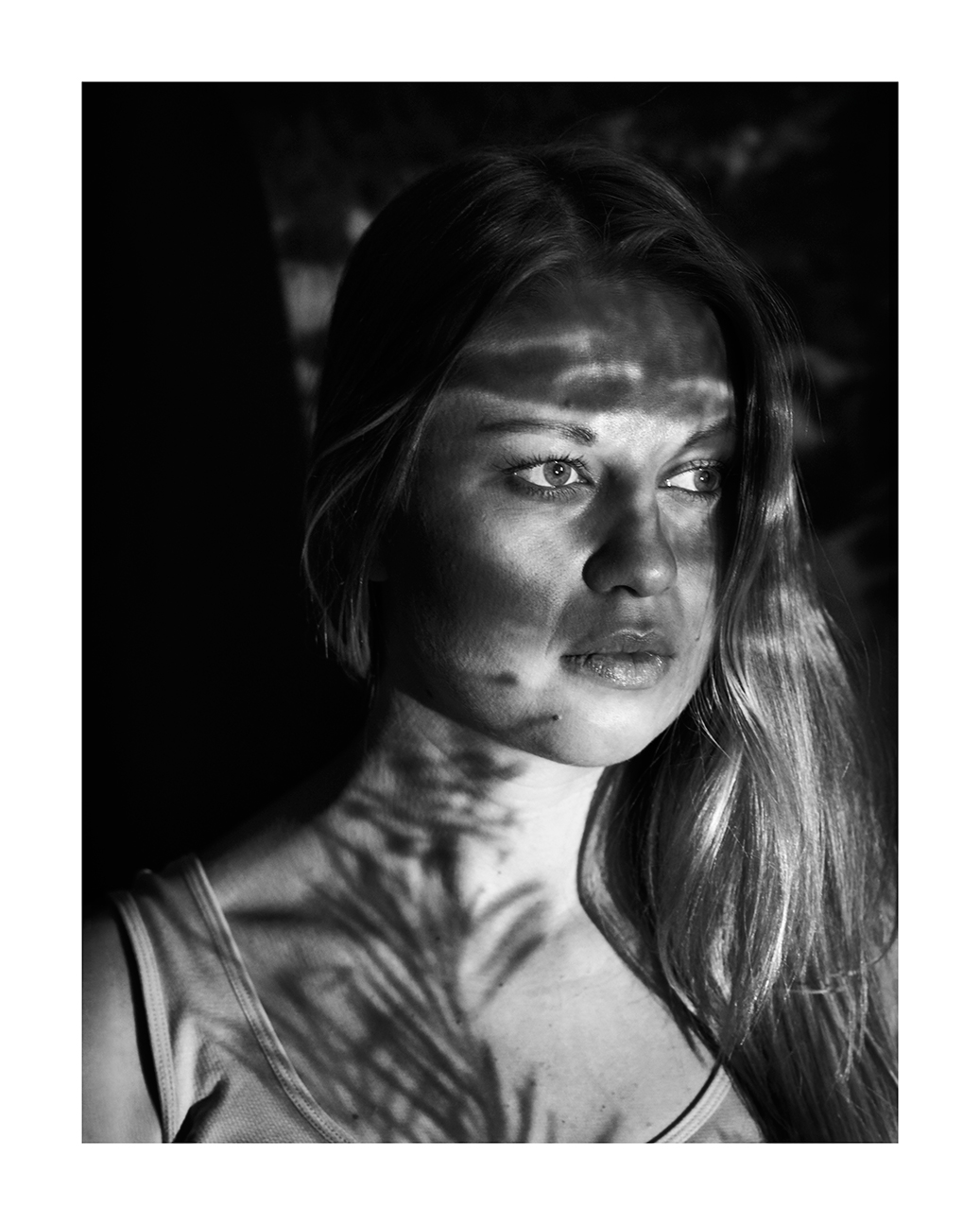
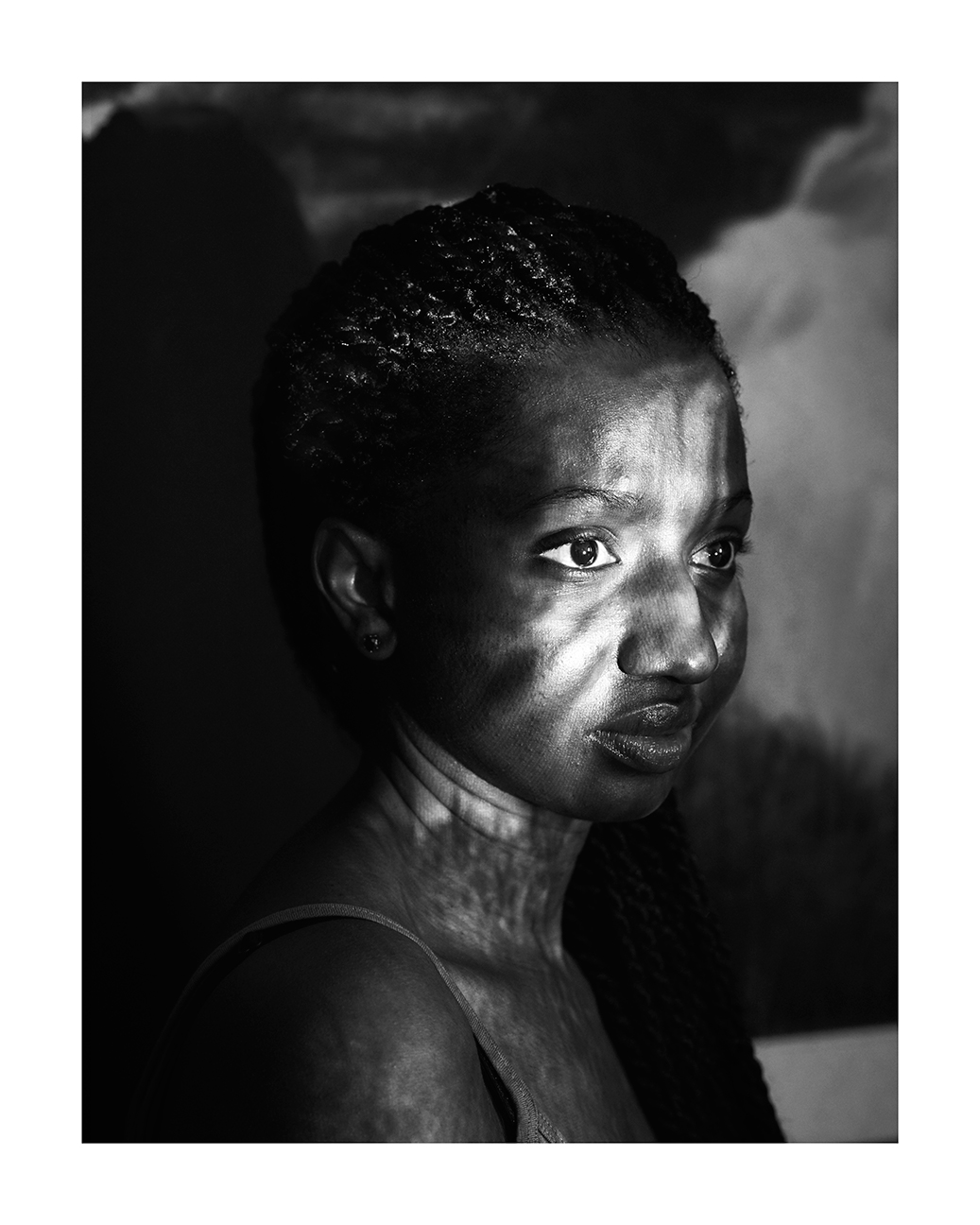
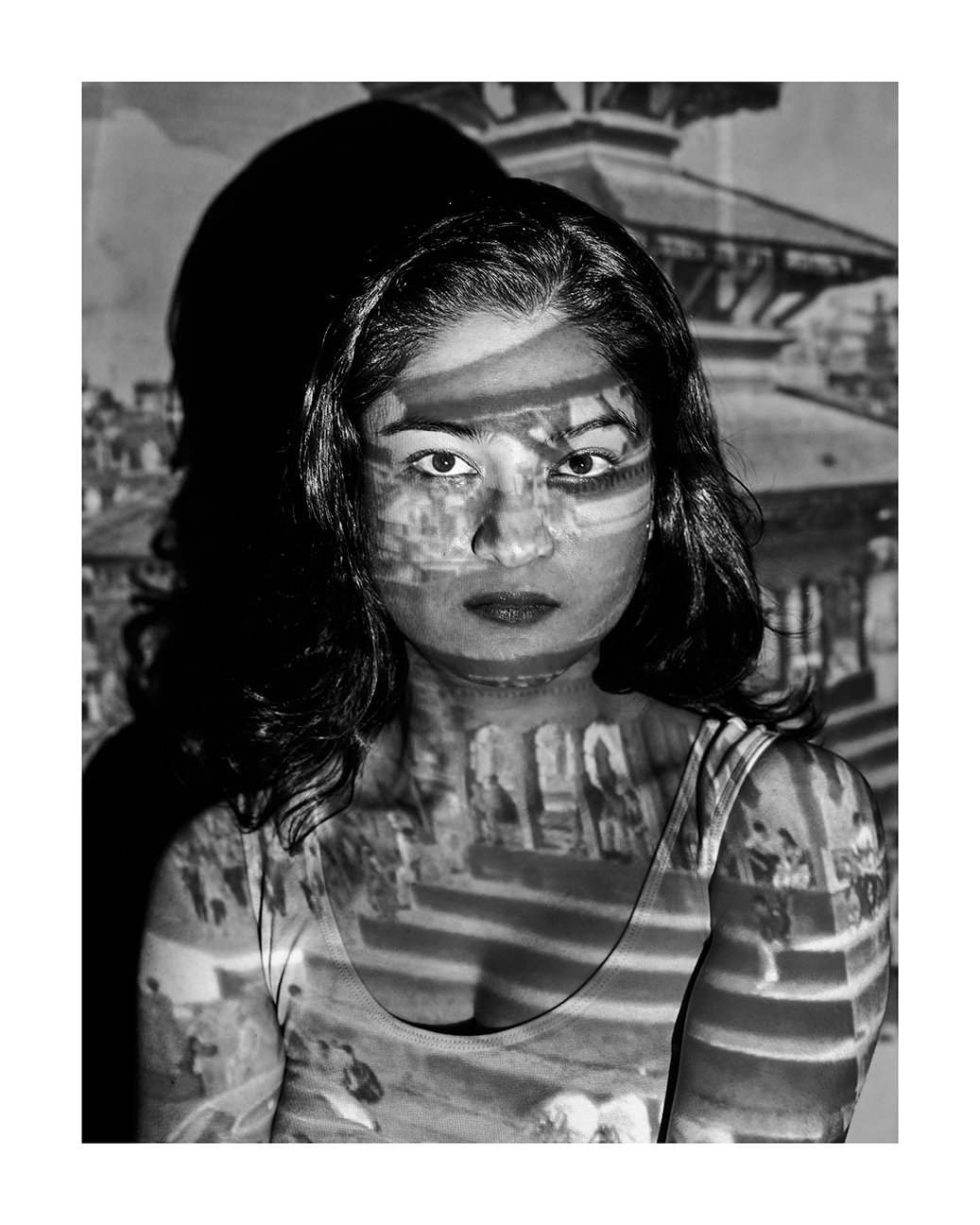
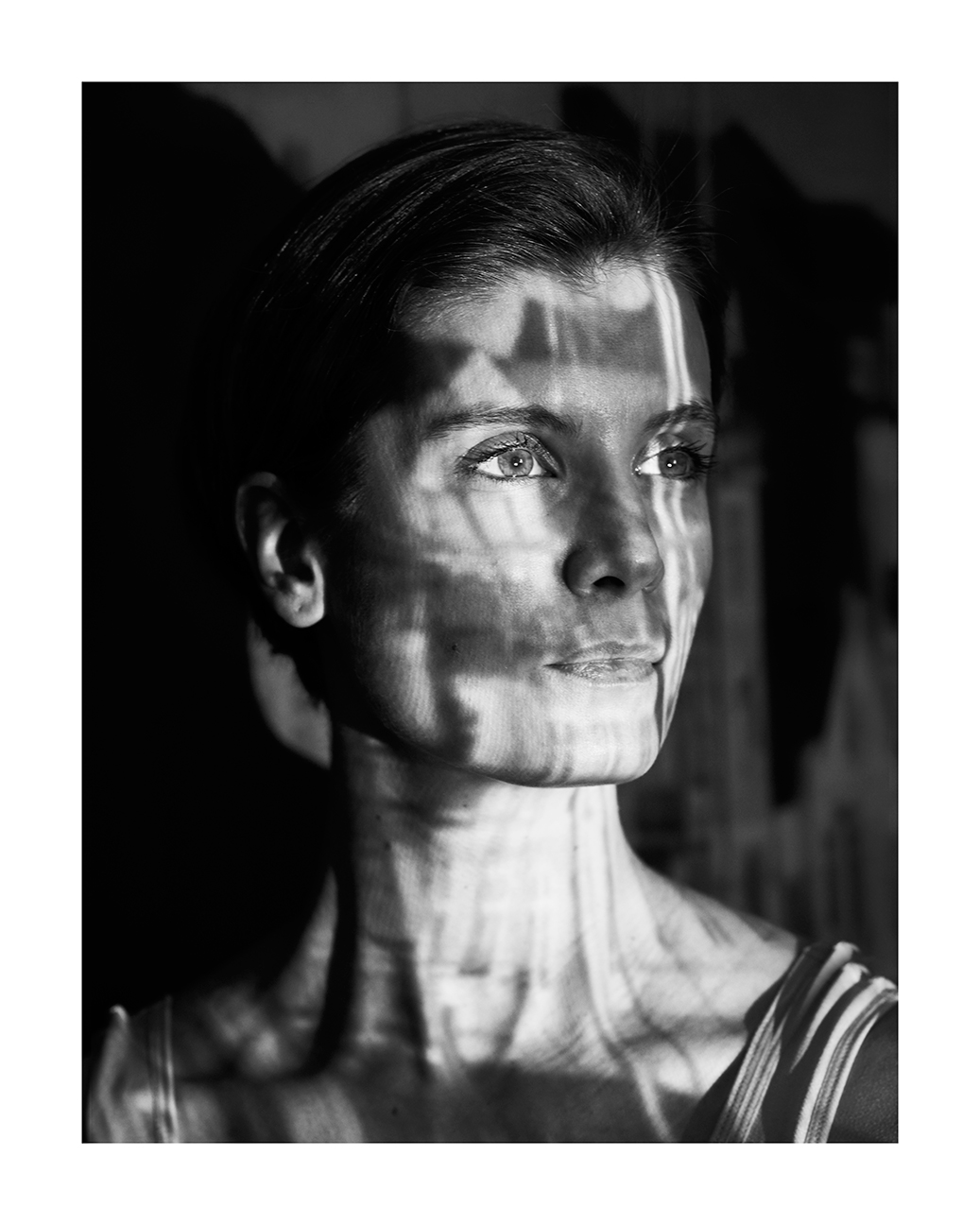
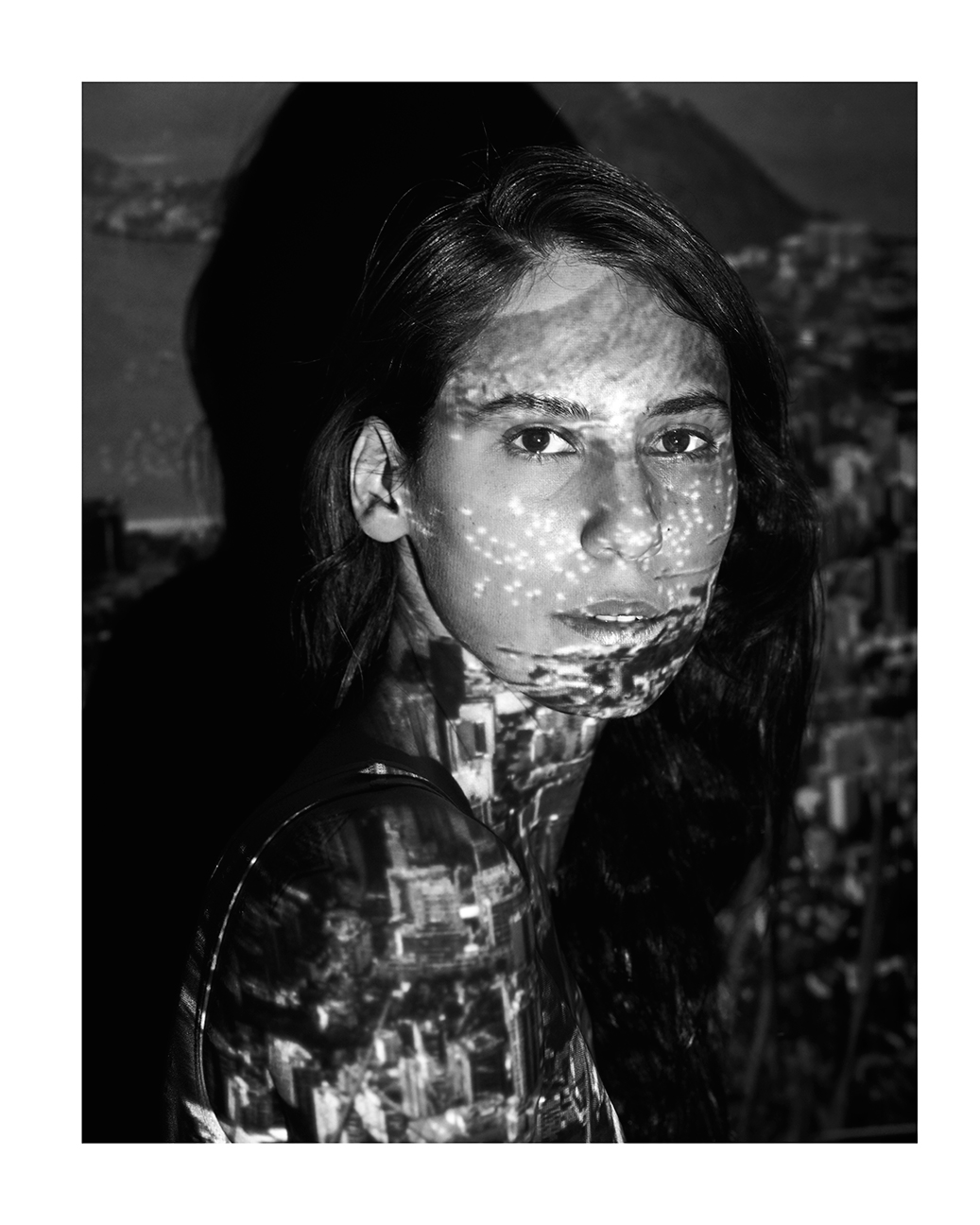
Through my photographic series entitled Real People. Real Lives. Women Immigrants of New York, I want to bring awareness to the fears and strength immigrant women carry each day. The cities they first called home are a huge part of who they are. For this reason, I chose to integrate their hometowns into their portraits. Landscape images of their birthplaces were projected onto their faces, bodies, and background to create highlights and shadows. These projections blended onto the sitter’s features, emphasizing their beauty, their emotion and the marks of their struggles, which are visible in their eyes and expression.

I approach all subjects in the same manner. I spend time getting to know the sitters, I ask them questions and connect with them. Only with their trust, I am able to show their vulnerabilities.

I think that it is important to underscore that although much is being said about immigration, immigrants and refugees are being treated as numbers. These portraits show immigrants and refugees as people and not as social-political data.

————-

Sasha Nialla was raised in California and spent the last 16 years in New York City. As a photographer for 10 years, she is constantly getting involved in photography projects that bring awareness to different causes and life experiences, including; children with HIV/AIDS, diabetes, Iraq war survivors and many more. All these projects have resulted in supporting vulnerable groups and people, and those not exposed to these situations in their everyday lives. Highlights include multiple billboards in Times Square for Bideawee, standees of breast cancer survivors with NFL players in Kroger supermarkets and on PepsiCo and Gatorade packaging and an exhibition of cancer survivors in the NYU Medical Center art gallery.


APE contributor Suzanne Sease currently works as a consultant for photographers and illustrators around the world. She has been involved in the photography and illustration industry since the mid 80s, after establishing the art buying department at The Martin Agency then working for Kaplan-Thaler, Capital One, Best Buy and numerous smaller agencies and companies. She has a new Twitter feed with helpful marketing information believing that marketing should be driven by a brand and not specialty. Follow her on twitter at SuzanneSease.

The Daily Edit – Hugh Kretschmer : Oprah Magazine

Dark_Cloud_Spread
Pill_Bottle_Final_with_Cap_Cropped
Therapy_Office_Final_2_Cropped
Unravelled_2_Final_Cropped
Upside_Down_Final_Cropped

Oprah Magazine

Photo Director: Christina Weber
Design Director: Jill Armus
Photo Editor: Scott Lacey
Photographer: Hugh Kretschmer

How long have you been working with the magazine; tell us about your collaboration.
I have been working with Oprah Magazine since the magazine’s inception back in 2000, and in every case it was always a very inclusive and collaborative process.  This project was no different.  All parties on the magazine’s team, Photo Director, Christina Weber, Design Director, Jill Armus, and Photo Editor, Scott Lacey, contributed to the cause both in time and insight, from start to finish.  The process started with a “party-line” conference call with all members online brainstorming ideas back and forth for a good hour or so.  It was great!  This is one of my favorite parts of the process where we bring everyone’s imagination and sensibilities to the table, and “daydream” together.

What type of direction did you get from the team? And, do you always sketch out ideas?
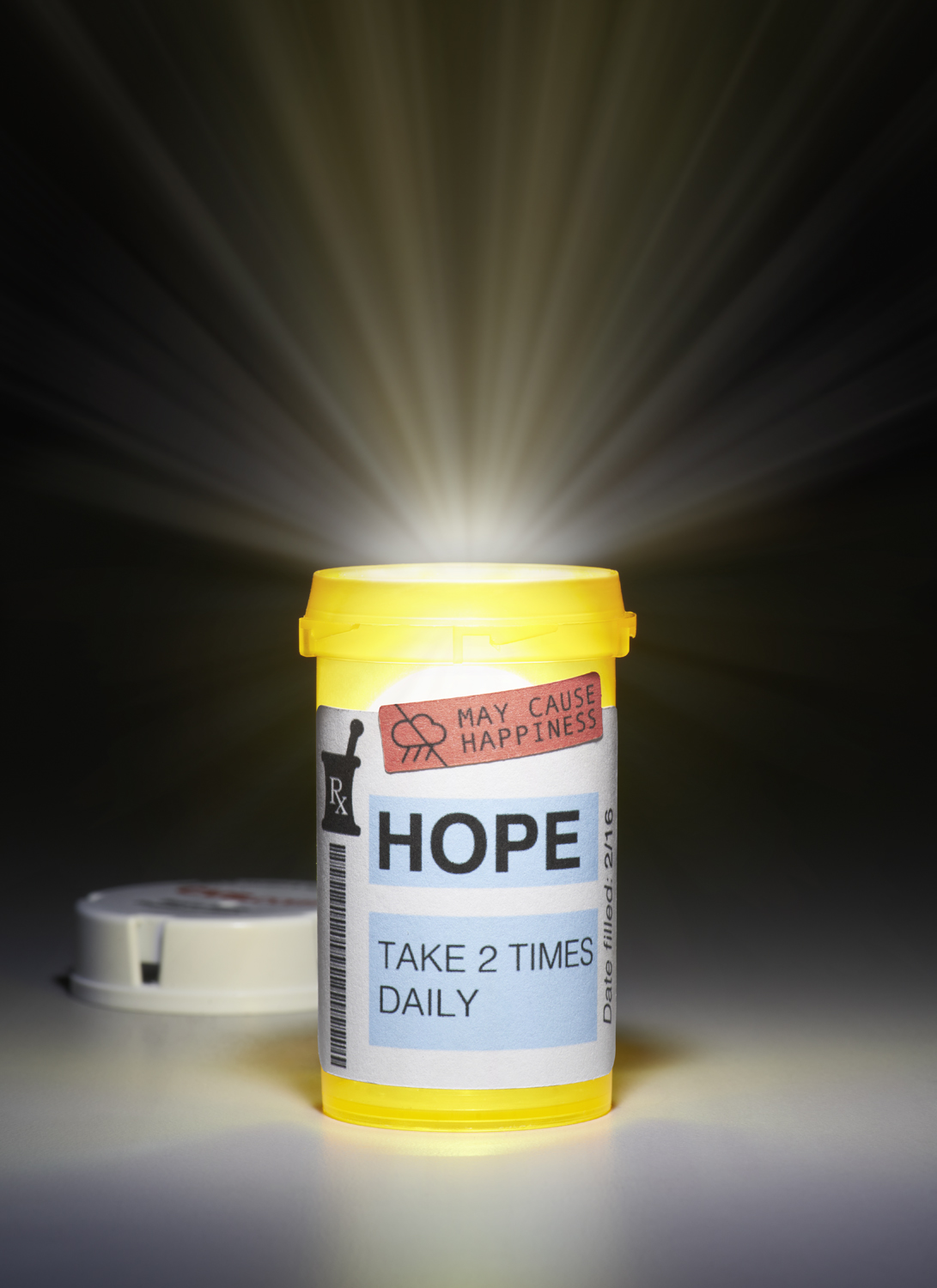
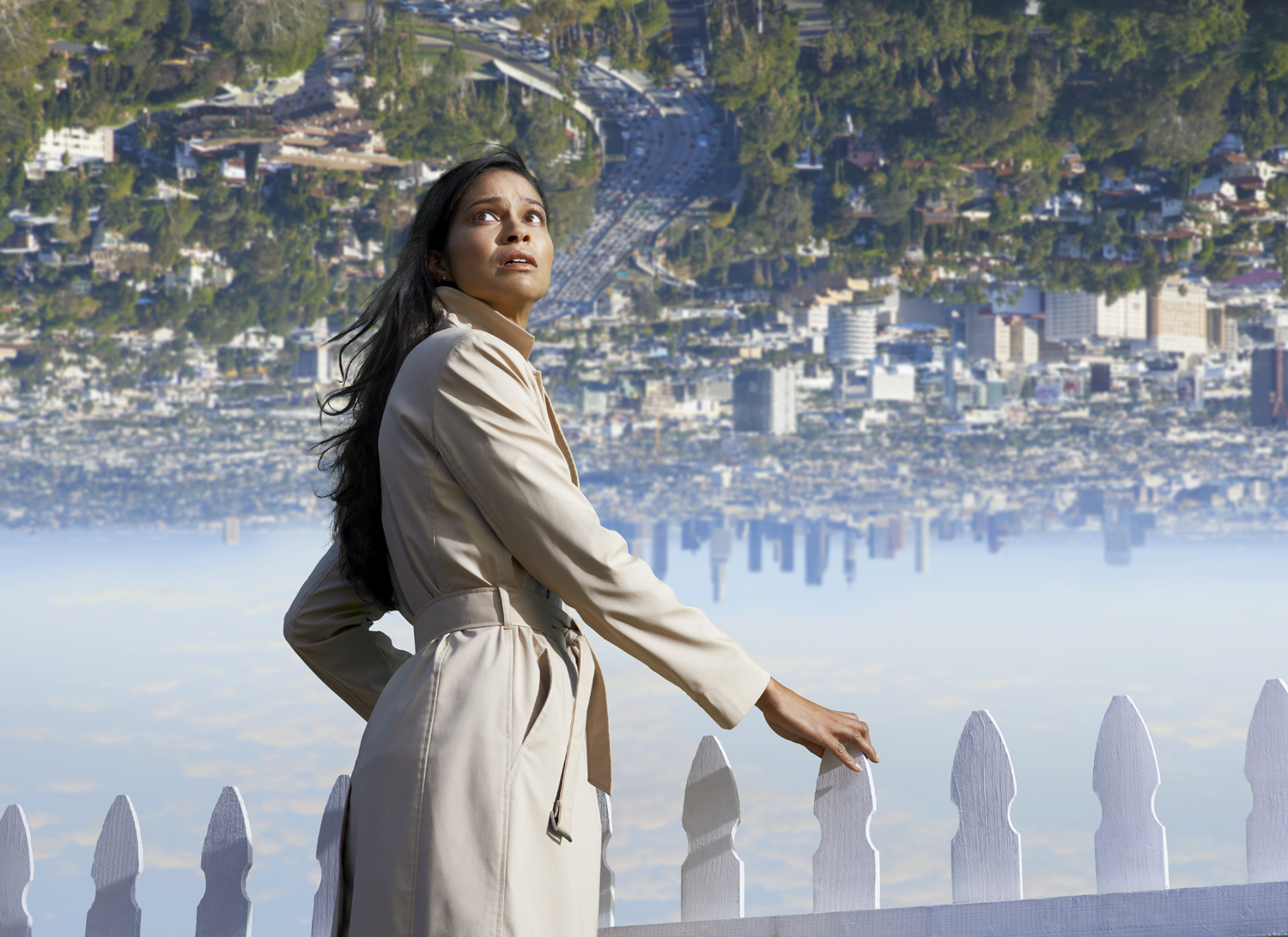
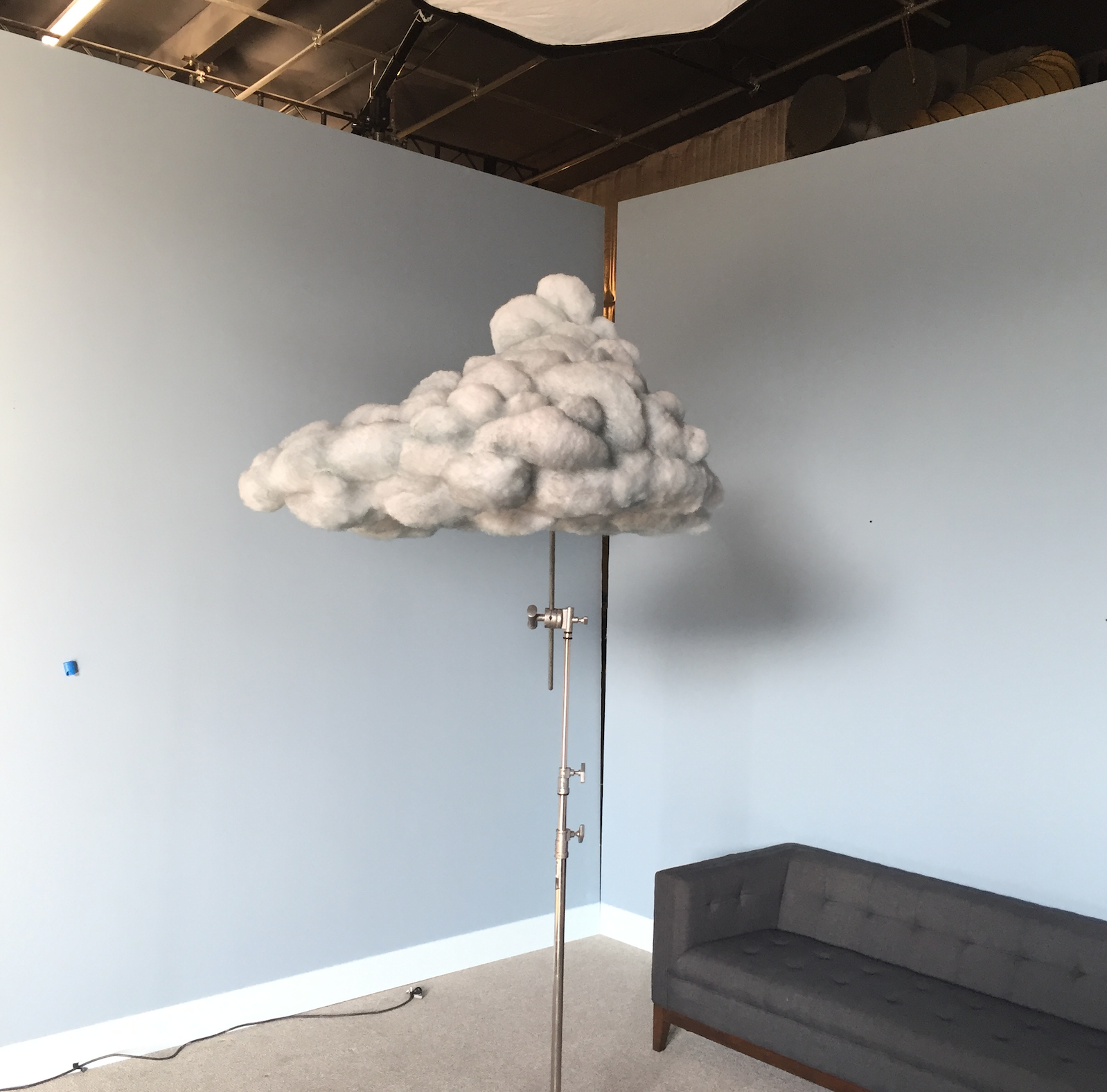
Primarily they wanted the visuals to connote a sense of hope, and we strived to inject a positive subtext.  So, in just about every image there is an element that contrasts with the remaining ensemble; i.e., a ray of sunshine, the word “Hope”, having the model looking up rather than down, etc.   Once the sketches were approved after a few rounds, we talked about details, coloring, set design, and how some of the specialty props would be constructed.  All in all, pre-production took about two weeks, which was fine by me because every detail needed to be looked at and designed into the respective visual, and that is how I typically work.  We discussed things like costume design and color to marry well with the particular set.  Belabored the written “prescription” on the pill bottle, and how the rays of light needed to be in a golden hue.  How the dark cloud was to be designed and how it’s own color needed to match the blue of the room.

Sketches are vital in that process and I have learned not to proceed unless it is sketched out, it simply makes my job much easier. They provide, not only a blueprint for me to work from, but I can gauge size relationships, preview juxtapositions, and overall design and compositions. It segues between a vision in my head and the final photograph. The sketch is also a vital element to communicate my ideas to the art director and something I can get signed off on before production. In some cases, the designer might take my sketch and drop it into the layout, and we can all see how it fits and predict any pitfalls we may encounter during shooting. I am all about pre-production and I make sure I have enough time in the front of a project to make sure the post-production is minimized as much as possible. The sketch helps with that objective in so many ways.

What was the biggest challenge for project?
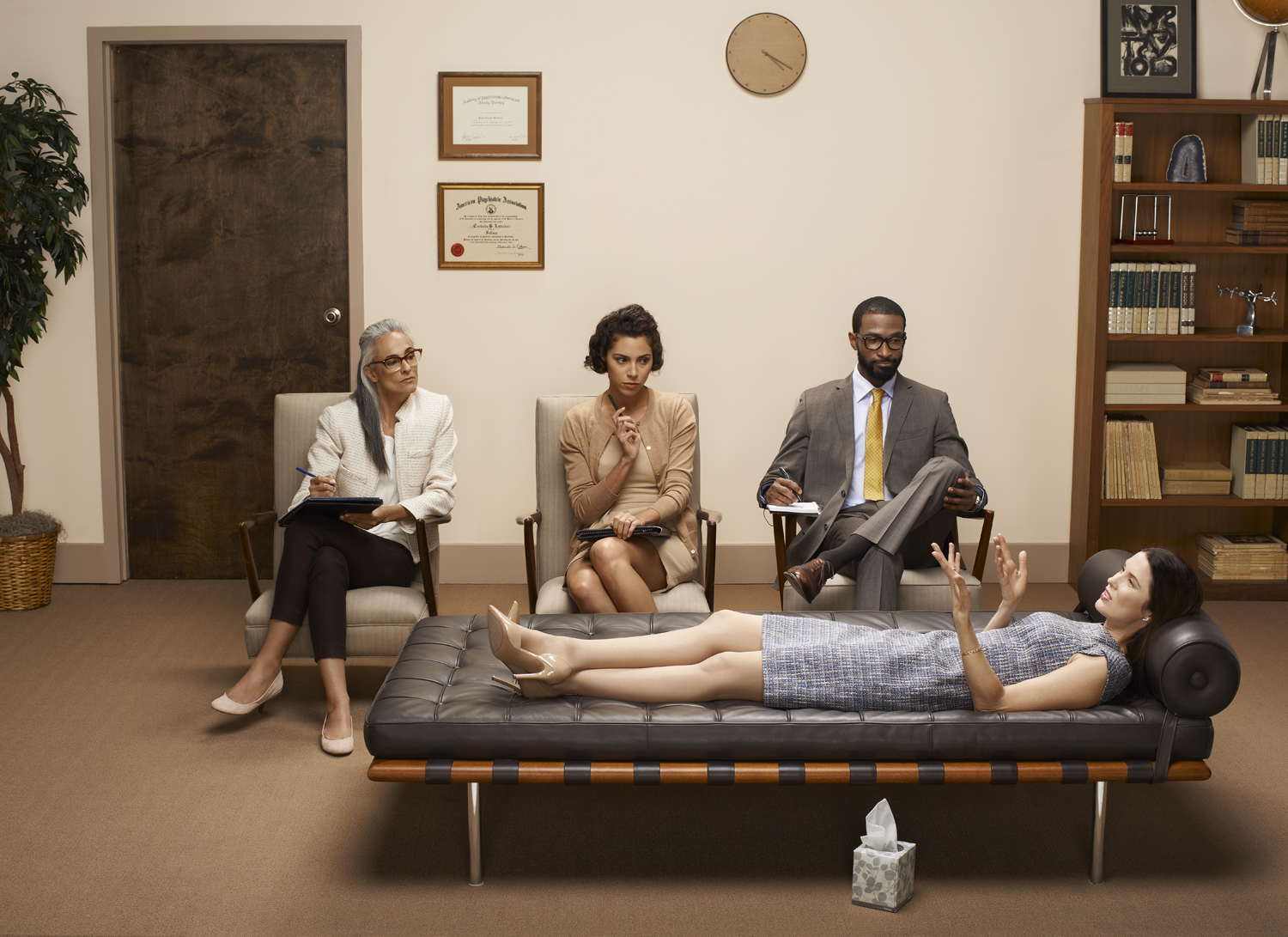
One hang-up was the chaise in the therapist office.  We searched high and low for the right one, and it was touch and go all the way up until the 11th hour when my set builder located a tufted, brown leather flat-bed type.  It just kind of showed up on shoot day with a collective sigh of relief.

What do you enjoy most about your creative process?
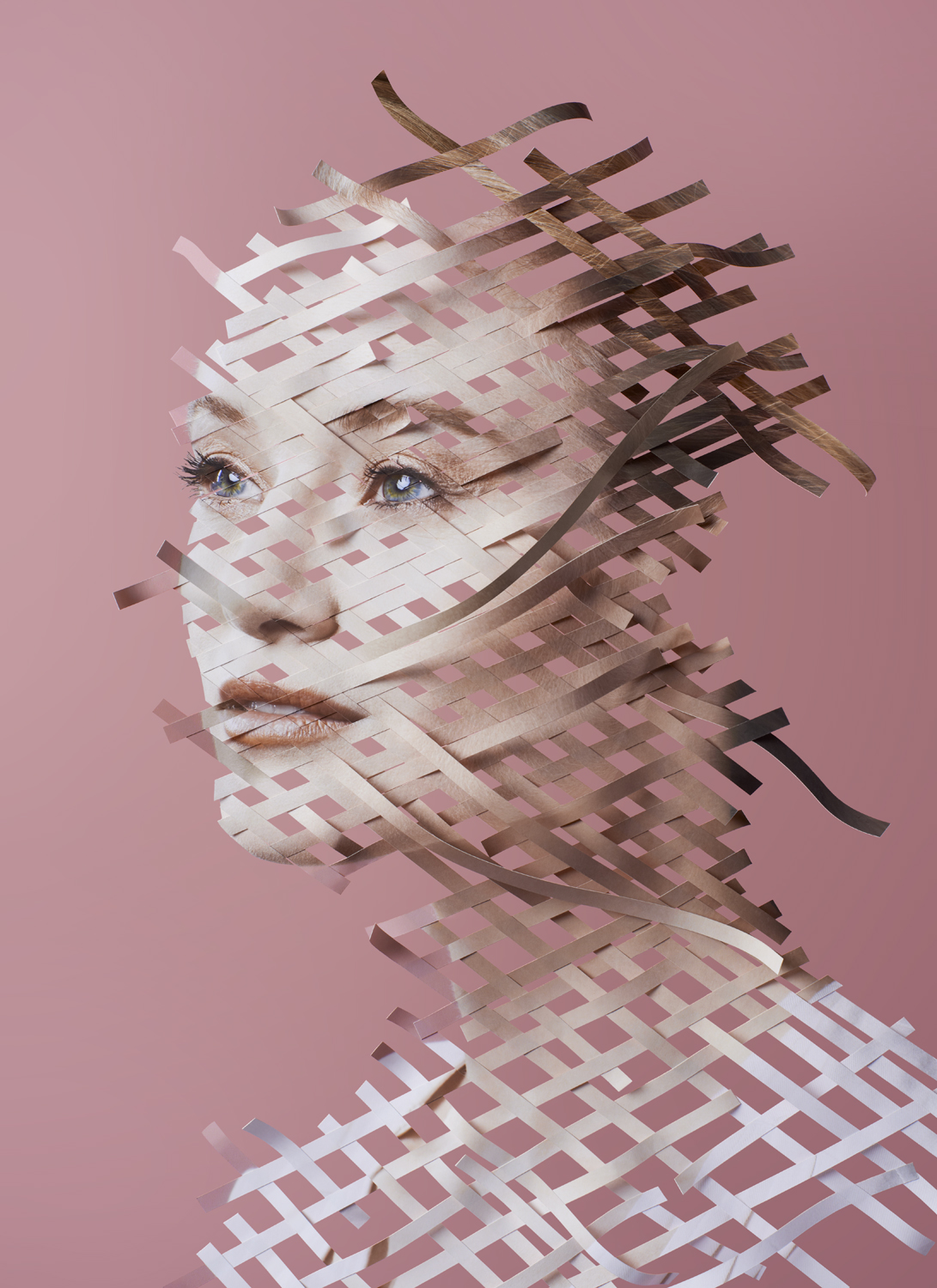
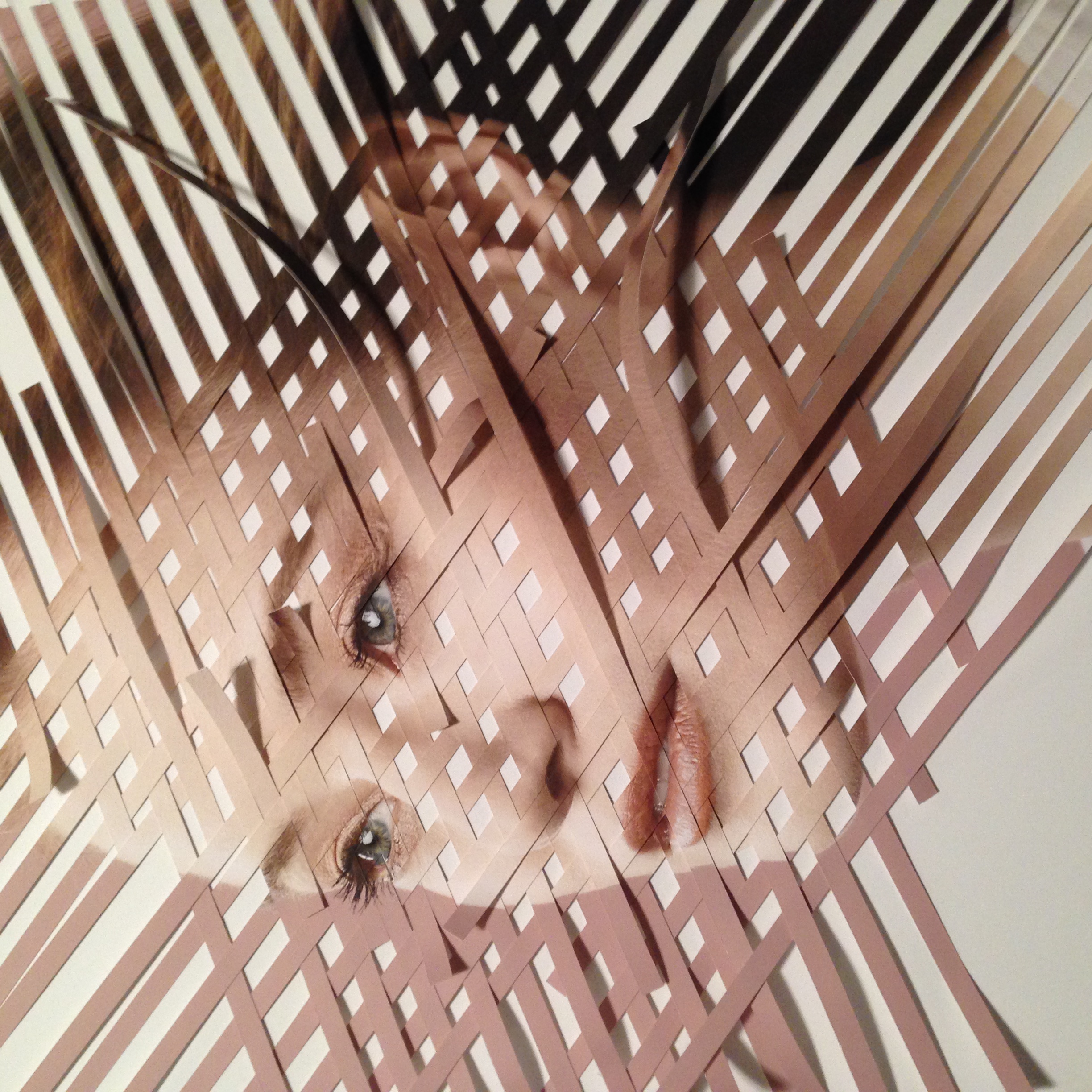
Another favorite part of my productions is prop making, and got the chance to create the dark cloud, pill bottle design, and the woven pigment print sculpture.  Prop making is something I love to do. So much so, Iand am now offering my services to other photographers as a side business through my agent, Renee Rhyner.

Screen Shot 2016-03-14 at 11.06.55 PM

Have you always built your own sets?
I don’t always build my own sets, but I do build them, yes. In this case, the timeline was too tight for me to create the props and set build, so I used my go-to set designer, Fabio Mascio and his team from his company, TractorVision. He and I have worked together for years, and have developed a symbiotic working relationship that clicks now that we know each other’s sensibilities and working styles.

Where or how did your love of prop making develop?
That is a good question and I never get asked it, surprisingly. I use to build things when I was a kid, whether a fort in the backyard with my neighbor, or some sort of functional gadget like a crossbow out of sticks or supplement my bicycle with whimsical handmade rockets or sidecar. And, I’m not talking about just throwing these handmade gadgets and gizmozs together, either. Whatever I did was detailed and elaborate, spending endless hours perfecting whatever I was making so it functioned and looked AWESOME.

How big was the team that produced this?
It was a pretty substantial production for an editorial job, and our collective teams were made up of 14+ people.  The shoot took two days to complete, in a sound stage at Quixote Studios, and that extra time just helped the images in the long run.  It made for very little compositing and post-production work, as we were able to cover everything needed in-camera.


Screen Shot 2016-03-14 at 11.06.13 PM


Screen Shot 2016-03-14 at 11.06.47 PM


Love the woman unraveling, tell us about that.
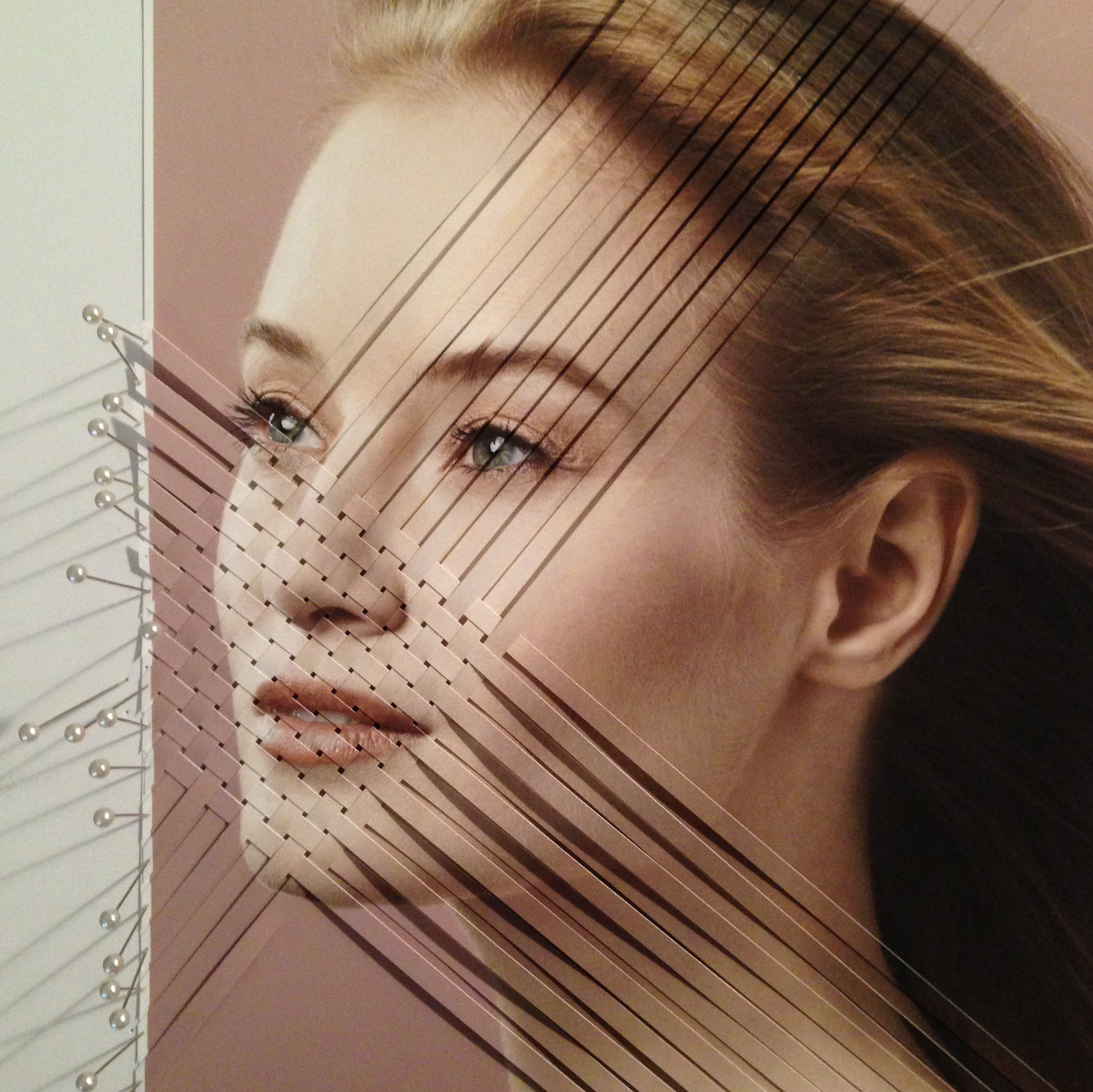
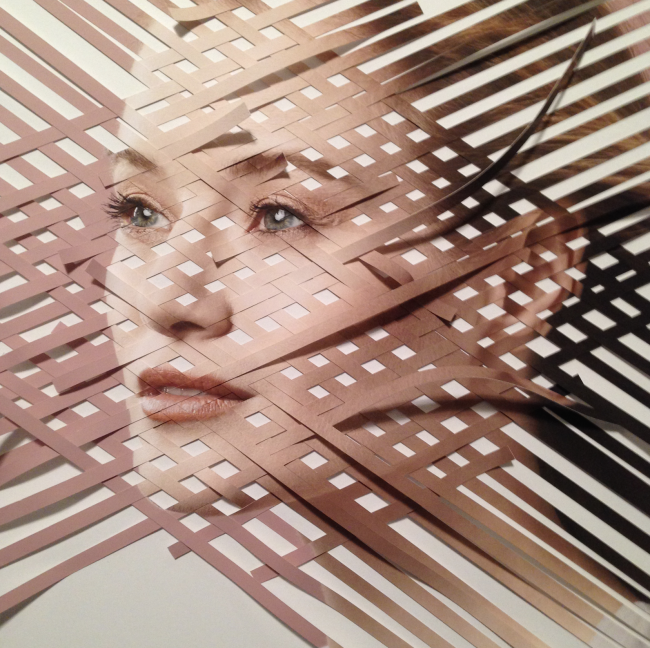
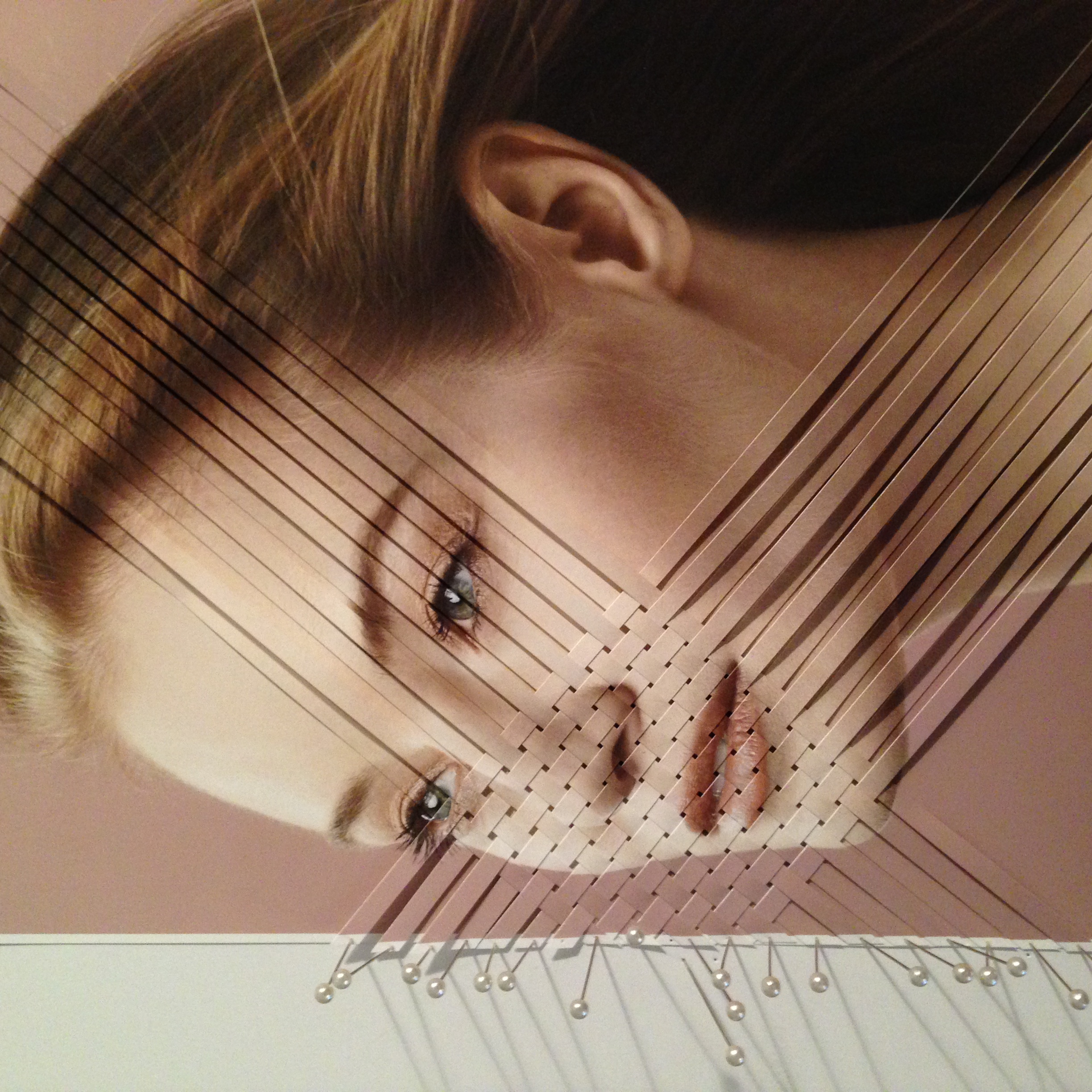
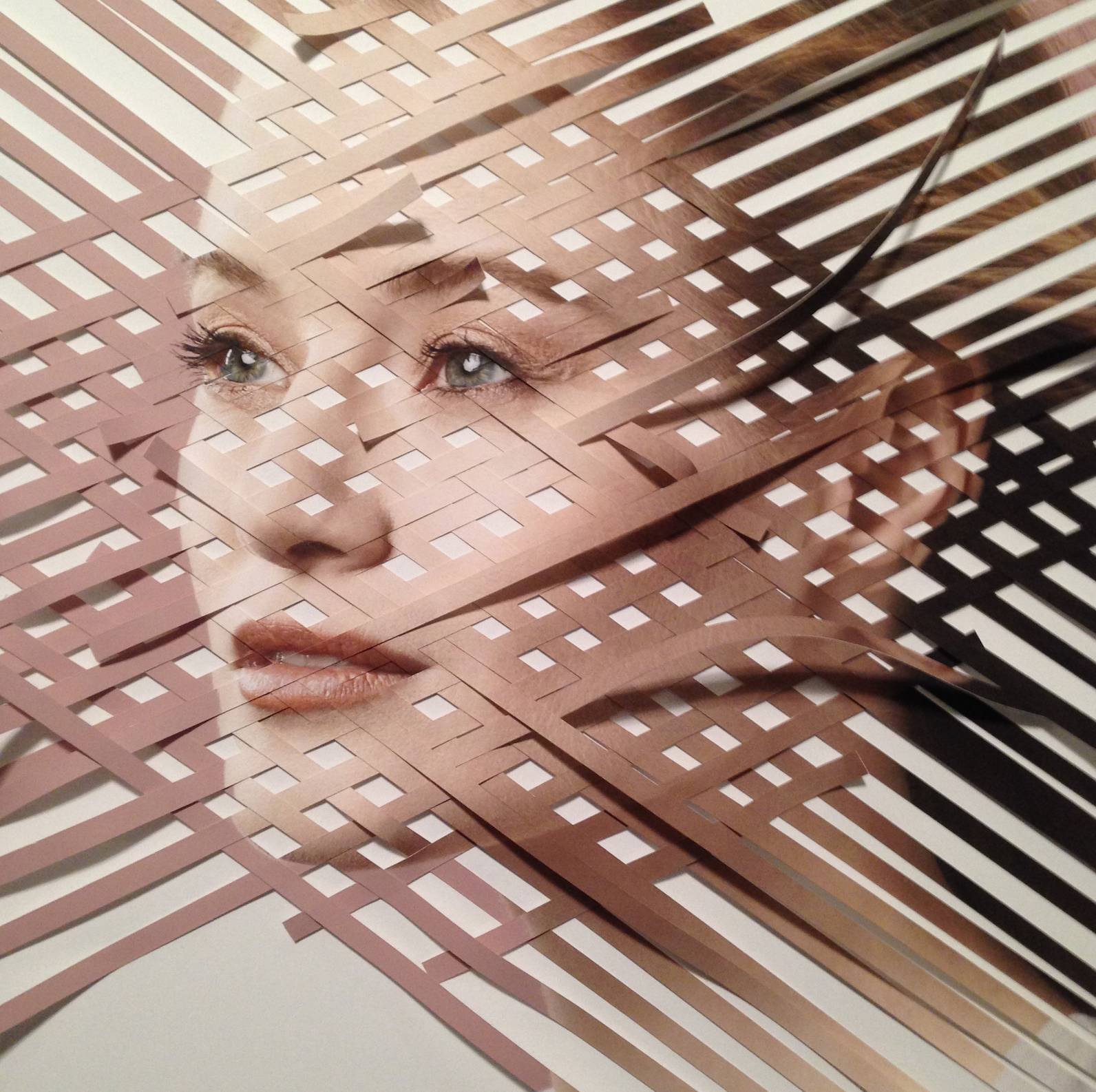
For the image of the woven woman unraveling, I made several, 13×19 pigment prints of the image that I had previously retouched and color corrected beforehand.  The color of the print had to be right, and slightly color biased towards cool tones.  That was because the final sculpture was going to be photographed using a Nikon D800, and that sensor renders skin tones that are biased towards warm hues.  Once that was figured out, two prints were cut in half-inch strips, one in a direction 90 degrees opposite the other, in order for the weave to work as needed.  I used another print as the base to construct the woven assembly on top of and in order to make sure the woman’s face didn’t distort when assembled together.  Each strip was glued at intersecting sections, and I took liberties in forcing some dimension to the overall sculpture by bending some of the strips on the outer areas away from the face.  The sculpture was then placed on a piece of transparent Plexiglass that itself was cut to the overall shape, and placed on another larger piece of Plexiglass that was suspended over the pink seamless background.  The lighting on it was matched in direction and quality to the original set-up when I shot the model.

The Daily Promo – Dominic Perri

Screen Shot 2016-03-08 at 3.27.06 PM

Screen Shot 2016-03-08 at 3.27.14 PM

Dominic Perri


Who printed it?
 
I used Nations Photo Lab to print the piece.    

Who designed it?
I designed it myself.

Who edited the images?
I have a few photographer and designer friends that I asked feedback after I made my initial selects, but for the most part it was me.

How many did you make?
I printed 100 and sent out 60. The other 40 I kept to use as leave behinds.

How many times a year do you send out promos?
I try to send out at least a postcard every 3 months or so to keep my work in front of creatives.  This was my first “special” promo

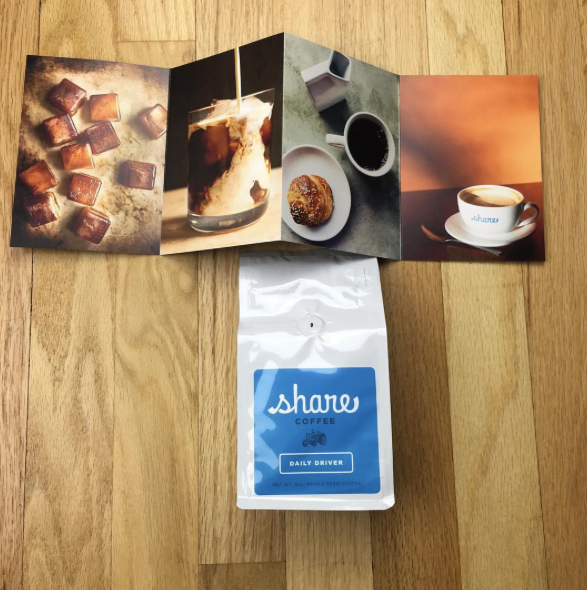
What made you decide to include the coffee? ( certainly it was well received )
Creatives receive so many postcards and mailings a day I wanted to send something that someone would remember getting. It was also a great ice breaker for follow up calls and emails.  Also, I love Share coffee and love supporting local businesses so this collaboration was a no brainer for me.

What was harder, choosing the images or choosing the coffee?
I shot so many images of the roasting, and cupping process over at Share it was really difficult.  Picking the coffee was actually easier.  Share has a few different types, each with a different color label.  When we were shooting I realized that one of the bags had the same color blue as my logo.  I wanted to keep everything consistent so we went with that one.

Who and how did you decide who to send the promo to?
I have a list of people and agencies I really want to work with.  I worked off that list.

This Week In Photography Books: Christine Osinski

by Jonathan Blaustein

My cousin had a baby yesterday.

Or, I should say, his wife did. I think he was at the bar, drinking, through much of the affair. (At least, that’s what I saw on Facebook.)
Certain things make you feel old, and they’re never what you expect. Cousin Kenny becoming a father is definitely one of them. (Even though he just turned 40.)

Kenny is the funniest person I know, (or co-funniest, with his brother,) and he became a stand-up comic a few years back.
I can easily imagine him onstage, but it’s harder to visualize him changing his new daughter’s diaper.

Why?

Kenny has always been lazy. He was nicknamed “The Snail,” when we were kids, and it’s not because he resembles a slimy curlicue shell.

He’s the type of guy who likes to sit on the couch all day, watching football, eating 56 chicken wings, and mocking everyone around him. That’s his style. The selflessness required of all new parents will be a challenge for him.

I’m sure he’ll sort it out, and I’m sure it won’t be easy. Hell, his comedy act features some serious bouts of misogyny, so that will likely change as well. (Or at least morph into complaining about having to say poo poo and pee pee instead of shit and piss.)

The whole thing makes me feel old as hell. I can remember Kenny, standing on his driveway in East Brunswick, New Jersey, back in the day, wearing some tube socks pulled up to his scrotum. Or riding his bike, replete with ginormous handlebars, up and down the road.

We all did that, back in the 80’s. We rocked the short shorts, long socks, dorky bikes, and overall lack of imagination about what life might offer us. There was no Internet, of course, which made it really hard to guess the world was wide, beyond our suburban horizons.

I haven’t lived in Jersey in almost 25 years, and still, it all comes back to me. The smell of fresh cut grass, or pollution on the New Jersey Turnpike. The sound of skee-ball machines at the Point Pleasant boardwalk.

The accents.

Hell, on Friday, while I was chatting with Kenny’s equally hilarious brother Jordan, we ended up slipping into a Staten Island accent to make each other laugh.

“Hey. Ha yaz doin’? Can I get yaz anotha ma-ga-ree-tah?”

It was always easy to make fun of Staten Island. It’s mostly just a huge landfill, so they say. The Outerbridge Crossing, the highway that connects Staten Island to New Jersey, might as well be a one way street: all the Islanders were moving to Jersey in hordes, when I was in high school.

What does Staten Island look like now, in 2016?
I have no idea.

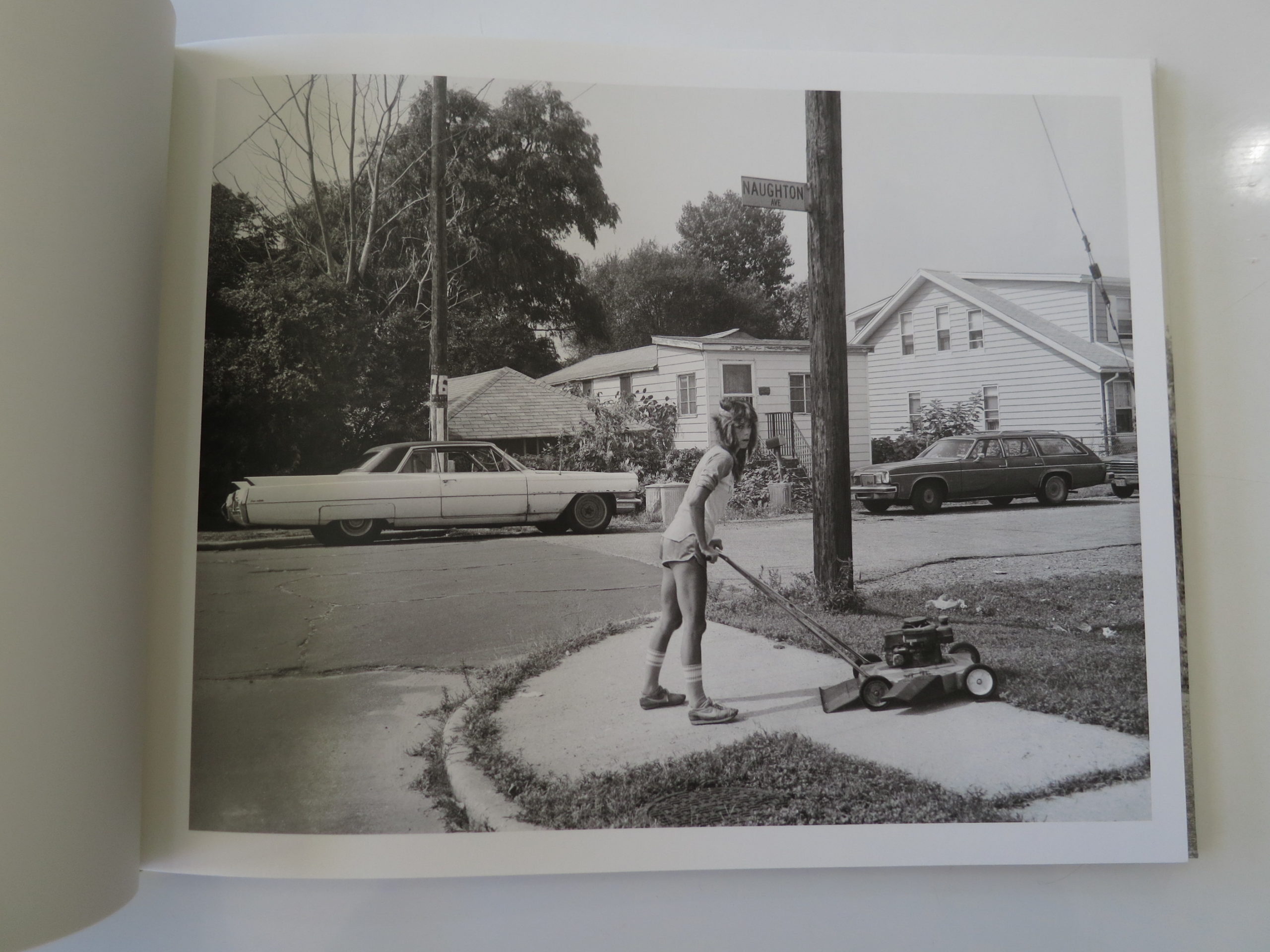
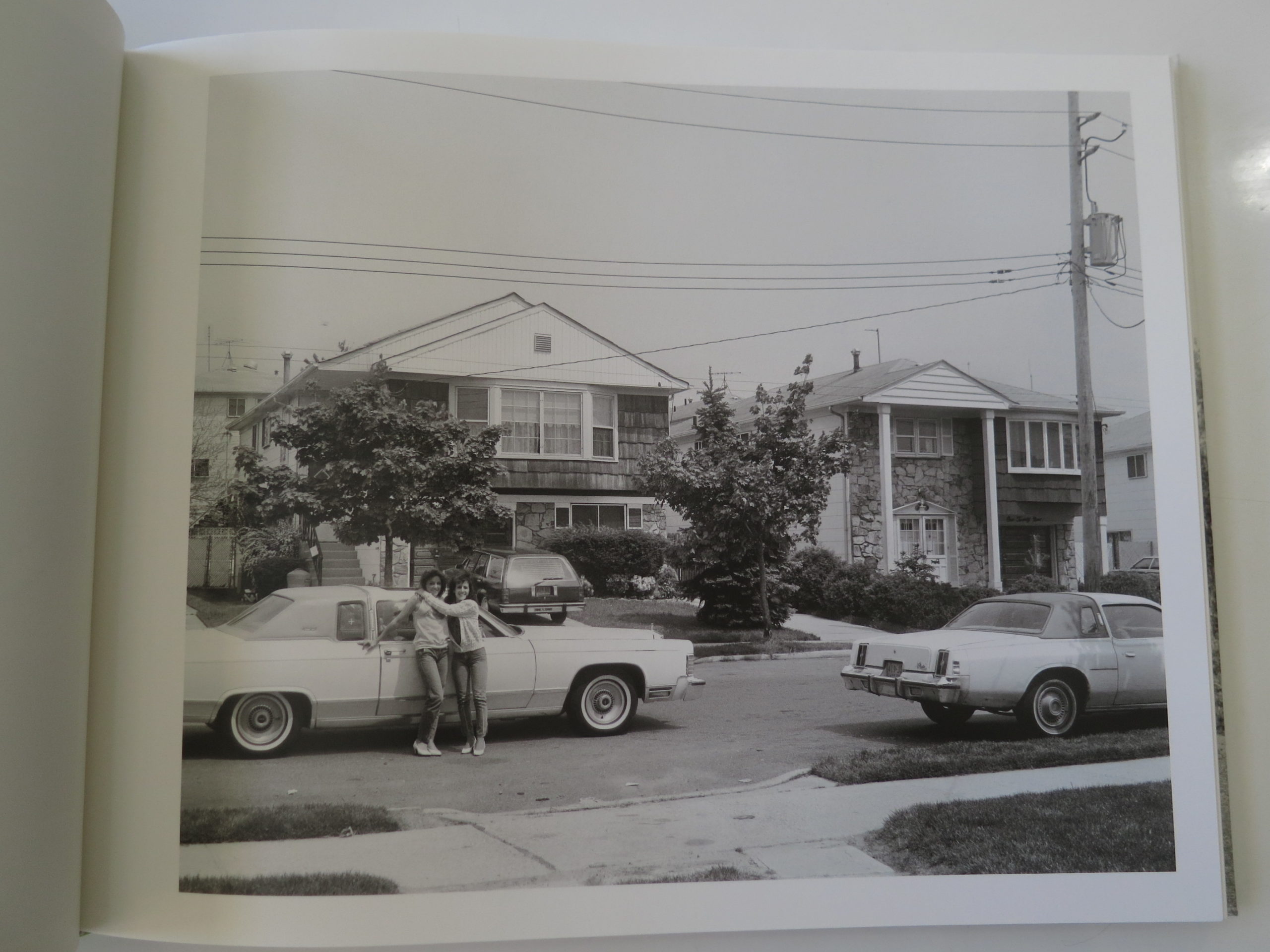
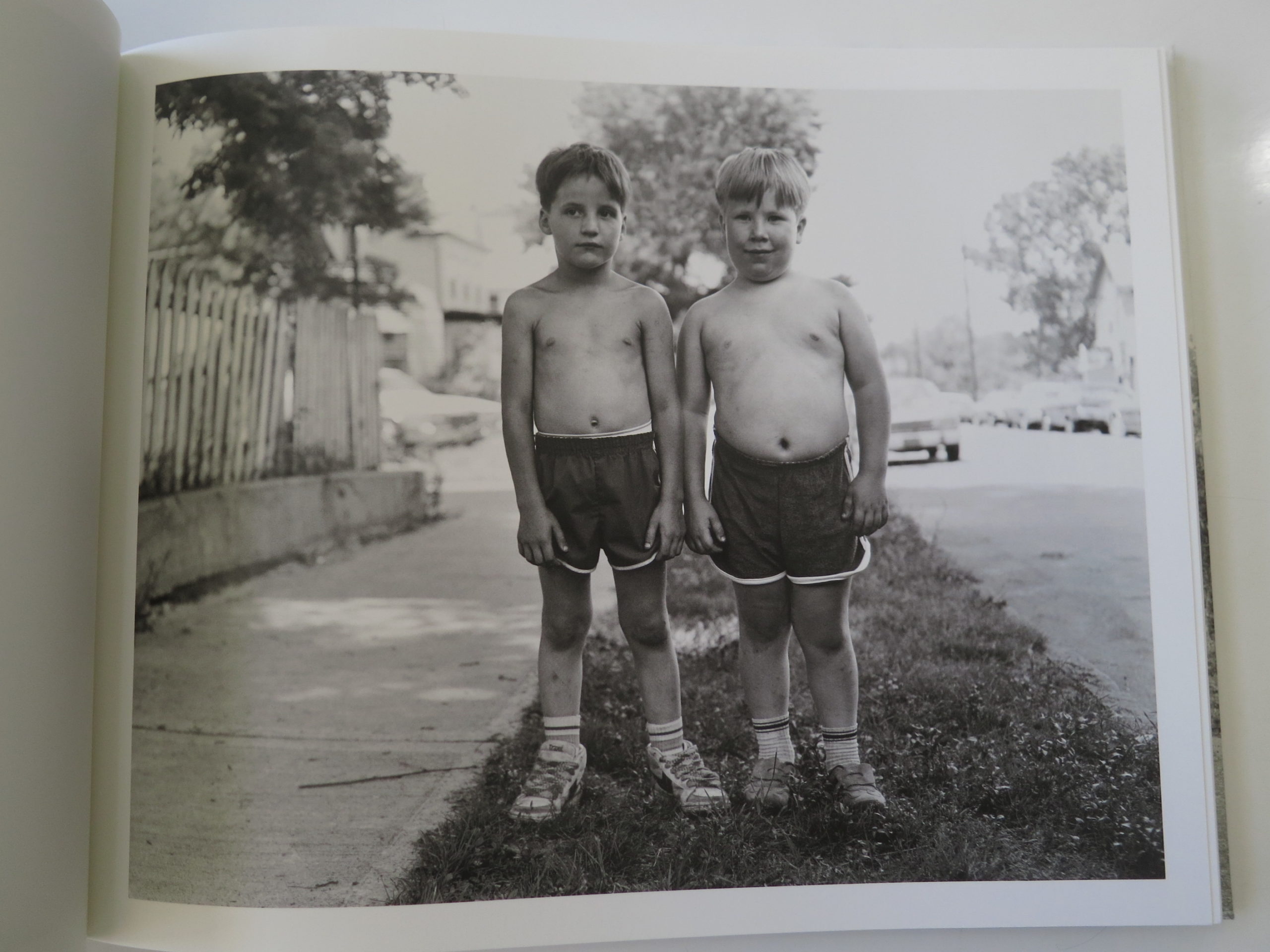
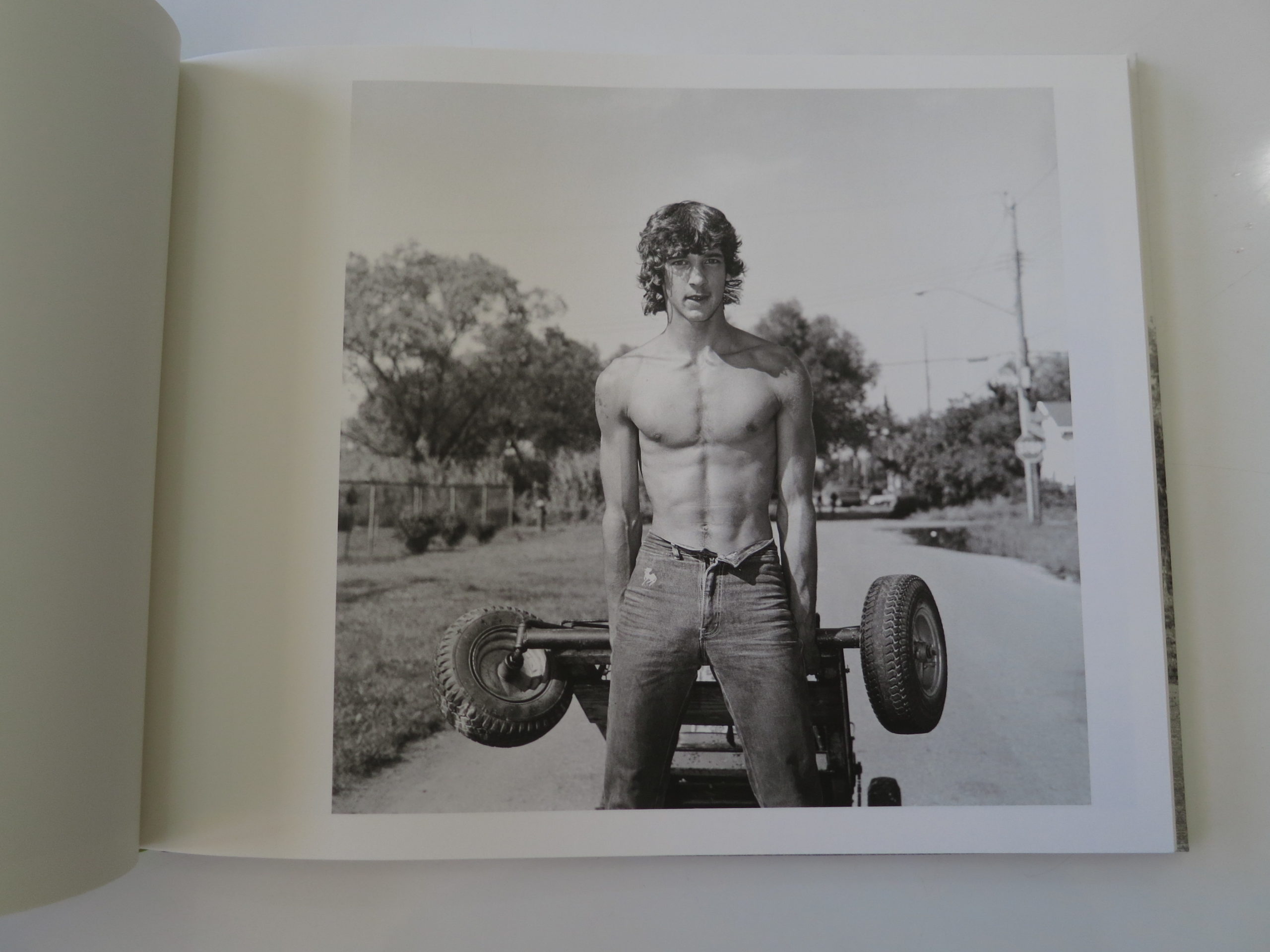
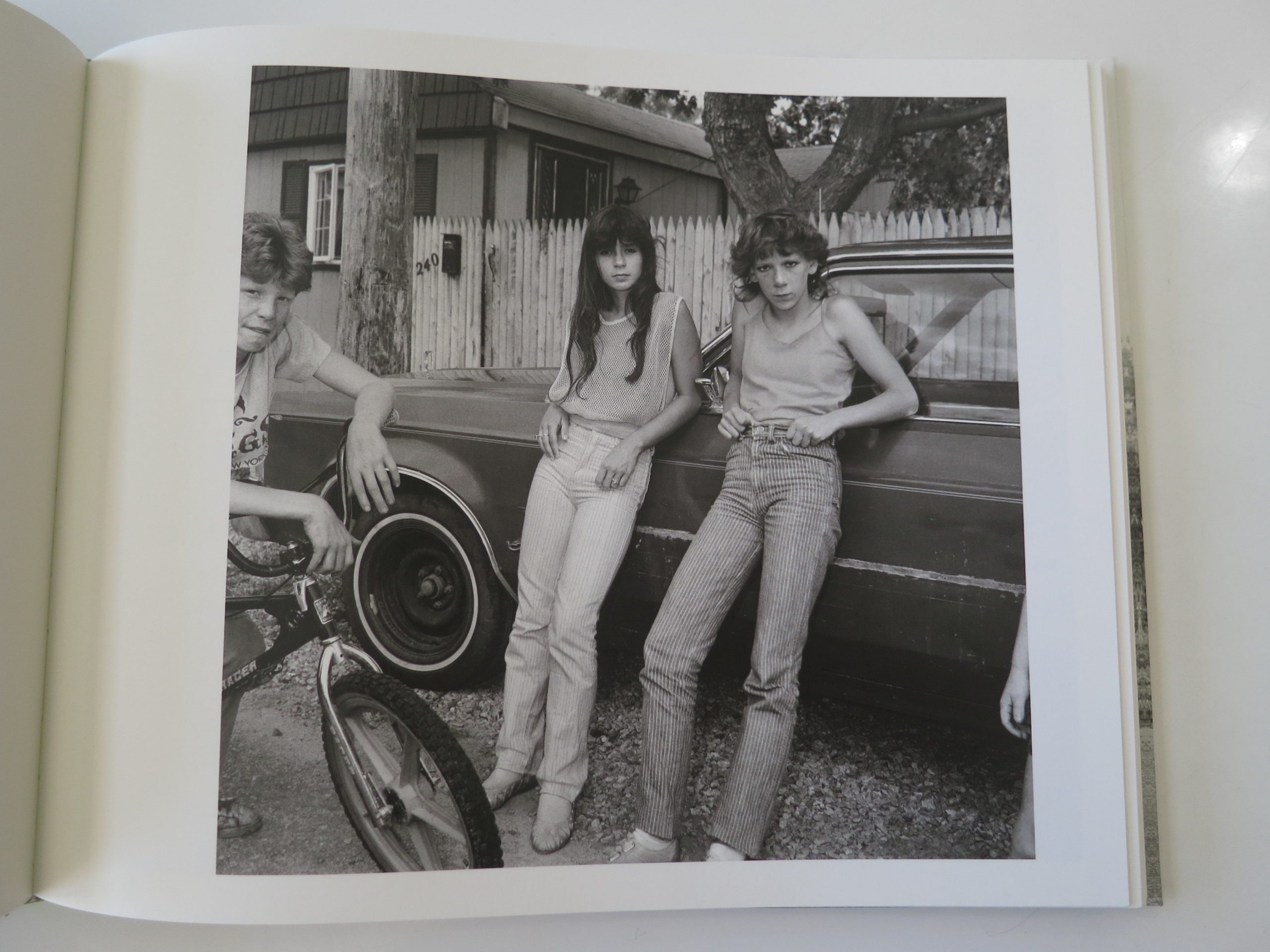
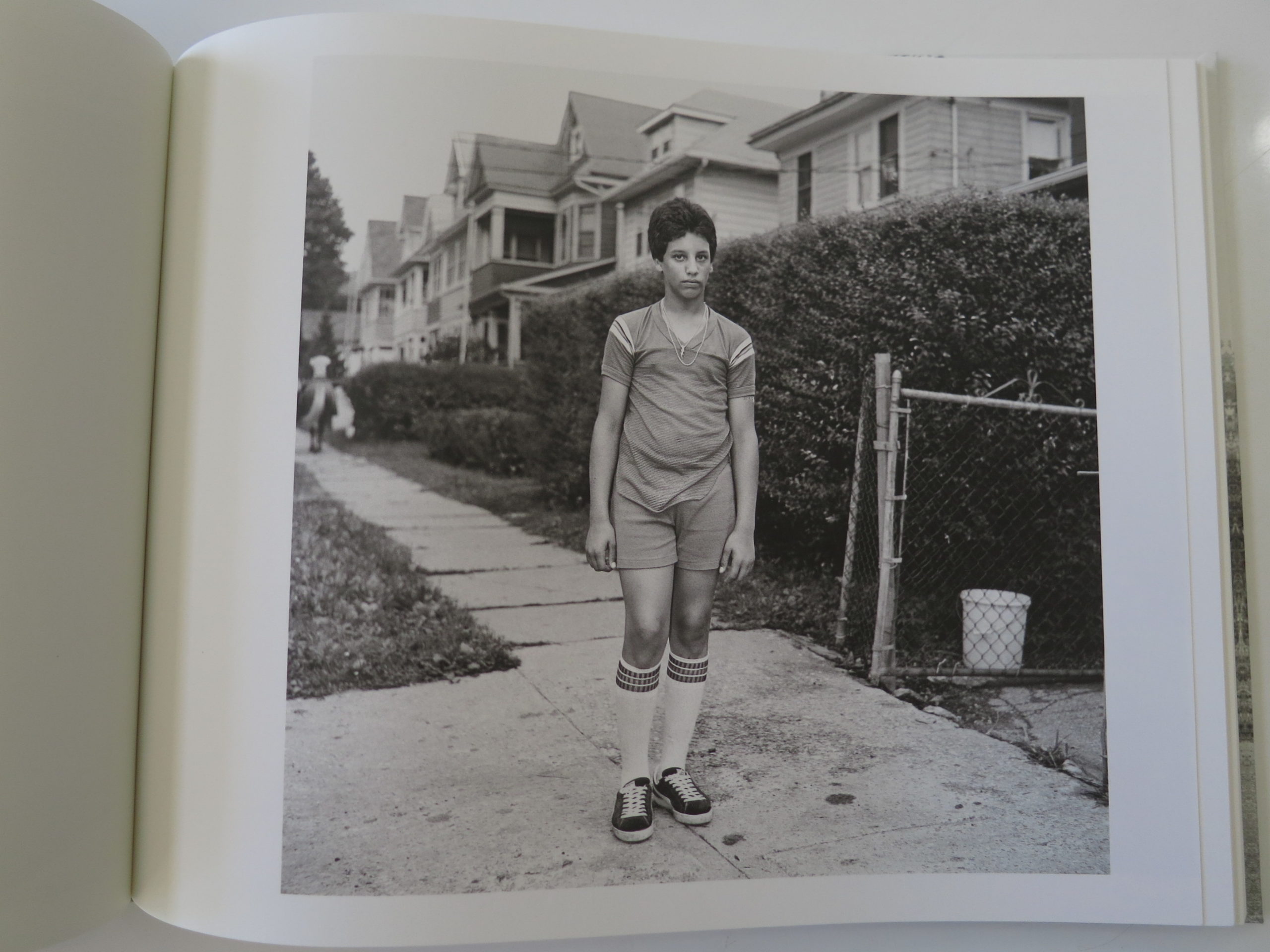
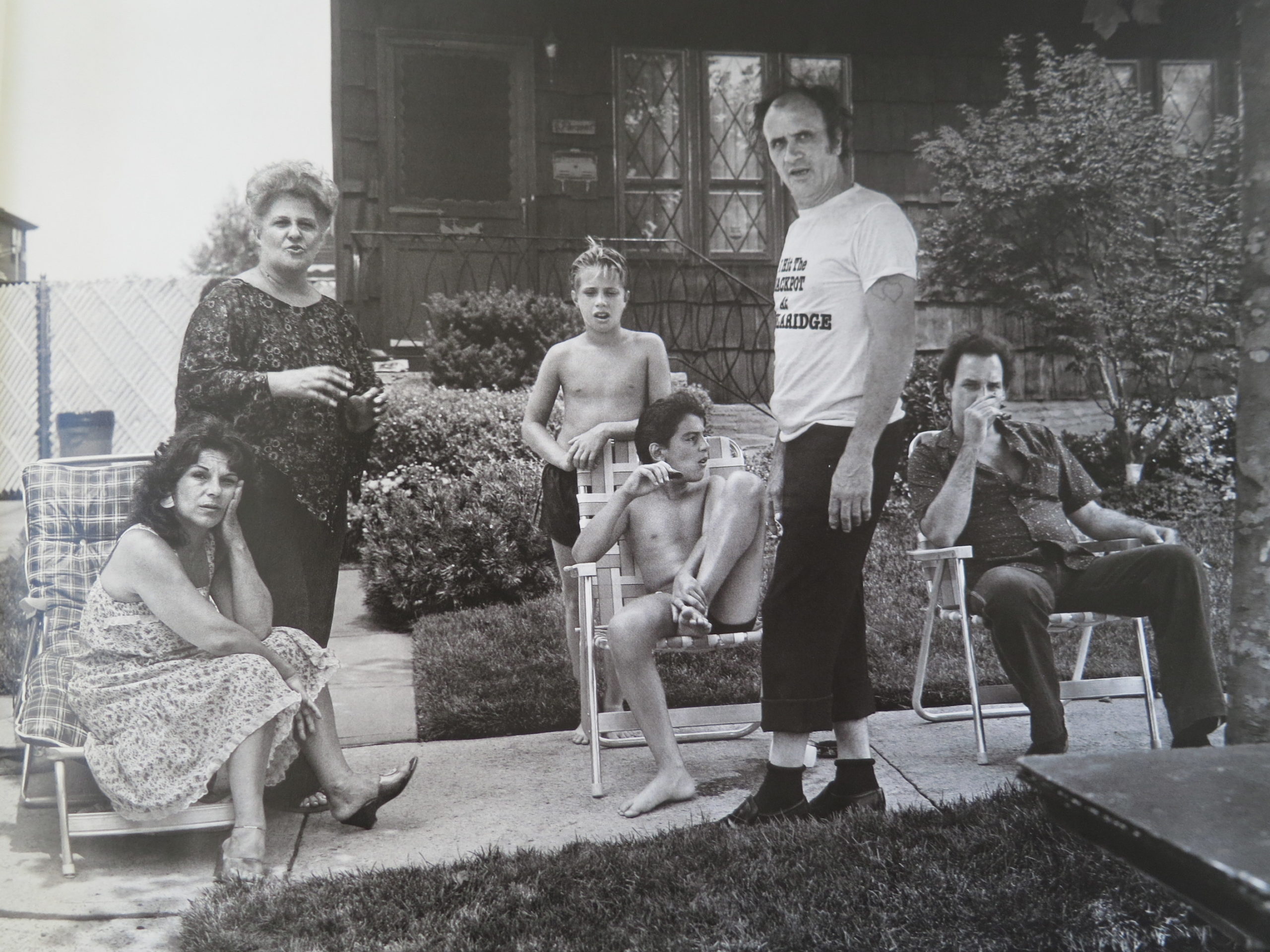
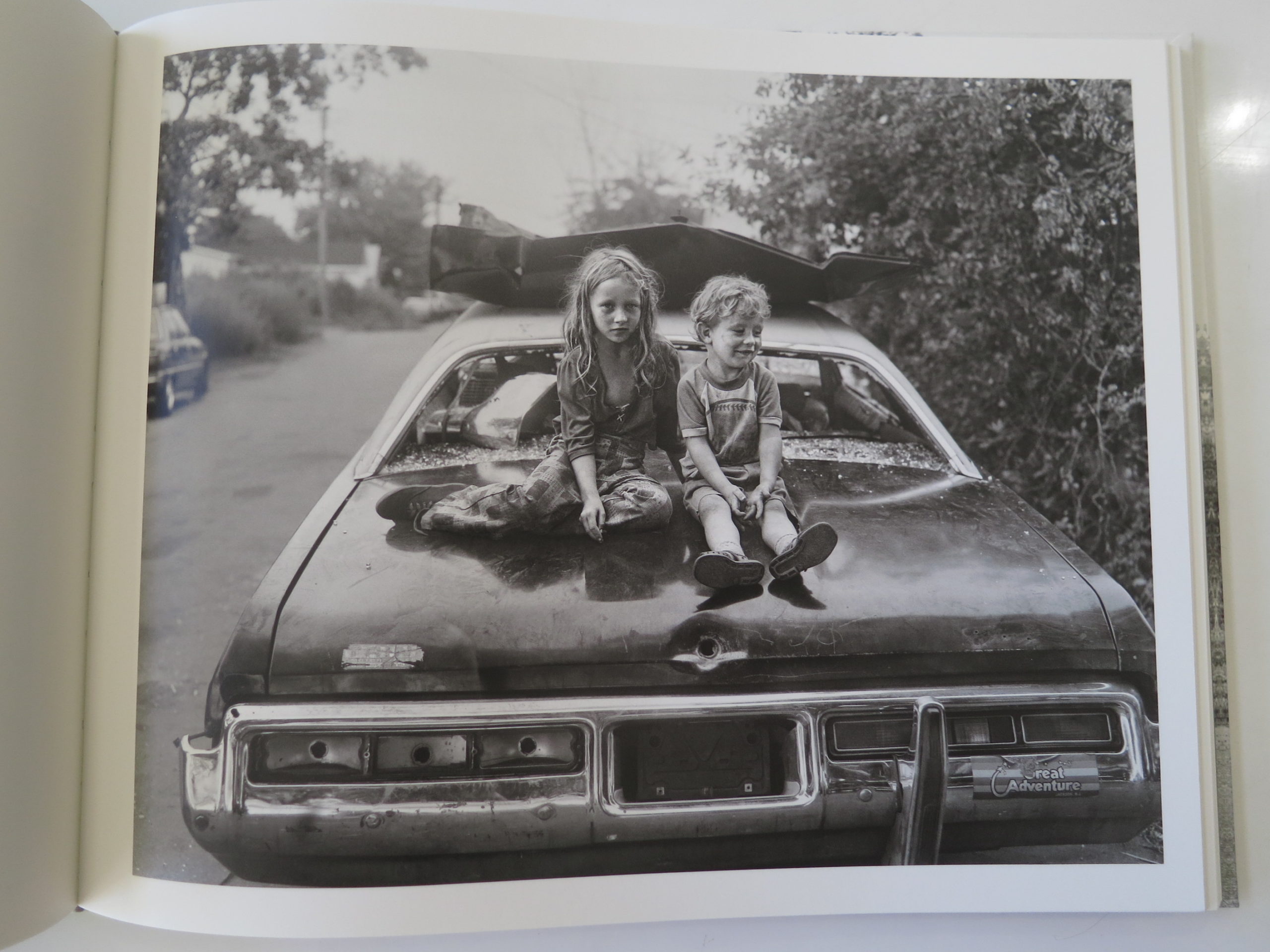
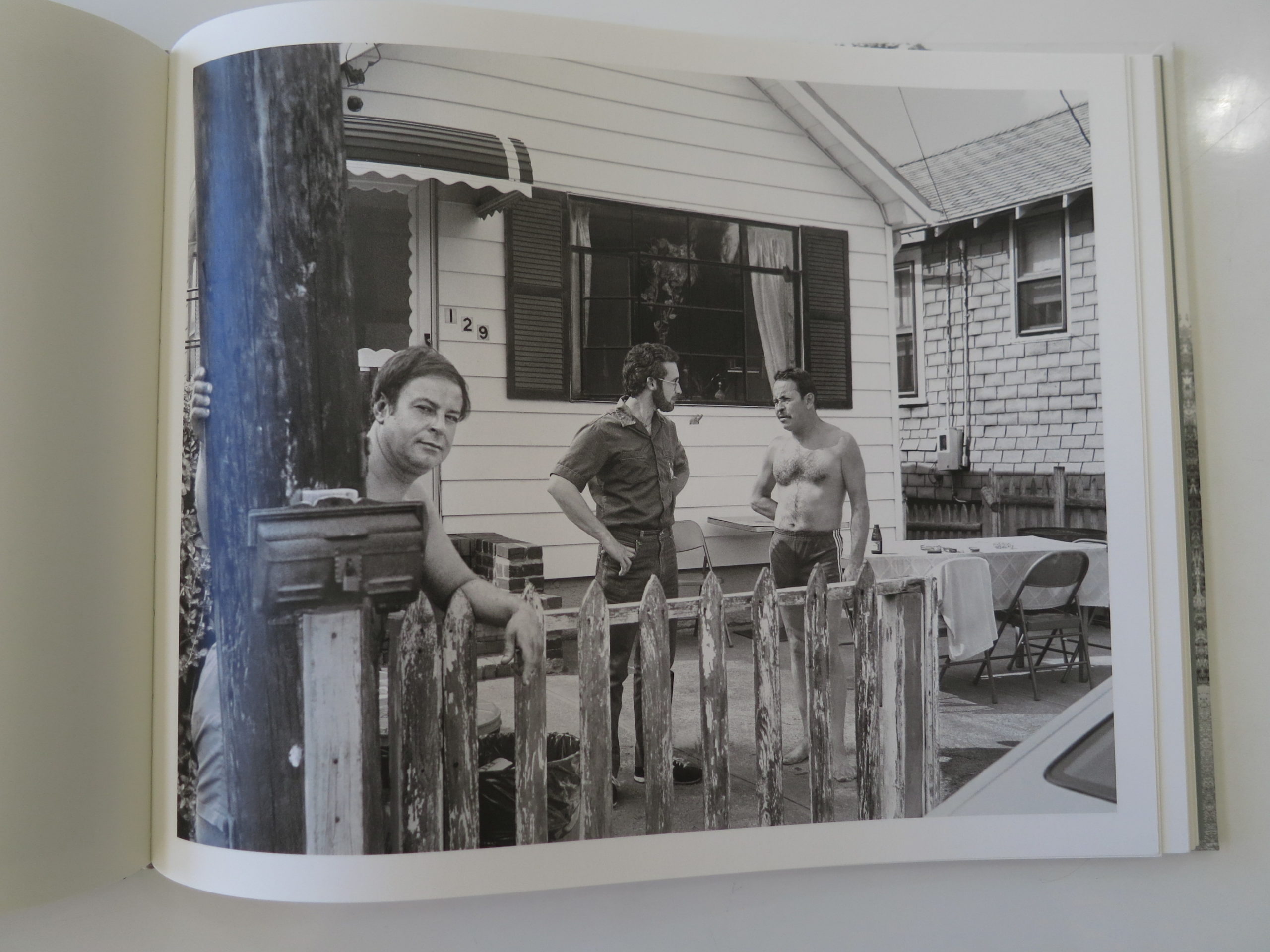
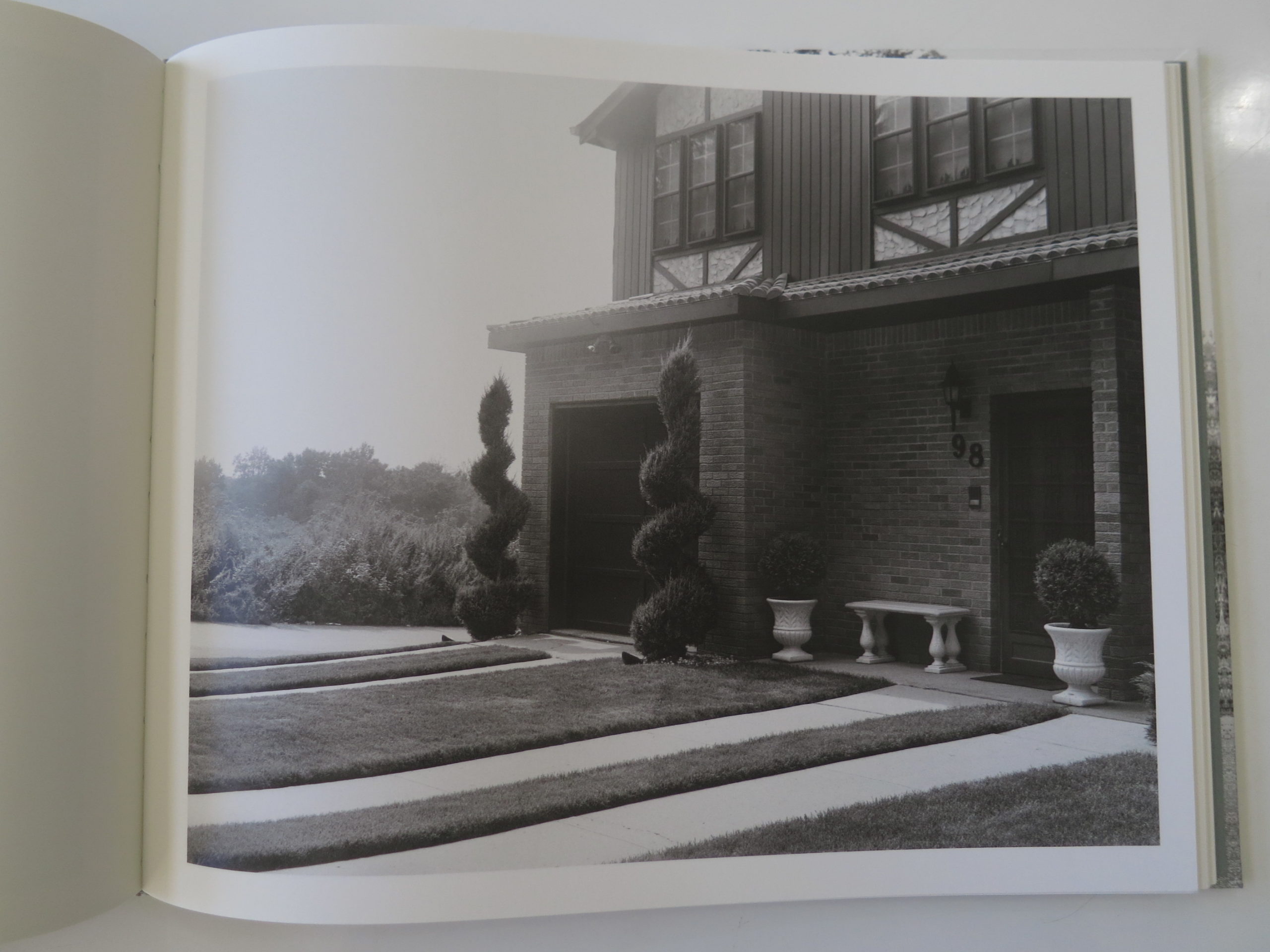
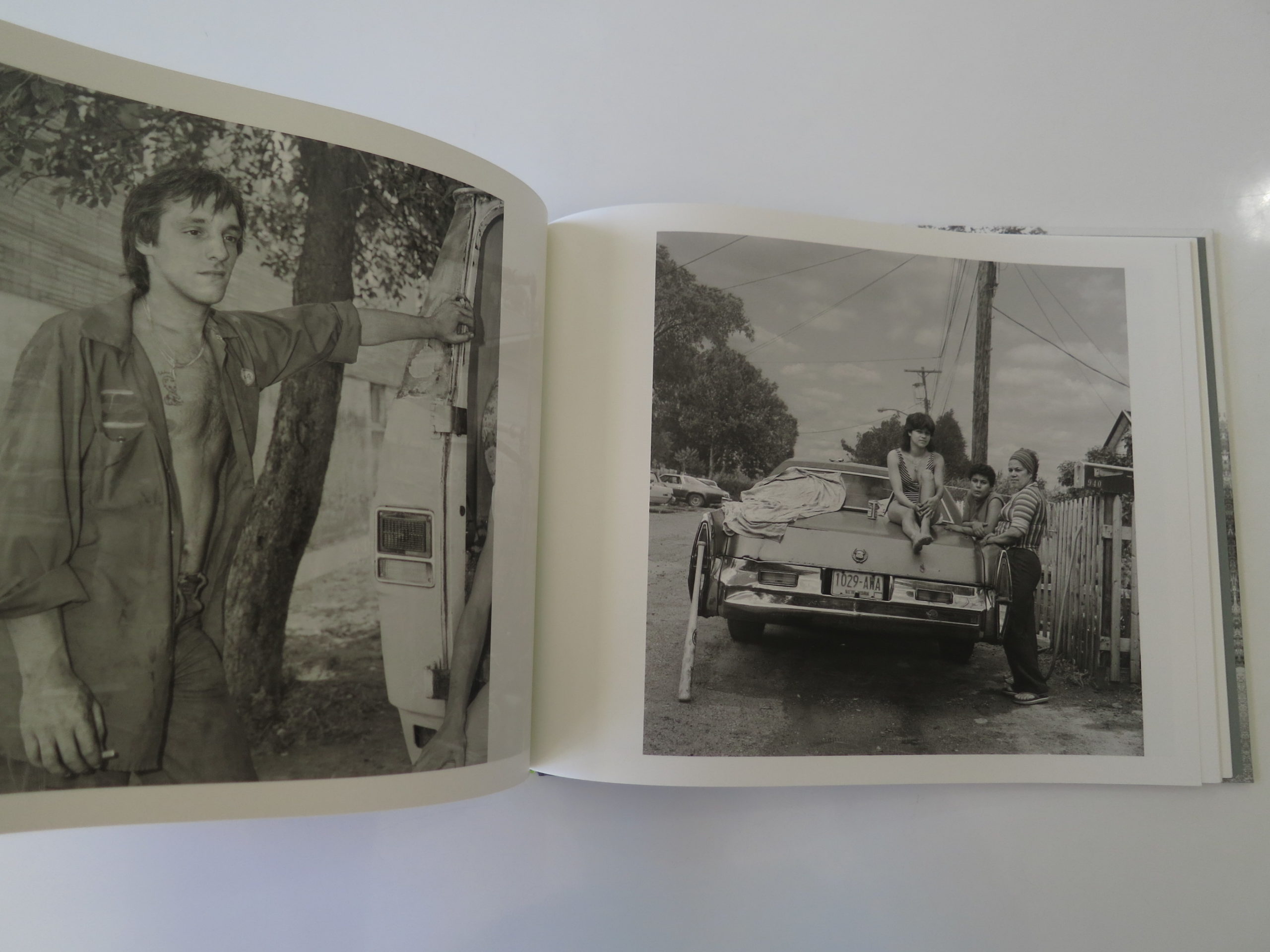
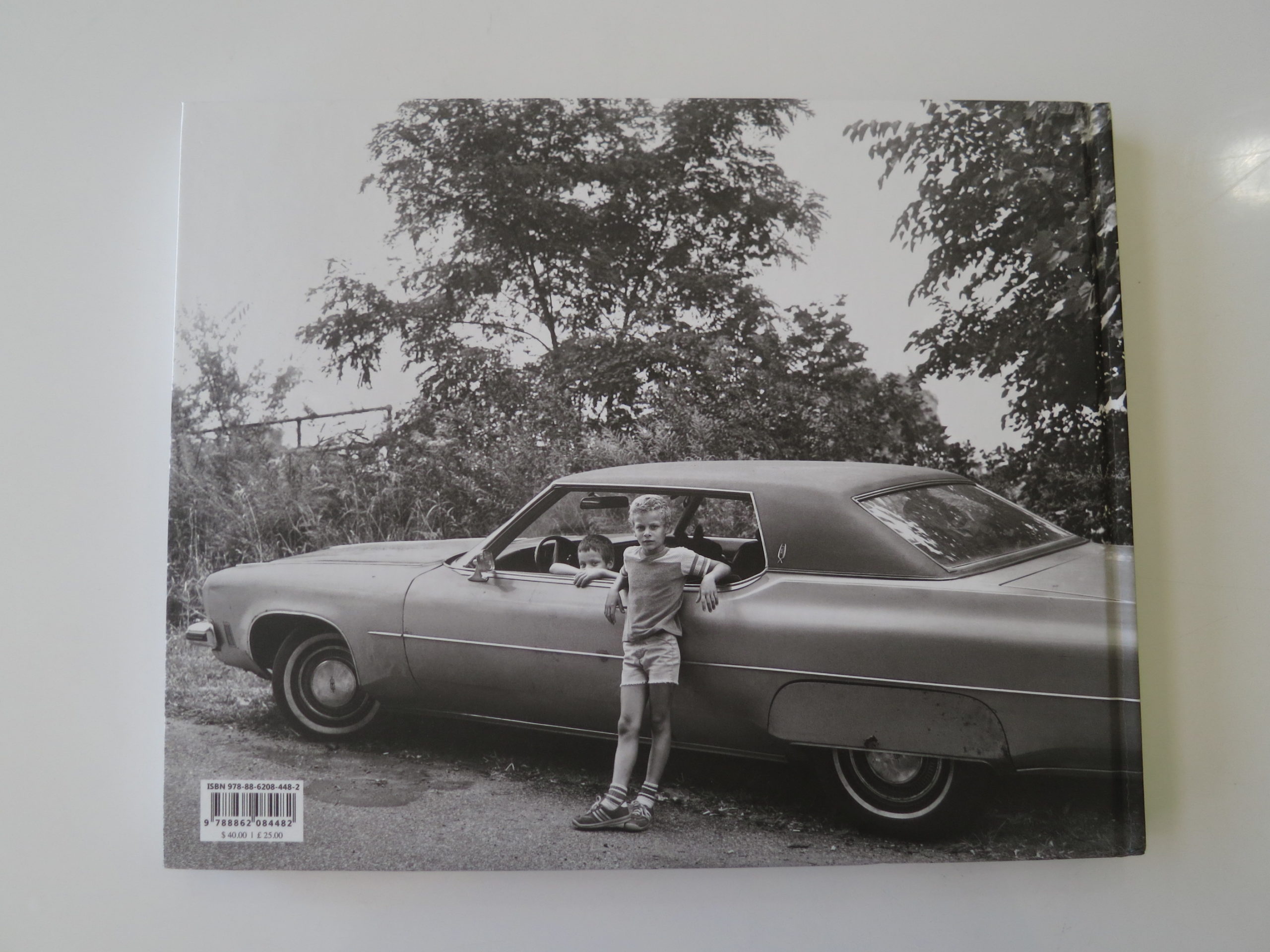
But I can see the whole scene, back in the 80’s, having just put down “Summer Days Staten Island,” a new book by Christine Osinski, recently published by Damiani.

Will I get death threats from angry goombahs, for derogating their homeland? I have no idea. But if I were there now, insulting the Island, you can bet I’d get some seriously dirty looks from the locals. (They’d be mad-dogging me all day long.)

There were a few mad-dog photos in this most excellent book. A handful of pictures in which you can easily imagine the subject saying, “What the fuck a youz lookin’ at? Youz got a fuckin’ prahb-lem? Yeah, I’m tawkin’ to you. Who the fuck do you think I’m tawkin’ to?”

Stop me. I could go on all day.

Honestly, though, this book brought me straight back to my childhood. I guessed the images were made in 1984, and the end interview confirms ’83-84.

Pure. Classic. 80’s.

The hiked up tube-socks are my favorite detail, sure, but that must be because I can relate. The rampant shirtlessness is also perfect. But there is more subtlety here, if you care to look for it.

Like the house with two curlicue hedges, abutting an empty field. Man-made nature/ raw nature, sure, but I also wondered how far into the marsh a landfill might be? (We never see those.)

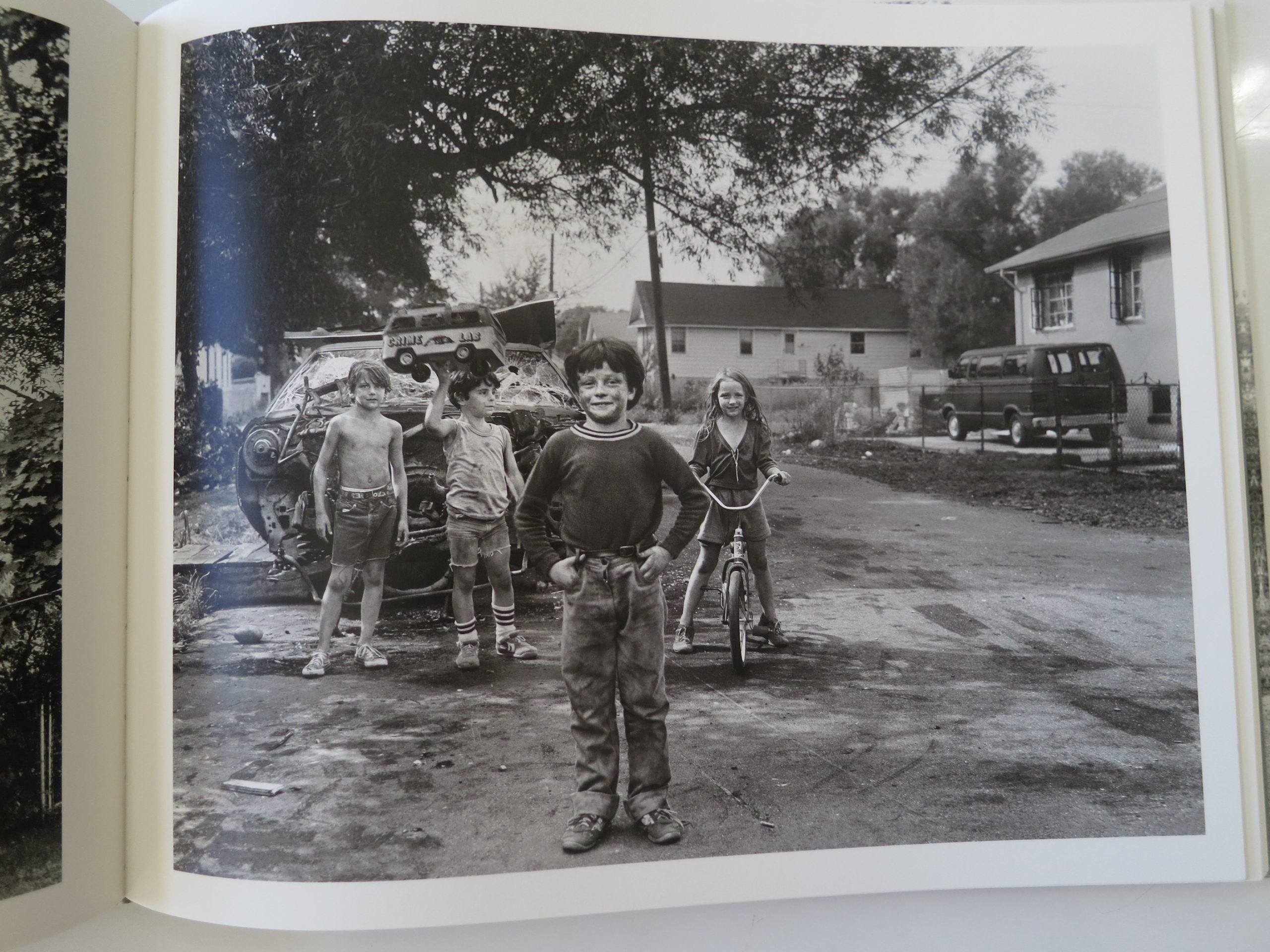
There is a picture of some kids playing in front of a bombed out car, holding up a van that says crime scene, while an actual van sits in a driveway across the street. (You bet I’m taking that as a Scooby Doo reference. The 80’s had the sleuths it deserved.)

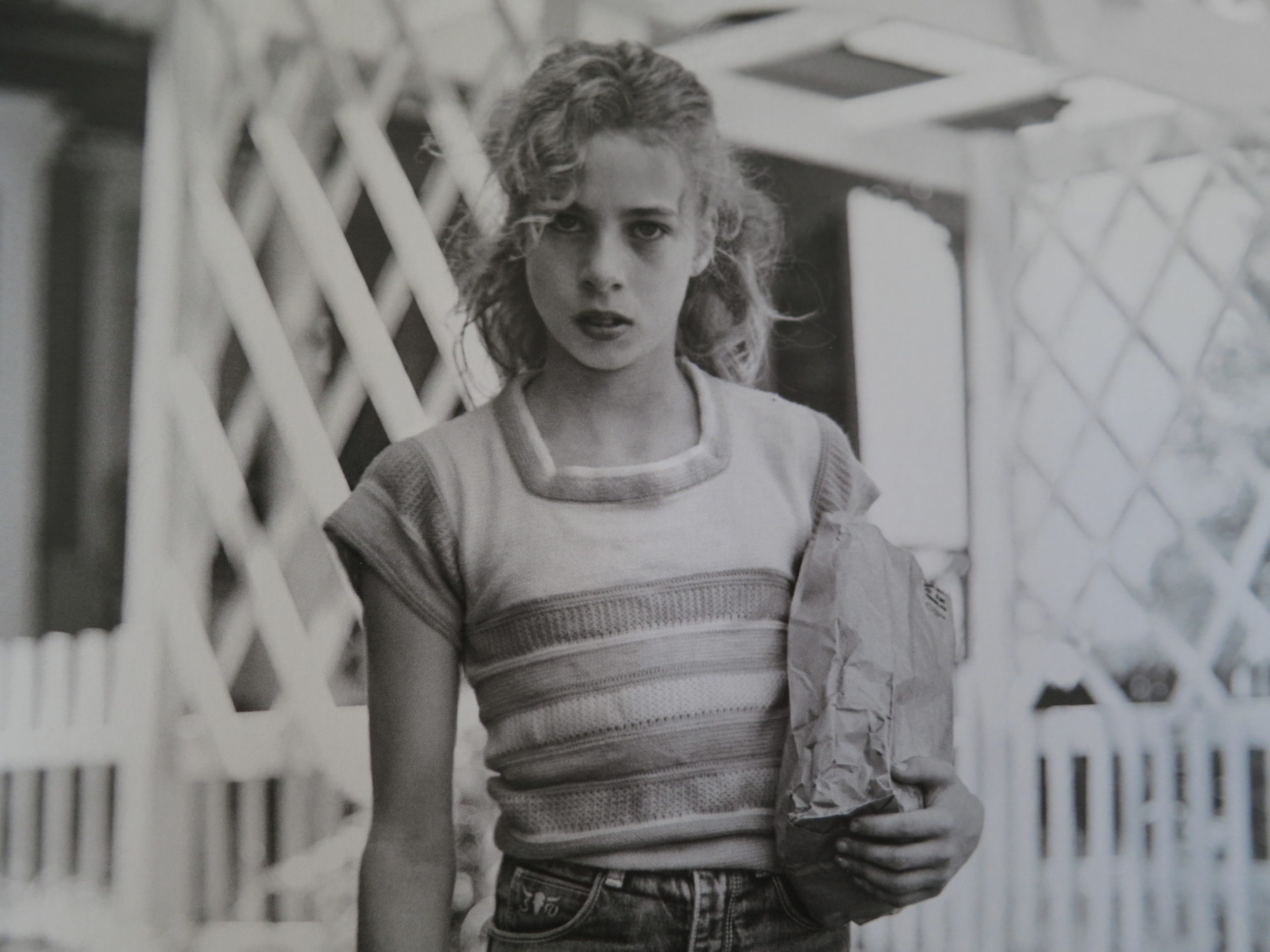
Big cars are everywhere. (Obligatory Iroc Z28 included.) Big mustaches too. And a blonde, teen-aged girl, staring daggers at the camera, cradling a brown paper bag like it was her first born.

How much you wanna bet there was a bottle of liquor in there? I’m so curious, but like all my other questions, I’ll never know.

The answers are gone, forever.

That’s why I love this type of flashback photography so much. It reminds us that even though the global photography community now numbers in billions, and so many images are thrown away every tenth of a second, sometimes, we really are stopping time.

Freezing light, outside of the space time continuum.

It means I can sit at my white kitchen table, on a gray Tuesday afternoon, and be catapulted back to the 80’s, a time many of us would just as soon forget. (Yes, I had a mullet and braces. Find the pictures. I dare you.)

Bottom Line: Amazing pictures from Sta-en EYE-land, back in the day

To Purchase “Summer Days Staten Island” Visit Photo-Eye

IMG_1783

IMG_1784

IMG_1785

IMG_1786

IMG_1787

IMG_1788

IMG_1789

IMG_1790

IMG_1791

IMG_1792

IMG_1793

IMG_1794

IMG_1795

IMG_1796

IMG_1797

IMG_1798

IMG_1799

The Art of the Personal Project: Judd Lamphere

As a former Art Producer, I have always been drawn to personal projects because they are the sole vision of the photographer and not an extension of an art director, photo editor, or graphic designer. This new column, “The Art of the Personal Project” will feature the personal projects of photographers using the Yodelist marketing database. You can read their blog at http://yodelist.wordpress.com. Projects are discovered online and submissions are not accepted.

Today’s featured photographer is: Judd Lamphere

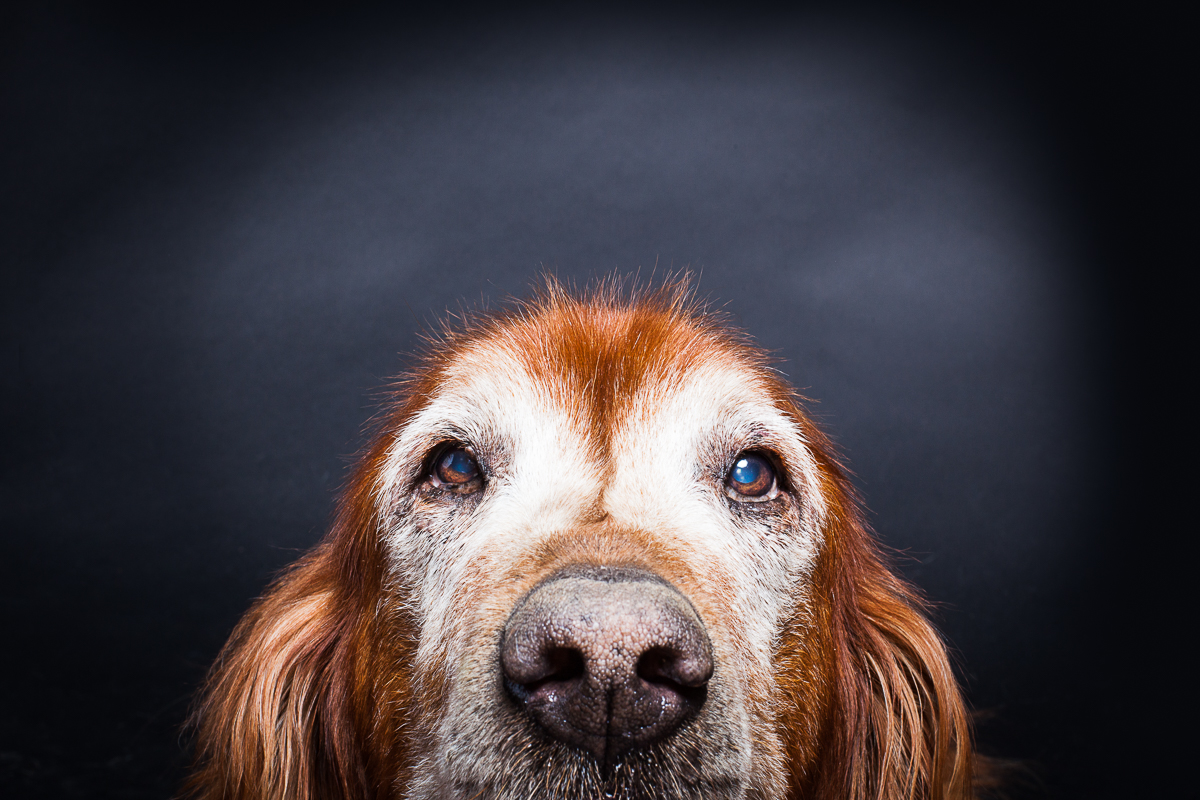
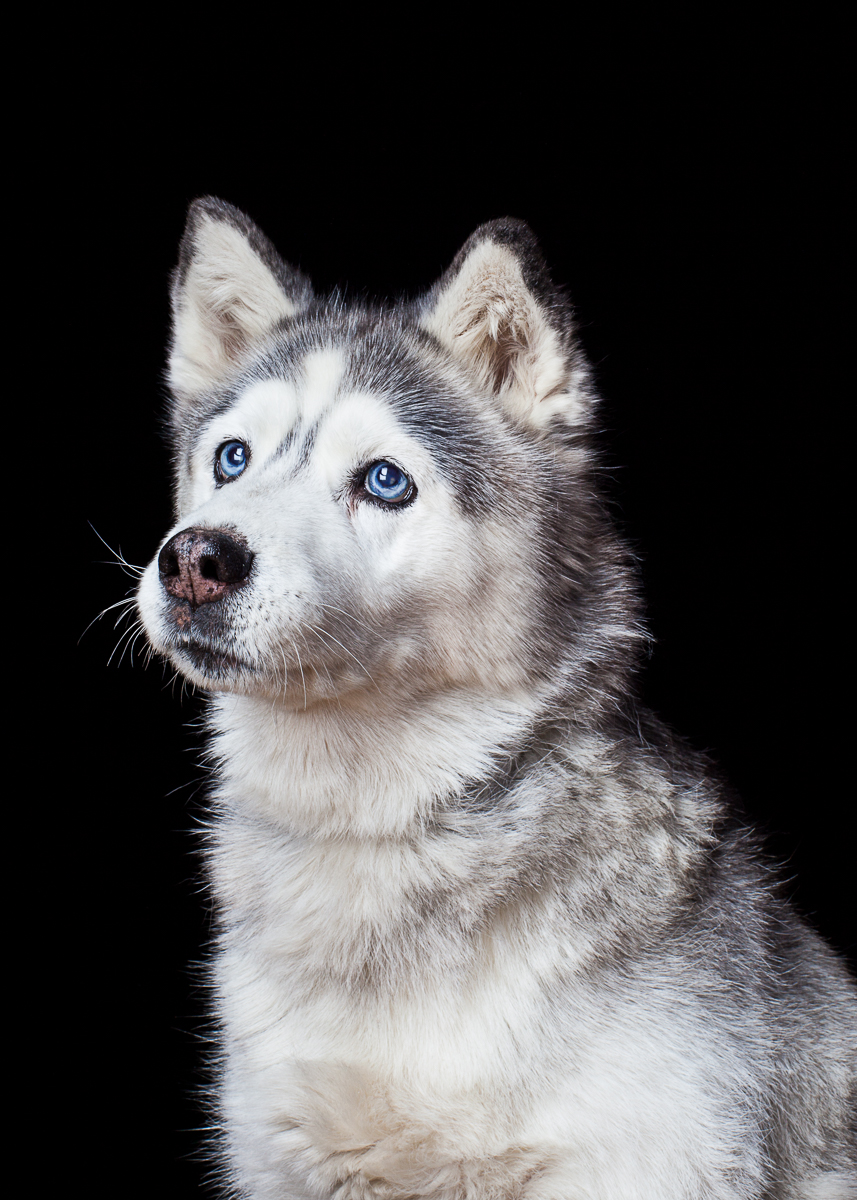
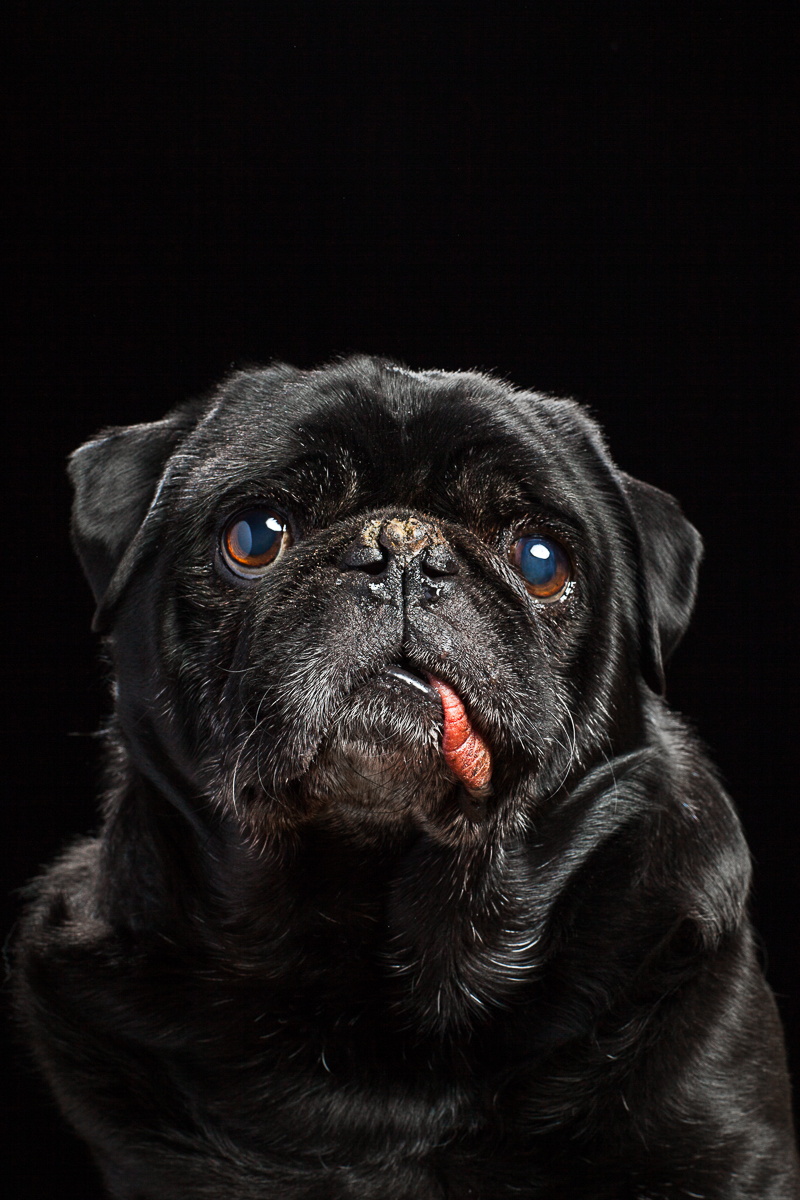
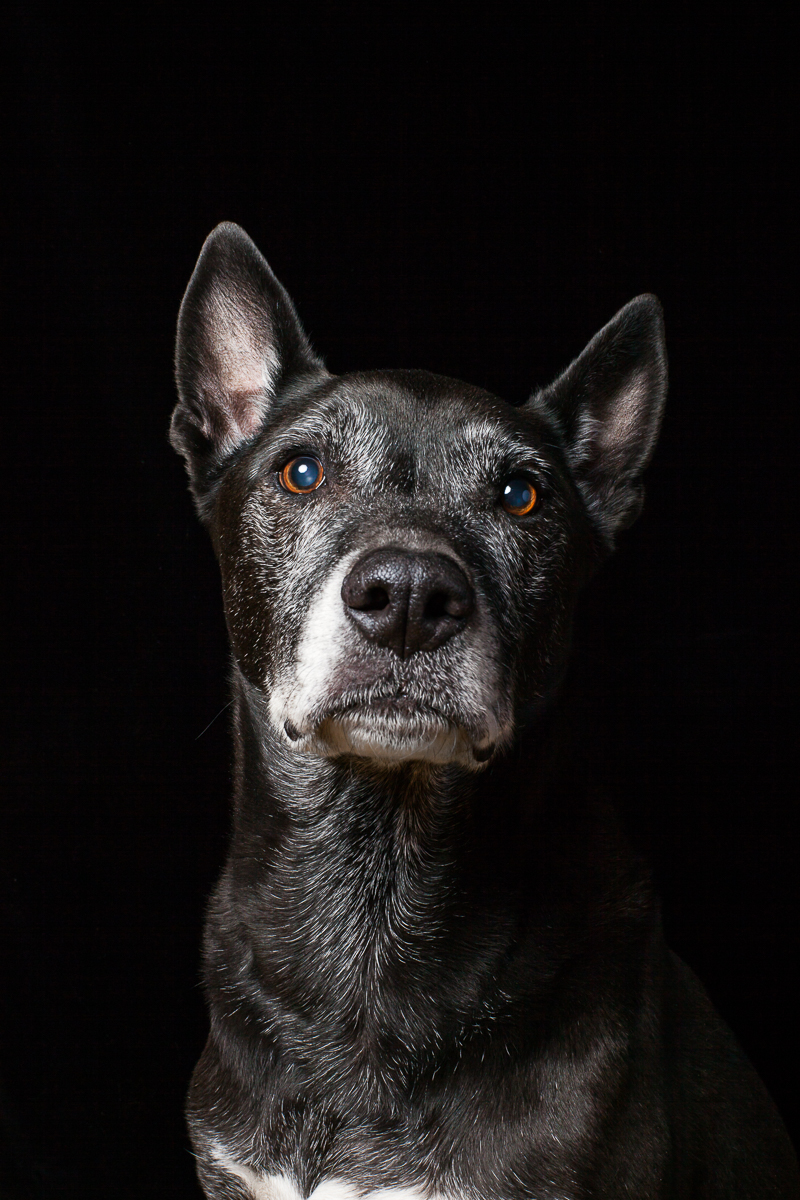
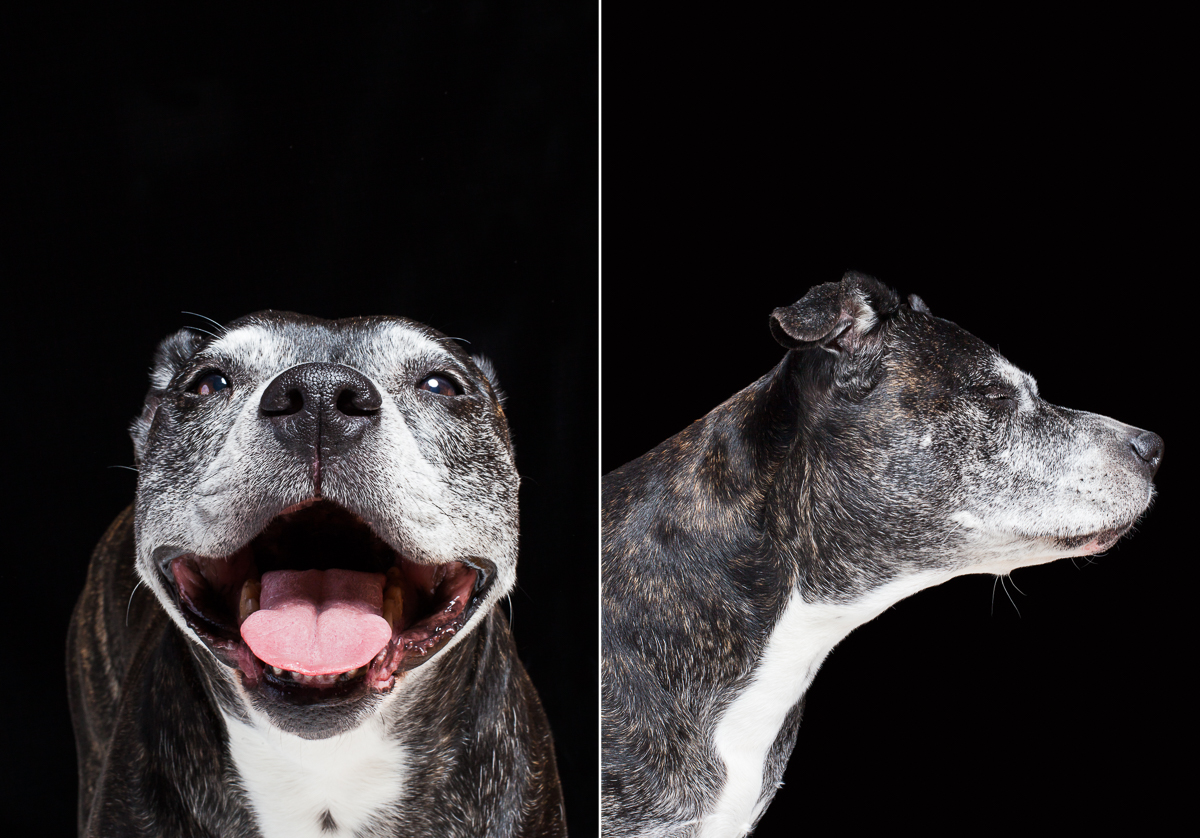
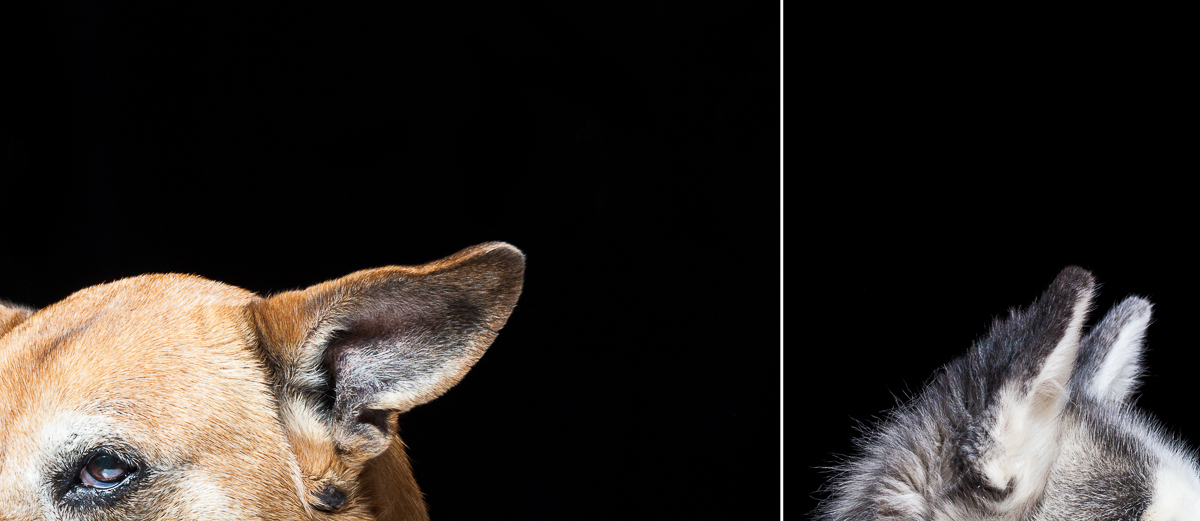
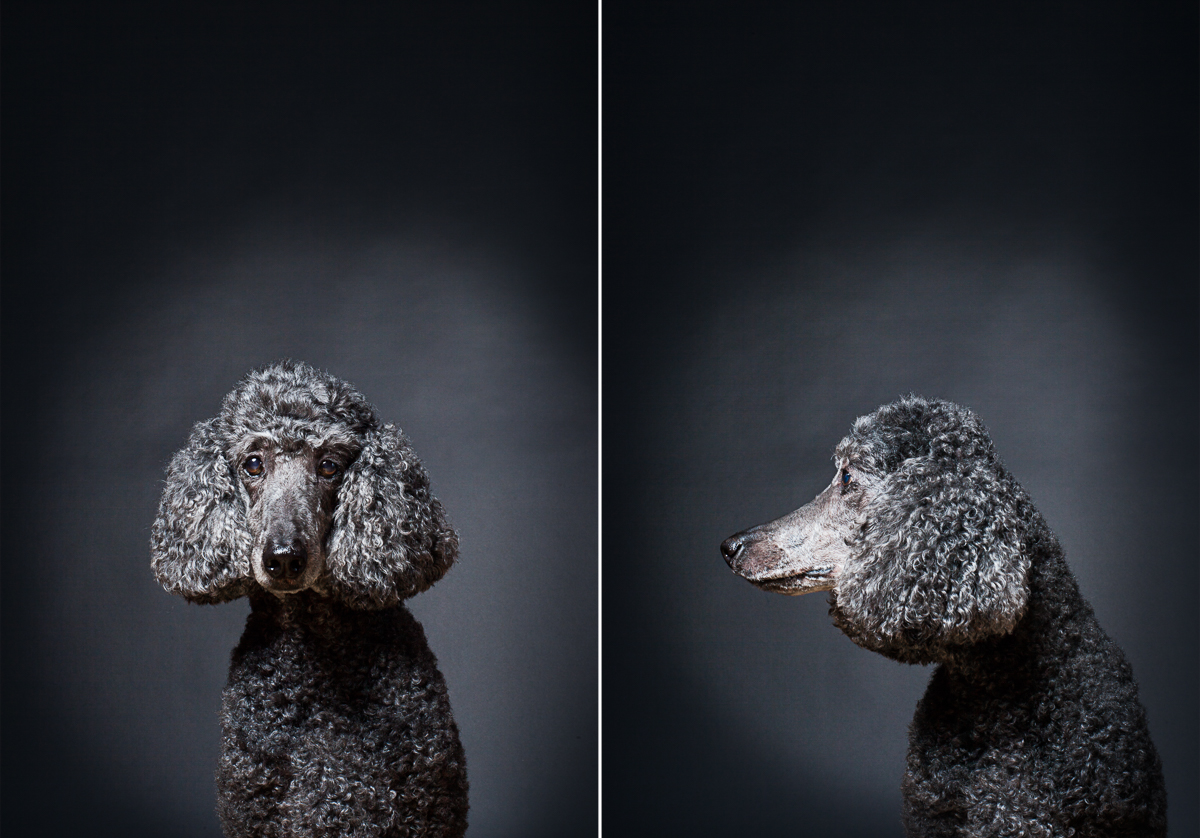
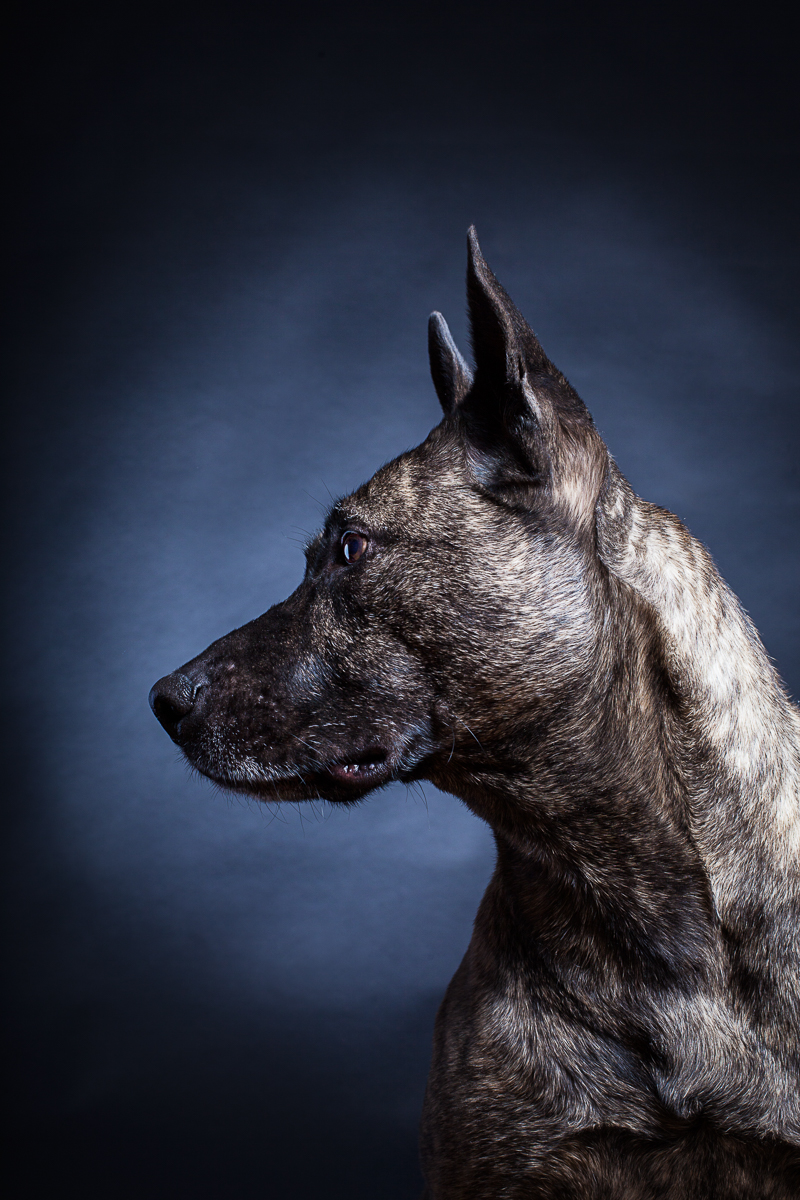
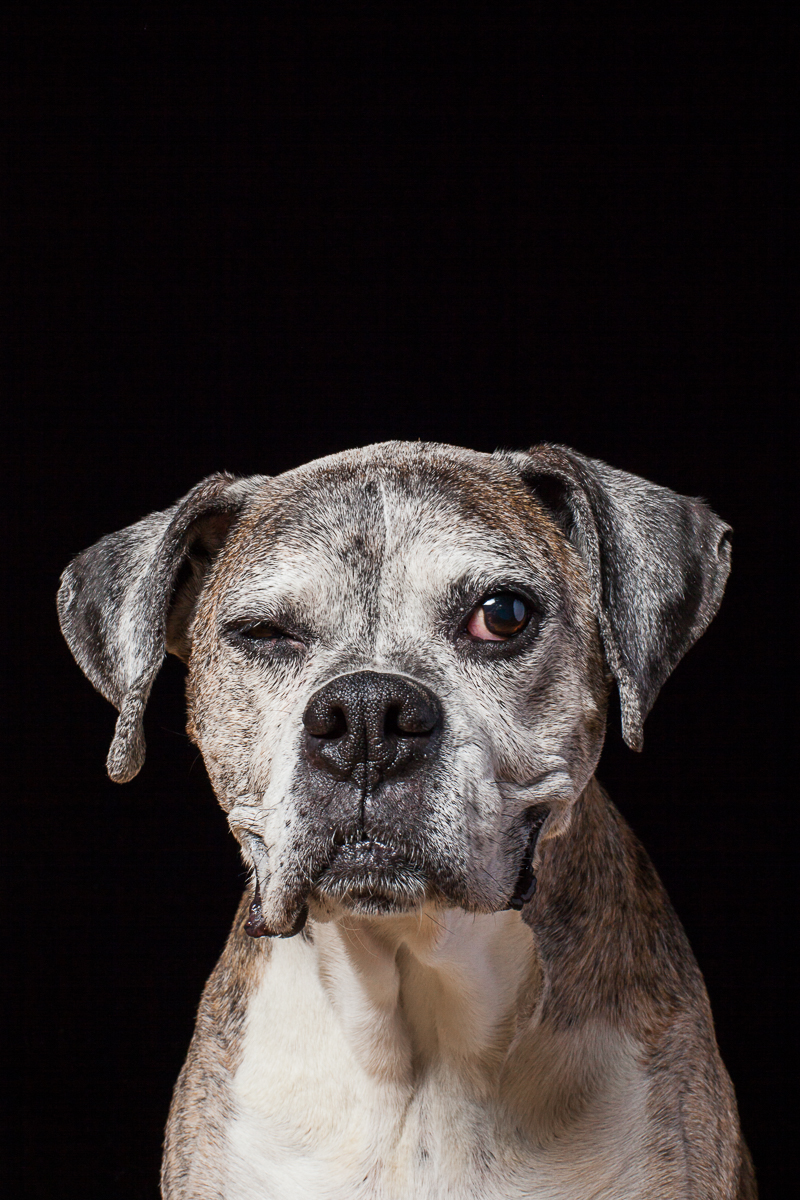
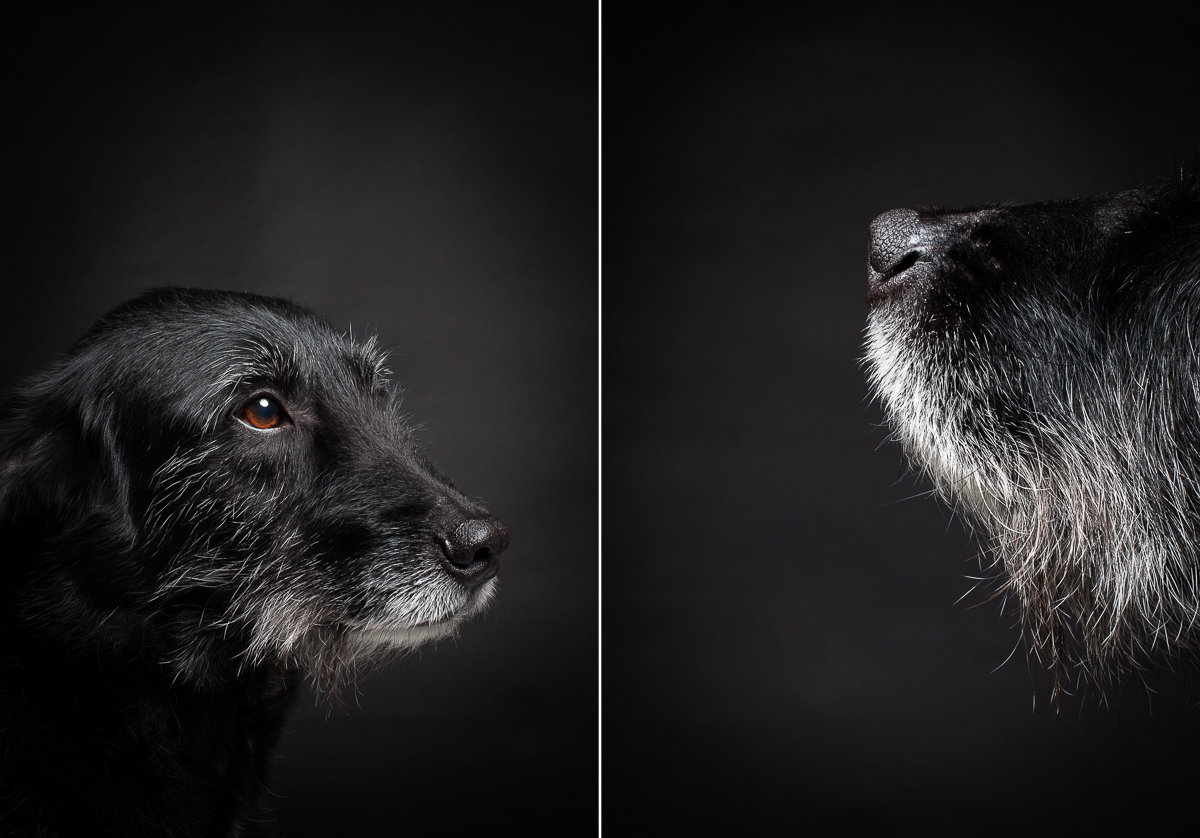
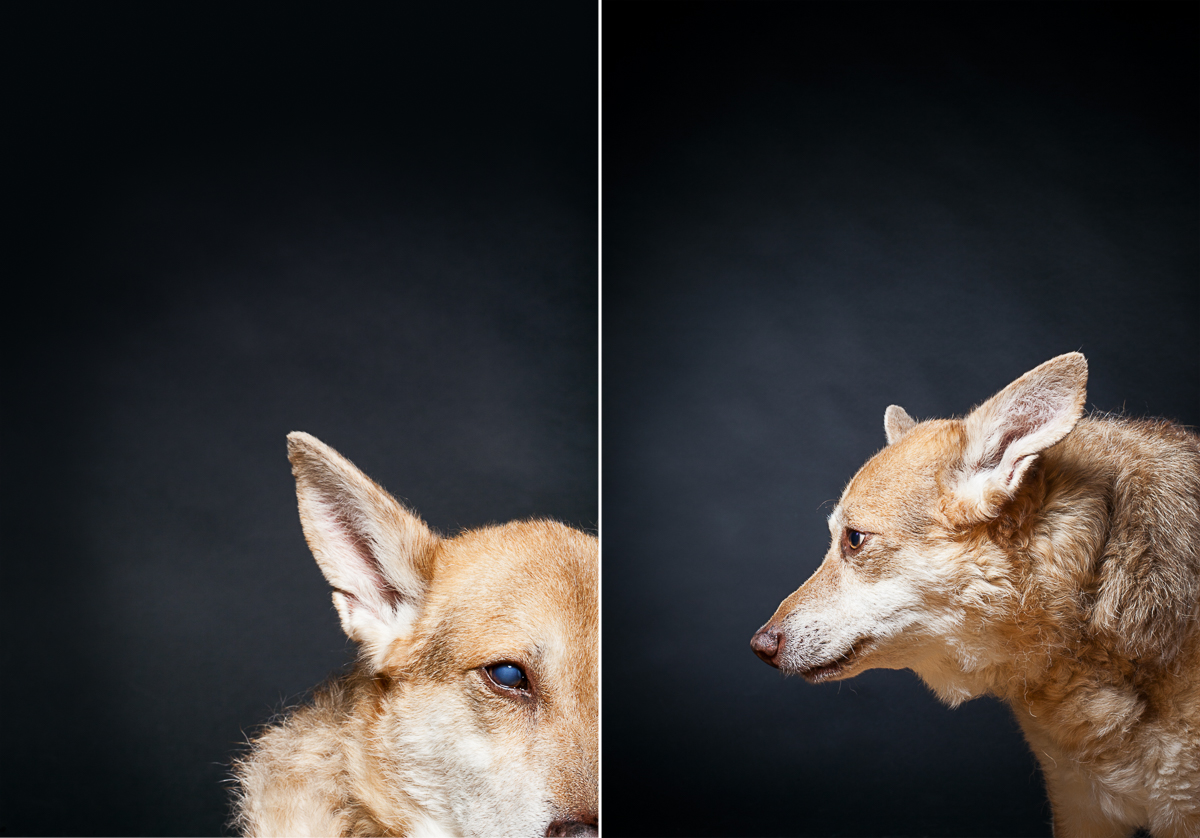
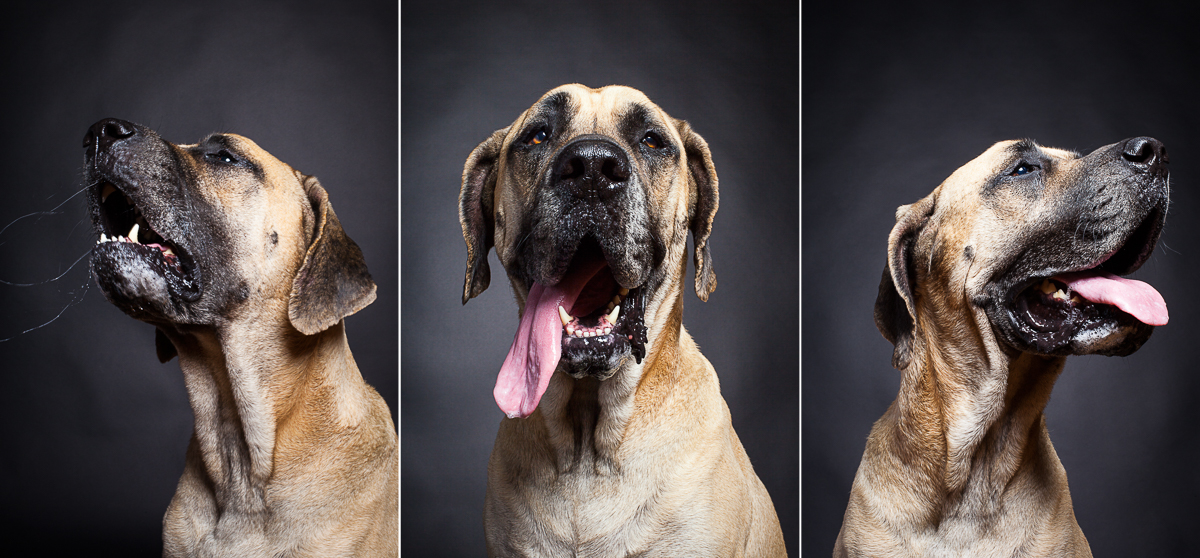
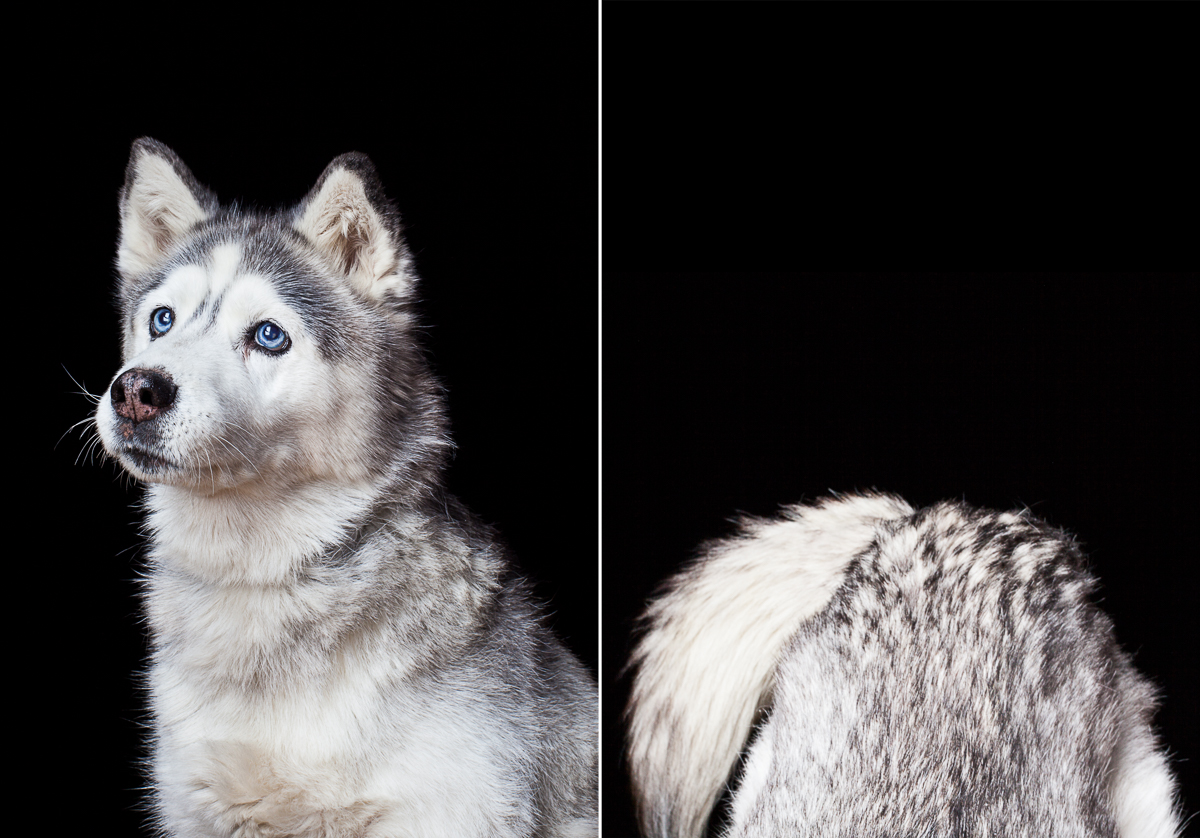
Old dogs photographed at Reciprocity Studio in Burlington by Vermont photographer Judd Lamphere

20111018-SHOES-075-Edit

20130113-WHISKEY-00-196-Edit

20130113-WHISKEY-00-306-Edit-2

Old dogs photographed at Reciprocity Studio in Burlington by Vermont photographer Judd Lamphere

ears1

Old dogs photographed at Reciprocity Studio in Burlington by Vermont photographer Judd Lamphere

IMG_0581-Edit

IMG_6681-Edit

Old dogs photographed at Reciprocity Studio in Burlington by Vermont photographer Judd Lamphere

Old dogs photographed at Reciprocity Studio in Burlington by Vermont photographer Judd Lamphere

Old dogs photographed at Reciprocity Studio in Burlington by Vermont photographer Judd Lamphere

Spy-Diptic

How long have you been shooting?
I’ve been shooting professionally for about 12 years now, but my love for photography began in my high school darkroom. I was fortunate enough to have access to a great art program back then. In fact, my high school arts program put many students on the path to professional careers in the arts.

Are you self-taught or photography school taught?
I received a BS in Biomedical Photography from the Rochester Institute of Technology in 2006.

With this particular project, what was your inspiration to shoot it?
It was my best friend’s dog Roxanne. I had known Roxy since, well, since we were all puppies, really. I saw her carry him through some of the hardest times in his life. The relationship was beautiful, and for a time, it felt like it would stay that way forever. As Roxanne got older, her black coat became lined with silver accents, and she mellowed out a lot from the rebellious teenager she used to be. Yet, she retained this kind of pride in herself. She carried herself with a sense of stateliness. But even more than that, was this bond between the two of them, this unconditional love for one another. My friend had to slowly start saying goodbye to his best friend one day at a time. I wanted to help him through this really difficult time, and the only thing I could think to do was take a picture.

How many years have you been shooting this project before you decided to present it?
I started showing pictures on my blog almost immediately. Friends started sharing links to my work on social media, and soon I had people lining up to have portraits made of their best friends too.

How long do you spend on a personal project before deciding if it is working?
That’s a tricky question for me. I find my personal work comes in waves, with moments of cresting productivity followed by troughs. As such, it can take me awhile, maybe even two years, before I’ve explored a body of work to the point where I can tell myself if it’s succeeding or not.

Since shooting for your portfolio is different from personal work, how do you feel when the work is different?
I love when the work is different. Variety is the spice of life, and it keeps me growing professionally and personally. The great thing about personal work is that it’s ok to fail. Real growth emerges from failure.

Have you ever posted your personal work on social media venues such as Reddit, Tumblr, Instagram or Facebook?
Typically I will only share a link to my blog on social media, out of various copyright concerns. This is for my professional and personal projects that I’ve edited closely. I’ll use Instagram or Facebook for fun “behind-the-scenes” type shots that I’m not concerned about. I did share a body of work through Reddit/Imgur, but this was a series of vertical landscape panoramas I did, and was just for fun.

If so, has the work ever gone viral and possibly with great press?
My old dogs project picked up a lot of interest locally and was featured in 7days (Burlington’s go-to free alternative weekly), and a local news story.

Have you printed your personal projects for your marketing to reach potential clients?
I have actually! I print and mail postcards to small, targeted groups of clients I really want to work with.

What do you want to do with this personal project?
My long-term goal for this project is to assemble a photo book, perhaps through some form of crowdfunding or self-publication. The idea is to have proceeds from the book go into a fund to help support the adoption of senior dogs.

————–

Judd Lamphere received a BS in Biomedical Photography with concentrations in Photojournalism and Creative Writing from the Rochester Institute of Technology in 2006. He has since worked as a photo editor, production manager, landscape and editorial photographer in a number of areas including advertising, editorial, travel, nonprofit, government organizations and outdoor adventure.

Judd has worked with a number of periodicals and organizations including The Wall Street Journal, Triathlete Magazine, Boston Globe Magazine and Greenpeace, though his true passion for photography lies in his personal work, ranging from portraits of Old Dogs for charity to his exploratory landscape series Architecture of Energy.

Judd is also a co-founder of Reciprocity Studio, a commercial studio in Burlington, Vermont whose clients include Seventh Generation, Tata Harper Skin Care, Caledonia Spirits and more.


APE contributor Suzanne Sease currently works as a consultant for photographers and illustrators around the world. She has been involved in the photography and illustration industry since the mid 80s, after establishing the art buying department at The Martin Agency then working for Kaplan-Thaler, Capital One, Best Buy and numerous smaller agencies and companies. She has a new Twitter feed with helpful marketing information believing that marketing should be driven by a brand and not specialty. Follow her on twitter at SuzanneSease.

Hustle Is The Secret Ingredient In Professional Photography

Guest Post by Cybele Sandy, AUGUST

I was having coffee with a colleague the other day and remarked that I felt that in terms of making it in New York as a photographer, talent was only a small part of the battle. My colleague’s answer? “Oh, I actually think talent counts for only 30% of the equation”. This from an executive at one of the top-tier media conglomerates.

Increasingly, I’ve come to the conclusion that hustle is the secret ingredient.

I’ve been in the business for a decade now and I am still amazed that getting to look at art, all the livelong day, is my job. It’s something I truly love: communing with artists, delving into their process and getting them where they need to be professionally is what has made this stage of my career (I’ve at various times been a television producer, in-house marketing executive for a restaurant chain and co-founder of a fashion non-profit) so incredibly fulfilling.

However, the time I’ve logged has taught me a great deal in terms of who makes it and who doesn’t. Leslie Sweeney, one of the founders of the iconic firm Art + Commerce, once remarked to me that “this is such a subjective business”. You go with your gut a lot, what appeals to you viscerally. The first impression I get when I review a portfolio is generally the truest. I have an especially soft spot for new artists, the kids who are only just beginning to dip their toes into these murky waters.
There are so many gifted shooters out there, who seemingly keep missing that big break, while others with less ability seem to move forward effortlessly. What is it, really, that separates the wheat from the chaff? What accounts for the rise and longevity of a Martin Schoeller or an Inez and Vinoodh?
I think the secret ingredient is hustle.

If I may, therefore, I’d like to line up what I believe fuels that flame:

1. Work. It’s not enough to be a good shooter anymore. There’s so much out there visually that standing out truly takes a borderline obnoxious form of persistence. In my own day-to-day, I’ve realized that to get things done, to get through to the people with whom I want to develop partnerships or cultivate as clients, I have to keep knocking at that door constantly. So too must the artist. The good news is that your natural creative bent will allow you to dream up ways to distinguish yourself without becoming a pain. Don’t be discouraged. Keep pushing.

2. Promotion, Including Lo-Fi. A photographer with a defined promotional strategy wins the day. Social media and online promotional activities are huge and important, but their very ubiquity in today’s business transactions makes a printed piece all the more distinctive. In defining your promotional budget (and you should have one) set aside funds for at least 1 printed piece that lands on the desks of the editorial staff or art buyers you’d like to work with. I’m a particular fan of useful promotions, so think of what you’d appreciate. Talk to an editor about his/ her workday and perhaps an ingenious idea may emerge, for example: a beautifully wrapped box with 5 prints in varying sizes, perfect for the office or home gallery wall. You’d be remembered because that sort of thing rarely happens and people love to get an unexpected package in the mail.

3. A Head for Business. Signing with an Agent does not abdicate your responsibility to know what is being done and what has been signed on your behalf. Take the time to read your contracts. In the digital age, they have become increasingly complex, as companies of all stripes recognize the content value and longevity of the images they commission. Often artists are so eager to be on board with a title, they will go straight to the signature page, only to discover later on that they’ve signed away all their rights. Even if you agree to take a hit financially for exposure, sit with the Assigning Editor and see what else they might be able to do in terms of promotion that might be helpful to you. Maybe you do a piece for the magazine on selfies that slides in some of your personal work. Or perhaps you can negotiate for 2-3 advertorials, that both pay and align you with a big brand. And when you do get an Agent, be sure they’re a good fit. Do your due diligence and ensure that they have the relationships they claim to, because we necessarily talk a good game. Insist on a 12 month plan-of-action and check in often to review how things are going and adjust strategy if necessary. As I once told an artist having issues with his Assignment Agent: “The squeaky wheel gets the grease.”

4. Network Cultivation. Be out. Be visible. If you’re not a social animal, unfortunately you’ll have to become “that guy”. When I first started, I realized that a lot of important stuff gets discussed during the inevitable smoke breaks, so I made sure I was out there too. I’ve witnessed photographers get jobs over cocktails. If you’re not a drinker, corral a few editors for a coffee. Go to the openings of established artists- there are sure to be influential people present. And be prepared for opportunity with a quick little flip book on your phone and a sleek business card.

5. Shoot. A Lot. While you’re building your network, hone your art. Stretch yourself. One of the things I admire about the incredible Inez and Vinoodh is that they never settle. They are at the top of their game but they are always reaching, as if they only started yesterday and that’s why their work is consistently surprising and brilliant. I’m also still a big fan of technical prowess- you should know the correct way to light a set, for example, and not rely on the “take-a-ton-of-pictures-and-hope-some-come-out-right” methodology. All of this takes practice.

6. Niceness. We’re all human and people like to work with the people they like. Personality counts heavily toward landing an assignment and if you’re overbearing or throw up a wall in the face of suggestions, no one is going to want to spend hours dealing with that. This is particularly important during celebrity assignments. An A-list cover shoot has made (and broken) many a career. You want publicists to go: “The photographer has to be X” aka you.
That said, you need to be able to be the boss of your set. Be polite but firm, in charge but open.

The moral of the story? Anything worth having requires planning and considerable effort. This is applicable to anything in life, but particularly necessary in making it in the arts in a city teeming with talent.

Guest Post by Cybele Sandy, AUGUST

The Daily Edit – Marv Watson Photographer / Photo Editor

MW_LoL-World-Final_041013_0429League of Legends World Championship 2013 ( Staples Center )

The Mid Season Invitational of League of Legends 2015 Season, held at the David Tucker Civic Center in Tallahassee, FL, USA on 8 May, 2015.

_RV_4394Shoutcasters for League of Legends

TIP and Team Liquid go head-to-head in the third/fourth place matchup of the North American LCS Playoffs, held in Santa Monica, CA, USA on 18 April, 2015. Team Liquid ran out eventual winners, overcoming their rivals 3-2, twice coming from behind.

The final match up at the Mid Season Invitational of League of Legends 2015 Season, between SKT (Korea) and EDG (China), held at the David Tucker Civic Center in Tallahassee, FL, USA on 10 May, 2015. The event was won by EDG, who came from a game down, to triumph 3-2.

Members of team EDG cheer on their team


The final match up at the Mid Season Invitational of League of Legends 2015 Season, between SKT (Korea) and EDG (China), held at the David Tucker Civic Center in Tallahassee, FL, USA on 10 May, 2015. The event was won by EDG, who came from a game down, to triumph 3-2.

Soren 'Bjergson' Bjerg poses for a portrait in Santa Monica, CA, USA on 9 January, 2016.

Soren ‘Bjergson’ Bjerg of Team SoloMid


MW_BattleGrounds_231113_0520

Chae "Piglet" Gwang-jin, of Team Liquid, poses for a portrait in Santa Monica, CA, USA on 28 May, 2015.

Piglet of Team Liquid


BlizzCon 2014 at the Anaheim Convention Center, in Anaheim, CA, USA on 8 November, 2014.

Life ( Starcraft II )

Marv Watson

mrvphotography for Instagram


How did you get involved with eSports, are you a gamer?

No, actually, I’m not. I would love to get into some of the games, even on a beginner level, but alas I don’t have the time to commit. I kind of fell into eSports very serendipitously. Red Bull started doing eSport events a few years ago, and I was asked to shoot one of those, which led to another assignment shooting purely editorial coverage of a third-party event, which was actually the 2013 World Championships of League of Legends. Coincidentally, a Red Bull colleague went to work for Riot Games, and threw my name in the mix, and I’ve been lucky enough to be involved with their events since then.

How is shooting this different from shooting a live sport event which I know you often do for Red Bull?
Well, I’d say the main difference is the fact that it’s such a static thing that’s going on. The players are obviously super engrossed in the game, and in the zone, and not much really happens on stage. With the Red Bull events I’ve shot, such as Double Pipe (a double-halfpipe snowboard event), or a Flugtag, there’s a ton of things going on, with a lot of movement; you’re looking to capture the peak/grab of a snowboard trick, or the best angle to show a craft in ‘flight’ so you’re constantly on the move. Naturally eSports doesn’t involve a lot of movement; most of the times the players don’t show much emotion on stage, unless they win the tie (it’s a multi-game format, say best of 5), so I’m always looking to show the energy of the whole event, be it by shooting as many angles and lenses as I can manage, or by focusing on the crowd, which is really where the energy is. The fans go crazy, just like you’d see spectators at an NBA game, it’s amazing.

Because the fans are so engaged (there are a lot that come in Cosplay of their favourite characters, they chant for the teams, they jump out of their seats and cheer) it really makes for great visuals. People often can’t imagine these events, and how thousands of people (Riot Games filled Madison Square Garden, for two days in 2015, at one of their events) can watch other people play video games, but when I show them the photos of the fans, it’s akin to a cartoon lightbulb going off above their heads. The fans are the key to the experience, and it’s shooting them that really helps to show what these events are all about. The ones that get dressed up in Cosplay really love being photographed, so that makes it easy.

One interesting thing, which happened a couple of times, at that MSG event I mentioned, was I had two or three fans ask me to sign their posters for them, purely because I was shooting for Riot.

What type of direction do you get from Riot Games when shooting for them?
They’re great, they don’t give us too much strict direction, other than “tell the story”, “show the fans”, “get behind the scenes” and so on. There’s naturally a lot of facets they want covered (the queue of fans waiting to get it, the players hanging out in the team rooms, the crowd going crazy, the shoutcasters etc), but they leave it up to us (there’s usually two of us shooting) to get creative and tell it our way. We have unprecedented access to the players, and that’s what regular media don’t get, so it’s important for us to get close to them and show what you don’t see anywhere else.

Chris Sharma climbs a Redwood tree in Eureka, CA, USA on 20 May, 2015.
                                                                    Chris Sharma in Eureka, CA

MW_20150518_Chris-Sharma_0333

What other type of work do you do besides sports and events?
I actually shoot all sorts of things, preferably portraits and travel, but also music (shows/festivals). When I shoot for Red Bull, or when I collaborate with another photographer at events at which I’m editing, there’s such a range of things to shoot.  These events are a great chance to practice shooting diverse content. Hence, I’ve been able to add BMX, snowboarding, climbing and various motorsports to my portfolio.

I mainly love to shoot portraits, where I enjoy throwing a few lights in the mixer, be it a studio-style shot, or preferably on-location. I love the challenge of trying to find a location on the fly and get a nice shot out of it, which often happens when you have an artist for just a few minutes at a show, and don’t want a static shot in front of a boring wall.

I get to travel a fair bit, whether on the road on shoots or taking vacation, and always make sure to have a camera with me, especially when I’m in a different culture. There’s so much to see when you go somewhere new, and I’m always on the lookout for the details that tourists wouldn’t normally look for, like the local people going about their business, markets, pretty much anywhere there aren’t a thousand tourists pointing iPhones in the same direction. It’s definitely an area in which I’d like to get more involved.

_RV_8724

Finding Novyon poses for a portrait prior to his performance at Red Bull Sound Select Presents: Los Angeles, at Los Globos in the Silverlake neighourhood of Los Angeles, CA, USA on 25 February, 2016.

Event winner DRG poses for a portrait during Red Bull Battle Grounds Global in Santa Monica, CA, USA on 10 August, 2014.

Christmas-2014_0915

EG8V0404

IMG_2414


How has being a photo editor influenced you as a photographer?

I’ve been able to work with some great photographers over the years, and hence have been able to observe different skills. Not just lighting techniques, though of course that has really helped me hone my portraiture, but also the way they handle the talent, location-scouting with little time, how to devise an event workflow, where the turnaround is very quick. It’s obviously not brain-surgery, but they’re all invaluable skills to be able to acquire from established professionals. I see a lot of work, so have been able to learn from a range of work, from the mundane to the brilliant, so seeing all that has helped establish a kind of mental yardstick of where I know I want my own work to be. There are a few photographers with whom I’m friendly, and to whom I owe a large debt of gratitude in helping me be where I am today (they know who they are – thanks guys!).

Can you edit your own work?
Hahaha, you would think that would be one of the skills I’d have really pinned down, wouldn’t you? It’s something I actually still struggle with, insomuch as I find it tricky to make a cohesive selection from a large body of my own images. When I have to, then of course I am making a narrower selection, such as after a music event, when the turnaround time is by 9am the following day, but that’s mostly motivated by a need to get some sleep!

I can zip through anyone else’s batch of, say, 100 images, and very quickly narrow it down to the 20-25 I think tell the story in the most concise way, but doing that with my own work is a struggle. I do what I really shouldn’t do, and that’s get attached to certain images. I think it’s always valuable to have another set of eyes look over your work, which is of course why outlets have Photo Editors in the first place. Sadly, I still fall victim to what I always preach not to do. Do what I say, not what I do, I guess!

I saw that the New York Times profiled Call of Duty player Matt ‘Nadeshot’ Haag not so long ago. You were also taking photos there, in the Red Bull High Performance Lab; how do you make yourself a fly on the wall but still get the shot.
Actually, the good thing about the HPL is that the guys are really relaxed about having a photographer in there; as long as I don’t get in the way of what they’re doing, they haven’t ever moaned at me; at least not to my face. As long as the subject are cool with it, I can get right in there and very personal with them. The good thing about eSports athletes, in my experience, is they aren’t as wary as pro sports athletes and don’t have inflated egos. The only thing is they tend not to be so savvy about being on-camera, so it’s a balance between making them feel awkward and getting ‘in there’ enough. Matt, on the other hand, was great to work with, and as he already knew me (I shot portraits of him when he signed with Red Bull), so that really helped me out. The tricky thing was how to make my photos look different than the NYT photographer’s, so I used off-camera strobes a lot for accent lighting,

The Daily Promo – Nicholas Duers

Screen Shot 2016-02-08 at 2.34.13 PM

Screen Shot 2016-02-08 at 2.34.05 PM

Screen Shot 2016-02-08 at 2.33.59 PM

Screen Shot 2016-02-08 at 2.33.52 PM

Nicholas Duers

Who printed it?
To print the promo, we utilized Blurb.com, using their premium lustre-finished paper and perfect binding style.

Who designed it?
The design intent was to create a minimal and immersive physical platform for the presentation of the work, and it was done by myself in collaboration with my Agent, Farimah Milani.

Who edited the images?
In terms of the edit, I worked closely with Farimah, to arrive at a sequence that worked for each of us. As a content creator, there is always the potential for choices to be influenced by sentimental attachment to the imagery. Having an outside perspective from an experienced Agent is tremendously useful! We were able to ensure an overall commercial appeal, and yet still be able to convey my personal aesthetic.

How many did you make?
250.

How many times a year do you send out promos?
We aim to send a physical promotion on a quarterly to bi-annual basis.

How long did this promo take?
The process from concept to execution required three months from start to finish: The back and forth discussions, creating new imagery to fill in any gaps, and the need to update my website before sending out led to the process taking longer than expected. This was our first major promo piece since collaborating, and I wanted to make sure it was executed as perfectly as possible.

This Week In Photography Books: Sally Mann

by Jonathan Blaustein

I write about my kids all the time.
You know this.

(You, the faceless crowd of e-readers.)

I remember in the Summer of 2012, when my daughter was born, I shared my confusion about changing her first diaper. How do you deal with a tiny vajayjay?

Are you gentle, like handling a fragile print? Or do you have at it, like scrubbing a recalcitrant dish in the sink. (Off, spaghetti sauce, off!)

It felt edgy to write about such things.
Transgressive.

But never would I ever post pictures of her little lady parts. Never, ever, ever.

Never.

Our relationships with our loved ones are so personal. They define us, really, even though we pretend our work is more important. I’m guilty of it myself, though if you asked me to give up my creative pursuits, or my kids, it wouldn’t be a choice at all. (Goodbye camera. Goodbye keyboard.)

Just yesterday, while teaching my photo class, a student began to cry as we discussed a picture of her granddaughter. There were two photos in succession, one a sweet, generic, black and white shot of a girl smelling a bouquet of flowers, her eyes closed.

Seen it before. On a greeting card.

The very next image, however, was of the same girl, in color, standing with an arched back, staring daggers into the camera. Her red dress was echoed by the red roses. Other flowers, also in color, surrounded her head like a halo. She was not happy, but we couldn’t know why.

Everyone in class loved the second picture, and tried to explain to the photographer why it was so much better than the first.

Personal. Intimate. Honest. Engaging. Edgy.

The eyes had a story to tell, and we wanted to know more. She began to cry, hurt all over again, reliving the moment where the young girl leaked misery. Her granddaughter had taken her glasses off for the shot, and considered herself hideous. The other kids teased her. (She wanted to cry, so her grandmother, her proxy, did instead.)

We talked about how pictures that surprise us, that give us the unexpected, that walk the line of propriety, are the ones we remember. We compared the first picture to the shot that comes in the frame when you buy it, and the second with the picture you put in the frame once you’ve removed the filler.

I promised my student that the pain she was feeling, the raw emotion, if channelled properly, would lead to photo gold. If she could handle it properly. If she had the courage to look at her life with a penetrating gaze, and then share it with the rest of us.

It’s a big if. Most people shy away from the cliff, when it heads straight down to the Rio Grande river, 650 feet below.

But not Sally Mann.

No sir.

Sally Mann made some pictures back in the 80’s, of her life, of her children, wild and feral, running naked around the Virginia countryside, and we still talk about them to this day.

Hell, I’m talking about them now, having just put down Aperture’s re-issued publication of “Immediate Family,” which I plucked from my photo-eye box a little while ago.

Such. Great. Stuff.

It’s hard to write about something that people know so well. We all feel attached to what we love, even if it’s someone else’s work. (Quick sidebar: two red tailed hawks just screeched over my own country valley, and right now, they’re careening around the sky outside my window.)

Where were we?

These pictures were guaranteed to shock, as they showed off the naked bodies of young children. How could that not draw ire and anger in a predominantly Christian country like America? It had to, right? (Cue the ghost of Jesse Helms nodding slowly.)

But get past the nudity, and you see some striking imagery. The picture of the child’s legs covered with flour paste? Never before have I seen something alive look so dead. I really wish I’d made that picture. Even the crop, chopping off the feet, is genius.

Ramping up the tension, it hurts my viscera just thinking about it.

We see skinned squirrels, dead deer, and children living in a make-believe land of wonder. An imaginary playland that must look like Kiddie Heaven, when seen from above.

The picture of the little child covered in a shroud, as if dead, only reinforces the dark juju running through this world. A touch of “Lord of the Flies” invading Never Neverland.

Really, fantastic stuff.

But you knew that already, didn’t you?

Bottom Line: A re-issued classic.

To Purchase “Immediate Family” Visit Photo-Eye

IMG_1762

IMG_1763

IMG_1765

IMG_1766

IMG_1767

IMG_1769

IMG_1770

IMG_1771

IMG_1772

IMG_1773

IMG_1774

IMG_1775

IMG_1776

IMG_1777

IMG_1778

IMG_1780

IMG_1781

IMG_1782

The Art of the Personal Project: P2 Photography

As a former Art Producer, I have always been drawn to personal projects because they are the sole vision of the photographer and not an extension of an art director, photo editor, or graphic designer. This new column, “The Art of the Personal Project” will feature the personal projects of photographers using the Yodelist marketing database. You can read their blog at http://yodelist.wordpress.com. Projects are discovered online and submissions are not accepted.

Today’s featured photographer is: P2 Photography (Jon Held & Jenna Close)

p2-bru-150519-68

p2-bru-150519-86

p2-bru-150519-287

p2-bru-150519-425

p2-bru-150519-447

p2-bru-150519-514

p2-bru-150519-570

p2-bru-150519-596

p2-der-150425-264

p2-der-150425-326

p2-der-150426-584

p2-der-150426-641

p2-der-150426-768

p2-der-150426-787

p2-der-150426-908

How long have you been shooting?
Jenna: We are in our 9th year of business.
Jon: The 9th? Already?

Are you self-taught or photography school taught?
Jenna: I went to the Art Institute of Seattle.
Jon: I am self-taught.

With this particular project, what was your inspiration to shoot it?
Jenna: We had been having a period of creative block and were struggling to come up with an idea we could both really get behind. We sat down and made a list of things we were curious about. The common theme was people who were living their lives on their own terms and doing what they loved. We decided to pair that with our interest in hands-on, physical work and feature people who were pursuing offbeat jobs or hobbies. We found our first subject, a recycled-metal sculptor, through a friend, and our next subject, a practitioner of Hikaru Dorodango (shiny dumplings), through the internet.

Jon: For me, the inspiration was purely a marketing decision, a way to showcase our work during a dry spell. And it seemed like it would be a heck of a lot of fun to meet these people.

How many years have you been shooting this project before you decided to present it?
Jon: I recall it was about 4 days. But I might be wrong. 2 weeks?

Jenna: We waited until we had one subject completed and another confirmed before the initial release. Now, we present subjects as we complete them. This project is intended to be episodic, so we want to build a following that comes along for the ride as it unfolds.

How long do you spend on a personal project before deciding if it is working?
Jenna: It depends, but typically I’ll give it a generous amount of time before giving up. I’ve found that often when something isn’t right, struggling with it for a while can lead to a breakthrough.

Jon: With Buck the Cubicle we hit the nail on the head. It was one of those projects that was exactly as I’d imagined from the beginning. Our first subject gave us momentum to plow right ahead without any changes to the overall scope. It just felt right.

Since shooting for your portfolio is different from personal work, how do you feel when the work is different?
Jon: Those are both expressions of the photographer as artist. So to me there ought to be no difference. I want to be known and hired for doing exactly what I want to do, and the only hope for that is for people to see that particular work. However, when a client gets involved it often becomes collaborative…..

Jenna: Yeah. What Jon said.

Have you ever posted your personal work on social media venues such as Reddit, Tumblr, Instagram or Facebook?
Jenna: We regularly use Instagram (p2photography). We also link to blog updates on Facebook and post our videos to Vimeo. And we occasionally use Twitter (@p2photography).

Jon: Tweeting is a skill. I have much to learn.

If so, has the work ever gone viral and possibly with great press?
Jon: Aaahhhhhhhh…….mmmmmmmmmm……
Jenna: Not yet…

Have you printed your personal projects for your marketing to reach potential clients?
Jenna: This year we’re releasing 4 printed promos, each featuring a Buck the Cubicle subject. So this project, in printed form, is the primary vehicle for our marketing in 2016 and maybe beyond.
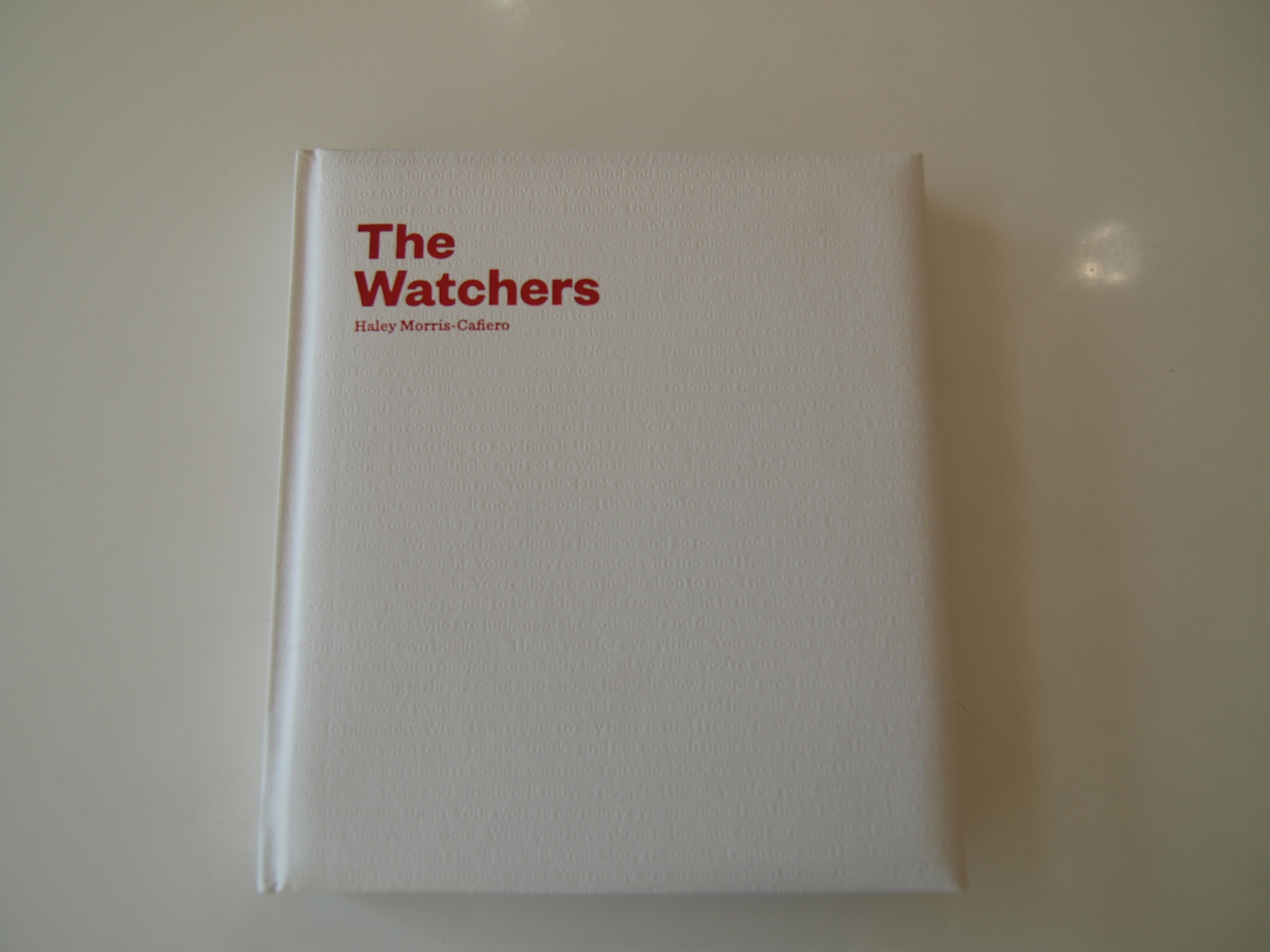
Jon: The first round of booklets went out this month. To stuff, seal and stamp 500 envelopes it takes exactly three and a half episodes of Mad Men.
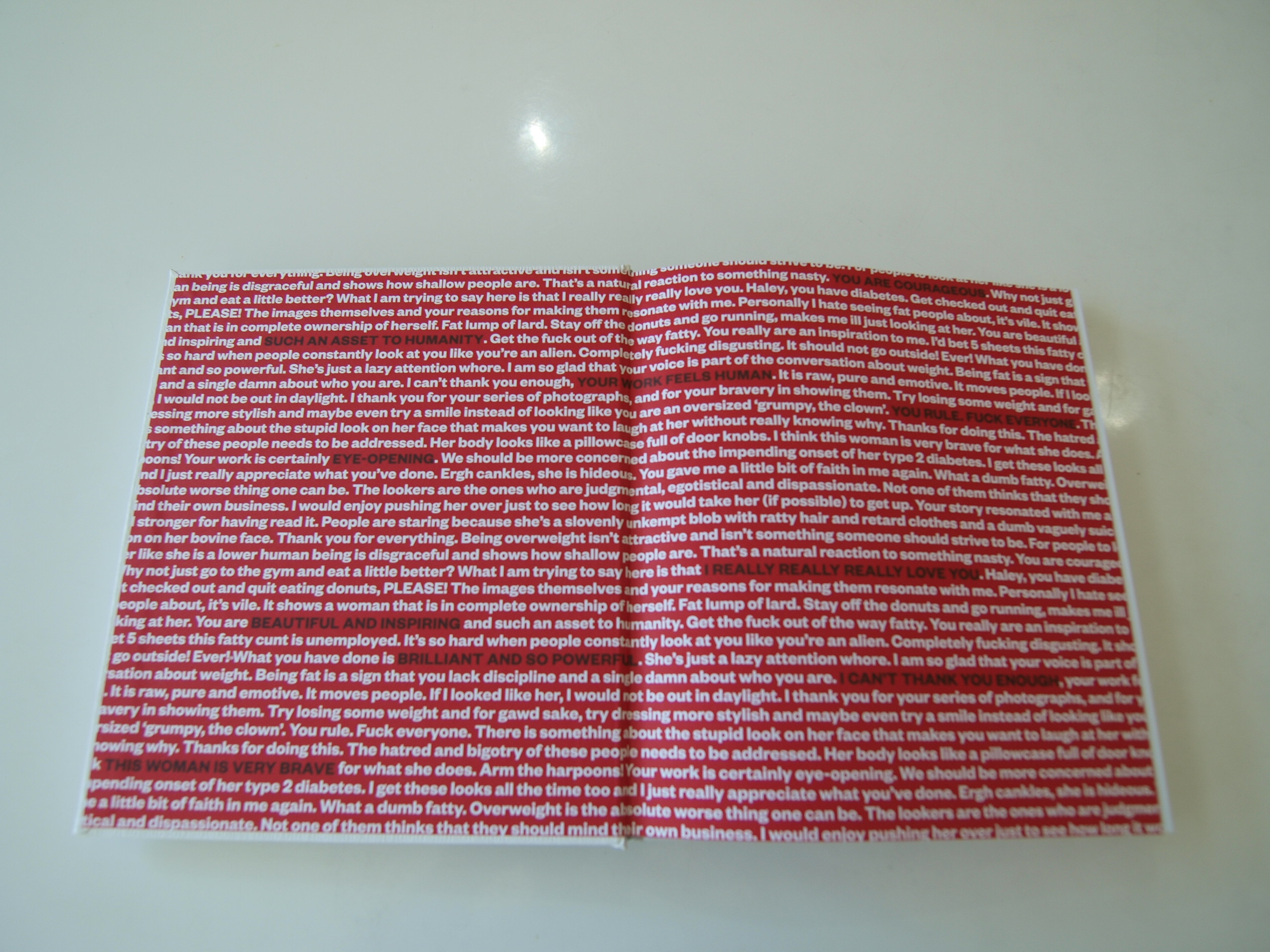
Buck the Cubicle is an ongoing series featuring people who get out, get dirty and find inspiration in all manner of offbeat occupations.

———————–

Jon and Jenna (P2) are commercial photographers based in Southern California. They work for a variety of clients but have a particular interest in businesses and people who build things. Jon is also a flight instructor and Jenna is Chair of the National Board of ASMP. They can be found at p2photography.net.

Clients include: The Cincinnati Zoo | Curves | Elevator | Embry-Riddle Aeronautical University | NBC | Perspective | Primus Power | Red Tettemer O’Connell + Partners | Rotary International | Sierra Magazine | SolarWorld | Swarovski | T. Rowe Price

P2 is represented by Meredith Bless at Taiga Creative.


APE contributor Suzanne Sease currently works as a consultant for photographers and illustrators around the world. She has been involved in the photography and illustration industry since the mid 80s, after establishing the art buying department at The Martin Agency then working for Kaplan-Thaler, Capital One, Best Buy and numerous smaller agencies and companies. She has a new Twitter feed with helpful marketing information believing that marketing should be driven by a brand and not specialty. Follow her on twitter at SuzanneSease.