Traveling to Denver for the Month of Photography 2019


There was a time, years ago, when I wrote travel pieces in the column.

I regaled with tales of cities near and far.

I also reviewed photography exhibitions, and for years I interviewed photo industry types, transcribed them myself, (yes, it was laborious,) and shared lightly-edited-long-reads with you, our loyal audience.

That this column has evolved into mostly book reviews, with a few portfolio review stories sprinkled in is mostly a function of habit, and the fact that I am a much busier person than I was when I began writing here nearly 9 years ago.

But…(there’s always a but,) I do try hard to freshen things up from time to time, because lord knows I don’t want to bore you.

This year, my upcoming travel schedule is immense. Like, I’m not sure how I’m going to make it all work.

It’s a good problem to have, and I promise I won’t complain about it, but I’m hoping to turn it to our advantage.

With Portland upcoming, two trips to NY and California, plus Chicago and possibly Europe, I’m going to eat a lot of great food, meet fascinating people, see interesting things, and hopefully listen to great music.

Most, if not all of the trips will have a photographic context, so I’m hoping to review more exhibitions this year, and write about the cities themselves. (Like the old days.)

I bring this up because last Saturday morning, shortly after breakfast, I hopped into my black SUV and hit the road North to Denver.

There is absolutely nothing wrong with going into Casa Cannabis, the first weed dispensary across the state line, and buying some legal marijuana. That the guys working there know your name when you walk in, and hand you a $4 Willie Nelson joint as soon as you say “I’m heading north to Denver,” makes it all the sweeter.

You’ve likely heard about the fact that legal marijuana has become a more frequent occurrence here in the US, with 10 of 50 states legalizing it. (And more that allow it for medicinal purposes.)

That New Jersey and New Mexico, my OG and adopted homes, both narrowly rejected legalization in the same month was a cruel irony for me.

From San Luis it’s only 15 miles or so up to the feet of Blanca Peak in Ft Garland, and then it was a straight shot over La Veta Pass, crossing the Rocky Mountains at a fairly low point. (Fairly low being only 9.426 feet.)

On the Western side of the pass, you’re in the San Luis Valley, at 8000 feet, and the places smells more like the Wild West than Bill Hickok’s underwear.

Cross over, through last summer’s fire damage, and you find yourself staring at 1000 miles of the Great Plains. The light and colors are different.

(The altitude is lower on the Eastern side, so much so that heading home I lost 20 degrees Fahrenheit in 10 miles.)

After a quick pee stop at a surprisingly crowded gas station in Walsenburg, (an insanely photogenic town, if you’ve never been,) at the junction to I-25, I got on the interstate and made great time, at 80 miles an hour, until I hit the north side of Colorado Springs.

C Springs, as we call it in Taos, or The Springs, as I’ve heard it called elsewhere, is one of the most conservative places in America. The Evangelical preacher James Dobson has his Focus on the Family there, and gobs of churches abound.

The Air Force academy is there as well, and you can add the military to Evangelical Christians as the two most consistently conservative blocks in the US.

It’s a pocket, though, one that sits above the predominantly New-Mexican-derived Southern part of the state. (Pueblo is traditionally considered the dividing line between Northern and Southern Colorado.)

All was well, and I was imagining the food treats I would buy at the outlet mall at Castle Rock, when I ran into a nasty construction-traffic-monster-fuck just outside Monument.

If I were smarter man, I might have gone online to discover such problems. Instead, I drove straight into a 1 hour cluster-bomb, and found myself licking the barbecue flavor off my fingers, after eating every potato chip in my car. (Yes, I’m exaggerating.)

Now, I was about to tell you about my shopping adventures, because I got a great deal on a cheap suit, but realized that was just one step too far. (Even for a travel piece.)

Plus, I want to give Denver some love before this column is over.

Really, it’s about Denver up there in Colorado.

They call it the Mile High City because it sits just above 5000 feet. (These days, Gen Z might get confused and assume it’s because of the Green Rush.)

As you know, I’ve been to most of the major cities in America, and Denver is the biggest boom town I’ve seen in this country over the last ten years.

I had a couple of shows there years ago, but because I have
family in Denver and Boulder, every trip gets eaten up by the kids and cousins.

Every time.

I never carve out a chunk of time to work, so I haven’t been to the galleries or the museums, with few exceptions.

Why was this time different, you ask?

What changed?

Well, the fact is, I give you all so much advice. It became my motivator. I always say, “Get out of your comfort zone. Do things you haven’t done before. Go see people in the real world.”

Right?

Don’t I say that a lot?

When I heard that one of my best friends was invited to be a portfolio reviewer at Denver’s Month of Photography 2019, I told him I’d drive up to say hello and check out their scene.

I admit, it was a first, going to a portfolio walk at a place where I wasn’t invited. (The portfolio walk in downtown Denver, like at most festivals, was free and open to the public.)

There were a few “what are you doing heres?” and a bunch of people who came up to say hello with a bemused look on their face.

When I was asked why I’d come, I told the truth.

I get flown around the US to all these festivals, but I didn’t really know the folks in the Denver scene. So I took it upon myself, on my dime, to go see what things were about.

(And to visit my friends, as another had decided to come hang out as well.)

If you want to meet people, sometimes, it’s better not to wait around and hope.

You just make it happen.

As it turns out, I saw enough cool work that night that I’ll be writing an upcoming article about “The Best Work I saw at the MoP2019 Portfolio Walk.”

The folks at the review told me it had been run for years, (as had the festival,) by Denver’s photo guru Mark Sink, but that CPAC, the Colorado Photographic Arts Center, would be taking it over for the 2021 festival. (It’s a biennial.)

My friends and I walked around downtown Denver a bit, which was quiet, and then Ubered it to Union Station. (Thanks, Jeff.) My brother, who’s a Republican and works in commercial real estate, told me its the most exciting development in the State of Colorado.

There were trains right outside that you had to walk around, in the open air, which was kind of cool, and inside are a bunch of food shops and a big restaurant/bar, The Terminal Bar, where we had some drinks and food.

The Apricot beer I drank was pretty badass, if I’m being honest, but the blackened chicken and prosciutto sandwich that the perky, nose-ringed waitress recommended was bland.

The bread was very white, as is the city, in most cases. And it’s hard to feel like there’s a strongly beating soul within.

But maybe I was looking in the wrong place?

Maybe the skyscrapers, grand public spaces and business auditoria are not best to judge the city?

What about a little strip mall, miles from LoDo or the hotel strip?

What about a place, on South Colorado Blvd, just off the I-25 highway interchange, a bit past a big Dave and Busters.

Not much to look at, really.

Kind of a dump.

But what if I told you that this little strip mall contained a Salvadoran restaurant, a Lebanese restaurant, a Middle Eastern market, a Syrian restaurant, and Moroccan joint, all all within 100 yards.

There’s a great recreational dispensary called The Clinic a block away as well.

Is that cool or what?

Does that count as soul, when judging a city?

I’d say so.

The next morning, I met my artist/curator/filmmaker friend Jina for breakfast at the transcendent The Delectable Egg in Lowry. It is officially my favorite breakfast place in America, so that’s something.

The waitress was sassy like out of a sitcom, and I let her steer me gently, as I’d apparently chosen her favorite thing on the menu, a tortilla pie, (like enchiladas but with flour tortillas,) but she said I needed to sub bacon for boring old chicken.

She never rushed us, not for a second, even as the tables turned around us and the line formed outside. (Our conversation was engaging enough, in fairness, that neither of us noticed the crowd.)

But it was that table turnover that I want to mention, specifically.

It’s where I’ll end.

I’m only outing my brother’s politics because he expressly complained that the new Democratic regime, which controls the governorship and legislature, might mess up this mega-boom, which has gone on for so long that they’ve begun lighting the cranes purple at night. (No lie.)

Denver is now so blue that it’s hard to believe it’s changed this fast.

Changed, like that table to my right.

When I first got there, a friendly couple of African-American women were sitting opposite each other to my right. They looked like friends in their late thirties.

The woman on the left said, “Happy Sunday, how are you!”

We had a nice little chat, as we were both excited to be there. Her daughter, who hadn’t been there before, was more dubious. (I would have guessed sisters before mother and daughter.)

They were replaced, after 30 minutes or so, by a heavy-set, middle-aged lesbian couple. One wore a baseball hat, and we never really spoke or made eye contact at all.

Only on the third seating did a nuclear, young, white, (probably,) Christian family sit down next to us.

1 out of 3.

In the recent past, it would have been 3 out of 3.

(That kind of energy, where diversity is burgeoning, is exciting.)

Now, I know that a thriving, wealthy city, with all sorts of undiscovered pockets and cultural resources, is only 4 hours from my house in Taos.

I’m ready to spend more time in Denver.

I’m convinced.

The Art of the Personal Project: Mark Laita

The Art of the Personal Project is a crucial element to let potential buyers see how you think creatively on your own.  I am drawn to personal projects that have an interesting vision or that show something I have never seen before.  In this thread, I’ll include a link to each personal project with the artist statement so you can see more of the project. Please note: This thread is not affiliated with any company; I’m just featuring projects that I find.  Please DO NOT send me your work.  I do not take submissions.

Today’s featured artist:  Mark Laita

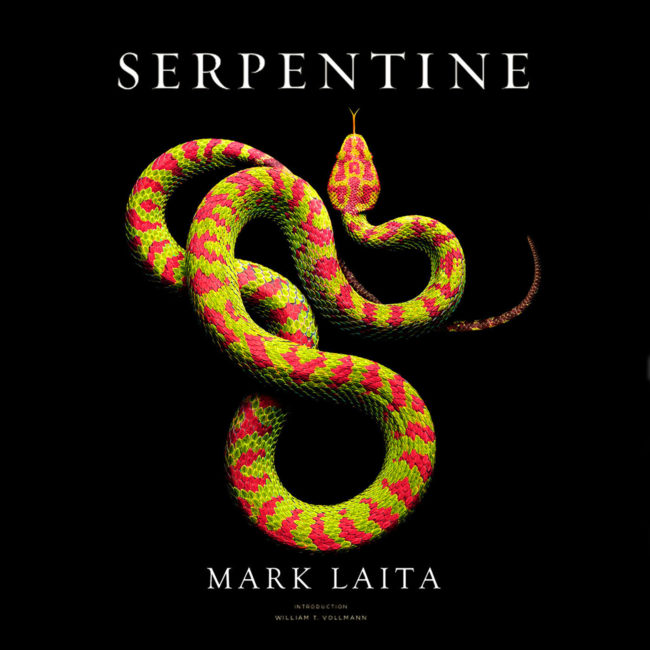
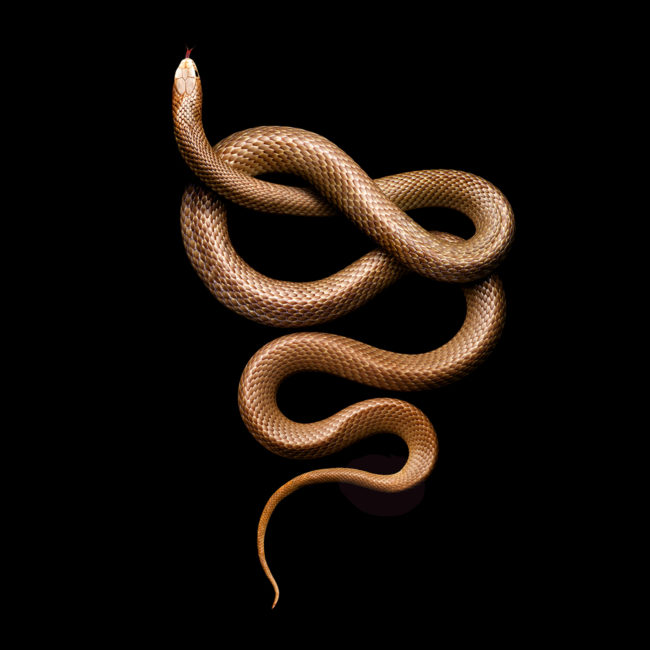
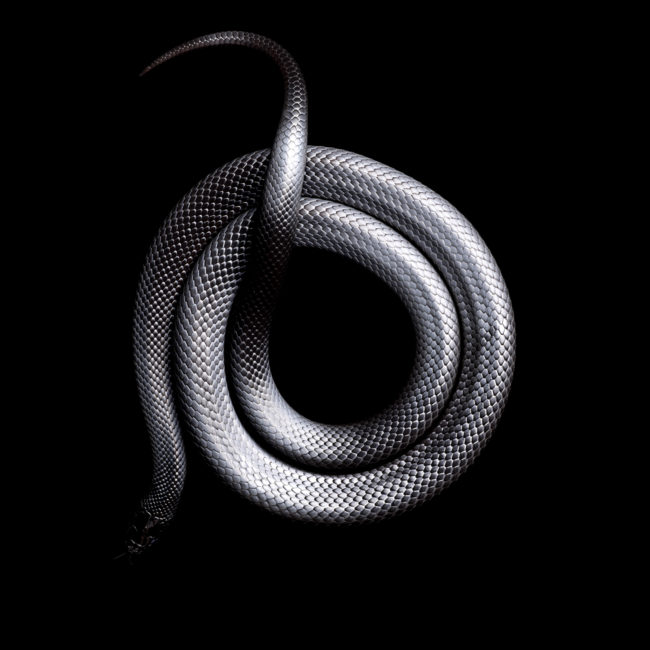
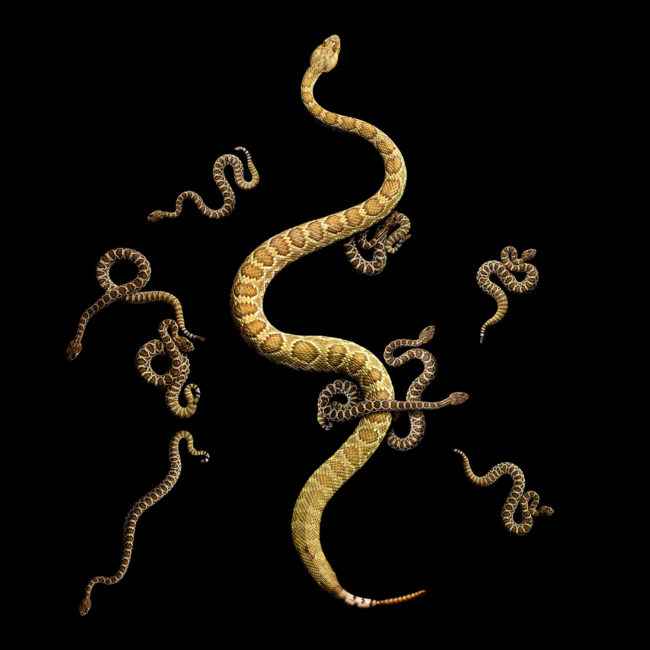
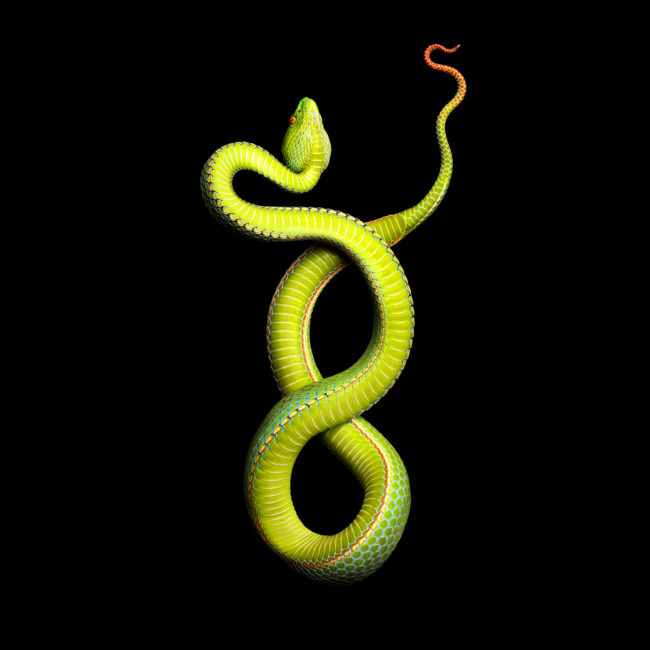
I’m always working on personal projects and a few times art book publishers have decided to turn my projects into books, like Abrams did with Serpentine a few years ago. I use my personal projects as a way to do something pure which is in no way aimed at generating money. Ironically, they usually do in some way, either as a published book or gallery show or as an advertising project. I’ve shot many campaigns that art directors admitted were meant for me from the start since their ideas come from some of my personal images. For me, Serpentine was simply a project about form and color with a little danger and symbolism thrown in for interest. Personal projects always draw me back to why I chose photography as a career as a teenager. To this day they’re the life blood of my career as well as the key to my fulfillment as an artist. As with any marriage, it isn’t always perfect, but my advertising work and my personal work have a symbiotic relationship. Commercial work funds my personal projects and personal work inspires my advertising images.


To see more of this project, click here.

APE contributor Suzanne Sease currently works as a consultant for photographers and illustrators around the world. She has been involved in the photography and illustration industry since the mid 80s.  After establishing the art buying department at The Martin Agency, then working for Kaplan-Thaler, Capital One, Best Buy and numerous smaller agencies and companies, she decided to be a consultant in 1999. She has a new Twitter feed with helpful marketing information because she believes that marketing should be driven by brand and not by specialty.  Follow her at @SuzanneSeaseInstagram


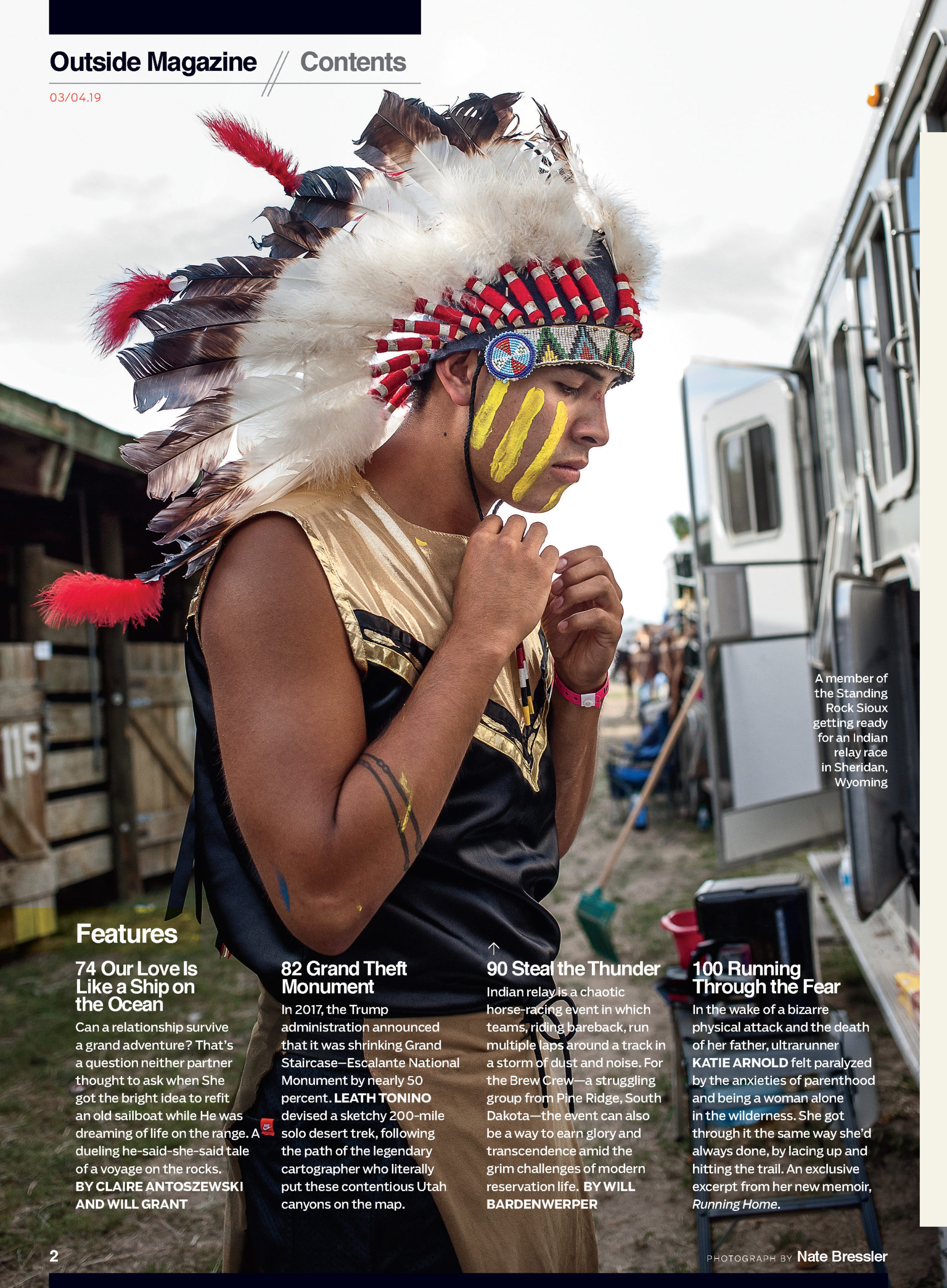
The Daily Edit – Outside Magazine: Nate Bressler

Outside Magazine

Design and Photo Director: Hannah McCaughey
Associate Art Director: Petra Zeiler
Photographer: Nate Bressler

Heidi: How did this story come about?
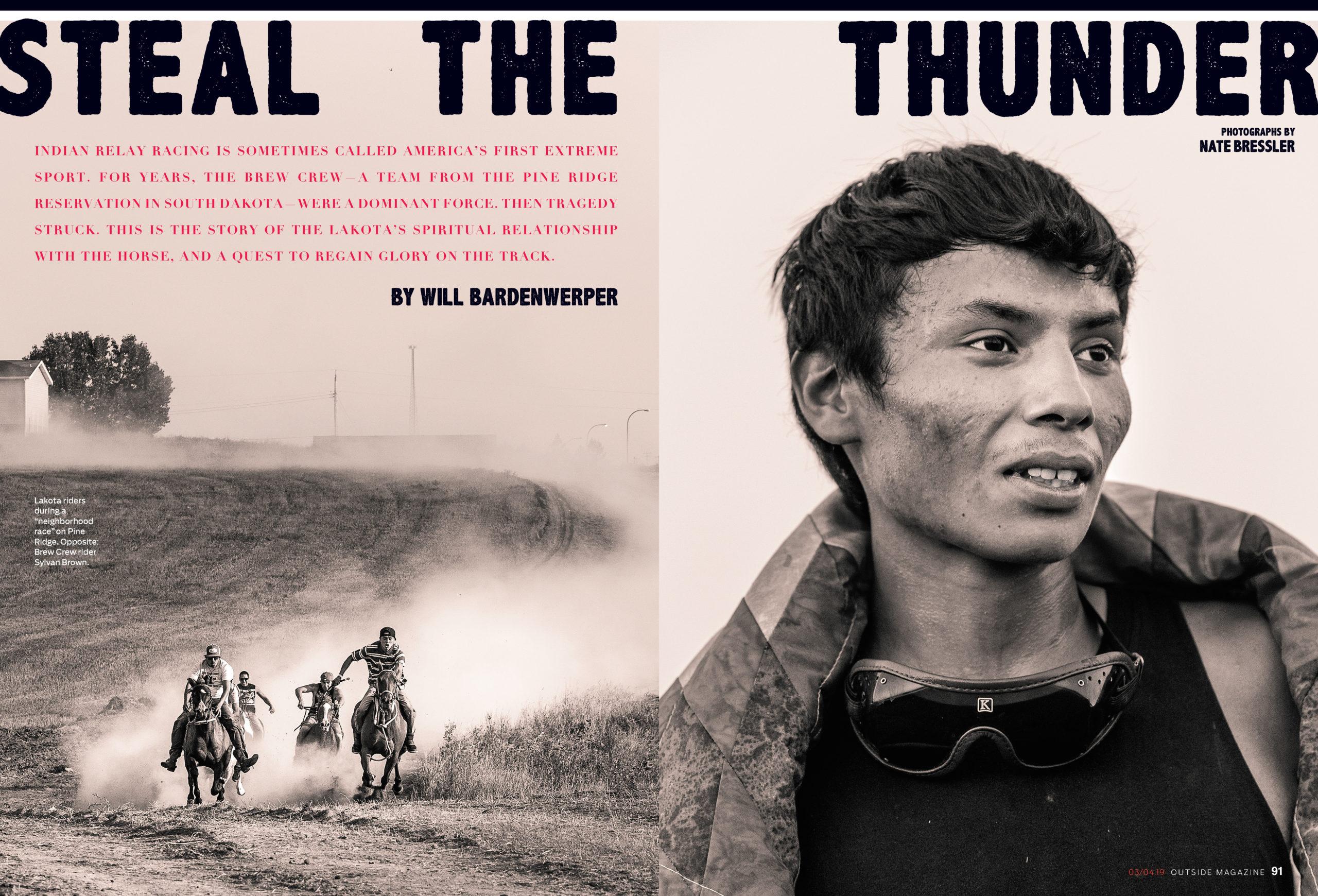
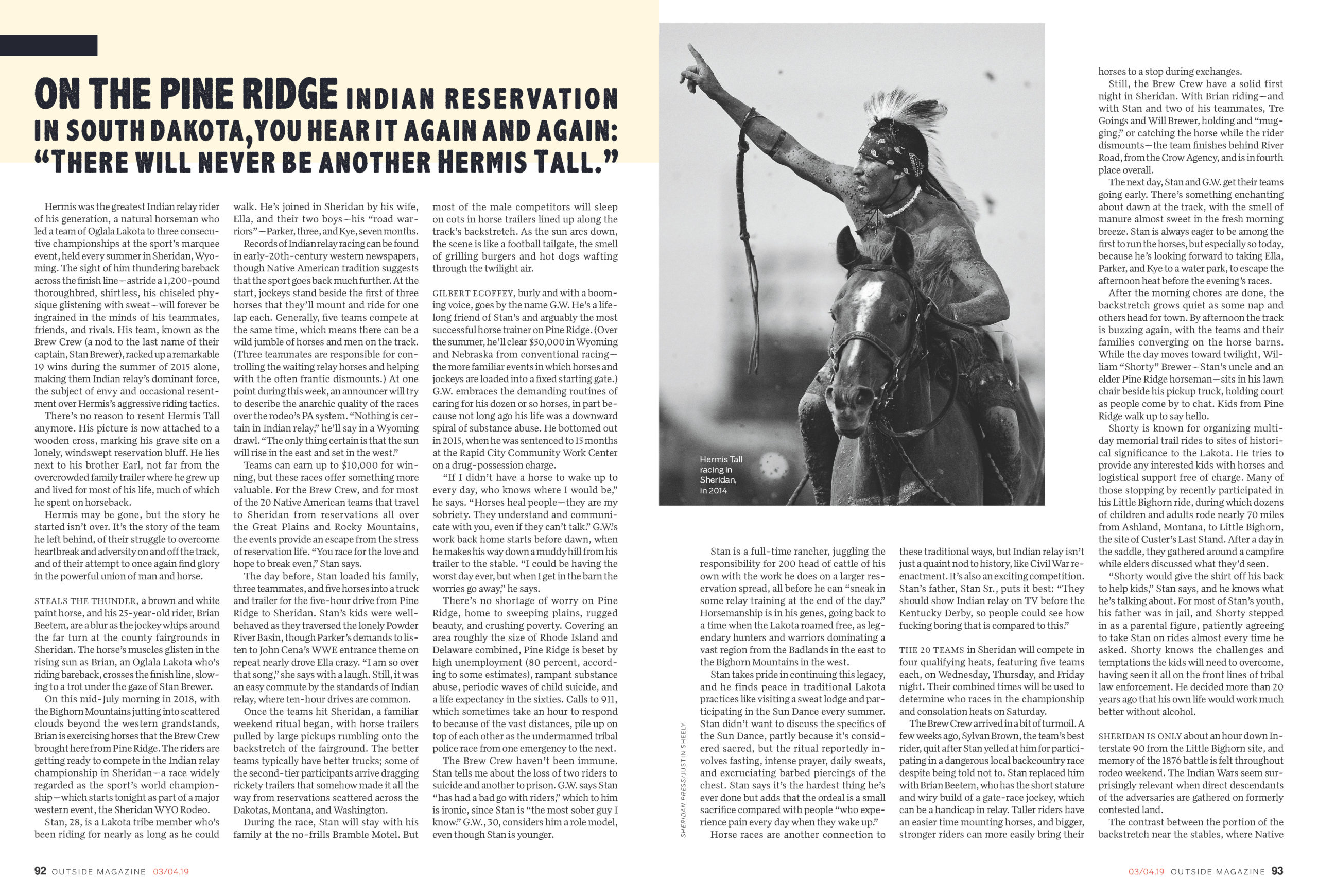
Nate: I’ve been fortunate to develop a working relationship with Outside that supports “no amount of time is too much” for an assignment, combined with my archaeology background, 37 years on a horse and months with native youth camps, we both knew being embedded would be vital to getting the story.

How long did you spend with riders/racers?
I ended up spending four months with the teams, splitting my time between Pine Ridge and a ranch where I run cattle just north of the reservation. Most nights were spent on floors, couches, the bed of my truck or the ground below the Sun dance tree of a new dear family where we spent long hours talking about problems and solutions of the wounded Lakota nation.

What direction did you get from the magazine?
I’ve been a contributor with Outside over 15 years so Hannah stressed the importance of portraits, knowing I should have plenty of reportage moments, from there, the rest was up to me.
Before meeting the writer and racers, I had many lengthy calls with them about what I did not intend to do w my camera, Pine Ridge is infamous for being the worst living conditions in the US and I didn’t want to add to all that press, I let them know that I was there to capture this story in a positive light and leave the depressing stuff to others.

Tell me about the suicides and last second wins, did that relate to any of your images? How did that impact you while you were there?
Summer race season is an incredible distraction from life on the reservation, where childhood is difficult for many growing up in the third world conditions. You can feel the weight lifted off these team members when they load their horses for another race weekend. Unfortunately, the Brew Crew had suffered more than their share of loss, the months I spent with them was never quiet with talk of their virtuoso rider who had taken his life the summer before, just days after winning the World Championship. With friends and family of my own suffering the same fate and an epidemic four times the national average on Pine Ridge, I knew what these young kids were up against. Between high drug/alcohol abuse, an 80% unemployment rate and 17 people per single wide trailer, their life of hard times was very apparent though my camera lens. As our relationship grew, so did the thoughts of a safe shelter for kids to ride during winter months and a classroom to finish the days studies. From these talks a nonprofit was started with the aim to educate native youth and support them through early spring also known as suicide season on many reservations. There’s a need and an obtainable solution to help the native youth that’s been the cause of many sleepless nights, turning my embedded assignment into a project beyond the story itself.

Was it easy to be accepted into the group of riders?
The groups of riders were very accepting by all teams w a weariness of only a select few, unsure of the nonnative w a camera, the jokes flowed freely along w the herbal medication and the commandery of a Kansas born outdoorsman and the Great Plains natives I was camping, cooking and riding horseback with. We all had some form of ranching backgrounds, an understanding of the importance of youth programs affiliated with horsemanship and the hardships of life on the reservation. The race community is small amongst the enormous backdrop of the America’s west so with enough race weekends under my belt their acceptance into the worlds first extreme sport felt as though we had known each other for years.

How difficult was it to shoot the race since the laps were so fast?
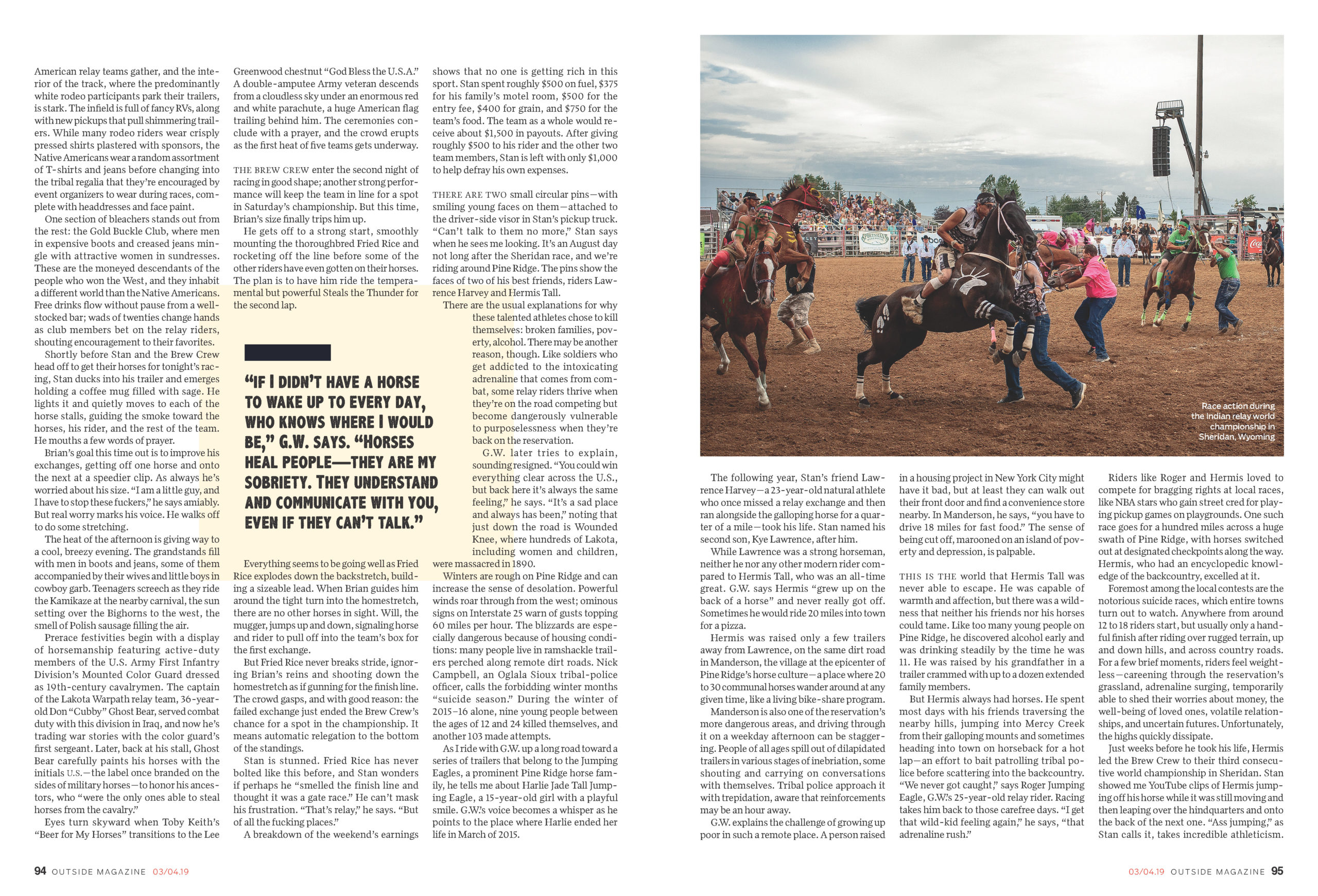
Shooting the races had its challenges with the obvious factors of light, angle and the ability to get clean shots came the moments of laying on the track in some blind corner, under the rail, my head out just enough to get the riders who will entering the corner at 40+ mph and unaware of the photographer at their feet. These horses are hot-blooded and warmed up to frenzy come race time, with their high hips and pulsing veins the thoroughbreds will deliver the pic as long as you move just as fast in this chaotic 2 minute race.

Did you also ride?
With surfing being so popular and my local breaks becoming too crowded and overly aggressive, I found myself seeking out horse adventures, still wanting to fill that craving for a connection with the outdoors and the elements out of my control, my last ten years on horseback has taken me on 500 mile endurance rides, cattle drives to brandings and hosting week-long group rides for adventurers looking to sleep under stars.
Between the nonprofit riding arena, the cows I own and ranch w others just outside the reservation and 1,000 miles on the pony express, this summer will keep me horseback daily.

How did you grow as a photographer from this assignment?
I’ve kept a full-time job since I was 15 and as an artist, your life of projects is never finished, with that said I realized through my bond with a this incredible nation and seeing ways to help, I’ve felt a sense of purpose that never came from the grind of being a struggling artist with a bachelor lifestyle. The desire to see things change has ignited a fire within, changing my life for many years to come, the thoughts of happy kids laughing together, leaving their worries behind for a couple of hours a day is my drive well beyond this photo world filled with so many unknowns.


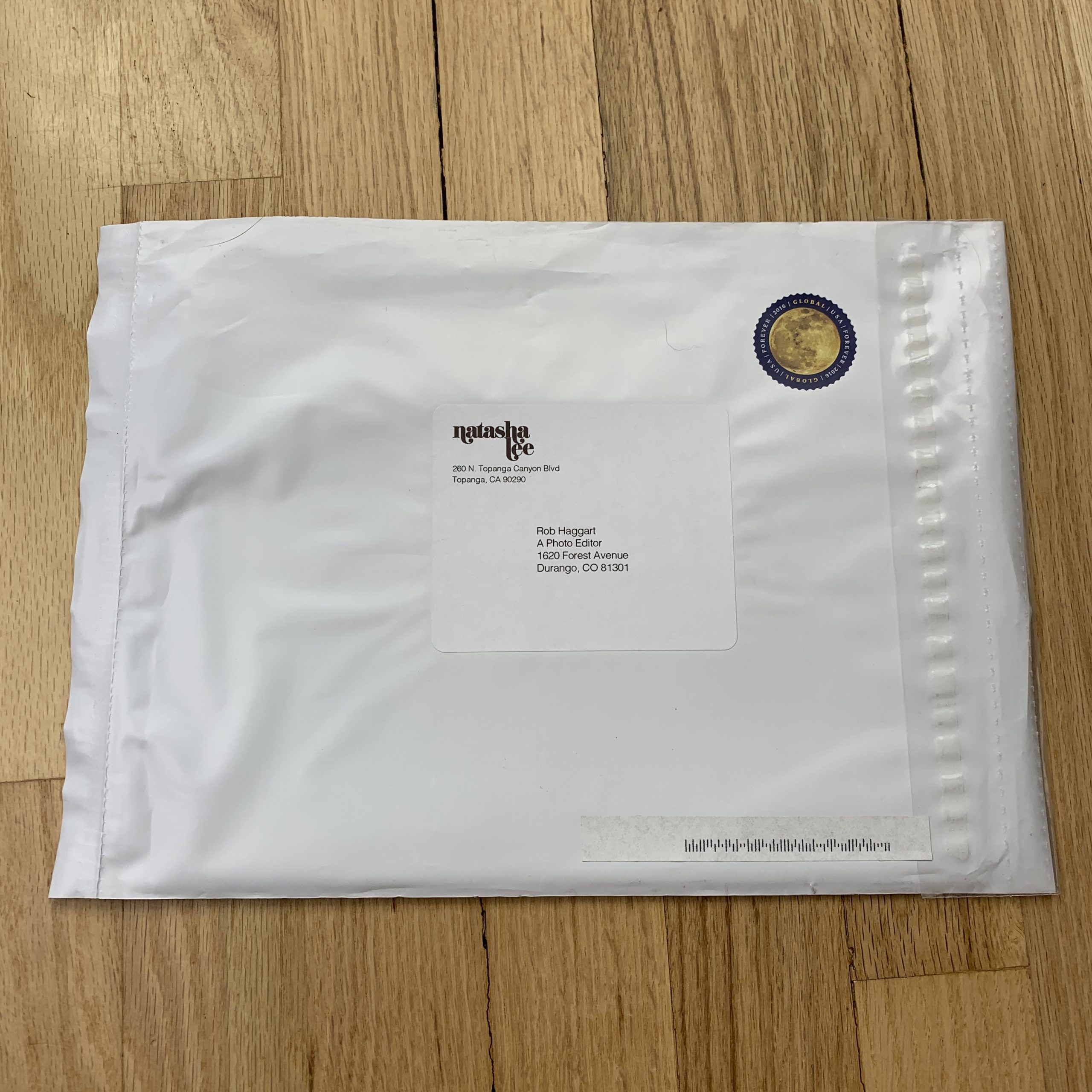
The Daily Promo – Natasha Lee

Natasha Lee

Who printed it?
The Newspaper Club, a UK-based printing company.

Who designed it?
I did (prior to photography, my background was in design/art direction for fashion and entertainment companies).

Tell me about the images?
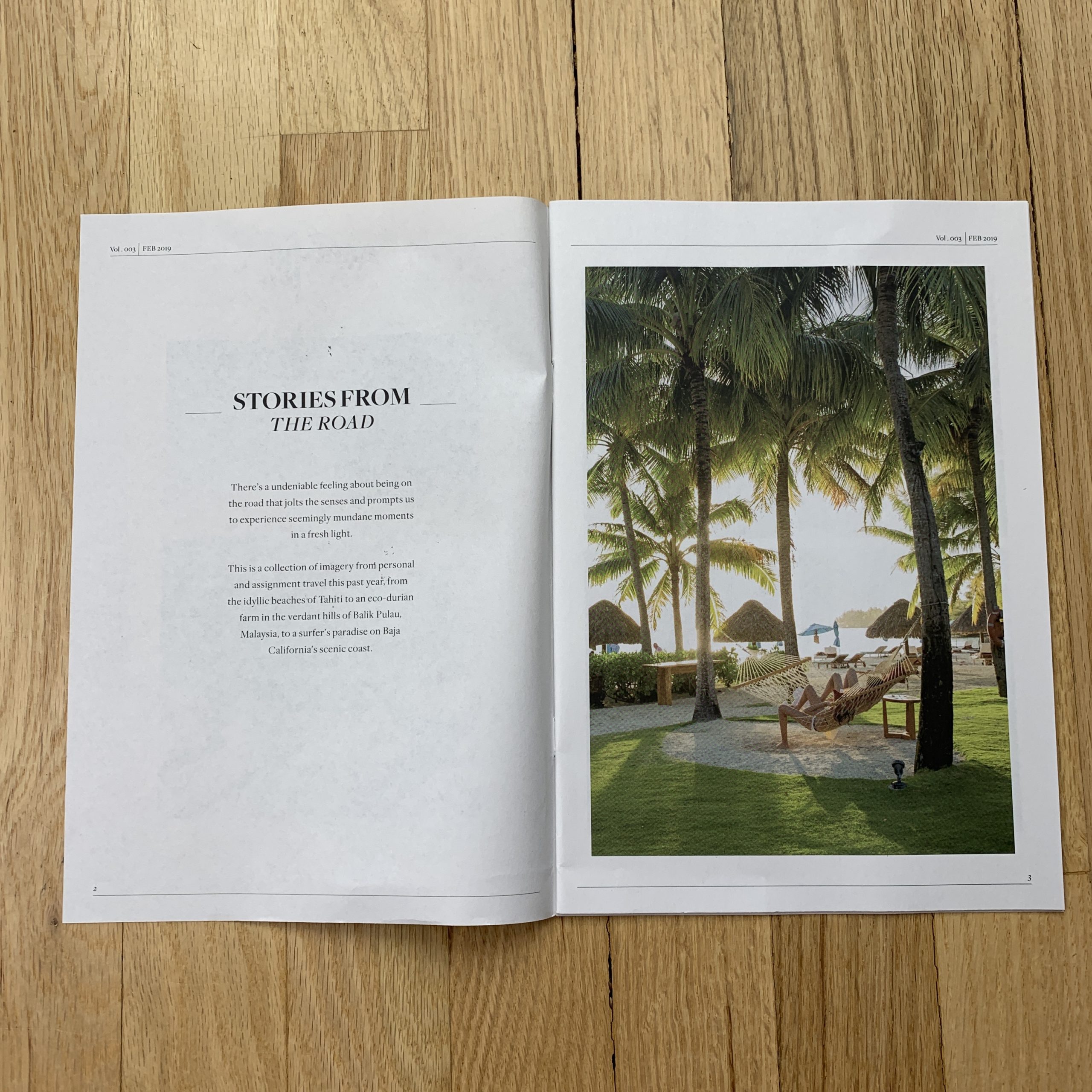
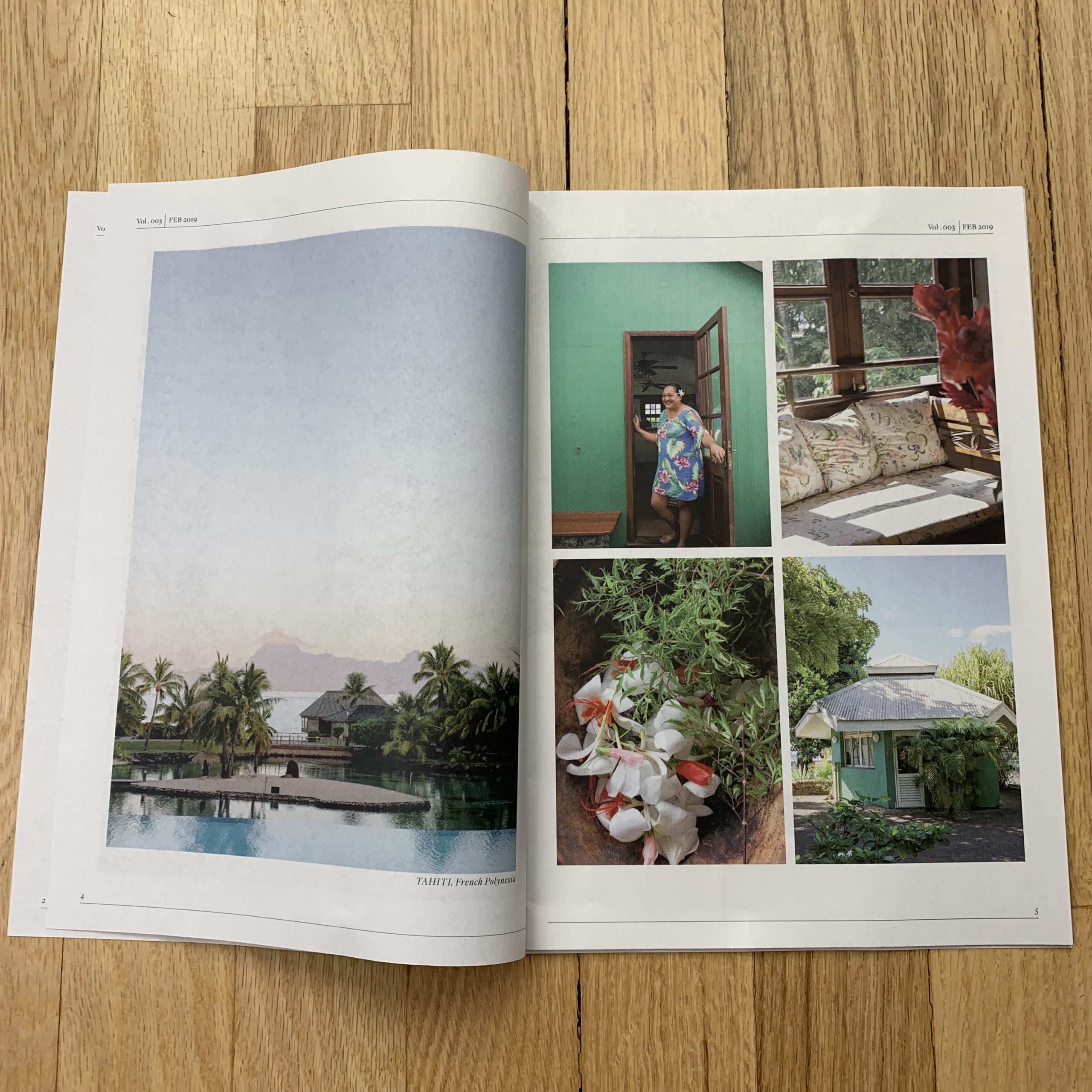
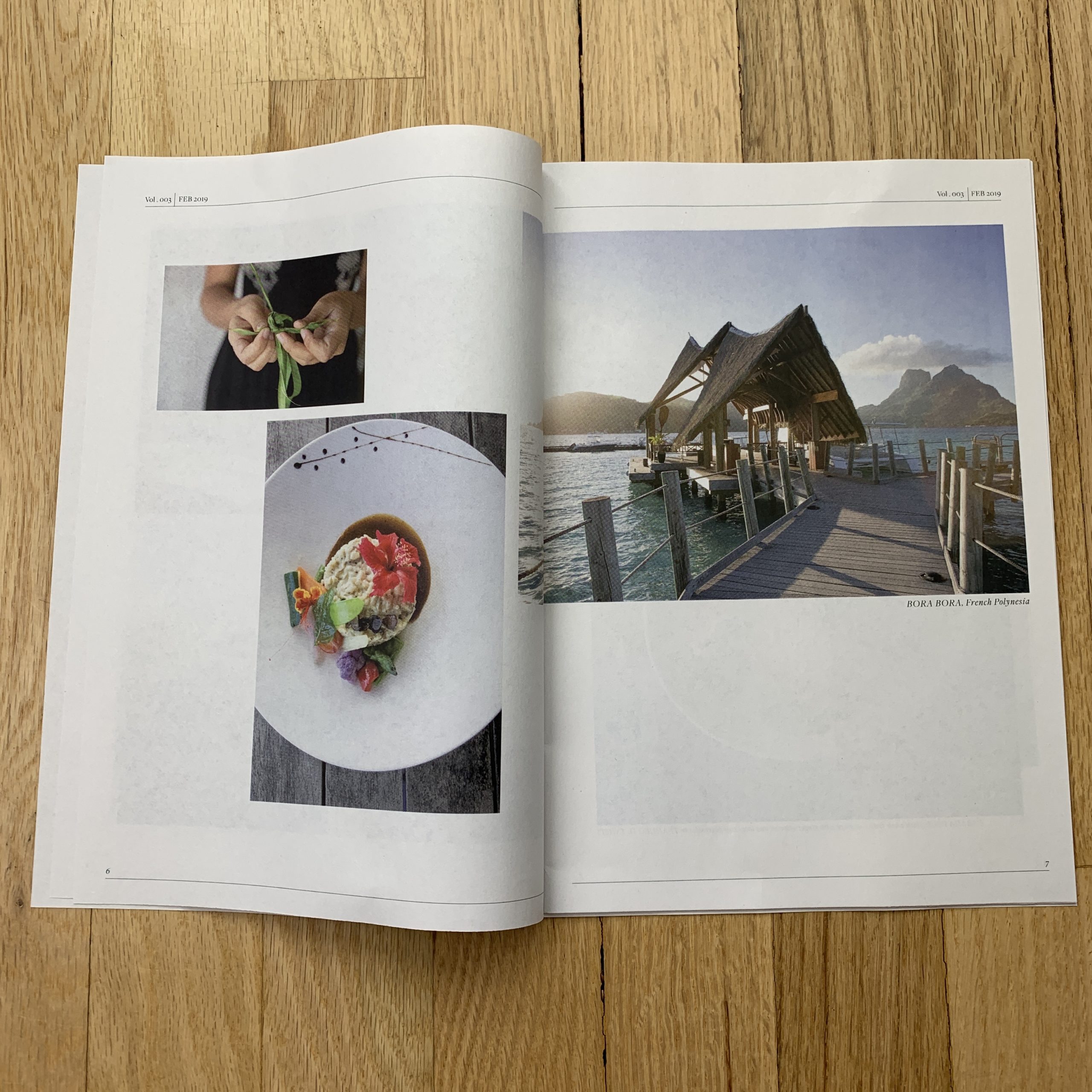
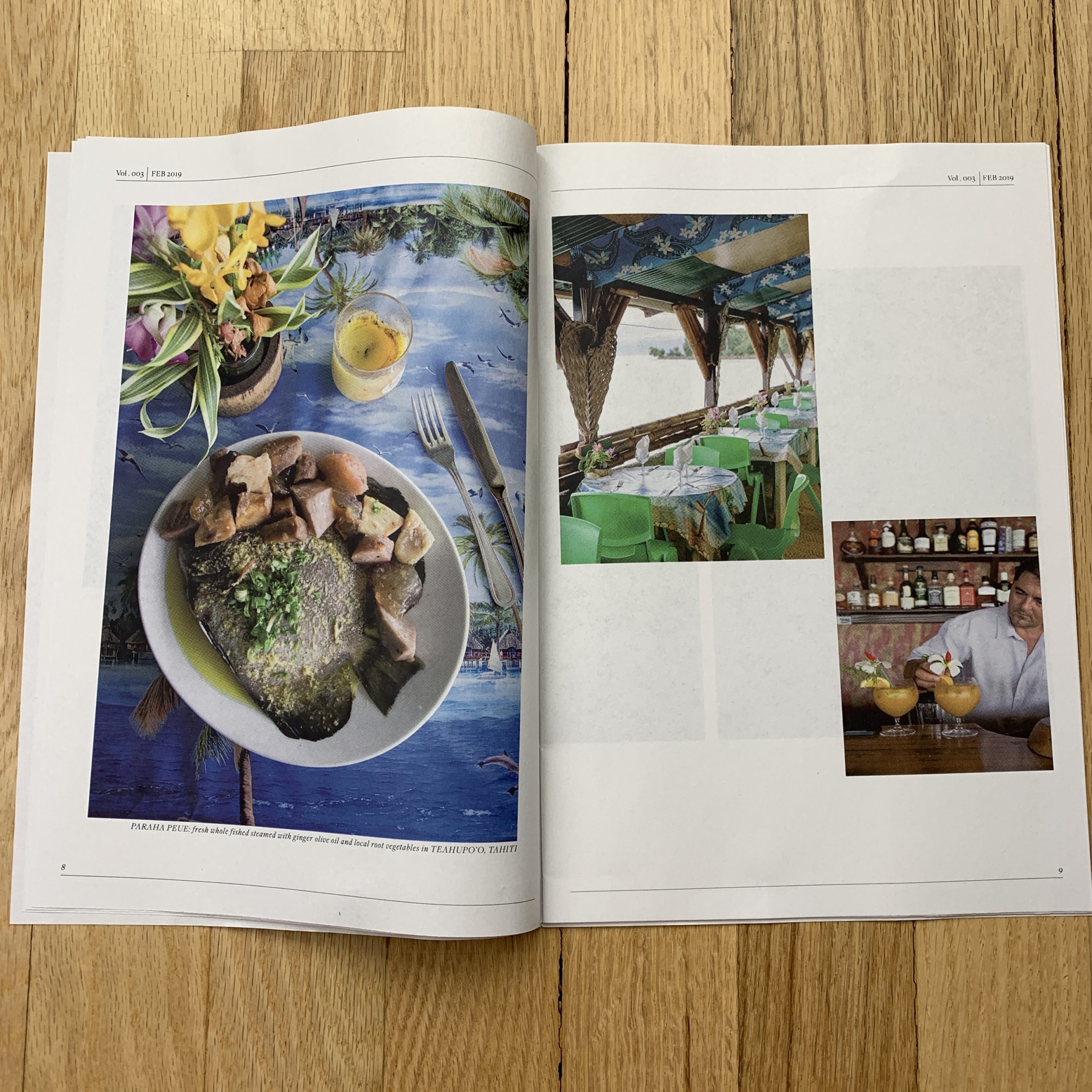
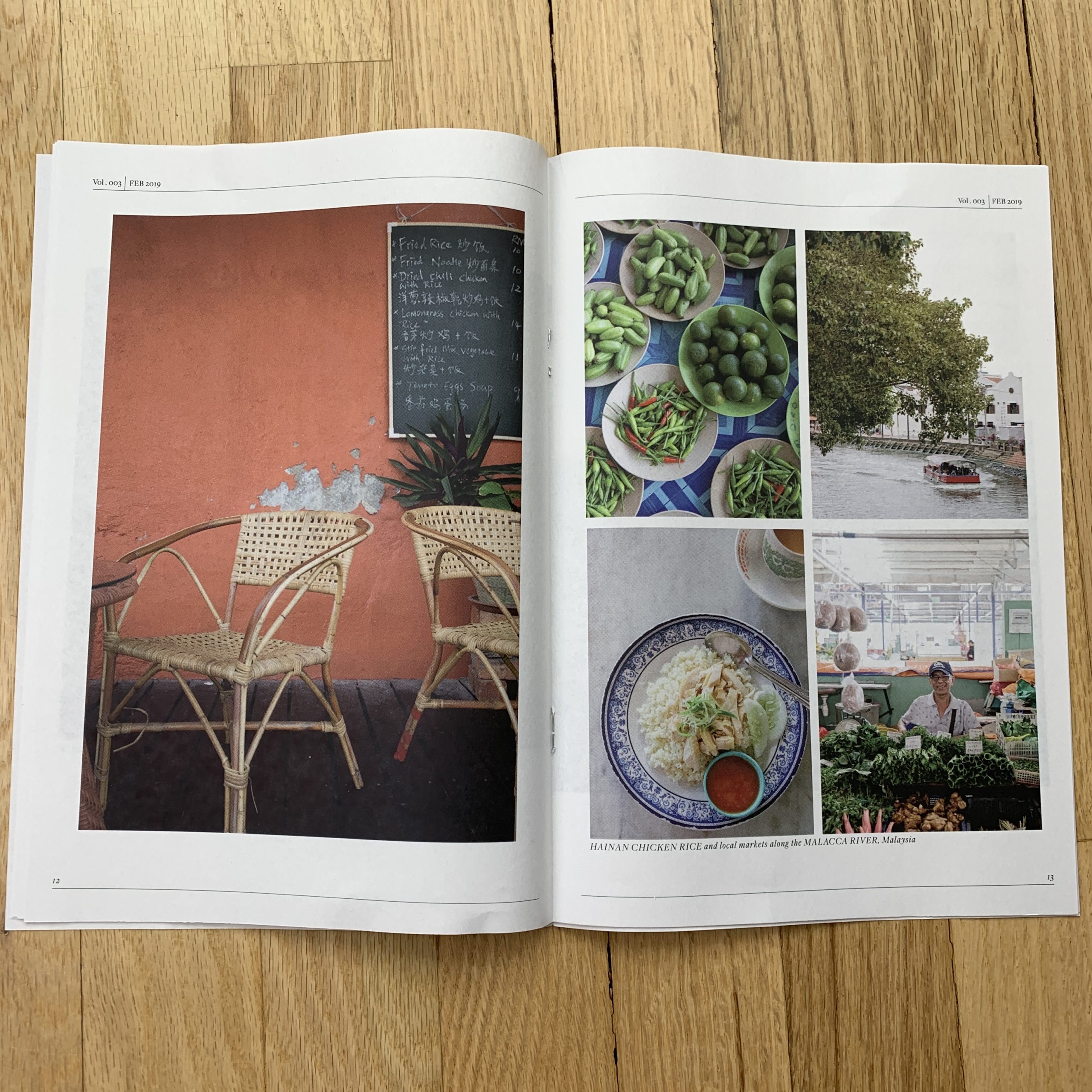
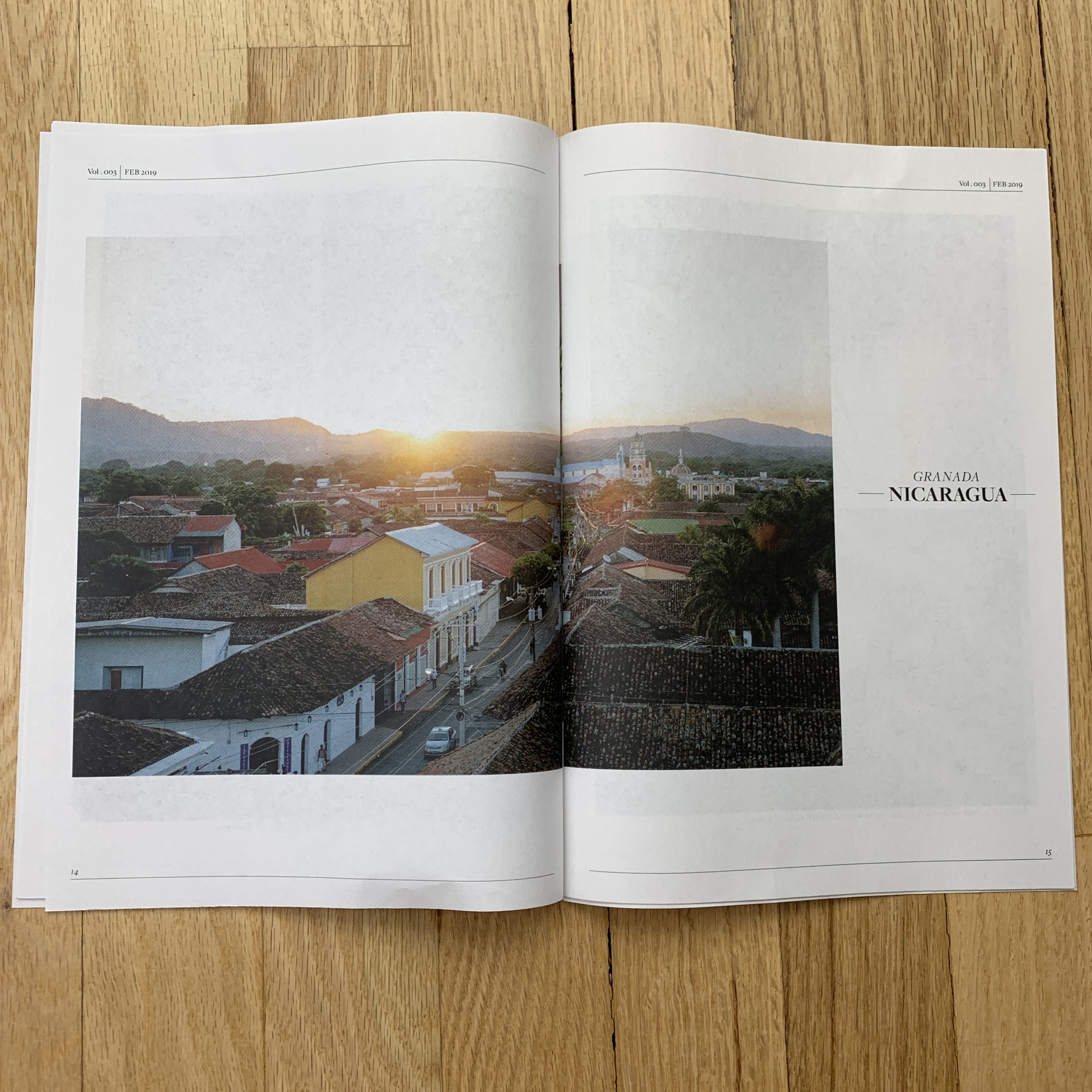
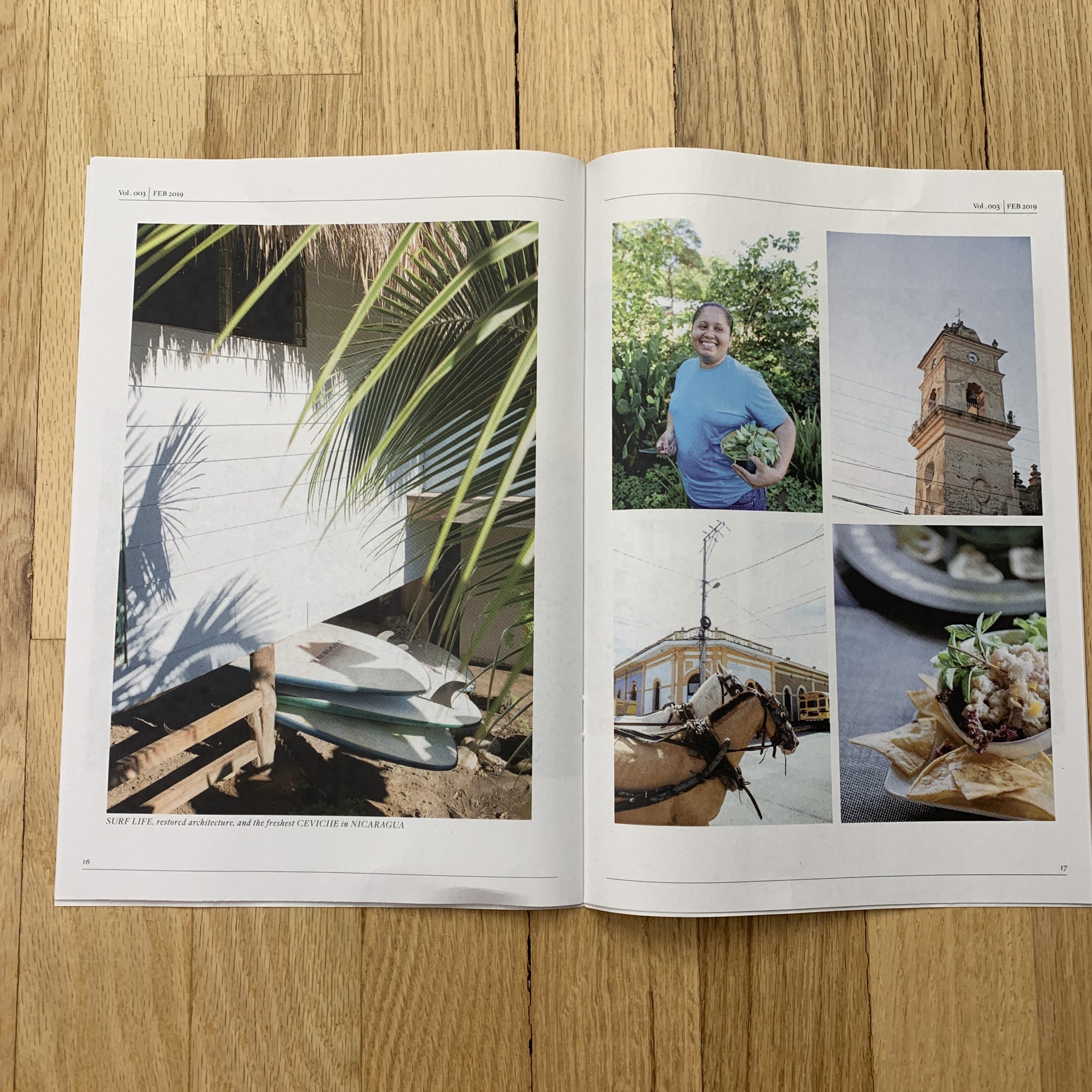
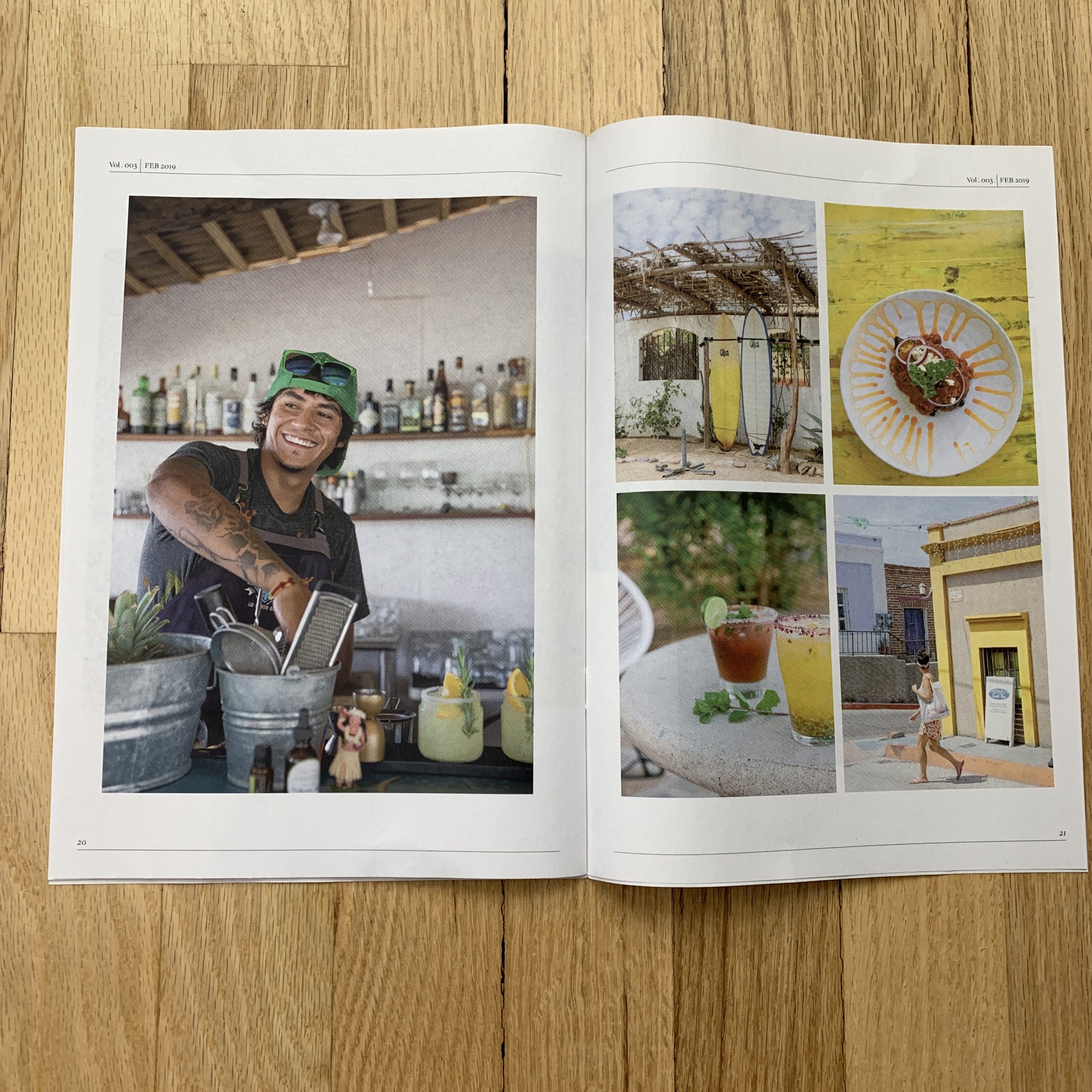
The images are a combination of work from assignment, personal projects, and personal travel. The Tahiti images were from an assignment for Hemispheres Magazine last year; a few were selects and others were outtakes I liked and felt told their own story. Earlier that year, I shot a personal project on an eco-durian farm in Penang, Malaysia that will be in an upcoming issue of an indie magazine called Compound Butter – a few of the images are from that series. Others are from personal travels when I’m simply exploring and capturing subjects and spaces that catch my eye.

How many did you make?
150 – i mailed out about 100 and kept the rest for meetings/reviews

How many times a year do you send out promos?
1-3

Do you think printed promos are effective for marketing your work?
I’m actually wondering that myself right now! ! I’ve always thought it was a good way to communicate your style of work but was at an APA event just a few days ago where the art buyers on the panel all mentioned how much they use Instagram to find photographers. So I’d be curious to hear from others about what they think of the future of the printed promo and if it’ll become obsolete in our increasingly digital world. But personally, I love sharing my work in printed format to photo editors/art directors, especially since I have a huge passion for travel editorial and visual storytelling. For me, creating printed pieces gives me complete control of a story I want to tell and the audience I want to tell it to, beyond the limitations of an on-screen square.

This Week in Photography Books: Ingvar Kenne


I’m going back to Jersey next month.

(It’s been a while.)

My cousin’s daughter is having a Bat Mitzvah in early April, and if I told you it took me two months to plan my trip, you’ll have to trust that I mean it.

The amount of phone calls, texts, internet searches, Orbitz fuckovers, and general stress that went into it were enough to give me an ulcer.

Well, that’s not true.
I don’t have an ulcer.

I don’t even really know what that means.

It just sounded good.

You could imagine me shaking my finger at you, raging like a grumpy old man, about how much stress my travel plans caused me.

(It’s all because Mercury is in retrograde, I was recently told.)

Things are mostly locked down now, thankfully, and I can officially report I’ll be visiting AIPAD on Friday April 5th, in the early afternoon, in case you’d like to say hello. (APE audience meet-up?)

It looks like I’ll be taking cars, trains, planes, monorails, cabs, Ubers, boats, and an airport shuttle, all just to ping around the Tri-State area like the pinball that is Donald Trump Jr’s attention span.

“Dad, can I have a puppy? I mean a new go-kart. I mean Richard Pryor. No, I mean a gold fish. No, a football team. Daddy, can you buy me a football team? Buy me a football team, Daddy! But not in the NFL. I want a team in the USFL, Daddy, the USFL!”

The upshot is, I’m going to get drunk at a 13 year old girl’s birthday party.

Now, if you know me, you probably think I’m being ironic here. That I’m making fun of the situation. (Or taking the piss, as the English say.)

But I’d never do that because it would get back to my cousin Stefanie, and she’s so tough she’d cut me.

So I’m definitely not making fun of this party.

Rather, I’m excited.

People go all out back there in Jersey, when it comes to Bar and Bat Mitzvahs. Great food, booze, entertainment, music, dancing.

Everyone’s in a good mood.

Dancing Grandma’s are always a great visual, and needless to say people always hide out in the parking lot to smoke a ton of @#$#%$#$.

For whatever reason, this ancient Jewish rite of passage, in which 13 signifies being a grown up, (I’m sure it probably all comes from marrying kids off young. Yes, it’s gross. But that’s not the point today,) morphed into a 20th/21st Century tradition of getting dressed up, dropping a ton of cash on the whole experience, and partying like the caviar is running out of the sea.

(Oh wait. Bad example.)

I haven’t been to one of these in a few years, and even that one was in Boulder, which is the Jewish equivalent of Norway, compared to the mother-land of the greater NYC area.

I’m properly fired up.

I mean, it’s not like I’m gearing up for a bachelor party.

That would be inauthentic, as I’ve never been to one. (Not even my own.) I had a bougie weekend with my brother and two friends, eating prosciutto-wrapped, barbecued oysters and drinking expensive wine in Napa, and if I had it to do over again, I’m pretty sure I’d go in a different direction.

My Australian buddy Pappy was there with me, enjoying each and every bit of the gluttony, but secretly, deep down, I think he knew that I was copping out.

Hard.

Those Aussies.

They don’t do partying half-way.
No, sir.

Don’t you wish you could be a fly on the wall for all that insanity, when the Australians really let it go?

I bet you do.

What’s that?
Can I help you?

Why yes, I suppose I can.

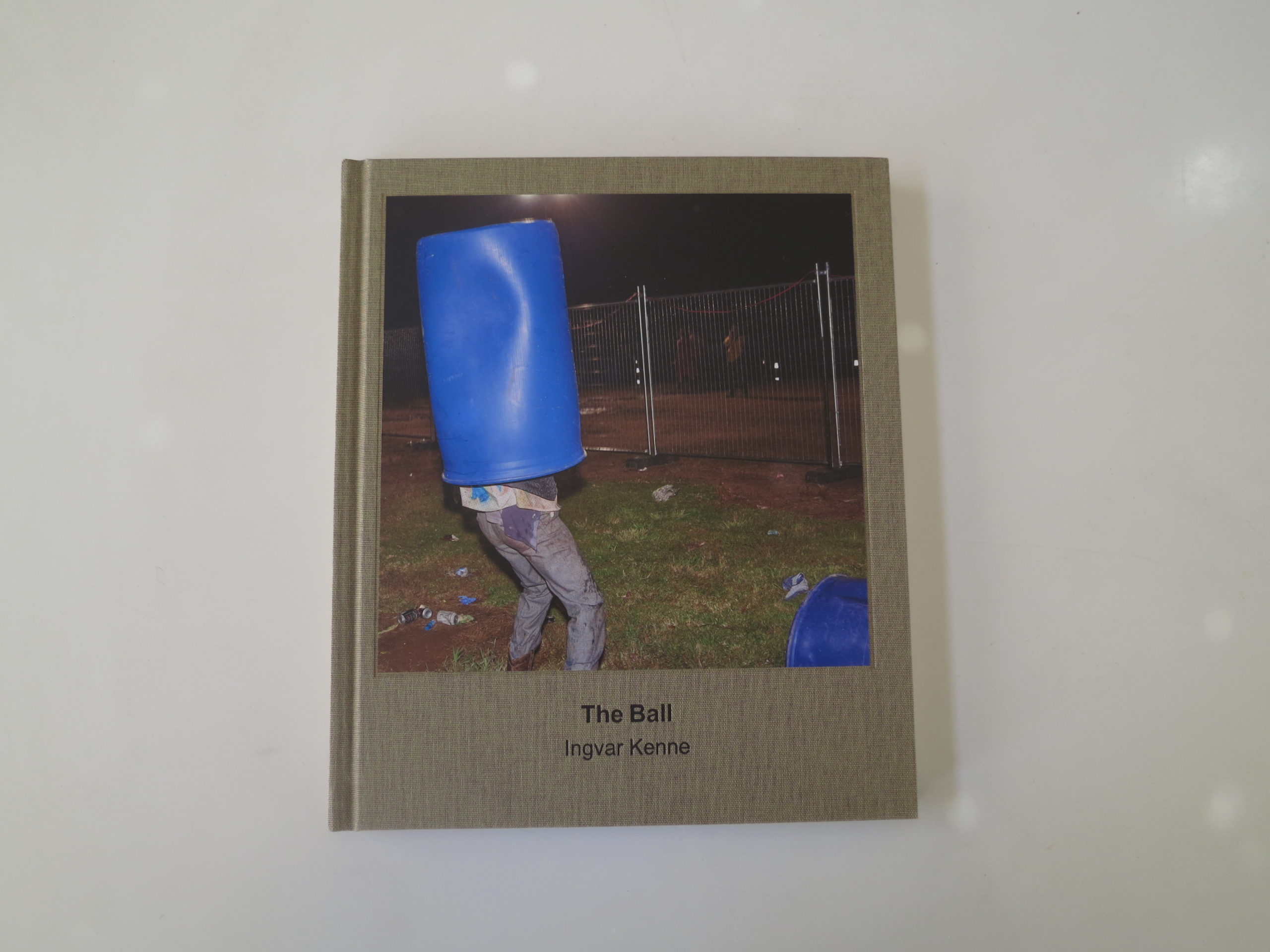
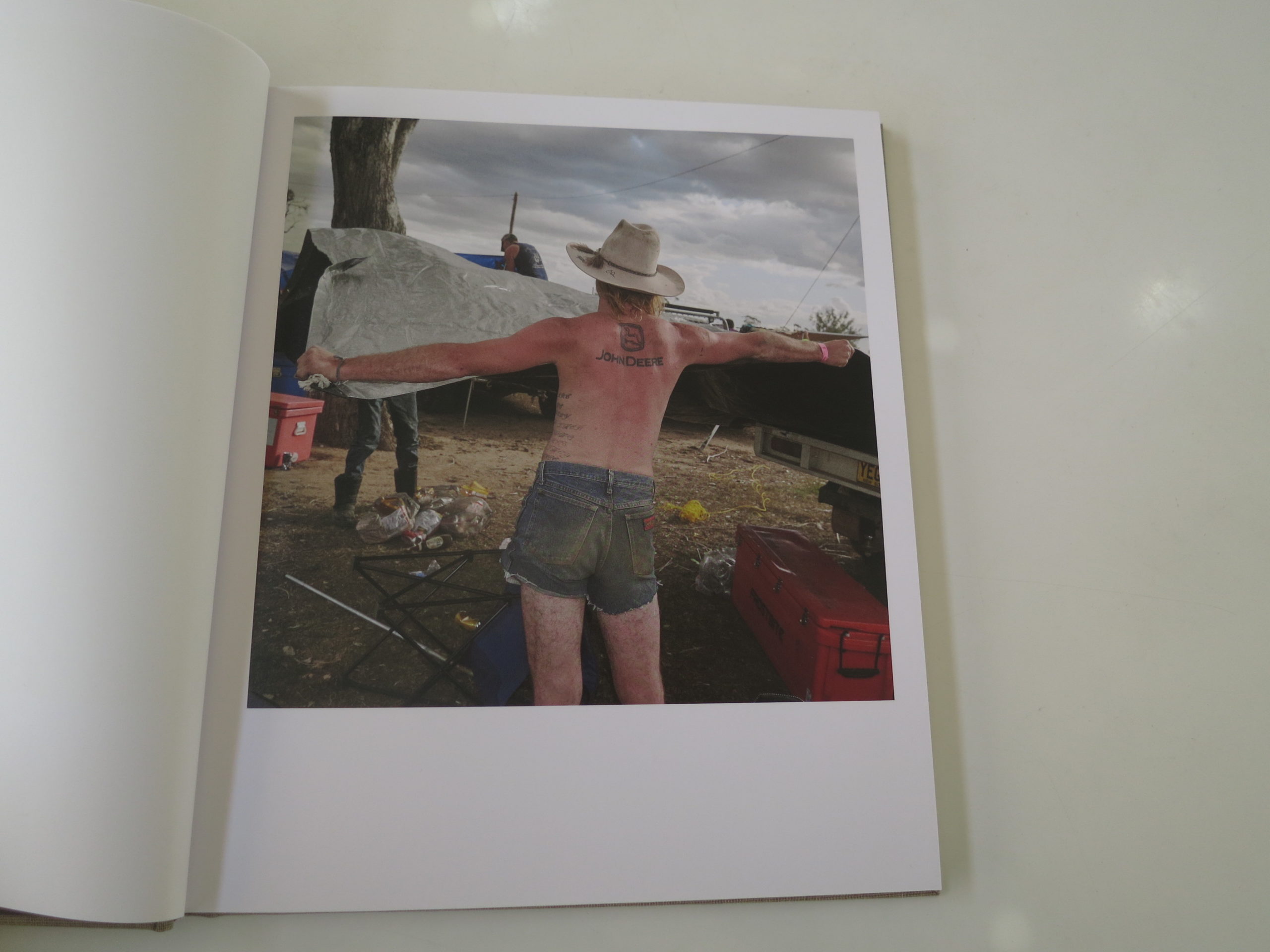
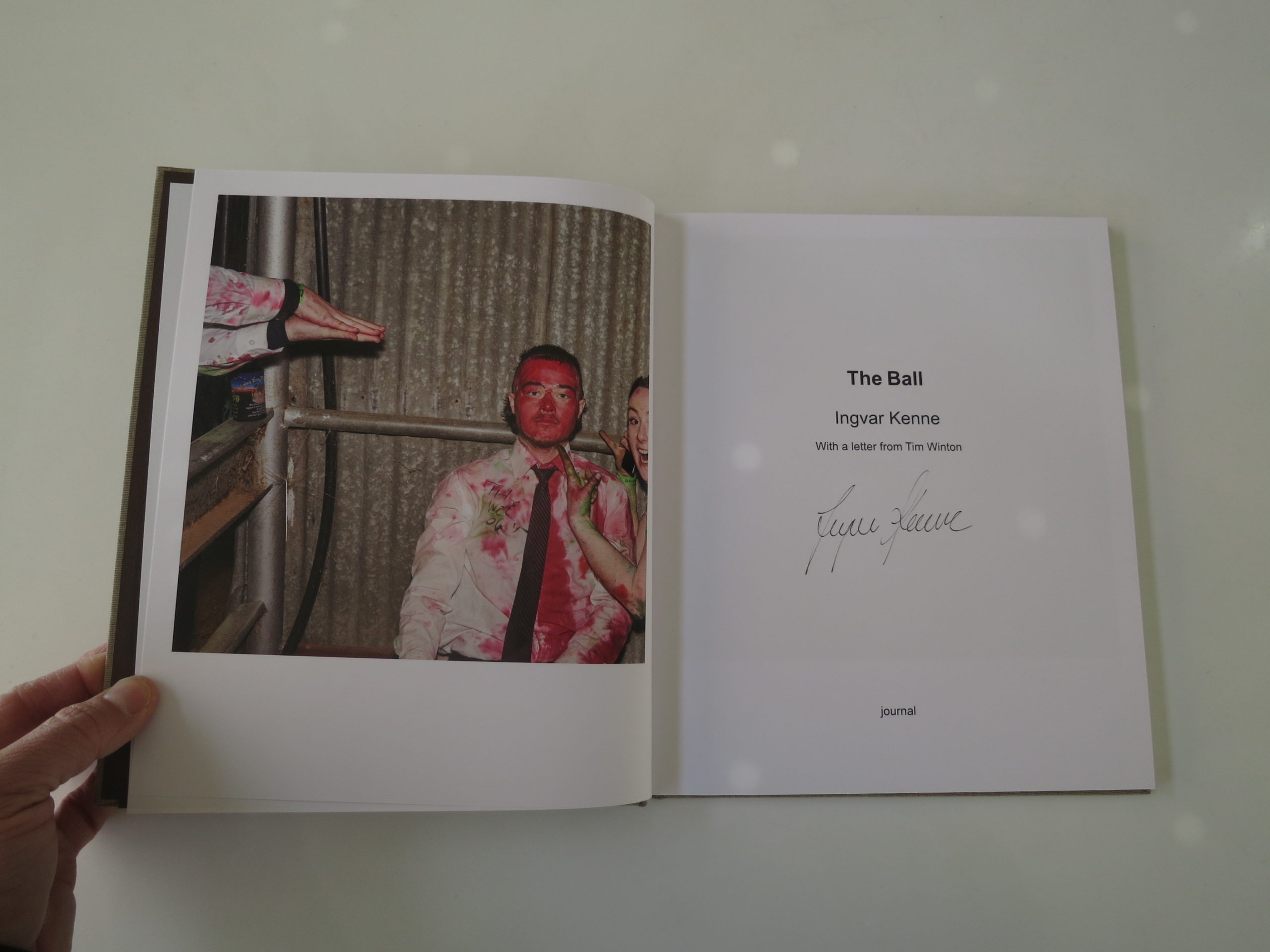
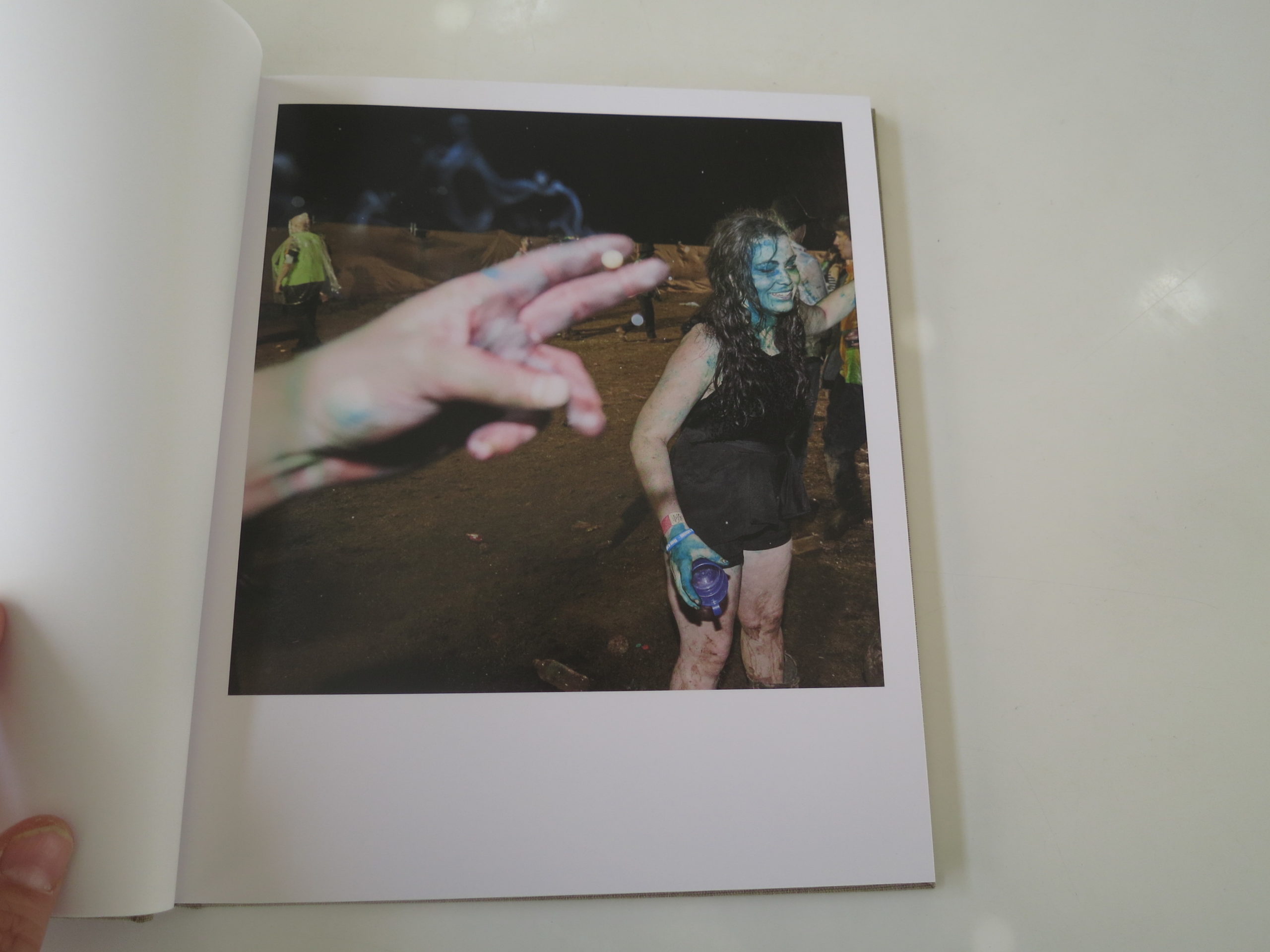
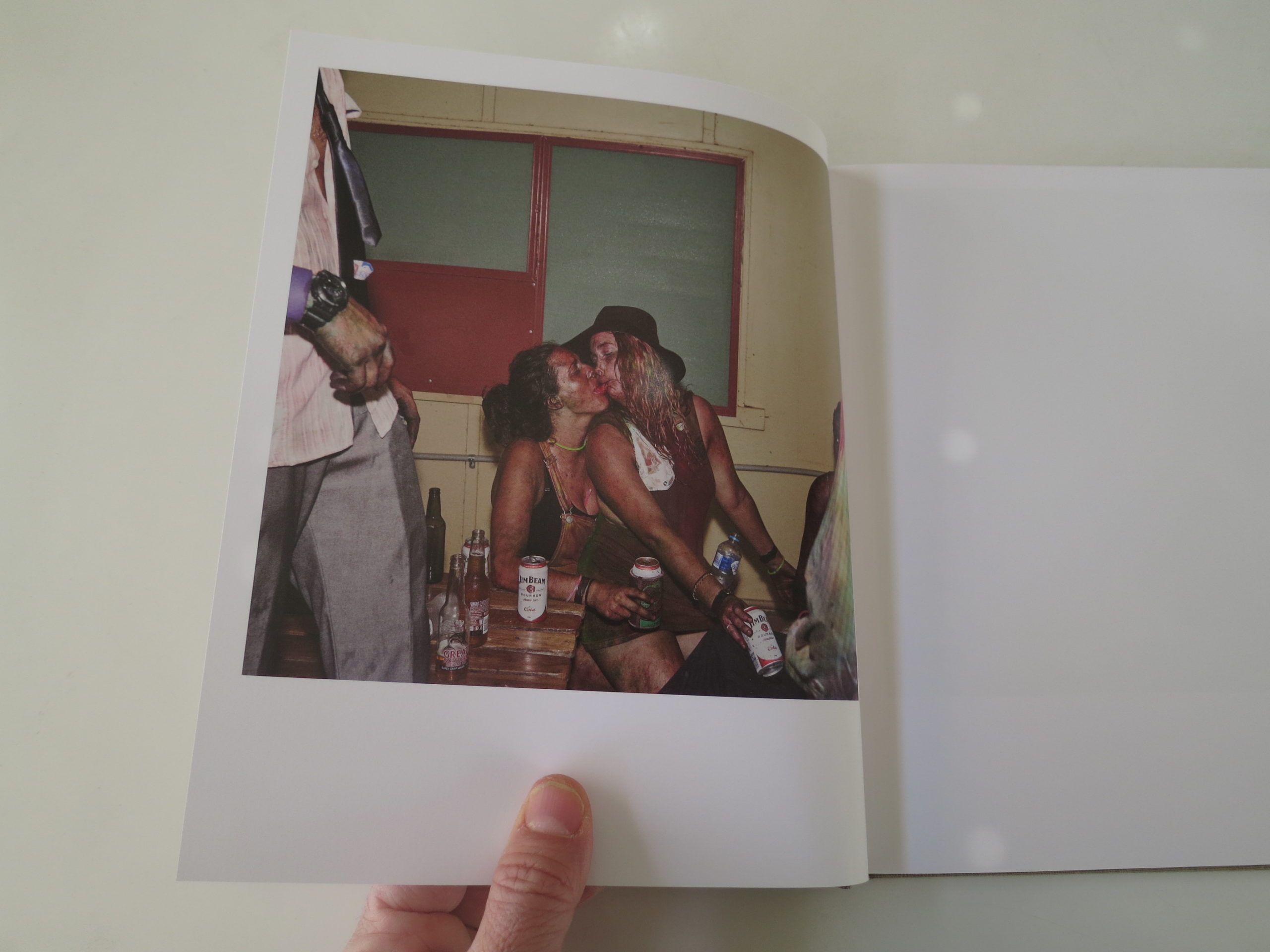
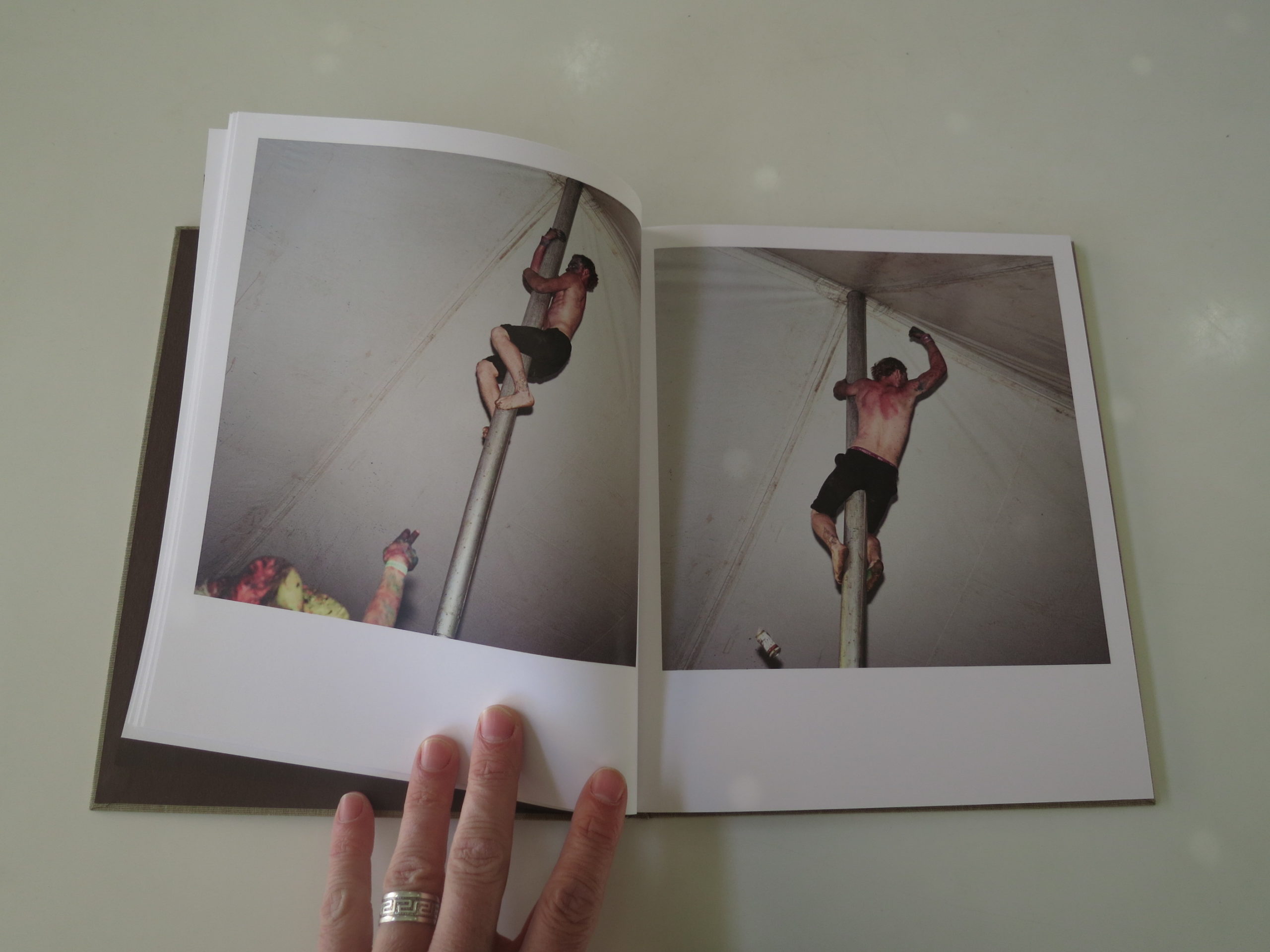
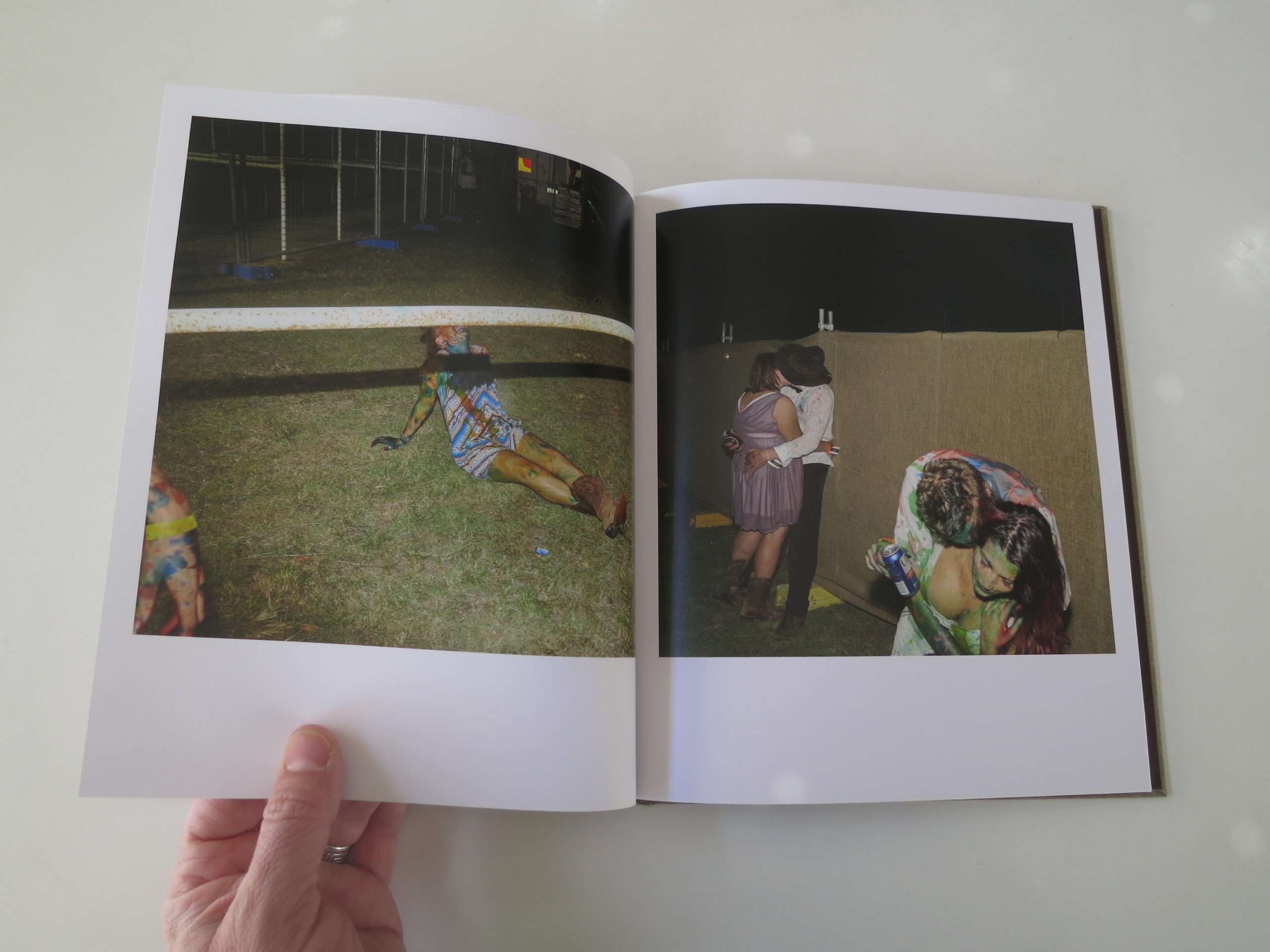
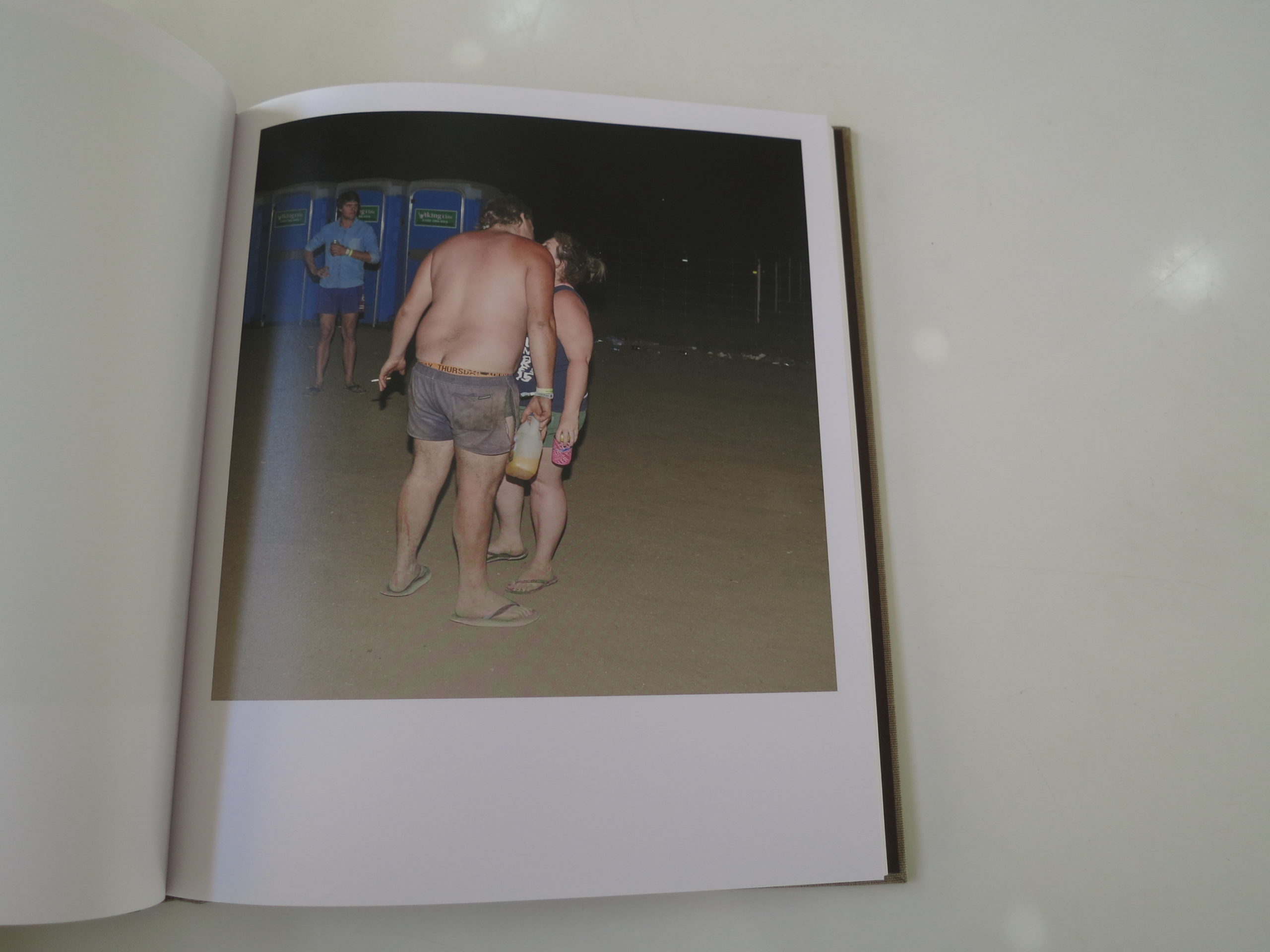
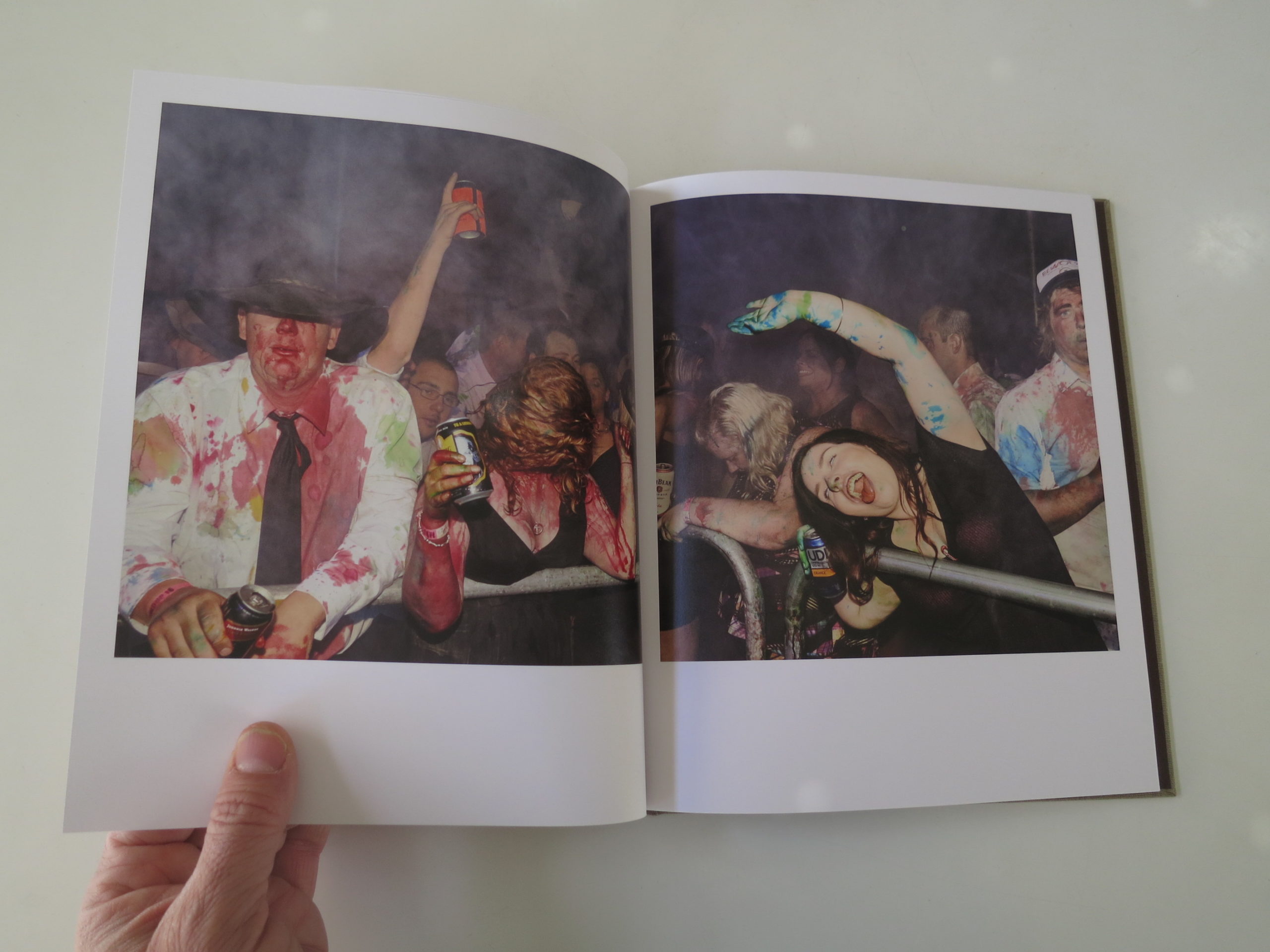
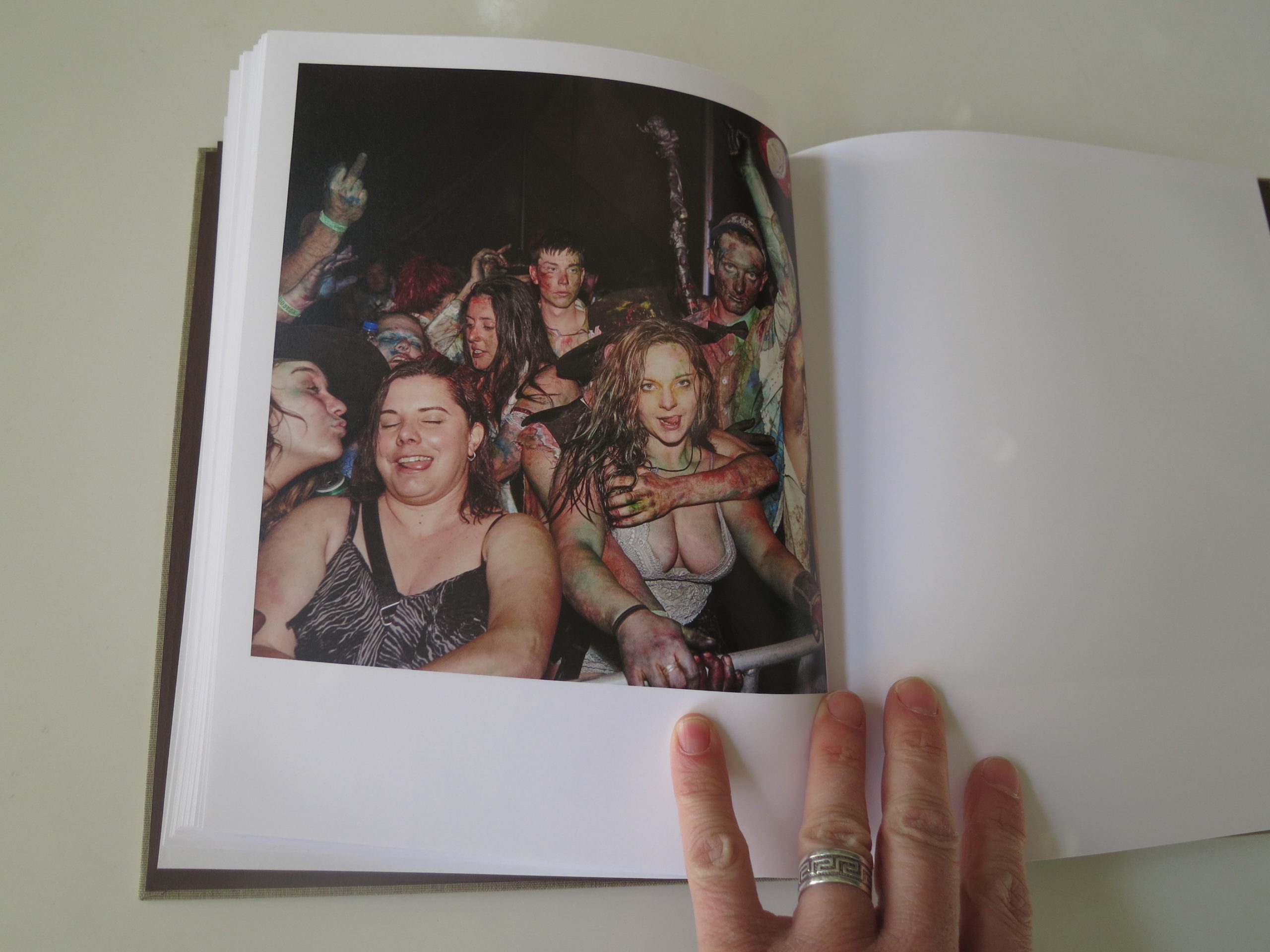
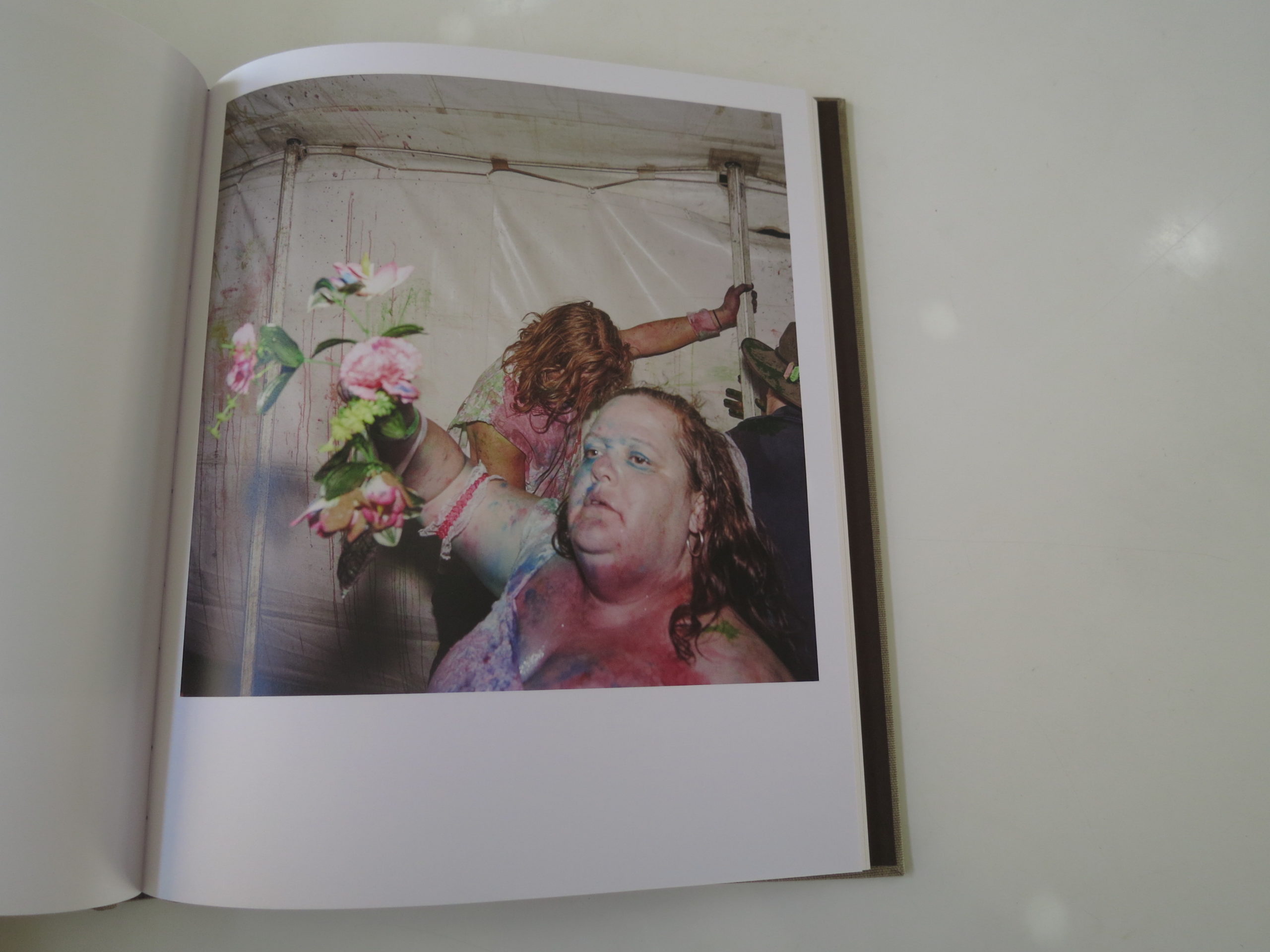
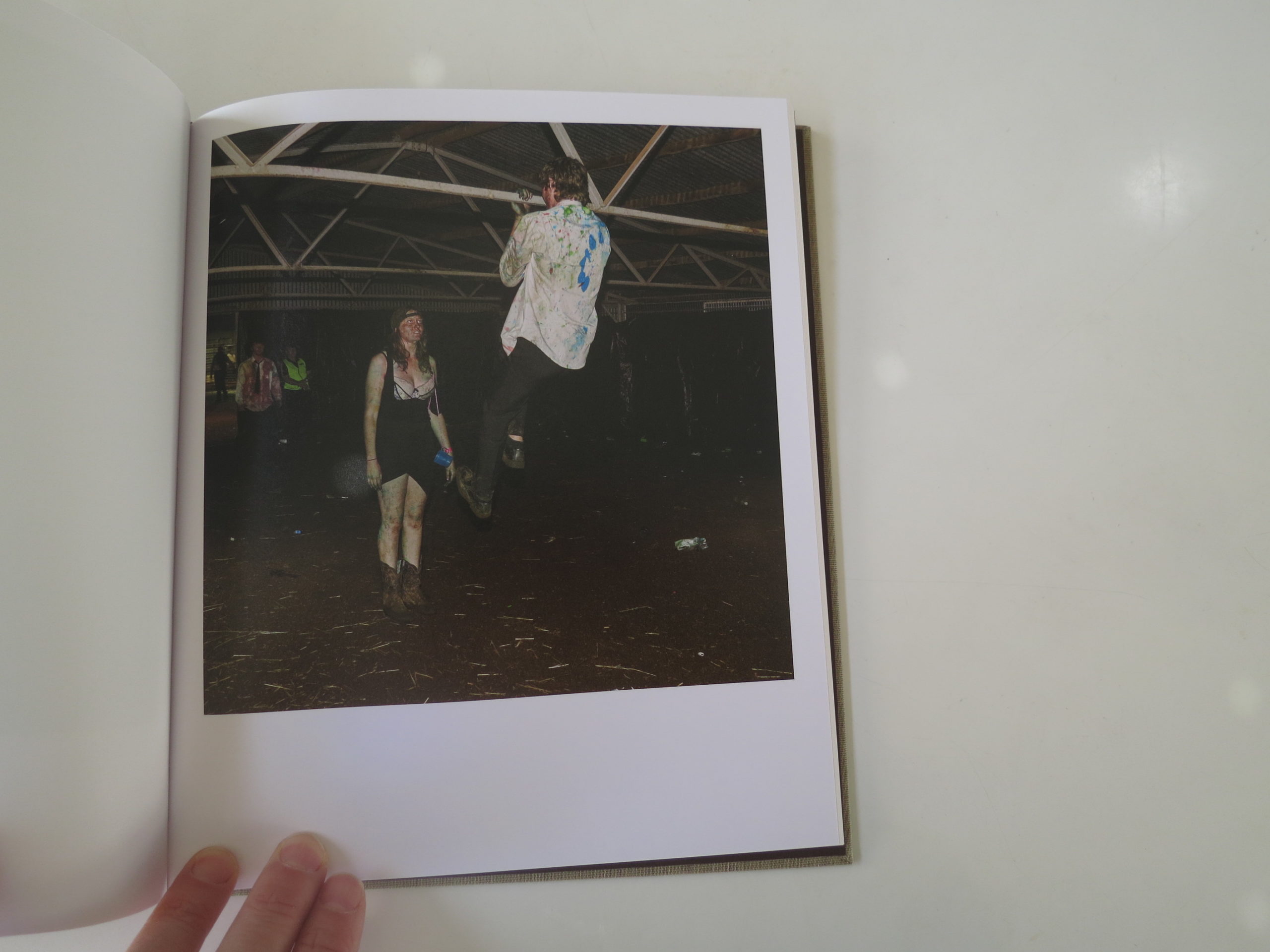
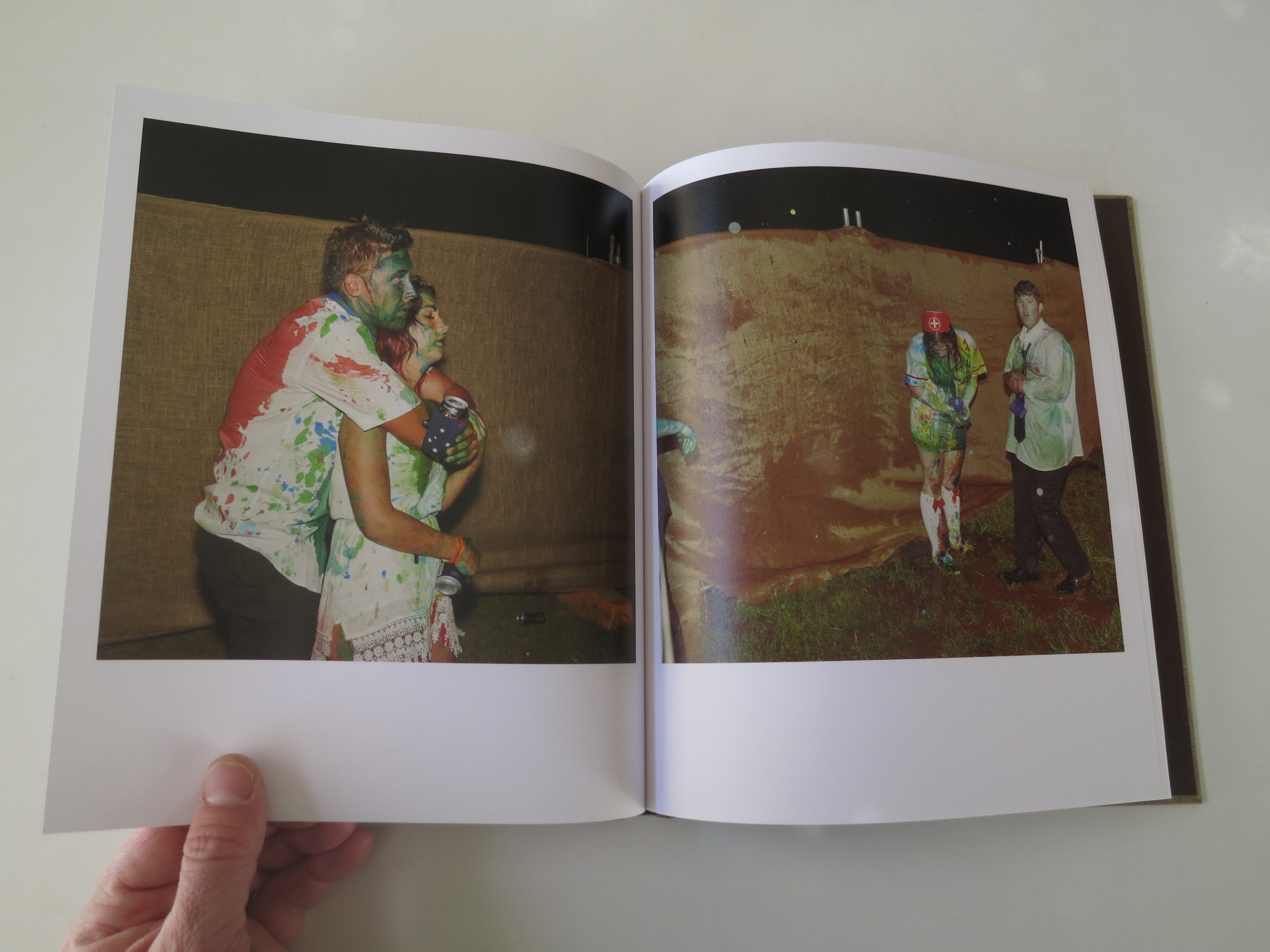
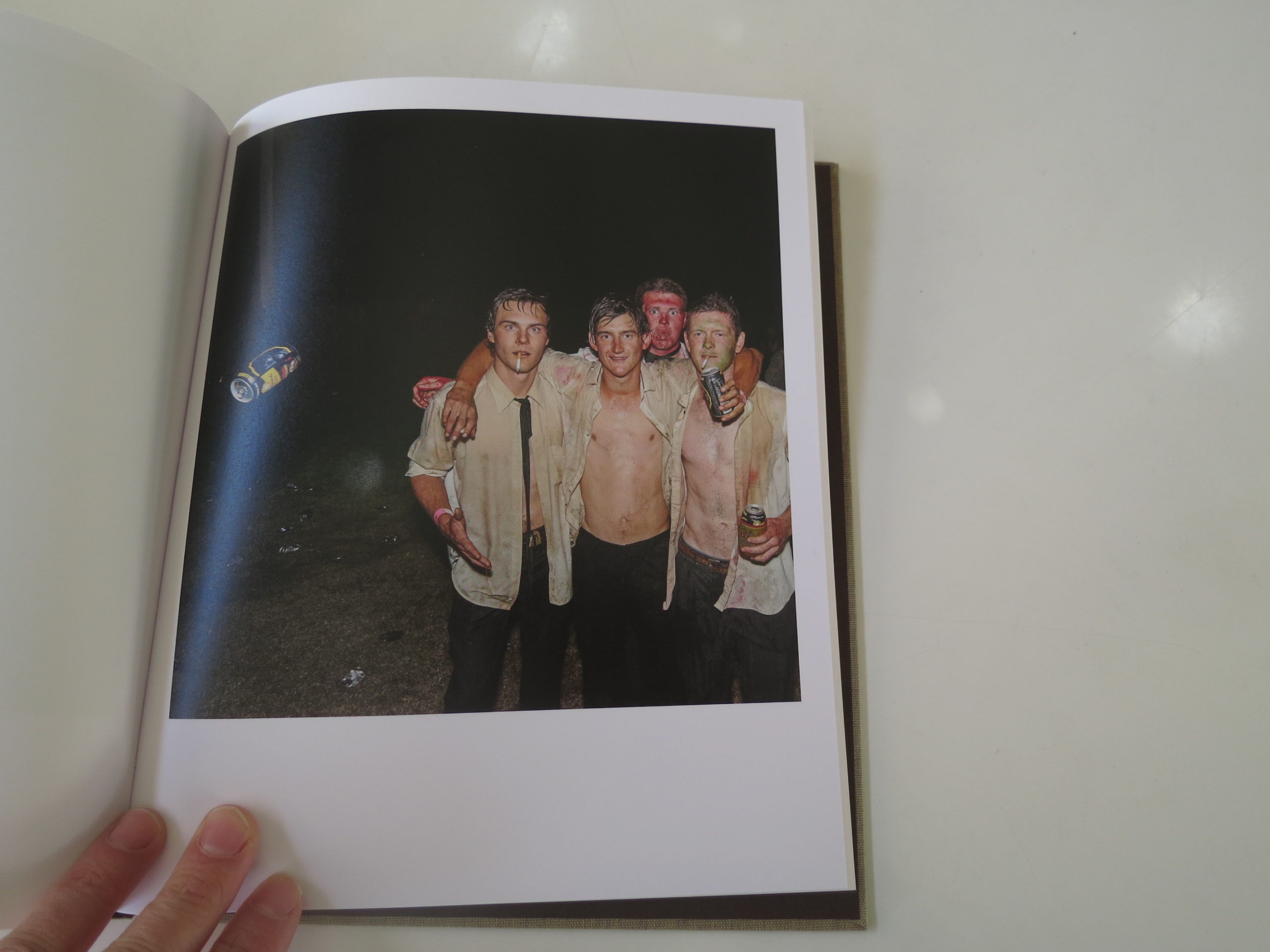
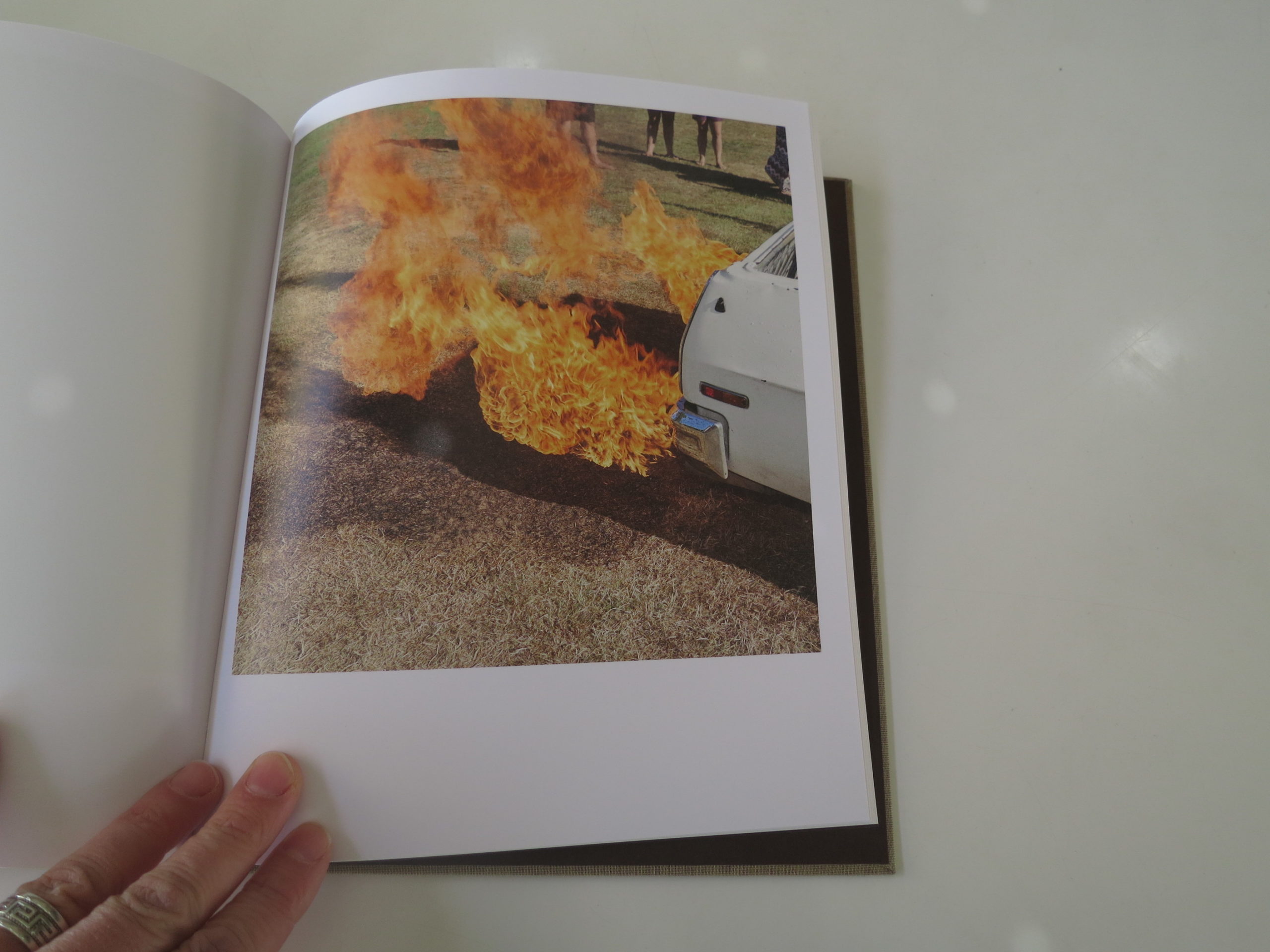
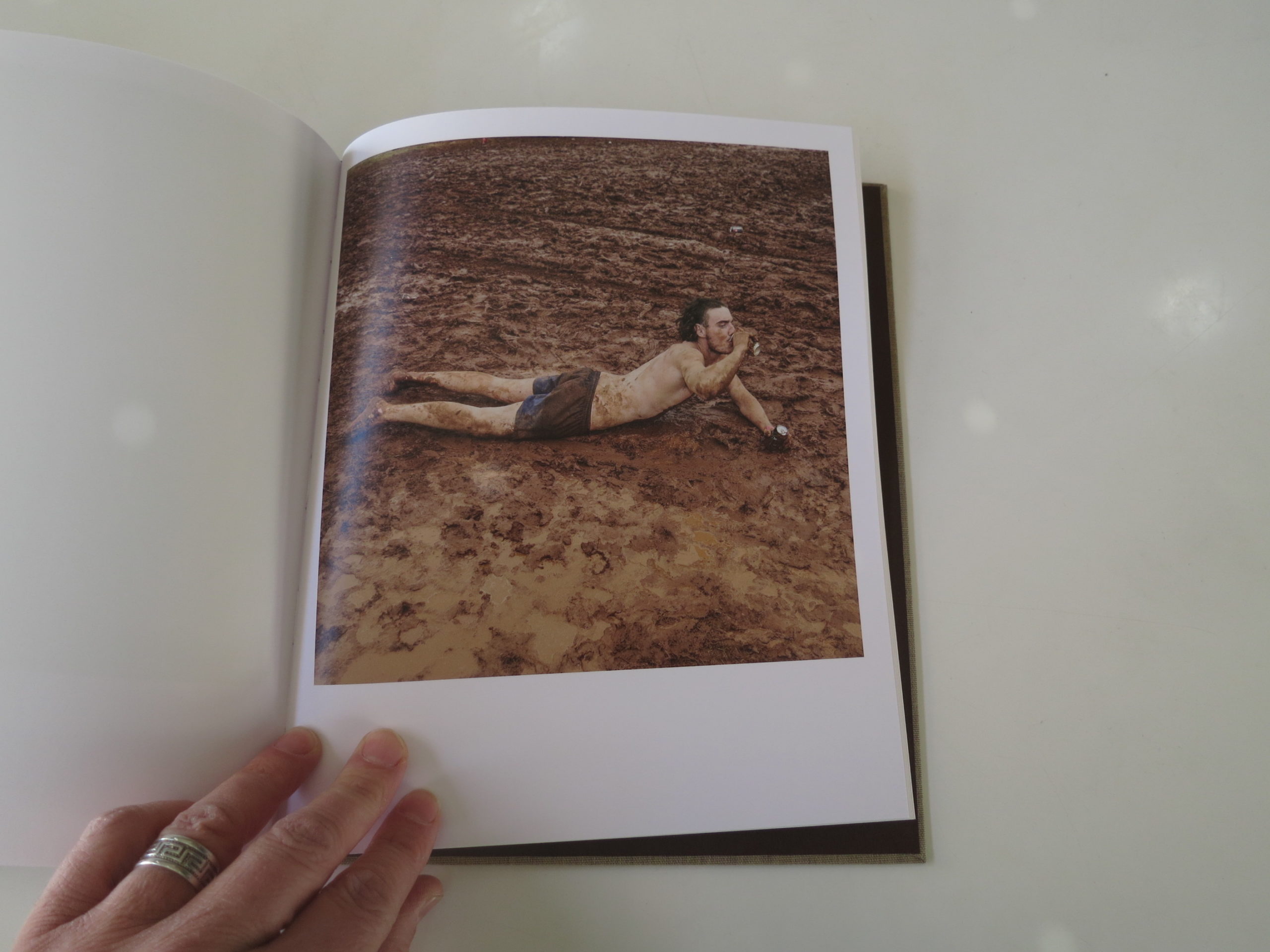
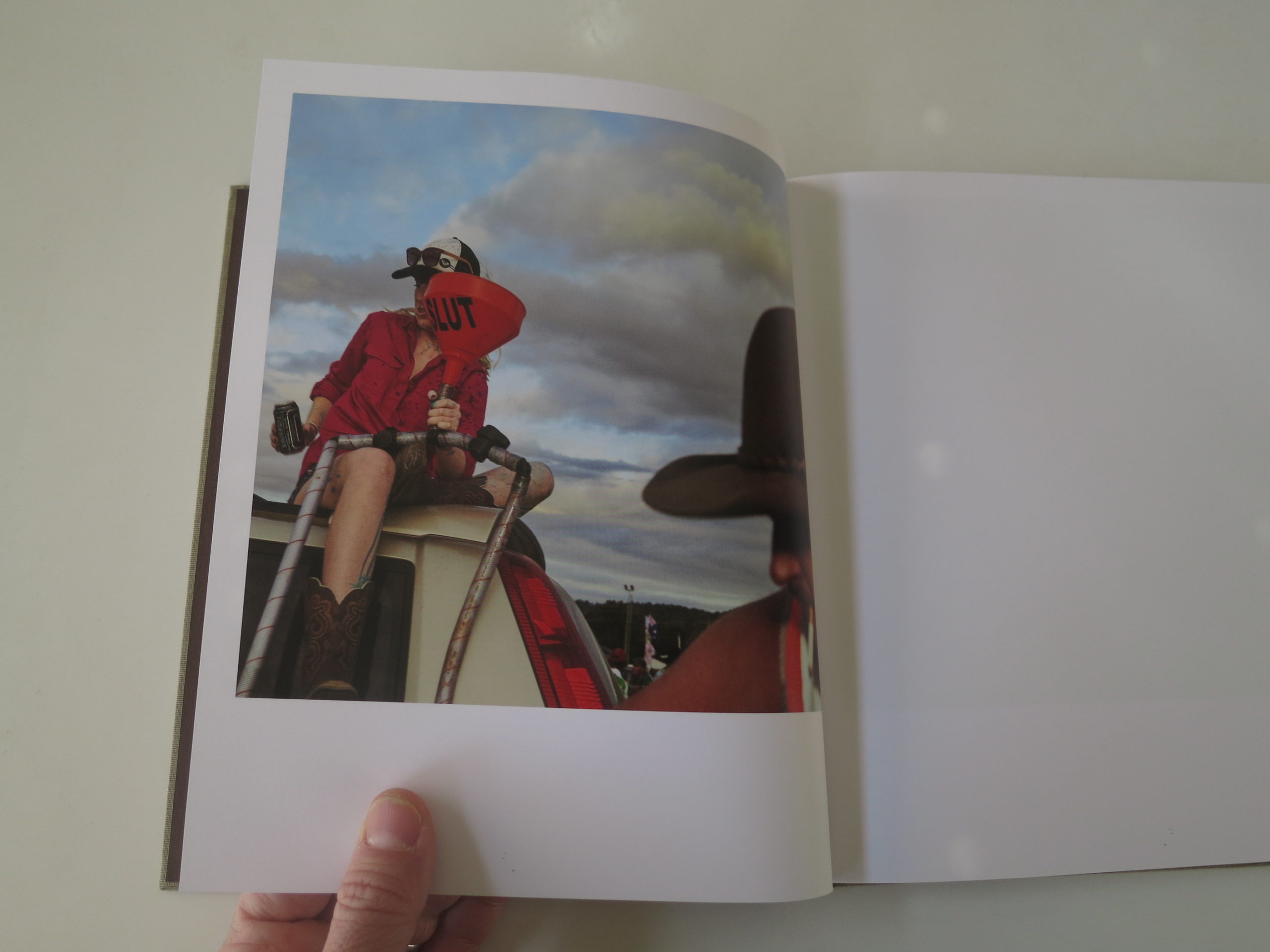
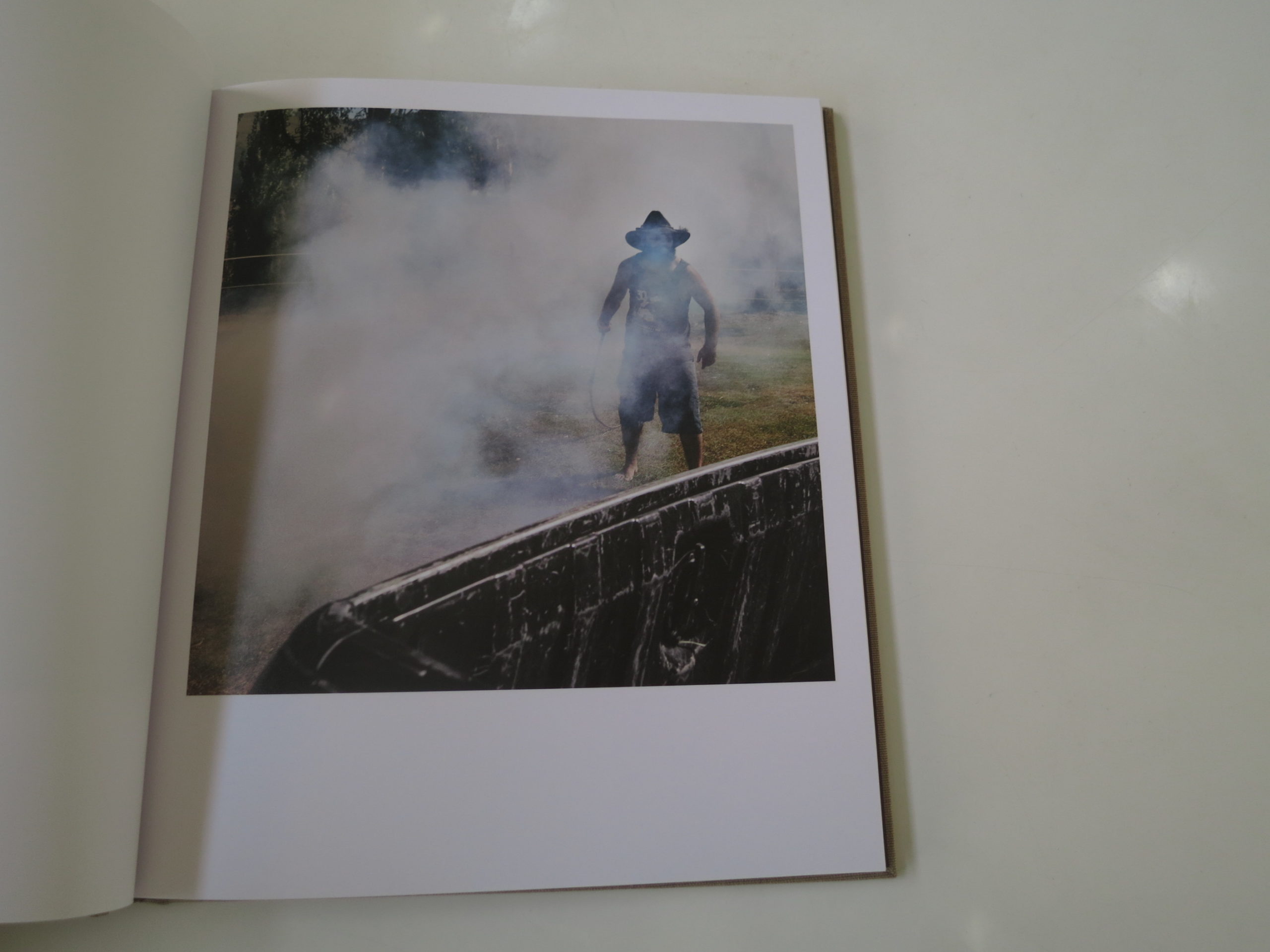
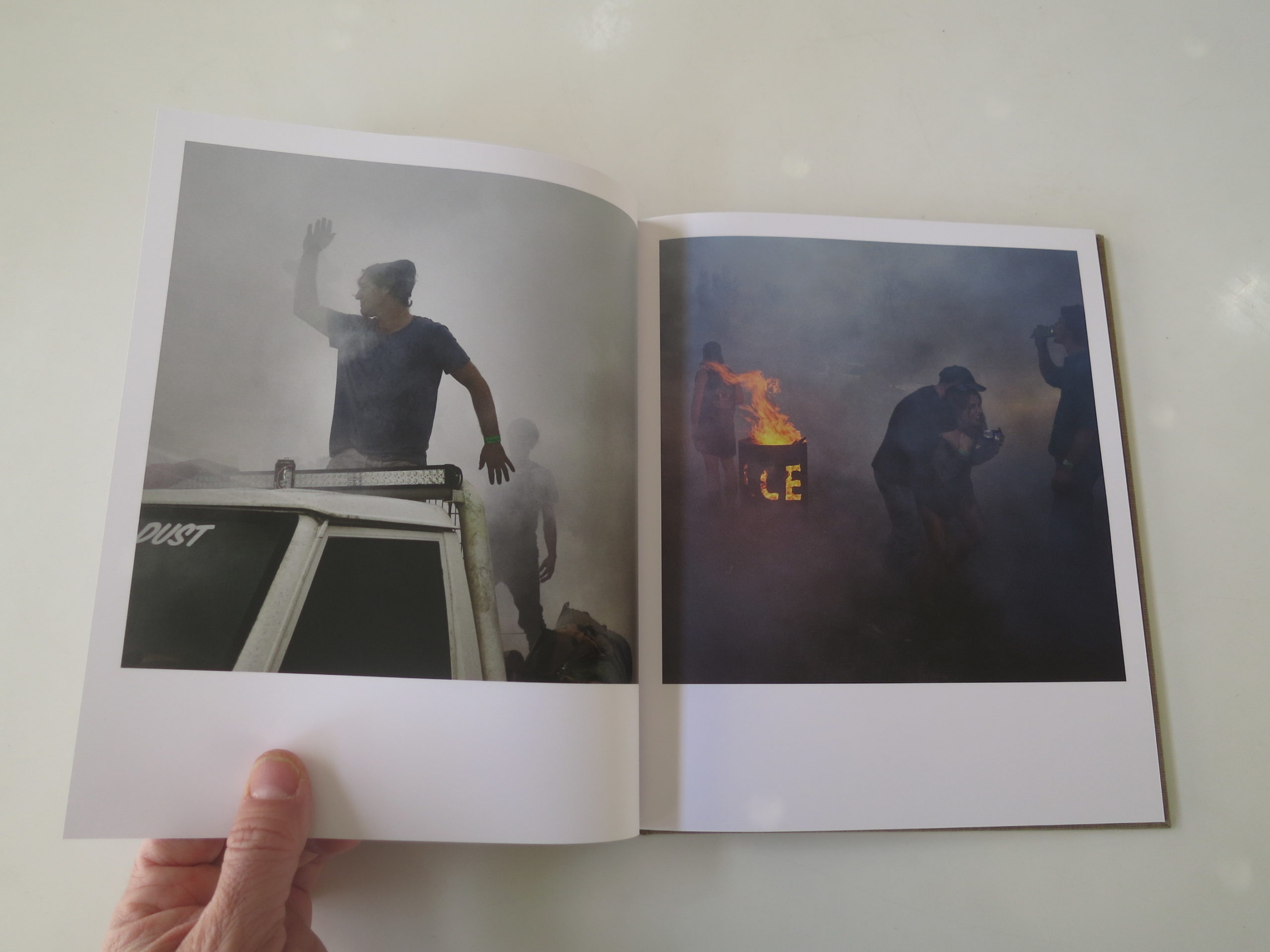
I could show you “The Ball,” by Ingvar Kenne, published by Journal, which turned up in the mail early this year. (Can you believe 2019 is already 1/4 over? WTF?)

This book is exactly, perfectly, just what I was looking for today.

(Thank you, party gods.)

I’m being serious, though, as I set down the first book I looked at today, a book I liked. It was perfectly nice, had nice-looking pictures with good light, and great color, but it didn’t have a POV that I could discern.

The pictures were taken all over the world, and I found them pleasing. They were likable, like Beto O’Rourke. But the second I put the book down and tried to write, my fingers wouldn’t move.

I asked myself to remember one image.
Just one.

But I couldn’t do it.

(Even though they were really good.)

Instead, I thought of the negative review I could write. Telling this person to get herself or himself some deeper life experience, if she or he were going to submit these photographs, these “reality fragments,” for our collective viewing.

I always tell my students, the aesthetics are the punch in the face. The thing that gets people’s attention and stops them in their tracks.

Then what?

What do you have to say?

That comes next, once your viewer is paying attention.

With that book I put down, I didn’t feel like I’d learned anything about the world, beyond the fact that the photographer was a good technician, and had a massive travel budget.

But here, with this new book, “The Ball,” I had no worries for lack of opinionated content.

No one, today, needs to worry about a wishy-washy book, nor of seeing things that they’ve seen before. (Unless you’re young and Australian.)

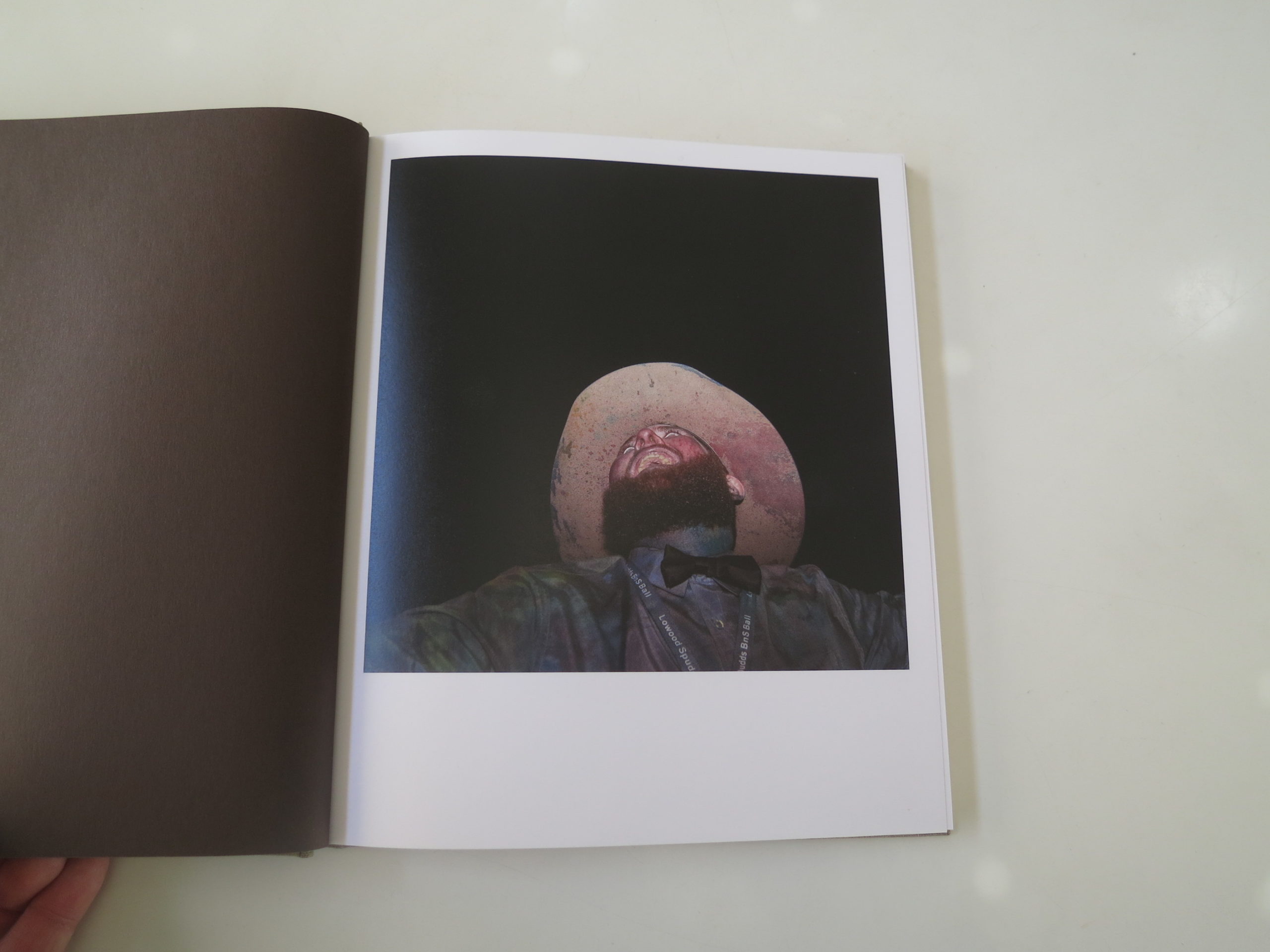
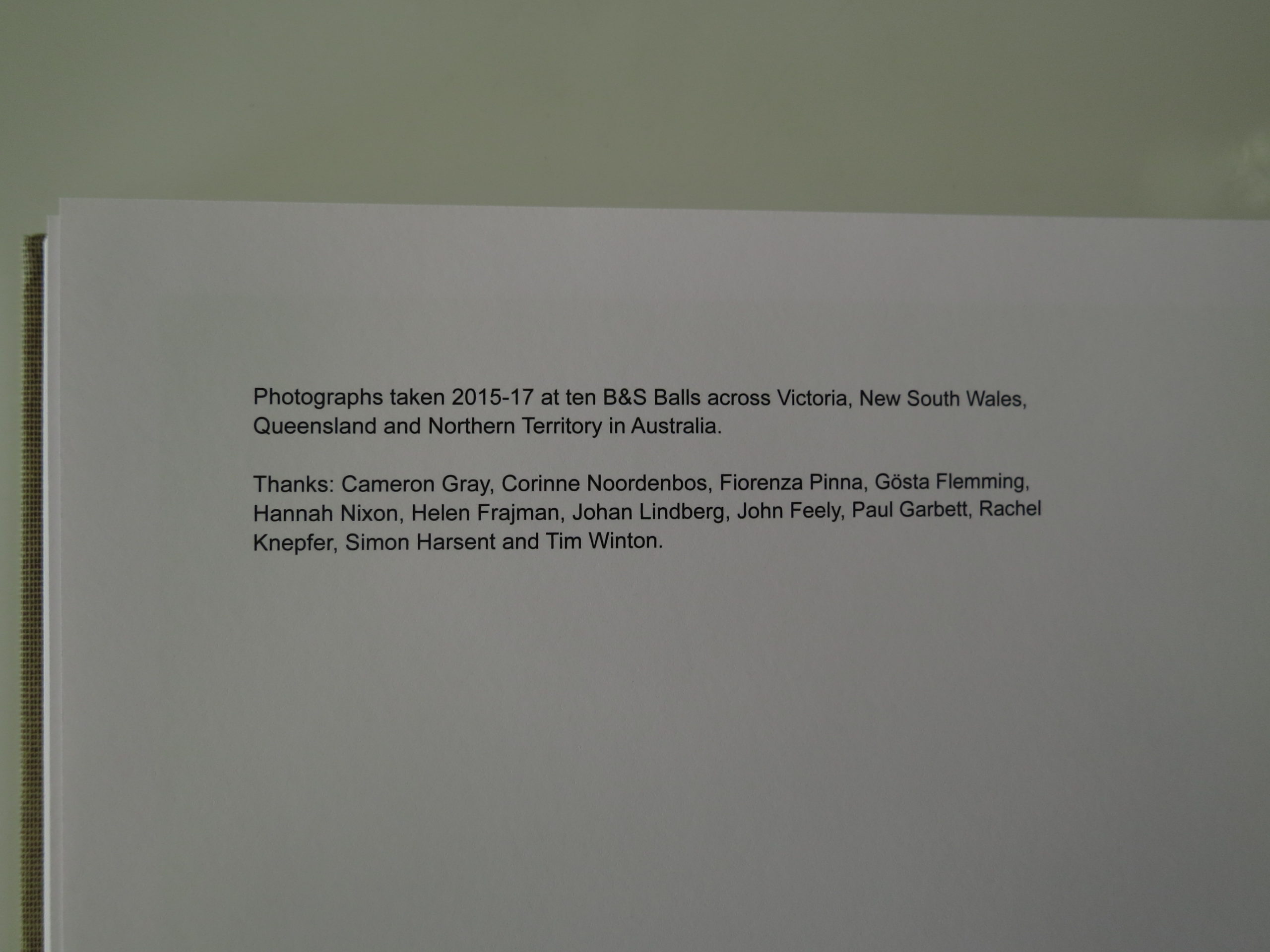
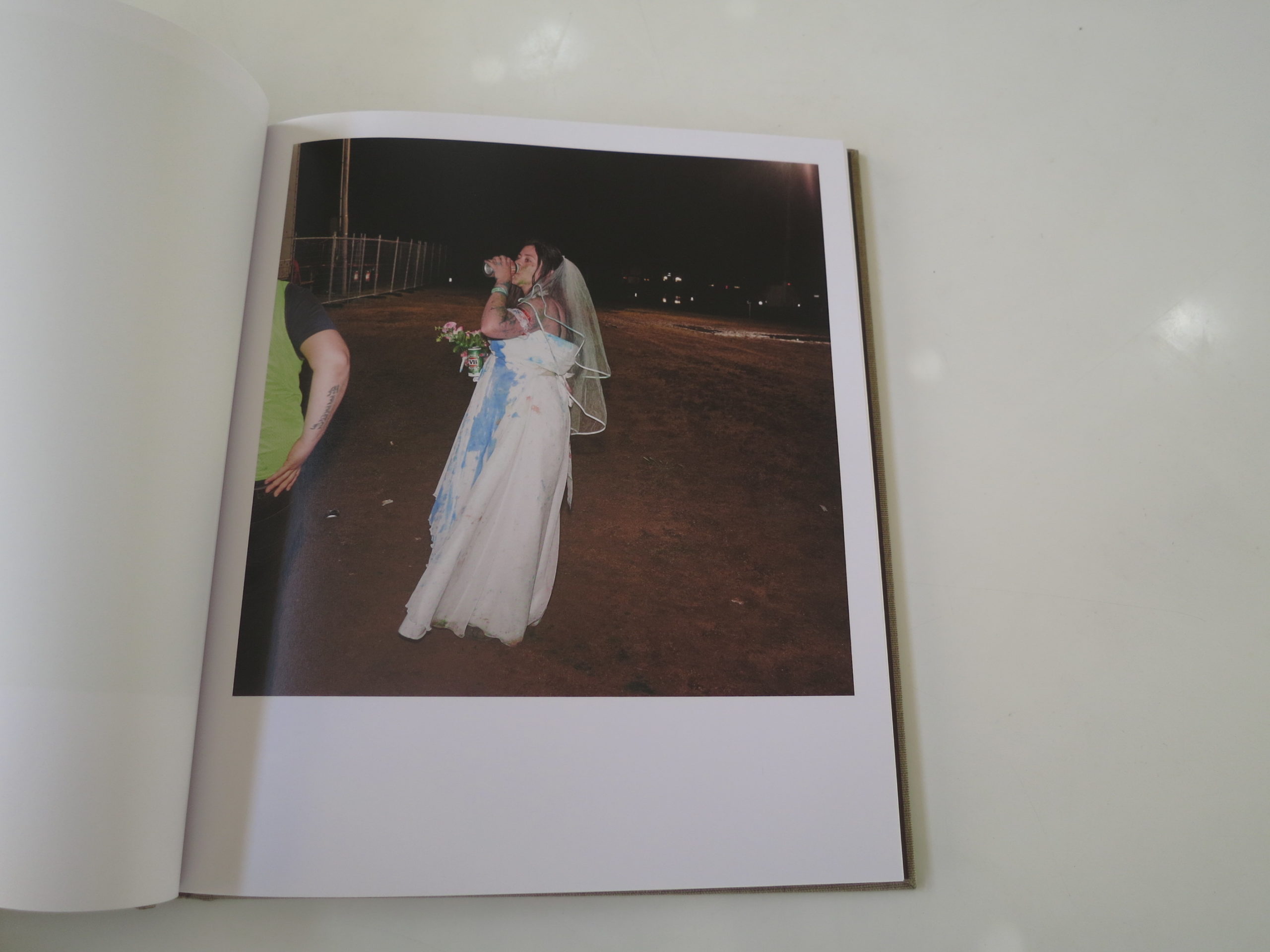
According to some smart-yet-spare end text, (including a written correspondence with Australian writer Tim Winton,) we learn that the Bachelor and Spinster Balls are a part of the culture.

Upon second examination, I realized I still don’t know that that means. Are they bachelor and bachelorette parties rolled into one?

(Pause.)

OK, I’m back.

Took a rare Google break. Looks like they’re just big parties for young people, out in the bush.

So…

The writings discuss ideas like the historical role of initiation rituals, and whether this fits in as a cultural right-of-passage.

Like when the Amish kids go wild.
What do they call that? Rumspringa?

As a photo critic who very recently was complaining of getting tired of the same old thing…

I give you, the Bachelor and Spinster Ball.

Humans doing disgusting things!

Enjoy.

And see you next week.

Bottom Line: Awesome, crazy pictures of Aussie kids behaving badly

To purchase “The Ball” click here 

If you’d like to submit a book for potential review, please email me at jonathanblaustein@gmail.com. We’re particularly interested in submissions from female photographers, and artists of color, so we may maintain a diverse program. 

The Art of the Personal Project: Cade Martin

The Art of the Personal Project is a crucial element to let potential buyers see how you think creatively on your own.  I am drawn to personal projects that have an interesting vision or that show something I have never seen before.  In this thread, I’ll include a link to each personal project with the artist statement so you can see more of the project. Please note: This thread is not affiliated with any company; I’m just featuring projects that I find.  Please DO NOT send me your work.  I do not take submissions.

Today’s featured artist:  Cade Martin

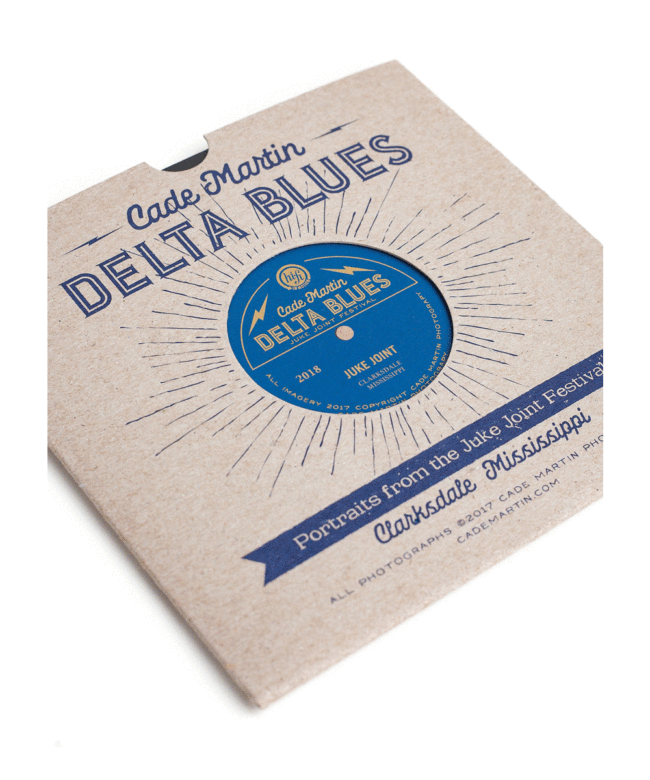
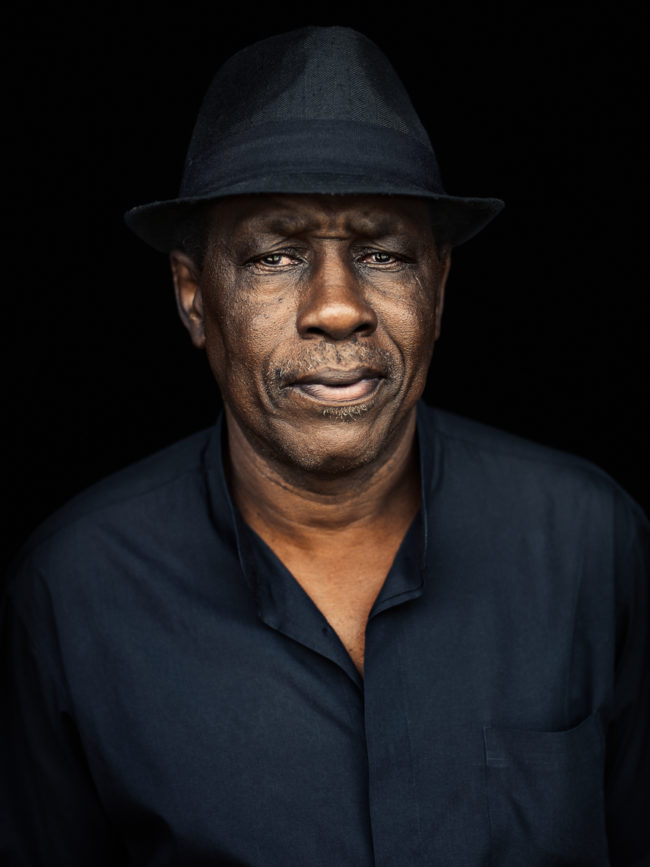
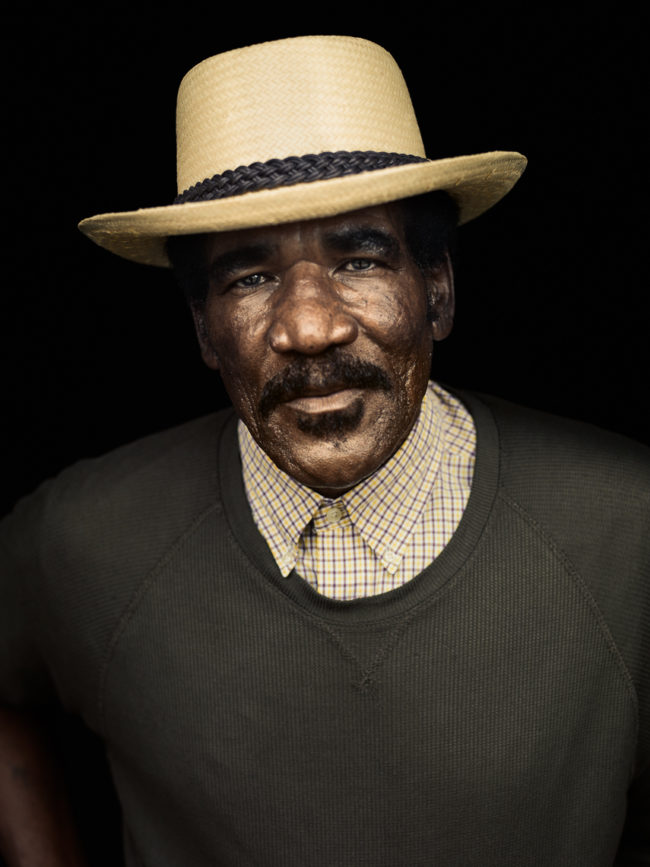
Blues Men:

While I love everything about the collaboration that comes with a commercial shoot, when it comes to my personal work, I find I am drawn to the one-on-one with real, every-day people.  You can’t make any of it up or direct it – how they carry themselves or have decided to dress for the day is better than where my imagination could take it. I always go out of my way to make the subjects look their best, to present them in the truest, most sincere way- exploring the architecture of their faces, the texture of their clothes and so on.

I worked on this post-production with one of my go-tos, Sugar Digital, and that familiar relationship is great for both understanding my process and pushing me to experiment. My original intention going into this Blues project was to produce these as black and white portraits, but the more we played, the more I gravitated towards a bit of warm color that brings a little more life, as well as further defining the magnetic architecture of their faces.

personal portrait project from the Clarksdale Mississippi Juke Joint Festival

To see more of this project, click here.

Cade Martin is now being represented by Heather Elder

APE contributor Suzanne Sease currently works as a consultant for photographers and illustrators around the world. She has been involved in the photography and illustration industry since the mid 80s.  After establishing the art buying department at The Martin Agency, then working for Kaplan-Thaler, Capital One, Best Buy and numerous smaller agencies and companies, she decided to be a consultant in 1999. She has a new Twitter feed with helpful marketing information because she believes that marketing should be driven by brand and not by specialty.  Follow her at @SuzanneSeaseInstagram


The Daily Edit – New York Magazine: Joe Lingeman

New York Magazine

Photo Director: Jody Quon
Associate Photo Editor: Stella Blackmon
Senior Photo Editor: Marvin Orellana
Photographer: Joe Lingeman

Heidi: You have a variety of color pallets within your work, is this bright poppy a new direction for you?
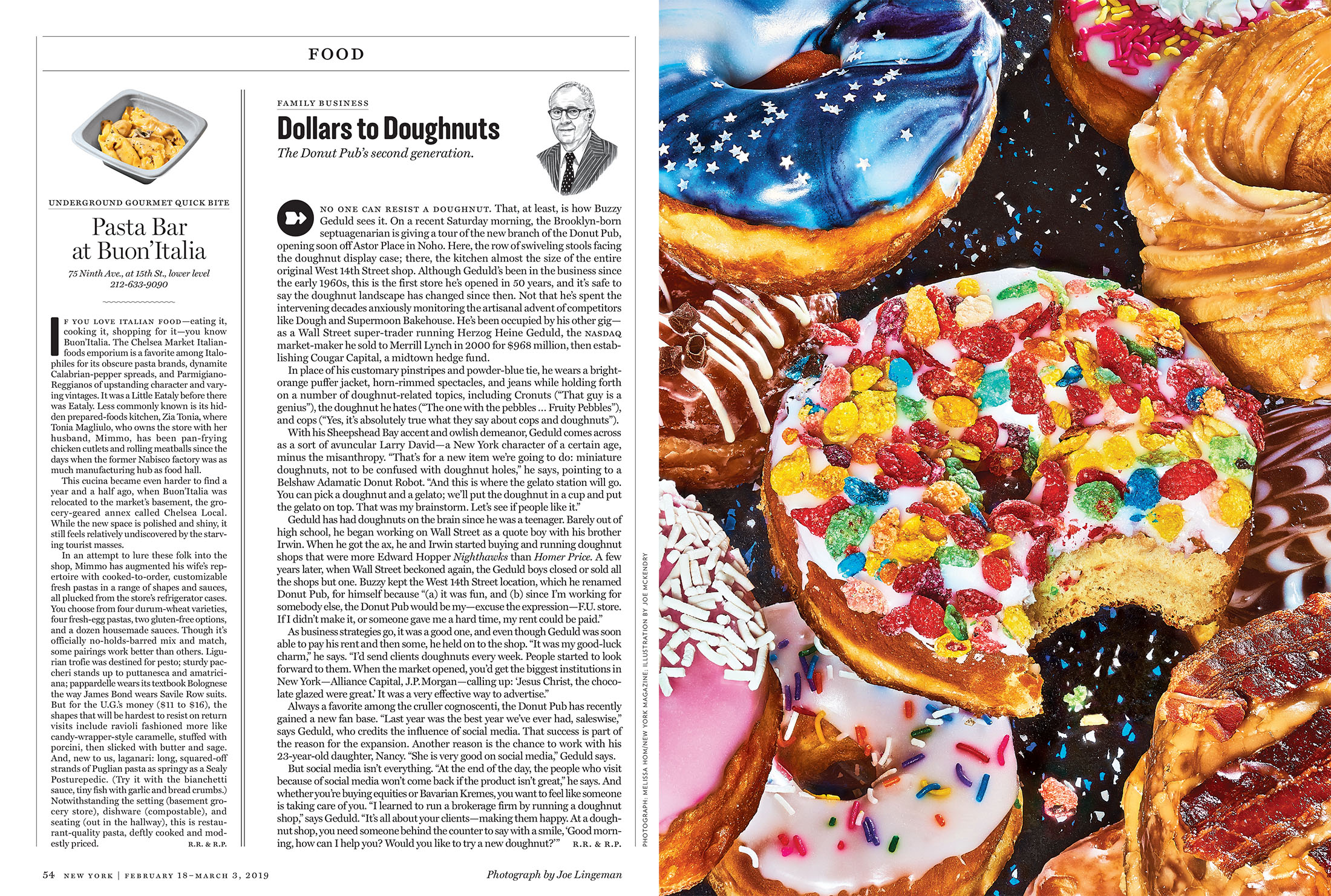
Joe: I’ve had a few commissions recently where the subject matter really called for super poppy color. I guess I started going in this direction as I transitioned to shooting entirely digital and working more in the studio. In the studio, where you have to make a decision about every variable in the frame (light, color, etc.), you’re less tethered to reality. I’m less interested in replicating “real” light or color than I am in amplifying that artifice of the studio. What I ultimately want is to make pictures that are fun to look at, and sometimes exaggerating the color is a way to get there.

Did you have a food stylist?
Nope. Stella Blackmon, the photo editor, dropped off three dozen doughnuts to the studio and let me play.
If styling your own, what drives your style?
I love how NYC coffee carts display their food and I’ve also been really inspired by NYC deli graphics–where you’ll see stock images of Pepsi cups and bagel sandwiches and doughnuts cut-and-pasted on top of each other over clashing digital backgrounds. They’re super engaging and attention-demanding, all about abundance, but set against this filthy urban backdrop. I wanted this image to have that kind of trashy-cornucopia feeling–kitschy and irresistibly delicious at the same time. The background is a piece of rubber matting – the kind you’d see on the floor of the weight room at your gym. The Donut Pub looks and feels like a diner inside and the pattern had a “Saved-by-the-Bell” quality that had an echo of formica flecks and candy sprinkles that felt like it would fit in that world.
Why those particular doughnuts?
Of the whole bunch, these were the most over-the-top. The Donut Pub makes outrageously decadent doughnuts and these felt like the right ones to show. They’re very special doughnuts. I did a few options with different doughnuts as the hero. This was my favorite and theirs too.
What type of direction did you get from the magazine?
Honestly, not much on this particular image. There wasn’t a creative brief or anything. We talked over the phone and hashed out some ideas, but they really trusted me on this one. I had taken a picture of some cake slices the week prior and posted it on instagram and they called it out in their email to me. The direction of that image felt like an obvious way to go for this image.
What do you look for in your compositions?
For me, composition is all about creating energy in the frame. Even if the subject is basically centered, the frame needs to have some asymmetry or some interesting use of color or space that creates tension. The image has to feel alive. I also want there to be a moment where you question what you’re looking at. You recognize it instantly as a doughnut, but it’s not a normal doughnut–it’s familiar and foreign at the same time. Maybe that’s not an issue of composition, per se, but a general attitude about image making.

This Daily Promo – Marc Morrison

Marc Morrison

Who printed it?
Mike Stitt over at Agency Access. I have to say the reason I printed with AA is because of Mike. He is great to work with, creative, really knows his craft and best of all he is super easy to communicate with.

Who designed it?
Actually, it was me.

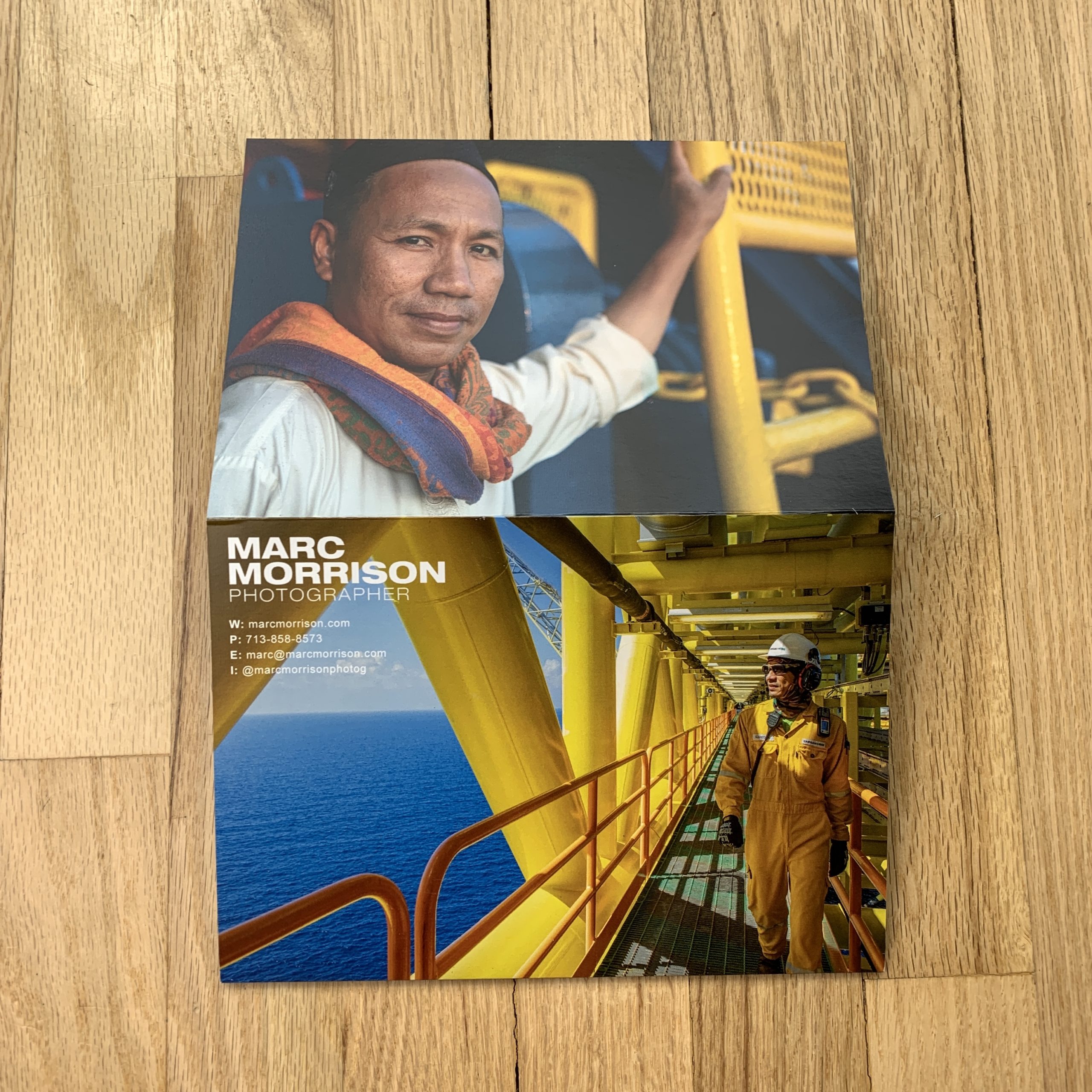
Tell me about the images?
My primary goal was to find images interesting enough to convince art buyers to open the envelope.

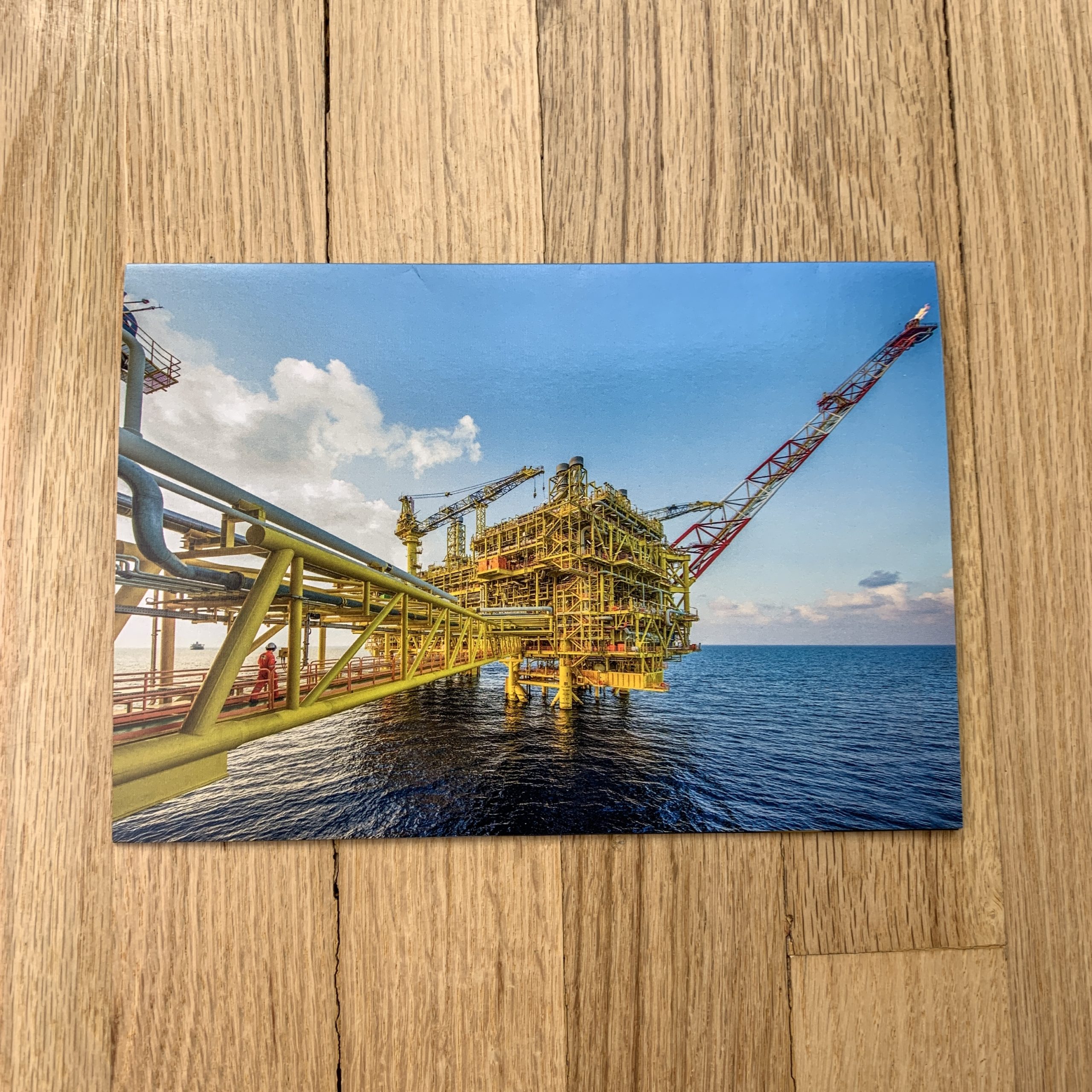
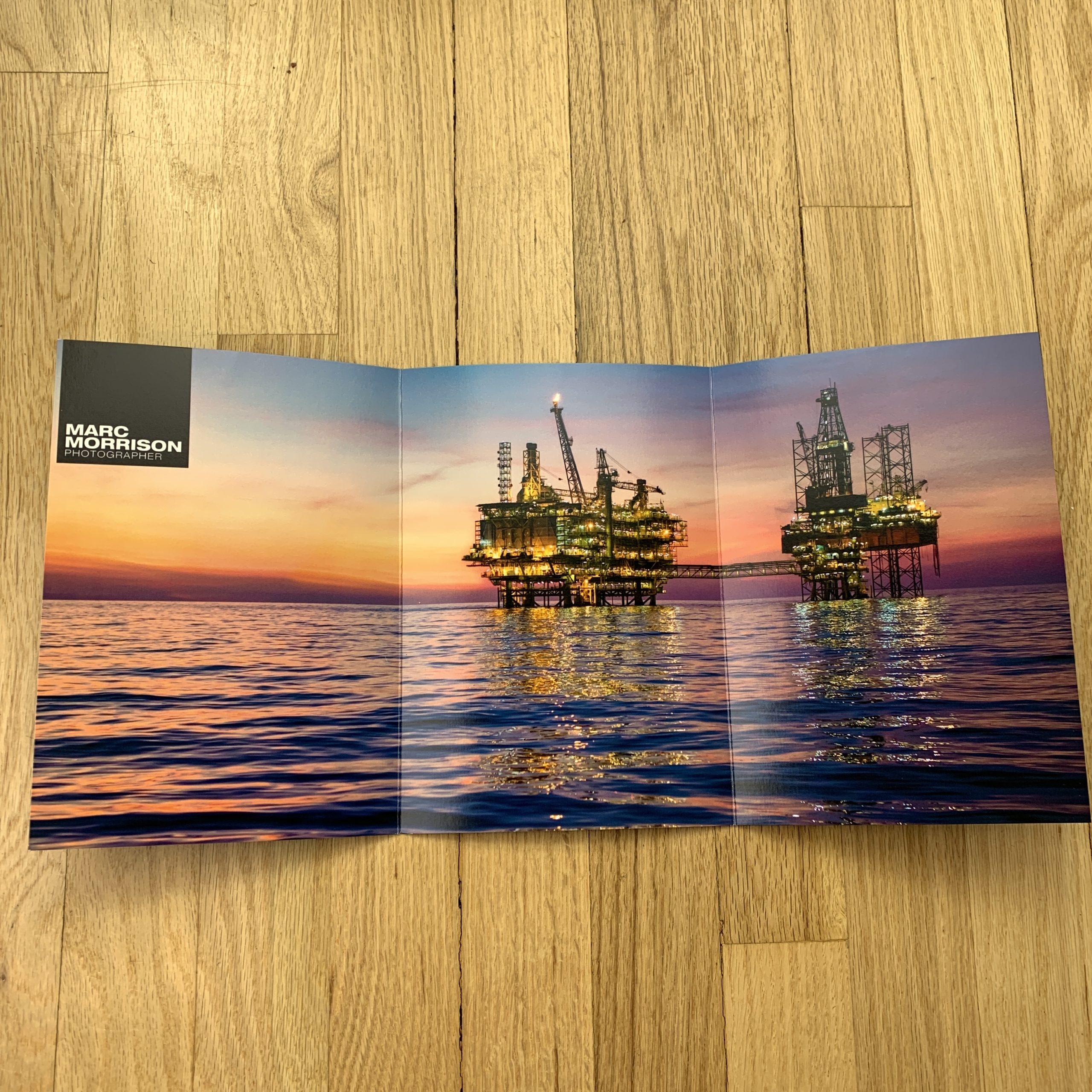
In looking over my recent body of work, I decided to make the entire promo about a particular project in Malaysia I recently shot during a corporate library campaign. By selecting all the images from the same body of work, maintaining continuity throughout the mailer was much easier to manage. I like to think of myself as a portrait photographer—but the portraits do not always have to be living beings. I try to bring a sort of portrait style to even inanimate objects.

I had a very difficult time editing through the images of people as the Malaysian crew were all so lovely to photograph and beyond gracious in their willingness to perform any task we asked. The crew was also beautifully dressed in bright yellow coveralls during their shift and colorful traditional baju melayu (Malay shirt) during their off hours.

Probably the most difficult task was selecting four images from a solid two weeks of shooting. It’s not that every photo was extraordinary, but there were enough nice ones to make it a challenge.

How many did you make?
We printed 500. 450 were sent to a very specifically-researched contact list created by our production manager, and 50 were reserved for handouts at portfolio reviews and client meetings. (I greatly underestimated the number for handouts however—live and learn.)

How many times a year do you send out promos?
My goal is to try and send out 4 promos per year—“try” is the key word here. I shoot a number of different subjects and have found it almost impossible to create a single promo that will appeal to the different types of markets in which I shoot. Working out an effective marketing plan to address this issue has been proving to be a bit of a challenge and still a work in progress.

Do you think printed promos are effective for marketing your work?
I believe any positive opportunity for creatives to see a photographer’s work is an opportunity to take advantage of. Research up front to make certain your work is being sent to the proper creative outlets is key. On a personal note, this is my first promo showcasing the industrial side of my photography. Much to my delight, I received a commission from a new client shortly after mailing. I’m certain the job came about because it landed on the right desk at the right time. Luck and timing help—and I’ll take it! I cannot help but be cautiously optimistic about printed promos—besides I still love printed work.

This Week in Photography Books: Peggy Levison Nolan


Parenting isn’t glamourous.

That’s for sure.

I always knew I’d have kids, and given how much I relish being a Dad, I guess I had it right.

(I used the word “relish” here, because I don’t know if “enjoy” is quite right.)

I love my children more than anything, and would take a bullet for either of them, as I would for my wife.

No question.

And each of the kids, both 21st creatures through and through, are funny, thoughtful, sweet and smart.

I enjoy them as people, no question. They’re awesome.

Just last night, when I was putting my daughter to bed, I tickled her, she ripped a huge fart as a result, and we laughed so hard my belly hurt. (Or maybe that was the lard-bomb-enchiladas my wife brought home…)

I cherish being a parent.
I value it.
It’s the most important thing I’ve ever done.

Being a parent has made me a smarter, more capable, more compassionate, empathetic, successful person.

But it’s not “fun.” (And I don’t love the parenting, I love the kids.)

It’s way too hard to be fun, generally speaking.

There are parts of the experience that are great, and specific time periods or vacations that, as an exception, might be pure bliss.

But on a macro-level, it is grueling to constantly find the energy to be a full-time professional, and a full-time Dad.

We hear about that all the time, with respect to the impossibility of working Moms having it all, or being perfect in each arena, but we guys have the same problem too!

With each successive generation, new parents learn just how comprehensive it is to give life, and then sustain it.

But with each successive generation, one group of people get to have all the fun, without (almost) any of the responsibility: the grandparents.

Hell, Jessie and I moved back to Taos so that we could raise our children, (then hypothetical,) among two sets of grandparents: for the help, the support, the encouragement, the diapers funds, and all sorts of privileges that come from having built-in help.

It’s likely that I haven’t said thank you often enough, (though it’s a word I bandy about often,) because the grandparents treat the entire experience, (the same one that’s giving me gray beard-hairs,) like it’s a big trip to Six Flags on Ecstasy all day, every day.

Who wants more ice cream?
How about some chocolate sauce on top?

And don’t let me forget to pour the whipped cream directly into your mouth! (Just joking, Dad, you know I think it’s cute.)

Grand-parenting looks like the “fun-do-over” that all parents realize they want, (too late with their own kids,) because they were too stressed and freaked out to enjoy it when their babies were young and adorable.

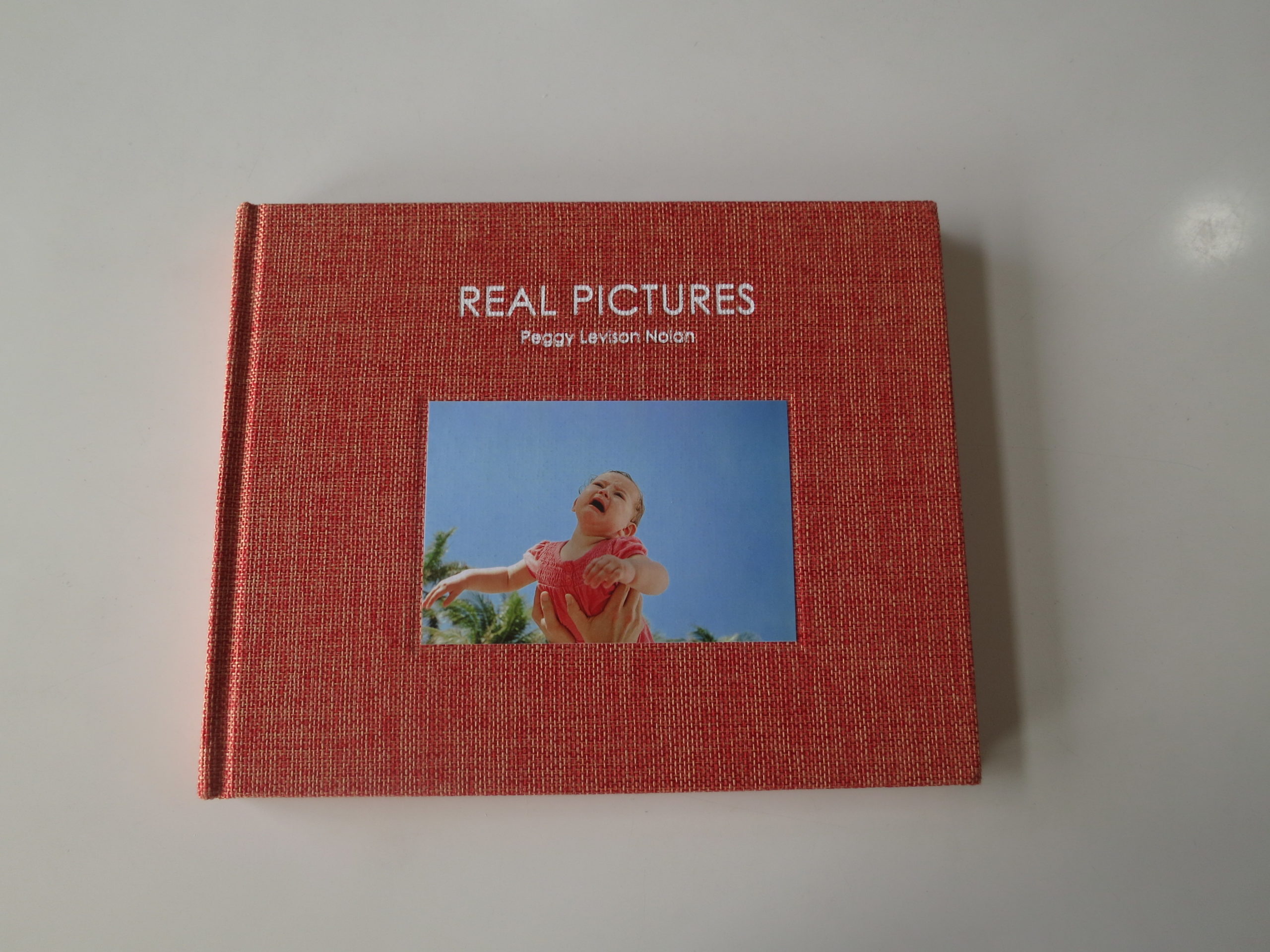
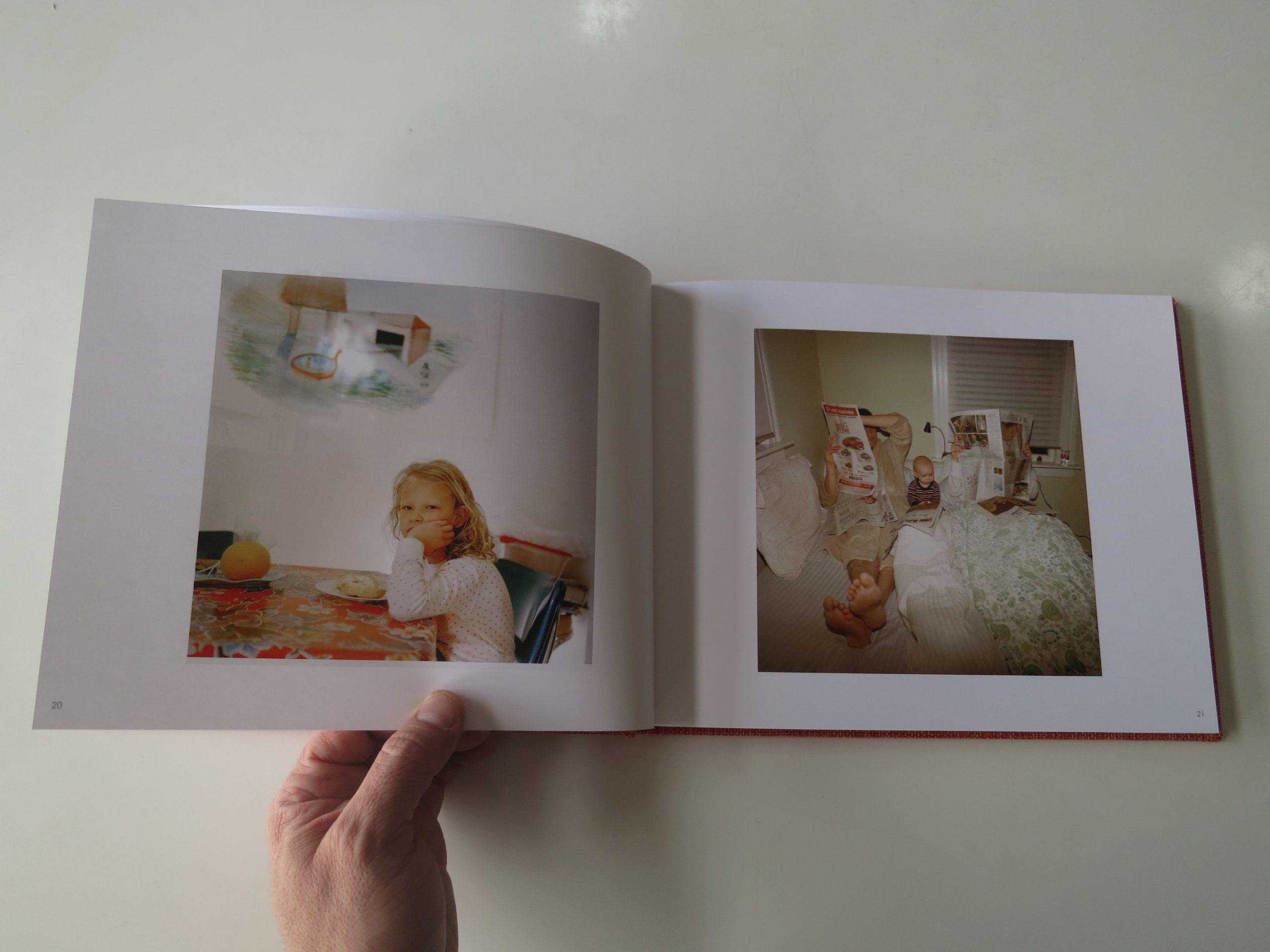
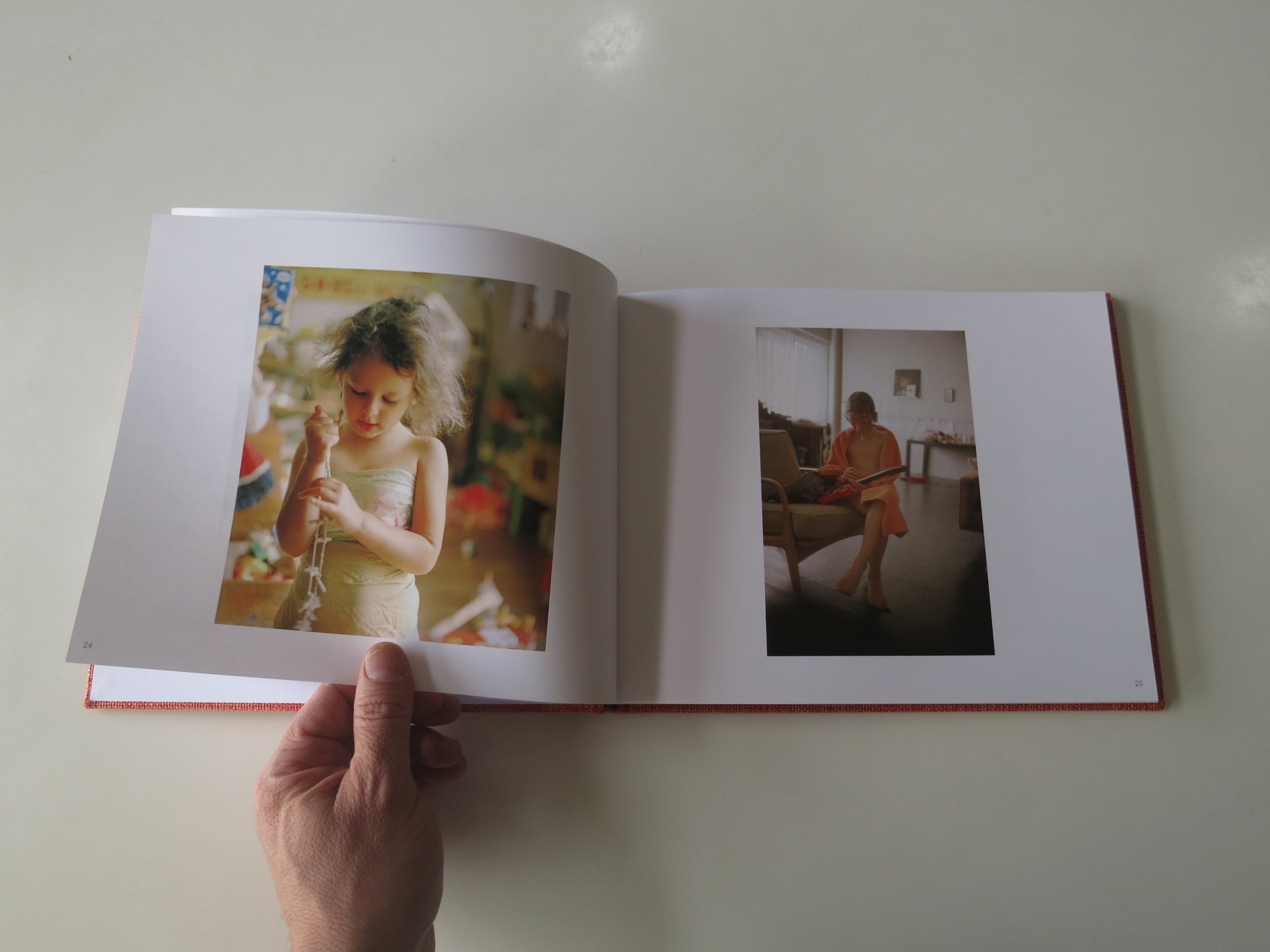
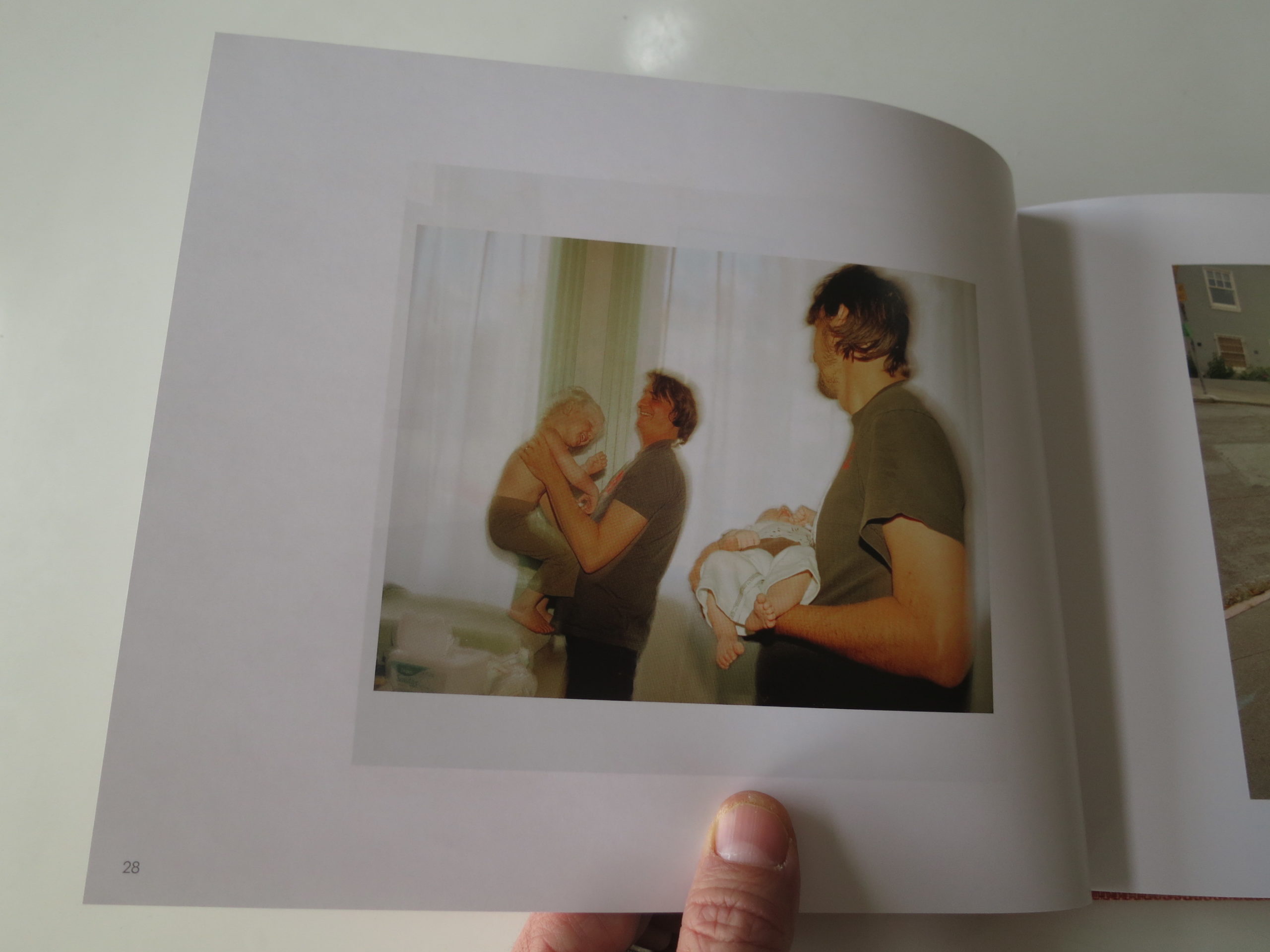
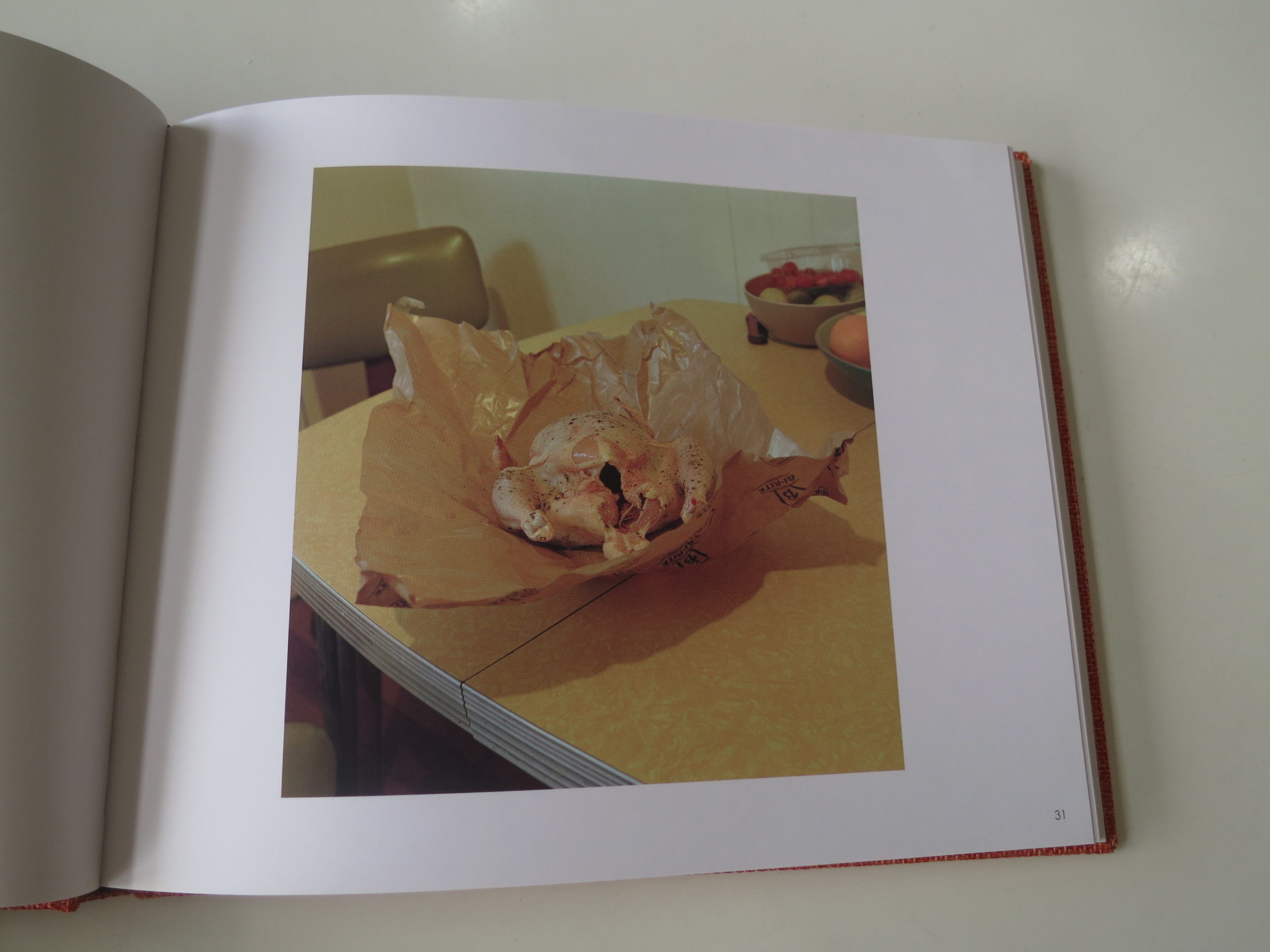
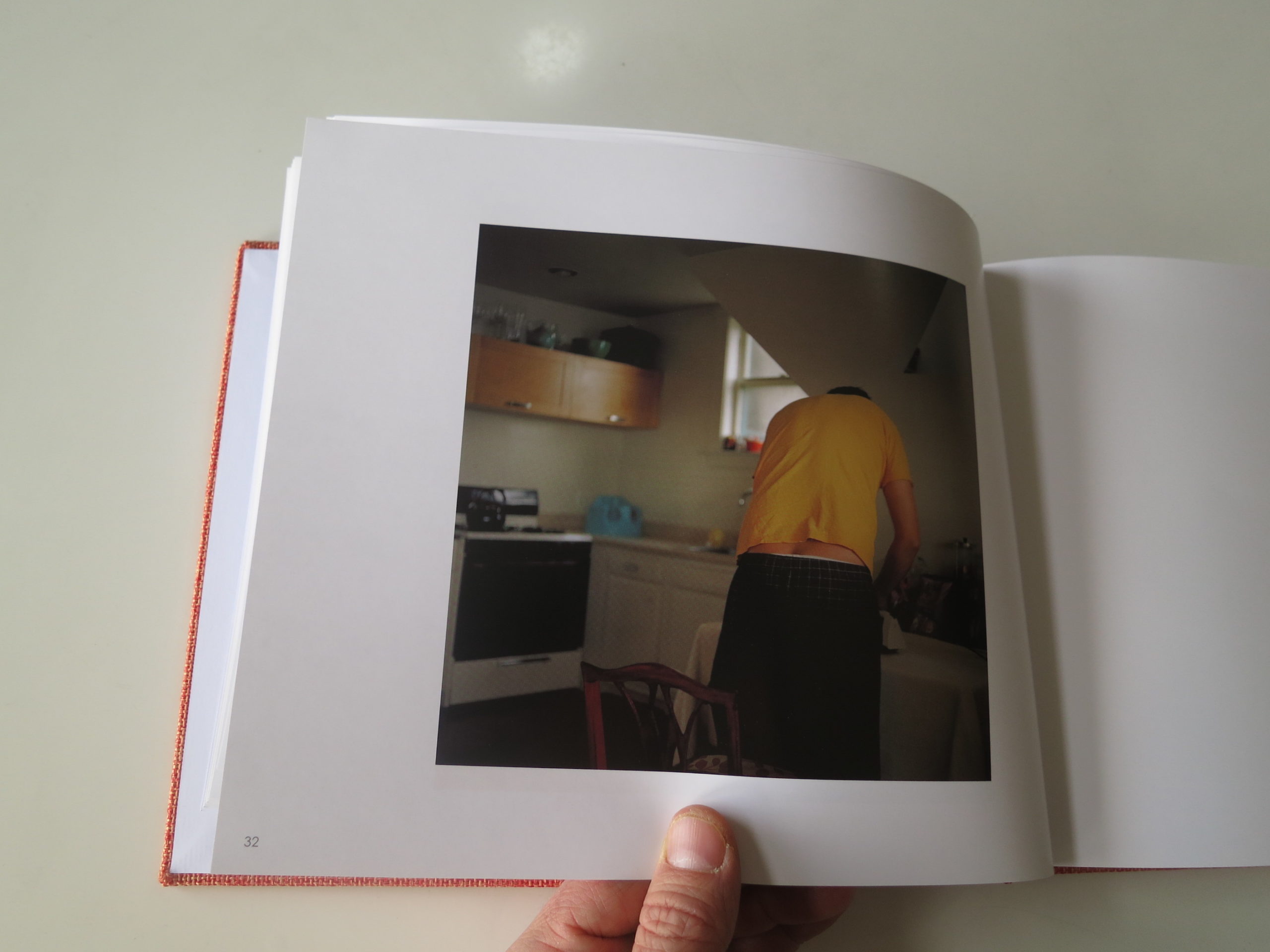
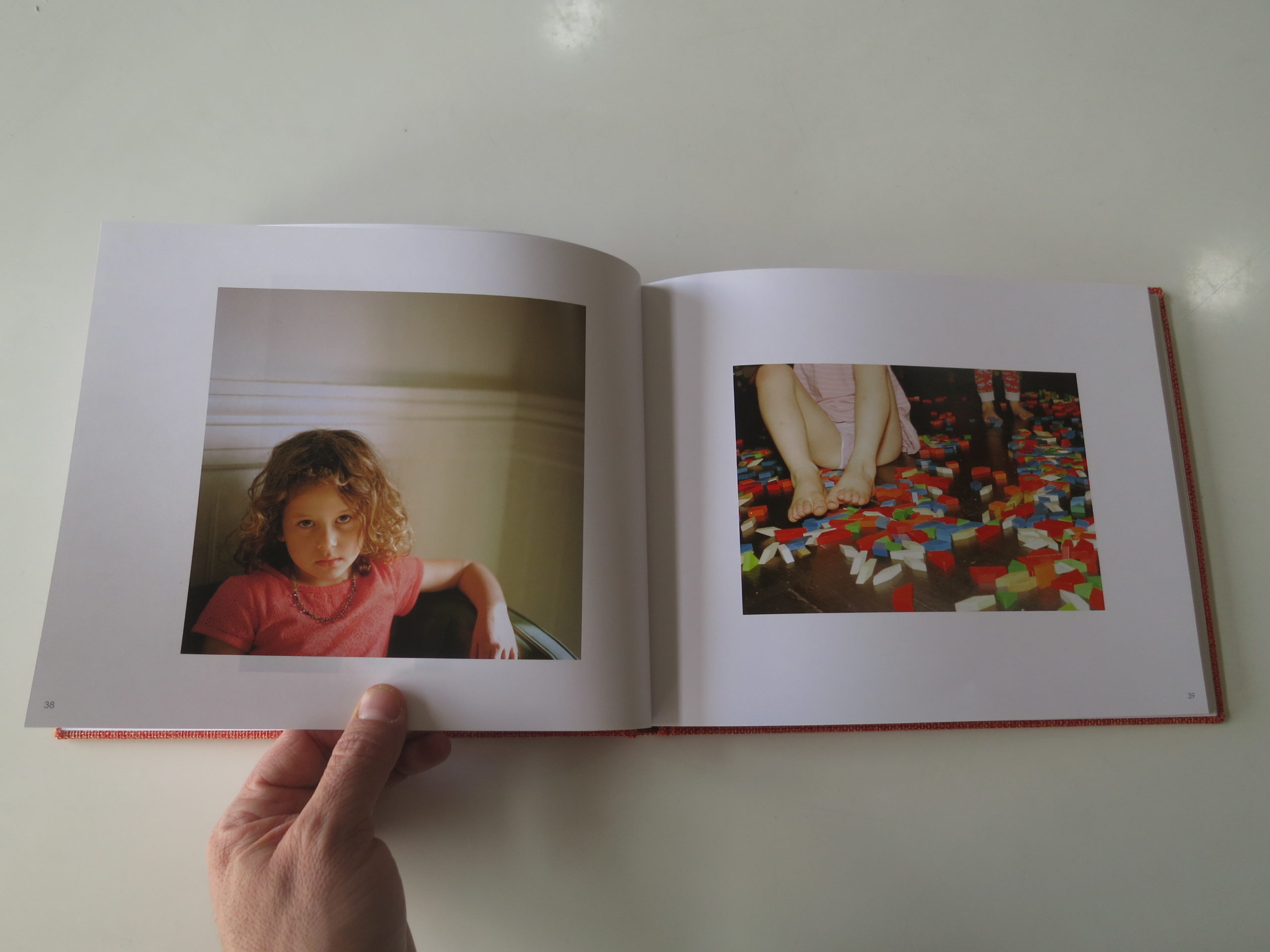
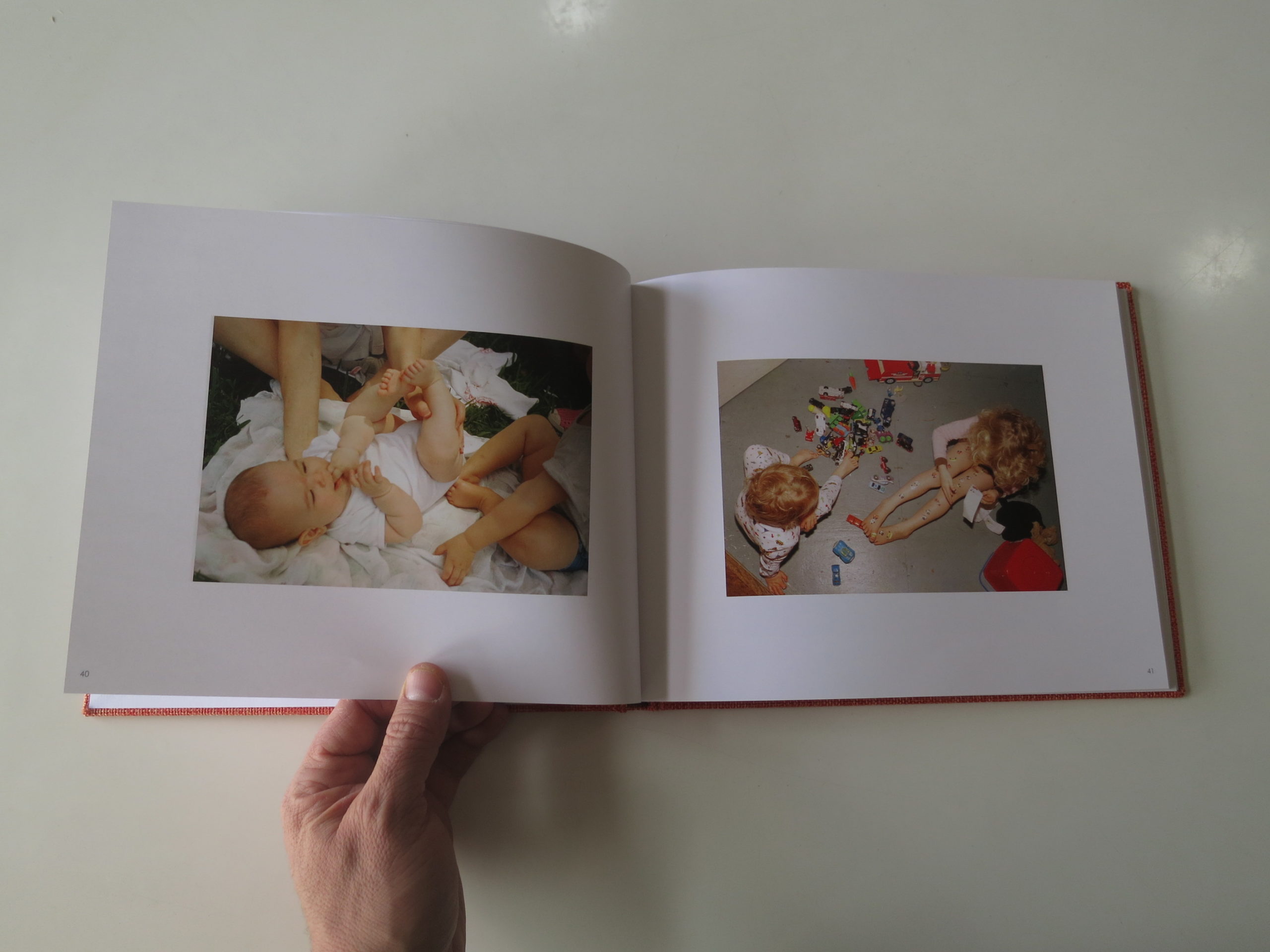
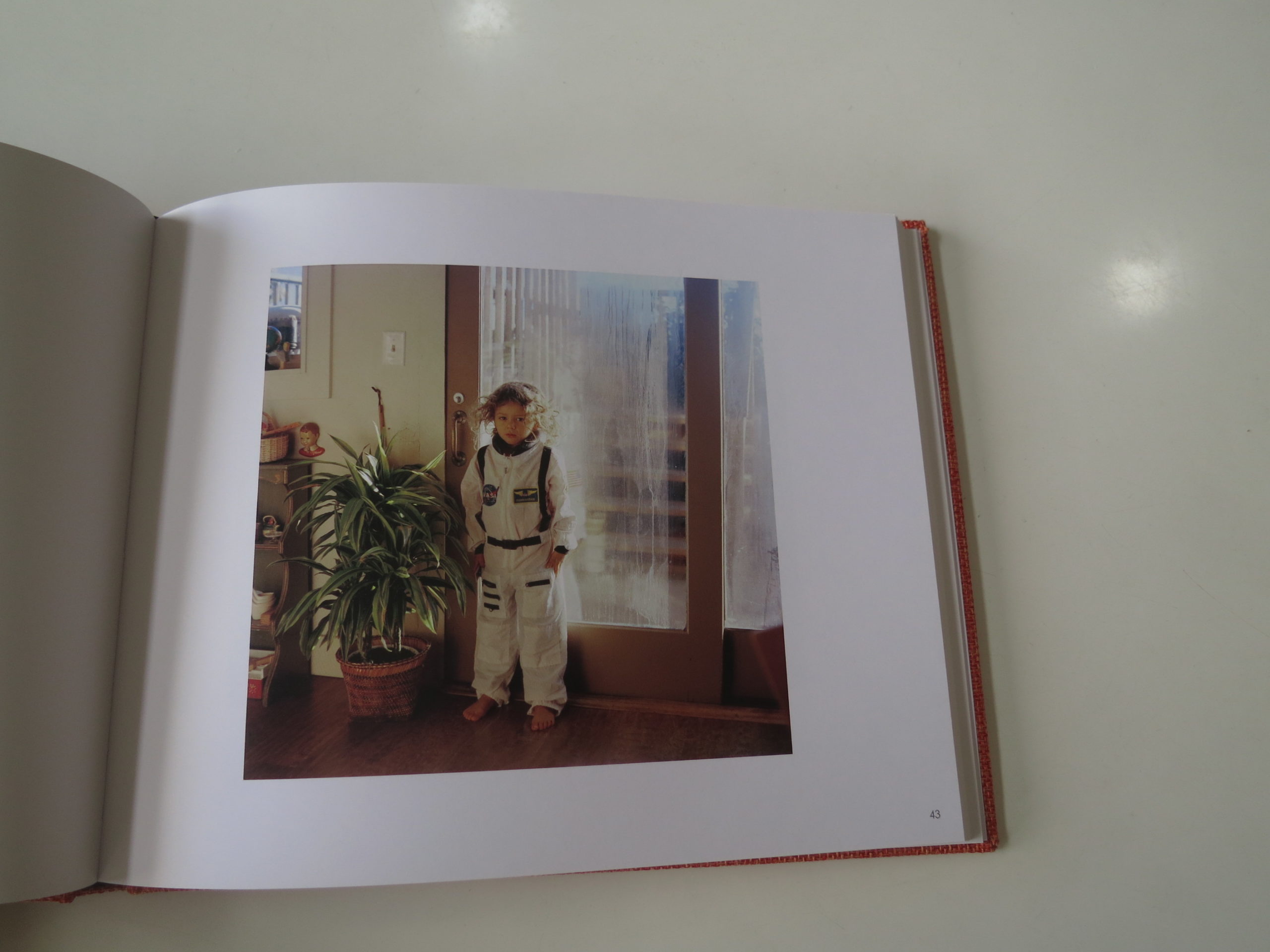
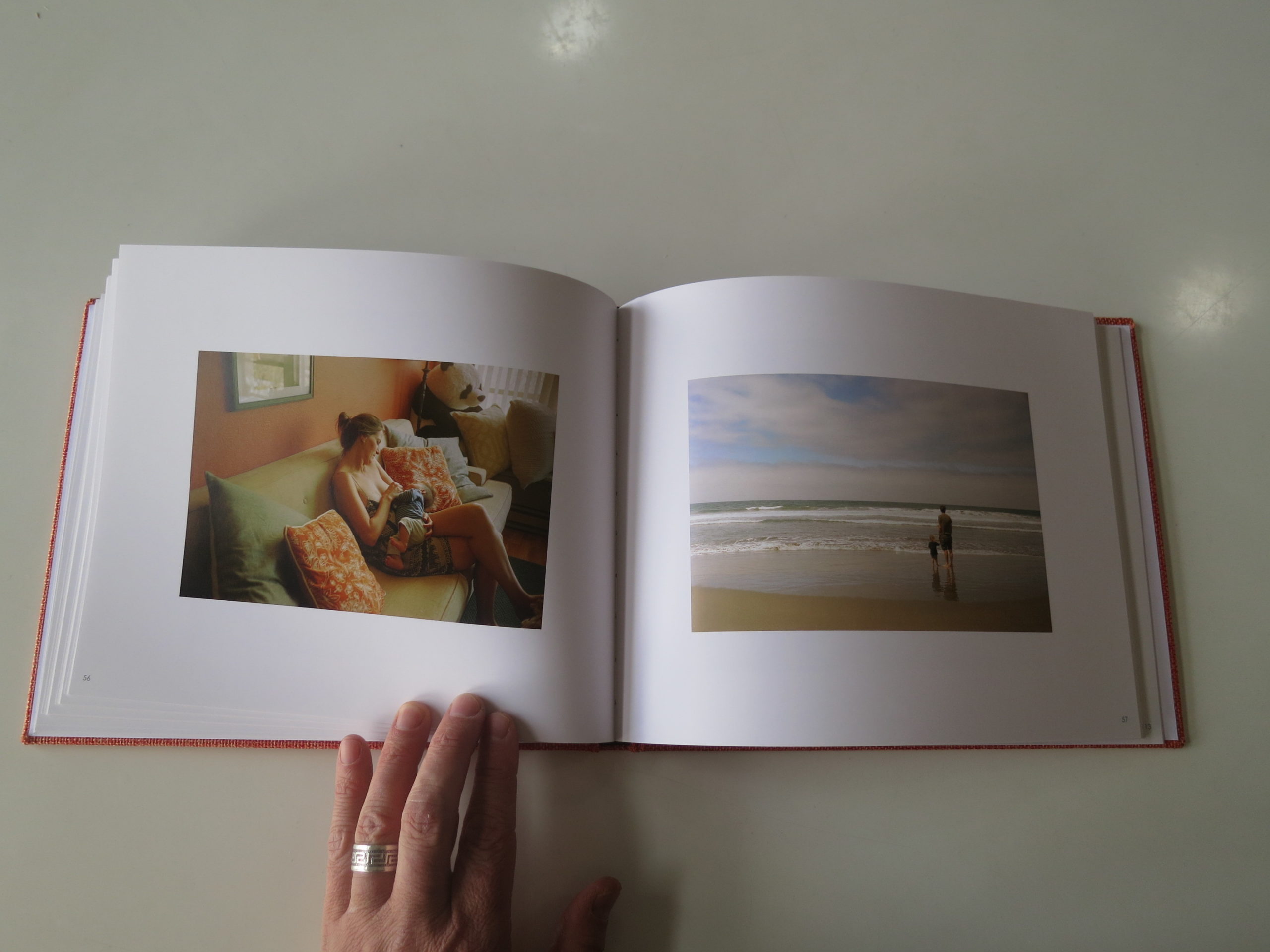
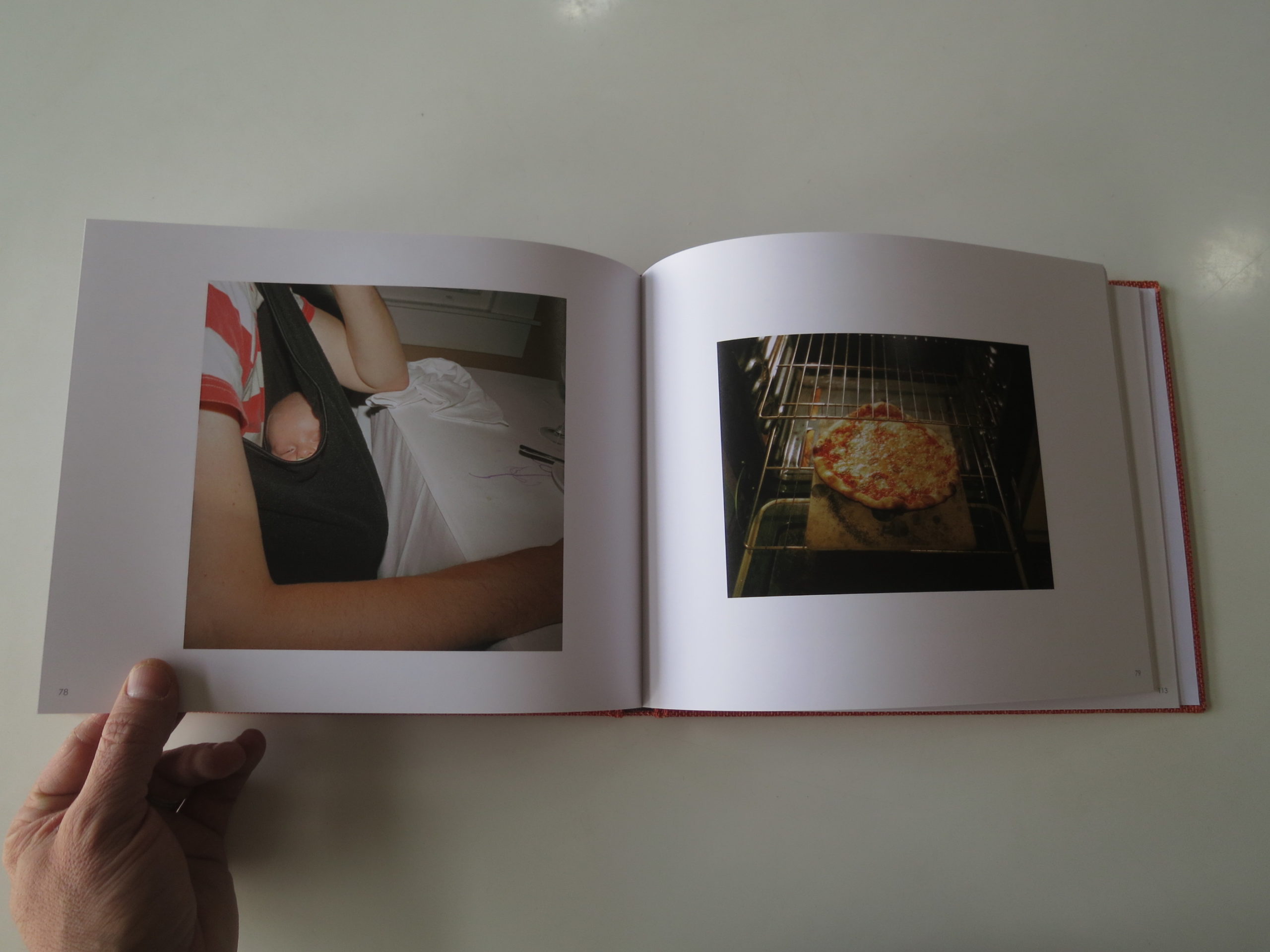
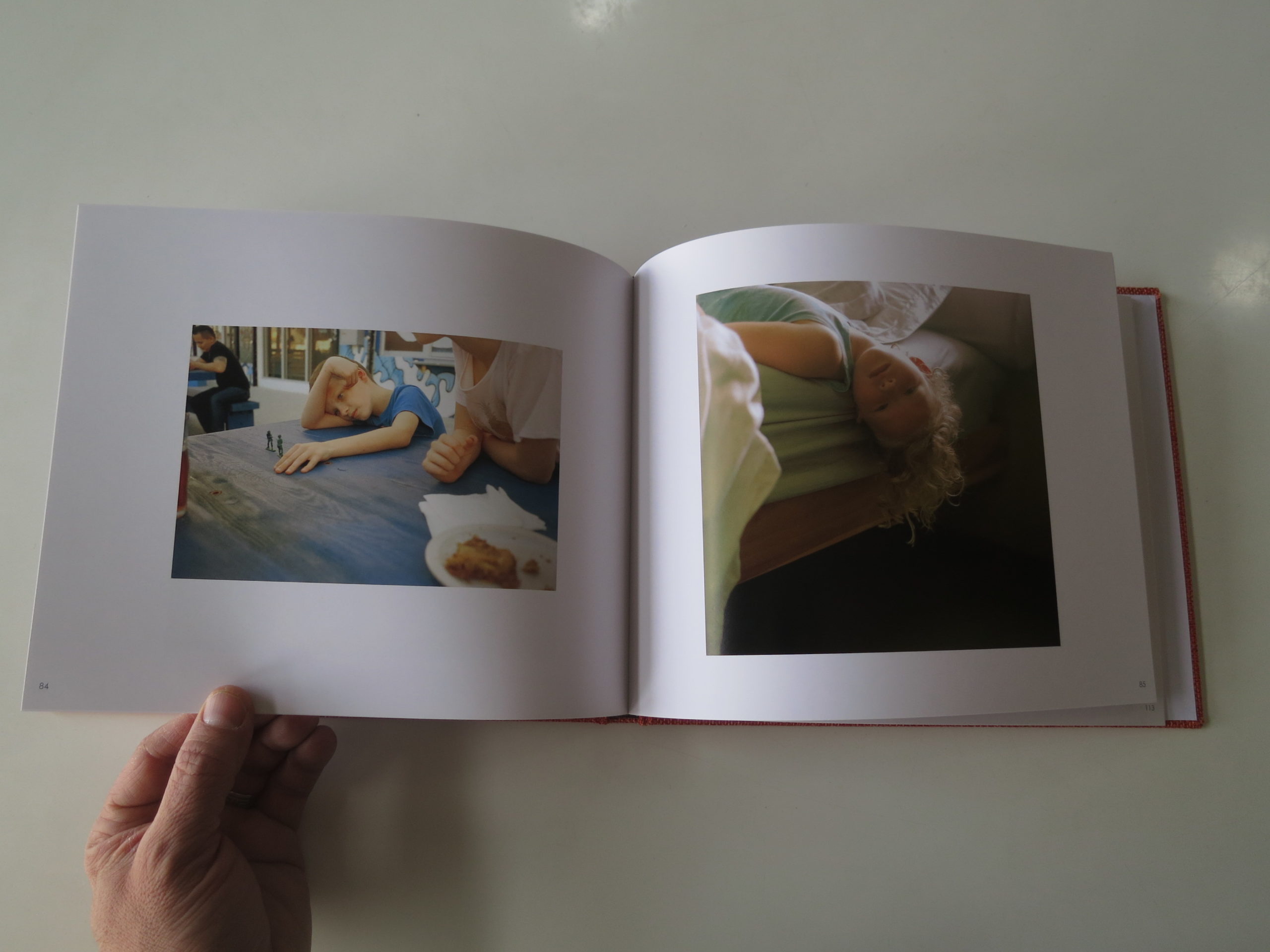
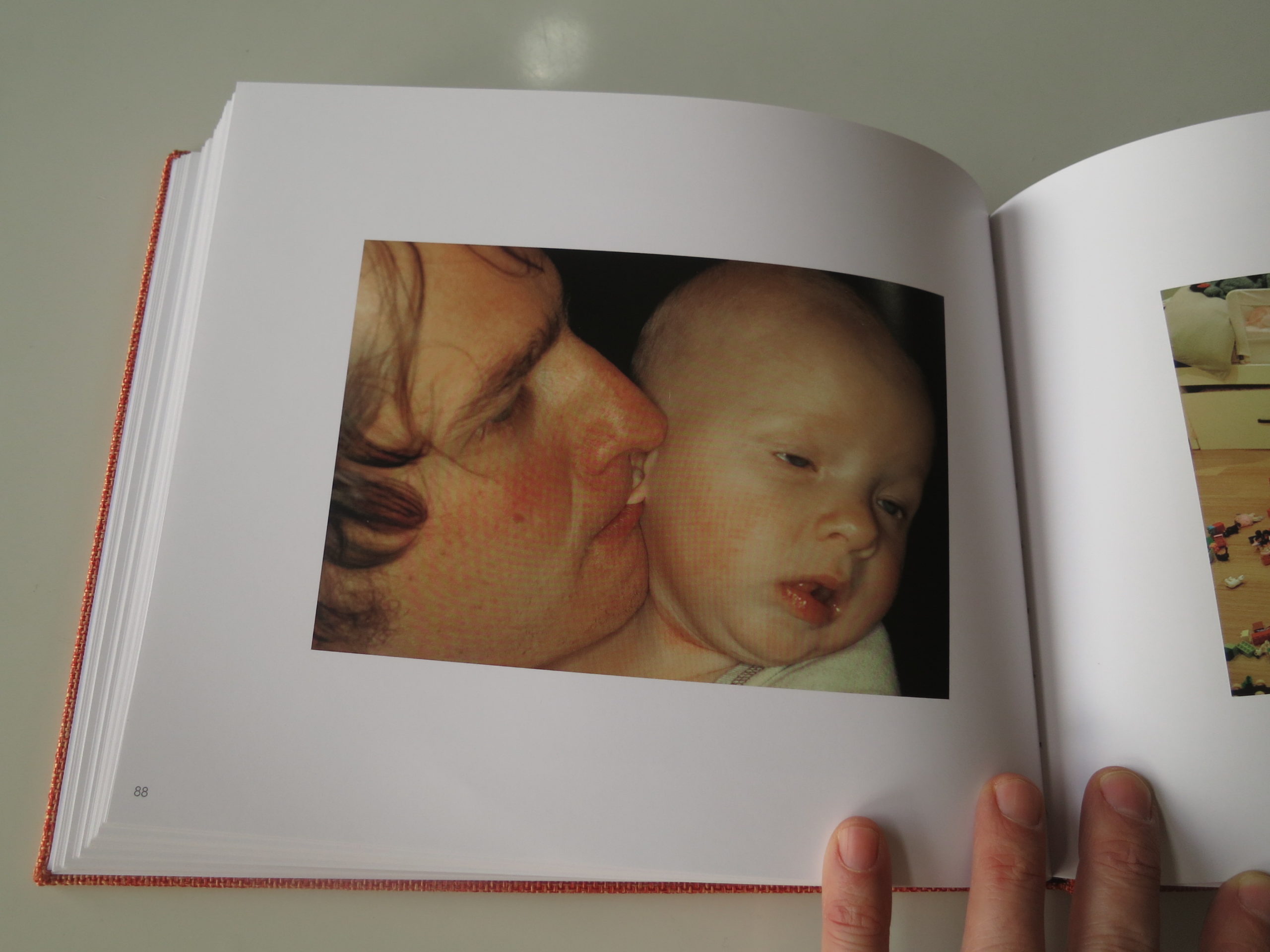
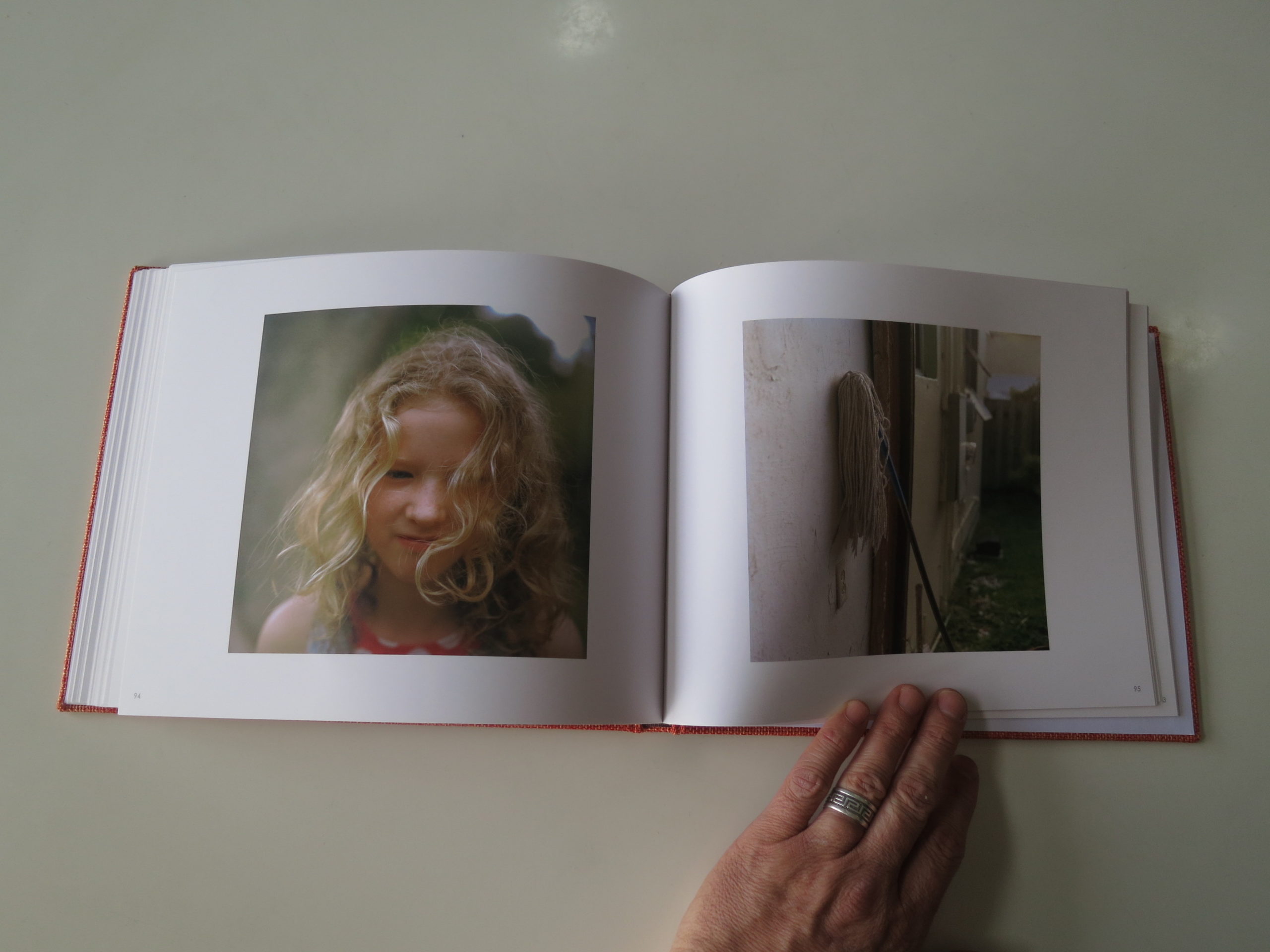
I mention this now, having just put down “Real Pictures,” a book that arrived last fall from Peggy Levison Nolan, published by Daylight. According to the end text, Ms. Nolan is the mother of 7 children, whom she’s photographed all along, but this book focuses squarely on their lives as adult children, with a slew of grand-kids in tow.

This is one of the books I mentioned recently, as I’d looked at it once and deemed it too similar to “Born,” which I reviewed not too long ago. But it seemed like it was worth re-visiting, as I knew I’d first viewed it in a bad mood, and it was at least intriguing enough to get into the maybe stack.

(In fairness, I missed the page with the subtitle “Tales of a Badass Grandma” the first time around.)

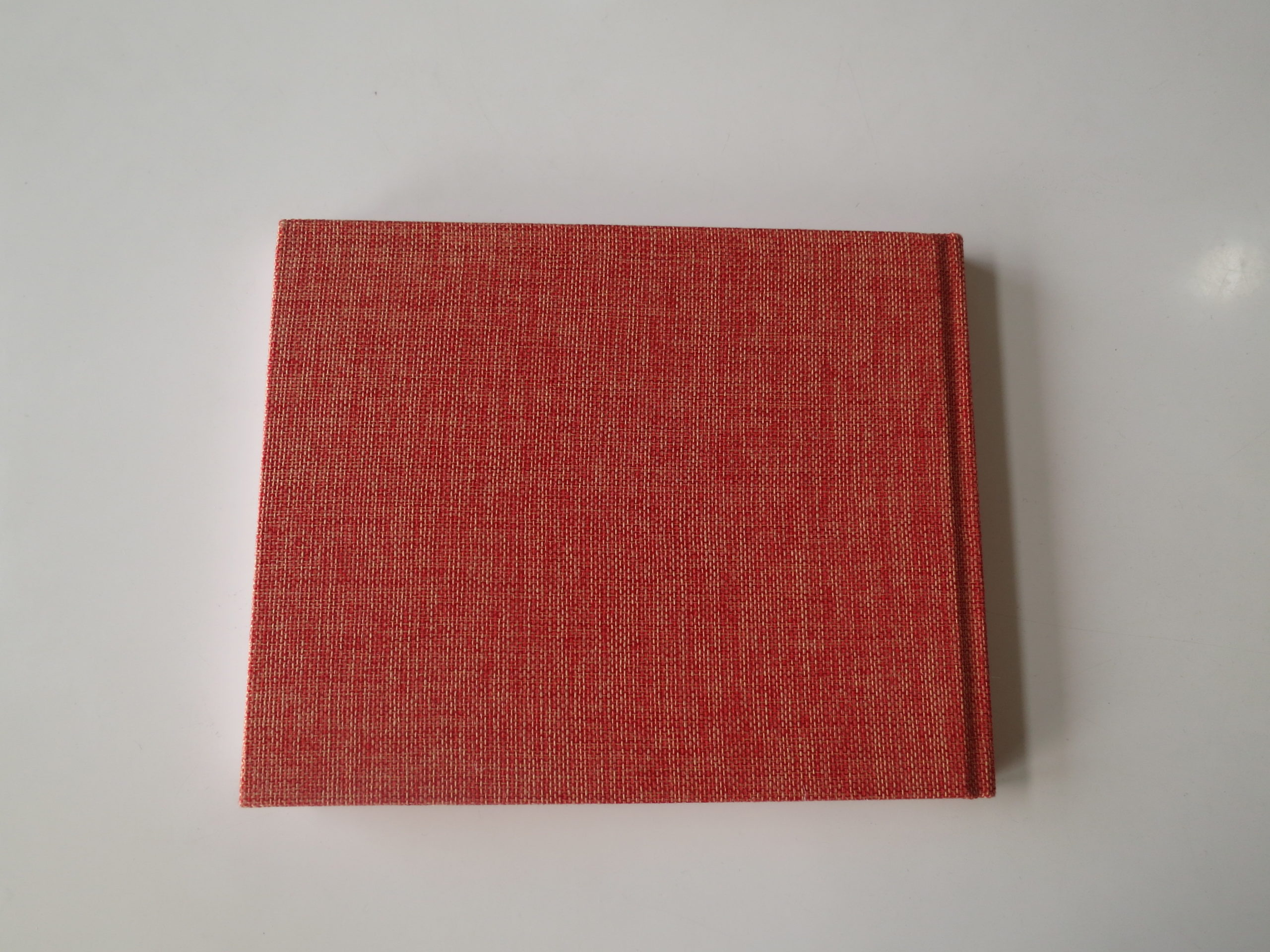
Today, the book’s bright, reddish-orange color caught the sunlight, and I picked it up again with fresh eyes.

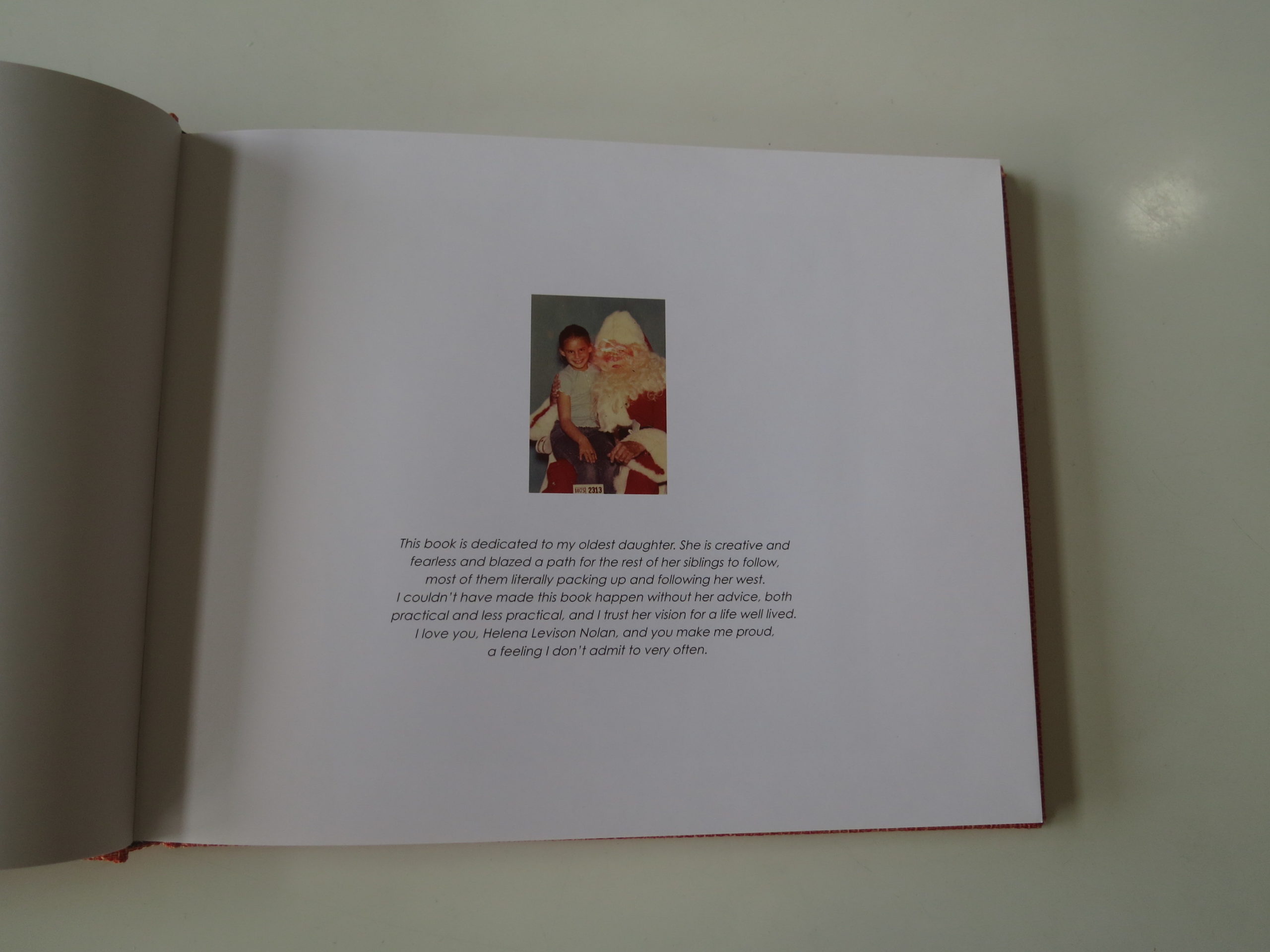
Almost immediately, I was attracted to the cheeky insouciance with which these parenting adventures were photographed. There’s a brief opening statement in which the artist shares that she has kids, and honors her oldest daughter, who apparently led her younger siblings on a Western migration.

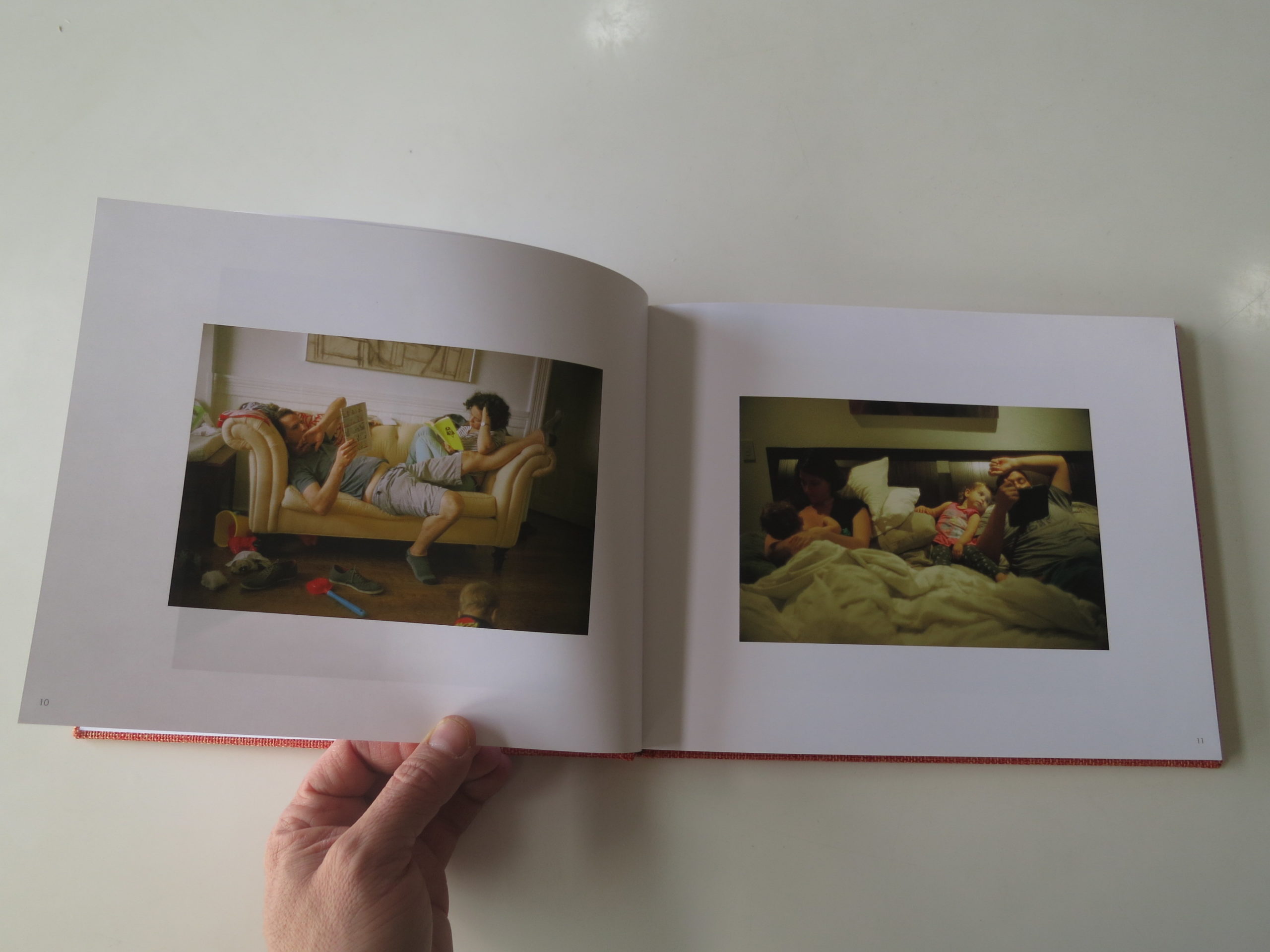
I was consistently intrigued by this sense of remove, of watching the action from the slightest distance, while still being in the room.

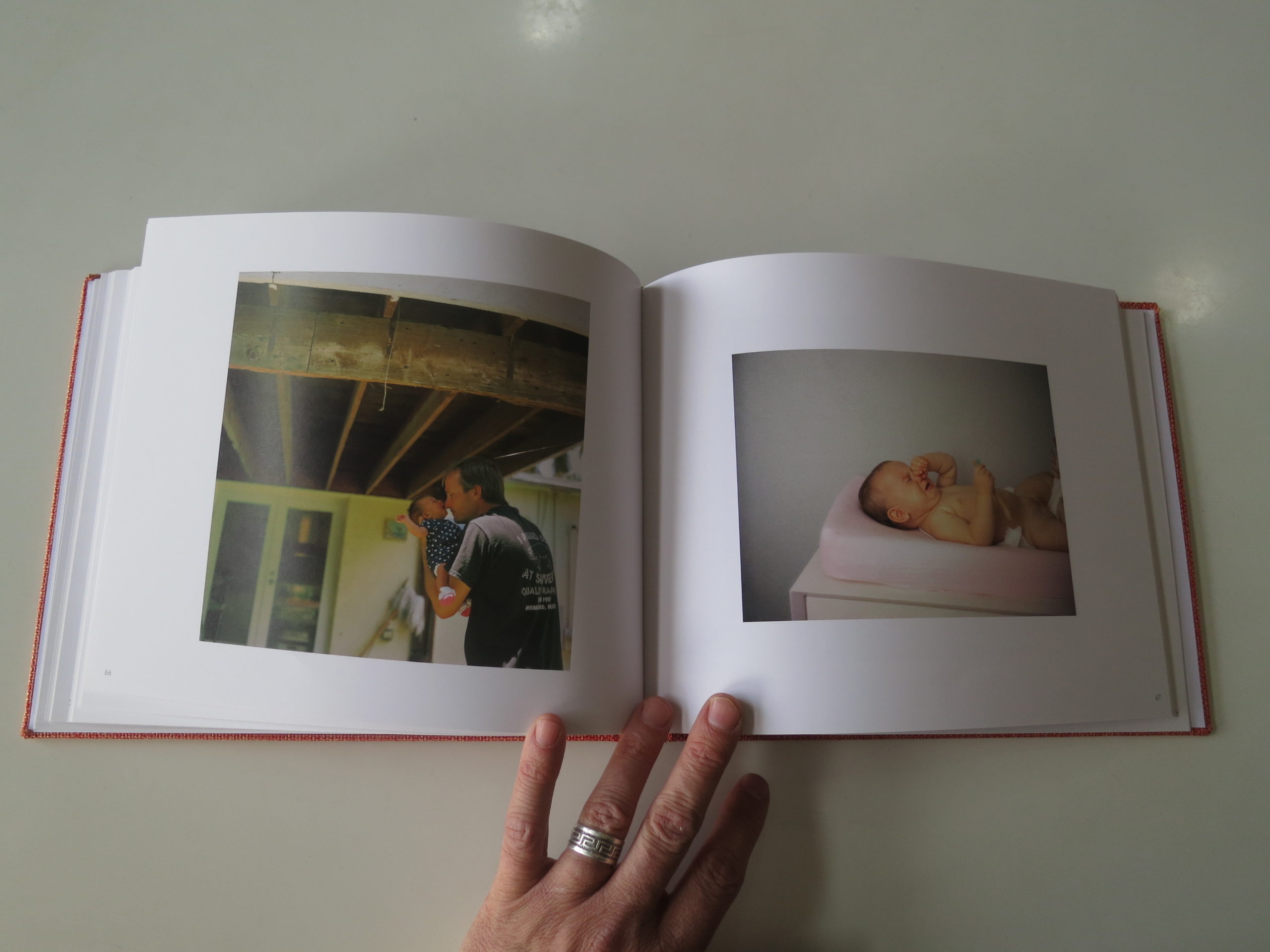
The pictures certainly don’t feel like they’re made of strangers, especially given the intimacy of the several baby butt shots. (Which I won’t photograph below, for obvious reasons.)

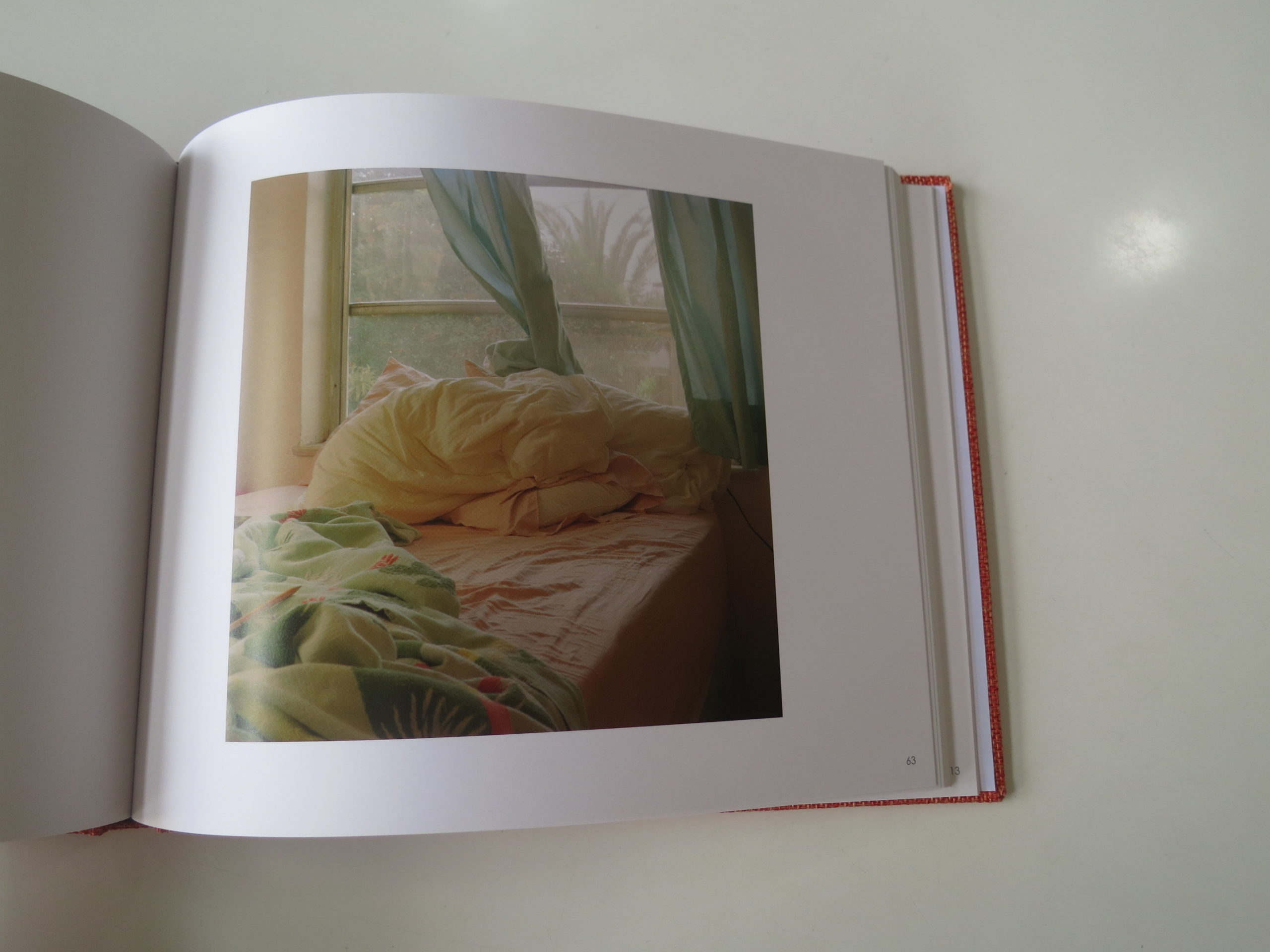
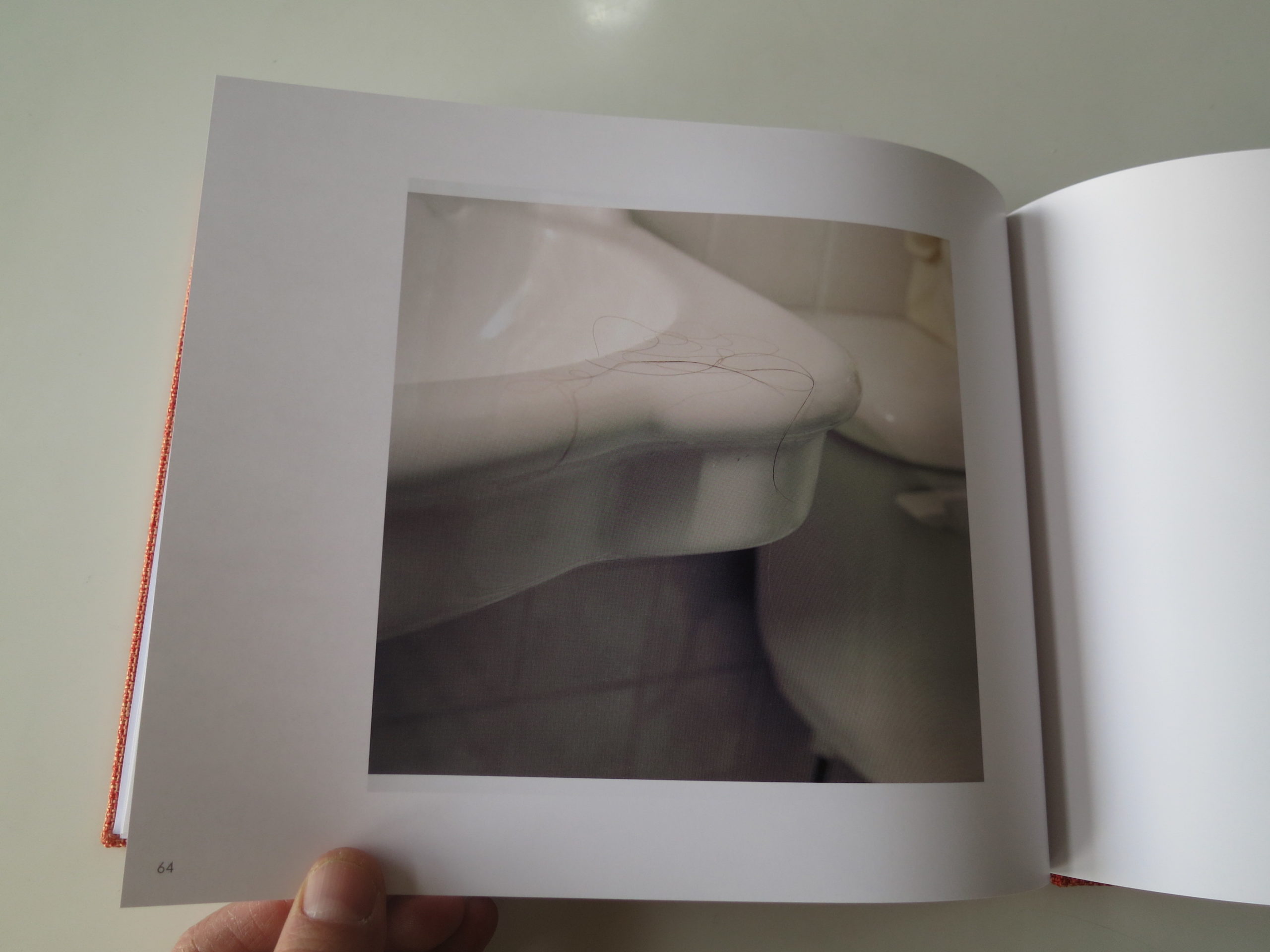
The kid in the diaper up the pole is a great image, and it’s paired with the dirty, painted feet standing on a chair. Most of the images use color and light well, (Thanks, California,) while also showing the behind-the-curtain, absurdist mundanity of it all.

The end text shares that Peggy Levison Nolan makes photo albums for each of her children, and the pictures are the same ones in this book. They may look like art, but to her, (and her family,) they are a personal history that we all get to share.

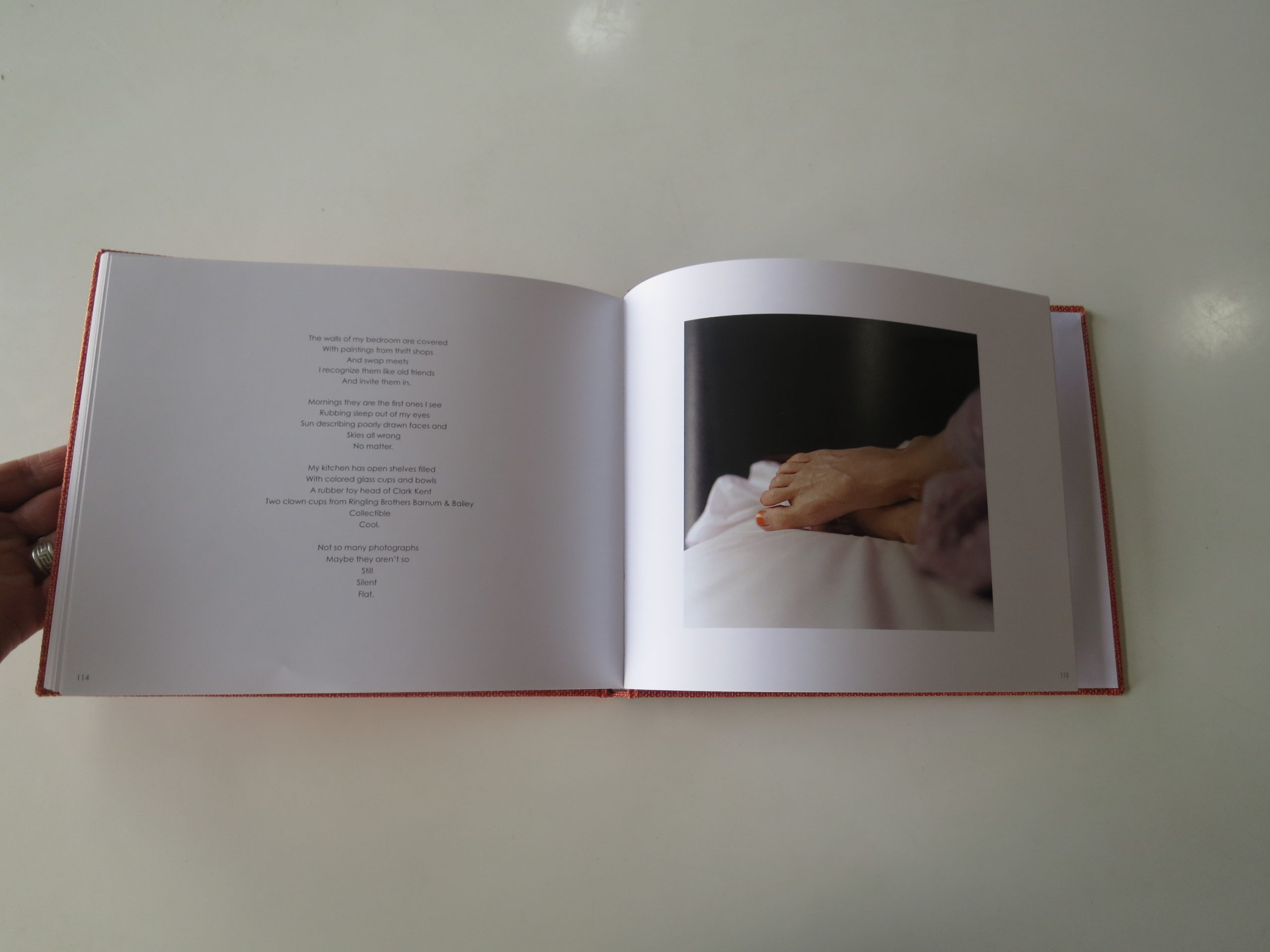
Just before the essays, there’s a short poem about (presumably) the artist waking up to thrift-store-painted portraits on the wall, rather than the sounds of her family.

And the last photo is (presumably) of her aged feet in bed.

It’s a powerful way to bring the story home, and I’m glad I gave this strong book another look.

Bottom Line: Visions from a hip grandma

To Purchase “Real Pictures” click here 

If you’d like to submit a book for potential review, please email me at jonathanblaustein@gmail.com. We’re particularly interested in submissions from female photographers, and artists of color, so we may maintain a diverse program. 

The Art of the Personal Project: David Walter Banks of Brinson+Banks

The Art of the Personal Project is a crucial element to let potential buyers see how you think creatively on your own.  I am drawn to personal projects that have an interesting vision or that show something I have never seen before.  In this thread, I’ll include a link to each personal project with the artist statement so you can see more of the project. Please note: This thread is not affiliated with any company; I’m just featuring projects that I find.  Please DO NOT send me your work.  I do not take submissions.

Today’s featured artist:  Brinson Banks

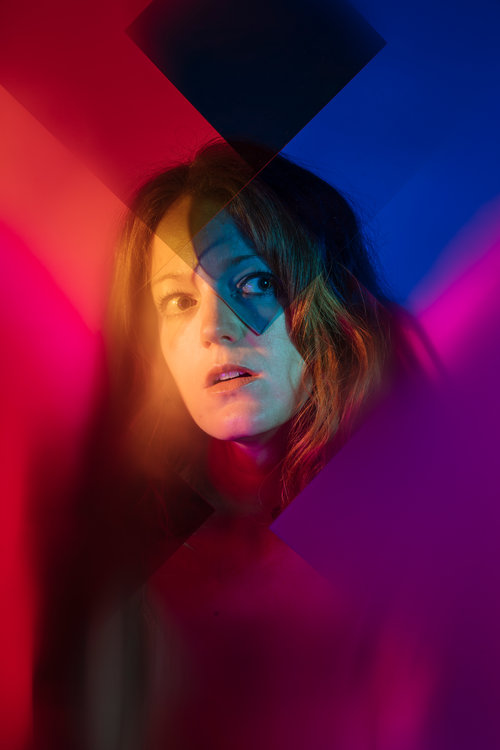
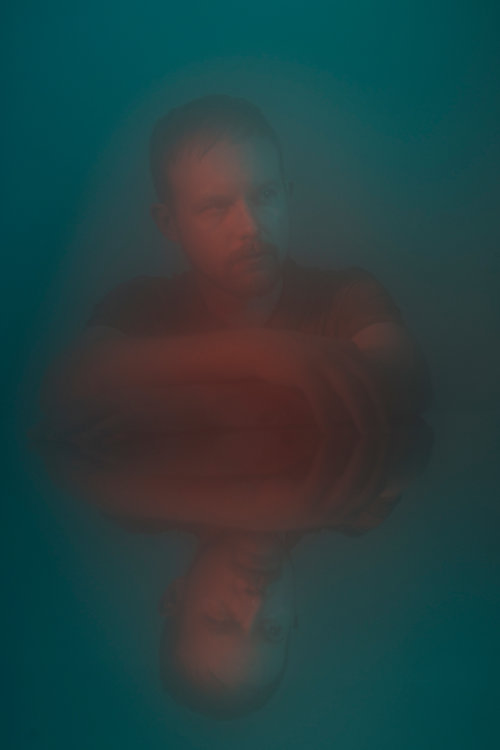
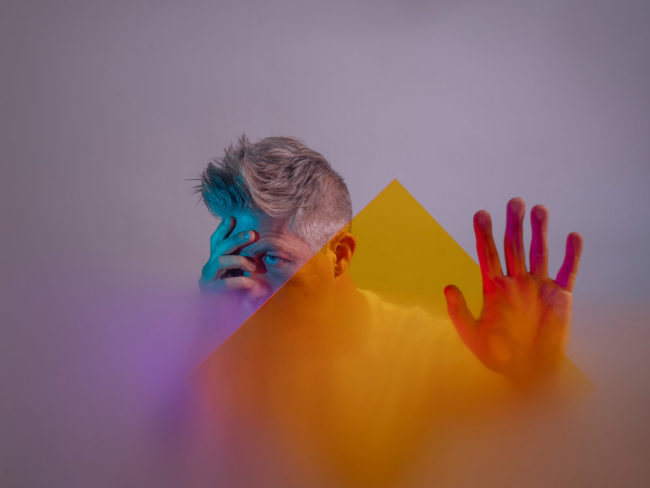
‘Chroma’ Artist Statement: Chroma has two purposes for me, it offers a chance to feel connected and it provides an opportunity to explore and experiment with light and color, as every image in this series is created in camera with minimal to no post-production.
The current socio-political climate in the United States has created a palpable tension that flows like electricity through us all. This has magnified both the divisions as well as the need for reunification.
I feel this increasing disconnection with the world around me of late, as though I’m separate as an observer. Yet, at the same time I have a deep yearning to connect with others. Apathy is in one hand and empathy is in the other.
I create these images in hopes of coming to terms with my feelings of isolation, but also to reconnect one on one. I connect with my subjects through this intimate shared experience, while provoking and evoking an emotive response. I ask for introspection, vulnerability, sometimes angst or sorrow, sometimes light and hope. Before I take a single photo, I share inspiration from a small collection of painters and authors whose use of color, light, and language I hold dear. With each subject, I take the time to sit, talk, and share this work before lifting the camera. Then I often simply wait in the uncomfortable warming silence as the ether informs the pose and expression, allowing it in.
And, as we are creating together, apathy turns into empathy.
To see more of this project, click here.

APE contributor Suzanne Sease currently works as a consultant for photographers and illustrators around the world. She has been involved in the photography and illustration industry since the mid 80s.  After establishing the art buying department at The Martin Agency, then working for Kaplan-Thaler, Capital One, Best Buy and numerous smaller agencies and companies, she decided to be a consultant in 1999. She has a new Twitter feed with helpful marketing information because she believes that marketing should be driven by brand and not by specialty.  Follow her at @SuzanneSeaseInstagram


The Daily Edit – Harvard Business Review: Grace Chon

Harvard Business Review

Creative Director: John Korpics
Photographer:
Grace Chon

Heidi: How did this body of work start?
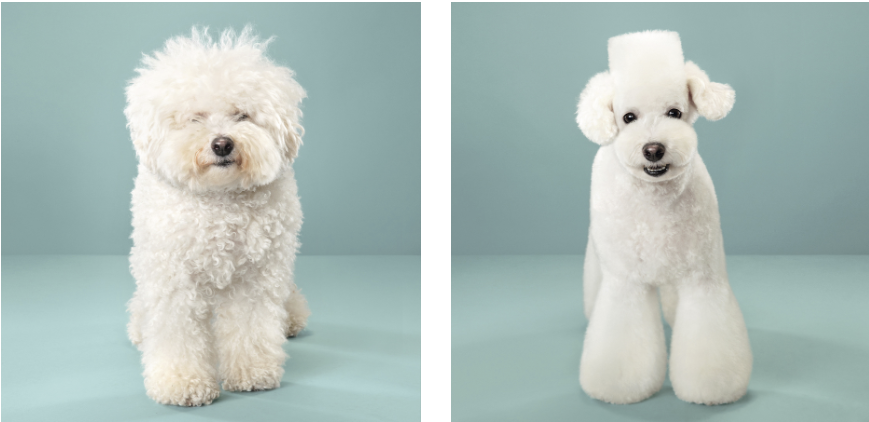
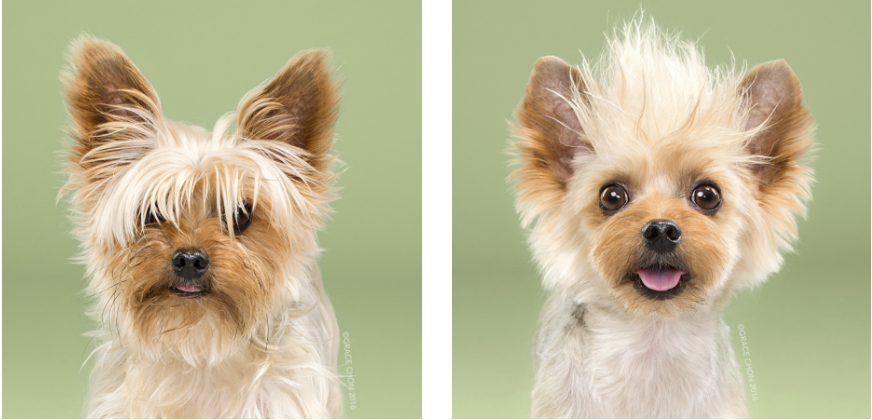
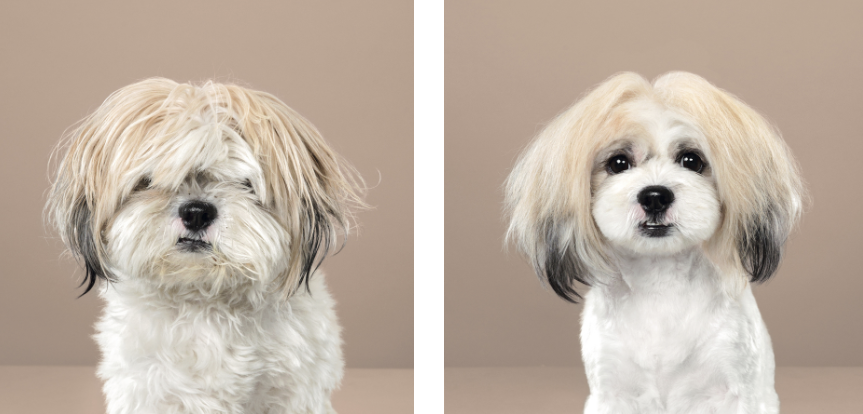
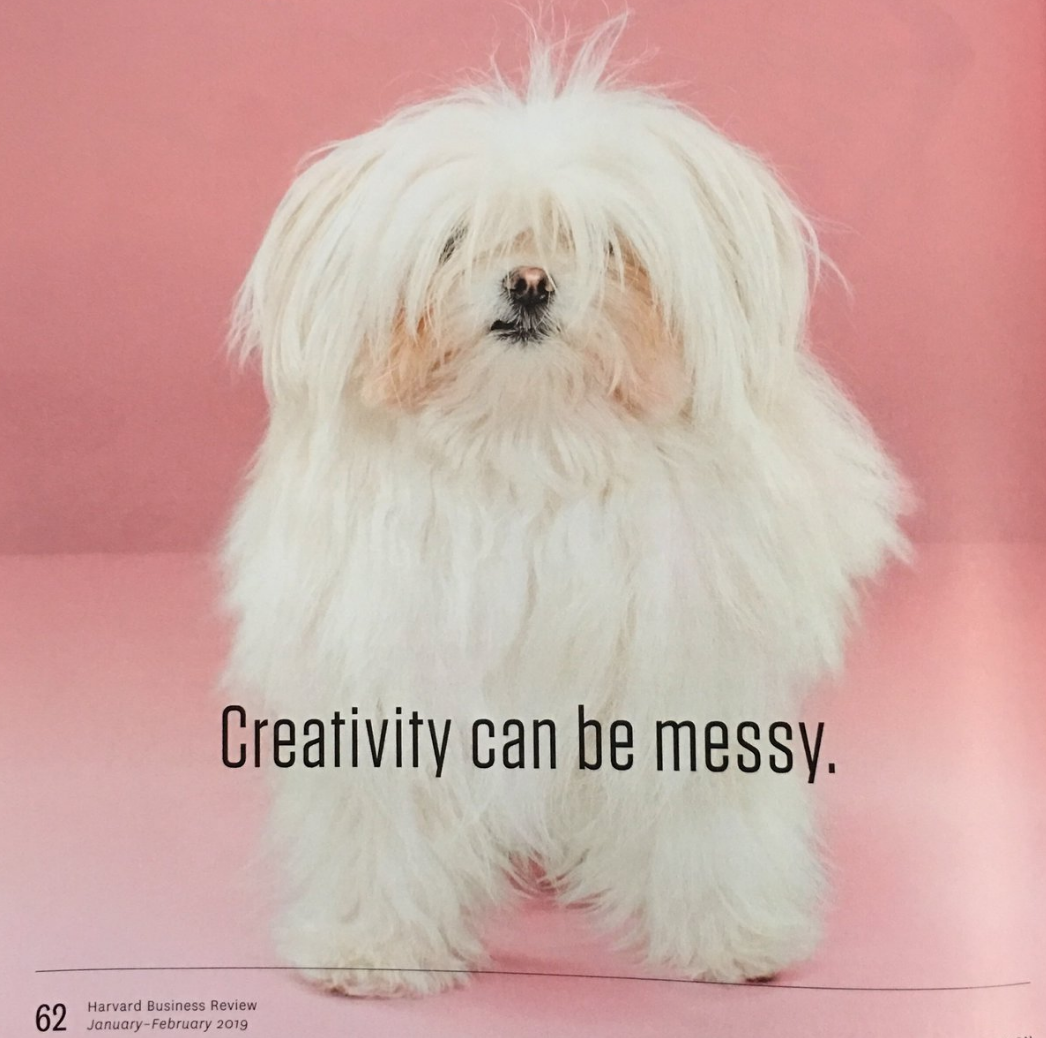
Grace: The series actually started out as a personal project with 9 dogs, back in 2016. The series went massively viral, and then turned into a book called Puppy Styled that was published in 2018.

Are these dogs trained?
The dogs are all not studio trained animals – they are pets that didn’t have experience modeling, let alone in a studio in front of strobe lights. 
 more info about the series here

Is it difficult to give the animals direction?
I’m extremely connected to animals and intuitive about them while I shoot, so it’s not difficult to give them direction because I’m pretty tuned into how they’re feeling on set. I also make sure to keep them happy while we shoot, so I bring a variety of treats and toys to keep them happy and motivated. I tell people it’s like a mix of dog training and photography. I also make funny sounds to get fun, unexpected looks to the camera.

Where did your love of people and pets start from?
I’ve always loved animals my entire life! I grew up watching Jack Hanna’s Animal Adventures and wanted to be a vet when I grew up. 


The Daily Promo – Cody O’Loughlin

Cody O’Loughlin

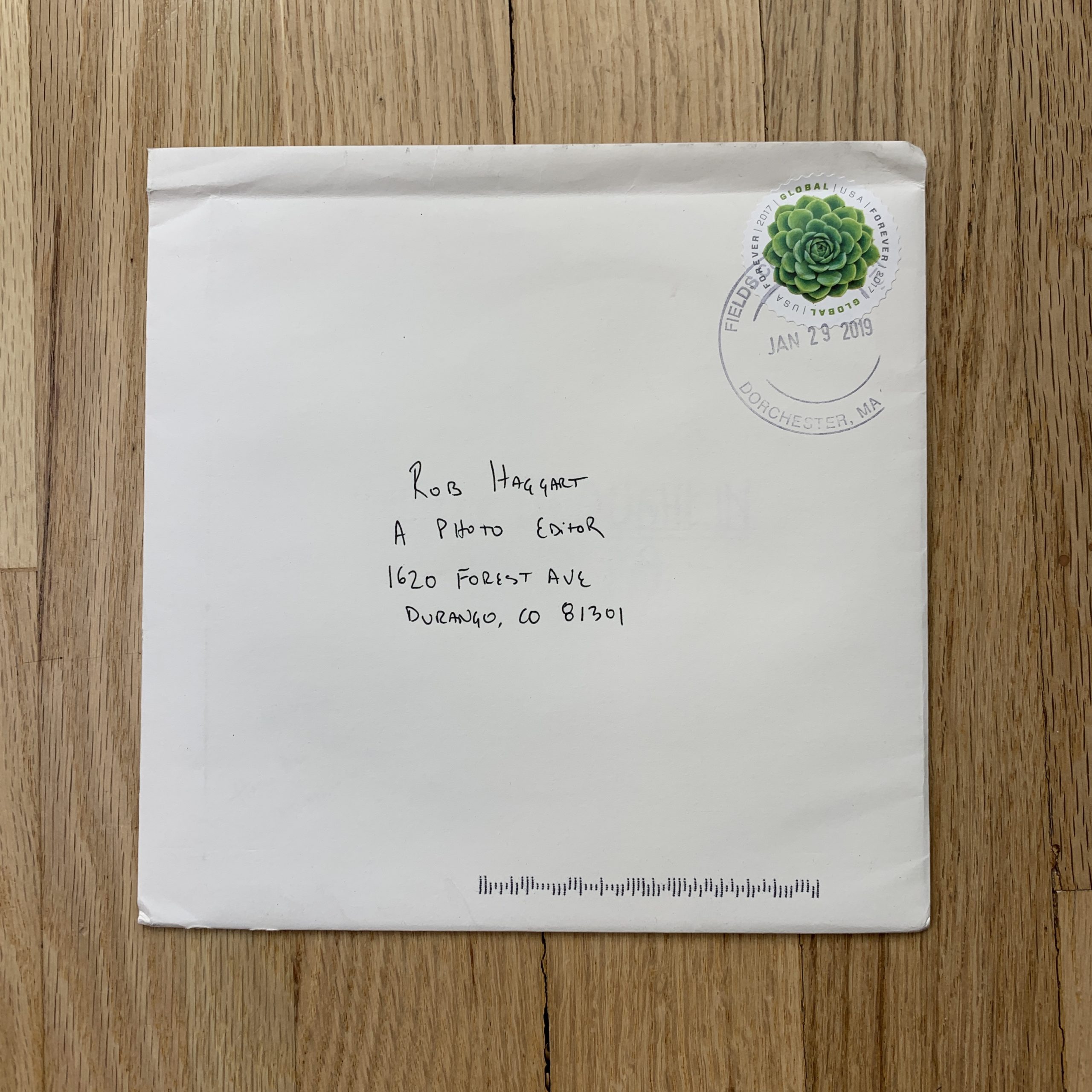
Who printed it?
I used Smartpress to print this set. They’re great to work with during the proofing and mock up process, and offer plenty of quality paper options.

Who designed it?
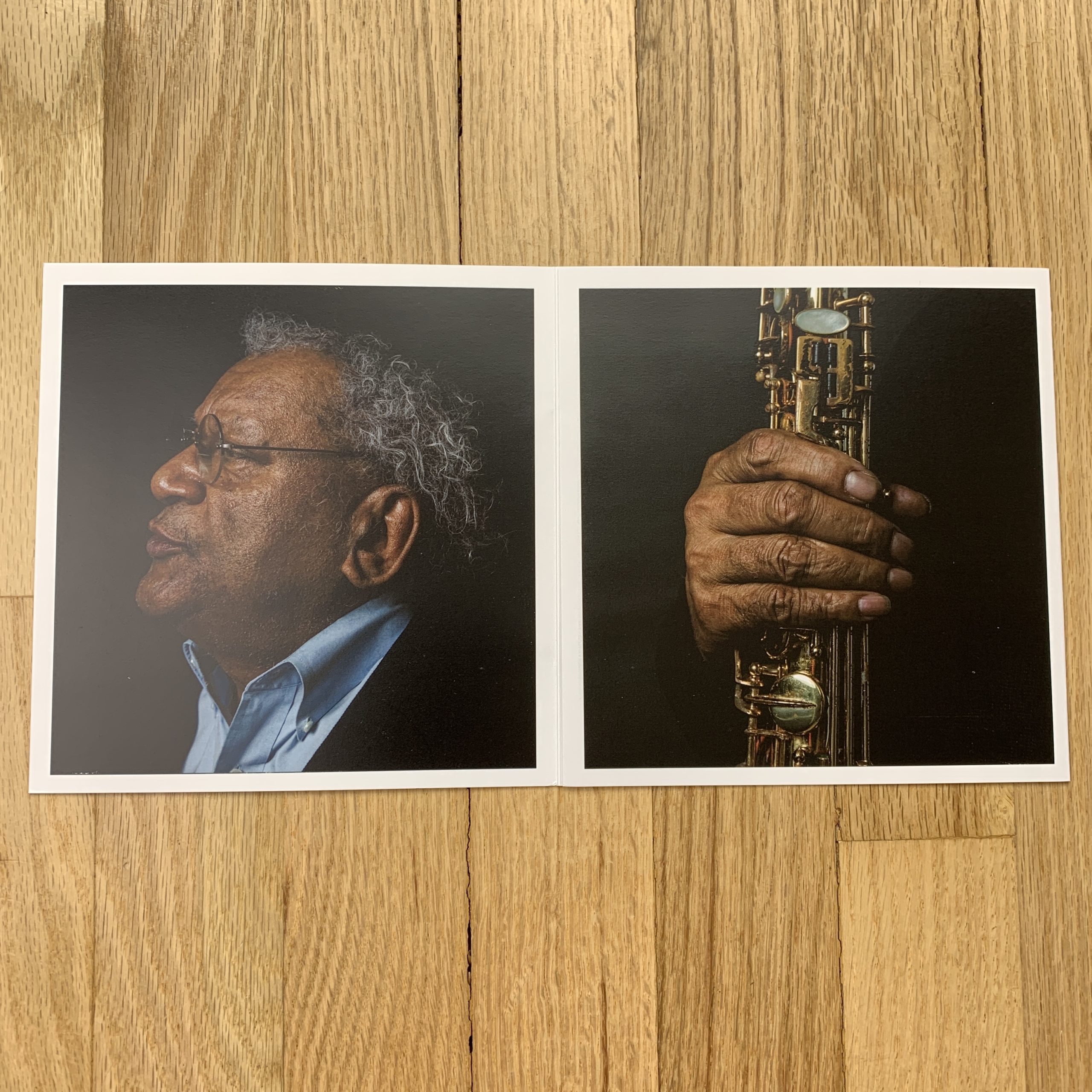
I designed the promo myself with the help of my wife, Nicole, who has an excellent eye for design. I wanted to do a tri-fold in square format because it sequences a bit like a book. I also thought it was neat to have the portrait of Braxton in a diptych as well as a tryptic when the promo is fully unfolded.

Tell me about the images?
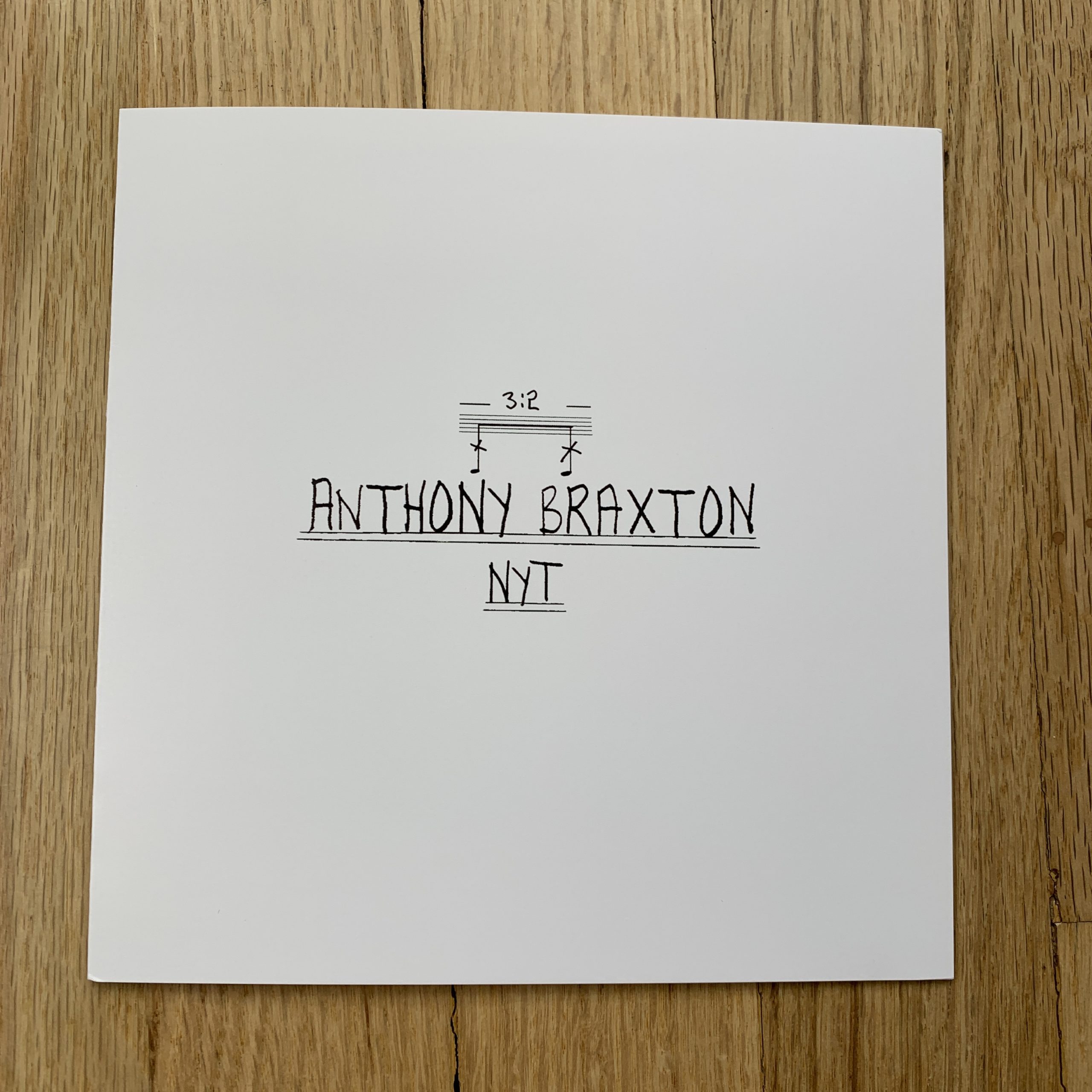
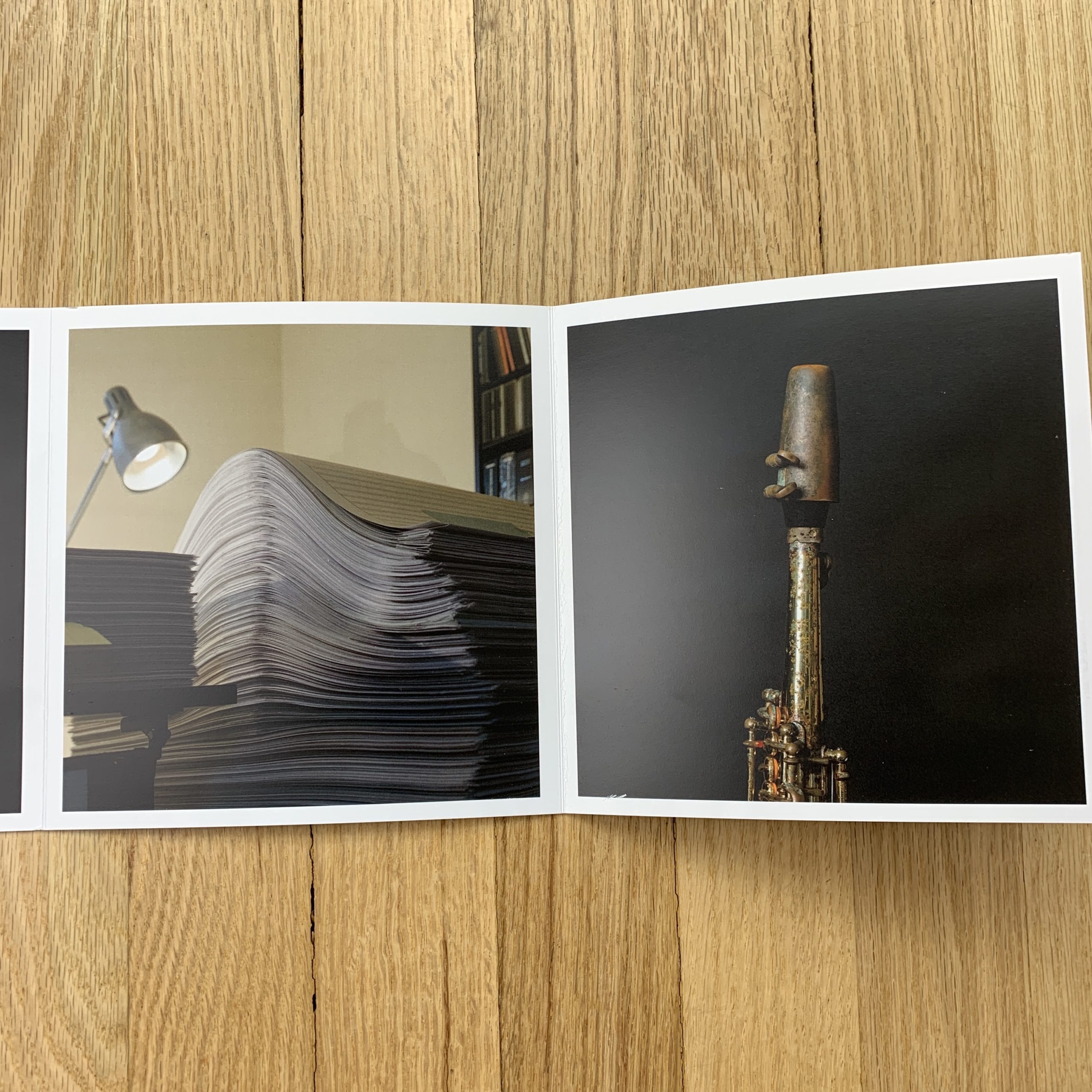
This promo was from a shoot I did with Laura O’Neil at the New York Times featuring jazz-legend and composer Anthony Braxton. Braxton is in his fourth year of writing an opera at his home studio in CT. He’s composing and transcribing the opera on hundreds of oversized, handwritten pages that are meticulously stacked in his studio. I photographed the score and rearranged Braxton’s own handwriting for the font and text in my promo. I love how precise and unique his style is and thought using his own penmanship would help tell his story.

How many did you make?
150

How many times a year do you send out promos?
I send out promos two or three times a year, or when I have new projects I’m excited about sharing. I write personal notes for each one and send them out to specific editors I’m keen to work with.

Do you think printed promos are effective for marketing your work?
I have found that over time thoughtful printed pieces do go a long way with editors. I’ve received lots of positive feedback and think marketing this way has been a big part in landing gigs for clients like the Times. I’m always grateful when editors take the time to reach out in response to my promos – it’s a great way to build relationships and collaborate on assignments.

This Week in Photography Books: Nick St. Oegger


Sometimes, I feel like an armchair Tony Bourdain.

(Minus the depression, thankfully.)

I still have a hard time thinking about Tony, as his death both hit me hard, and exposed the power of his through-the-camera-charm.

When Tony killed himself, there was an outpouring of global grief that I’ve seen very few times.

It was big when Pope John Paul died.
Sure.

And David Bowie.
People got really upset about that one.

But even a President like Ronald Fucking Reagan made barely a blip, when he finally gave up the ghost, while a Jewish-French Jersey boy, a former heroin addict who eventually got hooked on Brazilian Jiu Jitsu, managed to shake the world with his passing.

Why?

It’s a fair question to ask, now that it’s been long enough for the emotions to have settled.

Tony lived a huge chunk of his late life on camera, and the guy that emerged for his audience was cool, smart, curious, funny, interested, intellectual, and above all, respectful.

He treated each person he met, in every country, with an innate dignity that made that person like and respect him right back.

Beyond the cool, party-guy, hard-drinking persona, there was the soul of an artist, as well as a cook. (Cooks don’t often call themselves chefs, and vice versa.)

I can’t imagine how a guy with that much to live for could feel so awful as to believe that a noose was his only way out.

He must have felt really, really shitty to do what he did.

But I can imagine how it must have felt, all those years into the job, when he began to truly understand just how alike all the places in the world were.

At some point, (the law of diminishing returns,) it simply must have been impossible to summon the energy to ask one more question, no matter how interesting his counterpart might be.

(I’m not saying I’m burned out, because that’s not true.)

Last week, I went into my own memory to pull out an important book to share with you, because I could. That creative freedom is special, and probably the number one reason why I have avoided boredom or flamed out.

Rather, after 7.5 years of doing this each week, the world has come to me several times over. A few years back, I wrote that I’d reviewed projects from every continent, and now it’s likely been twice.

These days, there are really few places that I haven’t seen, virtually, via photographs.

As such, all the meta-stories become really obvious.

Most people just try to raise their families in a safe environment, get as nice a lifestyle as they can, and live in an area that offers economic opportunity, a clean environment, and lots of social and cultural options.

Good luck finding a magic place like that.

And the ones that do exist, and are well known, have become inaccessibly expensive for most “regular” people. (I’m looking at you New York, San Francisco, and from, what I hear, LA.)

Money and power have always ruled the world, and always will. Those resources congregate in cities, which means that there is deep rural poverty across much of the world.

In those out-of-the-way places, young people flock to cities for the aforementioned reasons. Older people are left to run the vestiges of an agricultural economy, with a dwindling population, and few resources.

The natural resources that sustain these rural communities, (unless they’re in some of the few global countries that have strong, enforceable environmental protections,) will likely be manipulated by larger, governmental and corporate interests.

Those power players often trade environmental degradation for cash, or energy development, at the expense of those poor rural villagers who lack the funds, education, and/or organizing capacity to fight back in any meaningful way.

(Or, just as likely, the country in which that happens lacks the rule of law at all.)

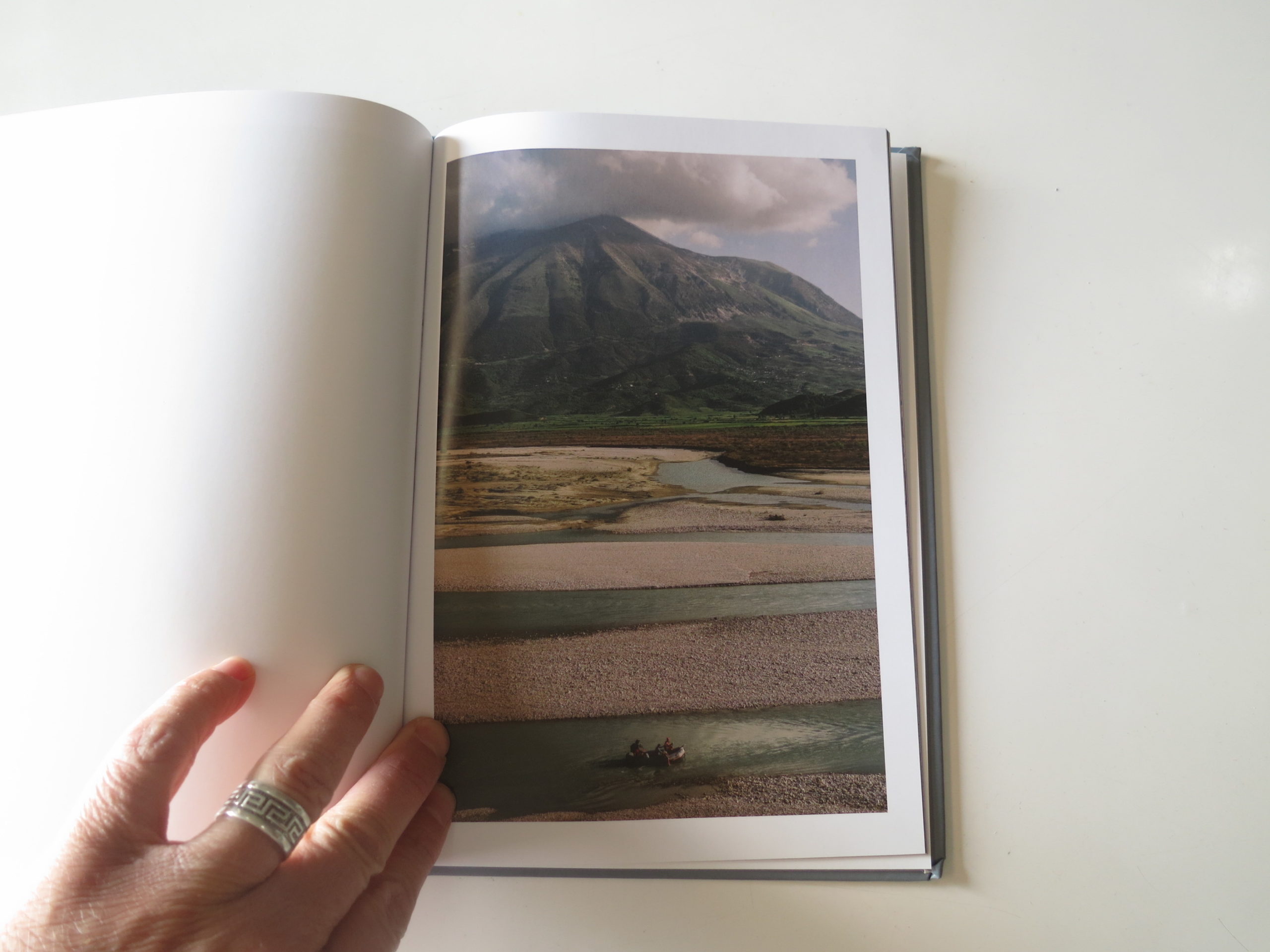
So I was both engaged, and not entirely surprised, to read of the plight of the Vjosa river in Albania.

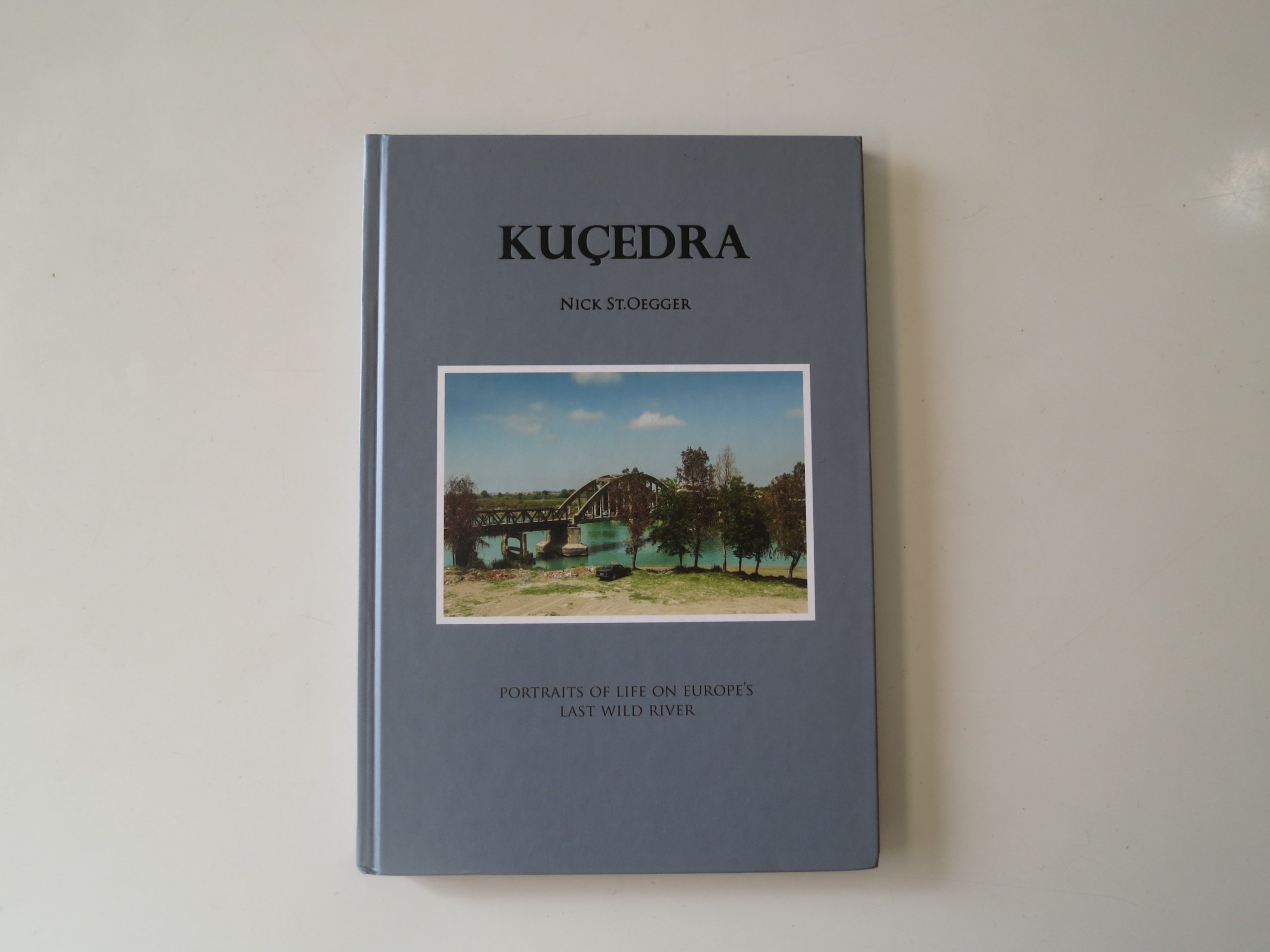
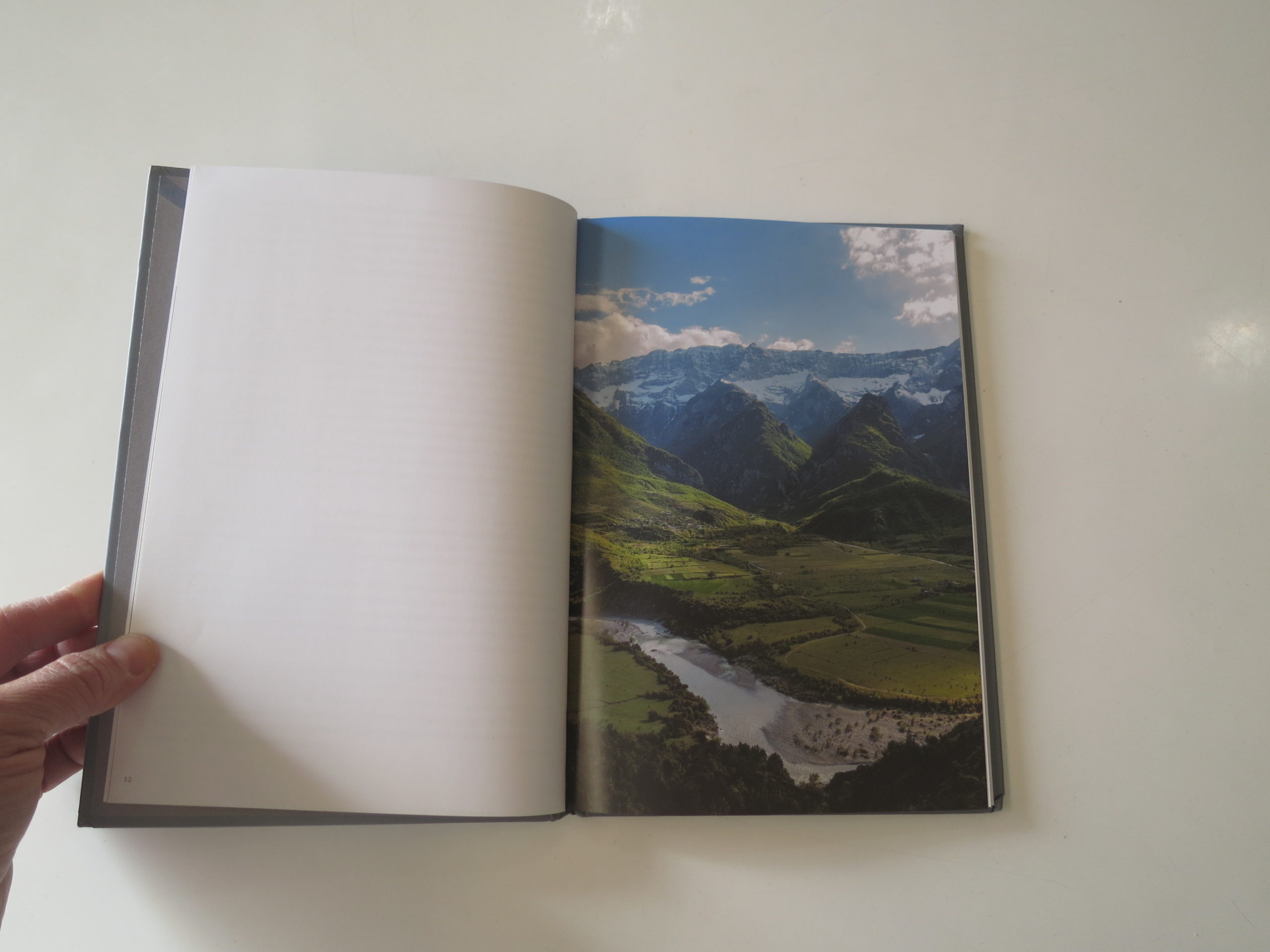
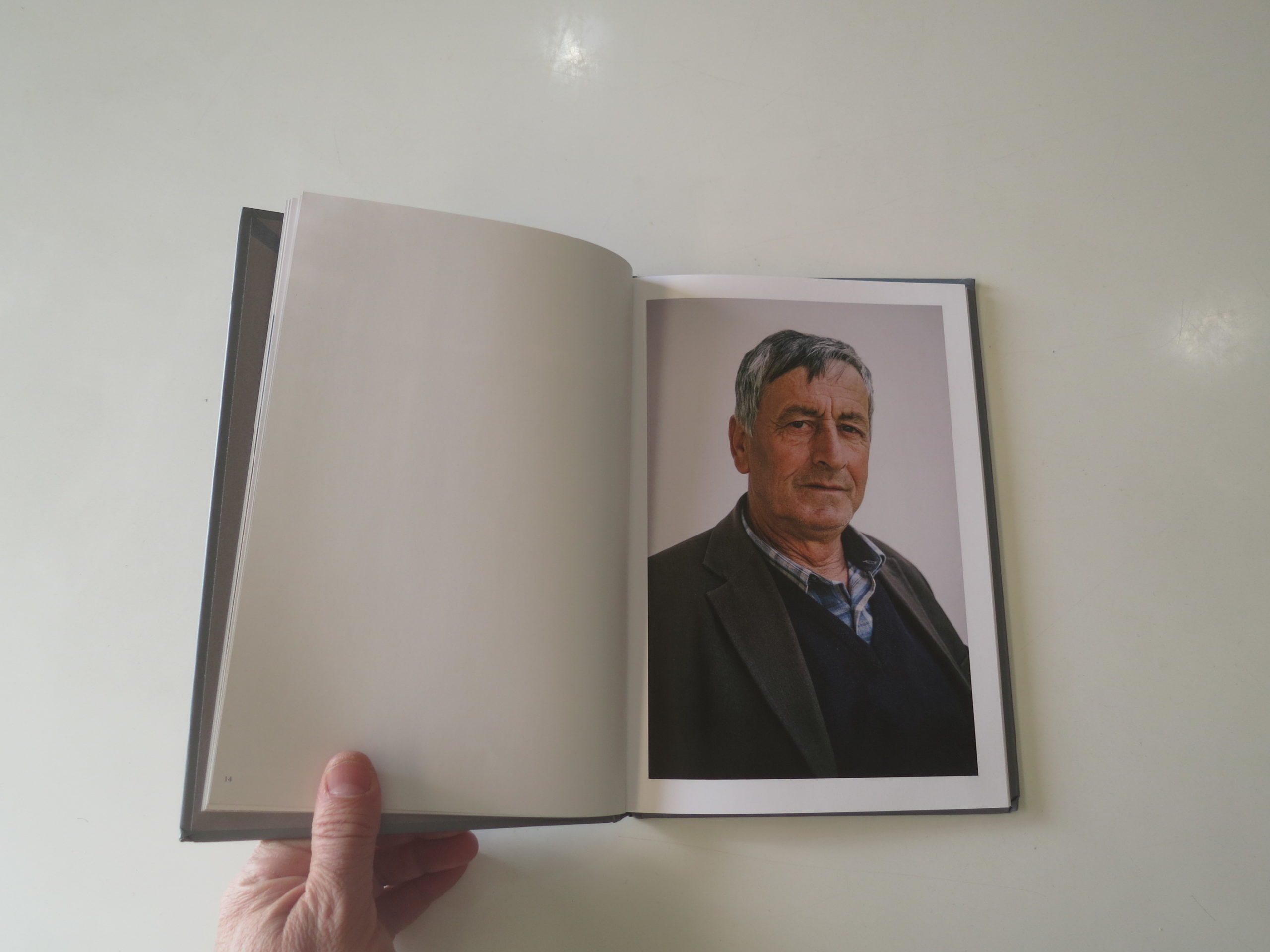
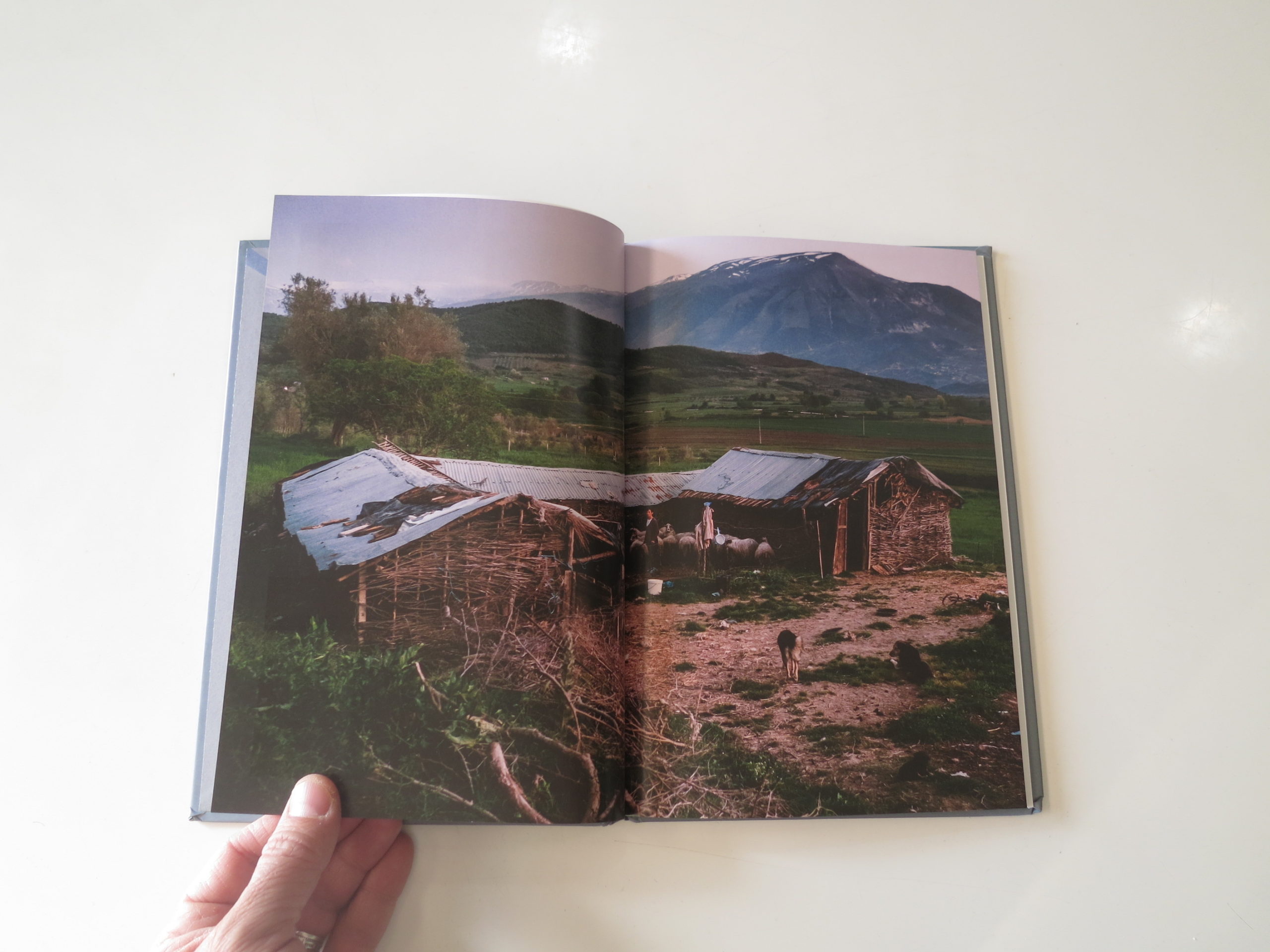
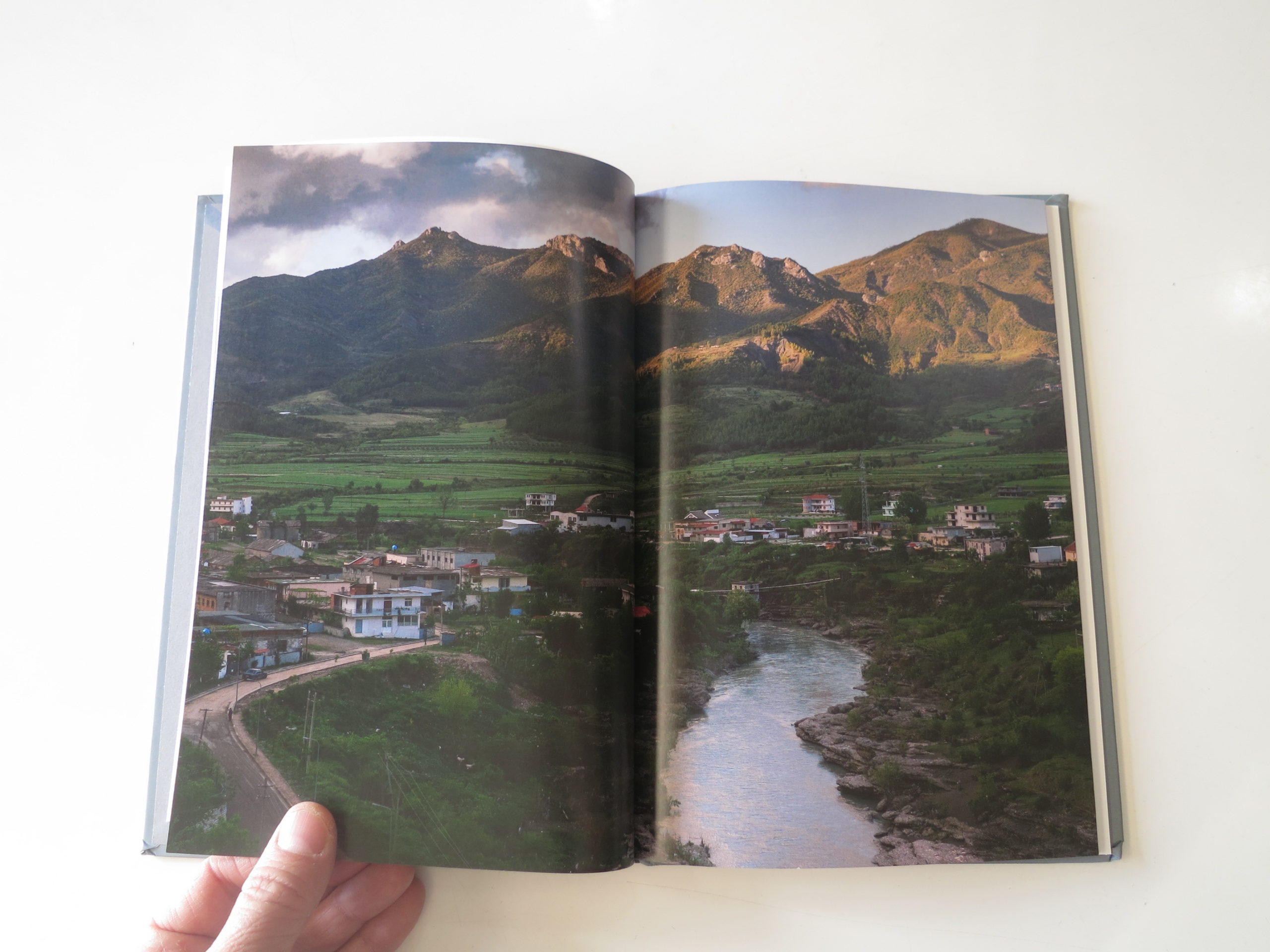
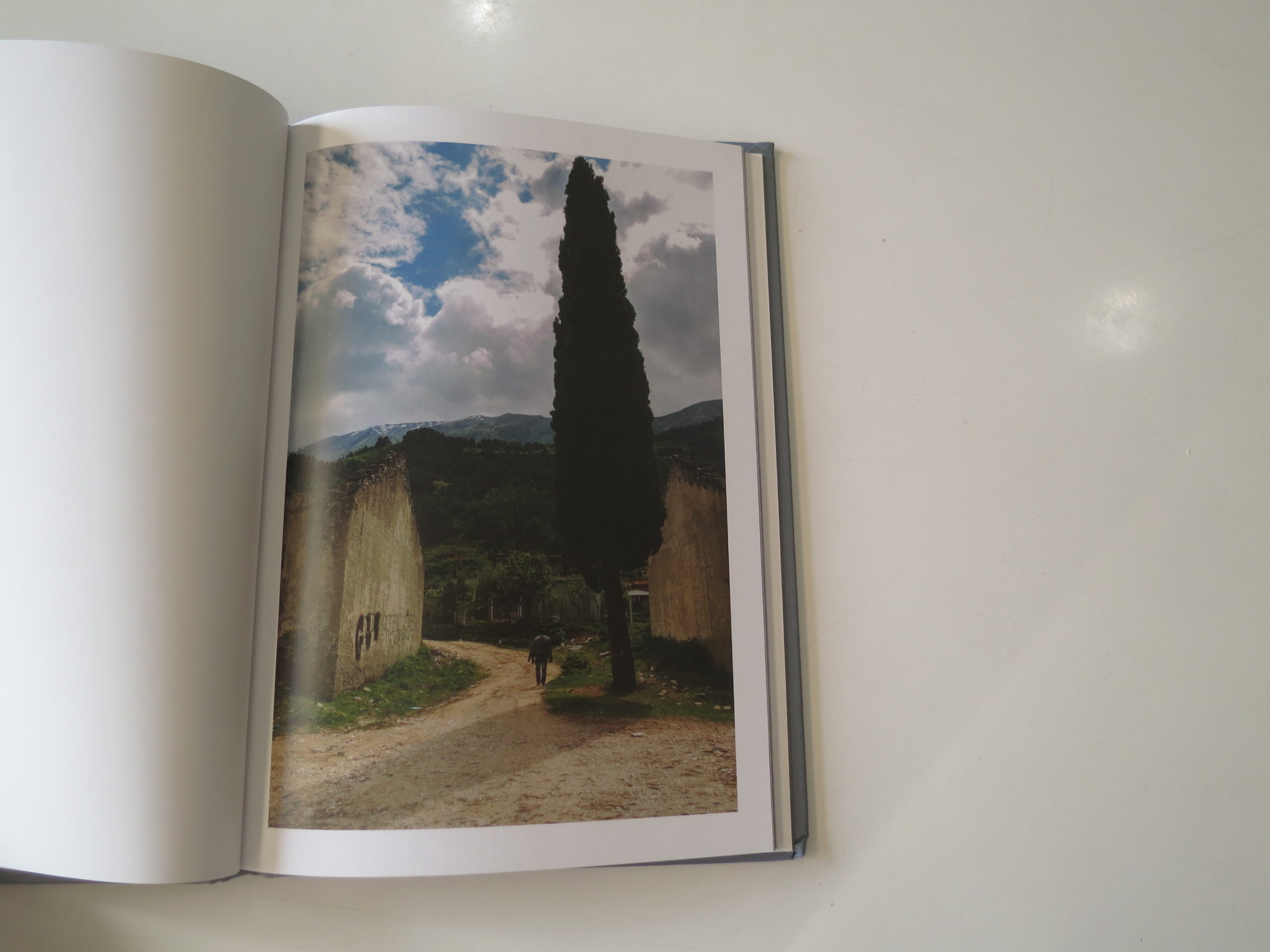
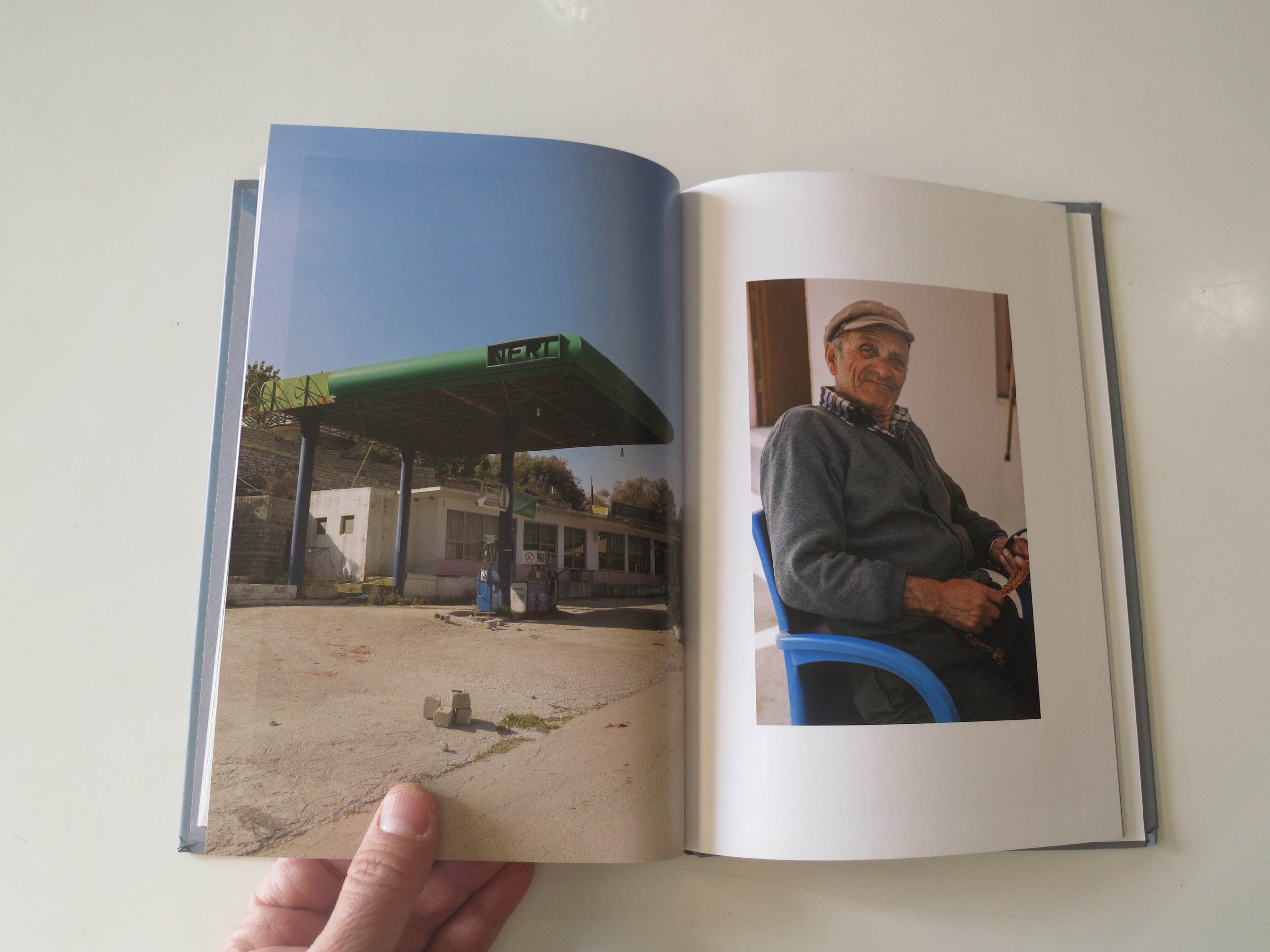
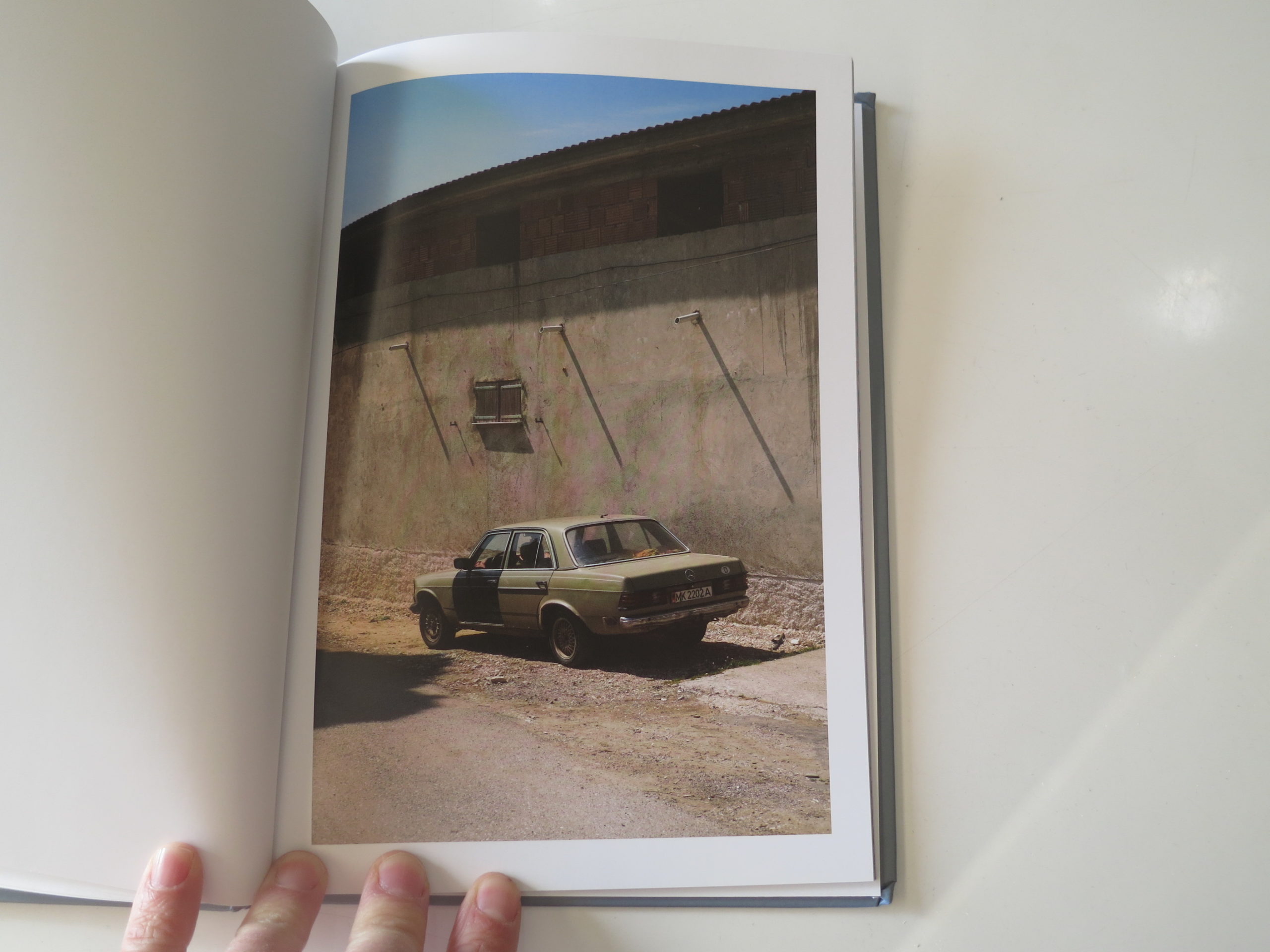
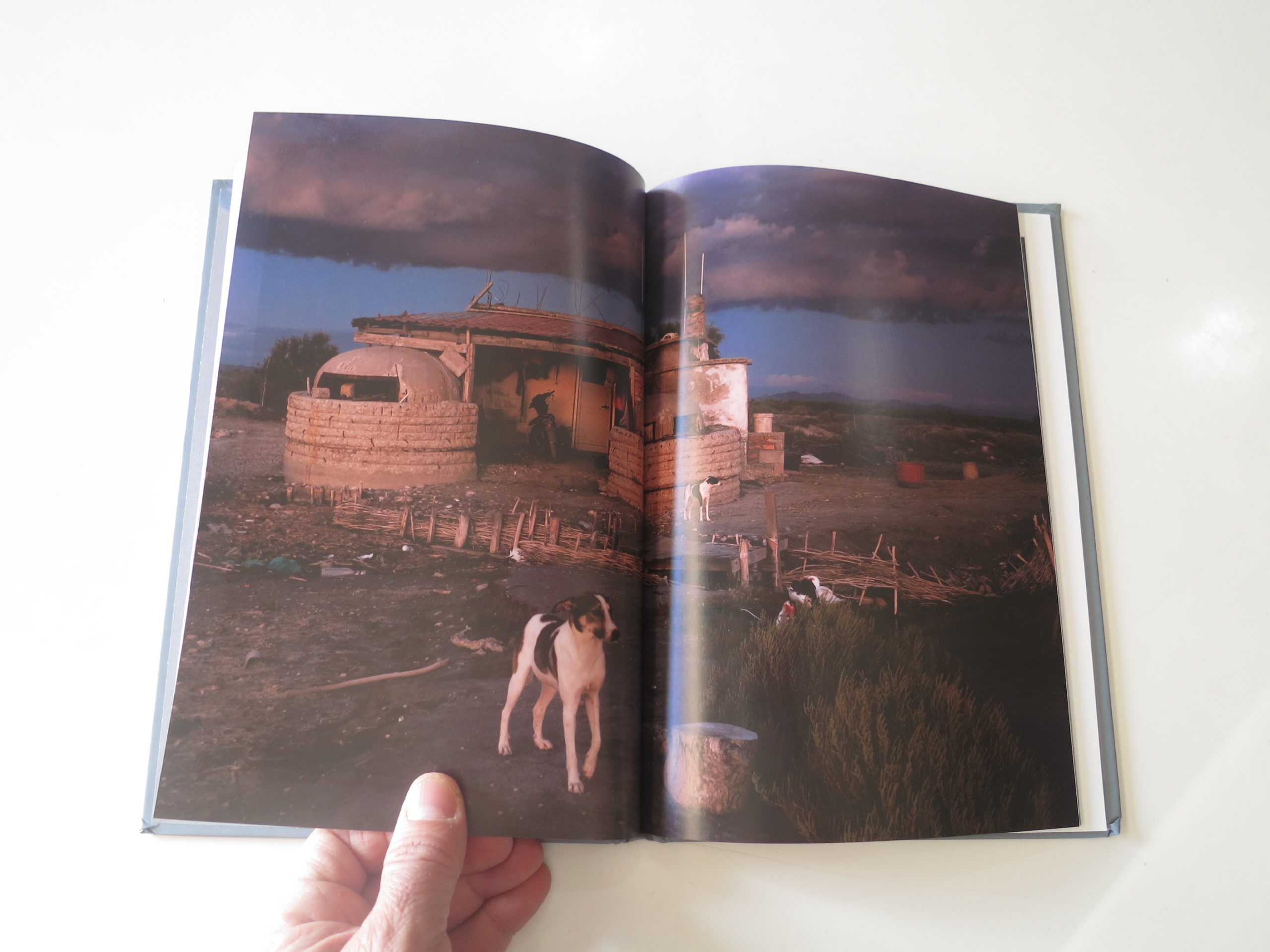
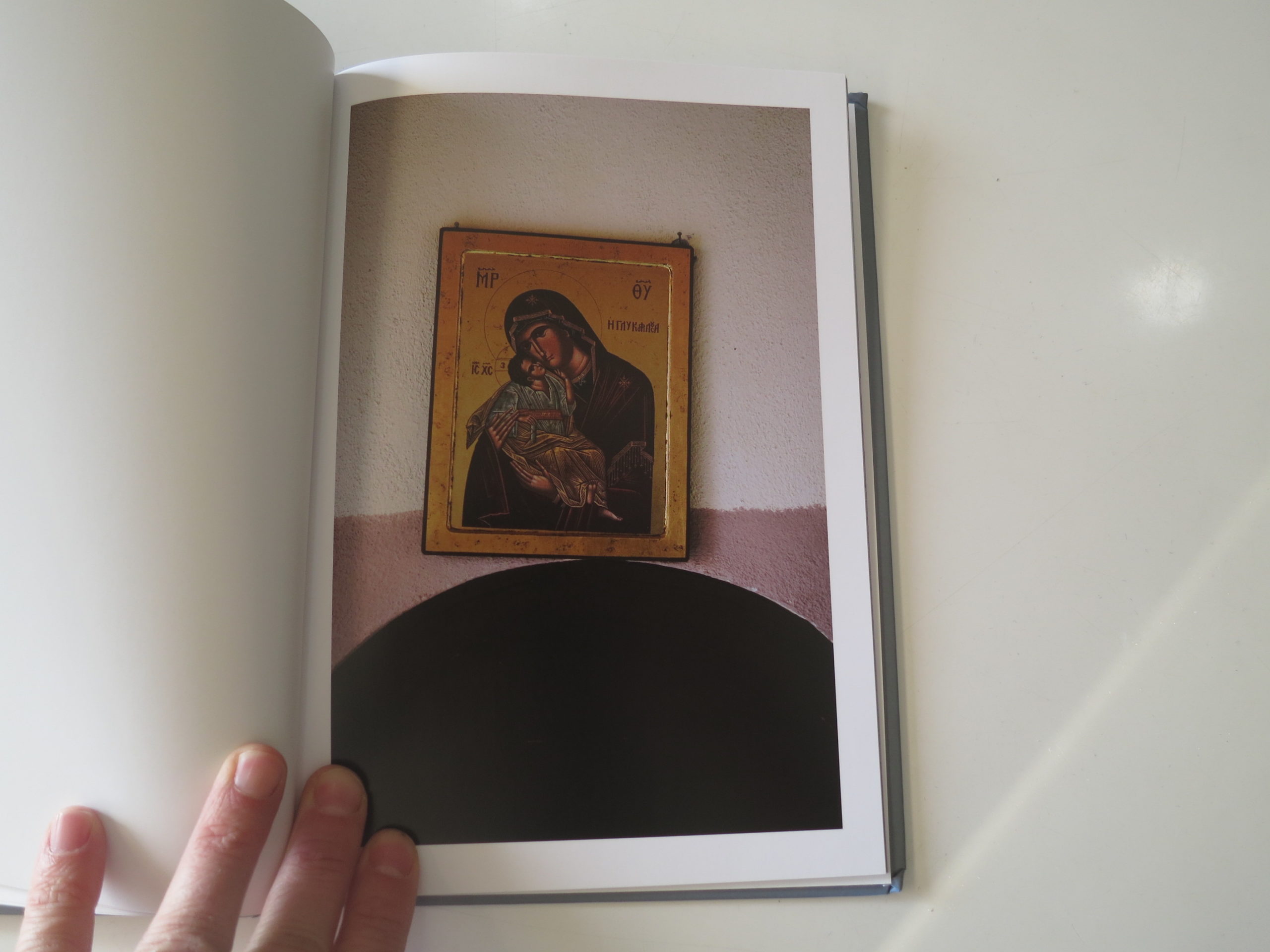
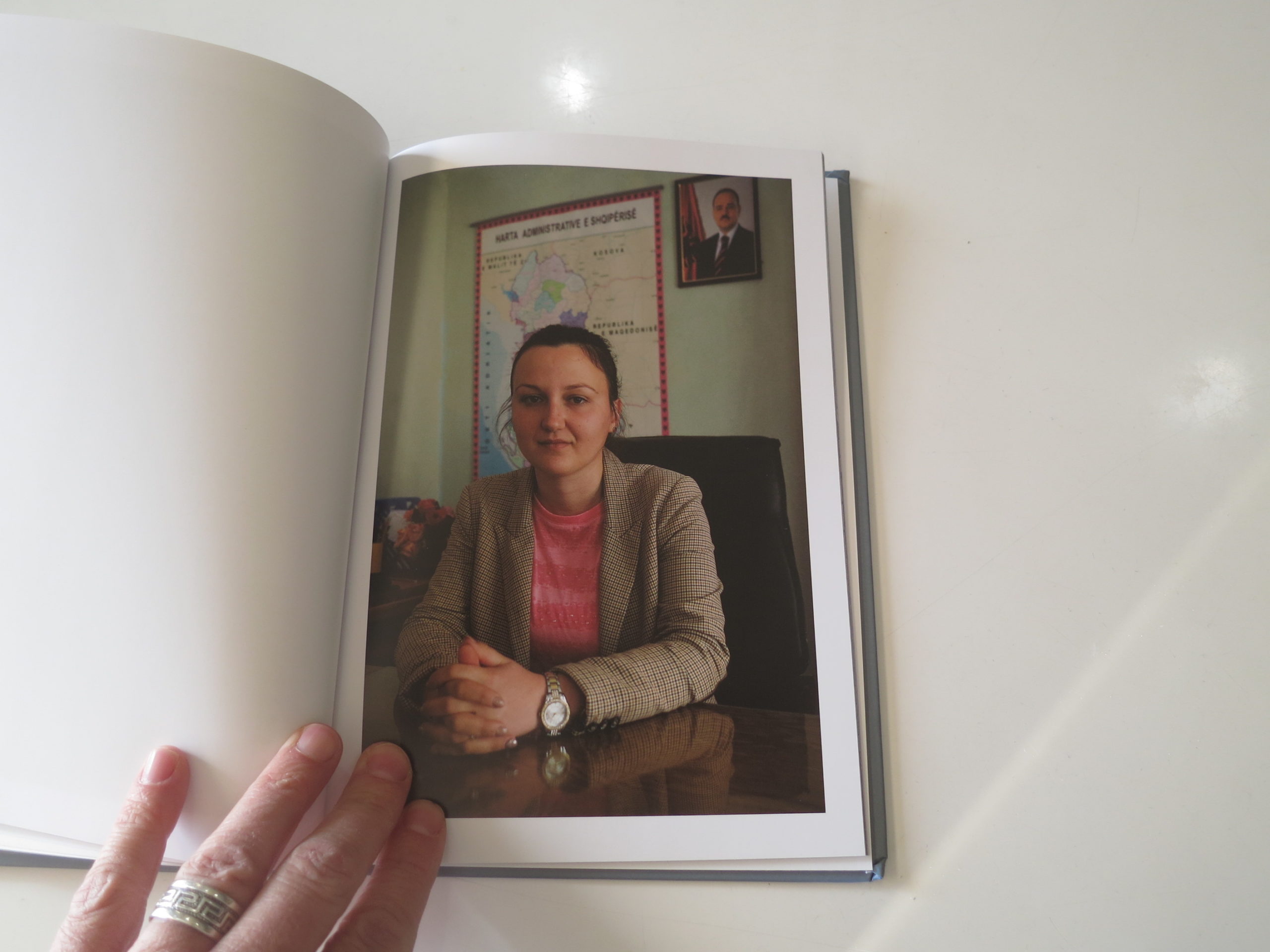
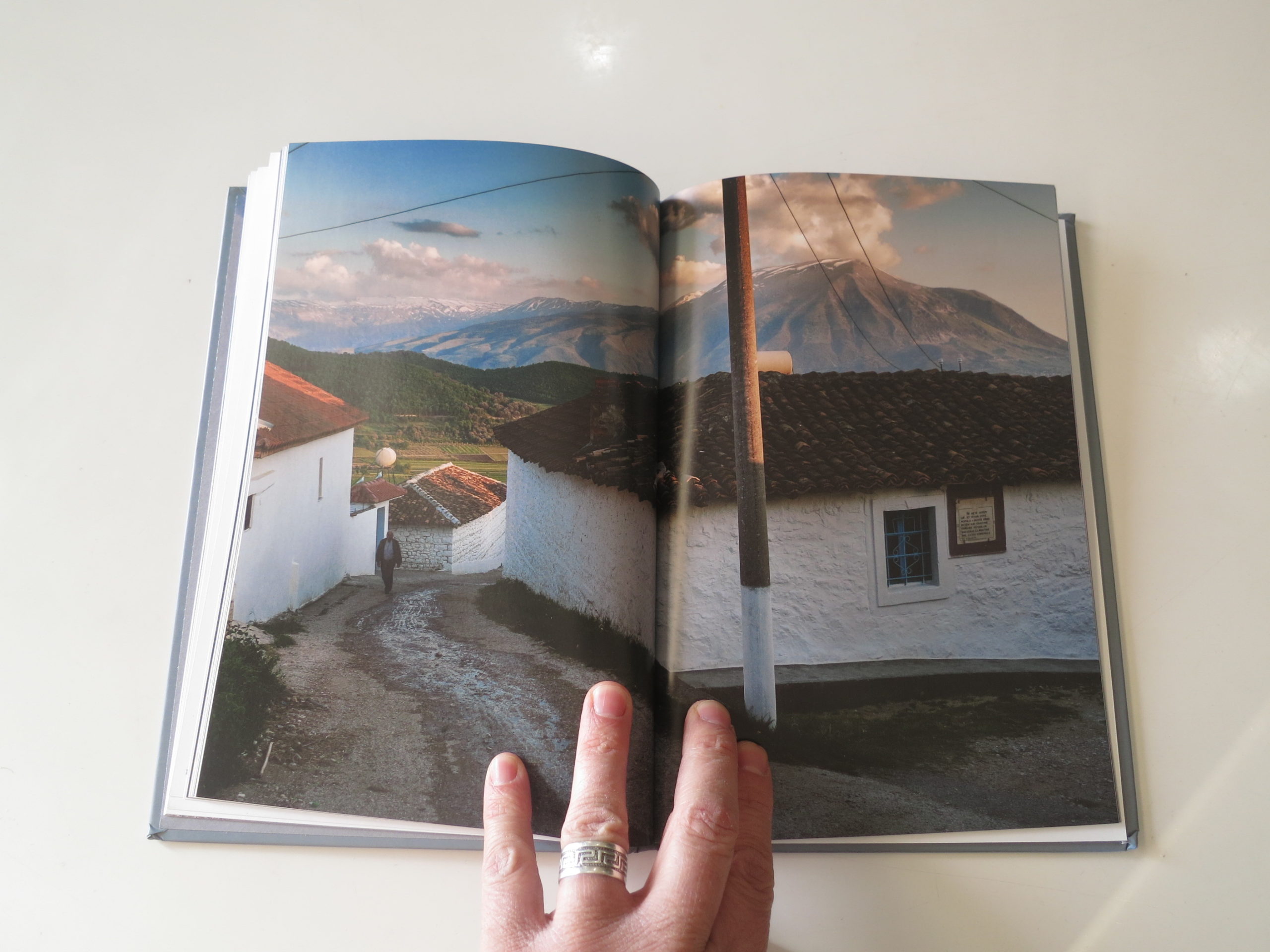
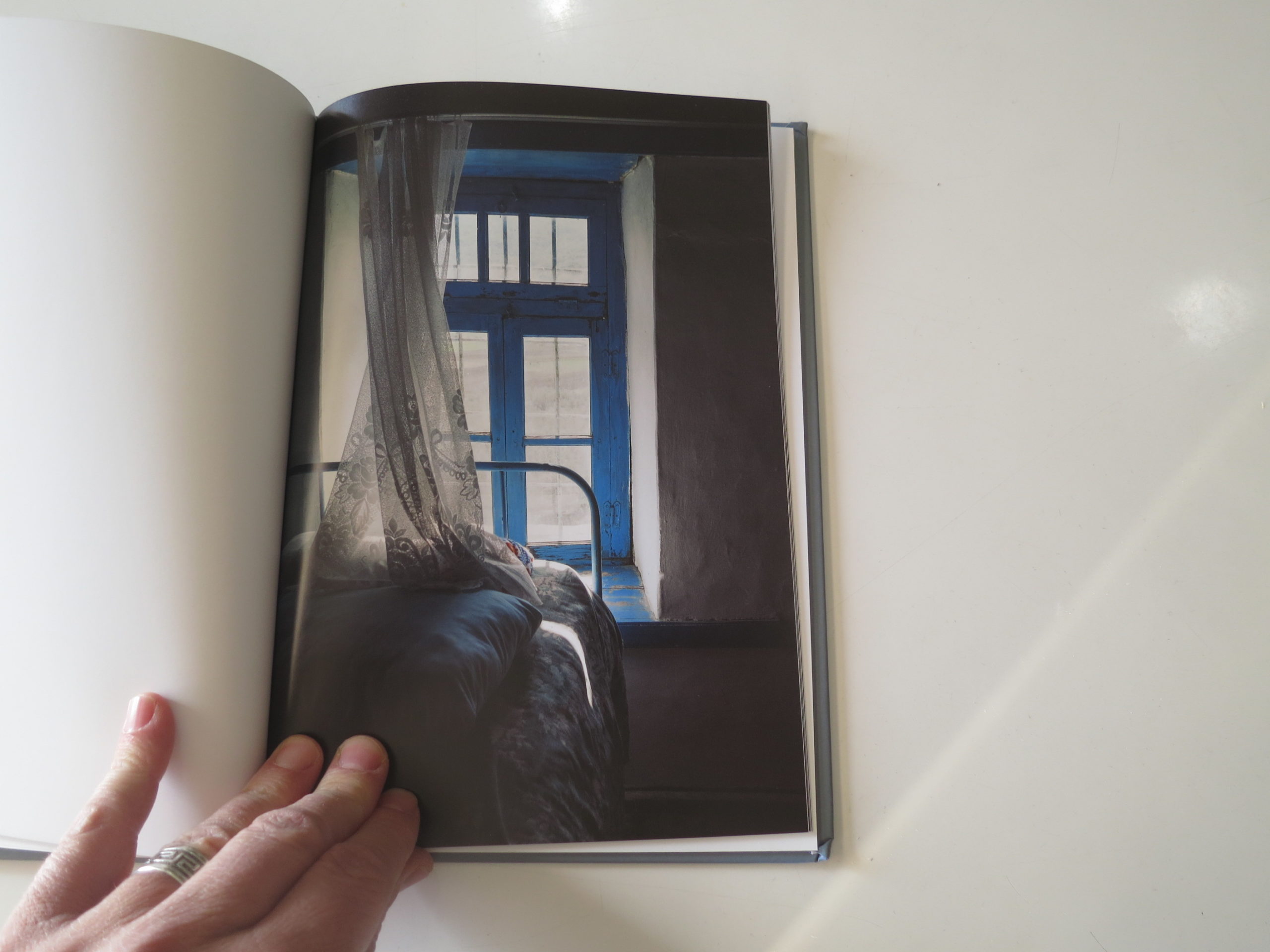
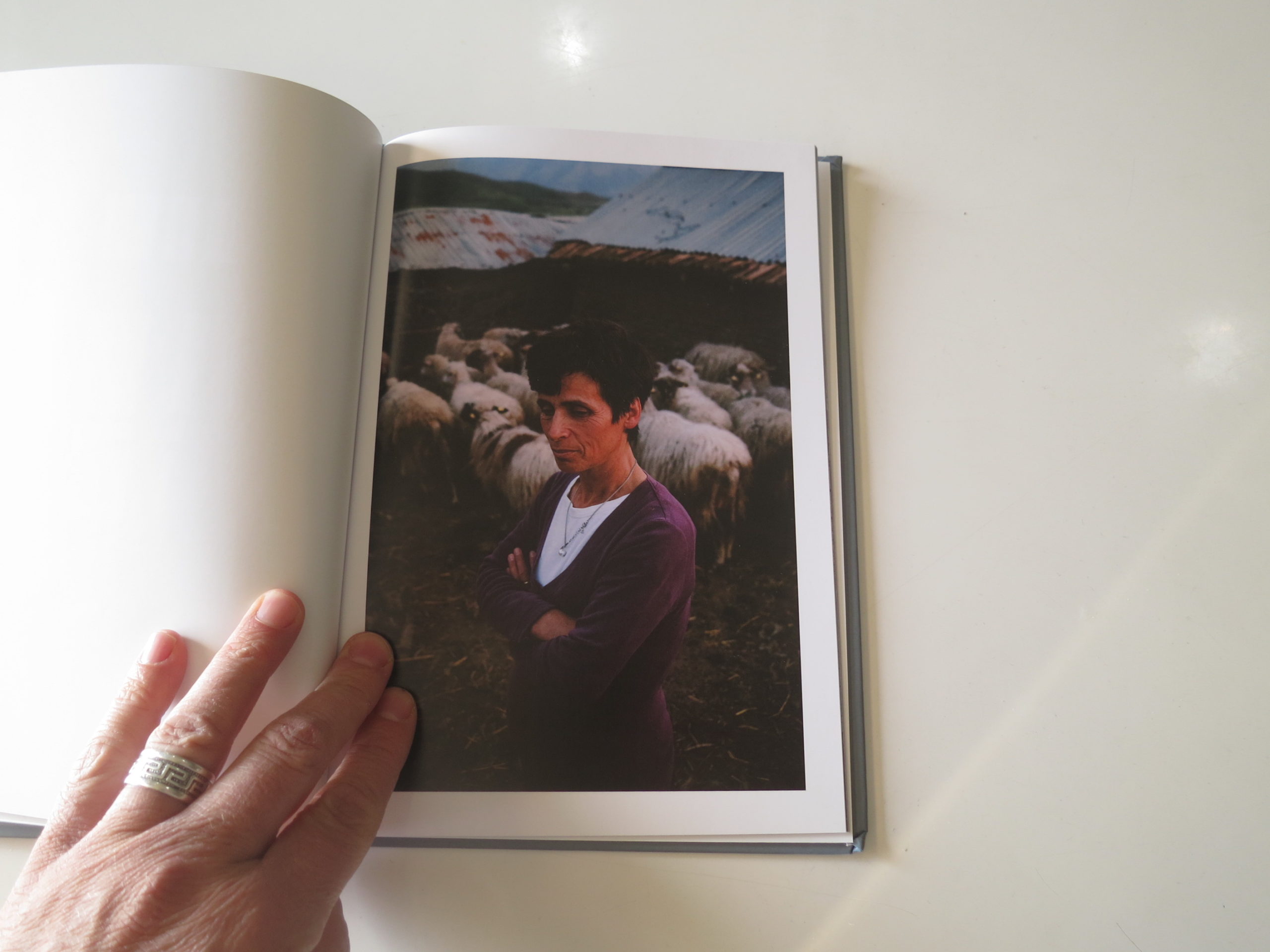
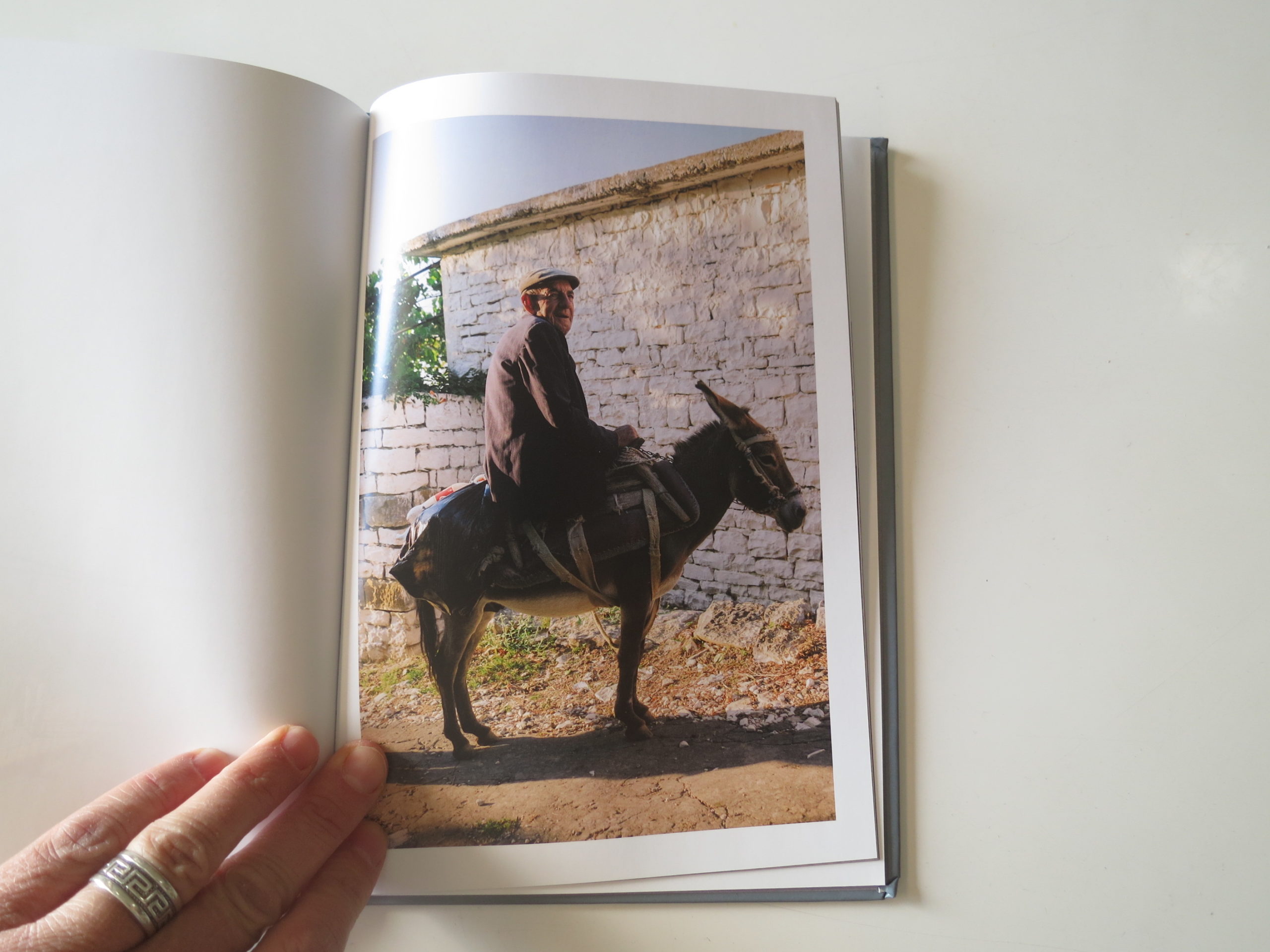
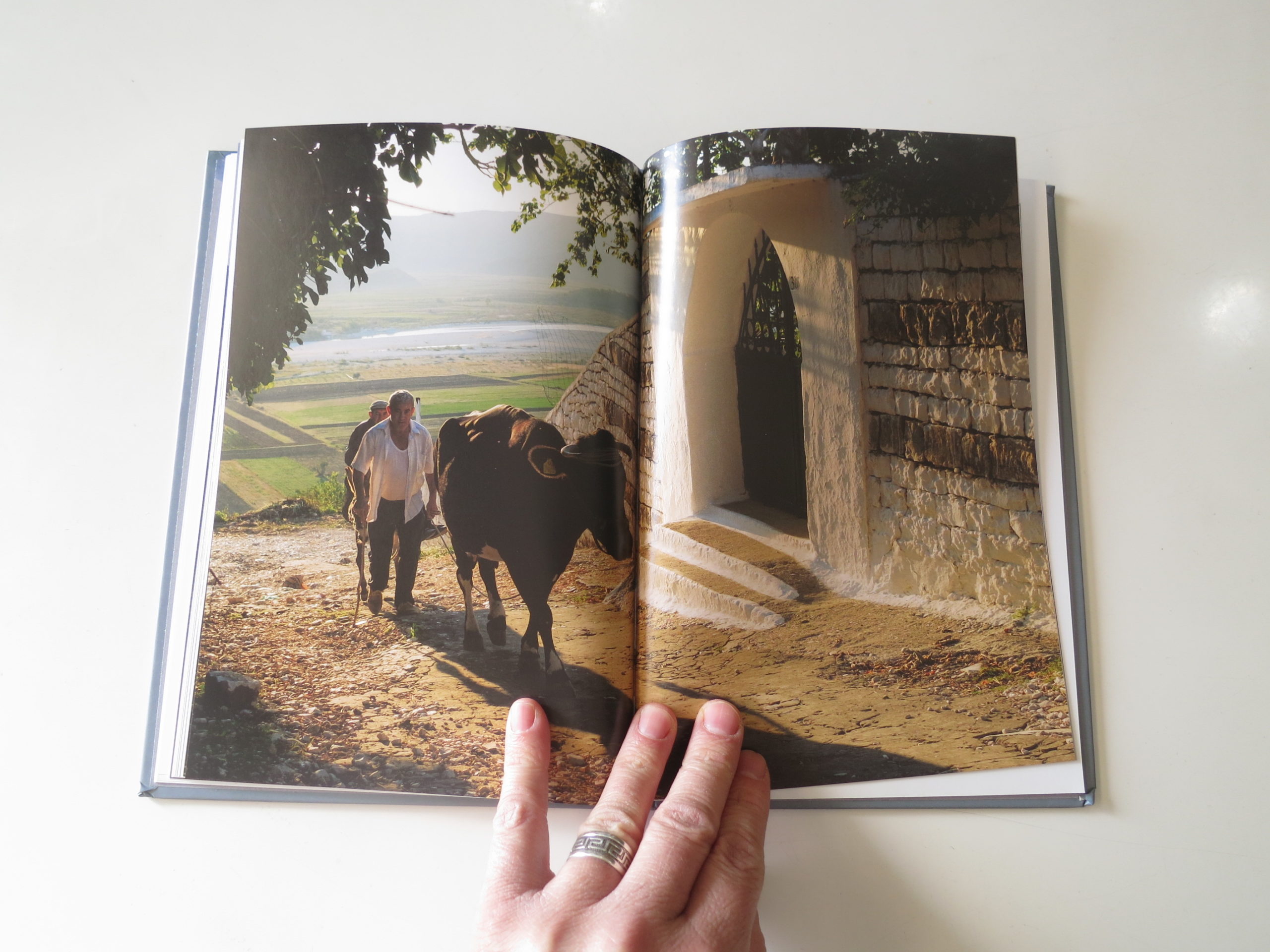
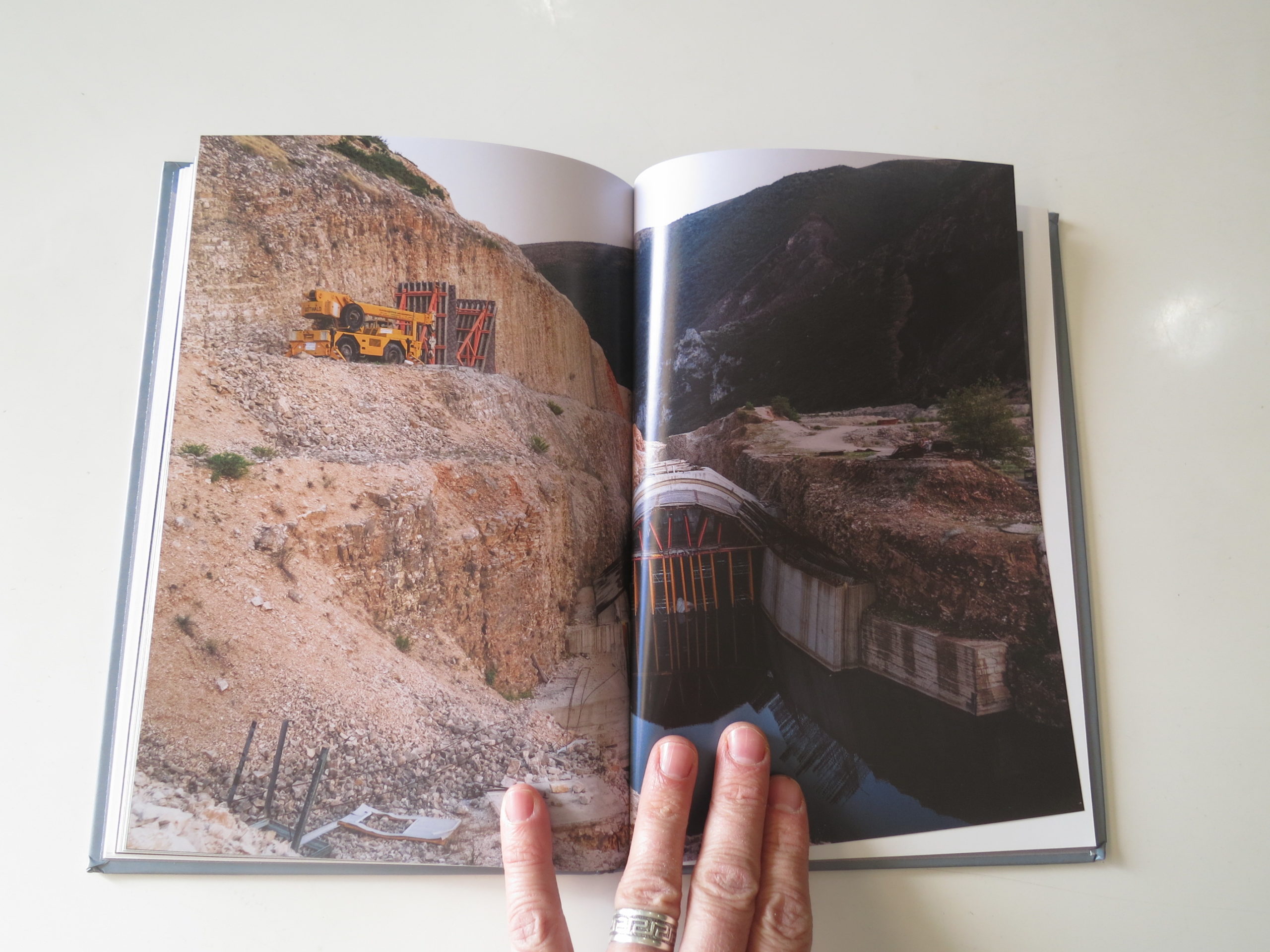
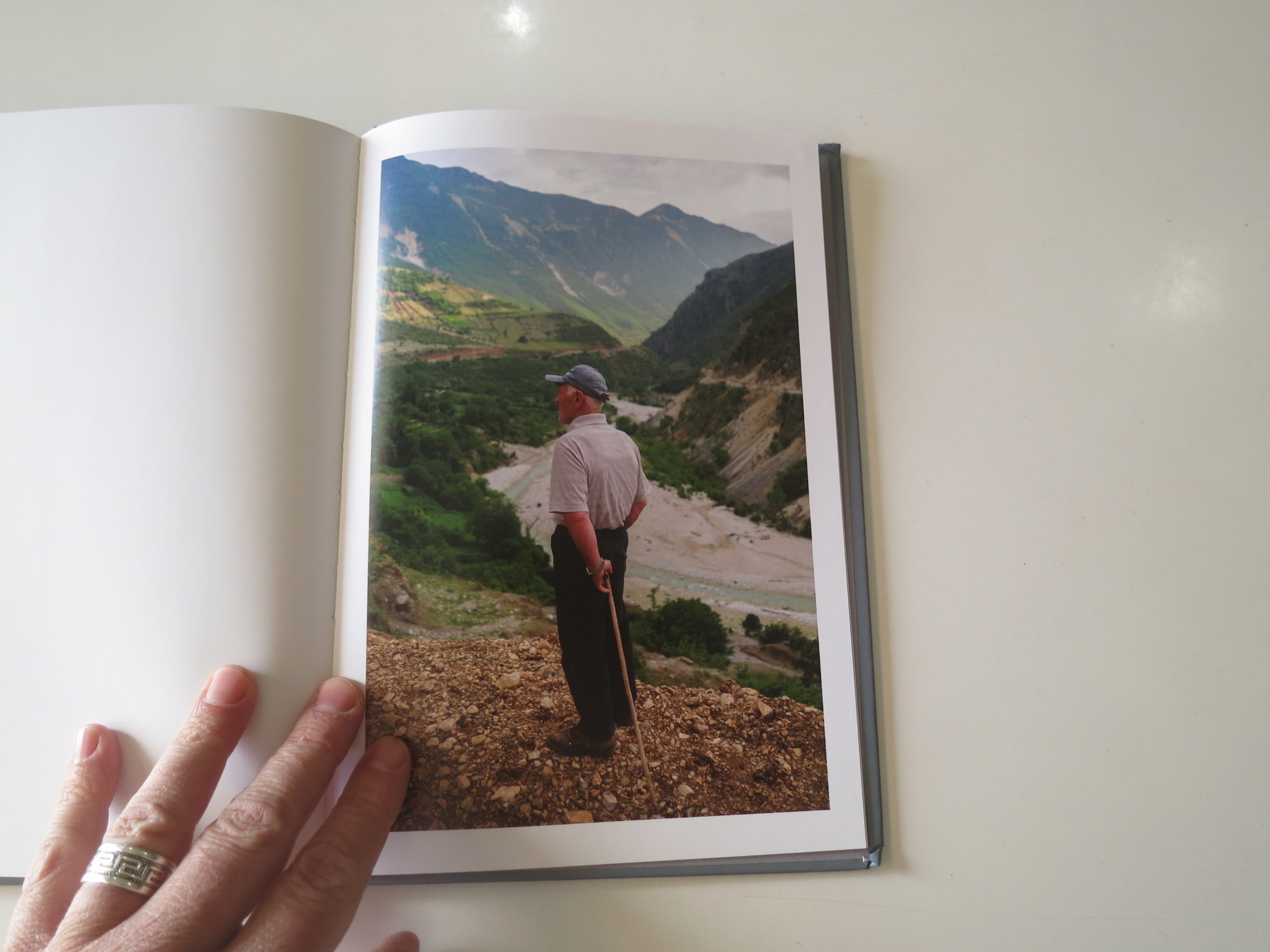
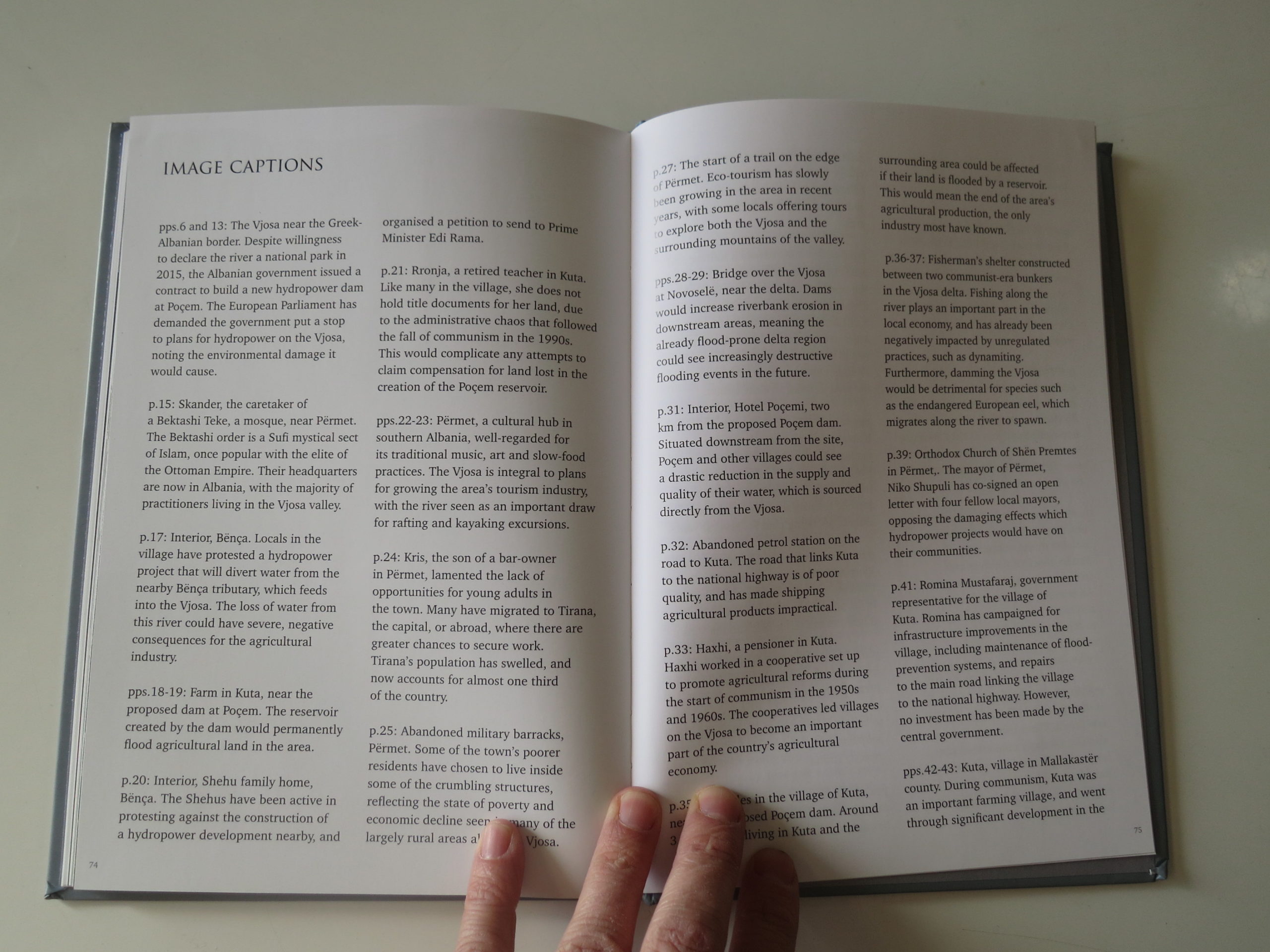
I was looking at “Kuçedra: Portraits of Life on Europe’s Last Wild River,” by Nick St. Oegger, which was self-published last year. (With funding from Patagonia and several other environmental organizations.)

It showed up from Ireland, though the bio at the end says that Nick was born in California. (So I’m not sure if he’s an American living in Ireland, or an Irishman who was born in America.)

Though it’s far from brilliant, I like this book, and am writing about it, which is always the number one compliment I can give. It inspired my creativity, and made me think about something.

(In this case, Tony Bourdain.)

I’ve never been to Albania, and outside of working for an Albanian guy in a restaurant in the East Village, (he fired me,) I don’t know much about the place.

It occupies that Macedonian region, south of the old Yugoslavia, but North of that whole Greece/Turkey axis.

What’s it like?

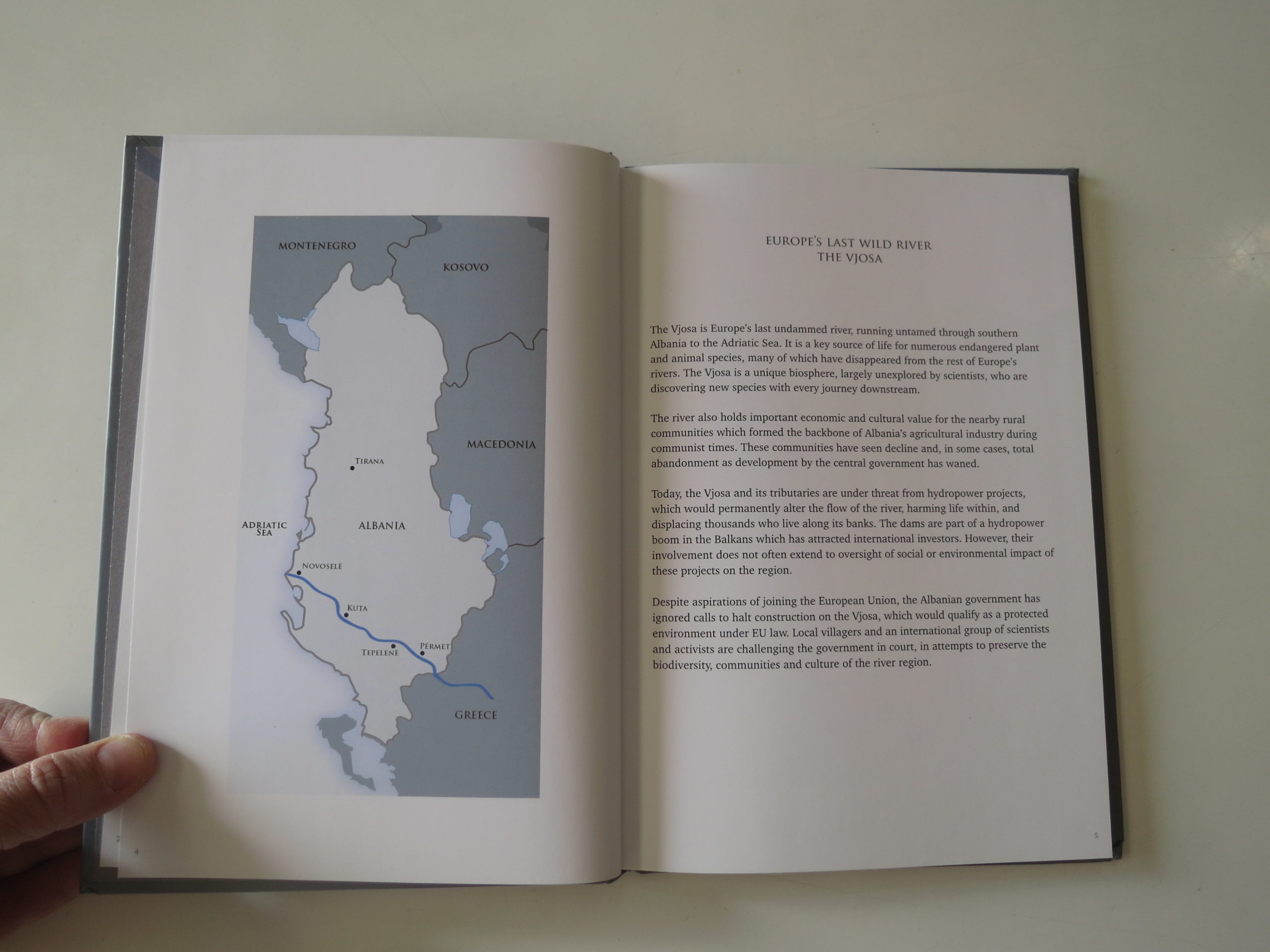
An early map shows how much Adriatic coastline it sports, (and it made me think, hmmmm, I bet there are some cool beach towns there,) but the Vjosa only dead ends in the sea, so this is a more inland affair.

(With wandering, ambling, fresh water, in lieu of the endless, salty horizon of the sea. Like I said last week, I need a vacation.)

The Vjosa interlinks ancient rural communities who indeed face the problems I wrote of above.

Dwindling populations, no jobs.

A strong, clear essay at the beginning, by a professor in Slovenia, tells us that women used to marry upriver, and move into their husbands’ communities over the generations.

The metaphor she uses, of upstream representing fresh and new, of young and vibrant, makes sense in an old-school DNA way, as in small villages, if you keep moving in one direction, your cousins will always be behind you. (Meaning, you won’t marry them.)

It keeps the genetics fresh, which is so important in isolated, rural communities. (Remember, I live in one.)

As the federal power structure has begun to dam the river, in search of hydro power, the culture and environment are both at risk, and communities have organized to battle.

But really, in 2019, how many of us think the villagers will win?

The text tells us the EU is trying to strong-arm Albania into behaving better, environmentally, but they’re doing what they want now, in case they do ever join the EU, and give up sovereignty.

I like the pictures, and the light in particular. They’re certainly lovely, in some cases outright beautiful. One concern, though, before I knew whether Nick was Irish or American, was why he was in Albania in the first place?

Where was the intentionality, or deep connection to time and place?

And these did not seem like they were shot over a long duration.

In the portraits, the villagers are often guarded, or look away, which is a tell-tale sign that there is a large chasm between the photographer and the subject.

Last week, I bemoaned the fact that so many of these books look alike these days. (A plea, perhaps, for some edgy submissions?)

This one is not dramatically different in style or content from most books, and I know I’ve equated Albania with many other places, but overall, the book does give us a sense of the smell in the air, I’d say.

And it is undoubtedly the first book I’ve seen from Albania, which is always high on my list of getting a review: showing us perspectives we’ve never seen before.

As I looked at it, I did wonder if its raison d’être might be that it was funded by environmental interests, or a national tourism board.

It’s got something of that feel, and in the end, we learn that’s what transpired. Eco-tourism is one of the few potentially clean economic engines for places like the Vjosa, so I wish those warriors well as they fight the powers that be.

Now I can say I know what rural, agricultural Albania looks like, and so can you.

We’re along for the ride together, and I never forget it.

Bottom Line: An beautiful eco-tale from Albania

To purchase “Kuçedra” click here 

If you’d like to submit a book for potential review, please email me at jonathanblaustein@gmail.com. We currently have a several month backlog, and are particularly interested in submissions from female photographers so we may maintain a balanced program.

The Art of the Personal Project: Giulio Sciorio

The Art of the Personal Project is a crucial element to let potential buyers see how you think creatively on your own.  I am drawn to personal projects that have an interesting vision or that show something I have never seen before.  In this thread, I’ll include a link to each personal project with the artist statement so you can see more of the project. Please note: This thread is not affiliated with any company; I’m just featuring projects that I find.  Please DO NOT send me your work.  I do not take submissions.  

Today’s featured artist:   Giulio Sciorio

Artist Statement

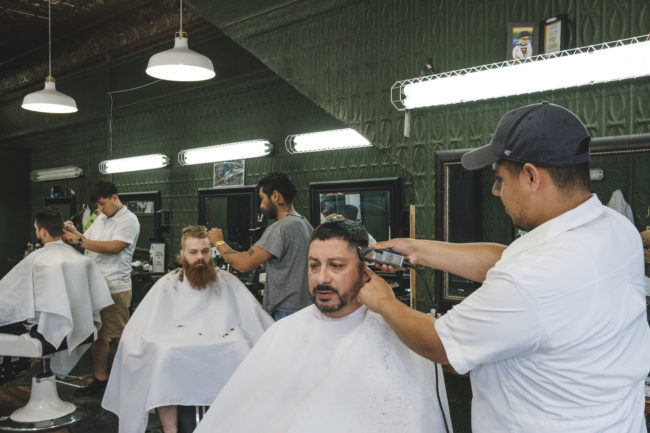
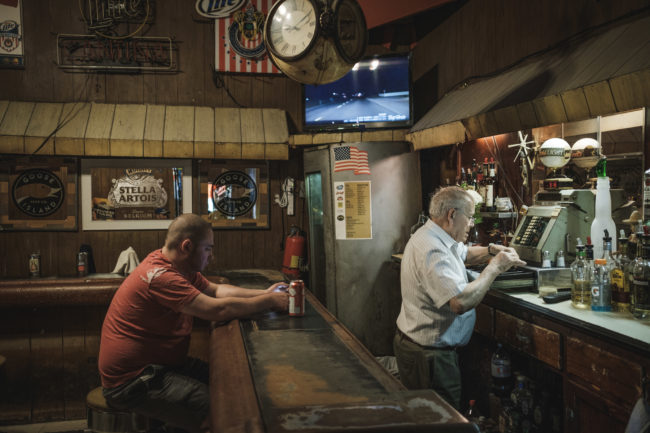
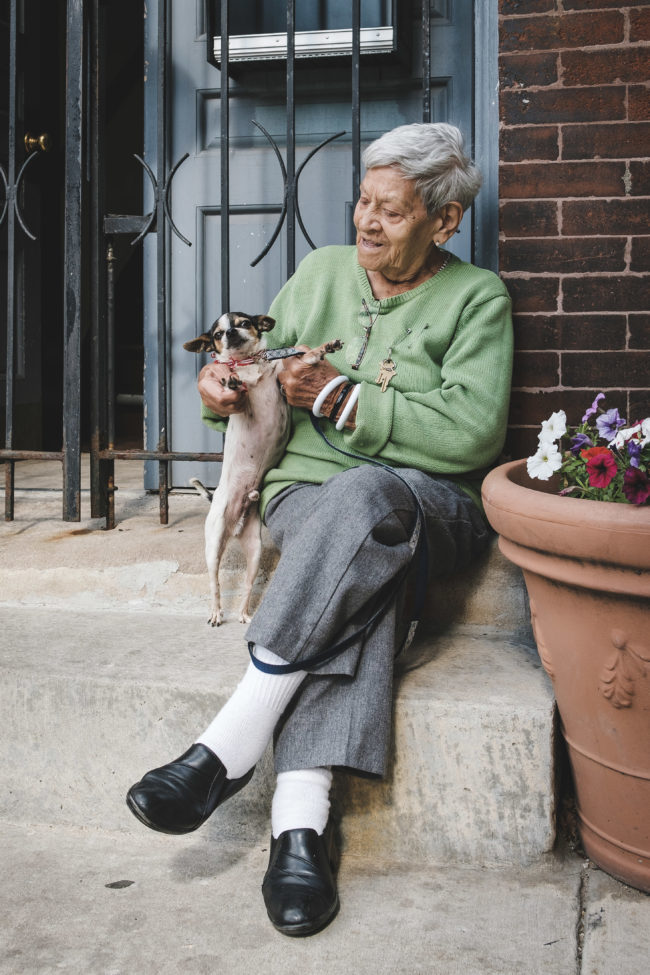
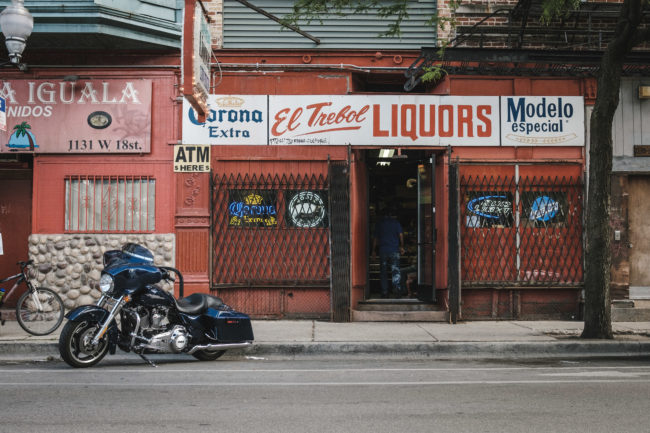
Traditionally a Mexican neighborhood in Chicago, Pilsen is in the process of gentrification. The images in this series are portraits of the people I connected with while exploring the neighborhood. These individuals, small business owners, and families represent a community in transition.

I’m moved by the plight of communities facing gentrification like Pilsen. It’s hard enough for people to make rent for their homes and small businesses and I wonder what will happen to them when they are forced out of their neighborhood. As luxury condos and cafes replace hidden gems like barbershops and amazing Mexican food joints, the personality of Pilsen will be forever changed. Through photography, I wanted to capture this moment in Chicago’s history before it’s gone forever.

What I love about photography is the human connection. Before making a street portrait, I connect with my subjects on an individual level. With some loose direction if any, I prefer to get as close as possible to the subject which I feel captures their honest emotions while allowing space for self-expression. Community, self-expression, and diversity are the foundation of my photographic work.

To see more of this project, click here.

APE contributor Suzanne Sease currently works as a consultant for photographers and illustrators around the world. She has been involved in the photography and illustration industry since the mid 80s.  After establishing the art buying department at The Martin Agency, then working for Kaplan-Thaler, Capital One, Best Buy and numerous smaller agencies and companies, she decided to be a consultant in 1999. She has a new Twitter feed with helpful marketing information because she believes that marketing should be driven by brand and not by specialty.  Follow her at @SuzanneSease.  Instagram

Marketing: Agencies to put on your radar (if they aren’t already)

In this business, it is crucial to make sure you are keeping up with the agencies to market to and get on their radar.  When a former co-worker asked his FB connections, which is largely top creative people, for the top agencies to watch and up and coming agencies, I knew it was a list I wanted to research for my clients.  My clients receive weekly/bi-monthly articles about recently awarded accounts (brands) to an agency.  They also receive articles of importance in this business and a marketing booklet on how to find these agencies and their email.   

I have always said that our marketing should be done as it was before we had computers but now with the luxury of computers.  Yes, many years ago you had to read the trades to see what was happening in advertising.  As an art buyer, it was those people who had read the trades and called to discuss actual accounts we worked on that got my attention.  Today many people rely on companies to do the research but it is important to do it yourself or supplement their information.

Here is a partial list of the agencies mentioned to get you motivated to do your research and get noticed.  In your marketing, it is a personalized email complimenting them on the work they feature on their site or an article in their news section.  Google agency’s name to see if they have been featured in an article or an award show.  It is crucial that you stand out above your competition.  The previous article on branding (https://aphotoeditor.com/2019/02/27/branding-and-why-it-matters/) that was featured last week can help you as well.   If it is an agency you really admire, then check back on the agency to see what they post, and if you like something new they post, then mention it to them to keep on their radar.   We are in sales while being artists so it is important to get in front of the people who can hire you.
McKee Wallwork & Company        Albuquerque, NM    * 

www.mckeewallwork.com

LI:  https://www.linkedin.com/company/mckee-wallwork-&-company/

Fact & Fiction   Boulder, CO 

https://factandfiction.work

LI:  https://www.linkedin.com/company/fact-&-fiction/

Wond3r company     Houston

https://www.wond3r.company

LI: https://www.linkedin.com/company/wond3r/

Mekanism    San Francisco

https://mekanism.com

LI:  https://www.linkedin.com/company/mekanism/

Heartbeat    New York, NY    (Ad Age- best place to work)

https://www.weareheartbeat.com

LI:  https://www.linkedin.com/company/heartbeat-ideas/

Joan      New York

https://www.joancreative.com

Preacher      Austin, TX  *

http://preacher.co

LI:   https://www.linkedin.com/company/preacher/

MGH    Baltimore

https://mghus.com

LI: https://www.linkedin.com/company/mgh-inc-/

Cayenne Creative   Birmingham, AL

https://cayennecreative.com

LI: https://www.linkedin.com/company/cayenne-creative/

Baker St. Advertising    San Francisco

https://bakerstadvertising.com

LI:  https://www.linkedin.com/company/baker-street-advertising/about/

Tom, Dick & Harry     Chicago, IL

http://tdhcreative.com

LI: https://www.linkedin.com/company/tom-dick-and-harry-advertising/

Human   Boulder, CO

https://humandesign.com

LI:  https://www.linkedin.com/company/human-design/

Chemistry    Atlanta, GA  & Pittsburgh, PA

https://www.chemistryagency.com

LI: https://www.linkedin.com/company/chemistryagency/

Battery     Los Angeles  *

https://www.batteryagency.com

LI:  https://www.linkedin.com/company/battery-agency/

Johanes Leonardo   New York, NY

http://johannesleonardo.com

LI:  https://www.linkedin.com/company/johannes-leonardo/about/

Push   Orlando

https://www.pushhere.com

LI:  https://www.linkedin.com/company/push/


*voted one of Adage’s small agency of the year

APE contributor Suzanne Sease currently works as a consultant for photographers and illustrators around the world. She has been involved in the photography and illustration industry since the mid 80s.  After establishing the art buying department at The Martin Agency, then working for Kaplan-Thaler, Capital One, Best Buy and numerous smaller agencies and companies, she decided to be a consultant in 1999. She has a new Twitter feed with helpful marketing information because she believes that marketing should be driven by brand and not by specialty.  Follow her at @SuzanneSease.  Instagram

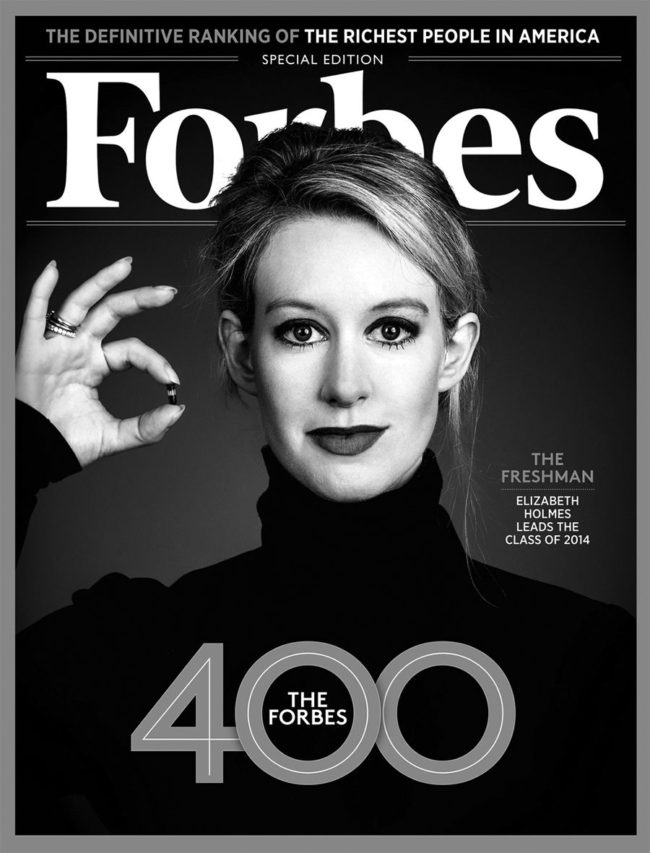
The Daily Edit – Ethan Pines: Forbes Magazine

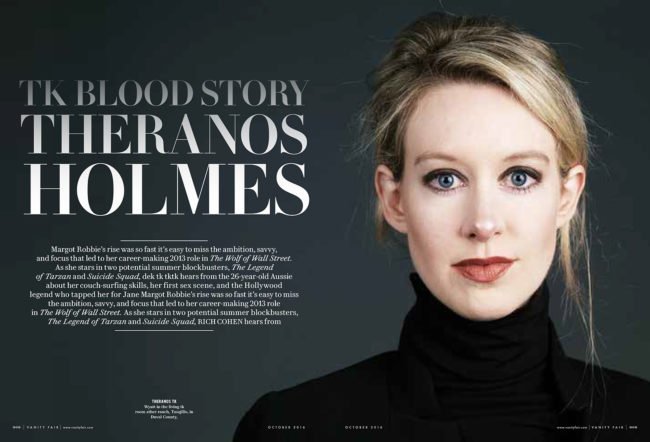
Ethan Pines talks about photographing Elizabeth Holmes for Forbes

In late 2014 I photographed Elizabeth Holmes, the founder and CEO of the allegedly fraudulent blood-testing company and Silicon Valley darling Theranos. When I shot her for the Forbes 400 issue, she was the youngest self-made female billionaire in the world. By 2016 The Wall Street Journal, Vanity Fair and others had published excoriating investigative pieces, and Forbes estimated her net worth at zero.

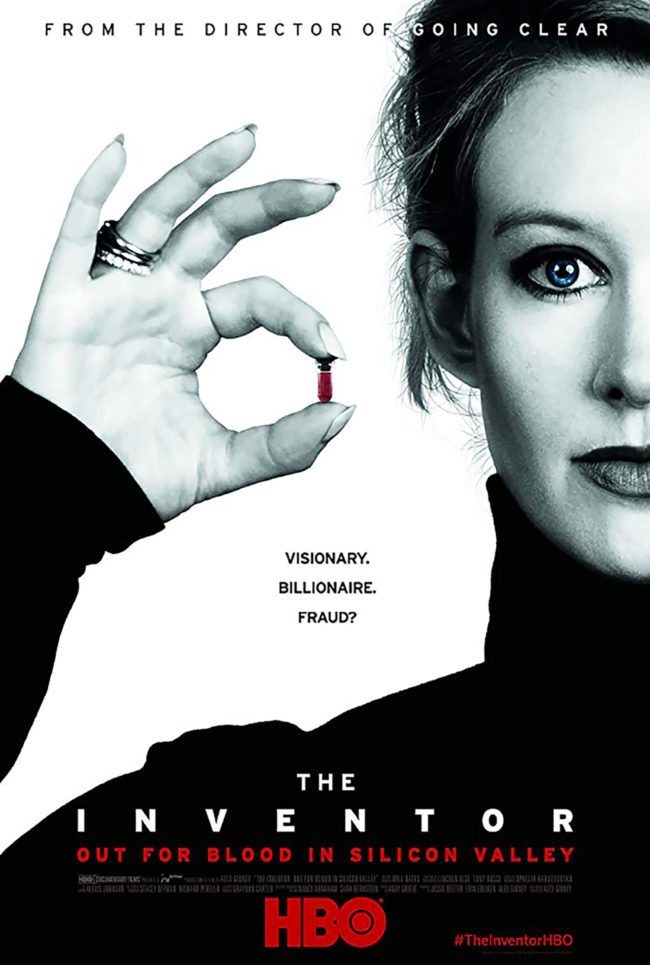
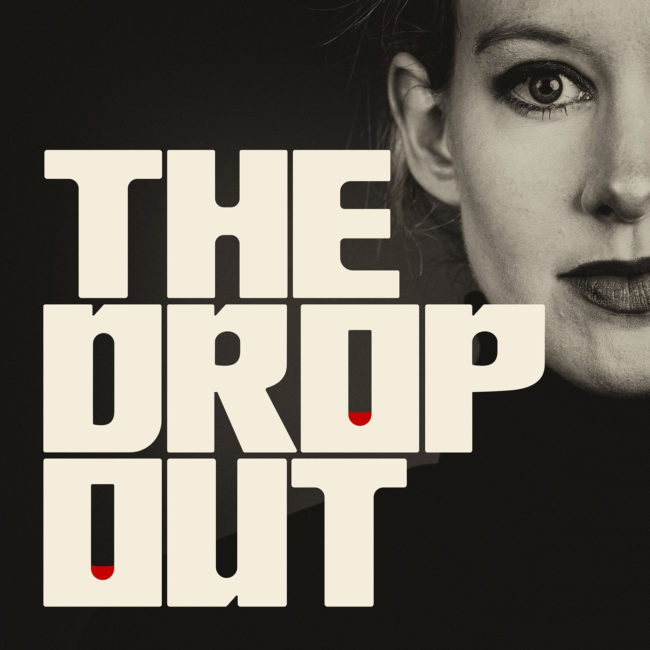
Suddenly her story is everywhere again: John Carreyrou’s Bad Blood is a hit, HBO’s documentary The Inventor just premiered at Sundance, the ABC News podcast The Drop Out is streaming, and a seemingly endless number of articles on Holmes’s alleged fraud have come out. In addition to appearing editorially here and there, my portraits have been licensed as key art for the HBO documentary and the ABC podcast.


And friends keep asking me, What was it like at the company? What did you see around their offices? How was it spending a few hours with the woman who may be a delusional fraud, perhaps even a sociopath? 

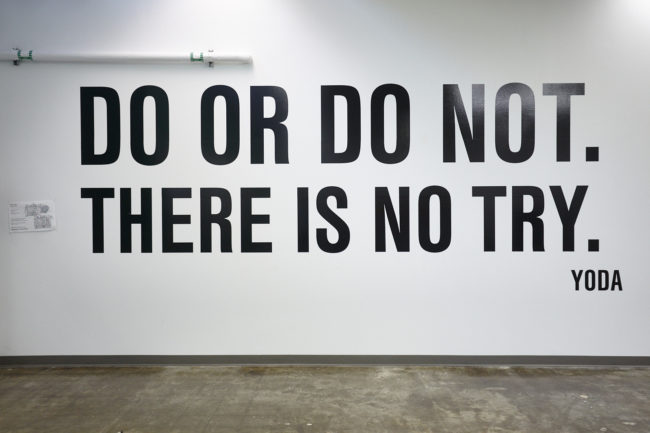
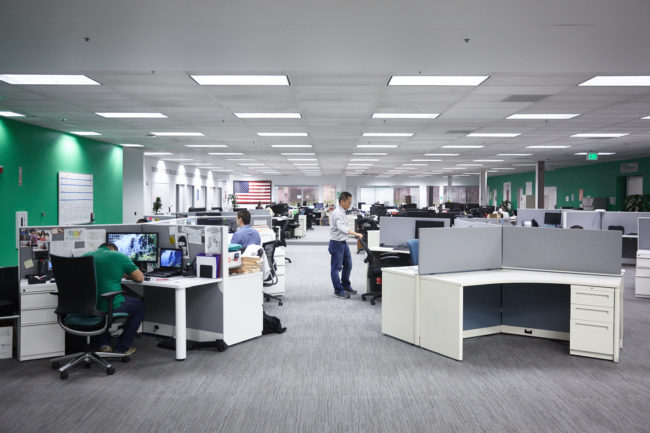
The company came across as fairly standard Silicon Valley. A campus in Palo Alto, a P.R. person coordinating and vetting everything beforehand, modern open-office architecture, lots of young people from an array of countries walking around doing their jobs. On the walls were large prints from a shoot commissioned by the company — including a portrait of Holmes herself — and a giant mural with Yoda’s famous DO OR DO NOT. THERE IS NO TRY. The company was accommodating and welcoming, which is usually the case when you’re coming in to shoot a potential Forbes cover.


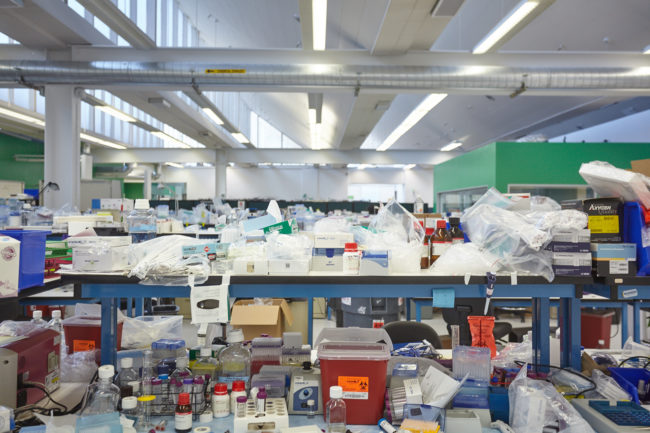
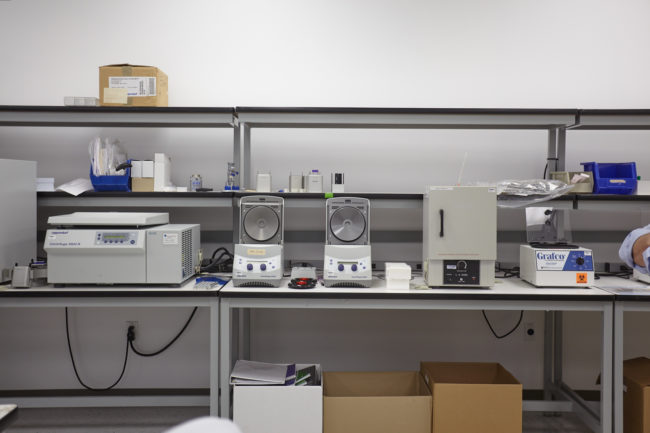
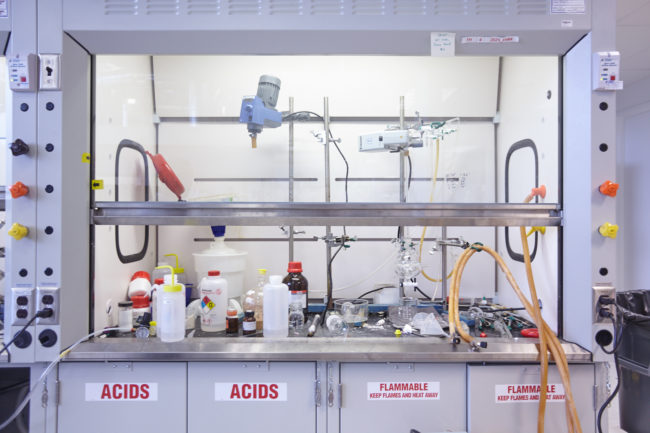
As a biotech company, they also had a ton of lab equipment, machinery and accessories around. Some areas seemed like a jam-packed, disorganized mess


As for Holmes herself, photographing her was entirely different from what you might think. While she supposedly sought to emulate Steve Jobs — his mythically genius status, his black minimalist wardrobe, his change-the-world ambitions — she did not adopt his difficult demeanor. Jobs was reputed to be an awful jerk. Holmes was polite, genuine, easygoing, friendly, accessible and an engaged conversationalist. She asked about me and my crew, never dominating the conversation. She did her own hair and makeup (quite well). She spent much of her time on set without her P.R. person around. 

I’ve photographed a lot of tech CEOs — Elon Musk, Sundar Pichai at Google, Jensen Huang at Nvidia, etc. — and they all either have very little time, a specific way they want to be portrayed, or both. Some have that CEO swagger, some are immersed in their own deep thoughts. Yet Holmes was surprisingly agenda-less. 

She ceded control, trusted us with the shoot and took direction well. She didn’t come out of the gate with fake investor-friendly smiles and body language, nothing smug, no crossed-arm power poses like subjects tend to do for Forbes. I asked her to relax her face completely and just look into the camera, and we got those doe-eyed blank expressions you see in the posters. Between her black turtleneck, shaped black jacket and asymmetrical hair, she had a bit of a sci-fi look. I told her so, and she appreciated the compliment. She was a bit of a dream subject.

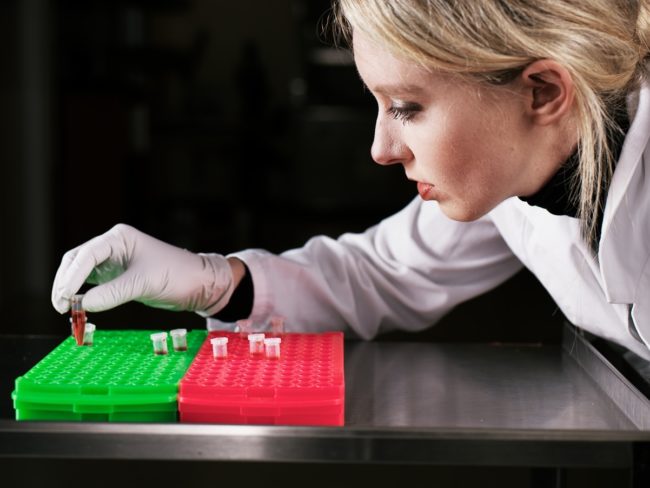
She gave us a lot of time, which is unusual. After setting up for about three hours, we shot her in three different locations for at least two hours. I asked if we could have some blood samples in the shots, and I found it a bit weird that they had these tiny, fake blood containers sitting around … for what? Publicity? Presentations? Guess you can’t use real blood in an investor pitch. There was also an (empty) metal cart labeled Ebola in the lab where we shot, which freaked us out a bit.


If you’ve seen footage of her talking, you’ve probably noticed her unusually low voice. There are rumors that she deliberately lowered her voice to compete in the male-dominated tech field, but I don’t recall it being that low, and I think I would have remembered something so odd. What I do remember is being charmed by this young, attractive, billionaire visionary who spent time with me and my crew and made us feel important. 

And now I wonder: is this part of what lured investors? Sincerity. Relatability. Accessibility. Simplicity. The facade of quiet wisdom. Eye contact from huge blue eyes that made you feel you were hearing the unvarnished truth. 

You couldn’t help liking her, wanting to believe her, itching to embrace the dreamy future she promised. Is this how investors and the media were purportedly taken in? How bizarre to look back and realize that we might have been in the heart of a massive fraud.  It’s hard to know what was real and what was fake. By the end, perhaps not even she knew. 
This Week in Photography Books: Cristina Garcia Rodero

I’m turning 45 on Monday.

(Halfway to 90.)

As of then, I can say I’ve been an artist for more than half my life, as I picked up the habit at 22, and it hasn’t let go yet.

Lately, though, I find I don’t have quite the thrill for photography that I used to.

It makes sense, as it’s been my primary medium the entire time. (Though one could argue I’ve been writing more than shooting the last few years.)

Still, doing the same thing, over and over again, will make almost anyone bored. (I say almost, because now that I’ve studied Japanese martial arts for 2 months, I already have a better handle on their obsession with repetition.)
Add in the fact that as resident book reviewer here, (400+ posts and counting,) I see a lot of photo projects, and it’s understandable that I’d get a bit jaded from time to time.

(I probably just need a vacation.)

Still, I love to be surprised, to see new things, and to keep it fresh for you, my loyal global audience.

Today, I was loathe to review the first few books I checked out, as they were reminiscent of things I’d reviewed quite recently. So I sat here on my couch, willing myself to be inspired to write.

Got to hit that deadline.

No inspiration, no column.

I closed my eyes, thinking about the feeling of inspiration. The rush of adrenaline as your mind expands in real time. The thrill of looking at things that make you want to create, or travel, or both.

In my imagination, I was back in Albuquerque at UNM, in 1997. I was studying Photo 1 at the time, and at the encouragement of my professor, Jeff Tomlinson, I headed to the Fine Arts library to look at some photo books.

Walking the stacks, creeping around like Inspector Javert, I ran my fingers across the spines in the photo section, cocking my head sideways to read the titles.

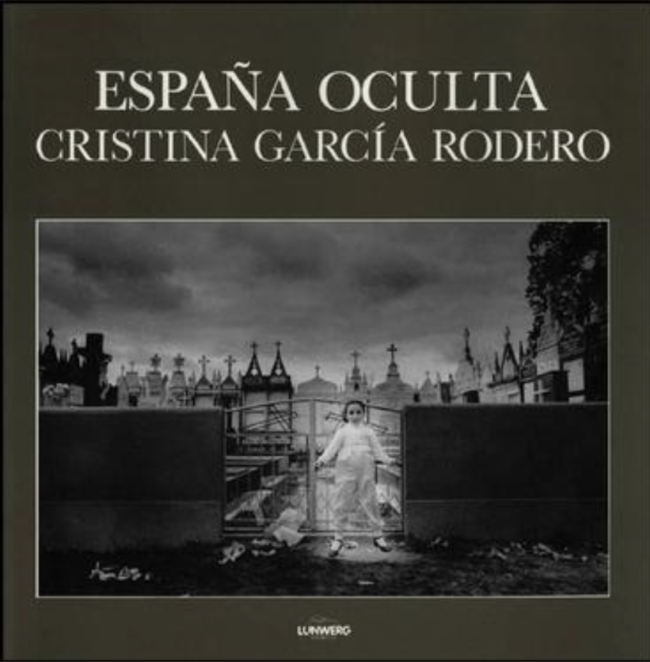
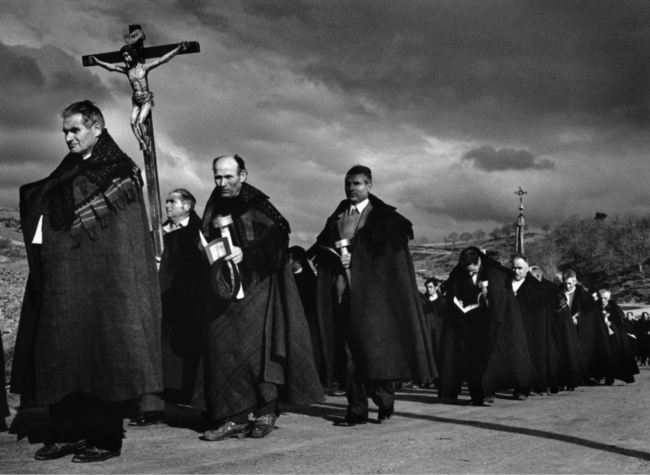
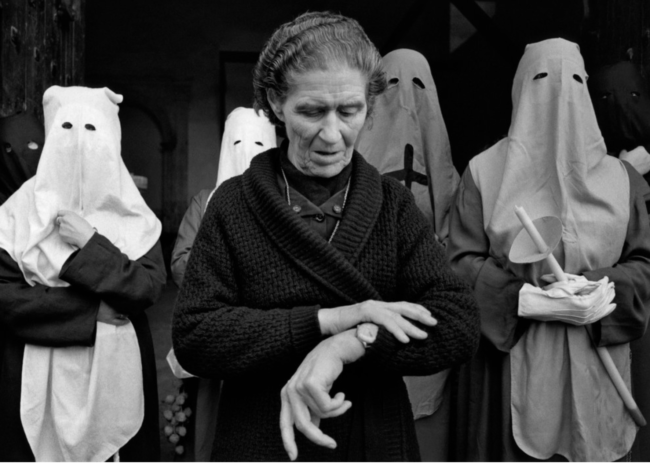
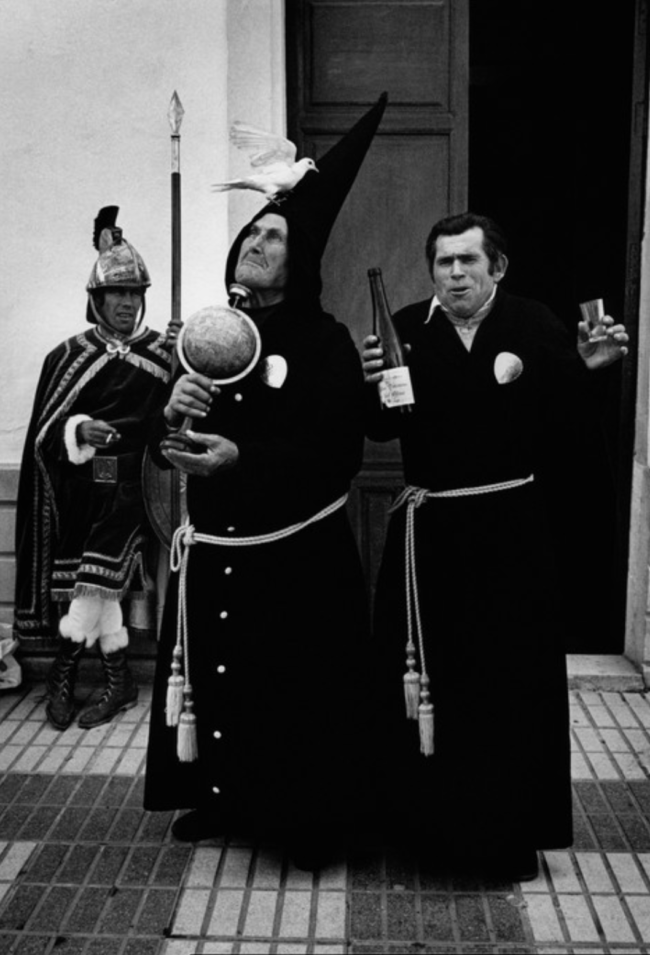
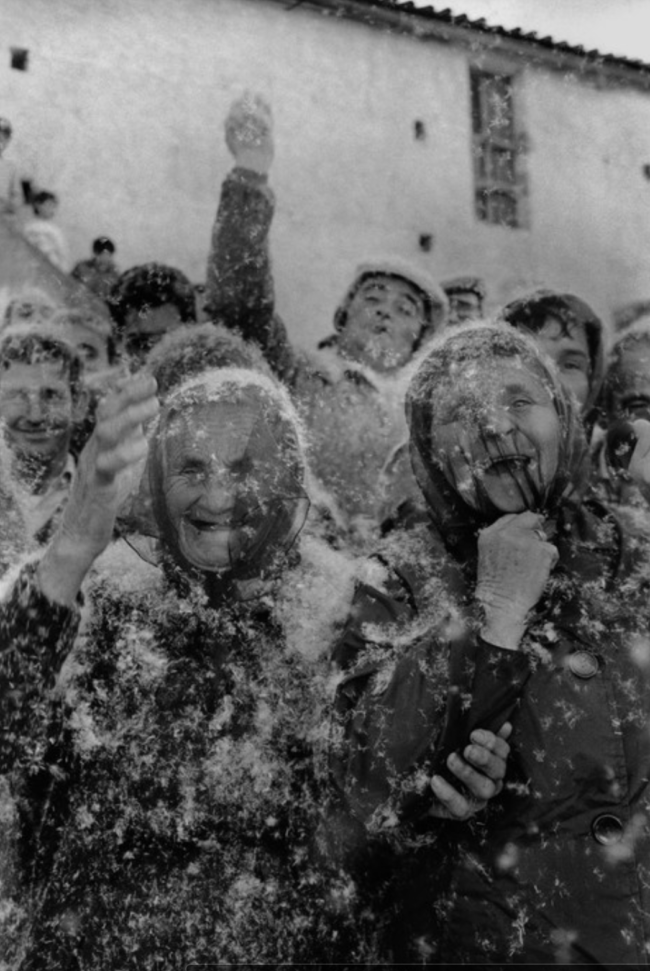
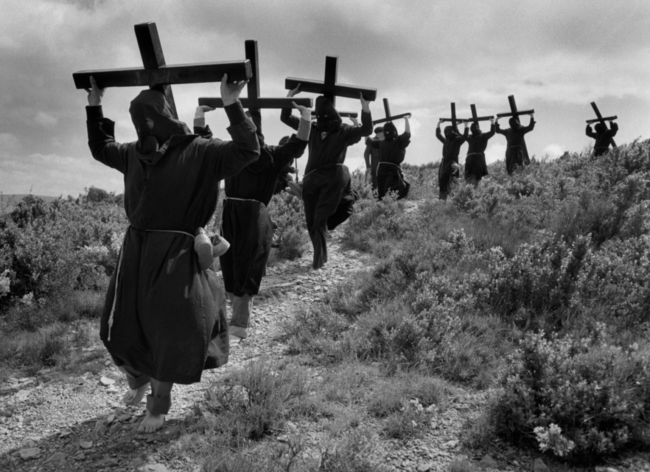
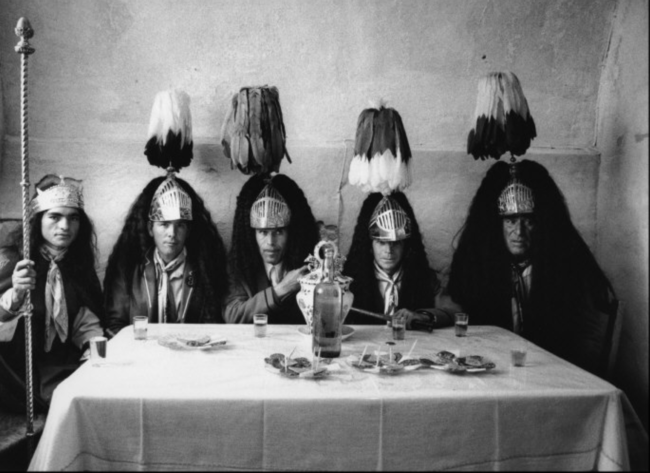
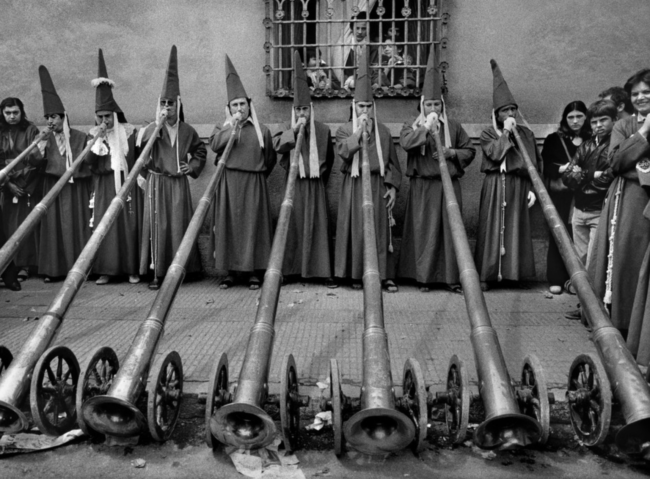
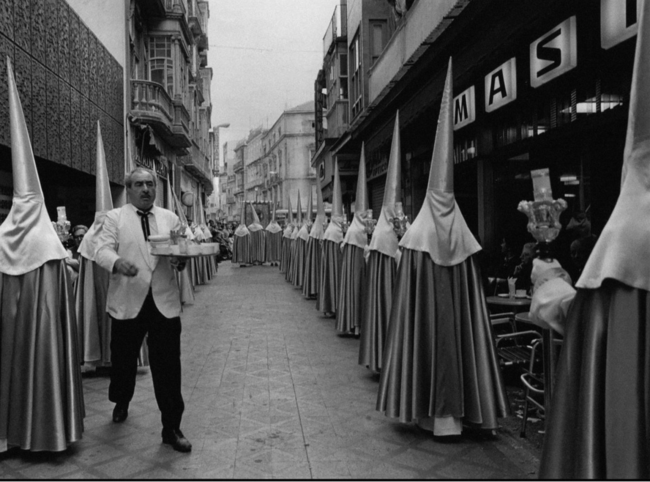
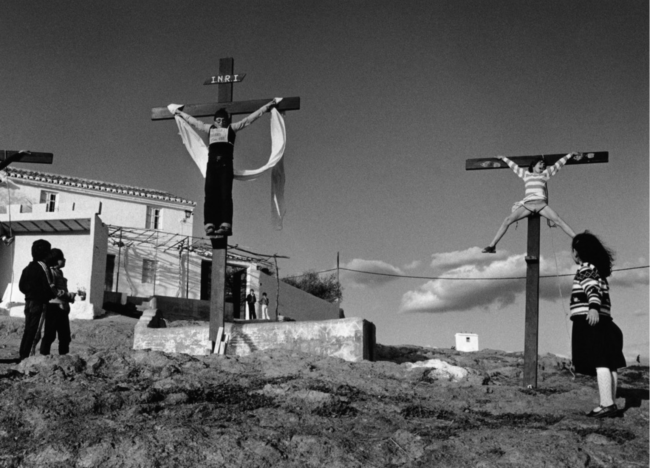
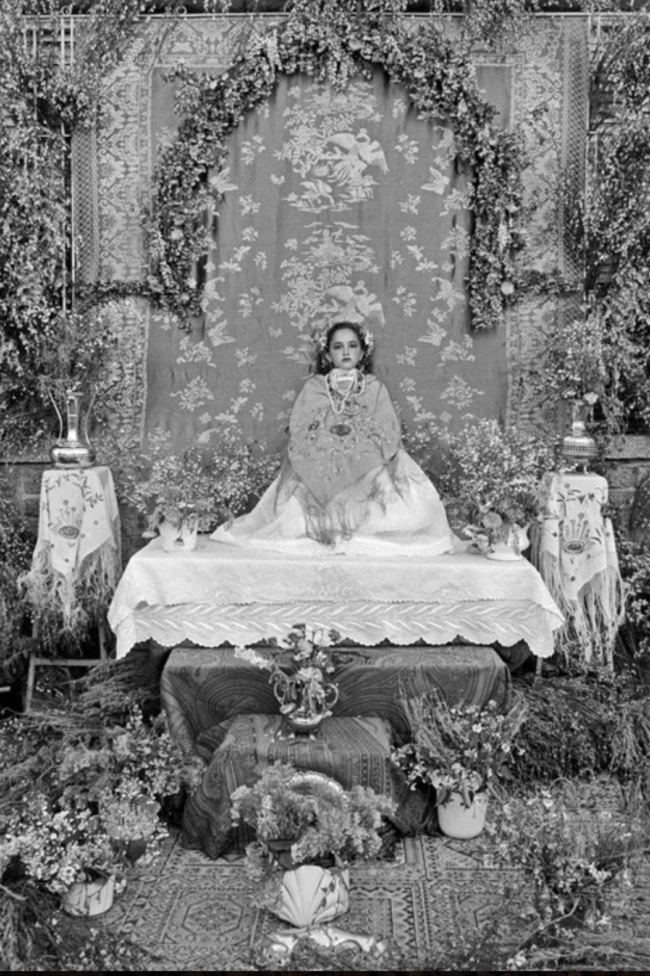
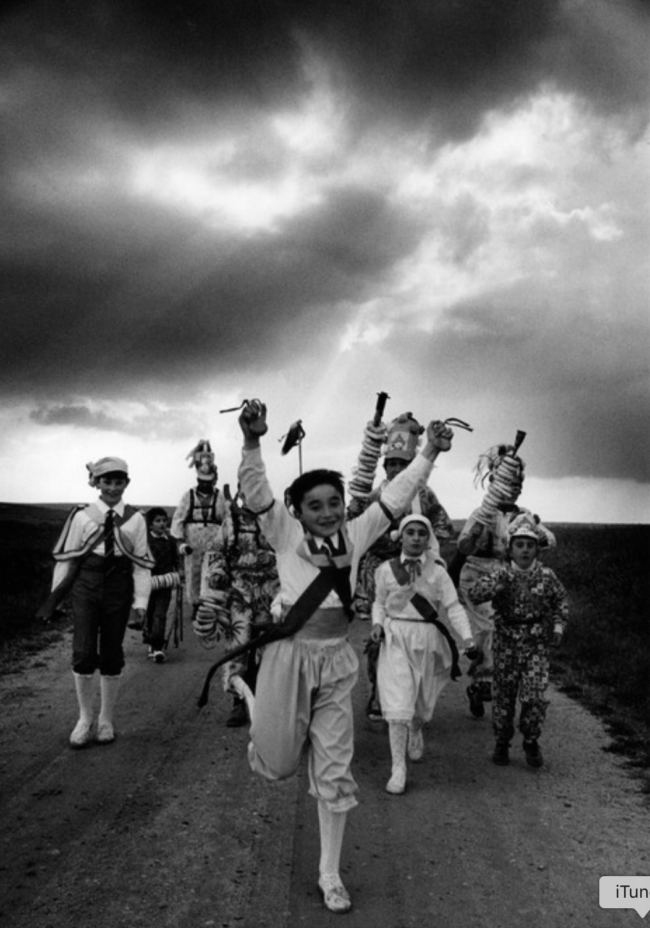
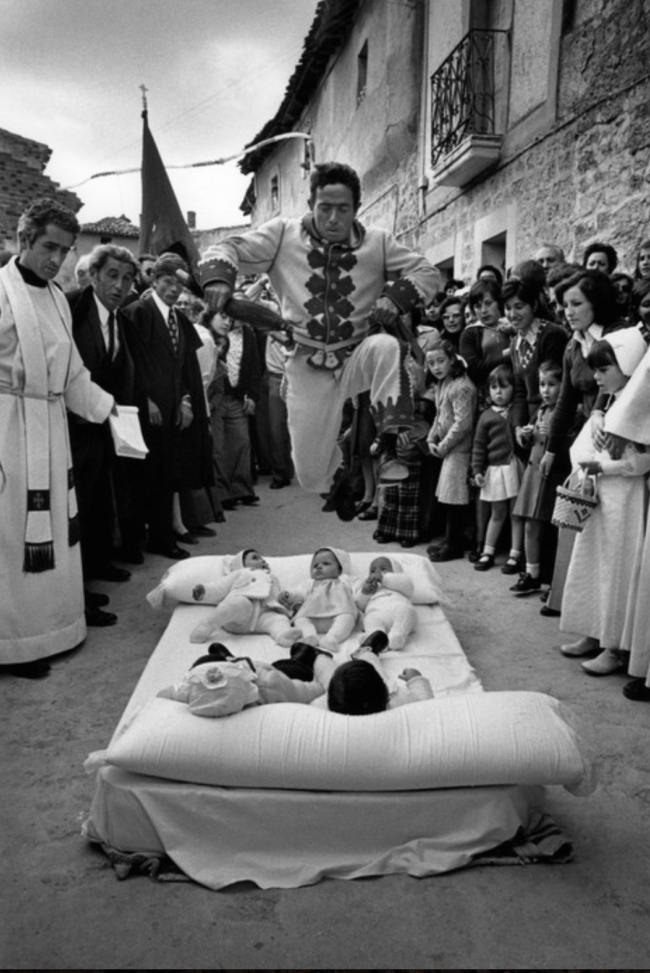
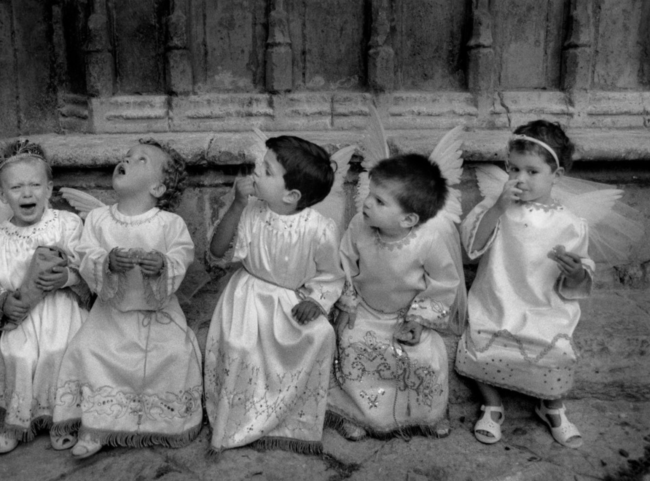
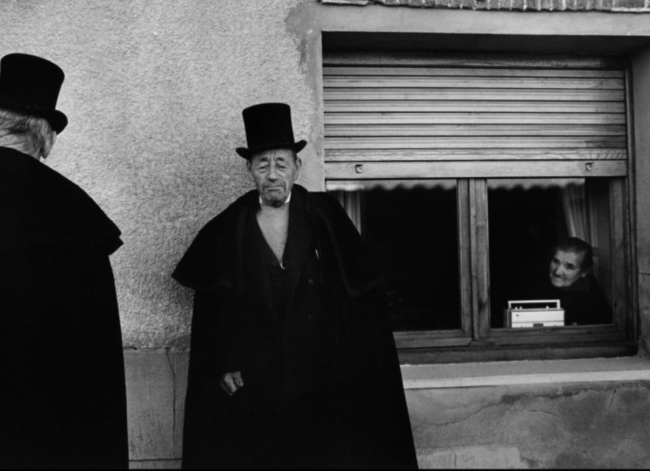
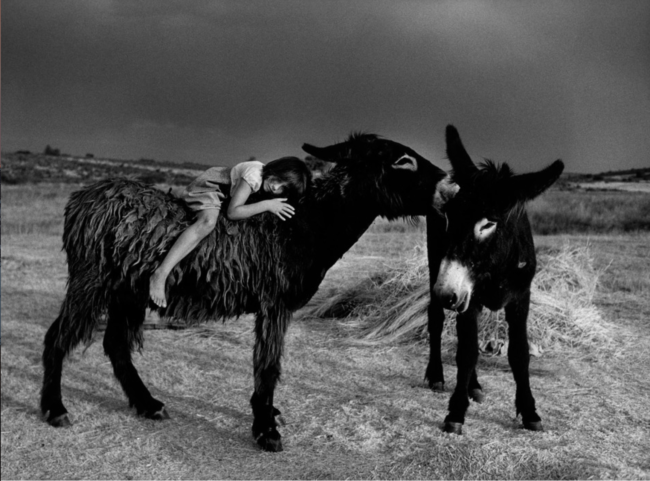
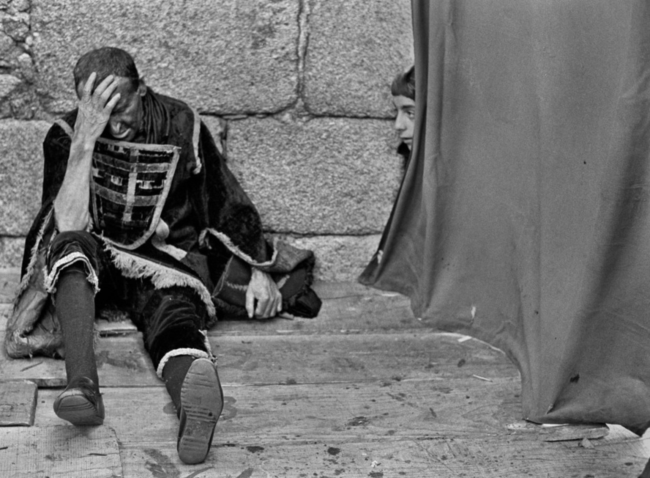
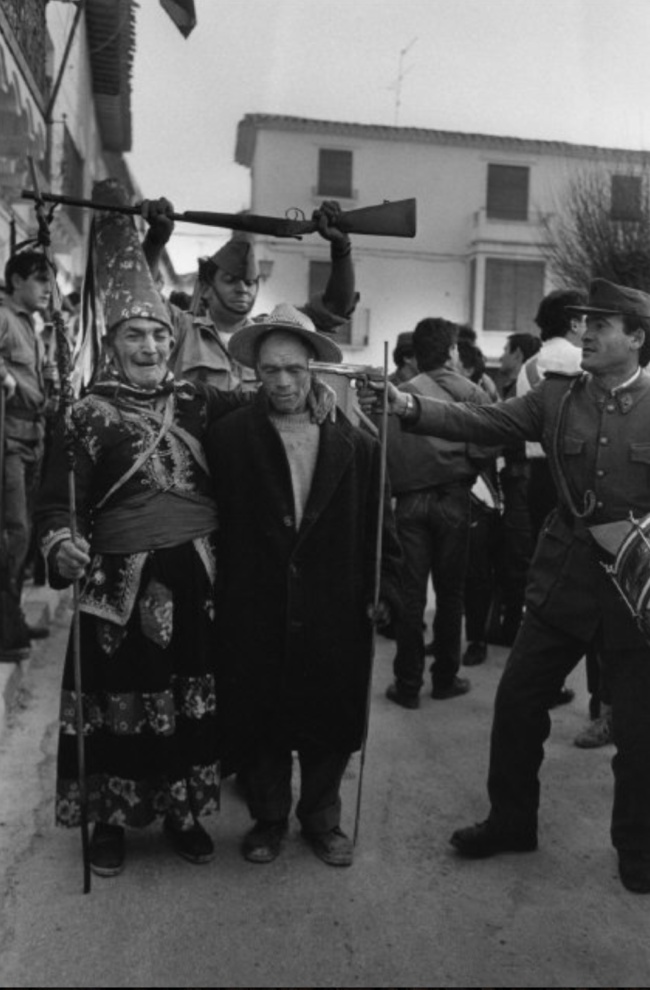
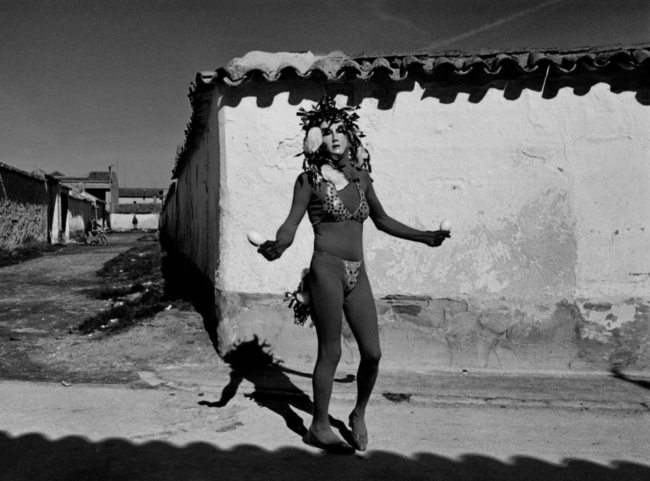
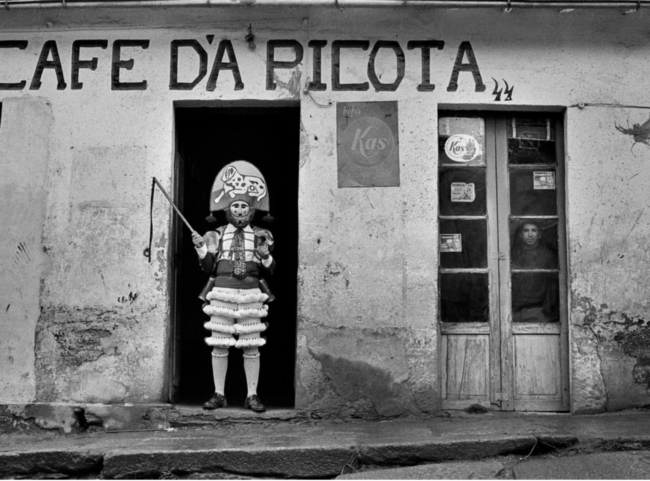
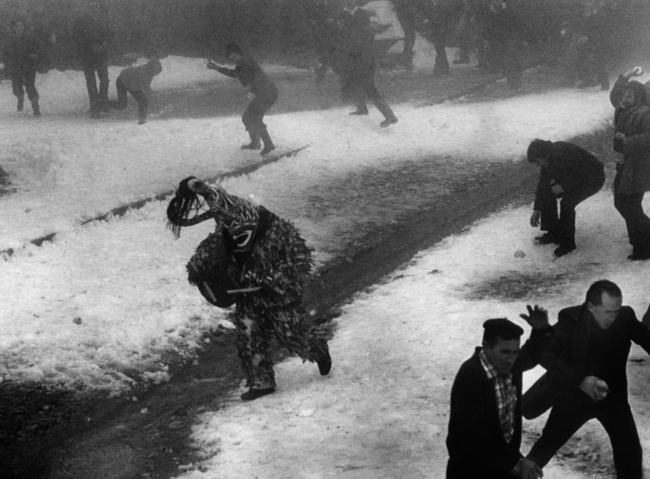
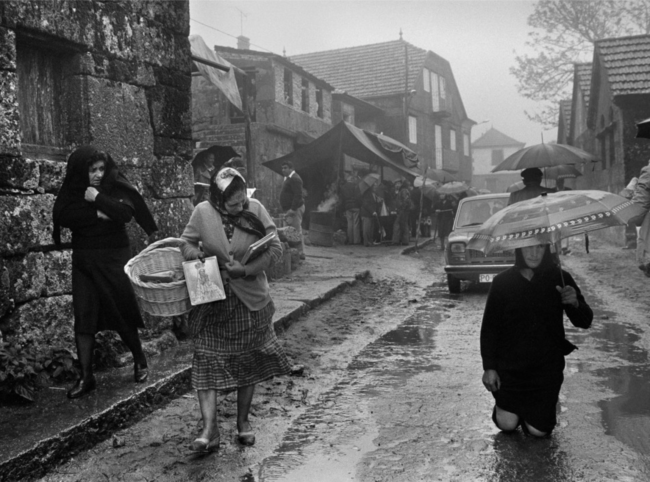
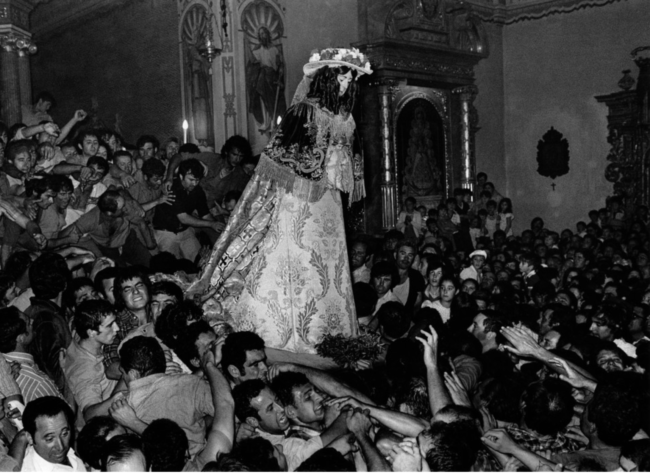
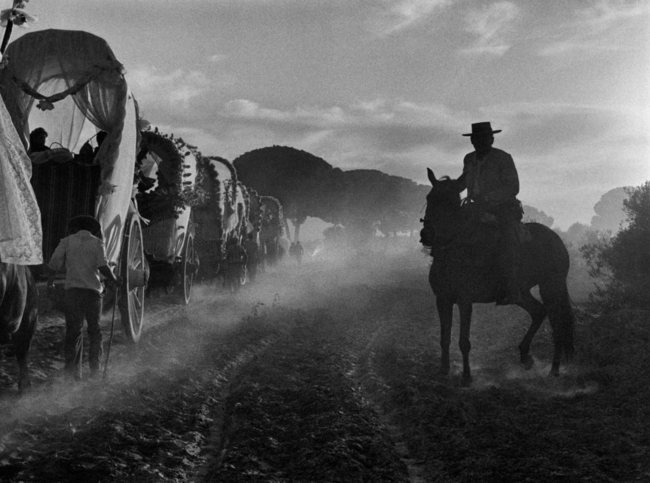
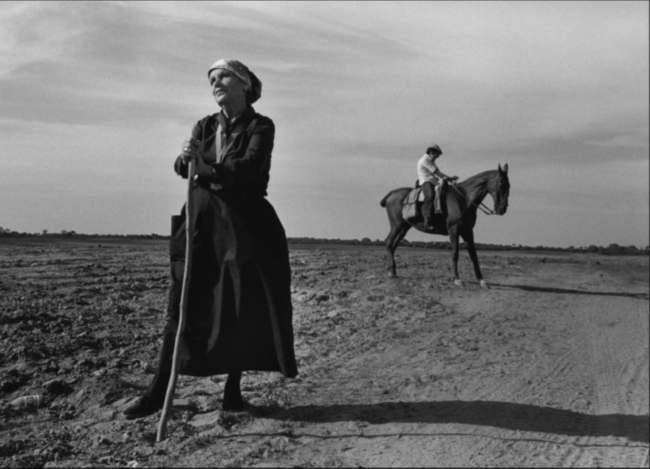
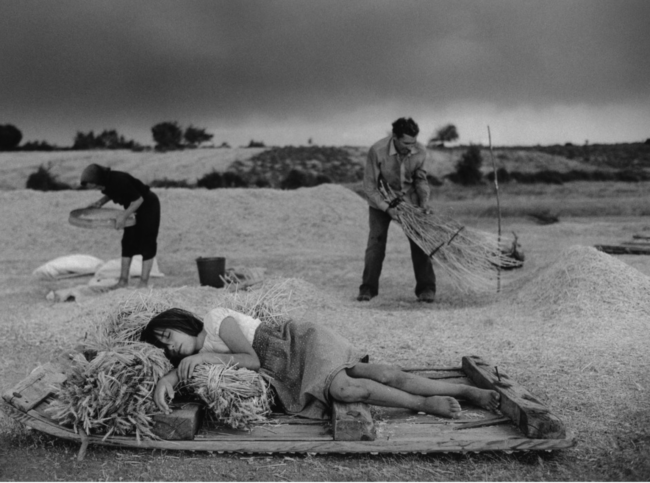
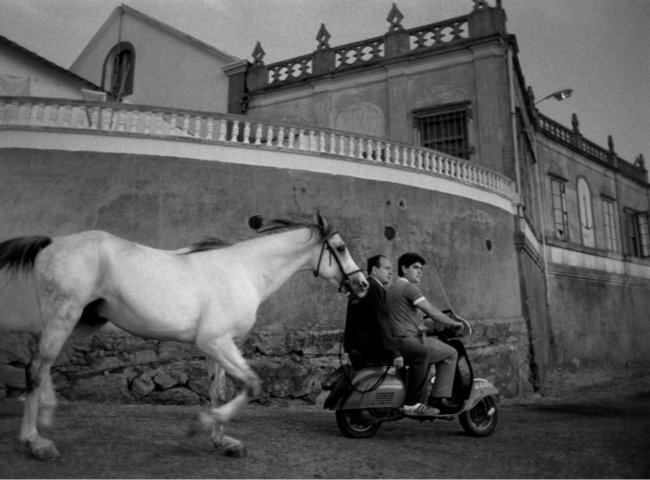
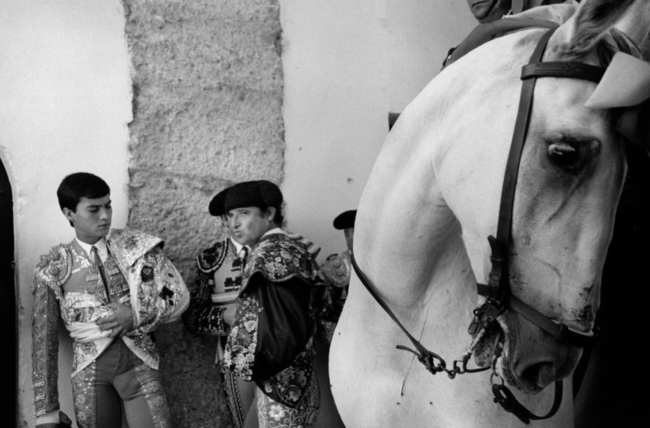
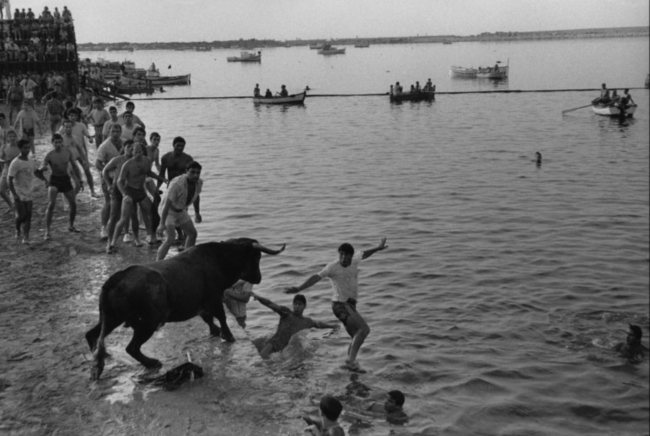
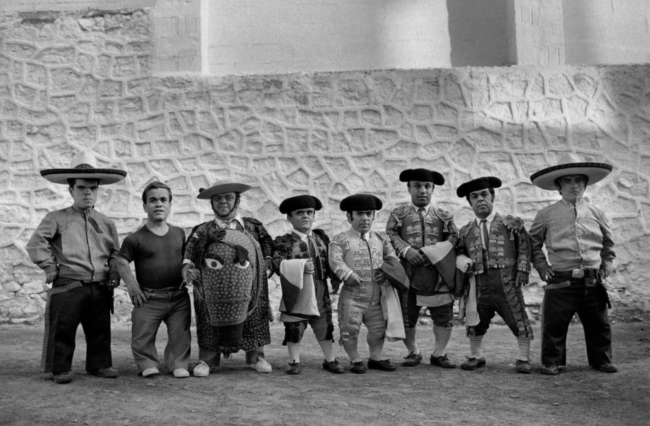
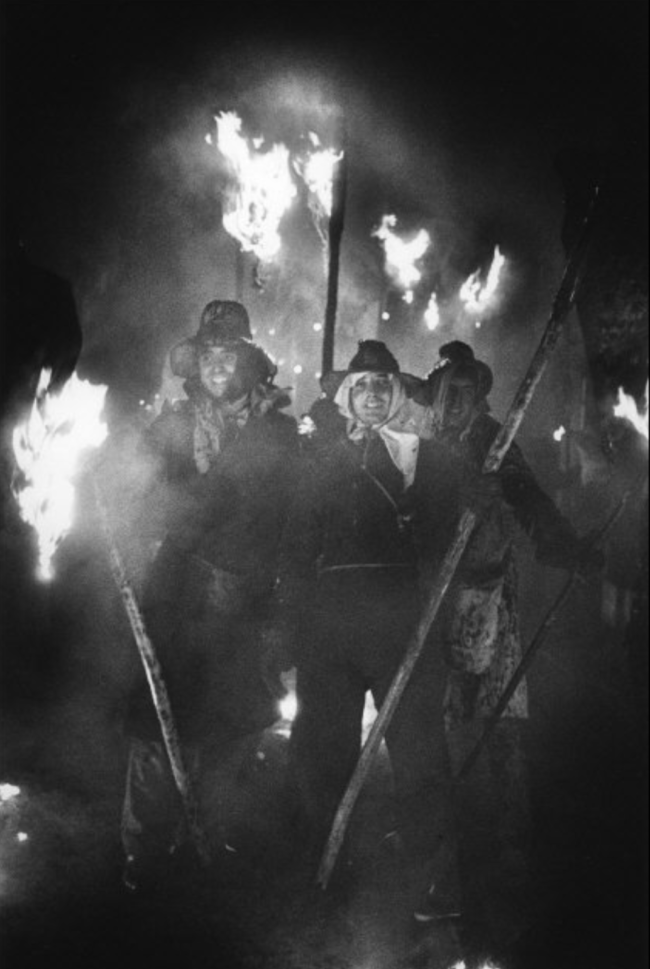
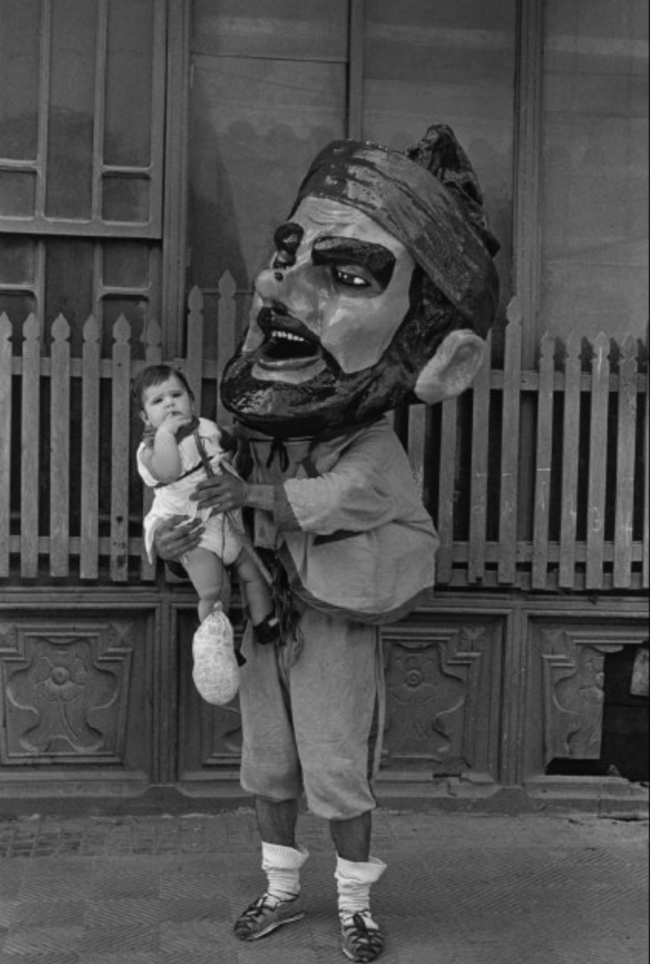
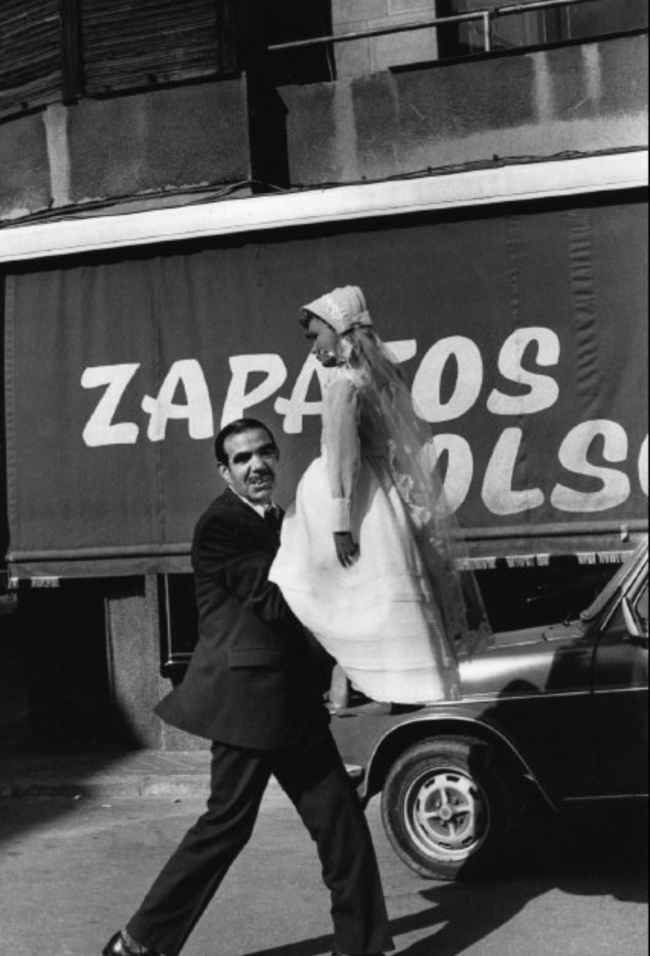
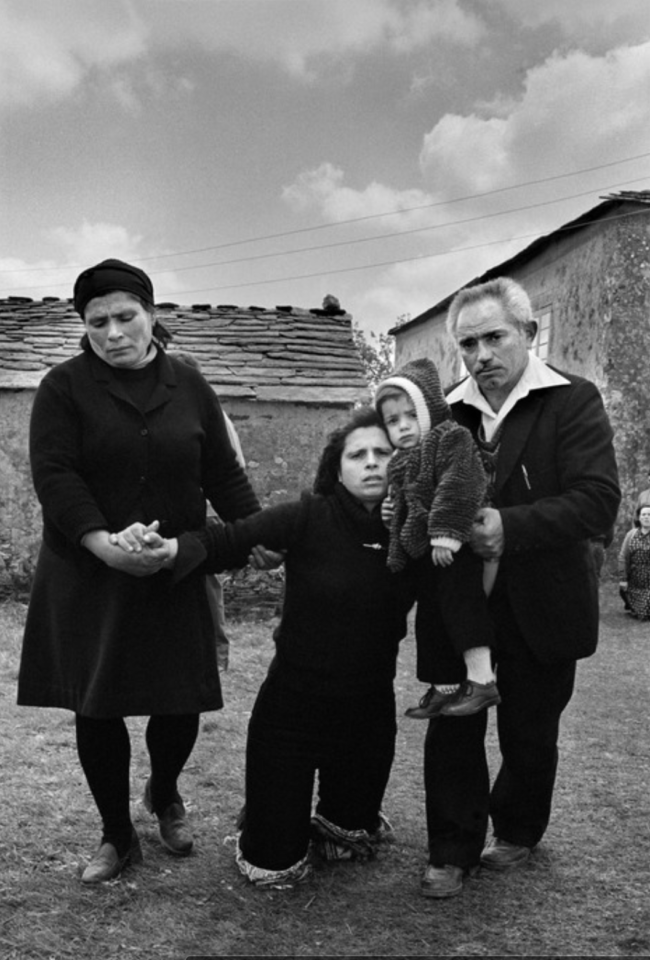
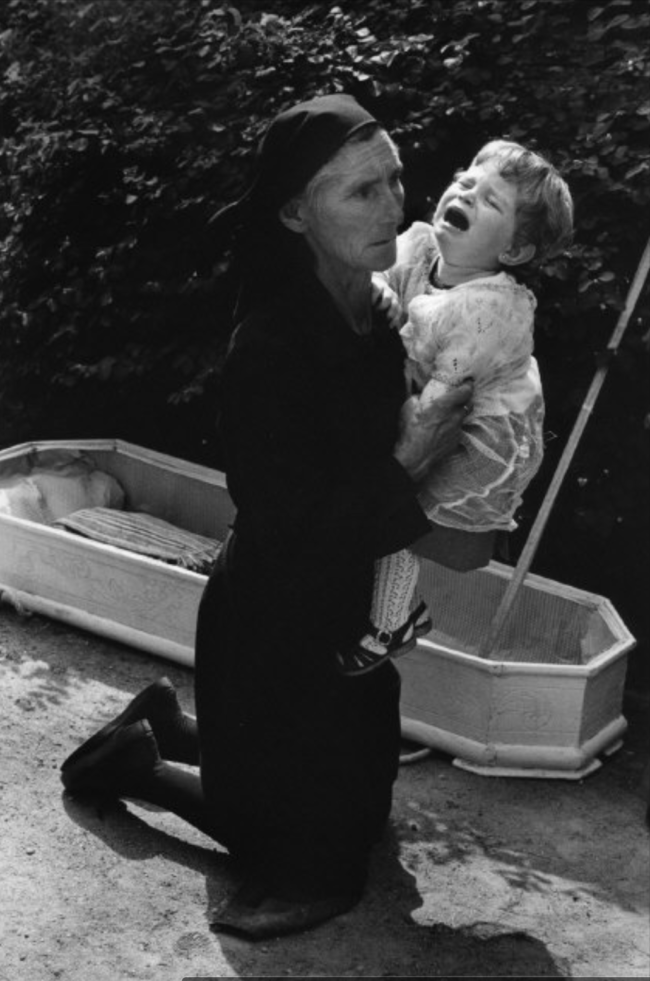
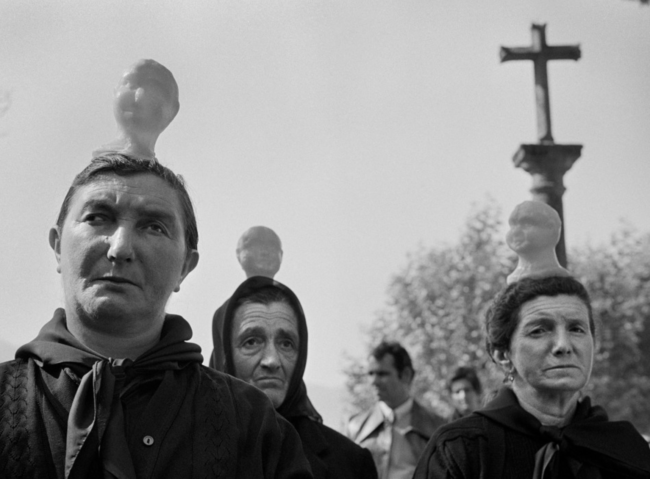
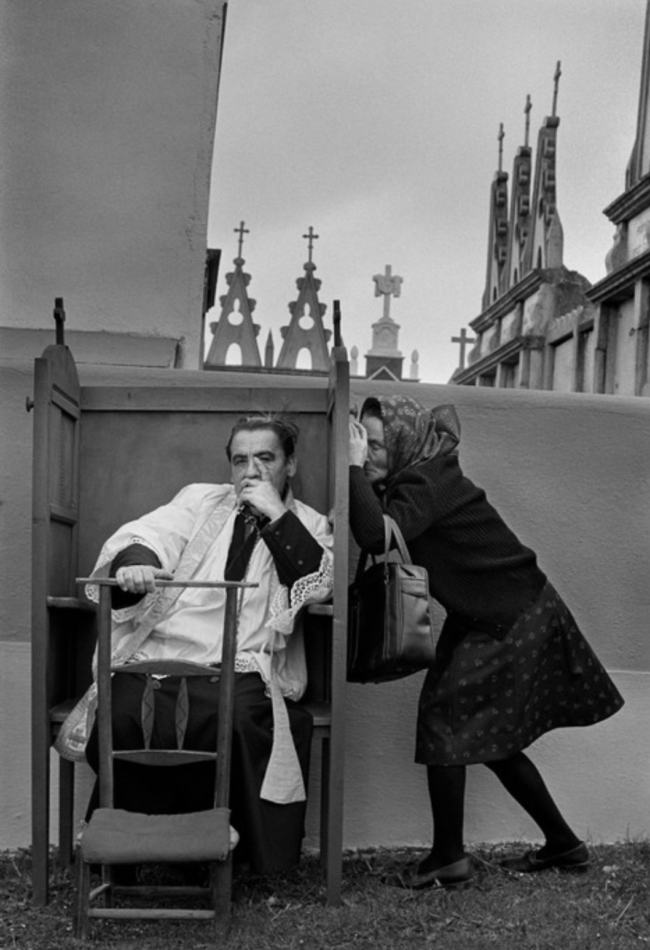
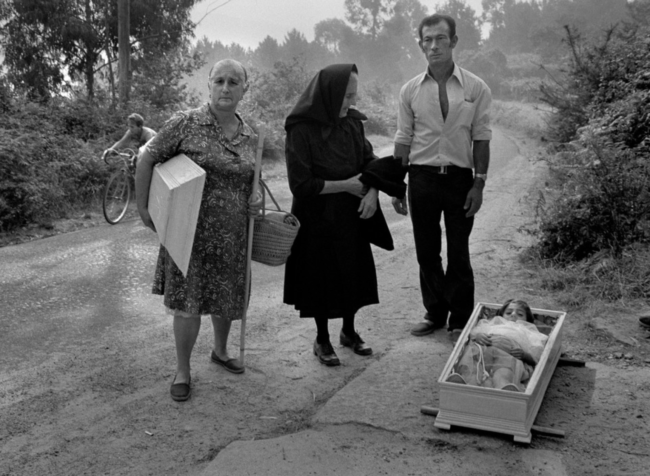
I stopped at “España Oculta: Public Celebrations in Spain 1974-89,” by Cristina Garcia Rodero, published by Smithsonian Books, and pulled it from its neighboring tomes.

“What are you,” I asked, curious to know?

15 years is a long time, and as I’m coming up on my 14th anniversary of moving back to New Mexico, I should know. It represents the length of this project, and even then, as a pure beginner, I wondered how anyone could sustain that kind of interest in one subject for that long.

The focus.
The discipline.

These days, I can imagine a Spaniard, around 30 or so, who enjoyed shooting at festivals in her native country, and checked in from time to time over a decade and a half. It doesn’t seem impossible, though at 23, that’s exactly how I viewed it.

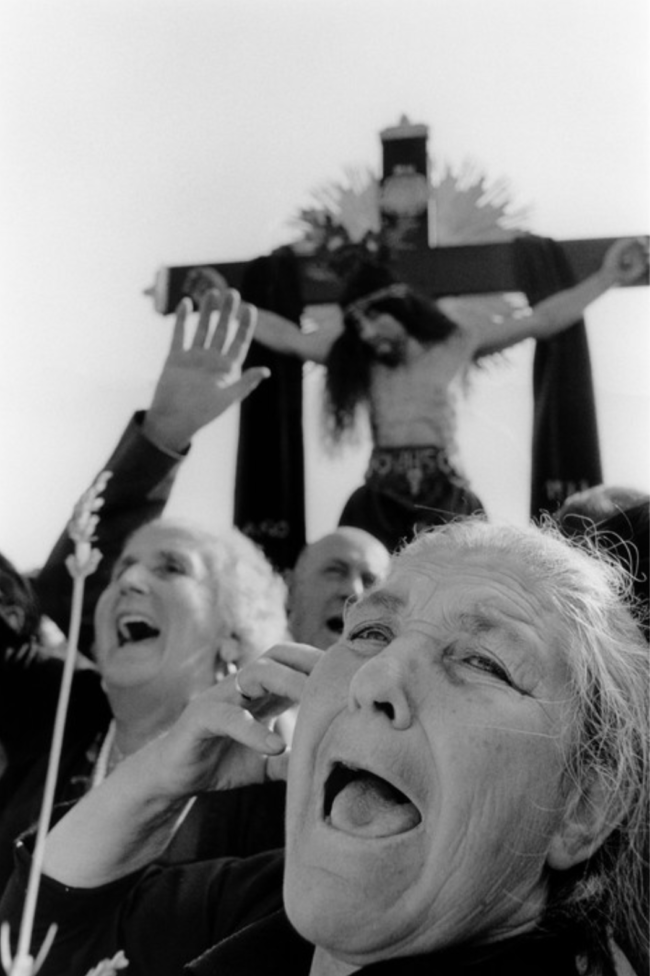
The consistent surreality of the scenes won me over, and still does. The disbelief that these were real people, in real situations, and not staged fantasies.

Even then, as young-20-something who’d only been around New Mexico for 10 years, I’d heard stories of local Penitente societies still active, in which believers self-flagellated, and wore hoods.

Here, in the book, were versions of that before me, only exponentially more intricate. The Baroque nature of Spanish Catholicism was on full display, with crucifixion rituals, baby coffins, and midget bull-fighters. (Sorry. Little People.)

I bought the book soon afterwards, at the ICP bookstore in Manhattan, likely 3 or 4 locations back.

And even though it remains my favorite photo-book of all time, somehow, in between all the moves…

I lost it.

Luckily, Ms. Garcia Rodero is a member of Magnum, and they have a digital copy of the entire book on their site, which is a very 21st Century experience. (Even if it’s not the equal of those excellent reproductions on paper.)

The pictures feel relevant to me in a totally new way, on the day when Michael Cohen is testifying about his former-boss-and-buddy Donald J Trump.

Trumpism and Nationalism can be easily mistaken for each other, these days, though I might be generous and declare the latter is at least based on a proper love for the cultures and traditions of a place on Earth.

(Again, if I’m being kind. Trumpism is nothing more than narcissism having an incest baby with geopolitics.)

Here in America, we’re all from somewhere else. All of us. (Even our indigenous folks walked in 15,000 years ago.)

Our culture is polyglot and hybridic by nature. Many Americans, (myself included,) are Europhiles, either because their ancestors came from there, or because the allure of age and aesthetics entice us to stare longingly at rituals that make no sense next to Walmart and McDonalds.

These pictures revel in the “Spanishness” that you read, in think-pieces, is at risk of disappearing. The very specificity of place and time that gets annihilated when beanie-wearing-hipsters FaceTime with each other across national borders, giggling at outmoded concepts like local culture while fiddling with their Apple watches.

The Globalists.

Was that even a word when I first saw this book, back before the internet was even a thing?

Probably not.

But certain ideas represented in “España Oculta” never go out of style. Creative excellence, formal craftsmanship, patience and hard work, and shooting thousands of rolls of film.

After all these years, I’ve never reviewed a book from memory before, but there’s a first time for everything.

If you can find a copy of this one, by all means buy it. (Or probably anything else of hers you can get your hands on.) I once stumbled upon her show, at MoMAPS1, in which she’d made images of Voodoo rituals in Haiti that practically gave me nightmares.

Truth be told, I feel better now than I did before I found her images online, and reconnected with this marvelous narrative.

It’s an example of the best our medium has to offer, IMO, and reminds me why it’s so important to keep pushing that rock up the hill each day.

Bottom Line: A Baroque, Spanish masterpiece


If you’d like to submit a book for potential review, please email me at jonathanblaustein@gmail.com. We currently have a several month backlog, and are particularly interested in submissions from female photographers so we may maintain a balanced program.