Ethan Pines talks about photographing Elizabeth Holmes for Forbes
In late 2014 I photographed Elizabeth Holmes, the founder and CEO of the allegedly fraudulent blood-testing company and Silicon Valley darling Theranos. When I shot her for the Forbes 400 issue, she was the youngest self-made female billionaire in the world. By 2016 The Wall Street Journal, Vanity Fair and others had published excoriating investigative pieces, and Forbes estimated her net worth at zero.
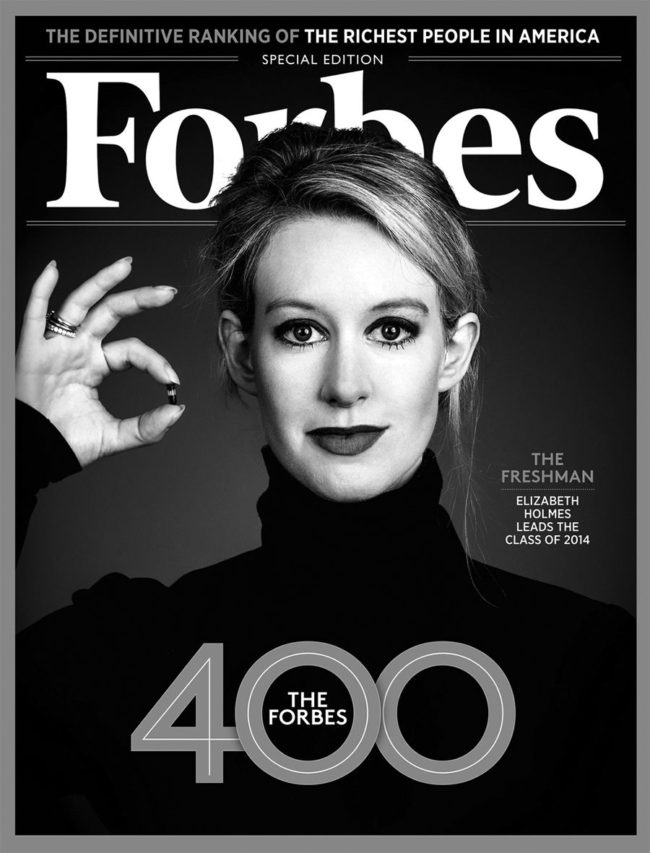
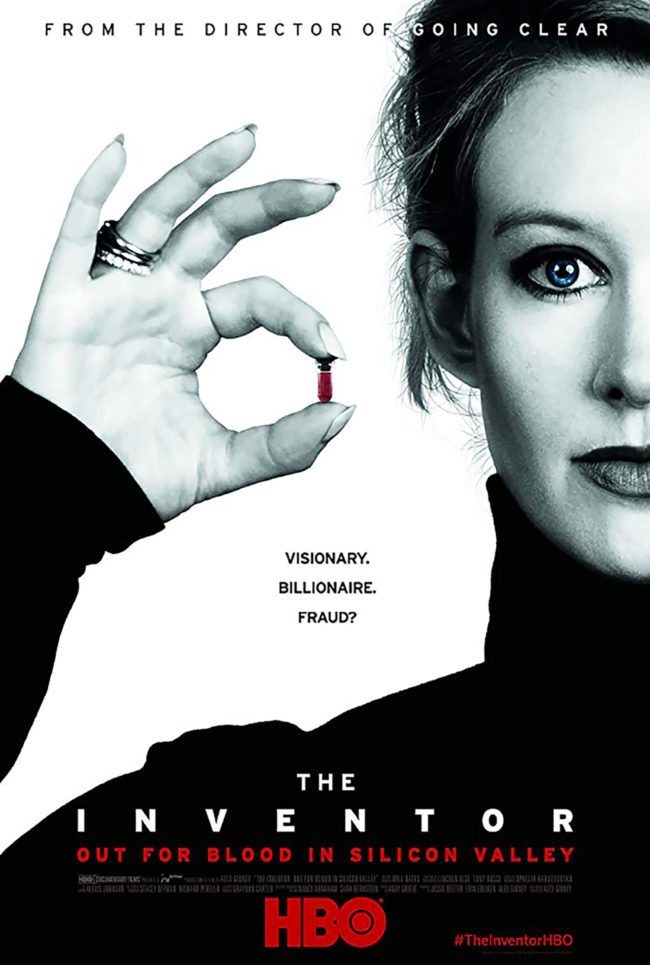
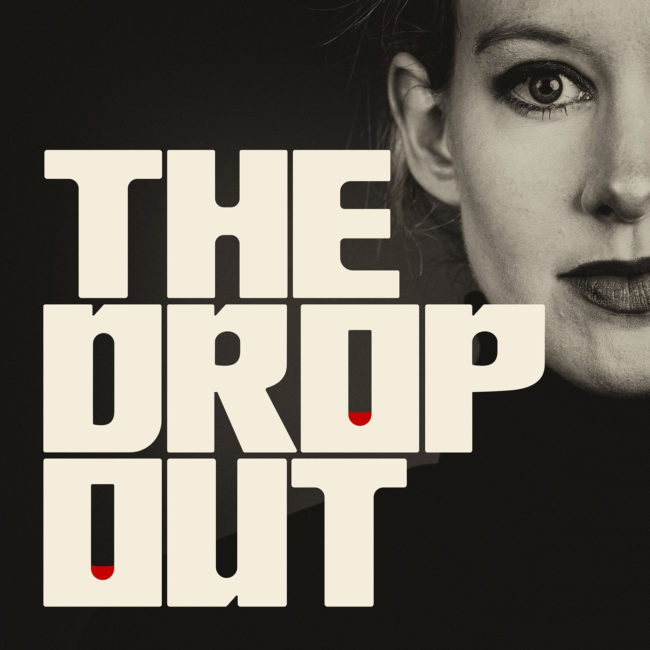
Suddenly her story is everywhere again: John Carreyrou’s Bad Blood is a hit, HBO’s documentary The Inventor just premiered at Sundance, the ABC News podcast The Drop Out is streaming, and a seemingly endless number of articles on Holmes’s alleged fraud have come out. In addition to appearing editorially here and there, my portraits have been licensed as key art for the HBO documentary and the ABC podcast.
And friends keep asking me, What was it like at the company? What did you see around their offices? How was it spending a few hours with the woman who may be a delusional fraud, perhaps even a sociopath?
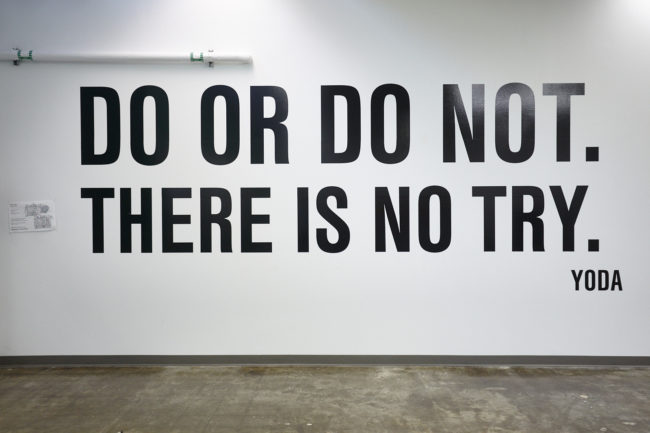
The company came across as fairly standard Silicon Valley. A campus in Palo Alto, a P.R. person coordinating and vetting everything beforehand, modern open-office architecture, lots of young people from an array of countries walking around doing their jobs. On the walls were large prints from a shoot commissioned by the company — including a portrait of Holmes herself — and a giant mural with Yoda’s famous DO OR DO NOT. THERE IS NO TRY. The company was accommodating and welcoming, which is usually the case when you’re coming in to shoot a potential Forbes cover.

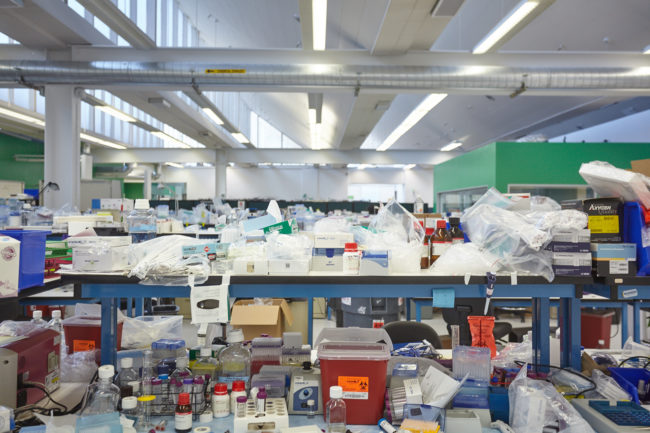
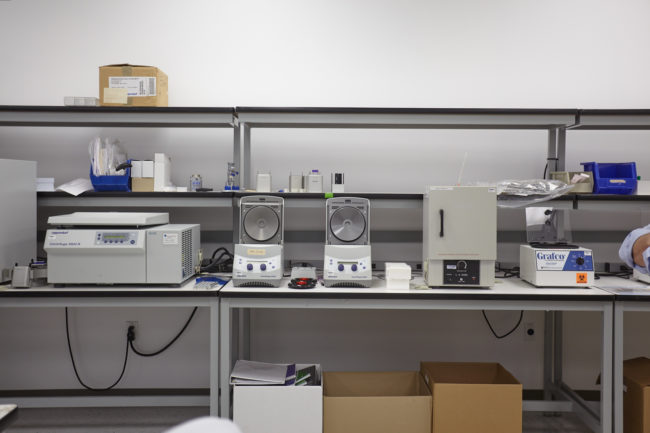
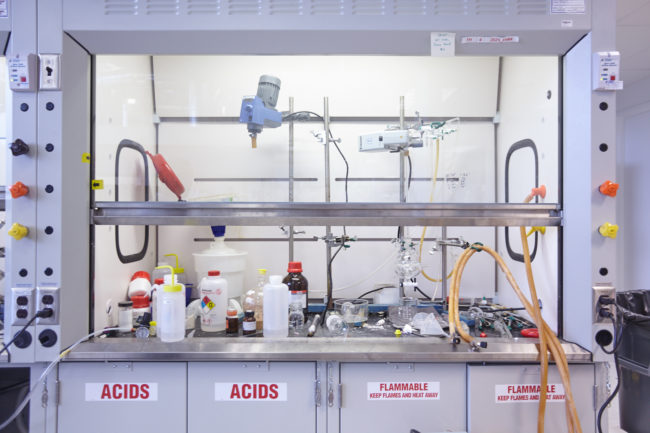
As a biotech company, they also had a ton of lab equipment, machinery and accessories around. Some areas seemed like a jam-packed, disorganized mess
As for Holmes herself, photographing her was entirely different from what you might think. While she supposedly sought to emulate Steve Jobs — his mythically genius status, his black minimalist wardrobe, his change-the-world ambitions — she did not adopt his difficult demeanor. Jobs was reputed to be an awful jerk. Holmes was polite, genuine, easygoing, friendly, accessible and an engaged conversationalist. She asked about me and my crew, never dominating the conversation. She did her own hair and makeup (quite well). She spent much of her time on set without her P.R. person around.
I’ve photographed a lot of tech CEOs — Elon Musk, Sundar Pichai at Google, Jensen Huang at Nvidia, etc. — and they all either have very little time, a specific way they want to be portrayed, or both. Some have that CEO swagger, some are immersed in their own deep thoughts. Yet Holmes was surprisingly agenda-less.
She ceded control, trusted us with the shoot and took direction well. She didn’t come out of the gate with fake investor-friendly smiles and body language, nothing smug, no crossed-arm power poses like subjects tend to do for Forbes. I asked her to relax her face completely and just look into the camera, and we got those doe-eyed blank expressions you see in the posters. Between her black turtleneck, shaped black jacket and asymmetrical hair, she had a bit of a sci-fi look. I told her so, and she appreciated the compliment. She was a bit of a dream subject.
She gave us a lot of time, which is unusual. After setting up for about three hours, we shot her in three different locations for at least two hours. I asked if we could have some blood samples in the shots, and I found it a bit weird that they had these tiny, fake blood containers sitting around … for what? Publicity? Presentations? Guess you can’t use real blood in an investor pitch. There was also an (empty) metal cart labeled Ebola in the lab where we shot, which freaked us out a bit.
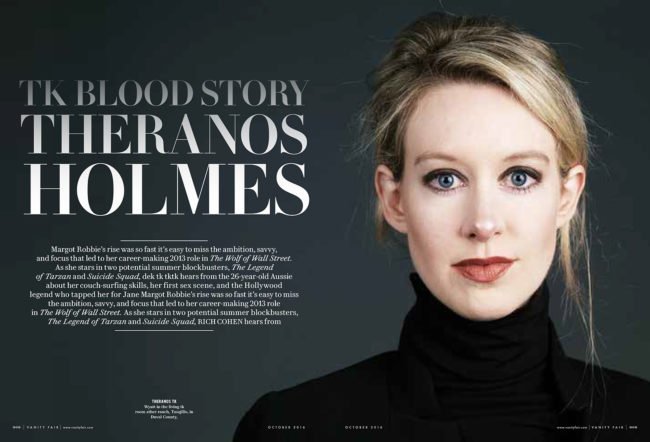

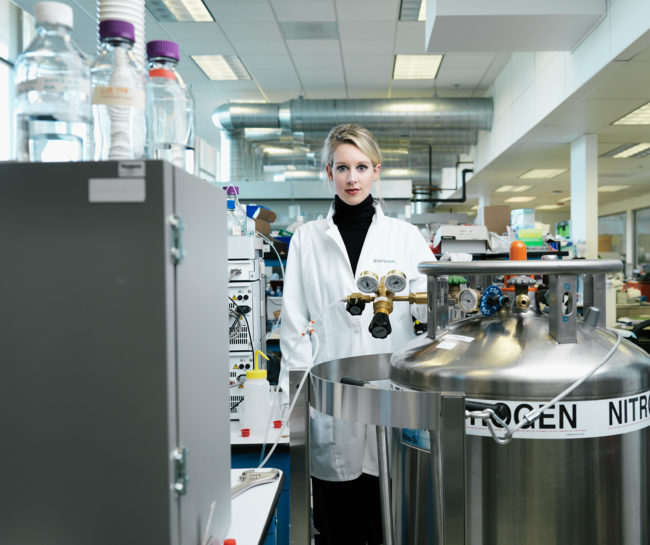
If you’ve seen footage of her talking, you’ve probably noticed her unusually low voice. There are rumors that she deliberately lowered her voice to compete in the male-dominated tech field, but I don’t recall it being that low, and I think I would have remembered something so odd. What I do remember is being charmed by this young, attractive, billionaire visionary who spent time with me and my crew and made us feel important.
And now I wonder: is this part of what lured investors? Sincerity. Relatability. Accessibility. Simplicity. The facade of quiet wisdom. Eye contact from huge blue eyes that made you feel you were hearing the unvarnished truth.
You couldn’t help liking her, wanting to believe her, itching to embrace the dreamy future she promised. Is this how investors and the media were purportedly taken in? How bizarre to look back and realize that we might have been in the heart of a massive fraud. It’s hard to know what was real and what was fake. By the end, perhaps not even she knew.

7 Comments
Sounds like she always realised that all she really had was image and poured everything into it.
Very well written Ethan, and very nice work!
That was a great story filled with details. Told so well, Ethan!
Great job Ethan! You can call yourself a writer also!
Fantastic insights! I thoroughly enjoyed reading this.
Ethan, thanks for the inside look. There are no words for such deceit, but you always tell it well!
Well told. Thanks for sharing these stories. In the doc I was creeped out. Your story was really compelling.
Comments are closed for this article!