The Art of the Personal Project is a crucial element to let potential buyers see how you think creatively on your own. I am drawn to personal projects that have an interesting vision or that show something I have never seen before. In this thread, I’ll include a link to each personal project with the artist statement so you can see more of the project. Please note: This thread is not affiliated with any company; I’m just featuring projects that I find. Please DO NOT send me your work. I do not take submissions.
This series questions the nature of beauty, while simultaneously showing the beauty of nature.
When I returned to my studio in Milan just after lockdown, my aim was to capture the inherently perfect aesthetics of these plants. Maybe it was the time and place of the shoot, but something about beauty for its own sake didn’t feel quite right. As I was working, my eyes fell on a piece of plastic, which I dropped onto a flower, interrupting its beauty. In a way, this is exactly what is happening to our planet – the disturbance on nature that can no longer remain hidden.
APE contributor Suzanne Sease currently works as a consultant for photographers and illustrators around the world. She has been involved in the photography and illustration advertising and in-house corporate industry for decades. After establishing the art-buying department at The Martin Agency, then working for Kaplan-Thaler, Capital One, Best Buy and numerous smaller agencies and companies, she decided to be a consultant in 1999. Follow her on Instagram
Heidi: You attended the event as a photojournalist and part of “the huddled masses” – can you unpack how you felt like you were both?
Sarah: Everyone was expecting D.C. to be cold, but as all major events moved inside or were canceled entirely, everyone was left outside with dwindling options, including press.
The photographers with indoor access were swiftly cut down to a slim group of AP and White House Press Pool photographers stationed inside. Most press passes became mute—they didn’t get you inside the Rotunda anymore. You had access to the streets like everyone else.
The Capital 1 Arena was opened as a holding shell for the simulcast. It was the official backup location, so that’s where most of the core base of Trump supporters were going, and I was going with them. We all walked together trying to find the place.
As part of the “huddled masses,” I shared in the frustration, cold, and confusion. But as a photojournalist, I was there to observe and catch the images that illustrated this complicated political and emotional backdrop, and the historic day. Being in the cold gave me a physical show of the disparity between the wealthy attendees’ experience and that of the everyday supporters.
The city was fenced off like a maze. Members of the Special Services, police, National Guard, and military manned the barricades. As such, they were the only people to ask for directions. We asked guards at every gate we passed. They simply didn’t know where the Arena was or how to get there, and it seemed they hadn’t been told. And it seemed like it was on purpose. The disorganization and lack of information for the people felt almost cruel, or, to assume the best of the Trump Administration, a huge failure in planning.
There was a massive lack of pomp and circumstance. Sharing in the same experience as the average Trump supporter showed me the event’s class divide—for the more well-to-do attendees there were packed and patriotic schedules—spreadsheets filled with exclusive galas, private watch parties, luncheons, music, and a banquet of indoor events that you either had to pay quite a lot for, or be invited by an insider. For the average person the choices were to either wait in line for two hours to see Trump simulcast on a screen, or watch from a bar if there was any space/tickets left. Most bars and restaurants were not allowing free entry to see the inauguration on their TVs.
You did a stellar job at dealing with comments on IG about the bag pile and the polarizing narrative by thanking the person for their insight and knowledge. In a few words, how do you use respect as a tool during these dynamic times?
Yes, a woman in my comments wrote that the experience I described of attendees being required to throw their bags into a trash pile to enter the arena was not her experience at all. I know what I saw, so I took no offense. I sent her a link to a video of all the piles of bags. She commented back that actually her bag was one of the bags in that pile, but that it was more than worth it for her, and that’s why she did it. I thanked her for sharing that honesty, because that is the truth that people want to hear. A lot of Democrats would be quick to ask what could compel someone to throw an LV purse away to see a simulcast in an arena, but when we listen, we often get the answers. I really felt honored that she was able to let her guard down and share that with me, and my followers.
You had a lovely and very human framing of your images on IG, “We are all brothers and sisters on this earth together” – how do you let those you are photographing know you come in peace and respect?
We really are all in this together whether we like it or not. The hate won’t help. Things might get a lot worse and they might get better–those who voted for him will experience the outcomes too, just like people who didn’t vote for Trump. The way I view it, there is evidence in the world to support any conclusion. Respect is about recognizing the humanity behind every perspective, even when it’s challenging.
My approach is rooted in nonverbal safety–I try to attune to the emotion of my subject and match it so they see me seeing them. I rarely cover my face with my camera—I want them to see my eyes and share a moment with them. Or if they’re smiling and singing I smile and sing too so they know I’m with them, and not here to embarrass them. By being present and engaging with my subjects in a truly curious and nonjudgmental manner, they know I am a friend. Sharing moments of camaraderie—whether through conversation, shared laughter, or simply by showing gratitude for their openness— helps establish that trust. When people feel respected, they’re more willing to let you into their world. And how boring would it be if I only knew people who dressed and thought just like me? I want to see the circus. I want to be immersed in the circus.
Observe History: As an observer, you bring an aesthetic and POV with your framing and the moments you select. What were you trying to communicate with this image set?
I wanted to show moments of extreme highs–screaming, singing, embracing–with more somber images of people in the cold, to show the whole gamut. The “huddled masses” and their sacrifices and big emotions were so visually different from the exclusivity and mild smiles of wealthier attendees’. I was highlighting the tension between unity and disparity. By highlighting the perseverance, emotions, and camaraderie of the people in the cold, I wanted to show the commitment and resilience of everyday individuals, and what that looks like. There were high spirits amidst harsh conditions, reflecting a realistic view of the event–Trump’s supporters were all there because they wanted to be, and come rain, snow, or shine, they were not giving up on seeing him sworn in, even if they were left out in the cold.
What was left out of frames on the image sets? Meaning, what was happening outside the frame that didn’t support your POV, if anything?
Some moments of hostility among the attendees were left out—not that they didn’t happen, but if there was a fight in the Capital 1 Arena line, the offenders were removed immediately, and the police were quicker than I was. These next four years will be a shared experience for all Americans no matter if we voted for him or not. Images that reinforced oversimplified or harmful stereotypes were left out. Images of angry white women were left out (too much of the blame for Trump’s success has already gone to women). It’s important for me to show viewers that not just white Americans attend these events. I wanted to include what I believe is a powerful and underestimated diversity amongst the President’s supporters. Additionally, the experiences of those inside luxurious events weren’t my focus. I didn’t include images of law enforcement even though that was a staple for me when I documented the Republican National Convention. They weren’t the focus, the people were. I caught glimpses and images of opulence in hotel lobbies, or in lines for fundraising Galas, and even outside, but the story to me was more about staying aligned with what I really saw–the narrative of the “huddled masses”, and what seemed to me like a suddenly discarded pillar of Trump’s supporters–the poor and working class base.
How did you get to the point where they were dropping pants to show their tattoos in total elation?
Moments like these are often born from genuine camaraderie and mutual trust. He was elated, he was so proud to show me his tattoos and that his commitment to Trump had paid off. And that his guy won. I encourage people by talking to them while I’m photographing. I say what I really feel, and I give them compliments; “Dude, this is insane and badass, you’re so brave,”. When he dropped his pants, I knelt down on the floor of the bar to look. Once I did that, a whole crowd gathered to take their own photos because they saw his art being respected and they realized he wanted his art to be seen. My ability to connect with people from a place of curiosity—without judgment, human to human—makes people feel comfortable and safe enough to express themselves freely. Moments of unfiltered reaction are easily able to be photographed when people feel seen and respected.
By being present and effusive in a celebratory atmosphere, I build verbal and nonverbal rapport with my subjects through shared energy and curiosity. Their joy makes me feel joy, because it’s very real and it’s intimate. When I hear a man belting out ‘Glory Glory Hallelujah’ with the choir on the bar TV, I feel the power and vibration of his voice and how genuine his feelings are, even on a controversial subject. I can feel their relief and excitement. In those moments I am totally present with them, not thinking of any potential “worst case scenario” outcomes of the election. In those moments I am embedded in the atmosphere and that alignment allows the images to almost flow through me with very little decision making.
The Art of the Personal Project is a crucial element to let potential buyers see how you think creatively on your own. I am drawn to personal projects that have an interesting vision or that show something I have never seen before. In this thread, I’ll include a link to each personal project with the artist statement so you can see more of the project. Please note: This thread is not affiliated with any company; I’m just featuring projects that I find. Please DO NOT send me your work. I do not take submissions.
This was a personal project that had been on my mind for some time, and in the Spring of 2016 all the pieces finally came together. The idea was relatively simple, creating authentic portraits of people struggling with homelessness, but it involved quite a few moving parts that needed a team of people to solve. After multiple rounds of meetings and pitching we landed on building a studio-like space at the Springs Rescue Mission in Colorado Springs (https://www.springsrescuemission.org/) and allowing for 30 minutes with each subject. Our goal was for these people to feel seen and heard, for someone to look them in the eye and tell their story, maybe for the first time.
We spent most of every session talking to each person, finding out about them, hearing their story and memories from their childhood. In the beginning I was nervous about asking them some of these questions, things like “what’s your favorite food?” or “tell us one of your fondest memories from childhood?”, but in the end they were happy to tell us, more than that, they were excited that someone wanted to know. We heard beautiful stories that day, from pet racoons to strawberry festivals and everything in between. As they spoke, I was struck by how we are all connected through this desire to feel seen and heard, yet so often they are treated with such contempt. We pretend not to see, we look another direction, cross the street, busy ourselves on phones to seem unaware. Even though this project was done in 2016, how much truer is this today?
After about 20-25 minutes talking with each person, while drinking a cup of coffee and having a snack together, we created a portrait. What I realized right away was how incredibly vulnerable this moment was, they were allowing me to show them at what is typically the lowest point they have been in their life. When we started the first portrait I knew this was different than any portrait I had done, we were going to have to break through shame and discomfort in just a few minutes, but how? After a few seconds of looking through the camera I realized that wasn’t going to work, so I stood up with my hand on the button and started talking to them again. I would ask about something from their story, looking at them in the eye and listening. While they talked, I pressed the shutter button, only a handful of times, and never for more than 5 minutes…some of them didn’t even realize I had started or finished. What we ended up with was beautiful, they were moments of story and connection.
My goal with this project was never to just take some images and post them on social media or a website somewhere, it was always to create something that would inspire people to change how they see. Because of this there was the pursuit of another big idea, having them displayed in a museum. We had the images printed huge (4 ft x 6ft), and thanks to the Fine Arts Center in Colorado Springs, we were able to display them in a gallery for three months. There was a beautiful opening where people from all walks of life came together to support our community, and perhaps to see these people in a way they never have before.
In the end this project was even bigger than I could have dreamed of, and the images are still being used to this day to raise money and awareness in our community. I hope this project can inspire you to use your gifts to give people a voice, to bring light and connection through your art in a way that only you can.
APE contributor Suzanne Sease currently works as a consultant for photographers and illustrators around the world. She has been involved in the photography and illustration advertising and in-house corporate industry for decades. After establishing the art-buying department at The Martin Agency, then working for Kaplan-Thaler, Capital One, Best Buy and numerous smaller agencies and companies, she decided to be a consultant in 1999. Follow her on Instagram
The Arby’s cowboy hat sign on Sunset Boulevard in Los Angeles still remains while the location is now a Prince Street Pizza pop-up
America’s oldest surviving McDonald’s dates to 1953: Architect Stanley Clark Meson initially outlined the tall sheet metal arches with flashing pink neon. Subsequent corporate modernization mandates got ignored since this franchise predated the McDonald’s Corporation. After McDonald’s purchased the property with demolition plans, the National Trust for Historic Preservation listed it as endangered, in 1994. The stucco shed structure and canted plate glass windows were subsequently restored.Norm’s Coffee Shop: Restauranteur Norm Roybark opened this Googie 1957 landmark by Louis Armet, Eldon Davis, and Helen Fong. Currently the oldest in his Norm’s diner chain, it preserves the nautical sign and sharp cantilevered canopy. In 2015, real estate investors applied for demolition, but the local cultural commission voted for preservation as a Historic-Cultural Monument.Pann’s: Original family owners lovingly maintain this space-age 1958 diner with a “tortoise shell” roof by Louis Armet, Eldon Davis, and Helen Fong. Classic Googie features include the animated neon sign, tropical plantings, terrazzo floors, plate glass windows, and stone walls. Frequently used in films, the building received a 1993 Conservancy Preservation Award following restoration.Apollo Theater, 253 West 125th St., ManhattanRainbow Room, 30 Rockefeller Ctr.White Horse Tavern 567 Hudson Street, Greenwich Village, Manhattan Early evening view of LED signDublin House
Heidi: “Just as today’s brands are built to shine on Instagram and TikTok, Googie structures were built to entice through a car window” – The New York Times noted people are looking out the window decades later you peer from an airplane seat. What are the creative parallels? Ashok: I have been intrigued by LA’s love affair with the automobile and how it shaped the city’s built environment, tracing back to a time when cars themselves were objects of beauty. Those cars are no longer on the streets today but the buildings from that era (built in the ‘Googie’ architectural style) still remain. These buildings were like advertising billboards – symbols of consumerism that sent a universal messaging to the drivers and beckoned them to come inside. The Googie project recently published in NYT is a continuation of my personal photo series and book titled ‘Gas and Glamour’ and allowed me to connect with that lost design history and capture LA’s car-culture-induced optimism and ambition reflected in polychromatic, star-spangled coffee shops, gas stations, car washes, and others that once lured the gaze of passing motorists.
As luck might have it, I was recently assigned to photograph a similar story for the NYT, but this time in New York about the city’s disappearing neon signs. This year marks the centennial anniversary year of the first neon sign in Times Square, yet it has been marked with a loss of one vintage neon sign after another, either because the business it hangs on is shuttered or its owners opt for LEDs. This photo series captures an urban landscape in transition, highlighting iconic New York City neon signs that are about to be turned off, and others that have already been dismantled or replaced by LEDs. Much like the last of the Googie establishments in LA, the story about neon signs highlights the typography, graphic design, and curbside appeal and neon’s importance in luring the gaze of passing pedestrians of New York City. Fittingly, it might be the beginning of a sequel to the west coast Googie project- ‘Glass and Glamour’ this time, perhaps?
How did the visual experience of programming satellites for the U.S. government inform your personal work? Working on satellites is often a lonely and solitary affair (and I frankly hated it). However, it does give you a sense of humanity’s place in the universe and how we are just a tiny part of that giant extraterrestrial equation. The work is monotonous, but you do get to dream a bit and get lost in that world on a daily basis.Looking back at those years, I believe that that mindset of logical thinking, patience, problem-solving and daydreaming all contribute to the way I manifest my thoughts and ideas through my photography work today.
Exacting Proportion asks the viewer to consider the sense of place and self—why are these considerations important to you? Many years ago, when I visited the top of the Empire State Building one foggy night, my view of the world changed. I was consumed by the immense sky to which very few people have access in Manhattan. That led me to document a view of the world that put the scale of our communities in perspective. Living in a big city like New York, we often lose ourselves in the world surrounding us and fail to realize civilization is limiting, even at its best. Only when you start looking under the prism of a collective horizon can we evoke the constraints of our existence and better understand the delicate balance between us and the universe we all share. Through my photographs, I wanted to point out the environmental and cultural similarities between all of us, taking delight in the colorful differences, as well as infuse a hint of humor by positioning humankind as tiny in such a large universe.
Tell us about the self-made camera modification for your work “New York to LA.”What were the considerations around the seat assignments and weather conditions? The entire body of work was shot through airplane windows and made over many years of personal trips between New York and Los Angeles. Minimizing reflections on the (plexiglass) airplane window was my main goal for creating an ad hoc attachment to the camera lens. Using black cine foil and gaffer’s tape, I devised a flexible “tent” to put the entire camera inside it and get the lens as cloo the plexiglass as possible.
Seat assignments were crucial. You ideally want to be sitting forward of the wing, otherwise, the engine turbulence creates blurry areas in the image. I also studied airplane seat maps and flight paths to make sure I was sitting on the correct side of the airplane, what terrain the airplane would be flying over etc. Most importantly, I only shot when the flight was below cruising altitude, and only at those moments whne the airplane (window) is almost parallel to the ground below, which usually means a few minutes while the airplane is turning and pitching during takeoff and landing. In order to maximize my chances of “usable” photography time, I often opted for multi-stop flights over nonstop ones.
What were some of the biggest lessons while creating this body of work since there are so many variables?
Weather was also a big factor and while I had no control over it, I used it as much as possible to work in my favor. For example, I have photographed the same landscape over different times of the year and have been delighted by the results.
While this project has definitely taught me the power of preparation and planning before any shoot, it has helped me in having an open mind and remaining flexible because the best pictures are often made that way.
Your architecture and interior work celebrate clean lines, structure, and beauty – how do your personal projects and initiatives contrast this work? I have a curious mind that is constantly working overtime! As much as I enjoy and relish the minimalist simplicity in architecture and interiors, my personal projects are an outlet to explore other topics and subjects that I’m interested in. For example, my interest in human-driven stories has resulted in short documentaries (Forgotten Artisans of New York, Pigeon Kings of Brooklyn, Sticker City), while my affinity towards the natural world has led me to create several bodies of work that explore landscape (Exacting Proportion, New York to L.A.) and lastly, my curiosity about identity and self-expression has resulted in portrait projects (The Hindu Bagpipers of Secaucus in NYT and the Languages of New York short video interview series.)
The Art of the Personal Project is a crucial element to let potential buyers see how you think creatively on your own. I am drawn to personal projects that have an interesting vision or that show something I have never seen before. In this thread, I’ll include a link to each personal project with the artist statement so you can see more of the project. Please note: This thread is not affiliated with any company; I’m just featuring projects that I find. Please DO NOT send me your work. I do not take submissions.
“I feel that my mother was not fully recognized during her lifetime, nor after she died. Between being a mother and an artist, with this work, and the time I’ve spent with the images and documents, I honor her. I’m expressing my love for her, bringing her back to life, and giving her a voice.” — Loli Kantor
APE contributor Suzanne Sease currently works as a consultant for photographers and illustrators around the world. She has been involved in the photography and illustration advertising and in-house corporate industry for decades. After establishing the art-buying department at The Martin Agency, then working for Kaplan-Thaler, Capital One, Best Buy and numerous smaller agencies and companies, she decided to be a consultant in 1999. Follow her on Instagram
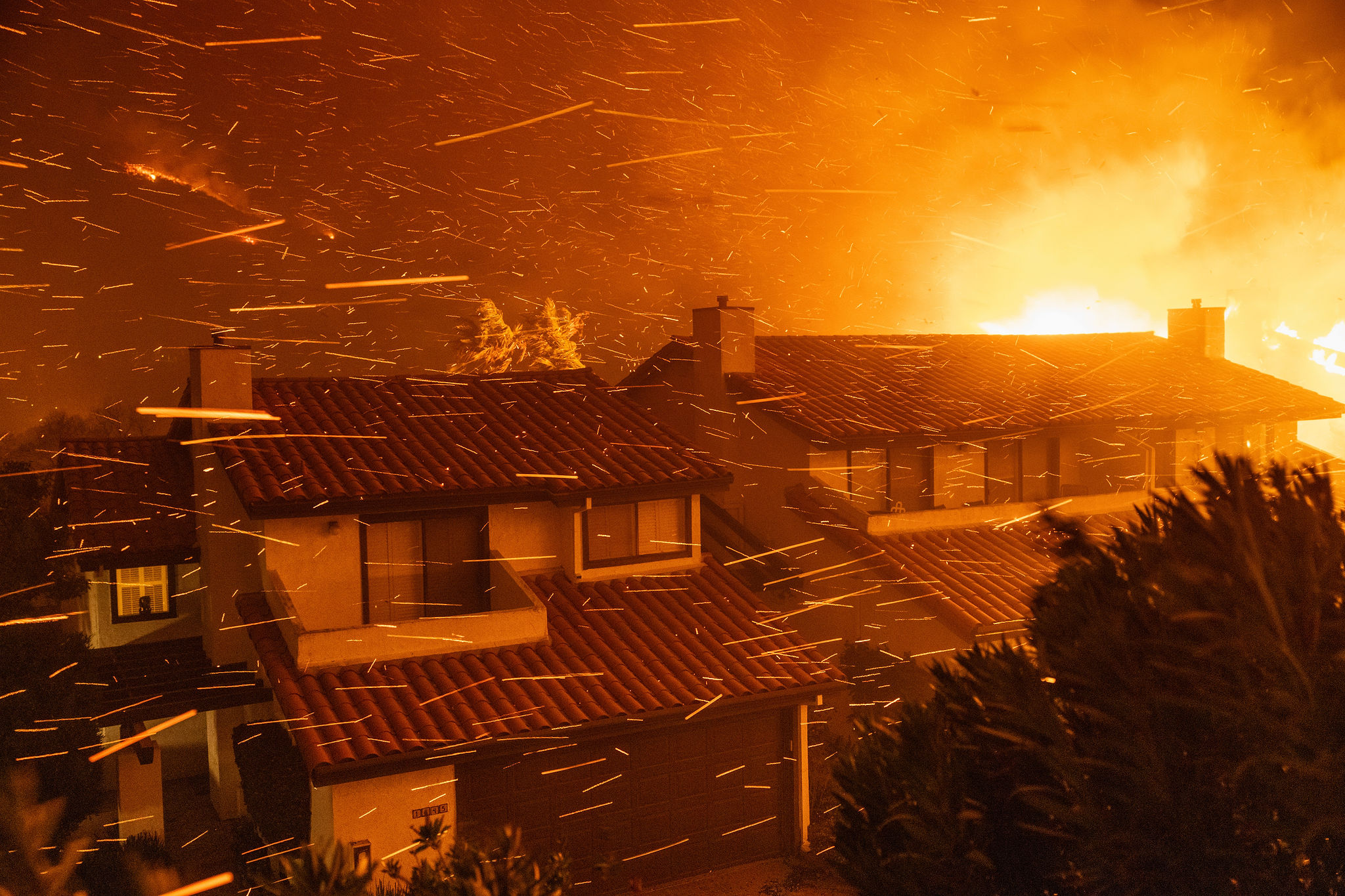
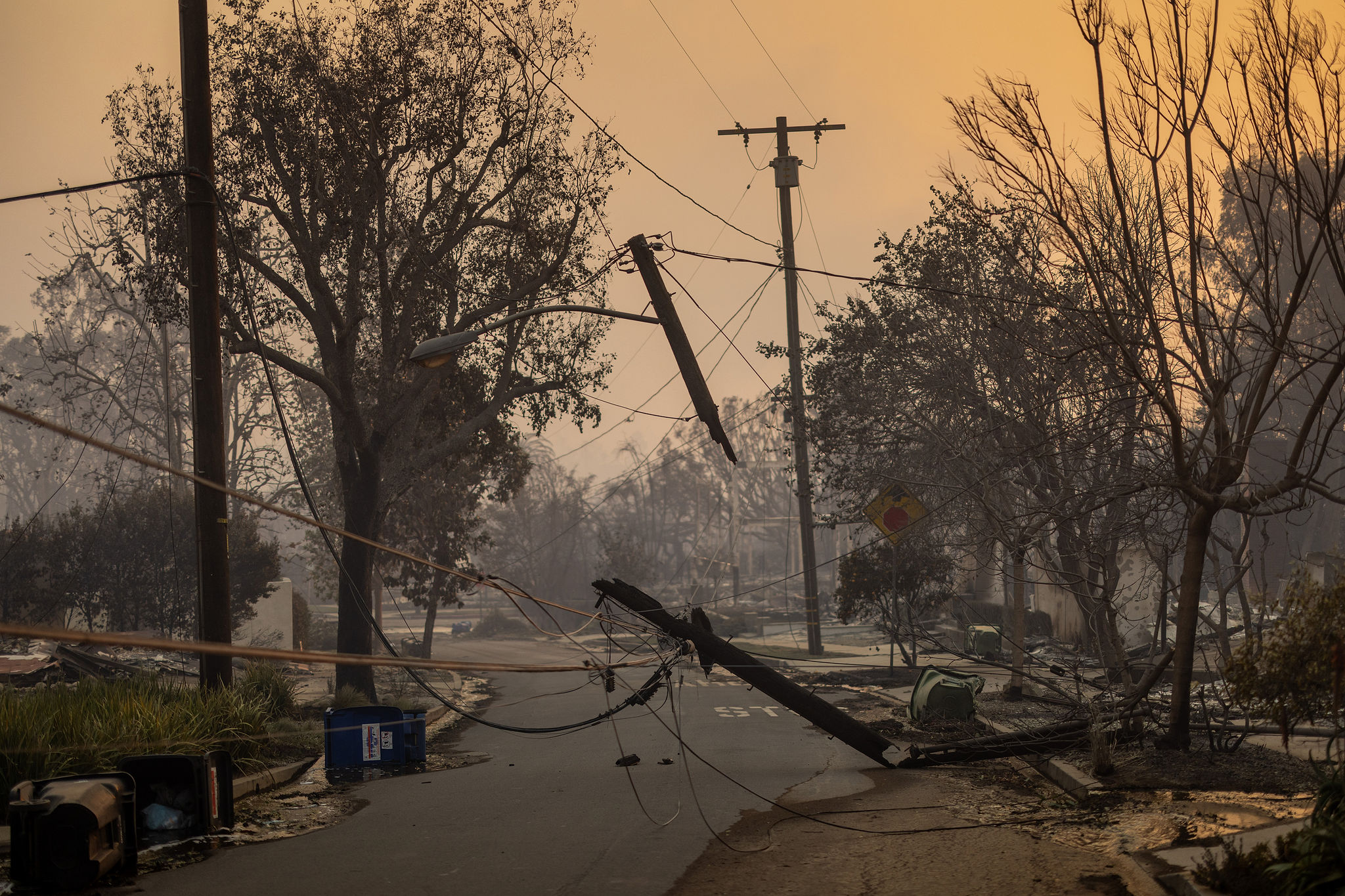
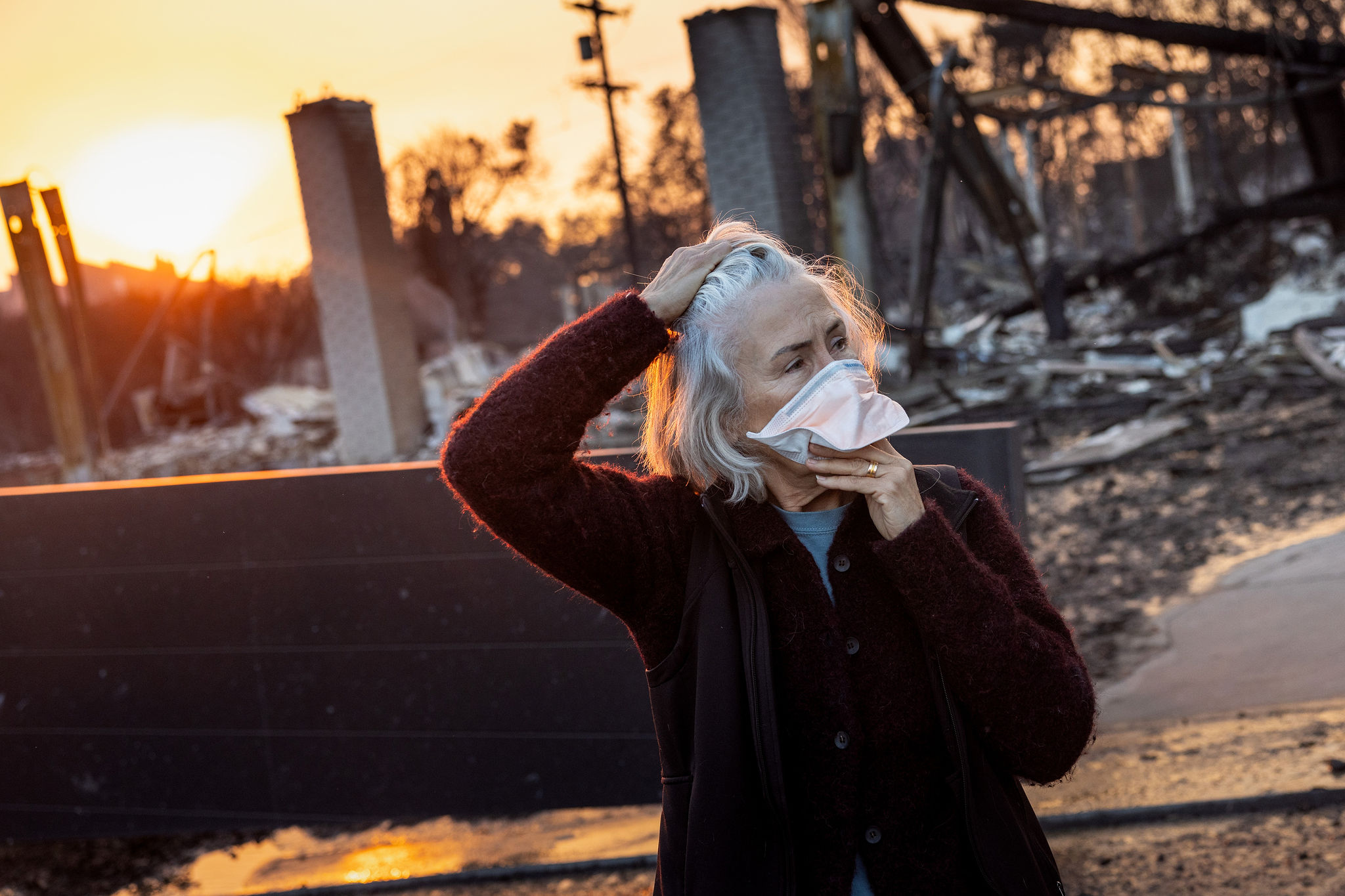
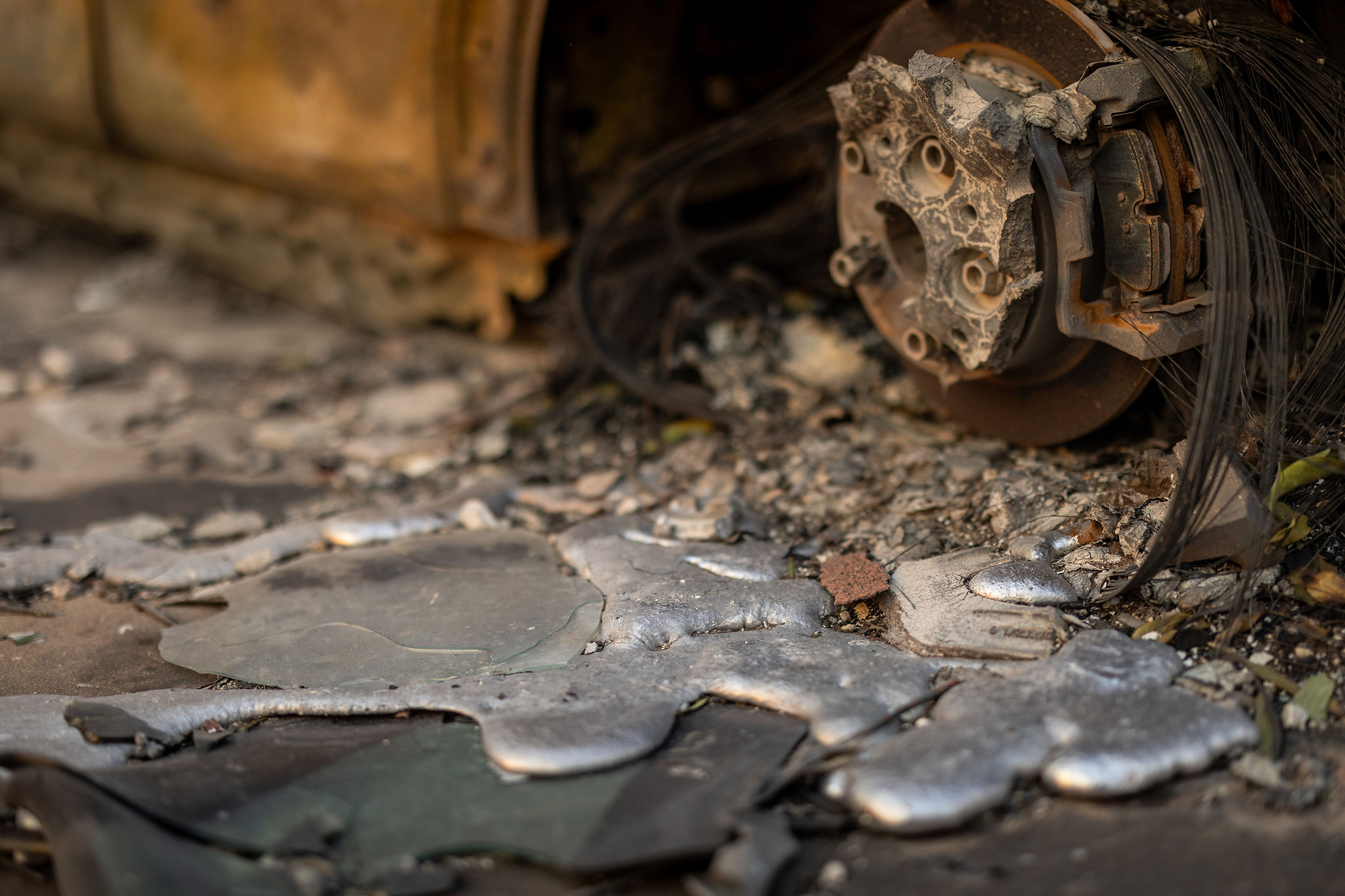
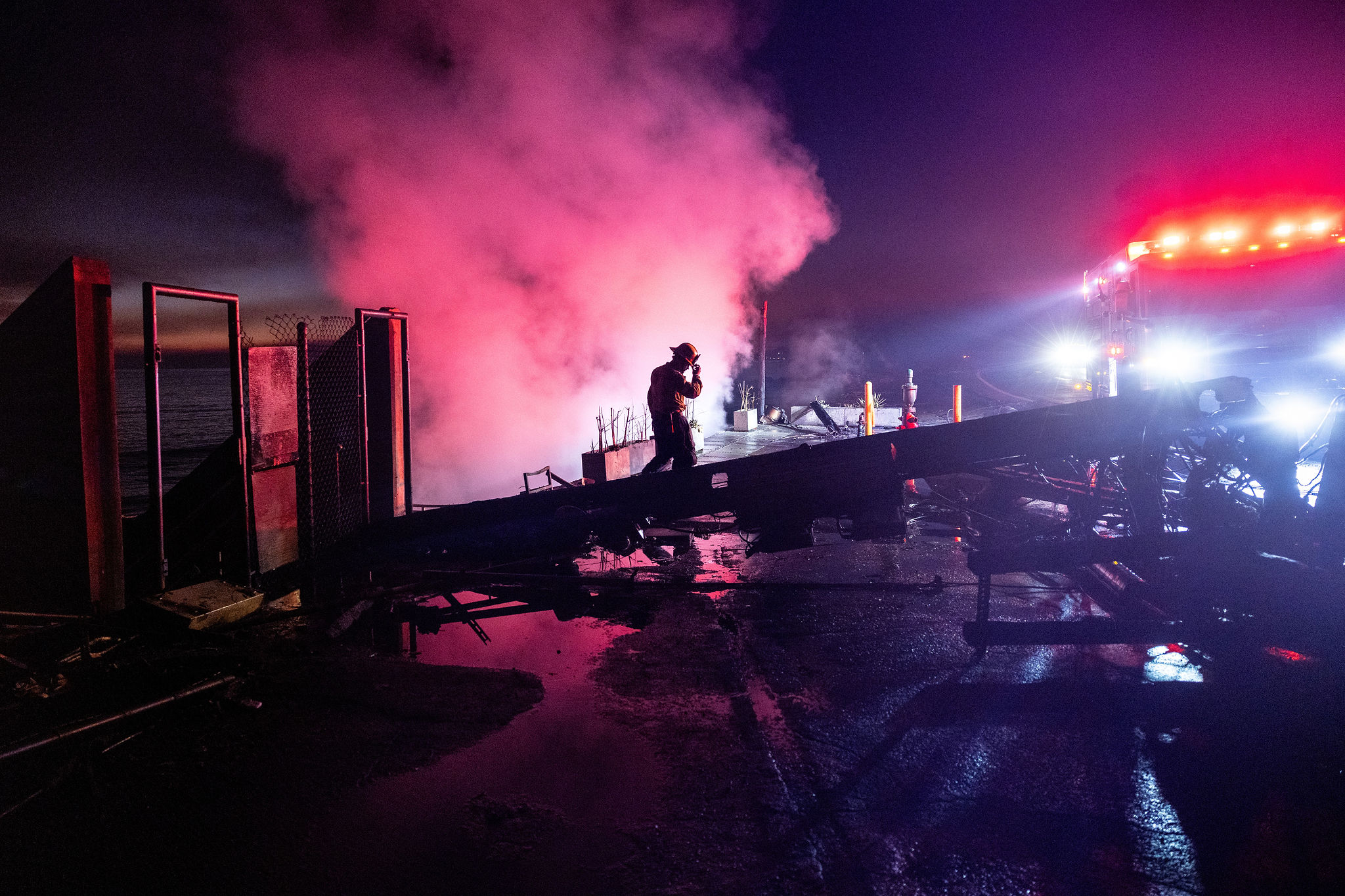
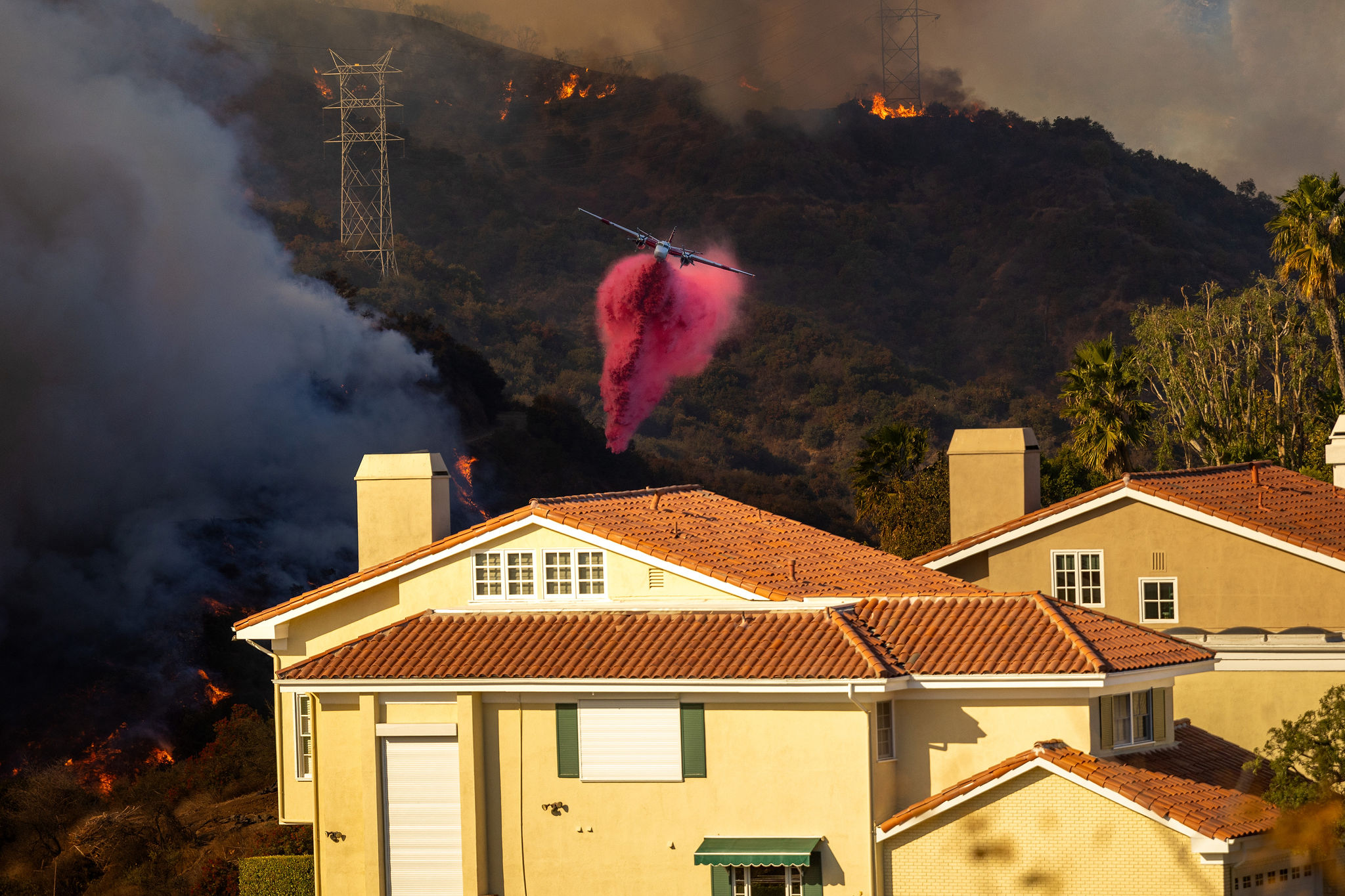
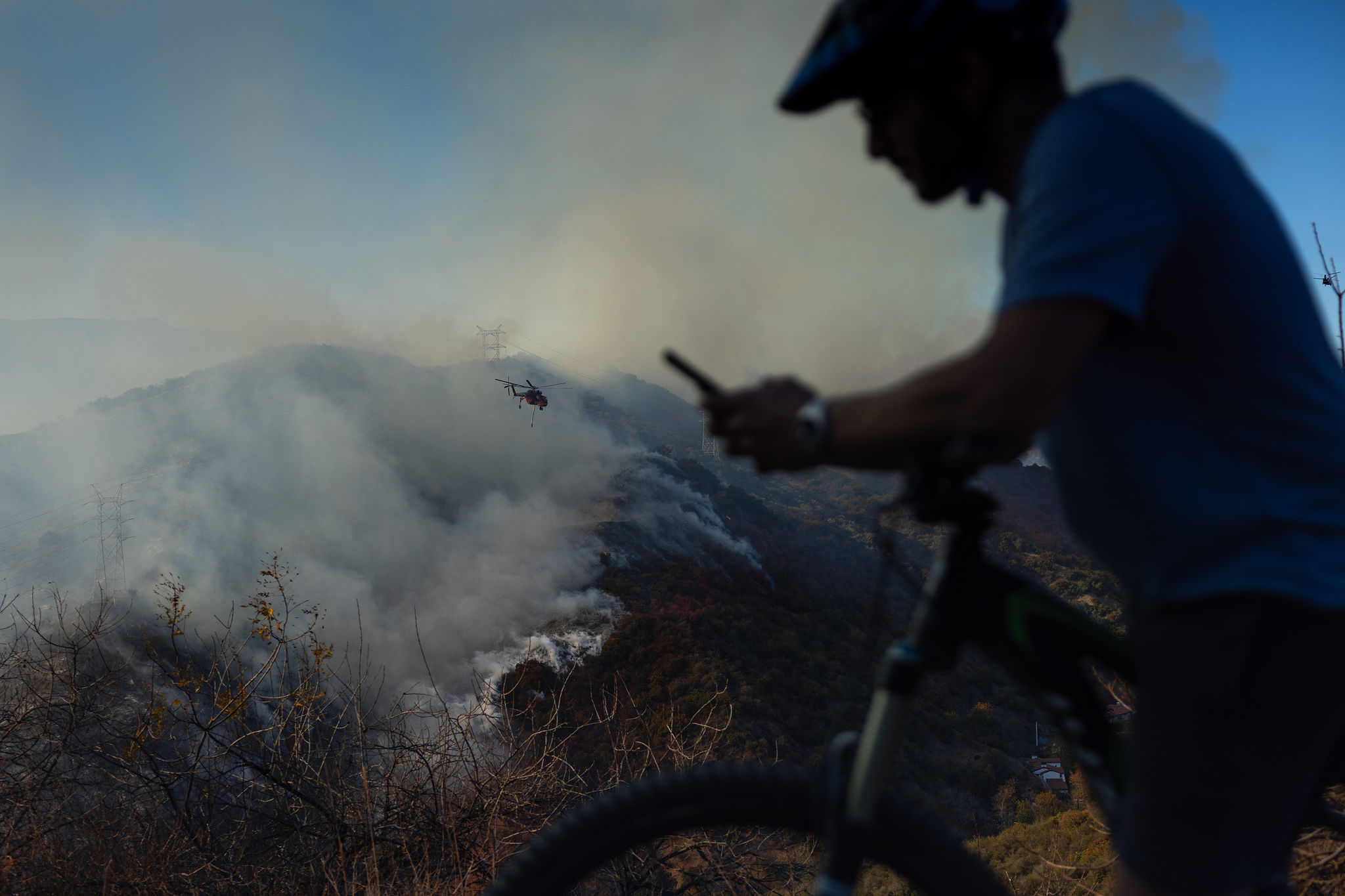
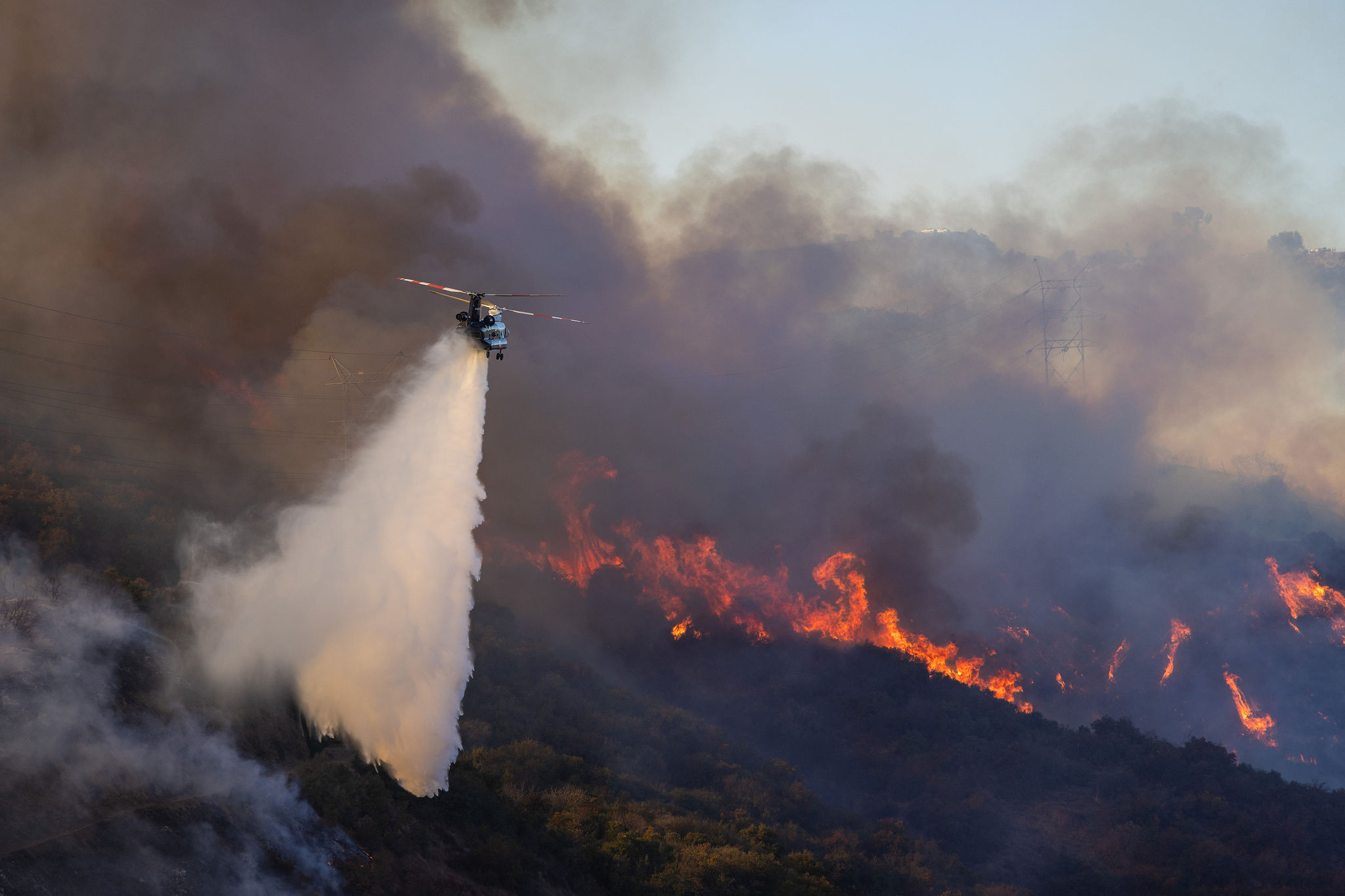
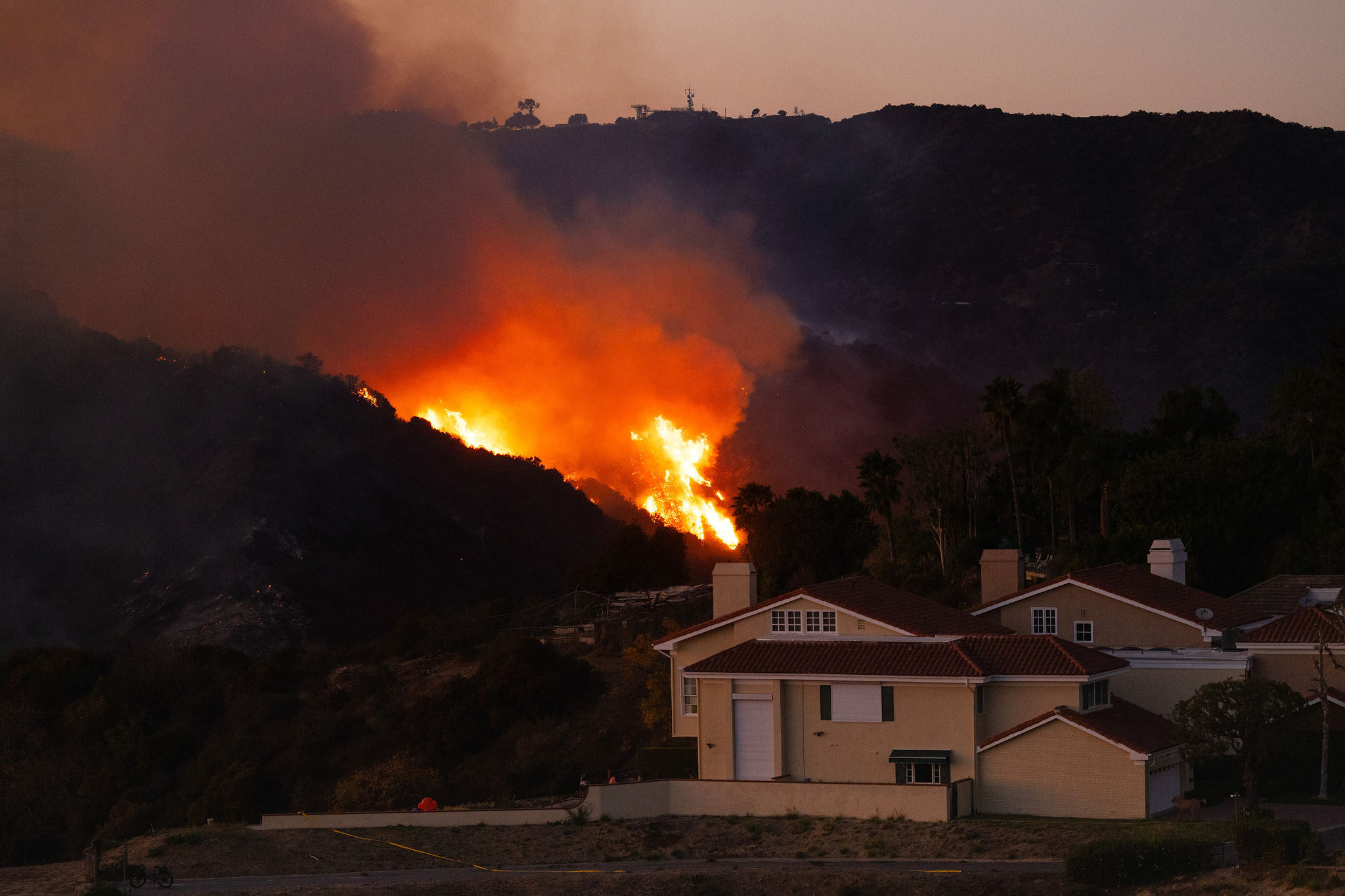
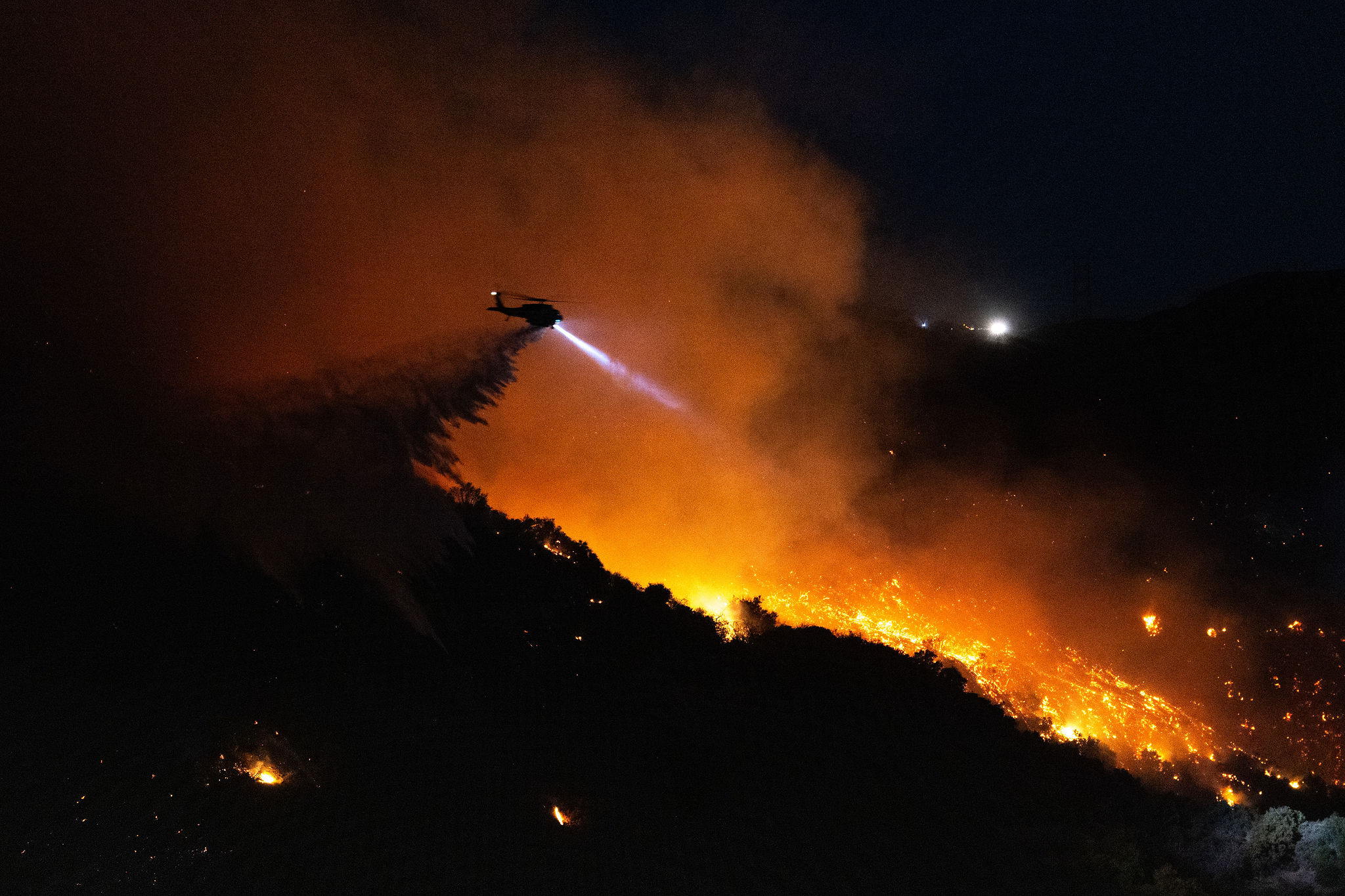
PACIFIC PALISADES, CALIFORNIA – JANUARY 08: Embers fly through the air in the Highland neighborhood during the Palisades Fire.PACIFIC PALISADES, CALIFORNIA – JANUARY 08: Firefighters battle flames from the Palisades FirePACIFIC PALISADES, CALIFORNIA – JANUARY 08: A tree remains intact, in the devastationPACIFIC PALISADES, CALIFORNIA – JANUARY 08: Power lines hang on broken power poles, in the middle of a streetPACIFIC PALISADES, CALIFORNIA – JANUARY 09: Gail Wirth, whose home of 35 years on Charm Acres Place was destroyed in the Palisades Fire, says she thought she’d be back in to get things after a couple days, only to lose everythingPACIFIC PALISADES, CALIFORNIA – JANUARY 08: Melted metal near a destroyed carPACIFIC PALISADES, CALIFORNIA – JANUARY 09: A firefighter walks back to his vehicle after checking out a spot fire along Pacific Coast HighwayBRENTWOOD, CALIFORNIA – JANUARY 11: A Cal Fire plane drops fire retardant over the Palisades Fire, along Mandeville Canyon, photographed from the Mountaingate development, above MandevilleBRENTWOOD, CALIFORNIA – JANUARY 11: A man on his mountain bike stops to take a picture, while a watering dropping helicopter prepares to drop on the Palisades Fire, along Mandeville Canyon, photographed from the Mountaingate development, above MandevilleBRENTWOOD, CALIFORNIA – JANUARY 11: An L.A. County Fire watering dropping helicopter drops on the Palisades Fire, along Mandeville Canyon, photographed from the Mountaingate developmentBRENTWOOD, CALIFORNIA – JANUARY 11: Flames are seen behind homes in the Mountaingate development, above Mandeville Canyon, After the sun went down and fire air operations worked to extinguish flamesBRENTWOOD, CALIFORNIA – JANUARY 11: A fire air operations helicopter drops water along Mandeville Canyon during the Palisades Fire, photographed from the Mountaingate development
PACIFIC PALISADES, CALIFORNIA: Cars left behind in driveways following evacuation.
Since leaving the Los Angeles Times, Jay Clendenin has primarily been photographing corporate and commercial projects, mostly in the entertainment world where he spent the majority of his 16 years at the LAT.
“When doing editorial work, I’ve started distributing my news and enterprise images through Getty Images and entertainment work through Shutterstock – all that got turned on its head last week with the merger of these two companies.”
We caught up about his experience covering the LA fires.
Heidi: Please share your thoughts on citizen journalists and what they need to consider.
Jay: The term “citizen journalist” makes me cringe. I am very aware of human behavior and the desire to “know” and “report” what’s happening (in particular when it’s their neighborhood). But there are a couple of significant distinctions between said “man-on-the-street” spreading a “story” and a trained Journalist (capital J) reporting: ethics and facts. It’s true that the Rodney King video (dating myself) was “citizen journalism” and was incredibly impactful on society – unfortunately, not enough to convict?! Where as today, I’m seeing people abusing the homeless with humiliating videos of their circumstances, all in the name of “citizen journalism.” And with the fires, people are sharing wild accusations/aspersions about the number of fire personnel, water supplies, and who happened to be on vacation when the fires broke out. No investigating for facts, just hitting “share” and adding “this has to stop,” as if the things said were facts vetted by credentialed journalists.
You were a staff photographer for the Los Angeles Times where editorial integrity was essential. How have things changed when stories go unchecked or lack empathy for the crisis? Being a trained, experienced Journalist as part of a major news organization comes with great responsibility. We try for multiple sources, probe officials for more info, and try to be on the ground to see things first-hand. It is also important to vet people we talk to. During the Palisades fire, after a couple of questions to some people on e-bikes, I realized they did NOT live in the neighborhood, and I said they shouldn’t be riding around amongst the ruins. If they didn’t have bad intentions, they could easily have been accused of it. And thankfully, there are curfews now and they’re making arrests.
LA Magazine and Wired were recently called out for posting illegal drone footage – how has the increase in social media and scooping news impacted traditional media gathering practices? Drones are an incredible tool that can add a very visceral, immersive effect to story telling. I’ve embraced it, even got my Part 107 license. Part of getting a license and being “legal” is following FAA regulations and local laws. During major disasters, especially fires, a Temporary Flight Restriction (TFR) often goes out, to keep the skies clear for fire and safety aircraft. You don’t fly your drone. Period. When these media outlets choose to run these very “clickable” videos acquired illegally, they encourage the behavior. And for the “haters” on social who love saying “you’re just jealous you didn’t think of it first!” Let me tell you, all of us licensed operators, are VERY aware of the visual impact of these scenes and have interest in capturing the scene with our drone, but we KNOW the safety considerations and are very conscious of the illegal behavior by un-licensed “content creators” and hobbyists.
Explain the danger of flying drones during an active fire of this magnitude while a Temporary Flight Restriction (TFR) is in place. The near-worst-case-scenario of flying a drone during a TFR happened during the Palisades fire, when a fire righting aircraft hit a drone, damaging the aircraft and knocking it out of commission. Someone’s greater interest in clicks, lead to interrupted fire-fighting capabilities during this horrific disaster. I can’t imagine the anger of homeowners who see that story while they’re praying all the efforts can save their home and community. Losing the air attack is huge. I was at the top of Mandeville Canyon last night (Saturday) and the fire retardant and water drops did the majority of flame suppression, slowing the growth on the eastern flank. Further update on drone activity and arrests can be read about here. “California authorities say there have been at least 40 incidents in which unauthorized drones have forced firefighting aircraft to pause operations, putting more lives at risk as the fires continue to spread and firefighters on the ground are left without air support.“
What safety considerations have you taken while covering the fires? I have a fire brush jacket and pants, helmet and goggles. I use n-95 masks, conveniently on-hand after Covid! I don’t have “fire” boots, but wear my Blundstones and try to avoid walking on smoldering piles – they aren’t rated for that high a heat. I also work to only wear cotton items, which is hard these days, as so much of my wardrobe has become nylon/synthetic fibers. Synthetics are much quicker to ignite and I’d rather decrease the chances of melting clothes on my body.
Are you part of a photo collective during a local crisis? I’m not part of a formal collective, but stay in contact with many photojournalists on assignments, who tend to have more resources available to them. Again, with big events, experienced PhotoJournalists know the ropes and safety is a priority. I’ll ask for best routes to enter areas, etc. It’s also great for hearing about spots that are super sketchy or not easily accessible without additional gear, like a 4×4 vehicle.
How did you get your start in photojournalism? I started in photojournalism at L.A. Pierce College, running on several fires in the L.A. region in the early 90’s. We had our college paper as an outlet/publication, but also were able to get the Daily News to let us process and print our film, occasionally publish, and always give us replacement roles of film. We weren’t fully-vetted journalists yet, we were training to be. So we were still more reliable than a “citizen journalist.” I don’t want to prevent accurate reporting from being done, but someone who has a big TikTok following, does NOT a journalist make. Reach out to real Journalists, see how they report, what questions they ask. And please stop with the video Supercuts of people’s property burning and using gimble spins, even if you actually did it “by hand” and brag about it. 🤬
The Art of the Personal Project is a crucial element to let potential buyers see how you think creatively on your own. I am drawn to personal projects that have an interesting vision or that show something I have never seen before. In this thread, I’ll include a link to each personal project with the artist statement so you can see more of the project. Please note: This thread is not affiliated with any company; I’m just featuring projects that I find. Please DO NOT send me your work. I do not take submissions.
Photographer pays homage to Our Lady of Guadalupe and reclaims her connection with the divine
It’s not uncommon to see an image of Our Lady of Guadalupe on murals, candles, statues and even clothing. She’s a significant religious figure who signifies hope and protection for countless Latinos in the U.S. and abroad.
For photographer Amanda Lopez, her image goes beyond religion, serving as a powerful emblem of home.
Catholics believe that, in 1531, the Virgin Mary appeared before Saint Juan Diego Cuauhtlatoatzin, an Indigenous farmer at the Hill of Tepeyac in a suburb of Mexico City. According to the story, she left on his cloak an image of a brown-skinned Virgen de Guadalupe, which still hangs at the Basilica of Our Lady of Guadalupe in Mexico City.
” In it, Lopez reimagines Guadalupe in a contemporary context.
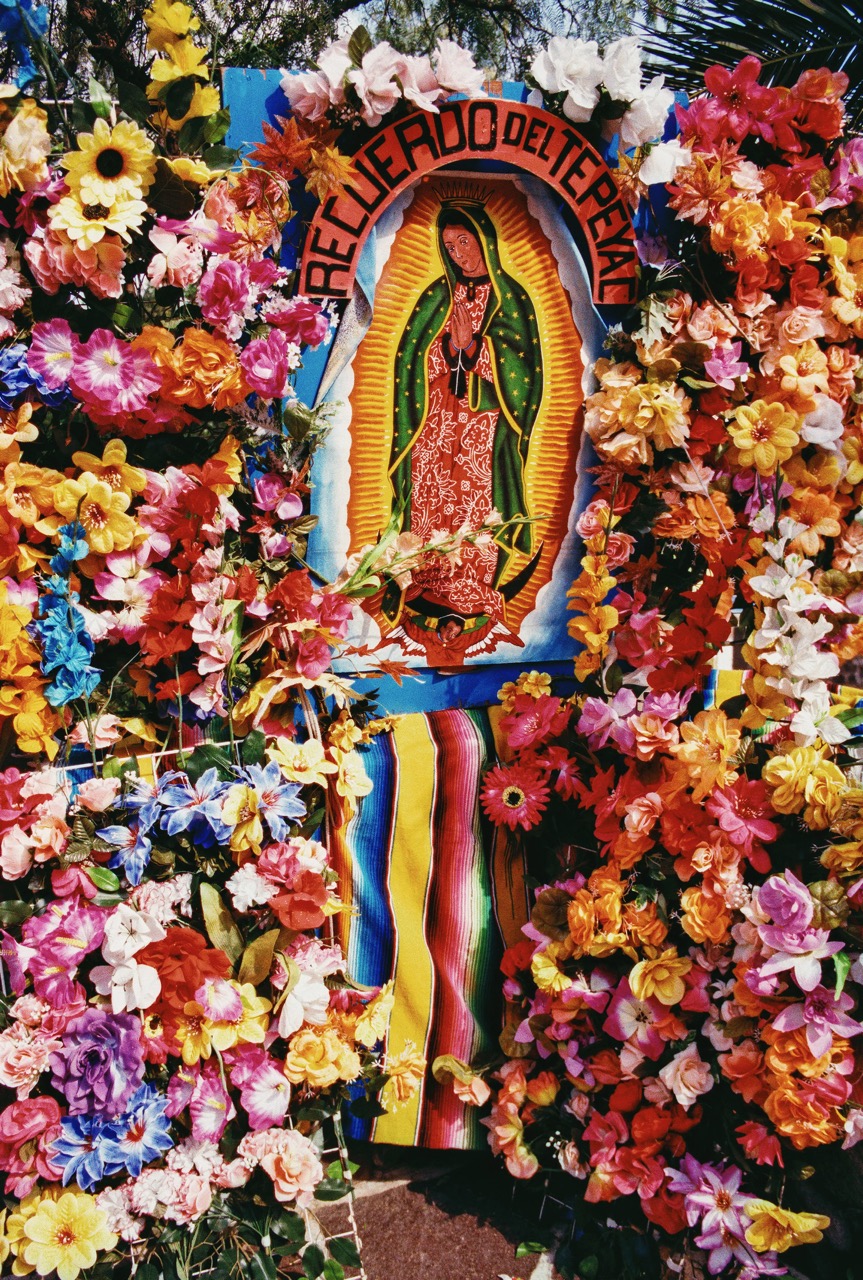
During a college trip to Mexico City, Lopez visited the basilica and was moved by the sacredness of the moment. She photographed a floral “set” on the grounds, and it became an image that stayed with her for years to come. However, like many Mexican Americans, this wasn’t exactly her first encounter with the Patroness of Mexico.
Growing up as a first- and second-generation Mexican American in California’s capital, Guadalupe was a deeply ingrained part of her daily life. She attended a church named Our Lady of Guadalupe up to her teenage years and was surrounded by Guadalupe’s image in her childhood home. Her family’s Catholic values initially shaped her own, though she began to question them as this project took shape.
“The question that I kept asking myself when I was working on this project was, ‘What does it mean to be a good woman — a Mexican woman, a former Catholic woman, a good woman — in my grandmother’s eyes?’ ” Lopez said. “You have to be humble, respectful and quiet. You go along with the status quo. And then I was really uncomfortable with that idea.”
Lopez then began to deconstruct that line of thinking and began to visualize how she could portray these conflicting thoughts photographically. “And that’s when I started to reimagine what Guadalupe might look like and understand that to be a ‘good woman,’ you don’t have to be any of those things.”
Lopez deliberately excluded adjectives commonly used to describe Guadalupe such as “Lady,” “Virgen” or “Madre” when naming the series.
“I wanted to move beyond traditional notions about womanhood and let viewers create their own meanings. I went through my own unlearning by questioning those same terms and, in that process, was able to reconnect with her.”
For Lopez, Guadalupe signifies all that is good and loving. And her definition of what “good” meant transcended a religious context as she delved deeper in her relationship with her.
“She’s all encompassing — what is nurturing and what is caring. For me, that’s not an exclusively religious thing. She’s evolved to this symbol that actually reminds me so much of my own grandma.”
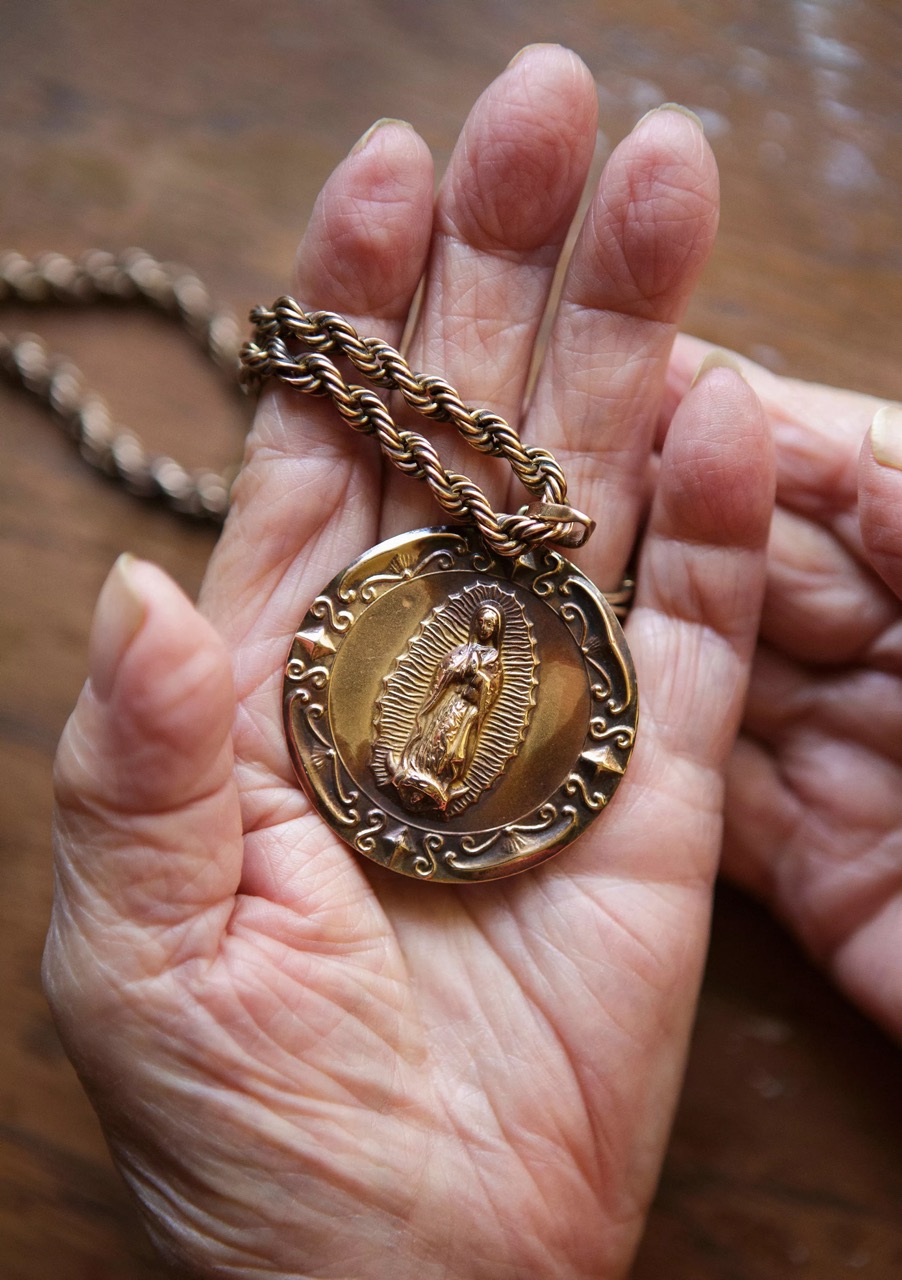
Lopez grew up seeing her grandma Isabel — also known as Nana — on a daily basis. Guadalupe was a religious presence who guided Isabel through a life filled with many highs and some heavy lows. And though Lopez has a different relationship with the patron saint than her Nana ever did, she wanted to honor everyone’s individual journey with Guadalupe.
“I know so many people who have this connection to her [Guadalupe] that are not Mexican, that are not straight, that are not women and that are not religious … And so when I was making these photos, I wanted to have the opportunity to chat with folks and ask, ‘What is it about her image that you resonate with?’ ”
For some, she’s a religious icon. For others, a cultural figure. Many are also simply captivated by the beauty of her art. For Amanda, she represents the connective thread that unites us.
In 2021, the Smithsonian National Museum of American History added 15 of these photographs to their Photographic History Collection. Now, they are being exhibited in Sacramento, Calif., the city where Lopez first connected with Guadalupe.
“It’s a little bittersweet because my grandma won’t be there,” she said. Isabel died in 2020 at the age of 91 and was buried with her favorite Virgen de Guadalupe necklace. “But she’ll be there in spirit.”
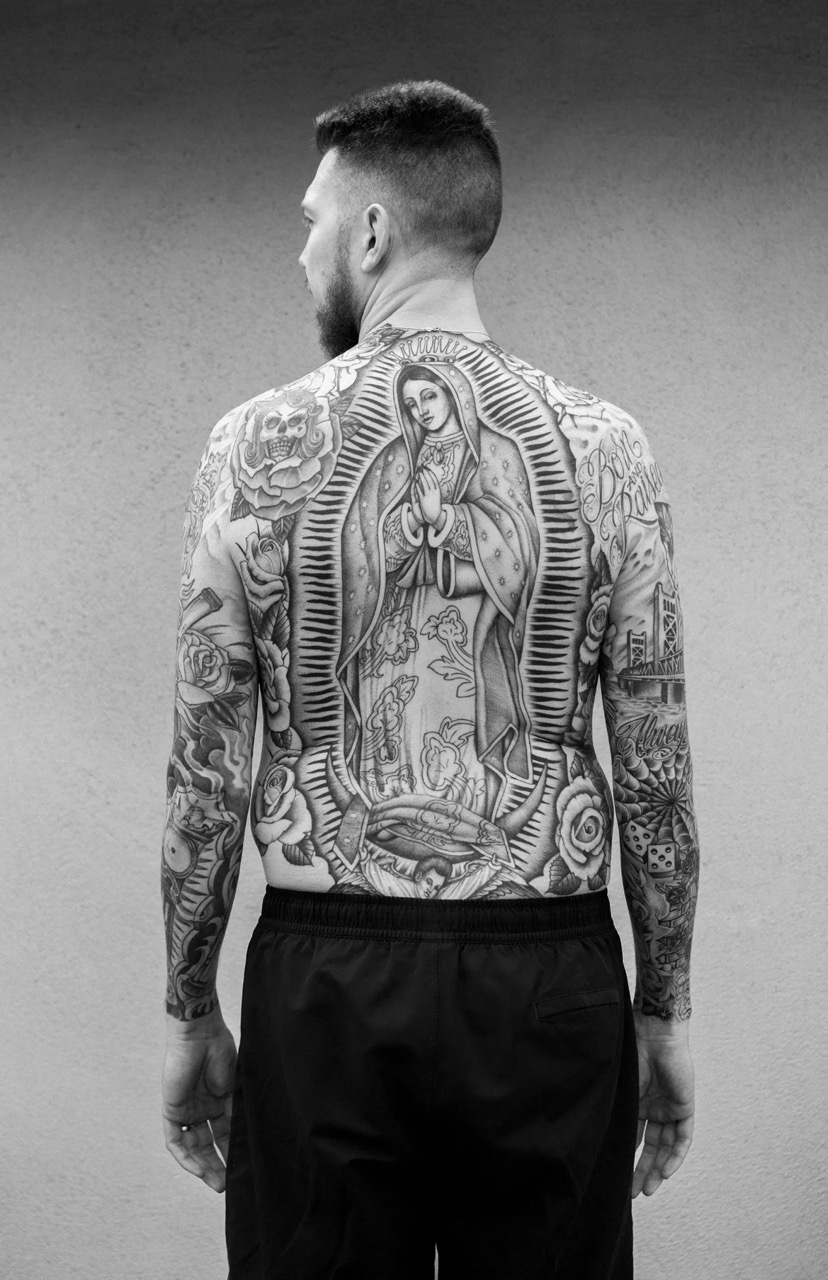
Nuestra Madre. Sacramento, CA 2019 Tyler Wichmann shares his Our Lady of Guadalupe back tattoo, created by renowned tattoo artist Chuco Moreno.
Recuerdo de Tepeyac. CDMX, Mexico. 2006Nana’s Hands. Sacramento, CA. 2019. My grandmother always wore her gold Our Lady of Guadalupe necklace. I never once saw her without it.
APE contributor Suzanne Sease currently works as a consultant for photographers and illustrators around the world. She has been involved in the photography and illustration advertising and in-house corporate industry for decades. After establishing the art-buying department at The Martin Agency, then working for Kaplan-Thaler, Capital One, Best Buy and numerous smaller agencies and companies, she decided to be a consultant in 1999. Follow her on Instagram