The Art of the Personal Project: Luke Copping

The Art of the Personal Project is a crucial element to let potential buyers see how you think creatively on your own.  I am drawn to personal projects that have an interesting vision or that show something I have never seen before.  In this thread, I’ll include a link to each personal project with the artist statement so you can see more of the project. Please note: This thread is not affiliated with any company; I’m just featuring projects that I find.  Please DO NOT send me your work.  I do not take submissions.

Today’s featured artist:  Luke Copping

Chef Redbeard is a personal project that came out of the recent creative connection between me and Jeremy VanAntwerp (AKA Chef Red Beard), a chef with a background in both fine dining and deeply rooted comfort food. Jeremy runs a private dining experience where small groups of guests are served directly in his kitchen studio. It’s an intimate setting—no separation between the cooking and the people he’s feeding. The meals are multi-course, seasonal, and often tailored especially for his guests’ unique tastes and needs. It’s less about spectacle, more about connection.

What drew me to document Jeremy’s process wasn’t just the food—it was the atmosphere around it. The space is calm, focused, and quiet. There’s no rush, no chaos. Just the steady rhythm of someone who’s deeply at home in their work. This project captures that mindset. It’s about the collaboration between Jeremy and his customers, the repetition of the kitchen, and the intensity that builds as the event night approaches.

The series uses both still photography and motion to show the experience from different angles. I wasn’t interested in stylized food shots or polished plating. I wanted to photograph what happens: crisp edges as they come out of the pan, the way honey drips from a biscuit and ingredients being handled with purpose.

This project isn’t about trends or restaurants. It’s about one chef, his space, and how he has decided to step away from the traditional restaurant model and explore something more intentional and personal.

To see more of this project, click here

Instagram

Suzanne Sease is a creative consultant and former ad-agency senior art buyer. She works with both emerging and established photographers and illustrators to create cohesive, persuasive presentations that clients can’t resist.

Suzanne offers something rare: an insider’s perspective on how client’s source creative talent. Her deep understanding of the industry is underscored by her impressive resume: 11 years as senior art buyer at The Martin Agency, seven years as an art producer for Capital One, and stints with the art-buying department at Kaplan-Thaler and the creative department at Best Buy, where she applied her expertise to reviewing bids to see which were most likely to come in on budget. Over the years, Suzanne has worked with a wildly diverse range of clients, including Seiko, Wrangler, Bank One, AFLAC, and Clairol Herbal Essence. Now, as a consultant, she is equipped to problem-solve for her clients from an unusually dynamic point of view.

As a longtime member of the photo community, Suzanne is also dedicated to giving back. Through her Art of the Personal Project column on the popular website aphotoeditor.com, she highlights notable personal projects by well-known and up-and-coming photographers. The column offers these artists excellent exposure while reflecting Suzanne’s passion for powerful imagery.

Instagram

The Daily Edit – Blind Forest: Alex Turner resists literal interpretation


Alex Turner: Blind Forest

We caught up with photographic artist Alex Turner, whose work lives where vision meets sensation and ecology meets memory. In his acclaimed Blind Forest series now showing at Marshall Gallery, Turner uses thermal imaging to reveal the hidden life of trees—turning them into living witnesses, storytellers, and  ethereal portraits of our changing world.

Your images often make the invisible visible. What drew you to thermal imaging as your primary tool in Blind Forest?
Alex: What drew me to thermal imaging was its ability to reveal what’s normally invisible not just heat, but a different way of seeing vitality, presence, and change. In Blind Forest, I wanted to portray trees not as passive background elements, but as active, responsive organisms—beings that store energy, regulate their environments, and bear witness to time in a way few other living things can. Thermal imaging allowed me to visualize those hidden dynamics: the conservation, transmission, and loss of heat within and around each tree. But it wasn’t just about ecology—it was also about cultural memory. Many of the trees I photographed hold long histories, both ecological and human. Some were cultivated by Indigenous communities for food and medicine; others stand on sites of forced labor, displacement, or violence. Trees have absorbed these layered histories, and the thermal camera offered a way to suggest that embeddedness. Heat becomes a kind of residue, a trace of what a tree has lived through or is currently enduring. In that sense, thermal imaging became a way to look at trees not only as biological subjects, but as cultural witnesses.
I was also interested in repurposing a technology typically used for surveillance, hunting, or fire detection—tools often associated with control or extractive thinking—and turning it toward something more reverent and speculative. The resulting images resist literal interpretation; they ask the viewer to slow down, to sit with ambiguity, and to consider the forest as a place where both natural systems and human histories are in constant flux.

What are the ethical considerations behind obscuring or withholding your image locations?
Withholding specific locations is both an ethical and conceptual choice. On one level, it’s about protection. Many of the trees I photograph are old, vulnerable, or located in ecologically sensitive areas. Publicizing exact coordinates can unintentionally invite harm—through increased foot traffic, extraction, or even vandalism. In an age of geotagging and digital overexposure, some places need anonymity to survive. But there’s also a deeper philosophical and cultural reason. Many of these trees hold significance not just ecologically, but culturally—especially to Indigenous communities who have long-standing relationships with these species as sources of medicine, food, and spiritual meaning.

Withholding location becomes a gesture of respect, recognizing that these trees are not simply photographic subjects or aesthetic objects, but beings embedded in cultural systems of value and care that precede and exceed my presence as an artist.

More broadly, I’m less interested in offering a precise where than I am in encouraging a deeper look at the land, how we relate to nonhuman life, how we carry stories of place. By withholding coordinates, I invite the viewer to encounter the tree not as a destination or trophy, but as a living presence. This choice also pushes back against the extractive tendencies of both landscape photography and colonial mapping practices. Naming a place, claiming it, and presenting it as “known” can flatten its complexity. In Blind Forest, I want to keep some things partially obscured—not to mystify, but to honor the idea that not everything is ours to name, frame, or expose.

What role does fieldwork play in your practice—how do you locate and build relationships with your subjects?
I spend a lot of time hiking, researching, asking questions, and building relationships. With Blind Forest, that meant working closely with arborists, forest ecologists, historians, and Indigenous knowledge-keepers to locate trees that carry not just ecological significance, but cultural and historical weight as well.
Sometimes a tree is introduced to me through a historian or ecologist; other times I come across one by accident, and then spend weeks or months trying to understand its context—how it fits into a broader ecosystem, who has cared for it, what it has witnessed. I try to return to sites multiple times, sometimes across seasons, to watch how the tree responds to heat, drought, wind, or fire. That temporal intimacy feels crucial.

It’s not just about finding “beautiful” trees—it’s about seeking out complexity, endurance, and entanglement. And it requires a certain kind of humility. These aren’t blank canvases or passive subjects; they’re living beings embedded in systems that far exceed my own timeline. Fieldwork, for me, is about cultivating a practice of attention—being present, doing the research, and recognizing when to step back.

How does your work address climate and ecological loss without relying on traditional documentary tropes?
I’m interested in climate and ecological issues, but I try to approach them through a slower, more reflective lens—one that resists the spectacle and elegiac tendencies often found in traditional environmental documentary work. Rather than show devastation directly—burned forests, parched landscapes, suffering wildlife—I focus on subtler forms of presence and absence. The thermal images in Blind Forest don’t depict disaster as bluntly; they reveal systems under stress, energy in transition, and histories held quietly in living organisms. It’s a way of inviting viewers to feel their way into these questions, rather than confront them with fixed narratives. I think traditional documentary often relies on visibility to create impact—showing what’s been lost, what’s on fire, what’s at risk. And while that has real value, I’m drawn to a more speculative, even poetic approach. One that makes room for ambiguity, wonder, and grief to coexist. Thermal imaging helps with that—it doesn’t render the landscape in familiar terms, but through a register of energy that is less about appearances and more about relationships: between organism and environment, between past and present, between perception and reality.

If you could pass on one technical or philosophical principle to photographers working with landscape today, what would it be?
If I could pass on one principle, it would be to slow down—both technically and conceptually. Landscape photography has long been associated with grandeur, clarity, and conquest—the wide view, the decisive moment, the untouched wilderness. But in reality, landscapes are layered, politicized, lived-in, and constantly changing. They deserve more than just aesthetic appreciation; they deserve attention, patience, and humility. Slowing down might mean spending more time with a place before photographing it. It might mean learning its ecological and cultural histories, or questioning your own presence within it. Technically, it could mean working with processes that stretch time—like stitching, long exposures, or analog materials—not for nostalgia’s sake, but to make space for complexity. Philosophically, it’s about resisting the impulse to extract a single, striking image and instead engaging with the landscape as a collaborator, not a subject. There’s so much urgency in the world right now, especially around climate and ecological loss— but I think slowness can be a form of resistance. It lets us listen more carefully, look more closely, and imagine more responsibly.


Can you walk us through that moment in the clonal Aspen grove—when you realized the coyote was there? What were you feeling, and how did that experience shape the resulting image?
I was camping alone in the middle of the aspen grove when, late at night, I heard something rustling nearby. It was pitch black—I couldn’t see a thing. I reached for my thermal scope and spotted a coyote, no more than twenty feet away, perfectly still, staring directly at me. It sent a chill through me. There was something unsettling in that moment of mutual recognition, but also a profound sense of asymmetry. The coyote, with its excellent night vision, could see me plainly. I could only return its gaze through the mediation of a camera.

That moment shifted something in me. I became acutely aware of how dependent I was on technology to perceive what was otherwise invisible to me. The thermal scope didn’t just reveal the coyote—it revealed the limits of my own perception. And in that same instant, the forest around us—specifically, the clonal aspen colony I was there to photograph—took on a different kind of presence. The coyote wasn’t a singular visitor; it was part of a continuous ecosystem, one in which I was the outsider, looking in.

What made you decide to keep the coyote out of focus, and instead focus on the tree behind it? Was that choice aesthetic, conceptual, or instinctive in the moment?
In my previous project Blind River, I used remote sensing technologies triggered by movement to capture subjects as they passed through the landscapes of the U.S.–Mexico border. That process—especially the AI recognition software attempting to isolate figures from their surroundings—raised compelling questions about how we determine what is distinct from a landscape, and why. Who or what is considered a visitor? A trespasser? A part of the scene or apart from it? With Blind Forest, I wanted to invert that logic and shift the focus entirely toward the landscape —specifically, the trees—as enigmatic, sentient, and sometimes charismatic subjects. It was a move toward a more ecocentric perspective. Everything else—humans, wildlife—would become secondary. Deliberately placing the coyote out of focus was shaped directly by my experience with the animal. It became a way of acknowledging that this place wasn’t about the drama of my human- wildlife encounter. It was about the quiet, persistent presence of the forest itself—an ancient, interconnected organism. The coyote became part of the story, but not the center of it.

There’s a lot of talk in photography about capturing the ‘decisive moment.’ But your process seems to stretch that moment across time and space. How do you think stitching affects the way we experience time and presence in an image like this one?
I think it’s important to explain the stitching process, because it speaks directly to some of the deeper conceptual undercurrents of the work. At first glance, it may seem like you’re looking at a singular moment in time. But each image is actually composed of over a hundred smaller frames, stitched together over the course of up to an hour. That temporal stretch is embedded in the final image, even if it’s not immediately visible.

I’ve always struggled with the idea that photography is primarily a medium for capturing a single, decisive moment. That notion implies a kind of narrative closure—that the moment photographed contains the essence or climax of a situation. But in reality, most events and environments are far more layered and unfolding. Freezing a single frame can flatten that complexity, and at worst, it can project the illusion of objectivity—a supposedly ‘truthful’ instant that’s actually shaped by countless subjective decisions: where you stand, when you click the shutter, what you include or exclude. In Blind River and again in Blind Forest, I’m interested in challenging that sense of fixed truth and instead suggesting that narrative—and presence—is continuous. With Blind Forest, the subject matter itself encourages this shift. Trees appear still, even static, to the human eye. But they are constantly exchanging energy with their surroundings.

Thermodynamics upends our assumptions about their stillness. Heat moves, radiates, dissipates—those rates of change make time visible in subtle, surprising ways. The thermal camera doesn’t just record temperature—it reveals time embedded in matter: a burned scar, a cooling trunk, a stressed limb. The forest becomes not a frozen scene, but a living system in flux. And through the stitching process, I’m trying to honor that slowness and complexity—to hold space for presence that isn’t defined by the instant, but by duration, accumulation, and transformation.

The Art of the Personal Project: Megumi Bacher

The Art of the Personal Project is a crucial element to let potential buyers see how you think creatively on your own.  I am drawn to personal projects that have an interesting vision or that show something I have never seen before.  In this thread, I’ll include a link to each personal project with the artist statement so you can see more of the project. Please note: This thread is not affiliated with any company; I’m just featuring projects that I find.  Please DO NOT send me your work.  I do not take submissions.


Today’s featured artist:   Megumi Bacher

THE ART OF IN-BETWEEN

PORTRAITS OF BICULTURAL KIDS AND THEIR IDENTITIES

A Celebration of Children with Japanese-American Roots

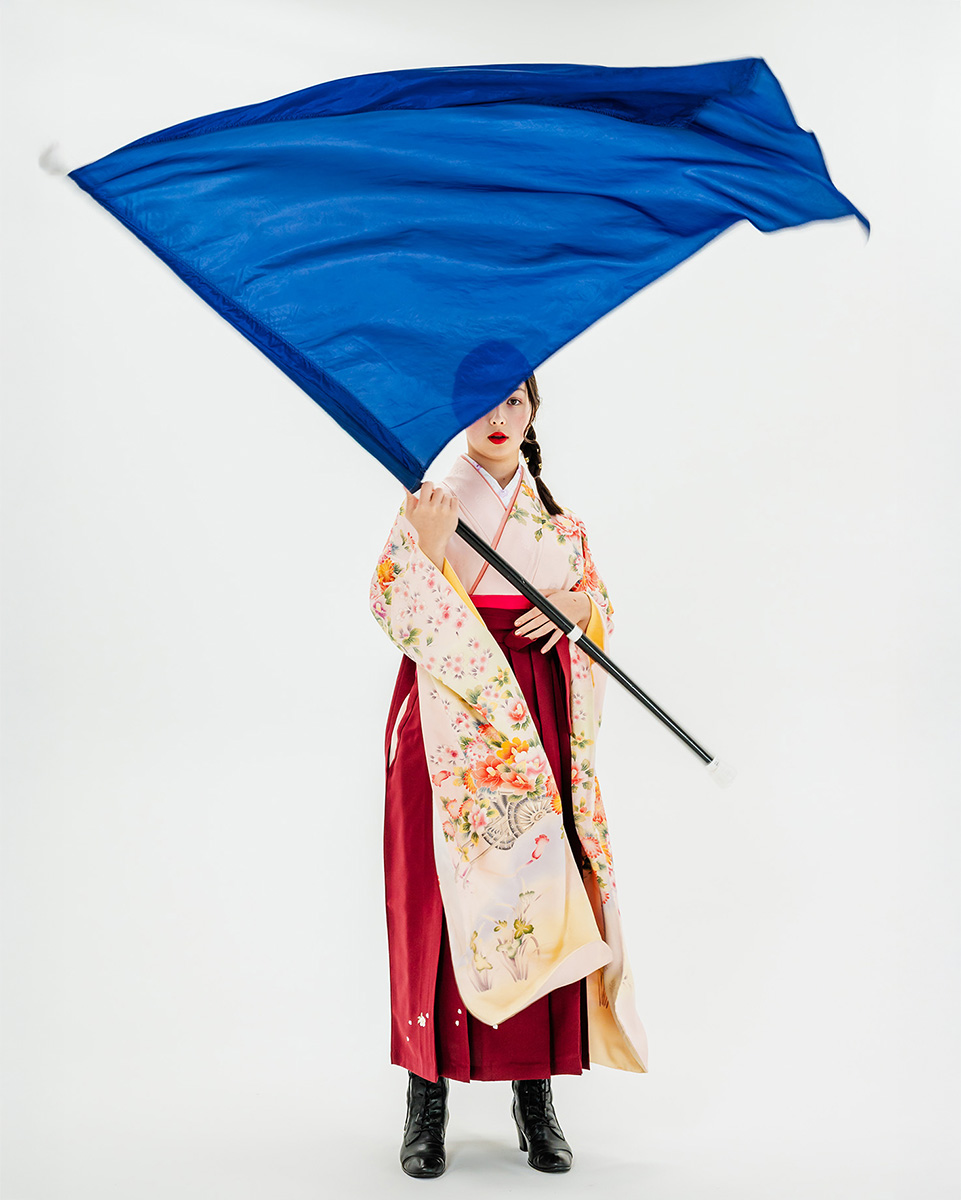
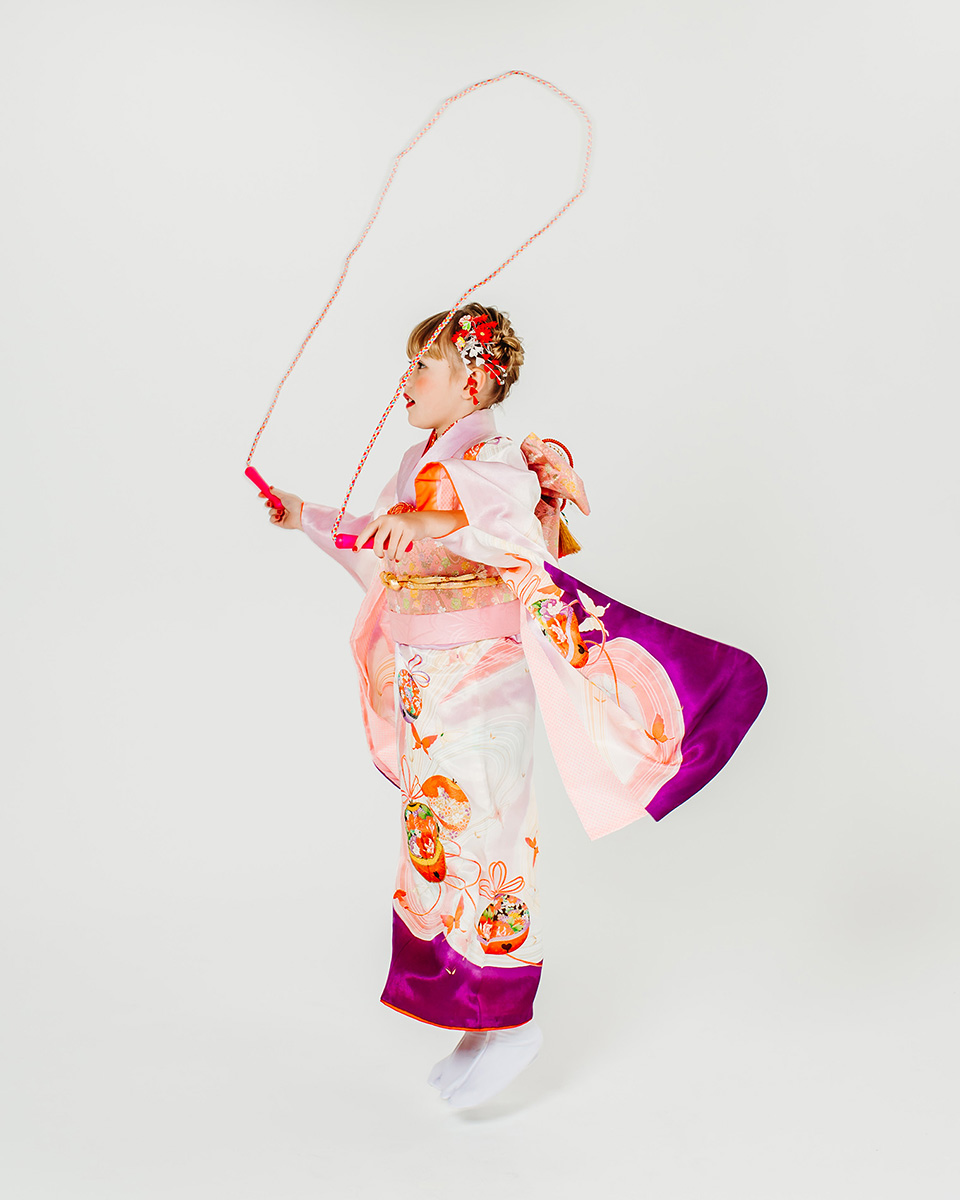
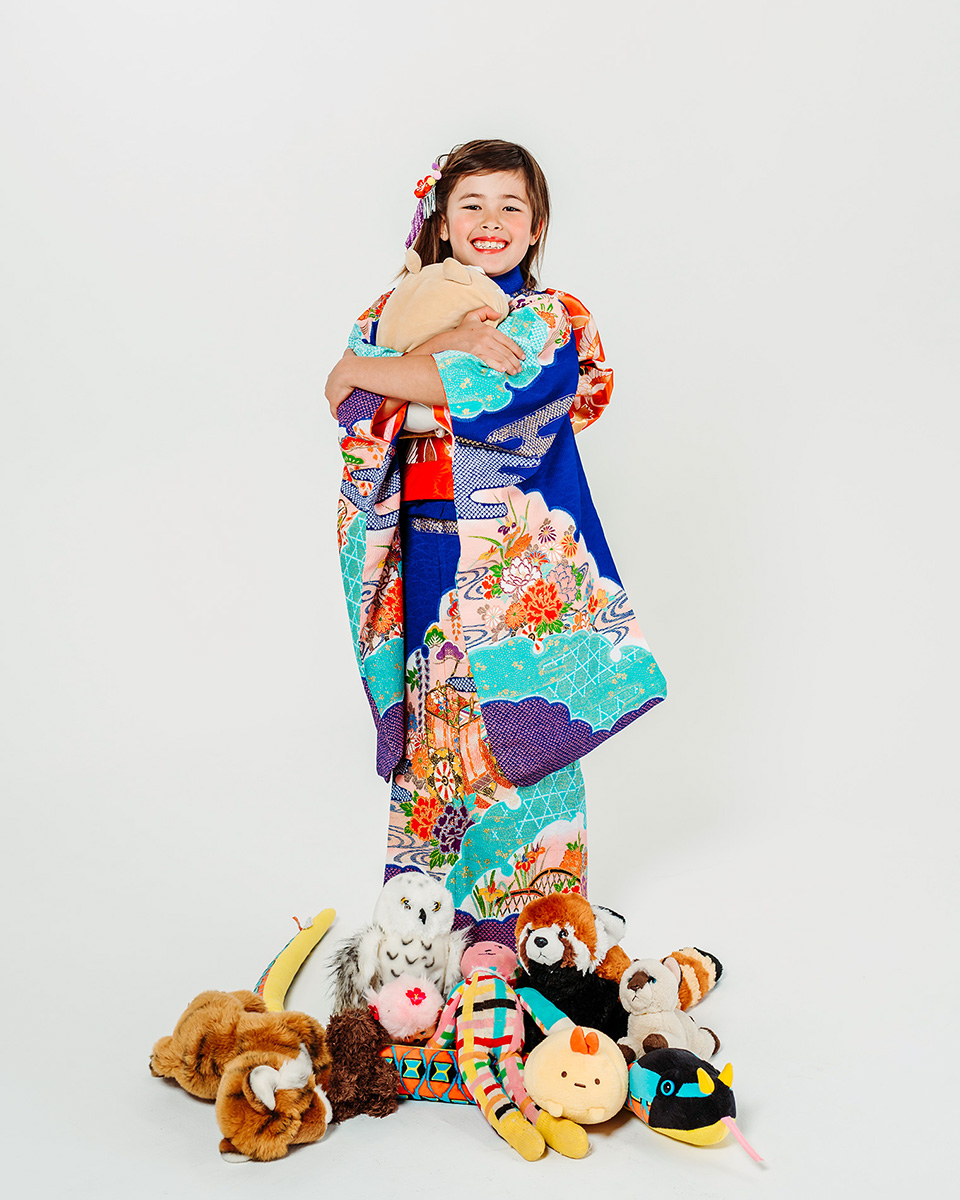
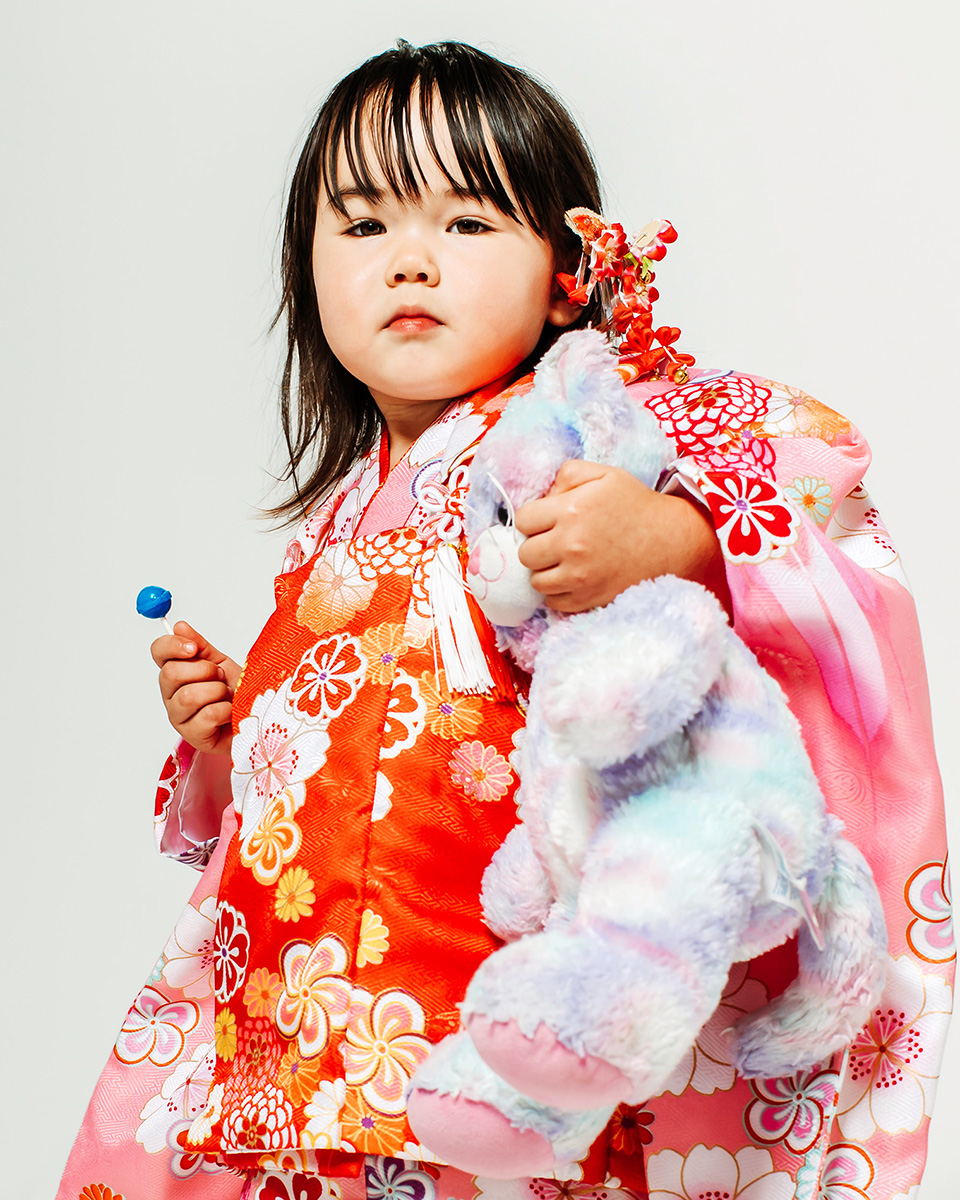
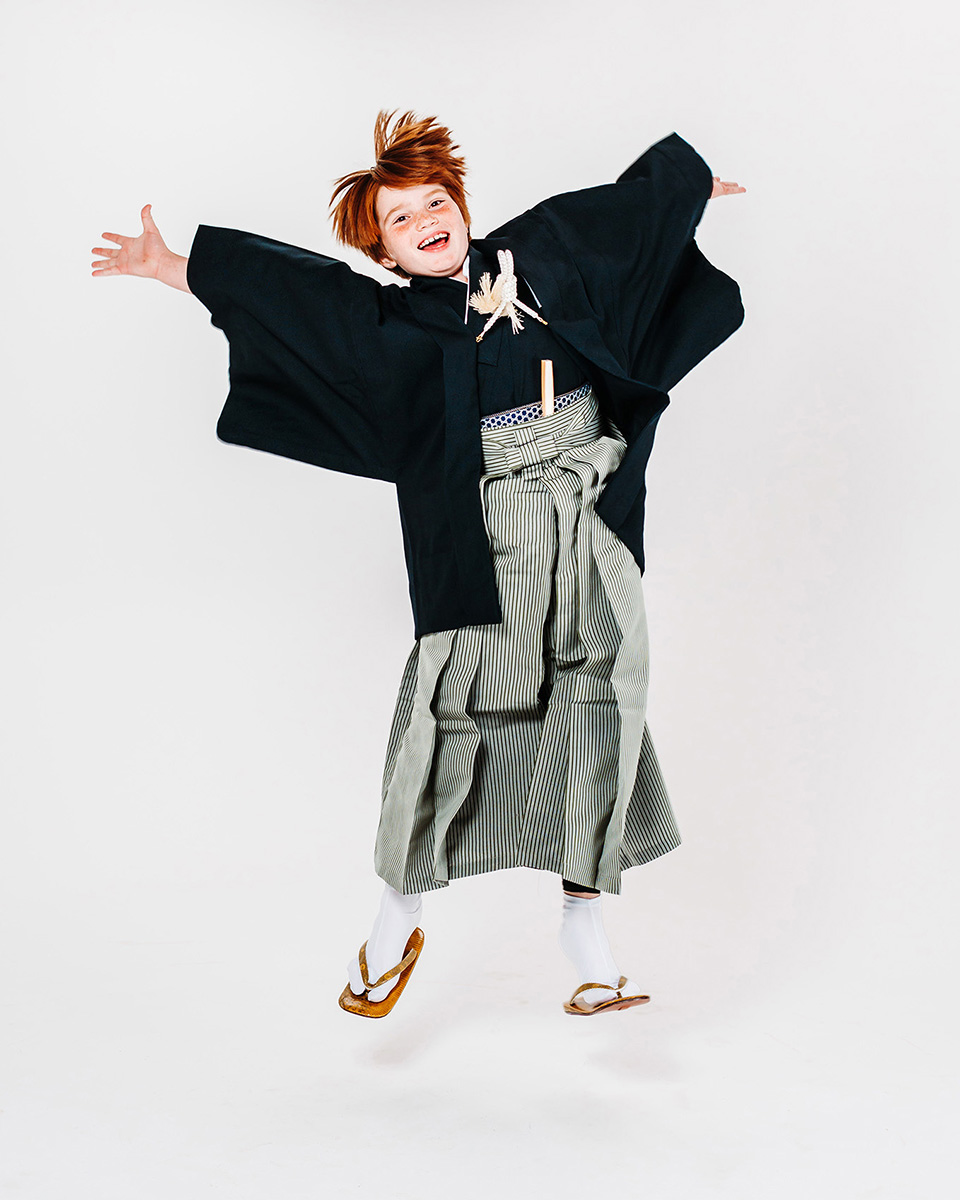
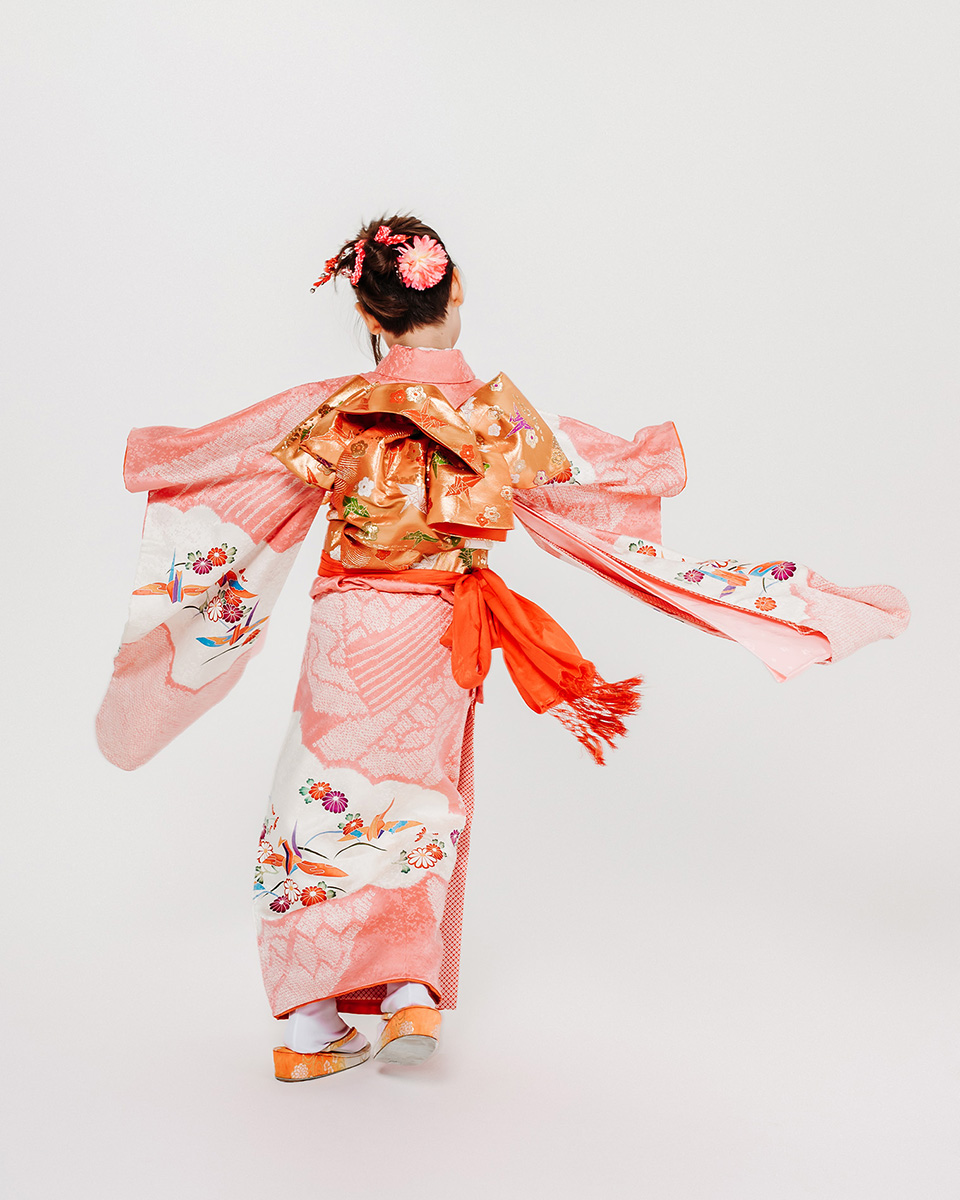
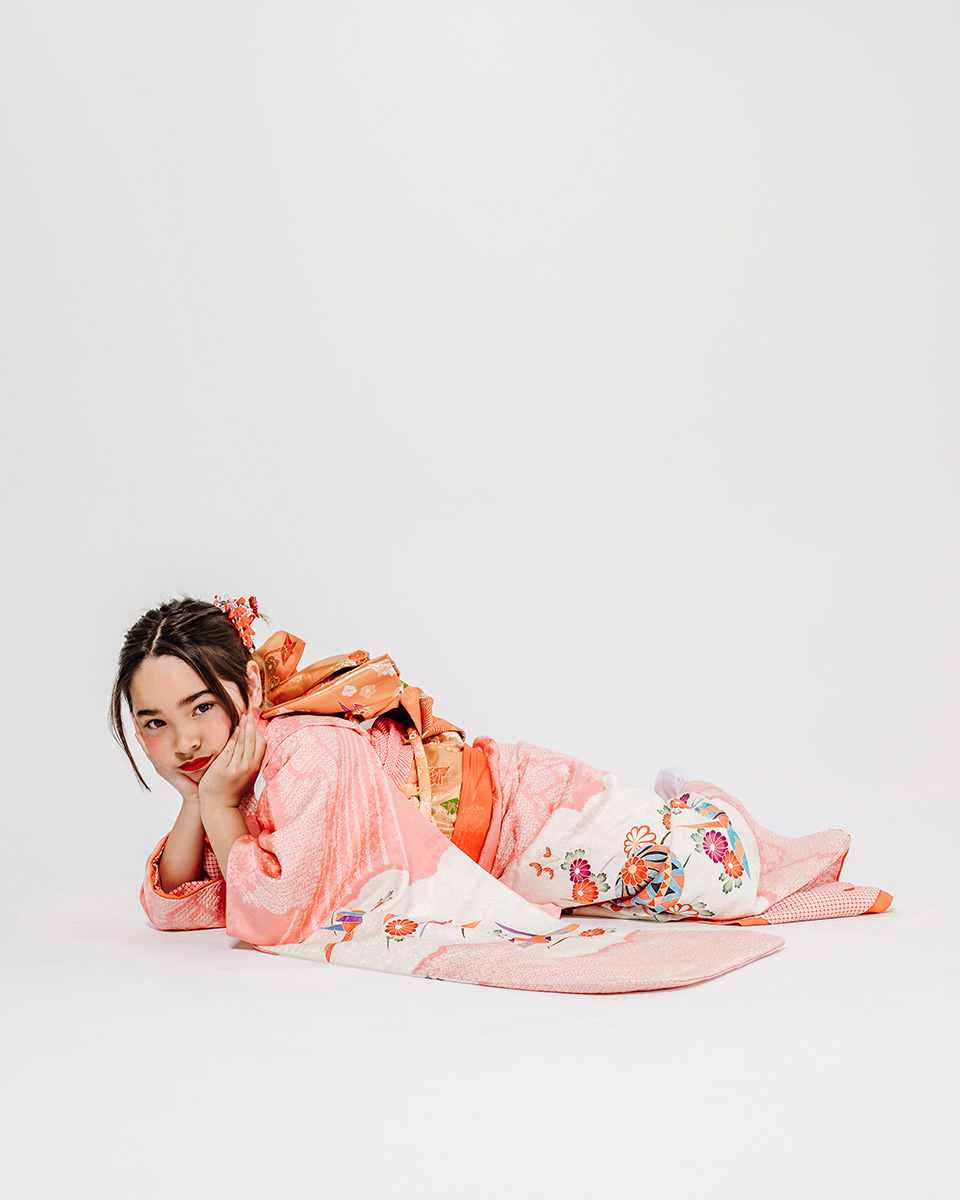
In The Art of In-Between, I explore the evolving meanings of cultural identity through the eyes of Japanese-American children. At the heart of this series is the kimono—a garment that once served as everyday attire in Japan and has since become a symbol of ceremony and tradition. Today, it is worn to mark significant milestones such as Shichi-Go-San (ages of 7-5-3 celebration), Seijinshiki (Coming of Age Day), graduations, and weddings. Beyond its beauty and formality, the kimono now carries a deeper meaning: an intentional act of cultural pride, belonging, and remembrance.

As a Japanese immigrant and photographer based in the U.S., I see these garments not only as expressions of heritage but as living visual narratives—threads that connect generations, carry unspoken stories, and shift with the people who wear them. For those of us living between cultures, tradition is not something fixed; it is fluid, responsive, and continually reimagined.

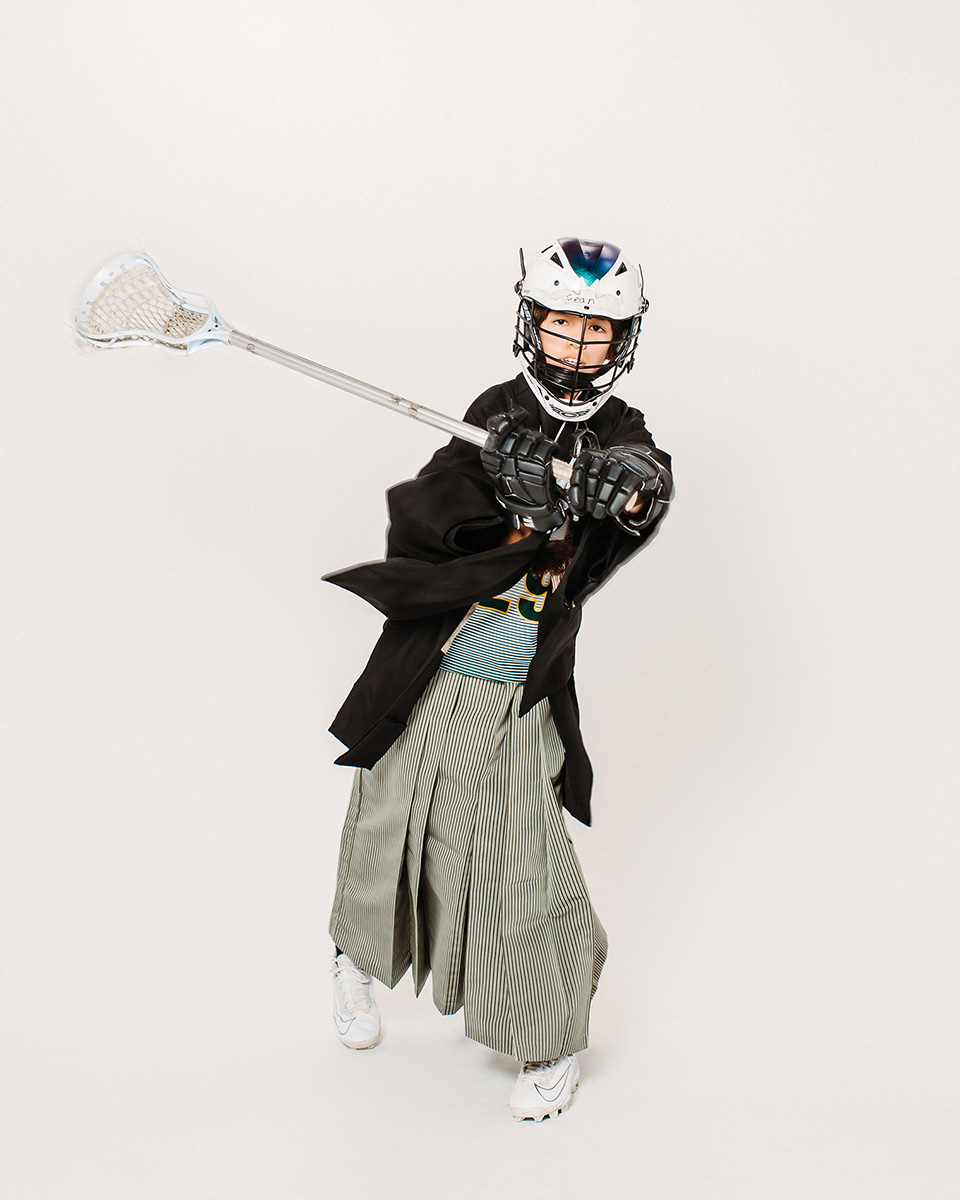
This photo series reinterprets the kimono through a bicultural lens. Rather than presenting it as a restrained or static artifact, I invite Japanese-American children to wear it as themselves—encouraging them to move, play, and express their quirks and uniqueness freely. Each portrait reflects more than heritage—it captures the individuality, curiosity, joy, and vulnerability of each child. It celebrates how culture and self-expression can not only coexist but enrich one another.

At its core, The Art of In-Between is a celebration of children growing up across cultural lines—not in conflict, but in conversation. It honors their lived experiences and identities as both fully Japanese and fully American, without asking them to choose These portraits offer a space where representation, strength, softness, and cultural nuance can exist together
This work speaks to the emotional truth of the in-between—how identity is layered, how tradition lives and breathes, and how children, when seen and supported, become powerful carriers of culture in motion. My goal is to share a vision of heritage that is not preserved in stillness, but shaped with intention, joy, and playfulness. Through these portraits, I hope to contribute to a living tradition—one that evolves across generations, and one that children feel welcomed and empowered to carry forward as their own
To see more of this project, click here

Instagram

Suzanne Sease is a creative consultant and former ad-agency senior art buyer. She works with both emerging and established photographers and illustrators to create cohesive, persuasive presentations that clients can’t resist.

Suzanne offers something rare: an insider’s perspective on how client’s source creative talent. Her deep understanding of the industry is underscored by her impressive resume: 11 years as senior art buyer at The Martin Agency, seven years as an art producer for Capital One, and stints with the art-buying department at Kaplan-Thaler and the creative department at Best Buy, where she applied her expertise to reviewing bids to see which were most likely to come in on budget. Over the years, Suzanne has worked with a wildly diverse range of clients, including Seiko, Wrangler, Bank One, AFLAC, and Clairol Herbal Essence. Now, as a consultant, she is equipped to problem-solve for her clients from an unusually dynamic point of view.

As a longtime member of the photo community, Suzanne is also dedicated to giving back. Through her Art of the Personal Project column on the popular website aphotoeditor.com, she highlights notable personal projects by well-known and up-and-coming photographers. The column offers these artists excellent exposure while reflecting Suzanne’s passion for powerful imagery.

Instagram

The Art of the Personal Project: Brian Maranan Pineda

The Art of the Personal Project is a crucial element to let potential buyers see how you think creatively on your own.  I am drawn to personal projects that have an interesting vision or that show something I have never seen before.  In this thread, I’ll include a link to each personal project with the artist statement so you can see more of the project. Please note: This thread is not affiliated with any company; I’m just featuring projects that I find.  Please DO NOT send me your work.  I do not take submissions.

Today’s featured artist: Brian Maranan Pineda

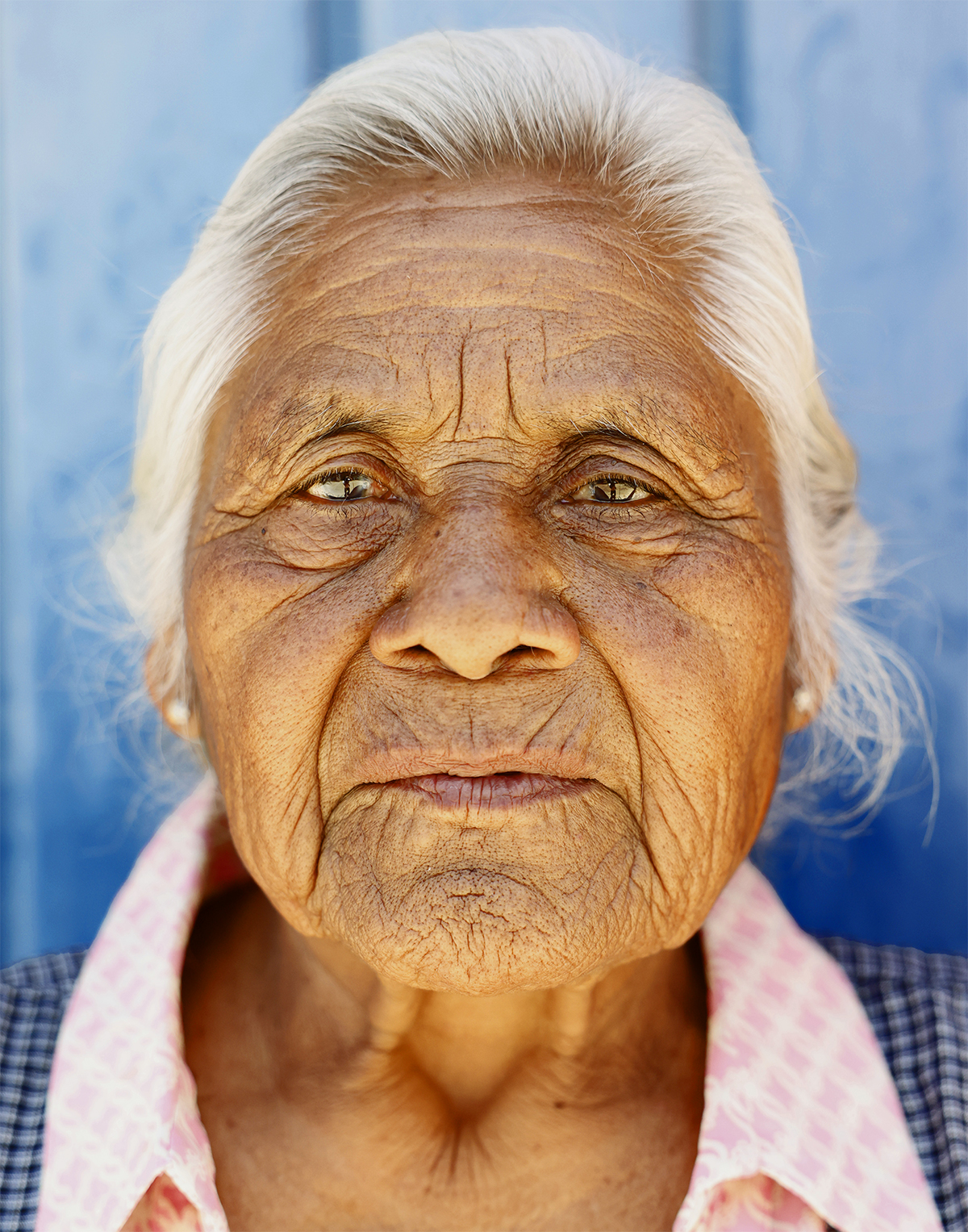
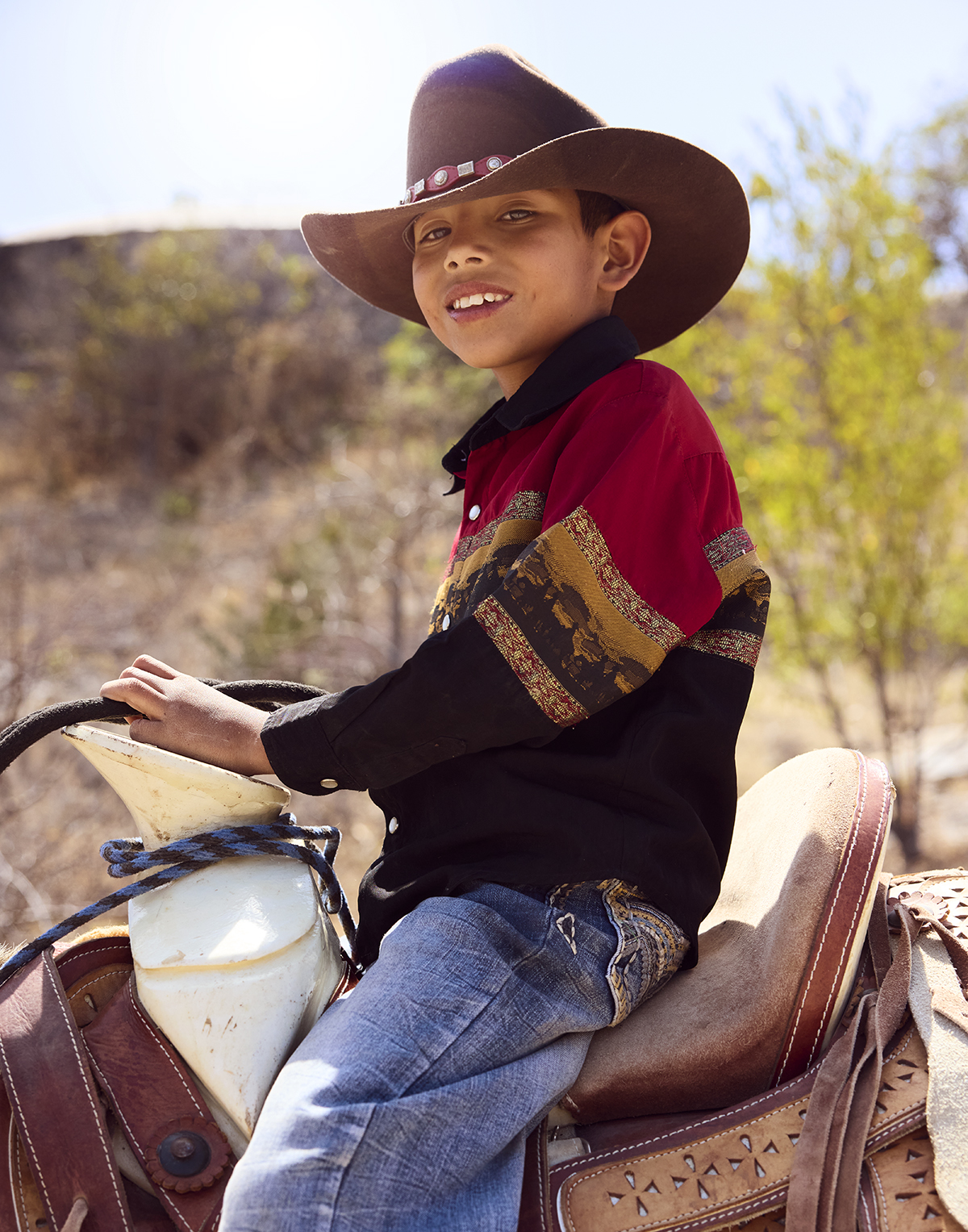
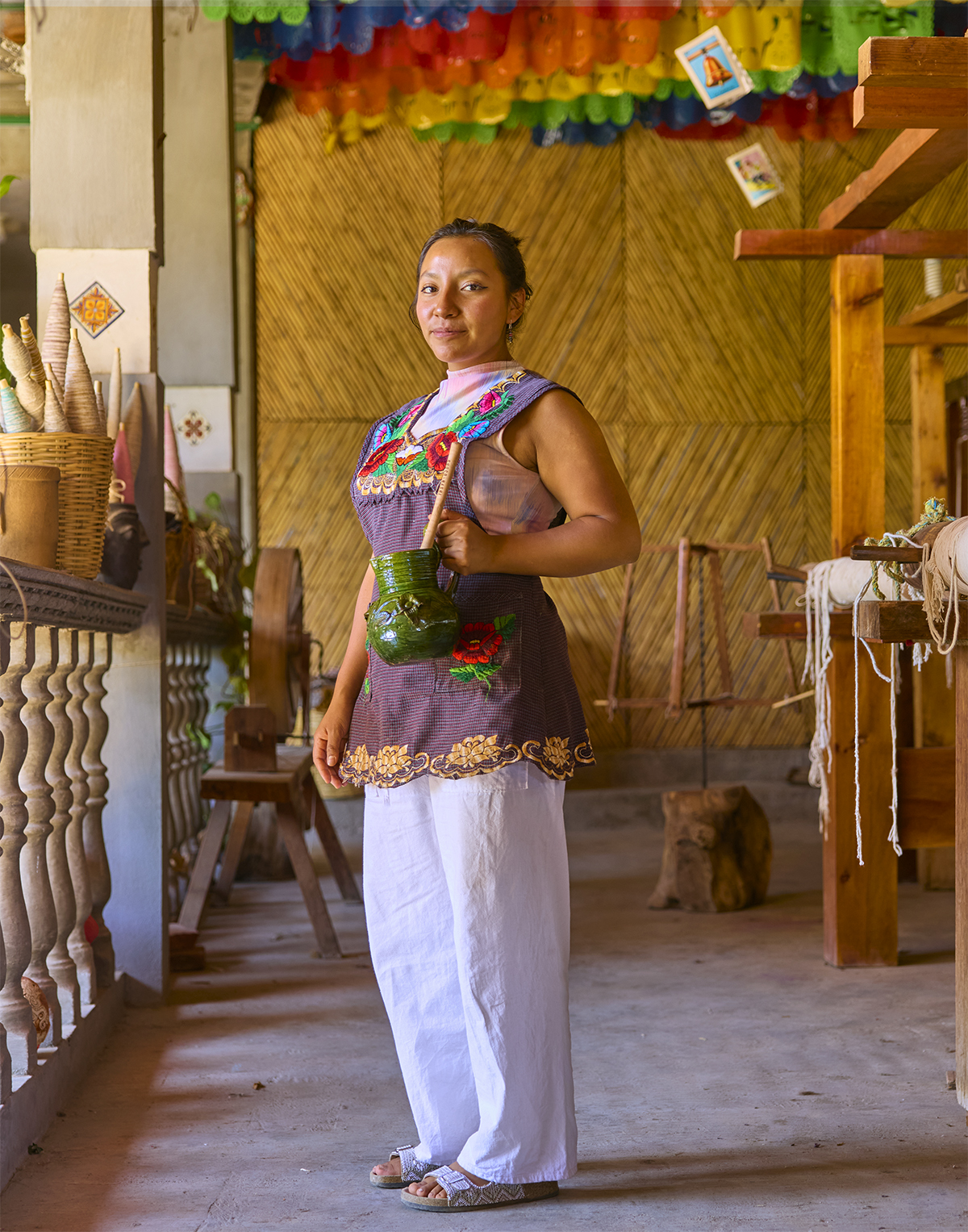
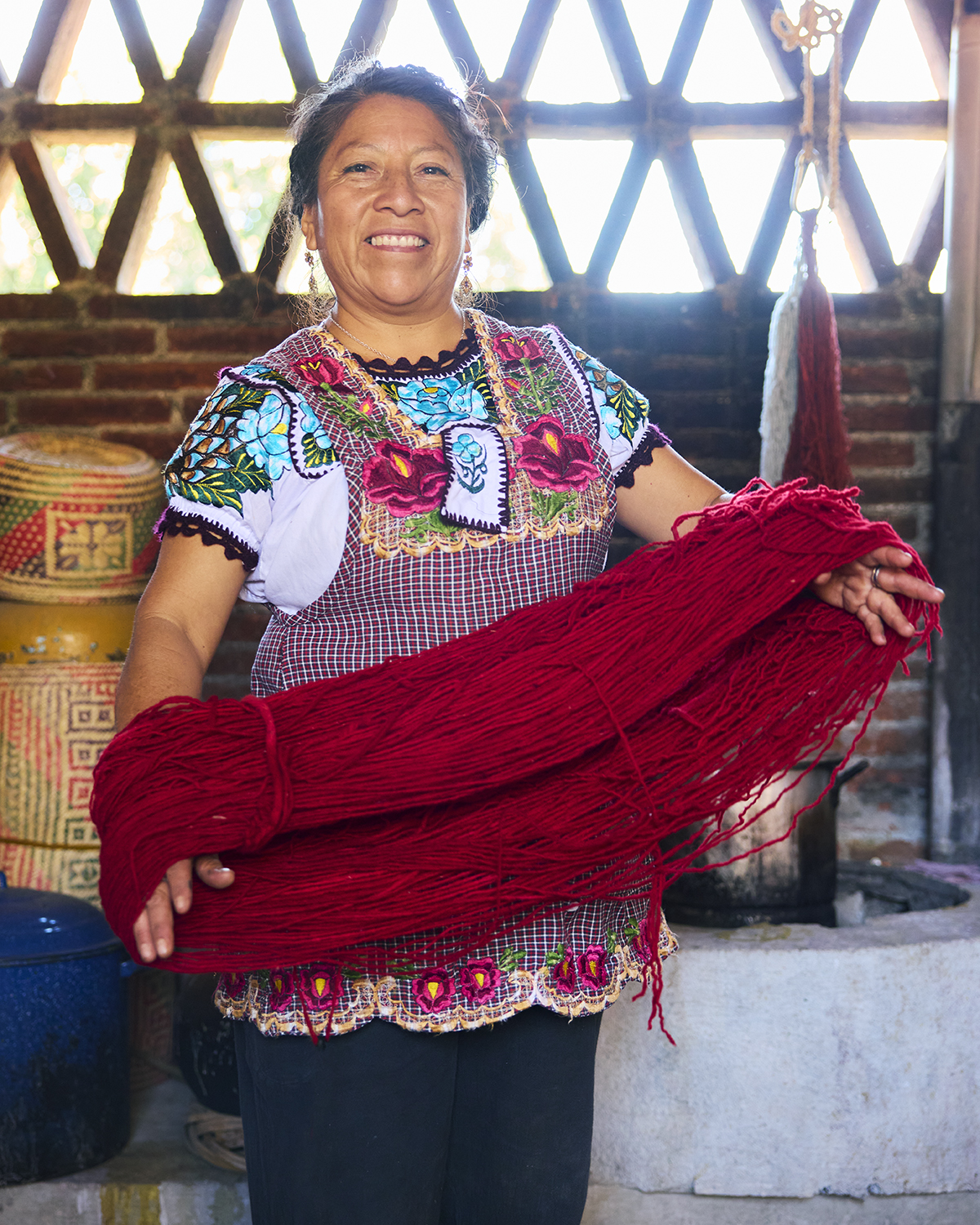
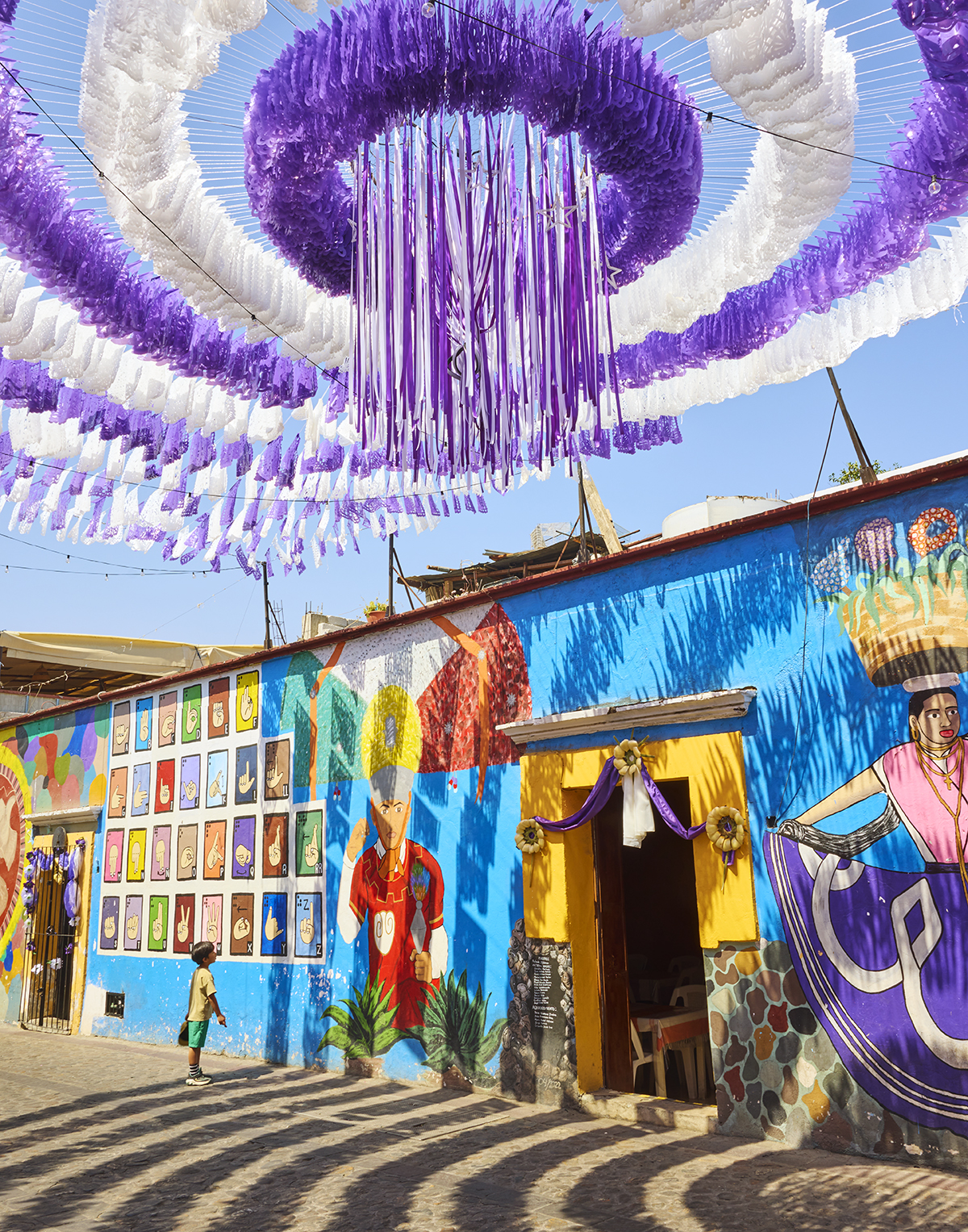
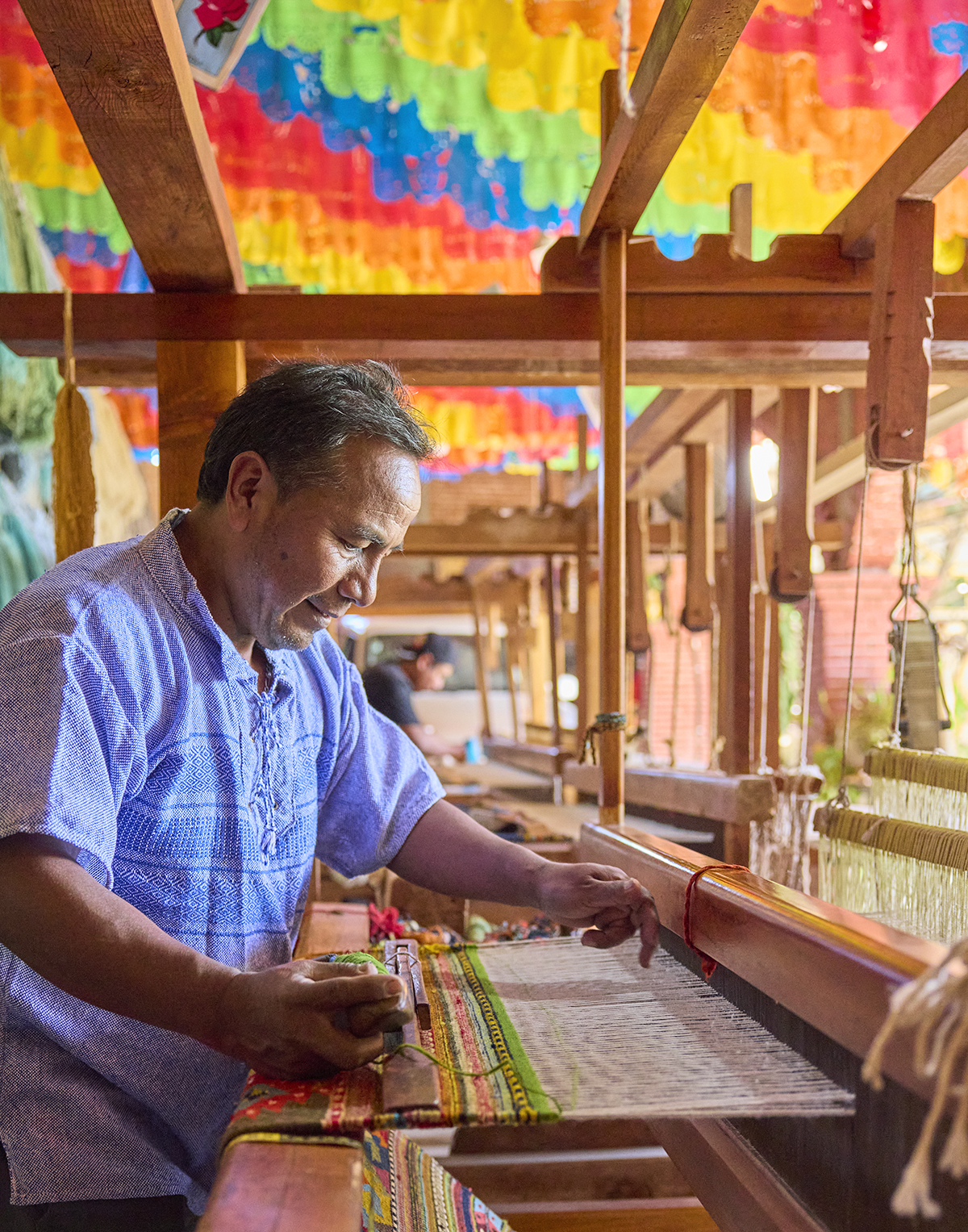
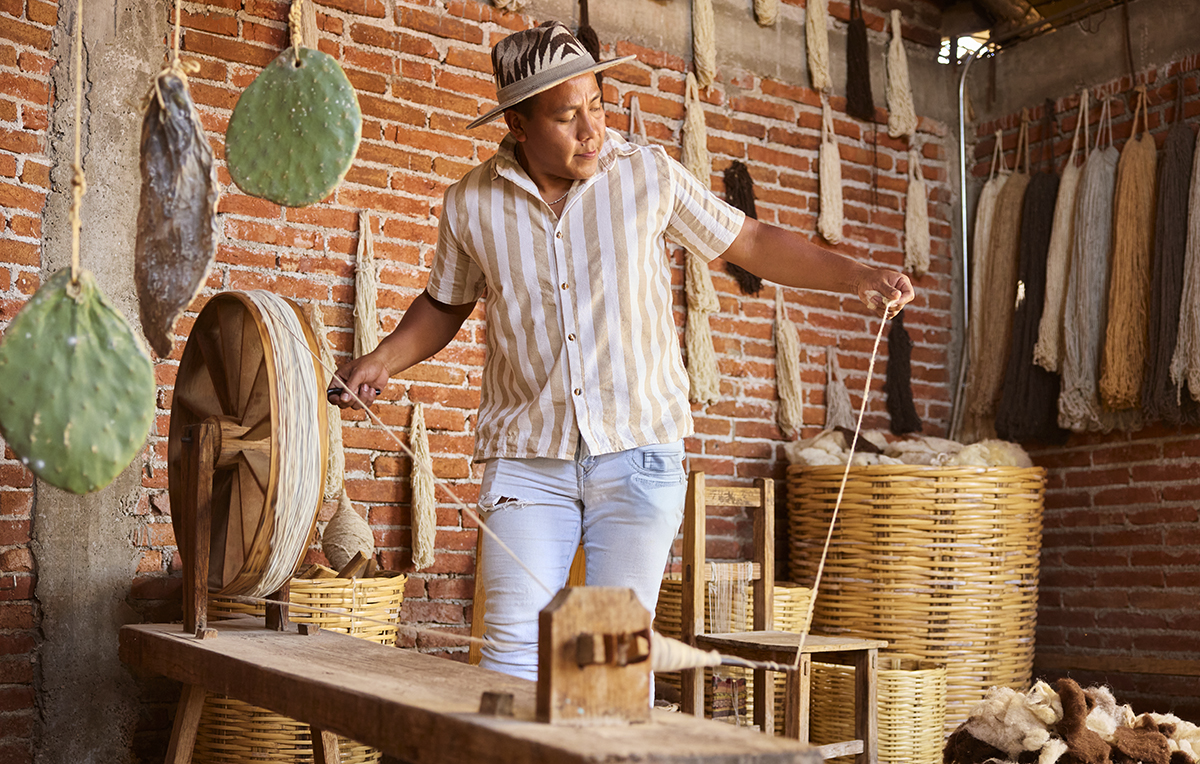
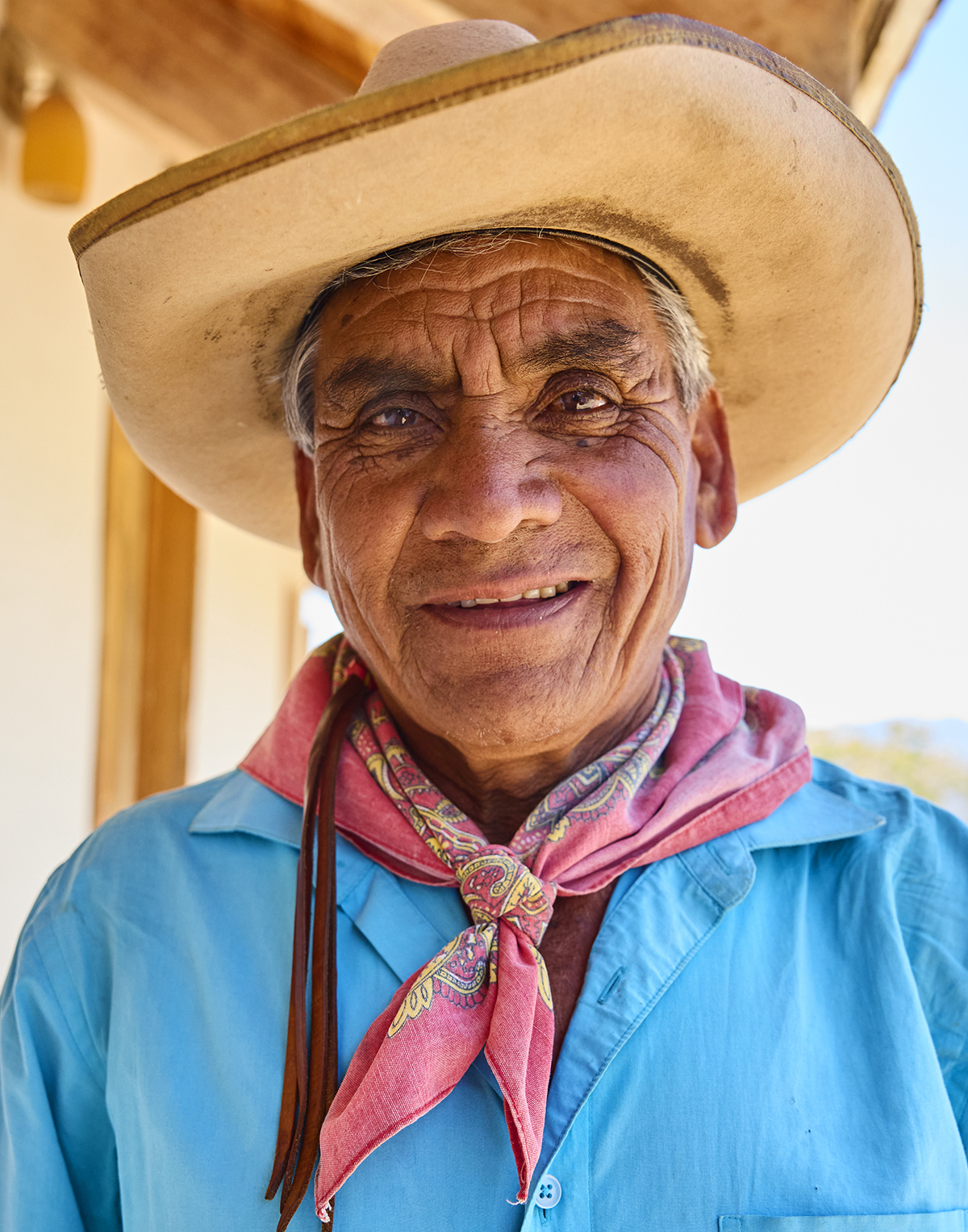
My “Oaxaca, Mexico” personal series is a vibrant, intimate look at the heart of this incredible region. I wandered through bustling markets, lively streets, and peaceful neighborhoods, drawn to the colors, textures, and the spirit of Oaxaca. What struck me most were the people—their warmth, openness, and deep connection to their tradition. Through candid portraits and vivid scenes, I wanted to capture not just what Oaxaca looks like, but how it feels: full of energy, history, and life.
This project is my personal tribute to a place that left a lasting mark on me. From moments of celebration to quiet daily rituals, I hoped to capture the everyday beauty that makes Oaxaca so unique. Each image is a small story of life there, reflecting the character and rich cultural roots of its people. I hope these photographs invite others to share in the wonder and appreciation I felt while visiting this remarkable part of Mexico.

To see more of this project, click here

Instagram

Suzanne Sease is a creative consultant and former ad-agency senior art buyer. She works with both emerging and established photographers and illustrators to create cohesive, persuasive presentations that clients can’t resist.

Suzanne offers something rare: an insider’s perspective on how client’s source creative talent. Her deep understanding of the industry is underscored by her impressive resume: 11 years as senior art buyer at The Martin Agency, seven years as an art producer for Capital One, and stints with the art-buying department at Kaplan-Thaler and the creative department at Best Buy, where she applied her expertise to reviewing bids to see which were most likely to come in on budget. Over the years, Suzanne has worked with a wildly diverse range of clients, including Seiko, Wrangler, Bank One, AFLAC, and Clairol Herbal Essence. Now, as a consultant, she is equipped to problem-solve for her clients from an unusually dynamic point of view.

As a longtime member of the photo community, Suzanne is also dedicated to giving back. Through her Art of the Personal Project column on the popular website aphotoeditor.com, she highlights notable personal projects by well-known and up-and-coming photographers. The column offers these artists excellent exposure while reflecting Suzanne’s passion for powerful imagery.

Instagram

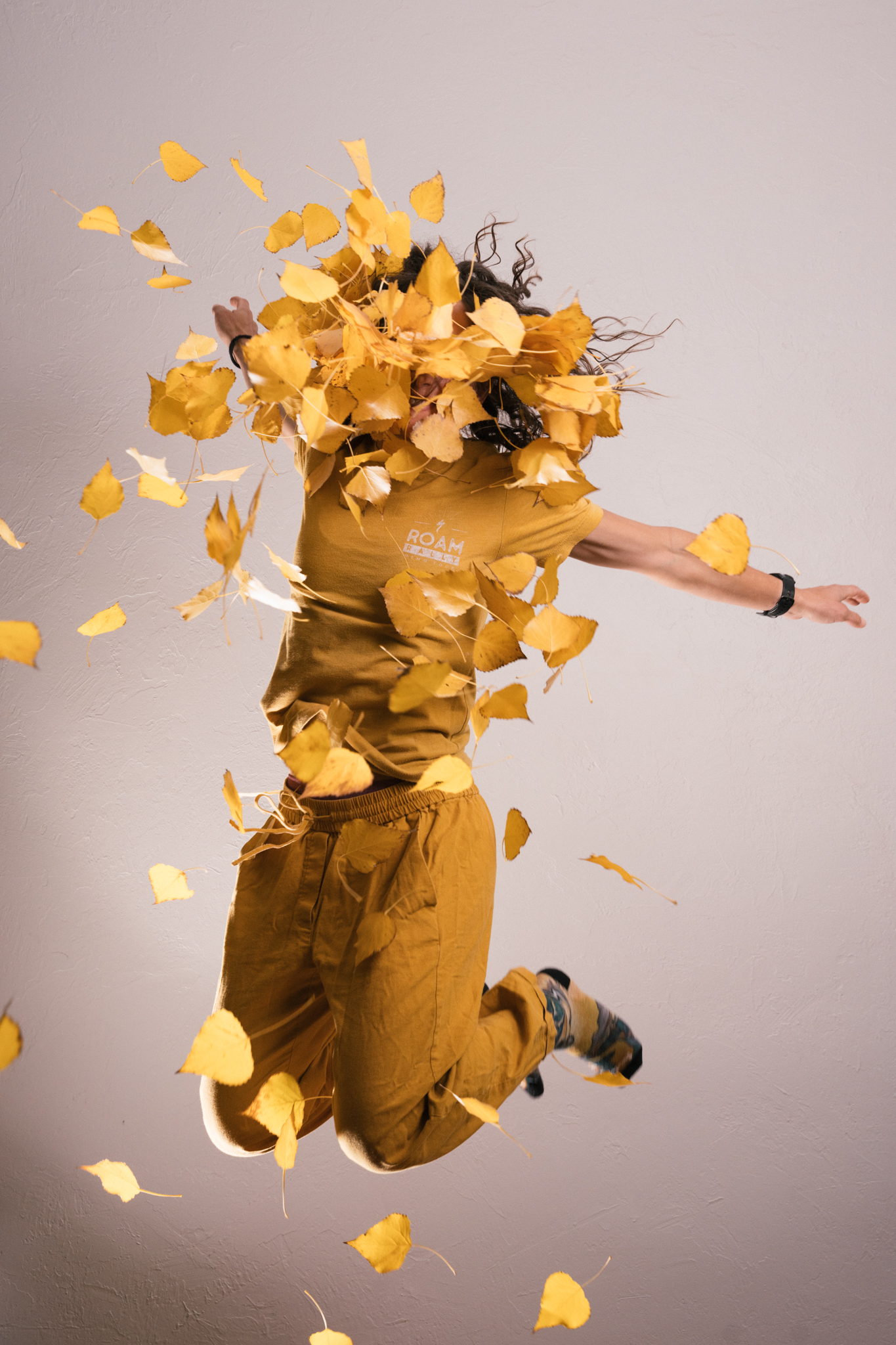
The Daily Edit – Anne Keller Champions More Women Behind the Lens with Roam Media Core


Anne Keller
Roam Media Core

Heidi: As a photographer and former mentor with Roam Media Core, what are your hopes for emerging femme creators working in outdoor photography?
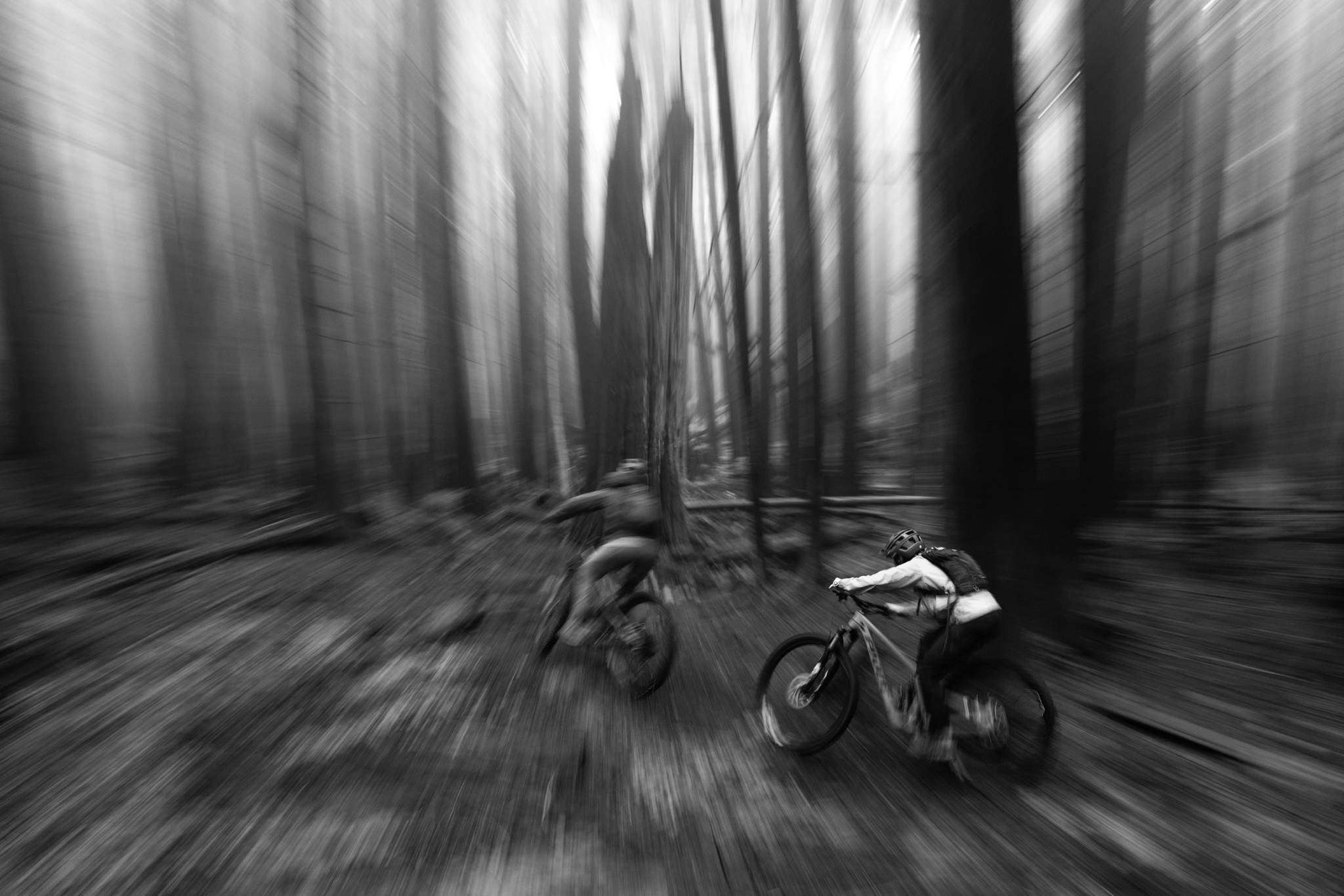
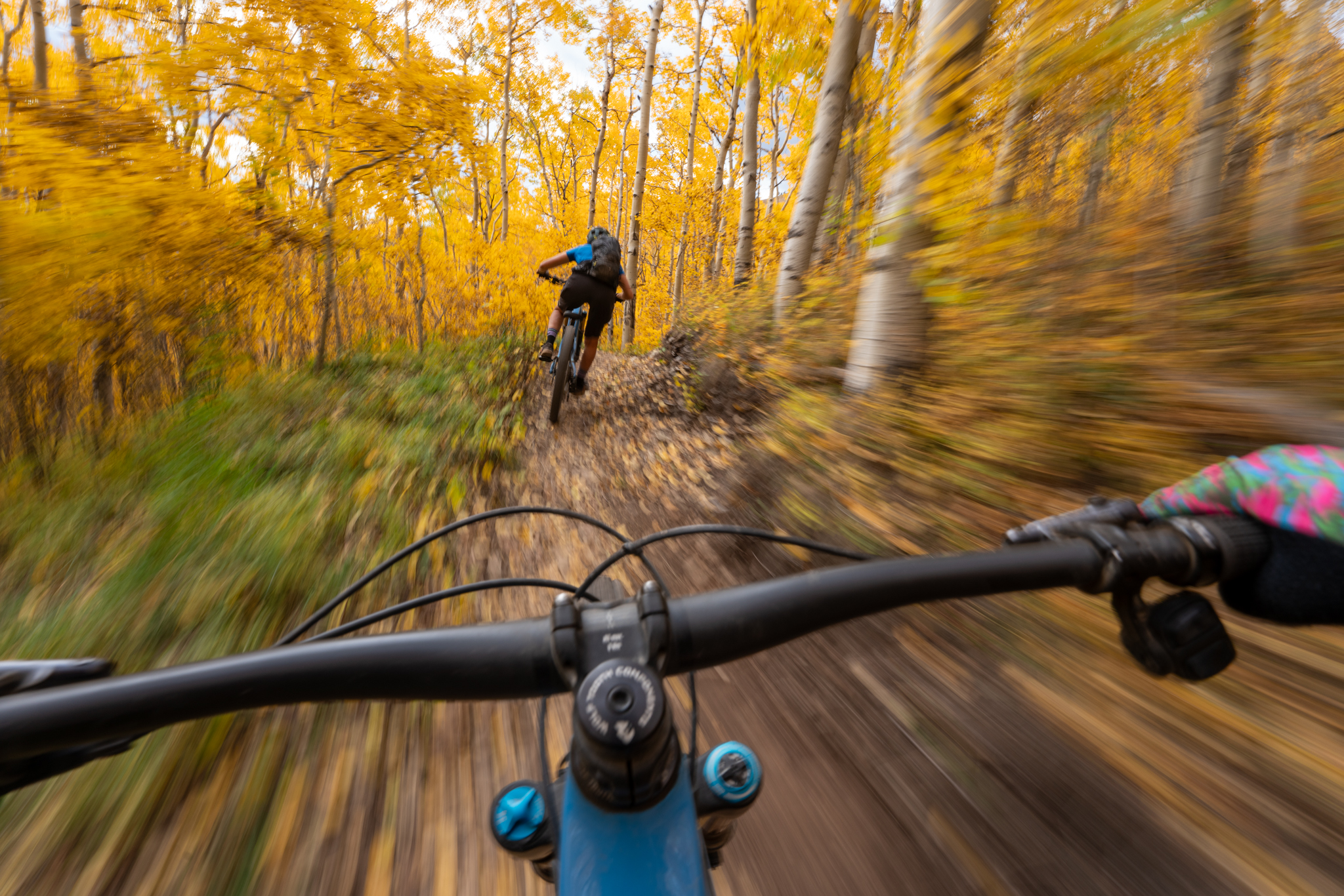
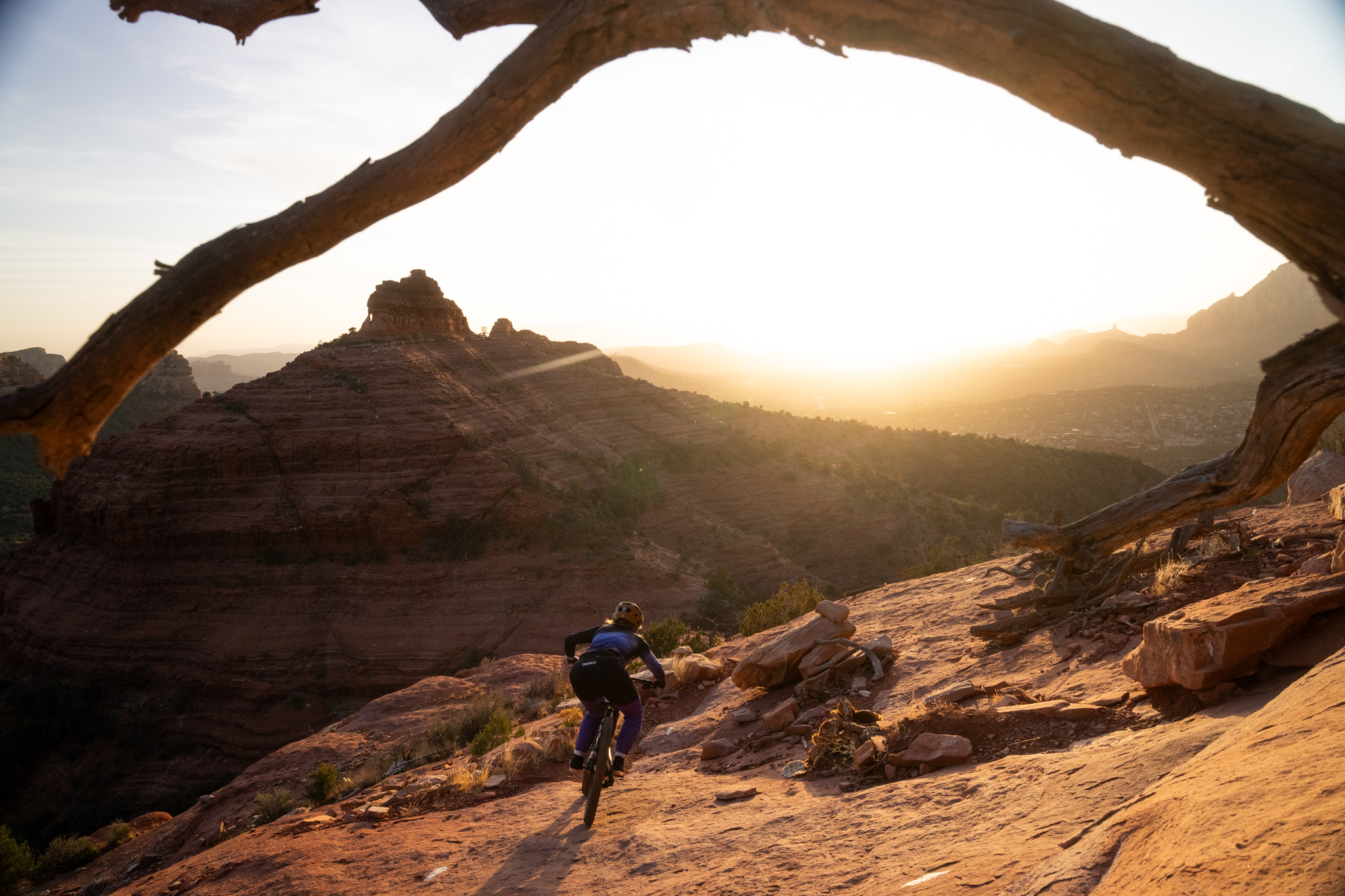
Anne: I started shooting photos in the bike industry in 2004. At the time, there was literally like one other woman shooting bikes. While I definitely felt supported by some of my male peers, I never had the experience of someone holding my hand and guiding me through the awkward first steps, or second steps, or third, etc. I didn’t even know that might have been a helpful thing to ask for.
My experience last year as a mentor, and my hope for this year, is that we can create a safe space for that stumbling to happen, and for those hesitant questions to be asked. I think the experience of gaining entry is fairly universal. If this program helps provide any sort of guidance on how one builds a career in the outdoor world and hands over a few tools along the way, that sounds like success to me.
It’s clear the industry needs more women behind the lens. The statistic I’ve heard is that in the world of action sports photography, participation hovers around 15%. That’s pretty low, so anything that can help reduce those barriers is a good thing.

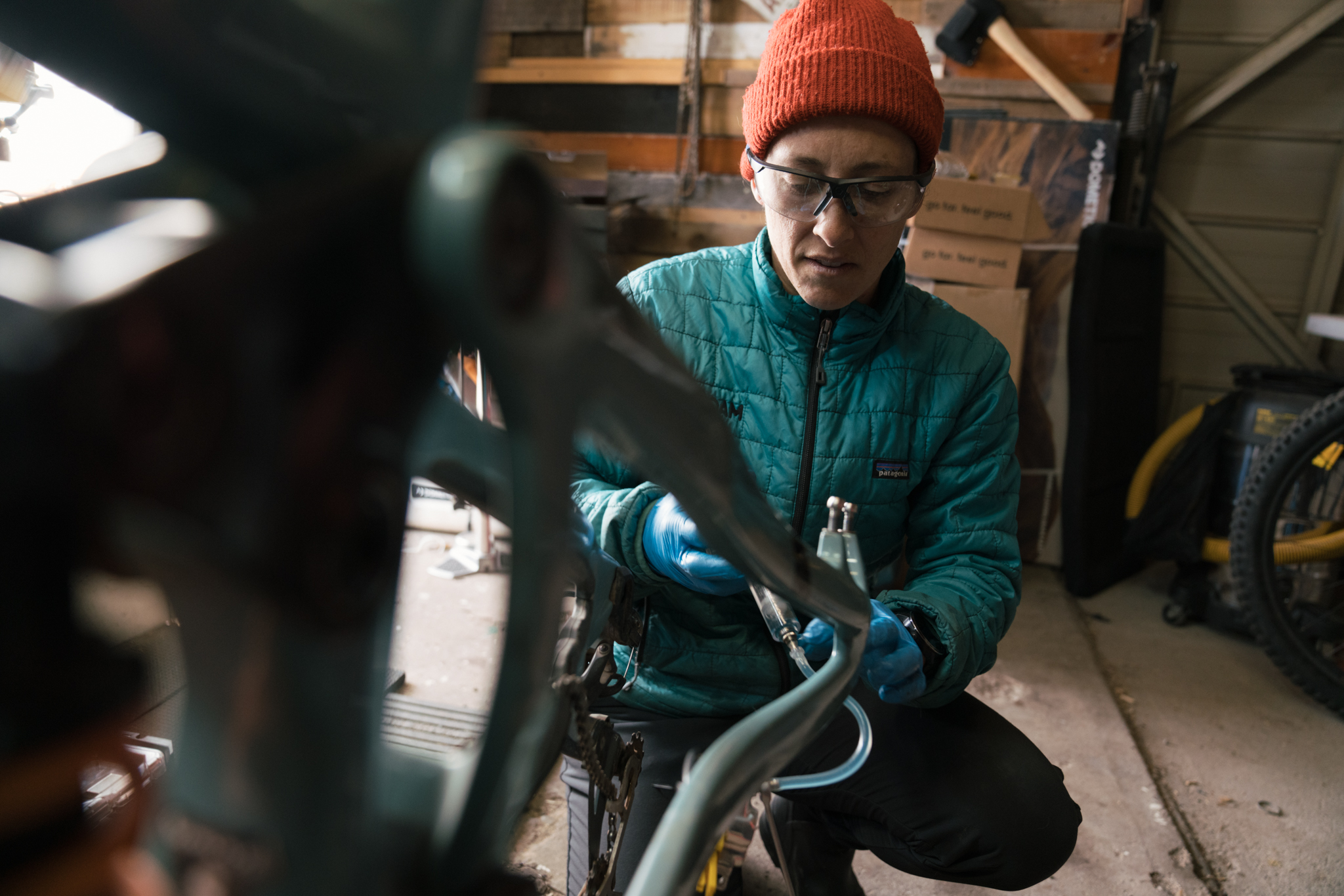
Andi Zolton bleeds a set of bike brakes in her garage and is one of only two US based women who wrench professionally on the MTB race circuit, and in her spare time co-operates the Roam women’s bike fest, and fixes stuff on her friend’s bikes

How do the mentor and mentee relationships work? 
The program brings on six experienced mentors. This year we have four photo mentors and two video mentors, each paired with a mentee. Applications opened in early May, and we had over 120 people apply, which to me speaks to the need for programming like this.
The idea behind selecting mentees was to find folks with a solid foundation of skills who were career-focused and genuinely interested in working in the outdoor industry. This isn’t a beginner program, and it’s not meant for someone who just wants to learn how to shoot bikes. We wanted this to feel like a valuable experience for both mentees and mentors, like the mentors could be instrumental in providing guidance that may help further someone’s career objectives.
The mentor and mentee teams begin virtual work about three months before Roam Fest. They spend that time getting to know each other, talking about goals, career ambitions, and building some trust. Then, each team is paired with two outdoor brands and works virtually with the brand’s marketing team to develop guidelines for a shoot. The program all comes together at Roam Fest, where everyone gathers in person to execute a series of brand product and athlete shoots.

Have mentees developed brand relationships as well as community support?
Yes, that’s absolutely the goal. The hope is that mentees can develop relationships with brands that show up at Roam Fest, and that some of those turn into long-term work.
Community support happens a little more naturally, through time spent with their cohorts and mentors. Each mentee gets paired with one mentor, but much of the festival time is spent as a full group, which gives everyone the chance to learn from each other. Last year, that group dynamic ended up being one of the most impactful parts for both mentees and mentors.

You’ve been based in Fruita, CO, a trail-centric town, since 2002. How has living there shaped your photography projects and creative aspirations?
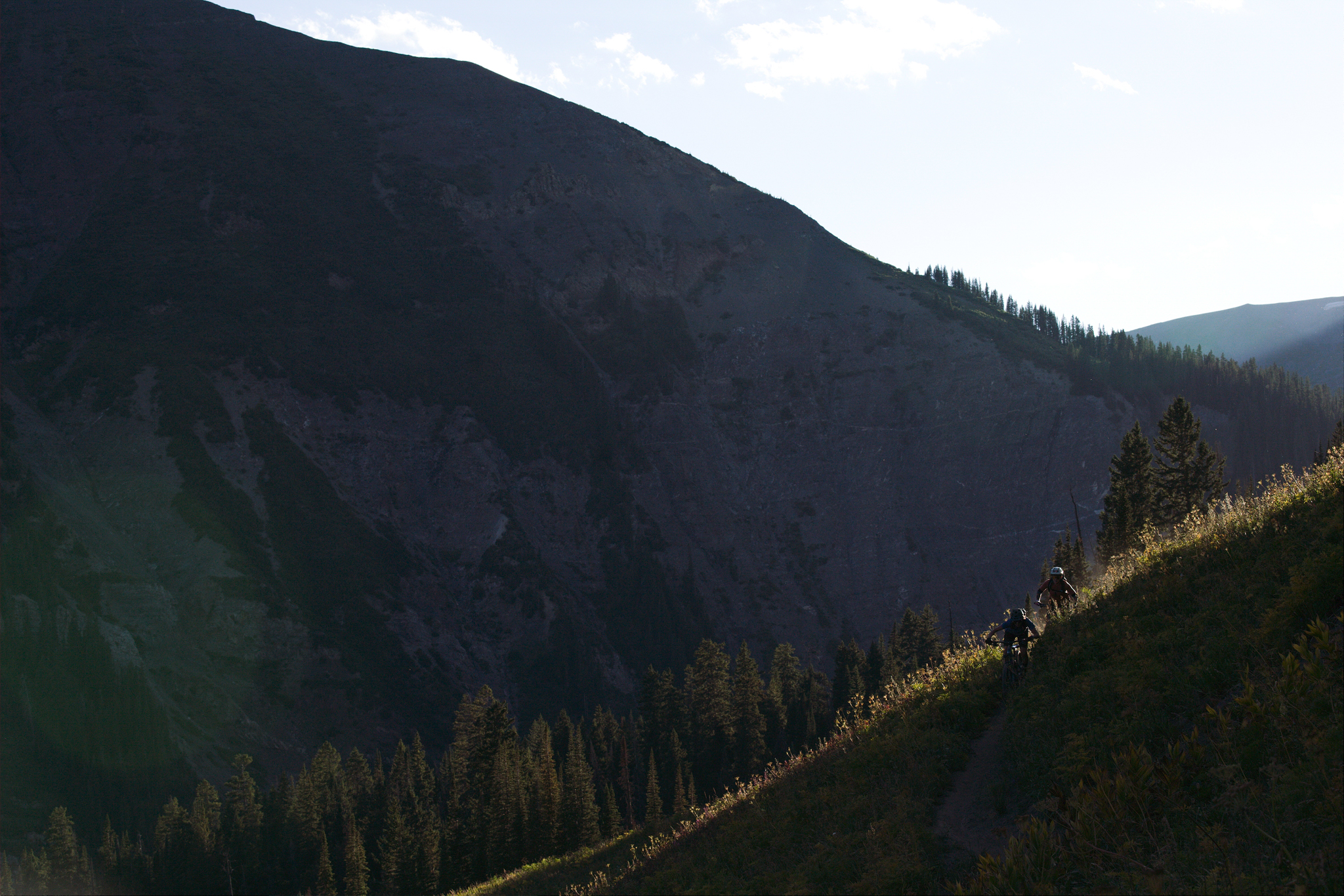
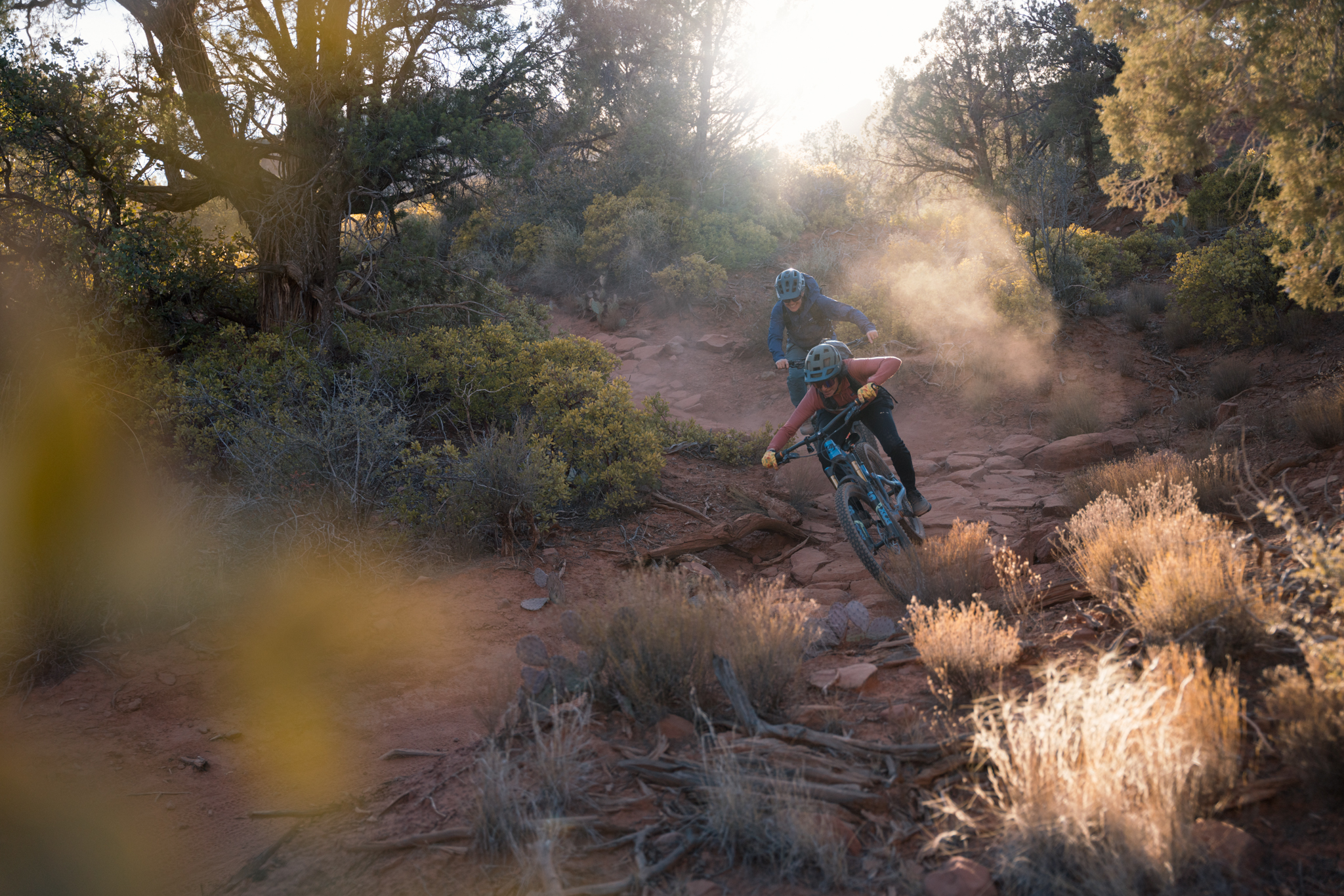
Well, for one thing, it’s forced me to spend a lot of early mornings or late evenings out on the trail, because our lovely desert environment looks flat and shitty in mid-day light… haha.
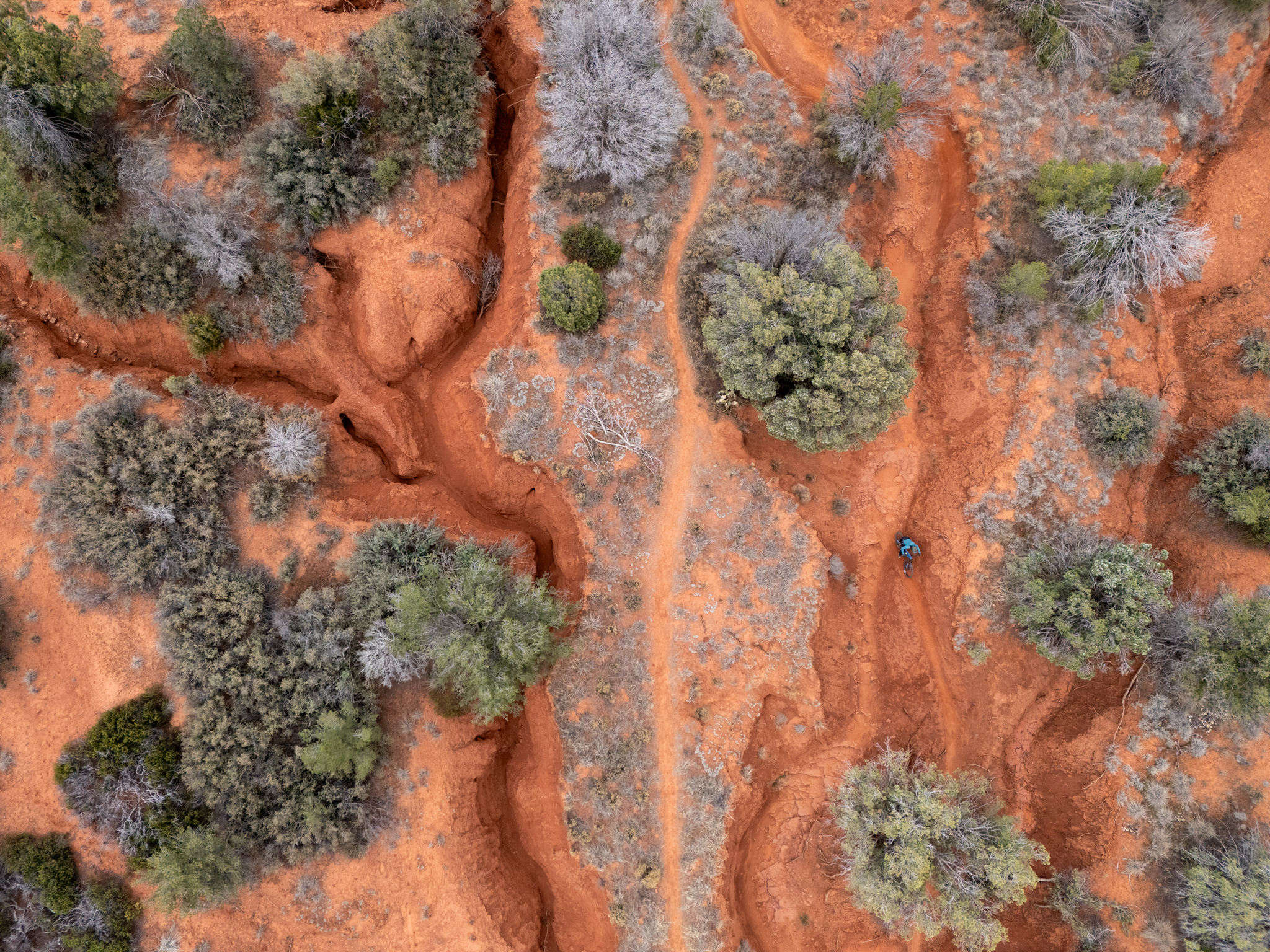
Fruita and the greater Grand Valley are unique-looking places, and I think that’s been helpful from a visual standpoint. There’s a whole swath of the country that, while beautiful, starts to look pretty similar from one location to the next. The desert southwest is a far cry from that. Our landscape is distinct, and while it comes with some lighting challenges, it’s also a fun place to shoot. Nothing else really looks like it.
From a brand and media standpoint, the Grand Valley’s also a great location. It’s a good spot to product test, there’s a range of trails, and it’s gotten a decent amount of media attention. While travel is always possible, it’s nice when your backyard is already on the radar and is a desirable place for brands to visit.
You helped build Fruita’s sense of community through Hot Tomato Pizza. Now as a photographer, how do you use your photography in building community?
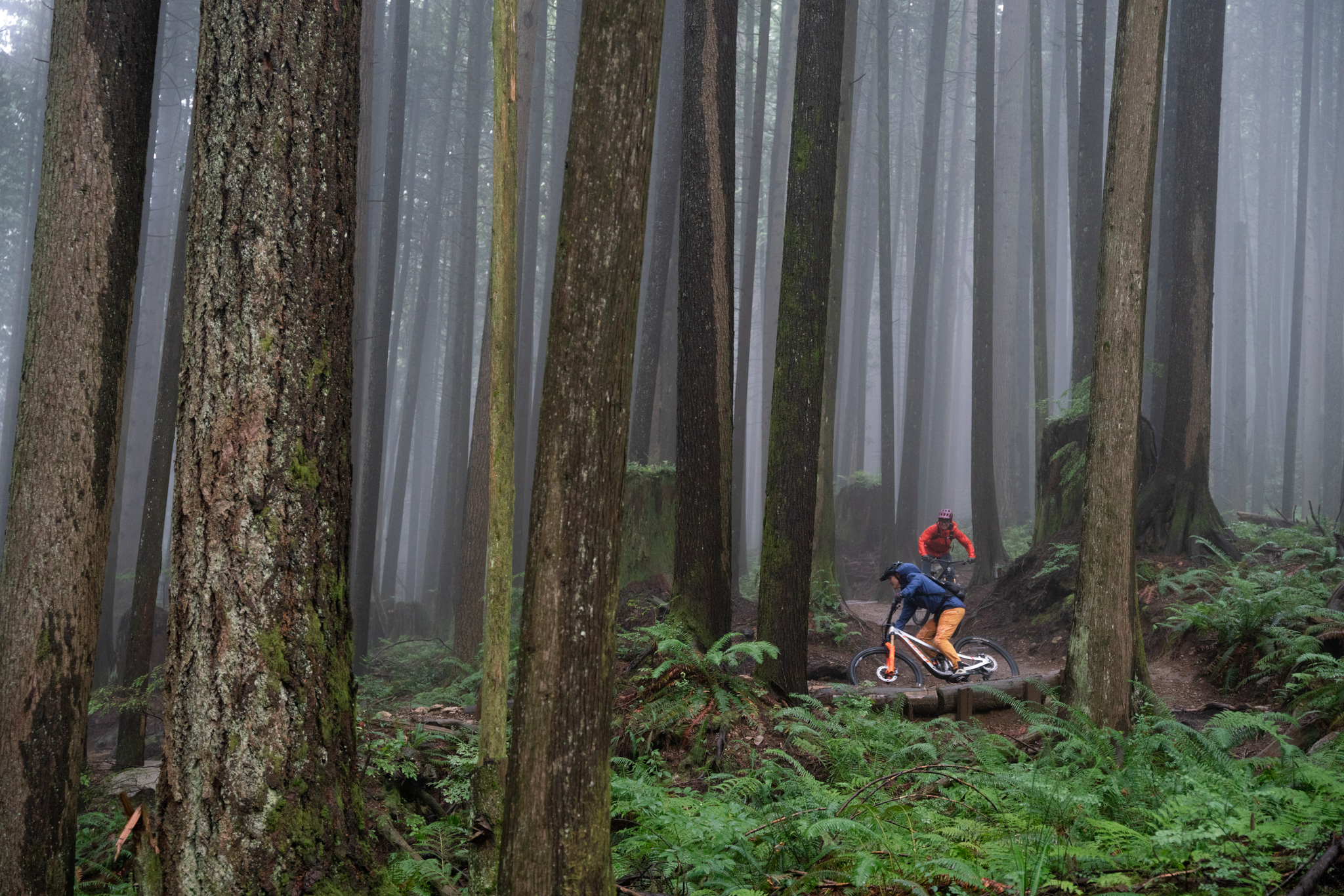
That’s a great question, and maybe one I haven’t given a ton of thought to. But I think there’s something to be said about how much community already exists in the cycling world. It’s honestly one of my favorite things about the sport. It’s so common for surface connections to turn into friendships, just from time spent on bikes. Most of my favorite people have come into my life that way, and the way those threads weave through other circles is kind of amazing.
While there might be six degrees of separation between us and Kevin Bacon, I’d argue it’s only one or two degrees between most people in the mountain bike world. So maybe it’s less about building community with a camera, and more about celebrating the community that already exists.

What do running a crankin’ pizza business, developing a fiercely loyal MTB community, and photography have in common?
Well, for starters, I no longer smell like garlic every day or fall asleep with dried flour crusties in my eyes, so that’s a plus.
I don’t know that we were responsible for developing the MTB community. It was on its way. But I can definitely speak to the connection between running a business and being a photographer. The outside view is always the fun stuff. That’s about 10 percent of either job.
It’s invigorating to be behind the bar pouring beers and laughing with your customer friends, just like it’s fun to be out in the woods behind the camera on a shoot. But that’s such a small percentage of the work. The rest is the grunt stuff. And I think being able to accept and embrace that part might be what separates the romantics from the realists.
I loved making pizzas. I love shooting photos. But I’m pretty indifferent about staring at my computer editing for hours, entering invoices in QuickBooks, cutting onions, or washing dishes. The behind-the-scenes is rarely glamorous, and also where the majority of the work happens.
It might sound cooler to talk about the passion behind both things, but I try not to. Both the food and creative industries are passion-driven, and I’ve seen a lot of people dive in because of that. But I’ve also seen a lot of those efforts fail, because the reality of running a business is about a lot more than being passionate. It’s a lot of muck, and I’d rather help people be ready for that than glorify it. So maybe the commonality is to be passionate, but be even better at the mundane.

The Patagonia film Life of Pie features your story. What was it like seeing your entrepreneurial success translated into film?
Oh gosh, it was a wild ride. While the film had premiered at a few smaller festivals before the bigger outdoor ones, 5Point in Carbondale was the first one that really felt like a launch.
We were packed into an auditorium with over a thousand people, all laughing at the same scenes, cheering at others. When the film ended, people stood up clapping, cheering, stomping. It was so loud. That moment was probably the first time I actually felt the gravity of our story being told in that way.
We never thought much about our success from an outside perspective. We were just in it, running the business. I think that’s true for most small business owners. You’re just doing the thing, not stepping back and thinking about the bigger picture. There was never any meta-level cognition about trying to ‘create something.’ But seeing that response was like holding up a mirror. It made the community impact feel very real.

You mentioned loving rides “headed toward disaster but not quite tipping over.” How does that sense of edge translate into your photo work?
Yes, I totally love Type 2 fun.
How does that show up in photo work? The other day, I was crouched so close into the trail corridor that my friend clipped my helmet with his handlebar as he passed. Thankfully I had the helmet on.
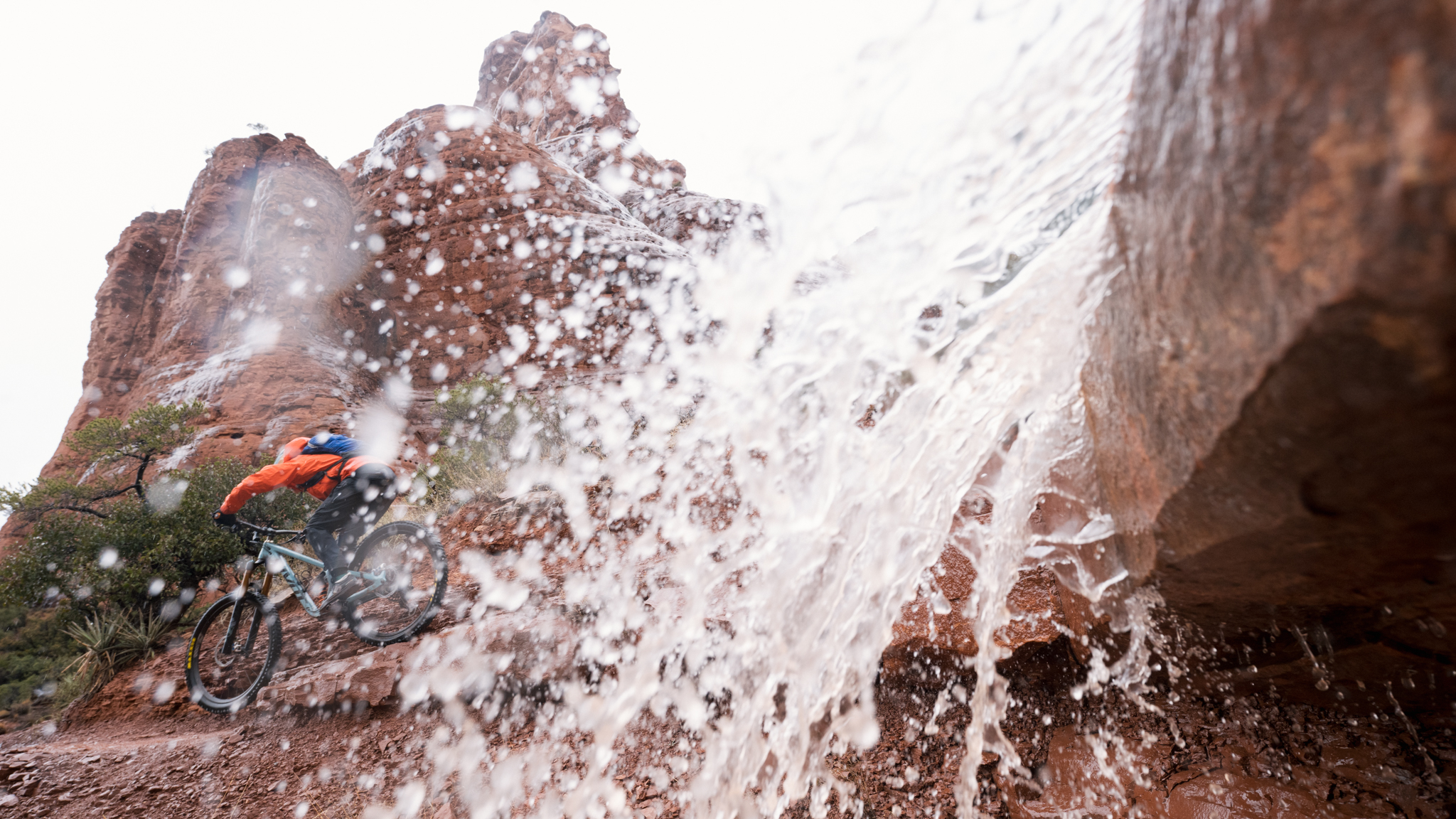
I’ve been hit by pedals, handlebars, crashed with packs full of camera gear, been caught in hailstorms, had to light fires to stay warm, been stuck out in the dark, destroyed lenses, soaked cameras in rainstorms or at stream crossings, etc
I really believe that the best action sports photographers actually do the sports themselves, usually at a higher level. I think you kind of have to, in order to access those special places and know what to do once you get there. Mother Nature isn’t always cooperative, and the same sort of experience you’d have on a big adventure ride is often what happens on a remote shoot.
Give me someone suffering up a rain-soaked, muddy hike-a-bike any day. That’s where the emotion shows up. Even if it’s not pretty.

The Art of the Personal Project: Amanda Lopez

The Art of the Personal Project is a crucial element to let potential buyers see how you think creatively on your own.  I am drawn to personal projects that have an interesting vision or that show something I have never seen before.  In this thread, I’ll include a link to each personal project with the artist statement so you can see more of the project. Please note: This thread is not affiliated with any company; I’m just featuring projects that I find.  Please DO NOT send me your work.  I do not take submissions.


Today’s featured artist:  Amanda Lopez

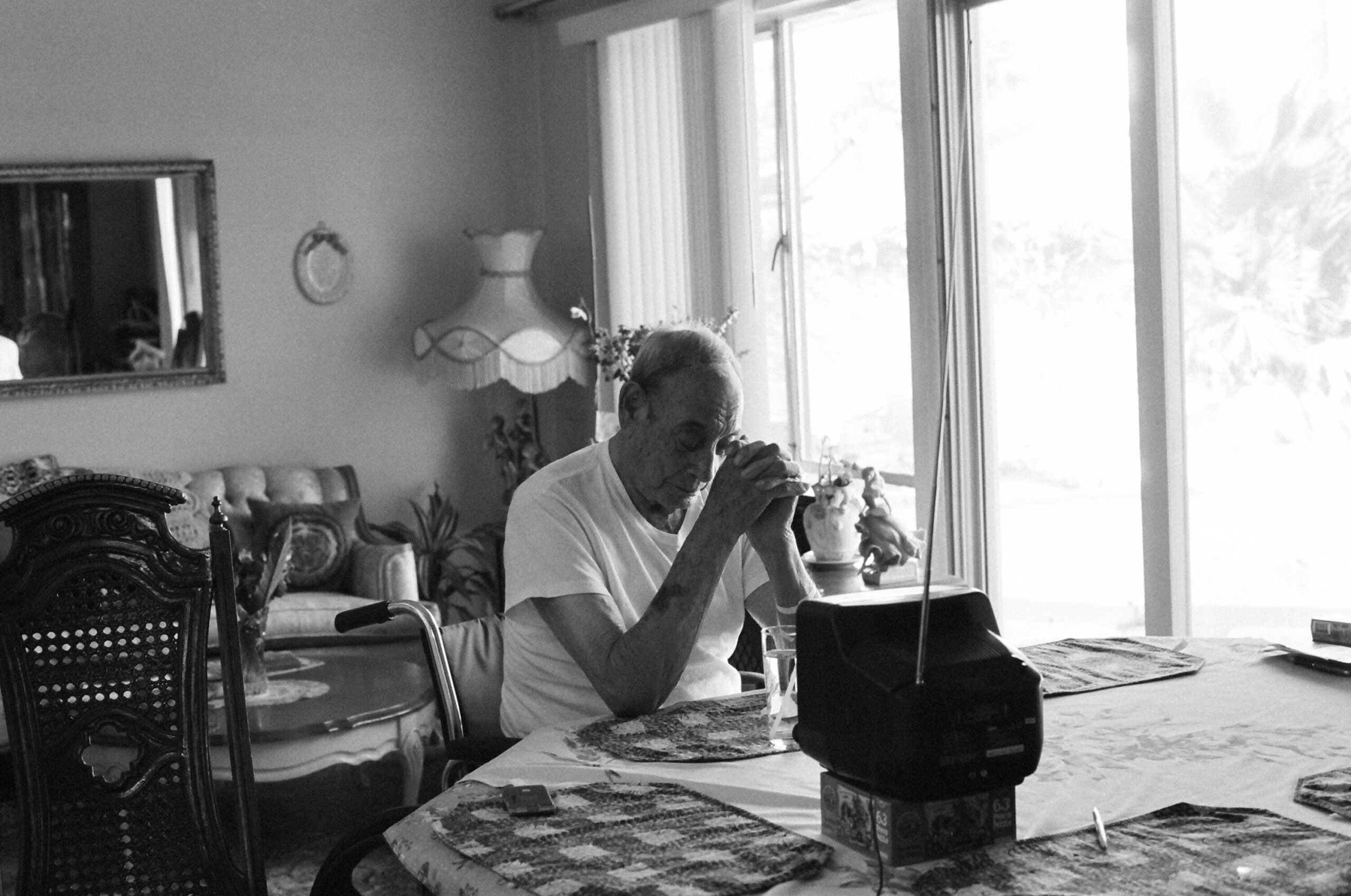
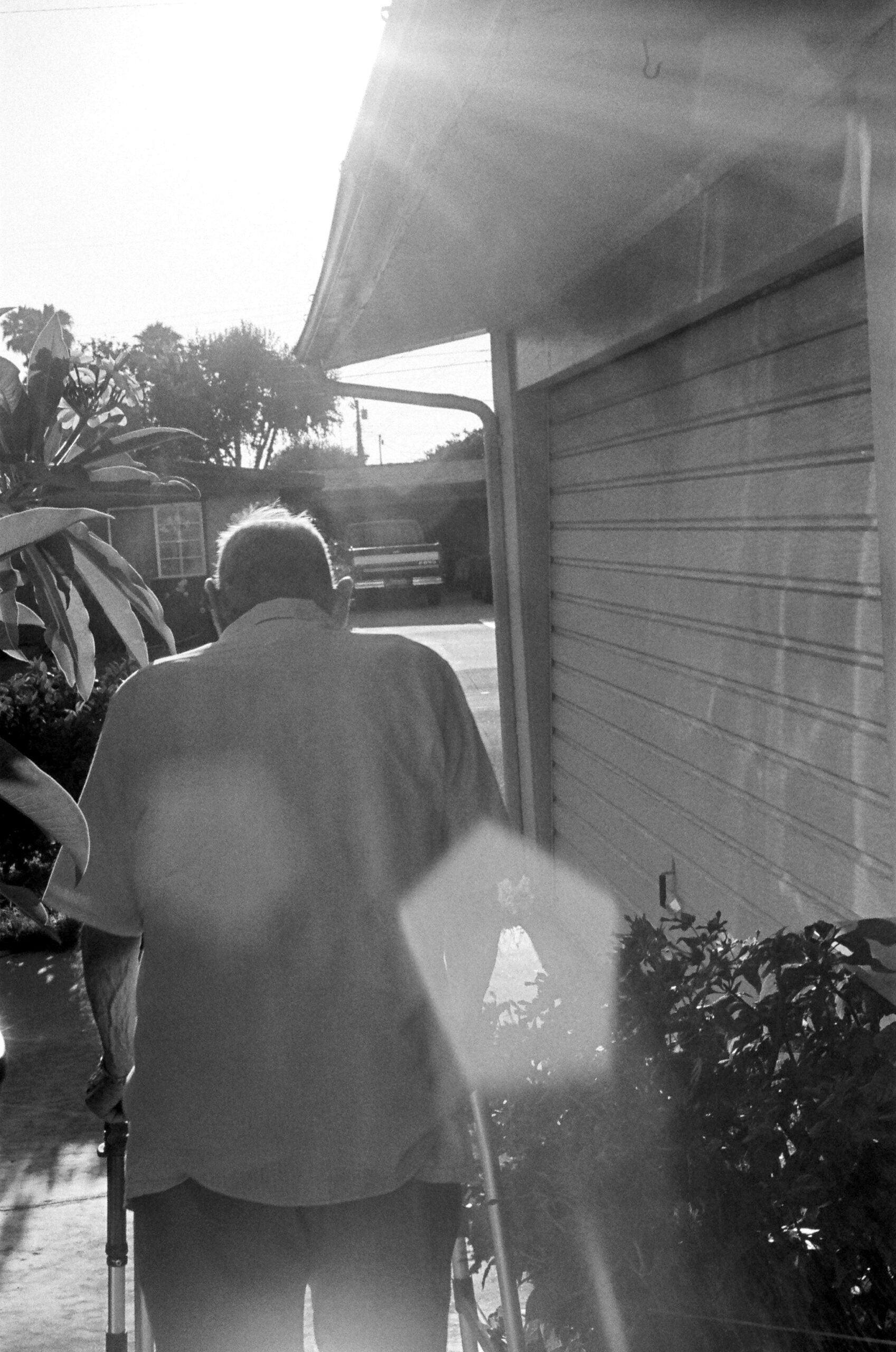
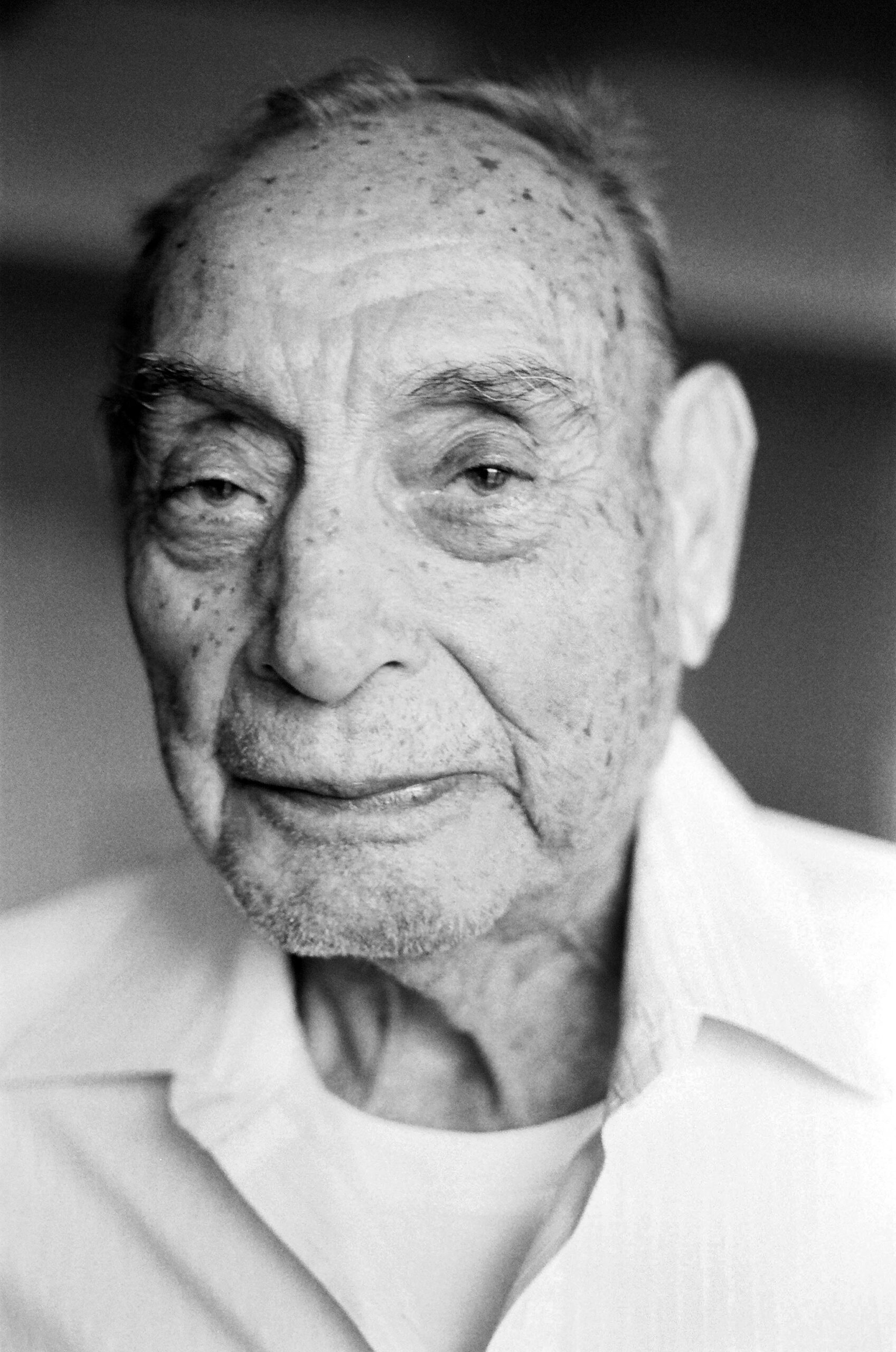
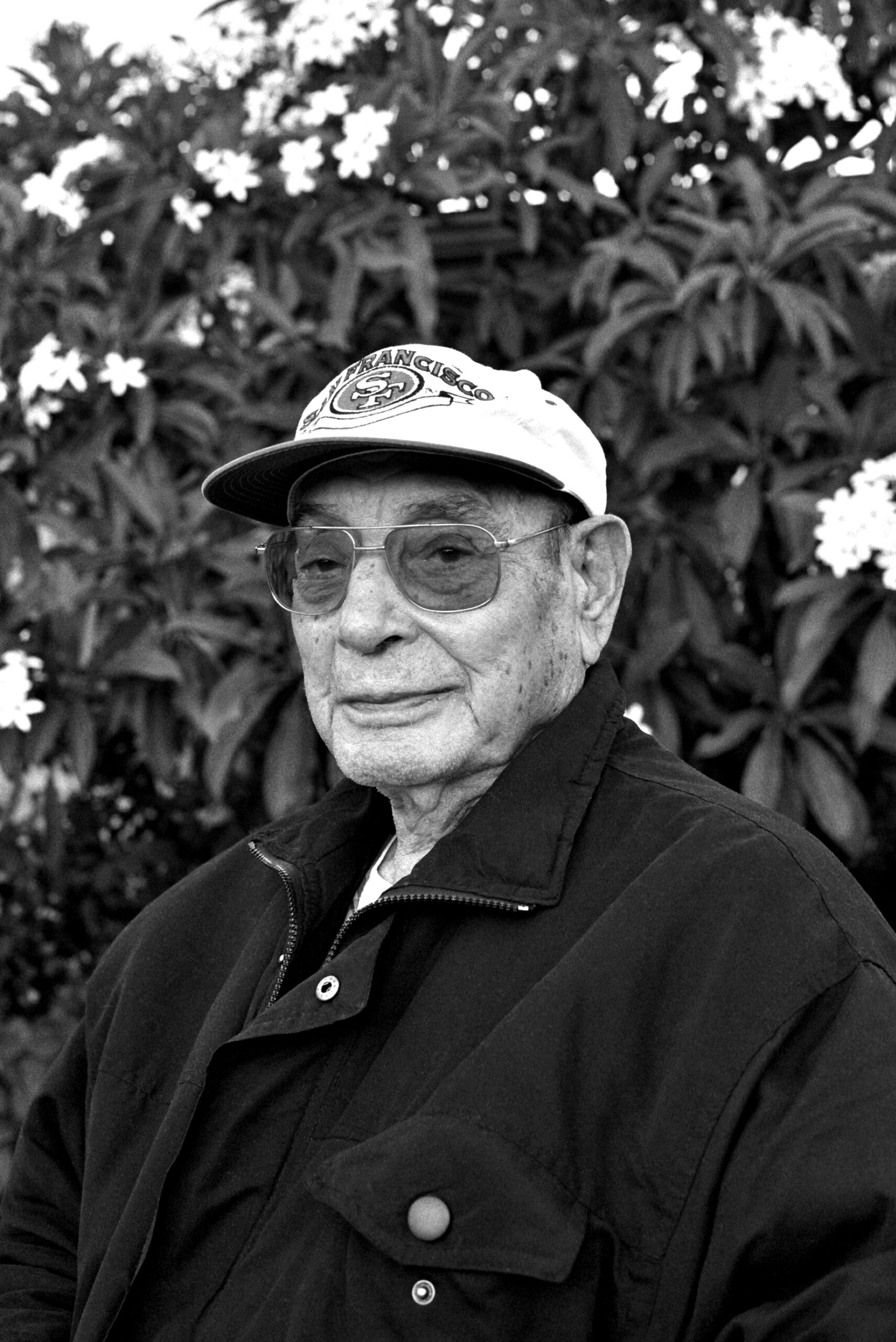
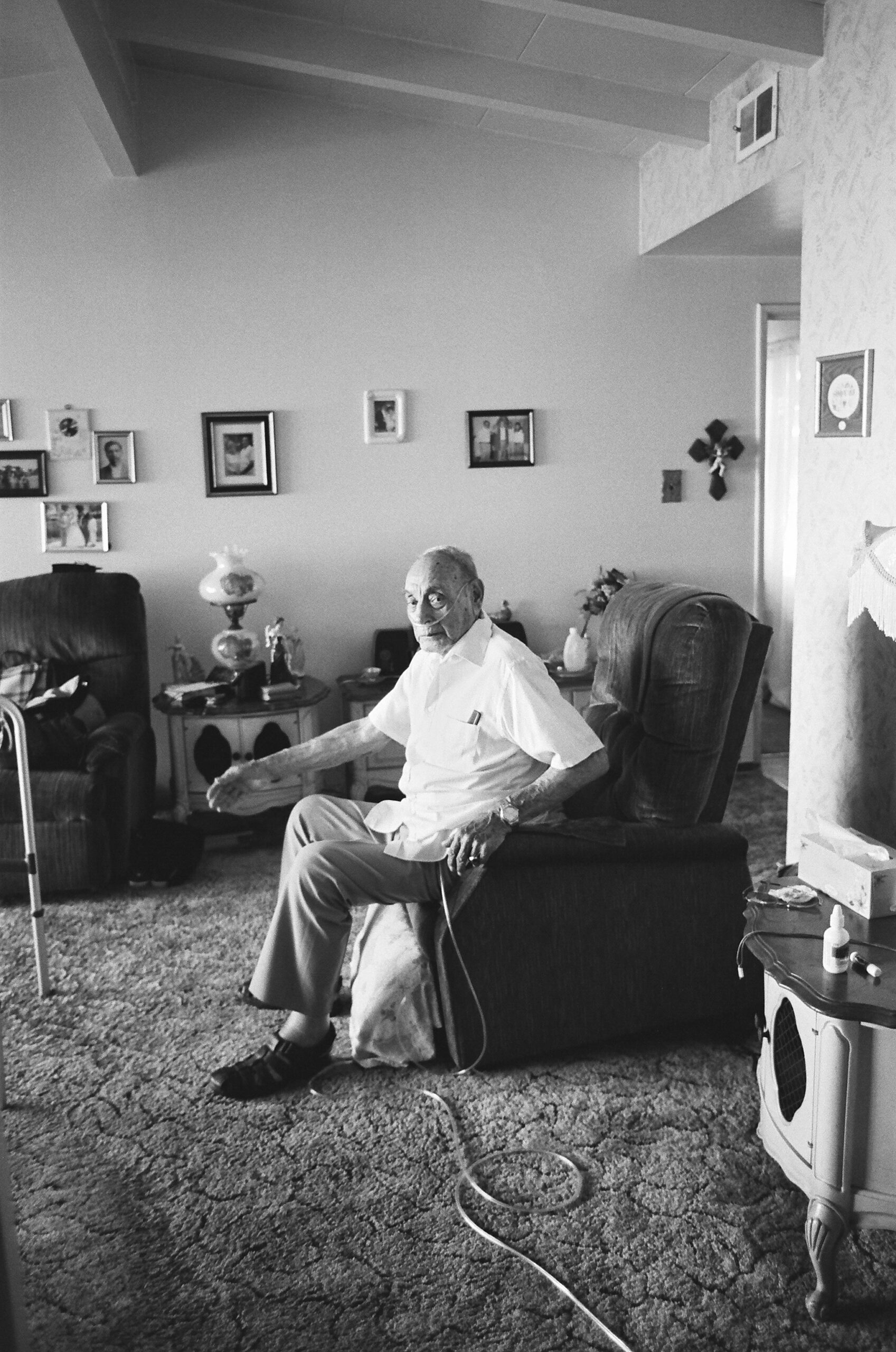
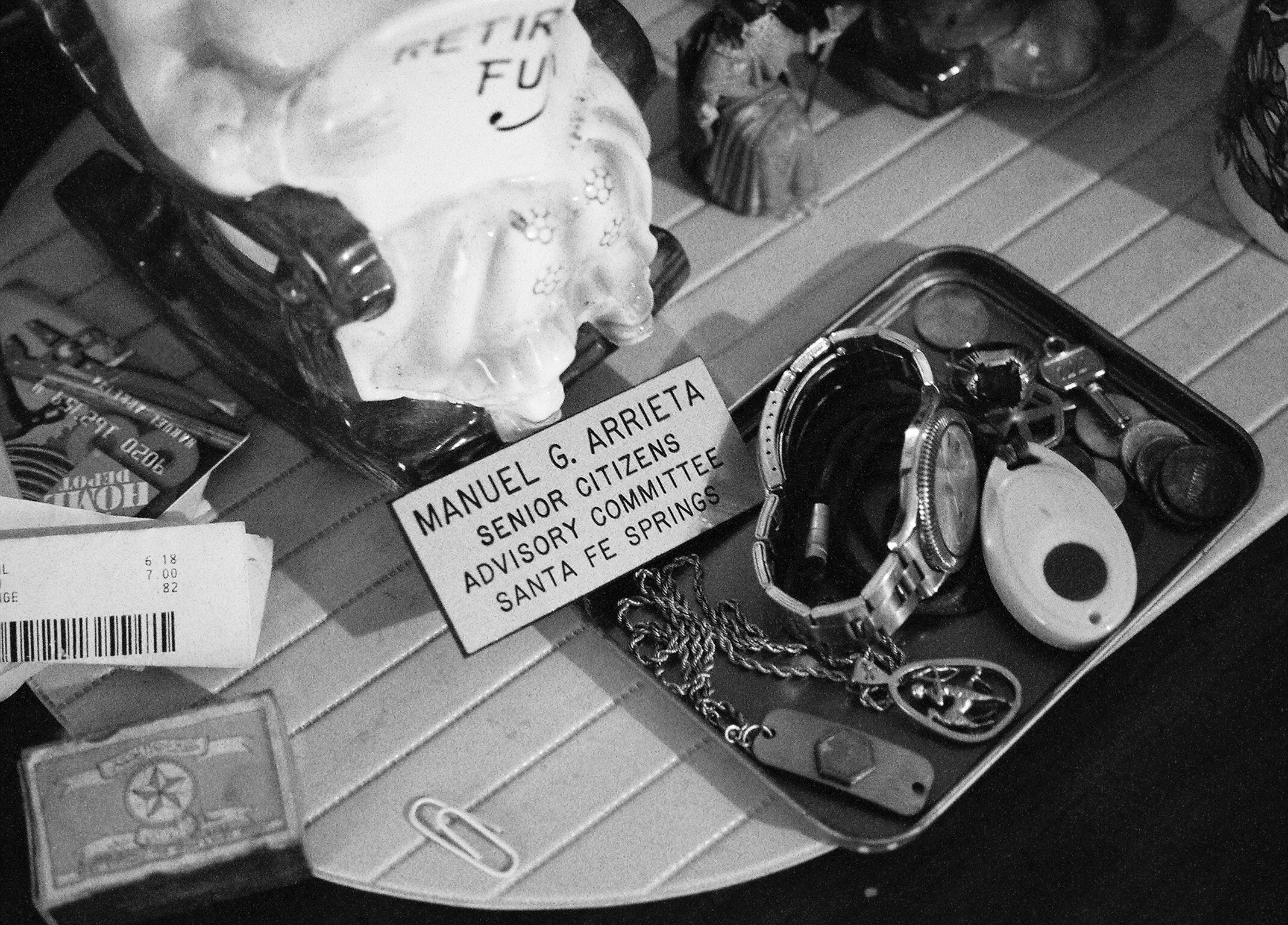
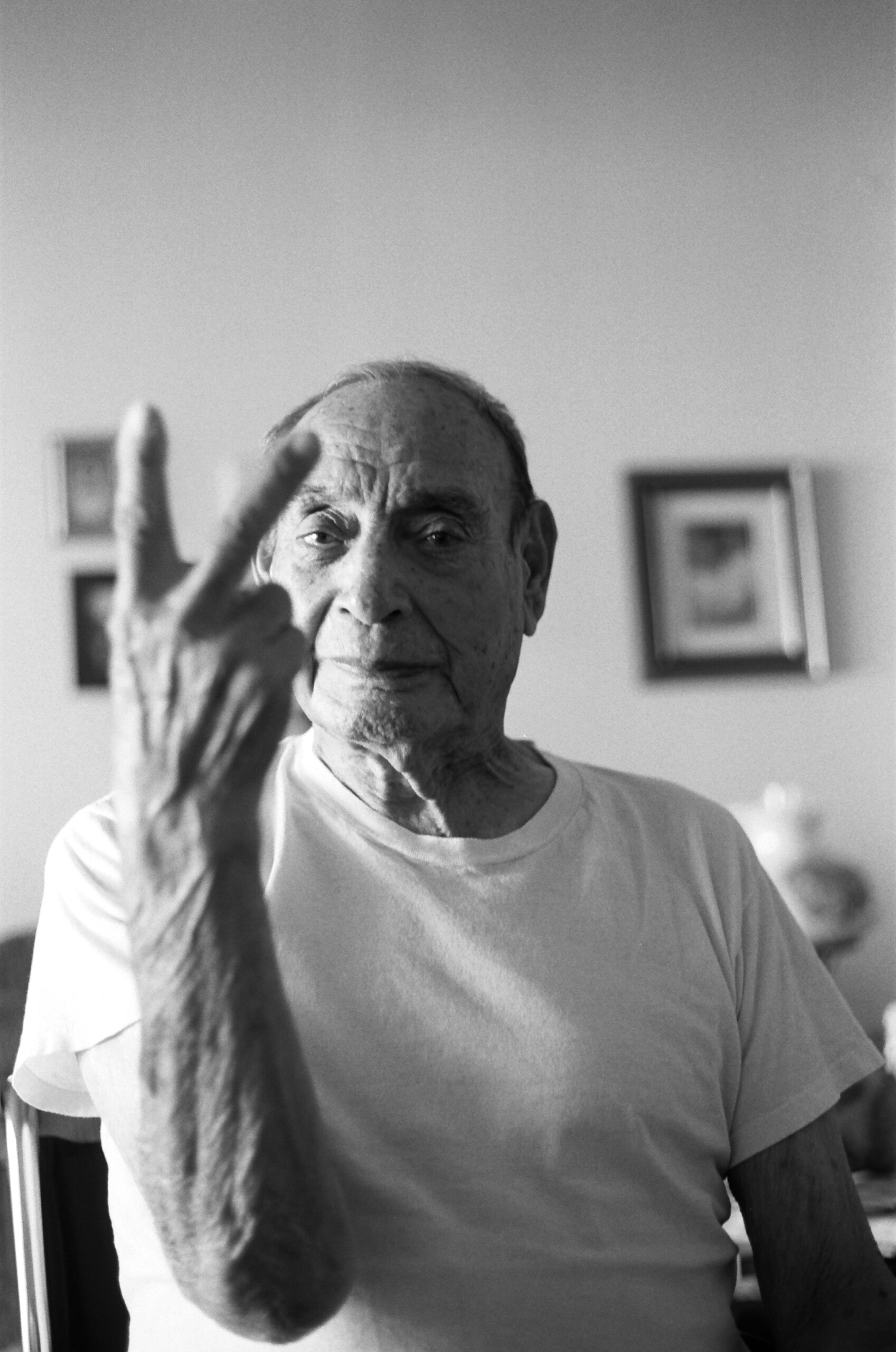
Mr. Arrieta was my roommate when I first moved to Los Angeles.

As a young photographer growing up in Sacramento, I dreamed of moving to L.A. to launch my photography career, but I wasn’t sure how I’d make it happen. One day, I shared my dream with a friend, and she mentioned she was looking for someone to look after her dad who happened to live in Southern California. If I was willing to keep an eye on her 92-year-old dad, she said, I could live in the home for free

It was an unconventional arrangement, but exactly what I needed. Moving to L.A. allowed me to intern with legendary photographer Estevan Oriol and begin working with some of my favorite publications. But the greatest gift from this time in my life was gaining the gift of a grandpa.

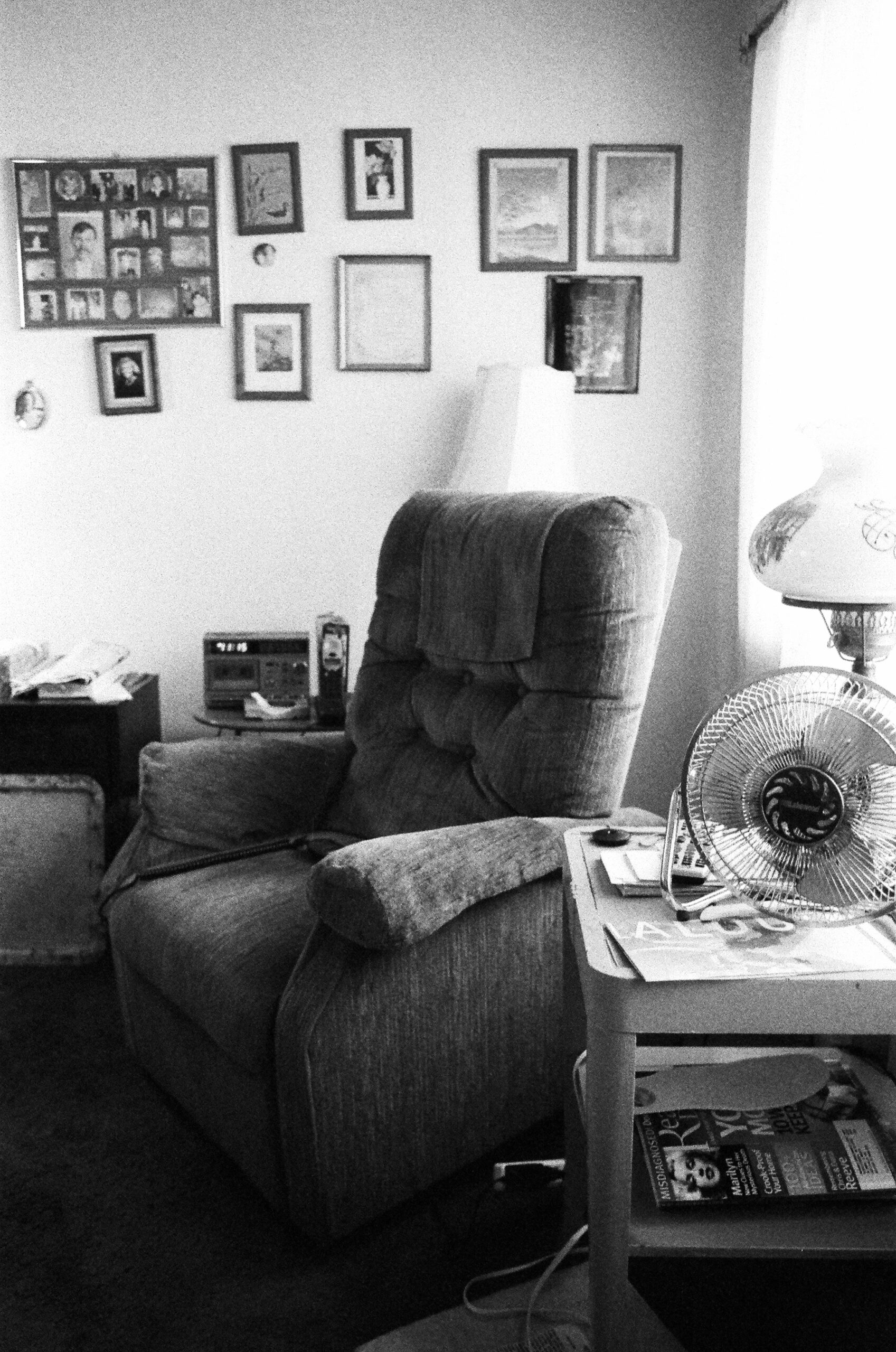
I never had a close relationship with my own grandfathers, so becoming Mr. Arrieta’s honorary granddaughter was something I didn’t know I needed. He was a kind, gentle man who spent his days tinkering in the garage and napping in his recliner. On weekends, he’d knock on my bedroom door bright and early to see if I was awake, so we could head to his favorite diner, Scotties. That became our ritual, and I loved it.

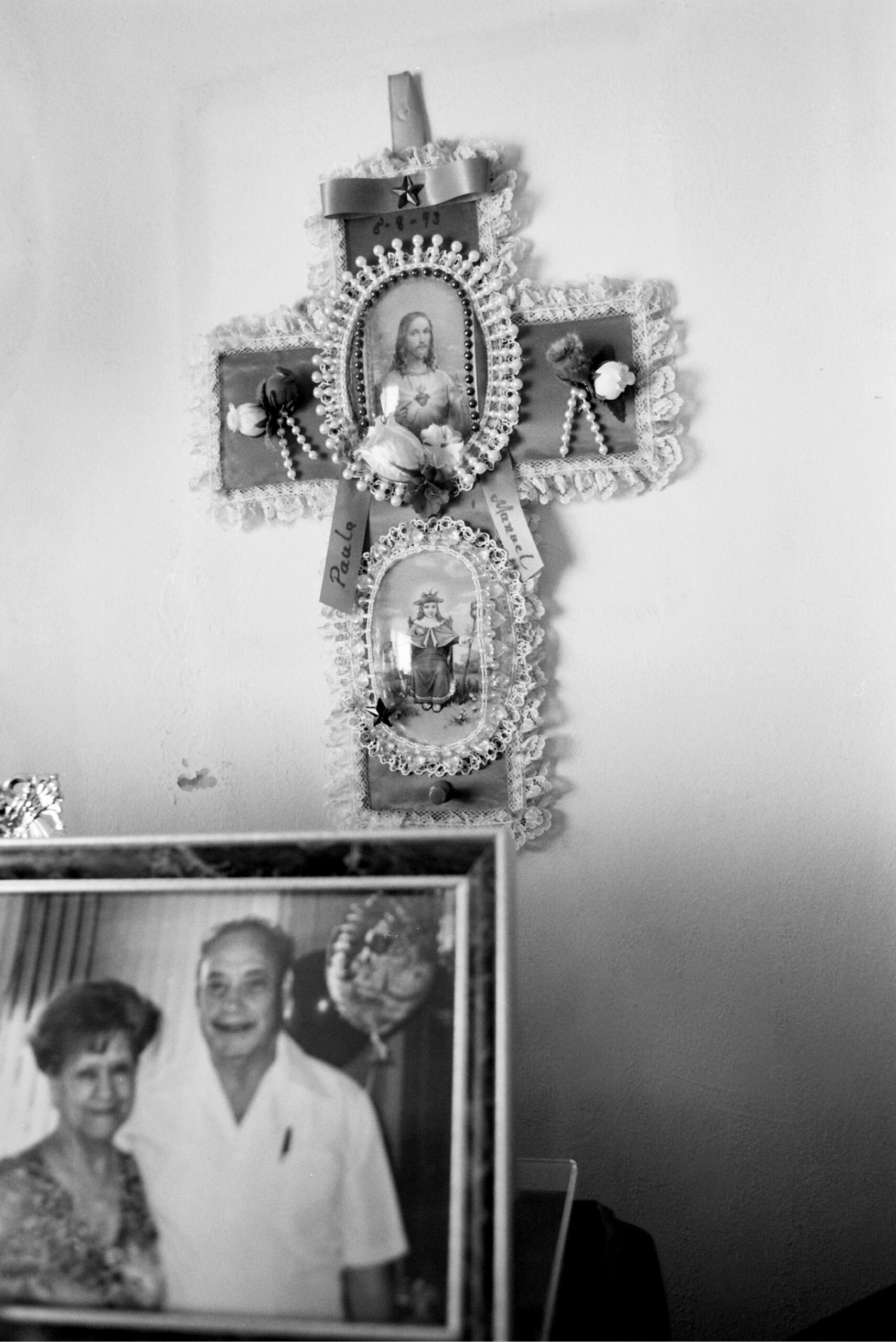
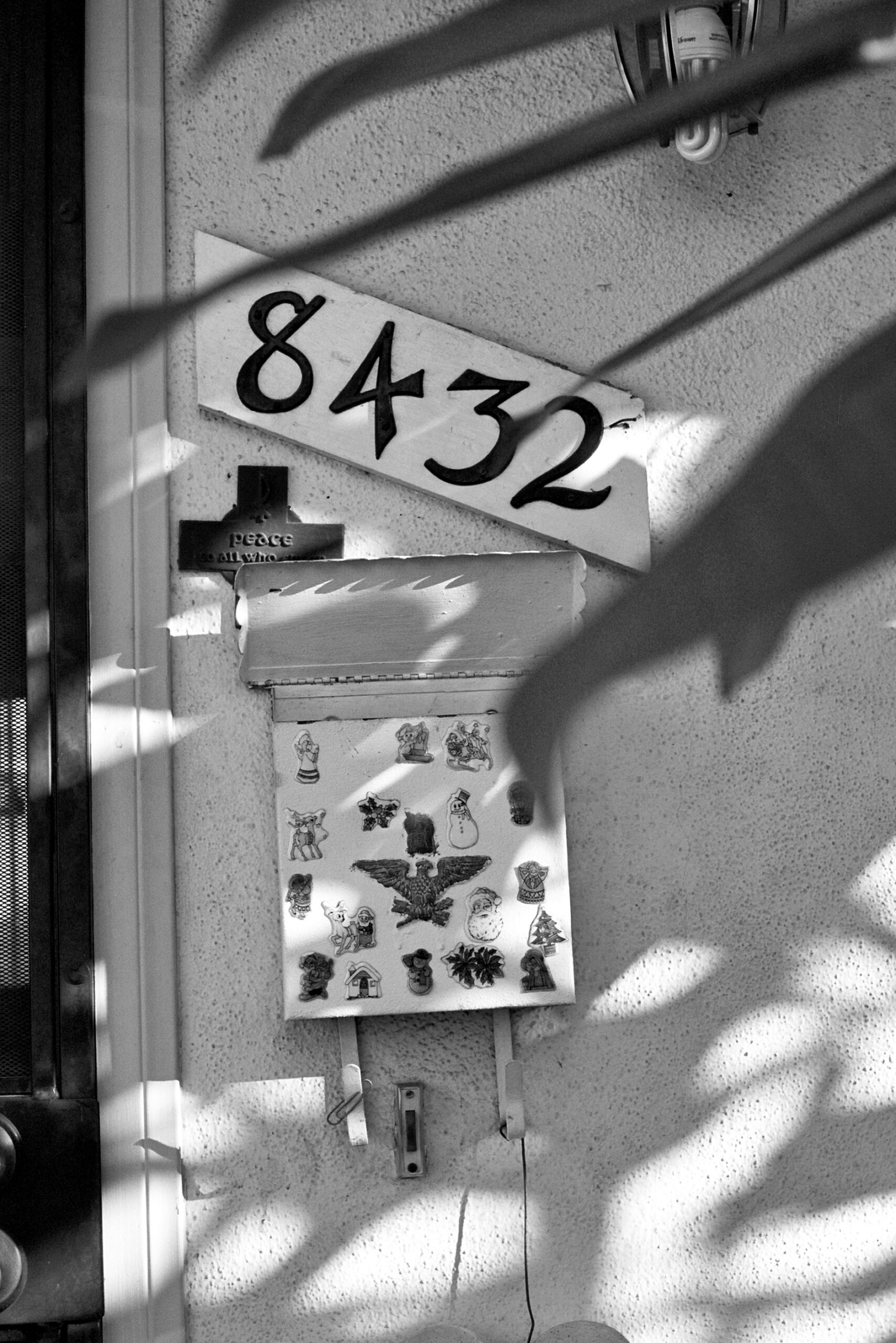
As our friendship developed, I began documenting his day-to-day activities and moments at home not just to process the experience, but to preserve it. Mr. Arrieta had such a kind spirit, and I wanted to create images that reflected that warmth. He brought so much joy and peace to my life, and I hoped that through these photographs, I could offer something meaningful back to his family.

Eventually, Mr. Arrieta’s health declined, and nurses began caring for him full time. Witnessing that transition was difficult, but my camera helped me navigate the emotions. Photography became a way to honor the dignity of his final chapter, and to hold onto the moments we shared.

Mr. Arrieta is no longer with us. But the images I made during that time are a reminder of our brief yet meaningful bond and a way of honoring the grandfather I never had.

To see more of this project, click here

Instagram

Suzanne Sease is a creative consultant and former ad-agency senior art buyer. She works with both emerging and established photographers and illustrators to create cohesive, persuasive presentations that clients can’t resist.

Suzanne offers something rare: an insider’s perspective on how client’s source creative talent. Her deep understanding of the industry is underscored by her impressive resume: 11 years as senior art buyer at The Martin Agency, seven years as an art producer for Capital One, and stints with the art-buying department at Kaplan-Thaler and the creative department at Best Buy, where she applied her expertise to reviewing bids to see which were most likely to come in on budget. Over the years, Suzanne has worked with a wildly diverse range of clients, including Seiko, Wrangler, Bank One, AFLAC, and Clairol Herbal Essence. Now, as a consultant, she is equipped to problem-solve for her clients from an unusually dynamic point of view.

As a longtime member of the photo community, Suzanne is also dedicated to giving back. Through her Art of the Personal Project column on the popular website aphotoeditor.com, she highlights notable personal projects by well-known and up-and-coming photographers. The column offers these artists excellent exposure while reflecting Suzanne’s passion for powerful imagery.

Instagram

The Art of the Personal Project: Neil DaCosta

The Art of the Personal Project is a crucial element to let potential buyers see how you think creatively on your own.  I am drawn to personal projects that have an interesting vision or that show something I have never seen before.  In this thread, I’ll include a link to each personal project with the artist statement so you can see more of the project. Please note: This thread is not affiliated with any company; I’m just featuring projects that I find.  Please DO NOT send me your work.  I do not take submissions.


Today’s featured artist: Neil DaCosta

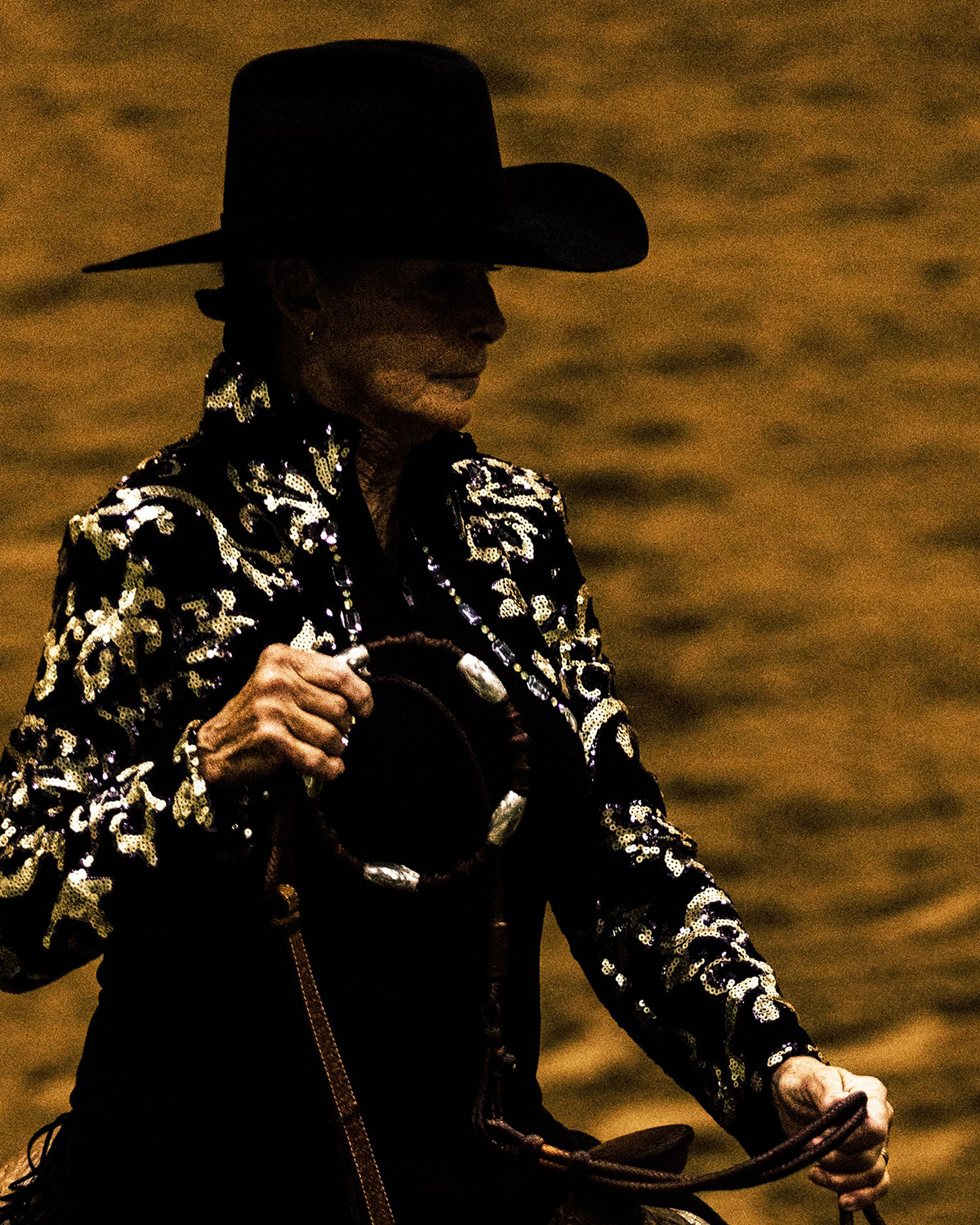
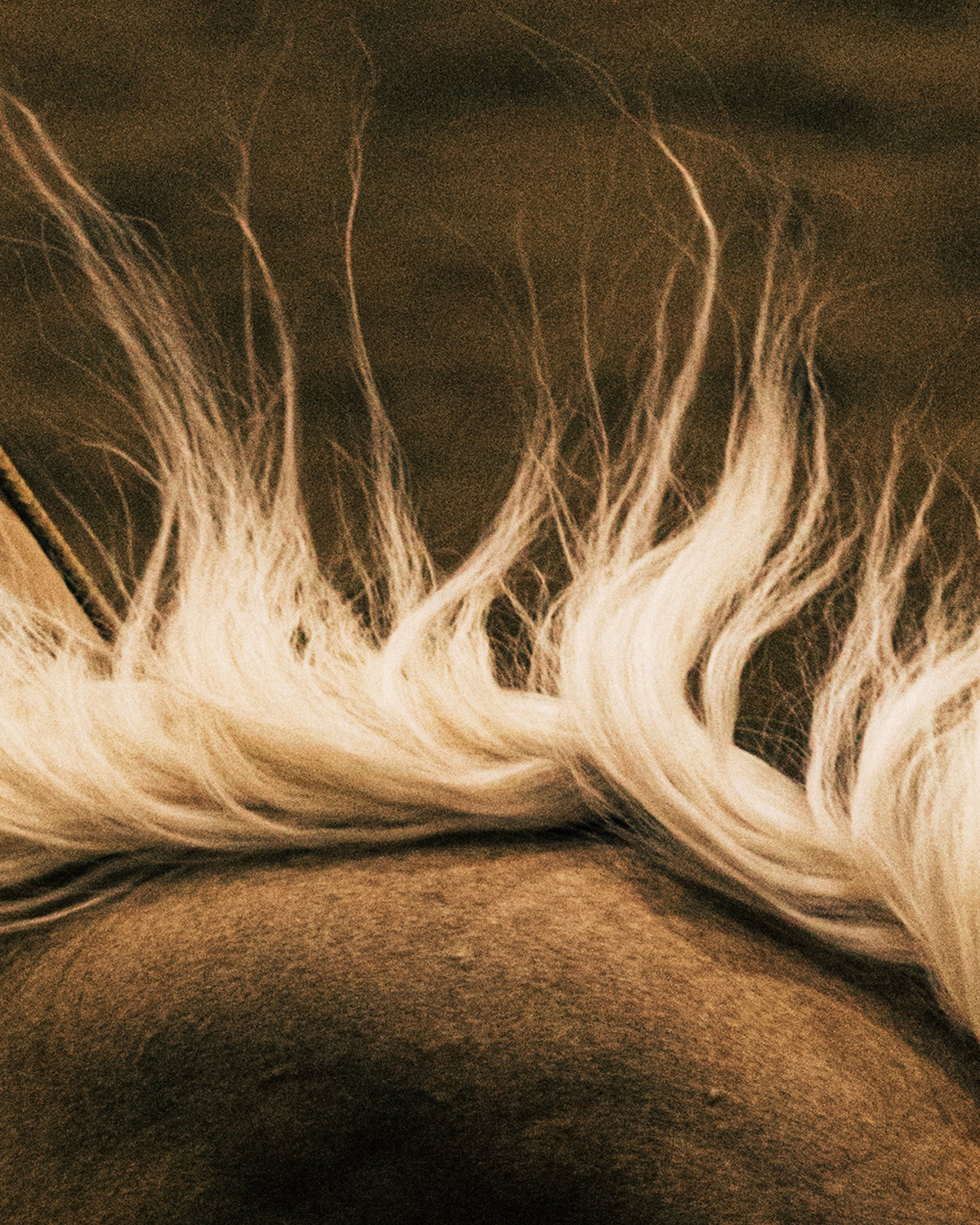
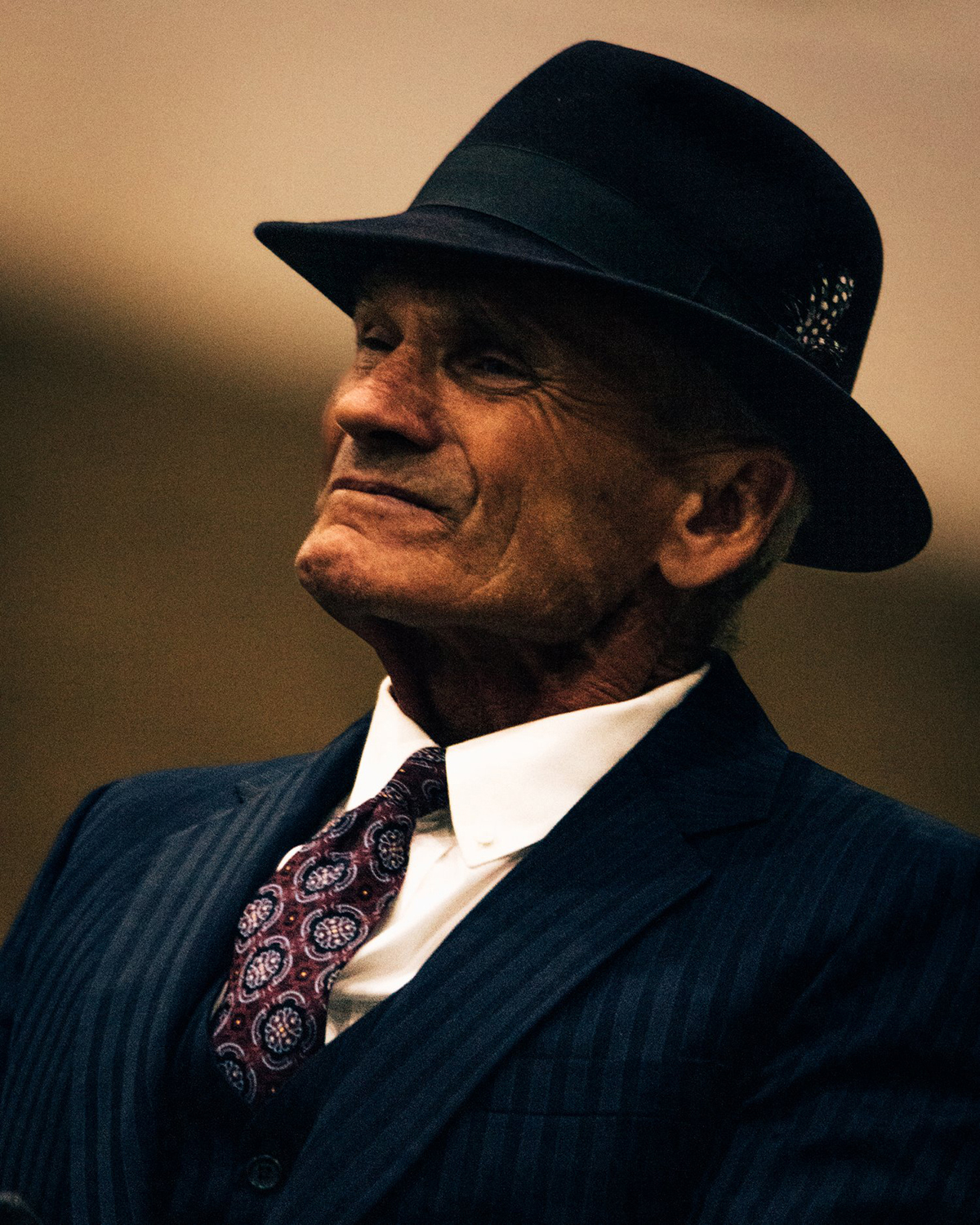
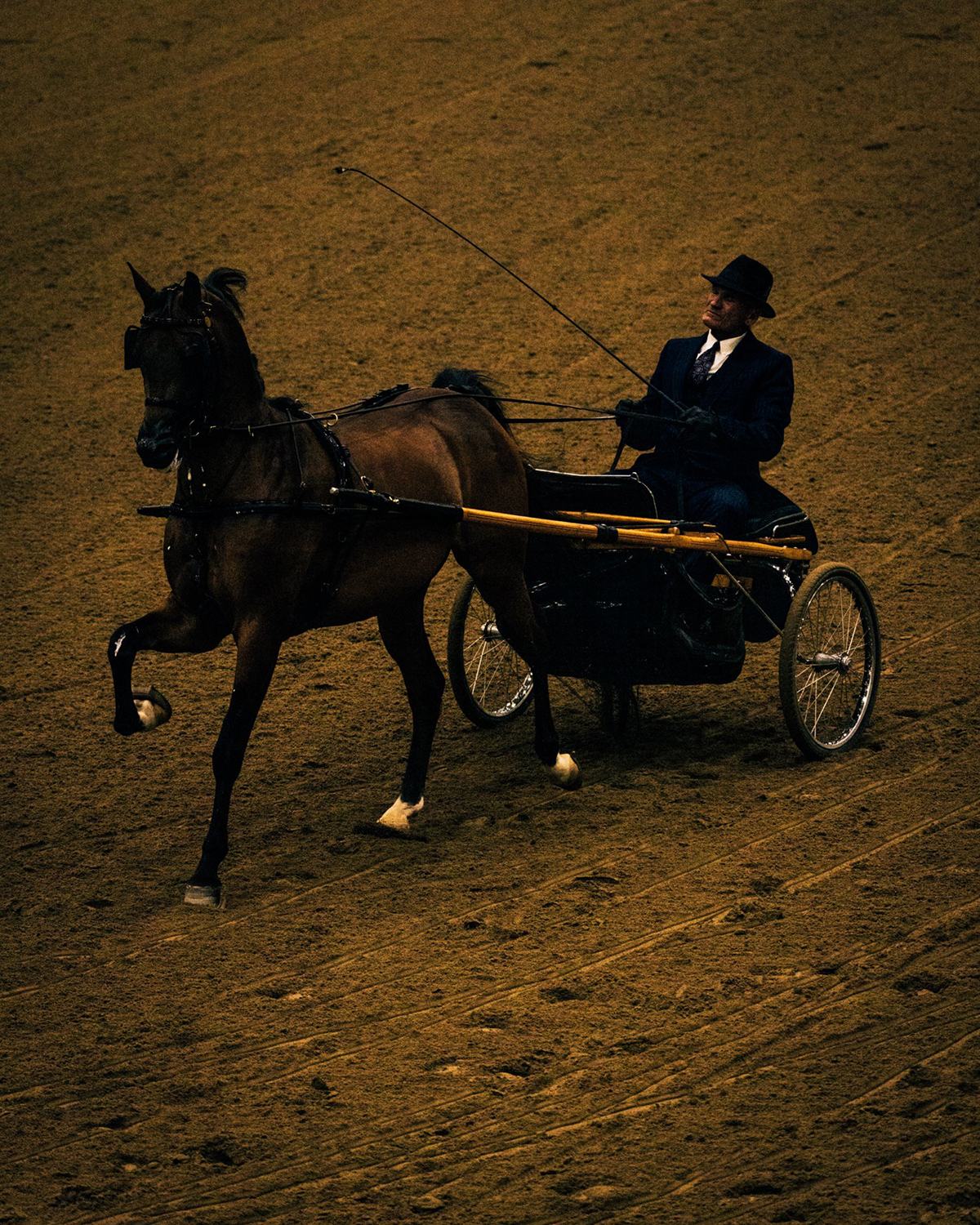
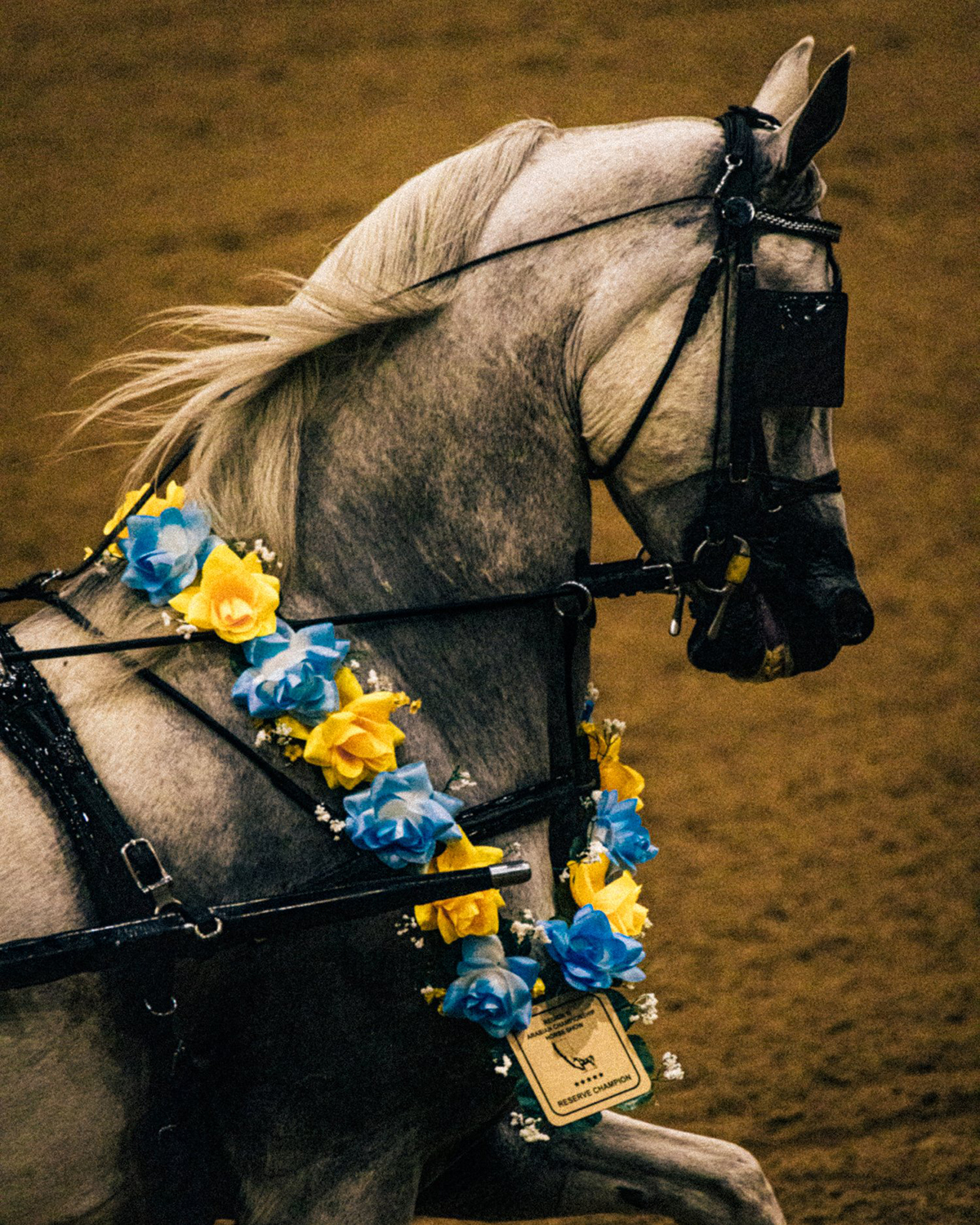
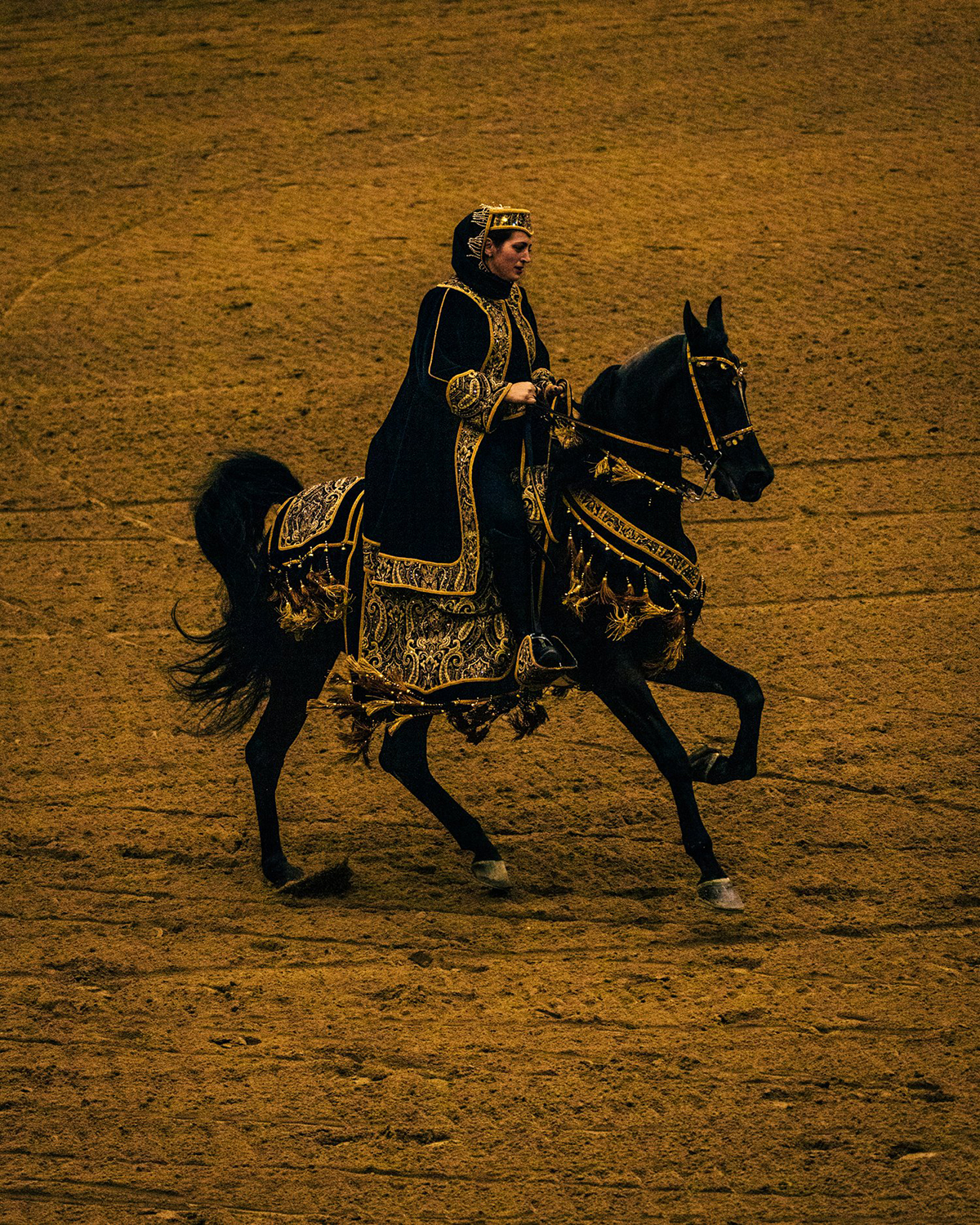
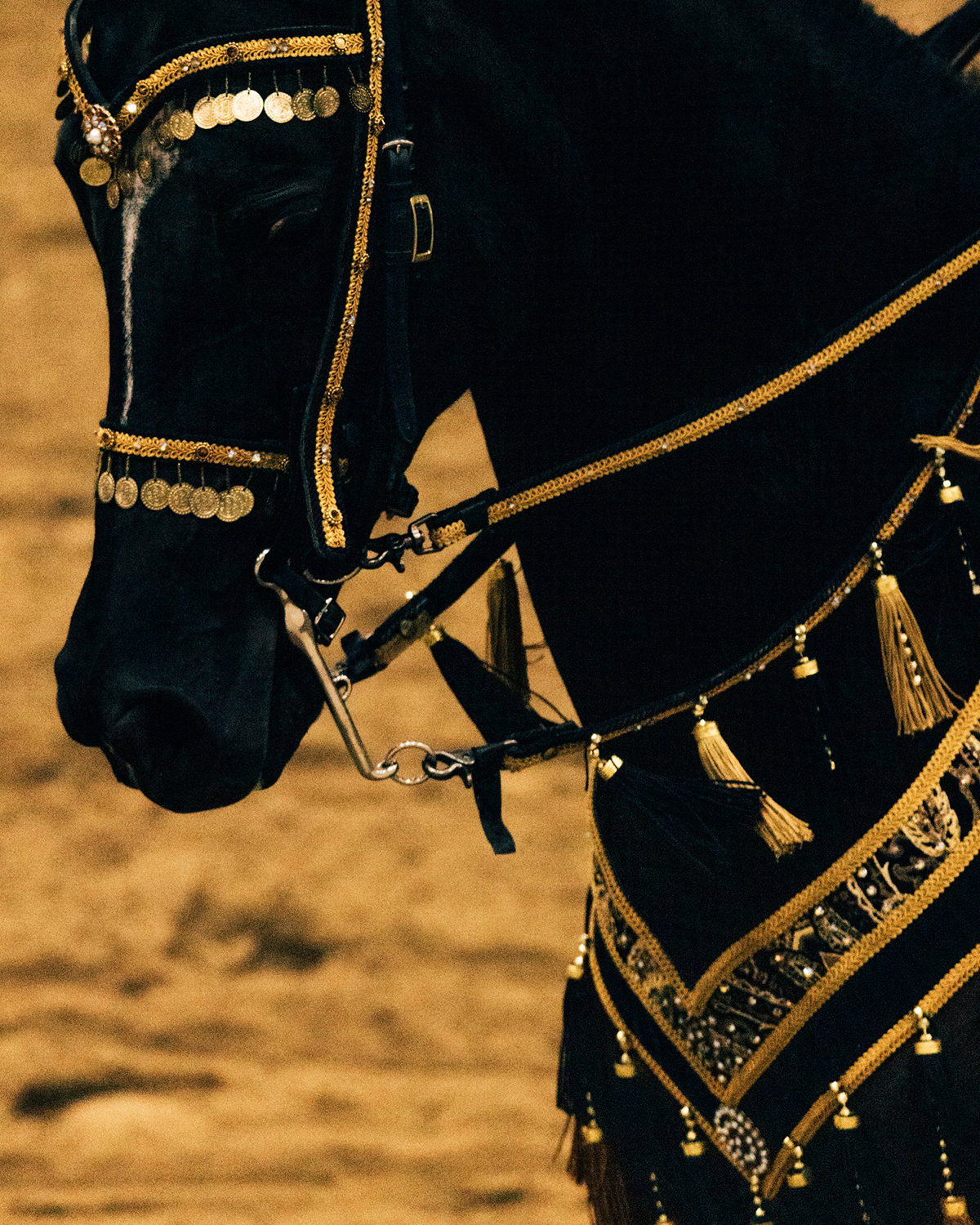
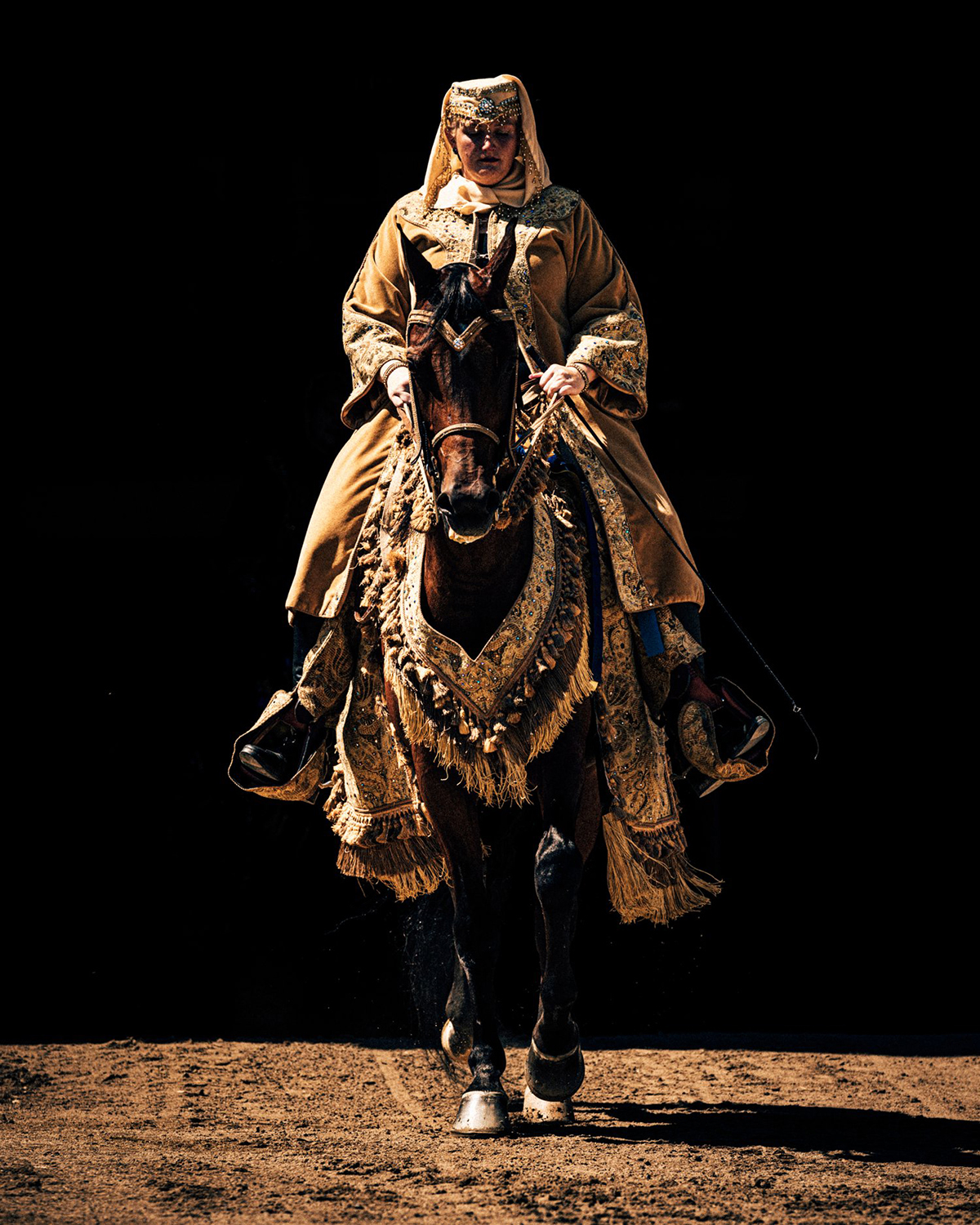
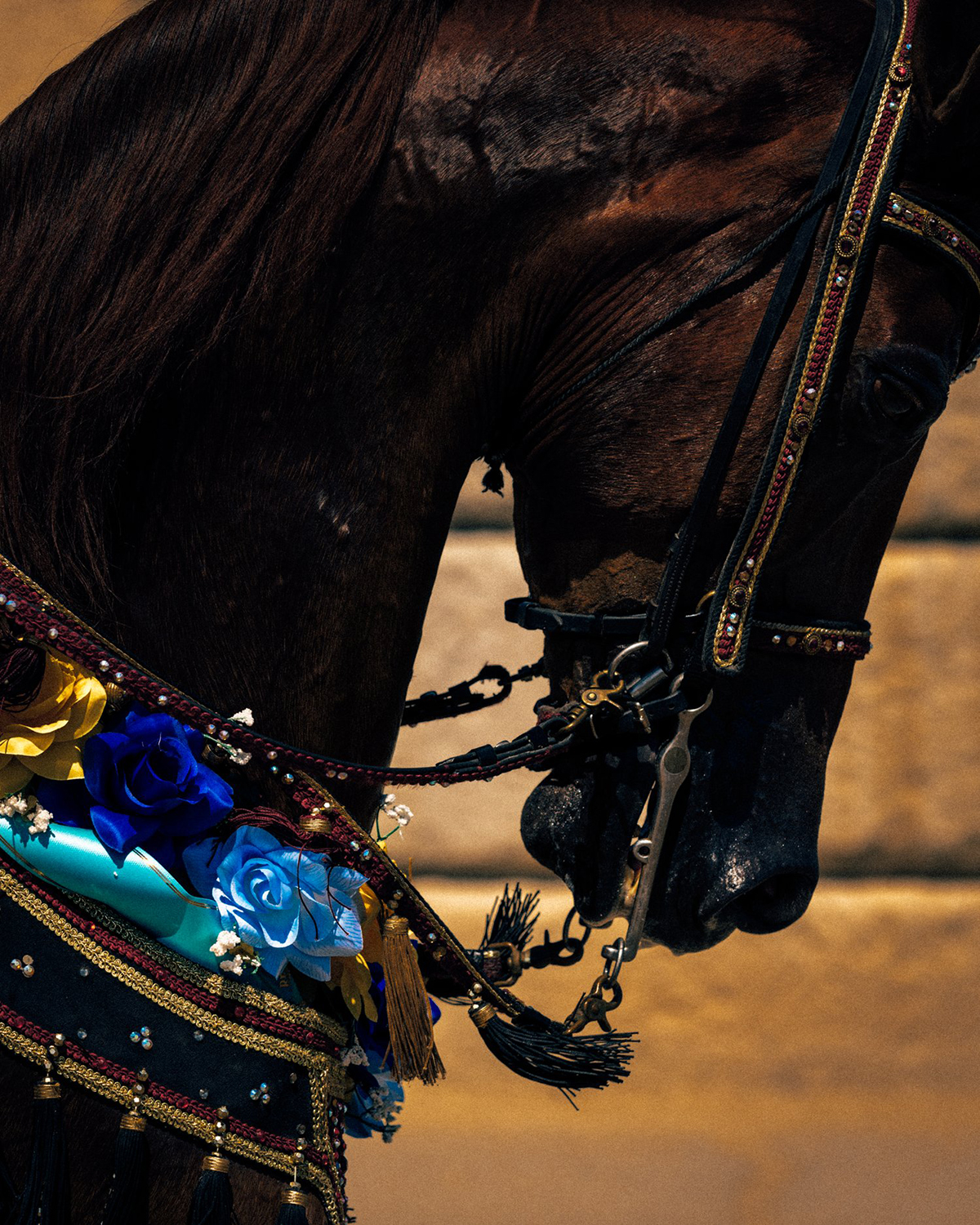
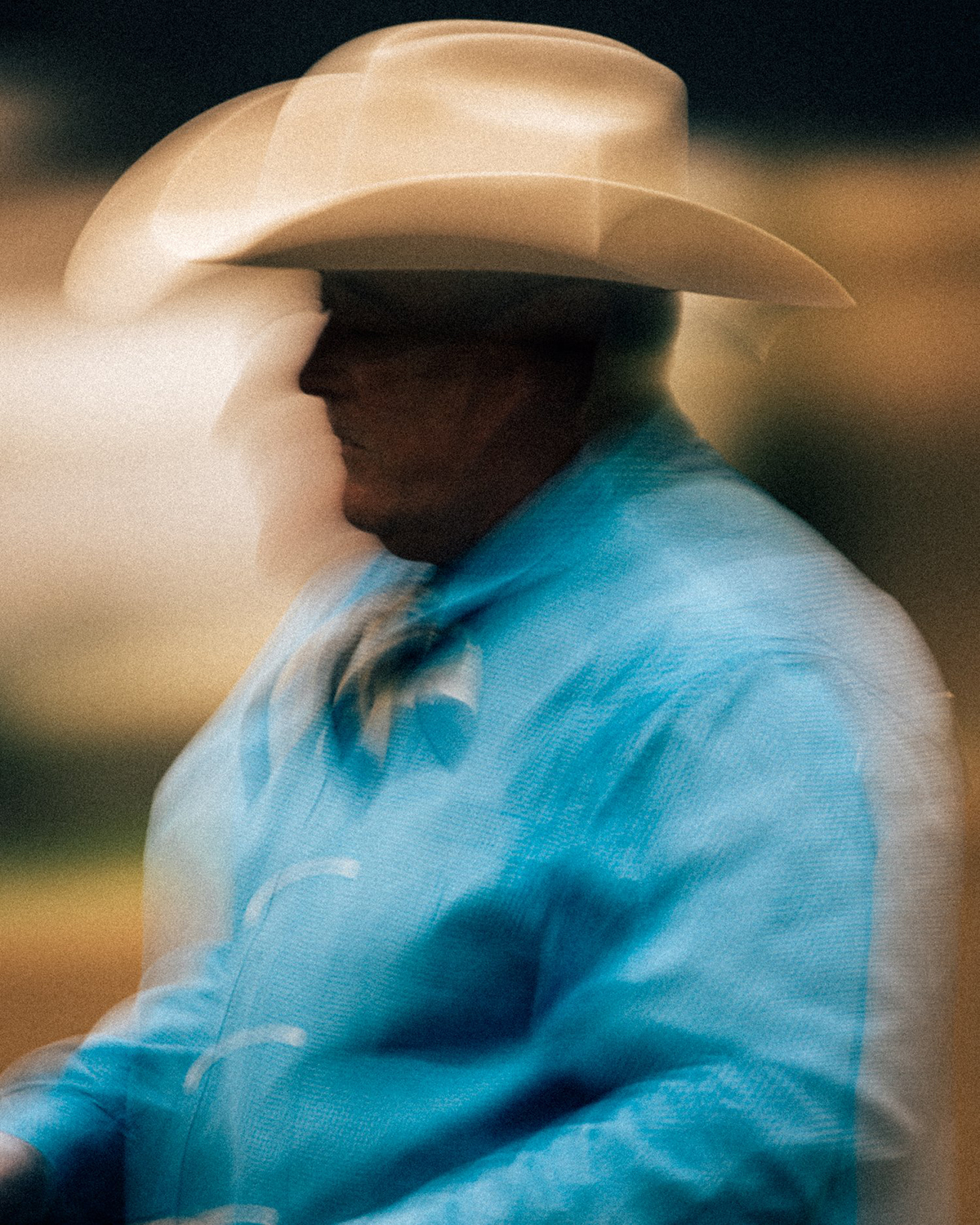
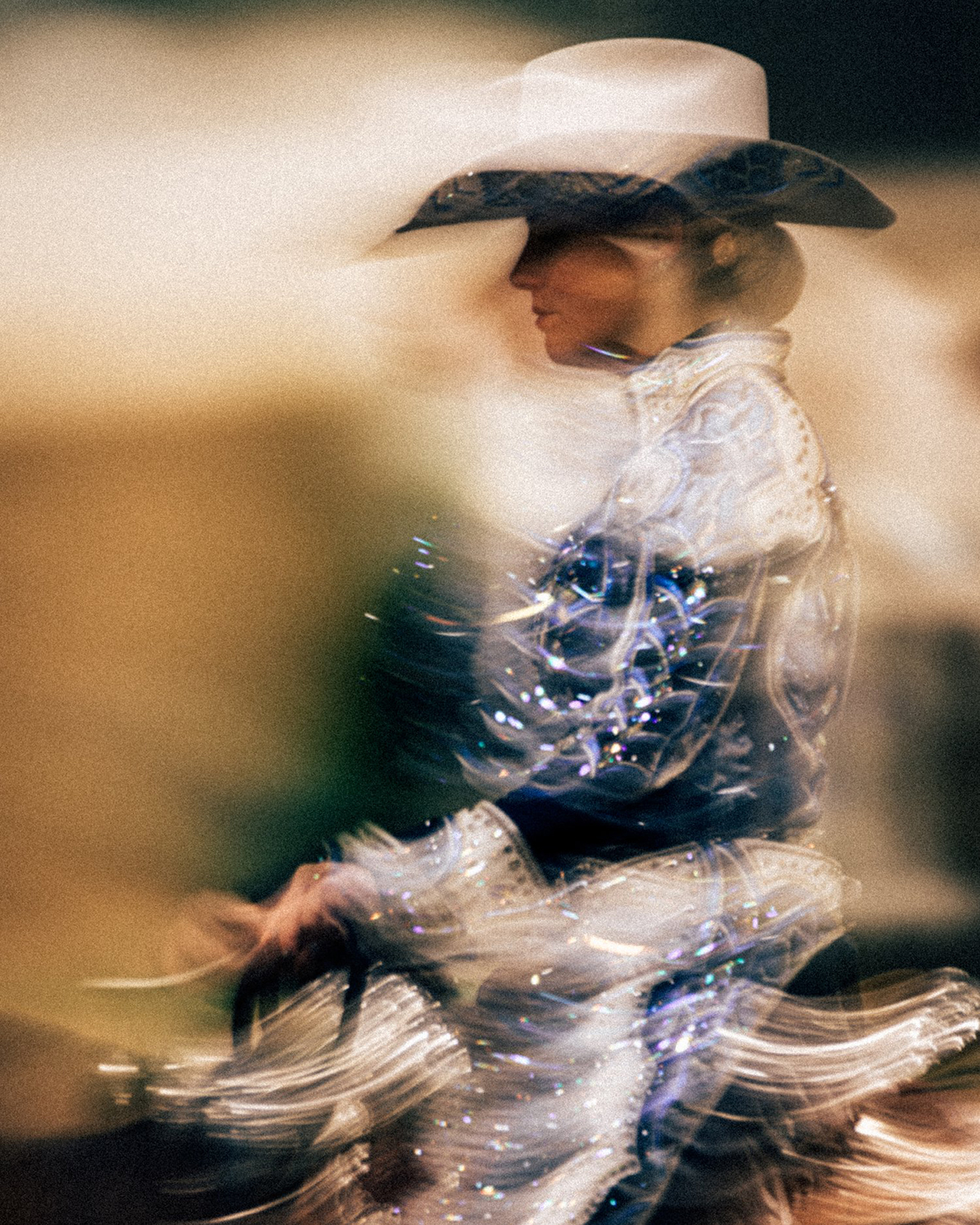
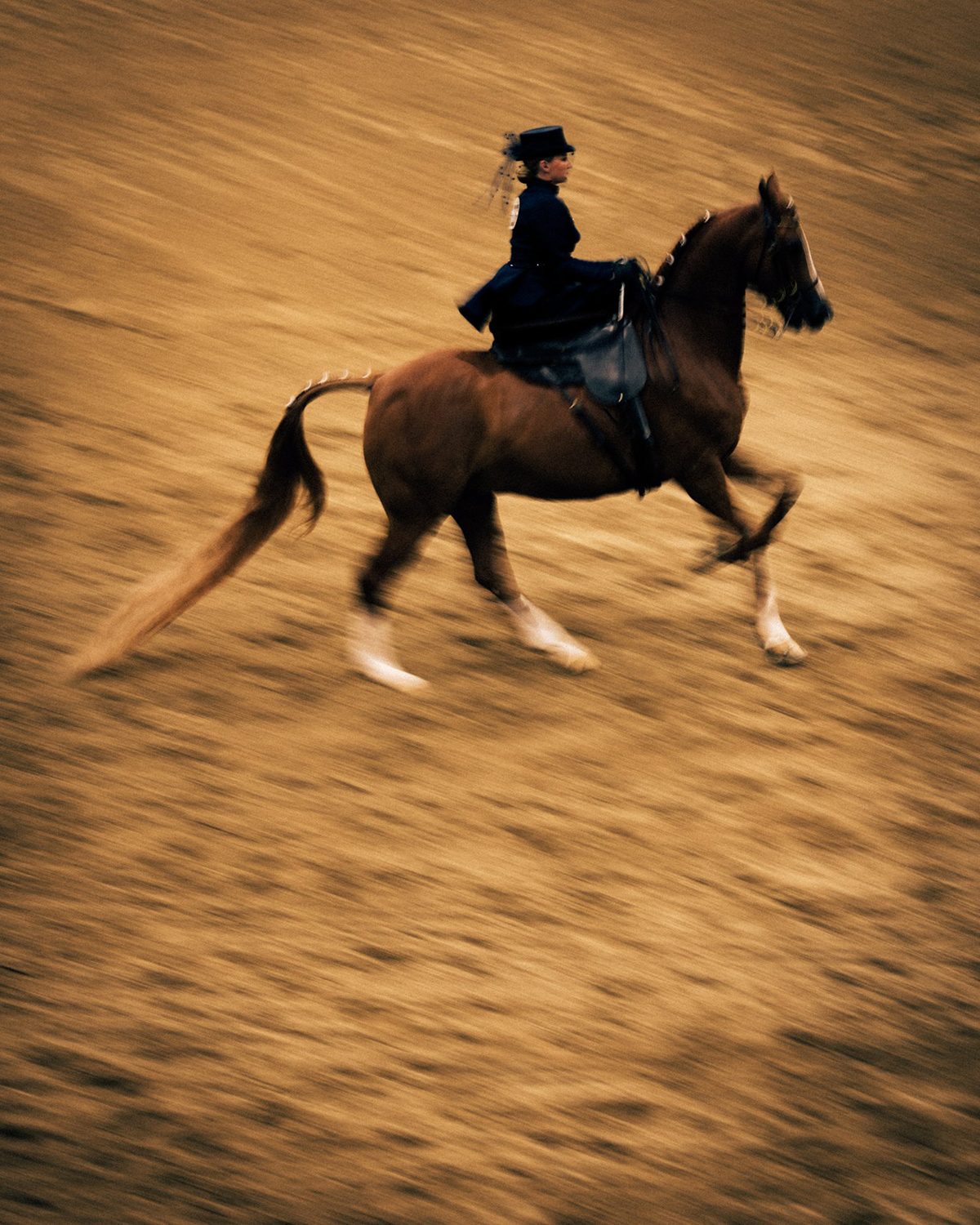
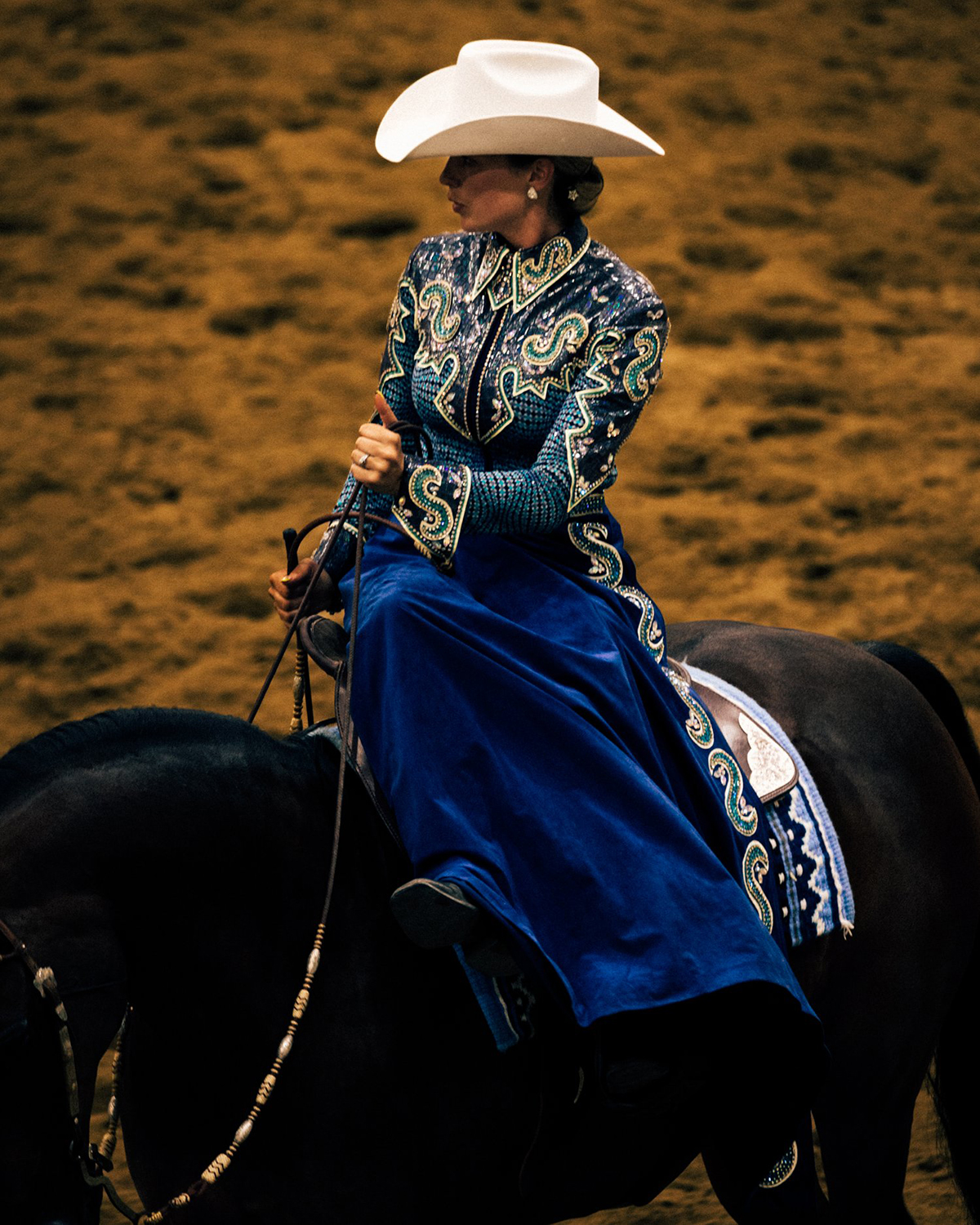
While searching for interesting subjects around Truckee, CA (where I had recently relocated to), I saw that an Arabian Horse Show was happening at the Reno Spark Livestock Events Center. Previously, I had been to the venue to photograph a go-kart race and knew it had some lighting/background constraints. Based on this prior knowledge, I decided that I wanted to focus on the participants of the event and keep the space it was being held in nebulous.

However, I had no idea what happens at an Arabian Horse Show and decided to wing it. Occasionally I like shooting personal projects with no prior research or understanding of the subject, forcing myself to be creative on the spot. This correlates to capturing unexpected images on paid assignments, which can be a nice added bonus.

After looking at the packed schedule, I decided to go on a day that had interesting sounding classes (Native Dress, Side Saddle, and Carriage Pleasure Driving). Again, I had no idea what to expect, but my intuition paid off. Armed with a long zoom lens, I headed down to Reno for a fun day filled with Arabian horses.


To see more of this project, click here

Instagram

Suzanne Sease is a creative consultant and former ad-agency senior art buyer. She works with both emerging and established photographers and illustrators to create cohesive, persuasive presentations that clients can’t resist.

Suzanne offers something rare: an insider’s perspective on how client’s source creative talent. Her deep understanding of the industry is underscored by her impressive resume: 11 years as senior art buyer at The Martin Agency, seven years as an art producer for Capital One, and stints with the art-buying department at Kaplan-Thaler and the creative department at Best Buy, where she applied her expertise to reviewing bids to see which were most likely to come in on budget. Over the years, Suzanne has worked with a wildly diverse range of clients, including Seiko, Wrangler, Bank One, AFLAC, and Clairol Herbal Essence. Now, as a consultant, she is equipped to problem-solve for her clients from an unusually dynamic point of view.

As a longtime member of the photo community, Suzanne is also dedicated to giving back. Through her Art of the Personal Project column on the popular website aphotoeditor.com, she highlights notable personal projects by well-known and up-and-coming photographers. The column offers these artists excellent exposure while reflecting Suzanne’s passion for powerful imagery.

Instagram