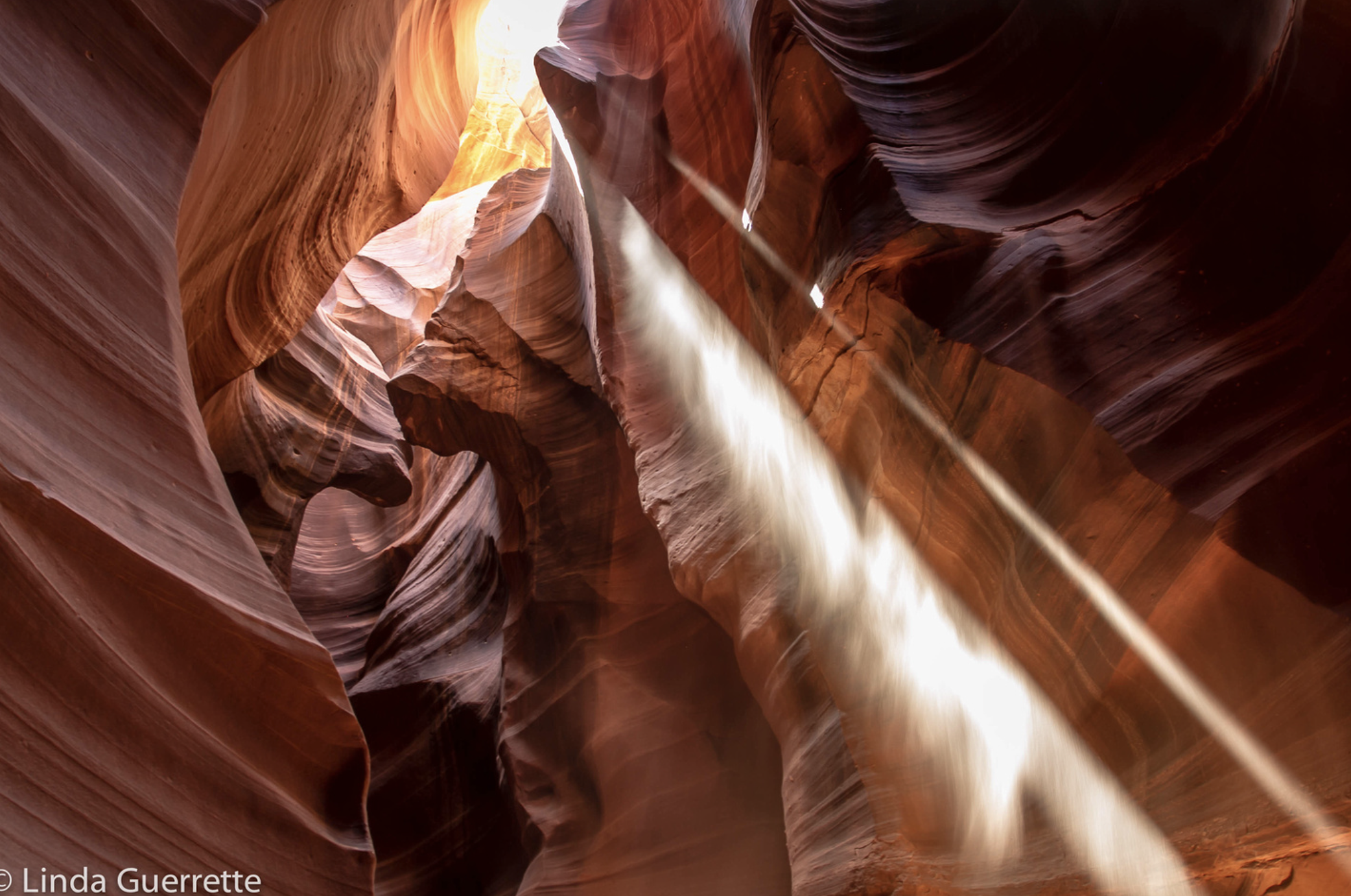
Heidi: How long have you been taking photos and how did your parents inspire you?
Linda: I’ve been taking photos for a long time but professionally for the last 10 years. Both my parents had a very strong work ethic but also knew the value of getting away to ski, fish, camp, ride bikes and adventure. I’m very fortunate to have grown up cherishing experiences as a family and individually.
You started out in the ski industry, how many women photographers/coach were on the scene when you started?
When I started there were few women coaches and even fewer photographers. Times are changing some but there is certainly a large gap in numbers between the genders. It’s encouraging to see more young girls and women becoming creatives in the action sport world becoming role models for future young girls.
What constitutes a worthy spot to hang out while the participants come through?
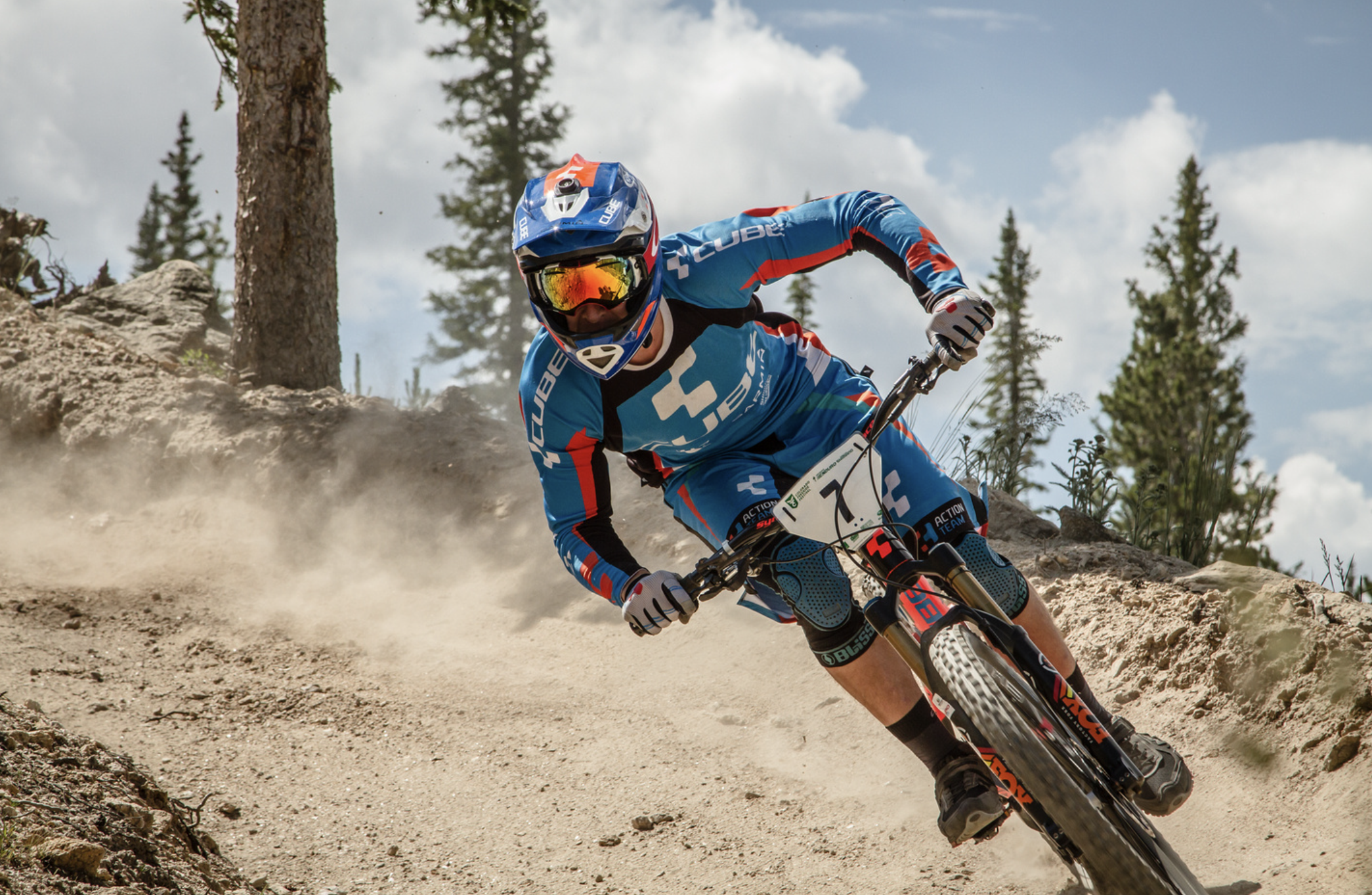
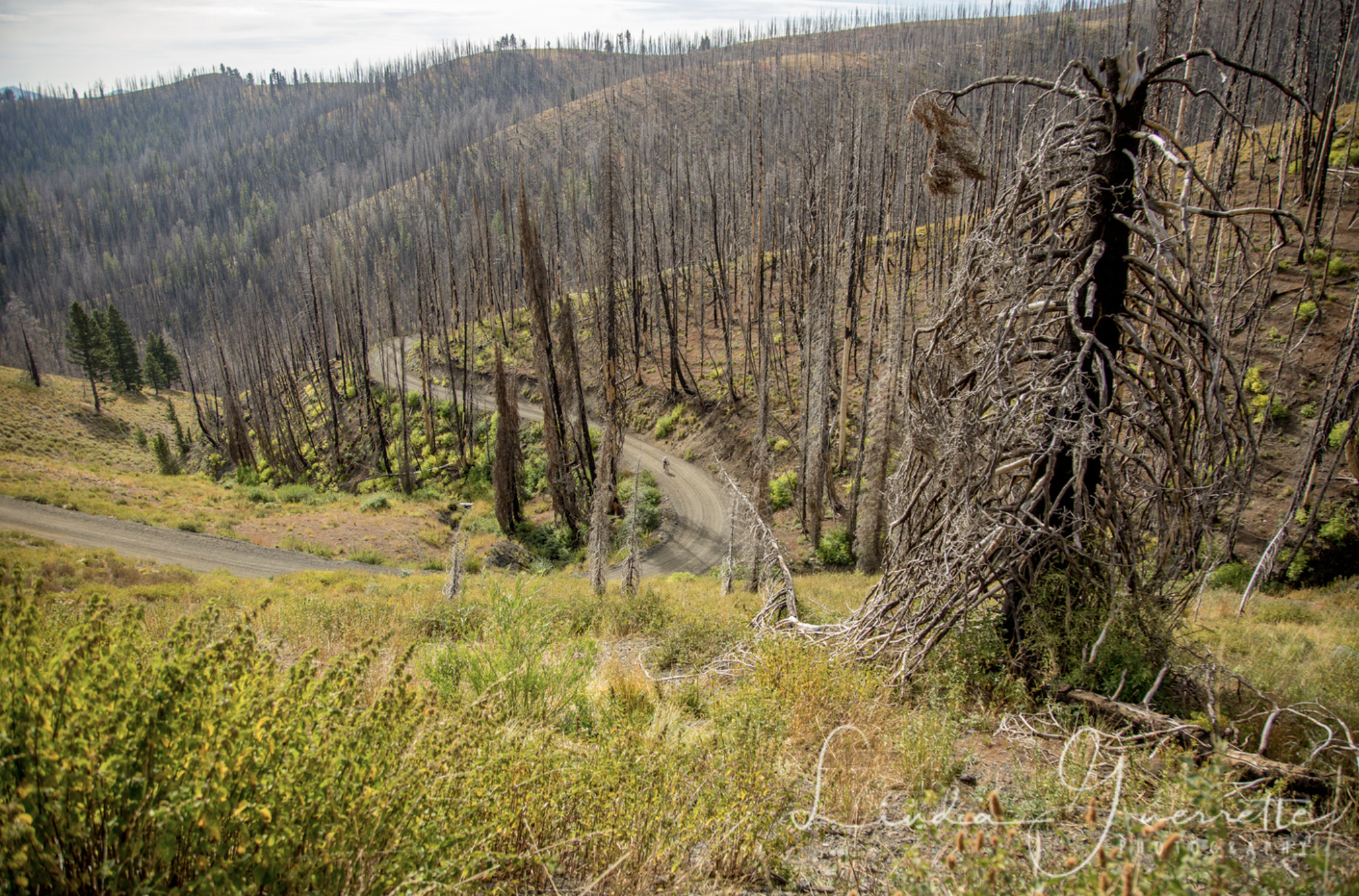
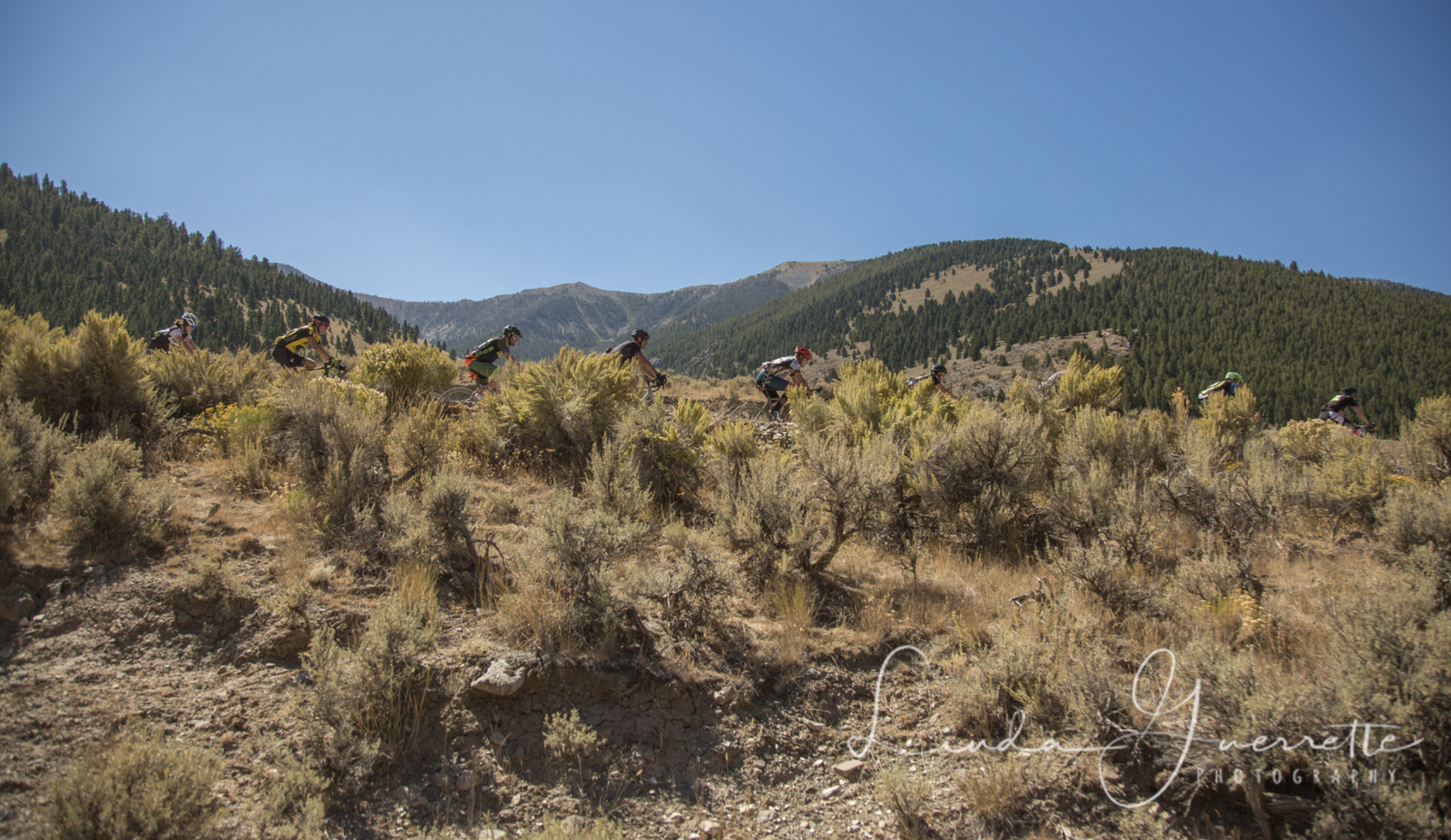
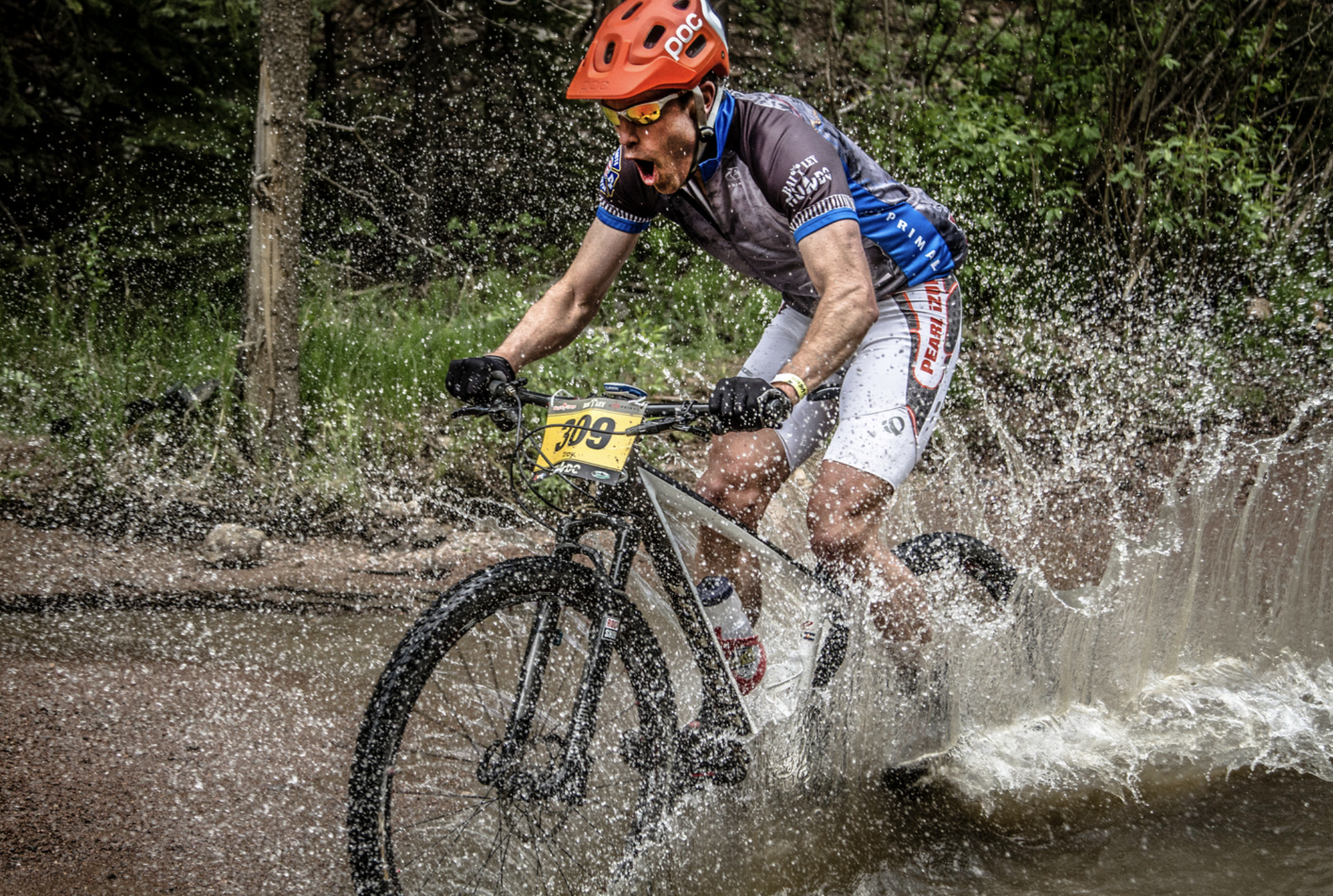
I like to create a sense of place so I’ll scope out locations that will fulfill that criteria. I like to have the action come to me based on where I position myself. I will generally position myself where body movement and emotional expression can and will take place. I aim to have the subject shape the image. It’s most rewarding when I feel a connection with an athlete through the lens.
What emotions do you look for?
I look for physical engagement first which typically leads to exhibiting emotions of all kinds. The range is from focus, excitement, joy, satisfaction.
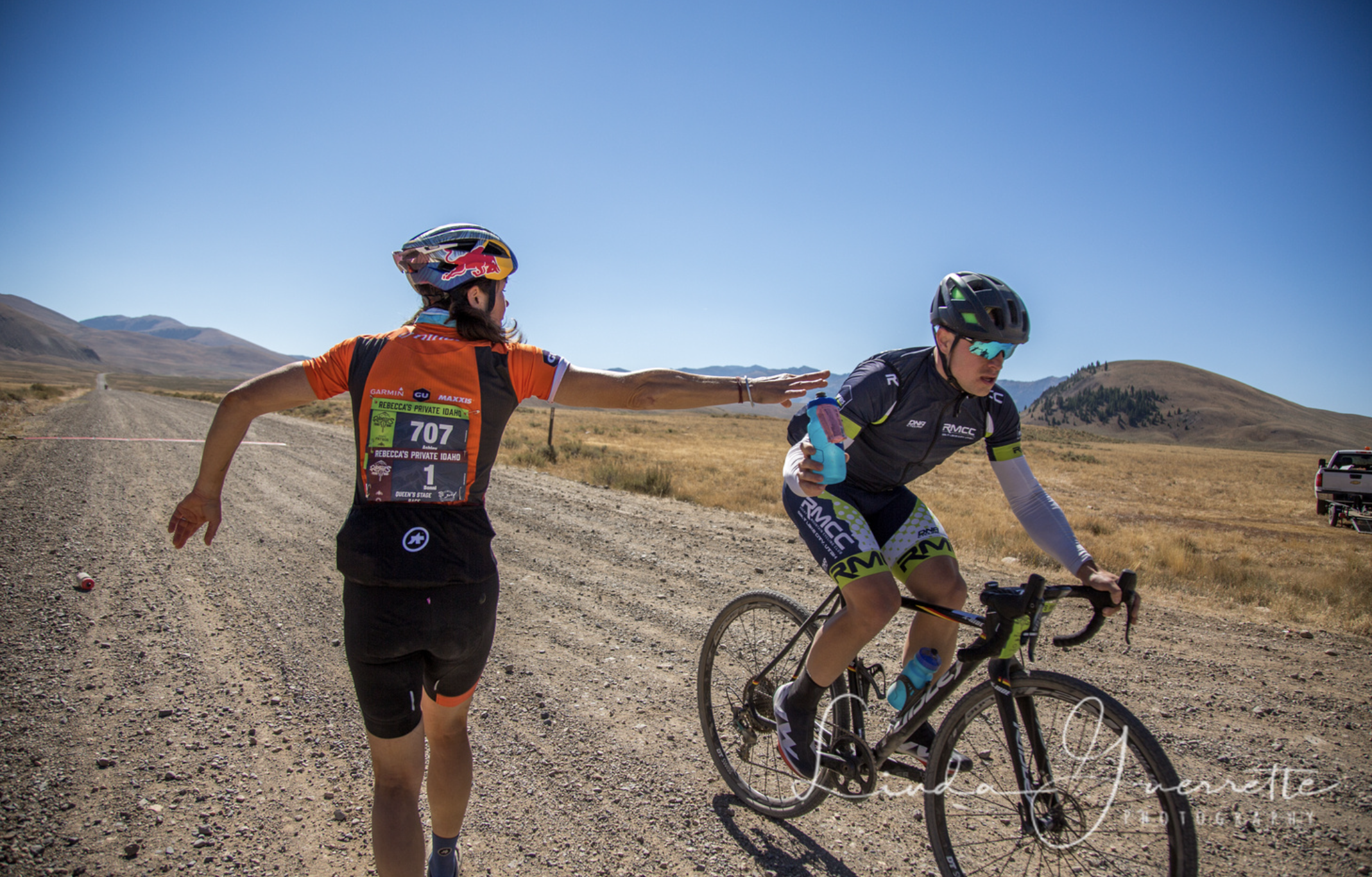
Tell us about your relationship with Queen of Pain, Rebecca Rusch and your connection to women’s cycling.
I met Rebecca through FB after one of her Leadville victories. I posted a few images of her race and she liked what she saw and that was my introduction to her. Over the years I’ve worked with various female cyclists. My main focus at any event is to work on giving coverage to the top women, middle of the pack and the up and comers. Women supporting women is vital to the future growth.
How has your process refined over the years?
I’d like to believe I’ve become more creative and innovative at storytelling. I’m more comfortable connecting with the athletes so we can work on creating images together. Let’s face it with social media as it is marketing of self is very important to the success of athletes as well as myself. Building networks is something I continue to refine.
What would you tell your younger, creative self?
I would say trust yourself and believe that your passions can become a way of life. It certainly won’t be easy but staying the course will be worth it.
That was the theme of my trip to New Jersey last week: easy breezy.
I drove around a lot, made all the right human and logistical connections, and while the threat of drama is there with all travel these days, for me, for nearly a week, it was all good.
That’s the first point to make.
If you recall, when I traveled in 2021, back to Jersey in May and then to Chicago in October, I reported that people were on edge, ready to blow, and the tension was palpable.
It was no fun at all.
But I’m thrilled to share that in September 2022, it’s gone.
In the security lines, in the airport terminals, on the planes, I noticed nothing but polite, chill behavior.
(Major, major difference.)
Such good news that civility has been restored!
When I mentioned drama, it’s just all these stories of air-travel havoc, with delays and missed/cancelled flights.
I did have one 3 hour delay, but thankfully it didn’t mess with my schedule.
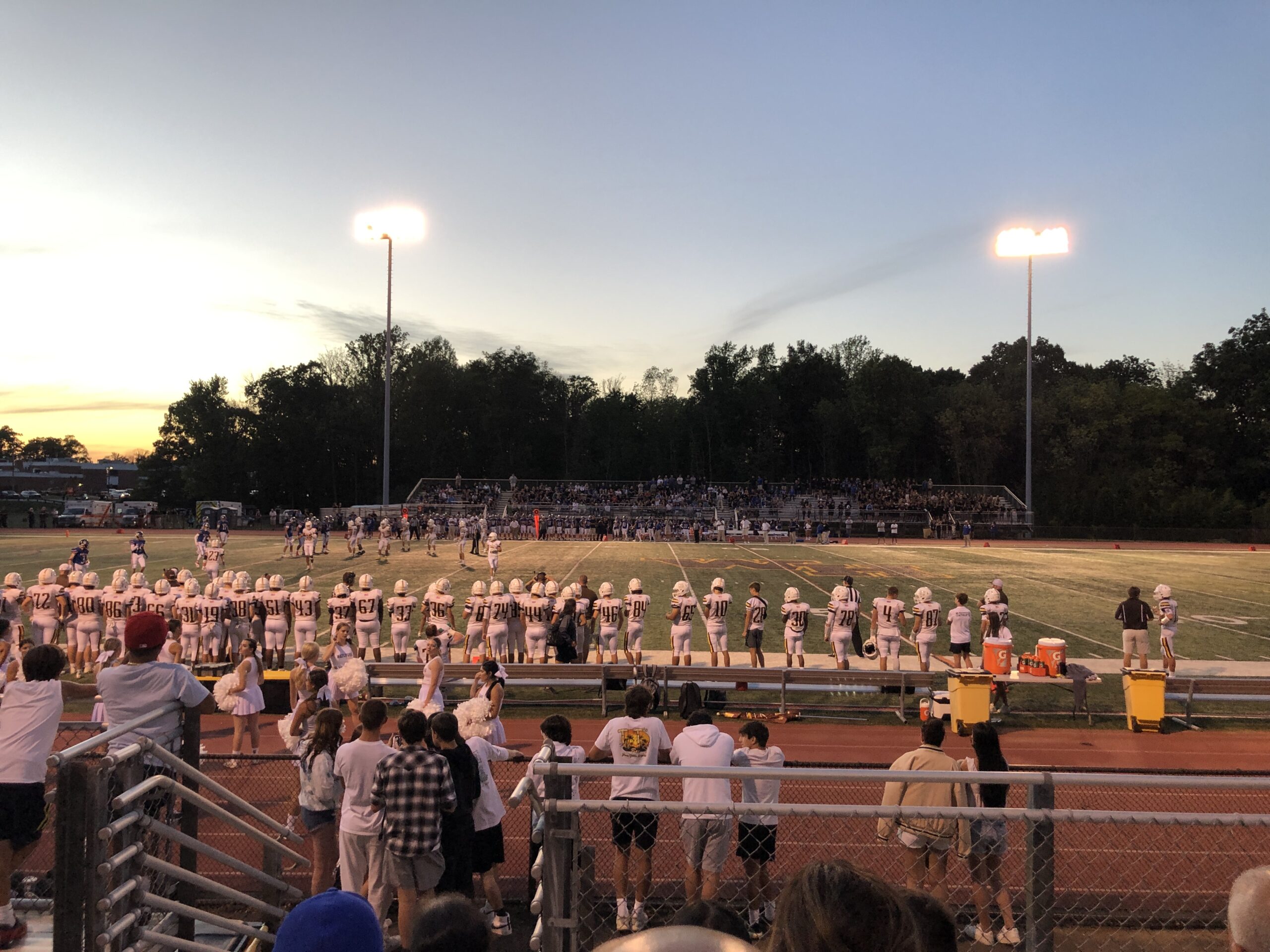
It was all smooth that Friday, and my cousins invited me to a big-time High School football game, with a local rivalry, major schools, big plot lines, you name it.
My cousin Stefanie had ordered me a ticket, and sent the .pdf to my phone, plus provided directions to the field, so really, all I had to do was show up.
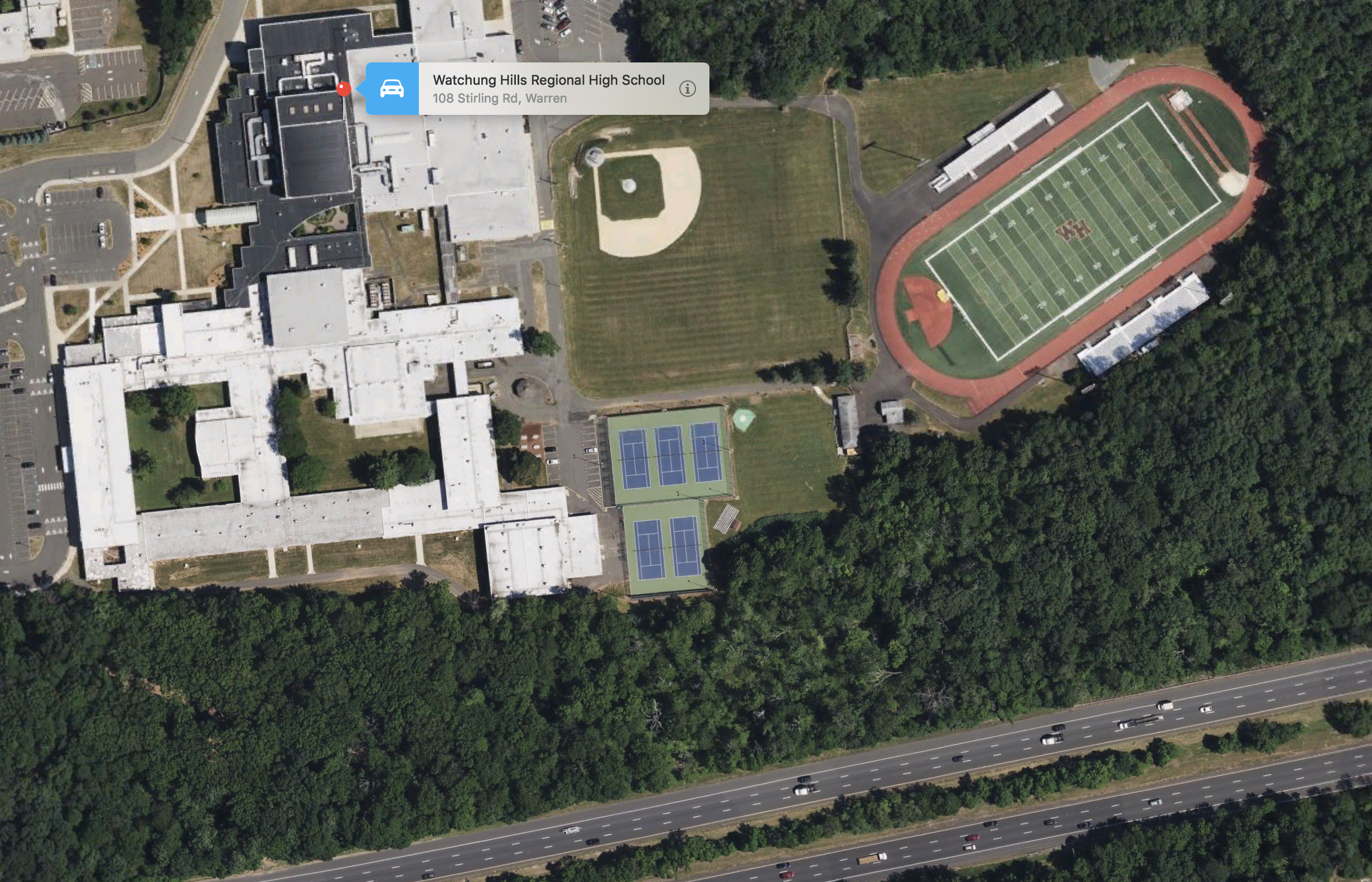
Watchung Hills Regional High School is coached by Rich Seubert, who won a Super Bowl ring as a starting offensive lineman for the NY Giants.
That makes him as close to local royalty as you’re going to get.
(One step below Bruce Springsteen, obviously.)
His team was at home, playing their rivals from Westfield.
When I got there a few minutes late, (needed to download the day’s photo files onto my iPad in the rental car,) Westfield was already up 7-0.
View from the home stands
As to my family involvement, my cousin’s daughter was cheerleading, her son was on the Freshman team, and my other cousin’s step-daughter was in the marching band, playing clarinet.
It was a competitive game, with a lot of turnovers and penalties, and the home crowd, wearing white, was super-loud.
The whole environment felt like being in a movie, replete with an obnoxious, annoying play-by-play announcer, who made me long for noise-cancelling headphones.
(The dude was screaming into the mic the whole game. Enough already, bro.)
The field was tucked into a forest, because everything in New Jersey is tucked into a forest.
But when I looked more carefully, my cousin acknowledged in one direction, the massive Highway 78 was right behind the stand of trees.
(Such a trippy setting.)
At one point, I noticed one player who was just bigger, and more solidly built than the rest.
He stood out, like a football aura.
My cousin’s friend, Lydia, who was involved with the team, told me it was Rich Seubert’s older son, Hunter, the center, who was destined for major college ball and the NFL.
The kid had a presence.
(Check out these highlights, and you’ll see what I mean. Hunter Seubert is 6′ 260 lbs, and plays with a nasty streak.)
Anyway, Watchung Hills came back and took control, and was winning 17-7 when I left with a few minutes on the clock, to beat the crowds, and the parking-lot-bedlam.
(Pro tip: If you’re not invested in the outcome of the game, time your exit.)
The next night, we stayed in at my cousin Jordan’s, drinking box wine, taking dog walks, watching Ohio State-Notre Dame, and eventually having a big Jersey Chinese feast.
It was almost a sushi night, but I delicately engineered a pivot, and lots of grub from Chengdu 1 Palace arrived.
The highs were high, and the lows were average, but overall I was very impressed.
As to the specifics:
The pork lo mein was greasy, as were the egg rolls.
The General Tsao’s Chicken, which was reputed to be so good that two portions were ordered, was probably the best I’ve had.
A 10 out of 10 dish.
The boneless spare ribs were also perfection, and some weird, green, veggie dumplings ended up being amazing, eaten cold later in the evening. (Yes, I had the munchies. Don’t judge.)
Chengdu 1 Palace
Green Brook, NJ 3 stars out of 4
On Monday, after the pool party debauchery at my Aunt and Uncle’s place, I woke up early.
Before anyone, before 7am, and I headed out to do laps around the neighborhood.
(Got to get those steps in, to help digest the previous evening’s beer, rose wine, red wine, weed, vape, mini hot dogs in puff pastry, mac and cheese, shrimp scampi, spinach ravioli, caprese salad with high end mozzarella di buffala, and Italian cookies.)
Two miles of walking before 8, just me and the neighborhood deer, was a must, as was blowing off breakfast.
I game-planned to hit the beach, asking my Aunt, (a Jersey Shore girl, and known perfectionist,) where she would go?
She said Avon.
But I chose Sea Bright, the closest beach to my childhood home.
Growing up, we hung out from Sandy Hook to Long Branch, which are the northern-most coastal beaches.
Sandy Hook and Sea Bright are where the NYC shipping channel harbor opens up, so the water is not nearly as clean.
As I got in the car, though, I called my other cousin, (on the Blaustein side,) as he lives 4 long-blocks from the beach in Belmar.
It was only five minutes extra in the car from where I was staying, and he was around, so I turned the car and changed the plan.
Luckily, Belmar is further South from NYC, so the water is clean and clear.
(Not blue, though, as it’s the Atlantic.)
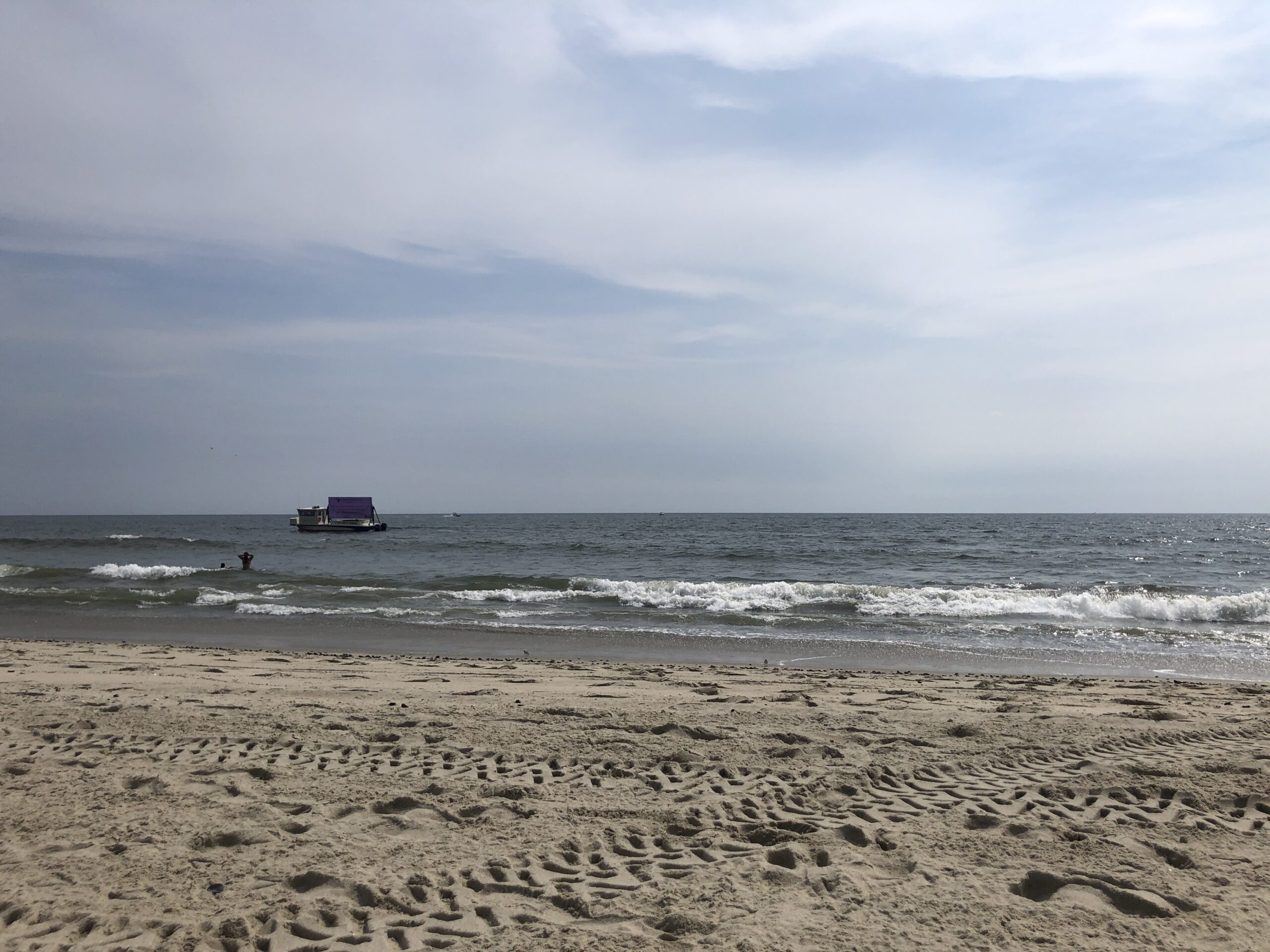
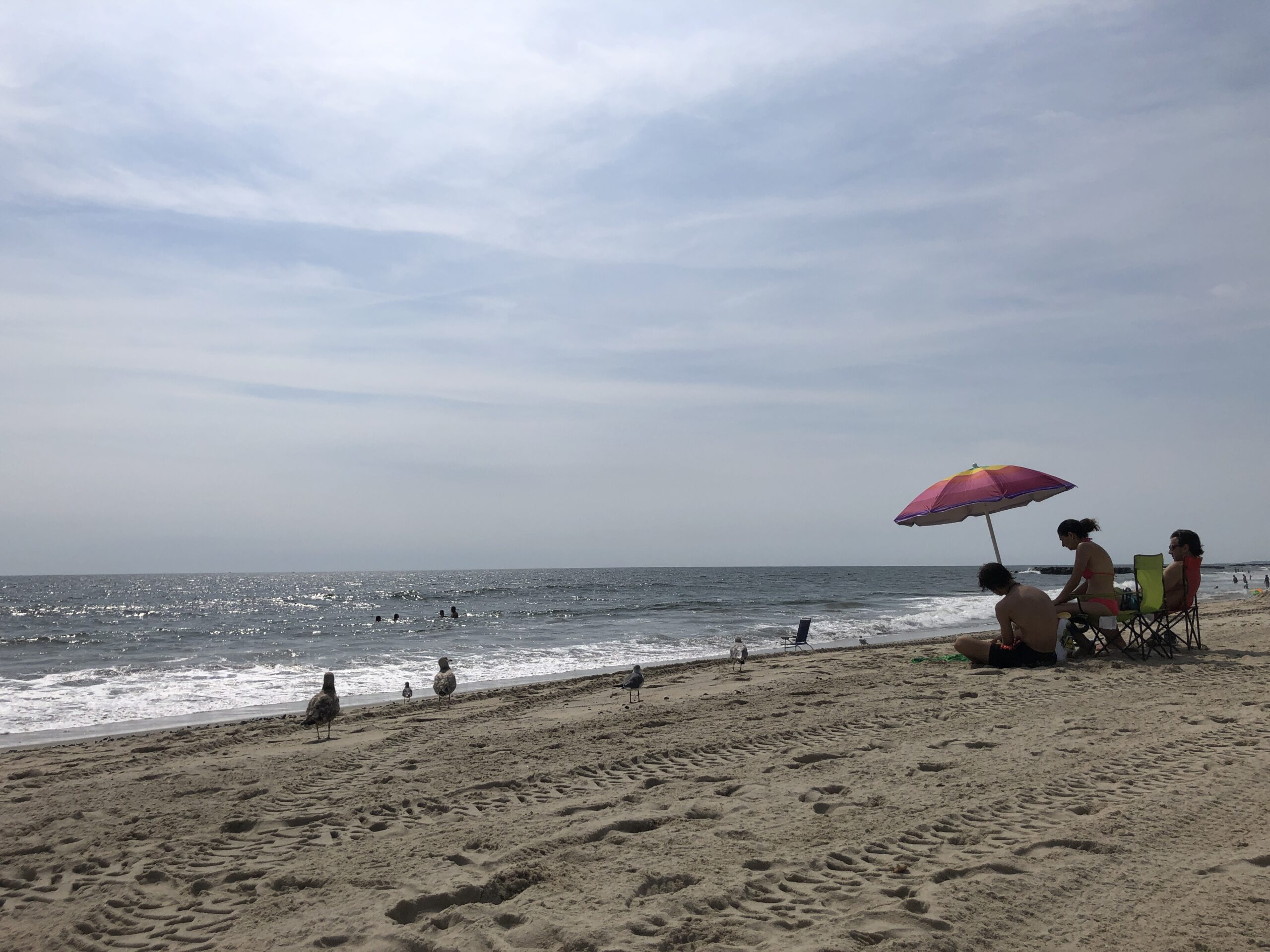
Jeff and I chilled out on the 10th Avenue beach, in fold-up-chairs, taking the sun, and I swam twice.
The water was gorgeous and refreshing, and I’d been waiting for that moment for three years.
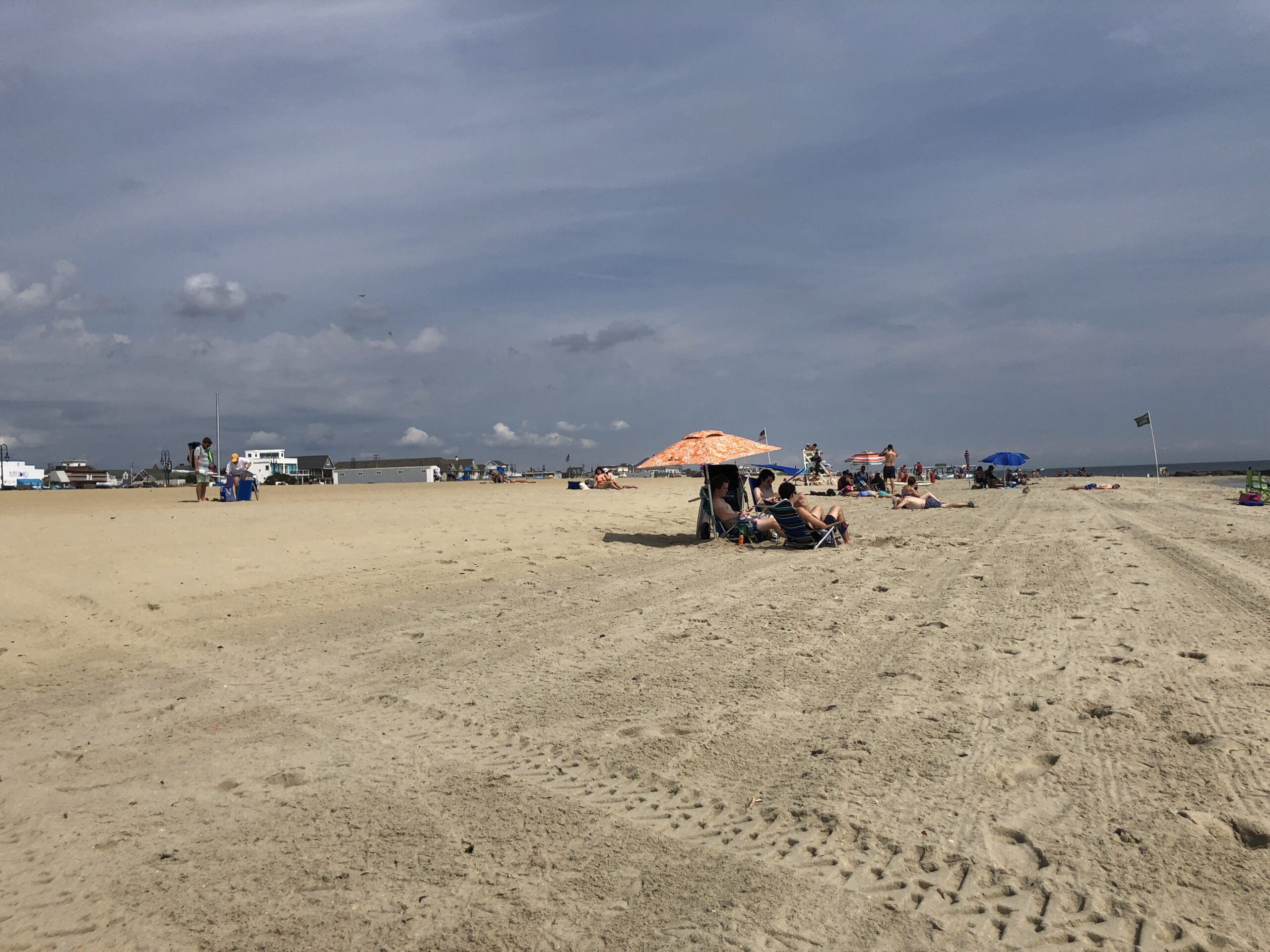
As it was Monday, Labor Day, and the direct sun was intermittent, the beach had plenty of people, but was far from mobbed.
10th St Beach, Belmar, looking North
We walked up to the street and got pizza at J’s, and the slices were massive.
The young woman behind the counter was pretty, and had what sounded like a cool French accent, but by Monday I was punch-drunk, so I couldn’t be sure.
She confirmed she was from Strasbourg, and I dropped a few words of French to be polite.
Which was a huge mistake.
I got distracted, and the slices were just so big, ($7/piece with toppings,) so I did my usual thing of asking her not to warm them up in the oven, which kills the flavor.
(Room-temperature-to-warm is much better than reheated.)
She said they were warm, but trust me, they were not warm. So I spent $15 on cold, chalky pizza, but having skipped breakfast, I ate them anyway.
As to the area itself, North Belmar, (a half mile away from Avon, my Aunt’s preferred spot,) is not only pretty, chill and friendly, but it’s steeped in Jersey history.
My cousin lived in Freehold for decades, where Bruce Springsteen was from, and confirmed that part of Belmar was the closest spot he could reach.
(Due East.)
It’s where Bruce had come, as a youth, before he got into the neighboring Asbury Park scene.
My cousin lives on 10th Avenue, near E Street.
The tour groups show up now, he told me, because the E Street Band, and “10th Avenue Freezeout,” are part of the Legend of Bruce.
So there you have it.
J’s Pizza
Belmar, NJ 2 out of 4 stars
Belmar Beach 4 out of 4 Stars
Later on Monday, I had a precious evening to myself, and a good rental car.
After visiting briefly with my friend Mandi, in her creepy/lovely, ghost-ridden, 1750 farmhouse, it was time to make the most of the luxury.
Me and Mandi, outside her house, built 1750
Given how much I love the Jersey Shore, I used that free time to go back to the beach again for a stroll.
Sea Bright is the first beach town facing East on the open ocean, (instead of North, along the Bay,) and I used to work in restaurants there when I was in college.
Much of it was leveled by Superstorm Sandy in 2012, so the town beach’s infrastructure was very new, which was a trip.
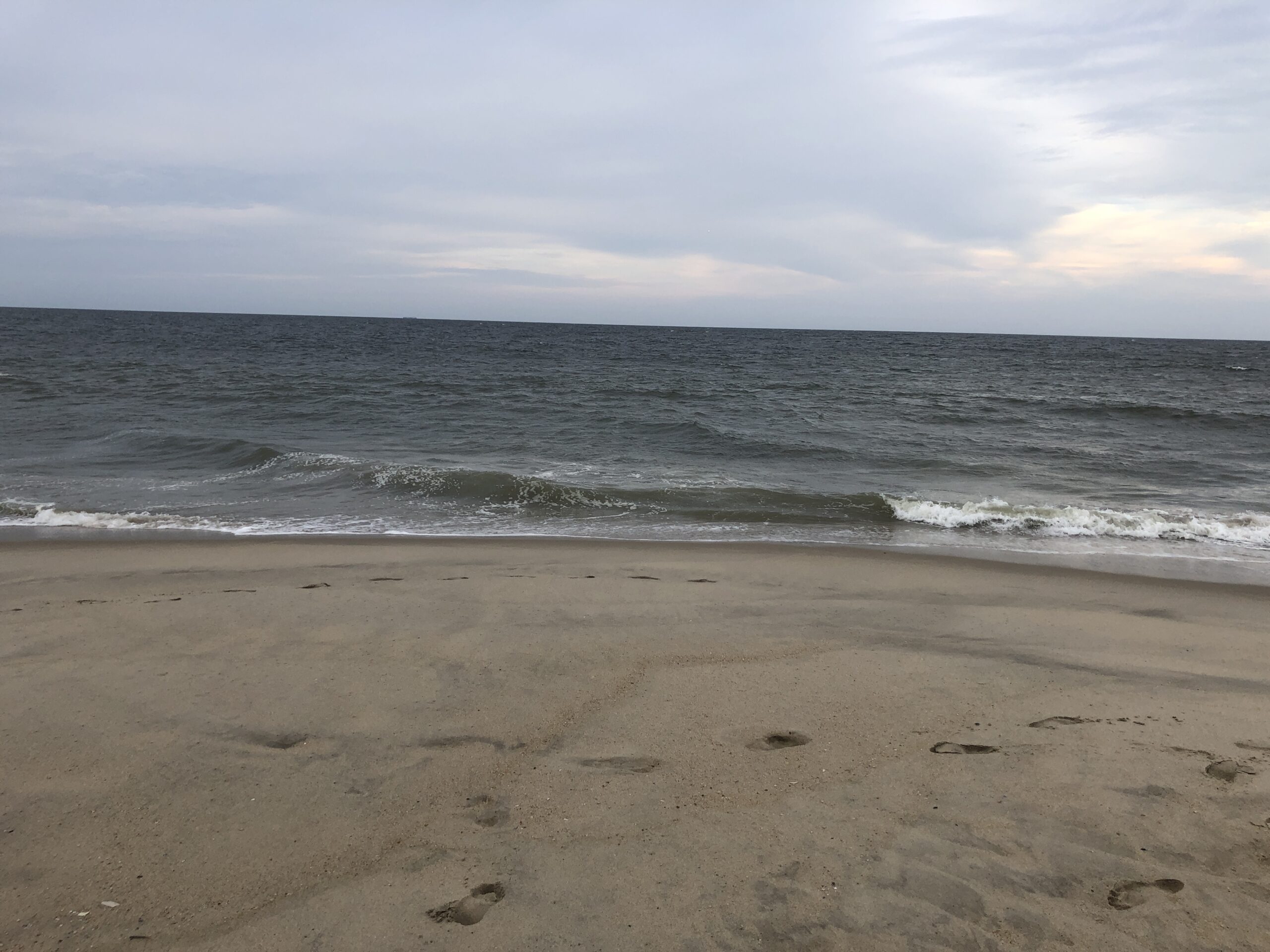
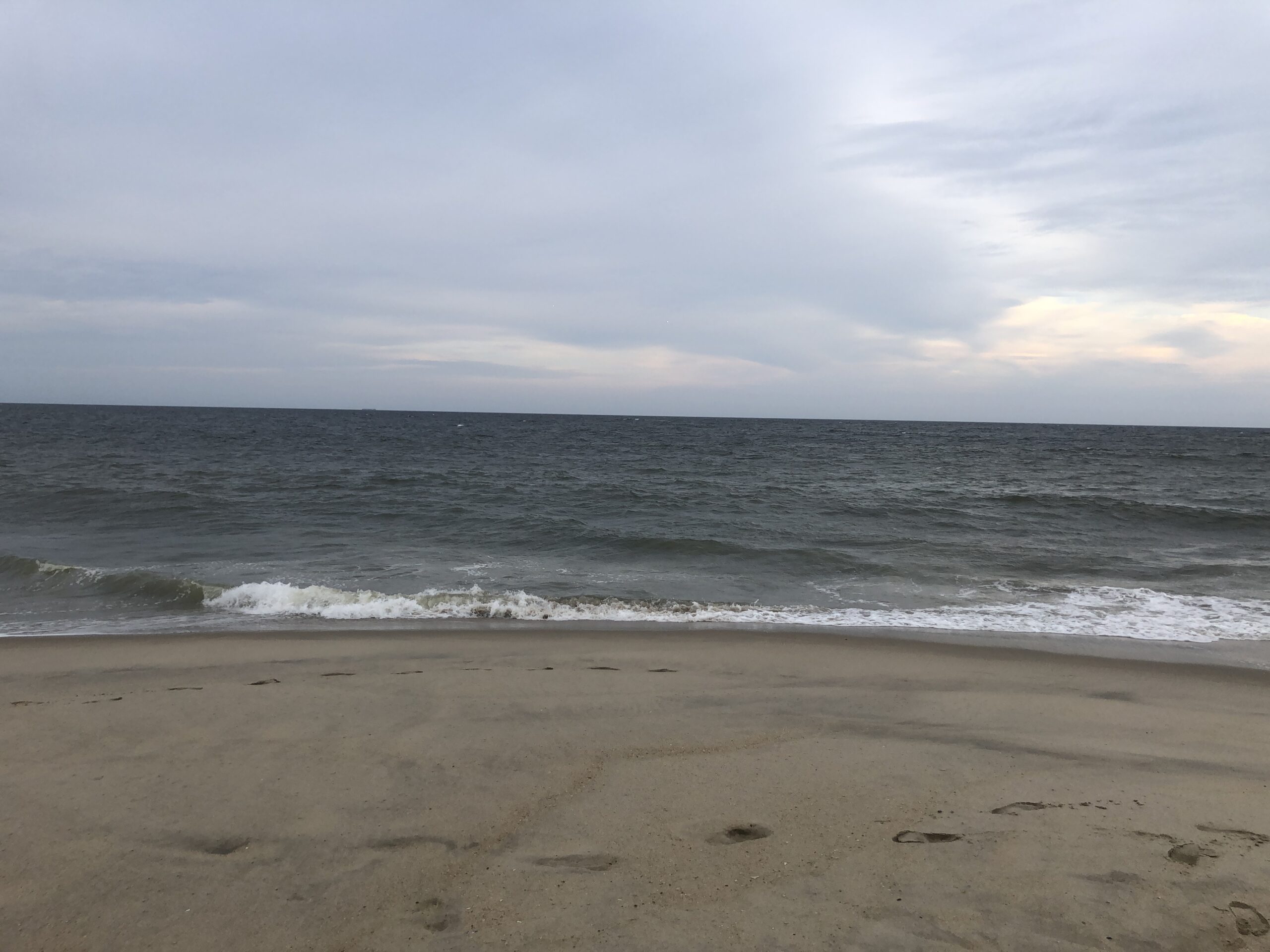
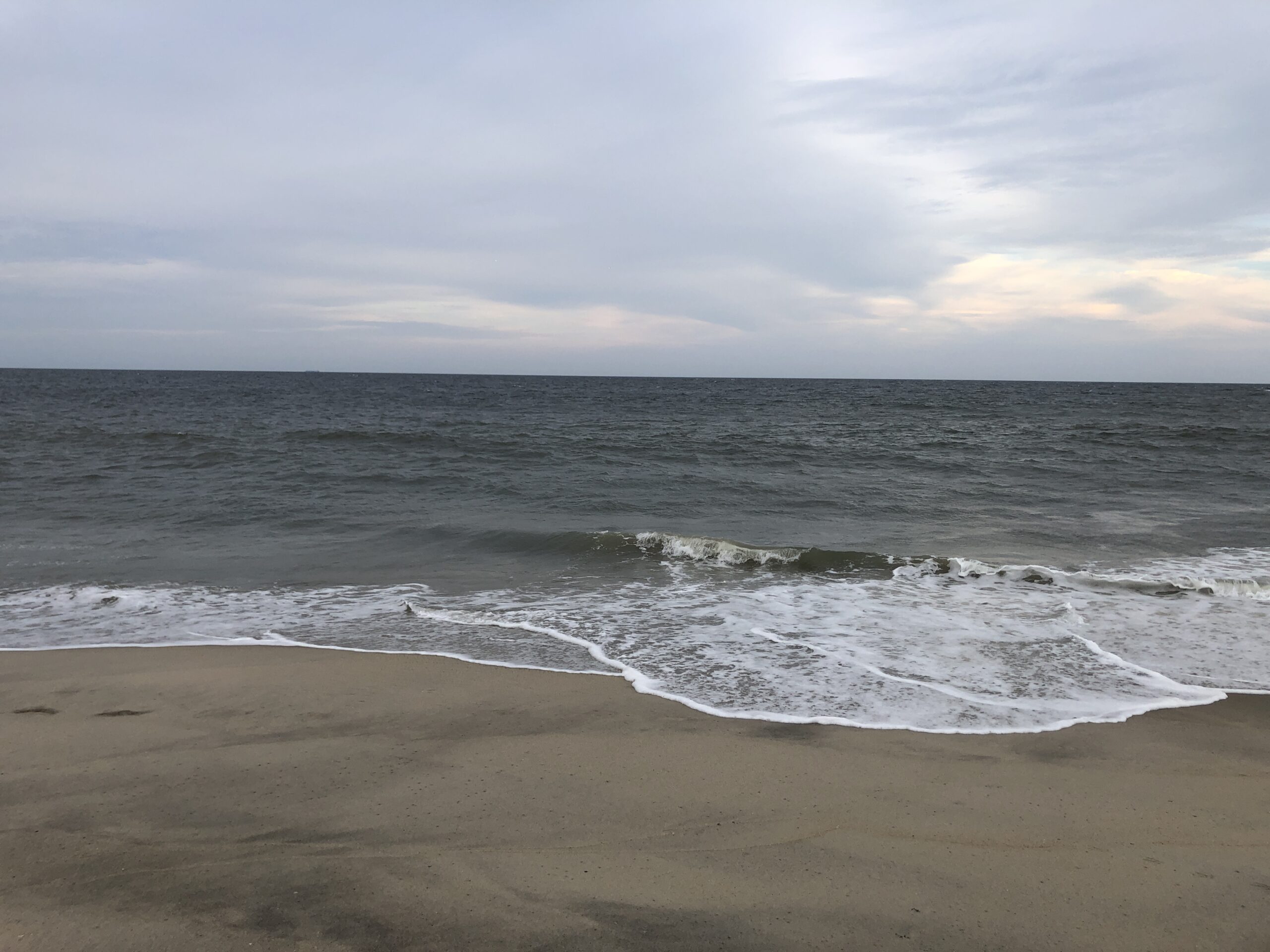
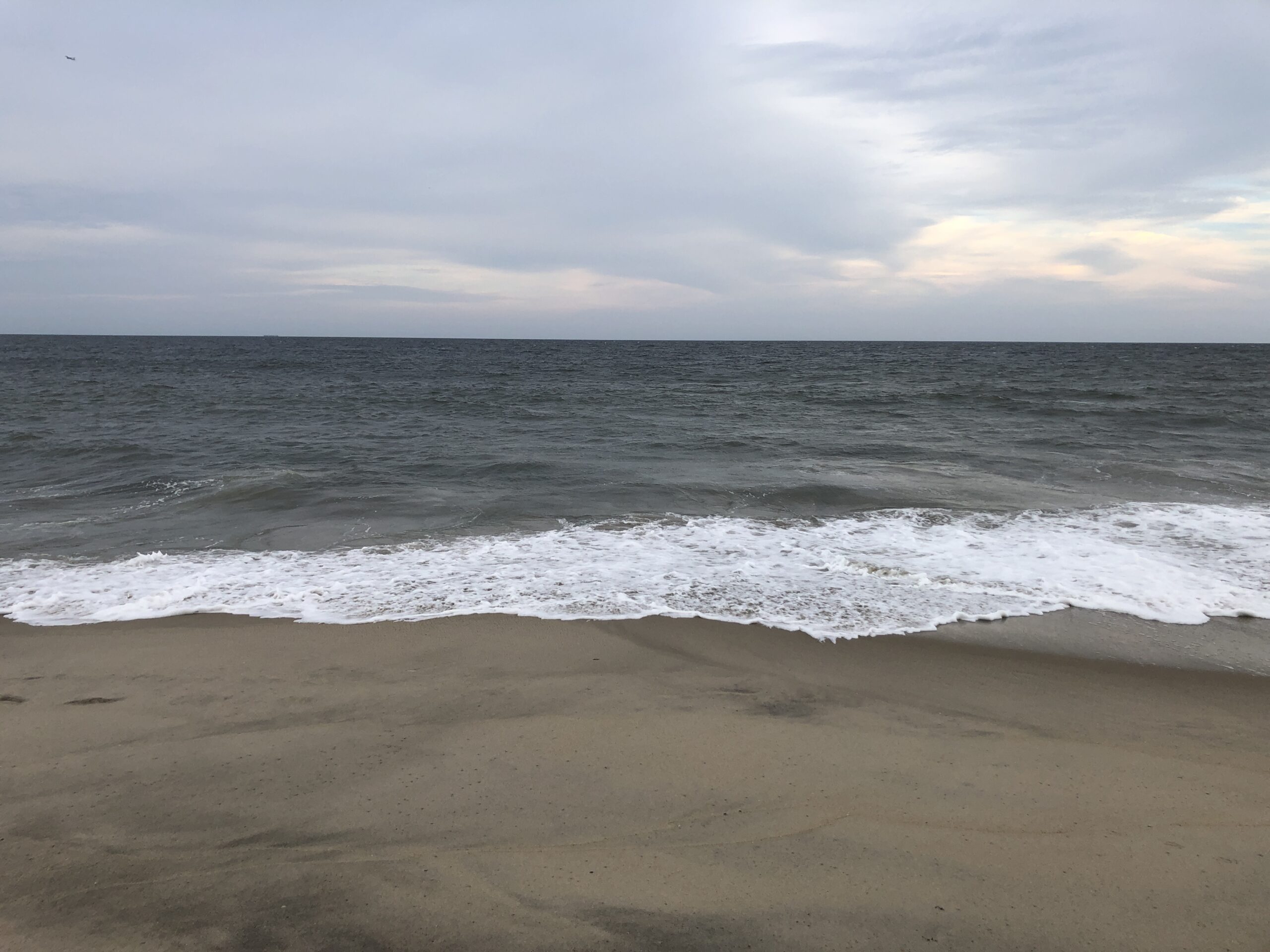
The sky was gray, after 6pm, and I walked for 15 minutes or so.
Then I approached the ocean.
There was a line of super-tanker ships, launching East towards Europe, and I was glad I’d gone to Belmar to swim earlier.
I took this video for you, as it’s clear how different the ocean vibe is from the Big Blue Pacific I showed you, in San Diego, earlier this year.
It feels like you’re looking across the pond towards Ireland, that rainy green Isle, rather than Asia, a half a world away.
I began the column by saying everything went smoothly last week.
Mostly true.
But I did make one additional mistake.
I never should have eaten both of those mega-slices of cold pizza in Belmar.
Such a gut-bomb.
By evening, in Sea Bright, all I wanted was a salad.
But you can’t eat salad on your last night in Jersey, can you?
After Sea Bright, I drove north to Long Branch, feeling the ocean breeze through the open car window, and then doubled back through Sea Bright, Rumson, Fair Haven, Little Silver, Red Bank, and finally Middletown.
Rt 35 was my jam, growing up, the perfect North-South highway, stuffed with forest trees and endless strip malls.
All that good food, and local businesses.
Accountants.
Pool Supplies!
You name it.
I’d settled on going to Crown Palace, (which I’ve featured here before,) a brilliant local Chinese restaurant, because at least I could get string beans and broccoli with garlic sauce.
That was my big plan, to ask them to mix both veggies together.
Green vegetables!
Almost as good as a salad.
But my even bigger plan was to pee as soon as I got in the door.
(I really had to go.)
I was not encouraged when I pulled in and there were no cars, but still, I tried the door.
Locked!
Closed Monday.
There are trees everywhere, as I keep telling you, and in New Mexico, I’d pee behind a tree, no problem.
I walked around to the side parking lot, trying to find a spot to do just that.
Do they have cameras, I wondered?
Is anyone going to come out and harass me?
I saw the edge of the parking lot ahead, and thought I might be in the clear.
Lots of trees.
But then I spotted children’s playground equipment behind the business next door.
A day care center?
Abort!
Abort!
I held my pee, and that was that.
(No use going to jail for indecent exposure. Man up and hold the pee.)
What to do?
I know that area like the back of my hand, and headed further up the highway to one of the local pizzerias from when I was a kid.
But I didn’t want pizza.
Or a chicken parm sub.
My insides were sad, from all the heavy food.
I wanted a salad.
Fresh vegetables!
And wouldn’t you know it, but I drove by Simply Greek, in the Commons at Holmdel, on my way to Villa Pizza.
It was on the other side of the highway, and had been there for years, so I took the jug handle just up the road, and went back.
(Salad it would be.)
I walked around the parking lot while they made the food, and the dark skies against the electric light was a visual feast.
The staff at Simply Greek were super-nice, and the prices were more-than-fair, by inflationary standards.
So I liked the joint immediately.
I kid you not, the falafel sandwich and a small greek salad, with extra tzatziki, weighed about 5 lbs, and cost $25.
It was easily the best food I had all week.
The summer Jersey tomatoes wanted to sing me a song, they were so happy, and the feta cheese was better than anything that exists in New Mexico.
The Art of the Personal Project is a crucial element to let potential buyers see how you think creatively on your own. I am drawn to personal projects that have an interesting vision or that show something I have never seen before. In this thread, I’ll include a link to each personal project with the artist statement so you can see more of the project. Please note: This thread is not affiliated with any company; I’m just featuring projects that I find. Please DO NOT send me your work. I do not take submissions.
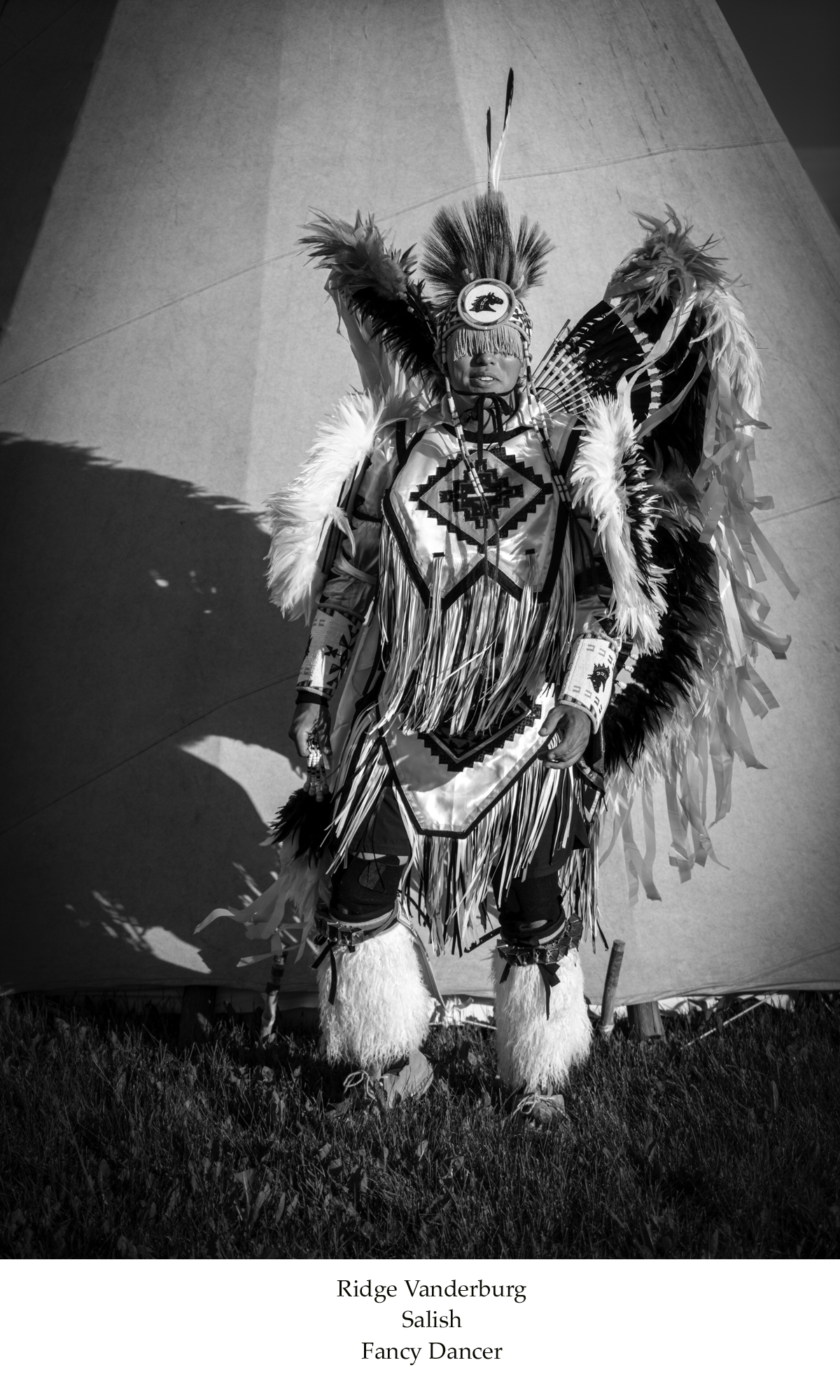
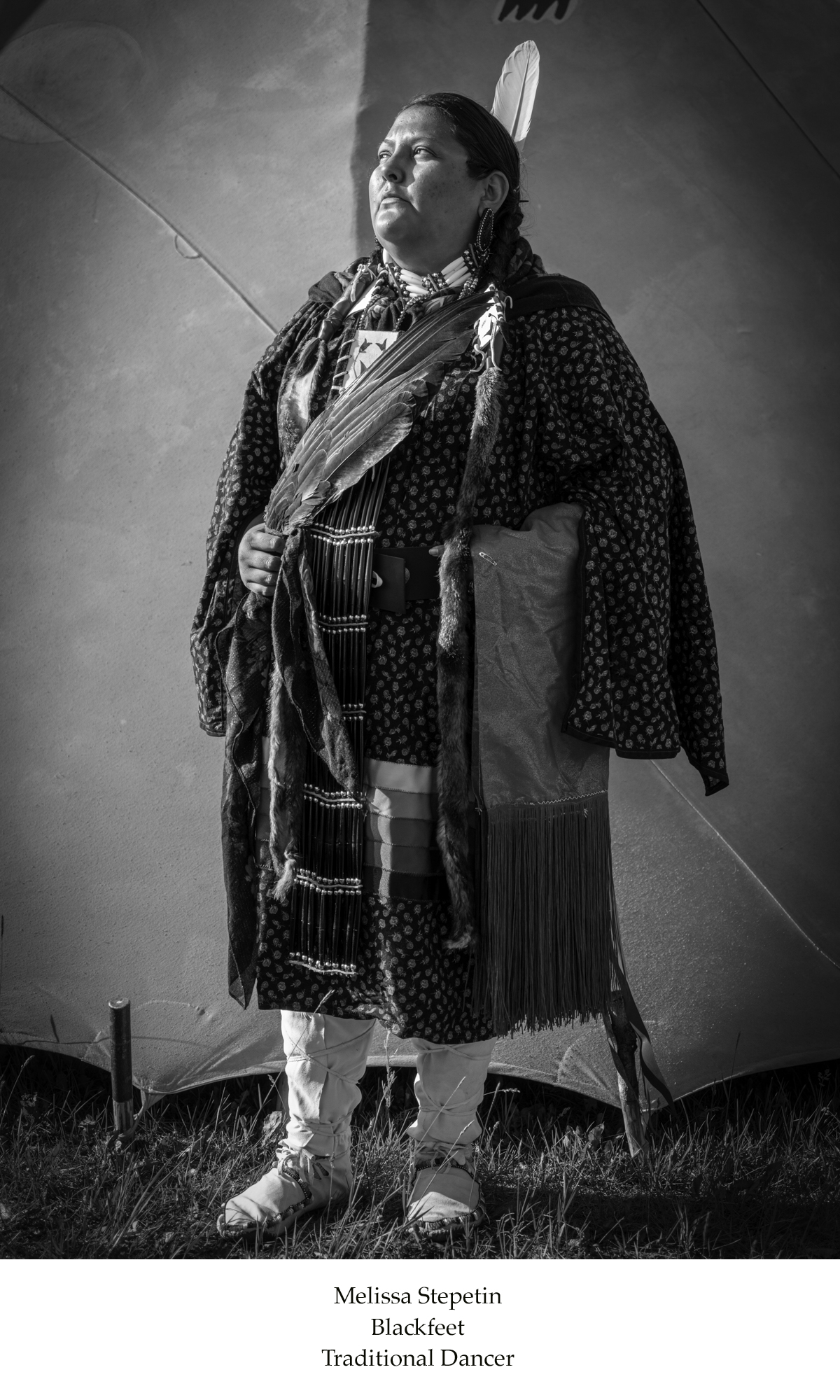
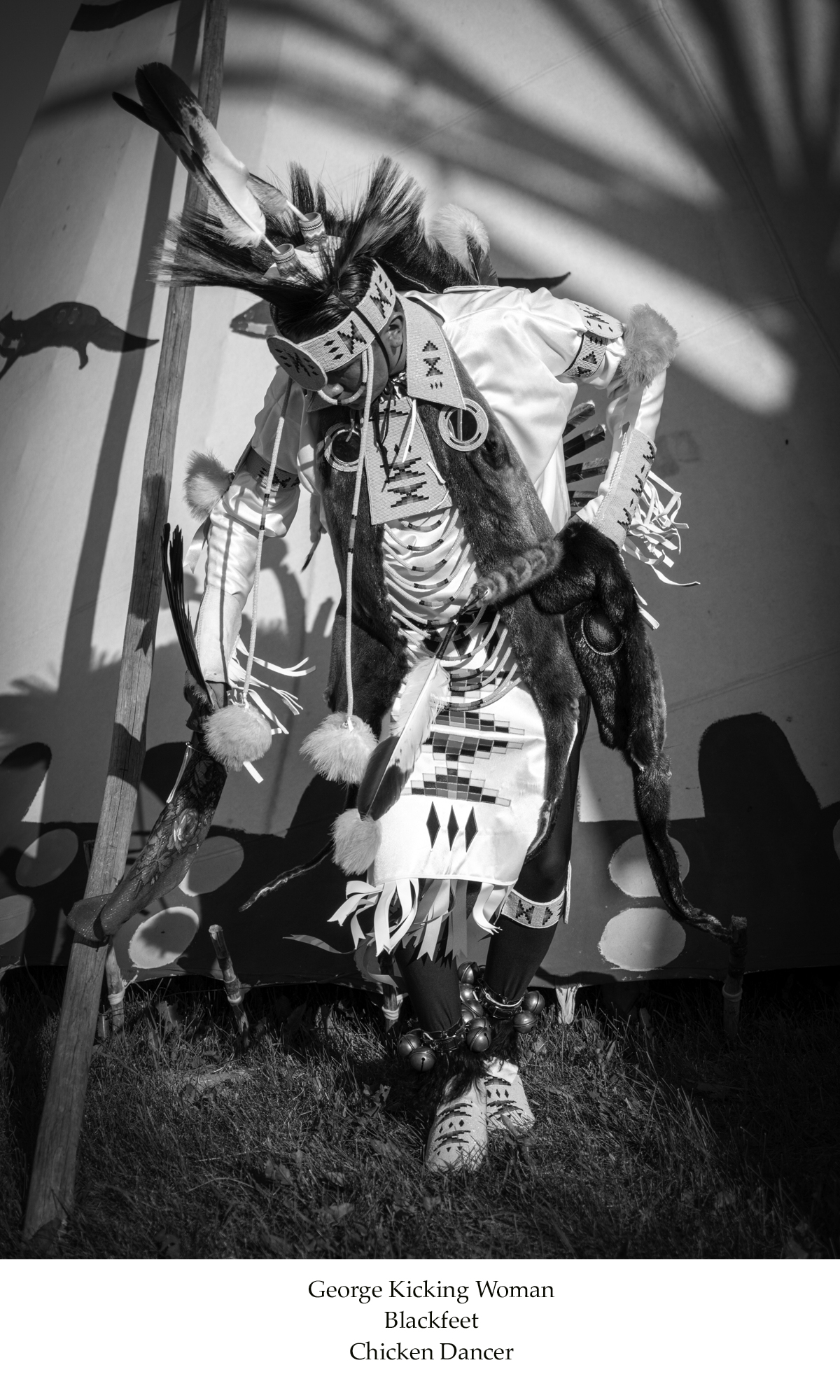
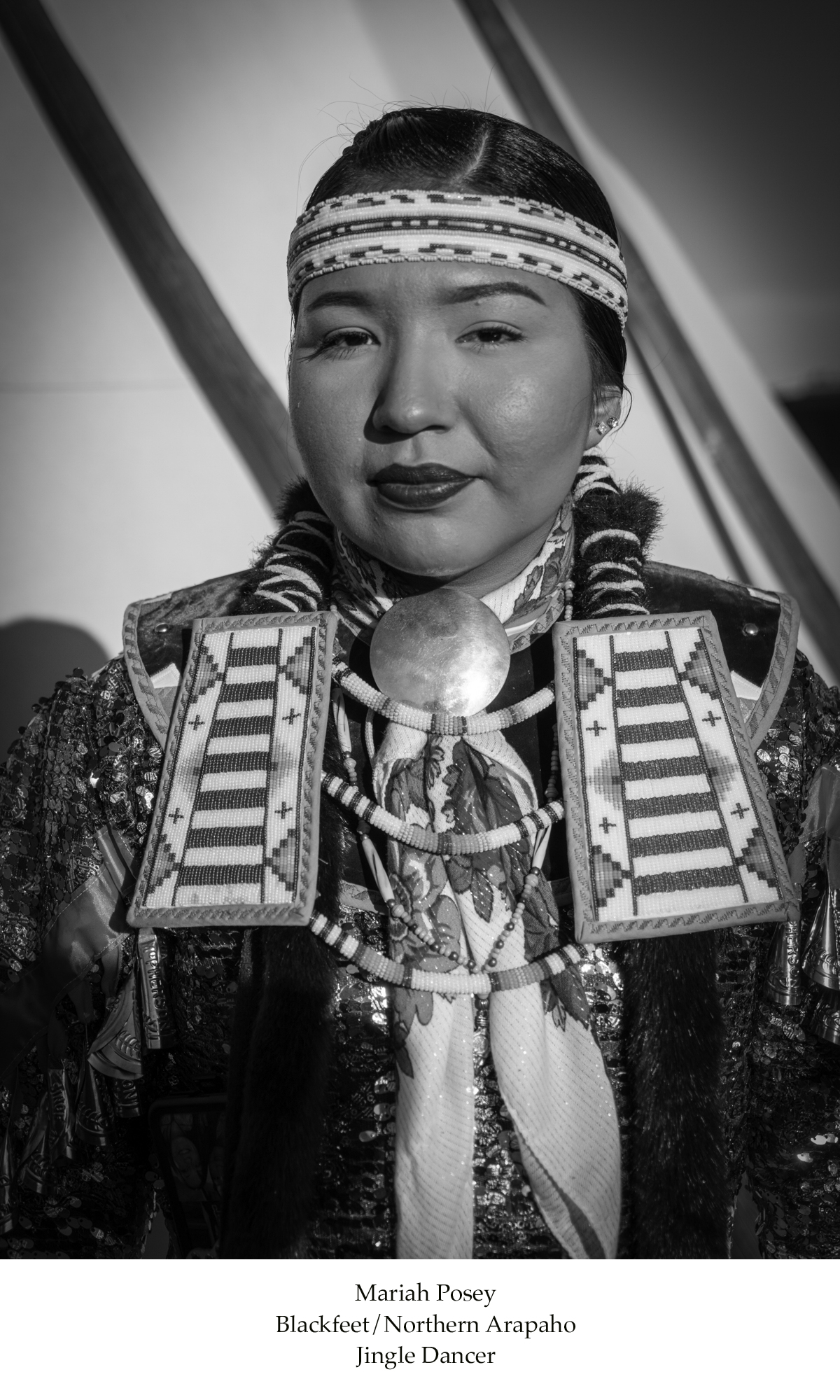
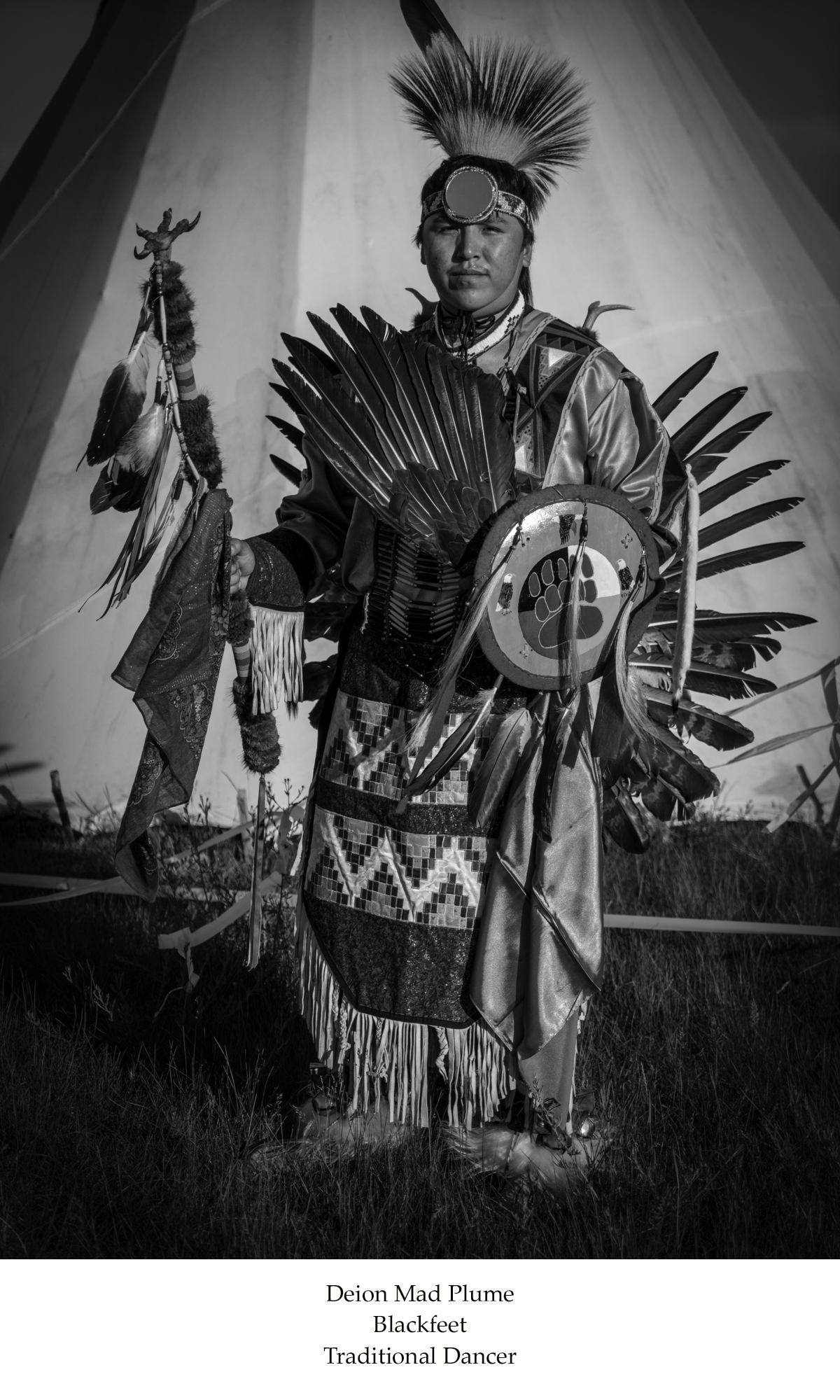
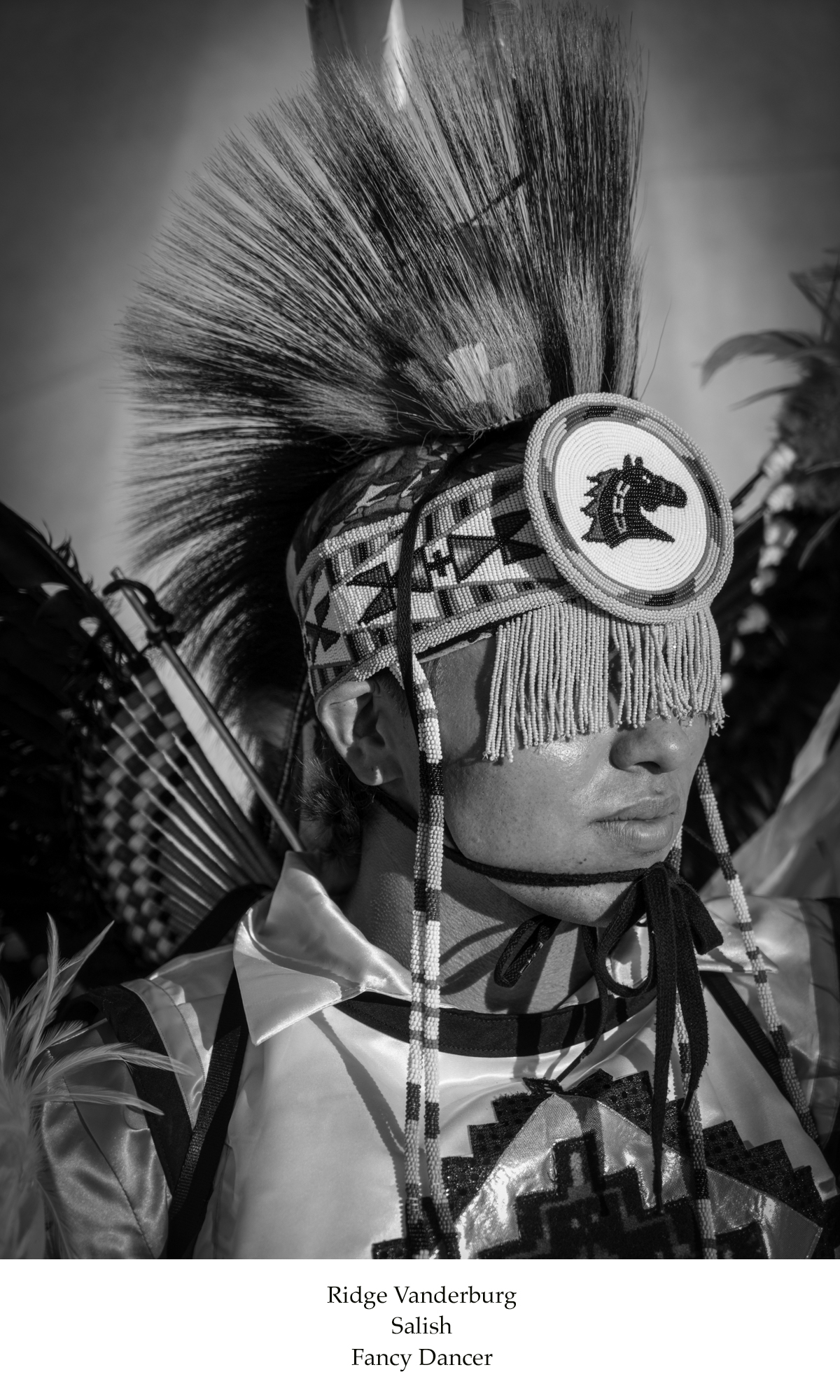
North American Indian Days is a yearly celebration of Indian ceremonial dancing that takes place in Browning, Montana, the headquarters of the Blackfeet Nation. It draws dancers from all over the western United States and Canada. It has been going on for many years. Except during the Covid pandemic. The celebration was cancelled in 2020 and 2021.
I had been to the NAID twice before, once in 1987 and again in 2000. Both times I photographed the dancers using film. In the summer of 2022, I went again to photograph, this time using a digital camera. The celebration was billed as the “Recovery”.
It was quite crowded. The tent where the dancing took place was too small and dimly lit and was not the best place to show off the incredibly beautiful, elaborate regalia (never call what the dancers wear a costume!). Nevertheless, the dancing took place and, as always, was accompanied by the drumming and singing…high, wailing male voices. There are different categories of dancing: jingle dancers, grass dancers, traditional dancers, etc.
My idea was to ask some of the dancers to allow me to photograph them. Most agreed, a few said no. Fortunately, near the tent was a ring of large tepees that gave me a somewhat neutral background to take my portraits. Otherwise, the background would have been a jumble of campers, cars, trucks, etc.
I had a small notebook with me, and I took down the names of the dancers, their tribe affiliation, where they lived and their e-mail addresses. It’s my habit to always send the best shot of my subjects to them as a thank-you. I would also respectfully ask each if they would tell me their Indian name. Indians have an “English” name and many also have an “Indian” name that is given to them in a sacred ceremony. I had been cautioned by a Blackfeet elder to tread lightly when asking for an Indian name. “It’s kind of personal,” she had said. Some told me their Indian names. Some didn’t. I decided not to include in my captions what Indian names I was given.
The photographs here are what I think are my best.
APE contributor Suzanne Sease currently works as a consultant for photographers and illustrators around the world. She has been involved in the photography and illustration industry since the mid 80s. After establishing the art-buying department at The Martin Agency, then working for Kaplan-Thaler, Capital One, Best Buy and numerous smaller agencies and companies, she decided to be a consultant in 1999. She has a Twitter feed with helpful marketing information because she believes that marketing should be driven by brand and not by specialty. Follow her at @SuzanneSease. Instagram
Success is more than a matter of your talent. It’s also a matter of doing a better job presenting it. And that is what I do with decades of agency and in-house experience.
Change is most often thrust upon us, as few embrace it willingly.
(Only after the fact, when we reap the spoils, do we begrudgingly admit it was worth the effort.)
That said, change has come to this column, and I’m all for it.
I’ll still be writing for you twice a month here, (which got slightly lost in my announcement last week,) but I went with the hubbub, because the week in, week out endeavor, over the past 11 years, helped define my life.
No lie.
But now it’s time for something new.
I can (occasionally) be as reluctant to change as the next person, but when we enter a new life phase, we see things differently.
Growing older, experiencing more life, and hopefully acquiring (some) wisdom means we’re able to attack the same problems with different solutions.
Or acquire different opinions from what came before.
And that last bit is motivating today’s column.
I was talking with a client the other day, and referred to my un-reviewable book.
The one book I’ve picked up, time and again, but put down.
Each time, I shake my head and say, “No, not today. I don’t see how to tell this in a way that’s not offensive.”
And so I’d set the book back on the shelf, only to pick it up six months, or a year later.
Frankly, I’ve grabbed it three times in the last month, but think today, for whatever reason, I’ve finally cracked the code.
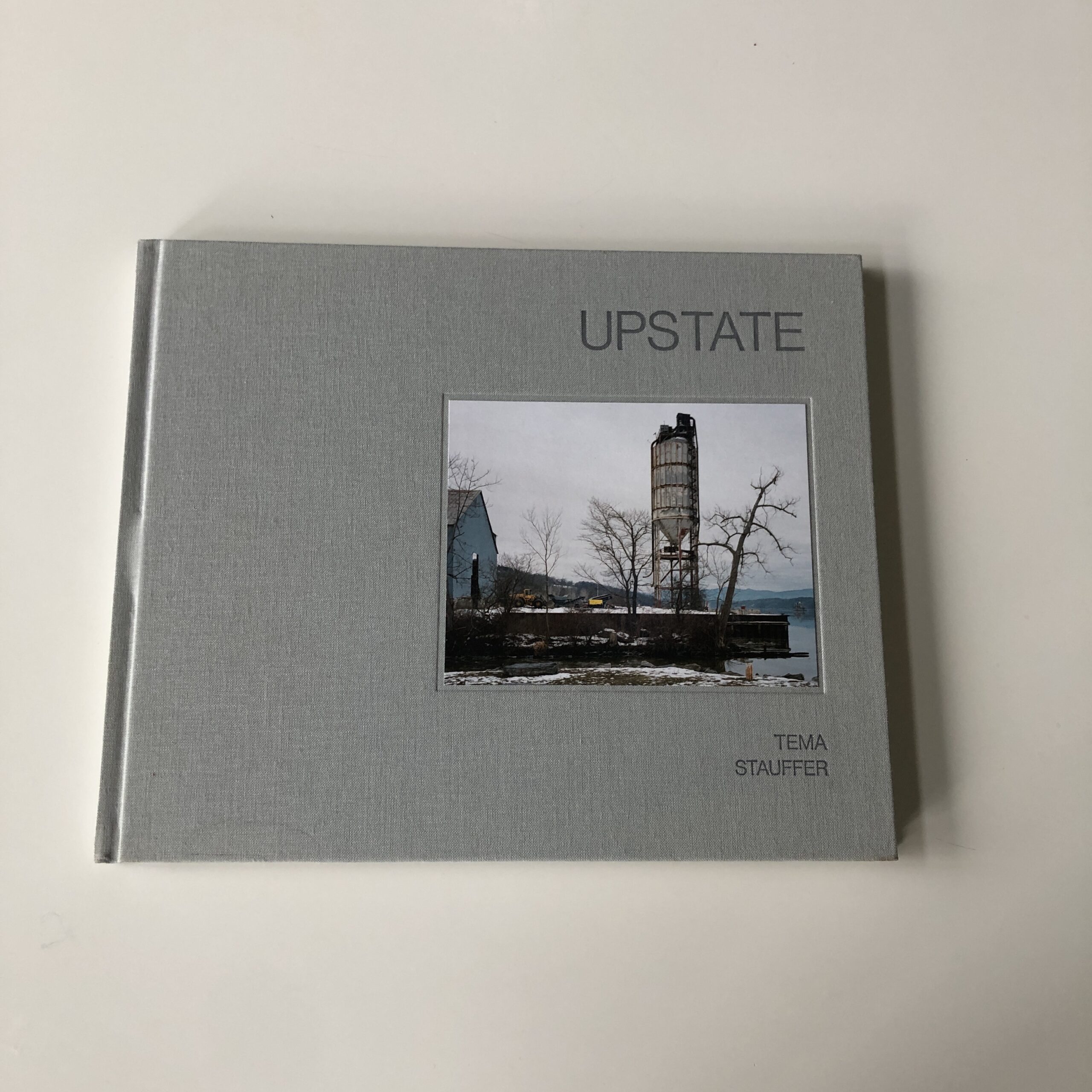
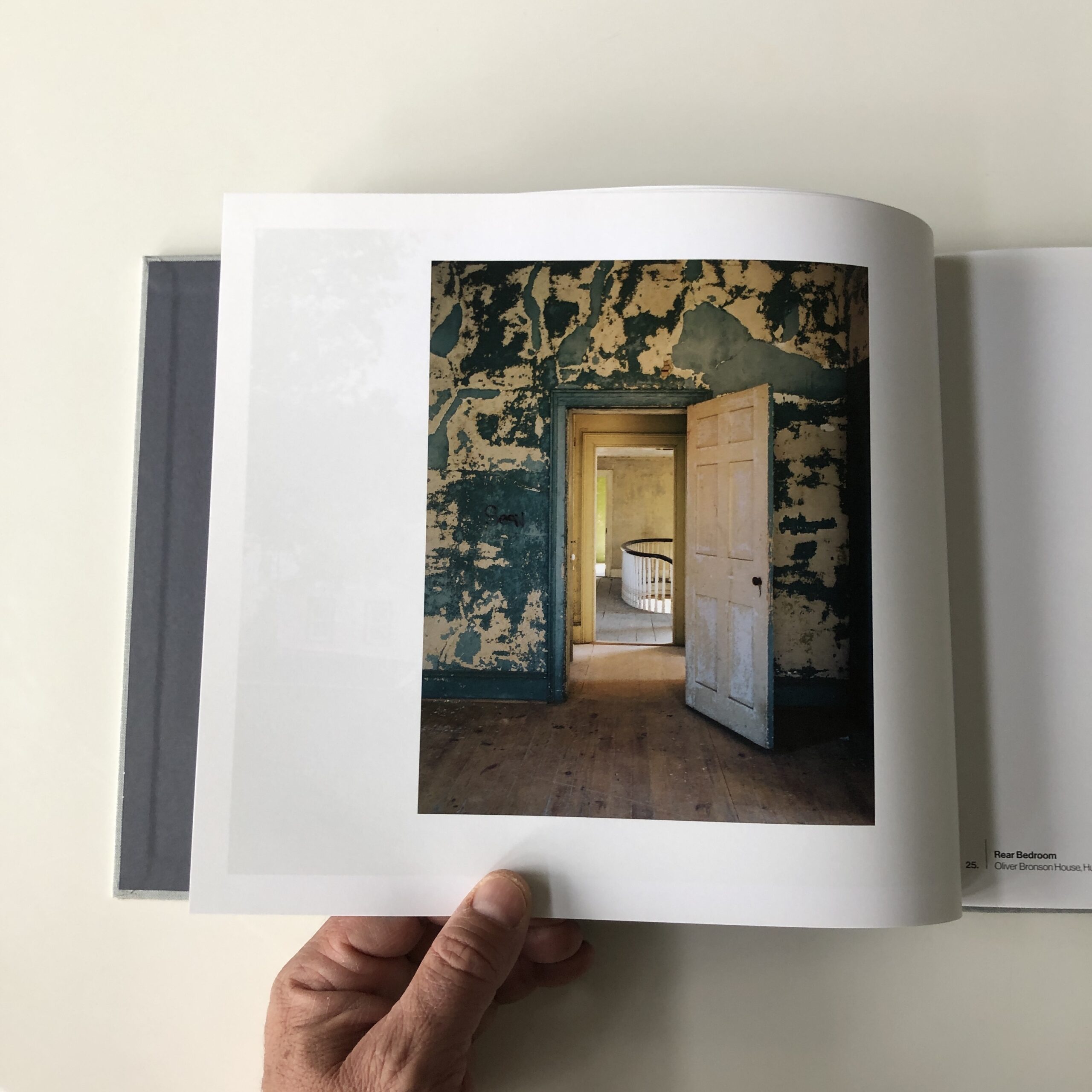
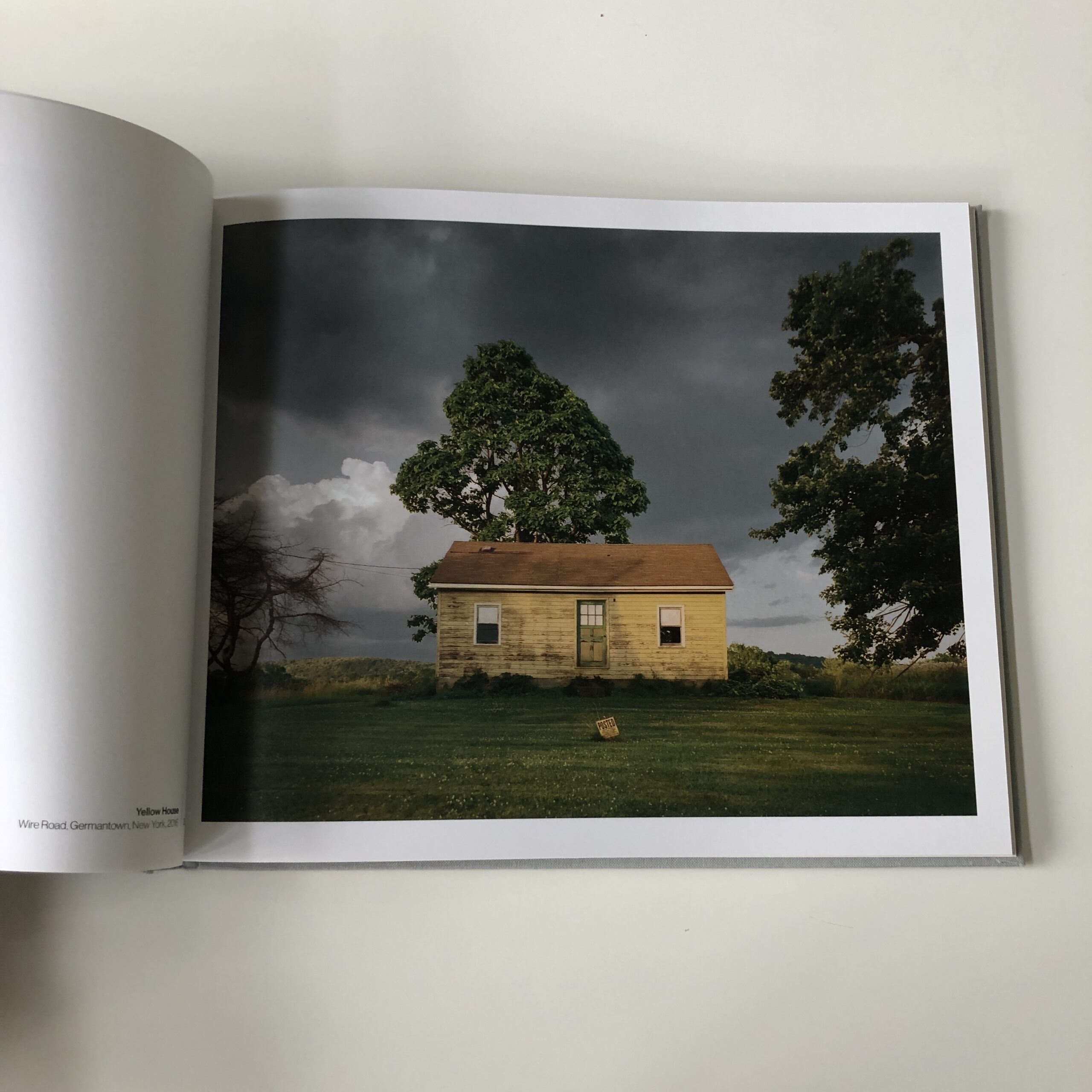
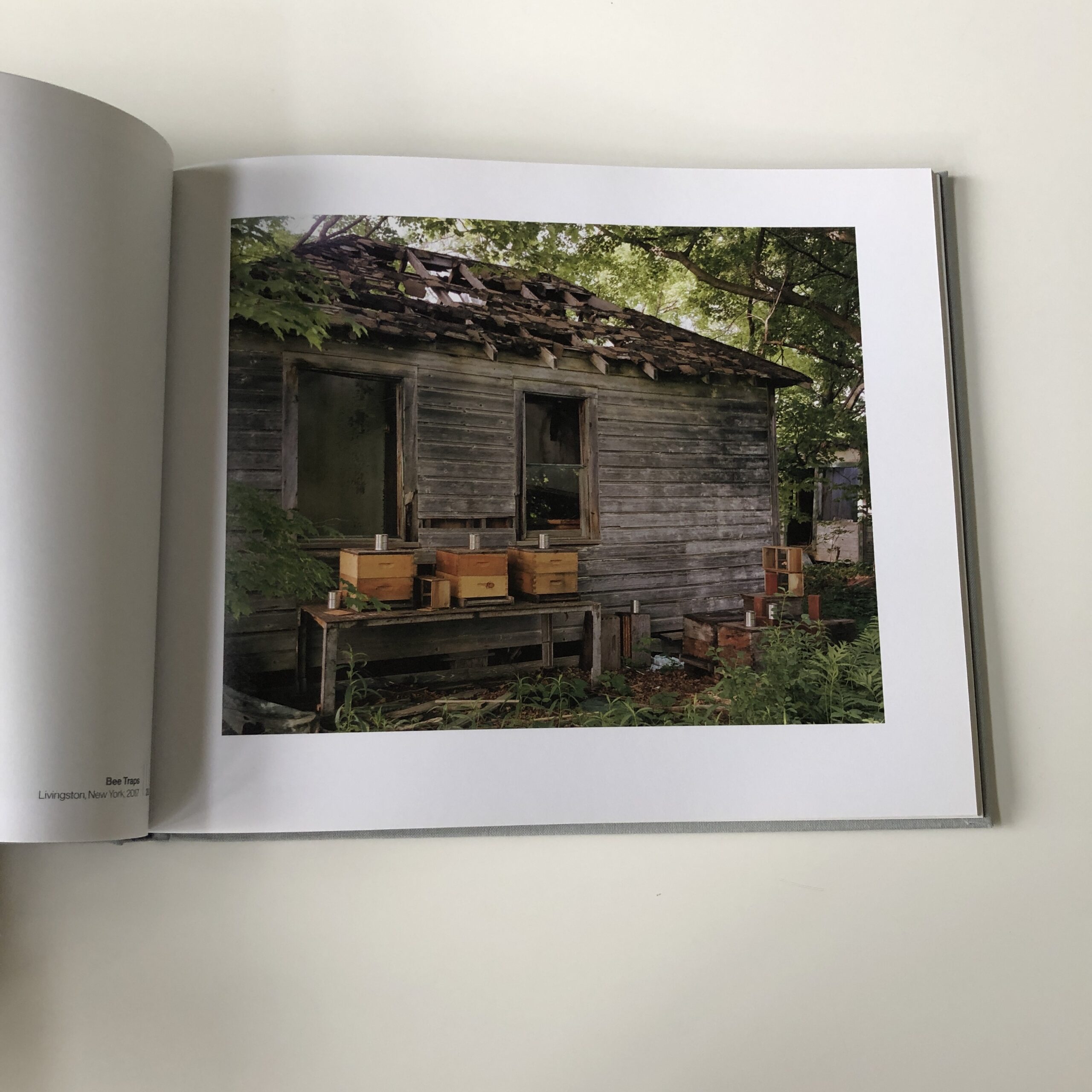
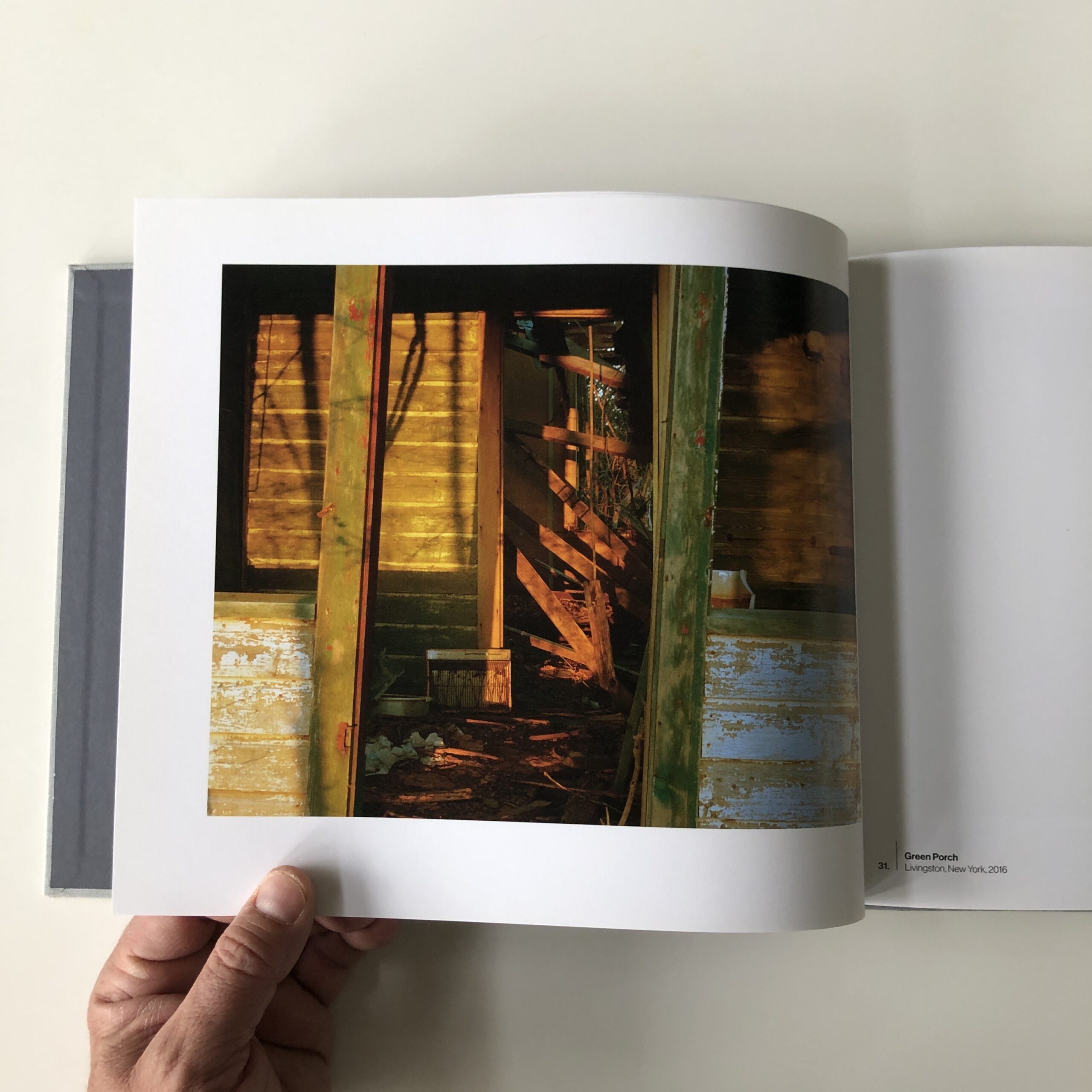
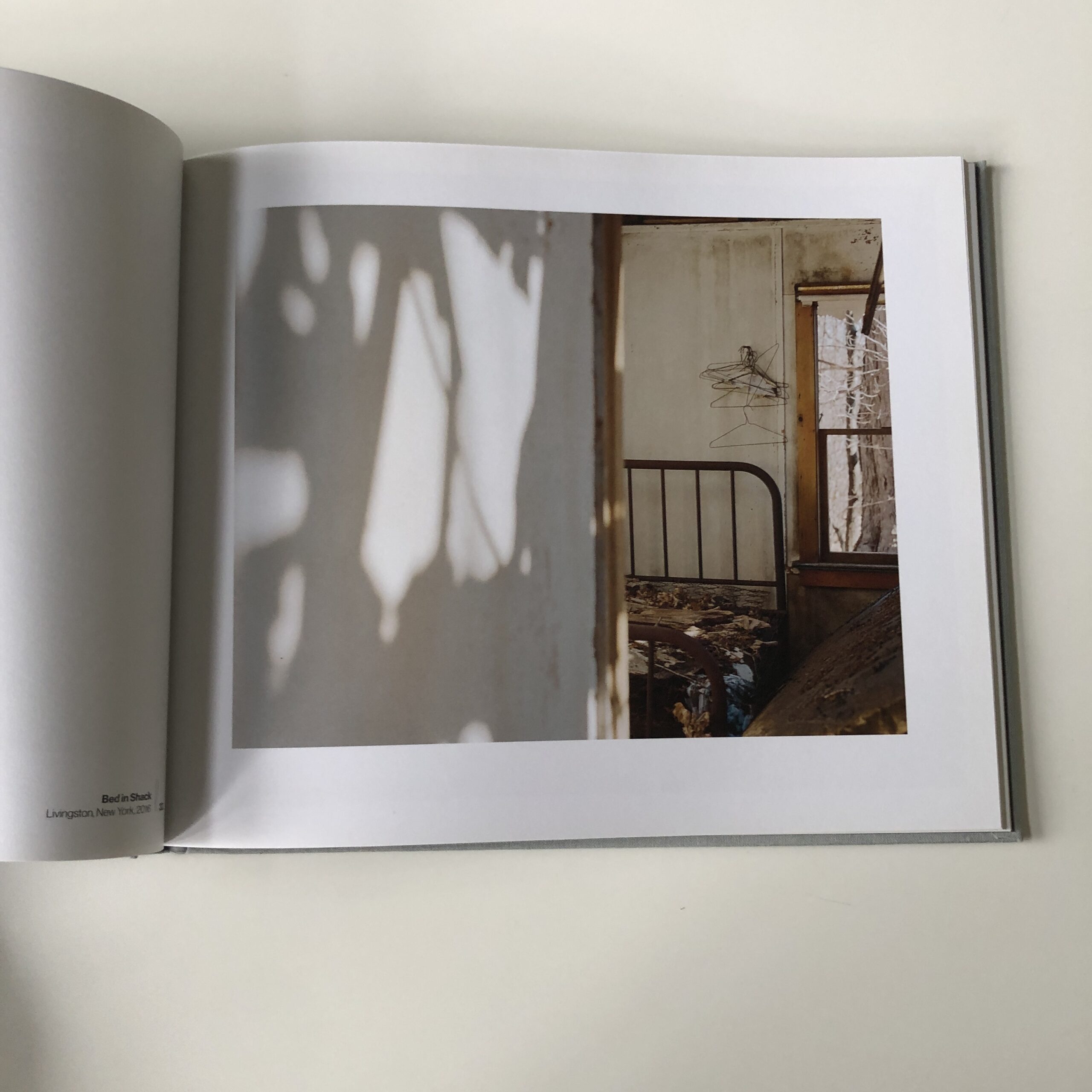
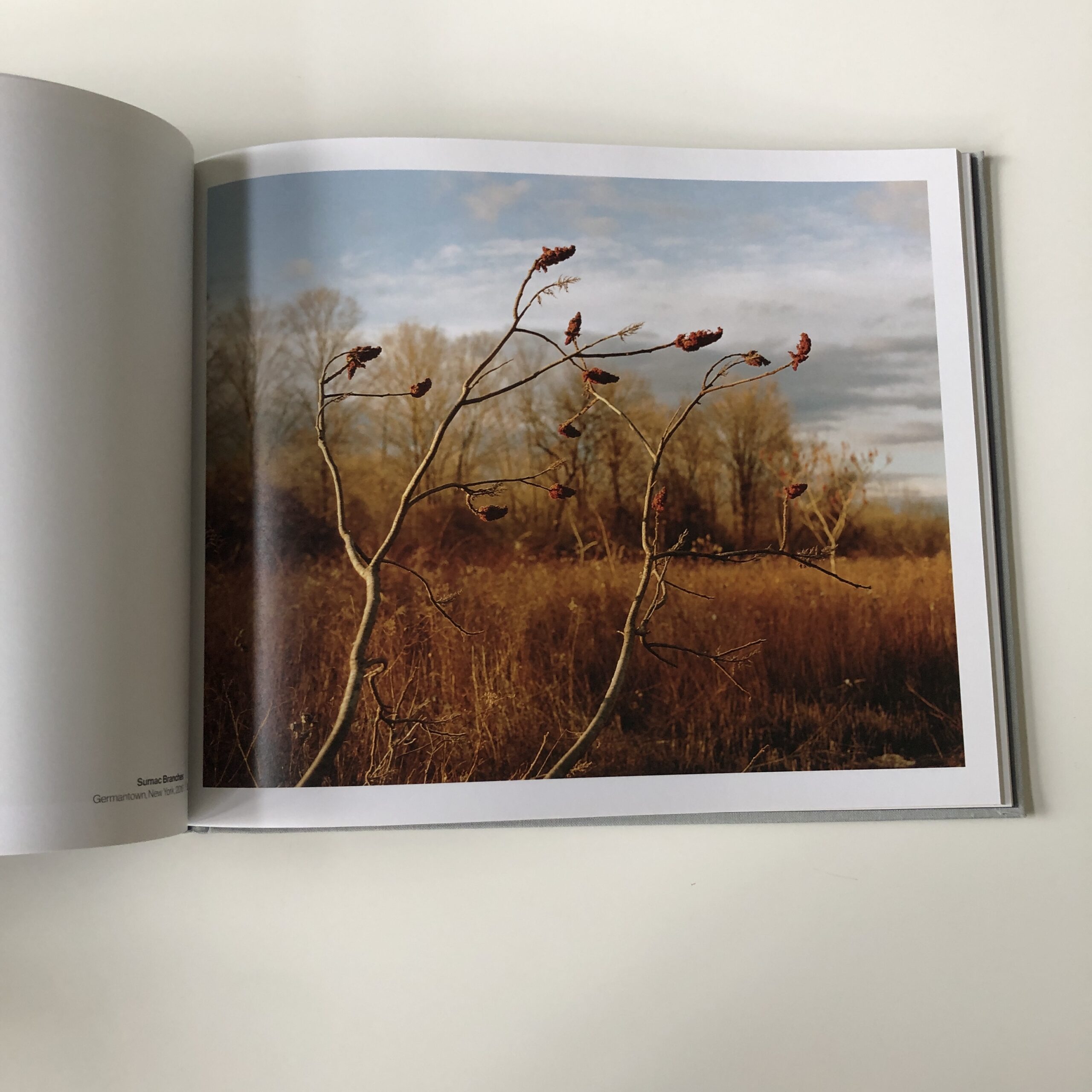
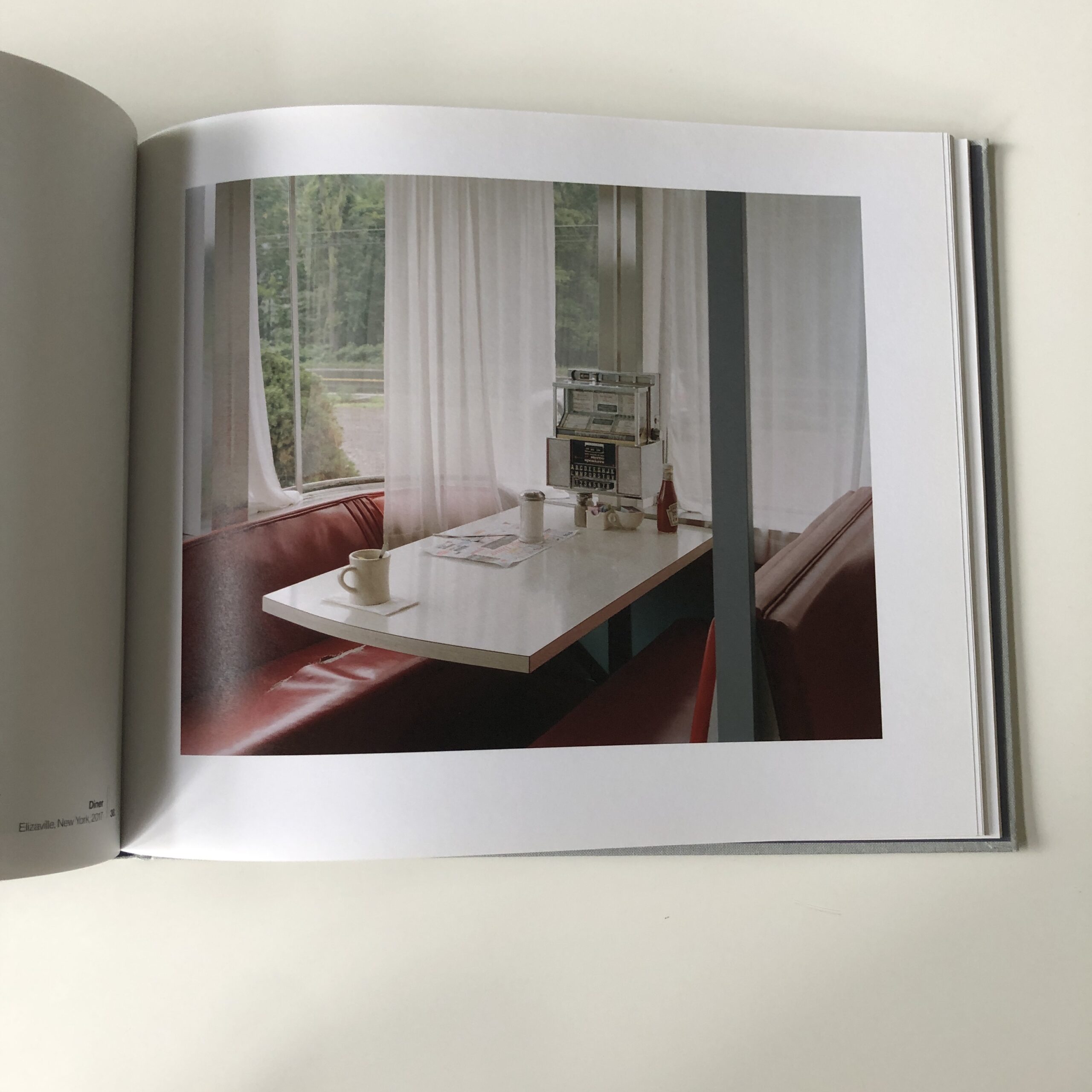
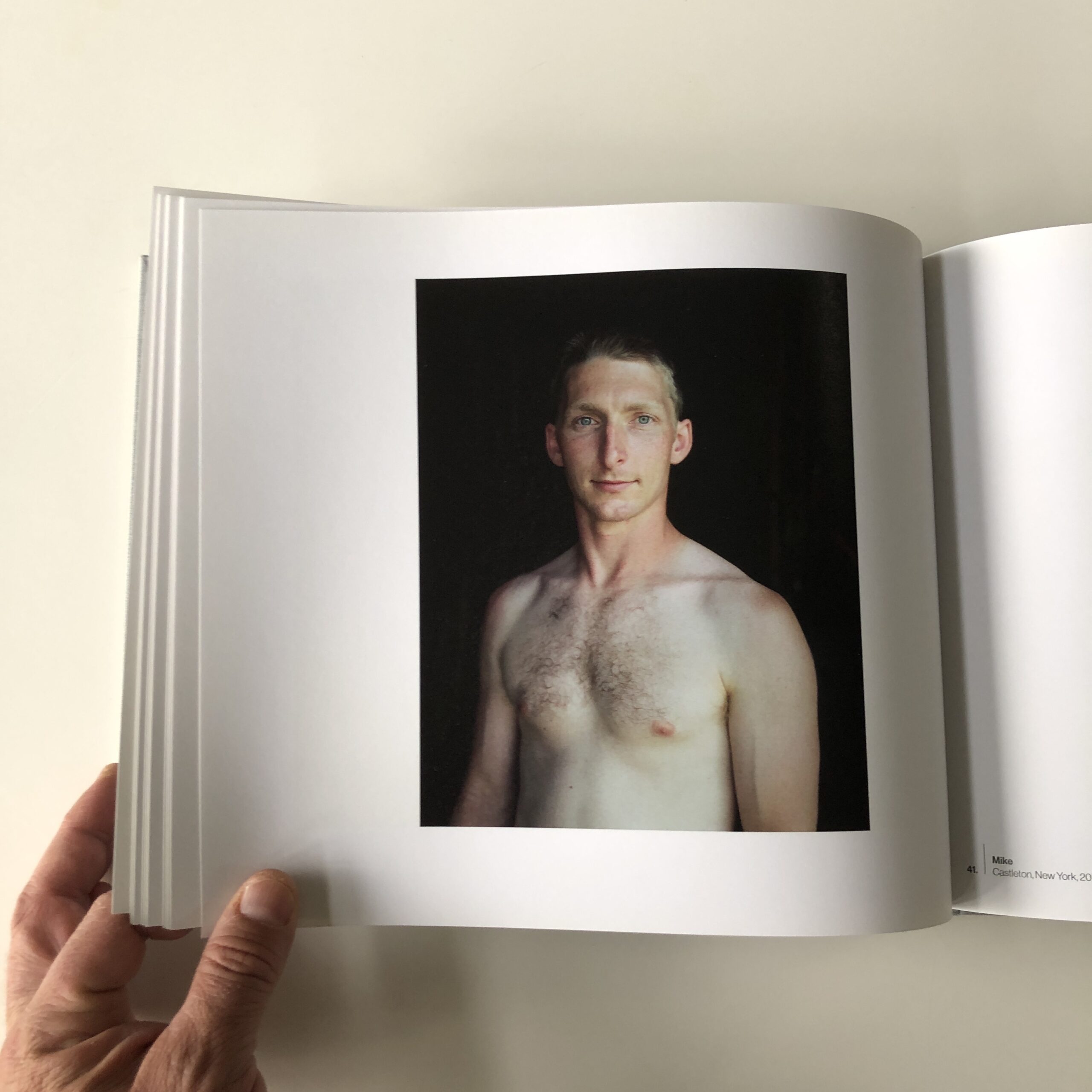
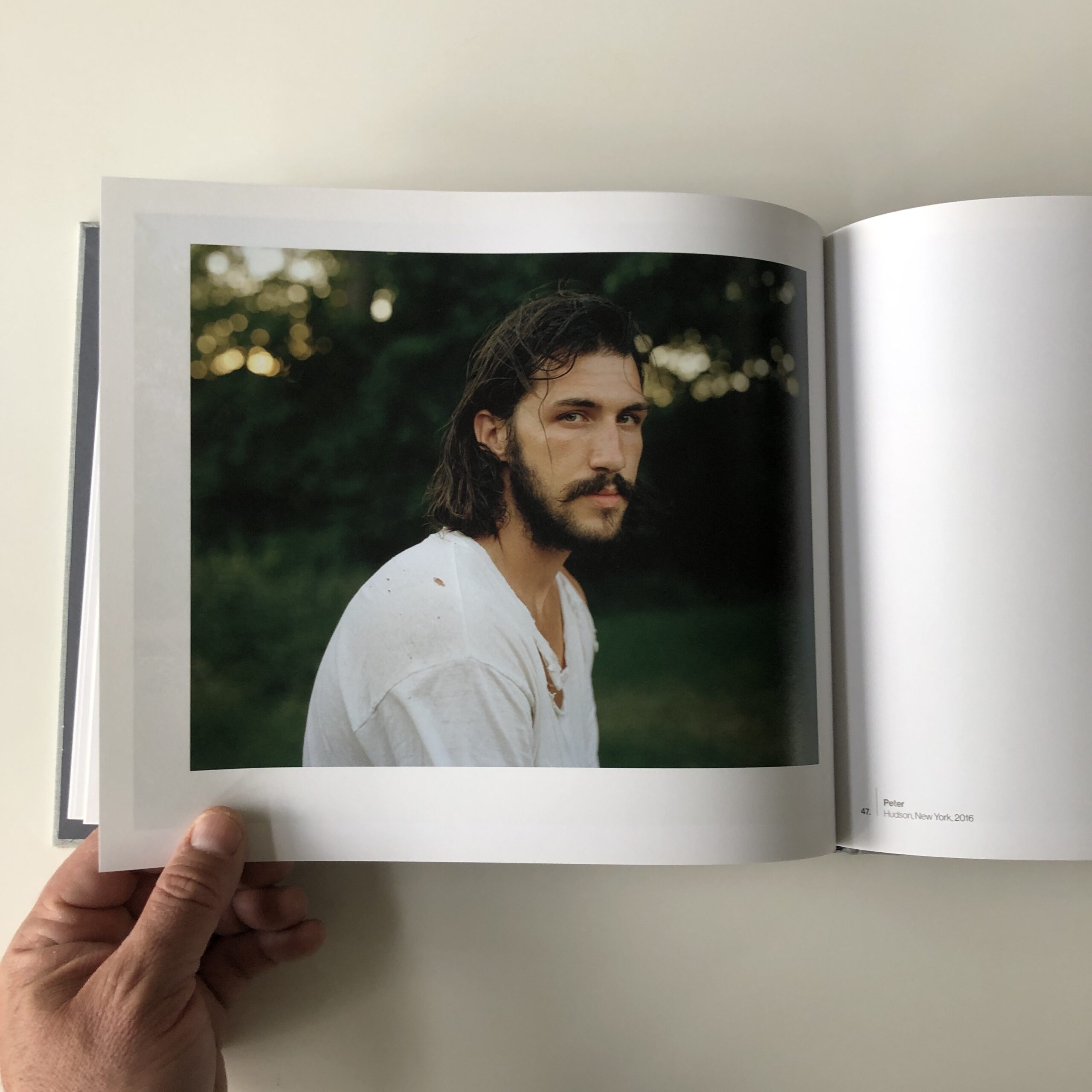
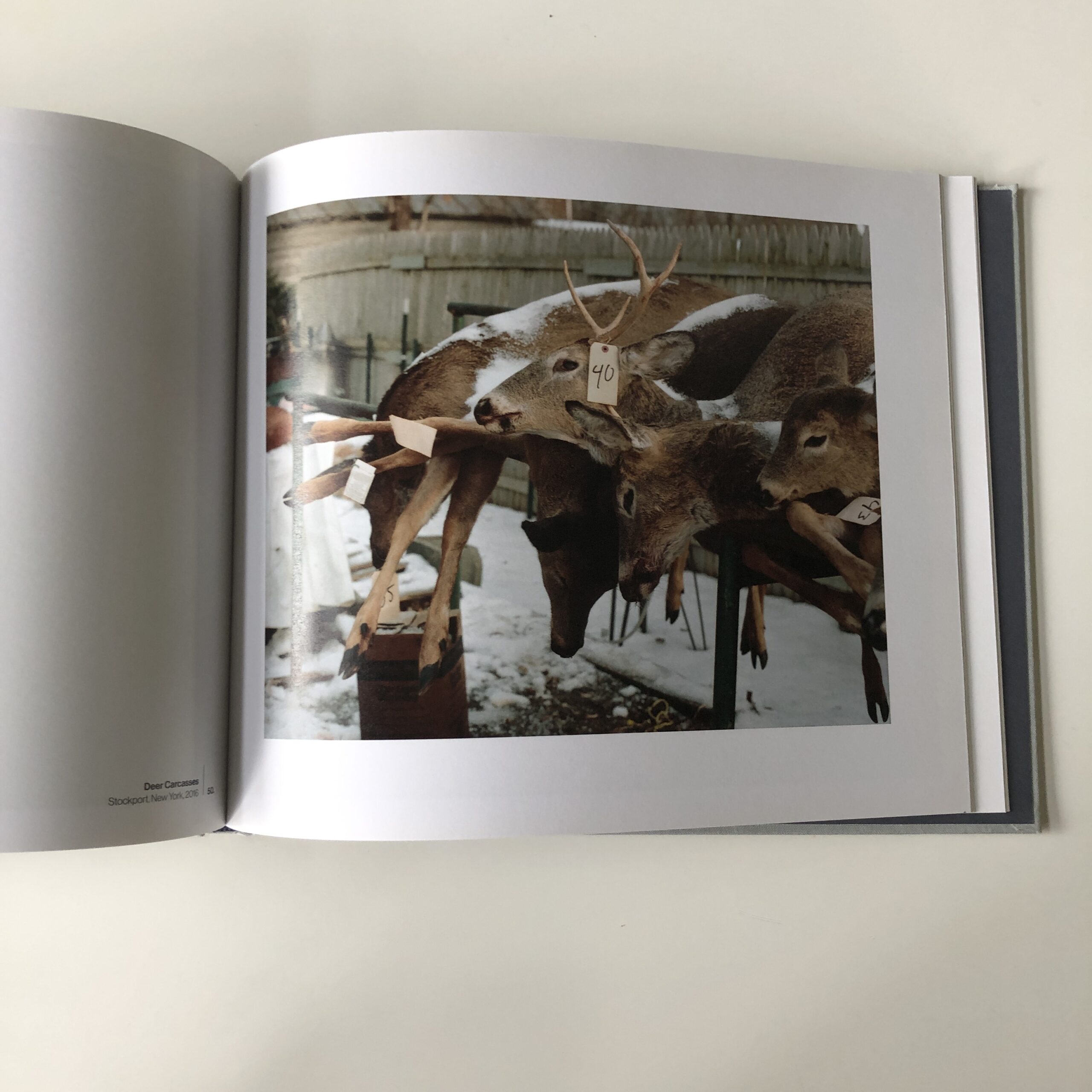
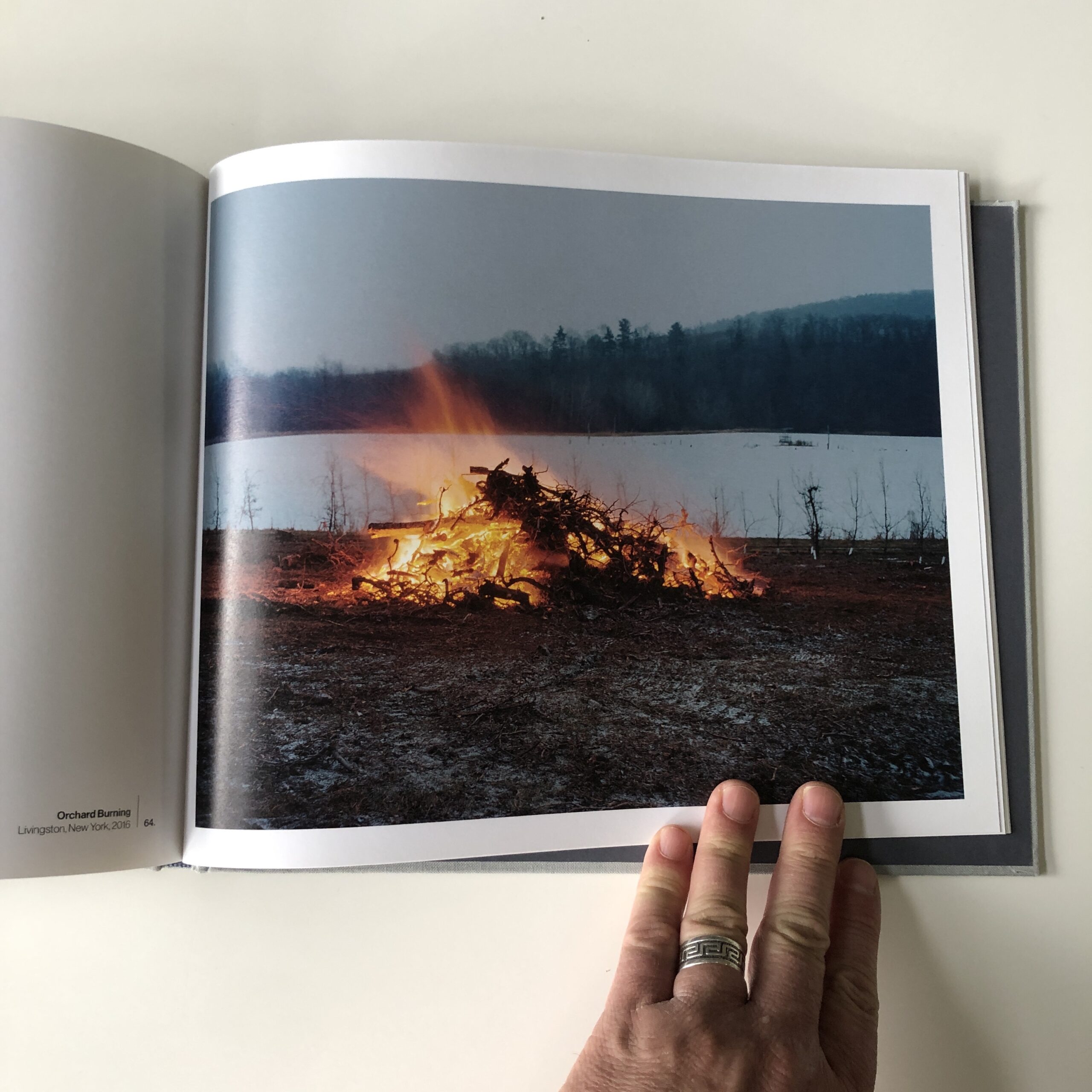
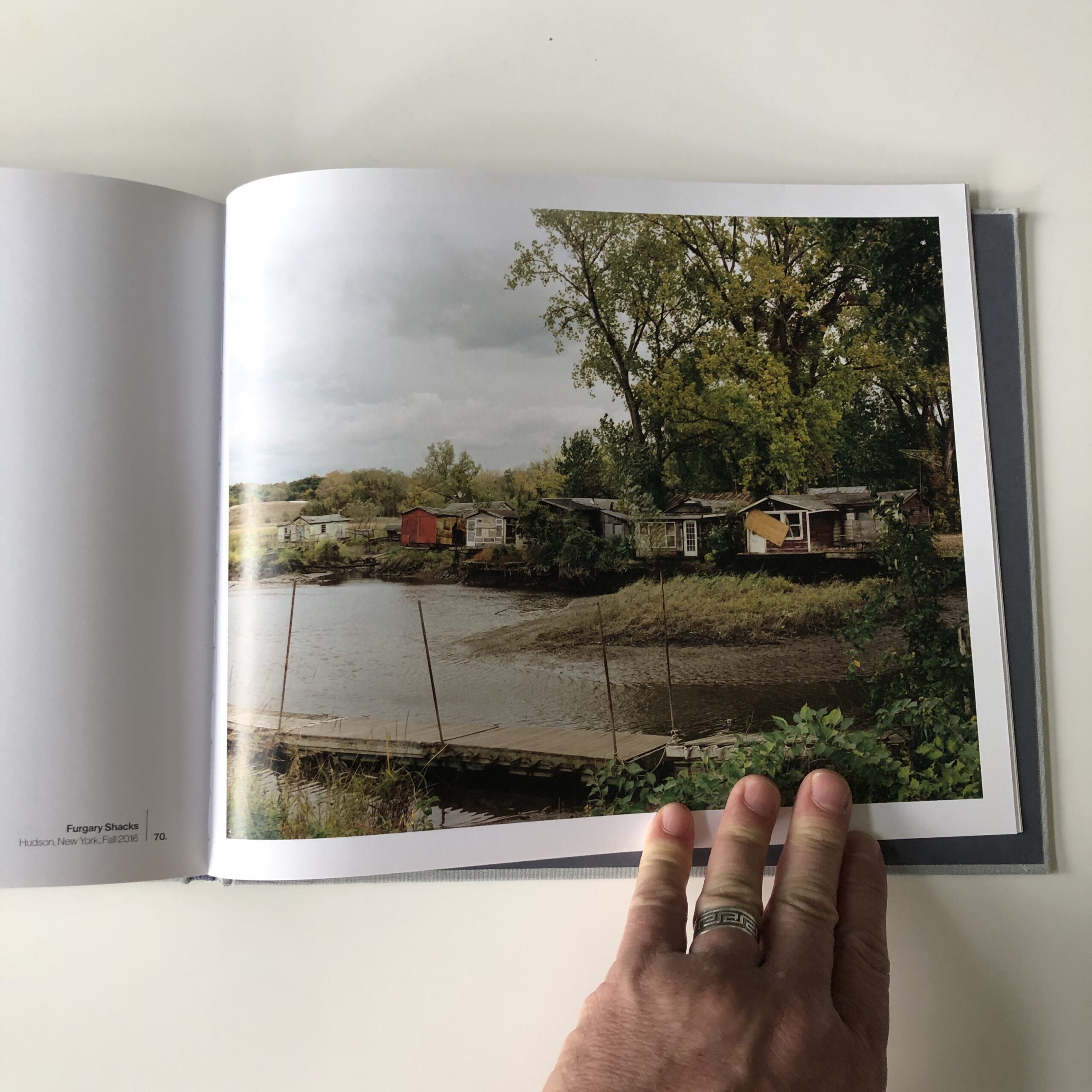
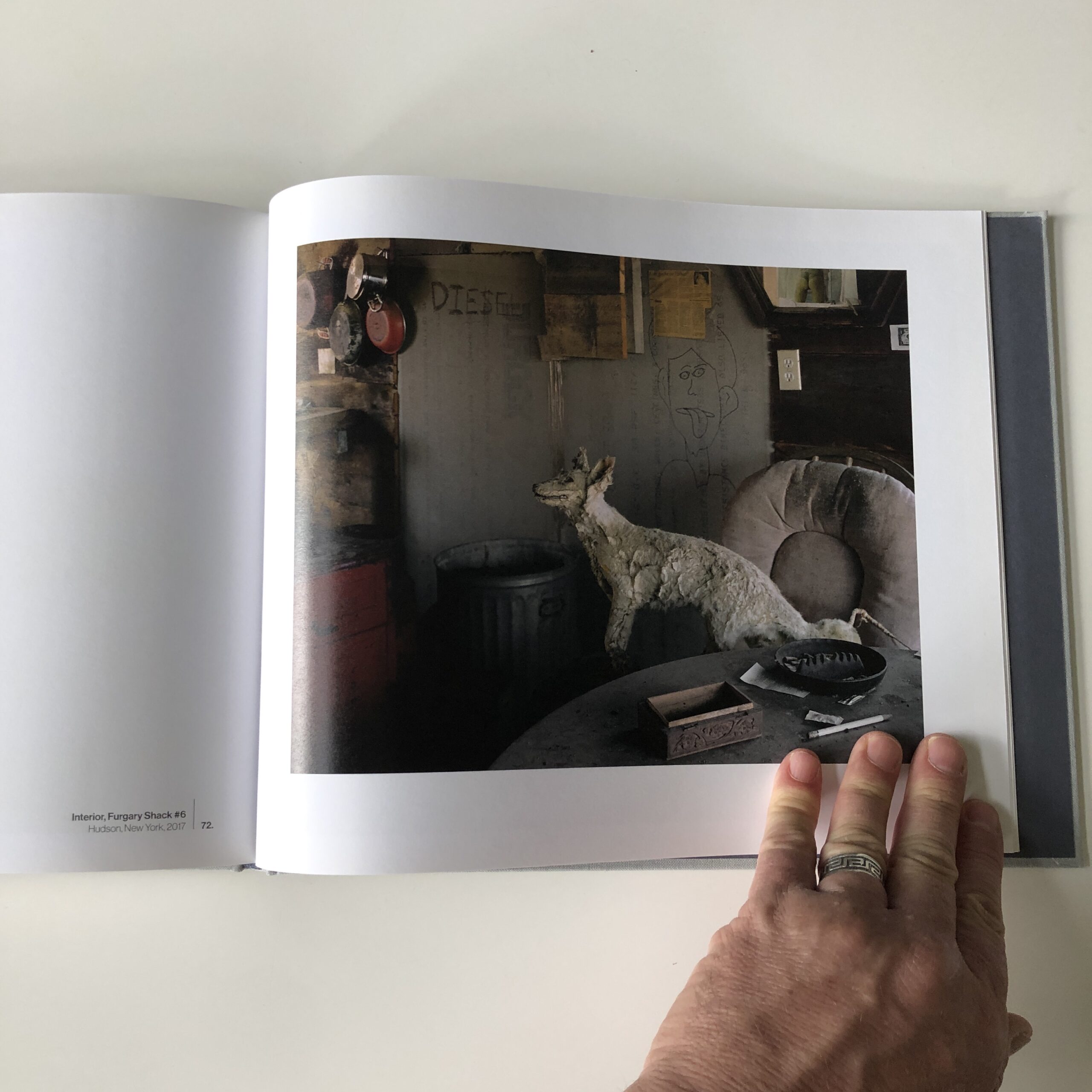
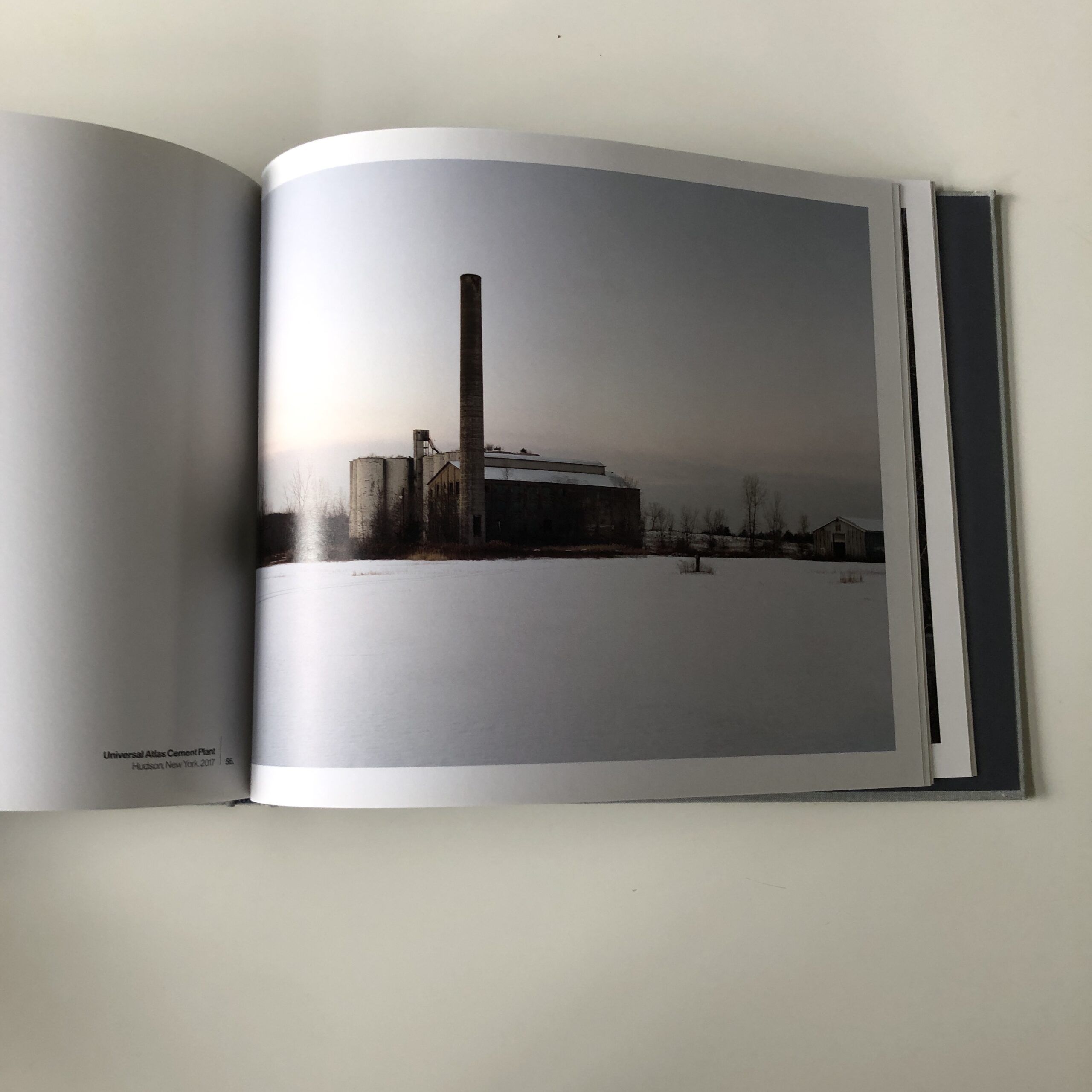
“Upstate,” by Tema Stauffer, published by Daylight in 2018, turned up in the mail three or four years ago.
As you already know, (having reading this far,) up until now, I’ve had a hard time expressing my thoughts about “Upstate.”
I don’t hate this book.
Not at all.
(Not even a little.)
But it is hard to write about, because I don’t like it that much either.
A few weeks ago, I discussed the idea that sometimes the established, expected format of a book, (essay, plates, essay) can do it a disservice.
(If the creative team takes no chances.)
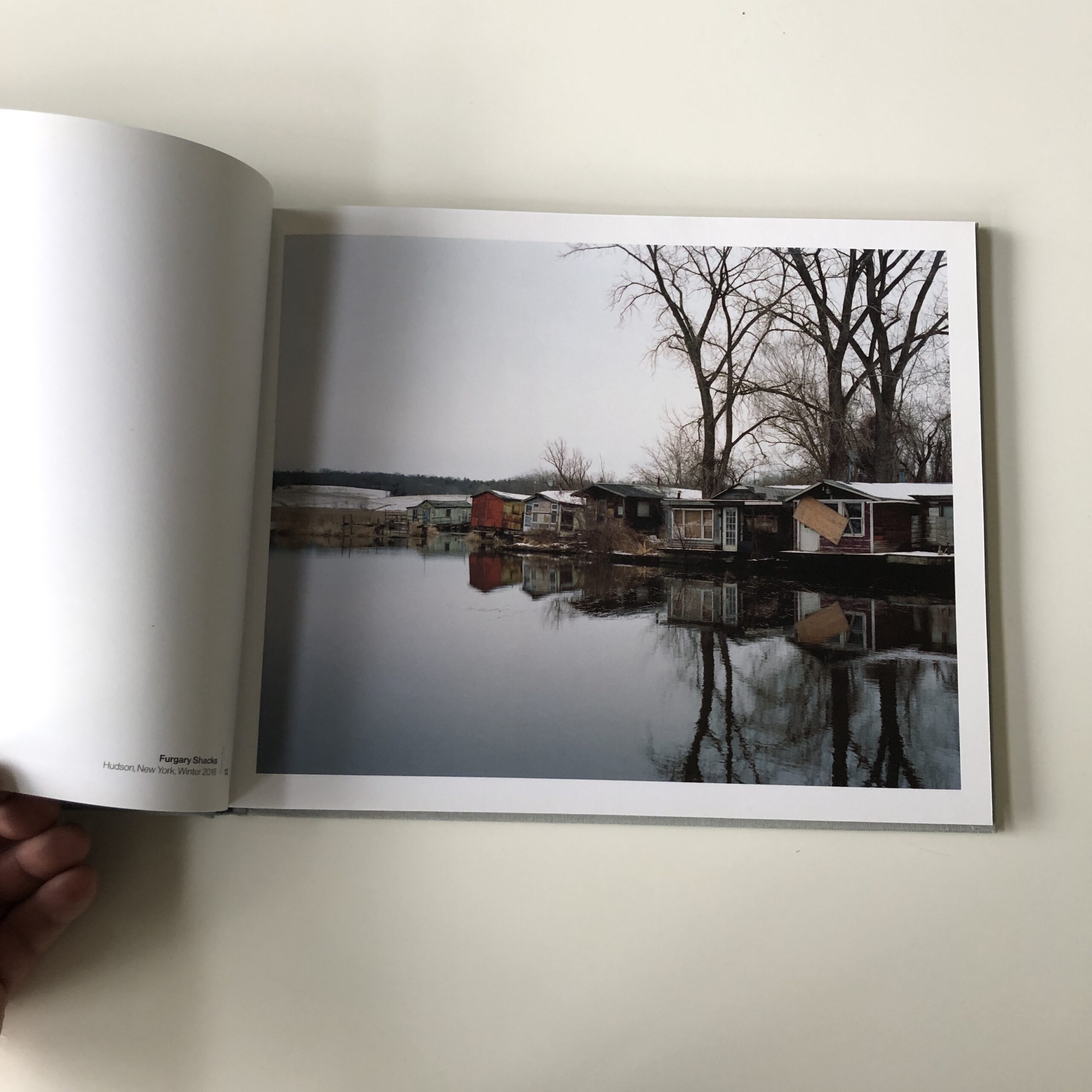
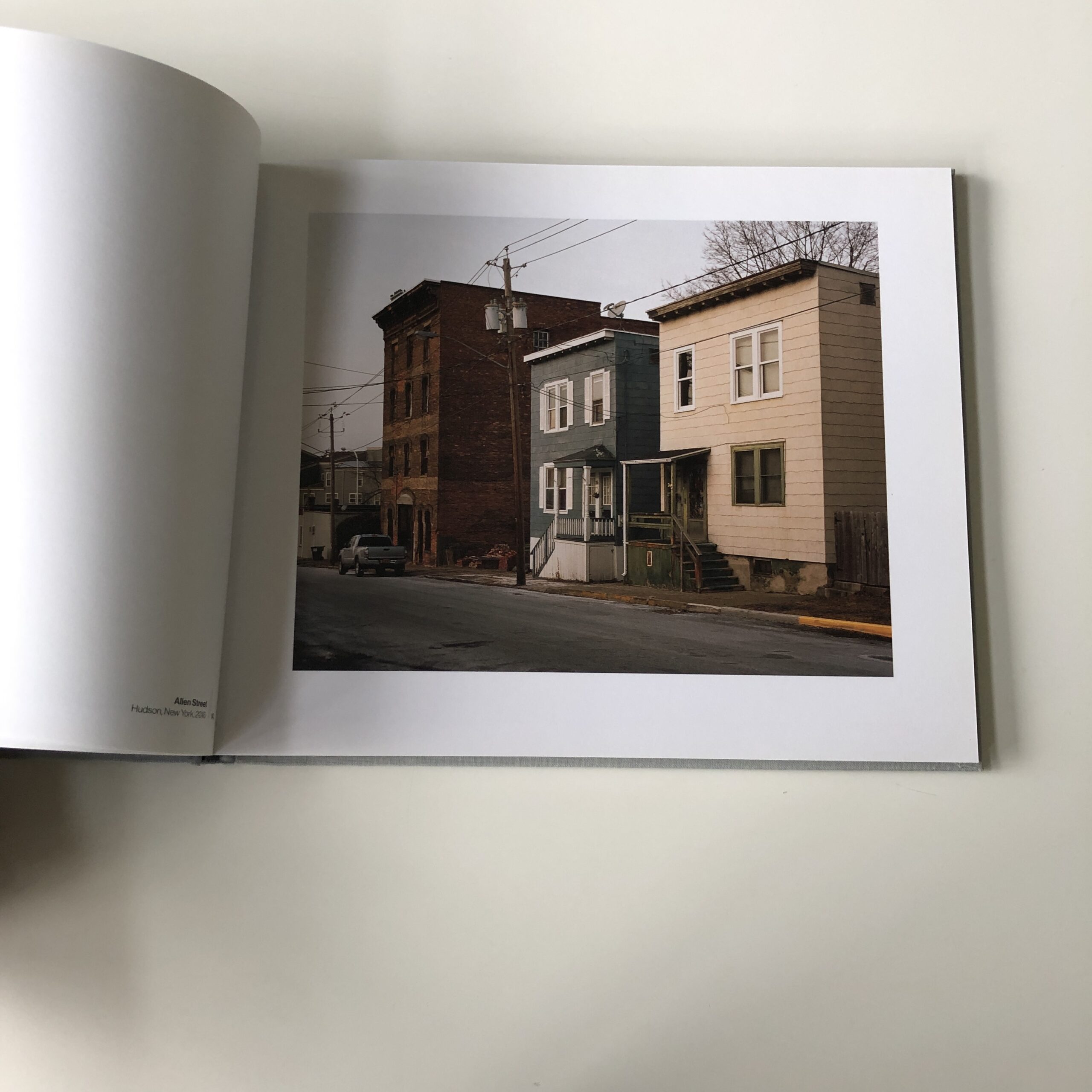
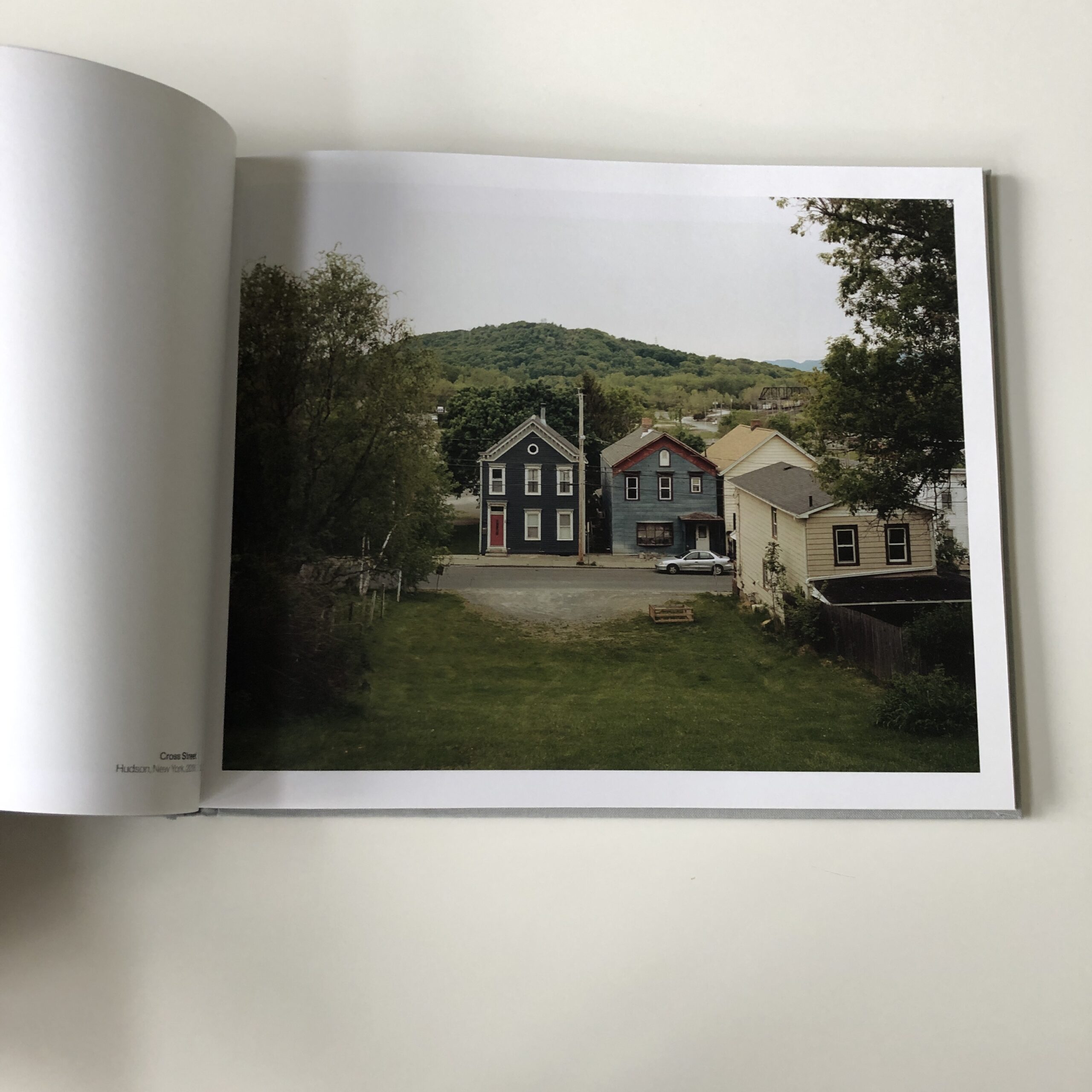
And for me, these cultural landscape images speak to that even-steven, middle of the road, well-established, Alec-Soth-shooting-style we’ve come to know so well over the last 15 years.
Plus, the poverty reminds me of so many Appalachian books I’ve seen before, or just rural poverty porn in general.
(In this case, we’re seeing Hudson, New York.)
Yet I’m certain some of you will like the photographs a lot. Maybe even love the book.
(Art is subjective.)
For me, a book that is conventional, and reminiscent of so many other projects in its design, shooting style, and subject matter becomes, somewhat by definition, average.
Nice.
Fine.
More than acceptable.
Perfectly competent.
But it’s not memorable.
And historically, whether reviewing a book, or writing about portfolios from a festival, I like things to be distinctive.
To stick in my mind.
This book never did, until it finally did, for being something of a cautionary tale.
So there you have it.
Since this is an edgy take, I’m sure some of you will disagree with me.
If you’d like to submit a book for potential review, please email me at jonathanblaustein@gmail.com. We are particularly interested in books by artists of color, and female photographers, so we may maintain a balanced program. And please be advised, we currently have a significant backlog of books for review.
The Art of the Personal Project is a crucial element to let potential buyers see how you think creatively on your own. I am drawn to personal projects that have an interesting vision or that show something I have never seen before. In this thread, I’ll include a link to each personal project with the artist statement so you can see more of the project. Please note: This thread is not affiliated with any company; I’m just featuring projects that I find. Please DO NOT send me your work. I do not take submissions.
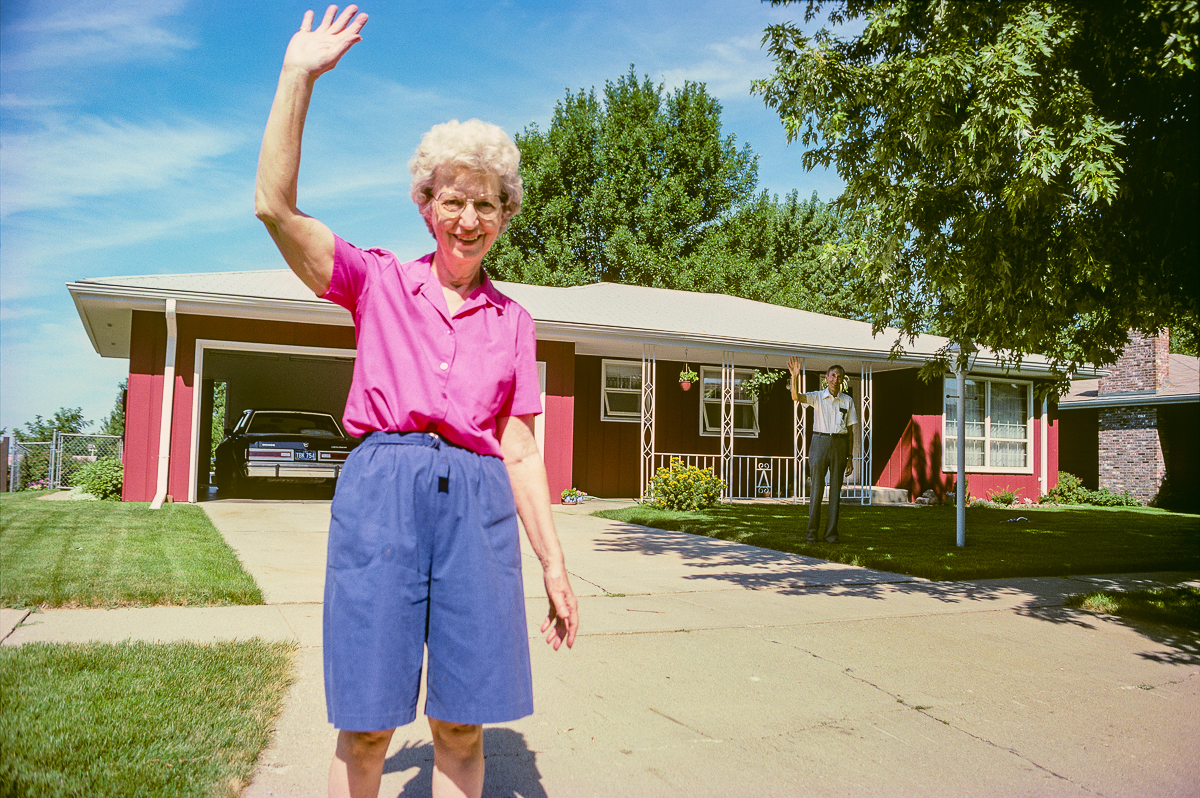
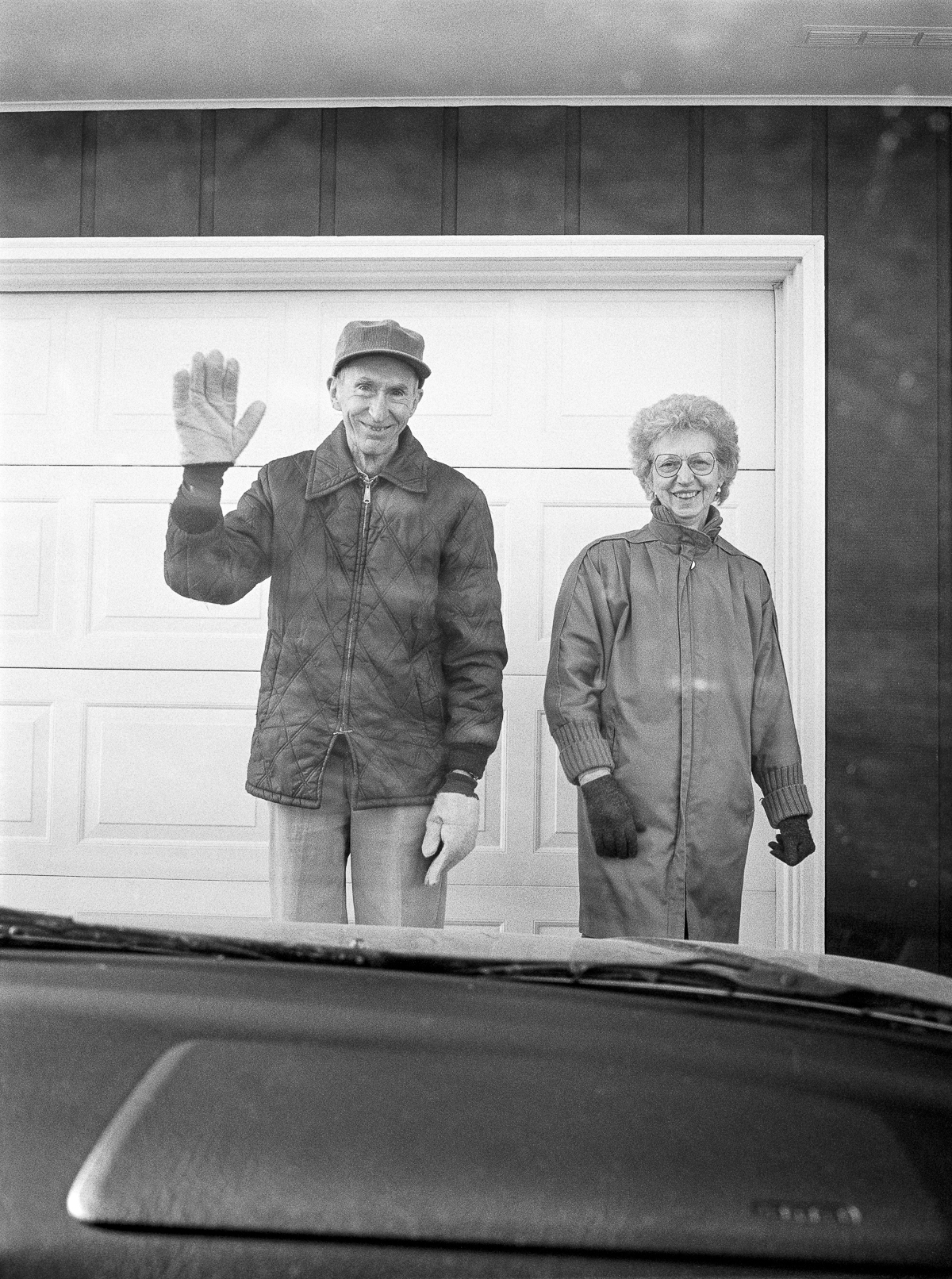
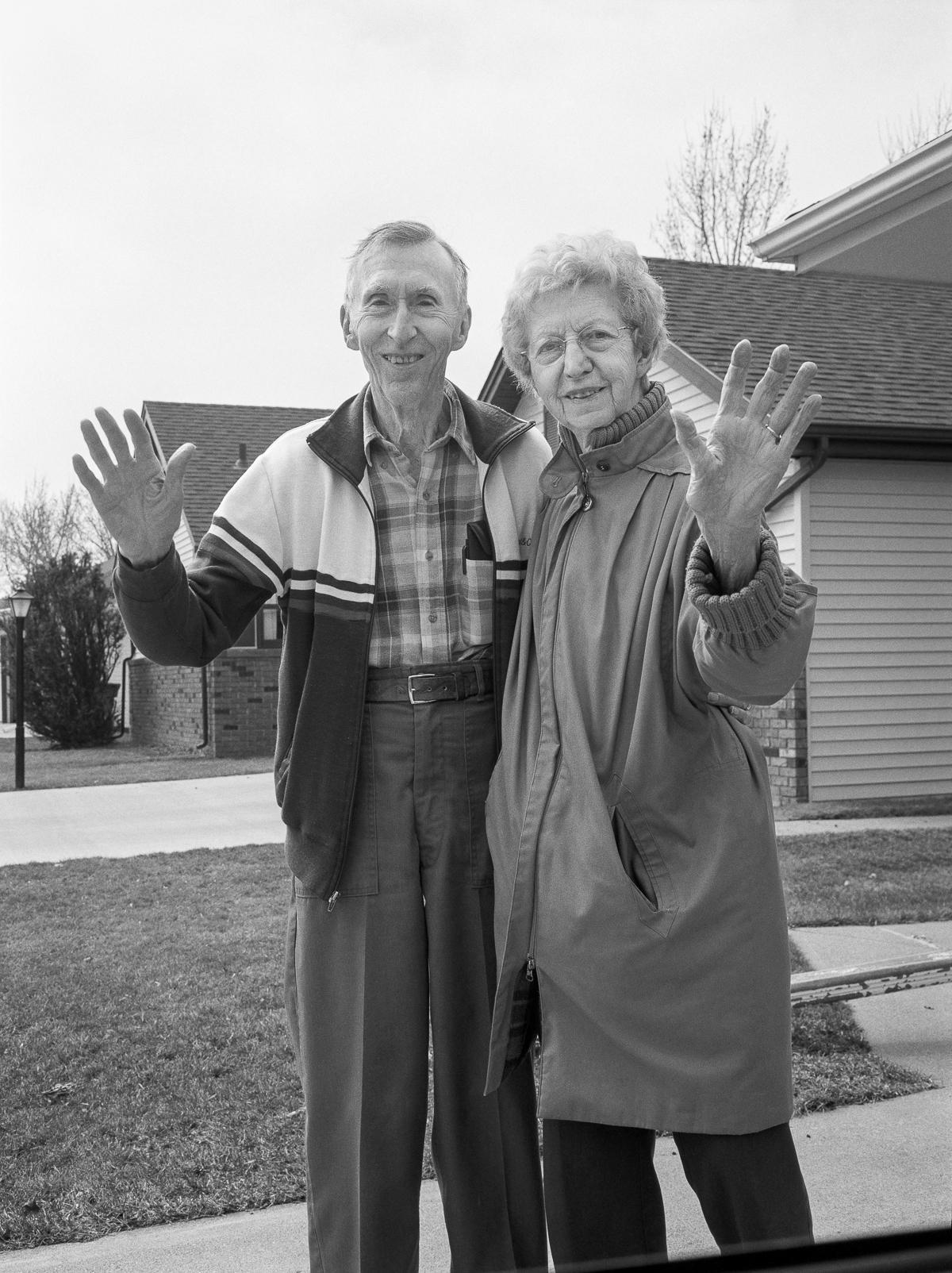
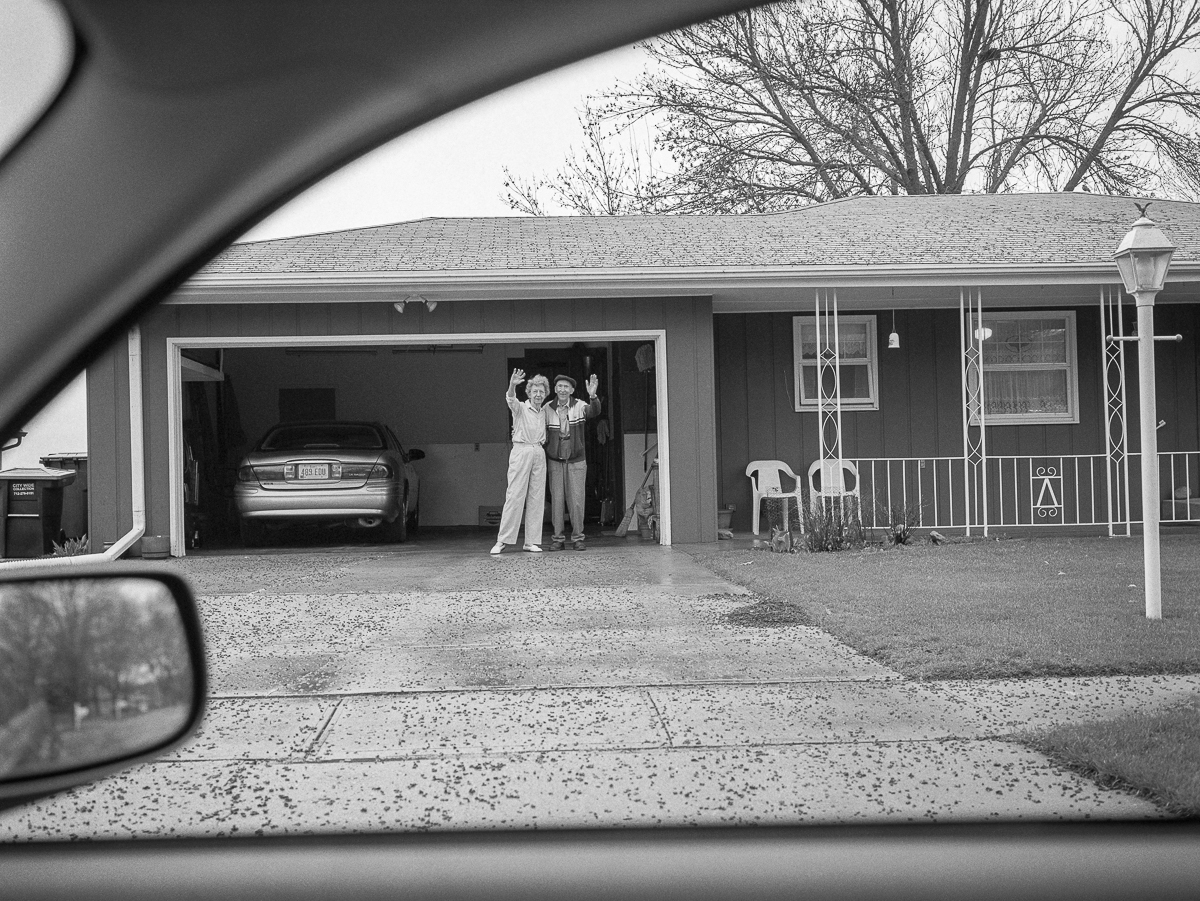
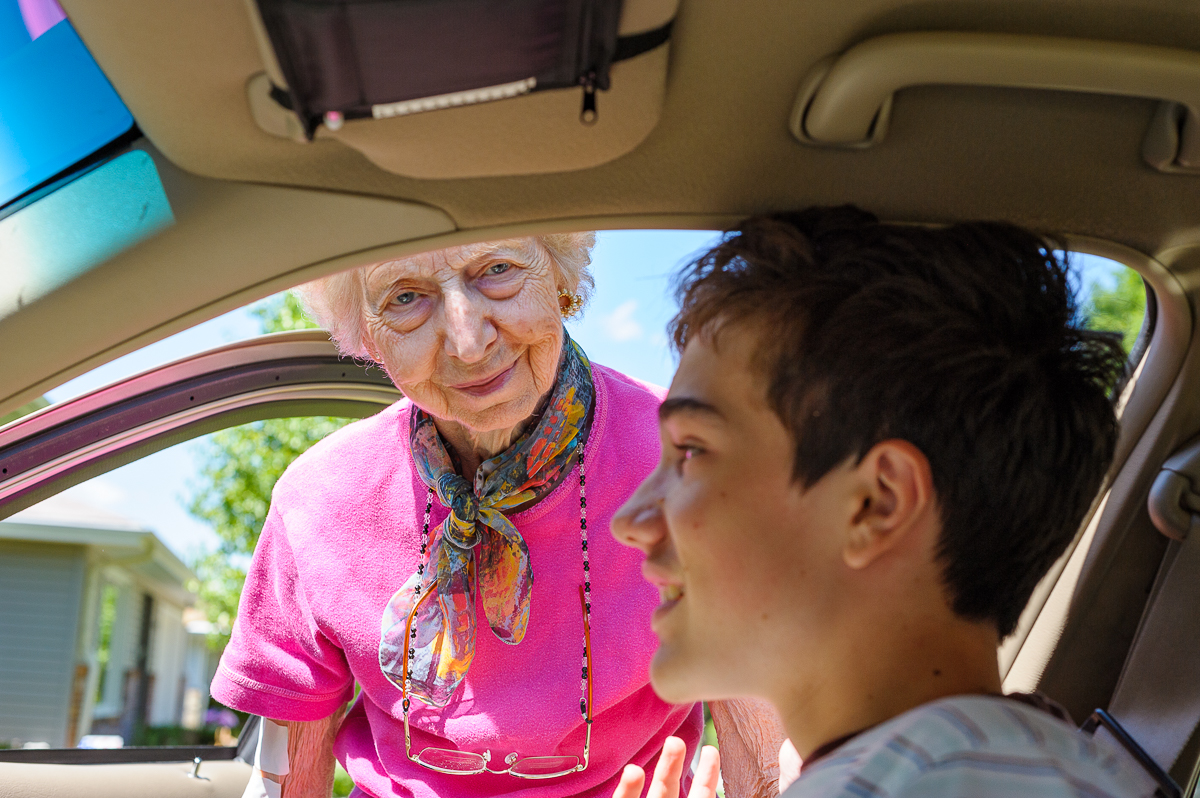
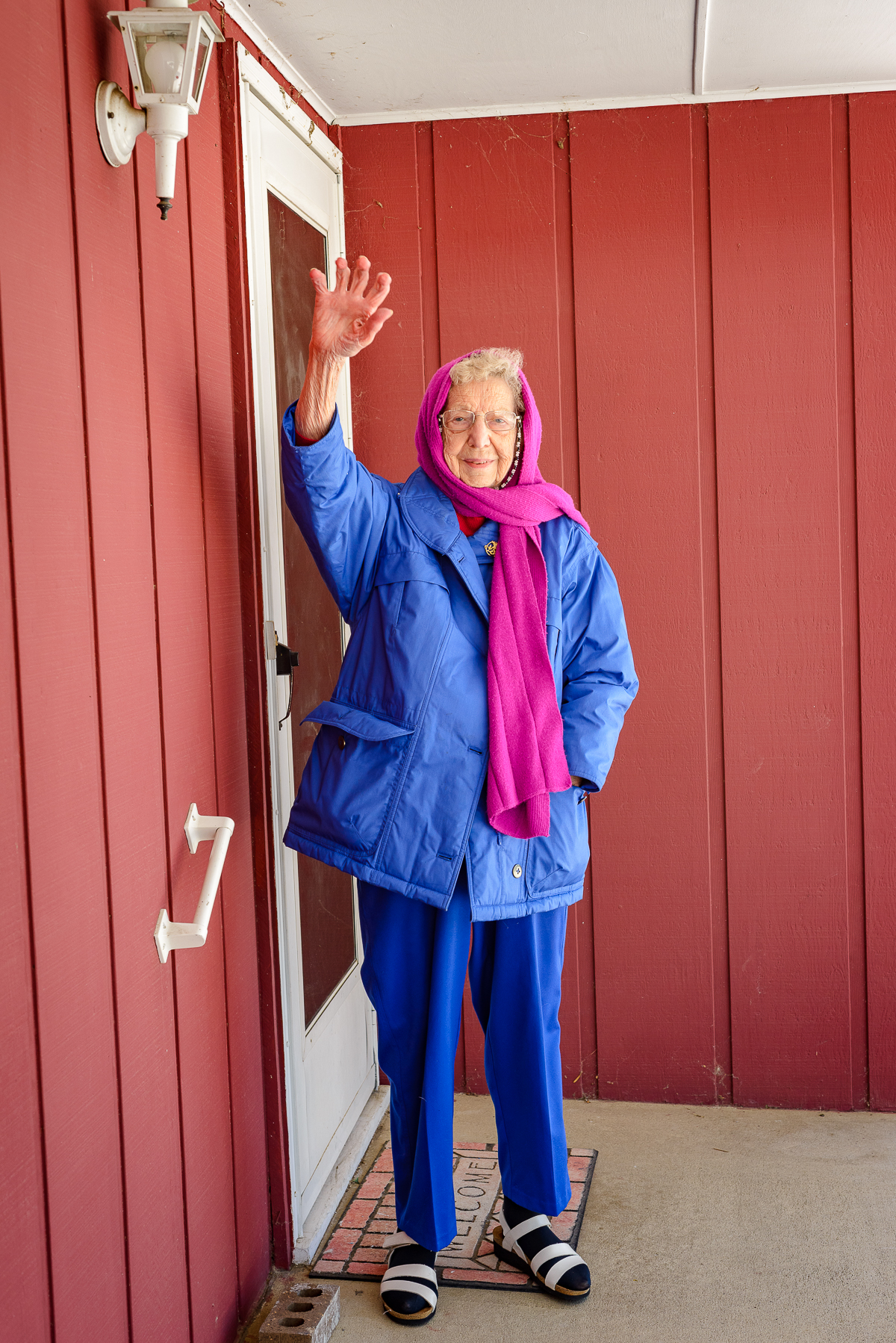
For 27 years, I took photographs as I waved good-bye and drove away from visiting my parents at their home in Sioux City, Iowa. I started in 1991 with a quick snapshot, and I continued taking photographs with each departure. I never set out to make this series. I just took these photographs as a way to deal with the sadness of leaving. It gradually turned into our good-bye ritual. And it seemed natural to keep the camera busy, because I had been taking pictures every day while I was there. These photographs are part of a larger body of work I call Relative Moments, which has chronicled the lives of my parents and other relatives since 1986. When I discovered the series of accumulated “leaving and waving” photographs, I found a story about family, aging, and the sorrow of saying good-bye.
In 2009, there is a photograph where my father is no longer there. He passed away a few days after his 91st birthday. My mother continued to wave good-bye to me. Her face became more forlorn with my departures. In 2017, my mother had to move to assisted living. For a few months, I photographed the good-byes from her apartment door. In October of 2017 she passed away. When I left after her funeral, I took one more photograph, of the empty driveway. For the first time in my life, no one was waving back at me.
APE contributor Suzanne Sease currently works as a consultant for photographers and illustrators around the world. She has been involved in the photography and illustration industry since the mid 80s. After establishing the art-buying department at The Martin Agency, then working for Kaplan-Thaler, Capital One, Best Buy and numerous smaller agencies and companies, she decided to be a consultant in 1999. She has a Twitter feed with helpful marketing information because she believes that marketing should be driven by brand and not by specialty. Follow her at @SuzanneSease. Instagram
Success is more than a matter of your talent. It’s also a matter of doing a better job presenting it. And that is what I do with decades of agency and in-house experience.
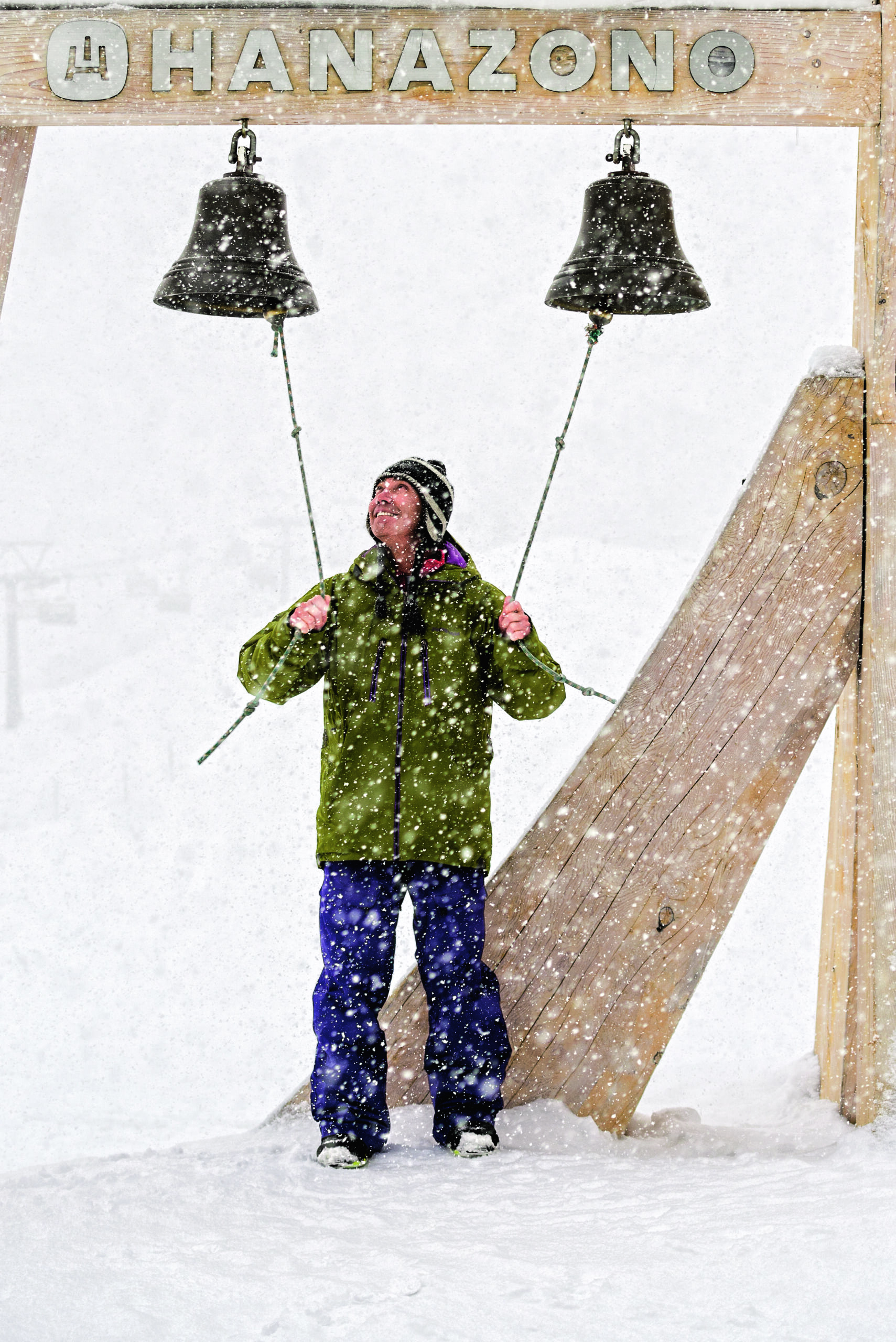
According to Gerry Lopez, “Bells are one of the things that Japan does better than anywhere else in the world.” Ringing the bells under heavy snowfall on our first day in Niseko at Hanazono, Hokkaido, Japan.
Heidi: How has being both writer and photographer informed your photography? Colin: The storytelling aspect of being a writer (and editor/photo editor) helps me approach photography with a deeper vision of the final product. It allows me to see the whole story and create a visual narrative that fills in the gaps between peak moments. Sometimes, in action sports and otherwise, the context in between the main objectives are where the true story lies, and it’s important to keep an eye out for the less obvious images that can be the most honest and impactful. It’s easy to forget that if you aren’t focused on a cohesive narrative.
Did you start out knowing you wanted to do both edit and photo/motion? Ever since high school, writing and photography have both been interesting to me. They’re complementary pursuits, and I found storytelling through both copy and imagery to be a natural progression. Video came later. For most of my career, I thought I wouldn’t want to try to capture both stills and motion on the same shoot, but for some applications—particularly shoots where motion and moments are predictably repeatable—there can be effective balance without watering down the final product.
What have been the benefits of being a “dually” or multi-talented now that we have a thirst for content in the digital world? For one, a brand or editorial title can save travel costs by sending a single person to get the whole story through copy, imagery, and potentially video. Second, the ability to understand the story in a holistic way—whether that’s a brand story or an editorial story—can allow me to provide a more cohesive and balanced final product as well. And third, photography serves as a visual notebook in a way—the photos bring me back to the moment and allow for vivid, detailed memories to draw upon while writing.
Big picture, with multiple levels of digital media, the content needs of any entity have grown exponentially. Being able to provide everything from stills to video and accompanying copy can feed the various levels of engagement that are all essential to successful tiered storytelling from print to web to social media. As someone who studied sociology for seven years, seeing the big picture is also fascinating to me, and being able to take a holistic approach to media creation is a fun puzzle to put together.
Were there any drawbacks? It all takes time, and doing both a photo edit and copywriting on tight deadlines can demand a lot of creative energy. Writing, in particular, requires a spark that is hard to explain, and that happens after the trip, or interview, or engagement with the subject at hand. Sometimes when you sit down to write it flows almost effortlessly, but sometimes it doesn’t—the creative inspiration can arrive at odd hours, or even days or weeks after the fact. Photography generally has its creative moments before and during the shoot, but the back-end editing of my own work is more like hammering nails than playing music, which is the opposite of writing.
You recently finished a stint as a photo editor, did that role shed light on the art of pitching in stories and your photo work? I recently spent about a year working in the photo and copy departments at Patagonia covering maternity and paternity leave for one of their photo editors and one of their managing editors of copy. Before that, most of my back end work had been as an editor, photo editor and content director for The Snowboarder’s Journal, which is an independent print title with a digital property, focused on a very specific core audience. My time at Patagonia certainly helped me understand the high volume of content required to support a larger brand in the outdoor space with strong and specific messaging, which speaks to a large and diverse audience. It certainly helped me understand how stories fit the brand message more effectively, and gave me a better understanding of how photography and copy flows between larger teams and how overall brand messaging flows into category-specific storytelling. Patagonia has a lot of moving parts and fitting work into the right spaces as a freelancer requires making everyone’s jobs easier through clear communication, clear understanding of the brand, and pitching work that fits into the aforementioned messaging pyramid.
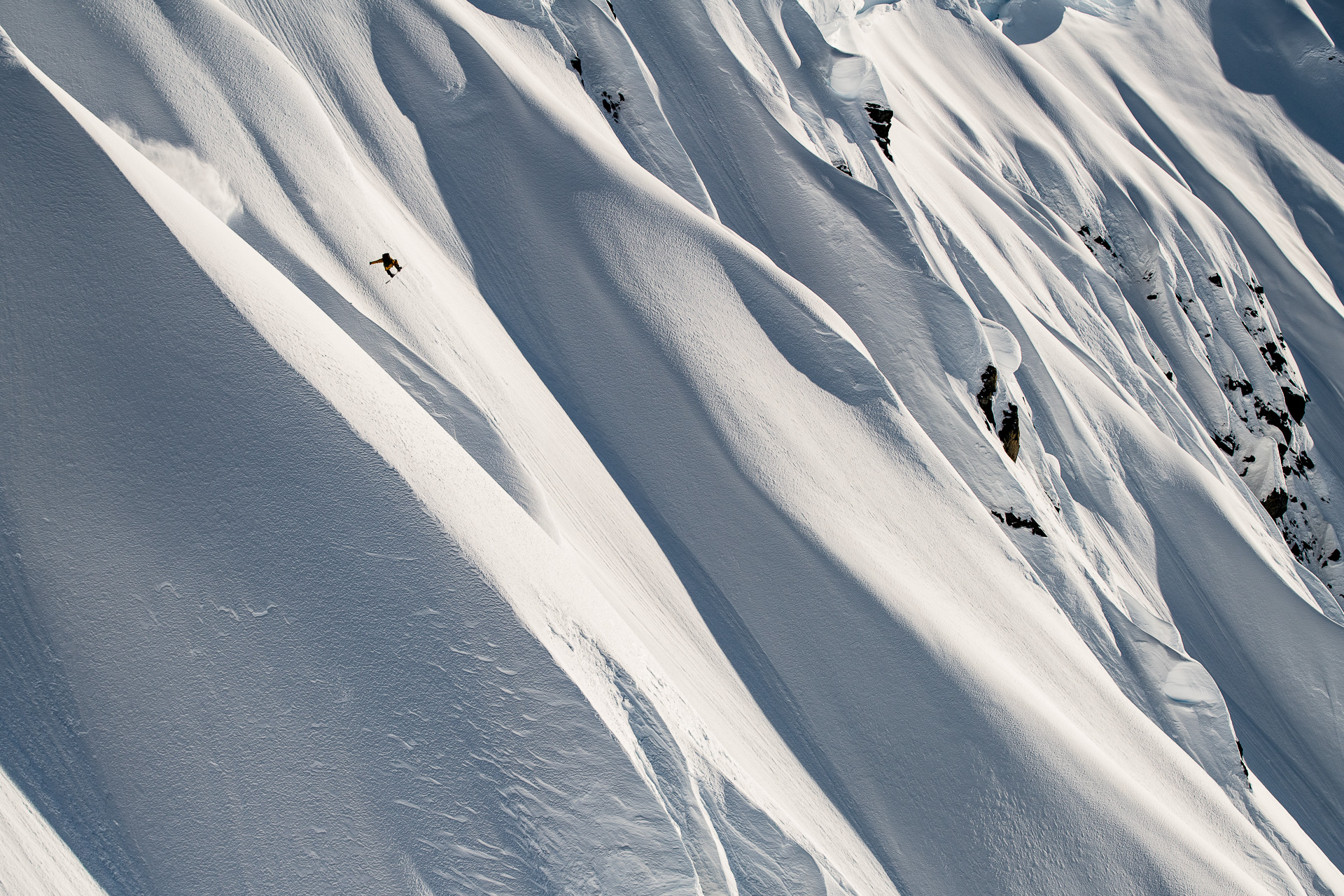
Eric Jackson outside of Valdez, Alaska—the image that won Best Mountain Photo for Red Bull Illume 2021
Congratulations on the RedBull Illume award, why did you submit that image? Thank you. Winning Best Mountain Photo at Red Bull Illume is a career highlight as someone who shoots action sports. I actually submitted that image to the Raw category, so it was a raw file with zero edits in post. The light, shadow, and immensity of the Alaskan landscape fit well into what I saw as a successful raw image, but it ended up winning the Best Mountain Photo award, to my surprise. It was one of a few peak moments from a week in Alaska where we only got a few cracks at shooting big lines in nice light—after two days up there, wind scoured the range, and effectively shut us down.
Getting a high-level snowboard image in Alaska requires both a lot of planning and a lot of luck, and this one worked in a year where not a lot of people had success up in Alaska, so I thought it might stand out from the crowd. To get that shot, I was perched on a giant glacial ice bulge with massive crevasses just below. it was getting late, and we had to get out of the mountains soon. The wind was starting to below, making navigation difficult. Every year I try to get up to AK to shoot, and some years we walk away with nothing, so any successful image from Alaska is special to me.
What have you been working on lately that inspired you? A lot of my inspiration comes from moments outside of work—evening light on my mountain bike above my house, pedaling alone with time to think. A powder day at the mountain with friends. A hike through big trees in clean air. A good conversation with a deep thinker. Things like that. I’ve been consciously expanding my work beyond the action sports realm in the past few years, and that has been both challenging and rewarding. The unpredictability of shooting with kids, for instance, requires a different approach than setting up a portrait or an action shot with a professional athlete. Working with video is also a fun and engaging pursuit, building a story through a somewhat familiar yet somewhat different medium.
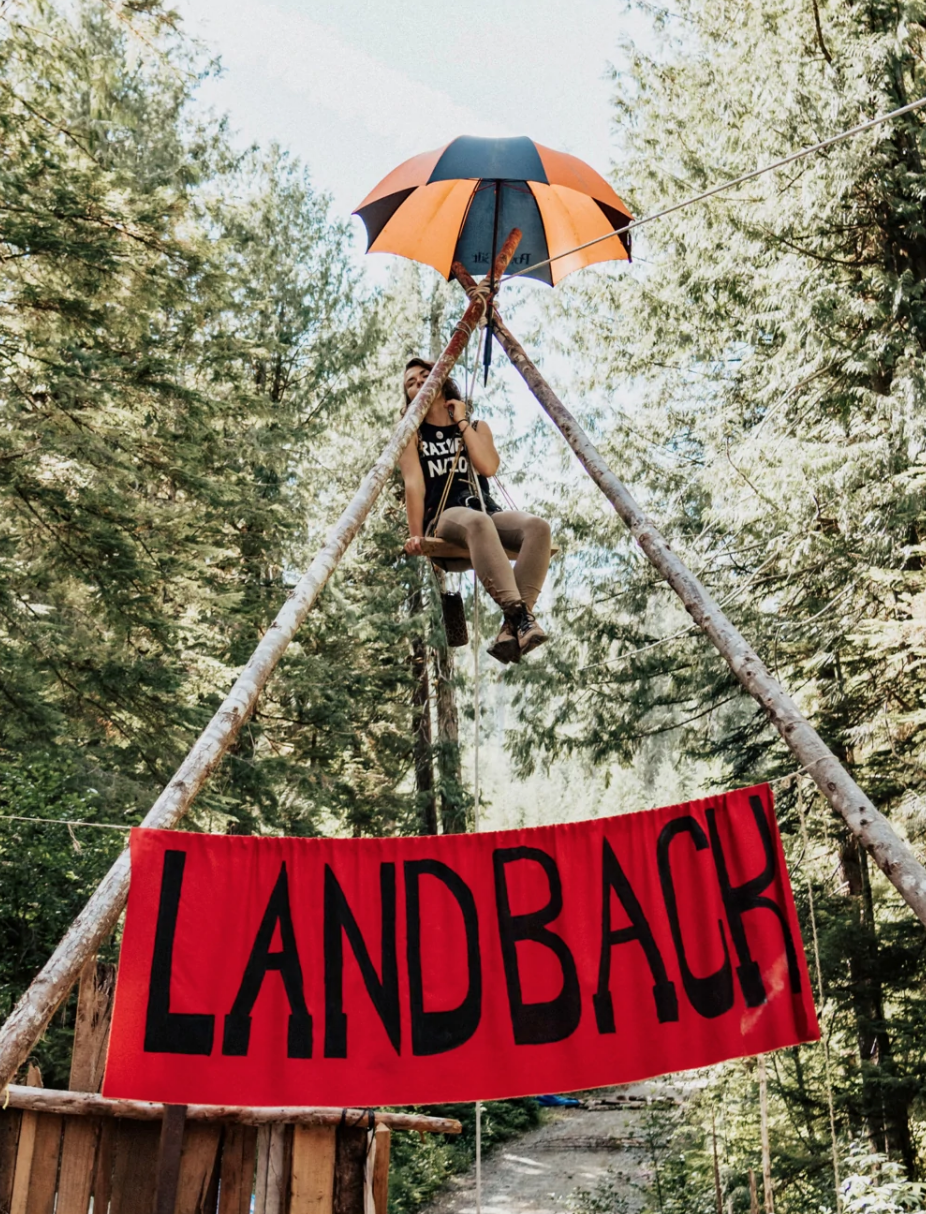
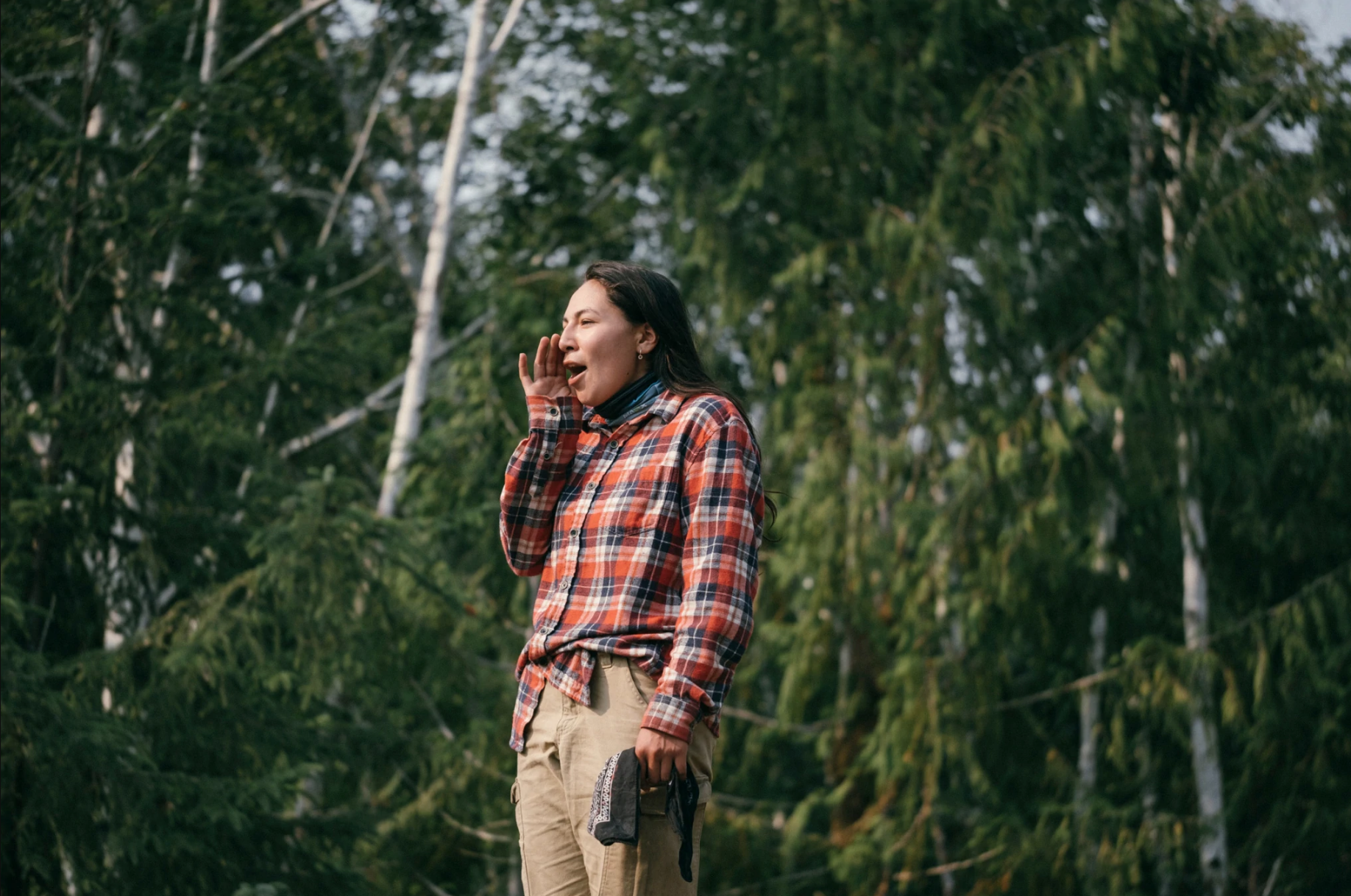
During my time at Patagonia, I was able to work closely with the photo director on two projects in particular that really inspired my creative vision as a producer and editor. One was coverage of the Fairy Creek logging protests on Vancouver Island. I grew up nearby, and old growth logging has long been a controversial issue. To be able to provide a platform for Indigenous people to tell that story in their own words was very meaningful to me. Same goes for Patagonia’s strong messaging following the Supreme Court’s ruling on Roe V Wade. Having a diverse crew of photographers across the country capturing the protests, and delivering a strong message within 48 hours of the ruling, was both challenging and inspirational. To make space for diverse and often underrepresented folx to tell their own stories is incredibly rewarding. I have a lot to learn in how to navigate those relationships, and I’m inspired to do so.
I’ve sat on the news for a while, waiting for the right time to drop it.
(And today is the day.)
I should say, straight off, that I won’t be going away entirely.
You’ll still get to read my rambling, discursive musings every other week, here at APE.
But on October 7th, 11 years after I began writing for you each Friday, the streak will be snapped.
The photo industry is not remotely what it was, when I began the column in 2011, and change is a healthy and natural part of life. (Especially as this blog is supported by neither subscription fees nor ads.)
It is what it is, but I must admit, after living under the yoke of a weekly deadline for this long, I’m excited to see what it’s like without the structure.
So after today, only five (weekly) columns left.
It all began when I was on the hustle, during The Great Recession.
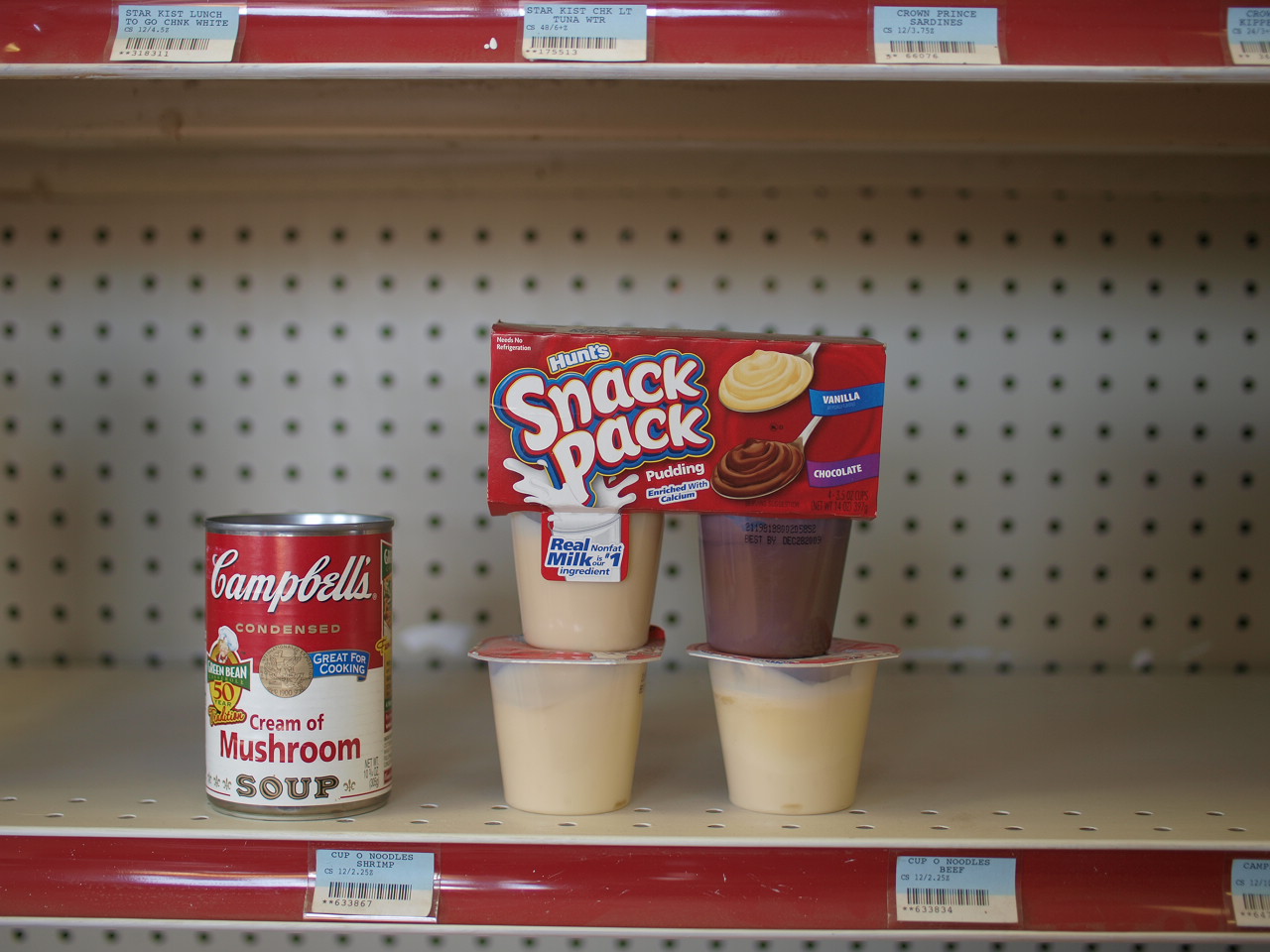
In the late spring of 2010, Rob Haggart put out a call for images of the cataclysmic economy on APE, (a colleague was looking for photos for a story,) so I sent him a project I had.
Gas station grocery shelf, Antonito, CO, 2009
I was psyched Rob replied, liking the pics, so I told him I was about to attend two big photo festivals, back to back, and as a burgeoning blogger, perhaps I could report on them from the field for APE?
He agreed to publish my articles, and liked the work, so he then offered to pay my expenses on a trip to NYC, to cover the PDN Photo Plus Expo for the blog.
(As you might image, I was blown away, and jumped at the chance.)
A guy I knew on Twitter, Richard Bram, told me he’d be there too, so we agreed to meet up in the cavernous Jacob Javits Center on the West side of Manhattan.
We connected, and I found Richard charming, knowledgable, agreeable, and just fun and easy to be around.
In the end, I mentioned Richard in the article, and so began a long and fruitful friendship.
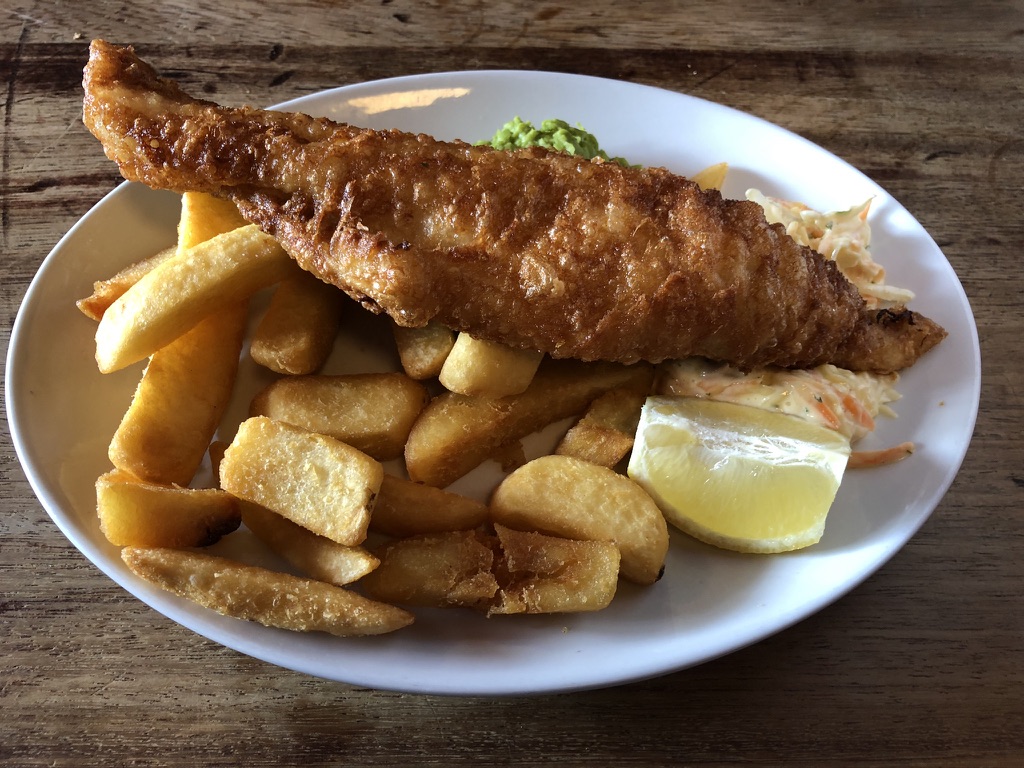
He’s been featured in more articles than anyone else, as off the top of my head, I recall a festival in Houston, museum visits in Brooklyn and London, eating in a little Ramen shop in the East Village, and a fish and chips joint on the Thames in 2019.
Fish and Chips, Limehouse, London, 2019
And wouldn’t you know it, but for the first time ever, Richard came to visit last Friday, and stayed the night here at our place.
The timing was perfect.
I’ll be in New Jersey next week for my first major photo/writing gig for a big-time, international publication.
(I can’t share details yet.)
As such, I’ve spent weeks checking my gear, ordering new equipment, and building a battle plan to be the mobile, nimble, 21st Century digital journalist on the go.
So of course Richard and I would end up testing equipment, talking endlessly about the intricacies of fill flash, and geeking out as hard as we could.
Richard admitted he’d been in the theater growing up, with parents who acted in local community productions.

He also has a distinguished face, and knows how to use it.
Therefore, Richard modeled while I switched cameras and lenses, tested out my lighting kits, and did a deep dive into a different type of photography.
(Most of the time, I think myself more artist than photographer, but I’ve shot my share of weddings, headshots, passport photos, graduation pics, etc.)
Here are a few of my favorites.
Richard was there with me at the beginning, in 2010, and was here at the end too, in 2022.
{Ed note: To reiterate, this is the end of an era, not my time here as a writer. You’ll still get me 2x a month.}
As gifts, Richard brought a lovely woodblock print he’d made in Oaxaca this winter, and a ‘zine that came out last year.
Normally, I look at submissions in the order they arrive, but have made exceptions over the years, (including with Nancy Baron’s ‘zine recently,) so we’re going to check it out, but keep it brief.
(Since I dropped some big news on you at the outset, we’ll go short and summery today.)
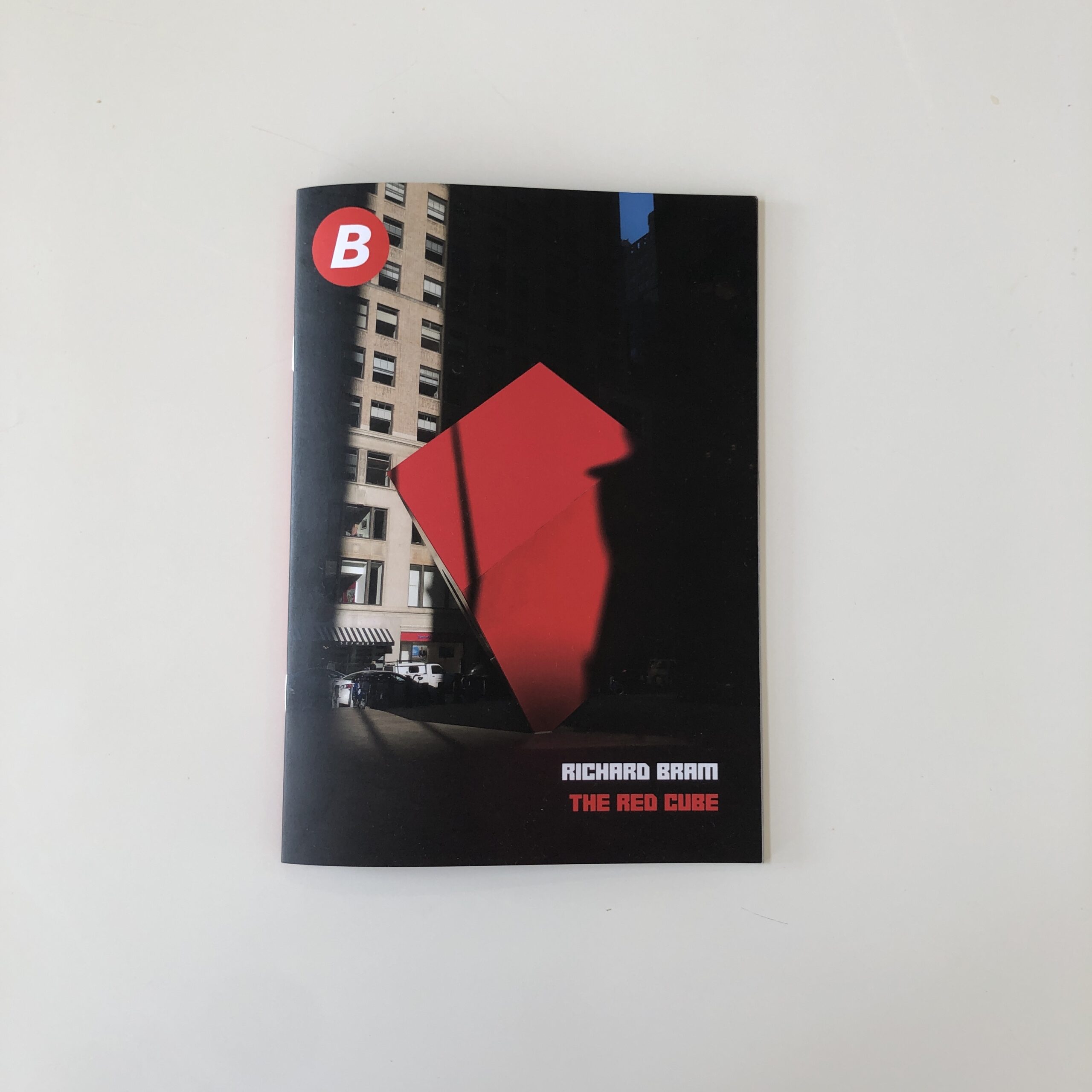
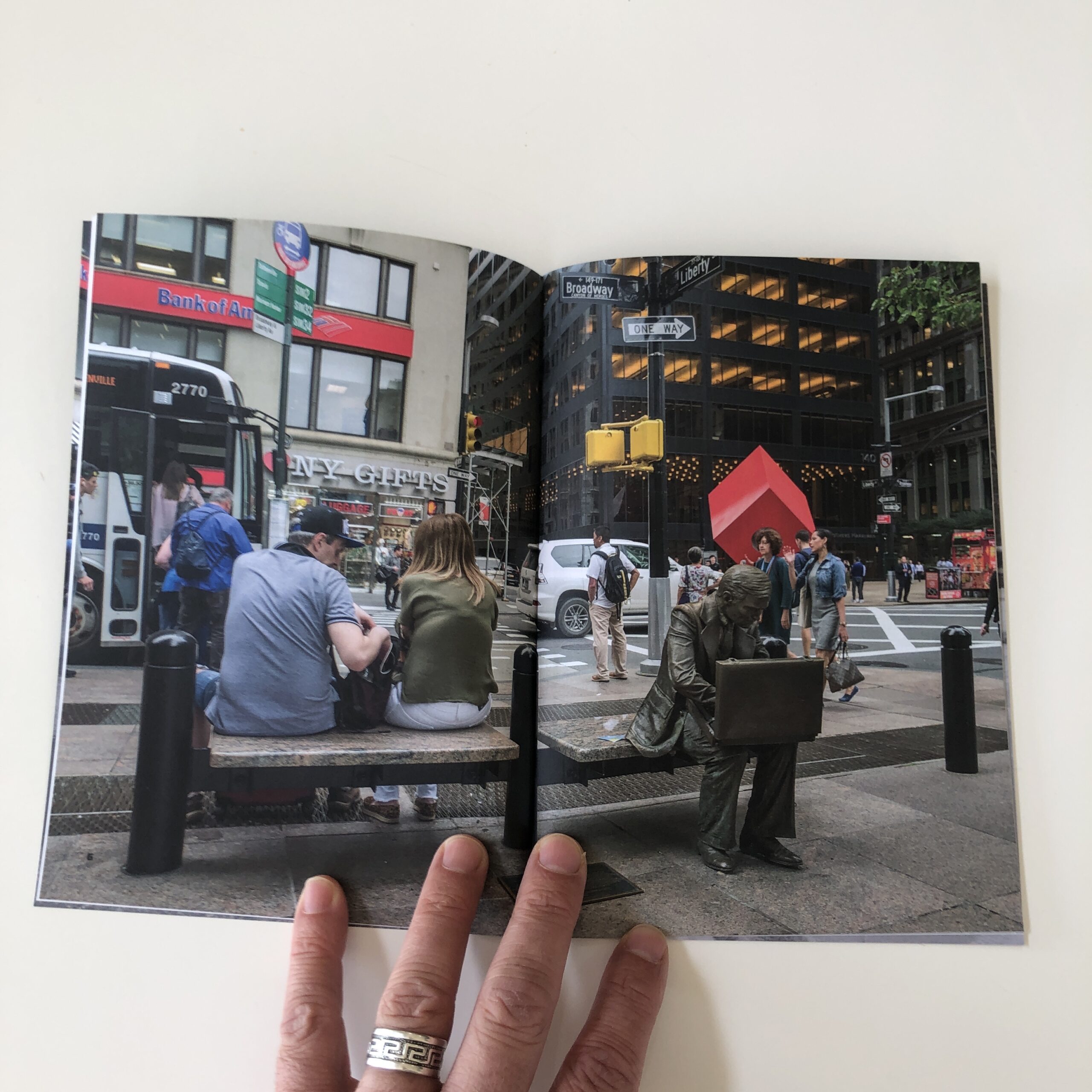
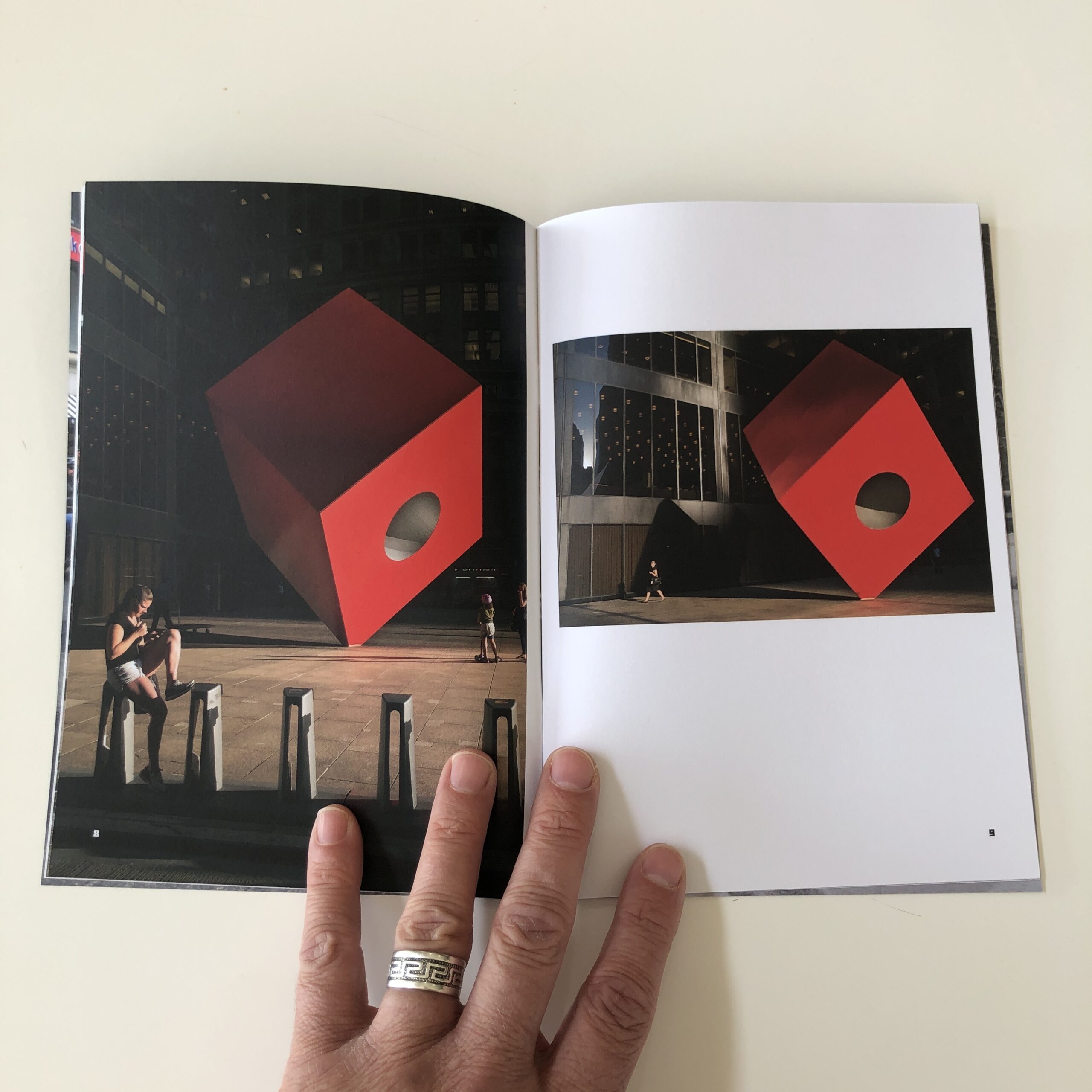
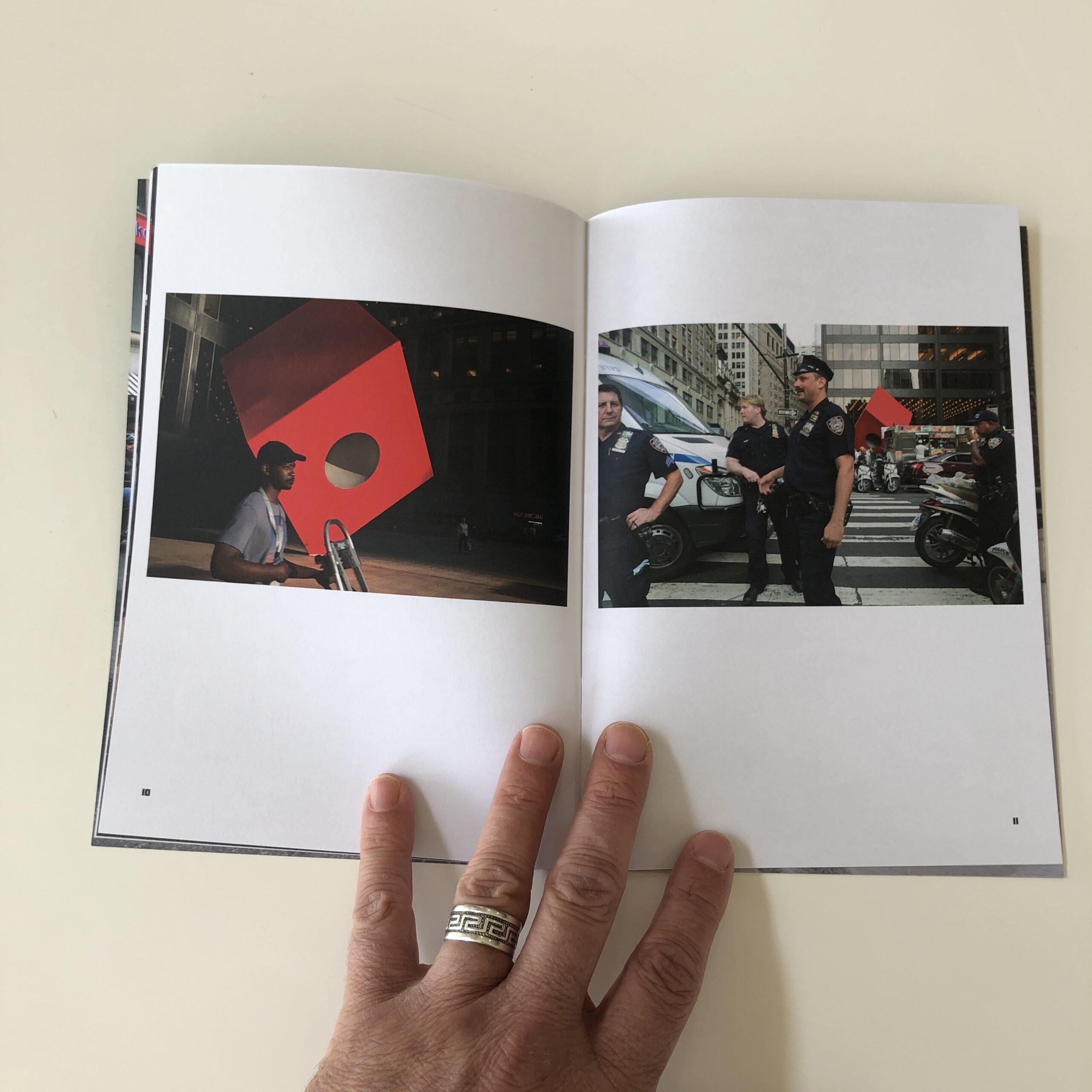
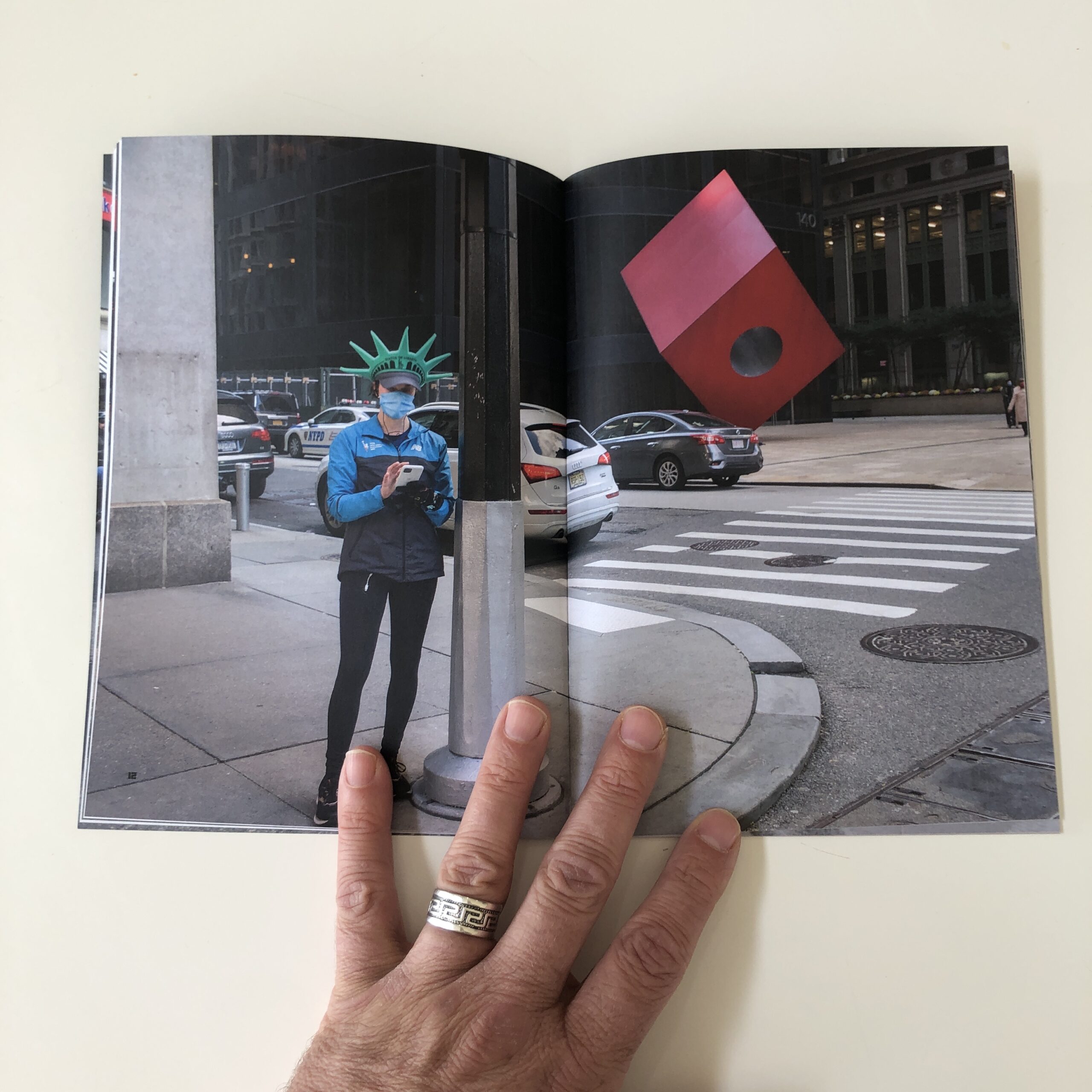
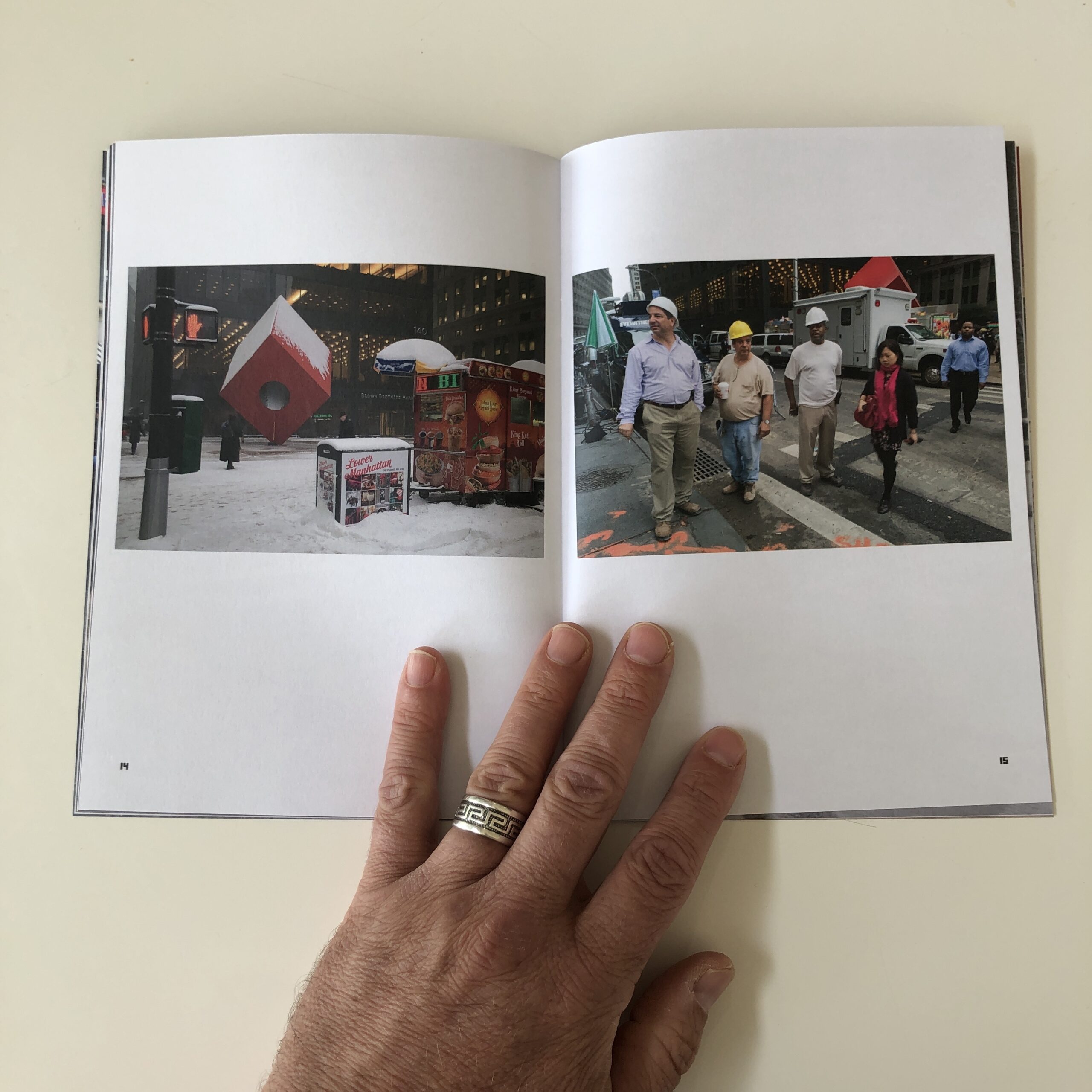
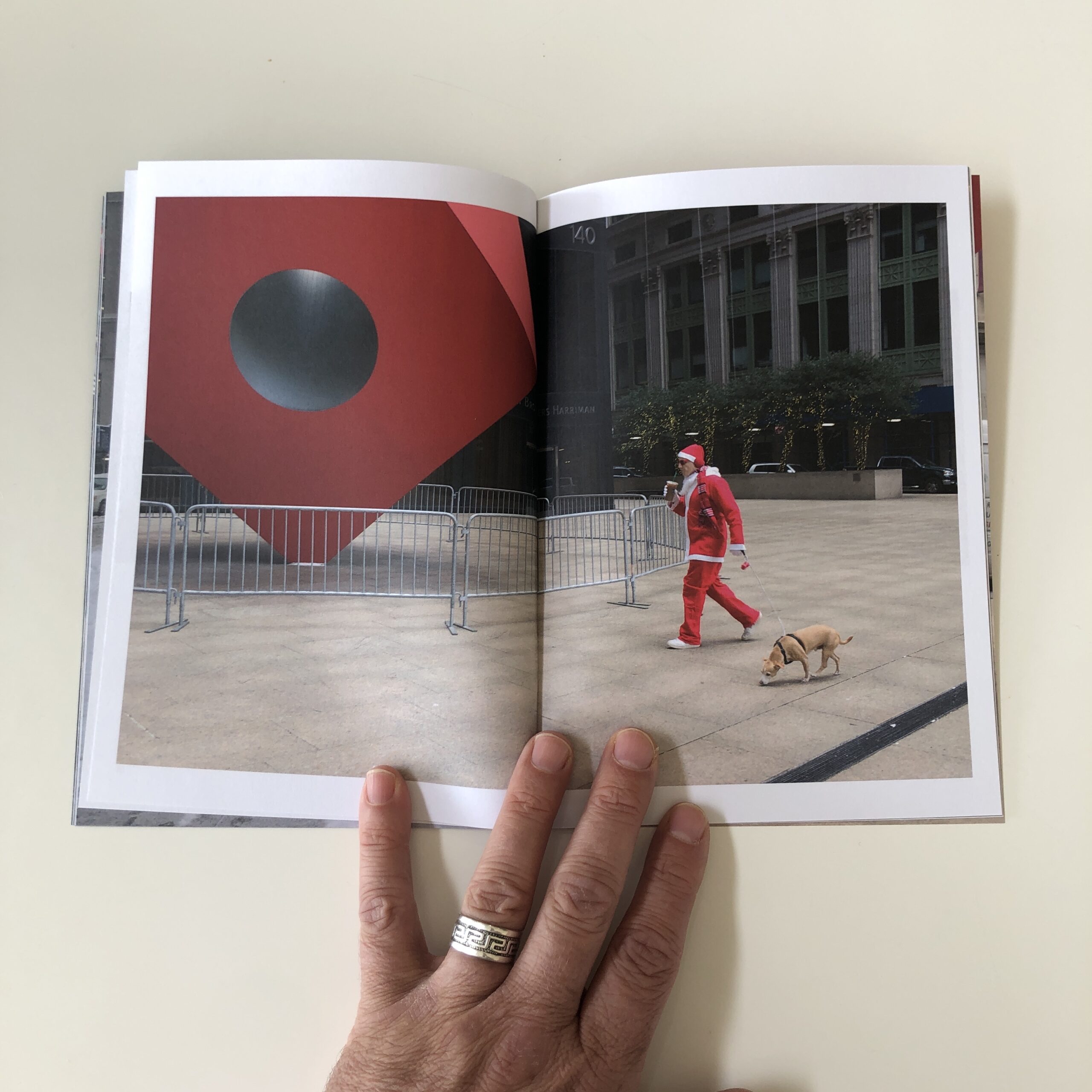
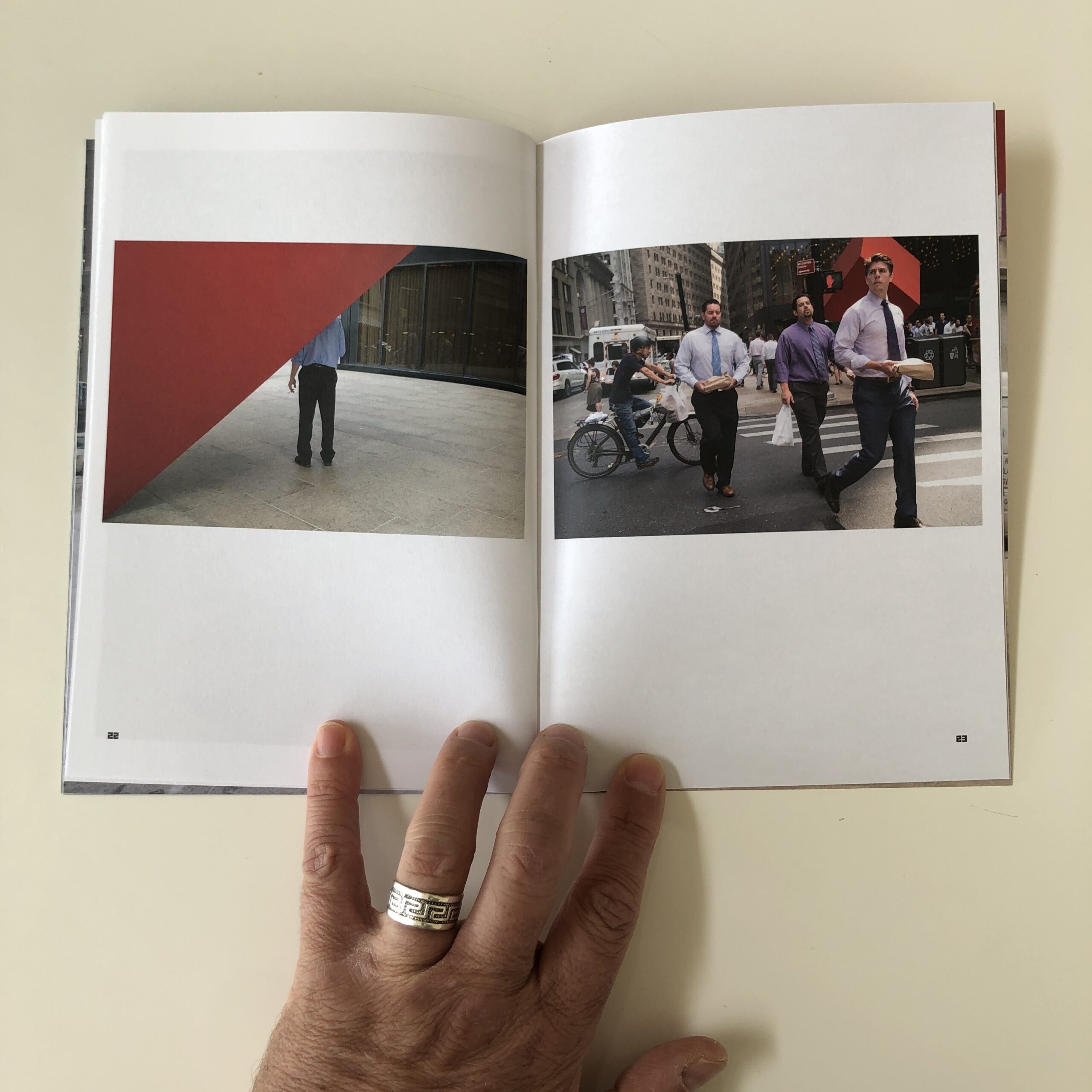
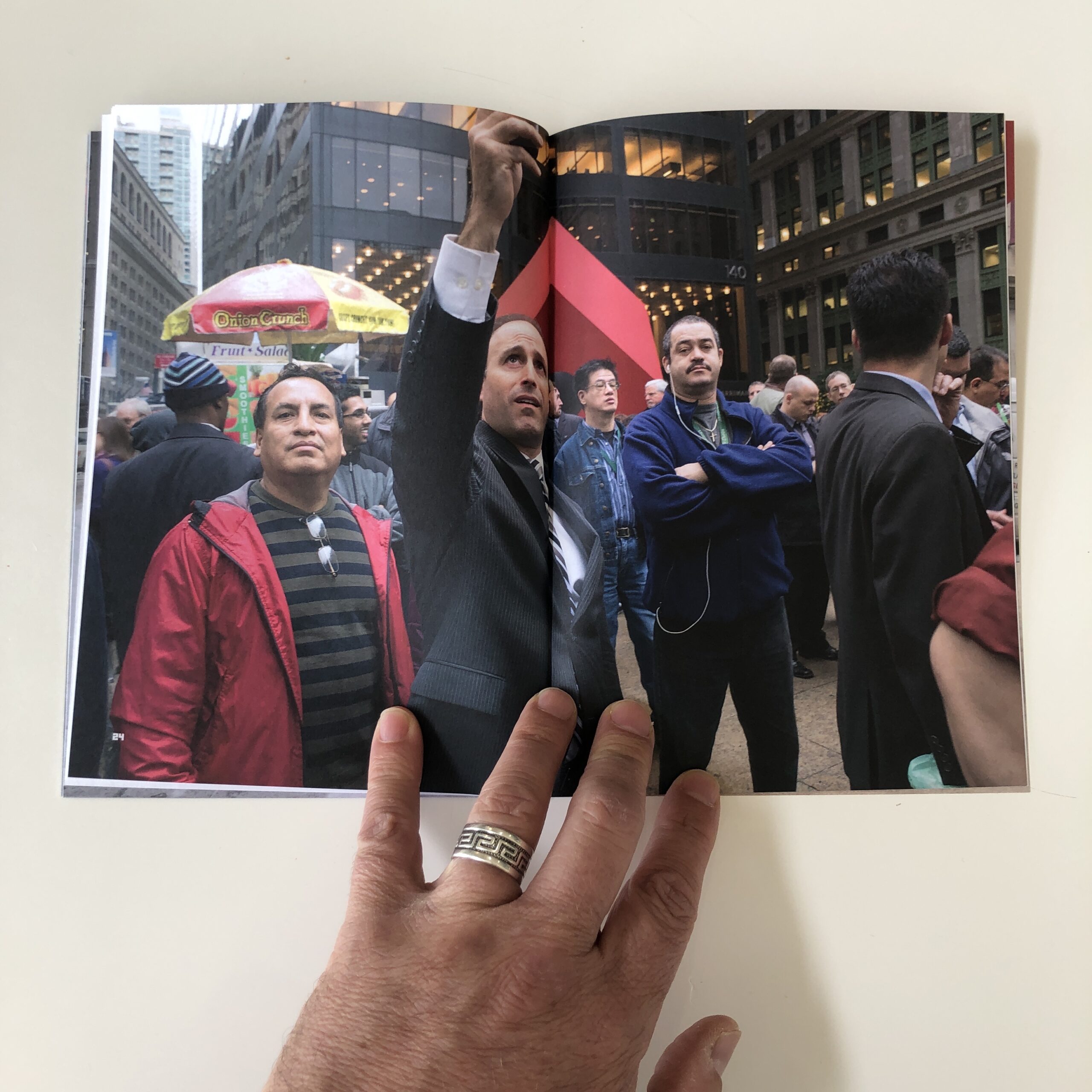
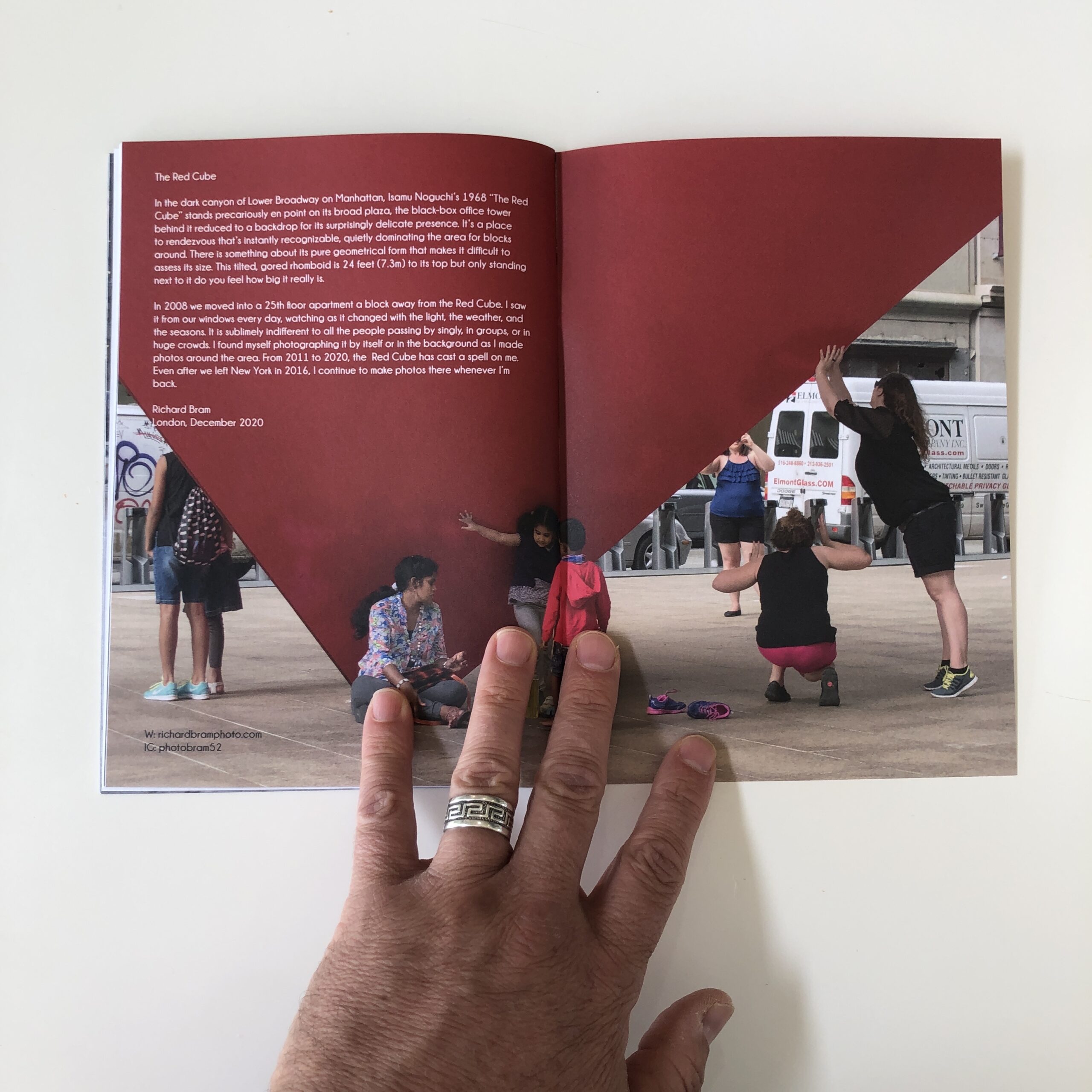
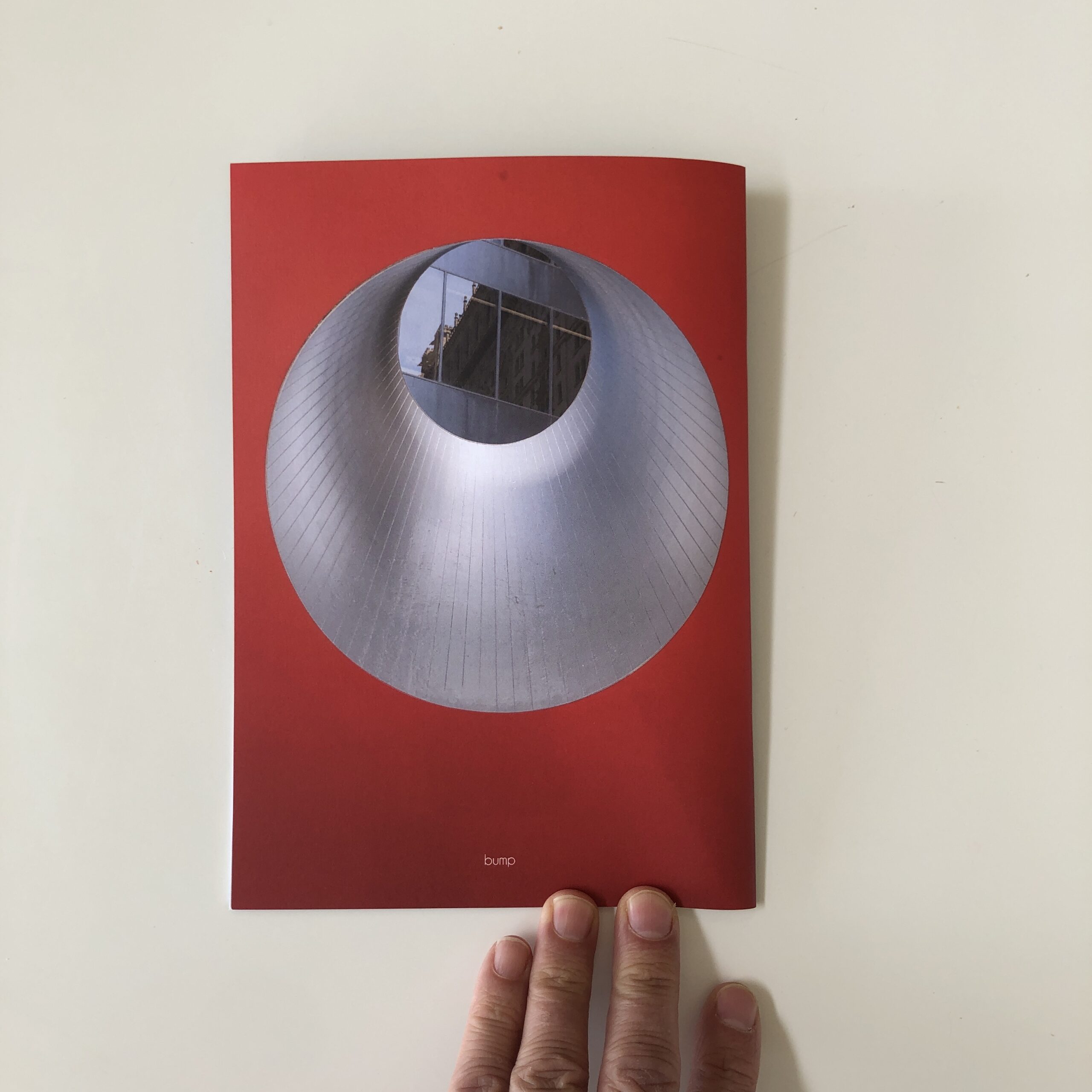
The ‘zine is called “The Red Cube,” was was published in 2021 by Bump Books.
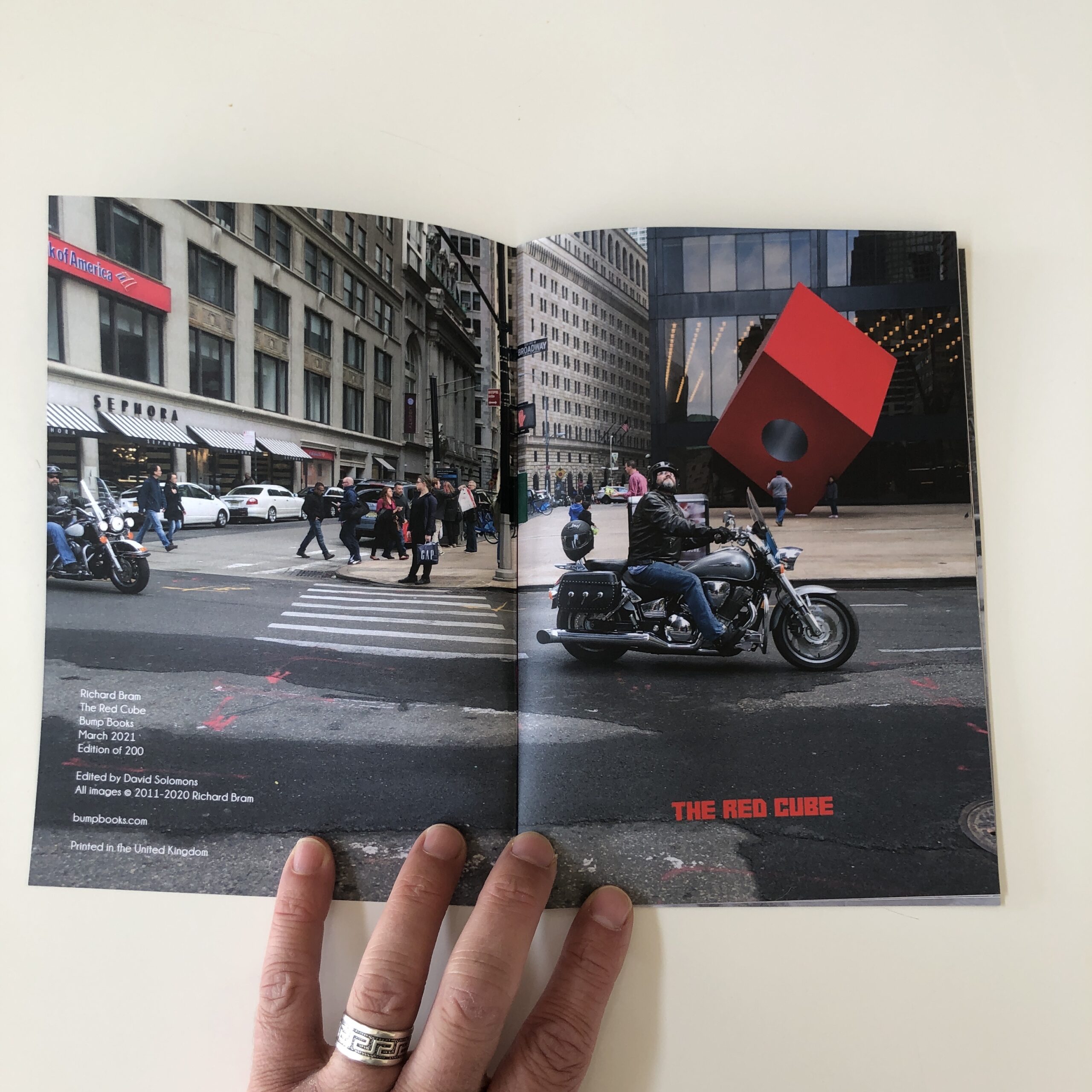
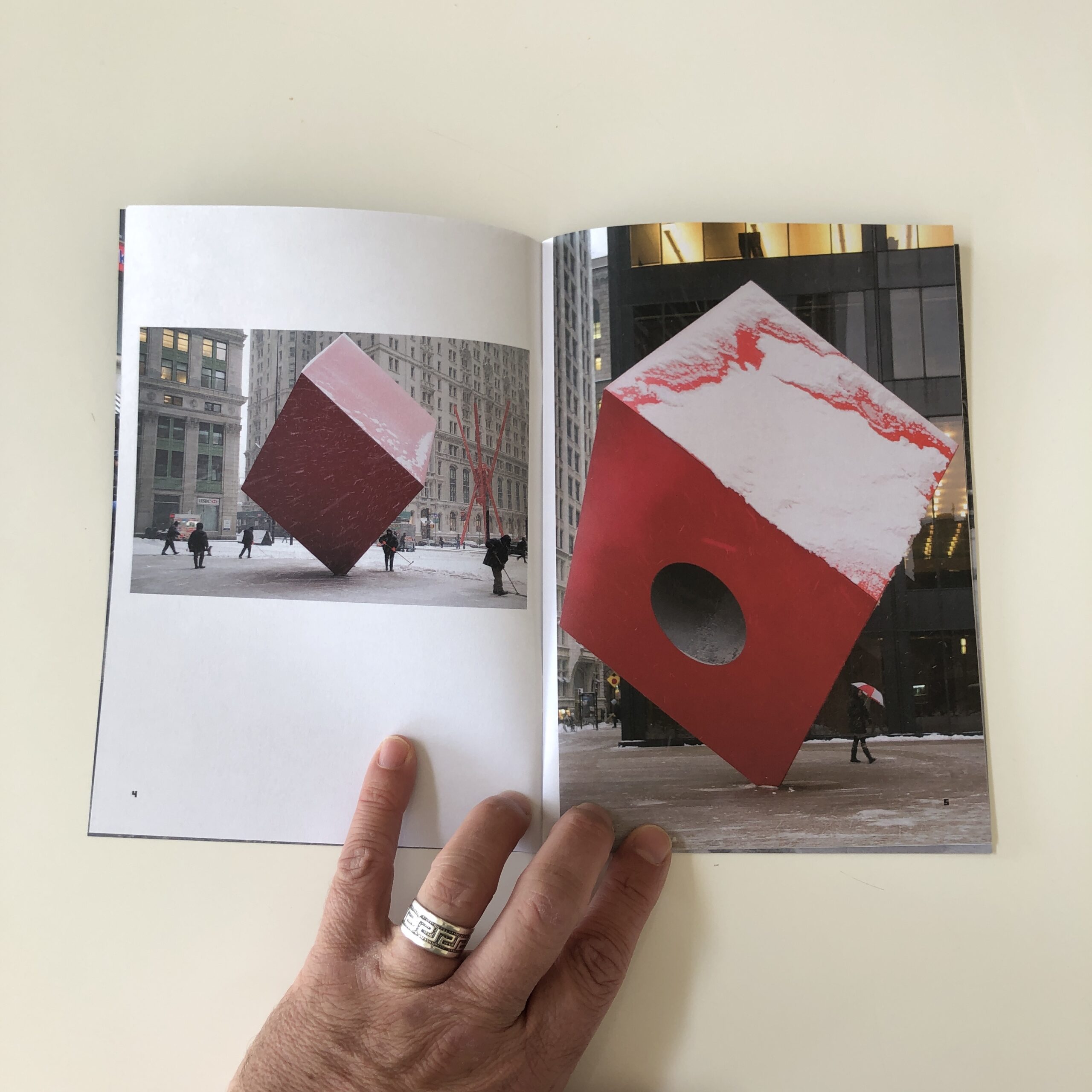
It features many looks at Isamu Noguchi’s classic sculpture in Lower Manhattan, which was a block away from where Richard and his wife lived during their New York years. (In between stints in London, but in case it’s not clear, Richard is American.)
The ‘zine, too, (with that big red cube in the background,) spans an era, between 2011-2020.
There’s not much to say about this that the photos below won’t show.
It’s a series of street photographs in the Financial District of NYC, and feels like a love letter to the city, now that he’s moved on.
New York has been featured more times in this column than any other locale.
I’ve covered countless NYC gallery and museum exhibitions over the years, hit the High Line, eaten at the cronut shop, dodged snowflakes the week before Superstorm Sandy, gorged on pizza, and done a 6 year stint at the NYT, all during the time of this weekly column.
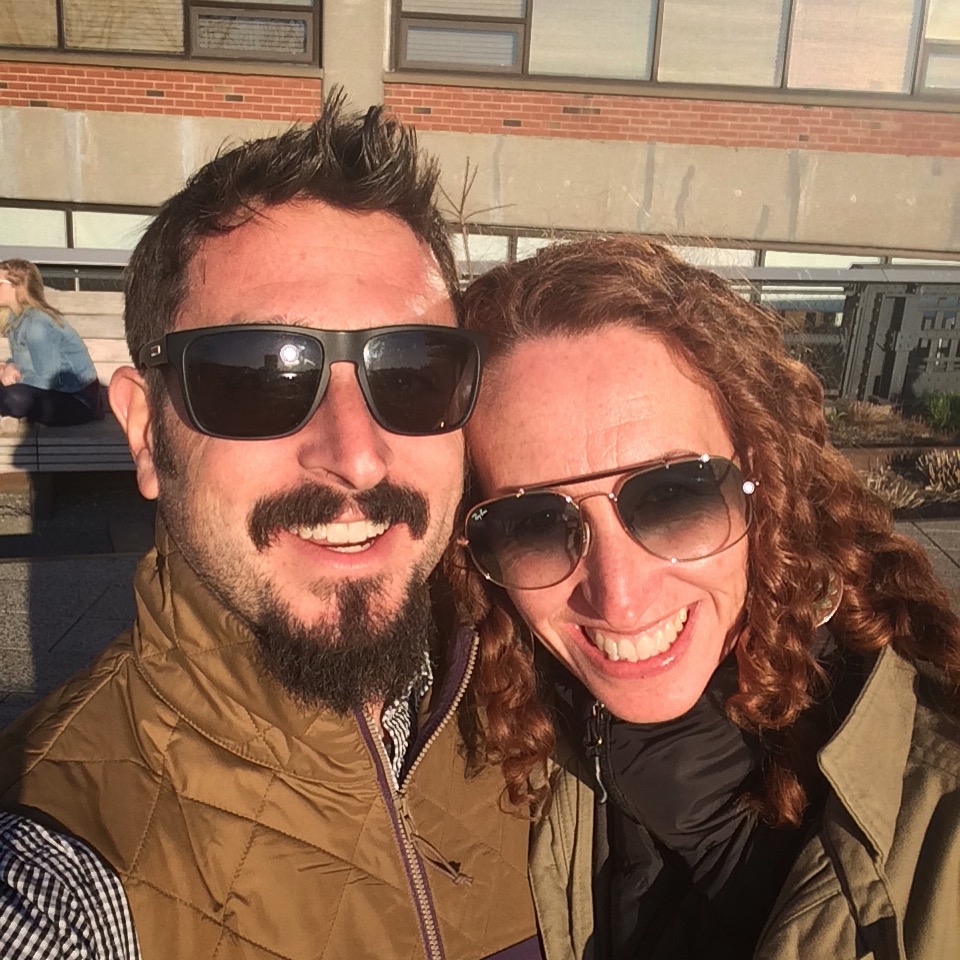
Me and Jessie on the High Line, 2018
I had a daughter, got two dogs, built a career, saved my wife from the ravages of clinical depression, made countless friends, lost some too, was a college Art Department Chair, traveled the US, blogged for The New Yorker, and learned more about the world, my craft, my community, and myself, than I ever could have imagined.
So I hope you enjoy this last 6-week run, (including today,) before I retire the weekly-columnist-mantle.
I appreciate all the time and energy you’ve given us over the years, and the opportunity Rob has provided.
The Art of the Personal Project is a crucial element to let potential buyers see how you think creatively on your own. I am drawn to personal projects that have an interesting vision or that show something I have never seen before. In this thread, I’ll include a link to each personal project with the artist statement so you can see more of the project. Please note: This thread is not affiliated with any company; I’m just featuring projects that I find. Please DO NOT send me your work. I do not take submissions.
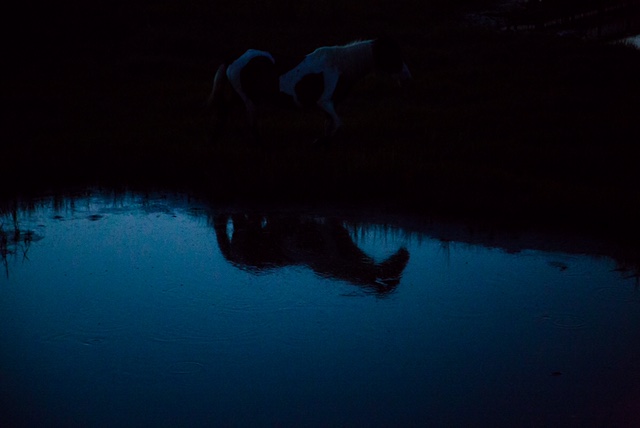
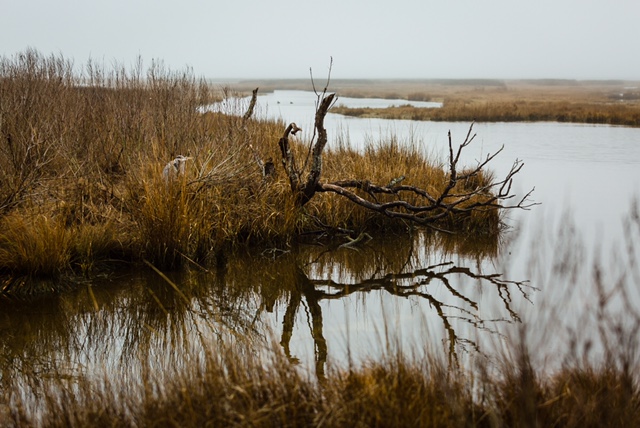
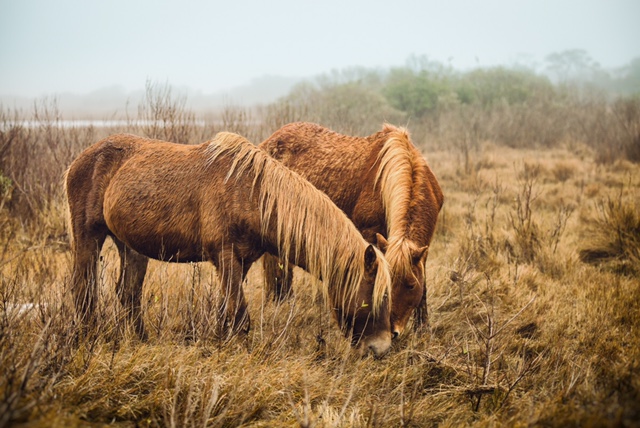
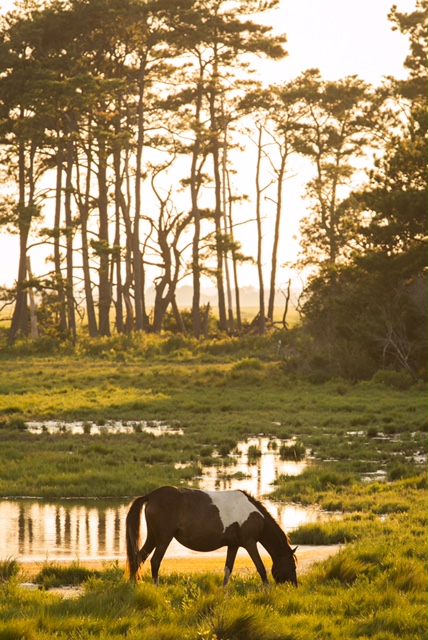
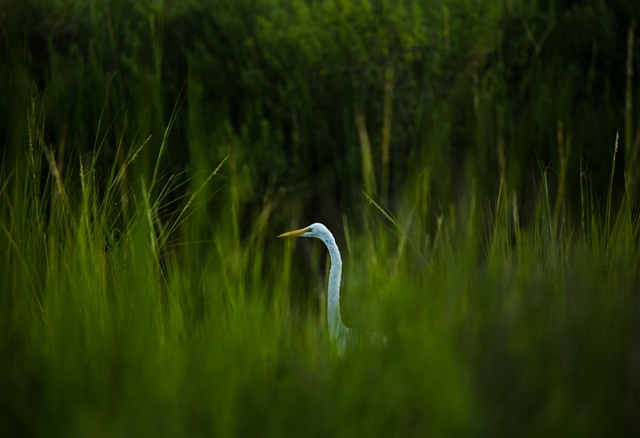
Assateague Island is a barrier island on the East Coast of the United States facing the Atlantic Ocean. The northern portion is part of Maryland, and the southern end is in Virginia. Children’s book author, Marguerite Henry, brought attention to the island in her 1947 classic, Misty of Chincoteague, acquainting young people all over the world to the spirited equines that call it their home. It was first through her books that I formed an interest in this land and its animals, however I had to wait until I was an adult to visit in person.
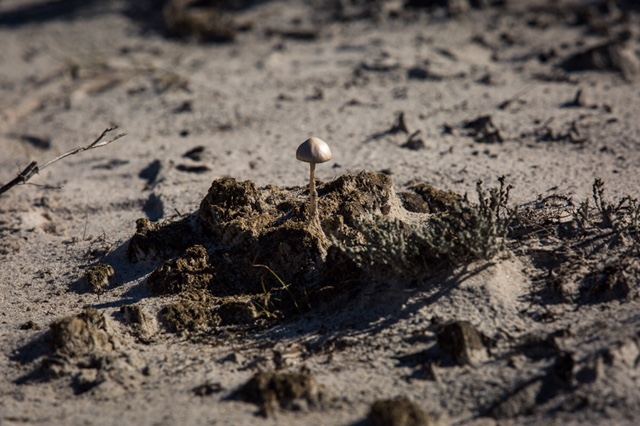
Since 2010 my family has been visiting Assateague Island every year at least once. We prefer to go off-season when the biting flies and beachgoers are lessened. Even in the middle of winter there is so much appreciate. I used to only go to view the feral ponies but they’re sometimes hard to locate in the cold months, so I learned to see the beauty in the overlooked elements, lichen covered branches, a mushroom growing out of a manure pile, a tree bent over time by the strong ocean winds. While the ponies are still my favorite part, Assateague has helped teach me to appreciate the beauty of nature in all seasons and I seek to show others what I have learned to see there.
APE contributor Suzanne Sease currently works as a consultant for photographers and illustrators around the world. She has been involved in the photography and illustration industry since the mid 80s. After establishing the art-buying department at The Martin Agency, then working for Kaplan-Thaler, Capital One, Best Buy and numerous smaller agencies and companies, she decided to be a consultant in 1999. She has a Twitter feed with helpful marketing information because she believes that marketing should be driven by brand and not by specialty. Follow her at @SuzanneSease. Instagram
Success is more than a matter of your talent. It’s also a matter of doing a better job presenting it. And that is what I do with decades of agency and in-house experience.
Heidi: Why did you choose to photograph this only in black and white?
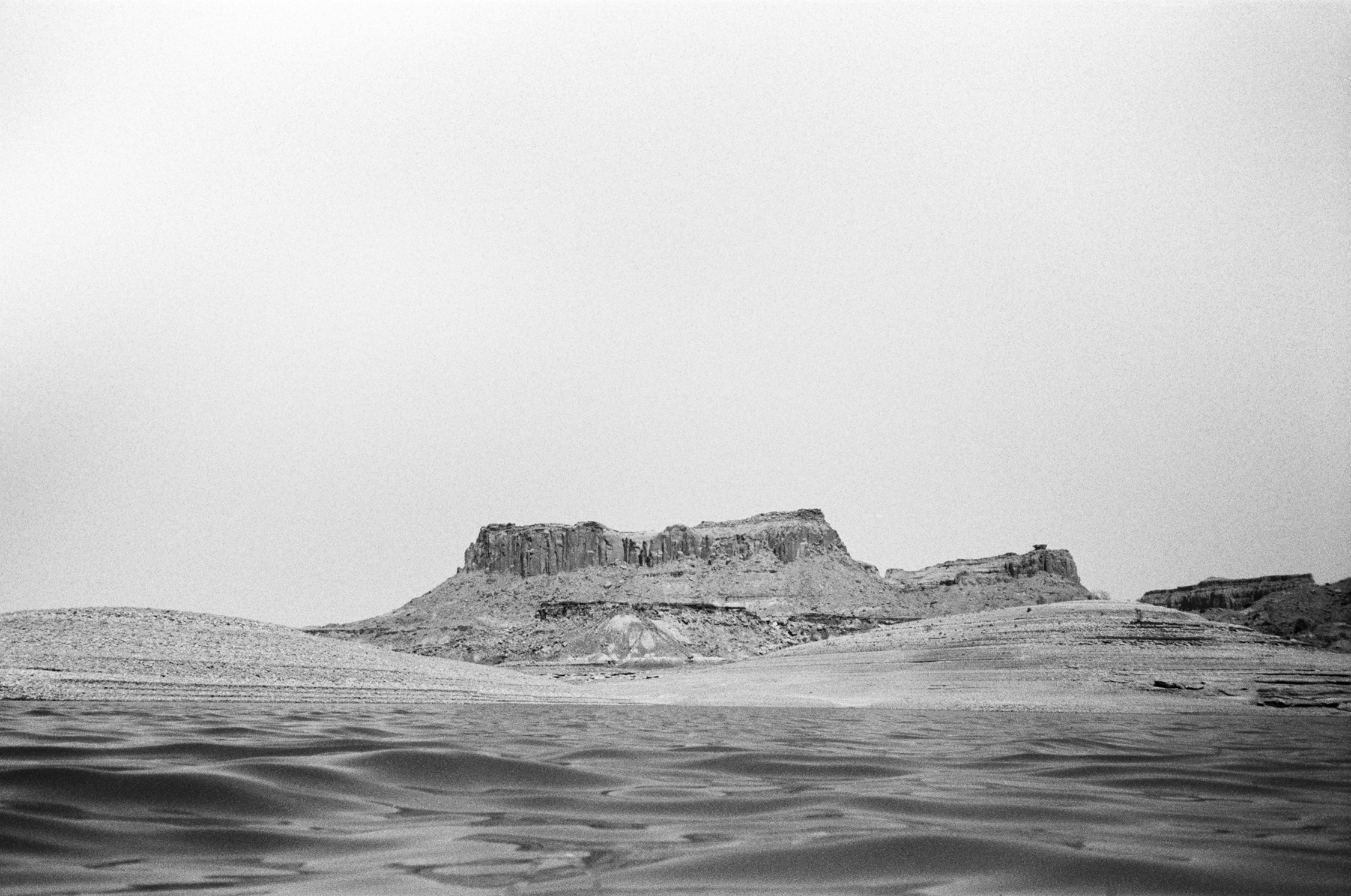
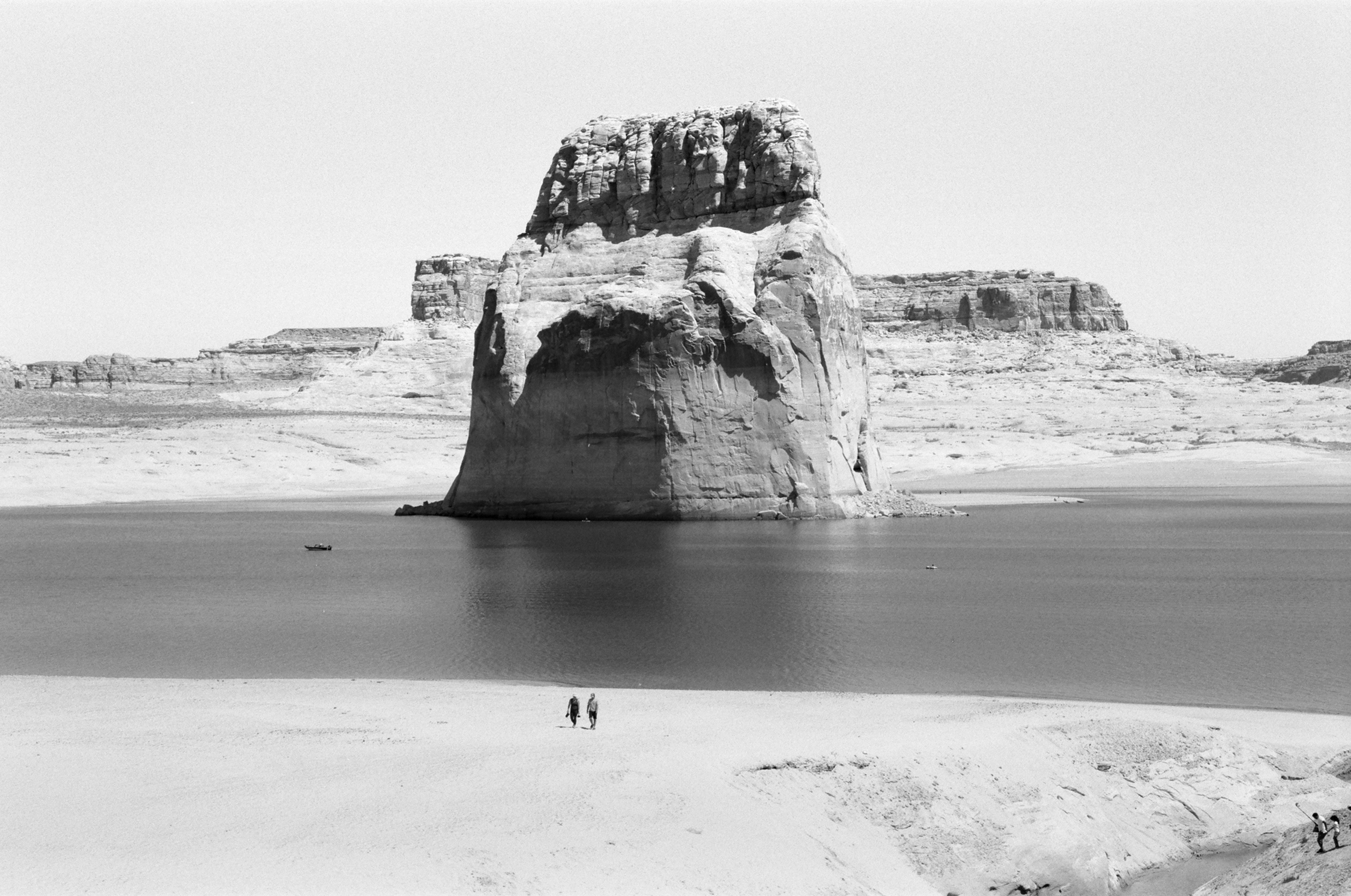
Forest: My entry point into the photographic world was, at a very young age, through the alchemical space of the black and white darkroom. It was a place that shaped the foundation of my vision, and my way of seeing in the world. Over the past two decades I have learned to work in color, and it has served me well for interpreting editorial and commercial assignments in the mode of the times. I have always however, reserved a special place in my practice for black and white, a place that I most often visit when I am working on personal stories. It is a way of seeing and working that helps distill the world around me into essence, light and form.
Was it exclusively shot on film?
Yes – all of the work was shot on film, a mix of medium format and 35mm.
How did your connection to nature, movement and climate work inform this work?
There’s a lot in that question. My work and interest in the human relationship to nature and our effect on the climate goes way back. As does the process of movement through land as a way of coming into conversation with it. Growing up as a kid roaming game trails in the mountains around our home, and later working in the outdoor industry climbing and running and navigating rivers, movement across land has always connected me to a deep source of intrigue and creative inspiration.
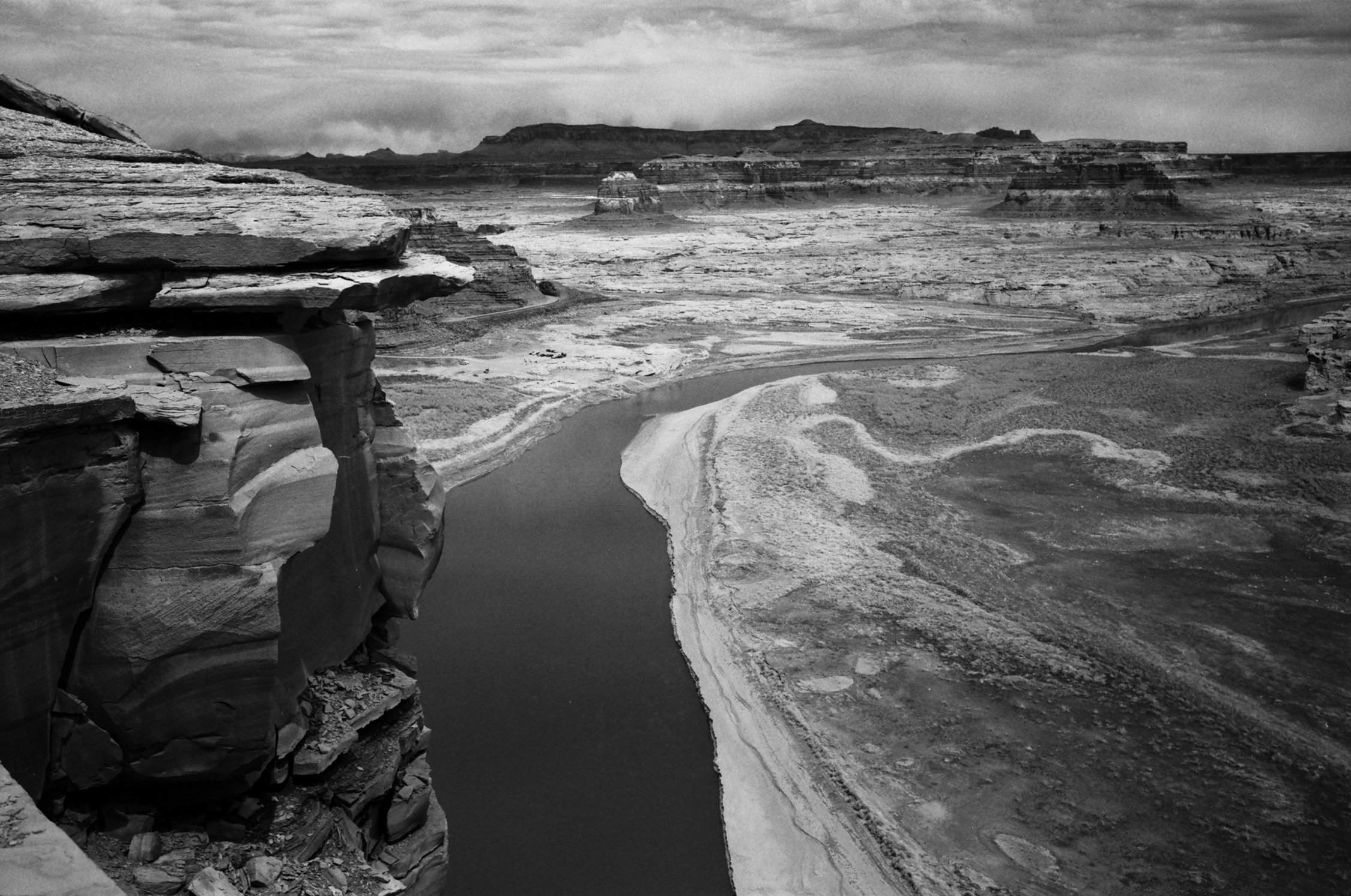
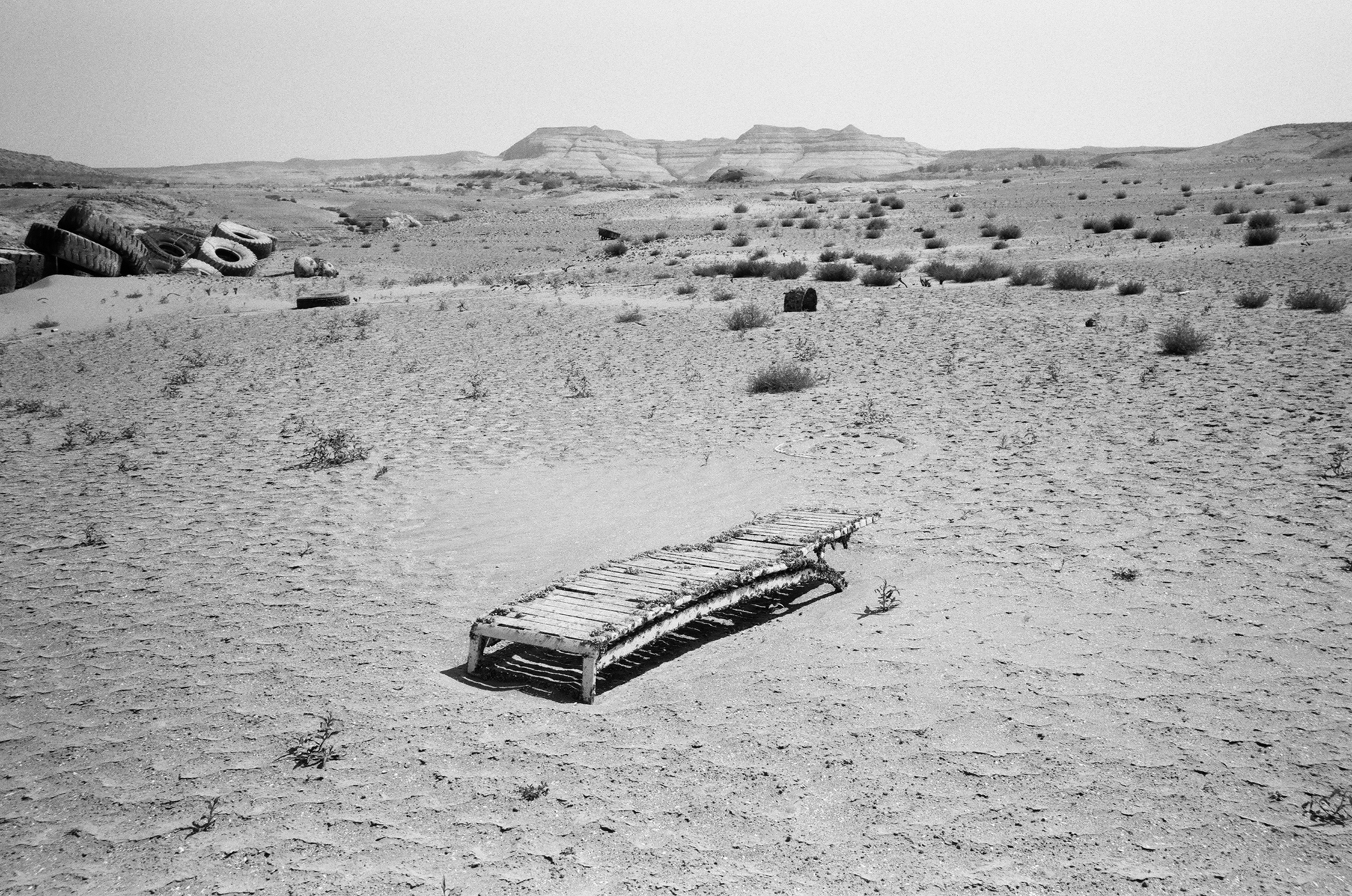
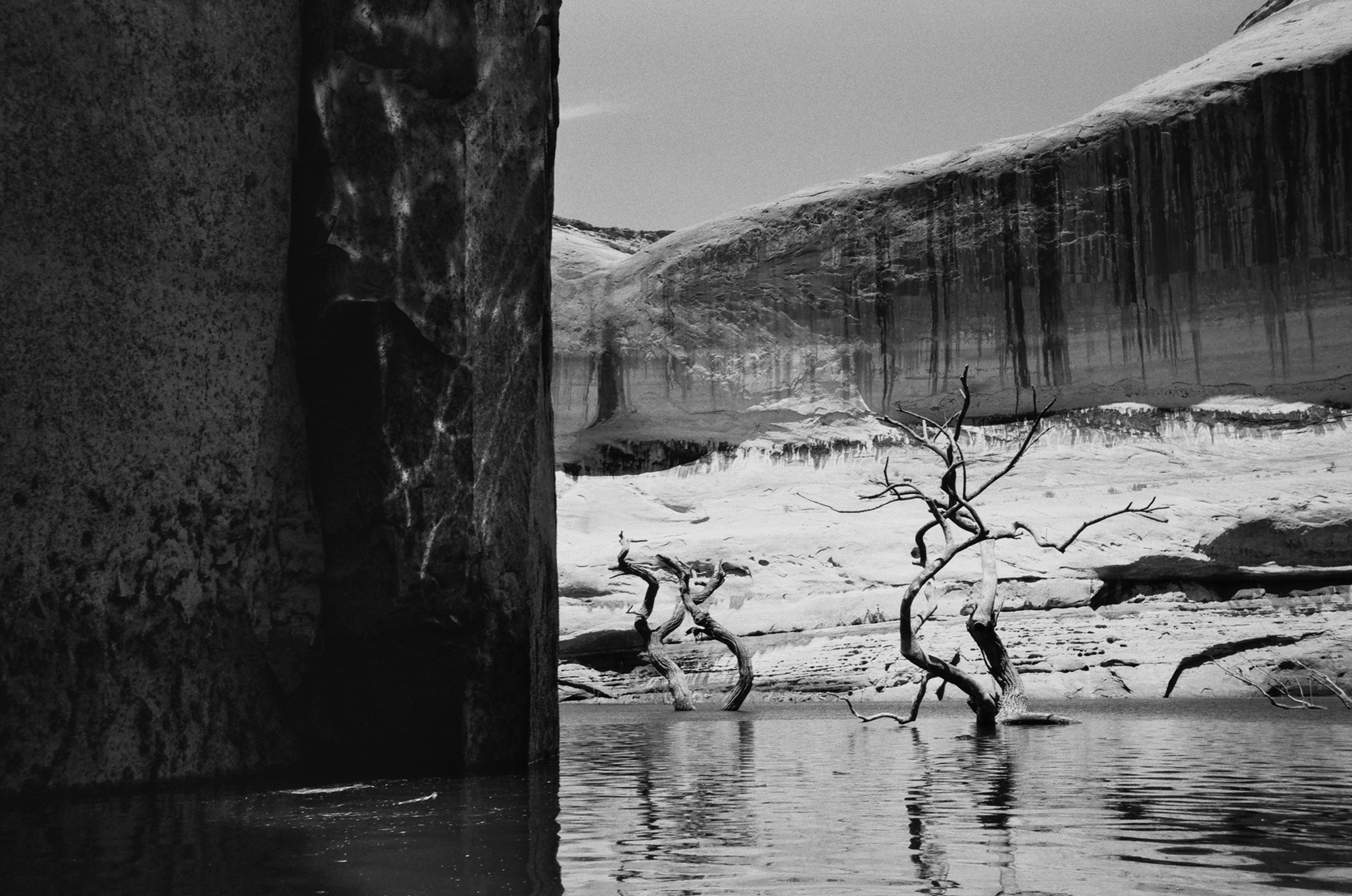
Today so much of the work I encounter in the world comes from a place of talking about nature, about the human effect on climate, about what projections of past and future show us. Those stories are important. But I also think we need more stories that are in conversation with the land, that are informed by a process of immersion, a reappraisal of the importance of emotional and immersive relationship to specific biospheres. Lake Powell is running dry, the West is in a mega drought, Glen Canyon was drowned. These are things that we know – that the data reveal, that science supports, and history has catalogued. These facts are important to consider – they will shape the decisions we make going forward, the policies and actions we take both individually and collectively.
But beyond what can be extrapolated through the analysis of data sets in an air conditioned office in DC, I am interested in what the landscape might offer when it is involved in the conversation in a less abstract manner. This is where the “movement” comes in. The idea of immersing in landscapes and spending long periods of time moving by foot (or in this case by paddle) across the land. It is in this way of moving, watching, listening and interpreting (through words or images or other creative expression) that allows (in my mind) a more nuanced and emotionally vibrant conversation to emerge around the human relationship to the land.
This was an immersive project, you did the writing as well as creating a body of work, what did you enjoy about that process?
Yeah I really enjoyed that way of working. There are some encounters in a project like this that call for a photograph, others for a words. Rarely do I find a single mode of working is the best for all situations. To have the opportunity to weave words and images together, to let them inform and come into conversation with one another allowed for a more relaxed and honest approach. Neither medium was asked to do more than I could will it to do, but through the relationship created between words and photos I feel at times a third creative form emerges in the space between them.
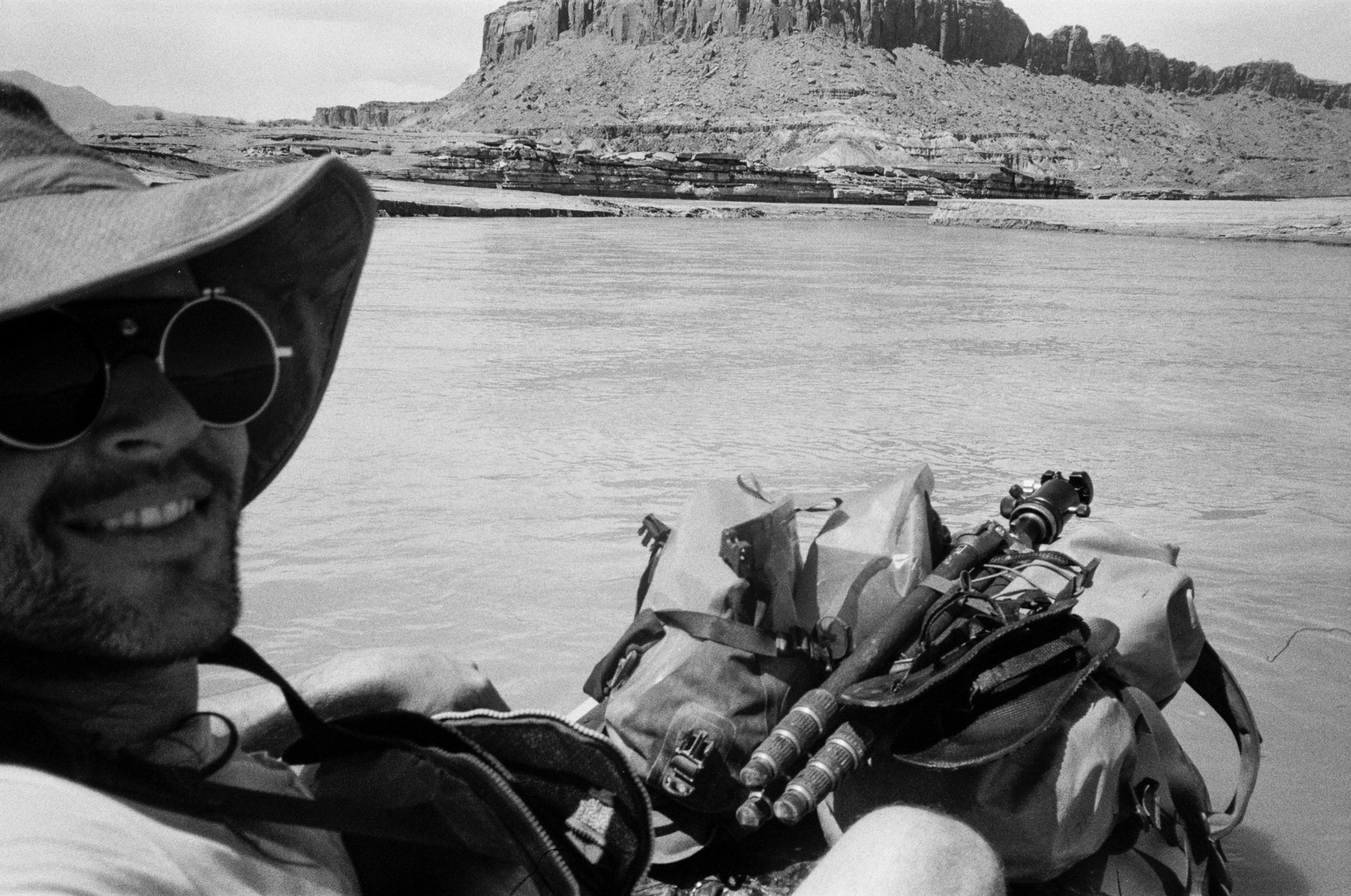
What did this 130 mile packraft* journey teach you about yourself as a creative?
(*it was a mix of packraft and sea kayak and hiking)
This project in particular was a good reminder to carve out longer periods of time to immerse in a landscape, to return multiple times, and to remain curious. I did a lot of research and reading prior to embarking on this project, and so came into the project with a lot of preconceptions. That was fine, important even, but then the work becomes letting go of those preconceptions in order to see what is actually there. This project reaffirmed my beliefs that the best pictures are not the ones that we set out to make – but rather the ones that find us along the way.
My role as a creative is to be disciplined and in touch with my craft in a way that allows it to be a nearly subconscious endeavor. This requires research combined with a technical and physical proficiency with the tools and in the landscapes being navigated. And then, those foundations being set, it requires a letting go, a release of preconceptions in order to actually be present and tuned to the complexities of that which is being experienced. Experiencing. In the rare instances that this is achieved I think the result is to make work that is honest. To me, that is the highest calling of the creative.
What would you tell your younger creative self? I think actually I’m going to take some advice from my younger creative self, and give it back to my older creative self today. This is from the interview you and I did a few years back for aPhotoEditor, and it grows more true to me with each passing year:
“Do good work. Be kind to the people around you, and to yourself. Balance your idealism with healthy doses of action. Embrace failure and continually seek opportunities to learn – in whatever form or medium they might take. Question societal definitions of success. Make your own. Surround yourself with good people. And be one, as much as you can. Watch, listen, and when the time is right, act with conviction. Be willing to adapt, to move with the currents, to see from different angles, but don’t ever give up on the unique point of view that makes you you.”
Lake Powell
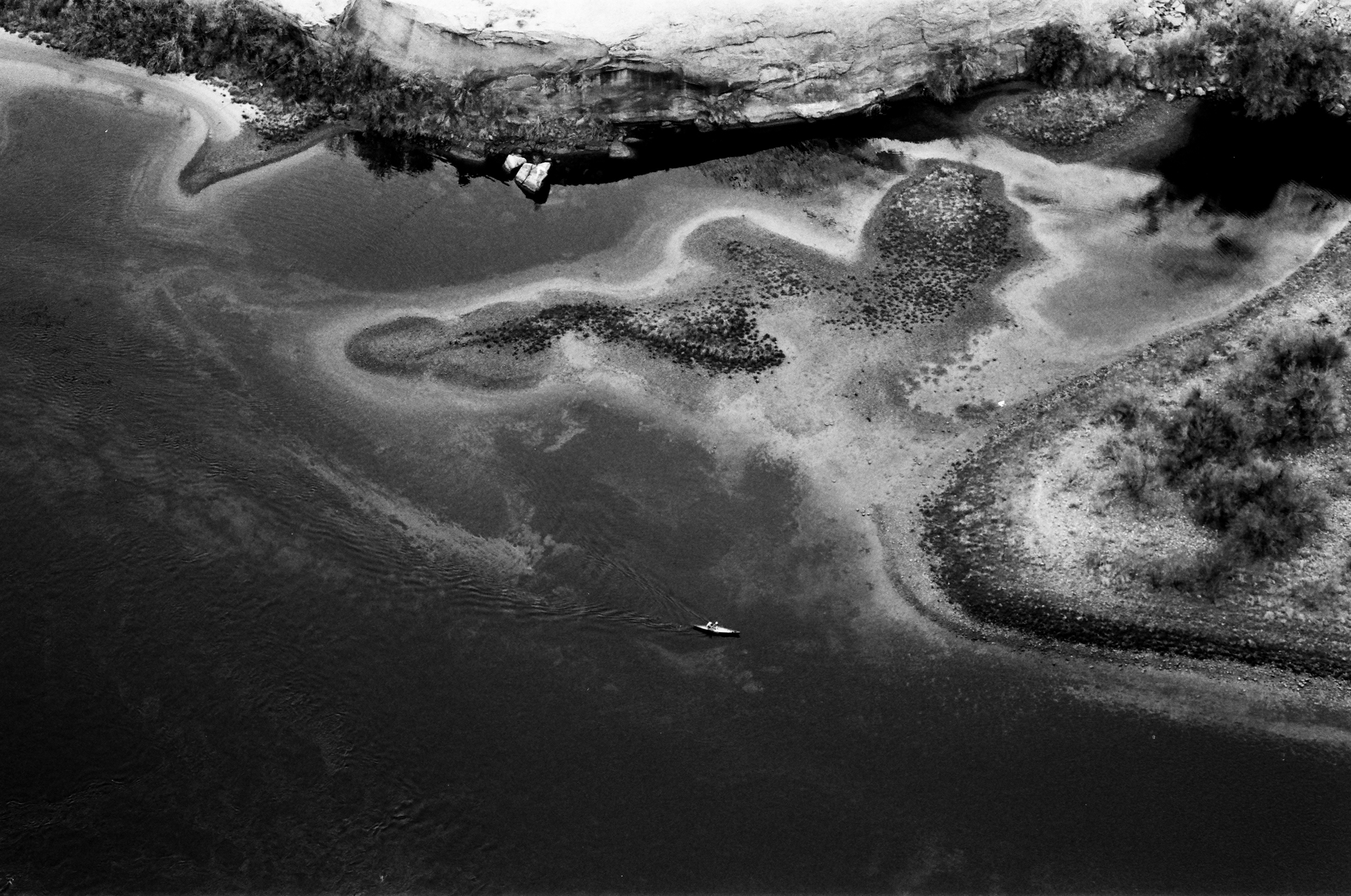
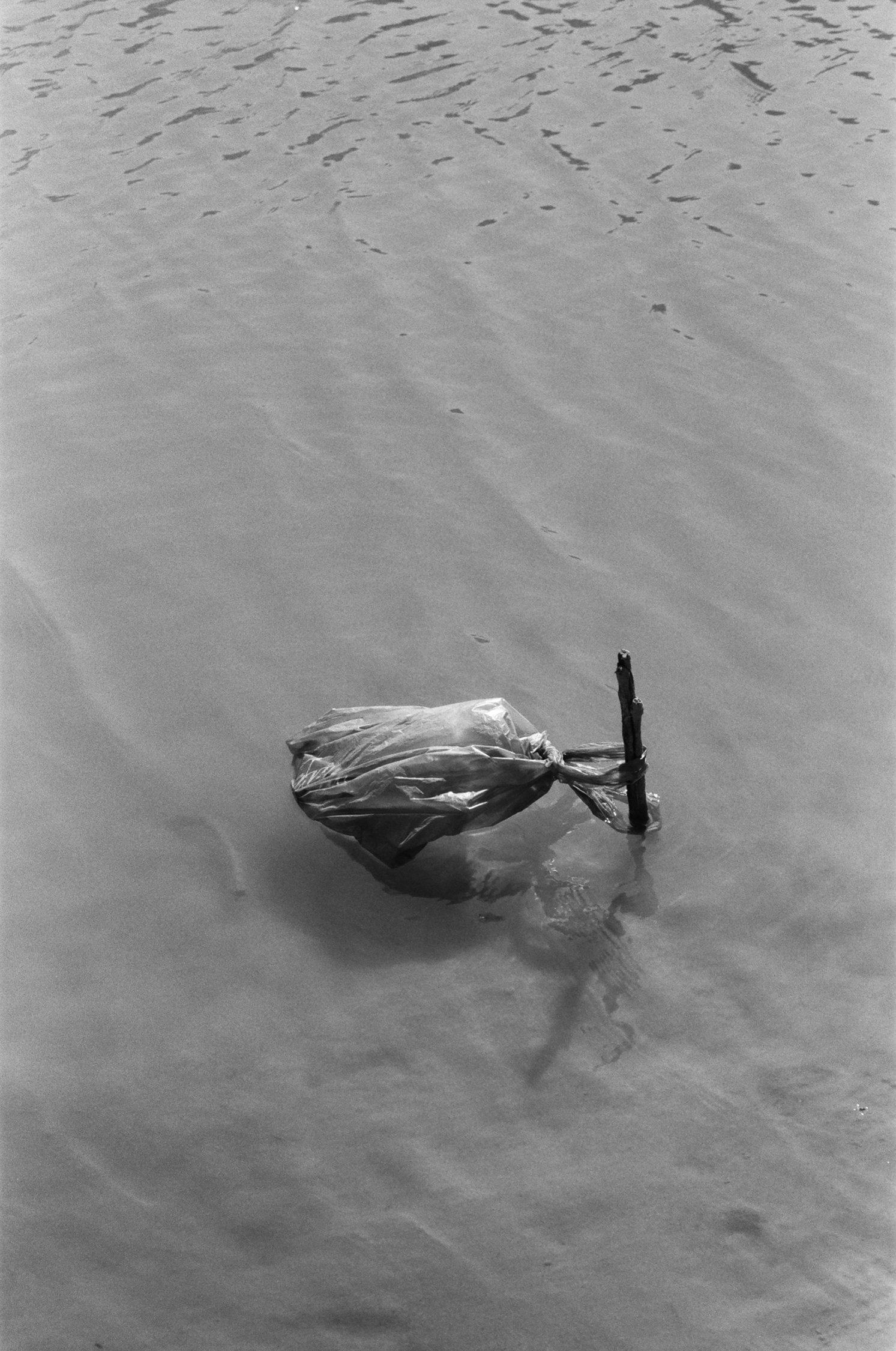
In the spring and summer of 2021, as Lake Powell plummeted toward its lowest recorded water levels since reaching full pool in 1980, Forest Woodward set out on a long unscripted meander through what was once Glen Canyon. Over two visits, in April and July, he sea kayaked and packrafted some 130 miles of the lake as the Colorado River muscled again through long-buried side canyons. When these images were made, the lake surface was between 3,565 and 3,559 feet, on its way down to this spring’s low of 3,522 feet—dangerously close to the level, at 3,490 feet, when the dam may no longer generate electricity. This April, the Bureau of Reclamation announced a plan to push more water down to the lake from Utah’s Flaming Gorge Dam, 730 miles upstream, while simultaneously slowing releases out of the lake from Glen Canyon Dam. Climate and drought may ultimately have the last word on Lake Powell’s future. Until then, these pictures and notes are Woodward’s attempts to hold on to threads of tangled beauty and the strange markings of a shifting world.
Images and words By Forest Woodward
April 4, 2021
I slept by the river last night. Smoked too many cigarettes. I watched a translucent spider weave a strange dance and woke to the Paria greeting the Colorado, the laughter of kindred currents gurgling downstream. Condors dozing, wings wrapped in clay, dreaming Pleistocene dreams in the cradle of a brown god that never sleeps. Breakfast in Page. Last-minute supply run, sunscreen, mezcal, apples, oats, coffee, jerky.
I have four days and a packraft, and I am fairly open to seeing where the wind and my stubby craft will take me. Emergent design if you will. In 2015, I sea kayaked 90 miles from Hall’s Crossing, on the lake’s western edge, to Glen Canyon Dam, and these two trips will mean I’ve paddled it end to end. A rather arbitrary achievement, and one that takes no account of the most interesting part—that the landscape here is never the same twice, and each canyon holds its own beauty and melancholy.
I walk out to a spot below the dam where someone not too long ago sat amidst the hum of turbines and carved the outline of a buffalo into the rock, along with an inscription that everything that was grasped by man would one day be free again. But now it’s gone.. Erased from the soft stone along with all the other marks of passing. I watch a canoe pick its way up the Colorado towards the base of the dam, slow strokes against deep current. It looks cool down there in the shade of the canyon, where the water moves again.
4.8.21
The body of a dead cow lies decomposing in the mud at the water’s edge when I arrive at Farley Canyon, on the north end of the lake. Even in the dark, I can see evidence of a struggle. I wonder how much this scene resembles what John Farley might have encountered when he ran cattle here back in the 1880s, when the Colorado River flowed free.
Trying to pinpoint the exact confluence of river and lake is a moving target, but Farley Canyon seems as good a launch point as any. Before the reservoir flooded this area, Utah State Route 95 crossed the river here, and I figure I can put in at the mouth of the canyon. In the morning, I push off past the dead cow and a couple fishing for largemouth bass. Swamp Donkey Jill, one introduces herself, and offers me some live bait. “Usually the lake’s coming up a foot a day right now,” she says. “It’s sad to see.” She motions towards the mud rings that stretch some 80 feet up from the water’s edge. It’s hard to imagine that a post office and general store sit somewhere under all this silt.
I paddle for a mile, only to find that this finger of the reservoir is orphaned, cut off from the main body of Powell by the receding water. I pack my boat up and hike across mud flats. I check my GPS. It shows me in the middle of the reservoir, surrounded by water on all sides. I look back down at the cracked mud below my feet and walk on, avoiding bubbling sinkholes and gaping cracks between shifting mud pillars. Eventually I reach water. Water moving swiftly in the form of a river. Still no lake.
Unsure of what lies ahead, I cautiously put in, floating quickly through high banks of silt. After a couple miles, the river widens, rushing shallow and fast across riffles of sand. The movement swirls me into a fitful sort of calm, punctuated by the splash of carp and the awkward flapping of seagulls and pelicans. Bewildered and excited, I paddle on until dark and make camp beneath a large sandstone formation called Castle Butte.
The names we name things are telling of our ambitions.
4.9.21
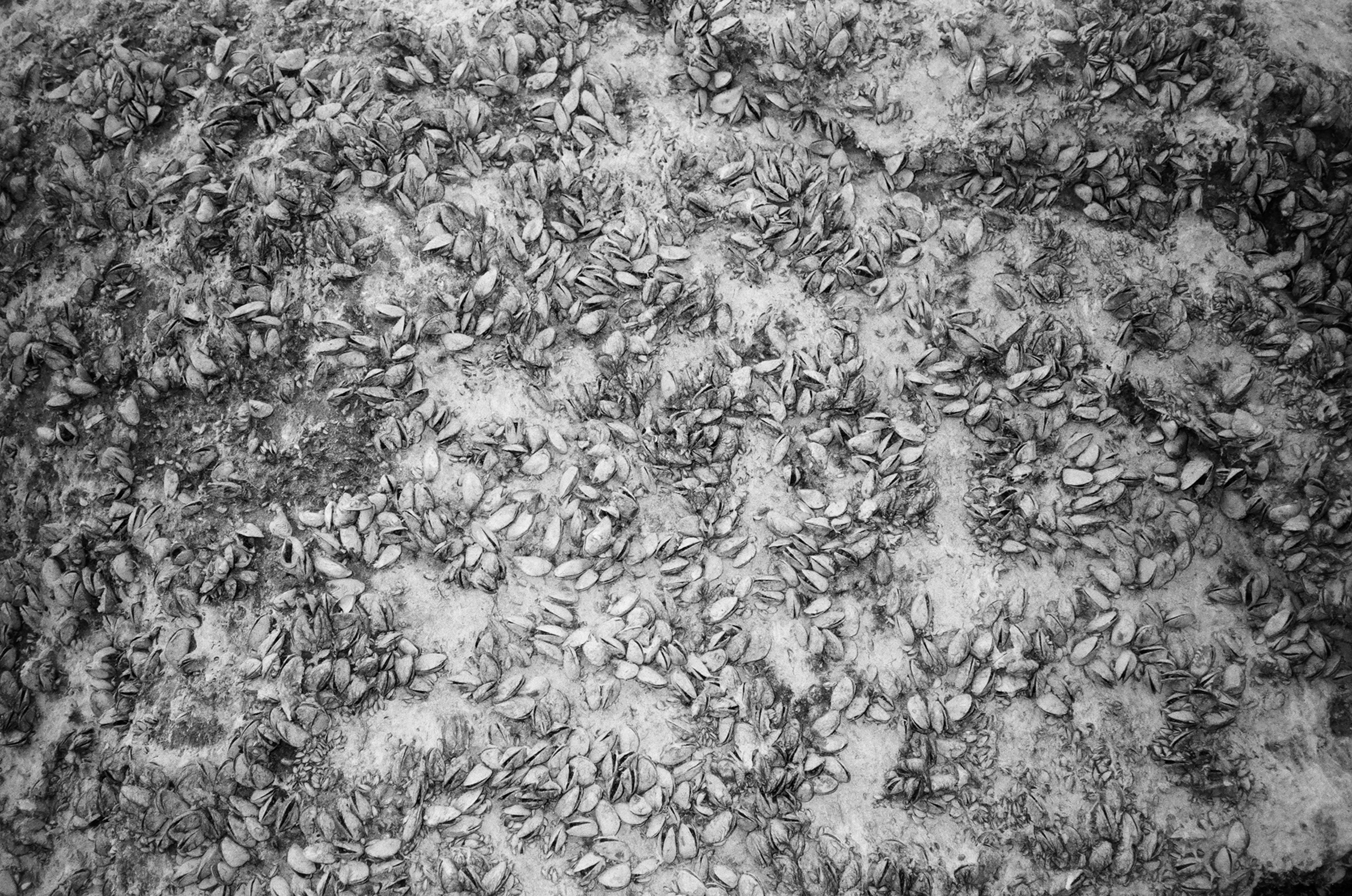
Nothing is fixed, nothing is quite as it seems. All of the death out here—the cow, the drowned cottonwoods, the fish turned wrong side up—is evidence of that, evidence of how this place is ever so slightly out of balance. It is something felt, that can’t be seen from a plane or a boat. You have to get mired in the mud. Struggle to escape. Clamber up rock after rock covered in sun-bleached quagga mussel shells, razor-encrusted tombstones of the nonnative species that have infested Powell. You have to see the death, smell it, hear the buzz of flies, the stench of stagnation. You must also hear the raven’s laughter and the fighter-jet hum of ducks landing in isolated sink pools, the juvenile heron shitting himself as he cautiously learns to hunt, the trio of otters, the coyote who trots away out across the mud flats, seemingly quite content with the state of things.
4.10.21
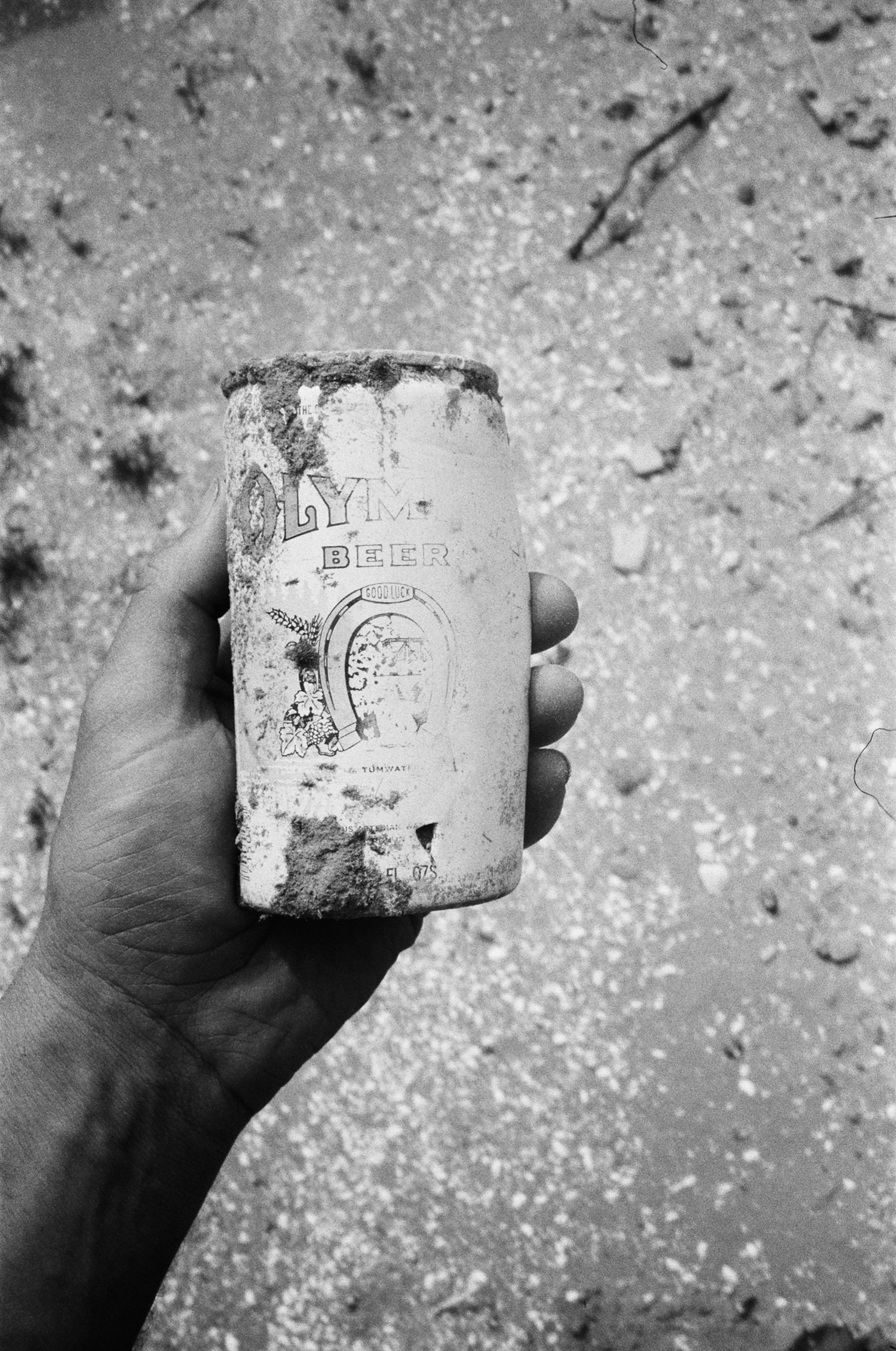
I stop for lunch at a nondescript break in the rocks. Nudge a beer can out of the mud with my foot. Wonder who held it last and when. Turning it over in my hands, one side is bleached by sun and water, the other side looks like it could have been set down yesterday. I can barely make out the words “Good Luck” in faded print below a logo of a horseshoe. Good luck to whom, I wonder? To the person who threw it overboard? To the one who finds it? To the waters that covered it? To the drought that revealed it? To Glen Canyon? To Lake Powell? I flip the can end over end. Horseshoe
up, goodluck, horseshoe down, bad luck. Or is it the other way round? I wonder at this place, at the way it holds paradox. Does a thing have to be lost to be loved, destroyed to be appreciated? I toss the beer can into the bow of the boat. Horseshoe up, let’s hope we catch some luck—whatever that is.
4.11.21
I don’t think I possess the language to properly convey the strangeness of paddling through the desert as cliffs of sand calve like glaciers around you, rounding a bend only to be greeted by flocks of pelicans and a stagnant lake.
From my camp at the confluence of river and lake, I survey an old uranium-mining road running along the base of an imposing band of red Wingate cliffs, leading back to where my truck is parked. I expected to be able to paddle back to my launch point, no walking needed. But there’s a metaphor here about best-laid plans. The need to adapt. What happens when our best-laid plans rest on a flawed foundation? What does the West look like without her brimming reservoirs?
Me, I can just pack down the raft, strap it to my pack, and hike back the way I came. If only everything were that easy.
7.8.21
My packraft had proved about as efficient in the wind-chopped lake as a unicycle in quicksand, and for my trip in July, I find an old British sea kayak on Craigslist and head for the old Hite boat ramp, four miles upriver from Farley Canyon.
There is no lake now, just sand and rock and the muddy muscular flow of the Colorado carrying the last winter snowpack out of the high country. The flow carries me quickly through the layers of lakebed, 30-foot mud gendarmes calving like rotten glaciers into the flow. I stay towards the middle of the channel, bobbing over 5-foot standing waves carved from the sandy bottom. Dust devils tower and dive. A coyote carefully leads her pups down to the river to drink, scrambling away to a safe distance when she sees me. Rich green grasses have sprouted across the silt plain, and a rogue herd of cattle pause their meal to watch me pass.
Later, I will sit quietly at the head of the lake and watch as three otters play on the long mud banks below Wingate cliffs. This feeling of quiet and space will change as I move down into the reservoir, closer to the marina traffic and weekend crowds, but here, in this landscape of flux, I feel acutely aware of my human presence.
7.9.21
You try to come to a place properly. To greet the raven at the canyon’s mouth. To whistle with the wren as she sits on the lone branch. To walk slowly. To look about. There is a gravity to some places that is felt, not spoken or measured. You give a prayer of thanks; whatever that means to you.
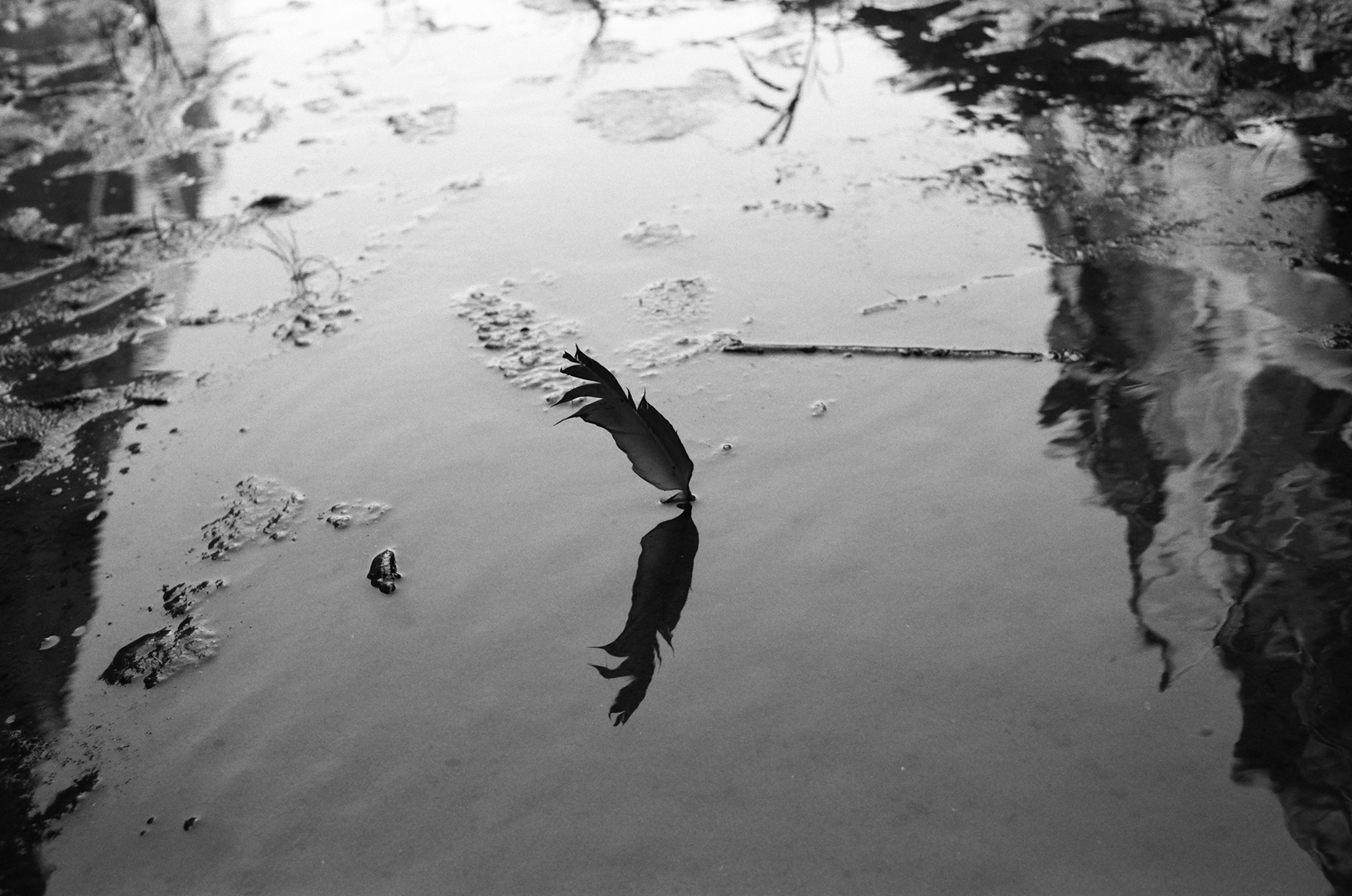
I find the first feather in Ticaboo Canyon, a raven tail, and place it as an offering by the dark pool. The second feather is covered in mud, hung up in some branches. Raven wing. I place it in the creek to rest. The third feather is unmarred, as if just left, curled upwards, the down of a dark chest, I think. I hesitate. Look around. Reaching for it, I place my thumb and forefinger gently on the quill. As I lift it, I hear the raucous calls of a pair of ravens watching from downcanyon. I do not know what they are saying. I don’t know the difference between a good and bad omen, only that it is an omen.
7.10.21
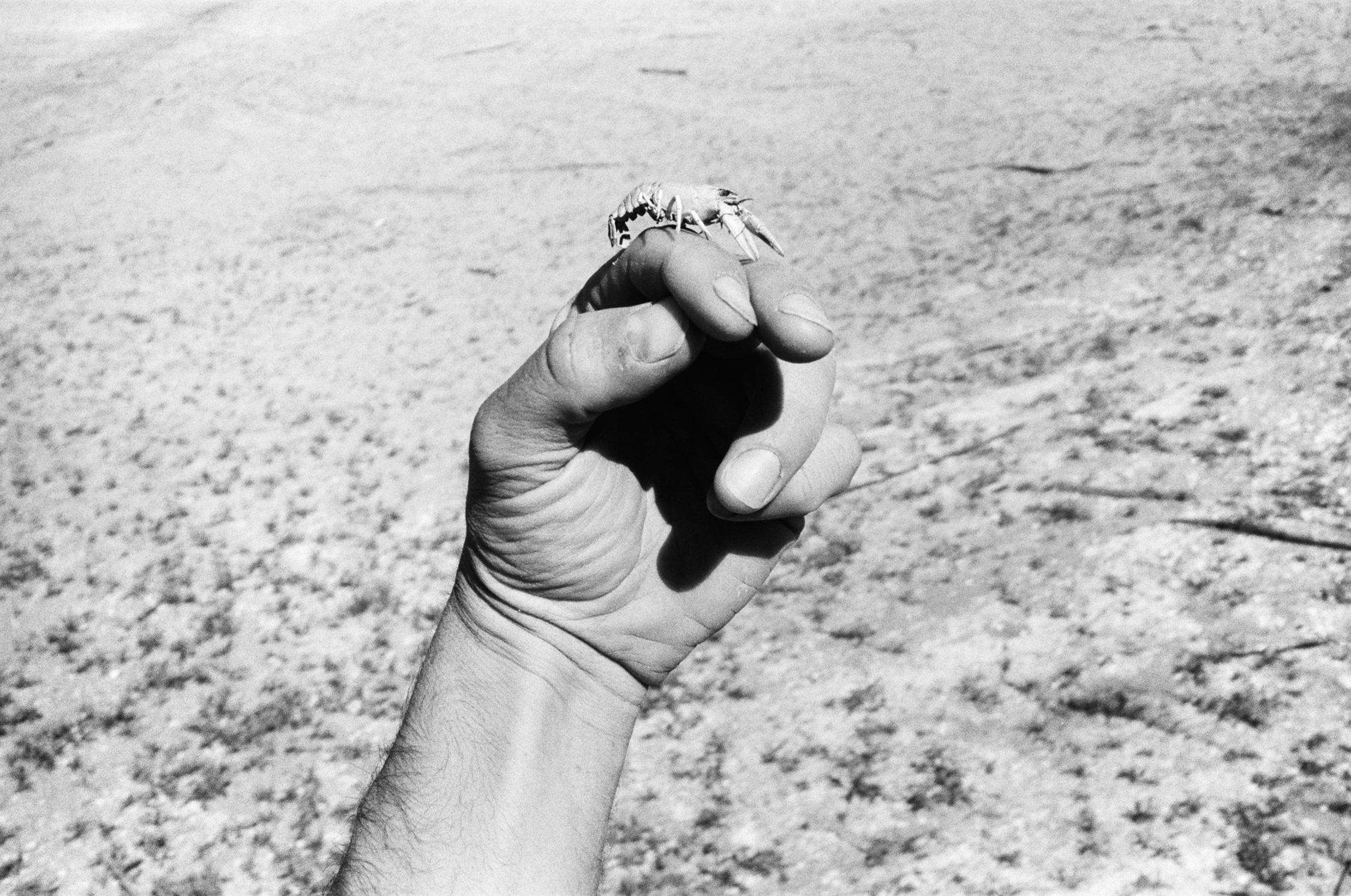
I wake to the sound of wind-pressed waves and the sun low but already scorching across the shimmer of the lake. Pushing off , I soon encounter a Forest Service research crew hauling in an endangered razorback sucker, monitoring the spawning range of the fish. There’s a surprising amount of animal life out here. I’m curious how when a landscape becomes less desirable for humans, it might in some ways become more desirable for other life forms.
Animals I’ve encountered on Lake Powell:
Ravens (a dozen)
Coyote and kits
Blue heron
Egret
American koot
Schools of stripers
Osprey
Golden eagle
Egret
Cattle
Sparrow
Bat
Swift
Weasel
Carp-eating clams
Razorback sucker
Lizards, 4 species
Otter
Human
7.10.11
Walking up from the water’s edge in the side channels of Moki Canyon is a walk through the many cultures of spring breakers that have come and gone here. Glow sticks. Sunglasses. Beach towels, a boomerang, ice bags, squattie potties. These canyons are sacred to many peoples, but none more so perhaps than the spring breakers—at least that is if we are to judge by the artifacts. I grew up on stories of Glen Canyon, but even if the reservoir were to fully drain, it would still leave us with a silted shifting world, far from the Glen Canyon of waterfalls and hanging gardens known by the ancestral Puebloans. I kick at a half-buried piece of towel, unearthing a red Solo cup.
It’s interesting how unaware of their wake people are. In one narrow stretch of canyon, a beefed-out wakeboarding boat throttles past me, shouting out a request for directions, which I give them with the motion of a hand. They wave a friendly thanks, disappearing around the bend as their 4-foot wake ricochets off the canyon walls and threatens to swamp my little craft. They mean no malice—they’re just unaware of their effect, the reciprocity between them and water and rock and me. Somewhere in there I suppose there’s a lesson. We all drive big boats some days.
7.11.21
I race a houseboat from Forgotten Canyon, where the ancient Defiance House sits just above the bathtub ring, to Moki Point. I don’t think they know we are racing, but still I win, and that feels good. I swim in the lake—well, I fall in, trying to get water, but it’s my first swim after many trips here, and it feels nice. The lake is a place of reciprocity, it seems. I pick an old Coors can out of the mud, and not ten minutes later am gifted a full Dr Pepper (my favorite!) floating in a side channel. Maybe the canyon is more like the giving tree—giving a place to keep water, then giving the water away.
People talk about caring about the earth, but what they’re usually talking about is caring about a select few playgrounds, curated parks where they climb or bike or hunt. Would we believe someone who said they loved us but only ever saw us dressed up for Sunday service? To really care for something, we’ve got to become acquainted with all sides of it—the dark, the ugly, and the painful alongside the beauty and softness. In my mind, if I’m going to say I love nature, I’ve got to go out and into these seemingly desecrated landscapes and see if I can sit within them, with the discomfort.
I struggle the 12 miles from Moki Canyon to Bullfrog Marina in a heavy headwind and stash my boat in a cove. The bustling energy feels harsh as I walk down the baking asphalt to the restaurant overlooking the marina. I slurp up a cold beer and fork down a salad, watching the Stanley Cup Finals as the sun ripples red gold across pockets of orphaned reservoir.
As I’m finishing my third beer and getting ready to head back down to my bivy bag, an older couple from Salt Lake City sidles up to watch the game. We get to talking about the glory days, decades past, when the reservoir sat high and proud on the land. They’re water skiers, and they tell stories of carving cursive lines across glassy expanses of water under deep redrock walls, secret canyons and sprawling bays blossoming up from dry earth. A place of endless possibility.
The water skiers mourn the reservoir of thirty years ago. I mourn the Glen Canyon I never knew. And while I get the feeling our political beliefs might be polar opposite, we sit here over our beers looking out onto a lake that is now miles away from where it once lapped at this deck, and we agree, this is sad. Ugly, beautiful, changing, and sad.
We agree the water is leaving the West, and something must be done. We agree that as long as this water is tied up in money, it will be difficult for people to agree what to do with it.
We agree that it would be better if more people understood the finite nature of the systems that support life in the American West. Water is what allows us to be here. When it runs out, so does our time on this land.
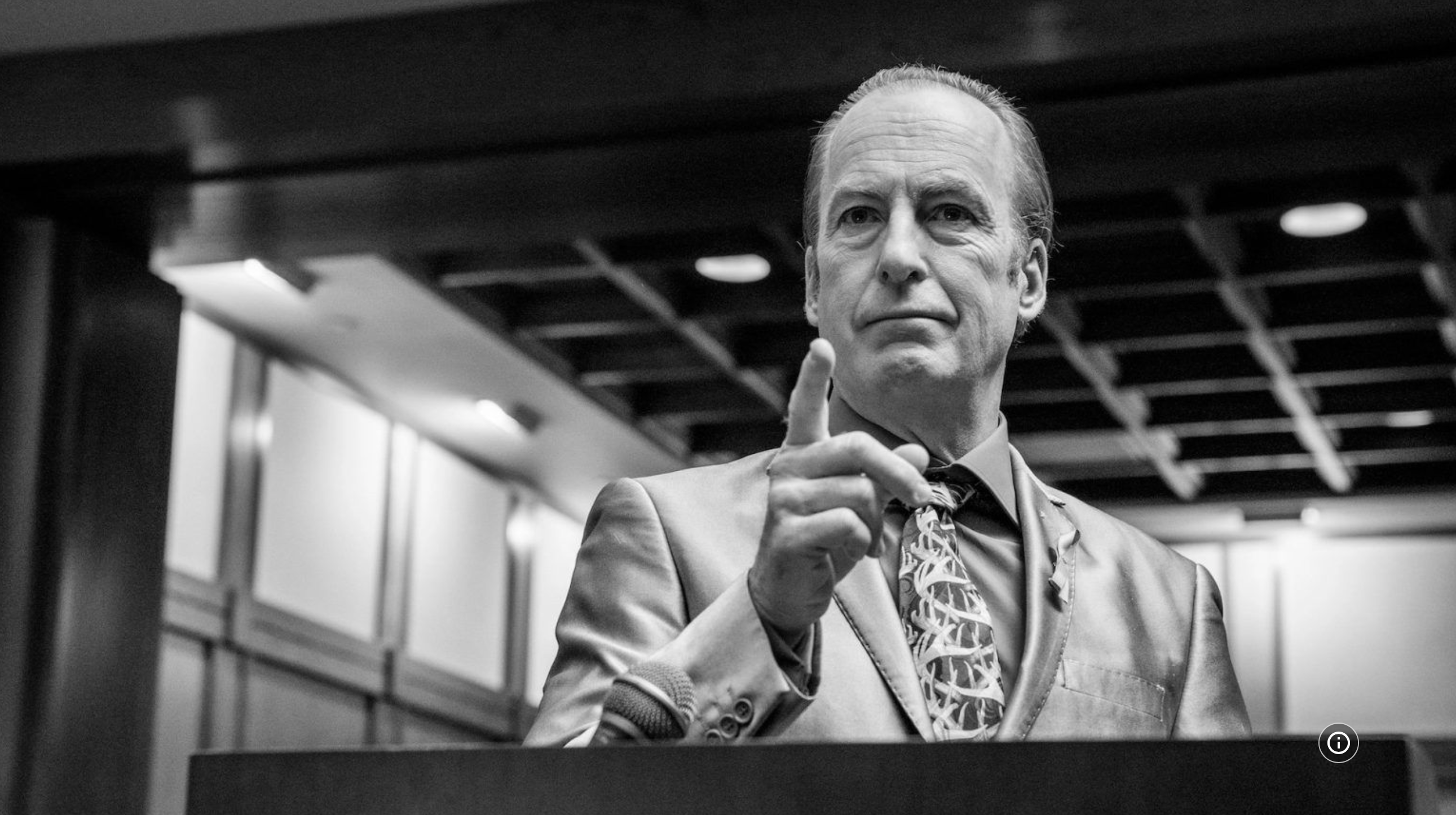
Bob Odenkirk as Saul Goodman in the finale, “Saul Gone,” courtesy of imdb.com
It seems an antiquated concept: a “television program” that “came out” once a week, on a cable channel, with commercials.
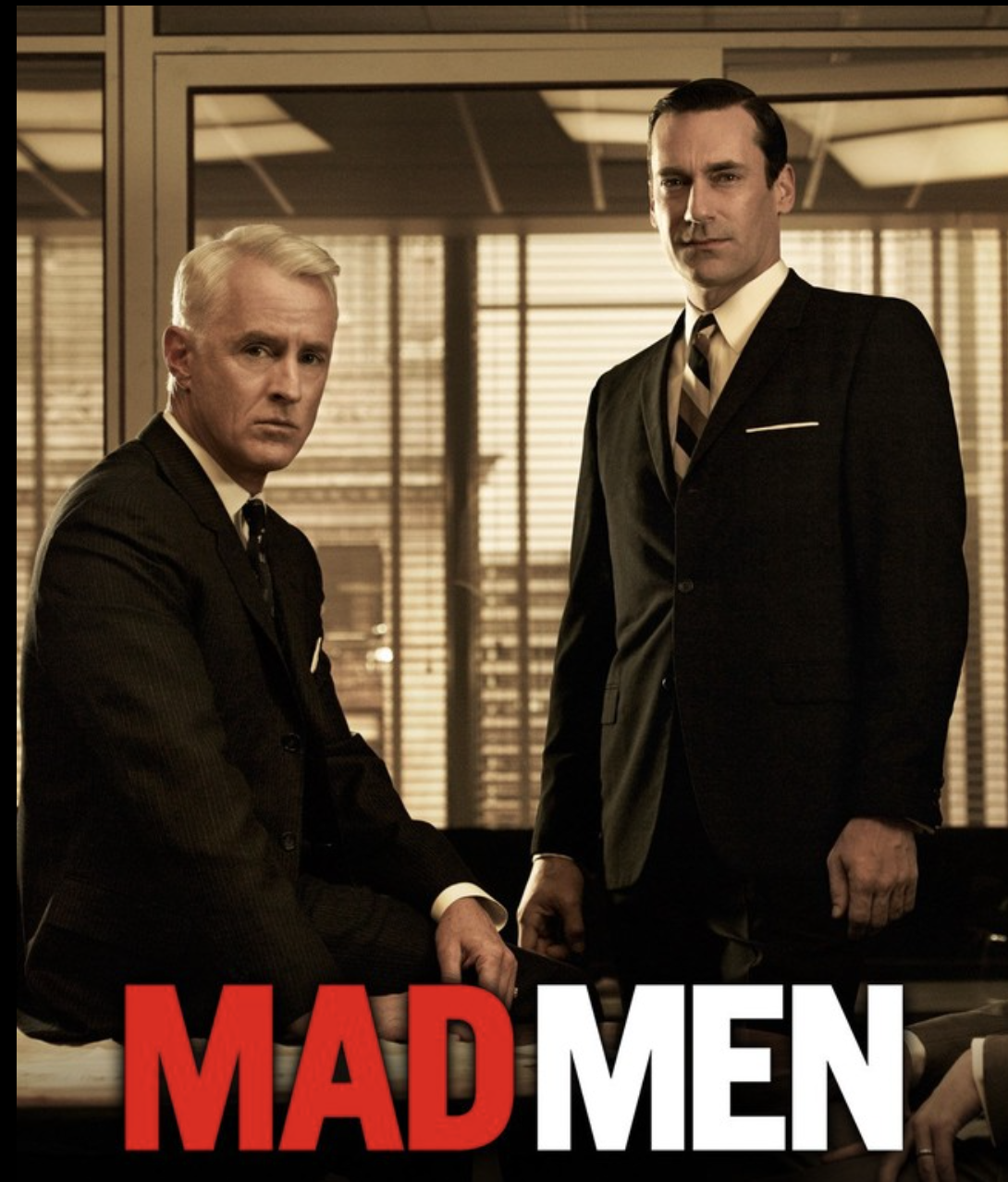
(It ran on AMC, the network behind early century masterworks “Breaking Bad” and “Mad Men.”)
“Better Call Saul,” if you’re not familiar, was set in Albuquerque as a prequel to “Breaking Bad.”
The two shows were part of the Vince Gilligan IP Universe that also includes the Netflix movie “El Camino,” and doubtless more to come.
But I digress.
That’s not what I want to talk about.
What I want to talk about is, “Better Call Saul” was a masterpiece.
10/10
*****
Five Stars
100%
I loved “Mad Men,” sure.
Not saying this is necessarily better. (Though it is probably as good, like “The Wire” level excellent.)
And just talking about all these anti-hero shows with straight White male leads gives me the queasies.
Courtesy of Rotten Tomatoes
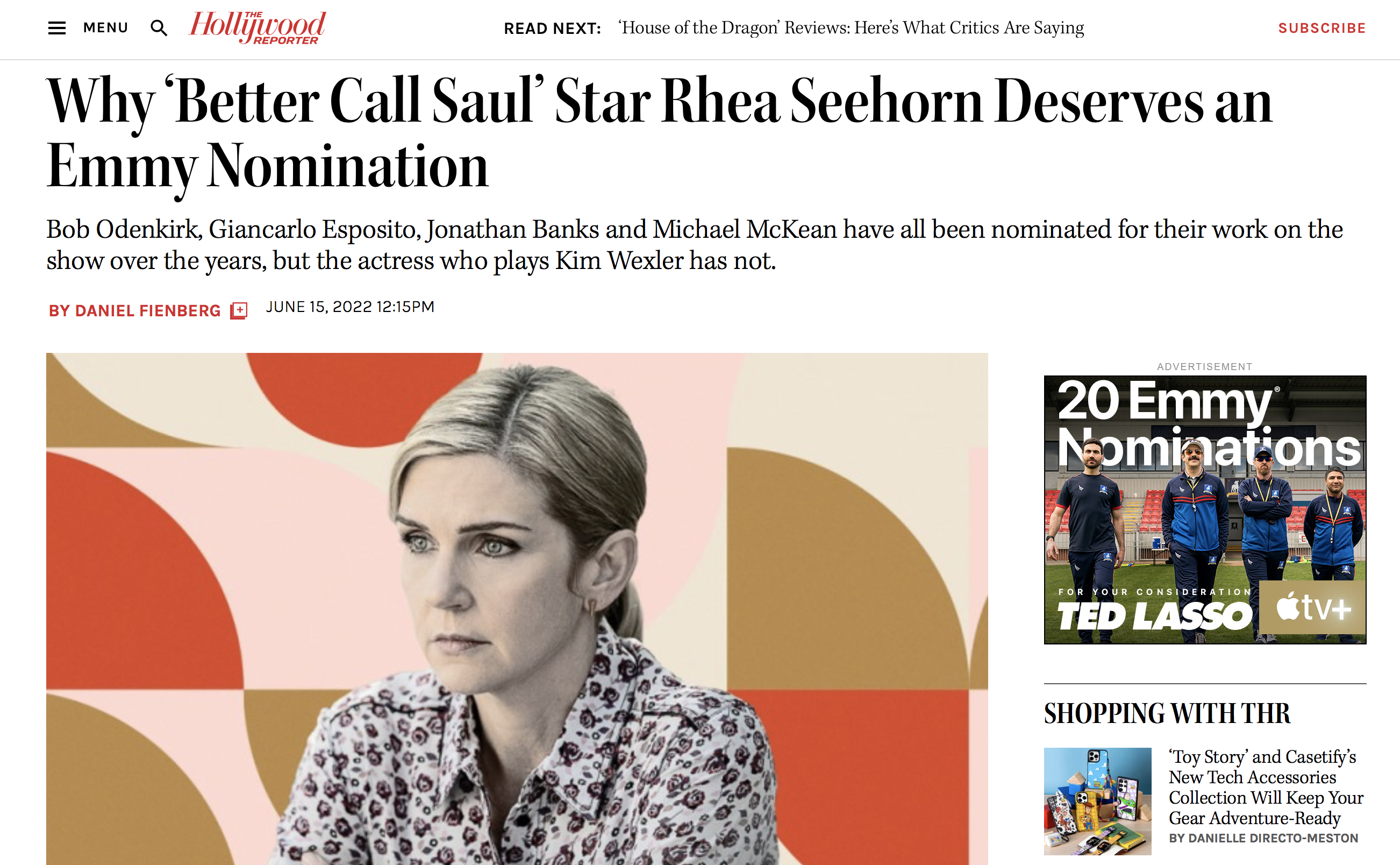
Despite his name being in the title, “Better Call Saul” was about so much more than Bob Odenkirk’s Jimmy McGill/Saul Goodman/Gene Takovic.
Week in, week out, the acting was inspirational. Along with Odenkirk, Rhea Seehorn’s Kim Wexler performance was an all time great, as was Jonathan Banks as (for most seasons) co-lead Mike Ehrmentraut.
Among regular players, off the top of my head, Michael Mando, Giancarlo Esposito, Tony Dalton, Patrick Fabian, and Michael McKean all put in next-level work.
The legit heartbreak I felt as a viewer, watching Mando’s fan-favorite Nacho Varga sacrifice himself to save his father, earlier in the final season, was “Old Yeller” level sad, and that was just one part of the ride.
Or Tony Dalton swaggering around every scene he’s in as the menacing/charming, near-superhero level badass Lalo Salamanca?
So fucking good.
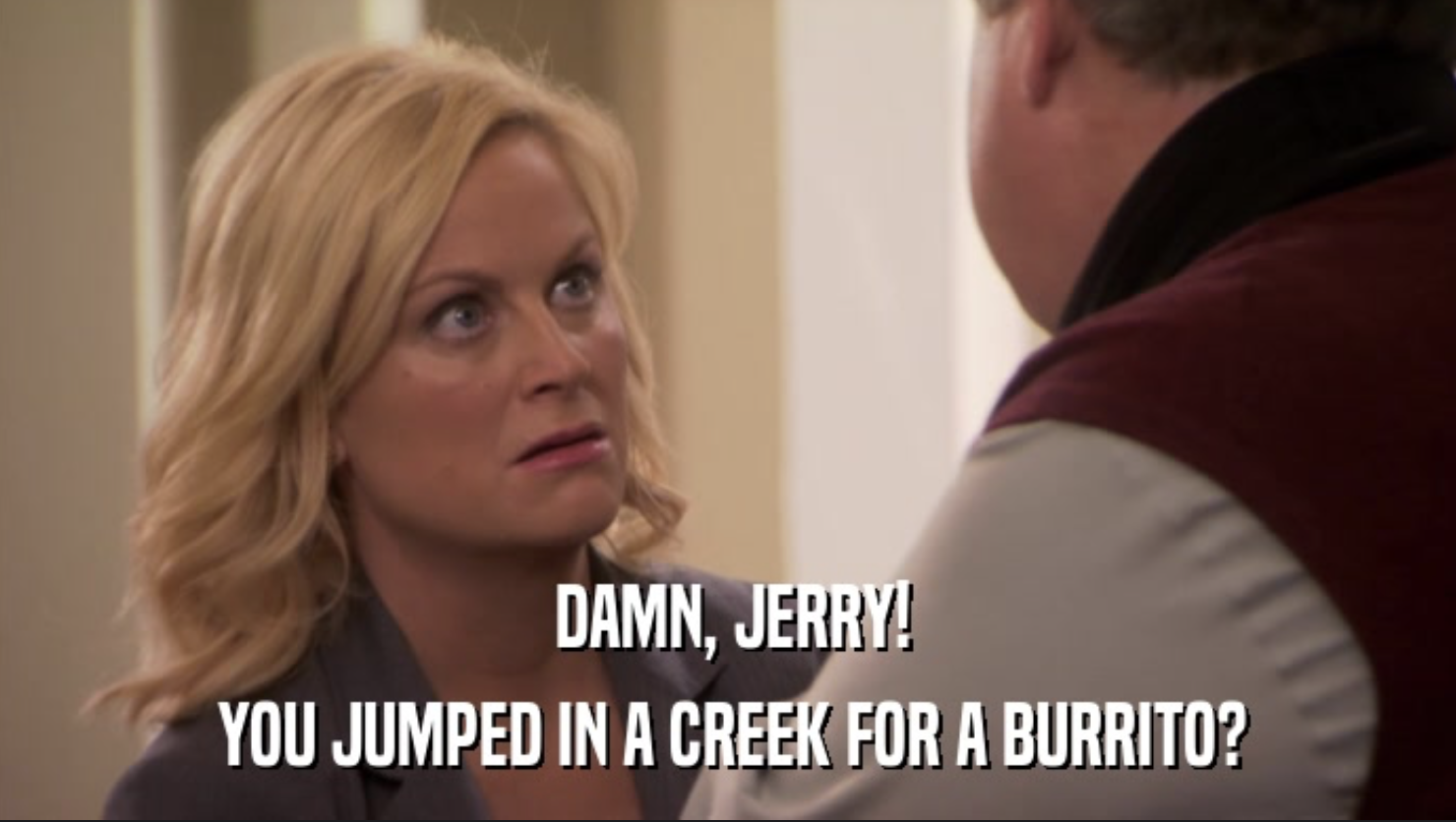
No day-player, walk-on ever slouched, either. (Can we give a shout out to “Parks and Rec” legend Jim O’Heir, who killed it in a late season cameo!)
The writing was mind-blowing, with respect to nuance, symbolism, plot and character development.
New Mexico was more an integrated backdrop than a heavy hitter, but that felt organic to the story too.
The cinematography so often made me think, or hit the pause button, with meticulous framing and camera placements.
Beyond that, I loved the emotional resonance, and non-traditional storytelling styles.
The way they used black and white versus color, as a way of separating timelines, and then weaving in entirely black and white episodes, with Carol Burnett at the end?
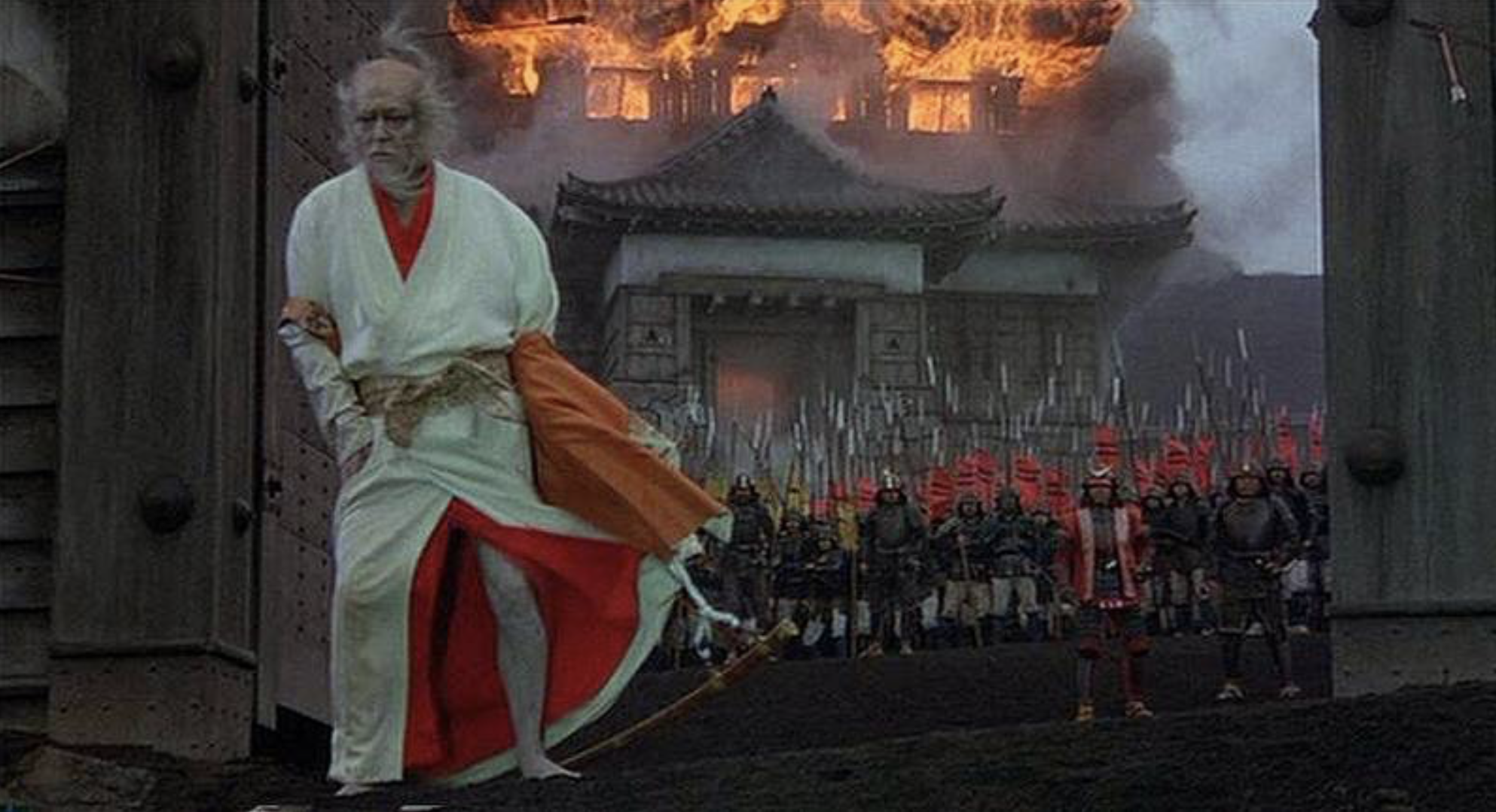
We’re talking Kurosawa-level craftsmanship.
Akira Kurosawa’s “Ran,” courtesy of RogerEbert.com
“Better Call Saul” was a slow-burn tragedy that always had Bob O around for a quick “sad clown” laugh.
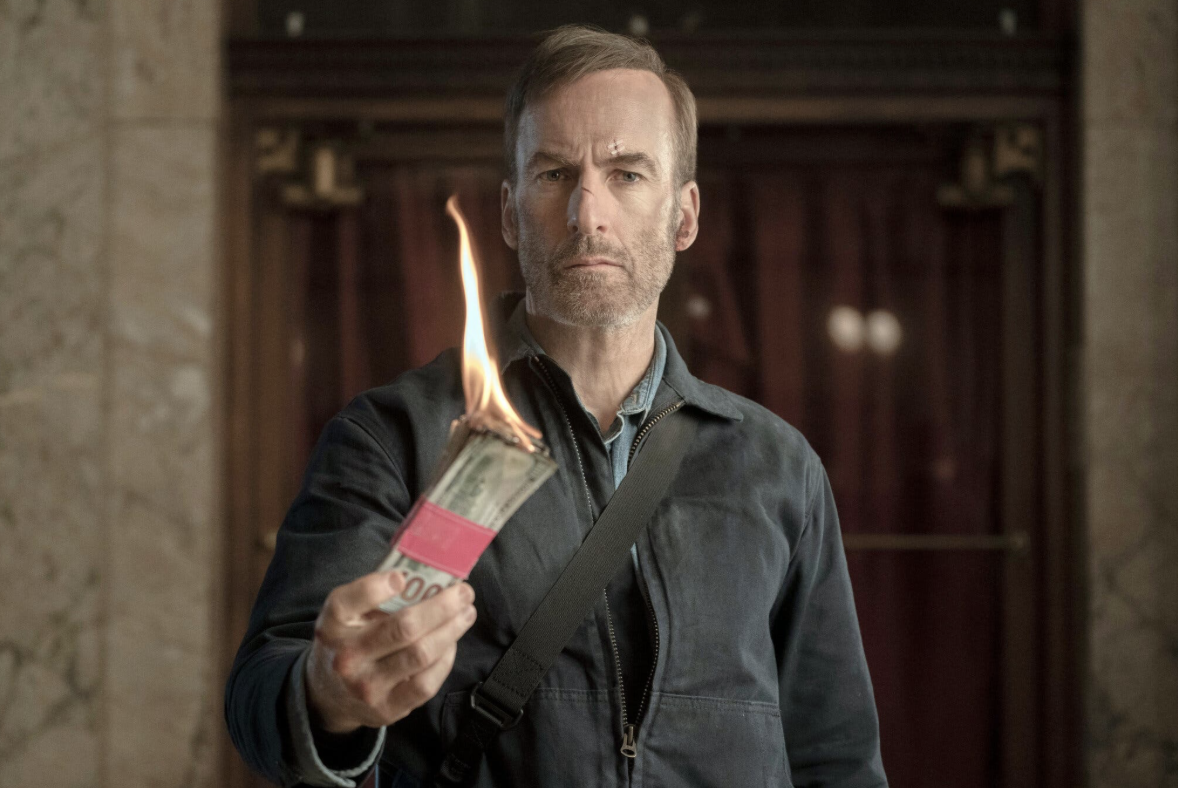
And this is an actor talented enough to have won fans for his absurdist “Mr. Show with Bob and David,” in 1995, before morphing into a John-Wick-level badass in the 2021 sleeper action hit “Nobody.”
“Nobody,” image courtesy of Allen Fraser/Universal and the NYT
Who has more range than that?
For six seasons, no matter how many times it looked like Plucky Jimmy McGill might just turn the corner and make good, you’d remember you already knew where the finish line was: he ended up as Slick Saul Goodman, and then Sad-Sack Gene Takovic.
(Time to make the Cinnabons.)
This character would have would have no redemption, until the end.
Facing a mere 7 years in a cushy federal prison, he burned down an agreement with the government, and came clean in open court, in order to win back his self-respect, and the love of the great Kim Wexler.
They gave him 86 years in a freezing Colorado Supermax instead.
What an ending!
The penultimate scene in “Saul Gone.”
After six seasons spread over 7 years, the BCS creative team stuck the landing with a brilliant extended finale on Monday night, and maybe I’ll leave it there.
I guess you could watch the entire show, in a binge, on AMC+, if you were so inclined.
As an art critic, I’d highly recommend you do so, but hey, what do I know?
The Art of the Personal Project is a crucial element to let potential buyers see how you think creatively on your own. I am drawn to personal projects that have an interesting vision or that show something I have never seen before. In this thread, I’ll include a link to each personal project with the artist statement so you can see more of the project. Please note: This thread is not affiliated with any company; I’m just featuring projects that I find. Please DO NOT send me your work. I do not take submissions.
Eleven hundred years ago, a remarkable early Arab historian, al-Mas’udi, compares the task of telling the Arab story to that of ‘someone who has found a scattered hoard of gemstones of all different kinds and colors, and has then strung them in order and turned them into a precious necklace.
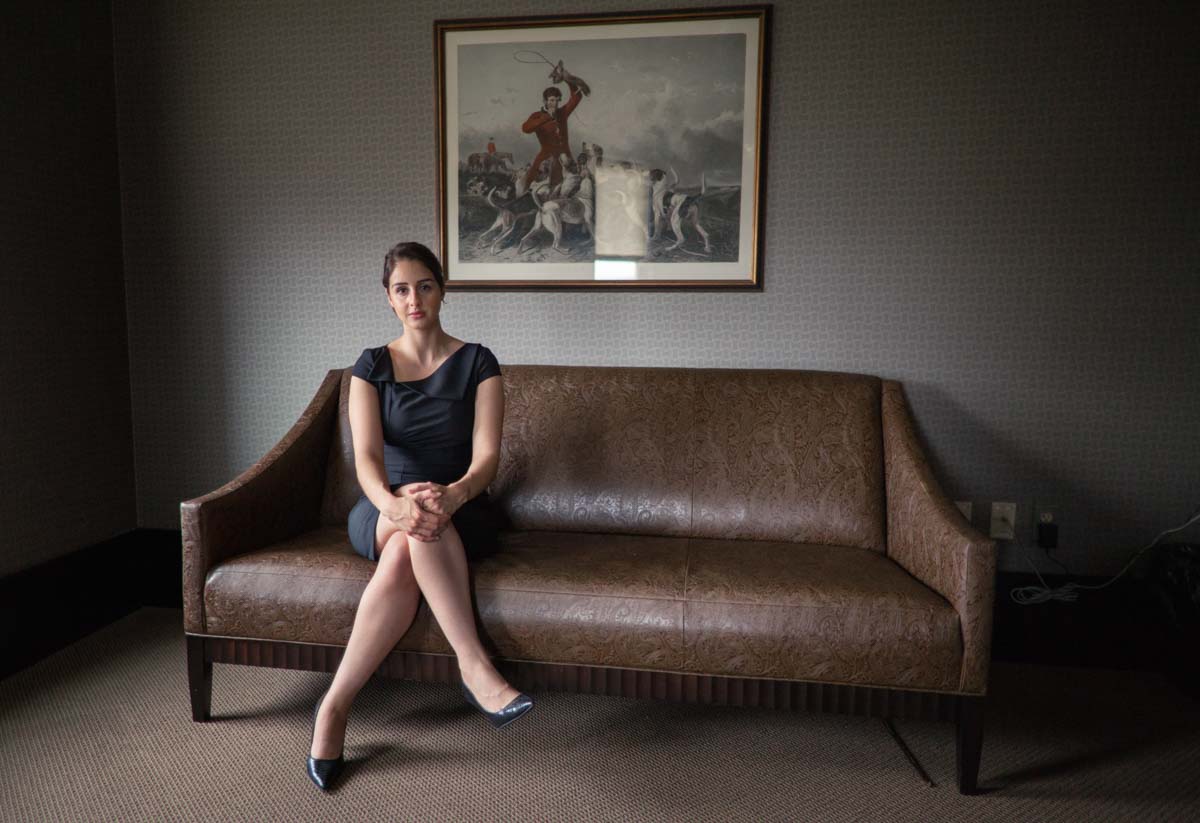
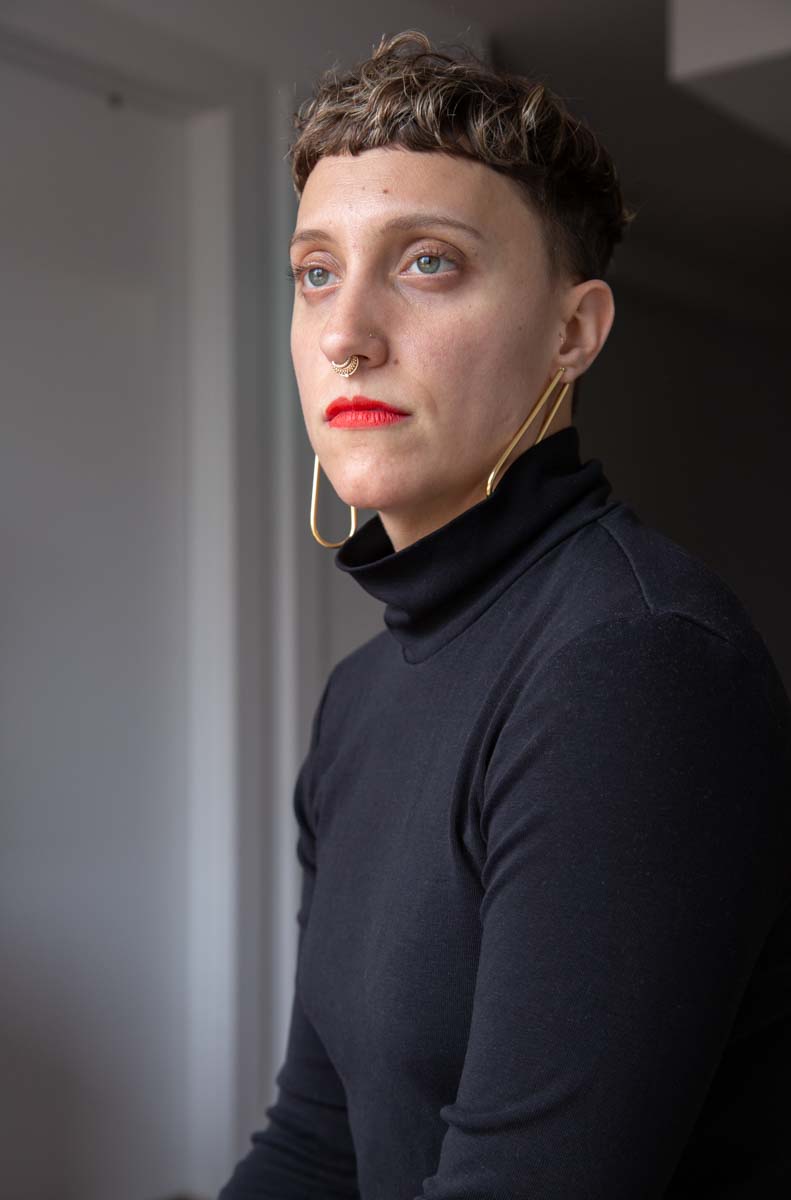
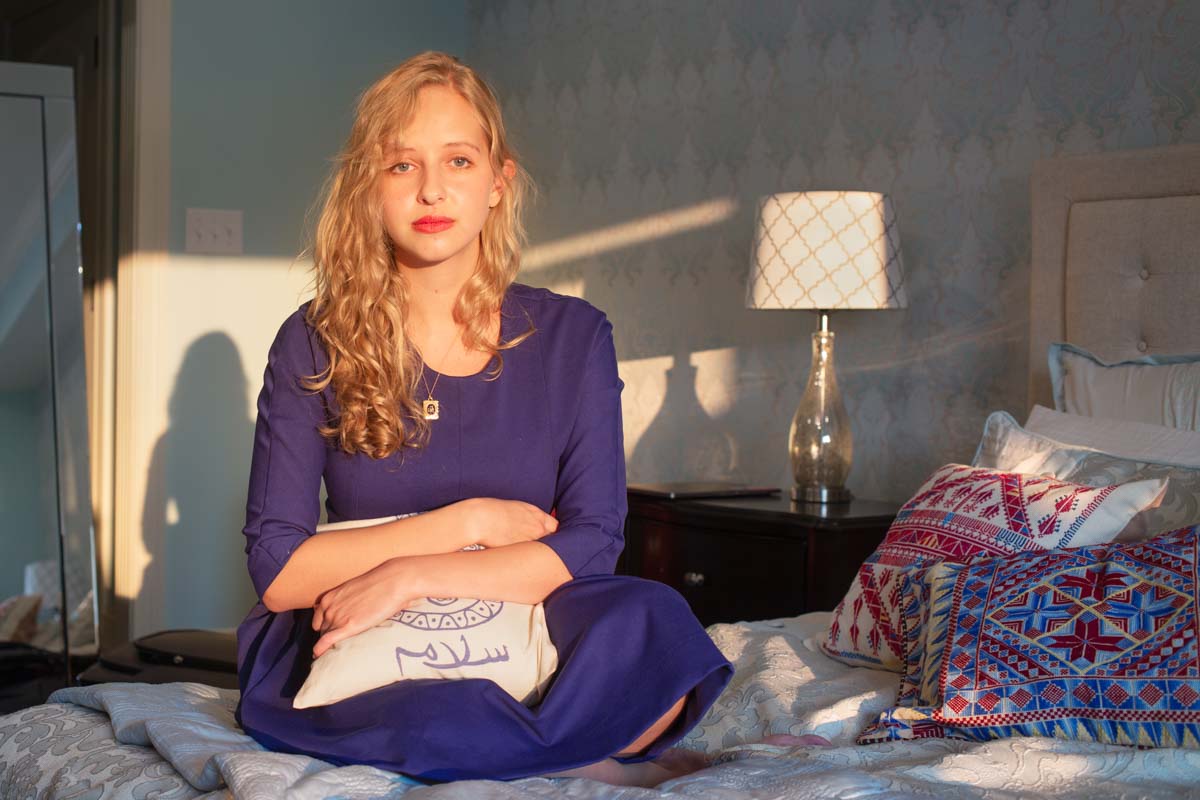
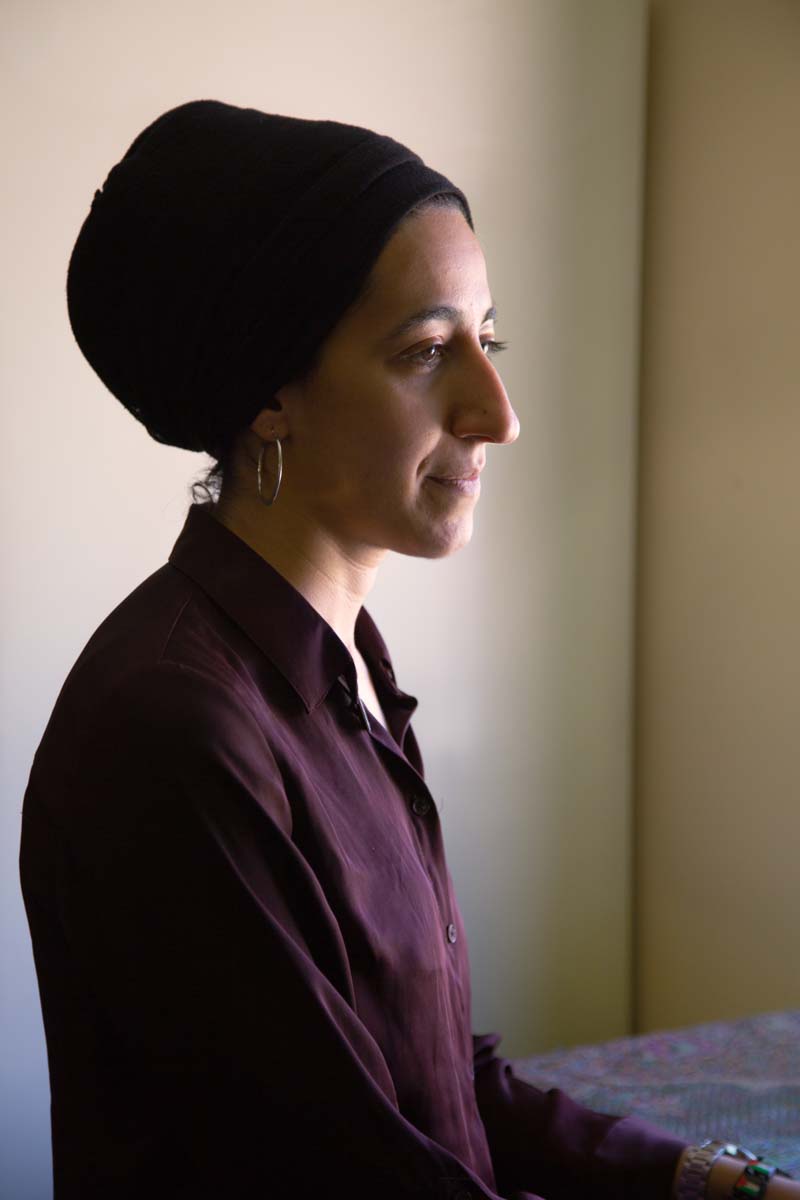
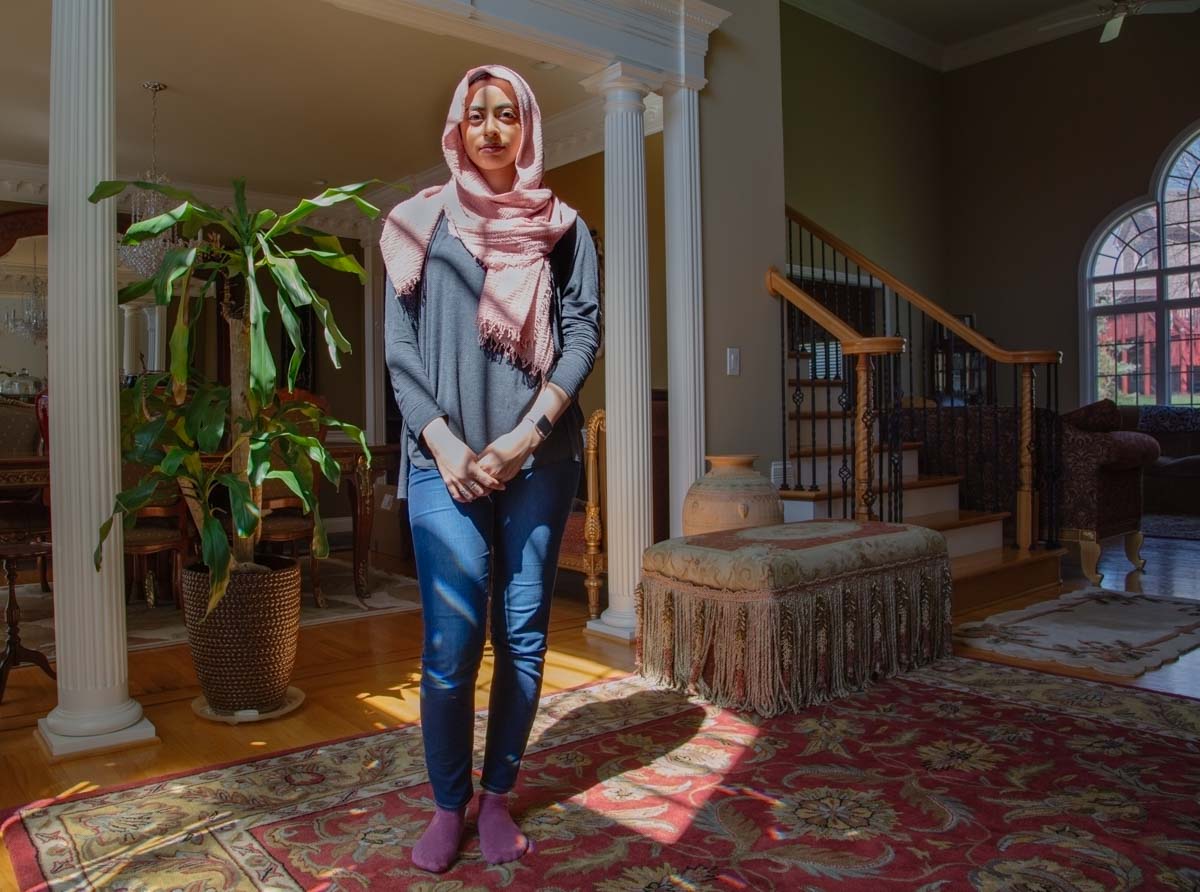
By contemplating the individuality of immigrant and first-generation Arab women living in the United States, Heya contemplates their relationship with their identity in contemporary society. By highlighting these women’s diverse beliefs, up-bringing, and experiences, this project strives to illuminate the unique color and nuance of these Arab Women, adding color to the precious necklace of an empire.
Aida Al Masalkhi, 28 years old lawyer, born and raised in Kentucky to Syrian parents.Mette Loulou Kohl, 33 years old, born and raised in NYC to Palestinian Lebanese mother and Danish father. Mette is an artist and educator.Nadia Al Masalkhi, 23 years old born and raised in Kentucky to Syrian parents. Nadia is a graduate student at UC Berkley in sociology.Linda Omar, 30 years old born and raised in Chicago to Palestinian parents. Linda is a postdoctoral research fellow in the department of health promotion and behavioral science in the school of public health, University of Louisville.Joy Ameena Garnett 52 years old born and raised in NY to Egyptian mother and American father. Joy is a painter and writer.Dina Fahmi, 27 years old born and raised in Kentucky to Egyptian parents. Dina is a consular at a residential center for violent teenager girls.
APE contributor Suzanne Sease currently works as a consultant for photographers and illustrators around the world. She has been involved in the photography and illustration industry since the mid 80s. After establishing the art-buying department at The Martin Agency, then working for Kaplan-Thaler, Capital One, Best Buy and numerous smaller agencies and companies, she decided to be a consultant in 1999. She has a Twitter feed with helpful marketing information because she believes that marketing should be driven by brand and not by specialty. Follow her at @SuzanneSease. Instagram
Success is more than a matter of your talent. It’s also a matter of doing a better job presenting it. And that is what I do with decades of agency and in-house experience.
Concept: Studio portraits of four brand ambassadors for an apparel company
Licensing: Web Advertising, Web Collateral, OOH (out-of-home), and POS (point-of-sale) use in the US and Canada of up to 24 images for one year from first use.
Photographer: Portraiture specialist
Agency: Medium-size, full service
Client: Apparel company
The client had four brand ambassadors that they wanted to photograph in a studio on one shoot day, and we were provided a creative brief showing them interacting with a few props while dressed in the apparel company’s clothing. They needed two looks with three poses each for all four talent, which would yield 24 images.
Fees
While the licensing could be limited to one year, they did have broad usage plans, including potential placement on large out-of-home displays and within the retail environments (POS) where the apparel would be sold. Even though they wanted multiple looks and poses for each talent, it was clear from the brief that they’d likely use one final image per subject. I decided to price the usage by the subject, and included $4,500 for each, totaling $18,000, and then added a $2,500 creative fee on top of that. While we typically combine creative and licensing fees into one line item, we were specifically asked by the agency to break these two line items out on our estimate. In addition to these two fees, I also added a pre-light/fit day fee for the photographer at $1,000, which included one day in the studio prior to the shoot — to set up lights and for the styling team to assess wardrobe with the talent.
Crew
We included a producer to help line up all aspects of the production, along with two assistants, all of which would attend the pre-light day as well. Additionally, we included a digital tech and a production assistant. Typically, I don’t include half days for crew members, but the photographer had crew at the ready who could jump in for a half-day to help set up lights on the pre-light day, and I based these numbers on local knowledge of rates in this specific market.
Styling
While the client would provide all of the apparel, we included a wardrobe stylist for both the pre-light day and the shoot day to manage inventory, prep the outfits, and help the talent try on and ensure proper fitting. We also included a hair/makeup stylist and a prop stylist to acquire a few minor items. We anticipated the prop stylist could procure these supplemental items and just drop them off at the studio, rather than needing multiple shop and return days.
Health and Safety
We included a covid compliance officer and testing as requested by the agency. As a cost-saving measure, they asked us if we could include PCR tests just for the subjects (two of which would have parents in attendance who would also be tested) as well as the two clients attending. Everyone else was approved to just use rapid tests prior to the shoot.
Location
The photographer had a studio in mind that offered a flat $2,000 fee for a half-day pre-light and a full shoot day.
Equipment
We included an adequate fee for both the pre-light and shoot day for cameras, grip and lighting equipment, plus a fee for the digital tech’s workstation on the shoot day.
Meals
I included $60 per person for a light breakfast and lunch on the shoot day.
Miscellaneous
I added a bit of a buffer for unforeseen minor expenses and also a nominal fee for insurance to contribute to the photographer’s existing policy.
Post Production
We included $500 for the photographer to perform basic color correction of the content and delivery of a gallery, plus $300 for a hard drive. The agency would provide further retouching on the selects.
It’s August 11th, (high summer some places,) and my kids just went back to school.
My daughter is in 5th grade, and when I began this column, in September of 2011, she wasn’t born yet.
(It’s been a wild ride.)
Over the course of my time here, (week in, week out,) I’ve had the chance to travel to some pretty amazing places, and report back to you.
Beyond Derby, London and Amsterdam, all my city reports have come from here in the good old US of A.
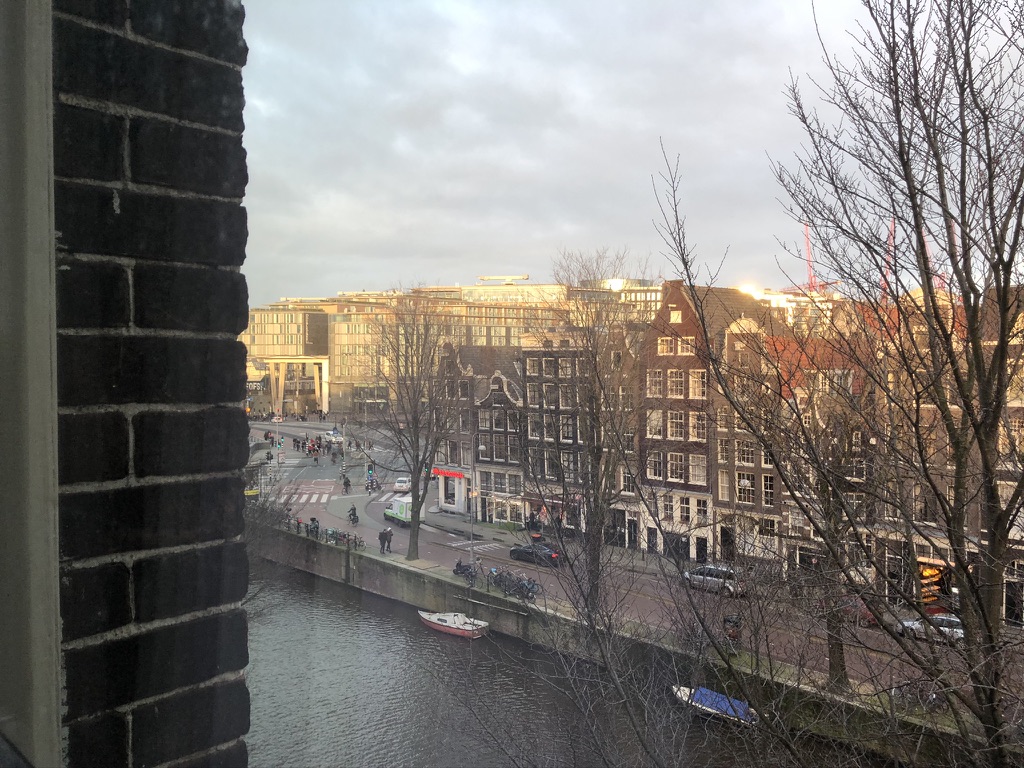
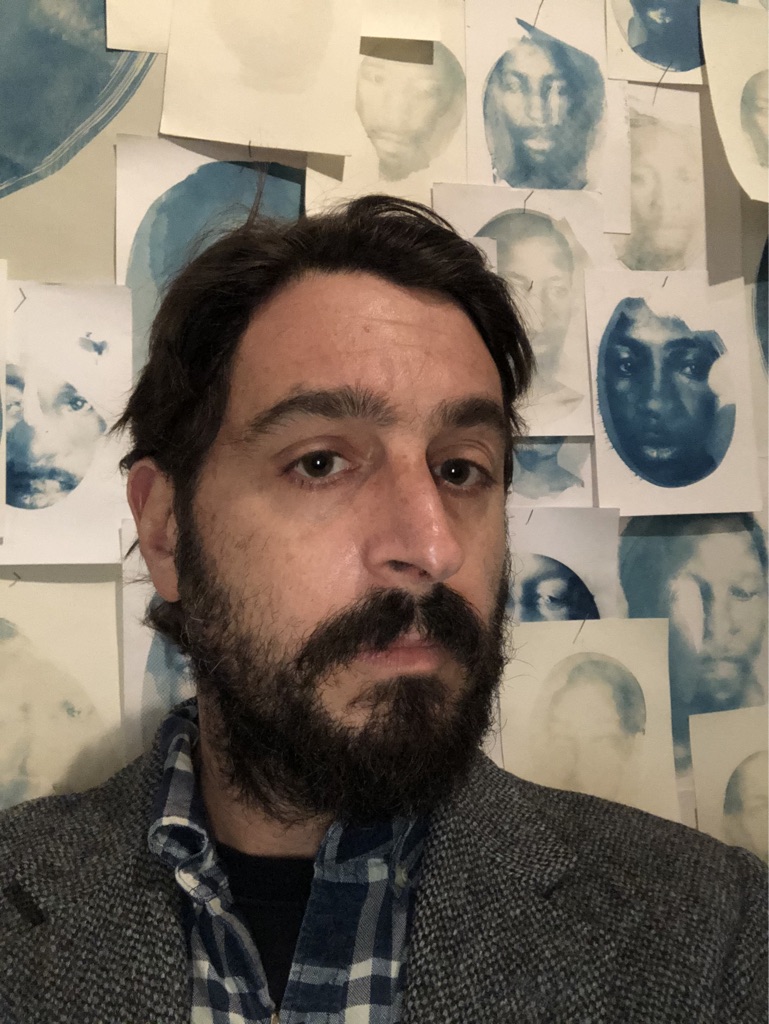
Hotel room view, Amsterdam, Feb 2020Taking a selfie in a room full of people talking selfies in the Eric Gyamfi exhibition, Foam, Amsterdam, Feb 2020
Off the top of my head, since 2011, I’ve written about Austin, Albuquerque, Carmel, Chicago, Dallas, Denver, Houston, LA, Marfa, Monterey, New Jersey, New Orleans, NYC, Portland, Santa Fe, San Diego, San Francisco, Taos, Tucson, and Washington, DC.
I’m a lucky guy.
As of now, I’m supposed to visit NJ, Chicago and New Orleans later this year.
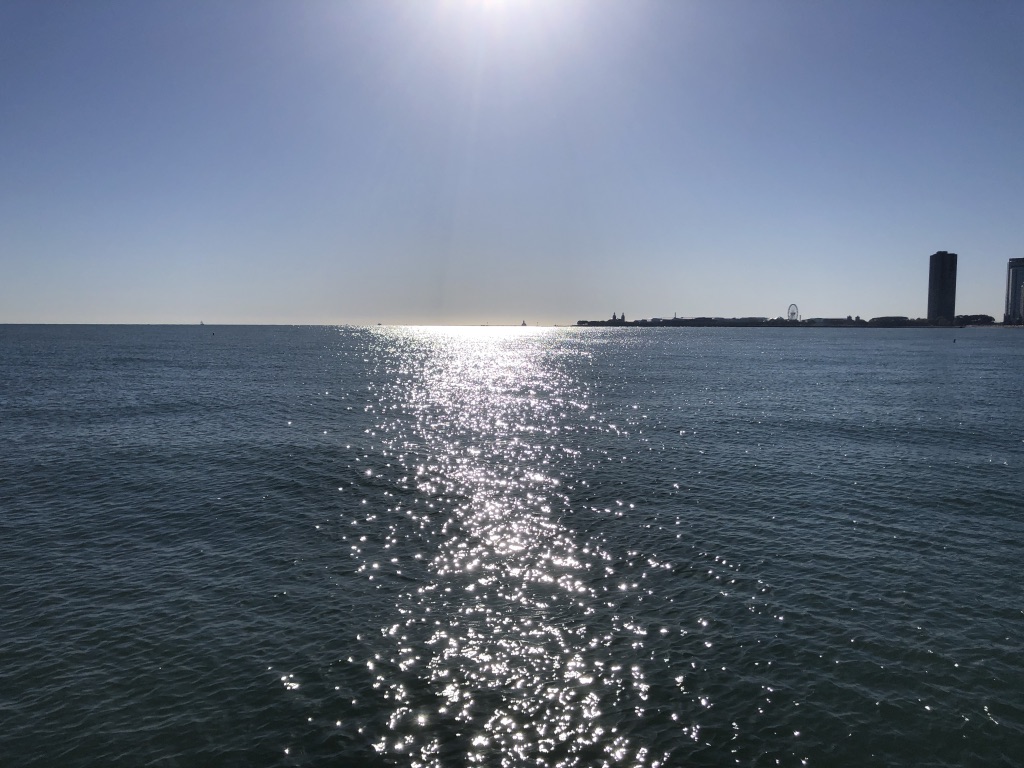
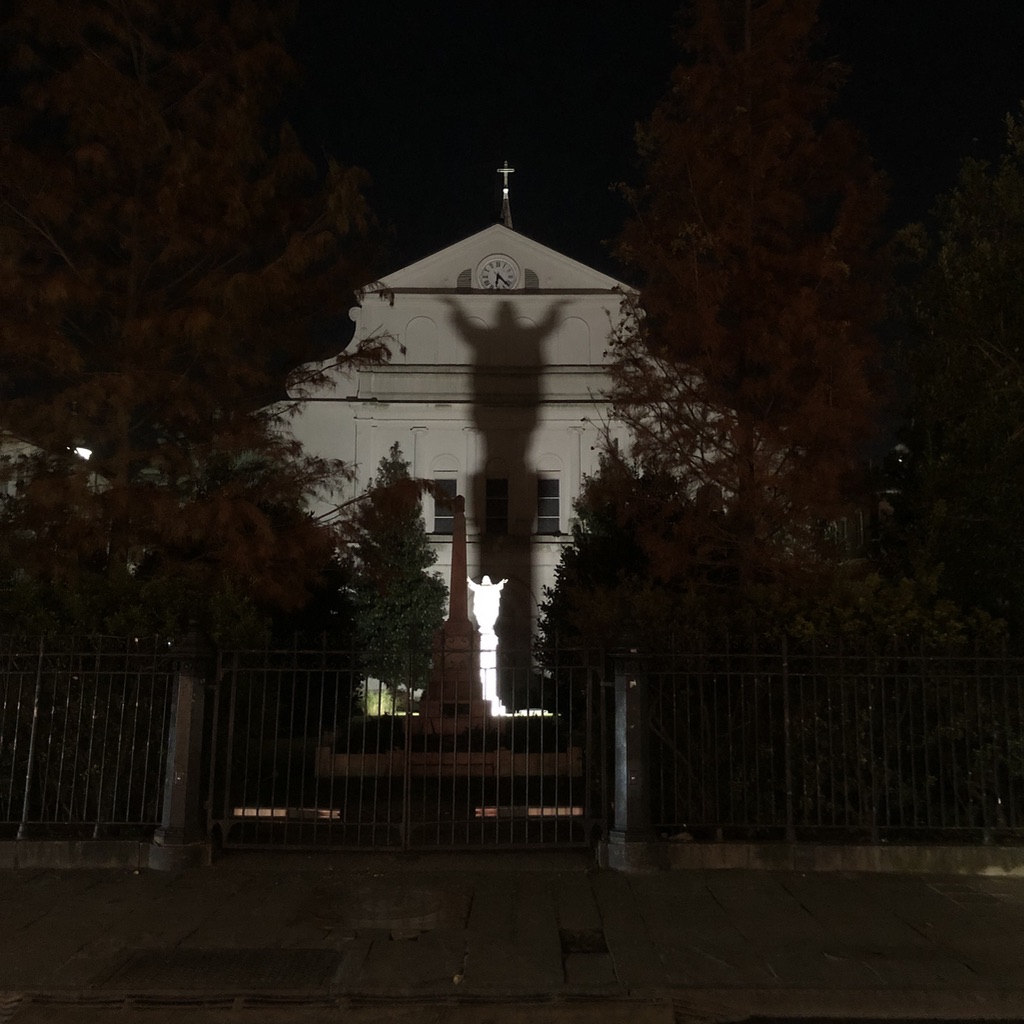
Lake Michigan, Chicago, Oct 2021The French Quarter, New Orleans, Dec 2021
So we’ll have plenty more travel content in 2022-3, with the attendant gallery, museum, restaurant reviews, etc.
It’s a far cry from pandemic lockdown, thank goodness, when so many people just stayed home.
(Including me.)
Traveling, visiting new ports of call, seeing new cities, tasting new foods…
Few things are better for our personal (and brain) development.
Doing new things makes new neural pathways in your brain, and every moment in a new travel environment counts as doing something new.
(Yes, that was 4 uses of new in one sentence.)
But getting to truly see the world, put my eyes on China and Japan, Australia and Brazil?
Egypt and India?
I mean, to see all of it?
I can’t even imagine.
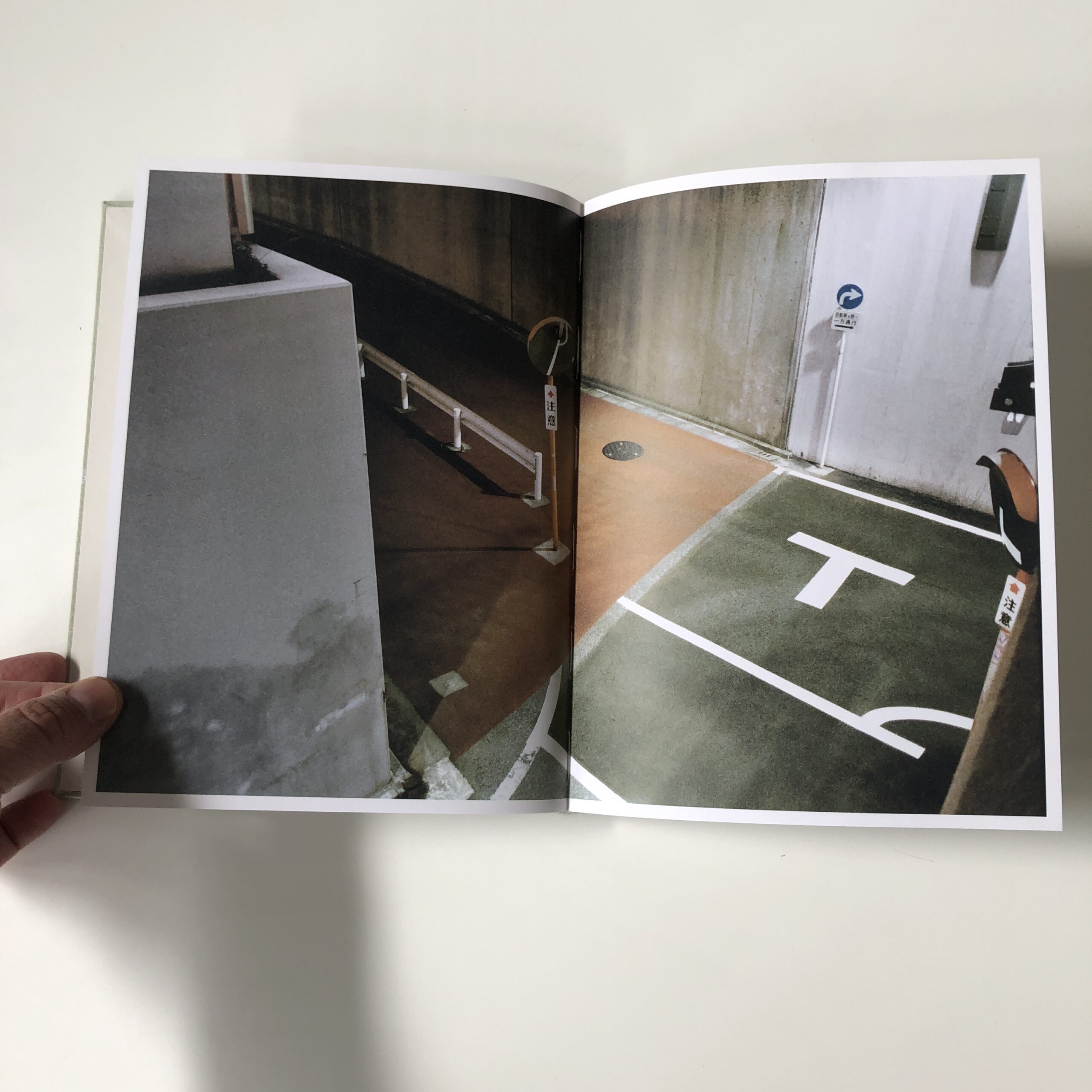
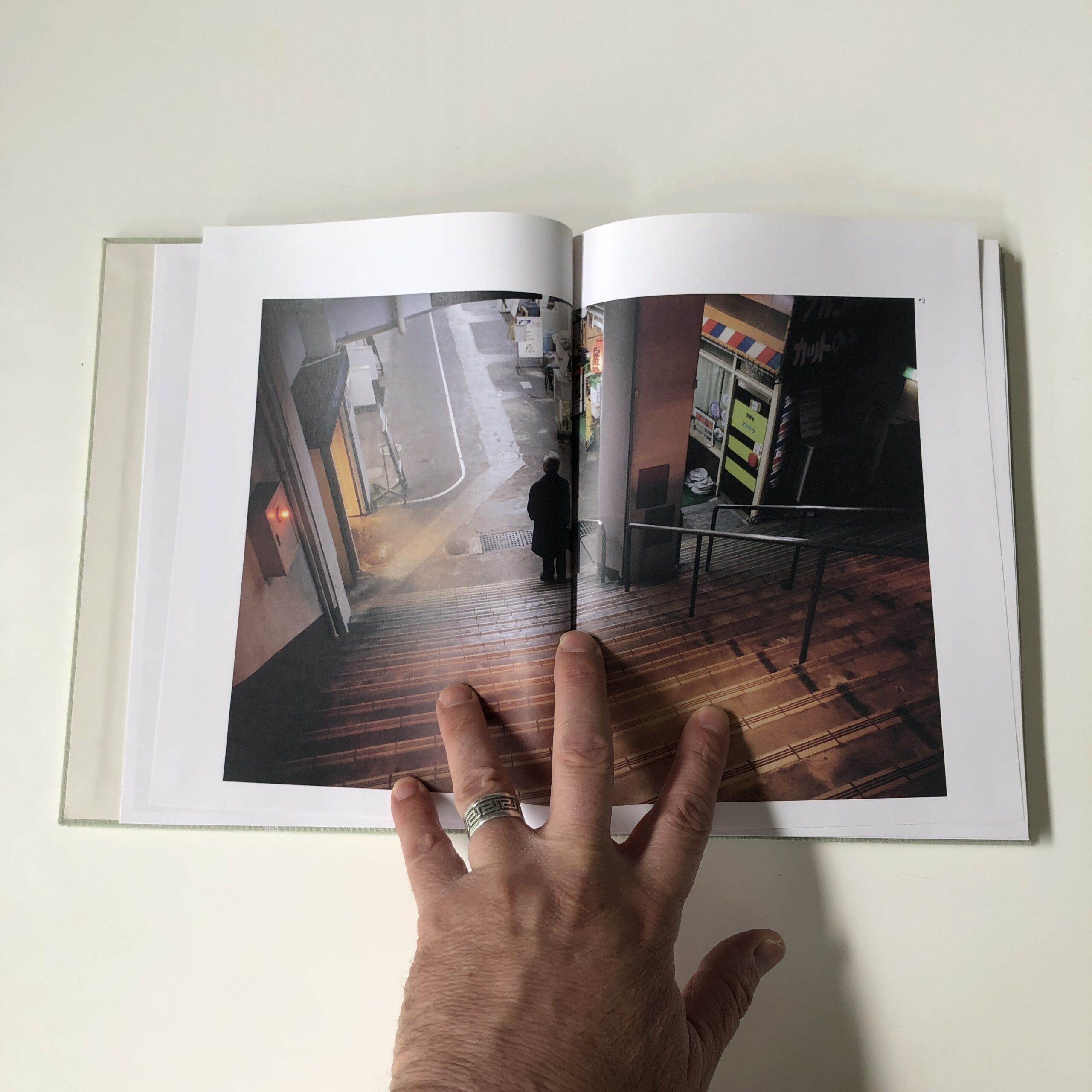
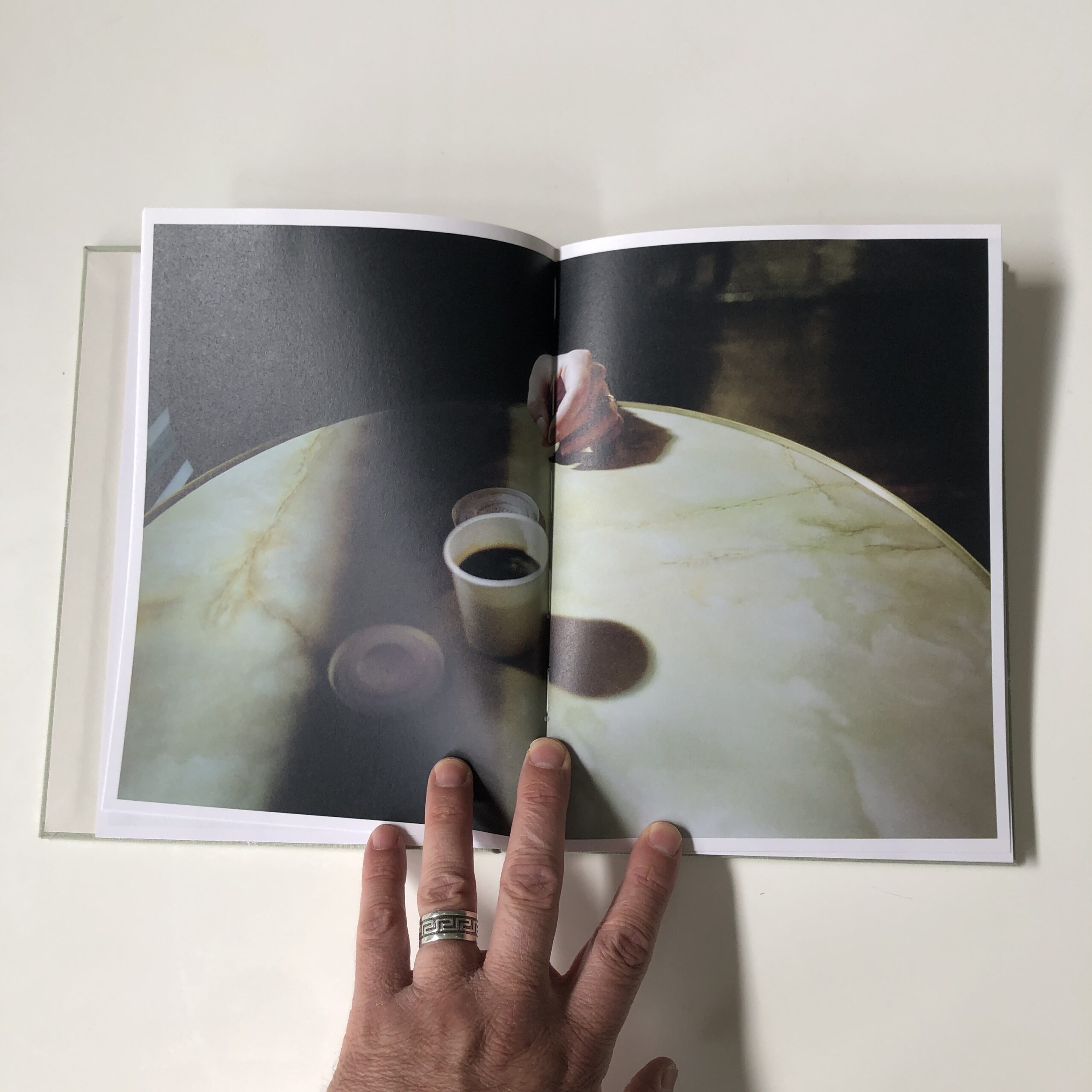
Yet that’s the feeling I got, when I put down today’s book.
That I’d just taken a wild, elegant, extremely well-seen and well-crafted journey around world in the 21st Century.
The work felt current, fresh, edgy, and smart, with great technique.
But let me back up a second…
I found two boxes at the bottom of the pile today, from March 2021.
Somehow, they’d been skipped, so of course they’re both vaulted to the top of the pile.
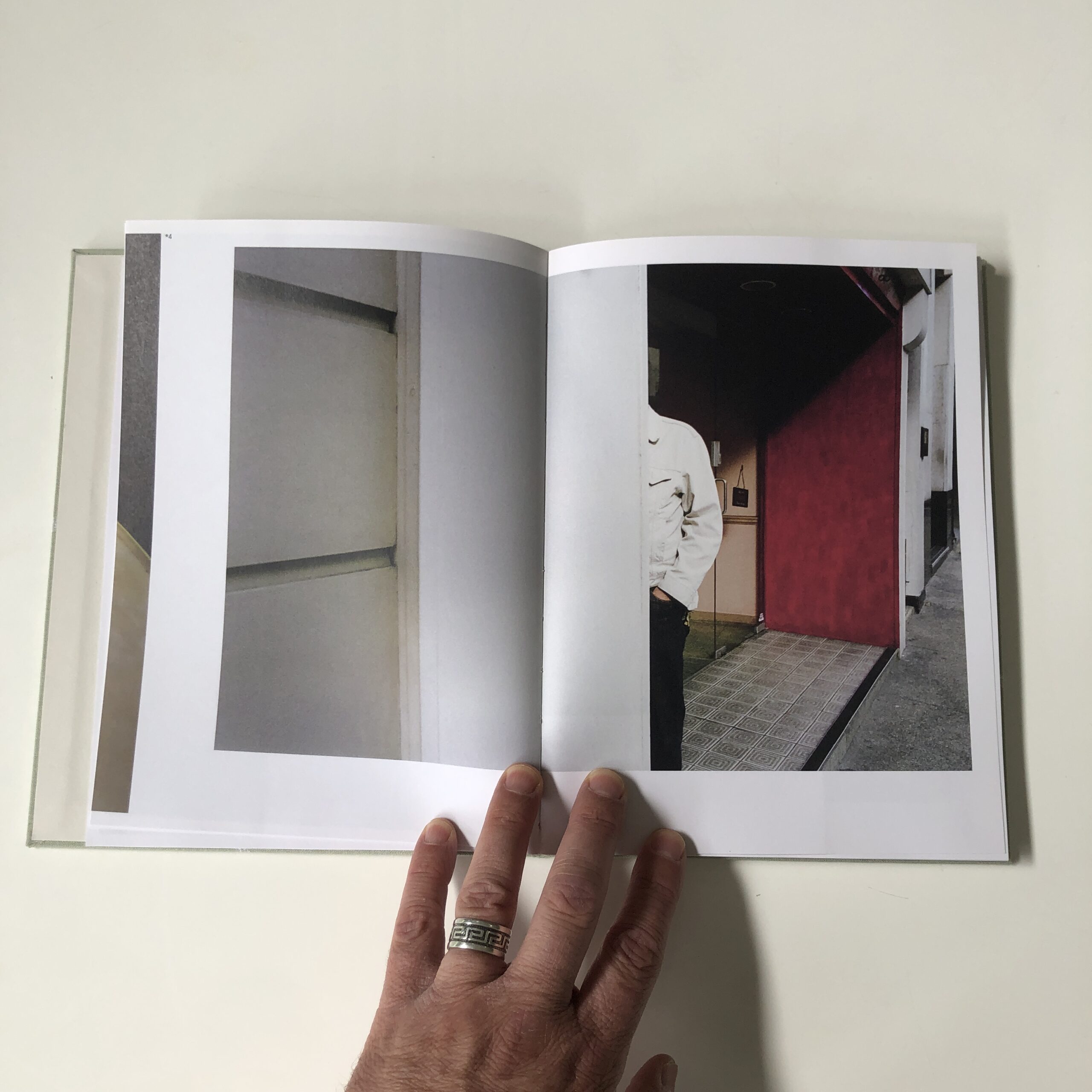
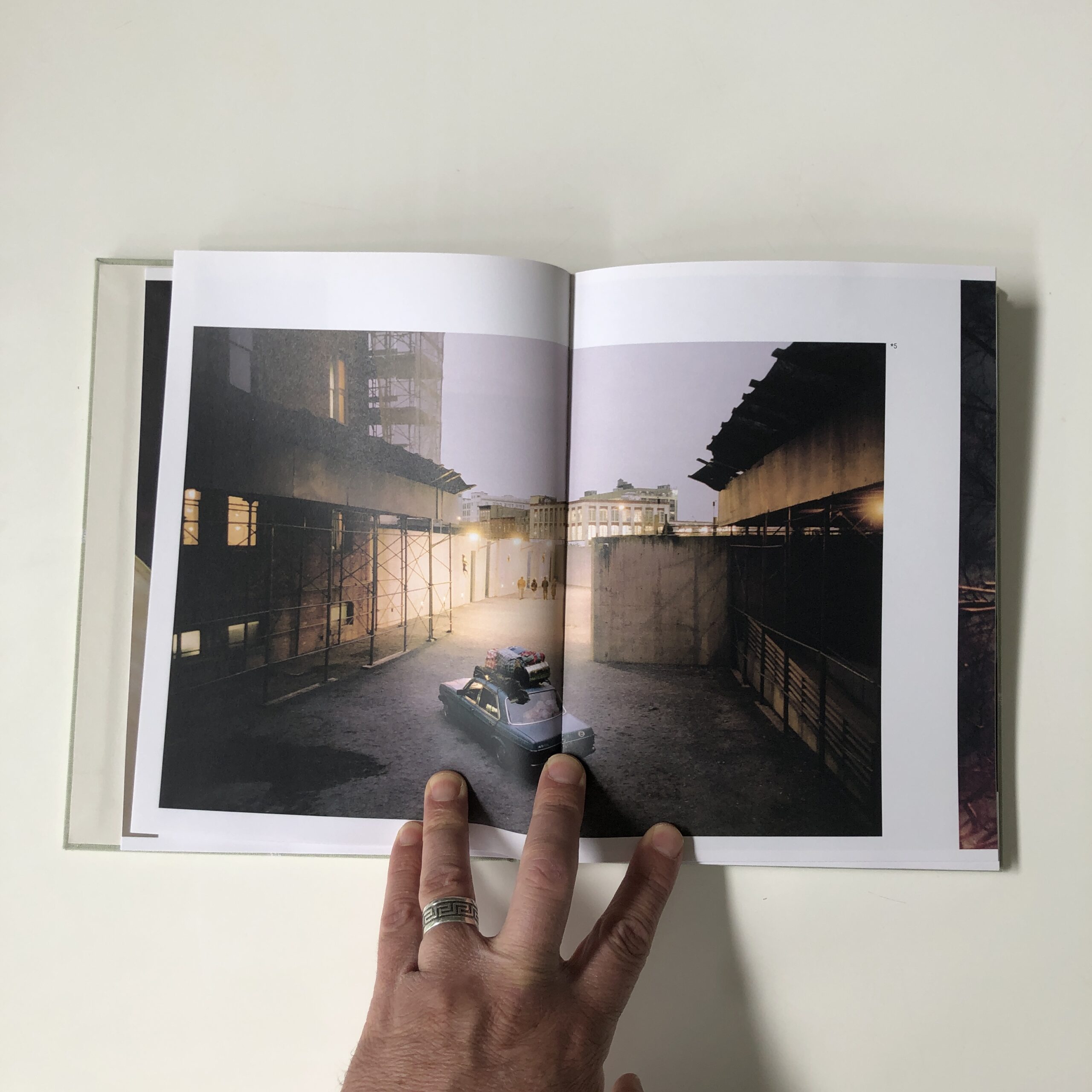
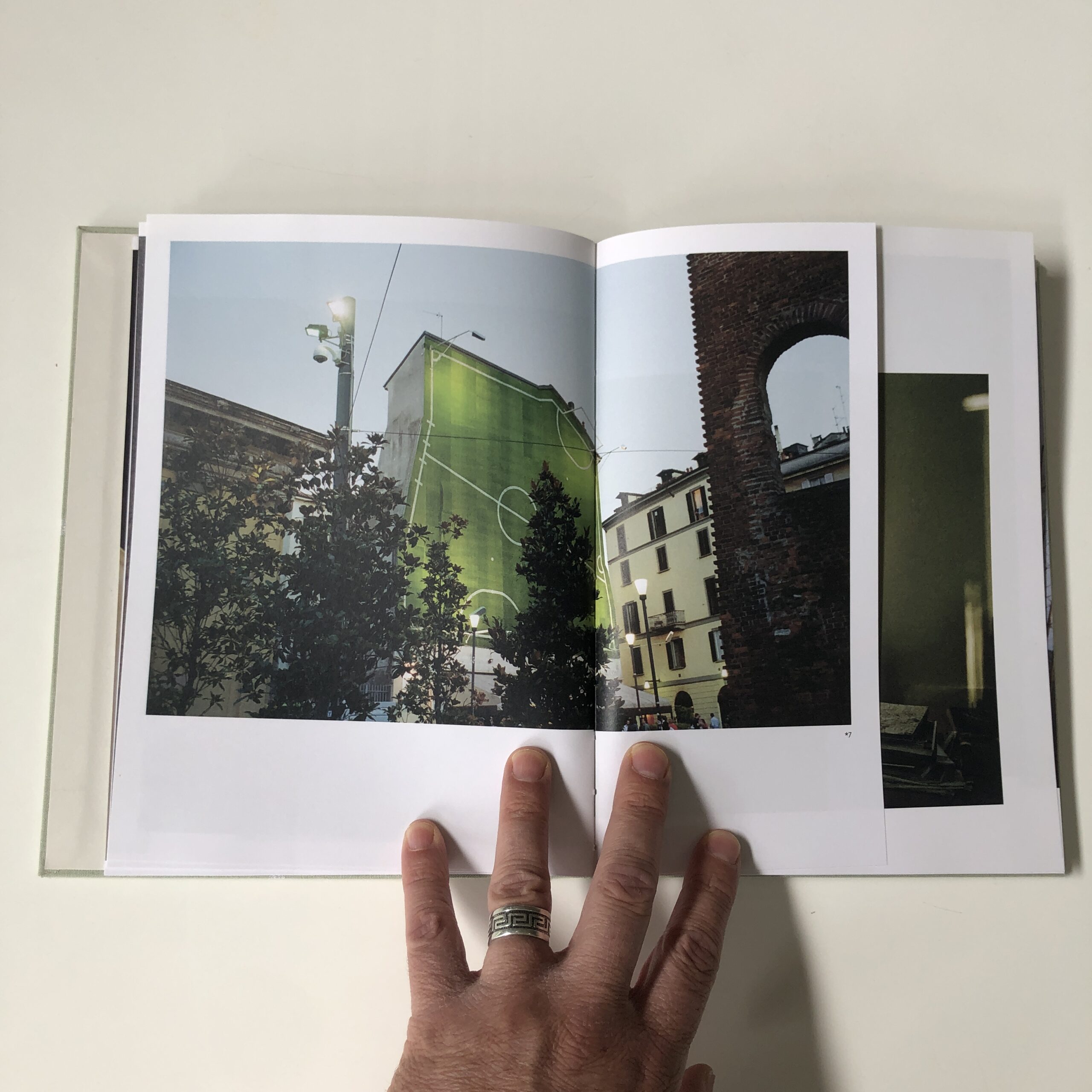
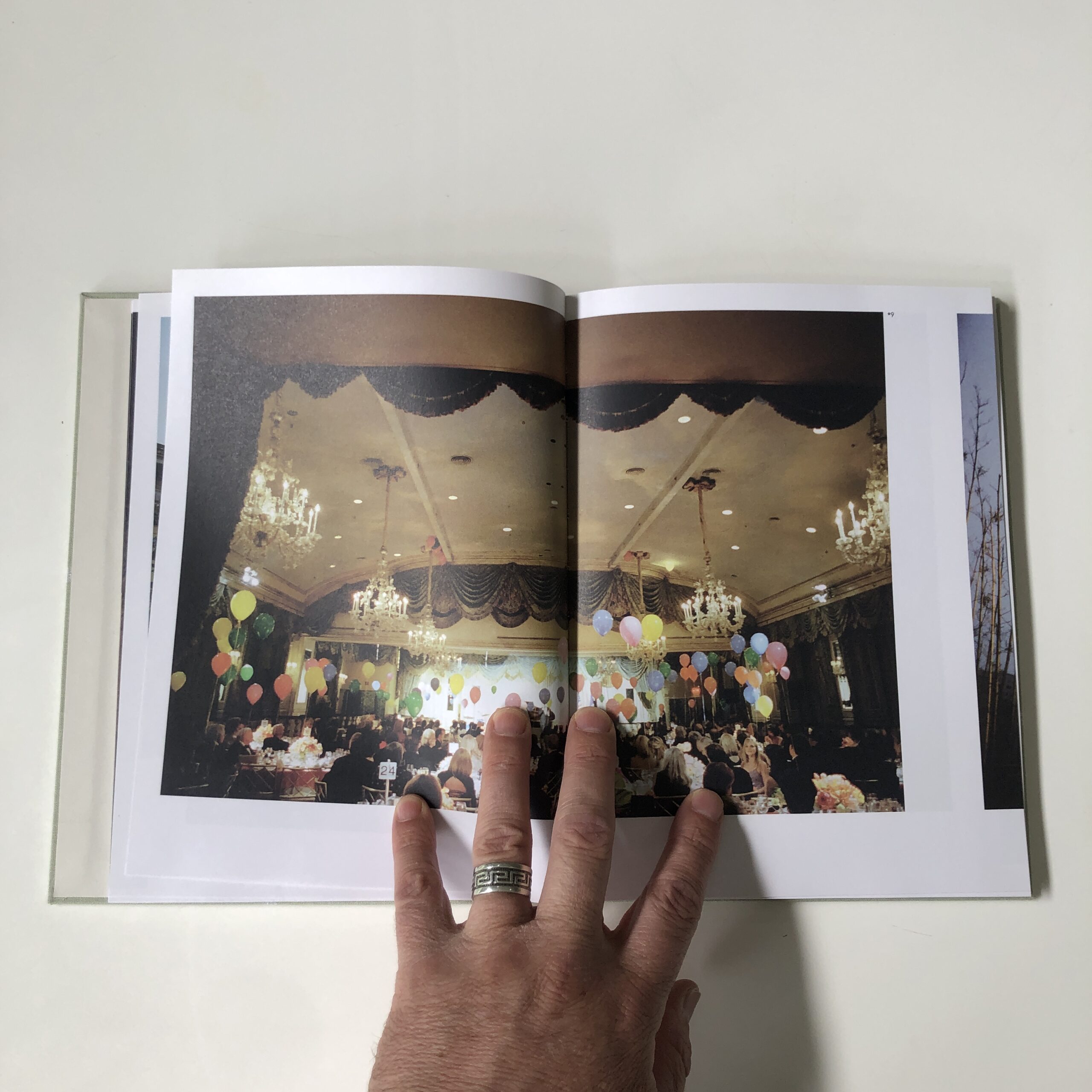
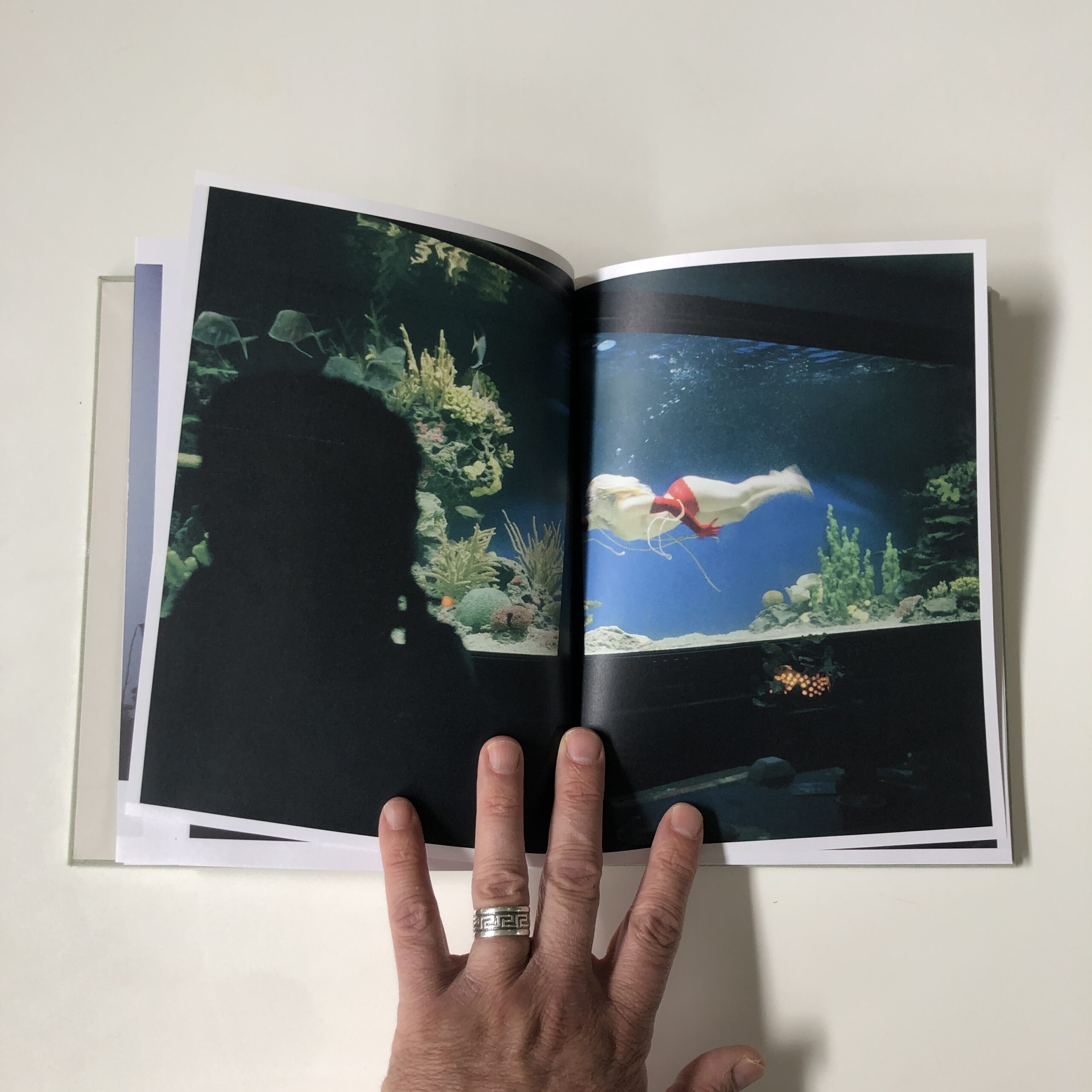
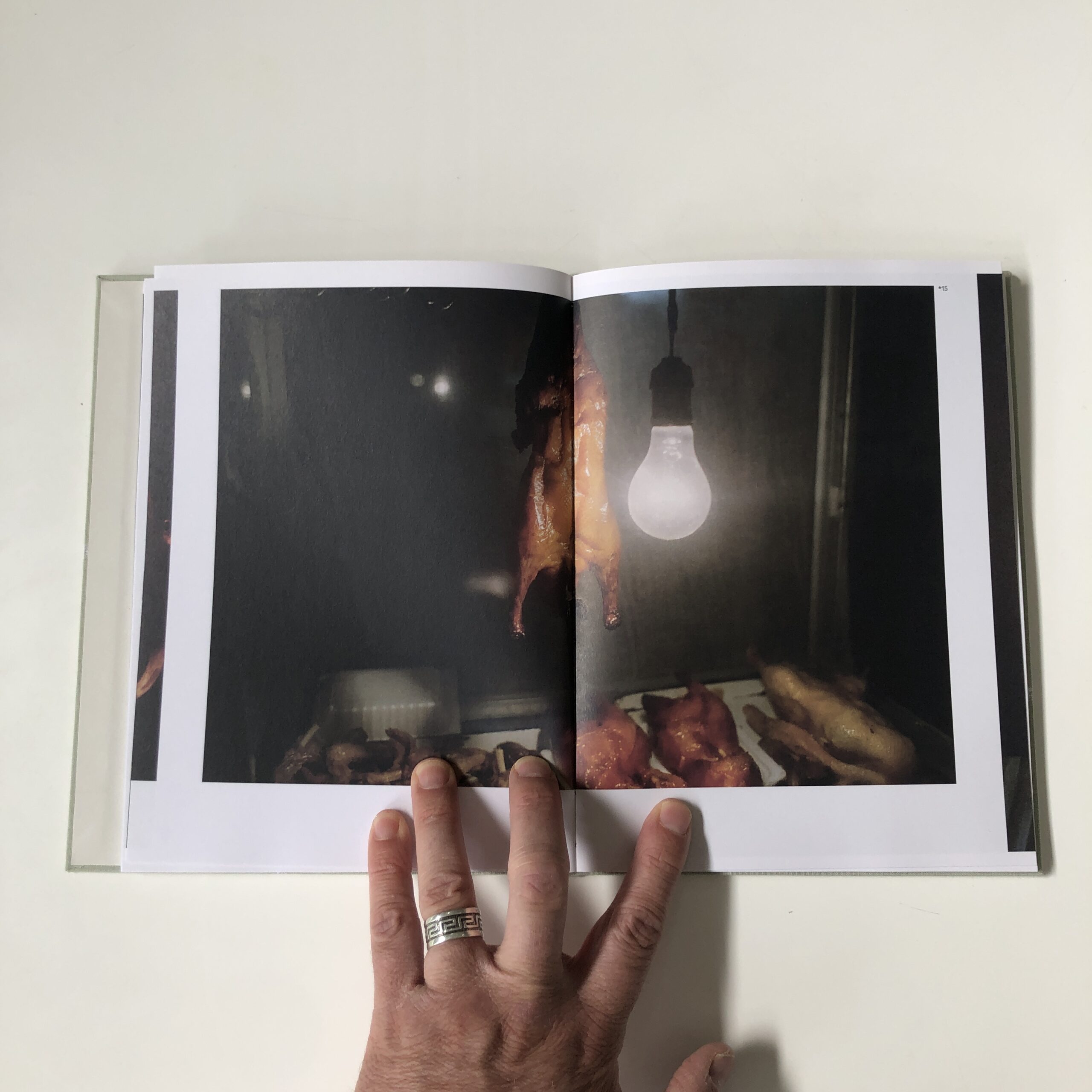
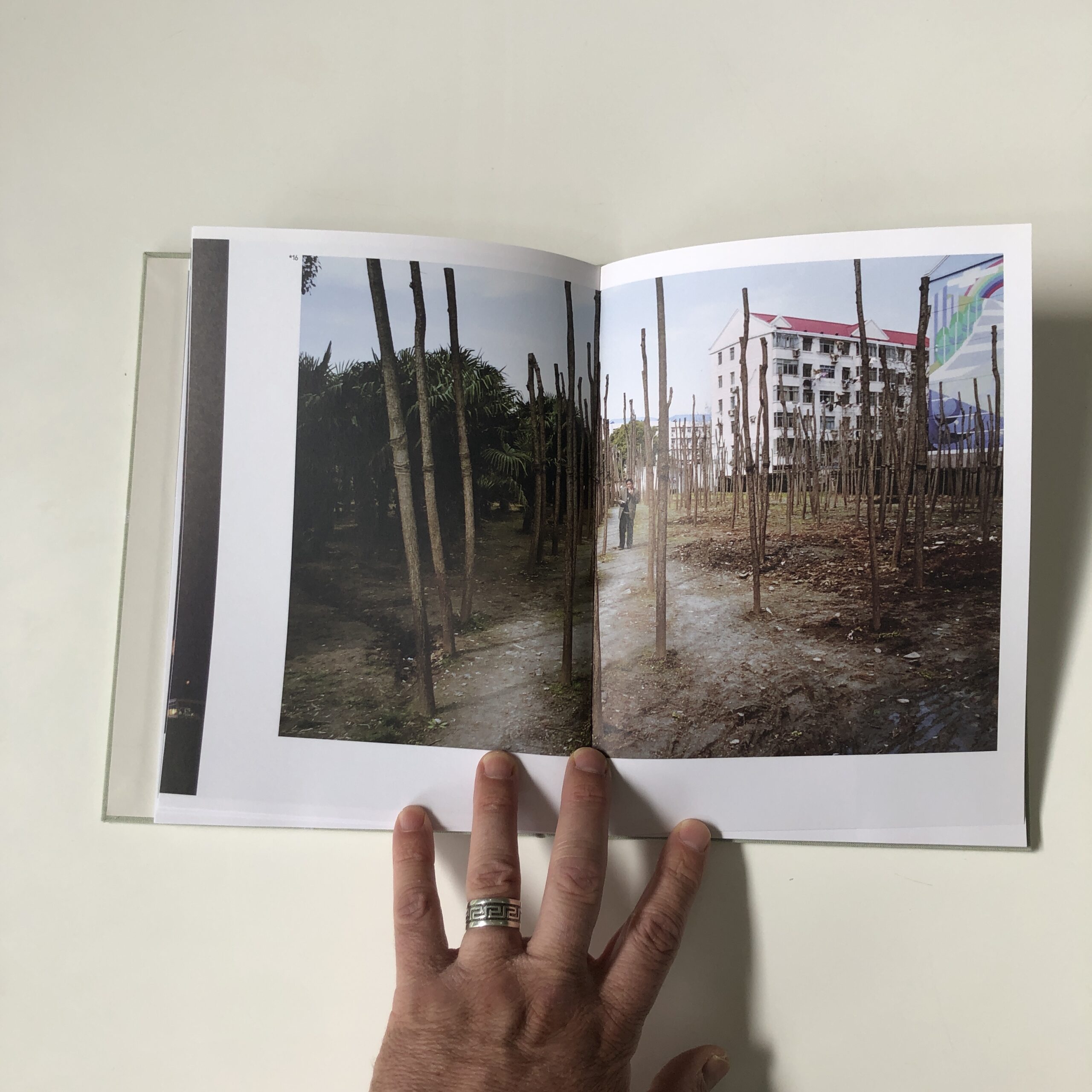
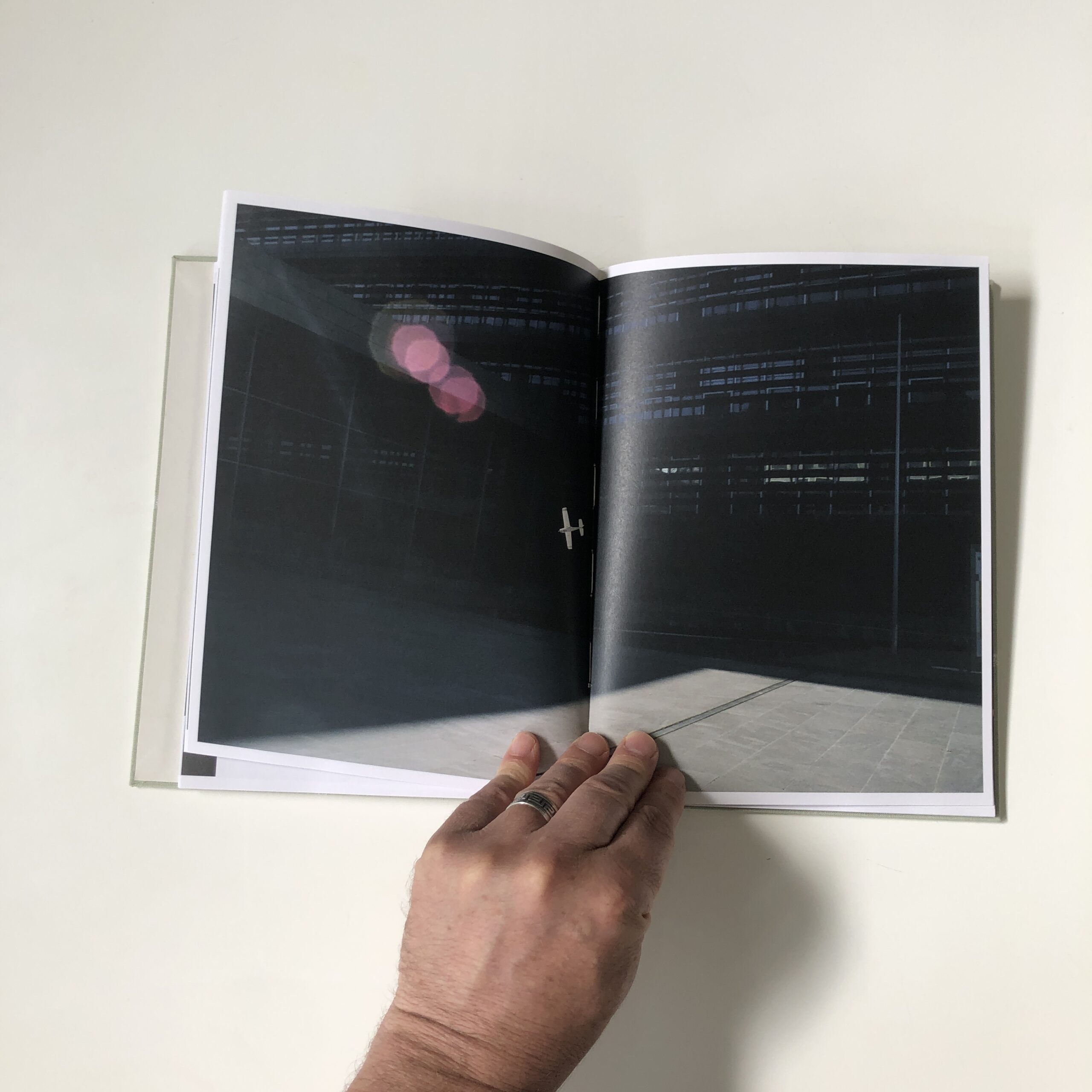
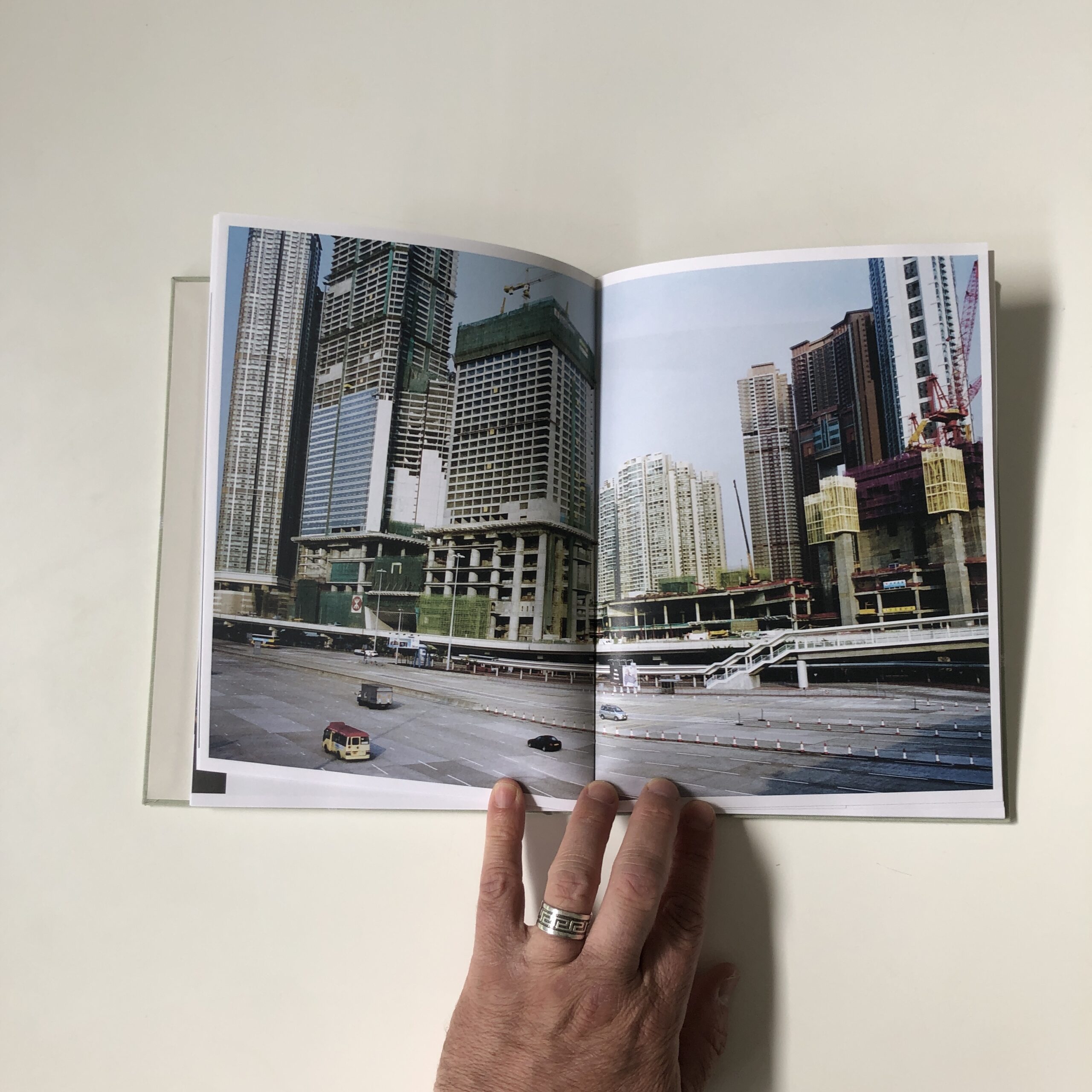
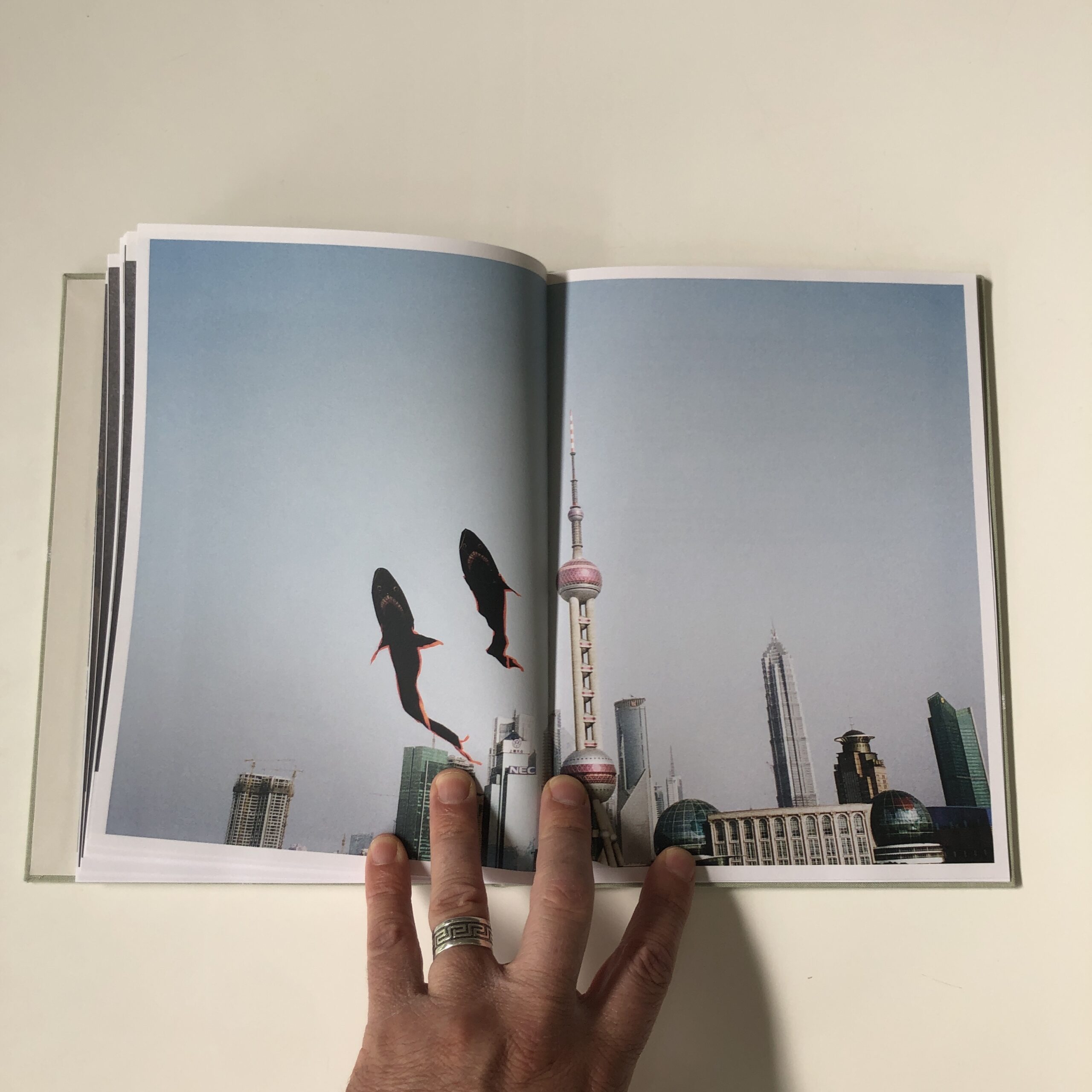
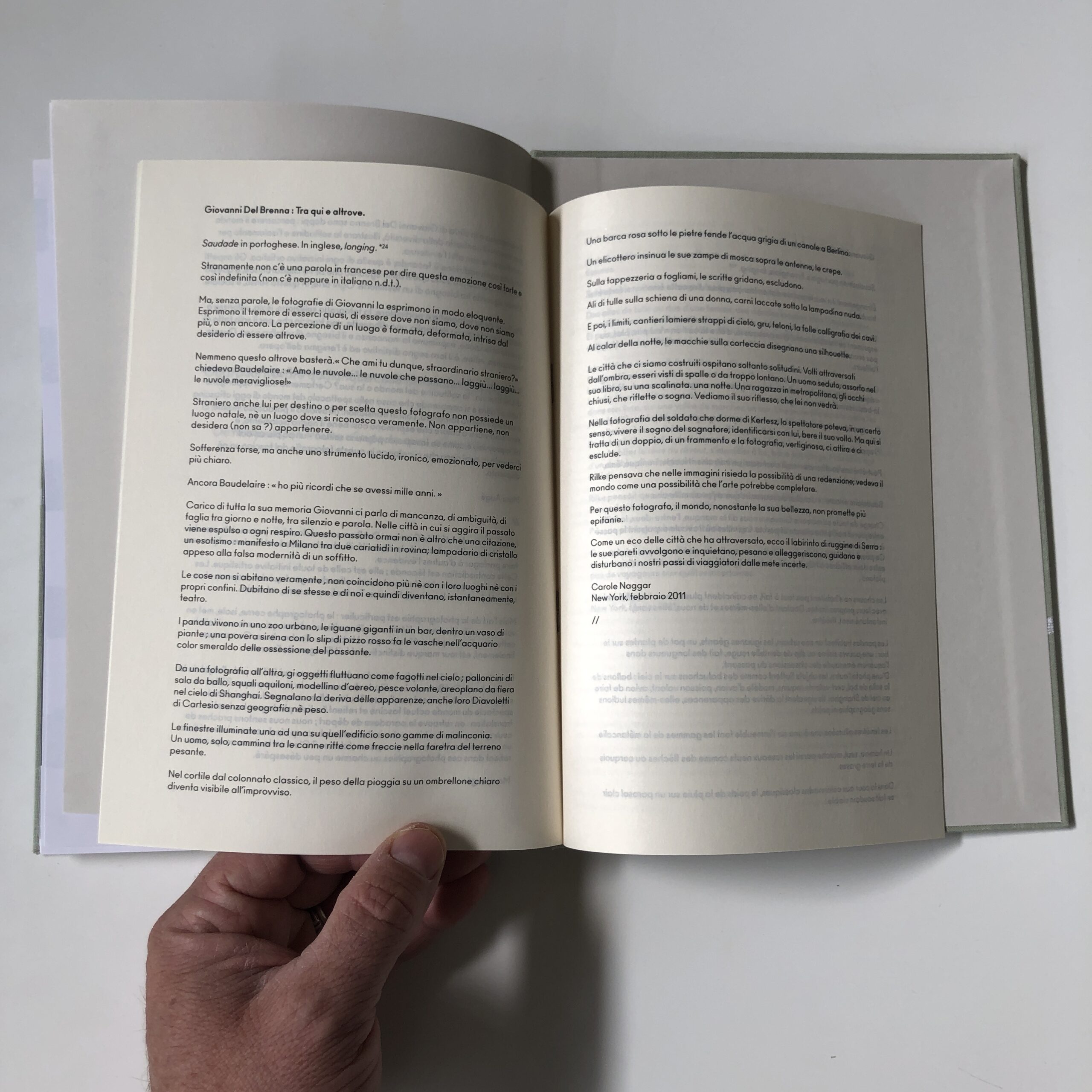
The first of them was called “Ibidem,” by Giovanni Del Brenna; seemingly self-published with a professional team.
But I’ll flip the script, for once, and share a bit of info from the back of the book.
One essay, by Carole Naggar was dated 2011, and I thought, that’s odd?
Why publish an essay written so long ago?
Then the copyright on the next page said 2012.
Yet my initial impressions were the book was super current and of the moment, and it was submitted in 2021?
Strange.
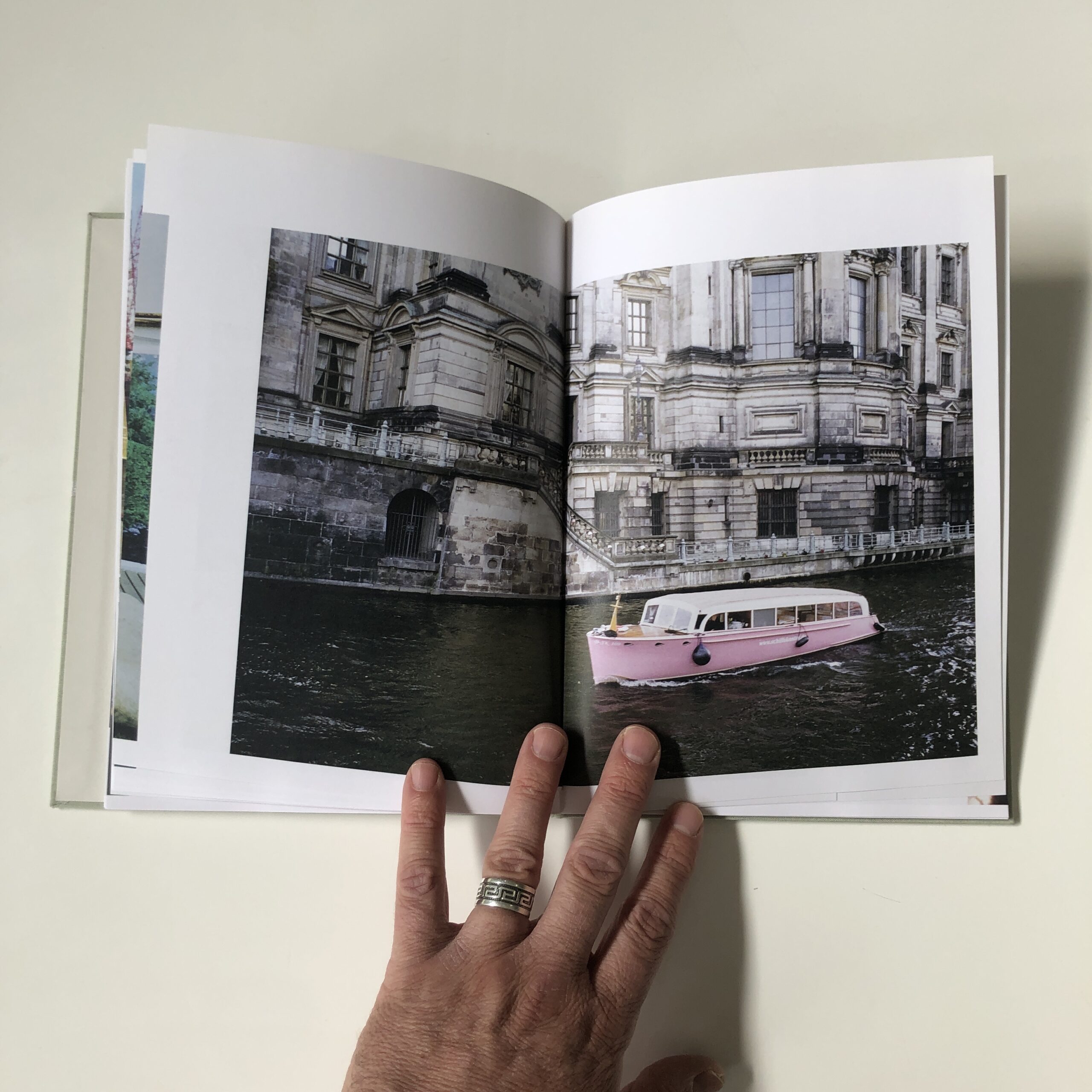
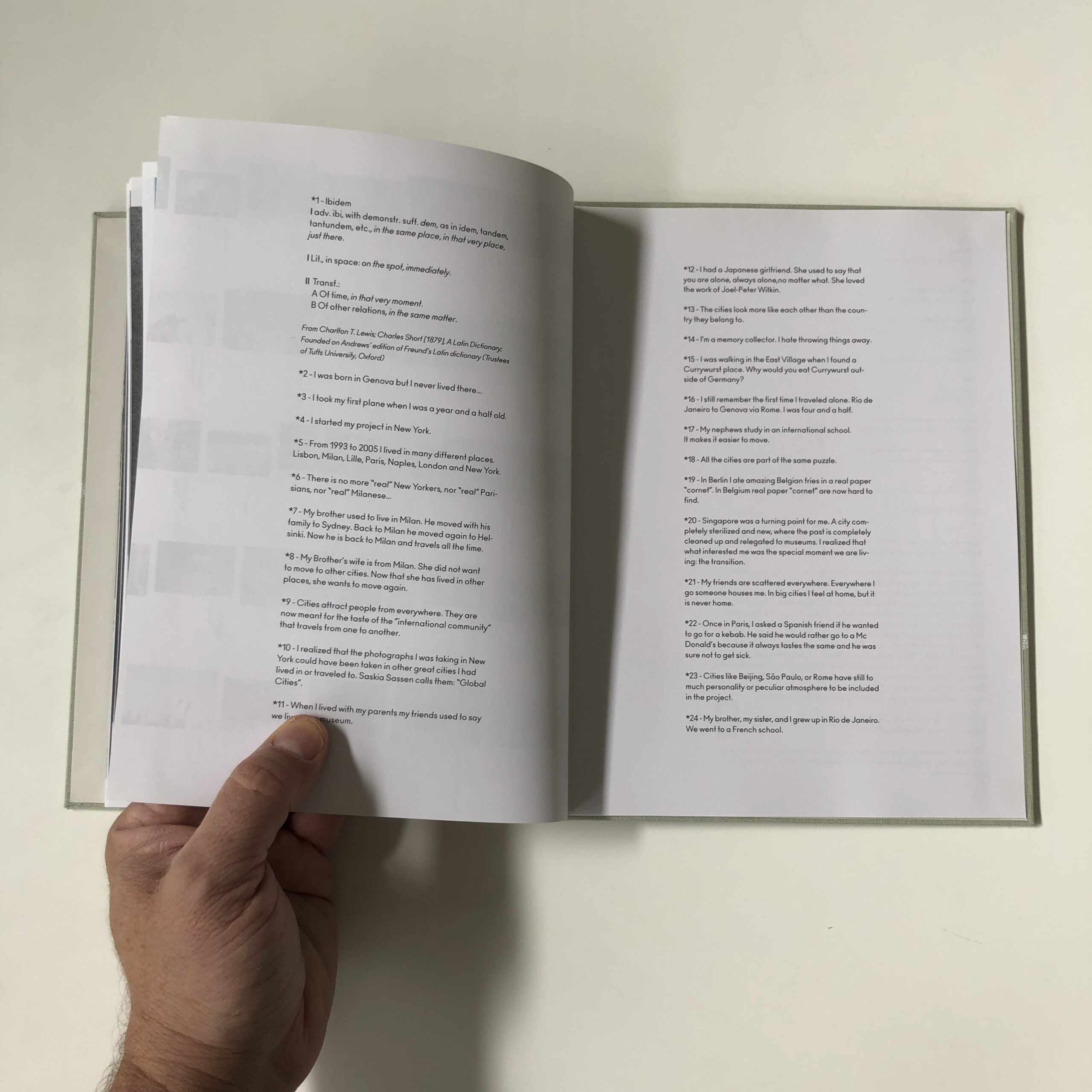
In an excellent footnote section at the end, the artist writes he was born in Genoa, Italy, (but never lived there,) raised in Brazil in a French school, and has lived in many other places.
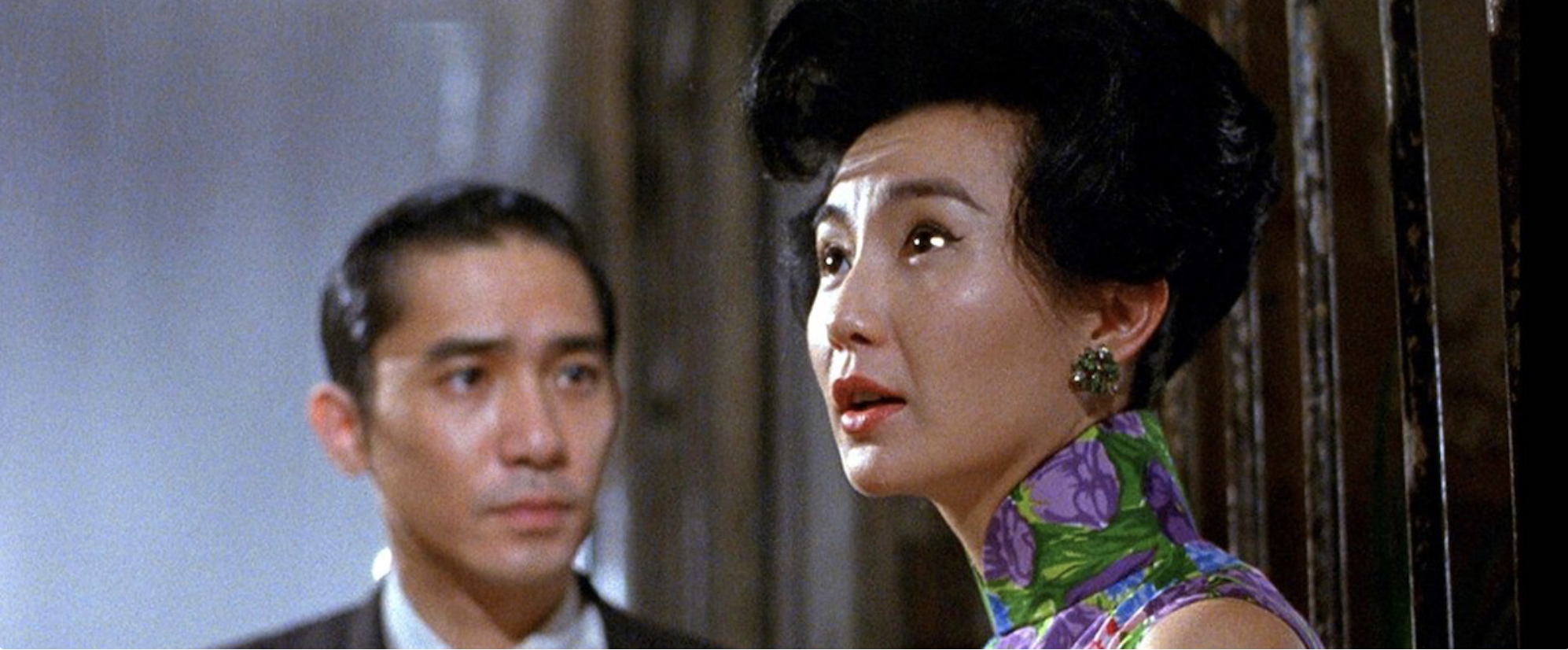
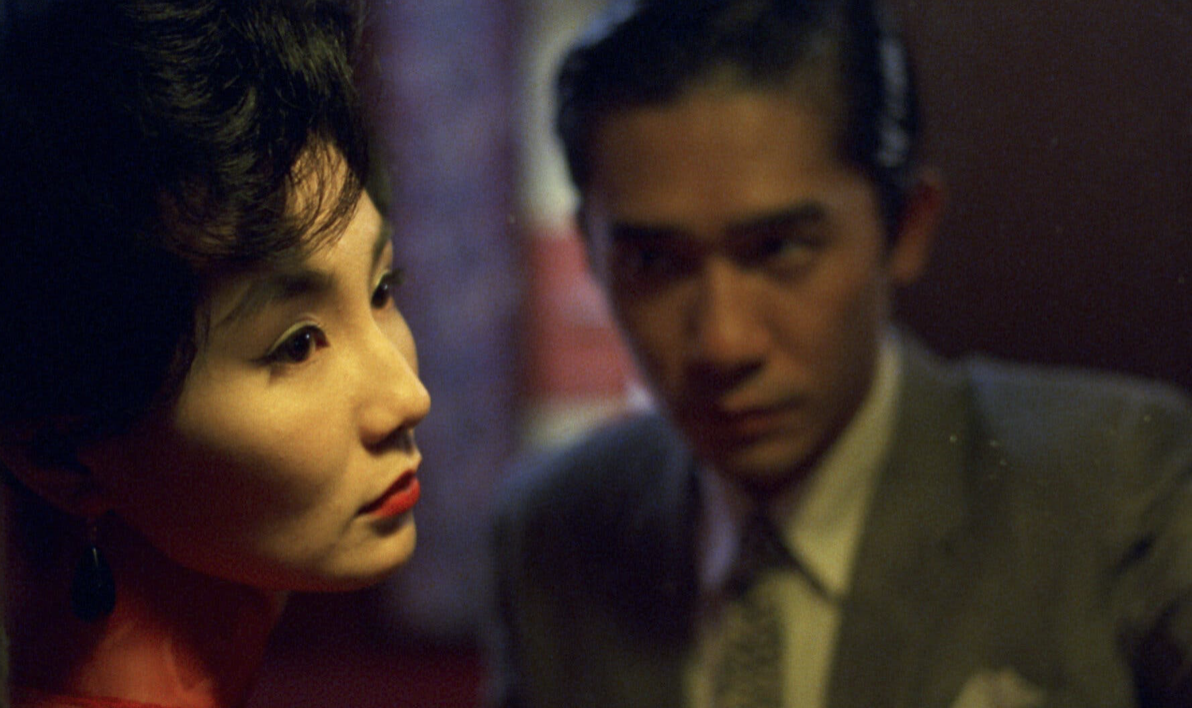
It seems he comes honestly by his Sofia Coppola/”Lost in Translation,” globetrotting, “In the Mood for Love”/Wong Kar-wai, seen-it-all before, and I know the best noodle shop in 30 cities vibe.
“In the Mood for Love,” image courtesy of RogerEbert.com“In the Mood for Love,” courtesy of The Criterion Collection and the NY Times
Saying how all cities are alike in some ways.
I love it.
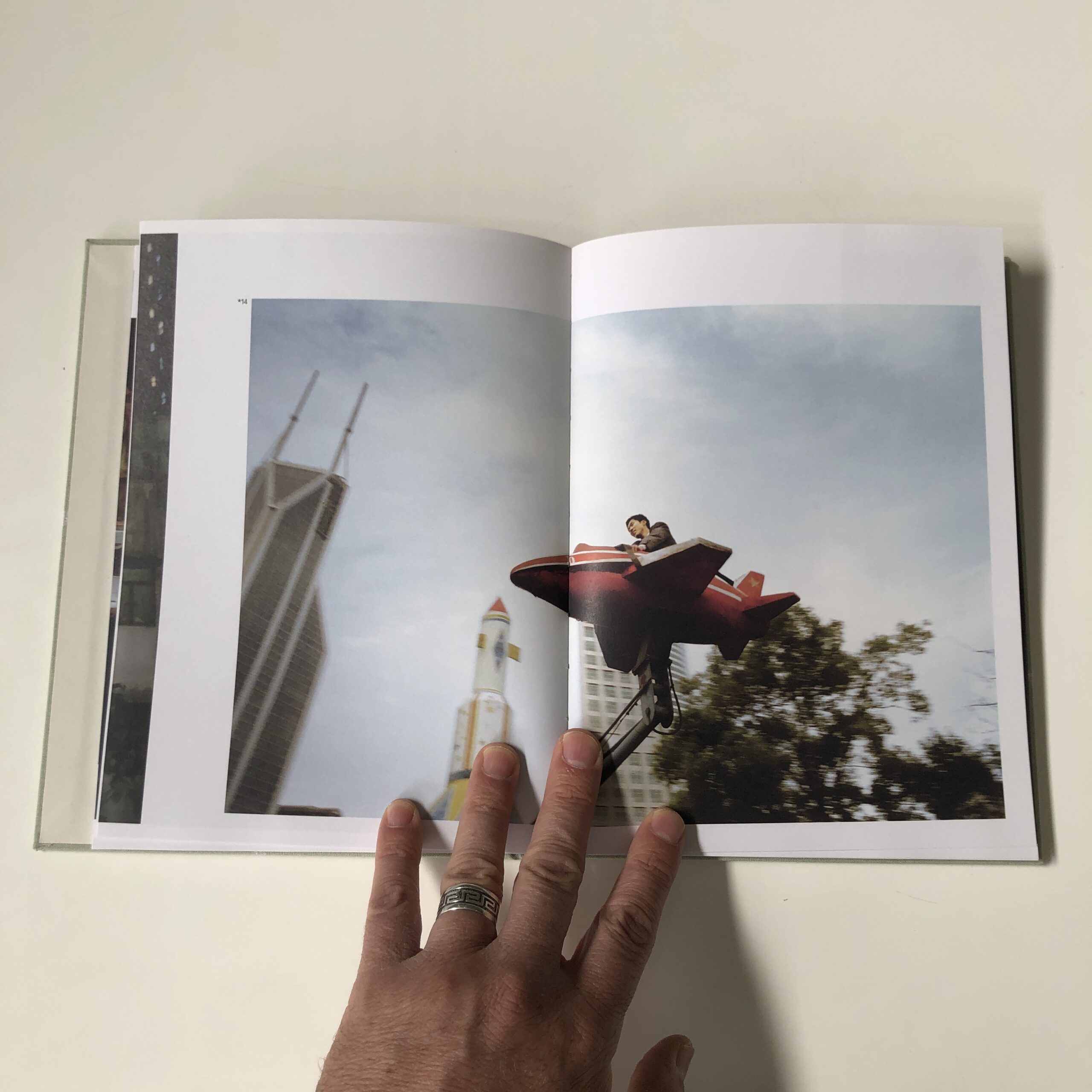
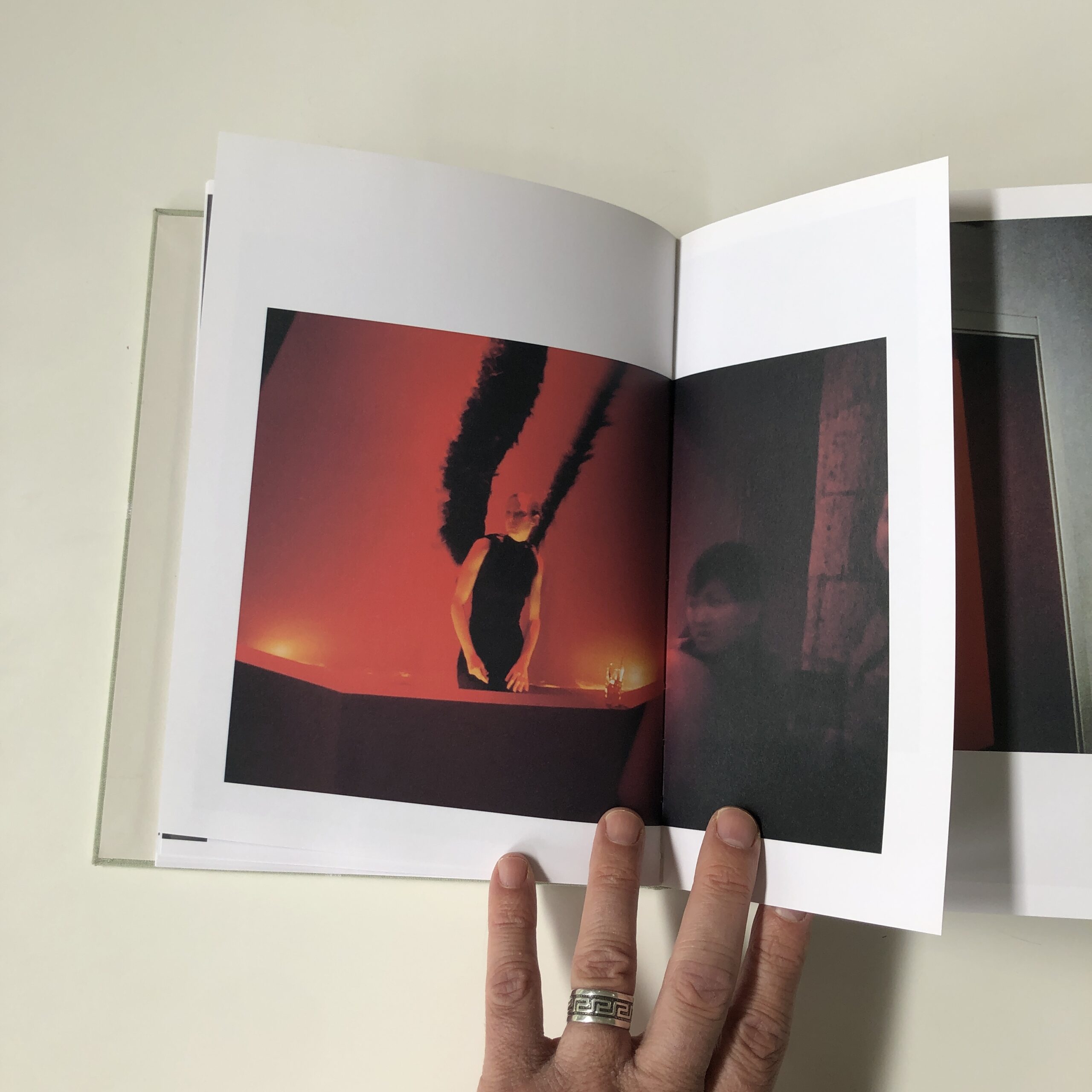
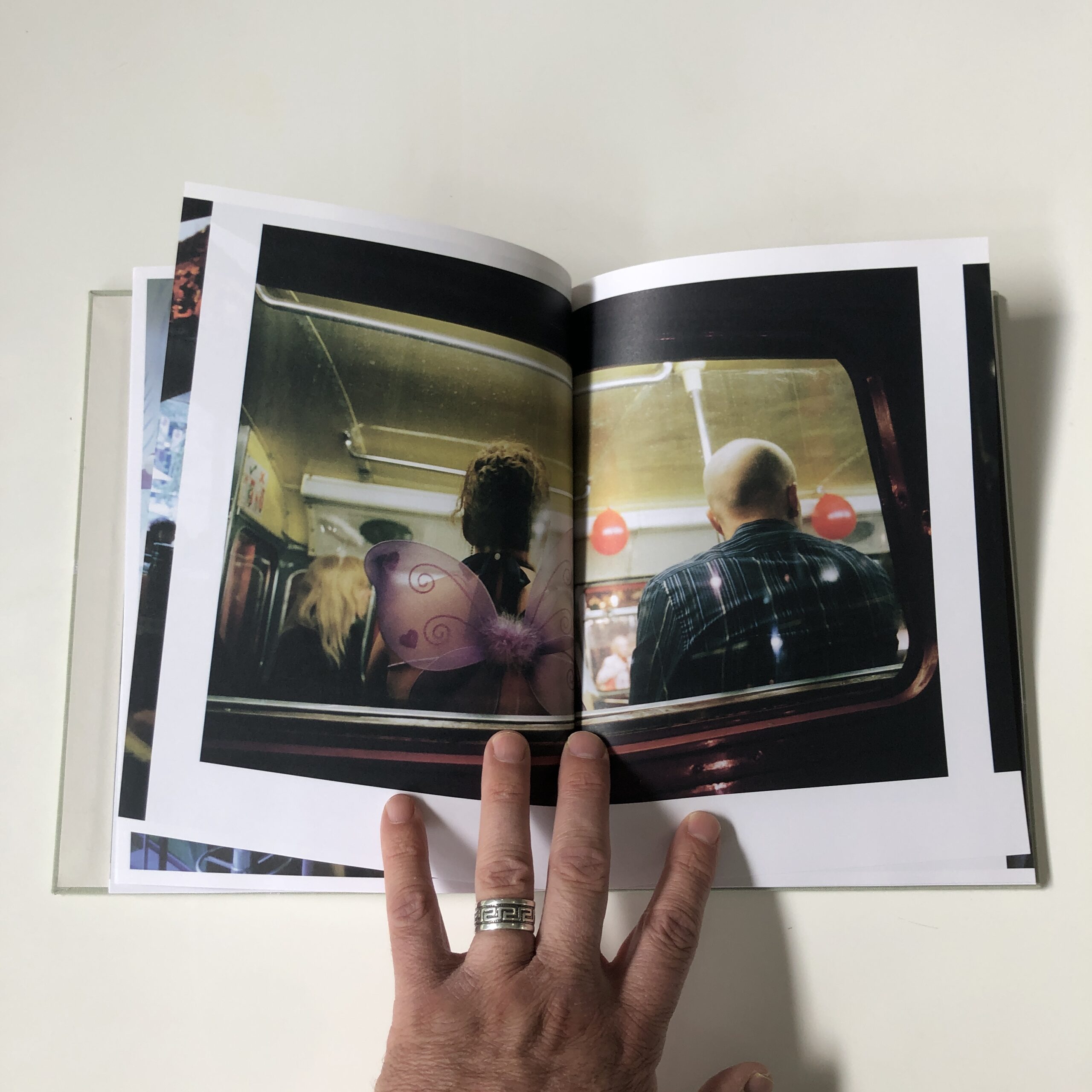
As I turned the page, page after page, the photographs were standout.
The edit jumps at you, like a bored dog seeking affection.
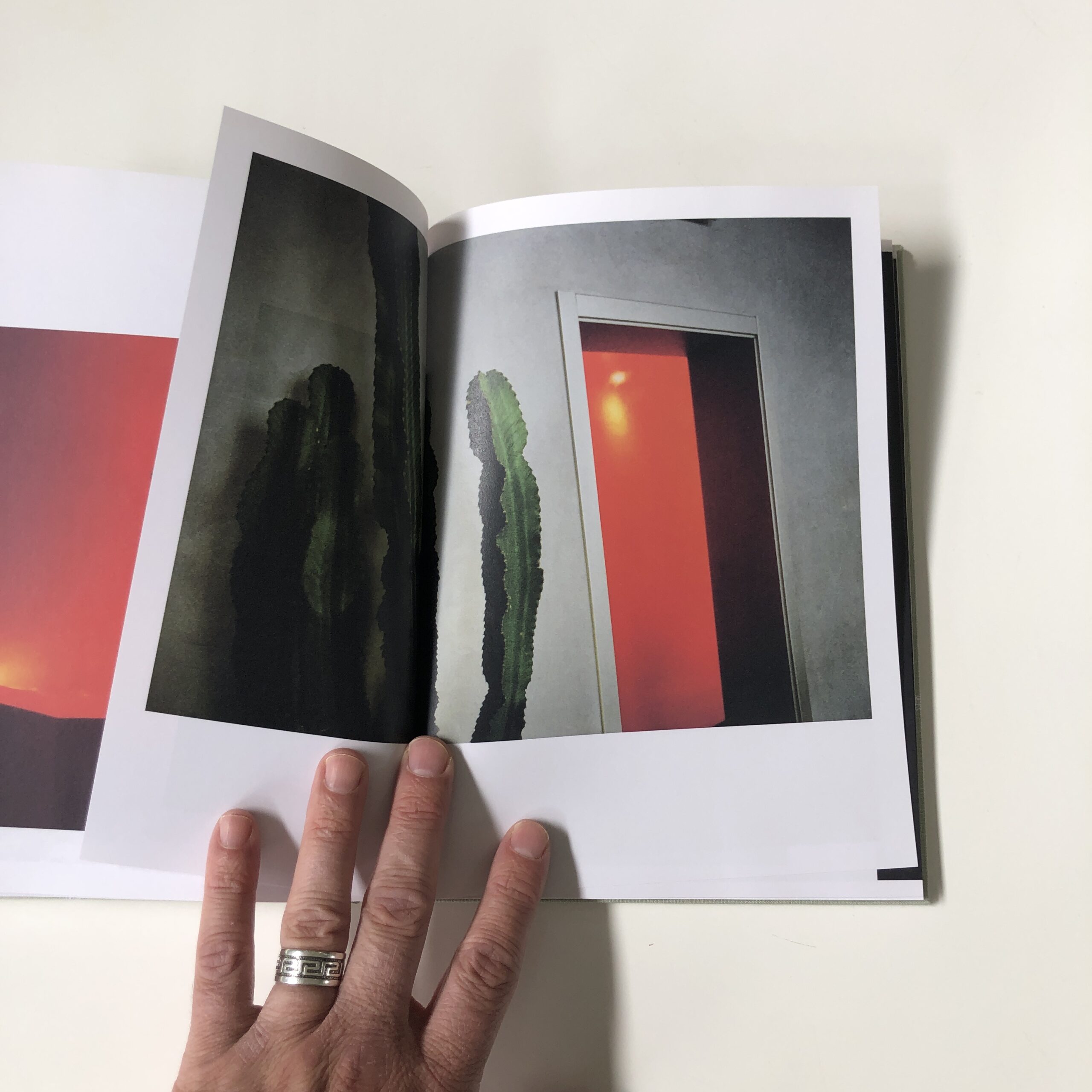
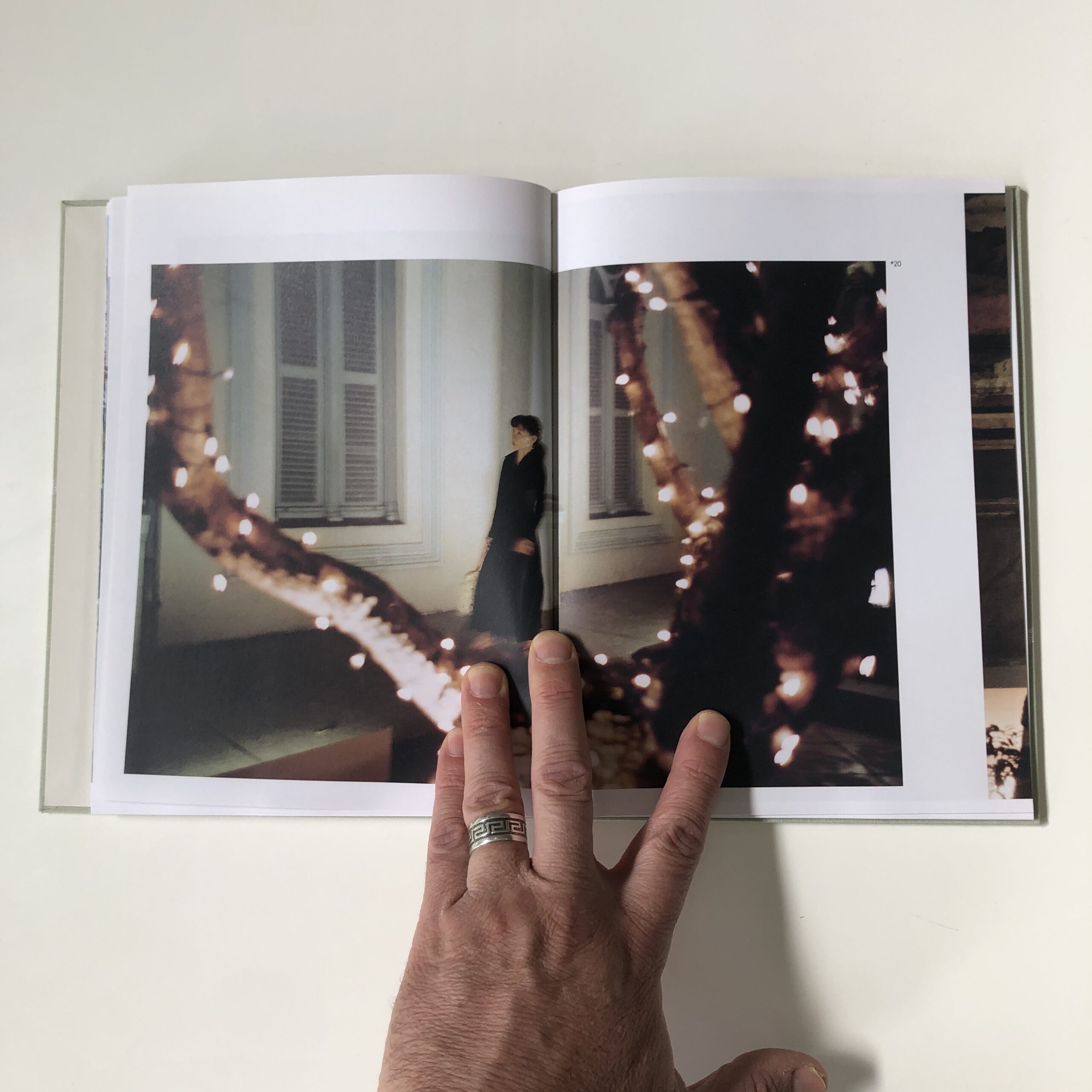
Lots of dynamic use of color and light, with emotional energy.
Inspiring stuff.
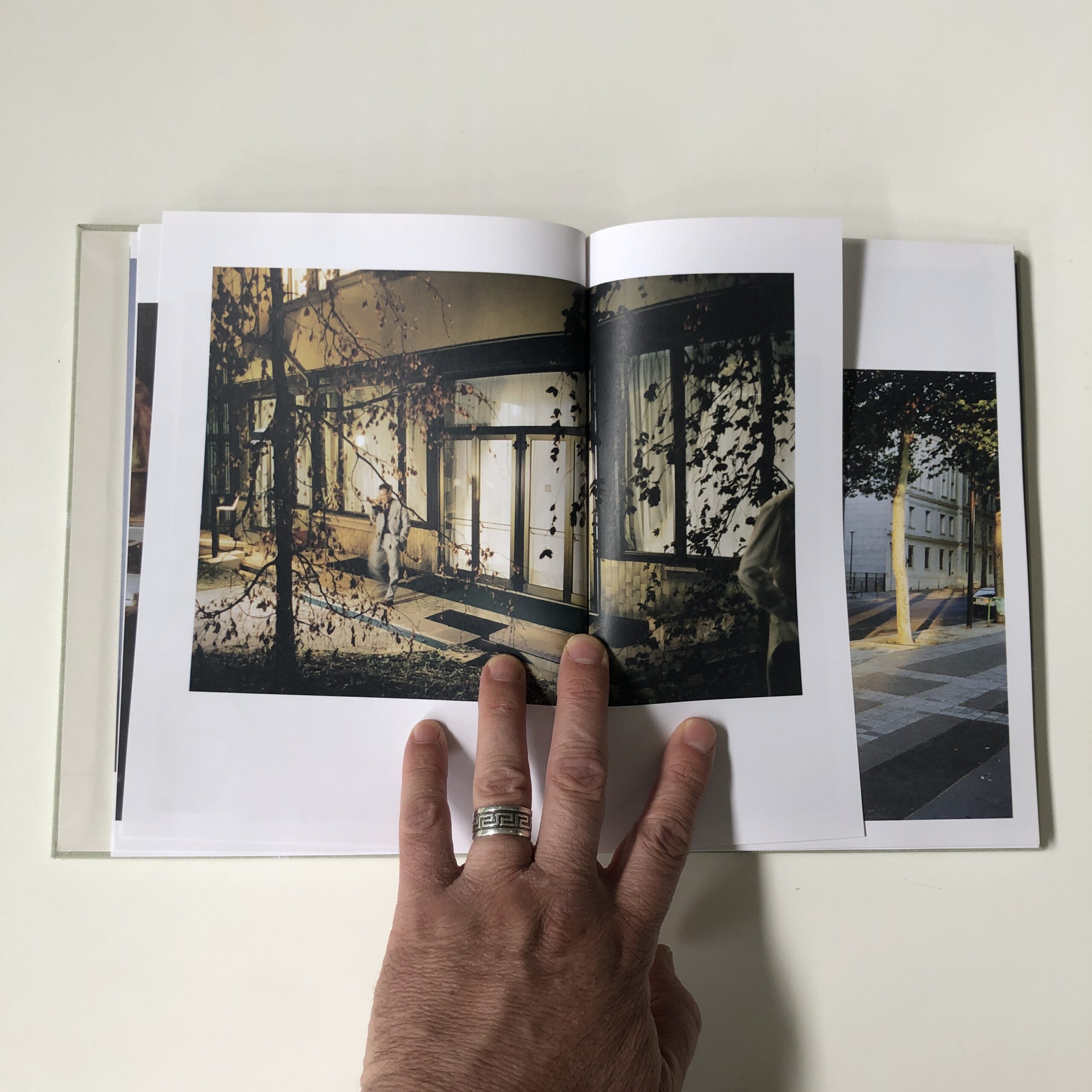
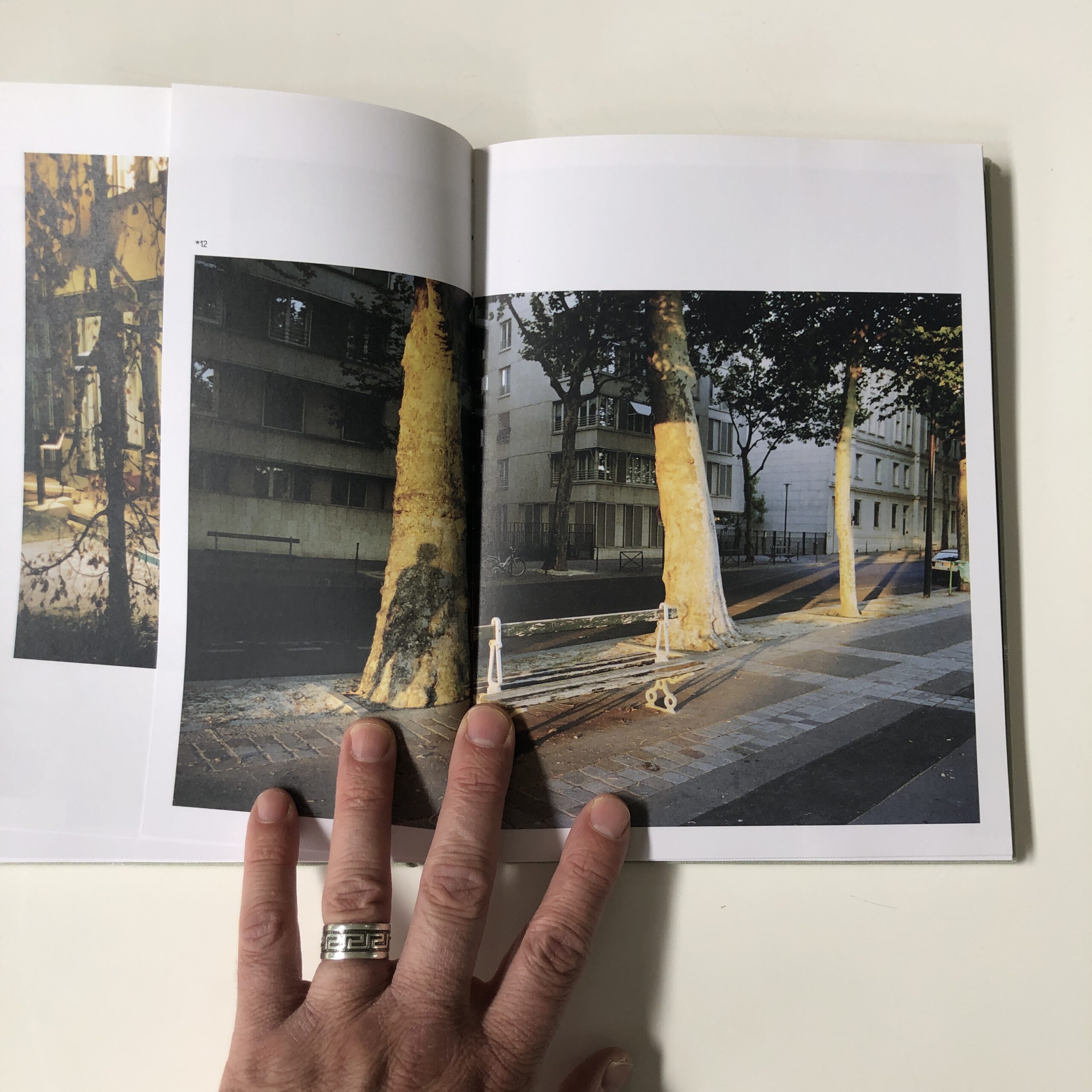
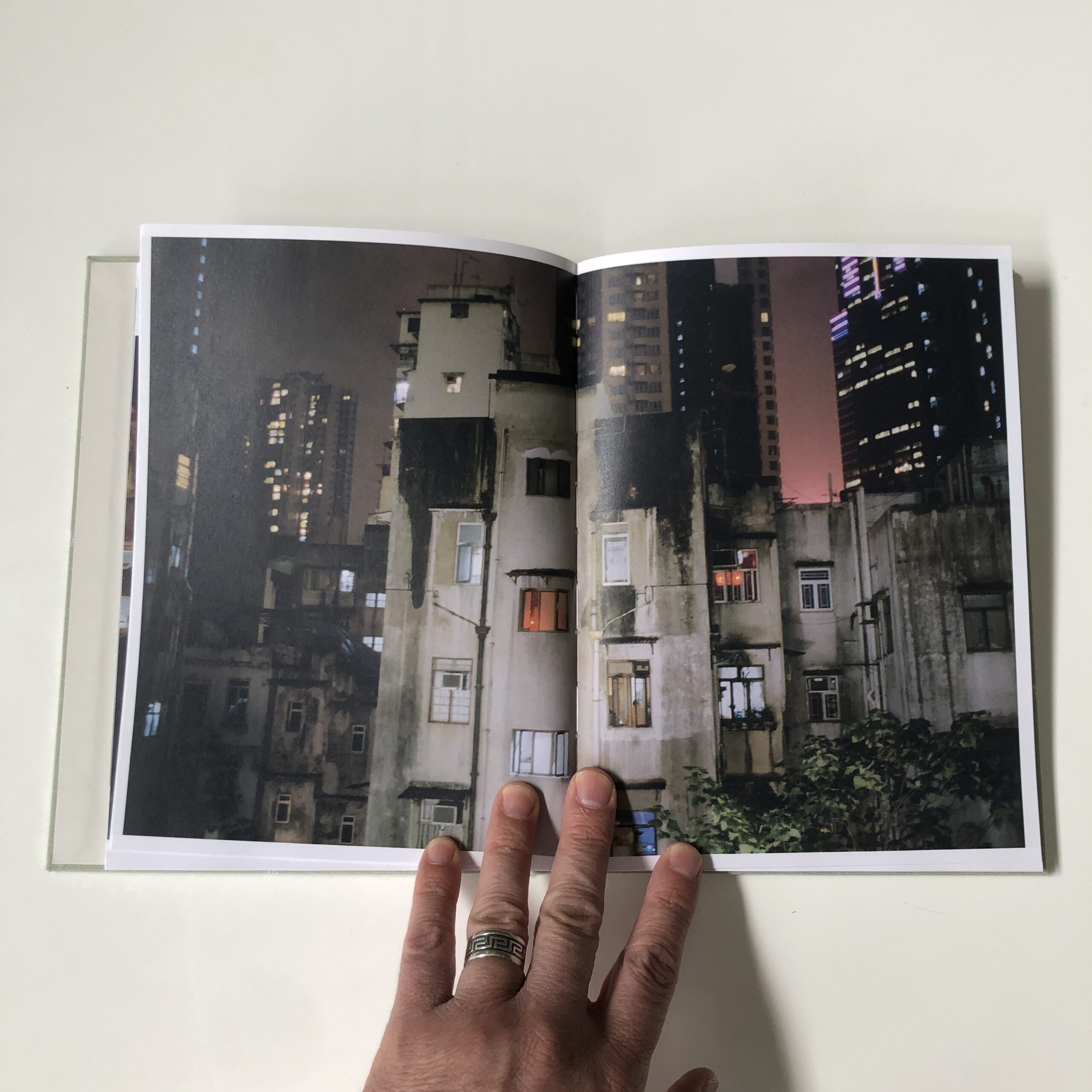
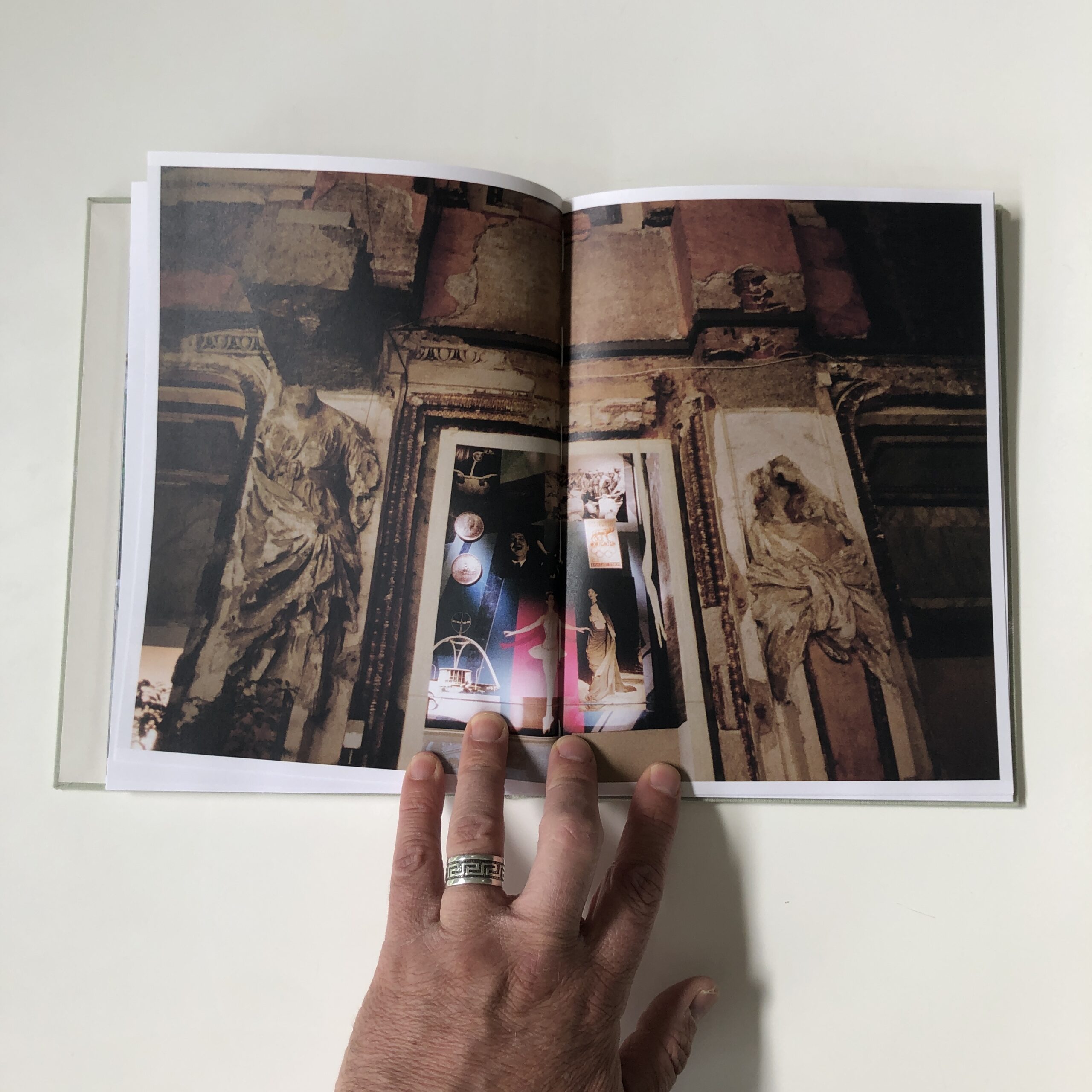
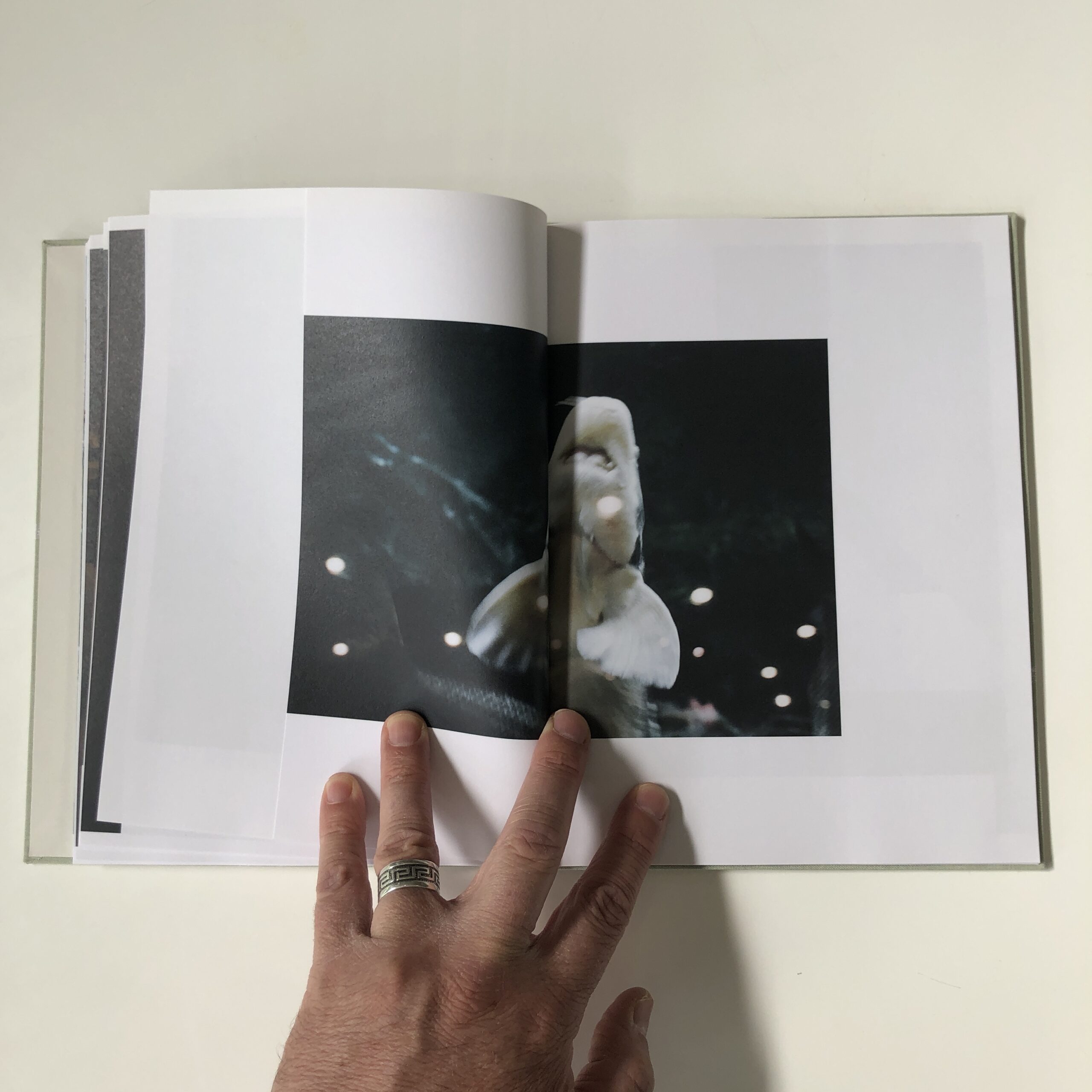
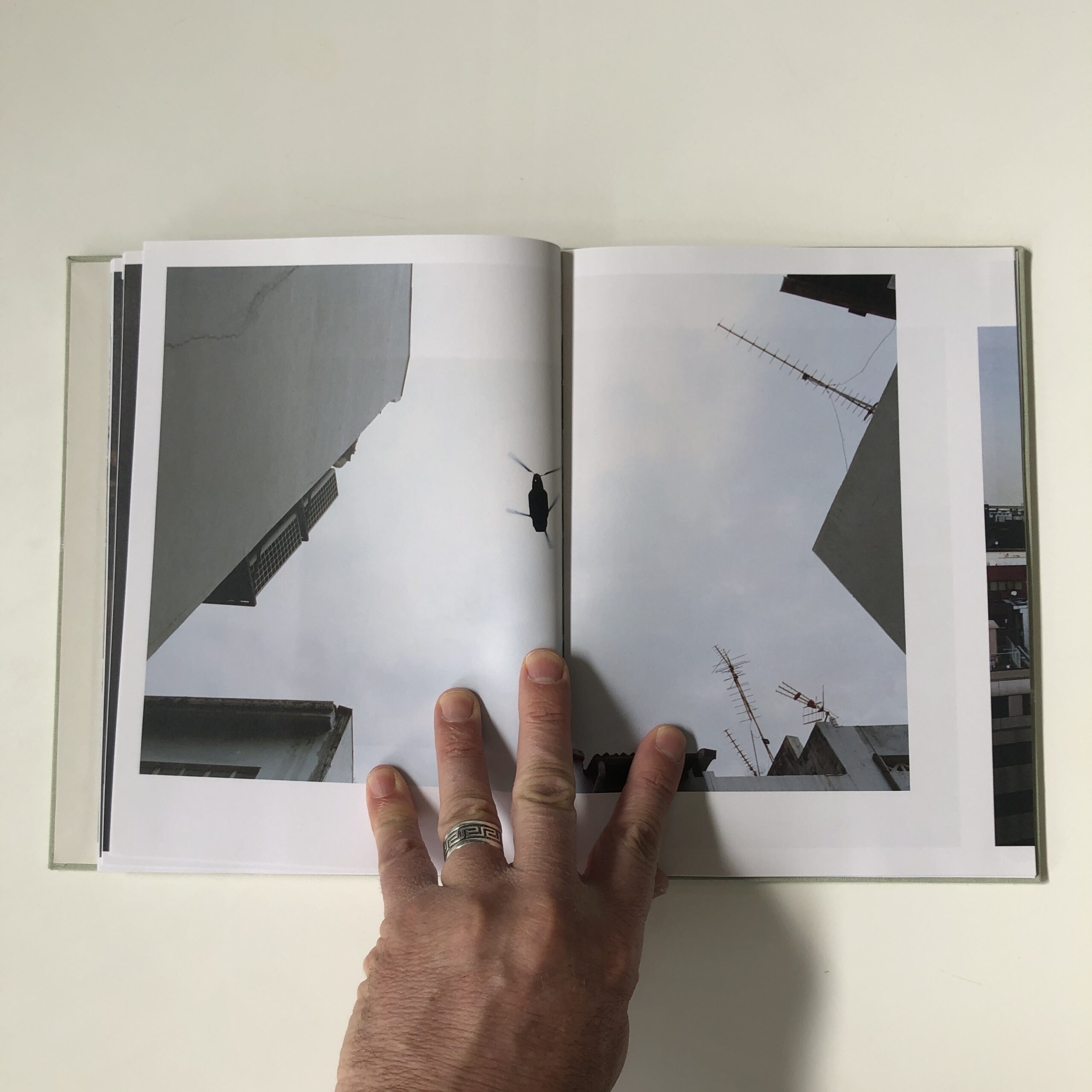
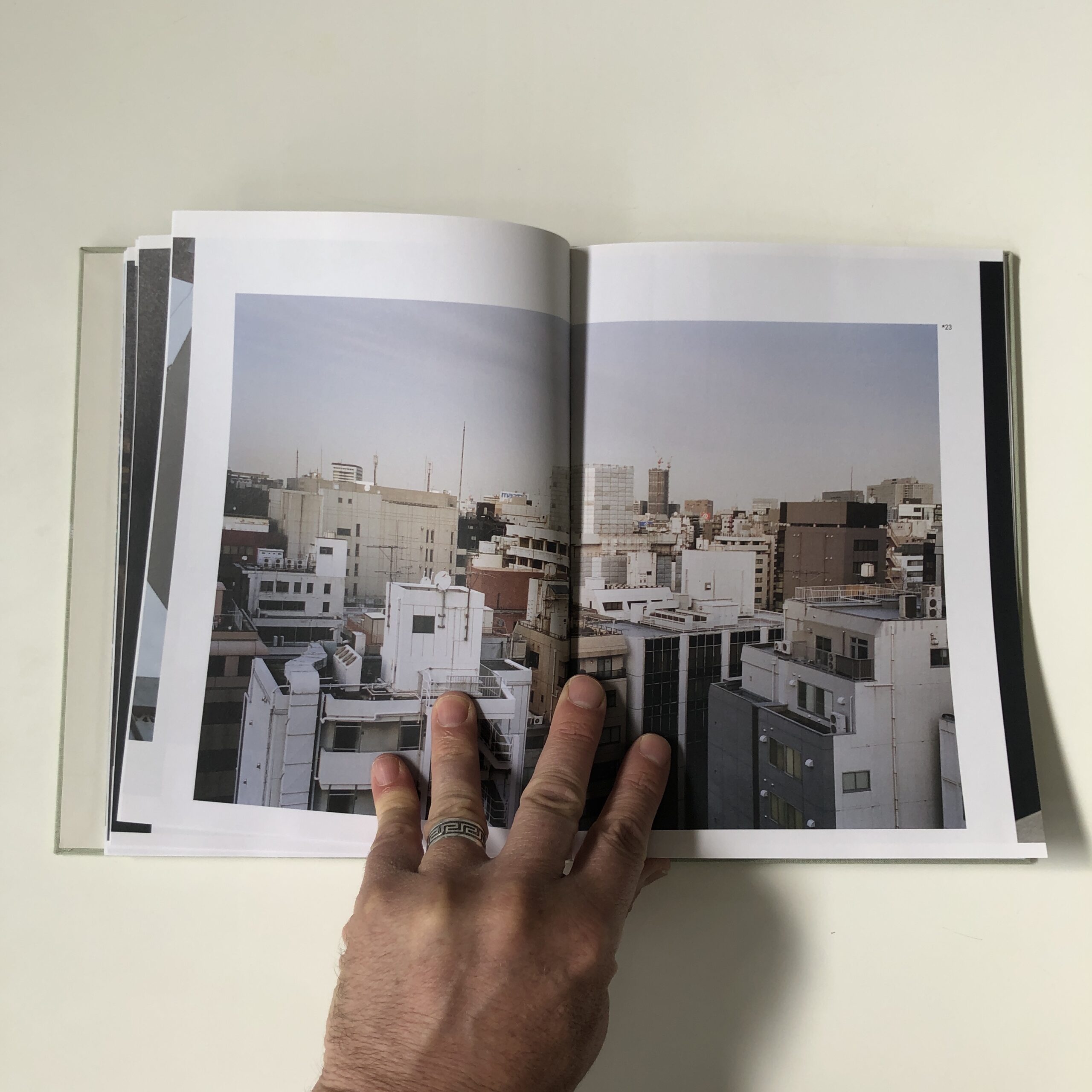
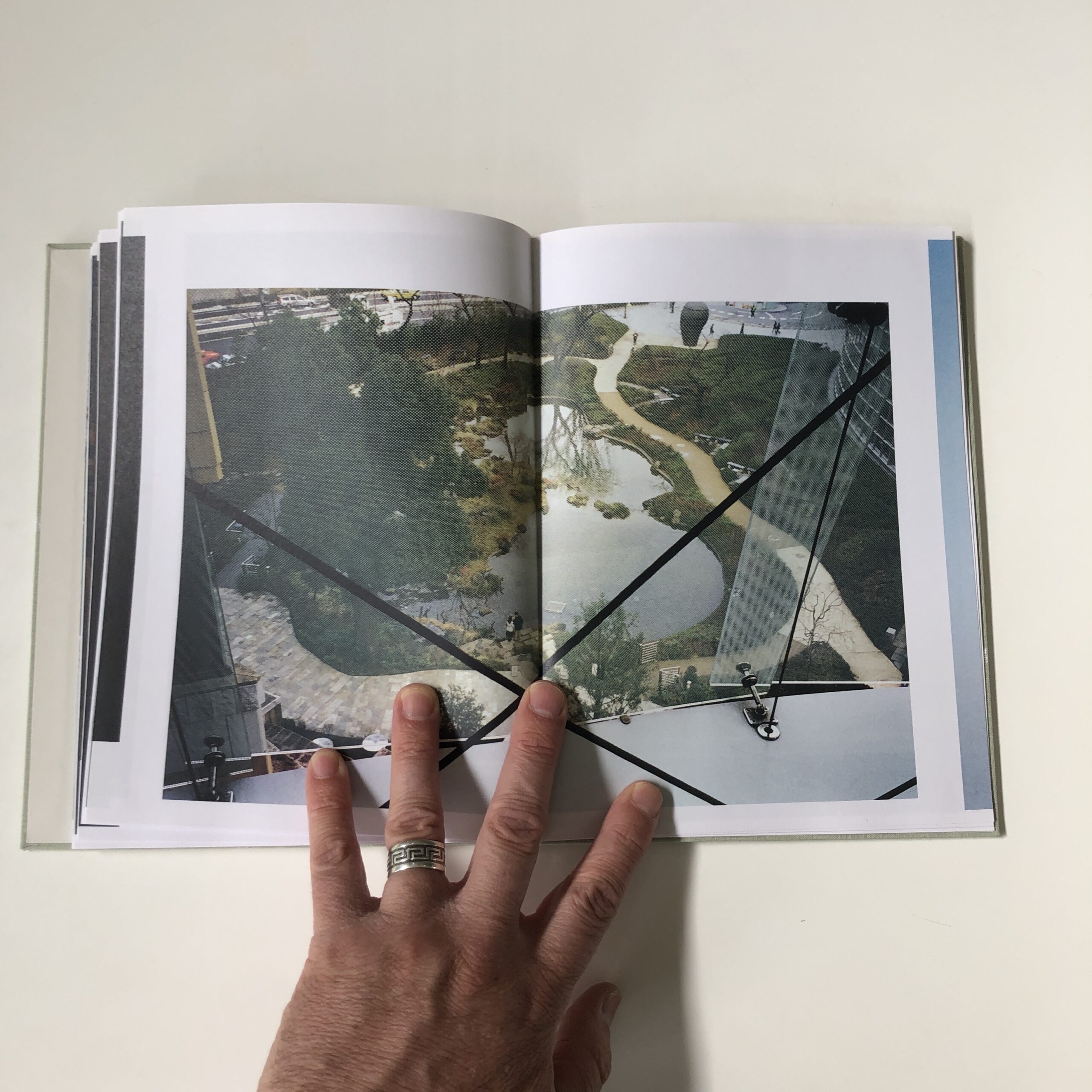
And the design was on point too, with photos bleeding onto subsequent spreads, with smaller spreads mixed within, so you’re changing paper sizes constantly. While each spread connects to the next through fabulous color, and repeating motifs, like flying fish.
The photos challenge our sense of perception, with lots of figure/ground manipulations, use of repeating patterns, and then optical illusions like advertisements or painted buildings.
Just standout.
The design and photographs also wrong-foot us by reclaiming the gutter space, where most artists fear to tread.
(I mean, it’s literally called the gutter.)
Again and again, the gutter creates a symmetrical split, with vital info right there over the seam.
Scandalous!
I found the book to be flawless, right up until the end.
Page after page of nodding my head, saying, “Yes, that’s just right!”
And then towards the back, there was one image, of some guy in a jacket and tie in the light and shadow of a doorway, and it broke the spell.
Like, every single other photo I loved, but then why this guy?
Right afterwards, there were two traditional-type-explanatory-essays, and I felt they, too, were unnecessary.
(The pictures spoke for themselves, meaning-wise.)
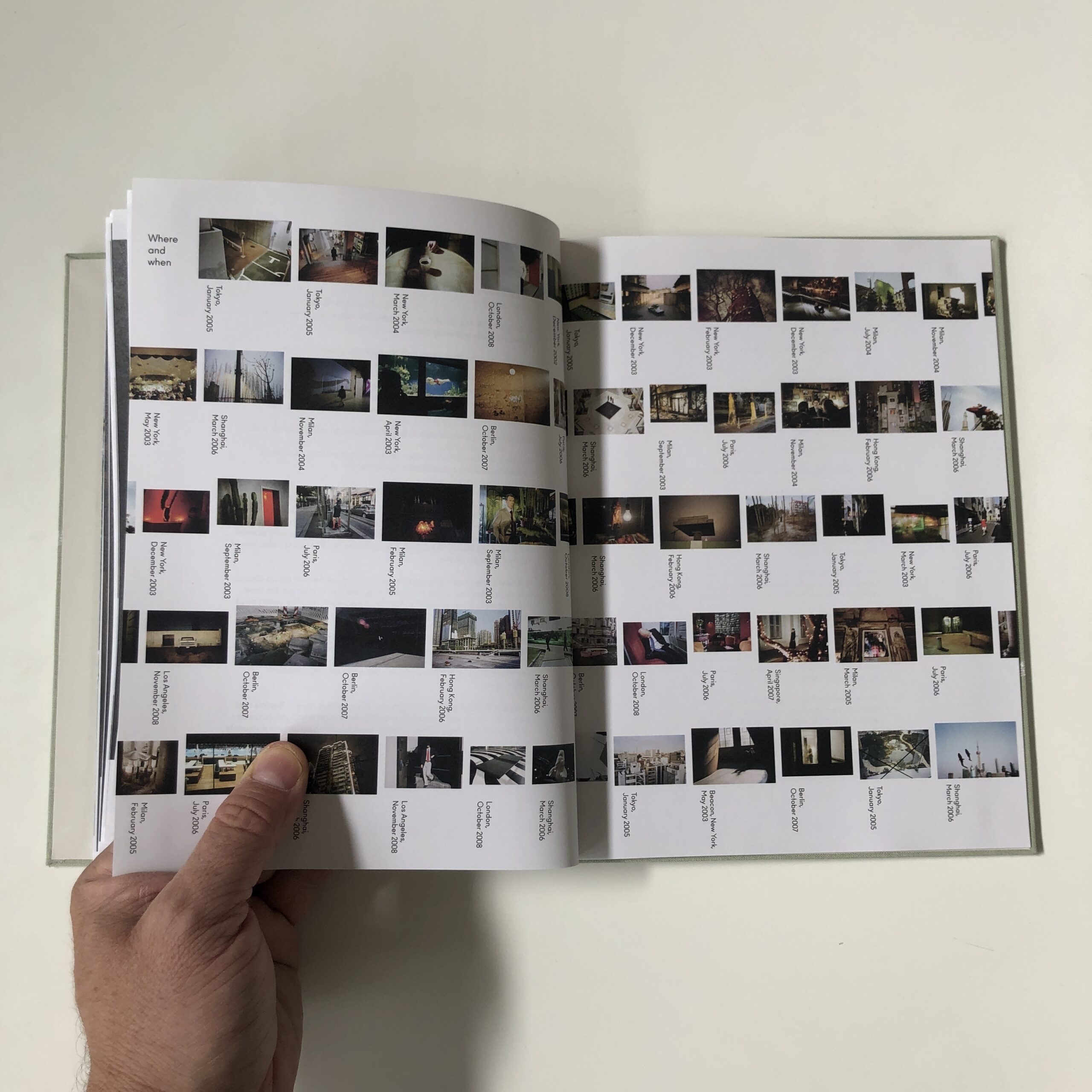
I recognized photographs being made in Japan and China, Italy and France, but clearly there were many more locations I couldn’t place. The excellent thumb-nail index, at the end, tells us the book records travels from 2002-8, in those places, plus London, New York, Berlin, Hong Kong, and a host of other locations.
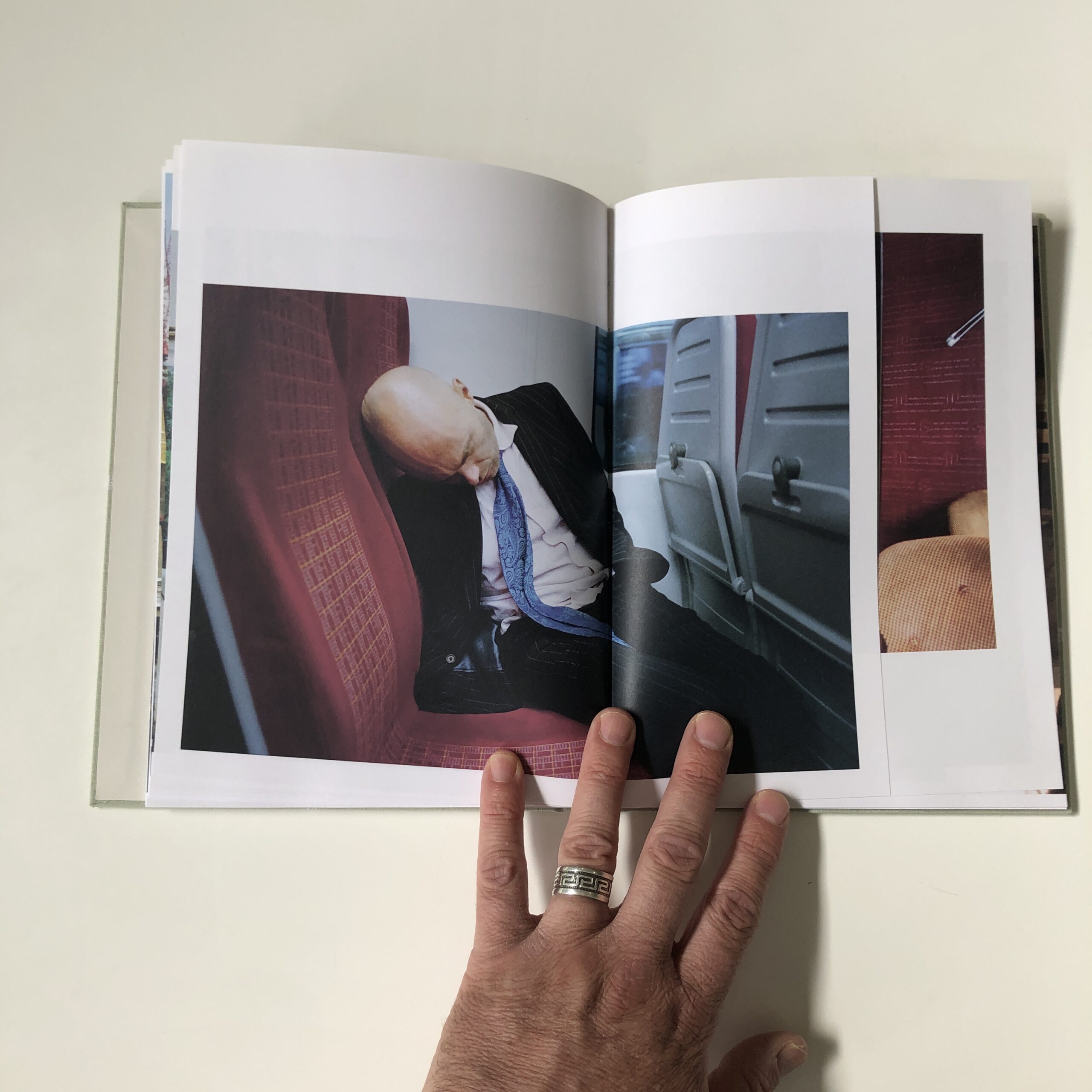
(In fairness, I did pick out a sleeping London banker on a train, and could recognize NYC on my second viewing.)
I kept saying to myself, as I looked, “Is that Italy, France, or somewhere else entirely?”
How do these things feel chic and generic, yet universal?
Which gorgeous city are we seeing in this photo?
Does it even matter?
With the index and footnotes, we get just the right bit of context, if we MUST know which city we were seeing, or what his travels were like, where his brother lived, all from the artist’s own perspective.
Ending there, followed by an insert in French and Italian, the book sticks the landing.
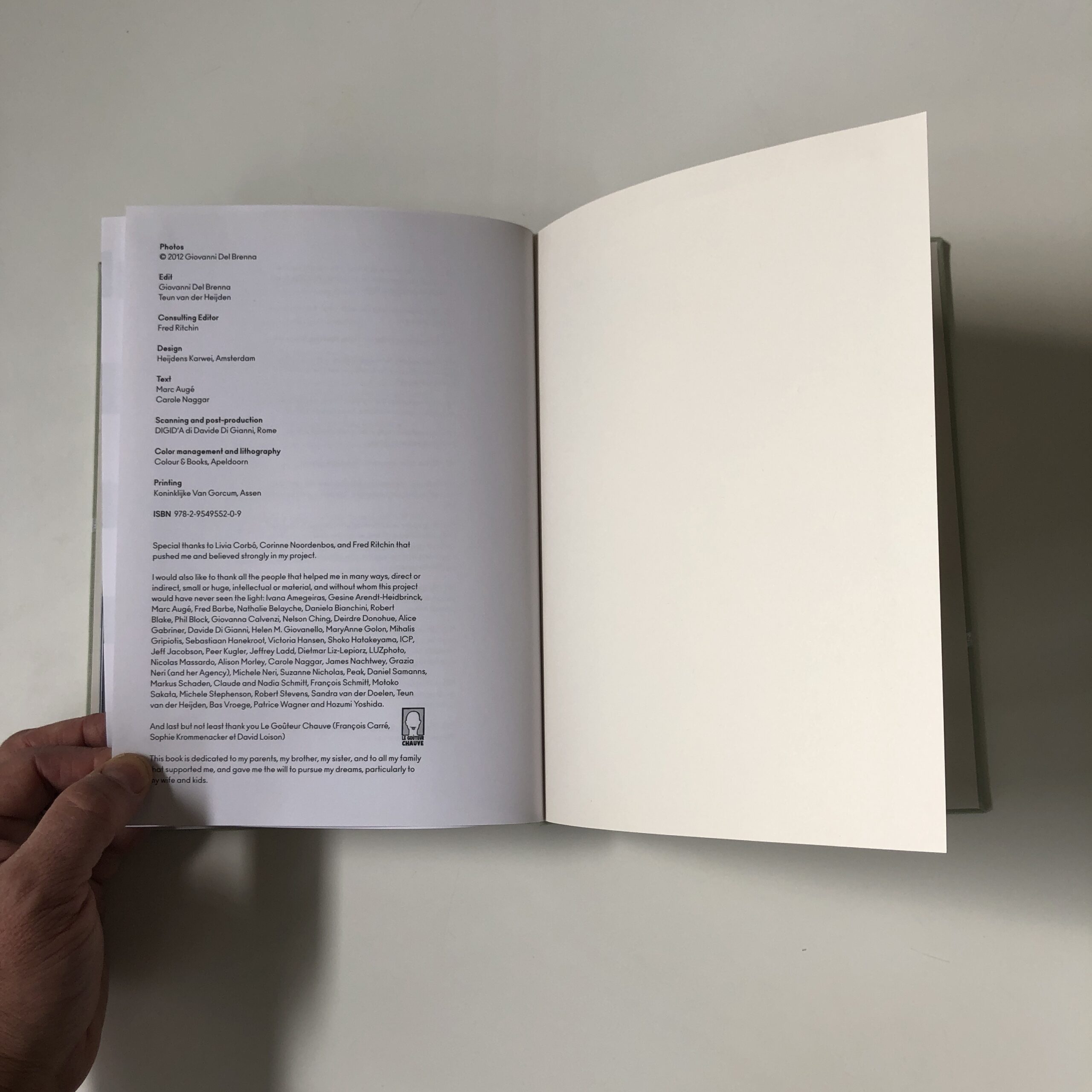
And last page credits Del Brenna, Teun van der Heijden, and Fred Ritchin as editors, and Heijdens Karwei for the design, so major kudos on this one.
If you’d like to submit a book for potential review, please email me at jonathanblaustein@gmail.com. We are particularly interested in books by artists of color, and female photographers, so we may maintain a balanced program. And please be advised, we currently have a significant backlog of books for review.
The Art of the Personal Project is a crucial element to let potential buyers see how you think creatively on your own. I am drawn to personal projects that have an interesting vision or that show something I have never seen before. In this thread, I’ll include a link to each personal project with the artist statement so you can see more of the project. Please note: This thread is not affiliated with any company; I’m just featuring projects that I find. Please DO NOT send me your work. I do not take submissions.
As a young kid, I grew up skateboarding. I loved the movement, flow and challenge of new tricks. But I also gravitated towards the skate fashion, style and music. While I haven’t skated in many years, I shot this personal project as a chance to jump back into that world. I connected with a few young kids at a local skatepark who had unique looks and styles. I wanted to shoot a combination of action, portrait, and lifestyle shots to show the entire experience of being at the park and skating with friends. This multidisciplinary series dips into action, fashion and lifestyle photography. It brought me right back to those days when I was kid, spending all my time at the skatepark. The only thing that was missing was Nirvana.
APE contributor Suzanne Sease currently works as a consultant for photographers and illustrators around the world. She has been involved in the photography and illustration industry since the mid 80s. After establishing the art-buying department at The Martin Agency, then working for Kaplan-Thaler, Capital One, Best Buy and numerous smaller agencies and companies, she decided to be a consultant in 1999. She has a Twitter feed with helpful marketing information because she believes that marketing should be driven by brand and not by specialty. Follow her at @SuzanneSease. Instagram
Success is more than a matter of your talent. It’s also a matter of doing a better job presenting it. And that is what I do with decades of agency and in-house experience.
Who printed it?
I work with Smartpress in Minnesota. Their ordering process is super simple, and they have file prep and print guides.
Who designed it?
I did! One of my best friends, photographer Jared Soares inspired me to make these zines. He makes some killer zine promos too.
Tell me about the images.
The images are a collection of my photos that I made in 2021 while on assignment, and from on-going personal projects, such as my work in Princeville, North Carolina, the oldest town in America founded by Black people, and its complicated relationship with the Tar River and climate change.
I love making zines because print is not dead, and my annual zine is a way to reflect on the year and celebrate my work and the people who helped me make it. Also, I often end up making images while on assignment that are never published, so it’s a way for those images to have life, and to see how my photographs speak to one another.
I am an avid fossil hunter, so at the end of the zine are photos from my fossil hunts in waterways of eastern North Carolina, where you can find the remains of prehistoric sharks and whales from when the eastern part of the state was an ocean millions of years ago.
For the cover, I chose a portrait of a huge old tree that is growing out of the Tar River. My friend and fellow photographer, Megan May, helped me light it as I waded out into chest deep water to make the photograph. I love making lit portraits of old trees using the same techniques I’d use to make a portrait of a person. The name “Old Growth” is a mantra for how I want to work and grow: slow and steady, like that tree.
How many did you make?
This is an edition of 25.
How many times a year do you send out promos?
Once a year. I send them to editors I love and editors I’d love to work with. I made my own imprint called Tiburon, so I also sell them in my online store so everyone has access to my printed work. I also keep extra copies so I can give them to people I am photographing on long term projects so they can understand my work and see themselves in it.
Do you think printed promos are effective for marketing your work?
I hope so! I often don’t hear back from editors, and many editors were not working in their offices during the pandemic so I have no idea if they see the zines. But I still make them because it’s a fun exercise.
I was (mostly) unaware he existed until this year, when Amazon Prime dropped an easily-bingeable series, called “Reacher.”
At some point, I’d heard Tom Cruise starred in a movie or two called Reacher, and that a global fan base was pissed off about it, given how little he resembled the character.
Courtesy of Imdb.com
I’m mentioning it today, because a few weeks ago, I noticed a stack of soft-cover Reacher books on a new friend’s shelf.
He lent me one, and after I devoured it, he passed along 5 more.
I’m about to start the final book, so I have a better understanding of how this character, (and the extensive #1 best-selling book series Lee Child wrote based upon him,) could occupy such a powerful spot in the collective imagination of millions of people.
It’s easy to see why people rejected Tom Cruise.
(Despite the fact he’s since become an actual super-hero, jumping out of planes and climbing the Burj Khalifa w/o a net.)
Jack Reacher is 6’5″, 250 lbs, and that fact is repeated again and again.
(In one book, they even call him Bigfoot and The Incredible Hulk.)
Courtesy of jack-reacher.fandom.com
His sheer size makes him attractive, as he’s a true badass, in all the important ways.
(Great at hand-to-hand combat, weapons trained, you name it.)
Beyond that, Reacher is always the smartest guy in the room, and the wisest.
It’s part Sherlock Holmes, (with all the great deductive reasoning,) part Mr. Wolf from “Pulp Fiction,” (able to fix any jam, and dispose of any body,) and part Batman, minus the cape and extreme wealth. (Reacher is basically a vagrant.)
The character just roams the world, (like David Carradine in “Kung Fu,”) helping people, free of charge, based upon a moral code he learned in the US Army. (Where he was a Major as a top-level MP.)
Interestingly, Lee Child is an Englishman, (born in Coventry,) so near as I can tell, he came up with the archetype of a Wild West gunslinger meets UFC champion, and sends him into one, violent, dramatic, insane-but-slightly plausible situation after another.
And people just can’t get enough.
Because they want to be Jack Reacher.
The want to have it all.
Be the biggest, the strongest, the smartest, the wisest, the most honorable, and to always get the girl.
Reacher owns nothing but a tooth-brush, and goes when and where he pleases.
He can take out seven bikers all by himself, and is therefore the embodiment of the type of American power most people see as slipping into the dustbin of history.
So there’s also a wistful nostalgia about the whole thing.
If Dirty Harry captured the American id of the crazy 70’s, Reacher is just right for the 2020’s, as he kicks ass, but also treats people with respect.
(Were you to meet Reacher in real life, you would feel seen, and understood.)
I mention all this today, having just put down a photo book.
The submission came in a year ago, so I had no idea what was inside the box, and was therefore surprised to see “Snapshots 1971-77” by Michael Lesy, published by Blast Books in New York.
(I reviewed another of his books a few years ago, which also featured images from a historical archive.)
That appears to be his thing, sifting through archives, (as we learn in the opening essay,) so this fits neatly into Michael Lesy’s life obsession.
He confirms this in the essay, but also drops an interesting theory on us:
“Looked at individually, as visual documents, they reveal- or allude to- the hopes, fears, and desires of the people who made them. Sometimes snapshots tell the truth, sometimes they lie, and sometimes they do both.
Looked at in large numbers- in batches of a dozen or a hundred or a thousand- they line up lie bits of colored glass in a kaleidoscope and form patterns… patterns of shared belief, patterns of shared meaning.”
I took that to mean if you glance at archives out of the corner of your eye, and digest image after image, you get a sense of a culture.
A place in time.
(And we’ve all heard the clichés about how to make a photograph meaningful: put it in a box for 40 or 50 years.)
The book features a host of snapshots scrounged from garbage dumpster; the outtakes of a San Francisco photo lab in the early-mid 70’s, but there are also some images from a photo lab in Cleveland.
(Not the tidiest premise, mixing them both up, but hey, you get what you get.)
I came away with a few impressions.
First off, Damn!, have Instagram filters, and the ease of cell-phone-camera operation, made regular people better at photography.
We’ve got a lot of bad crops, blurry images, and downright strange compositions overall.
The fashion is great, (as it is in all old pictures,) but mostly we see celebrations, or human gatherings.
Birthdays, weddings, confirmations, funerals, and drinking with one’s buddies.
There are a few images that would have been described as “racy” at the time, and one in which a topless, awkward woman is juxtaposed against a photo of a painting of a clown, which I thought was unnecessarily mean.
Overall, though, the book is fun.
It was a funky, crazy, powerful, illogical time, the 70’s, and I was reminded of “Airplane,” which mocked the whole era.
Just the other day, I encouraged my daughter to read a book alongside me, and we found “Deenie,” by Judy Blume, on a shelf in a closet.
It was written in 1973, and I was aghast at how much culture has changed.
Everyone was named Midge.
It was acceptable to insult people based upon appearances.
And there were words used that aren’t even in the dictionary anymore. (Have you ever heard of Klunk?)
I’m not sure I learned too much more about 1970’s America, looking at today’s photo book, but then again, I lived through it.
So maybe it’s important, that books like this explain the past to the future.
All those Gen Z kids need to know what it looked like back then, to understand where the world was, and where it’s going.
If you’d like to submit a book for potential review, please email me at jonathanblaustein@gmail.com. We are particularly interested in books by artists of color, and female photographers, so we may maintain a balanced program. And please be advised, we currently have a significant backlog of books for review.
The Art of the Personal Project is a crucial element to let potential buyers see how you think creatively on your own. I am drawn to personal projects that have an interesting vision or that show something I have never seen before. In this thread, I’ll include a link to each personal project with the artist statement so you can see more of the project. Please note: This thread is not affiliated with any company; I’m just featuring projects that I find. Please DO NOT send me your work. I do not take submissions.
The Kung Fu Nuns (also known as the Cycling Nuns) are a large group of Buddhist nuns in Kathmandu who travel around Asia and other remote regions on bike spreading women’s rights. They travel in the hundreds and roll into villages known for oppressed women on mountain bikes (many of these areas bar women from riding bikes) and teach the women valuable life skills like engineering, how to drive, ride bikes, fix cars, etc… They also do an “Eco-Pad Yatras” (about 400 miles long or longer) on foot to pick up plastic litter and educate locals on environmentally friendly alternatives. They practice Shaolin Kung Fu for self-defense purposes and as a way to build confidence and inner strength.
APE contributor Suzanne Sease currently works as a consultant for photographers and illustrators around the world. She has been involved in the photography and illustration industry since the mid 80s. After establishing the art-buying department at The Martin Agency, then working for Kaplan-Thaler, Capital One, Best Buy and numerous smaller agencies and companies, she decided to be a consultant in 1999. She has a Twitter feed with helpful marketing information because she believes that marketing should be driven by brand and not by specialty. Follow her at @SuzanneSease. Instagram
Success is more than a matter of your talent. It’s also a matter of doing a better job presenting it. And that is what I do with decades of agency and in-house experience.
Concept: In-studio, on white, portraits of 2 client advocates. With various set-ups. Licensing: Unlimited use of up to 10 images for 1 year. Photographer: Lifestyle/portraiture specialist. Client: International humanitarian non-profit
I recently helped one of our East Coast photographers quote on and negotiate a project for a well-known NGO. The creative brief from their ad agency described still photos showing the client advocates in heroic poses on a white background. The photos would be stripped into other backgrounds provided by the agency (and the agency would be handling the post-production).
The photos were intended for an OOH (Out of Home) campaign honoring those employees and would be primarily used on billboards and bus shelters in the U.S.
The photographer would be one of several photographers shooting subjects in different cities around the country.
Here is the estimate:
Fees
After creative calls with the agency and client, and with the understanding that the client wanted to stay within a $15k budget, I put the fees at $500 per unique image for each of the 10 images, totaling $5,000. They asked for the cost of additional images, and I priced each with a 10% discount at $450 each. The per-image fee is low for OOH use, but the photographer is a supporter of the non-profit’s cause and was eager to be a part of this project. I added $500 for the photographer’s pre-pro time to include meetings and securing crew and lighting equipment.
Crew
We included two assistants to make sure the photographer had enough help with lighting. We added a DigiTech to manage the files as well as run a Zoom remote viewing for the NYC-based agency not on set. These fees were consistent with previous rates the photog had paid these people on past productions. We added $1,000 for a producer to help book the studio, confirm crew, organize catering needs, and manage the remote viewing and client communications during the shoot.
Equipment
I included $1,100 for cameras, grip, and lighting rentals. The photographer brought their own cameras and lenses and rented lighting and grip from the studio. $500 was estimated by DigiTech for their needed gear rentals. I also included $350 for 3 hard drives.
Styling Crew and Expenses
We included $750 for a combo Hair/Makeup stylist. This rate was estimated by the stylist.
Locations
We included $1,300 for a studio rental day at a studio the photographer had worked in previously and found suitable. This fee included the studio cleaning fee.
Meals
$675 was estimated to cover a light breakfast, and lunch needs for 9 people on set. The $75pp also included simple craft services the photographer would bring to the set. Water, soda, snack bars, fruit, etc.
Covid Safety
We included $2,000 for third party on-site testing. The testing agency would bring PPE as well for the 9 folks on set.
Miscellaneous
We had $350 as miscellaneous expenses. This would include $200 of insurance for the photographer for, cover mileage and parking for the crew, as well as any additional snacks/beverages before or after their time on set each day, and tiny bit of buffer for any unforeseen expenses that might arise.
Post Production
Retouching was to be handled by client, we chose to not charge for the first edit in order to keep the estimate under $15k.
Client Provisions
We included a Client Provisions note that all talent, talent coordination & releases, wardrobe and props styling, as well as all image retouching, would be handled by the production company.
Results
The photographer was awarded the project, and the shoot was a huge success! OOH ads for the project were running this past winter up and down the East Coast I-95, as well as a few locations in Detroit, Chicago, St. Louis, and SoCal.
If you have any questions, or if you need help estimating or producing a project, please reach out. We’re available to help with any and all pricing and negotiating needs— from small stock sales to large ad campaigns.