Here’s something interesting. Photographer William Hereford thinks that videos presented in magazines are treated as an afterthought (agreed!) and should be integrated into the layout. As a proof of concept he got off his ass and made this video. I think he’s onto something.
Ansel Adams discovery sparks row as family say negatives are fakes – Telegraph
Bill Turnage, managing director of the Ansel Adams Publishing Rights Trust, said: “It’s an unfortunate fraud. It’s very distressing.”
via Telegraph.
Real World Estimates – Pricing Photography for Image Libraries
By Jess Dudley, Wonderful Machine Producer
Lately, I’ve noticed more and more corporations and ad agencies are requesting that photographers quote on producing “image libraries”. An image library is a pool of pictures that a client will commission, where they’ll license rights to use the photographs from a shoot in a variety of different ways, and they’ll often make them available over an intranet to different departments across their organization. The productions tend to be broad in their approach, loosely covering a variety of situations, sometimes in generic ways, rather than having a single specific objective. On rare occasion, library images will be used for ads, but most tend to be used for internal and external communications, and for publicity.
In the past, it was mostly institutional clients like schools, hospitals and other non-profits that liked to work this way. Those types of organizations tend to have a variety of different (often low-budget) publication and advertising needs that require a lot of pictures on a regular basis. But increasingly, where big companies once had photographers on staff to cover these types of projects, corporate downsizing has them now turning to freelancers.
One reason clients are willing to pay for broad (or unrestricted) licensing is because it’s often very difficult to maintain control over the use of the pictures when they’re available for use by so many people within their organization. So rather than risk a licensing infringement, they’ll negotiate unlimited use. Other times, clients expect to use such a high volume of photographs that they feel they can get a better deal by effectively negotiating a “bulk rate”. Still other times, a client will be willing to pay for the additional usage simply for the convenience of never having any limitations on their use of the pictures. In all of these cases, unlimited “library” use is worth significantly more than limited use.
But in a world where photographers traditionally price their product based on usage, what is “unlimited” use worth? There have always been photographers who intentionally or unknowingly ignore the subject of licensing, or otherwise simply give away unlimited use of their pictures without charging a premium for it. Those tend to be young photographers who don’t know any better, or established photographers who have found that it’s the only way they can compete, or they couldn’t be bothered with the extra work involved in understanding how image licensing works and explaining it to their clients.
However, in most of these cases, pricing photography “by the day” is a dysfunctional system, and not in the interests of the photographer or the client. There’s an inherent conflict when a photographer is compensated in inverse proportion to her productivity. The more photographs she produces, the less she is paid for each of them. Any photographer’s natural motivation will be to produce enough work to satisfy the expectations of the client, and no more. That is no way to run a business.
A much better fee structure is one that links the photographer’s compensation with the value to the client. My normal starting point for a medium-sized corporation and a middle-of-the-road photographer would be to quote a modest day rate (usually around 2400.00 plus expenses) which would include unlimited use, excluding advertising, of up to 8 images. Then I’d price additional images at 300.00 each (plus file prep). That way, the photographer is incentivized to be as productive as possible, and the client gets the benefit of committing to a low cost up front and then just paying additionally for any additional images that they pick. (Naturally, this pricing could be higher or lower depending on the nature of the pictures, the caliber of the photographer and the size of the client.)
Generally, I try to steer clients away from “unlimited use of all the pictures forever”, because it unnecessarily drives up the fee. There are many ways to satisfy the client’s need to use the pictures broadly. The photographer can license “unlimited” use in a limited way by restricting the time, geography, and/or realm of use, while leaving other parts unrestricted. Are the pictures really going to be useful after a few years? If not, why pay for forever? Do you really plan to use the pictures in Indonesia? Then why pay for international use? Do you really intend to put the pictures on billboards? If not, why pay for outdoor advertising use? When the photographer and client each understand what the other values most, they can come to an agreement that works best for both of them. (That’s known as a “win-win”.)
In addition to corporations, ad agencies seem to be increasingly interested in creating image libraries. We recently quoted on a project for a west coast ad agency who was working with a theme park client that needed a variety of pictures for use on their web site and in advertising. The agency asked us to quote a four day shoot, where the still photographer would work along-side a video crew, photographing families enjoying the various rides and attractions in the park. (See our related post on working with video crews here.)
In spite of my best efforts to persuade the client to agree to more specific licensing, they decided they really did want “unlimited use of all the images forever”. Determining an appropriate fee depends on a number of factors. Here are the questions I asked the art buyer (and the answers I got):
Who is the end client and how prominent is their advertising presence? (In this case, the theme park was a household name, but aside from the web, their advertising presence was not very prominent outside their region.) The larger and more prominent the company is, the more they stand to gain by using the photos. (In a normal licensing situation, the client has to share how they intend to use the pictures because it becomes part of the actual agreement. With any kind of unlimited use, the client has no obligation to tell you how they plan to use the pictures. And in fact, it’s in their interest to down-play their intended use. In these cases, it’s prudent for the photographer to overestimate, by a decent margin, the probable use by the client.
How many situations do you want to shoot in those four days and what level of production are you looking for? Would you rather cover more pictures with less production value (lighting, hair/make-up, props, wardrobe) or fewer situations with greater production value? (We’d like to cover variations of about a dozen different situations. We’re looking for a “real” look, so the pictures don’t need to be overly produced.)
Will the shoot days be consecutive? (Yes.) Just as you would discount your per image rate for multiple images, it makes sense to offer a lower rate for consecutive shoot days and a higher rate for non-consecutive because you can be more efficient with your own time on consecutive days, and you can typically get better rates from your subs as well.
Do you have a shot/situation list you can send me? (Not yet. We’re still working that out with the video crew. That list will be used as a starting point for the still photographer, and then we’ll work from there. We’d like to do a scouting trip with the photographer to determine which rides/attractions would offer good picture opportunities.)
How many final images do you expect to use? (It’s hard to say how many we’d actually use, but I’d like to see between 30-40 useable images per situation.)
Do you want us to deliver raw or processed files? (We’d like to have raw, color corrected images.) This can be a welcome change from the normal retouching and approval process. But the downside is that you are relinquishing control of the final image quality, and your ability to charge a fee to supervise that process as well. The down-side for the client is that they take on the responsibility of that processing, and they risk not getting the full impact of the photographer’s vision.
Thankfully, the art buyer was sensitive to the demands of working with a video crew and was very communicative regarding any overlapping production expenses. (For more on shooting along side a video crew, check out our previous blog post on the subject).
After considering all of the factors, we came to rest on the following:


(By the way, It’s very important for the photographer to convey the licensing to the end client rather than the ad agency. Otherwise, the agency would potentially be in a position to use the pictures for another client without further compensation to the photographer.)
A few notes about our production expenses:
In this case the “grip” was basically a 3rd assistant whose job was to be primarily rigging lights and managing underwater camera housings for the water attractions.
The groomer/wrangler is responsible for making sure the talent was where they needed to be for our shots and ensuring they were camera ready. You have to be careful when working alongside another production. They can handcuff your shoot should they dominate the talent’s time.
It’s unusual to charge for both digital capture and digital tech but due to the high volume of images generated on a shoot like this, the digital tech can’t keep up with the file management. So their job was to bring their workstation and display, transfer images intermittently when not needed on set and during breaks, and process a handful of images for review. This left a fair amount of basic workflow for the photographer after the shoot.
If you have any questions, or if you need help estimating or producing one of your projects, you can reach me at jess@wonderfulmachine.com
Ansel Adams photos found at garage sale
Two small boxes he bought 10 years ago for $45 — negotiated down from $70 — are now estimated to be worth at least $200 million, according to a Beverly Hills art appraiser.
Those boxes contained 65 glass negatives created by famed nature photographer Ansel Adams in the early period of his career. Experts believed the negatives were destroyed in a 1937 darkroom fire that destroyed 5,000 plates.
via CNN.com.
Monocle Mediterraneo
“The creation of the Monocle newspaper is a response to our growing audience and the desire to launch a highly targeted product to reach them when they have time to read and listen at their leisure,” says Brûlé.
“There’s a huge amount of talk about the death of print, thanks to various types of ‘pad’ devices, but if you think of summer – with sand, swimming, sun cream and socialising – a carefully crafted newspaper is more useful and reader-friendly than a backlit screen that hates the sun and salt,” says Brûlé.
via García Media.
Photo Assistant List
File this under great idea: “Photo Assistant List is a a comprehensive list of experienced photo assistants and crew working in Minneapolis, MN.”

Soup of the day

Can Photography Save Publishing?
Here’s an argument for Roger Black’s template design in magazines that I found on
POP Photographers on Photography.
JB: The predictability of the grid allows the photography to break free of the expected.
TM: Yes, they use a repeated, somewhat predictable and definite grid and style. You kind of recognize it so the focus goes back to the photography because you know what to expect of the typography. If you’re constantly up and down and all over the place, it becomes why is this photo up here? And then the photography can’t be exciting because it needs to anchor the page. When you have a structure, it becomes about the content and you forget about the design.
Maybe we will start seeing DOP’s on top of the masthead just below the editor.

Magazine And Newspaper Templates Rock The Publication Design Boat
Wow. Roger Black, the consummate magazine and newspaper redesign mogul has rocked the design world with the announcement of his new company Ready-Media, which seeks to sell high quality templates to publications seeking an overhaul/upgrade. The Society of Publication Designers blog has lit up with commentary from many of the top designers chewing over the ramifications of Roger’s new product. Luke Haymen, a partner at Pentagram and architect of high profile redesigns for New York Magazine, Time and The Atlantic comments that “…I think this may not be such a bad thing. These designs are decent. In fact I’d say they’re better than 90% of the magazines and newspapers out there. They are generic but of course they have to be to have broad appeal. A good designer will take them and customize them.” He and a few other super star designers seem to be the exception in the commentary with many bemoaning how this plays into the publishers hand of cost cutting at any opportunity and a demotion for unique one of a kind design.
With top names contributing templates to the collection have publication designers just been handed their Getty moment?

there are a lot of things wrong in the design of Helvetica
People go on about Arial and how awful it is, and Comic Sans, what an atrocity that is, why not the same about Helvetica?
via Creative Review.
My Guide To Photography Contests
I’m pretty sure it’s not just my in-box that’s crammed with photography contest notices these days. Mine are of the “will you share this incredible opportunity with your community” ilk and I’ve stopped even checking to see if it really is “an incredible opportunity” or actually a way to either a.) Make some money off contest fees or b.) Get some usage rights and/or collect images that they’re too lazy to go find themselves.
Now that we’ve entered the dog days of summer and many people are thinking marketing strategy for the fall I thought I’d put a few thoughts about photography contests on the blog.
Avoid contests with 1st, 2nd and 3rd places. Having been on the judging end of a few contests I can say that when forced to all agree on something or put it to a vote the results are, well, average. In a contest like this a better approach would be one judge. The contests like PDN’s Photography Annual and American Photography’s book where there is no ranking simply inclusion are a better format for photography, because it allows for a wider variety of work to be included in the “winners.”
Know your rights. First stop should be http://www.pro-imaging.org an organization thats produced a bill of rights for photography contest organizers. Contests that do not appear on their site need to be carefully researched. Any contest that takes excessive rights to the images submitted is geared towards amateurs and you should steer clear of it.
Entry fees should pay for something. The fees are an important barrier to entry for a contest, because as a contest organizer you want people to limit their entries and to consider them carefully. I cannot imagine wading through all the dreck a free contest will attract. I’ve experienced the fatigue of looking at hundreds and hundreds of images and I can tell you first hand it’s not long before you begin to doubt your choices. So, yes, photographers should want contests to have an entry fee associated with them, but there should be something that fee is going towards and preferably it’s printed and collected or given out to jurors/industry professionals.
Ignore the jury. The chance that someone on the jury will see your image and give you a job is virtually nil. I made a tremendous effort once to write down all the names of the photographers whose work I liked while sifting through entries then tacked that list to my cork board back at the office and that still wasn’t enough to get me to pull the trigger on some amazing people. Expects other jurors to do less. There is an exception. I find that seeing the same photographer and image winning multiple contests is an effective way to sear them into my brain. If you’re got something truly remarkable you may want to “shoot the moon.”
If you win, don’t just stand there. You should enter contests with the sole purpose of using a win to start a conversation with someone you want to work with. I suppose validation is another reason photographers enter, but I think it’s more important to have a marketing goal in mind. I entered contests with my magazine work solely for a section on my resumé for awards.
Contest organizers who want to run a legitimate contest that truly represents an “incredible opportunity” should do the following:
1. Create a pool of winners or use a single judge.
2. Adopt the bill of rights.
3. Make it transparent where the money is going.
4. If you have top tier judges create something they can refer to when hiring.
Stash Artists
I can honestly say I’ve never had as much fun looking at photographer’s portfolios as I did when I looked at these. In keeping with their entire brand, the Stash “books” are anything but.
via Hmab: The Lounge.
BP Caught Altering Images
This is why journalists need unfettered access. America Blog caught them red handed: http://www.americablog.com/2010/07/bp-photoshops-fake-photo-of-command.html

Print Your Friends Facebook Photos
Photographer Rob Greer let me know about this potentially troublesome feature Walmart, Target and other online printing outfits are adding where you can print your friends facebook photos. I assume this will not be allowed if there is enough objection to it, so let them know what you think. I found this video describing a way to block the feature:
Hearst Magazines Readies App Editions
Hearst Magazines sold more than 12,000 downloads of its Popular Mechanics iPad edition since its release on July 8 and is gearing up to release many more apps this year, including app editions of Esquire; Marie Claire; O, The Oprah Magazine; Food Network Magazine; Cosmopolitan and Harper’s Bazaar.
A Camera Is Just A Box With A Hole In It
“A camera, like a guitar, is just a box with a hole in it. Until it is placed i the hands of a true artist, it will not make music, only noise.”
Check out this excellent webinar that PhotoShelter did with photographer Tim Mantoani
Embrace The Unexpected And The Surprising
Fascinating Q&A over on Heather Morton’s Art Buyer blog with Andrea Mariash, Senior AB at David & Goliath in LA. They’re talking about true collaboration as opposed to asking a photographer to just execute an idea that’s been researched to death. It’s interesting to hear on the advertising side about the need to educate the client “so they understand that comps are comps, they are not paint-by-numbers kits.” For anyone hiring photographers creating space for failure and sudden inspiration is the key to producing great work.
I worked with a creative director a million years ago who had gone through improv training. His approach to production was, “yes, and…” which is a traditional technique to up the funny. (I guess you’re not allowed to say no in improv; it’s a creativity killer.) The CD was a real wild card on set, but his ads were celebrated. Anyway, his attitude kind of rocked my world, to use a terrible but apt phrase. I stopped producing with do-not-cross lines, and adopted the “yes, and…” mentality. To me, basic production, being totally prepared, is the “yes” part. That’s the bare minimum I can give to my creatives and photographer. And then I feel like I’m free to spend my time on set facilitating the “and…” if it happens to come up.
I’ve come to embrace the unexpected and the surprising. I absolutely think it makes for better images. I’m all for hiring a dark horse photographer, or trying something new on the fly, or learning new stuff. I’m an early-adopter, and a risk taker. Not all producers and art buyers want to work this way, but it’s worked well for me. I guess it goes against our innate control-freak nature, so I’m constantly at war with myself. It keeps me thin, I guess!
Read the whole thing (here).
VII Magazine – Photojournalism Transitions From Supplier To Publisher
I think most people will agree that if photojournalism is to survive the media revolution the innovations will need to come from the photographers and agencies, because the magazines that used to support them have run out of gas. The only hope really is experimentation and failure. The right business model will involve many different income sources and a myriad of ways to present the stories.
VII photographers agency recently hired former Fortune Magazine photo editor Scott Thode and launched VII Magazine as their platform to experiment and innovate. One innovation that I think has great potential is the photographer interviews they’ve been doing. Infusing the photographers personality into the pieces makes them so much more enjoyable and watchable to me and seems like the opposite of the objectivity and invisibility photojournalists usually strive for. I think VII is different, with the strong personalities of the founding members and their initial foray into advertising the group with canon and their ongoing workshops, these videos are a perfect match.
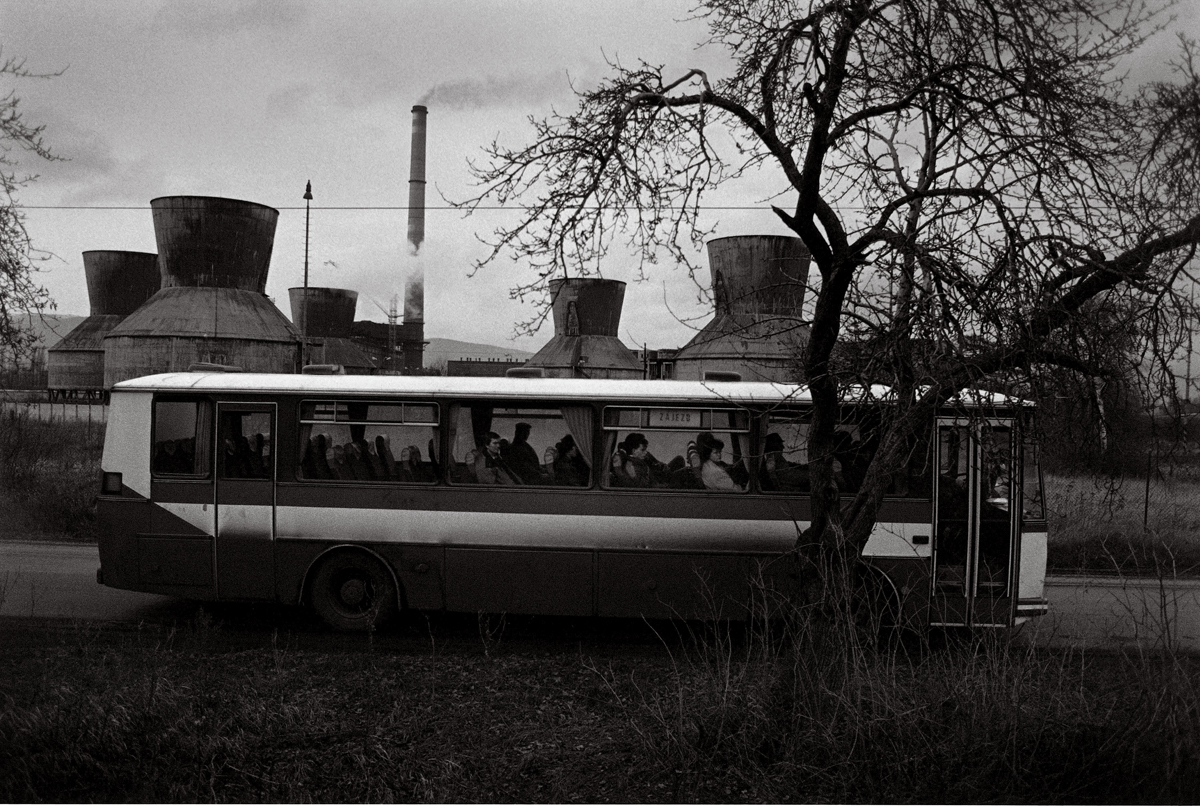
Vanishing: Antonin Kratochvil
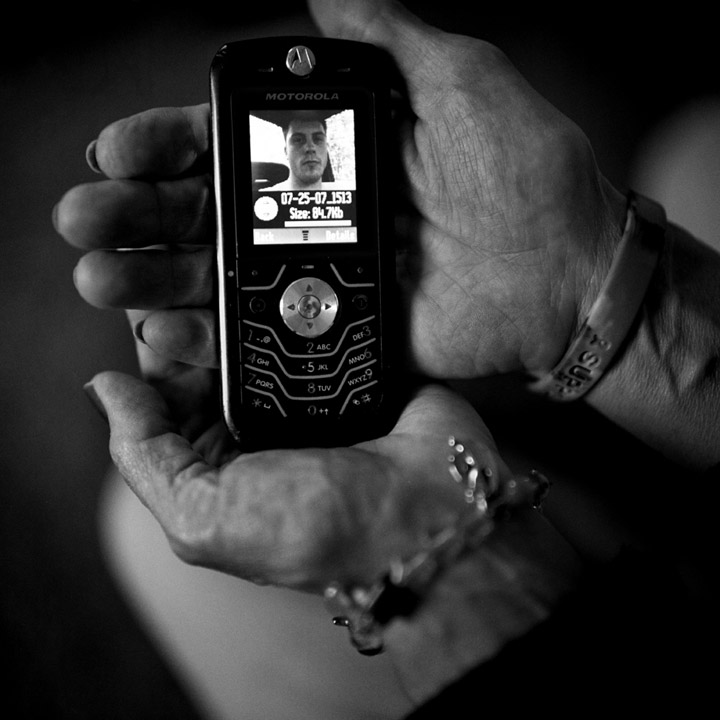
The Consequences of War: Ashley Gilbertson
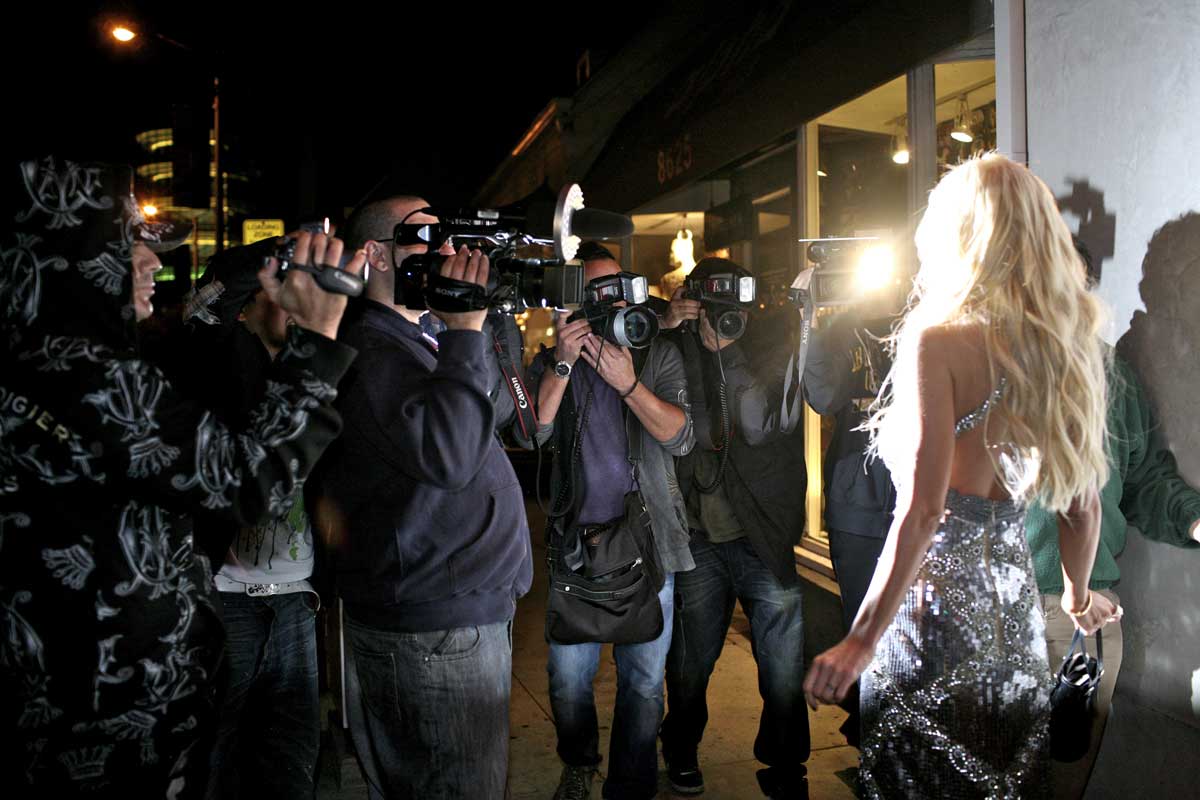
Paparazzi: Jessica Dimmock
I asked Scott Thode to tell us more about VII Magazine and what they’re up to:
It is hard to describe what it is when in truth, it was and continues to be, a grand experiment. It is an experiment that is very much in a formative stage from an editorial and business standpoint. That might sound strange as it’s been online for two months and any casual viewer can see what’s there, but maybe knowing what’s not there gives a better perspective. There’s no website (it’s online but only as an insert in other people’s sites), there’s only a hint of commercial activity and there is limited content in the various story telling formats we have put together.
I think in some very important ways VII The Magazine is a reaction to what has happened to our industry over the last few years. Photographers have always been seen as “suppliers” (the traditional role of editorial photographers, one or two rungs up the ladder from stationers and utilities but suppliers nonetheless) to the print world. A big question now seems to be who is left to supply and why should we remain dependent on the whims of a dinosaur industry. The question VII asked is why not become publishers and control their own destiny? Obviously the answer to that is VII The Magazine. This is a huge shift in the role of the photographers and the agency that opens up a whole new world with all the possibilities of originating and distributing.
Editorially, the magazine is an editors candy store. There is just a wealth of content to be explored and repurposed in new and interesting ways. When I first came on as Editor in January I felt we needed to be very careful not to overextend what we could do with very little time and no budget. After some discussion we decided to proceed on four storytelling fronts: The Interviews, The Stories, The Videos and The Day. This strategy was important in that we also did not want to compete with newspapers and the newsweeklies. We aren’t a news source. To this end I see us telling stories in a different fashion. I don’t see simple linear tales but hope to break away from a beginning, middle and end format to a nonlinear story telling based on the emotional and visual. I’m really excited about this type of approach because it involves still photos, video, music, text, and audio in various combinations and emphasis.
From the outset, I have always felt that the strength of the magazine and its ultimate success would lie with the personality of the photographers and their personal visions, quirks, and unique way of seeing the world not only visually but editorially as well. They all have something to say and do it in their own way. Initially, my job was finding an interesting way for them to get their visual and auditory voices out there. To this end I came up with the idea of doing “The Interviews”. These are produced videos done in conjunction with Michael Hanna and Protean films where I sit down with the photographer and interview them on a specific subject. We have produced four of these, Ashley Gilbertson, “The Consequences of War”, Jessica Dimmock, “Paparazzi”, Antonin Kratochvil, “Vanishing” and Christopher Morris’s, “Mr. President”.
I have also incorporated the photographer’s voices and video in “The Stories”. These are meant to be less produced and are done by the photographers themselves at home or on the road. They are still asking to hear a point of view about what happened or in the case of Agnes Dherbeys what was happening as the story of the Red Shirt Protests unfolded. This was our first attempt to try to be on the news but with our own unique photographers point of view. I also decided to do wrap up of the story with Agnes that became “UPDATE: Red Shirts” where she summed up in her own words how she felt about what took place. One of my other favorites of this type of story telling is Marcus Bleasdale’s “Fashionista”.
Not all the stories incorporate the photographers. I still love a good slide show with music. One that I am especially happy with is by Ziyah Gafic called “Tito’s Bunker.” Not everybody wants to hear the photographers and not all the photographers want to lend their voices or be on camera. Take a look at “Invisible” with Franco Pagetti.
The Videos are the photographer’s own productions that are unedited on my part. It is a new way of working for many of them and I am very excited seeing what they are doing with it. I love Stefano De Luigi’s “Blanco”, the videos Chris Morris has done on Obama, and Ron Haviv’s Haiti. This is all about approaching stories in new ways and finding new forms of reaching our audience.
Finally there is “The Day” which takes an event that happened on a the specific day you are looking at and uses a photograph from the VII archive that speaks to the event but doesn’t necessarily pertain to it. It is definitely one of my favorite things to do as an editor.
The most difficult part for me is making sure there is a balance of stories from something on the lighter side like Jessica’s Dimmock’s Paparazzi and The Kimbangist Symphony Orchestra by Marcus Bleasdale to a story on Afghanistan by Eric Bouvet or Haiti by VII.
So what’s to look forward to? First, I’m happy to say that recently I became the full time editor of VII The Magazine. We will begin designing our new home for the magazine on the web and on the iPad. We will continue to search for new ways to tell stories in as many new and exciting formats as we can think of. We are also going to begin incorporating writing into the magazine. Yes! The written word does have a place in our hearts.
From a business standpoint, VII The Magazine is designed to be a commercial tool. In the modern environment where innovation and implementation often precede monetization, the evidence for this will have to follow (and I’m not giving away the keys to our thought-bank just yet), but suffice it to say that there is a method in the madness. We are greatly encouraged by the responses to date and we have laid the foundation for a dynamic (and funded) editorial product.
—
For even further insight into the future of VII and the Magazine here’s an interview with Stephen Mayes managing director of VII Photo Agency.