

Barron Bixler






Heidi: Your work often explores borderlands — those spaces between the built and the wild, industry and nature. How did this fire site fit into that continuum of marginal places you’re drawn to?
Barron: The borderlands have become environmental battlegrounds—and we’re losing them. Whether it’s fires at the urban-wildland interface, coastal erosion threatening critical infrastructure, or cycles of drought and flood straining our aging flood control systems to the breaking point, it’s precisely this interface between the wild and the built where the effects of climate change are hitting first and hardest.
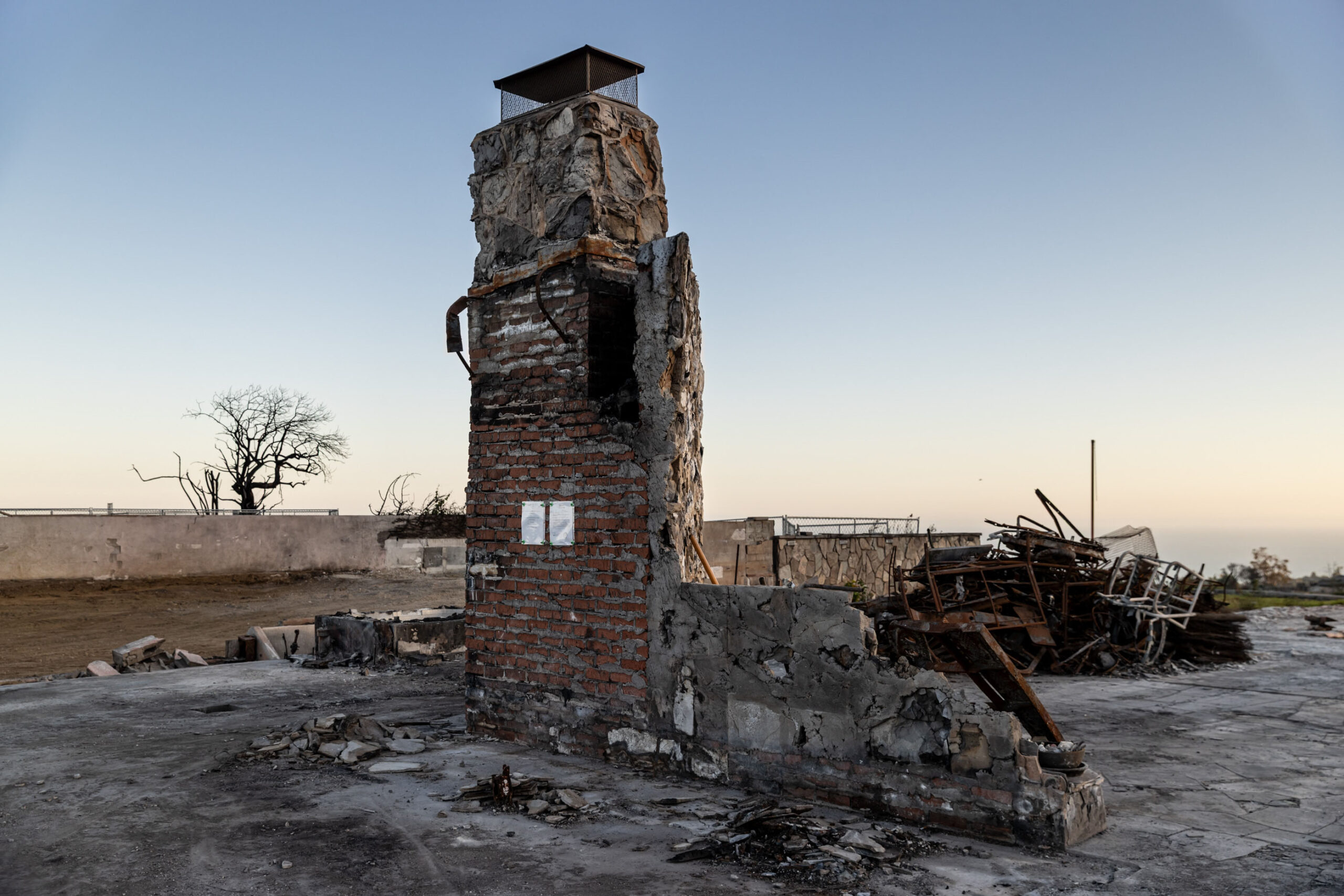
But for me, the Palisades Fire feels different. The fire didn’t just take houses tucked back on winding roads in the semi-wild foothills of the Santa Monica Mountains. It burned straight through two or three miles of residential neighborhoods and commercial districts, right down to the beach. That a wildfire intruded so far into the built environment should be a wakeup call that we’ve entered a new era of risk and vulnerability.
What role do you think visual journalism can play in bridging the gap between scientific data and the lived experience of climate events like this fire?
I absolutely believe in the critical role that scientific and social-scientific research—and the data they produce—play as we assess and respond to the escalating climate crisis. Without them, we’d be flying blind.
But I think the data have lost their grip on people’s imaginations. There’s been this assumption that if scientists can just quantify the problem and get the media to credibly deliver the message to the public, people will believe the science and understand all the ways it touches their own lives. There’s even a rallying cry for this way of thinking: “The science is clear!” But the current media and political environments bend more toward murk than clarity.
Human-centered stories about environmental loss, grief and the slow work of repair can cut straight through the infowhelm and connect people with a deeper emotional truth about what’s at stake. I also think that telling these more intimate, visual and visceral stories can bridge some critical cultural divides in a way that traditional science communication struggles to.
You describe your practice as chronicling “the hangover to our great optimism.” How does this post-fire landscape reflect that reckoning — the price we’ve paid to arrive here?
It’s hard to answer this question without abstracting the painful, very real price residents of the Pacific Palisades and Altadena paid for our collective ecological amnesia. I’m thinking here of Mike Davis’s powerful, if polarizing, essay, “The Case for Letting Malibu Burn” (1995). I’ve come to think more and more of climate change not as a problem in its own right, but as a force-multiplier for other problems—an oracle with resounding answers to long-open questions. For example, the obvious question to have asked in 1922 when ground broke on the first houses in the Pacific Palisades was: “Should we even build houses here?” It took 103 years and the devastating loss of that community to get a definitive answer. Without climate change, maybe the question would have remained open indefinitely. So I’d reframe it as: “How do we stop making decisions that end in disaster, knowing what we now know?”
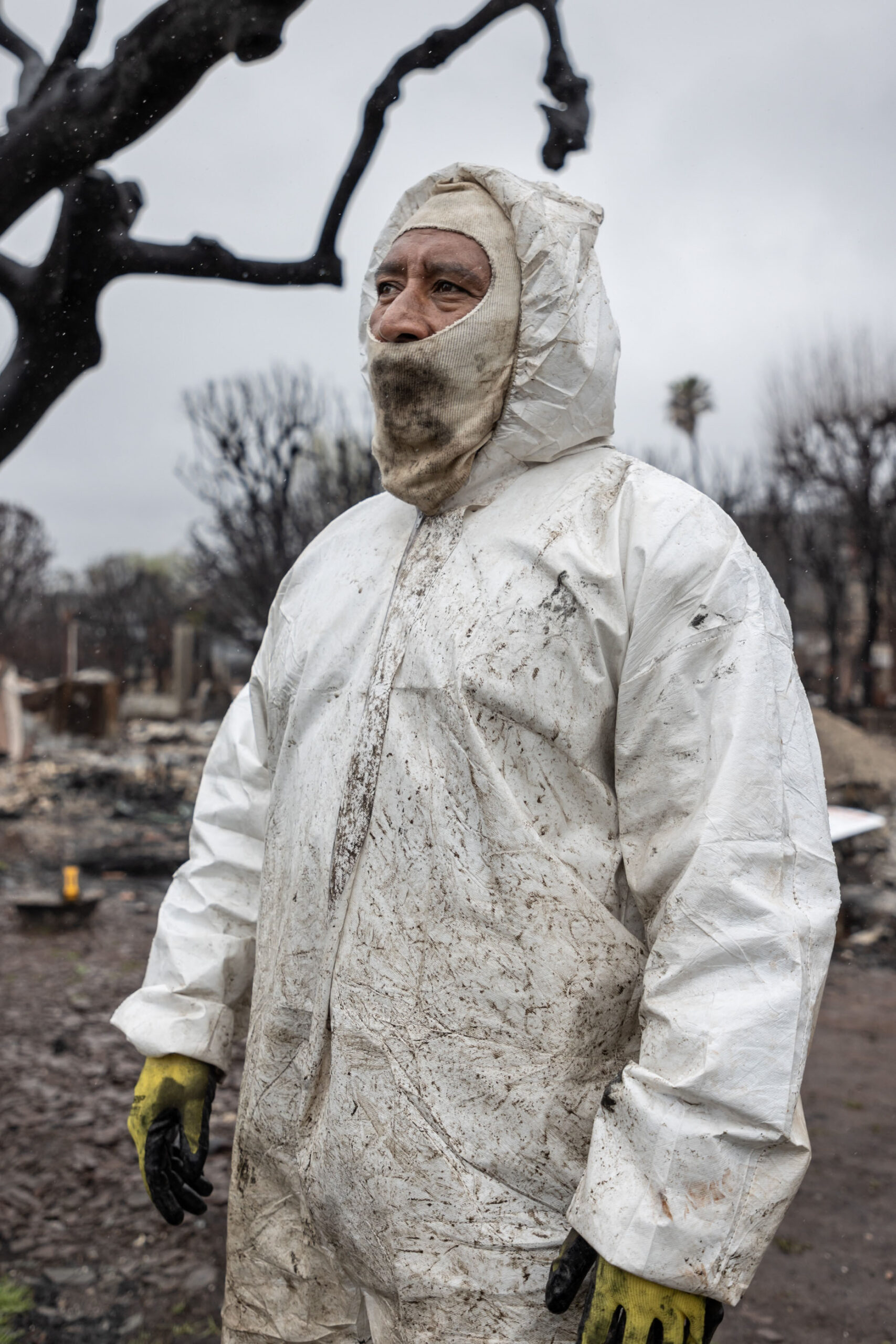
In your images, the burn zone feels both intimate and immense — portraits of cleanup workers sit beside aerials and still lifes of ruined domestic artifacts. What thread ties these disparate vantage points together?
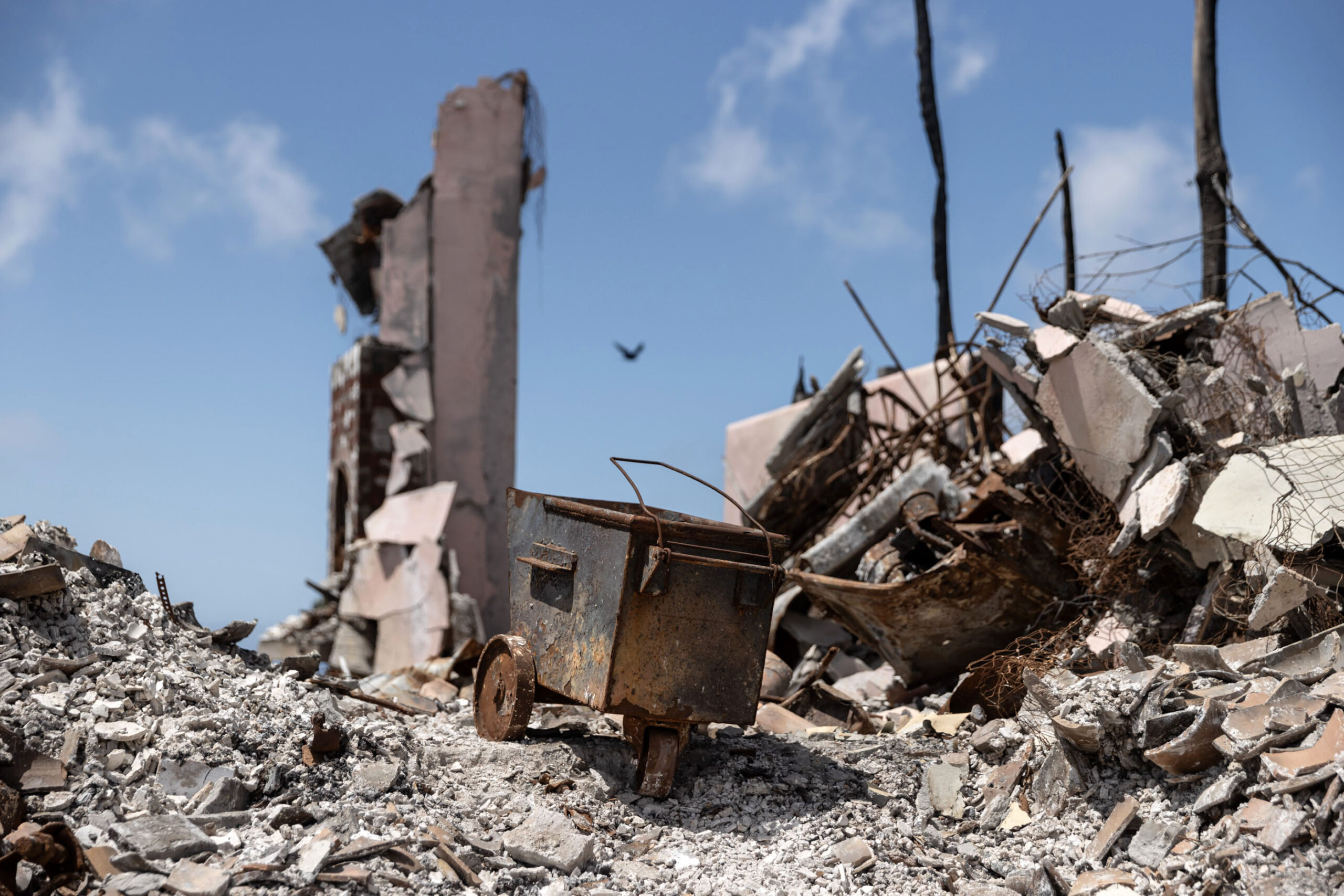
I think it was probably my visceral experience of being there, the challenges of making pictures in a tightly controlled and physically and emotionally hazardous place. I felt that whiplash vertigo, those jumps in scale, that probably come through in the pictures. I shot lots of overviews but was unsatisfied with many of them. Which is funny, because my unpeopled environmental projects, like my project about the California water system, are full of that kind of picture. But here they just fell flat. When I started getting in close, though, dropping the depth of field, my visual approach to the project started to click.
What compelled you to focus on the cleanup rather than the catastrophe itself?
To me, work and ritual are closely related. As a vigorously secular person just a generation out from grandparents and great grandparents who worked industrial jobs in midwestern plants and mills, the meaning of work is probably as close to a ritualized belief system as I get. It happened kind of spontaneously, and I didn’t see the common thread at first, but pretty much every photographic or film project I’ve undertaken since 2023 has dwelled on the meaning of work—and specifically the work of environmental salvage and repair. Recast in the context of an uncertain, climate-changed future, this kind of work becomes a small act of faith against ecological unraveling. It’s a kind of hope in the dark, to borrow from Rebecca Solnit.
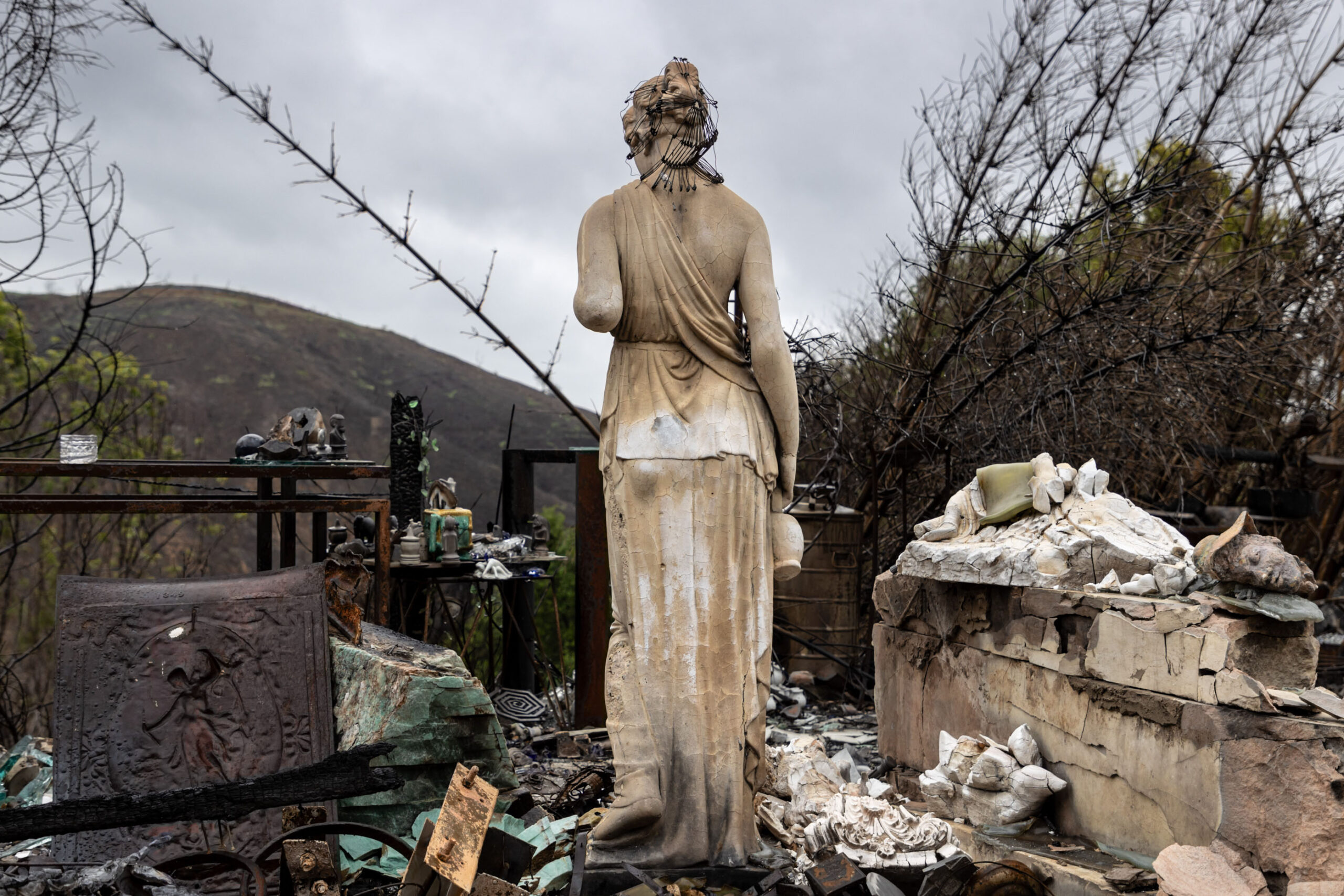
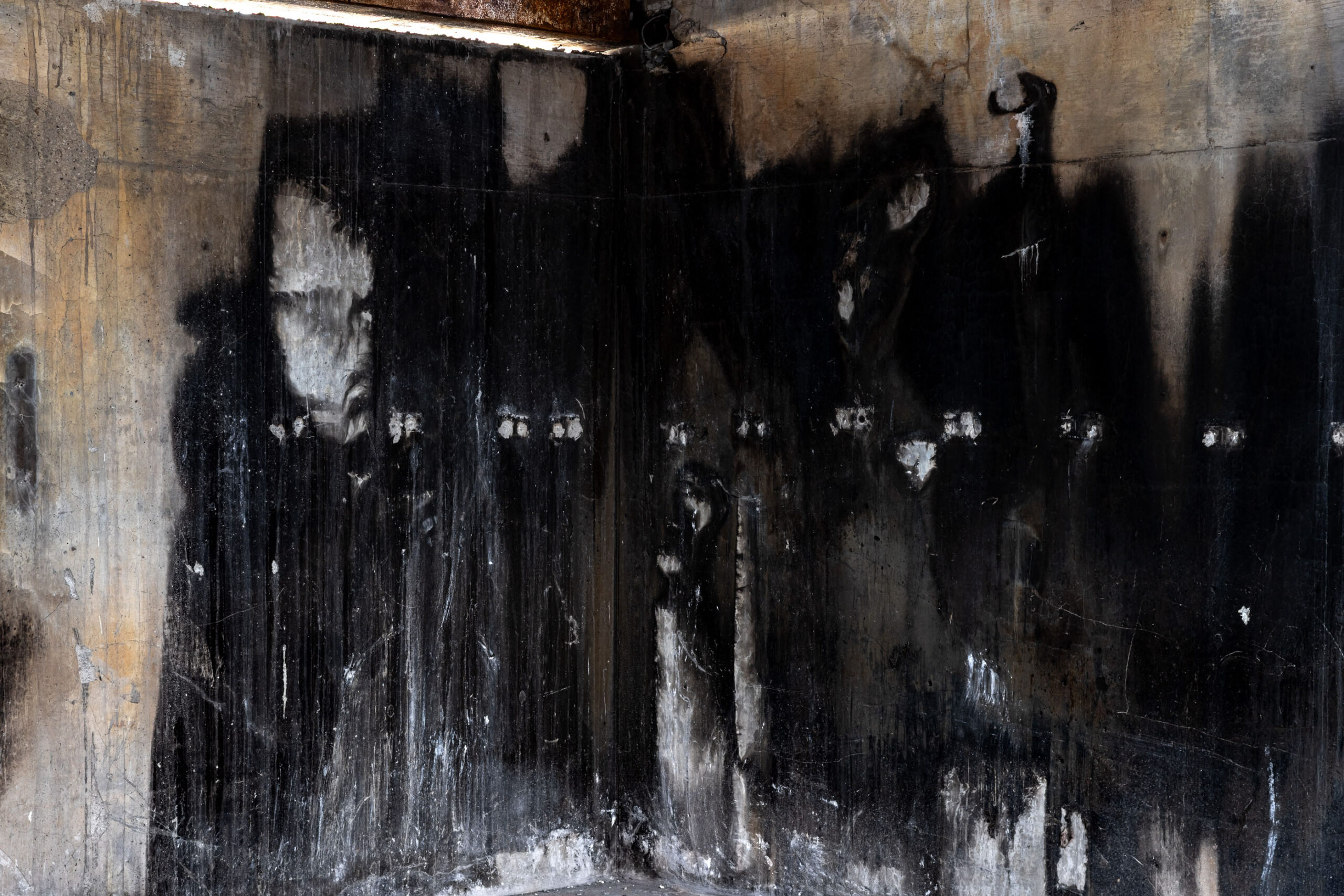
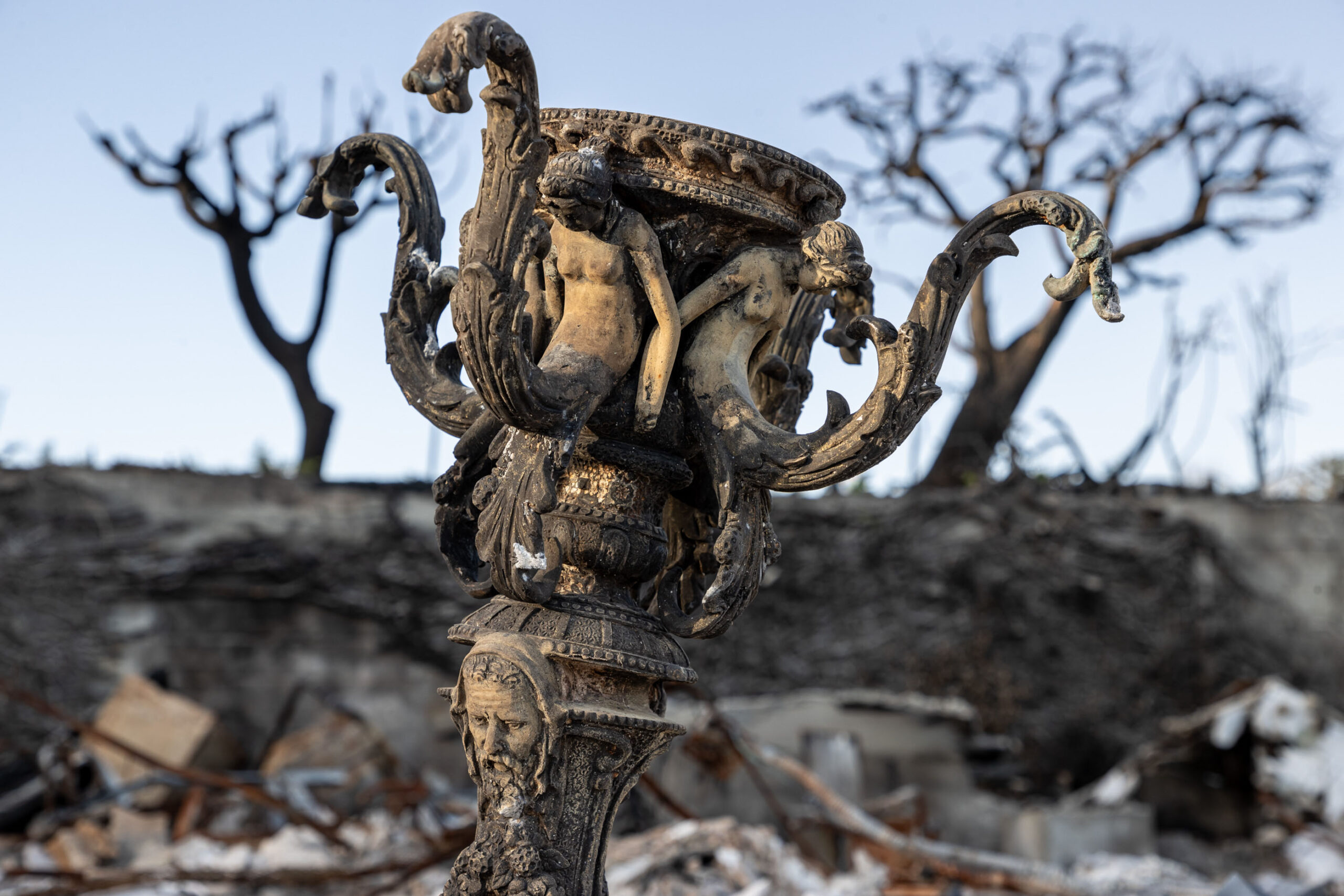
The artifacts you photograph — charred utensils, melted toys, fragments of home — carry a quiet poetry. How do you decide when an object is simply evidence and when it becomes a metaphor?
Developing a photographic project is a little like creating a new language. Meaning comes through the electricity that arcs between the images in the project and the objects, scenes or people they depict. Sometimes the language amounts to something like a tractor manual. Sometimes it erupts into poetry. So much of the meaning comes out in sequencing and editing, after the images are made. If I can nudge it in one direction or the other in the field—especially given the improvisational way I work and the specific challenges of making pictures in the Palisades Fire burn zone—it’s about approaching the subject with an open mind and at wildly different scales. I find this just gives the emergent visual language of the project more raw material to draw from, more chance at working at that symbolic level I think you’re getting at.
With the one-year anniversary approaching, what story do you hope this project tells about resilience — not as a slogan, but as a lived condition in the West’s new era of recurring disaster?
“Resilience” sounds poetic, doesn’t it? To me, it describes a quality that’s innate or passively acquired, like something is resilient because it was designed to keep bouncing back in response to pressure, adversity or indignity. But in its place, seeing what I’ve seen, I’d suggest instead “grit.” We may never fully bounce back from the damage that we’re doing to ourselves. We may not prove to be resilient in that way. This recognition is painful and scary. But it’s our grit and determination to survive and to fix what’s broken that will define how we come through the storm, and what the world looks like after.
When you imagine this work finding its home — whether in print, exhibition, or film — what kind of dialogue do you want it to open about how we inhabit and remake these wounded landscapes?
More than anything, I want the faces and stories of the people doing this kind of environmental demolition and salvage work—not just in the Pacific Palisades or Altadena but across the board—to be seen and understood more widely. For their sake, because the work is quietly heroic I think, but also for all of ours. We need to believe that recovery from the unimaginable is possible. We need an aesthetic space to share grief about our accumulating losses of home and place. I hope that this project and my wider work add a bit of heft to conversations about whether and how to rebuild, how to live in these places better, how to pick a righteous path forward for once.