



Ethan Pines
Heidi: You’ve added fine art to your commercial photography business. How does one inform the other?
Ethan: The commercial and fine-art sides are certainly informing each other. I’m applying the commercial discipline and drive to the fine-art work. And I’m applying those practices honed in the Snow project — exploring deeply, clearing my mind, making unorthodox choices — to my commercial work.
That transcendence I mention later — the transformation that happens when interesting content is framed artfully — emerges at least partially from working within the limitations of the medium and the project you’ve chosen. In the case of Snow: a two-dimensional medium; the limitations of the frame and the lenses; what can be found in the natural world; what is reachable on foot; natural light; and real elements unaltered in post.
I’ve long felt that the greatest creativity and achievements come from working within limitations. And this too is where the commercial and fine-art sides overlap: whether working from a client brief or from my own self-assigned project, the limitations and parameters are what create discipline, drive, creativity, out-of-the-box thinking and achievement.
This is why athletes are continually excelling and breaking records: they have to perform within the rules and restrictions of their sport. If a tennis player could hit the ball anywhere, they’d be a lot lazier, and we’d never see the incredible shots that we do. The same goes for artists and musicians. If you had a camera that made all the decisions for you, or a guitar that sounded amazing no matter what you did with it, you would never need to push yourself, master your craft and expand the boundaries of what’s been done before. I know a guitarist who prefers to play with obscure and temperamental instruments because they force him to work harder and come up with creative solutions, and they ultimately produce something unique. As a photographer, it’s the limitations of the medium that result in newness and greatness. If you can create absolutely anything with a few prompts on the computer, do those creations mean anything? Are you still a photographer? Are you even an illustrator? Or are you just a typist? As AI advances, I feel that artwork created with craftsmanship and discipline, with real materials in the real world, will separate from the pack and increase in worth, both monetary and subjective.
What do you hope viewers take away from experiencing the Snow series—both visually and conceptually? Have you had any reactions thus far?
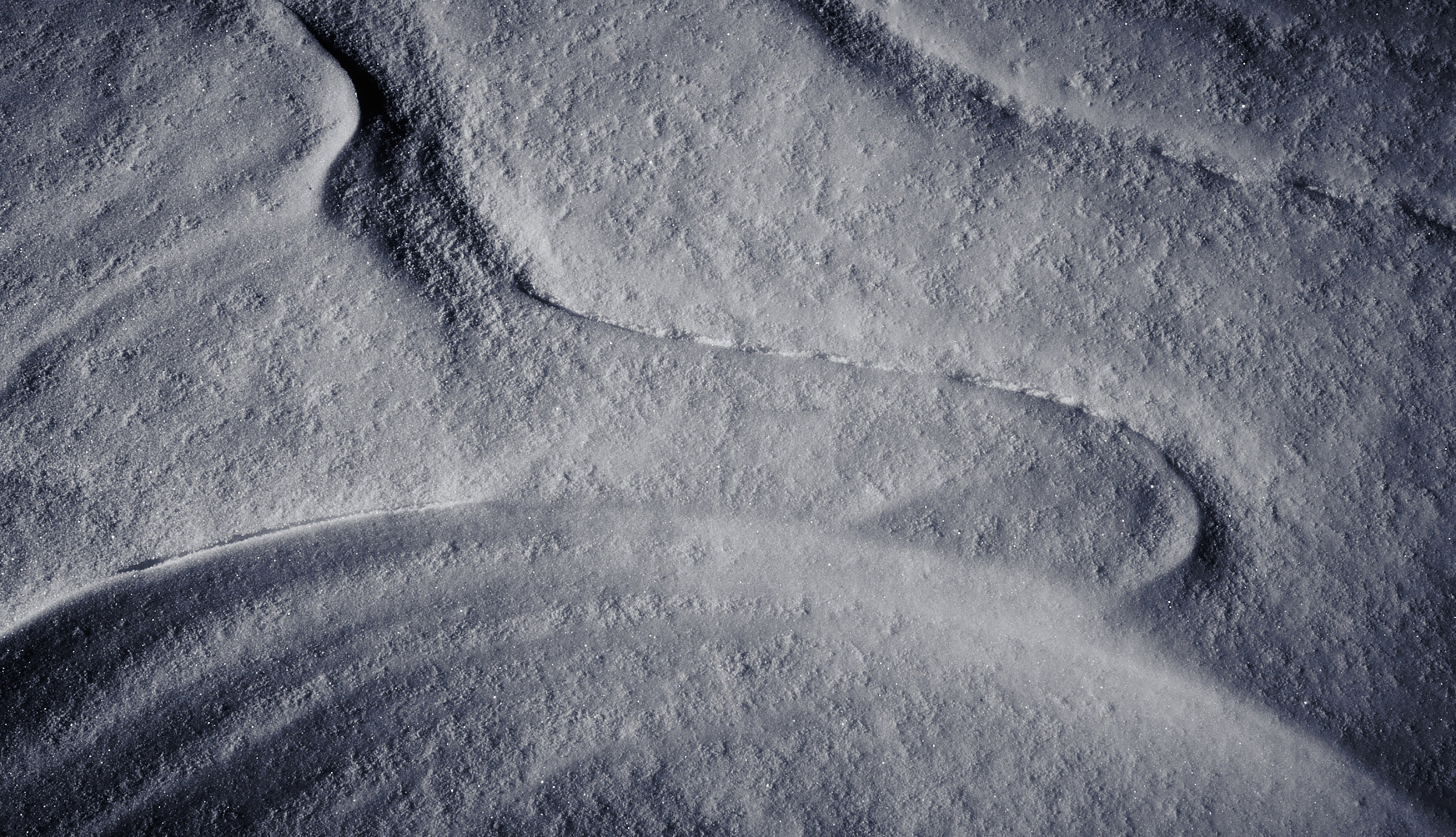
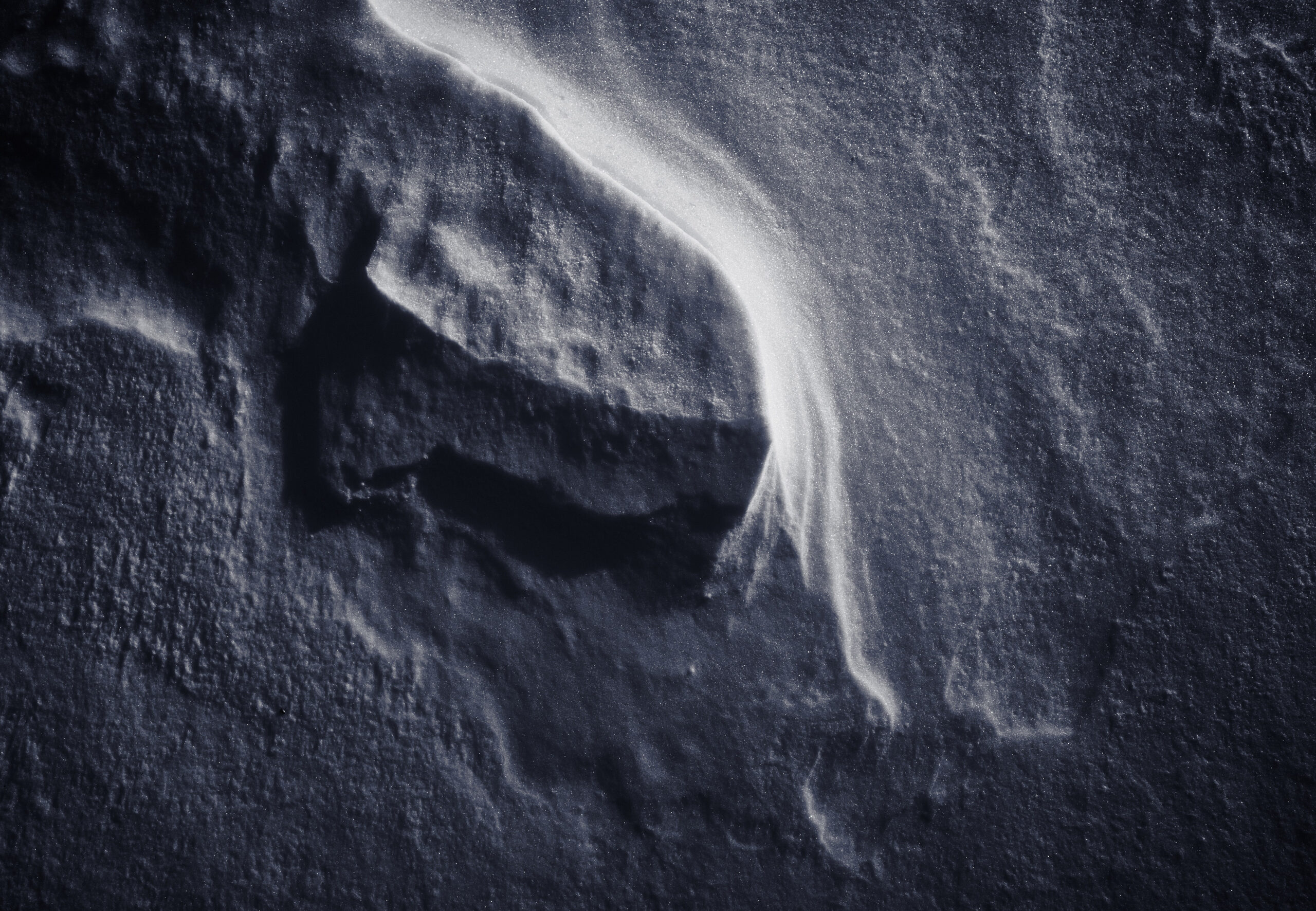
That snow — and by extension, the natural world as a whole — is vastly more complex, varied and surprising than we suspect. That there is truly magic under your feet and, in fact, just about everywhere when you look deeply. I suppose you could say that about all of photography; I’ve always felt that something transcendent happens when compelling content is composed and framed in a thoughtful, artful way.
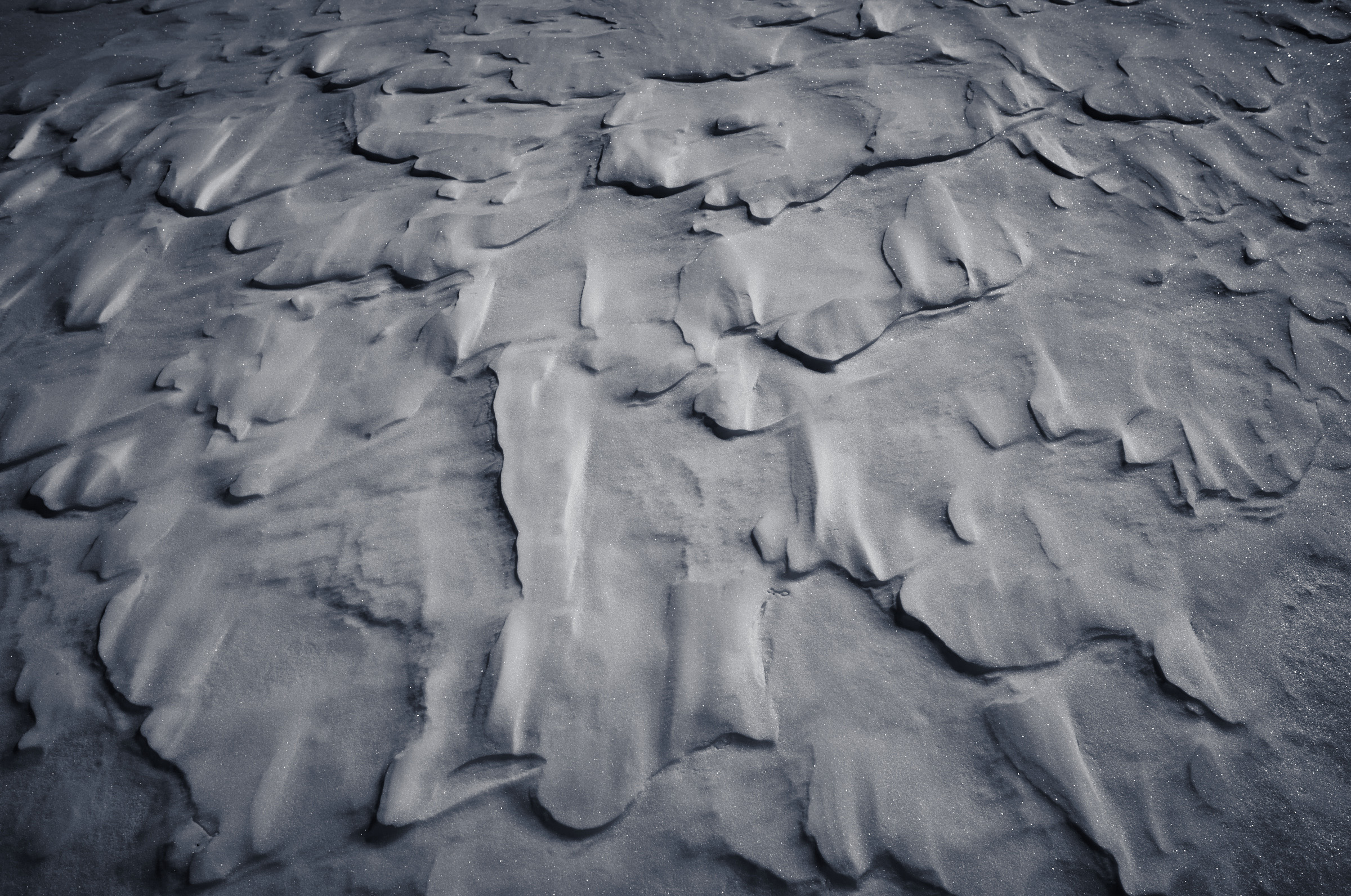
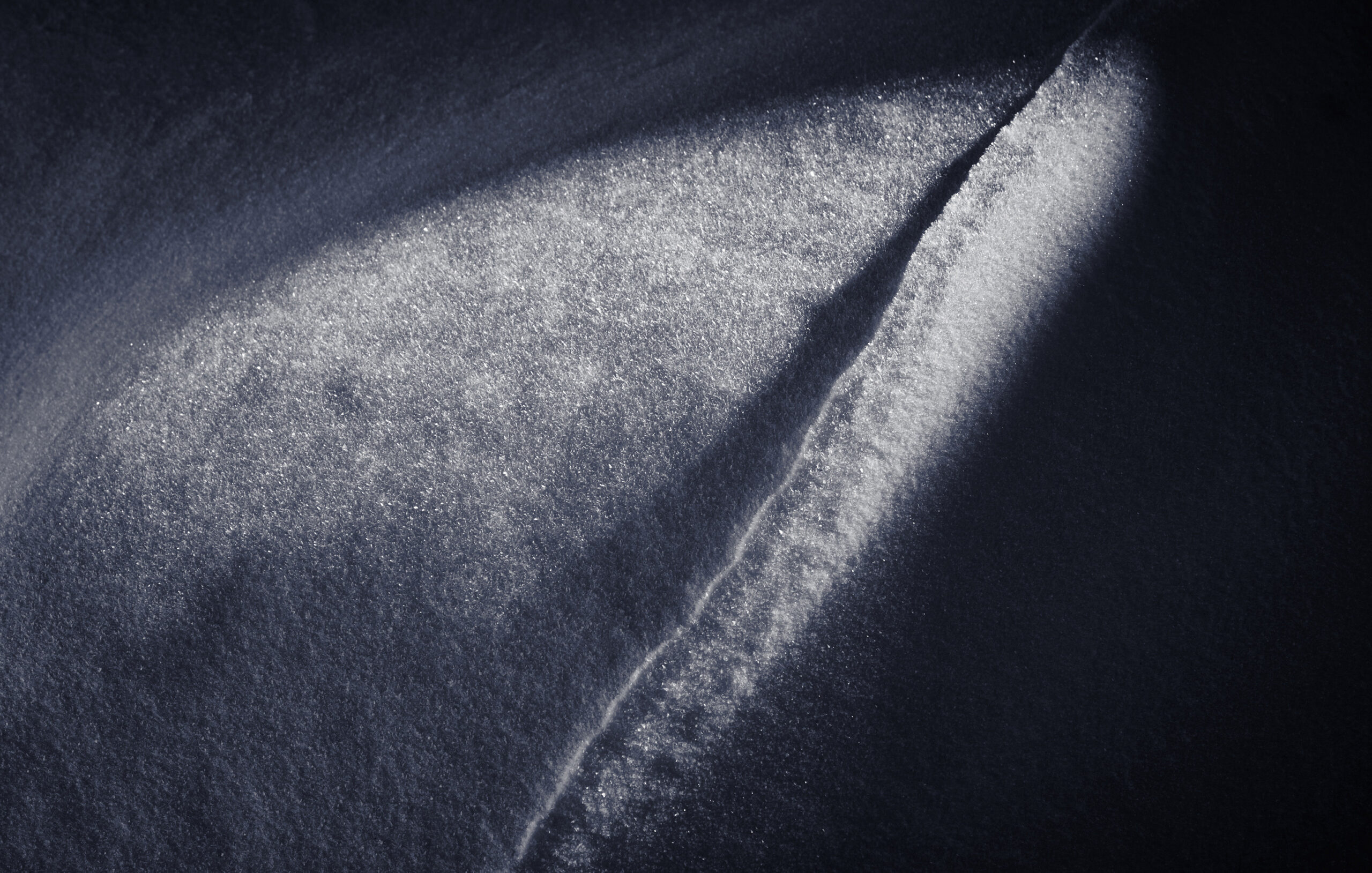
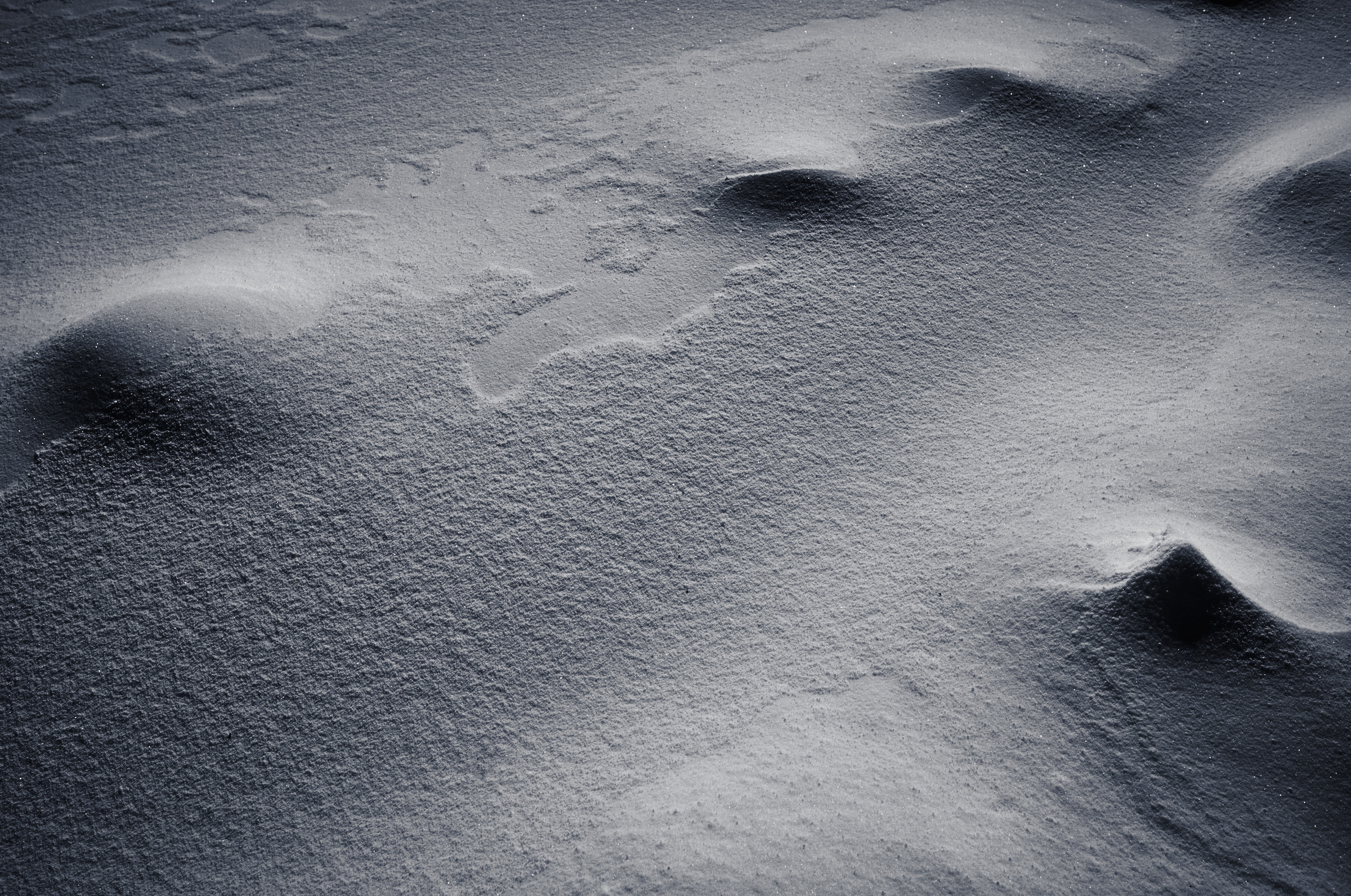
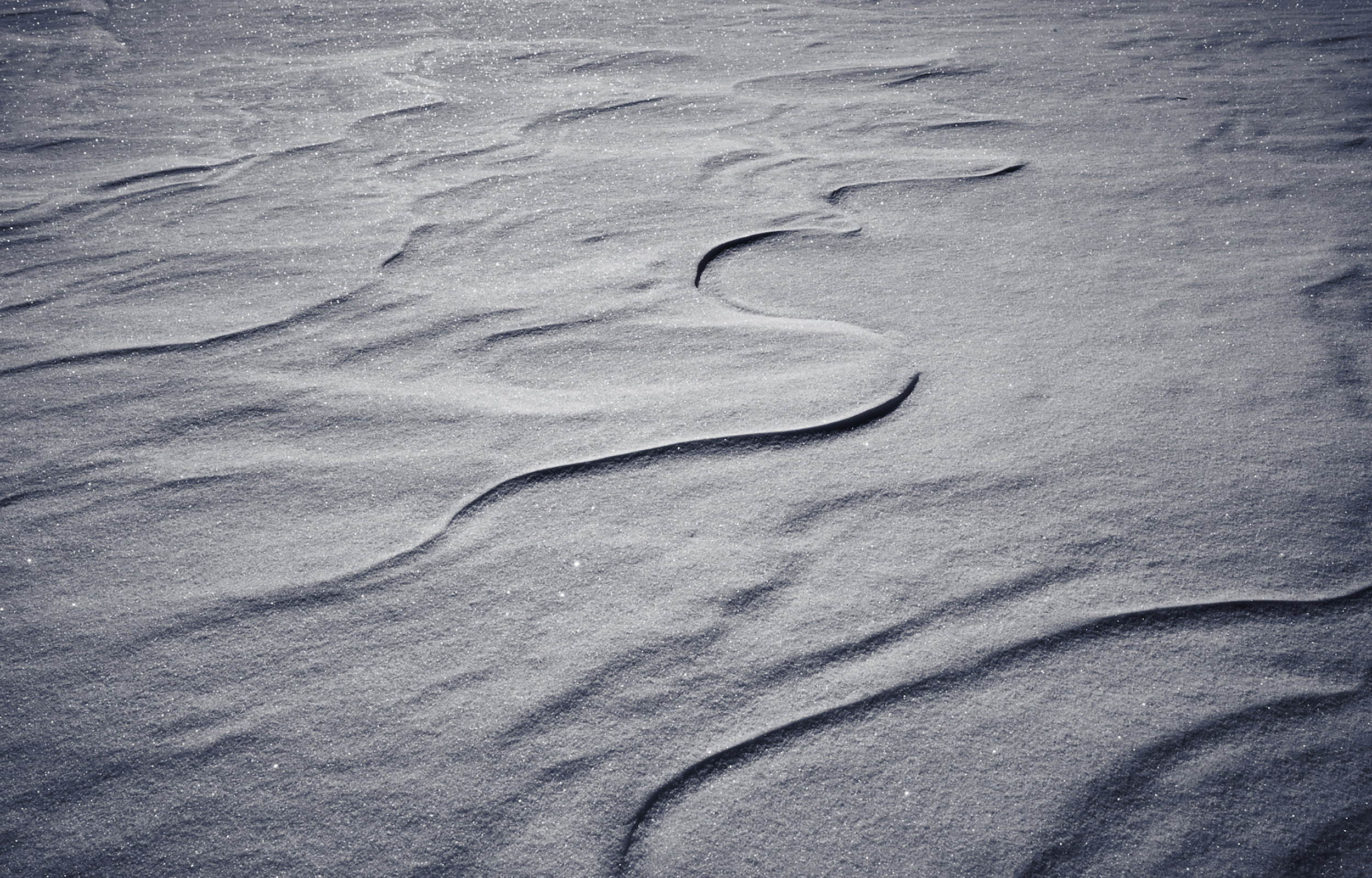
The reactions I’ve had thus far match many of my own thoughts while working on the project: That you can’t tell what it is, but snow wouldn’t be your first guess. That there’s an uncertainty to the scale of what you’re seeing — is this under our feet or the side of a mountain? That these formations uncannily resemble other things: waves, the ocean floor, lava, clay, windswept sand, crop circles, cave paintings, the surface of the moon
How has this focus on snow changed your way of seeing or understanding the natural world?
It has taught me look afresh at what’s around me and in the camera’s frame, to experiment, to question my own choices. In the middle of shooting, I will even look at the compositions I’ve just created, and at what’s in front of me, then wipe my mental slate clean to approach the material again in a new way. I will sometimes think to myself, what if I inverted this composition? Or turned it sideways? Or only captured a fragment of it? What if I moved myself around and framed it from a spot I normally wouldn’t? What’s behind me? What if I used a lens that I normally wouldn’t? It’s a process of sketching. There isn’t one single master shot for each worthwhile batch of snow. I try to dive deeply, exploring, picking apart what’s there, trying to pry loose the secrets and hidden gems.
Walk us through a typical winter expedition for this project—from scouting locations to the moment you decide a particular formation is worth photographing.
It entails a lot of driving and hiking. If you’re in the snow, you’re likely also in a heavily treed area, so the first step is simply finding areas not covered with pine needles and debris. I try to head to the mountains right after storms, when the snow is fresh and untouched. It helps if there’s been a lot of wind to carve the snow in unexpected ways.
The hiking is arduous. Here’s what comes with me: snowshoes, water, snacks, charged phone, sunblock, hat, batteries, cards, and two shoulder bags (worn cross-body) with the camera and three prime lenses. In the car: a blanket and a battery jump-starter, just in case.
The outings are often fruitful, but not always. If I manage to find interesting formations when there’s good light on them, I’ll shoot right then. If not, I return early the next morning to capture them in that low, beautifully raking dawn light.
What drew you to see snow as a subject worth pursuing for the past 4 years?
The project began with a hike on a glacier in Alaska. I had my Hasselblad film camera with me at the time. I love composing in that square viewfinder. I felt that I was creating interesting compositions with the ice formations. After that trip, I wanted to continue that work, but it’s actually quite difficult to find glaciers you can walk on. They’re far away and hard to access, and hiking often isn’t allowed. It’s dangerous, you need a guide, and you need to be tethered to the surface. I very much do not want to die.
The next winter, I decided to see what I could do in the Sierras. I found some worthwhile spots, but shooting the series on film proved to be impractical. Dealing with film and loading backs in freezing temperatures is brutal, especially when the wind is blowing snowflakes everywhere. The following year I went all in on the Leica S3, Leica’s medium-format system. It’s tightly weather-sealed. All the lenses are incredible. The batteries last forever, since it has an optical viewfinder. It’s portable, rugged and ergonomically lovely. It was perfect for this series. For the next three years, I took multiple expeditions each winter.