
Taryn Simon has been one of my favorite photographers for a while now.
I used her seminal book, “An American Index of the Hidden and Unfamiliar” as a teaching tool for years, during a lecture about photo books.
For the uninitiated, Taryn Simon is an investigative artist, with a team of researchers, (and access to the Upper Class via multiple routes,) so her ability to gain entry to places inaccessible to the rest of us, and put financial and human resources towards ambitious projects, is unrivaled.
Her book fascinated me, as it is both spare and super-grandiose at the same time.
One large format-photographic image was laid out per page, paired with a paragraph of text explaining why she’s photographed inside a secret bunker in Colorado, or a Nazi group, or Orthodox Jews, or inside the CIA.
Pulling off maximalist ideas in a minimalist format is insanely difficult.
Needless to say, when I was in NYC last week, and had a chance to see her new show, “Father Country I Do Love You,” which recently opened at the Guggenheim, I was damn well going to grab it. (And hold tight, like my cousin Daniel’s big dog Rudie shakes a stuffed bear.)
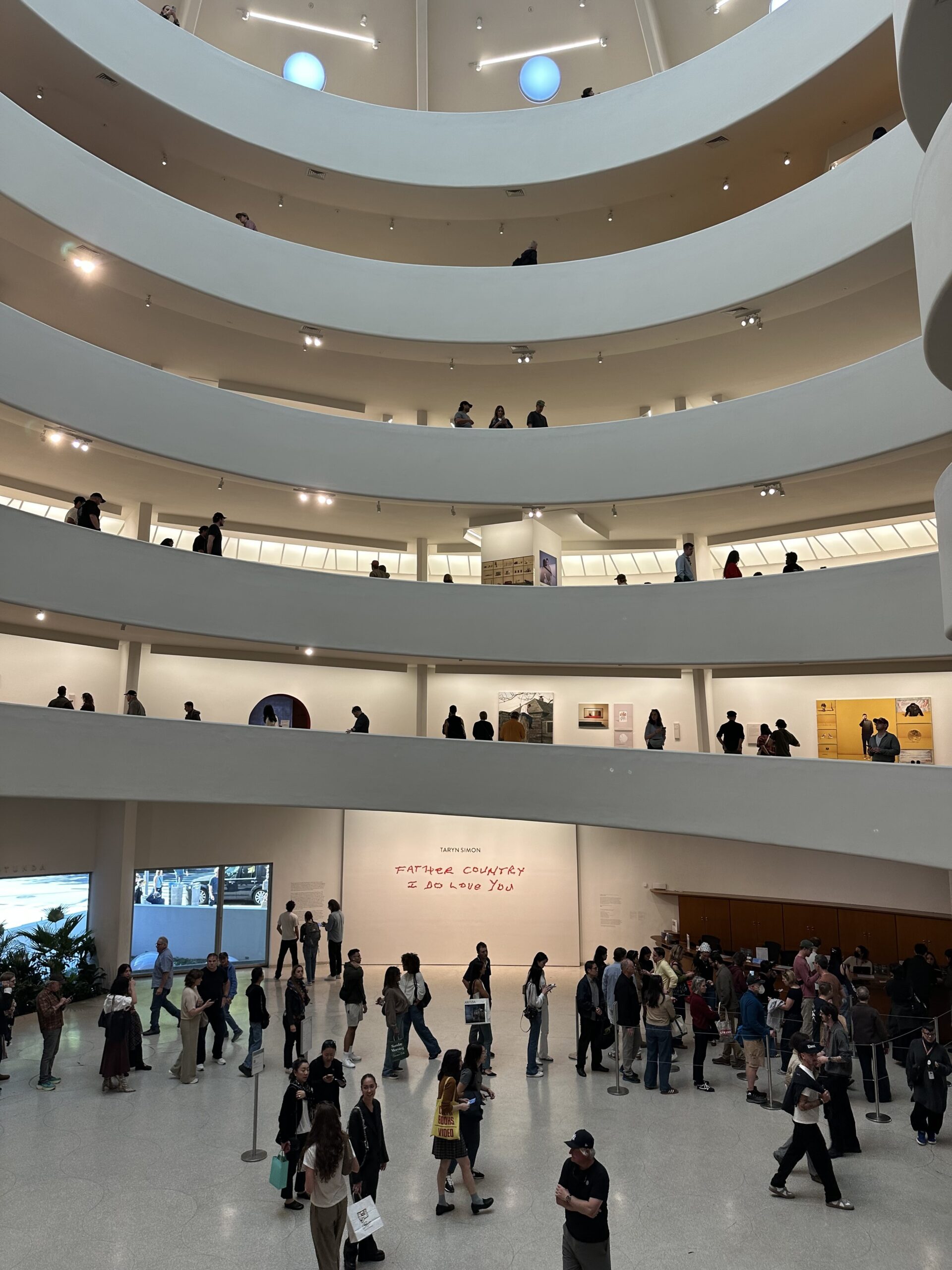
The new exhibition, however, features maximalist ideas in a maximalist format.
I liked it, in two hours of viewing, but probably could have used twice that. (Perhaps with four hours I would have loved it.)
A friend had recommended the exhibition to me before it opened, and I read (most of) an NYT long-read piece about the show too. (And the artist.)
So I mostly knew the premise: Ms. Simon met a former FBI agent, they became friends, and over 10 years or so, she learned countless stories about his career.
Those stories connected to so many threads of late 20th and early 21st American Century life, she must have felt like his career fit her art-making-desires like a perfect pair of sweat-pants.
There were unlimited rabbit holes to explore, and explore Taryn Simon did. (The agent remains anonymous.)
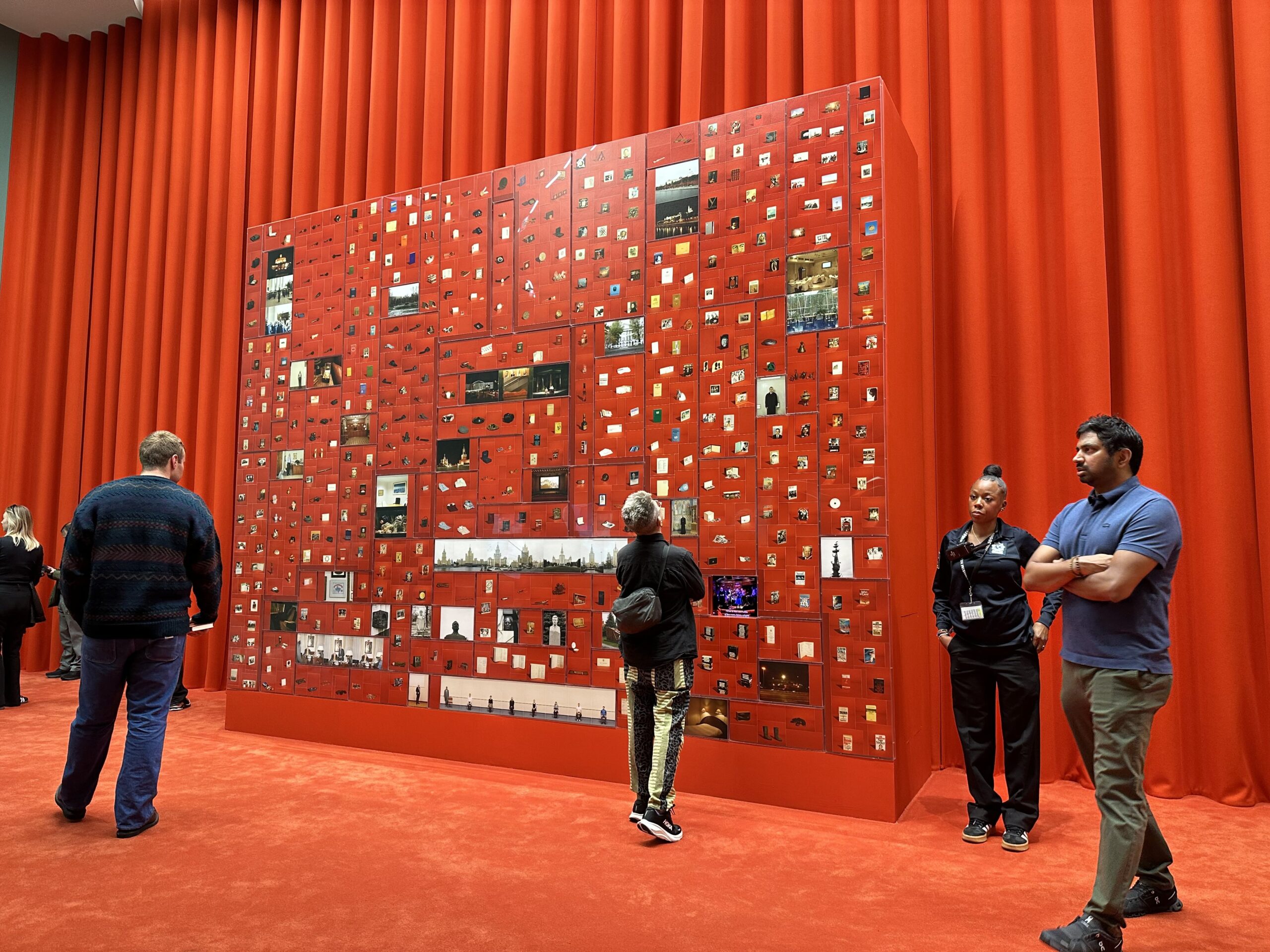
Here are some thoughts I took down as live, via voice-note, while I was in the exhibition:
“She’s a mad genius.”
“About halfway through, your brain starts to get really tired. But I’ve been here an hour so far.”
“It feels overwhelming, like 2026 is overwhelming.”
“Dodging people to read is annoying as fuck.”
“Art as spectacle representing America as spectacle.”
Let me address the quotes now, with hindsight.
Is she a mad genius? Well, I’m not sure if she’s mad, and she’s likely a genius, but this show was mad. So over the top. I would have edited it down significantly, if it were me.
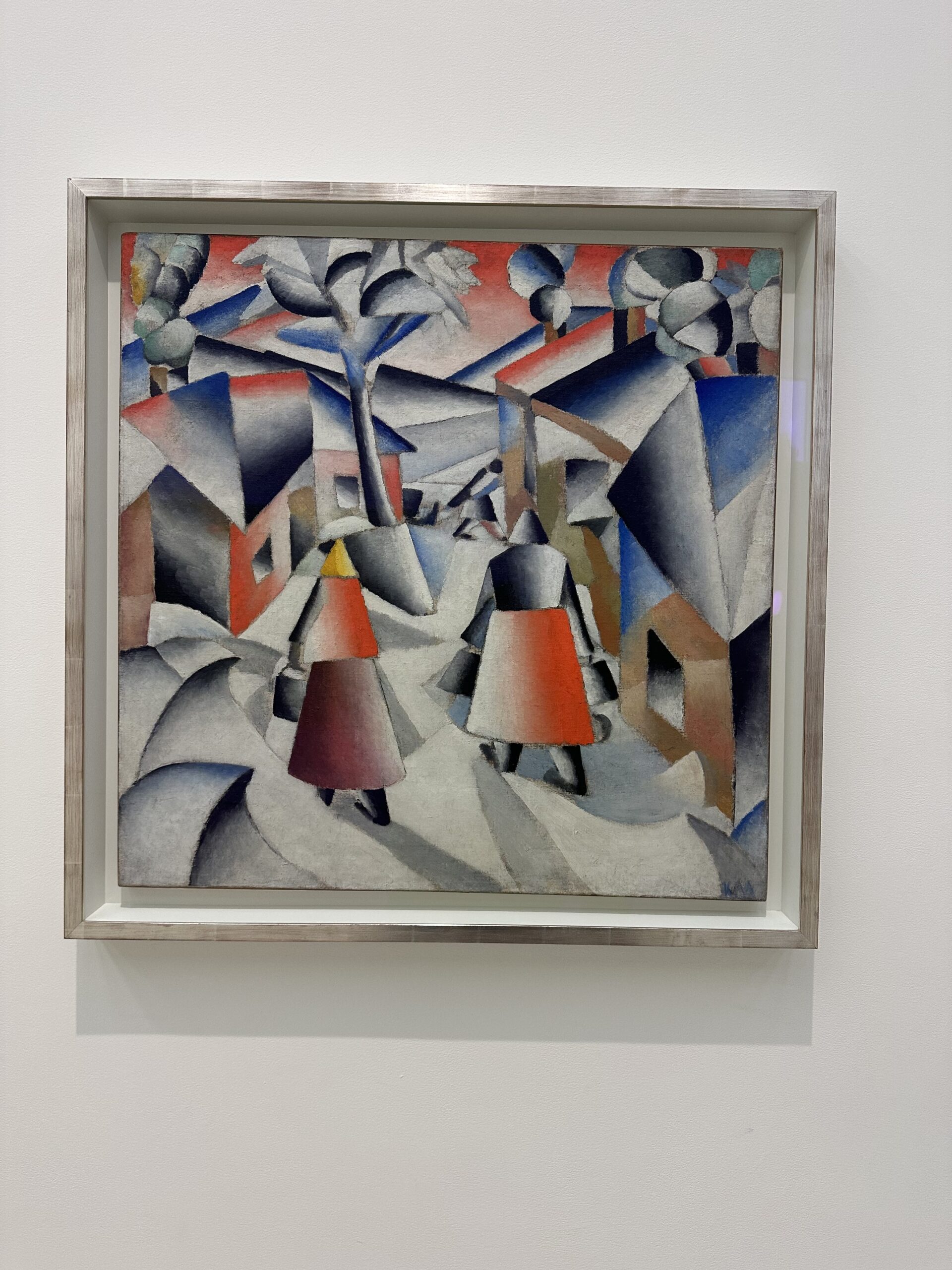
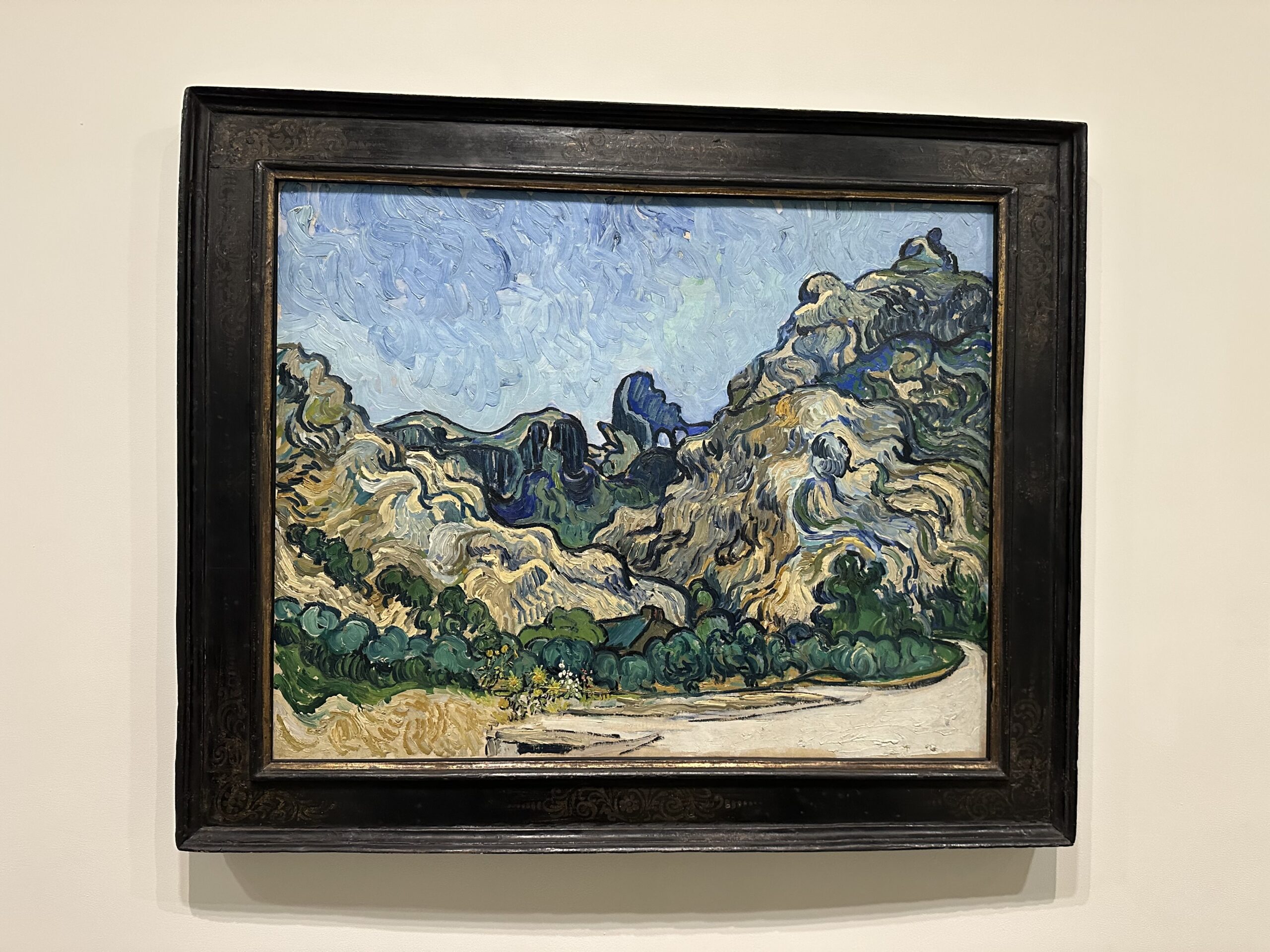
Theo and I spent two hours in the show, only briefly dipping out to see permanent collection masterpieces from Cézanne, Van Gogh and Malevich.
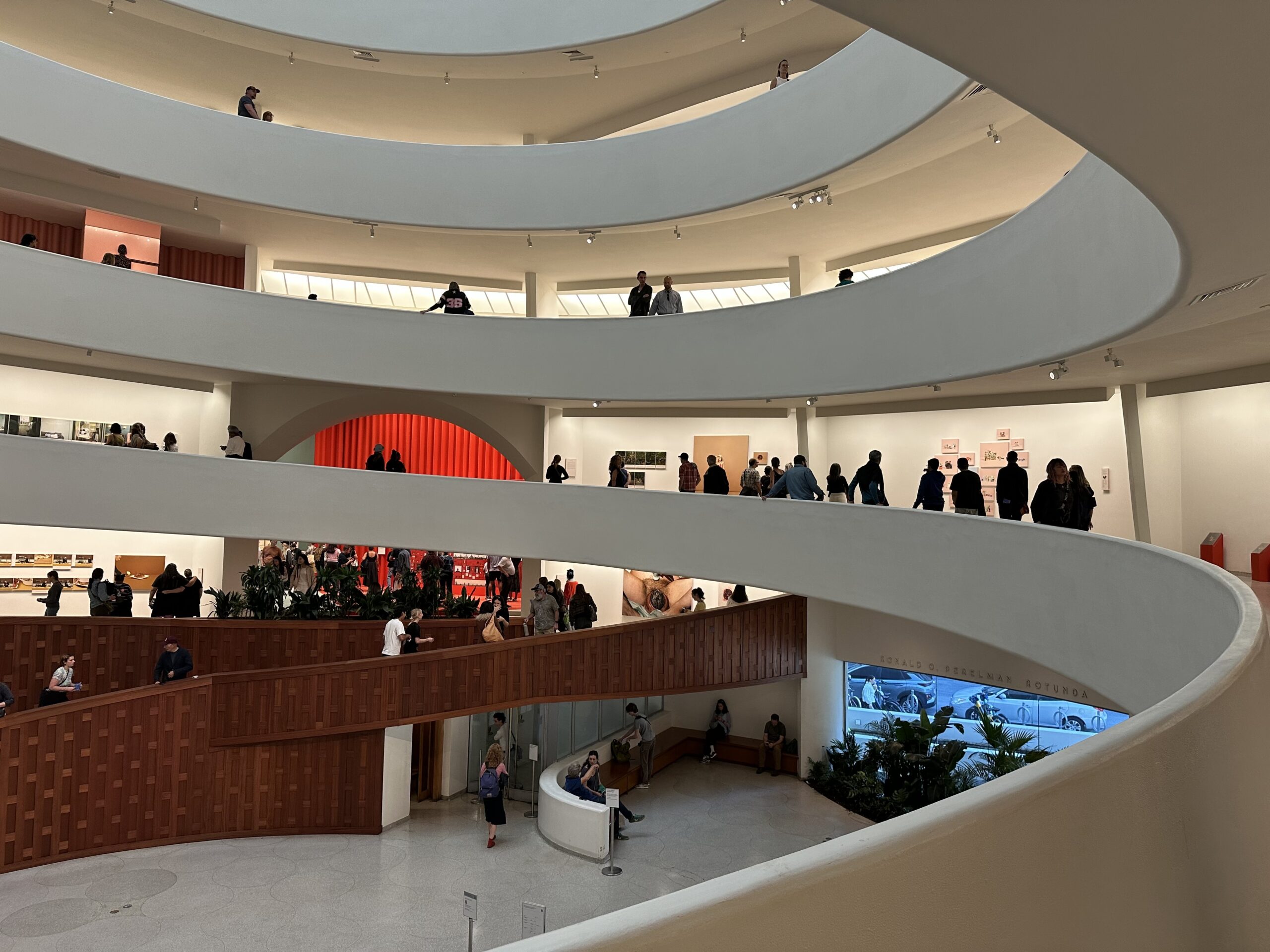
And those two hours still required us to skip about 5 installations, maybe seven, on our way up the rotunda to get to the end.
(Having a tired brain after an hour also meant the second hour was a bit hazy.)
Being overwhelmed is a sensation we’re all familiar with in 2026. To be blunt, this year has been as challenging for me as the pandemic. (Words I never thought I’d have to contemplate.)
So an exhibition built out of what must have been 30 installations, each with its own specific text pieces that need to be read to decode the art, (with photographic title maps too,) is meant to overwhelm.
It’s pure structural metaphor.
(There is even some apparatus they built that lets users turn a crank to release a ball, at the end/top of the show, which rolls down the floor on along a wooden track.)
The color schemes of each room, or installation area, are intense, and each piece connects to the next.
Spectacle of the highest order.
And dodging people to read IS annoying as fuck. The text pieces were small. Like almost need your reading glasses small. And at a show this popular, it made the experience of moving along and around other people a huge impediment.
This exhibition is grandiose, in a Trumpian fashion, which just feels right for the Zeitgeist.
It was a show made of and for the brain, as there was not a lot to emotionally relate to in the exhibit.
Looking at the positive, it made the installations that spoke to the head AND the heart stand out.
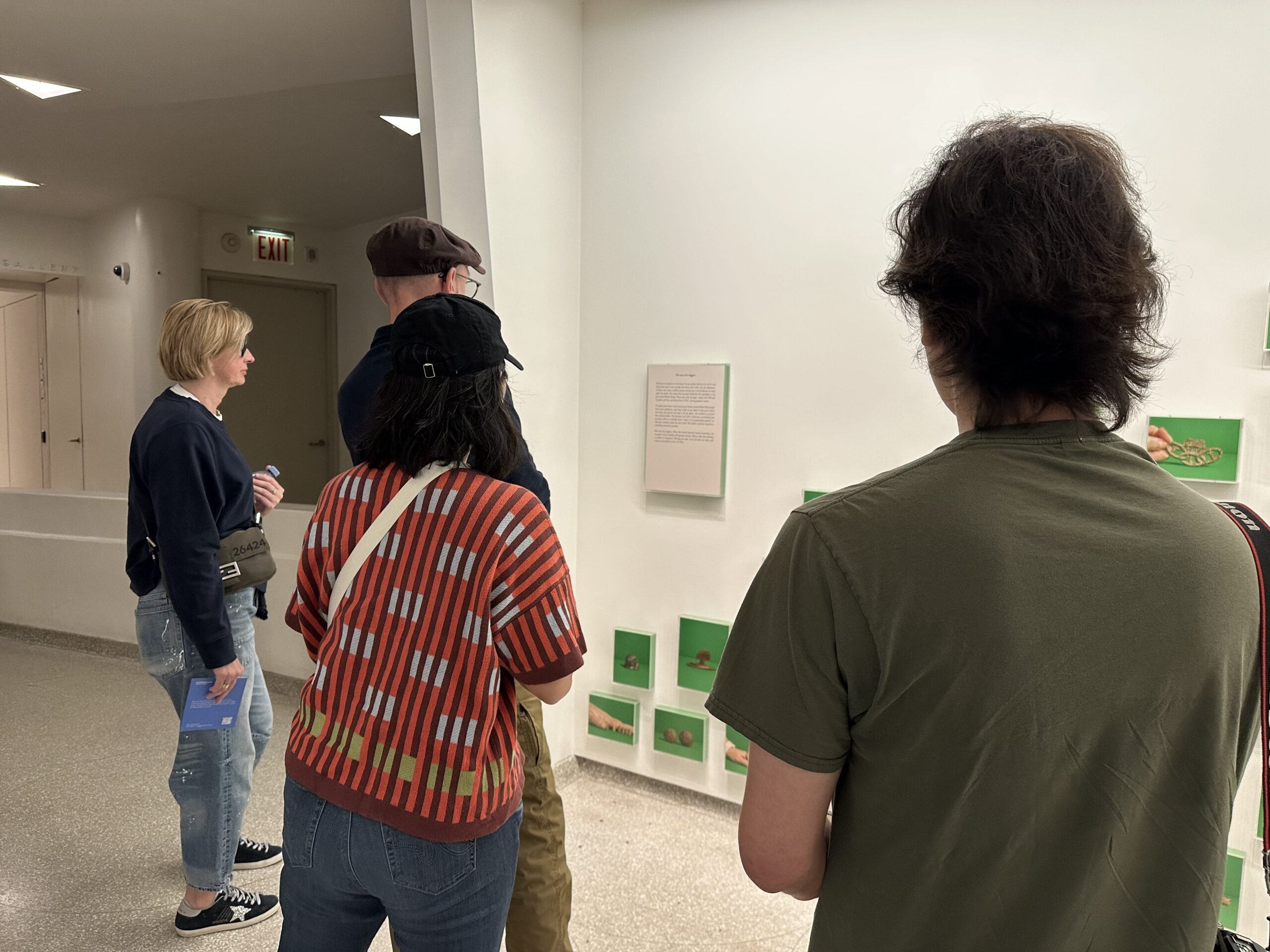
There were installations about Jodie Foster, Russian spies, American spies like Aldrich Ames, Vince Foster’s suicide, an airplane bombing, Marion Berry’s crack sting, and so many more.
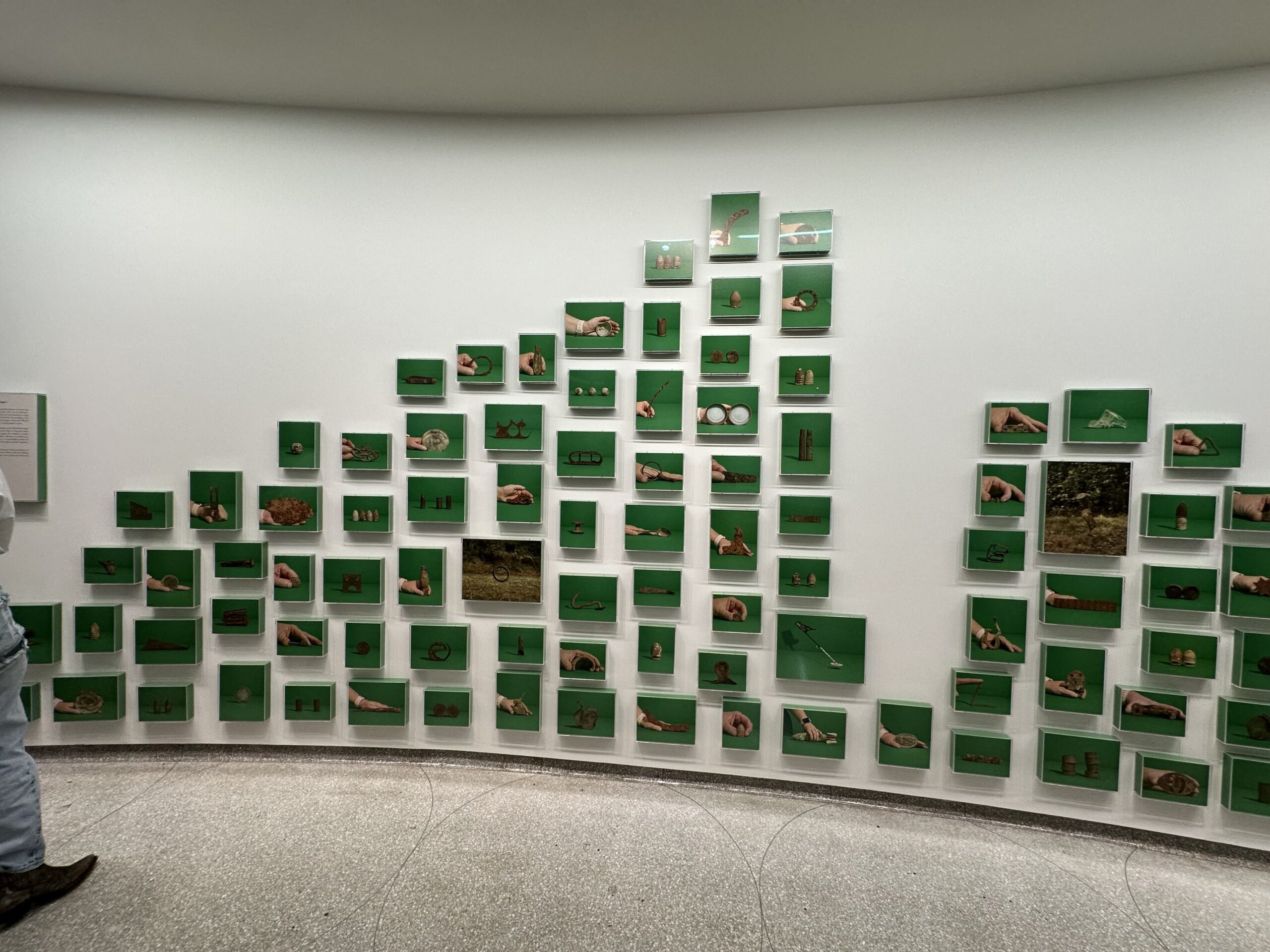
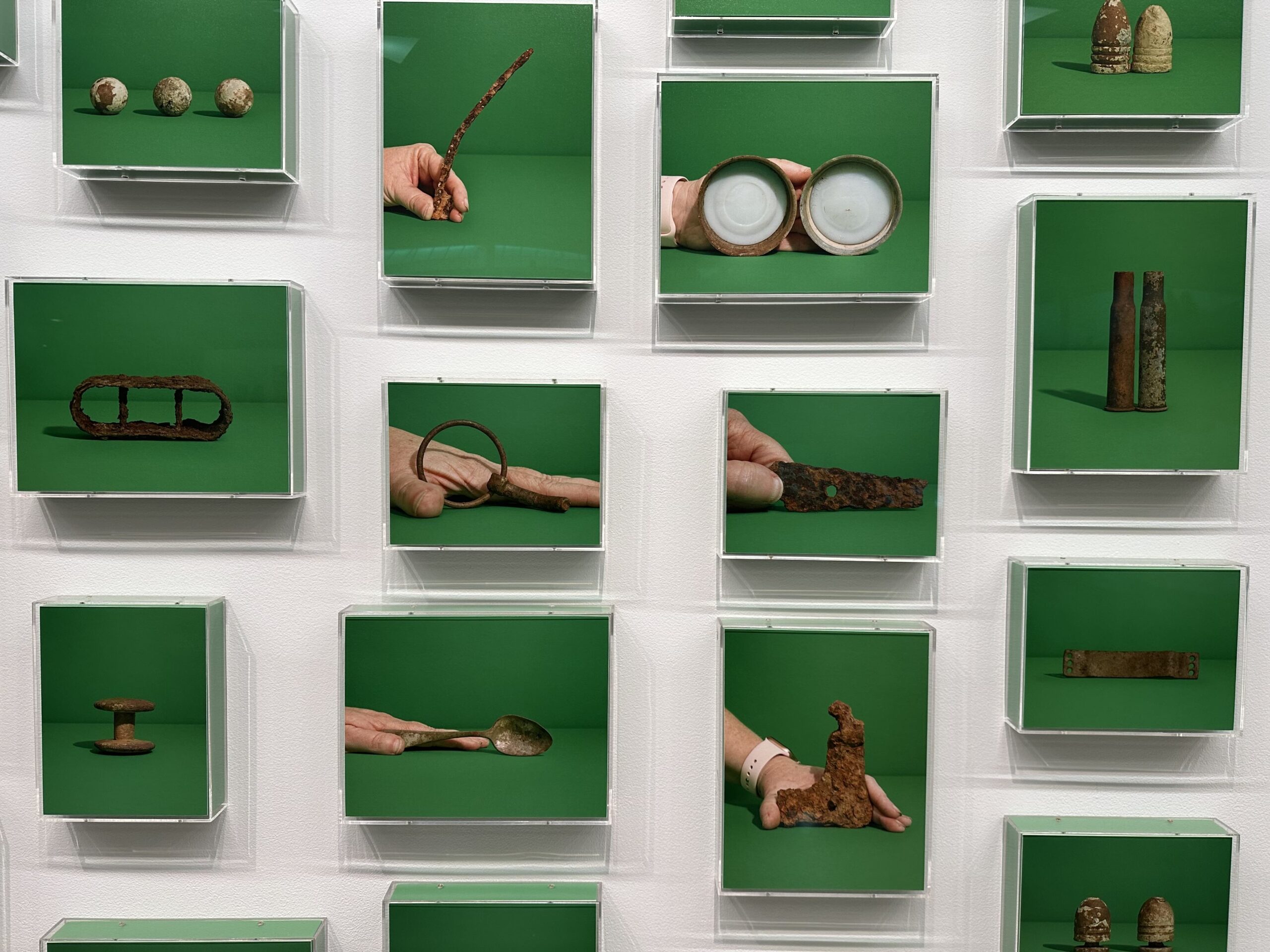
All the installations were sharp and crisp, looking great for the ‘Gram.
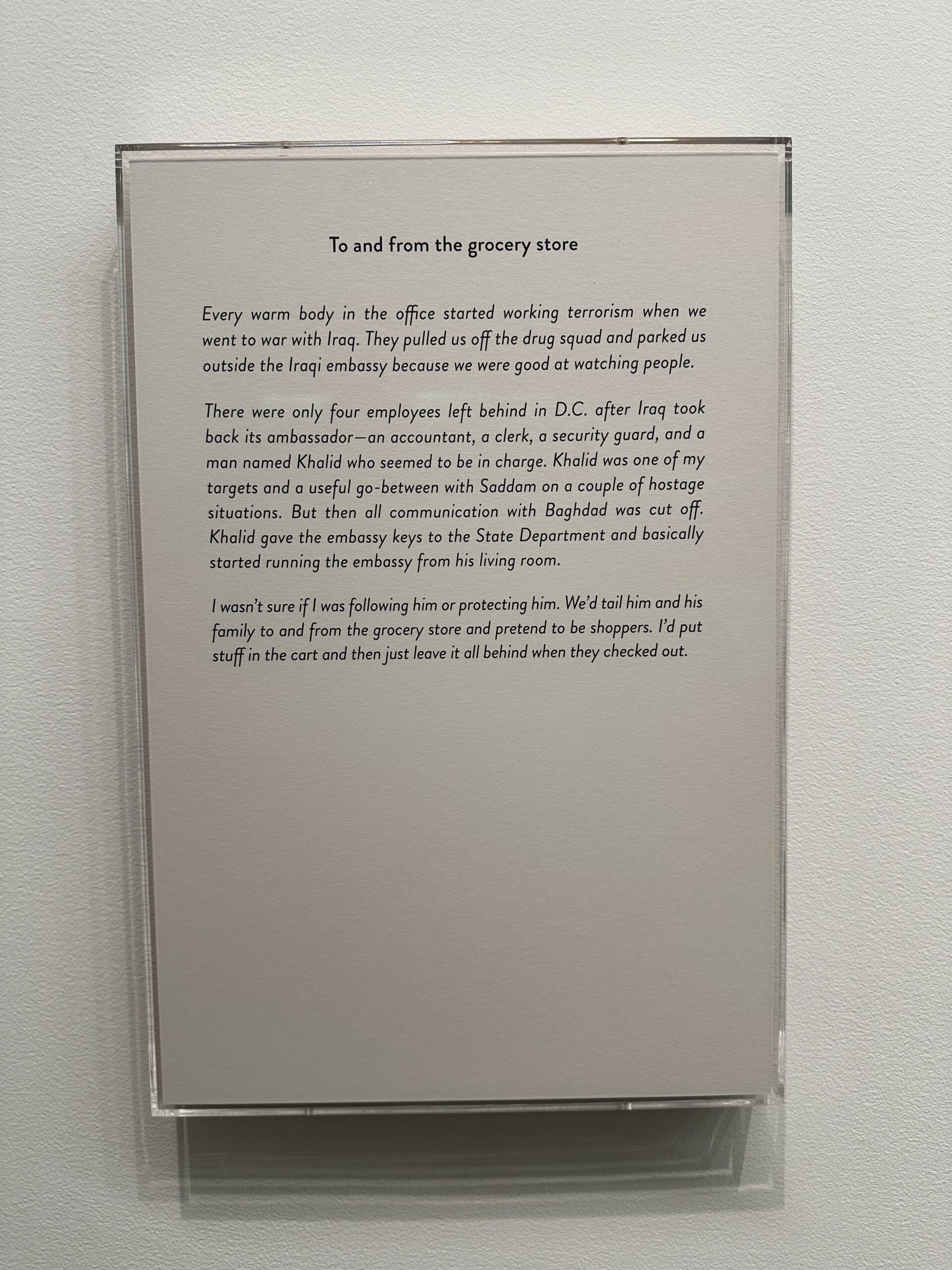
But the ones that moved me incorporated text in a more holistic way, and also created an element of surprise.
I felt, (and Theo wrote in Sunshine and Olly,) the show is like a puzzle. And once you know how to decode it, shuffling up the rotunda to the next one gets habitual.
The first piece that grabbed me was about an Iraqi diplomat who ran the embassy in DC at one point during the Iraq War, and then had his home robbed by ISIS, and bombed by the Americans.
He shared his favorite recipe for an Iraqi rice dish, and Simon photographed the process, and the final product. Within the image panel, you read both the recipe, but also smashed in are poignant quotes as well, like:
“The only thing left was my daughter’s scarf and her childhood toy. I saw them in a picture my friend sent me.”
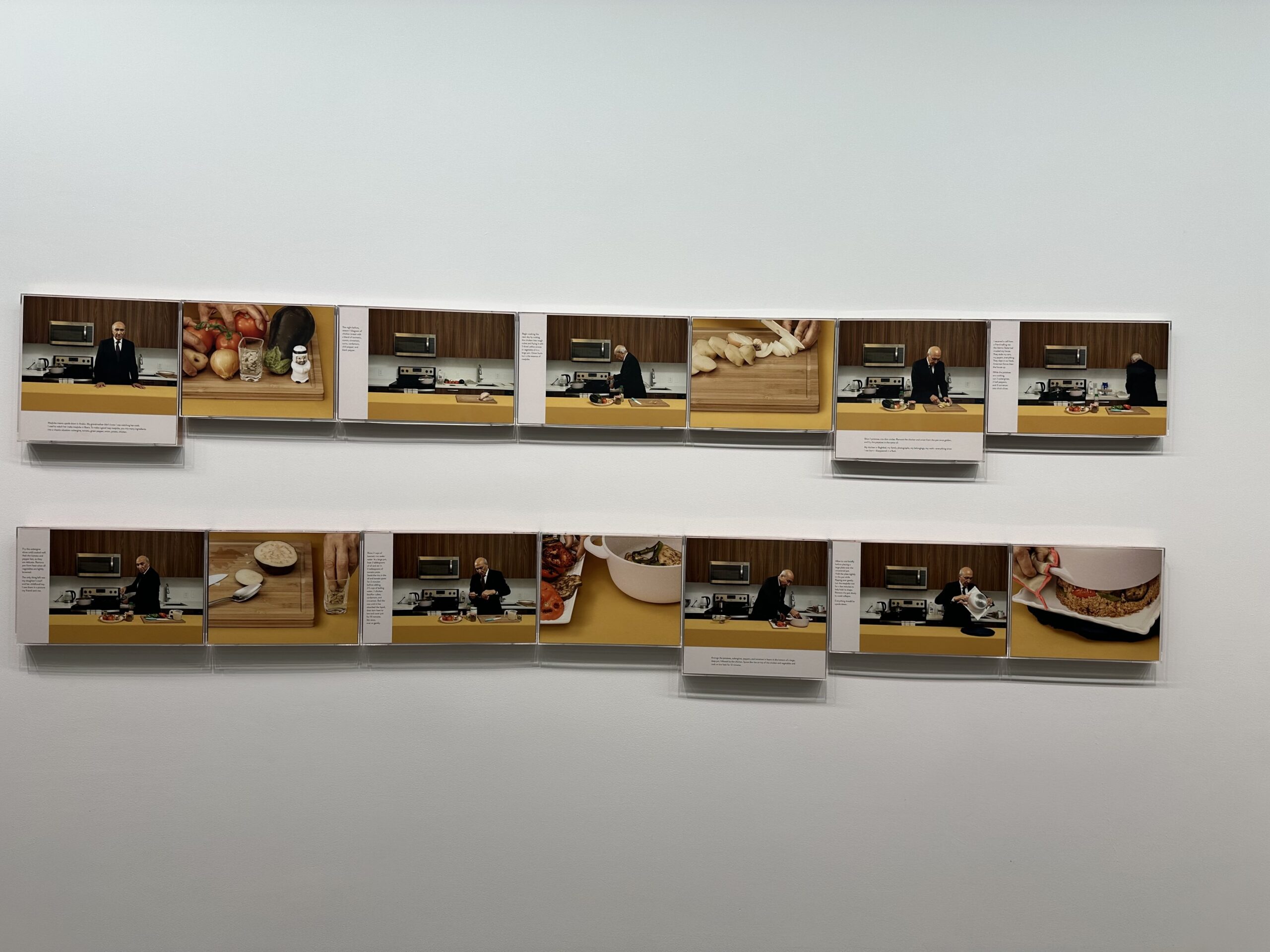
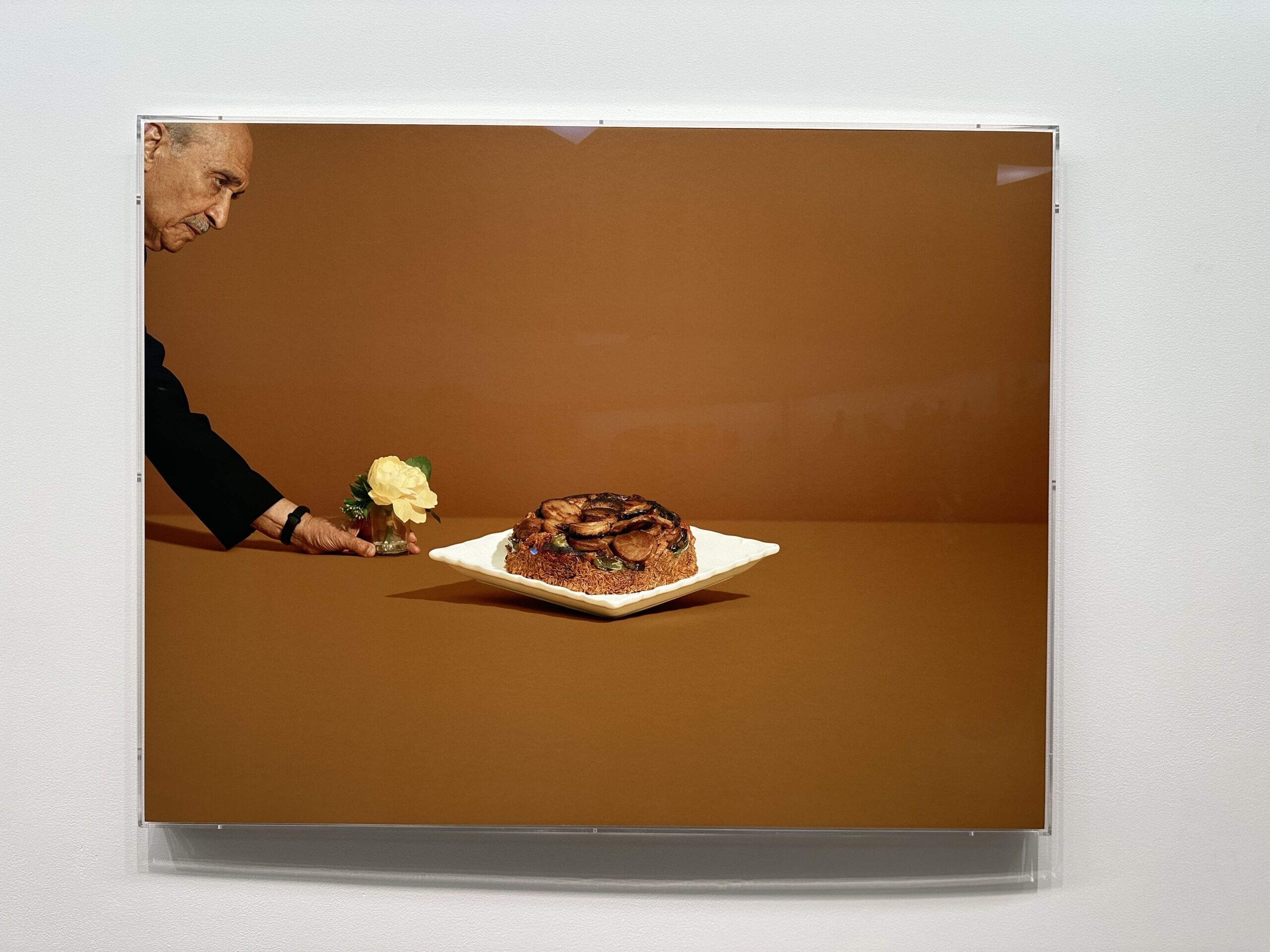
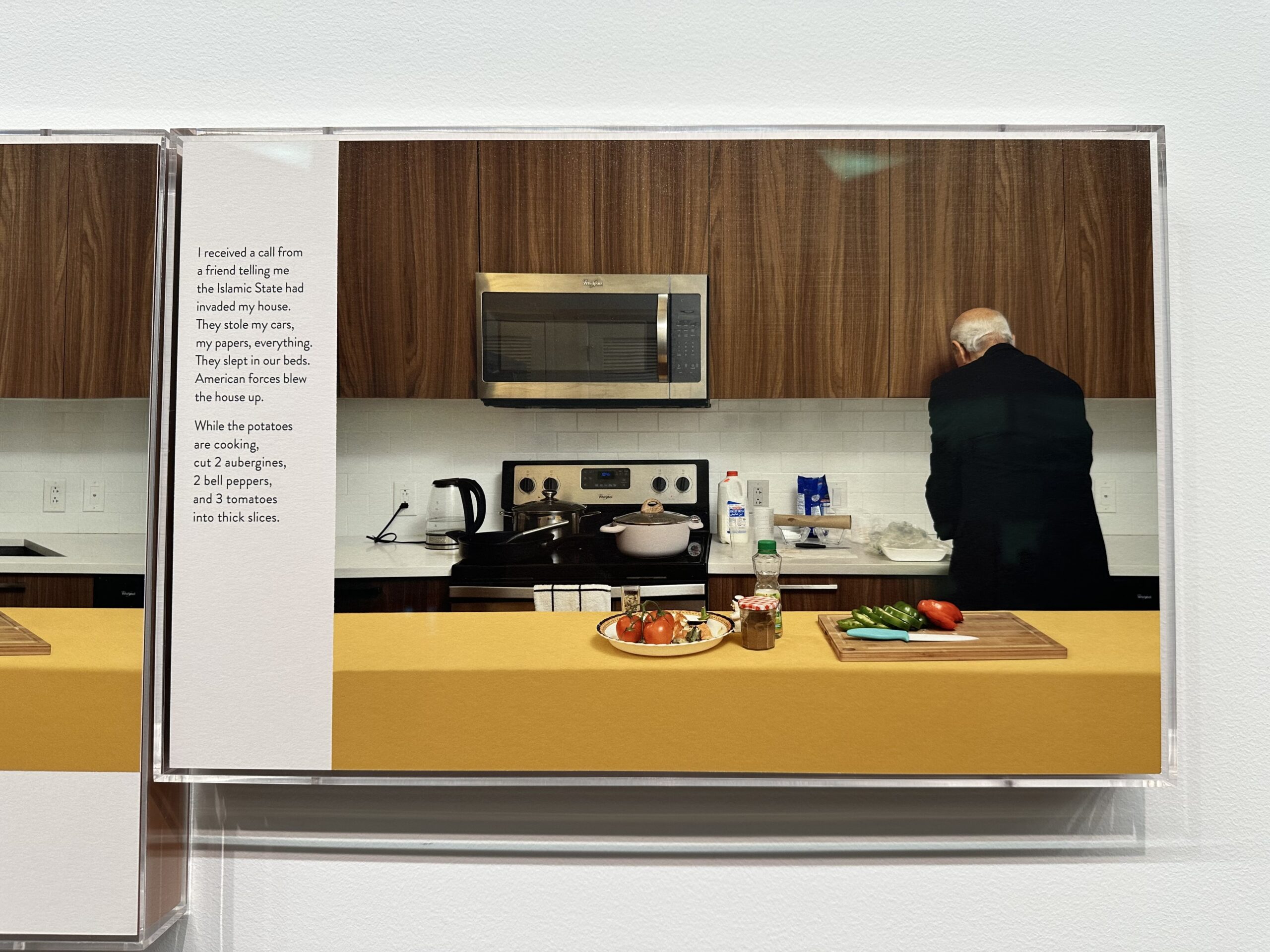
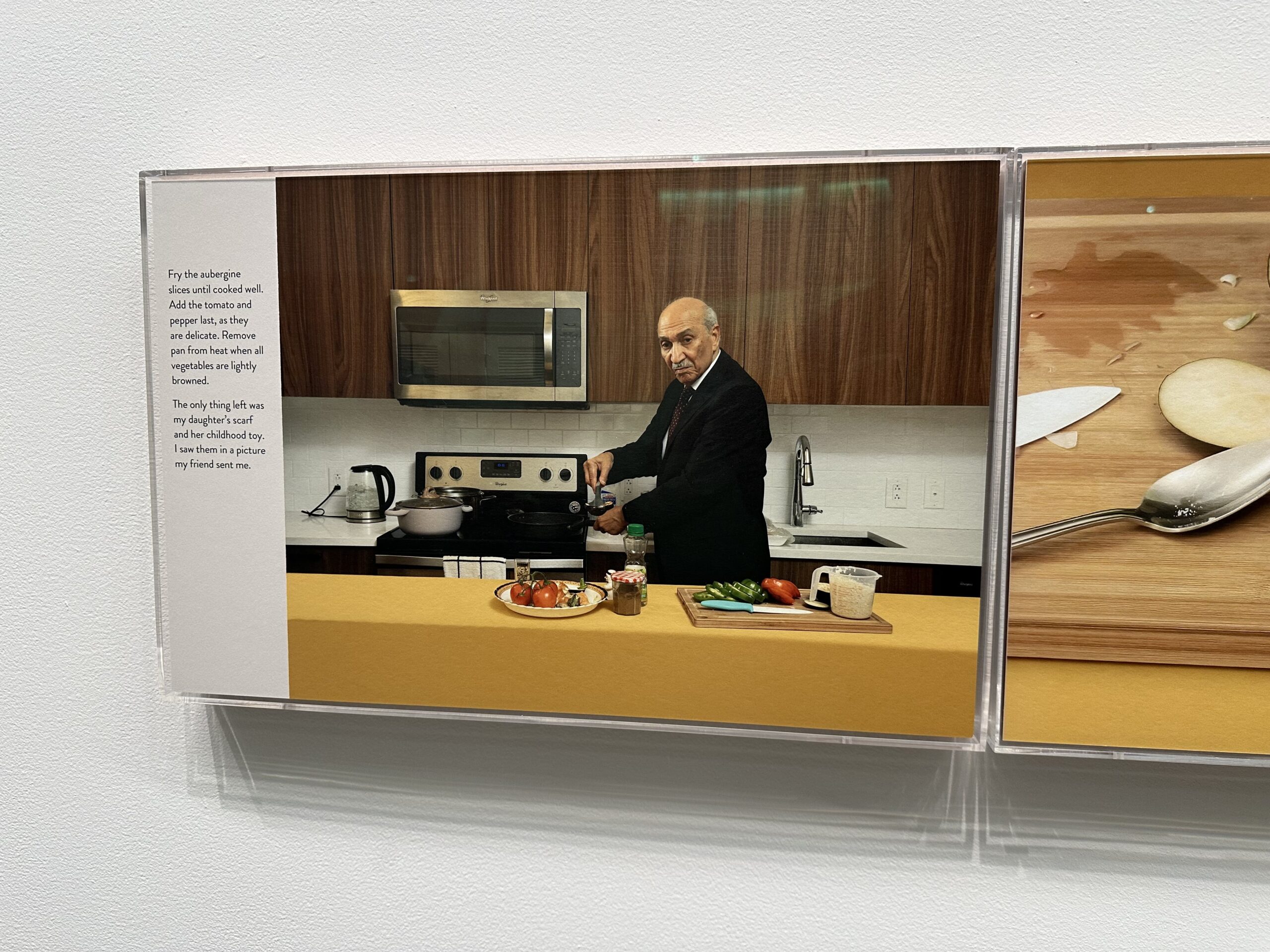
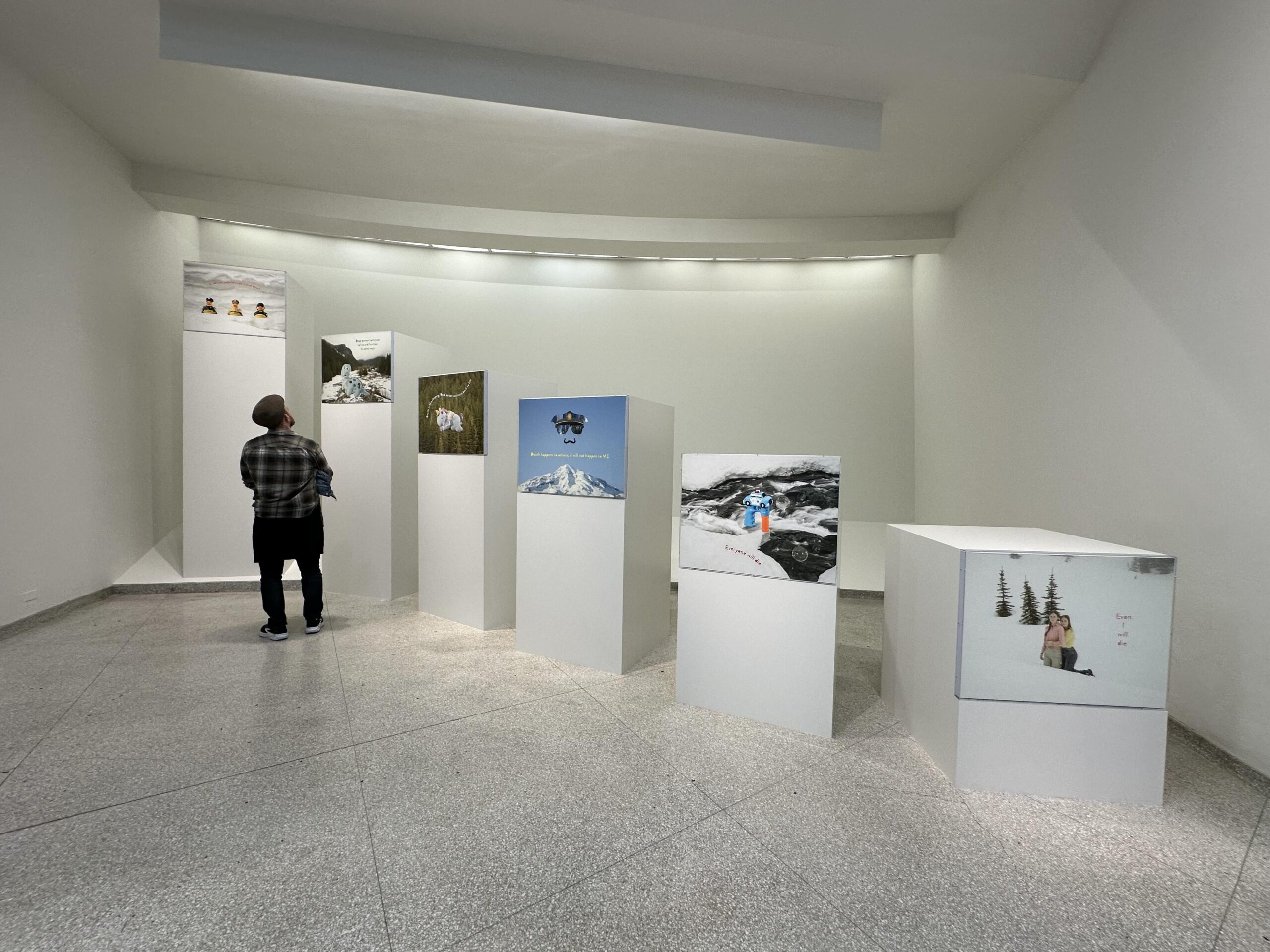
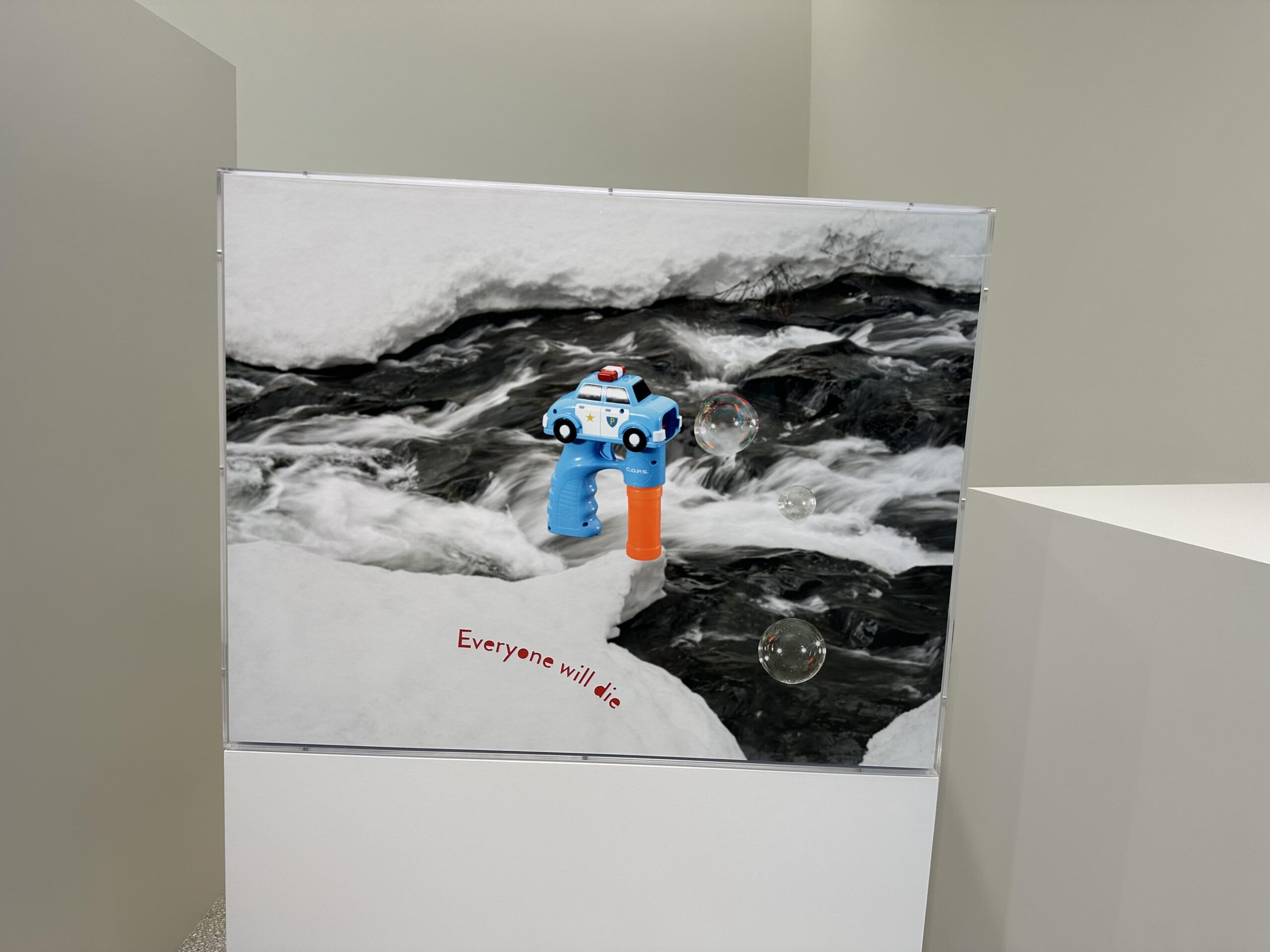
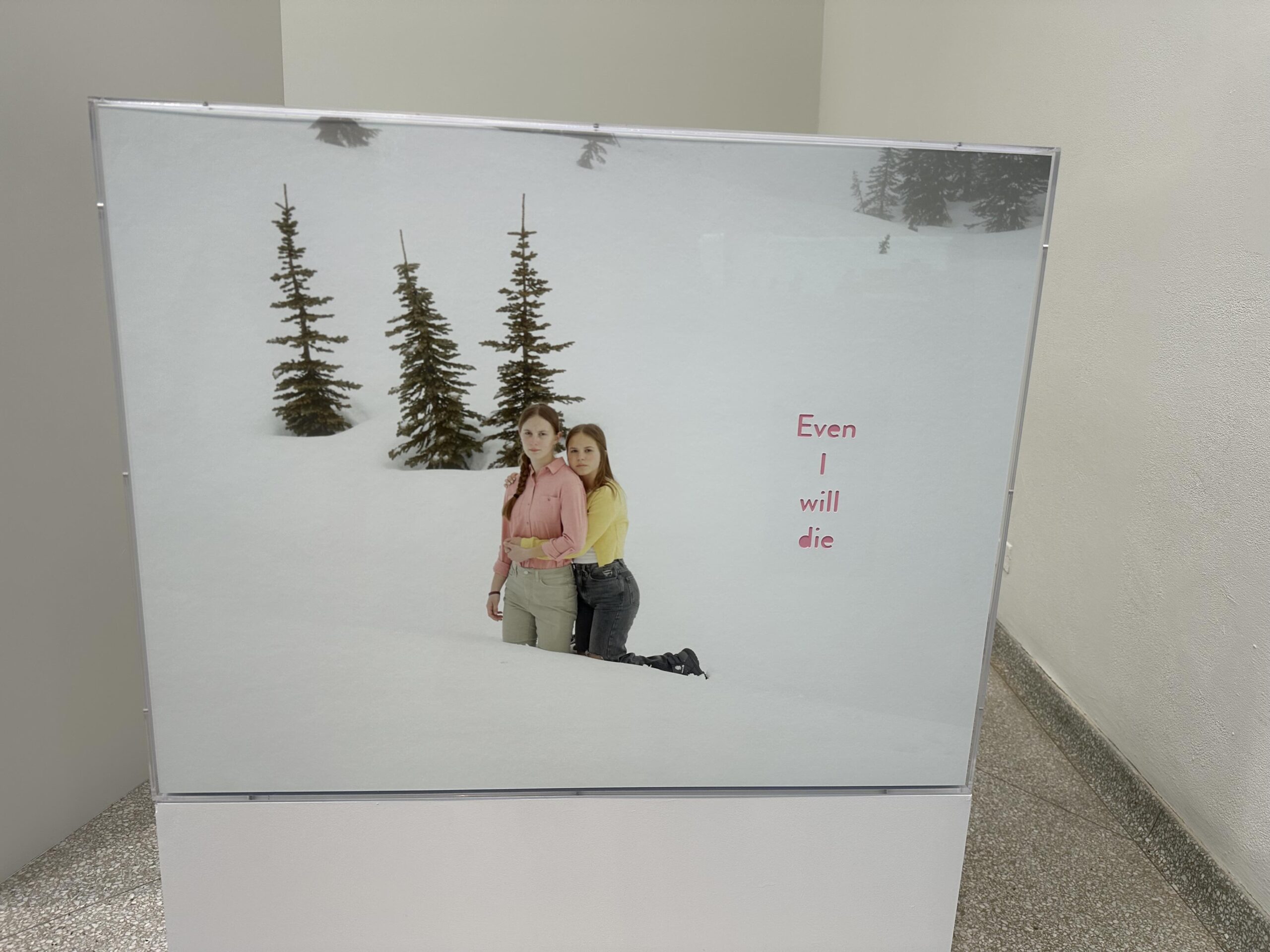
The second emotional piece, for me, was near the end. A female Park Ranger at Mount Rainier National Park was shot and killed by a former soldier on a spree back in 2012.
She was a mother of two young girls, and the text tells us the FBI agent was a part of C.O.P.S: Concerns of Police Survivors; an organization that helps families of fallen officers.
You can see for yourself these photos are different. They have blunt, yet dark words included within the images: Everyone will die. Even I will die.
Definite gut punch.
The end of the show features some disturbing-in-a-scientific-way videos of cicadas, and then one of what I believe is the artist’s father, (who text tells us was diagnosed with Alzheimer’s in 2020,) holding Kodachrome slides and saying weird stuff.
Phenomenal pieces, for sure.
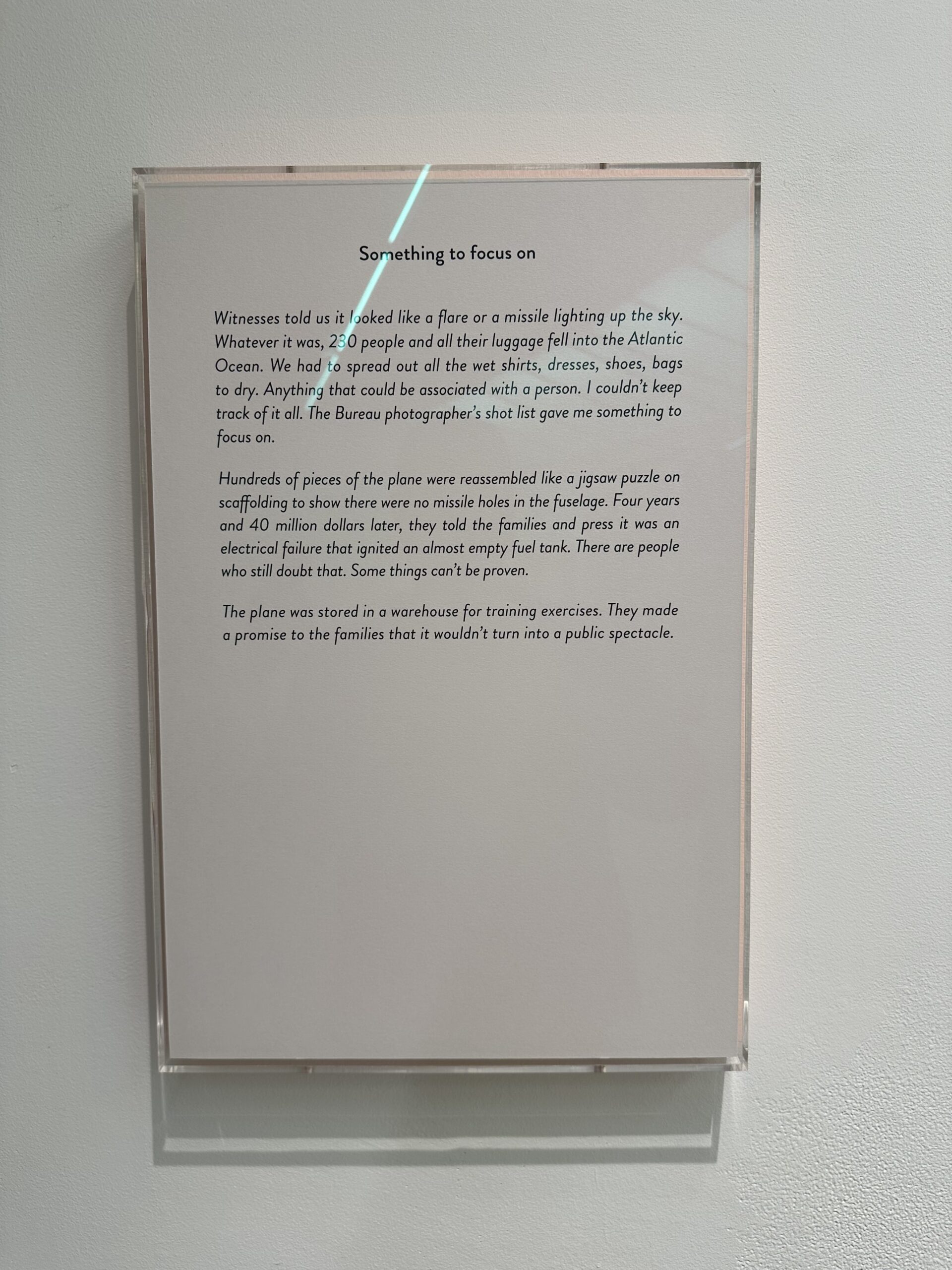
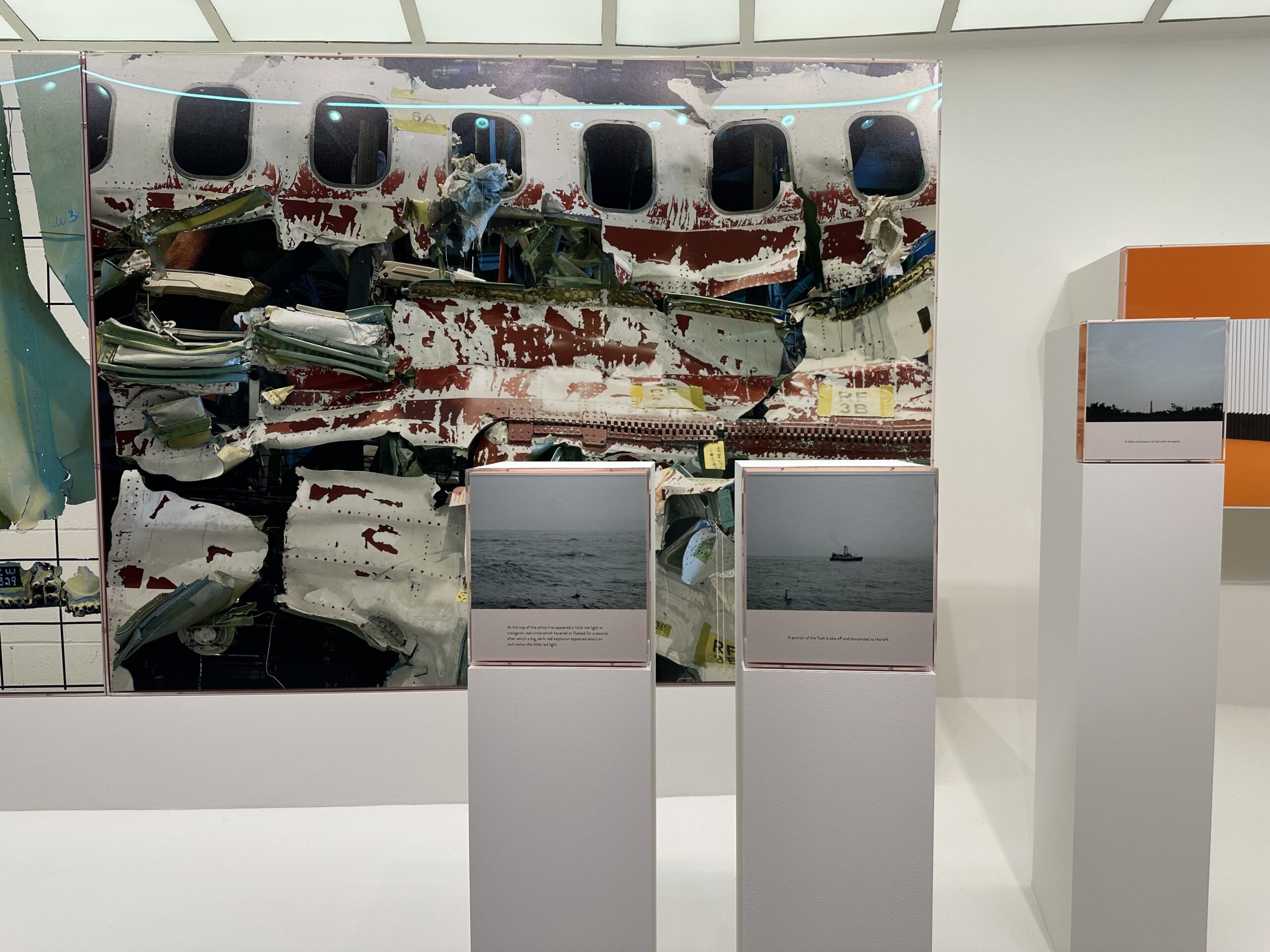
On the way down to leave, (in a hurry, I admit,) I noticed an installation about the investigation into an airplane bombing.
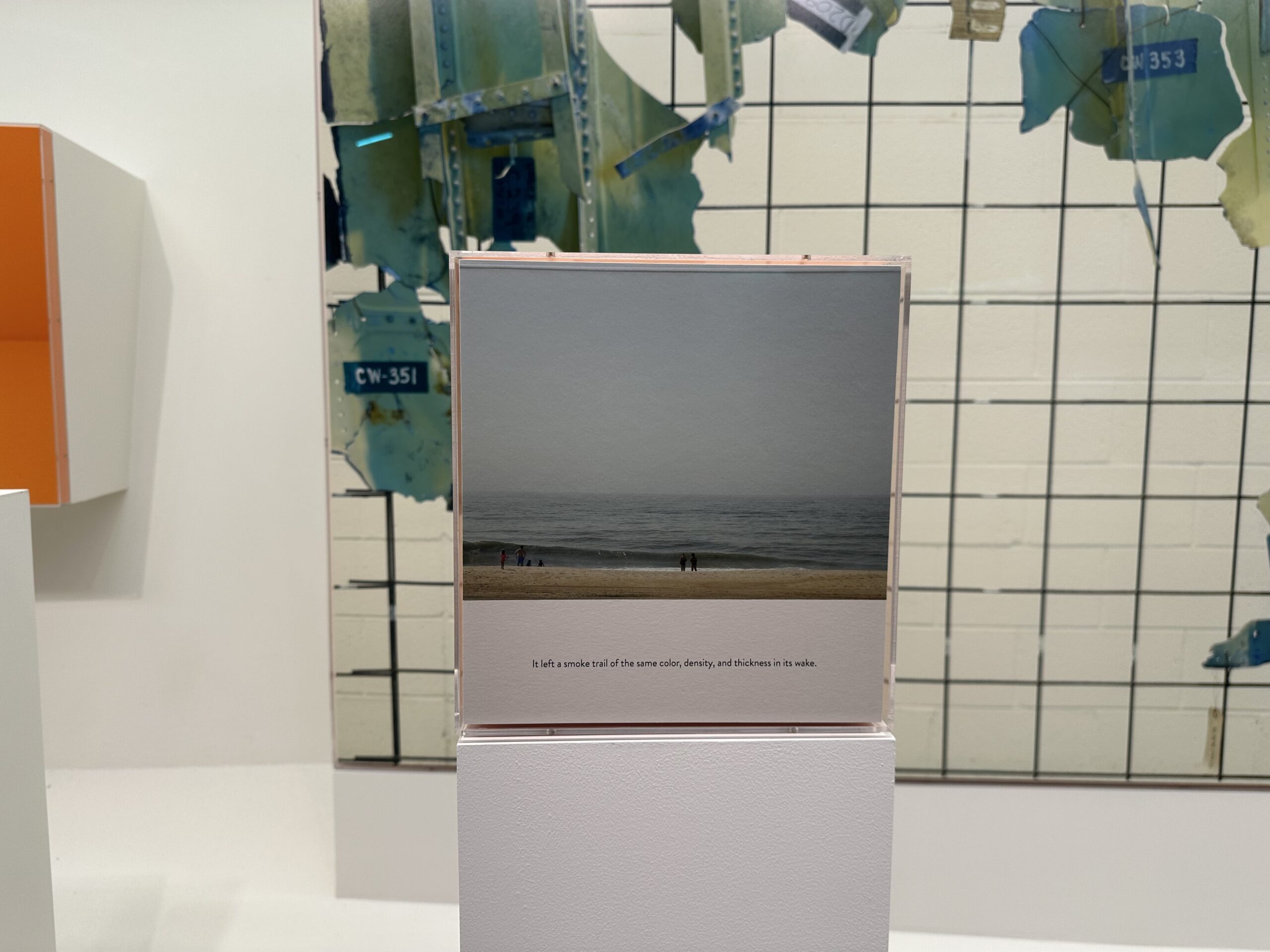
It stopped me in my tracks, because again, text was incorporated into these serene, gray, beach/ocean photos.
The text adds context, which then fires up the curiosity, the intellect, the emotions, all at once. I think that’s when Taryn Simon is at her best.
(Sample text: “It left a smoke trail of the same color, density, and thickness in its wake.”)
Those small photos juxtaposed against a larger, shinier picture of the crash fuselage, was supercool. Just excellent.
If I were inclined to wrap up this blog post, (which I am,) I’d say this show is definitely worth your time and money. I recommend it for sure.
I only had two hours, and it was not nearly enough to experience all the art.
I’d also wait a bit, as the crowd was distractingly heavy when I was there. It’s open until March 14, 2027, so maybe hold off a month.
Conceptually, I definitely understand what Taryn Simon was going for. And her ability to execute high-level production values, in a variety of image types and styles, is admirable.
But I’ve always thought art that is overly intellectual can be a bit much. And exhibition spaces that aren’t designed for the proper people flow, with text significantly smaller than it should be, are problematic.
So I’d encourage her to loosen up just a bit, and pare things back a touch, because her best work is sublime.
It hits all the right notes.
You had to be discerning to find that kind of perfect, gestalt-level installation in “Father Country I Do Love You,” but they were there.
And anything that feels THAT much like America 2026 is doing something right.
Taryn Simon at the Guggenheim: 8/10

No comment yet, add your voice below!