But then I looked back, into the abyss of self-doubt. I erupted with fear, self-loathing, dark thoughts about how bad my work was, how pointless, unoriginal, ridiculous. “You don’t know how to draw,” I told myself. “You never went to school. Your work has nothing to do with anything. You’re not a real artist. Your art is irrelevant. You don’t know art history. You can’t paint. You aren’t a good schmoozer. You’re too poor. You don’t have enough time to make your work. No one cares about you. You’re a fake. You only draw and work small because you’re too afraid to paint and work big.”Every artist does battle, every day, with doubts like these. I lost the battle. It doomed me. But also made me the critic I am today.
For my seventh birthday, my parents took me and a few friends to the movies.
In case you’re GenZ, “the movies” was a physical place, a theater really, where you’d go to see films and buy candy. These moving pictures would be projected onto a very large screen, and you’d watch the movie, in its entirety, in the company of total strangers.
Weird, right?
“Raiders of the Lost Ark” was such a big deal at the time, it’s hard to come up with a contemporary cultural parallel. Maybe if Drake and Rhianna had a son, Raptor, who grew up, was in a band with Ivanka Trump, and they had an affair, which led to another child, (the one born to Raptor and Ivanka Trump,) who grew up to be President.
Like Harrison Ford’s Han Solo, his Indiana Jones reeked of charisma. It was the old Hollywood story: people either wanted to do him, or be him.
And Indiana Jones, in case you are under 20, was actually an archaeologist.
A scientist, for God’s sake.
He was a classic cinematic hero: handsome, dashing, brave, he could fight, had a trademark bull whip, and battled Nazi’s for a treasure bestowed by God himself: the lost ark of the covenant.
There must have been thousands of young boys who grew up in the 80’s wanting to be archeologists. Indy made it seem sexy, and thrilling, and I’d bet almost anything there are a ton of “scholars” sweating in the field today because of those Steven Spielberg stories.
I almost wish I could ask an archeologist.
What if I could?
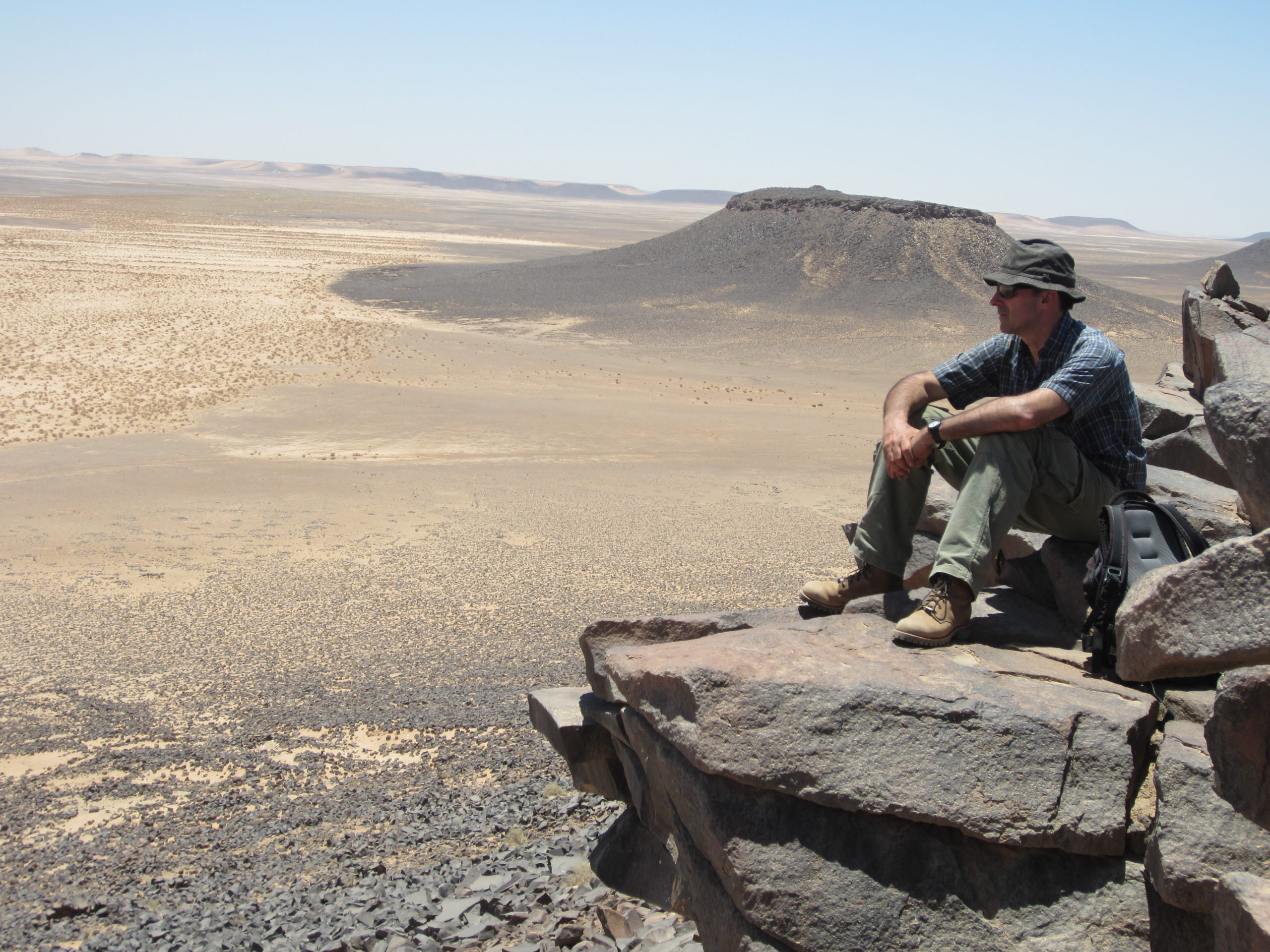
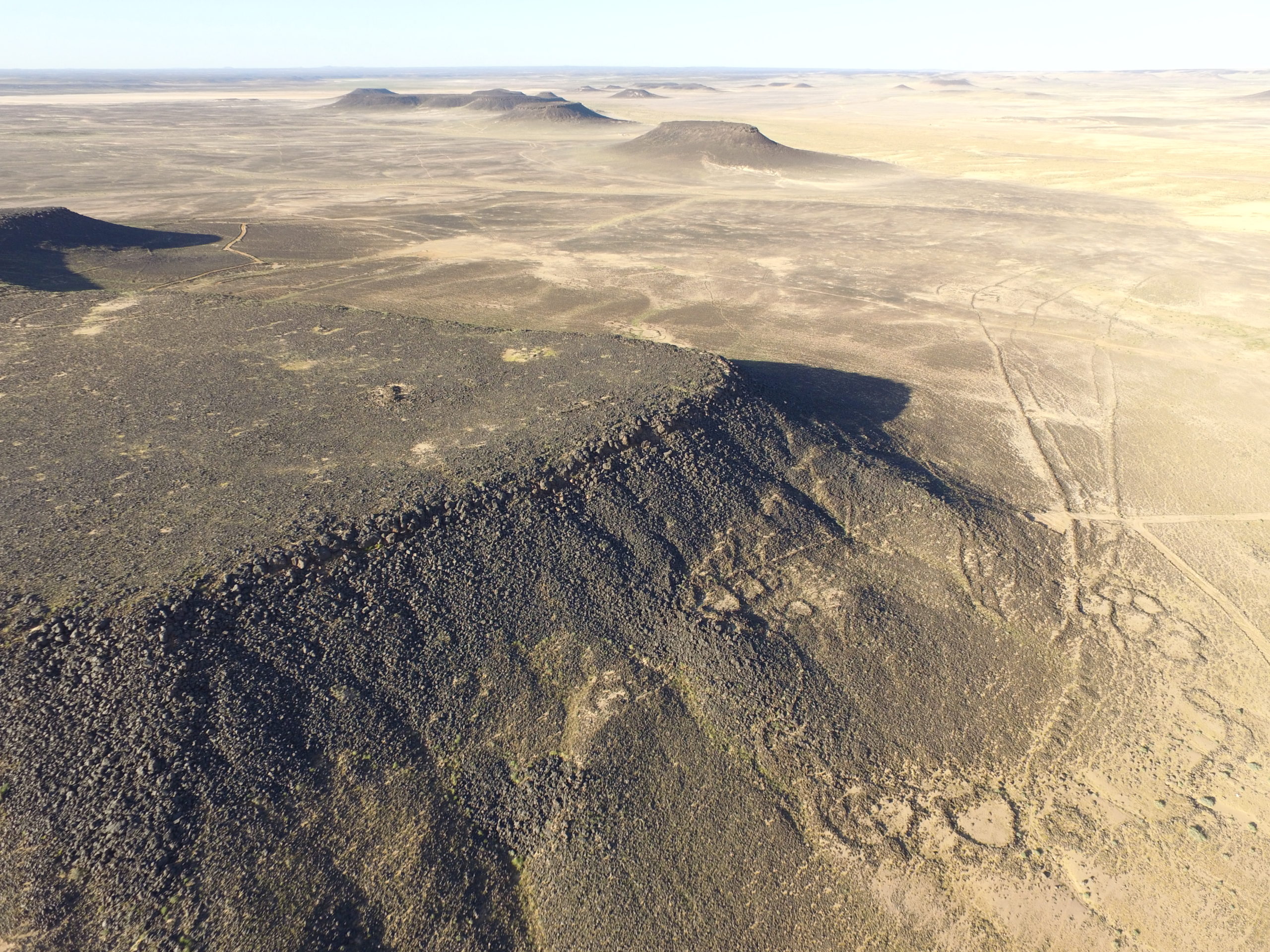
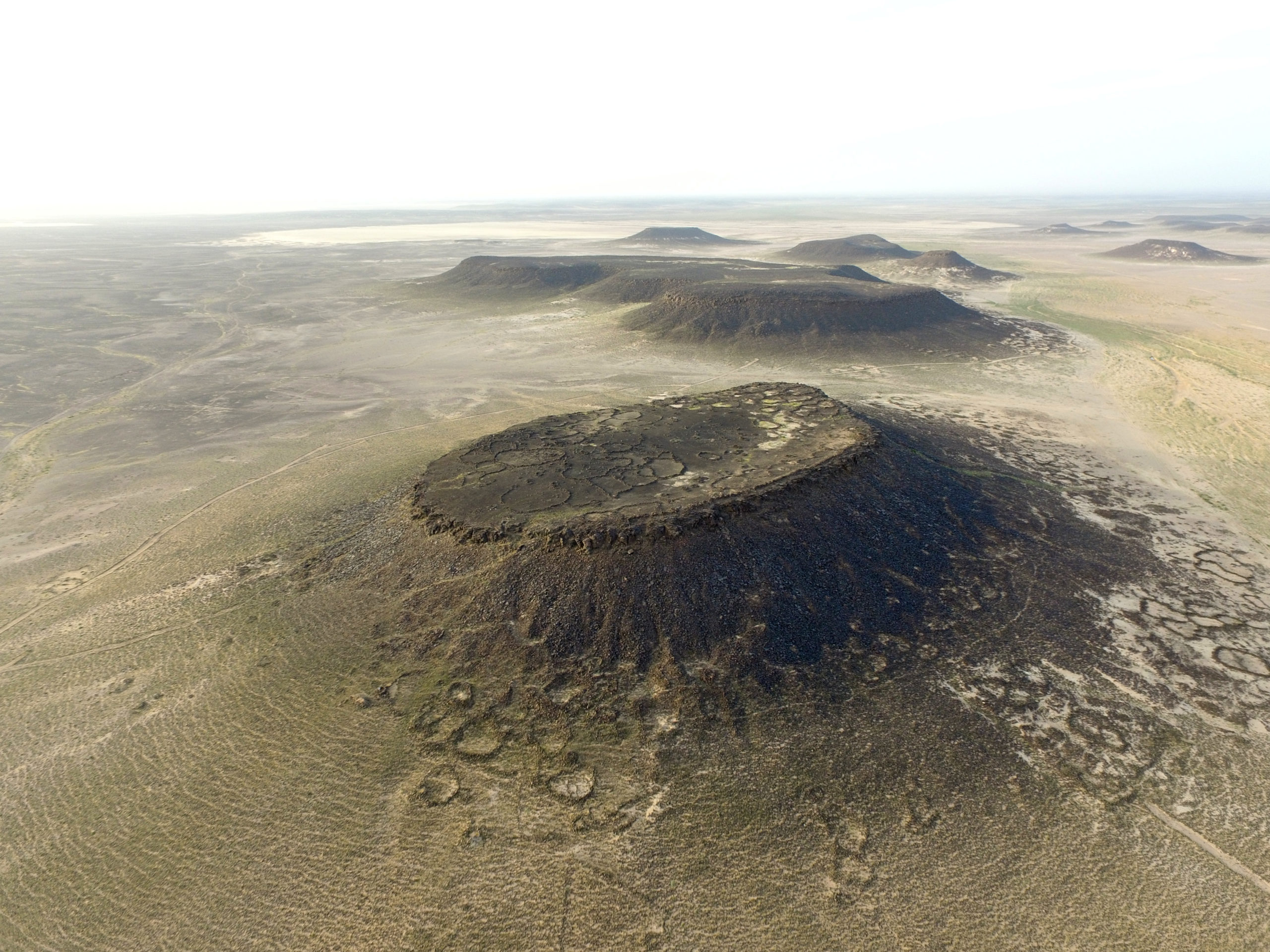
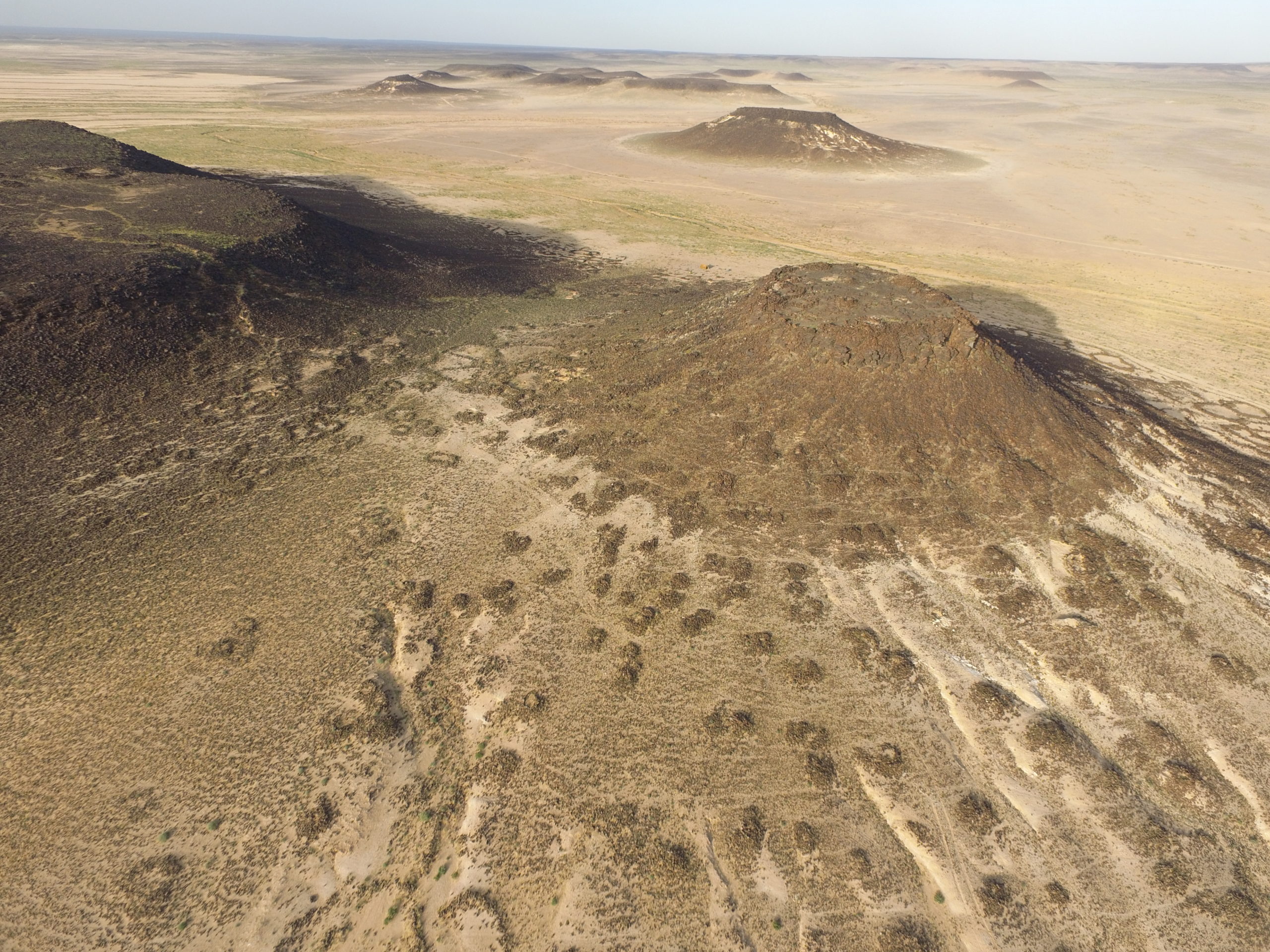
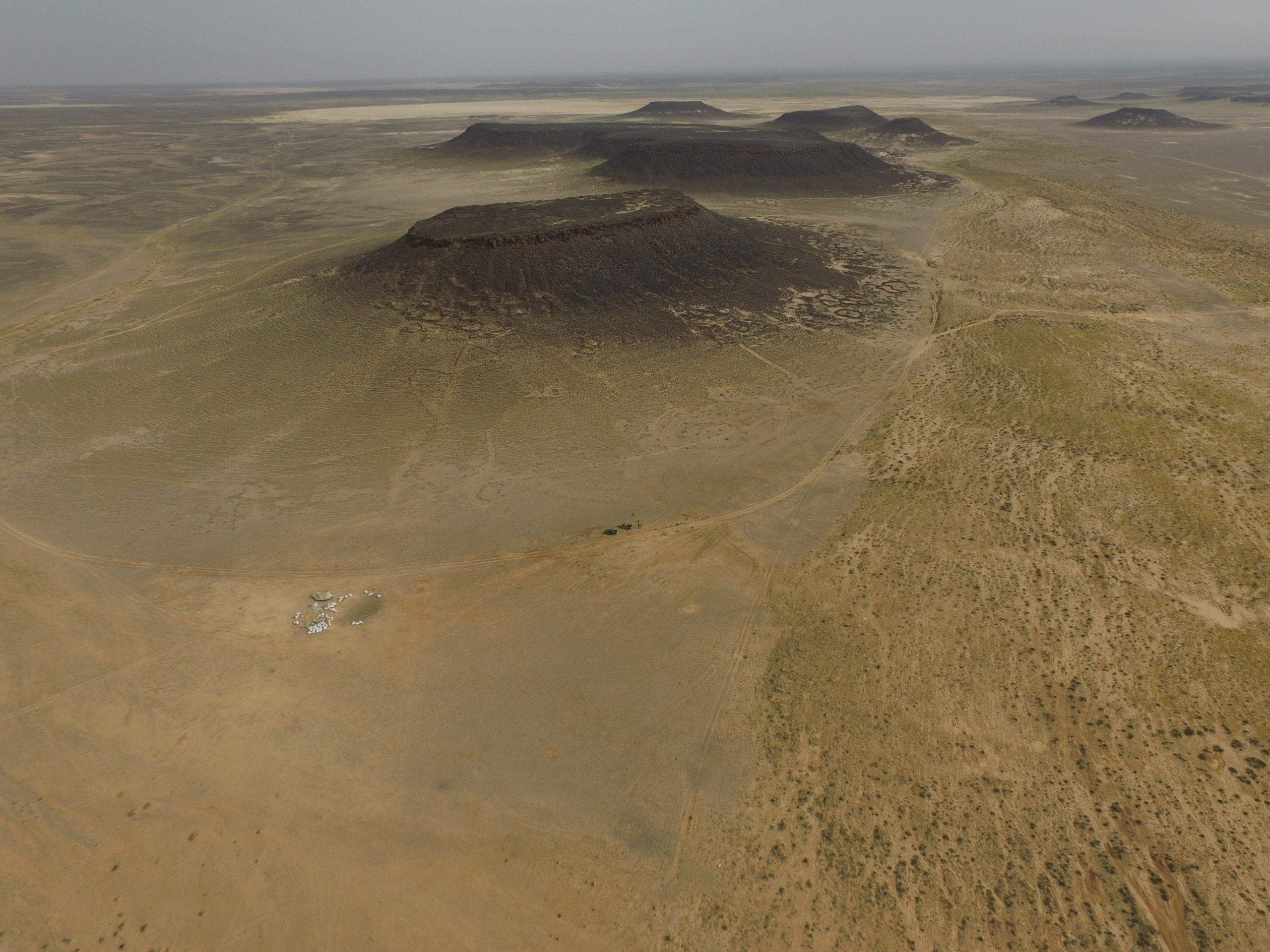
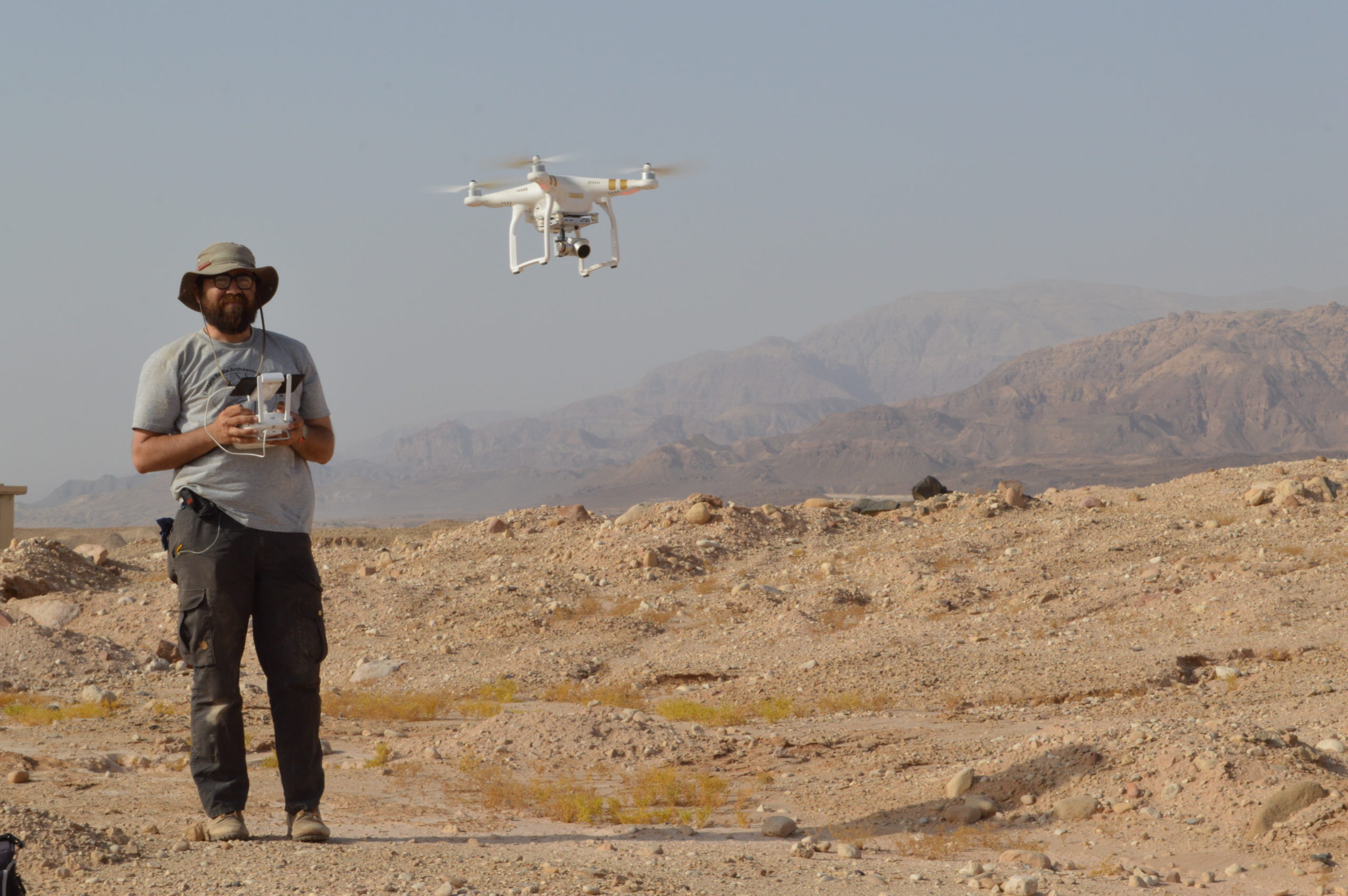
Yorke Rowan is an archeologist who works in Israel and Jordan, and he and his project partner Austin (Chad) Hill, have an exhibition currently on display at the Oriental Institute at the University of Chicago. It features their aerial drone photographs of petroglyphs and archeological sites in “The Black Desert” of Jordan.
I stumbled upon a web description of the exhibit, and the OI was kind enough to put me in touch with Yorke, so I could learn more about the show, and see some pictures.
First things first, when I asked Yorke about my Indiana Jones hypothesis, he threw dirt on the fire immediately, because he said he was too old for the movie to have been seminal.
But he disputed that an archeologist’s job included “going in, stealing things, and running from the natives.”
The duties are far more mundane, apparently, as he described the work as “trying to make sense of the junky, broken parts of ancient people’s garbage.”
Just when I was beginning to believe him, (about the job being over-hyped,) he told me the story about how, back in the 80’s, he’d lived in Egypt, and then traveled on transport trucks down the Nile, all the way to Khartoum, Sudan.
For fun.
As soon as he arrived, he got word, (having called his parents collect,) that he was due in Sicily for his first big dig, so he turned around and headed back the way he’d come.
No.
That doesn’t sound romantic or dangerous at all.
His project partner, Chad, who grew up in the 90’s, was addicted to remote control aircraft as a kid, in Northern New Jersey. His father was into the hobby, and Chad has been flying things since he was 3.
From what I can gather, Chad knows about as much about flying drones as anyone out there. As he’s in his mid-30s now, and began putting 35mm cameras on balsa-wood planes when he was in High School, I’d say his street cred is solid.
I asked Chad if he felt like a cross between Indiana Jones and MacGyver, and he laughed. But then he said, deadly serious, “I enjoy that description, but I would not actually describe myself as either Indiana Jones or MacGyver.”
OK, then. We’ll play this straight.
Yorke and Chad have been working for years at two sites in “The Black Desert” of Jordan. Apparently, the aerial view is extremely important in archeology, so photography has always been a key component to the work. At the end of each season, it’s important to chart the changes in the site you’re working, so before/after mapping is a must.
They used to hire planes, helicopters or hot air balloons, which was extremely expensive. This in a field of diminishing resources, as it sounds like academia is strapped for cash, just like the photography world. (Though Yorke was clear to state their support from the Oriental Institute is substantial.)
At one point, when they were working in Israel, Chad had the idea to jimmy-rig a drone, like he’d done when he was younger.
“This was 2011, and I said, ‘Hey, when I was in High School, I did all this aerial photography myself. We could buy our own equipment, put a camera on a model airplane that we can buy locally in Jerusalem, and take our own aerial photography at the end of the season.
We can do it whenever we want, we would have our own control over it, and it would cost us less than one time of getting this professional company to shoot for us.’”
“So we did that,” he said. “The first year, we bought an off-the-shelf model airplane, and mounted a GoPro to it. I flew it fully manually, as this was not a high-technology drone.”
These days, they still use some homemade technology, but DGI gave them a Phantom 3 quad copter, and Chad confirms its ease of use is the main reason behind the super-popularity of drones.
“The newest crop of drones, you have no experience, you go and buy a $1000 drone. You watch a couple of videos maybe, and you press a button and the drone will fly. You can intuitively make it go where you want it to, and if you get into trouble, you press a button and it will return to you, and land,
without you having to figure out how to make it land.”
“The barrier to being able to effectively control them has dropped dramatically
in last 5-6 years.” In the old days, he said, “you needed to know a lot or you would crash.”
What first caught my attention, when I looked at the pictures and video they sent me, was the fact that the Jordanian desert reminded me so much of the volcanic fields outside my window here in Taos. The pictures were familiar and exotic at the same time.
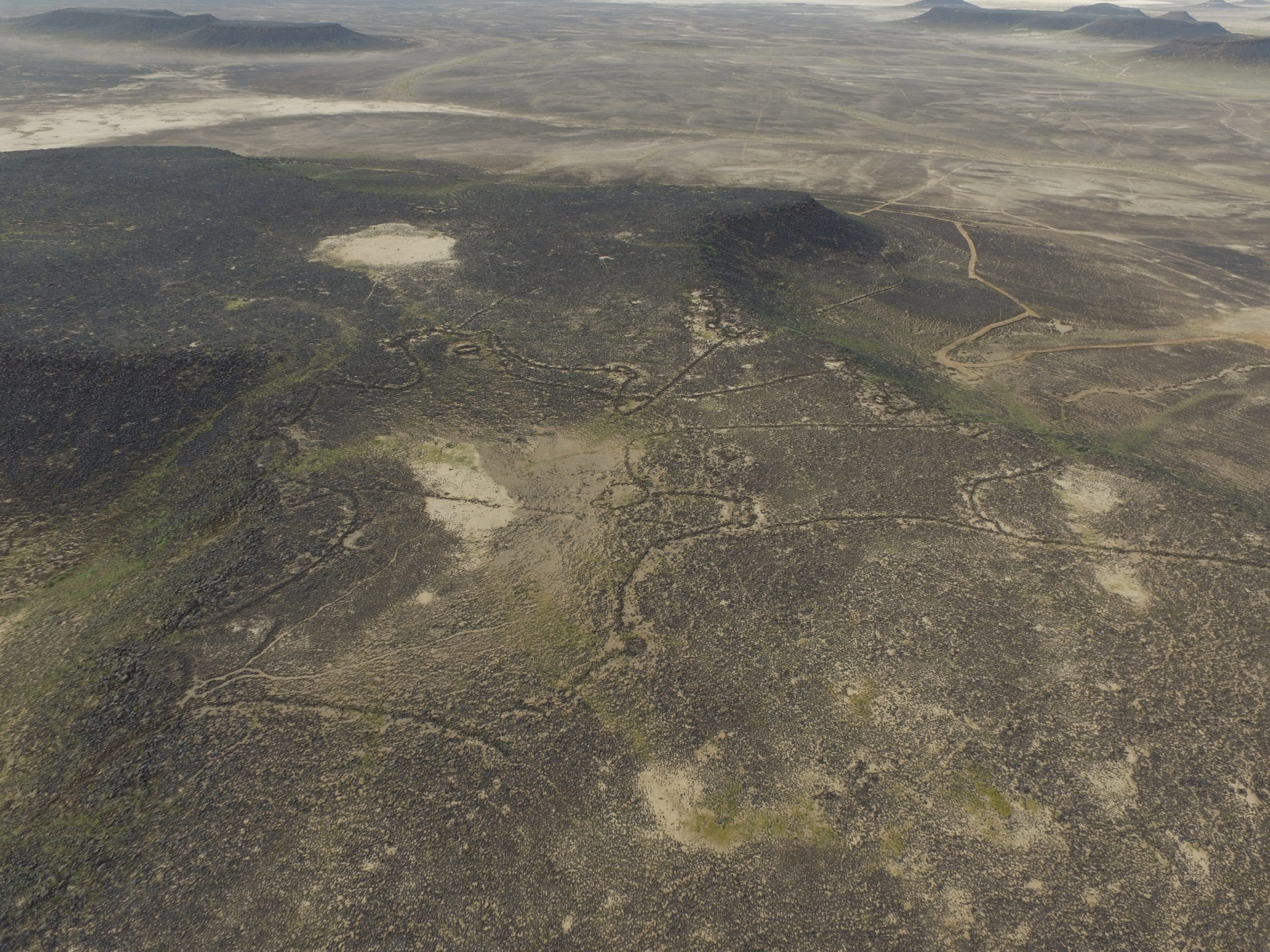
Beyond the initial jolt, I was myself entranced by the formations on the desert landscape that looked like Nasca Lines, the famed geoglyphs in Peru.
What could those be?
It turns out, the low rock walls are called “kites.” Unlike the Nasca Lines, which were actual images meant for some deity in the sky, kites are not visual at all. Rather, they were Neolithic hunting traps that run for long distances in a given direction.
The kites, designed between 7000-10,000 years ago, funneled gazelles, like a crude maze, towards an ultimate spot, (or killing field,) where our ancient forebears could hunt with relative ease. Some kites even used the edges of the basalt mesa tops to hem in their pray.
“One of the things I find most fascinating about the kites,” Yorke said, “is that not only did they take a lot of planning and thought about where they’re going to go on the landscape, and how they’ll go up the side of a mesa, and spread out on top, using the edges as further barriers so the the animals can’t escape that way, or they fall down the side of a cliff.”
“What’s more amazing even than planning that, and setting it up across the landscape for kilometers, is that we’ve started to realize they’re linked. There are actually chains of these kites going hundreds of kilometers across the desert, all of them open to the East, which must be the migratory patterns of the gazelles.”
Yorke, Chad and their colleagues did not discover the kites, which were first spotted by English pilots flying mail between Baghdad and Cairo in the 1920’s. But their drone technology makes it that much easier to make photographs of them, which can be used as scientific evidence, as well as art.
They have discovered some interesting things, in particular that huge slabs of basalt were actually roofs on pre-historic houses. The size, and difficulty moving such slabs, implied people spent more time in the inhospitable climate than one might imagine.
This also suggests there was more water there than there is now. One site, the Wisad Pools, is so remote that the team has to take an extra vehicle with them, each time, in case the main transport breaks down. Two flat tires at the same time might be a death sentence, so the archeologists plan ahead, even if the extra car ends up mostly serving as a wind block for the kitchen.
Though the drone technology has enabled this work to exist, and the archeologists to function on smaller budgets, it turns out that the drone revolution is creating some serious backlash. They reported that drones have recently been banned in Kenya, and one of theirs was confiscated by the Jordanian government, despite their previous openness to the technology.
“The downside in general, is that there are so many drones, it is not wrong to be concerned about them being used by bad actors,” Chad said. “Those people who don’t know any better. Who don’t think bad things will happen to them using their drone, and don’t think the rules should apply to them.”
“And one thing we haven’t talked about is that even though lots of these new drones fly exceedingly well, they also occasionally fail. They tend to fail at some point, and they can be dangerous. They have fast-moving blades that can cut you, and they can fall out of sky and into people.”
I still remember the time my family and I were given a drone demonstration above our horse pasture here in Taos, a couple of years back. My kids were cheering on the little flying machine, as if it were Indiana Jones running away from that huge boulder.
Run, Indy. Run!
But I was pretty impressed too. It made me think of the future, in which we’re obviously living. (Now that flying cars are real.)
It makes one wonder what our ancestors, 10,000 years ago, fresh from a gazelle hunt, might think if flying robots descended from the sky?
Maybe someone will write that one up as a screenplay one of these days? I don’t know about you, but I’d pay to see it.
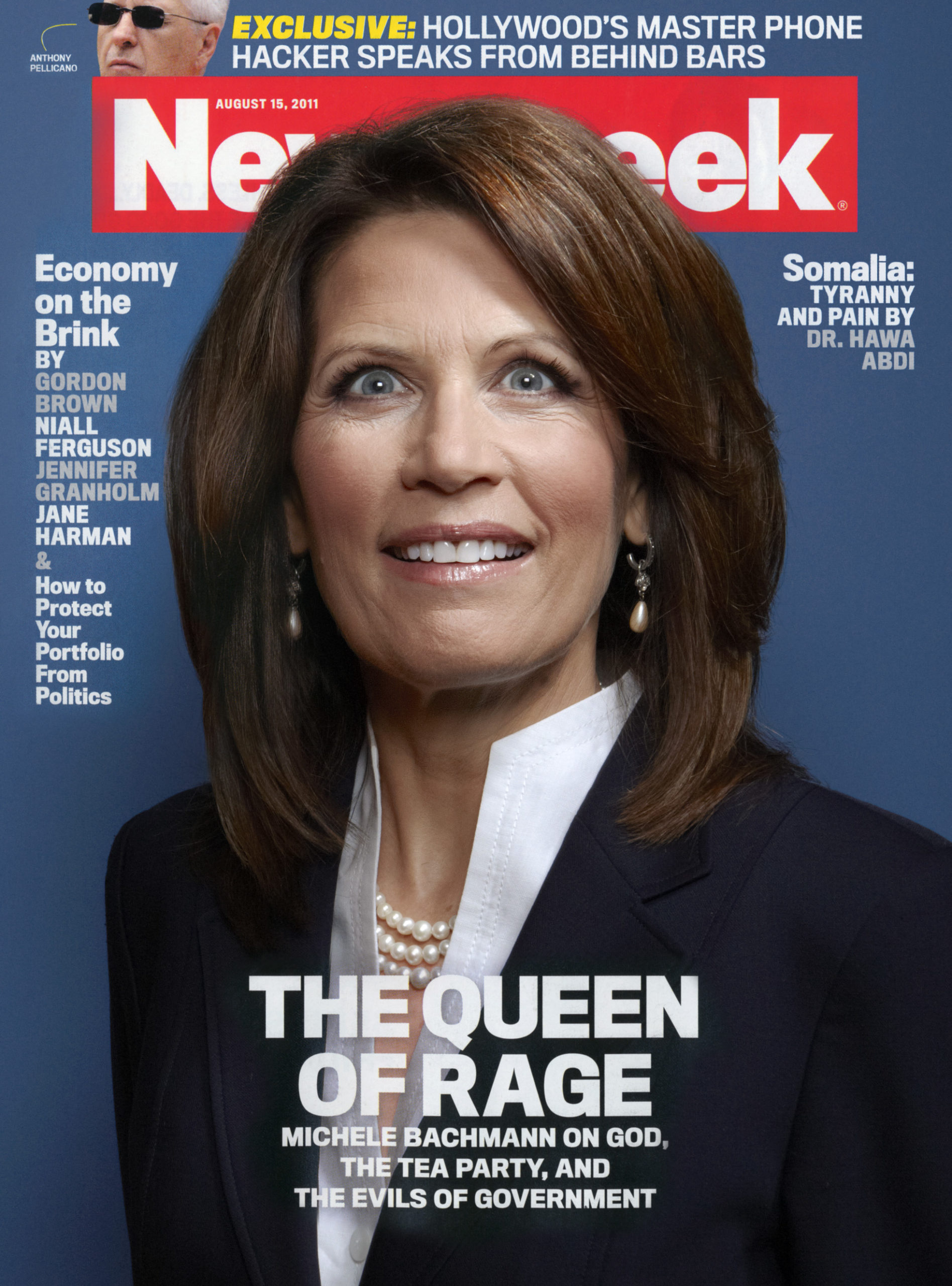
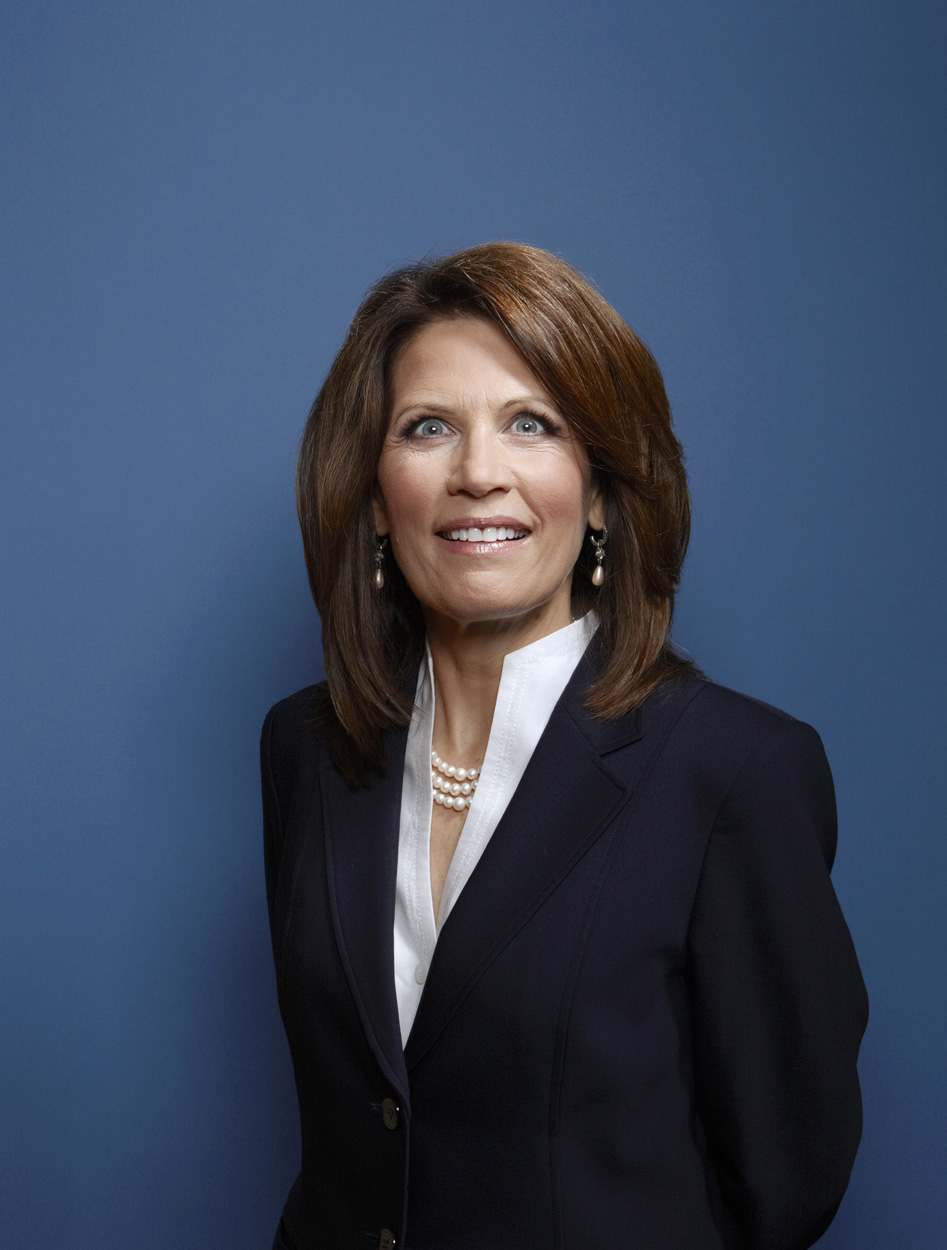
On August 11, 2011, Newsweek ran a photograph of Congresswoman, GOP presidential candidate, and tea party darling Michele Bachmann that ignited a media firestorm. The image taken on assignment by Chris Buck earned her the nickname, “Crazy Eyes” and marked a turning point as she went from leading candidate for the Republican presidential nomination to eventually abandoning the race in 6th place. Newsweek Editor-in-Chief Tina Brown defended the image choice and headline “the Queen of Rage” as merely portraying intensity, but many felt it was unnecessarily unflattering and sexist. In May of 2013, under investigation for ethics violations, Michele Bachmann announced she would not seek re-election in 2014.
The image also marked a turning point for Chris Buck as he had spent the previous year campaigning photo editors to assign him serious political work and this breakthrough image sent him on a path shooting more and more A-List covers in the years to come.
On November 11, 2011, I interviewed Chris about the cover and he was refreshingly candid about how it all went down. Unfortunately, the controversy had just simmered down and Newsweek was afraid to reignite it again, so we shelved the interview. Luckily, Chris has a new retrospective book out titled Uneasy (https://www.chrisbuckuneasy.com/buy-now) and this image is included so we can now tell the story behind the Michele Bachmann cover. I think you’ll find it just as relevant today.
— aPE
Rob Haggart: I want to start with Newsweek calling you to shoot a politician for the cover. That’s not something that probably happens very often with you, is it?
Chris Buck: Let’s go back to the 2008 presidential election, which I felt was such a special time, because the electorate was ignited in a way that I’ve never seen in the years I’d lived in the US. I was upset about having not gotten any of those jobs. So I decided to do whatever I could, to try to get that work for the 2012 cycle.
Rob: What did you do to try and get that work?
Chris: I put up a section on my website of political portraits. Then I made an e-mail newsletter addressing that question specifically. I featured my shoot with William F. Buckley Jr. from 2004 and had the portrait of him plus some funny out-takes. Then I contacted a number of clients more directly who I knew commissioned political shoots, like GQ, New York Magazine, and ultimately Newsweek.
Rob: It worked…
Chris: I have now shot three politicians in this election cycle for different magazines. It’s all very, very last minute. I’m basically given the heads-up a few days ahead and then I just sit around waiting for the phone call where they’re like, “Go to the airport now!” And I rush off to the airport.
Rob: And that’s because of both the approval process and the scheduling?
Chris: There’s no approval process.
Rob: They don’t have people who approve photographers?
Chris: Not that I know of. I would imagine that it could come up as a First Amendment issue if politicians were appearing to pointedly dictate terms to the press.
Rob: It’s not the same as with a celebrity then? I guess I just assumed it was. Ok, how did the assignment go down?
Chris: Newsweek contacted me, the photo editor emailed me saying, “Would you be available for this?” and he said, “It will be either Sunday or Monday, or on the weekend, we’re not sure.” My schedule was open enough. I said, “Yes, just let me know.”
I put the assistant on hold, got together the equipment I needed and just waited. Then, at the last second it was, “Go to Washington. No, no, go to Iowa. No. Go to Washington. No, no. Wait. Wait. Go to Iowa.” In the end I went to Iowa. We were actually in Iowa for a day with the campaign and then went to Washington the next day, which is where the portraits were made. The scheduling was quite chaotic.
Rob: Why do you think Newsweek hired you to shoot Michele Bachmann? Did they want something besides the traditional power portrait for the cover?
Chris: I’m not going to go into detail about my conversations with Newsweek but I think that it’s reasonable to assume that they hired me for what I do. My guess is that they wanted something a little bit more human and vulnerable.
Rob: They said, “Do your thing.”
Chris: We had a more detailed conversation than that because it is a cover. But, yes, they did say something along those lines at some point. Of course I know since it’s a cover I need to get a variety of shots. I feel a professional obligation that I give them some choices, partly, even to surprise me. Maybe it would be something I wouldn’t think of as my first choice and maybe that would be the most interesting thing. You never know.
Rob: Take me to the shoot. You’re in D.C. now.
Chris: Her campaign team were staying at the Willard Hotel; I met up with Ms. Bachmann and her people in their room. They were pushing for me to shoot there but I didn’t want to, I didn’t like the idea that the space I was going to shoot in was also going to be the suite of rooms where they are spending the day doing their business. It just made me uncomfortable. So, I looked around with the hotel staff and found another space to shoot and rented it.
Rob: How much time are they giving you to do the pictures?
Chris: We were told we’d have a half an hour.
Rob: OK, that’s good.
Chris: I didn’t realize how little time politicians often give, but it turns out that wasn’t bad. With Rahm Emanuel for Bloomberg Businessweek, we followed him around for a day, and they were trying to give us 60 seconds at a time for portraits. And I was like, “That just won’t do”. And after three long conversations, they got me a five-minute block, which they considered very generous.
Rob: Wow, OK.
Chris: So half an hour seemed kind of reasonable. If the subject is cooperative and you’ve got time to prepare ahead of time, it’s totally workable.
We had different setups in this suite of rooms. The back room was a small conference room, so we moved the conference table over, and set up the blue backdrop and some lighting. I closed the drapes so I could see what my model lights were doing. It was now a semi-dark mini photo studio.
The candidate came in a little bit late and then we waited a few minutes for the makeup artist. I went over to chat with her and she was really distracted, barely acknowledging that I was standing there. I was kind of surprised, because at the rally she was very engaged with people. And even when I saw her earlier that day, she was relaxed and happy to chat.
Rob: Did you get a sense at all that she didn’t trust you, or didn’t trust Newsweek, that she thought they had an agenda behind what they were doing?
Chris: I didn’t really know what to make of it. I just thought that she had something on her mind, and that once we stepped into the other room that she’d be engaged and it would be all good. But that’s not what happened.
It’s very important that I have a meaningful or even non-meaningful conversation with a subject as we’re going into a shoot. It’s not necessarily that I want my subjects to be super-relaxed, but there is some basic level of decorum. We’re moving into this space and we’re going to work together on this. A portrait is collaboration, and it’s laying the groundwork for that. In doing my reading ahead of time I try to pick up on little details about them and their stories, so that they know that I’ve done my homework, and I’m genuinely immersed in what’s going on. I think it shows in the work too.
So we go in the room, I have her in the frame, and she is very stiff. I said, “I’d like you to relax, and maybe even if you want to gesture a little bit, we can even talk so you can be more relaxed. I want something more animated with more life.” And she said something like, “I’m not going to do that. I’m not going to look foolish for you. I’m not going to gesture in some way that you’re going to capture that’s going to make me look foolish or awkward.”
Rob: [laughs] Holy crap.
Chris: And she said “I’m not going to be portrayed this way by the left-wing media. I’m not going to let the left-wing media frame me in some way that is going to be damaging to me.” I’m paraphrasing, but it was along those lines.
I was shocked, because one, it’s amazing for someone just to speak their mind so directly, but two, we had really just begun. And I was asking for something pretty standard, you know? Not to say that she has to do everything I say, but there are other ways to deflect or refigure something without directly accusing me and my client of trying to disparage her.
She also started talking about how when Obama was running. “He was always portrayed so favorably, and that’s the kind of treatment I want.” I was just… I mean, I didn’t know how to respond to this. And she started talking about specific Time Magazine covers that she thought were unflattering. She mentioned one of Laura Bush. I had never seen this picture, but she described it as a black-and-white picture of the first lady where every pore and line is showing.
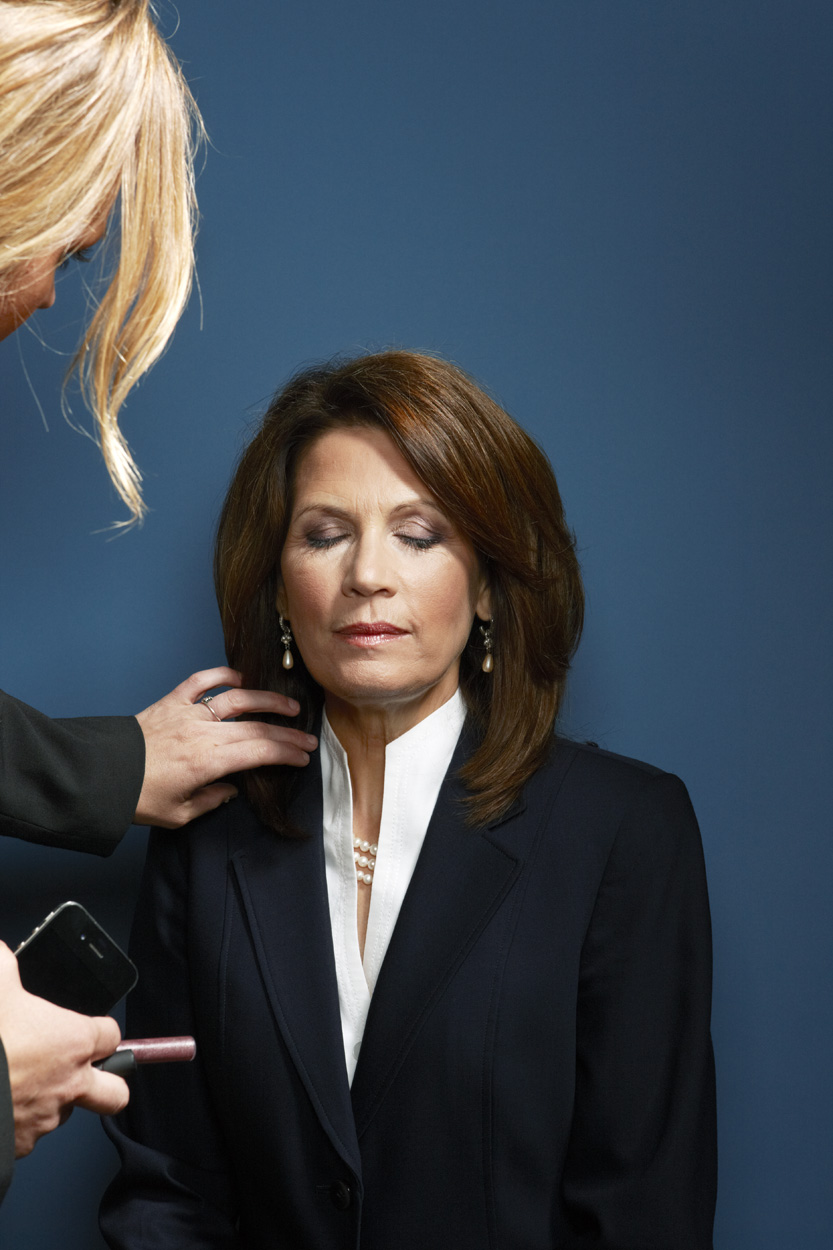
And she asks, “that’s not how this lighting is, right? That’s not this kind of lighting?” And I said, “Well, we’ll show you or your representatives a frame so you can see how the lighting looks.” So we did a few frames so we could show her one that might look good.
Rob: So you showed them a frame to try and get her to relax.
Chris: Yes, and basically what I said to her was, look, Newsweek wants a really interesting picture, and you want a picture where you look great. And I kind of did this gesture of two circles in the air. And I said, you know, Newsweek wants this — and then I added one with my other hand — and I said there’s this other circle, and here’s where they overlap – like a quarter of each circle kind of overlaps in the middle. “Let’s find this sweet spot in the middle where you can feel confident about the way you’re portrayed, and they’re going to have a really great, interesting picture. Let’s aim for that.
And she agreed. But as we tried to move towards something I realized that, basically she agreed in theory, her attitude was already set. She was already upset and defensive. One of the things I found surprising about the whole thing that it wasn’t one of her staff who was saying, “We’re hoping we can do something like this with the candidate. Can we start that way at least, and see where we go?” That’s the kind of conversation that usually happens with a handler.
Rob: There are no handlers involved in this?
Chris: Well, there were handlers there, but surprisingly it was the candidate who was fighting her own battle.
Rob: So, you’re four minutes in, the clock is ticking down and you’re arguing with Michele Bachmann. She said, “I’m not giving you anything.” And you’re trying to tell her, “Let’s try and meet in the middle,” and she’s still refusing. So when does this picture happen?
Chris: I’m shooting and talking, it’s just a photographer’s instinct, you don’t stop shooting, at least not entirely. Of course, part of my thinking is “I’ve got to get something.”
Rob: And snap, you took the picture. Amazing. So she basically came in super defensive and said “I’m not going to give you anything,” and as she was saying that the picture that you made is the one…?
Chris: I’m not 100% sure, because I’m shooting as we’re talking. But looking at it, clearly she has either just finished talking or she is about to talk.
Rob: Incredible. Then what?
At a certain point her people are like, “Look, she needs to get back on to the Hill to do a vote. We need to leave in 10 minutes.” I’ve learned to be stubborn about protecting the time I’ve been promised because people will happily take that away from you. I said, “Look, you’re not ready to do this. You should leave. Go do your vote. Go do whatever obligations you have. And I hope you can come back later, maybe in an hour and a half, two hours or whatever, and we can do this right. Think about how you might want to do this in a way that we can both be happy.”
Rob: Wow. So you sent her away because she’s not giving you what you need.
Chris: My feeling is it’s much better to come in positive but cautious than to come in negative and defensive. No one looks good when they’re saying, “I don’t trust you.”
Rob: OK, so take me through the second session. What happened?
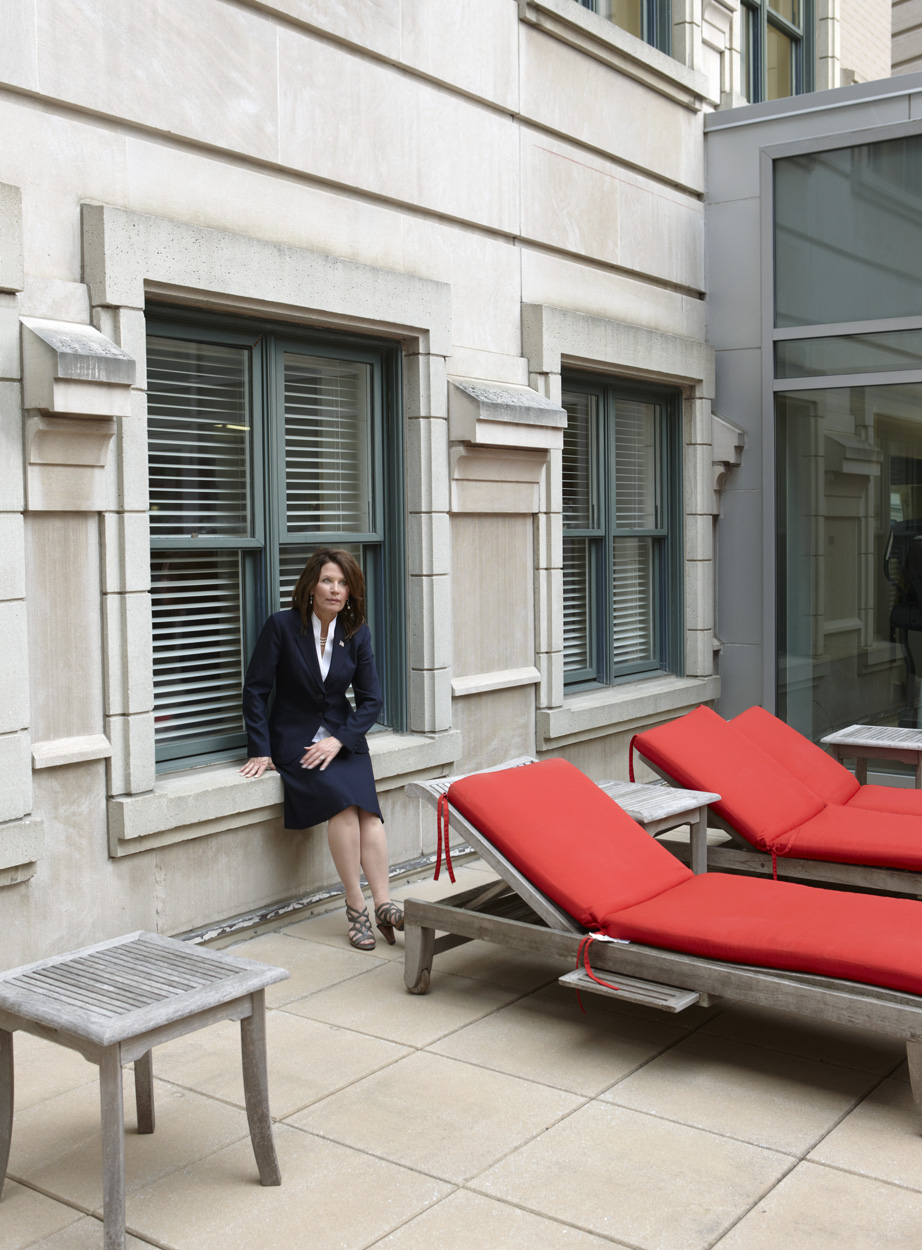
Chris: I’ve worked out some locations that her handler felt would help the candidate relax. I was wary about shooting outside because it gives us less control, and it sucks up time, but he felt that she’d be more relaxed in a real-world environment. He said that the room with the blue background, because it was small and dark, spooked her.
So that’s what we did first when she first came back, and clearly they had spoken with her and she was much more relaxed. Plus, she had gotten some of her duties out of the way and her schedule was less pressed. Some of the pictures from this next section are much more relaxed, and she looks great.
We shot there a bit, but I wasn’t really liking what I was getting. I was feeling like, for both my client and for myself, that these were looking like PR pictures.
Rob: Right. They’re not cover pictures.
Chris: I still needed to get something that was a great portrait for Newsweek and hopefully point towards something really interesting as a photographer for me. So, we went to this semi-rooftop of the building, and we did some more outdoor shots there. She was a little bit more relaxed but her hair wasn’t looking so great. She had already had a long day and she’s a little distracted now, and some of these pictures don’t have the same kind of focus as earlier. Then we went down to the oval room, and we shot maybe a dozen frames and that was it. But it was really a shame, if they’d given us another 20 minutes; I think we could have found that sweet spot that would have been a great Newsweek picture as well as something that she would have felt more comfortable with.
Rob: So when you’re doing your edit and you see this picture, are you thinking, “Yeah, that’s a Chris Buck shot”?
Chris: I turned in 21 images and I think we did five different set-ups, so I handed in a mix from two frames to five frames from each scenario. I had three favorites. The one that became the cover, the one in that Oval Room that became an inside picture, and then the one I showed as an outtake on my blog.
By the way, one thing I’ll mention to you, is that I did something I almost never do, which is when the shoot was done I let the handler who was there hang around and look over our shoulders a little bit while we were looking at the material. I wanted him to know that what I had said before was genuine, that I really was trying to find a place that both the candidate and the magazine could be happy.
Rob: So he saw all the pictures?
Chris: We didn’t sit and specifically walk him through the pictures because the last thing I want is for him to say something like, “That picture is something I don’t like. I’d rather you not use it.” But he knew perfectly well he wasn’t there to influence the edit.
Rob: So Newsweek orders the high res…
Chris: They order four high res: the praying shot, the one that became the cover, the oval room picture, and then one at the rally.
Rob: Did you know that this shot was going to be the cover?
Chris: No, when he gave me the image order, he said, “We might come back and ask for more.” In fact, on Friday night, he came back and asked for two more. And one of them was one of the rooftop shots and one of them was another shot from the blue background set-up.
I was a little worried because those shots were more conventional and less interesting to me, I was really pleased with their initial edit and I told them so. A lot of people assume that the edit was entirely Newsweek’s doing and ultimately what ran was their choices, but I know if I include something in my edit, it could be used. I stand by my edit.
Rob: Did you have any idea of the controversy that would come after running this picture on the cover?
Chris: I did have some idea, but the scale of it was larger than I expected. They released the cover to the media on Sunday night, so I Googled, “Newsweek Bachmann cover” and already it was on “Gawker” or a site like that. They sent out a pretty high res pdf of the cover. So sites were blowing it up really big, just on the face, and it was already being talked about as being like a controversial cover. Let’s just say, I didn’t sleep very well that night.
Rob: [laughs] You didn’t?
Chris: No.
Rob: Really? You were distressed?
Chris: I have mixed feelings about it. On one hand, I was pleased they picked a really interesting picture. But at the same time, I’m a human; ultimately I would love it if people liked the pictures I take of them. It’s not my first thought, it’s not my first obligation, but I’m human. I prefer they like it, than not like it. And I understood that she was unlikely to be happy with this choice.
Rob: Then you must battle with that constantly because I can’t imagine ever hiring Chris Buck and not trying to get some kind of moment like that.
Chris: I’m not saying that it’s not fair and that it’s not reasonable. I included it in the edit not only because I think it’s interesting but because on some level I feel that it captures something of who she is, something of her character and something of her campaign. It was one of the most intense and aggressive photo shoots that I’ve ever experienced in my career. So in a way, she helped make this portrait happen. The edit reflects the environment in the room; it conveys the intensity of the session.
Rob: And that’s what makes it an amazing story, but also understand that doing that is what makes you Chris Buck, what makes you a unique photographer. I can name a dozen photographers that will shoot a heroic portrait no matter what happens in the room and so it’s just how you approach photography. It’s who you are. It’s also what makes you an interesting choice, for Newsweek and any other magazine shooting politicians.
Chris: Thanks. I find it surprising that the media is quite happy to write about politicians as being flawed and yet when doing portraits sittings they seem hesitant to go down that line. They kind of fall into the convention of doing the power portrait instead of doing something that might be a little more challenging.
Rob: And, as far as your body of work goes, without the controversy that this cover created does it stand up on its own with the other pictures that you’ve made?
Chris: Oh, absolutely. One of the things I really like about this is that the two pictures I was best known for before this were the one with Steve Martin with the bread hands and the Citibank ad where the dog has fake teeth, so this being my best-known picture is something I’m much more comfortable with. It shows a little awkwardness.
People ascribe an anti-Republican or anti-Bachmann thing to me because of the impact it had in the culture, but it’s not how I feel about it. As a portrait, I stand by it. I don’t champion the right or the left; it’s not the point of this. The point was, as a photographer, to do good work for my client, to make interesting work for the public, and also to reflect, from a subjective viewpoint, what she might be about.
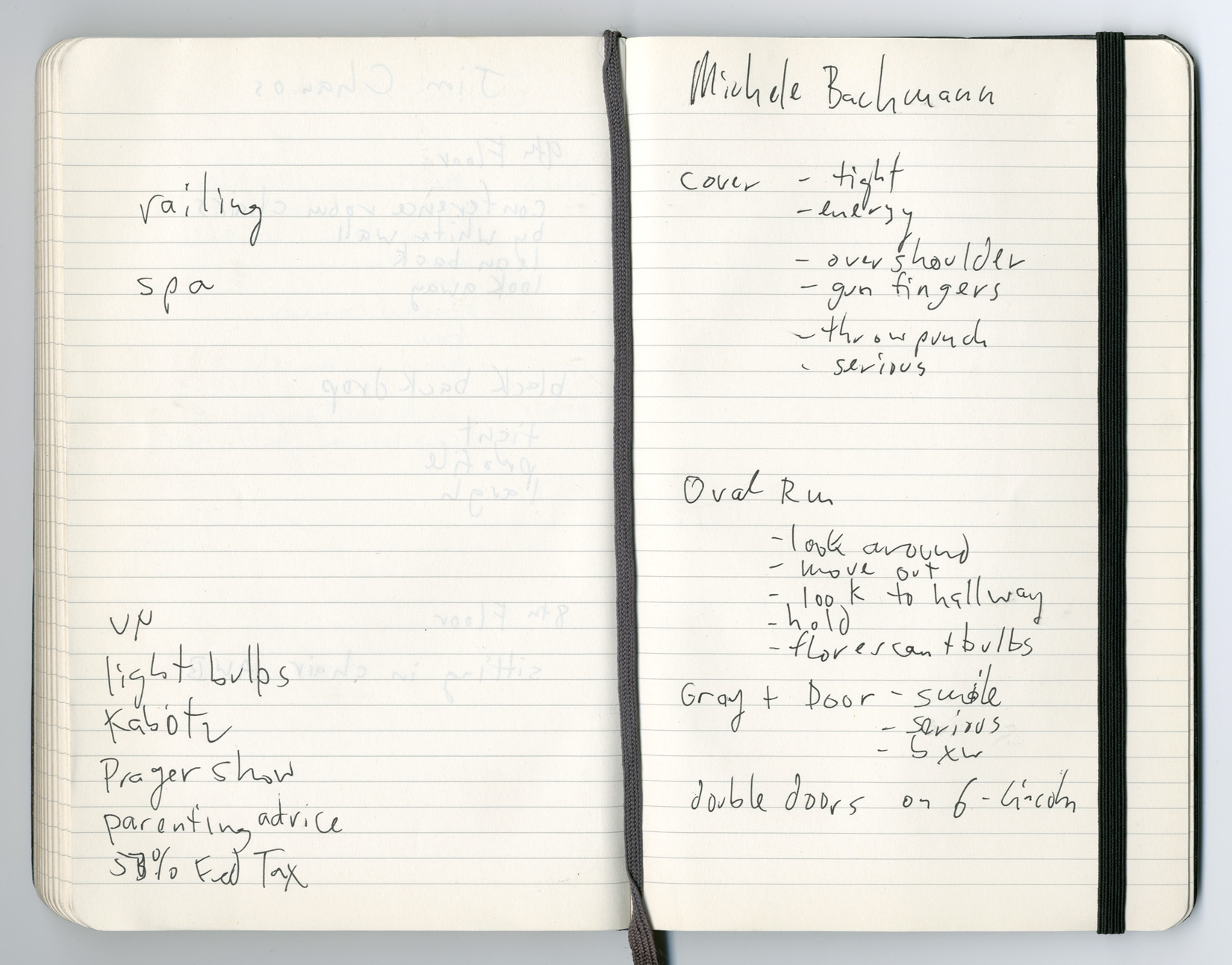
Photographer’s on-set note book for the Michele Bachmann session. Note “throw punch.”Representative Bachmann accused Buck of submitting a light test for the Newsweek cover. This is the actual light test frame.Chris Buck’s portrait of Michele Bachmann, as it appears in his 30 year retrospective UNEASY.Buck’s favorite frame from the Bachmann sitting.
About a year ago, (give or take,) I read somewhere they decided the word “internet” should no longer be capitalized.
Now, I’m about the worst person to complain about the misuse of capital letters. I’m terrible at remembering the rules, so years ago, I decided to embrace the digi-world-acceptable practice of manipulating spelling and grammar as I choose.
I’m so bad, I even write entire emails in lower-caps. (Yes, I’m that guy.)
For some reason, though, I decided to abide by the new rules, though I’m not really sure who gets to make these decisions in the first place.
Seriously, who are these people?
And why was the internet no longer the Internet? Could something that powerful, ubiquitous, and just-shy-of-omniscient really have become less important?
Of course not.
Can you believe that someone, somewhere, got paid to make a decision like that? (You know there were committees involved.)
Maybe it was the Public Information Protocol Bureau? Or a cabal of nefarious magazine editors?
We’re ALL on the internet these days. Cell phones are everywhere; mobile carriers of the information network that binds us together.
And while we consider the digital world a different kind of experience, being online can manipulate your emotions, just like IRL. (That seems obvious, as who hasn’t felt anger or jealousy when scrolling through Twitter or Facebook.)
But just this morning, I read this article in The Atlantic in which researchers examine the way in which one person who wakes up grumpy can cause a chain reaction of negative energy, if that person happens to be a troll.
The word, in its original connotation, meant a monster that lived under a bridge and charged a toll. They were scary regulators of commerce, or highway-men of large stature with poor hygiene. They gummed up the works in fairy tales, just like they do now in the digiverse.
Most cities are located on the water, so they really need their bridges. When I lived in Brooklyn, and visited my family in New Jersey, I’d take the Holland Tunnel to the Manhattan Bridge to come home. I rarely came in through Staten Island, but I just heard the new toll on the Verrazano Bridge is $17.
$17, just to get into New York City.
I googled it, and the tunnels cost $15 too.
The train from Newark Airport to Penn Station is $15, so unless you fly into JFK and take the subway, there’s no cheap way into Manhattan.
The trolls must receive their tribute.
It’s an island, Manhattan, the ultimate limited supply, which is why they built up to the sky. It’s easy to look up, in New York City, as the tops of the skyscrapers are so beautiful.
People will peg you as a tourist, if they catch you ogling the tops of the buildings. (Or if you walk through Times Square in general.)
But street photographers have long known that it’s better to look around you then up at the sky, down at your phone, or off into your own thoughts as the Ipod pops in your eardrums.
Street photographers know that if you just watch the city unfold, block by block, it is ALWAYS interesting, often fascinating, and sometimes downright sublime.
It’s never boring, Manhattan, a city where no matter what someone says they saw, you’ll always just respond, “Sure. Why not.”
I guess I can believe you saw albino triplets on tricycles going down the sidewalk. Or a monkey walking a dog on a leash?
Why not?
The absurdity level is always turned up in New York, and if you have the time and inclination to look, the pictures are waiting to be taken.
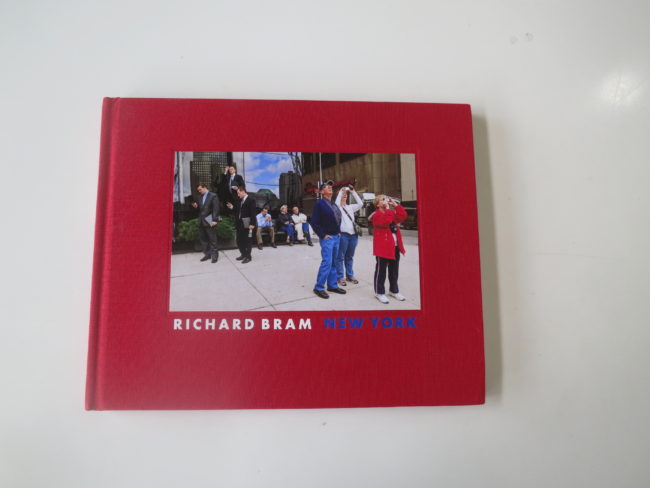
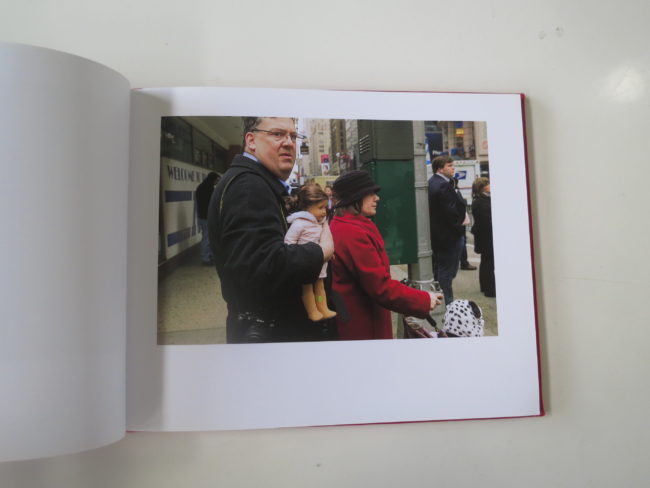
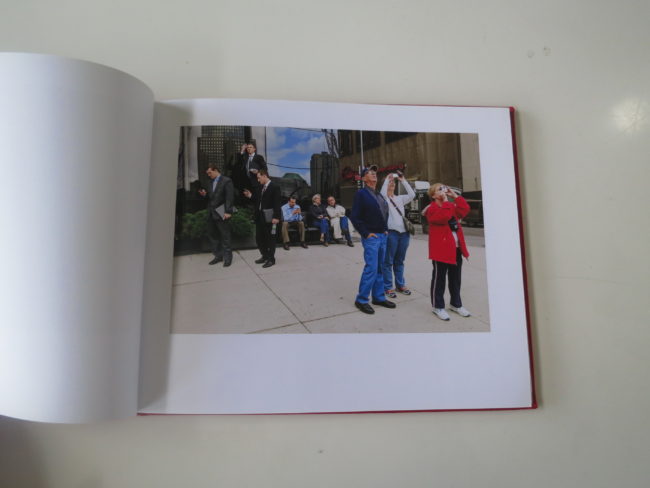
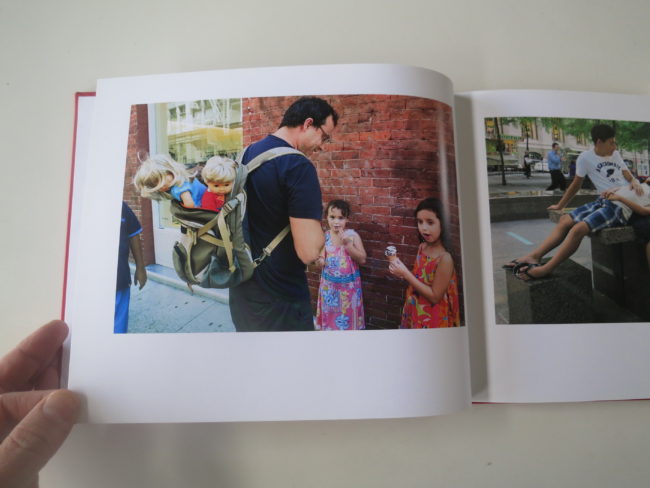
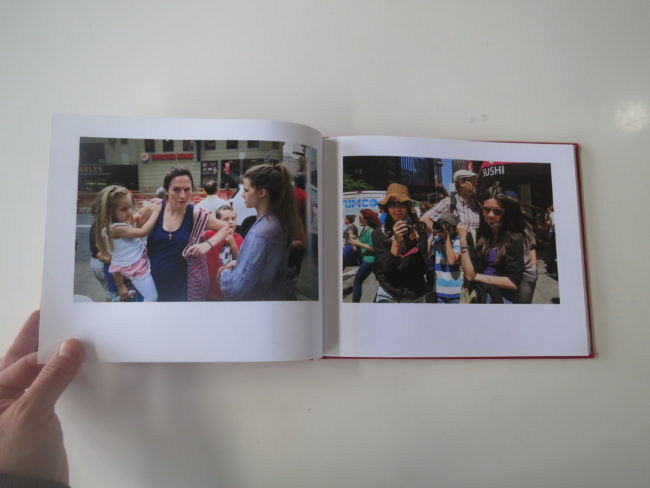
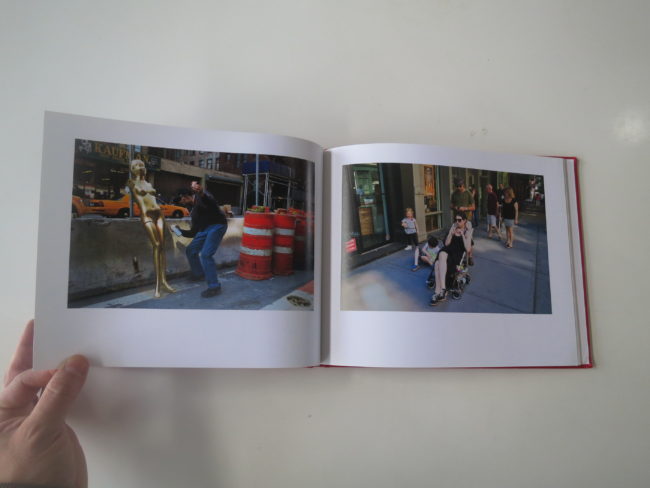
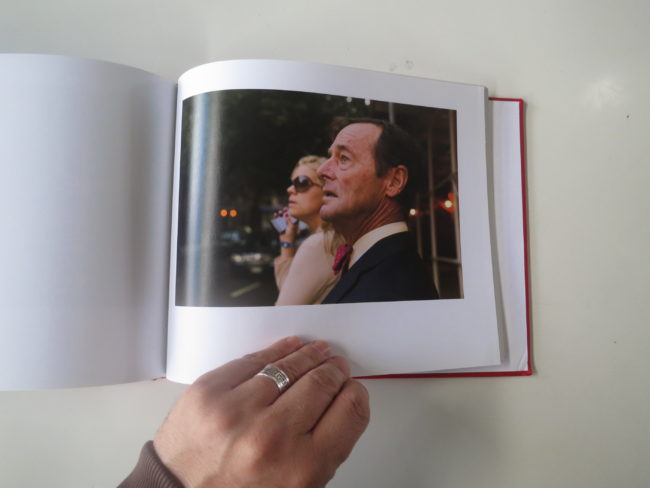
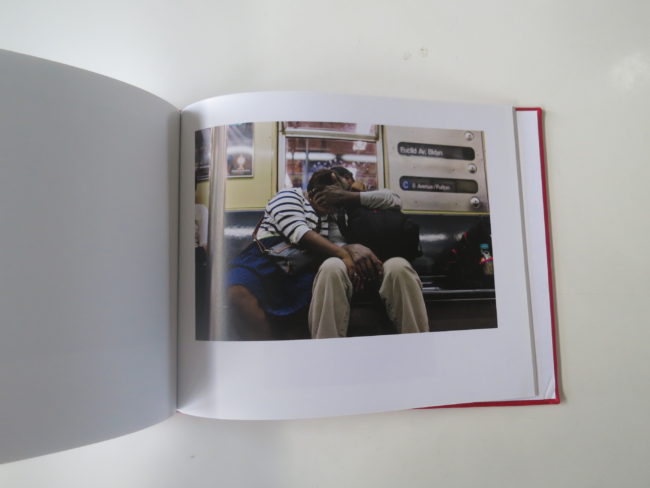
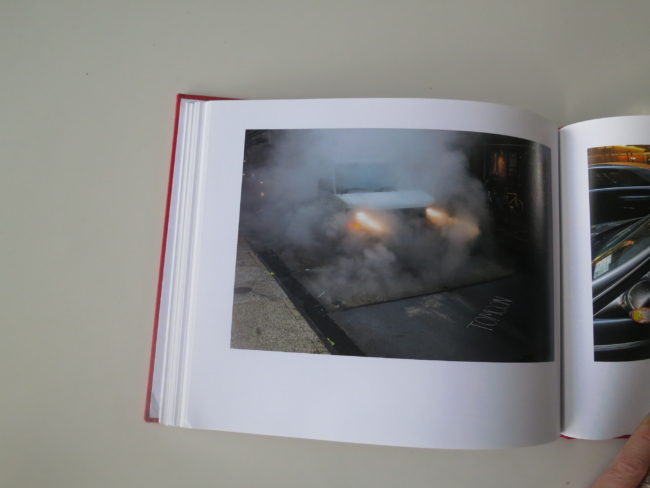
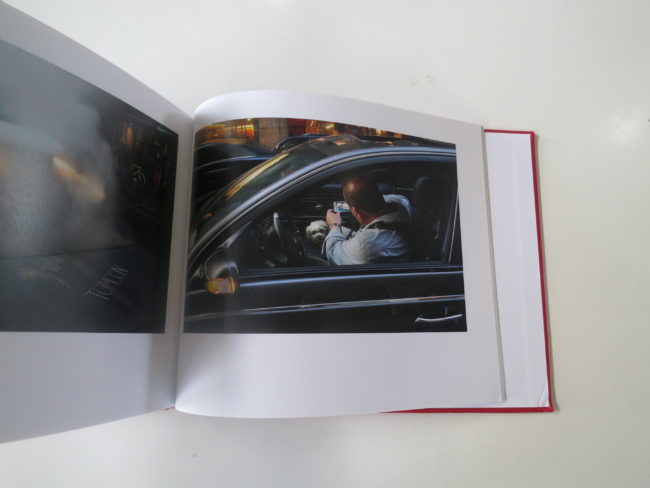
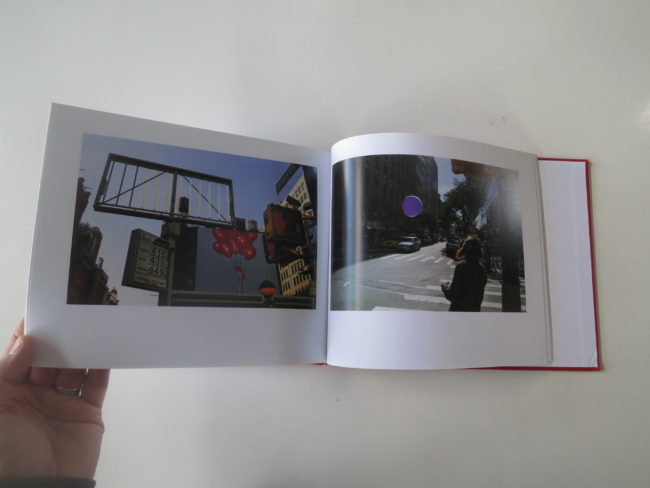
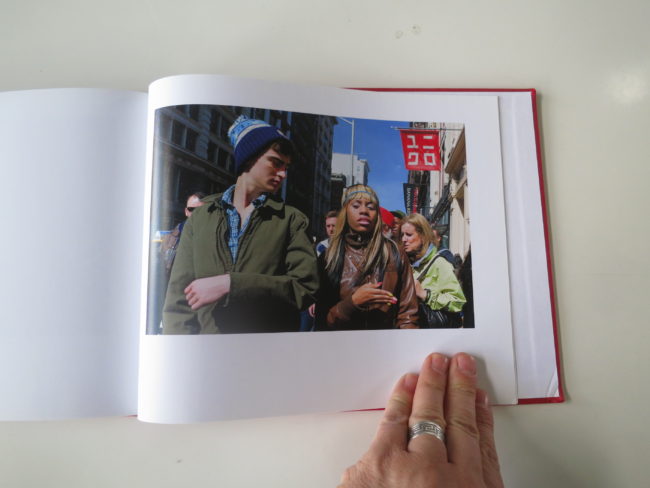
It’s why there are so many cameras in Richard Bram’s “New York,” a photobook published last year by Peanut Press. (And printed in the USA.)
Richard is a friend of mine, and I’ve written about him in this column before. Frankly, he came up and introduced himself at the PDN Expo in 2010, when I did my first travel piece for this very blog.
He’s a smart, considerate guy, and recently moved back to London from Lower Manhattan. He did a stint of 8 years in New York, and photographed it for much of the time lived there. When I was at FotoFest in 2012, he showed me a rough edit of this project, so I’ve seen the pictures evolve.
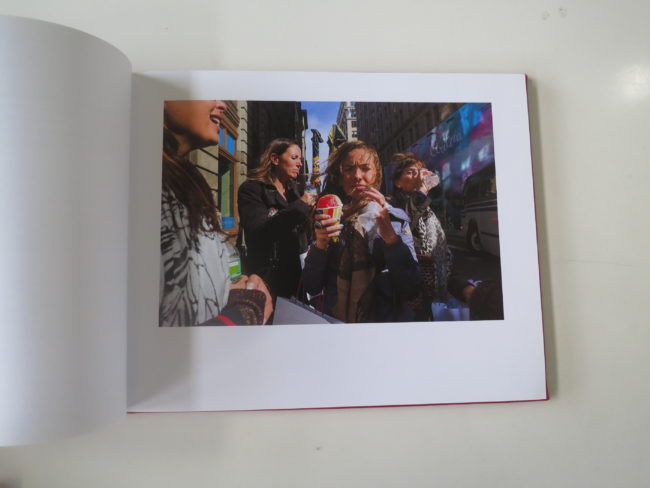
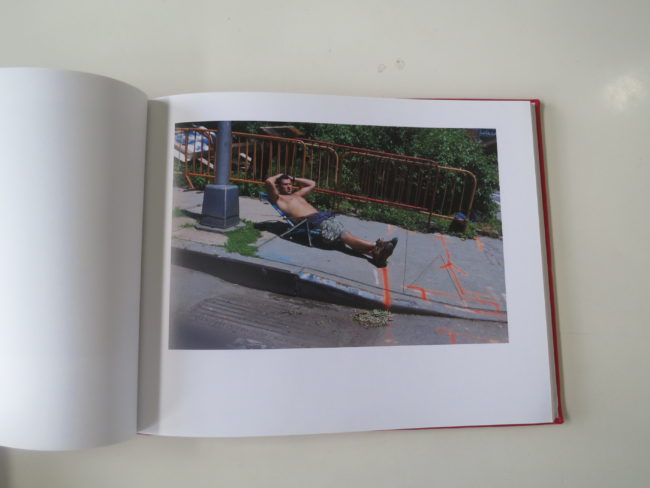
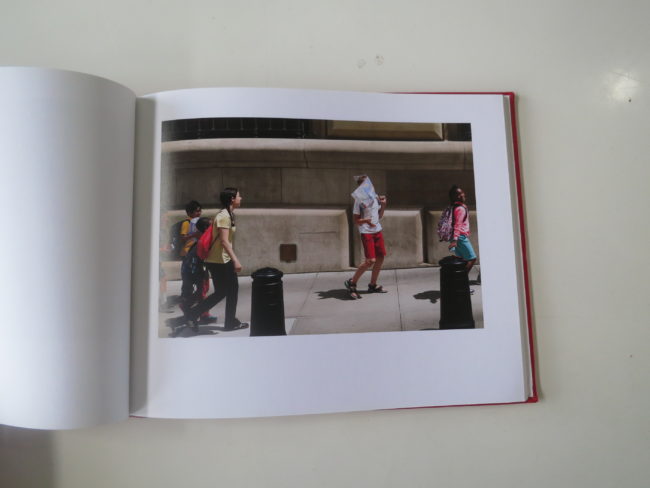
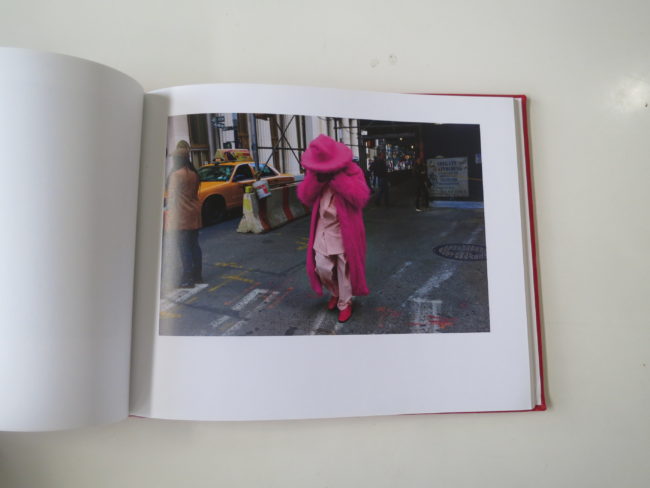
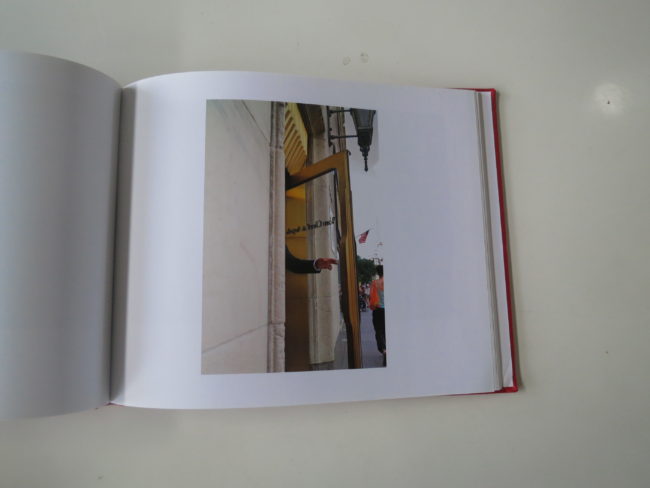
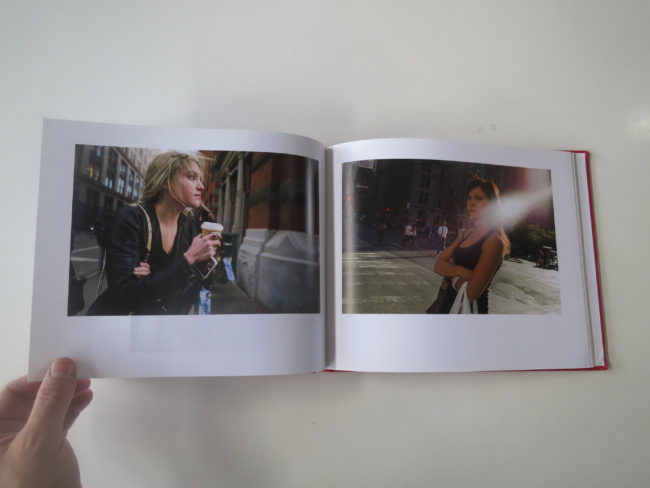
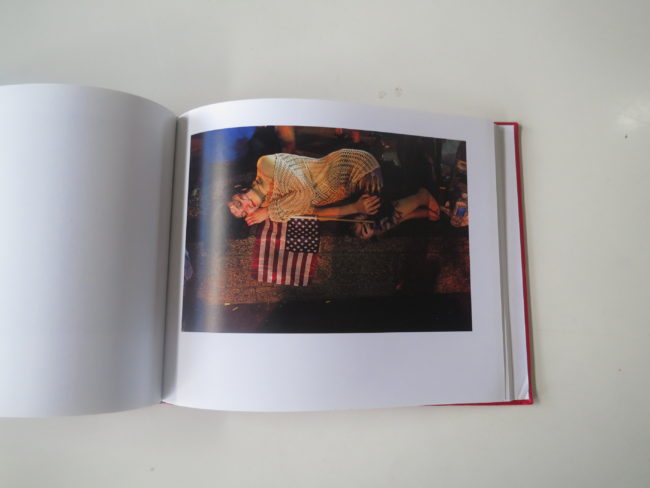
What I like best about this book is that it captures Richard’s wry sense of humor. There are some images I might have edited out, but whether it’s a woman in a flaming, furry pink suit, or a girl in hot pink boots, they’re cleverly observed.
Cameras are everywhere in these photographs, which clearly marks them as being of-their-time. During those 8 years, the rest of the world became obsessed with our habit, so why shouldn’t cameras be a repeating motif?
There’s nothing mean-spirited, like Garry Winnogrand, though they do invade people’s space, if not their privacy. Unlike the aforementioned internet, cities push peoples’ bodies together. They force human beings to share air, and sidewalks, and square footage on the subway.
Richard observes with subtle curiosity, and it took me a few passes through the book to enjoy some of the nuance.
I love the grumpy guy who looks like he knows he’s being photographed, and he’s holding a creepy doll. The first time, I saw his face, and the doll, but only the second time did I see the nice Nikon around his neck.
Dolls show up again in some guy’s backpack, though they likely just belong to his daughters. Later, he photographs a man, photographing a dog, in a car, with a cameraphone.
We see a guy sunbathing, shirtless on the sidewalk, surrounded by spray paint and barricades? Why not?
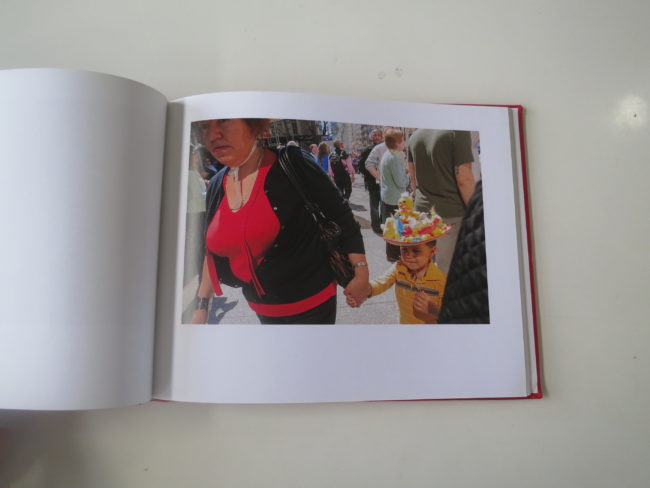
Or the little boy wearing ducks on his cowboy hat? Which follows the pink furry lady, and precedes a guy spray-painting gold a naked, apparently Asian mannequin, next to some giant orange traffic cones.
Sure. I’ll believe it.
Last week, I told you I’d try to scare up something silly, so I looked at my submission shelf, and this book was just right for today.
Look around. (That’s today’s message.) Look around, because it’s fun. And who knows what you might see?
Bottom Line: Witty, well-seen color street photographs in New York
Personal Projects are crucial in showing potential buyers how you think creatively on your own. I am drawn to personal projects that have an interesting vision or show something I have never seen before. In this revised column, I’ll include a link to each personal project with the artist statement so you can see more of the project. Please note: projects are found and submissions are not accepted.
In 2011/12 I took a year off to travel around South East Asia and South America with my wife and four children.
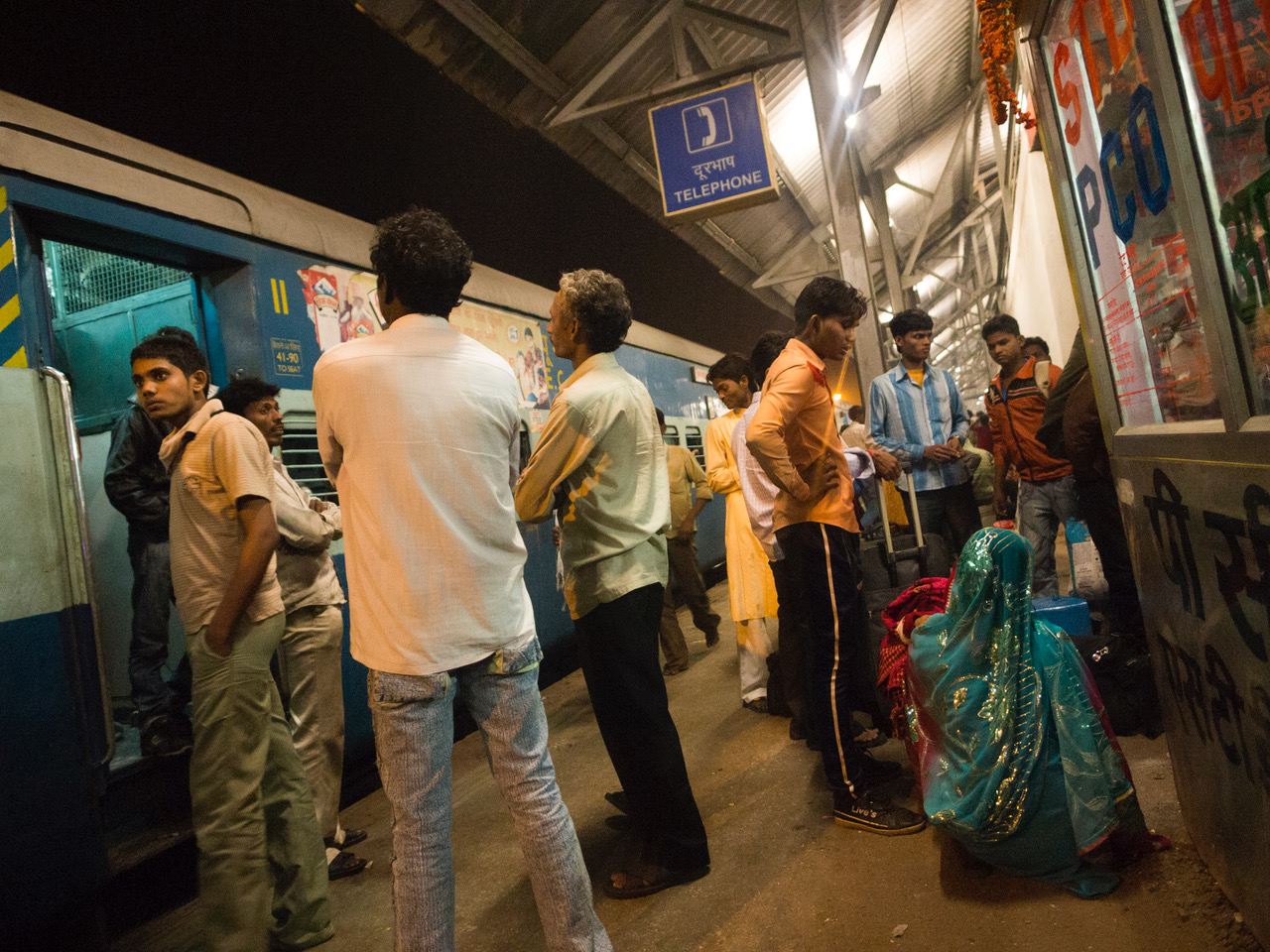
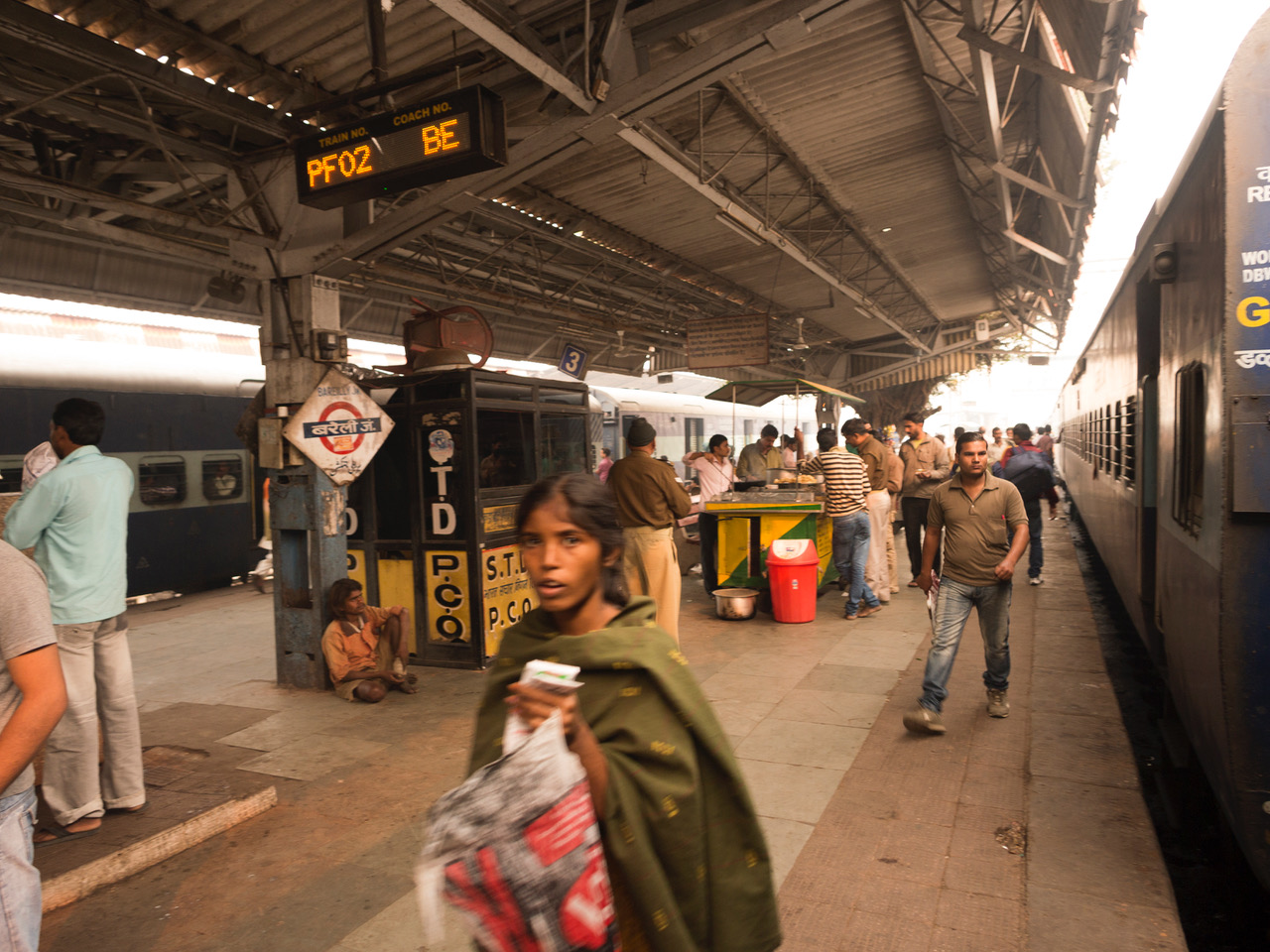
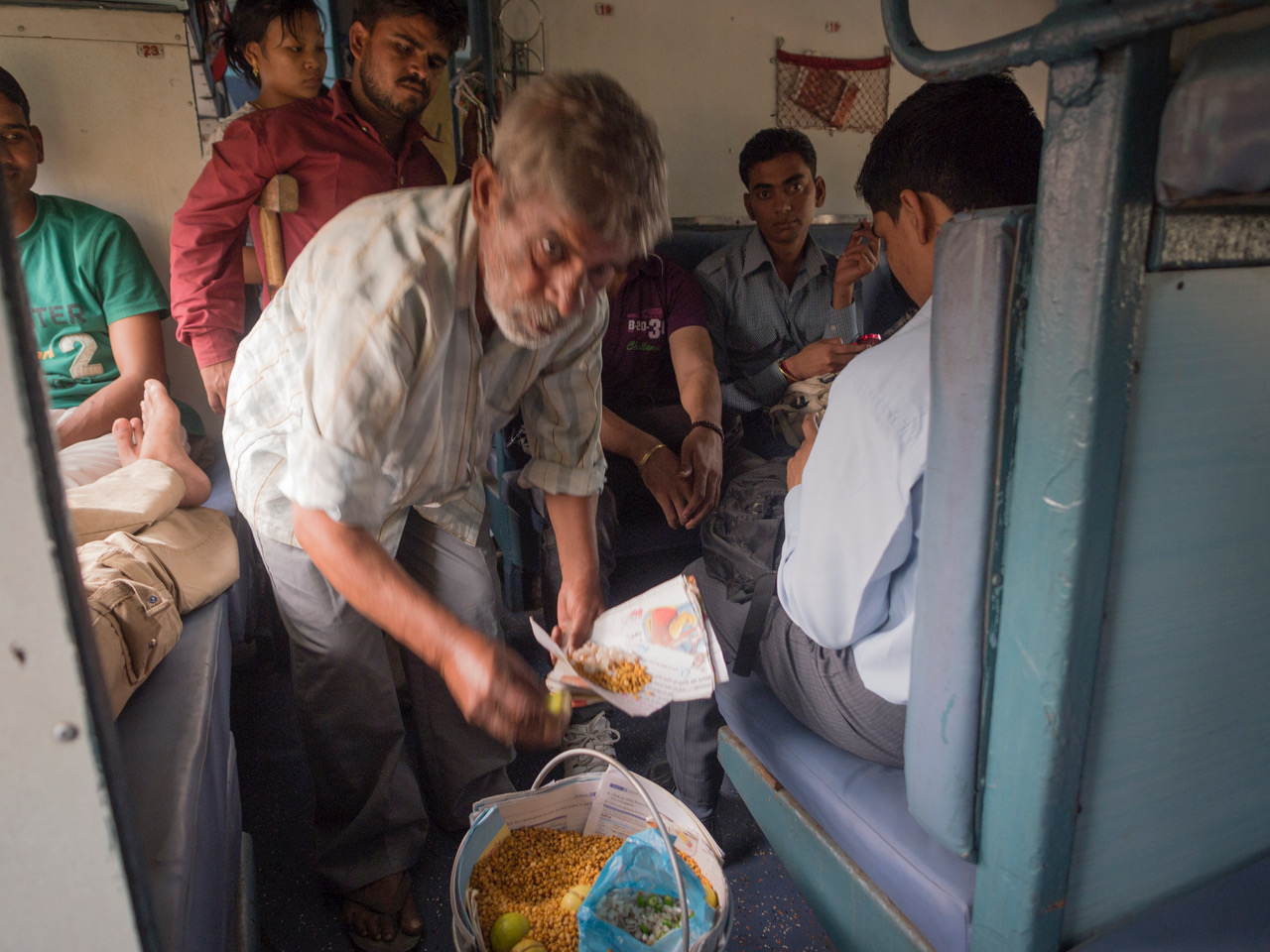
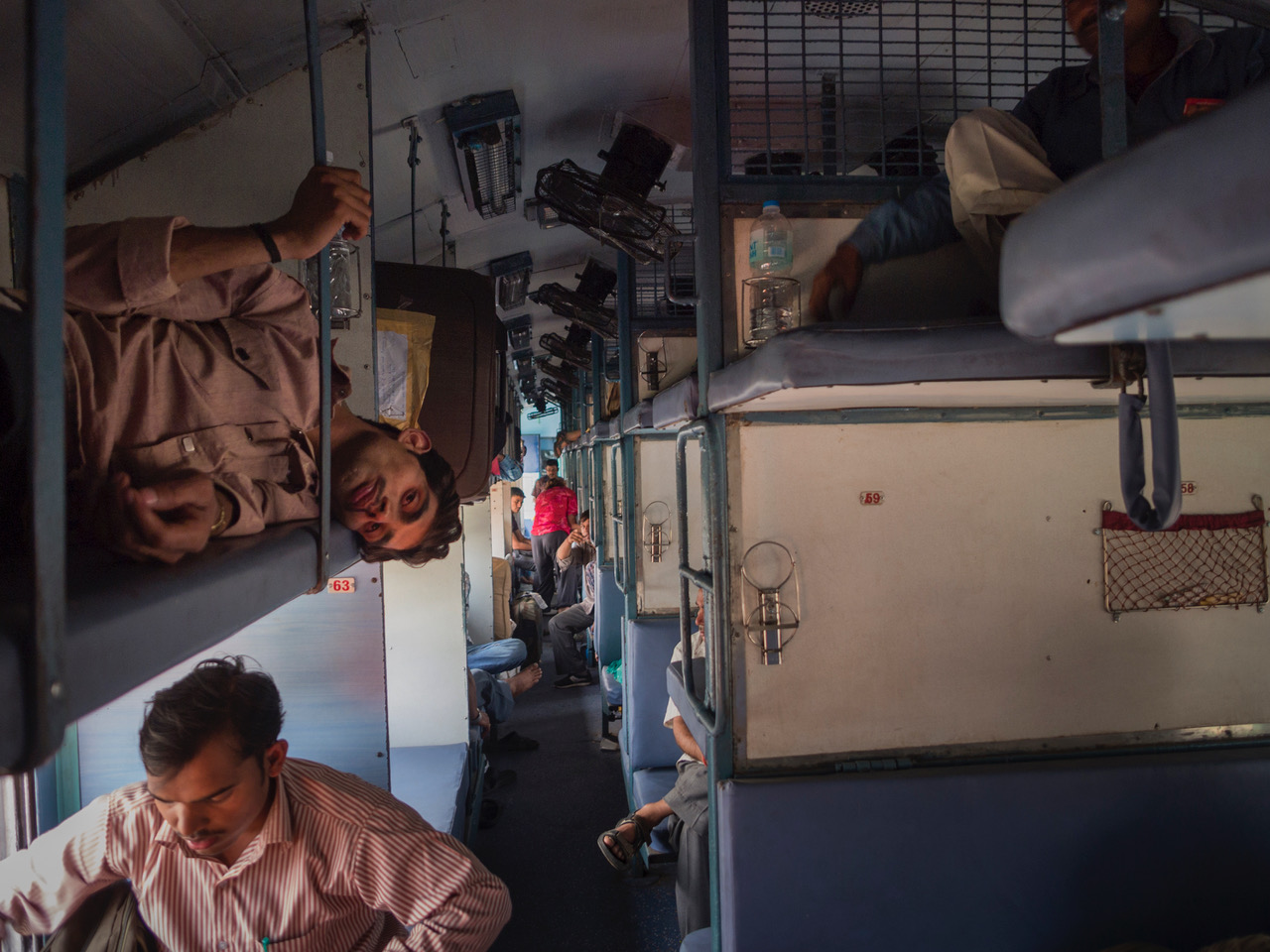
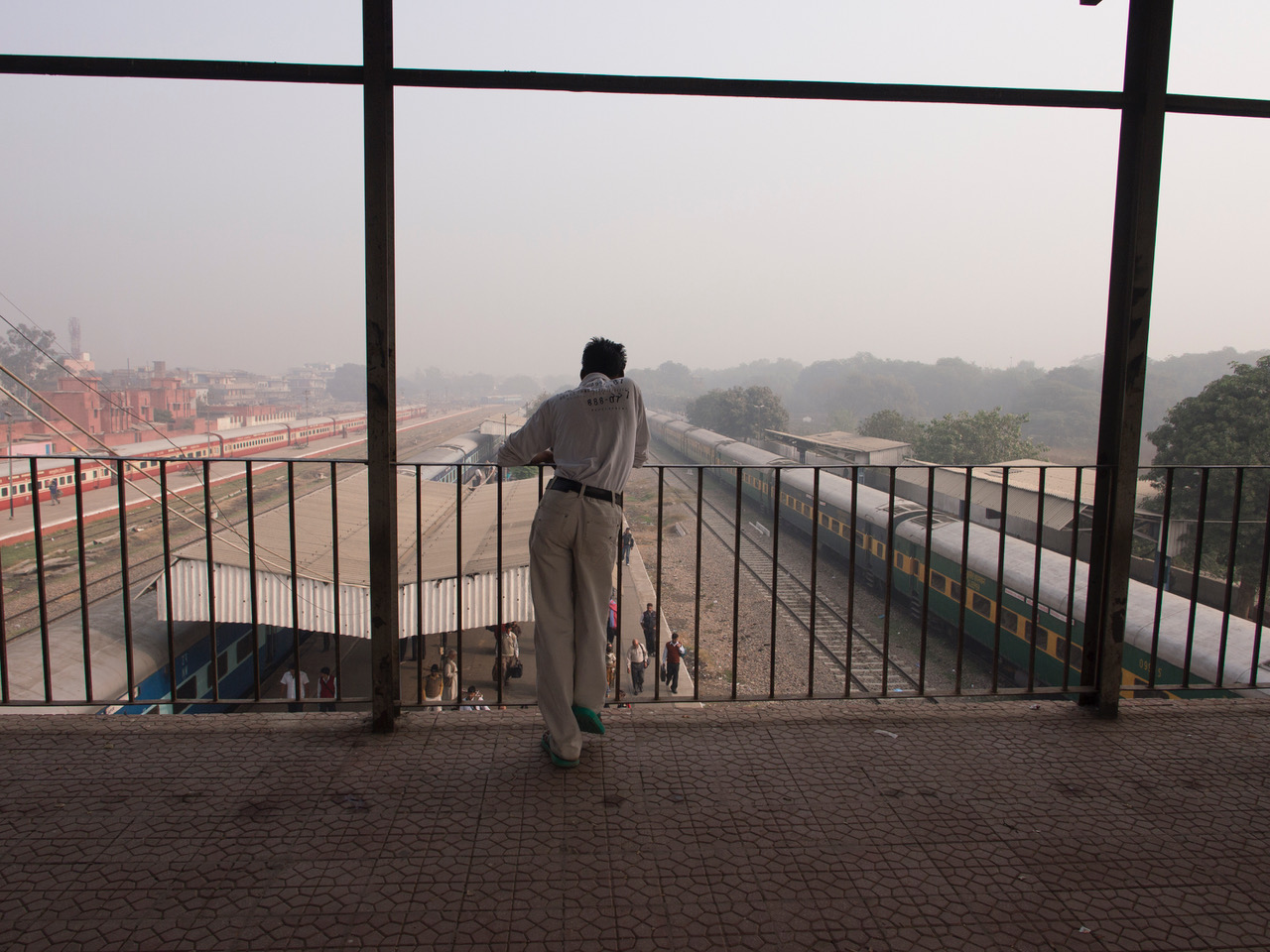
We had been on the road three months when we crossed the border from Nepal to India. I was nervous, I didn’t really know what to expect but had heard from other travelers that India was pretty chaotic. Just crossing the border conformed that. The station wasn’t much better, finding which platform our train was using wasn’t easy. We had been warned that people will always give you an opinion whether they know the answer or not. The 10 pm train was delayed, first for an hour, then two, it finally came to the station four hours late having apparently switched platforms several times. We boarded to find a family asleep in our bunks, gently woken they moved and I took a wet wipe to the top bunk, one swipe and the imprint of my hand was black, Ainlay my wife distracted the kids as I cleaned all the beds, we put our sneakers on top of the old electric fans as we saw everyone else do, used our backpacks as pillows and got a few hours sleep. When I woke up I took some photos. http://www.briteproductions.net/vincent-dixon
—————
APE contributor Suzanne Sease currently works as a consultant for photographers and illustrators around the world. She has been involved in the photography and illustration industry since the mid 80s. After establishing the art buying department at The Martin Agency, then working for Kaplan-Thaler, Capital One, Best Buy and numerous smaller agencies and companies, she decided to be a consultant in 1999. She has a new Twitter feed with helpful marketing information because she believes that marketing should be driven by brand and not by specialty. Follow her at @SuzanneSease.
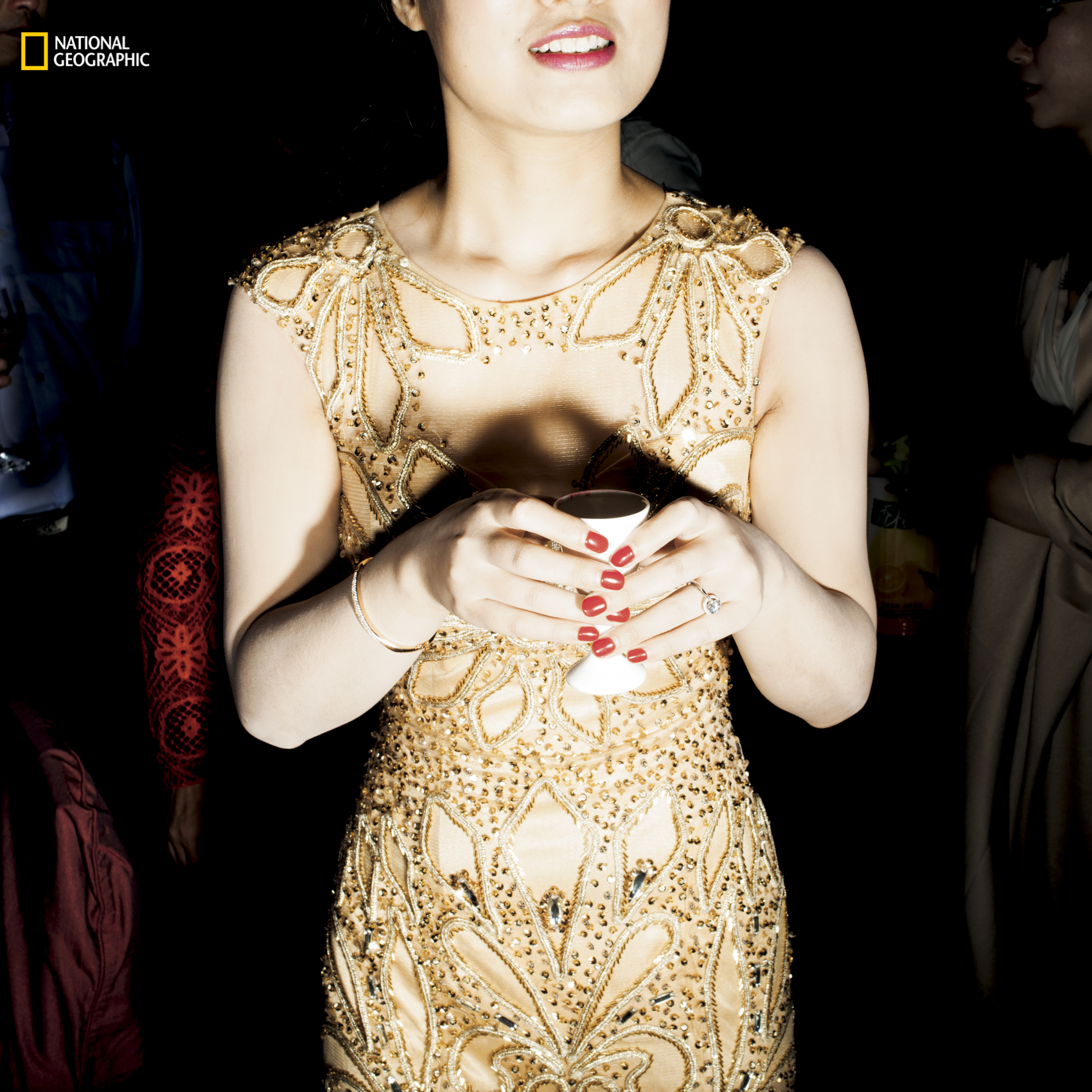
A Chinese newlywed toasts her guests with a traditional cup of rice wine. The drink has been consumed in China for at least 9,000 years; a chemical residue found in a jar of that age is the oldest proof of a deliberately fermented beverage. But the influence of alcohol probably extends even deeper into prehistory.
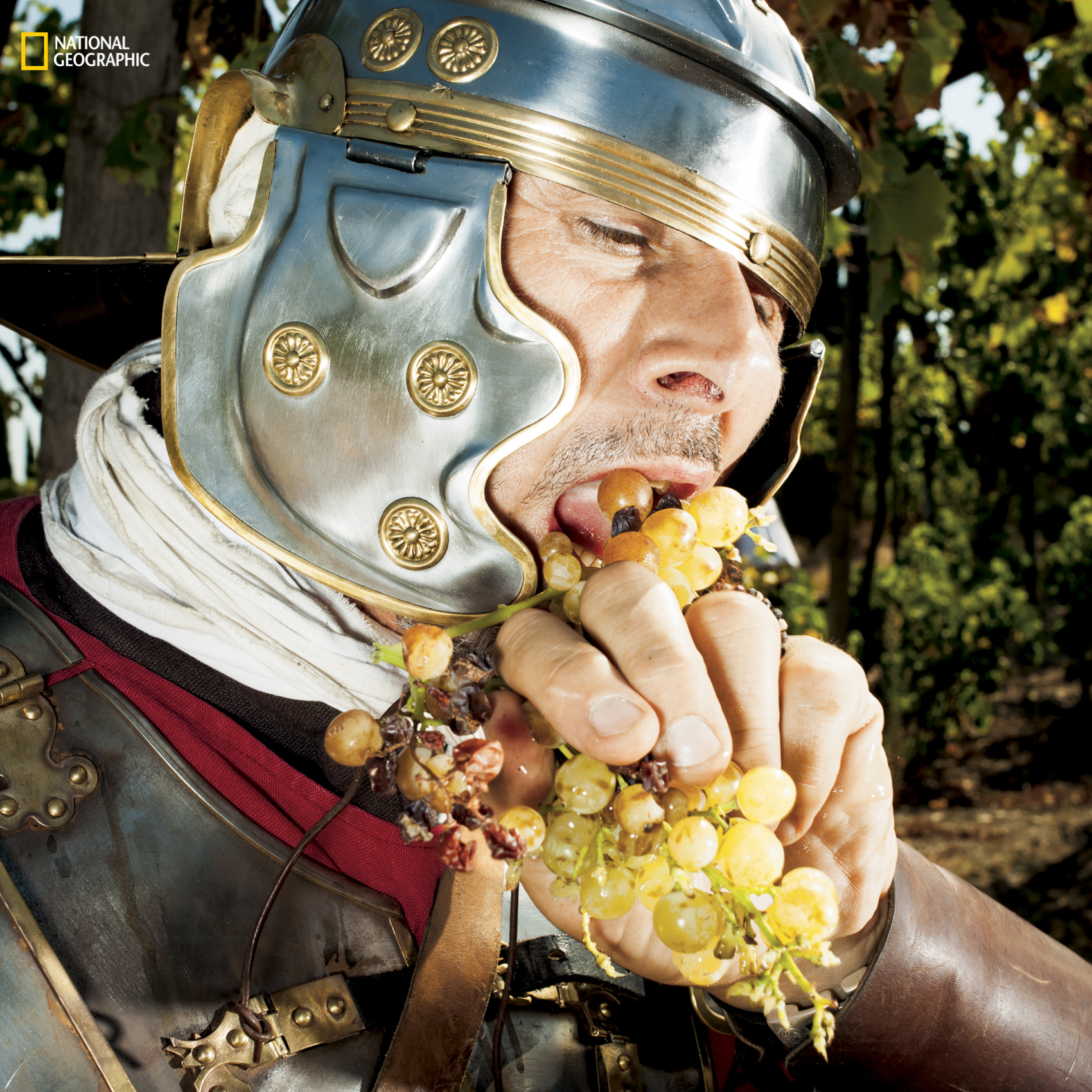
Grapes are snacked on by a Roman soldier (left), and pressed with a massive oak-tree trunk. The juice is then fermented in open clay jars. The Romans flavored it with surprising ingredients: One of Durand’s wines contains fenugreek, iris, and seawater.
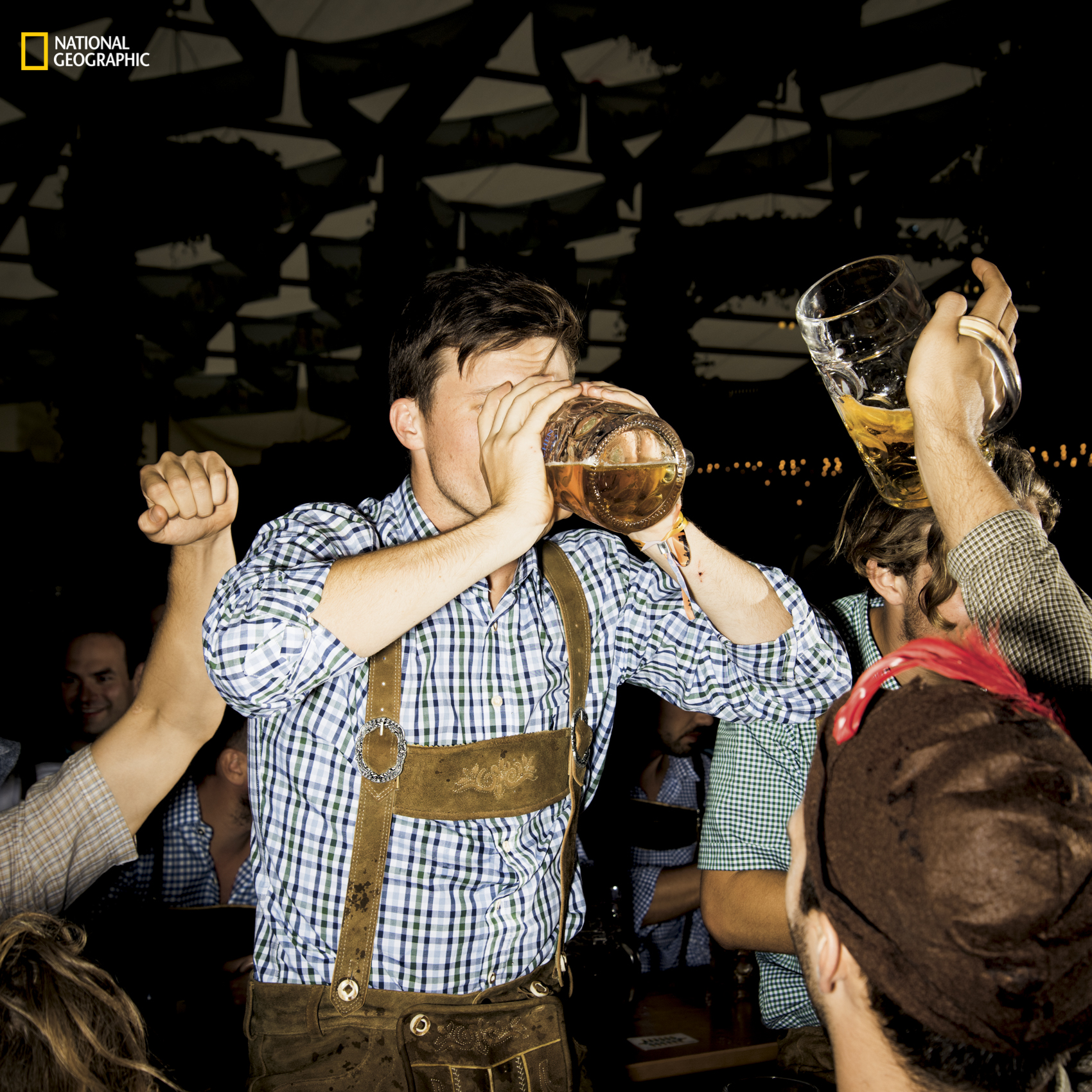
Since it began in 1810 as a wedding celebration for the Bavarian crown prince, Munich’s Oktoberfest has grown into one of the world’s largest festivals, with more than six million visitors crowding its tents each year to drain one-liter mugs of beer. Bavaria has had a big impact on beermaking: Its Reinheitsgebot, or Beer Purity Law, passed in 1516, ushered in a global trend toward uniformity by restricting brewers to water, hops, and malt (and later yeast, after it was discovered). These days some craft brewers are pushing back, experimenting with ancient additives and unusual yeasts.
National Geographic
Senior Photo Editor: Todd James
Photographer:Brian Finke
Heidi: How did this project come about, was this your first time shooting for National Geographic?
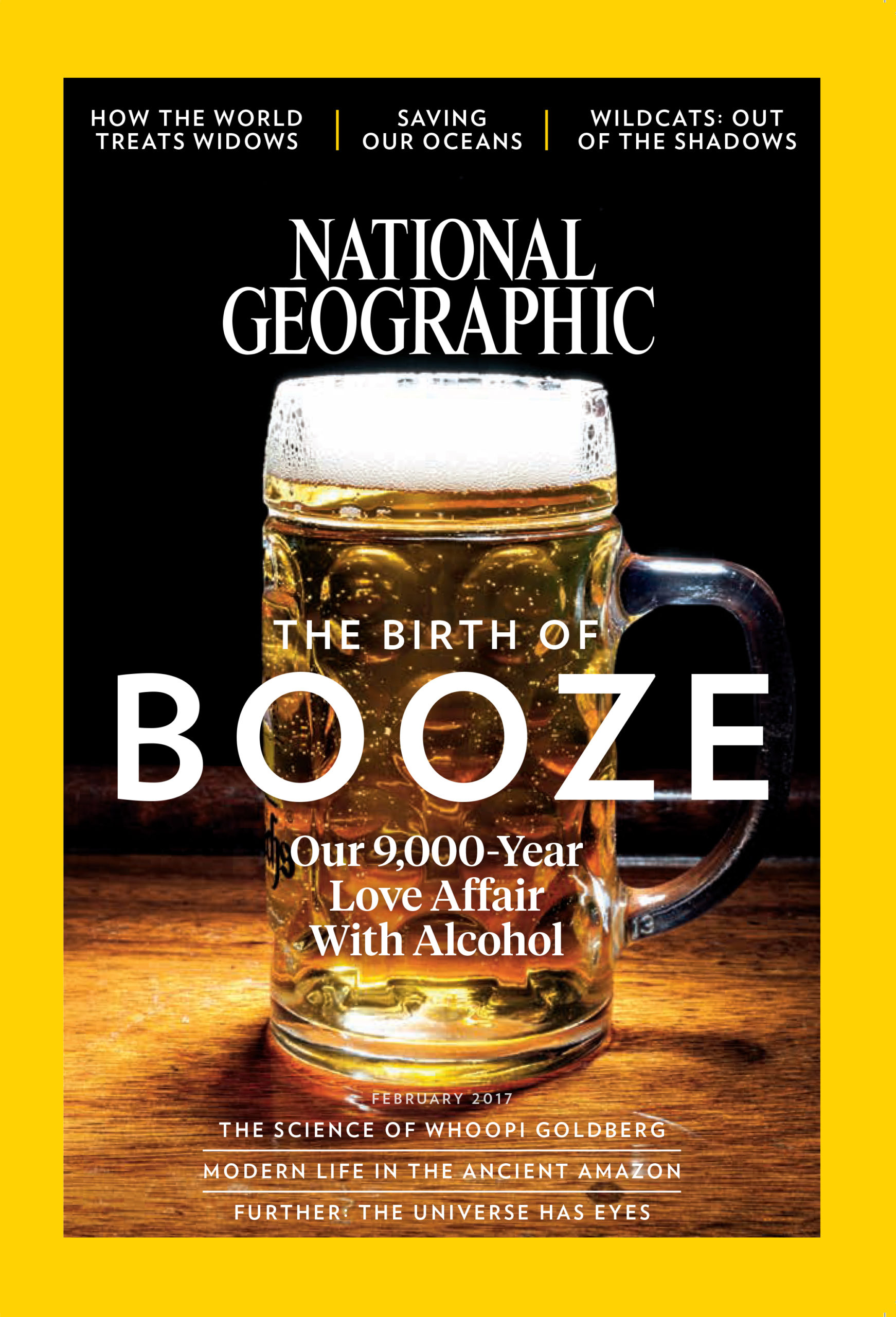
Brian: I got a call from Todd James, Senior Photo Editor at National Geographic asking if it’d be into shooting alcohol around the world. I said, “Hell Yea!” Todd and I had worked on three previous features for the magazine, I was psyched for our fourth story together. My first story with Todd was photographing “Meat in Texas”, a story about America’s obsession with meat. That job came about from my Instagram when I was posting tons of my backyard BBQ photos, the editors were familiar with my work but seeing also my obsession with meat landed me the story, along with my career of personal and editorial work.
How much do you use Instagram as a conscious promotional tool, or is it really self expression for you? It’s a platform for trying new things, promoting, keeping people updated on latest work, it’s an immediate outlet for sharing everything.
What advice do you have for photographers using Instagram? Always put out personal work because that’s where the best assignments come from.
What type of specific direction did you get from the magazine? What made this assignment different?
What makes National Geographic stories different is all the research before hand; the photo editor and photographer really build the story, then of course it’s the amount of time that’s dedicated. I shot on and off for four months for this story.
Did you travel with the writer?
No just myself and my assistant
It looks like you traveled extensively for this project, did you send in images as you traveled?
I traveled all over the place going to various birth places of booze around the world, started in Peru, then South of France, Republic of Georgia, Germany, China and a few paces around the U.S. Throughout shooting I’d send in photos, discuss the project and building the story with my editor.
Shooting for National Geographic is quite an honor (and it was a cover story) if you had any internal pressure, how did you deal with it?
I’m always a little nervous but mostly excited. It’s really amazing, it’s always something new, with so many new experiences.
Is Havas hiring influencers at all and if so, how do they find them? How many followers does someone need to have in order to be considered an influencer?
We are hiring a lot of influencers! Our creatives find them directly on Instagram, sometimes they give me the person’s Instagram handle and I have to dig to find contact info or a website. I’ve seen influencers with anywhere from 50k-500k followers, it depends on if we’re paying for their influence or just hiring them as a photographer. Lately, I’ve been suggesting that photographers increase their following and post their work on Instagram. They should be using Instagram as just another portfolio tool, it’s a great way to show a cohesive body of work. Start a separate personal account for dog and kid pics.
Do you think this trend is going to continue or so you see signs of it evolving?
I think hiring influencers as photographers is a trend, the technical ability and production sense that photographers bring to the table is worth so much more. I think it’s going to take a while for clients to see it since a lot of them are just starting to get their feet wet in this medium.
On a technical level, did digital photography increase your output? You’ve said you’ve taken around 2,000 a day average, or something like that.
I actually don’t think I shoot that much, because I’m not a motor drive kinda guy. So everything is kinda single frame. I don’t know even if I had been shooting film this administration that I would have shot any less. I don’t feel that I overshoot because of digital. Sure, you don’t have to stop at frame 36, but that’s the reason why you’d always carry ten rolls of film with you at a time. So I don’t know that that would make that much of a difference for me, at least.
Okay, because we were trying to do the math, adding up the shutter clicks, and wondering how many cameras have you completely ruined?
I don’t know how many cameras I’ve gone through but it’s probably been eight or ten. I never blew a shutter, which I know a lot of photographers occasionally do. I usually try to switch when I can feel like a camera’s about to give out. I always carried a backup camera, especially on foreign trips just in case one went down.
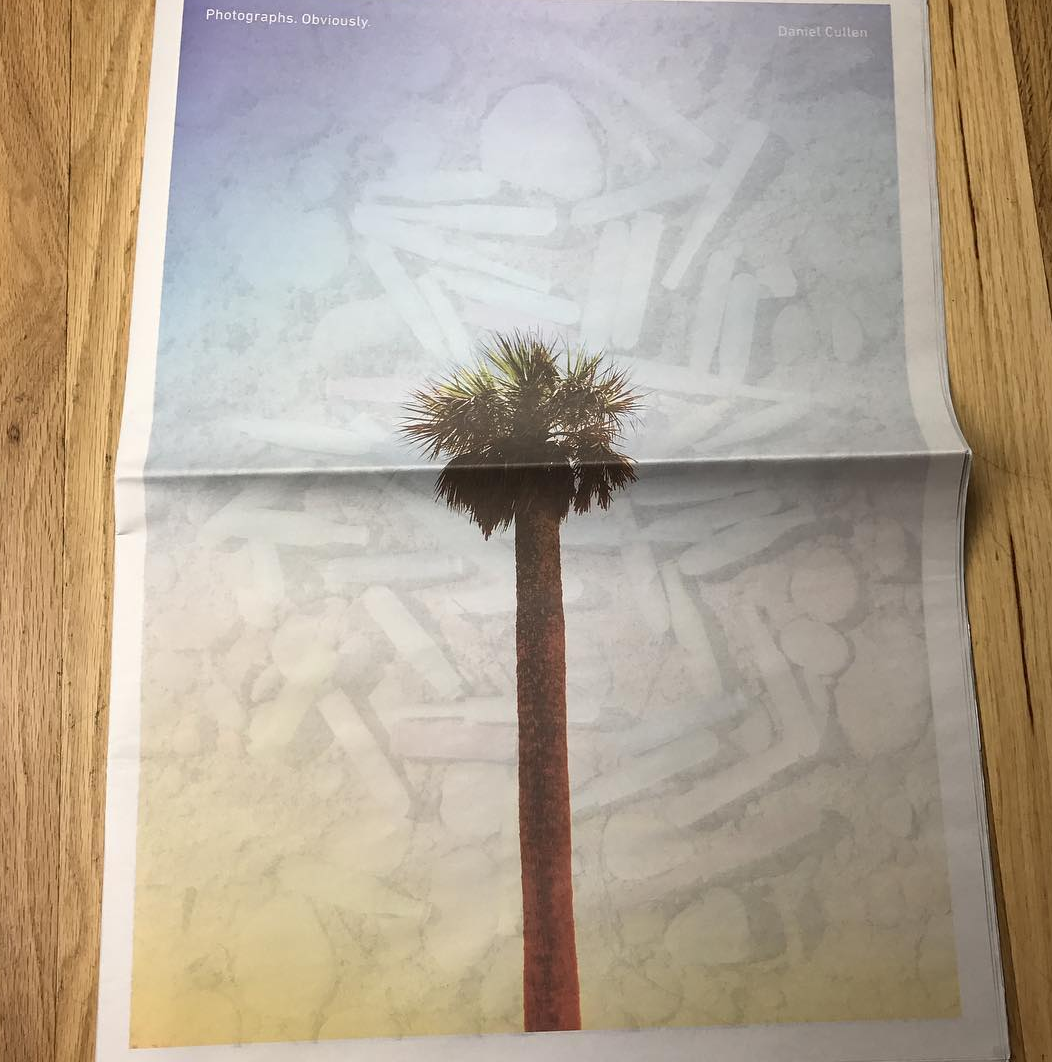
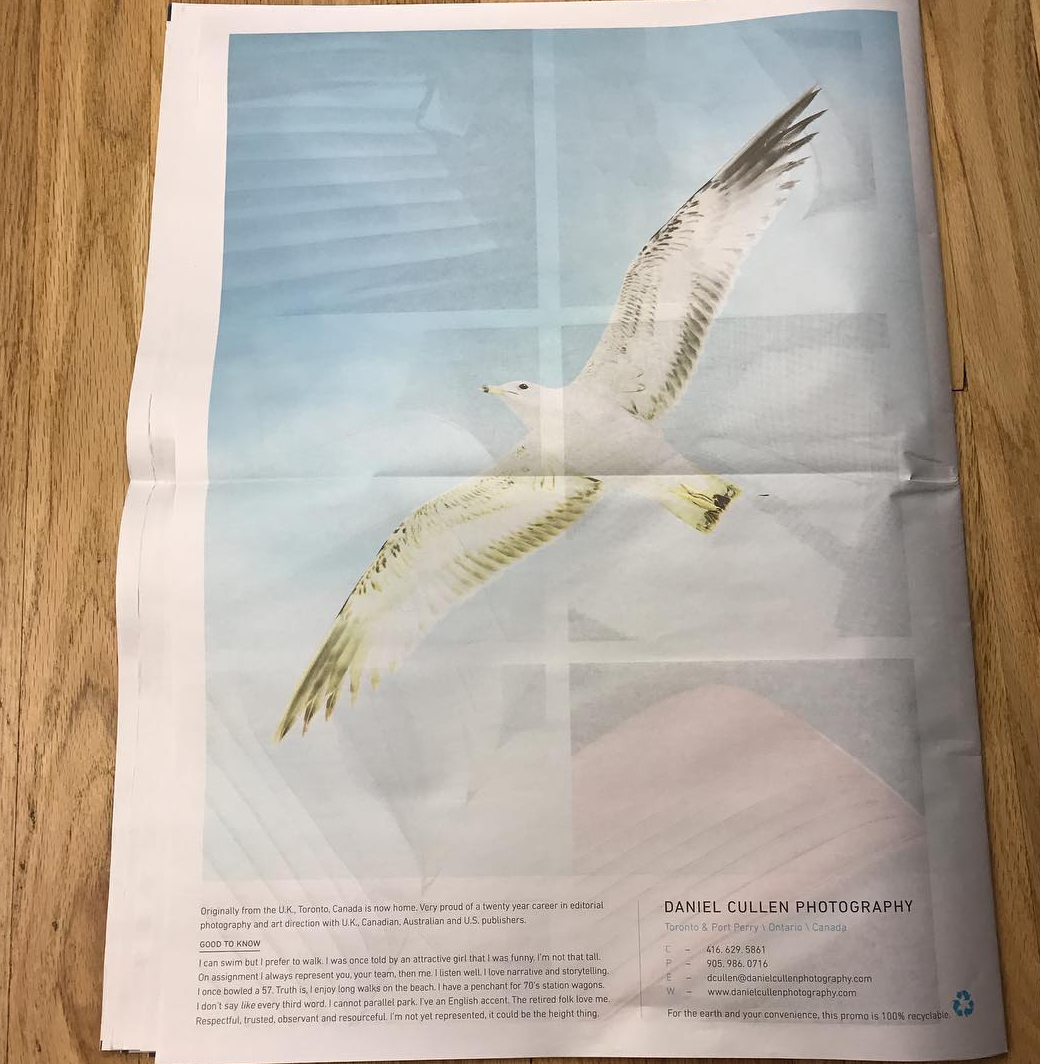
Who printed it? The newspaper promo was printed by The Newspaper Club, Glasgow, Scotland. I opted for the Digital Tabloid edition.
Who Designed it? I designed the promo myself. I spent the early part of my career in editorial design and art direction with U.K., Canadian and U.S. magazine and book publishers, so it felt comfortable designing my own material. The switch to photography as a full-time gig is the second act to my career. I absolutely loved designing my promo, I became the dream client, so patient, qualified, willing to listen, and rather easy on the eye*.
Who edited the images? For this promo, I decided to edit in-house. Obviously this has its pros and cons, but I felt I learned a lot from the experience, especially the big picture stuff. It gave me a bird’s eye view of my recent projects which allows me to focus the direction of my work in 2017. For future promos, I’ll be reaching out for help and opinions. The idea of seeing your portfolio curated from an independent perspective is fascinating. I think this would be a unique process in gaining a honest edit.
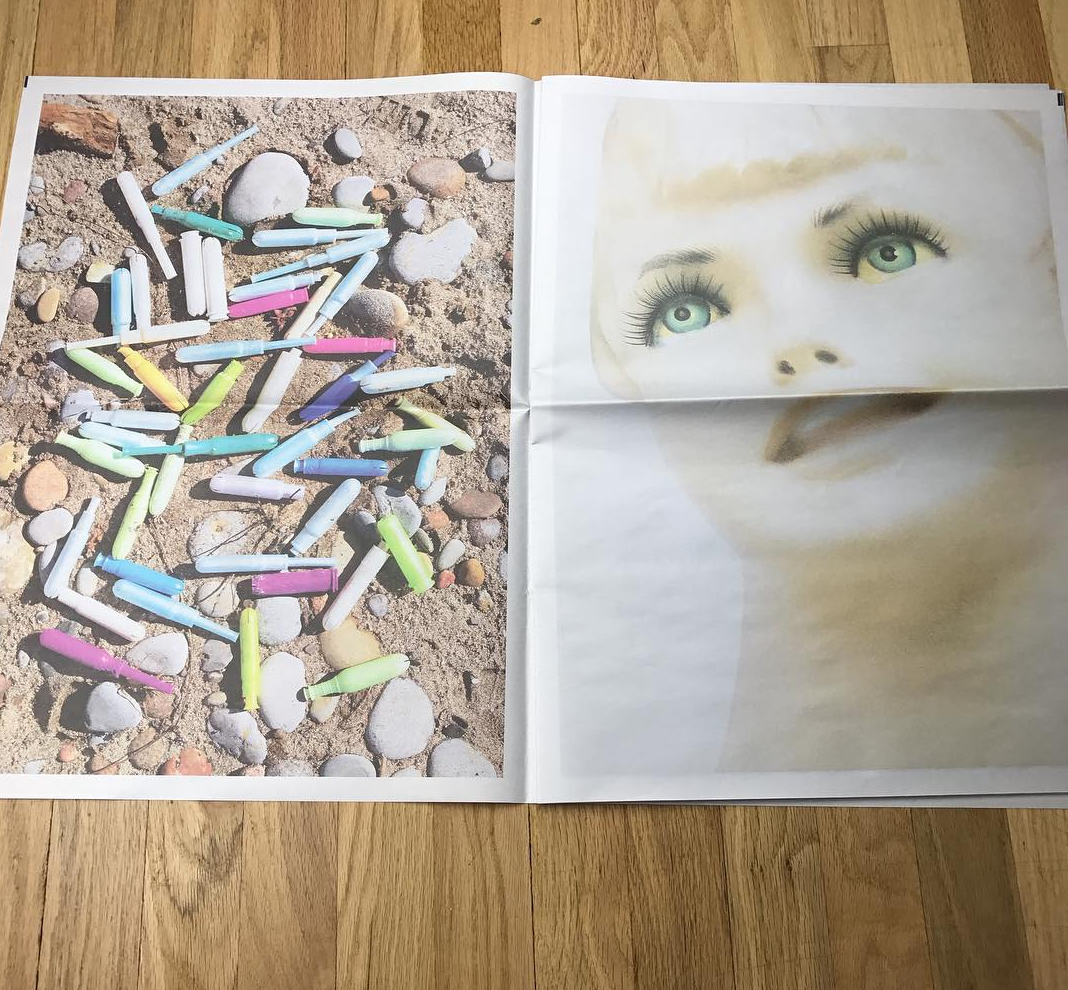
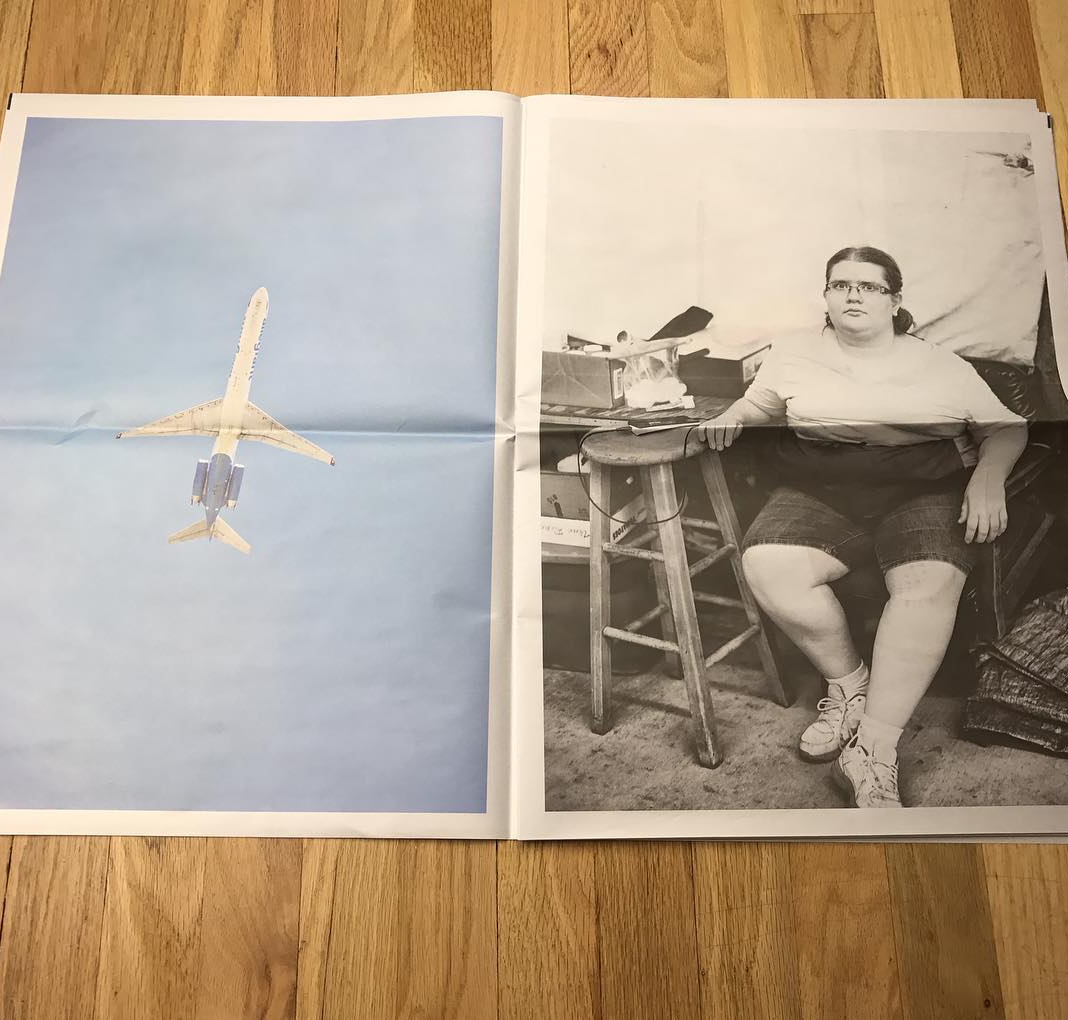
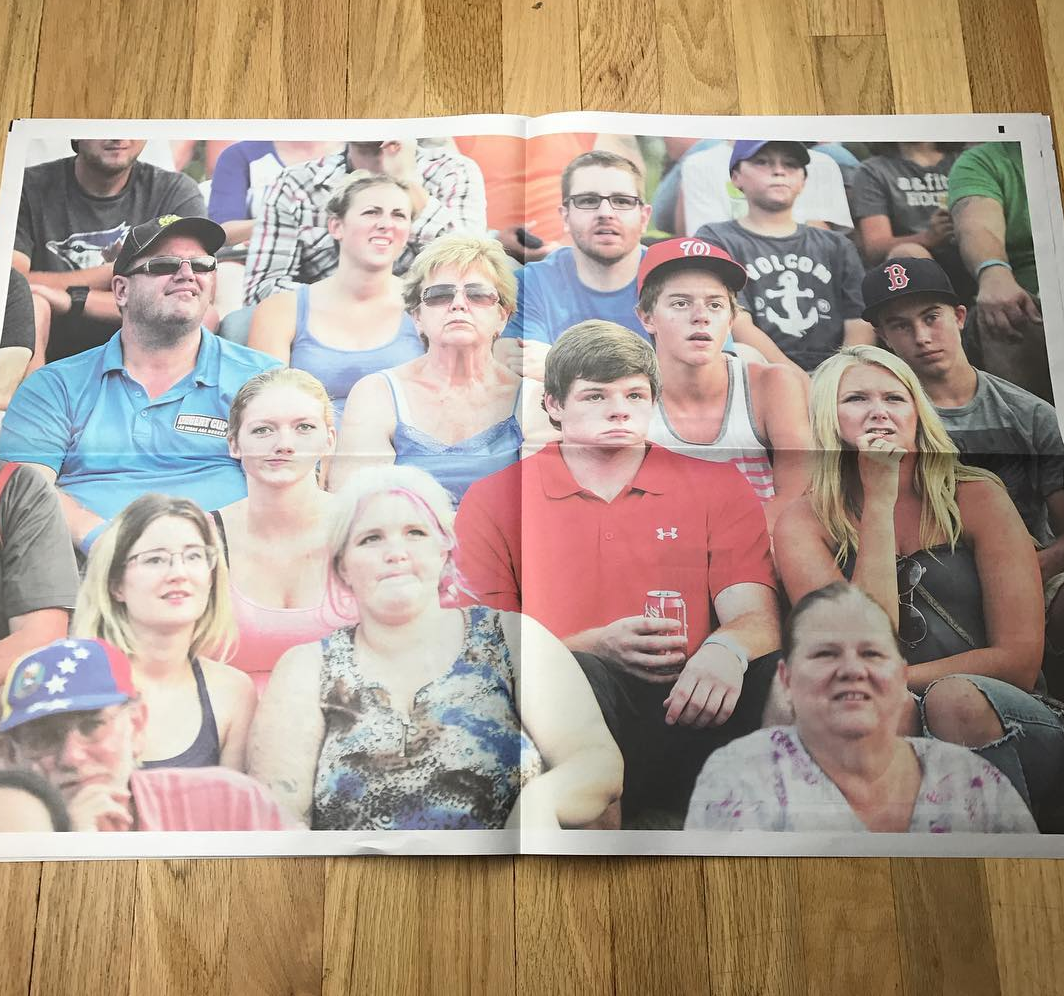
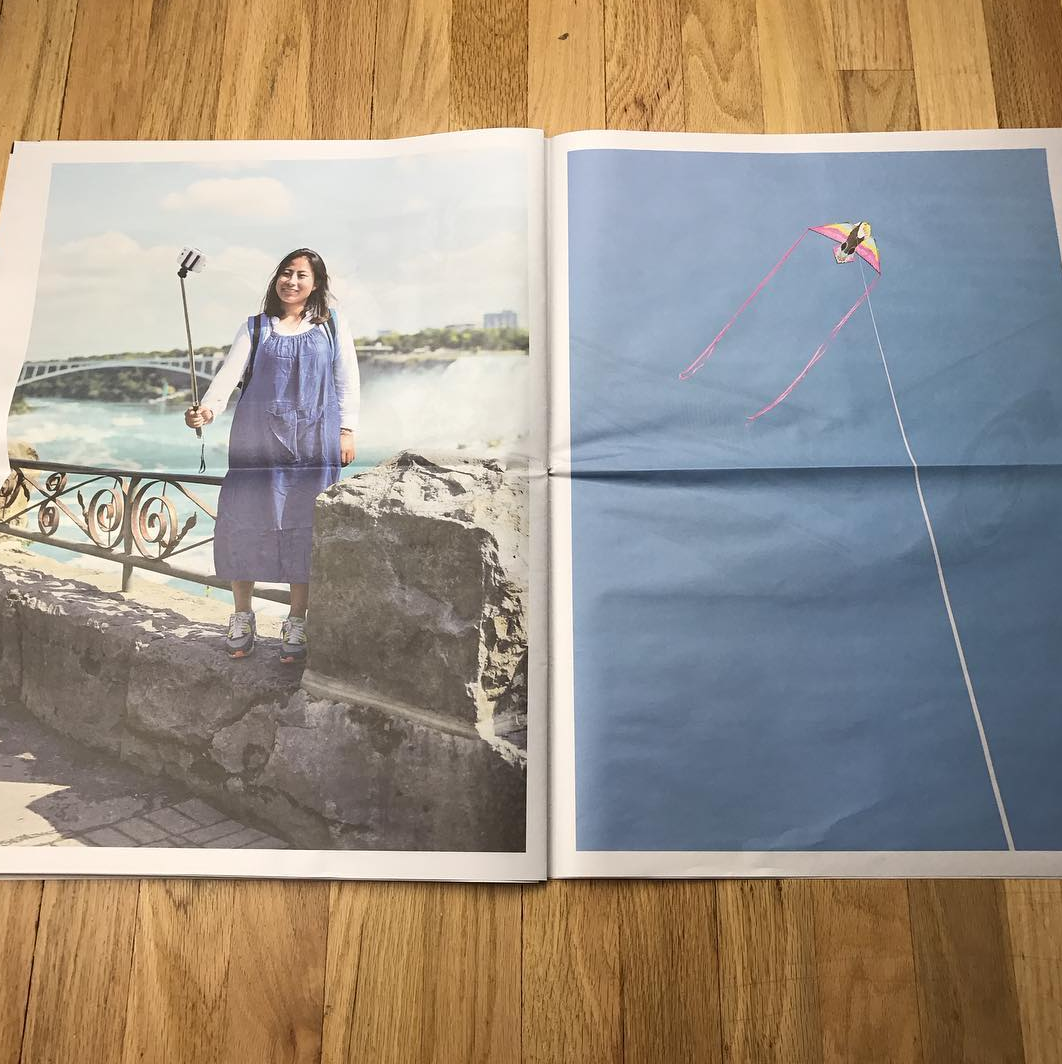
How many did you make? I printed two newspapers, only 20 of each, which in the world of photographer promos is laughable. The promo I sent to aPhotoEditor was a selection of images that simply acted as a gallery showcase and is meant to encourage a visit to my website to view a wider range of work. The second (identical in size and page count) was curated with an editorial narrative, with four double page spreads showcasing a singular photo essay. The biggest factor for such a low print run was the inability for me to attend any kind of press approval. I felt unsure committing to a 500-1000 print run without seeing exactly how the final piece would look. I’m still searching for a printer closer to home, which is Toronto, who could produce such a piece at a competitive price so I could significantly up the number of promos to send out. This decision has nothing to do with the Newspaper Clubs quality of work, it’s just my need to be closer to the actual printing. With each newspaper I included a 5×7 postcard that included all relevant contact details. A postcard is easier to file or post on an studio wall than a tabloid newspaper.
The concept of printing a newspaper is not particularly unique these days, but sure is fun, especially for those of us who enjoyed the heyday of 80’s & 90’s magazine publishing. It was a joy to feel and hold such a large printed piece.
How many times year do you send out a promo? I like to produce three a year. This particular small batch promo will be sent out in January. I plan to send out at least two more in 2017, perhaps early summer and late fall. I’ve yet to decide if I will produce two more newspaper promos or design and present each portfolio differently. Postcards, small magazine, foldout poster, etc.
*This statement is utterly untrue. The English accent is adorable though.
For the first 15 years we were like tittering schoolboys, viewing every offer, no matter how paltry, as an opportunity for naughtiness and adventure. We unashamedly piggied life on the back of work, and in the process both flourished. Photography’s like a panda; it only eats one thing. Curiosity. Without a constant diet of curiosity, it’s dead. So when you’ve reached the point where venturing away from your living room without a business class ticket seems like a hassle, or extending an assignment in Ulan Bator when nobody’s paying for the hotel doesn’t make sense; you’ve ceased to be a photographer. You might be a high-level technician, but your photographs – no matter how much money tech companies will pay for them – are shit. Because the only thing you are curious about is the day rate.
Mass tragedies, as photojournalist James Nachtwey says, happen to individuals. His focus on the individual victims of Somalia’s famine led to the saving of 1.5 million lives.
How many times a year do you send out promos?
Emails: once every 6-8 weeks. Mail promos: about 2-3 times a year.
Is there a backstory to this image?
This image recently placed first in this year’s APA awards in the Emerging category, so I saw to it that it got distributed as widely as possible online (with a blog post, social media announcements and an email promo), and a mail promo to a selected list of editors and art buyers that I would like to work with.
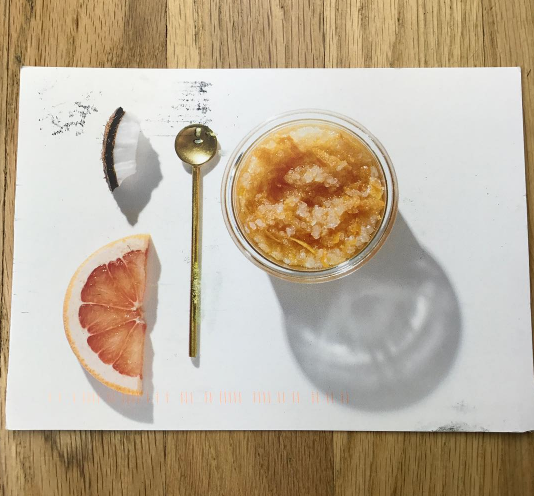
The image is part of an ongoing series, ‘Edible Beauty’, featuring DIY beauty products made with edible ingredients and was developed in collaboration with food stylist Zoe Armbruster. Having created food images for the past six years, I was looking for new, unique ways to visually present food and produce. Changing my frame of reference – food as beauty product vs food to eat – inspired a new perspective on the subject. Where I’ve often opted for shooting in natural light, I created all the images in this series with the ProFoto B2. Instead of a prop-filled set, we kept accessories to a minimum, allowing us to experiment with different formats of presenting the finished product. In retrospect, this series represents an intentional departure from my previous approaches to food photography, and it has invigorated my creative vision.
Looking at his photos reminds me that photography cannot be too controlled. It cannot be predictable. It should have life and energy and risk. Sometimes that gets messy.
Tim Tadder is an internationally acclaimed photographic artist. Most recognized for his highly inventive conceptual advertising photography Tadder has been ranked in the top 200 photographers worldwide by the prestigious Luezer Archive Magazine 8 years running. In 2015 Epson, the world leader in photographic printing technology recognized Tadder as one of the top influential photographers, producing a TV commercial and worldwide ad campaign featuring Tadder and his work.
When did you first know that you wanted to be a photographer? I grew up on the set of a commercial photographer in Baltimore, Maryland. I knew that I was fascinated with photography from an early age when I saw my father developing images for the first time in the darkroom. He had a black-and-white and a color darkroom in a small studio in Baltimore, and I used to watch him print pictures using an enlarger and chemicals. That was magical to me. I always thought it was amazing that you could re-create life from a camera and paper.
What was your path to becoming a professional photographer? I have a unique path to becoming a professional photographer. I was a high school teacher for five years, and during the summers I did mountaineering adventures. During those climbs, I would make images and host slideshows. People were really interested, and through the slideshows, I found that people liked the images that I created. I found I wasn’t a great teacher but that I really loved photography and so I decided to give it a try. I moved from South America where I was teaching and climbing to Baltimore where I grew up and had connections in the photography world. I decided I would see if I could make it for a year, mostly because that’s all the money I had saved. I worked out of my father’s studio in Baltimore but mostly for the local newspaper doing journalism while I was trying to learn the craft
What formal schooling or training did you have in photography? After two years in Baltimore, I was really in love with photojournalism, so I decided to pursue a Masters Degree in photojournalism from the Ohio University School of Visual Communication. That program is amazing, and I highly recommend it. I learned so much in the short time that I was there not only about photojournalism but also about creating images that were capable of telling stories. I learned so much about visual communications while there. Truly so much of what we do in photography is at its very essence visual communication. Before I was aware of that, I was just making images that I thought looked interesting, but after the program, I started to make images that spoke and told stories. The resulting images were much more intelligent images, so to speak, and that process really helped me become a better photographer in a short period
Were your parents supportive of your desire to be an artist? Ironically my parents were not very supportive me at all. I think that my father was concerned I did not have the talent to make it as a photographer. I also think that he never really made a lot of money and I think he felt that money equated to success, and in some ways, he felt that I did not have tremendous talent, and thus would not “be successful”. There was a lot of clashing as to what I felt was a good photographer and what he saw as good or great. I can remember my mother delivering me the Help Wanted section with jobs that she thought I would like even though I was making great strides in photography. She continued to show me job openings that she thought would be great careers. I can remember her distinctly telling me that that there wasn’t any money in photography and that you couldn’t make a living as a photographer anymore but I didn’t care. I just wanted to make images, and I wasn’t concerned about money. I was working for peanuts as a photojournalist, and I was really in love with photography. I will say, though, that my father is super proud of me at this point and I think that he honestly just wanted the best for me and realized how competitive and how difficult it is to succeed in this industry. The reality is, that if you love something and that you are passionate about it I think in America you can succeed
Do you remember your first published image and how it felt when it first appeared? Not really, I don’t think that I was all that enamored with having a published image define me as a photographer. Ink on paper does not a photographer make. But rather the communicative value of the image. I can remember the first image I made that truly moved people and how that made me feel. I think that was always more important to me, making an image that people reacted to. I can remember getting many emails from viewers responding to how much the image moved them. From all over the world it was a powerful image, and I knew at that point in time I had important skills.
You shoot both stills and video. Are you more passionate about one medium over the other? I prefer stills for sure. I like the less is more approach, and with motion, it just takes more people more equipment more blah blah blah…I hate the fat in motion productions. Give me a camera and a lens, and I’ll make it happen, motion you need all kinds of stuff to do commercial work.
After all this time, what still makes you passionate about the visual arts?I think how freaking hard it is to make images that move people. Truly to make a great image, it’s very hard and takes a lot of things to go right. Sure if you are a photojournalist you can get lucky, but normally it takes a huge investment of time, energy, people, etc. Greatness comes from the communicative collaboration of energy revealing itself in the well-crafted moment. That elusive search for perfection makes me passionate. If it was easy, I think I would be over it by now. Knowing that I have not done my bet work yet keeps me grinding. I will not stop until my impact is undeniable and that’s the passion.
You seem to have so much creative energy in all your work. How do come up with the concepts for your projects? I consume imagery, from TV to movies to art and Instagram, I consume and consume, and I get inspired by what I see but more importantly what I do not see. I try to find voids. I try to find things that have not been visualized. Bringing new visuals to life no matter how absurd or different is a great challenge in our world today. It’s hard to have a visual impact with so much noise. So I try to fill the empty spots with something new.
When you go into a shoot do you have a detailed vision for the finished project or does it tend to be a collaboration with the subject to determine the result? Always. I am a great pre-visualizer. I know exactly what I want when I go into every shoot, but often I fall short. It’s one thing to see it in your mind’s eye, but it’s quite another to capture it. That’s the illusive search for perfection. We know what we want, but it is sure hard to get it. That’s search is what keeps me passionate. I can feel though that the more I do this, the more my mind and my visions are aligning…so maybe I am getting closer. I do feel I am much much better than I’ve ever been.
Many photographers take full credit for the finished product from a shoot, but you are quick to point out that without your “team” your success wouldn’t be possible. How large is your team, how did you build the team and how much collaboration is done with this group? I think when you start it’s a very big ego thing. However, as you gain knowledge and wisdom you begin to look around and realize that individually you can only accomplish small things, but collectively you can accomplish great things. True impact comes from people that can harness the collective spirit of passionate individuals and align that energy towards a defined goal. I saw this in the people around me and when I grew up and left my ego behind, I realized that I was only as good as the weakest link on my team. I realized that the people around me love what they were doing and that I needed to embrace not only their passions but honor their contributions. That’s when it all clicked. I can’t do what I do without the support of others. No way. I love them, and I hope they love me because they make everything possible. My core crew is excellent. They are the best, and I will put them up against anyone. My normal team is made up of a first assistant that has been with me for ten years, my producer, our production coordinator, stylist, hair and makeup (sometimes two people) and a gaggle of other freelancers that contribute. The productions swell when needed, by my core is four.
On average, how much of the finished product that we see in images on your website is done in camera versus in CGI or post production? That goes from zero to a lot. There is much of my work that is captured in camera and sometimes quite a lot of post. I would say what you see is 75 percent in camera, truly only what you see in the CGI section of my website is CGI. Yes there are composites here and there, but I find the less time in the post the better the image. Less is more.
How many man hours went into your Tecate Calendar project including the building of props, the shoot, and CGI/post? Now that project was very very CGI and post heavy. But my favorite image in that collection was all captured on camera (The Gemini Twins shot below), so the key is to mix everything so the audience can’t quite put their finger on it..there is a great Behind the Scenes video (www.timtadder.com) on my site that really shows how this was done. That shoot was huge, and I spent weeks in Pre-production on it. The wardrobe was custom stitched, the CGI sets crafted before the shoot, the animals cast, and the cast was pulled from all over the globe. That shoot was a mission…I would say three weeks solid of pre-production and four weeks in post…but it’s unique and quite amazing. Of course, you only see what was selected by the client and how hey wanted it to sell beer, but the images I love are far more subtle, but that does not sell beer.
Of all the athletes you have shot over the years, which one(s) would you say brought the most personality to the shoot? That’s too difficult to answer. There are so many levels of shoot energy, and sometimes the creative requires more personality than others. I will tell you Cam Newton was spectacular as a comedian and told the most jokes. Simone Biles was spectacular and amazing. But there have been so many. I love when I shoot athletes year after year sometimes for the same client sometimes for other clients, but they remember me. Sometimes they greet me with big hugs, and I feel like an old friend. That’s always surprising. I guess they liked the images.
Your personal projects are amazing. What inspired your Bella Umbrella project? Was that project as messy to shoot as it looks? This project was inspired by things I saw on Instagram. I had been following this LA street artist, and he did all this rad stuff with military smoke bombs. I wanted to do something with him, but he is really dark and quite theatrical. Then I saw this image with smoke and a vintage umbrella in a forest and thought that if I could simplify and elevate the elegance that I would have a beautiful collection of images. The project was a mess and destroyed some expensive vintage clothing. I think it looks easier than it actually was. We took the smoke bombs and taped them to the umbrellas, but when the umbrellas caught fire and the clothes burned, I had to take another approach. So some of these were in camera, and some were composites of smoke plates and the talent. The stylist freaked out and I freaked because I did not want to hurt anyone but we decided we could make happen without any risk.
What piece of camera equipment can you not live without? Hmmm, I don’t really have a piece of camera equipment I can’t live without. I don’t believe the tools make the image I believe that the concept, thought, idea the passion make the image. The camera and lens are no more part of the process than a burner on a stove is to a chef. A chef can make a meal with any type of stove, just as a photographer make can make an image with any type of camera.
From the behind the scenes video’s on your website, it looks like you have fun on the set when shooting. Do you find that keeping things fun puts people at ease and allows them to open up? Always. It’s a blessing and an honor to do what we do. It’s fun, but it’s really important to do a good job because people’s careers are at stake. We really must remember that we are doing something that is amazing, creative and fun. back in the day I used to get all worked up, but that never helped. It never makes a better image, so let’s make it easy and let’s make it fun so that people leave with a good taste in their mouth.
What does the perfect Tim Tadder day look like? Making pancakes for my kids, creating some amazing images that make people go “holy shit”, having dinner with my family and watching the Ravens beat the crap out of the Steelers on Monday Night Football.
What advice do you have for aspiring photographers looking to enter this ultra-competitive industry? You better absolutely love, love, love creating images. You must be willing to work 20 hours a day for years and years. You must be willing to lay it all on the line and never give up. You must have to have a thick skin, a really thick skin, and not be deterred by failure. You have to be willing to make thousands of mistakes and keep making them until you get it right. You have to be willing to produce new work always and you need to be planning your personal work all the time. It’s never ending even for me. You can never take the foot off the gas. If your not willing to do that, then it might not be for you.
If you weren’t a professional photographer what would you be doing? I’d run for President, seems like not a lot of people want that job these days.
This post is sponsored by:
Why did you choose Photo Folio for your website? I think the system is simple and presents my work in a clean and clear way. Clients can get right to the point. All I want is for my images to speak to the audience with nothing else getting in the way. The content management system is great and makes creating edits super easy.
[otw_shortcode_button href=”http://www.timtadder.com/” size=”medium” bgcolor=”#2fa0d9″ icon_position=”center” shape=”radius” target=”_blank”]Check out the complete Tim Tadder website[/otw_shortcode_button]
Many of the world’s top photographers, like TimTadder, showcase their work with a website from PHOTO FOLIO . Isn’t it time you put the power of PHOTO FOLIO to work for you?




 To purchase Richard Bram’s “New York,” click here