The Daily Edit – Ray Collins: Patagonia Journal Spring 2023


Ray Collins

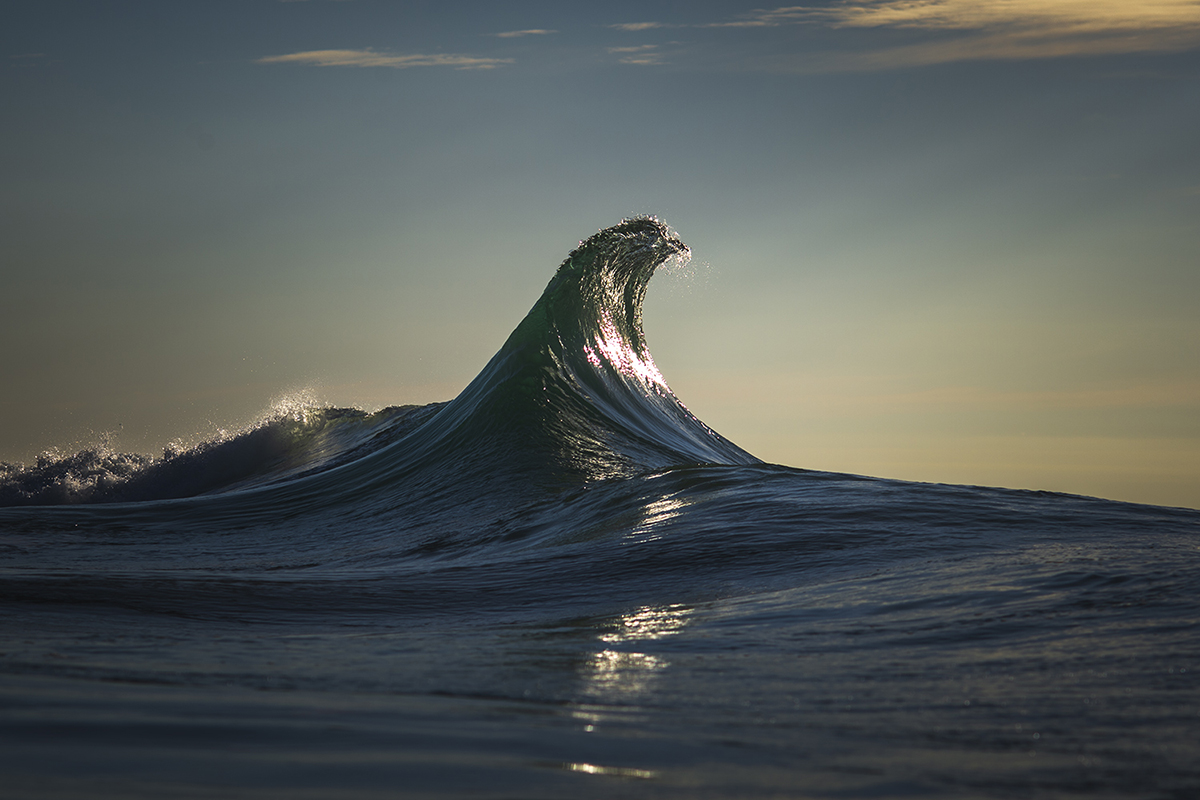
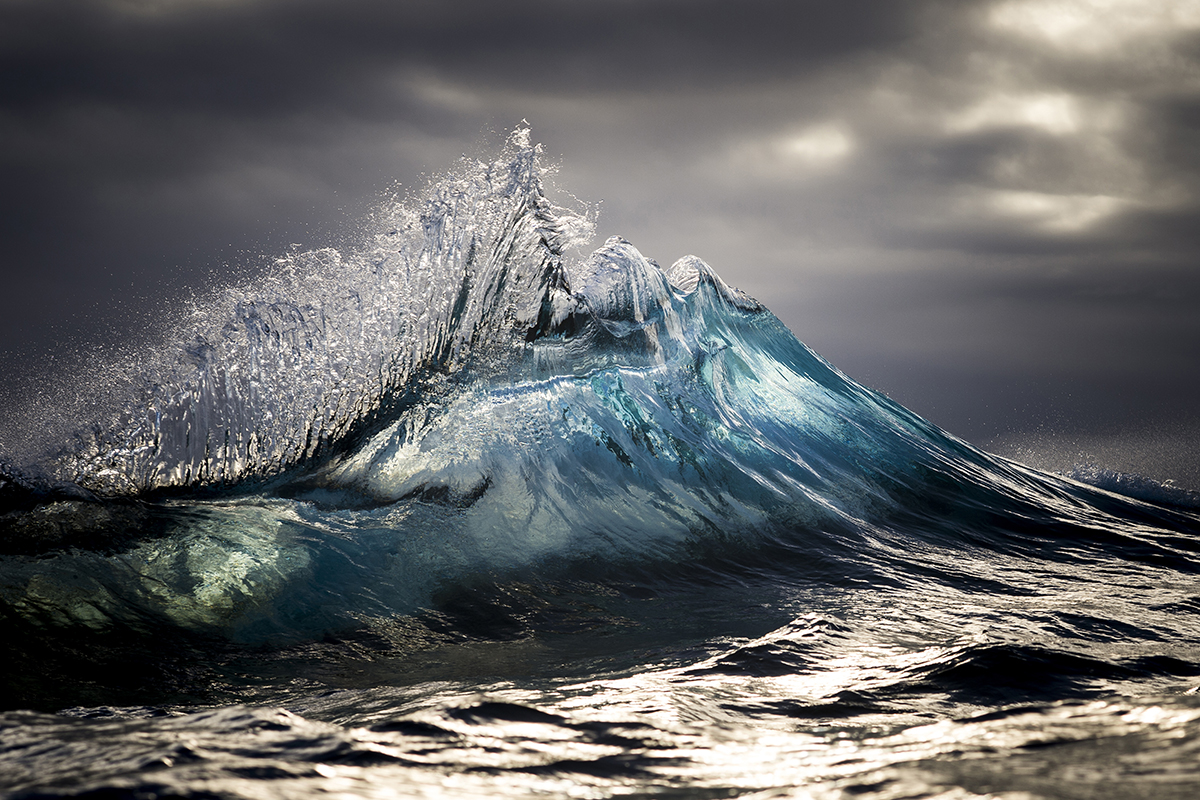
Heidi: The ocean is a dynamic canvas, what made you what to create a stillness?
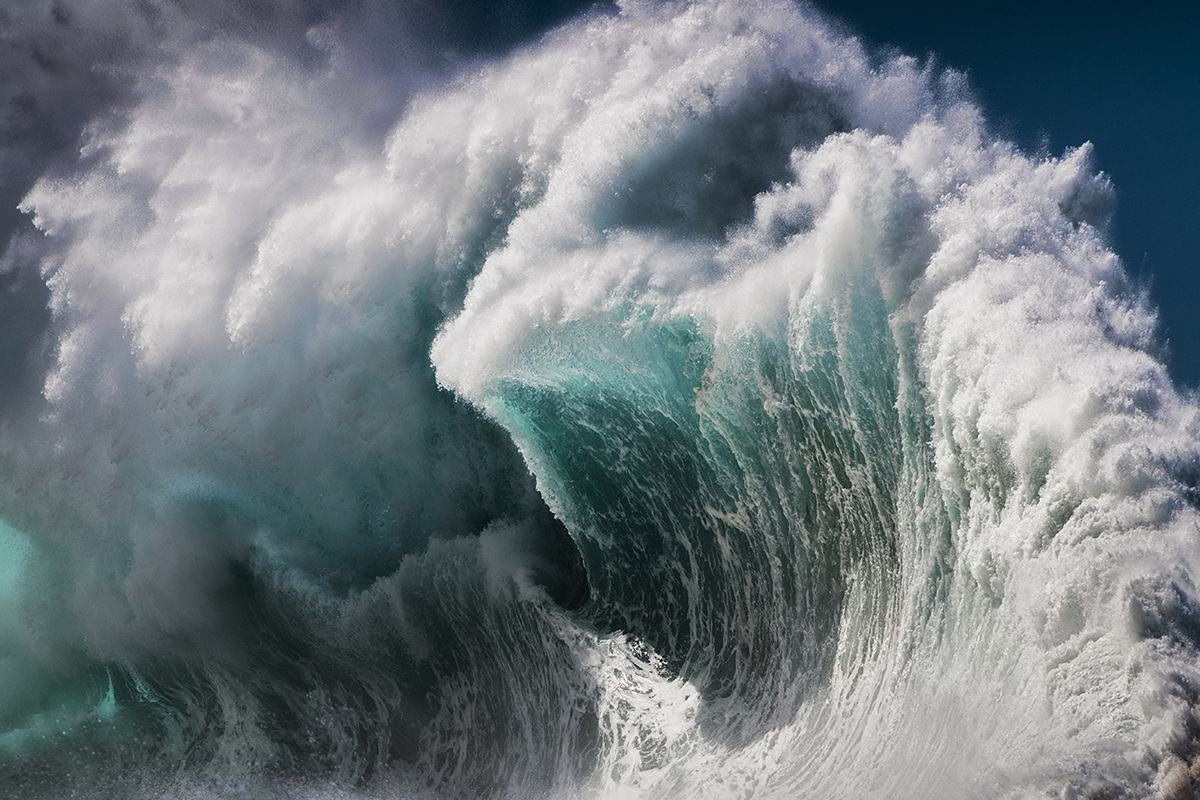
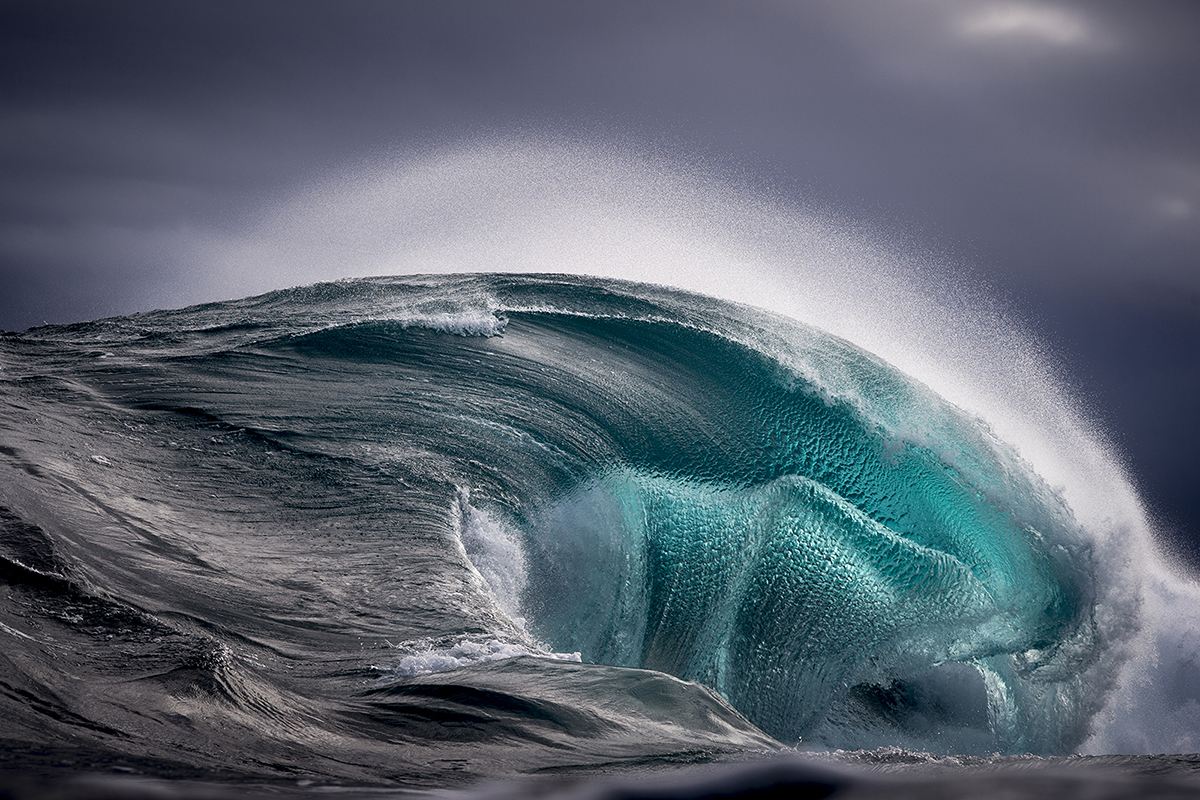
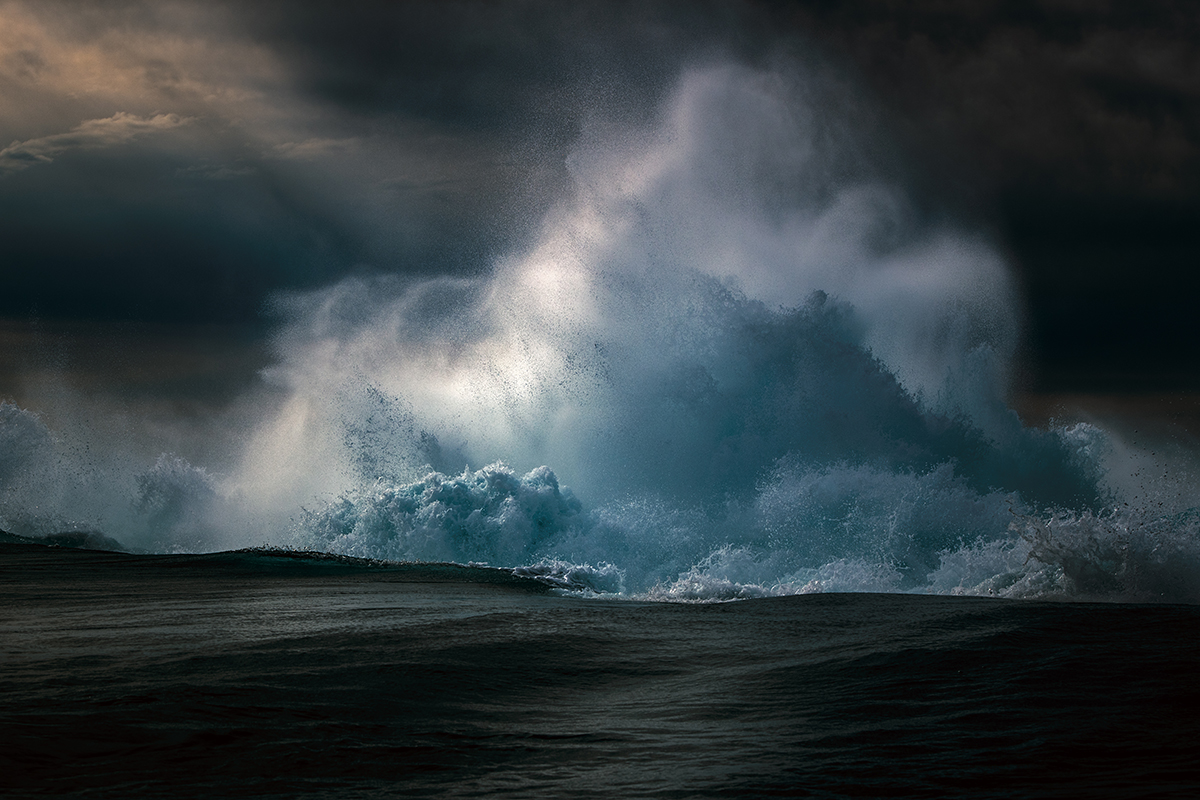
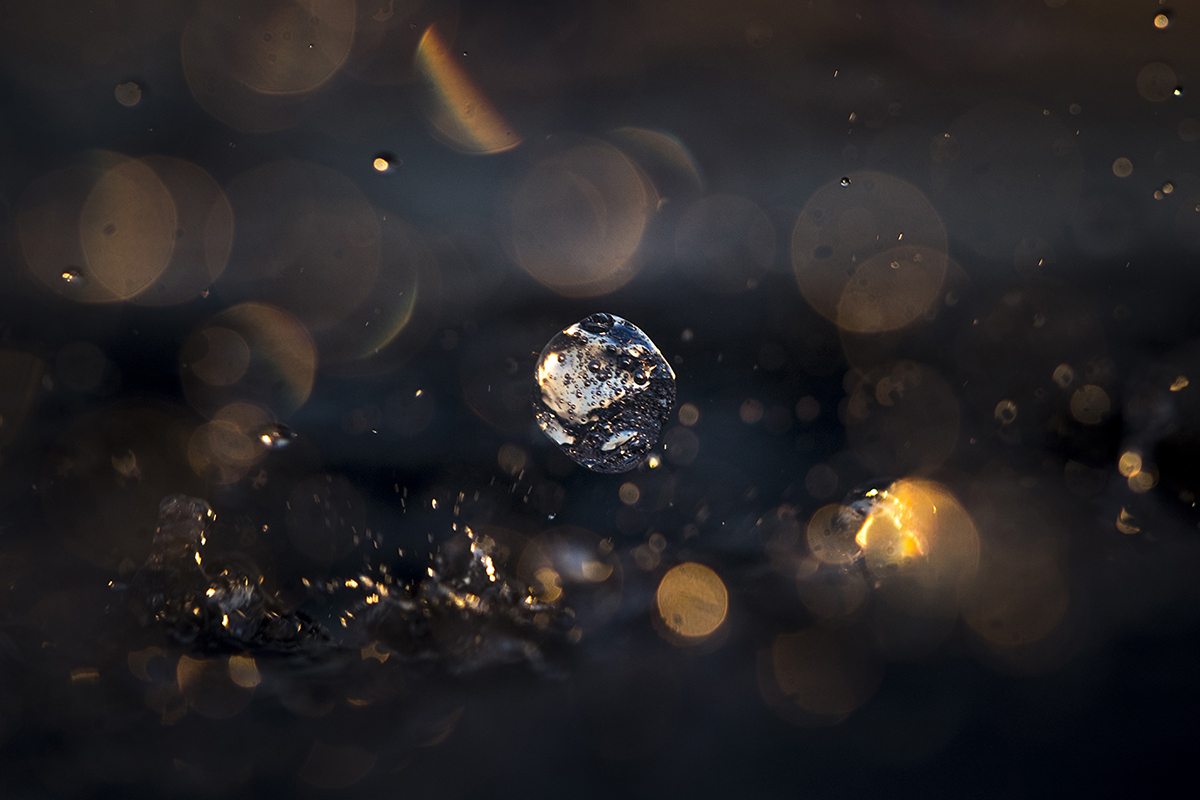
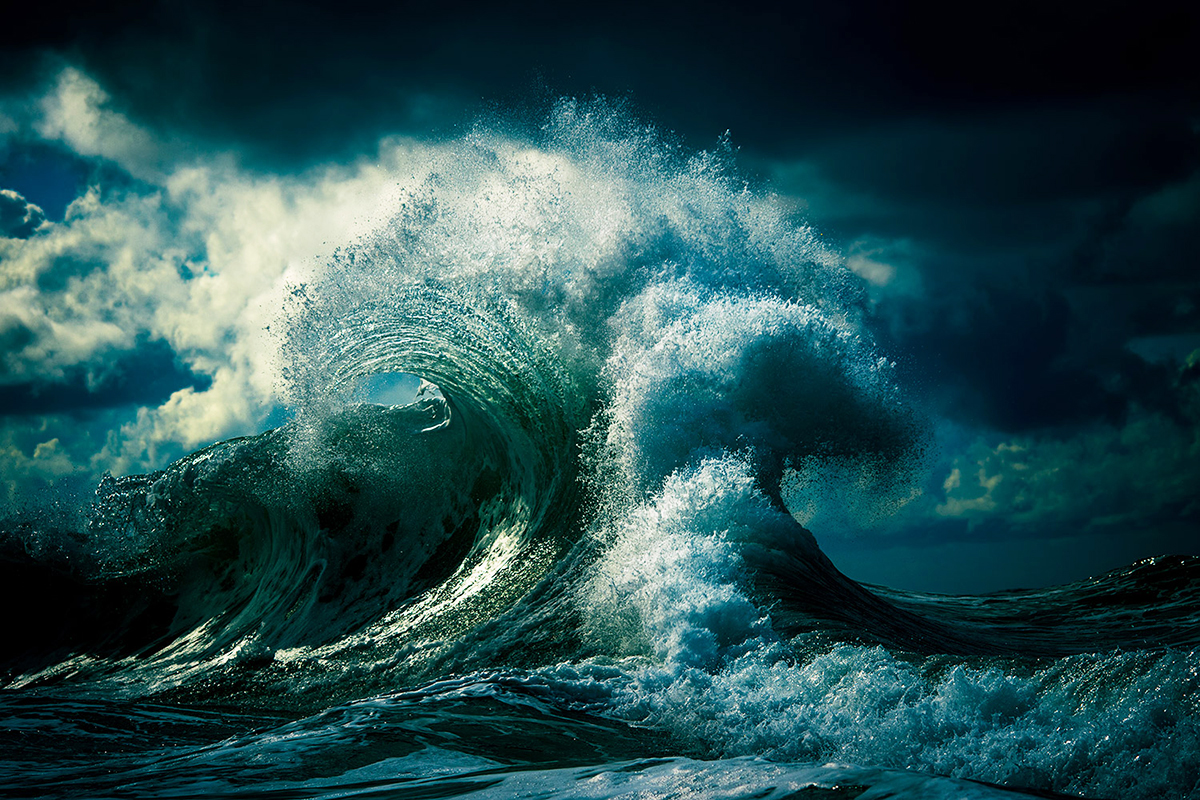
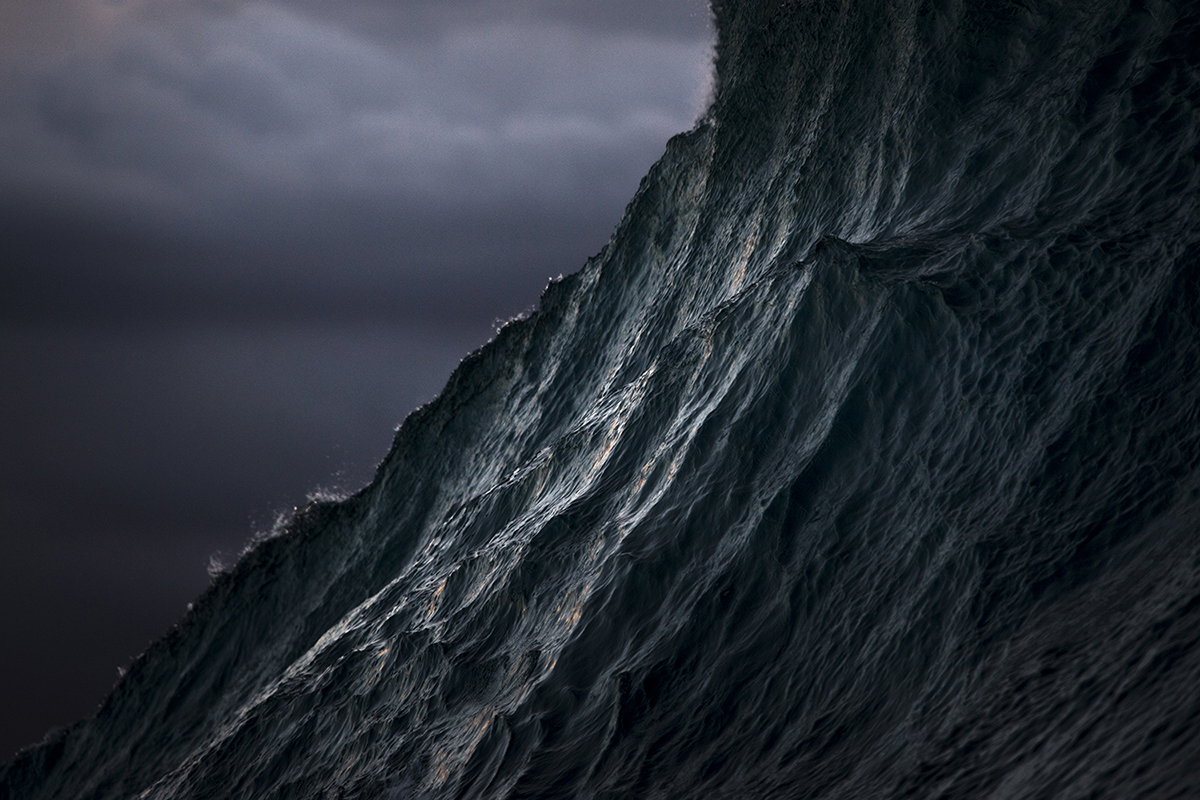
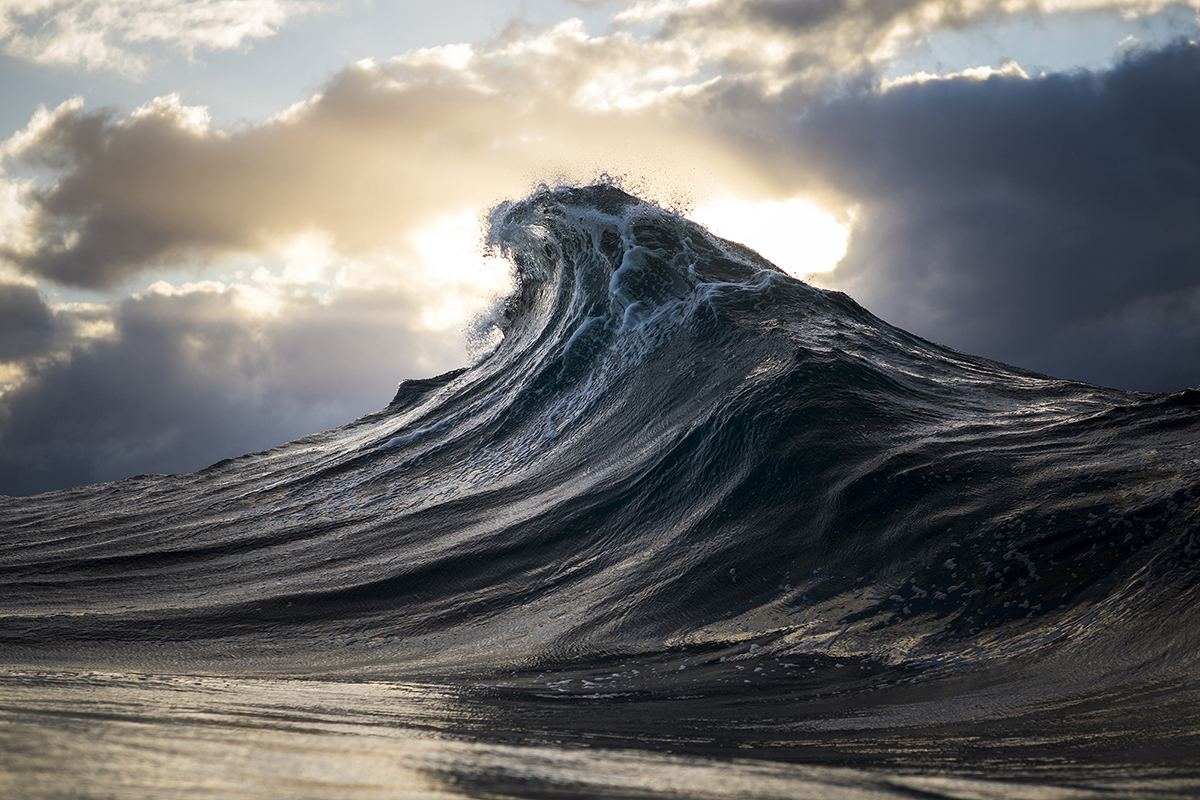
Ray: I want to freeze the moments that we may miss in real time. Sometimes the anticipation of a rising swell of what ‘might’ happen is more important than the finale of the crashing wave. It’s often the moment before the moment which becomes the moment. Anticipation makes you question what happens next, it provokes a response from the viewer, and that’s what art should do.

In a few sentences describe what the ocean means to you?
The one single constant in my life has been the ocean. It has given me everything I have, and the greatest lessons of my life have been learned from interacting with it. It has taught me: patience, courage, respect, going with the flow. I’ve made such a diverse pack of lifelong friends…our only common thread being saltwater. It has instilled a firsthand appreciation for nature. It’s shown me its power, beauty and purity—often all at once. It keeps no record of history; it obeys no law. It is the one ever-changing constant. I have traveled the world in pursuit of documenting it. Whenever I am near it, wherever I am, I am home.

How does being color blind inform your photography? 
My theory is that because of the deficiency of color blindness it has potentially enhanced other parts of my vision (maybe composition and textures) and that could be something that helps make my photography unique? That’s my working assumption anyway.

Photography and the ocean came into your life as a form of healing from a coal mining accident where your knee was severely damaged, the camera came first, why? and what were you photographing?
I just needed an outlet. My routine of an active life in my 20’s had come to a stand still and I had a lot of time on my hands. Learning photography and how a camera works was something I never had time for before. So I just read and re read the manual and took photos of my dog actually. Trying to understand the relationship between Shutter, Aperture and ISO and moving her (Chantic) near different windows at different times of day, she was such a loyal dog. An old soul. I have her name on my foot.

After a few weeks of knee rehabilitation my physio said I could introduce some light swimming into my routine. So I bought a waterhousing for my camera and started shooting photos of my friends surfing. Within a few weeks I had my first published image, within a few months I had my first international cover.

When did you understand this is what you were meant to do?
There were so many gentle course corrections and life affirming milestones that kept me on course and reinforced to me that I was on the right path

In the Patagonia film, Fish People, you mentioned planning a single shot for 6 weeks. In that planning are you returning to same spot to study the light movement?
Sometimes! Fortunately I’ve found some good sun tracking apps that help with light source positioning. Another important detail is the tide, sometimes I need an absolute high tide (studying the moon phase helps) otherwise the reef might be sticking out of the water at a lower tide and the wave won’t have a clean curve. Then of course, the right swell direction and period – keeping my eyes on how distant storms are tracking. Oh, and wind. Come to think of it, sometimes many variables need to line up all at once. Pushing the shutter button down is towards the end of the creative cycle.
Not all images have that level of planning though. Sometimes just waking up with no plan but meeting the sun as it rises over the horizon is all it takes too.

What would you tell your younger, creative self now?
The best advice I got early in my career was shoot what you want to see, not what you think others want to see. It’s kept me on my own path and I would retell my younger self the same thing.  I’d love to tell young Ray  ‘you’re enough’ and you will have all of the desires of your heart.

How has your eye changed over the years?
I try and do as much as possible in camera, it makes everything easier down the track with editing. I’m always aware of divine proportions while composing and cropping and I always try and highlight points of interest within the image for people to discover as they peruse each piece.

How are you staying buoyant in the water to get those waves, flippers and swimming like hell?
Most of the time I’m swimming and a lot of the time it’s at sunrise or sunset. The golden hour. That means swimming out in the dark and waiting for it to rise most mornings. A lot of the waves I document aren’t your typical user friendly beaches, often I have to scale down cliffs or swim way out in the middle of nowhere to find these weird and angry lumps of water breaking. What I search for are shallow reefs that are surrounded by deepwater, that way the wave traveling stands up suddenly in reaction to the shallow reef and that’s where I try to position myself. It’s the line between order and chaos.

Imagine swimming in a washing machine with a bag of concrete and lifting that bag up to your face so you can focus, compose the shot, getting all of your shutter settings, aperture iso right, getting no water droplets on the front element while the ocean is pushing, pulling, gurgling and crashing all around you. It can be physically exhausting at times. Your ‘studio’ can kill you, but it offers up some of the most precious moments of life in between.

I fail more than I succeed in overcoming it, but it makes the successes even sweeter.  It’s always risk versus reward.

What drew you to being a professional lifeguard?
There were a few things actually. After running my photography business for the past decade it became apparent that I had no real structure in my life. Kind of always dependent on nature. There would be patterns of swell chasing, constant travel, shooting and being go-go-go for weeks or months on end… Then the pendulum would swing to the extreme other end and i’d have too much time to fill (in my mind anyway) and it’s easy to spiral when you have idle hands.

Working for yourself and by yourself can be a pretty selfish ride in a lot of ways and I needed to pursue a noble cause. Lifeguarding is truly a dream job. You’re being of service to your local community, being paid to stay in peak physical fitness and you get to work with an incredible team of likeminded folks. You get to help educate the public on the dangers of the ocean while being a caretaker and custodian of your local area.

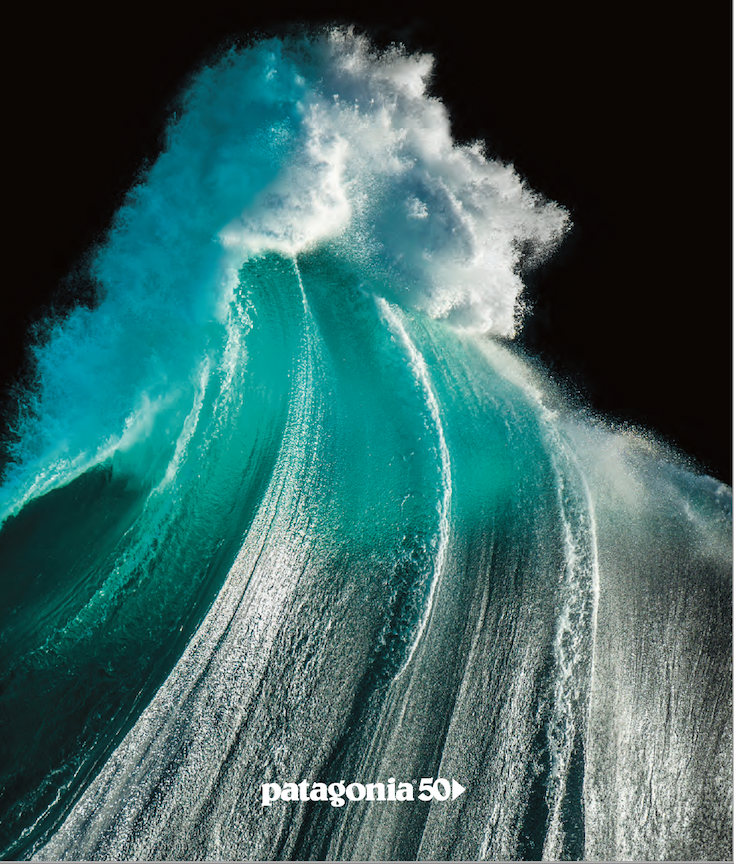
What can you tell us about the making of Convergence and Mowhawk, two images in Patagonia’s journal and 50th Campaign?
I’m so proud to have amazing clients such as Patagonia. They’re the benchmark of everything that every other company should strive for!

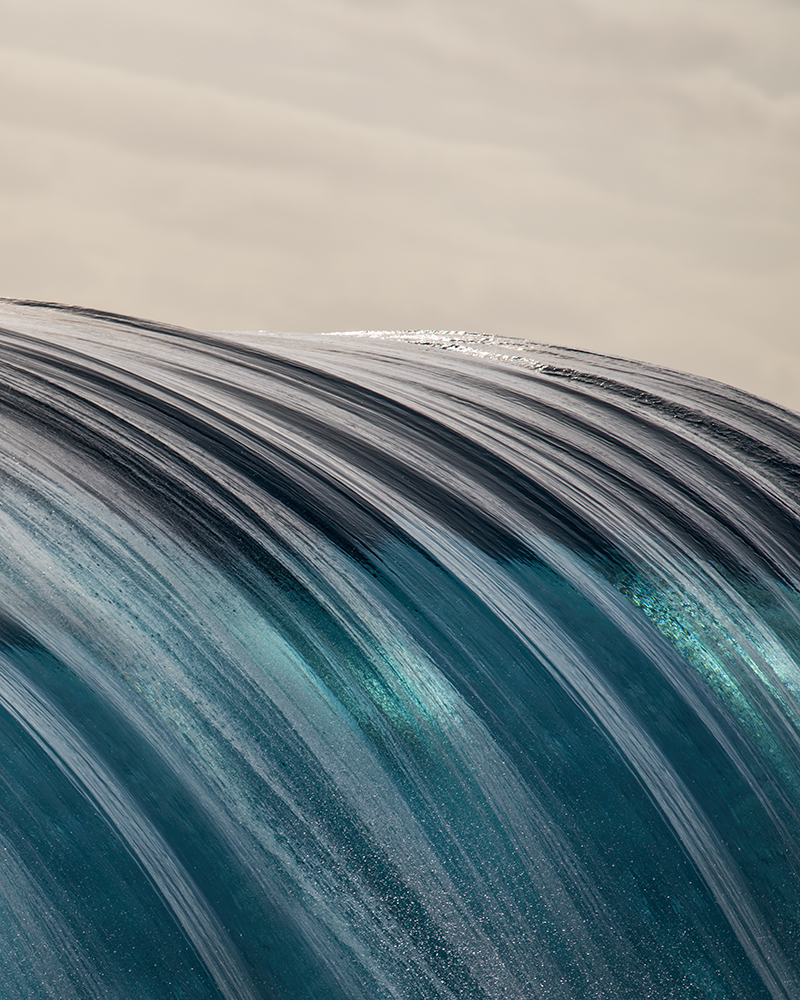
Journal cover – Convergence: I’ve always appreciated the birds’ eye view of the ocean, it feels like a forbidden vantage, one that humans were’t meant to see. Drones are pretty cool, but nothing beats hovering over the top of a large and powerful swell and isolating the ‘roof’ of the wave from above. It offers a whole new world of compositions to work with. It is not cheap however so you have to choose your days and make them count.

Billboard – Mowhawk: This reef is a 7hr drive from my house. to get into the water you have to scale down a huge cliff and swim around the back of the wave. It is on a corner of the coastline that sticks out and makes the migrating whales come close to shore to turn the corner. It’s a wild, wild place. I had driven down on two previous attempts to shoot it and driven home on the same day, a 14hr round trip empty-handed. The third time was a charm!


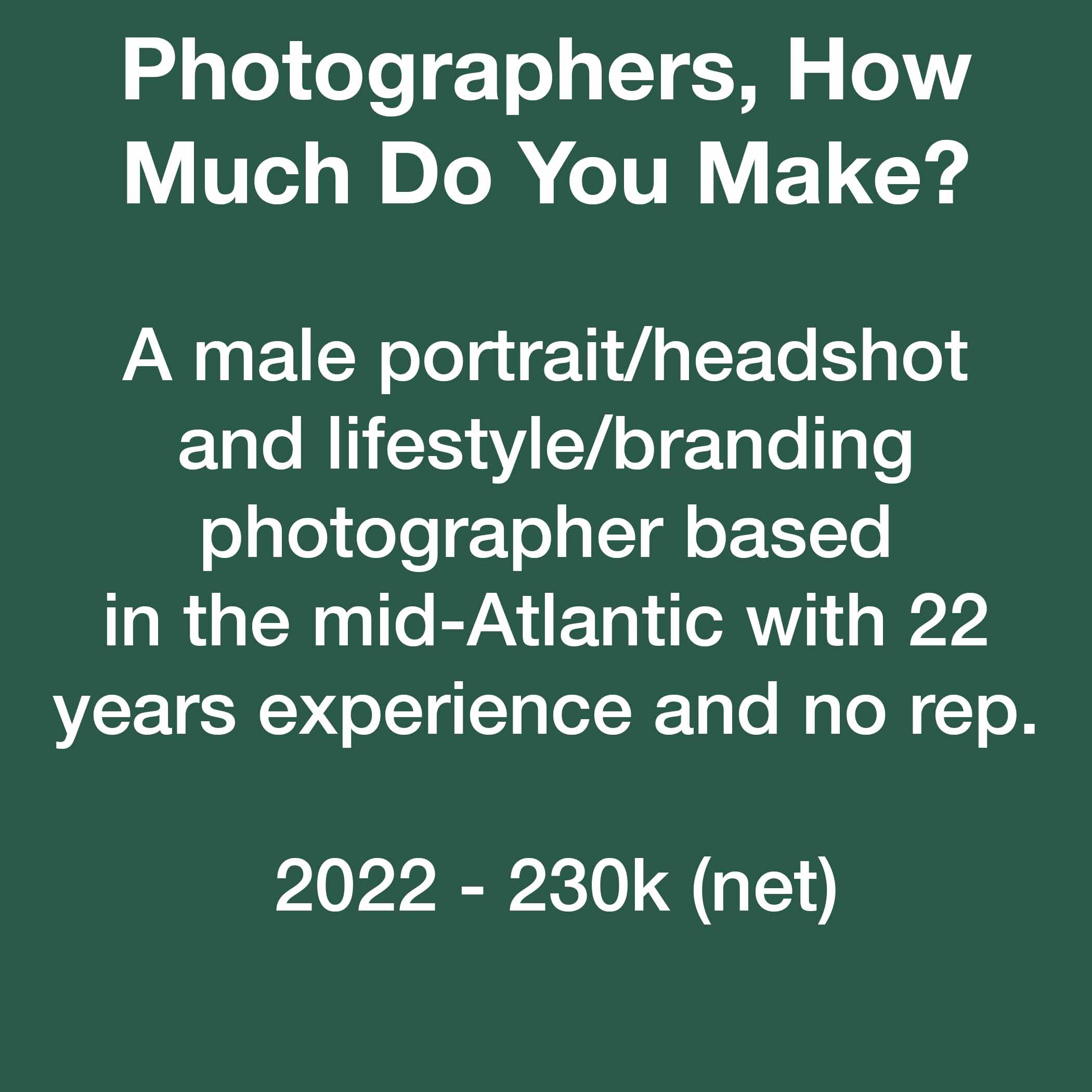
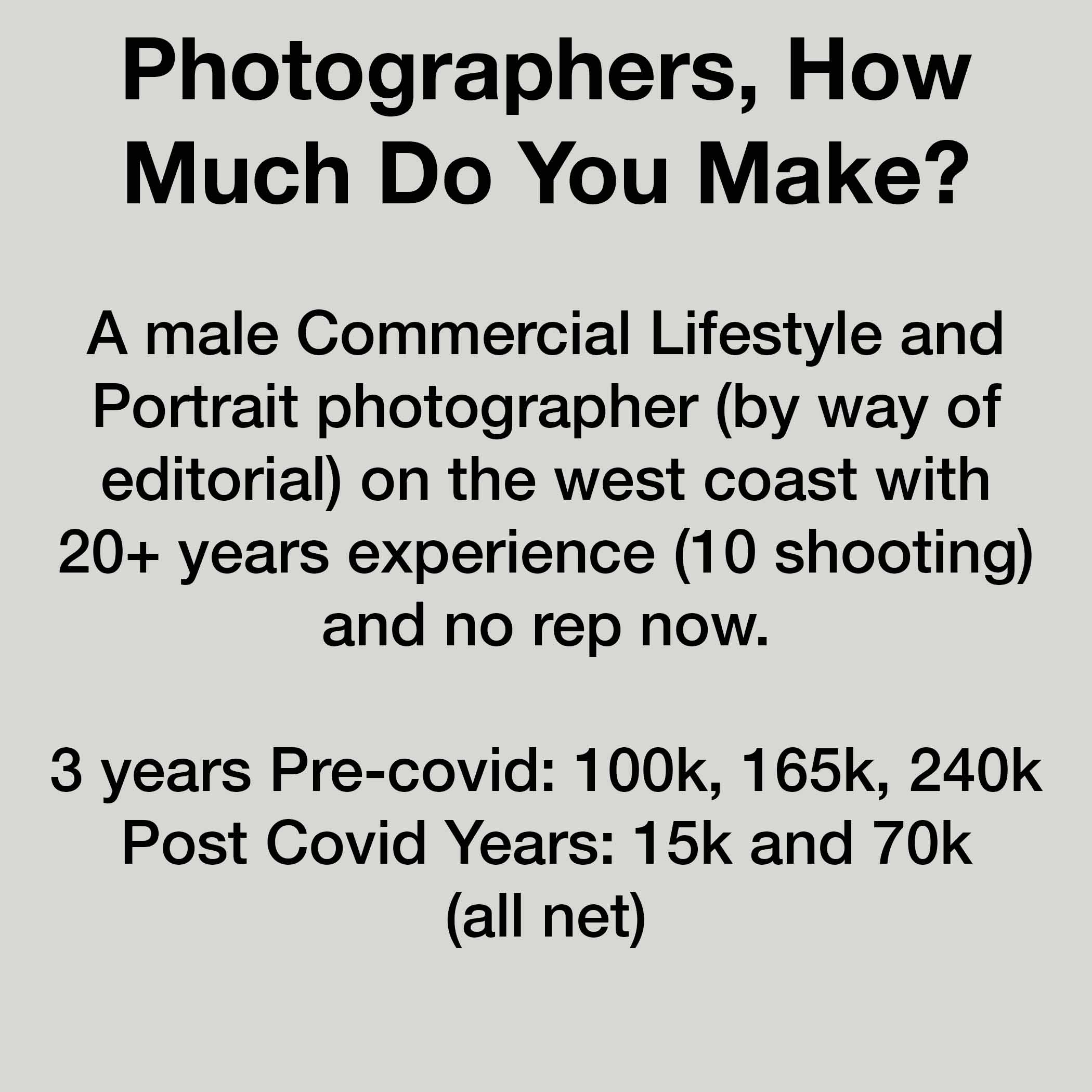
Photographers, How Much Do You Make?

I first picked up a camera in early 2000 and pushed my way into assisting some top tier photographers. My first assignment was 2004. I got on with a big rep and landed a huge pharma campaign. Just as everything was falling into place and I was feeling on top of the world I ran into life changing family problems.

I decided to make a radical change. I left New York, put away my photo gear and started a seafood business. For the first three years I loved it. But then I tried to up scale. The next 3 years were hell. It ended when I caught my employees doing lines of coke at 4 in the
morning.  Their incompetence and drug addiction combined with my lack on experience running a business wiped me out. I lost all my savings and I had no choice but to sell off all the assets. In the end I owed $60k to the bank.

So I picked up the camera again, contacted everyone I had ever worked for, and got the same response from everyone. In those 6 years the industry had changed a lot. Most clients had moved on, magazines no longer had budgets, and I had no new work to show.

So I moved in with my parents. At first I couldn’t even give it away. There just wasn’t a market for my type of photography.  My images were too expensive to produce and no one was interested.

I decided to reinvent everything about my images. I put away my lights and taught myself how to take simple, naturally lit portraits. On Facebook I offered to take free portraits of any woman who owned their own business. I did that for two months. With those images I started a portrait/headshot business.

Then the pandemic hit. So I was dead in the water before I ever made a dime. But I kept trying.

Finally with the vaccine becoming available, I made a huge push, did $500/month in google ads and took any job that came my way. I’m talking birthday shoots, pet portraits, I mean I did any job at any price. The mid-Atlantic market is so incredibly saturated with headshot photographers that people constantly tried to get me to lower my price. It was humiliating.  But I didn’t know what else to do. So I just filled every day with 4-6 portrait sessions at $99/session.

Eventually I was getting enough calls that I was able to raise my price to $400 a session and companies started to have employees come back into the office and I started to get headshot jobs where I was shooting between 10-30 people in a day.

With this little bit of success I was able to spend a little more time looking for commercial clients.  I pitched to every startup I could find, and I connected to a small bio-tech/pharma firm. I have now taken over all their branding photography and am doing 1 shoot almost every month. I charge $15k/day to create a library of images licensed for branding, not advertising.

I am now busier than I’ve ever been. I keep my overhead very low, I don’t use assistants or digi-techs. I pretty much just show up with two cameras and two lenses. I’m not even bringing a laptop.

I have no stats for before Covid, but last year I made $230k in profits.

For me, the days of big productions are over. I know that my new work is nothing special. It’s just simple, sort-of-stock type images. But I’m not spending any energy creating bids, or producing anything. I am spending $500/month on google ads.  I’m not creating promos, I’m not even spending much time retouching. There are times I wish I was creating more unique and artful pictures, but this is where I am right now.

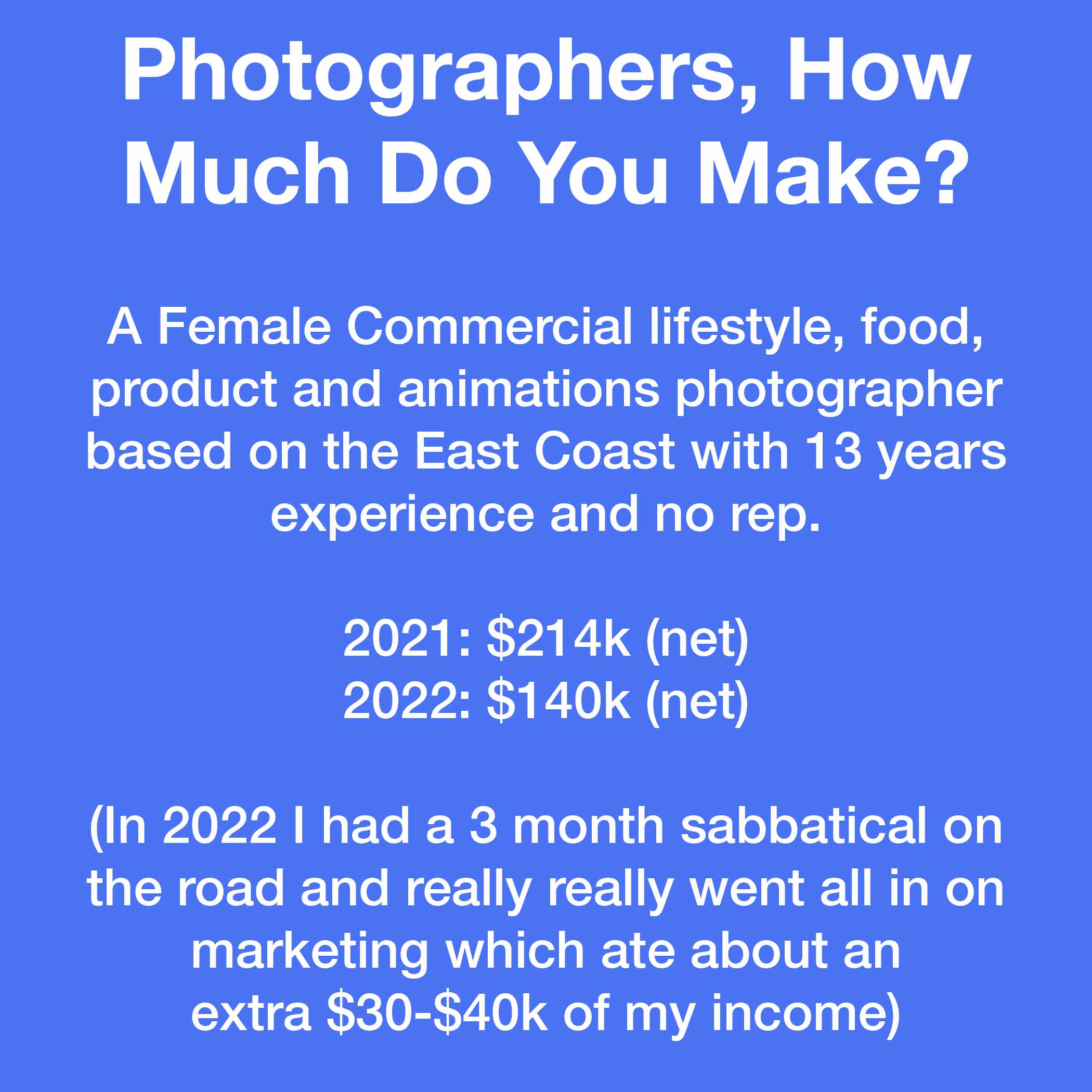
I’ve been a hybrid photographer/graphic designer for a really long time. I found it to be too much to try and manage both, so I jumped ship from graphic design entirely only over the last couple of years. In a lot of ways I’m a bit of a newbie on the market.

I started in stock photography long ago around 2010. I also shot for smaller local companies as well as a small company within a Major Fortune 500 for almost 10 years. It was consistent, reliable photography work that I could dovetail into my graphic design work and I didn’t need to do any marketing to sustain it. In 2019 I began the process of polishing up my online presence, creating test shoots to improve my portfolio, and began reaching out to larger brands and corporations with the hopes of going full time into photography (which is where I am now).

My client base varies from fortune 500 to smaller brands all over the US

In the past most of my income came from food and product, lately it seems to be leaning more towards lifestyle. I’d say 30% food 30% product 40% lifestyle at the moment, but in the past 40% food, 40% product, and 20% lifestyle.

Definitely have more overhead than I had as a graphic designer. Last year I invested heavily in marketing, listing sites, portfolio reviews, SEO website overhaul, personal projects/test shoots, promos. Ordinarily my total overhead is closer to about $50-$60k a year

Big chunks include:
Marketing expenses came to about $20-$30k in 2022
New equipment (computers, monitors, lenses, cameras is about $9k
Accounting, software, website hosting $8k
Insurance $2k

How much I work varies and I’m always looking to work smarter, not harder. So better clients that understand licensing that have better budgets. During the pandemic I took whatever came my way, now I’ve got a minimum I won’t book without. Ideally 1 (2-3 day) shoot a week is the sweet spot, but off weeks are perfect for marketing and admin work.

While my income was down last year, it was partially due to my taking time off for a personal project and then having a perfect storm of a few repeat clients changing direction creatively either away from professional photography or shooting their own content. That put me in a real dry patch for a while, but I used that time to hit marketing super hard which also cost some money. Overall I think this year could have surpassed last year if I had been on call for the entire year and I think there’s room to grow from here especially if my marketing keeps exposing me to new people.

Average shoots are 2-3 days, lately on-location. 8 am call time (but I usually arrive a bit earlier so I can scope things out and get setup), my day involves hauling all the gear and tech into the location (with assistants) and getting everything lit, getting the tether station up and running, handing out ipads with live view on them, etc. and then coordinating with talent and stylists as we work through the shot list. We’ll work typically until 5:30 or later… sometimes to 7 pm (so that’s a 10-12 hour day). After wrap it’s a lot of work combing through the selects and retouching. I’ve been doing a lot of my own retouching, but I’m branching out now to outsource that when I can afford to.
Average take home per shoot day is somewhere in the $7k range depending on expenses and client contract.
I can tell you my worst shoots were during the start of the pandemic when I was just happy to have work to shoot. I had one client take screenshots while I was sharing the shoot remotely. I wasn’t aware of it at the time, but they proceeded to use those images in their marketing without paying for them. Most shoots during the pandemic covered only a day rate, better jobs in that time included the day rate, equipment, travel, and post production. Editorial shoots paid me $200 a SHOOT and I was doing the food styling, prop styling, everything. Awful.
Know your worth, make sure you get paid a fair rate. If you’re wearing multiple hats like many do when starting out, CHARGE for those services (styling, propping, set design, etc.). And never forget to keep marketing yourself. Just because you get busy doesn’t mean there won’t be a dry spell, so every day you have off set without retouching to do, put your head down and get those emails, postcards, mailers, etc. out… update your listing sites, and scour LinkedIn for possible opportunities.

ADDITIONAL COMMENT ON THE MARKETING LAST YEAR:

I kind of turned on the fire hose when things got quiet on me. The positive side of that is I could tell what worked and what did little to nothing for me.

1. Paid an SEO expert for my website $$
2. Did LeBook event $$$$
3. Upgraded Workbook to a higher level (not seeing any results in that investment) $$$
4. Listed with Production Paradise (didn’t feel like that was a fit, ultimately and not a fan of the layout/delivery) $$
5. Listed with Found $
6. Listed with Komyoon $
7. Listed with Wonderful Machine $$
8. Worked with a consultant to refine my portfolio & help direct personal work $$$
9. Invested in email services and contact management $$
10. Invested in listing with regional business listings for SEO $
11. Physical promos $$$
12. Website/domain name expenses $
13. Monthly agency fees (no longer with agency) $$$
14. Contract with marketing assistance $$
15. Social media scheduling service $
16. Occasional stock image/graphic/font purchases for marketing materials $

The single most helpful thing was SEO and then starting to understand how my specific regional market works.

The Art of the Personal Project: Chad Holder

The Art of the Personal Project is a crucial element to let potential buyers see how you think creatively on your own.  I am drawn to personal projects that have an interesting vision or that show something I have never seen before.  In this thread, I’ll include a link to each personal project with the artist statement so you can see more of the project. Please note: This thread is not affiliated with any company; I’m just featuring projects that I find.  Please DO NOT send me your work.  I do not take submissions.

Today’s featured artist:  Chad Holder

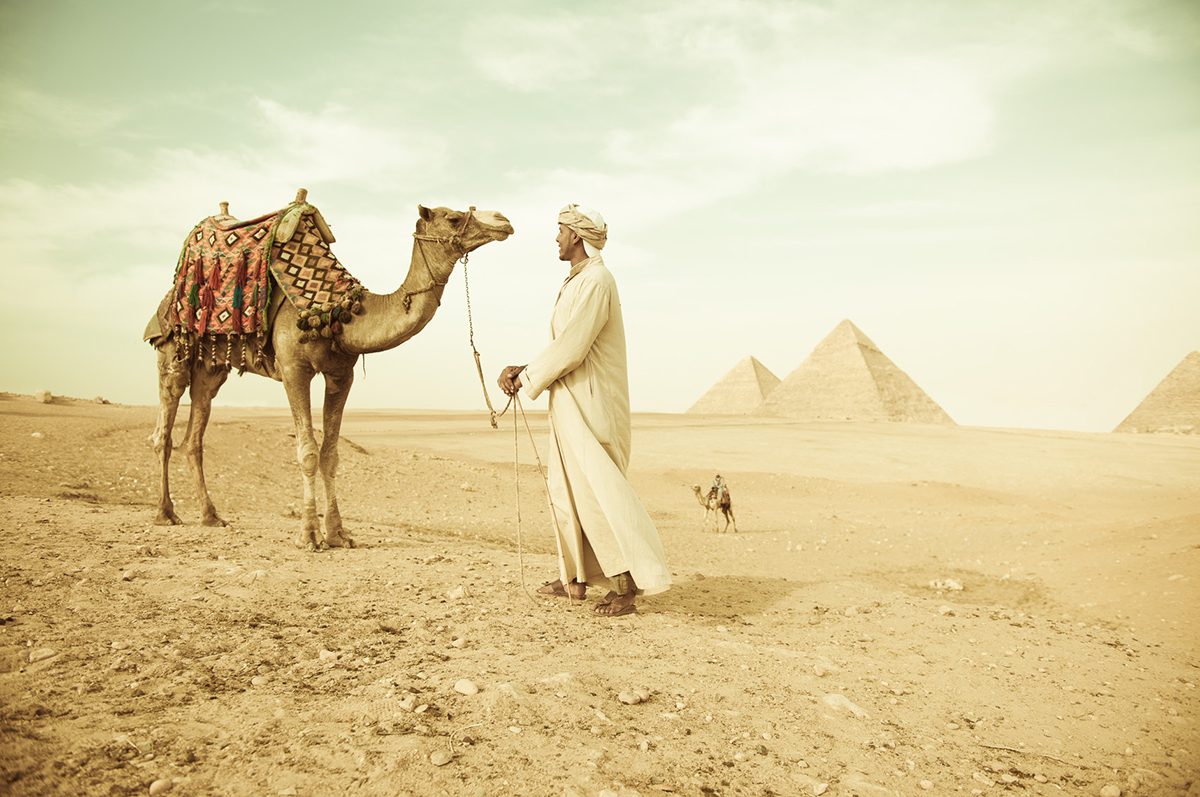
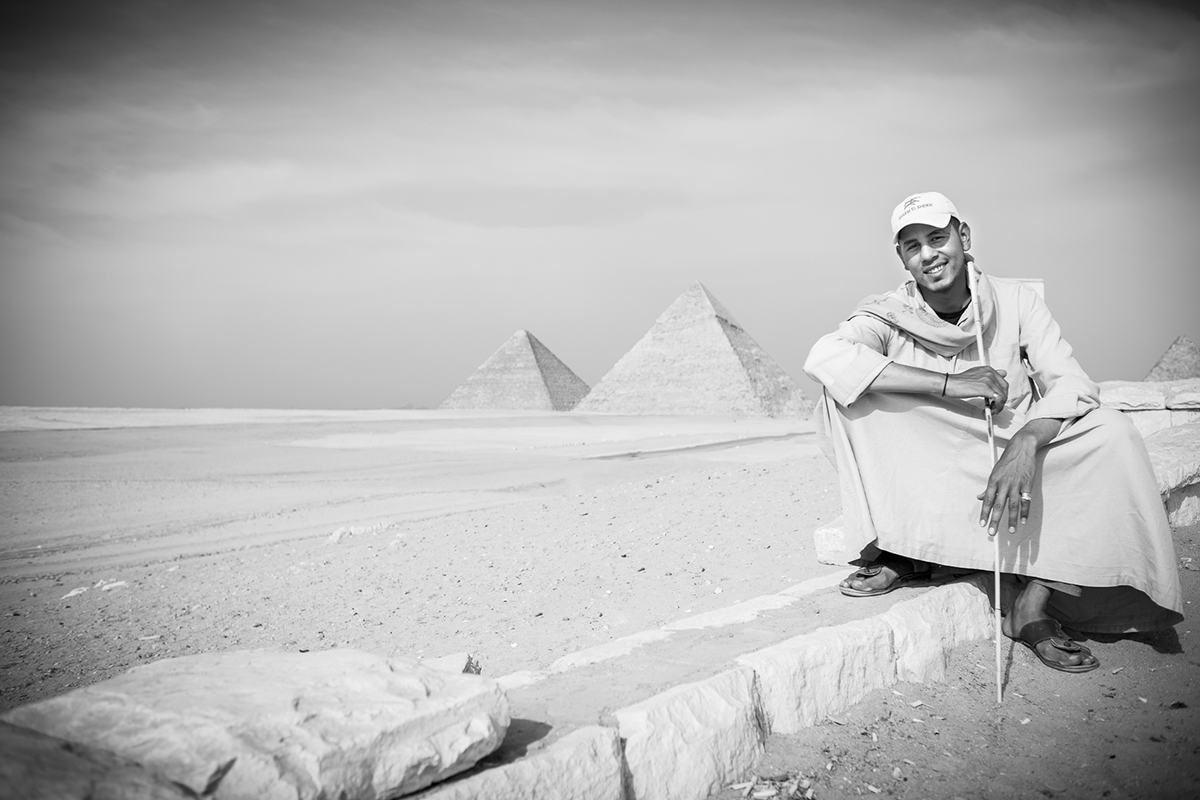
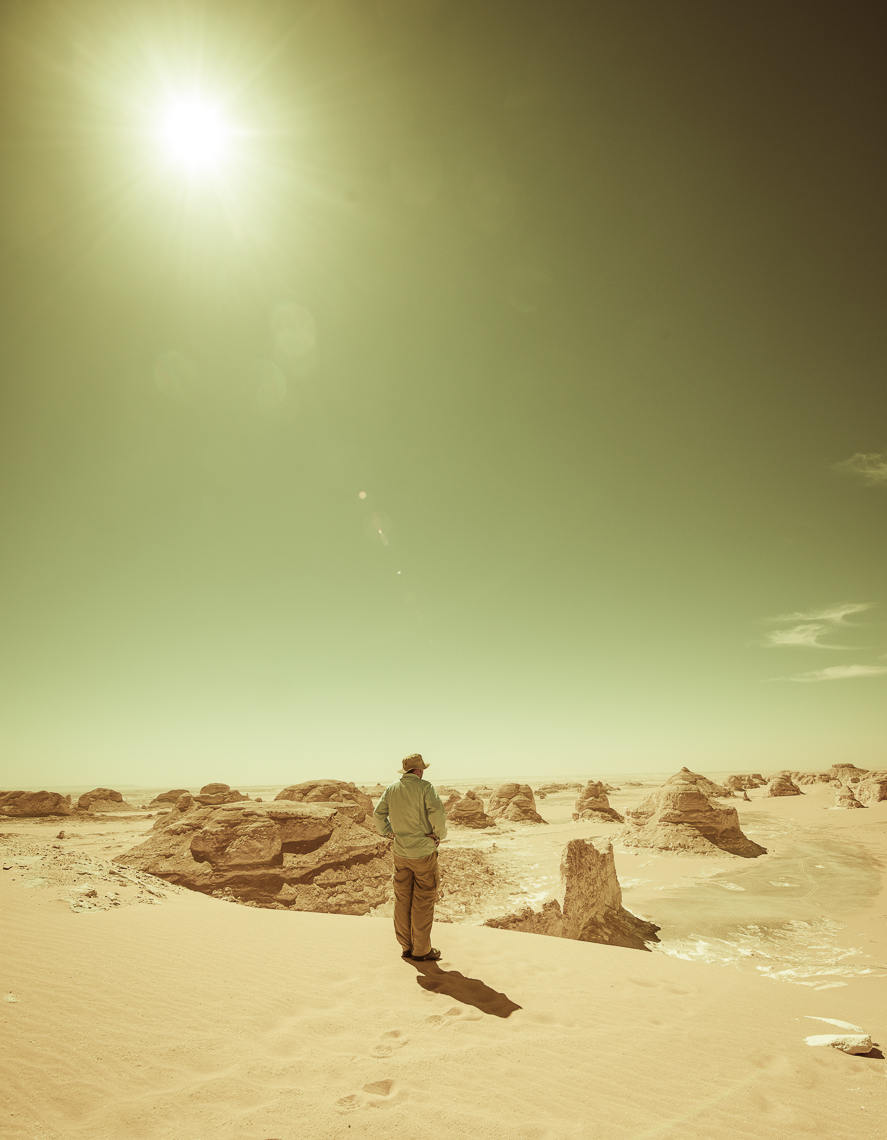
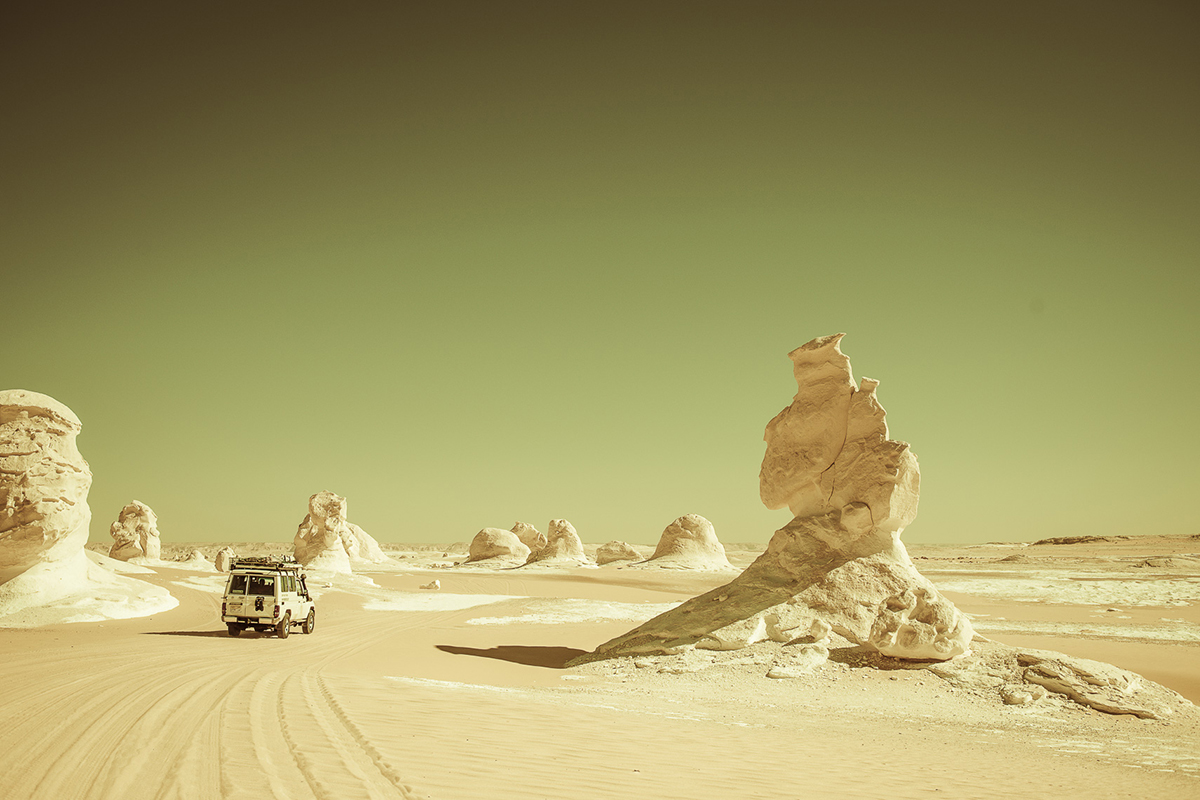
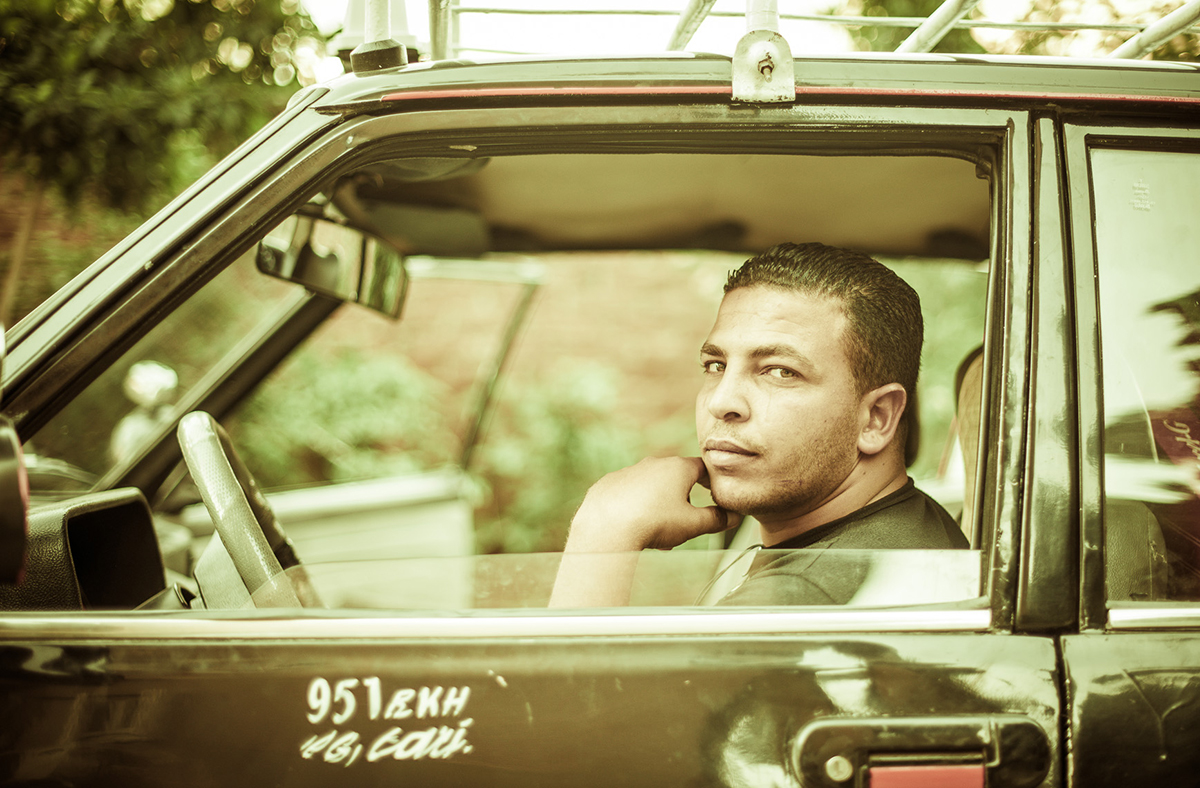
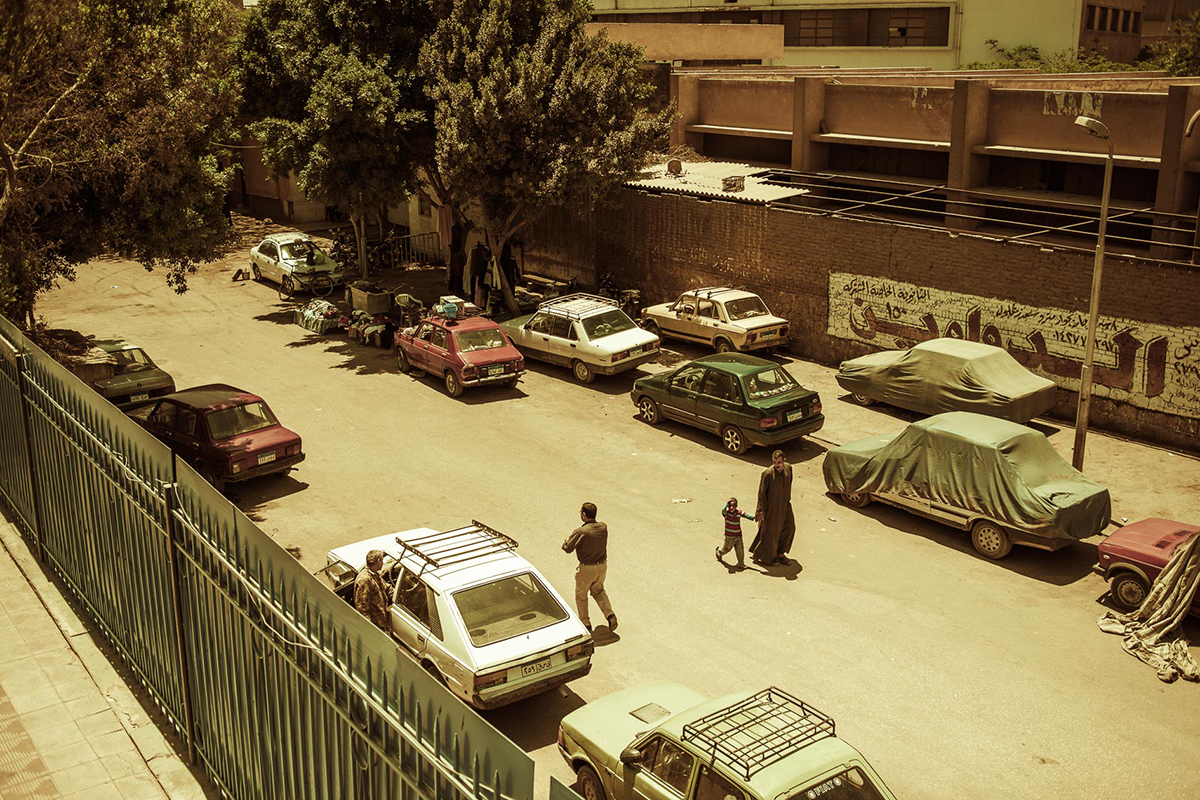
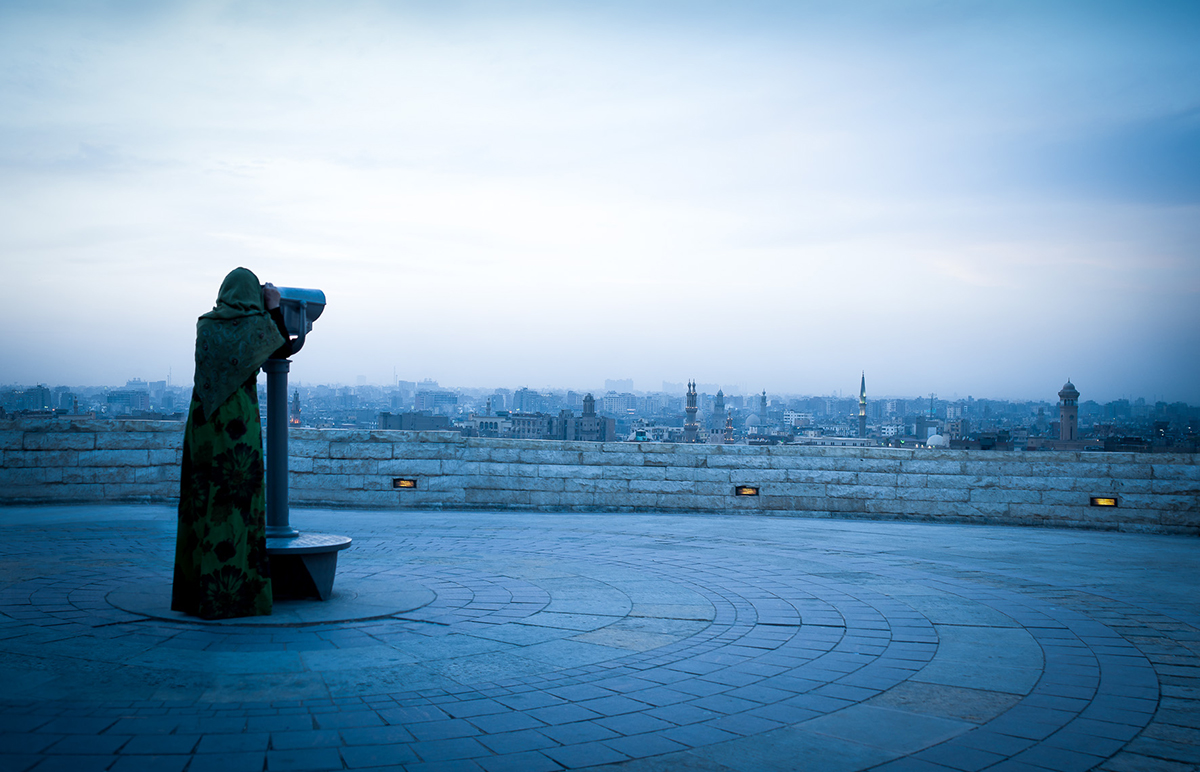
The same street, the same drive into the studio, the same everyday- everything begins to look the same.  Egypt was a journey of discovery and exploring how I see when I am simply shooting for myself, I call it having fresh eyes. By leaving behind the familiar surroundings of home, to open myself up to new experiences and perspective. In a foreign place, every sight, sound, and texture are novel, and this sense of novelty can awaken the senses. Moreover, the beauty and wonder of new landscapes and natural features can be inspiring and evoke a sense of reverence and gratitude for the world around us.  Making pictures is more than a job- it’s something that feeds my soul.


To see more of this project, click here.

Instagram

APE contributor Suzanne Sease currently works as a consultant for photographers and illustrators around the world. She has been involved in the photography and illustration industry since the mid 80s.  After establishing the art-buying department at The Martin Agency, then working for Kaplan-Thaler, Capital One, Best Buy and numerous smaller agencies and companies, she decided to be a consultant in 1999. She has a Twitter feed with helpful marketing information because she believes that marketing should be driven by brand and not by specialty.  Follow her at @SuzanneSeaseInstagram

Success is more than a matter of your talent. It’s also a matter of doing a better job presenting it.  And that is what I do with decades of agency and in-house experience.

Photographers, How Much Do You Make?

Visit Instagram to see all the commentary from these posts: https://www.instagram.com/aphotoeditor/


The 70k year was 25k shooting, 25k re-licensing work and 20k side gigs

My clients are fortune 500 and occasional international (Finance/Insurance/Healthcare/Pharma/Travel/Etc.). Going into Covid — shooting large campaigns and bidding often. Getting new opportunities with dream jobs right into the shutdown. Post shutdown: gigantic drop in income, and bidding opportunities got less and less. Bidding opportunities seemingly paused over past year. I had a great rep until somewhat recently. Editorial work has gone from 25% to 5%.

Have had to pick up other jobs in the industry to make ends meet.

Overhead is insurance, website, offsite archive backup, cloud storage. When I was repped it was a bit higher with marketing expenses, but since covid, those went way down anyway. No employees.

Each job is different and I’ve always been pretty flexible. Typical is hard to classify, but examples of the range of jobs has been: just a digital tech + myself getting stills on the set of a motion shoot for a client— To as large as having my own production with 80+ cast and crew members (stills + motion). To somewhere between: with myself and a producer — and bringing a first assistant and a digital tech and picking up local crew on a multi city, multi week shoot for a major corporation. I’ve done campaigns with solid 6 figure budgets and with the same clients, I’ve done projects that are less than $10k all in. (Fees ranging from $5k-15k day with one year usage (see below).

On the most lucrative campaigns: they’re often multi day (10-12 hour days) with fee & usage working out to $10k/day with a 1 year usage on all images for most uses (minus broadcast). A typical day might net $10-15k in fees/usage (depending on outdoor usage). Extended duration for usage pushes take home up.

I might walk with: 2 day shoot = ~ $20-25k. 4 Day shoot might be in the range of $40-$45k. And perhaps a bit more depending upon rentals or post production involvement.

A few shoots ran into the $60-70k range after paying out my agent, and then adding in rentals / prep days / tech scouting / post production fees. Usage 1-3 years online + print. Days were usually 10-12 hours.

In the past few years some of the biggest bids I was in on had fees/usage totaling $50-100k+ range, depending upon the usage. But they didn’t go my way.

My lowest paying shoots have been direct local clients – online + print usage: walk with maybe $1100-1200 for single 8-10 hour day.

Video is 15-20% of my work but most often I have a camera operator or DP, and I direct, but don’t generally operate a camera.

This post pandemic experience has been somewhat surreal, but very real. From a photographic point of view, I still love it. I’m still pushing forward, creating new work, and experimenting. From an income point of view, it feels like my career has disappeared. I’m not old, but I’m not young either. Don’t underestimate the power of influence and of building a recognizable name. If you don’t do either of those things, try to have as many clients as possible and to be shooting as often as possible. Make yourself anti-fragile.


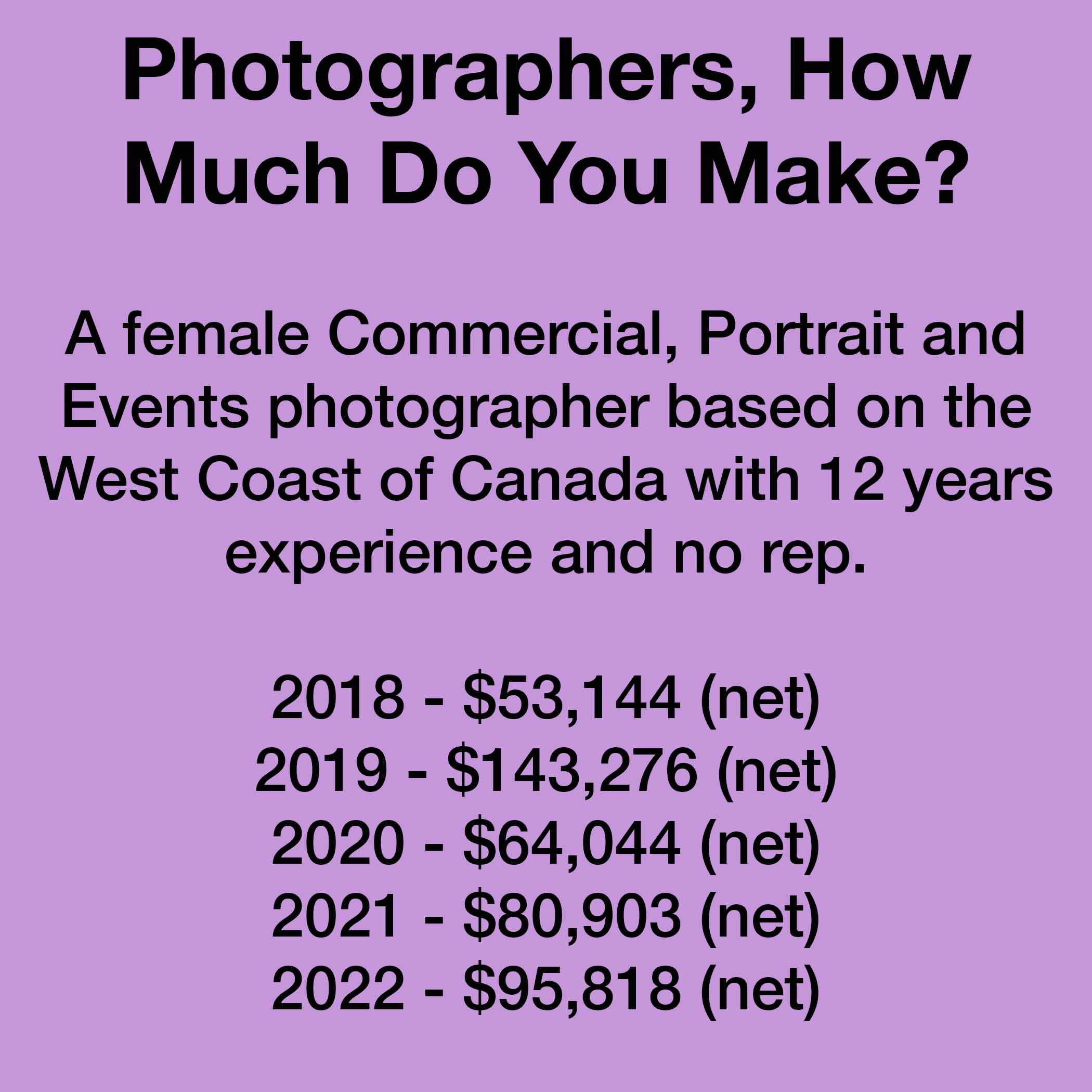
$ are CAD. 1 CAD = .75 to .80 USD.

In 2022 I made about $65K in Commercial Jobs, $20K in Events and $16K in Portraiture. The remaining was smaller photojournalism work. I have no employees and pay $450/month for my shared studio / office. It’s large enough for portrait work and then I’ll rent larger studios for commercial jobs if required. The only other expenses are my book keeper and then the usual, Capture One, Adobe, Phone, Etc. I don’t feel like I have a lot of overhead. My total expenses in 2022 was $15,889.33 – bringing my gross to approx. $112,000.

Mostly large local clients, some international and US clients that come to the city. I also have a lot of clients that are small local creative agencies that essentially give me first right of refusal to jobs they bring in. This has been really impactful on my last few years because we already really align on the types of clients we want to work with.

in 2022 I had 59 jobs, most were a one shoot day, some were 2-5 hour events. I probably work 3-4 days a week planning shoots, editing or shooting. I don’t work a lot in January traditionally and spend a lot of that month emailing past clients, revamping my website and setting up my year a little.

I wouldn’t say I have a typical client. Event clients are either individuals that are throwing private parties, which is what a prefer to shoot over public events, or they are Associations or Non Profits doing a Gala. I have three gala’s that I shoot every year, I won’t be taking on any more. They’re great at this point because we all know what to expect from each other and it’s very little work for both them and me. They also expect rates to go up every year.

The commercial clients are medium sized local businesses, usually working with a marketing company.

My portrait work is a huge array of individuals, from law firms to individuals who want a new LinkedIn photo to everyone in between.

I thought I was really hitting my stride with events right before Covid, then I lost all my event work and really pivoted into Commercial work. I was lucky because businesses were looking for more ways to interact online so I was able to pick up work really easily. In the following years I’ve increased my income each year, mainly by being less afraid to quote higher and by saying no to the smaller clients who don’t understand usage or want large photo libraries but don’t have the budget for it. I think I’m working smarter and more confidently.

I wouldn’t say I have an average shoot. I’ve survived by making sure I’m willing to be flexible with what I’ll shoot. My average event is 2-5 hours long @ $300-$350/hour with basically zero expenses. My average commercial day is probably 1 day @ $2000-$3K day rate + expenses & usage. I try and take home at least $4000/day shooting commercial work.

The best paying shoot I’ve had was a contract with a large firm to travel across Canada and shoot approximately 70 traditional and environmental portraits and about 60 lifestyle images across 4 locations. I shot 6 or 7 days, had six travel days and edited everything myself. I billed out $77K for the job and took home probably $70K, covering food, a photo assist and some small rentals – flights and hotels were paid for directly by the company and weren’t included in my fees. They licensed the photos for 5 years for their website / marketing materials. I think it’s important to note I originally quoted MUCH lower on this job and the woman who was the lead coached me along and requested I re-estimate based on numbers they’d used in the past. She really cared that I was paid fairly.

My worst shoot I was brought on board to do the stills portion of a commercial very last minute and the budget had already been set at $750/day INCLUDING the licensing 5 x photos a day. No editing. I was told this was for their website. I found out months later that my work was on buses all around the city. I felt like I had been tricked, nobody wanted to take any responsibility for the issue and in the end I just gave up trying to get any payment for it.

I don’t shoot video.

I read once that it’s important to make sure everyone you meet knows what you do and who your ideal client is. I’ve used that often and I’ve found that by sharing what I’m looking for, I’m often helped by the people I least expect to have incredible contacts. I also think it’s very important to speak with other photographers in your area and find out what they’re charging. Be open to talking about rates and USAGE! Don’t undercut your peers, don’t feel like YOU have to take the pay cut because a company can’t afford the kind of photography they want from you.


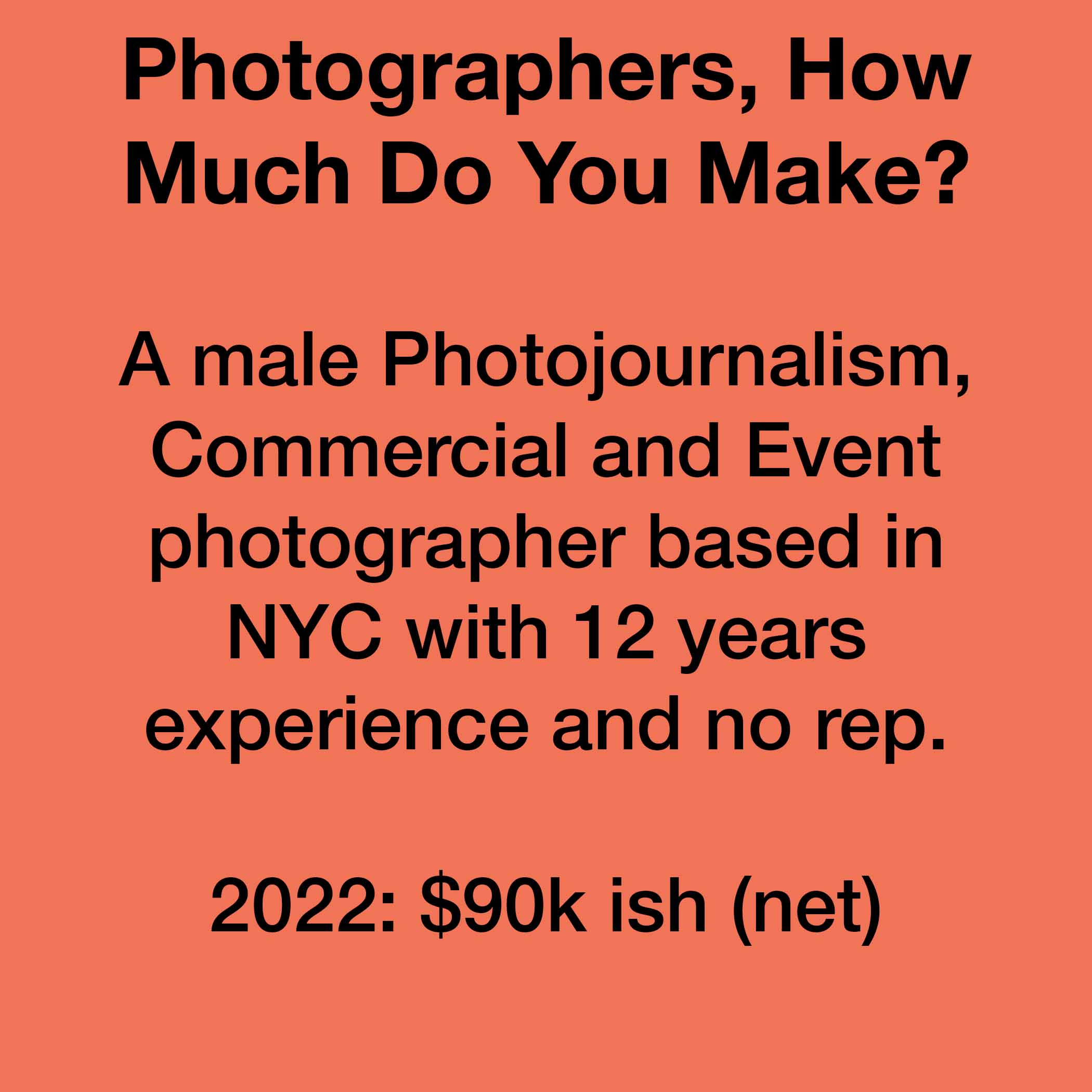
$140-160k gross.

I shoot 80% journalism, 10% Event, 10% Commercial. I have no employees. I buy a new set of cameras every 2-3 years, it used to cost around $7-10k, but since switching to small mirrorless it’s been closer to $3-5k. I used to buy $4-5k of lenses every year or two now it’s closer to $2-3k. I invested around $8k in lighting gear over the course of 5 years, but haven’t needed to buy much more recently. I bought a 50k SUV which I use everyday for work. $4k Laptop every 3-5 years. My profit margin is $25-30k/ year.

There was a lot of overheard in the beginning of my career and also thinking that a better camera or lens would make my work better but lately I’ve realized that the cheaper gear works better (smaller, lighter, less conspicuous, etc). I also used to travel a lot for spec projects which I don’t do much anymore

My clients are large national US publications, large US corporate event clients. Within photojournalism 95% large national tabloid 5% wire services/broadsheet papers. Event is mixture of education and marketing firms.
I work around 230 days a year which is about 4-5 days a week.

In the past few years I’ve been able to raise my rates and evolve my style which has allowed me more flexibility and a higher income.

I split mortgage payments and living expenses with my wife. In previous years copyright infringement cases netted large sums for me but no longer.

Shoots range from 30 minutes to 12 hour work days. After 8 hours it is a higher rate, but not often more than 20%.

My best shoot in terms of time was when I did a portrait for a corporate client which was $3K for 45 min shoot. I retained rights they were granted internal publication rights no advertising or external use. A normal journalism job netted $500 for the day rate but I was able to license the image for $2000 and $3000 to two TV networks a week later (single time usage in one episode, but all platforms).

I’ve done shoots for free in the past thinking it would lead to work which it didn’t .

I do very little video, 1-2 shoots a year. Had some new video work with an existing client but it got destroyed by Covid.

The most salient thing I’ve encountered is that the more respected publications have the worst rates and copyrights grabs, especially in journalism. The NYT used to have the worst rate, for YEARS it was $200. They finally raised it to $450 with a work-for-hire joint copyright. Most wire services like Reuters, Getty, will take all copyrights for $350. Maybe throw you 100 bucks if you go to 10-12 hours. Tabloids will pay 400-500 sometimes more all expenses, travel, etc, and you will retain all copyrights after 24 hours with almost no restriction on resales. The most important factor though is volume: the tabloids will hire 200-300 days a year for YEARS. There is a lot of loyalty within this group, they will hold onto you for a long time, whereas the top journalism clients NYT, WashPo, Wires, all go through their freelancers very quickly and they will only offer a handful of people anything close to full time work. Most of my colleagues who freelance for these top companies work 5-10 days a month, which to me is unsustainable. The top level freelancers are either wealthy or have a wealthy partner/spouse or they live in abject poverty just living on the edge. Similarly with the photo editors.

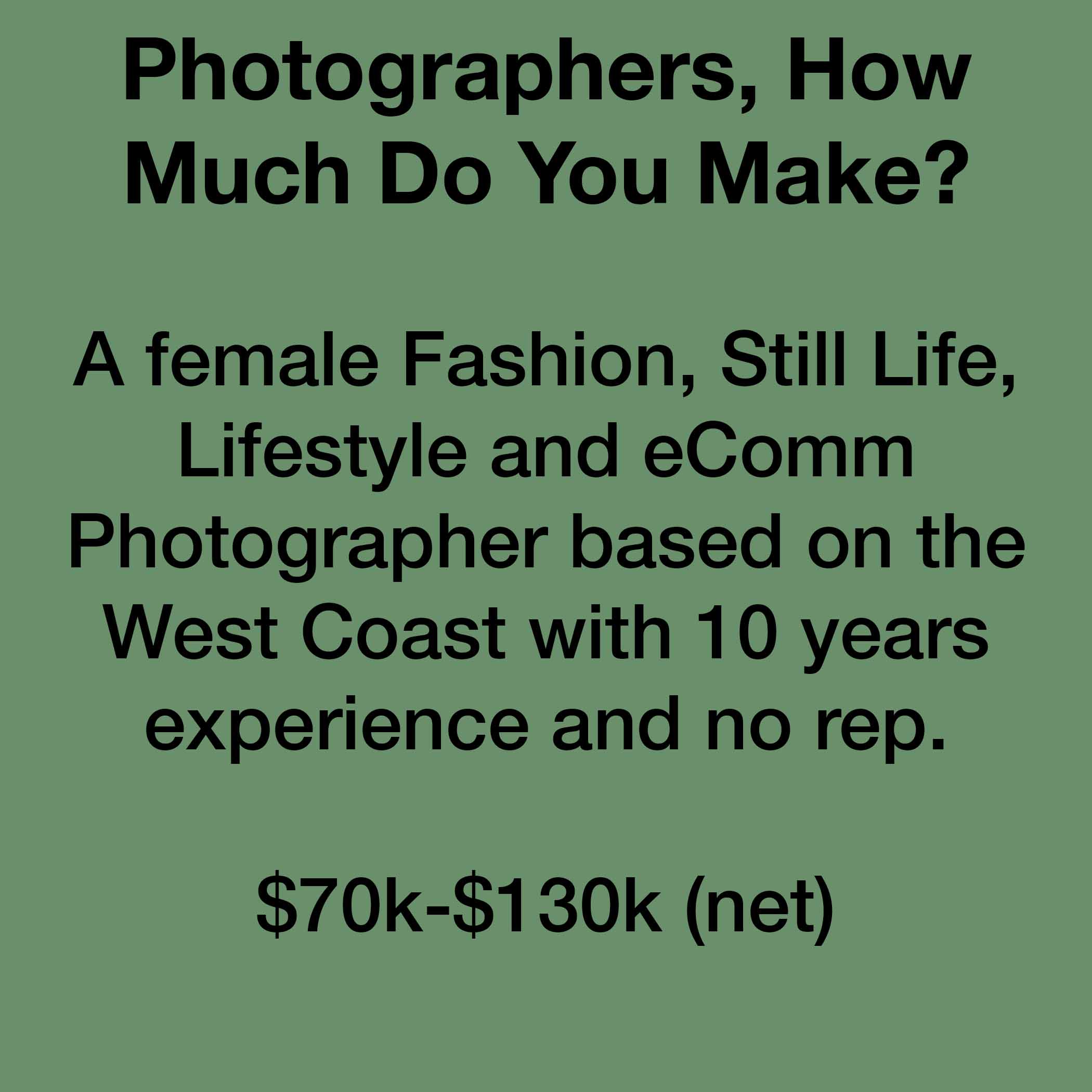
Photographers, How Much Do You Make?

My income went up every year from 2016-2020 then dropped significantly during covid and when I moved to another state. Now in 2023 my income has rebounded to pre-pandemic levels.

My clients are are small to midsize fashion brands based on the west coast. Because they’re smaller we have to cram a lot of looks into one day which drives down quality overall. I shoot 60% eComm and 40% Lifestyle, fashion and still life.

My other source of income is Retouching which has been a great fallback for those tighter months.

Average shoot:
eComm – 10 hours, 60-100 looks per day, 1 year digital only usage, 3 retouched images per look, $3300/day for shoot, $1000/day for retouching (usually 2 days), $650 for first assistant, $2.5k for EQ

Lifestyle campaign – 10 hours, 15-20 looks per day, 1 year digital only usage, 100 lightly retouched images, $3,500/day, $1000/day for retouching (usually 2 days), $650 for first assistant, $500 for second assistant, $2.5K-3.5K for EQ

Campaigns for national beauty brands – 10 hours, 15-20 shots per day, no retouching included, 1 year digital only usage, $3000/day, $650 for first assistant, $500 for a second assistant, $2.5K-$3.5K for EQ

My best shoot was for a Sports brand, 2 athletes, 1/2 day shoot on location on west coast, 10 retouched photos for one year digital only usage, $5,600

Photographers make sure you raise your rate to match inflation at the beginning of every year, don’t be afraid to negotiate for travel days and renting out your own gear, raise your team rates when you raise your own.

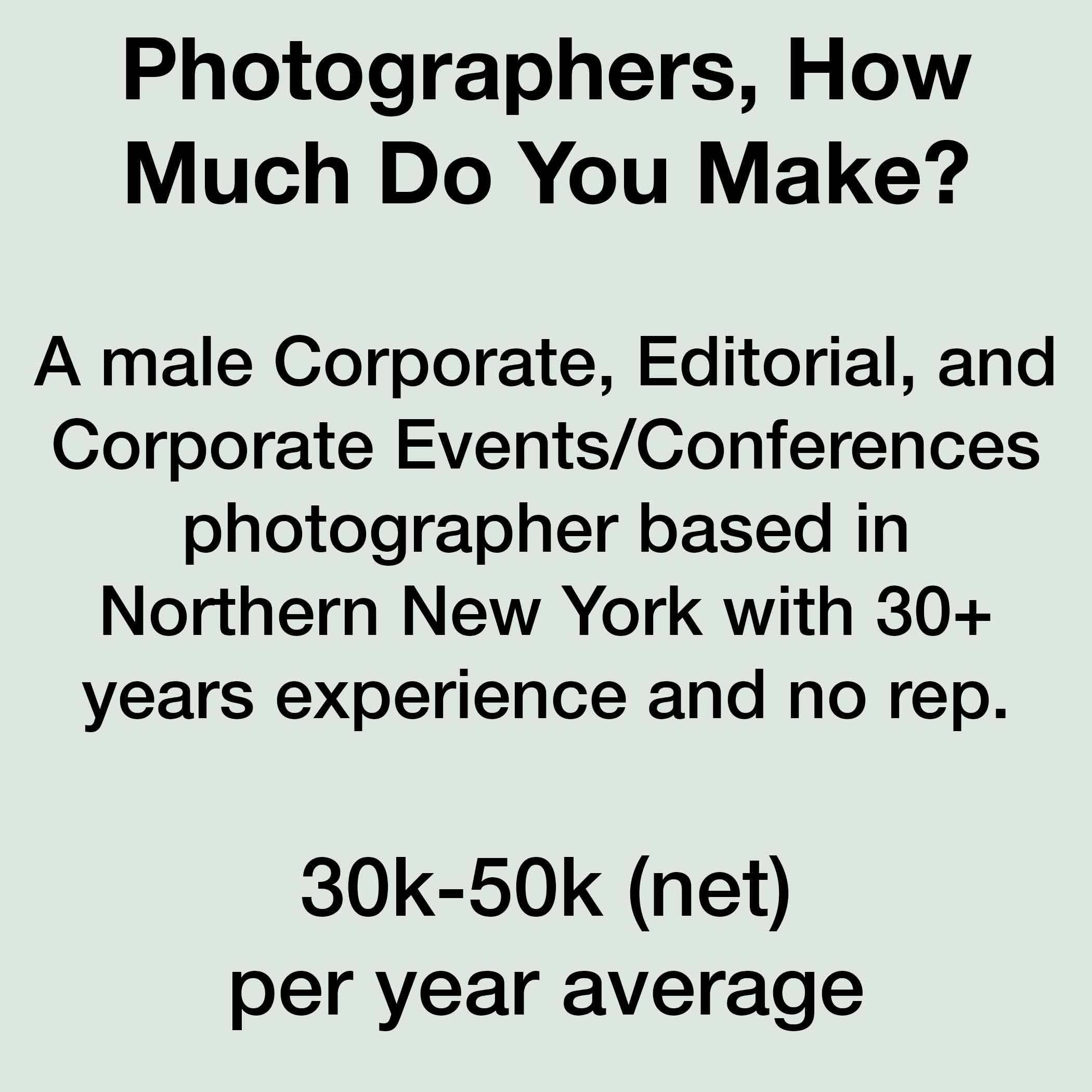
My profit margin is 40-45% post income taxes. Try to run very very lean. I work 40-50 days a year with many more for pre and post, travel, etc. But we’re always workin, right? Revenue has steadily declined. Income has declined slower percentage-wise due to aggressive cost savings and always evaluating how to run lean in my business and my life. But I’ve cut my way to all the savings I can realize. I have no employees and work from home office. I’m a self proclaimed fiend for finding super clean used equipment. Lean and mean.

My clients are Local to New York State, exclusive of NYC. My work is 50% Corporate, 20% Editorial and 30% Corporate Events/Conference. Editorial is largely national trade mags with needs in my area. Some corporate is for major nationals who have needs in my area. Business conferences are everything from state trade associations to massive corporate conferences.

I have a spouse, thankfully, so health insurance comes from their job and cash flow comes from their job. And I also have my savings. I worked extremely hard early on to get to a point where the money I put in my pocket this year is used to pay living expenses next year. And metered out carefully, that savings account sometimes increased year over year. But not after the pandemic. It’s nearly gone now.

My shoots are most often a full day, or maybe a couple, and I do a full 8 hrs creating lots of content as a library of their operations. Client will cover all travel, hotels and some meals. I run solo so no assistants or crew, etc. Often I can bill a couple hundred bucks to travel in ahead of time and maybe for some travel back to home base on the back end.

My fee for the day is 2K all in with usage and 4-500 for post. And I’m very productive. Licensing is generally 5 to 10 years unlimited. No advertising rights included and no right of distributing to third parties (like to a company who has equipment in the photos, say). I’m Ok with it as the photos age-out either because of tech or clothing, or because they use the heck out of them and wear them out. So in reality they have maybe a 3 year lifespan.

Any attempts to drag my rates up from there or bill for usage on top of that and I’m instantly ghosted and lose the work. Repeat clients balk if I’m any higher than that, even if I explain that inflation is killing me and we haven’t raised rates in years.

Would feel fairly treated if I was able to bill $3500-$4000 per day for the production value and level of content they are getting.

Best paying shoot was for one of those library days mentioned above and my take after all expenses was about $5500. But that went into the business to help make my break even point where my overhead for the year was covered. About 6 days total: 1/2 on either end to travel in and out. 3 on site and traveling between locations within a couple states (making for 10-15 hour days, usually up before dawn). About 2 days for post and delivery of several hundred images. Licensed unlimited for 10 years as listed above with no advertising rights or rights to distribute to third parties.

Second best paying job would be a “trade” (educational institution) magazine which needed an alumni portrait. 2 locations nearby with one outfit change. Under 3 hrs to travel, do the job, and return to home base, then a couple hours post. Assistant which was billable. Able to schedule at my preference when light was nice. University has done research into living wage and offered $1600 for fee, plus mileage, billing for some post, assistant, etc. Would 10/10 do those all week long. First usage rights to them, embargo until 90 days after they publish. Clause by them that no secondary publication of images that could hold institution or the subject in a bad light.

My worst paying job $350 for a half day+ for a trade magazine. Multiple things needed to be covered at one location about 45 mins away. Beat back a request to create some cover candidates by saying the job would start at 1200 to even be considered if a cover was involved. Very rushed. Work. For. Hire. Complained and complained. Miserable publishing group to deal with. All in, was probably about 10, 12 hours from start to moment of invoicing. But work comes in and you’ve had nothing for 40, 50, 60 days you take it. Owner of mag called months and months later to complain I didn’t create enough detail photos for their files from that job. Rest of the abbreviated convo didn’t go well as I offered, uh, ‘input’.
No I don’t do any video.

My advice for photographers is to run lean and buy used.

If you think you need gear, rent it until you are using it all the time. Never ever think you have to “upgrade” (argh!!!) just because a new camera comes out. In fact, chase all the clean barely used stuff everybody who “”upgraded”” last time around is now selling cheap.

Learn to save and invest, and the difference between the two. Work so that the money you make this year goes into the bank or your investments, and you have it there to live off of next year so you don’t have to freak out about cash flow or dry spells. Took years to get to that point …

Get a side hustle or second skill. As a photojournalism exile that used to be weddings, which at the time were great but suck now. Have a second skill like bartending or something. Need to make those personal bills? Well parachute into being a bartender or server or landscaper or accountant for hire or whatever for a day or a month and get those bills handled. That way you don’t devalue yourself or the industry by being desperate.

Learn video. Offer it. Even on a rudimentary level.

Share. Even with competitors. The more we share, the better. Especially about business.

The Art of the Personal Project: Matt Odom

The Art of the Personal Project is a crucial element to let potential buyers see how you think creatively on your own.  I am drawn to personal projects that have an interesting vision or that show something I have never seen before.  In this thread, I’ll include a link to each personal project with the artist statement so you can see more of the project. Please note: This thread is not affiliated with any company; I’m just featuring projects that I find.  Please DO NOT send me your work.  I do not take submissions.

Today’s featured artist:  Matt Odom

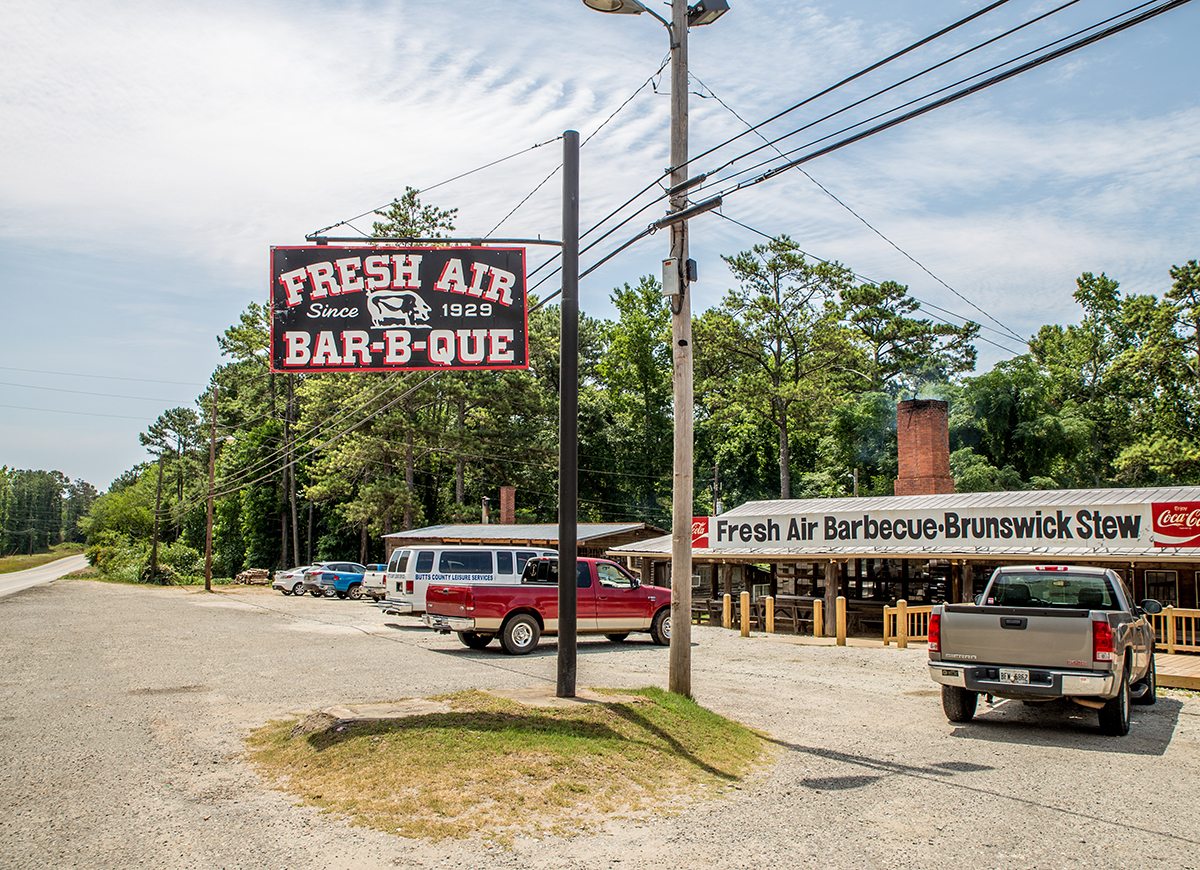
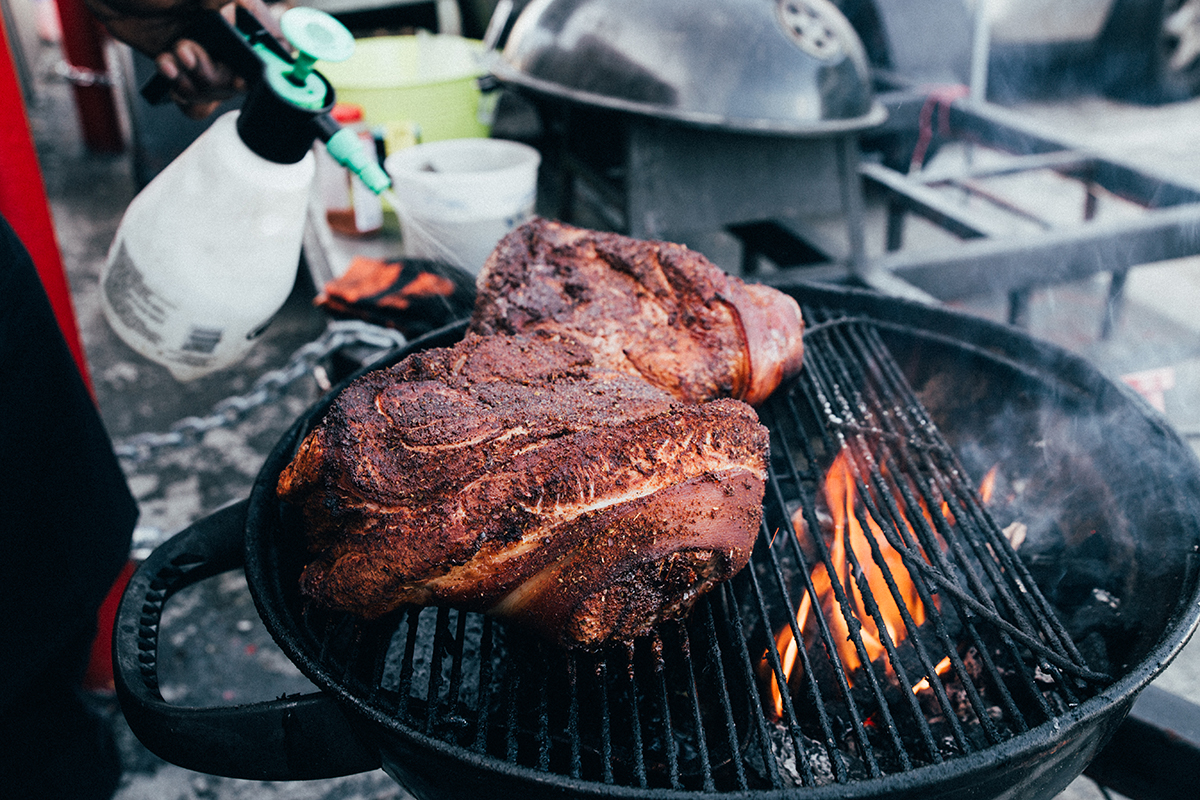
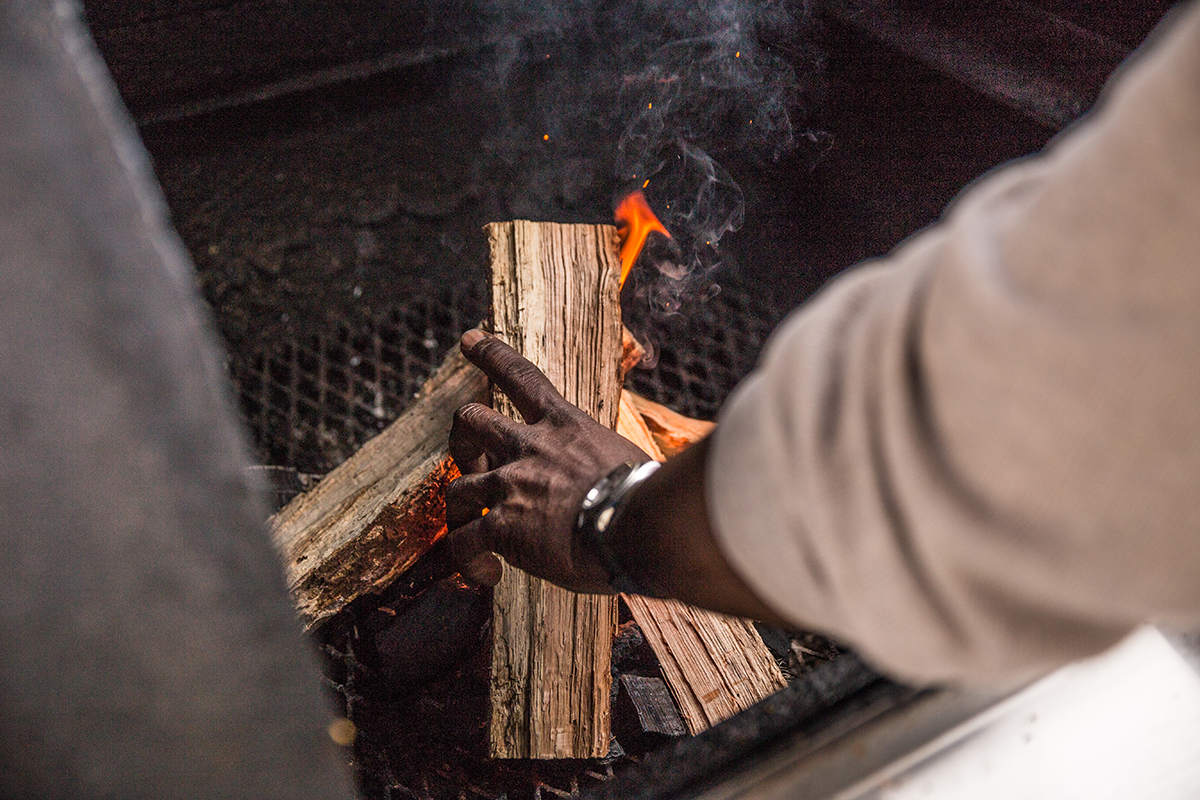
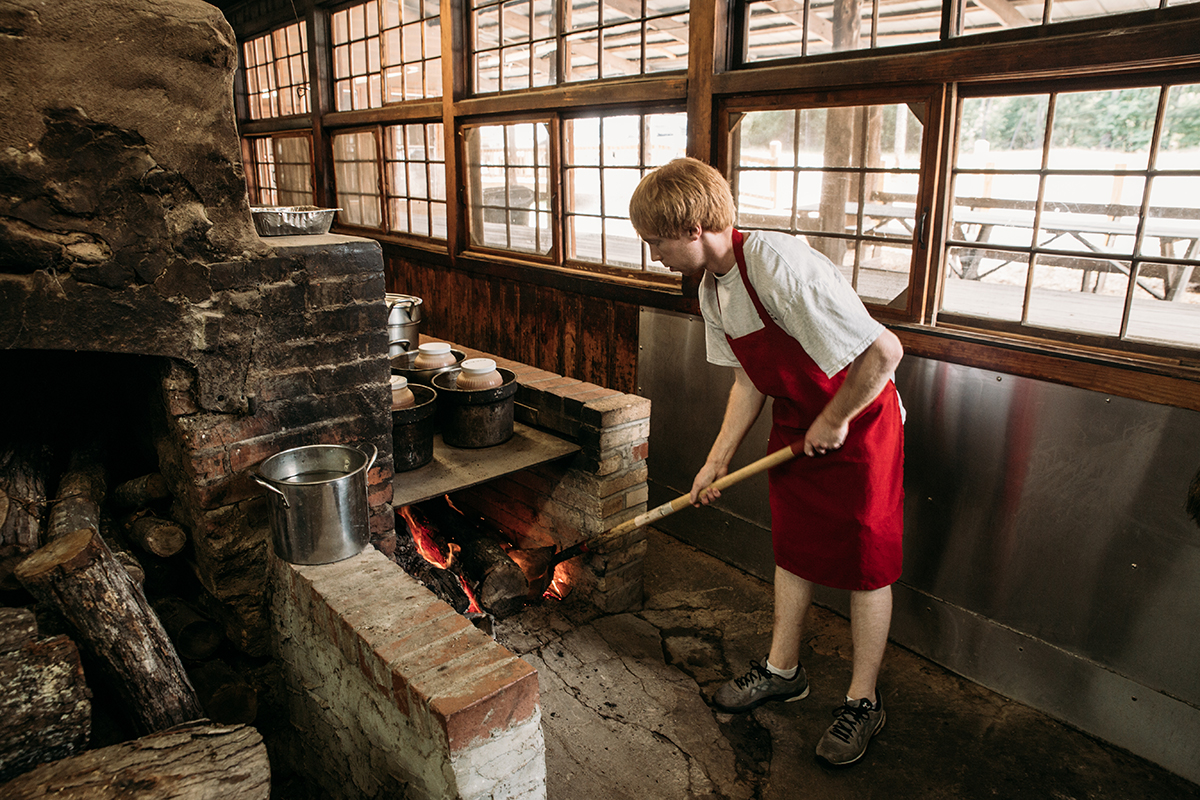
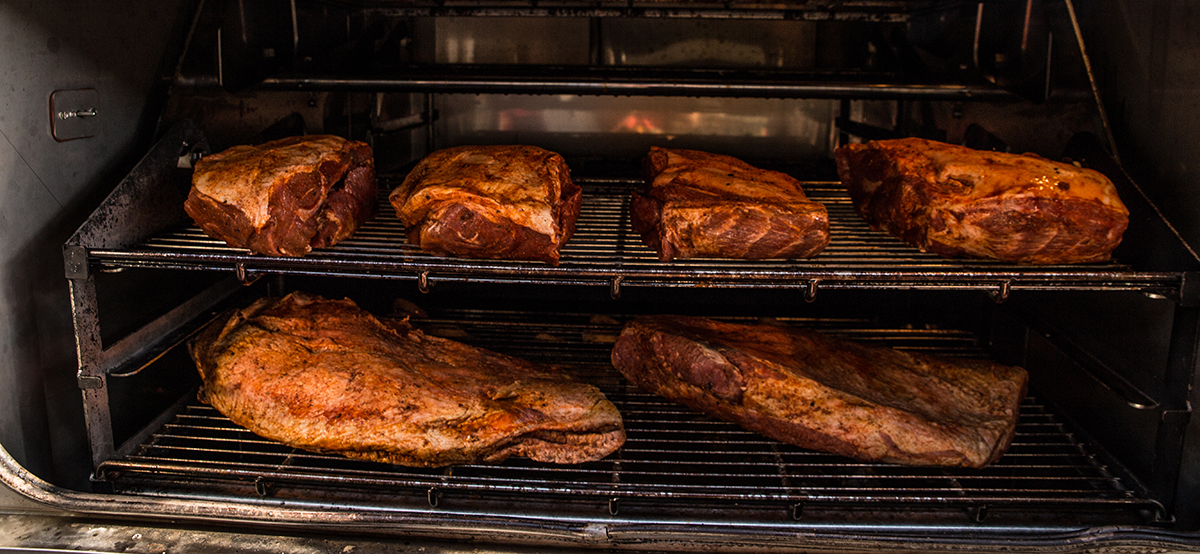
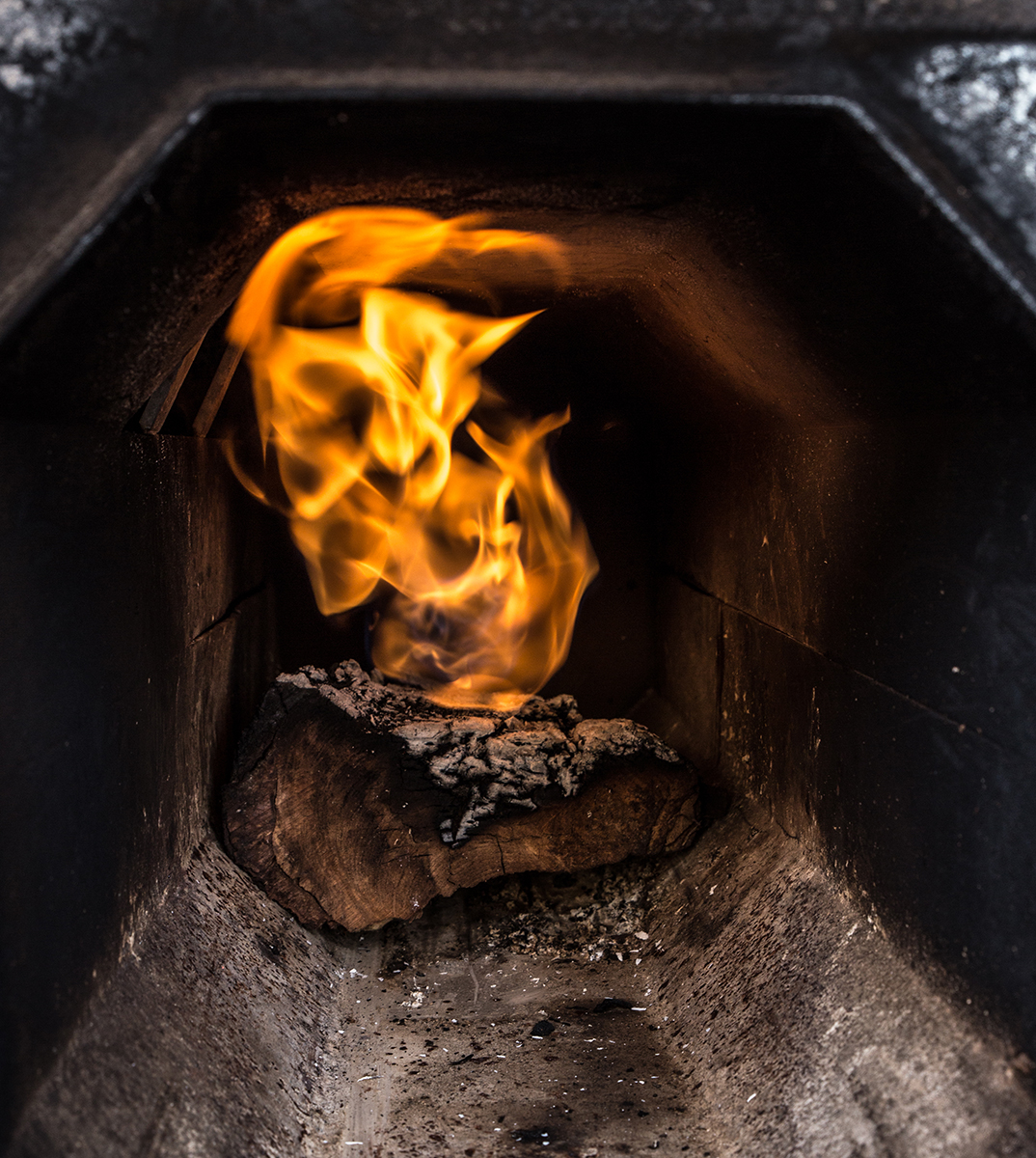
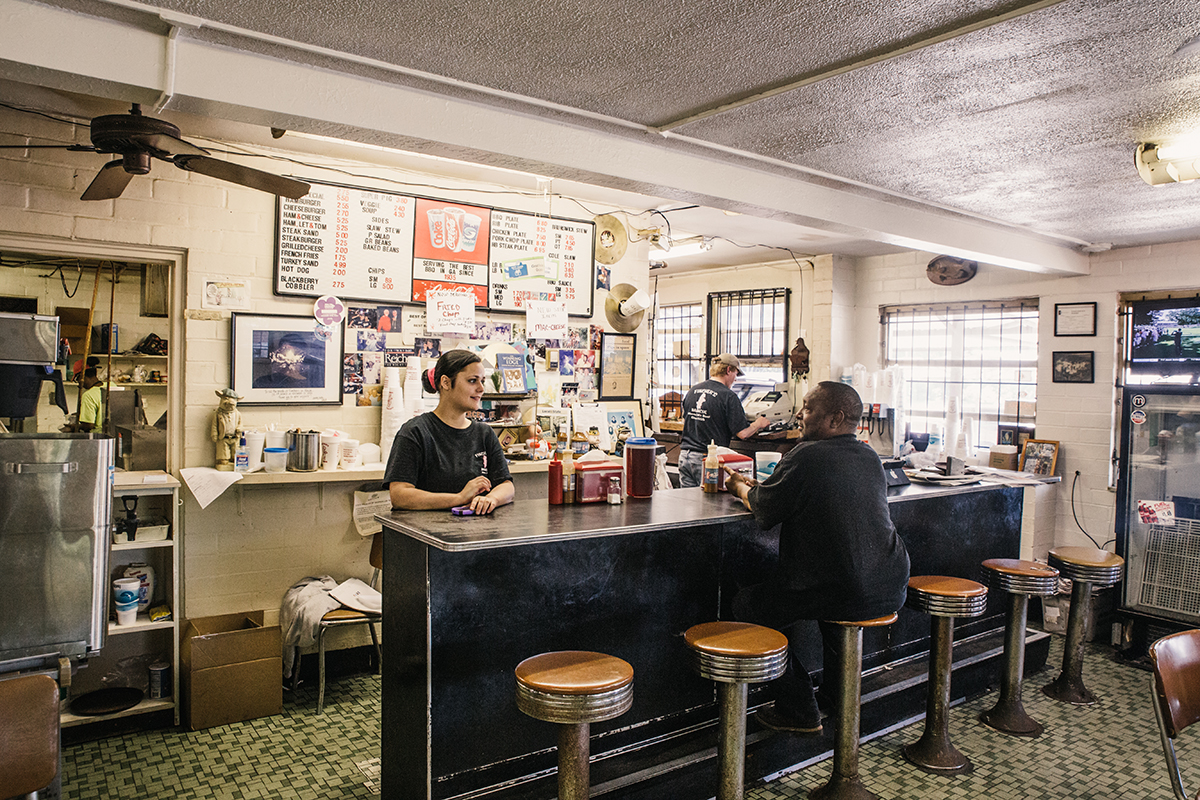
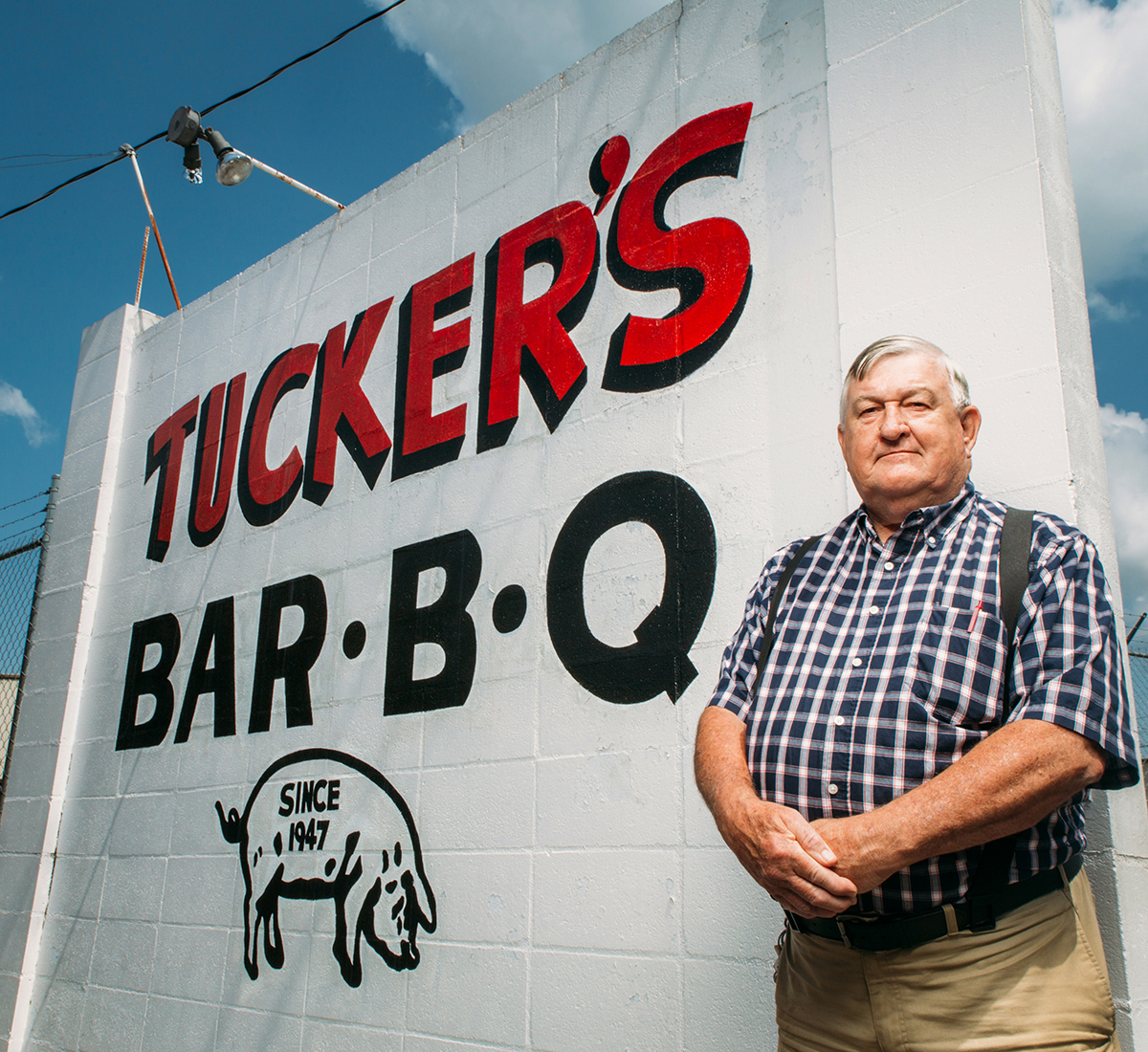
This work explores the love for Bar B Que in the south.  It is often said here down in the south that Along with football, religion, and politics, BBQ is one of the four topics that Southerners will never agree upon”. My hope is that for this photo essay, the viewer will get a small sample of how each BBQ establishment takes on their own personality and  take on providing the southern delicacy of “Bar B Que”.


To see more of this project, click here

Instagram

APE contributor Suzanne Sease currently works as a consultant for photographers and illustrators around the world. She has been involved in the photography and illustration industry since the mid 80s.  After establishing the art-buying department at The Martin Agency, then working for Kaplan-Thaler, Capital One, Best Buy and numerous smaller agencies and companies, she decided to be a consultant in 1999. She has a Twitter feed with helpful marketing information because she believes that marketing should be driven by brand and not by specialty.  Follow her at @SuzanneSeaseInstagram

Success is more than a matter of your talent. It’s also a matter of doing a better job presenting it.  And that is what I do with decades of agency and in-house experience.

Photographers, How Much Do You Make?

I’ve probably increased by about $50k/year for the past few years. Covid did not effect the design/home industry so that worked well.

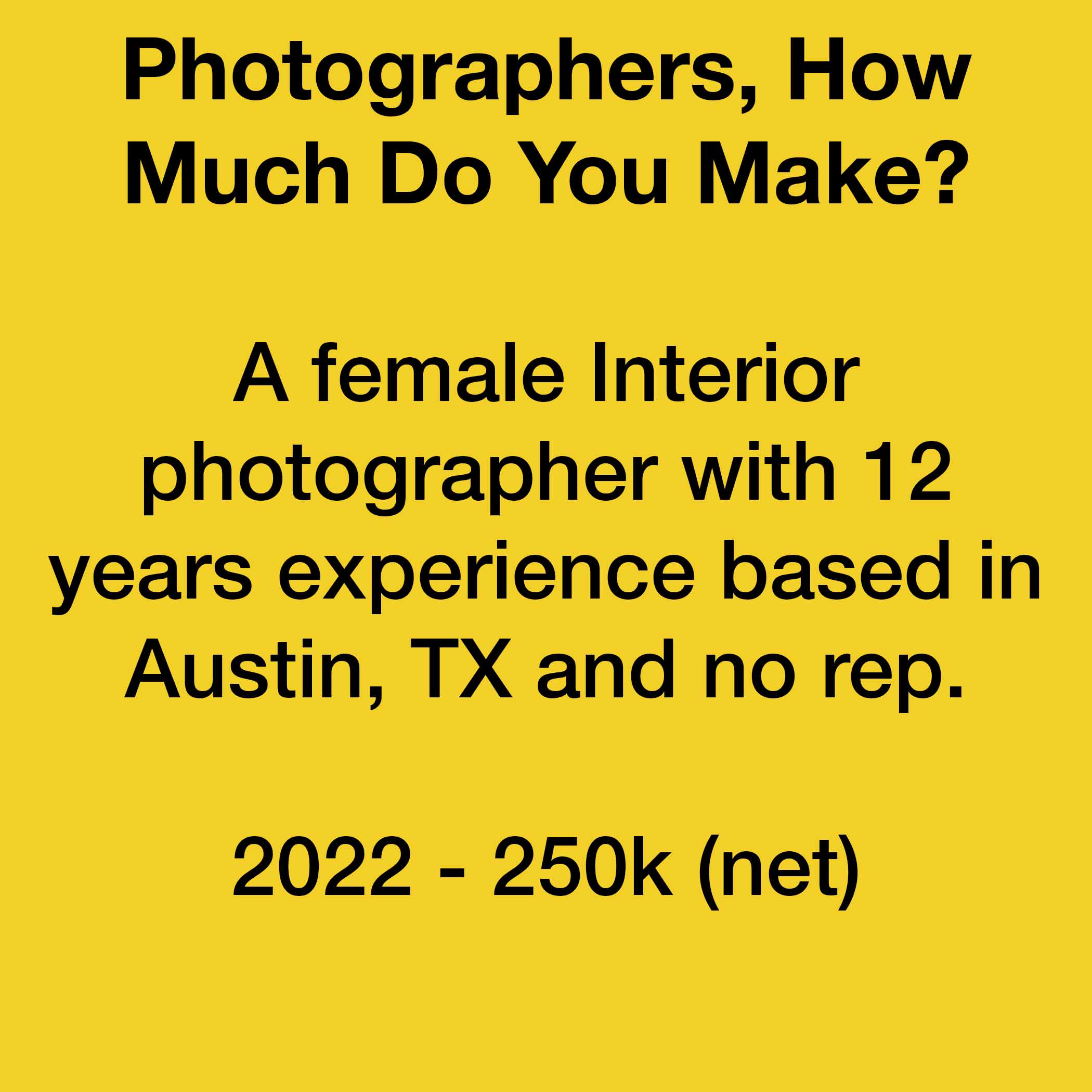
I have very little overhead: I work from home, have insurance, and travel costs are all reimbursed by client. Profit margin is 85% Grossed $300k, profited $250k. I have no employees, a freelance assistant on shoot days, and an editor/retoucher on maybe 10% of projects.

My clients are Amazing! So easy, nice to work with, lots of women (many mothers too), creative, successful. I have the best clients! Mostly interior designers along with a few projects each year for companies in the design/home industry (ie cb2, saatva, interior define) and a few publications each year. I also license one off images to companies in the design/home industry like lighting companies, tile, etc. 95% of my income comes from small independent interior designers of around 5 people within Texas. Last year I traveled to NY once, LA twice, Colorado once.

On average I have 2 shoots per week, sometimes 3-4 in busy seasons. I edit every other day and am in the studio like a 9-5 job when not shooting. I take probably 12-14 weeks off to travel or to be with family/kids. I work hard when working, but when I am off, I am off.

Average shoot is about 8 hours for the day, arrive at 9, end at 5. Around 15-20 images shot with a team of me, my assistant, sometimes a stylist and their assistant and 2-3 people from the designers team. Images are licensed to only that designer for web usage only, and I make around $3500-4k. That is the average shoot/client for me. I never work on weekends or after 5 pm.

My highest paying shoot of the last few years was $10k, 2 day shoot, 25 images, licensed to interior designer and architect, easy, fun, laid back, 8 hour days

My lowest paying shoot from the last few years was $1500, just 5 images, shot over maybe 2-3 hours, licensed to designer for web usage only. still nice, quick and easy, so the lower fee reflected that. less images, less time shooting, less time editing

I do not shoot video, but would like to start.

As far as pricing goes, talk to other people in your industry in your area and get on the same page. Don’t give away your images. They are valuable. It is not an honor to be featured by a company like Cb2 or Serena and Lily if they are not paying you- they are taking advantage of you. Also, if you like the slow pace and control that comes with shooting interiors, it’s an awesome path to take. Start assisting for someone who focuses on what you want to do and learn all you can. Especially as a mother who values family and space, I have found the schedule is amazing- not too much travel (but some), no work on weekends or evenings (unless you are doing more architecture and taking lots of exteriors), you can say yes or no to anything, and clients almost always ask when YOU are available, so you have complete control over your schedule.

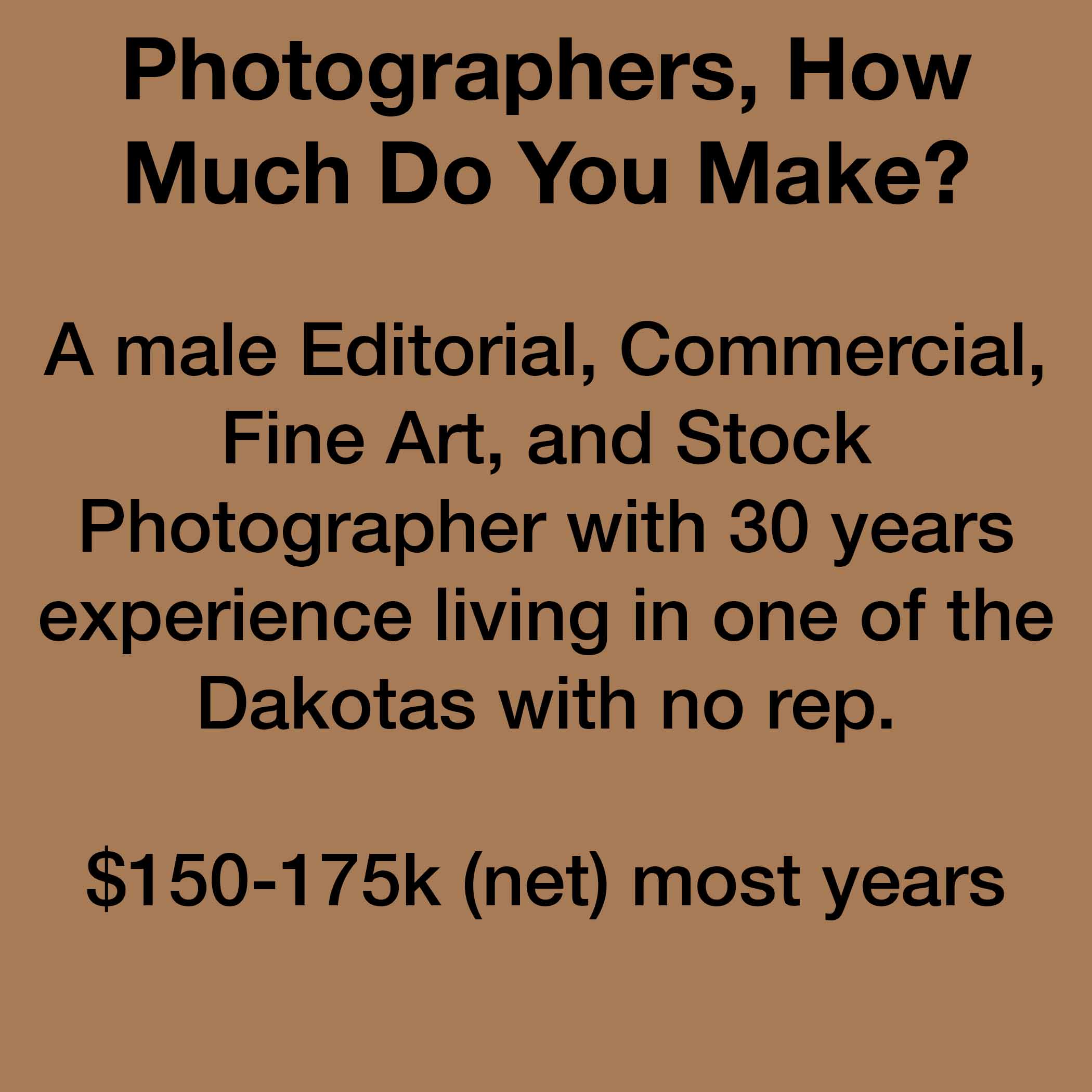
$150-175k taxable income paid to myself most years, taken out of $225-250k each year in creative & licensing fees, stock sales and print sales after expenses. My gross invoices are $275-325k a year with all expenses included. Most of my expenses are fuel for my truck, flights and hotels and meals for clients (nearly all of that is reimbursed) and camera and computer gear upkeep and replacement. I pay no rent, no employees but myself and very few professional fees of any kind. I run a fairly tight ship as far as needless expenses go.

70% of my income is from commercial and editorial assignments, the remaining 30% from print sales and stock sales. My clients are mostly agricultural and outdoor lifestyle in nature. Some industrial. Some college work.

I maintain strong relationships with two Fortune 500 clients and most everyone else is mid-sized. I shoot all over the country for the larger clients and mostly in the Midwest for the smaller ones.

I have no employees and virtually no overhead. I work out of my home office and I don’t maintain any studio space. Cameras and computers and a pickup truck are my only expenses.

I’m probably shooting or traveling to shoots 140 days a year, and then doing work in the office, printing, networking and researching another 100 days a year.

My income took a 30-35% dip in 2020 but other than that it’s remained the same. I was able to collect two years of PPP worth around $37k total and then our state had a covid grant with which I was able to collect $65k. The Covid grant required me to have a sales tax license in place during 2020 and at least one really bad quarter that year, both of which I had. My business is an S-Corp, which I’ve maintained for 25 years and it’s been very beneficial in several ways, including the PPP, the Covid grant and many other corporate tax savings throughout the years.

An average shoot for one of the larger clients is 2-5 days and around $5k/day, with $1500/day for travel days, and $2k for scout days. Licensing is very minimal because these clients freak out about it. The midrange clients are usually 1-2 days and mostly within driving distance.

My best job was a 5-day shoot plus two scout days and two travel days in Washington state in 2022 for a large ag tractor company. Shoot days were mostly dawn to dusk, travel days were just flight times (5-7 hours each), scout days were only 3-4 hours each. After travel expenses my biz took home around $33k.

Every year I take on a handful of tiny shoots from a local community college to profile alumni in their jobs. $650/shoot, plus mileage and $100 digital editing. It’s easy shooting for a couple of hours and comes during slow winter months.

I do a little b-roll here and there for clients. I doubt if it’s even 1% of my income. But I do shoot some short pieces as I build my video portfolio.

Look into incorporating. There are many tax benefits to it, and it adds a firewall against libel and other legal issues. Don’t rent a bunch of space, studio or otherwise, that you don’t use a lot. Maintain a good set of camera gear and good computers so you’re not dealing with tech and gear issues on shoots. Don’t be snotty or uppity to clients no matter how crappy they are… there are many instances in my 30 years of freelance where a client peon on a shoot calls me years later because I was easy to work with and now they run an art department somewhere else. Words to live by: “You reap what you sow.”

I do a lot of non profit work but the majority of my income comes from commercial. My clients are all over the US. Pre pandemic, I worked 3 weeks a month now it’s 1 week. No employees anymore just freelance assistants and digi tech. My profit margin is not good.

My overhead is mostly marketing and advertising. My rep requires we pay $1000 per LeBook show and make 4 promos a year. Plus advertising in LeBook online and many other channels and shows.

My clients are Catalog, Department Stores, and not necessarily anything I love. To supplement income I do weddings and portraits when times are slow

Average rates for me are 2,500-4k a day right now. I work at least a 10hr day plus several pre calls and scouts and tons of editing on the back end for the client. So I would say my “day rate” pays for about 3 days of work, on average . But my agent also gets 25% of that. So I probably take home $800-$1000 a day if that.

Speedo, Sketchers, and Pandora have paid me the most in the past. My highest day rate for fees alone has been 10k with advertising usage for print and billboard, 2years, all inclusive. I would say the take home pay is 50% of that after my rep, expenses, and marketing

Worst paying job I have accepted lately is shooting e-commerce for $750 a day (my agent gets paid their fee separately) I only take it because it’s local, I can drive to work and shoot 9-5, and they sometimes book a week at a time. It’s filler work that pops up regularly and helps me fill the gaps between advertising jobs.

I don’t shoot video, but I work with DPs and book jobs that require both, often.

This is an expensive career, especially with a rep, and the pay is getting significantly less. I still hustle, shoot for myself all the time, and am not ready to give it up. I love what I do too much. But man, is it tough out there!

Artist Management Association (AMA) – NFT’s and Web3 Webinar

“NFTs are a wonderful way of saying art is the reason we are here” – Marc Duron Head of Innovation – Great Bowery

The Artist Management Association (AMA) is a trade organization acting on behalf of companies representing creative talent working in the commercial photography and fine art industries. The AMA provides educational programming, supportive resources, community action, and legislative advocacy for our industry and the artists we represent. The programming aspect includes a webinar series, where leaders in our industry are invited to speak on topics of interest to the membership. . On February 8th, 2023, the AMA broke its webinar attendance record with a discussion on NFT and Web3. An esoteric topic was demystified by experts on the subject Marc Duron, Head of Innovation at Great Bowery, and Sam Summerskill, Director and Web3 Lead Agent at B&A Reps.

It’s no surprise that this was a widely attended event. Web3 and NFTs are on everyone’s minds as they become a life force in our industry and understanding them becomes imperative as reps and artists. The webinar began with Marc Duron outlining the basics of Web3 and how it is a natural evolution of the internet as we know it now.

  • Web3 is actually more democratic in its nature, more community-based.
  • One of the tenets of Web3 is WAGAMI – We’re All Going to Make It.
  • As the backing to the philosophy of the cryptoverse, it creates a sense of togetherness and support, which leads to the decentralization of Web3.
  • As consumers, it is up to us to support and create what we want to see within Web3. Which was the genesis of the NFT.

NFT, or Non-Fungible Token is simply a unique digital asset. To compare it to photography, it is the original negative of a photograph. It can be reproduced, but there is always the one original file.

  • An example Duron gave was that as an NFT creator, you could sell that asset to a museum gift shop. That gift shop can then create and sell one thousand prints of your creation, but you will retain the copyright on the original. And then if in 50 years, those prints are worth money, you as the creator will still be compensated.
  • The biggest thing to keep in mind is that NFTs are stored on the blockchain which acts as a digital ledger. Similar to getting your paycheck deposited into your bank account, any transaction involving an NFT can be easily accessed and reviewed as needed.

With a general understanding of NFTs and Web3, Sam Summerskill then took us through a case study involving his artist MCBESS.

  • Summerskill felt that as an agent, it is his responsibility to be aware of visual culture and in turn, new revenue streams.
  • He could see the rise of NFT chatter and decided to be a part of the conversation rather than observing from afar.
  • Together with MCBESS and a group of developers, they created Cellmates, a collection of NFTs.
  • Accumulating in 12 months of work for a number of people, the 4,000 minted components completely sold out in 30 seconds.
  • Aside from the excitement that comes from having your work received well, this was a great barometer for the reach of NFTs and the emphasis people are placing on art.
  • Duron stated earlier that the popularity of NFTs is a “wonderful way of saying that art is the reason we’re here.” And in a time when there is much to distract us from art, this has us optimistic about where we can go in the future.

It was a lively webinar full of important and relevant information. Each month the AMA puts on webinars, town halls, roundtables and in-person events. While everyone runs their companies differently, there are common issues faced by artist managers across the industry. . The AMA is a platform to collaborate, and share insights and advice to better our community as a whole.

If you’d like to learn more about the AMA, please visit the website (link). To stay up-to-date on essential industry resources, discussions, and legislation, please subscribe to the AMA newsletter.
Become an AMA Member
Become an AMA Partner

Check here for updated information on events. Below is a list of upcoming webinars:

AI with ImageRights
ImageRights Demo
Sustainability

How Much Do You Make – A Male Southern California based Commercial Advertising and Fine Art Photographer with 22 years experience and no rep.

My clients are Fortune 500 and run the gamut from awesome to terrible. 60% of my income is commercial and 40% fine art. I have zero employees and 12k in overhead. My profit margin is 65%. Around 25% of my work is video.

I shoot 50 days a year but am working 365 on everything else. 

An average shoot day is 10 hours, sometimes more. I work on a day rate plus use model. Most use is between 2 and 5 years in North America or globally. I usually have a producer handle all expenses, and I bill back for lighting equipment and other tools the production uses. I own all my own gear, so this is a profit center for me.

My best shoot was a one-day pre-light and one-day shoot for a global consumer brand, where I licensed 10 images for two years of global use and got paid a 25k day rate and another 5k per image, so 75k total, and then I made 10k on grip lighting camera and digital. 

My worst shoot was a 14-hour day for a major brand where I was paid $7500 for filming and directing a tv commercial for broadcast. I was hired as the DP, and the “agency was going to direct,” except they were clueless, and I ended up directing, so I basically got taken advantage of by an agency. 

Photographers need to charge more and expect more, and do the right thing. Also, copyright your images and hold agencies accountable when they steal them and use in decks without your permission. 


Ed Note:

I would love to have more women participating in this column and more niches within the industry (newspaper, event, senior portrait, wedding, etc.). Email me: rob@aphotoeditor.com

I will send you a link to a google form that will ensure your anonymity. 

The Art of the Personal Project: Christian Tisdale

The Art of the Personal Project is a crucial element to let potential buyers see how you think creatively on your own.  I am drawn to personal projects that have an interesting vision or that show something I have never seen before.  In this thread, I’ll include a link to each personal project with the artist statement so you can see more of the project. Please note: This thread is not affiliated with any company; I’m just featuring projects that I find.  Please DO NOT send me your work.  I do not take submissions.

Today’s featured artist:  Christian Tisdale

Everyone in our industry talks about how photographers need to shoot personal work. We’ve all heard it, and I, like so many busy photographers, always pushed that stuff aside. Why would I shoot unpaid work when I could be shooting paid projects? Then Makers came along and changed all of that.

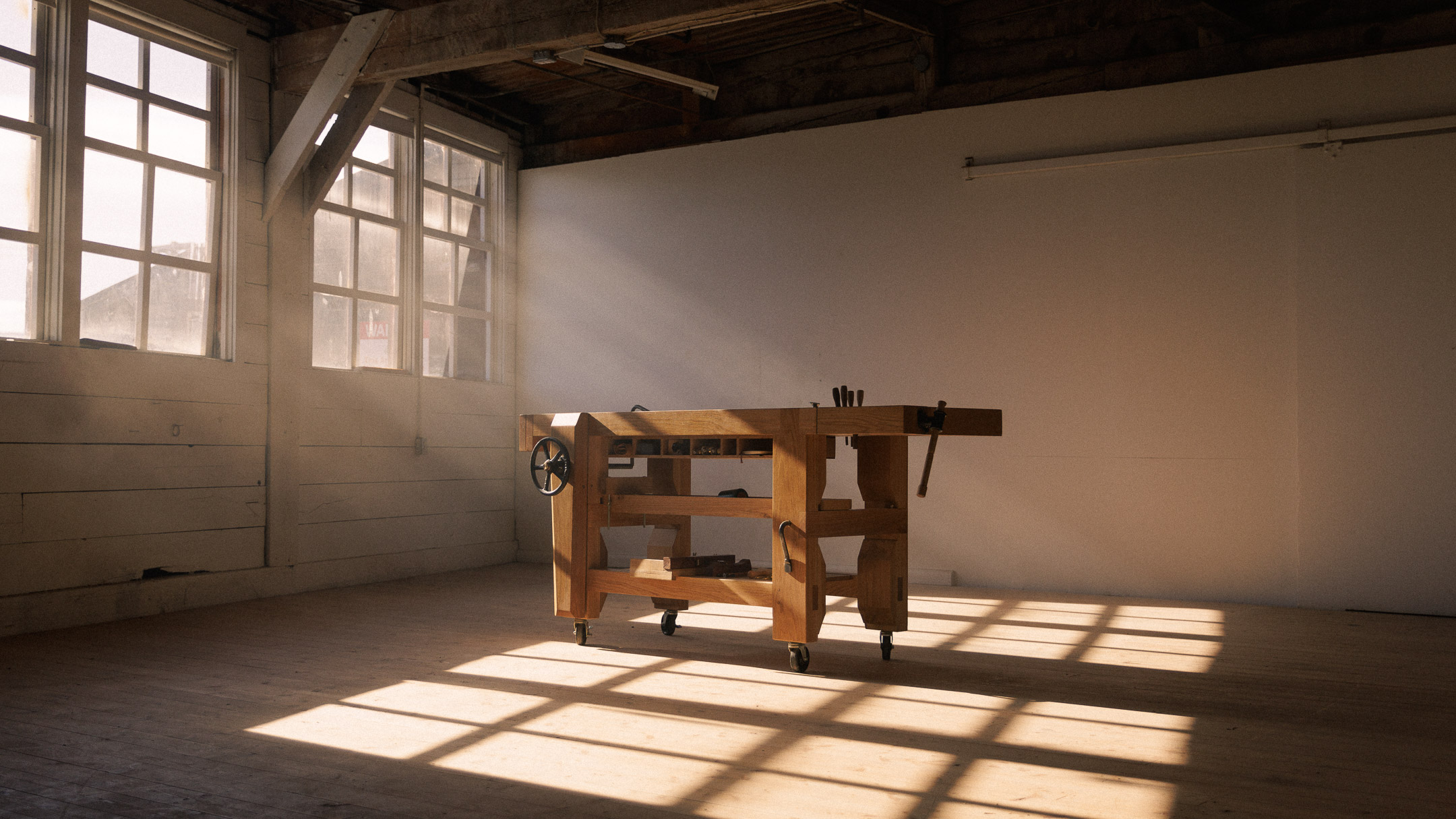
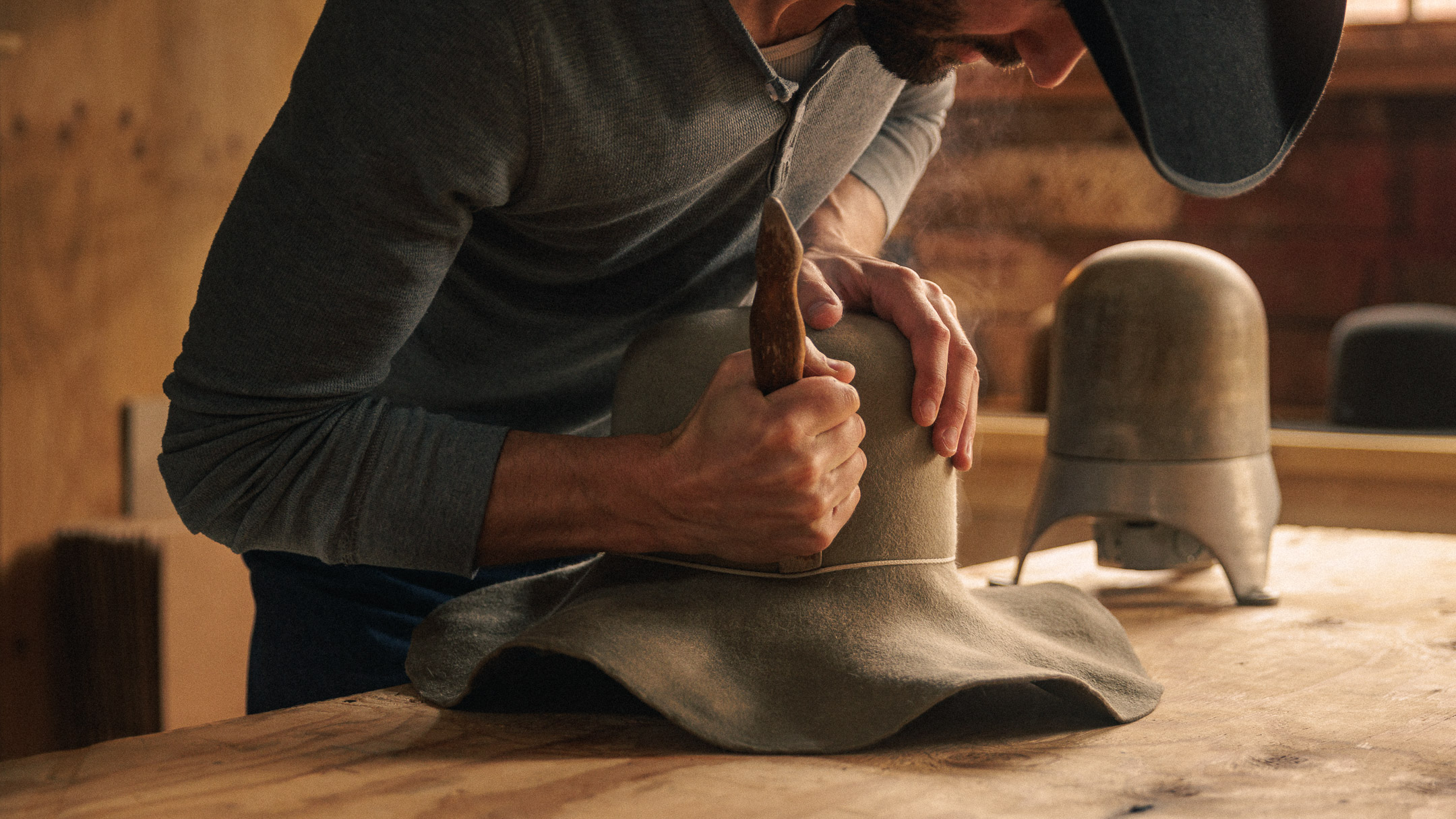
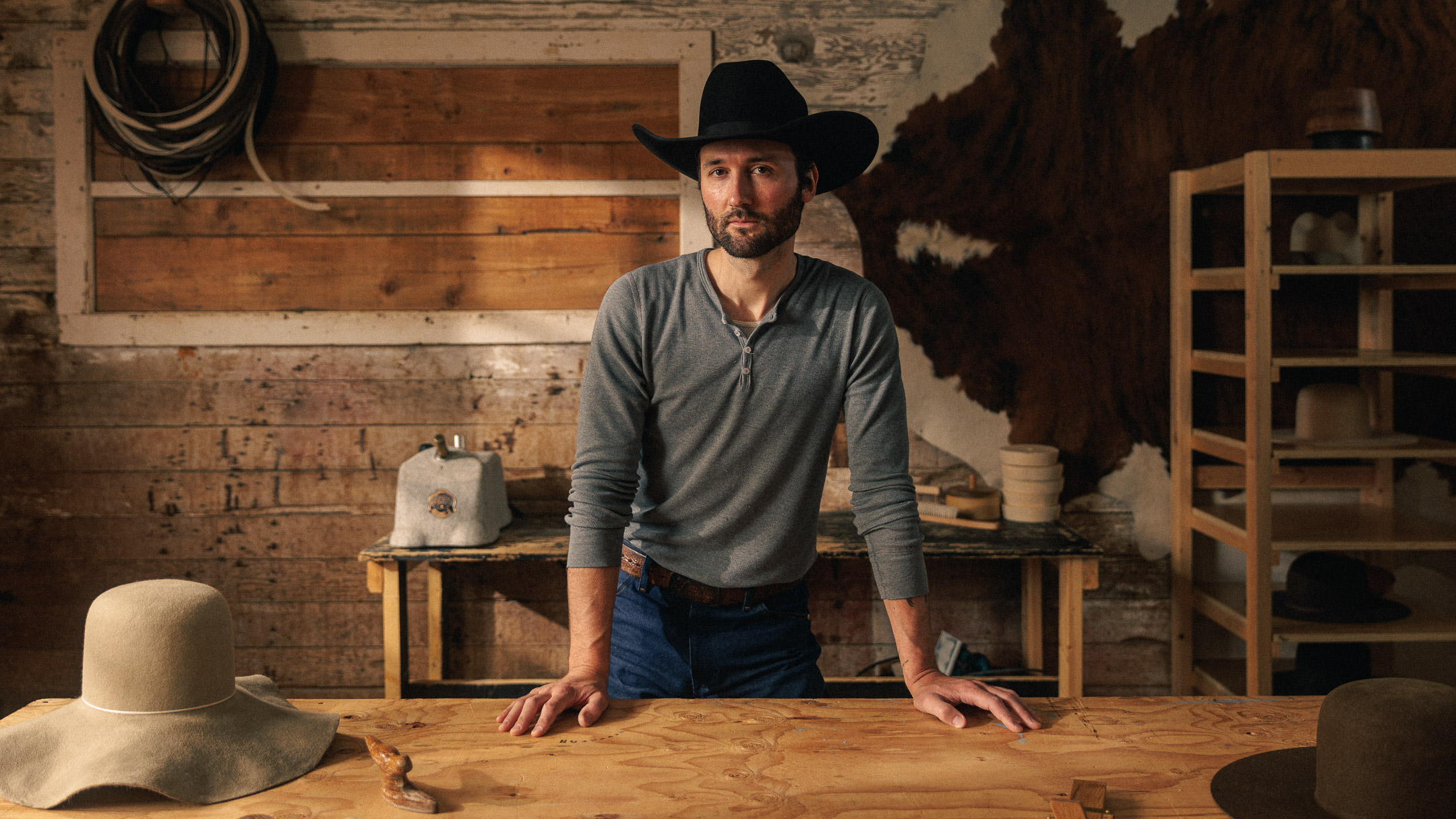
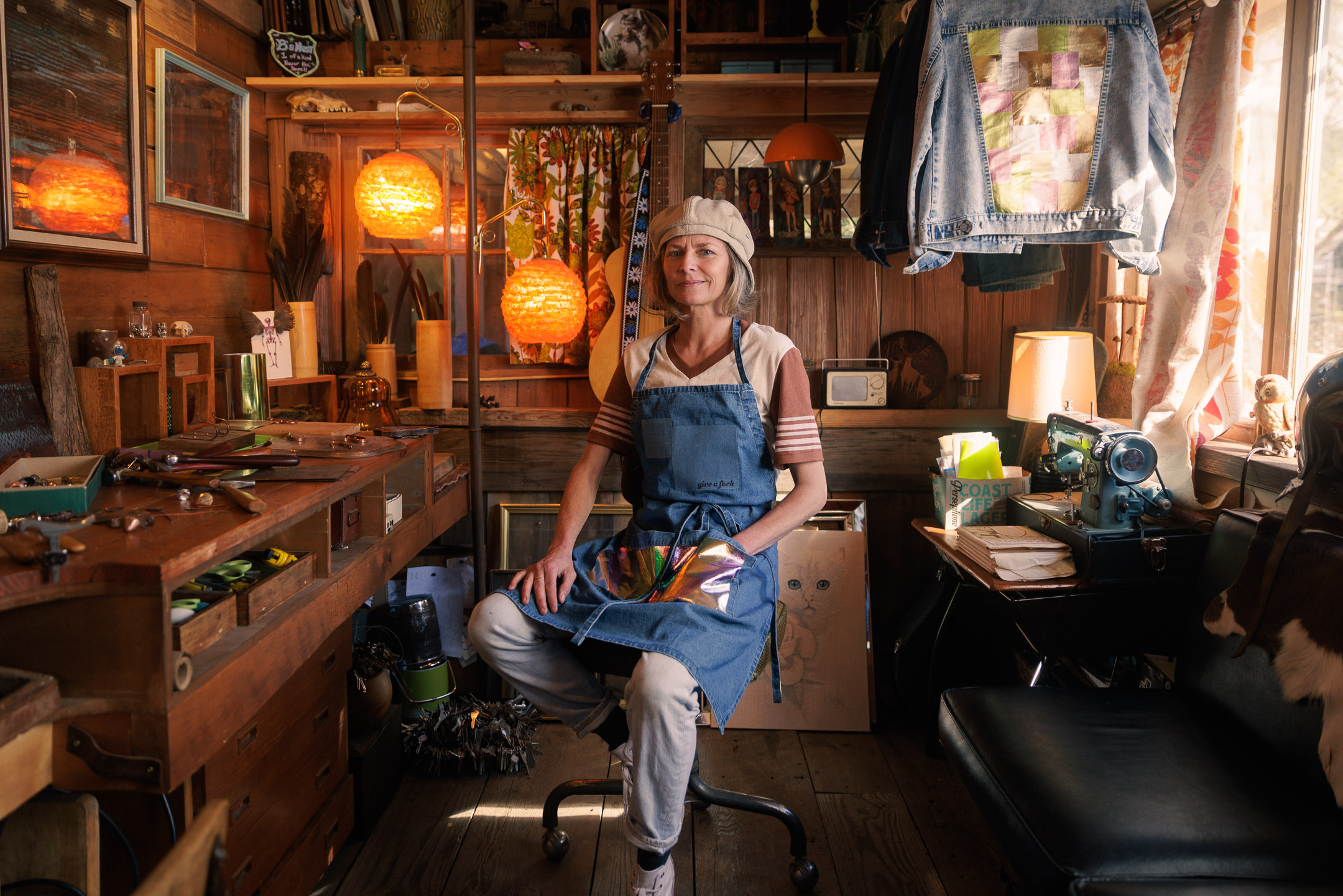
Makers is a series of images that focuses on the human experience of making – it’s about the patina and scars on experienced tools and experienced hands, finely tuned workshops perfected over thousands of hours of iteration, and individuals that dedicate their lives to creating. Makersis an answer to the numbness of consumerism based in the mass-produced goods that we’ve become so accustomed to.

I’ve always had a burning need to create things, anything – I’m obsessed with the act of making and the attitude it takes to create something from nothing, to create a tiny piece of order from the chaos. I love the spirit of creation, regardless of what the end result is. Which is where Makers was born.

I’ve been actively shooting Makers for nearly 2 years now, and it has completely changed my career. The project has grown from a couple of creative sessions with artisans in my small town, to a significant body of work that has opened doors to the biggest paid projects I’ve ever worked on. It has also shown me this warm and inspiring community of wildly interesting Makers in the Vancouver area and beyond. I’m so thankful for the ways that this project has affected my work and my life.

I hope you enjoy these images as much as I’ve enjoyed making them.

To see more of this project, click here

APE contributor Suzanne Sease currently works as a consultant for photographers and illustrators around the world. She has been involved in the photography and illustration industry since the mid 80s.  After establishing the art-buying department at The Martin Agency, then working for Kaplan-Thaler, Capital One, Best Buy and numerous smaller agencies and companies, she decided to be a consultant in 1999. She has a Twitter feed with helpful marketing information because she believes that marketing should be driven by brand and not by specialty.  Follow her at @SuzanneSeaseInstagram

Success is more than a matter of your talent. It’s also a matter of doing a better job presenting it.  And that is what I do with decades of agency and in-house experience.

How Much Do You Make – A repped female Beauty and Lifestyle Photographer based in Boston with 22 years experience

2020 – 78k

2021 – 140k

2022 – 95k

I shoot photo and video Commercial Beauty and Lifestyle predominantly and can shoot still life as well. In Boston, you gotta be good at a lot to survive. I started as a retoucher 22 years ago and have been shooting for 19 years. I have a rep, and most of my income comes from lifestyle work. My video work is about half my income.

I have no employees and share a studio with others to help with overhead which averages $60k. My profit margin is usually a third of revenue.

I work nonstop, and my clients are primarily female. The younger they are, the less budget they seem to have.

It’s been about 7 years where my gross Income averaged 200k, but my bills keep getting higher. And the budgets are getting lower. I normally divvy up my video post work to other creatives, but sometimes I do it just to put more money in my pocket that month to survive.

I have recently lost 2 bread and butter clients—one to in-house hiring, and the other folded.

One-day shoots average about $25K WITHOUT models, catering, props, backgrounds, etc.

My Shoot days average $3500 – $5000 day rate. Plus $5000 – $10000 in licensing fees, usually 1-3 years but no broadcast. I also do my own retouching, which I usually just give a per-image rate—those average $150-$500 per image, depending on how complex it is. I do give breaks if it is multiple days on my fee. I give my rep a quarter of my day rate and usage fee.

My best-paying job, I never knew the overall budget. But I got a buyout on a 4-day job for about 140 assets for 60k

The one that stings the most was a 4-day $270k job That I made $25k in the end. I was supposed to make about $50k on it with retouching. The producer asked me if they could cut my rate because they were way over budget. I wish I had slept on it and thought hard about it. I didn’t have a rep at the time, and instead, I immediately answered you can take my retouching fees out of it and in the end made half of what I should’ve made on an already underpaid rate. The producer even asked me to cut my rate a second time, but I gave him a hard no.

I think people just need to talk more. I have always been honest with my friends and tried to help them and vice versa. The industry doesn’t need to be cutthroat. We should all help each other. I also think people need to assist and find a mentor. Seems like people these days just get thrown into it from Instagram and don’t know what’s right or wrong. Find someone in the field for more than 15 years to help guide you. I am almost 20 years into this, and I am still learning about business and craft.

NOTE: Income is NET.

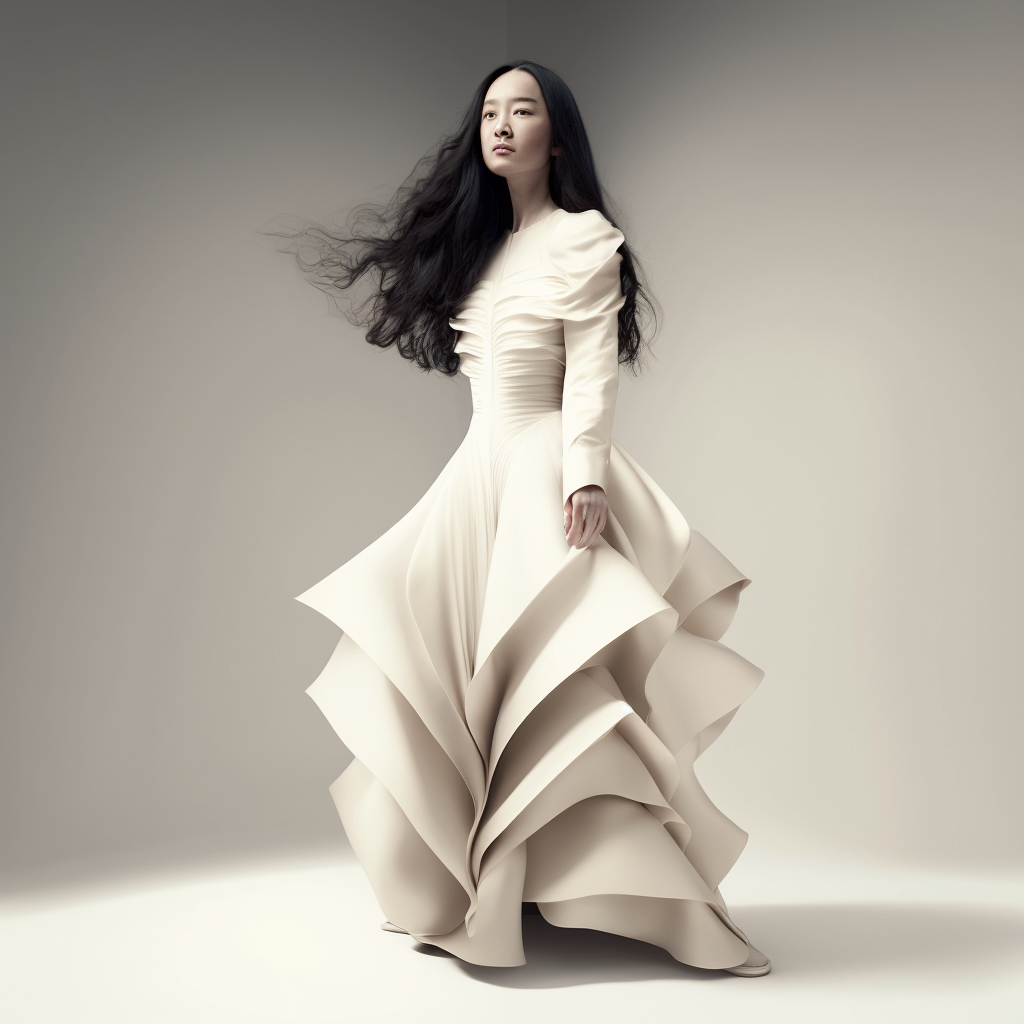
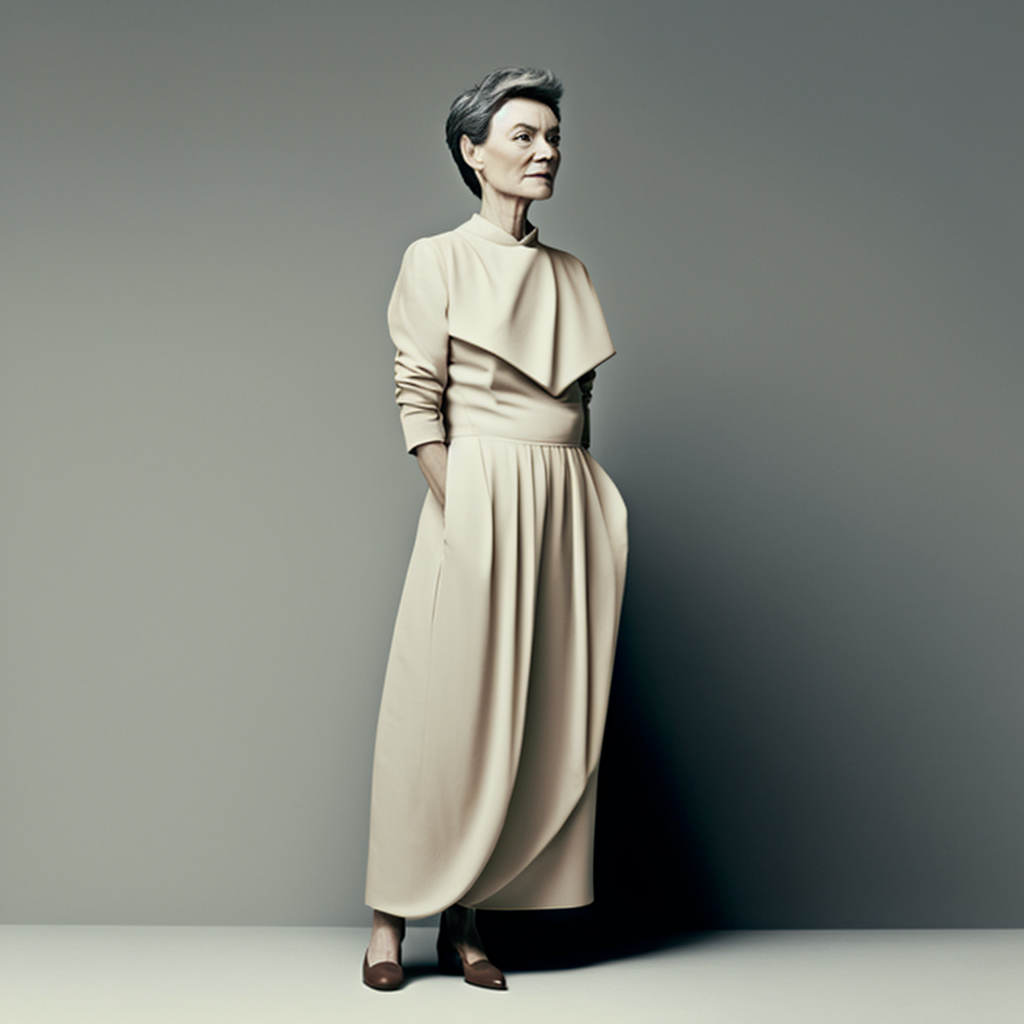
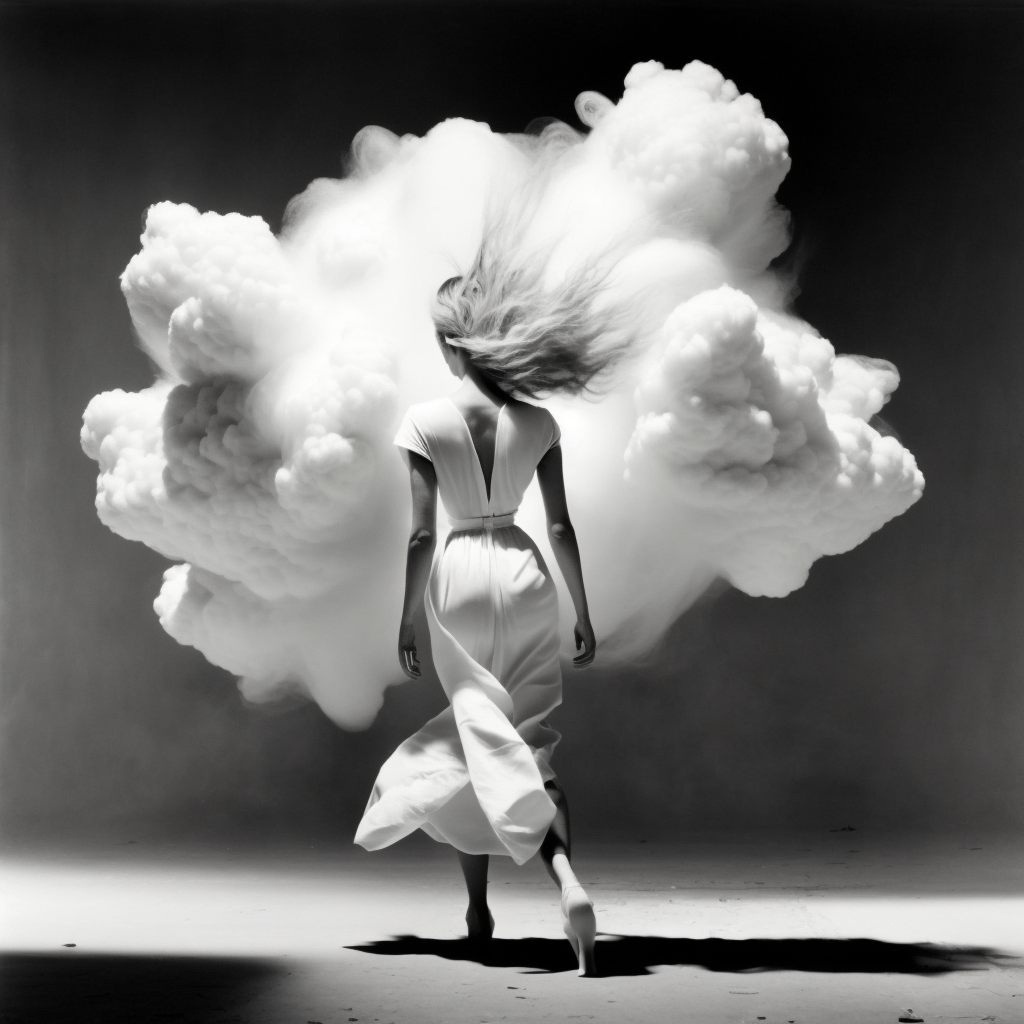
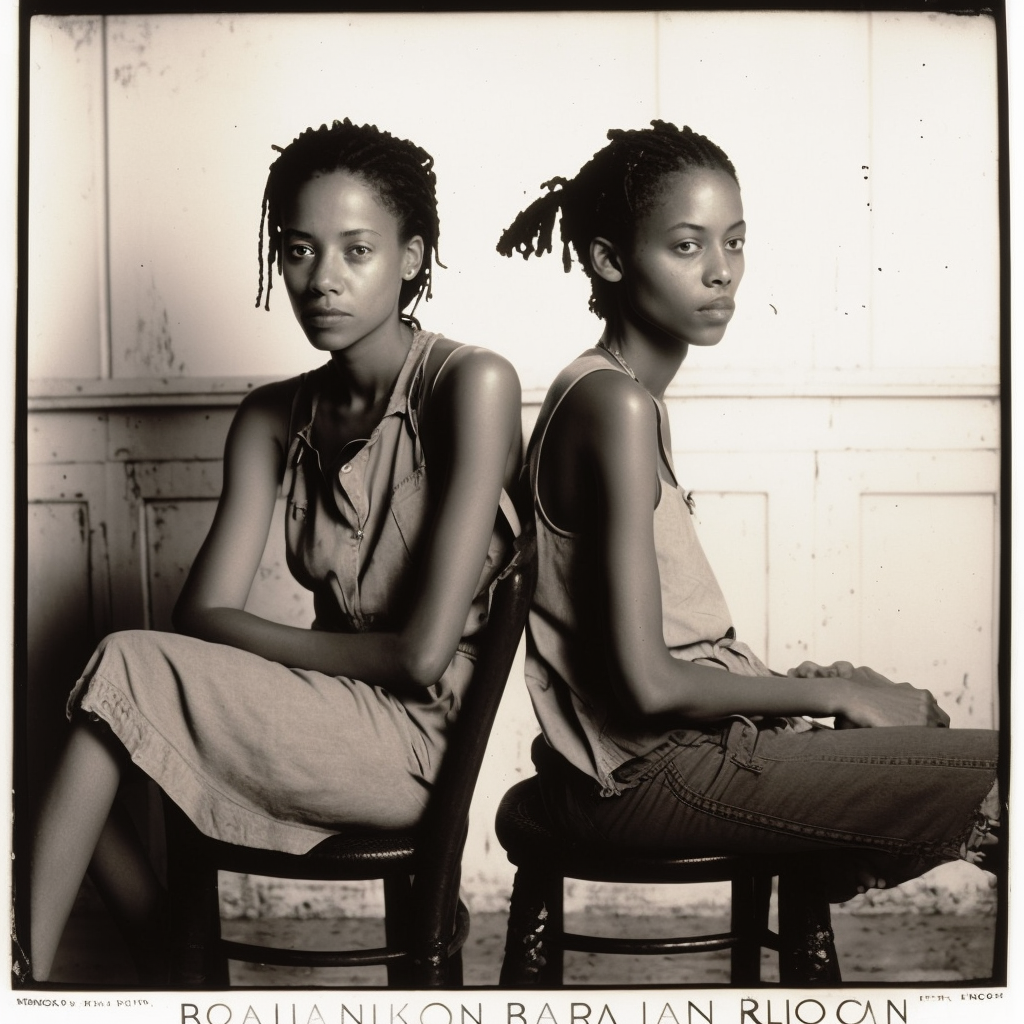
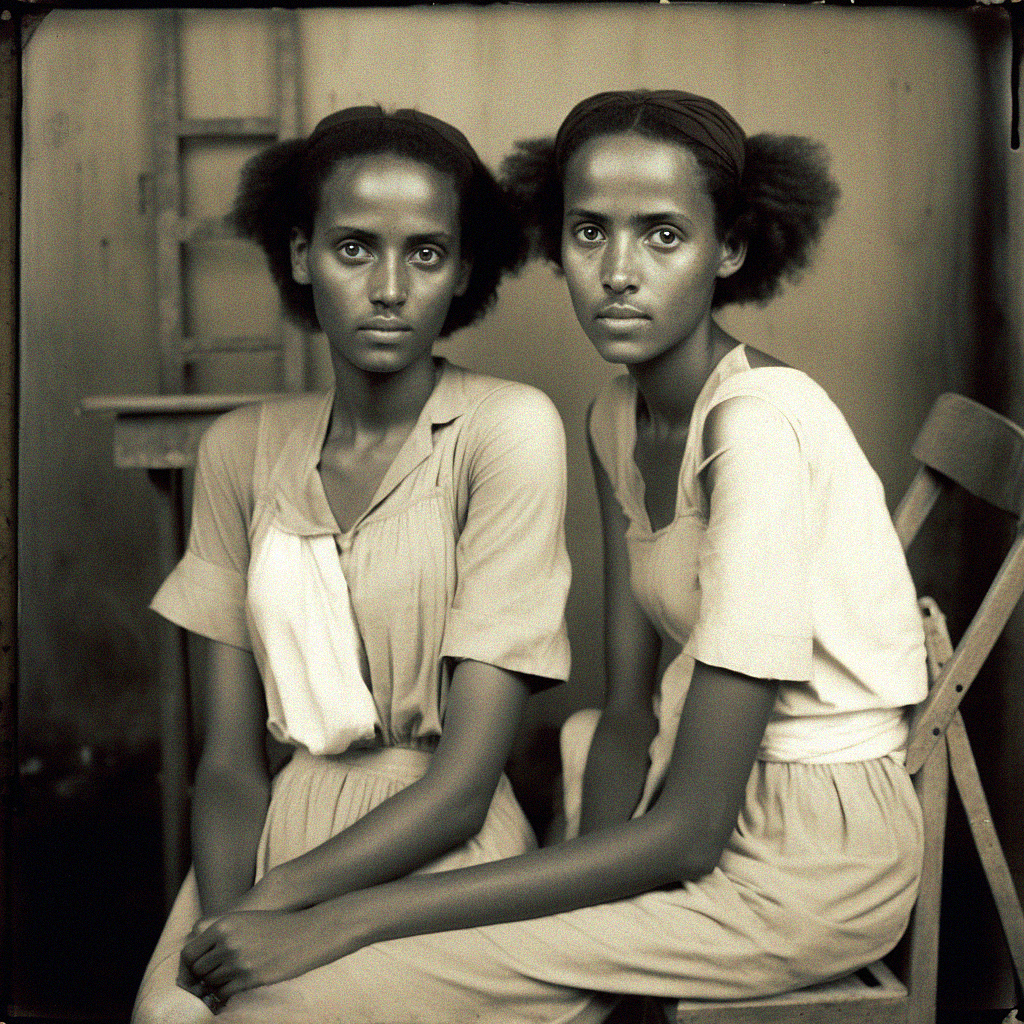
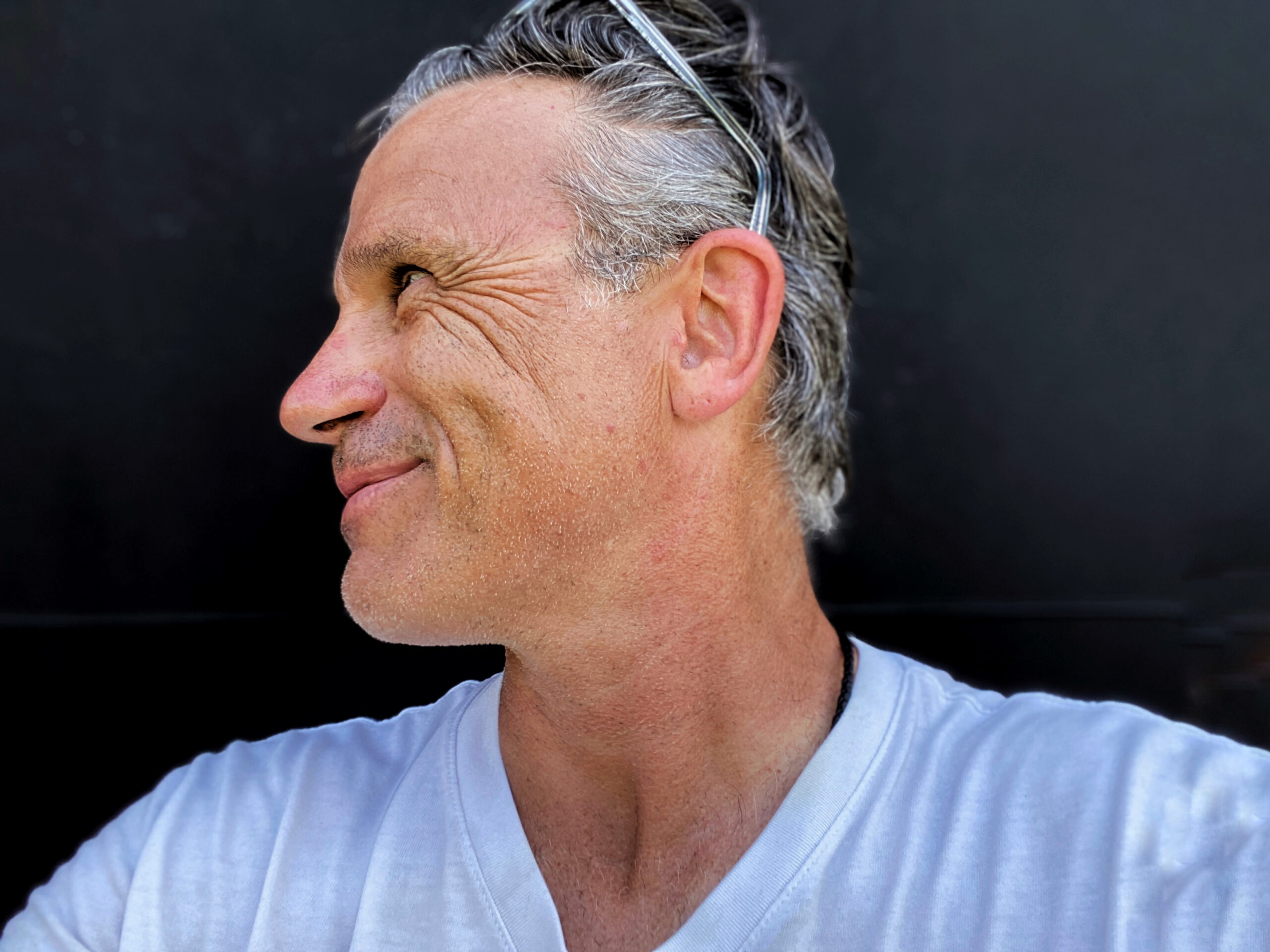
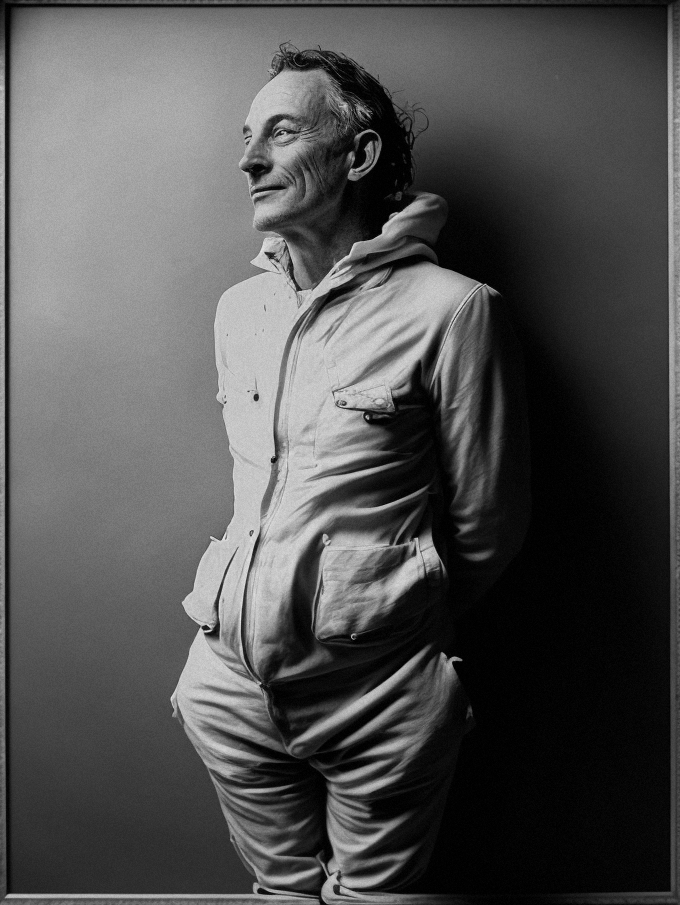
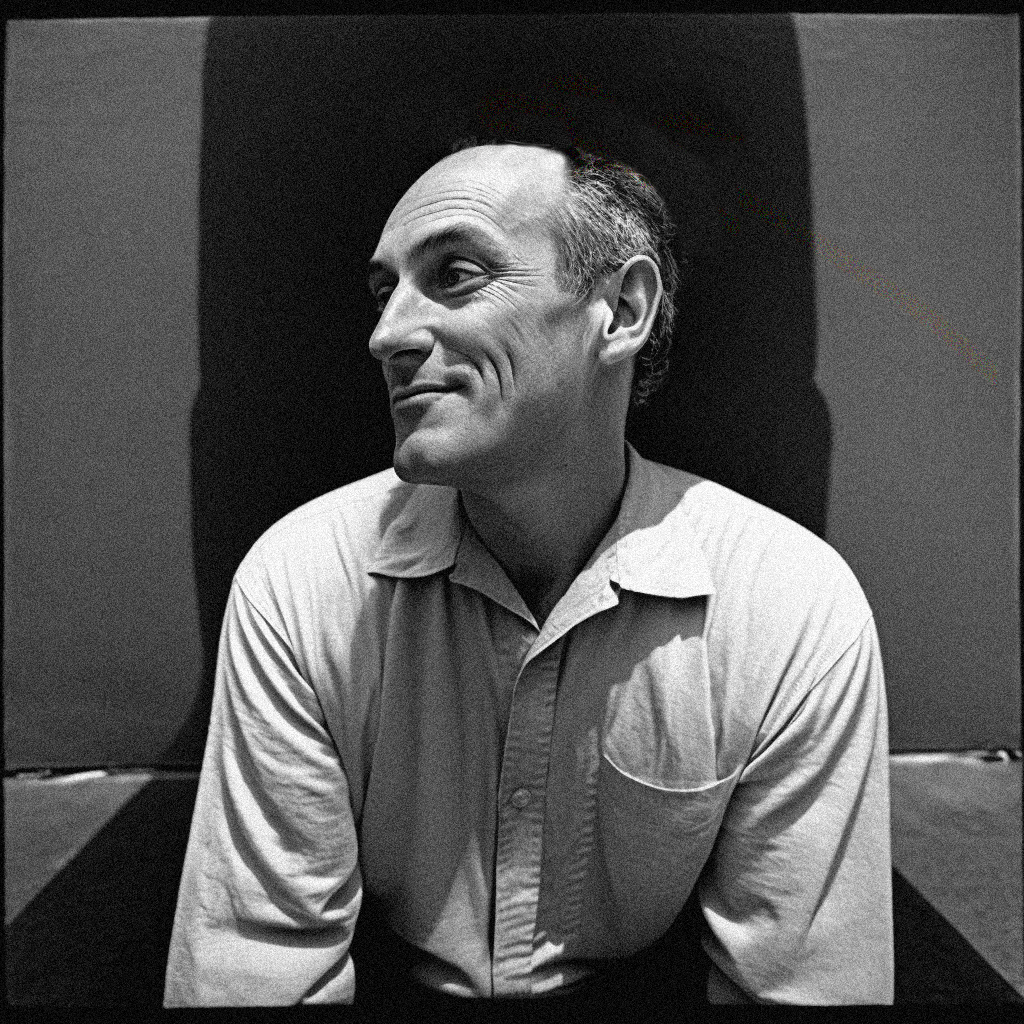
The Daily Edit – Walter Smith AI experimental portraits and questioning authenticity


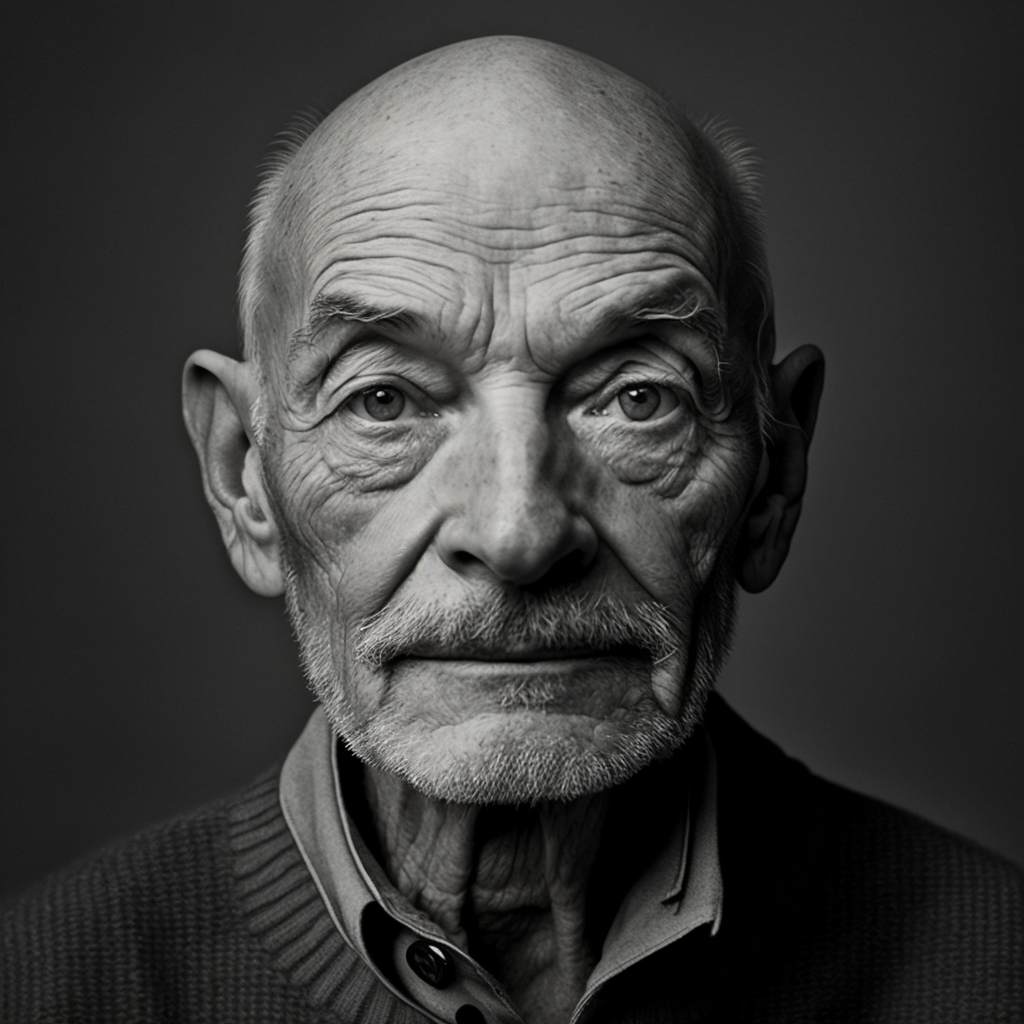
Older fella

Walter Smith Photographer + Director

I am fortunate to describe my friendship with Walter Smith as timeless. We worked together at Philadelphia Magazine, my first job, decades ago. I remember Walter coming into the office, a camera slung around his shoulder, with a box full of contact sheets for us to loupe.  He was hustling on “front-of-the-book” assignments, perfect for his photojournalistic eye. Years pass, conversations get deeper and image making evolves. We connected in 2015 about his self published promo, recently we caught up about his experiments with AI.

Heidi: How long have you been making images via AI?
Walter: I really only started playing around with the technology and ChatGPT about a month ago. It’s a rabbit hole and you can most definitely make some great things from it. 

How many hours and prompts went into the older fella portrait?
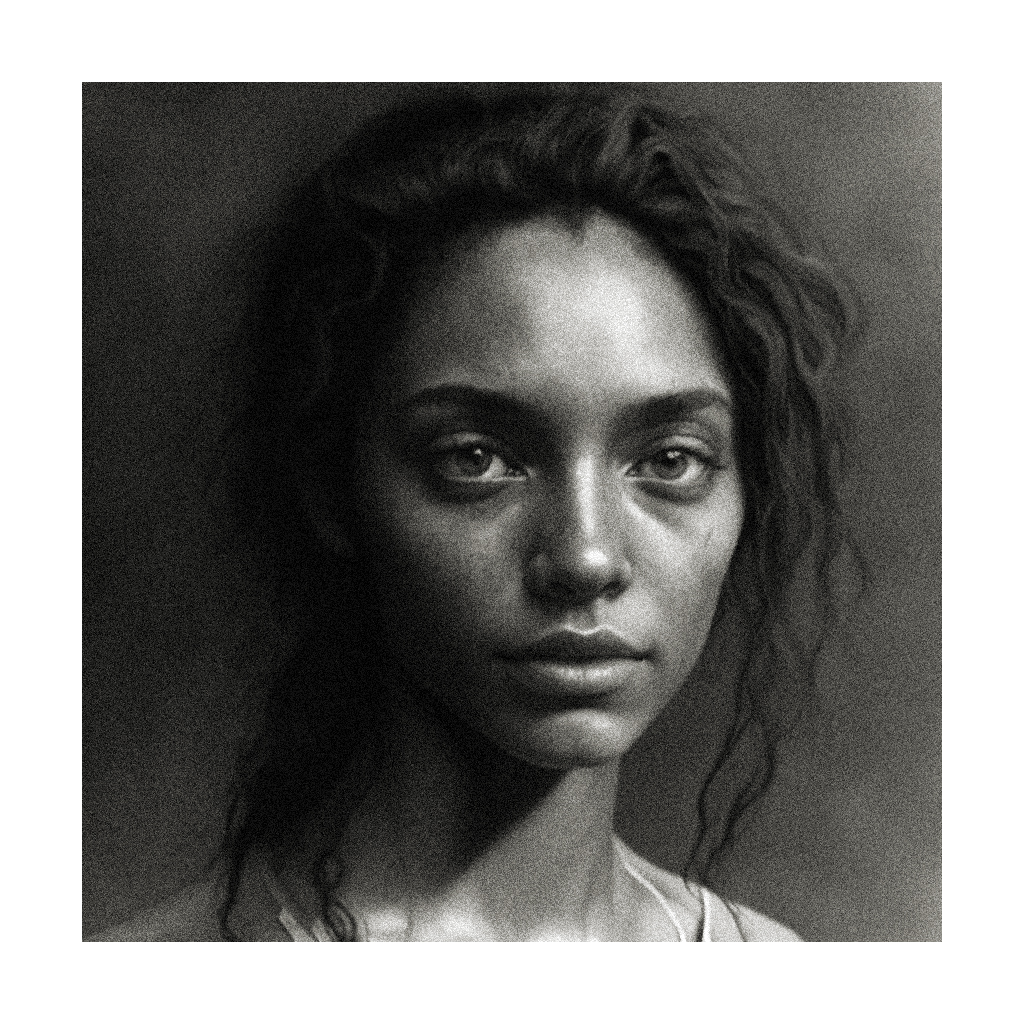
Those portraits were made, kid you not, in about 15 minutes. For me, it’s about the prompts you use and how the technology interprets them. I wanted to make something that looked like something I would actually take. I did not add in my photographs to build them, all were created from the prompts in Midjourney.

Did you draw from your own archive of portraits for this?
All my ideas around AI come from my past and what my thinking is in the present. I never created “fantasy” images. I was never that person.  There always has to be some type of connection for me. I love what some folks are doing around the otherworldly images they’re creating. It’s just not where my head is.

What type of camera look and feel were you trying to create with this portrait?
I took a portrait of a woman named Jennifer over 20 years ago on polaroid 665. It’s beautiful and lives in the files somewhere. When I created that image I thought of some of her features and characteristics and used them as prompts along with camera type…lens…etc. The produced image was great but too clean so into photoshop I went to add grain and lens corrections. Again that was a 15 minute endeavor. I was getting messages on Linkedin from folks asking about the photograph. Is it a photograph? Where did I meet her…agency name…etc. The photograph of the old man, a friend asked if the one on the left was an old photograph of mine. There is the conflict for me. I like capturing stories, real stories from real people.  Things that make you feel a little something. I did not set out to fool anyone and it brings me to the question of honesty and authenticity. We live so close to dishonesty on a daily basis with social media, not all but a great deal is curated to show us the best of something.

Are you selling cameras in the hopes of focusing on this genre?
I’m never selling my film cameras. That was more of a joke between a few of us. I dropped film off yesterday…me and all the hipsters from Brooklyn. 

What platform(s) are you using?
Midjourney and some Dall-e

How would you bill for one of these and have you done any commissioned work?
Very good question and I do not have an answer yet. I spoke with a couple clients that are already over AI.

What is the current language around crediting AI work, to call it a photograph would be a disservice.
I would think it’s in the photo illustration realm.


Fashion treatment 1

Fashion treatment 2

All I had to do was remove a 6th finger for this AI image

Where do you see AI generated images having a place in the industry?
In a treatment or a brief, sure, it would work perfectly to show clients what I want something to look like. It went into photoshop for a little image correction to get it close to something.


Photographic self portrait, my true self and original smile


AI self portrait 1

AI self portrait 2

Have you done a self portrait?
I did a mash-up of a portrait of myself and a portrait of Salvador Dali from Irving Penn. It looked very little like a Penn portrait but I see part of my face in the results.

In making these test images how would you describe the moments of making that AI image vs moments making a photograph developed in a human exchange?

Doing an AI portrait takes up a different type of brain space. So much of my work is about human interactions: the conversations in the room, how you feel being with another person, their energy, and honesty.
AI does not hold any of that for me. Of course, it’s creative and the stuff people are doing is beautiful and special but what does their breathing sound like? How do they carry themselves in a room? These AI figures, they’re fun to create and I certainly see their value but I can’t touch them, I can’t trust them. I know it sounds crazy but the more I see of it the more I just want to keep having conversations with real people about real things.

Are you drifting back to a human experience of an interaction, and those are creating the prompts?
I try to keep the descriptions in the prompts to very real-life things.  Specific camera and lenses, tone and color, feelings, ethnicity and expression. It’s wild that these images come back to me with some of those elements included. Do I get more connected to the “subjects.” Nope. I think I can see these AI figures in treatments to sell an idea. Suppose there was a project in Ethiopia that I was pitching to a client and they needed visuals to get the idea across. I can spend a couple of hours creating visuals ….people…landscapes…feelings and then, hopefully, get them to send me there to create the actual work. I can also see a client with a very tight budget who just needs the AI work over actual photography. It’s a slippery slope.


How Much Do You Make – Milan Based Fashion and Lifestyle Photographer

A male Fashion and Lifestyle Photographer based in Milan, Italy, with 20 years of experience.

100k pre covid

130k during covid

I’m repped by a small agency and have been full time for 13 years.

During covid Italian companies needed to remain local rather than shooting in NY or London which increased sales by 30%.

I shoot a lot of ecom at 350-500 per day, then mid tier social media work which goes for 1500-3000 a day plus usage which is usually about 100% of the day fee for 1 year.

I get about 3 large agency gigs a year the last of which was a cellphone company doing a single city ooh campaign and that was 5000 plus 3000 usage for the one city. 

I have a studio which I rent out to cover its costs but apart from that and a few leasing deals for cameras and computers, I have no other fixed costs… I charge rental for all my personal gear and will often retouch editorial or small commercial jobs myself. 

Since December 2022 work has dropped sharply due to markets opening up again and a deep sense of instability due to inflation and war and whatnot… everybody in Milan is in a holding pattern except for the very big boys or the very cheap boys

I do video but it’s more of an extra, I would say less than 10 percent of my income but it’s a big growth market that if I got my finger out my bum and did some proper tests i could probably increase that. The big issue is that volume clients like ecom take up so much time when things are cooking that working on new business becomes difficult. Photographers aren’t supposed to work every day… hahahahah.

 ———————————————-

If you want to participate in this column email me: rob@aphotoeditor.com 

I will send you a link to a google form that will ensure your anonymity. 

The Art of the Personal Project: Damien Carter

The Art of the Personal Project is a crucial element to let potential buyers see how you think creatively on your own.  I am drawn to personal projects that have an interesting vision or that show something I have never seen before.  In this thread, I’ll include a link to each personal project with the artist statement so you can see more of the project. Please note: This thread is not affiliated with any company; I’m just featuring projects that I find.  Please DO NOT send me your work.  I do not take submissions.


Today’s featured artist:  Damien Carter


No one can forget the images of the senseless and heartless murder of George Floyd on May 25, 2020, and many are also aware that only a few months earlier on Feb 23rd Amaud Arbery was also murdered.

It was Amaud’s murder that was very personal and the genesis of this project. He was chased down and hunted while jogging in a neighborhood in Georgia.

When watching the footage on the news, my son walked in and before I could turn it off, he saw the story and began asking questions.

Besides the expected, “why did they do that to him” he also asked the more jarring, “is that going to happen to you dad”?

I wasn’t even thinking about myself, but I stopped for a minute and struggled to say, “no that wouldn’t be me” to try to reassure him but immediately started thinking – it could have been me.

Any of these murders could have been any of us black men. Across all walks of life, from boys to men we are targeted. And whether we are sleeping, walking, running, driving, putting our hands up, putting our hands behind our backs, or riding our bikes, we are targeted.

The vilification of the victims is an age-old tactic to dehumanize them and to in some ways justify their murders.

But I reject that. I believe that all these unarmed men deserved to live.

So, my objectives with this personal project are simple:

To shine as much light on the issue and to “speak their names” so they aren’t forgotten.

Some of the names will be known but many others most people won’t be familiar with, so we speak their names to honor them and remember them.

And every black man in America realizes: It Could Have Been Me.

—————————————————————————————————————————–

Images from the ongoing series: “It Could Have Been Me” By Damien Carter,

(@Dcarterphotography) a portrait and lifestyle photographer out of the Washington DC area.

Note: on the back of each card that had a victim’s name on front, was the news story about the actual killing and the men read those while I captured their raw reactions and emotions.

Instagram

APE contributor Suzanne Sease currently works as a consultant for photographers and illustrators around the world. She has been involved in the photography and illustration industry since the mid 80s.  After establishing the art-buying department at The Martin Agency, then working for Kaplan-Thaler, Capital One, Best Buy and numerous smaller agencies and companies, she decided to be a consultant in 1999. She has a Twitter feed with helpful marketing information because she believes that marketing should be driven by brand and not by specialty.  Follow her at @SuzanneSeaseInstagram

Success is more than a matter of your talent. It’s also a matter of doing a better job presenting it.  And that is what I do with decades of agency and in-house experience.

Pricing & Negotiating: Advertising Campaign For A Restaurant Group

By Bryan Sheffield, Wonderful Machine

Concept: Multi-day photo shoot of food still life, and chefs/talent portraiture

Licensing: Unlimited use (excluding Broadcast) of up to 20 images for 10 years from the first use

Photographer: Food/Drink Still Life, and Portraiture specialist

Agency: Medium-size, full service

Client: High-end restaurant within a major metropolitan city

Summary

I recently helped a photographer build an estimate and negotiate a project for a high-end restaurant client. The creative brief and subsequent conversations described a multi-day production featuring styled food/drinks and studio portraiture of chefs and patrons. The final use of the photography would be client web, local OOH placements, and web/social advertising.

While reviewing the initial shot list and scope of the project with the agency, the photographer estimated this would need to be accomplished over 4 shoot days, with a tech/scout day prior to visiting the locations. We discussed this approach with the agency and client, and after review, they asked that we keep this production to a three-day shoot. In order to hit the entire shot list, we created a plan for each shoot day, with one of the days needing overtime to accomplish the project.

As our client would be handling various items, I added a note of the Client Provisions to describe precisely what the client was to provide. In this case, they would handle all location(s), location coordination, all casting and people to be photographed, all food/drink to be photographed and food/drink styling, and client-specific wardrobe.

Take a look at the estimate below:

Fees

I put the fees at $26,000 for the three-day shoot, including unlimited use of up to 20 images for 10 years. I came to this fee by discussing the project with the photographer and learning that they had previously worked with this client. Their previous projects had been billed at a $2,000/day fee plus $200/image for web collateral use. Originally I assumed a $1,800/per image fee but reduced this to ~$1,000/per image based on the number of images and our estimate of the client’s total budget. The combined Creative/Licensing fees included $2,000/day for the photographer, plus $20,000 for the 20 image use. I added $1,100/day for the photographer tech/scout day and anticipated 2 hours of overtime at $375/hr. We added a description within Licensing Options for additional still images to be included for $2,200 per image, as well as the option to extend the use of the 20 images in perpetuity for an additional $21,000.

Crew

We added a first assistant at $550/day to help with lighting and camera equipment management, and to attend the tech scout day to familiarize themselves with the location needs and help advise on lighting equipment. A second assistant was added to the project at $400/day and a digital tech was hired to manage the files and display the content to the agency and client as it was being captured. We added a Producer and anticipated they would need 11 days of work, a production assistant for the 3 shoot days, as well as a prep day. As a final consideration, we added two hours of anticipated OT for each of these roles at 1.5x their hourly rate based on a 10-hour day. These fees were consistent with appropriate rates in this city.

Equipment

We included $3,600 for camera, lighting, and grip rentals. The photographer brought their own cameras, and lenses, and intended to rent some supplemental lighting and grip from a local rental house and a few specific specialty items were purchased as well. We added $750 per shoot day for the digital tech workstation rental to consist of a laptop, 4 external monitors, a cart, cables, etc. As we expected a large client presence on set, we planned for additional monitors to set up a viewing area for the client away from the set.  We also included $480 for 3x 1TB hard drives, and $3,300 for production supplies like tables & chairs rental, styling racks, production book printing, etc.

Styling Crew

As we planned to have one day of portrait photography, we added a hair/makeup stylist for $900/day, as well as an assistant. Because the portraits would highlight people’s hands, we added a nail artist/stylist at $1,200/day. A wardrobe stylist was hired along with an assistant to dress our five hired talent and help prep the chefs/staff. We anticipated wardrobe at $2,000 assuming $400 per outfit for our five talent. We added a prop stylist at $1,000/day for all three shoot days, plus two shopping/prep/returns days. We anticipated props might cost $2,300 but added a TBD here pending final creative needs. As we did with the other roles, we added two hours of anticipated OT for each of these roles at 1.5x their hourly rate based on a 10-hour day.

Covid Safety

Since we would be photographing indoors within client-owned spaces, we required all on set to be fully vaccinated with proof of a negative PCR test within 24hrs of their first day on set. We added $200 per person for these test costs and/or a stipend to all. We also added $400 for PPE and necessary healthcare supplies.

Meals

We included $3,055 for meals and craft services to cover the 21 people to be on set over the 3 days, as well as $250 for the scout day meals/crafty.

Miscellaneous

As we would need to pay for garage parking for all attendees at each of our locations, and added $3,200 for the anticipated parking, mileage/taxis, as well as additional meals. Our final estimate for insurance coverage was $1,500 for the project.

Post Production

We added $1,000 for the photographer to perform an initial edit of all the content and delivery to client for review and included retouching for up to 20 images at $150/hr.

Results

The photographer was awarded the project, and the work is currently a large part of the client campaign currently running. The photographer even informed me that they recently met with the client and were told the campaign has increased their web traffic and look forward to another shoot in early 2023!


Need help pricing and negotiating a project? Reach Out!

A Photography Rep’s Point of View on AI

Photographer Rep Heather Elder has a post up on AI in photography from a reps point of view:


Yes, AI is terrifying. Yes, it is ok to be afraid.  And yes, it is changing our industry. But it is here; so you should not ignore it and hope it goes away. Now is the time to educate yourself. Whether you choose to sell against it or advocate for it (or both), you will need to understand it because the person bidding alongside you and the creative you want to work with most certainly will. ”


Craft will see a resurgence. Just like any artistic endeavor you need to be talented. The best work will always rise to the top and this is because the best photographers understand all that is required to create a truly compelling photograph.


Read the whole post here:
https://heatherelder.com/post/are-we-going-out-of-business-a-photography-reps-point-of-view-on-ai

The Art of the Personal Project: Greg Anderson

The Art of the Personal Project is a crucial element to let potential buyers see how you think creatively on your own.  I am drawn to personal projects that have an interesting vision or that show something I have never seen before.  In this thread, I’ll include a link to each personal project with the artist statement so you can see more of the project. Please note: This thread is not affiliated with any company; I’m just featuring projects that I find.  Please DO NOT send me your work.  I do not take submissions.


Today’s featured artist:  Greg Anderson


After attending The International Center of Photography, I assisted several photographers and then went out on my own in 2004. Times got tough in 2008 and I took whatever jobs I could get, happily. I was making a living as a professional photographer, but I was shooting food, catalog jewelry and architecture- not very well by the way. I was uninspired by the direction my career was taking me and it became apparent I needed show clients what I wanted to be hired for.


In 2012, I saw a local news story about the “National Beard and Mustache Championships” having just taken place down the street from my studio in Las Vegas. I reached out to the producer of the event who invited me to join them for the competition in New Orleans the following year. In late 2013, after months of testing lighting styles in anticipation, I flew down there with an assistant and all of the gear we could carry on the plane. All in, it cost right around $3000 to travel down and do the shoot.


The result of the project was a body of work that I loved making and I now had international exposure after the gallery got shared and went viral online to the tune of 1.2 million impressions in the first week and over 2 million in the first month. I immediately sent out a calendar, email promo and then a printed tri-fold promo to capitalize on the attention. Several advertising agencies took notice, and the resulting shoots and global exposure made the initial investment of $3000 money well spent.


I just shot the National Beard and Mustache Championships for the 10th year in 2022. Each time I have tried to evolve the project with subtle lighting and background changes to make them feel a little different. I’m planning on shooting an international competition to round out the project before self-publishing a coffee table book, that I’ll then send out to ad agencies as a promotional piece. I have made quite a few friends photographing the world of professional bearding and don’t have any plans of stopping. It’s just too fun.

To see more of this project, click here

Instagram

APE contributor Suzanne Sease currently works as a consultant for photographers and illustrators around the world. She has been involved in the photography and illustration industry since the mid 80s.  After establishing the art-buying department at The Martin Agency, then working for Kaplan-Thaler, Capital One, Best Buy and numerous smaller agencies and companies, she decided to be a consultant in 1999. She has a Twitter feed with helpful marketing information because she believes that marketing should be driven by brand and not by specialty.  Follow her at @SuzanneSeaseInstagram

Success is more than a matter of your talent. It’s also a matter of doing a better job presenting it.  And that is what I do with decades of agency and in-house experience.

How Much Do You Make – Massachusetts Based Fashion & Lifestyle Photographer

Massachusetts-based fashion and Lifestyle photographer (NYC-based rep) with occasional ad agency gigs working professionally for 10 years.

Pre Covid: $180k taxable income
Last couple of years: $80k

2023 is starting off well. January billing was $37,500 from 6 shoots and only $3k in expenses.

My best-paying job was working with an ad agency for an eyewear brand. Global usage for 2 years, 5 days of shooting which paid $76k. I shot for that client for years, and every 2 years, they would re-up a lot of the usage.

Average fashion shoot: $4,500/day 1yr term (they change the collection every 6 months)

Average lifestyle shoot: $4,500/day +10k usage.

Ad agency jobs: Last year, my best one was 1 day, 15k for an OOH campaign in 3 cities for an energy company. The worst was $1k to shoot stills on a TV commercial shoot.

No employees… just freelance assistants

I’m all about working with any budget because, in my experience, small gigs have led to big ones either directly or through word of mouth or contacts made. The agency that gave me the 1-day 15k job this past fall is the same one I shot a day for 1k and have a 1-day 5.5k gig coming up.