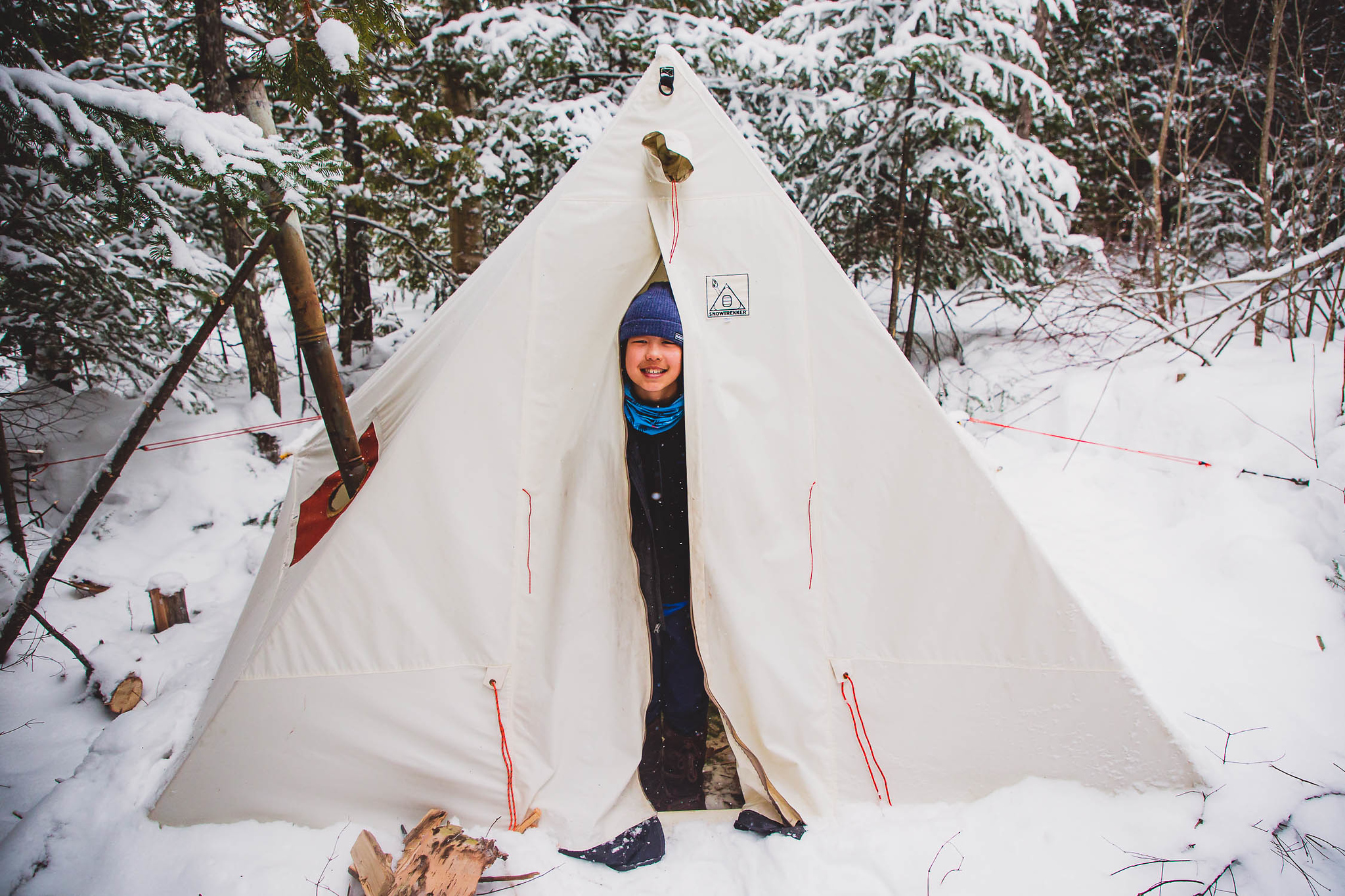
Heidi: How did this cover idea come about?
Kyra: When we got the list of places for our travel section I was excited to see North Carolina on the list. I had worked with Clif last summer on a project based in NC, and had really wanted to find another to work with him on. The entire cover idea mostly came from working with Clif and getting to priorize a part of the country we dont often cover. We end up doing a lot of shoots in CA because the weather is so consistent, but I really like when we are able to highlight other parts of the country that have fantastic adventure opportunities!
Was this cover image a first for Outside magazine?
Clif had sent us a list of local models that he had worked with before, and we instantly gravitated towards Ron Griswell’s amazing energy and smile! We thought it would be great to have two people on the cover and when Ron suggested his wife Linea we thought it would be so much more natural to have them pose together instead of putting Ron with another model. It was Outside’s first cover with a Black couple, and I’m really happy that we were able to have Ron and Linea because their relationship is truly something for all of us to aspire to. They have such an intuitive relationship and such strong love for each other which really comes across in Clif’s images. Since the three of them are friends in real life, we ended up with such authentic and fun images.
Outside Magazine, in my opinion, has not always been the most inclusive space, and I wish a cover like this one had been a first a long time ago. We’ve made good strides in the past few years, and I am working towards making covers (and interior content) like this one a constant. Everyone should feel represented, because everyone should be able to feel safe and comfortable in the outdoors. I hope that by having more covers like this one, we can help chip away at the idea that BIPOC people aren’t active in the outdoors. They are, they just haven’t been represented in the outdoor media and I want to help change that mentality as much as I can.
What type of direction did you give Clif?
Clif is a dream to work with because there isnt too much direction needed! I tend to hire photographers who have a strong voice already present in their images, but it’s also great to be able to collaborate! I had a few ideas coming in, which Clif and I discussed before set up, and then he would just roll with it. Over direction can sometimes stop a spontaneous and perfect moment and I never want to get in the way of that! It’s a balance, but working with someone like Clif helps because the energy he is bringing to the images is always undeniable!
What agency did you use to cast the models and what were you looking for? We were pretty grassroots for this one! Clif sent us a list of models he has worked with since we wanted the images to feel natural. We dont usually work with agencies mostly because we want the models we work with to be people who love being outside and feel comfortable with outdoor activities. It’s nice to work with models who havent done a lot of traditional modeling as well, sometimes with agency models they know their angles so well the images lose a bit of unplanned magic.
When you are hiring BIPOC photographers, what are your resources?
I use the Diversify Photo database pretty often, as well as the databases for Indigenous Photo and Women Photograph. Ive also fully embraced that being a photo editor is a lot of detective work, so I’m constantly trying to see who other magazines/newspapers are working with, and finding new people on instagram. (Is this what you mean or do you mean resources in another way?)
The first photo I saw of Clif’s was of a model boarding down a dune at Great Sand Dunes, and it just made me smile, the whole image had so much fun energy. I had just started at Outside, and was trying to build up a roster of photographers that I thought fit the brand well and that I wanted to work with eventually. It took me a while to get on my feet at Outside, especially since a lot of stories had already been assigned when I started, but Clif has been a photographer I had wanted to work with from the beginning!
Who printed it? Fireball printed the interior pages and Bindery Partners printed the cover as well as assembled and bound the books in a cloth-wrapped, while foil-stamped o-ring bind. We originally had several of the pages die-cut to resemble “ripped paper” which was incredible, but ultimately we had to change printers due to the quality of the cover.
Who designed it?
While I came up with the idea, most of the credit goes to Lindsay Thompson with Wonderful Machine who designed the book. Honore Brown developed the edit of images.
Tell me about the images.
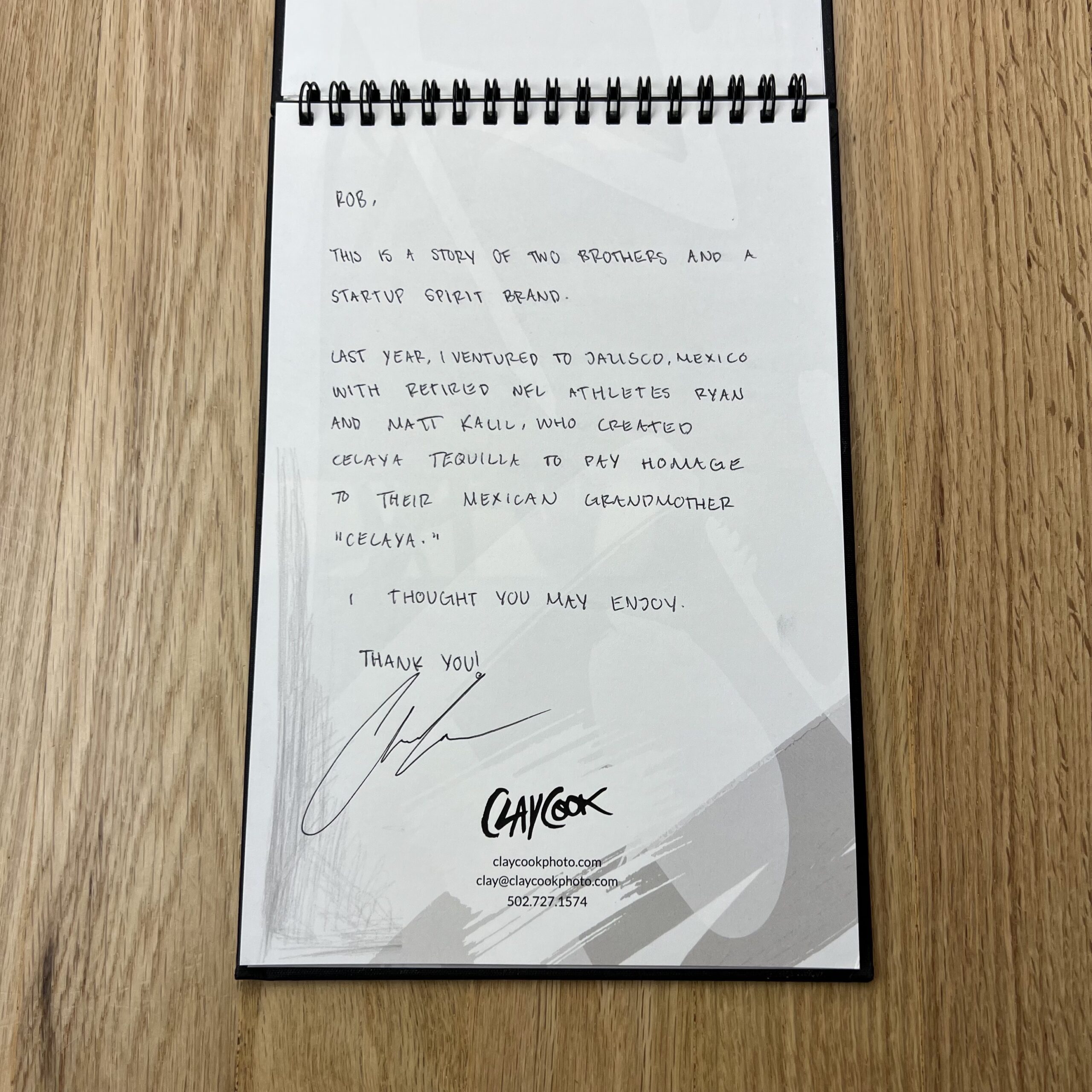
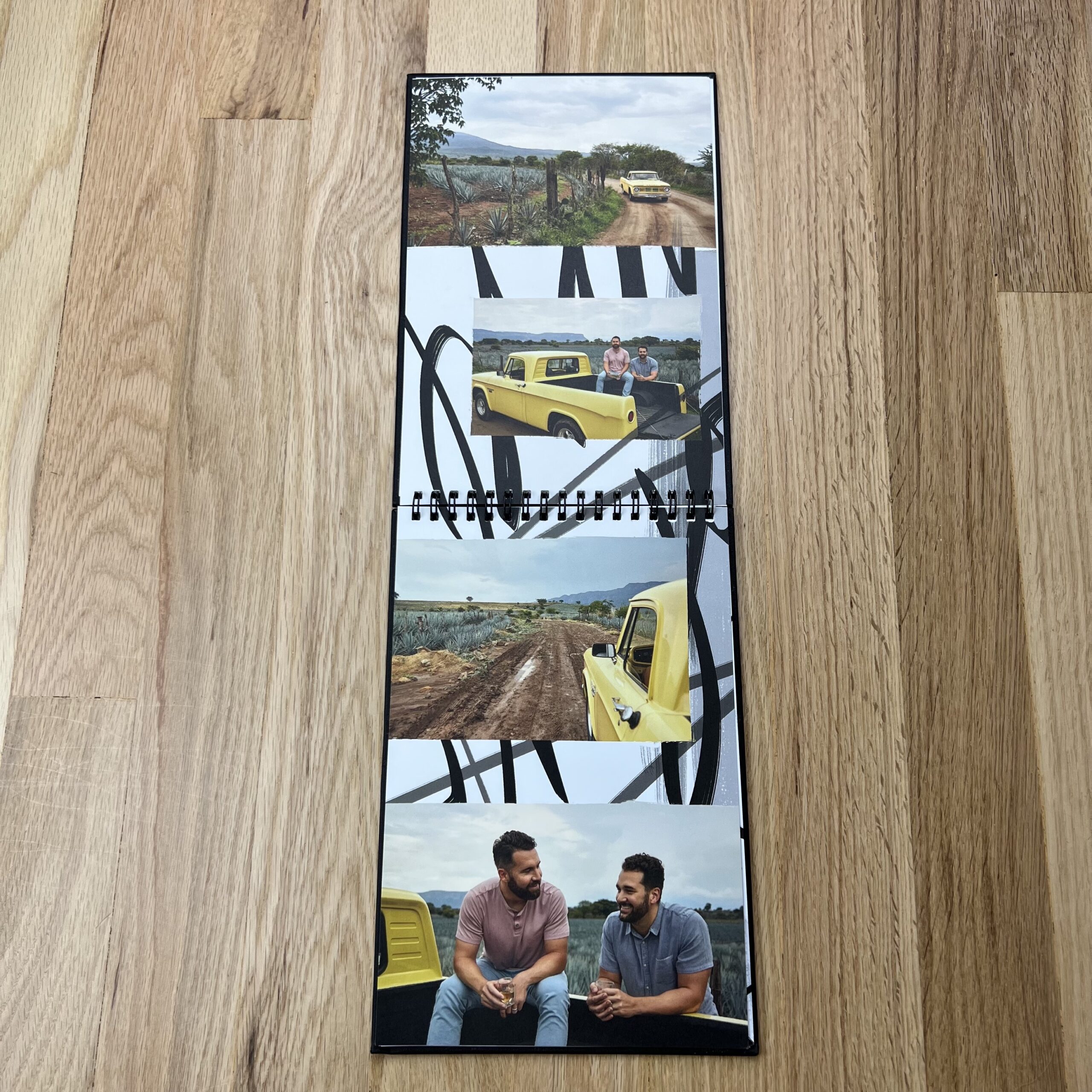
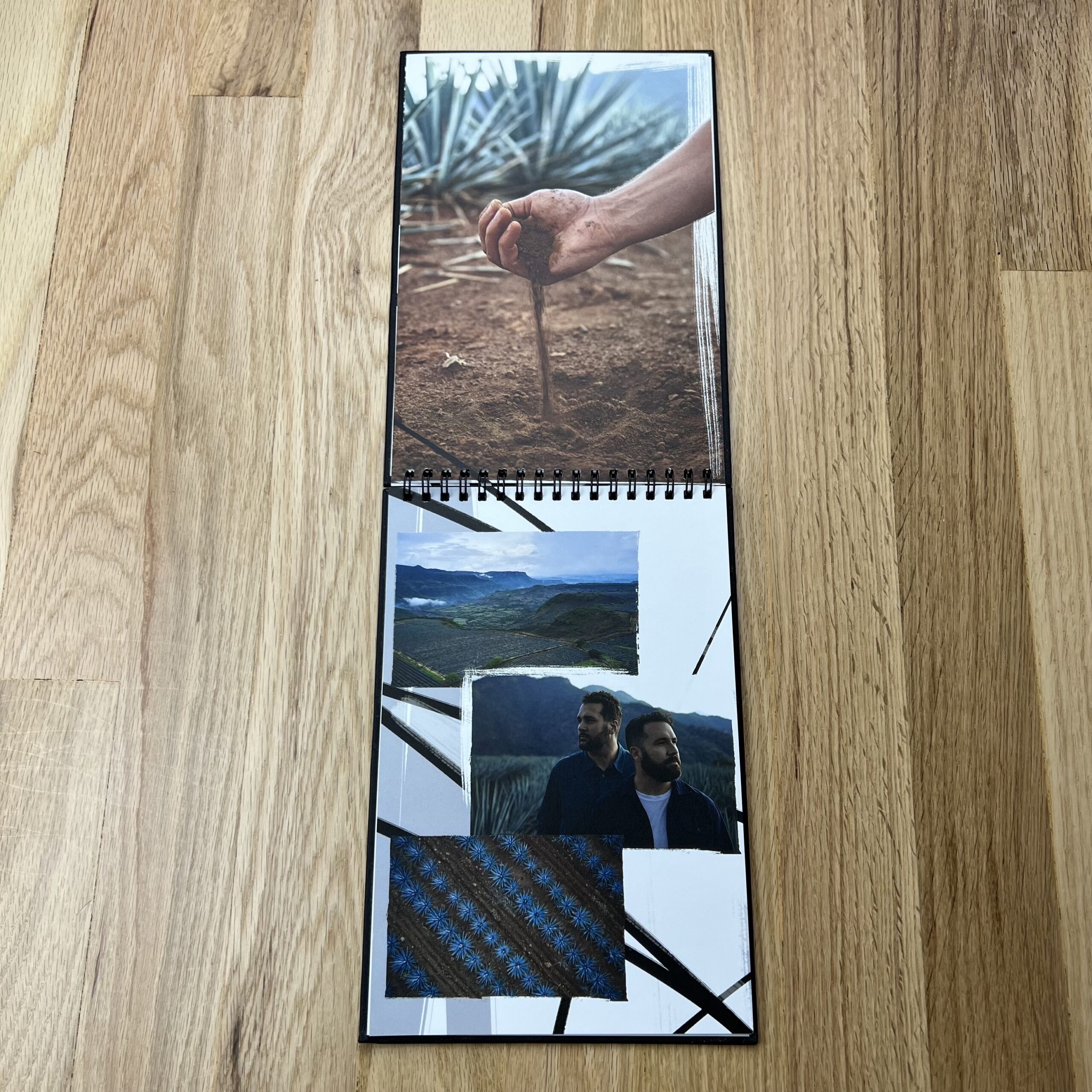
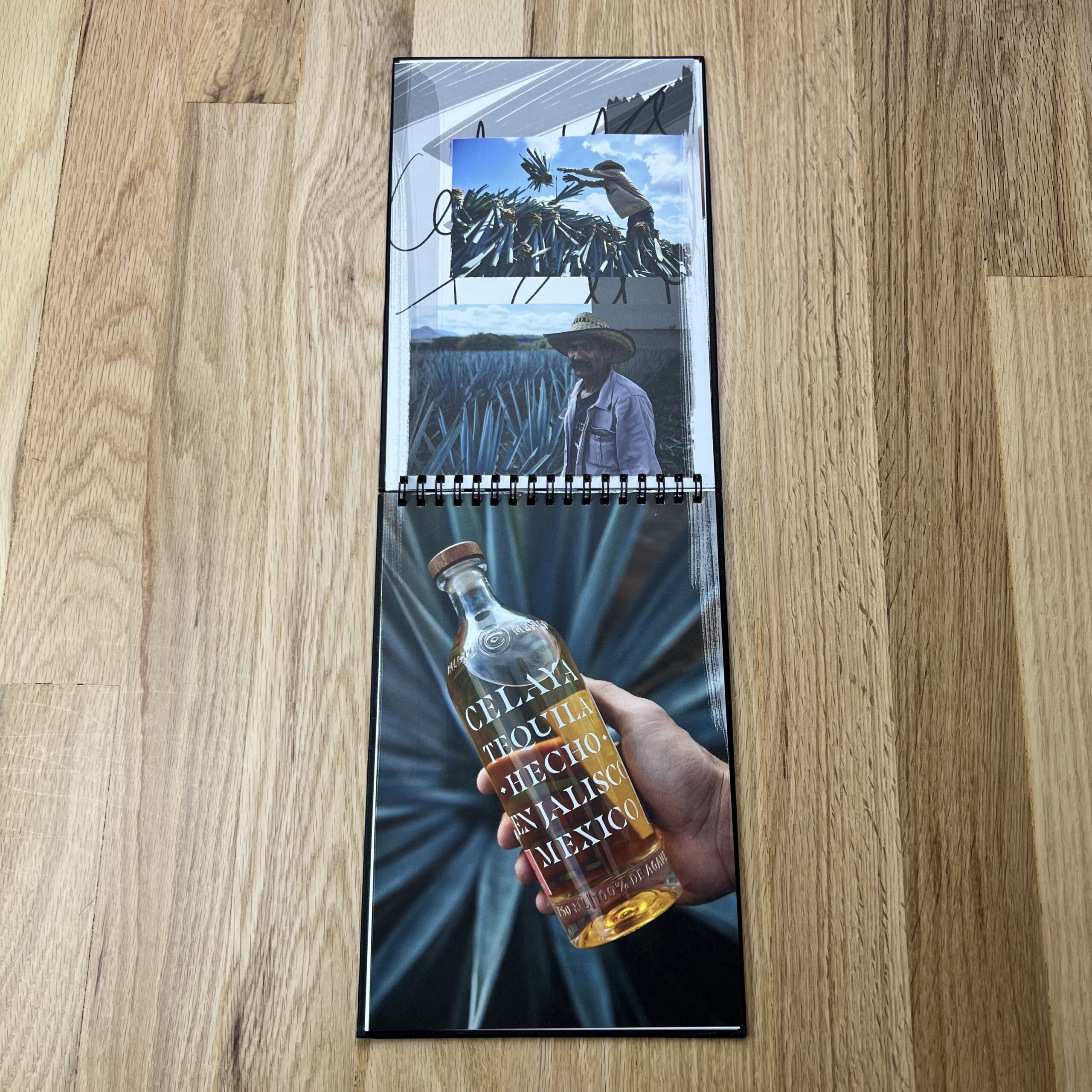
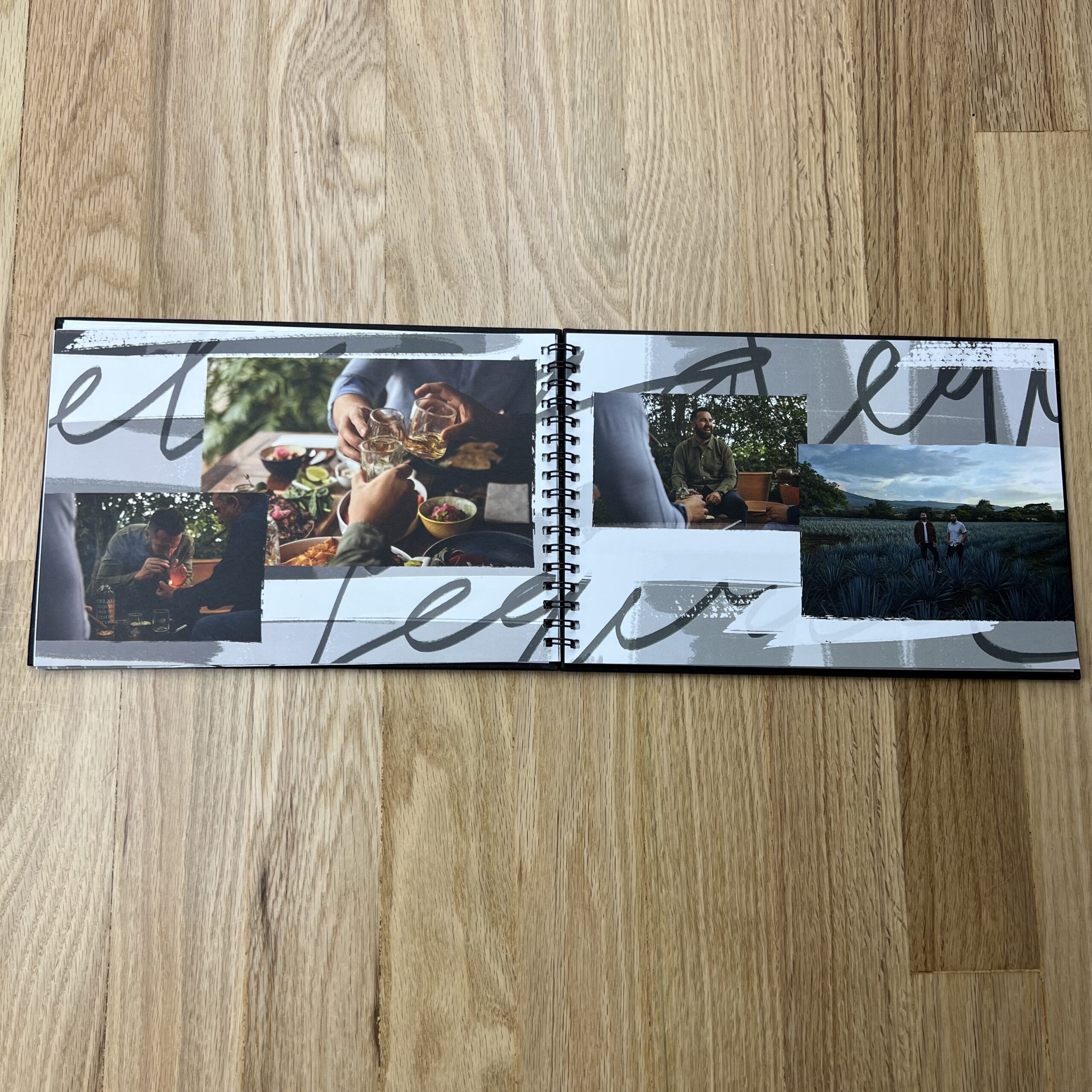
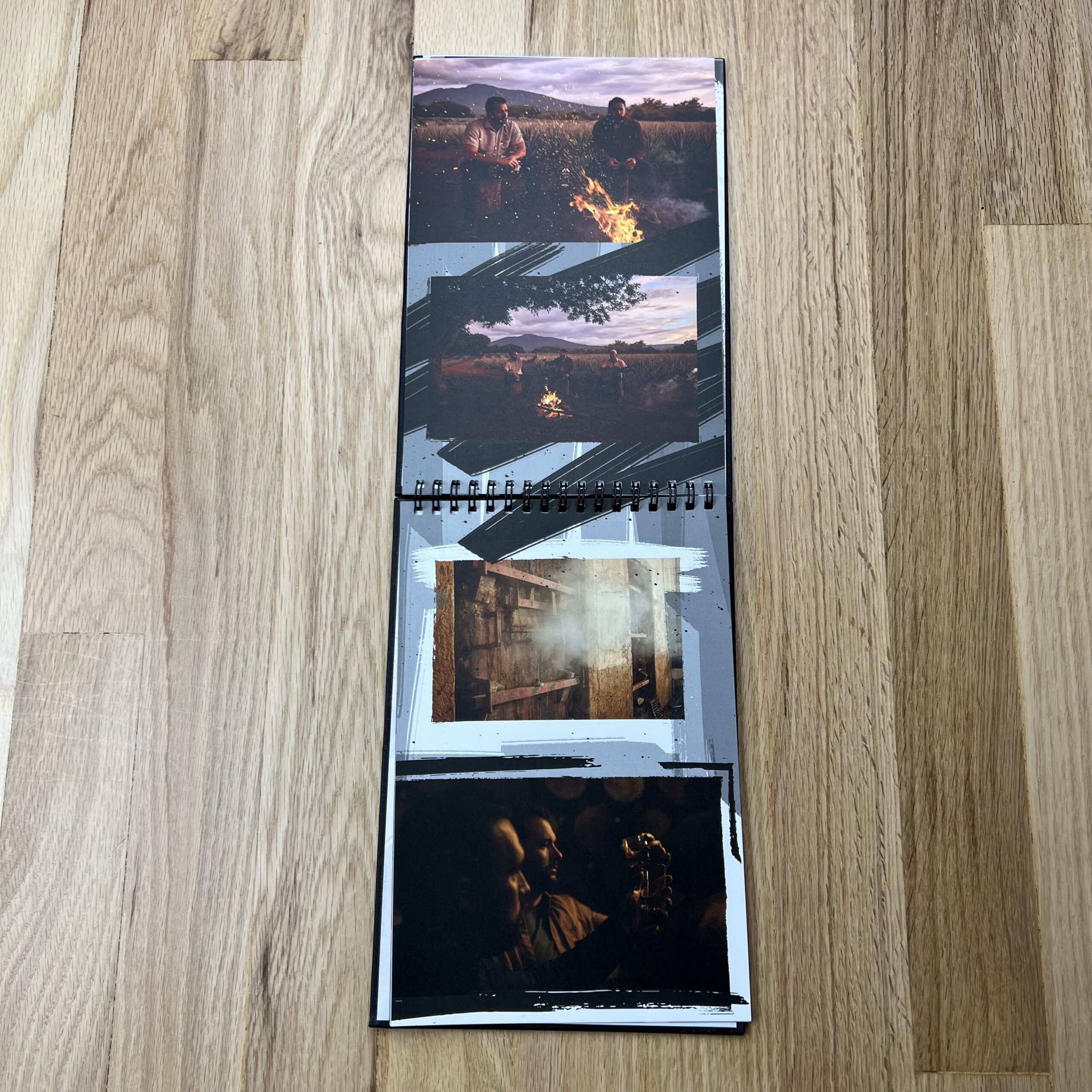
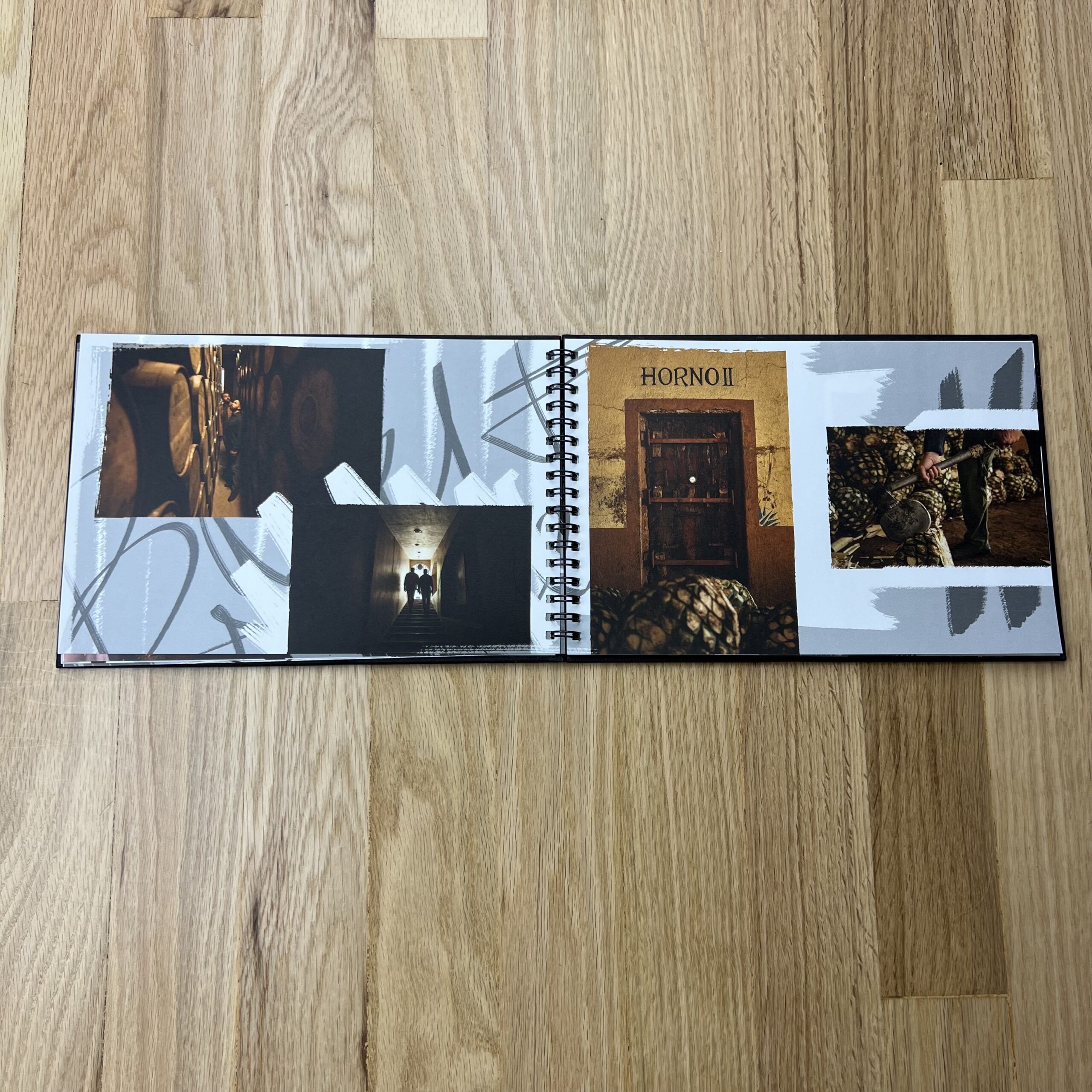
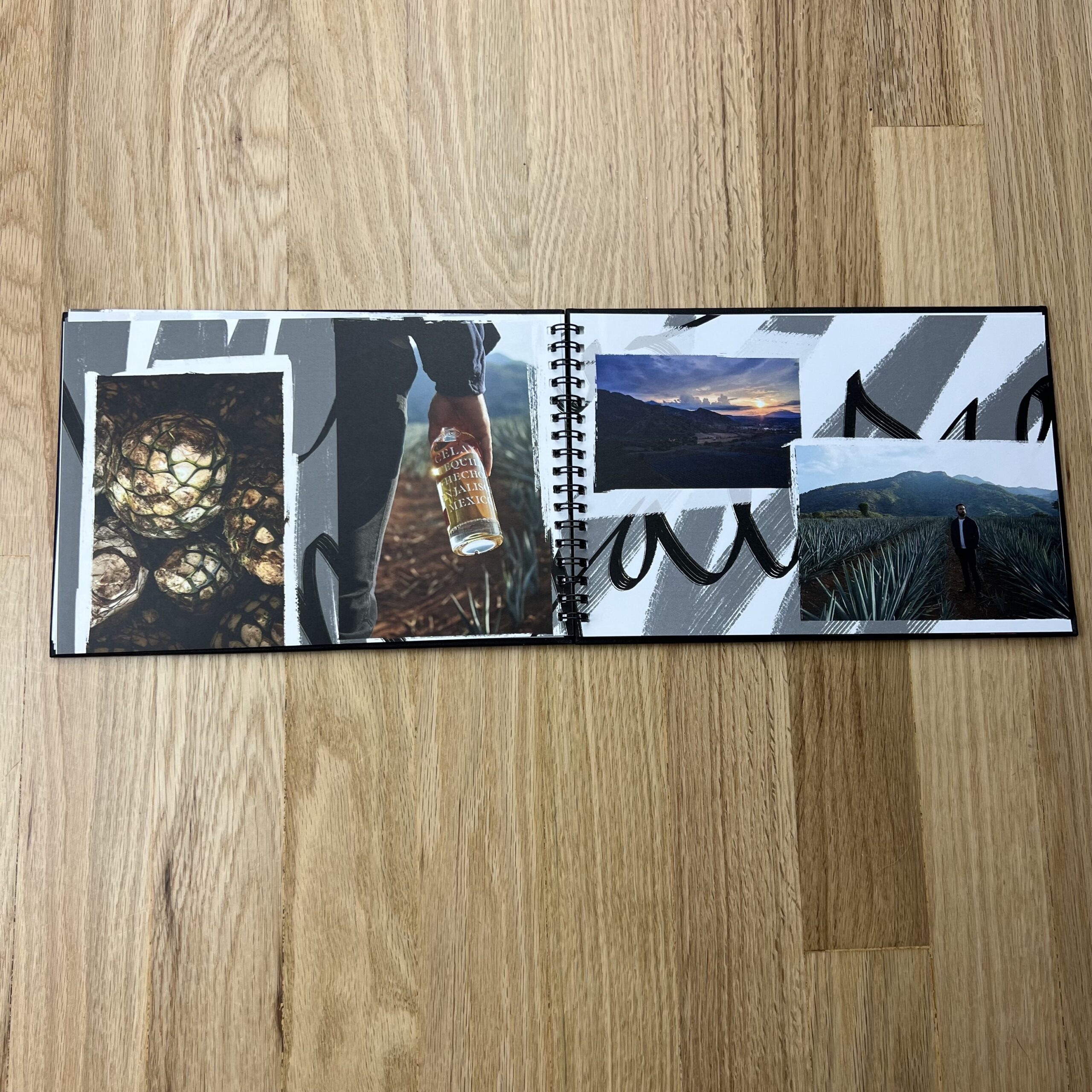
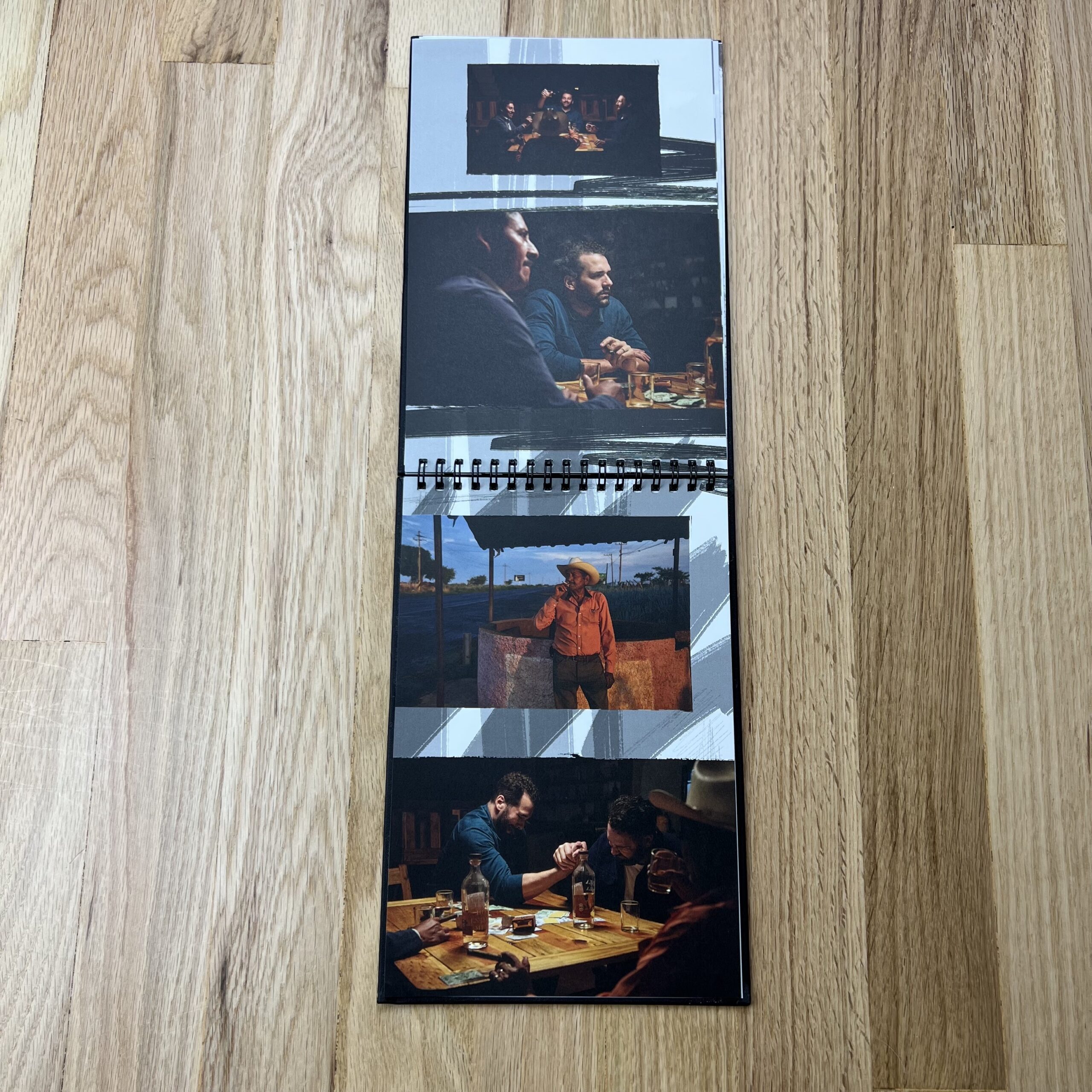
This project was for a start-up tequila brand “Celaya Tequila”. The project took our team to Jalisco, Mexico and Los Angeles, California. Celaya is a startup spirit brand that unites brothers and retired NFL athletes Ryan & Matt Kalil. The goal of the tequila brand is to pay homage to their Mexican ancestry. It all began with their grandmother and the stories of her grandfather, Jose Celaya, who crafted his own homemade tequila on his Sonora Ranch in the late 1800s. Our job was to document Ryan and Matt on the ground as they walk through the process of harvesting and distilling agave in Tequila. They not only needed portrait and documentary photography of their experience, but also still life photography of their final product.
How many did you make?
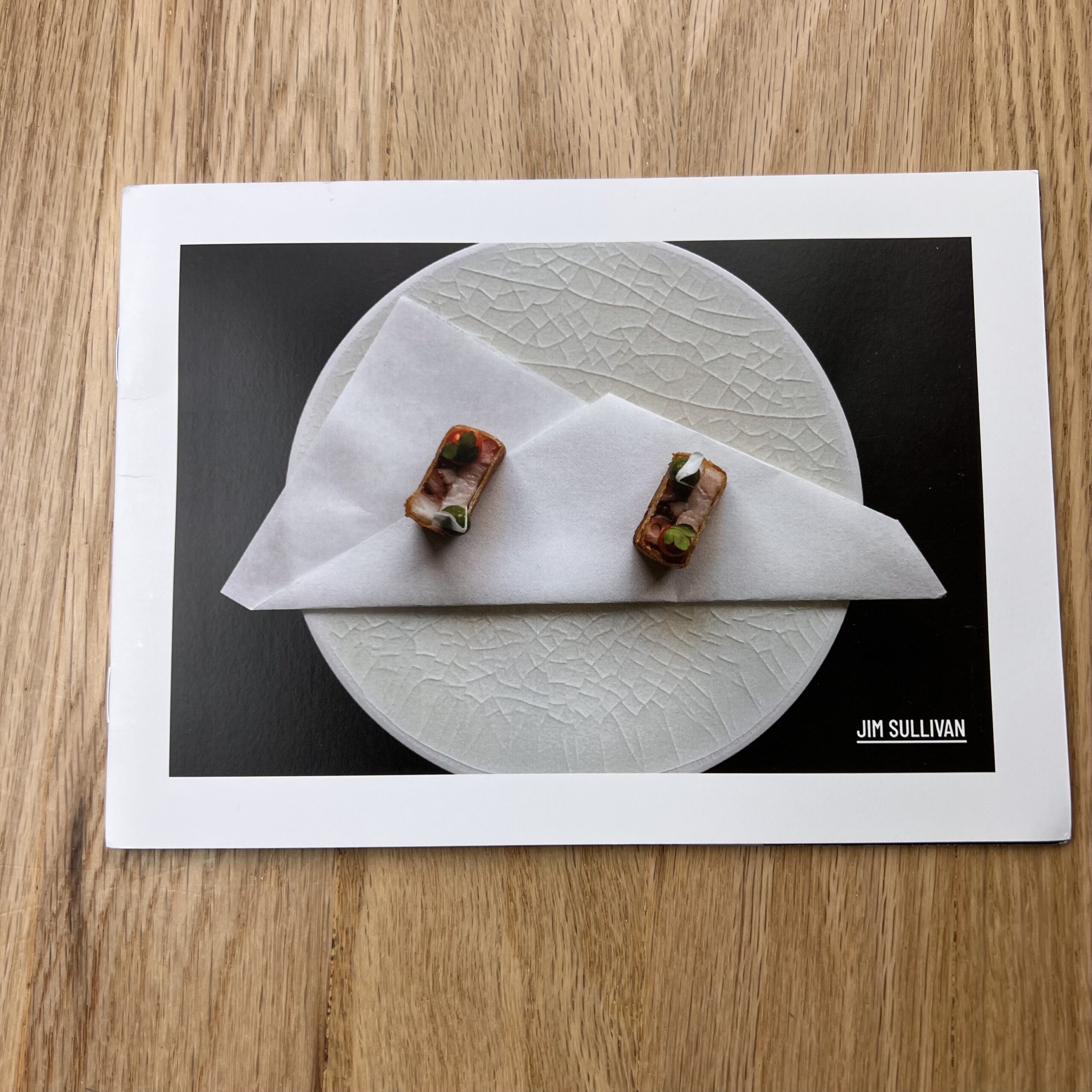
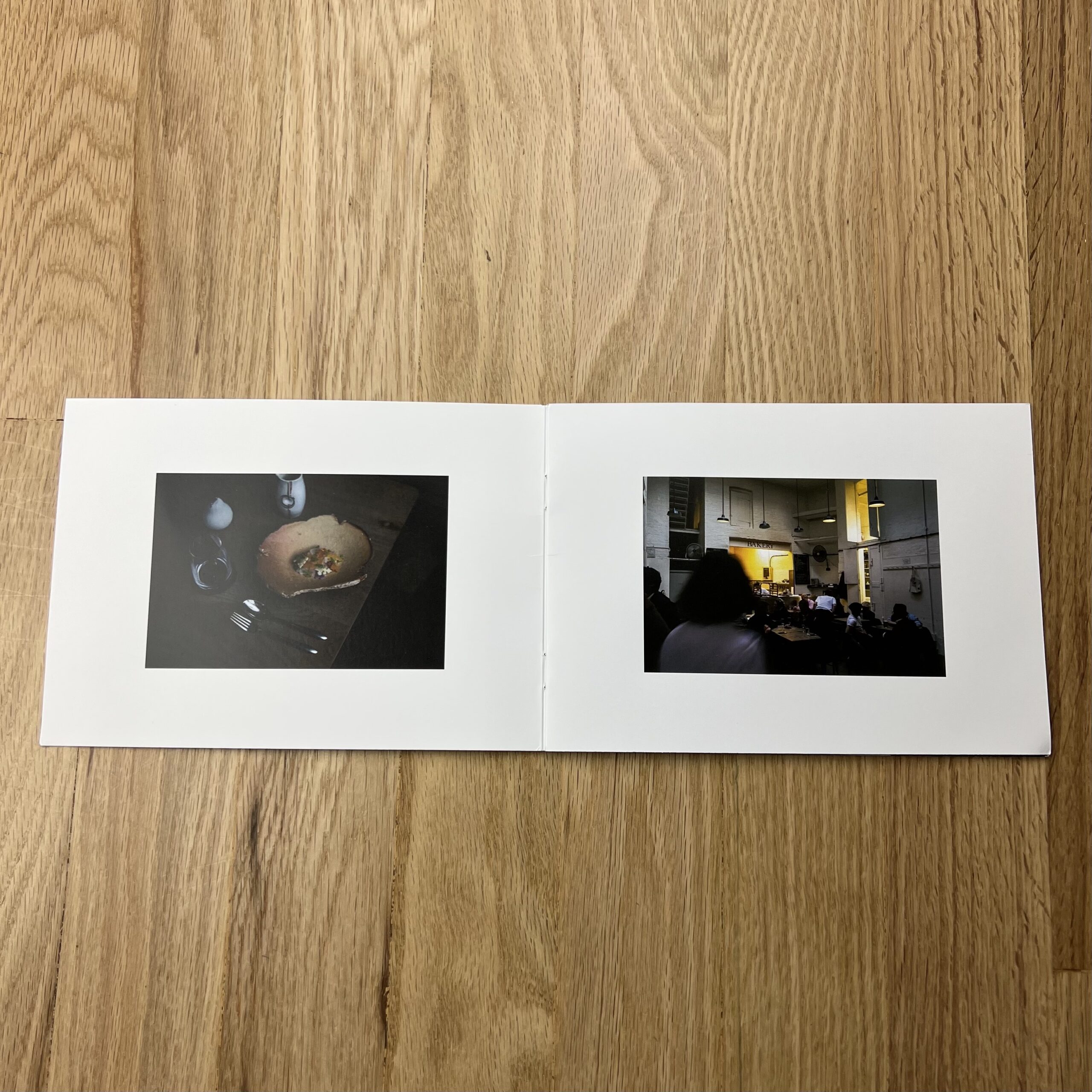
We printed 125 sketchbooks. All were sent to advertising agencies in the United States.
How many times a year do you send out promos?
It depends on the promo, but I tend to send out one big promo a year. However, this year I intend to send out two. We are already working on the new promo: a full-size poster scroll.
Do you think printed promos are effective for marketing your work?
I do, but it can be a shot in the dark without and analytical data. That said, I’ve received many calls over the years with compliments about the promos. I think it can be an excellent way to stick into peoples minds and find a VIP spot in their rolodex. I have converted leads from a big promo push to actual awarded bids.
Throughout 2022, I’ve been bombarding you with think-pieces.
Week after week, I’ve delved deep into massive, often depressing subjects.
It was fun when those two stories went viral, (about photo-book publishing and NFT’s,) but as a reader, if you’re here each week, it can be intense.
I get it.
But now it’s Summer.
Things slow down when it’s hot outside.
We seek out the water.
Listen to the leaves quake in the breeze.
Smell the flowers.
Bask in the color of the sky.
Because nature is soothing.
It makes us feel better.
(Thank goodness.)
Today, knowing I wanted to keep it short and sweet, I took a look at the book-submission-pile, but it was too daunting.
And I’ve mined my shelves enough to know that wasn’t going to work either.
(We can only use the same trick so many times.)
No travel stories or portfolio review articles were ready to go.
“What’s a hard-working columnist to do,” I wondered?
At that exact moment, (I swear, no lie,) I looked down and saw two coffee-table-books on the arm of the couch.
They’d clearly been moved there from the cedar-chest-coffee-table, for children’s play, and I hadn’t noticed them before.
Immediately, I recognized a coffee-table-book that used to reside on my mother-in-law’s shelf, one of only four or five art books in their massive library.
(So it was memorable.)
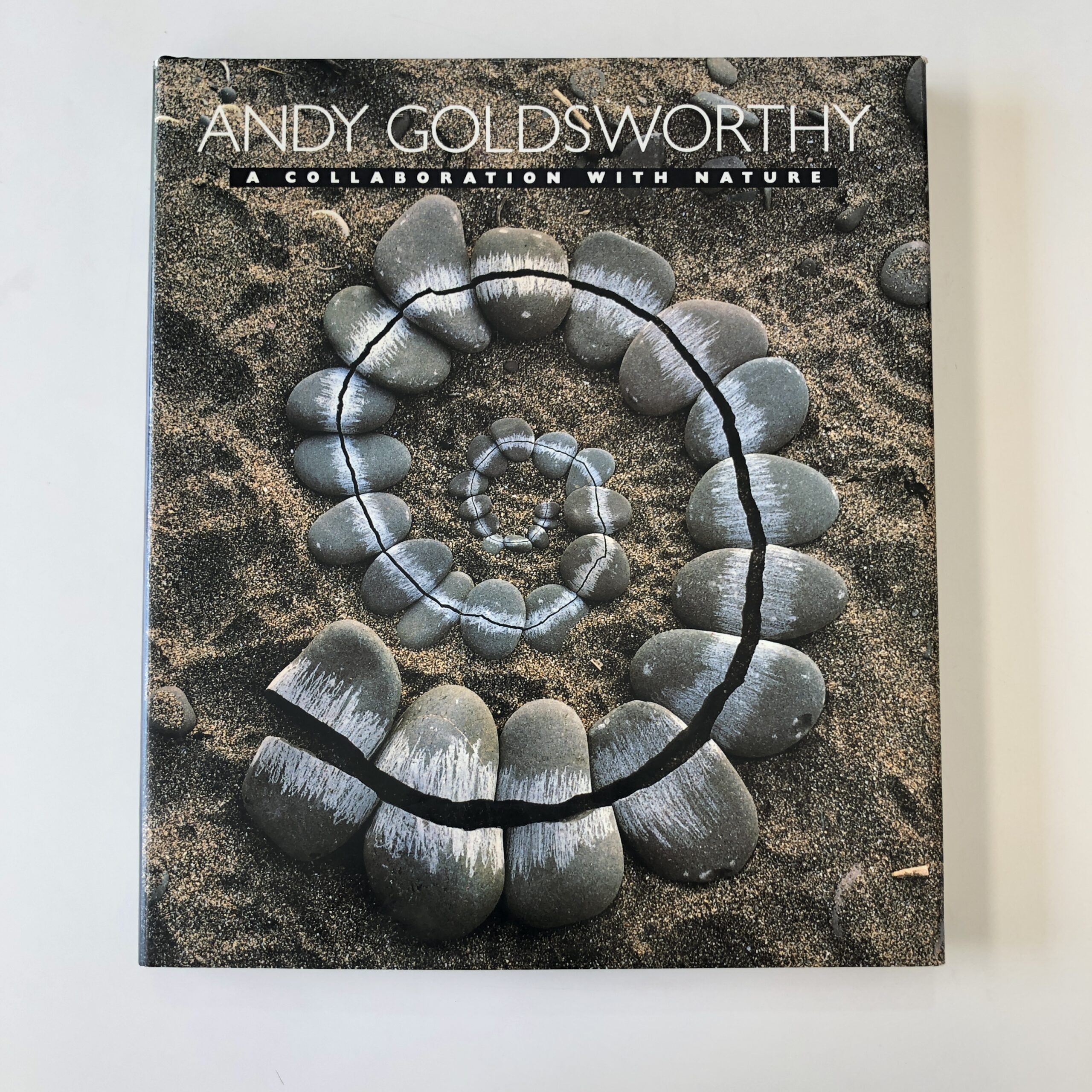
The book is by one of my all-time-favorite artists: Andy Goldsworthy.
Yet somehow, I’d never picked it up before.
Back in graduate school, I had to go into Manhattan one day to catch a film at an indie-cinema-house.
(I should give it a re-watch, because it’s so damn inspirational.)
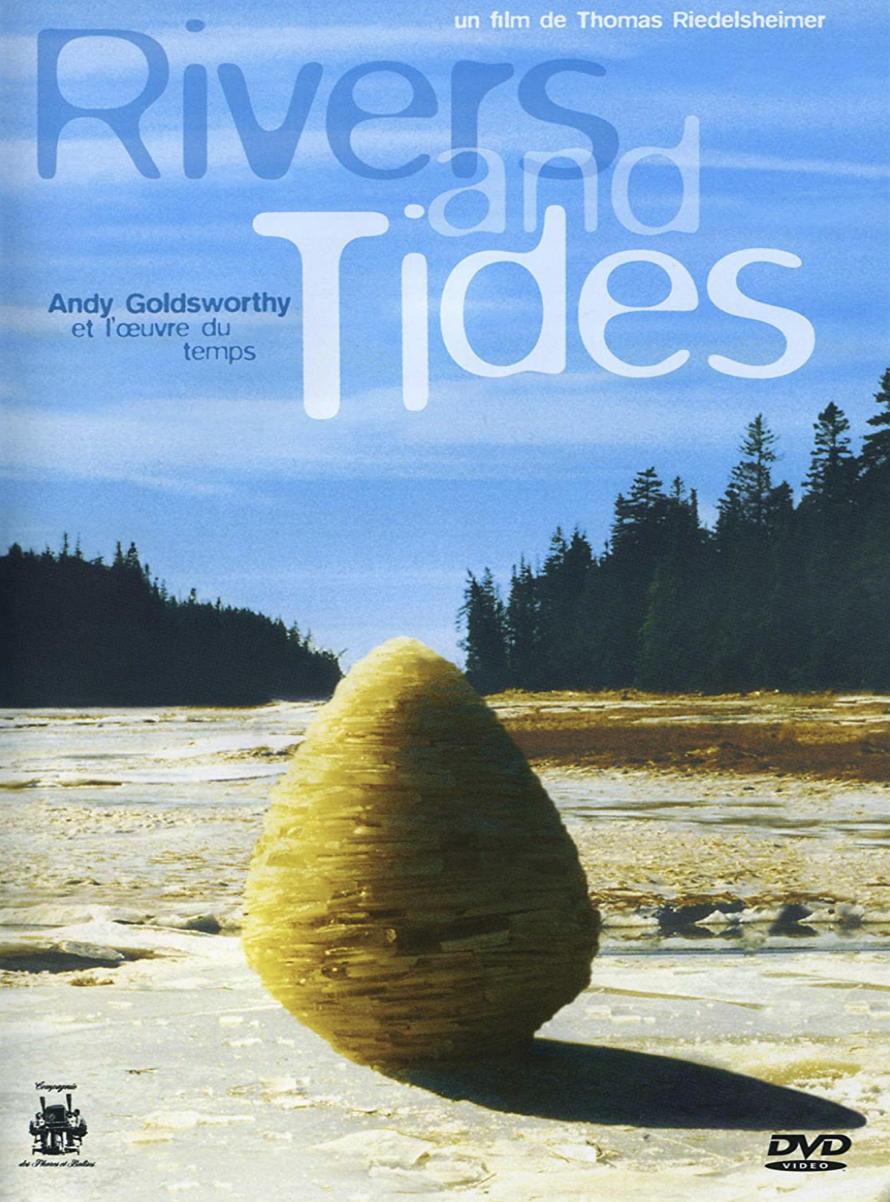
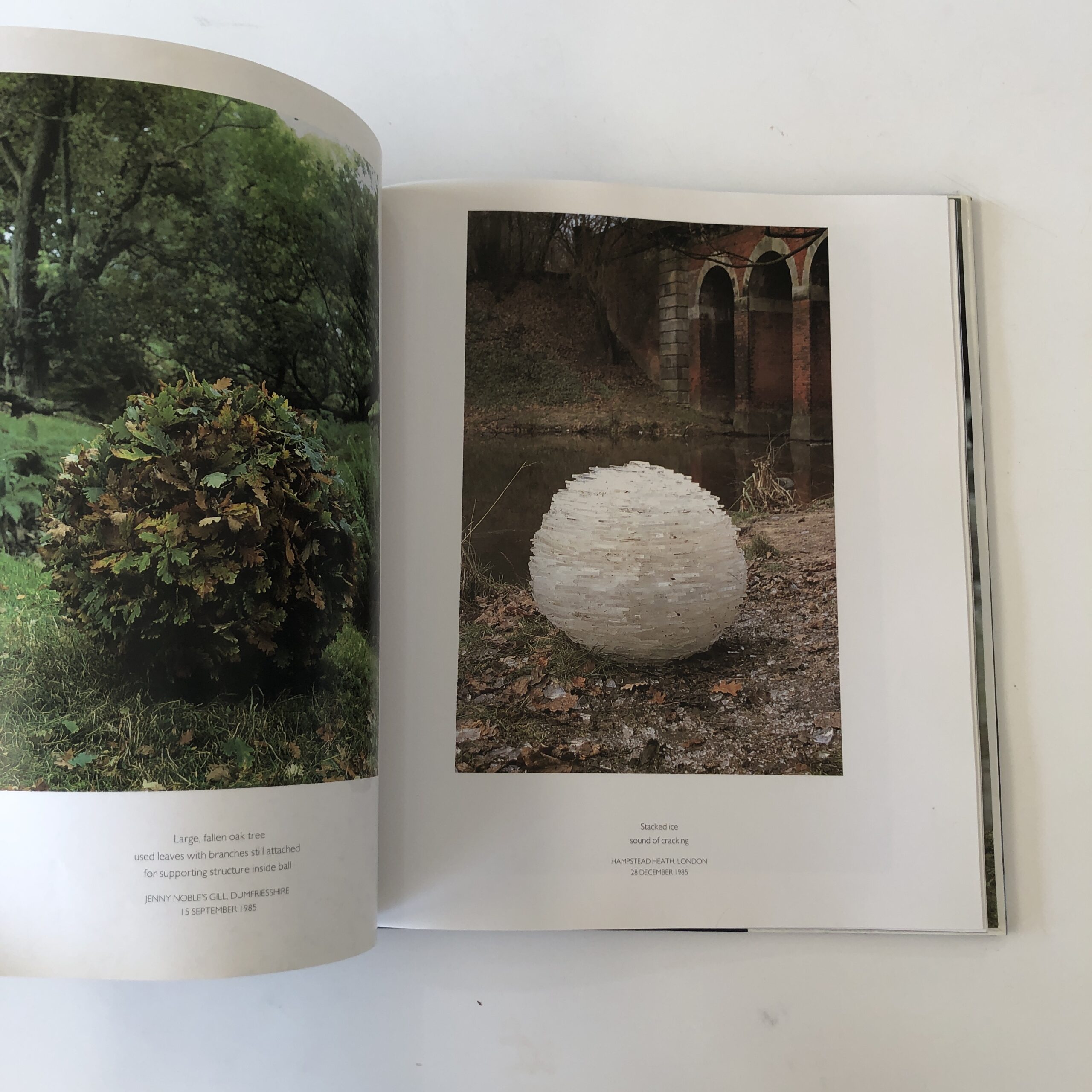
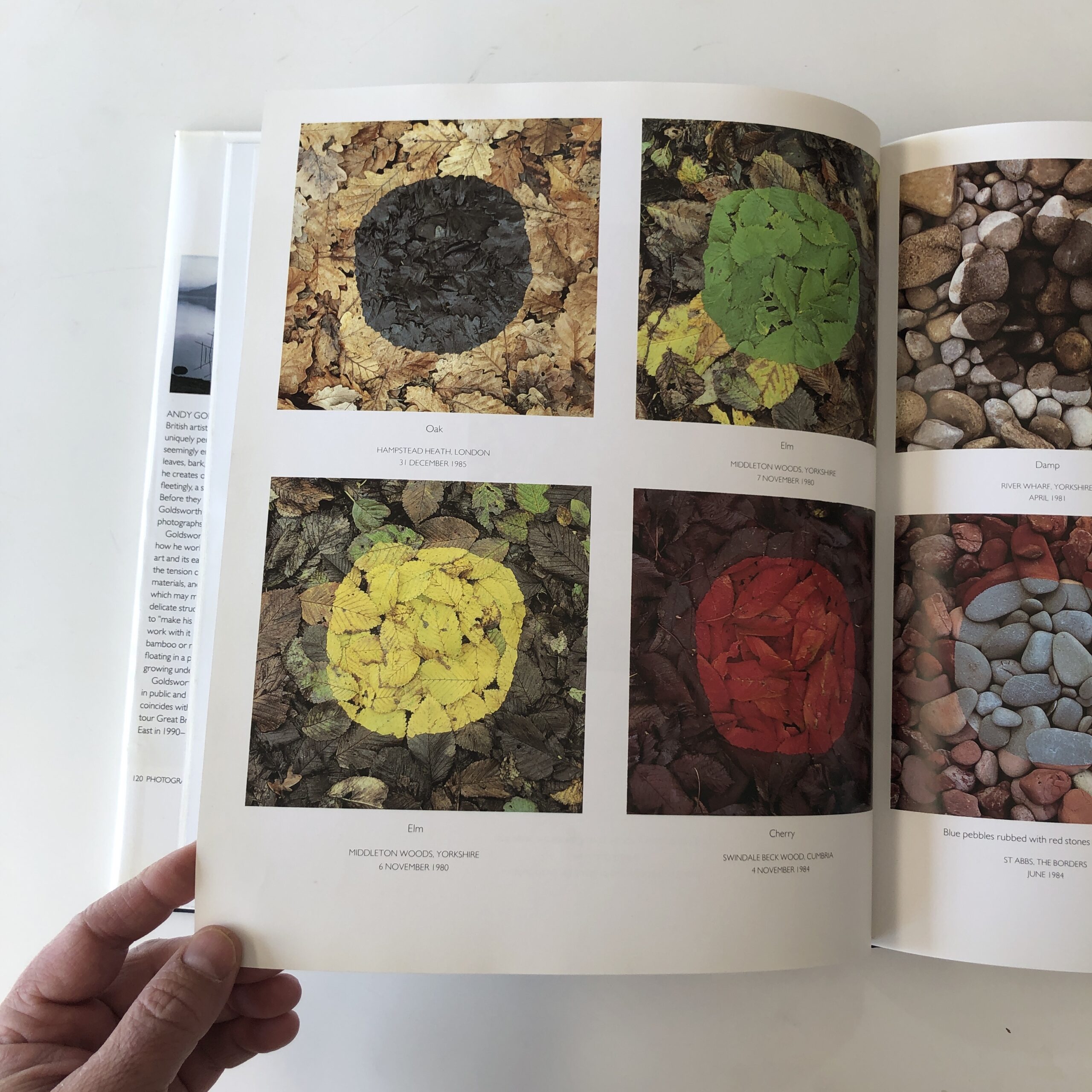
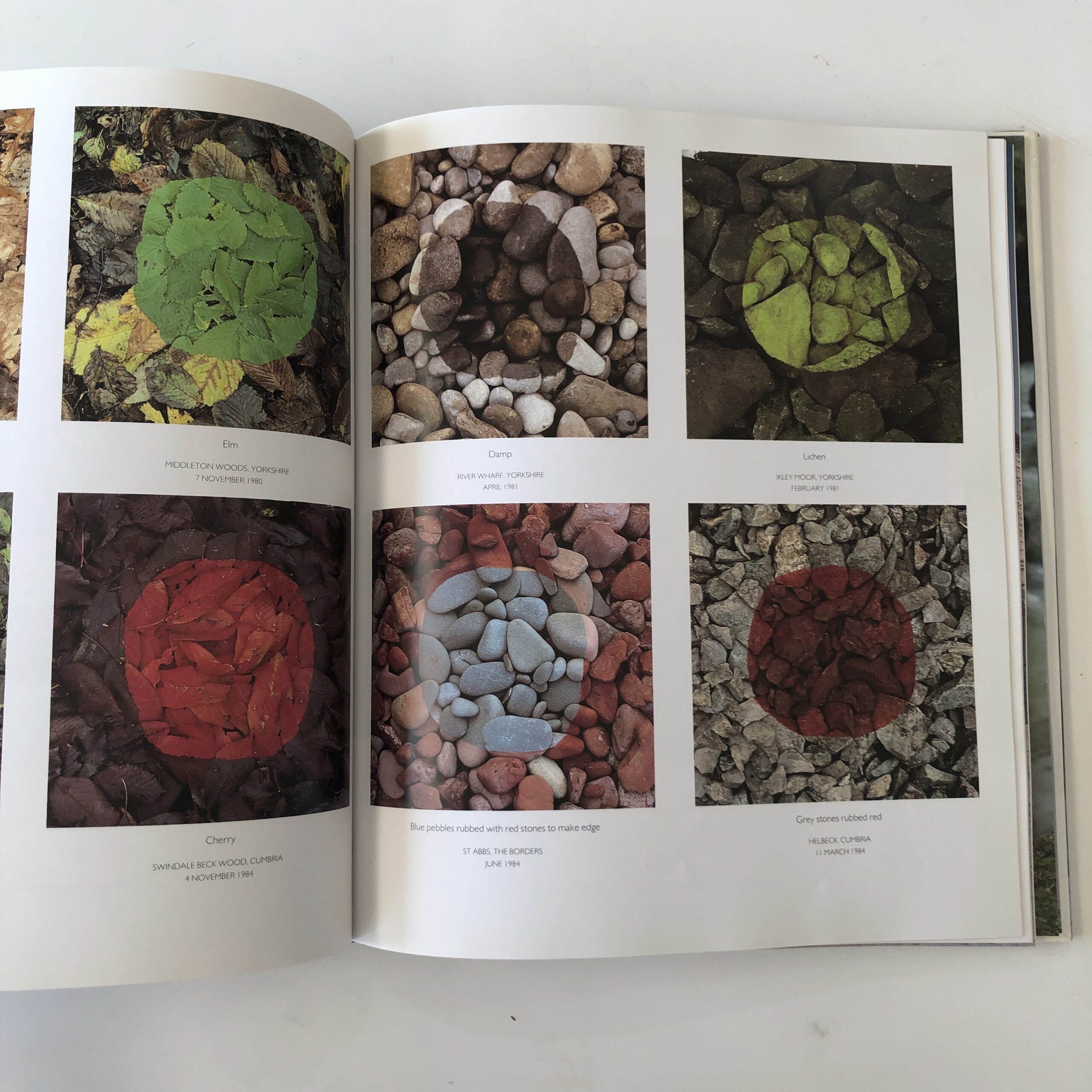
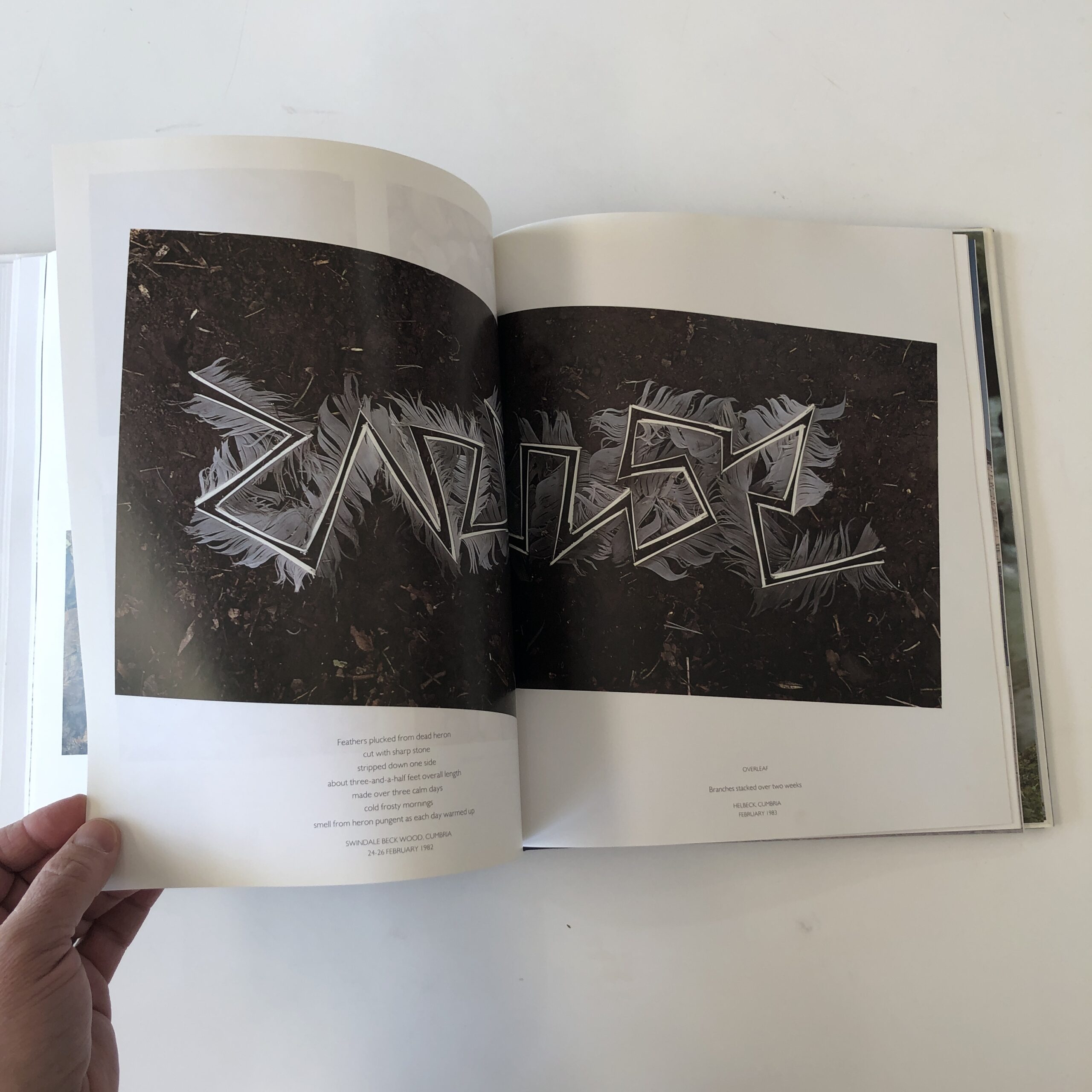
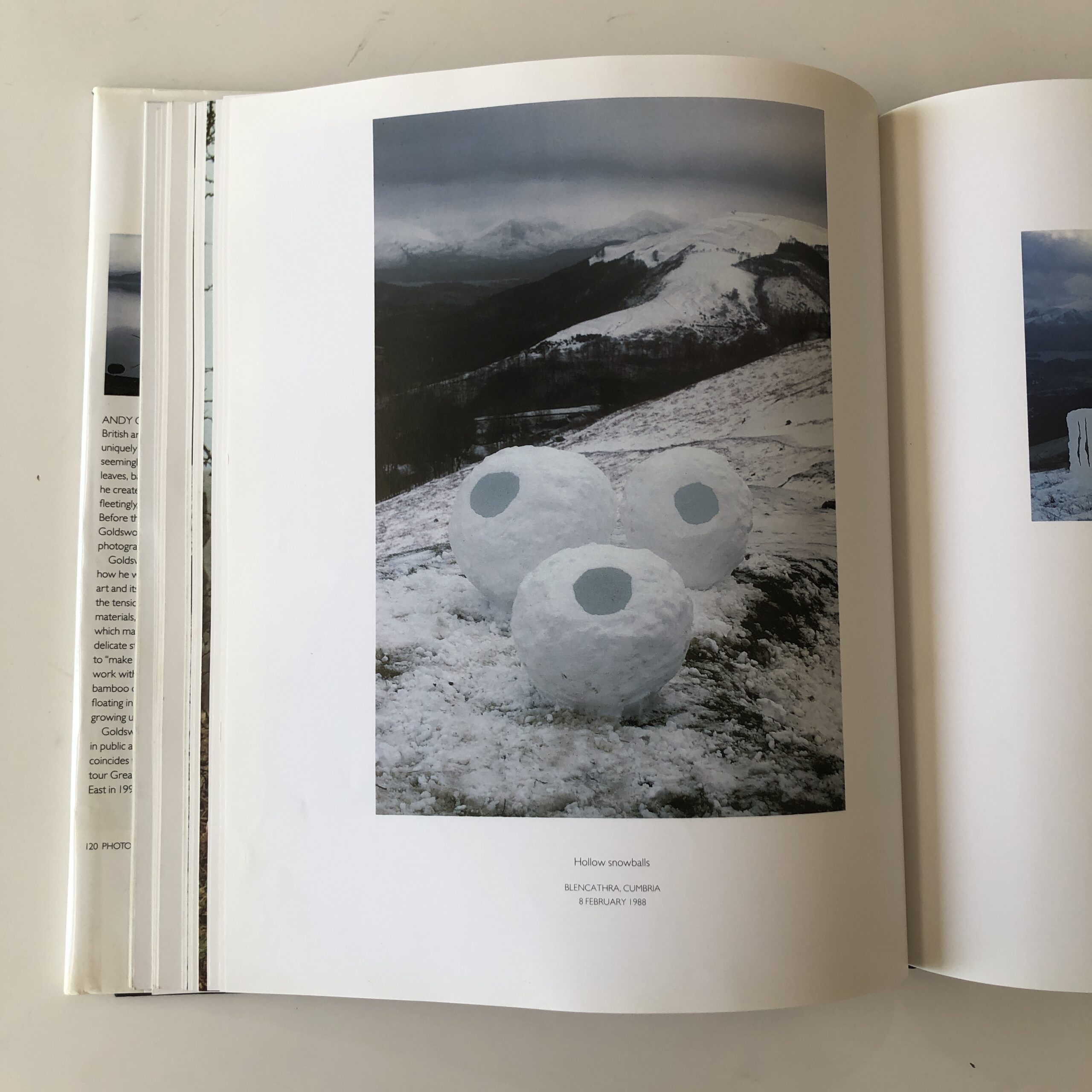
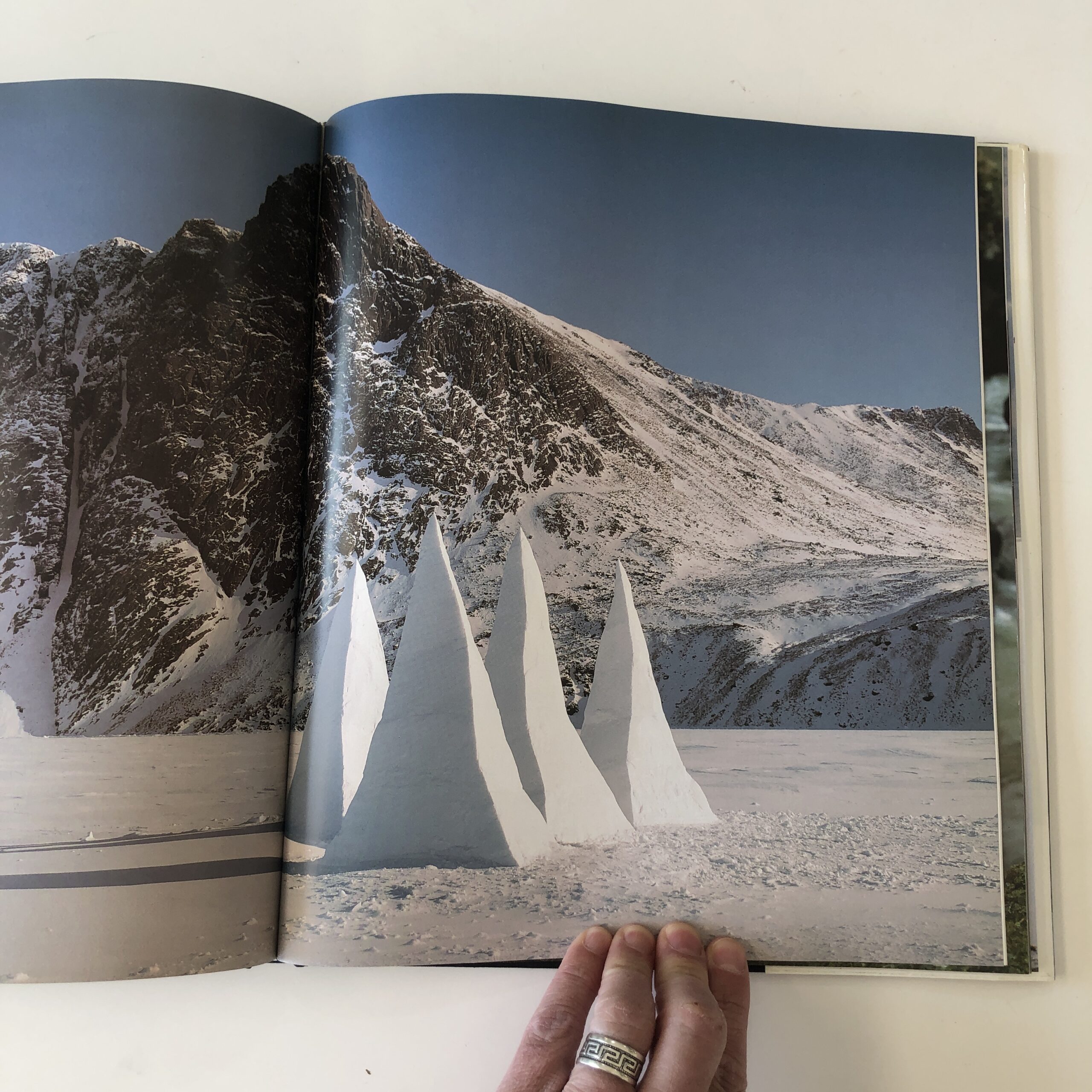
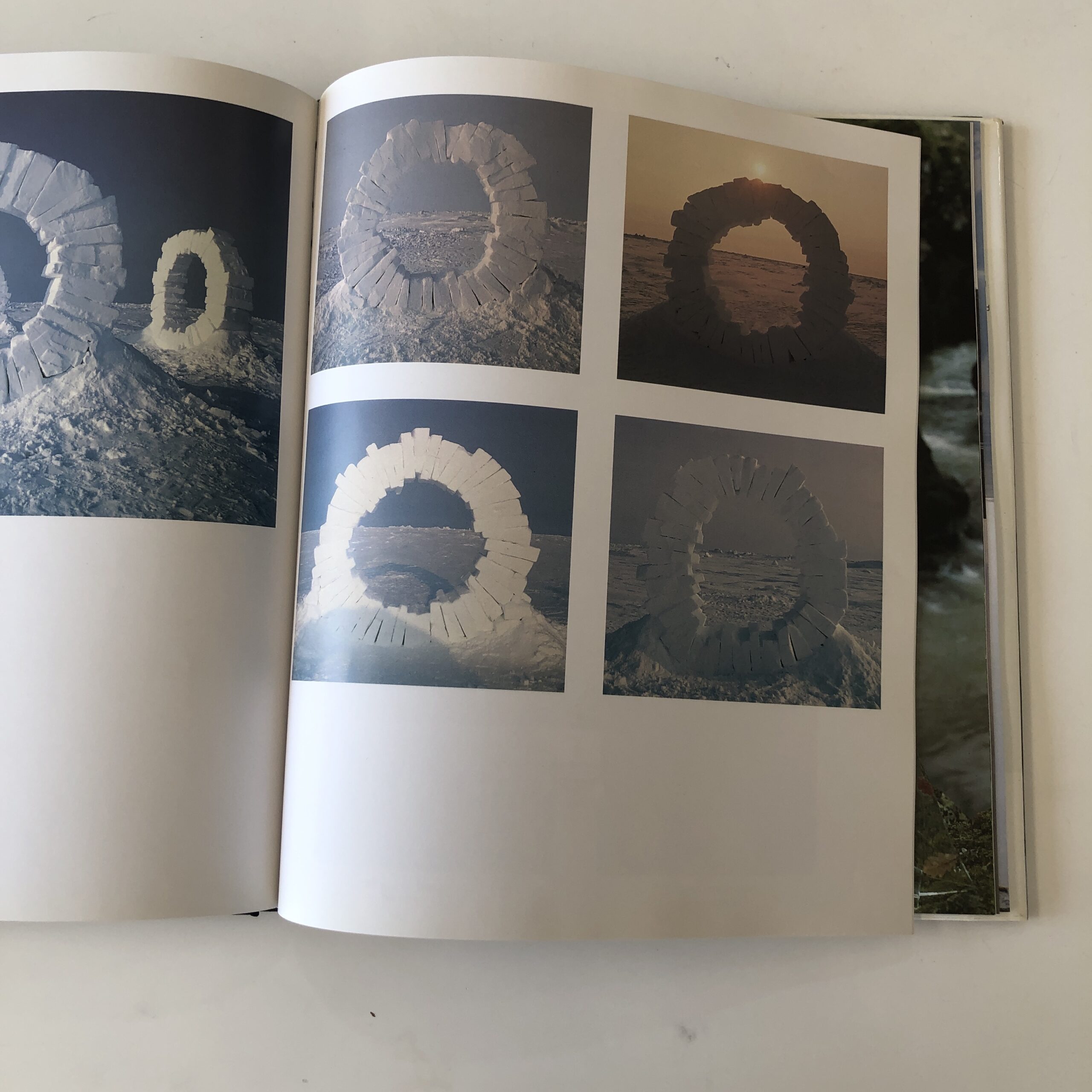
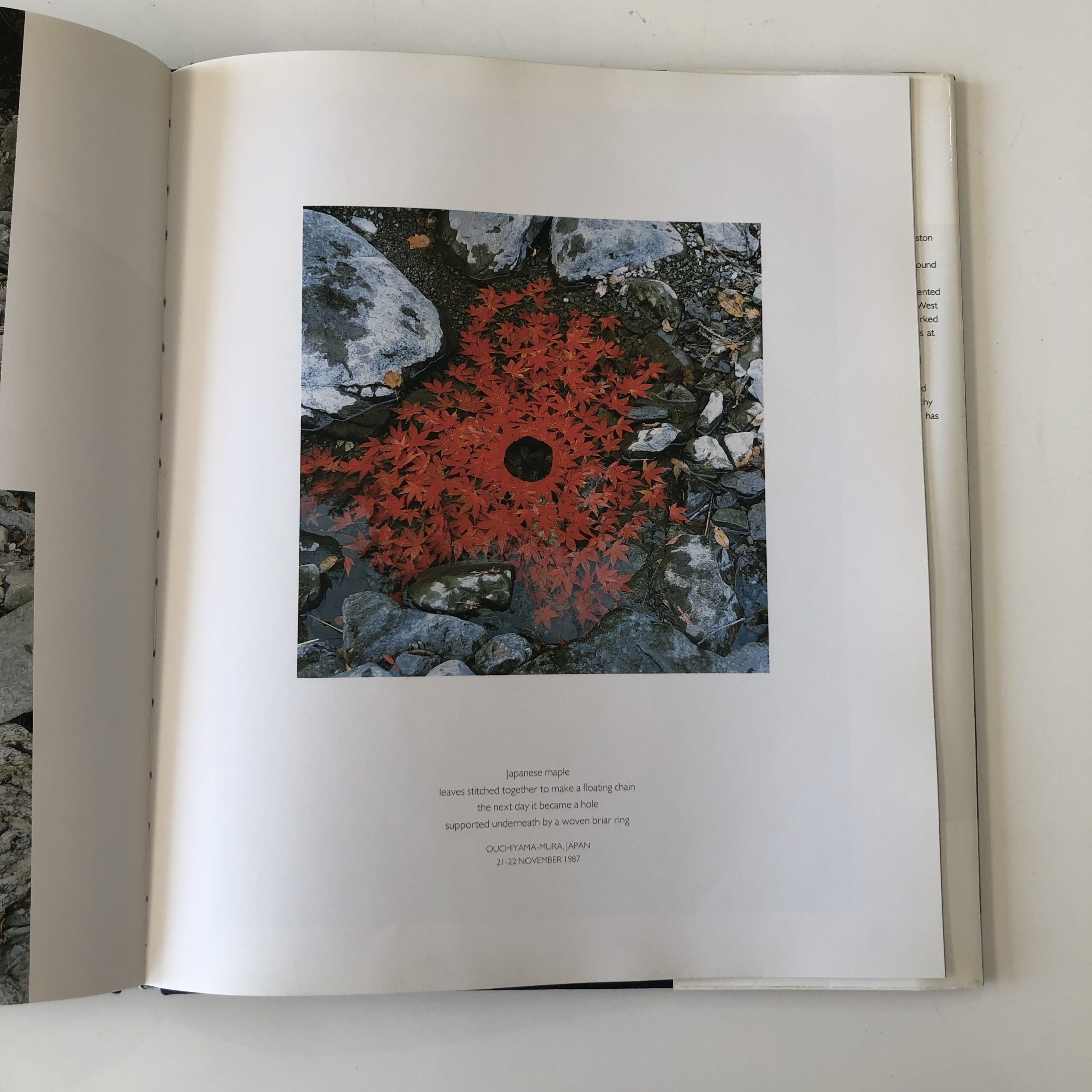
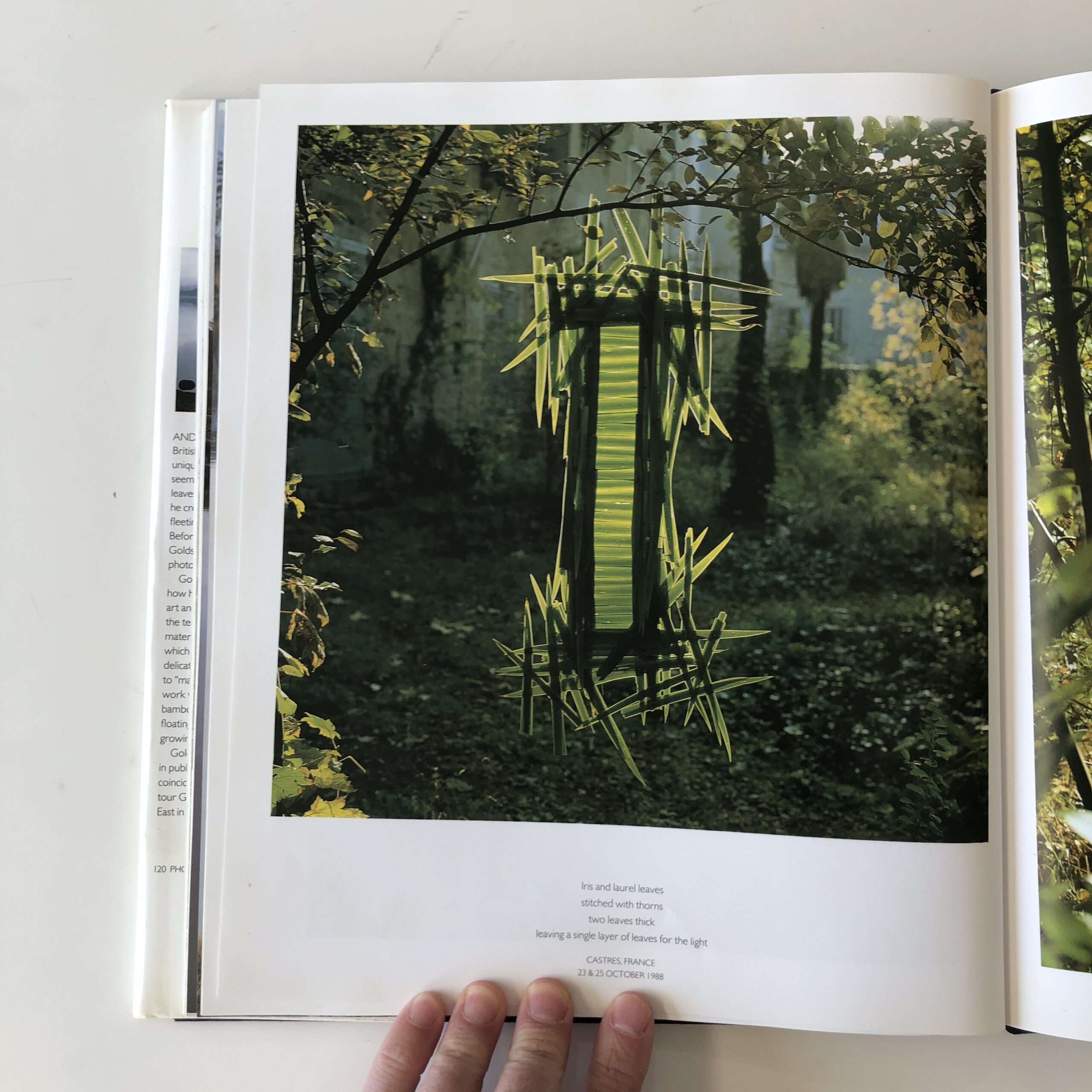
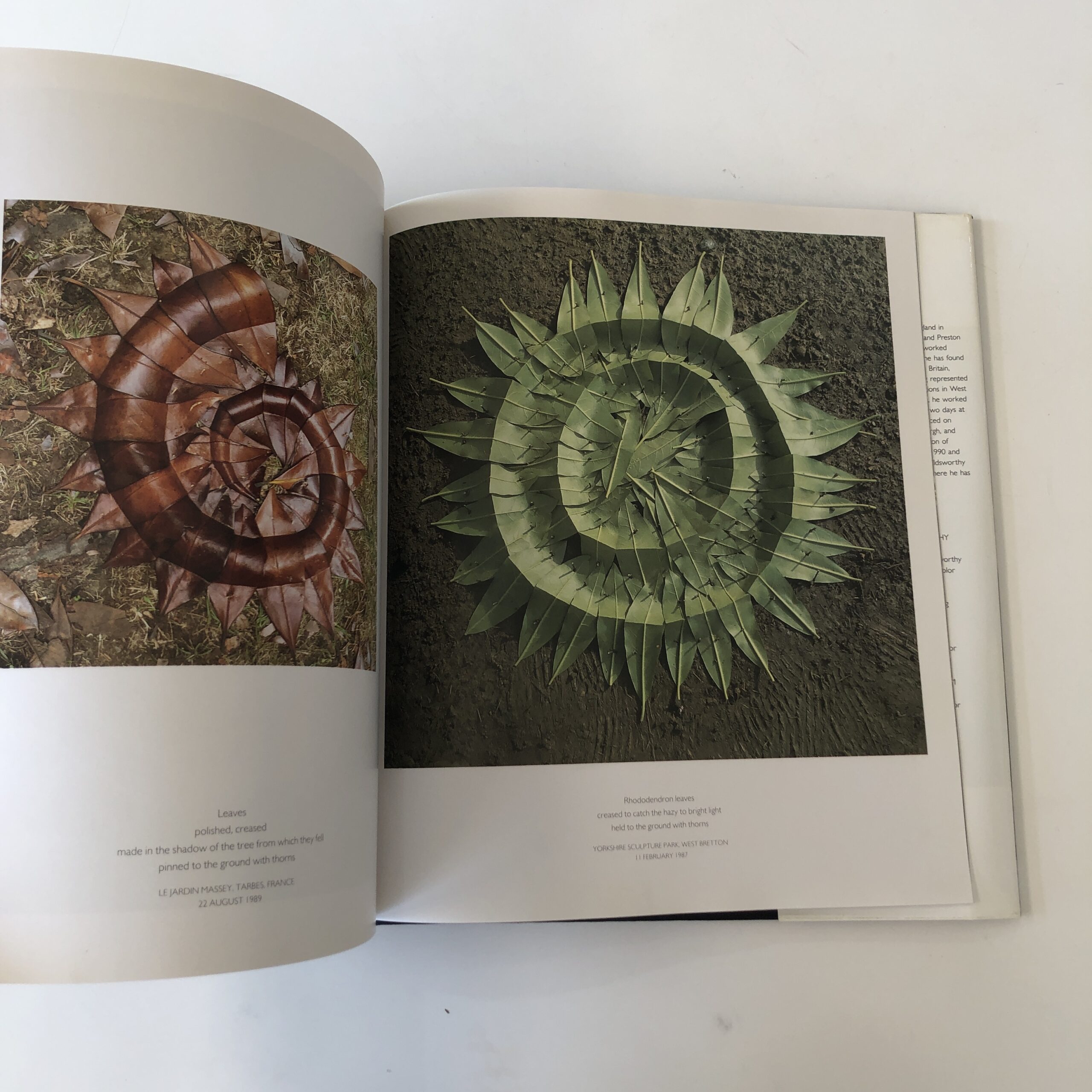
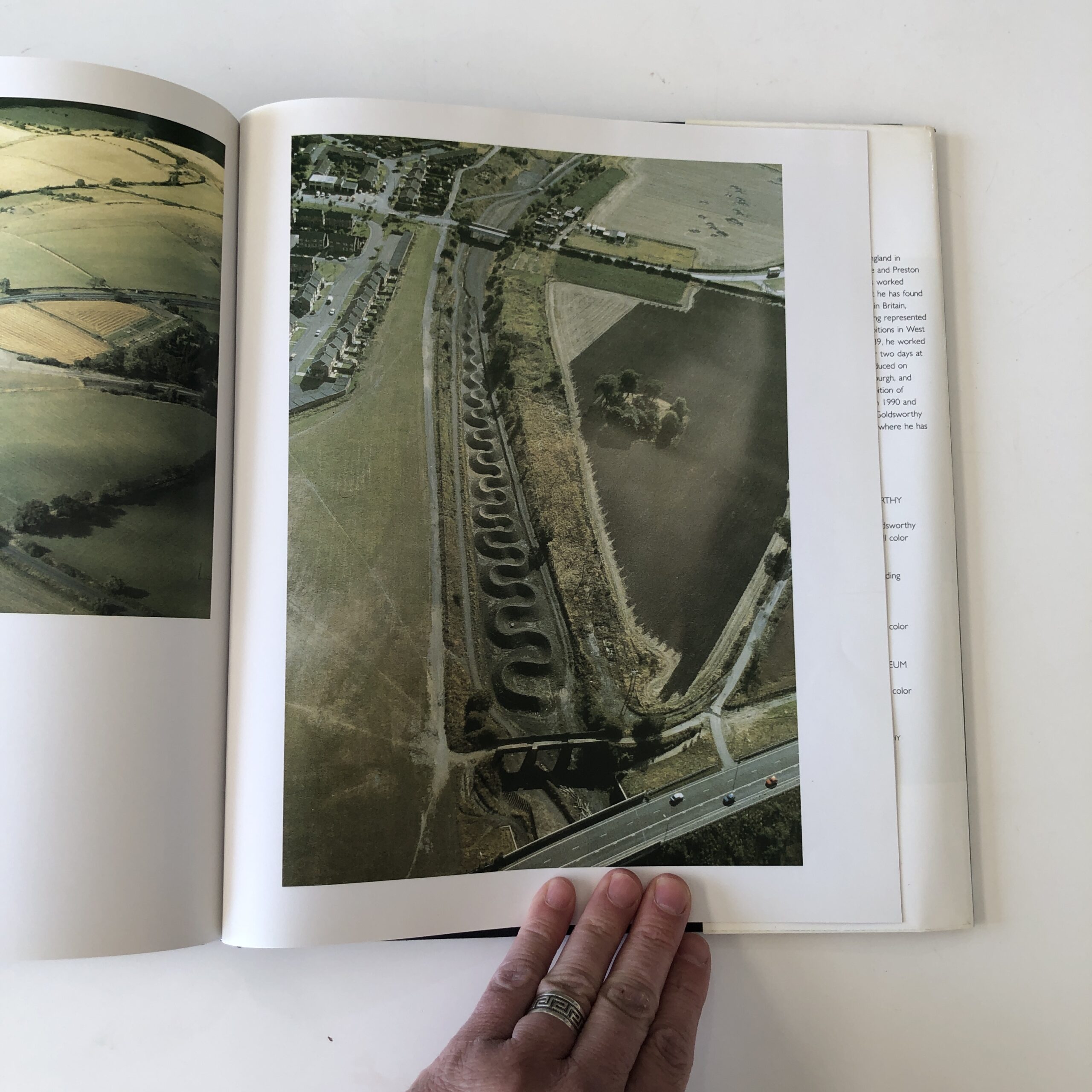
The art in the film, and in this book, “Andy Goldsworthy: A Collaboration with Nature,” published by Abrams in 1990, is among the most remarkable I’ve ever seen.
And I’m not alone.
Just yesterday, after I’d finished this review, my daughter picked up the book, flipped page-by-page, and it was like a blind person restored to sight.
She simply could not believe what she saw, continuously exclaiming, “What! How! How did he do that? Insane! What! How? I don’t even understand! Amazing! What? How did he do that?”
(And I’m not exaggerating. It went on for five minutes.)
To make art in nature, out of nature, that conjures the powerful feelings and emotions that nature engenders?
Simply genius.
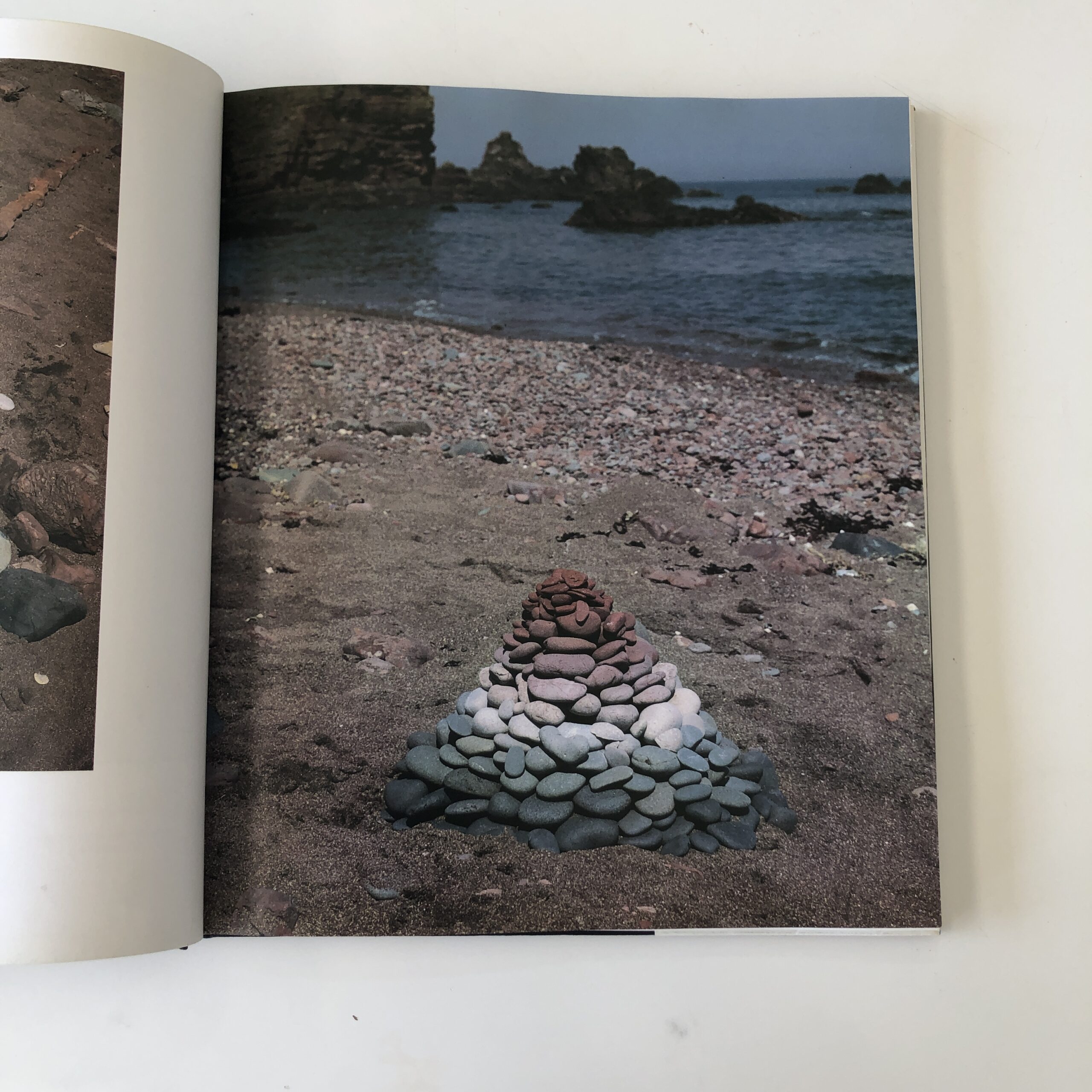
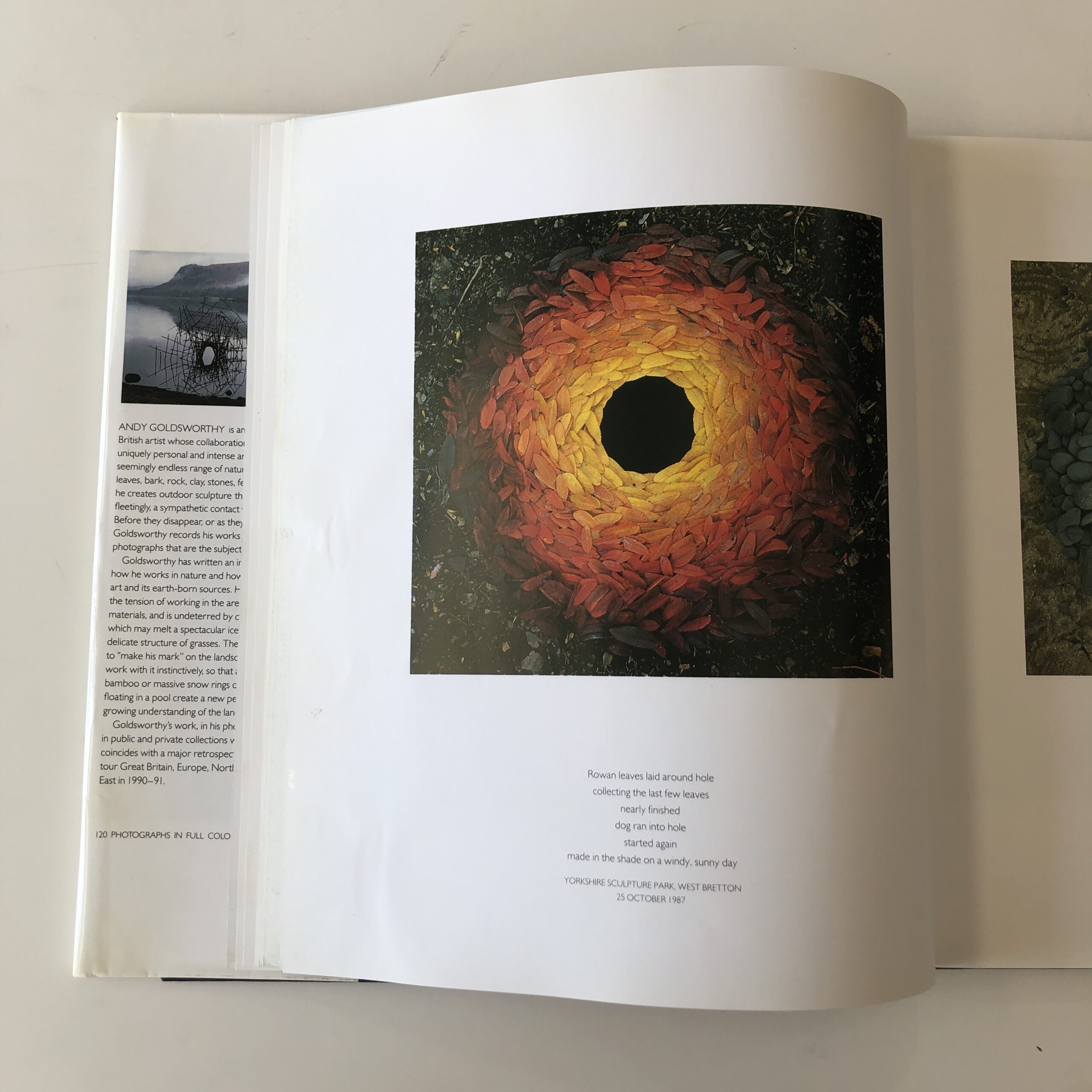
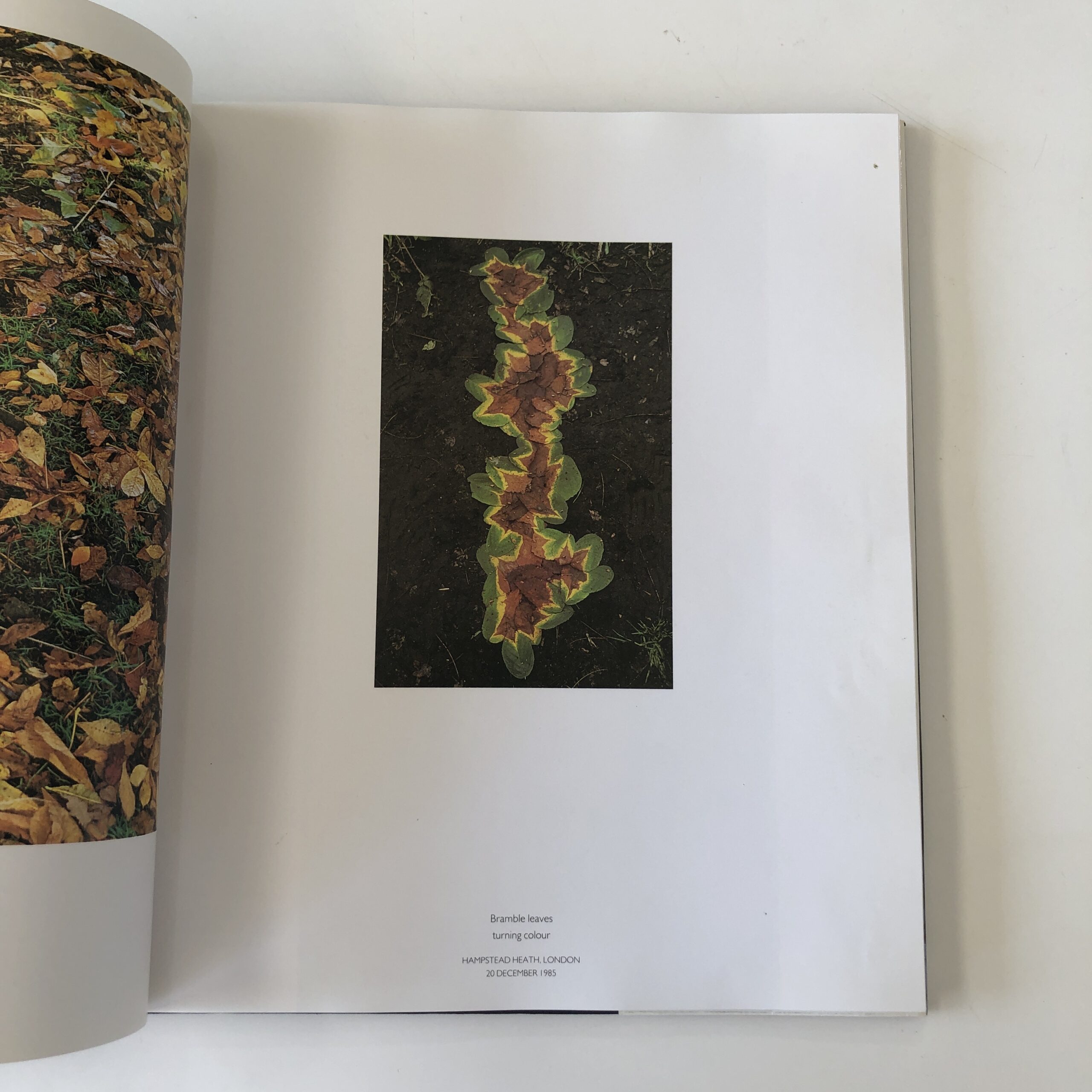
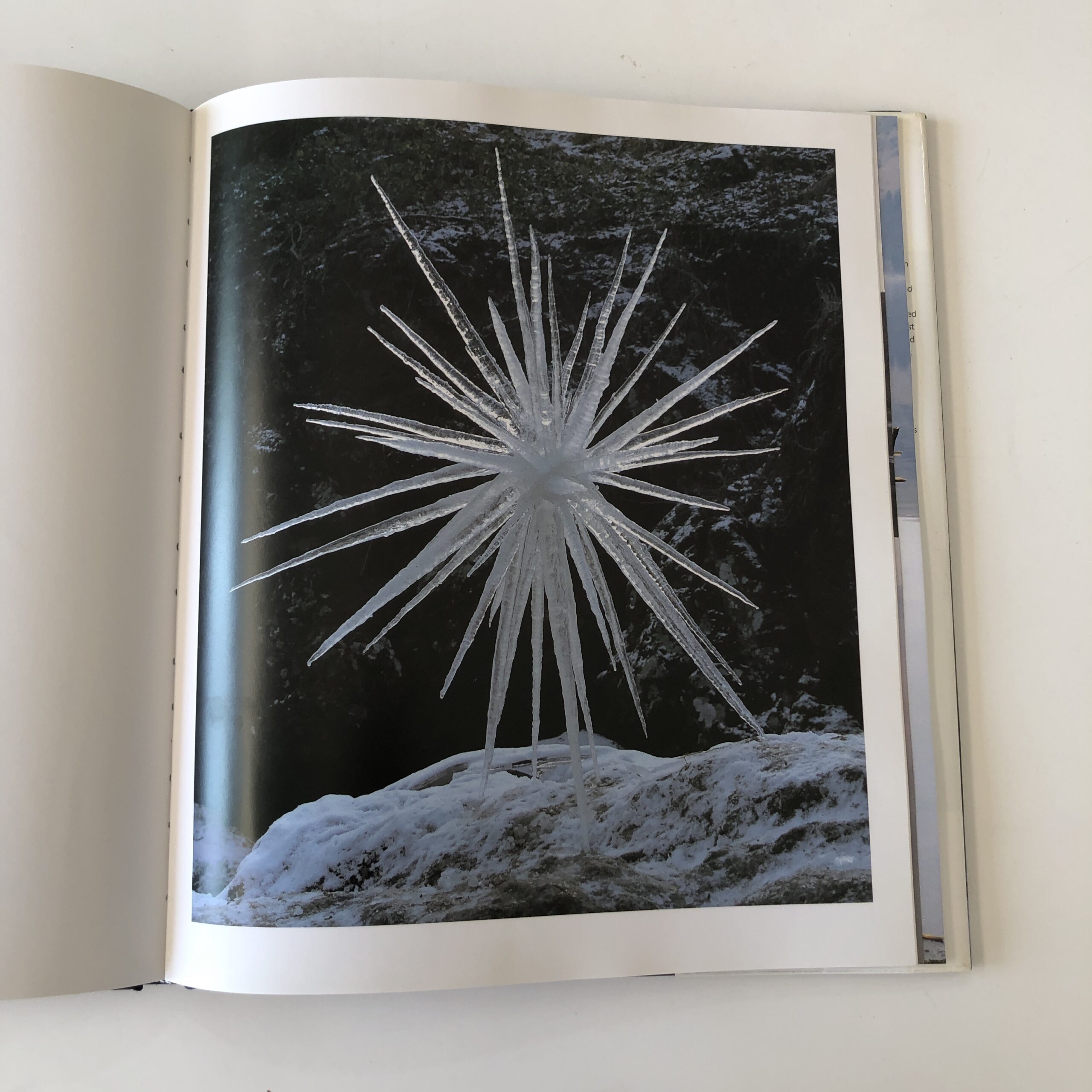
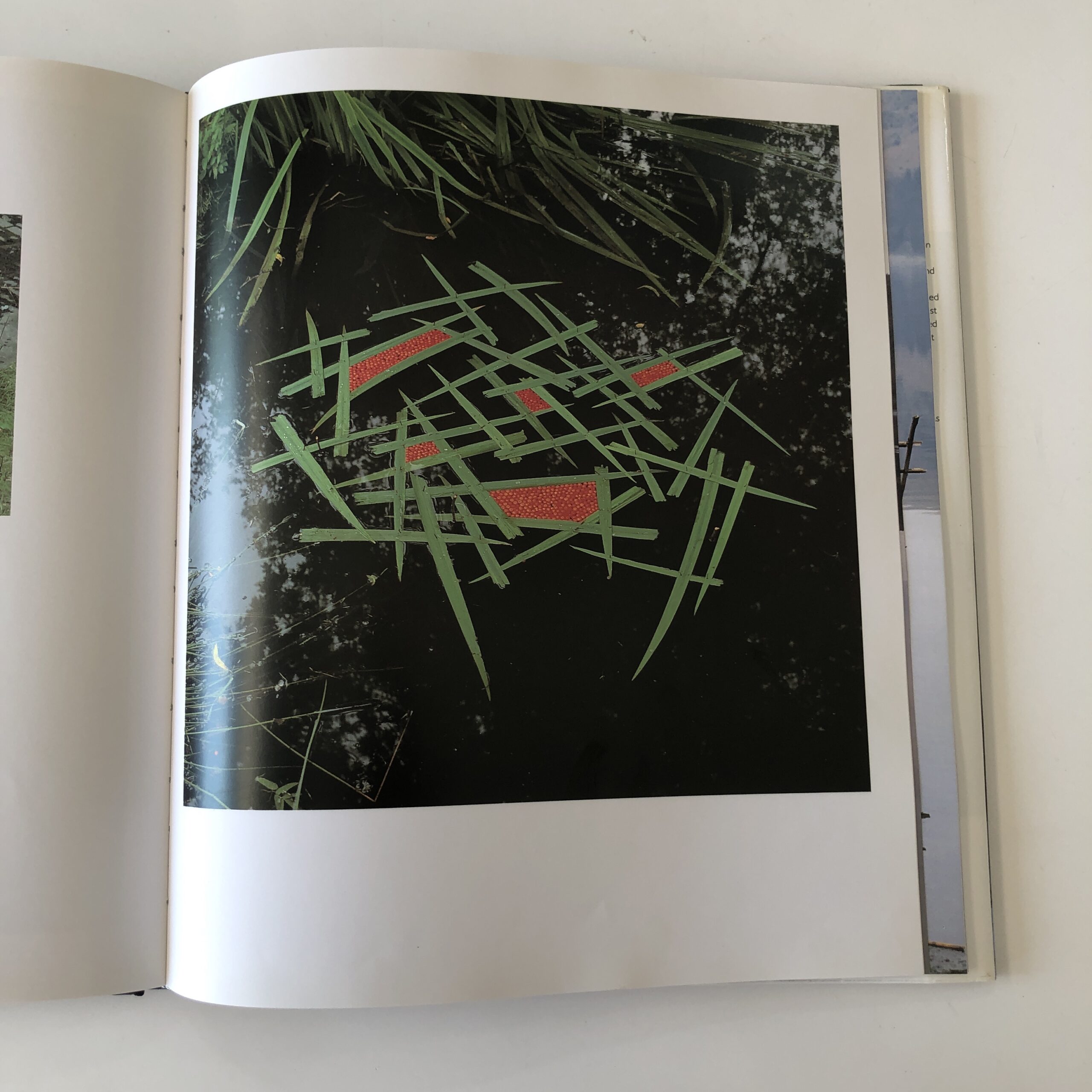
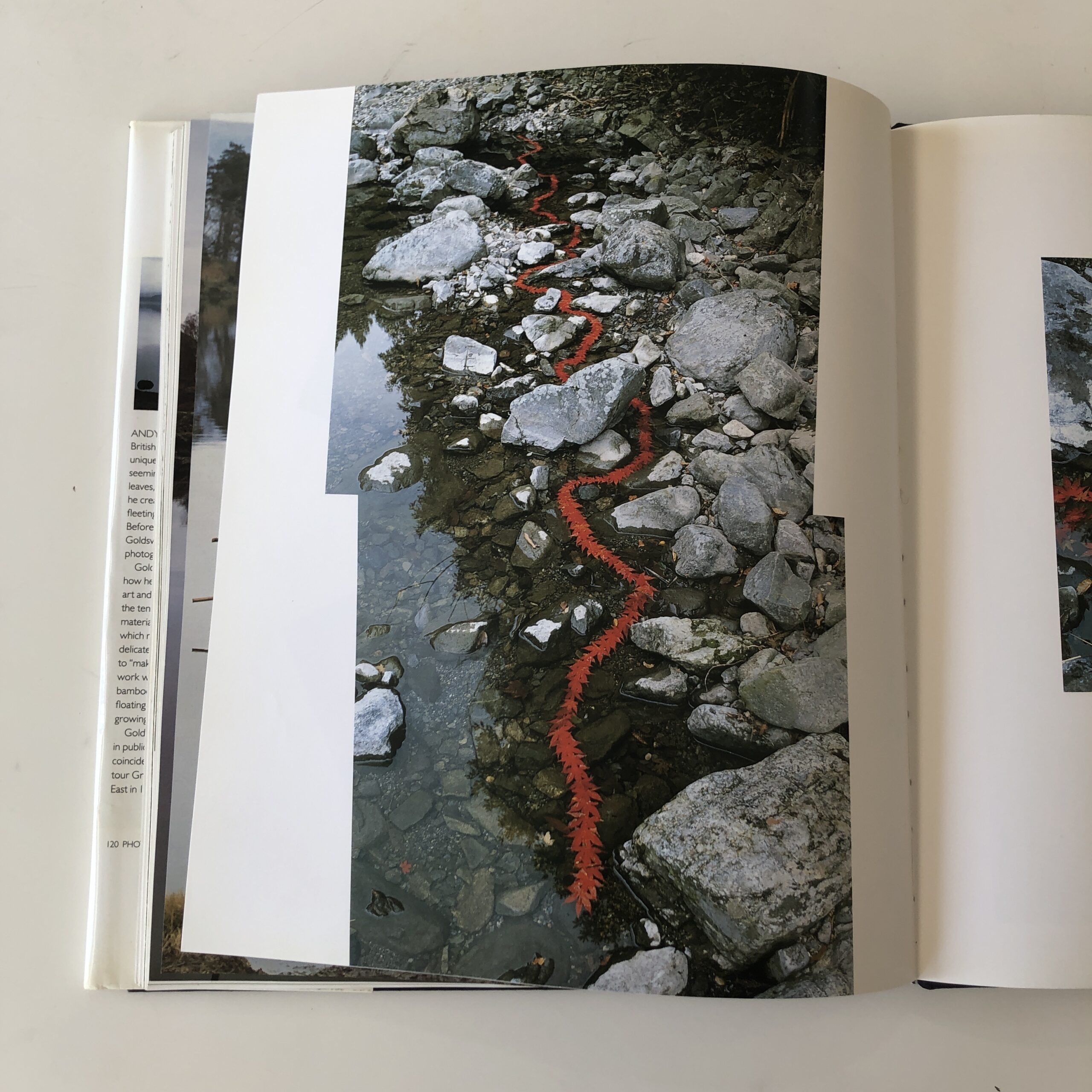
Though he’s super-famous, in case you’re unfamiliar, Andy Goldsworthy uses everything from snow, ice, rocks, trees, leaves, sand, and decaying heron feathers, in locations as far flung as England, Wales, Scotland, Arizona, The North Pole, France and Japan.
He builds sculptures, or nature installations, and many (if not most,) are temporary.
So the photographs become the evidence; the record of art made for the moment, rather than for an audience of humans.
The execution, creativity, patience, and connection to the Zen spirit of the world, are breathtaking.
But the grounded, Down-to-Earth, whimsical magnificence Andy Goldsworthy projects, (in “Rivers and Tides,”) his general likability, adds to the enjoyment as well.
And it always boiled down to one scene for me. (Which became an in-joke with Jessie, when we lived in New York.)
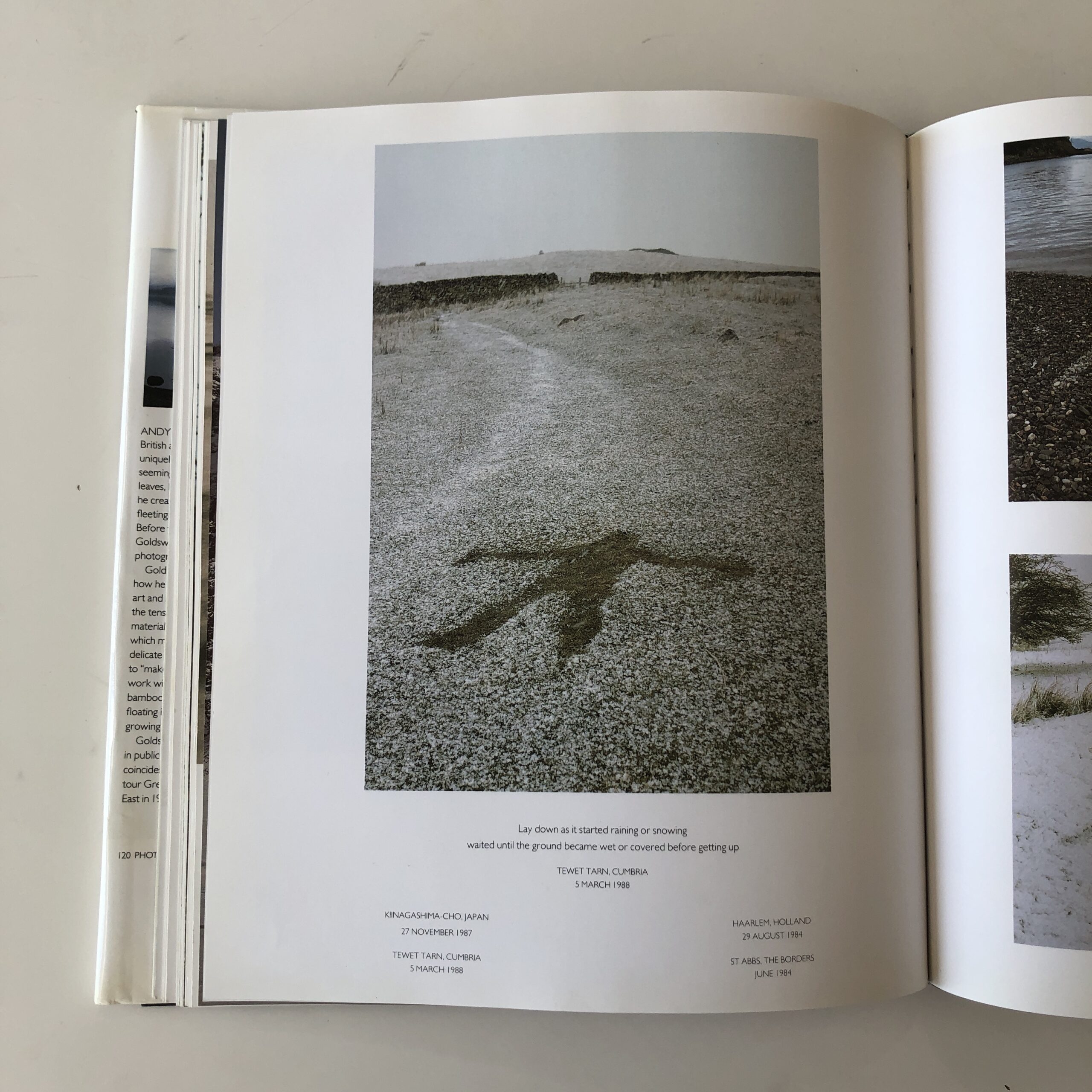
In the film, the camera captures Andy laying on the ground, spread eagle, on the grass outside, along the road, and a kindly neighbor strolls up.
“Hey, Andy. What are you doing there,” the neighbor asks?
A fair question.
“Working,” he replies, with a grin on his face.
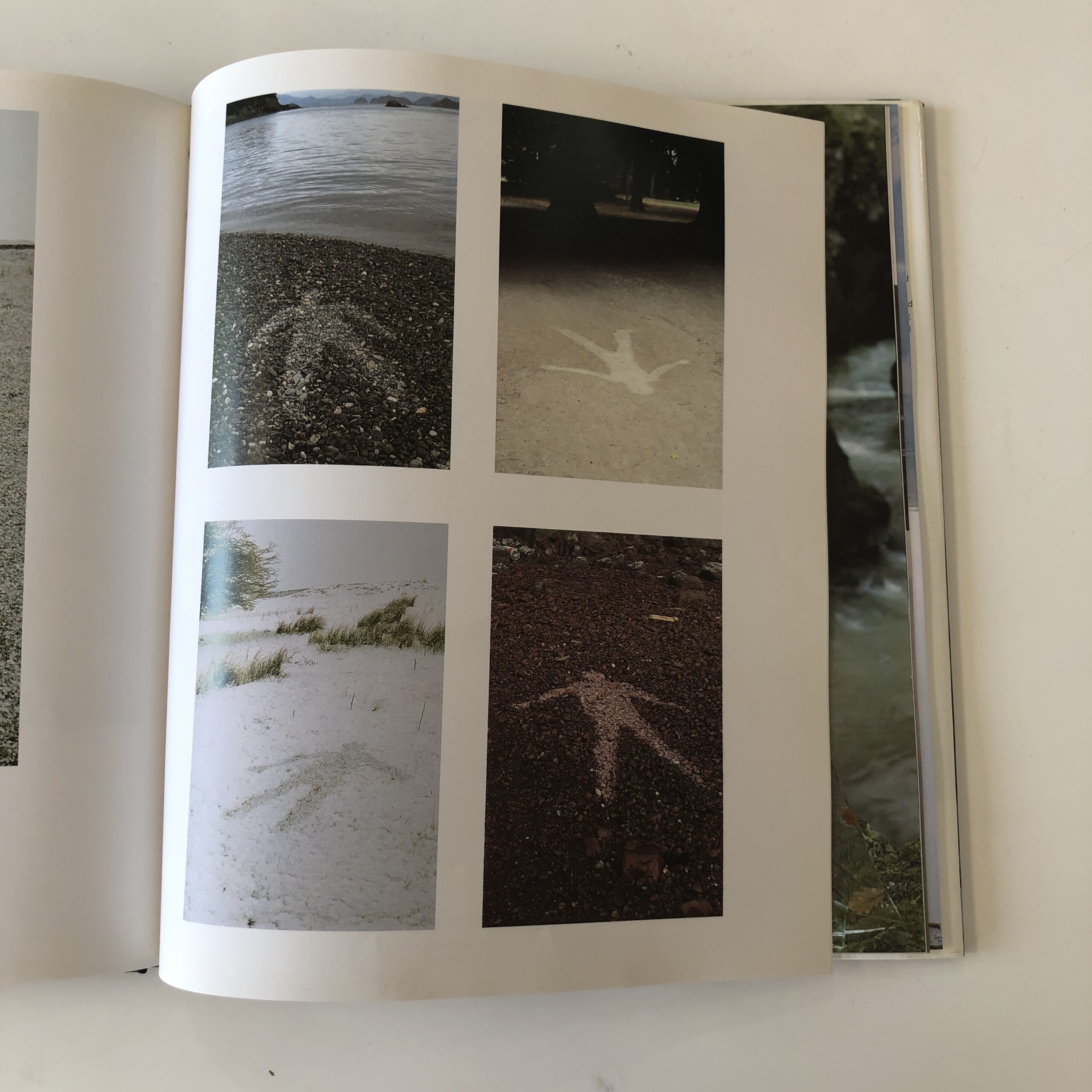
In the book, we see how he landed that particular investigation, as the outline of his human form is recorded on the Earth, with powders.
(It doesn’t get much better than that.)
The past few years, (when I’ve been able to travel,) I mostly lost the taste for hitting up the galleries and museums.
It felt a bit “been-there-done-that,” as if I’d seen so much, over the years, that all the art began to blend together.
I forgot just how powerful it can be to experience the type of greatness that makes you want to strive for more.
(To leave a mark, even if it’s a small one.)
The last 2.5 years have felt like 10, and I don’t want to get old too quickly.
Exhaustion, cynicism, and horrific-world-events can rightly get us down.
But this book, from my Alzheimer’s-ridden mother-in-law, Bonnie, rekindled my passion to see great art again.
The Art of the Personal Project is a crucial element to let potential buyers see how you think creatively on your own. I am drawn to personal projects that have an interesting vision or that show something I have never seen before. In this thread, I’ll include a link to each personal project with the artist statement so you can see more of the project. Please note: This thread is not affiliated with any company; I’m just featuring projects that I find. Please DO NOT send me your work. I do not take submissions.
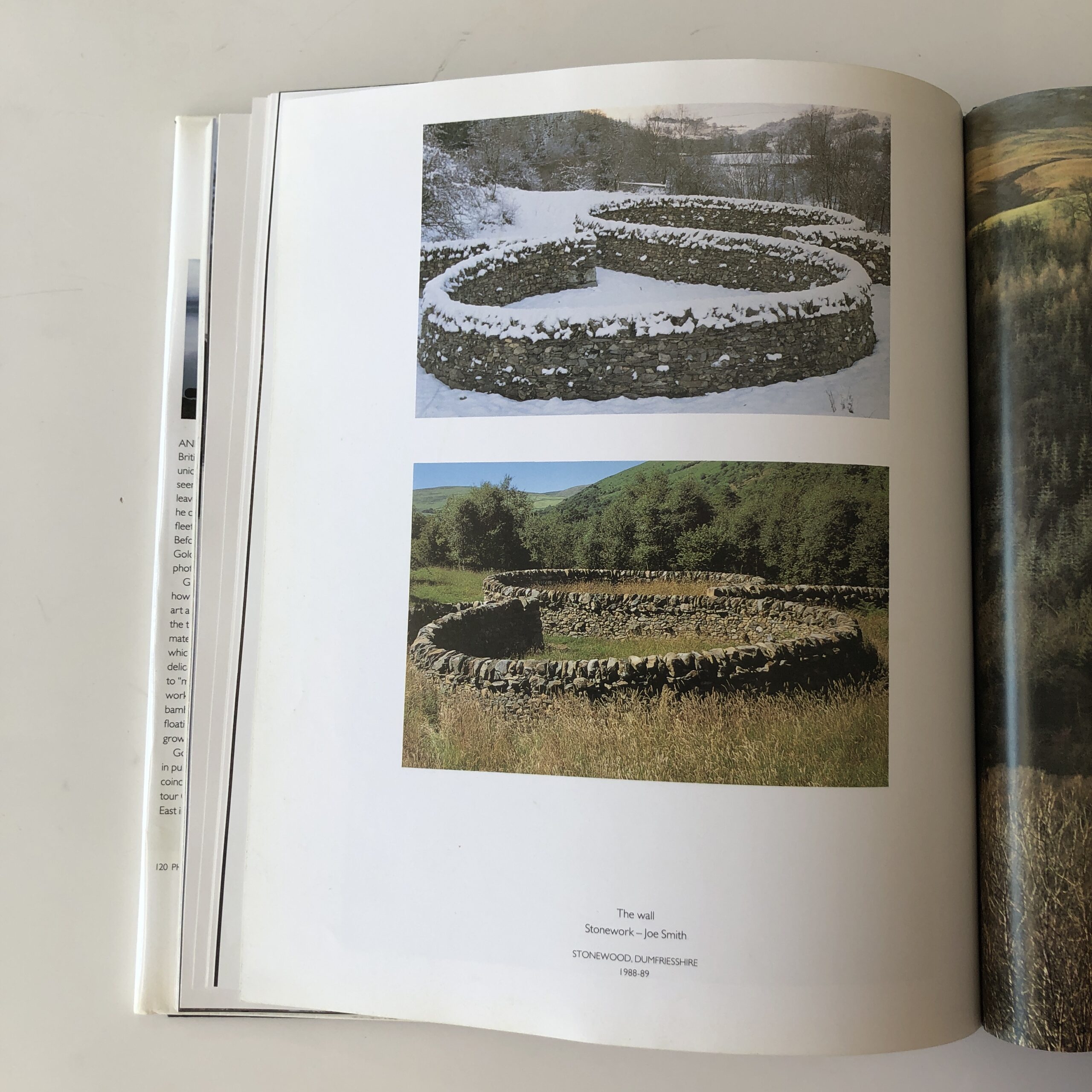
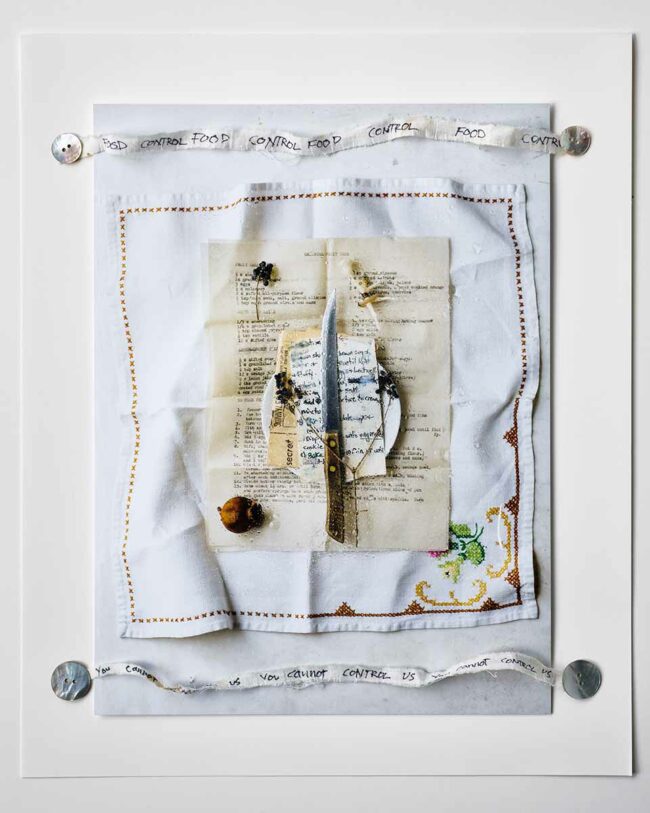
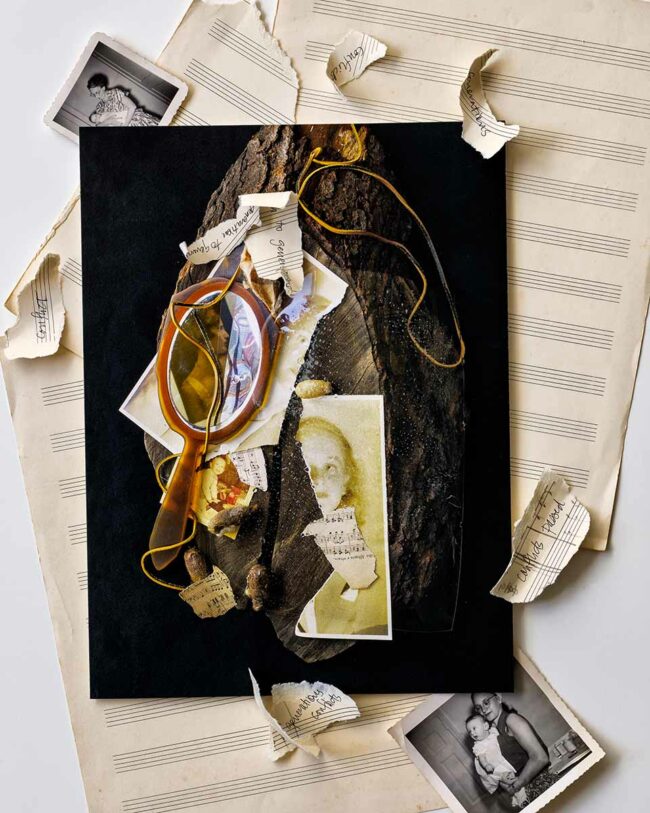
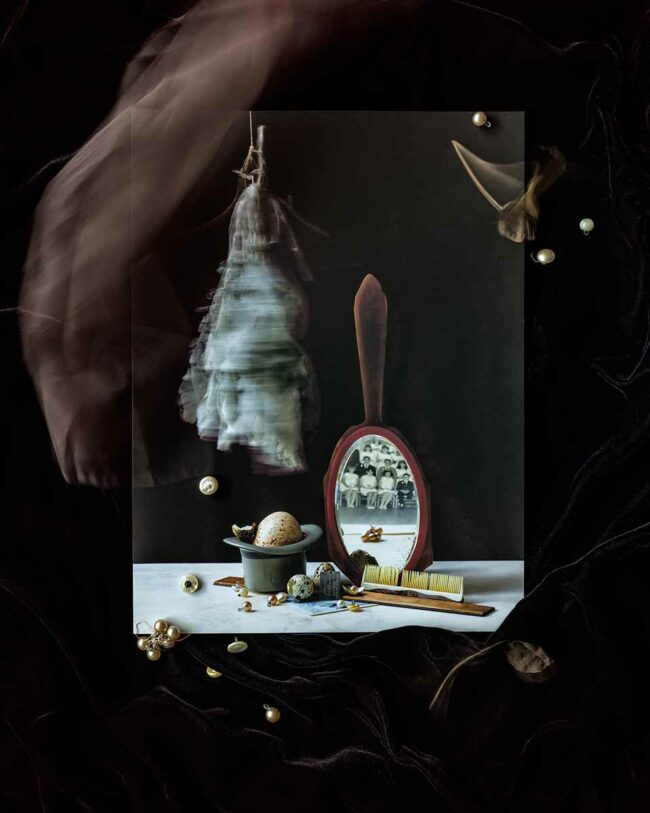
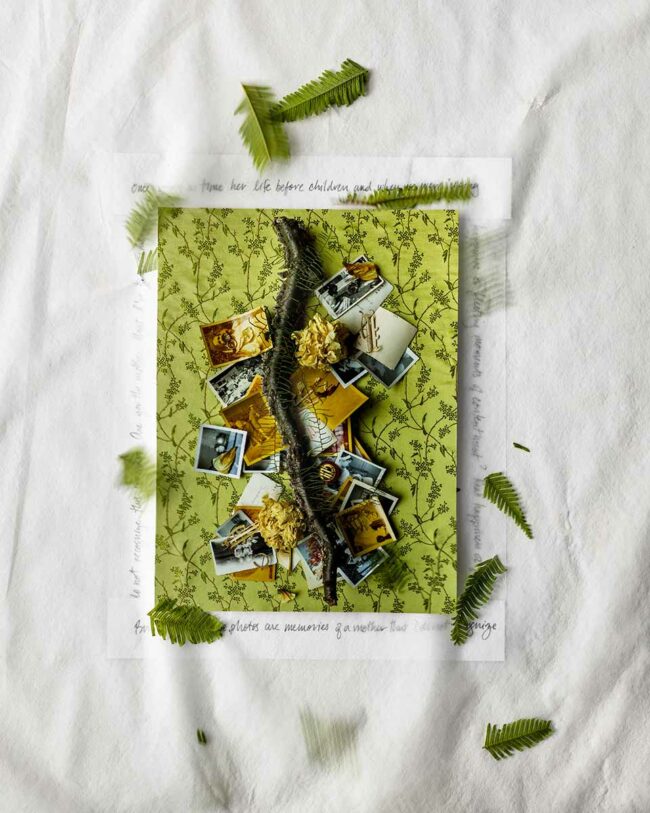
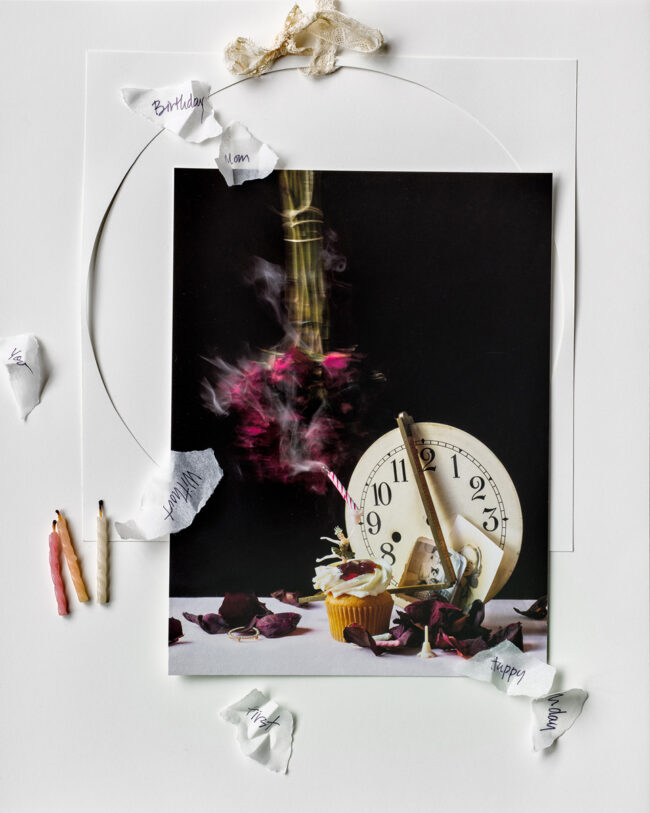
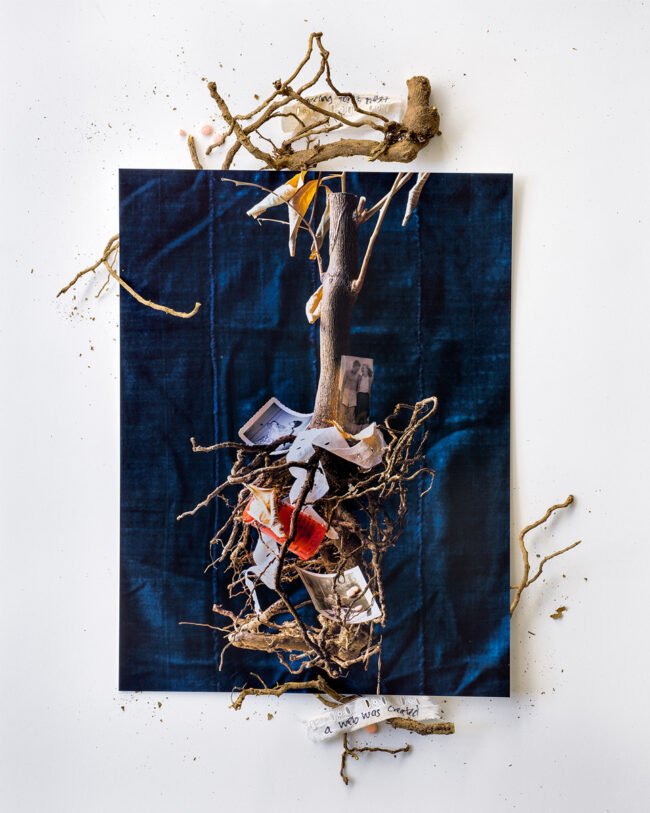
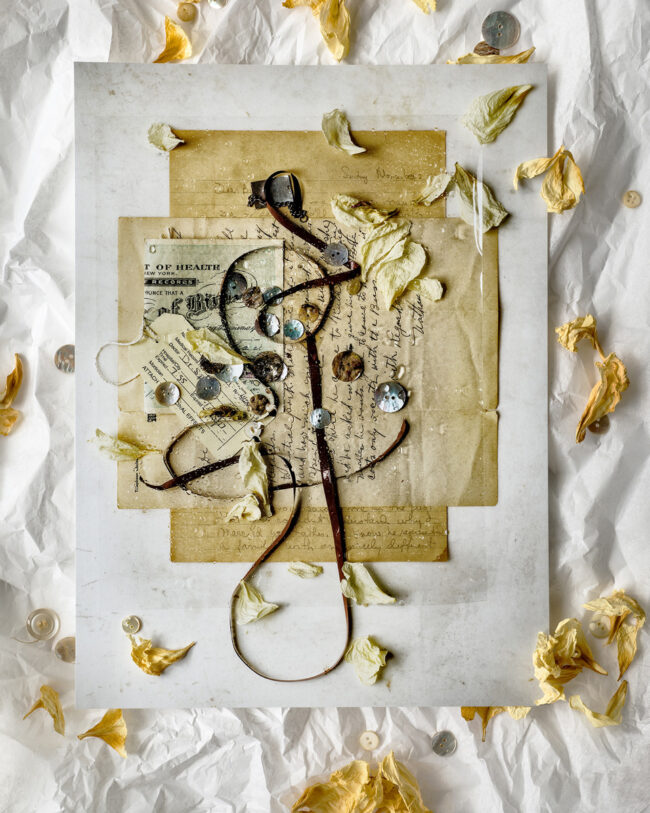
So much of who we are is passed from generation to generation—our genes, our behaviors—molded by our parents and grandparents. My mother’s relationship with her mother was fraught with difficulties and these same dynamics were passed onto me. In 2017, my mother and father—who had not lived together for 50 years—died within three days of each other. I discovered many artifacts from my life of which surprised me, and I had no memory of.
In this series, I combined botanicals with objects and photographs that I found, in order to convey a sense of memory and loss. The organic and volatile botanicals serve as a reminder of the ever-changing nature of memory and emotions—an unstable and profoundly unreliable process.
My practice is to compose and photograph botanicals with the collected objects. I then print out the image and create yet another still life by layering more objects with the print and re-photograph it. This creates a further sense of the complex and layered emotions found within family dynamics.
APE contributor Suzanne Sease currently works as a consultant for photographers and illustrators around the world. She has been involved in the photography and illustration industry since the mid 80s. After establishing the art-buying department at The Martin Agency, then working for Kaplan-Thaler, Capital One, Best Buy and numerous smaller agencies and companies, she decided to be a consultant in 1999. She has a Twitter feed with helpful marketing information because she believes that marketing should be driven by brand and not by specialty. Follow her at @SuzanneSease. Instagram
Success is more than a matter of your talent. It’s also a matter of doing a better job presenting it. And that is what I do with decades of agency and in-house experience.
Heidi: How did this project align with your personal objectives as a photographer? Hans: I have been shooting as an action/adventure photographer for a long time.For the most part my work has been pretty much the same as a lot of photographers in that world (only from a Midwest perspective).Action adventure, generally backcountry based, generally young white males etc.
14 years ago, my wife and I became parents of Tae, a Korean adoptee.Being a part of an inter-racial family just blew apart all that I knew in my world.I have literally been a part of or working in the Outdoor Industry since I was 12.Yet, the idea that the industry was literally doing nothing to portray people of color in any way shape or form became starkly evident to me as I was trying to inspire my own kid to love being outside like my wife and I do.Where his role models? I wrote about this in this piece for The Adventure Journal.Yet as a White Male I felt my voice was irrelevant, mainly because I was the very image of the problem people of color were dealing with in the industry, I didn’t know how to be an ally. Then I realized as a photographer I could use the space I was being given to make change by taking images of BIPOC folks who were out getting after it.I had a choice on where I focused my lens, and I had the contacts within the industry to make those images public.Mind you this was all well before the murder of George Floyd which has since spurred more change and more energy in this realm.
The Outdoor Industry and the cycling industry at the time kept saying (and still is saying) why are there not more BIPOC folks in Outdoor Recreation. The fact is that they are out there in force and always have been, the industry just wasn’t committing to telling the real narrative. Again, as a straight White Male I also realized I was what BIPOC and LGBTQ folks feared and that I must build long term, trusting and lasting relationships with my subjects long before I even got to the idea of creating images of them in their play spaces outdoors.
So, I did and am doing, just that, and I have made it a point to get out of my own insular space in white society and started reaching out to folks and building relationships and building friends with people who I now consider to be family, both to me and to my son. I am extremely thankful to my friends who took the time and energy to work with me and educate me and to just be my friends.That’s a long answer to a short question, but when I was asked to take Alexandera’s portrait, I was honored, I was humbled, and I was also nervous because it’s a lot of responsibility to help tell a story as important as hers is and I also knew the length I had traveled to try and do this work in way that honored her.
Tell us about this portrait. I had exactly an hour or so to take Alexandera’s portrait.Originally, we had more time to do it, but weather kept shutting us down.Finally, we had a day with decent light, and we went for it.The only issue was that it was also the first day of the Wild Rice Season and Alexandera had to be ricing later that morning.Wild Rice is the foundation of the Anishinaabe world view, its importance to their culture can’t be overstated. So, I was under pressure to find some locations and fast.
We were talking a lot about Wild Rice and its importance to her and to her tribe. We were also talking a lot about her challenges with making a living at cycling and her need to find brands that supported her but that also met her need to be true to her identity and her values as a Native person.
How much time did you ride with Alexandera before you pulled out the camera? We rode up a pretty good climb, maybe the biggest climb in Duluth, which may sound funny to say, but we have some decent vertical here due to Lake Superior.Alexandera rides a singlespeed, and her main bike was down for repairs and the bike she rode had a pretty big gear, but she hammered it all the same!We were warmed up ha! Her with her big gear and me with my big camera pack!
Did you scout the location prior to the shoot? I did scout the location before we shot it. I am lucky in the fact that the trail system we shot on was my own personal baby as trails advocate in town.One of the trails is even named after me. I was intimate with the setting.That said, I did go in the week before to look at my locations, sun angles and foliage to make sure I could get a decent set of frames when we met.Shooting in deep canopy is an issue photographers must grapple with here in the Midwest and over time I have come to grips with how to use it in my favor and being intentional is rule number one.
What do you hope your photography does to remind folks that this area as an outdoor mecca and not a flyover country and flat as a board? This is essentially my main goal as a photographer.I have lived all over the world.Europe, Rocky Mountains, East coast.Yet I have always come home to where I am from. That’s because my extended family is here, its because I love Midwesterners and Minnesotans in general because of their soft-spoken attitudes and because I find it visually to be a really amazing place.I always say that there is discrimination and stereotyping of people, but there is also discrimination and stereotyping of place.
The Midwest has been beaten down and ignored forever and especially when it comes to adventure sport.My goal is to dispel that and to engage my viewer to the point where they can’t ignore the visual fascination they have with an image I have produced.That’s not easy to do.As all photographers know, your eye sees one thing and the lens another and sometimes even the most insanely cool spot comes out boring as hell in an image.
I must work doubly hard to collect images that can play on a national stage. The reality is that there are some amazing zones here, many that are threatened by development, mining and all the other outside forces that could destroy these places and experiences forever.They need to be highlighted.Both to build a national constituency, but also amazingly to prove to local Midwesterners that they live somewhere special, and they need to protect it.Sounds crazy right?But again, the marketing out there has so built this idea that to be adventurous you need to be in the mountains, right? Nope.
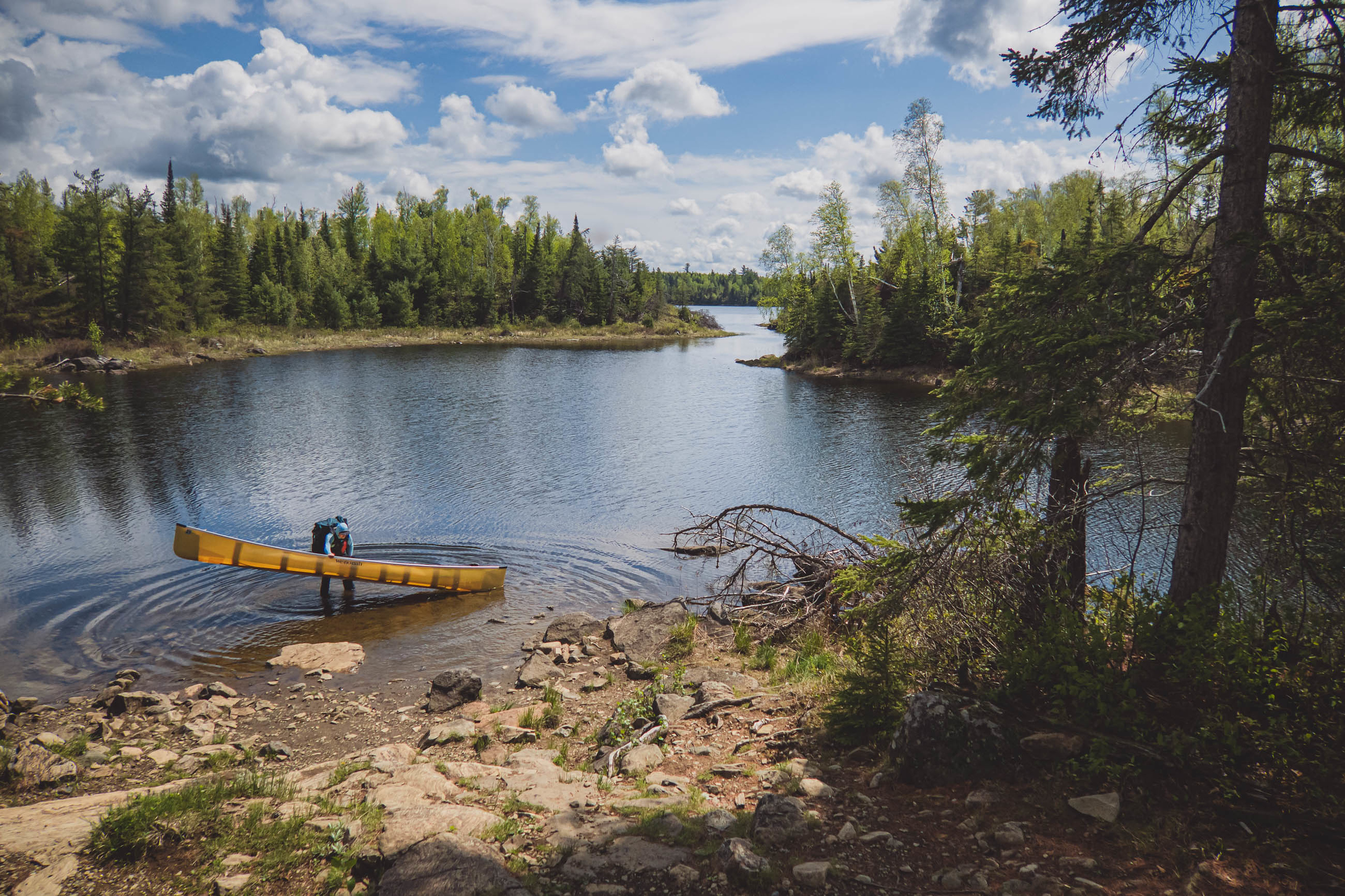
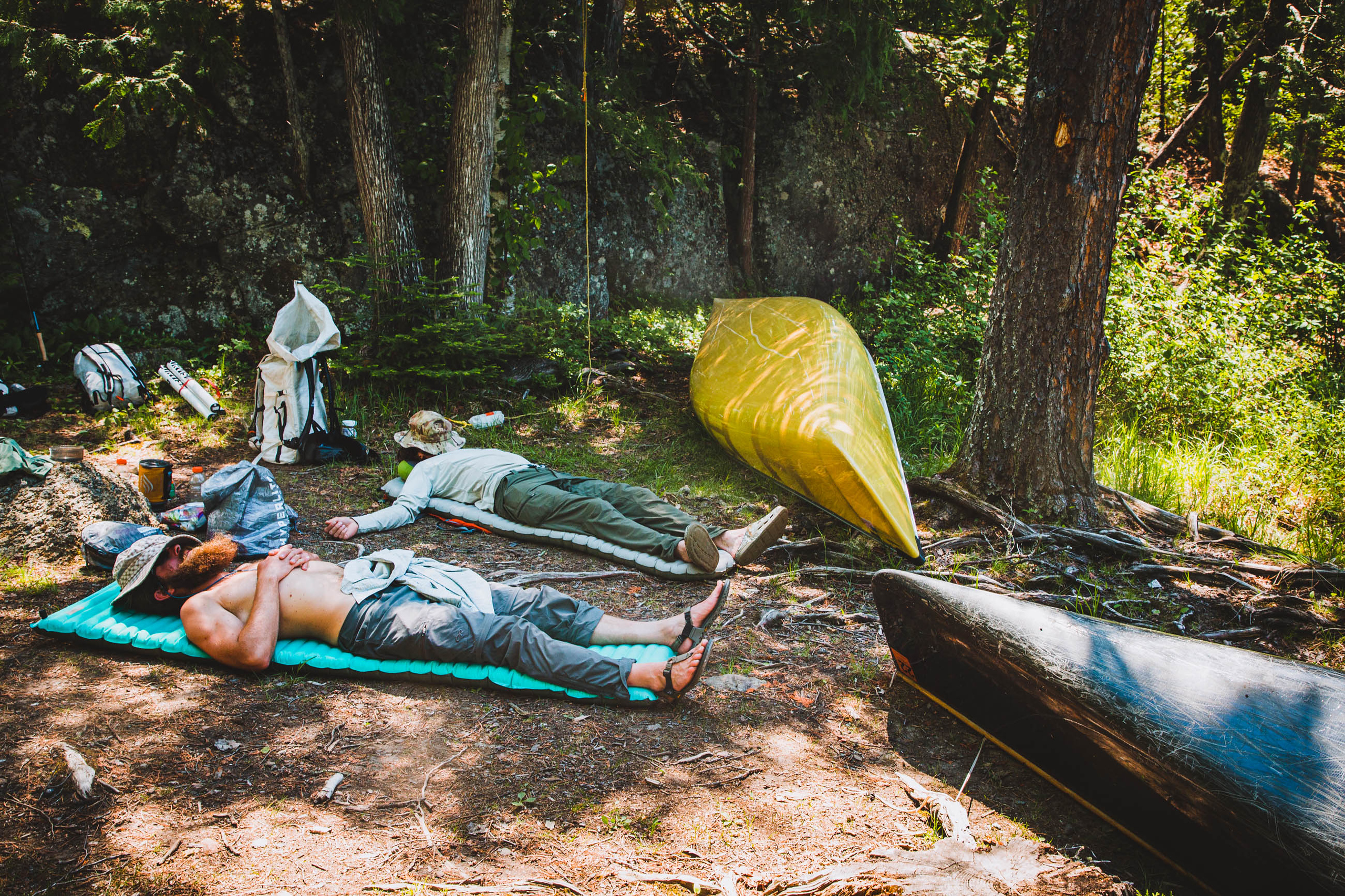
What are you up to these days? Surviving ha!While I would love to say that photography is my one gig, that is not true.I work a full-time job as the Engagement Director for The Minnesota Land Trust (which involves a lot of photography!) plus being a husband and the dad of a 14-year-old kid during a pandemic and during one of the most politically divisive eras of our country.Plus trying to shoot at a level that keeps my skills honed and my name in the photo game. This summer my focus is on shooting in the Boundary Waters Canoe Area Wilderness.I am on the board of a nonprofit that is fighting the proposed mine near the Wilderness, and I am collecting as much content as I can for them to utilize it for social media and other campaigns.I leave next week on a 7-day solo canoe trip into the wilderness.Its super minimalist which is a great challenge.I am going to try and shoot the whole thing with a Canon G5X MKII point and shoot to save weight.It’s not the camera but the person who aims it right??Right??This is a continuation of some work I did with the brand Hyperlite and the Provo Brothers (Ian and Neil) last summer.
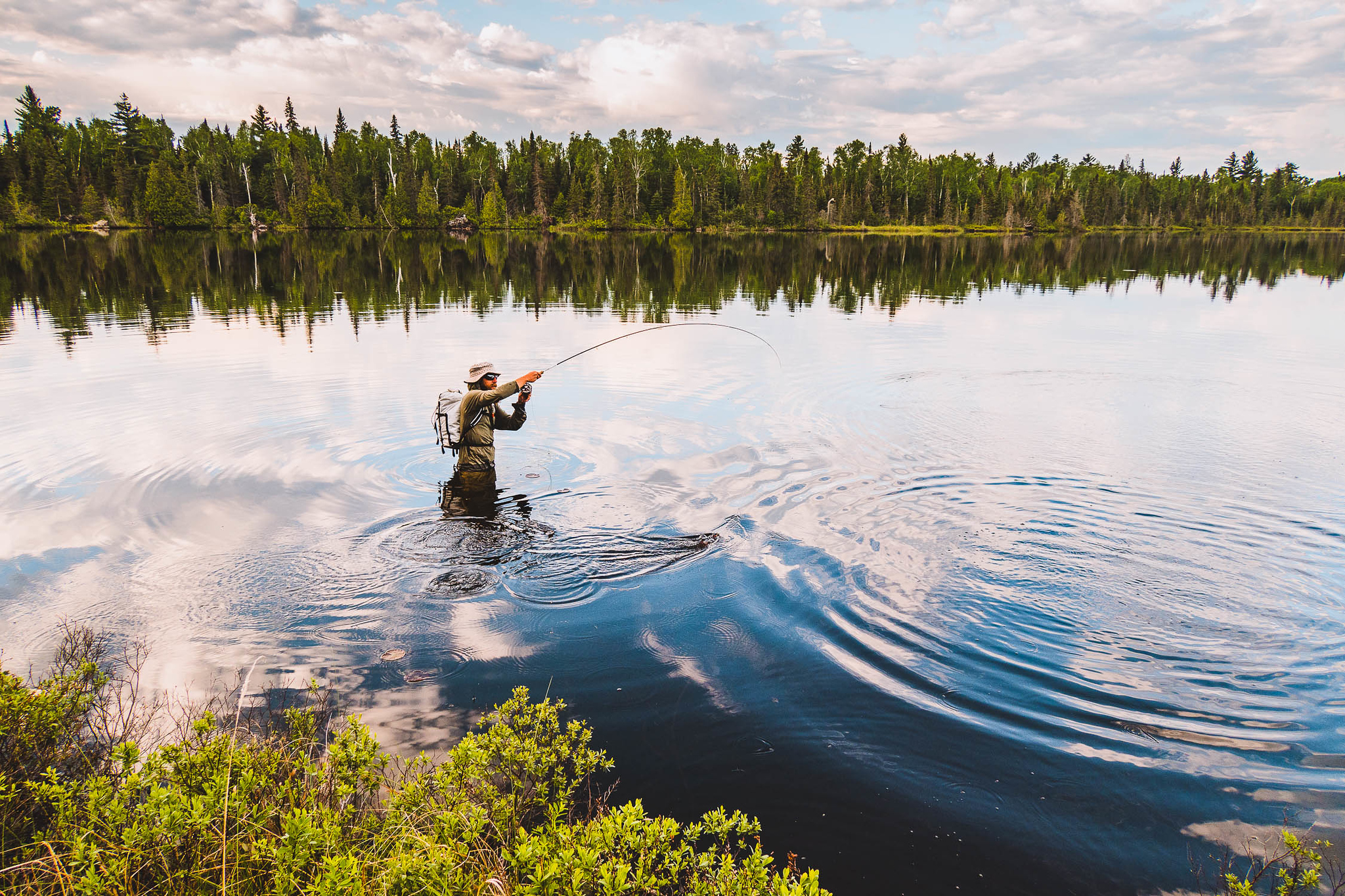
I also just finished with a week of shooting with poet/writer Riverhorse Nakadate, a Patagonia Ambassador for Flyfishing, the gig was for the Flyfish Journal.We had a gas and quite an adventure which included bikes, rafts (swimming -unintentionally) and flyfishing in SE Minnesota’s driftless area.While MTB and cycling have been my jam for decades, flyfishing has taken on a big focus in my work as it’s something I feel is supremely underrepresented in Minnesota and yet is unique and world class. I have been grinding away at this work for such a long time and achieving my goals slowly but surely.The success has been glacial but to date I have been in most of the big outdoor publications and building a solid brand, but to me the biggest success is that noted outdoor personalities like the Provo Brothers or Riverhorse are starting to come to Minnesota to work with me and that is the biggest indicator or success that I can imagine and the one I am most proud of.
To keep this weekly column going, for 10.5 years, I have a few tricks up my sleeve.
If I were an actor, the “self” I share would be considered a character, like when Jerry Seinfeld played a “version” of Jerry Seinfeld on his hit 90’s television show, “Seinfeld.”
Image courtesy of Seinfeld Memes
But I’m not an actor.
I’m a blogger.
So people assume the “me” I’m sharing is authentic, whole, and thoroughly considered.
Really, it’s two out of three, as I present a slightly more daring, absurd, and risky side of myself here, for entertainment purposes.
Why am I telling you today?
Good question.
Last week, I wrote a passionate long-read, taking down all of San Francisco as “uncool,” due to decades of unabated gentrification, rabid capitalism, raging income inequality, and failed public policy.
I held nothing back, and was heavily motivated by the heavenly metaphors embedded in the human shit I kept finding at my feet.
(Not subtle, those metaphor gods, when I was in San Francisco.)
But the “aging hipster calls whole city uncool, as way of reifying his own cool status” narrative…
I get it.
So when I got called out on Twitter by my buddy Matjaz Tancic, who last I checked was in a LITERAL FUCKING LOCKDOWN in Shanghai, I heard what he said.
There is more to every story, and unless you’re running around late at night, seeing what the parties look like, listening to the bands, checking out the underground galleries, it’s not exactly fair to judge.
I hear you, Matjaz!
So I admitted my “take” was a little reductive.
But I’m claiming the columnist’s privilege:
Sometimes, we see a particular narrative form in our heads, think it over for a bit, and then write it up as it happened, because it makes for such a great story.
Matjaz was not alone in his critique, though.
Over the many years of this column, one person has kept reading all along, while consistently sticking his neck out to share opinions in the comment section.
(It’s like having a super-fan, but one who cares enough about books, ideas, and photography that he’s willing to add his perspective, making the article better for the extra chunks of wisdom at the end.)
This person is Stan Banos, based in San Francisco, and I’ve certainly given him random shout outs over the years.
In my opinion, Stan is always intelligent, considered, historical, and contextual in his commenting.
I don’t know if I’ve ever disagreed with anything he’s written, in all my years.
His karma is good by me.
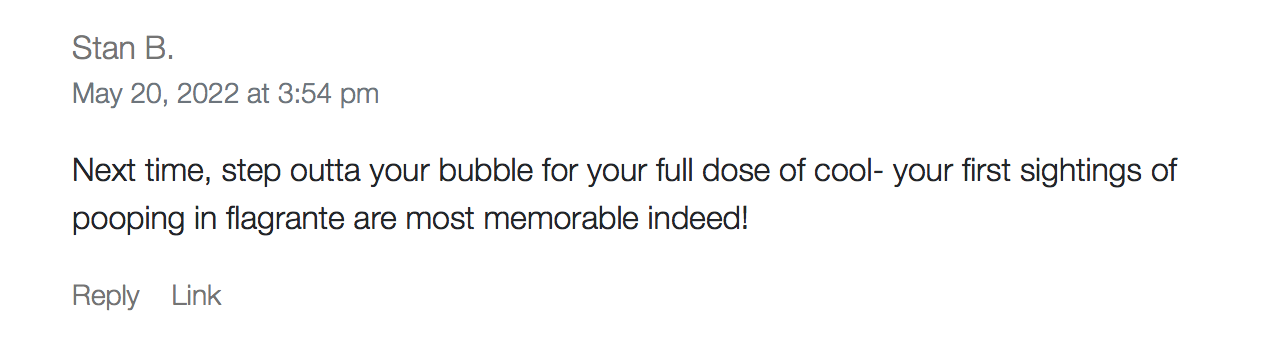
So when Stan commented that I need to get out of my SF bubble, even in jest, I felt it was worth hearing.
Imagine my surprise, then, when I went to the book stack this morning.
I found a package from May 2021, and it seemed the one for today.
But just below it was a Blurb book, which must have come in around the same time.
Certainly, it had been here so long I didn’t know what it was, and the post-mark was beyond-smudged.
There was no way to know exactly how old the book was, but it felt right.
So I opened the Blurb book box, (with the smudged postmark,) and would you believe what I found?
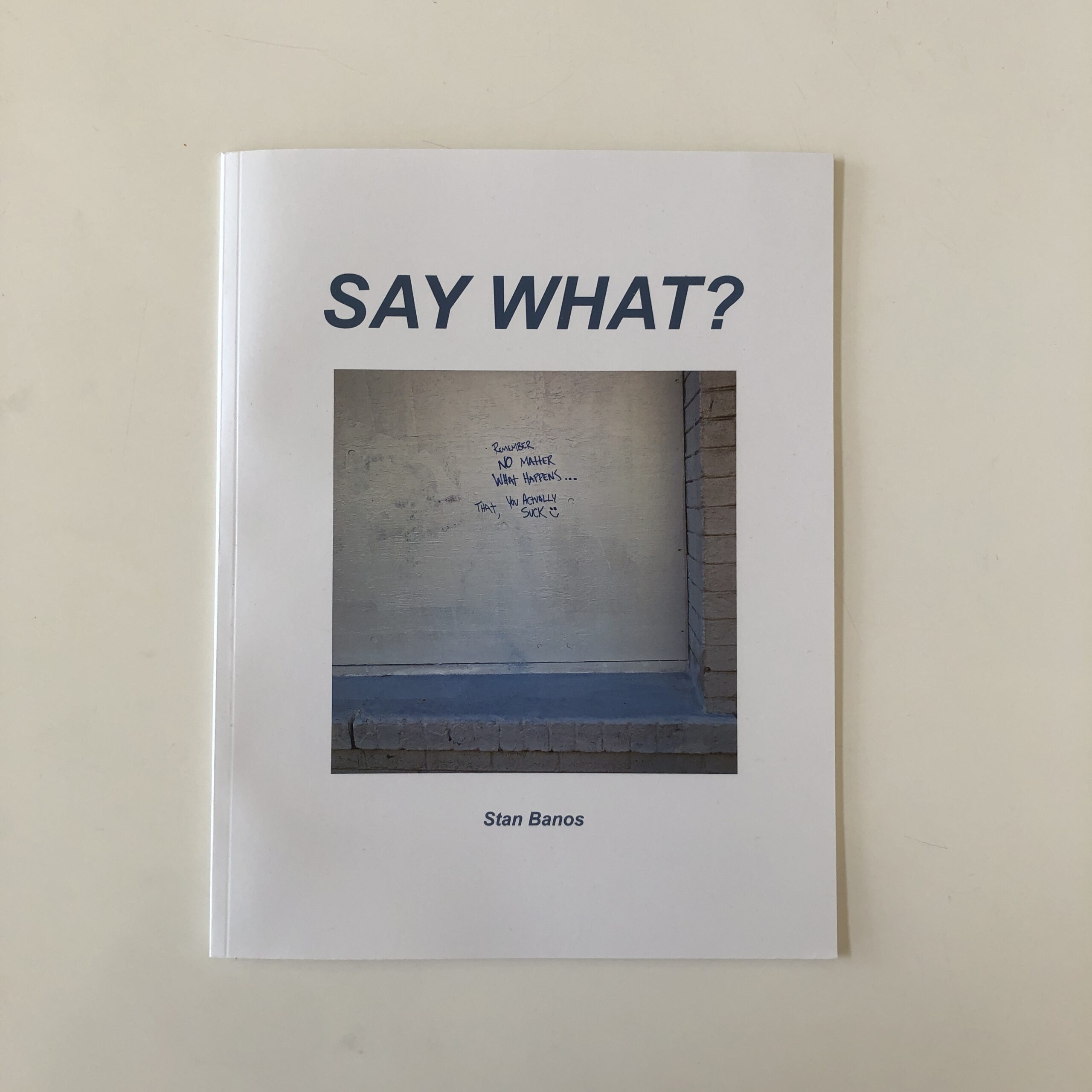
A beautiful, little production named “SAY WHAT?” by none other than Stan Banos himself.
Perfect!
I treated his work with the same critical eye I would anyone else’s, but it made me think of a theory I just shared with a client the other day.
“Remember,” I said, “a book is an experience.”
From start to finish.
So as artists, we need to plan every aspect of that viewing experience.
How long does it take to get through?
Where does it lag?
How can we keep the viewer’s attention locked in our story, whatever it may be?
This book, “SAY WHAT?”, totally nailed that for me.
It’s short, poignant, focused, and uses text very well.
Good job, Stan!
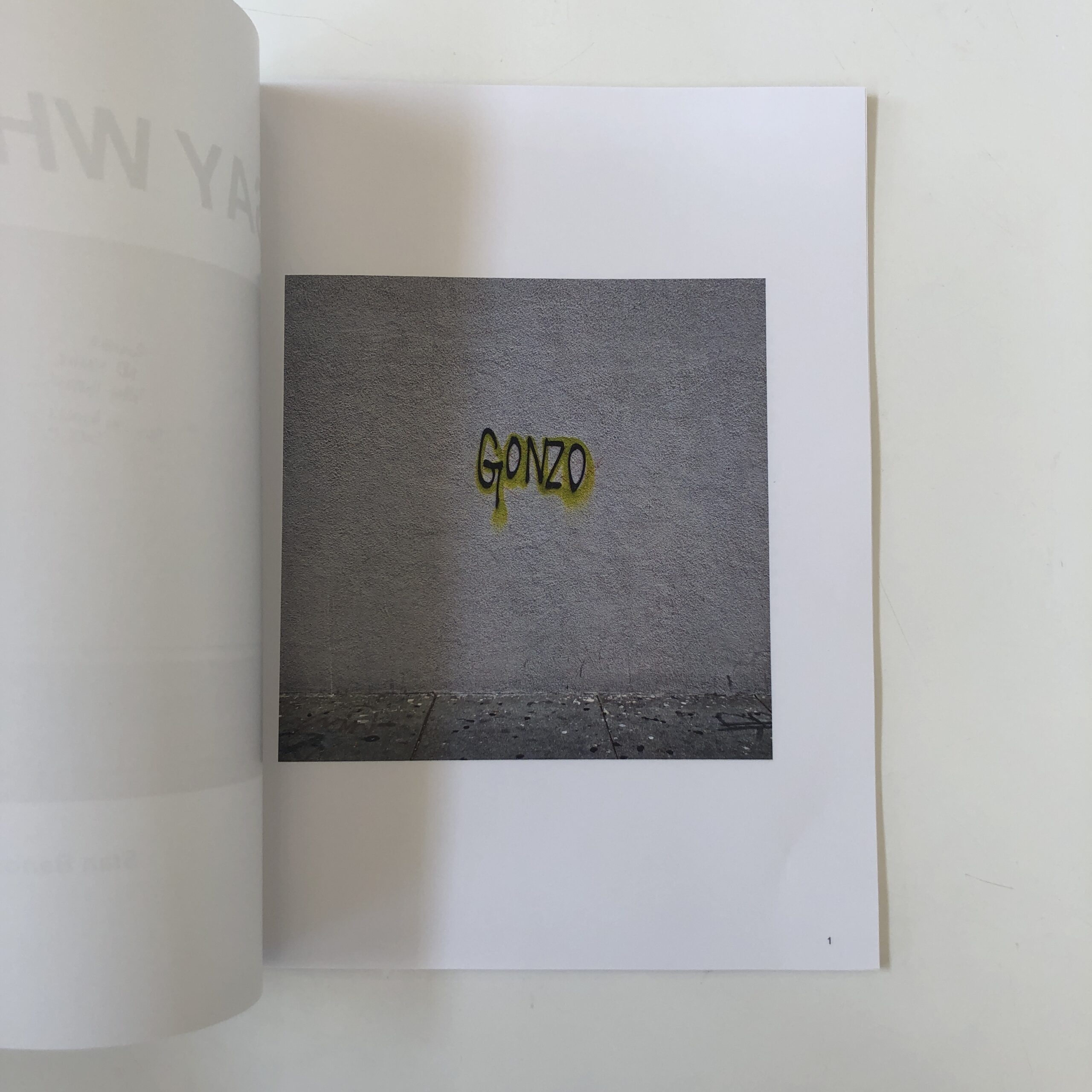
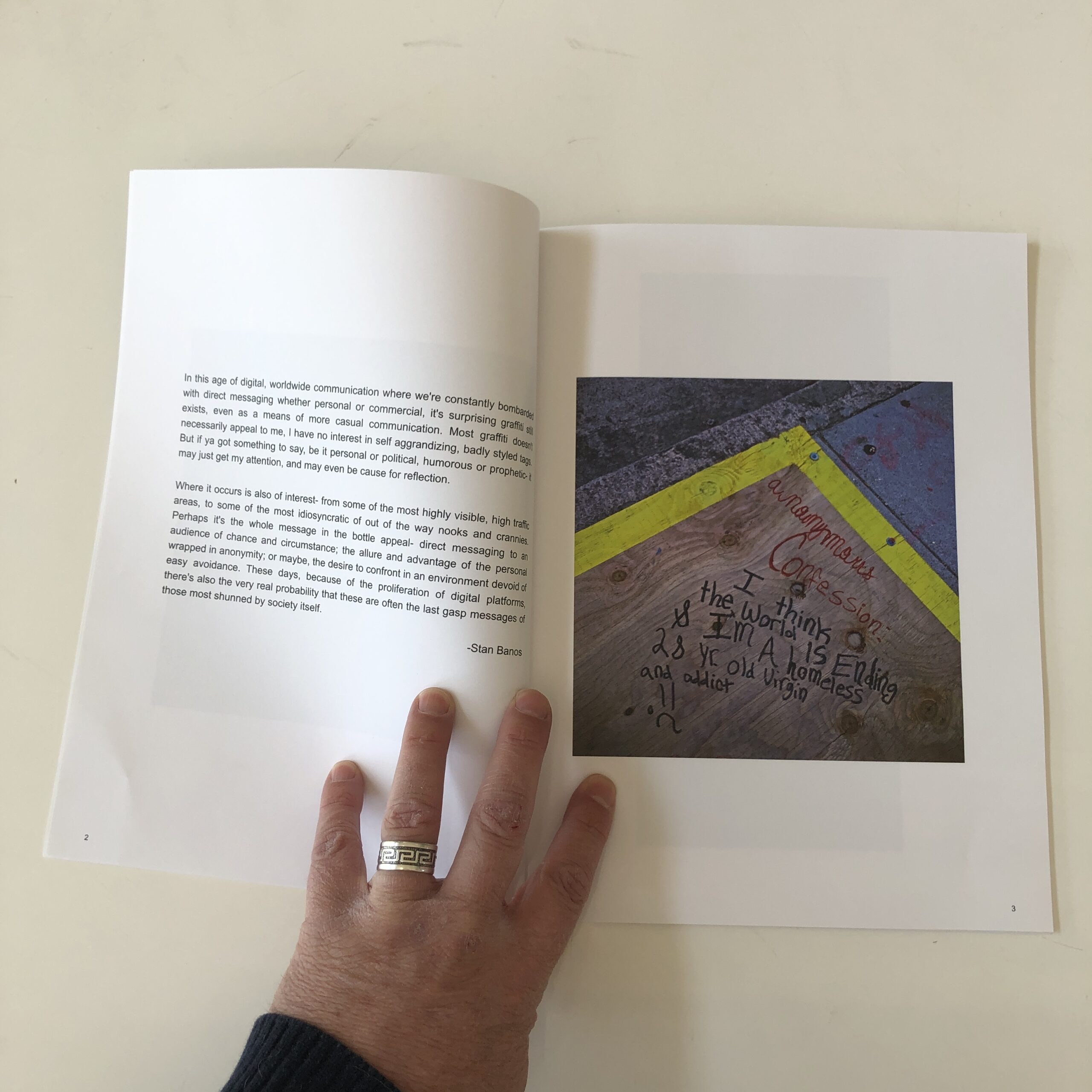
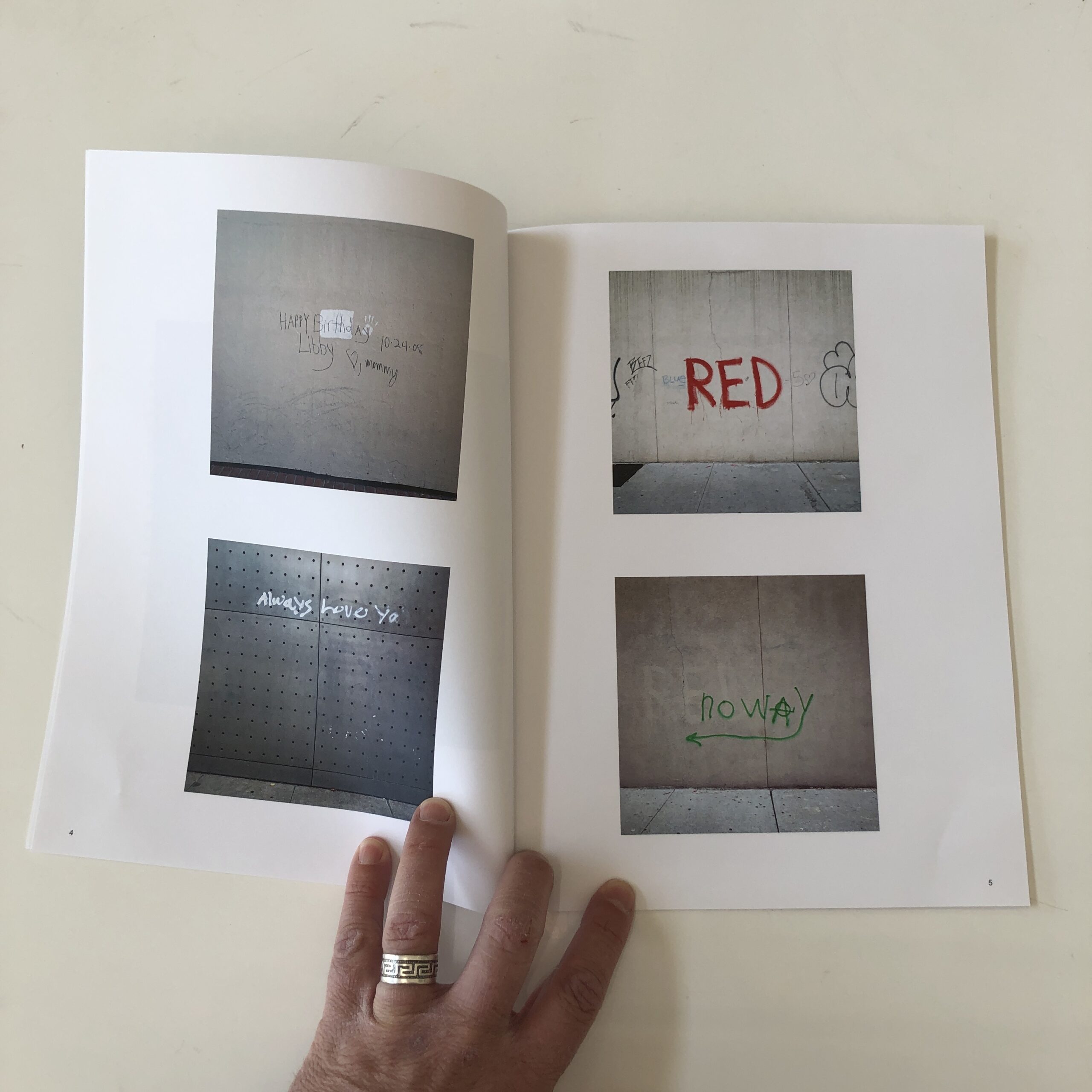
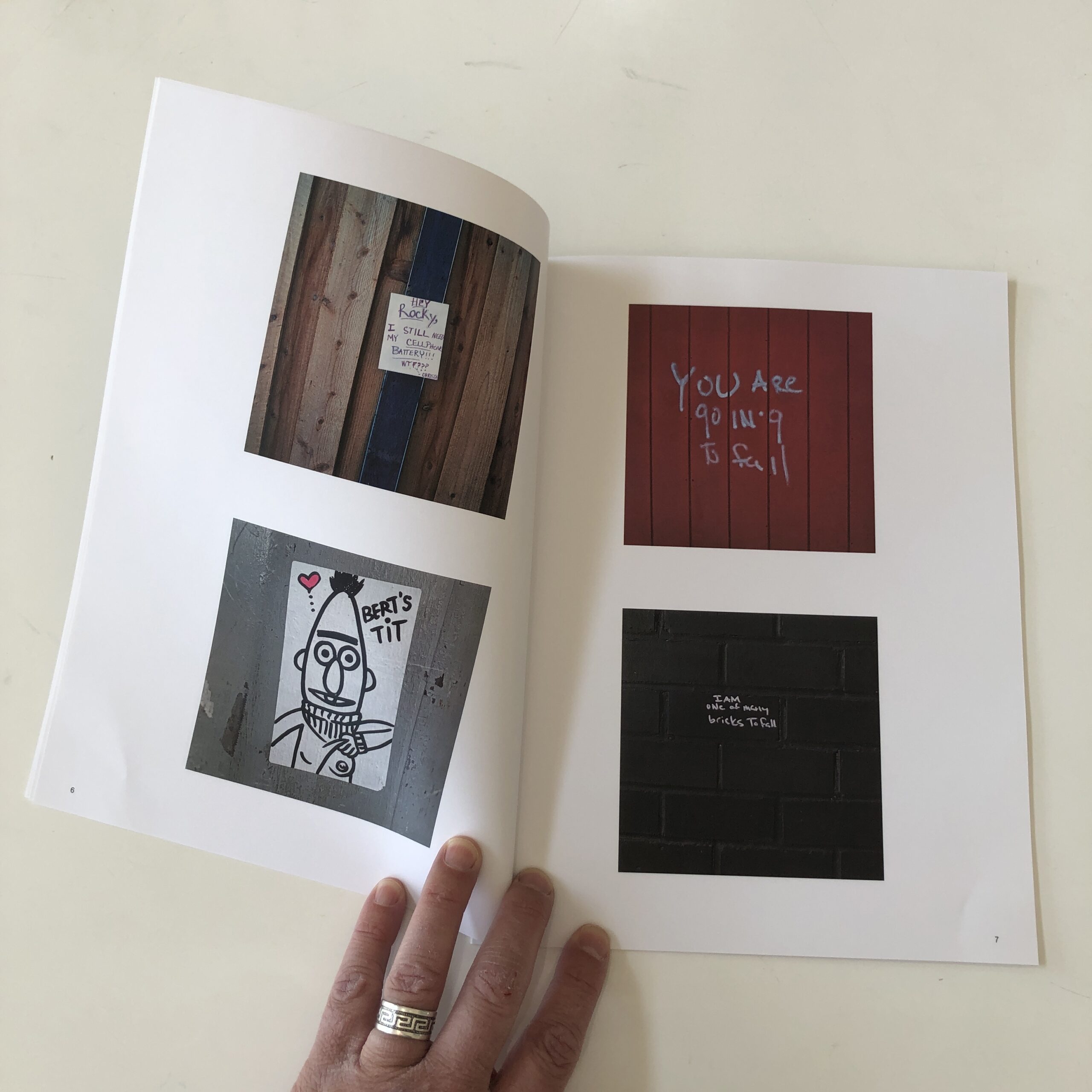
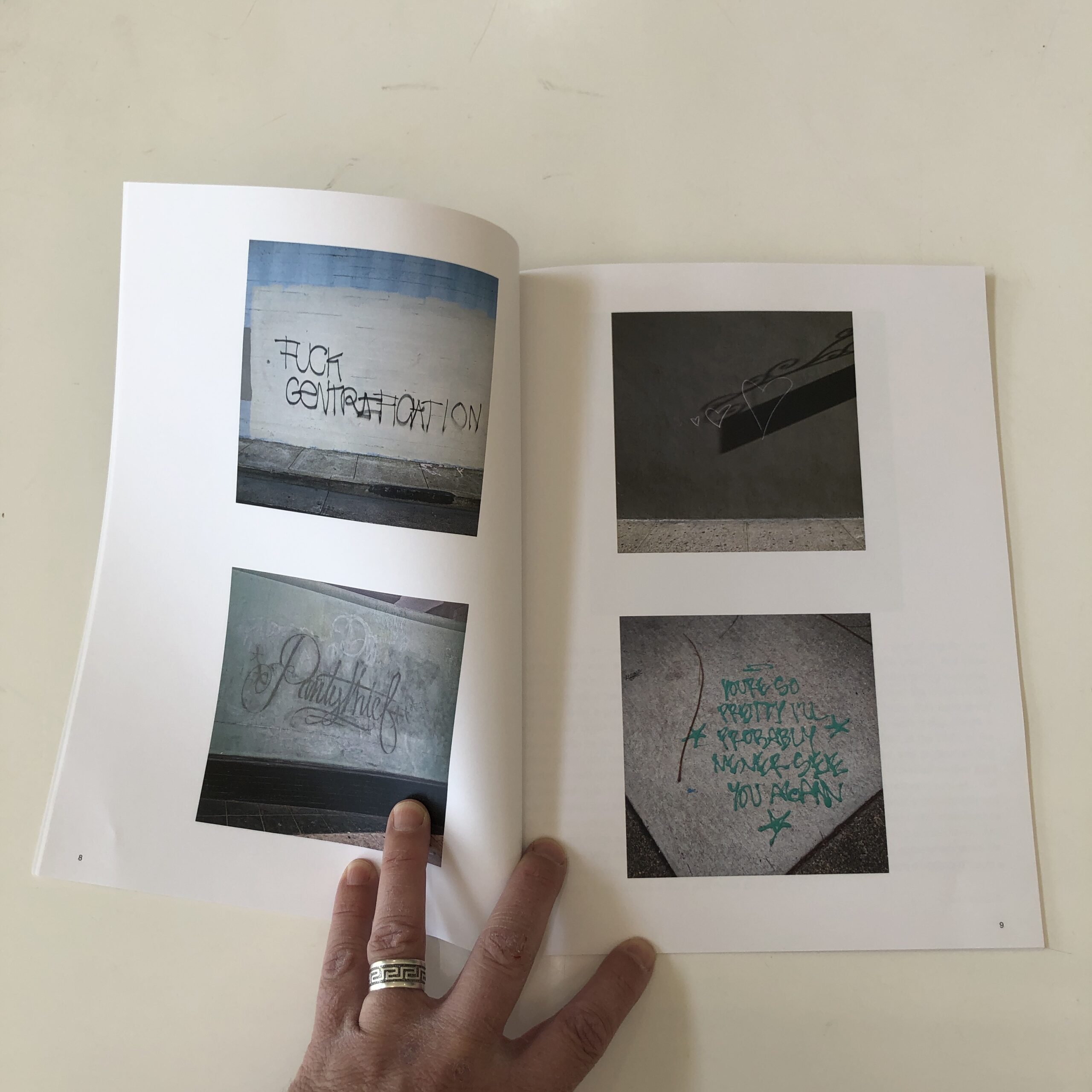
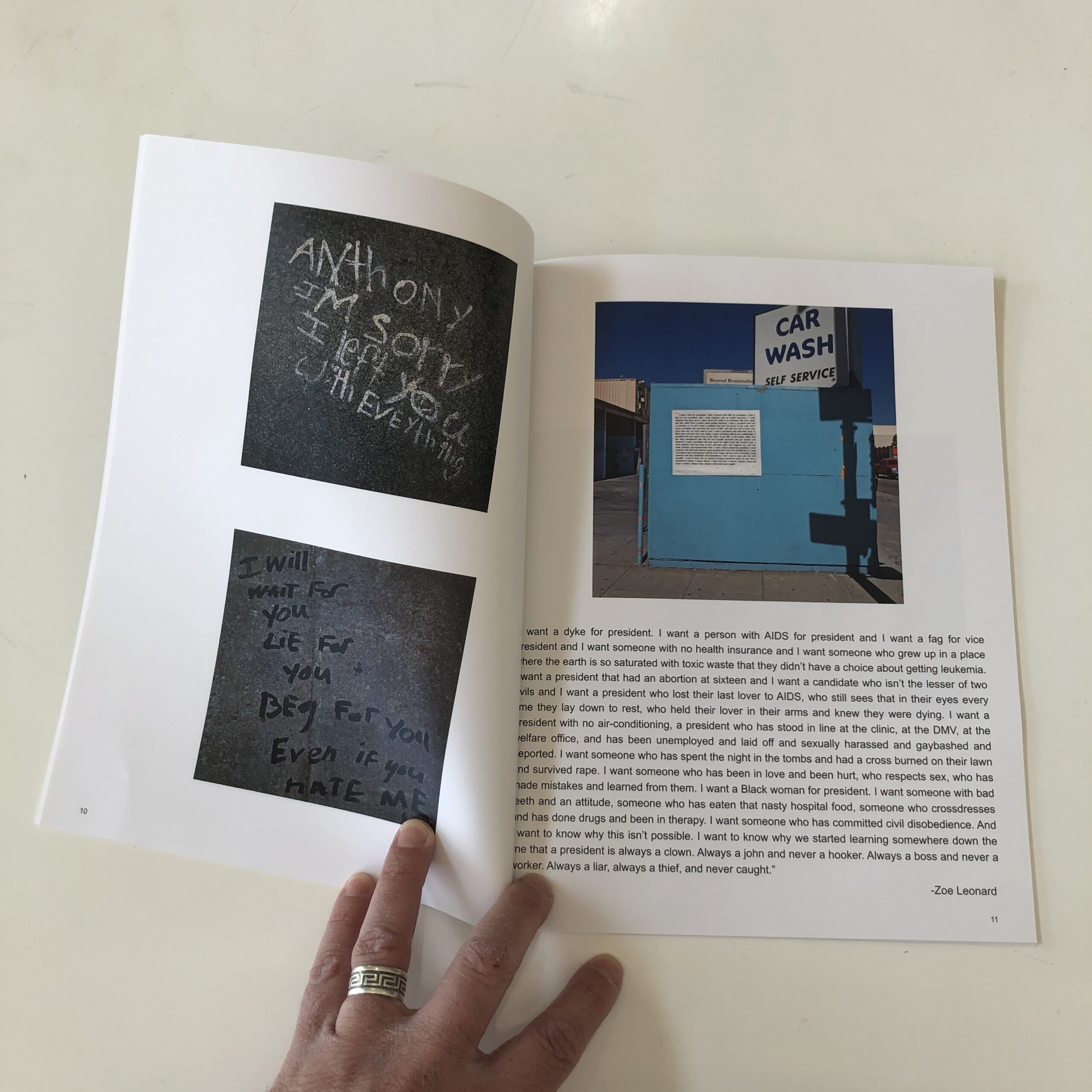
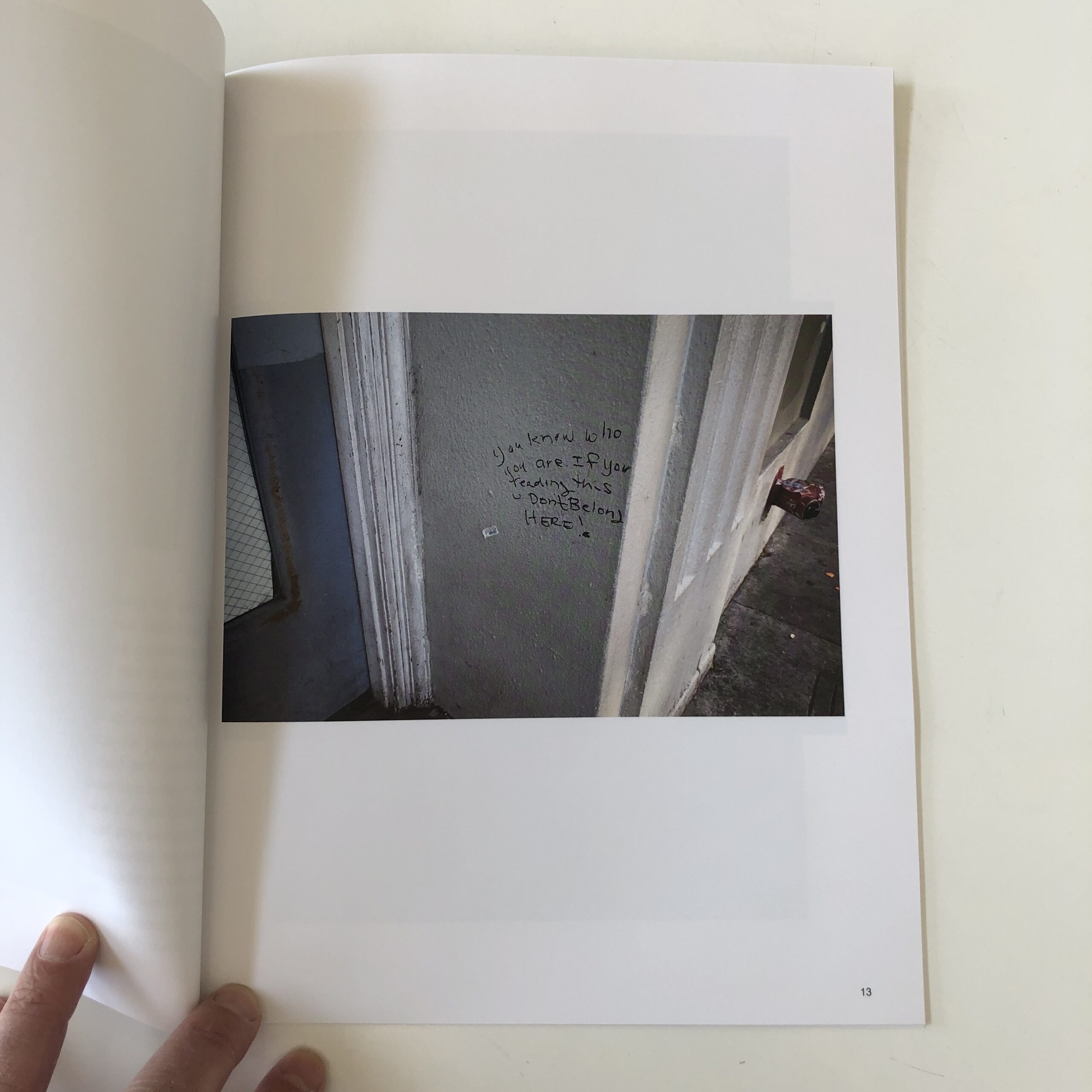
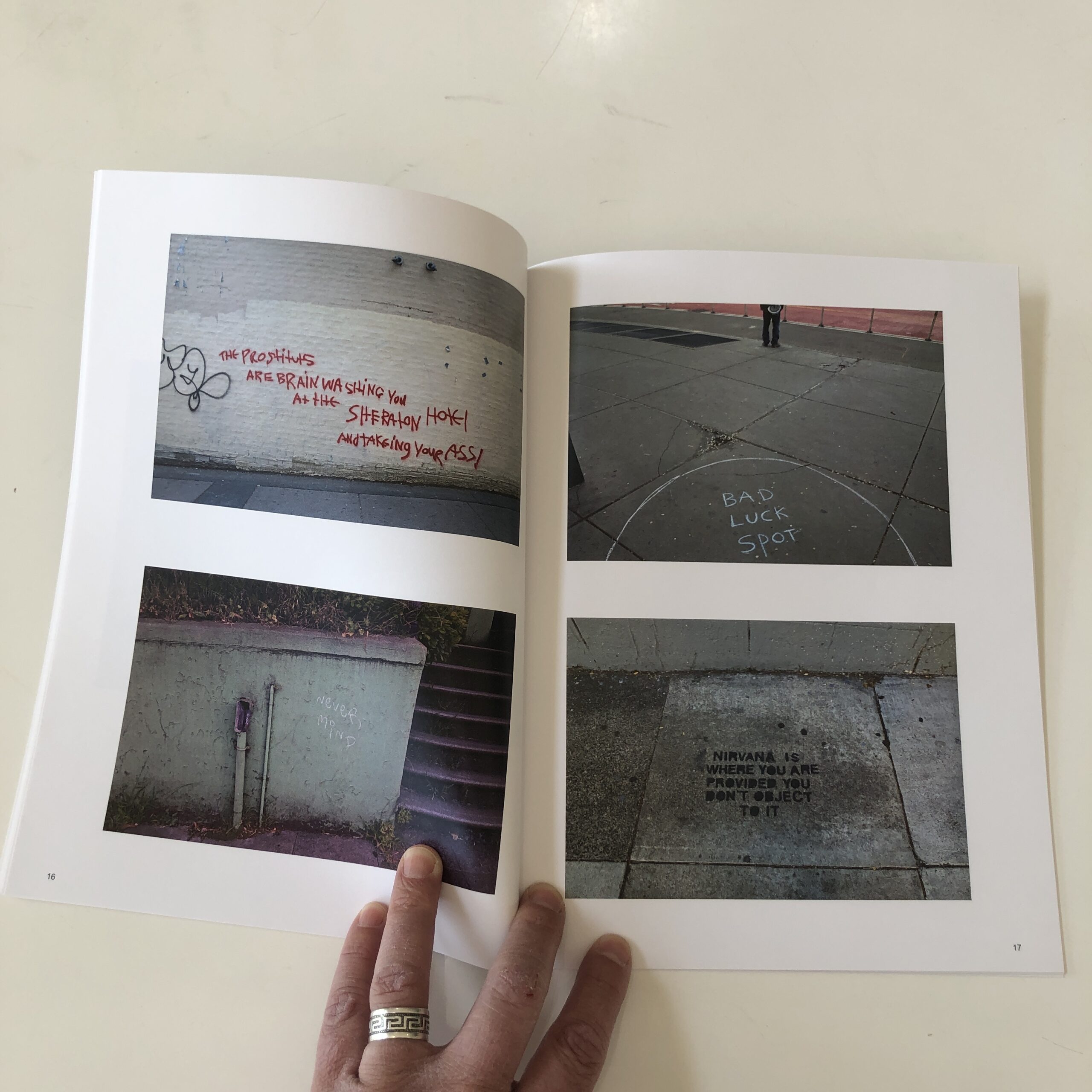
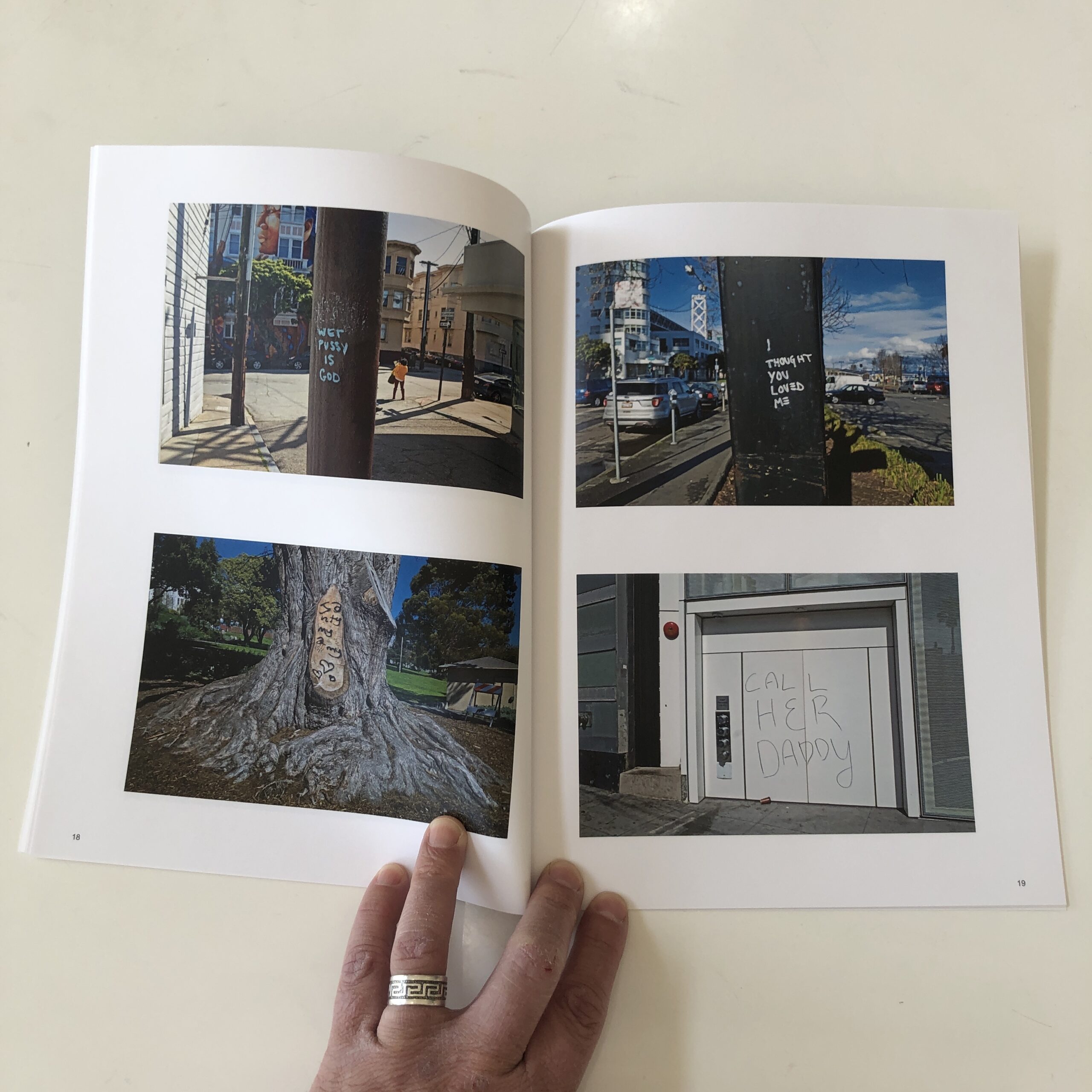
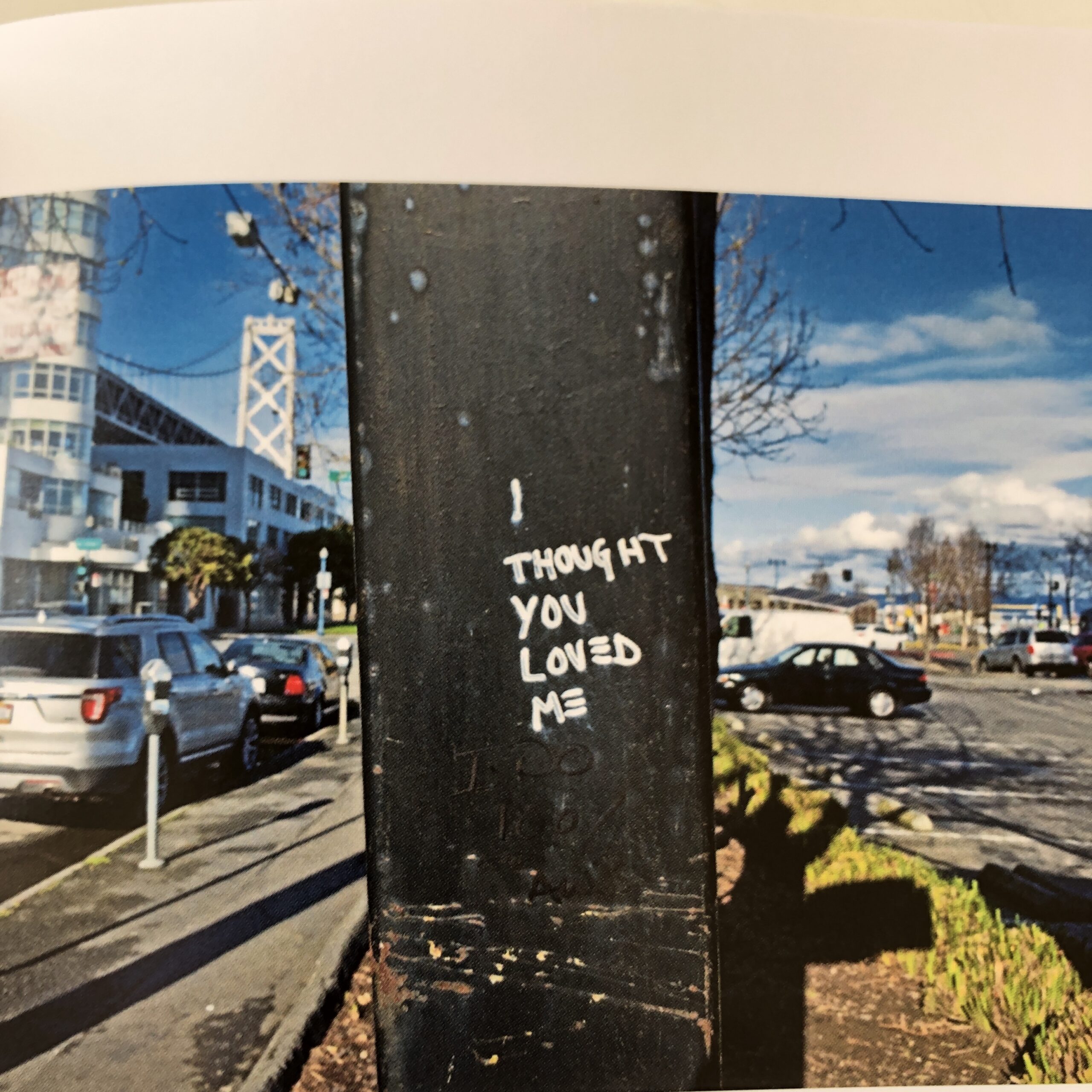
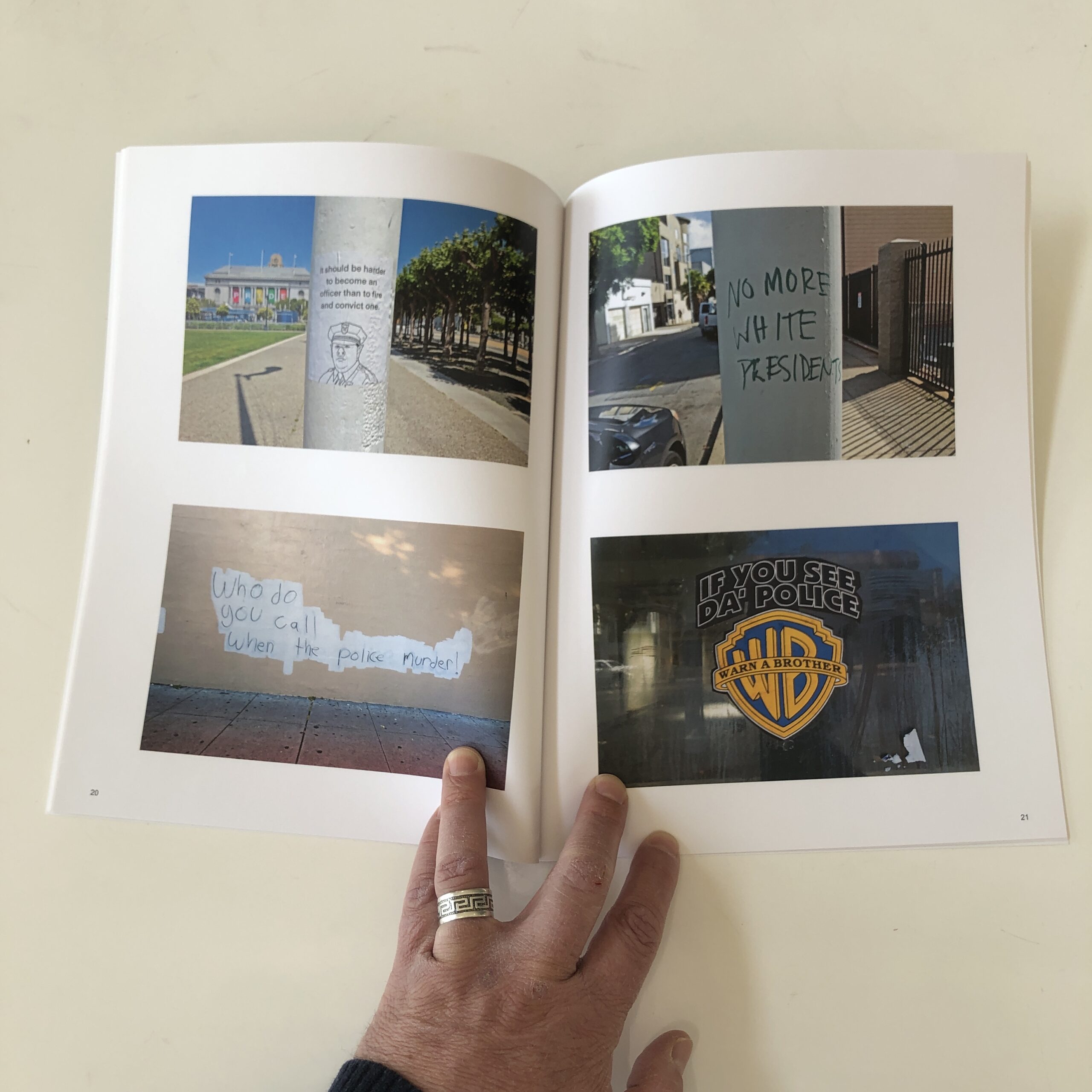
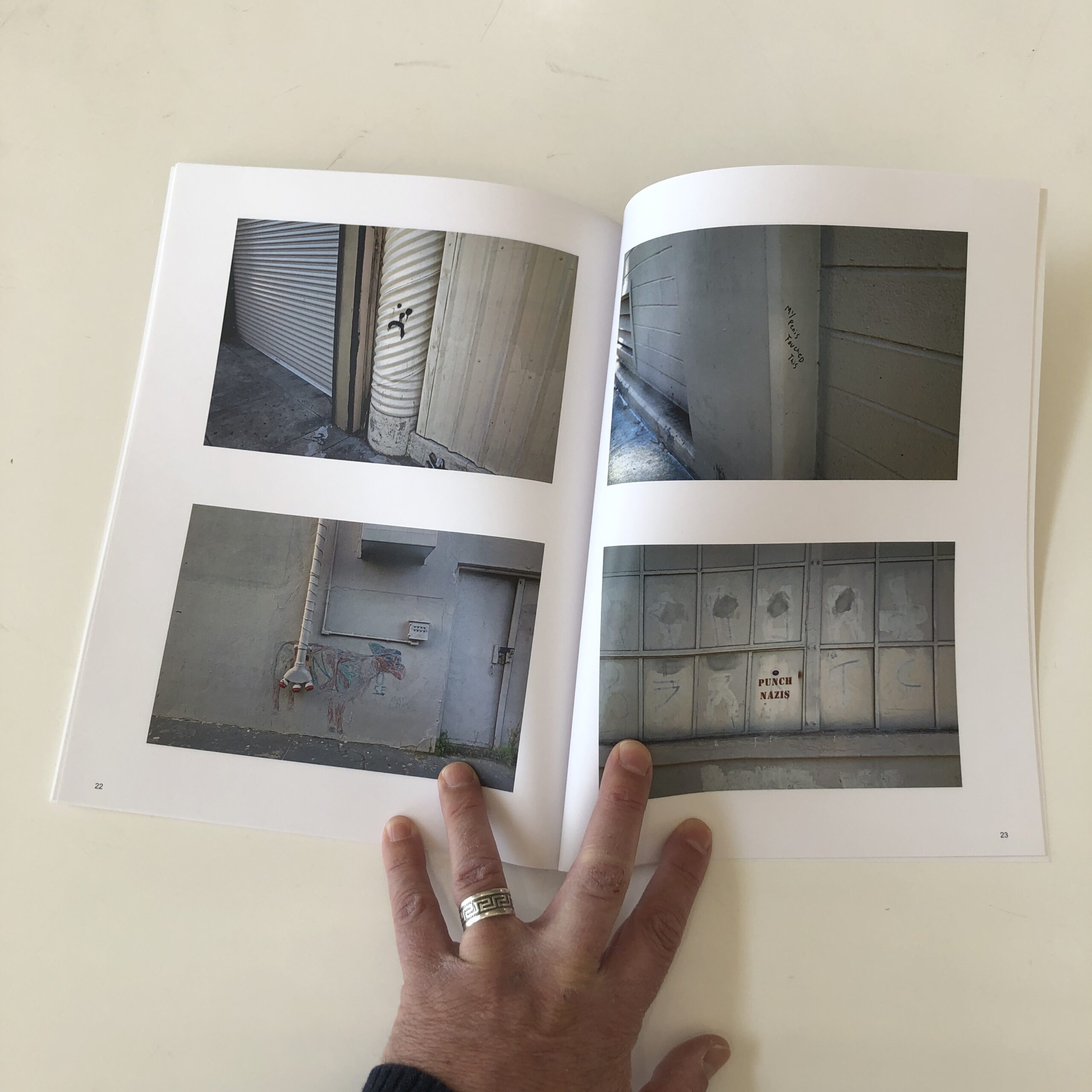
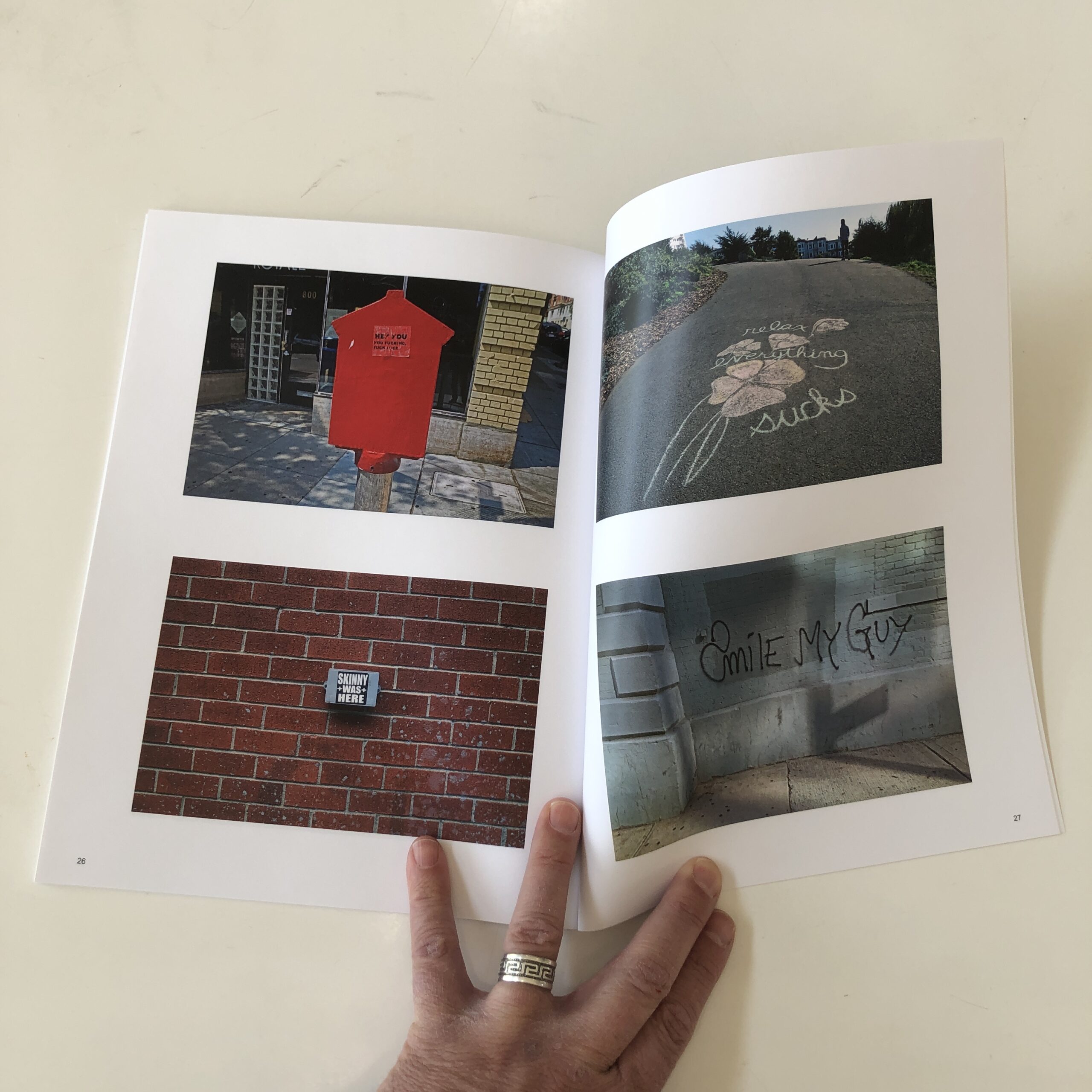
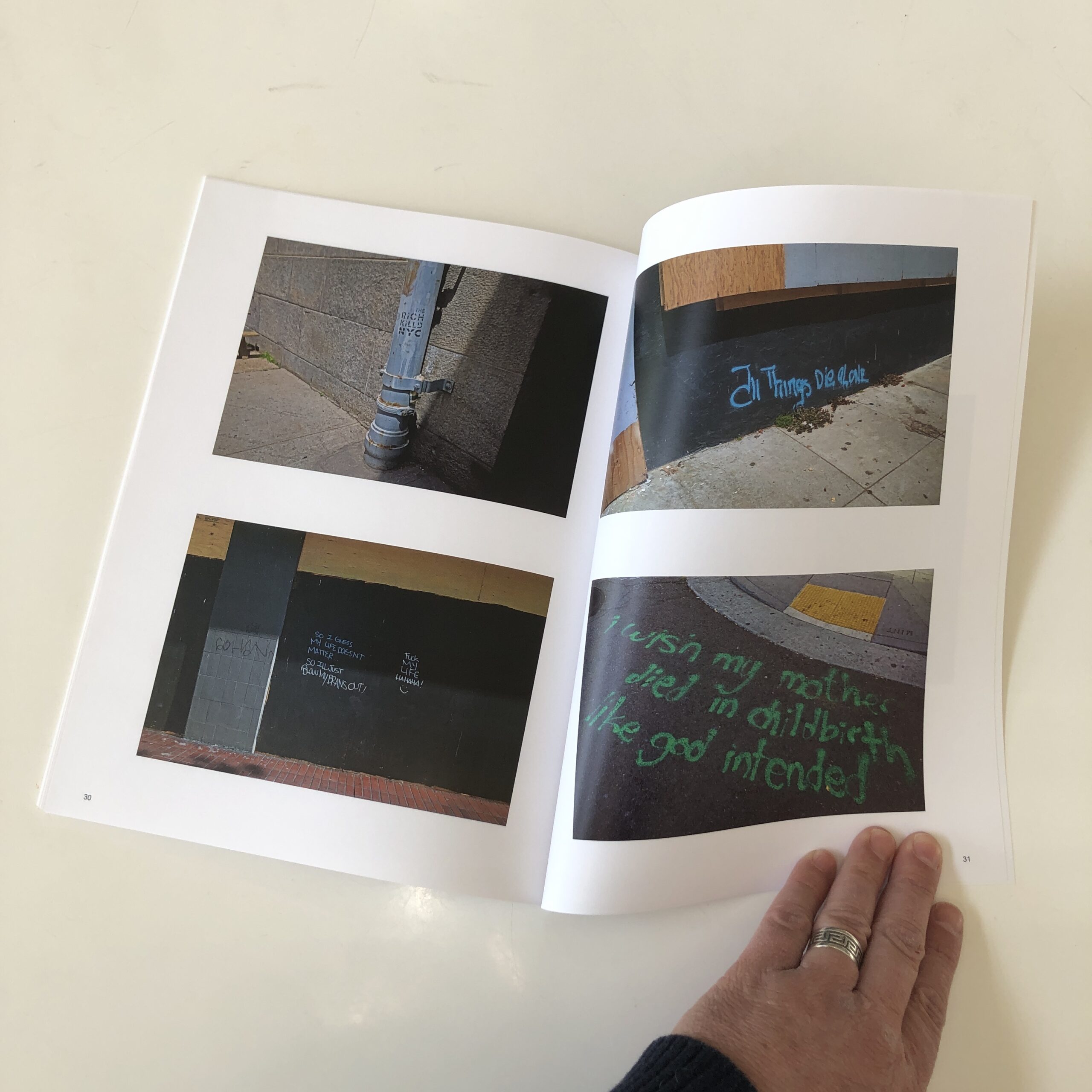
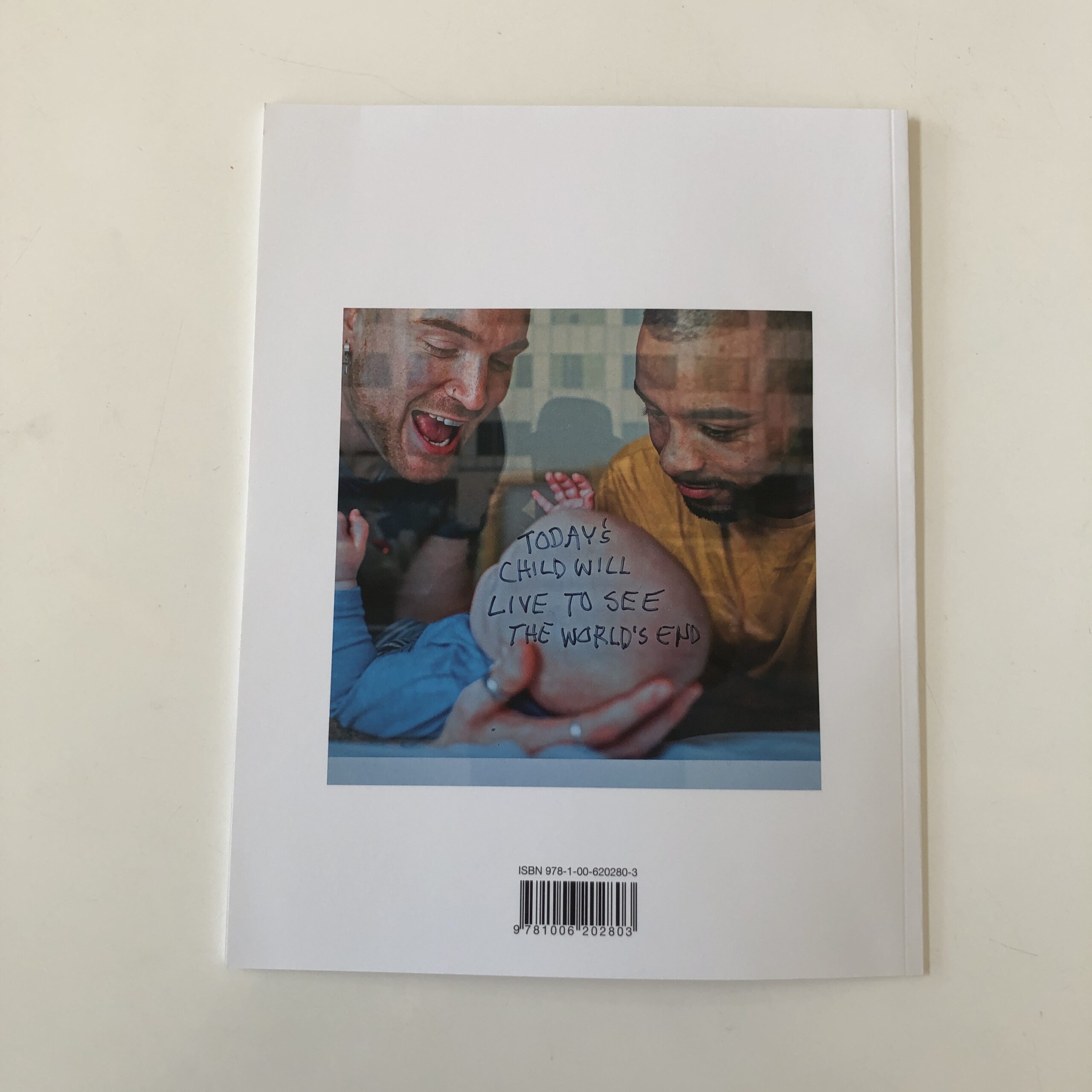
The cover and page 1 show us images of graffiti in an urban environment, and sure enough, that’s the theme.
Page 2 has a concise, direct statement from the artist, (Stan,) theorizing there are declarations of need, cries for help, hidden messages, and occasional wit encoded on the streets and super-structures, if only one would take the time to look.
Again and again, we see images of messages; things I would have walked past.
Things so many of us HAVE walked past.
But not Stan.
Collecting these photos in one sequence, as a book, is a home run for me.
It’s lovely.
At one point, we see an image of some sort of screed, or manifesto up on a wall, by Zoe Leonard, and after I squinted to read it, realized it was printed right there for me, below.
Page after page, I took time to read each piece of graffiti, and then imagined the photographer, walking slowly around his neglected city.
It made me think about how quickly I rushed up and down the hills.
How quickly I rushed to judgement.
Because this book is cool, and Stan’s cool.
So there must be other great things still going on in San Francisco.
If you’d like to submit a book for potential review, please email me at jonathanblaustein@gmail.com. We are particularly interested in books by artists of color, and female photographers, so we may maintain a balanced program. And please be advised, we currently have a significant backlog of books for review.
The Art of the Personal Project is a crucial element to let potential buyers see how you think creatively on your own. I am drawn to personal projects that have an interesting vision or that show something I have never seen before. In this thread, I’ll include a link to each personal project with the artist statement so you can see more of the project. Please note: This thread is not affiliated with any company; I’m just featuring projects that I find. Please DO NOT send me your work. I do not take submissions.
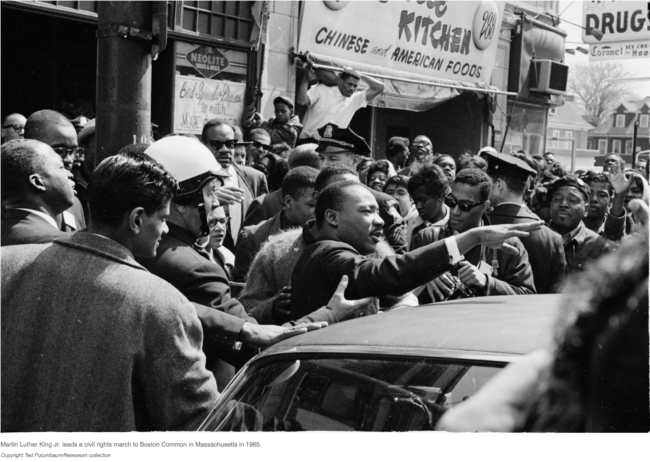
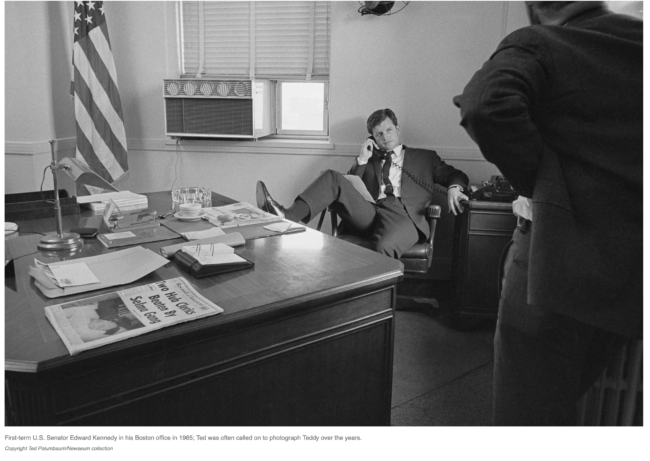
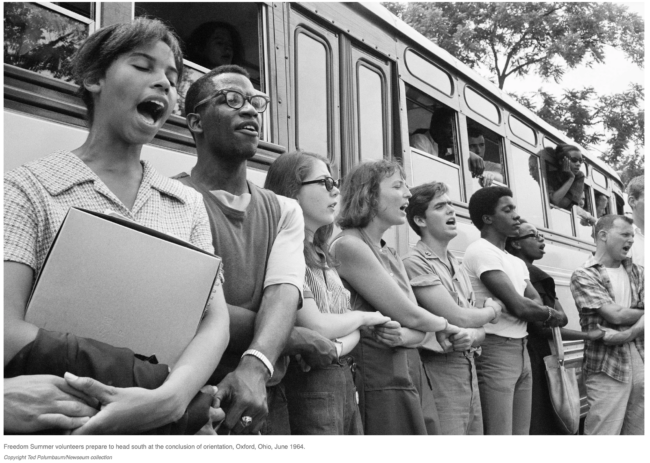
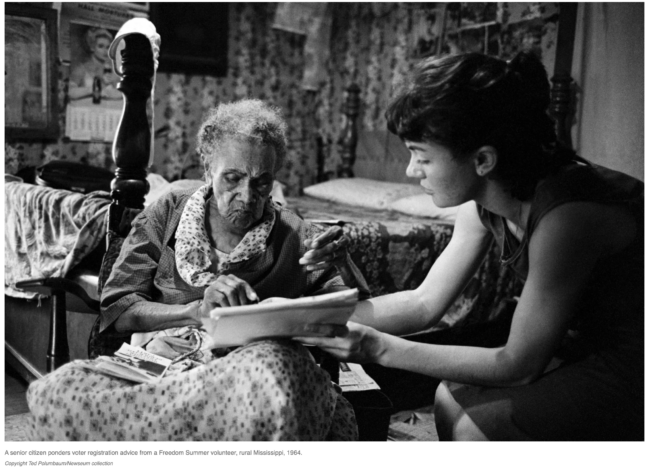
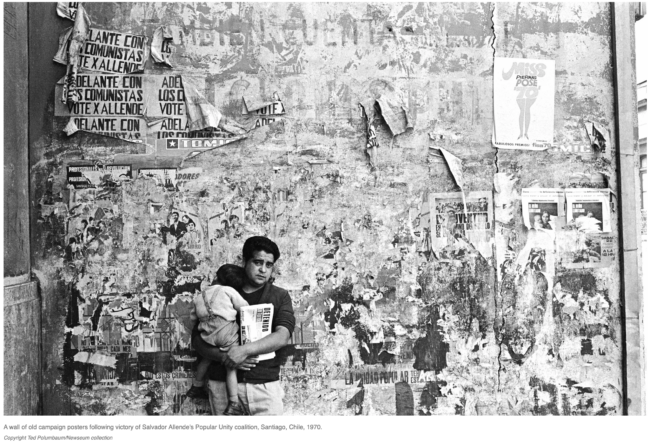
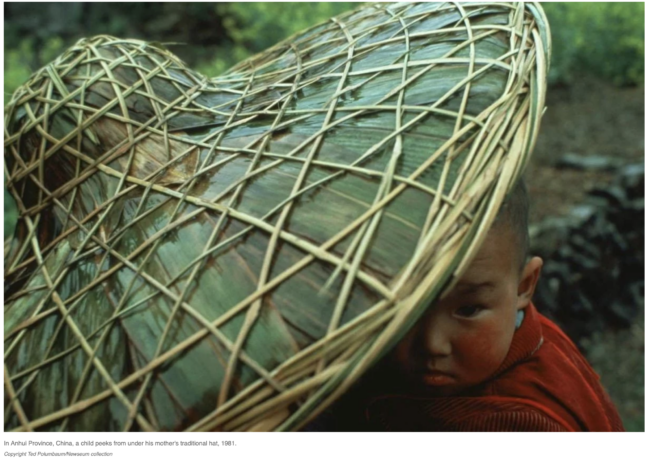
“He’s been dead 20 years, and we are still conversing.” So writes Judy Polumbaum in All Available Light, a new book showcasing her father’s robust photography career.
Ted Polumbaum started his journalism career as a news writer in Boston in the early 1950s, but at the height of Sen. Joseph McCarthy’s hunt for communists under the guise of the House Un-American Activities Committee (HUAC), Ted was called in to testify. As a student at Yale, he’d been a member of a progressive student group that the HUAC had later declared subversive.
At his hearing, Ted took the Fifth Amendment, challenging the Senate’s right to call his personal life into question. As a result he was fired from his job, and blacklisted from most news organizations.
And so, he took back up a hobby from his childhood — photography. His portfolio caught the eye of LIFE, and he’d go on to do 400 assignments for the magazine, and regularly worked for many other publications as well.
Judy spent 20 years after Ted’s death combing through his archives and interviewing his friends and family members.
“One of my regrets is that I never interrogated my father before he died,” she says. The result of all her work is All Available Light, what Judy calls a “collective memoir.” It gives the reader a closeup of midcentury American history and the contemporary world through the eyes — and camera lens — of one man.
Ted, who remained a freelancer his entire career, willingly photographed any assignment LIFE gave him — whether it was the hula hoop craze, people packing into photo booths, an evening with Jackie Kennedy while her husband received the Democratic nomination in 1960, or civil rights activists protesting across the South.
“Many of his assignments were political protests,” Judy says. “Today protest photography is a beat. Back then, you know, a lot of the major media didn’t even take protests seriously. And my dad, if he heard of a protest, he would run to it to cover it. He thought these things should be documented for posterity.
Ted’s interest in progressive issues continued even after his politics nearly ended his career. He and his wife, Nyna Brael Polumbaum, were active in Boston, organizing study groups about America’s involvement in Vietnam, and events in support of civil rights.
Today, in an era where “objectivity” is a heated debate among media circles, such active political involvement may be frowned upon. But Judy makes a critical distinction: “He never claimed not to have a perspective or a point of view,” she says. “But he didn’t deliberately go about trying to propagandize. He showed what he thought was important.”
Two of his subjects were George Wallace, governor of Alabama, and Louise Day Hicks, a U.S. Representative from Boston — both of whom were staunchly against desegregation. Both were “anathema to his politics,” Judy says. “But he didn’t try to make people look bad, even if he vehemently disagreed with them. He showed them as they were.”
Ted’s politics made him popular among perhaps an unlikely audience — his children’s friends. “My brother and I used to joke that our friends just purported to be our friends — they really wanted to come over and talk with the old man,” Judy says laughing.
Her friends had more conventional parents, Judy says, so “they wanted people to talk to, and my father loved to talk with young people and talk politics. He was a great conversationalist. He was a philosopher and a poet and a terrible punster.”
In researching and writing All Available Light, Judy has been able to keep those conversations with her father alive — and share them with a new generation.
APE contributor Suzanne Sease currently works as a consultant for photographers and illustrators around the world. She has been involved in the photography and illustration industry since the mid 80s. After establishing the art-buying department at The Martin Agency, then working for Kaplan-Thaler, Capital One, Best Buy and numerous smaller agencies and companies, she decided to be a consultant in 1999. She has a Twitter feed with helpful marketing information because she believes that marketing should be driven by brand and not by specialty. Follow her at @SuzanneSease. Instagram
Success is more than a matter of your talent. It’s also a matter of doing a better job presenting it. And that is what I do with decades of agency and in-house experience.
Heidi: What inspired this series of images?
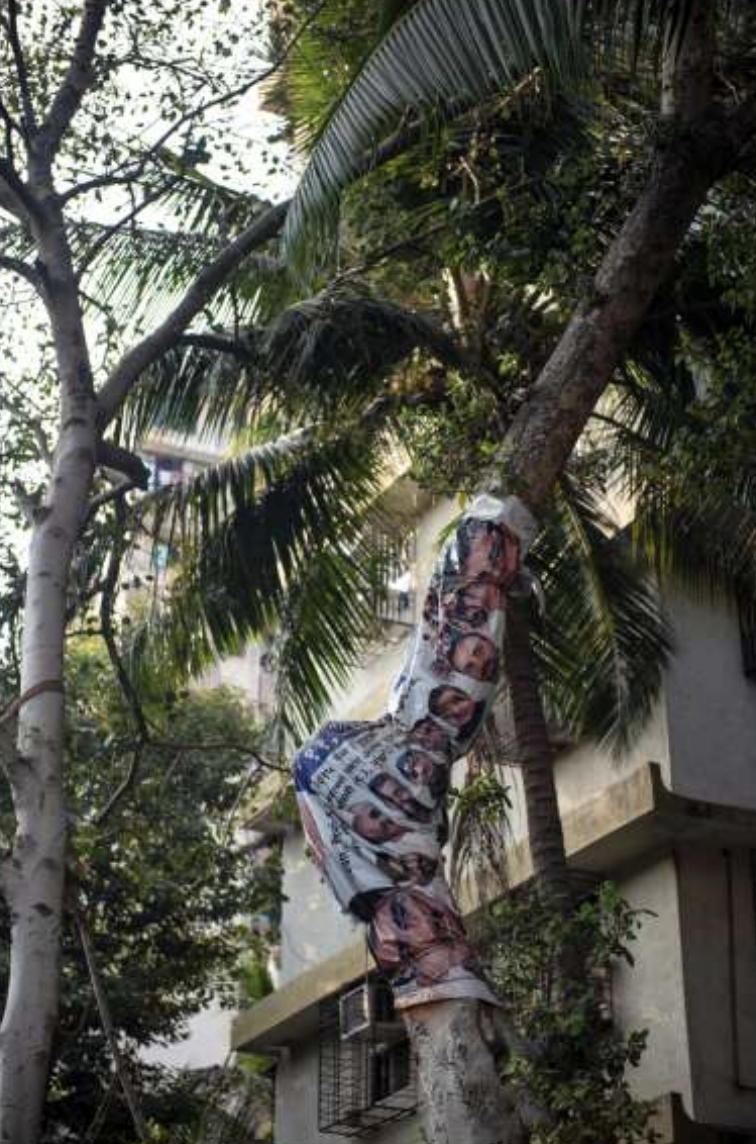
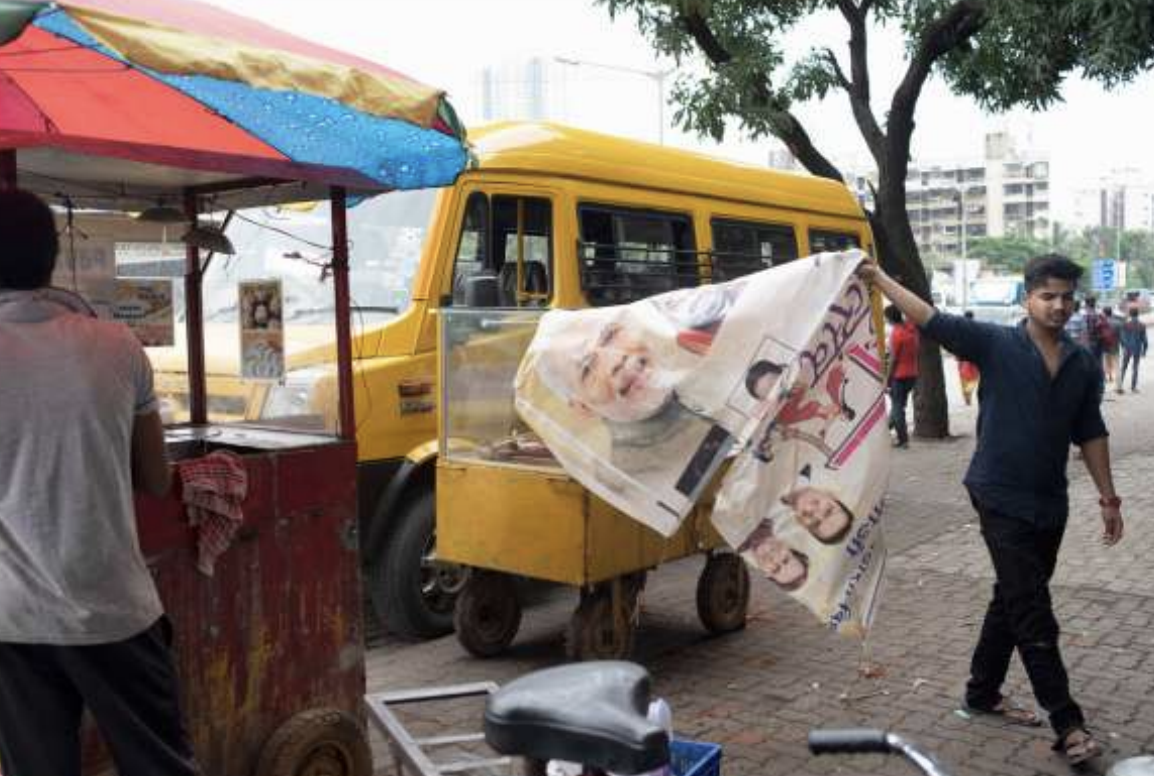
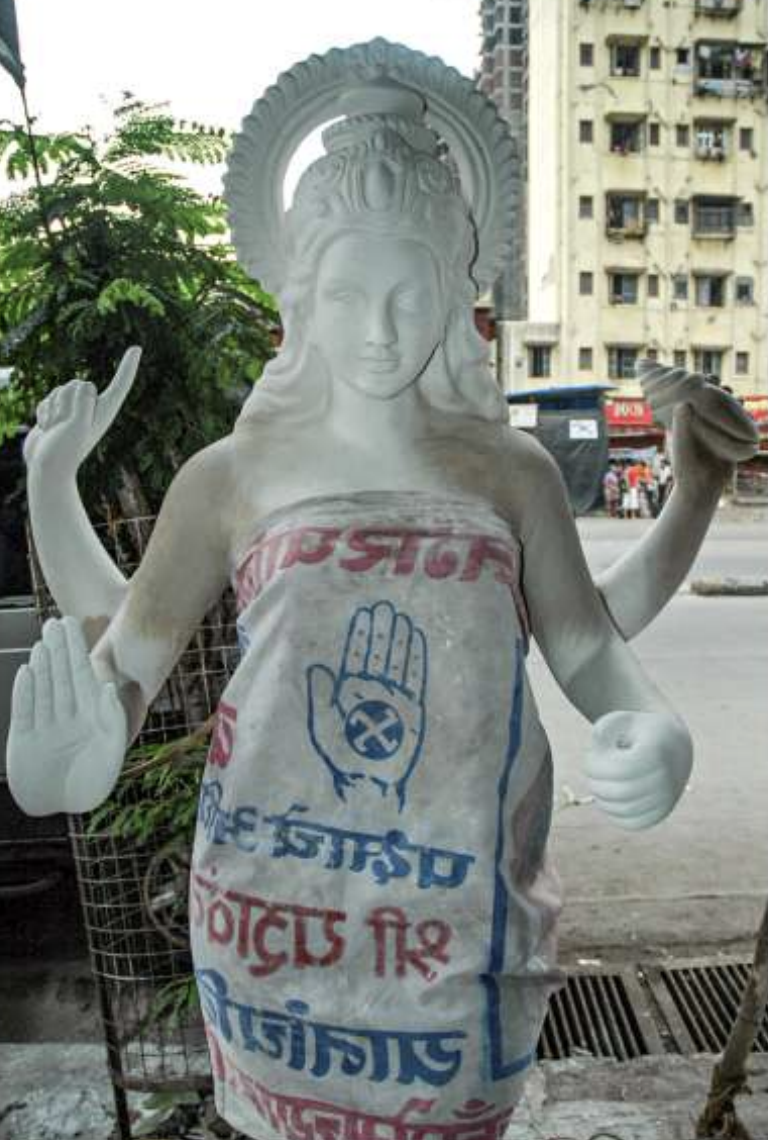
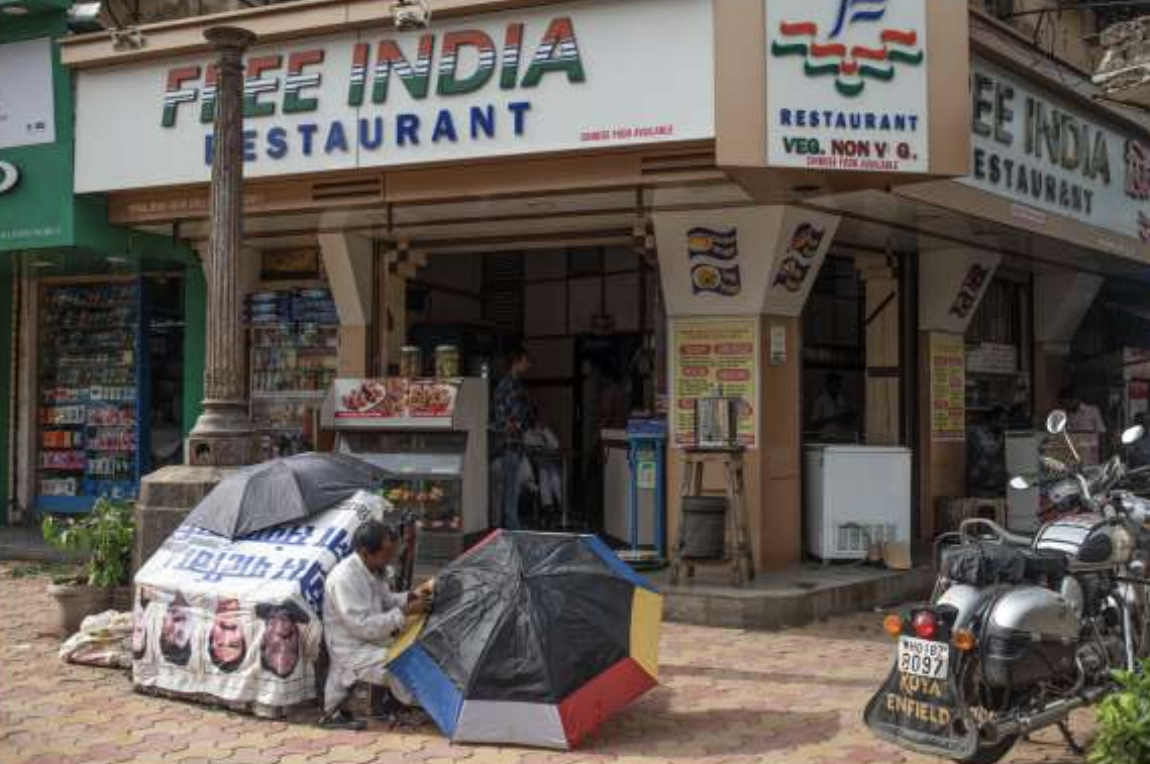
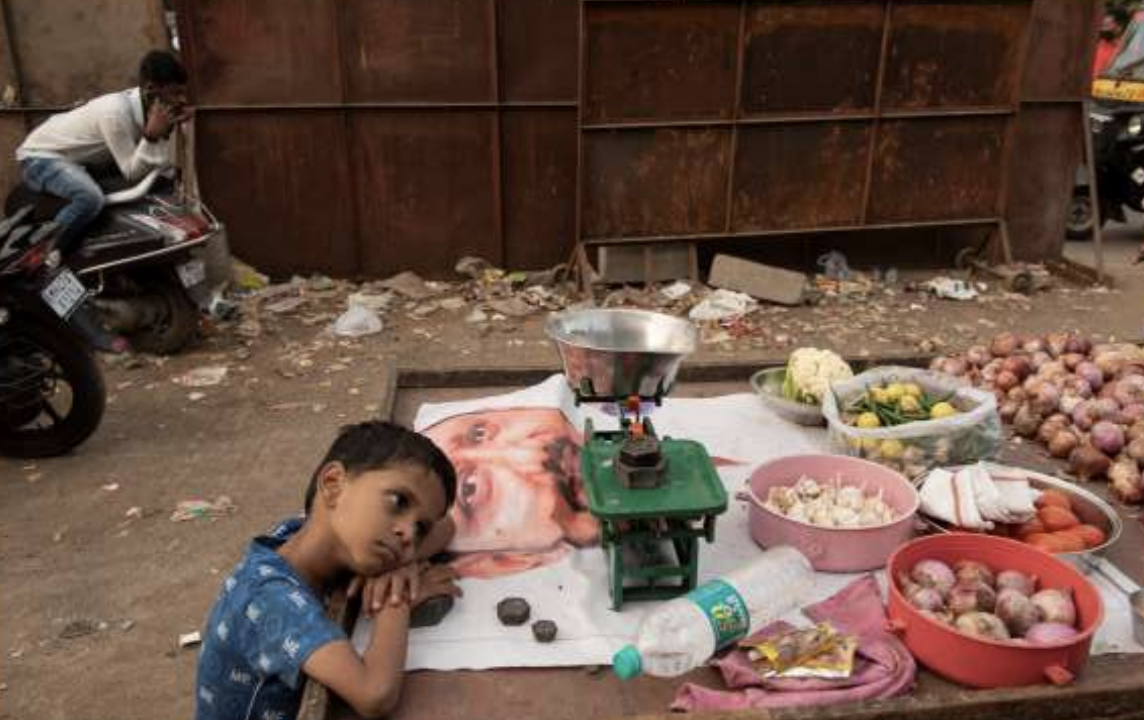
Riteshuttam: The inspiration from this series came from a certain sense of visual fatigue. We often engage with politicians pre elections, tag along and make kiss kiss handshake photos that function as extended PR and very rarey as critique. There is a very performative element to it all. So I looked around for something that would bring the politician to a neutral ground that is beyond his or her control and orchestrations. Although the posters are made for them but their final destiny is what really brought out the above.
Did your early career in newspapers influence this body of work?
Absolutely. In fact one particular evening in 2004, I was walking to work and I noticed this under construction idol that was left to dry wrapped in a poster. She looked like an actress that has stepped out of the shower with a towel wrapped around. I took one, just one quick foto as I had to rush to office dump my card and run to another gig. Also, I was always rushing and add to that, dumb and naive to realize the full scope of such a sight and it didnt register that I could build this as a body of work. It is only when I was looking at my archive in 2009, searching for some photos that I stumbled on the photo again and I was like whoa, I had a great idea staring right at me all these years!
Has this always been an ongoing body of work?
es, and since it is not really tied to elections I can start and stop as and when I want. Its been on since 2009, lets see where it goes.
Which image was the genesis of this body of work?
The durga idol, which some guy came to my show and insisted was Lakshmi. It only proved how little he knew about it.
Will you continue to take images for this series?
Yes I will, I hope to make it into a book or a zine or give it some physical shape. Am yet to figure all that out. A lot of the visual work about politics in India revolves around personas. This one clearly doesn’t and in fact it looks at the afterlife of it, if any.
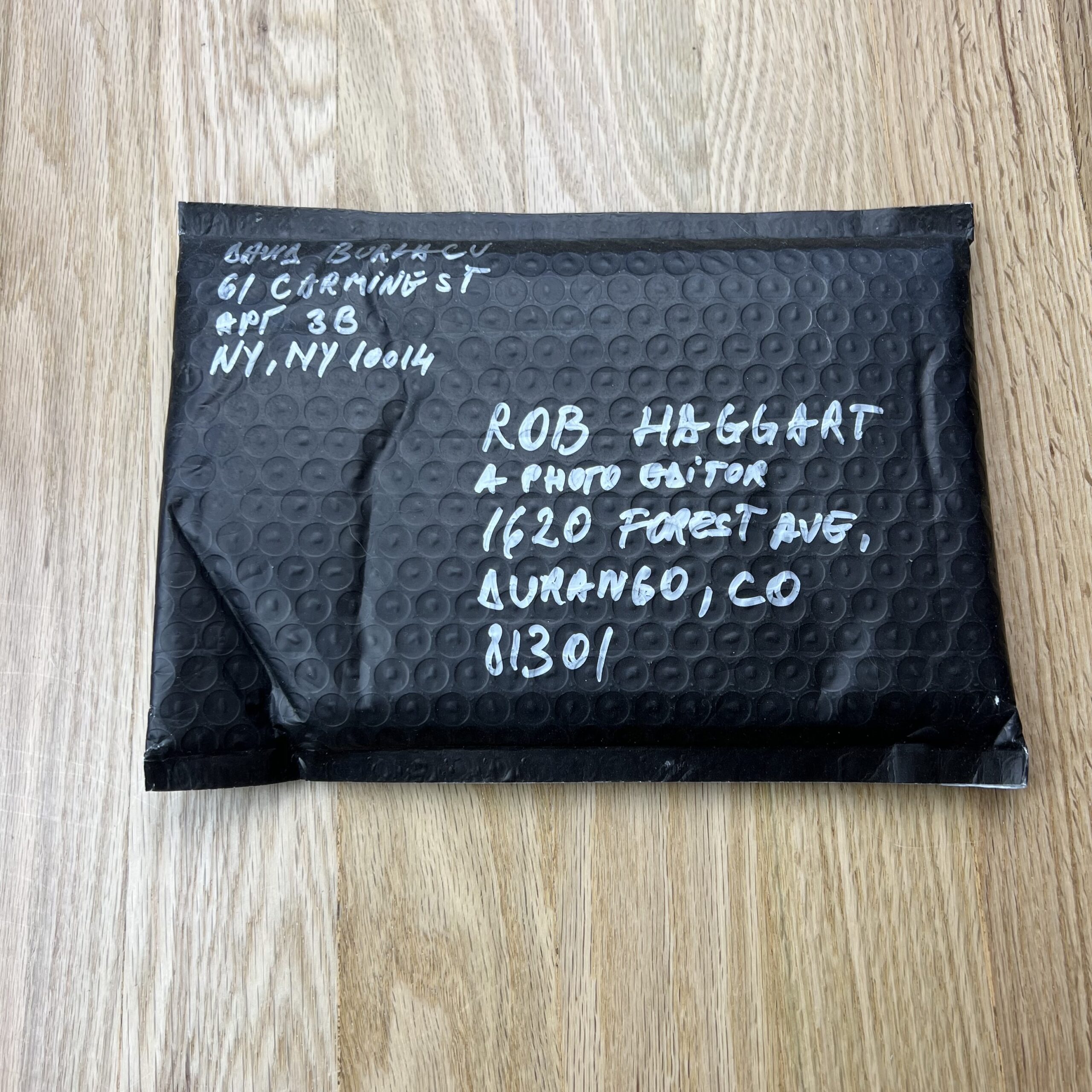
Lindsay Bevington who’s an amazing friend and supporter started a printing company about a year ago and we’ve been flirting with the idea of printing a book for this project. I made two other books before this using Blurb but they weren’t really mail friendly (totally my fault, blurb does a good job at printing materials) – the first one was 12in x 12in and the second one was over 100 pages. Neither of these attributes make them ‘promo’ friendly. The printing company wasn’t going in a right direction so she decided to close it down. But before that she really wanted to make something for me. That was the catalyst to put this thing together.
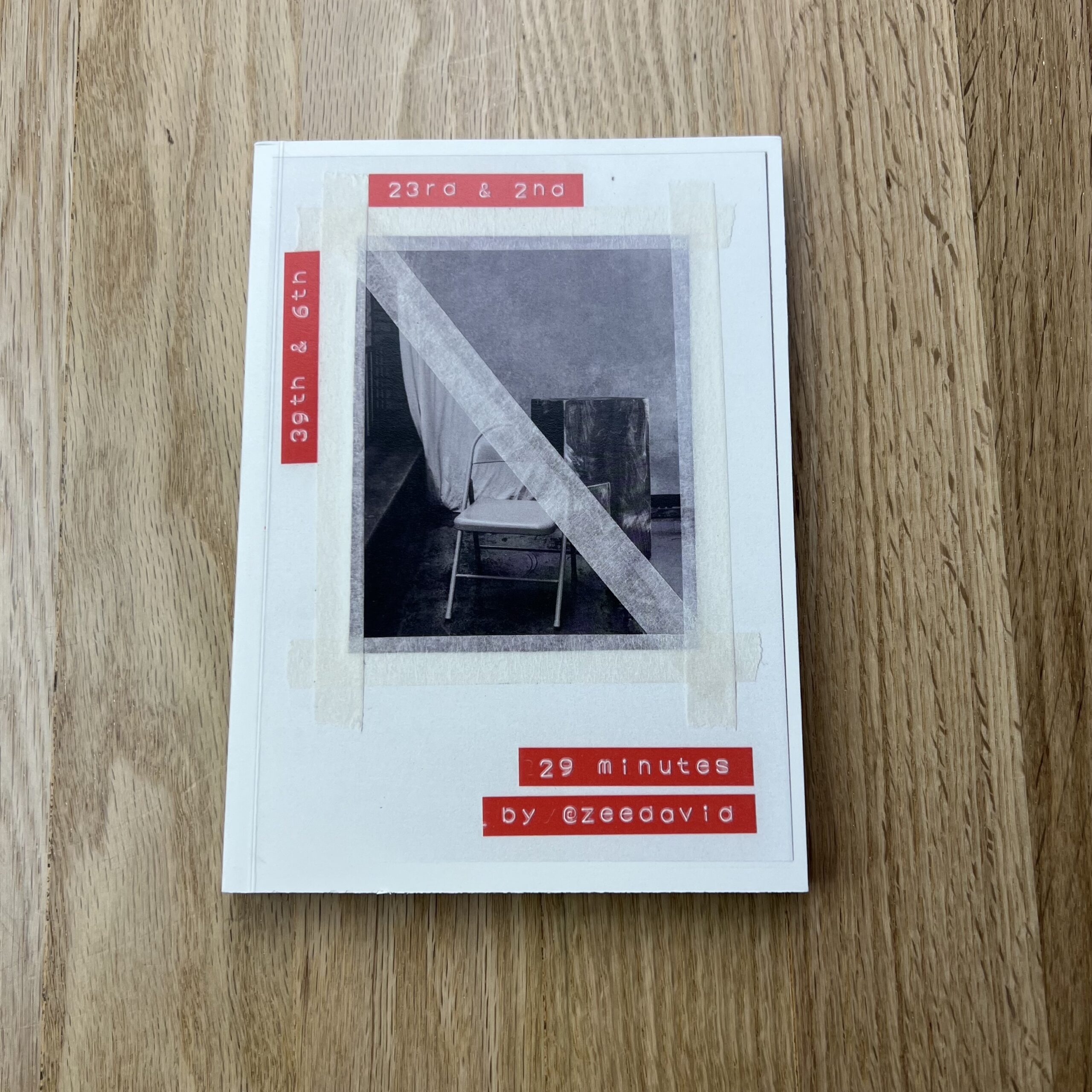
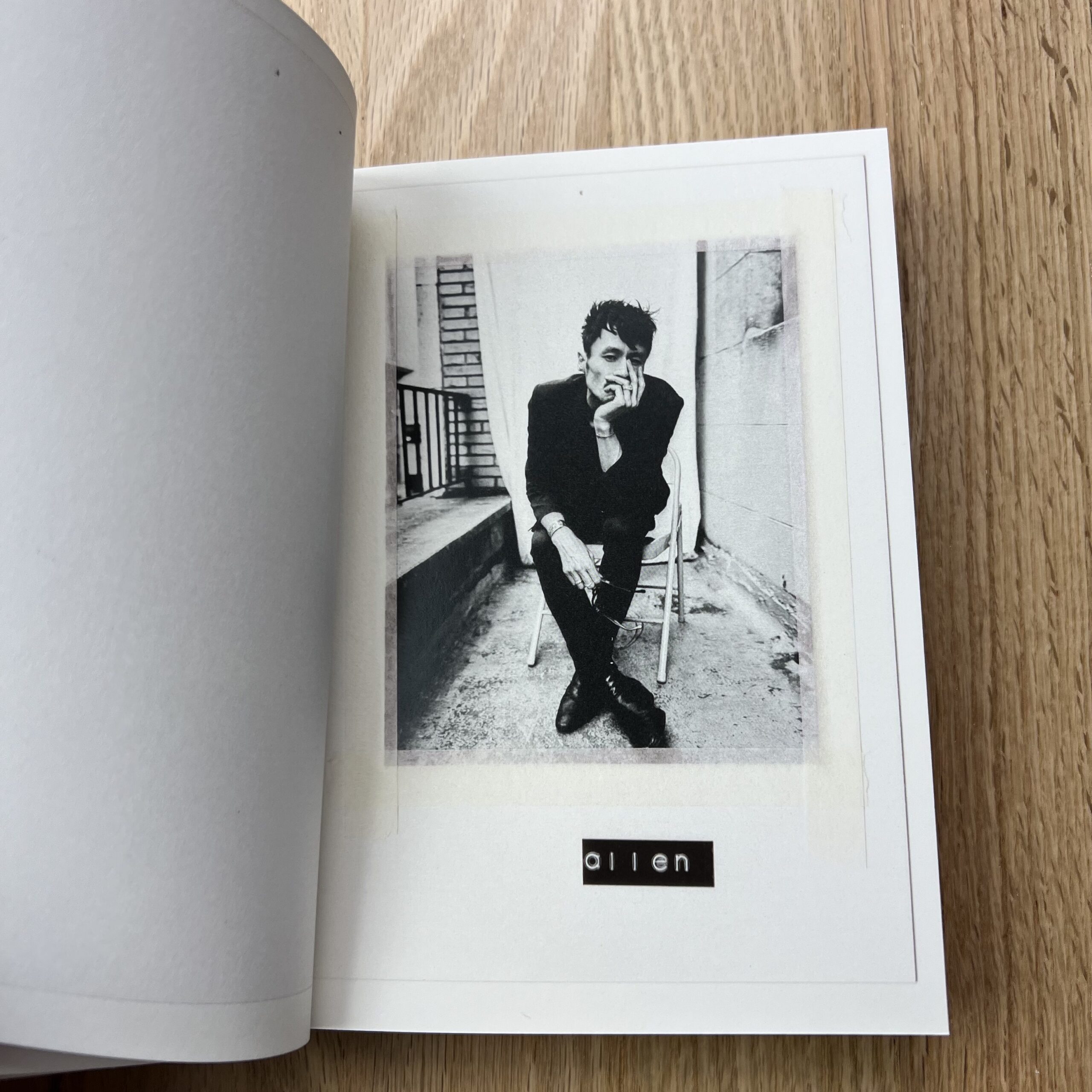
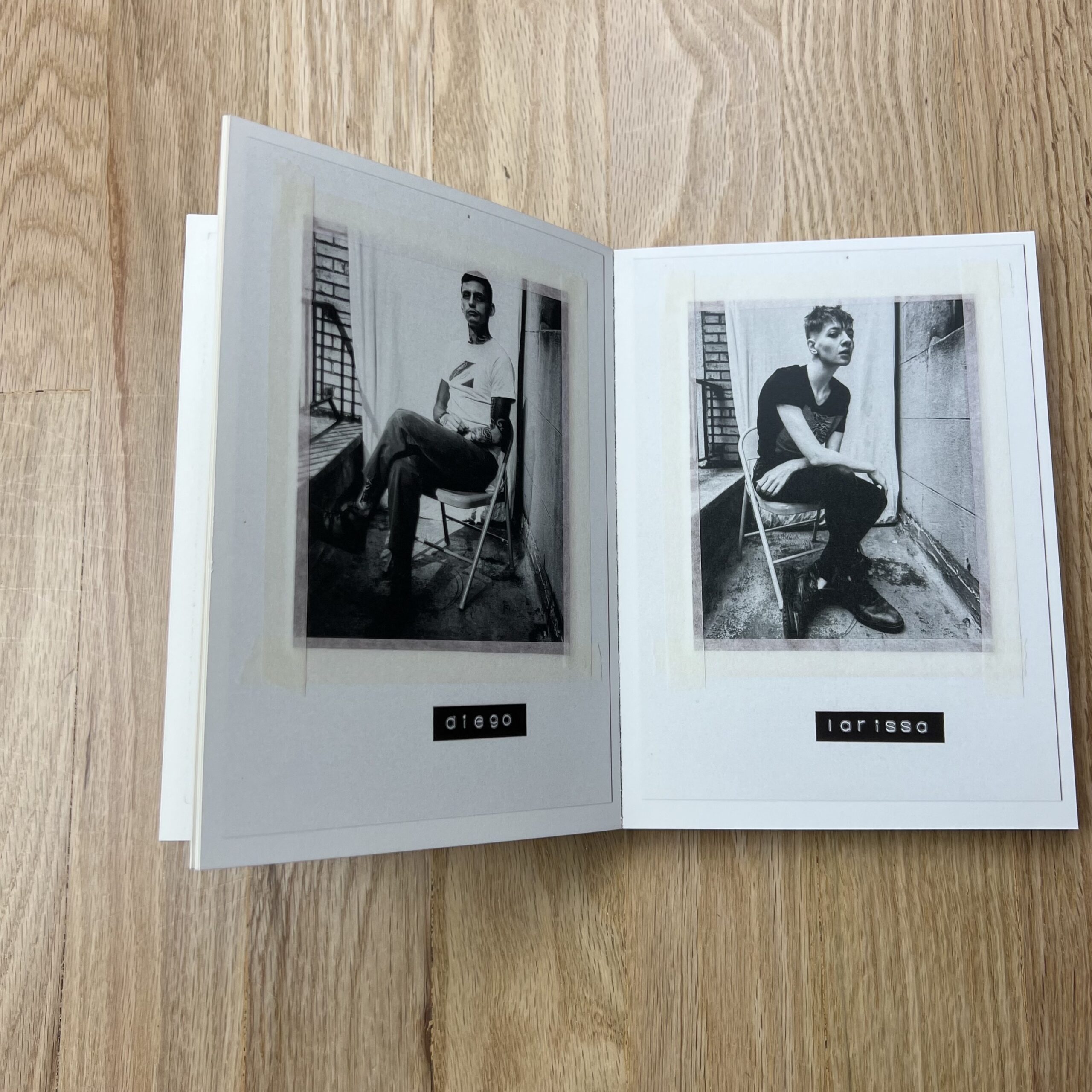
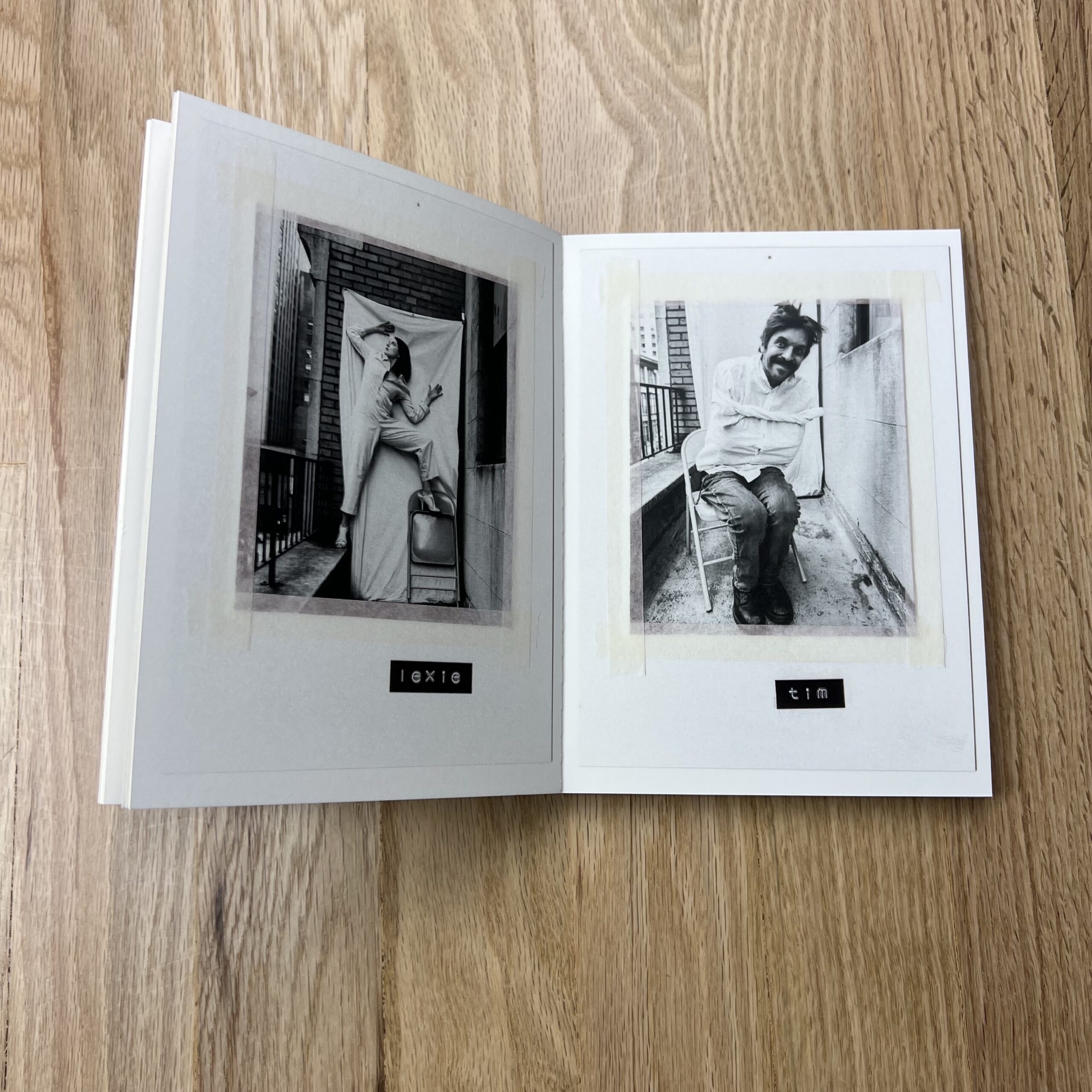
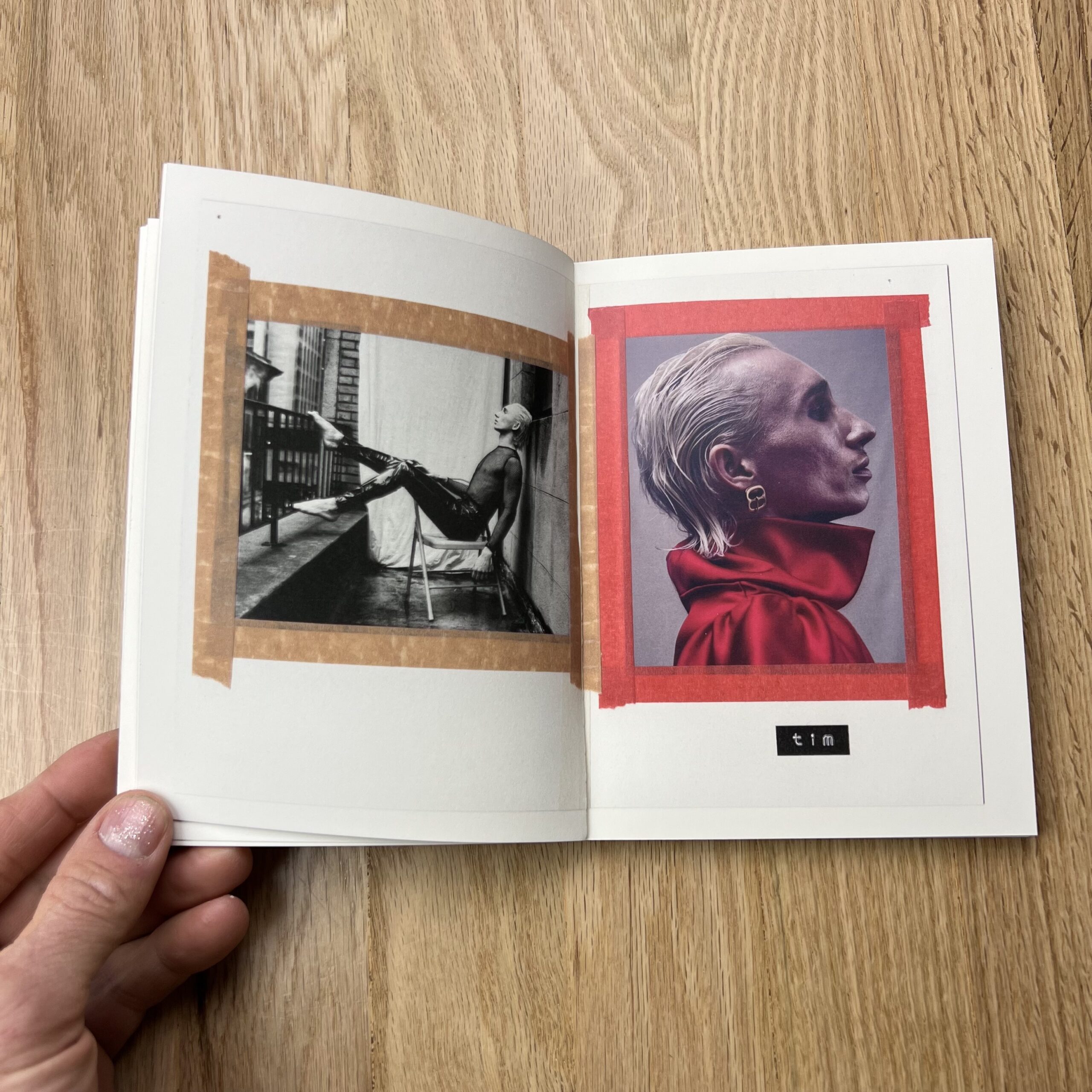
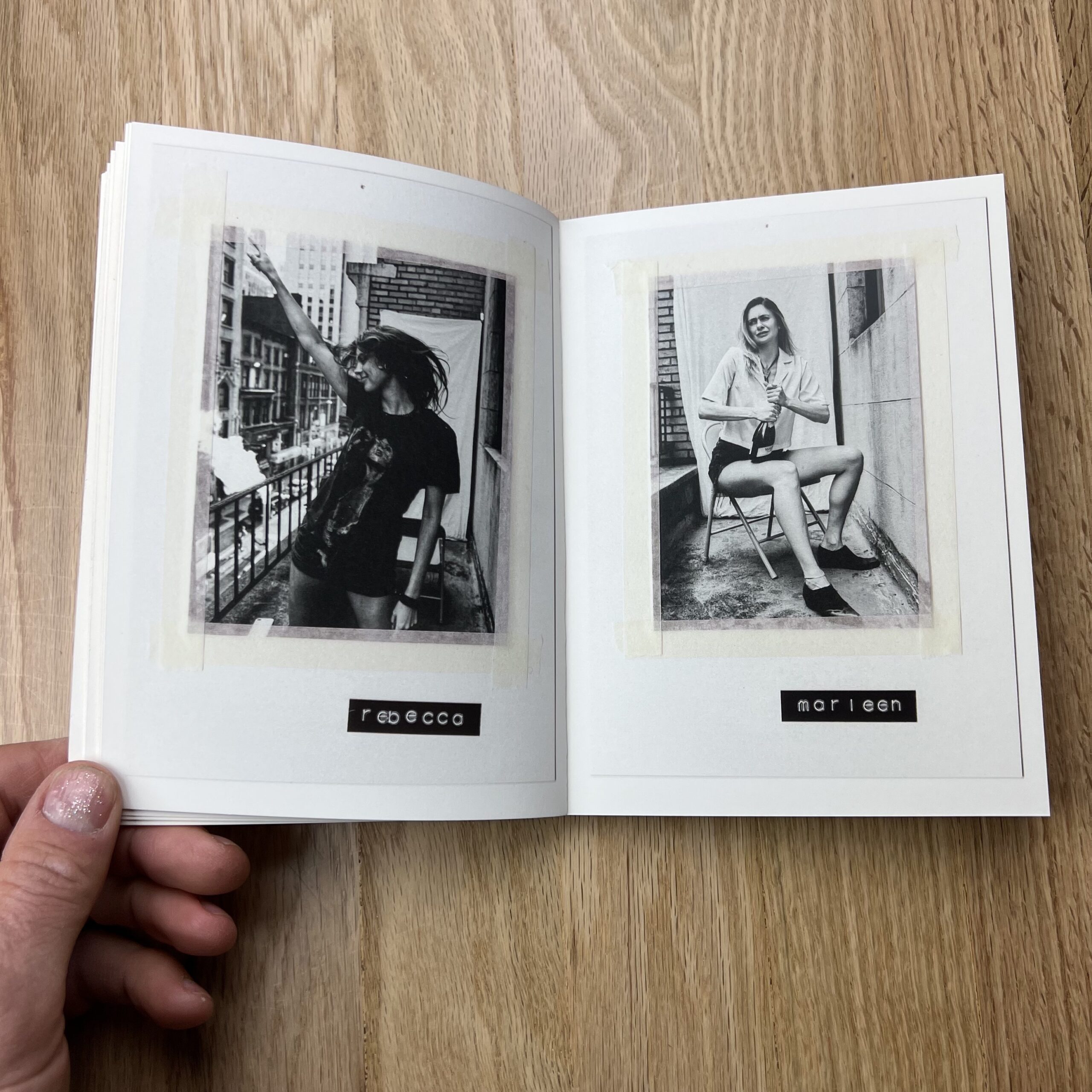
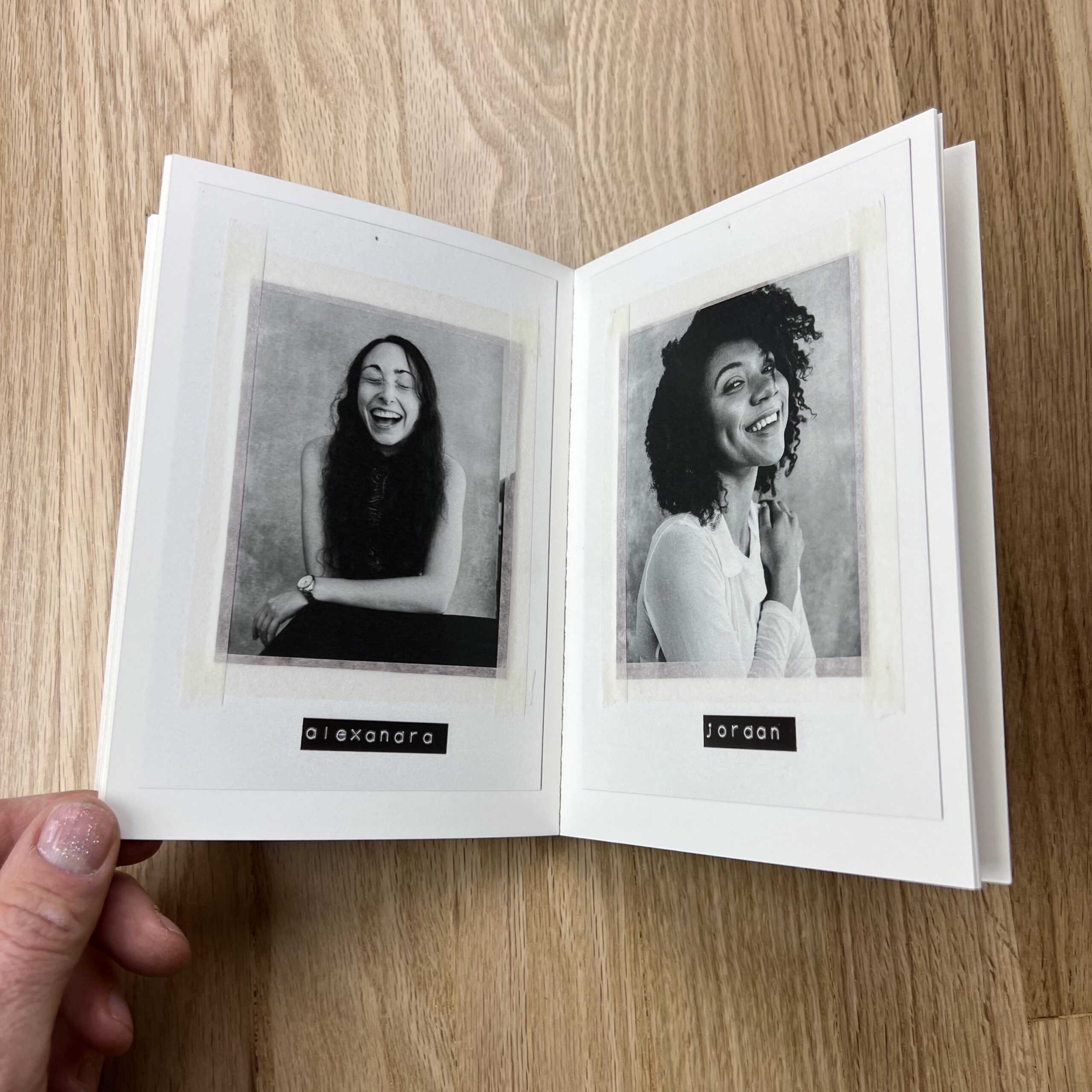
I did the design myself – I wanted it to feel punk and ziney so I used 4×6 white cards, printed the images on my Canon Selphy printer, wrote the copy with a label maker and put it all together with tape. Won’t spend too much time talking about the carpal tunnel I got from the label maker haha. But as the first promo I ever made I wanted it to be as personal as it can get. I’m basically introducing myself to a bunch of people and I want to be as authentic as possible.
Which leads us to the images – when I was in the process of selecting which images will make the cut and which won’t I had my friend Alessia over to help with the process – anyone can tell you it’s not fun to axe your own creations by yourself. So we had 2 walls filled with images, green and red stickers and some negronis. A few hours in she looks at me and says ‘you know I think this is the most comprehensive self portrait I’ve ever seen’. I knew then we were on the right track.
I started shooting these portraits a few years ago mostly because work was slow and I needed to do something to keep me from going nuts. I was living in this place that I still doubt was zoned for residential living. But it did have a private terrace which in New York is basically unheard of. To be fair you had to jump out of my window to get on it. Still not sure if I was supposed to be there. If my landlord is reading this – sorry not sorry.
Most of these guys are people I’ve met in my years living in New York. As the project grew more people were asking to be shot which gave me an opportunity to meet and swap stories with interesting characters. You get pretty chummy when you realize you have to jump out my bedroom window to ‘get to set’.
I kept the project going when I moved from that apartment to the new one & now I moved somewhere else with a killer courtyard that is off limits but I’m hoping I can weasel myself into shooting there as well.
I made about 80 copies and sent out about 30-40 so far.
This is a new endeavor for me so I can’t really tell if it’s going to work or not. I have gotten good feedback from the book and I hope it leads to some jobs but I’m still in the ‘planting seeds’ part of the journey. As a rule of thumb, and this is a direct quote from all my friends that have been working in the industry for years ‘ any way you can get eyeballs on your work is important’. You kind of have to do it all, man – social, print, linkedin, instagram, shouting it from the rooftops whatever is considered a platform. Survival of the loudest, right?!
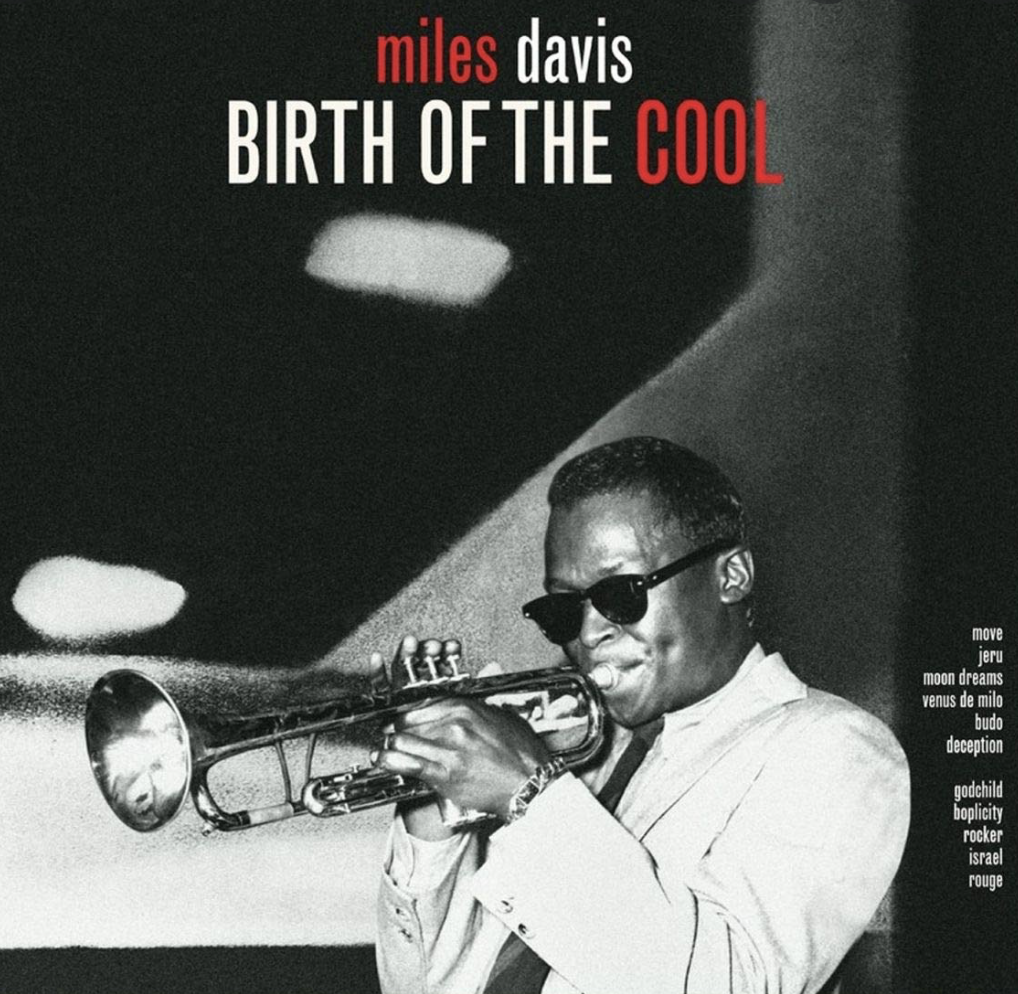
In 1957, Miles Davis released a seminal album, “Birth of the Cool.”
Fair play to him, because by all accounts, Miles Davis was one
cool cat.
Over the years, plenty of musicians radiated cool, to such an extent, their names are dropped like a club membership.
Lou Reed, Johnny Cash, Debbie Harry, John Coltrane, Patti Smith.
(There are more, to be sure.)
When you read those names, you can conjure not just the person, and their aura, but all the times you heard someone tell you they “liked” said musician, in order to score cool points in your mind.
Sample quote: “Overall one is left with a shuddering sense of {Gen} X’s insignificance, its preoccupation with what more politically motivated successors deem ‘opulent micro-concerns.'”
The was plenty more snark, and I took the subtext to suggest perhaps Gen X was overly invested in the idea of cool, relative to all the other important values/traits in the world.
(That was my takeaway, in any event. Upon re-reading, it’s hard to pin down, but at the time, my reaction was strong.)
I stopped for a moment, and pondered.
Is it true?
Do today’s middle-aged Americans care more about being cool than making money, or saving the planet?
And what is cool, anyway?
How is a word so crucial to our culture so undefined?
As always, I’m asking for a reason, and we’ll get there eventually. (This feels like a long-read.)
If cool can be born, as Miles suggests, can it also die?
How do you kill cool, and what comes next?
My wife and I had this discussion throughout the winter, because our beloved local ski resort, Taos Ski Valley, used to be on the of coolest places on Earth.
A hidden gem in the Sangre de Cristo Mountains, where you could hang out with your hipster or hippie buddies on a mostly-empty mountain, smoke “illegal” weed on the very-slow-chair-lifts, and ski terrain that was much-more-difficult than your average tourist could handle.
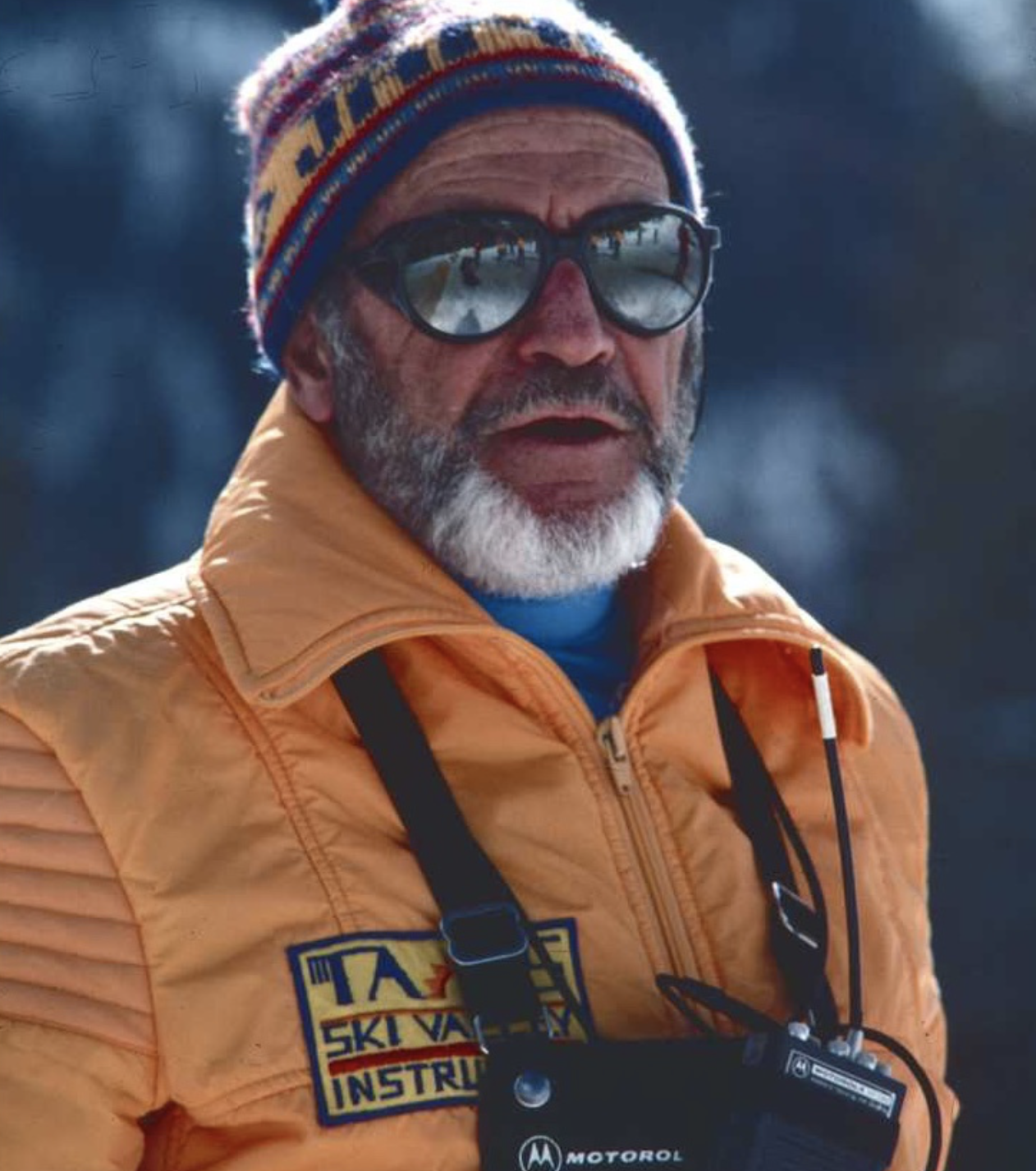
Founded by Austrian Jews, Ernie and Rhoda Blake, in the 1950’s, the place oozed counter-culture, yet much of its tourist base came from North Texas and Oklahoma.
Ernie Blake, image courtesy of Adventure Journal, and Taos Ski Valley Archives
Now, before you chide me, I admit, those are not typically cool places, but then again, we haven’t defined cool yet, have we?
Folks came to Taos from there because it was the closest ski resort, so they could drive.
They’d pile the family in the pickup, haul ass for 6-10 hours, and wake up in a snow-covered paradise.
As locals, we’d joke about them skiing in blue jeans, or Oakleys with Dallas Cowboy hats, but they were down-to-Earth folks, happy to shoot you a smile, and often they ate picnic style, having brought food to save money.
So while they were not cool in the too-cool-for-school way, (which is not really cool at all,) they were cool in the way that matters to Gen Xers.
They were respectful, down-to-Earth, authentic, unpretentious, and chill.
Maybe that can function as a working definition for today?
So who killed the cool at Taos Ski Valley?
A hedge-fund billionaire named Louis Bacon bought the resort nine years ago.
A guy who’s best buddies with famous Anti-Vaxxer Robert Kennedy Jr, and was once featured in Vanity Fair for an awful, petty beef with his perhaps-even-crazier, rich-guy neighbor on a small, Caribbean island.
Maybe in two paragraphs I’m laying out the case that Louis Bacon is not a cool guy?
At TSV, Bacon made a shrewd real estate play, by setting about to demographically replace the current customer base, and instead import wealthier, more “regular-folks” skiers.
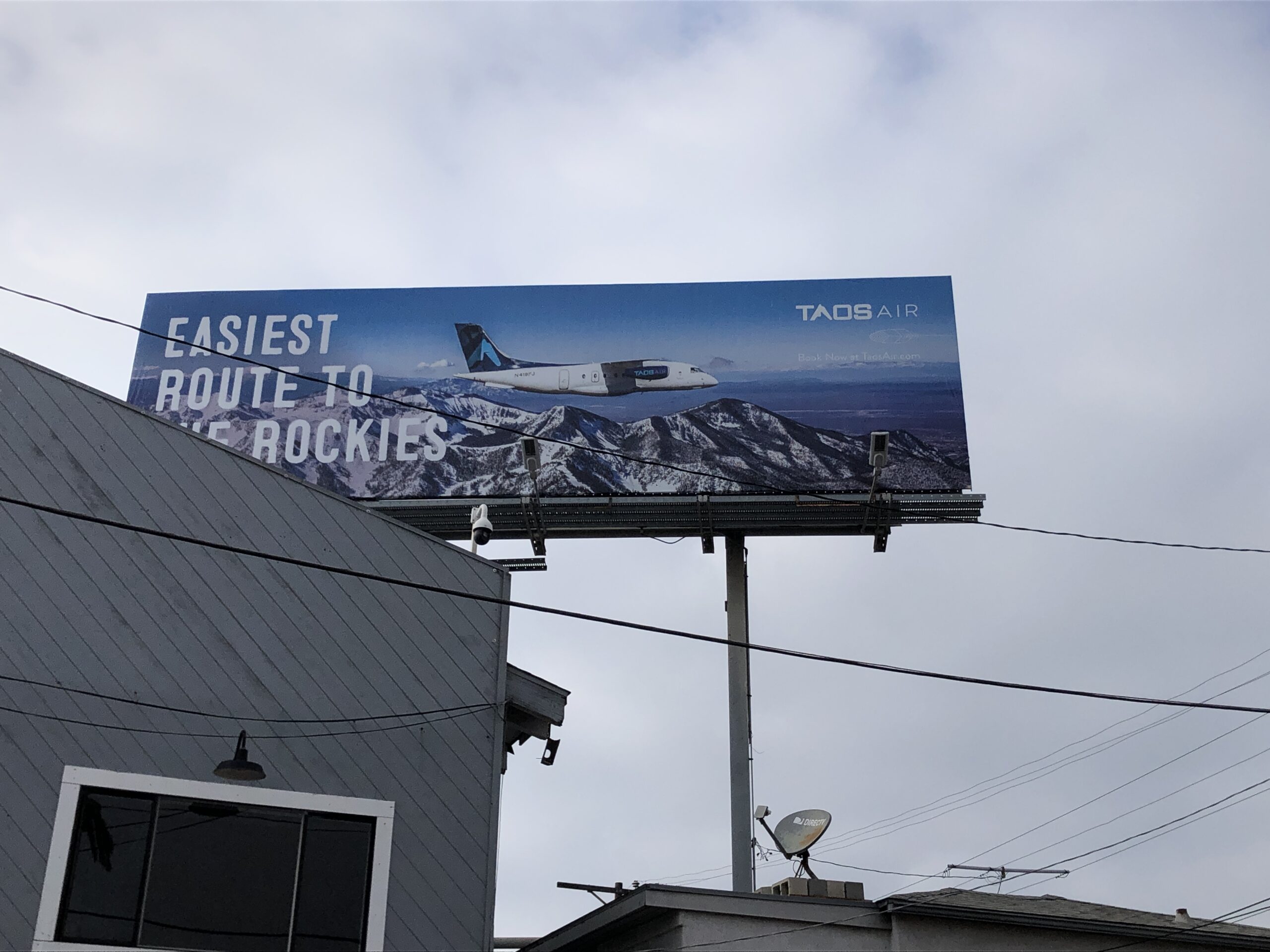
It’s a long story as to how, (including replacing most of the Hispanic lift operators with White guys playing jam-band music, and launching an airline to fly in folks from Austin, Dallas, LA and San Diego,) but rest assured, it was a multi-step process, and as of 2022, I can say it has totally succeeded.
A Taos Air billboard above a San Diego sushi spot.
In so doing, he’s priced out, or chased away many locals, (who are scruffy, and don’t spend money on $18 burgers,) including me.
He bought almost all the restaurants up there, (or drove them out of business, as when he demolished some to build condos,) and owns a hotel as well as the condo developments, so the dude is practically the King of his own village.
TSV was BUSY AS HELL this winter, and his $1 million, 1 bedroom condos sold, (with private underground parking,) so it looks like his “evil” plan worked just fine.
Consider the cool dead.
For any other writer, that might be a long way to go to make a point… talking about Taos in an article about San Francisco.
But please bear with me.
When I moved to San Francisco in 1999, it was a hip fucking city.
We were young artists, and lived in the Southern part of the Mission District, an immigrant/hipster neighborhood, teaming with galleries, bars, and coffee shops.
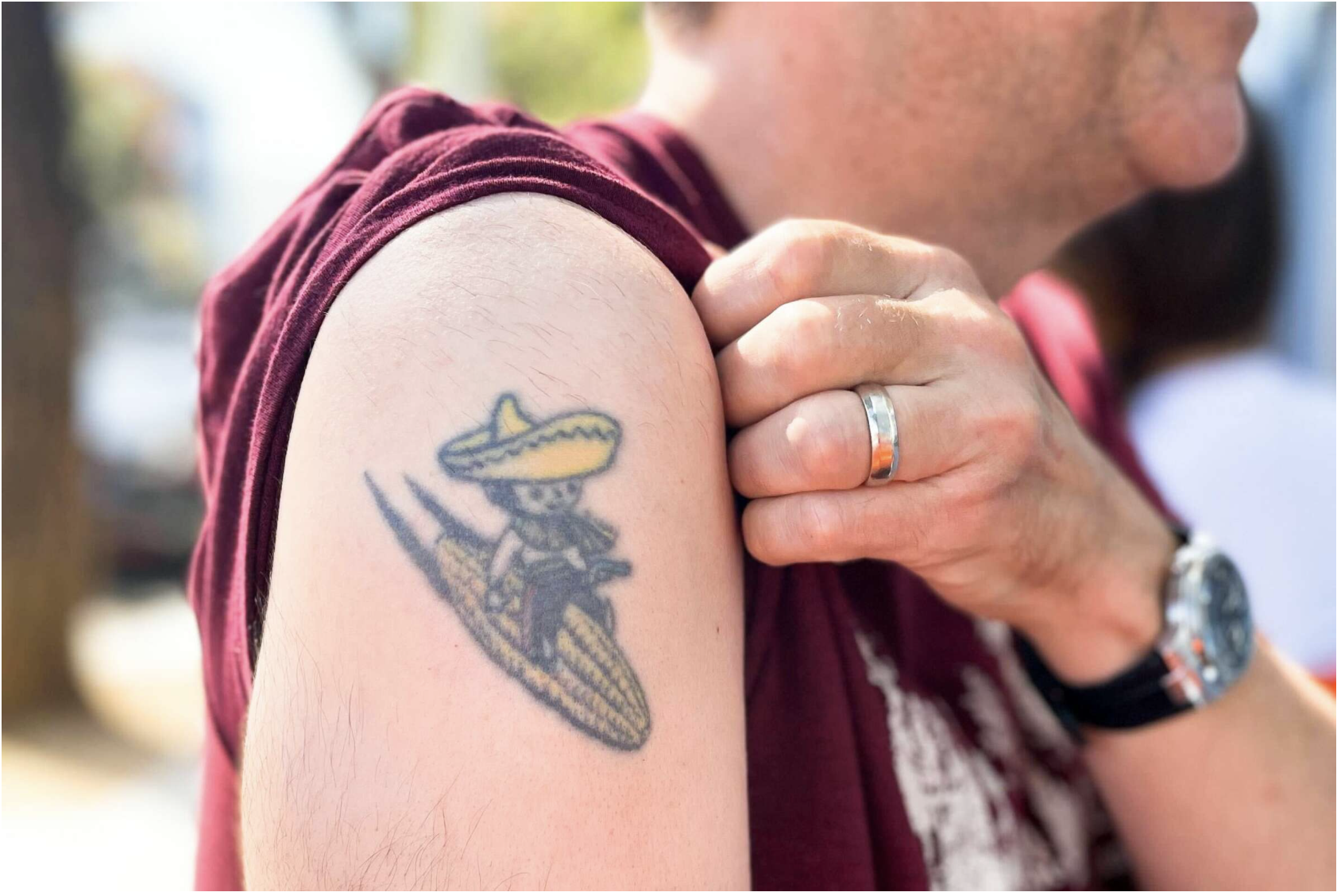
Jimmy the Corn Man tattoo, image courtesy of Joshua Bote/SFGATE
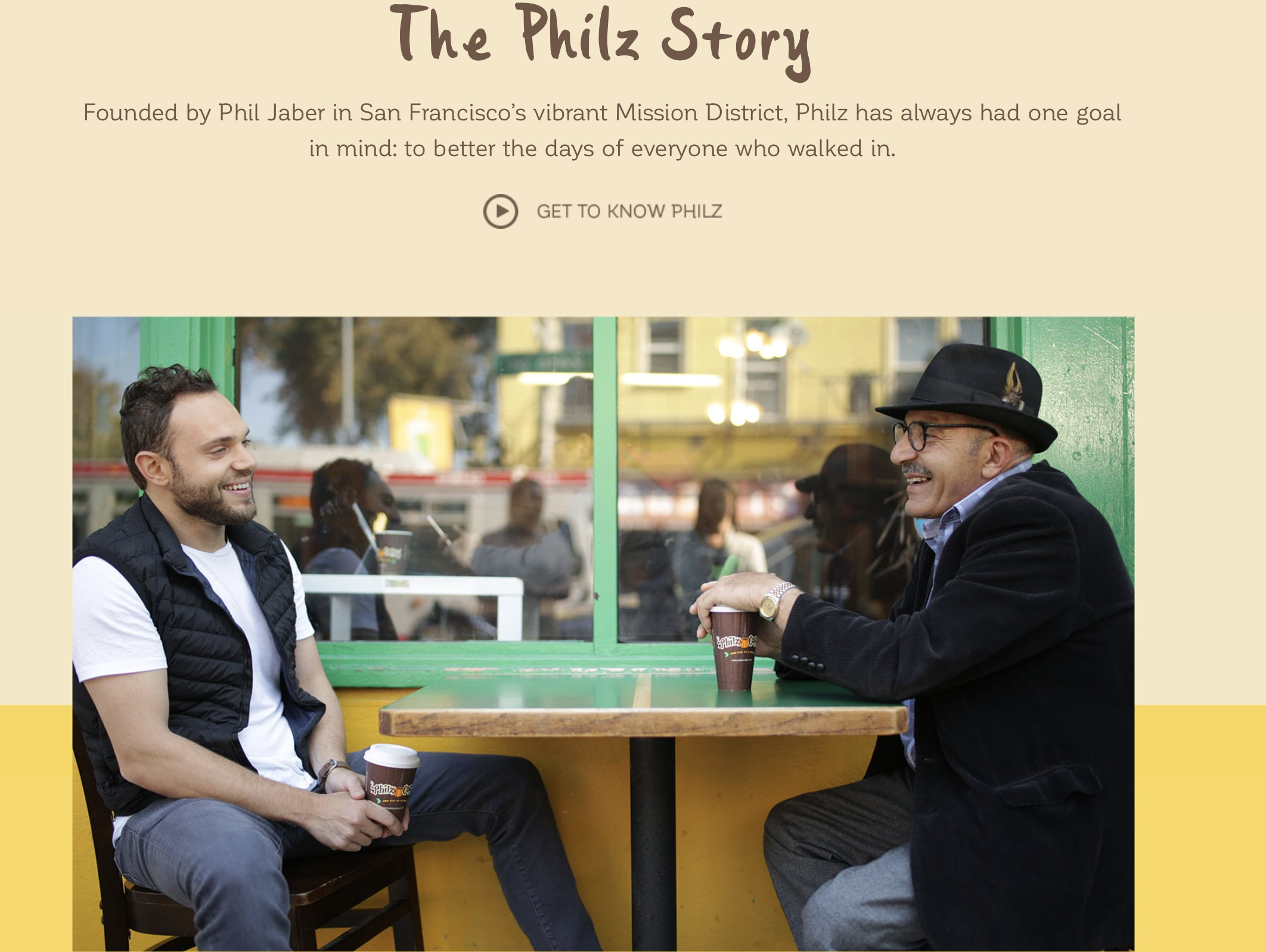
Phil, the namesake behind the now-multi-million dollar coffee chain, Philz, used to make me falafel sandwiches in his dingy, little market, on the corner of Folsom and 24th St.
I remember, with a deep, gruff voice, he’d say, “You want the fool?” (For Fool Mdamas.)
“Sure,” I’d say to Phil. “You make it great. Hook me up however you’d like.”
As the dot-com-boom flourished, (before ultimately tanking,) early-version-tech-bros would take limousines into the neighborhood, standing through the moon-roofs, gawking at the poor immigrants.
On weekends, they’d drive in, and park in the fire lane, by the hundreds, content to pay the fine, rather than look for parking.
(Not cool, my friend. Not cool.)
But with the dot-com-crash, those folks left, artists held on for a bit longer, and the normie-vibe was mostly restricted to the Marina, Nob Hill and Pacific Heights.
The rest of the city was still diverse, and plenty cool.
In 2022, however, I’m sad to report that San Francisco cool is dead and buried.
Replaced, ironically, by a tech-bro-über-capitalist meets progressives-will-let-it-all-burn-before-they-admit-defeat style of un-hipness, and for many, a hell on Earth.
OK, let’s back up for a second.
I went to San Francisco in March, for a photo festival I won’t name today, because this is a negative article, and they’re a great organization.
(It’s not their fault their city went down the drain.)
As a journalist, I shared these theories with current and former San Franciscans in San Diego earlier this month, and they agreed entirely.
In 2016, I first reported here about the burgeoning, San Francisco tent cities, and how it seemed a new street class was being entrenched as a permanent way of life.
So many were denied the chance to live safely, because of the ravages of income inequality.
In 2019, I wrote a harrowing story about how bad things had gotten, with people howling in the night-time streets, and I was determined not to repeat myself this time out.
(Been there, done that.)
These days it’s national news, that the Tenderloin has turned into an IRL version of David Simon’s “Hamsterdam” from “The Wire,” so I was hoping to write something more upbeat for you, in 2022.
As such, I limited myself to the “nice” neighborhoods of North Beach, Fisherman’s Wharf, (where the tourists go,) Pacific Heights, Chinatown, the Bayfront and the Marina.
In three full days, I never left that zone, in the hopes I could just write a nice-travel-story for you, and leave the misery behind for once.
(I swear, that was the plan.)
In the end, though, it caught up to me, because looking away, denying the reality in front of you, never seems to work out well, does it?
Let’s take an interlude.
Retrench.
Focus on the positive.
It is still possible to eat well in San Francisco, and you can buy really good weed too.
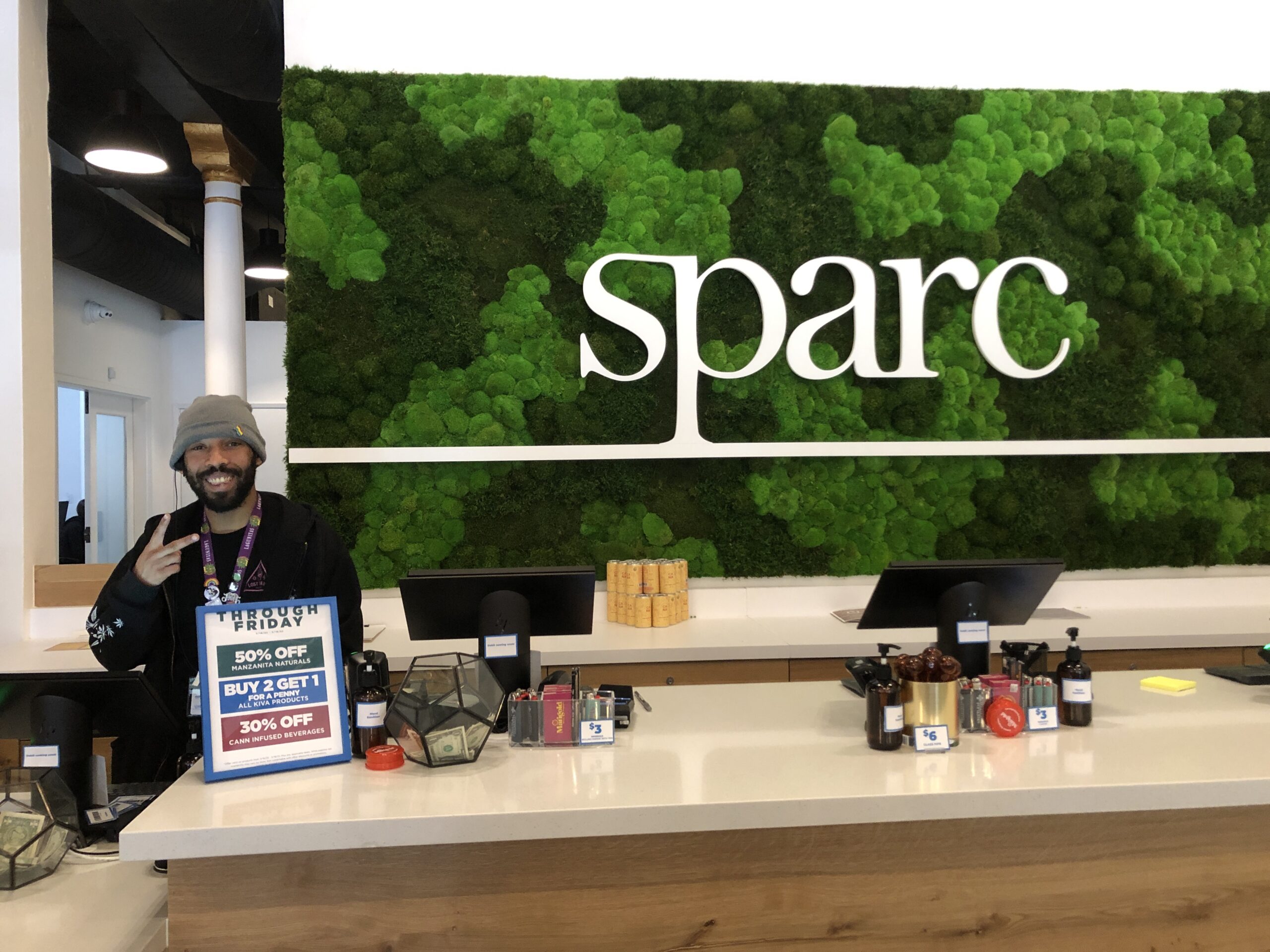
On my first full morning, I took a rambling, gorgeous walk, on a perfect California day, towards sparc, the closest dispensary that opened early.
I saw an unhoused man, lounging on a couch on the street, (before it was collected as trash,) and he was reading a newspaper.
He seemed content, so we can include that in the happy part of the article.
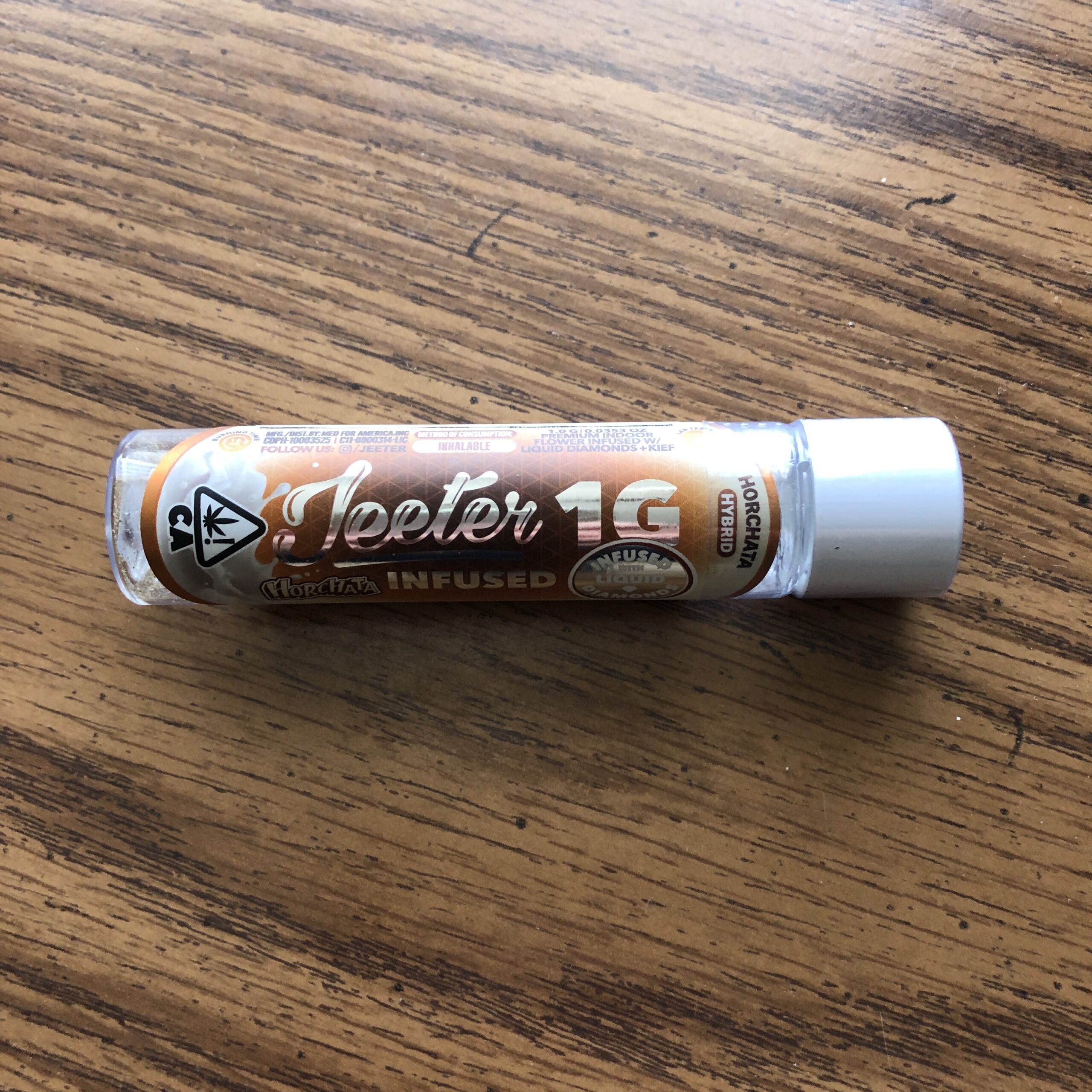
The bud-tender who helped me at sparc was cool, (thank God for the little things,) and he sold me a super-strong, horchata flavored indica joint, when I told him my mission.
“I’m about to walk for hours along the waterfront, in the sunshine, and I want to be the happiest guy out there,” I told him.
He obliged, (it was expensive,) and then I bought one more joint, to share, and they gave me a weed drink for free, because I was cool to everyone.
I’ll cut to the chase and say the pot was great, so I definitely recommend this joint, if you’re in town, or visiting.
After walking back to my hotel, it was time to eat.
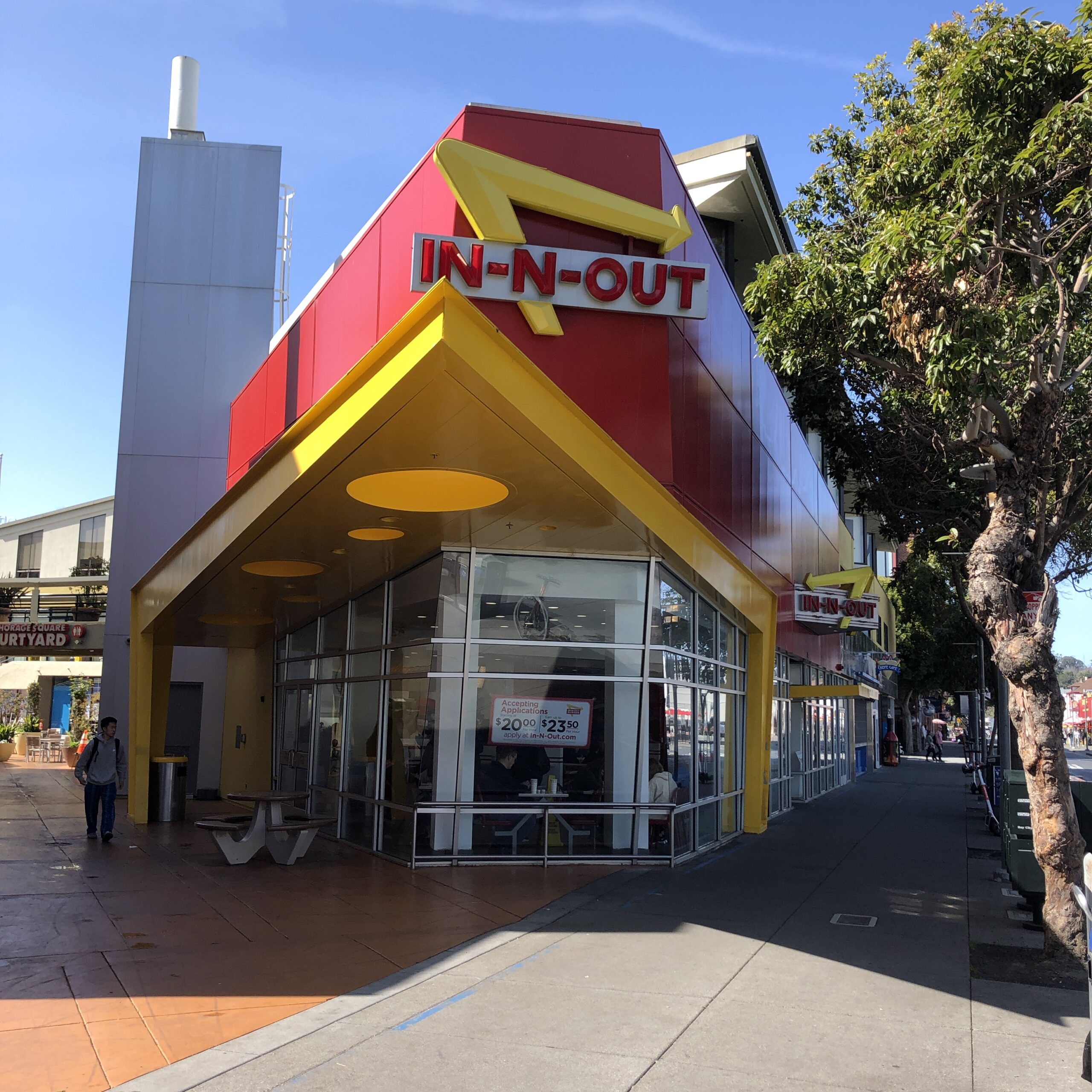
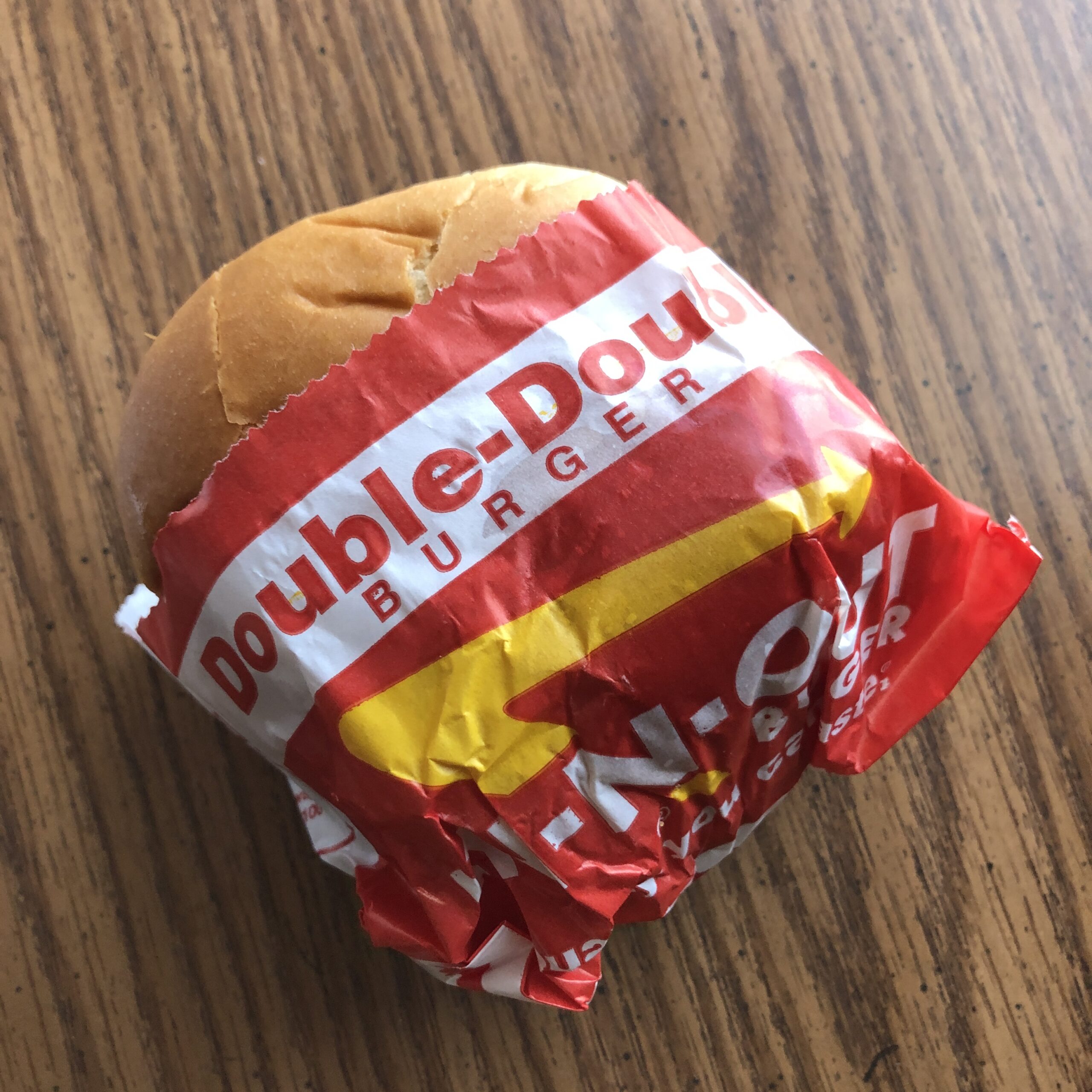
So I had a double-double, animal style, from In-N-Out burger for lunch, before my big excursion, and it was excellent, as always.
You may think I shill for them because of “The Big Lebowski,” but really, it is that good.
(I even turned my Mom onto it, and she was dubious.)
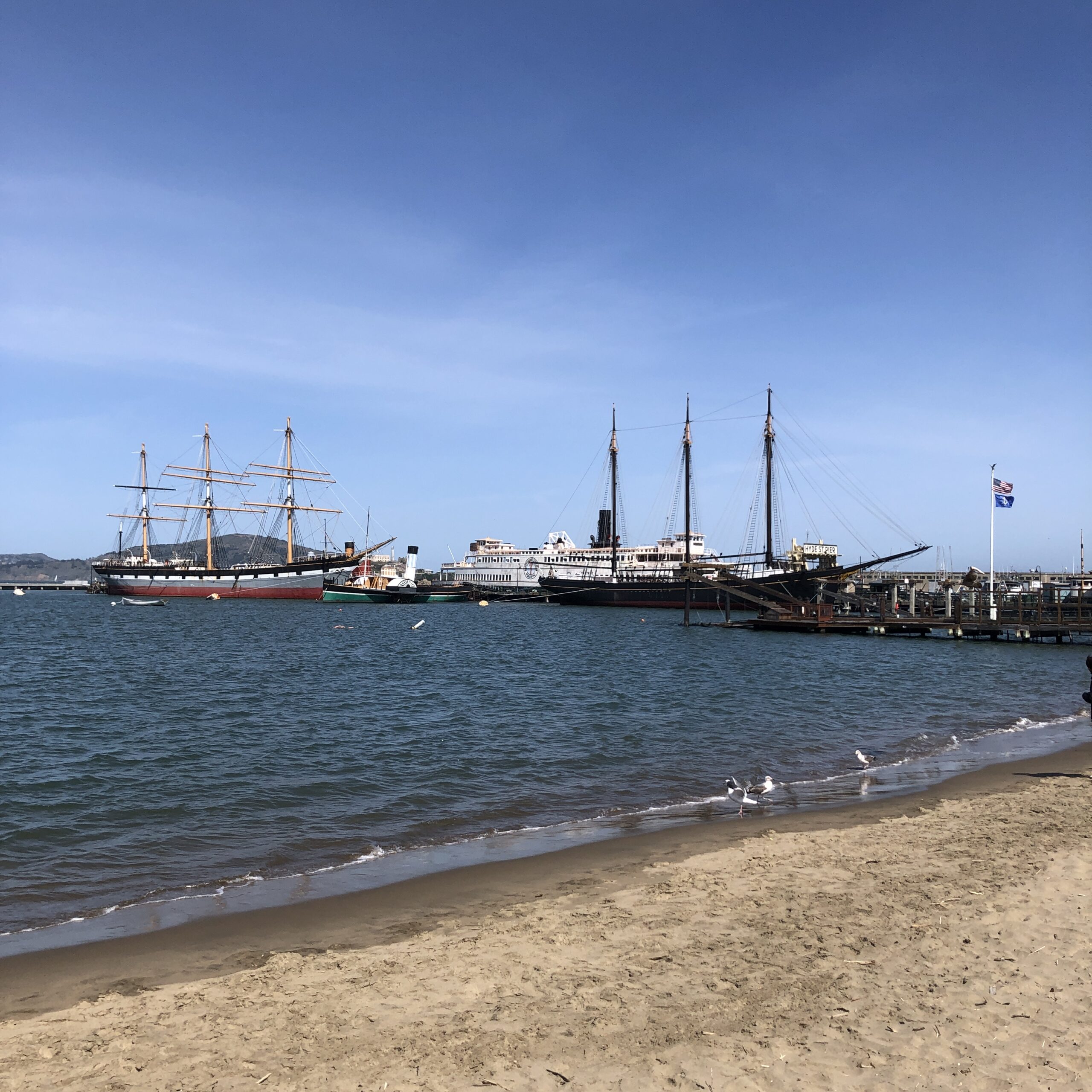
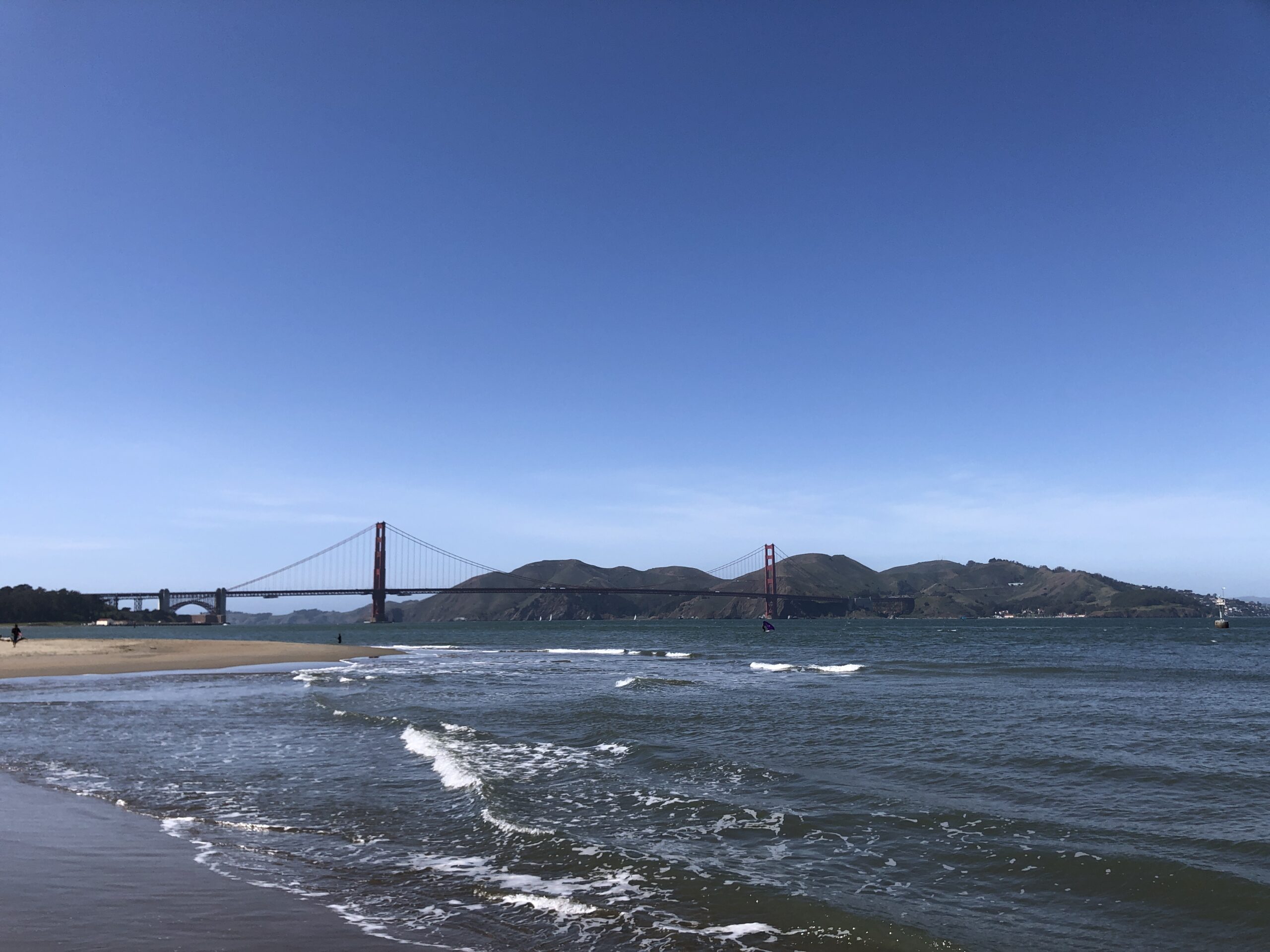
From there, I walked for miles along the water, before parking myself in the sand at Chrissy Field. (A dog beach at the base of the Golden Gate Bridge.)
It was amazing, (as was the entire walk,) so I imagine tourists can still have a good time in SF, if they ignore the rot, and stay in the sun.
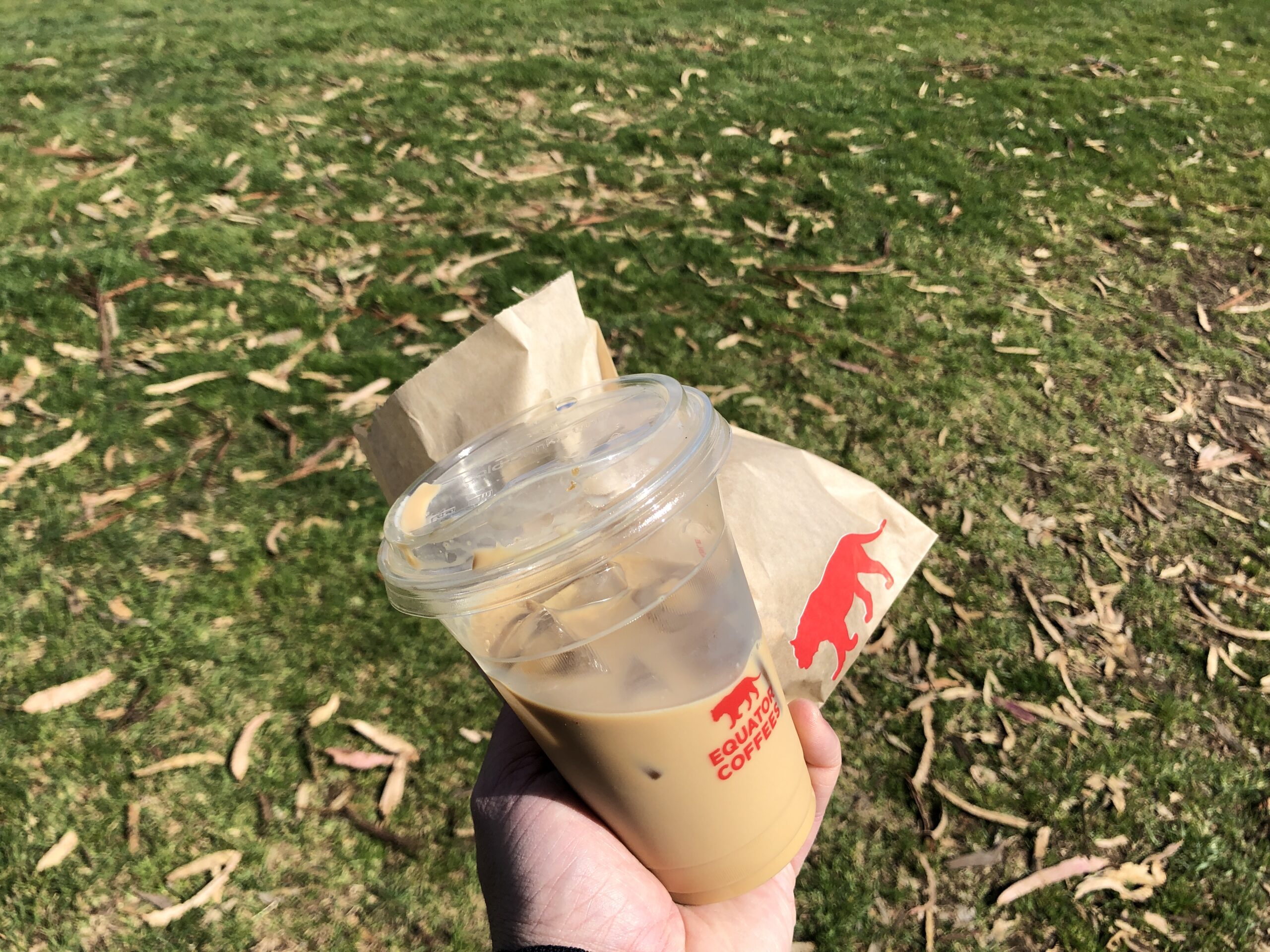
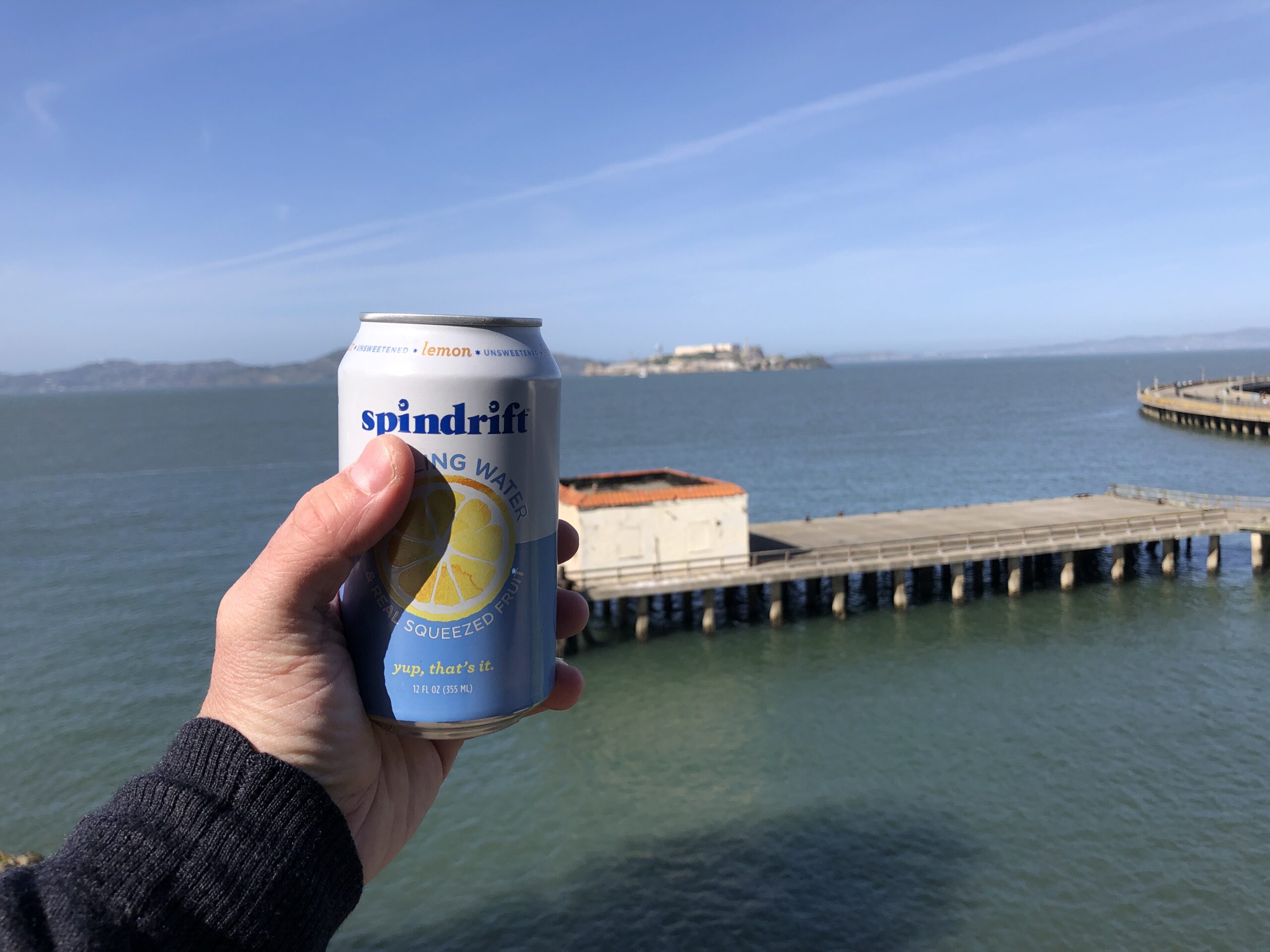
My friend Heather recommended Equator Coffees, in Fort Mason, so on the way back, I got a special turmeric latte, a brilliant almond croissant, and a flavored bubble water.
(Dehydrate, sugar up, rehydrate.)
I don’t remember exactly what I paid, but it was certainly reasonable.
Let that be today’s traveler’s tip: when in SF, stick to the street food, and you’ll eat well on a budget.
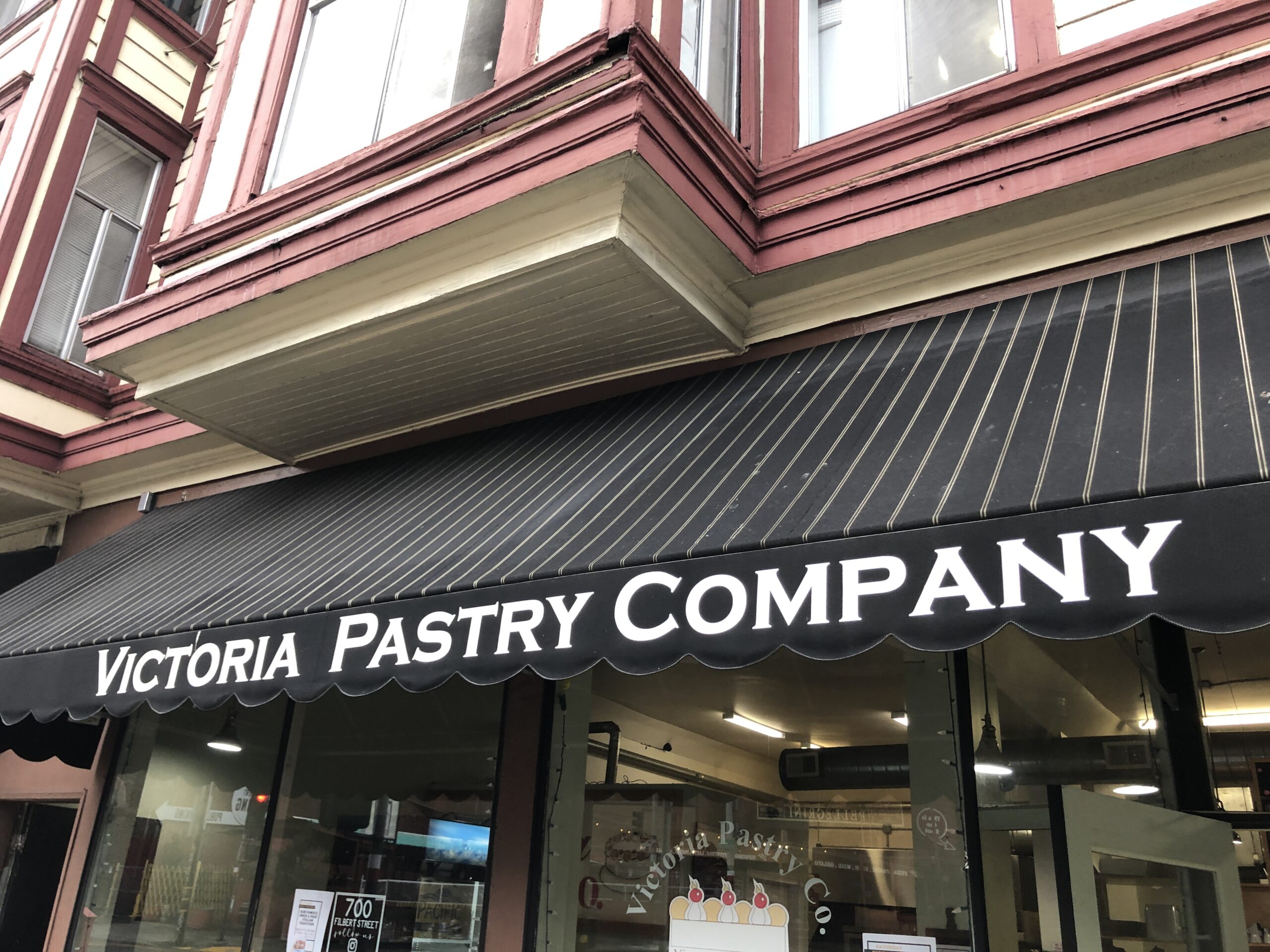
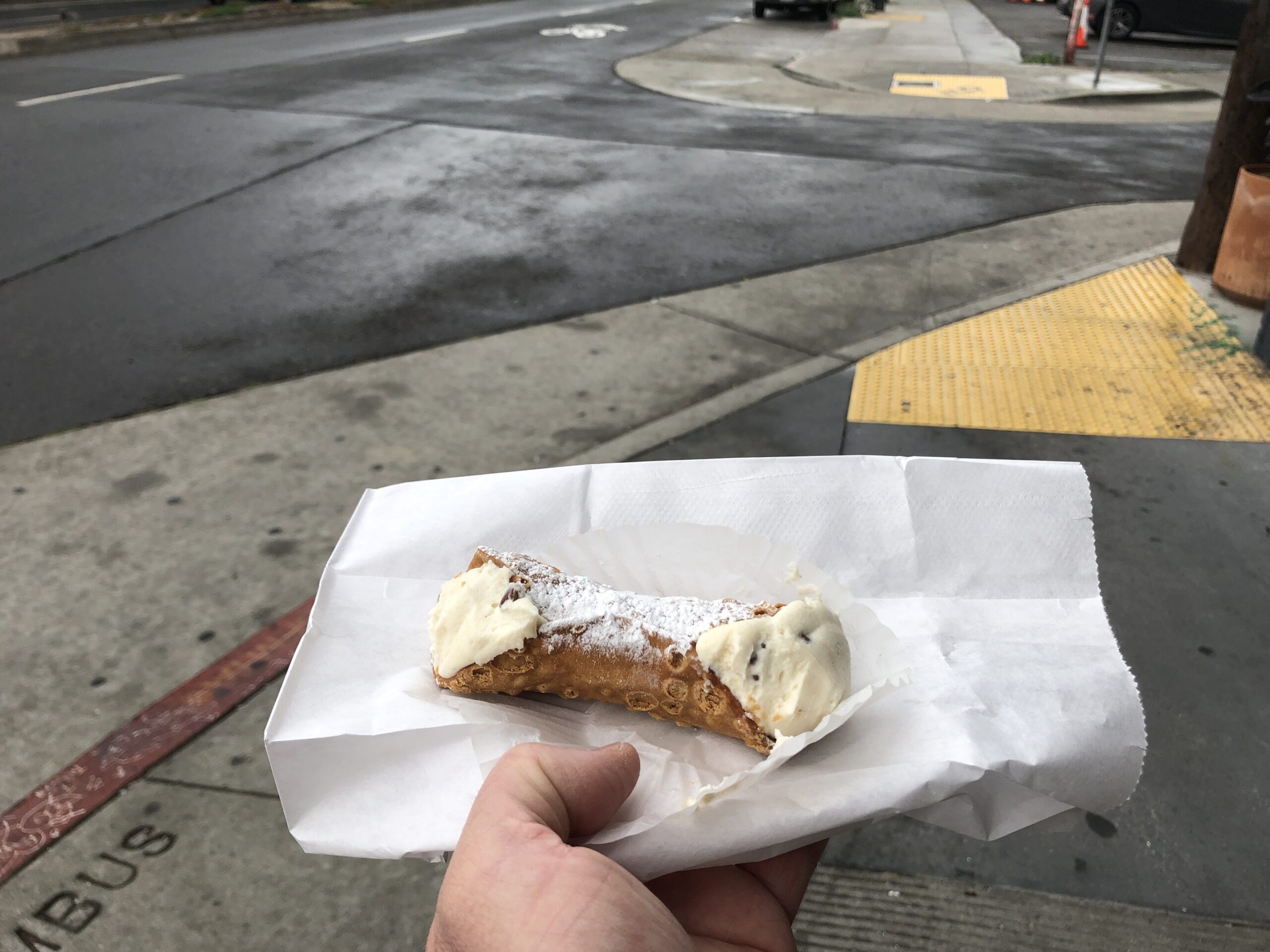
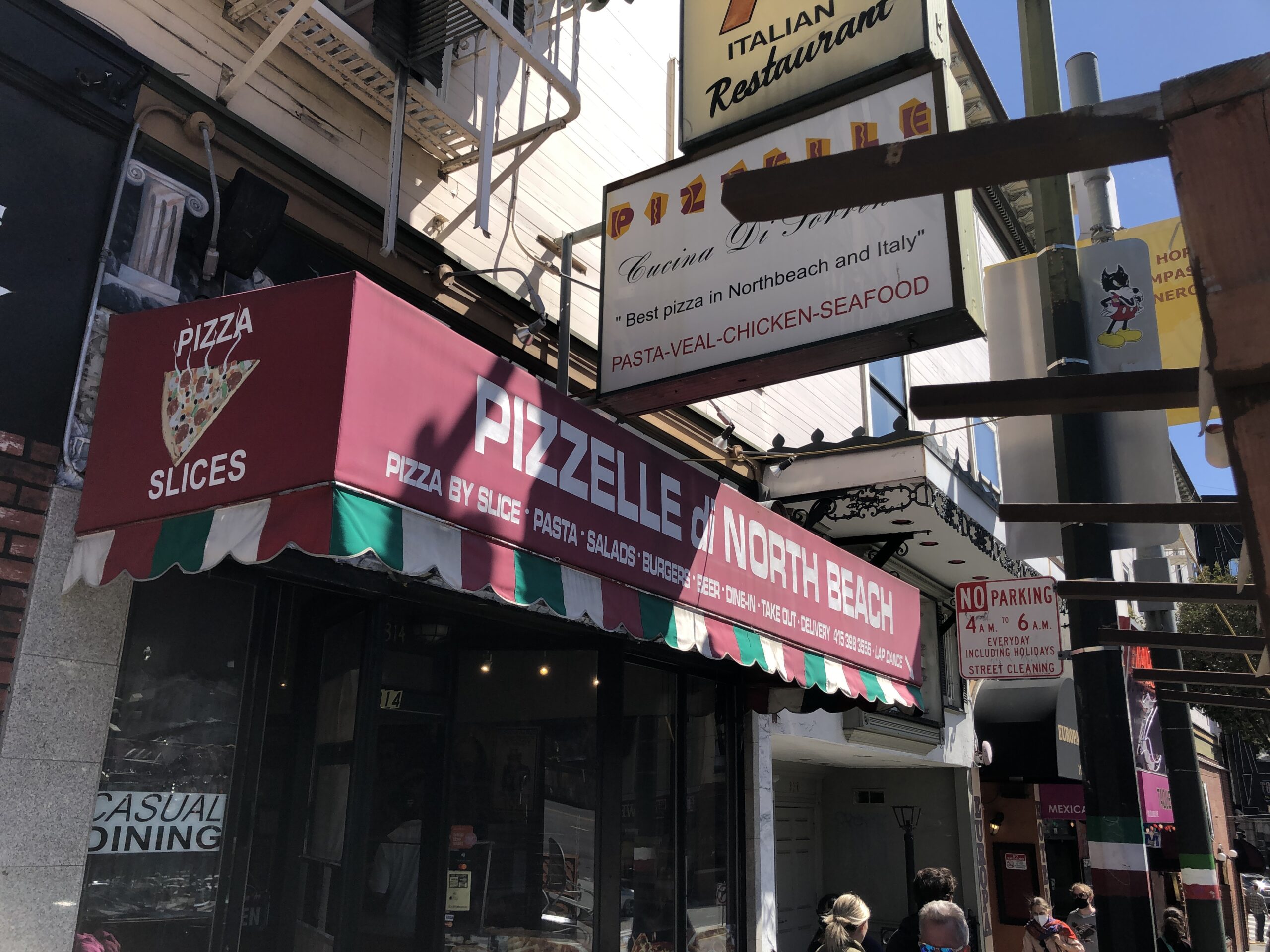
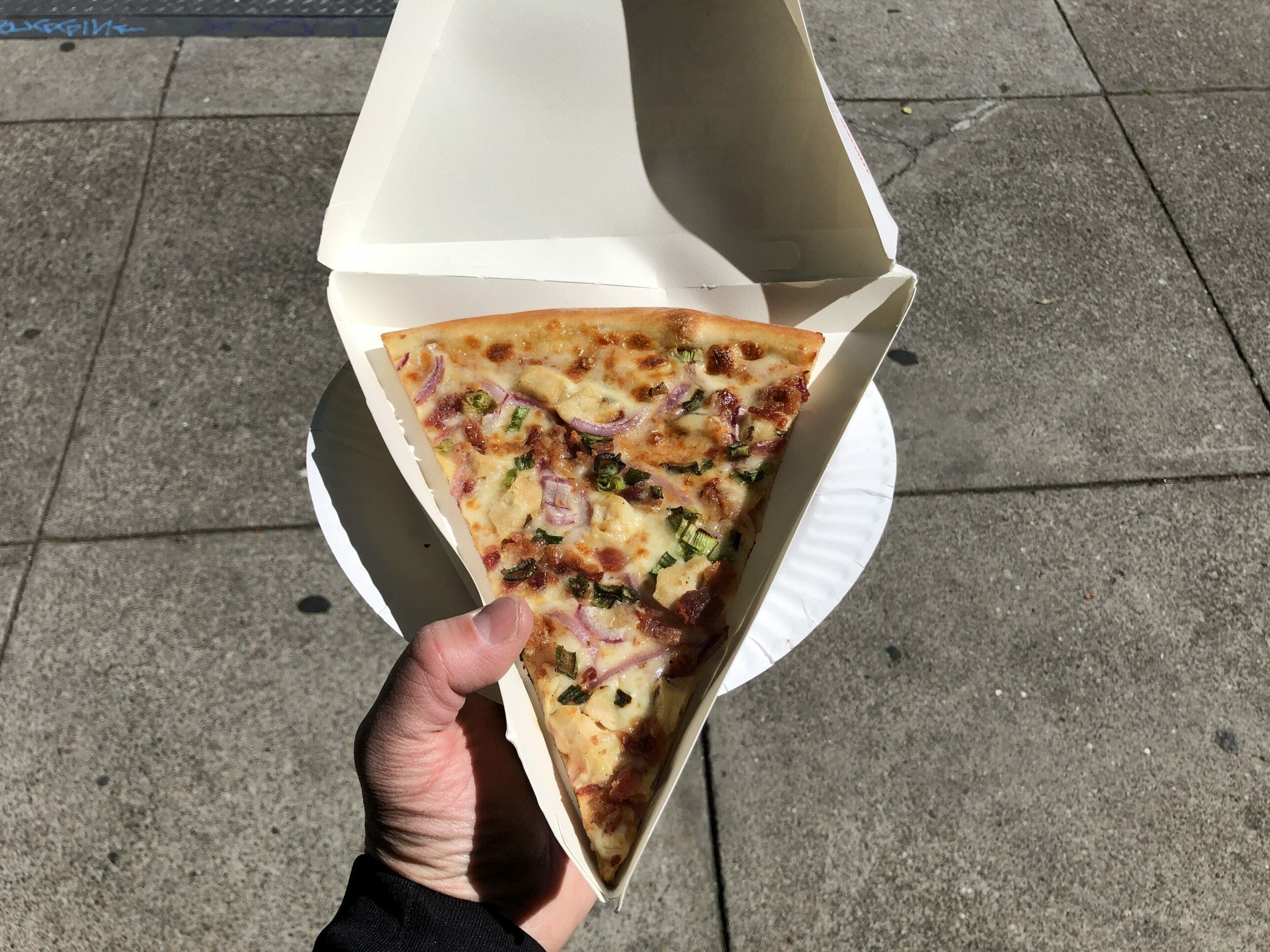
In my regular life, I never walk and eat, but in SF, I mowed down that croissant, a cannoli from Victoria Pastry for Sunday breakfast, and a couple of slices of excellent pizza.
Otherwise, it was takeout from an incredible Chinese BBQ spot, a brilliant, bombastically big Chicken Mole burrito from Cilantro SF Taqueria, and the aforementioned In-N-Out.
I don’t think I spent more than $10 on any of it, and it was all 1000x better than I can get in Taos.
So (in conclusion,) they still have good weed, street food, and nature in San Francisco, but you have to dodge all the shit to enjoy it.
(I’m being literal.)
I told you I stuck to the “good” part of town.
I even overheard someone refer to Union Square, where the department stores and boutique shopping is located, as, “a bad part of town now.”
(No lie.)
Sure, I saw some unhoused people sleeping in alleys, as I wandered.
But not many, compared to what I’ve reported previously.
And I didn’t see one tent.
Not one!
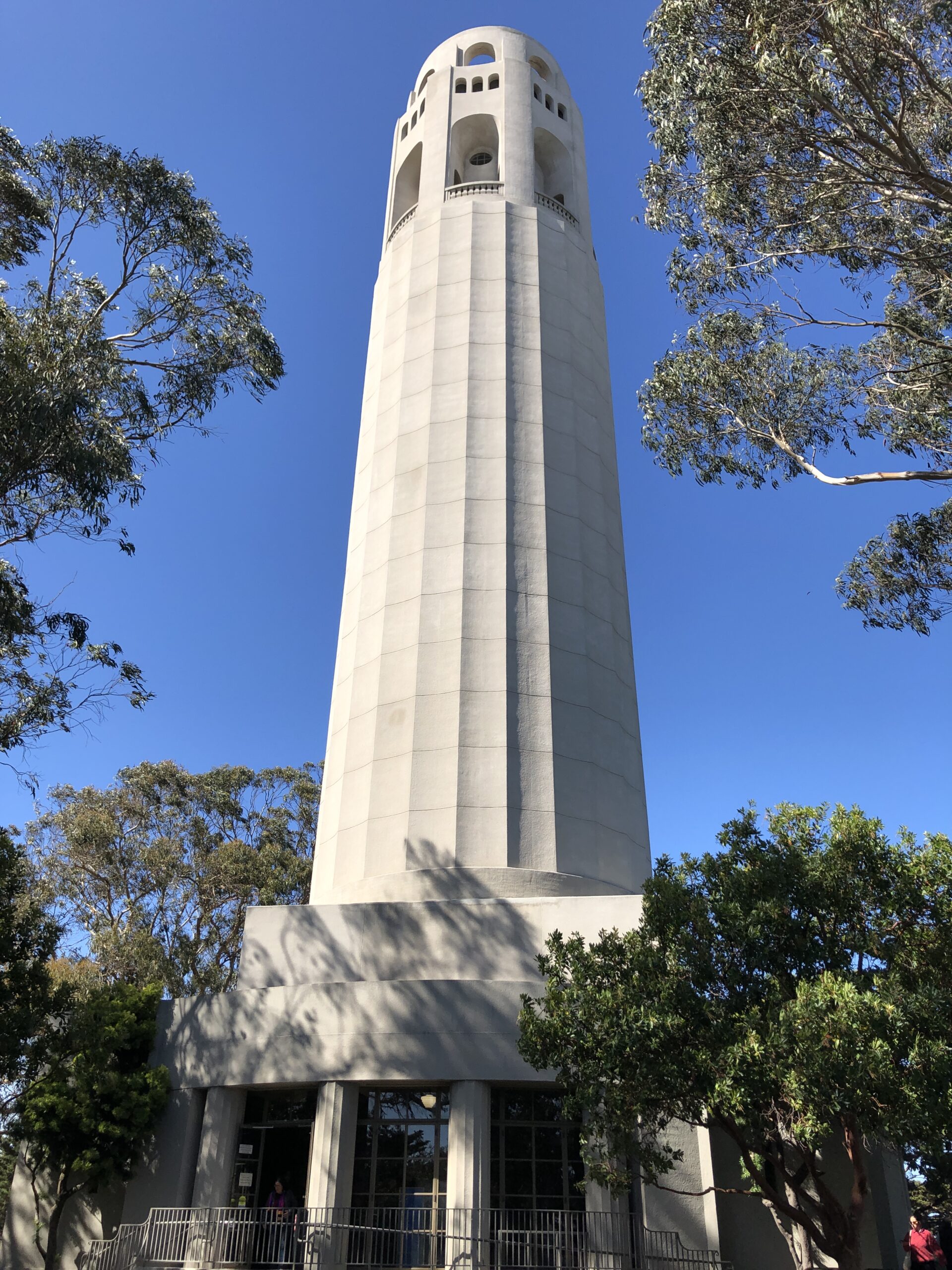
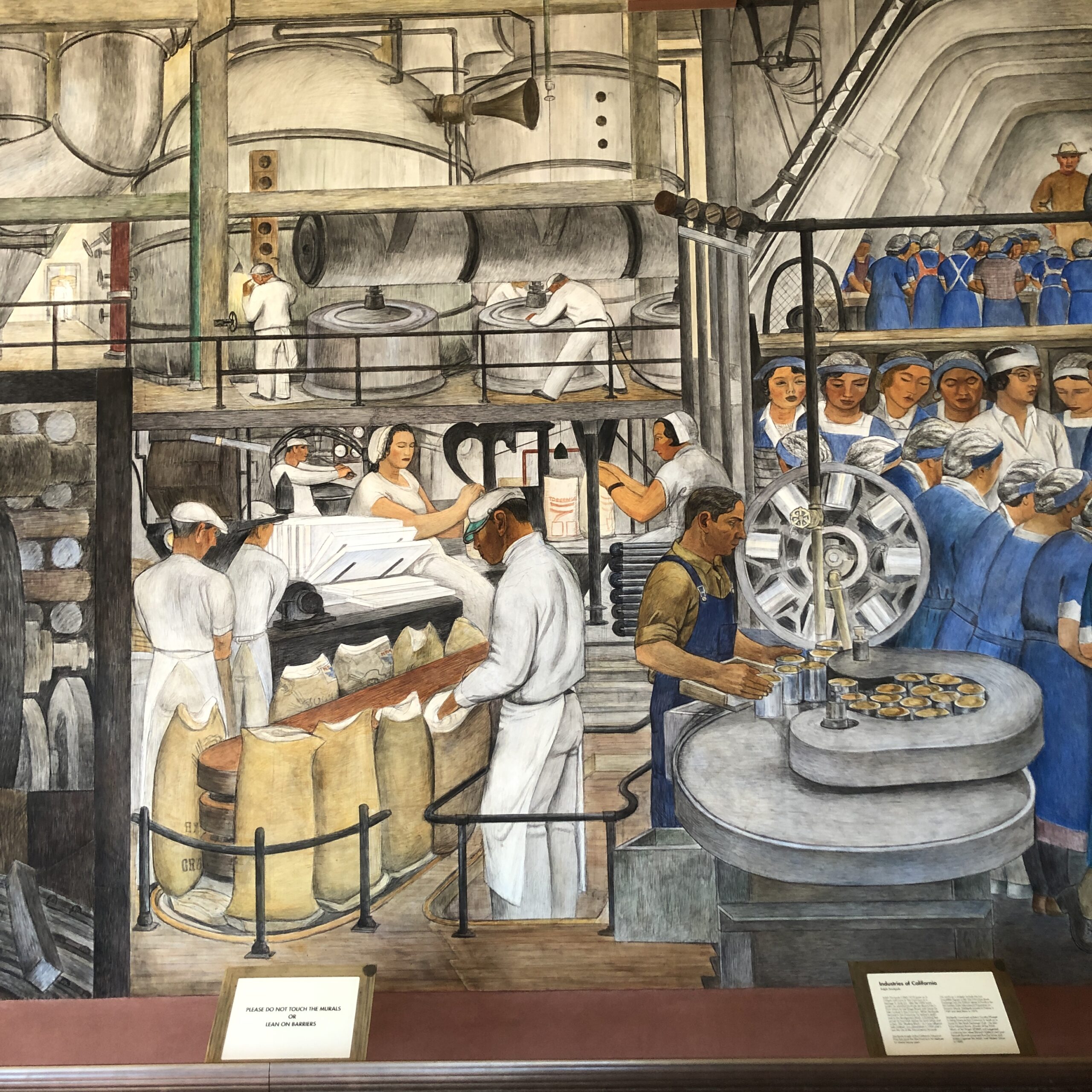
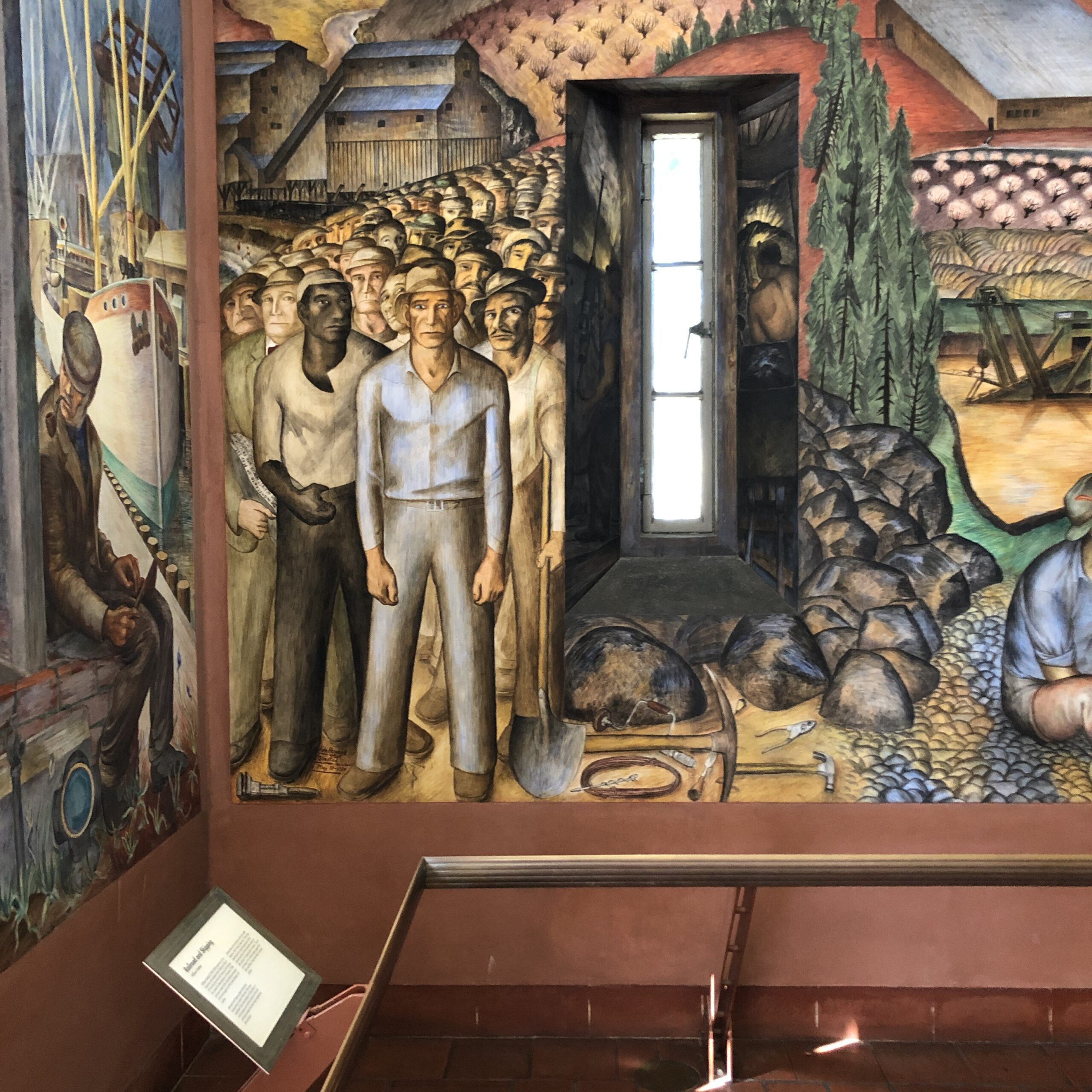
I made it to Coit Tower for the first time, after hearing they had some amazing murals, which turned out to be true.
(I forgot my mask, and didn’t want to be “that guy,” so I didn’t get up close to the art for very long.)
It was almost enough to forget what was going on in many other parts of the city.
Keyword, almost.
Because on the last day of the festival, as I was walking up to the location, I saw a huge glop of human feces on the sidewalk.
It was a pretty street, with fancy neighbors, but there was no denying the turd before me.
I had a flashback to my time in the city, and how by 2002, my wife and I were so tired of dodging human poop on the sidewalk, we were ready to go.
But that was in the Mission; a concrete, low-income part of town, with few parks.
Now the shit is LITERALLY everywhere.
Including right in before of me, on the sidewalk.
Unmissable.
I came and went a few times that day, and ultimately someone dropped a tissue on part of the poop, to warn fellow pedestrians.
“That’s OK,” I thought. “I don’t have to write that up. It’s only one turd.”
But then, it got worse.
Much worse.
On my last day in town, I had coffee at Caffe Greco with two photo peeps I’d only known online.
It was like the pre-times, as we de-masked, drank cappuccinos, and chatted about art and life.
One companion brought up the unhoused-sanitation-issue, complaining the city did not have enough public toilets.
If you live on the street, she went on, and the government doesn’t provide you with adequate places to go, you have to find places to crap every day.
Ultimately, that means public space.
(Most of the time.)
She was empathetic to the plight of the unhoused, rather than bitching about it, but the severity of the situation was not lost on me.
After an hour or so, I excused myself, to go back to the hotel, wash up, and then head out for some more takeout.
Earlier that morning, as I walked down the hotel stairs, I noticed an metal-grate exterior door to the alleyway.
Someone had left it open, so I closed it, and mentally noted that could be a problem.
On my way back from the cafe, as I ascended the stairs, I could smell something so pungent, it had heat.
I’m not kidding.
The air was warm with stench.
I didn’t see anyone, or anything, and popped into my room for a few minutes.
Being stoned, by the time I walked out ten minutes later, I’d forgotten all about it.
So I was hopping down the stairs at a good clip, and came to a screeching halt, as I saw what appeared to be a pool of urine in front of me on the landing.
Maybe I missed it by a foot.
From there, my eyes traced up, almost in slow-motion, and I saw the biggest human shit I’ve ever encountered.
Right there.
In front of me.
On the floor.
So I high-tailed it in the other direction, and took the elevator.
When I reported it to the front desk, they apologized, and said someone had gotten in, and it was a problem.
By the next day, when I mentioned it upon checkout, they had changed their tune, and lied, saying it had only been a dog.
Yeah fucking right.
The biggest dog on Earth, maybe?
I don’t think so.
After the encounter with excrement, I walked for an hour, trying to regenerate my appetite.
And I thought about things, over and over.
All I wanted was to have a few days in the city, pretending everything was OK.
I was prepared to avert my eyes, (for once,) so as to avoid having to write Another Critical Article About San Francisco.
Andy Anderson has a heart as big as the great outdoors, a favorite subject of the award-winning Idaho-based photographer. So it was no surprise that the news of Russia’s invasion of Ukraine would inspire him to take action. In his typical down-to-earth fashion, Anderson relates, “I was sitting in my man shed on a Saturday night having a glass of wine, and thinking about Ukraine, wondering what I might do to make a difference and I called my friend Max Hirshfeld.” That was one of five calls Anderson made that night. In a testament to the power of long relationships, within an hour Images for Humanity was underway.
The two photographers conceptualized a non-profit organization that could raise funds for causes close to their hearts. Photographers make human connections, both with their subjects and with those who view their images. Both men have traveled the world for work and understand there is no language barrier to a photograph—it speaks all languages.
Max Hirshfeld explains, “Photography is a core driver of our emotions and central to who I am as a human. It’s easy to see the unspeakable unfold in front of us through the media, send in a check to assuage our helplessness, and then go on with our lives. But when Andy reached out, I replied immediately with a resounding ‘yes’. In a matter of days his extensive network signed on, and our team got to work.
“Ukrainians fleeing west struck a personal chord in that my mother and her family had done the same — in reverse — after Poland was invaded in 1939. Images of innocent people leaving their homes with nothing more than the clothes on their backs was a vivid call to action, and I knew we could martial support within the photo community and the larger audience through our networks and social media.“
Once curators Meghan Benson, Amy Feitelberg, Mary Healy, Laurie Kratochvil, and Allyson Torrisi were brought onboard, they got down to business, lining up a stellar group of renowned and emerging photographers to donate prints.
“I am honored to be a curator for Images for Humanity,” says Laurie Kratochvil, former photography director of InStyle and Rolling Stone. “The outpouring for Ukraine is so encouraging and photographers around the world have been very generous. I encourage everyone to see the incredible images we are able to offer from donations from renown and emerging photographers.”
“It all comes down to past relationships,” Anderson explains. “These are relationships I’ve had for 20+ years. The photo editors and directors of photography, they are the unsung heroes of most magazines. They are the ones that orchestrate the visual complexity. I worked with all those people in the beginning of my career.”
And to keep it real, everyone stepped up to donate services and time. “We have a hundred thousand dollars of web design that has been donated. There’s a big pro bono effort involved, not just getting the photographers together but marketing, social media, production coordination,” he adds. Lyle Shemer and Penn Li, creative leads at Meta Design, are responsible for Images for Humanity’s website and branding.
Given the humanitarian crisis unfolding in Ukraine, IFH is raising funds for the Ukrainian Red Cross as its first philanthropic effort as a newly-formed 501 (c) (3). Thanks to the generosity of these world-renowned photographers, including Anderson and Hirshfeld, Ruven Afanador, Kurt Markus, Herb Ritts, Mary Ellen Mark and Albert Watson—among 100 others—IFH is offering an archival, unsigned print with each $250 donation. One hundred percent of the profits will go to the Ukrainian Red Cross. Only ten prints from each photographer will be available and each comes with a commemorative Images for Humanity label.
If this inaugural effort is successful, IFH hopes to raise funds for other worthy causes both at home and abroad. “I want to be remembered as a good person. It means more,” says Anderson. One of the preeminent commercial photographers working today, there is no question that Anderson will be remembered, not only for his honest and profound images but for his big heart and willingness to help address the pressing issues of the day.
To learn more, view the full list of participating photographers and prints available, and donate, visit Images for Humanity’s website, and follow the organization on Instagram at @ImagesForHumanity.
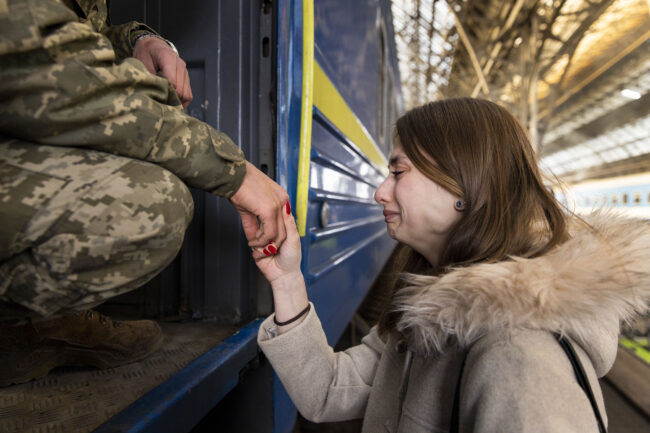
Ilvy Njiokiktjien, Solider, LVIV, UKRAINE – 15TH OF MARCH, 2022: Soldier Volodimir (20, l) and his girlfriend Tanya (21) while saying goodbye at the trainstation in Lviv, Ukraine on March 15th 2022. He departs to Kramatorsk, to fight in the war that started after Russia invading Ukraine on the 24th of February 2022.
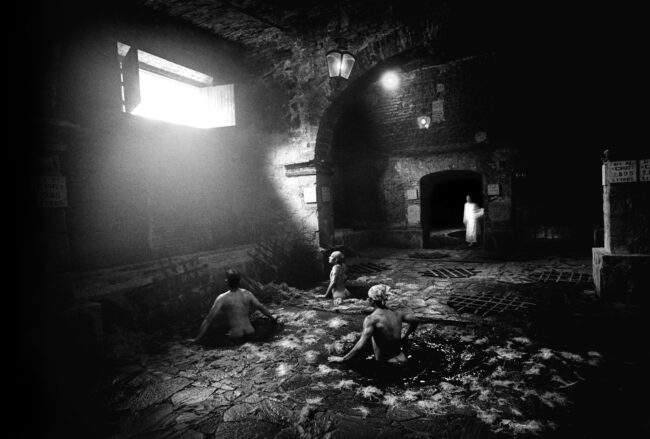
Doug Menuez, Tequileros Making Tequila, Mexico, 2001
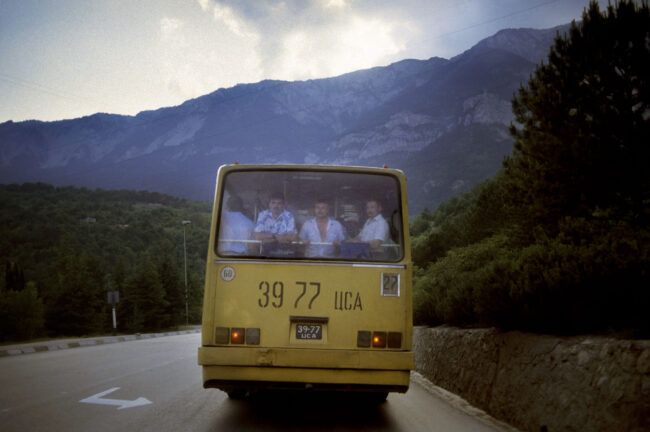
Ed Kashi, Trolley Bus, Crimea, Ukraine, 1993
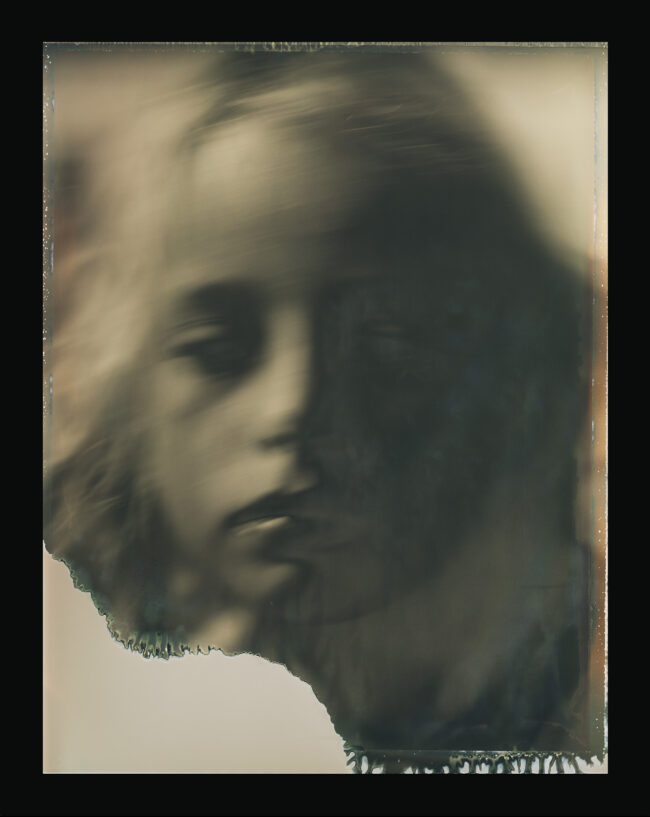
Frank Ockenfels III, Lilah, 2021
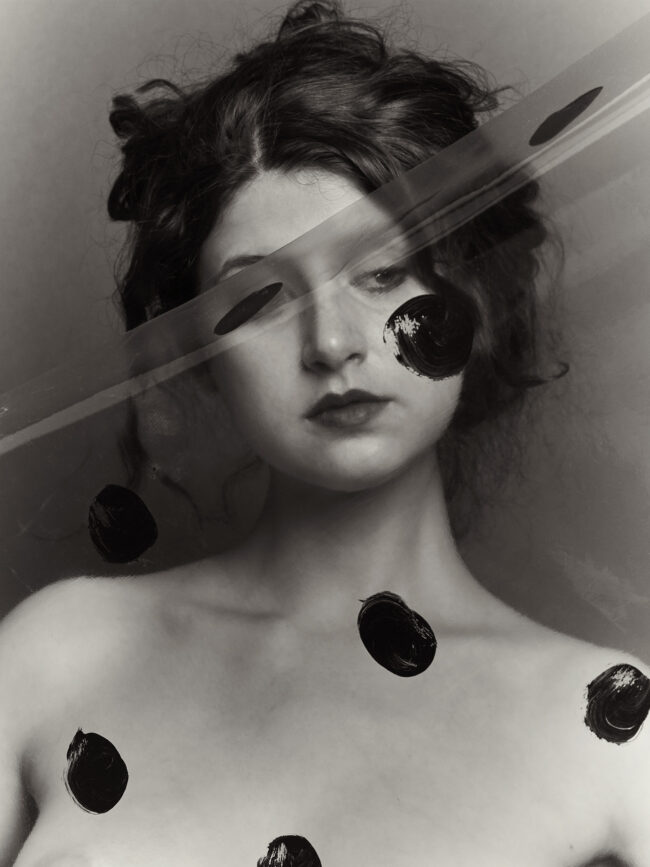
Joe Pugliese, Marian, 2015
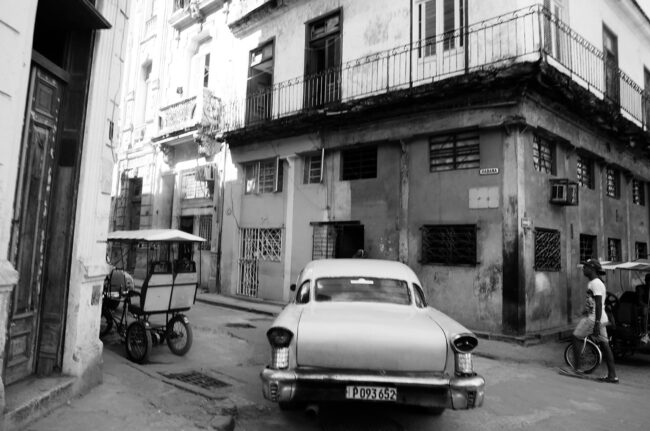
Matt Sayles, Havana, 2014
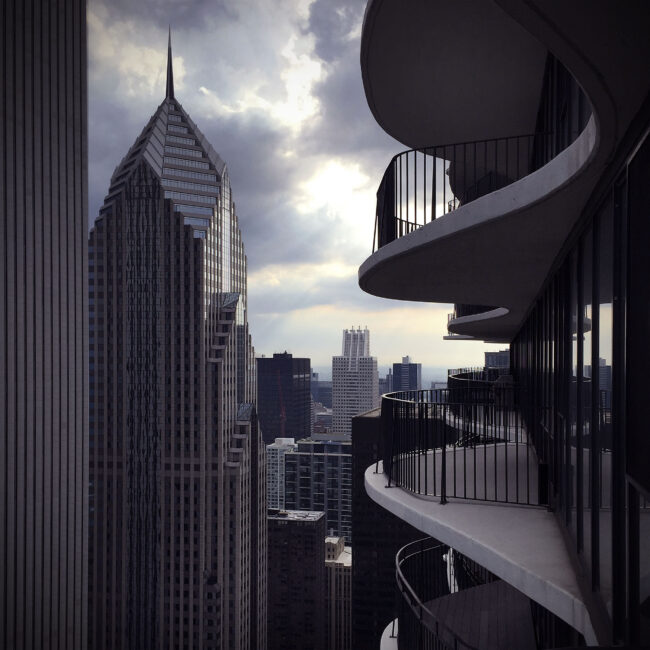
Max Hirshfeld, Chicago, 2015
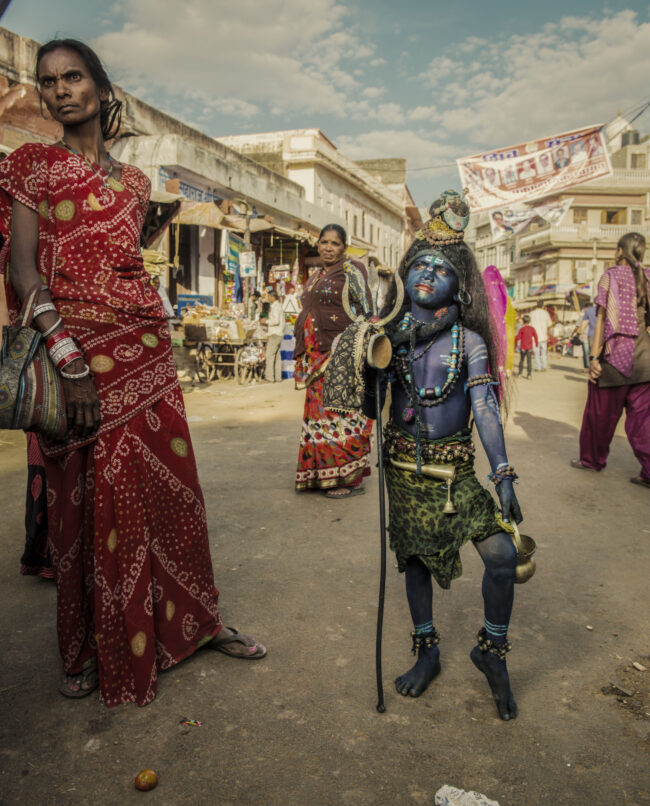
Vincent Dixon, Blue Boy, Pushkar, 2013
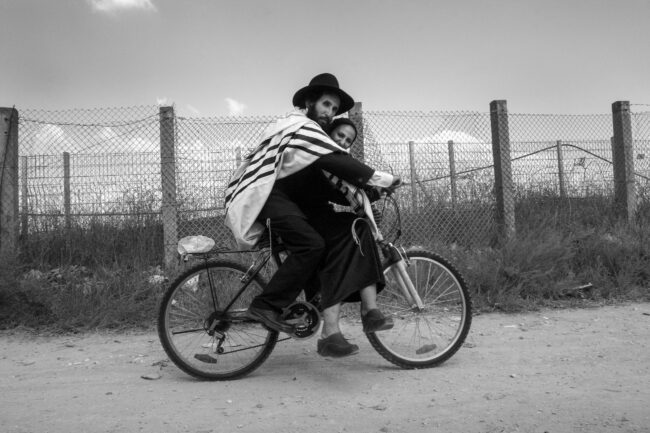
Rina Castelnuovo, Morning Prayers, 2005
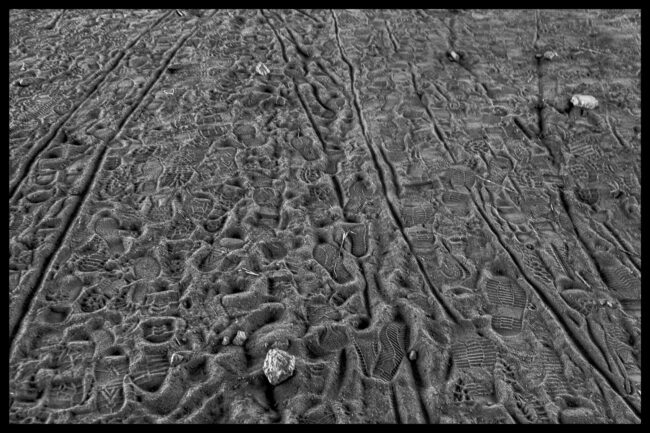
Ron Haviv, Escape, 2022 Scenes from the road leading to the broken bridge that allowed people to escape from the Irpin, suburb of Kyiv to safety. Thousands of people were ethinically cleansed as they fled Russian forces. These footsteps and tracks made by wheelchairs and strollers lead up to the makeshift crossing to semi safety. People left their cars and extra belongings as they crossed the bridge by foot to be sent to Kyiv and beyond, often to begin their lives as displaced or a refugee.
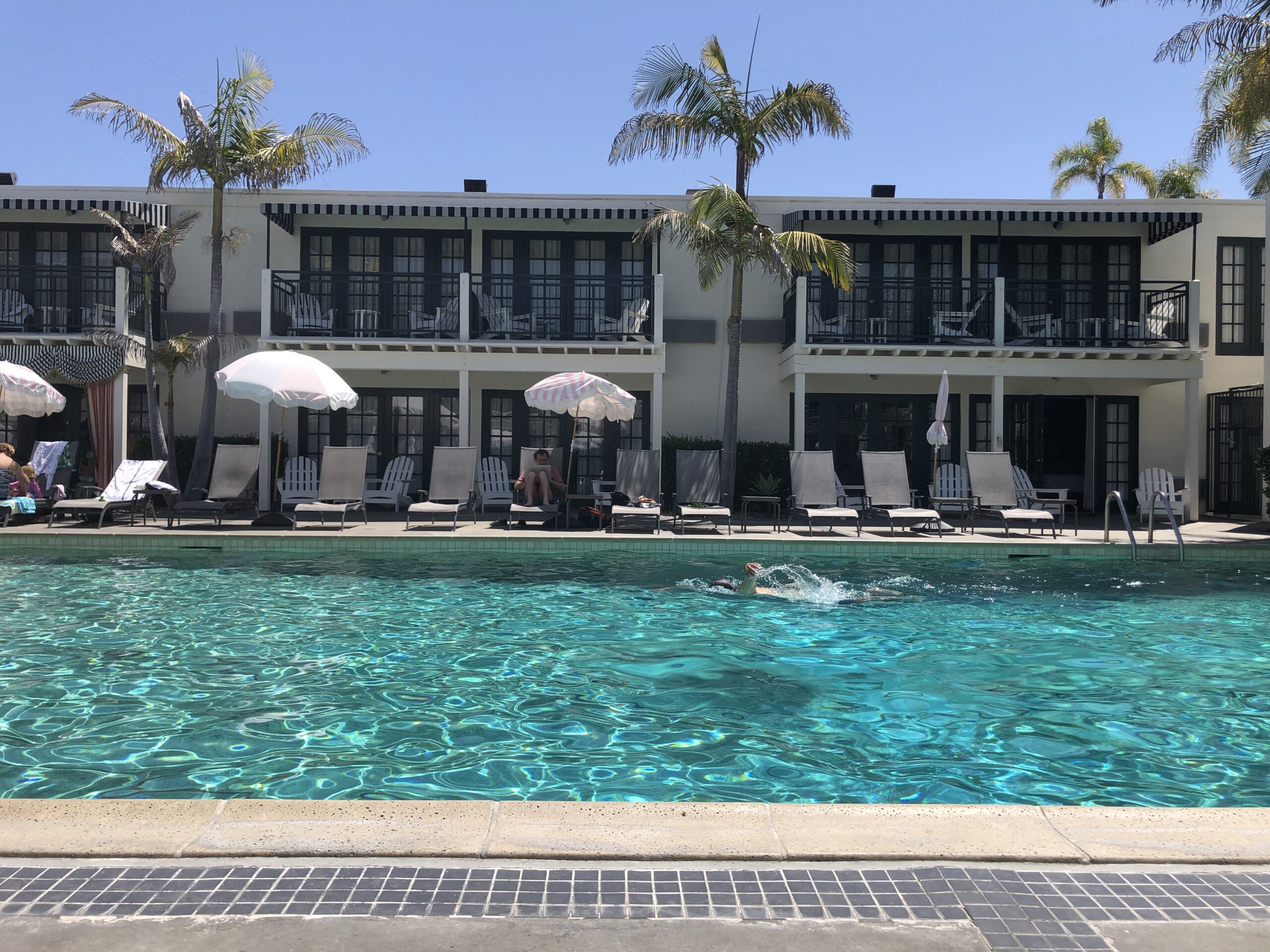
Concept: Architectural images showcasing a hotel and its amenities.
Licensing: Unlimited use of up to 5 images in perpetuity. Unlimited use of up to 30 additional images for 1 year
Photographer: Architecture and Hospitality specialist
Client: Large International Hospitality Brand
Here is the estimate:
Fees: This shoot required an experienced architecture and hospitality specialist with the ability to capture strong content in a very short amount of time. The shoot time was compressed as the location was re-opening with short notice due to the state’s relaxation of Covid regulations. Also, from what we could gather in our client conversations, was that a shoot took place recently and the agency was now tasked with getting it done right the second time. That put upward pressure on the fee, and I felt that a creative fee alone was worth $10,000 for the 2-day shoot.
The client requested two licensing terms for the 35 deliverables on the shot list. They requested 30 images with 1-year Unlimited use, and an additional 5 images to have a license for unlimited use in perpetuity.
For the 1 year Unlimited licensing, I felt $750 per image was appropriate for the quantity of 30 images.
For the perpetual Unlimited licensing, I felt $2,000 per image was appropriate for 5 images.
This totaled $32,500, and I arrived at a $42,500 creative/licensing fee by combining the $10,000 creative fee with the licensing fees. On top of that, I added a $750 fee for the photographer to attend a quick tech/scout of the location.
I added a Licensing Options section within the Job Description to outline possible additional image use fees, including possibly extending the use of the 30 images to perpetual use. This included a discounted rate for the bulk perpetual use.
Crew: We added a first assistant (who would also accompany the photographer on the tech/scout), as well as a second assistant. These rates were appropriate for the given market, and the rates the photographer’s assistants were accustomed to. I suggested to the photographer to bring on a separate person as digital tech, but the client pushed back on the crew footprint during Covid and the photographer was comfortable using his 2nd assistant to simply run a Capture One tether and backup files.
Equipment: We included $2,000 for cameras/grip/lighting, and a modest fee to cover the photographer’s computer set up to be used on set, and 2 hard drives.
Covid Safety: We included costs for 3 advanced Covid tests for the photography team, plus $75 for PPE.
Misc.: The location was about a 30-minute drive for the photography team. We added a line item to cover individual mileage for the 3 person team, parking, some additional meals, and a bit of buffer for any small unforeseen expenses that might arise.
Post Production: We included $1,500 for the photographer to perform basic color correction and provide a gallery of his favorite shots. The retouching estimate was based upon the photographer and creative team assuming each image would need roughly 2 hours of work. This would be billed at $125 per hour.
Results: The photographer was awarded the project. The shoot was a success and images are out in the world currently!
Heidi: When you look back on your images from the PCT with a camera in hand, how did that experience influence your photographic eye?
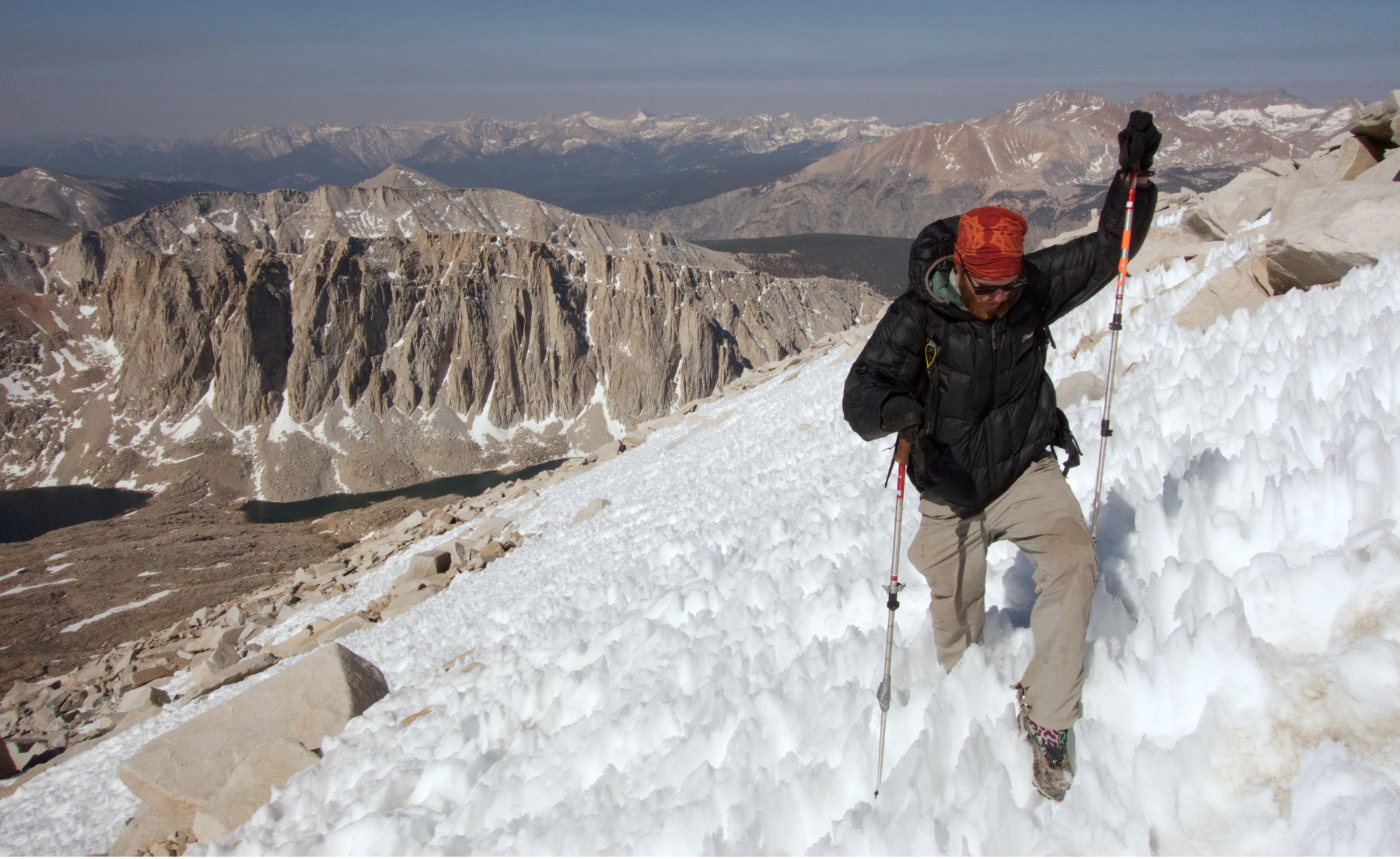
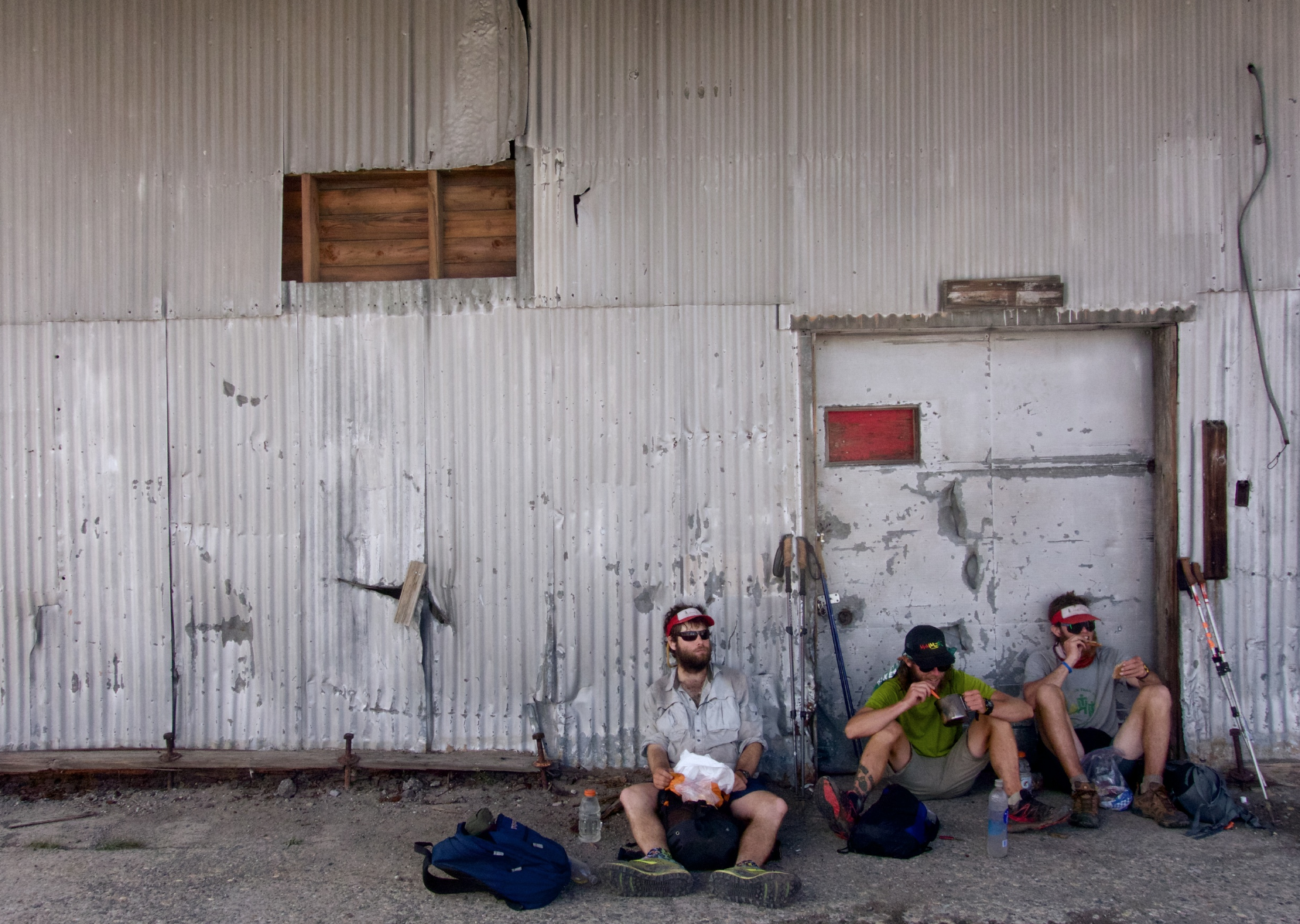
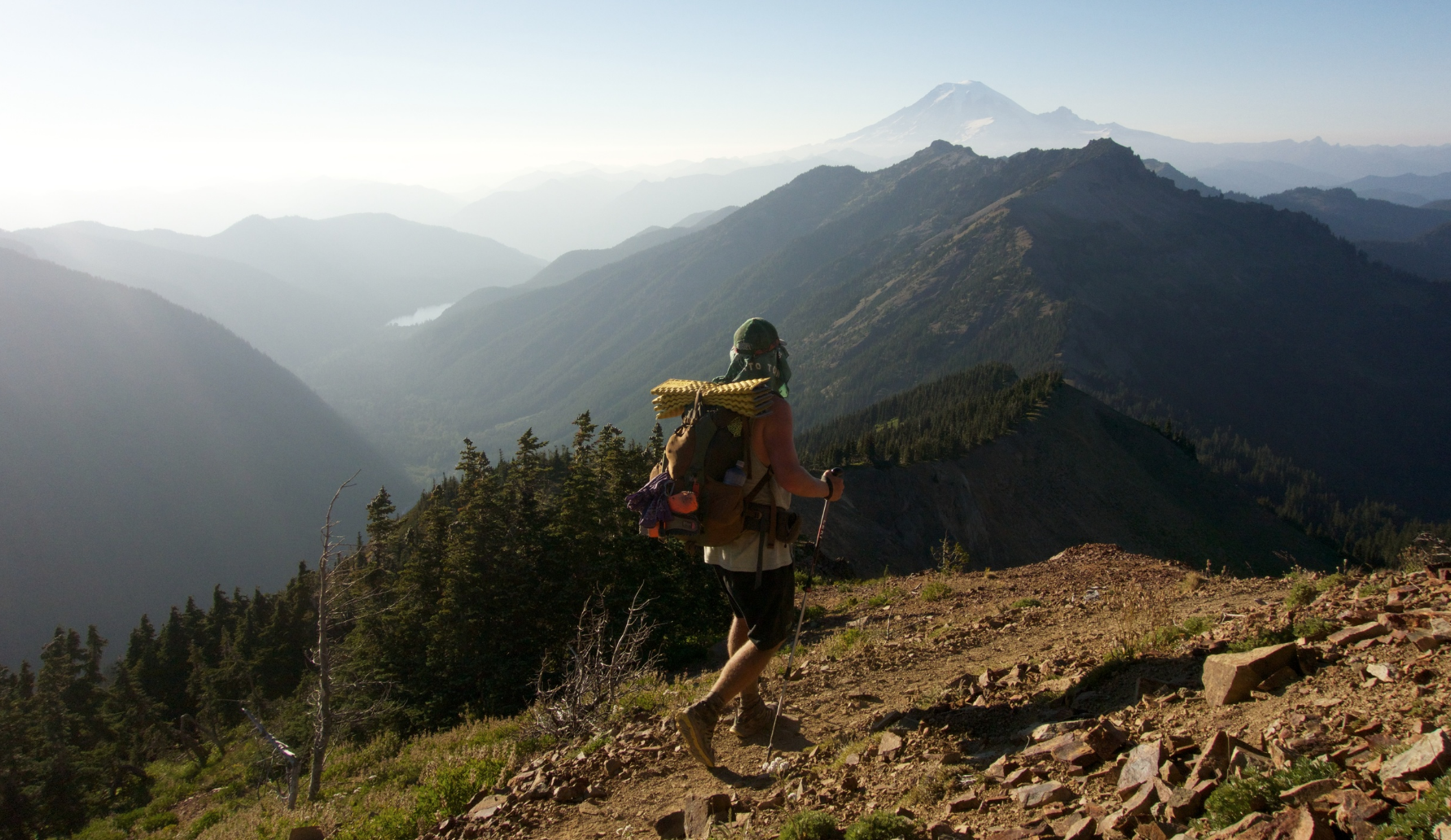
Colin: Looking back on the PCT – I had just graduated from college, I had no job or home to go back to. The experience was basically living out of a backpack for 5 months – it was both incredibly stimulating and repetitively boring. It was a fertile environment to really immerse myself in the photographic process and build habits around shooting daily. The hike was really my first focused endeavor into photography but by the end of the trip I had really begun to understand my camera and the fundamentals through daily repetition and experimentation. Looking back through Lightroom, I’m not very excited by the photos I took. I think what the experience taught me as a photographer and filmmaker was that if I’m fully engaged by a personal experience like hiking the Pacific Crest Trail – my creative energy and motivation flows from that excitement. I was so moved by certain moments, those synchronistic experiences of being immersed in nature and I wanted to share that. I learned that a camera could be a way to communicate things that cannot be put into words.
On a practical level, the PCT taught me how to be a “dirt bag”. I decided after that experience that I wanted to become a photographer but it took most of my twenties to pick up momentum professionally and really be able to get the assignments to build my portfolio. If I didn’t have the experience in my early twenties of living out of a tent, living out of a truck, living in shared spaces with seasonal workers, I don’t think I could have survived the lean years when I wasn’t making much at all as a freelance creative. I’ve really committed to pursuing the experiences and stories that I’m passionate about and the PCT was a big part of building that habit.
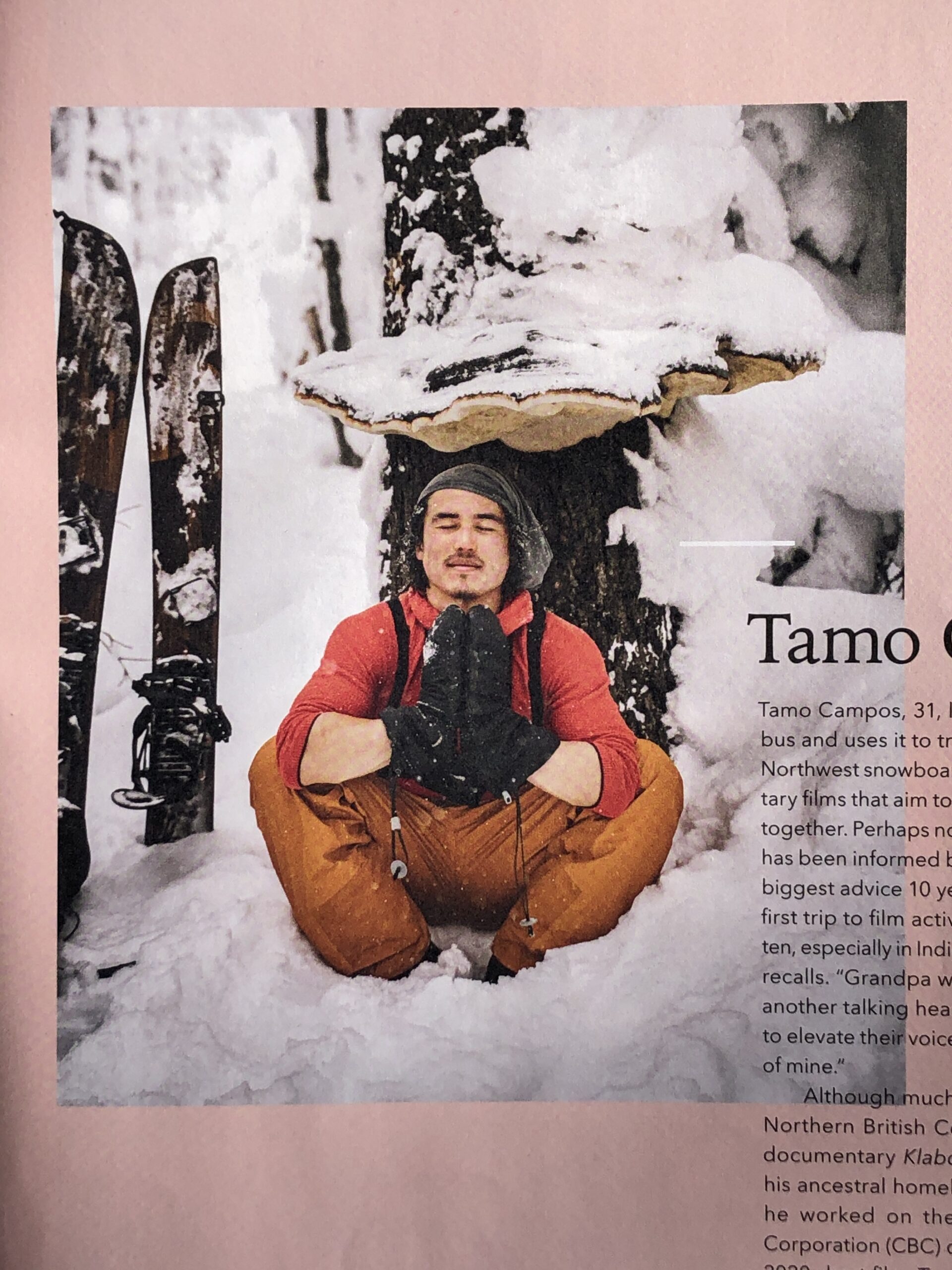
Tell us how this image of Tamo came about.
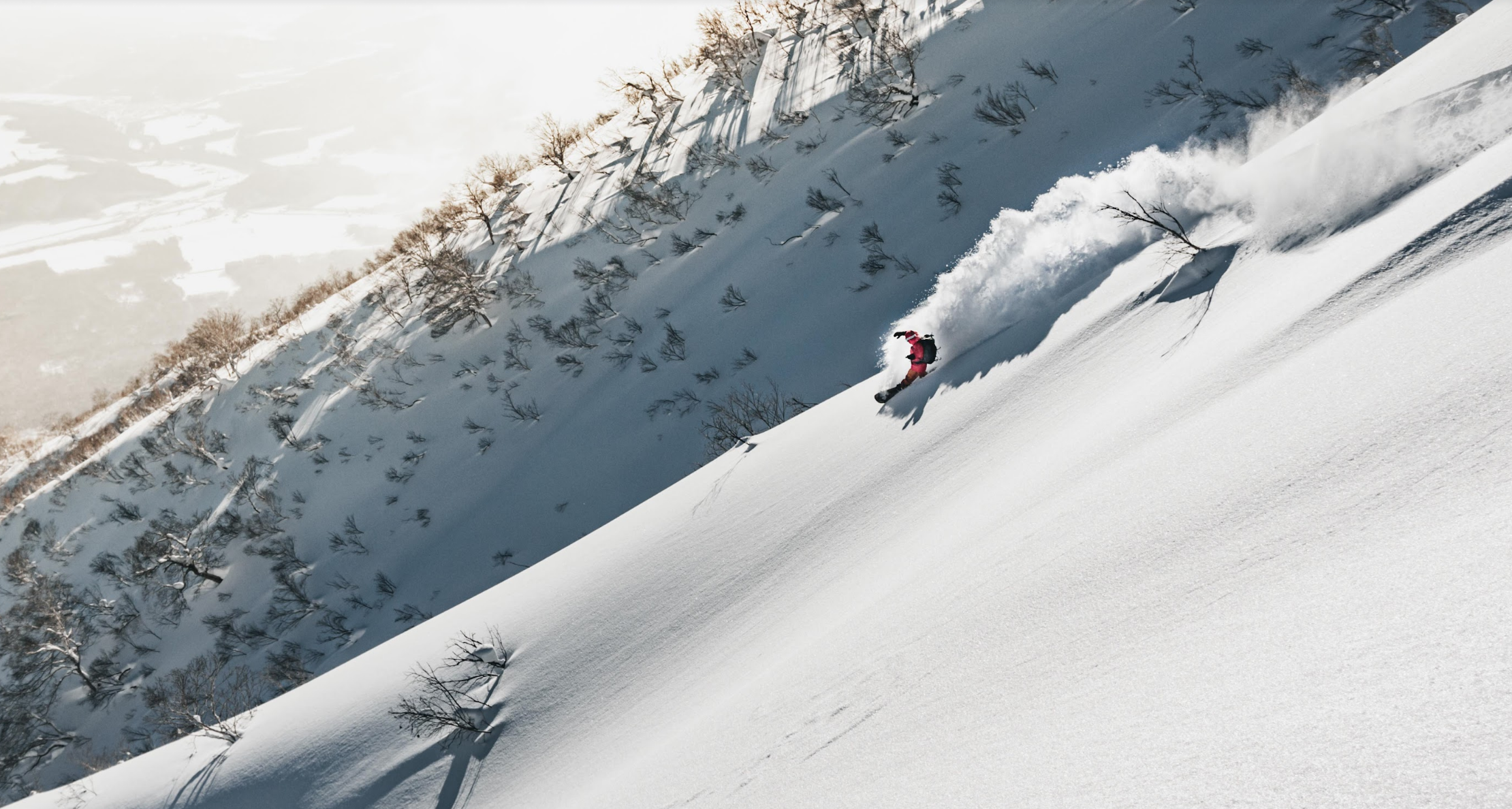
Tamo and I had the opportunity to travel around Hokkaido, Japan a few winters back in a little camper van. We were working on a documentary film project together and after the shoot wrapped, we blocked out a few weeks to try and visit different backcountry zones around the island. Our budget for the trip was very, very shoestring. We rented the smallest van that we could afford in Tokyo and drove it all the way north, caught a ride on the ferry and finally made it to the perfect zone. We’d tour up into the mountains all day. Make it back to the van by sunset. Visit a nearby onsen, grab ramen and then sleep in the closest parking lot. It turns out that car camping is culturally accepted in Japan, so we were actually camping near other local folks doing the same thing.
After a few weeks, the trip became a wonderful blur of deep snow, gas station sushi and hot springs. Some zones in Japan are just so magical. The snow is so deep and fresh – it is clinging to everything. Skinning up through the ancient birch forests feels just as rewarding as dropping in and going down. This big shelf fungus gave us a laugh, mid way up a tour and Tamo plopped down to pay homage and get some cover from the falling snow.
How did making the Brotherhood of Skiing inform you as a creative adventurer?
Making Brotherhood of Skiing was really an influential experience for me. Previously a lot of my work had focused on “wilderness” and spaces that are mostly absent of people. The National Brotherhood of Skiers is really about community, connection, and celebration through being outdoors together. The opportunity to hang out with NBS showed me how much that kindness, inclusion and joy is often missing from predominantly white recreation spaces. There is just some much love when NBS hits the slopes. After that film I started looking more carefully at what stories I wanted to work on and whose voices were a priority to amplify. It’s about equity in representation but also about keeping the creative experience fun and how much the process can flow when the folks in front of and behind the camera are resonating.
What are you working on now?
This summer I’m working with my partner to finish a remote cabin in the Tongass Rainforest in Alaska. My partner Elsa grew up here in coastal Alaska and part of putting roots down is a commitment to the visual storytelling that we think will benefit this community. I’m trusting that prioritizing personal experience over chasing jobs, will lead me professionally where I’m meant to go. I want to let my creativity flow from what I’m excited about in my life. A lot of my work right now is around documenting maritime and fishing culture. A new wave of Alaskans are striving to live in balance with the land after the decades of industrial excess and exploitation in Alaska. I strive for my photography in Alaska to be a celebration of that movement and the reciprocity between people and land.
Who designed it?
Steve Secviar at Less + More in San Diego.
Tell me about the images.
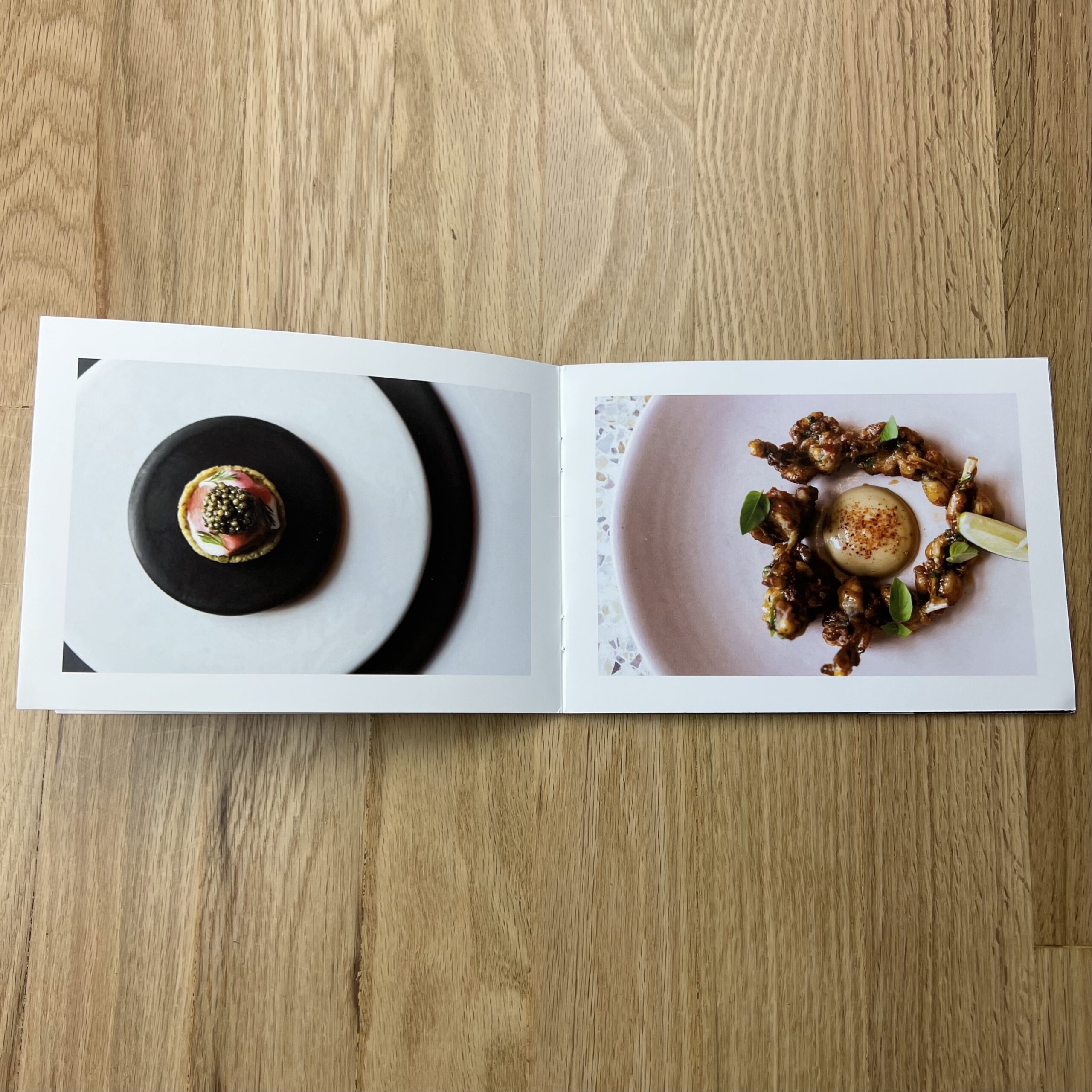
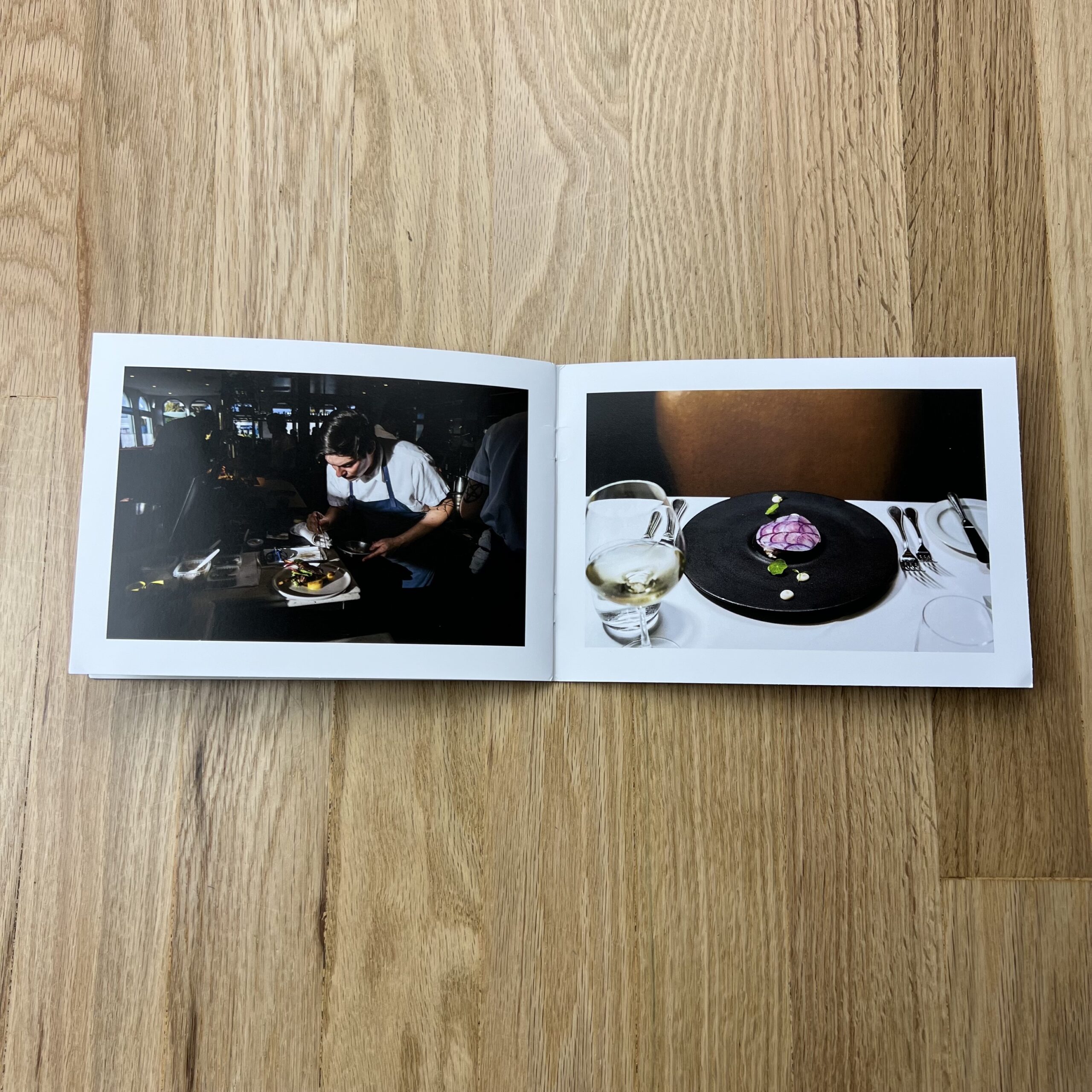
The images I chose to print were ones that I thought might capture my audience within the food and beverage industry. My audience being art directors, editors and even specific restaurants.
How many did you make?
I ended up printing 100 promos based on cost.
How many times a year do you send out promos?
I try to send out twice a year. I will be mailing out promos again towards the fall of this year.
Do you think printed promos are effective for marketing your work?
In terms of feedback/response from using printed promos, I’ve yet to determine if it’s beneficial. I mean I guess it would be hard to qualitatively determine if the printed promos are helpful, especially with such a strong social media presence these days. But I think most people like having something tangible so I’m hoping that someone who sees it will take into consideration the time and effort that went into making them.
And I’ve been tending to sick kids all week, while beating back the self-destructive tendencies of a normally-great teenager.
(Like I said, I’m beat.)
Then again, my teenager reads the column, and we were discussing photo books as we waited at the fire-house-bus-stop this morning.
The fire-house-bus-stop
(He really liked both books we featured the past two weeks.)
For the first time, I brought my camera along on the morning ritual, as yesterday, I noticed the light was gorgeous at 7am.
Unfortunately, the light wasn’t spot on today, as there were high clouds, which burned off shortly thereafter, returning our hyper-dry, uber-blue-sky days.
I’d had a shot in mind since yesterday, and as I lined it up, the light, which glimmered a second before, flattened out.
I stood there, camera to my eye, and decided to pass on clicking the shutter.
Just then, literally a second after I lowered the camera, I saw a flash of brown to my left.
Rather, it was a deer, bounding across the field, less than 50 feet away.
As I’ve written before, I’ve been shooting here in Taos since late December 2020, and have images of all sorts of animals: dogs, snakes, cows, spiders, horses.
Odessa, who died in March of this year
But no deer.
I’ve wanted the deer, but really, how often are you standing there, with your camera all dialed in, and a deer wanders into the frame?
Turns out, it was a whole family of deer, hopping along, one at a time, so I got a few shots.
The light wasn’t perfect, but the whole thing was so random.
Right place.
Right time.
Some artists have an idea in mind, and make the art to fit the vision.
Others shoot whatever they see, over months or years, then build a jigsaw puzzle out of the resulting edit.
Neither way is “better,” but in my copious experience, I’ve come to believe groups of images that are pre-conceived, or made to cohere to a concept or structure, often have a slightly enhanced sense of intent.
(That’s my two cents, anyway.)
And the last two weeks, it seemed like we featured books where the images were shot, and then the story was built after-the-fact.
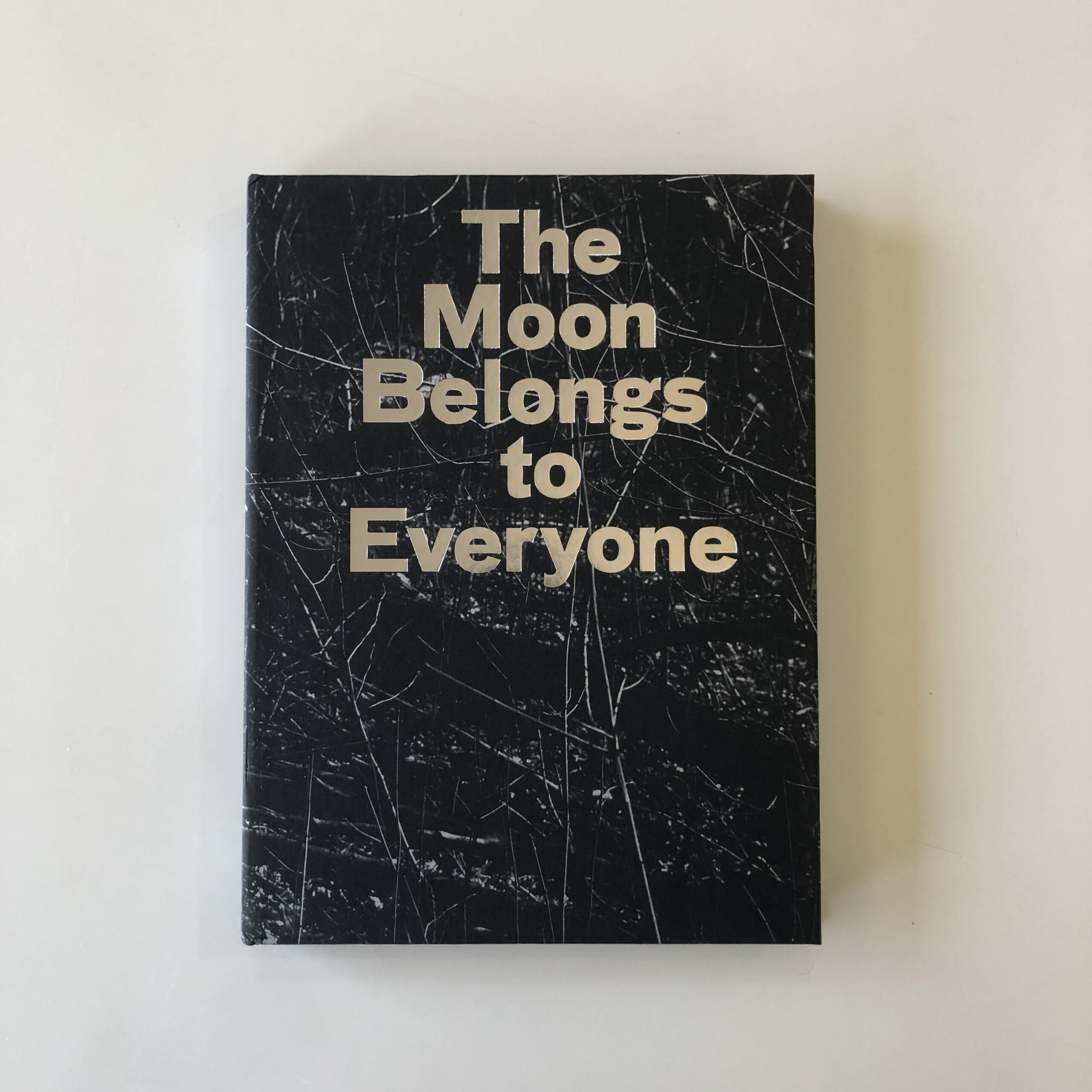
(Can’t be sure with Stacy’s amazing “The Moon Belongs to Everyone,” but that was the vibe, anyway.)
Today, we’re going in a completely different direction.
Let’s look at a book that represents a very personal story.
A book that’s about life, death, and friendship.
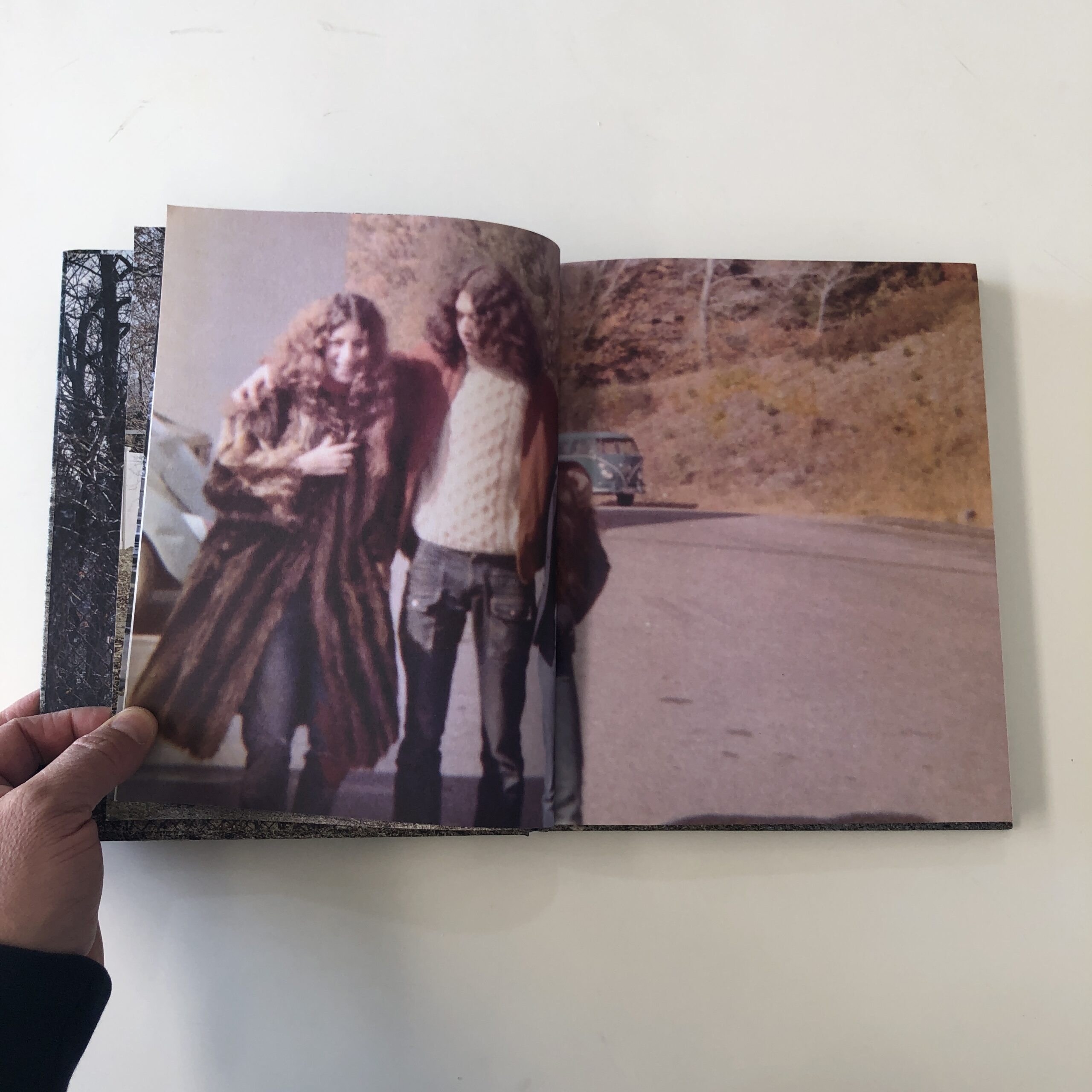
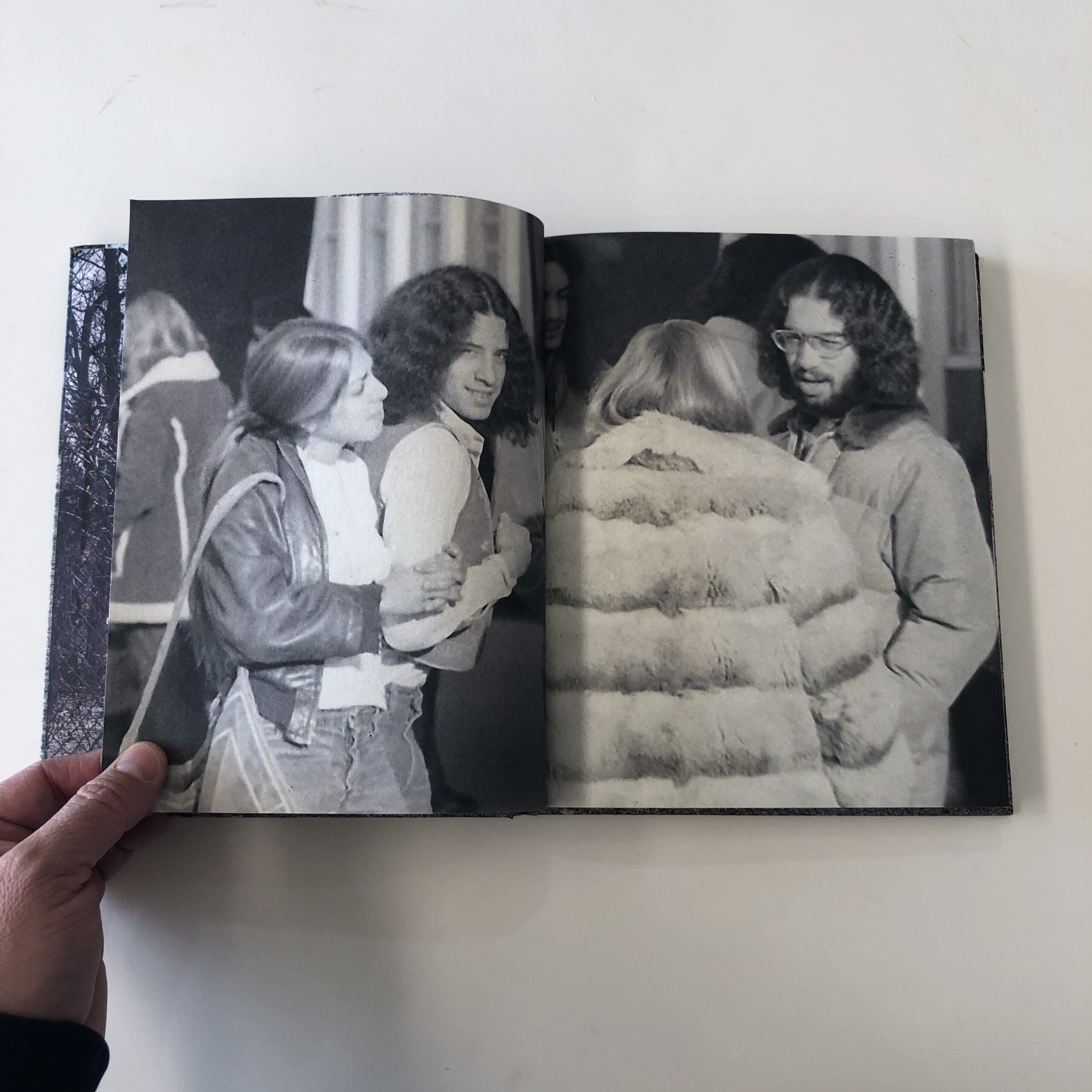
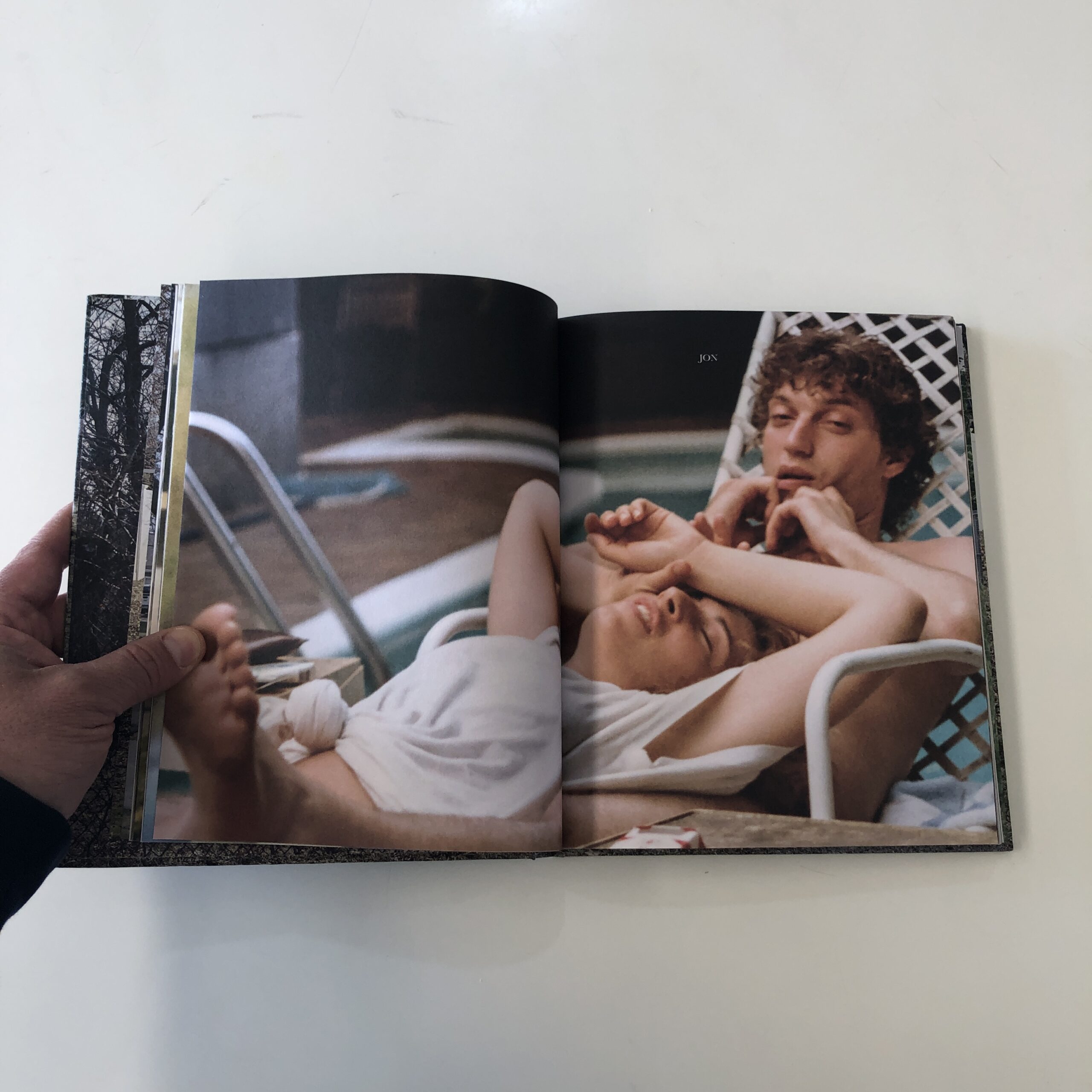
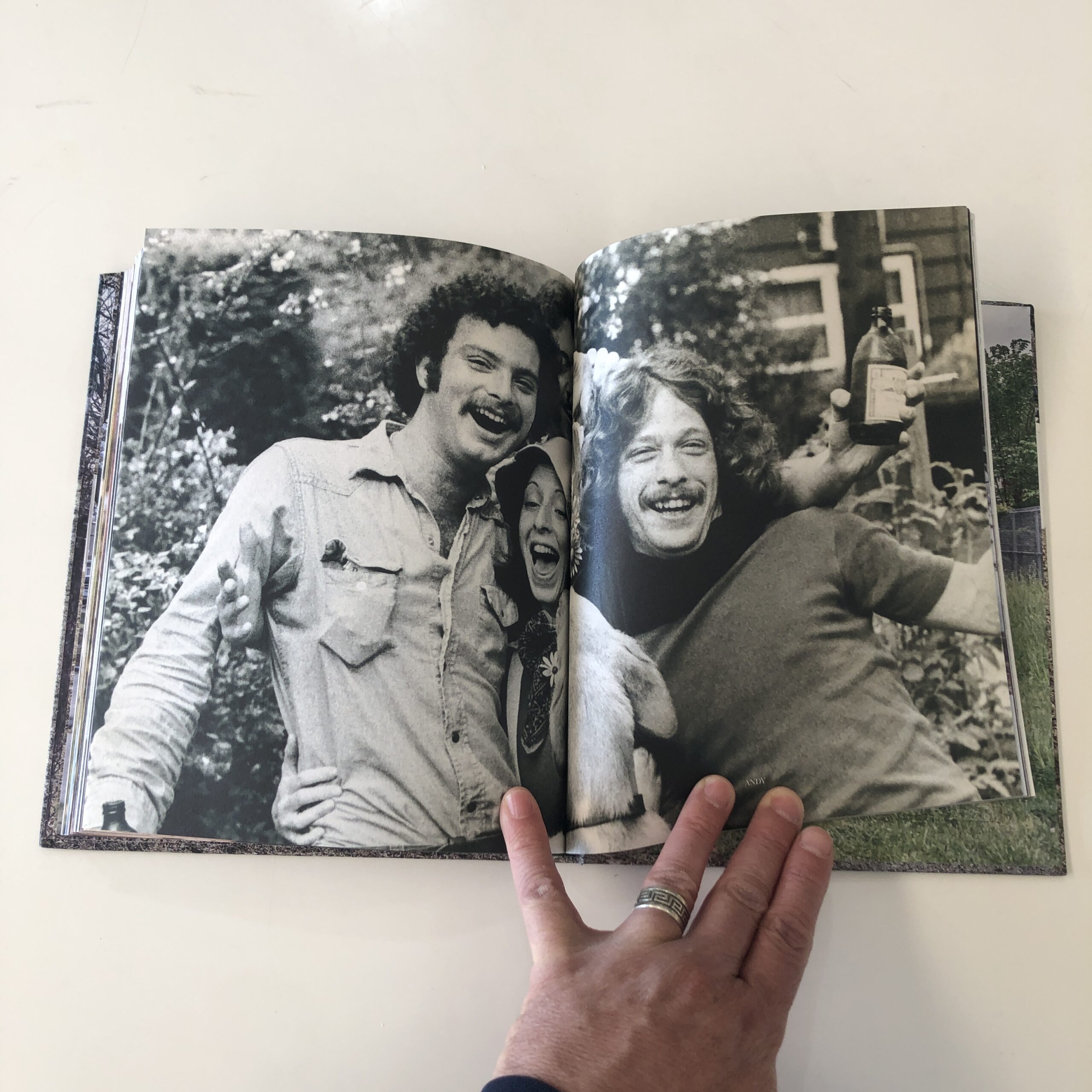
A book that melds archival imagery, poignant vignettes, intricate design, and well-crafted, large-format, contemporary portraiture.
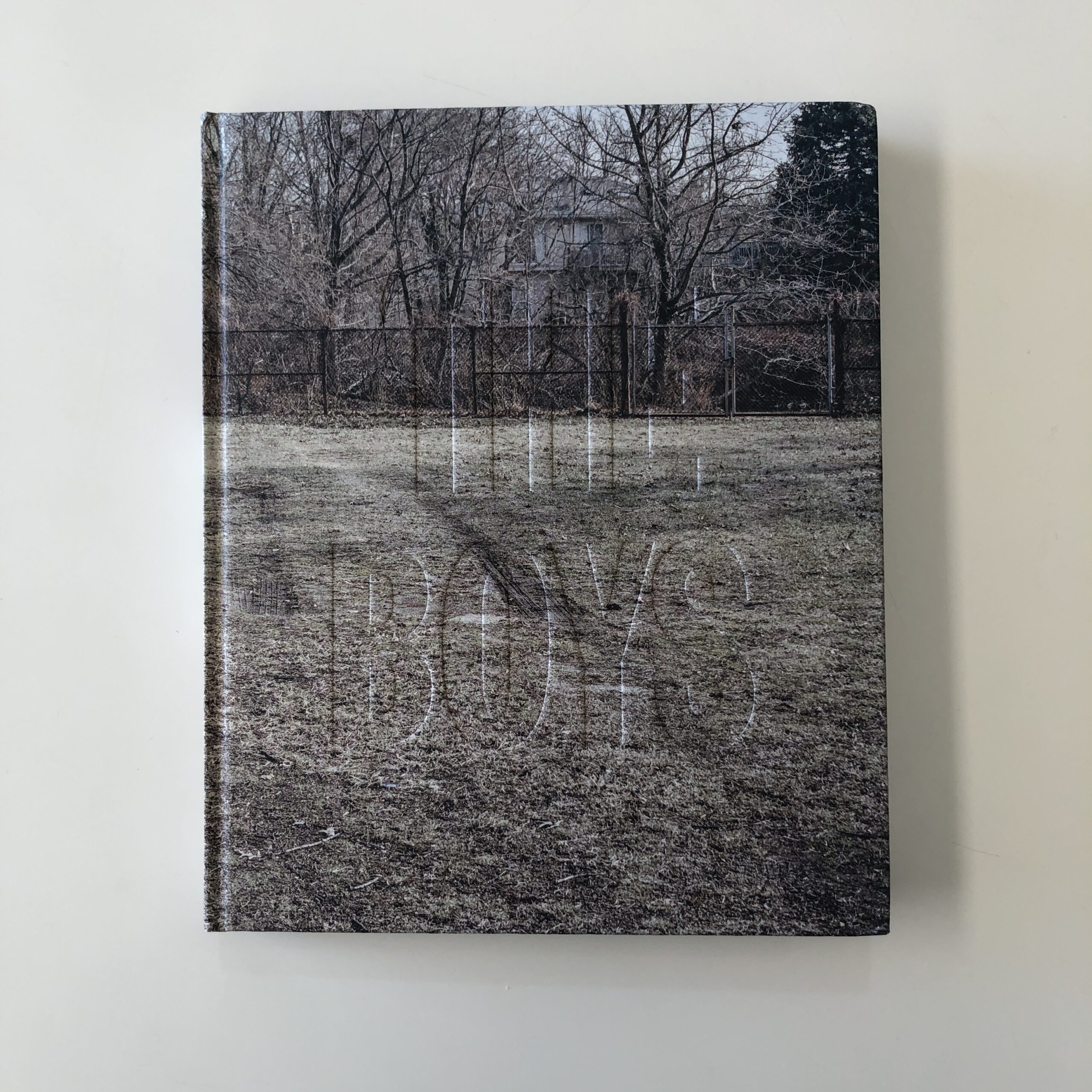
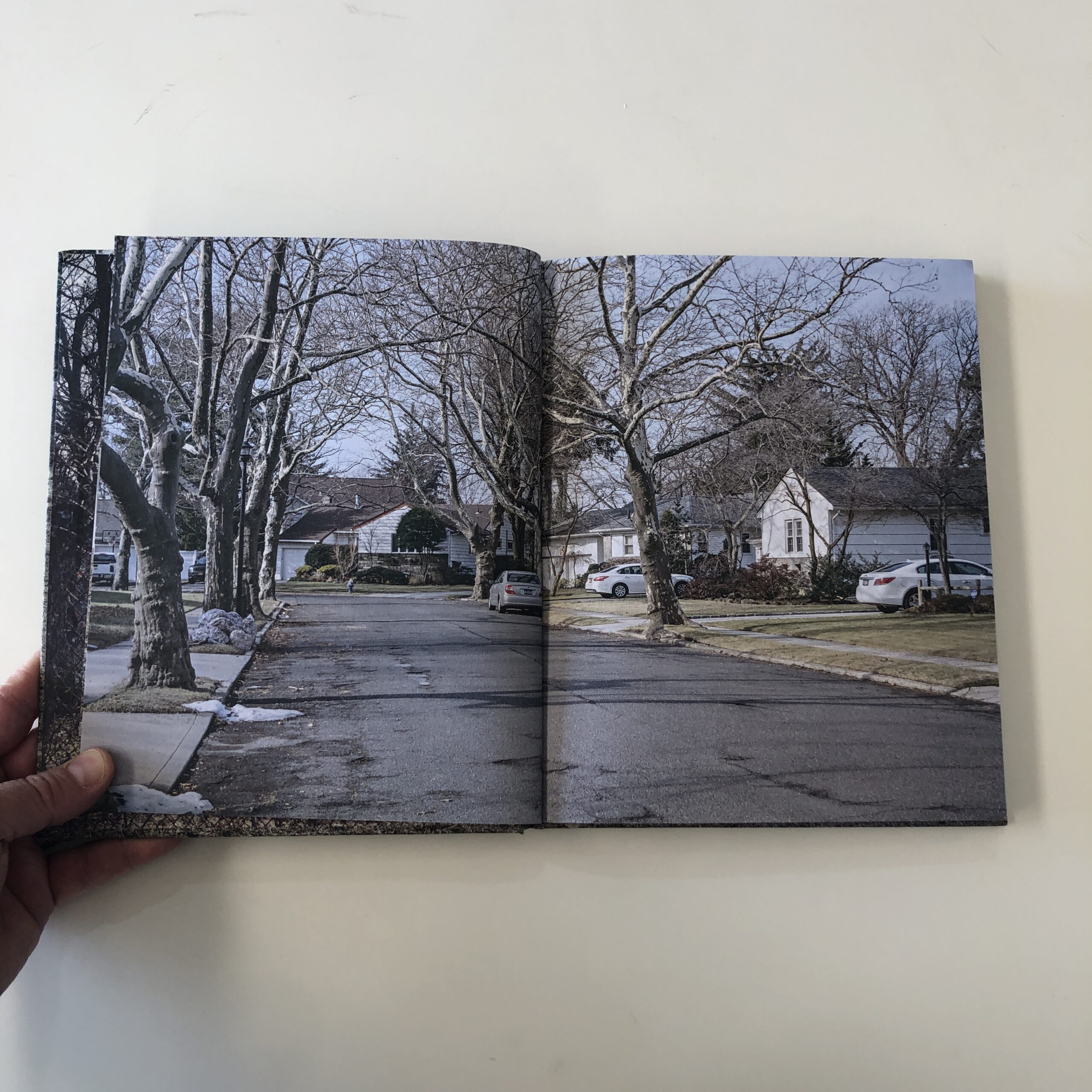
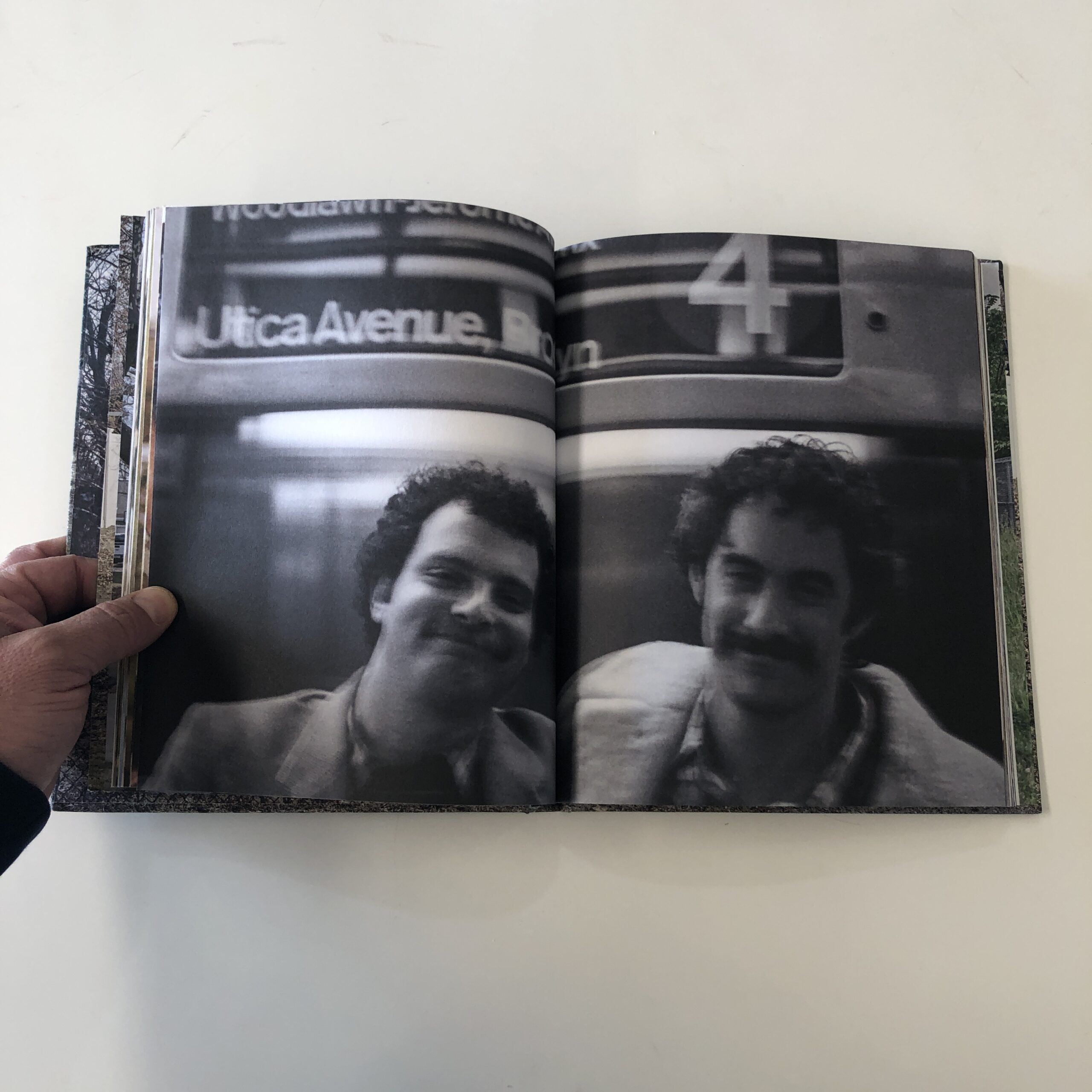
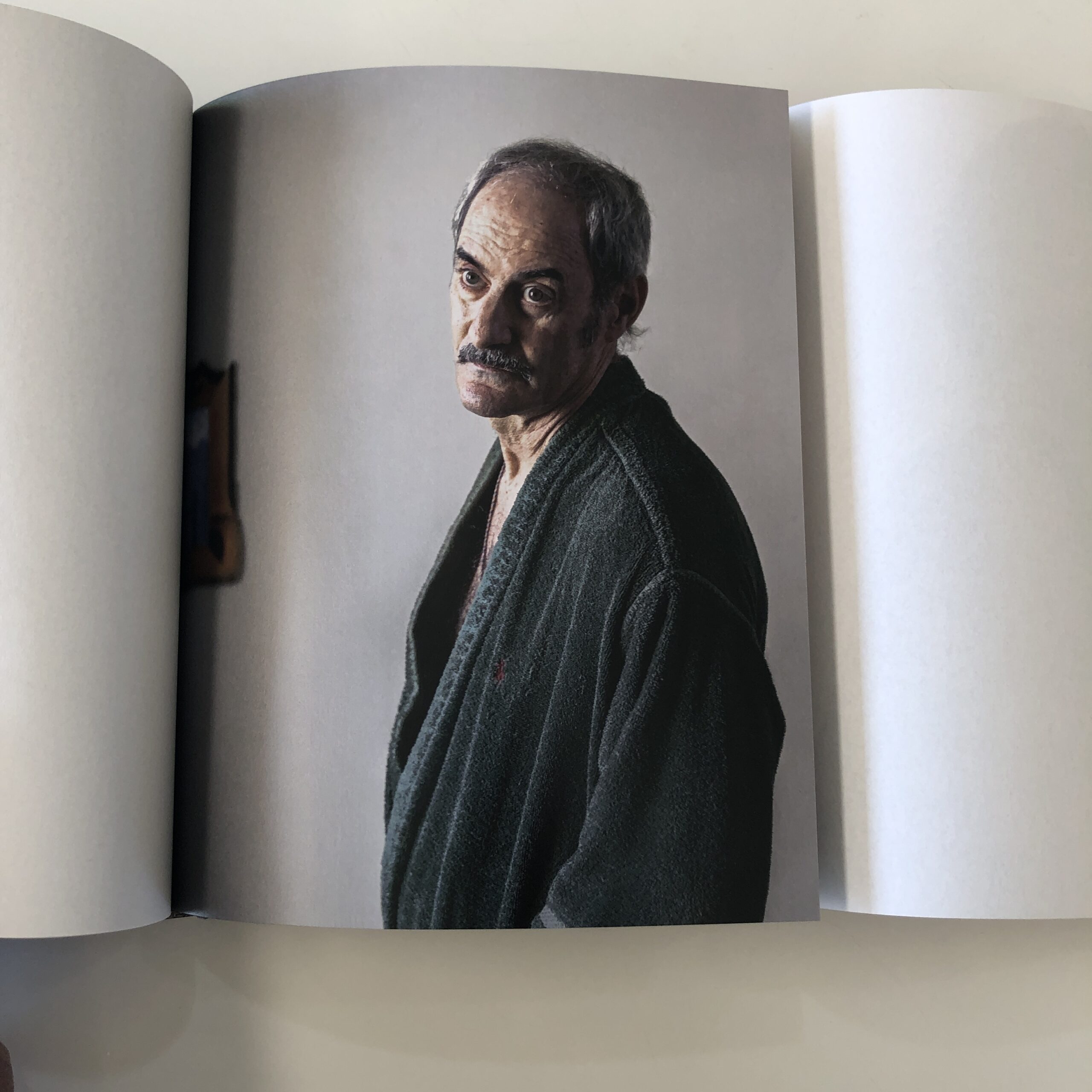
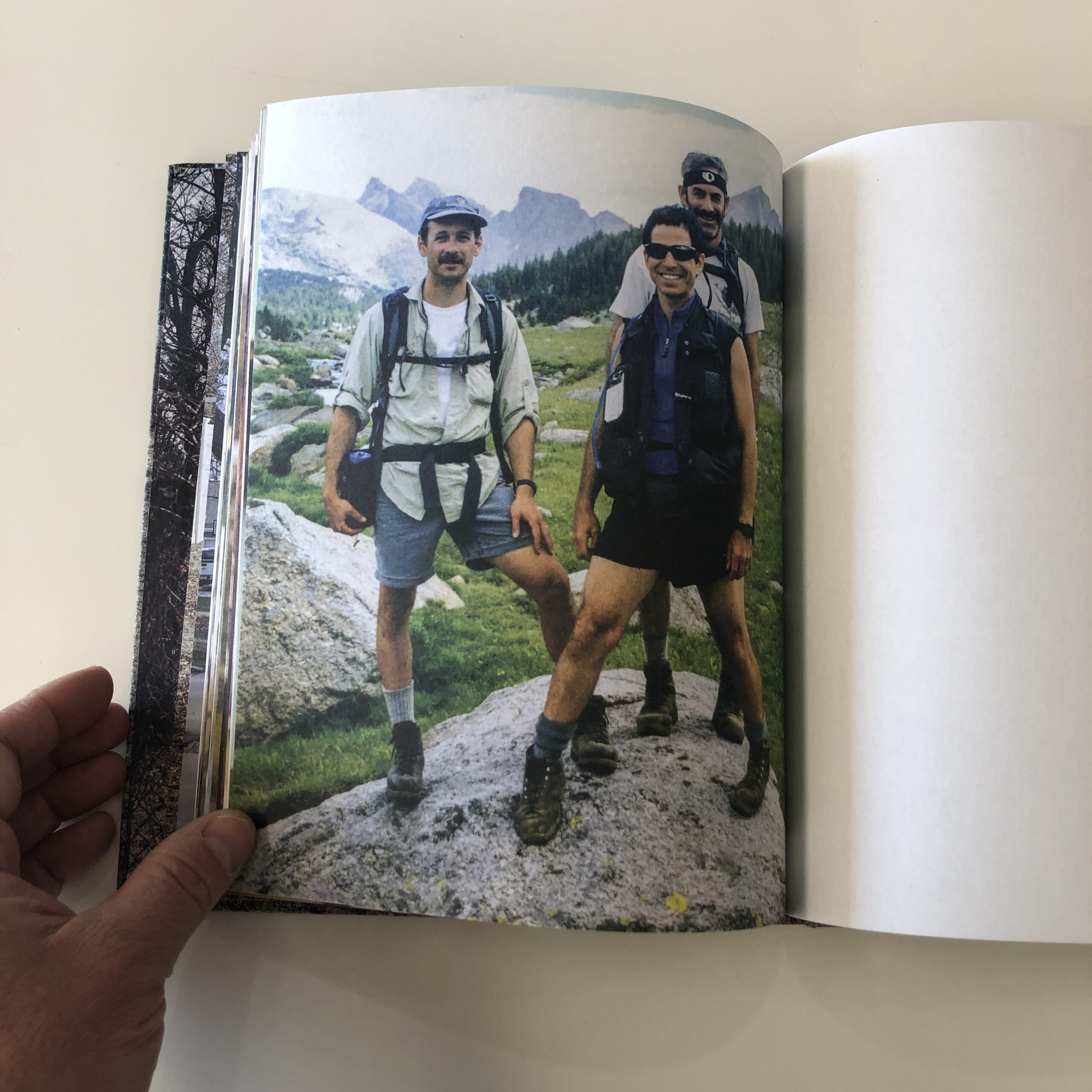
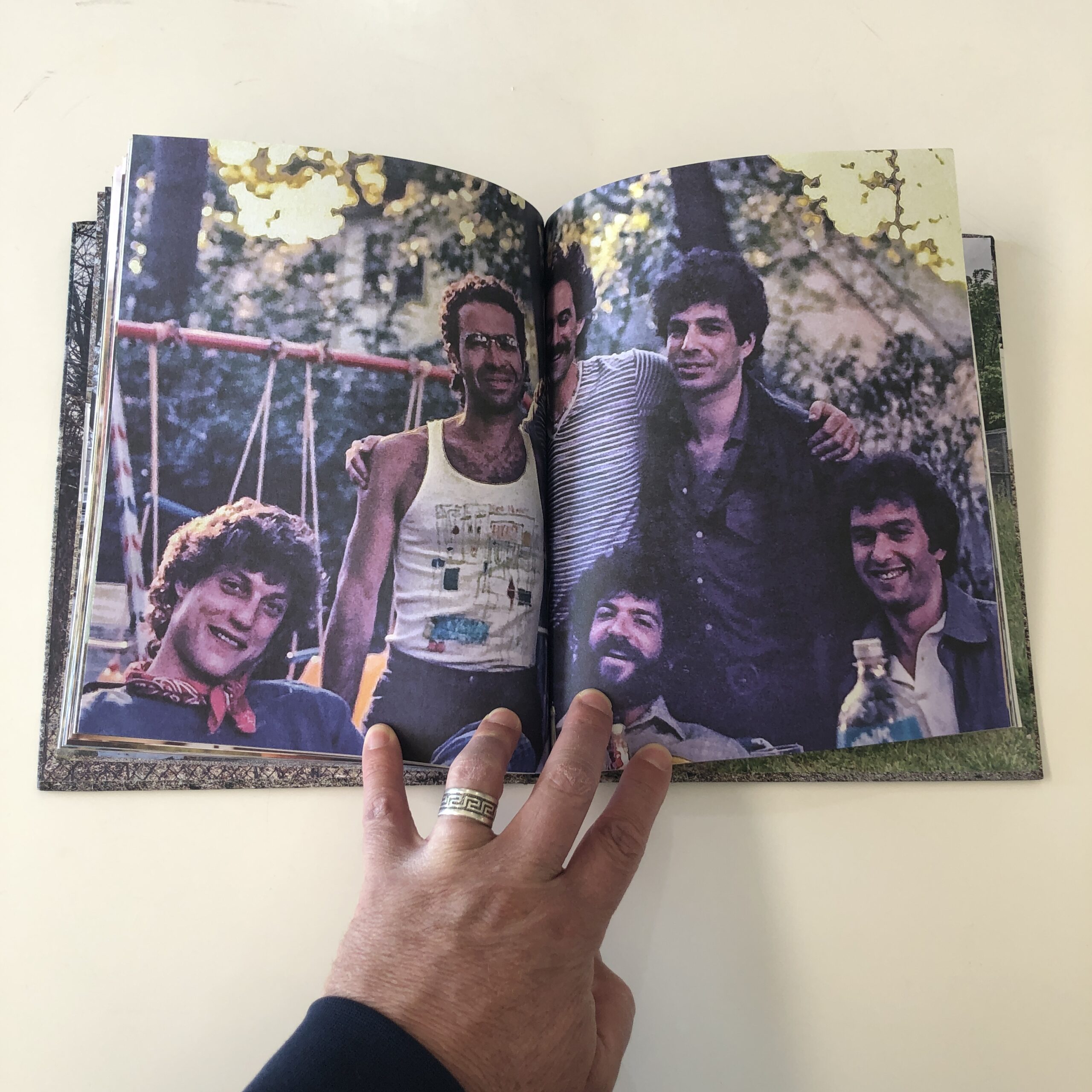
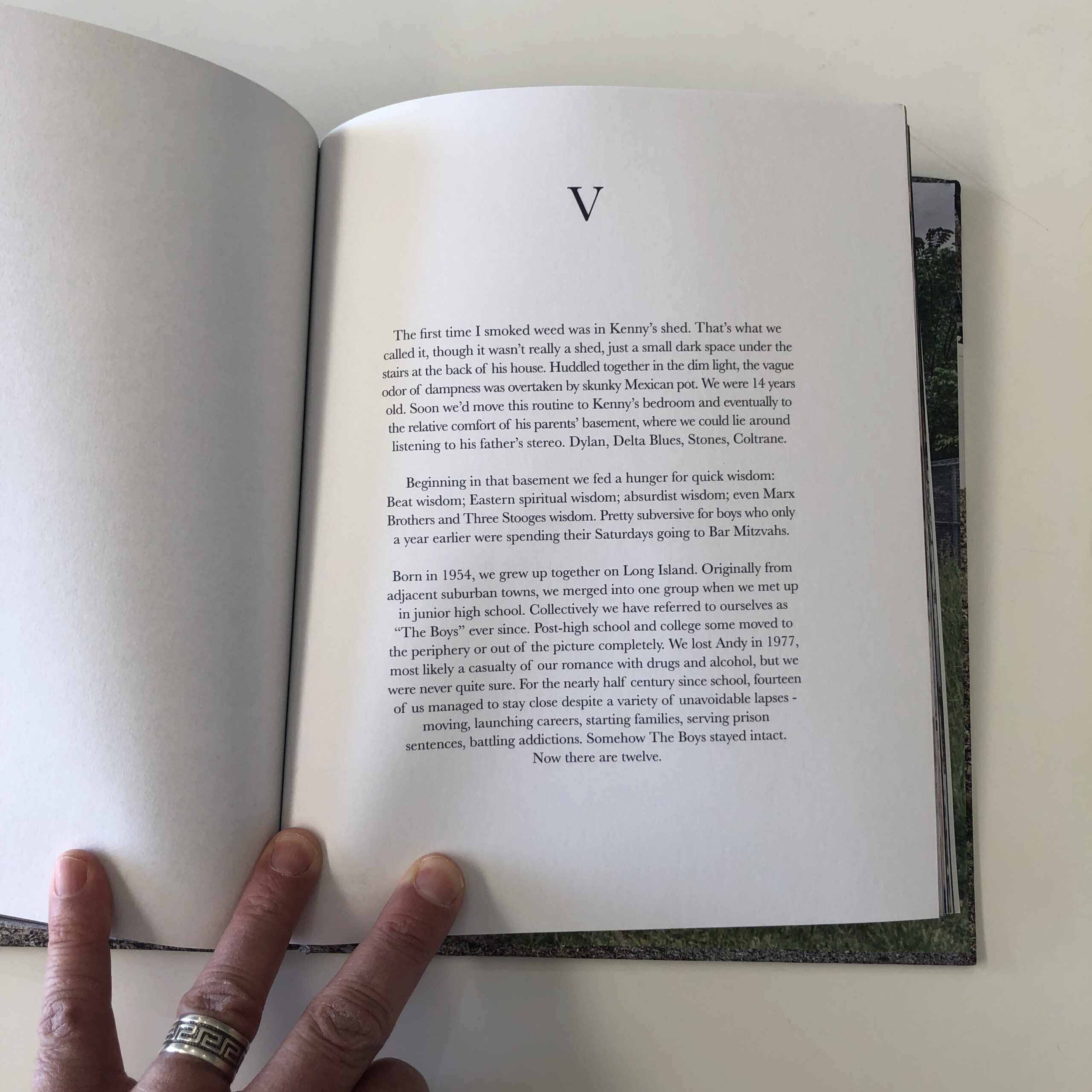
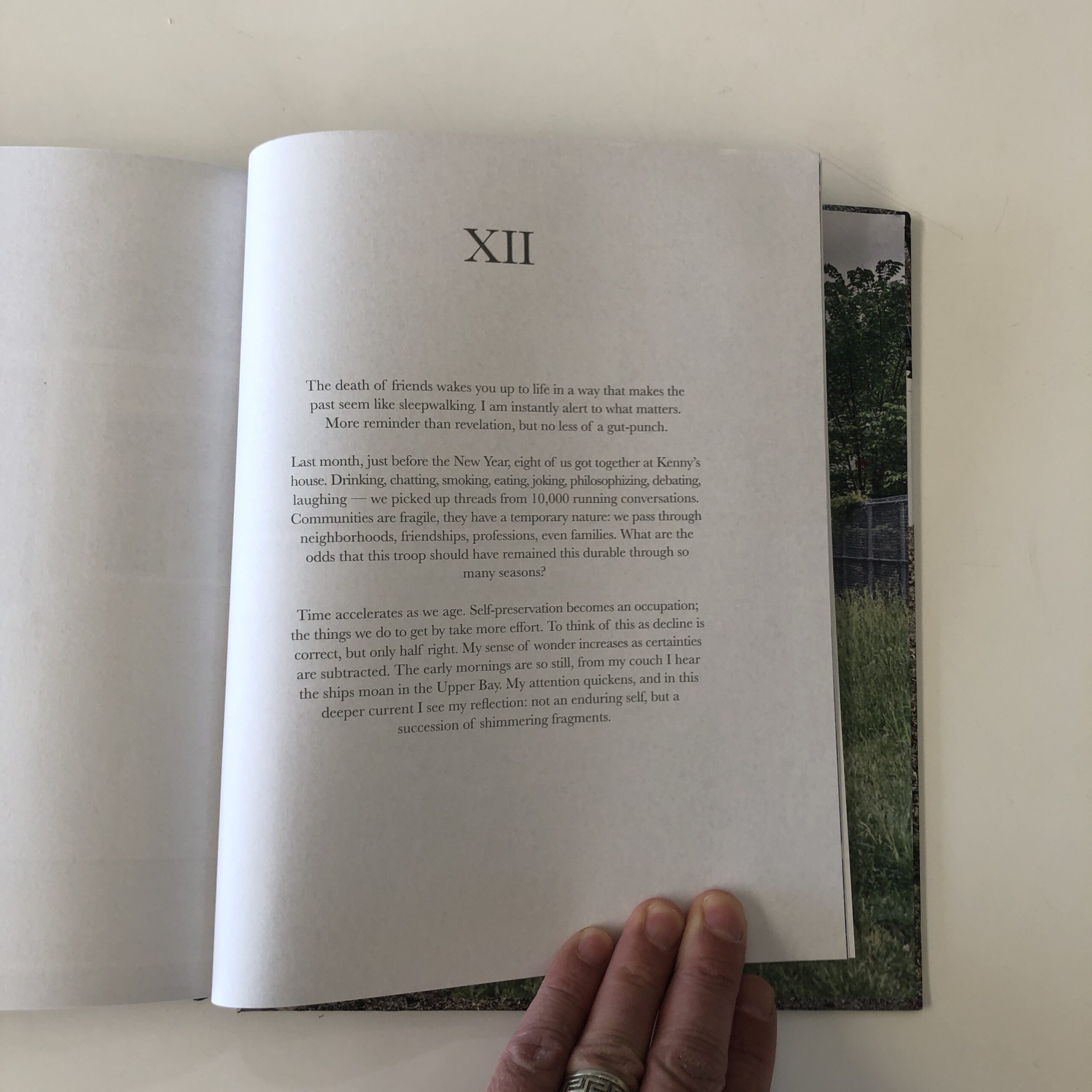
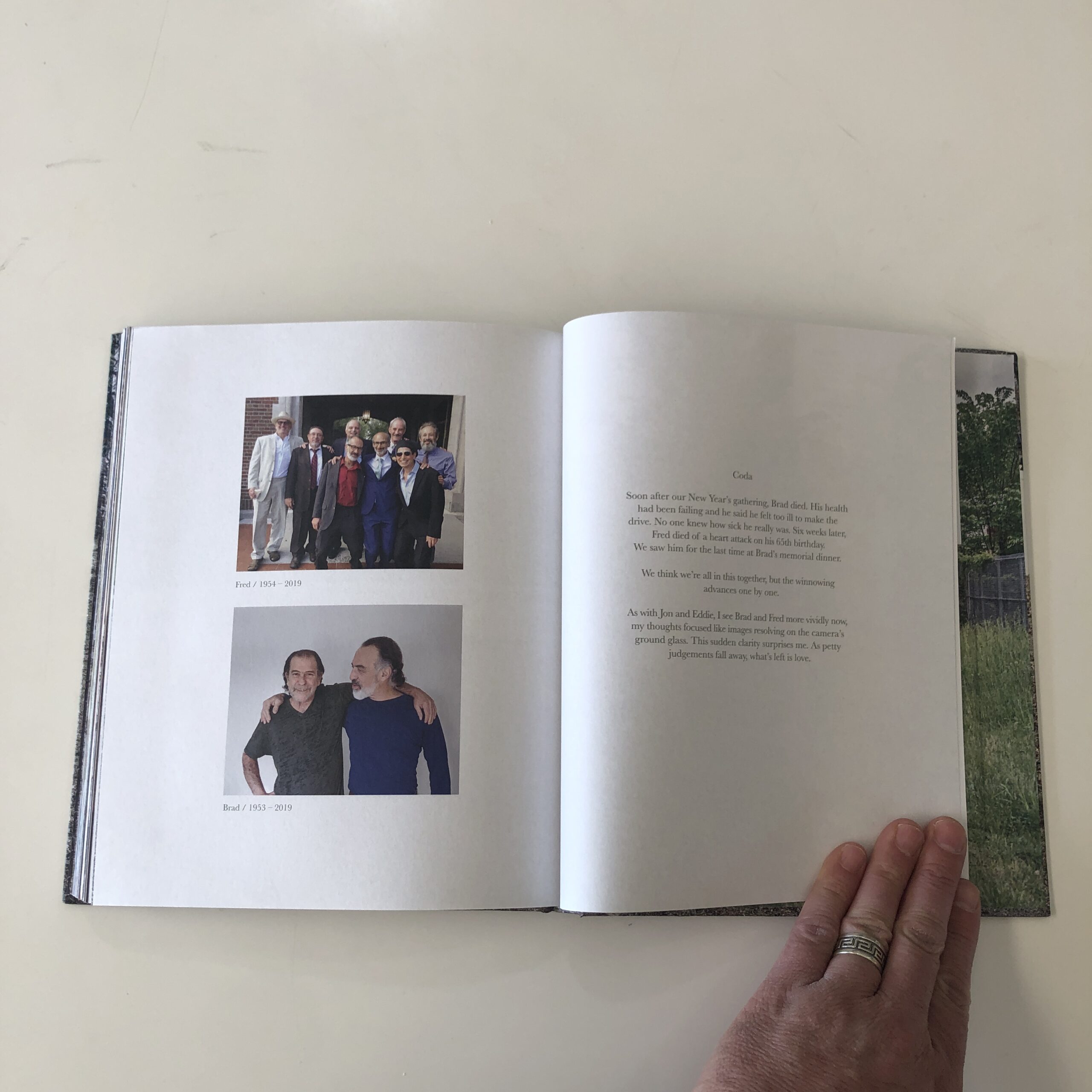
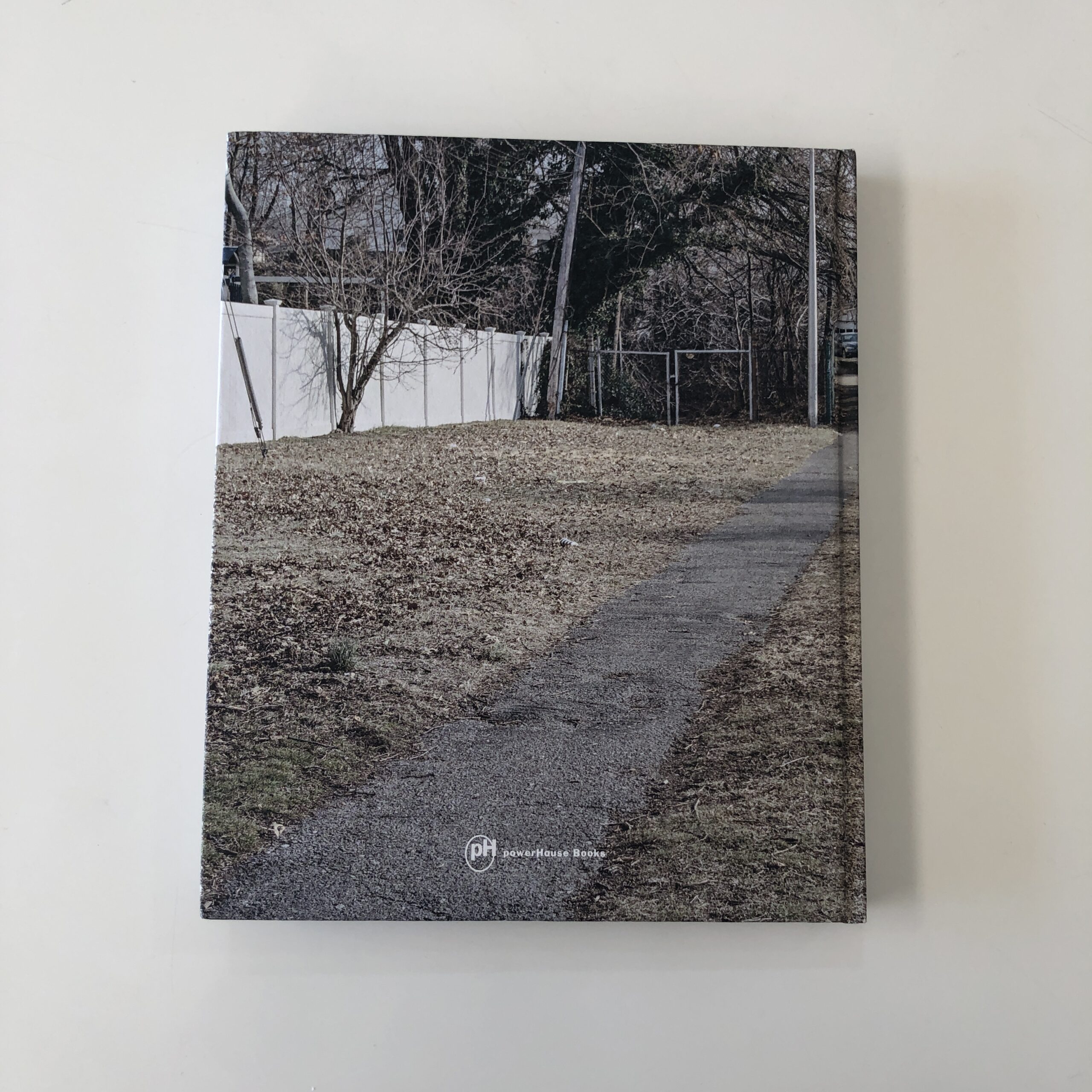
Let’s look at “The Boys,” by Rick Schatzberg, published in 2020, by powerHouse in Brooklyn.
Full disclosure, before I say anything else, I worked with Rick during the book’s production process.
I’ve written before that I consult with artists on photo books, and have a policy not to review books I’ve created with my clients.
(I am included in the final credits for “The Boys.”)
However, this time, the maquette was made, most of the text was written, the photos were shot, and in retrospect, my role was quite minimal.
As such, since it’s an excellent book, and he sent it to me with no expectation of review, I decided it was fair game.
Let’s get to it.
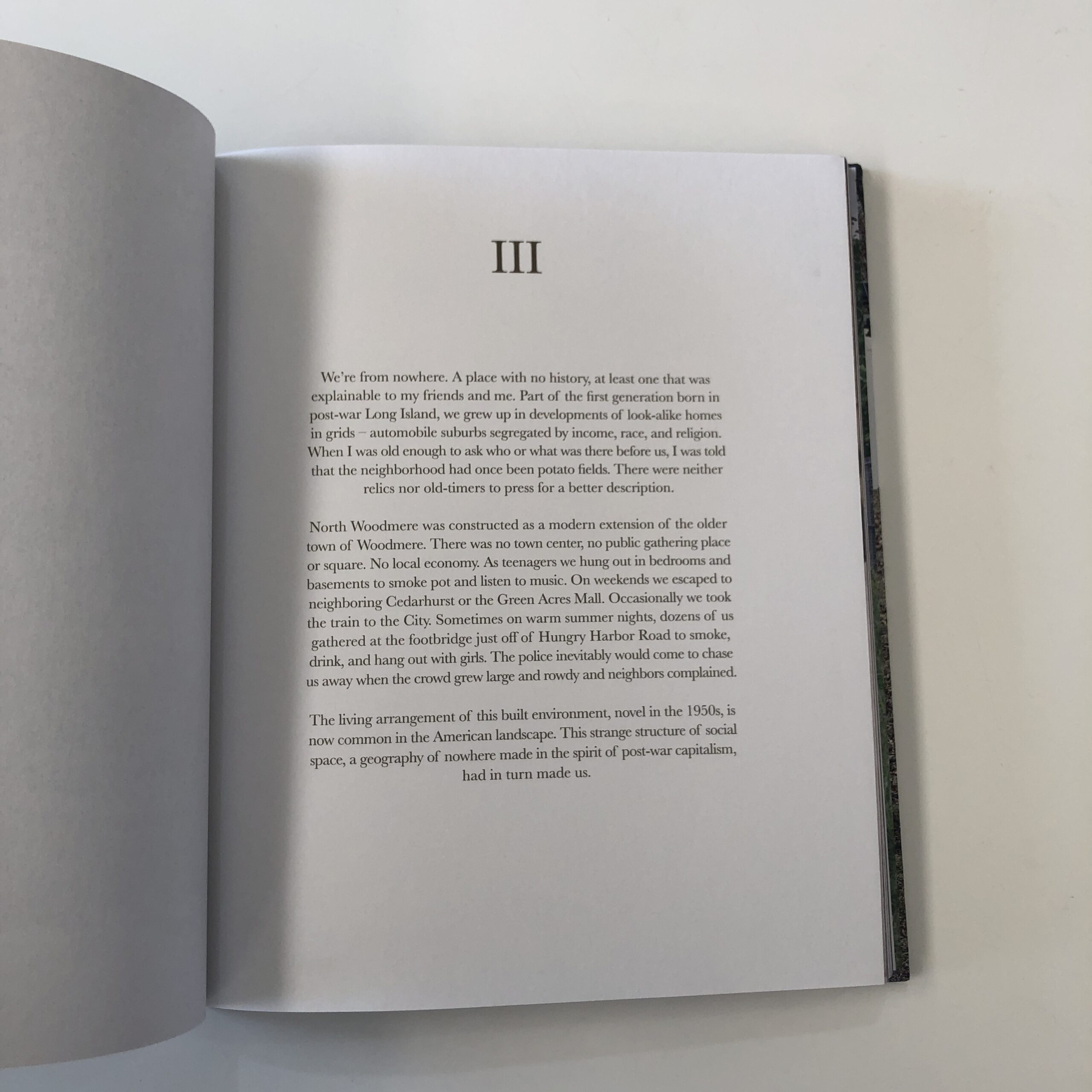
Like me, Rick grew up Jewish, in the suburbs of NYC.
Unlike me, Rick is from Long Island, and as he’s 20 years older, he and his friends are really the test-case for suburban living in the United States.
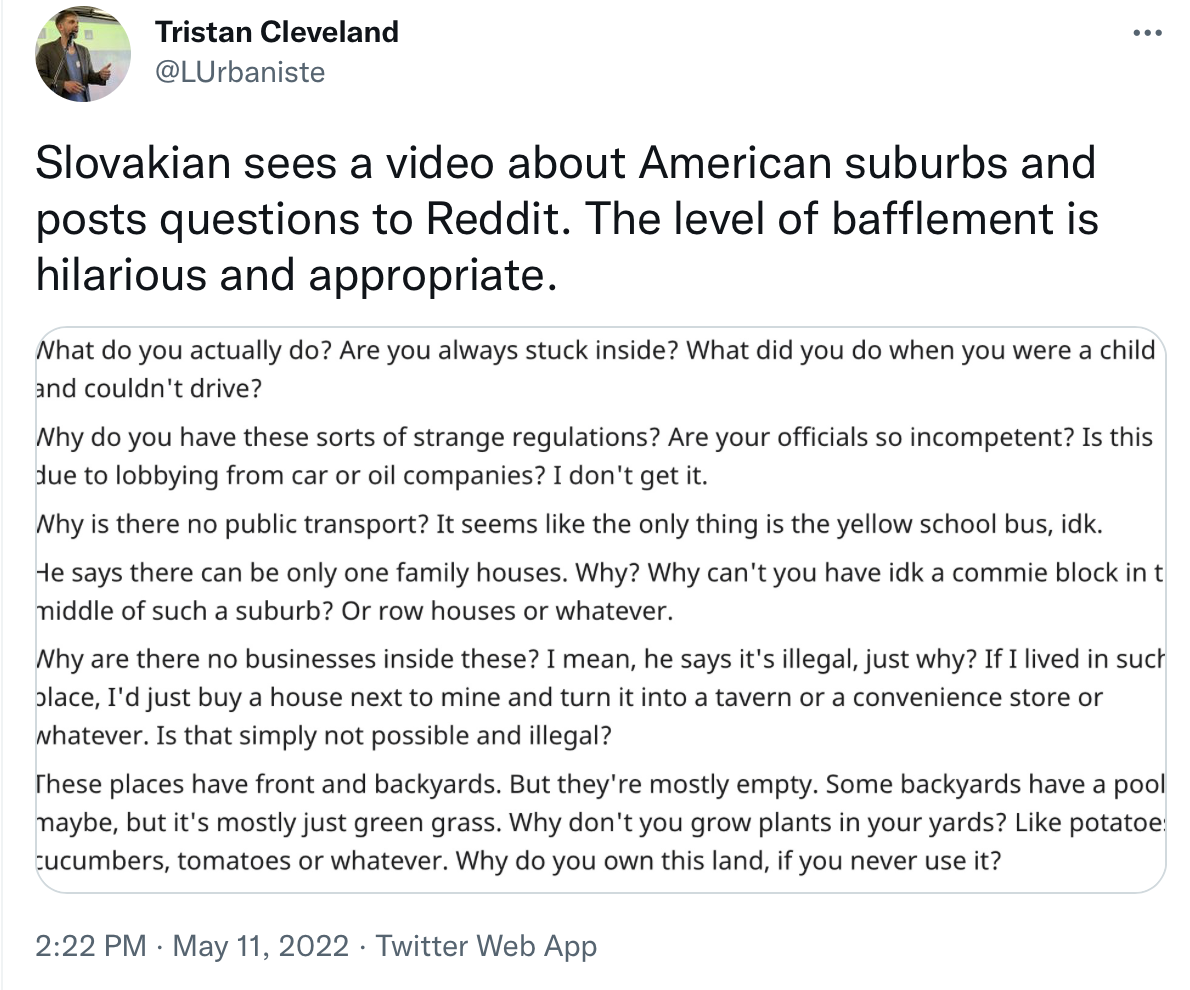
(Total coincidence, but I saw this hilarious tweet this morning, as a Slovakian tried to make sense of America’s suburbs in 2022.)
“The Boys” is not about me, in any way, but I think all suburban kids can relate to what these guys used to do.
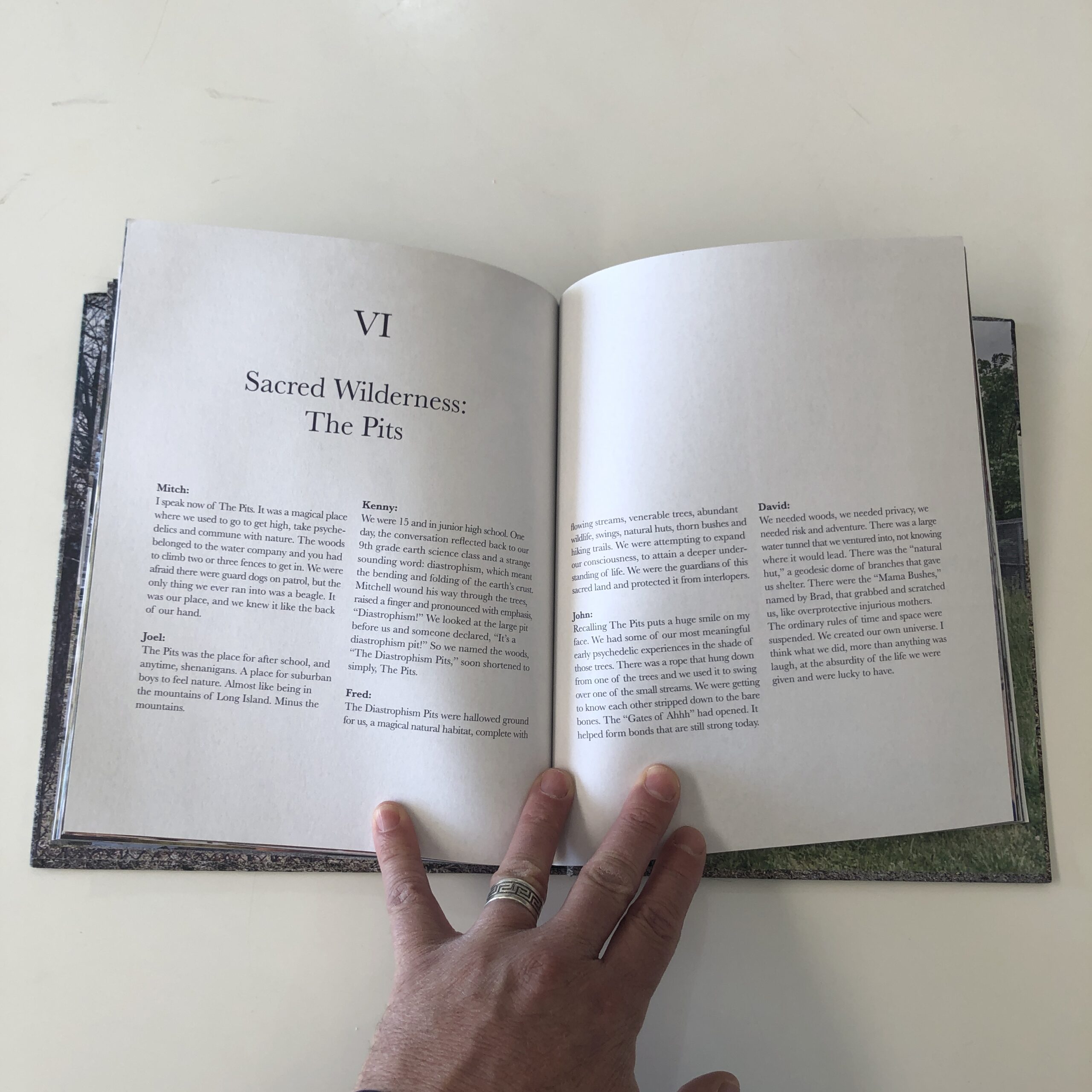
Find some woods behind the neighborhood, before everything was developed, and wander.
Hang out.
Go somewhere, even if it was an empty field, as there really was nowhere else.
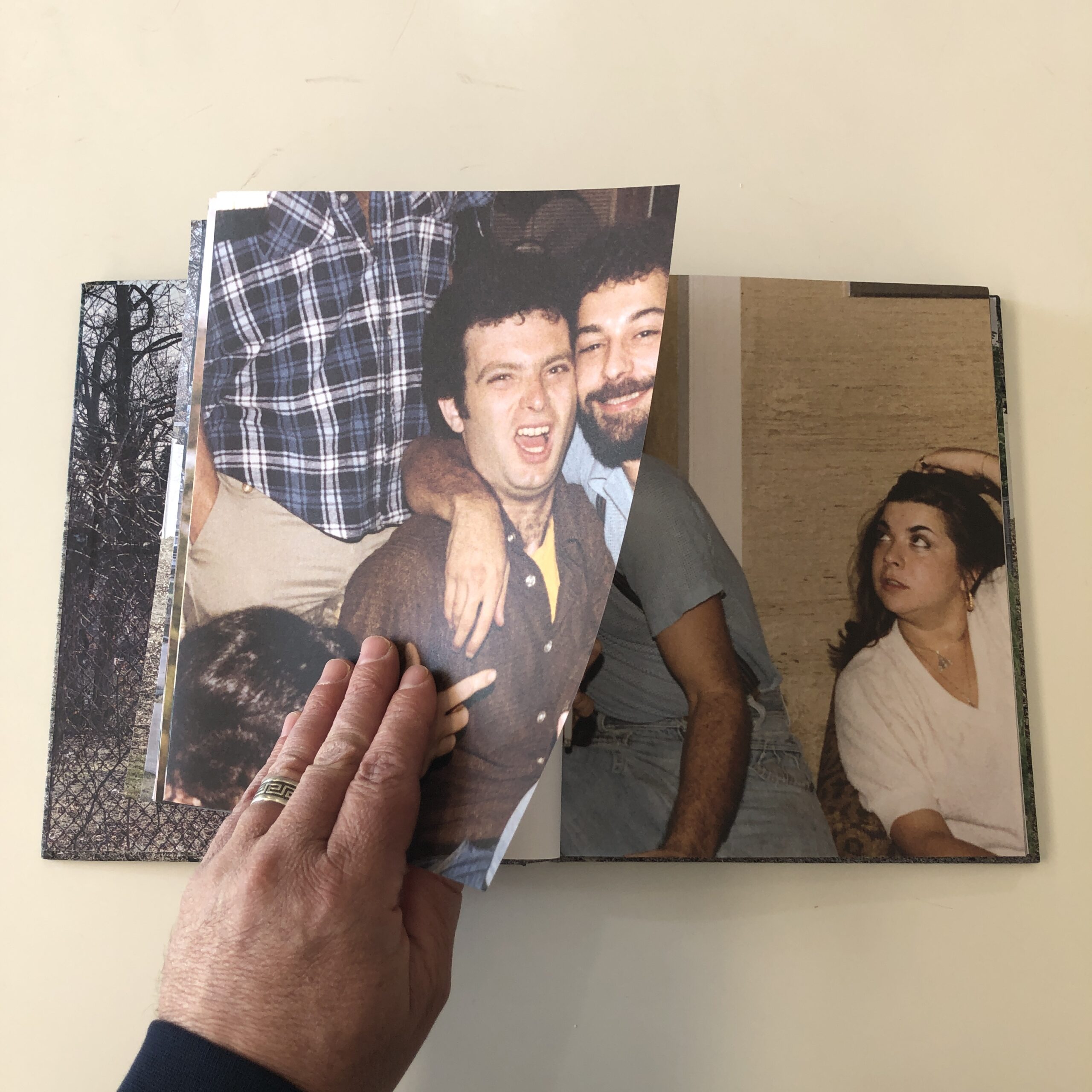
But I was a total goody-goody, and Rick and his crew were proto-Jewish hipsters.
Stoners.
Disaffected kids, listening to music, drinking, and scattering when the cops showed up at their favorite hangout: The Pits.
A few months ago, I reviewed a book by Karen Marshall, in which she followed a group of New York kids, and then reconnected with them when they were grown.
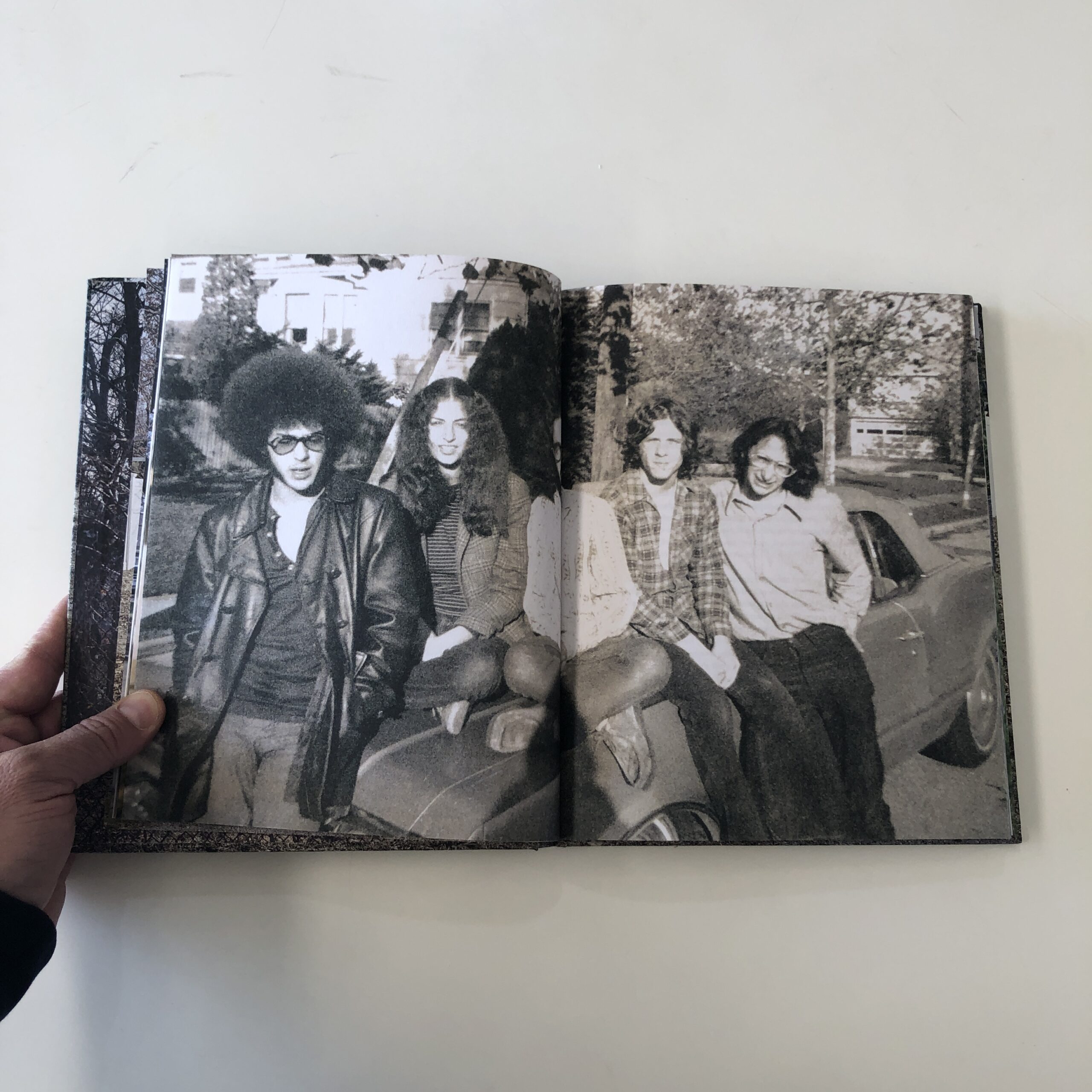
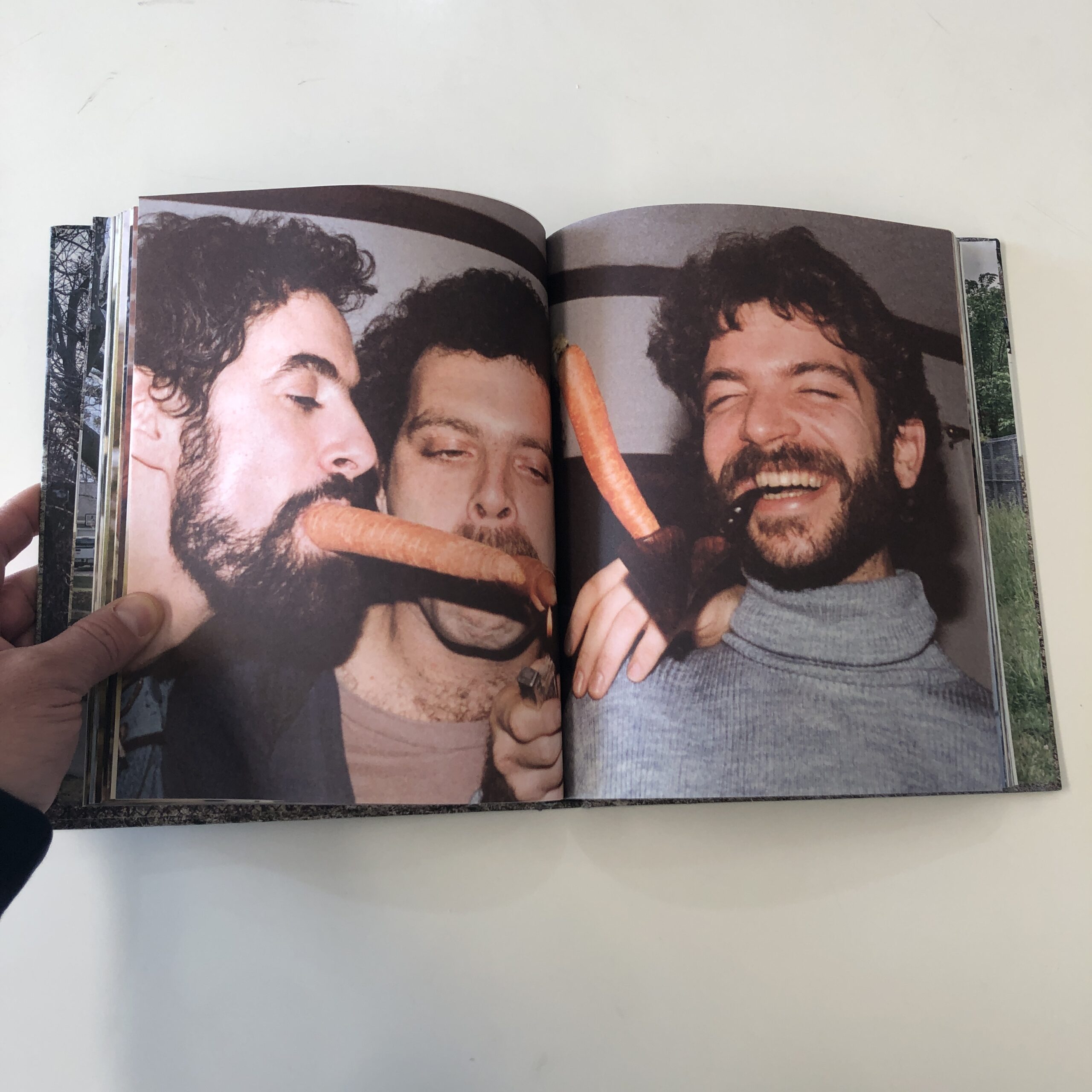
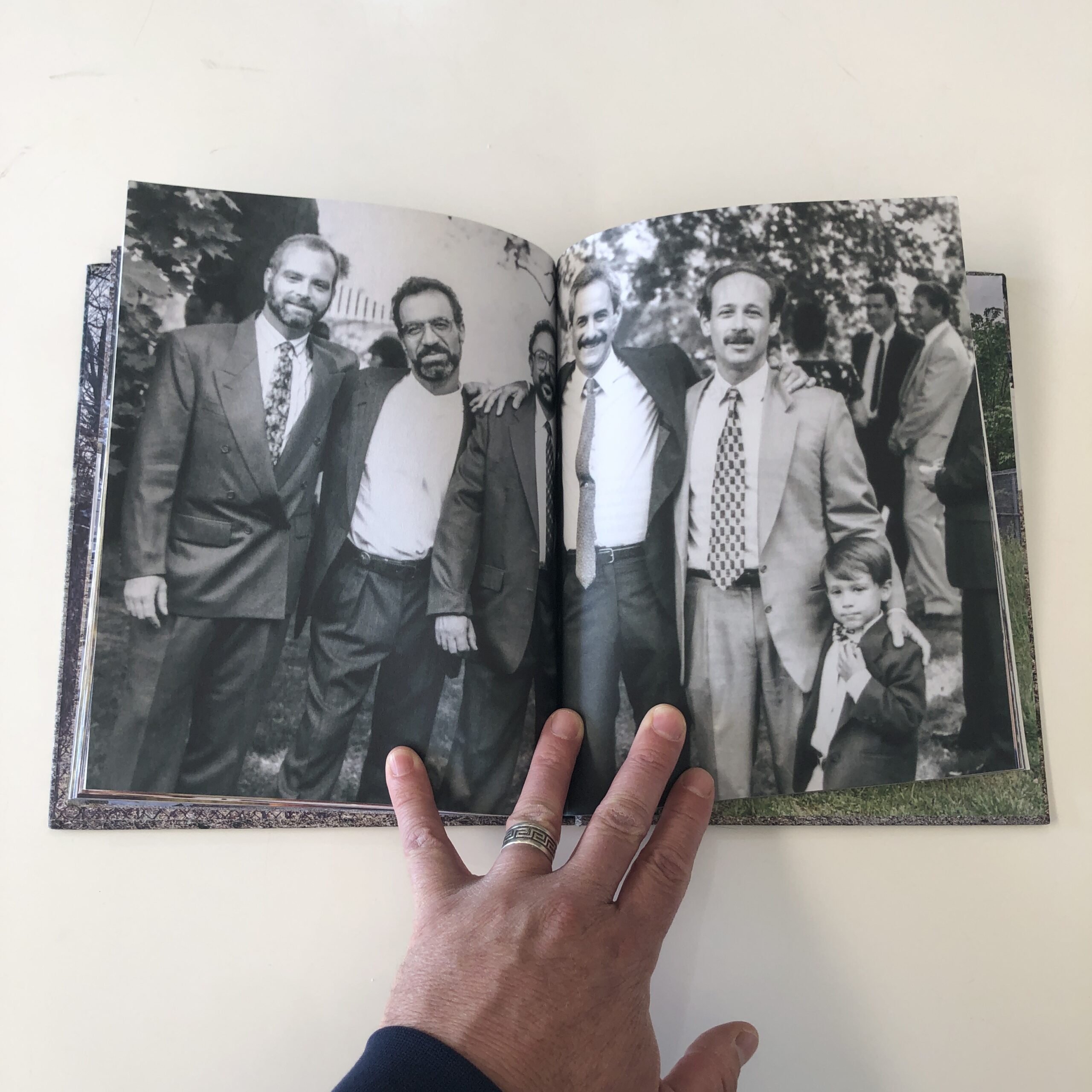
This flips that methodology on its head, as in “The Boys,” Rick gives us photos of his bros, (as we call them today,) with their Jewfros, jean jackets, bandanas, and beers.
We see these guys in various stages of life, including the 80’s power suits, and the vacation photos, from when they went on Boys Trips.
As a pure Pisces, always moving forward, always changing, I don’t hang out with my middle/high school buddies anymore.
I don’t have a frame of reference for the love these men feel for each other.
Nor for what it’s like as they pass away, one by one.
(A group of 14 is now down to 10.)
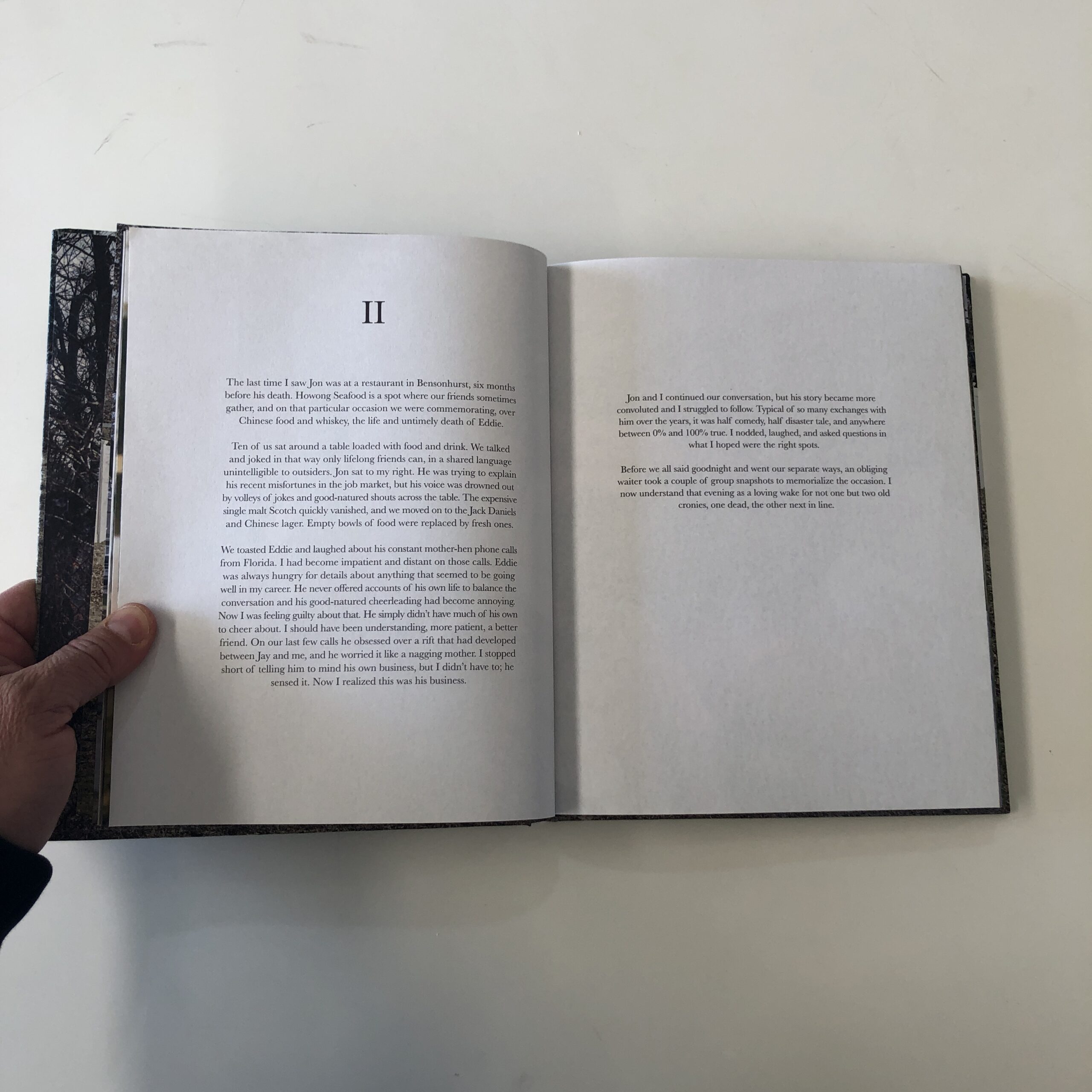
Tragically, for Rick and The Boys, two men chronicled in the book actually died before final publication.
What a bummer.
I like almost everything about this book, though I don’t think the insert essay at the back, by Rick Moody, was particularly necessary.
Often, publishers like to see big name writers attached to a project, to make it easier to market.
It’s the done-thing, and I don’t blame Rick for going that route.
Hell, he and I spent time brainstorming which writer would be a good fit, before he networked his way to the other Rick.
But it’s a compliment, what I’m saying. For an untrained writer, Rick S.’s stories pop.
They engage, and present the kind of first-person narrative that reels viewers in, and allows our imaginations to fill in the details.
Strong stuff, for sure.
Beyond the personal, though, a case can be made that “The Boys” also explores the reality of the aging, White Baby Boomer.
Those dudes take a lot of shit these days for destroying the world. Maybe rightly so.
(OK Boomer?)
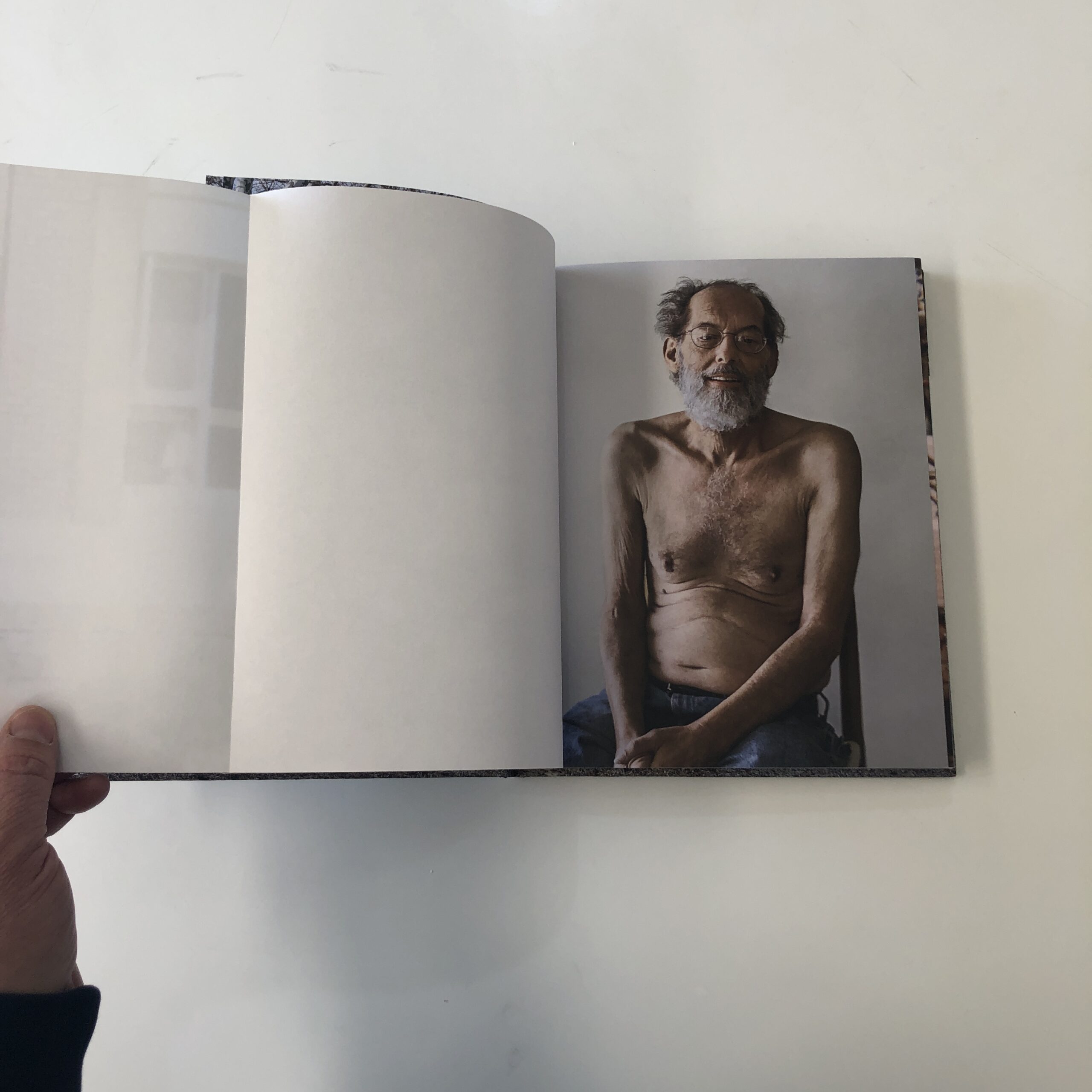
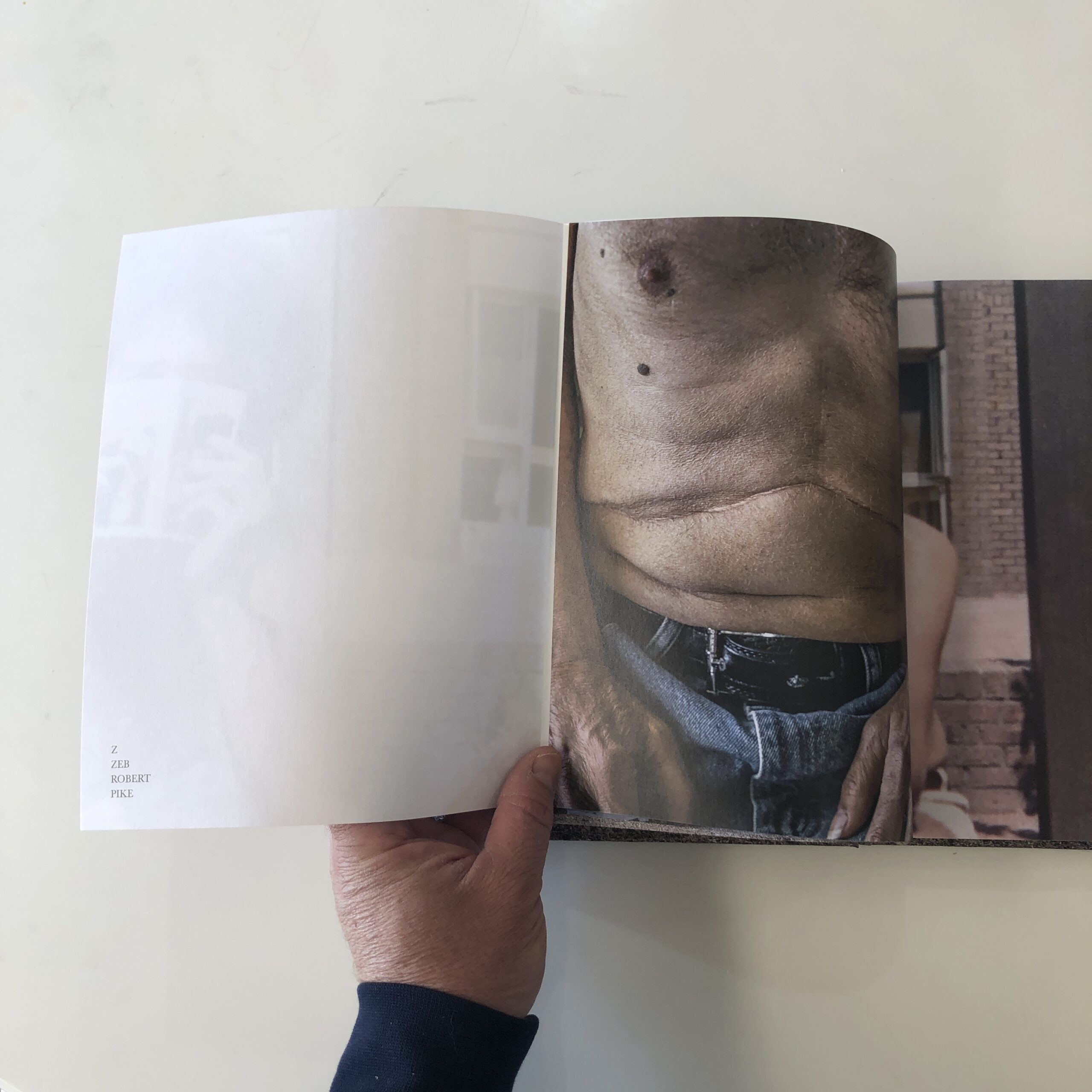
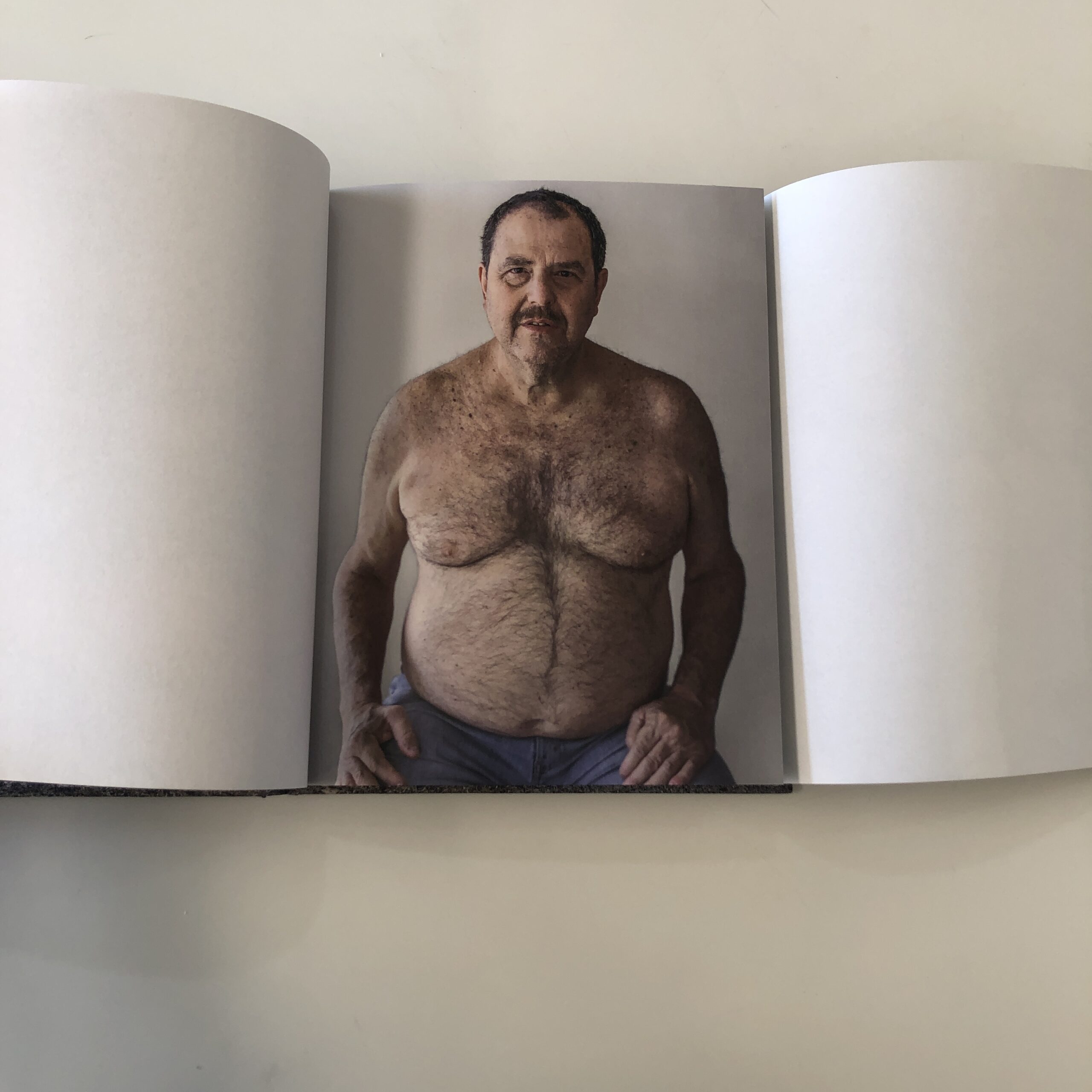
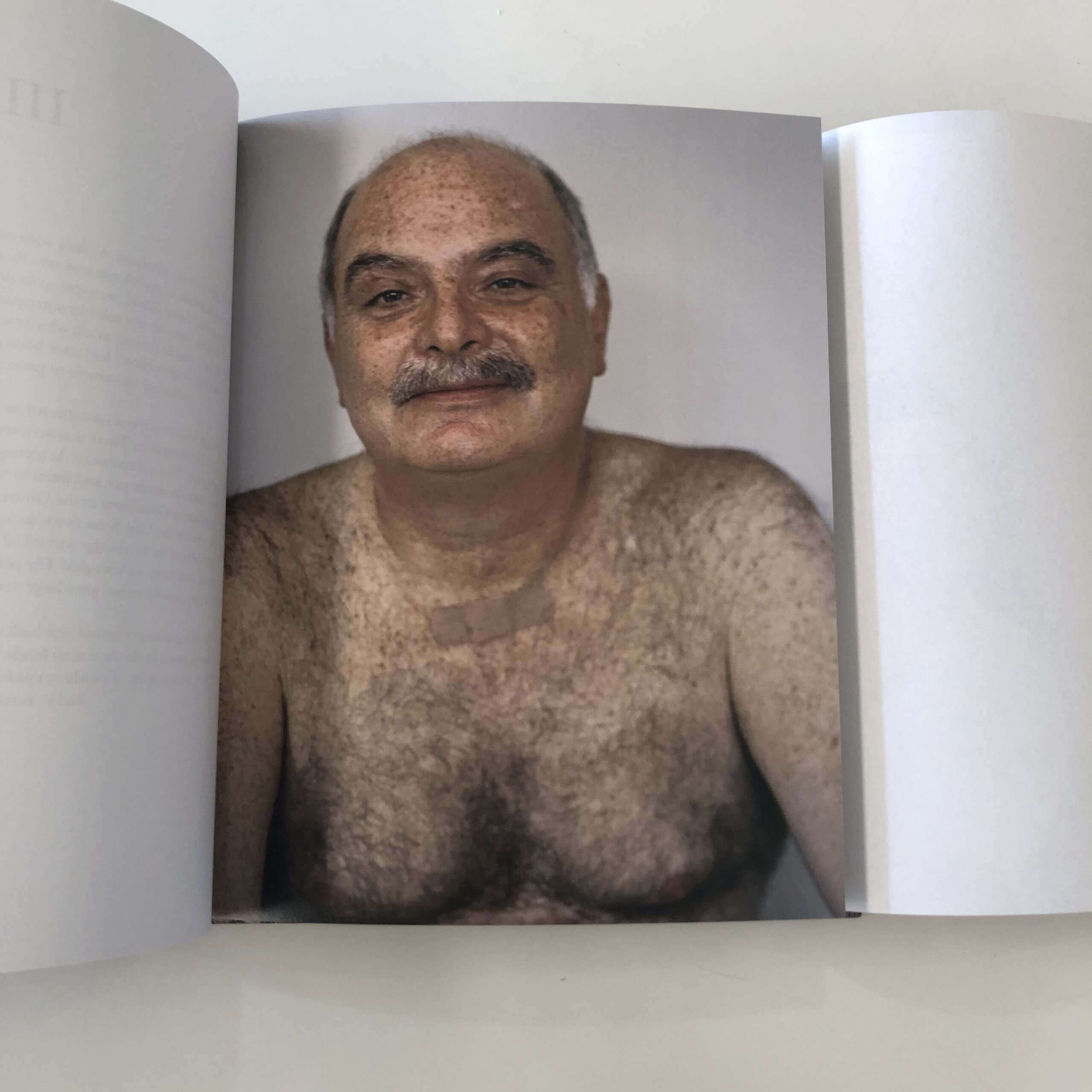
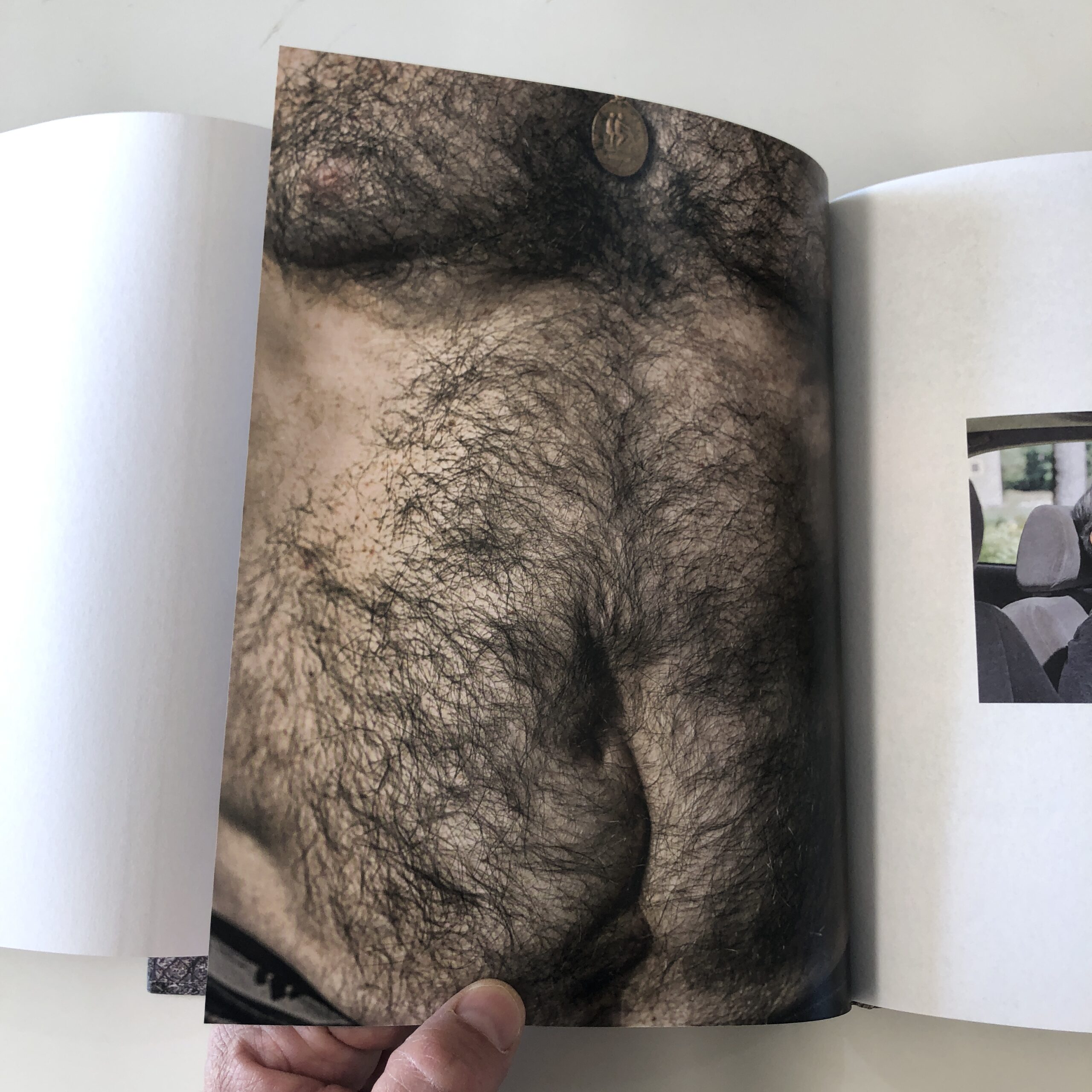
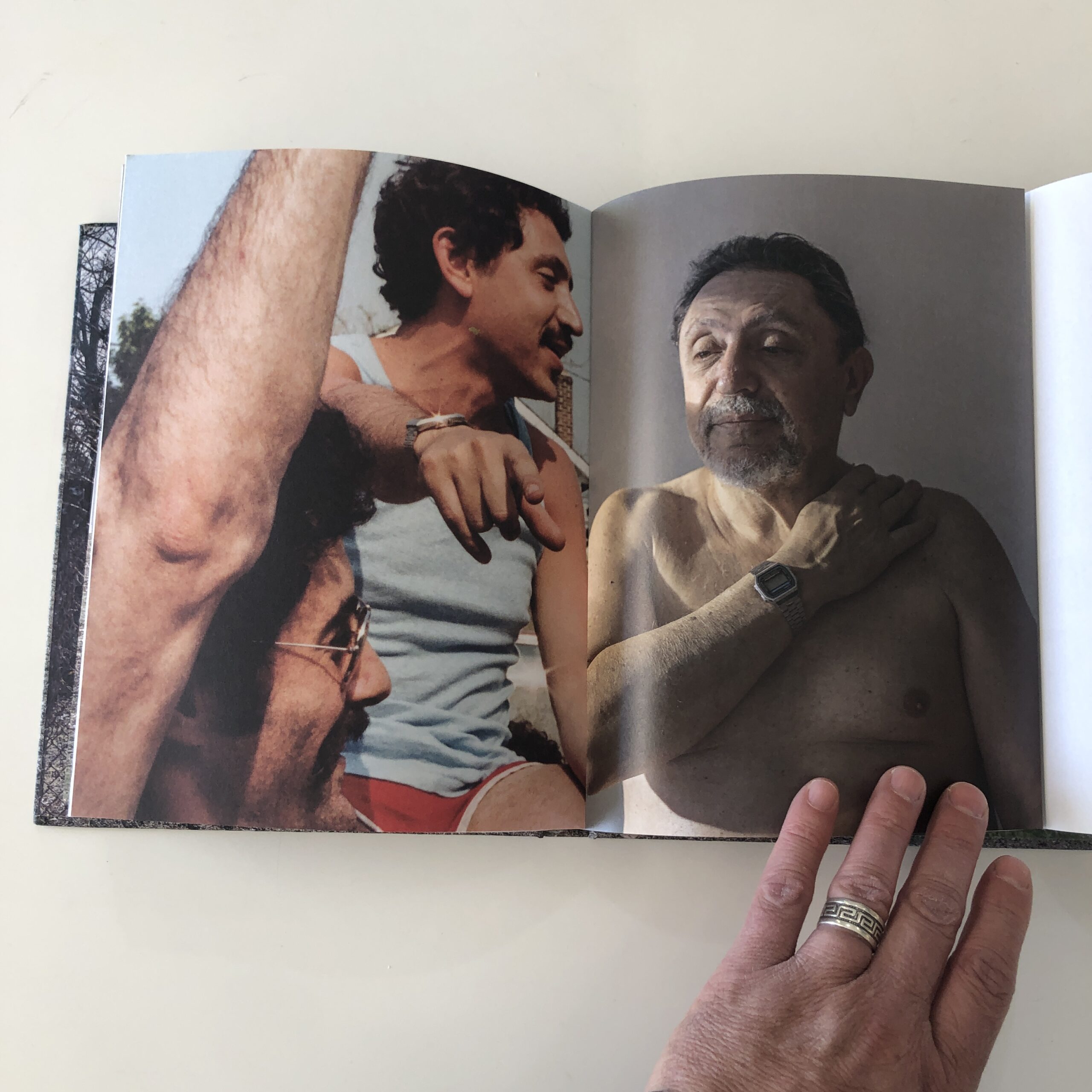
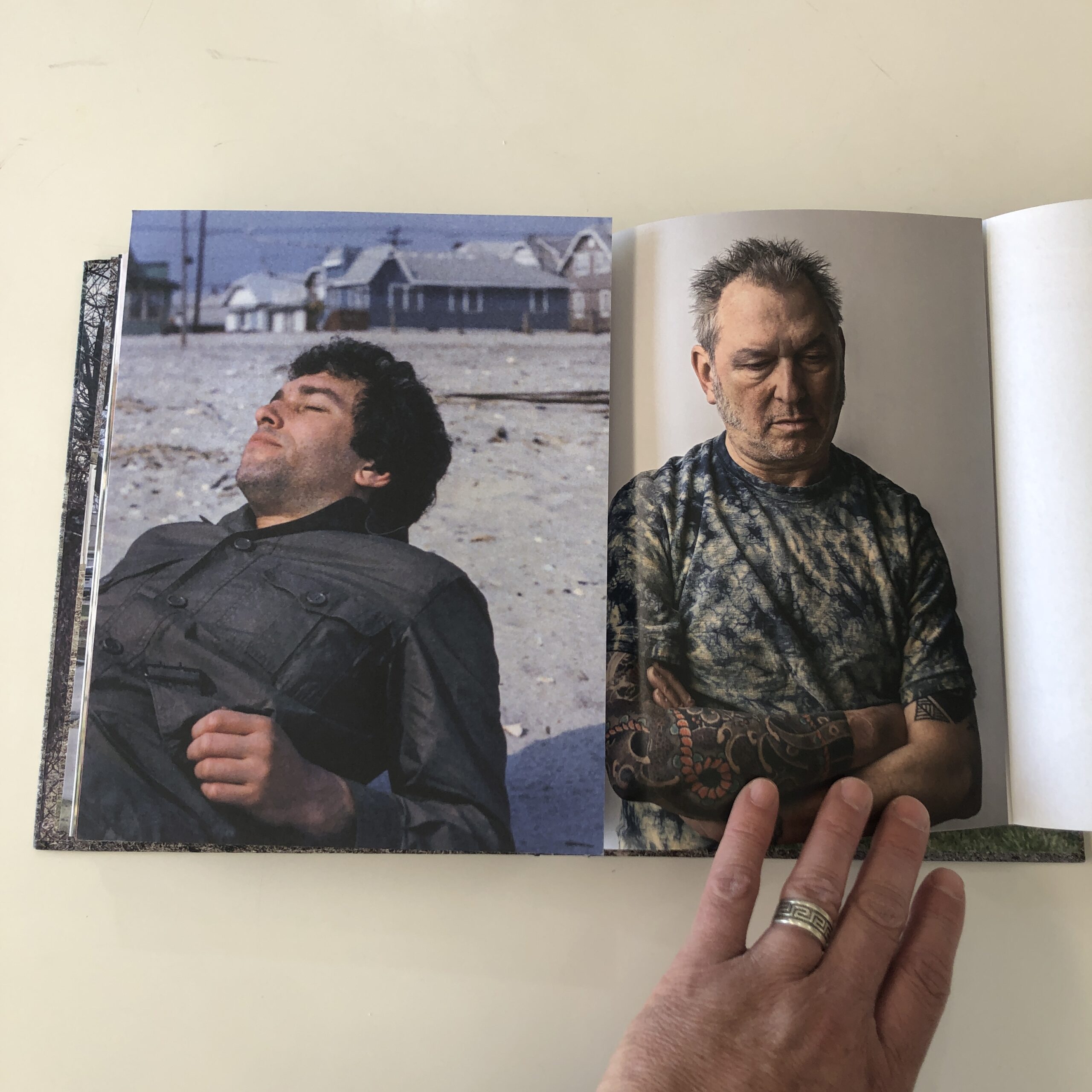
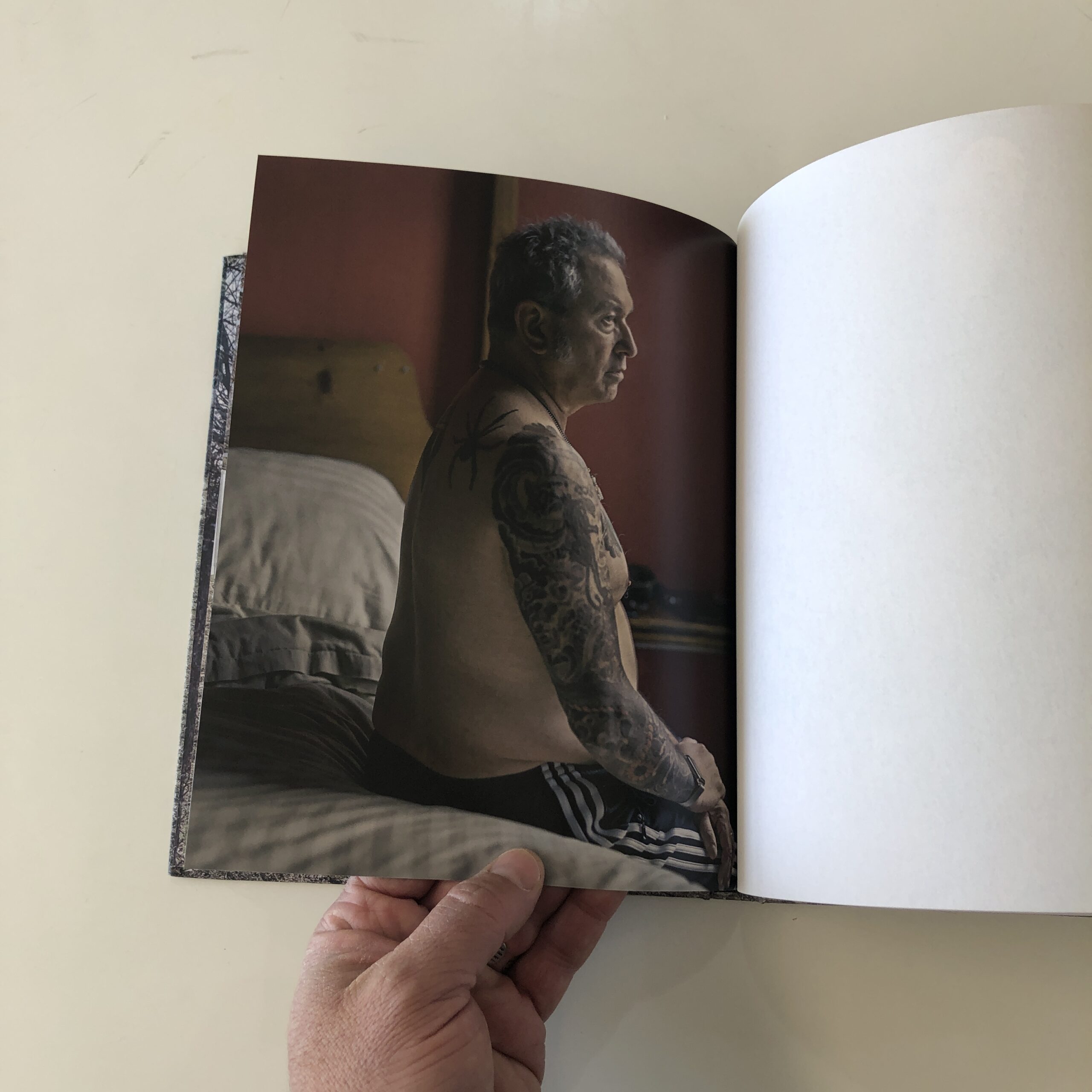
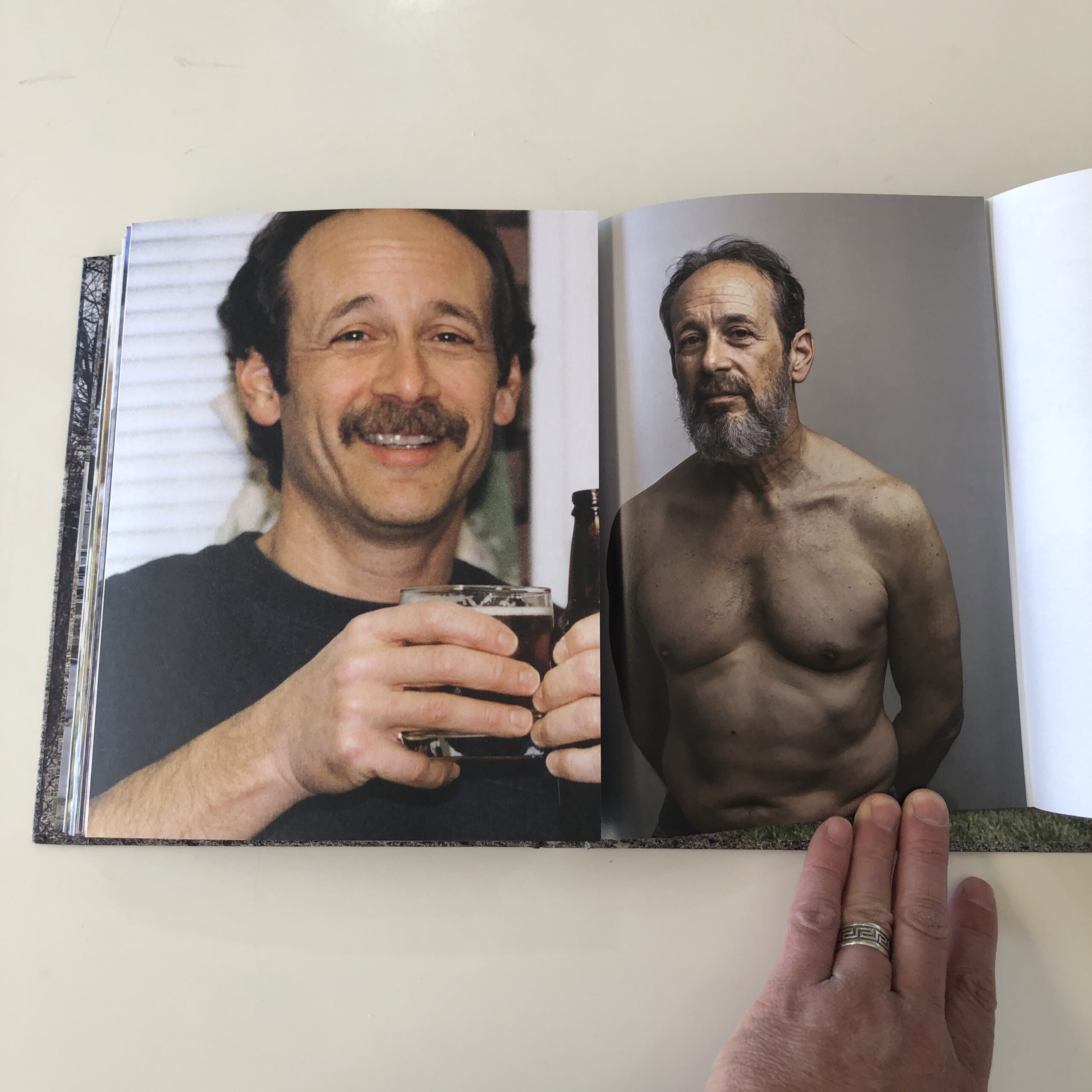
But Rick made the interesting choice to photograph his remaining friends shirtless.
We see the aging flesh, mottled with spots.
We see the scars.
The sagging muscles.
You might disagree, but I think there’s bravery in being vulnerable for the camera like this.
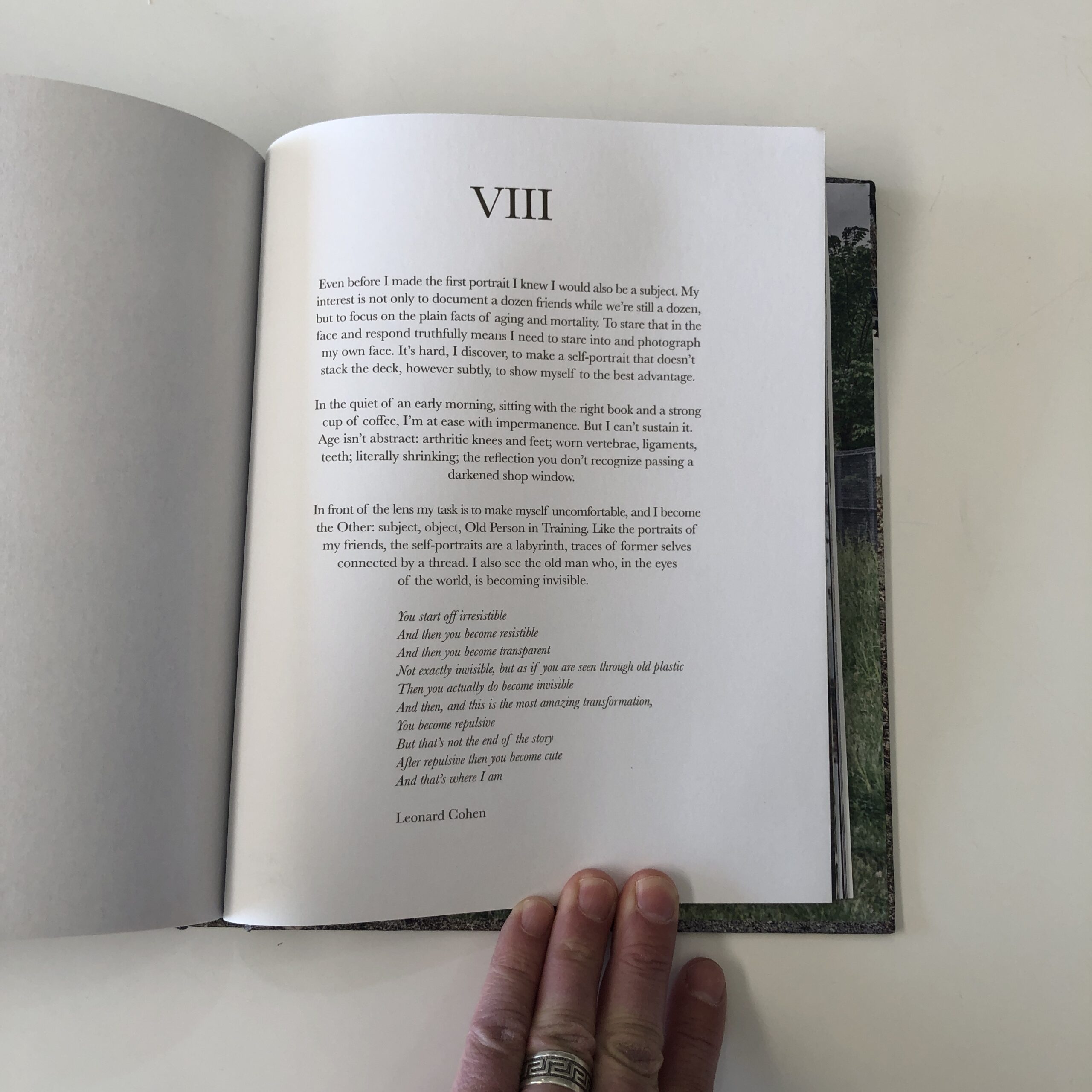
There is a vignette in which Rick describes why he chose to include himself, with the high-end selfies.
And how hard it was to overcome vanity, and not create more flattering portraits for himself than he did for Joelie, Brad, and the crew.
Just the other week, I wrote about the passing of my friend, Dave.
This week, his sister Monica gifted me Dave’s Aikido gi.
(He switched to Kung Fu about 15 years ago, which we trained together, but he kept his Japanese fighting robe.)
And now it’s mine.
My Sensei suggested I wear it to train, to honor my friend.
I’ve been under the weather since I got it, (the whole family has,) and haven’t had the chance to put it on yet.
But I’m excited to feel that connection to my departed compadre.
Lately, I find myself talking to Dave. Almost daily.
I haven’t lost many people before, so I don’t know if that’s normal. Thinking they’re up there, somewhere.
Listening.
So I’d like to offer Rick my condolences, and also my compliments, for a job well done.
If you’d like to submit a book for potential review, please email me at jonathanblaustein@gmail.com. We are particularly interested in books by artists of color, and female photographers, so we may maintain a balanced program. And please be advised, we currently have a significant backlog of books for review.
The Art of the Personal Project is a crucial element to let potential buyers see how you think creatively on your own. I am drawn to personal projects that have an interesting vision or that show something I have never seen before. In this thread, I’ll include a link to each personal project with the artist statement so you can see more of the project. Please note: This thread is not affiliated with any company; I’m just featuring projects that I find. Please DO NOT send me your work. I do not take submissions.
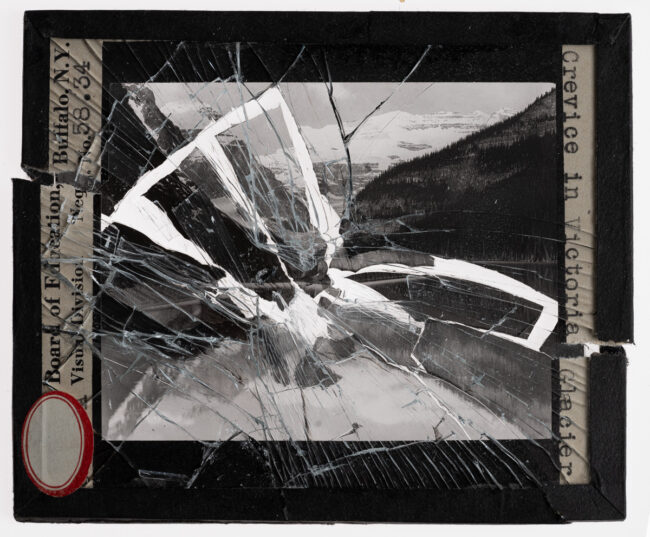
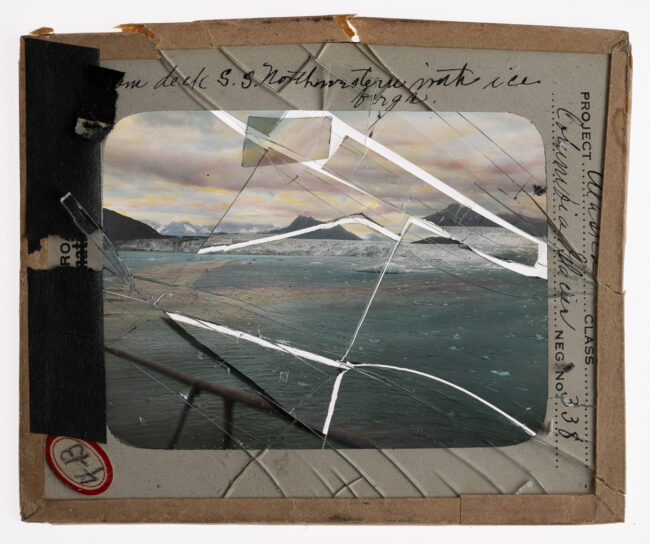
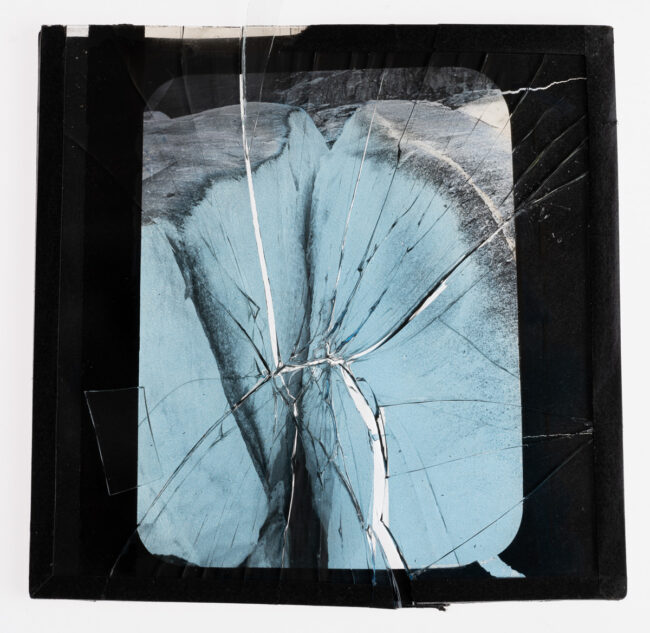
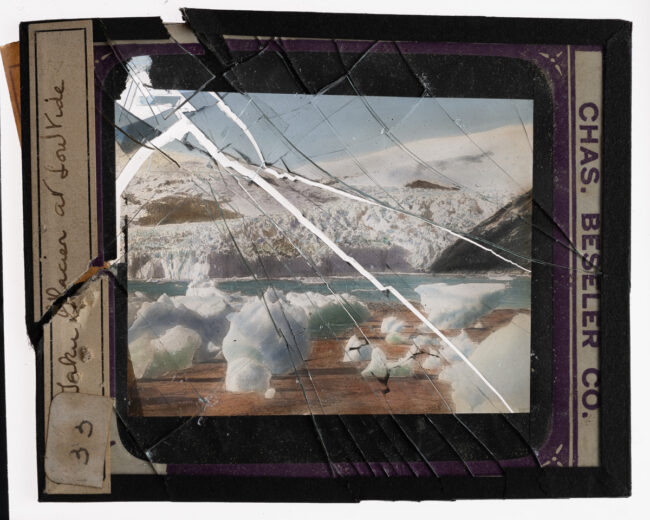
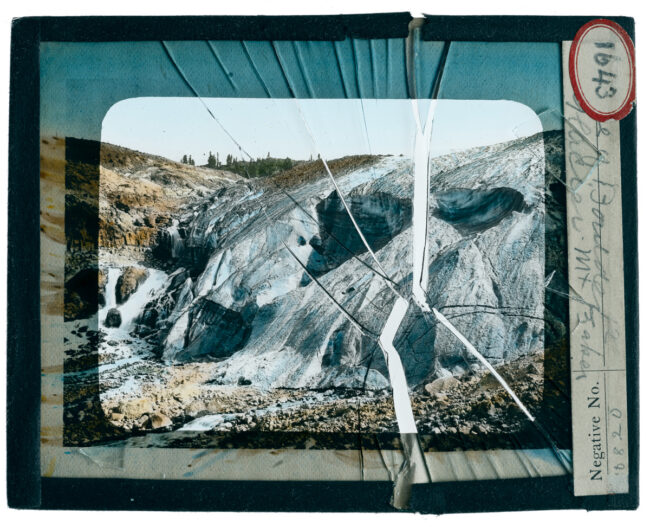
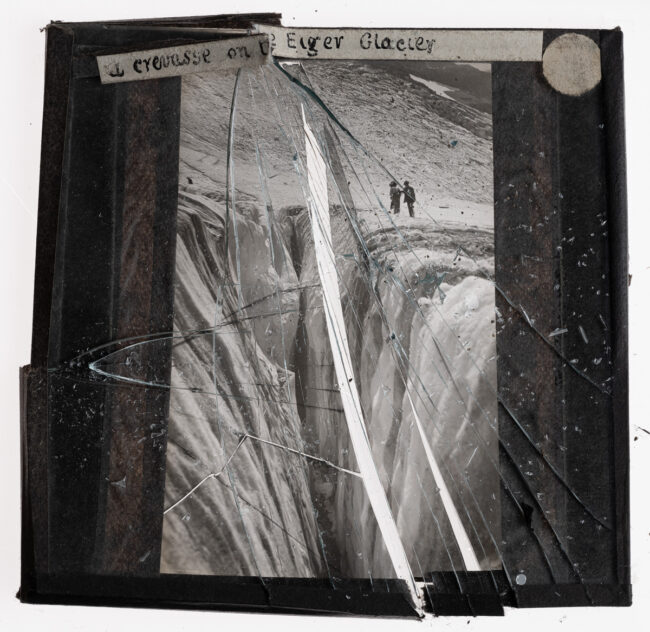
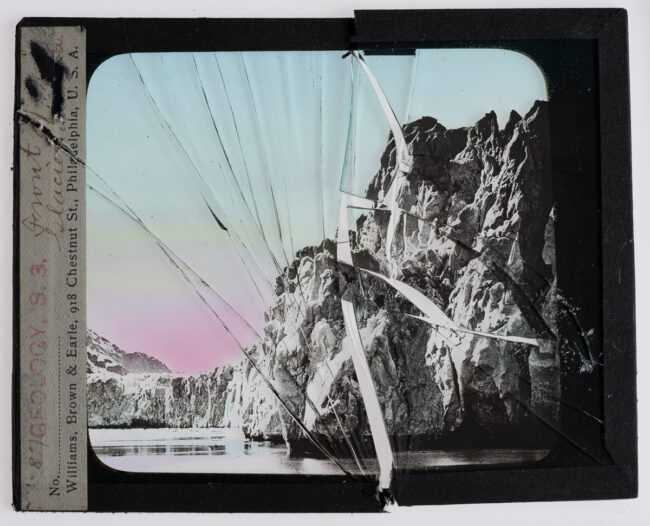
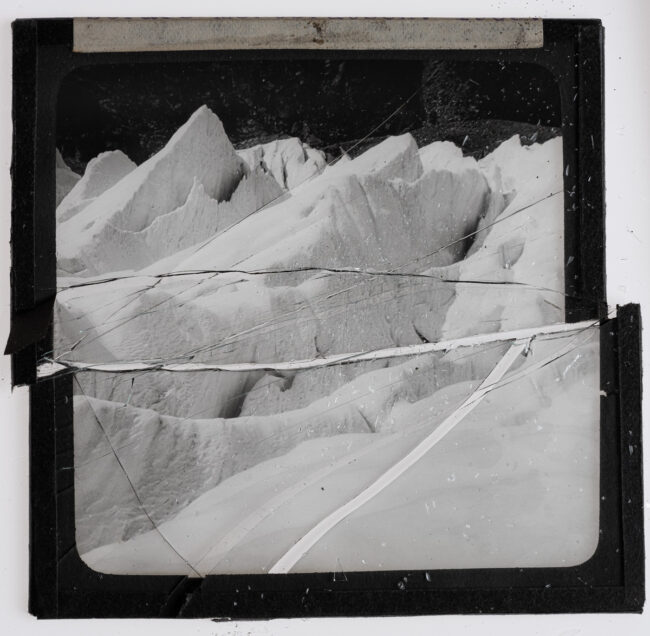
As I look to the future, to the world that my son will inherit, and to the forest where I live that may soon be on fire, climate change and the immediate impact on the environment constantly weighs on my mind. To research this devastating phenomenon, I acquired a series of educational glass slides to examine and consider. Each revealed a vintage photograph of glaciers, now disappearing or already gone. I shattered the glass negatives to call attention to this loss and fragility of our planet, but also to echo an experience with my newborn son’s first four month’s stay in the Neo-Natal Intensive Care or his 20 surgeries and six years of 120-hour a week home nursing. Cracks in the Ice is a metaphor for the precariousness and vulnerability of those I love. It is also a way to speak to the profound loss from global warming and a planet under siege.
The “Cracks in the Ice” project was inspired by my 15-year-old son, Björn. During one of our many daily chats, he asked about Climate Change and what the world will look like in the future. I realized I had only murky visions of that future myself and could not give him a clear answer. His precarious start to life and surgeries makes him crave stability. As a father, I hated that I could not provide much clarity for Björn and knew I needed to explore this idea with a photography project. “Cracks in the Ice” was born.
APE contributor Suzanne Sease currently works as a consultant for photographers and illustrators around the world. She has been involved in the photography and illustration industry since the mid 80s. After establishing the art-buying department at The Martin Agency, then working for Kaplan-Thaler, Capital One, Best Buy and numerous smaller agencies and companies, she decided to be a consultant in 1999. She has a Twitter feed with helpful marketing information because she believes that marketing should be driven by brand and not by specialty. Follow her at @SuzanneSease. Instagram
Success is more than a matter of your talent. It’s also a matter of doing a better job presenting it. And that is what I do with decades of agency and in-house experience.
If you barely dip your toes in the NFT community, you will encounter Punks and Apes. You will see many influential people using them as their PFP (profile picture or picture for proof), and there’s a never-ending discussion about their floor price and utility. The Punks are 10,000 computer-generated pixel art pictures of… punks. They were created by larva labs in 2017 and given away for free to anyone who wanted to claim one. The lowest price to buy a punk right now is $122,808 (floor price) and the total lifetime sales of punks changing hands are nearly 2 billion dollars. Apes are BAYC (Bored Ape Yacht Club), another 10,000-piece NFT collection of computer-generated cartoon primates created in 2021 that initially sold for 0.08 ETH ($190 at the time) and are now worth $233,209. The Apes are famous for their utility which means owners get perks (coins, dogs, mutants, land), and they own the IP (Intellectual property) to their drawing. These extremely successful NFT projects have spawned thousands of copycats, and this is also where you will find most of the scams taking place. Projects where the founder disappears with all the money or just pump-and-dump behavior are rampant with 10k and PFP.
In January of this year, @fellowshiptrust announced they were bringing the world’s first-ever 10K+ photography NFT collection (Note: when this tweet first appeared, the link did not have the photographer’s name) to the blockchain.
The legacy of one of the 20th century’s most important photographers is coming to the blockchain.
On 10th Feb we are launching the world’s first ever 10K+ photography collection. The work will be free to mint!https://t.co/P4PoJReLXC
Given the action around Punks and Apes, this looked like an excellent idea for the photography community. Fellowship seemed to know this was an opportunity to make history, and project information was filled with hype: “The release of this project will mark a turning point in the history of photography.” In addition to the hyperbolic writing, there is a process for selling the NFTs to achieve maximum FOMO (Fear Of Missing Out), where VIPs were given the opportunity to pre-mint the NFT (this is called a whitelist) before the artist behind the project was even revealed. It’s common for 10k NFT projects to work with VIPs and create whitelists for early access because it all generates a feeling of exclusivity. When a project is popular and sells out, this guarantees an increase in price once it becomes available to the public, similar to what happens with IPOs on the stock market (oversubscribed). The people who got in early can flip the NFT for a profit.
If that weren’t enough, project creators taking a cue from Punks, build rarity into the NFTs and withhold revealing what you minted until a project has a chance to sell out. You have a one in ten thousand chance of getting something rare at the reveal, and that lottery-like feeling drives the floor price of collections. Photography archives have this already built-in because a small percentage of images are popular or appear in important collections or books.
So, once Fellowship assembled the whitelists and images were pre-minted (with a placeholder) it was revealed that the photographer was August Sander, and the public was allowed to mint any remaining images. The entire collection sold out in minutes. A big reason for the project’s popularity had to do with the price. It was offered for free “just gas”. This means you don’t pay a fee to mint, just the gas fee for the NFT to be written to the Ethereum blockchain (usually around $20).
As soon as I found out it was August Sander, I went to the project website and read up on the collection. August’s great-grandson Julian Sander had put the project together to create a permanent archive on the blockchain where I was told information about the images could be added by the community. I liked the idea of utility and owning a piece of the archive and the possibility that I could interact with other photography fans and even the estate because of my ownership. I also thought about winning a valuable August Sander NFT that I could flip for a premium.
Buying August Sander NFTs before the reveal reminds me of my baseball card collecting days of yore. Let’s hope I get a Mickey Mantle or two and not a Walt “No Neck” Williams. 😊 pic.twitter.com/BXxLvowi03
Then in mid-march, the entire collection was taken down from Opensea.io At first, people thought it was a glitch of some type. Then on March 19, Julian Sander released a statement confirming what many were already discovering with simple google searches: “It was suspended because a third party, which claims to have certain rights in August Sanders’ photographs, submitted a complaint to OpenSea. I believe the complaint is not valid, and I am liaising with my legal advisors to get this resolved as soon as possible, and for the collection to be reinstated on the platform. This is my top priority right now.”
How is it possible nobody mentioned this? Many well-known people championed this NFT release, including Christie’s own Darius Himes, who was reportedly involved in bringing the project to @fellowshiptrust and interviewed Julian on his Instagram page (https://www.instagram.com/tv/CZ0UoULIqIj/). Still, nobody thought to bring up who owns the actual copyright to the estate?
And this is the nut of the problem with NFTs and this project in particular. Nobody seems to give a shit about copyright. When the project was removed from Opensea.io everyone involved simply said the project is still on the blockchain and is visible on marketplaces like rarible.com, where DMCA takedown notices have no effect. A central tenet behind NFTs is decentralization, so there’s nobody to complain to when your images are stolen. In one of the twitter spaces, I listened to Julian say that photographers have too much power and the DMCA is a problem. He went on to say that placing the collection on the blockchain was fair use arguing that owning a print gives you the right to sell it as an NFT (this changes the nature of NFTs from artist issued originals to eBay for anything in your possession). The members of Fellowship seem to agree with this sentiment as nobody is concerned that this is a legitimate copyright violation and they shouldn’t have put the project to live forever on the blockchain in the first place.
One other aspect of the project being glossed over is the claim that the NFTs were given away for free. Yes, you could mint one with no fee given to Julian or Fellowship, but when I asked Alejandro Cartagena, founding member of Fellowship Trust specifics of the project, I was told that they kept 4.5% of the 10,395 images. Also, 10% of the secondary sales (over $1,000,000) go to Julian (7.5%) and Fellowship (2.5%). In online conversations, I’ve listened to Julian talk about wanting to profit from the work and that the money will determine its value. Anyone saying the project was given away for free is being disingenuous. Not to mention that involvement in a historic project like this has enormous value beyond simply making money off it.
Finally, one aspect of NFTs that I absolutely loathe is the idea that as Alejandro put it to me, everything is “publicly accessible on the blockchain for anyone to read and verify.” When I asked him about randomization process or people minting then selling the NFT’s on the secondary market, I’m told it’s all visible online. The truth is that most people own multiple wallets where they move NFTs and ETH around so you can’t track them. Finding out who owns all the different wallets and following the path from one to another to the marketplace is quite tricky to verify. There are bots buying and selling, people selling to themselves, and money being traded behind the scenes, making it impossible to know what’s real. The transparency of NFTs is a joke.
I’m not sure why everyone involved in this project fumbled so hard. People associated with it refuse to admit they knew about SK Stiftung Kultur before the takedown notice was issued, and all seem perfectly complacent with the idea that the blockchain doesn’t care either. Overall, I’m just disappointed that my NFT purchase doesn’t give me access to the actual August Sander Estate, and instead I’m stuck with Julian, who, as the Great Grandson of the famous photographer, seems bitter about where the archive ended up.
Founder and Art Director: Holly Catford
Founder: Helen Graves
Founder Rob Billington
Heidi: How did Pit and Cheese magazine come about? Holly: I started Pit with Helen Graves and Robert Billington in 2017, it was an idea I’d been thinking about for a long time and was a huge fan of Helen’s blog (foodstories) and so emailed her to go for a beer and basically we just never stopped drinking beers and having a lovely time together! Rob I’d met commissioning him for a story in Noble Rot (that I art directed with Jeremy Leslie from Magculture a million years ago) and we got on like a house on fire too so he seemed like a perfect third partner. Five years later we’re on our 12th issue and attempting to work out how we can get our little side project to start paying us. As a team we worked on Helen’s first book, Live Fire.
Cheese was started in lockdown, I’d worked with Anna Sulan Masing on another little digital magazine/event. She tweeted late one night (not sure if there was any wine involved) about wanting a cheese magazine, so I replied saying we should do it. It turns out Apoorva Siripathi had done the same thing, so we just thought we should give it a shot. We’re working on the third issue now.
How did you get your start in magazines? When I graduated in 2012 I got a weeks work experience at Esterson Associates with Simon Esterson. I just never left. As a studio we specialise in editorial design, Simon’s been running the studio for several years. I’m very, very lucky to have been able to come along and work on such amazing projects together, I’ve learn everything I know from him. He also owns and runs Eye magazine with John L. Walters, so I also get to work on that which is every graphic designers dream. Looking back on my student work, I can see my love for editorial in everything I do. I was constantly putting together books and publications asking friends to do illustrations and take photographs, interviewing people, while everyone else did posters and logos.
You work on a variety of other titles, are you art directing and designing them all? I’m the art director of History Today, Pit and Cheese. The art editor of Eye, Pulp and Museums Journal.
What kind of circulation do you have for cheese and Pit? Both are 2000 copies.
How did this potato cover idea unfold? We wanted to put the British classic the potato smiley on the cover, and then me and Rob started talking about ‘iconic potatos’ and thought of Mr Potato Head. The idea sort of spiraled from there, I bought a few potato head sets from ebay and then tried to find potatoes which would look like ourselves. Each one is a member of the team Polly (Holly), Bob (Rob) and Melon (Helen).
Do you have a regular stable of photographers you work with? Yes and no. I have a few people I work with really closely (Rob and Caitlin Isola) on Pit. But we work with loads of people on wider projects. Philip Sayer, David Levene, Francesco Brembati, Julian Anderson, Orlando Gili,
Suki Dhanda, Ed Park, Maria Spann… the list goes on and on. I also work really closely with Millie Simpson on History Today who is an amazing picture editor. I’m very very lucky to work with all of them.