


Heidi: You operate in two modes: the rigorous, hypothesis-driven mode of science and the intuitive mode of art. How do you manage or integrate these two?
Jim: Science and art have more similarities than differences. The goals are the same: scientists and artists strive to create something that didn’t previously exist. Scientists create knowledge of objective natural truth. Artists create objects that communicate their view of the truth. I don’t know where the ability to create originates, but for me it is the same for both science and art. It’s mysterious.
In your experiments at the Z-machine laboratory — where you heat atoms to million-degree temperatures to study how atoms around stars and black holes interact with light — how do the physical behaviours you observe inform your photography?
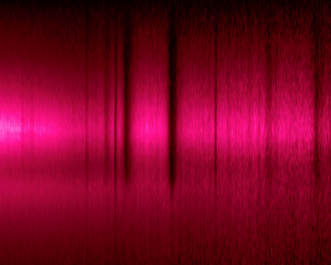
Visual patterns recur in my scientific measurements and in my art. In atomic physics we have to decode the patterns to understand what the atoms are telling us. The patterns arise because quantum mechanics dictates them. The patterns change depending on the local conditions – temperature, or density. Studying those patterns becomes a way to learn about nature elsewhere in the universe. Patterns also appear naturally on the earth and because of our human attempts to alter nature. I want to understand what those patterns have to say about our world and art provides a way to communicate what I find. IMAGE BELOW: James shared an image from Sandia National Laboratory in New Mexico where he and his colleagues have now measured the opacity of one of the Sun’s most important elements for radiation transport—oxygen—at densities and temperatures high enough to test photon-absorption models.
Working at extremes of temperature and density in your lab gives you a vantage point on the universe’s fundamental behaviours. Does this exposure to “extreme scale” shift how you perceive pattern, structure or abstraction in your photo work?
I’m fascinated by scale variations. The same metals and organic elements that constitute our surroundings on earth are found in the middle of the Sun. The ice crystals in my cooler form giant glaciers. The spiral flow of water entering a drain is appears similar to the pattern of a galaxy.
How do you navigate or translate between the “wild light” of the landscape and the controlled light of atomic-scale experiments?
It’s all “wild light”. We may stimulate certain behaviors in the atoms we study, but we don’t control how the atoms respond. We observe and if we are fortunate, we begin to understand. It’s the same in nature.
With thirty years of printing in the traditional darkroom shaping your intuition-inspired camera work and printmaking, what processes are you currently excited about?
Intuition inspires and craft translates. It’s a golden age for the craft of image making. Digital cameras provide quality combined with versatility that didn’t exist with film, for the images I want to make. I often photograph in bad weather that would prohibit operating a view camera, for example. Other artists have different goals and may draw different conclusions. I still have my view camera and my beloved Mamiya 7, but they sit in a closet while I create digital images. The marriage of digital methods and modern adaptations of historical methods is another revolution. I don’t consider an image complete until I make a print. Nowadays it is possible to make polymer intaglio (photogravure) prints using non-toxic materials. I enjoy creating handmade prints and the gravure process enables me to make satisfying images without the chemicals. There are many other possibilities – salt print, carbon prints, Mokulito, …. I want to try them all!
What observations have you made about nature as an athlete and an artist?
Nature is the boss. If we forget, we flail. As artists or athletes or human beings.
What do you hope the viewers walk away with after taking in your work?
I hope they have a reaction. It’s ok if they enjoy an image for its beauty alone. I have an intellectual concept for almost every image, but I recognize that every viewer will have a different interpretation. I’m always excited to learn how someone’s thoughts were stimulated by an image, even if the direction of their thoughts is different from mine. Of course, it’s especially rewarding when someone reads an image and gets what I was trying to communicate, but that’s a bonus.
You describe yourself as a “persistent wilderness journeyman” and you’ve visited wild places thousands of times. How does the experience of being immersed in the natural world shape the way you think about light, scale, and time — both in your science work and your visual art?
I’m certain that immersion in the natural world alters my consciousness and affects the art and science I make. It’s not easy to define exactly how that happens. Scientific ideas percolate below the surface when I’m in wild places. Later they emerge, and sometimes they are even good ideas. The influence on my art is more direct. My image making depends on participating, on living in the wild as fully as I can. I visit as many different wild zones as I can, but it’s true that New Mexico is special for me. I live next to wilderness, both in Albuquerque and Taos. I know those places, but time hasn’t reduced my sensation of wonder and discoveries I couldn’t anticipate happen still.
1 Comment
[…] The Daily Edit – Jim Bailey talks about wild light in the landscape and atomic level experiments […]
Comments are closed for this article!