Paris Gore
Heidi: Graham Agassiz said that even early on, you “always know where to be … you’re never getting in the way or calling out tricks” — how do you develop that sense of timing and positioning in these high-risk environments?
Paris: Developing a sense of positioning and not being in the way is really just being very observant and listening to riders. Staying in the shadows a bit, but having ears and eyes on what’s going on, which can sometimes be a lot of different things at once.
How much do you choreograph vs. adapt in real time? In other words, do you visualize every shot beforehand?
A lot is happening live so it really depends on where the light is and people are riding. But that said, there are shots I like to scout ahead of time before event day and have a good plan to where to go and what lens I should be using so I can make a switch while I am on the fly during the event. But most of the time it’s adapting in real time, which goes back to being very observational to calculate what’s going on and where.
Tell me about a shot you didn’t get — what went wrong?
The worst miss was watching Brandon Semenuk on his winning run tailwhip off a massive drop which was a crazy move at the time with my own eyes and not from my camera. It was really dejecting as I was blind to the action, meaning I could not see him coming up to the drop and there was a delay that the announcers didn’t make clear he was on course. He just came off the drop and I was like “F*** missed that one”
You have spent nearly 10 years perched on these cliffs — hiking 10+ miles a day, carrying 50-lb camera bags, working sunup to sundown. What keeps you going through that physical grind, and how do you maintain creative energy under those conditions – other than the endless quest for the 1 in a million shot?
It takes a lot out of you shooting the event, we are on site for about a 12-hour day and then still have to edit images for another 2+ so maintaining and keeping energy is really important. Especially during event day it can be really hot out and no break, so just managing water intake and food is super crucial. I generally am in the gym a lot leading up to the event to maintain a solid amount of fitness to be able to withstand the physical demand.
What changes have you seen in how you approach your craft — from planning, gear, or mindset — and can you point to a moment when your style or process noticeably shifted?
I’ve gotten more efficient over the years but also it still is very much the same madness in the 12 years I’ve photographed the event. Just more tuned into what riders are doing and what kind of images I am looking for. I’ve also started running lighter and more minimal gear kits, knowing what I need to go into it and don’t have to carry as much heavy gear around.
With more conversations now about including women in high-stakes freeride events (e.g. Red Bull’s “Formation” as a step toward women’s representation) — how do you see your role (as a visual storyteller) in supporting or driving that inclusion, and how has your approach to photographing women in these environments evolved over time?
I was lucky enough to photograph the first Formation event in 2019 which was awesome to be apart of at the time and witness their talents. With the full on Rampage event now for women I’ve been trying to showcase how gnarly some of the features are they are riding now that no other male riders even would touch back in 2015 when they were at the same venue which is really awesome to see.
How do you approach “landscape-first” compositions in Rampage settings — balancing epic environments with intense human action — and how has that balance shifted over the years?
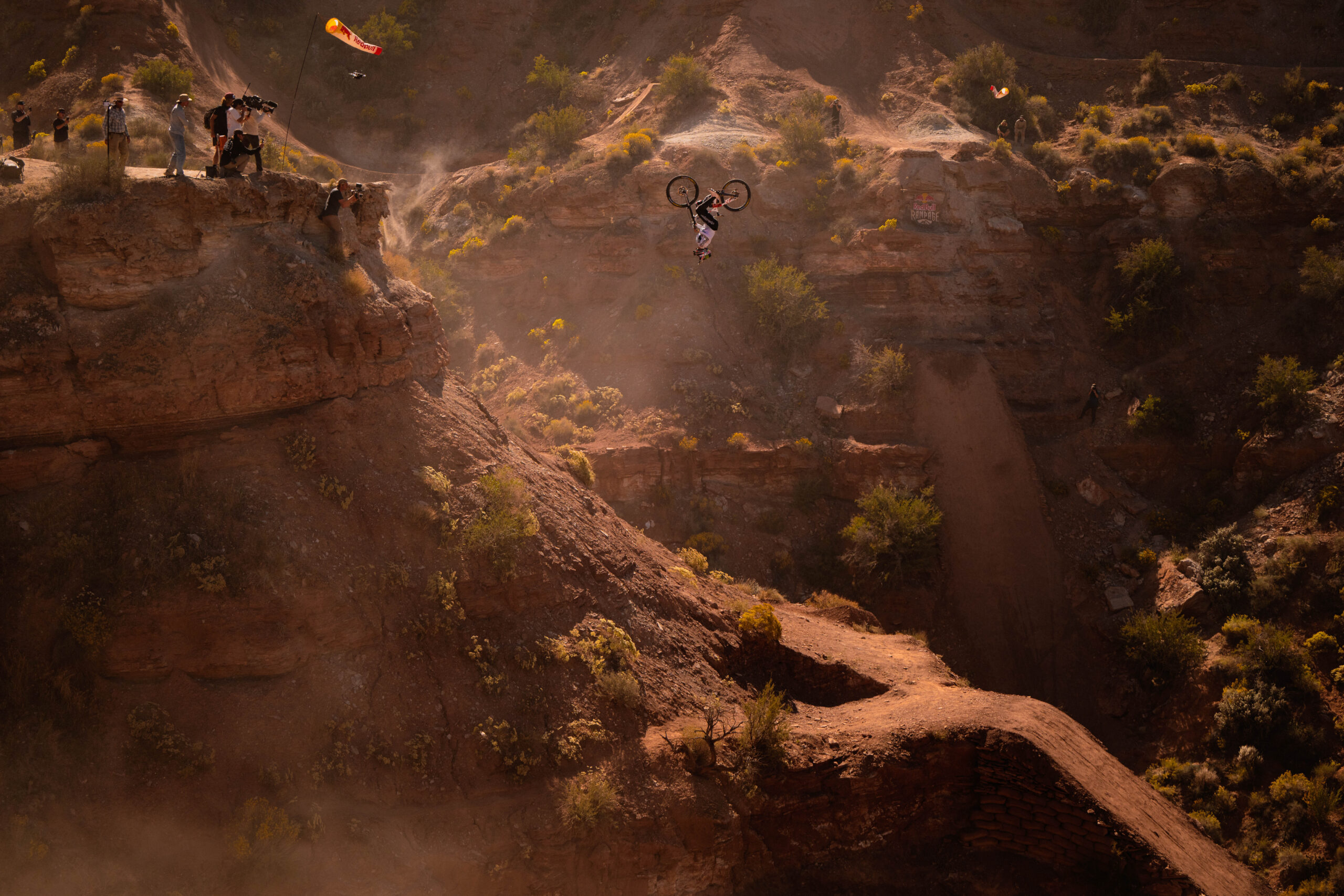
Rampage is so expansive and has massive terrain that needs to be showcased in a certain way to really do justice to the scale of the action. There’s times where a tighter trick shot off a jump is important but also a wider landscape style to show the sheer scale of what they’re riding down.
You’ve lived in Bellingham, WA for a while now, and you also fly airplanes, snowboard, explore wilderness. How do your off-mountain passions (flying, snowboarding, exploring) inform your perspective and instincts when you’re shooting in extreme mountain terrain at Rampage?
I do a lot outside of just shooting and really love being in the mountains doing the sports I enjoy photographing. Flying for me as well has been an outlet for my own “thing” that is unique and extremely passionate about doing. Snowboarding really helps me think about Rampage a bit mainly just seeing photos from Blatt and other snowboard photographers approach to shooting big mountain terrain to apply that into a Rampage environment.