

Vjaybombs
Heidi: Who or what inspired you to become an activist-artist working with guerrilla projection tactics in public spaces?
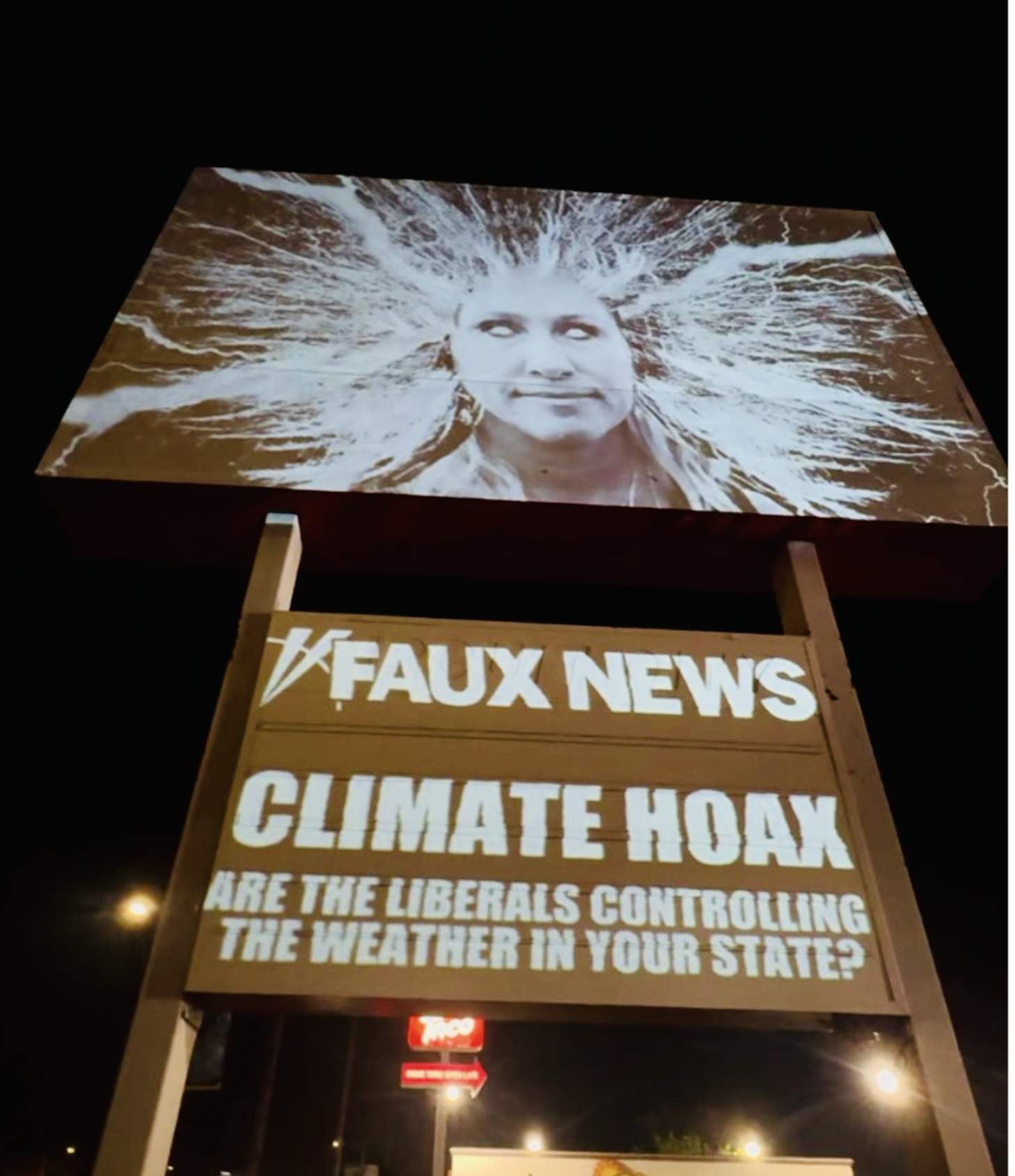
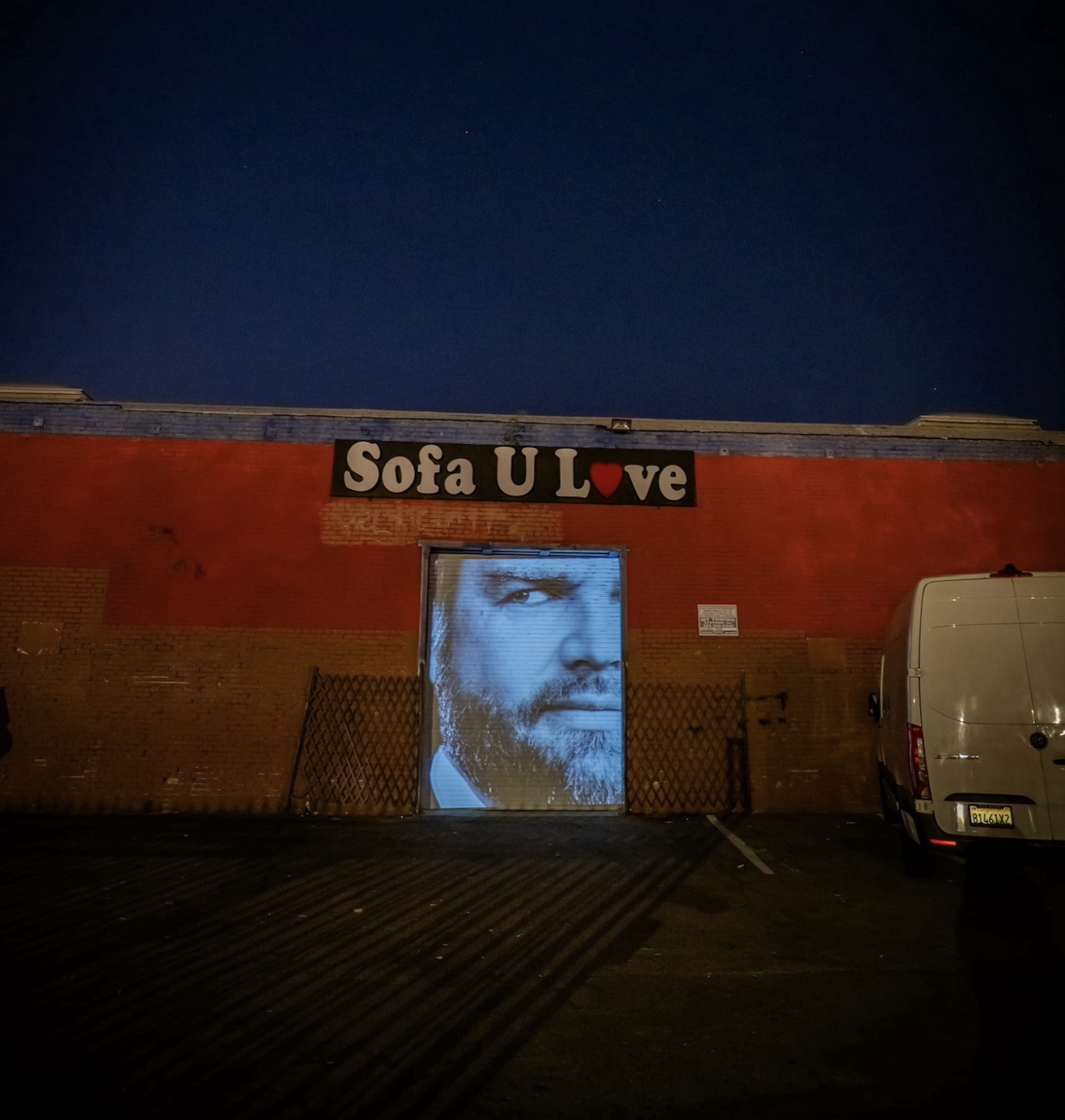
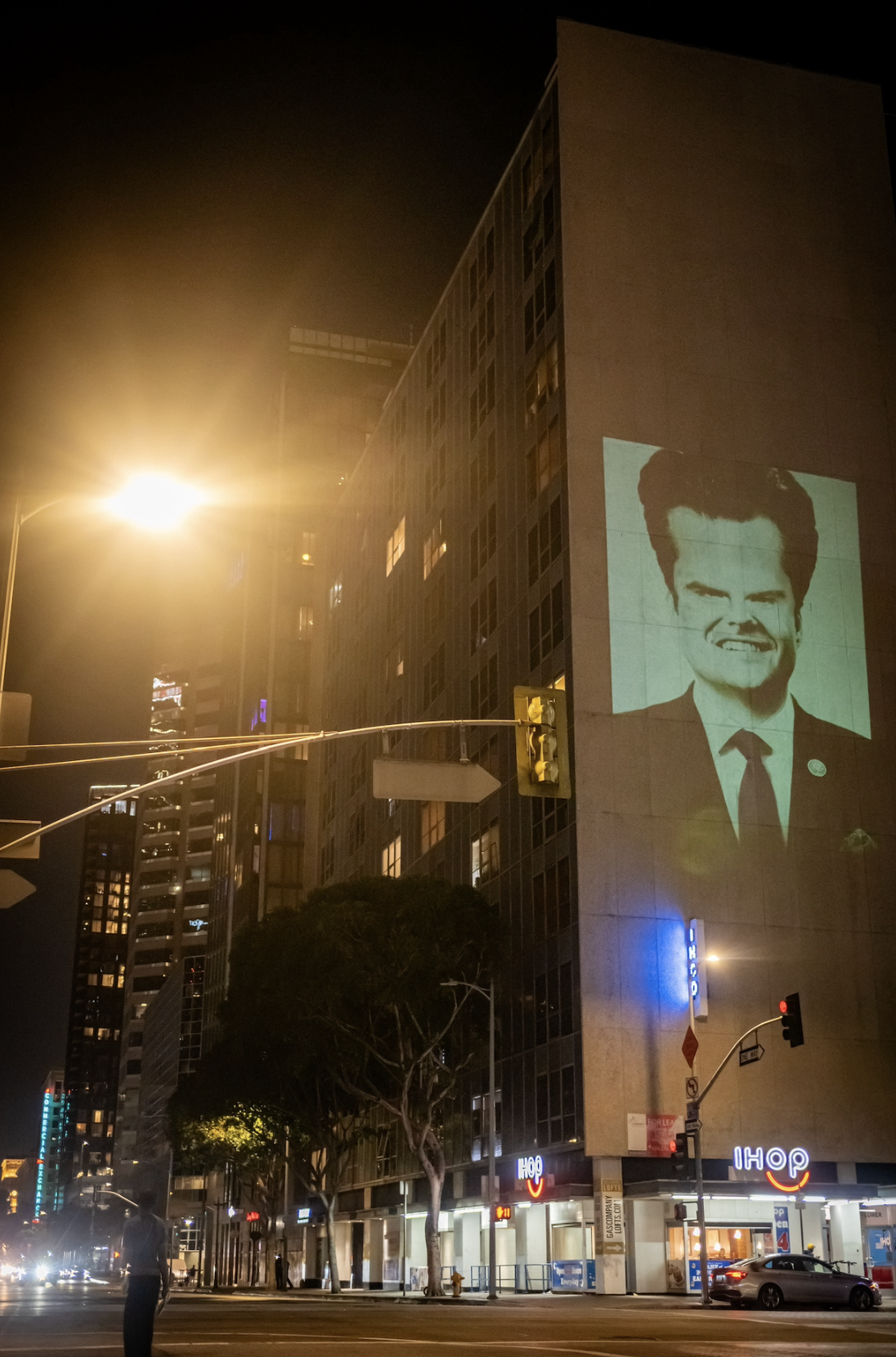
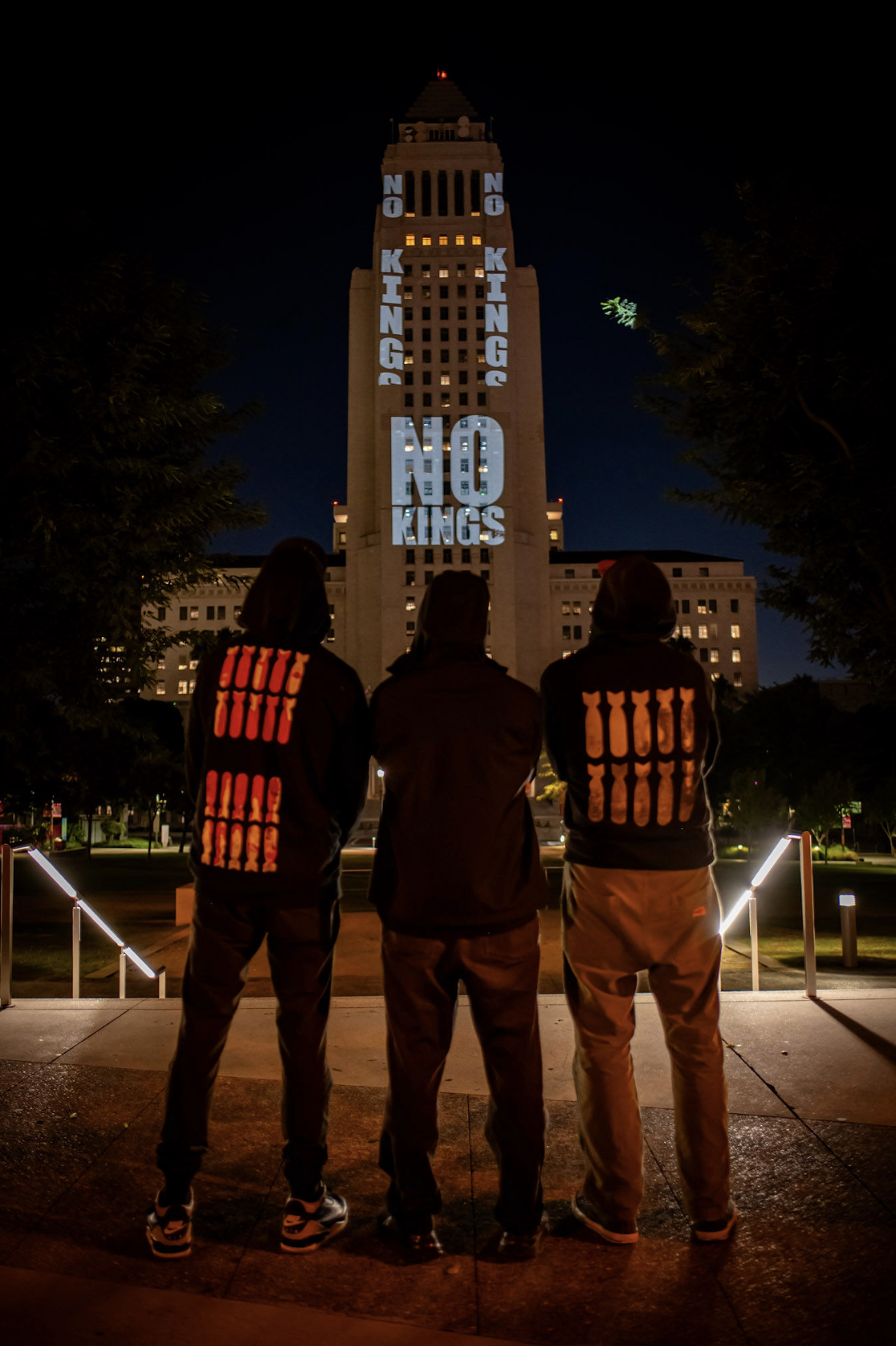
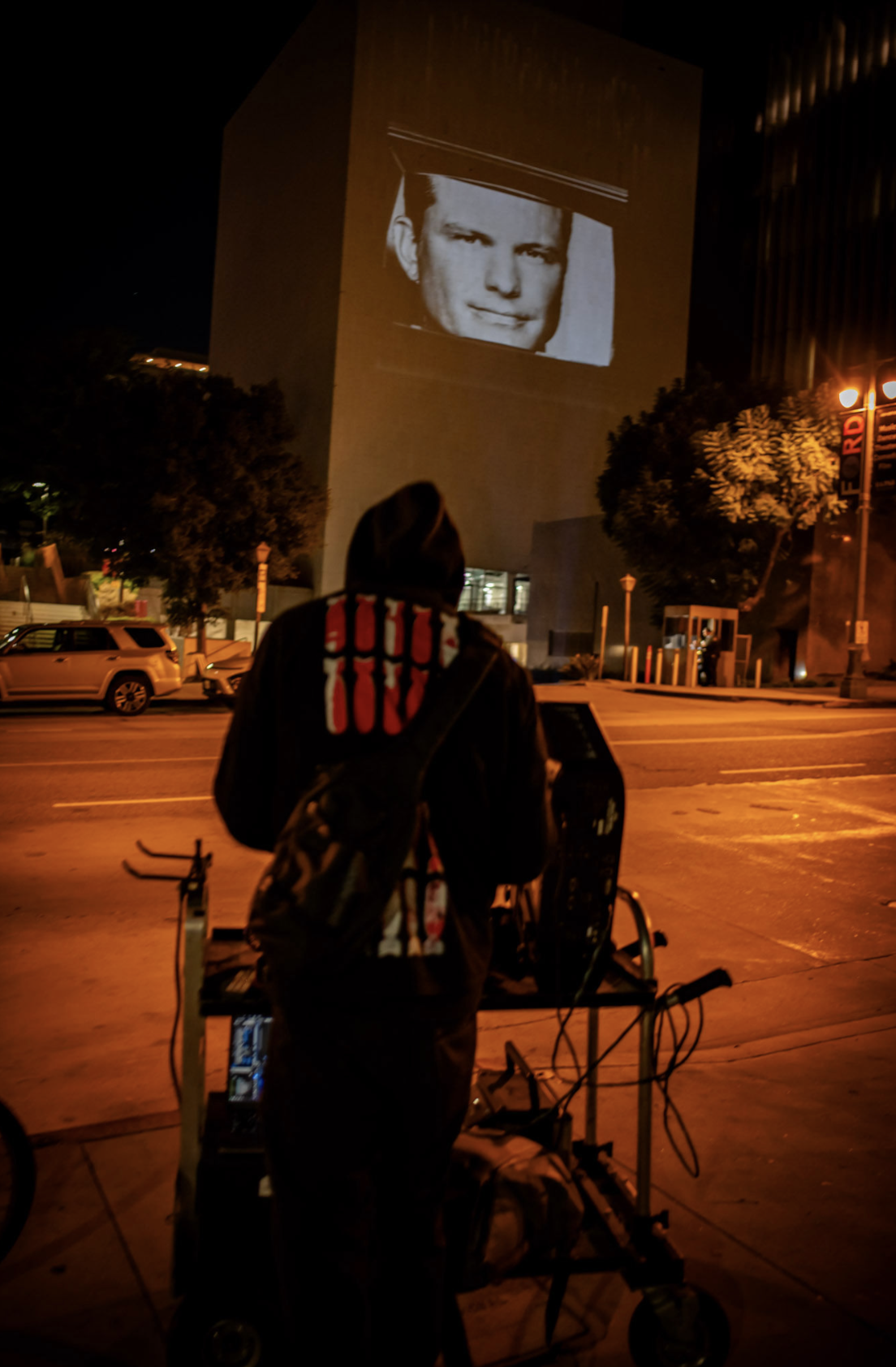
Vjaybombs: We’re all filmmakers by trade, and projection bombing sits right in the sweet spot of all our skill sets – documentary filmmaking, animation, and beyond. Our first dabble in projecting in public spaces was about ten years ago. Back then, we’d throw these huge house parties and project onto nearby buildings – mostly abstract visuals, stuff we shot ourselves, mixed live with movie clips and music videos. It wasn’t until the lead-up to the 2024 election that we started using guerrilla projections as a form of peaceful protest.
Which came first, the merch or the projections as temporary canvases of dissent?
Projections came first. We only started making and selling merch as a way to help fund the project. Projections are accessible, disruptive, but not violent.
What change do you hope to see in the world through your work?
We want to show that it’s possible to make your voice heard and protest peacefully. Hopefully, we can inspire others to do the same. Right now, it feels more important than ever to use whatever skills we have to push back against the rise of fascism and fight for our freedoms. We all have more power than we think. It’s easy to feel overwhelmed or tune out, but we urge people to stay engaged. Real change doesn’t come from one big event – it comes from countless small acts that, together, move the needle.
How did the “projection bombing” concept get started for you and what does the name Vjay Bombs mean?
“Vjay” stands for “visual DJ,” and “bombs” comes from “projection bombing.” Both “VJing” and “projection bombing” have been around for a while – we didn’t come up with them ourselves.
How has your setup or equipment evolved?
Honestly, we were total novices when we started. The first time we went out projection bombing, we blew a fuse in our car trying to run power from the projector through a lighter adapter – rookie move. Luckily, a guy from a nearby bodega let us plug into his shop for a couple of hours. Since then, our setup has evolved a ton. We’ve upgraded from a cheap projector off Facebook Marketplace to a legit home theater model, and now we use a large-venue projector – the kind you’d find in a movie theater.
Can you walk us through your process from scouting a wall to pulling off a full-scale nighttime projection?
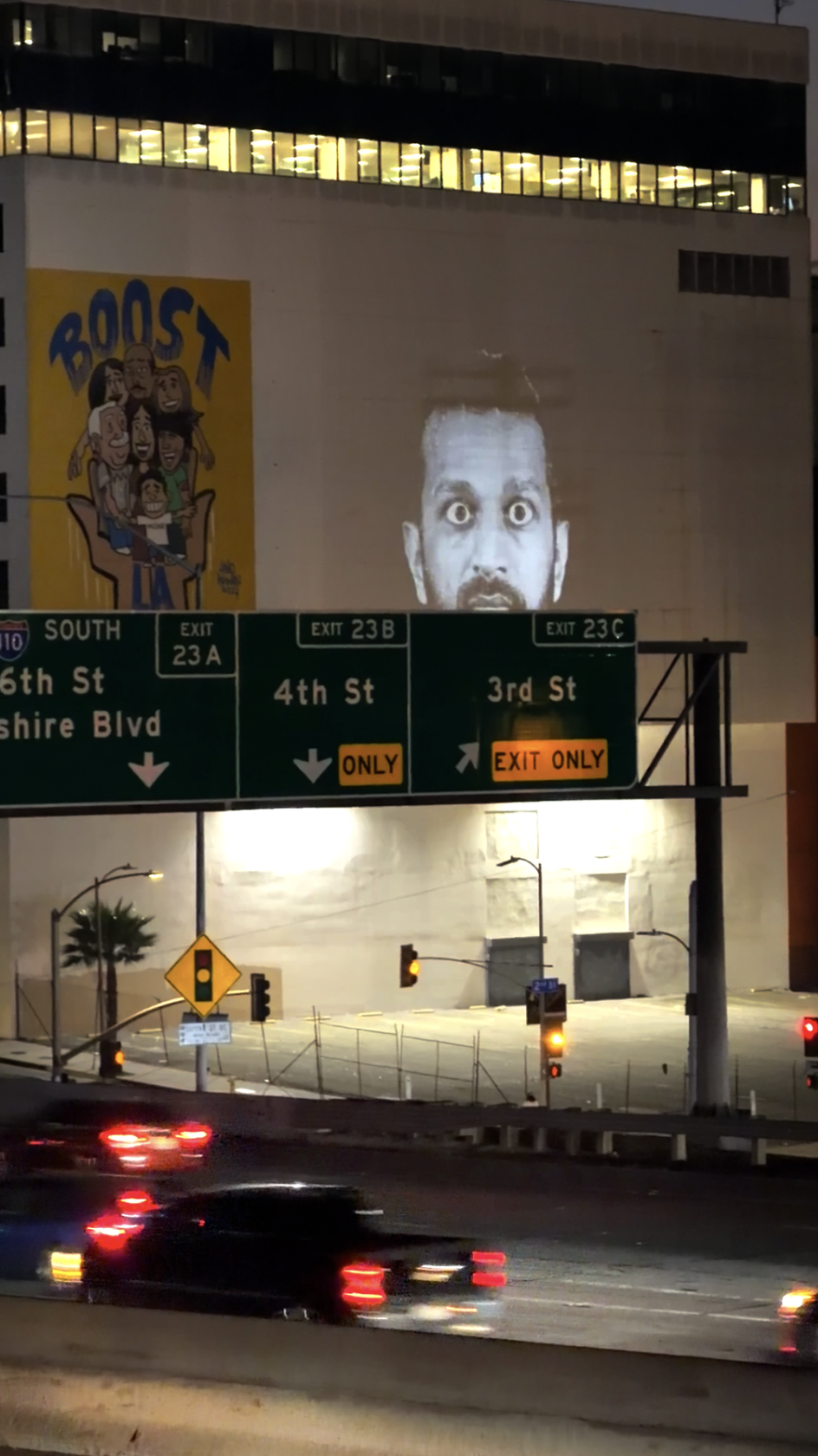
Everything starts in our group chat – that’s where all the ideas are born. We’re constantly talking about current events, sharing articles, and throwing around projection concepts. Whenever someone spots a great wall or surface, they snap a photo, drop it in the chat with the location. When something happens in the world that inspires us to respond, we start bouncing around ideas, exchanging visuals, and then move into animating the video. Depending on the concept, that process can take anywhere from a few hours to a few days. That said, each piece really has its own process. There isn’t one formula that works every time – but there are certain elements we like to think about when coming up with ideas. We start by pinpointing what we’re trying to say with the projection: What aspect of an issue will resonate with people? What is the emotional reaction we would like to invoke? How can we communicate a message clearly in a matter of seconds? We’re essentially creating digital billboards, so it’s crucial to grab people’s attention immediately and deliver the message as efficiently as possible. If the piece leans more satirical, we think about how to highlight the absurdity of a situation. Sometimes humor is the easiest and most effective way to get people to engage with something serious. Ideally, each projection unfolds like a mini-story – almost like a comic strip – with a beginning, middle, and end. Once the animation is ready, we move into the projection phase. This is where the environment becomes a key part of the work. The sweet spot for us is when the architecture and the message intersect – when the building itself becomes part of the story we’re telling. If the surface somehow relates to the theme or subject of the piece, that’s double bonus points. For each projection we think about what the priority is – to get as many eyes as possible or to draw attention to a specific location. And finally, there’s the posting and social media aspect of the process. Documenting everything is very important. How can we give a piece the longest legs online. We love marrying the visuals to the perfect soundtrack. Sound adds another emotional layer – it can amplify the tone, be a punchline, and deepen the impact of the message. When all those elements align – the concept, the visuals, the location, and the music – that’s the ultimate goal.
How does projection bombing fit into the larger ecosystem of street art and activism?
Projection bombing is a really unique form of street art because it’s still so new. What we’re doing would’ve been extremely difficult ten years ago (though people were definitely doing it!). With how fast technology has advanced, you can now get powerful, compact projectors for a reasonable price – something that just wasn’t possible before. As they keep getting more accessible (and brighter), we think projection bombing will become a more common form of street art and protest.
What’s next for you?
We recently hosted our first nationwide projection protest – people from across the U.S. and Europe all went out and projected on the same night. The enthusiasm and support were unreal. Watching all the videos come in was emotional – from massive city buildings to barns in the middle of nowhere. It was truly inspiring to watch. There are a lot of people who want to contribute but don’t know how. Not everyone sees themselves as creative or has time to make protest art, but the concept of the projection protest gives people a new way to engage – and allows people to make art themselves. The animations are just the first piece of the puzzle – the projection itself, and how it’s presented, is equally important. Each person becomes their own curator and part of the artwork through their own setup and location choices. Seeing everyone’s interpretations the night of the group protest was incredible. The group protest really opened our eyes to all the ways this project can grow and connect people. We definitely want to keep mobilizing the community. We’ve talked about collaborating with other digital artists on a visual album, throwing live events, and even starting a podcast.
1 Comment
Vjaybombs are some of the most influential artists in LA right now! Always excited to see their next piece.
Comments are closed for this article!