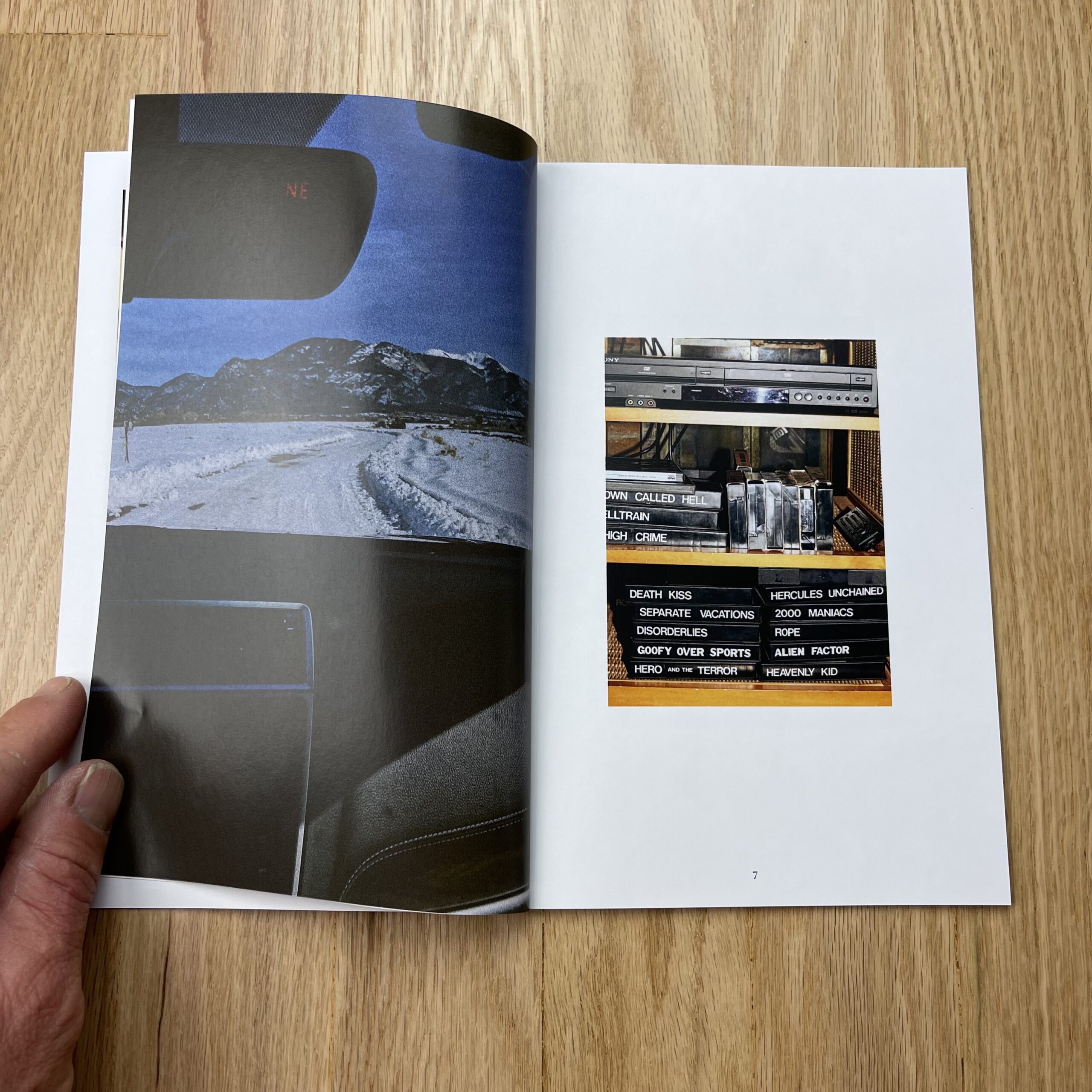
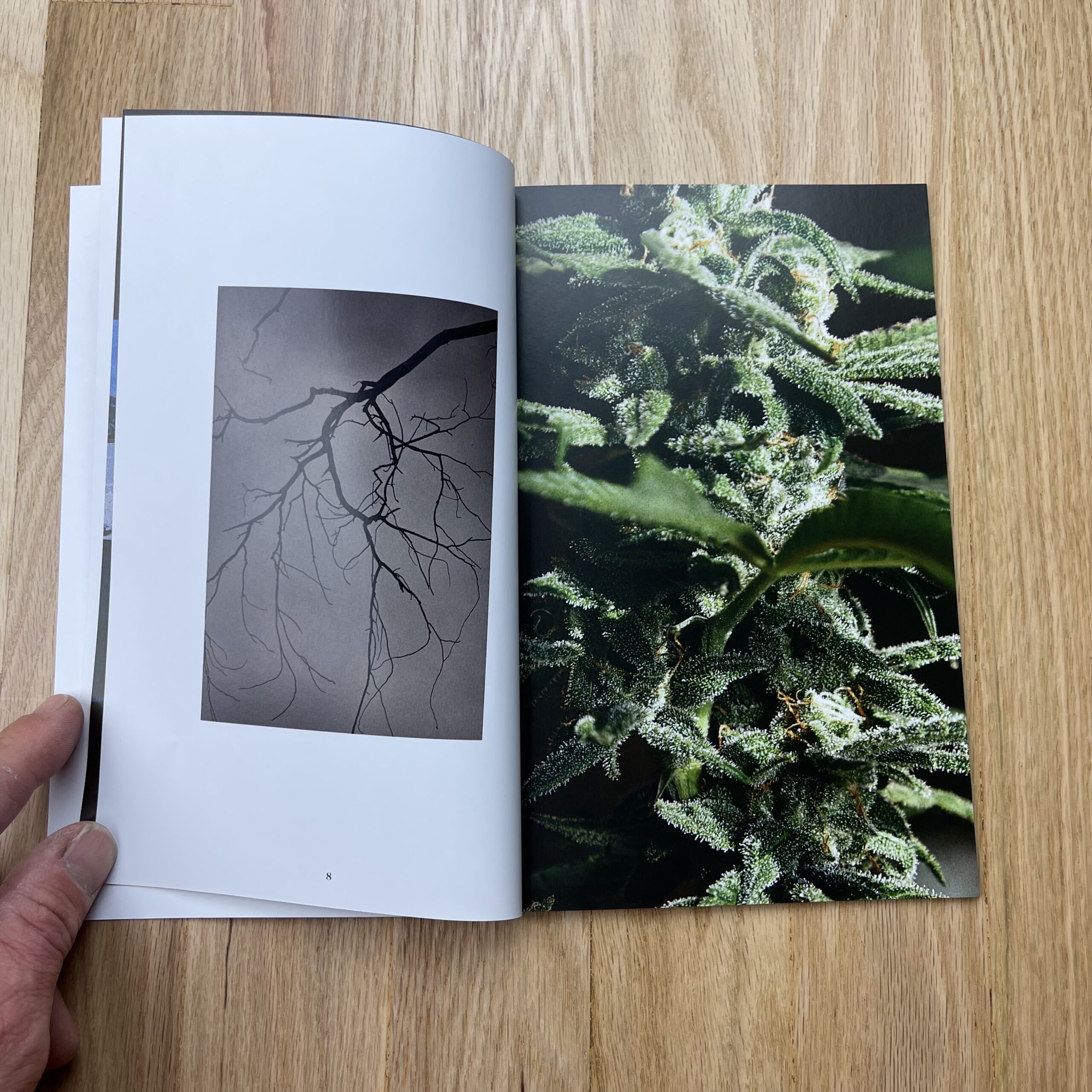
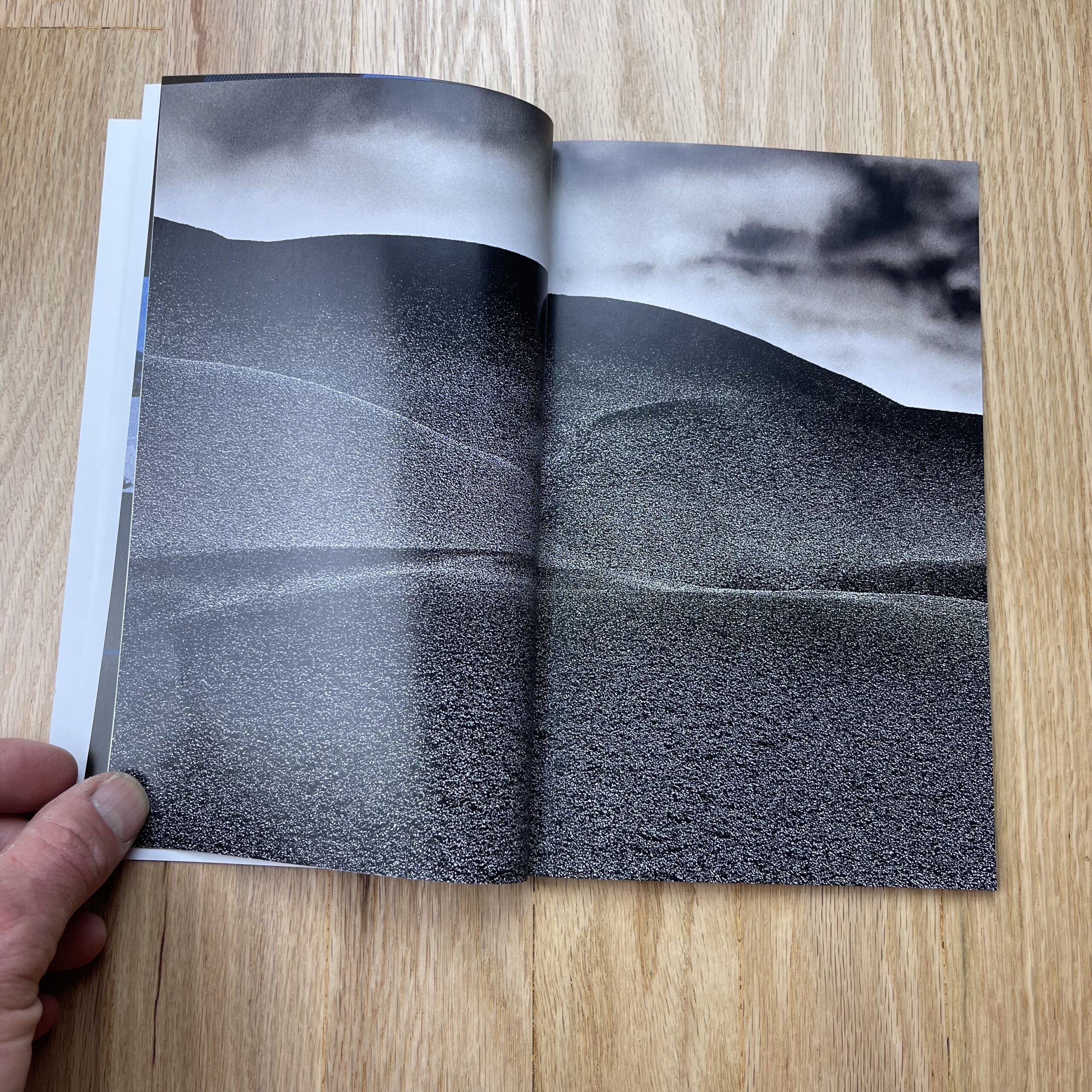
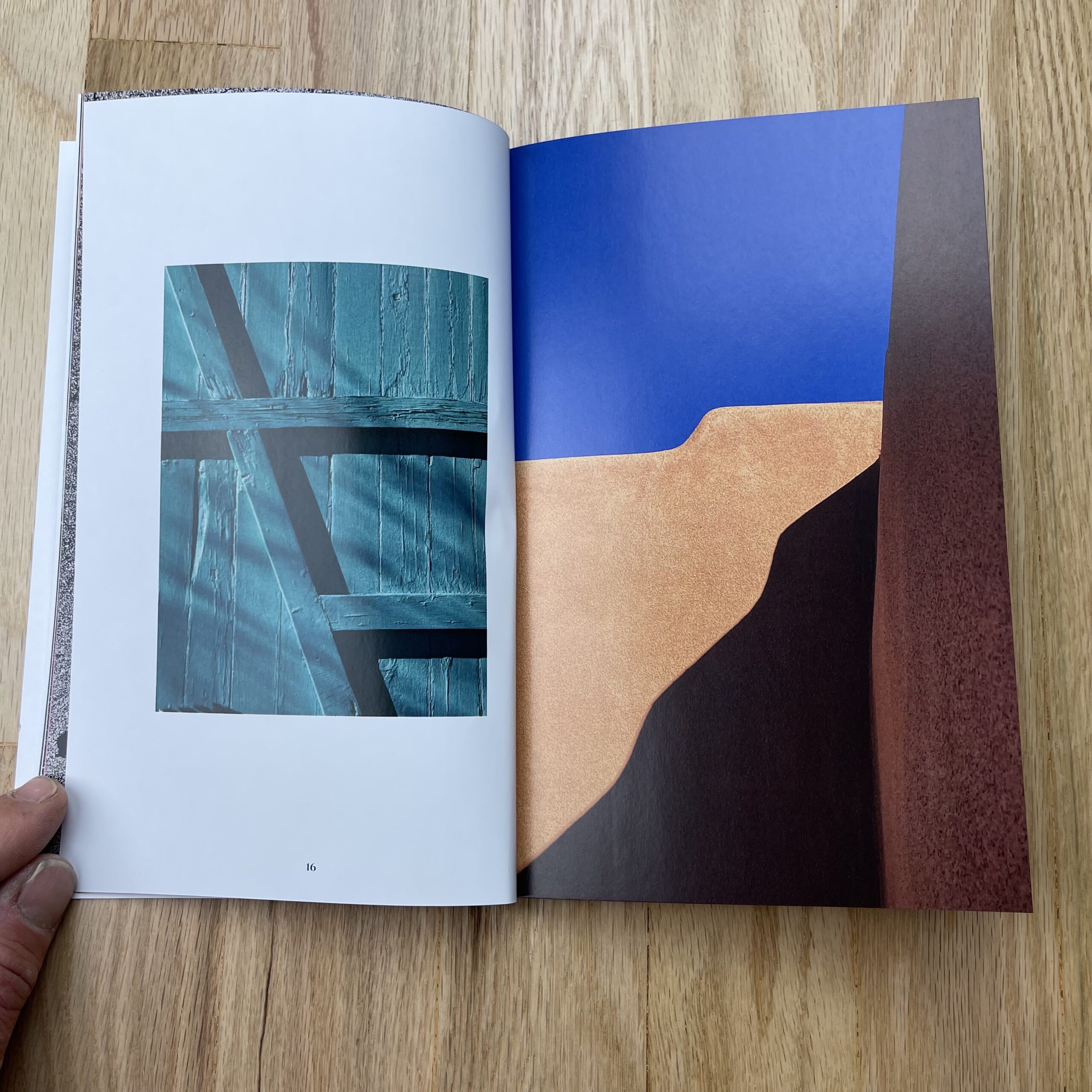
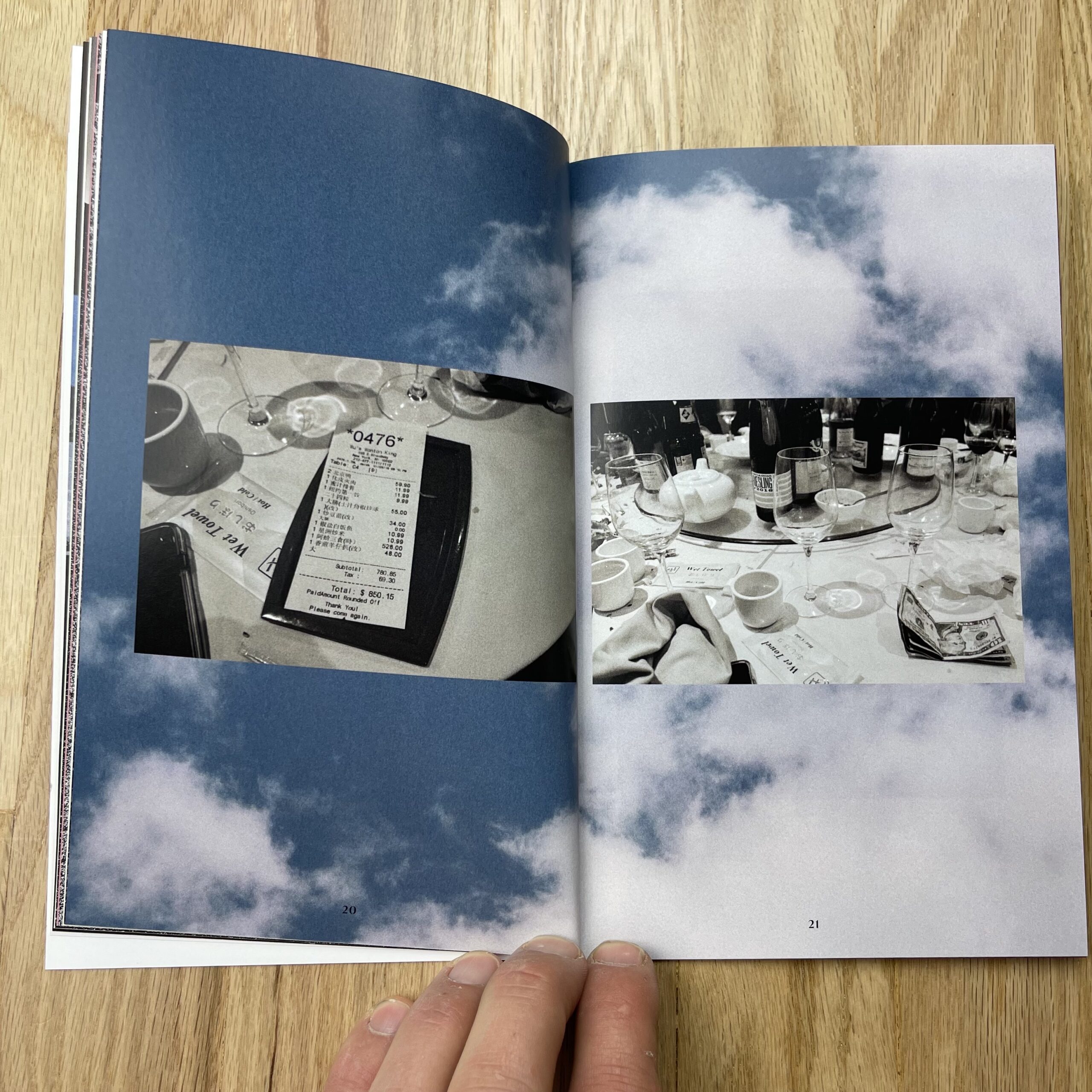
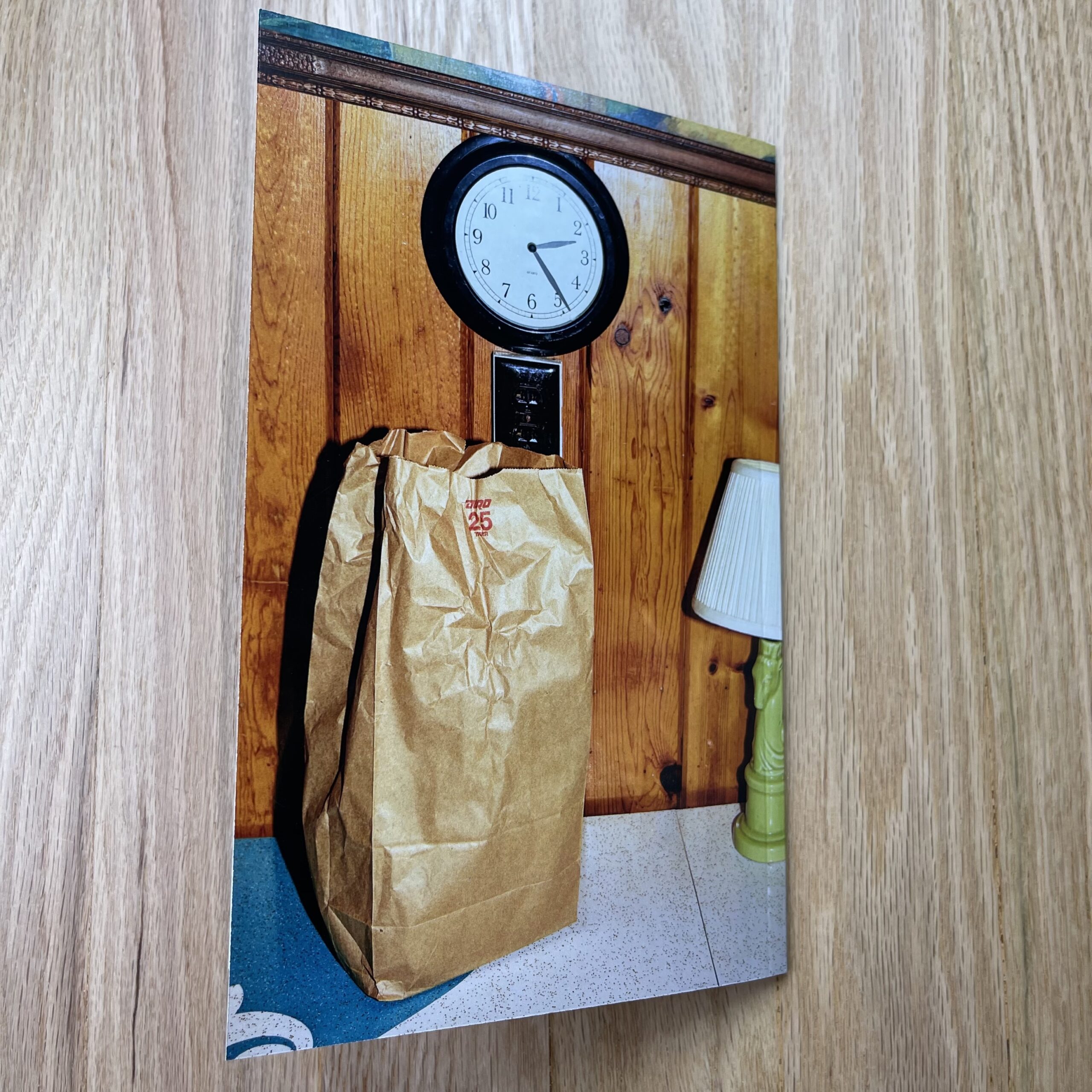
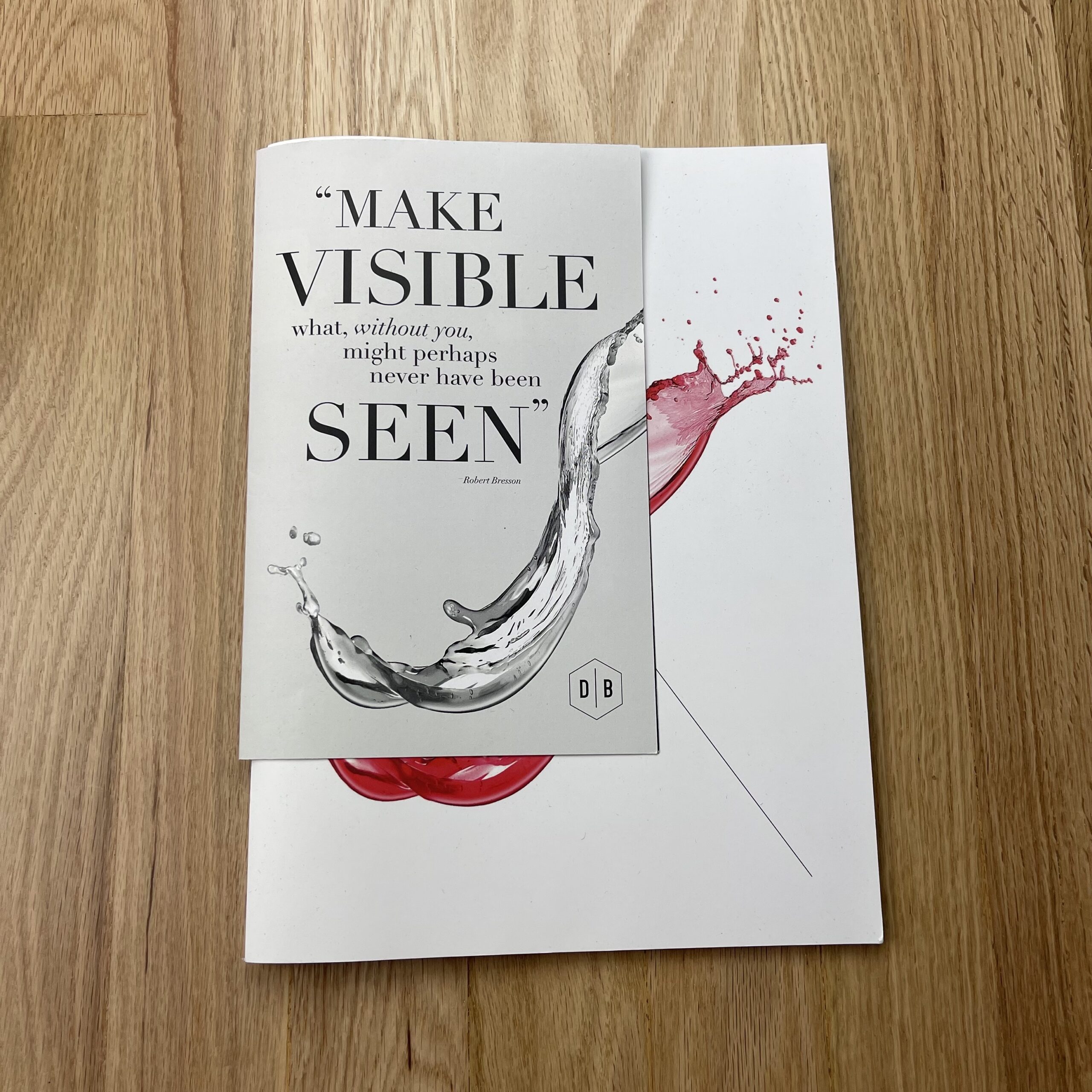
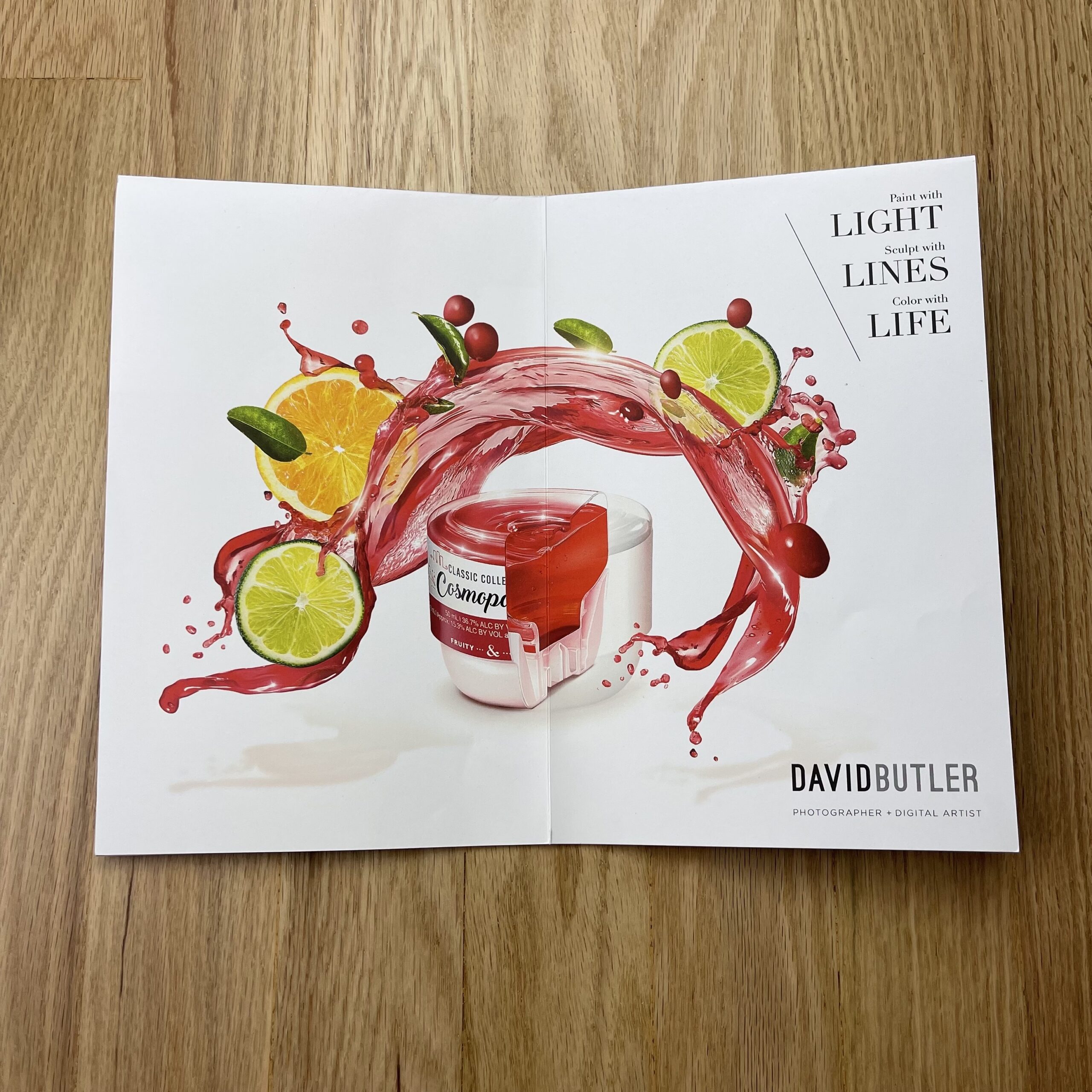
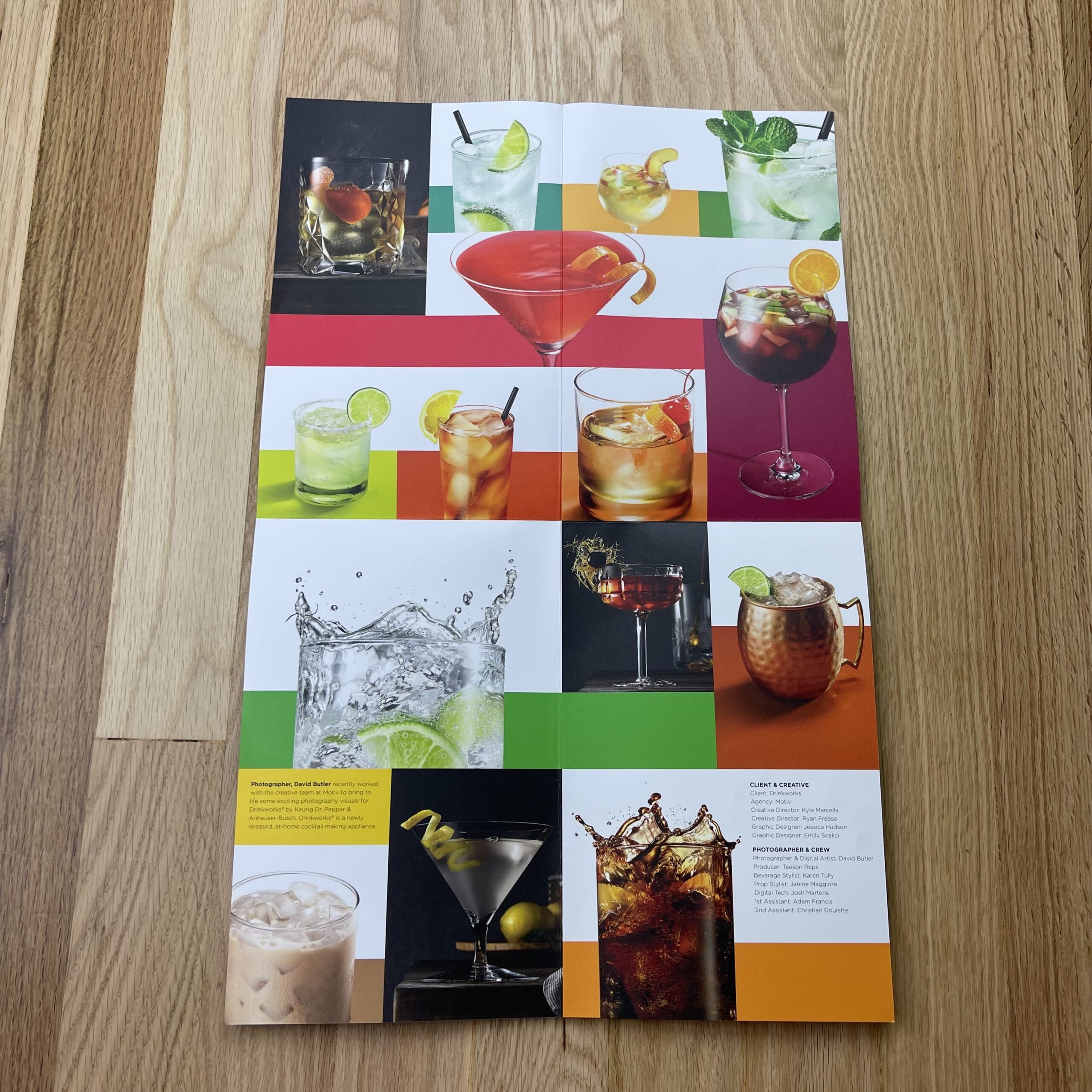
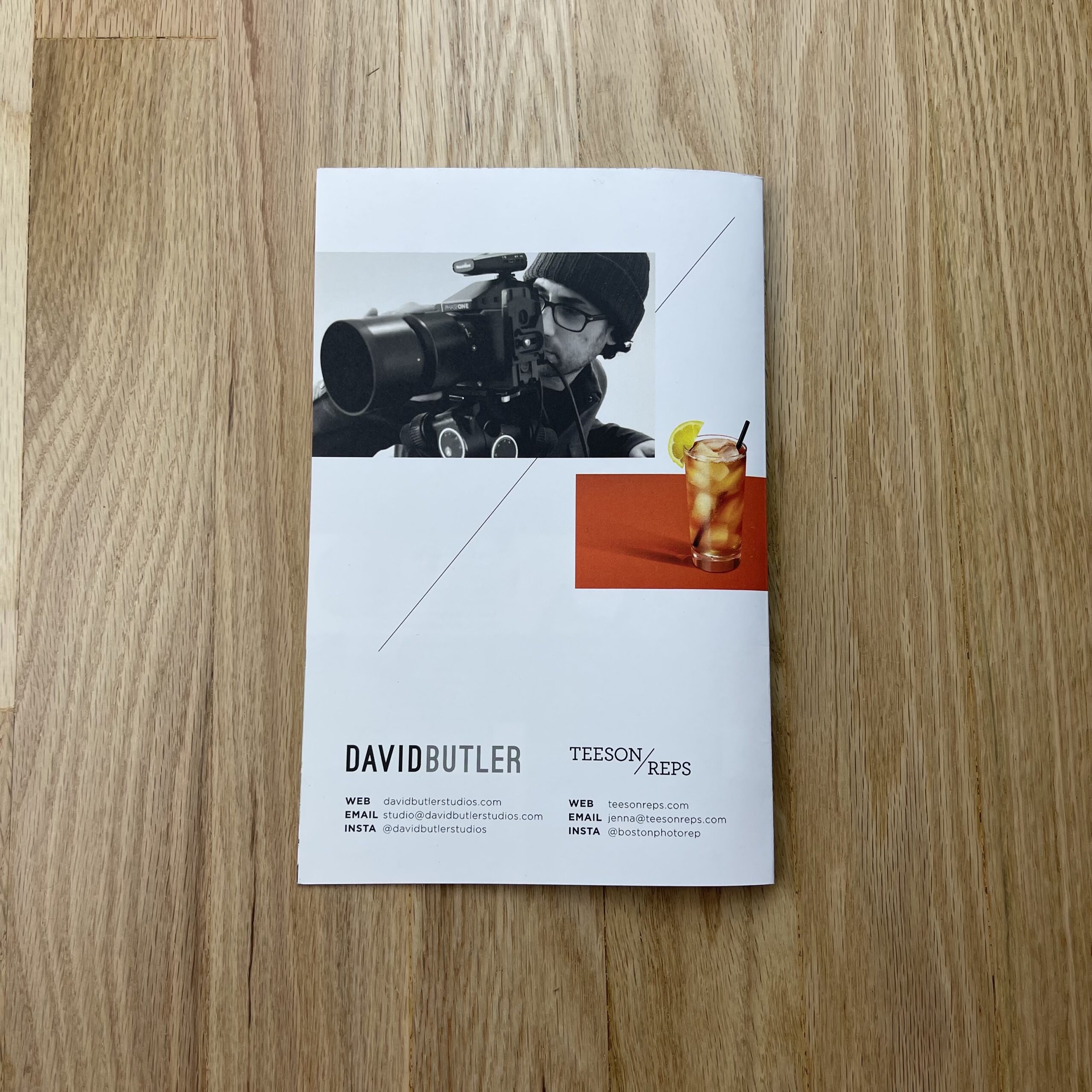
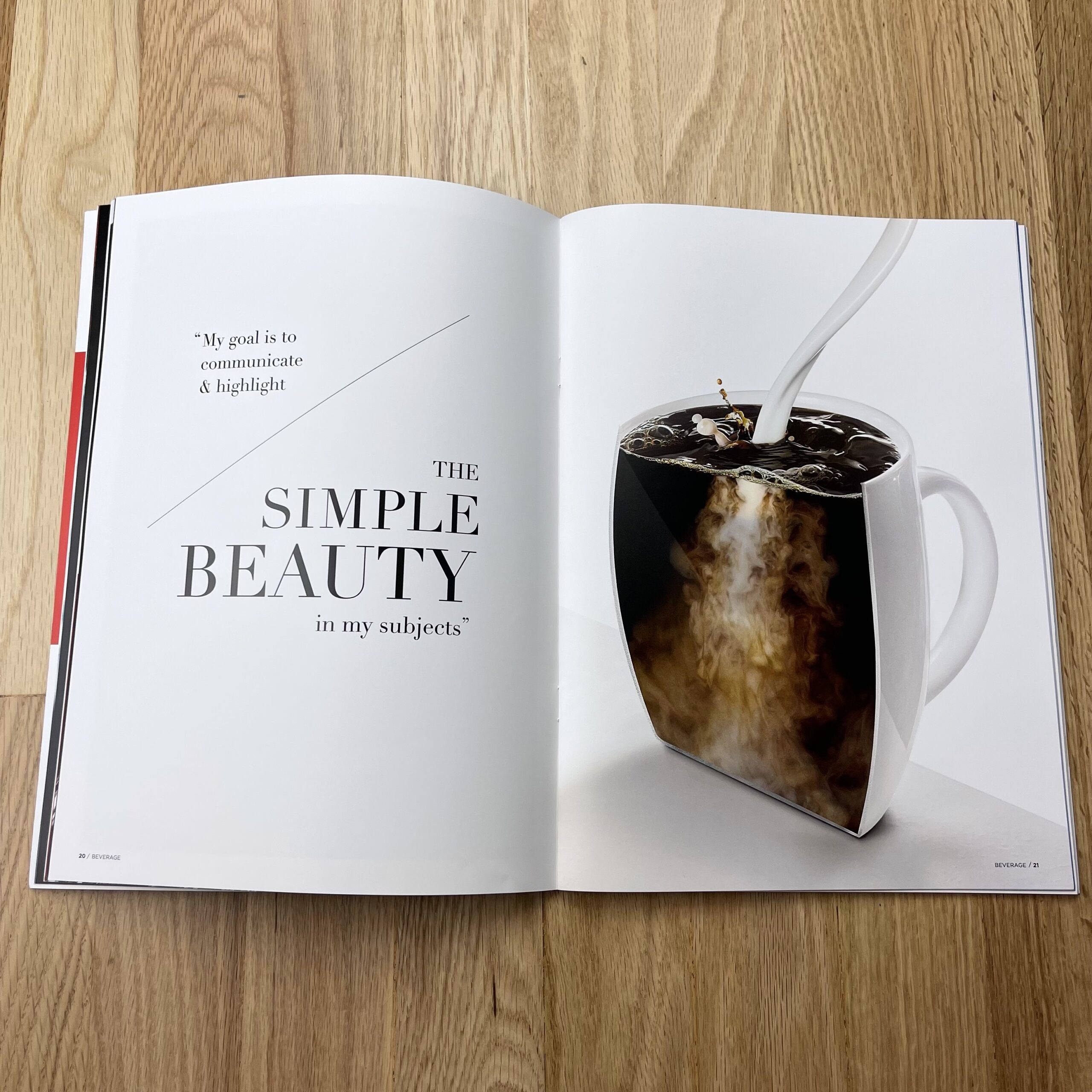
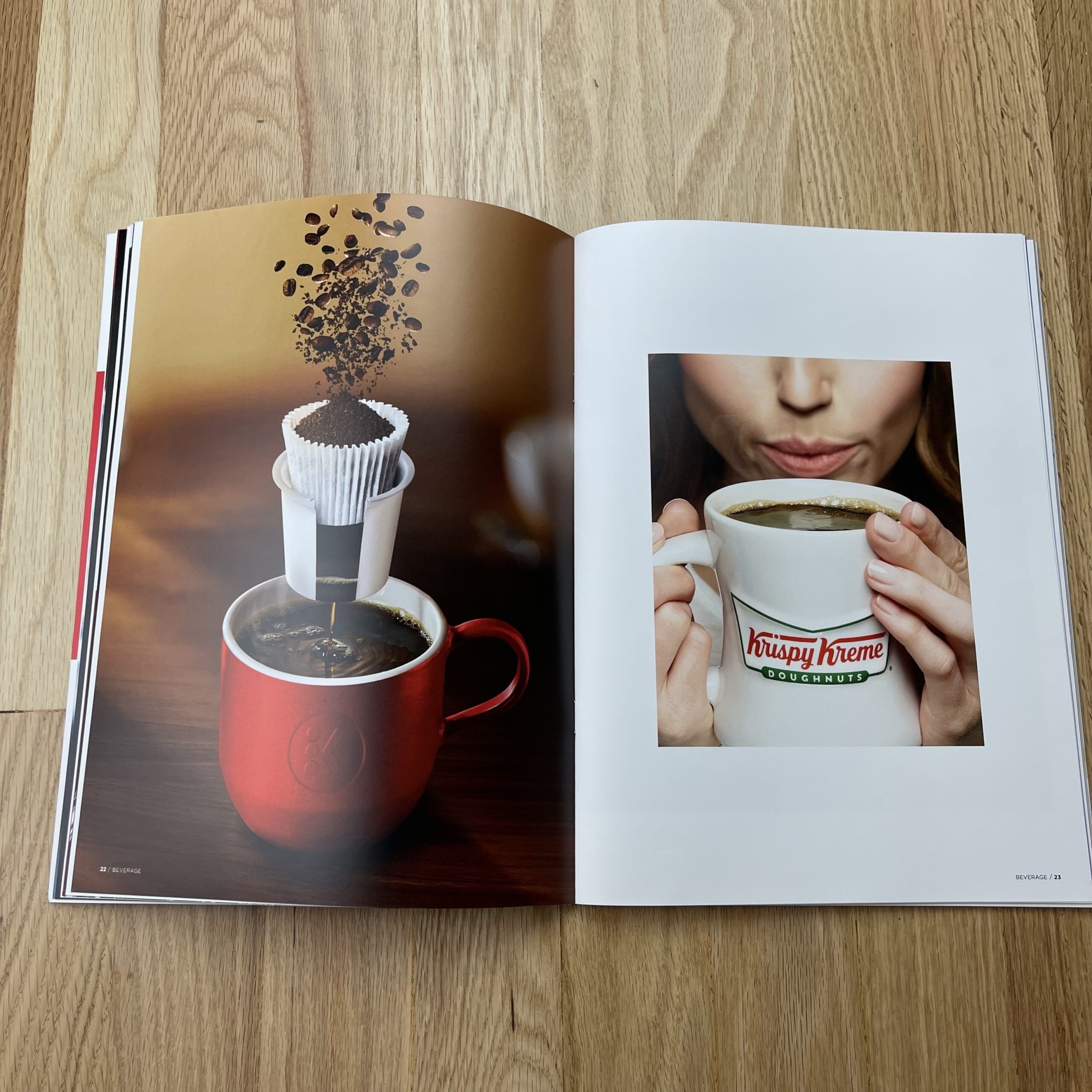
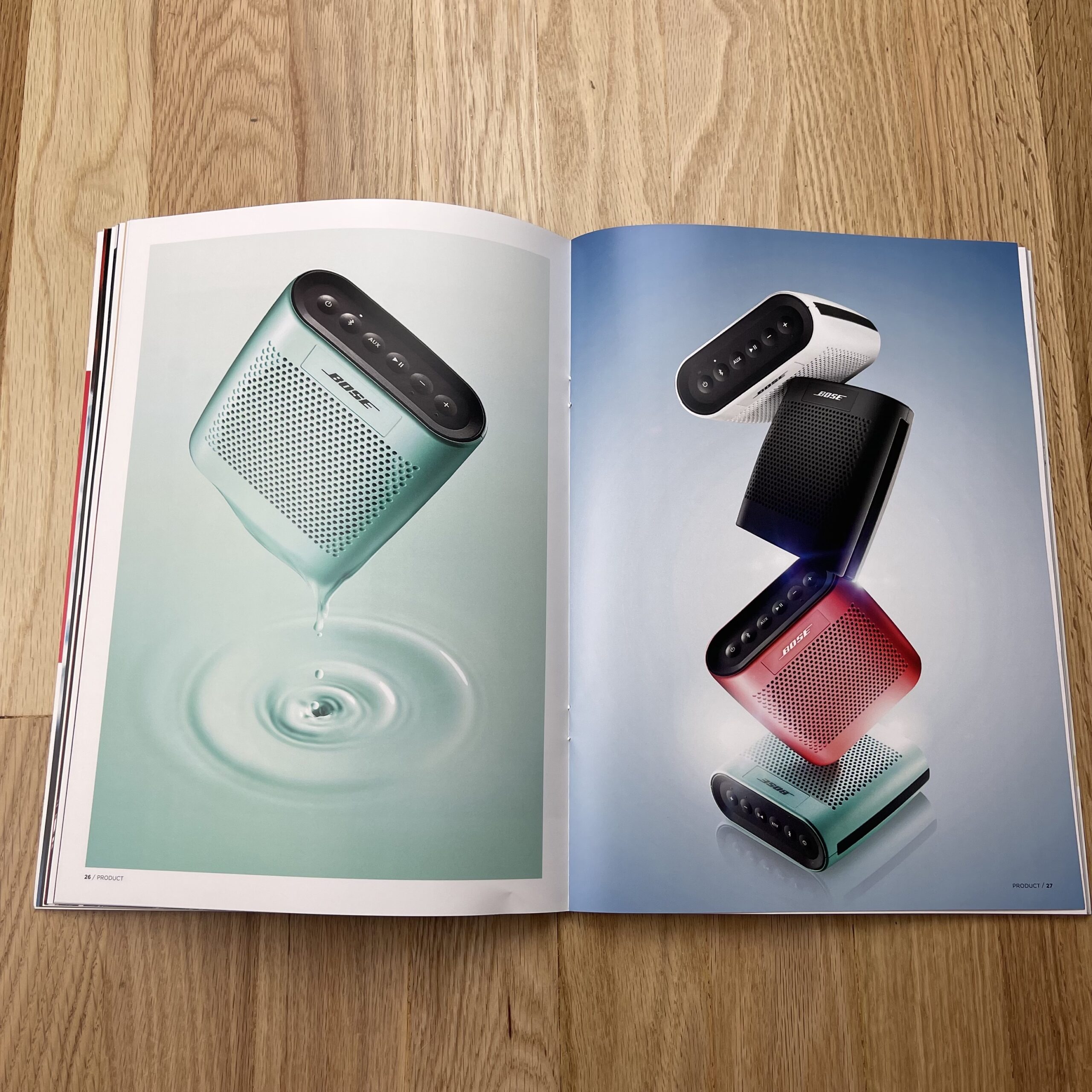
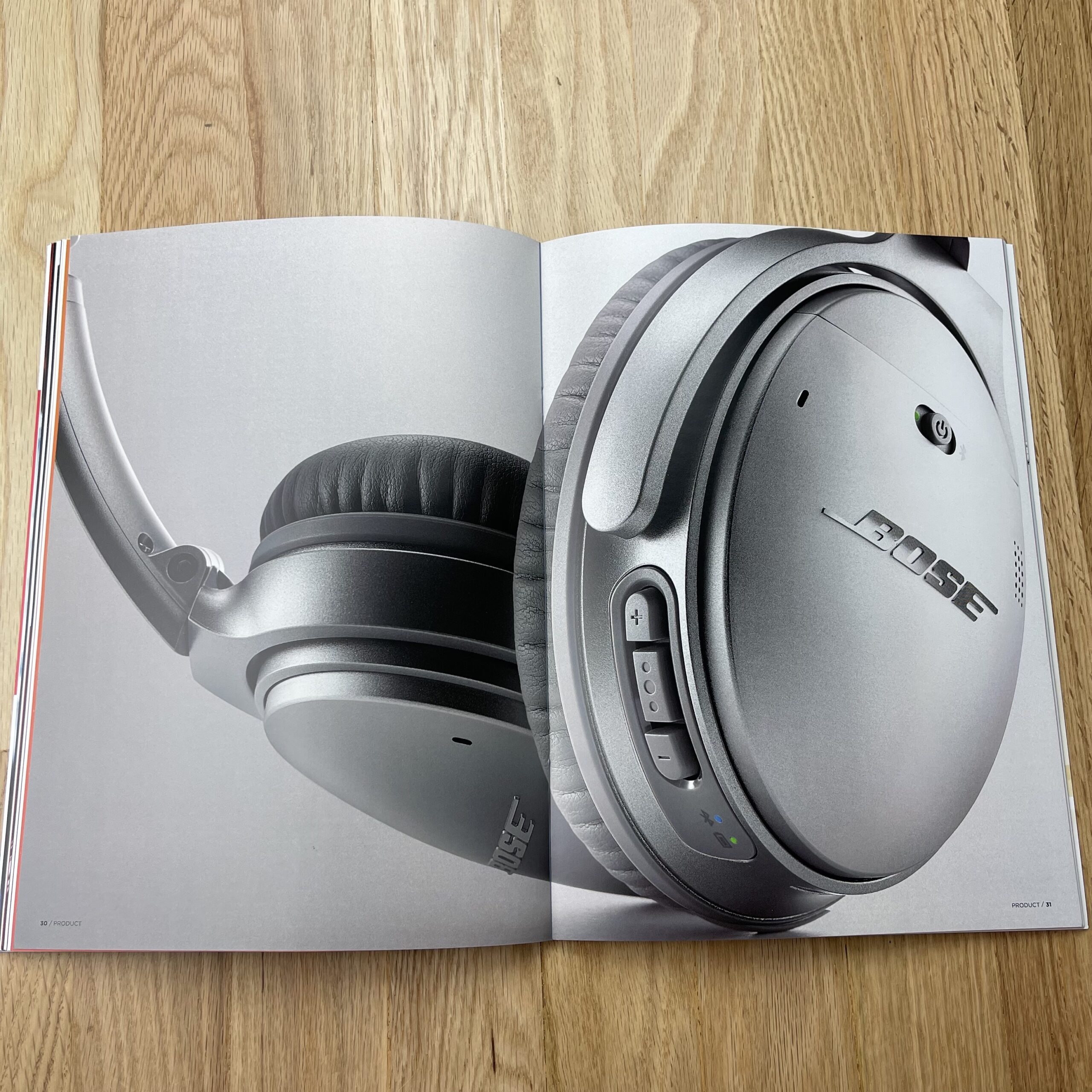
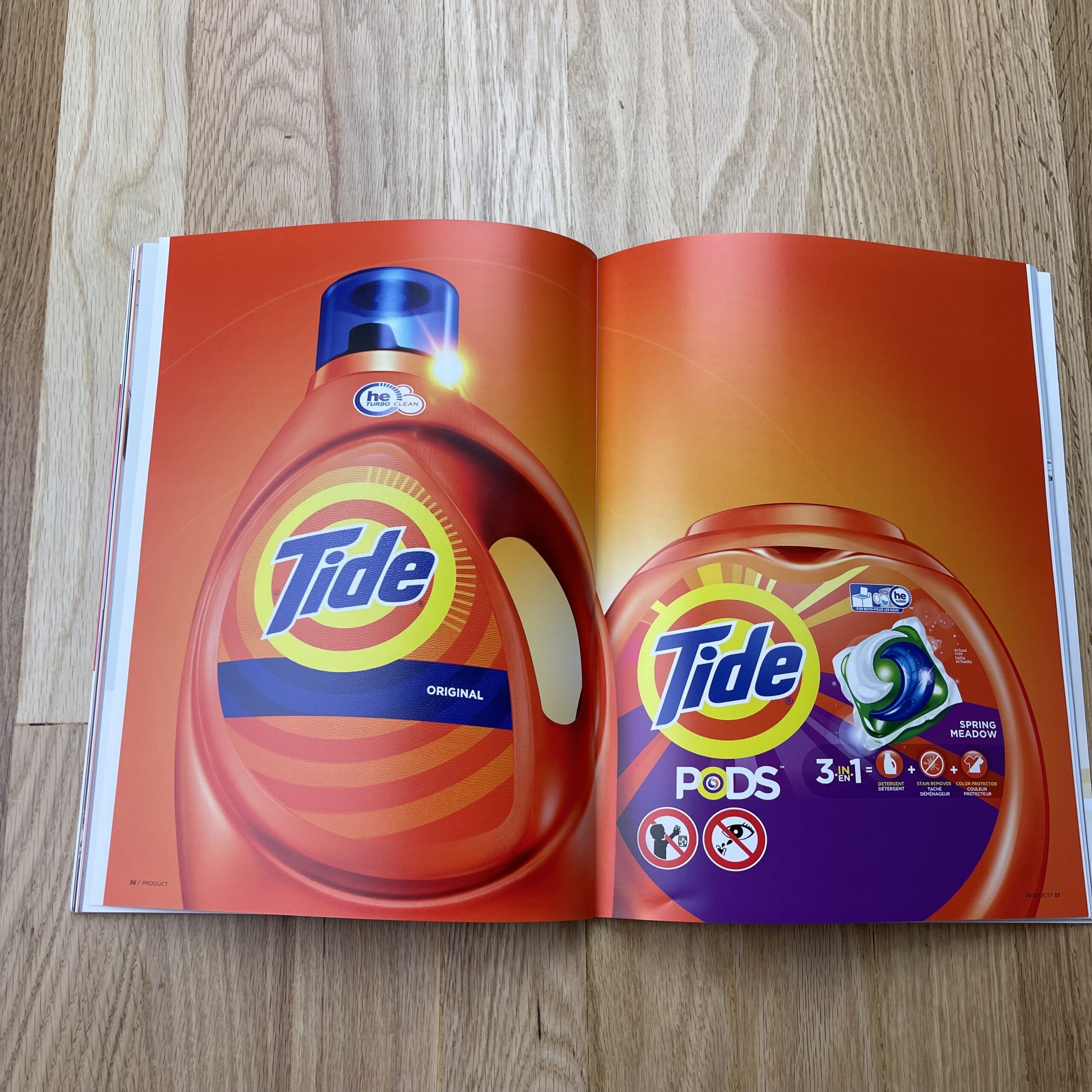
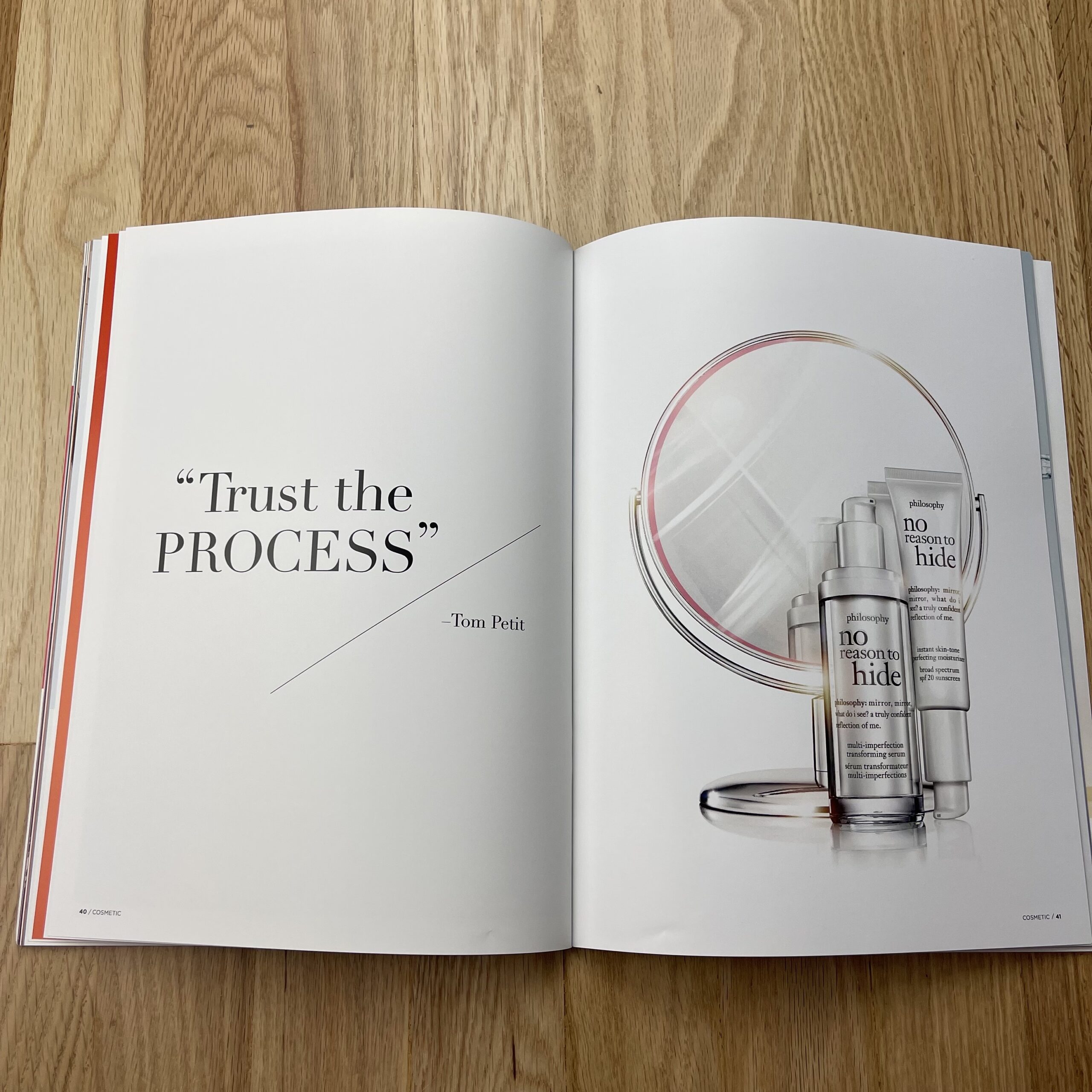
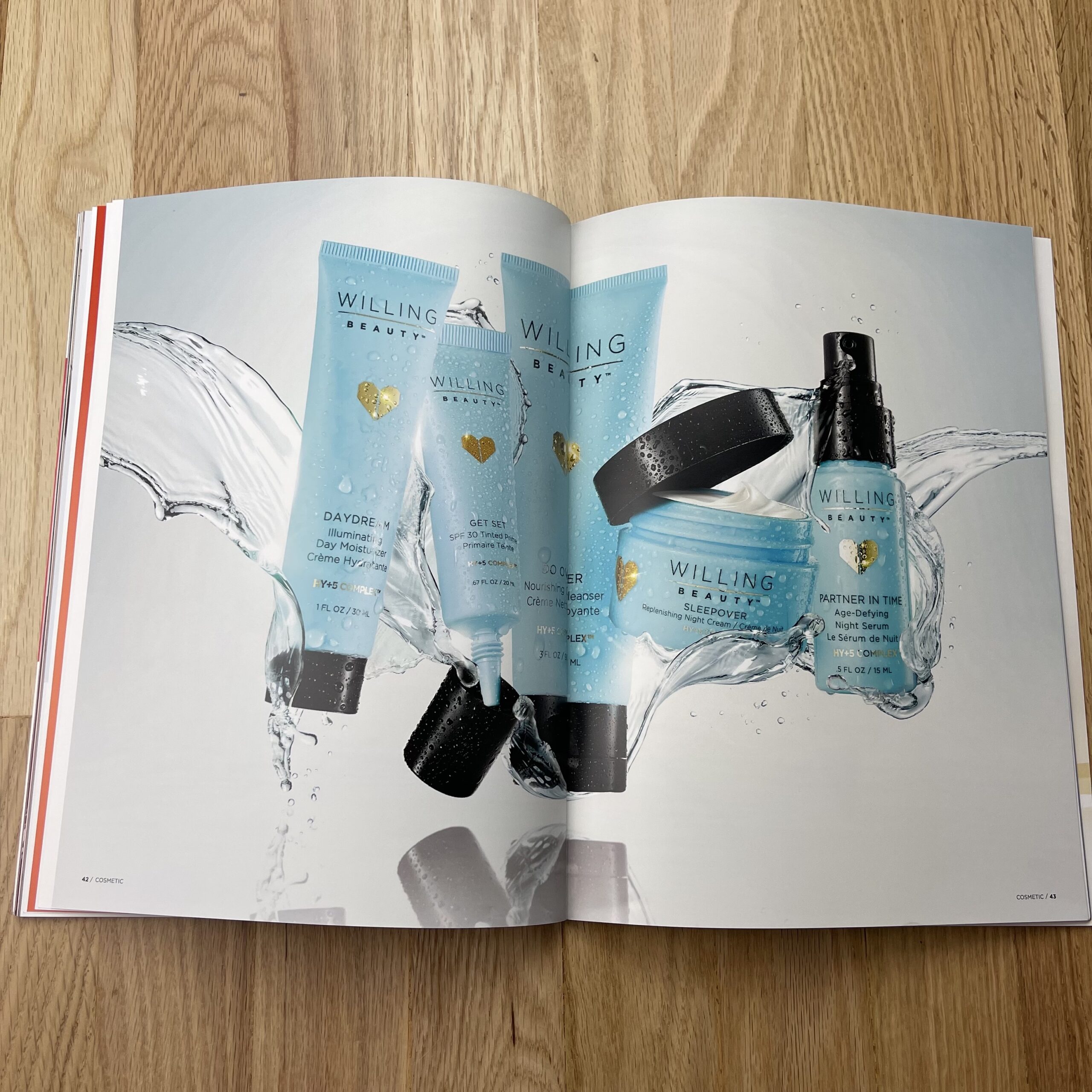
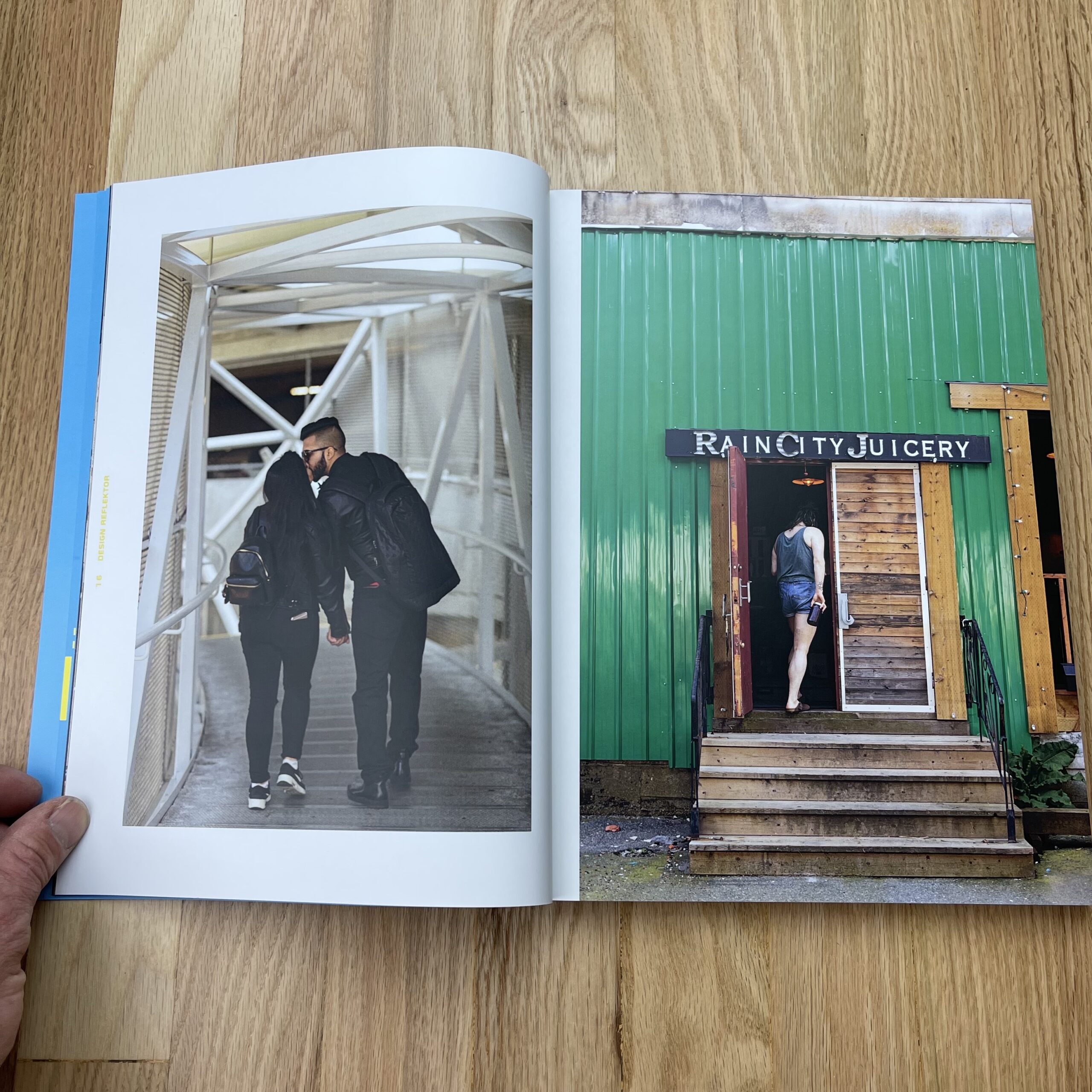
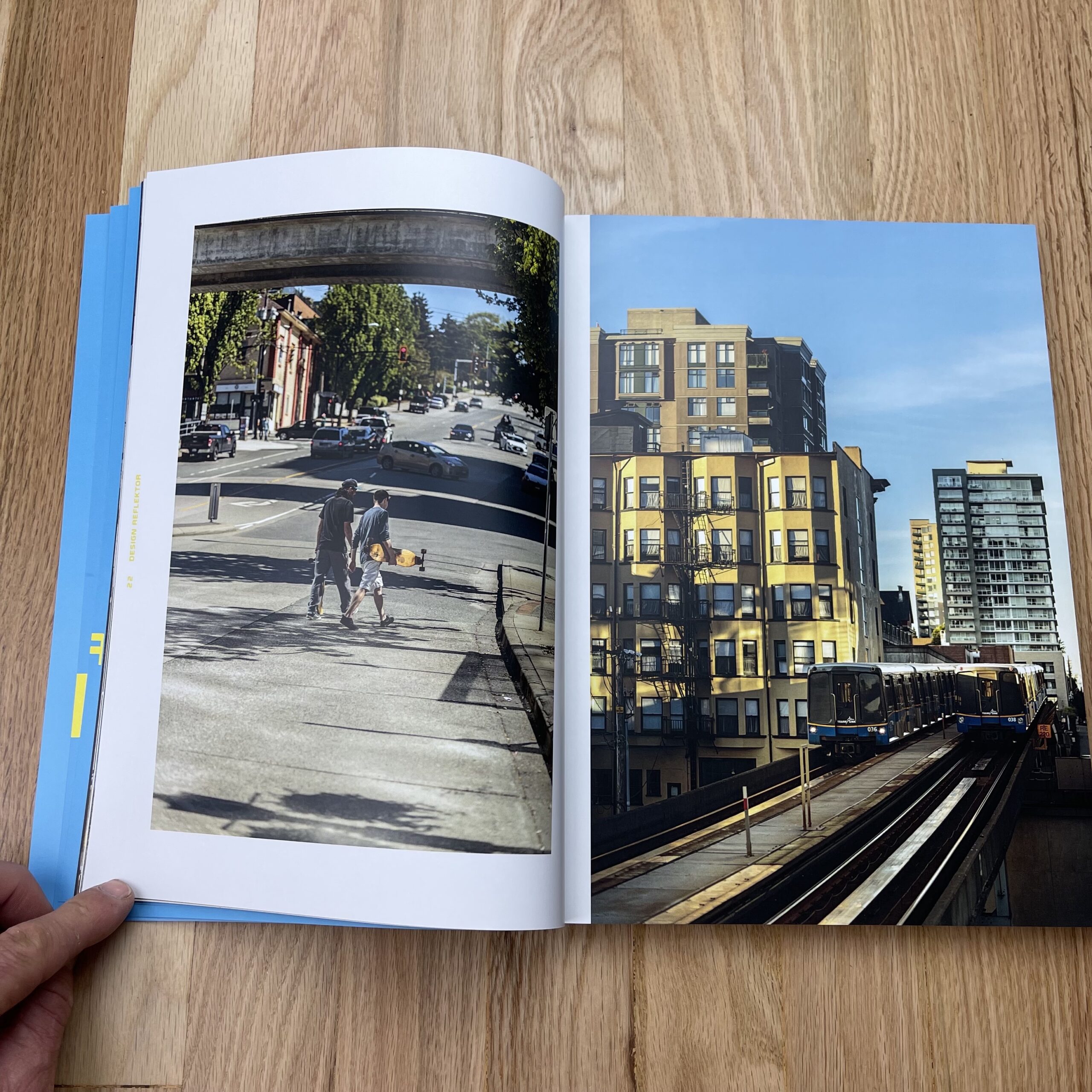
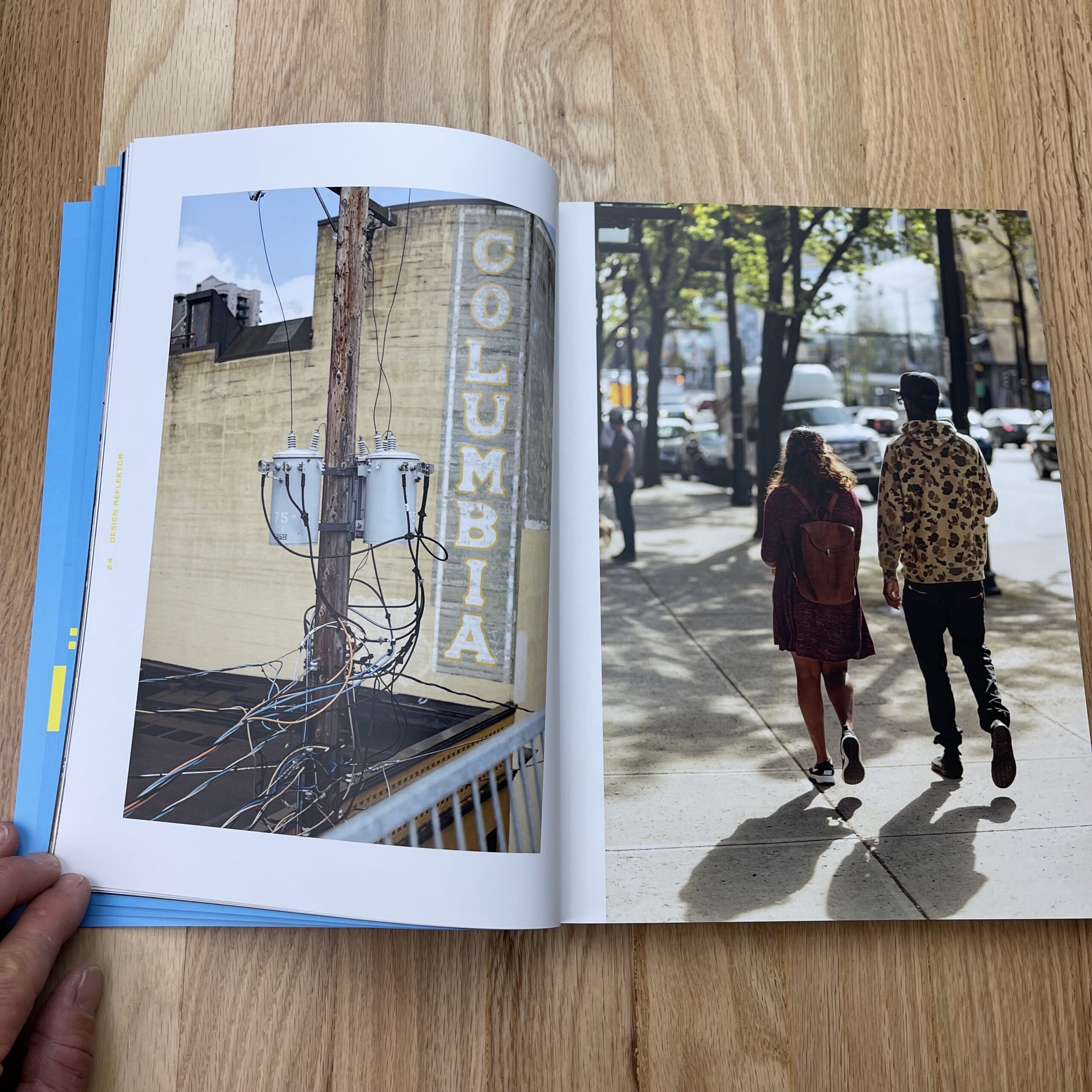
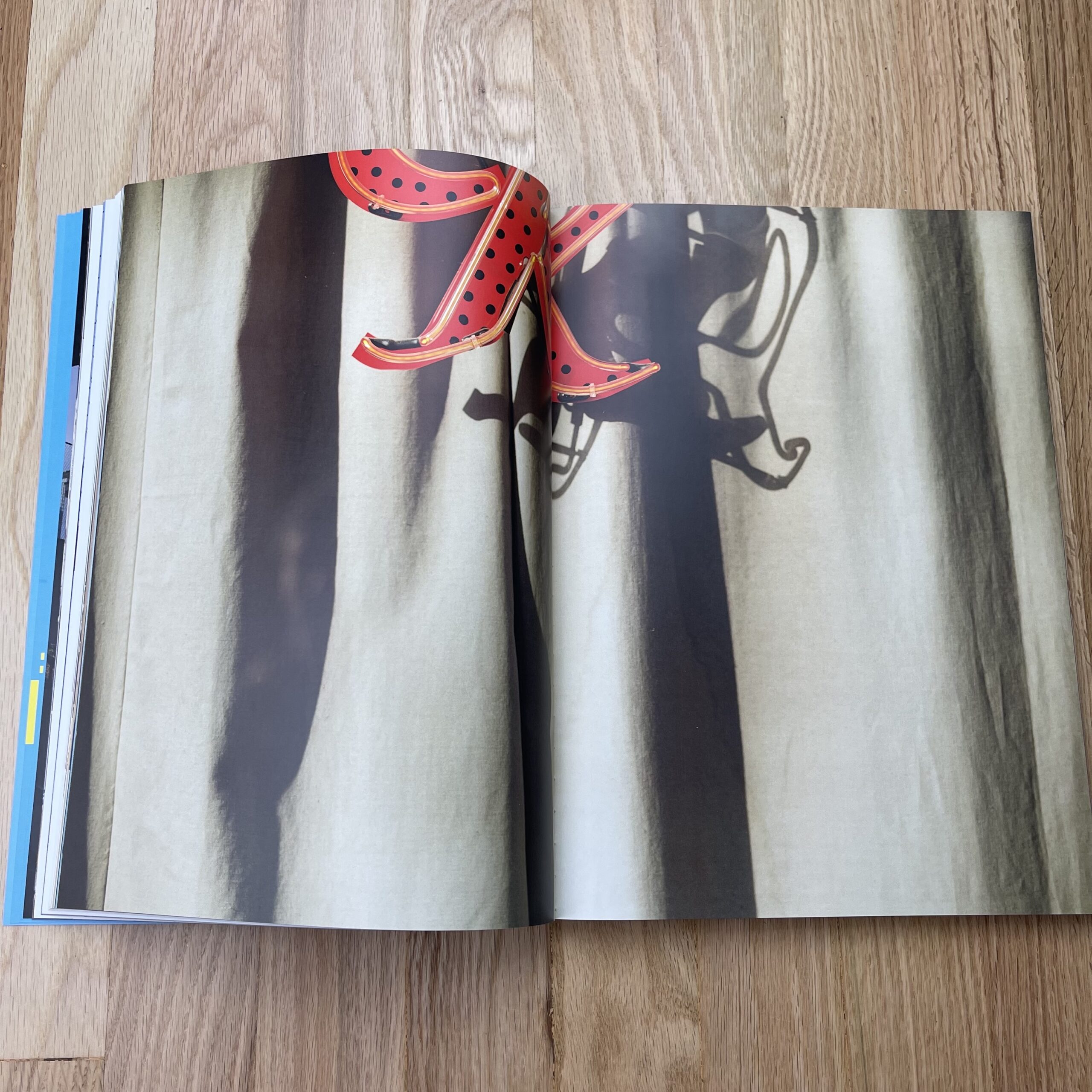
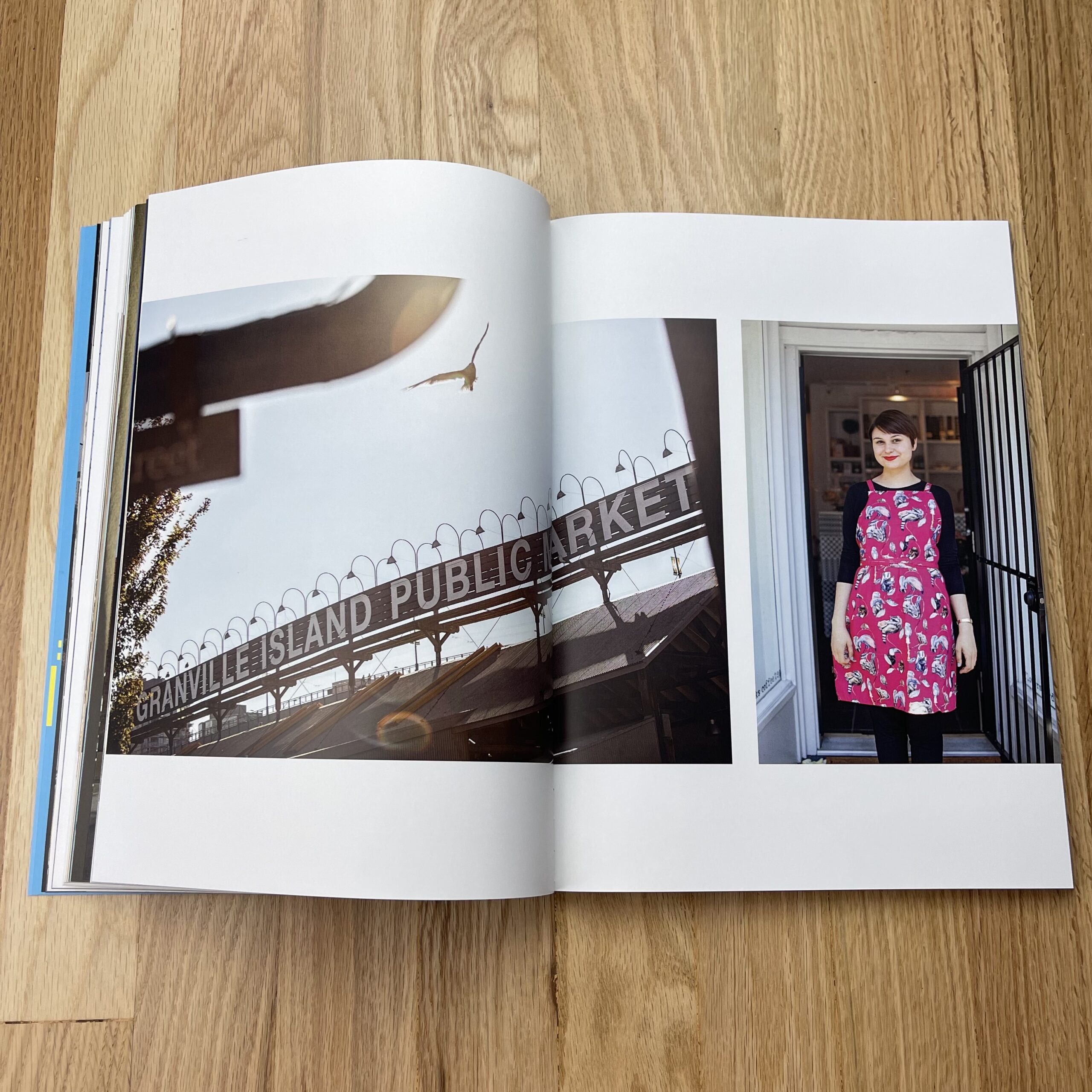
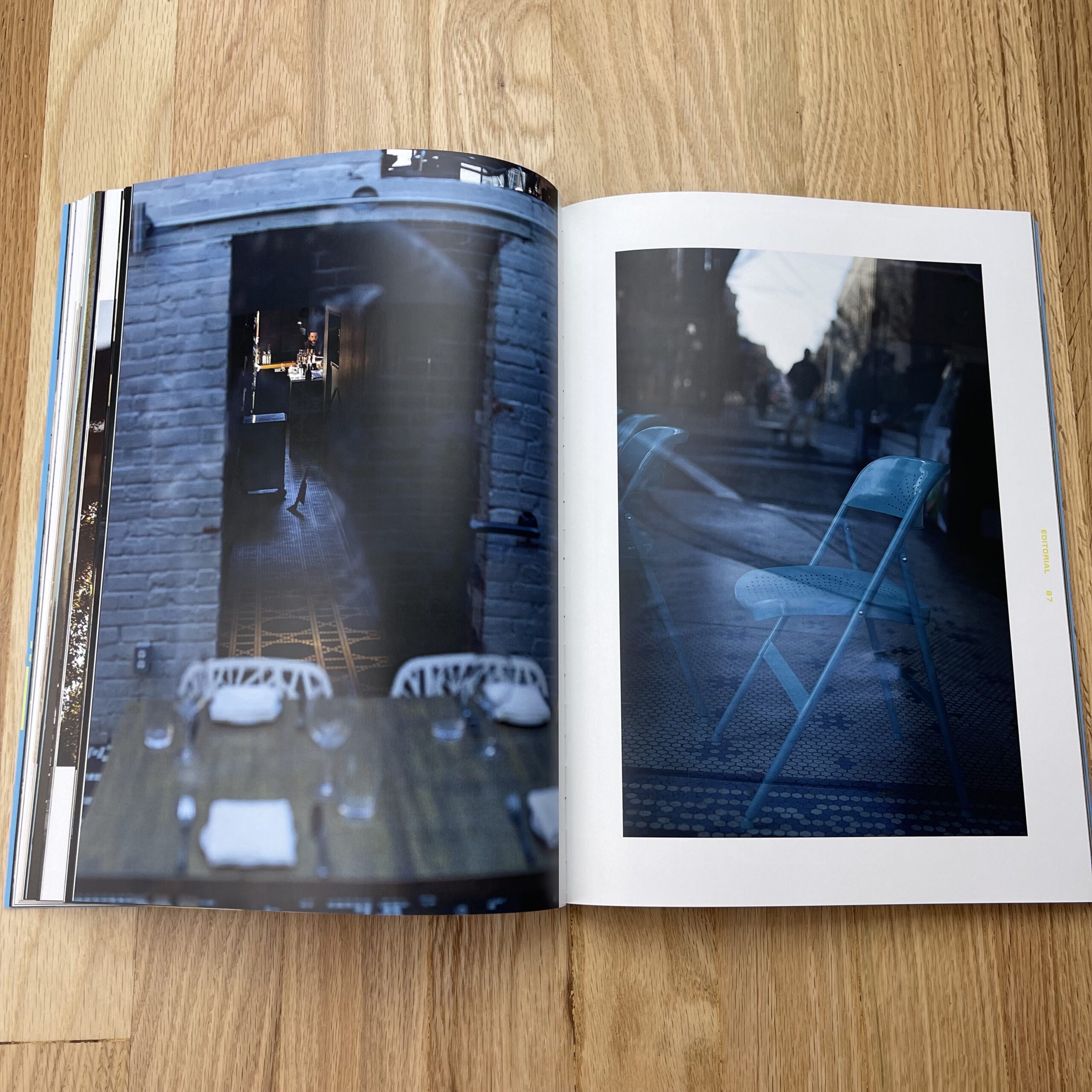
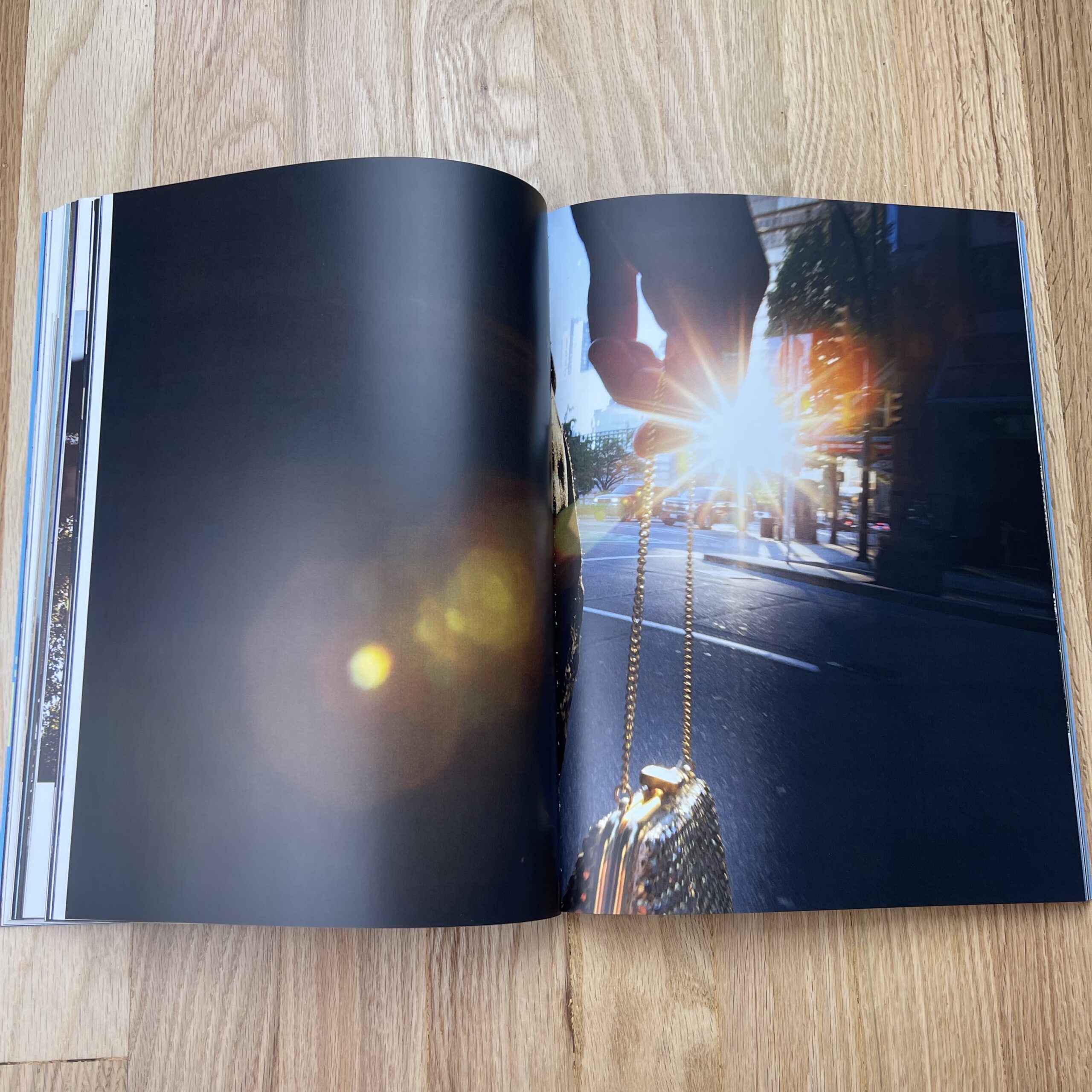
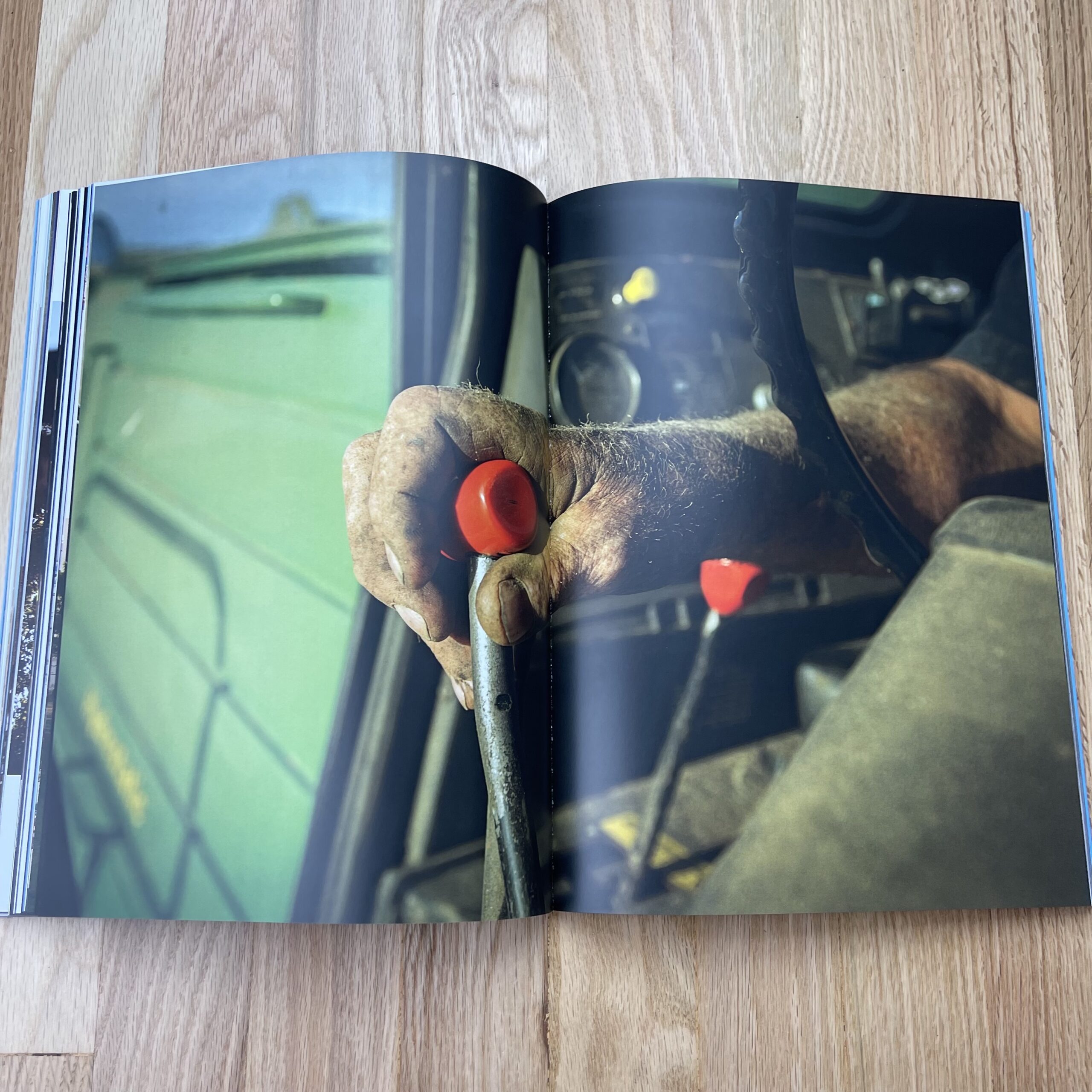
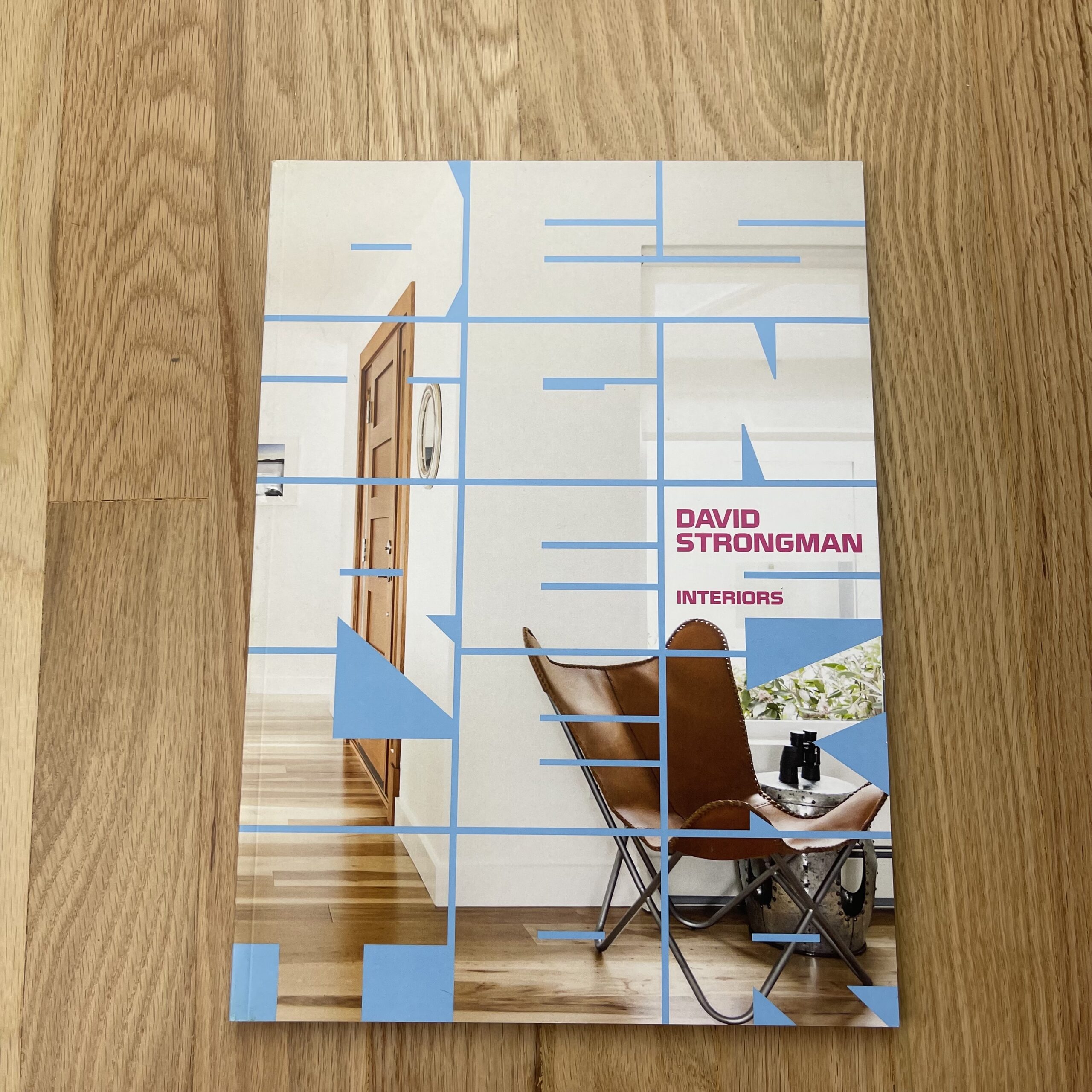
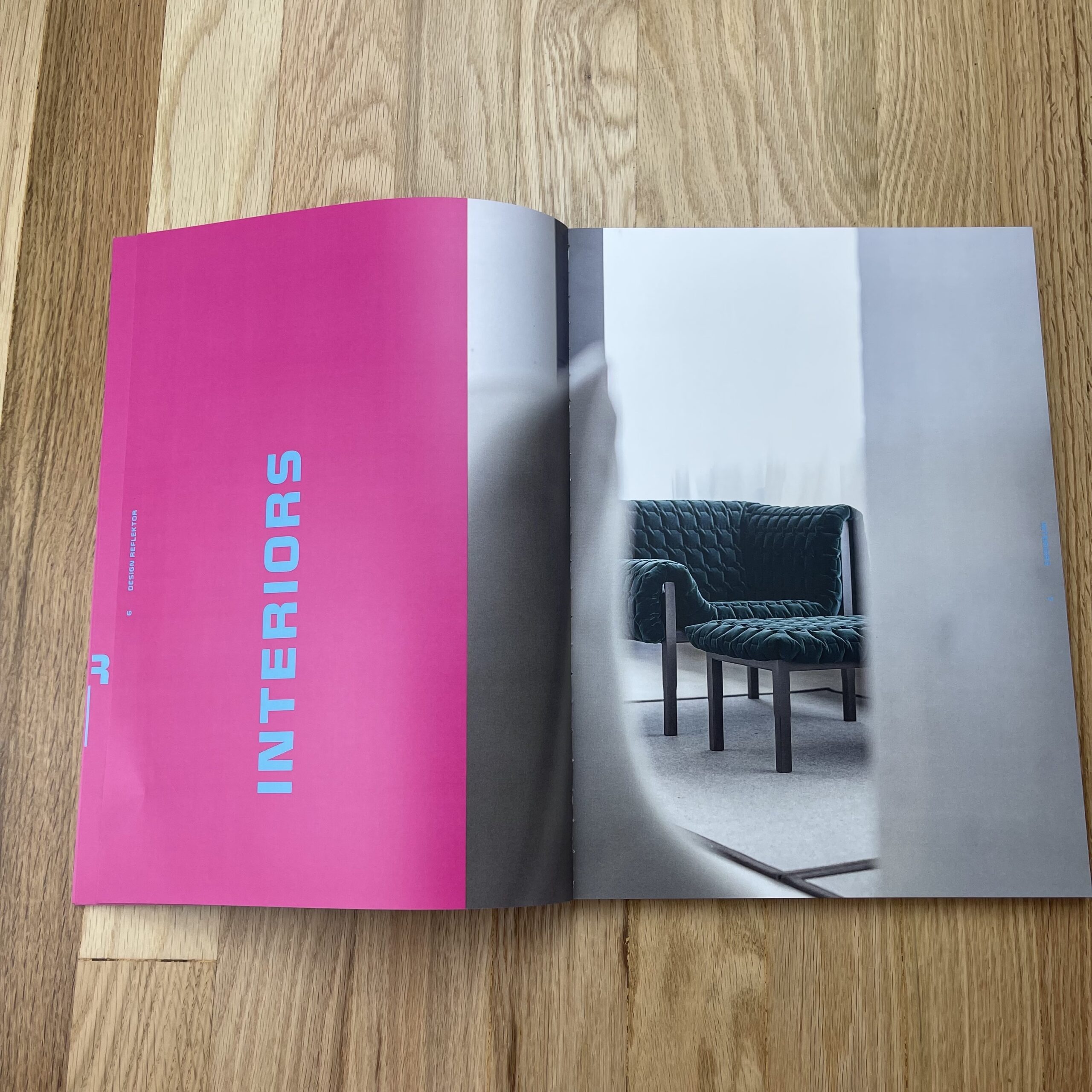
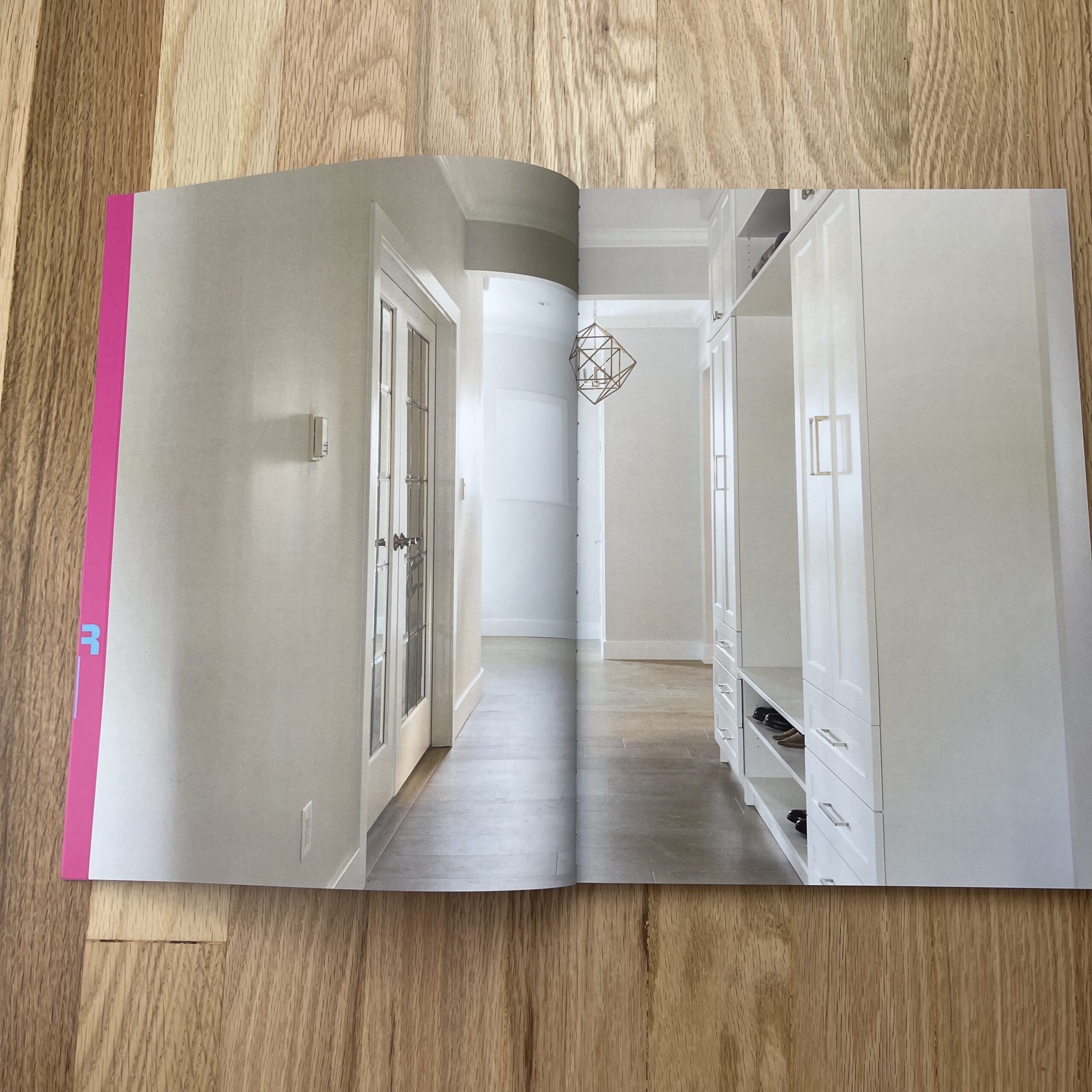
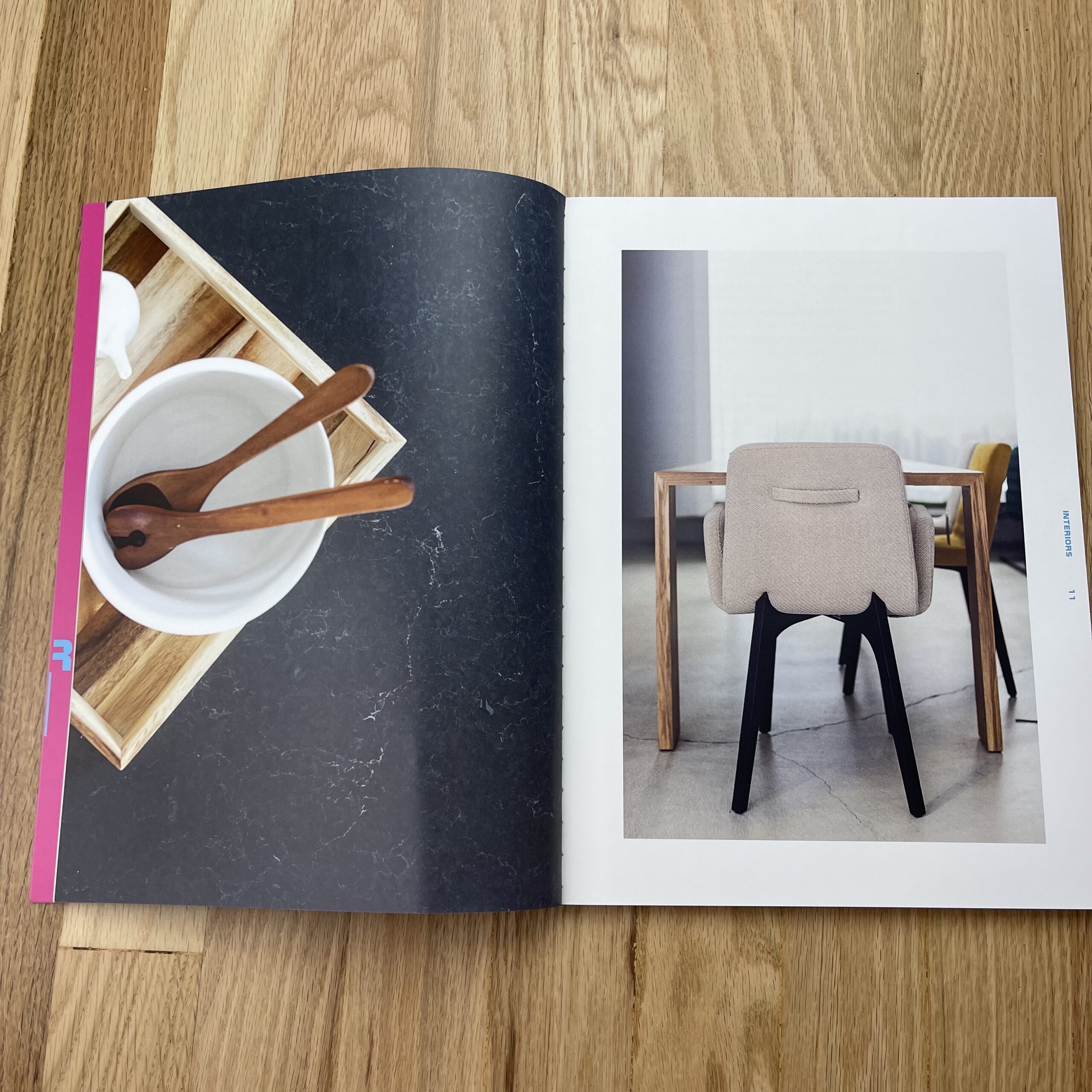
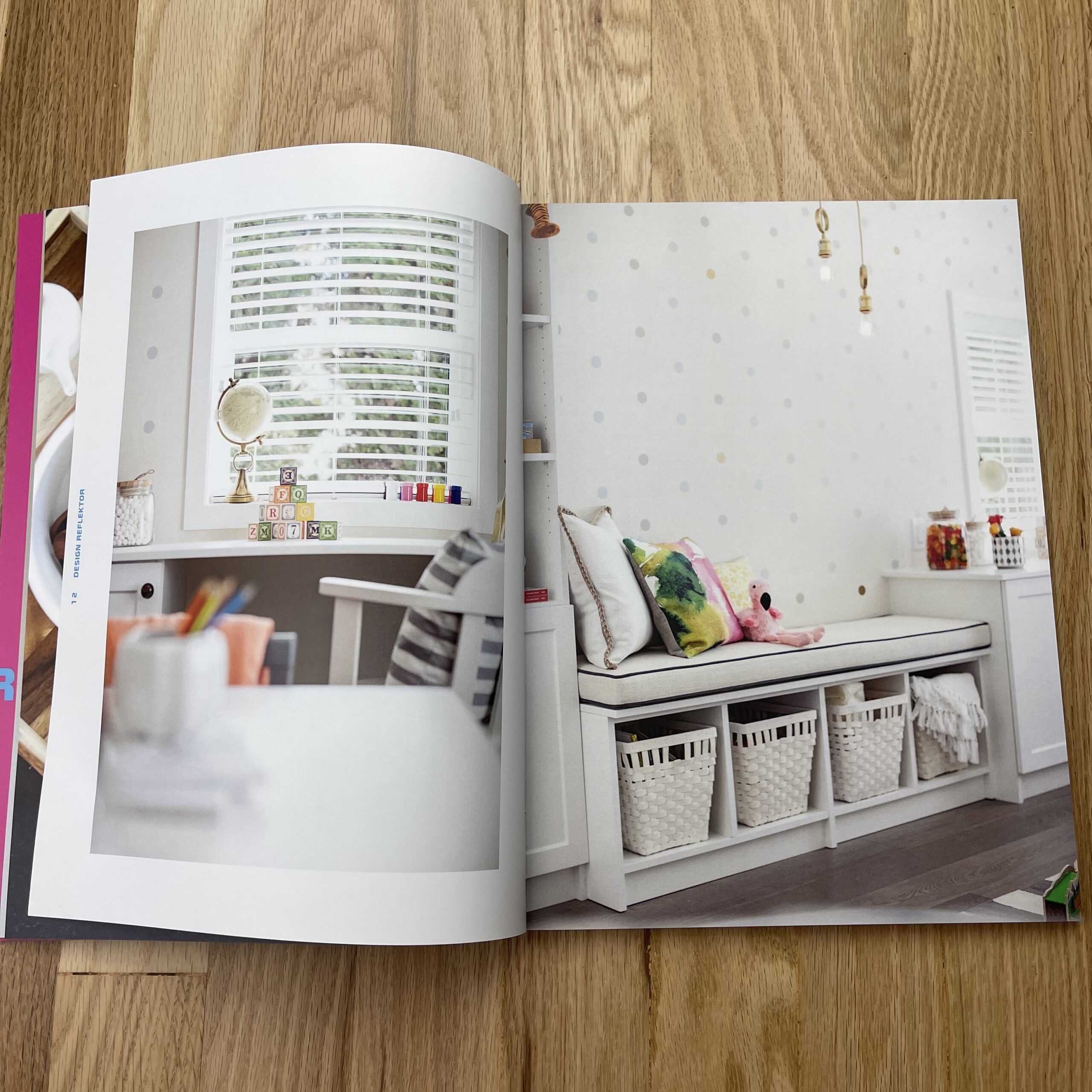
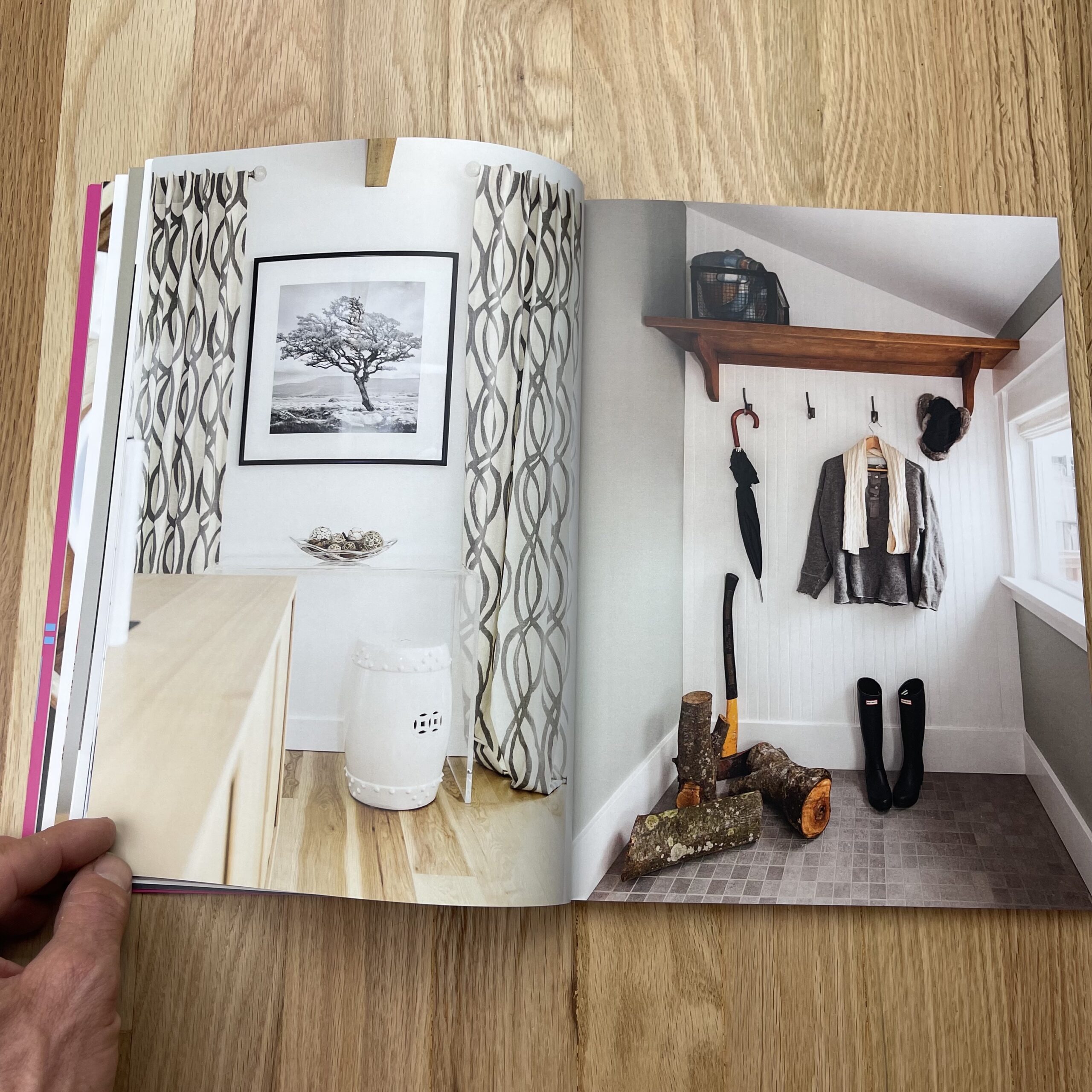
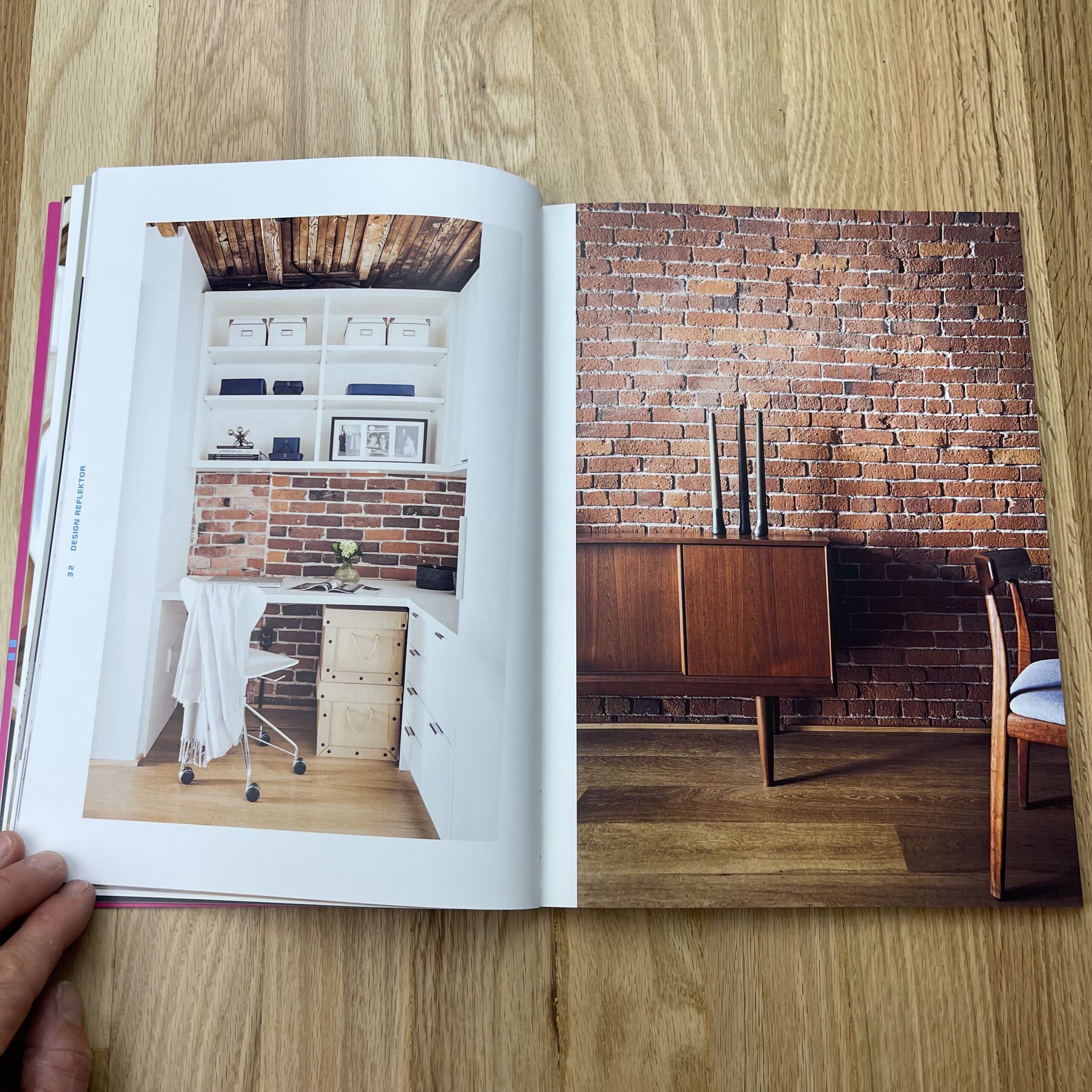
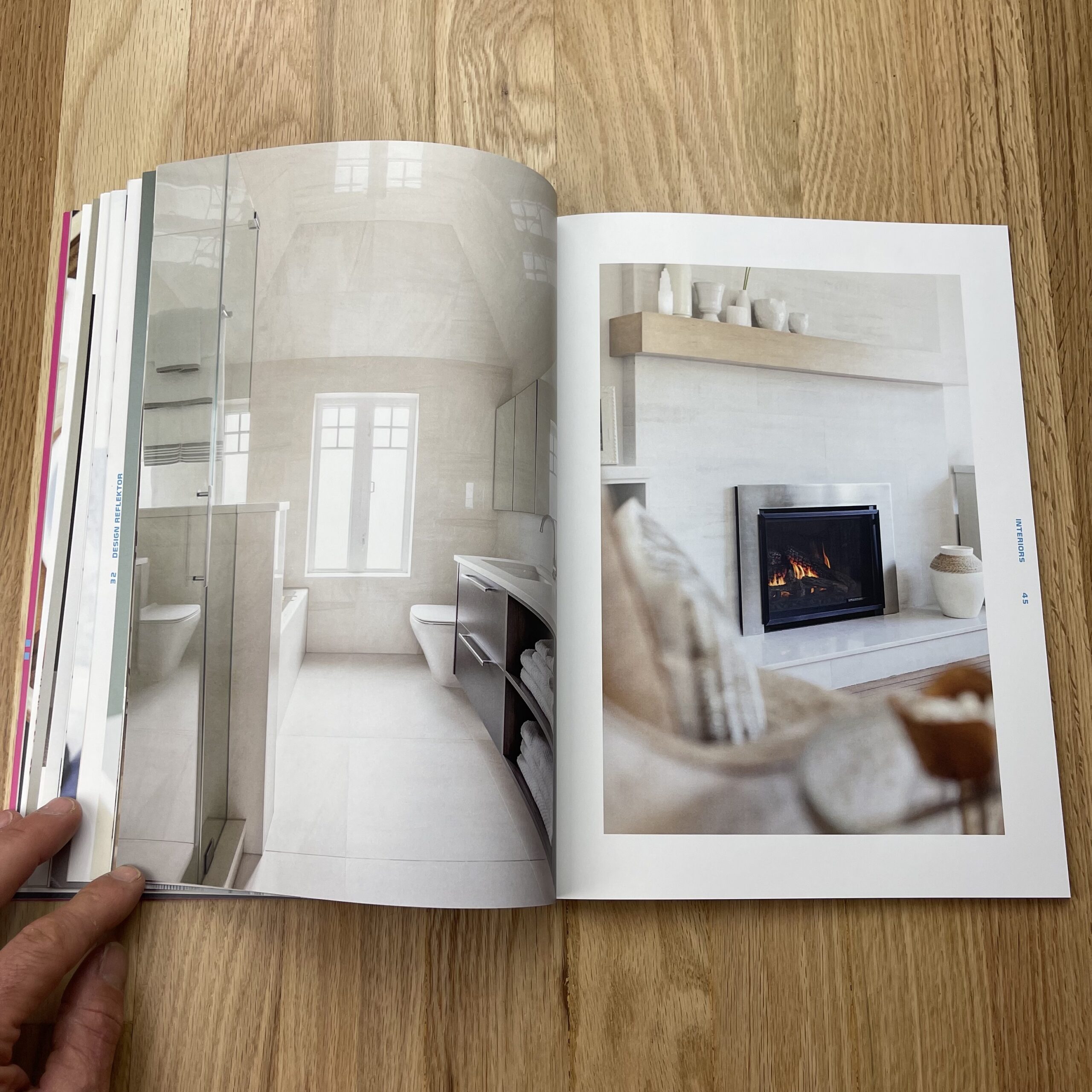
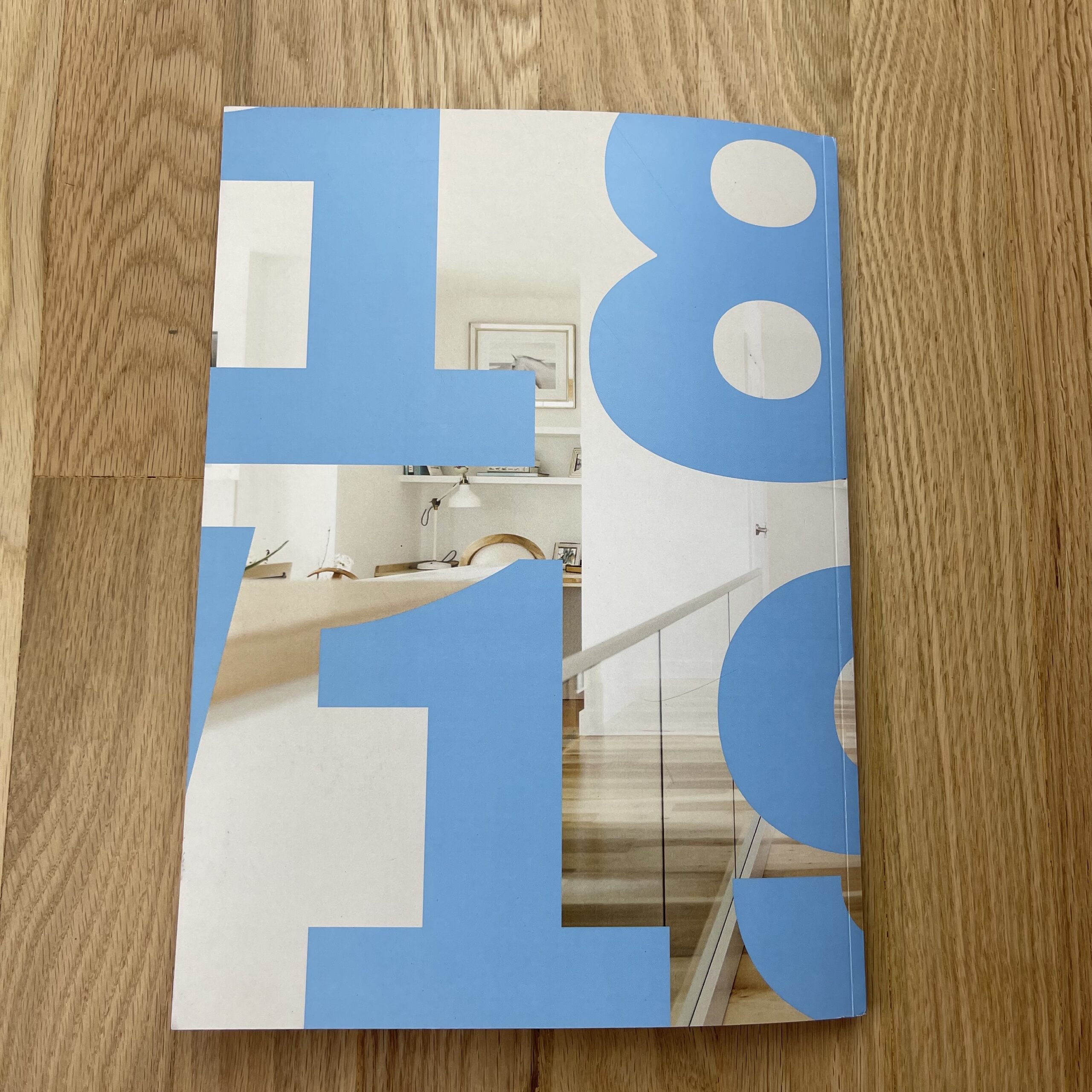
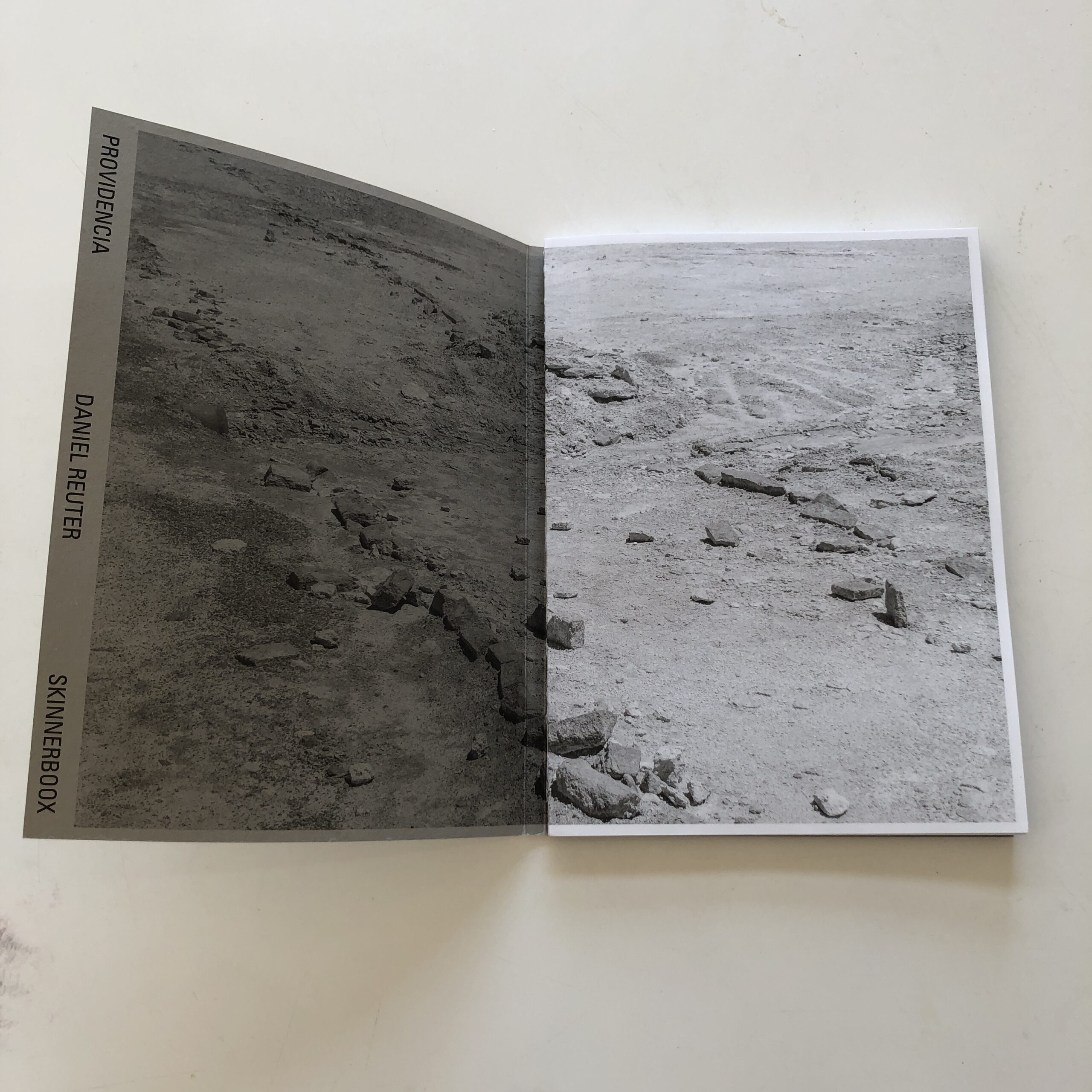
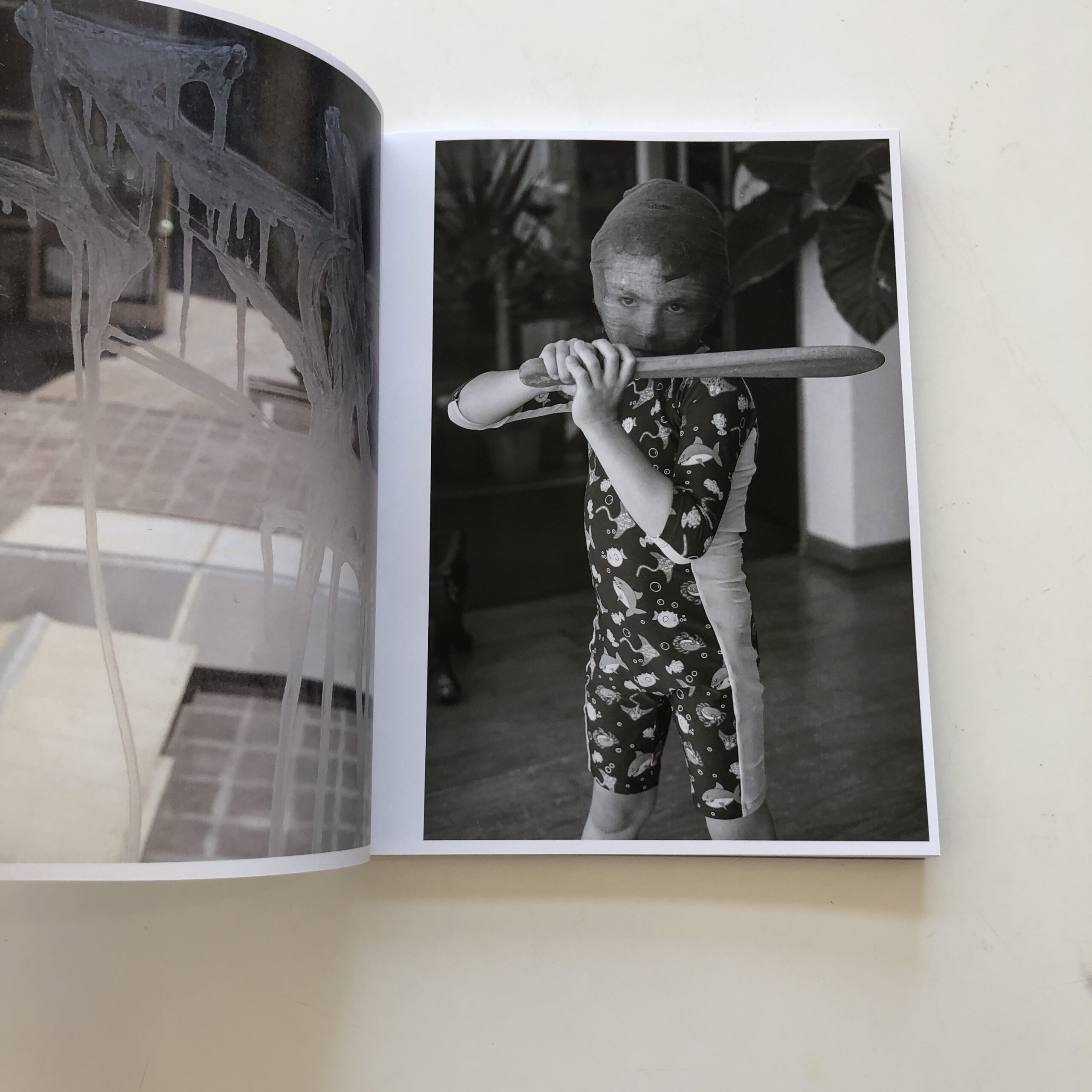
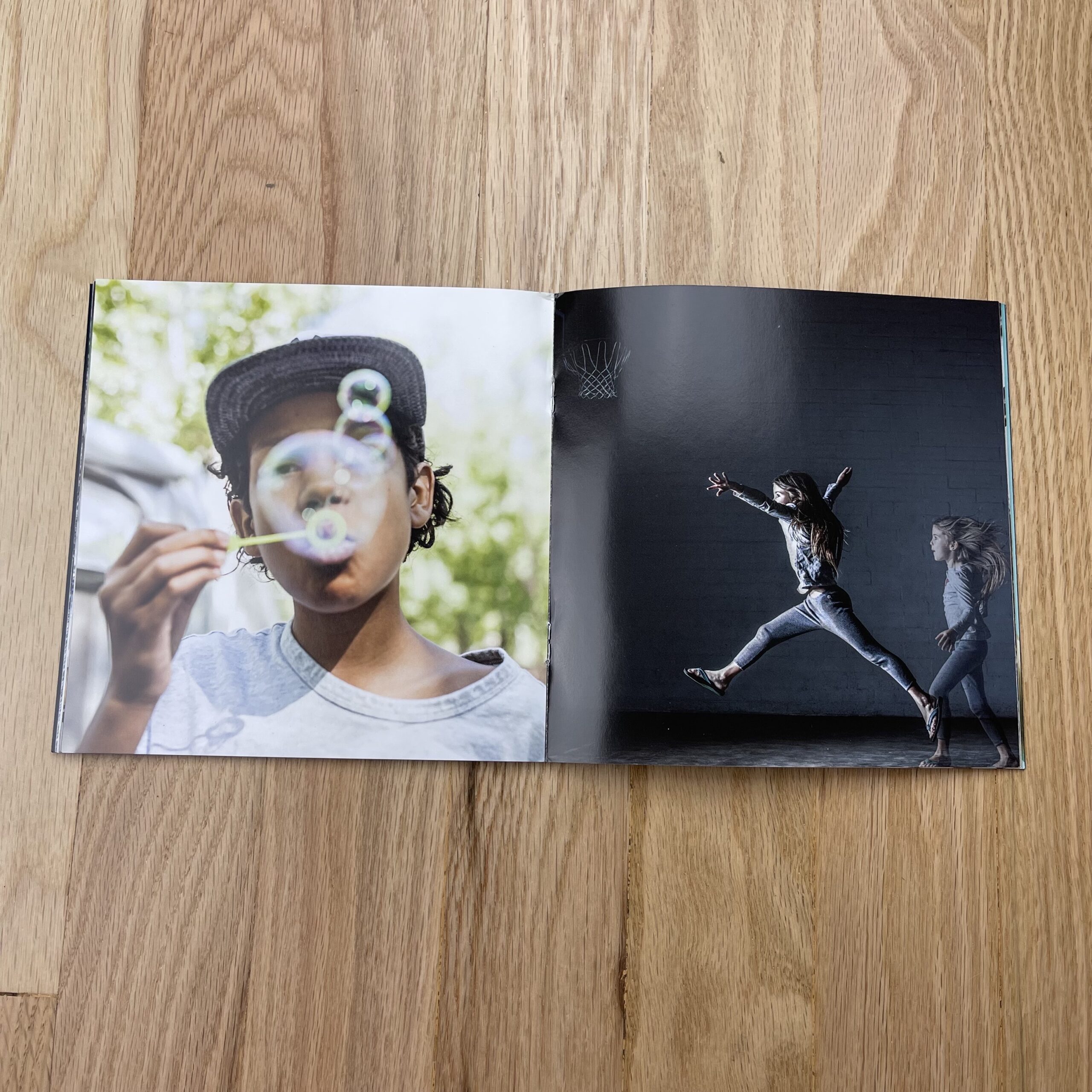
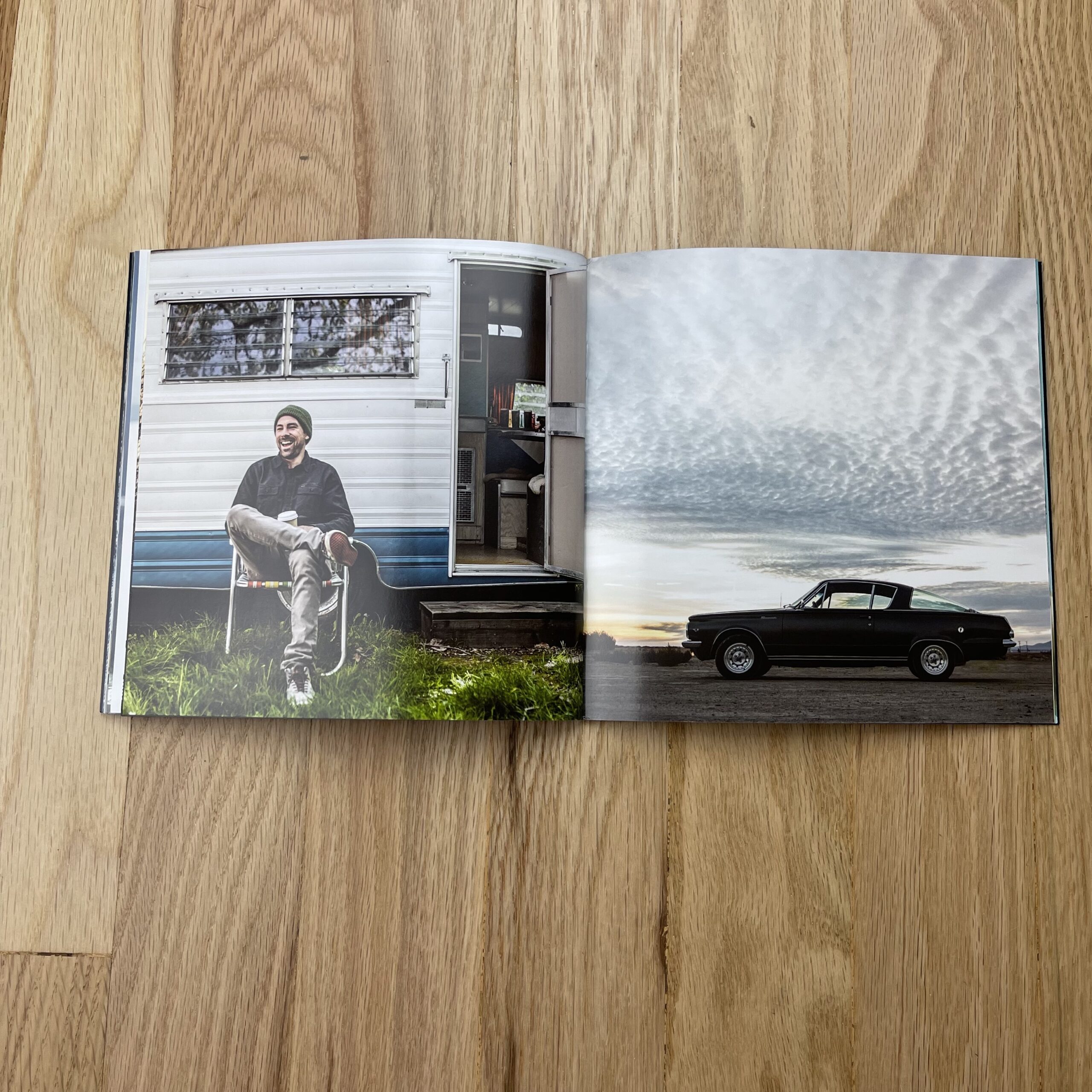
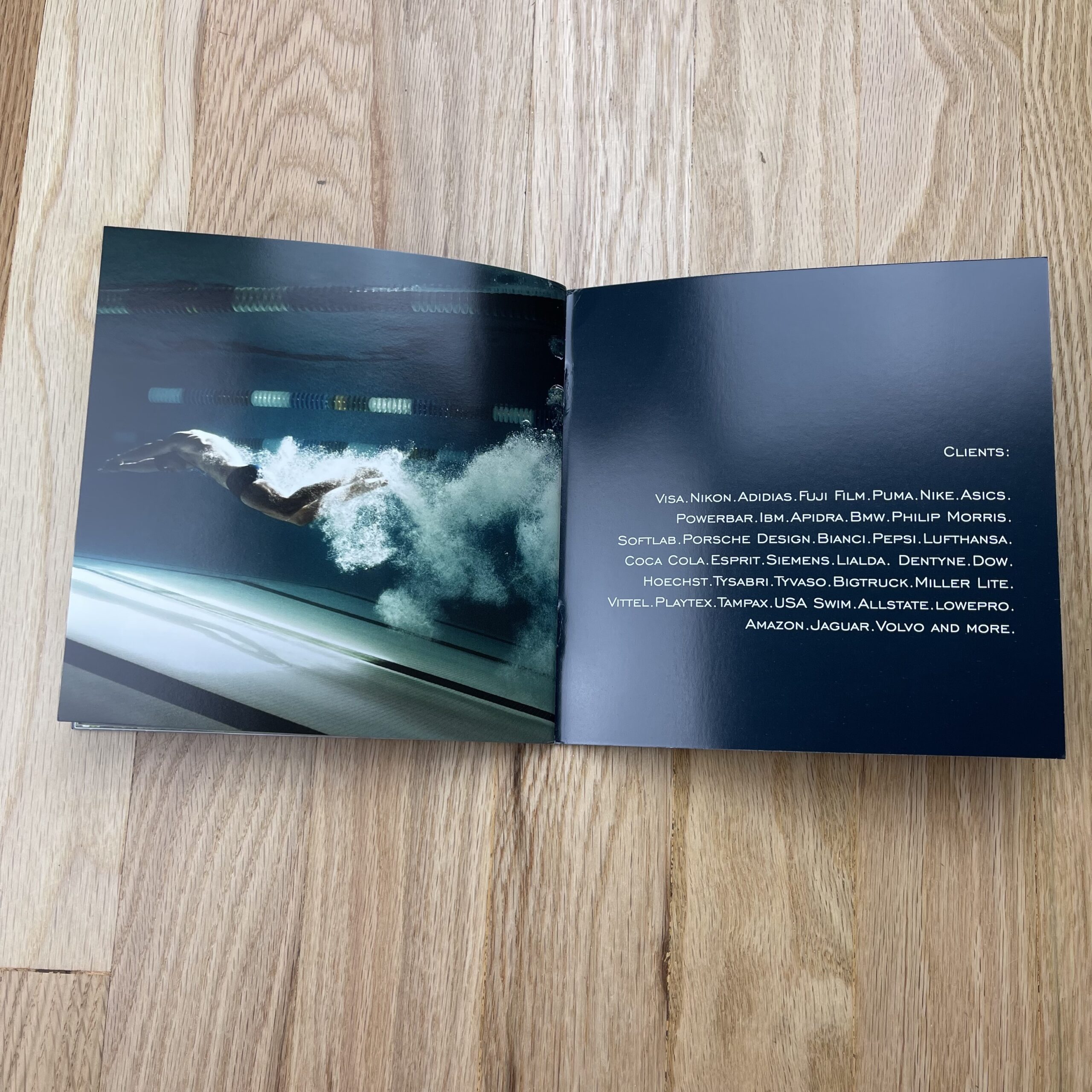
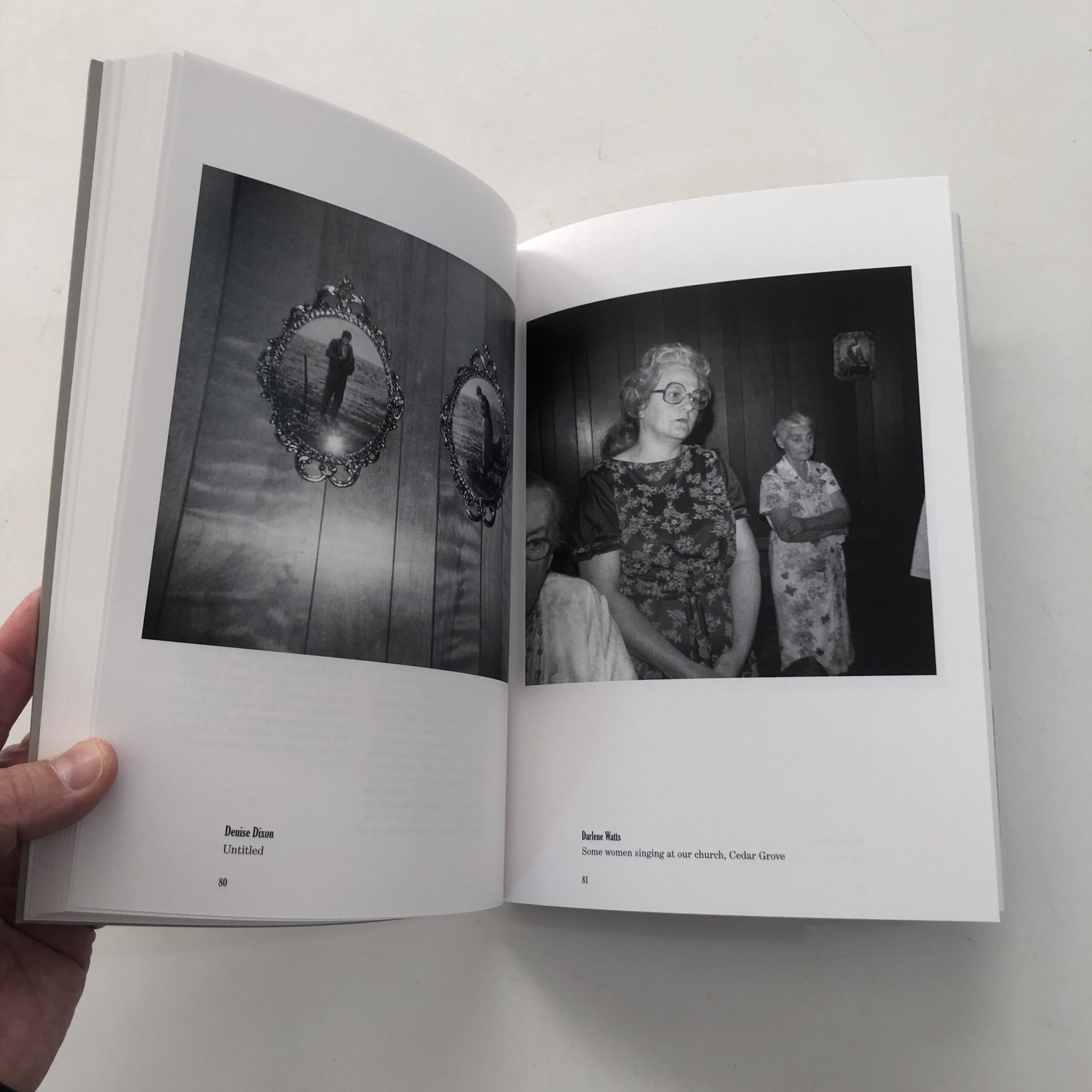
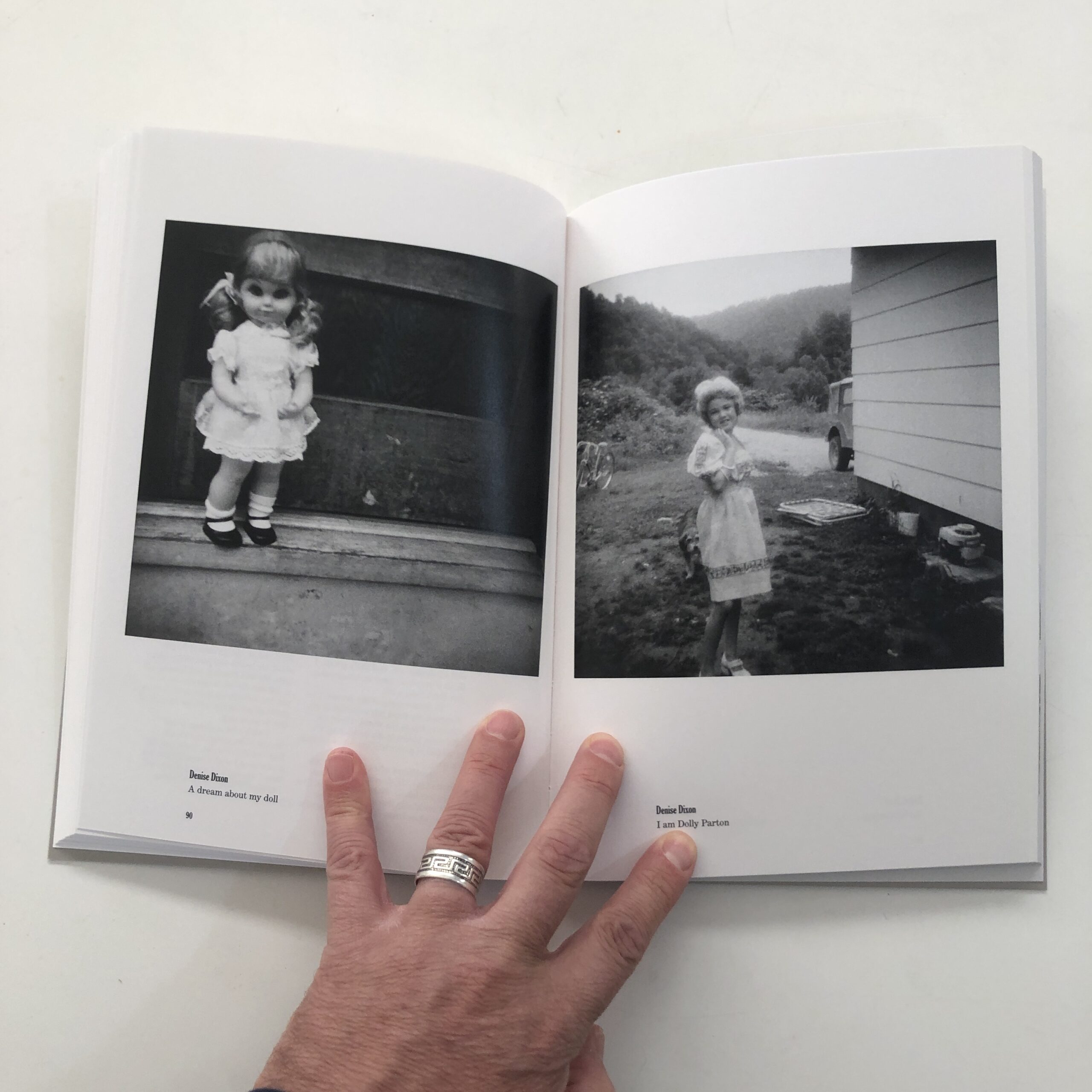
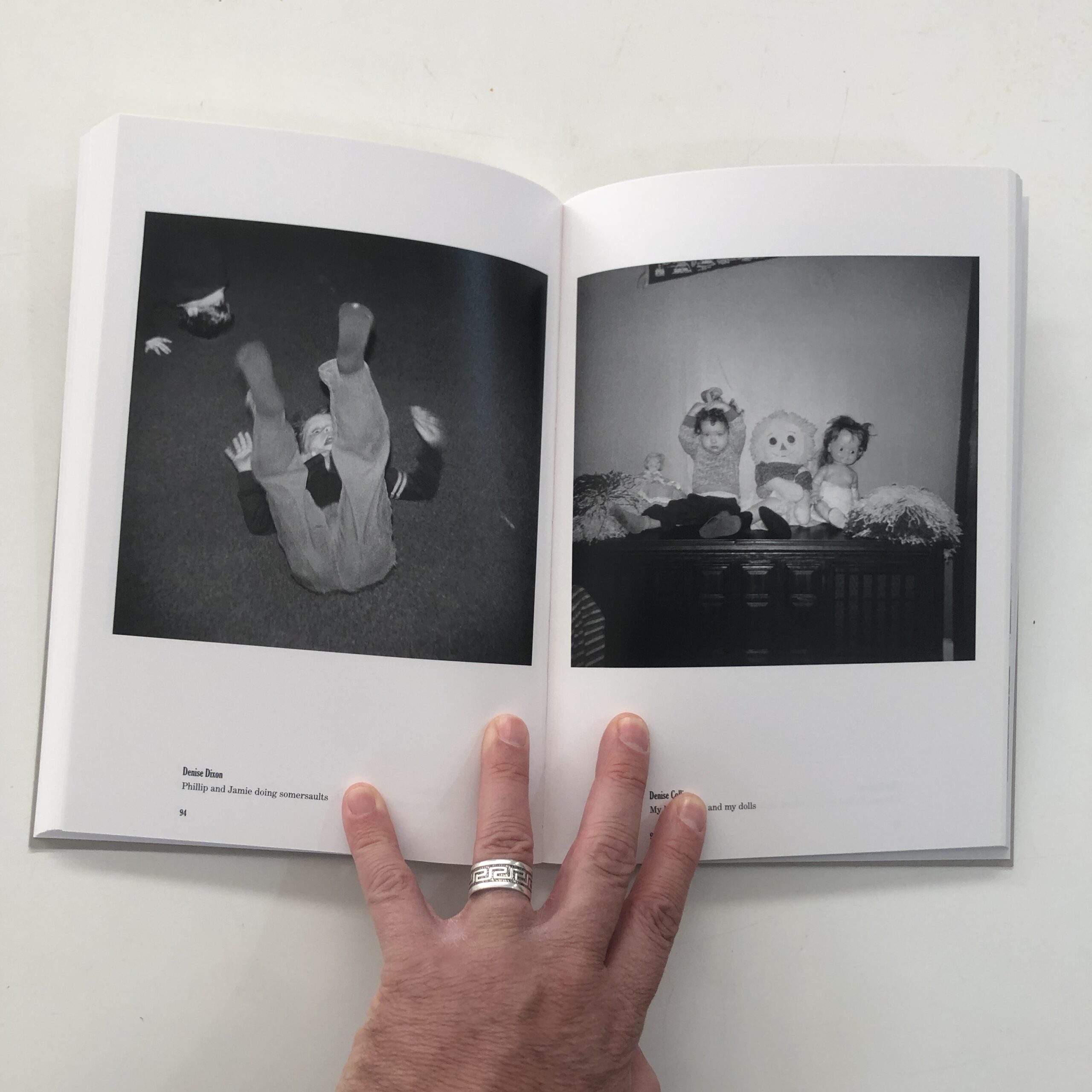
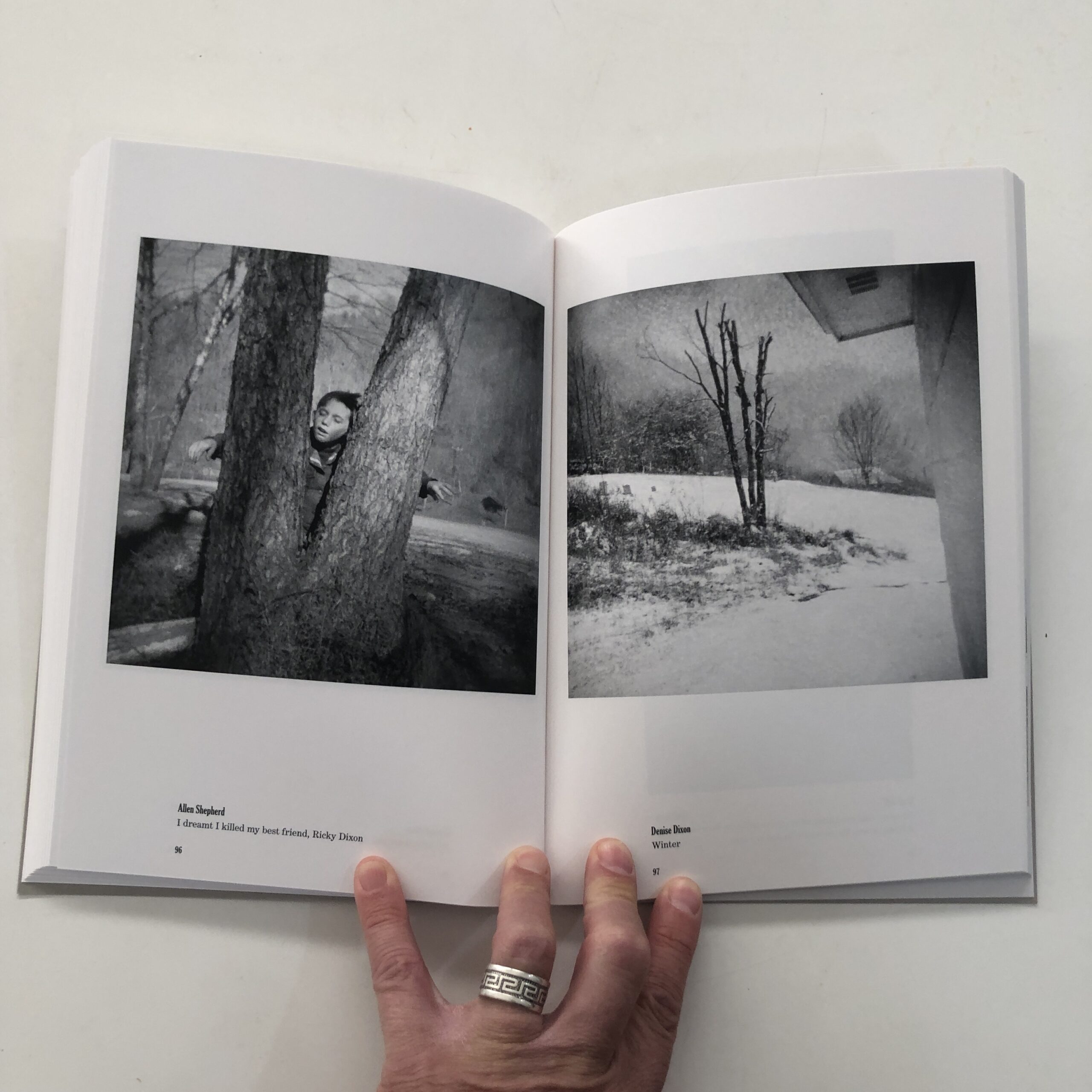
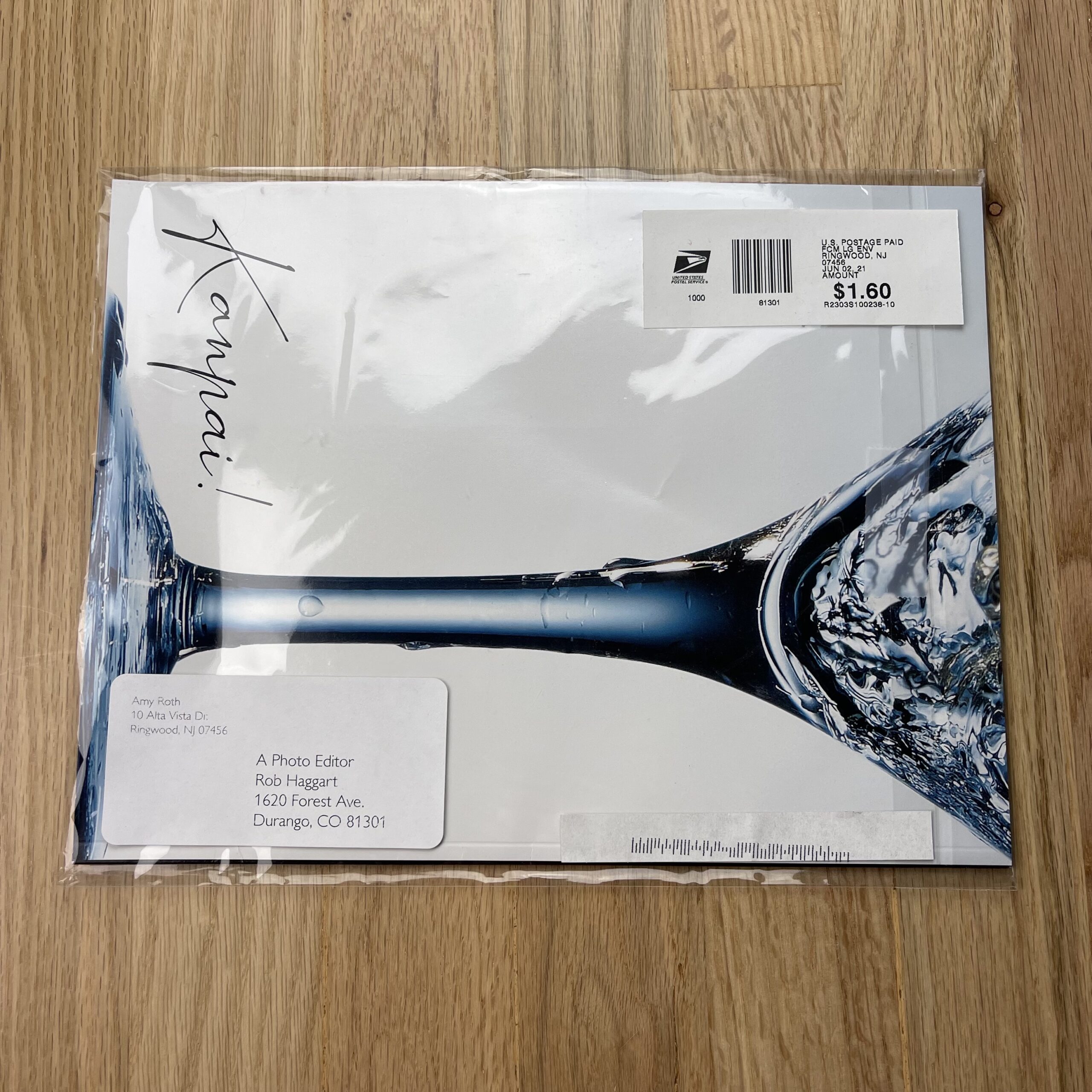
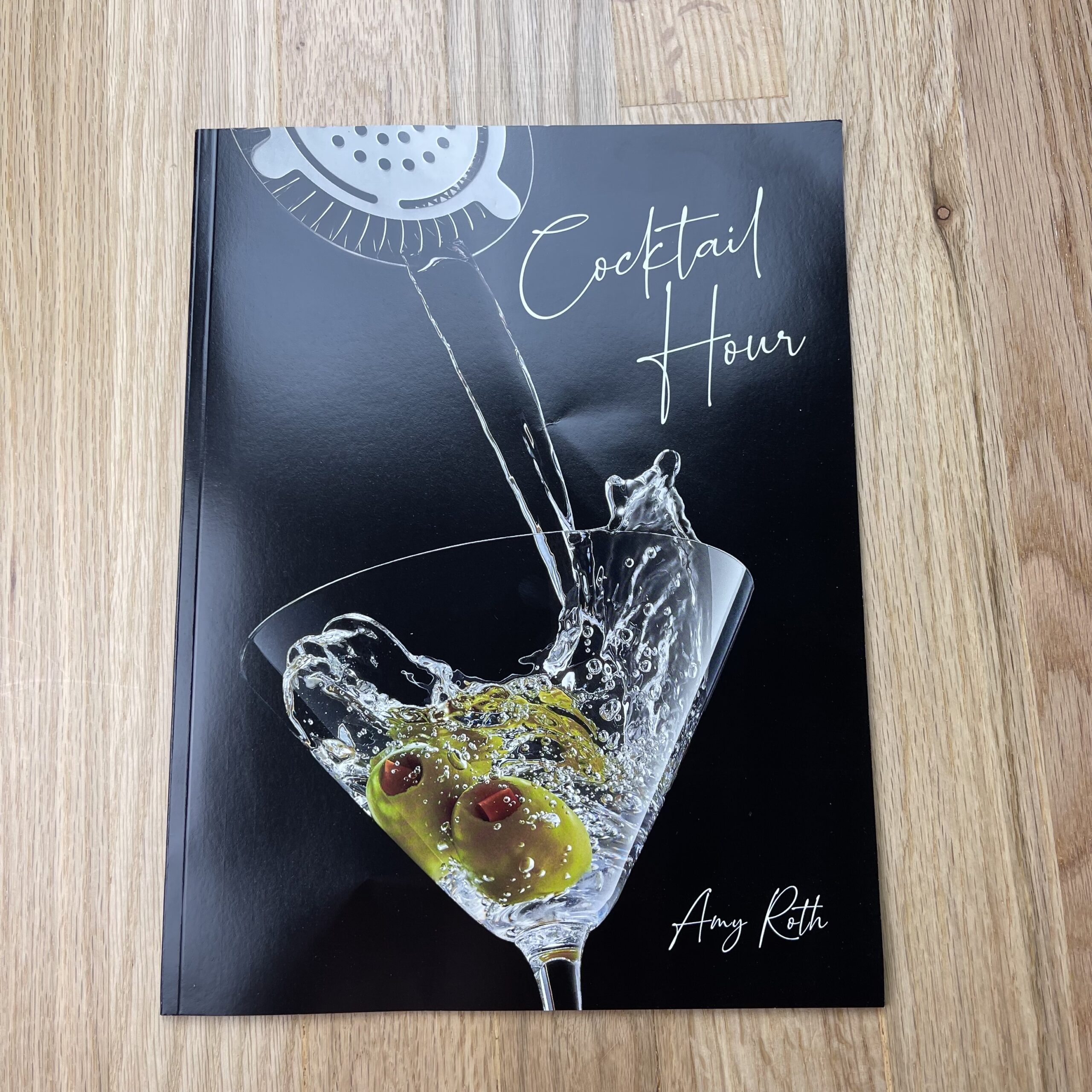
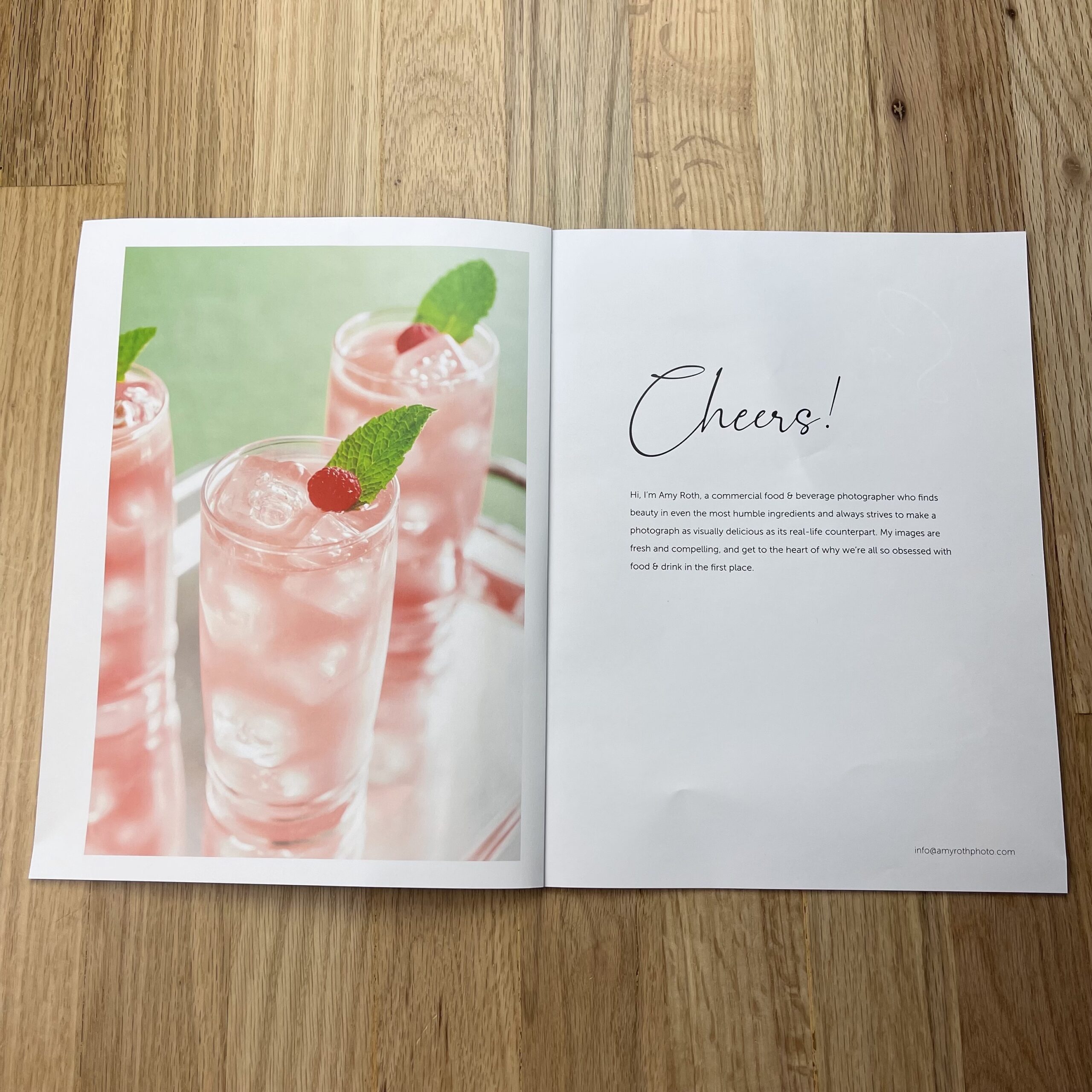
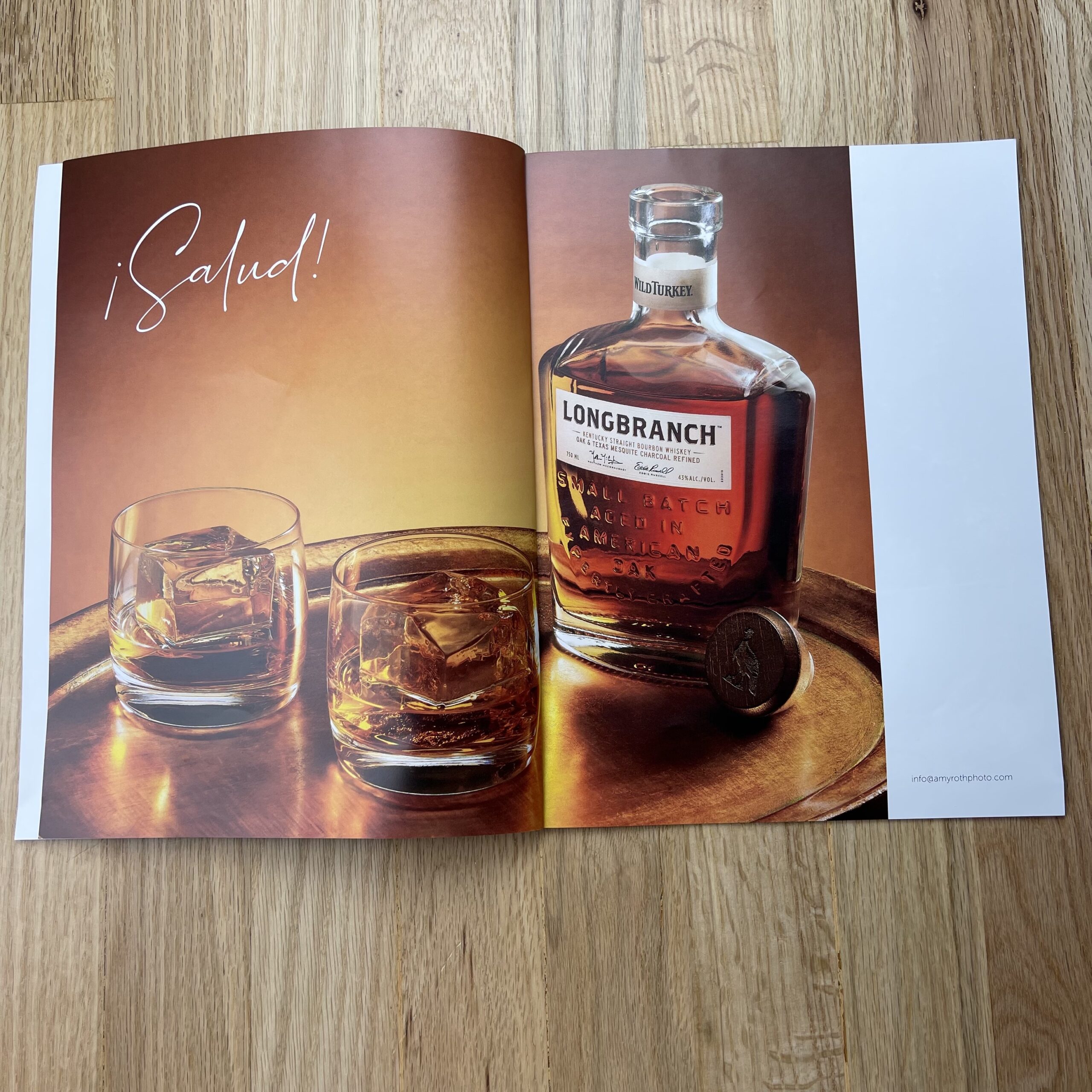
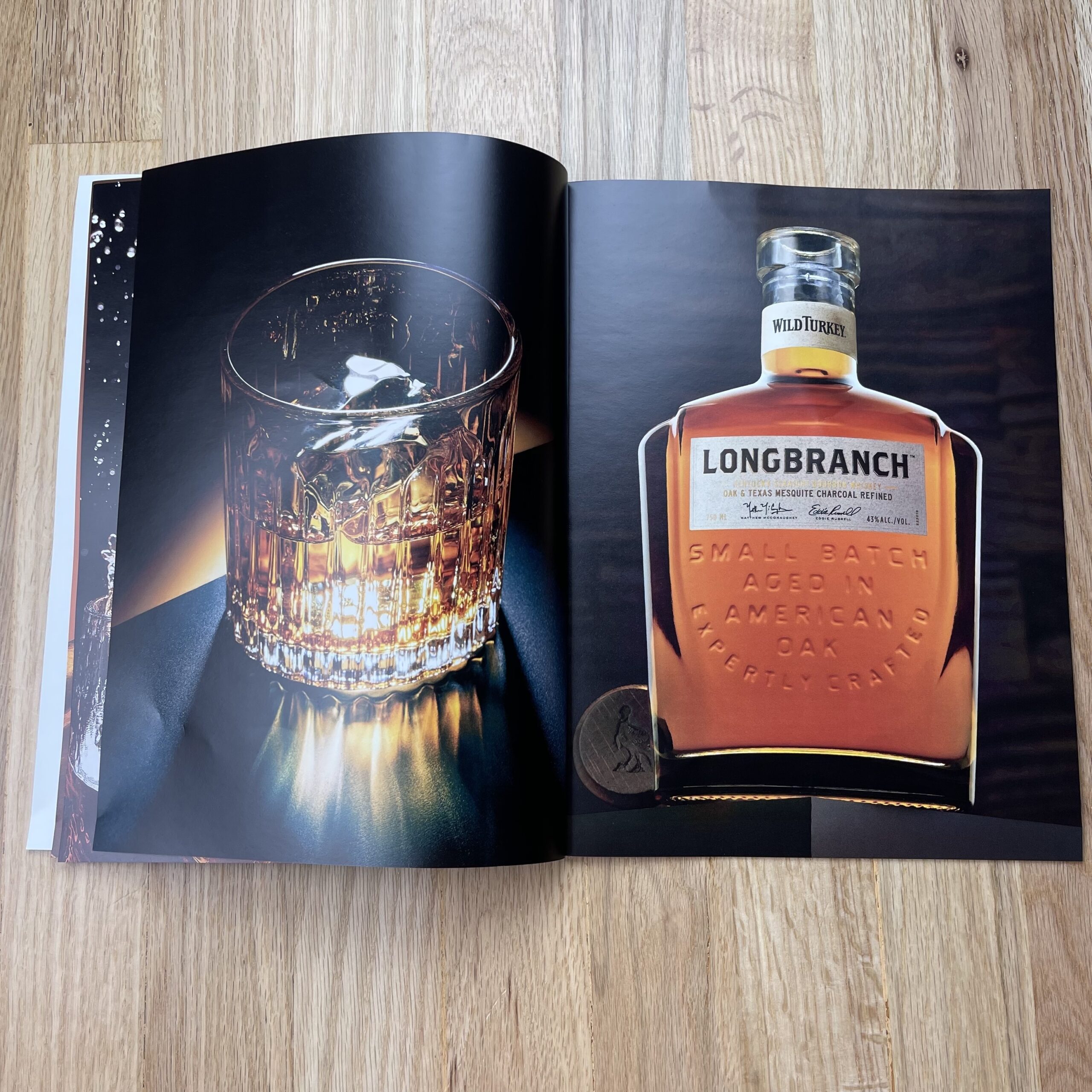
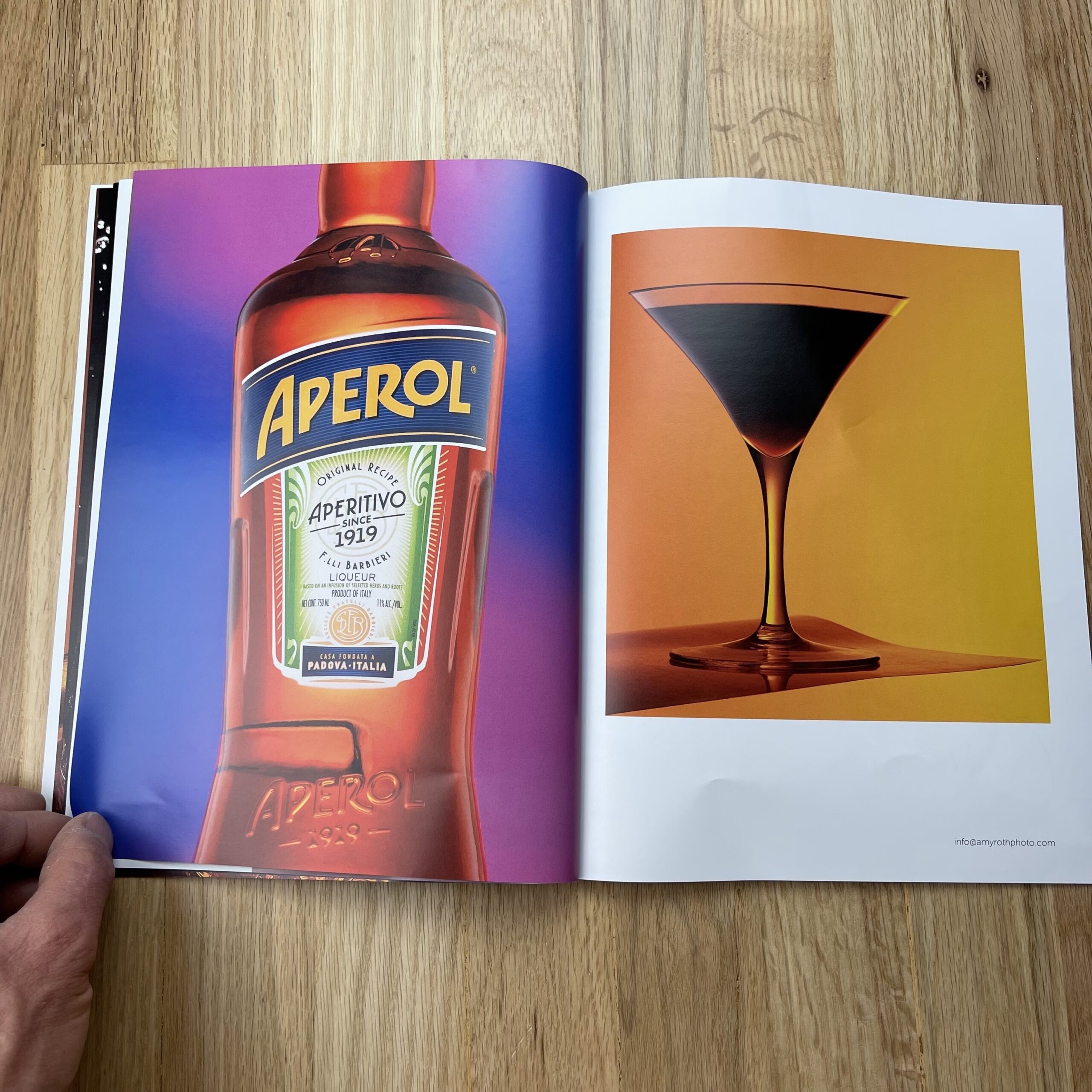
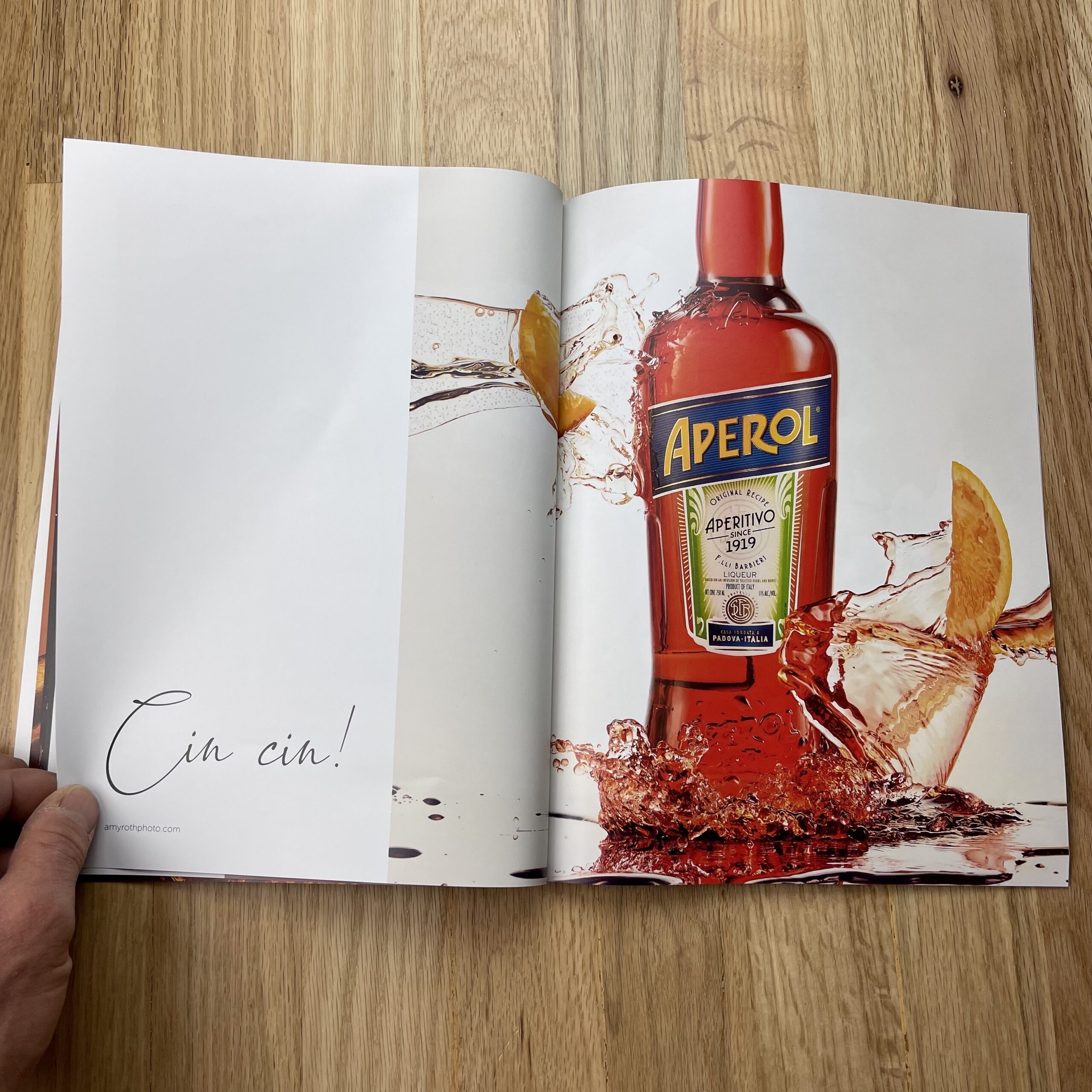
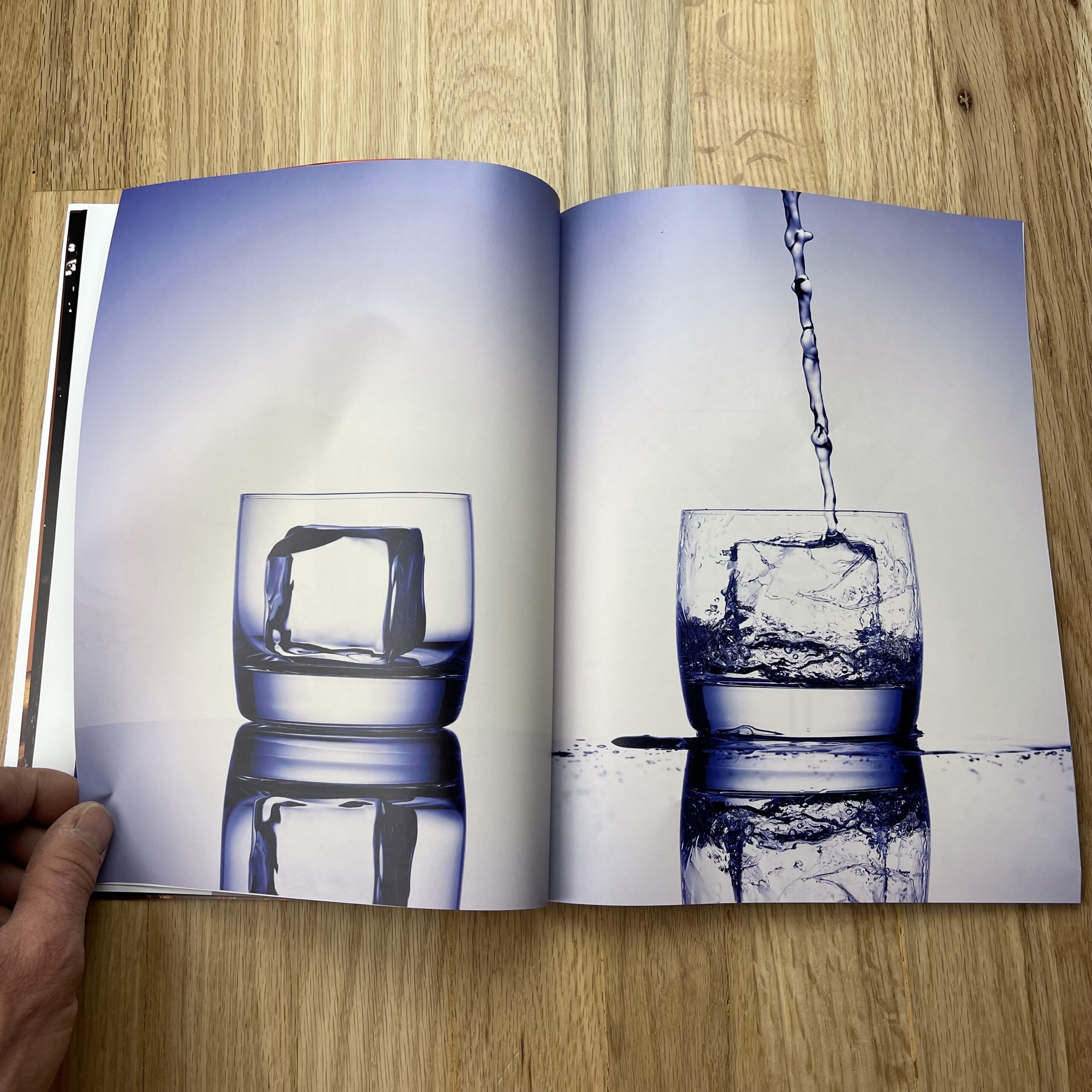
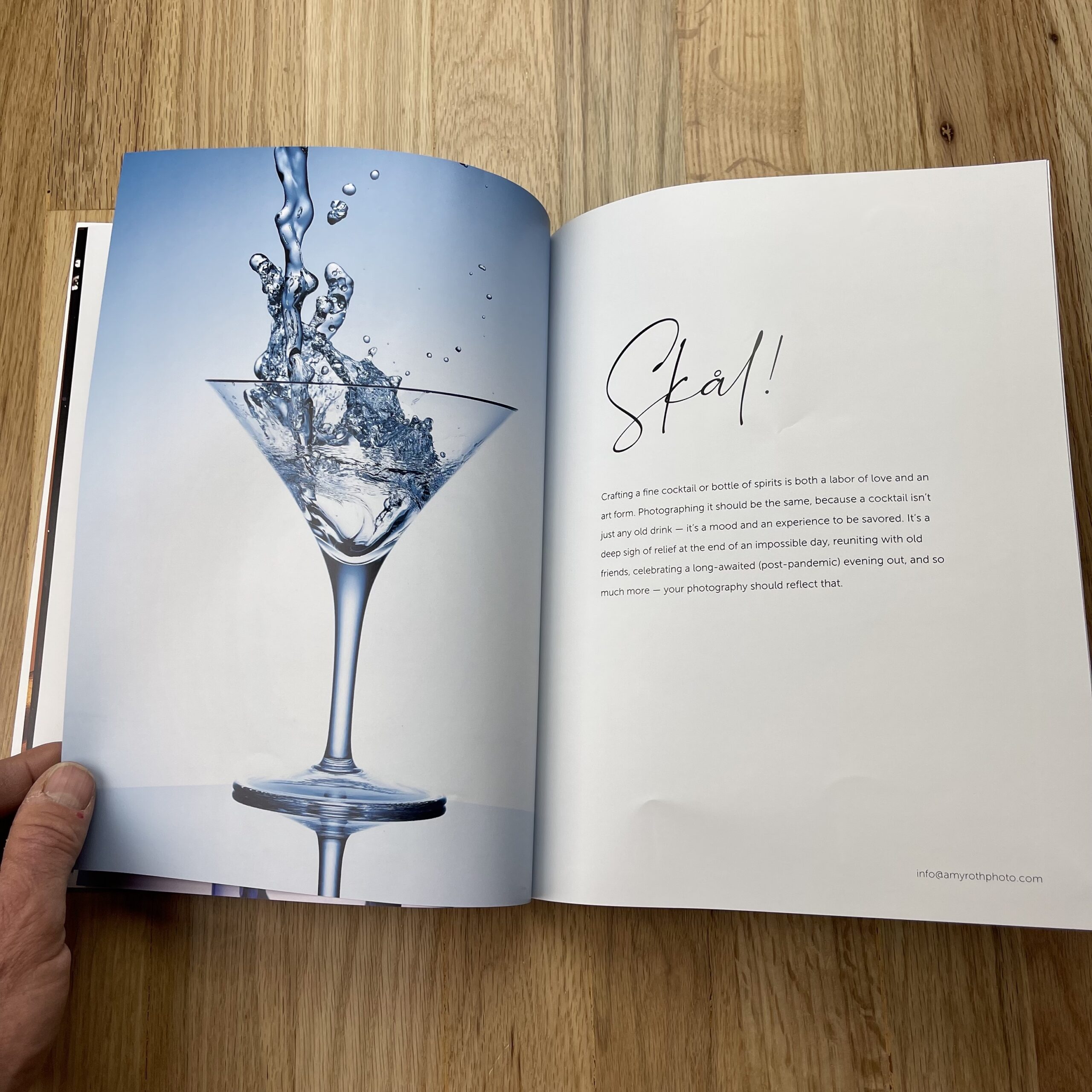
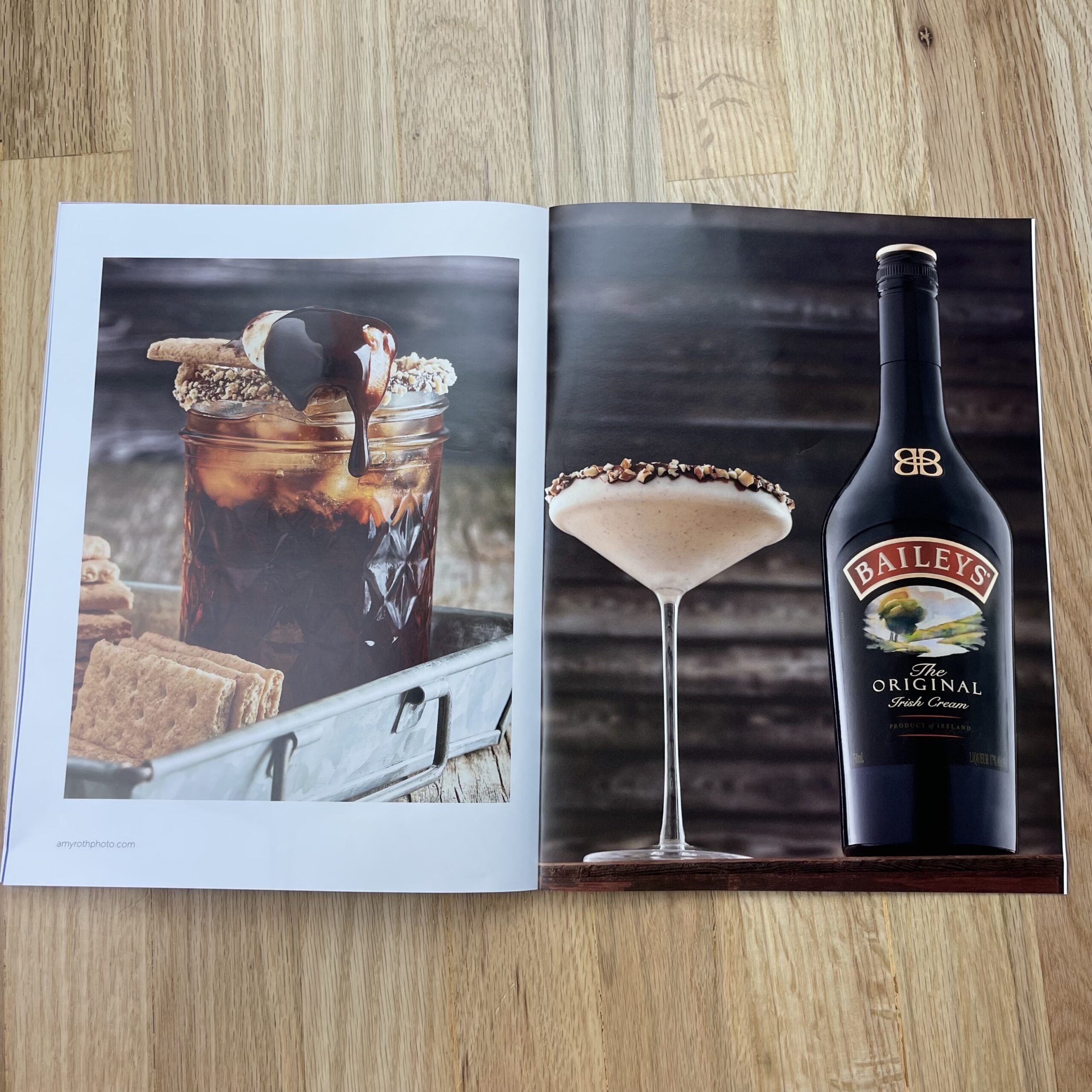
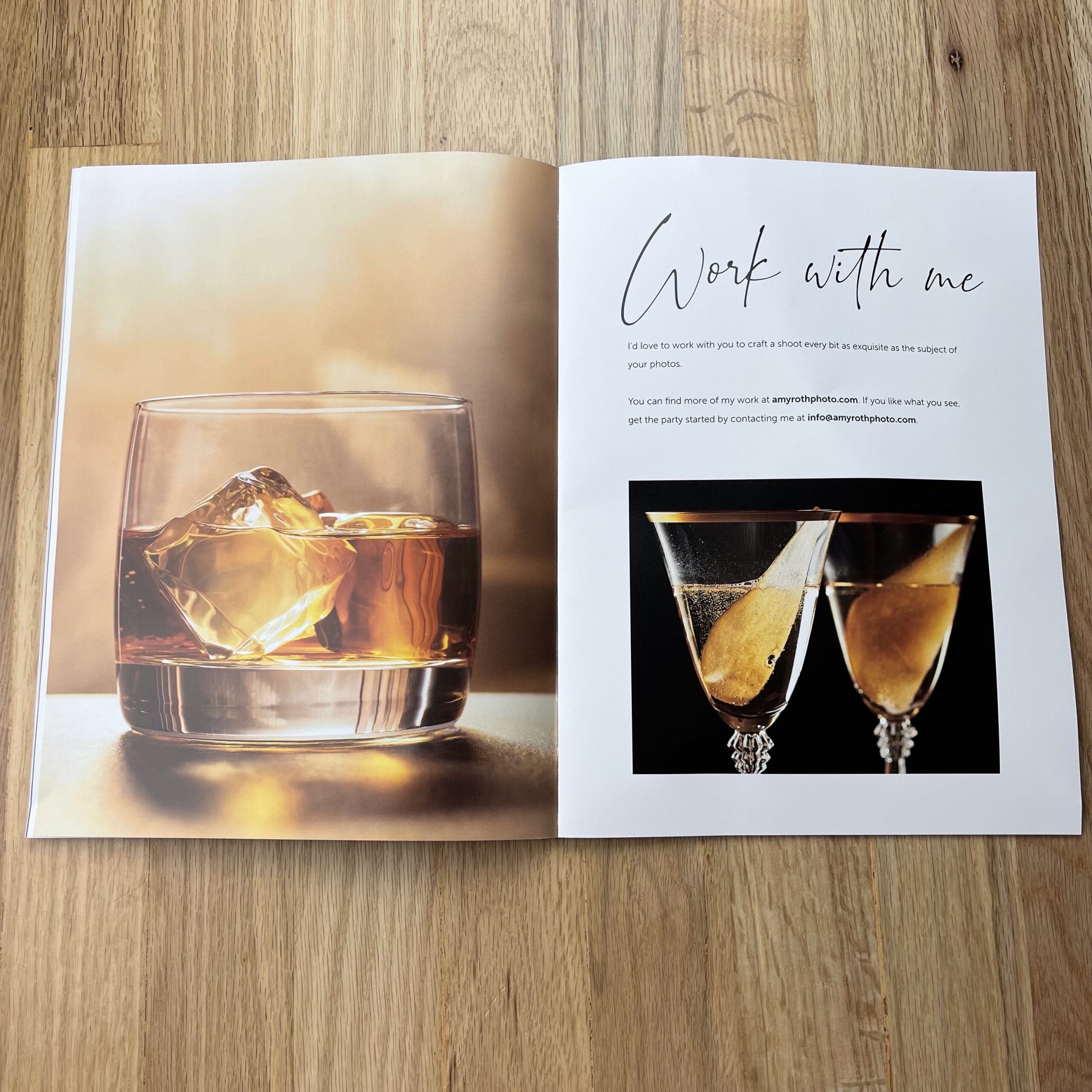
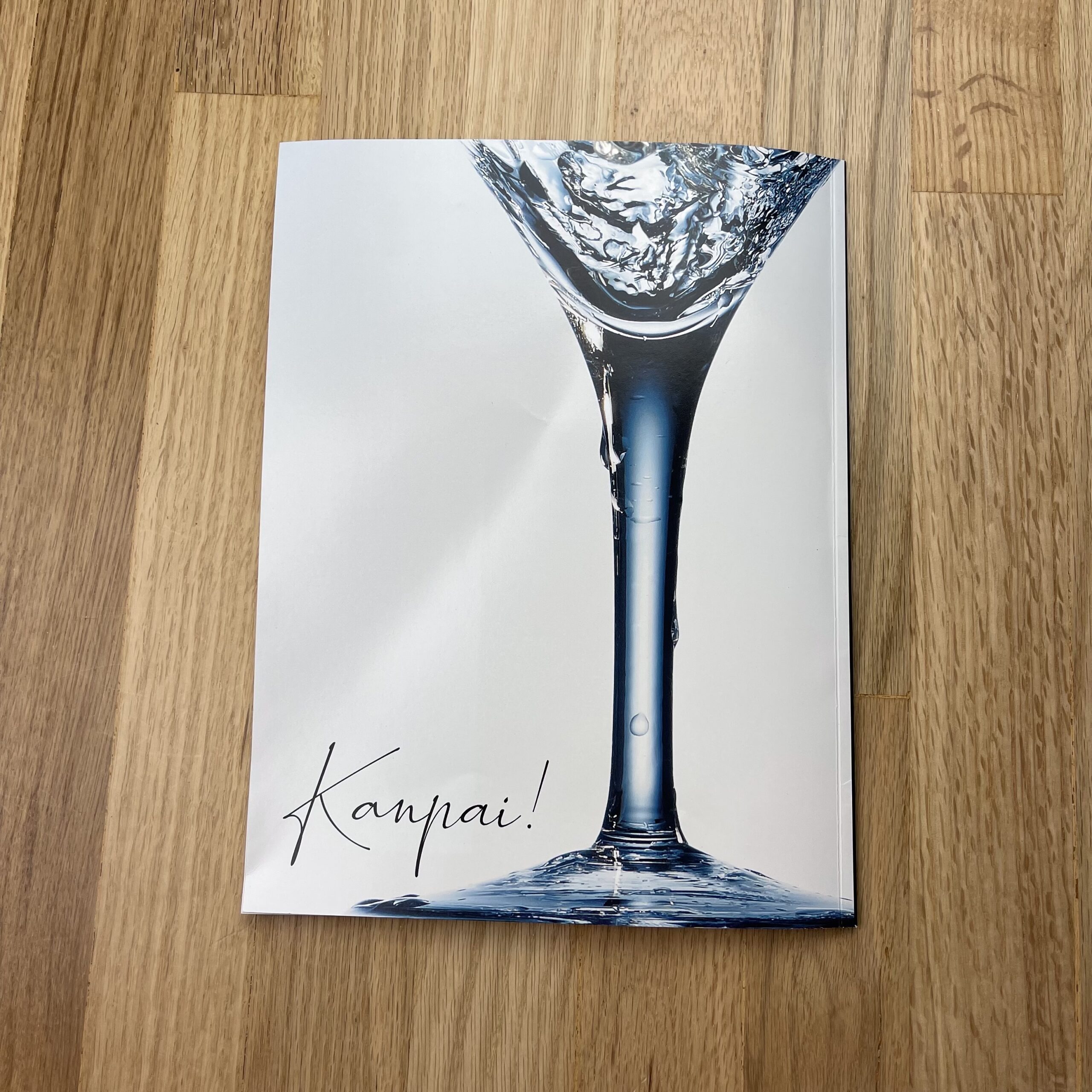
Who printed it?
I worked with Mary at Printing Center USA – super fast, responsive, and I like to print in the US when possible.
Who designed it?
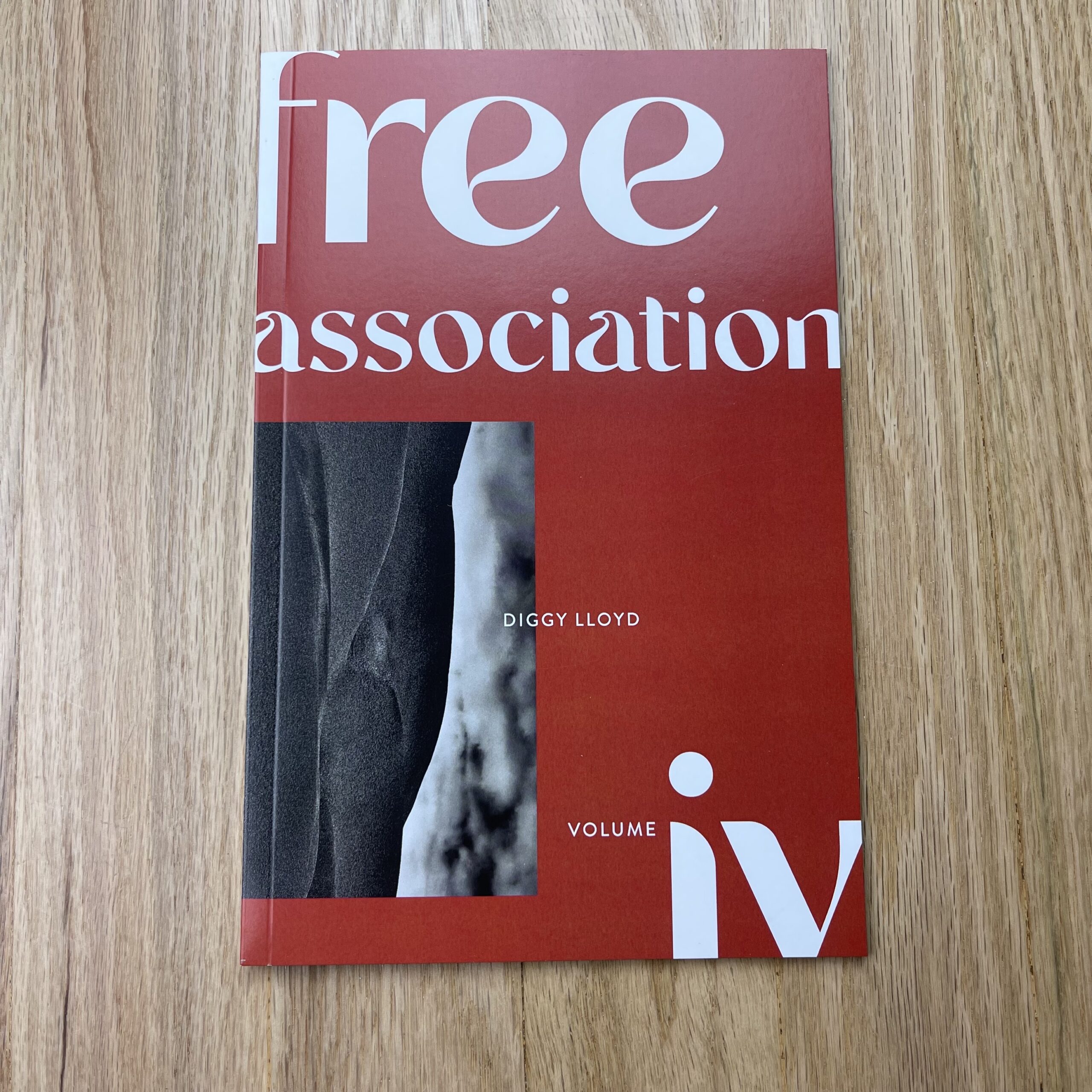
Along with my commercial photography business, I also have a branding and design company called Ristra Studio, and /Ristra Studio I have designed most of my promos and printed matter, which I love!
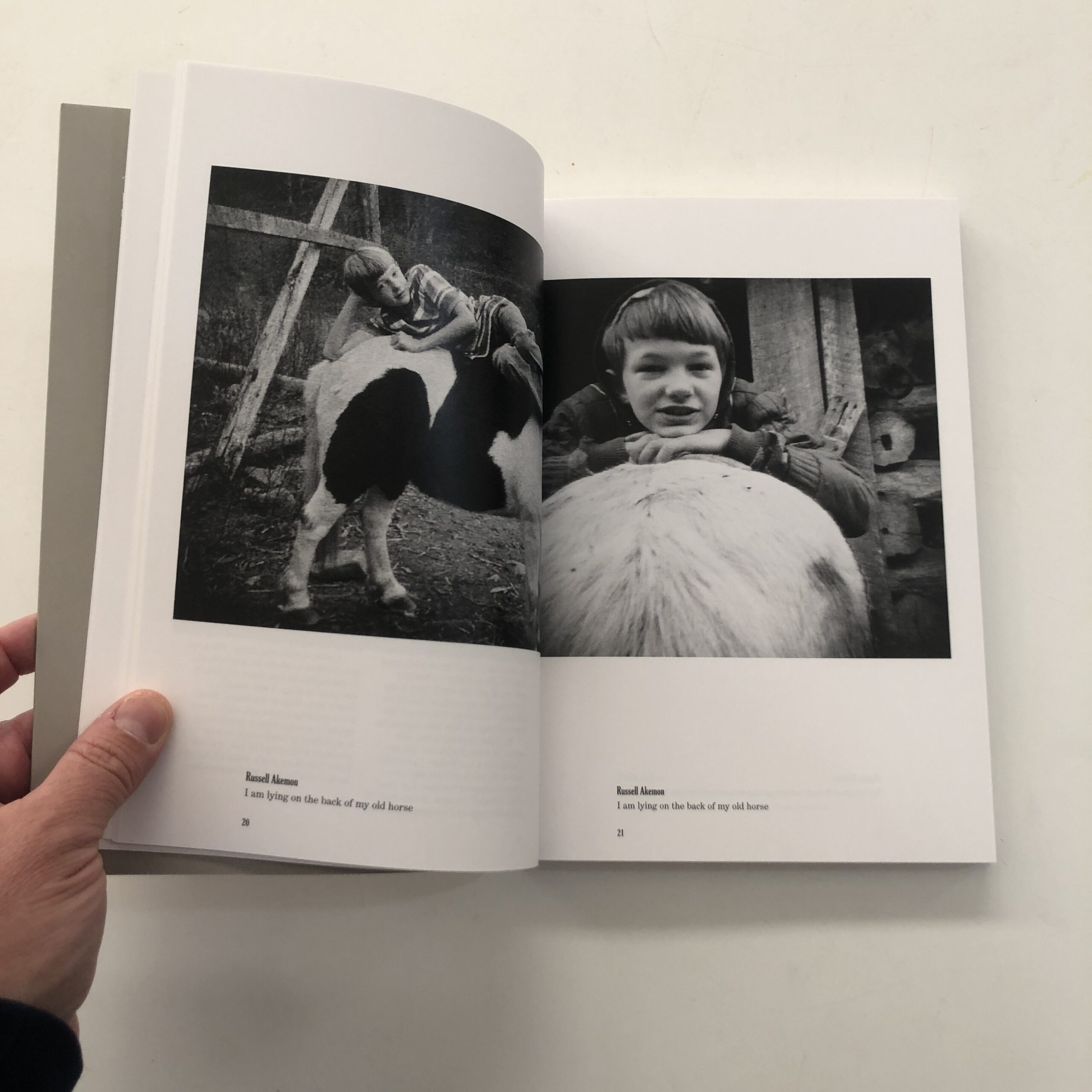
Tell me about the images.
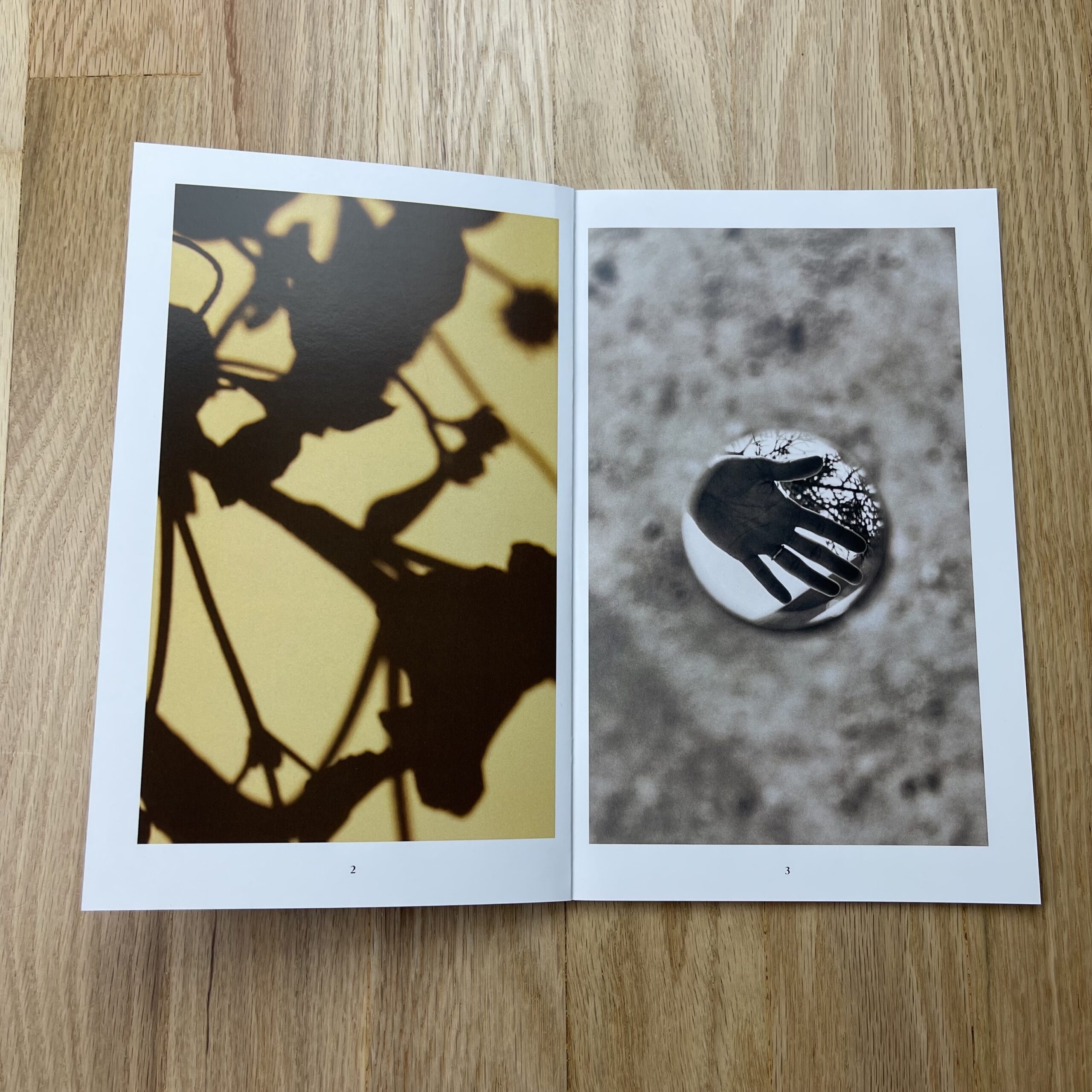
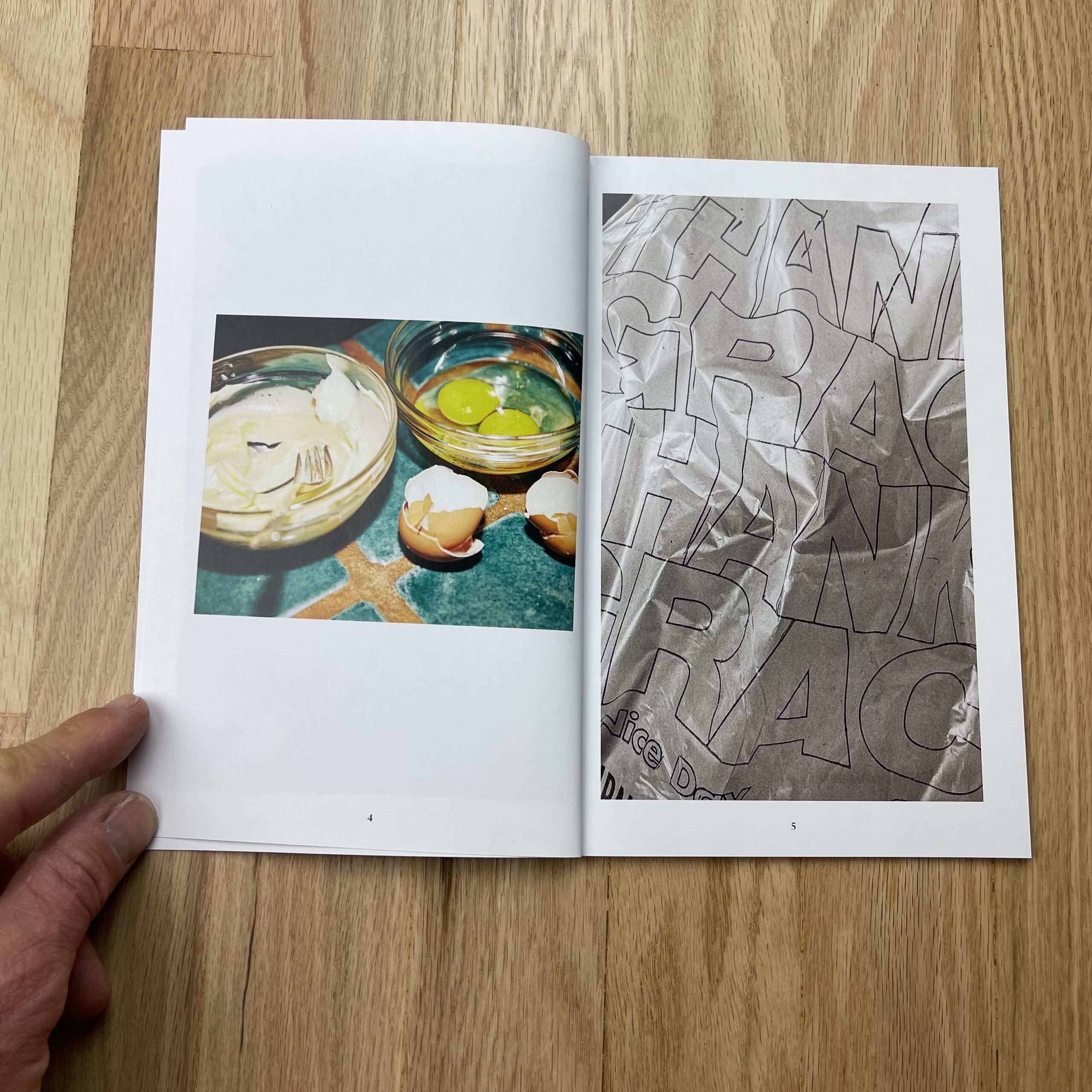
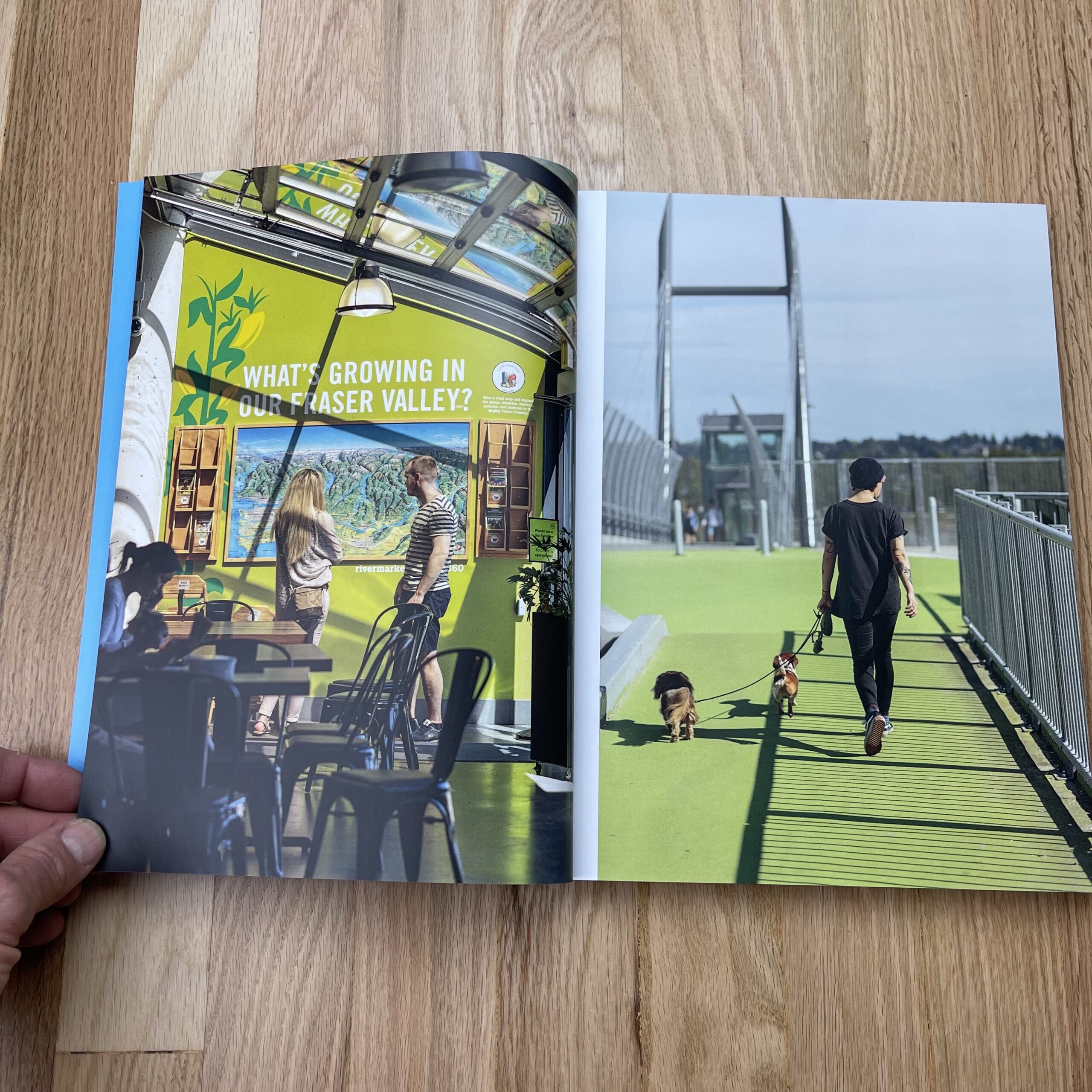
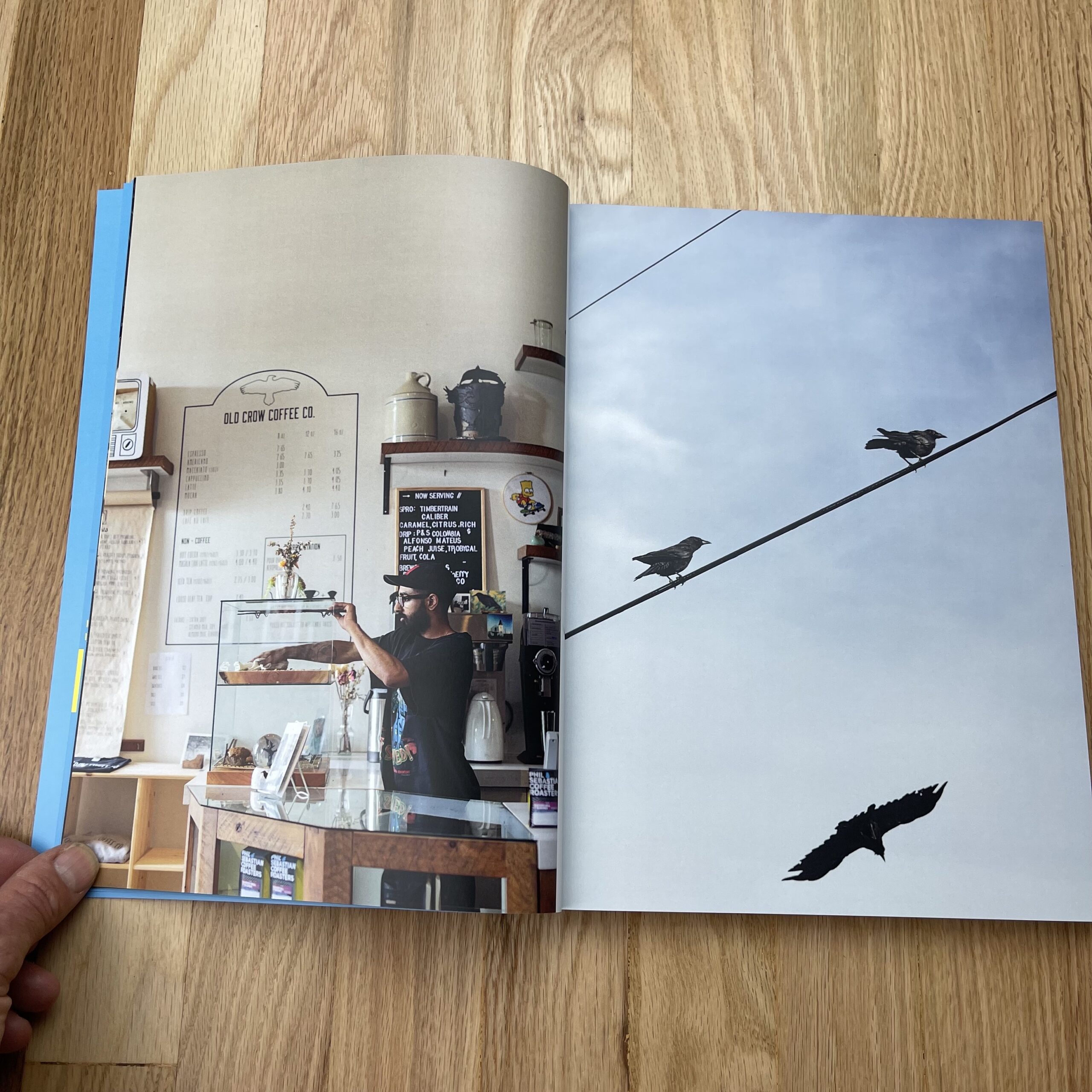
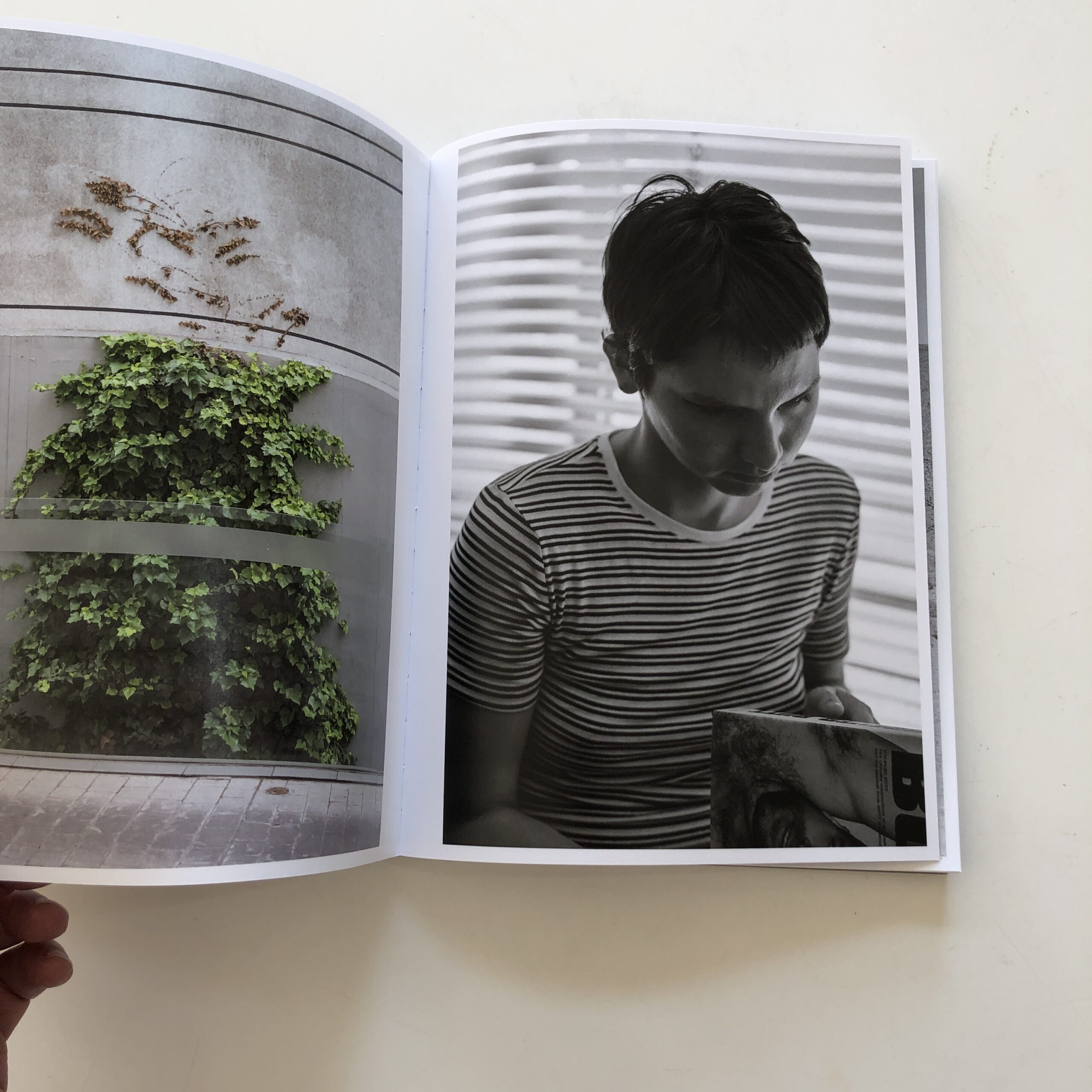
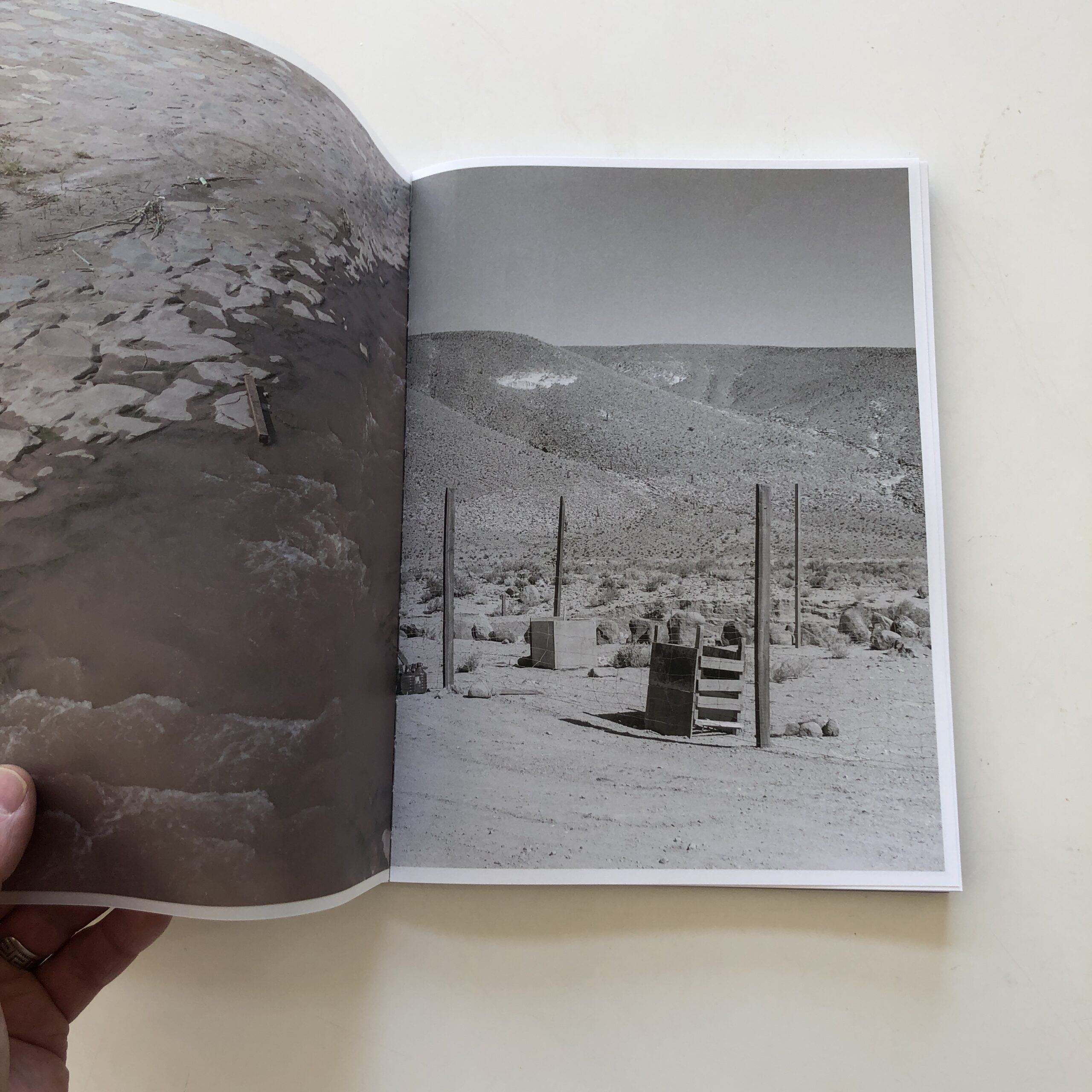
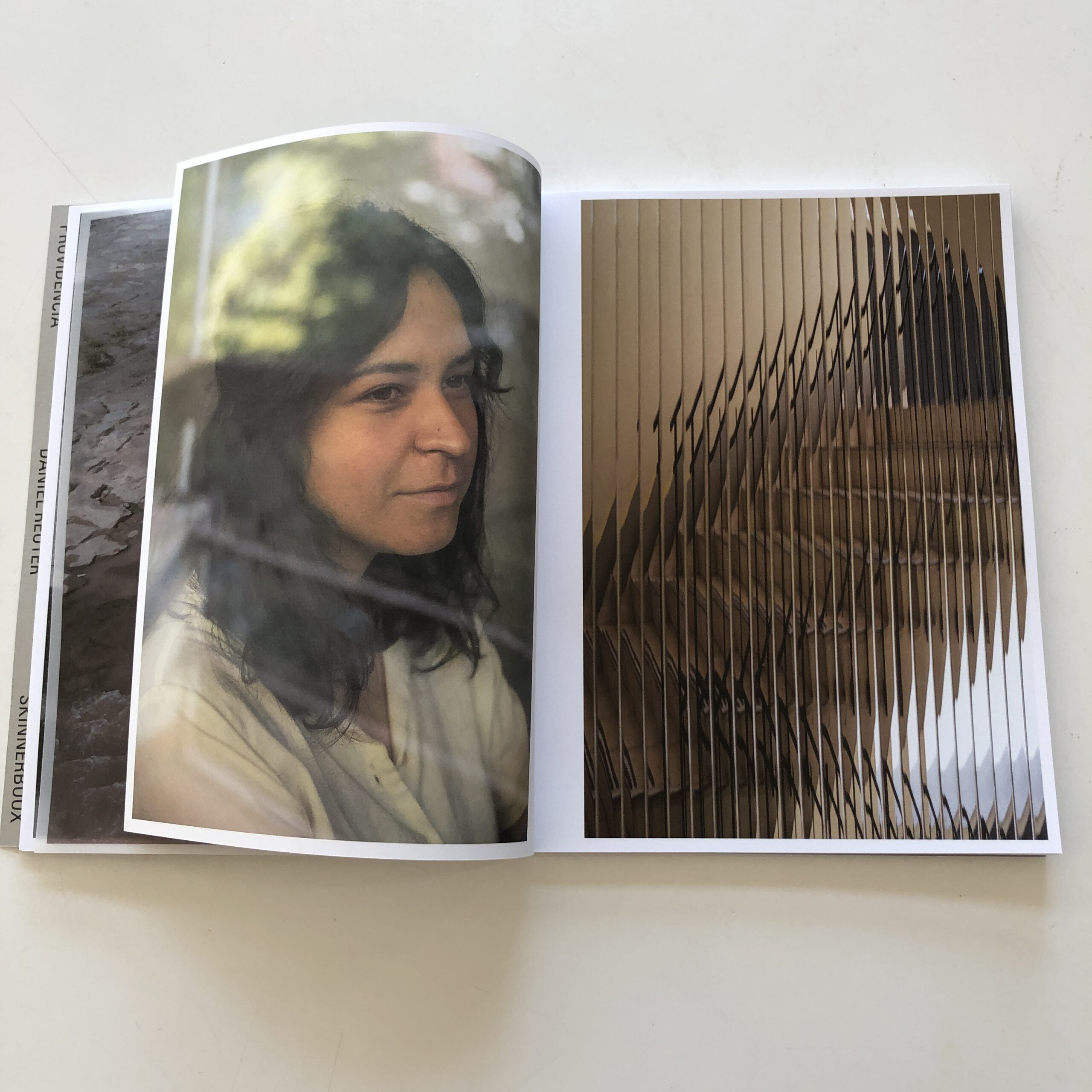
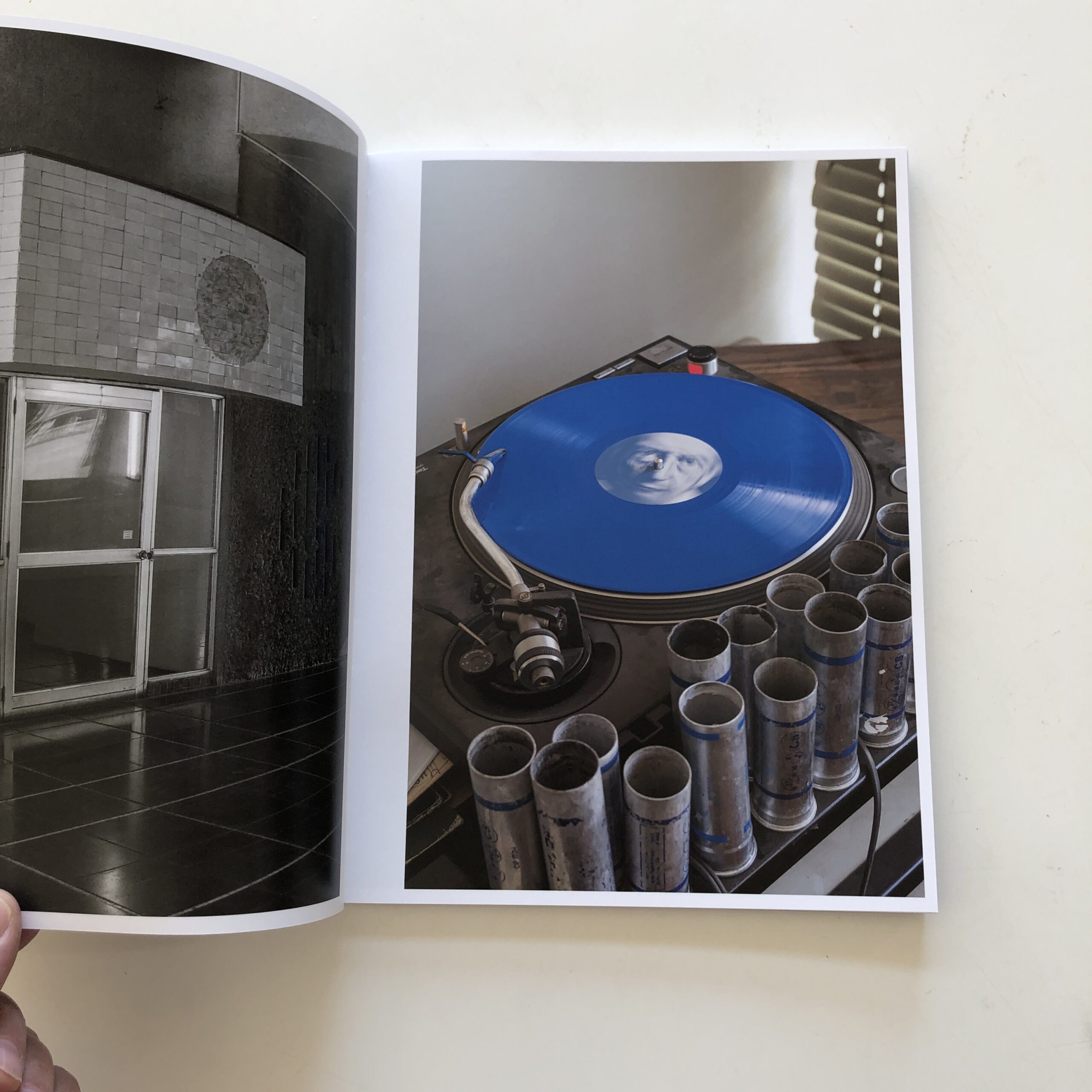
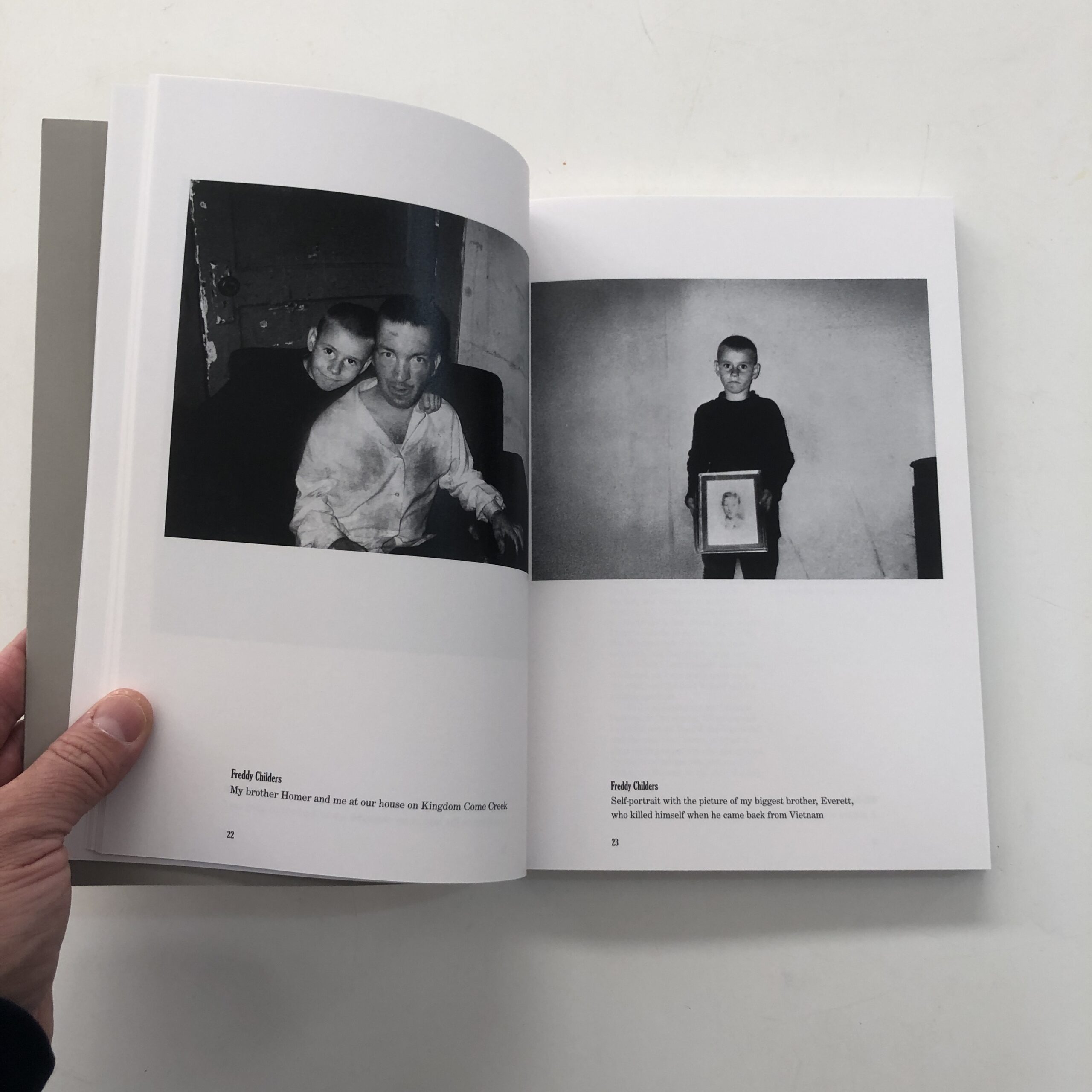
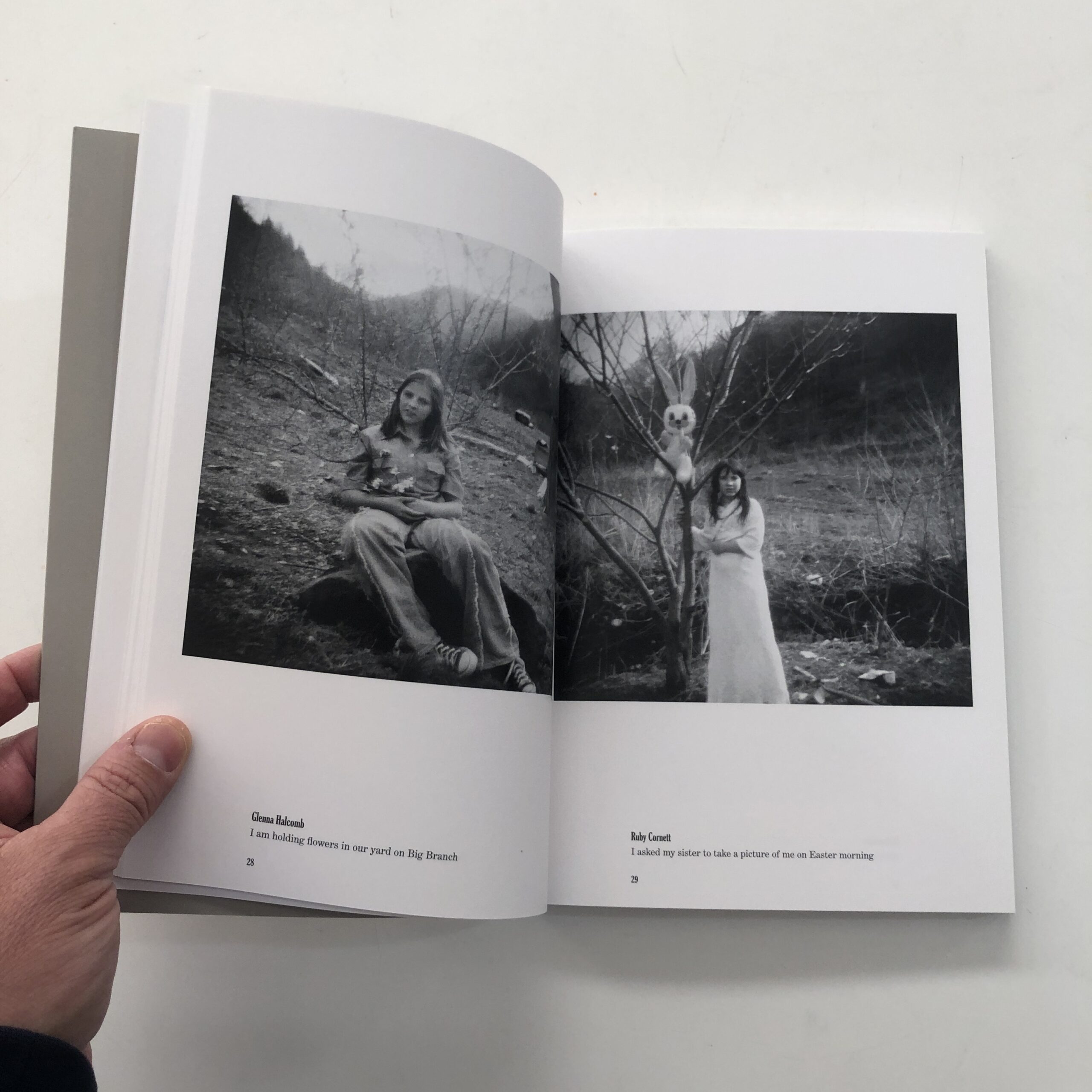
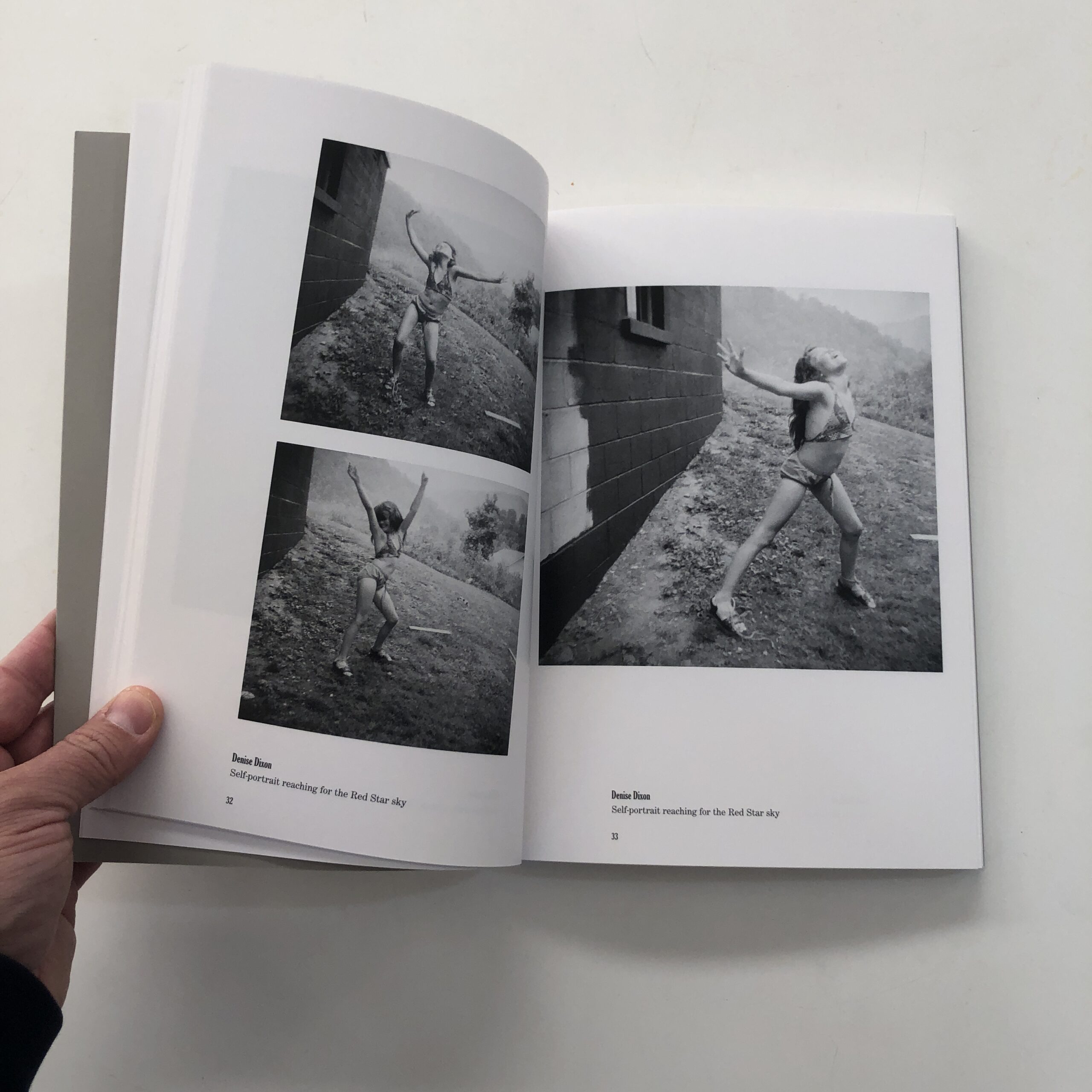
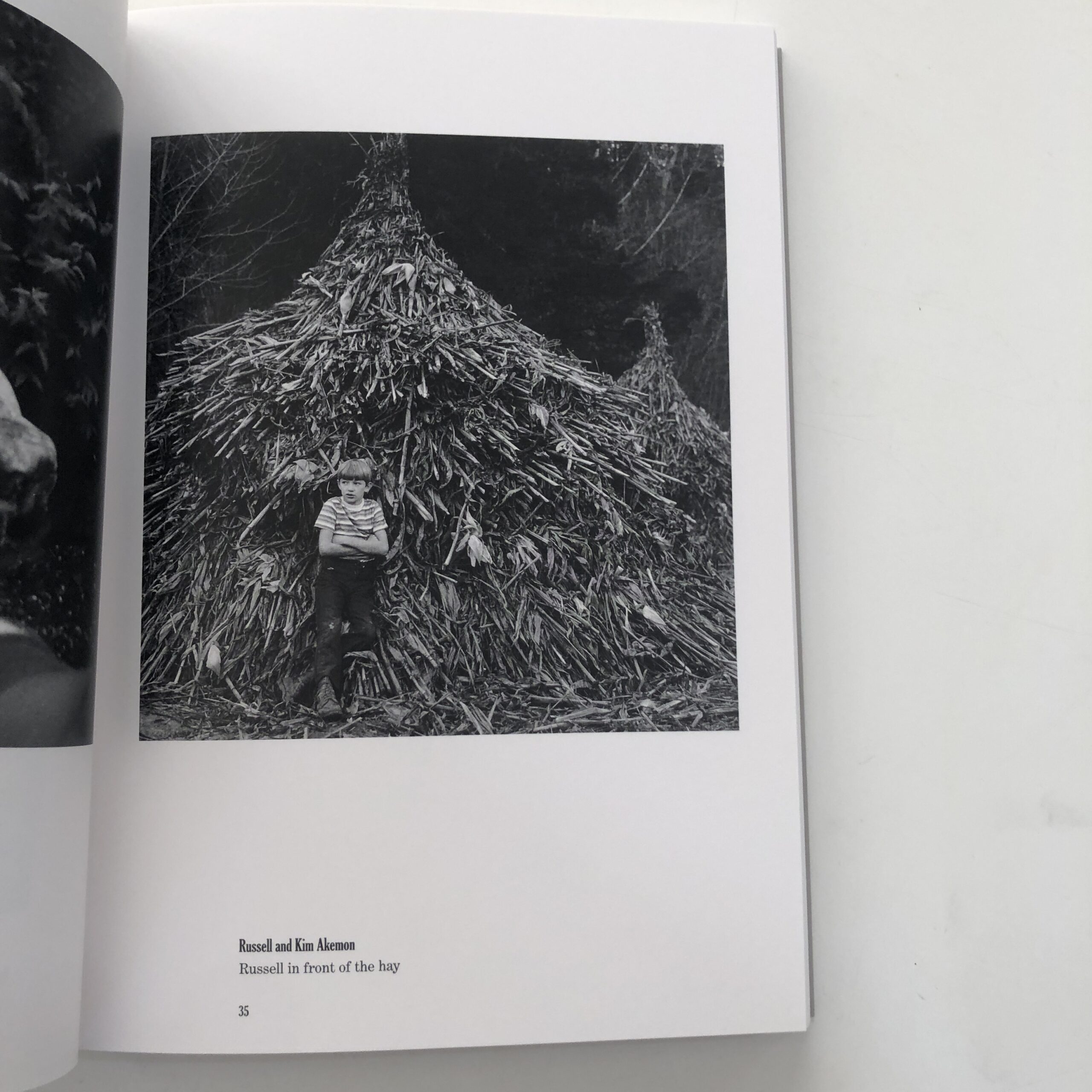
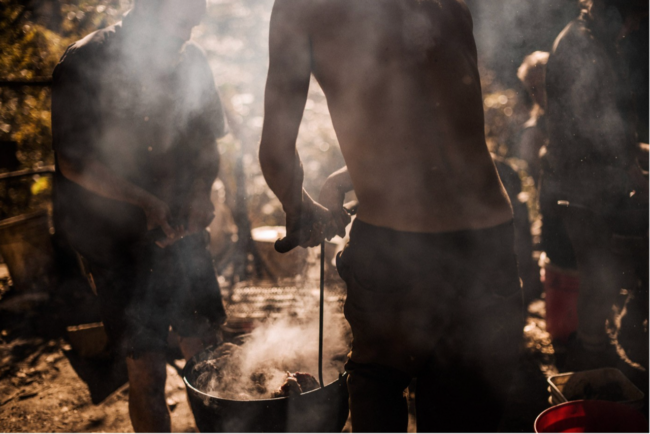
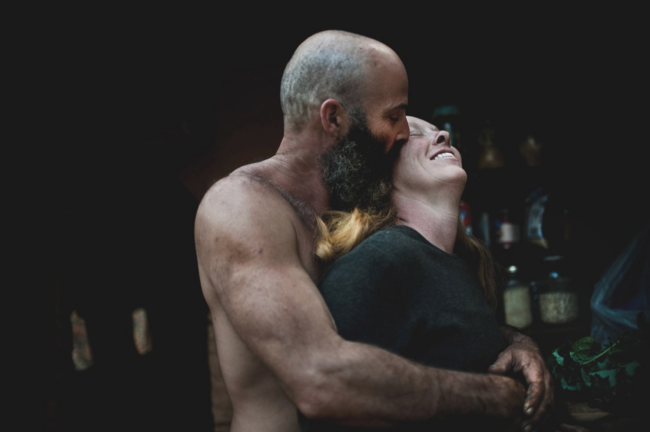
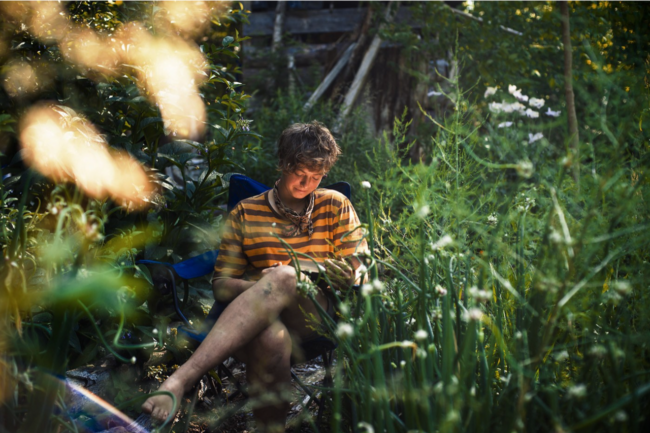
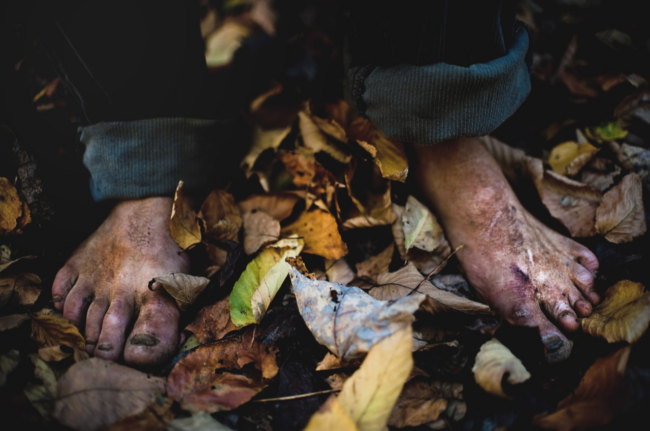
Free Association is a zine series I started producing in 2012. This series of images is influenced by a course I took from Charles Harbutt, an incredible documentary photographer. The course was called “Instinct and Metaphor”. He asked us to allow the camera to become an extension of ourselves, and to speak through its lens. Through his teachings I was able to understand my instinctive reflex, a millisecond decision to shoot an image. Then the next question came – well, why would I want to take that picture? We had to make the connection as to why instinctually we shot that image, and what metaphor we believed appeared in that image. We had to do this for every image we hung in critique. Ten years later, this is still an exercise I do regularly. Free Association, and each of its volumes are a direct result of this exercise. The story I compose through Free Association will be different from the story you compose. The metaphors I see will be different from what you see, and that is the magic of photography. The images in Volume IV were mostly shot in and around Taos, New Mexico and showcase my love for this sacred land. Juxtaposed next to these images are self-portraits, family portraits, and musings from everyday life.
How many did you make?
With Free Association each volume prints around 100 copies, which I leave as open editions. For my commercial photography promos – they run around 1500-2000 copies.
How many times a year do you send out promos?
Now, I do at least one volume of Free Association every year, and around 12-18 months I do a commercial photography promo.
Do you think printed promos are effective for marketing your work?
Absolutely! I think as a photographer, it is so important to create printed matter. Oftentimes we are working so much in the digital space, we forgot how impactful and powerful print can be. I enjoy sending this out to previous/potential clients and I also sell them in my print shop – ristrastudio.com/shop
The belief we should be reduced to our race, religion, gender identification, sexual orientation, or even nation of origin seems to come back around, every so often, and occupy the intellectual high ground of American culture.
Personally, I think the advent of identity politics, in the 70’s and 80’s, is one of the best things to ever happen to this country. (And if you’d like to extrapolate beyond our borders, feel free.)
From the 2021 vantage, that it was ever acceptable for all the jobs, all the opportunities, all the press coverage, and all the $$$$ to go to “White Christian Men Only” is laughable, tragic, and most definitely hard to comprehend.
(It’s beyond WTF.)
So the people who fought that, and made space for women, people of color, and those of other genders, religions and sexual preferences, they did us all a solid.
We should, and hopefully do, honor their efforts, which most certainly required sacrifice.
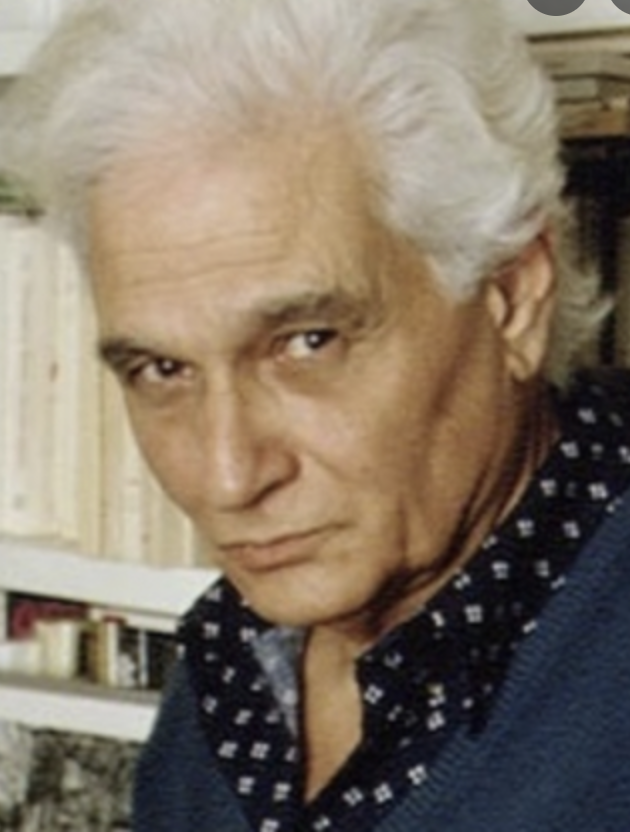
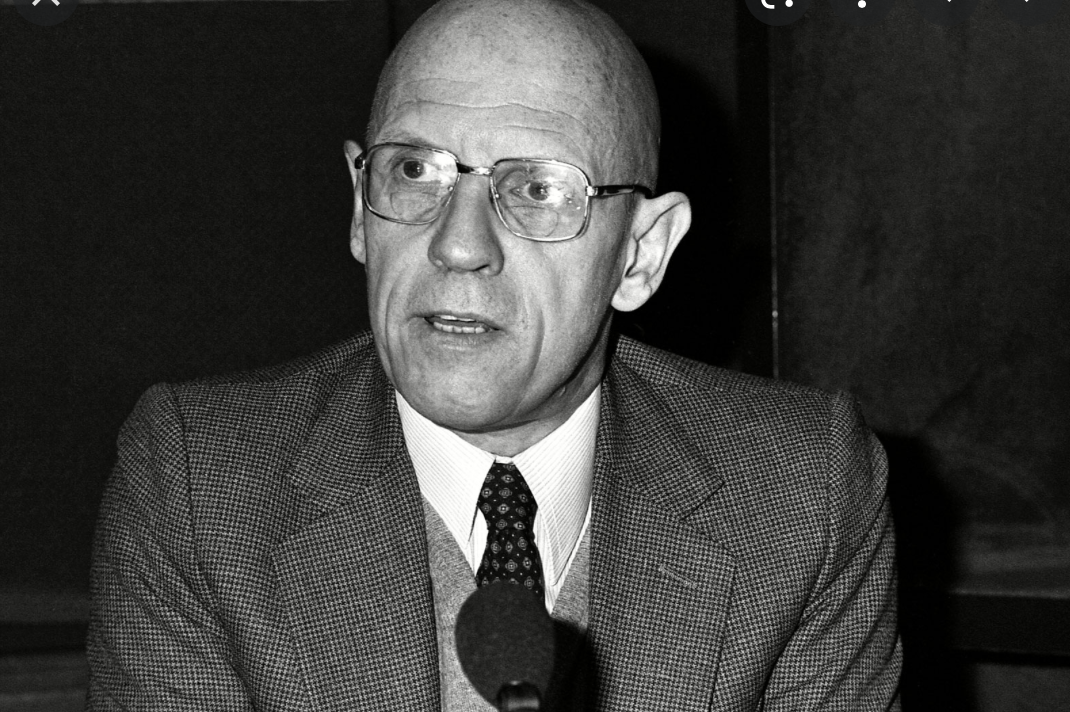
But when I matriculated to Pratt for grad school in 2002, those ideas, particularly as structured by the French Post-Modern theorists Jacques Derrida and Michel Foucault, were back en vogue, and dominated much of the campus discourse.
Jacques Derrida, courtesy of the Freedom from Religion FoundationMichel Foucault, courtesy of Brittannica
At the time, I’d arrived with a digital project I’d shot in Mexico the previous summer, only to learn there was no existing Digital Photography program at the Graduate level.
Literally nothing.
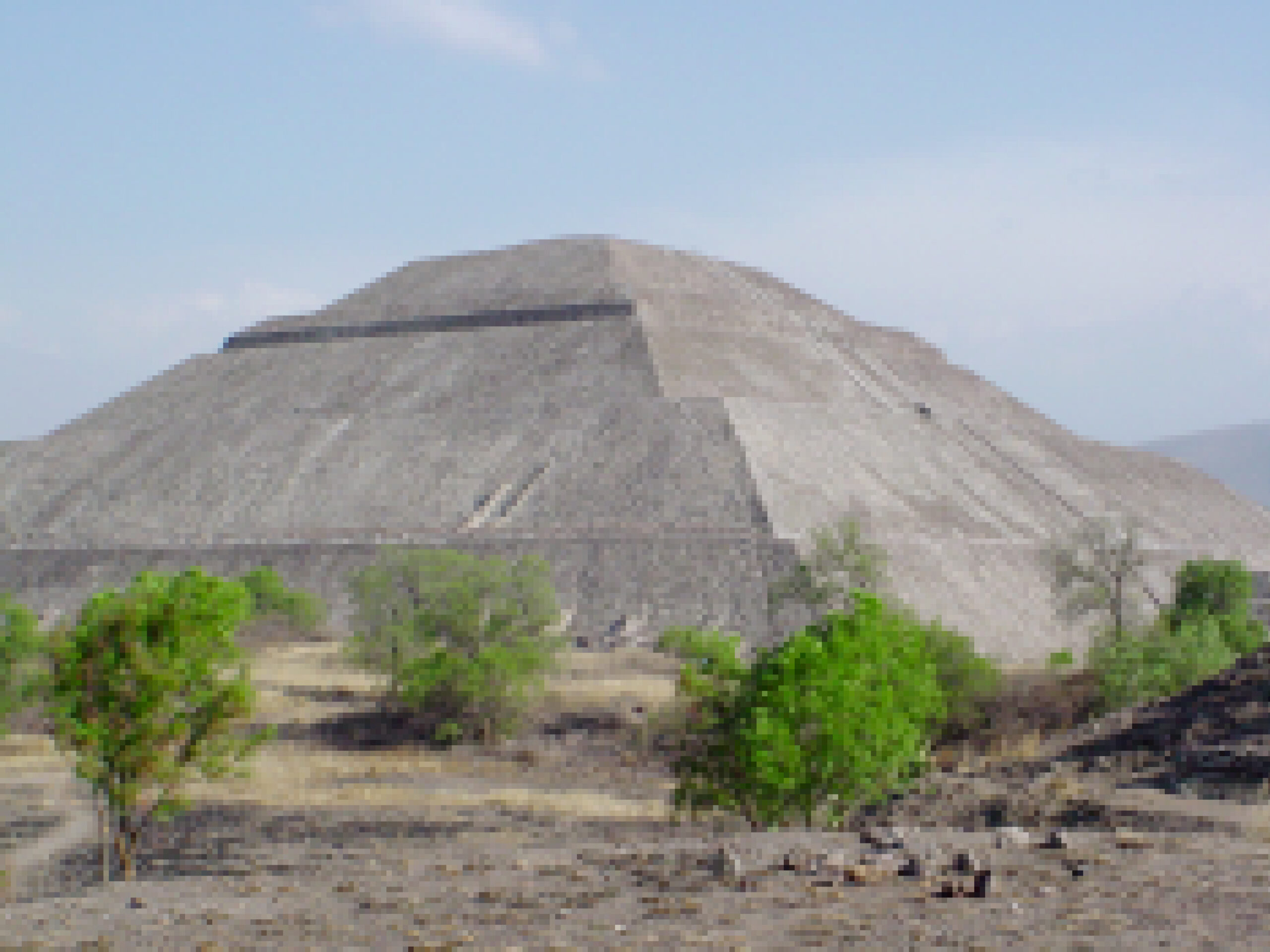
Teotihuacan, Mexico, 2002
So I was forced to pull bits of knowledge from a variety of departments, including digital art, undergrad photo, graphic design, computer science, and even printmaking.
There I was, seeing the new digital reality, and none of my fellow photographers wanted to talk about it.
I took an Art History class, with the brilliant Marsha Morton, which had the boring title of “The Beginnings of Abstraction,” and it was so dynamic, I still get chills thinking about it.
She had meticulously reconstructed the personal, cultural, and geo-political history of artists like Picasso, Braque, Malevich, Kandinsky, O’Keefe, and others, and taught us the intellectual backstory that led to such a radical change in art.
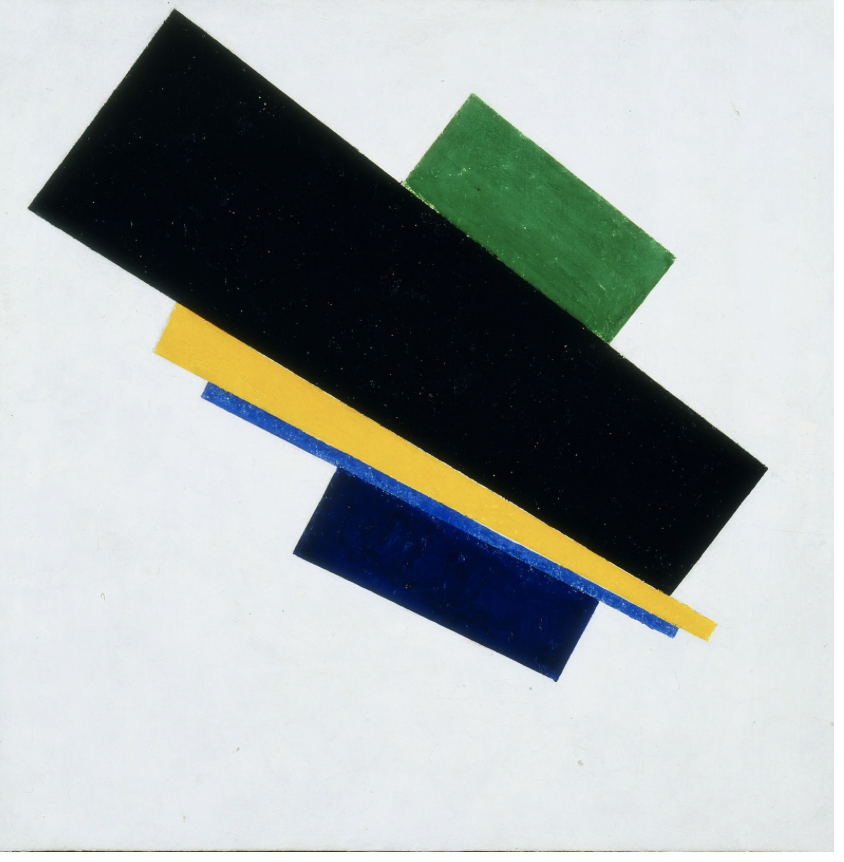
Kazmir Malevich Suprematist painting, 1915, courtesy of Clemens Toussaint/Heirs of Kazimir Malevich
The basic premise was, at the turn of the 20th Century, with the invention of the automobile, airplane, mechanized warfare, the theory of relativity, these changes were so seismic, from 19th Century life, they led to an entirely new world.
I sat in class, at the beginning of the 21st Century, and it was clear such things were happening again.
Just the internet alone, 9/11, and cell-phone-technology, made life almost unrecognizable from the 80’s and 90’s.
So I’d ask, “If life is this different, and our problems are so new, why are we turning to a 30 year old philosophy to explain what the fuck is going on in the world?”
It was less about people battling over race and class, and more the construct that every single sentence anyone says, (or writes,) is so loaded with cultural/identity baggage, that every utterance can be deconstructed, and rendered meaningless.
I wondered what would happen if and when such ideas migrated from the left wing to the right?
(Now we know.)
At one point, in a History of Digital Art class, I proposed a paper theorizing about the impending reality-shift, once images and videos could no longer be trusted, presaging the world of Deep-fakes. (I’d recently read William Gibson’s amazing “Pattern Recognition,” and like many before me, got my big idea from a sci-fi genius.)
The professor couldn’t fathom such a thing happening, nor why it might be important, so she denied my paper idea, and I wrote about Jackson Pollock, Carl Jung, and the Collective Unconscious instead. (Meaning, the part of the human psyche we all share.)
After Marsha’s class, I went around quoting Kandinsky, talking about how art was driven by “Inner Necessity,” and I still use that phrase with my students today.
In 2021, identity politics are of paramount concern again, and over the last month or so, I can not count how many people have wanted to talk to me about it, always confidentially.
(Off-the-record, just-between-us, please don’t quote me, that sort of thing.)
I believe efforts to increase diversity and inclusivity in the arts, in culture, and in our society, are insanely important, and to be commended.
If you’ve been reading this column for 10 years, (or even 5,) you’ll know I’ve always been an “ally,” standing up for disenfranchised people, owning my privilege, reporting on what’s going on out there, learning about and then practicing outreach, and generally trying to be a good dude.
At the onset of the #MeToo movement, I began alternating male and female book artists each week, for a year, and put a submission disclaimer at the end of each book review, soliciting books from artists of color, and female artists, so we could maintain a balanced program.
And still, someone came at me recently, accusing me of having never, not even once, reviewed a book by an artist of color.
It was easily disproven, but still, I responded politely, offered to have dialogue, and respected the other person’s opinion.
(Because in 2021, antagonizing anyone who’s that wound-up never seems to work out well.)
But the reason everyone wants to talk to me about this, (secretly,) is there seems to be a fervor for downgrading or degrading straight White male artists, which feels like it’s bordering on vengeance more than reason.
(Or at least, the idea that such people no longer “deserve” opportunities has become conventional wisdom.)
I’ve compared it to something my people, the Jews, have done, as the Israelis got a country due to 6 million dead in the Holocaust, but then become occupiers and racists of the highest order. (Denying basic human rights to Palestinians, and Israeli citizens of Arab descent.)
Hell, a few years ago, I even tried to re-brand myself as Jewish-American, rather than be known as a White Guy, but it doesn’t seem to have stuck.
As usual, I’m working up to a point, so please bear with me, as this has been on my mind lately, and I always try to find (and share) the nuance in difficult situations.
(While others have their heads hiding behind parapets.)
So allow me to reiterate: it is inherently good that so many people are now going out of their way to cultivate opportunities and support for, to honor and respect BIPOC artists.
All good.
But maybe, just maybe, the world will be a better place if we take some advice from Jesus, and the Golden Rule?
Is that such a radical concept?
I know this article might be controversial.
I get it.
So let’s give it some context.
Just last week, I went to Albuquerque to see two museum exhibitions, and speak to my friend Jim Stone’s Intermediate Photo Class at UNM.
As soon as I got to the city, I headed to the excellent, criminally underrated Albuquerque Museum, (in Old Town,) the site of the exhibition that launched my art career in 2008.
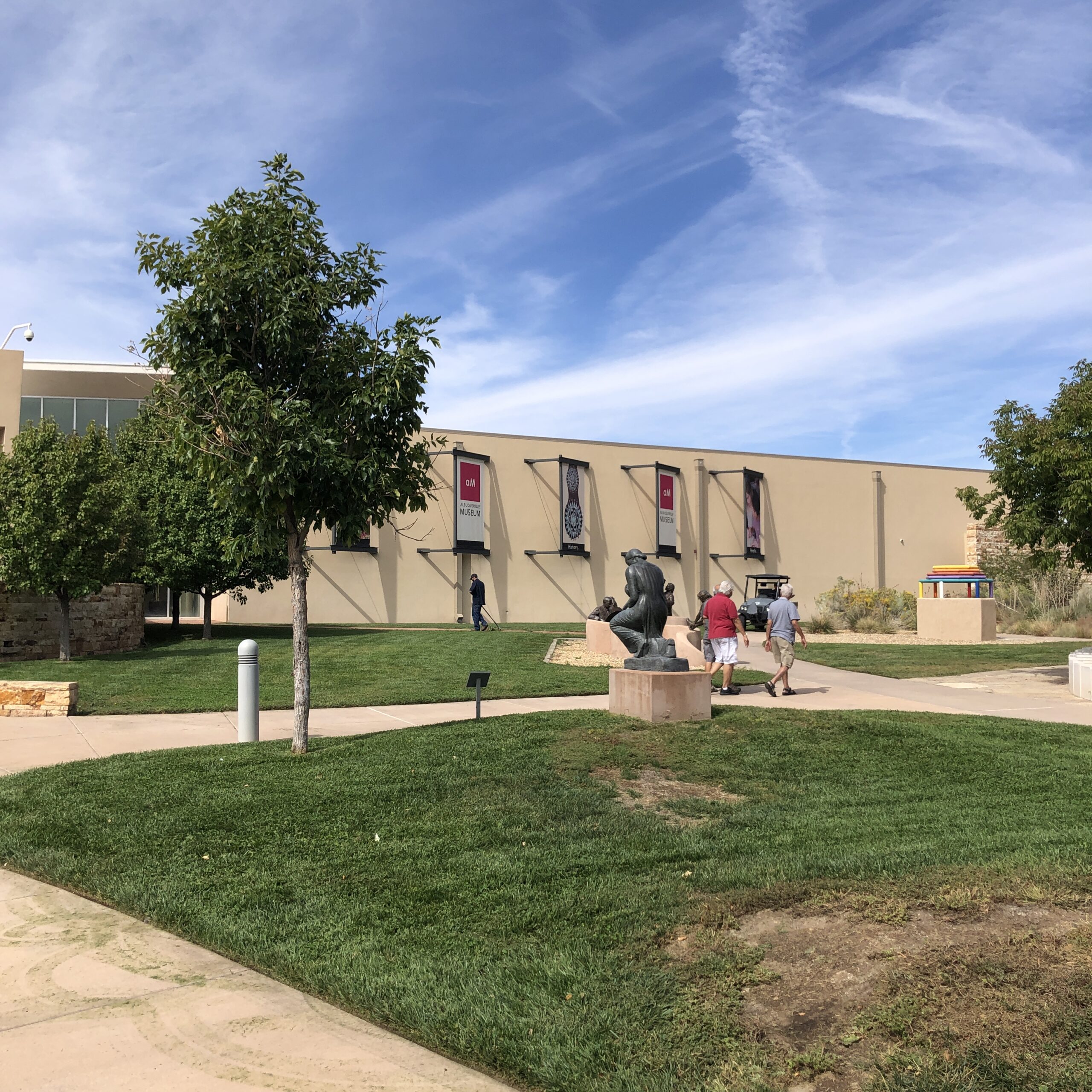
The Albuquerque Museum
(Though that’s not why I love the place. It’s a genuinely great institution.)
I met up with Adrian Gomez, the arts and culture editor of the Albuquerque Journal, as we’d hit it off when he interviewed me for an article about my work last year.
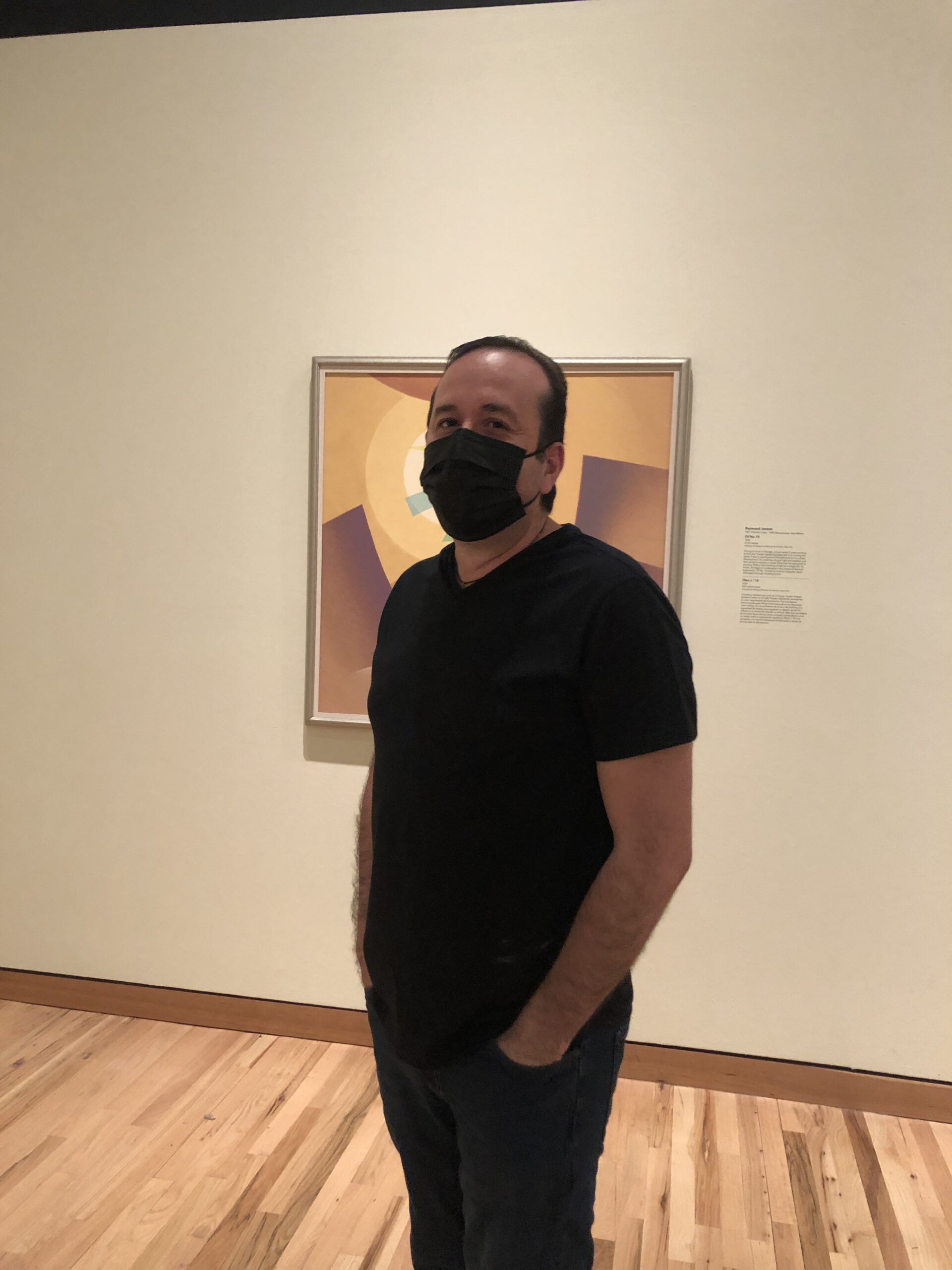
Adrian Gomez at the ABQ Museum
Adrian and I come from very different backgrounds, and had never spoken before the interview, yet we vibed immediately, and stayed in touch via IG DM’s, and the occasional text.
Though we’re both of the same gender, and love art, we had little in common, beyond a shared sense of morals/ethics, a believe in respecting others, and perhaps an artsy-hipster-energy that is less common in Northern New Mexico than you might think.
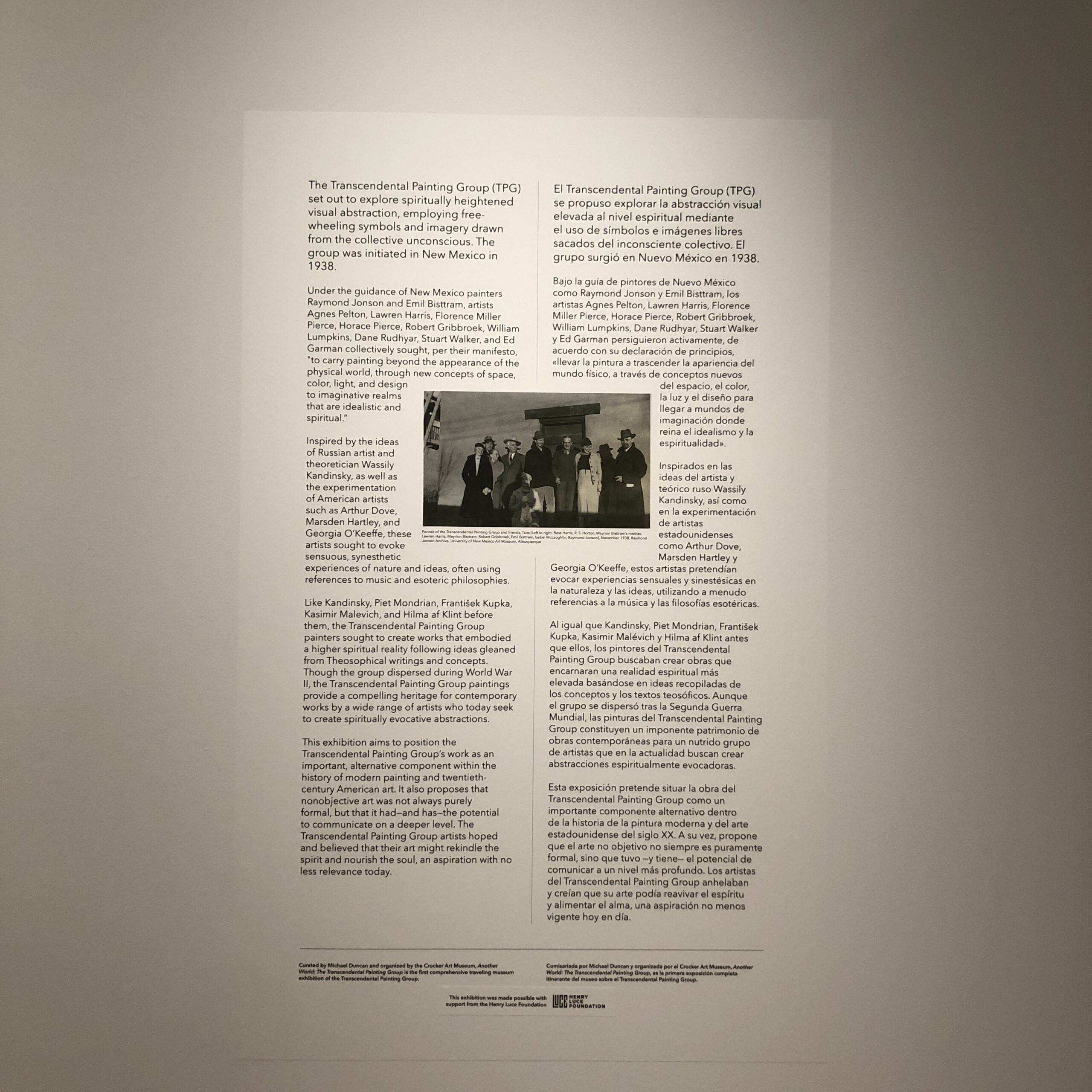
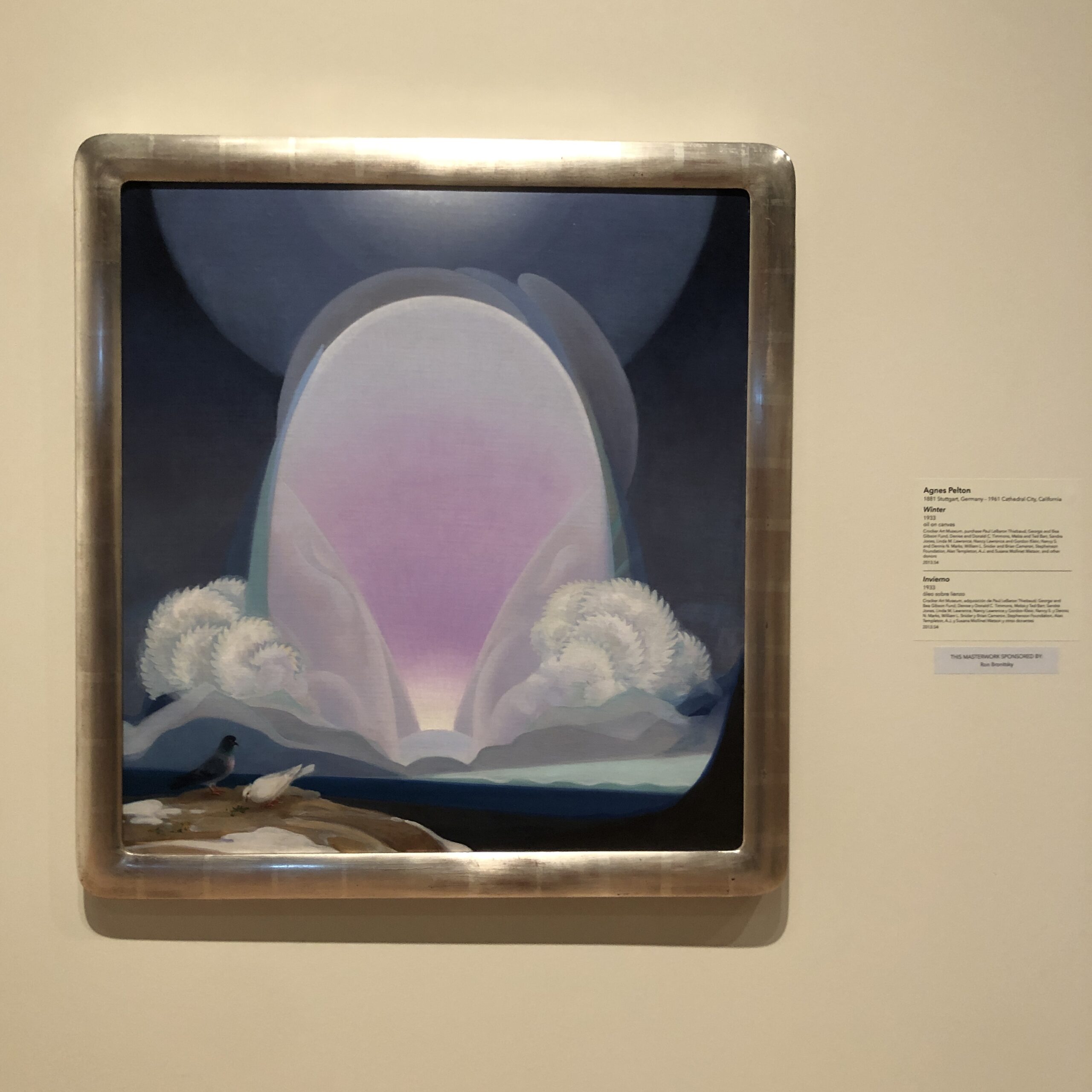
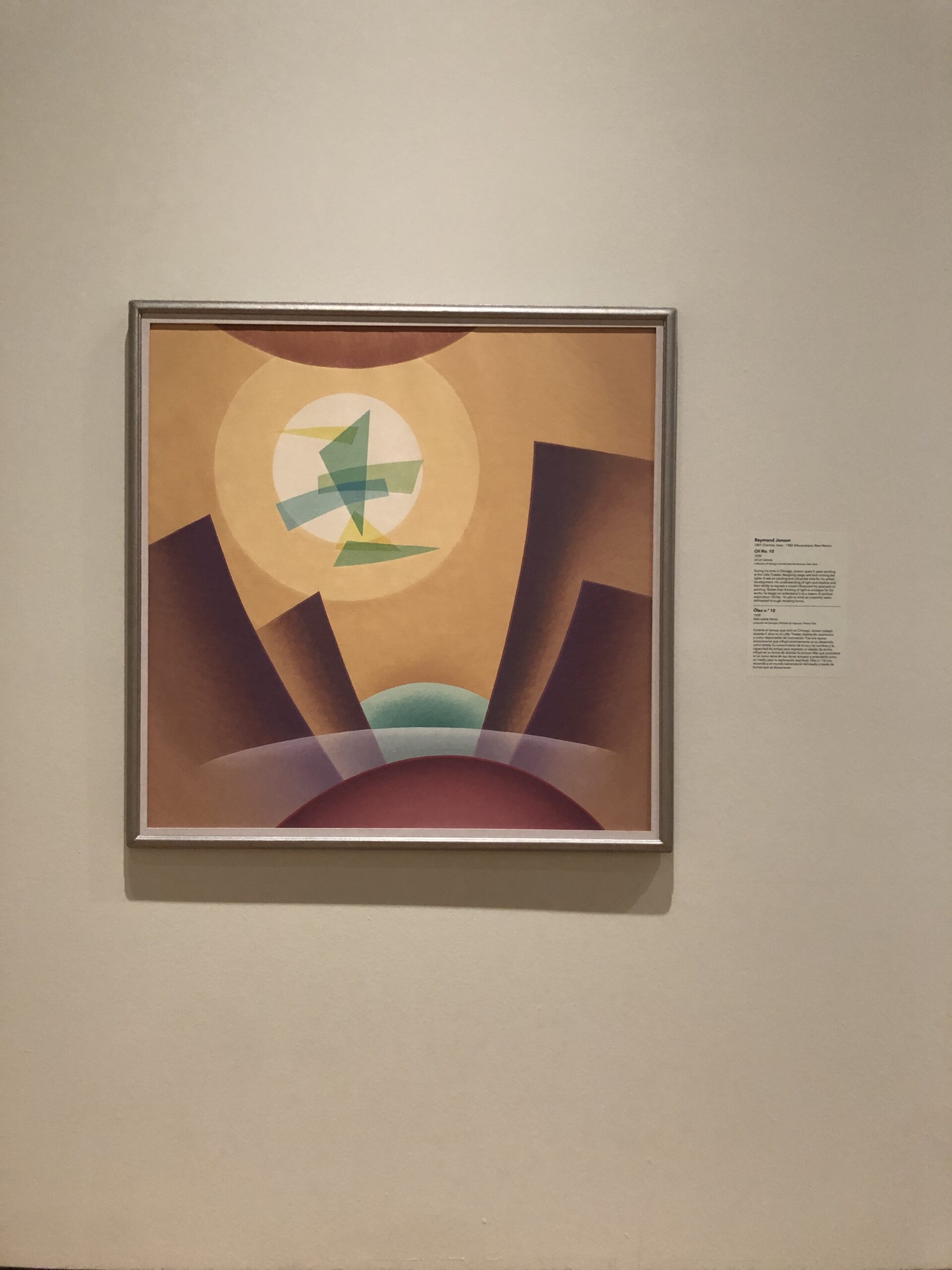
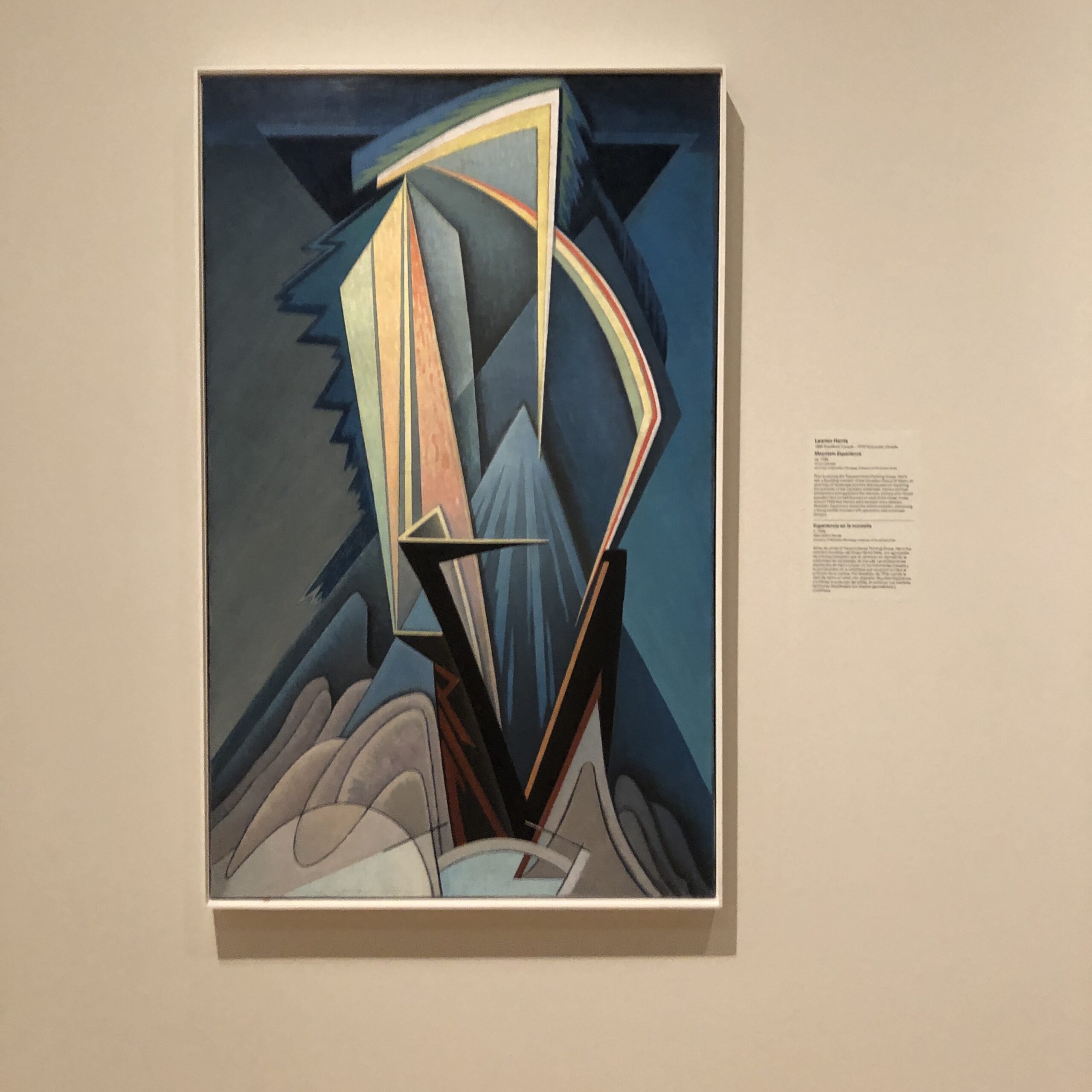
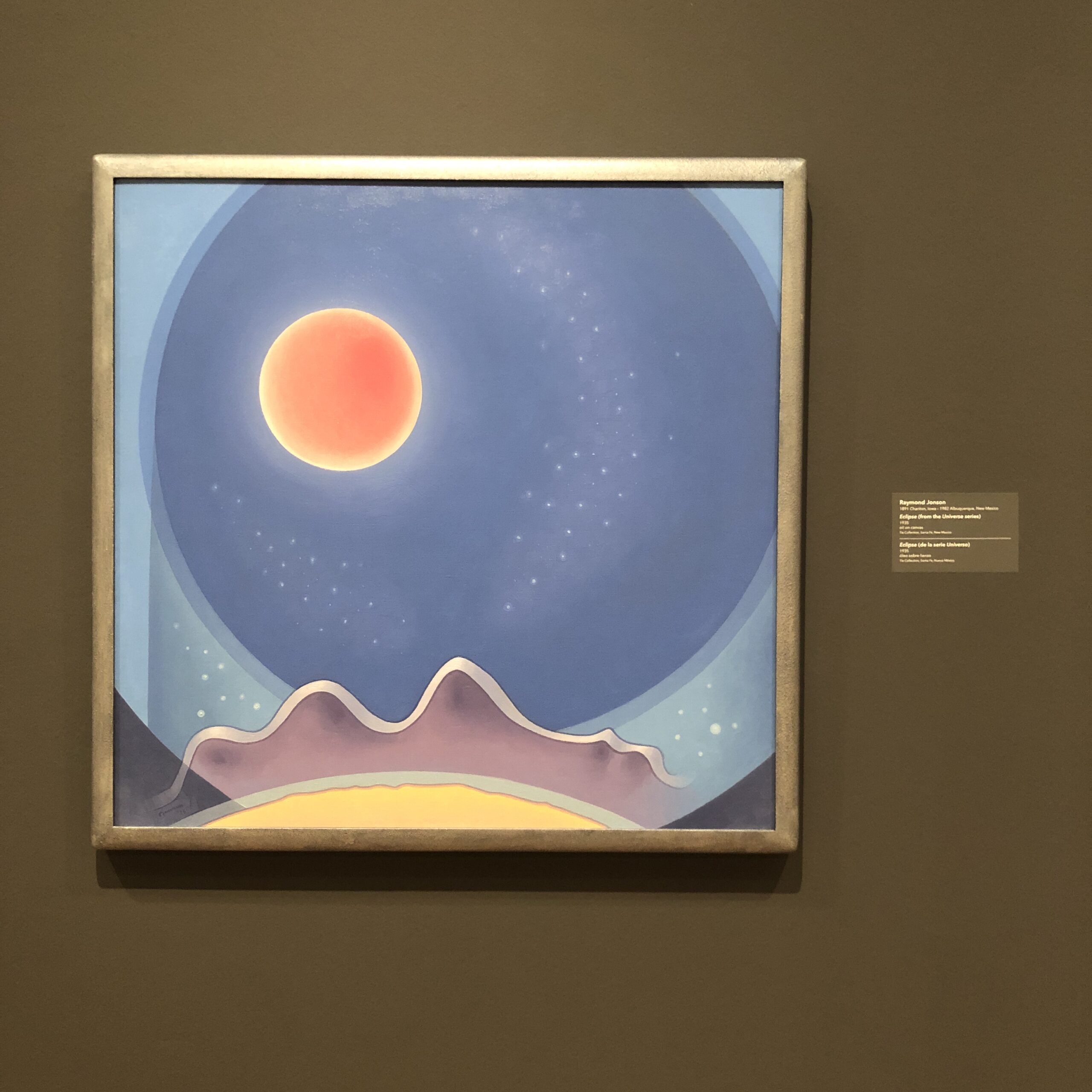
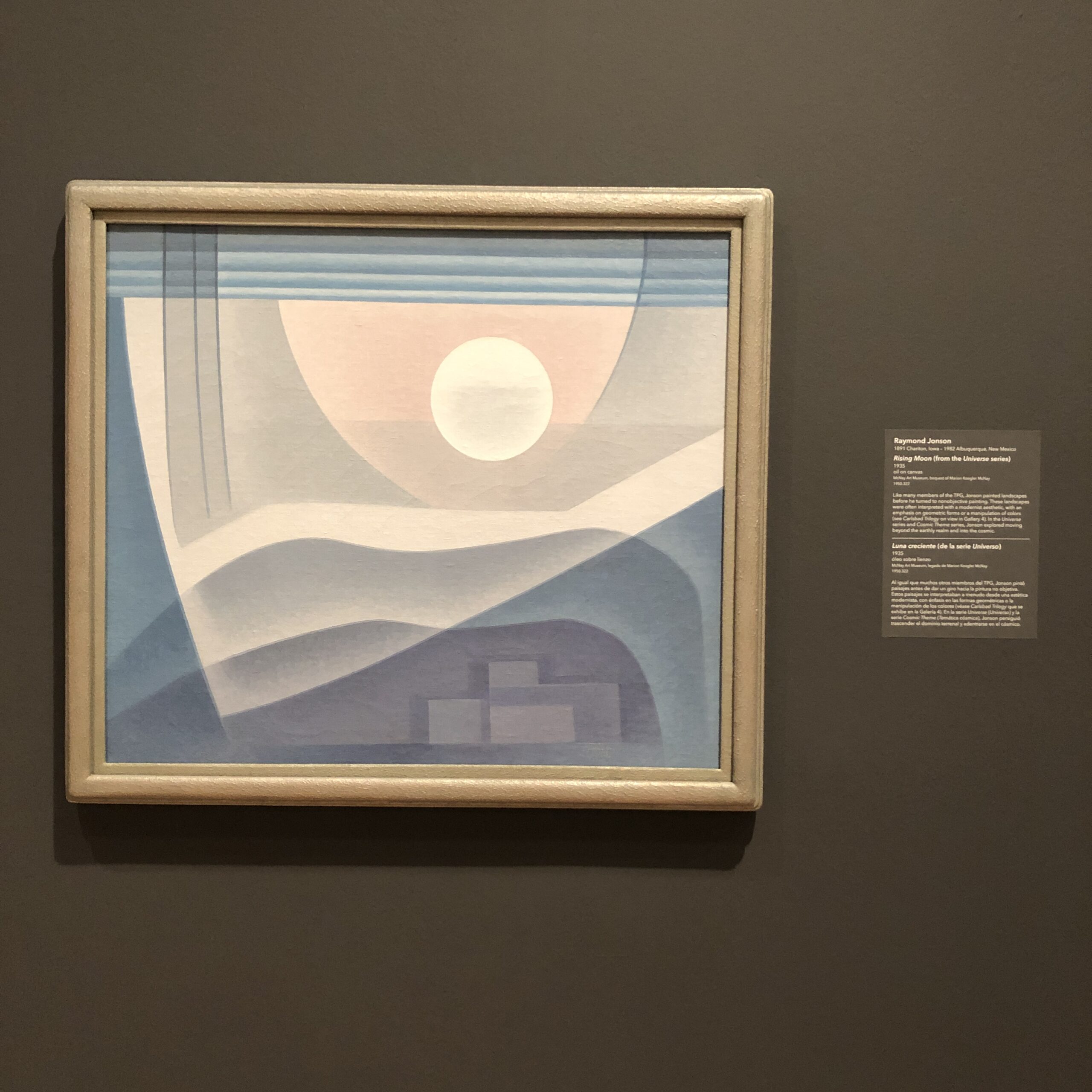
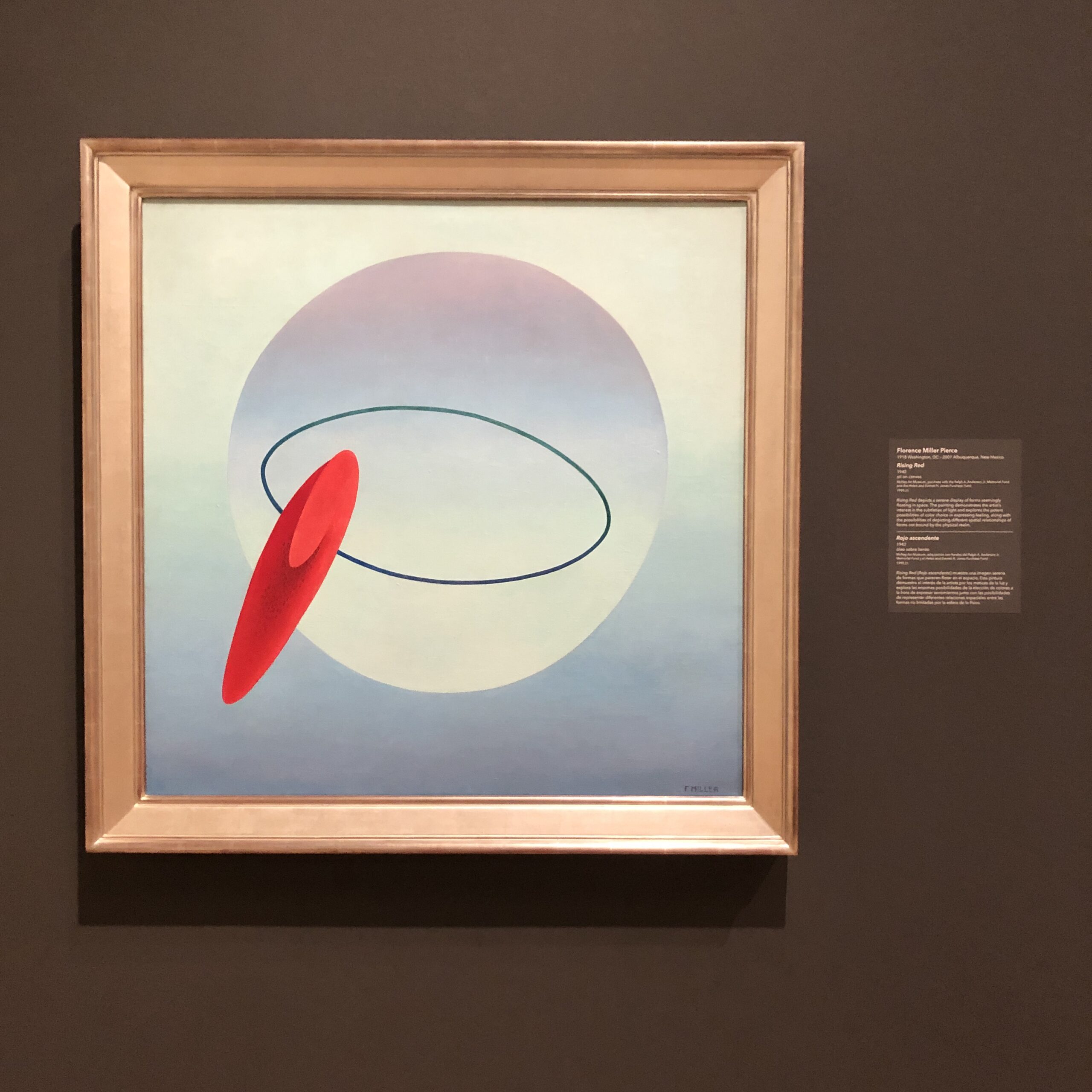
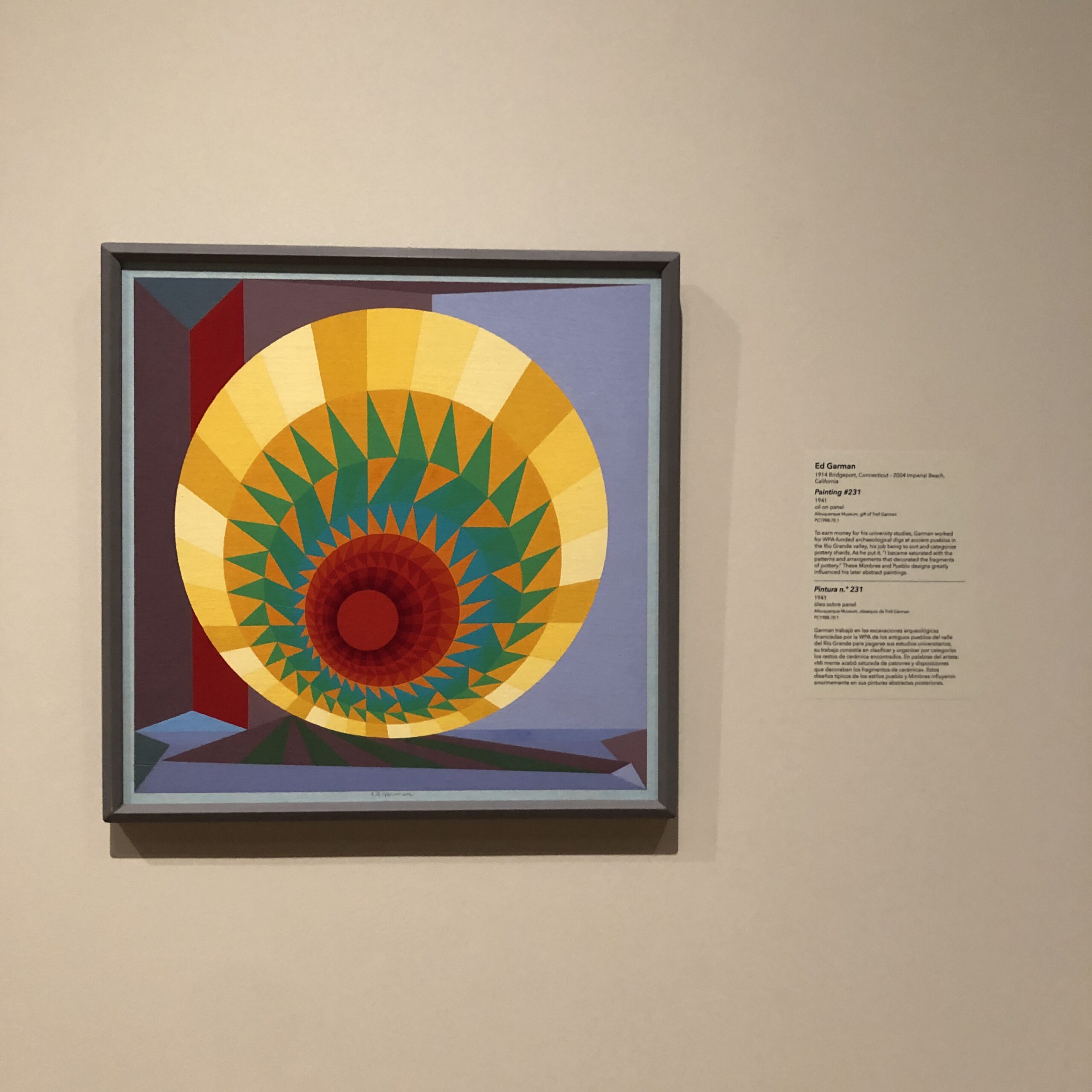
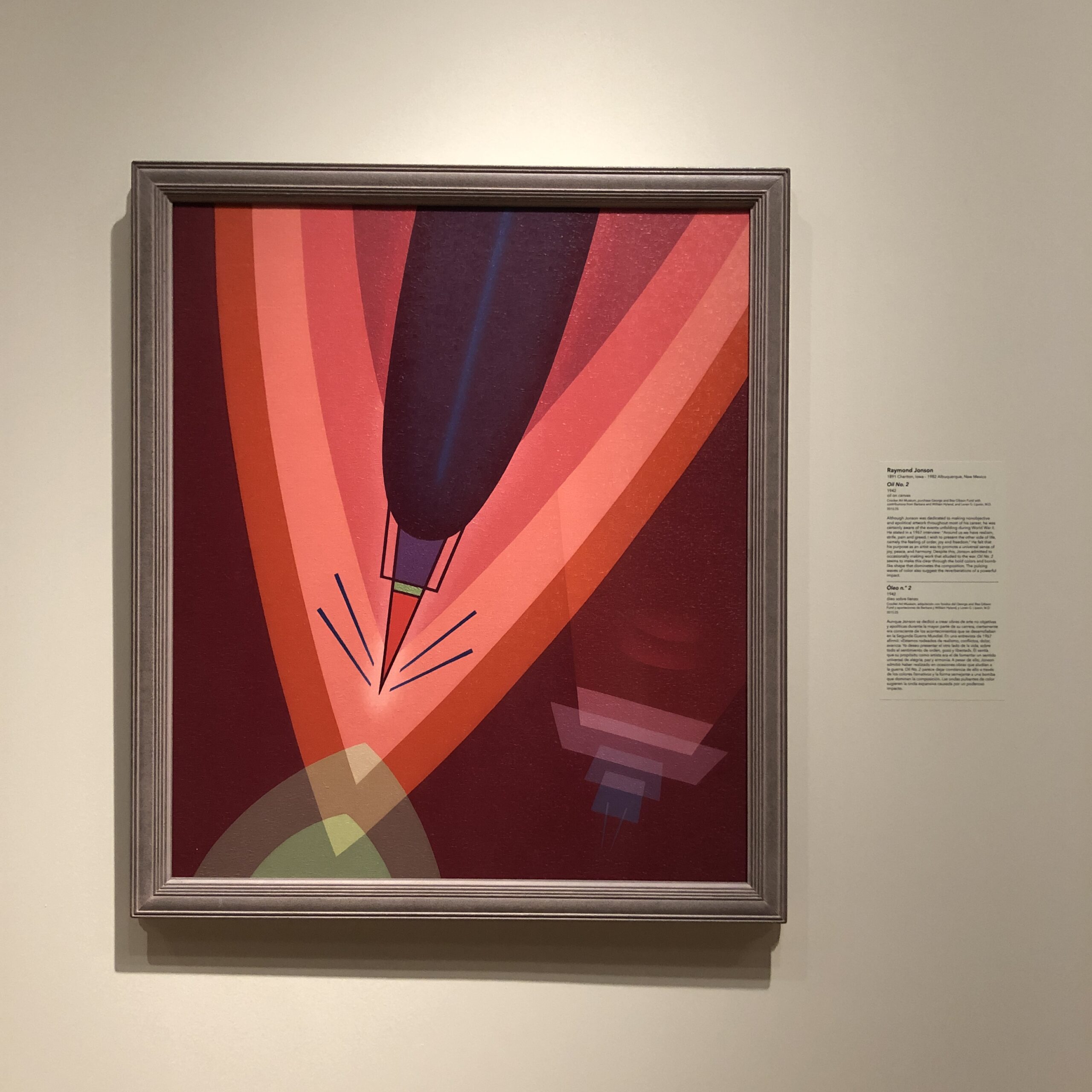
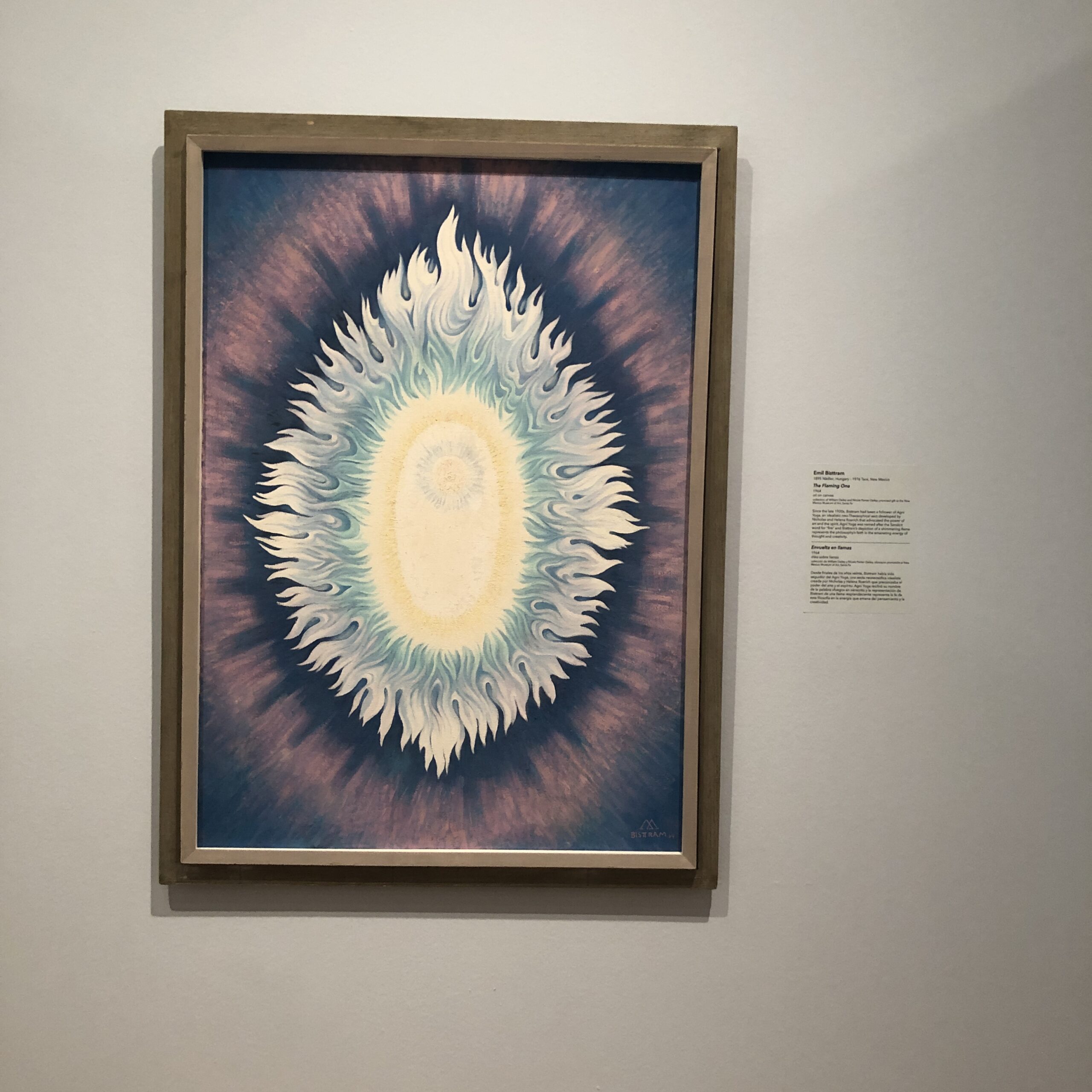
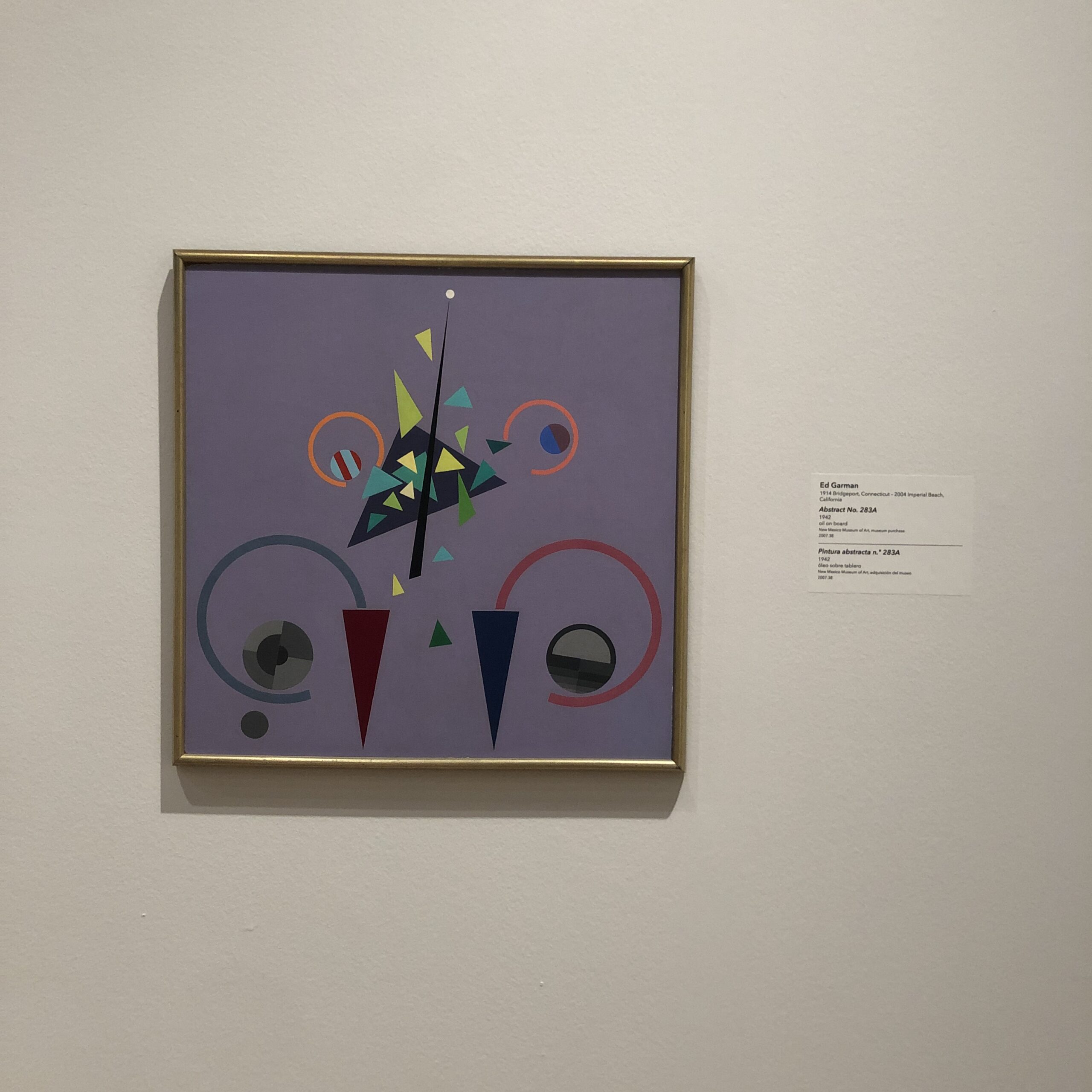
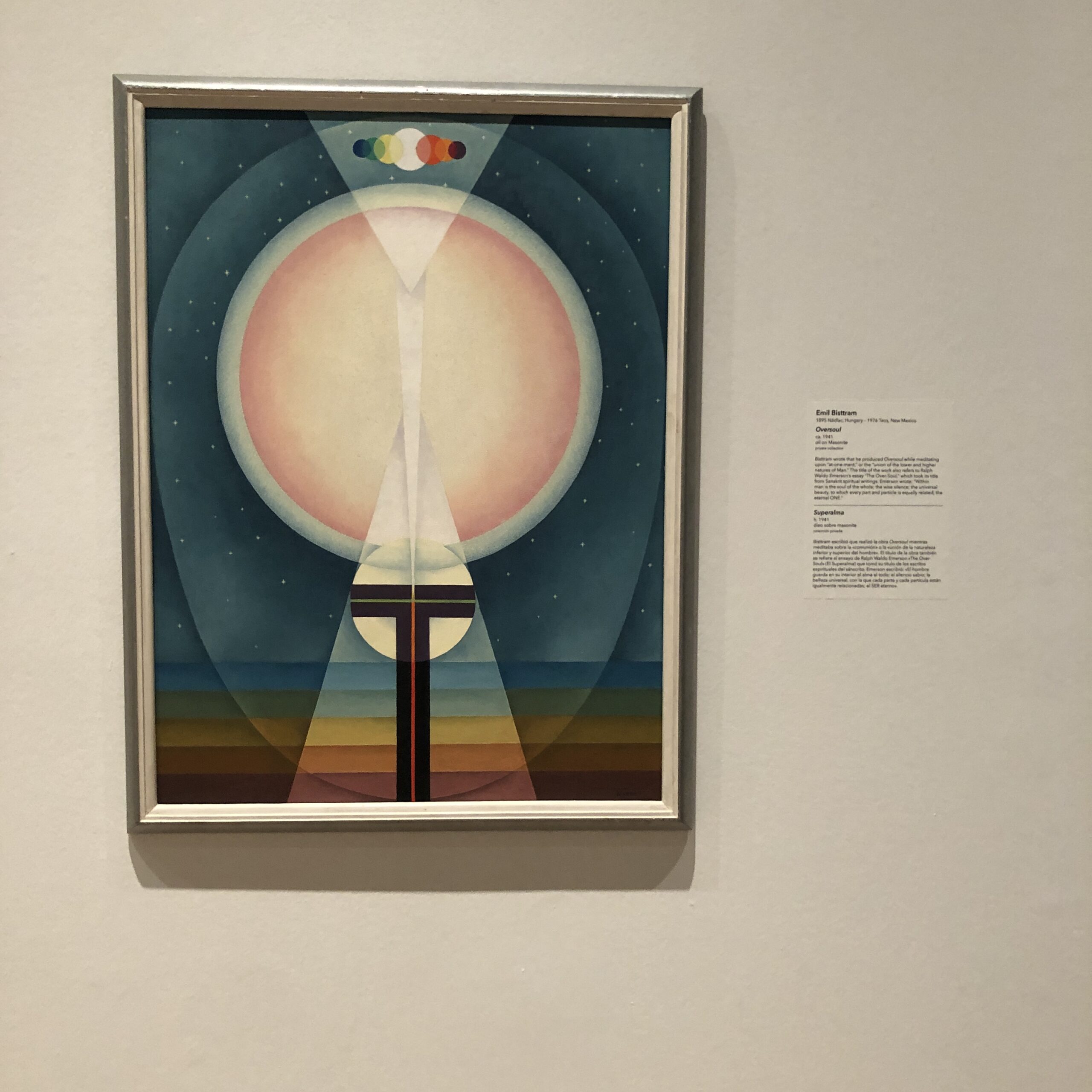
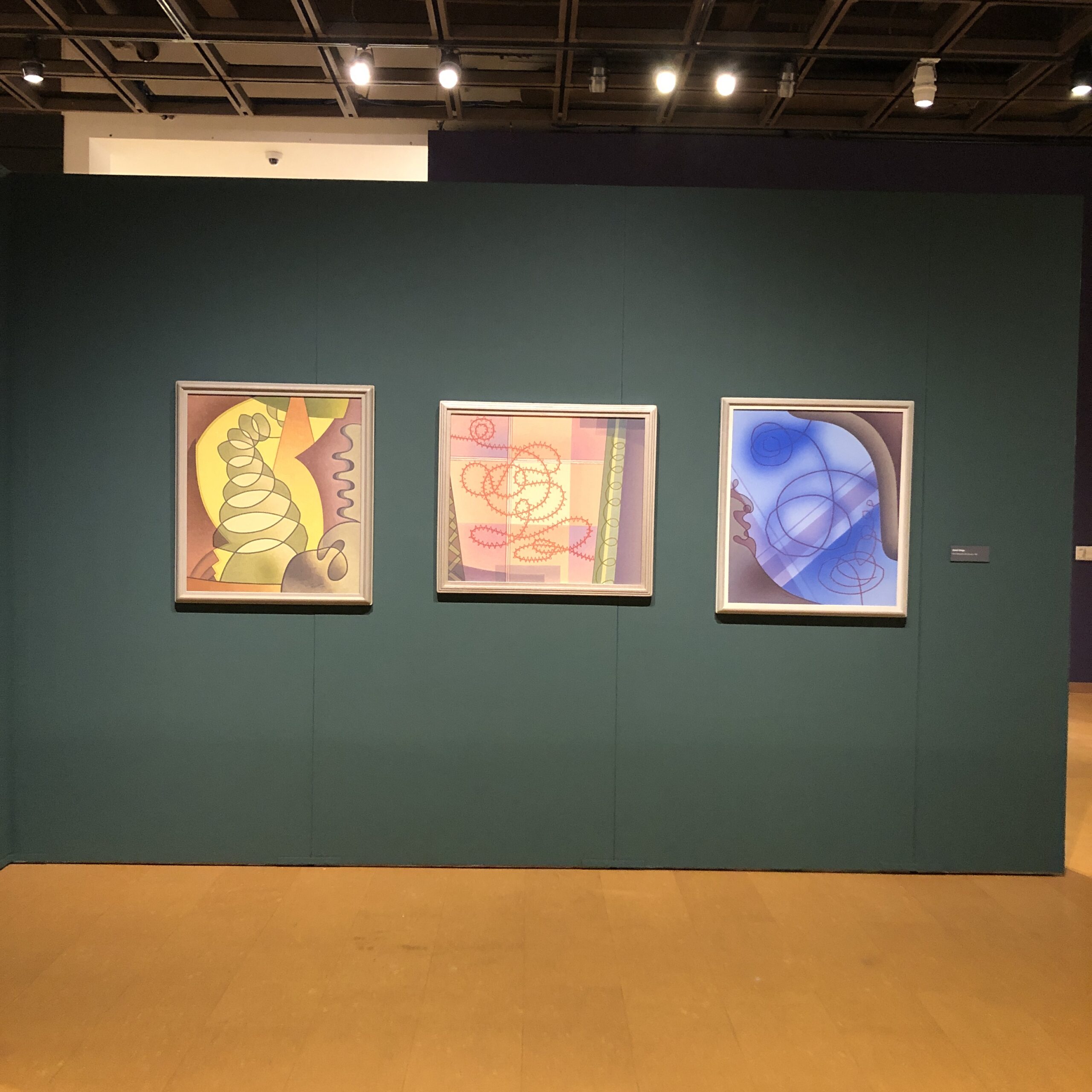
We were there to see “Another World, the Transcendental Painting Group,” a show that has unfortunately since closed, which featured Transcendental Paintings by a NM based art movement in the not-quite-mid 20th Century.
Founded by Raymond Jonson, who was also a leading arts educator at UNM, the group made mostly, (but not entirely) abstract paintings that used color theory, and shapes and forms, to communicate spiritual energy. And the exhibition featured work by Jonson, Emil Bisttram, Agnes Pelton, Lawren Harris, Florence Miller Pierce, Horace Pierce, Robert Gribbroek, William Lumpkins, Dane Rudhyar, Stuart Walker, and Ed Garman.
These paintings, which were heavily influenced by the early abstractionists like Kandinsky, Malevich, O’Keefe, and Arthur Wesley Dow, (who taught O’Keefe at Pratt,) were about mining the aforementioned Collective Unconscious, and the ineffable, mystical powers that exist all around us, but are never seen.
They tried to use art to tap into a universality of experience, and of the Universe itself, things often undervalued when we reduce people to their differences, at the expense of any sense of a larger shared understanding.
Adrian was knowledgeable about art, obviously, and we, the two critics, walked around the huge galleries slowly, feeling each painting, and discussing what we thought was going on.
(Including a running joke about how much opium some of them must have been smoking.)
It was clear some paintings, done in very consistent color palettes, filled with cool blues, lavenders, and such, were soothing, and made us feel relaxed and good.
Those tended to have everything line up together, value wise, with respect to color theory.
Then, images that had jarring colors mixed in, or which were based more on oranges, mustards, and ochres, were less pleasing to the eye, less soothing to the body, but they engaged the mind, as the artists were introducing juxtaposition, or dislocation, which makes you think.
There were female artists included, but if I had to guess, all the artists were White.
Adrian shared stories and insights with me, as we walked, and as that is often my job, it felt wonderful to listen and learn, rather than teach and pontificate.
(As I do here each week.)
As soon as we left the gallery, we walked into an education room, which was designed to engage children and citizens, and it was another example of why IRL museums are so vital to our sanity and quality of life.
We walked around the museum some more, and Adrian dropped knowledge bombs, like the fact that NM was once known as the Sunshine State, on its license plates, before rebranding as the Land of Enchantment, as the richer, more populous Florida took the Sunshine State as its own.
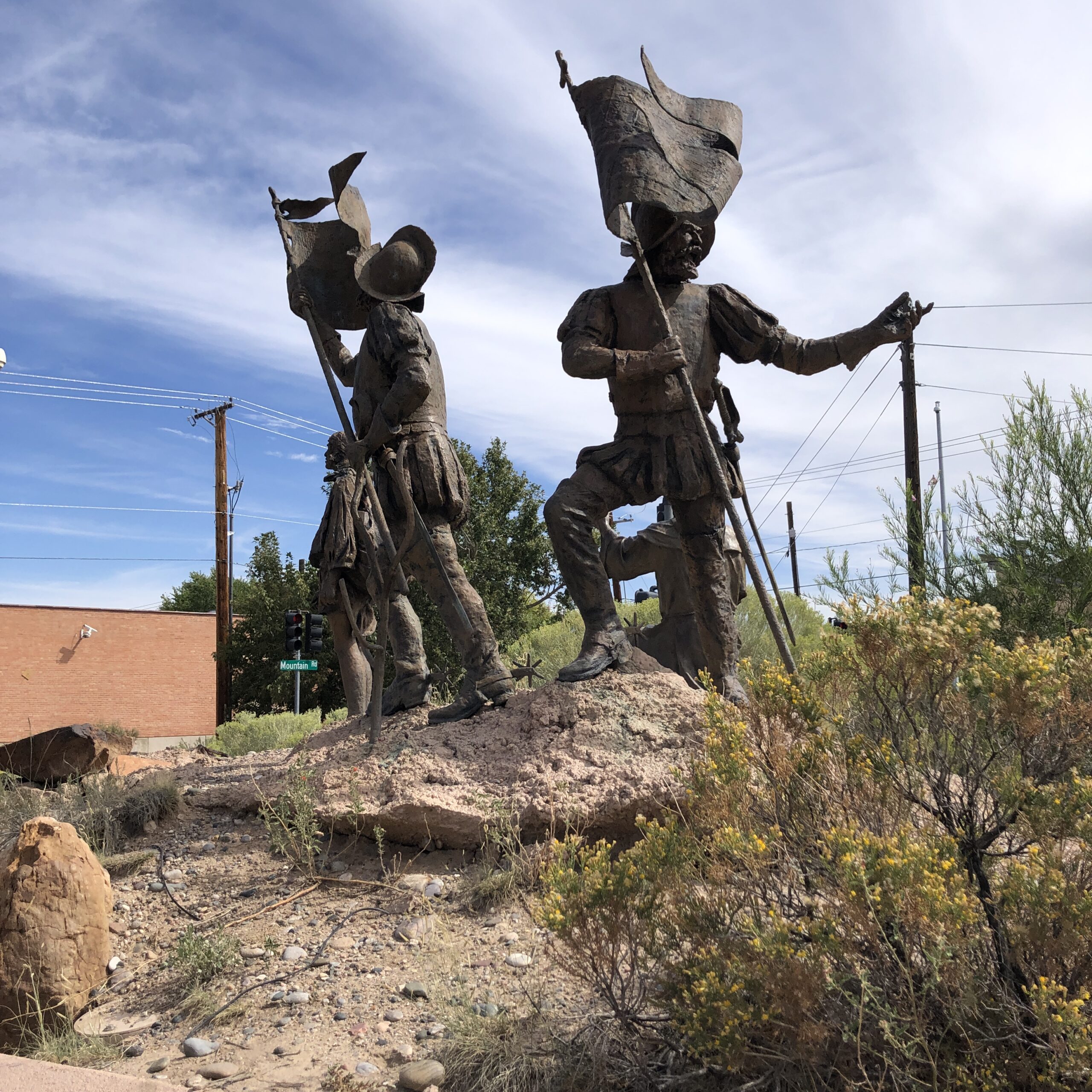
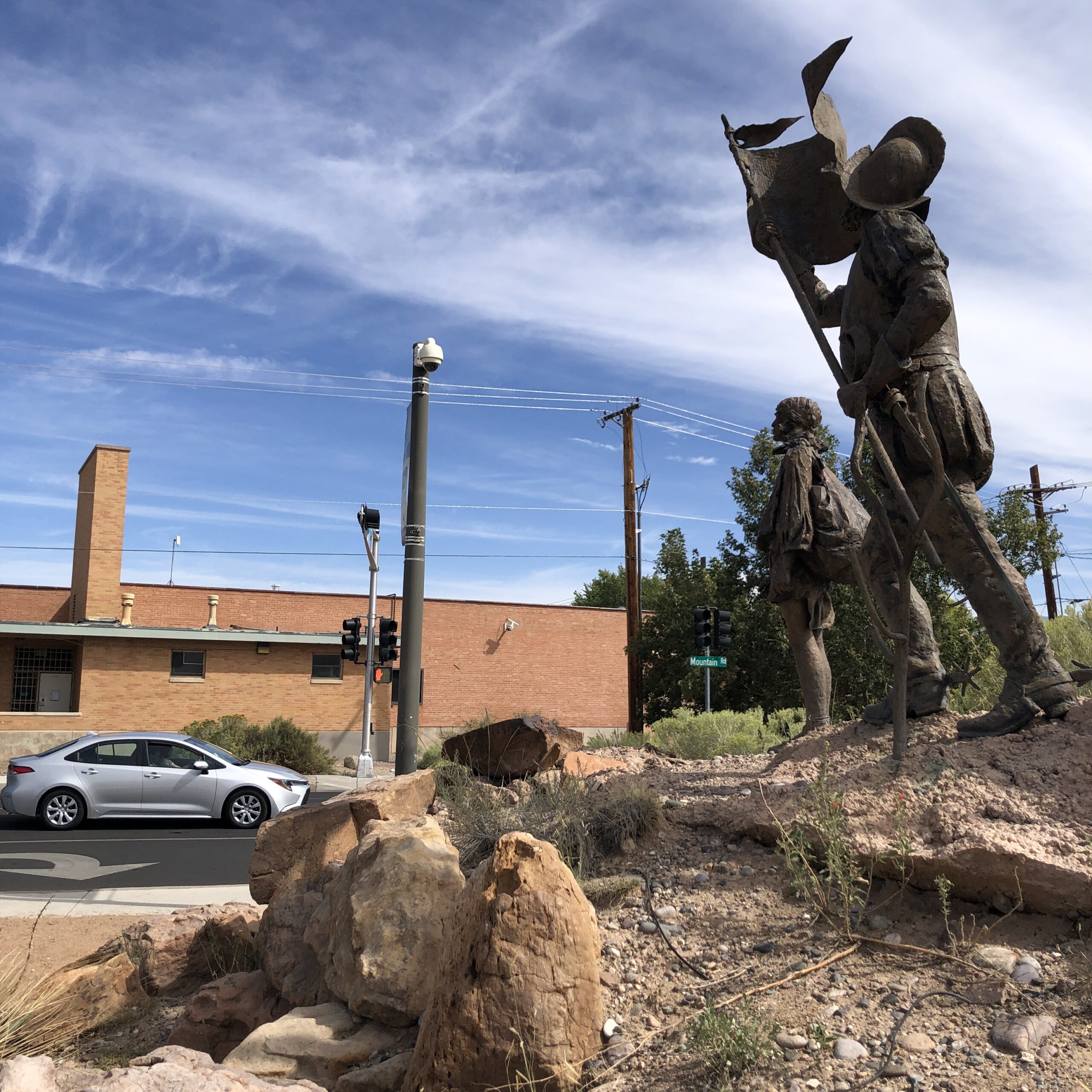
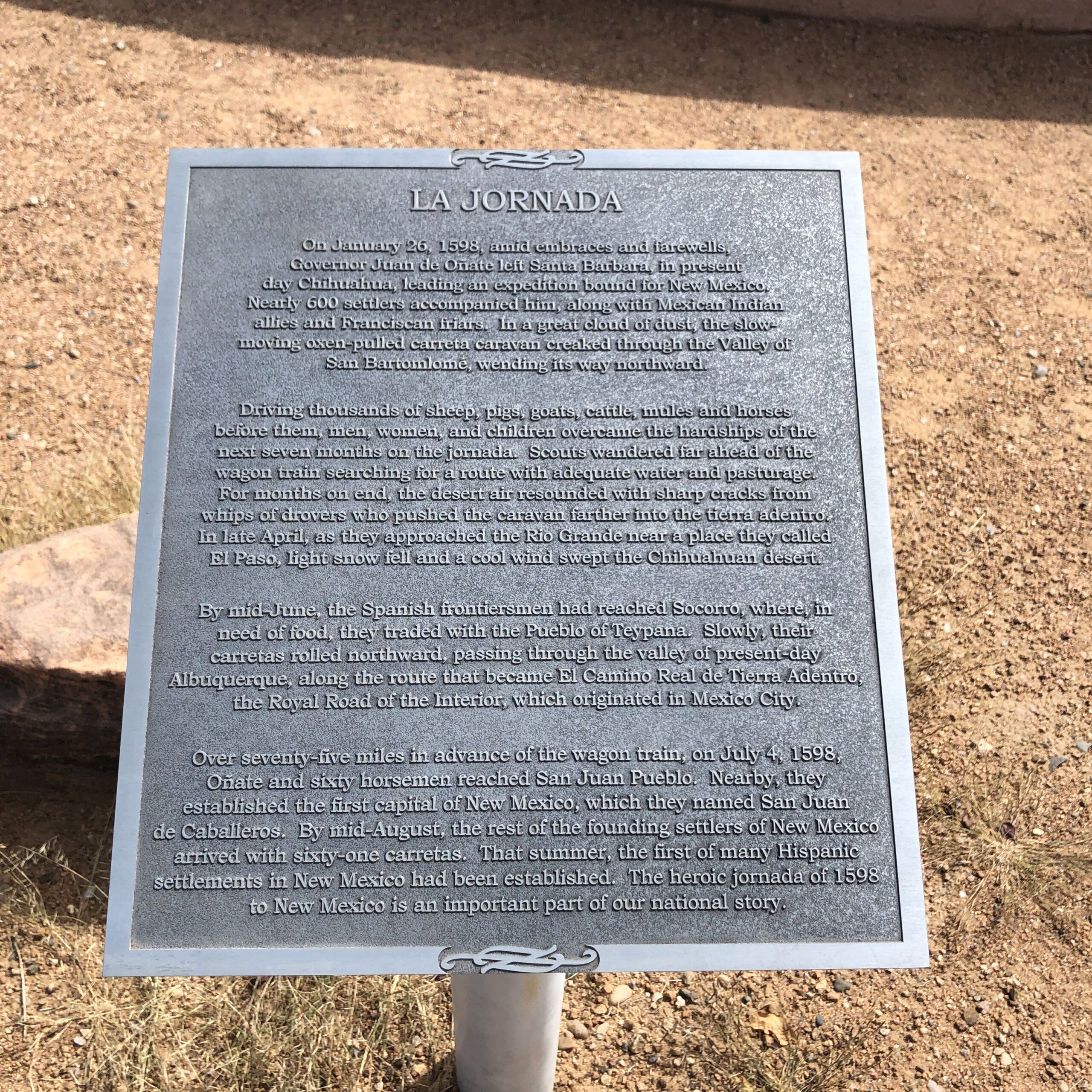
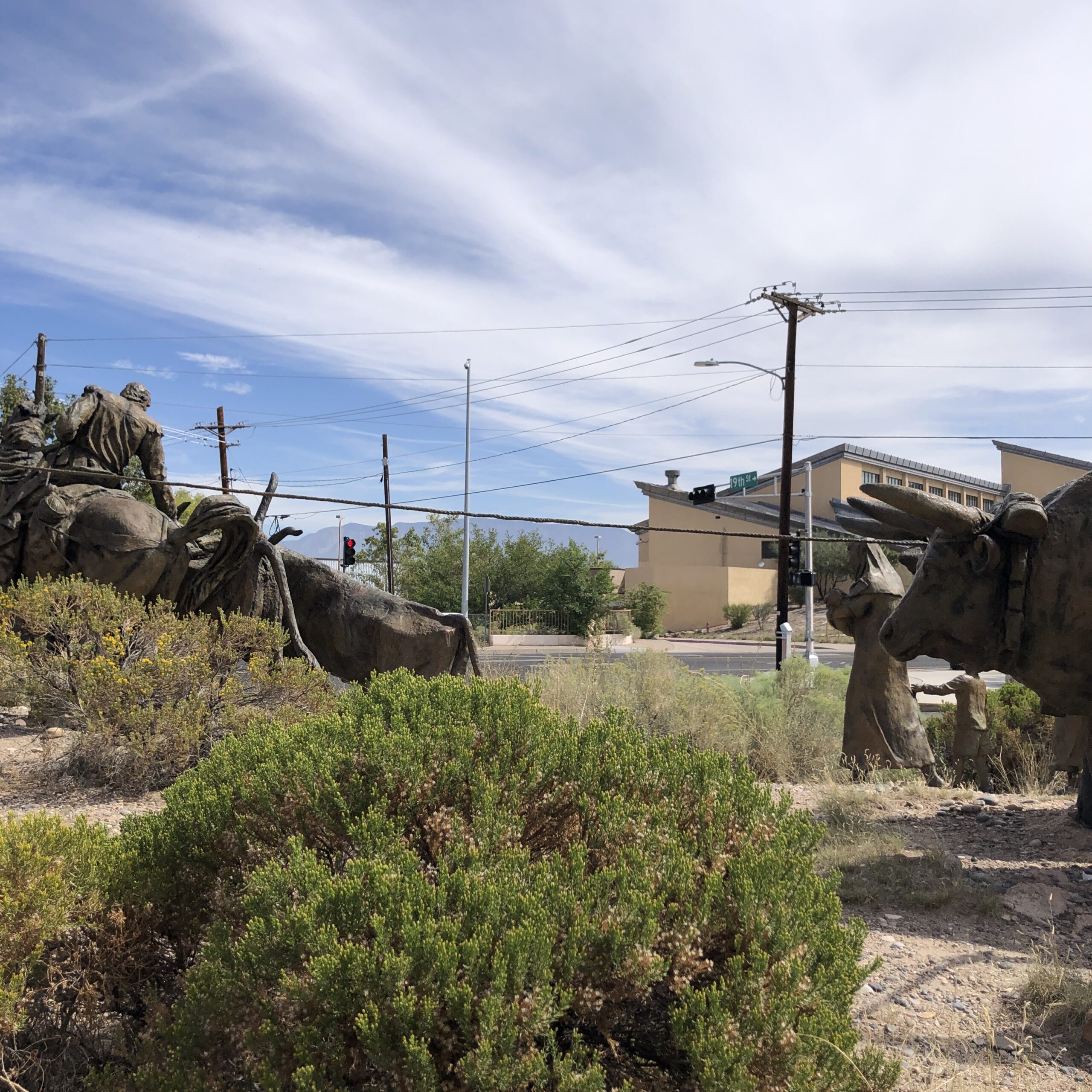
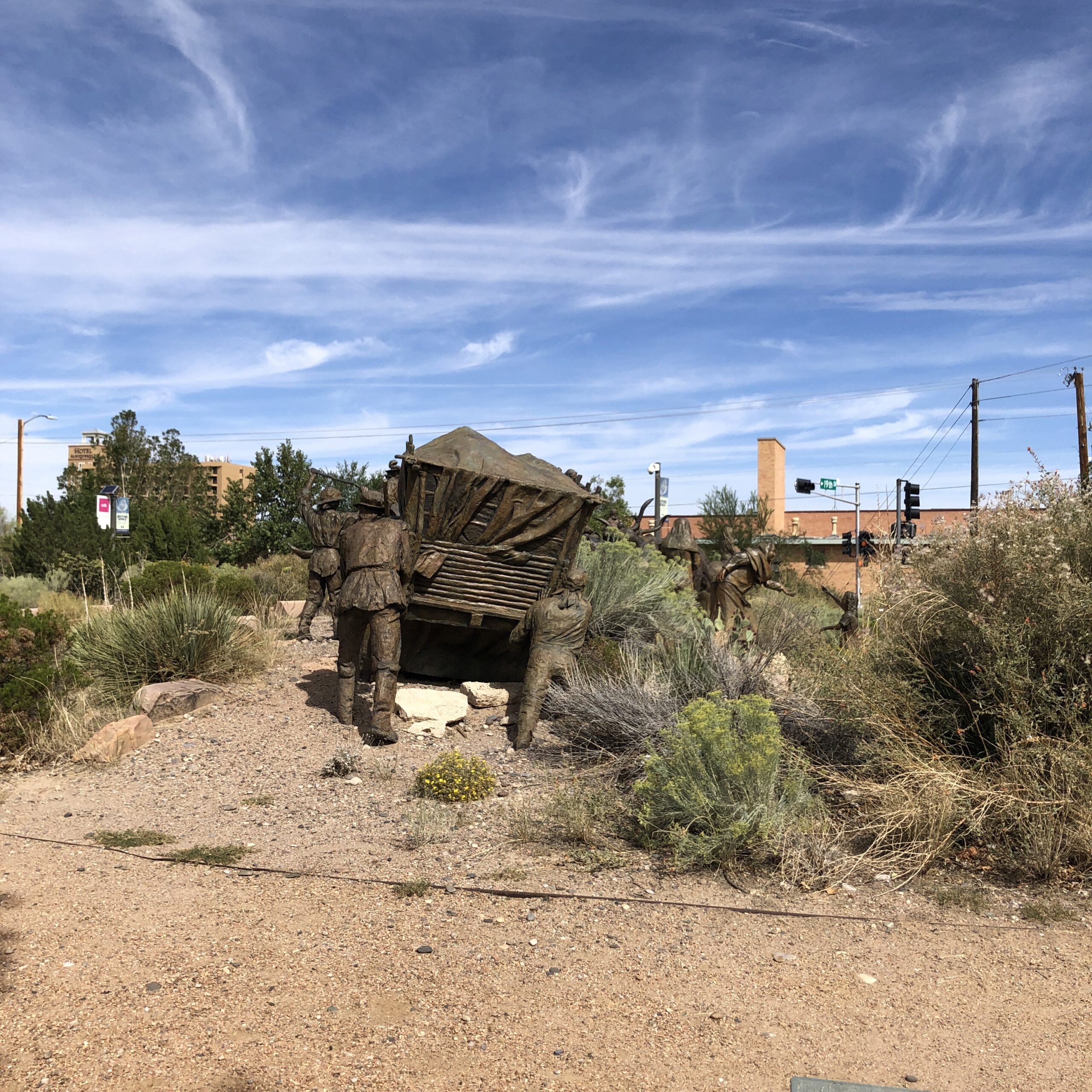
Then, as we left the building, we inevitably walked by the famous bronze sculptural installation of La Jornada, about which I wrote during the riot phase of 2020.
Someone was actually shot in the street, right near this piece of art, because some activists were trying to tear down the statue of Don Juan de Oñate, who violently colonized New Mexico, and a right-wing-psycho gunned a man down. (As a creepy, armed militia stood by.)
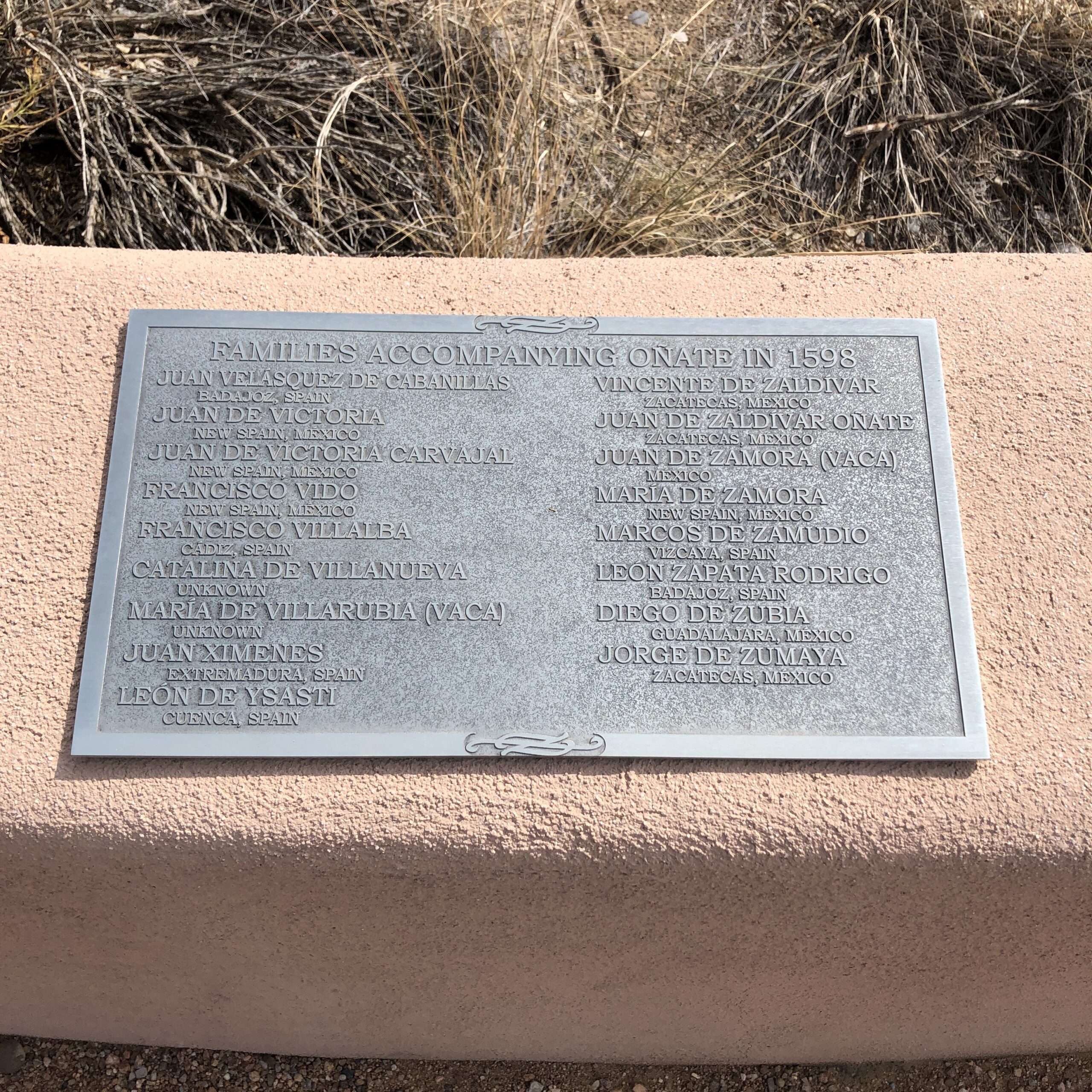
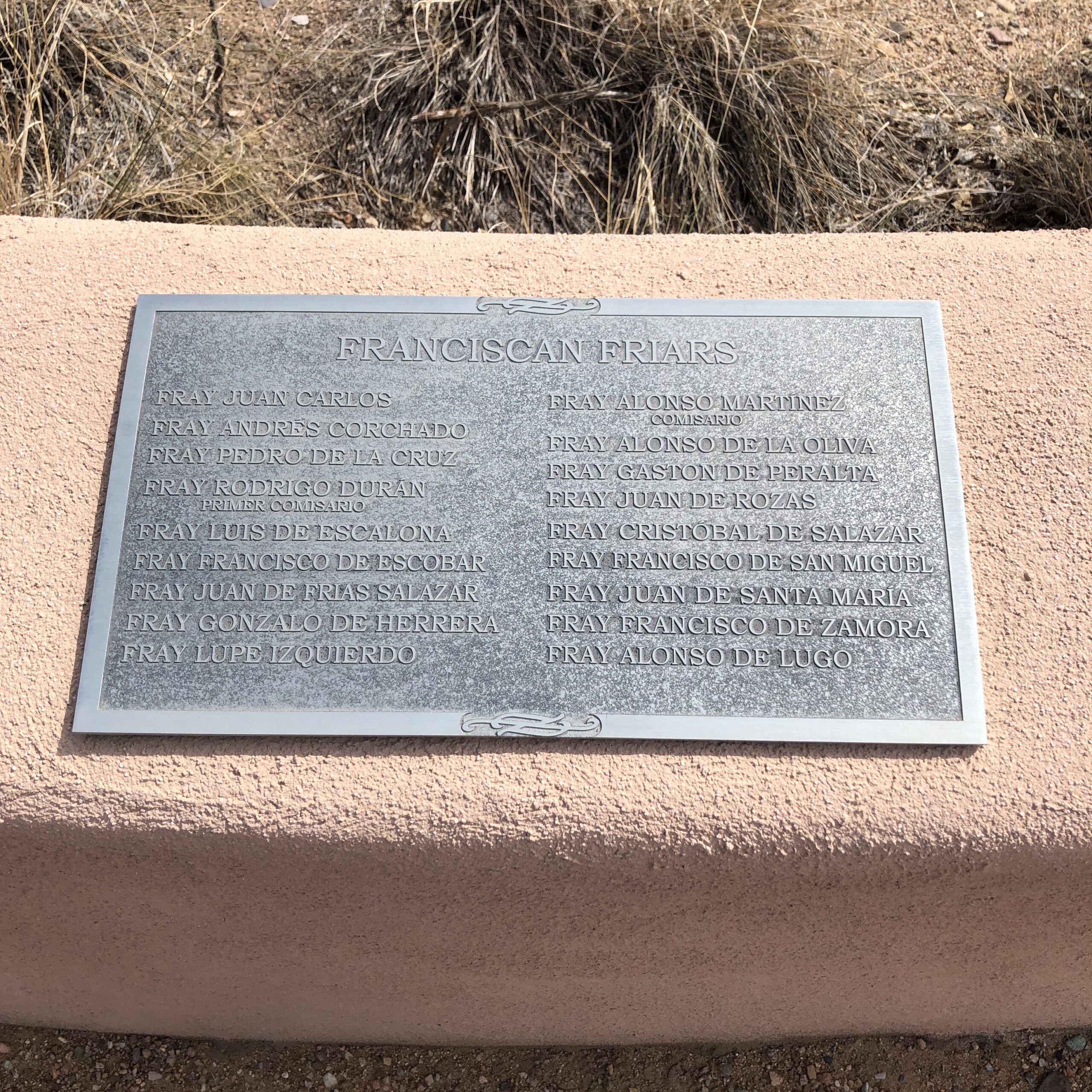
The installation is over the top, as the artists Betty Sabo and Sonny Rivera created a full wagon-train, with conquistadors, cows, and colonists, and it is life-like, and educational, as nearby plaques include the family names of those who came from Spain. (Some of whom were hidden Jews, fleeing the Spanish Inquisition.)
The spot where the Oñate once stood
Adrian and I discussed how complicated the situation was, with Spanish New Mexicans traditionally revering their history, and the Native Americans viewing the same events as tragedy and genocide.
As such, after the riot, they hacked out the statue of Oñate, but left the rest of the art piece, and the bronze-man is now locked-away inside the museum. (Though there are apparently still discussions as to whether to remove the entire installation.)
We compared that type of decision with the subsequent removal of Confederate statues that honored men who fought to preserve slavery in the South.
Men who fought to break up America.
The conquistadors, by contrast, were just like the Protestant English Pilgrims.
The English, Dutch, French, and Spanish carved up this country, wreaked havoc, and killed millions of Native Americans. (Or American Indians, to use the term again popular in the NYT.)
It is the shared history of this country, a society built upon blood, yet as Adrian said, “If they hadn’t come here, I wouldn’t exist.”
And neither would I.
If America had not been colonized, my ancestors would still have been in Europe in the mid-20th-Century, and would all have been gassed, shot or burned alive by Adolph Hitler and the Nazis.
America has created evil in this world, and I have personally written about the injustice of the American Conquest, and the history of slavery, more times in this column than I can remember.
But as an artist, and a critic, I wasn’t so sure that cleaving off Oñate from the rest of a piece of history was entirely the right move.
I understand why others feel that way.
But people getting shot over art makes me think of the Taliban.
Or the Cultural Revolution in China.
Is that really the best we can do?
It was time to move on, so I drove through some California-style-gentrification, and the first California-style-sidewalk-tent I’ve seen in Albuquerque, and got to UNM in time to meet Jim Stone for lunch.
There were big, white tents set up on campus, where musicians practiced violin, or students studied outside, as concessions to our current Covid reality.
It was great to be back at my alma mater, (Post-Bac 1997-99,) and after a nice teriyaki chicken lunch outside the Student Union, I chatted up Jim’s class for an hour.
Jim Stone, outside the UNM Student Union
All five students were either Native American, Hispanic, or female, (or some combination thereof,) and their teacher was a bearded White guy. (Who was named SPE honored educator in 2016.)
We talked about how hard it was for them, having their entire first year online, and they treated me with so much respect, as I did them.
Jim asked me to talk about the festival circuit, and portfolio review industry, as the non-profit organizations that run them offer the opportunity for community, education, and camaraderie after students leave the University nest.
I empathized with the students, and shared my knowledge and passion with kindness, and it felt wonderful to be back in a classroom in 2021.
I try to find nuance in things, as Jews are reputed to “run the world,” yet we’ve been attacked, killed and discriminated against for Millennia.
Growing up, it was implied we should hide our “Jewishness,” for fear of being persecuted, so I don’t really identify as a “person in power.”
But I grew up with some privilege, as I’ve admitted here before, and have always tried to use my platform to support others.
Which I will continue to do.
And starting with my next book review, I’ll re-institute our call for submissions by artists of color, and female photographers.
Not b/c someone suggested I was racist, (when I identify as Woke,) but because outreach is vital.
And just so we’re clear, I previously removed the submission info because I have nearly a year’s waiting list for review, and it seemed unethical to call for books, knowing I’d have to make people wait so long. (Though I do tell that to any artist who looks me up on his/her/their own.)
As my time in ABQ wound down, but before I headed to the Asian market for some groceries, I went to the UNM Art Museum, which recently re-opened after being closed for more than a year during the pandemic.
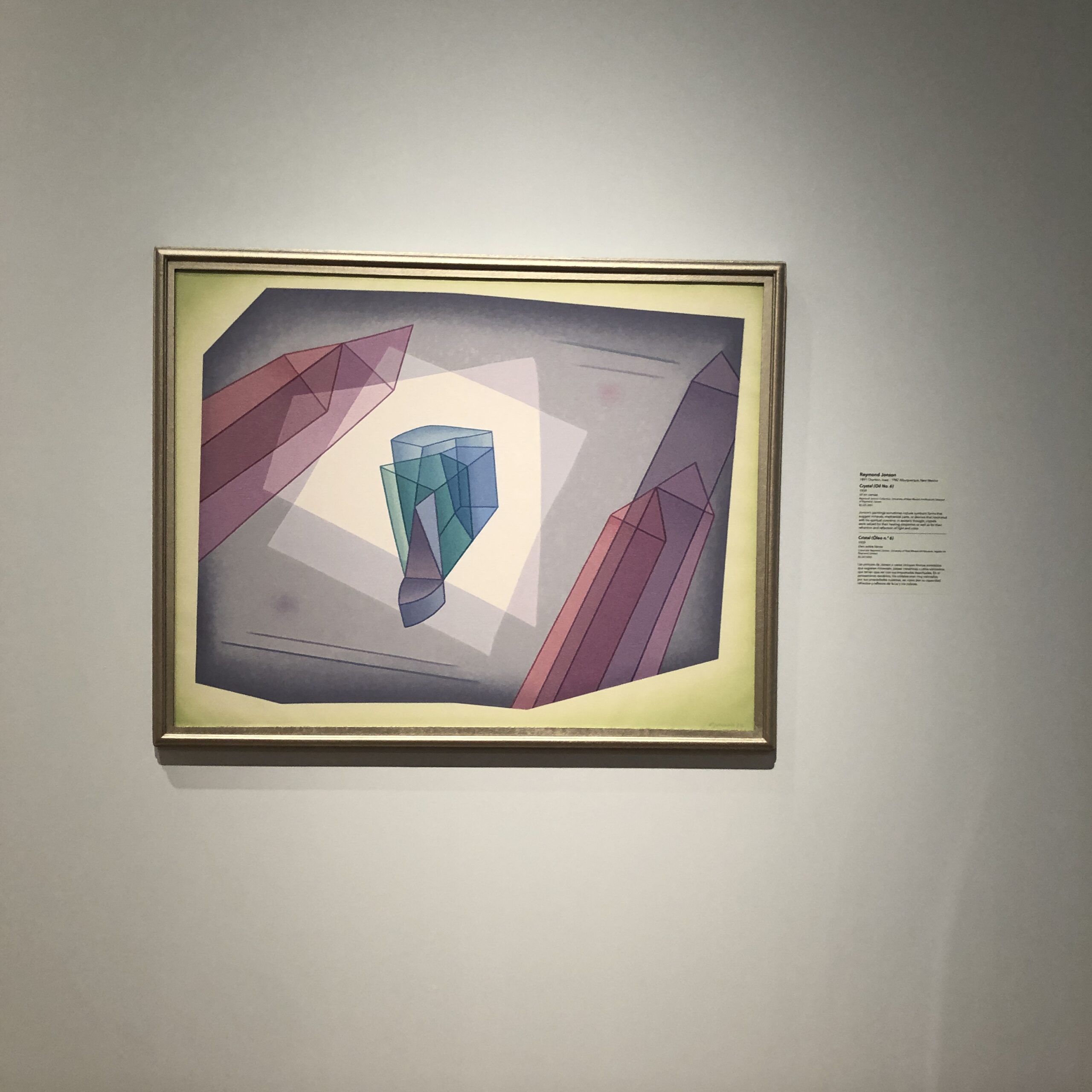
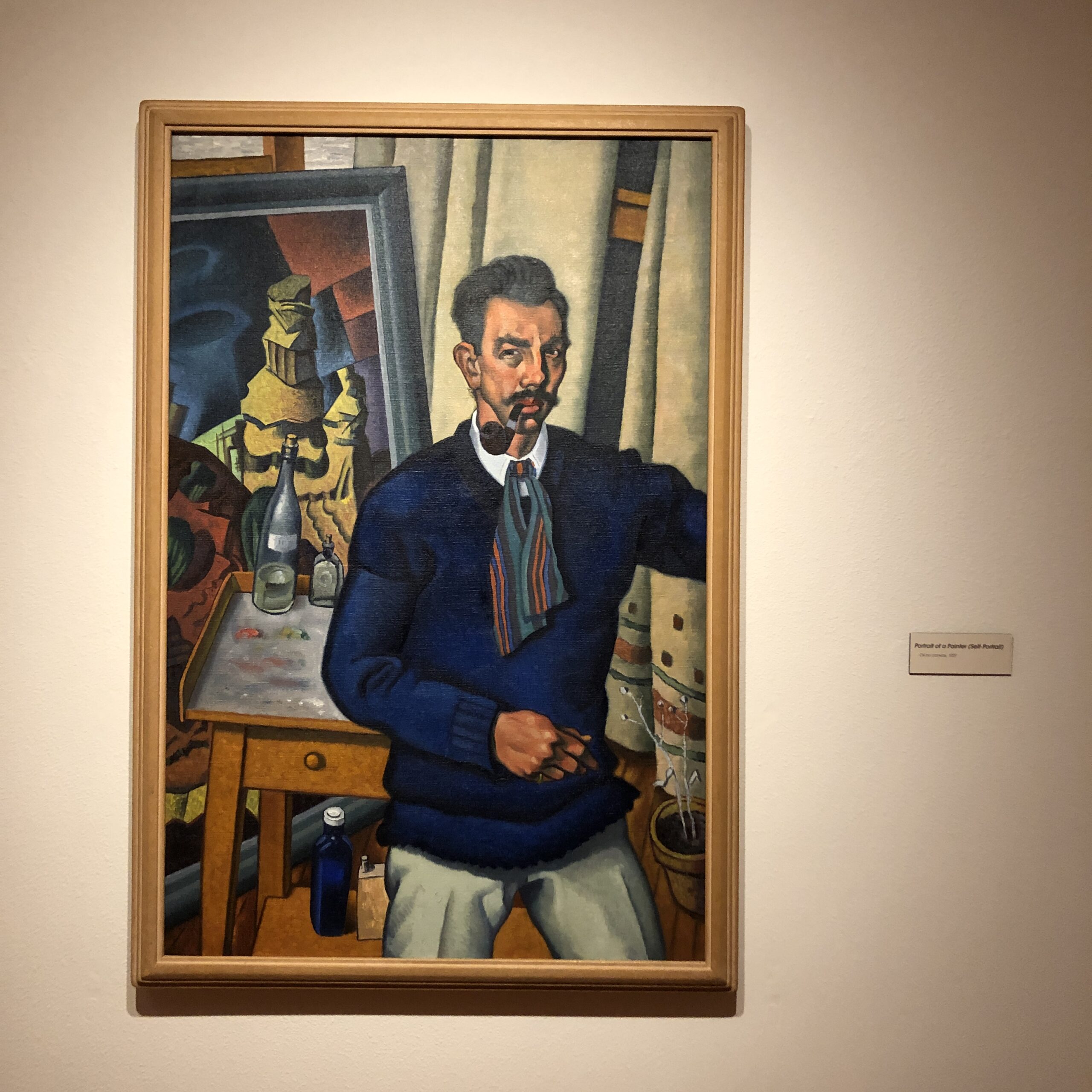
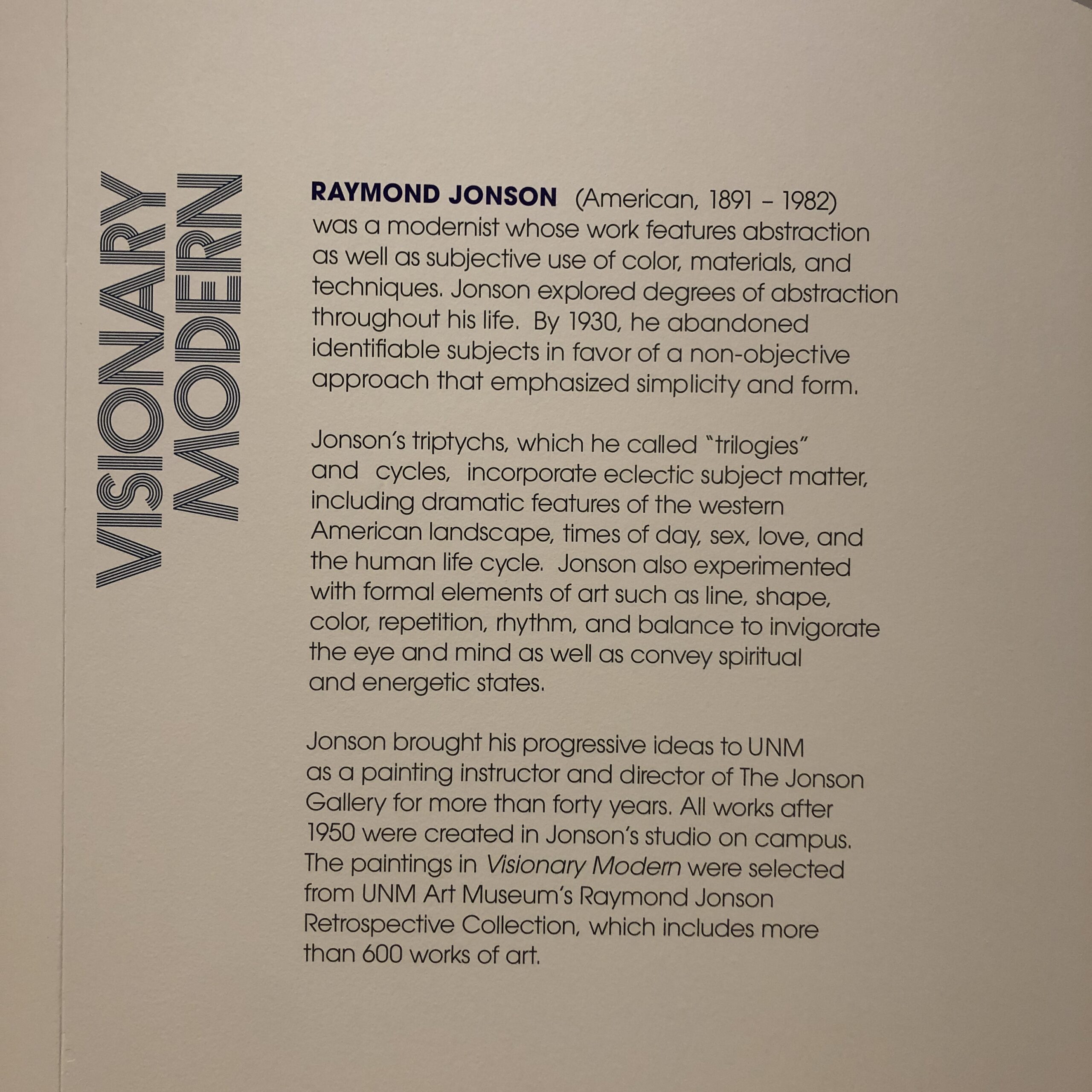
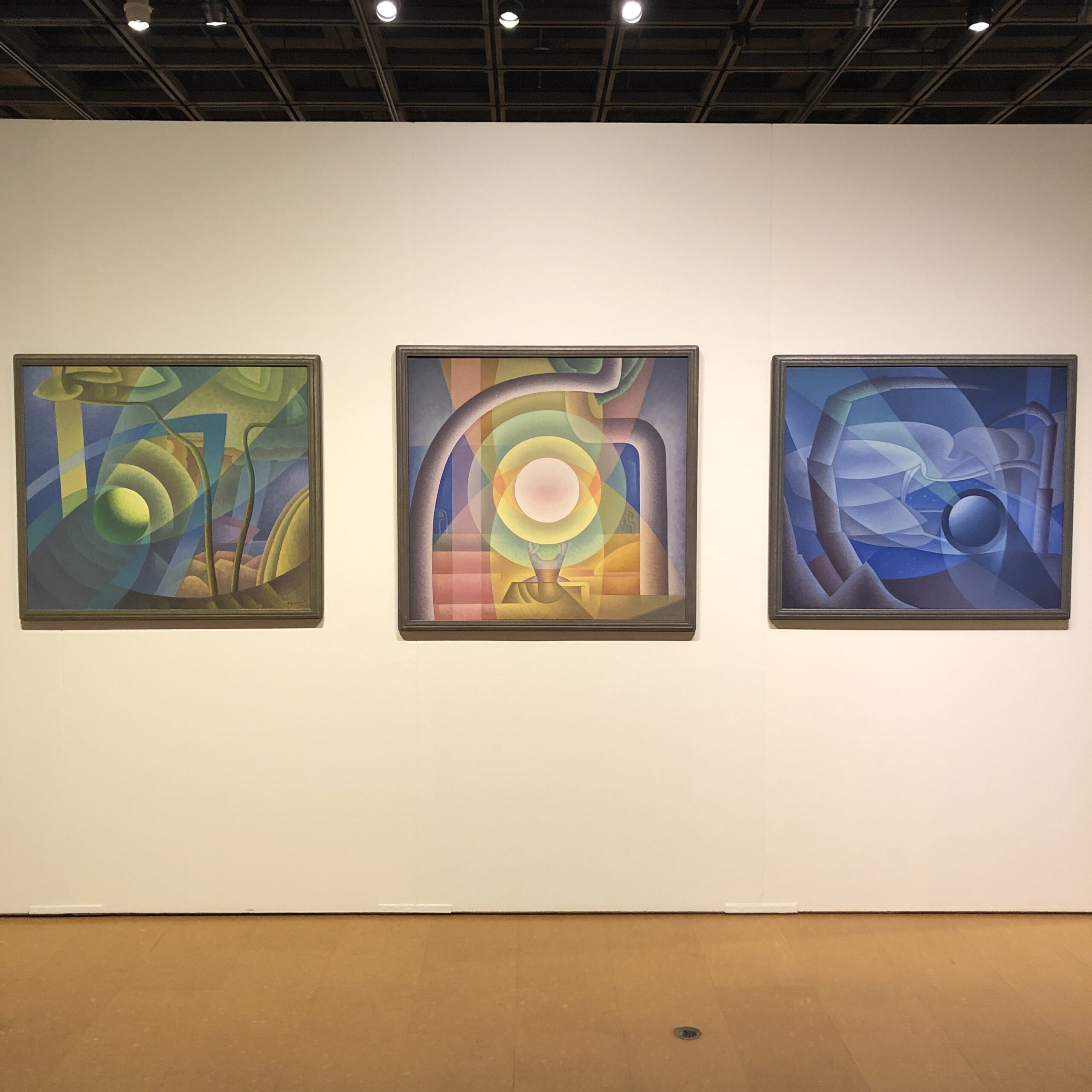
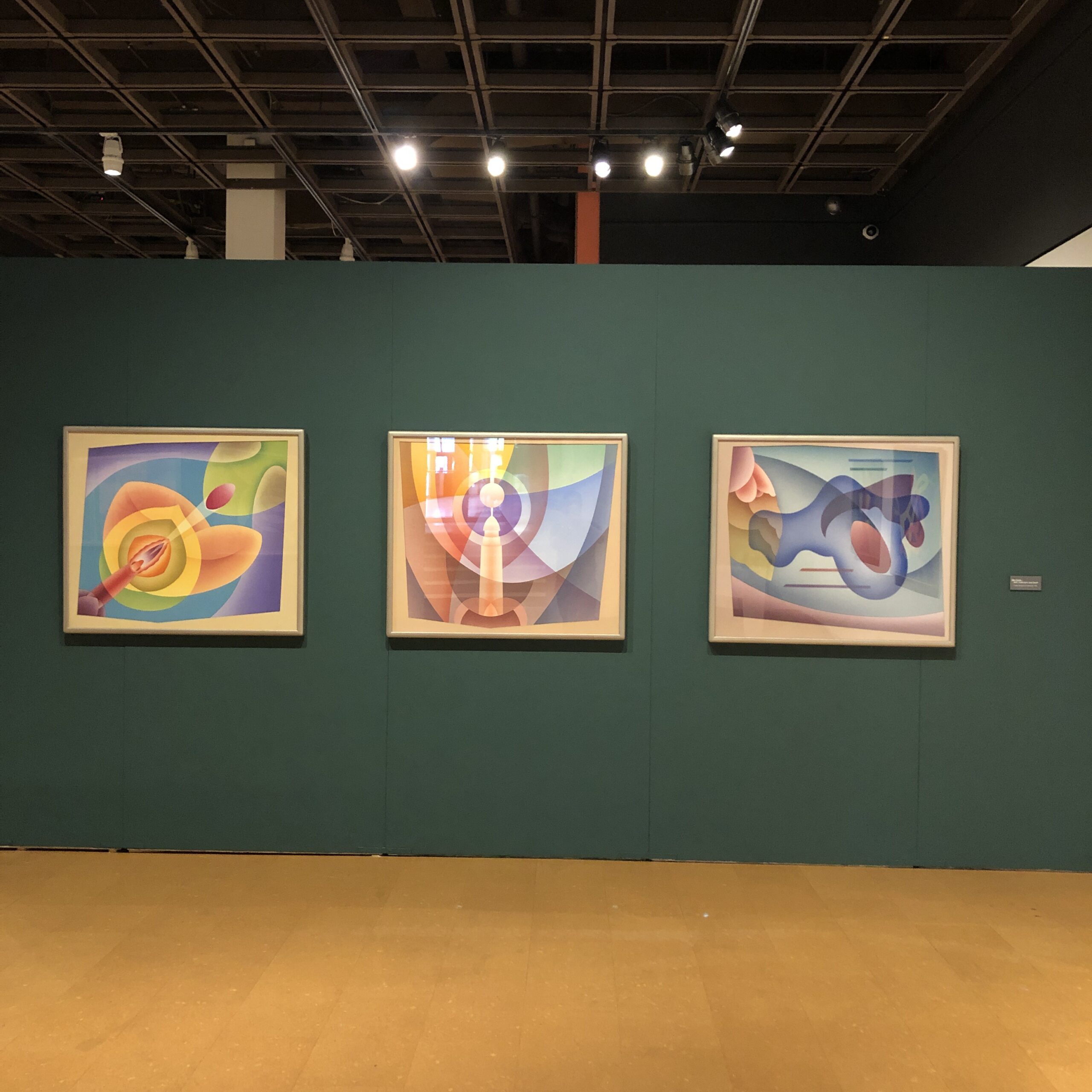
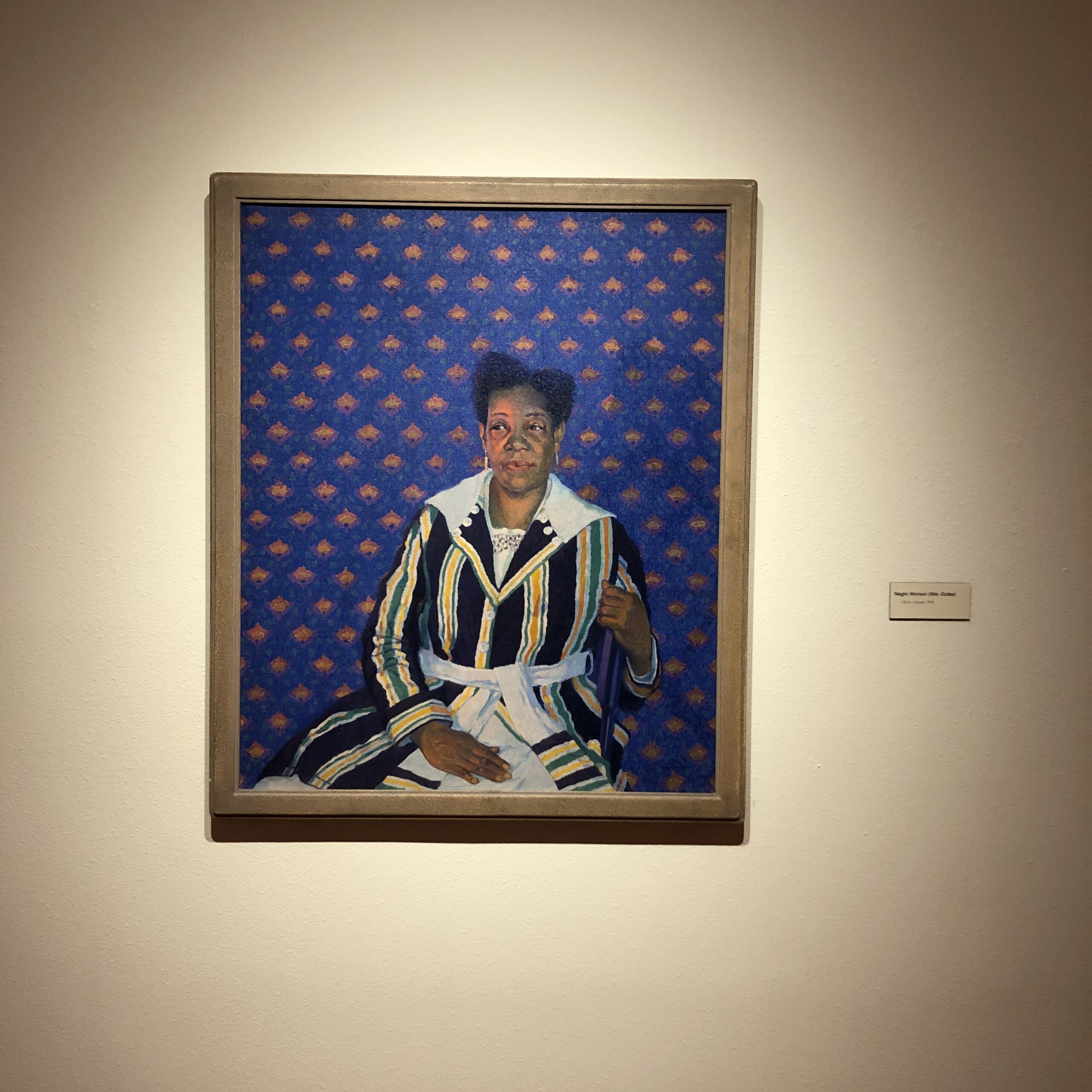
Though it’s known for its brilliant photography collection, begun by former professor Beaumont Newhall, (who founded the photo department at MoMA in New York,) there was a painting exhibition by Raymond Jonson, who as I said was a big deal on campus back in the mid-20th-Century.
Raymond Jonson Self-Portrait
I saw more of his paintings in one day than I had in my lifetime, yet this exhibition, decontextualized from the larger Transcendental movement, was less satisfying than the one at the ABQ Museum.
Fortunately, while the other exhibition has closed, this show will be up for a while, and the museum is free, so I highly recommend you check it out if you’re passing through NM. (Or if you live here.)
While the vibe at the ABQ Museum was ethereal, this was squarely in the trippy, strange territory. (I called it super-funky to Mary Statzer, who curated the exhibit, and she found that term on-point.)
The bulk of the exhibition was built around triptychs and mini-series, and feels spectral, or like Aliens were just around the corner, and maybe that’s just right for New Mexico in 2021.
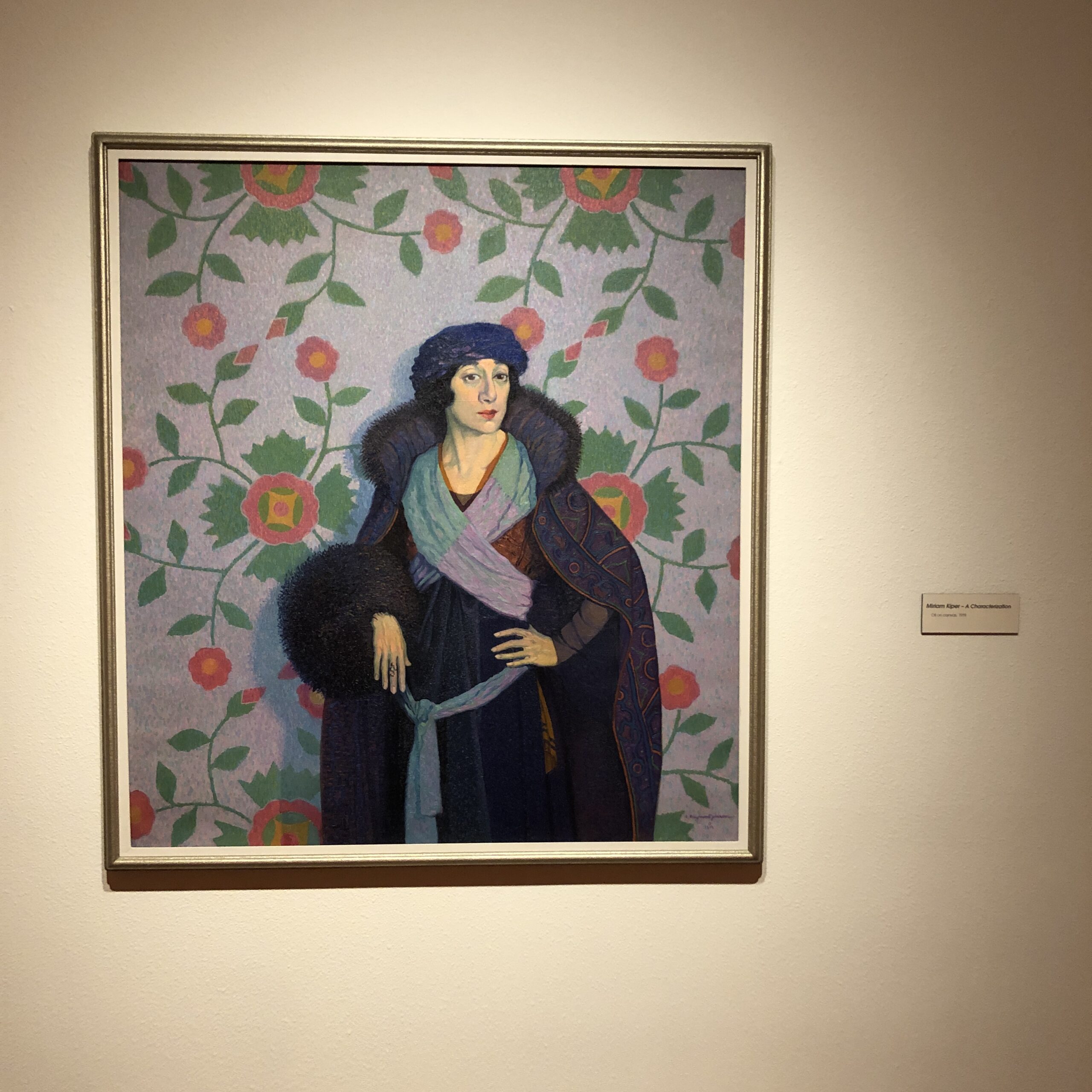
In an alcove, separate from the rest of the work, were portraits, which were pretty phenomenal, so Raymond Jonson, (of Iowa, having done a stint in Chicago,) was clearly a talented dude.
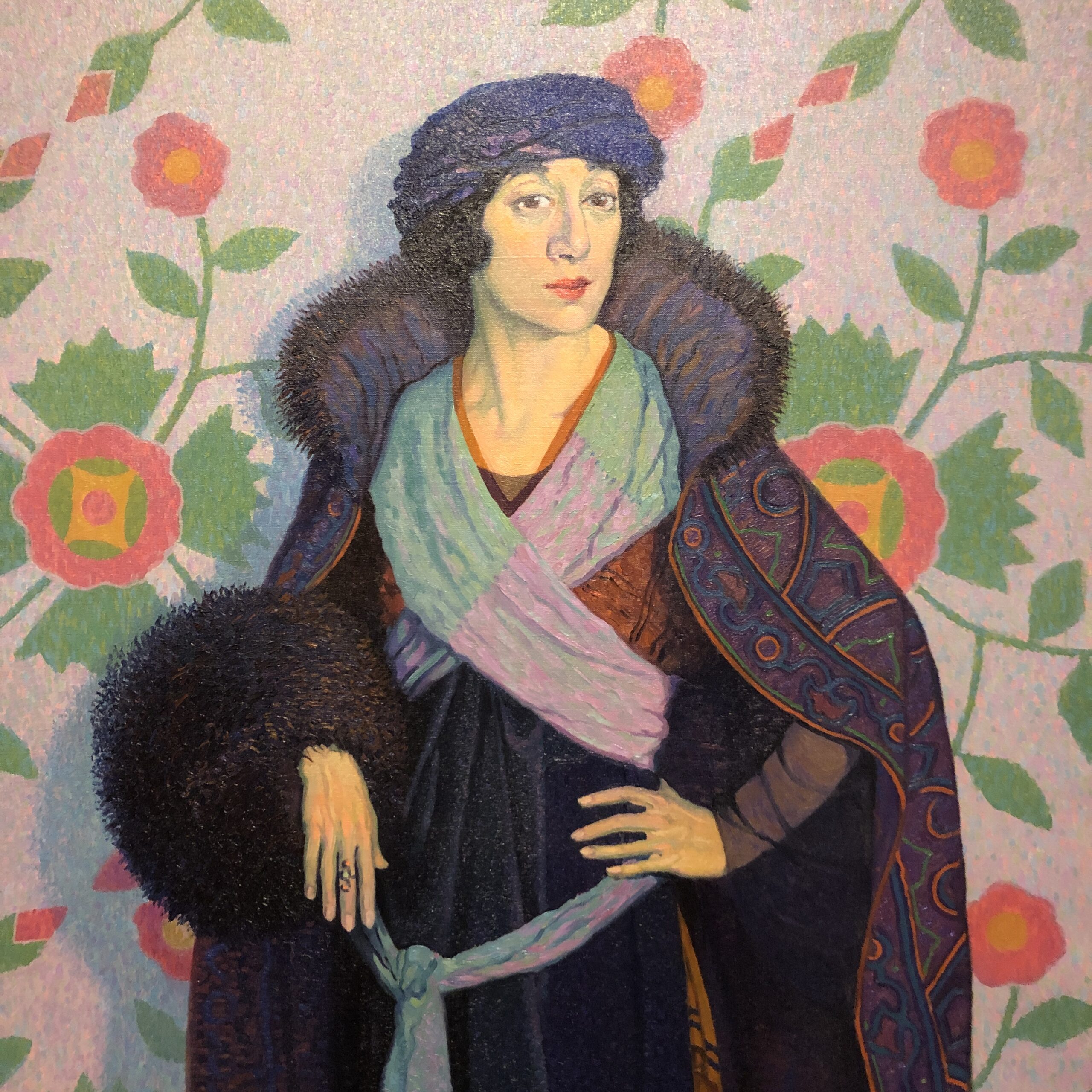
But one portrait from 1919, of a prominent actress, Miriam Kiper, rubbed me the wrong way.
Her name was Jewish, her nose was exaggerated, as were her eyes, and hands. It seemed to be touching on Anti-Semitic tropes, and I felt bad inside.
(In 10 years of writing this column, I’m pretty sure I’ve never made that accusation before.)
I know such ideas were more acceptable back then, or perhaps Raymond Jonson was not even aware of his “implicit bias.”
Still, it never occurred to me to complain, or protest.
To demand the museum remove the painting.
Or destroy it.
Others are more comfortable with censorship, or the belief that if they get offended, the perpetrator of such offense is bad, or the enemy.
Worthy of punishment.
I understand ideas go in and out of fashion, and you will NEVER find me defending Robert E. Lee, or Donald J. Trump.
But maybe, just maybe, we can all walk back from this current, contentious ledge together?
America, as we know, is broken.
And perhaps it’s time we stop waiting for someone else to fix it?
Maybe it’s time to pull on our work gloves, cut each other a bit of slack, and do the heavy lifting ourselves?
The Art of the Personal Project is a crucial element to let potential buyers see how you think creatively on your own. I am drawn to personal projects that have an interesting vision or that show something I have never seen before. In this thread, I’ll include a link to each personal project with the artist statement so you can see more of the project. Please note: This thread is not affiliated with any company; I’m just featuring projects that I find. Please DO NOT send me your work. I do not take submissions.
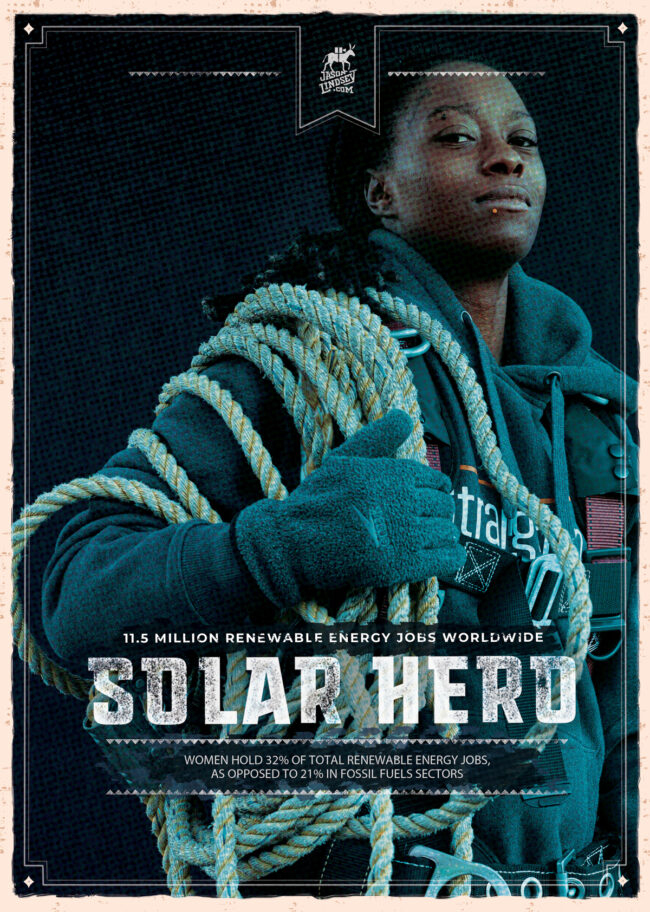
JASON LINDSEY CREATES THE CAMPAIGN HE ALWAYS HOPED TO SEE
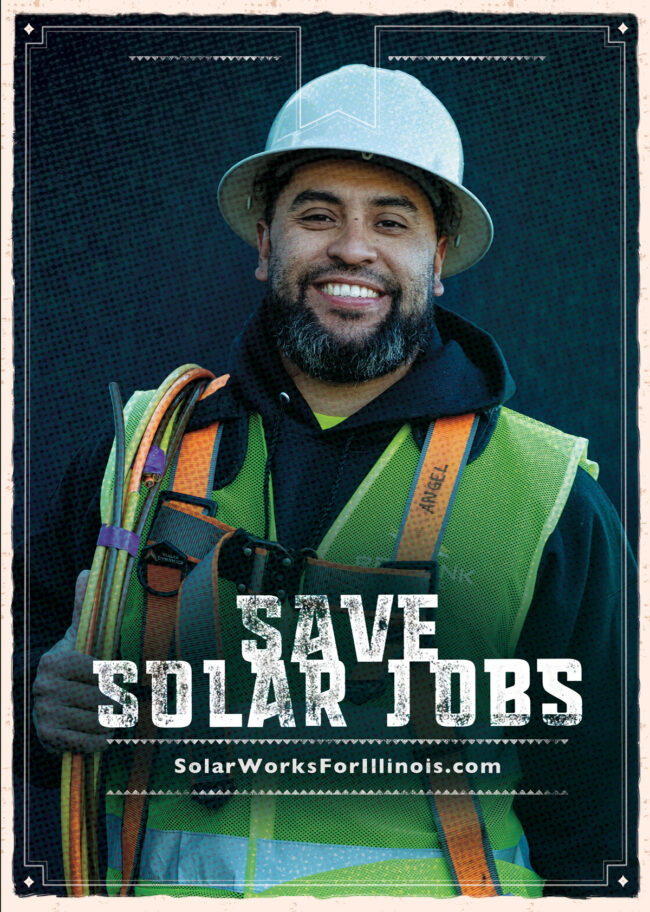
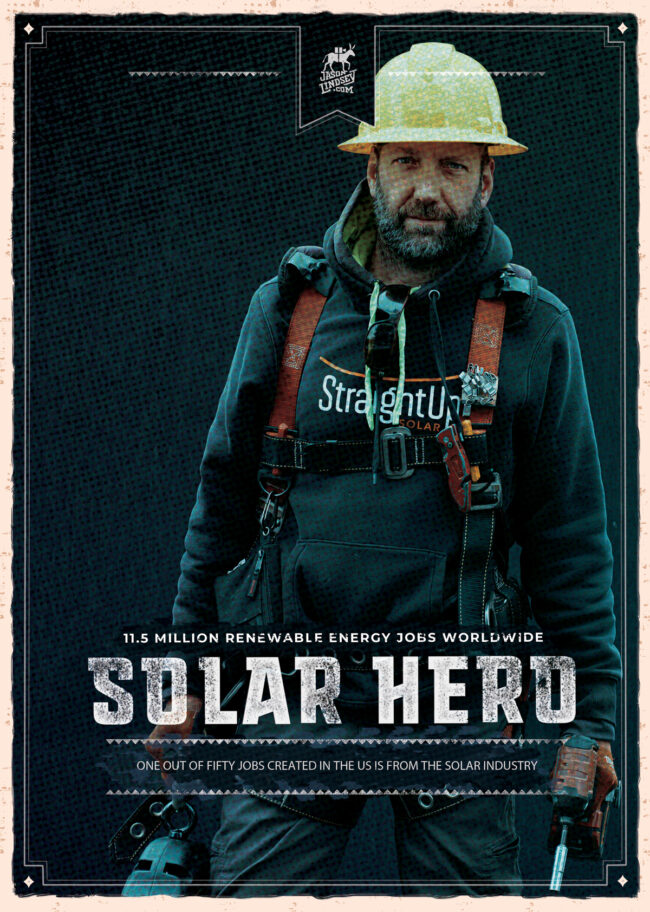
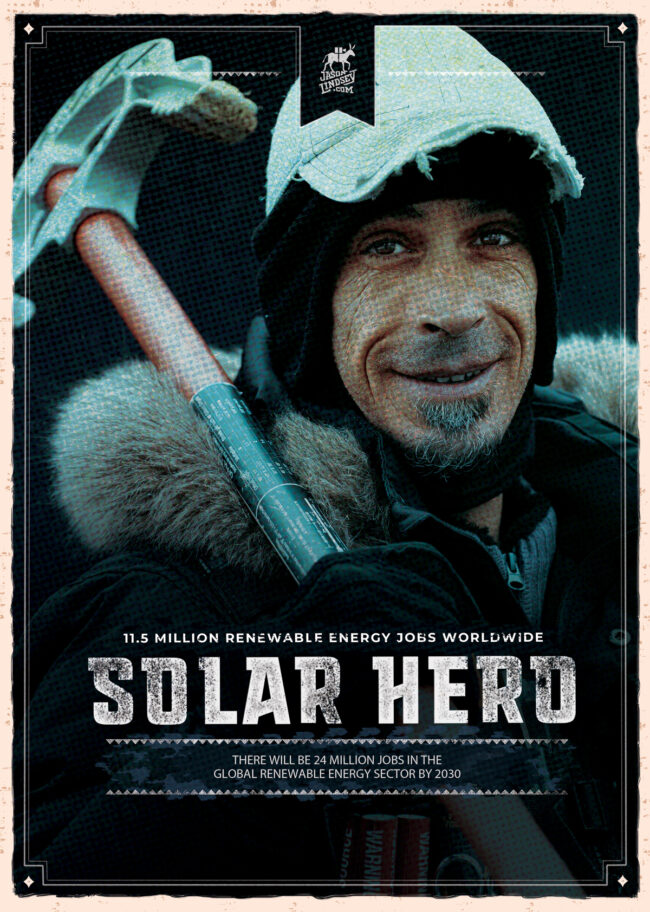
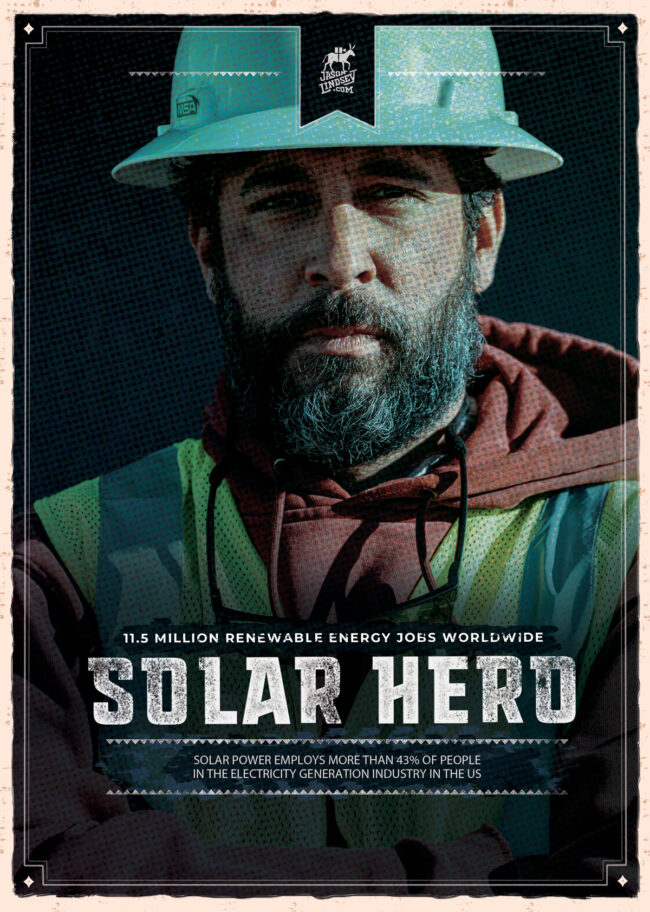
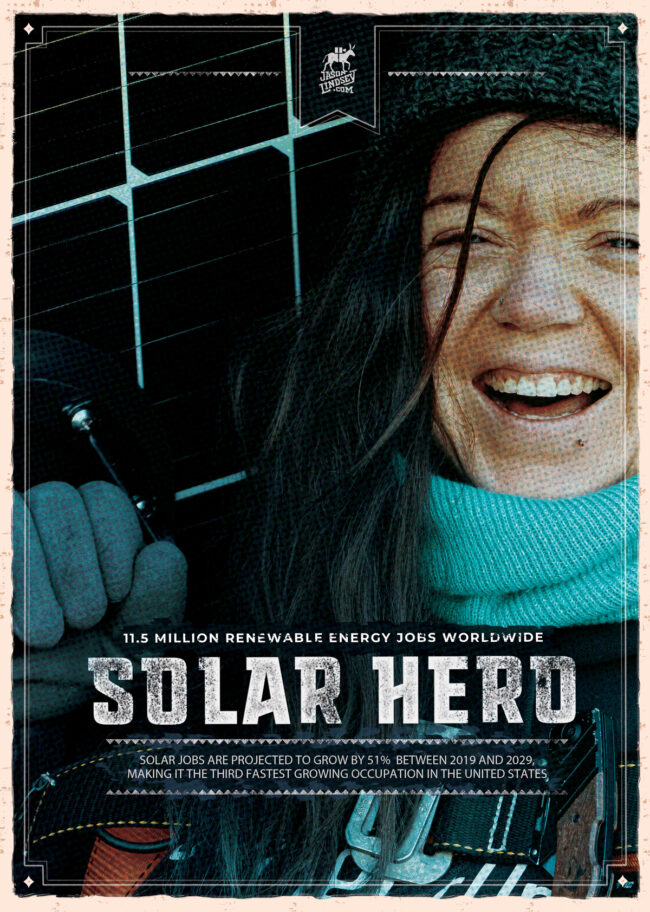
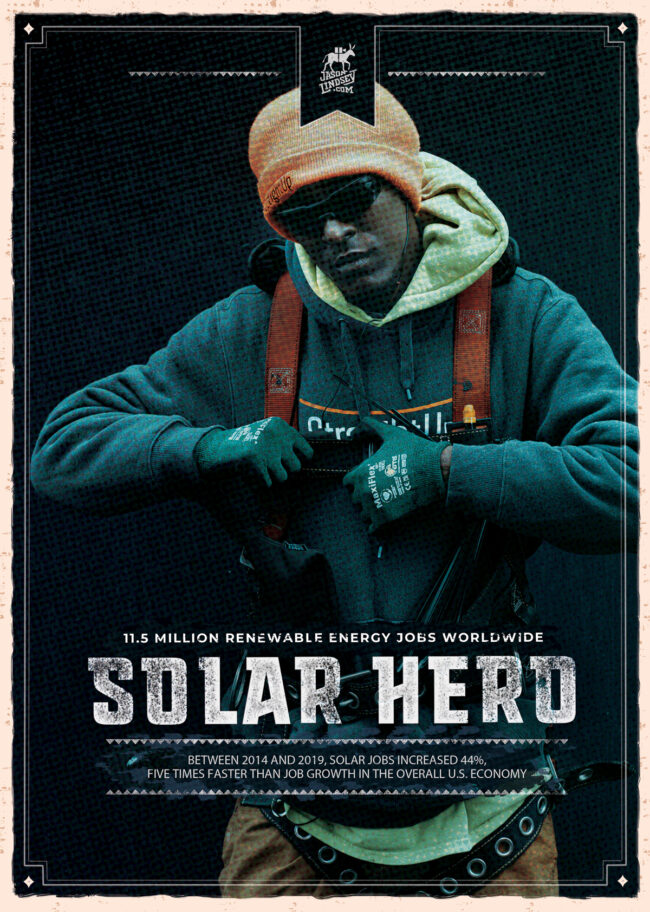
The inspiration for a personal project called Solar Heroes was to create a campaign that is a celebration of the people who install solar. He was aware that this was a politically charged topic when it shouldn’t be. Rather than focus on one industry replacing another, he wondered why no one was talking about how the solar industry was adding jobs. Why wasn’t anyone talking about the workers? So, Jason sought to highlight these unsung heroes. He photographed the portraits and designed the campaign as well.
As the title suggests, at the beginning of 2021, Jason Lindsey created a series of images that he always hoped to see, a personal project campaign celebrating the everyday heroes of the solar industry. While he didn’t set out to make an in-your-face political campaign about climate change, it undoubtedly made an impact. The Illinois Solar Energy Association tapped him to create a campaign to help pass the climate change legislation. This past week, the State of Illinois passed major climate change legislation, and we’re celebrating Jason having been a small part of it!
APE contributor Suzanne Sease currently works as a consultant for photographers and illustrators around the world. She has been involved in the photography and illustration industry since the mid 80s. After establishing the art-buying department at The Martin Agency, then working for Kaplan-Thaler, Capital One, Best Buy and numerous smaller agencies and companies, she decided to be a consultant in 1999. She has a new Twitter feed with helpful marketing information because she believes that marketing should be driven by brand and not by specialty. Follow her at @SuzanneSease. Instagram
Success is more than a matter of your talent. It’s also a matter of doing a better job presenting it. And that is what I do with decades of agency and in-house experience.
Photographer:Stan Evans Photo Director: Keri Bascetta Editor in Chief: Sierra Shafer
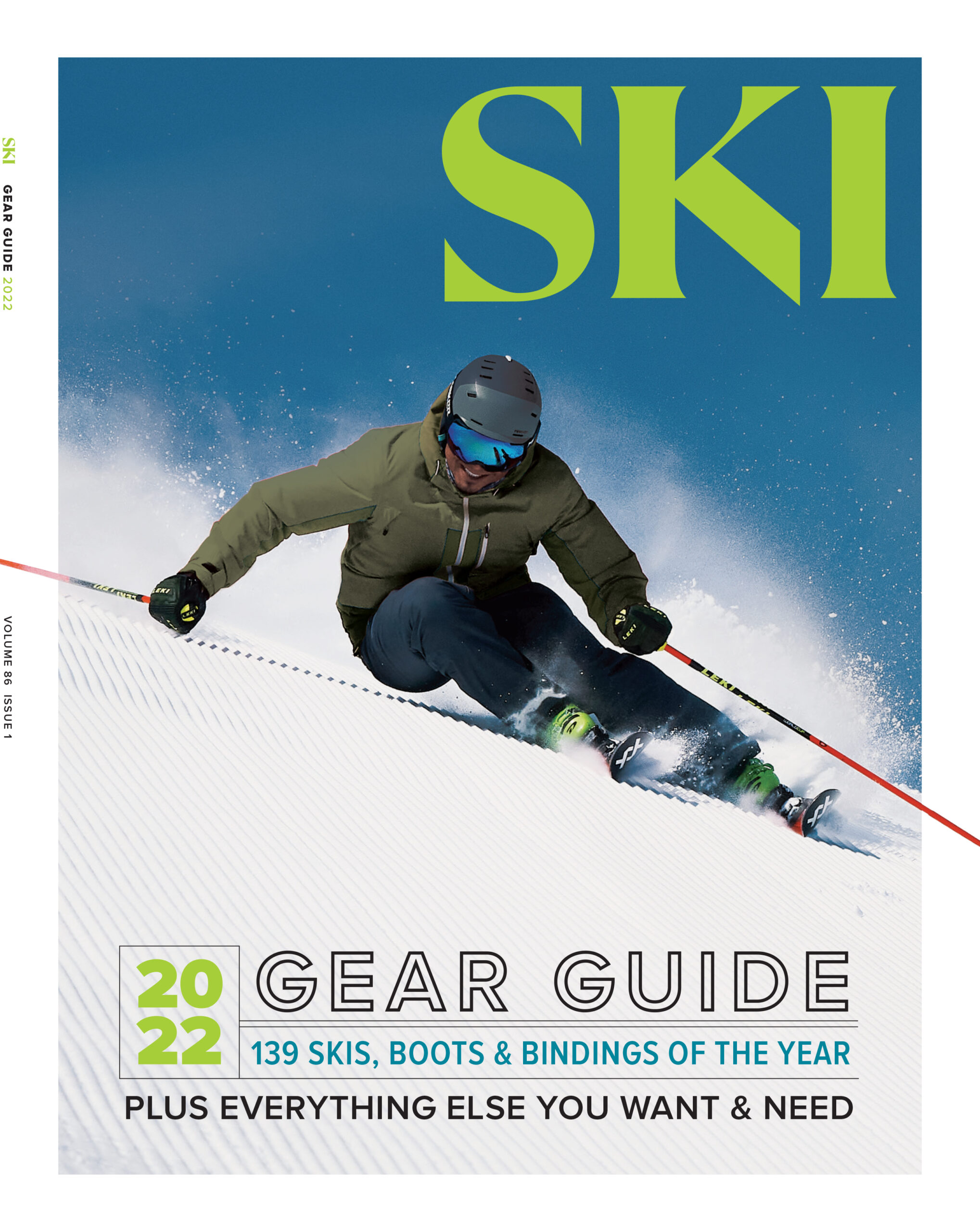
Heidi: SKI Magazine was framed around an invitation to a party, how did you update this and help make this, in the words of the Sierra Shafer, Editor-in-Chief make this “a fresh invitation?”
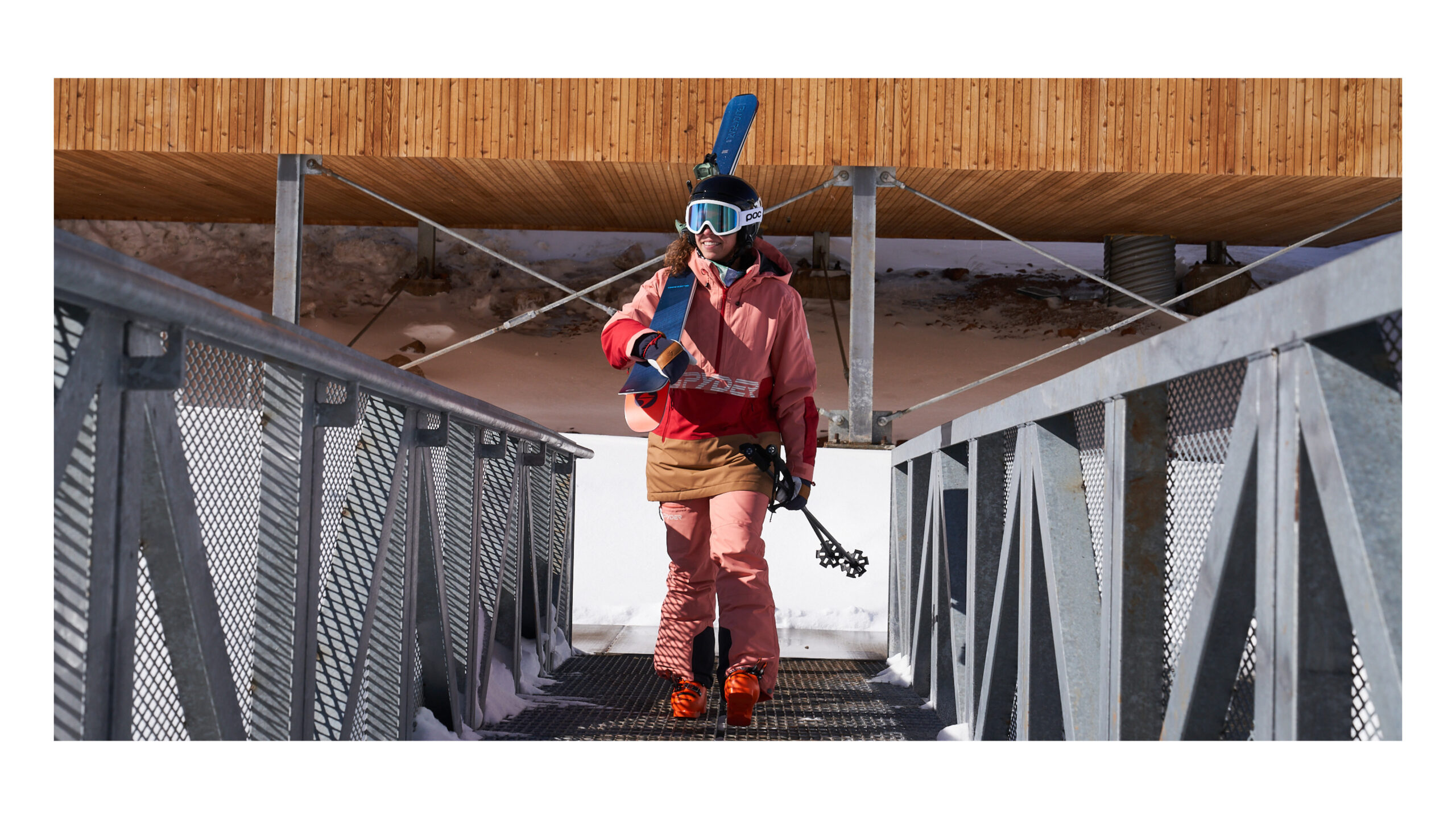
Stan: They wanted it fun and authentic but not too staged. We kept it real. We explored the backcountry, went searching for powder, carved groomers, laughed on chairlifts and Lauren asked me a million questions on the snowcat ride. I leaned into their personalities and tried to extract what a real ski vacation with a group of friends might look like. This group of friends just happened to be Black. SKI just rebranded and wants to maintain an ethos of appealing to the hardcore skier, provide quantifiable product information as well as opening it’s lens to a broader audience with a dash of healthy respect for mother nature. I think we achieved all those things.
I know this cover is honoring representation in front and behind the camera, what else can you elaborate on for you personally about this experience?
It is about teaching the importance of Black Media. Too often diverse talent is in front of the lens but when the final piece is aired it’s been edited and chopped to fit the narrative of whoever paid production costs. On one hand, naive actors, models and athletes may not know any better but on the other hand there are some that get paid to read lines in front of a camera and the motivation is not always altruistic. Unfortunately sometimes for brands it’s more about looking like they are doing the right thing rather than actually doing the right thing. We need to be controlling our own narrative if we want the real message to get out. I look at what high profile Black actors, musicians and athletes are doing by creating their own production companies, structuring their own deals with licensing and percentages and retaining their masters. I took the knowledge I have and put it into
I had a zoom meeting with the SKI staff awhile ago and we were talking about diversity and how people view it as this super serious goal and it becomes this pebble in your shoe if you are resistant to it. I think if we shifted the attitudes and talked about DEI as a block party or a potluck you would go and earnestly invite ALL your neighbors and ask them to bring something – you’re not quite sure what you will get but it is the curiosity in setting the stage and the dinner table. You might be hesitant to try a new dish but it could turn out that you love it plus there’s something about bringing a dish of your own that you love and sharing it with others. I really need to thank Sierra, Keri, Elyse and Andrea for inviting me to the potluck at Micah’s prodding. They put money, time and effort into this when they didn’t really know me. Sometimes great things come from a leap of faith.
This magazine has been publishing for 85 years, how did this unique idea come about?
It was mainly initiated by Micah Abrams, he was the publisher Snowboarder, Powder, Surfer, Bike Men’s Journal and had overseen my guest editor on “The Black Issue” of Snowboarder Magazine. When ASN folded he went to Outside and started tackling diversity head on pretty quickly. He appreciated the creativity and experience I brought to that issue as well as my understanding of winter sports culture and Black culture. So he called me and asked if I could help him steer SKI authentically in DEI and give insight to Black people in the outdoors for Outside Business Journal.
You’ve been shooting for 25+ years, what made this project and cover with Errol Kerr special for you.
Honestly I’d done this 20 years earlier with Snowboarder so I kind of knew what to expect. It’s less about what it does for SKI and more about empowering the athletes involved and letting them tell their stories in their own way. Having Lauren, Justin and David Samuels there as well made them feel seen. They weren’t props in an advertisement, these were real people who have had pivotal experiences in the outdoor industry. Some deeply personal and they’ve really had no one that looks like them to talk through and share. Those experiences can make you feel very alone. But having a group of people is a support system to learn and grow. Within that experience, joy comes as a second nature and each of those athletes will be a catalyst to spread that joy to the culture. That’s the part that brands miss in their quest for ROI because joy is an intangible metric but it brings us all to the hill and together. It’s also about advertising to a younger generation. Really kids have to see it to be it and I’m glad I am manifesting change with my camera.
What was the direction from the magazine or Outside as a brand? They wanted it fun and authentic but not too staged. We kept it real. We explored the backcountry, went searching for powder, carved groomers, laughed on chairlifts and Lauren asked me a million questions on the snowcat ride. I leaned into their personalities and tried to extract what a real ski vacation with a group of friends might look like. This group of friends just happened to be Black. SKI just rebranded and wants to maintain an ethos of appealing to the hardcore skier, provide quantifiable product information as well as opening it’s lens to a broader audience with a dash of healthy respect for mother nature. I think we achieved all those things.
How did your love outdoors and those first turns on Arctic Valley inform you as a photographer? I would say just growing up in Alaska shifted my perspective. Beauty was literally all around me. So it was natural to embrace it. I was into art, I liked to draw, write poetry and explore (enter awkward teenage phase here) but picking up a camera helped me show the world how I see it and I could share it with others but it was a teacher, Ms. Jackson saw I had talent and encouraged me to pursue it. Having someone believe in me gave me confidence. So it was more my teacher revealing a career path of creativity instead of pushing me to pursue some mainstream job as a lawyer or doctor. Arctic Valley was great though. They offered Military dependents a season pass for $200 and they had a ski bus that would pick up all the kids in the neighborhood after school for night skiing. I learned a lot through repetition because wed – sun I was at the hill everyday.
What advice would you give your younger self? I would probably say seek out older mentors sooner. Having solid advice from those who have been there and done it will save you a lot of setbacks and heartache. Inside winter sports it was pretty hard because most of the time I was the only Black person but meeting people from different walks of life and backgrounds helps shape perspective. Don’t be afraid to ask questions and never assume anything. Don’t be so set in your ways that you resist change. Life is an evolution and we are all constantly growing. It’s having a mindset of being open to change and a willingness to do better.
Congratulations on your appointment to SIA, how has that appointment on the board informed your most recent cover shoot? Thank you and I think it was the first time I’d seen an established outdoor organization recognize what I’d done in the winter sports field and respect it. For years I could tell people I grew up in Alaska, went to school in Montana and have a degree in photography but the moment I entered a room and people saw I was Black inevitably someone would ask “are you sure you know what you are talking about?” Those attitudes are what eventually drove me to leave my past behind to move to New York and reinvent myself in advertising photography. No one there or in LA where I currently live knew about my past and I was fine with it. But sometimes life comes at you from leftfield and suddenly people remember your accomplishments and you get a phone call. That’s what happened with The Black Issue and Snowboarder. In the wake of George Floyd and America’s racial reckoning, people in winter sports needed advice from a voice they’d shunned so many times before. The real reason I came back to the fold was to show new Black creatives and athletes how to hold their heads up high, to tell their stories through their mediums and to be fairly compensated for their work. So many Black creatives and athletes were being exploited for brand clout without clear objectives for diversity and equity so now being on the Board of Directors for an entity that talks directly to that industry, they value my opinion and it gives me a wider reach so my experience can help fill in the potholes and roadblocks the youth following in my footsteps might have hit.
In the past, I’ve rarely sent print promos (tho I always wanted to create a nice one), and I mostly relied on online marketing, sourcebooks (At-Edge, Archive Magazine, Workbook, etc), and face to face portfolios showings for sharing my work. However, as soon as 2020 hit and everything began to lock down I figured it was a great opportunity to channel my energy into a nicely designed promo… something I have always wanted to do, but never made it a priority.
Last spring, I connected with an Art Director & Graphic Designer friend of mine named Ryan Frease that I had previously worked with on some campaigns (some actually in the fold out case study), and learned he was in between gigs and had some extra time on his schedule. The timing lined up for both of us, and we were off and running. I threw out a bunch of ideas, and he heard them all and really helped channel them all into one cohesive and branded message.
My main goals with this promo were to:
Communicate quickly the type of work that I specialize in, and leave an impression.
Create multi-tiered items; something you can keep and perhaps pin on your office wall (fold-out case study promo or postcard), something designer related and practical that you can use on a daily basis (wine key, or pencil + notebook), and something of good print quality that shows an overview of my portfolio. I realize Agency folks get a lot of promos, so I wanted to create something that would at least get passed around, as opposed to tossed.
As a product photographer, I work with a lot of designers. So, I wanted the packaging to be note-worthy, and something that would demonstrate my appreciation and passion for good well thought out design. Ryan really brought a deeper layer of design to this promo in a few areas. Particularly in the way, he designed the folding case study to line up perfectly with the portfolio book cover as the copy reads “Make Visible” while revealing the splash image from monochrome to color. These details go a long way with me.
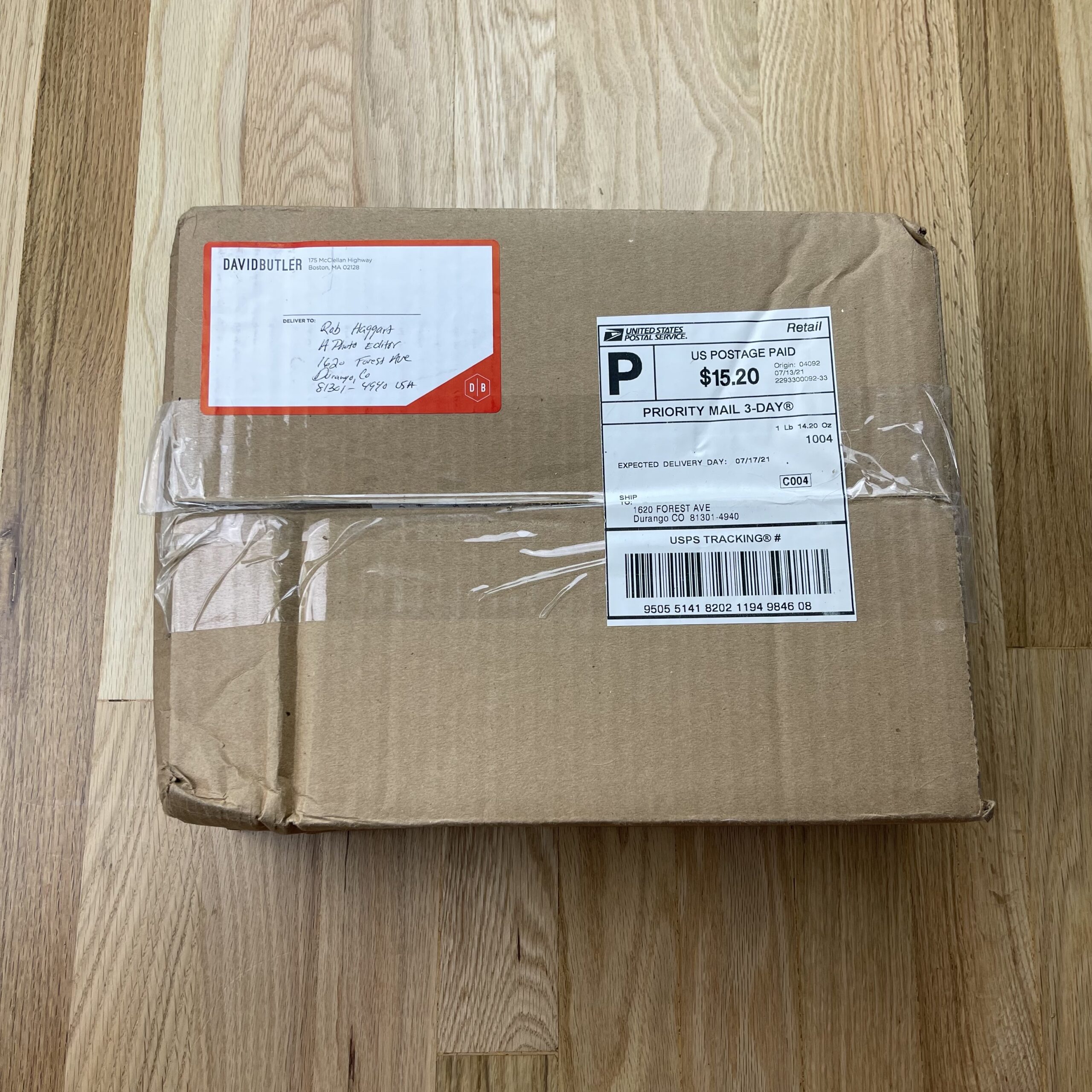
I really wanted to show the human connection element, especially in a time where we are over-saturated with content and DMs… As of now, I only printed 250 promos. I am only sending out a few at a time, so I can track who they are going to, and I can follow up. I am intentionally and personally sending each promo to creatives I would love to work with. Each box contains a personalized handwritten note, and my hope is that it shows that I am at least aware of who I am sending these to, and it contains that human element that I feel is missing in other forms of digital marketing.
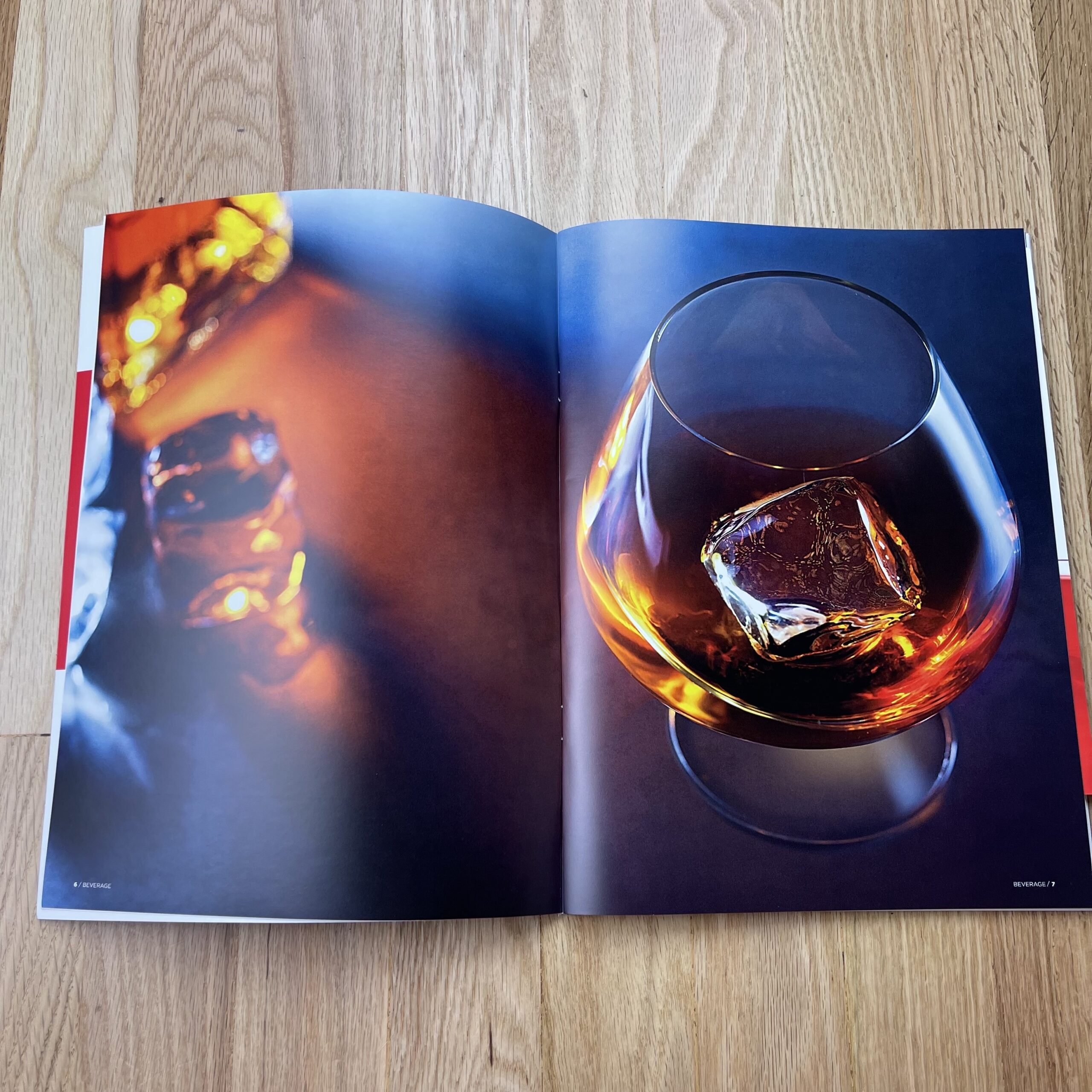
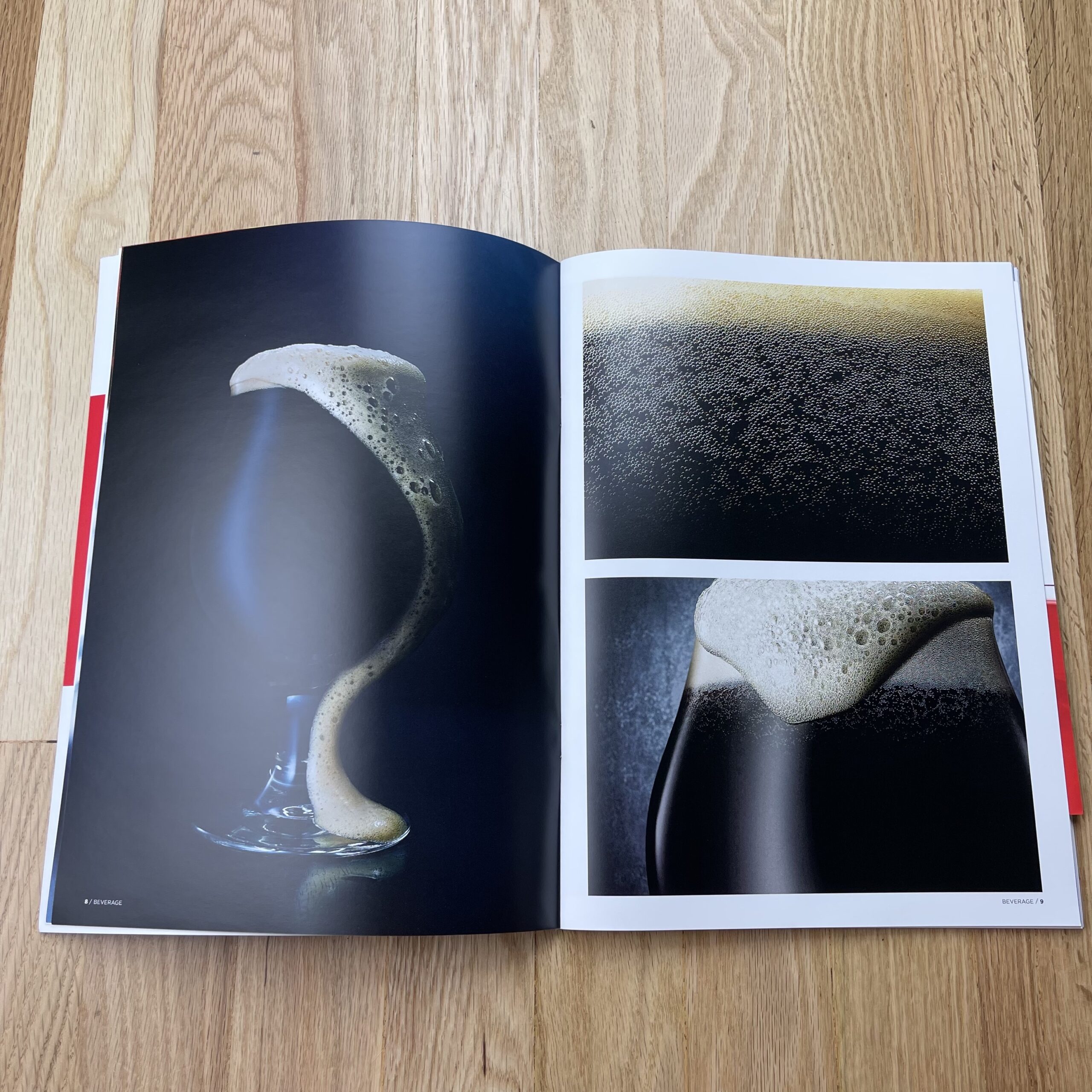
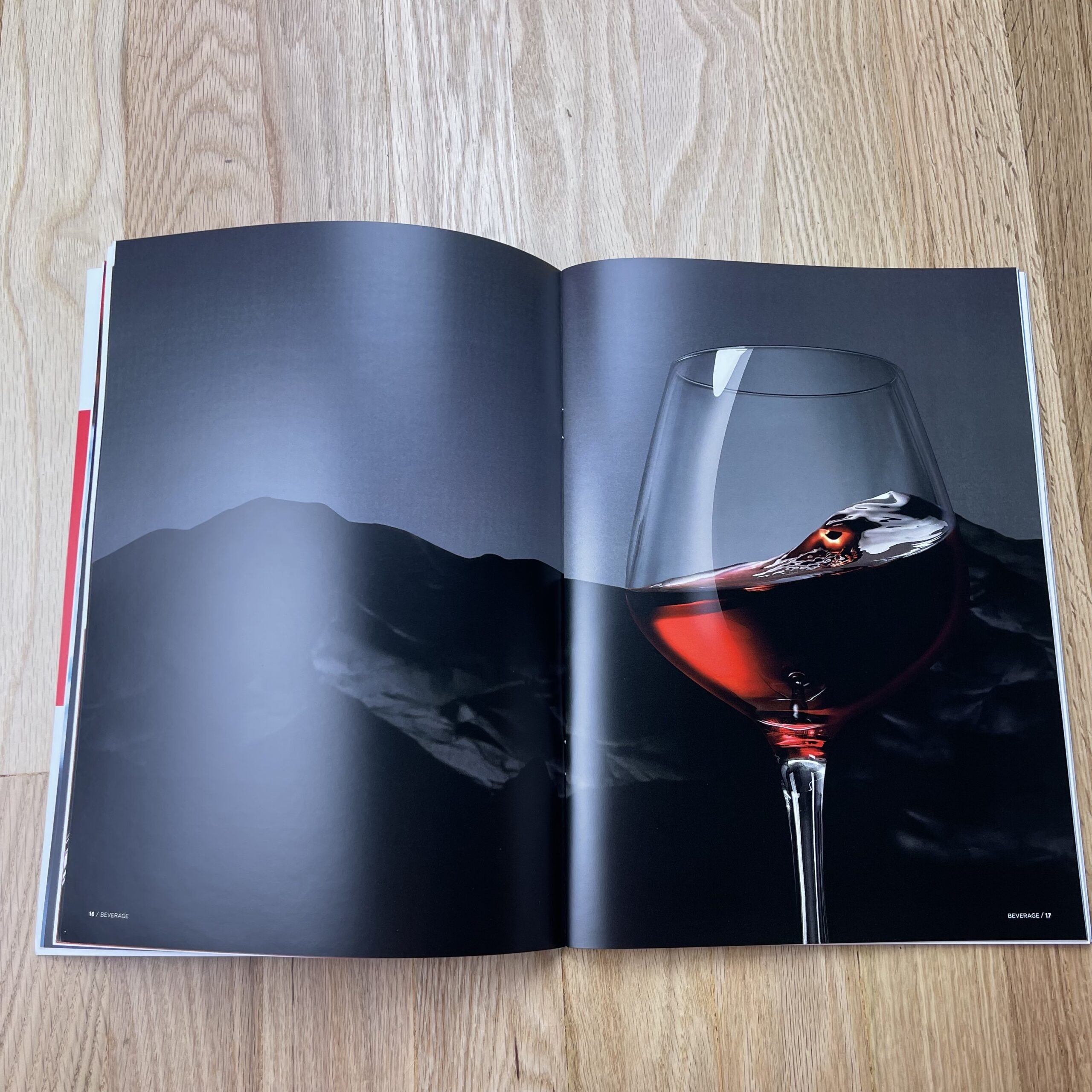
The images in the fold-out case study represent almost 3 years of work created for the brand Drinkworks They are a pod-based at-home cocktail brand, created by Keurig and Anheuser-Busch. Prior to Drinkwork’s launch up until now, I have been collaborating with a Boston-based design agency Motiv Design on bringing to life an entire portfolio of cocktail images that are designed to be used on their packaging designs as well online and print marketing. I felt this was a great case study since we captured such a brand range of beverage photography, from conceptual to just beautifully simple and graphic.
After designing and printing everything, the next hurdle was acquiring addresses for folks I was trying to reach… given that everyone was working from home, the agency address wasn’t going to work. So, for the better half of a year, I sat on these promos, and have just been sending them out over the past few months. The feedback has been mostly quiet, however, there are some cases where I have gotten some great responses as well as some creatives that have passed my work along to colleges along with some incredibly kind words, so that is very encouraging!
As far as who printed these, I actually went through a few vendors recommended to me by Ryan, and I am really pleased with each piece.
It’s officially been ten years since I began this weekly column.
(And so much of the world has changed.)
In September of 2011, my son was four years old, and my daughter was yet to be conceived.
9/11 happened only a decade prior, and the wounds were still so fresh.
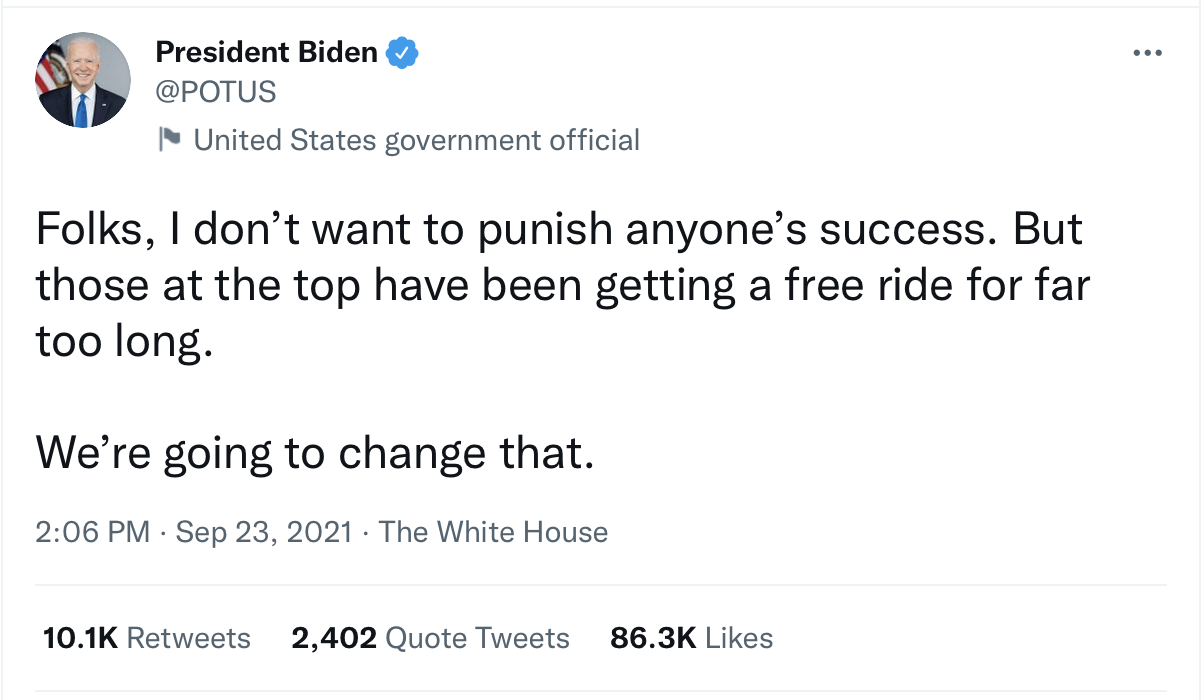
Donald Trump was a loud-mouth reality television star, and Barack Hussein Obama the President. Joe Biden was VP, Obama’s wingman, and wasn’t-yet-known for his signature aviator sunglasses. (Or for calling people “Folks.”)
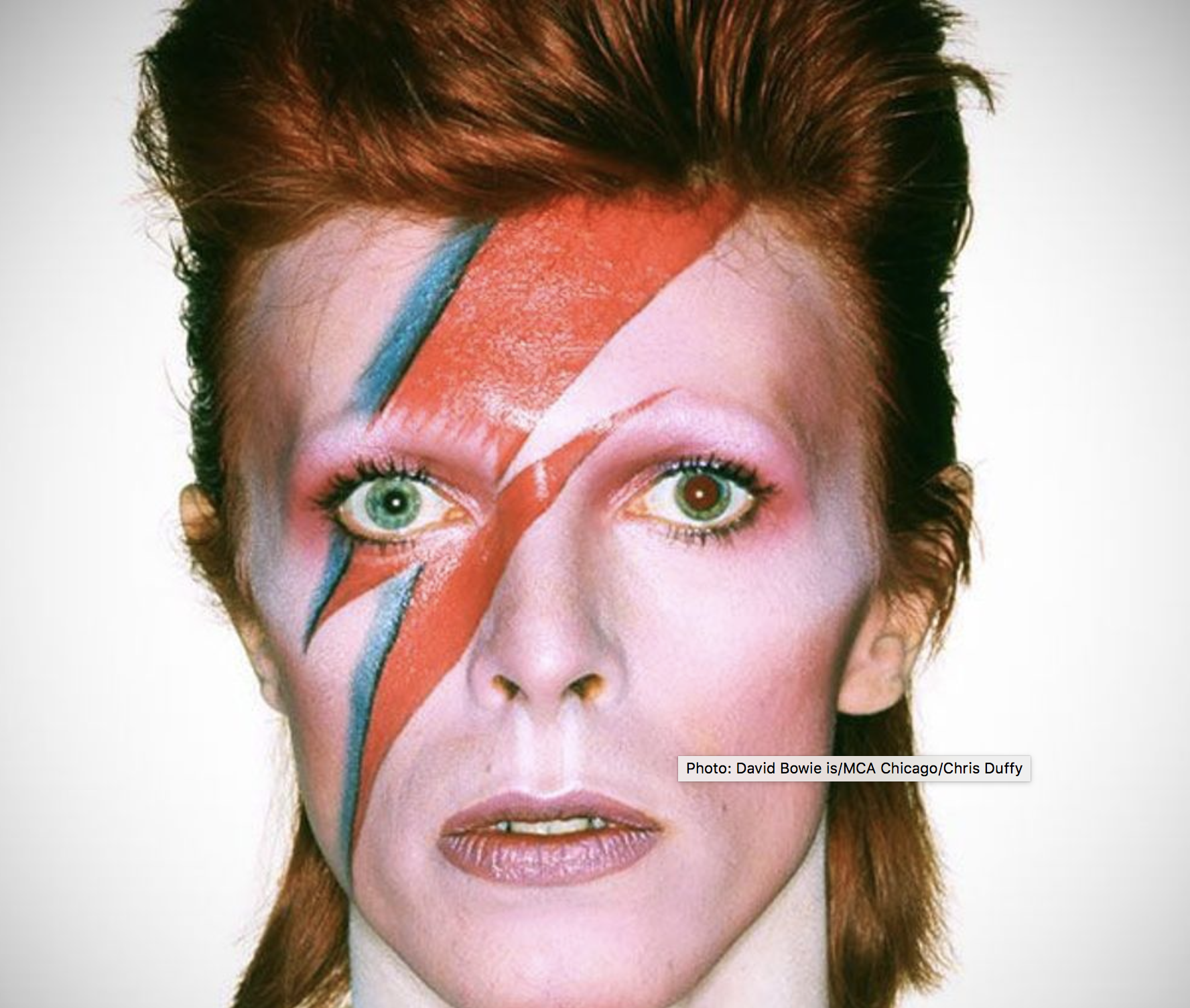
James Gandolfini was alive, and no one knew he had an odd-looking kid. Joe Biden’s son Beau was also living, as were Tony Bourdain, David Bowie, and Ruth Bader Ginsburg.
Courtesy of the BBC
The United States was mired in the after-effects of The Great Recession, which was the biggest thing to happened since 9/11. (The two defining events of GenXers lives, up until the pandemic. Probably Millennials too, now that I think about it.)
Most people weren’t using social media yet, in 2011, so no one had heard of fake news, and anti-vaxxers were a small subset of the population who mostly got grumpy about the measles.
Oh yeah, one more thing. The New York Football Giants, now the laughingstock of the NFL, were about to win the Super Bowl. (Go Eli!)
If you had told me in September 2011 that my column would turn into a diaristic, long-running critique of American culture and politics, I would have stared like you had a magical-third-eye in the middle of your forehead.
(Inconceivable!)
Those first few weeks, in September 2011, I reviewed several books at a time, just a couple of paragraphs each, and my signature style was still to come.
It wasn’t until Thanksgiving, when my mother-in-law banged on our door at night, brandishing a .45 handgun, afraid of intruders, that things fell into place.
I felt compelled to tell that story, and then connect it to a photo book by superstar Taryn Simon, and the rest, as they say, is history.
These days, my mother-in-law, (who was one of the smartest, fiercest people I’ve ever known,) is in a near-vegetative state, due to the ravages of Alzheimer’s disease.
As bad as the pandemic has been for many people, (in particular those who lost loved ones to Covid,) I’ve had my hands full, battling my wife’s clinical depression, and then watching Bonnie’s brain melt, day by day, until there was nothing left.
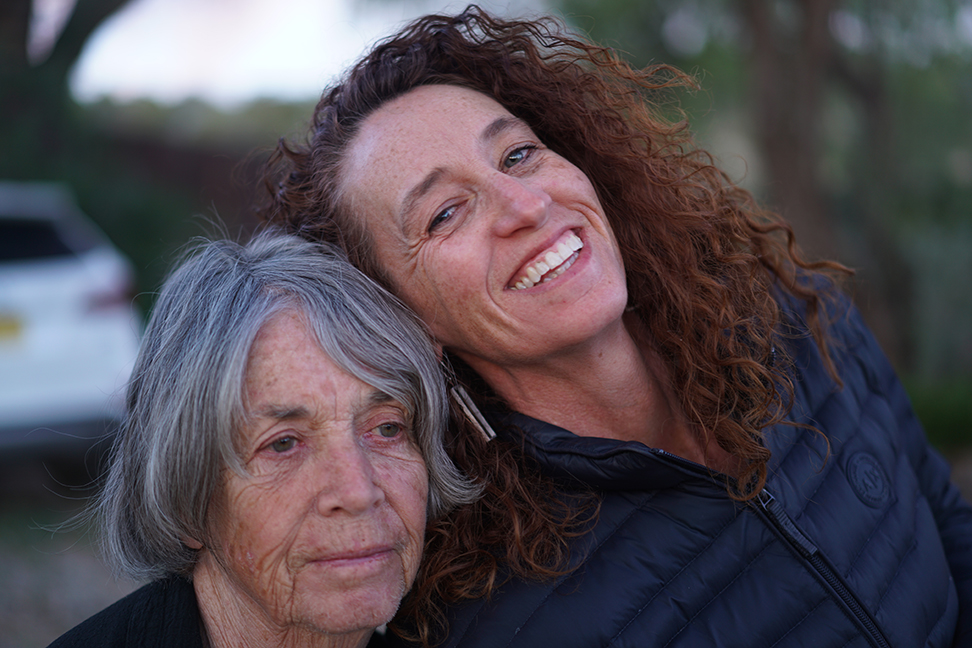
Jessie and Bonnie on May 14th, 2021. The last day she was cognizant.
Being Trapped in Paradise, walking in circles, with the beautiful mountains as a backdrop, would have been a nice way to spend a plague year-and-a-half, (in theory,) but I can’t say as I enjoyed it much.
Writing for you each week, having an outlet for my emotions, and a desire to share my experiences with others, (so they might have better lives,) was a big part of what kept me going.
So… thank you.
Thank you very much!
I’m not going to review a book today, as it’s the rare week when I’m writing on a Wednesday, and I thought a 10 year anniversary was enough reason to freestyle, and celebrate the achievement.
Tomorrow, I’m going to Albuquerque for the first time in 18 months.
I came home from the Burque on March 8, 2020, from my trip to Houston, and then never left. (At least until I went to Amarillo a year later, to get my first vaccine shot.)
It is highly likely I’ll be able to tell you about it next week, if the food and art are any good, but after 18 months, even shitty water tastes delicious when you’re dying of thirst.
I’d be remiss if I didn’t take a second to thank Rob Haggart, the founder and editor of this website.
These days, I get a lot of compliments for my honesty and vulnerability, as it’s literally become a part of my “personal brand.”
And that stems directly from the advice he gave me, when I first began writing here in 2010. (The weekly column came a year + into my tenure at APE.)
Rob has always given me creative freedom, and let me stretch my wings from a place of trust.
But at the very beginning, he did give me a particular piece of advice.
“Be honest,” he said, “and write what you really think.”
“But Rob,” I replied, “if I’m honest all the time, writing about the industry, won’t I burn bridges? Isn’t that a bad idea, as I’m just trying to make a name for myself?”
“You might burn a bridge or two,” he said, “it’s true. But in my experience, you’ll open many more doors by telling the truth, and those people who don’t want to work with you, those few bridges you burn, they probably weren’t the right people to work with anyway.”
“That makes sense,” I said.
We’ve been going strong each Friday, ever since, and I can say, without exaggeration, that Rob’s unwavering support, and his belief in me, changed my life forever.
Thanks, Dude!
And see you all next week!
(ED note: I had a great trip to ABQ, and will write a travel piece with exhibition reviews for next week’s column.)
The Art of the Personal Project is a crucial element to let potential buyers see how you think creatively on your own. I am drawn to personal projects that have an interesting vision or that show something I have never seen before. In this thread, I’ll include a link to each personal project with the artist statement so you can see more of the project. Please note: This thread is not affiliated with any company; I’m just featuring projects that I find. Please DO NOT send me your work. I do not take submissions.
Many families in Western society have been personally affected by divorce. In fact, 40% to 50% of marriages in the U.S. end in divorce, according to the American Psychological Association.
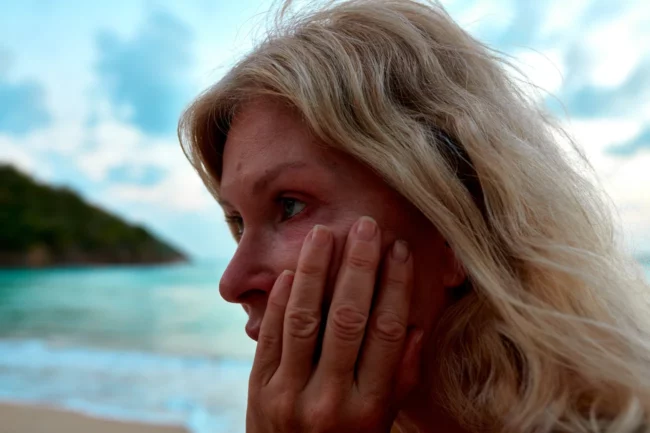
This is something photojournalist Gabby Jones has experienced firsthand. Growing up as the child of divorced parents, Jones felt a sense of resentment and instability. As the divorce was finalized, the custody agreement arranged for Jones to live with her mother. However, as she got older, she realized that she and her mother didn’t see eye to eye and were having a hard time understanding one another.
“She got the brunt of my wrath. I was your typical angsty, hormonal teenager; quick to judge and tough to please … Our relationship was tumultuous to say the least,” she said.
As the pandemic took hold on daily life this past year, Jones had an opportunity to mend her relationship with her mother.
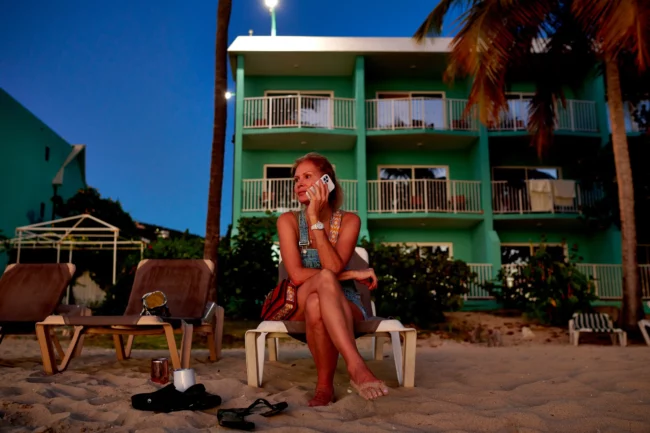
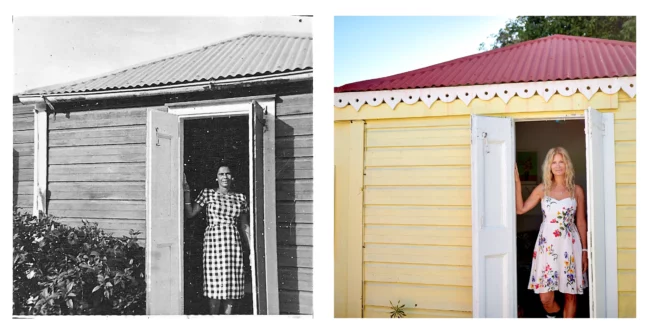
The island of Saint Thomas holds a great deal of importance to Jones’ family history, but Jones had rejected that part of her family heritage. It was an important part of her mother’s life growing up, and as Jones got older, she began to realize the importance it could hold in her life as well.
So, when the opportunity to go visit with her mother presented itself this year, she couldn’t say no. In January, Jones and her mother spent a month together living in her great grandmother’s house on Saint Thomas.
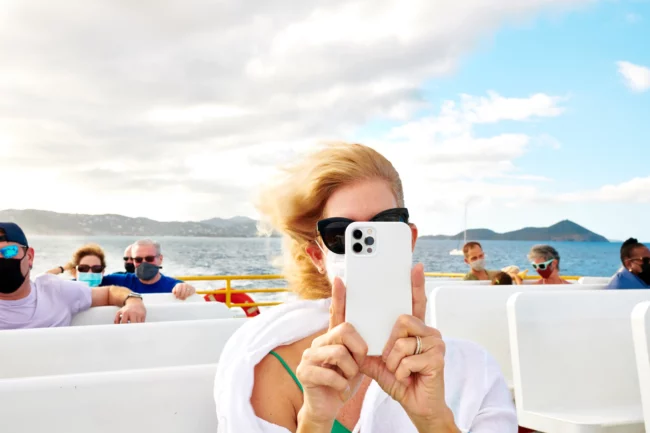
This was the longest amount of time that they had spent together in years, and Jones decided to document it.
APE contributor Suzanne Sease currently works as a consultant for photographers and illustrators around the world. She has been involved in the photography and illustration industry since the mid 80s. After establishing the art-buying department at The Martin Agency, then working for Kaplan-Thaler, Capital One, Best Buy and numerous smaller agencies and companies, she decided to be a consultant in 1999. She has a new Twitter feed with helpful marketing information because she believes that marketing should be driven by brand and not by specialty. Follow her at @SuzanneSease. Instagram
Success is more than a matter of your talent. It’s also a matter of doing a better job presenting it. And that is what I do with decades of agency and in-house experience.
Fees: The photographer had previously worked with this agency. While they wanted to specifically work with this photographer on this project, we were given a strict budget of $4500 for the shoot. This was similar to previous budgets the photographer had seen from the agency. We discussed a shot list and creative with the agency and let them know that while we’d like to see a higher fee, we could work within their budget for the photographer fee for a limited qty of images, but that additional hard cost expenses would need to be covered. We understood this work would be used on the brand’s social media channels, and while we would have liked to see increased fees, we understand each project has set limits and the photographer was excited to work with this agency again for a new client.
Crew: We added a first assistant at $500/day, which was appropriate for the given market.
Equipment: We included $600 for simple cameras/lighting/grip and $200 for hard drives.
Travel: When we initially estimated this shoot we didn’t know the location, but understood it to be local to the photographer. We included $75 to cover mileage and parking to cover the scout, gear pickup, as well as shoot day travel.
Post Production: As the budget was limited, we waived the cost for a first edit and retouching, for up to 30 minutes per image for the 10 selects.
Additional Production Added:
Originally, the agency was going to handle all locations, talent, wardrobe, and hair/makeup styling. About 2 weeks out from the shoot the agency asked us to put an estimate together to handle locations and casting/talent. At this point we already had a signed estimate for the shoot, so we created a second estimate to encompass the pre-production support items requested.
Fees: We included 3 Producer Days to work on the locations and talent search coordination. This fee would be for the photographer and/or producer to scout and book the locations, coordinate casting, as well as collect invoices, and facilitate payments. We estimated this could take 3 full days.
Locations: The client was seeking a high-end urban home (ideally) with city skyline views, as well as landscape views. We estimated location fees of $3,500, plus possibly $1,000 in permits. We added a TBD to this cost in speaking with the agency about the possibility of spending more if there was a location we found that the client loved. We also added 3 days for an additional location scout to assist the producer in the search. That person would also be our on-site property liaison during our shoot.
Casting and Talent: We estimated $4,000 for two talents based on casting from smaller agencies and friends and family. The fee would include the talent’s shoot fee, usage rate, and potential agency fees. We added $1500 for casting as a fee for the producer, to handle the casting. We noted to the agency and client that while the photography license would be in perpetuity, it would be beyond our budget to obtain perpetual use rights from talent. Talent use agreements would be Unlimited use for 1 year, with a note that the work could exist in archive form on the internet. All talent agreements and payments would be made directly by the agency.
Travel: $225 was estimated for mileage and parking (as well as a cup of coffee or two) for the producer and assistants to scout any potential locations.
Results: The photographer was awarded both the shoot and the pre-production support on the project! About a week before the shoot the agency sent us an agreement that was un-signable. The agreement sent our way stated this was to be a Work Made for Hire with full copyright transfer, no advance, and payments to be net-45… among other restrictive items that needed adjustment. We pushed back on the agreement and after a few days were successful in negotiating this project back to our proposed license terms, with a 50% advance (on both shoot and pre-pro support work), and a net-30 final payment, or upon first use of work as the photography license would not be conveyed until payment was made in full.
The shoot happened and was very successful! The agency and client had attendees on set and loved all the work. Upon delivery of the content, the client ended up licensing an additional 4 images at $500 per image, as well as expanding the license of an image for one year in-store POP for $2,000. The photographer was very happy with the work we put in to increase their fees, negotiate terms, and of course protect their copyright through this process.
Need help estimating or producing a project? Please reach out. We’re available to help with any and all pricing and negotiating needs, from small stock sales to large ad campaigns.
Heidi: How are you celebrating motherhood differently?
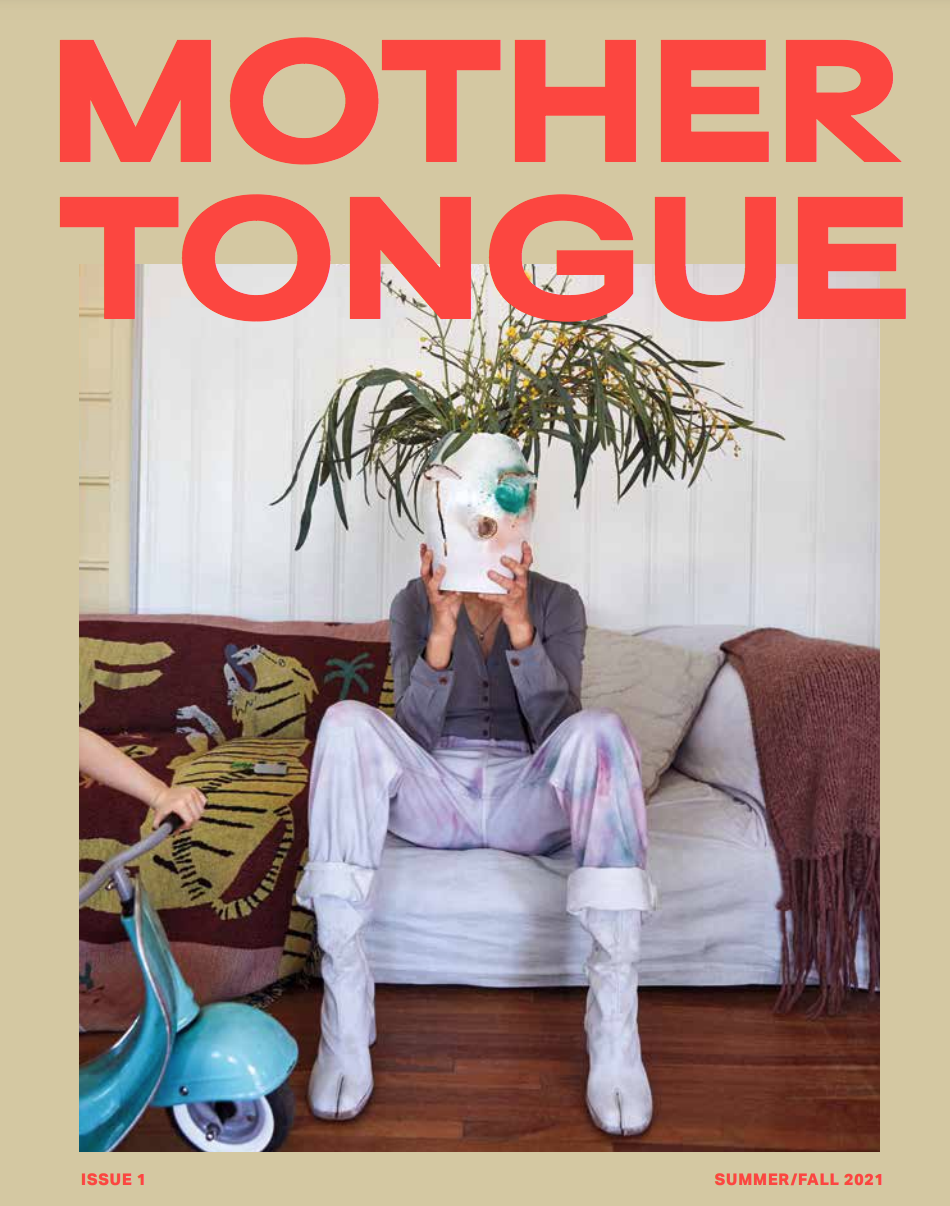
Natalia and Melissa: We are looking at motherhood through a cultural lens, rather than a lifestyle lens. Our stories are not about children or how to parent them; the magazine is about the nuanced lives women are living as mothers—and much more.
How did this idea/collaboration come together?
We met a decade ago in London, when we were both working as editors at the video storytelling platform NOWNESS. We reconnected at the beginning of the pandemic, as we both suddenly found ourselves at home full time, each with two young children, our professional lives upended—like so many mothers across the country and the world. We were having conversations about the duality of motherhood—discussing the many roles and challenges that come with it, and the feeling of completely losing yourself in that mix— and we felt these kinds of candid, questioning dialogues were missing in the media landscape. So we decided to do something about it.
Is your content meant to reach others beyond mothers? The audience we are targeting is mothers, but our hope is that the stories stand on their own and appeal to anyone with an interest in the human experience, whether they are a mom or not.
Describe the magazine’s visual aesthetic? (is it emerging and established artists, are they exclusively women contributors? Fresh, modern and unfussy, but also punchy and fun. We both come from the world of design and interiors (from the journalistic side) and we wanted to bring a more edgy and interesting look to the motherhood space which, for so long, has been dominated by quite saccharine, stereotypically “feminine” visual language. For this first issue, we kept it to female contributors only, both emerging and established.
What can you tell us about “Where I Go?” and its photo direction?
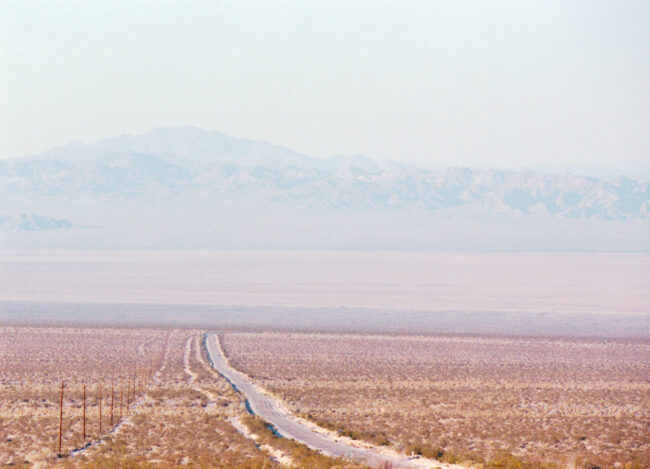
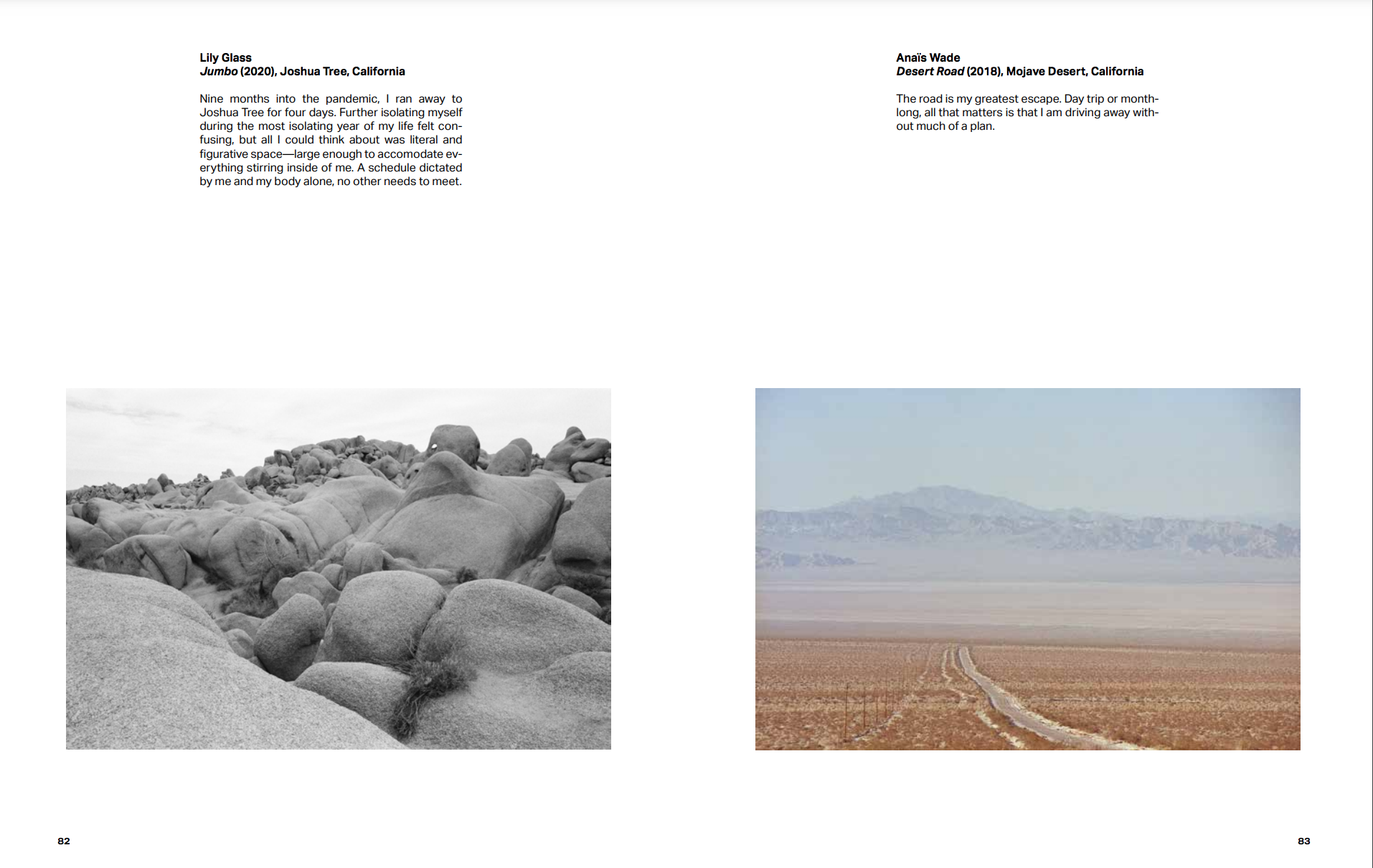
The portfolio was curated by our fabulous photo director, Gigi Jack. A few other highlights include: Bethany Mollenkof’s In My Mother’s Garden (2021) and Anais Wade’s Desert Road (2018). The idea for the portfolio was to ask a selection of photographers (who also happen to be mothers) about the spaces they occupy when they need a moment—alone.
How many times a year are you publishing and how can I get a copy? The magazine is biannual and the easiest way to purchase it is directly through our website. We also have a selection of retailers, which you can also see listed on the site.
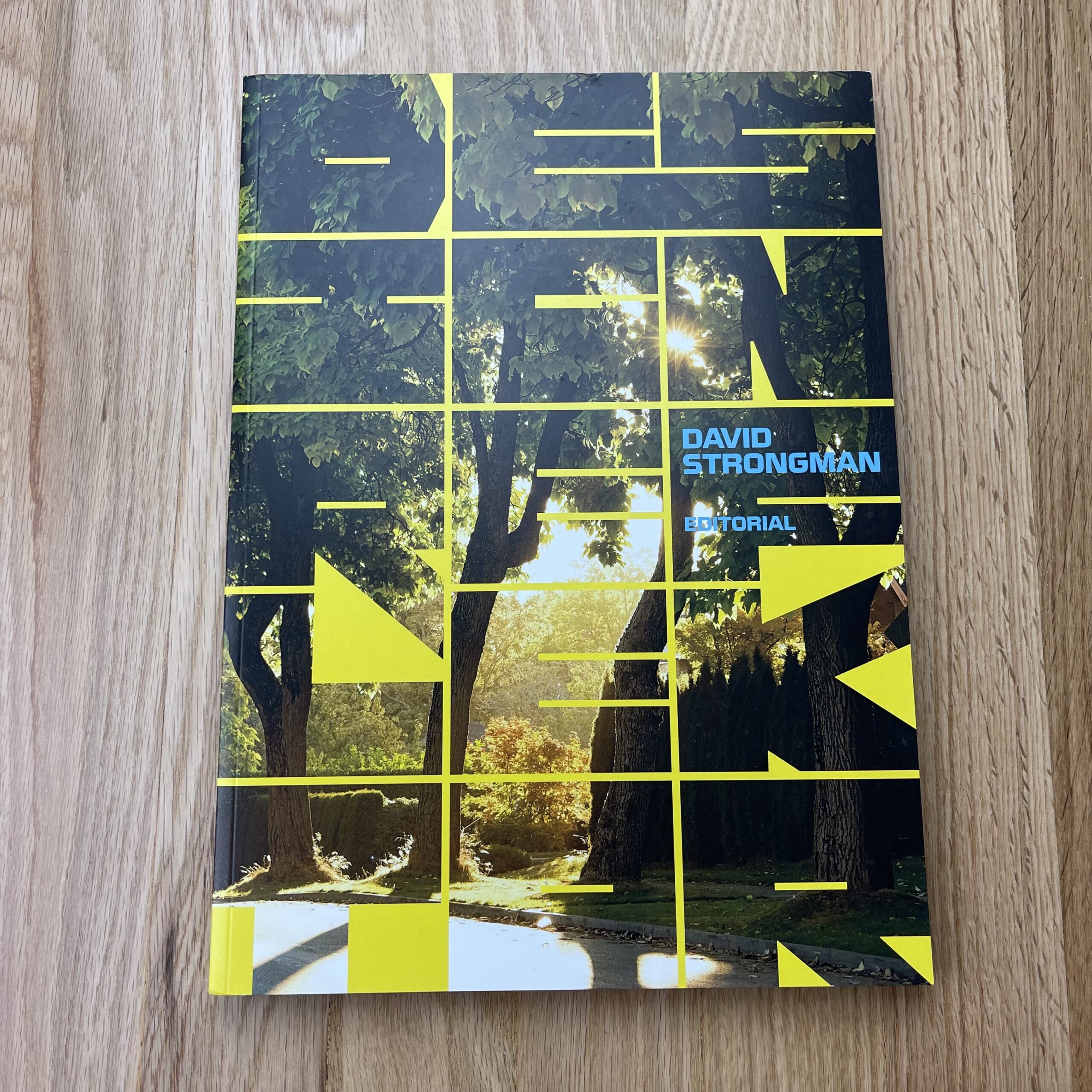
This was my first real promo piece having been a working photographer since 2001 – crazy I know. But as a photographer living in Vancouver we’re a small community, and work is word of mouth in this provincial town. That being said I think the practice of mailing out promos is under appreciated and is another asset that the right editor will appreciate. It’s really your opportunity to put together work in a meaningful way, on chosen print stock, with design intent, that provides an editor the sensorial cues about the person they’re about to hire … without having ever met them before. It invites a mutual relationship of trust. This is the blessing and curse of our industry these days. You just don’t get that kind of connection with the disposable Instagram-one-hit-wonder post that is so prevalent in our swipe right culture these days. So this is why I sent you my 2lb mailer. Here’s how it all began ….
I knew it was time to do something with the images I’d been commissioned to create over the last few years. Do I send out a mailer with a selection of images to tell an editor a story? Ok what images do I send? What do they mean? How do I present them? How many should I deliver? Am I over thinking this whole process. Well… yes and No.
I called Jaden Critchlow – @jac_illustration and the two of us got to work on creating a visual brand package. Jaden was a third year student at the design program at Capilano University in Vancouver (he’s now in Berlin … good move). He’s also my cousin so I was able to hold him hostage while we took 3 months to get these books completed. It was great to have a designer at the desk beside you who was skilled at the technical details of layout and design. Great for me, but I suspect an exercise in futility for Jaden because I was wielding executive control over the image selection and layout. I eventually stepped down from my lofty perch realizing he was full of great ideas and that we worked better as collaborators.
We ended up printing a few thousand 4×6 prints for the initial edit covering the main floor of my house, and we began laying out the shots according to whatever arcane and esoteric principles we could BS each other with. It’s amazing what you see when your floor is completely covered in photographs. Colours, shapes, themes, stories, light. The limitations of a computer monitor were quickly realized when we made visual / narrative connections with a room full of photographs that never would have been made on a tiny screen. This is really where the magic happened. When we had our final edit we realized that we were sitting on over 450 images. I stubbornly said let’s print them all. He agreed because again … he was family and couldn’t say no.
After the wide edit we then started the layout for two separate books. One focused on Editorial images – people and places. And the other on Interior images – something looser than pure architecture. I kept the two separate because it’s pretty rare that the interiors guys are also people shooters. One job is total silence, the other requires people skills. And people hiring for one often don’t consider you for the other. It made sense to kept the two brands separated.
After month of back and forth we had agreed on a layout for both books. I had a few ideas for a cover that Jaden worked up and we then dove into the print world. I initially went to an offset press house and was quoted about $15,000 for a print run of 100 of the books. Kinda out of budget but damn did the printing look amazing. Can’t beat it really. So I settled with digital output for about a third the cost. We ended up spending about $5000 for 50 copies of the the 178 page Editorial book and 100 copies of the 106 page Interiors book.
My Art Director in Vancouver Tanner Wilson (tannerwilson.com) always went to the same print broker – Russel White at Nine Yards Print (nineyardsprint.com). Russel deals with printers who are not public facing and handle large commercial jobs. They often sneak in the smaller guys a the end of a print run for a better price. It was great to have Russel stick handle the print brokering as his job is to connect you with the best print houses in the city, matching your budget and print requirements. It took the guesswork out of printing and one day we met in a back alley where he delivered a trunk full of printed books. Magic.
These images are a departure point in my photogrpahy, the culmination of 7 years of commissioned work in Vancouver. A personal retrospective. They’re largely street imagery and portraiture created during a great run of work for local real-estate developers who would hire me to go out on the street, create whatever images I wanted to, and come back to them with a look and feel for a specific neighbourhood that they were launching a tower in. What a gift. Because we are without an editorial scene in Vancouver, the opportunity to roam the streets to create images and get paid for it was a total blessing. The trade off was you’d get paid better than editorial rates, almost great for feeding a family of four in the overpriced city of Vancouver, but no one who mattered ever saw your work because it was locked away in a brochure for a development that sold out in a day. The challenge then was to get these images into the hands of editors and agencies around the world for their consideration. Do I ramp up the website? Blast social media? And then make cold calls?
I already spend way too much time in front of a screen and I’ve lived through watching old clients suddenly disappear to hire photogs based on their one-hit-wonder Insta image – who by the way have returned because it turns out you need to know something about something to re-create the magic of a lucky single image. So I thought that the best way for me to engage a photo editor was not with a few good images, but with a book. Two books actually that are 100 and 175 pages each. Something that when you drop them off on an editor’s desk you let loose from three feet and the reverberation is felt throughout the office. Something that that they could really engage with.
These books are a way for me to entice editors and creatives into digging deeper into my work, give them something to sit with for more than 15 seconds. Each and every page has been laid out with intent and purpose. Nothing is by accident. Images play off each other though light, texture, content, narrative. There’s easter eggs everywhere. The real joy for me is in watching someone sit with the book. Do they flip through it rapidly or do they spend time with each image. Most people these days unfortunately flip through so fast that they barely remember a single image. Oh well, I tried.
The challenge I face now is in how best to get these to the agencies/editors who really matter to me, and have them hire me for jobs that will push my creative boundaries? I recently sent the books to the UK and it cost me $80. But it felt great when that editor responded immediately to my phone call because they had received the work and loved the production of it. Will it get me work? Maybe. Maybe not. I think what will get me work is consistency. I gambled putting all my eggs in one basket. But I did it for myself because who would be crazy enough to delver 275 pages of printed content to a random editor? It’s now up to me to keep up with these new relationships by calling/sending more work.
Living out on the west coast, without an international agent to put you forward for work is a big challenge. The goal now is to identify the finest editors/agencies worldwide and target them specifically with this work. And I’ll eventually upload all of the books to Instagram and revamp the websites. And start another body of work that makes my happy.
“What is there to understand? Just read it. There it is in black and white. Who wants you to understand it? If the Lord God wanted you to understand it He’d have given you to understand or He’d have set it down different.”
John Steinbeck, “East of Eden,” 1952.
Have you ever heard of Andy Kaufman?
He was a comedian back in the 70’s, and got famous for pissing people off. (And for his weird-ass accent in the TV show “Taxi,” which would certainly be considered offensive in today’s cultural climate.)
I must have seen a few minutes of his stand-up act, back in the day, and then Jim Carrey played him in a movie, but I do have strong recollections of his place in the culture.
Andy Kaufman was such an absurdist, he’d get on stage and say strange, not-particularly-funny shit, just to get a rise out of his audience. Some of it was hilarious, but mostly because he was toying with expectations in a manner that feels very of-the-moment.
I’m pretty sure he got involved with professional wrestling, and got his ass kicked for real, because he made his living pushing the envelope.
Plus, he did a spot-on-perfect Elvis impersonation. (And got to hang out with Johnny Cash on “Hee Haw,” which melts my brain.)
These days, we know all about trolls, and gas-lighting, but it seems Andy Kaufman helped pioneer the practice, back when it would have seemed revolutionary.
To me, the point is to grind into the human consciousness that our desire for things to “make sense,” and for us to be able to “understand” the world, much less the Universe, is hubristic and fallacious.
Much like Loki needed to get the shit beat out of him by Hulk, in my kids’ favorite scene in the first “Avengers” film, Andy Kaufman was the canary in the coal-mine for our 21st Century misadventures. (He died young, and didn’t live to see our new-times.)
Poor guy.
At least he had some fun.
But today is not one of those days where I’ll weave together ten strands of American culture into a tapestry of awesomeness. (Sorry if that sounds cocky, but sometimes I get there.)
No.
Not today.
I’ve been immersed in trying to reason with a teenager, who’s been hell bent on self-sabatoge, as were millions of teenagers before him.
Trying to understand the teenaged mindset, from a 47 year old vantage, makes about as much sense as a chicken trying to force its way into a KFC. (A true story I heard on Sirius radio the other day. Dumb fucking chicken.)
Today, I’m going to cut to the chase more quickly than normal, and the connection between the introduction and the book review will be as obvious as a wet-dog-fart.
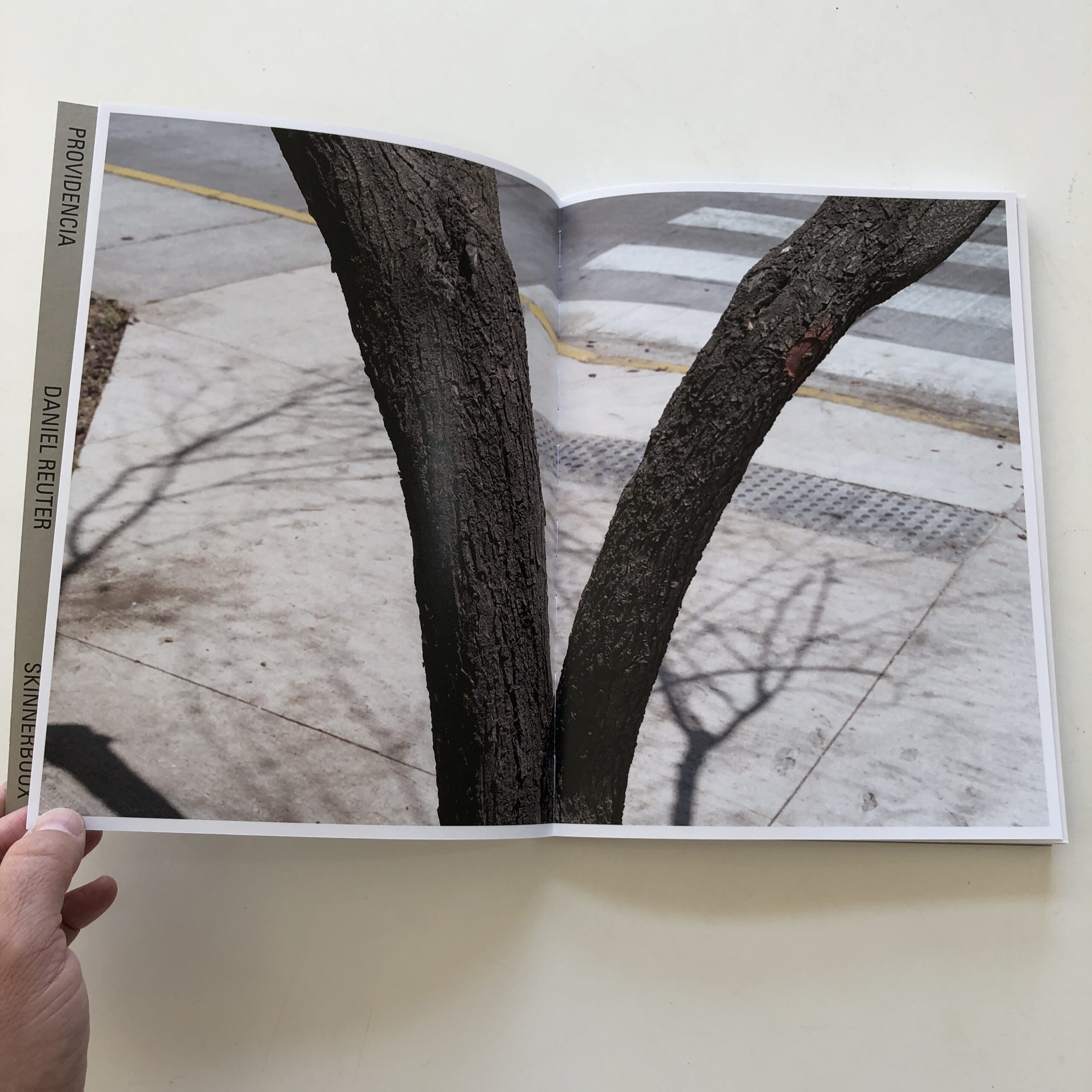
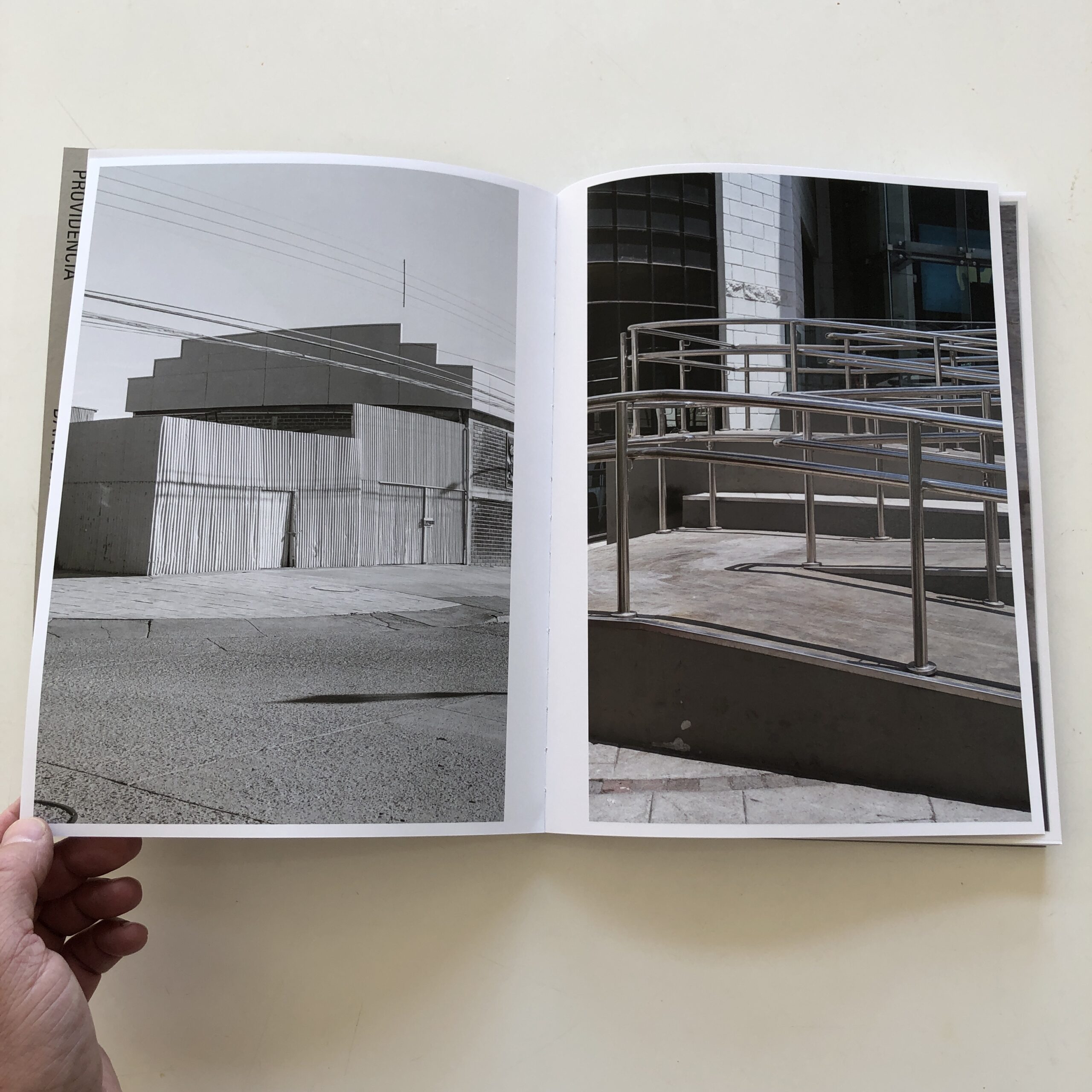
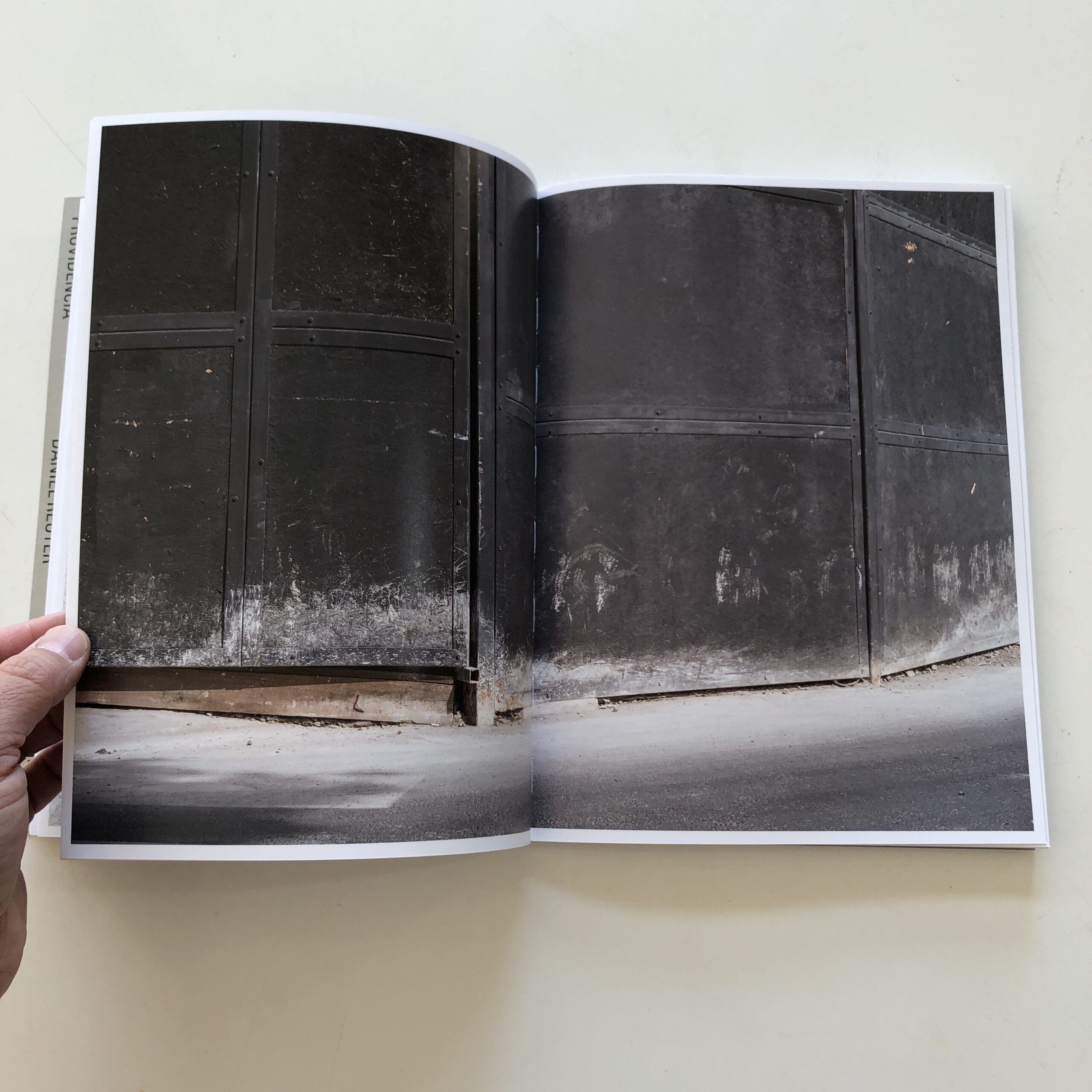
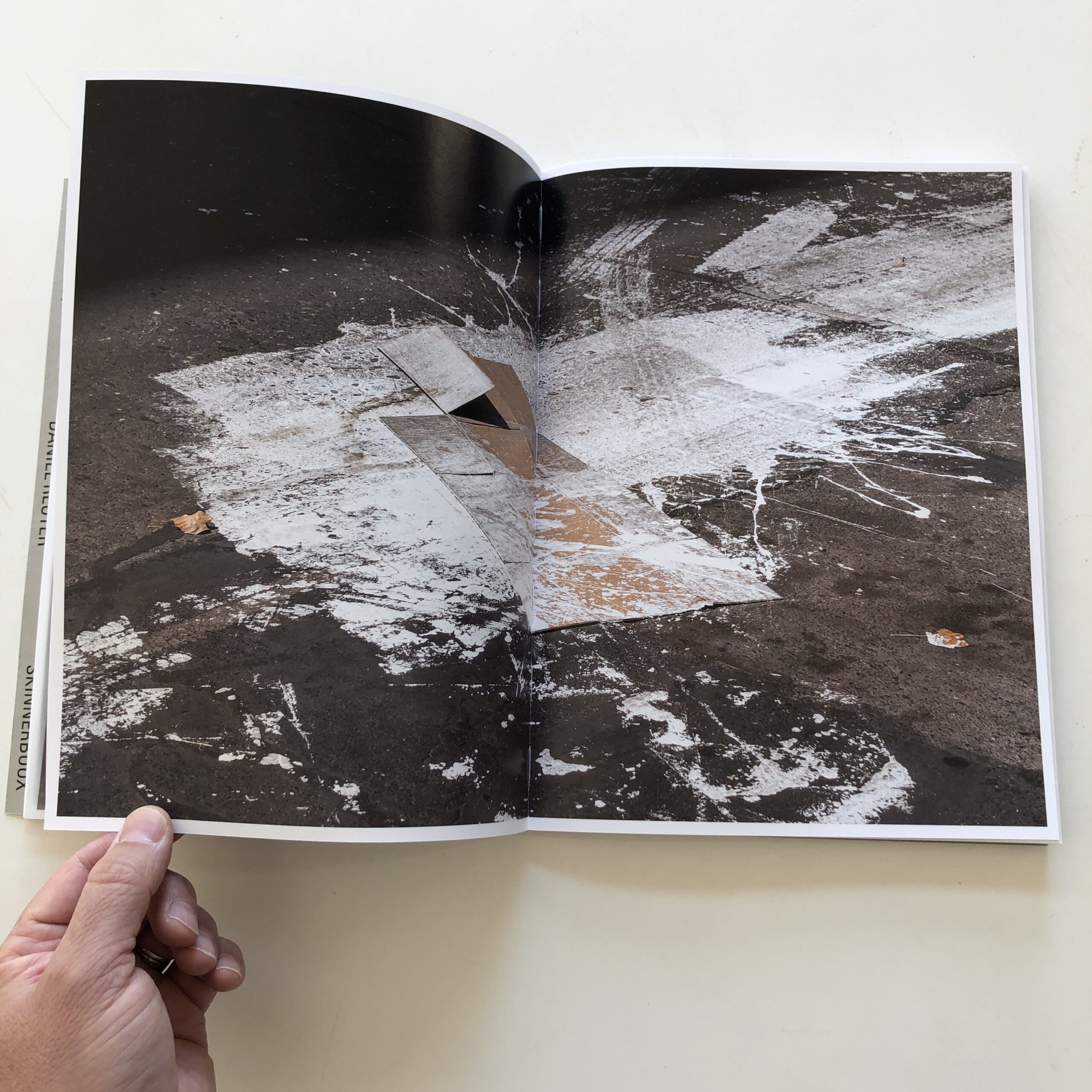
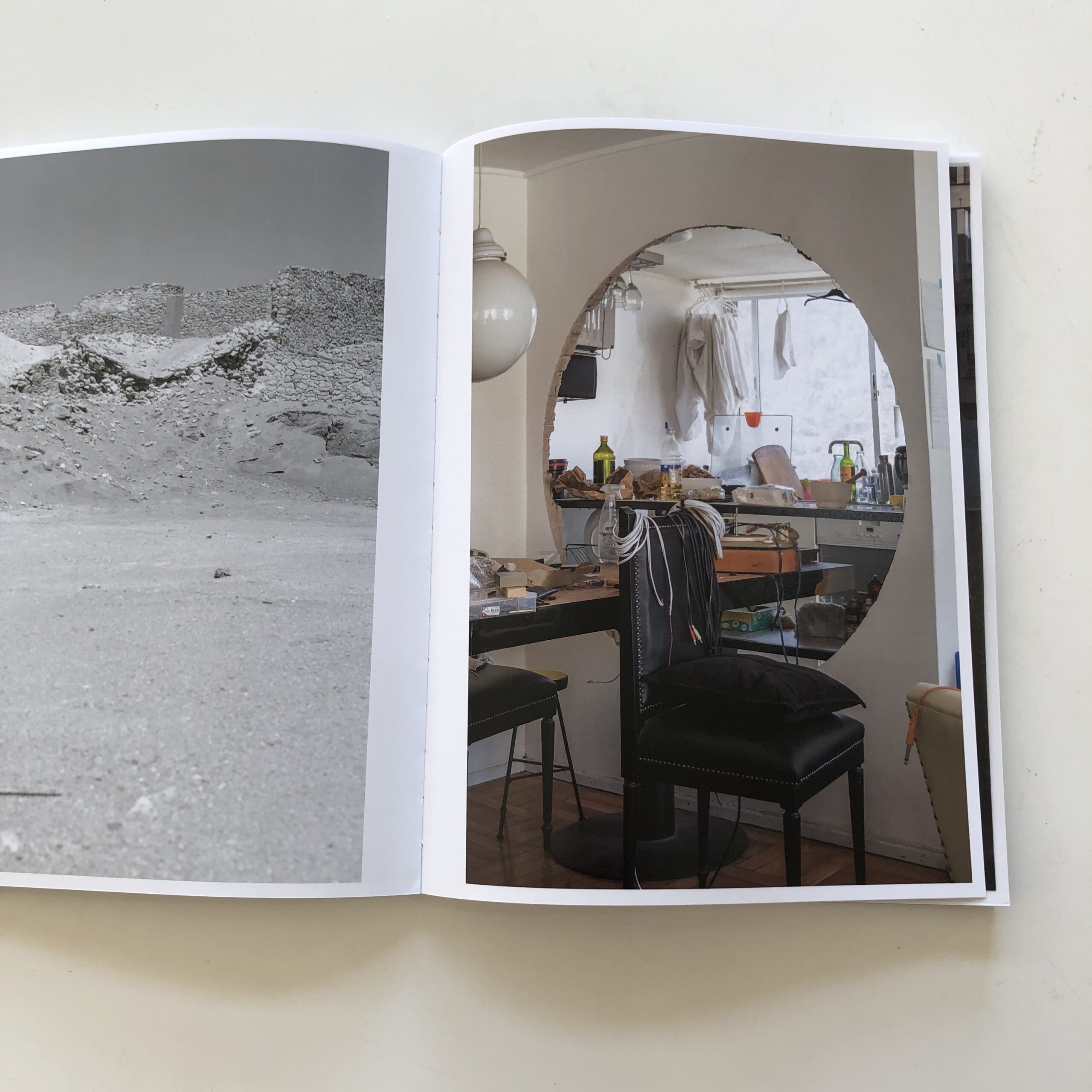
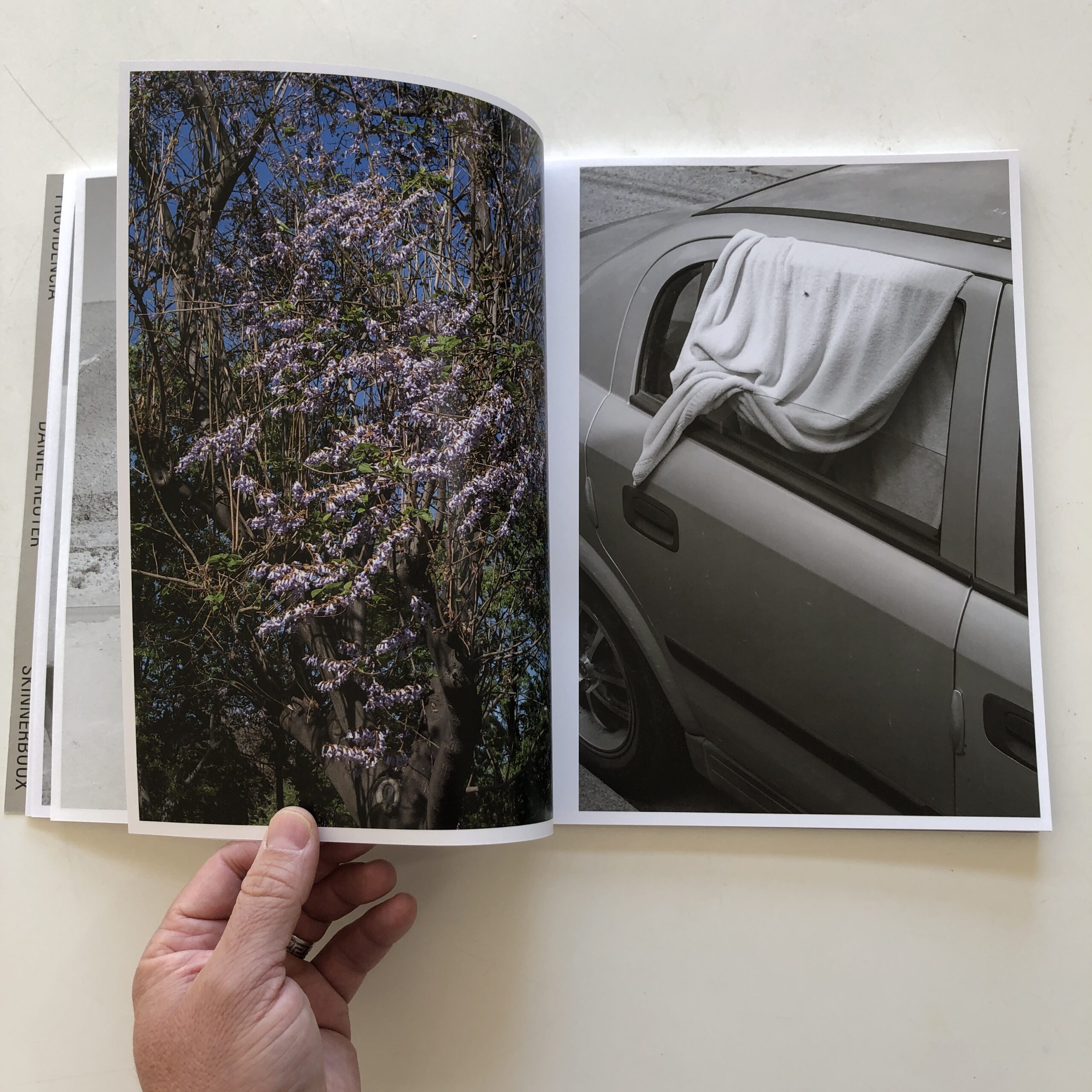
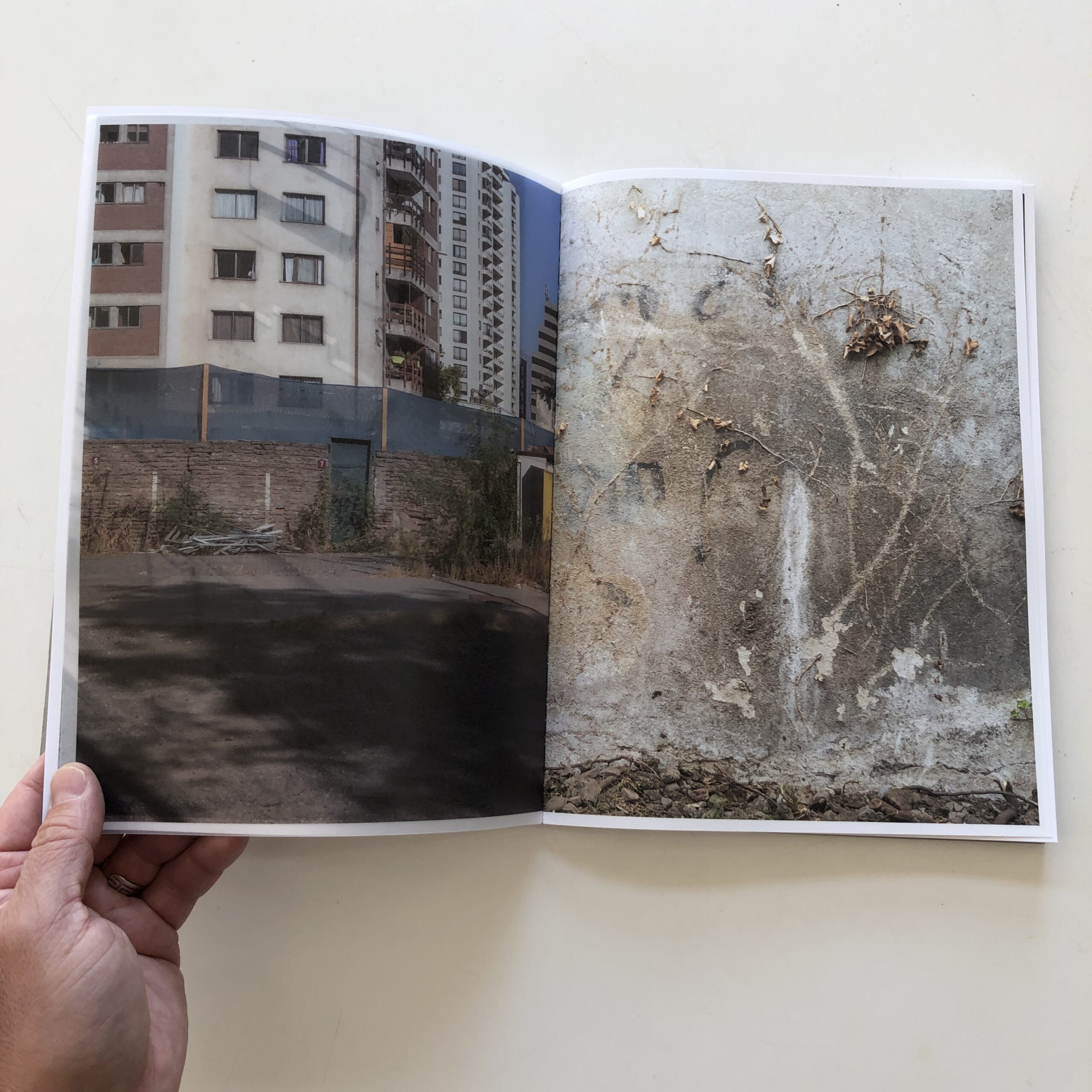
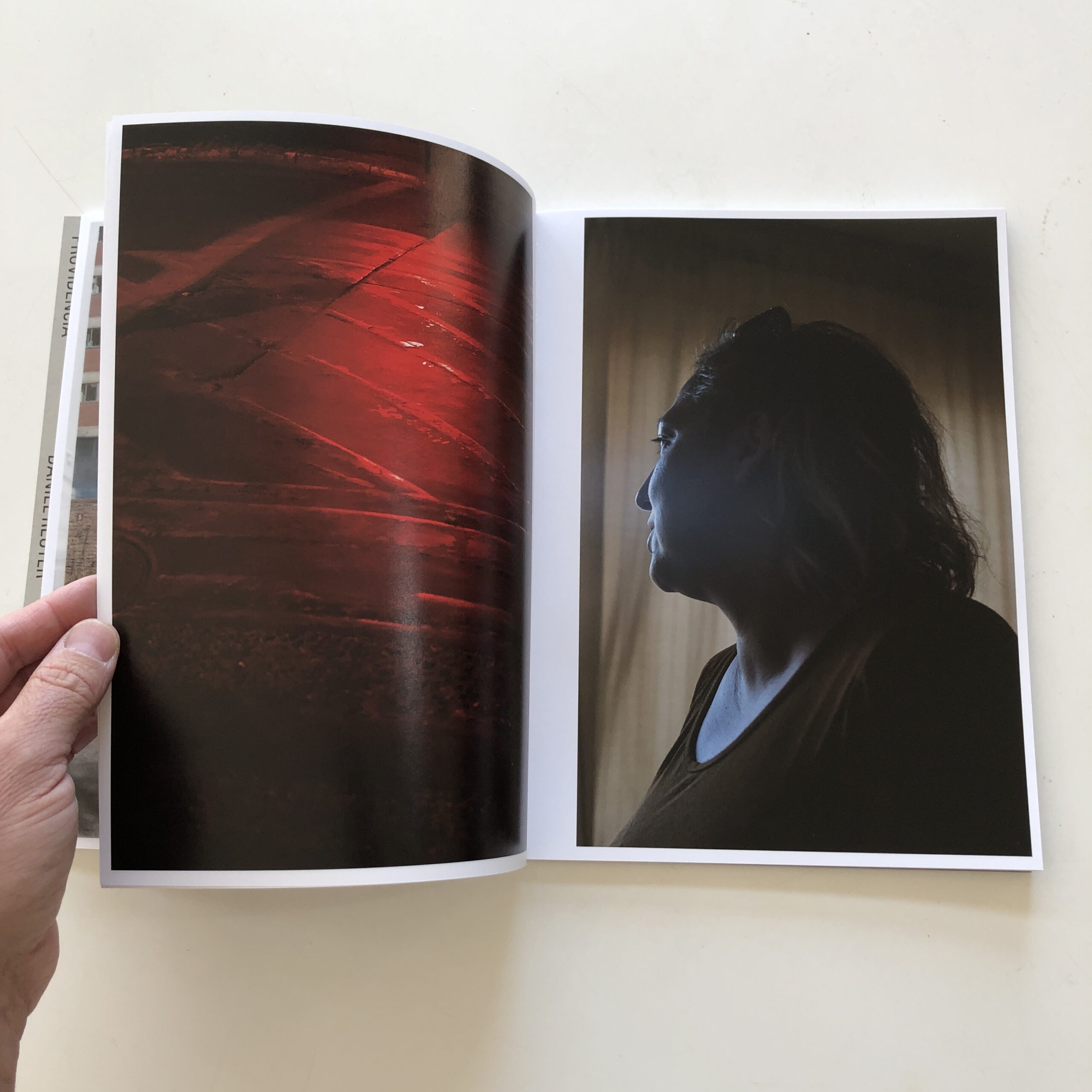
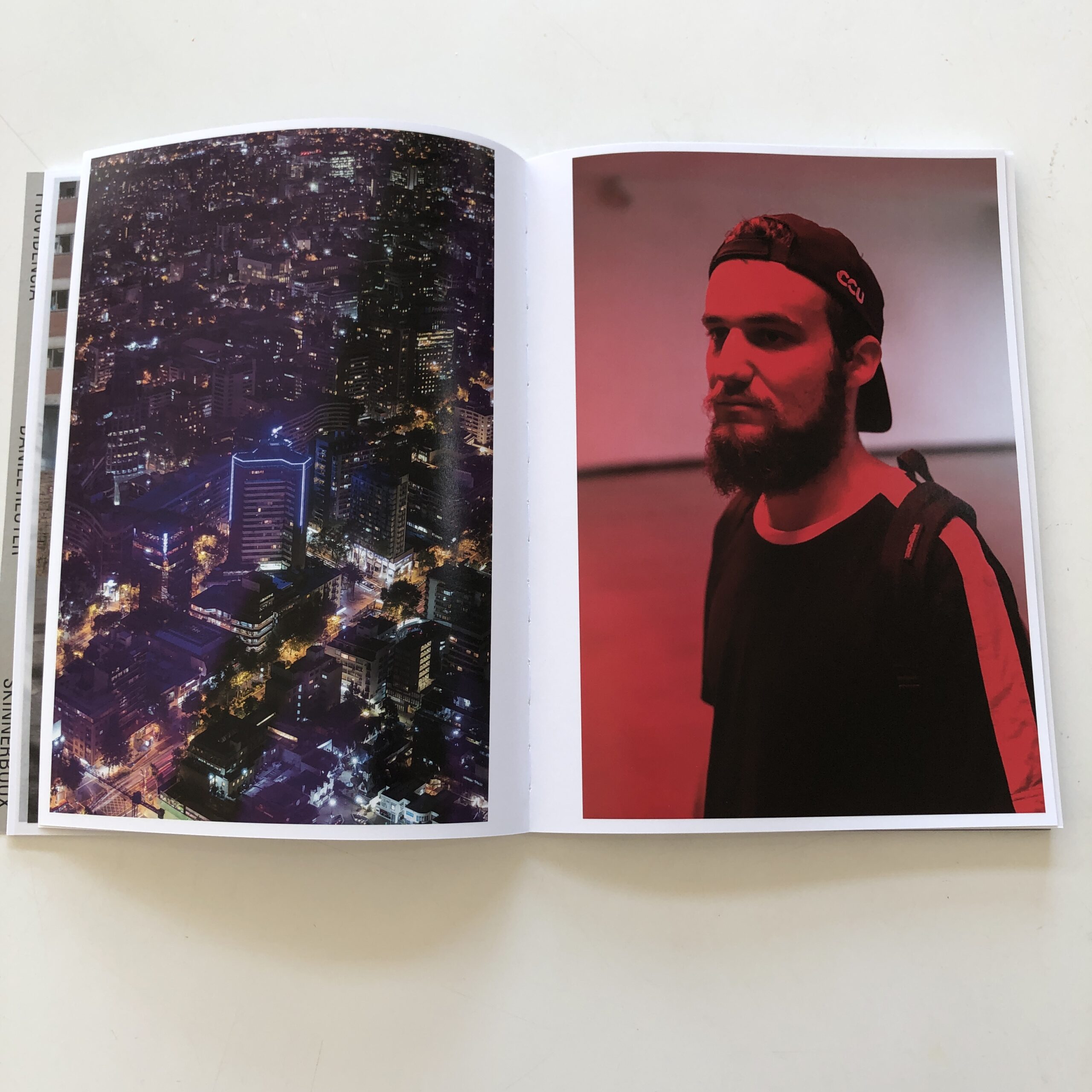
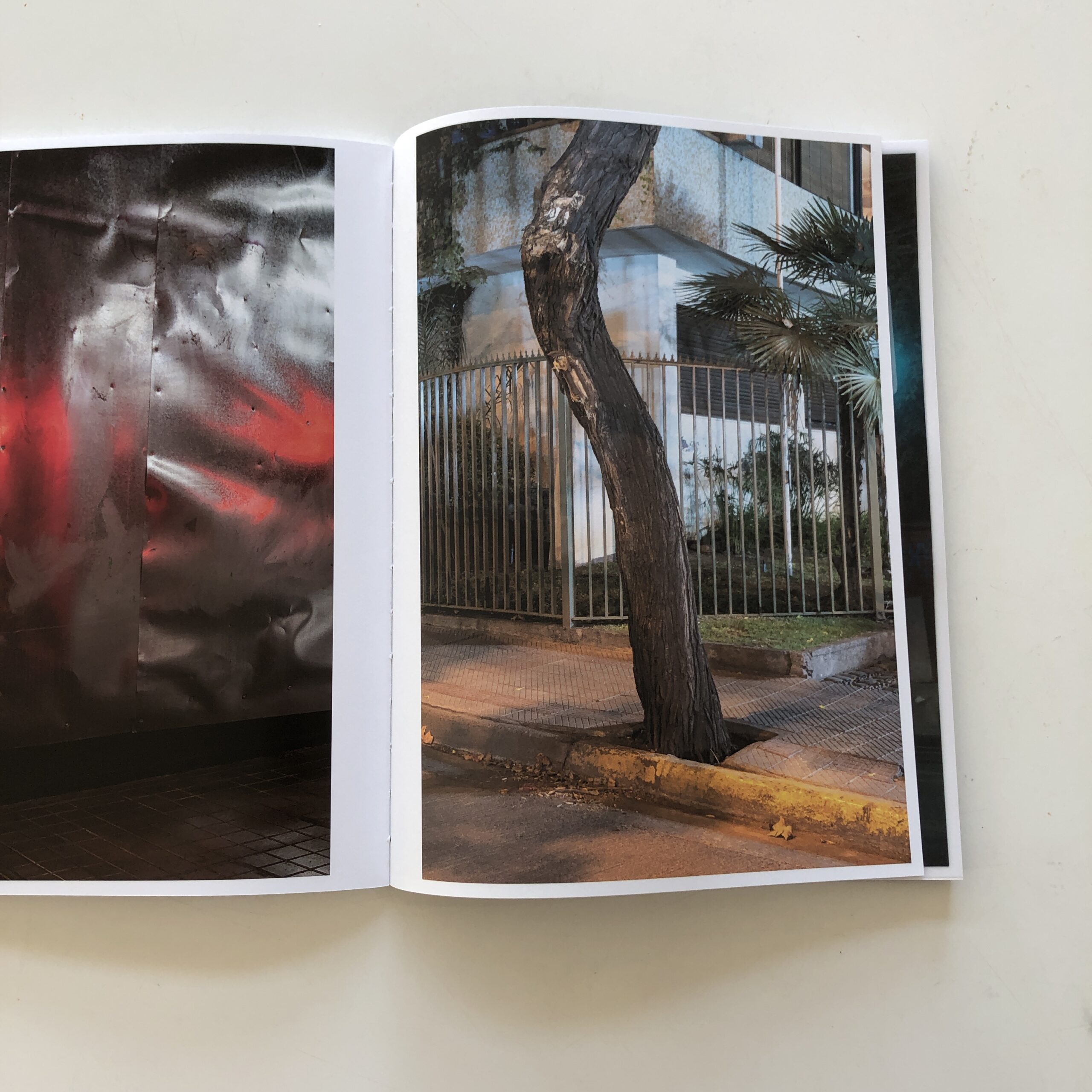
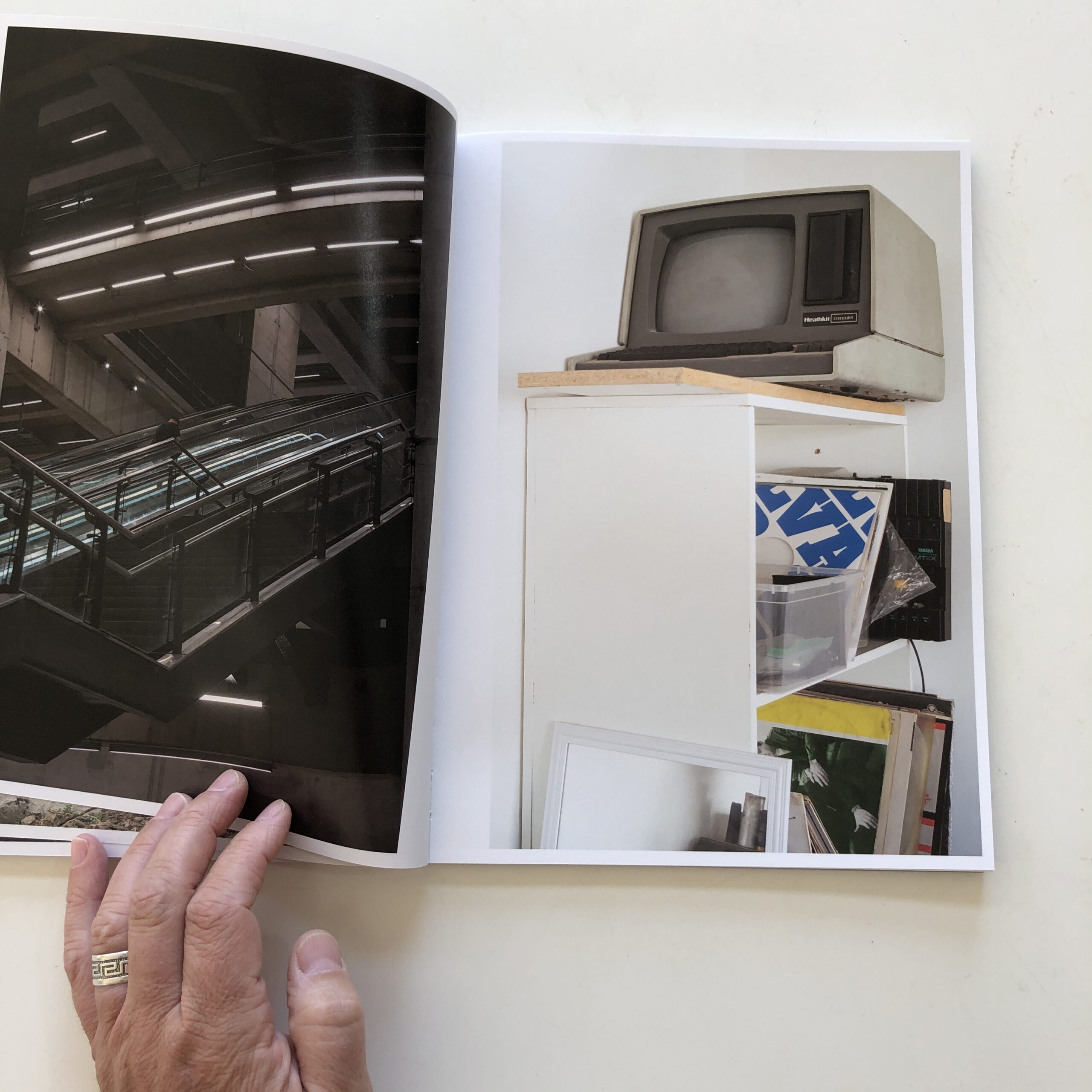
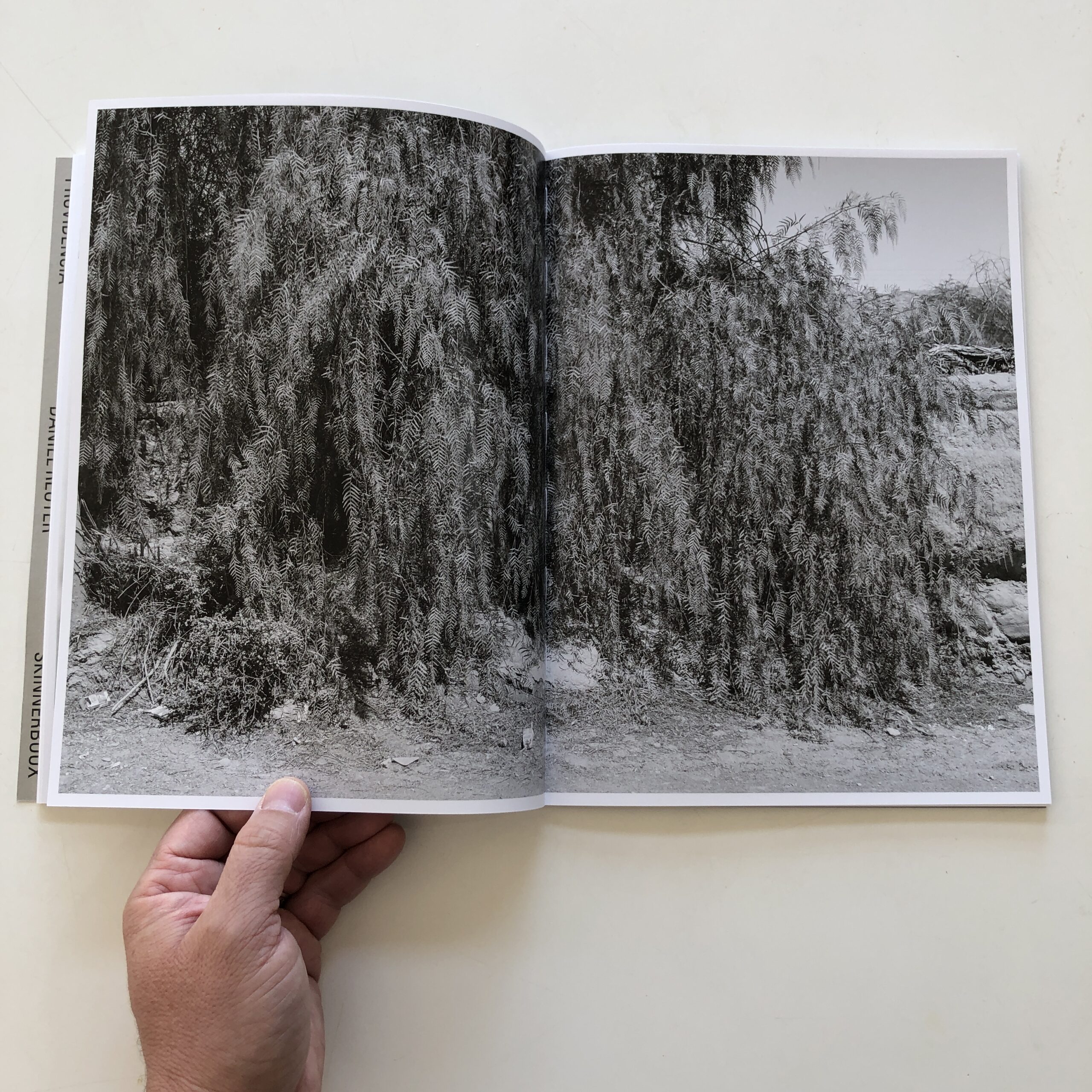
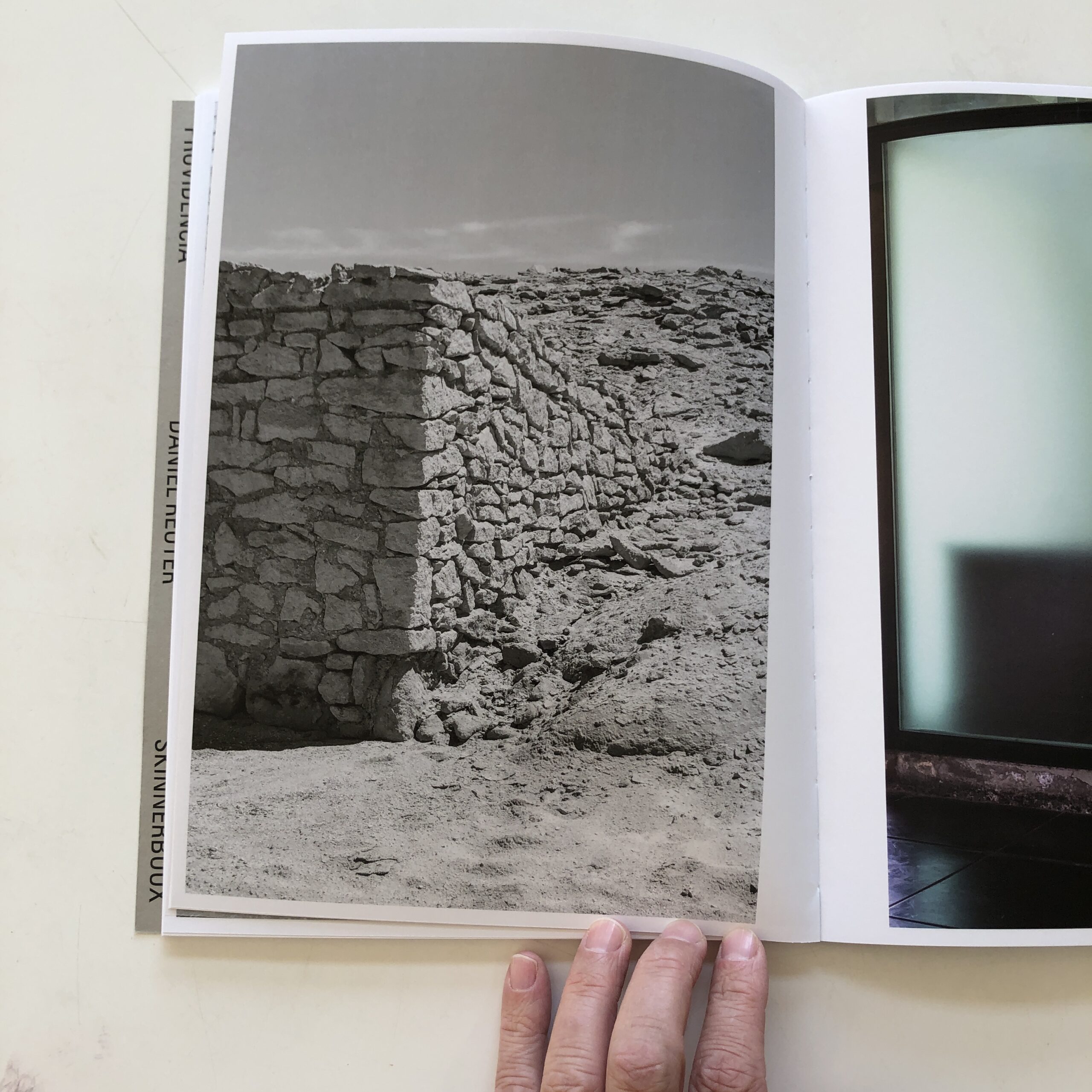
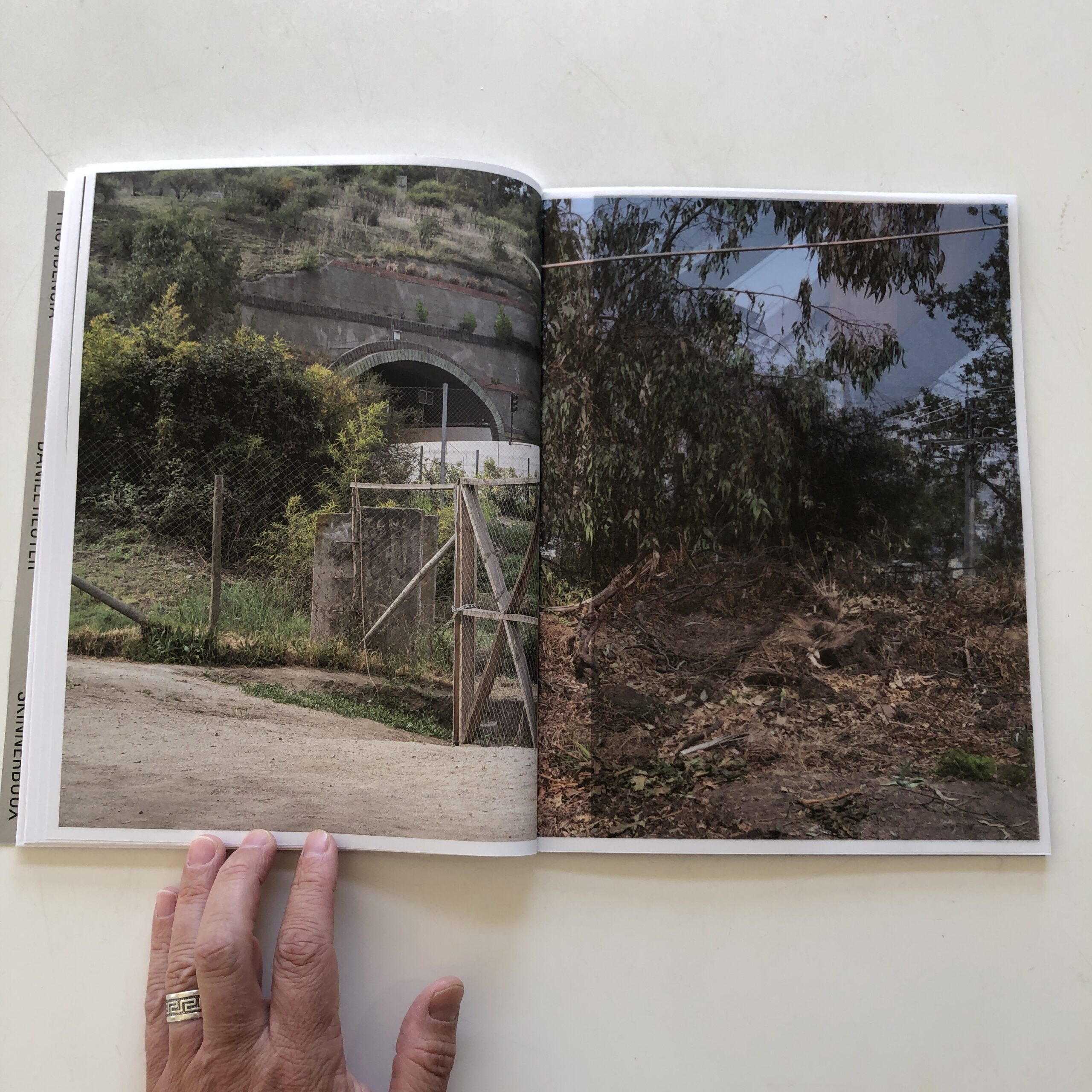
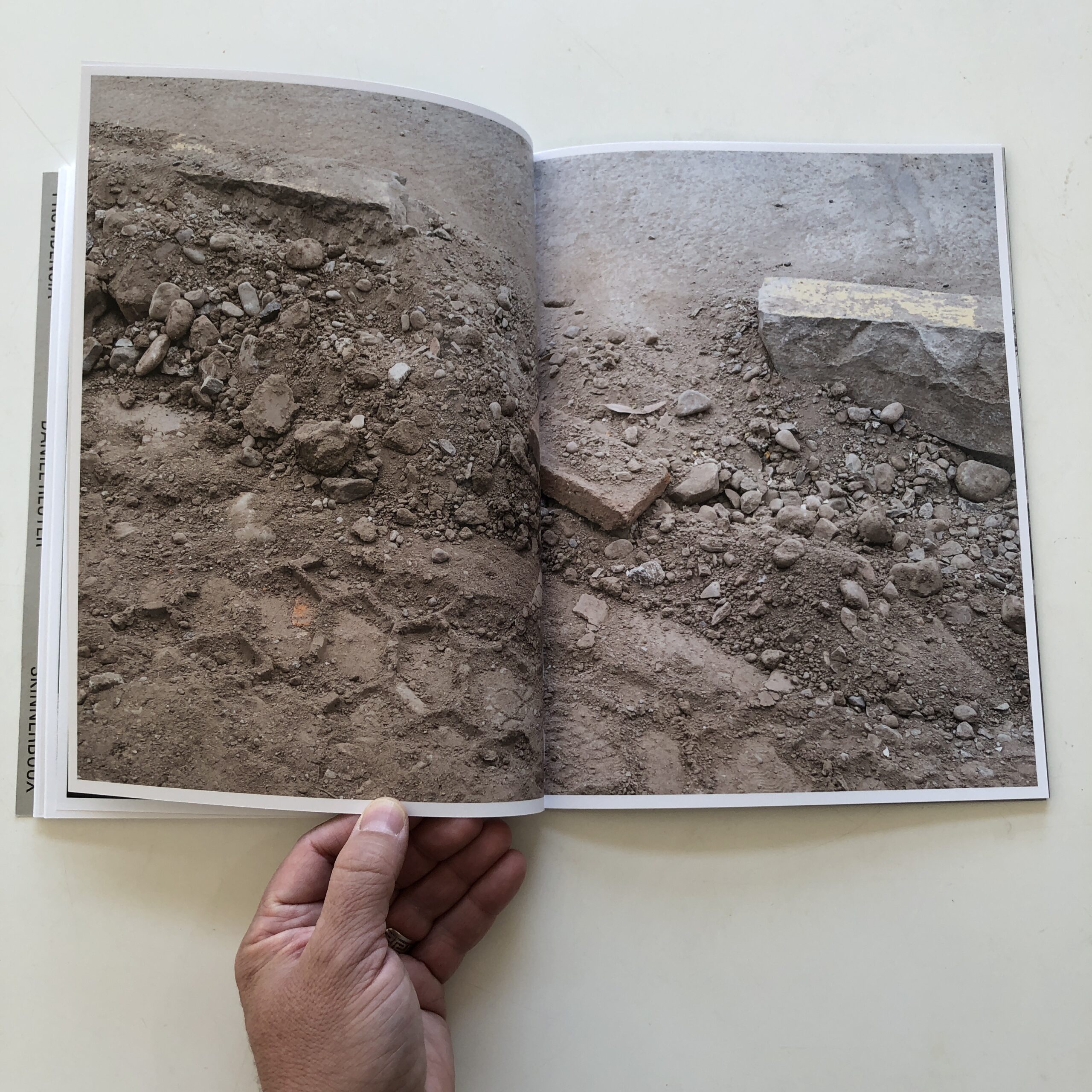
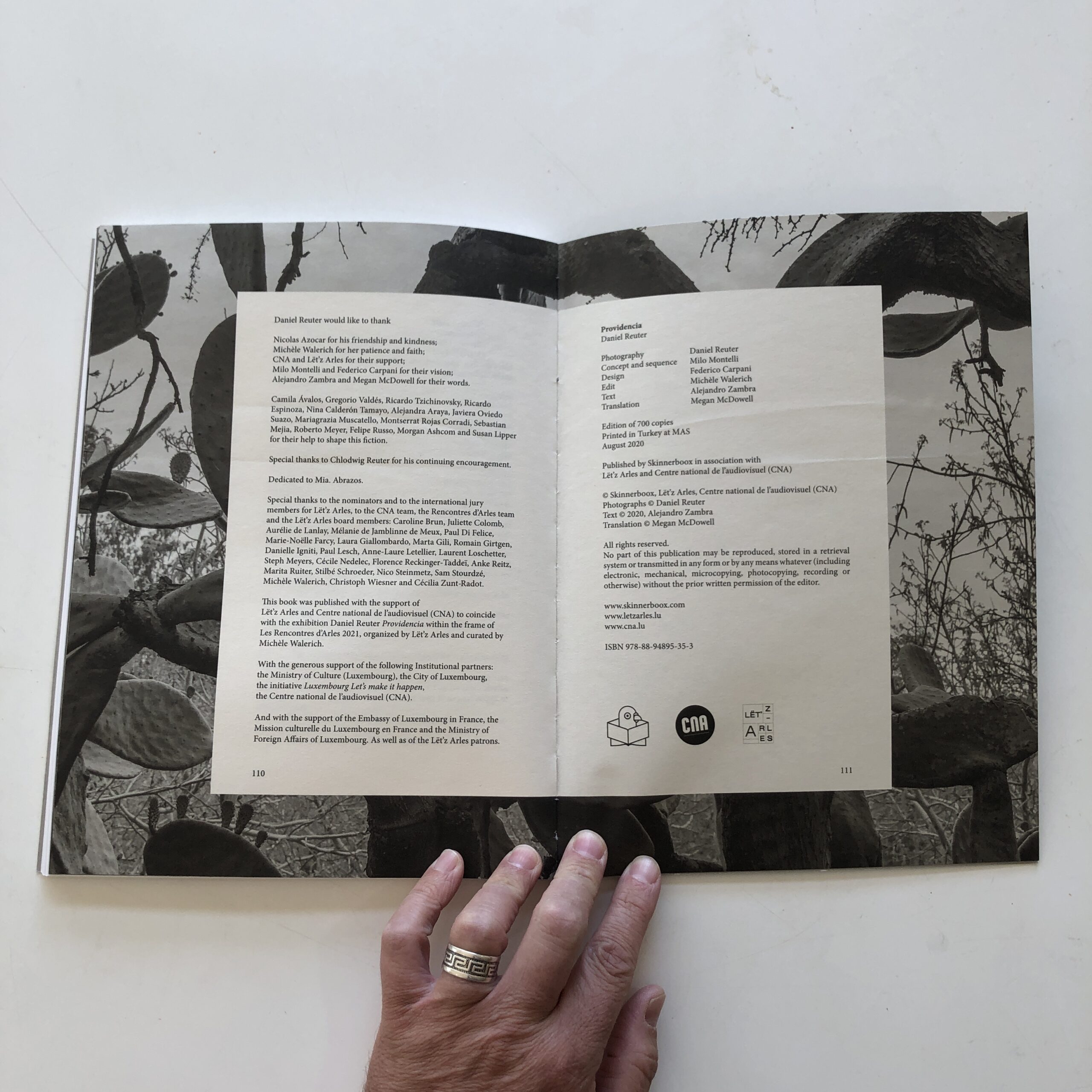
Today, I spent some time with “Providencia,” a book by Daniel Reuter, published by Skinnerboox, which arrived in the mail nearly a year ago. (Almost done with the 2020 submissions, thankfully.)
Today, as I sit here and write, I can honestly report that I was thinking of Andy Kaufman WHILE I was looking at the book, because I couldn’t make any sense of it at all.
Normally, when I spend time with a book, I look for clues, and figure things out, as slowly the narrative begins to focus. Eventually, I get there. (Almost always.)
But not today.
The title, which means Providence in Spanish, made me think maybe the series was made in Spain. (Such a Euro-centric vision of the world, it’s true.) And early on, there is a publication in Spanish, so that exacerbated my reaction. (As did the inclusion of a palm tree in one photo.)
But as to the theme, or point of the work?
I just couldn’t get there.
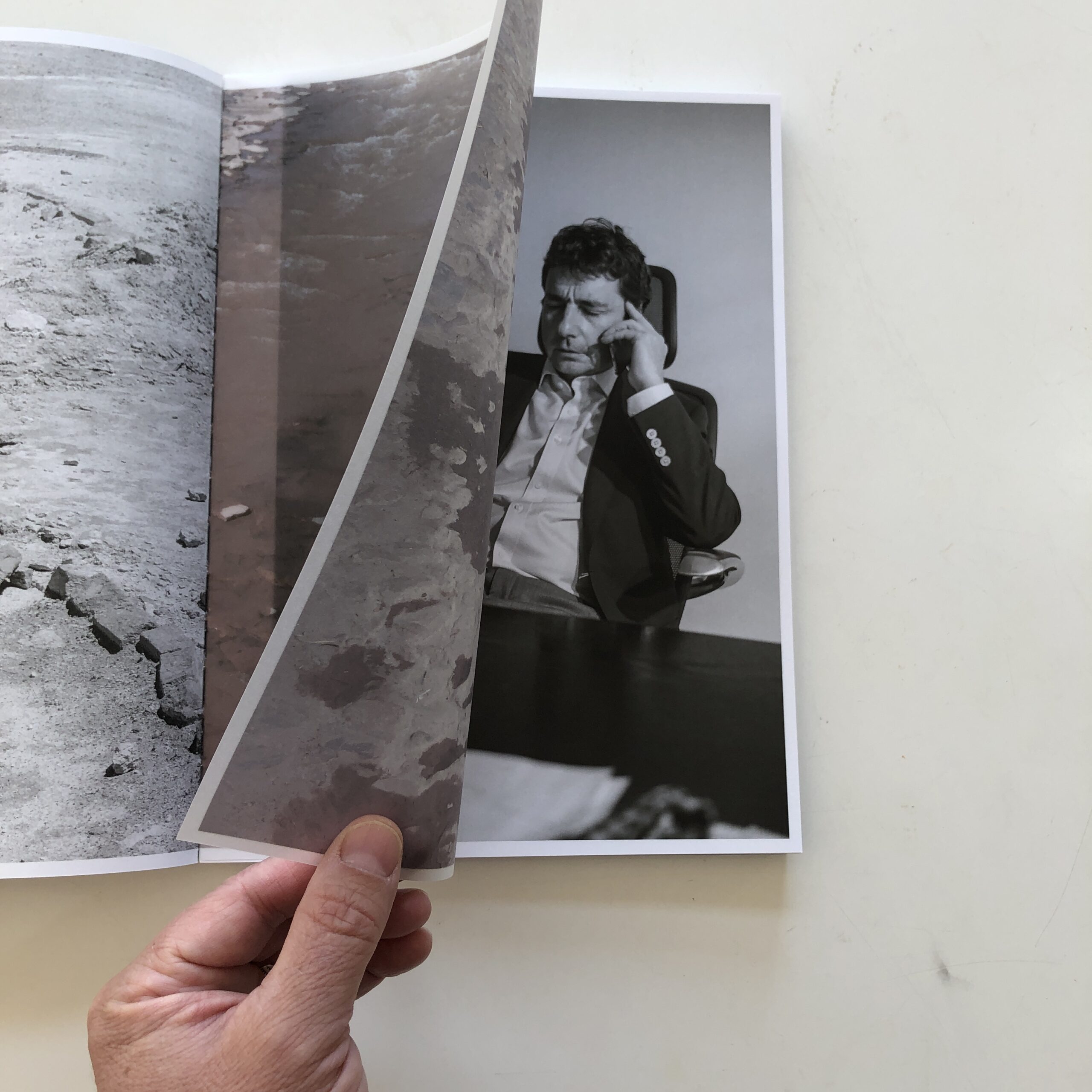
We see buildings, walls, hard-scrabble desert scenes, buildings, junk, trees, and occasionally, some people who don’t look at the camera.
Circles form a repeating motif, including a cool image with a hole cut in a wall, and another with a record player sitting before metal tubes that remind me of pipe bombs.
There are no words, until the end, and no context until then either.
Mostly, beyond thinking about Andy Kaufman, I realized the book was not really meant for me, as an American. (I know they sent it my way, but you likely catch my drift.)
It felt loaded with cultural references that I could not access, and the book also felt intentional about it.
As if creating a state of chaos and confusion was part of the book’s mission. Or perhaps it was commenting on a society that experienced those sensations, and the point of the art was to communicate that emotion through visceral means.
Furthermore, the production values are high, and the inclusion of images printed on vellum, as a way of breaking up the visual consistency, was great. (By not half-assing the production, it also lets a viewer know the project is serious, if inscrutable.)
In the end, we get a long essay in Spanish, (of course, as I said, this was not designed for Americans,) and then a translated version.
It’s by Alejandro Zamba, and quickly establishes the book is about Santiago, Chile, not long after the city erupted in protests, violence, and social disorder, not unlike what happened in the US in 2020.
It’s a beautiful short story, almost in the form of a parable, as a stranger lands at an airport, and takes a long taxi ride, during which the driver catches the author, (and we, the viewer,) up on what the book is actually about.
There’s a quote within, which summed up my feelings about our innate human desire for things to make sense: “The feeling of understanding all is useful, hopeful, cocky and false, while the feeling of understanding nothing returns our humility to us…”.
I must say, one of my very favorite things about this job is that I get to learn about faraway places, and share that knowledge and “intel” with you.
The end notes tell us this project was supported by a publisher in Italy, foundations in Luxembourg, in conjunction with Les Rencontres d’Arles in France, but what that has to do with a Dada book about Chile, I cannot say.
Only after I was done did I notice some press materials that likely tried to explain things, including an essay by Adam Bell, but it was pointedly not included in the book. Nor was it an insert.
So I didn’t read it.
I’m not being petty, though.
Rather, I was luxuriating in the not-knowing. In being reminded I’m just a puny human, living for a short time on a spinning rock, hurtling around a star in an ever-expanding Universe.
The Art of the Personal Project is a crucial element to let potential buyers see how you think creatively on your own. I am drawn to personal projects that have an interesting vision or that show something I have never seen before. In this thread, I’ll include a link to each personal project with the artist statement so you can see more of the project. Please note: This thread is not affiliated with any company; I’m just featuring projects that I find. Please DO NOT send me your work. I do not take submissions.
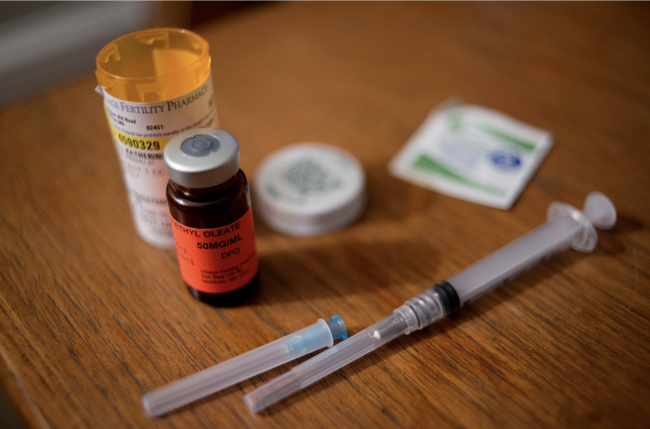
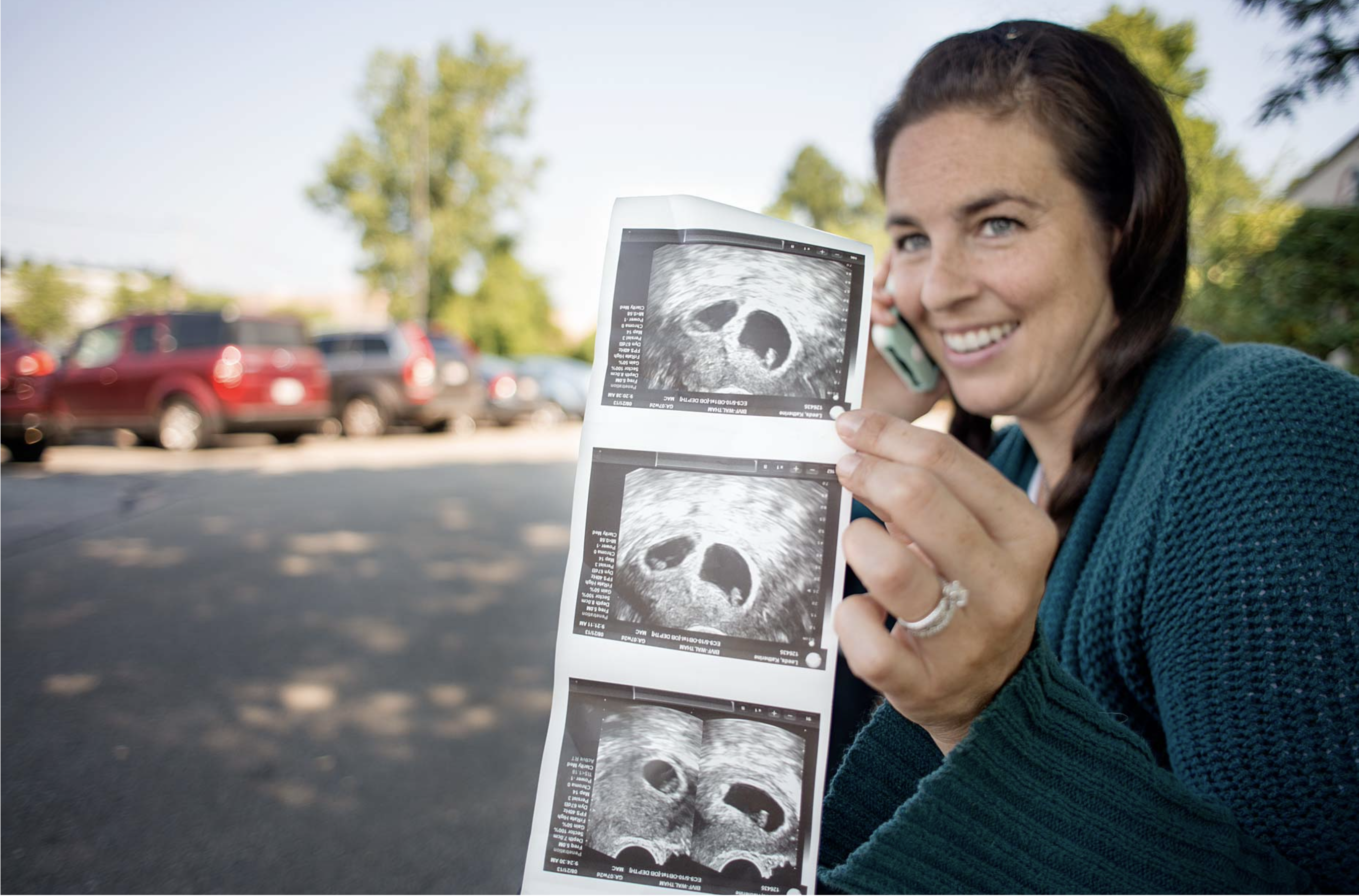
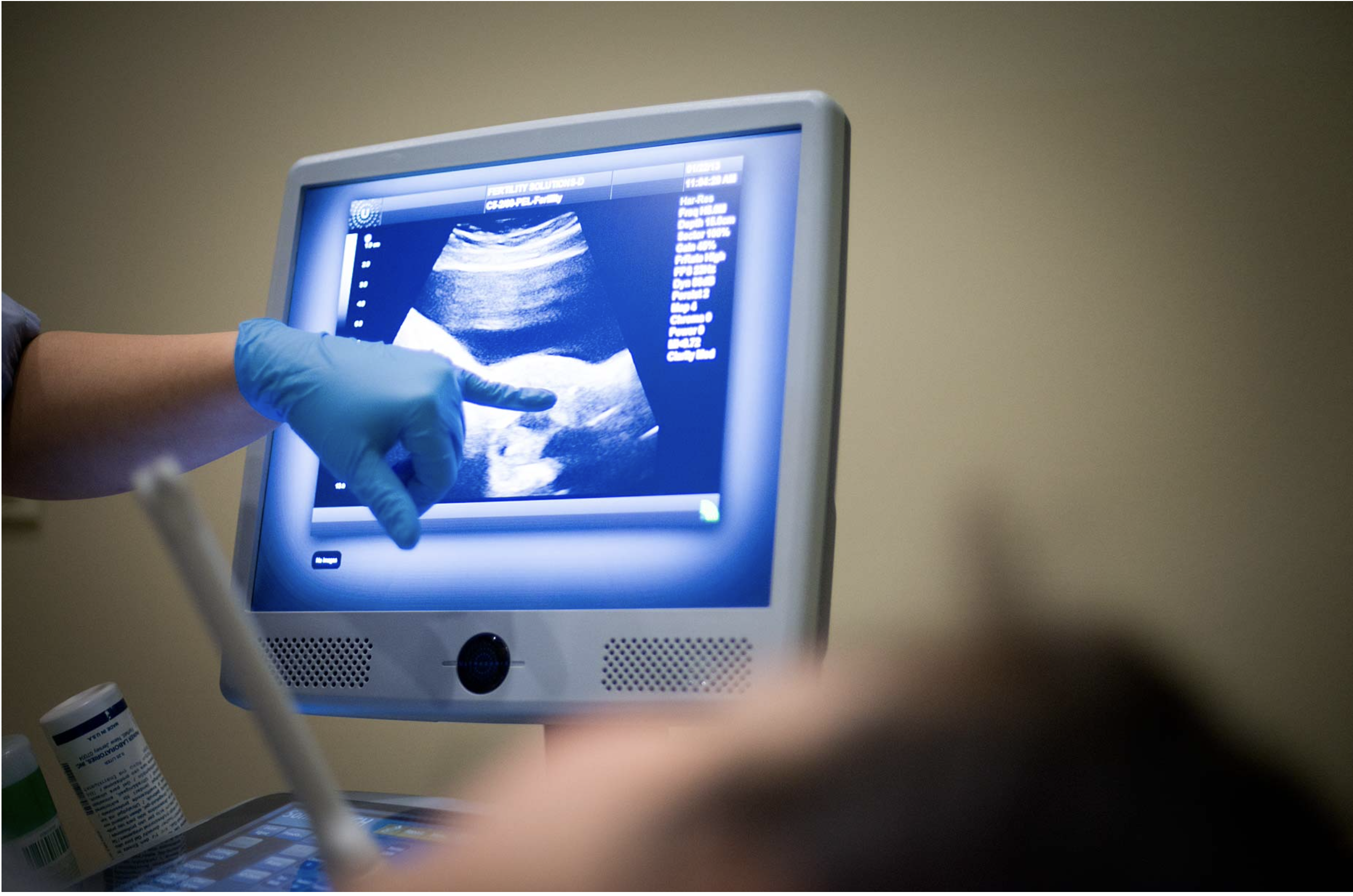
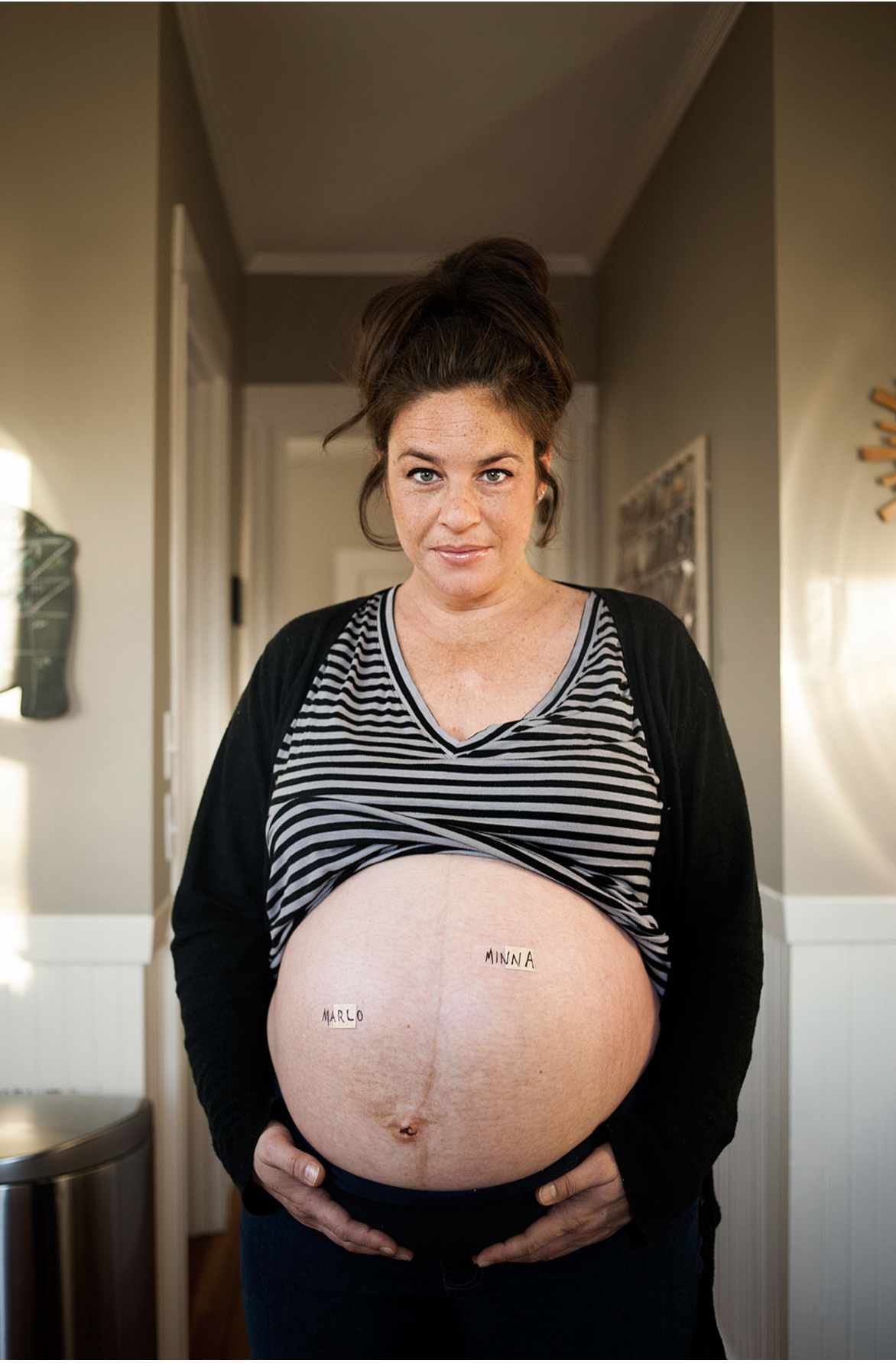
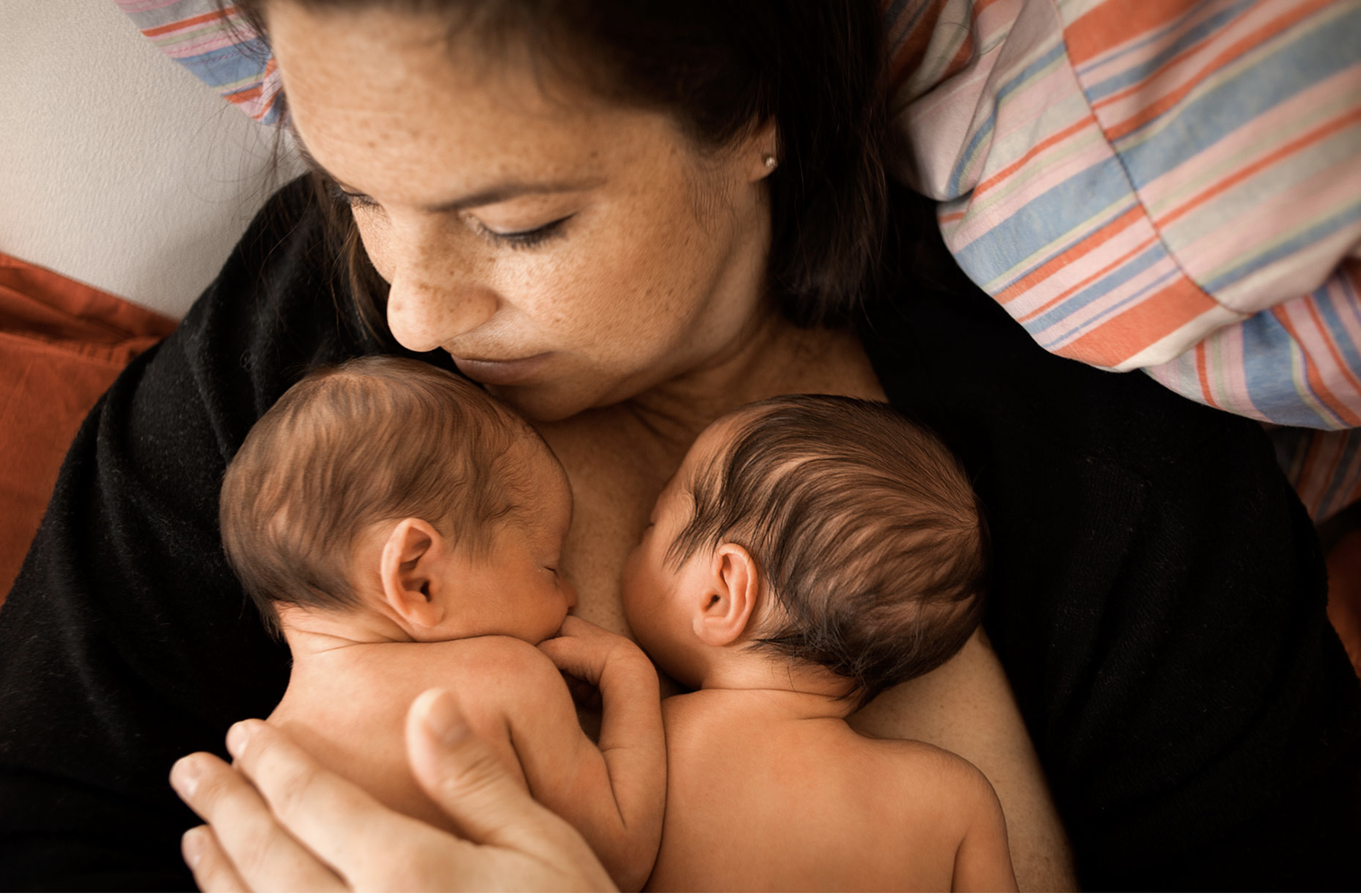
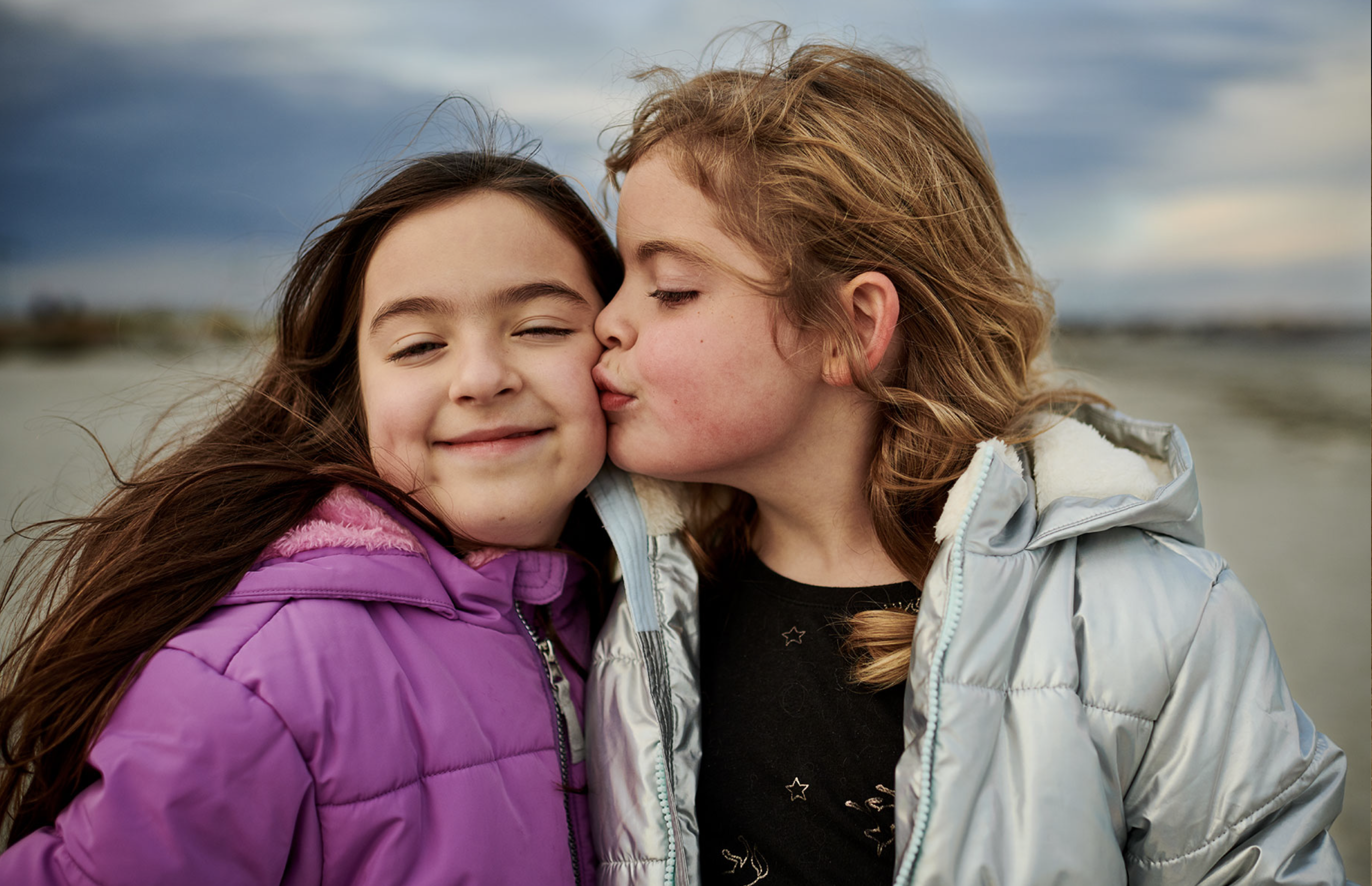
My wife and I struggled to get pregnant. We are lucky enough to live in a state (MA) that covers up to 6 rounds of in vitro fertilization, and we used almost all of them. On our fifth round we were ready to consider other options because of the emotional toll, but our doctor encouraged us to try again. We had very low expectations, and possibly because of that we felt less pressure. That’s when it finally worked. For my wife, the struggle was both physical and hugely emotional. I only had the emotional part to deal with. I think it was difficult for both of us to put it out there so publicly, but time has a way of softening the hard edges of difficult emotion. Plus, we ended up with two beautiful and healthy twin girls who are now 7 years old. We couldn’t be more grateful.
APE contributor Suzanne Sease currently works as a consultant for photographers and illustrators around the world. She has been involved in the photography and illustration industry since the mid 80s. After establishing the art-buying department at The Martin Agency, then working for Kaplan-Thaler, Capital One, Best Buy and numerous smaller agencies and companies, she decided to be a consultant in 1999. She has a new Twitter feed with helpful marketing information because she believes that marketing should be driven by brand and not by specialty. Follow her at @SuzanneSease. Instagram
Success is more than a matter of your talent. It’s also a matter of doing a better job presenting it. And that is what I do with decades of agency and in-house experience.
Heidi: How often do you take your camera when riding? Do you ask, “Am I riding and taking photos today, or am I riding only?”
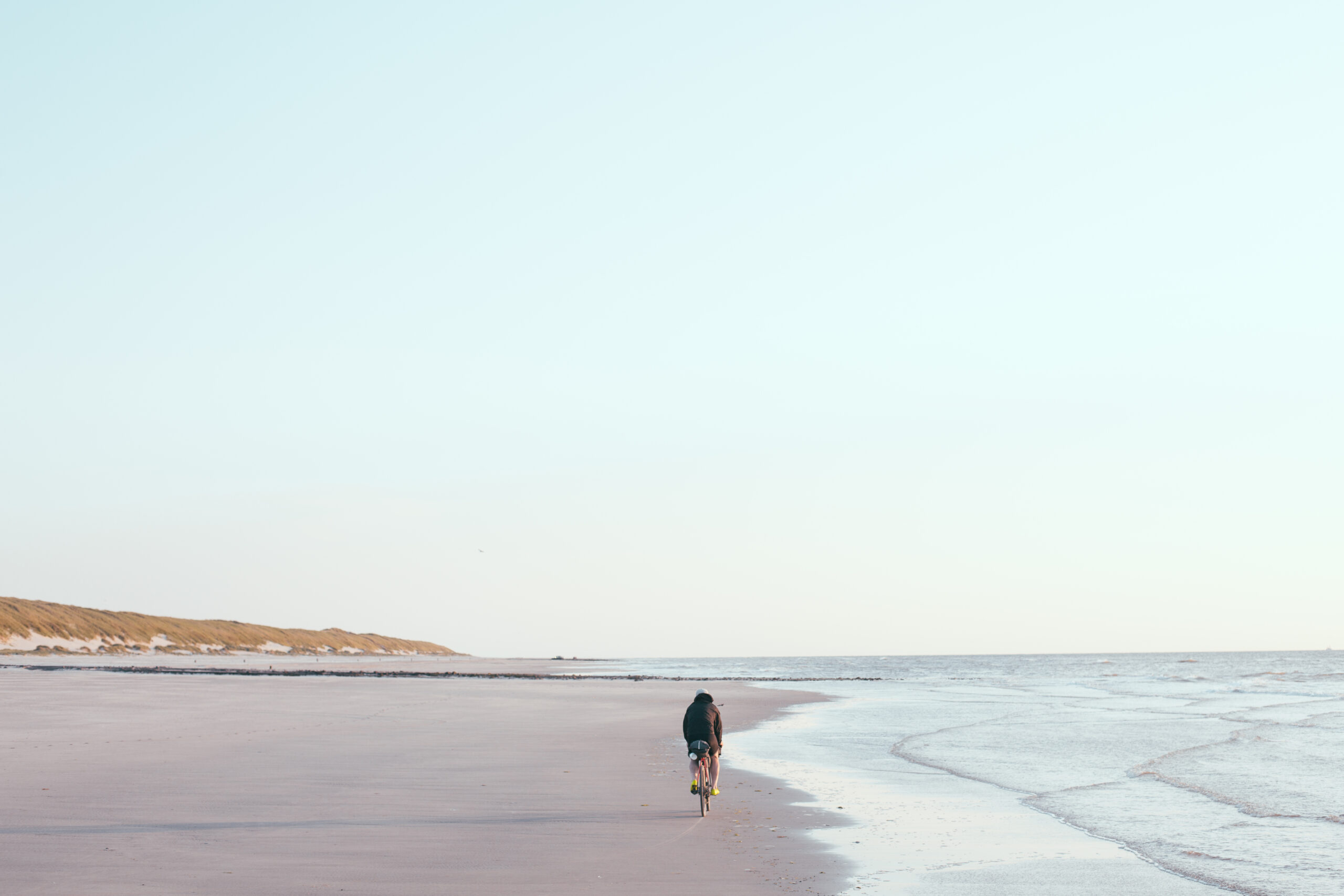
Jelle: It really depends. I got my hands on a Fuji x100f not that long ago, which fits in my jersey, this has changed quite a lot for me. The cliché that the best camera is the one you have on you, is pretty true so I was always dragging my SLR around, but not really on faster rides. This one fits in my pocket so I can bring it whenever I want. On bikepacking trips I always bring my SLR with a 50mm 1.4 This really is my go-to setup. For me it really depends on the light if I bring a camera or not, I really am a sucker for natural light.
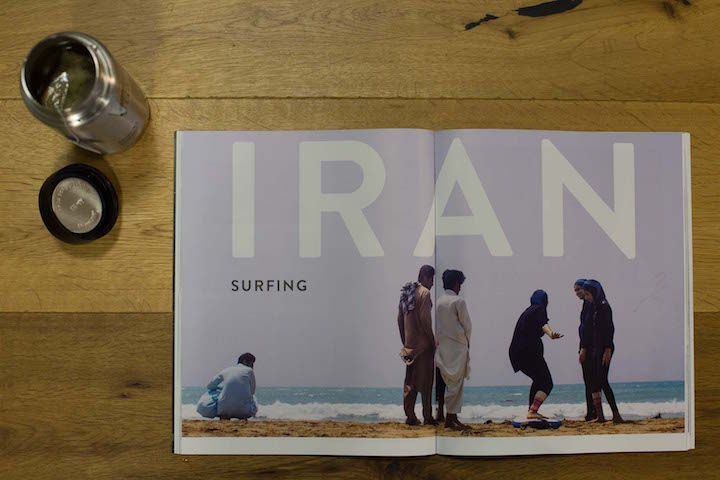
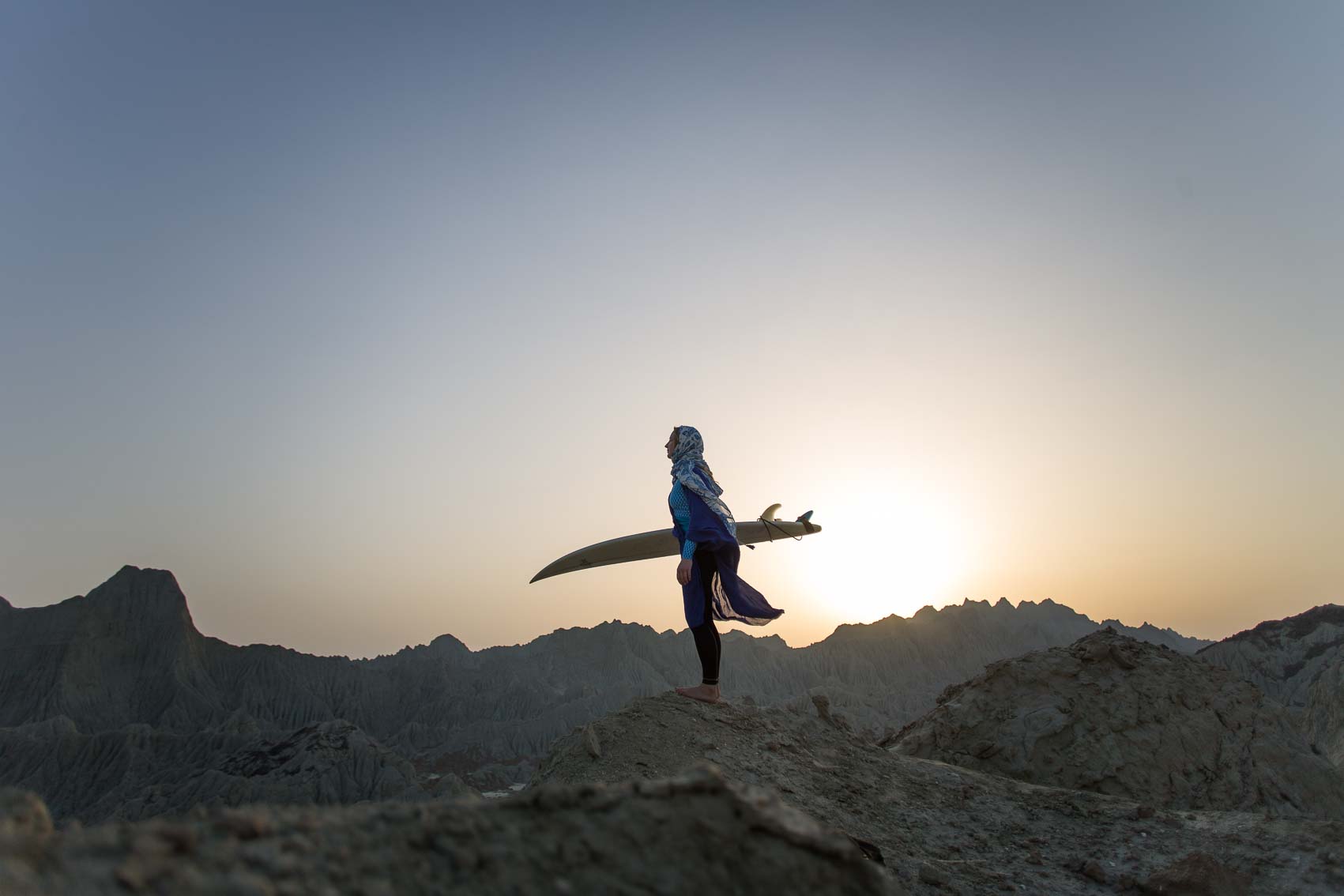
What challenges or surprised you about surfing/photographing in Iran? My friend Easkey Britton was the first person and women to surf in Iran. She started an organization that took women into the water and the ocean and was fostering positive relationships with the ocean through creative learning experiences. I had visited Iran before because it really interests me, the history but also the present. We westerners think everybody should think like us, but this is a way of thinking we do not share with many other cultures. When Easkey asked me to join her, I did not have to think about it for a second. Heading to the south of Iran to search for surf and see what surfing does to a mindset & culture standards really has opened my eyes. It takes away so many boundaries and joining her and her organization twice is for sure one of those moments in my life where I started looking at things differently. A second one was when my friend broke his neck paralyzing him from the neck down. Just a week before his accident we were on a camping trip on Lanzarote and I took this one photo of him which reminds me every time I see it how luck we are to do the things we do, it also really thought me that there is no better feeling than helping others . I started doing that through my photography. Because I have an amazing job, I have the opportunity to give everything I make through photography away to small organizations that do the hard work in making the little place we call earth a better place.
How has riding in so many different countries informed your photography? Taking photos really makes travelling a lot more fun. I am really curious to start with, so love strolling around or waking up before sunrise, but finding a nice shot really brings you to different places and you meet people along the way. However, guess it is not really the countries that have informed my photography, but my setup. About 90% of what I shoot is with a 50mm lens. All my gear was stolen ones and I did not really have the means to buy everything again. I bought a second-hand Full frame SLR and a new 50 1.4 and that really opened my eyes. Being stuck into one setup really challenged me to look at different angles, which I still enjoy till today. I am fortunate to have some really talented friends like Wouter Struyf, Lian van Leeuwen and Chris McClean, hanging out with them on trips always opens my eyes. Also my friend Natasa Lops, who is an extremely talented artist has opened my eyes and we have done many super fun exhibitions and projects where she draws on my photo’s.
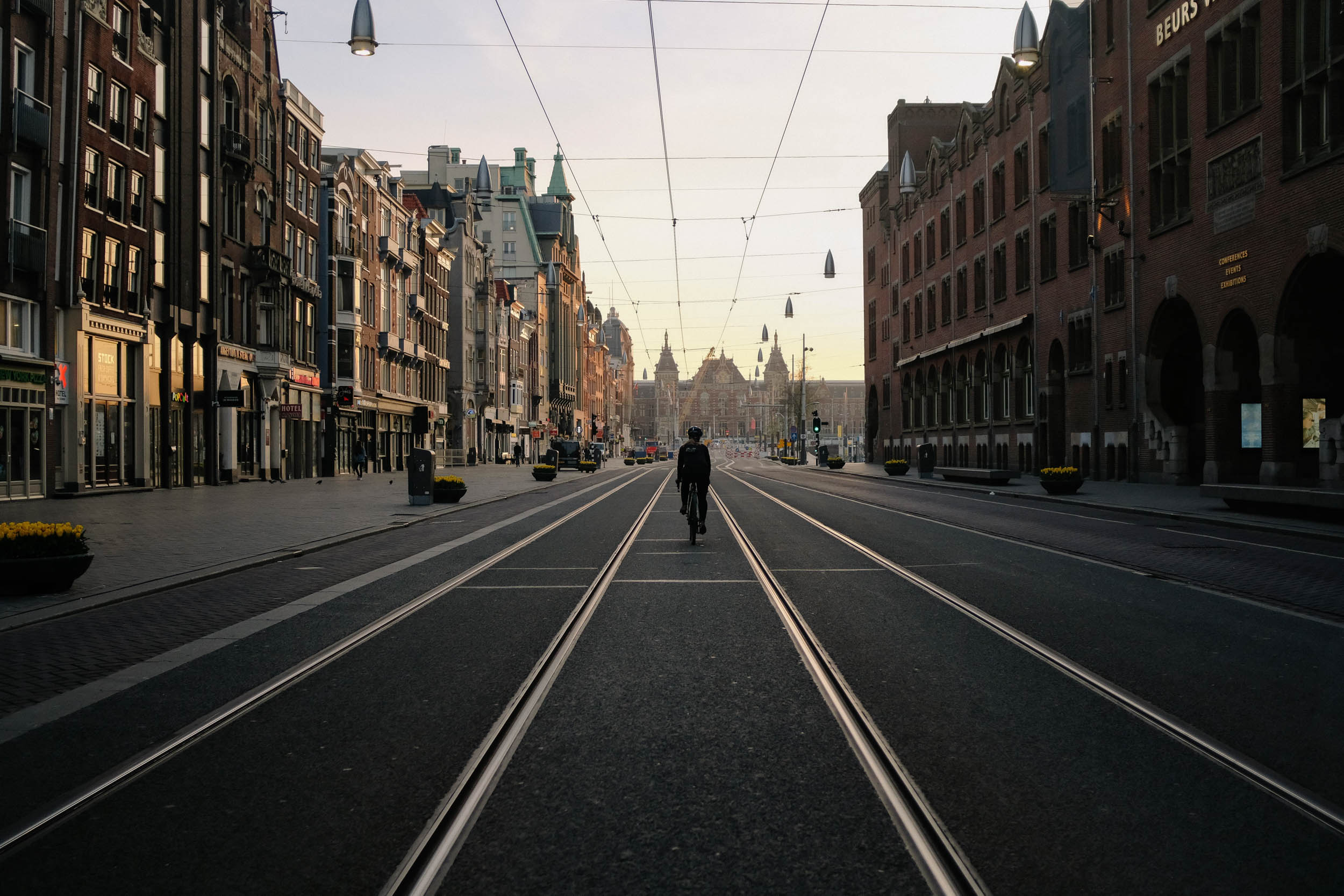
Did you ride close to home during the Pandemic? I have not really traveled at all since the pandemic hit 1,5 years ago. When I was I used to race bikes and travelled all over the world to do bike races, when I stopped I kept travelling for surfing or snowboarding. So I am one fortunate son to have seen so much of the world, but being forced to stay at home has really opened my eyes. I started exploring little stretches of the Netherlands and spend loads of time in the dunes where I live. A bike, A board, some friends and a camera are all I really need to have a perfect day. At the start of the lockdown in Holland me and Lian van Leeuwen rode around Amsterdam and took shots which have been published on bikepacking.com So surreal to see that city as a complete ghost town. I really think we all got so used to everything we have and hope we all learn from this pandemic that our safe little world should not be taken for granted. With the energy removed from the city, what did you see without hustle and bustle? I am not really a city person to start with. Of course I love hanging in a bar with some friends but will choice a beach of forest over that anytime. So for me it was not about if I would move away from the city, but more when. I also really believe that we humans have lost way to much of our connection to nature and therefore do not realize what is at stake. Holland does not really have nature, but the little stretch of beach and dunes with some fun trails is what I really appreciate. Friends joke that they enter my Instagram account when them join me for a surf or ride. Guess it is sort of true.
How do you collaborate with Shifting Culture?
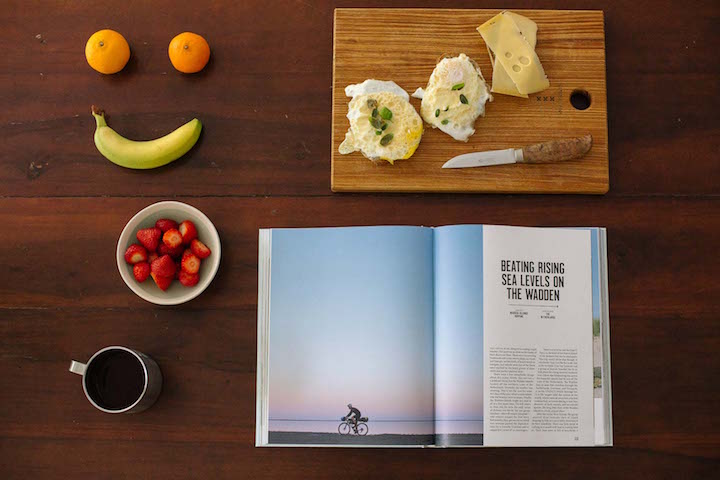
Shift cycling culture is a small NGO from a friend, Lian van Leeuwen. Shift is a global not-for-profit movement that thrives on the support and engagement of the cycling industry and wider community. They believe a transition to a more sustainable future for the cycling world can only be achieved from the inside out! She is one of my favorite bikepacking friends and we have been doing some fun trips. One of them was a quite iconic one, Island hopping over the Dutch Islands in the north of the country. These Island will not be there anymore when we do not stop the rising sea levels. This story is featured in the newest Gestalten book about bikepacking. Another trip we did is on the potential future coastline of Holland. We Dutch pride ourselves by fighting the sea, but these same sea level rises are something we eventually will not win from. This will push the coastline a lot more east. This story was featured in the last Farride magazine. The latest one I am playing a small role in, is a film from Shift cycling culture about climate change as a whole and the impact it has on our cycling communities.How did you use your photography to address climate reality?
For me polarization of the issues we face is likely even a bigger issue than the issue itself. Climate change is not left or right, not blue or red of black or white. This is the time we just need to come together and start working together no matter what we believe. We can argue how we do it, but should stop debating if we do it. Facts like 100 companies in the world are responsible for 70% of the emissions and the last 40 years the wildlife population dropped 60% just blows my mind. I am fortunate to get asked to publish my photo’s quite often and the stories I write with them or in case of a collab with Lian she writes, always have a double layer. The trip and the beauty of nature, but also what is at stake. I always try to celebrate the positive and not get sucked into the negative too much. That will just bum people out. Not everybody is interested in these issues, but all readers are interested in images and words about the thing they love, which is riding or surfing. So that extra layer just might make them think about it, which is all you sometimes need. The butterfly effect. At the end we do not just need those that worry about the end of the world, but also those that worry about the end of the month, or when the next swell is coming in.
Do you hope your riding images encourage others to choose bikes over cars?
I never really think about it like that. I just take images and tell the stories that I think are important. Up to somebody else to do with it what they like. More people riding bikes or picking up boards is of course really great! Enjoying all good that nature has to offer might just bring back some realization why we should do everything we have to protect it, so we can keep riding great trails.
Tell us about this image with the drawing.
I have always liked Natasa her drawings and had been doing exhibitions here and there and was looking for something new.
Natasa and I talked about it and one conversations lead into an exhibition in Antwerpen followed by one in Amsterdam.
The goal really is to add some fun to my often empty photos, but also some food for thought through a bit of humor. The world and everybody is so serious all the time, and a bit of humor won’t make things any worse but for sure a bit better to handle.
Please share some parting words.
Of course you do not have to give everything away, but there are so many issues in the world right now, and I truly believe that the only thing that will help us fix them is creativity, in word, art, photography, music. By using that thing you love to fight for something bigger than you, you make yourself happier, the world a little better place and you can keep doing it forever.
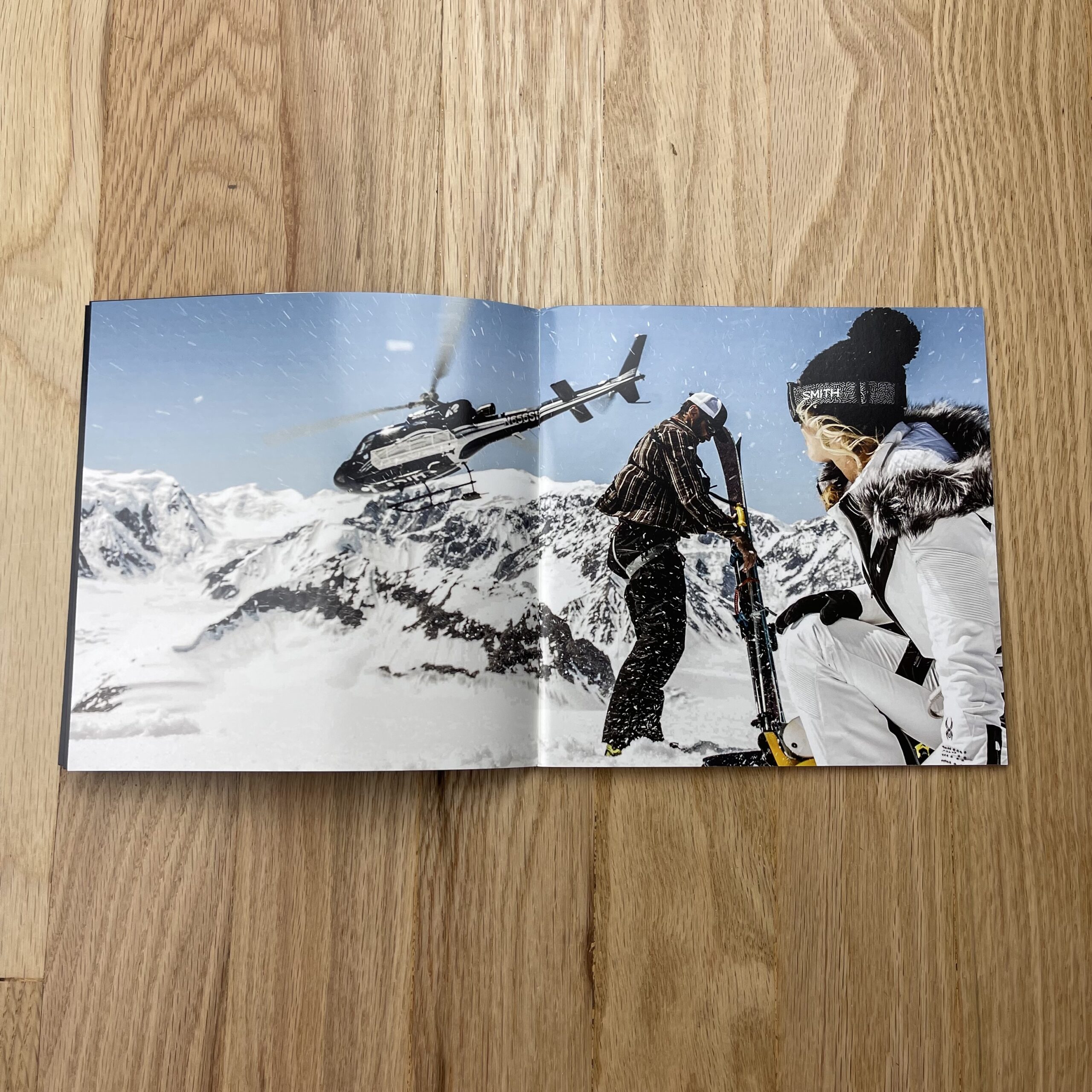
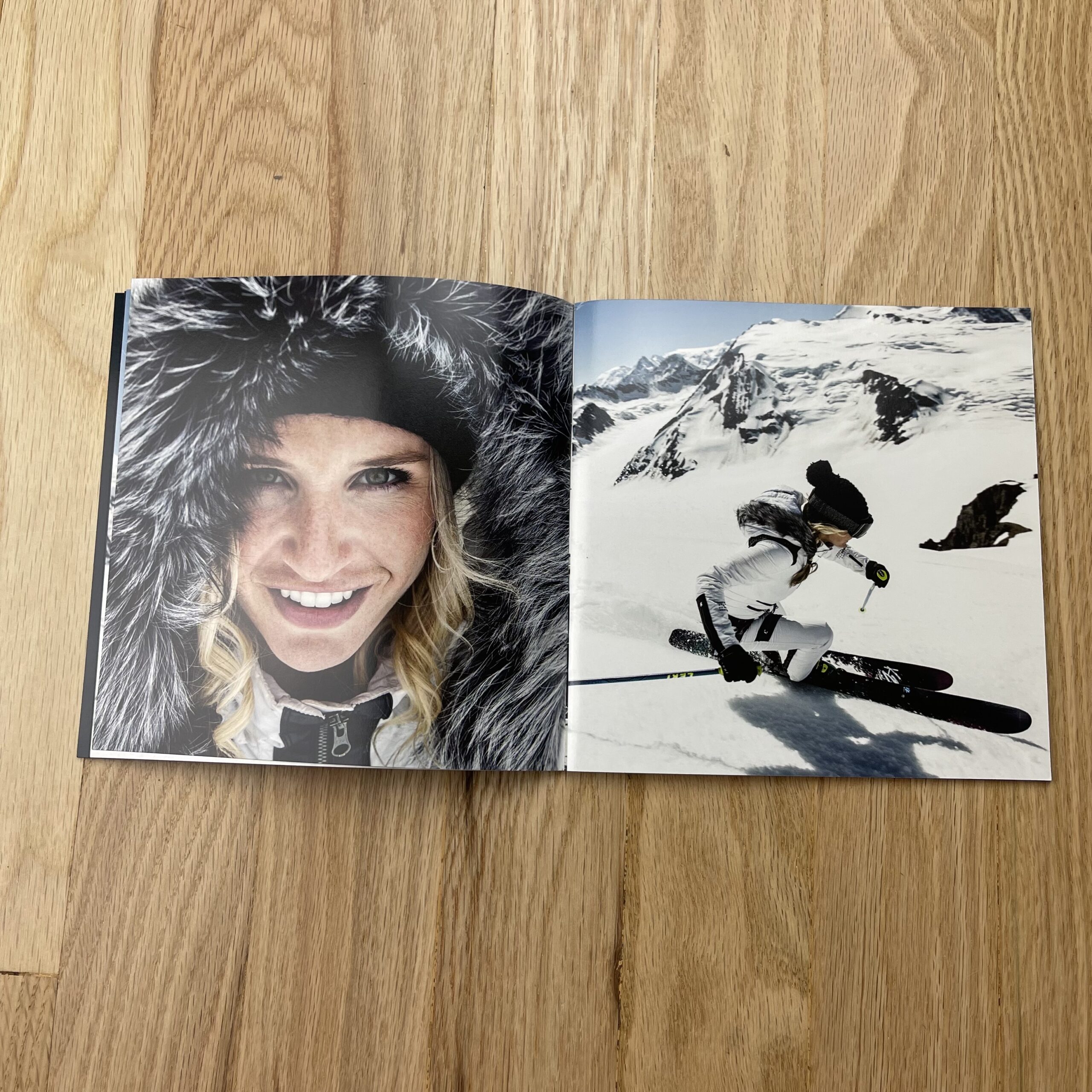
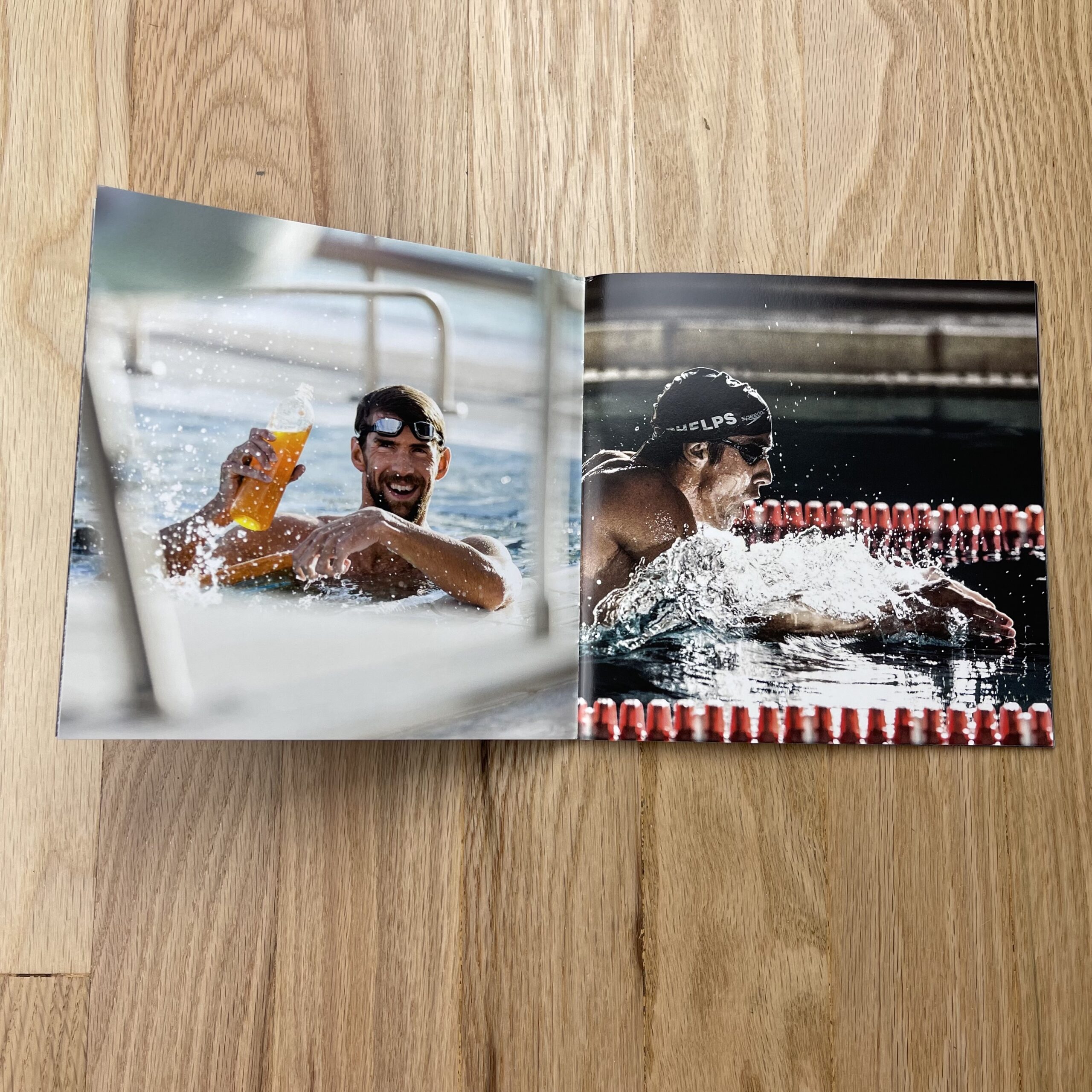
Personal project to show different views of under/above water photographyPersonal project of high end athletes in New York and in the SaltflatsThis was a story for SNOW magazine. Photographing Heli skiing in Alaska at the exclusive Tordrillo lodge. What a blast!This was a story for SNOW magazine. Photographing Heli skiing in Alaska at the exclusive Tordrillo lodge. What a blast!photoshoot for a personal trainer and IG influencer with 2 million followersMichale Phelps for VISA
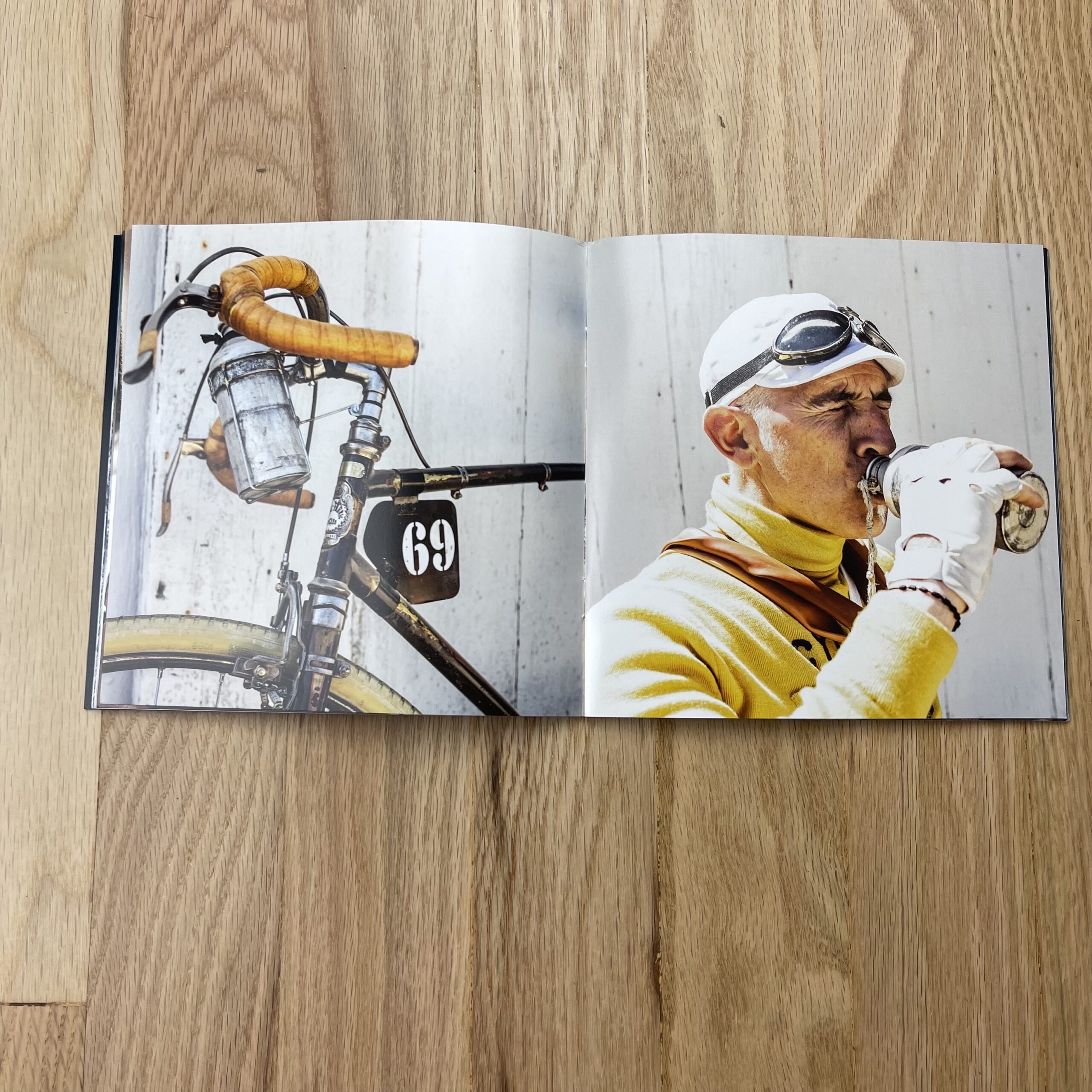
A classic bicycle race called EROICA . This one took place in Northern California.For several years I went to Ecuador, photographing for the foundation of native Indians in Ecuador to raise money. Each time I lived with the tribes in the rain forrest for around 3-4 weeks.A little project with my kids.Kids soccer in LA : AYSO
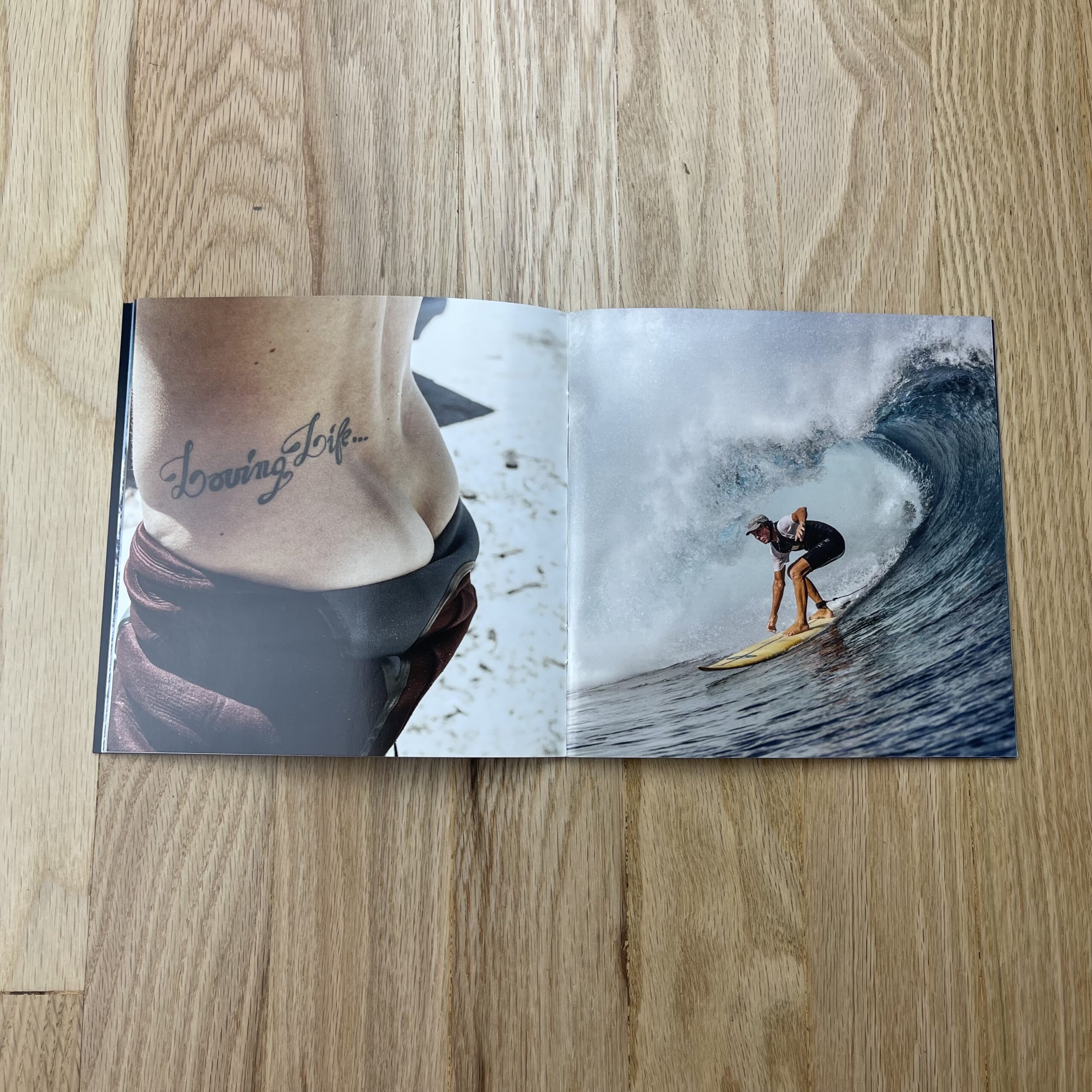
I photographed this one for Asphalt Green NYC a non profit community Sports club
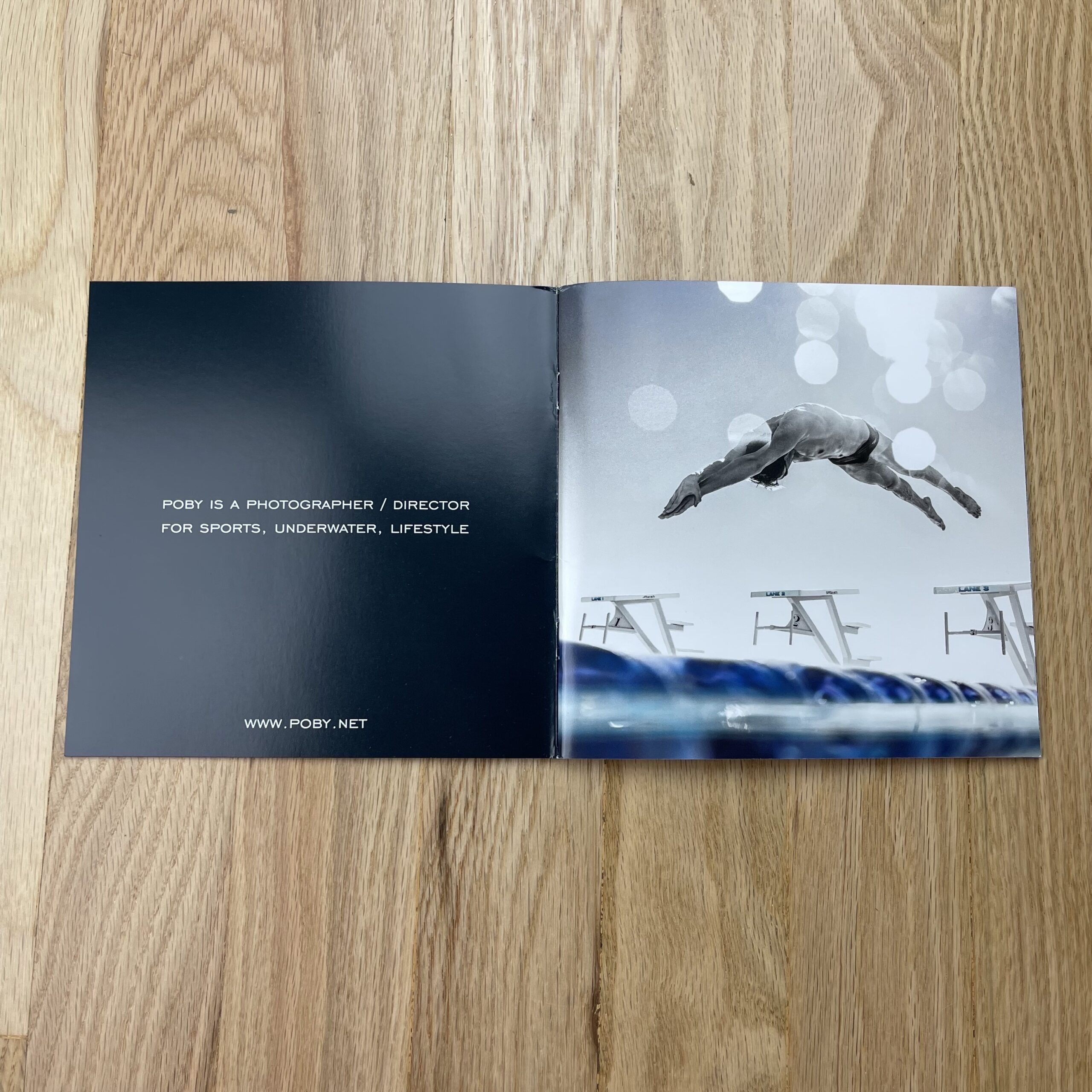
Who printed it?
I print with www.uprinting.com
They are pretty precise and are also based in LA, so I can actually pick everything up.
Who designed it?
I designed it.
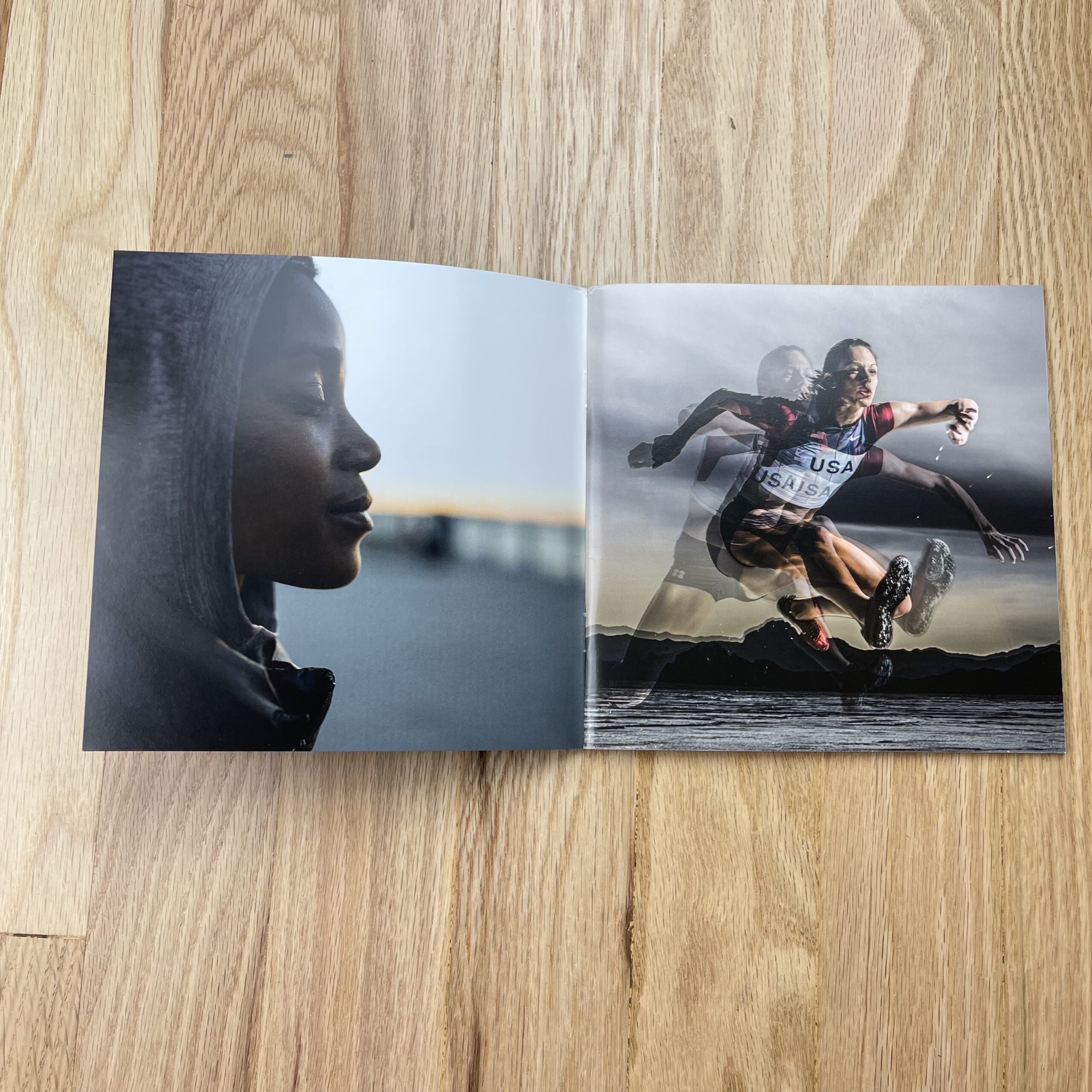
Tell me about the images.
The poby booklet you published are my best of images of the last 2-3 years.
I always mix some images of actual jobs, with mostly projects I photograph so i can show my vision.
How many did you make?
Usually I print every 3 years around 5000
Some of them are sent out to selected creatives and art buyers and others I just use as leave behind when I see agencies/brands in person.
How many times a year do you send out promos?
Not more than every two years.
Do you think printed promos are effective for marketing your work?
I still believe that printed pieces make a huge impact. Yet I also know many art producers who simply do not want anything printed anymore and save space (also many work remotely and dont have any space).
The latter creatures had escaped their pasture up the valley, and were officially on the lam.
I watched the herd descend my father-in-law’s driveway, across the field, and quickly went to investigate with my camera in tow.
The kids were enraptured, far more than I expected, but then again, so much of our lives here the last 18 months have been repetitive.
(A bunch of cattle descending upon us was anything but routine.)
I figured it would be easy to get a great shot, under the circumstances, but that was simply not the case.
Whether due to the overly harsh light, once or twice, (or the family dog finally getting to experience the cattle-herding for which she was bred,) it took me two days and 200 shots to get exactly what I saw in my head.
Certainly, it was worth the trouble, and I had to learn how not to antagonize the massive bull, so he’d forget about me while I skulked around.
But in the end, after many attempts, I got the shot.
Soon, my daughter suggested we stop eating beef, as once we’d all hung out with the cows, and saw their intelligence first-hand, it was hard to imagine them getting slaughtered, methodically, to add protein to the collective food supply.
Rather, we saw the cattle as fugitives, running for their lives, and we secretly hoped they’d stay one step ahead of their owners, who didn’t come searching until Day 3.
As to the chickens, they were in the front yard of a neighbor’s house, and I asked for permission first.
The light was perfect, the chickens naturally photogenic, and I made the exact photo I wanted within a minute.
(Sometimes it’s hard; sometimes it’s not.)
At the time, though, my neighbor, whom I’ve gotten to know better over the last few years, insisted that I never take his photo.
Ever.
I said, “Sure, no problem,” and reminded him I’d never so much as raised my camera in his direction.
Still, when I stopped back by, after we’s shot hoops at the basketball court across the street, (behind the firehouse,) I wanted to ask if he knew anything about missing cattle.
As a joke, while I approached, I pretended to take his picture with my finger. There was no camera in my hand, as it was safely zippered up in the bag slung over my back.
Anyone could see I was kidding, but he got offended, thinking I was making fun of him, and he said, angrily, that he hated being photographed, and didn’t like being teased.
I apologized, of course, said I was trying to funny, (and had obviously failed,) so I changed the subject quickly, and that was that.
But you can be sure I’ll never do anything like that again to Morris.
(No sir.)
Being an outsider in an insular, poverty-stricken, mountain community at the edge of the Universe, you learn it’s very hard to be accepted, (takes years really,) and you can blow all that good-will in an instant, if you make the wrong move.
We came back home to New Mexico in 2005, straight from Brooklyn, and I was hired to teach photography to school kids within a month.
In order to circumvent the University bureaucracy, UNM-Taos was able to get me working, straight away, if I’d be willing to teach “college classes” at a high school for at-risk youth.
I had no experience working with that population, and barely any teaching experience at all, aside from one semester as a professor of Beginning Digital Photography at Pratt.
This was a different kettle of fish, teaching black and white, chemical darkroom photography to disturbed teens, in the back room of a falling-apart, old school-house, where we had to worry about getting Hantavirus from all the stray mouse droppings.
I kept that job for ten years, and over time, the school’s head raised private funding for computers, digital cameras, and Epson printers.
I still remember harping on the need for secure storage, and being told, “Yeah, yeah,” until one of the students in my program “allegedly” broke in with a few buddies and stole it all.
We couldn’t prove it, but he walked around that week with a little twinkle in his eye, and that was enough for me.
After that, they took my opinions a bit more seriously on the subject, and built some massive, sturdy, fire-safe cabinets, where we locked everything up tight.
(Nothing was stolen again.)
But a few years later, a bureaucrat, (who soon washed out of the system, and was most recently seen teaching skiing,) shut the entire school, and it’s still sitting there, empty, rotting in the harsh-mountain-sun.
I shot some photos there a few months ago, and watched the tumbleweeds roll around the dirt parking lot.
Times change, but when you live in the 48th or 49th poorest state in the US, for this long, you begin to understand that cycles of poverty and violence are nearly impossible to break.
That said, I still recall one student, who studied with me for two years.
When we met, she was non-verbal, resting her head on the table the entire class. She made no eye contact, and wouldn’t respond to questioning.
Still, I did my work, starting each class with a check-in, asking about their days, and family lives, as they would only open up and relax, letting their creativity settle in, once they felt safe, and knew I cared about them as people.
By the end of the second year, that same young student was making the best work in class, taking the camera to shoot her family home on the Pueblo, and was regularly conversant.
One day, she told me secrets about what happened in the Kiva, the ancient underground educational system for boys, and it was, without exaggeration, one of proudest moments of my life.
I likely didn’t change many, or any, lives in that decade, but I’m sure I taught the students that art, and creativity, are powerful coping tools for life’s difficulties.
And yes, I miss the work.
As usual, there are reasons when I reminisce.
Something always sets off a thought train, and today, it’s that I just spent an hour and a half reading and looking at “Portraits and Dreams,” a re-issued and updated book by Wendy Ewald, published by MACK in 2020.
Though I admit I hadn’t heard of the project before, it was apparently first published in 1980, and later became a documentary film by Appalshop, a well-known media lab in Appalachia.
I first assumed it was set in West Virigia for some reason, (maybe it’s all the Joe Manchin talk in the mainstream media?) but the project happened in Kentucky, where Wendy Ewald taught photography to extremely poor children in a two-room-school-house, in the late 70’s and early 80’s.
If you’ve ever seen the excellent TV show “Justified,” you might have a sense of the mise-en-scene, and coal-country-issues people live with down there, but that was a fictionalized account, starring the dreamy Timothy Olyphant. (And the phenomenally charismatic Walton Goggins as Boyd Crowder.)
This book, though, is straight truth, no fiction.
I admit, I wondered once or twice where the money came from to get this all going, (though the children had to raise $10 to buy their cameras,) and the end notes confirm there was grant funding made available by the NEA, and a couple of other sources.
As to the book, it features images made by the students, and written statements as well, though I do wonder if those were transcribed from audio interviews? (Not that it matters.)
Dead cousins, shot uncles, slaughtered pigs, fathers with black lung, fun times walking in the mountains, it’s all in there.
We see the world through the children’s eyes, and hear their thoughts. I could relate to some of their ideas in ways that seemed impossible, across so much time and space.
One boy, Delbert Shepherd, shocked at watching a chicken killed, actually imagines what it would feel like to be chopped into pieces and served as food. Another, in a pre-Climate Change age, writes that if all the humans disappeared, the Earth would be able to regenerate, after the ravages of human greed.
Powerful stuff, for sure.
At the end, Wendy Ewald shares details about how she got to Kentucky, and then fast-forwards the book to the present day, as she reconnected with her former students in the last decade, and we see images of them, pictures they’ve shot, and read about their current lives.
One woman practices photography, semi-professionally, and others are engineers and educators.
From a two-room school house, up in hollers with no running water, some of these kids actually made it out into the world. (One ended up running factories in China, another went to jail.)
But to a person, all the students remembered their time in Wendy Ewald’s photo program fondly, and it seems their experience as young artists stayed with them always.
Maybe today’s not a bad day to ruminate on that, and cultivate some hope in our dark times?
The Art of the Personal Project is a crucial element to let potential buyers see how you think creatively on your own. I am drawn to personal projects that have an interesting vision or that show something I have never seen before. In this thread, I’ll include a link to each personal project with the artist statement so you can see more of the project. Please note: This thread is not affiliated with any company; I’m just featuring projects that I find. Please DO NOT send me your work. I do not take submissions.
In the mountains of North Carolina there is an expanse of donated land inhabited by a small group of people who, for their own reasons, choose not to live as members of modern society. Tod and Talia, a couple, have been living in this place called Wild Roots for a decade, half of which I’ve documented periodically. A belief that modern civilization was on the brink of collapse was a big part of the impetus for Tod and Talia and others coming to Wildroots, although after years of living a simple mostly primitive way of life in the woods, they find it harder and harder to fathom modern mainstream life. In July of 2015, Talia had to move away from Wildroots back to her native California due to a mold allergy. Tod, unwilling to leave his home of Wildroots for California, now needs the community to thrive more than ever in order to continue making it his home. The homes at Wildroots are mostly waddle and daub, a technique that uses on site timber, saplings, and a clay solution along with bark or metal roofs. Although wild food harvesting is a big part of the lifestyle, the majority of the food consumed at Wildroots comes from dumpsters which they visit on their periodic trips into town, roadkill, and wild game that is given to them by local hunters. They use almost every part of the animal including eyeballs, tongue and brain. Cooking is done over a fire created using friction every morning and evening. The number of community members fluctuates through the seasons, from 2-10 or so. Talia plans to return this Winter to stay with Tod but has no plans of returning after the coming Winter.
APE contributor Suzanne Sease currently works as a consultant for photographers and illustrators around the world. She has been involved in the photography and illustration industry since the mid 80s. After establishing the art-buying department at The Martin Agency, then working for Kaplan-Thaler, Capital One, Best Buy and numerous smaller agencies and companies, she decided to be a consultant in 1999. She has a new Twitter feed with helpful marketing information because she believes that marketing should be driven by brand and not by specialty. Follow her at @SuzanneSease. Instagram
Success is more than a matter of your talent. It’s also a matter of doing a better job presenting it. And that is what I do with decades of agency and in-house experience.
Heidi: How did your photographic journey start and what memories do you have from your first images? Micheli: Growing up my Dad captured photos and video of everything. He wanted to record it all, remember it all and later he would cherish it all. As a result my early years are a combination of photos, videos and real memories. Storytelling with cameras have been woven into my life for as long as I can remember. My first time really connecting with a camera, however, wasn’t until my junior year of High School when I took a film photography class. We developed our own film and I was fascinated with the tedious process, but after that it was many years before I picked up a camera again. I graduated from college and knew without a doubt that all I really wanted to do in this life was to tell stories. With money from graduation gifts from relatives I bought my very first digital camera.
How has your Niisitapi and Shawnee cultures informed your work and how has your eye evolved? My cultures as a mixed person, from Blackfeet, Shawnee, Irish and Italian heritage, have shaped many aspects of my storytelling. My photos tell stories of resilience, of joy and of truth that are unique to my communities. In addition to the focus of stories I can tell the way I wield my camera is shaped by my Indigenous communities. It’s imperative to me to shoot with compassion, consent and reciprocity, understanding that the stories of who we are and the images created are extremely personal.
Did you always want to be an artist? I’ve always wanted to be a storyteller. The moment I learned to write I began to write fantasy stories. Along the way, however, I stopped taking storytelling as a serious endeavor for my life. I started listening to what sounded good to relatives, what paid well and what was seen as a clearly successful job. I’ve also always cared for humans, so I began college as a pre-medical student. If I’m being honest I liked the way being a doctor sounded. Then I had a realization that I could be happy with my studies and fell in love with geography. It was a way to study the land and the integral relationships of humans with the land.
My family was at first confused by my decision to switch majors. Both my parents grew up very poor and they operate in a scarcity mindset because for them that’s how they’ve survived. They want more for me as an adult, they wanted consistent paychecks and a solid career path. My parents have always had my best intentions in mind, but they saw how happy Geography was making me and they eventually began to understand. Slowly I explained that because of their sacrifices I am now able to do what I love both as a geographer and a photographer. It was a combination of trusting my intuition and following what comes to me naturally.
You mentioned drawing inspiration from your ancestral lands and those who existed before you, how do you hope to use your gift reciprocally? I believe to get to know a land, to protect and love a land, you must first know her people. I hope to tell the stories of original peoples and in doing so non-natives can truly learn how to protect the environment. To me that is the best gift I can give earth mother in return for all that she gives us.
Broadly speaking a portrait is the art of capturing the inherent character and essence of a person, why do you gravitate to this genre of photography as I know authentic representation is a cornerstone to your work. Expression, eyes, the up close and sometimes uncomfortable, are to me an undeniable truth of what it is to be human. So as a storyteller the truth of being human is what a portrait represent. Each portrait to me is a human truth, a visceral moment of intimacy with a person, my camera and myself. There is also a simplicity to eliminating all other factors of a photo aside from eyes and expression. It’s the raw moments that create authenticity of story and personhood. Additionally I trust what comes naturally to me, taking portraits is not only natural, but sometime I truly love to do.
How are you using your voice and art form “to keep Indigenous languages burning bright, and steward Mother Earth and relationships” in your work? Art of any form is resistance. Art centering Indigenous, Black, Brown, Queer and underrepresented peoples is way to resist a dominant heteronormative society. Art is born from counter culture change makers, rebels, loud mouthed lovers of life and truth, and my art is full of the latter people. With each story heard loud and clear, we are pushing back at a society that has tried to eradicate an Indigenous way of life. With this collective empowerment, too, we are cultivating a generation that is proud to be Indigenous, proud to keep our cultures, languages and practices alive.
What personal projects are you working on now? Currently I’m working on a few different projects revolving around being a guest on Native lands that are not my own. I’ve been getting to know the ocean in particular. Recently I was on Tlingit lands fishing with my family, which has been a long standing tradition my Uncle traded for in years past. Then after that I traveled down the coast of California and got in the water nearly everyday. This lead me into some personal photo projects centering on joy, gratitude and what it means to be a guest.
Who printed it?
I printed my promo with Blurb. Even though I’d heard great things about their magazines, I was still blown away by the quality.
Who designed it?
I started with a template from Creative Market, then updated the fonts and adjusted the layout a bit to work better with my images.
Tell me about the images.
Like I say in the promo, cocktails are a mood and an experience to be savored. So many of us have been missing our regular social interactions for the past year-plus, whether it’s a big night out, a party at home, or just getting together with a friend or two over a tasty beverage. I guess this was my way of lifting my spirits (heh) and reminding myself that the world will become a place we recognize again.
From a practical standpoint, I’ve been a food and beverage photographer for several years, so I had quite a few drinks in my portfolio already. When northern New Jersey was locked down early last year, it made sense to lean into beverage photography because I could handle the styling on my own much more easily than I could with a full food set.
How many did you make?
I printed a single copy to check for errors, tweaked a couple of images, then printed 75.
How many times a year do you send out promos?
With so many people still working from home, I haven’t worked from a strict marketing plan for printed pieces. Ideally, I’d like to send out quarterly promos.
Do you think printed promos are effective for marketing your work?
I believe in the power of the printed photograph and a well-executed printed promo. So much of our photography exists solely in a digital space now; it’s an ephemeral, yet oddly static way of experiencing photos. Printed pieces are undeniable and demand attention — flipping through a printed magazine creates an experience you just can’t get scrolling through social media feeds. And, of course, I think there’s something magical about having a big, beautiful cocktail staring you in the face. Maybe these pieces will end up in the recycling bin, but I hope some of them have a life outside of that and leave the recipients looking forward to post-pandemic cocktail hours.