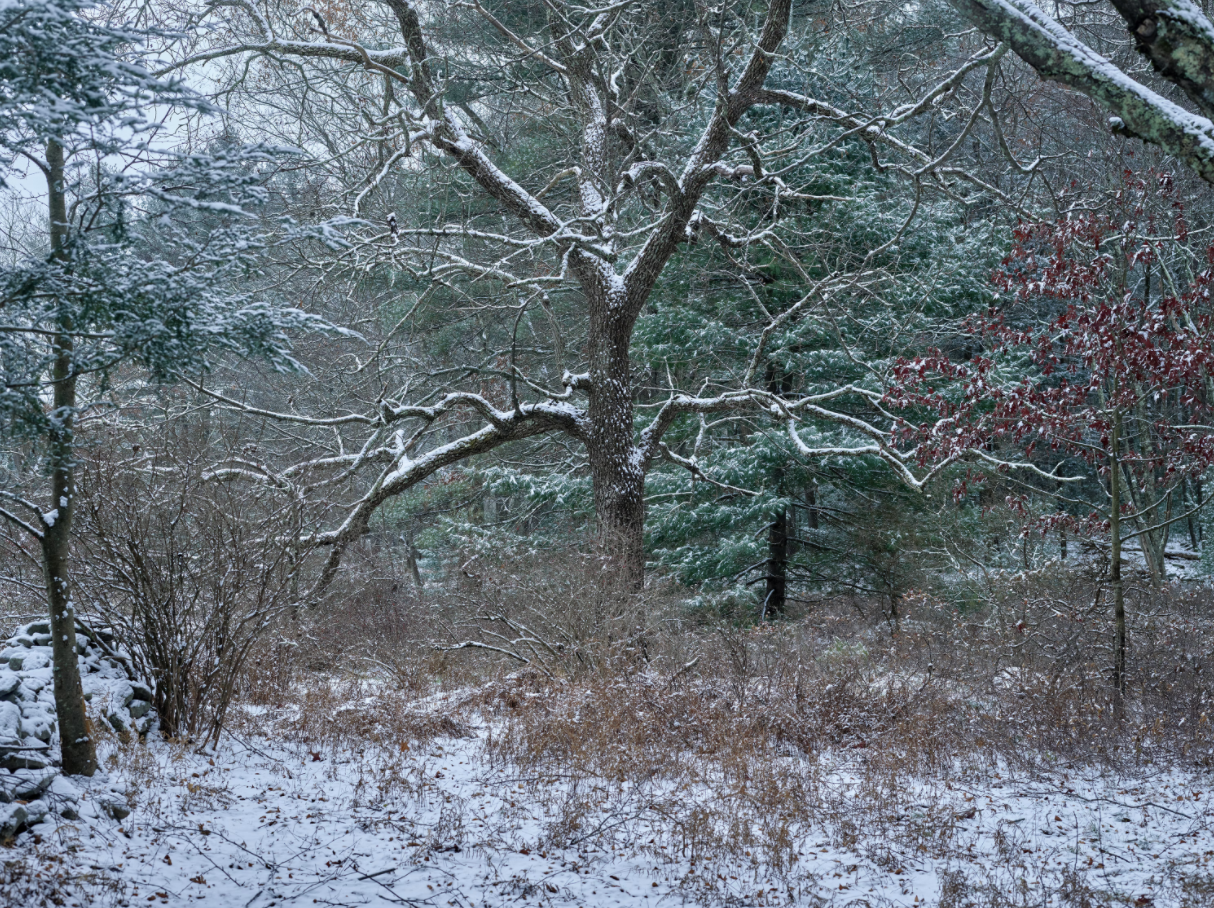
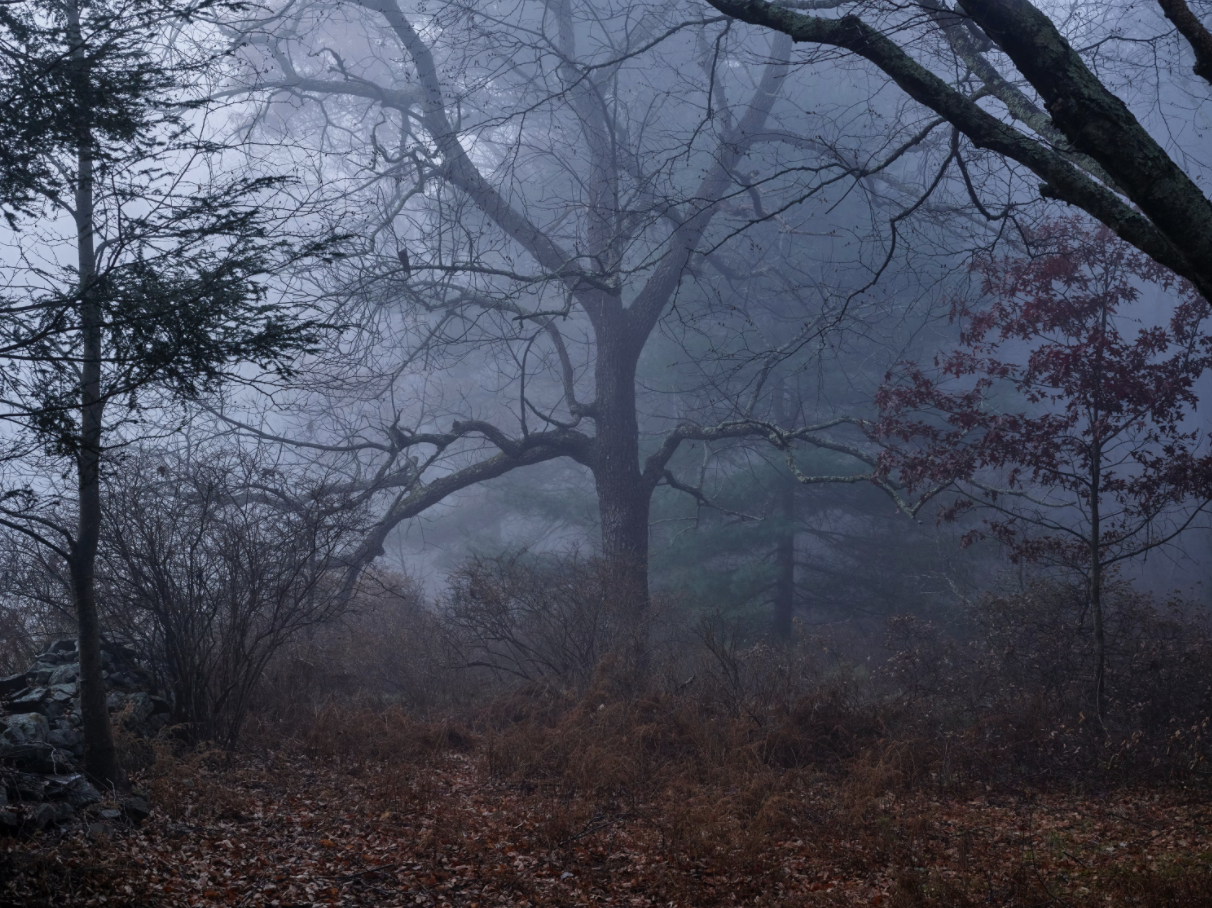
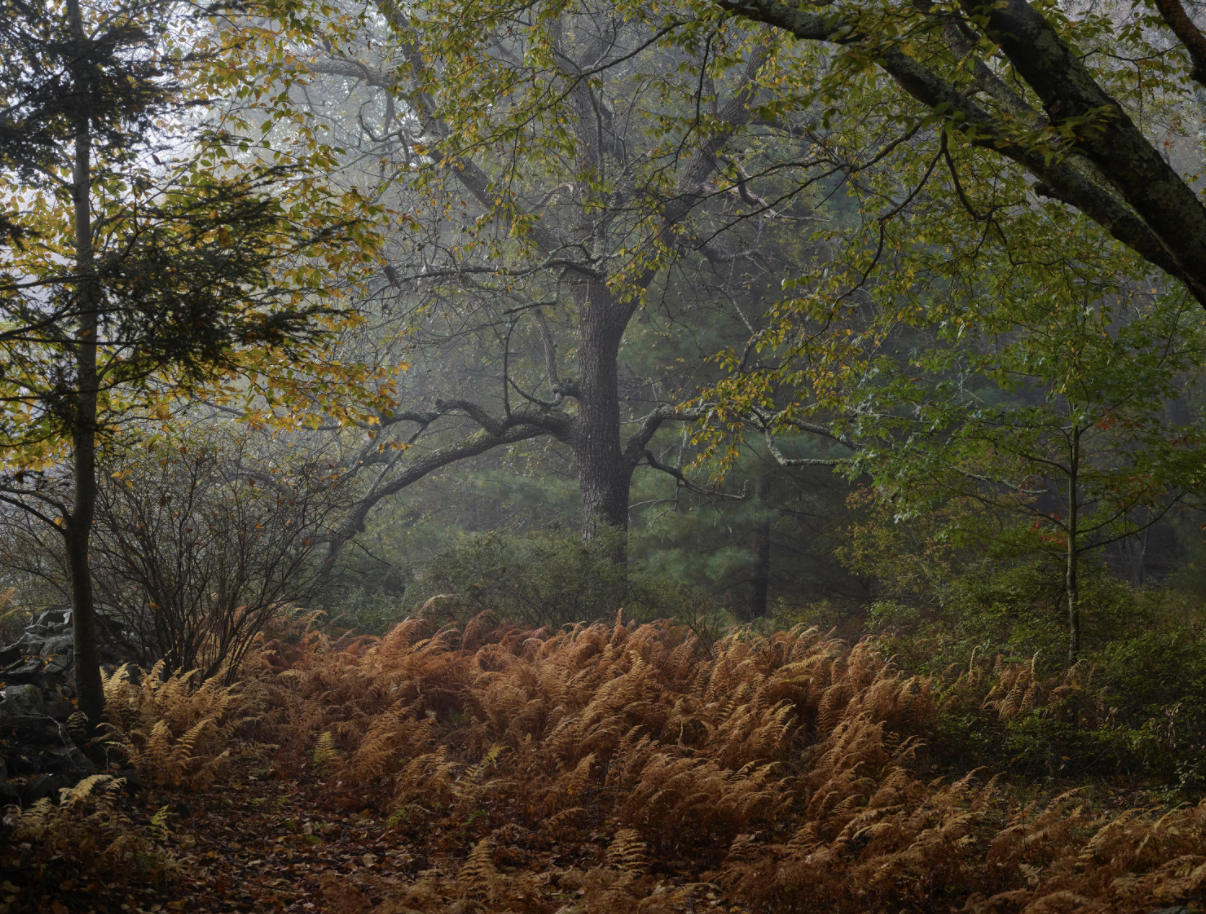
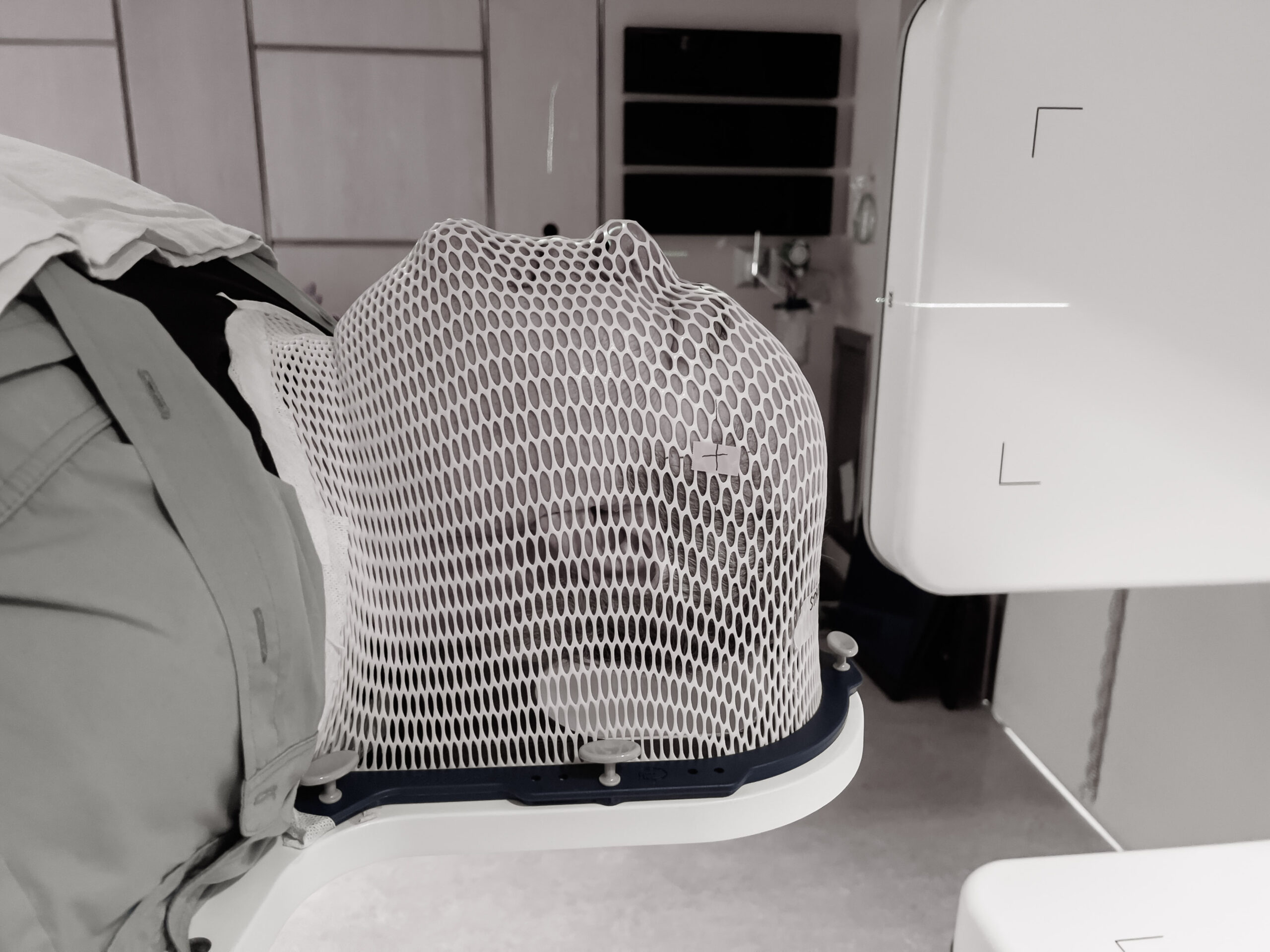
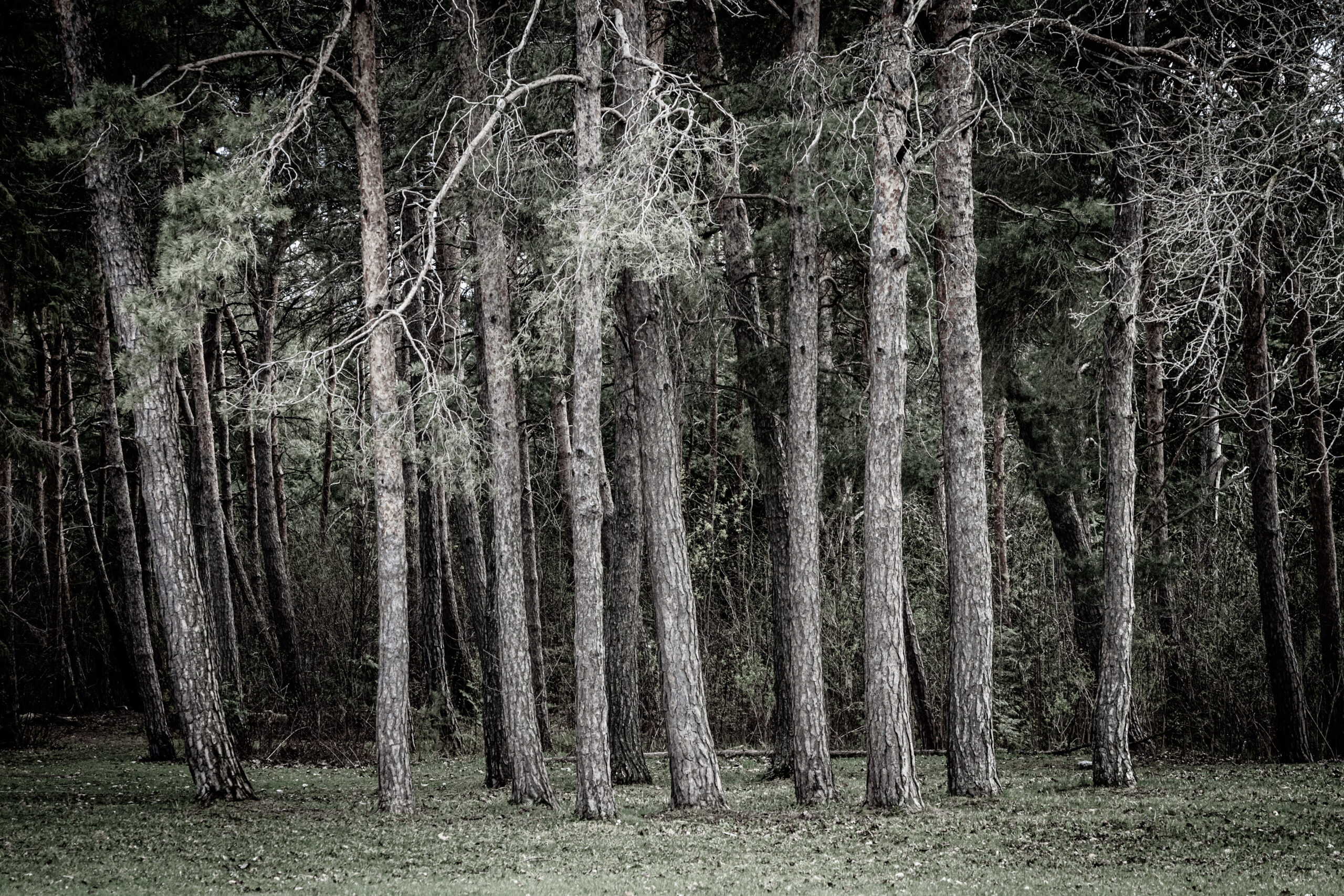
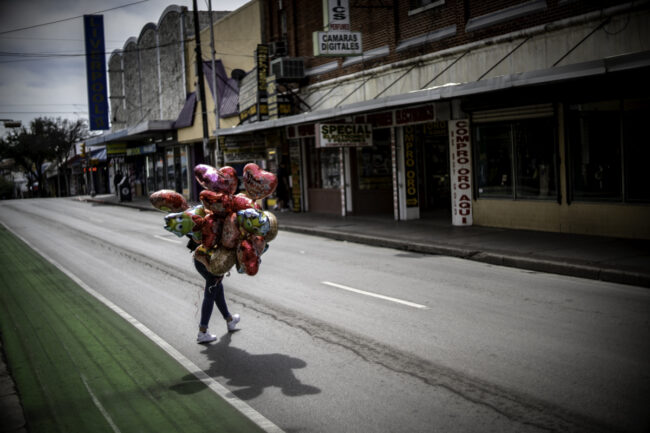
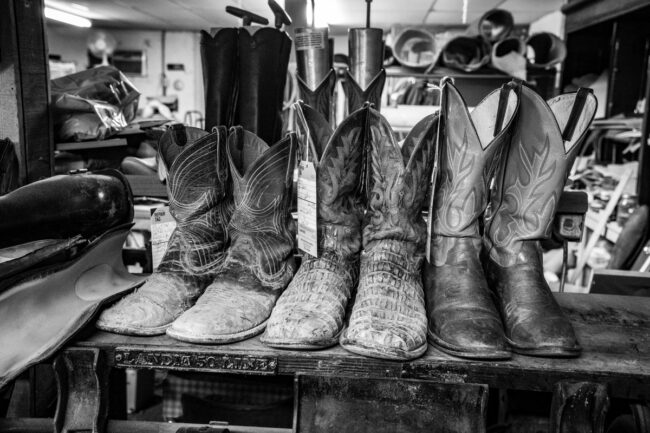
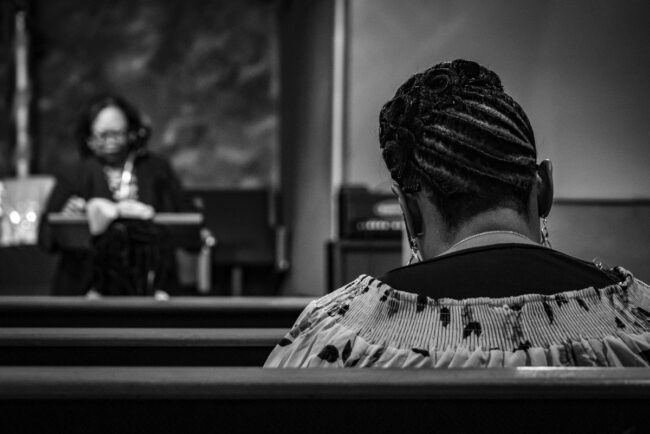
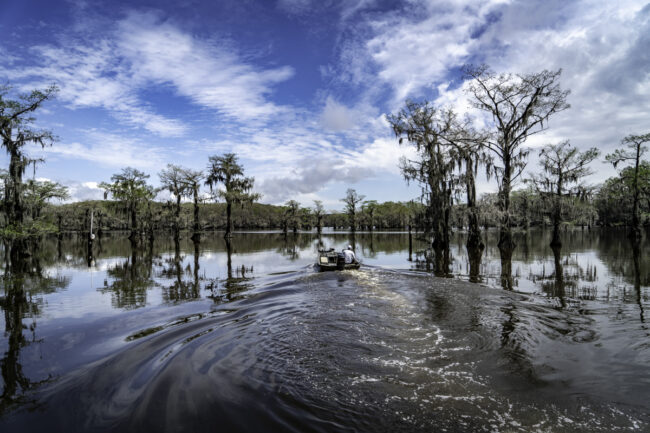
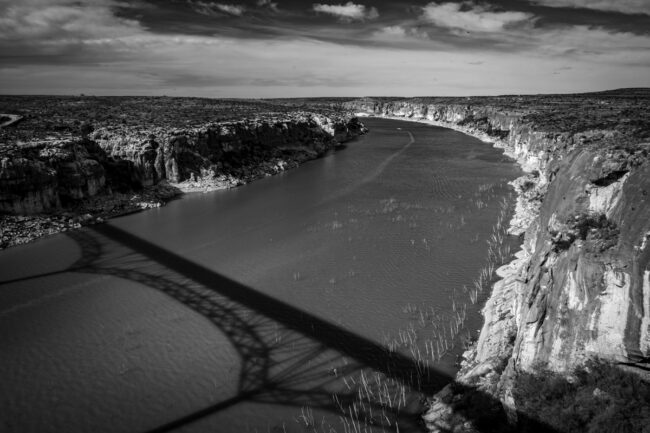
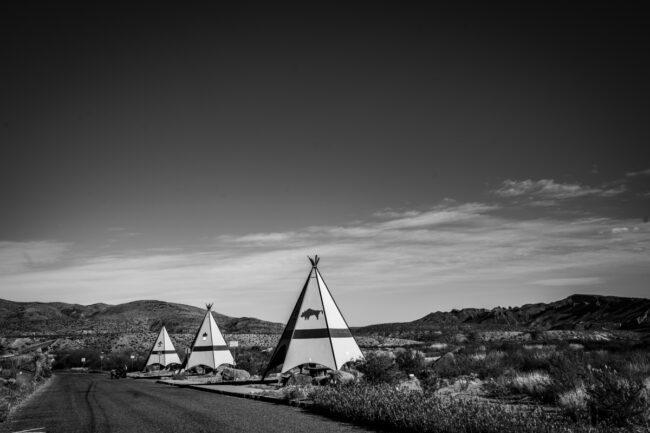
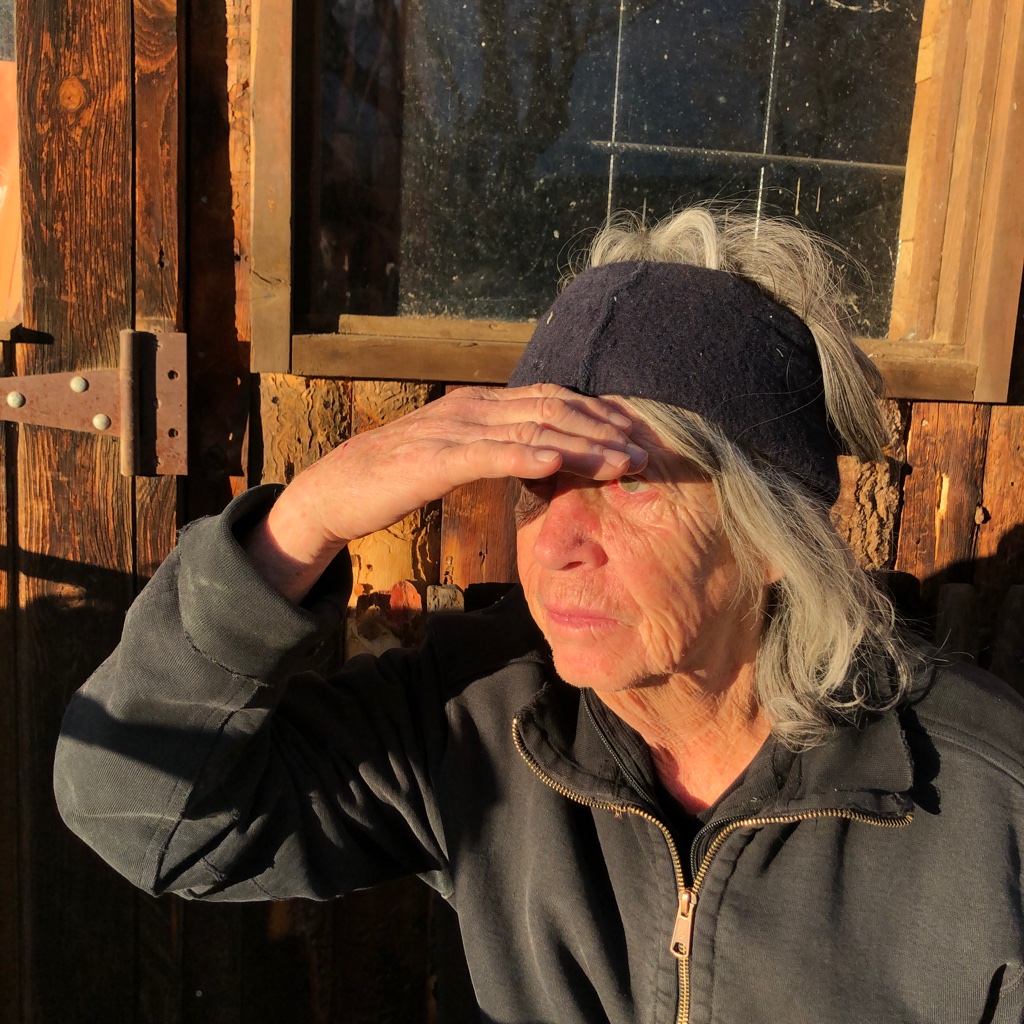
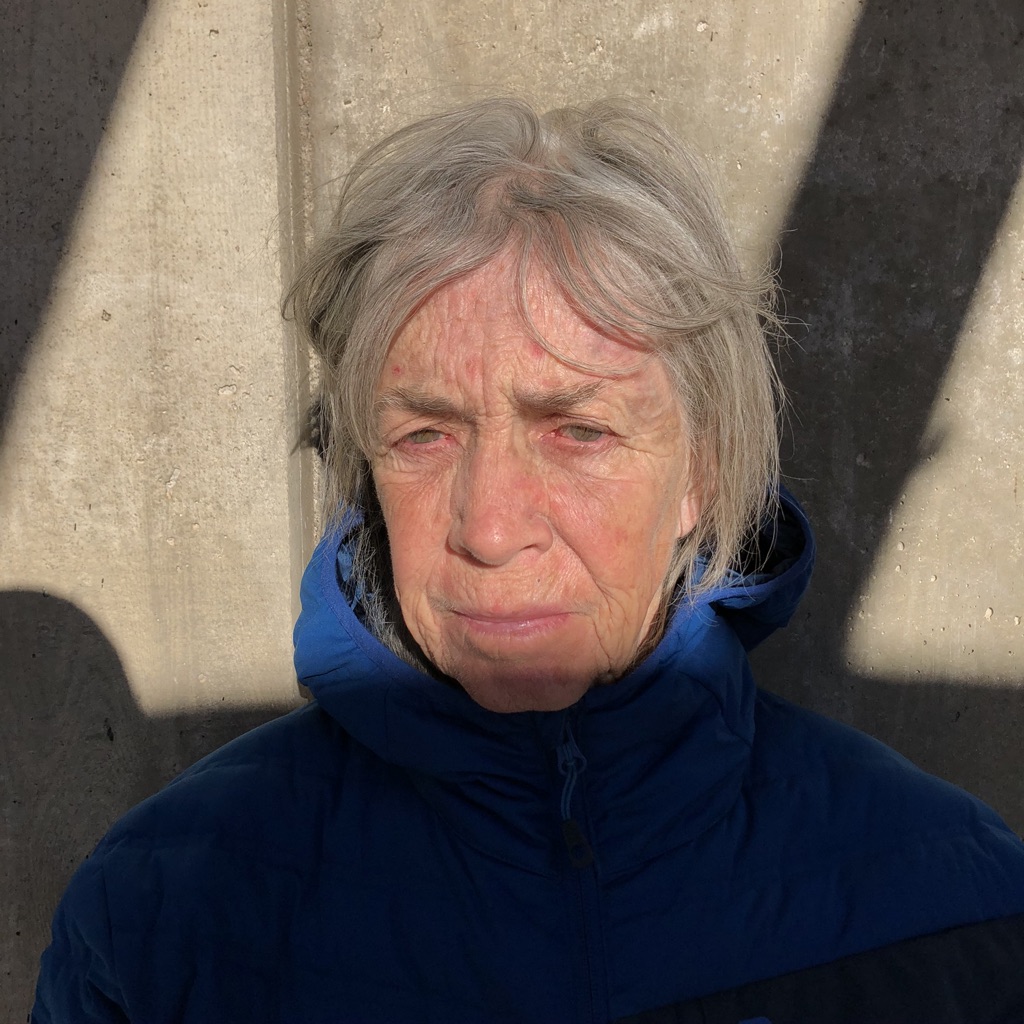
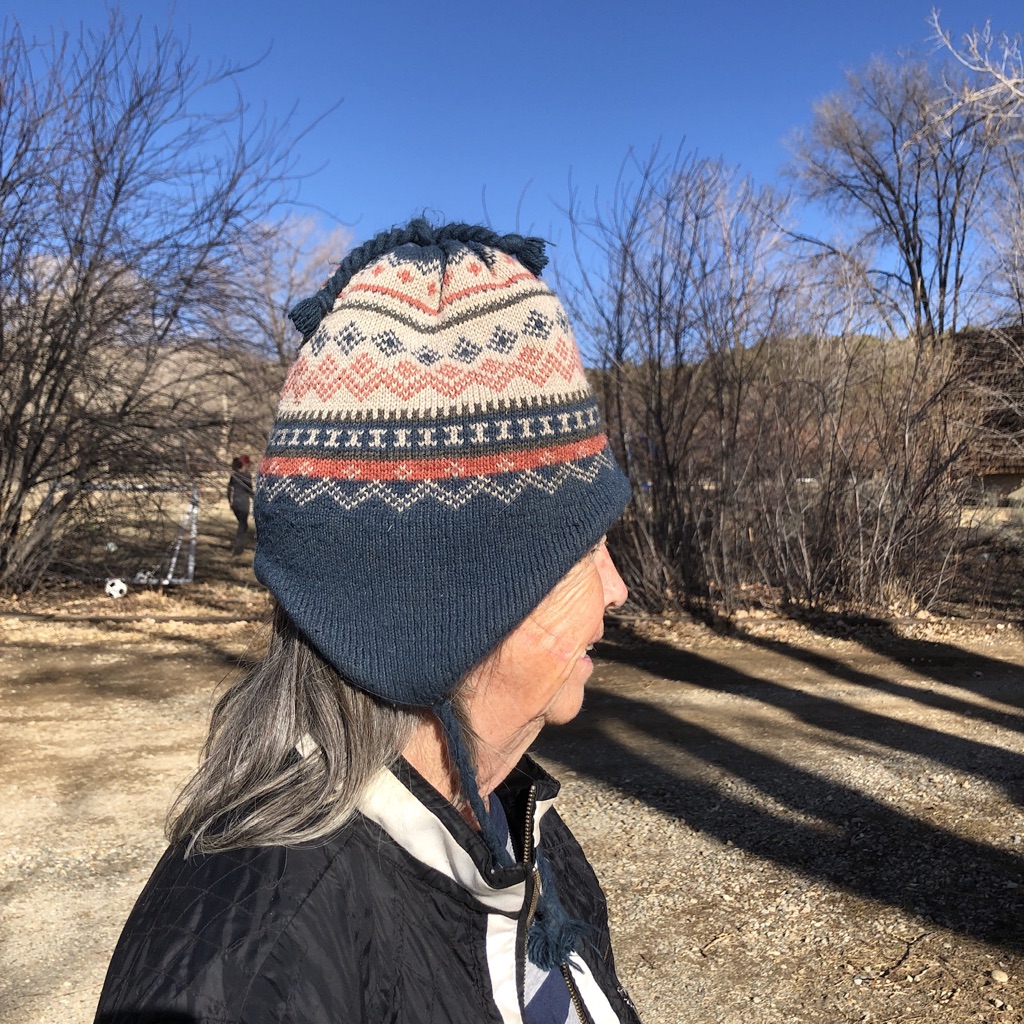
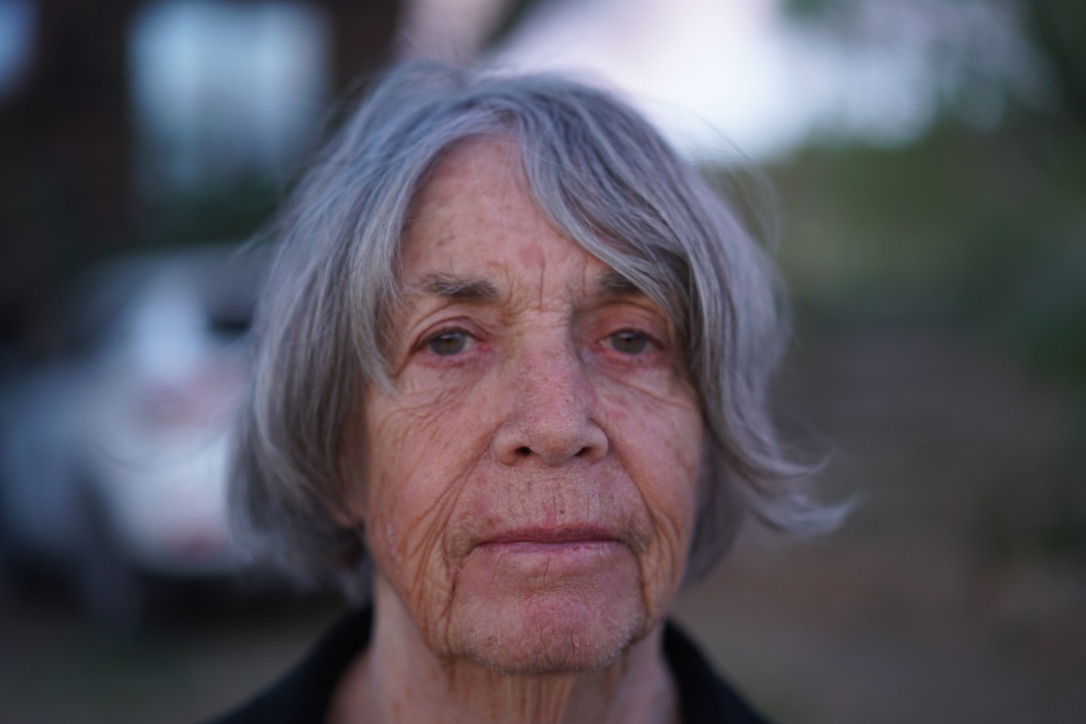
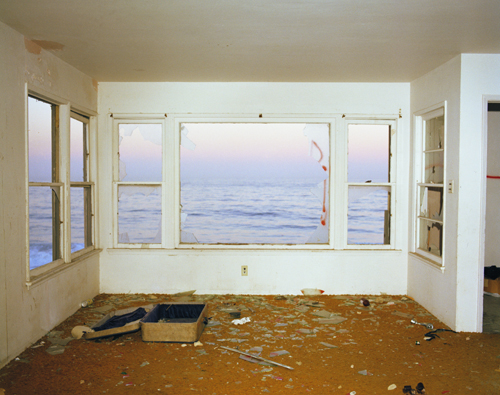
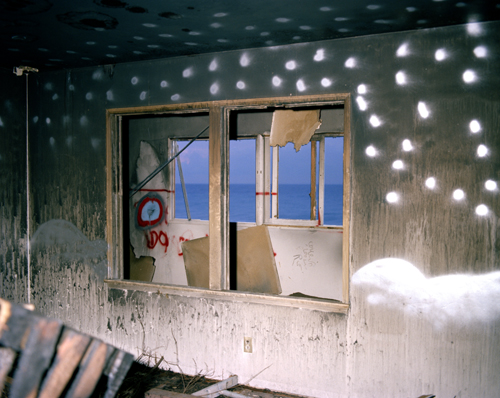
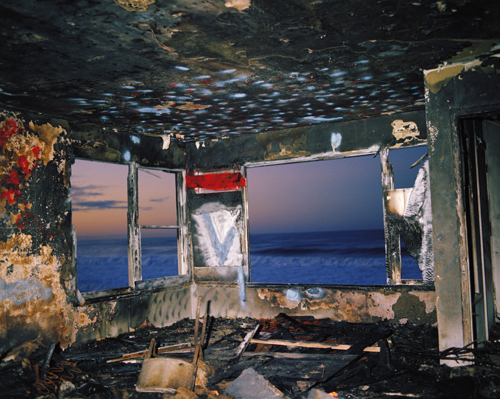
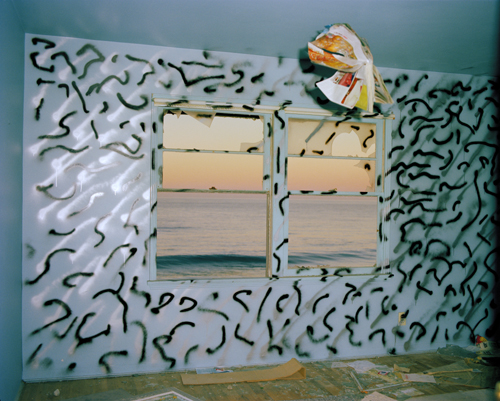
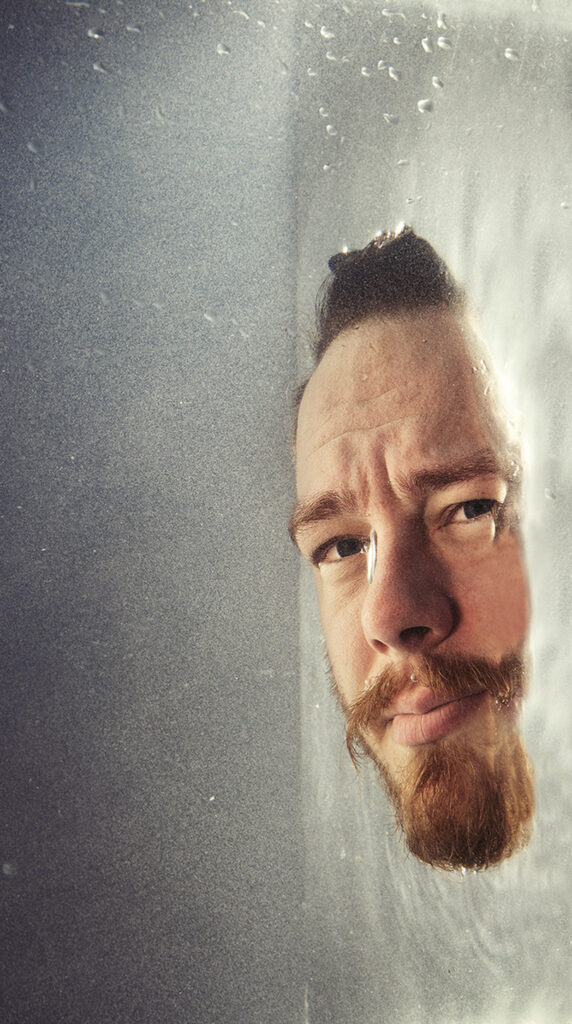
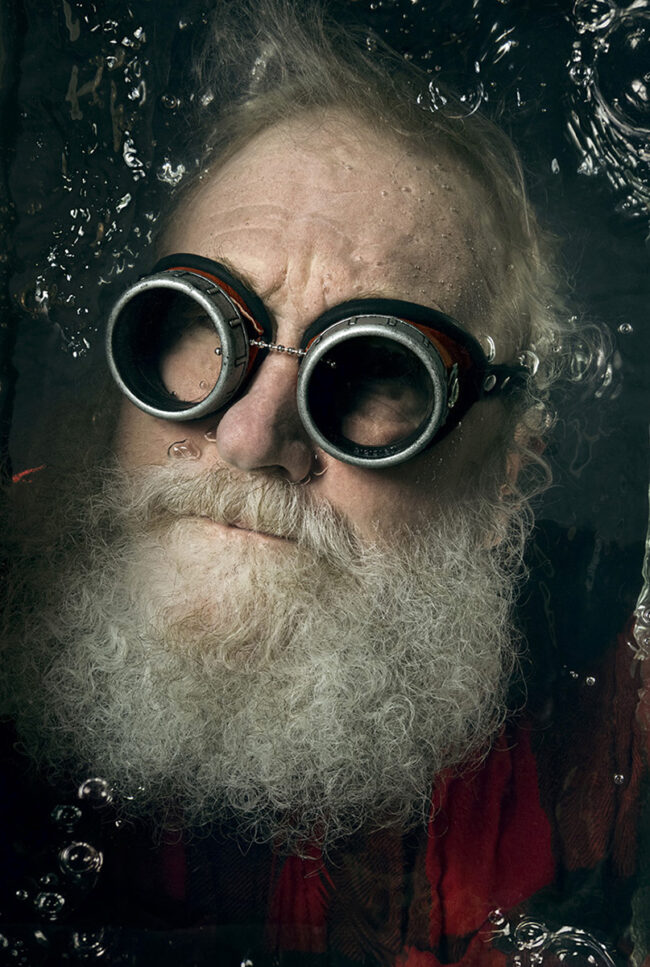
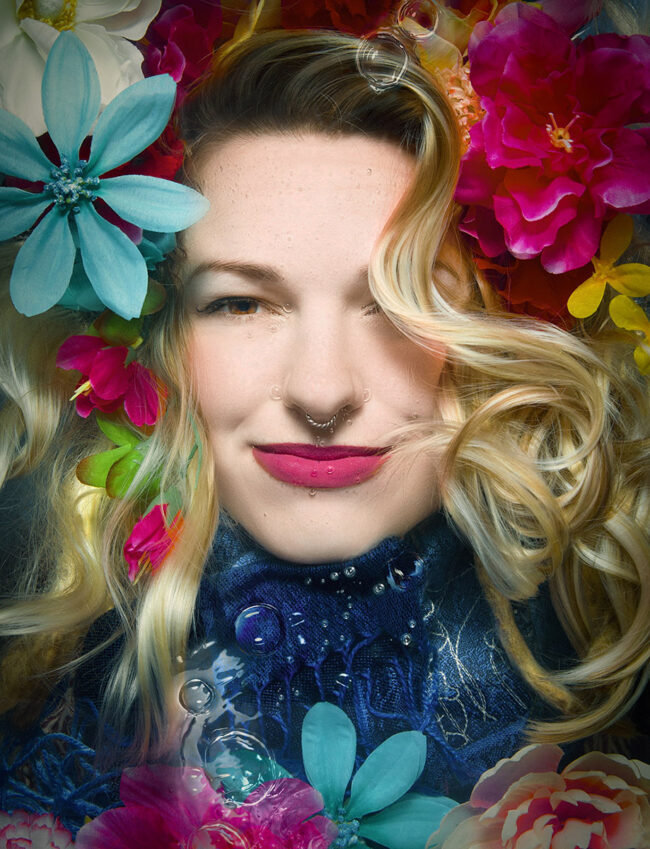
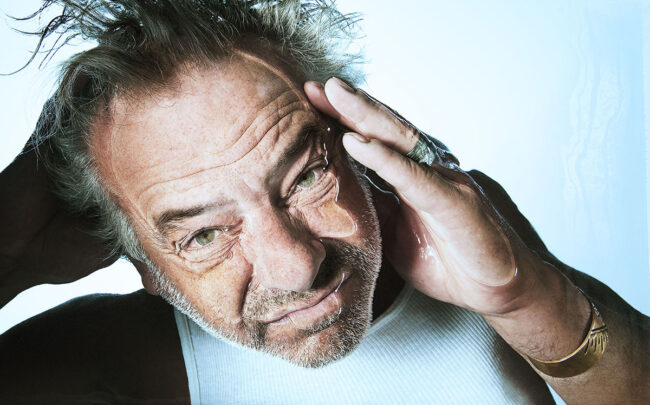
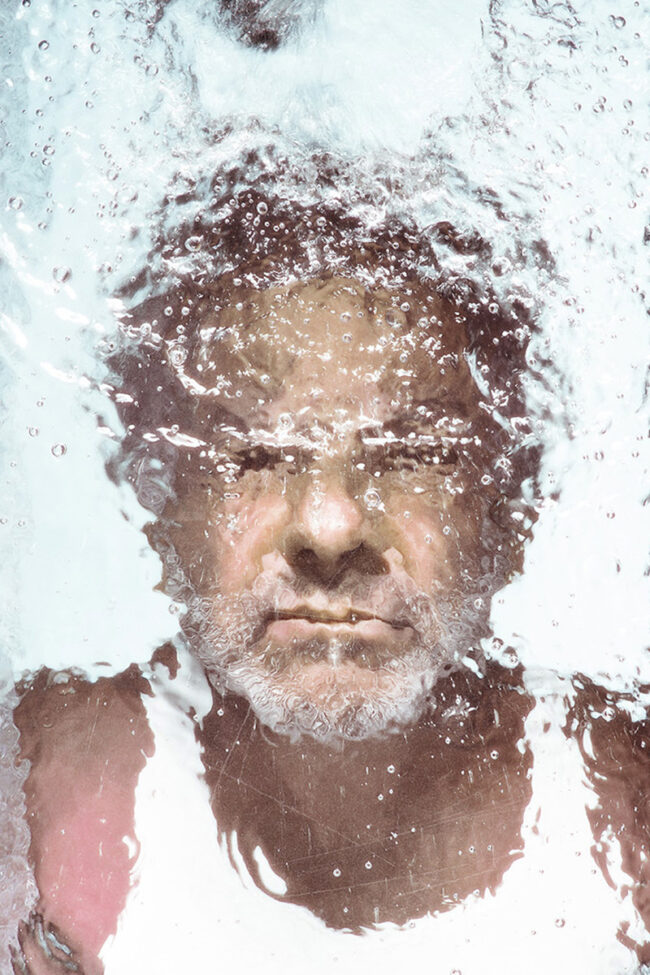
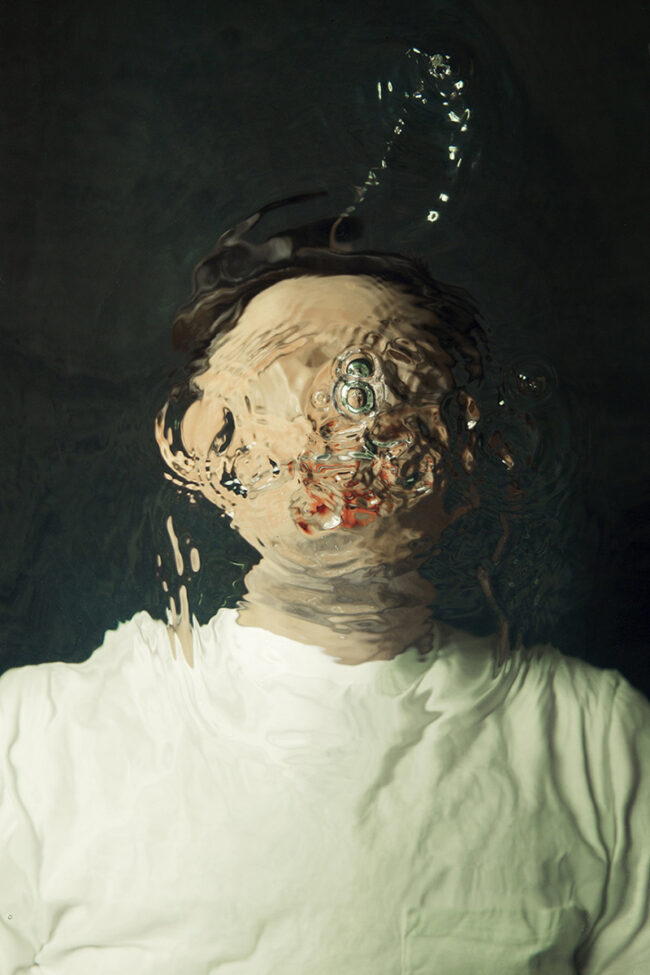
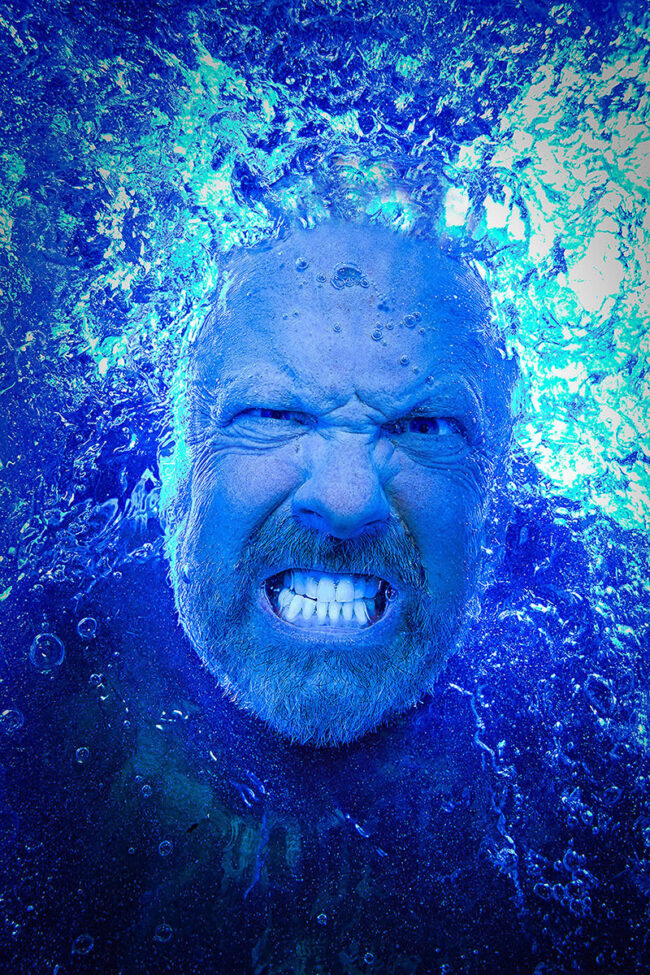
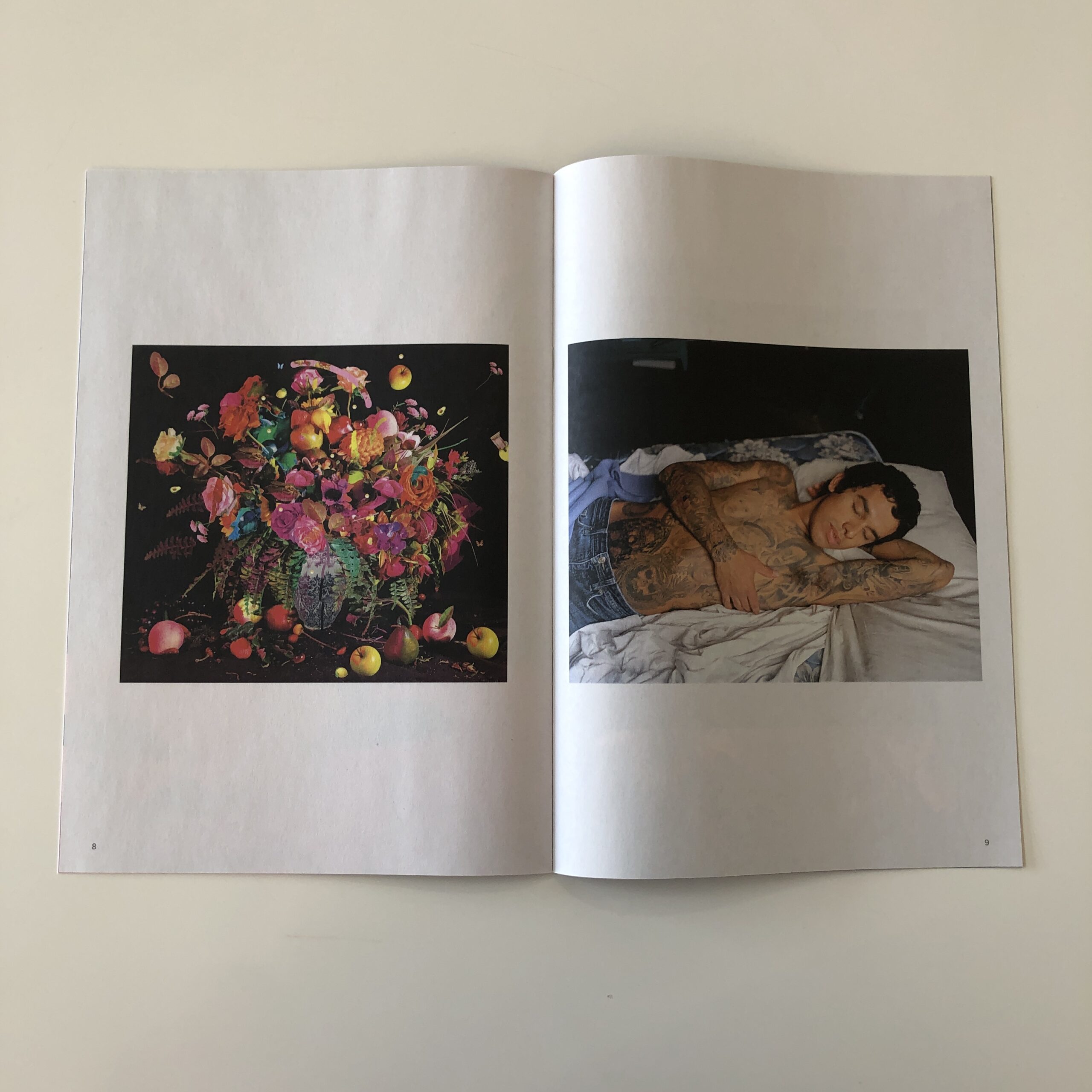
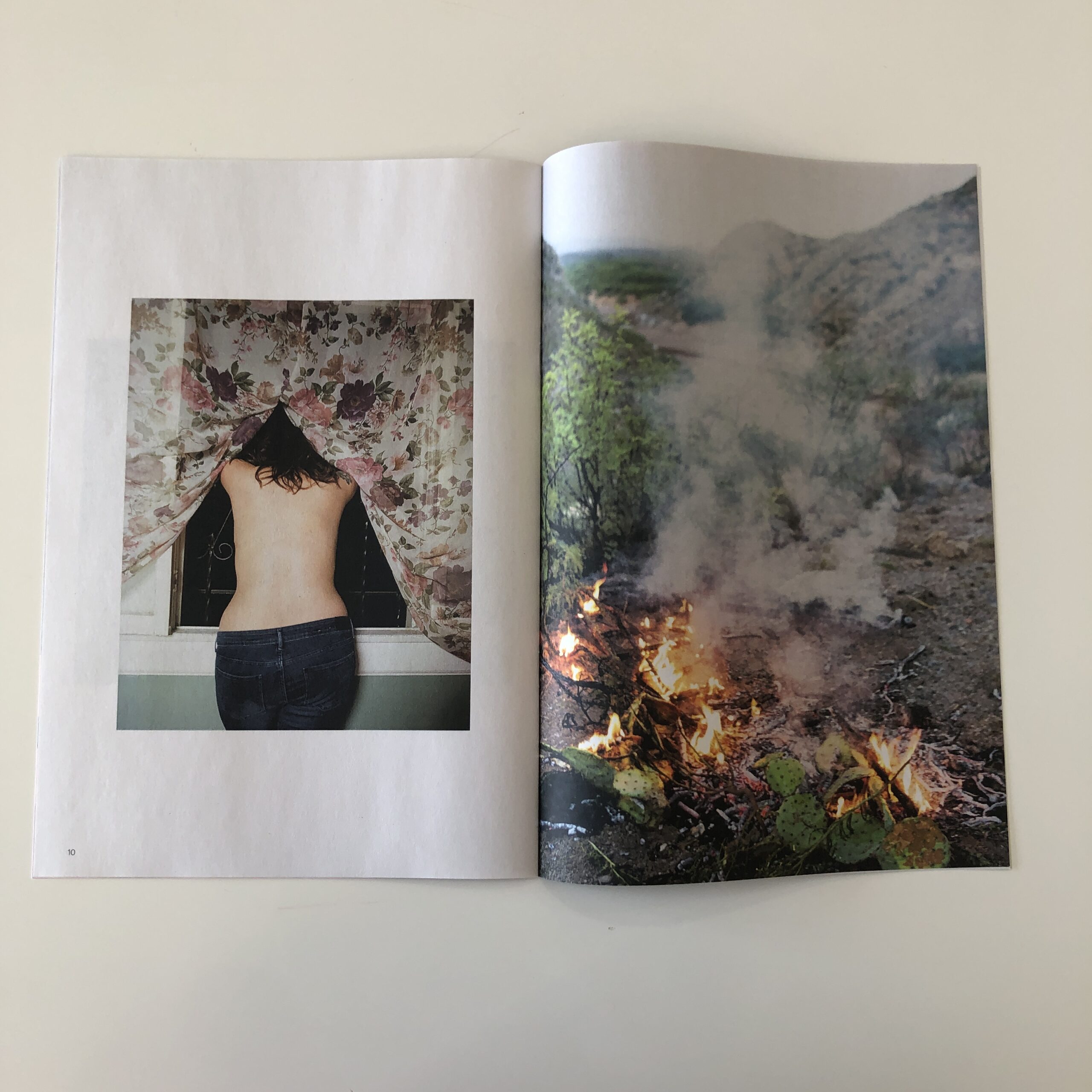
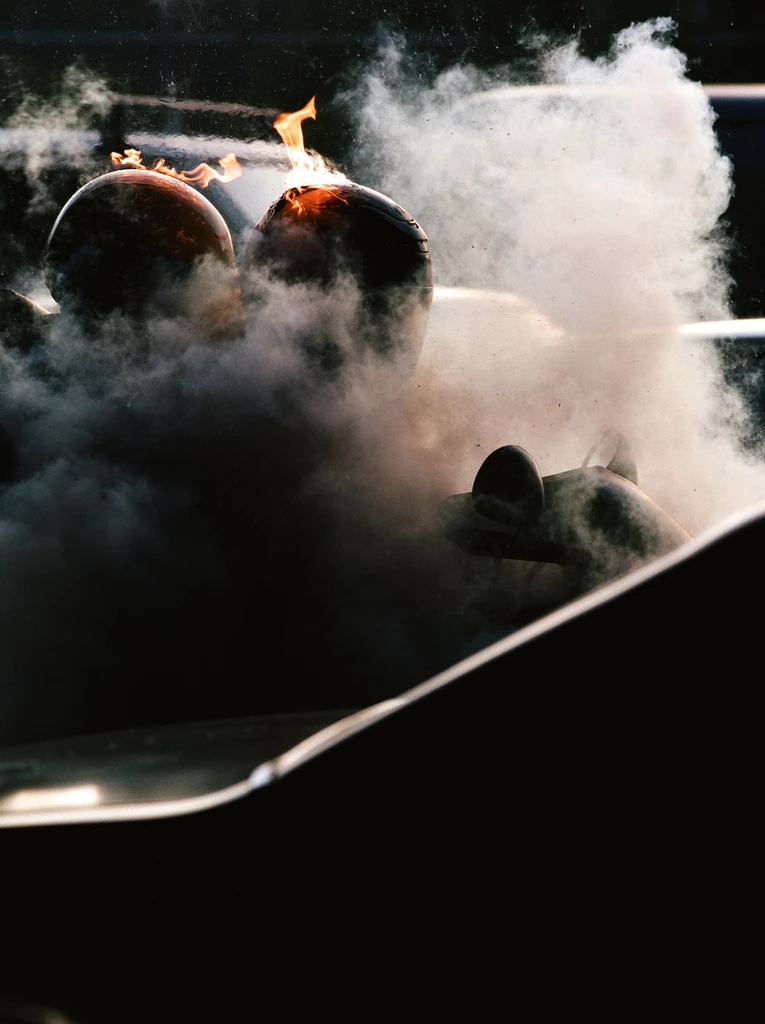
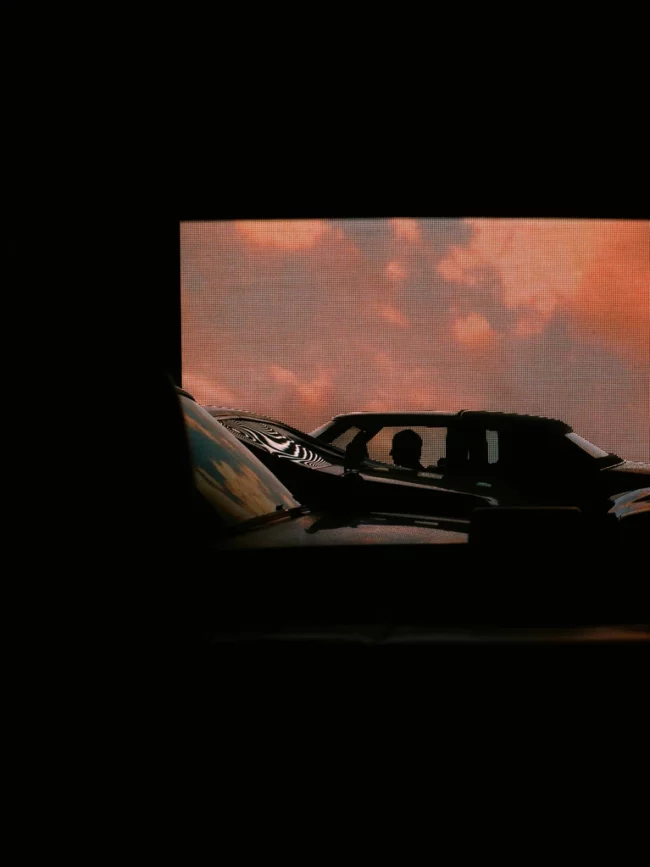
The Art of the Personal Project is a crucial element to let potential buyers see how you think creatively on your own. I am drawn to personal projects that have an interesting vision or that show something I have never seen before. In this thread, I’ll include a link to each personal project with the artist statement so you can see more of the project. Please note: This thread is not affiliated with any company; I’m just featuring projects that I find. Please DO NOT send me your work. I do not take submissions.
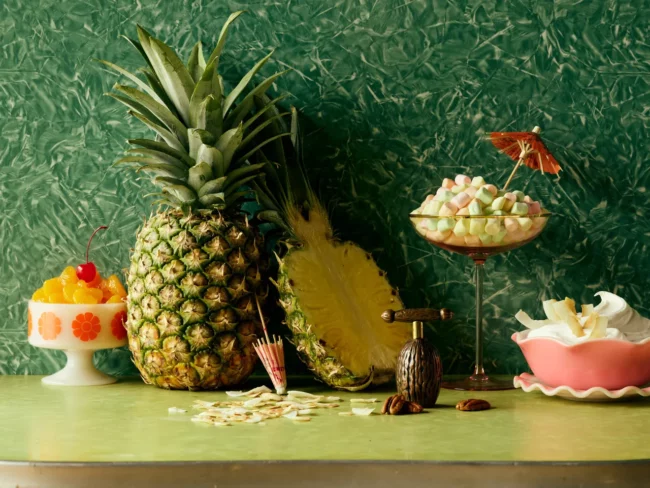
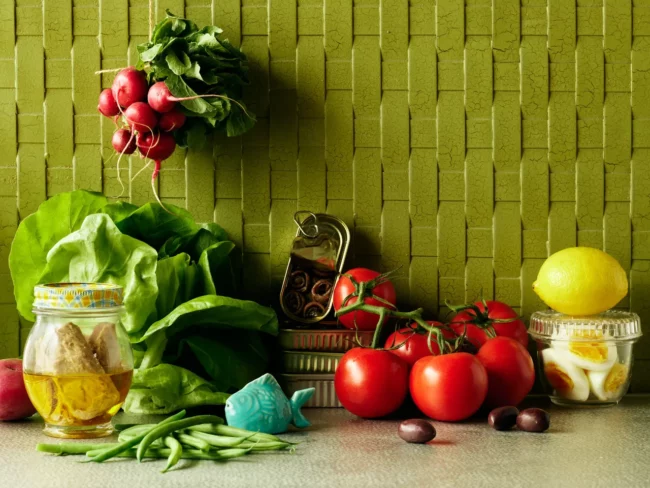
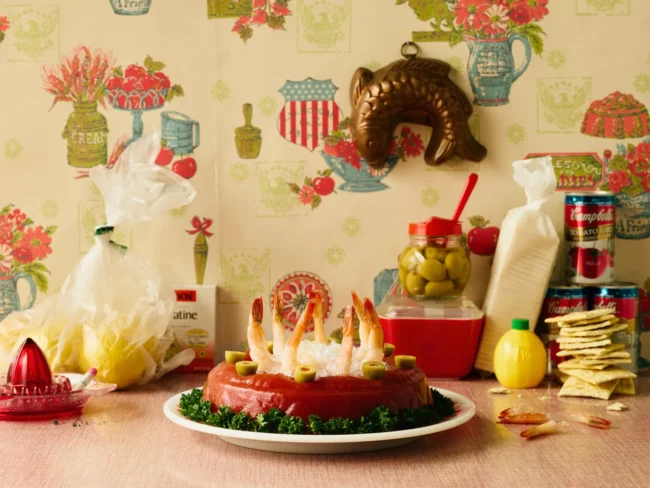
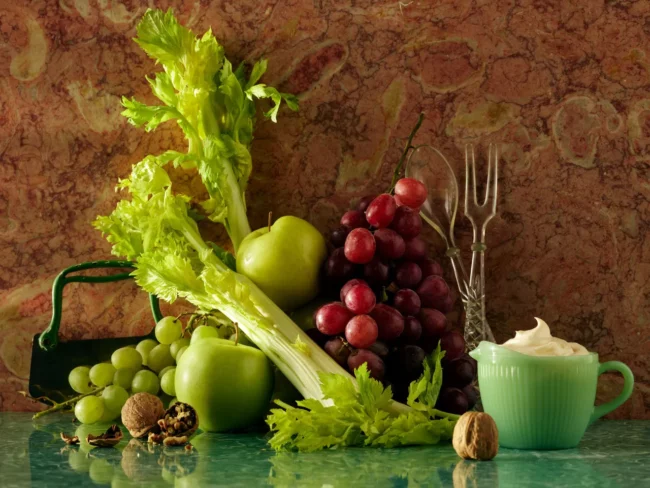
When someone works well with others, it’s a plus. Fueled by collaboration, Dan Goldberg takes it up a notch, gaining steam by working with talented artists to share ideas, pushing each other forward. Inspired by food stylist María del Mar, this project is a lesson in slowing down and telling a simple story. Together they worked with prop stylist Andrea Kuhn to create an image series of deconstructed salads from the seventies. It was a trip down memory lane for everyone on the team. This trio found such success in the process that it lit the fire of ideas for future projects. Please gather around and take in all that is Seventies Salad.
Capturing food brings back emotions and memories. It’s something I always knew but was more profound on this shoot. We shot these salads, with everybody putting in their two cents about which salad had the most memories from childhood. This project reminded me of cooking with my grandma in her kitchen. For this reason, I put the cigarette and the lemon squeezer in one shot. While each of these triggered childhood memories on set, everyone responded with their own once we posted them.
APE contributor Suzanne Sease currently works as a consultant for photographers and illustrators around the world. She has been involved in the photography and illustration industry since the mid 80s. After establishing the art-buying department at The Martin Agency, then working for Kaplan-Thaler, Capital One, Best Buy and numerous smaller agencies and companies, she decided to be a consultant in 1999. She has a new Twitter feed with helpful marketing information because she believes that marketing should be driven by brand and not by specialty. Follow her at @SuzanneSease. Instagram
Success is more than a matter of your talent. It’s also a matter of doing a better job presenting it. And that is what I do with decades of agency and in-house experience.
Heidi: Why was it important to you both to make this film?
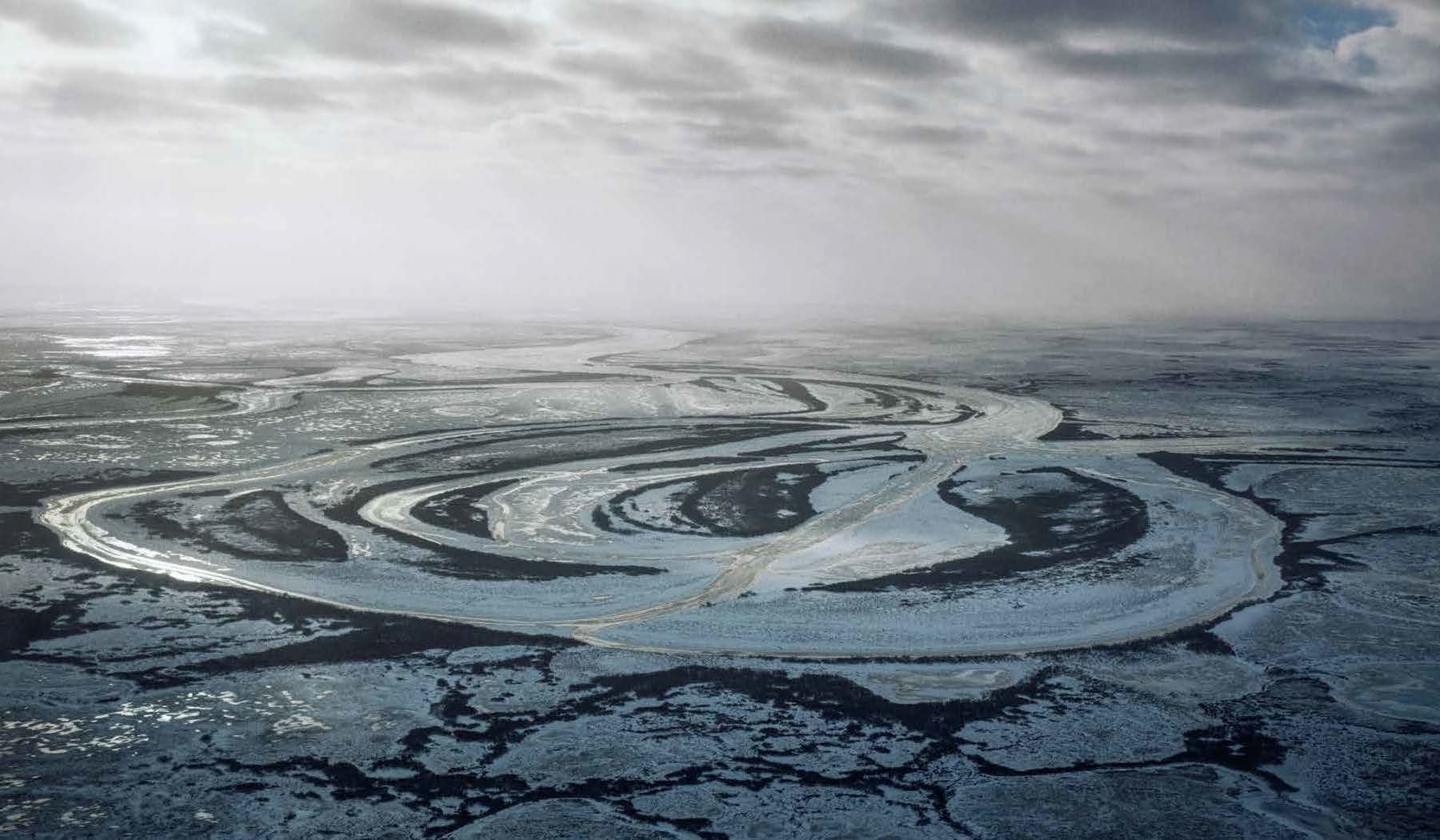
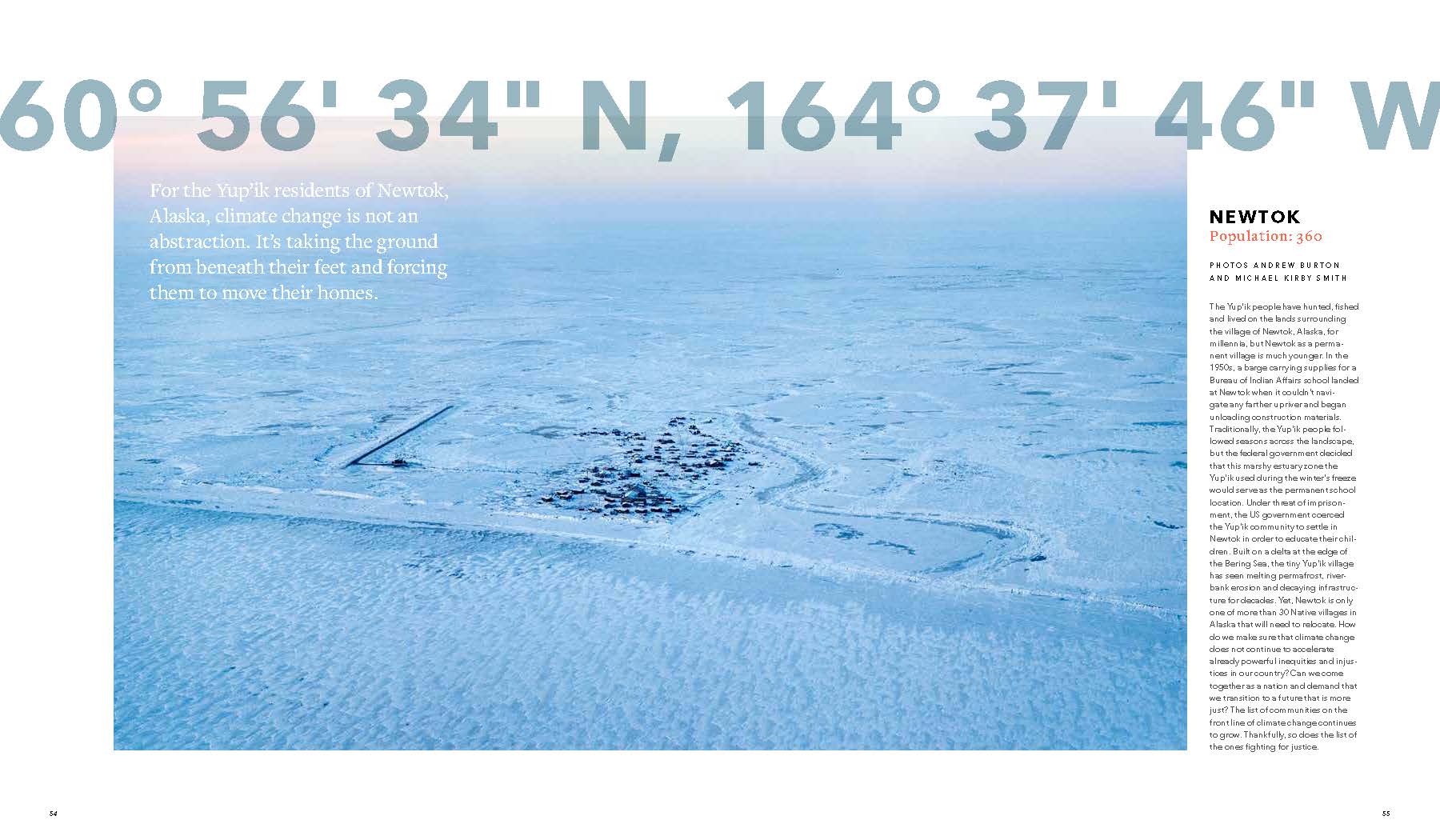
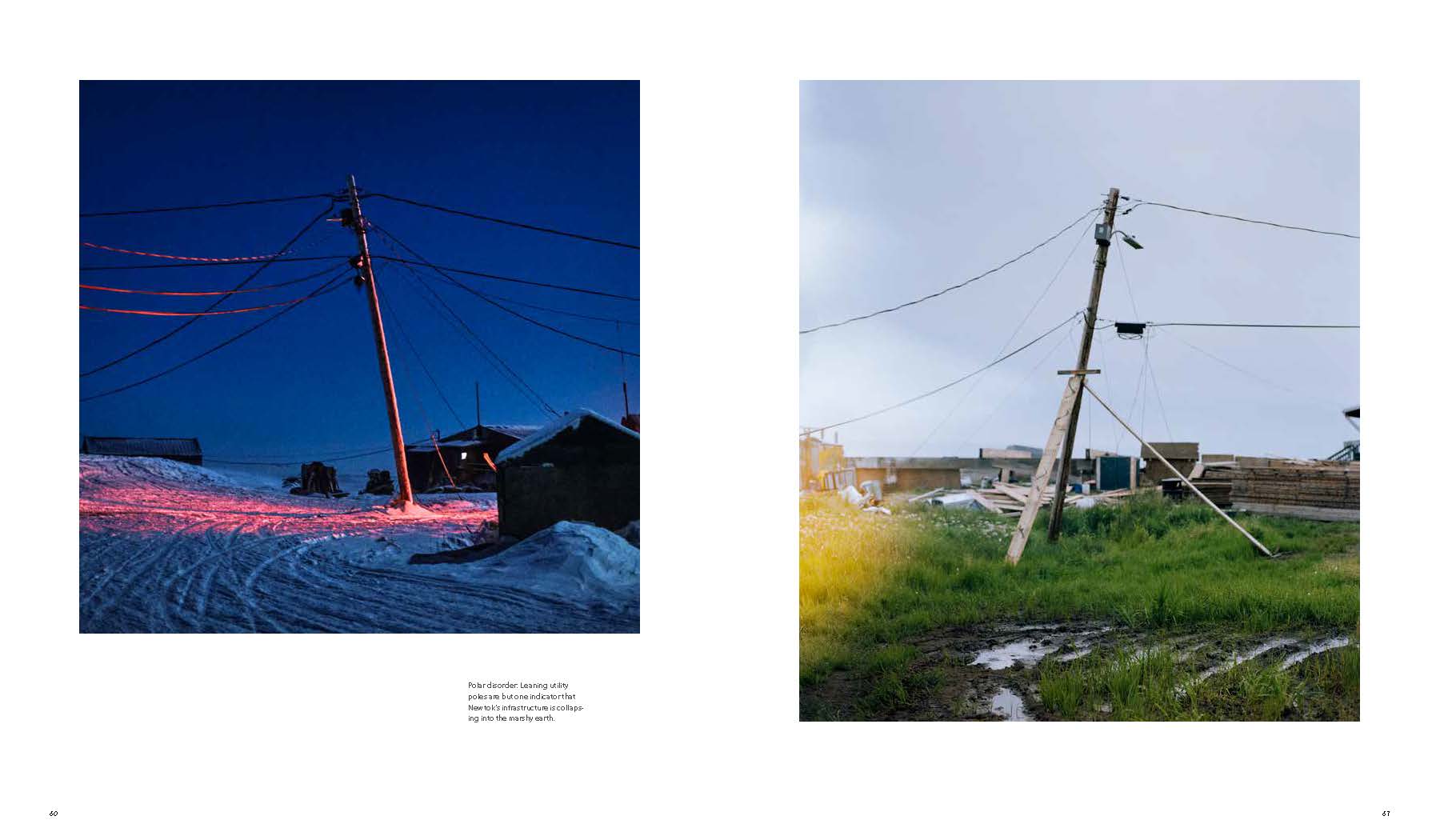
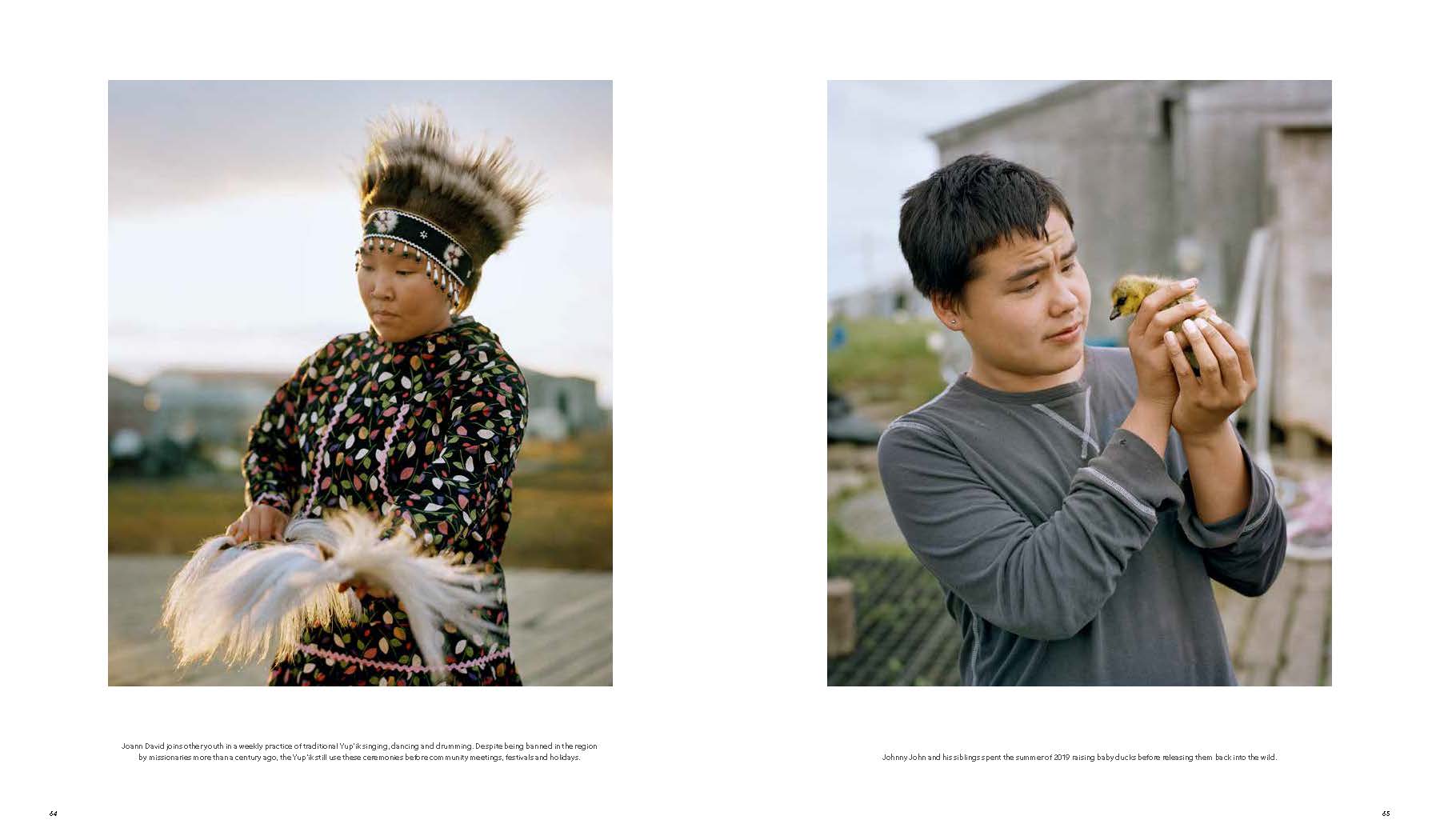
Andrew and MIchael: We set out to tell the story of Newtok, AK, in 2013 because we were tired of the overly simplistic media narrative that climate change was something happening in the future, predictive in nature, affecting generations down the road. We felt the story was happening now across the globe and in the United States. It was important to us that we found a story in our country after reporting abroad. When you start to look at stories in America impacting citizens here you quickly find Newtok. In news, the media often distills stories into simple digestible narratives and the more we learned about Newtok, especially after our first reporting trip, we quickly learned that the story is very complex, nuanced, with a beginning that dates back further than we could have imagined. We didn’t want this crisis to be portrayed through cliched and stereotyped imagery, such as a sad polar bear or melting glacier, knowing that this is not where we’re at with the climate narrative. Newtok’s story is complex, which in a way is representative of the larger complex issues when discussing the climate crisis in the sense that the narrative, and possible solutions do not have easy answers. The crisis is here in the U.S. happening today, to our fellow citizens, and our goal was to tell a story that immerses the viewer in the emotionality of this unfolding catastrophe.
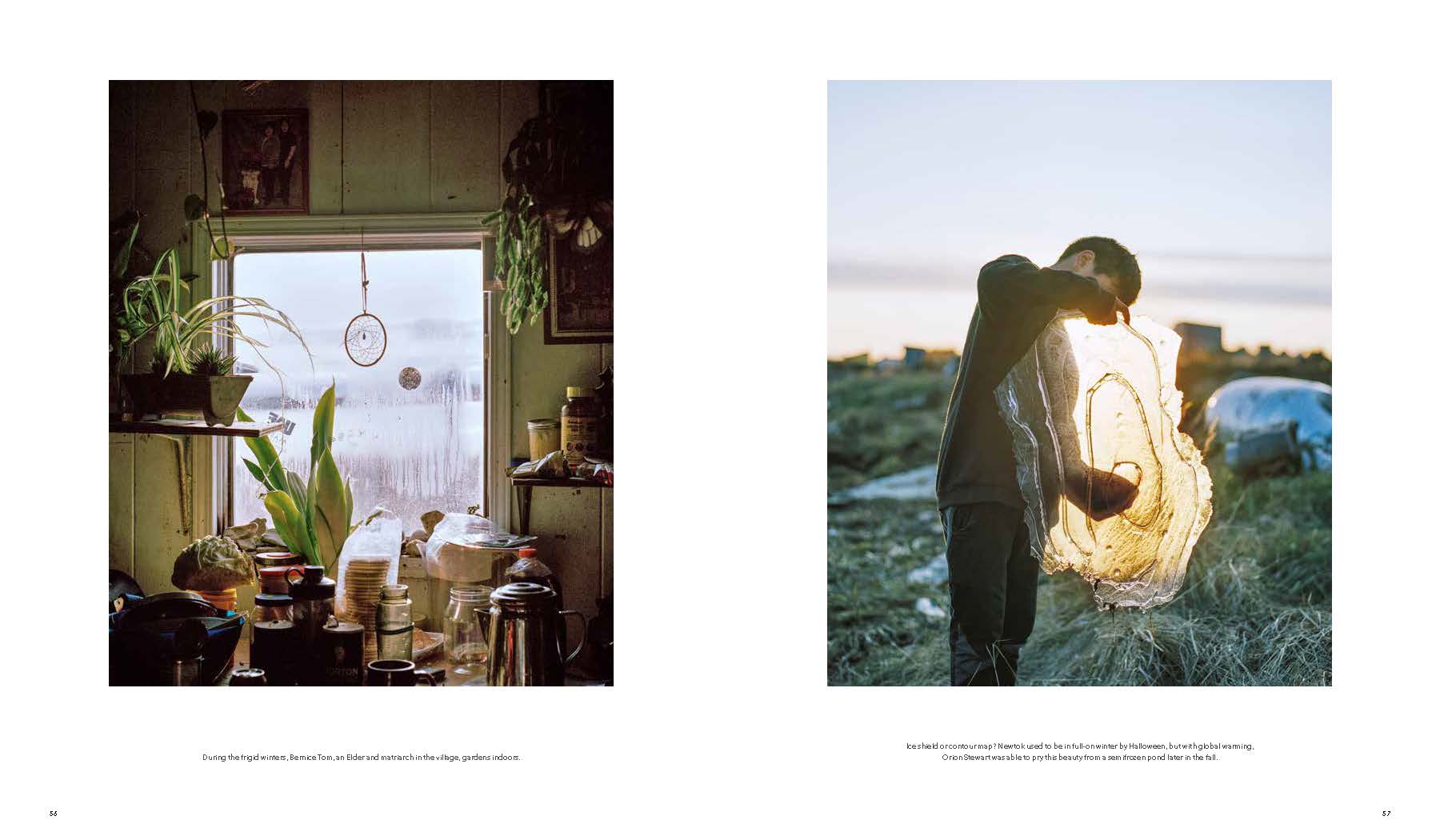
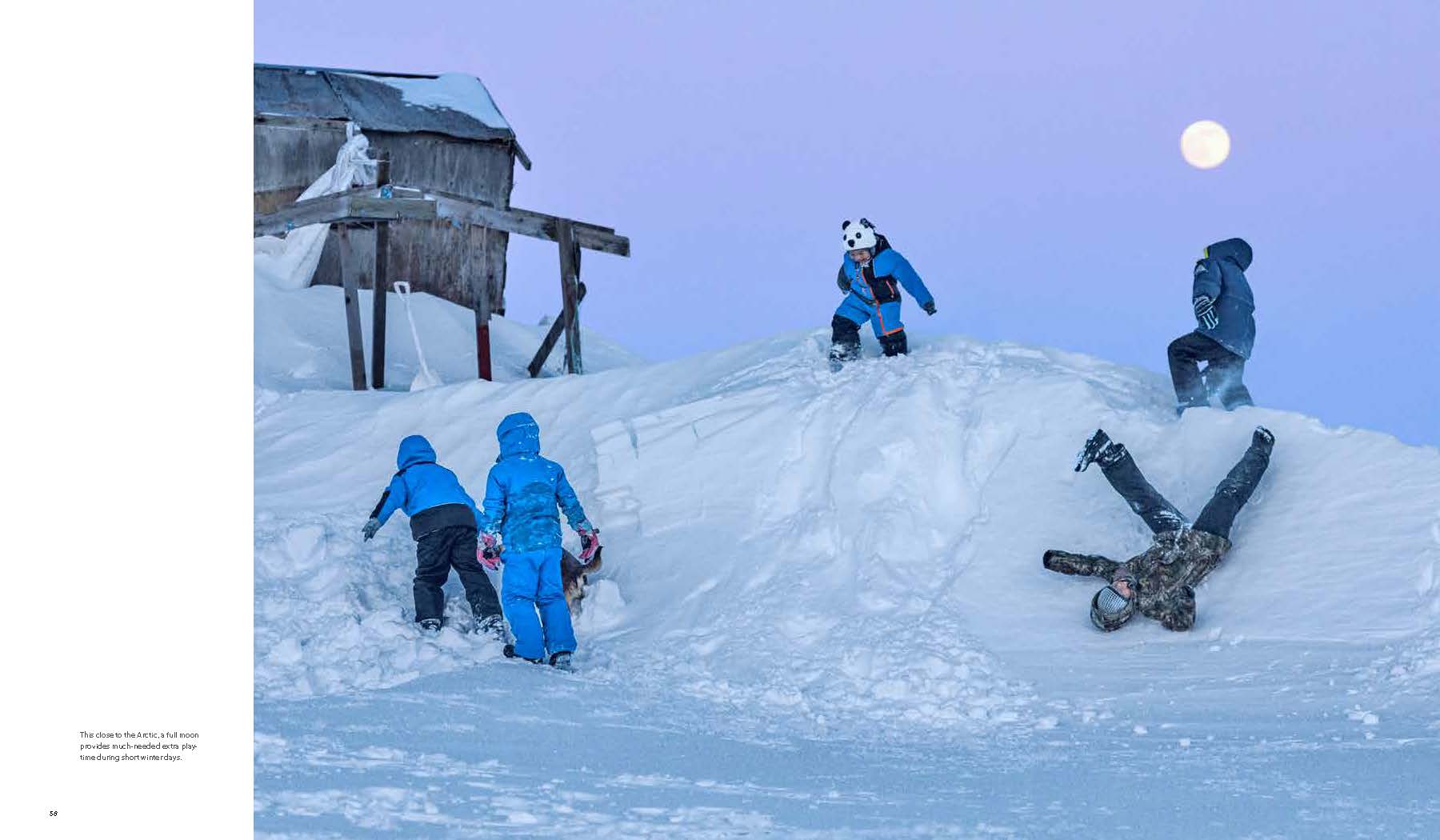
This project was seven years in the making, how much photography and motion did you collect and what are your hopes for it beyond this feature film? The project has grown into a much larger body of work. In a lot of ways the project’s growth was very natural in the sense that when we first started we were really reporting by taking pictures, writing, and documenting anything we felt was relevant to better understanding the story’s complexities. It’s now turned into a behemoth body of work that has been overwhelming at times. We filmed 130 terabytes of footage from 2015 – 2020, including hundreds of rolls of film and 20,000+ digital photos. In collaboration with the village and with their expressed permission we’ve collected old family photos, home videos, archival documents, maps, etc. We’ve handed out 70+ disposable cameras to the community for them to document their relocation and had kids fill out surveys about what they think of the relocation. Newtok began in 1949, under forced federal mandate, and according to the land exchange deal everything must be deconstructed in Newtok and handed back to its natural habitat. Because of this we do feel a certain obligation to document this entire process, especially since this is one of the first communities impacted by the climate crisis. The film is part of that ongoing body of work and our ultimate goal is to have an expansive multimedia document of a place that will not exist down the road. We want to create an archive which includes a documentary film (coming out April 22), a photo book, an online website, and a traveling exhibit. Eventually, with the blessing of the community, we’d like to see the entire body of work donated to a museum or university archive, but we still have many years ahead knowing the relocation is not complete.
The past four years have been dynamic to say the least (politics, the pandemic) how did that impact your project?
Like everything impacted by the pandemic it’s been really tough. Covid has kept us from traveling to the village for two years (2020-2022) which was the longest we’ve been away from the community. It’s also disrupted our ability to screen with the community in the way we’ve always envisioned, but with that said, there is a lot of understanding of the obstacles we’ve faced in this regard. We spent much of that time editing the film and getting it out into the world. Beyond covid, this project has now been through the Obama, Trump, and Biden administration. What is remarkable is all the lip service and attempts to help the community from 40+ state, federal and nonprofit agencies, and all bluster of partisan politics, how remarkably little has changed in the village. It speaks to how complicated it is to navigate climate change politics in the current state of our country’s political stalemate in writing meaningful policy. Other than the big surge of funding in 2019 which moved 1/3 of the community, the majority of people still live in Newtok. So now you have a situation of a divided community which is tough for everyone. The goal is to remain together as a community in a safe environment and that has not happened. The river is still eating away at the shoreline, funding is not secured, and the community continues to fight for relocation while struggling in living their lives because of degrading conditions and families torn apart. Covid had the biggest effect on our ability to work on the story, but beyond that, the situation in Newtok is still dire and very real.
How did this self-sustaining community influence you as a parent, citizen, and creative?
As journalists we try to keep our personal baggage away from conversation, but in the context of process and longform storytelling, there is value in discussing this more as a way to encourage other filmmakers and journalists, and to just personally reflect, which is always good. To begin, throughout the making of the project we have had monumental personal change and professional growth. How we would begin to tell a story of this nature now looks different than how we did and that’s rooted in learning and growing as individuals and as a team. That doesn’t necessarily mean we would be telling a different story either. Personal life, all the ups and downs while working on a project like this continue, and the inherent difficulty to navigate individual stress is amplified in long form independent storytelling. You don’t have the same institutional support, in terms of financial help, which makes it harder to justify an undertaking of this nature if you are reliant on freelance income, as we both have been throughout this process. This means you really have to believe in the storytelling process where you find yourself somewhat blind to what awaits in terms of success, both editorially and financially. That’s really tough and stressful. What the community has really taught us is the value of being more present minded in general and how to find hope and joy in the face of struggle and overwhelming odds. In a lot of ways this informs everything in terms of the filmmaking process. This has made us better communicators with each other, and strengthened us as a team. We’ve been taught values that come out of a small, tight knit community and family – emphasizing forgiveness and love no matter what. The community has also taught us what real sustainability and self reliance look like – of knowing the landscape and ecosystem and weather patterns and nuances of your land. What incredible beauty and lessons we have to continually learn from this symbiosis. The project has taught us to be open and collaborative and that good storytelling takes a lot of time that can’t be forced. It’s almost as if each story has its own temporal governance, that you have to learn and adapt as a storyteller in order to fully realize the potential of the story, and that the story will unfold in its own rightful time. It has entirely and holistically changed the way we will approach future projects, and we are indebted to the community of Newtok for teaching us better awareness, which we grow from for the rest of our lives.
The community of Newtok trusted you both to tell this story and invite you into their homes and lives, what were some of the pivotal moments of trust building? It’s been a real honor getting to work with the people of Newtok on this story, and this could not have been done without our producer Marie Meade. Bringing her into the field was a seachange and a huge moment in transforming the story and gaining trust from the community. Marie is a highly respected Yup’ik elder, and leading Yupik anthropologist, author, linguist, and scholar, who is an incredible teacher both in an academic setting as a professor, and outside of one. She has direct familial roots to the Newtok community, specifically her family lived in the village of Keyaluvik where the people of Newtok were prior to forced relocation, but she had never had the opportunity to visit when the community was divided. This was very serendipitous for the project, because working on the film offered her an opportunity to visit with extended family and see her ancestral lands. So, our team not only had a known Yupik educator and leader come onboard, but someone who had personal connection to the land and people of Newtok. It’s impossible to quantify the value she continues to add to the project, we can only say that it wouldn’t be close to what it is today without her agency and insight into the community. She is someone who has devoted her life to better understanding her own heritage and has been instrumental in preserving the Yupik language and culture for future generations and she has given us leadership and guidance through the making of this film. We adore Marie.
The second, pivotal element that comes to mind, is much broader and came through by time on the ground just continuing to show up to the village, and reiterating our intention to try and get the story right. The community has seen a lot of parachute journalists, filmmakers, photographers, and tons of nonprofit and government agencies on top of that. They’ve become wary of outsiders for good reasons. People don’t often present their intention to the community, or get to know people and listen, so it sets up a potentially exploitive result that sours community perspective. We’ve now logged more than 300 days in the village and know folks there intimately, and we have been granted access by the community’s leadership by trying to be transparent and open about our intentions. What began as distrust has evolved in time to an alignment of intent, which is to bring attention to the traumatic disaster unfolding. Time has given us the opportunity to learn from the people of Newtok which is instrumental to the storytelling.
You are both photojournalists, how did this project reinforce / continue to inform you both that this work is essential in an age of misinformation? This is a very complicated question to try and begin to answer. People are aware of how news consumption has drastically transformed in the digital era with social media platforms abound, but we still don’t know what the implications are on society and what that means for the future of documenting history if journalistic guidelines lack clarity. The journalism transformation is happening so fast that we can only speculate. There is incredible work analyzing this stuff, but it’s mostly in a slower moving academic dialogue, and while that is being pondered journalism’s voice to tell stories is being diminished. Photojournalism comes from a lineage that has journalistic guidelines and principles, as an example, actually being transparent in the journalism methodology itself. These ethics were traditionally shaped and defined by legacy journalism institutions and publishers, which have been folding throughout the country and world. What has risen in the wake are numerous platforms, and even forms of storytelling, that have no clarity on the code of ethics in reporting, fact finding journalism, and publishing. Photojournalism remains essential because the intent is clear and the methodology is clear. The struggle now is there are fewer platforms for publishing the work which makes it extremely difficult to have a career which is a great loss to journalism in general.
The community is in a constant state of migration: homes they grew up in, their land, culture and tradition. How did this project make you rethink what it means to be home?
This project made us reconsider the definition of home in a visceral, tangible way, that it is more than just a physical structure as we have perhaps defined it prior to the project. The definition is different across cultures, and for the community of Newtok “home” is more than simply a house, or the village itself – it includes the ecosystem that provides subsistence life. It is a much broader swath of the Yukon Kuskokwim delta, where, for millennia, they have moved between seasonal hunting grounds, a migratory understanding of the word.
There is an argument made by some fiscal conservatives that it is too expensive to relocate communities like Newtok and that it would be cheaper and easier to simply offer a buyout to residents, forcing migration into a major town. This argument hinges on a limited western definition that a home is definable by a four-walled structure, or version close to that. Such suggestions lack ethical consideration especially considering the community of Newtok only became attached to western infrastructure under forced mandate by the same government that would be suggesting a buyout. The fact is, to move a native community like Newtok, that has chosen to remain on their ancestral lands and disperse the community into a larger city would result in the opposite of “relocating their homes.” It would be the destruction of their lifestyle, their culture, their way of life and is genocidal by nature.
How did the community receive the film and how can folks give back or get involved?
We began showing the film to the community in stages. First, while we were still editing the film, we began showing rough cuts to our advisory board – a group of people made up of Newtok community members, a local journalist who worked in Newtok, a Yup’ik philosopher, a Yup’ik anthropologist, a project manager on the relocation and a member of the Smithsonian institute. After we received notes from the advisory board and incorporated their thoughts into the film, we showed the film to the people depicted in the film and had conversations with them. Throughout this process our aim was to make sure we were getting the story right, being culturally accurate and culturally sensitive and to learn about our inevitable blind spots. Then we showed the entire community of 400 people the finished film. We’re humbled, grateful and proud to say that the community has been very complimentary of the film.
How difficult was it to use your equipment in the elements?
Operating in Newtok was never easy – we were exposing our gear to -40 degree winter snow storms, giant Bering-sea storms, salt water spray, mud, muck and moisture. We demanded a lot of our gear and ourselves (frostbite while changing rolls of film isn’t fun to deal with). To the camera manufacturers unending credit, we never had any issues with our cameras – they worked amazingly well throughout the entire production.
What were the advantages of being a crew of two? Photojournalism puts a lot of focus on the individual – one byline, one person, one credit, and filmmaking is so collaborative by nature. There is strength in numbers and we really wanted to collaborate on a project and move towards a team approach. The process of that had a lot of growing pains and forced us to really listen and rely on each other in a way that is really incredible when you start finding the cadence of that other person. We often joke that our personalities are so different to the point of describing it like we’re ascending the same mountain on different routes, but there are real advantages to the differences once you fully trust each other’s approach, and how our process differs. At the end of the day we usually always land in the same place, in agreement, and along the way we have grown as collaborators and friends. We learn from each other and believe that by working as a team, the final product is greater than the sum of the individual parts; a sort of 1+1 = 3.
Despite the regular appearance of various new products on the global pharmaceutical market, in fact, real revolutions in pharmaceuticals do not happen too often. For example, since the appearance of the first antibiotics in the 1940s, among which Penicillin was a pioneer, several dozen other antibiotics of different spectrums of action have been invented, but still their appearance cannot be compared in importance with the invention of Penicillin. Importantly, the advent of the “era of antibiotics” marked the beginning of a completely different approach to the treatment of bacterial diseases than before. Something similar happened in 1998, when specialists from the American pharmaceutical company Pfizer synthesized a completely new substance called Sildenafil citrate and decided to use it as a means to improve potency. Thus was born the famous drug Viagra, which revolutionized the treatment of erectile dysfunction. Before his invention, effective and at the same time safe drugs to restore potency simply did not exist. Viagra has opened an easy way for men to return to a normal sex life. This drug is convenient to use (available in the form of oral pills), effective against ED of both psychological and physiological etiology, as well as combined etiology. Viagra is not addictive and can be used for any length of time, provided that the drug is well tolerated by the body.
However, branded Viagra has its drawback, namely, the high price. Because of this, a very large percentage of men suffering from symptoms of erectile dysfunction could not afford to regularly use Viagra and regain the joy of a normal sex life.
In this regard, the emergence of Viagra generics on the international pharmaceutical market, which occurred after the expiration of the patent protection of the original drug, is of great importance. In most countries of the world, this happened between 2014 and 2018. Generics are full-fledged analogs of the prototype drug, their action is based on the same active ingredient, often its dosage exactly repeats the dosage of the branded drug. In the case of Viagra generics, these are 25, 50 and 100 mg of Sildenafil in one pill. Generics differ from each other and from the original drug in excipients and names, sometimes in release forms. The factor that unites them all is a significantly lower price than branded Viagra. This is not about saving 10, 20 or even 30% of the amount, a generic can cost 1% of the cost of branded Viagra. Of course, not all manufacturers can boast of such prices, but still the chance to buy generic Viagra at a price of about $1 per pill is more than real . Such offers are available in many Indian online pharmacies .
The advent of generic Viagra has made it possible for many hundreds of thousands, if not millions, of men to have access to quality remedies for the treatment of erectile dysfunction. If earlier only an American with an income well above the average could afford regular intake of Sildenafil, in 2022 the purchase of generic Viagra will not hit the budget even of low-income men, not to mention the middle class.
(Lyrics quoted from memory, b/c that horrible fucking song stuck in my head.)
Gaslighting is such a great word.
(Perfect for the 2020’s.)
Having fallen prey to the tactic in the past, I empathize with others who do.
If you’re not familiar with the term, (or have heard it, but don’t know exactly what it means,) the gist is, when a person or a group challenges your proper understanding of reality, so deeply, so aggressively, that eventually you begin to question your own sanity.
For example, imagine you are in a blue elevator with three strangers.
All of a sudden, the lights go out, and the car freezes.
You’re stuck.
The group begins to converse, and at some point, one of the other people mentions the elevator is red.
No one disagrees, but you don’t think much of it, and of course the subject quickly changes.
But you’re stuck in there for hours, and over time, it keeps coming up.
The room is red, they all say.
Over and over again.
At first, you’re sure what you saw: the walls were painted Dodger blue.
Dodger blue color sample, courtesy of crispedge.com
Eventually, as they all agreed, again and again, that you’re actually in a red elevator, your confidence begins to wane.
Are you POSITIVE you’re in a blue elevator?
Since they’re all so sure of themselves, isn’t it possible, at least remotely, that your memory is inaccurate, and the walls are actually Candy-apple red?
Slowly, their bluster begins to erode your knowledge of what you saw.
Like the drip, drip of a leaky faucet, you begin to question yourself, and by the time the lights come back on, you’re actually convinced they were right, and you were wrong.
And so a blue elevator becomes red in your mind, because you have no counter-factual information available, (beyond your own recollections,) and an entire group of people is challenging your conception of reality.
Like I said, what could be more 2020’s than that?
When Putin declares war against a Jewish president, and accuses him of being a Nazi?
Courtesy of the Detroit Jewish News
Or a guy you went to High School with starts blowing up your phone, promising to make you rich, in what seems like a scam, but he’s just so damn confident, with slick answers to all of your concerns, that eventually, you begin to believe him?
Am I finally writing that long-promised article about NFTs?
You bet I am.
Buckle up.
Like the bonkers, stream-of-consciousness Bill Joel song I quoted at the outset, I’m writing this article in a manner echoing the batshit crazy world of photo NFTs, in which it’s hard to know what to believe, (or whom,) because everyone is so sure they’re right, even though they’re shouting opposite arguments simultaneously.
I have to admit, I’ve been dreading writing this article.
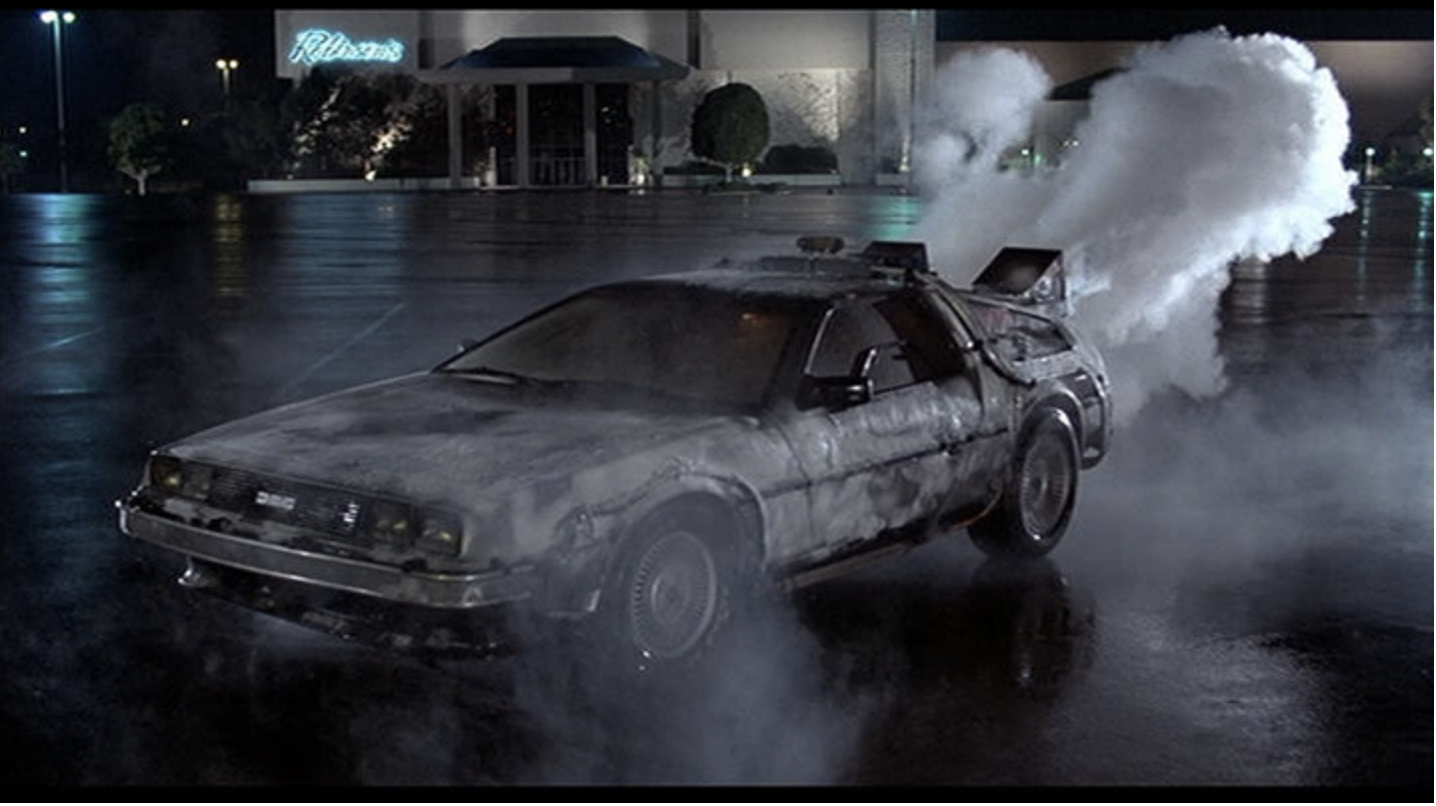
If I could go back in time to September 2021, tell myself to let it all drop, and plug my ears with tissue paper, like Larry David, I would.
(If any of you has a functioning time machine, please email or DM me. I’m happy to pay a hefty sum.)
Courtesy of backtothefuture.fandom.com
Alas, I don’t think it’s an option.
And as I’ve been teasing this article for months, and promised Rob I’d “land the plane” this week, it’s time to put up or shut up.
But what if I’ve spent this many months reporting, interviewing artists, reading articles, thinking deep thoughts, and still don’t know what the fuck is going on?
Well, I guess I’d have to write it like that, wouldn’t I?
It must have been the Spring of 2021, (about a year ago,) that I first started noticing some NFT info popping up on my Twitter feed.
I kept seeing the name Justin Aversano, who was making a project about twins, but that was as much as I absorbed.
Then I heard my colleague Kris Graves was getting in on the game, with Justin, and that made an impression.
In May, Noah Kalina, an artist I knew of, but didn’t know, asked to see some work on Twitter, for a potential collaboration with Crytpo.com, so I sent him a link to a project of mine, and while he liked the work, he didn’t end up doing anything with those guys, so the idea dropped.
According to all I’ve since learned, March-May of 2021 was ancient, for the NFT world, the equivalent of a Mesopotamian society.
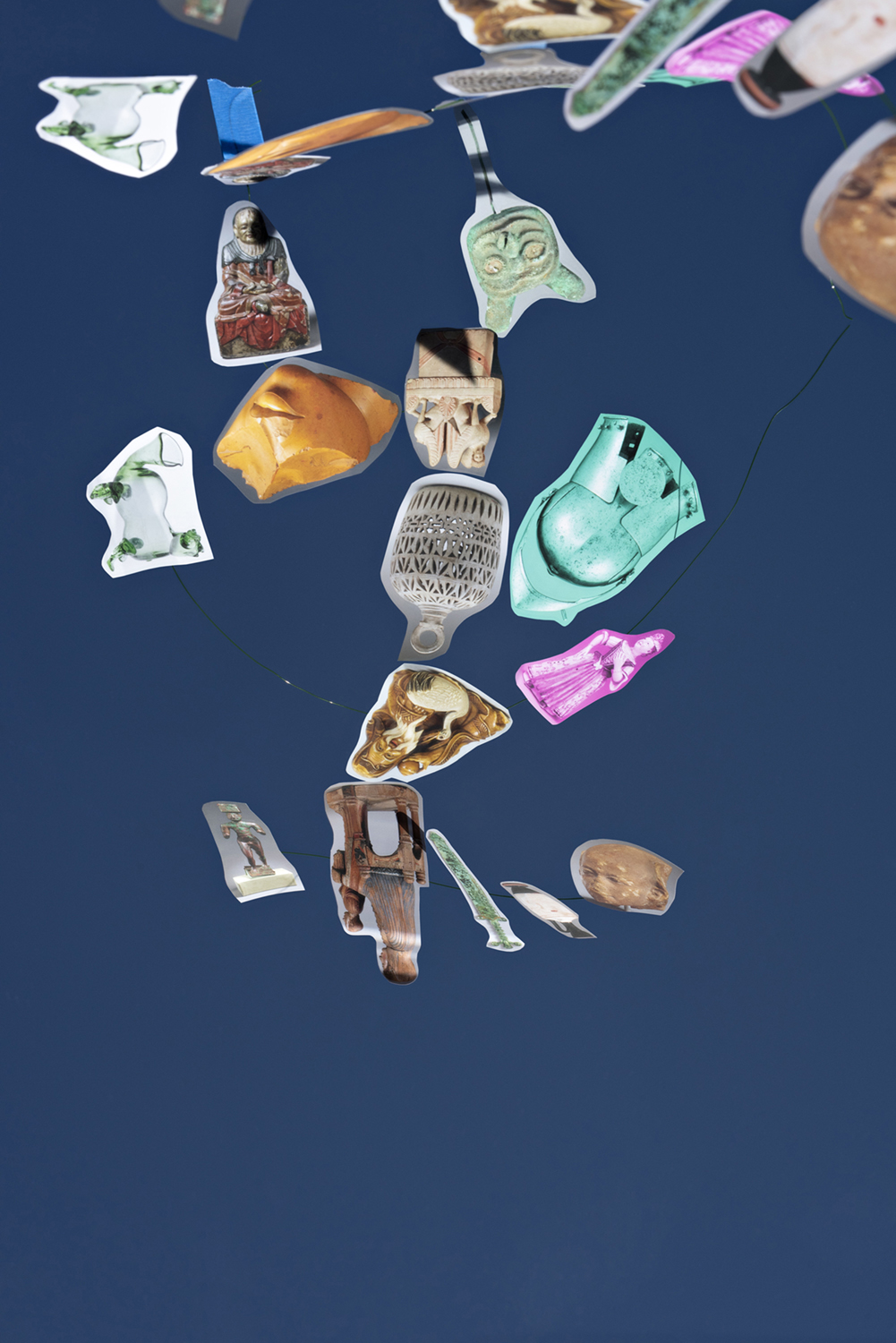
Those earliest NFTs might as well be Sumerian statues, with the massive mono-brow, given how fast things seem to move within this subculture.
Courtesy of the Metropolitan Museum of Art
I guess my attitude was always, I’ll sit on the sidelines until this becomes a thing, and then I’ll check in with my buddies, who’ll catch me up, and get me in the game.
Was that the right mentality?
Hard to say, but I’m reporting it as it happened.
By Fall, I’d begun to hear this was officially a thing, and some photographers were making real money, so I decided to tap up my network.
Strangely, some people I knew well, and with whom I’d collaborated before, (or done favors,) ghosted me, hard.
That never happens, so it made me curious.
Why would people who were normally cool with me all of a sudden tuck their heads?
What were they afraid of?
Or perhaps the better question was, what were they protecting?
Stranger still, in that same time-frame, a guy I went to High School with, (and was friends with on Facebook,) with whom I had not spoken in almost 30 years, reached out to see if I was interested in joining the NFT world.
He wanted to “onboard,” me, and began sending me information, via every available digital channel: text, FB, email, IG, and Twitter.
It was the full-court-press, with texts coming in first thing in the morning, late at night, all weekend long, and it was intense, to say the least.
All of my instincts told me things were fishy, that I was not about to make $2 million, and never have to work again.
That simply posting my archive images on an NFT platform would not solve all my problems, and make me rich and famous beyond my wildest dreams.
We all know the old saying: anything that seems too good to be true is too good to be true.
But I kept discussing it with my wife, and we both agreed even a small chance of life-changing money meant I should keep an open mind, and see where it went.
My new NFT cheerleader certainly knew some of the key players, and told me about the large sums of money he was spending, so on the surface it seemed legit, but then again, there were so many articles out there calling this crypto world a scam, a pyramid scheme, a multi-level-marketing program gone global.
Each day, I found myself wondering, WTF?, but kept at it, trying to learn more.
Eventually, this High School colleague and I considered going into business together, to create a platform to sell NFTs, because it seemed like the sales-platforms were where the real money was.
(Obviously, I didn’t go that route in the end.)
Many people have now heard of Quantum, (which recently drew $7.5 million in VC funding,) the trendiest NFT-gallery-company, and I was able to interview founders Justin Aversano and Kris Graves during my reporting phase.
Assembly is another, and I’m sure there are more out there.
From what I could gather, these money-making-orgs were founded based on a collab between some photo-world players, and crypto-money-people.
That seemed to be the key.
Then I learned how the platforms were interconnected with DAOs, which were (more or less,) unlicensed companies that in some ways, via fractionalized ownership of risky assets, behaved like the collateralized debt obligations and subprime lenders that crashed the global economy during the Great Recession.
That may happen to other people, but it doesn’t happen to me, so I really wondered how it seemed like everyone was gaslighting everyone?
Before you read any further, I want to state, right here, right now, that I don’t consider this a takedown piece.
I have no beef with the NFT community, which has been kind and generous to me, and certainly don’t feel I side with the haters, who mostly complain about the electricity use, the general sketchiness of cryptocurrency, and likelihood that people will get scammed out of money they can’t afford to lose.
(I’ve wondered for months now, why are electric cars seen as good, and eco, but electric art is automatically bad?)
Over the course of my reporting, I spoke with a group of NFT artists who truly love their new community, and the opportunities it affords.
I learned about artists who were trying to innovate with the blockchain, which, as best as I can describe, seems to be decentralized collection of servers around the world that hosts an official, crypto-protected, transparent, inter-connected, permanent digital ledger that cannot be manipulated, once it’s in place.
(Each “block” of data is connected to the next, and immutable.)
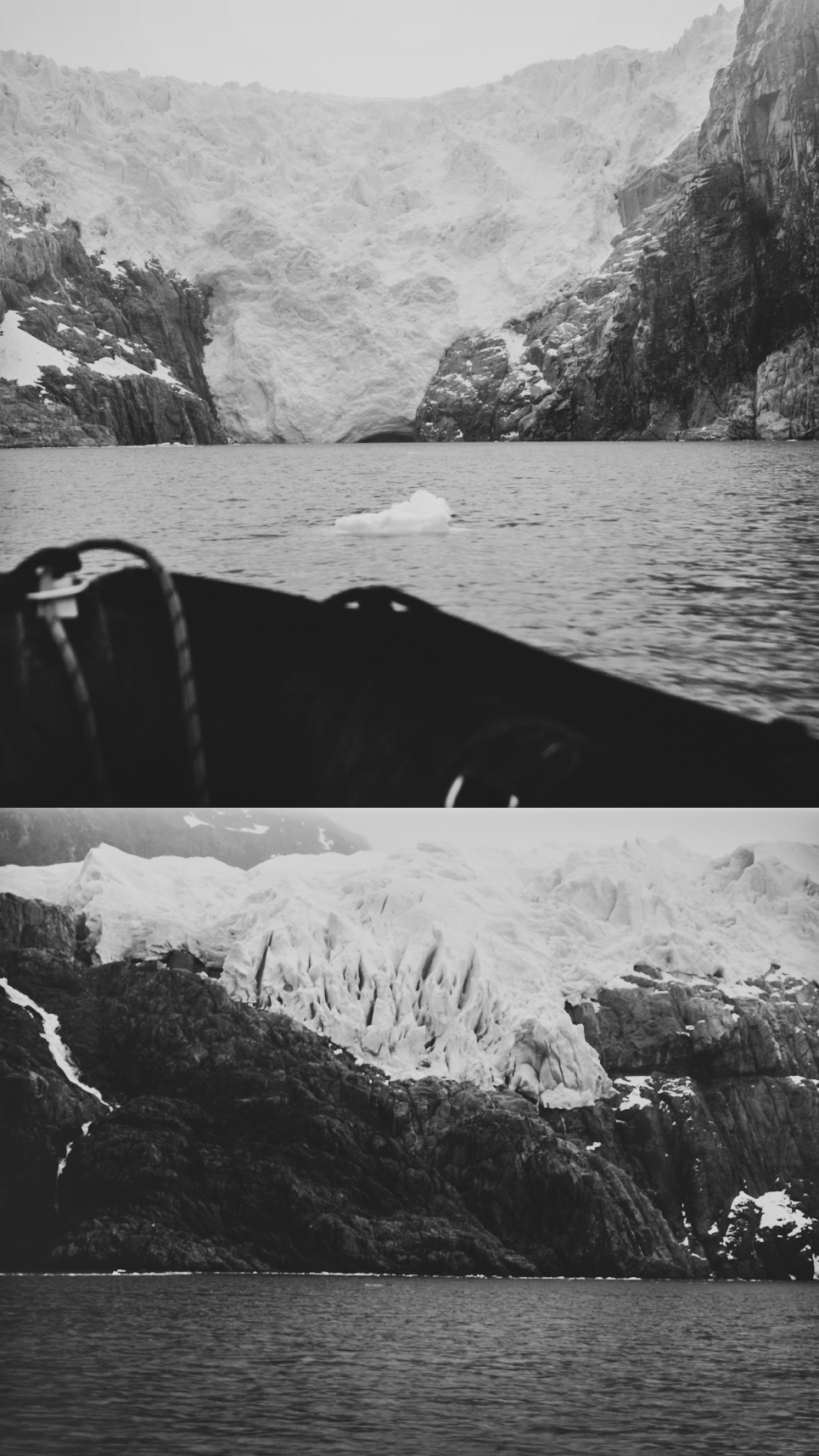
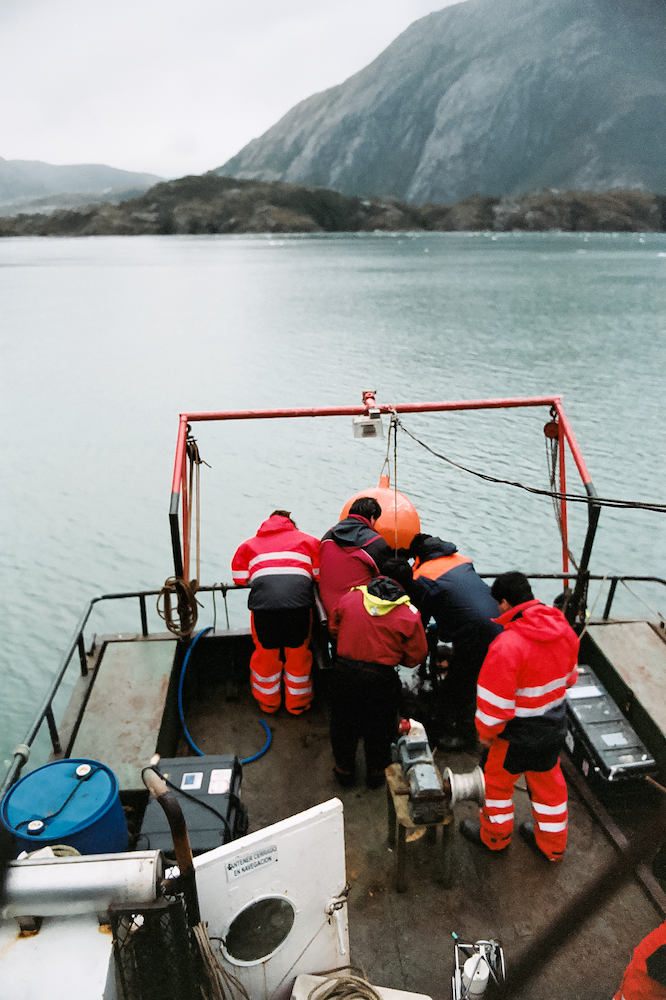
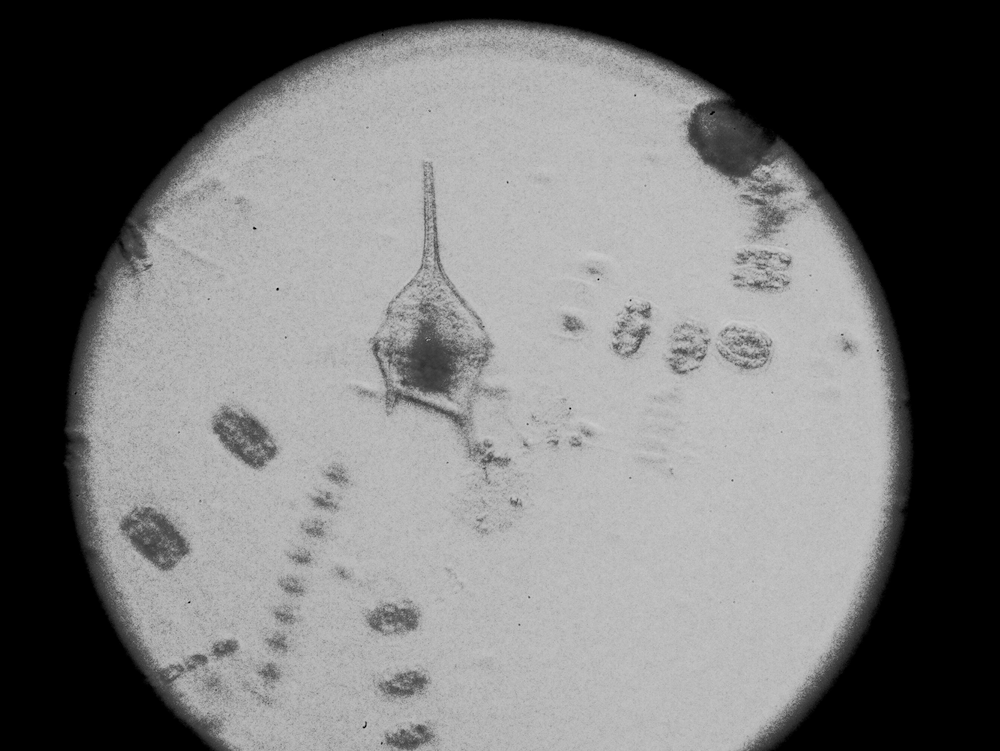
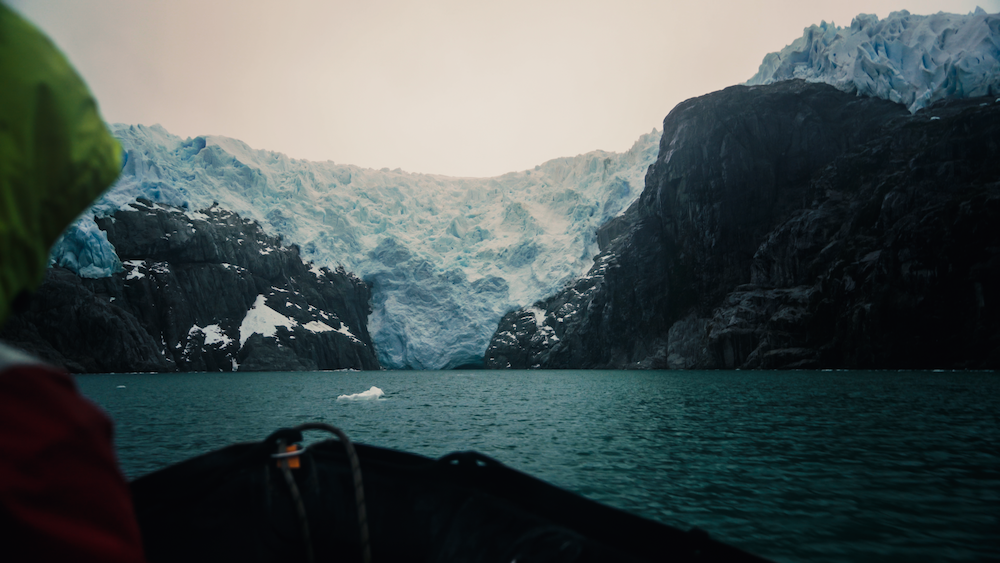
Akosua Viktoria Adu-Sanyah, whom I first discovered on Noah Kalina’s Twitter feed, set out to use NFTs to fund, (and has since succeeded,) an honest-to-goodness expedition, at sea off the southern tip of South America, so she and her scientist colleagues can share open source knowledge about Climate Change with the world.
The photos are beautiful, the project is ambitious, (called “Behold the Ocean,”) and of all the people I’ve interviewed as a journalist over the years, she was about as impressive an artist as I’ve ever “met.” (We spoke on Zoom, as she is based in Switzerland.)
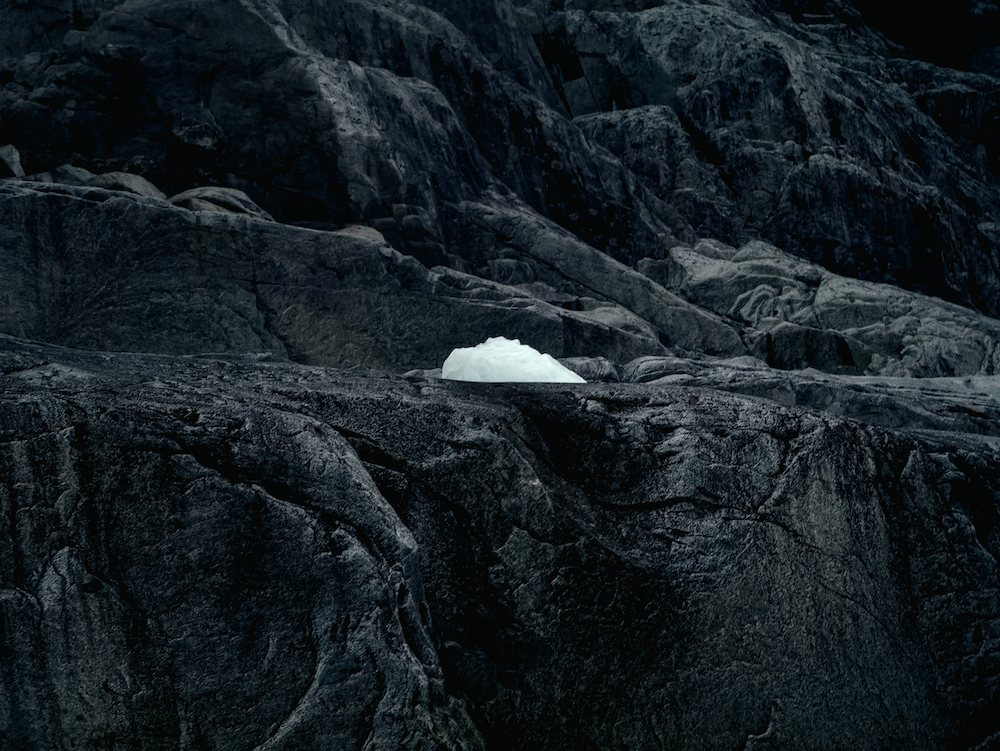
All images from “Behold the Ocean”
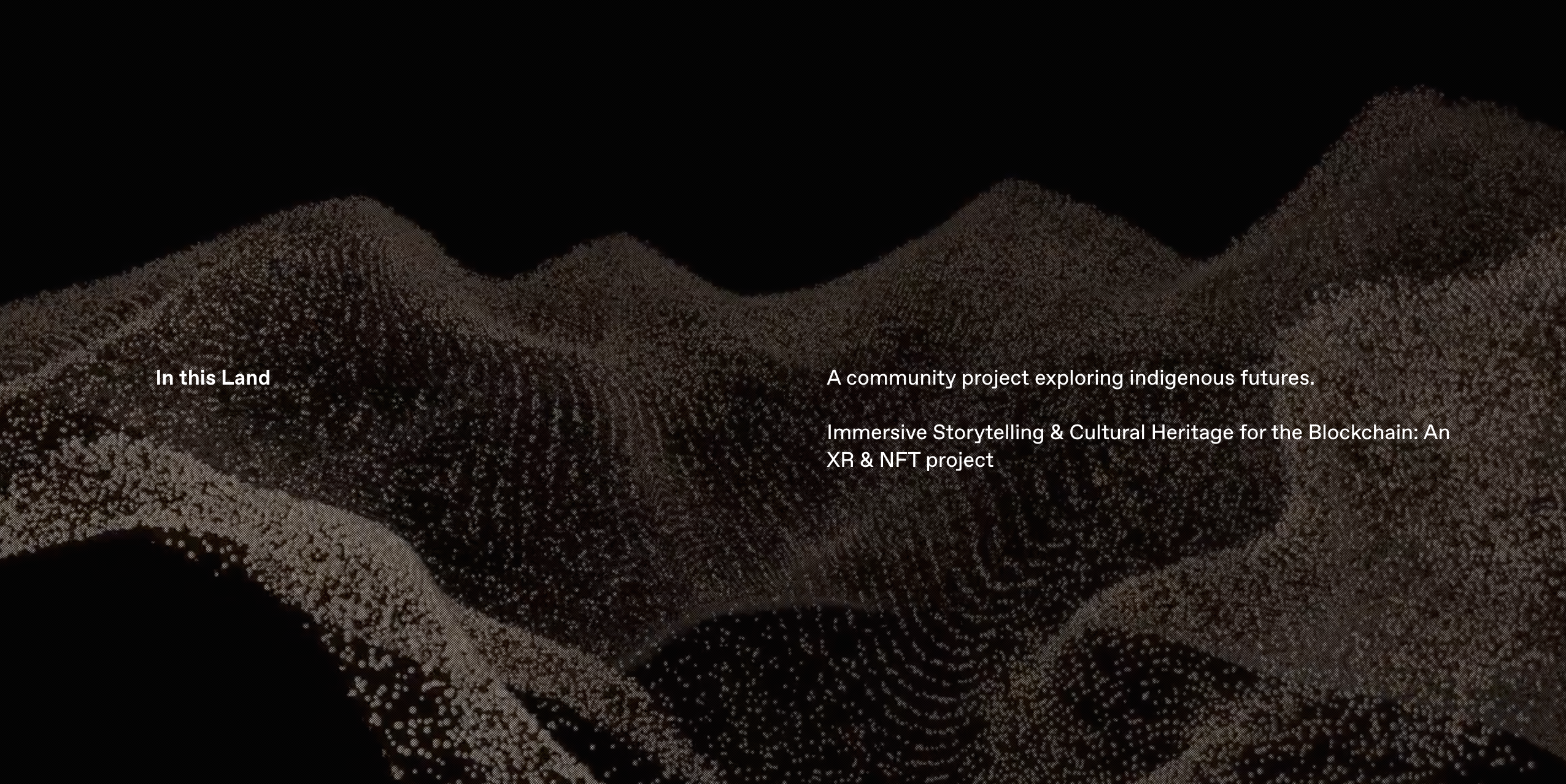
Akosua, who goes by Ava Silvery on Twitter, told me about an artist with the pseudonym Patricia El, who was working on a project, “In This Land,” trying to document and digitally map Bedouin communities in the West Bank that were disappearing, as Israeli settlements continued to expand.
Again, massively ambitious, political, and fascinating.
It was also far cry from the capitalistic land grab I kept hearing about, where people were getting rich, and only a sucker would stay on the sidelines.
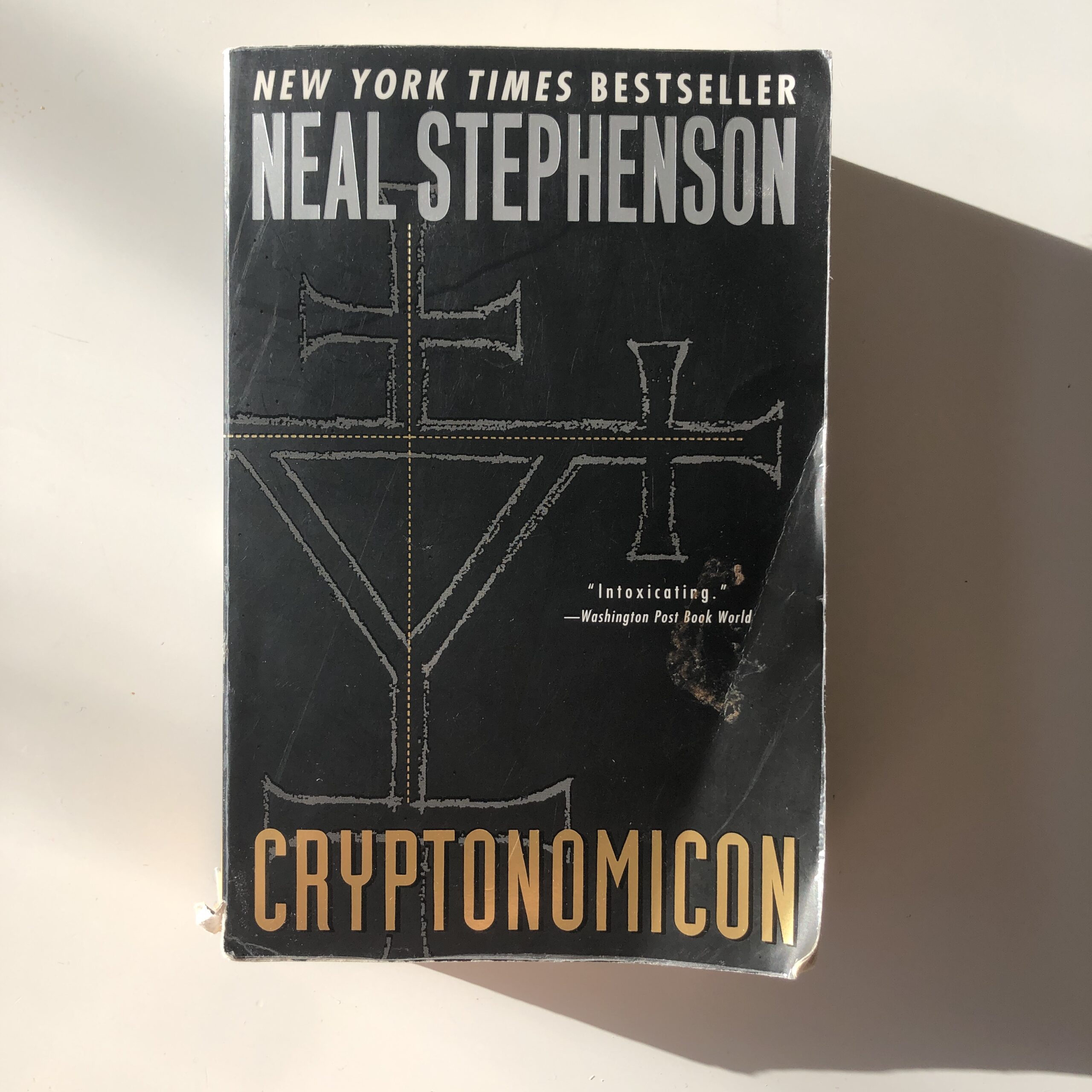
He’s the genius, sci-fi, futurist writer whose ideas were brought to life by subsequent coders.
Google Earth, Second Life, the Metaverse… these were ideas plucked by others from his influential book “Snow Crash.”
And “Cryptonomicon,” as its title suggests, more or less invented the concept of cryptocurrency in 1999.
He theorized about “money,” disconnected from governments, or even the tangible world, which could cross borders at the speed of light, never need to be exchanged, and accumulate value, like any other currency.
I’m sure you’ve heard of Bitcoin, but there are many other digital currency offerings, like Solana, and Ethereum, which is the main one used to create NFTs.
When I was first contacted by that trader-dude, 1 Eth was going for $3000ish dollars, and during the months of our conversations, it flew up to around $4800.
I was watching it rise each day, yet couldn’t shake the thought this whole world seemed unsustainable.
(If it were really that great, why were so many people trying that hard to constantly recruit a new batch of players?)
As you may know, the markets took a tumble recently, with Ethereum trading as low as $2411, and as of today, (I’m writing on Thursday,) 1 Eth = $3117.
Given how many people were using the term Crypto Bubble in late 2021, I guess we could say it’s popped.
How does one make, or “mint,” an NFT?
Well, it costs Ethereum to do so, so you have to convert your dollars (or Euros, Pesos, or Yen,) into Eth via a digital platform like Crypto.com or Coinbase.
That gets you in the game, like a gambler buying chips at a casino.
But in order to “mint” your work on a site like OpenSea, (which was likened to Ebay to me more than once,) or Foundation, (which is invitation only,) you need to create a digital wallet, with a service like Metamask or Rainbow, which operates as a connection point between your digital currency and the sales platforms.
The platforms take a cut if your work sells, (everyone takes a cut,) but you also have to pay to mint things, which are called “gas fees.”
Those float, and at one point, were as high as $200-ish per NFT minted, which was when I got concerned people would lose money on the venture by minting collections of work that would not sell.
Still, the artists I interviewed were over-the-moon to have discovered the NFT world, even if they weren’t yet selling work.
And the love and joy were genuine, for sure.
Frankly, I didn’t speak to one person who was unhappy with the situation, and only Richard Renaldi expressed any skepticism at all, but he was the one who came out furthest ahead.
(Except for Kris and Justin, who by all accounts have made a shit ton of money.)
(Which quickly became the NFT community’s social media platform of choice, along with Discord.)
Danielle Ezzo, From the series and collection, “If Not Here, Then Where?”
I hadn’t heard of any of them before I saw their Twitter handles pop up a few times, in relation to the DAOs, so I followed them, requested interviews, and they were gracious.
But when we first spoke, none of them had “gotten rich,” or sold much work at all. (Mickey even reported in November she’d sold the most work to her IRL handyman in New Zealand, as he was about to go into crypto full time.)
Each of them has since had their career advance in cool ways, via the NFT community, and I know Mickey has begun to sell work, though I’m not sure about the other two.
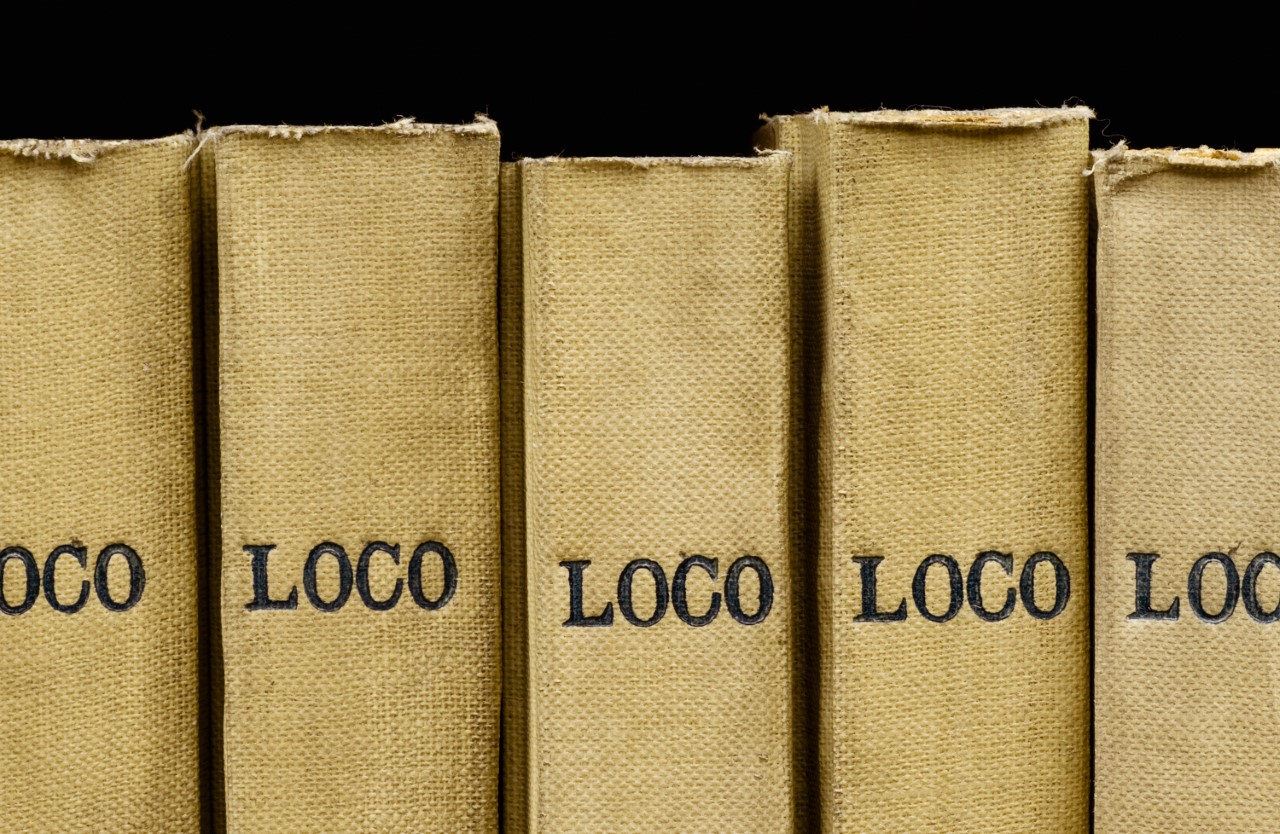
LOCO from the Volume collection on FoundationTIME #1,TIME #2, TIME #3 from the Library of Obsolescence collection on OpenSea
The big takeaway from speaking with all three artists was that the NFT world, which had developed around Discord and Twitter, had introduced them to an entirely new group of friends, colleagues, and opportunities.
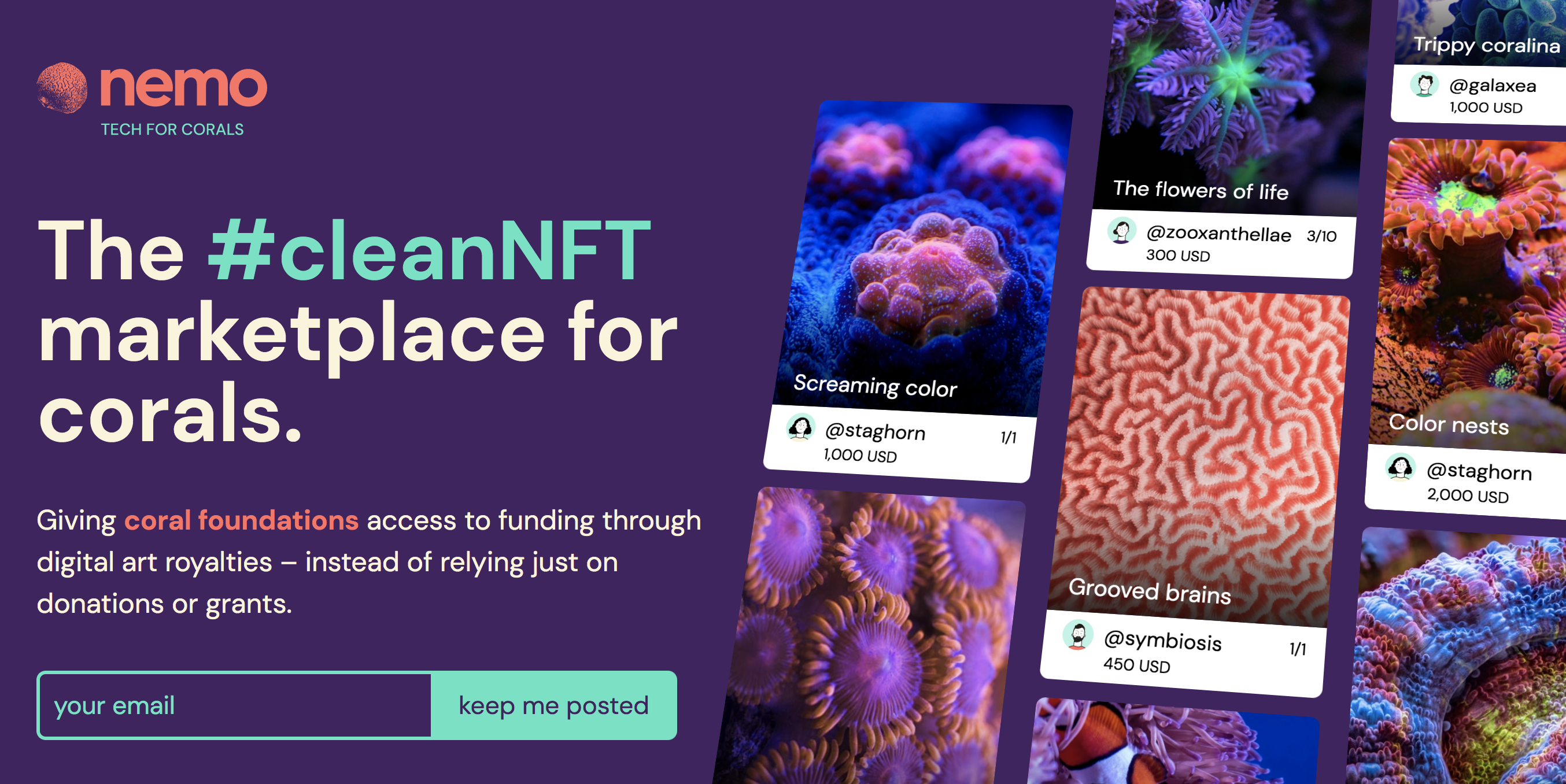
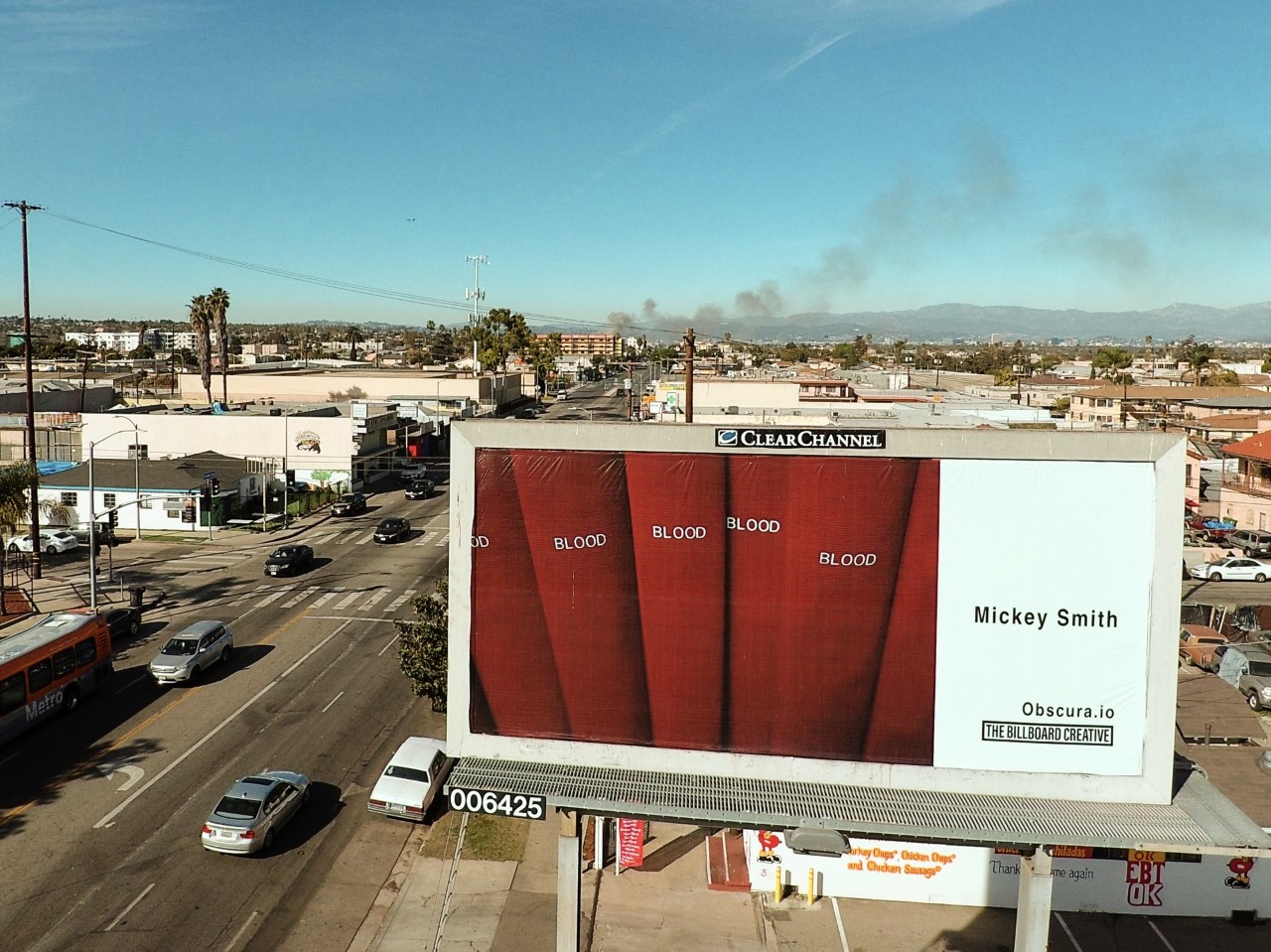
Danielle now writes and does Twitter Space interviews for a platform, Mickey has been featured on a billboard, and Chavi just co-founded an NFT platform called Nemo, which aims to raise money by selling NFTs of environmental projects, to help support the collapsing coral reefs.
BLOOD displayed on a billboard in Los Angeles through The Billboard Creative + Obscura. Exhibition curated by Mona Kuhn and Alejandro Cartagena
They were all genuine, honest, cool, hard-working artists, yet for them, greed, and get-rich-quick schemes, had nothing to do with their interest in that world at all.
Chavi Lujan photo NFT’s
(Chavi and Danielle also told me they’d been interested in crypto for a while, before the NFTs came along, and Mickey was a long-time arts professional in the US, before moving to NZ.)
Still, though, I had at least some concerns.
Mickey, for instance, told me she was “working” for free for Obscura DAO, (working was my term, not hers,) but had then been awarded a “commission,” for which the DAO only selected other artists who’d been volunteering for their cause.
That reeked of nepotism to me, and inside baseball, and I said so at the time, so again, this is not necessarily a negative thing.
(Especially as I’m not the only one to express reservations about DAOs.)
Maybe it’s time to dive into that for a second.
DAO stands for decentralized autonomous organization.
It’s basically an unlicensed LLC, or an unregistered company, and they’re meant to be idealistic, like communes.
People buy in, or are gifted “tokens,” and then they get to vote on how the DAO operates.
RAW DAO was the first to come across my radar screen, as I spoke to Justin Aversano the day after a “party bid” bought one of his NFTs for several million dollars, via fractionalized ownership, and he offered that as seed money for RAW DAO, which would buy more art, to hold, like a mutual fund, and the entire DAO would profit as the NFTs appreciated in value.
Of course, just buying NFTs from the chosen artists should by itself raise the value of their work, much as IRL galleries help “support” museum shows for their artists, so they can increase prices.
I should also mention NFTs are based upon the idea of a “smart contract,” and one of the main selling points is supposed to be that the artist gets 10% royalties on future sales, which is obviously a pro-artist move.
But I kept thinking, only the tiniest fraction of artists ever has a resale market, so how does that help, unless the entire endeavor is meant as a bit of a trading scheme?
Even now, I’m not sure if a collector buys an actual .jpg file with their NFT purchase, or a link to where the file resides on the blockchain, so even after all this time, the process is still obtuse to me.
And I’m not alone.
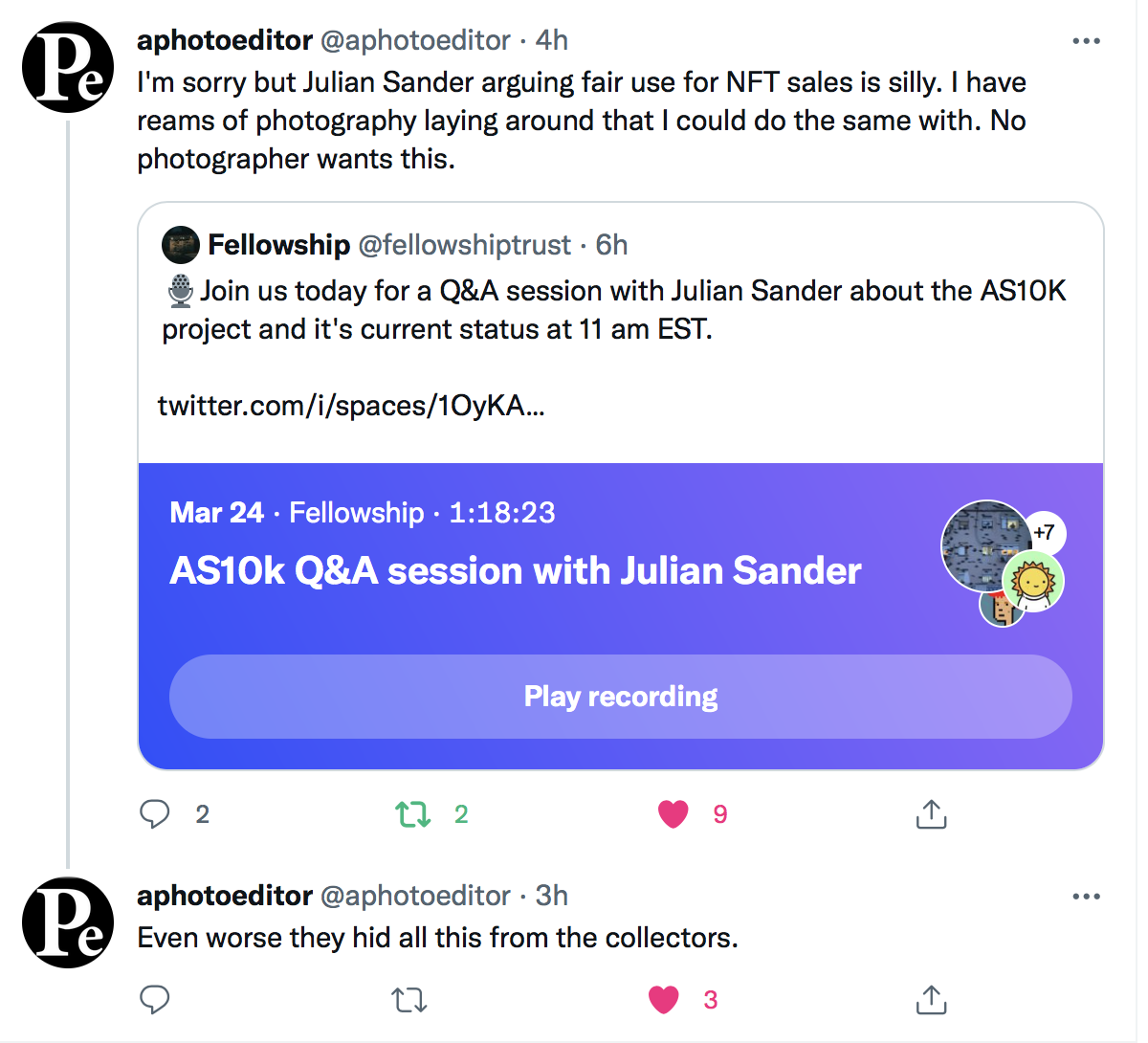
Just this morning, Rob, who actually bought a few NFTs to see how the system works, and support artists, was Tweeting about the seemingly shady situation surrounding a set of August Sander NFTs, which went to market via Fellowship Trust, despite not being sanctioned by the copyright holder.
People bought and sold things they did not have a right to own, and then the files were removed from OpenSea.
So all the NFT skeptics, (and there are many,) are having a field day, as it seems to prove their fears of massive scammery going on.
Was it?
Honestly, I don’t know, but my erstwhile colleague, Alejandro Cartagena, who founded Obscura DAO, is in the thick of the controversy, and I’d been wondering about the validity of the DAO business model for months, so I was not surprised to hear this outcome.
Even Kris Graves, one of the official godfathers of the NFT world, expressed concern about them to me, saying in February, on the record,
“Someone asked me to be in a DAO, months ago, right when Quantum was starting, and I was like, it does not make sense for me to put myself in this kind of… even if they don’t consider it a risk, I do. I mean, it’s run by someone who doesn’t live in the country. They’re controlling a bunch of other peoples’ money that was given to them on spec. And then they’re going to have to give pieces to the people that they… the system is a circle. There has to be more rules in place for me to even think about being a part of any those things.”
Really, who knows what the fuck is going on?
Well, this is the longest article I’ve written in 10.5 years of doing this column.
Am I surprised?
Not in the least.
I’ve been absorbing information for months now, waiting to have a word-baby, and here it is.
(15 lbs, 11 oz.)
But what have I learned, really?
Maybe I should circle back to Noah Kalina, who did an awesome interview with me in December.
He reported he’d sold nearly $120,000 in NFTs in a year, from his series “Lumberland,” yet he did it the old-fashioned way.
Noah worked at it, promoted it hard, put in the effort, tried not to be obnoxious, (the NFT world is famous for overkill,) developed relationships with people at Foundation, b/c he had some old-school digital street cred, and treated it like selling any other form of his art.
All images from “Lumberland”
Unlike the Quantum platform, which was selling out whomever’s work they offered, sometimes in seconds, Noah did it by pushing the rock up the hill each day, committing to the process, and making it work for him.
He has always created photographs in serial form, and the images make sense to collectors, so they buy them.
And that’s where I landed, in the end.
If people want to offer something for sale, and other people want to buy it, what’s the harm?
Eco-wise, there are so many larger issues to worry about, and carbon offsets are available.
If artists are making friends, rather than money, or building careers, that is awesome.
If younger collectors want digital files, rather than prints, so what?
The world changes.
Always.
And if some things look shady, or nepotistic, they probably are.
Most of the artists I interviewed agreed there would be bad actors in the system.
Scams too.
Because digital life is ultimately just another manifestation of actual life.
And there are plenty of assholes out there.
Right?
{Ed note: I’d like to thank all the people who shared info with me over the last six months. Much obliged!}
The Art of the Personal Project is a crucial element to let potential buyers see how you think creatively on your own. I am drawn to personal projects that have an interesting vision or that show something I have never seen before. In this thread, I’ll include a link to each personal project with the artist statement so you can see more of the project. Please note: This thread is not affiliated with any company; I’m just featuring projects that I find. Please DO NOT send me your work. I do not take submissions.
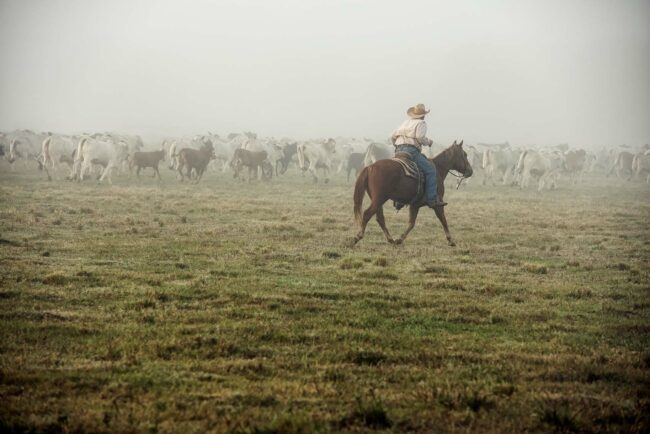
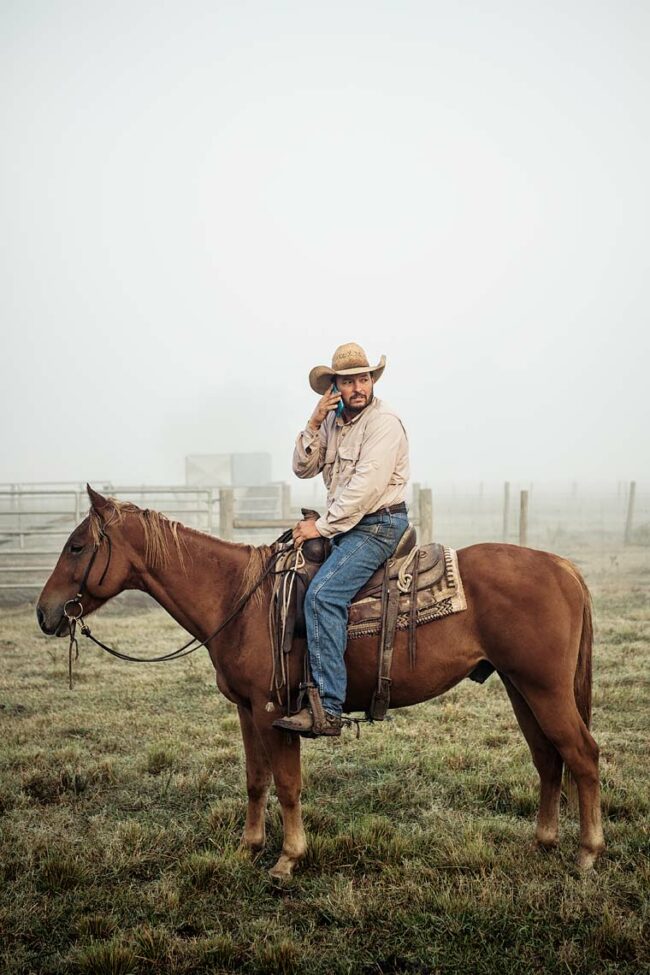
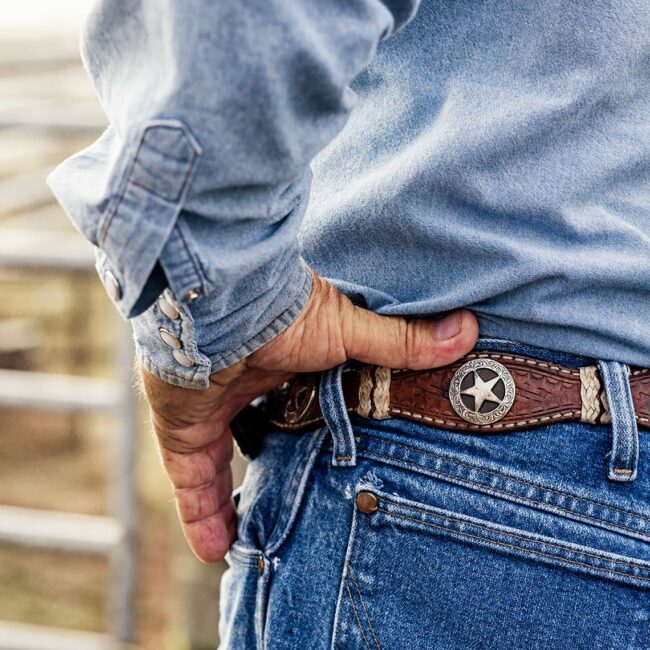
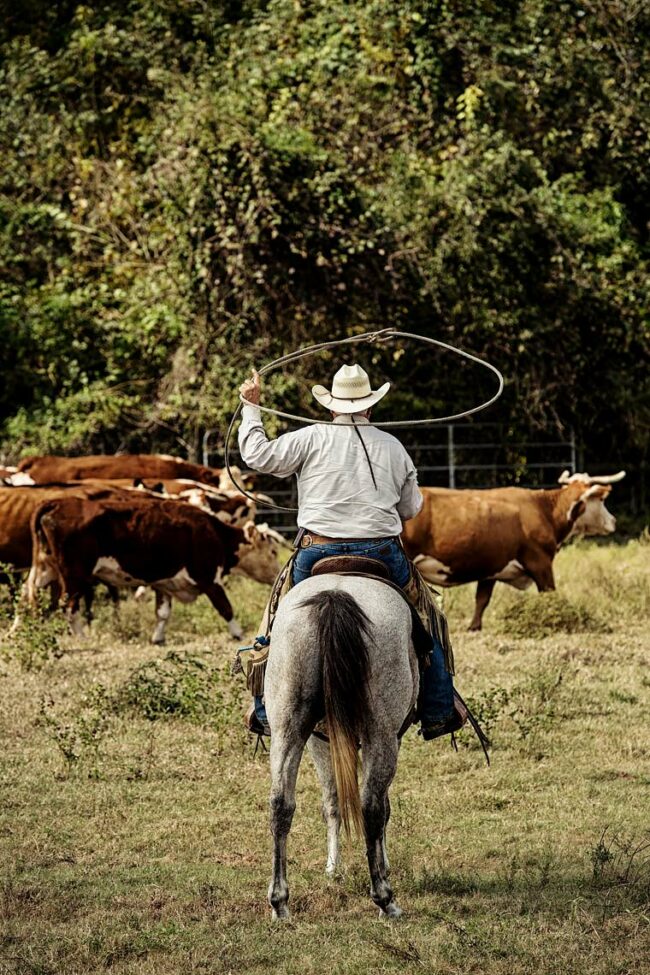
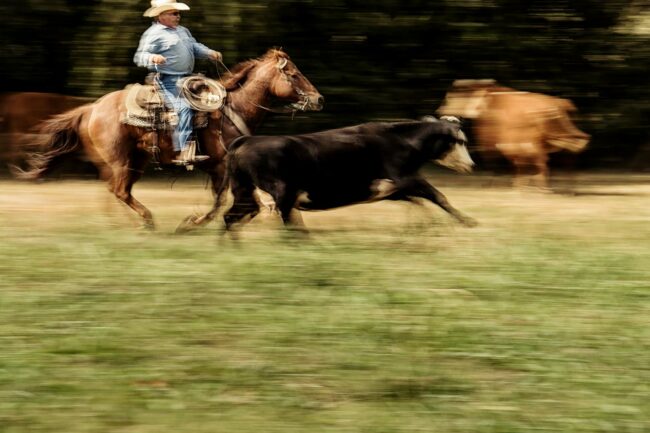
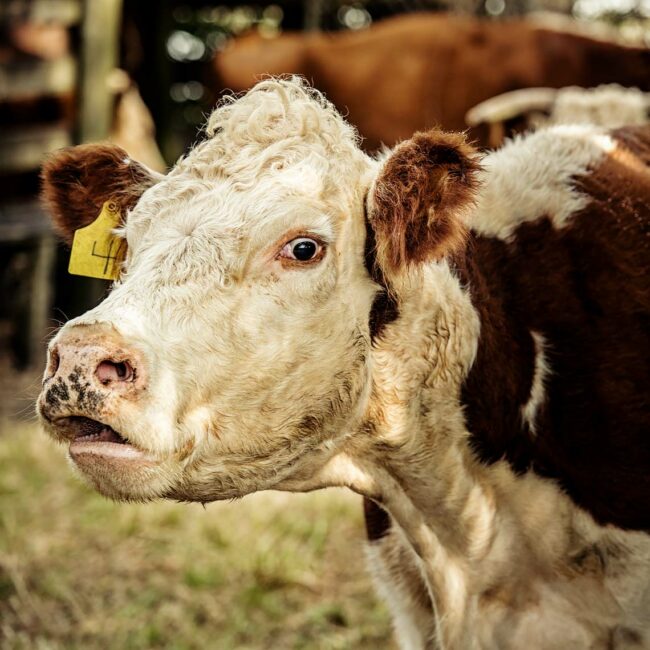
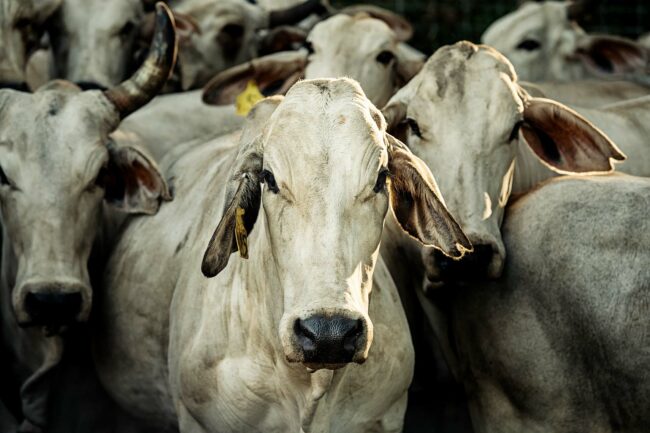
“If you’re ridin’ ahead of the herd, take a look back every now and then to make sure it’s still there with ya.” Cattle have grazed land along the Texas coastline since 1749 when 3,000 settlers drove the first herd across the Rio Bravo. Fence lines divide the acres of open land, but time disappears watching the wranglers at work. Being one with your horse, tending the cattle, the dogs and the land is a hard way of life but satisfying. Texas cowboys are the ultimate in classic Western heroes. Cell phones may have replaced Colt 45’s, but the traditions and stories of the rugged range are still timeless.
APE contributor Suzanne Sease currently works as a consultant for photographers and illustrators around the world. She has been involved in the photography and illustration industry since the mid 80s. After establishing the art-buying department at The Martin Agency, then working for Kaplan-Thaler, Capital One, Best Buy and numerous smaller agencies and companies, she decided to be a consultant in 1999. She has a new Twitter feed with helpful marketing information because she believes that marketing should be driven by brand and not by specialty. Follow her at @SuzanneSease. Instagram
Concept: Still life images of a pharmaceutical product
Licensing: Unlimited use of all images captured for two years
Photographer: Portraiture specialist
Agency: Pharmaceutical marketing specialists
Client: Pharmaceutical company
Here is the estimate:
Fees: The project was fairly straightforward. The client needed images of a product on a white background, and images of hands holding the product. Right from the start, we were told that they have a budget of $15,000, so my goal was to account for all necessary expenses while making sure that the fee for the photographer was appropriate for the usage. While the licensing included unlimited use, we knew these images would likely be used primarily for collateral purposes, and they were willing to limit the duration to two years. For this project, I felt $5,500 was suitable for a creative/licensing fee.
Crew: I included a first assistant to help the photographer set up grip/lighting equipment, and a digital tech to help the client review the content as it was being captured both on-site and remotely over zoom.
Styling: I included a hair/makeup stylist to prep the talent on the shoot day, as well as a wardrobe stylist for three days to help source clothing for them. Since the scope was relatively simple, I did not include a styling assistant for either role, as I felt they could handle the responsibilities easily on their own.
Health and Safety: While not included in the bottom line, I noted what a covid compliance officer would cost, should the team require one on-site.
Casting and Talent: We planned to work with a local casting director to hire three models, and the agency planned to pay the talent directly.
Locations: We included one studio rental day.
Equipment: In addition to the photographer’s gear, we included an appropriate amount for a digital tech to rent us their workstation for the day.
Meals: We kept it pretty low-key on the meals to be able to adhere to the budget given, and accounted for ordering lunch from a local restaurant instead of having an elaborate catering setup.
Post Production: The agency planned to handle retouching, so all we needed to include was a hard drive to hand over the content at the end of the day.
Results: The photographer was awarded the project.
Need help estimating or producing a project? Please reach out. We’re available to help with any and all pricing and negotiating needs, from small stock sales to large ad campaigns.
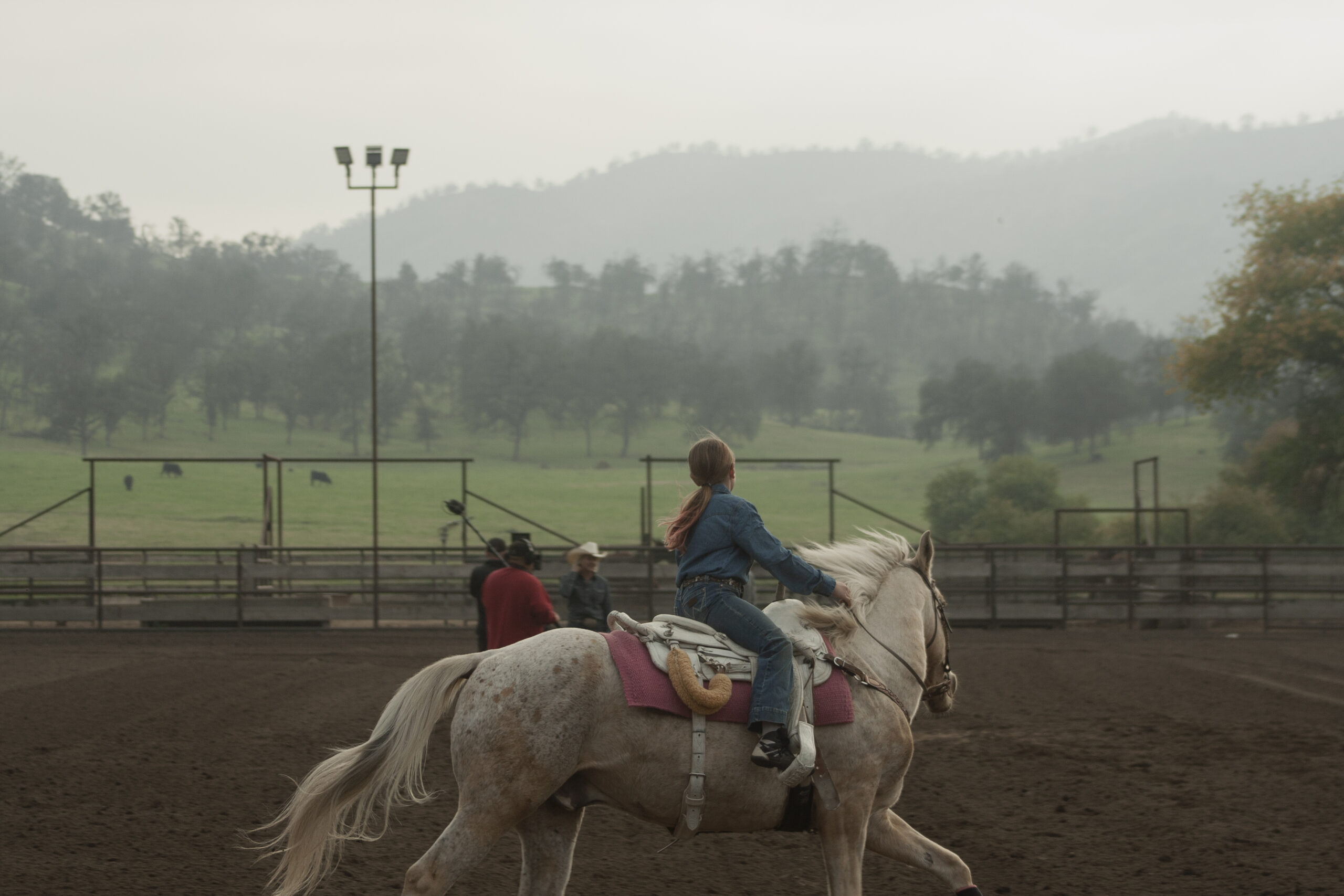
Heidi: Did you go into this with the hope Wrangler may be interested? Scott: I knew it was a long shot, but yeah, that was the hope, irrational as it seemed at the time.
What was your connection with the brand prior to this? It’s always been high on the list of brands I wanted to work with. I didn’t have any relationship with Wrangler before this project. A friend of mine was able to put me in touch with someone in their marketing department. That was key. I sent them a treatment and based on that they sent out some clothing.
Did you have a stylist? I’m not sure if it’s more accurate to say that I was the stylist, or that there was no stylist. Wrangler sent clothes for me to shoot and we mixed in some of the talent’s wardrobe. In the end the styling was pretty minimal, but yeah, I was the one tumble-drying the creases out of the shirts the night before the shoot.
How much spec shooting are you doing? Over the last few years I’ve prioritized doing little personal documentary projects over specs, but it was time to shoot something for my reel that had the form of an ad.
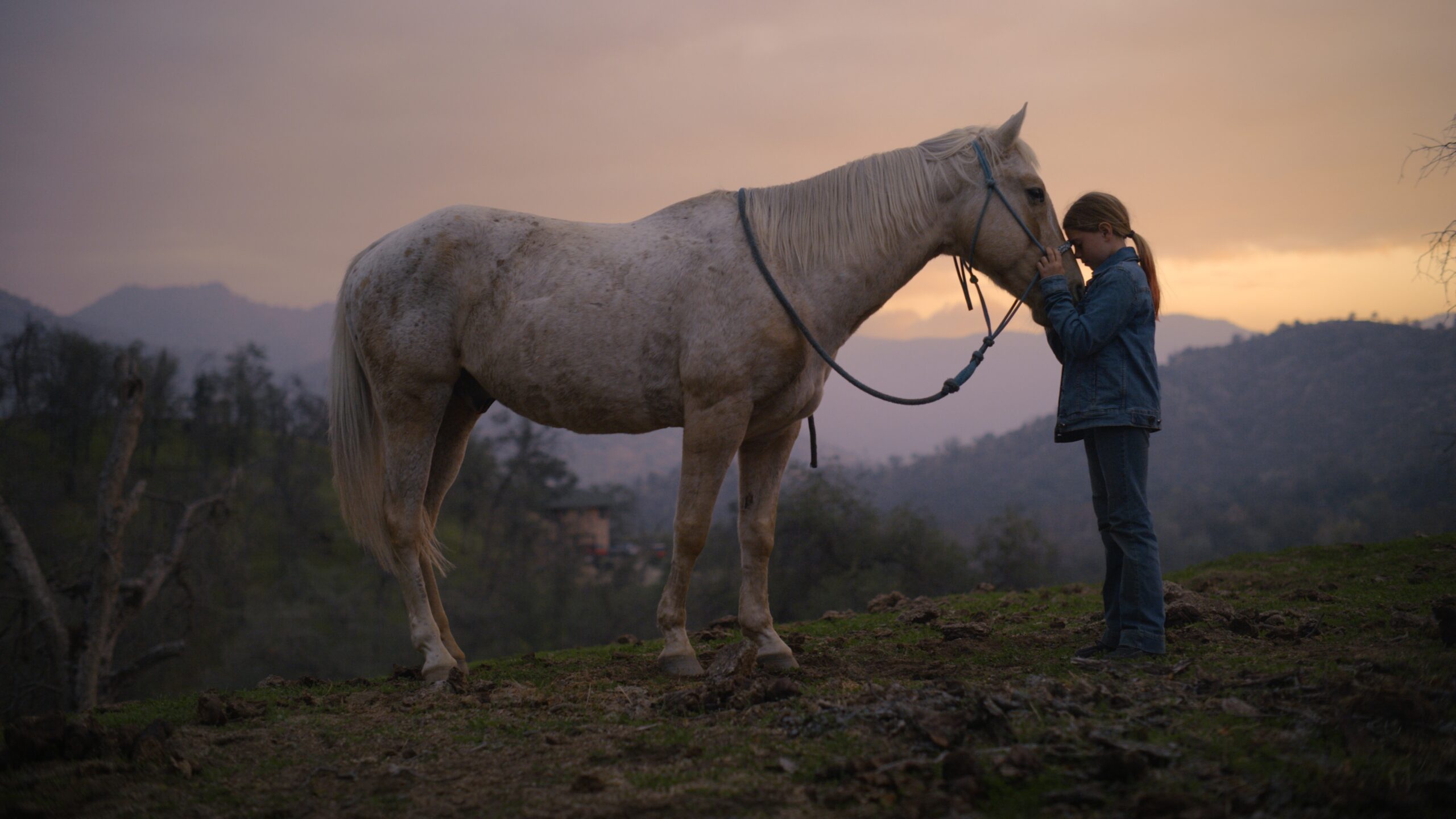
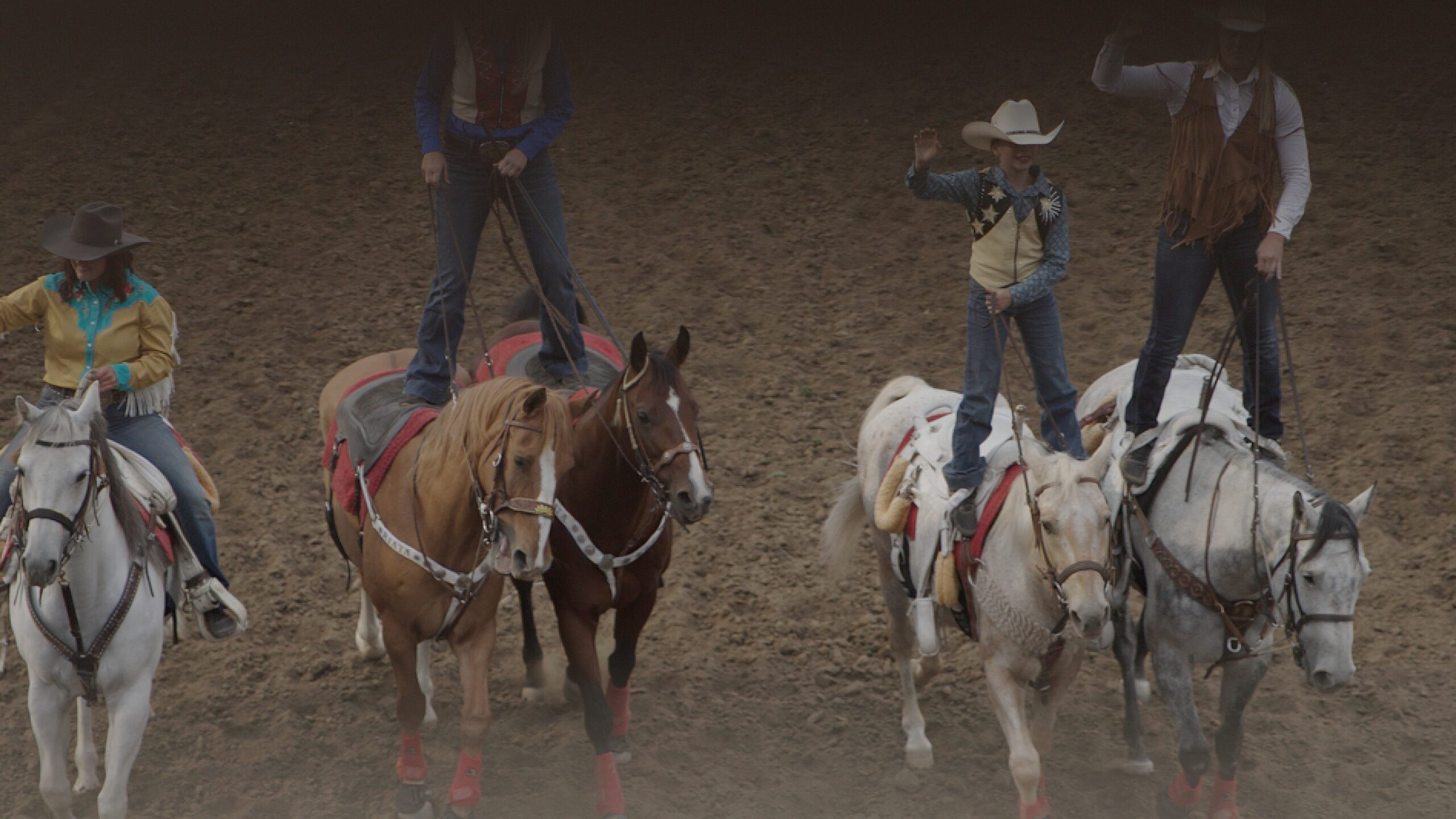
Where/how did this idea come about? My favorite films are not only beautiful, but emotional. Those weren’t the kinds of scripts that were being sent to me and I knew if I was waiting for one to show up it might take forever. I tried to think of what I had access to. A few years back I shot with some trick riders for a fashion shoot so I called up Jennifer Nicholson once again. She runs the operations at Riata Ranch and trains and performs with a with a world class team of trick riders and ropers. She was such a great collaborator the last time around and I asked her if she would let me come back for another project. I told her this time instead of pushing the styling I would want to really show things as they are. I gave her a semi-coherent ramble of a pitch and she said “I’m not totally sure that I can picture everything you’re saying, but sometimes that’s what makes for the most interesting creative partnerships.” I mean…you can’t ask for better than that.
We talked a few times and I started to develop a story based on the ages and the abilities and personalities of the girls she was working with. We wanted to show what happens behind the scenes, some of what goes into the polished performance that an audience sees.
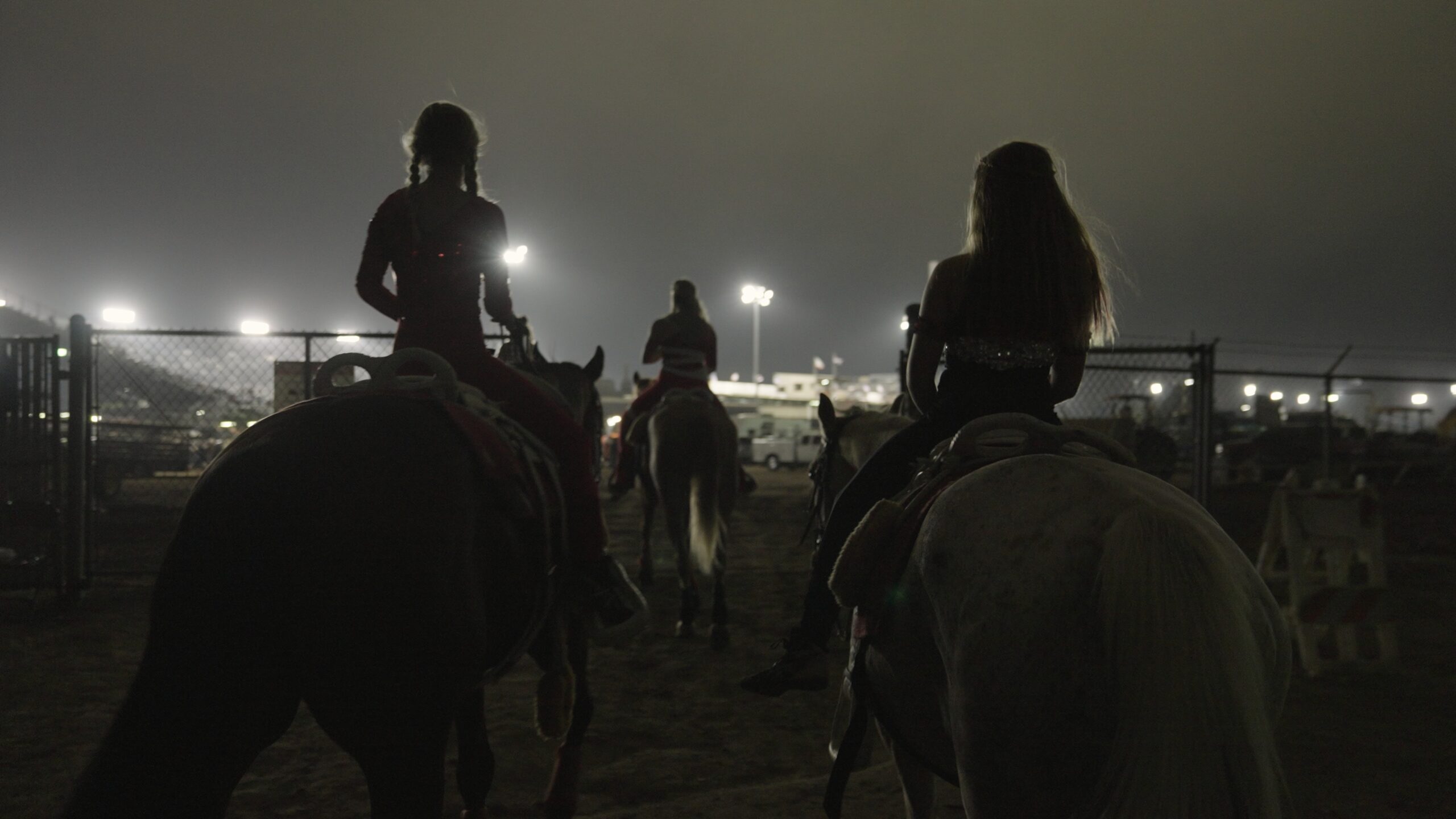
How long was the shooting process It was pretty extended as we had to break the job into two shoots. Early on I had the idea that part of the story would happen at the Riata Ranch in Three Rivers California and part of it would happen at a live rodeo. The timing was lucky in that the Salinas Rodeo was coming up, and it’s one of the biggest rodeos in the U.S. and it’s only a few hours from Three Rivers. The plan was to drive down (from Portland) to shoot at the rodeo, and then follow the team back to Three Rivers to finish off and then home. But the California wildfires made that impossible. The fires came so close to the ranch that the animals had to be evacuated at one point. We had to wait until the visibility (and breathability) improved and the roads opened back up. The level of smoke was a nonstarter, even if the roads were open…which they weren’t. It was probably a month between the first and the last shoot day.
It was was eight and a half days of shooting, which sounds needlessly long, but the first four at the rodeo were really just to capture a few shots. Those first four days only account for about 8 seconds of the footage, which is about what I had anticipated. In a lot of cases time is a pretty good substitute for money. We had less control over the light, but more room to use the schedule to get us the light we were after.
In the end, we didn’t have the access we would have hoped for at the rodeo, and Ava the young trick rider had problems with her horse on one of the key performance nights, so we shot at another private facility in Three Rivers as a double for the Salinas Rodeo.
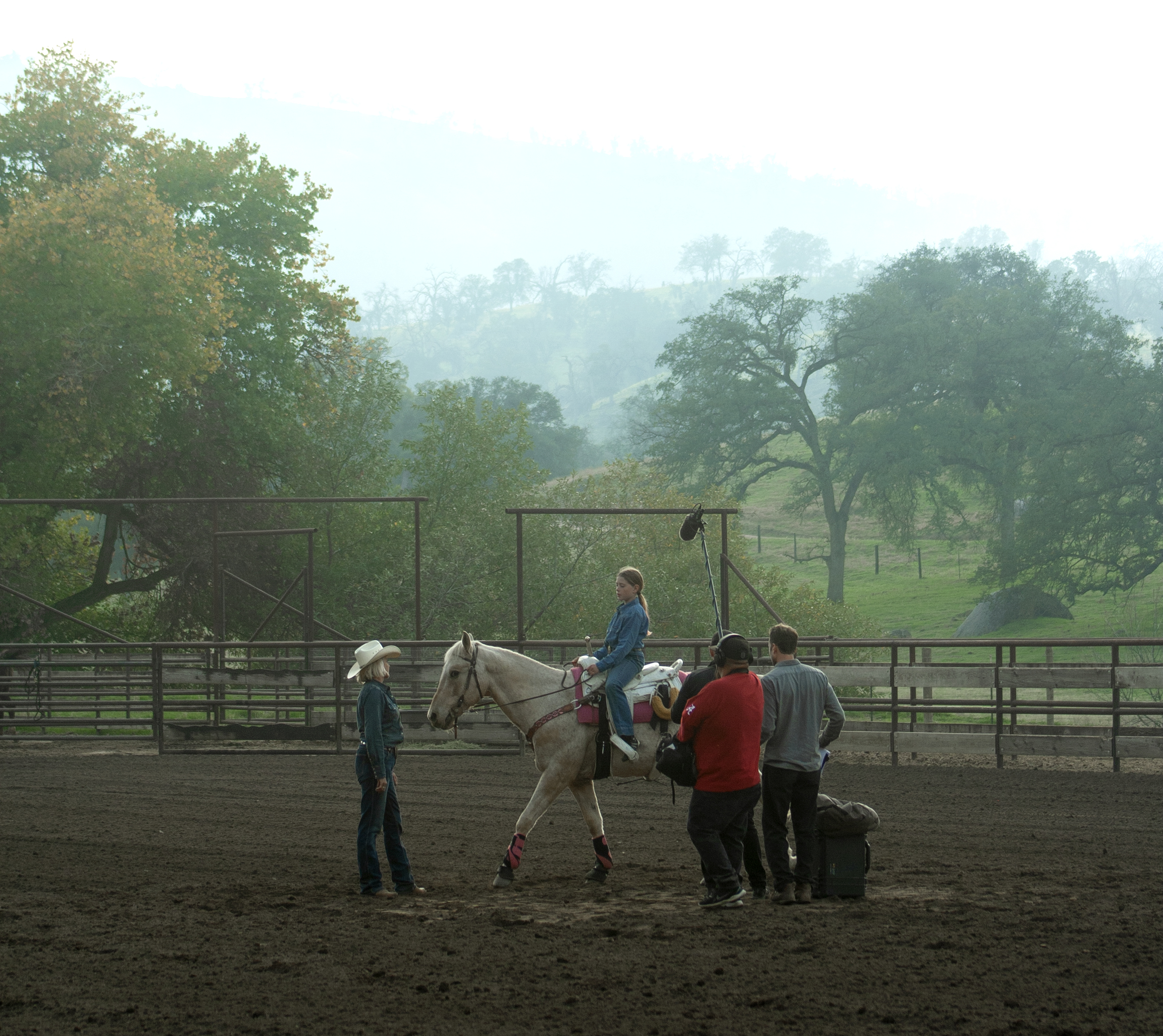
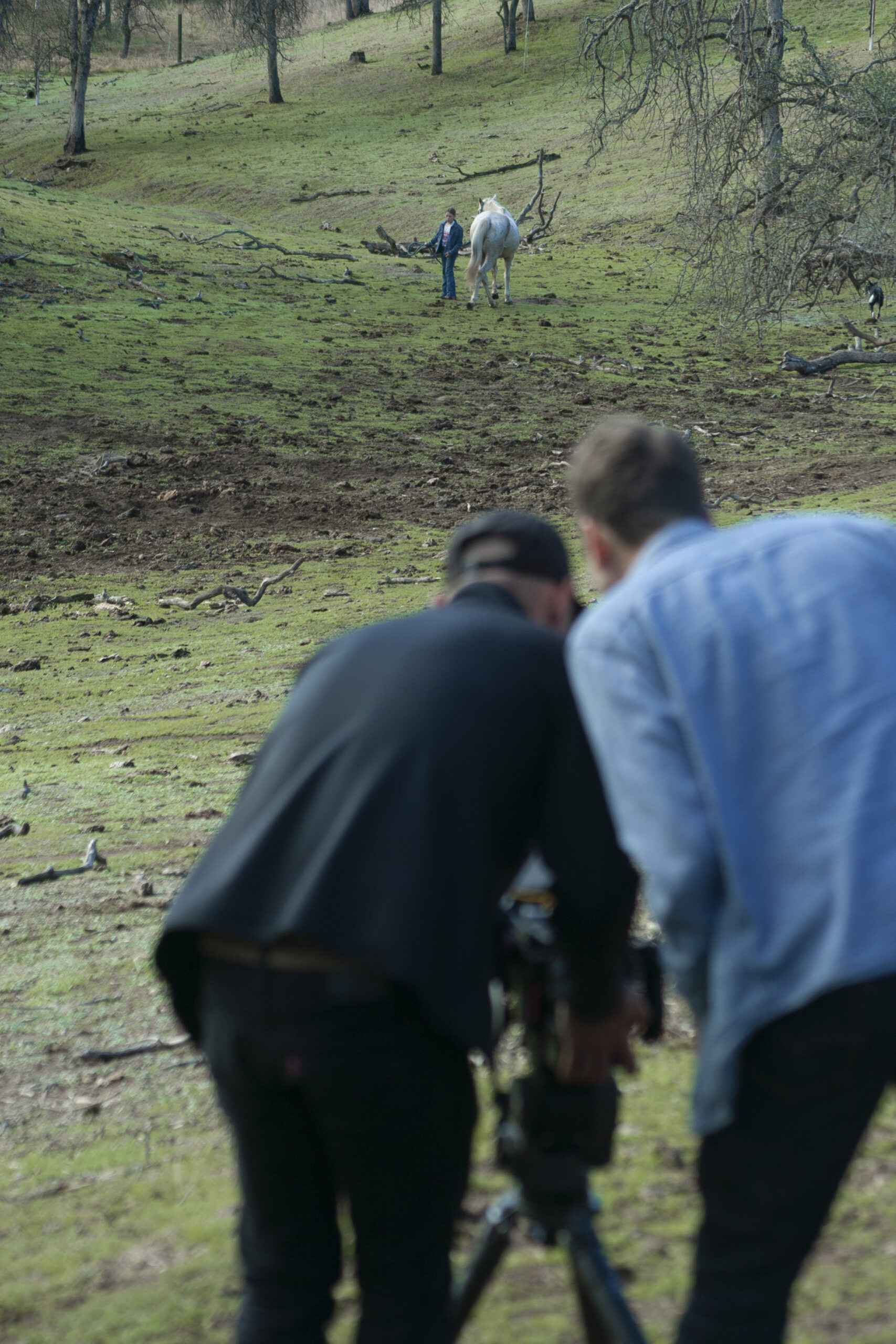
How big was the crew? For the Salinas Rodeo it was just me and a photo assistant that came down from Seattle. I showed him how to use an external sound recorder and he helped me navigate the menus on one of the cameras I rented. For the stuff we shot in Three Rivers the crew ballooned to two…at least on the three days that our local assistant showed up. Most of what’s in the film was shot by my friend Alex Bros who flew down from Toronto to do the shoot. It wasn’t an easy shoot by any stretch, but it was a great time.
We knew that what we were capturing was special, you could see it in the monitor. The beauty of the locations, the intensity of the stunts and then the subtlety of the performance. This little girl who had never acted before but she was such a natural that when you pointed the camera at her somehow could just see her inner thoughts.
Did you edit the film yourself? I sent Wrangler a director’s cut, which was a gratuitous 2:40 in length. I’m not great with shorter cuts, especially since the music went with the film in a very particular way. I got very lucky with the post on this film. Some friends help me get it in front of Arcade Edit where the wonderfully talented Matt Laroche agreed to cut a :60 second version. Ben Freer of Fiddle Leaf did the mix and Dominic Phipps of Company 3 in London did the colour grade. I’m beyond grateful to all of them for elevating the film.
Who printed it?
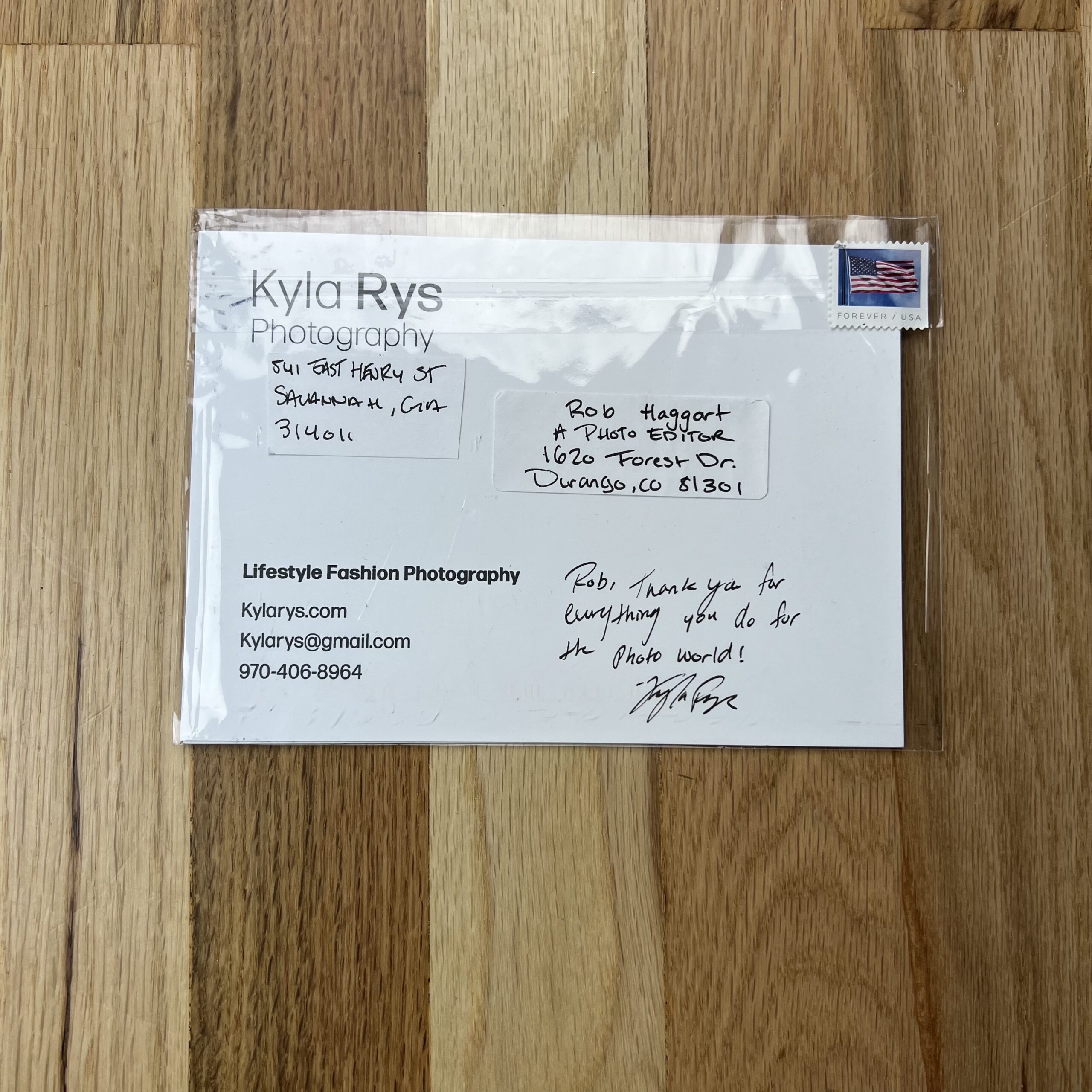
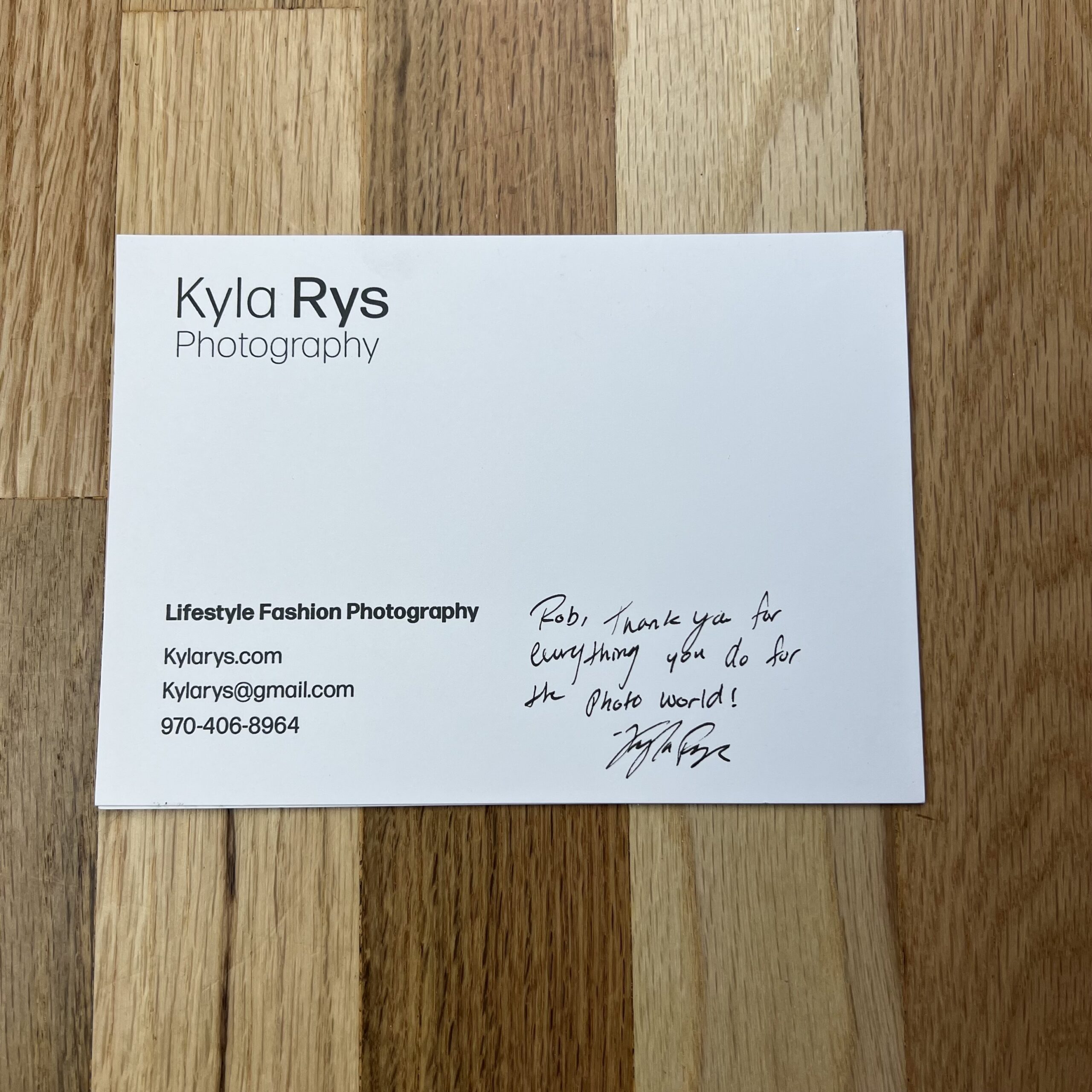
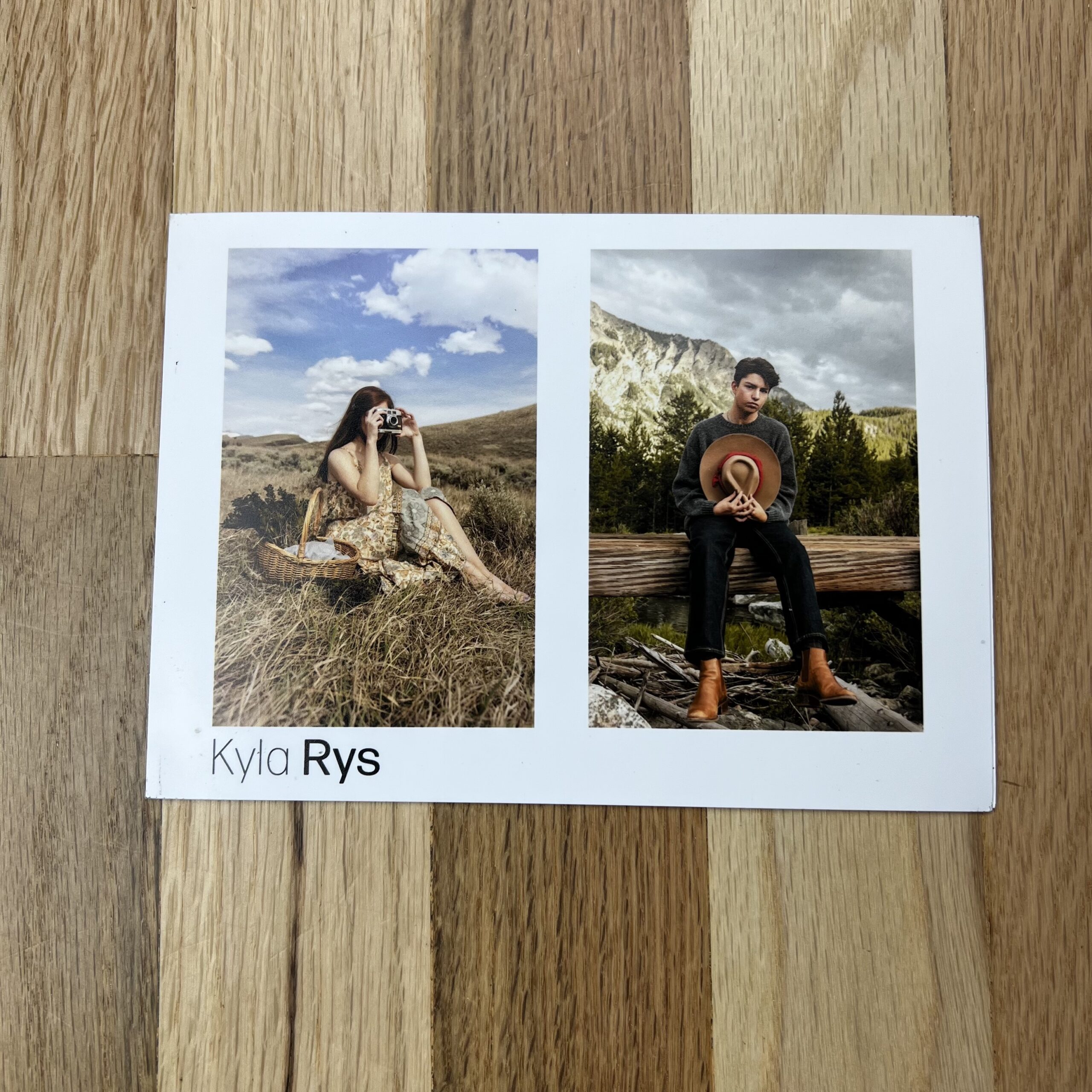
My promo cards are a little less conventional. I printed these promo cards on 8×10 Canson Inkjet paper and backed them with 5×7 postcard stock at my school computer labs for my Business for Photography course at the Savannah College of Art and Design. I then wrapped them in 5×7 clear envelopes I bought at an art store nearby.
Who designed it?
I created the design for the images in Adobe Indesign. I made three different variations of the promo card with different combinations of the two front photos.
Tell me about the images.
I took these cover images in my hometown of Frisco and Keystone, Colorado. Being surrounded by such vivid environments heavily influenced a lot of the nature and warm colors I include in all of my photo work. I had my friends help me style and model for these images as I wanted to play with fashion and landscapes. They are some of my favorites!
How many did you make?
Since I was hand making the cards, I only sent out ten. I plan to send out more with the rest of my paper as I look for post graduate jobs.
How many times a year do you send out promos?
I aim to send them out twice a year once I get a stronger body of work to send.
Do you think printed promos are effective for marketing your work?
I think promo cards are an effective marketing strategy if the client looks at the card. It is a great way to catch their eye in a space larger than a business card. I think emails and social media messages on instagram and linkedin are cheaper ways to catch some client’s attention however. Promo cards are a great tangible thing to share if you can afford it!
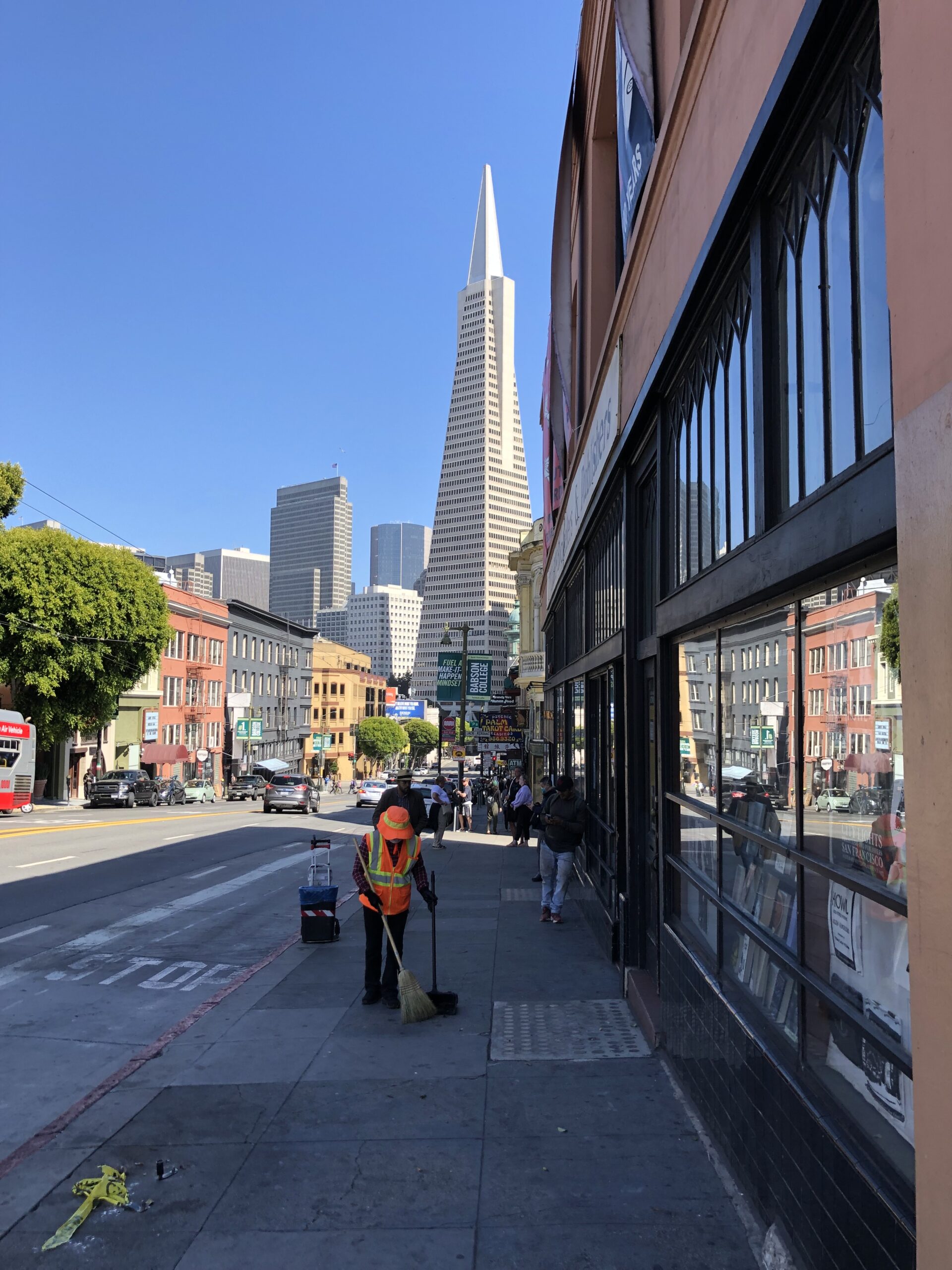
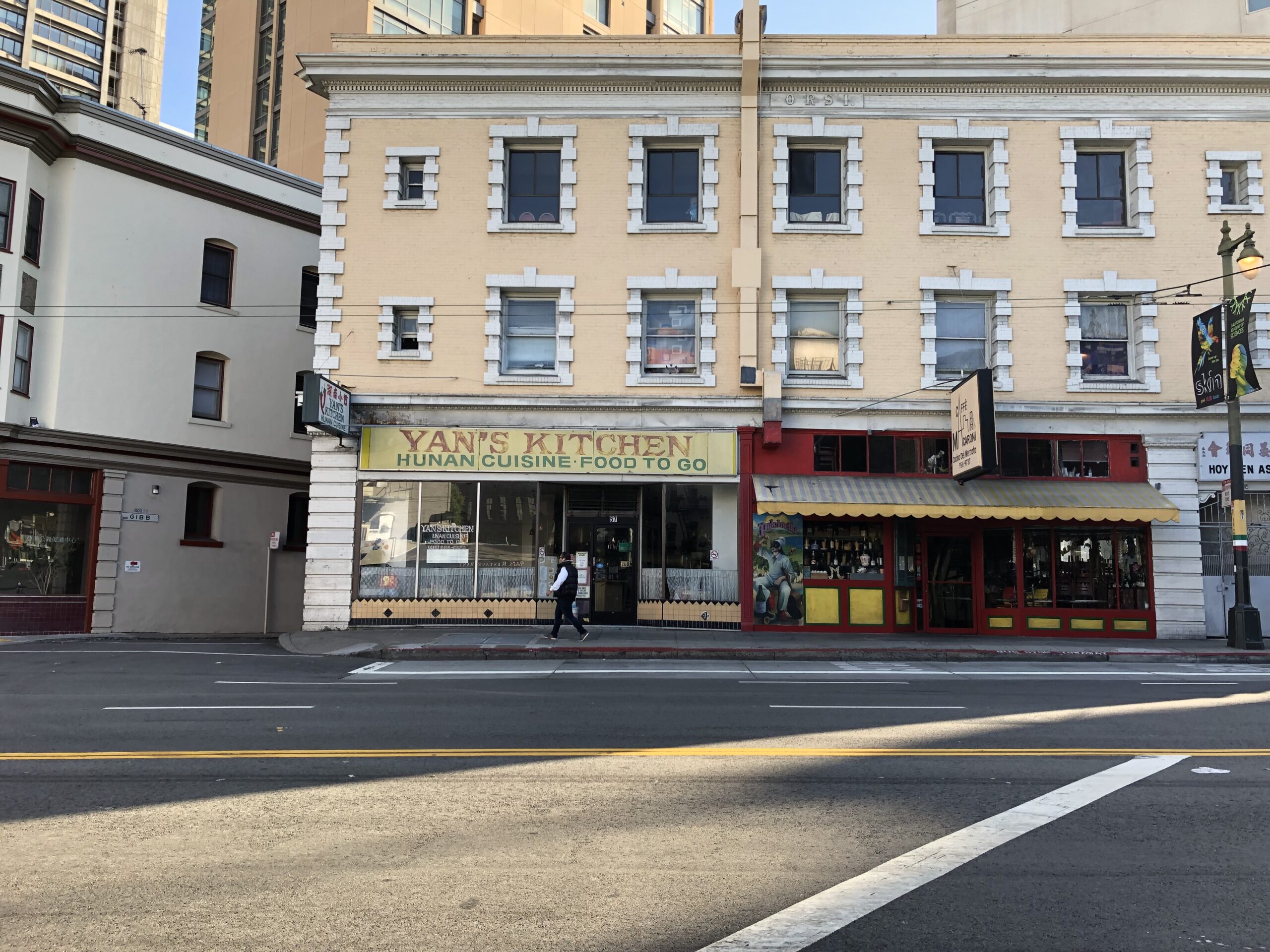
The last time I visited the city, in summer 2019, I was shaken to my core, as evidence of America’s fraying social fabric was on full display.
I wrote about it here, but even the article didn’t capture the fear and discouragement I felt.
In my bones, it was clear things were very wrong, and we were headed down a dark path.
Creepy Billboard, San Francisco, July 2019
Of course, I had no idea a global-pandemic-catastrophe was around the corner, but there were signs a culture of narcissism had taken root in the United States.
(Egged on by the Big Orange One.)
Tents had popped up on residential sidewalks, like tragic mushrooms.
Tech bros patrolled the streets; capitalistic sentinels in khakis.
We walked by a bevy of unhoused people on Market St, in the dark of night, and they were screaming and moaning, as if ripped from a horror film.
I used to live in San Francisco, and felt a kinship with the city for many years, so it was one of the most troubling travel experiences I can remember.
However, that was then.
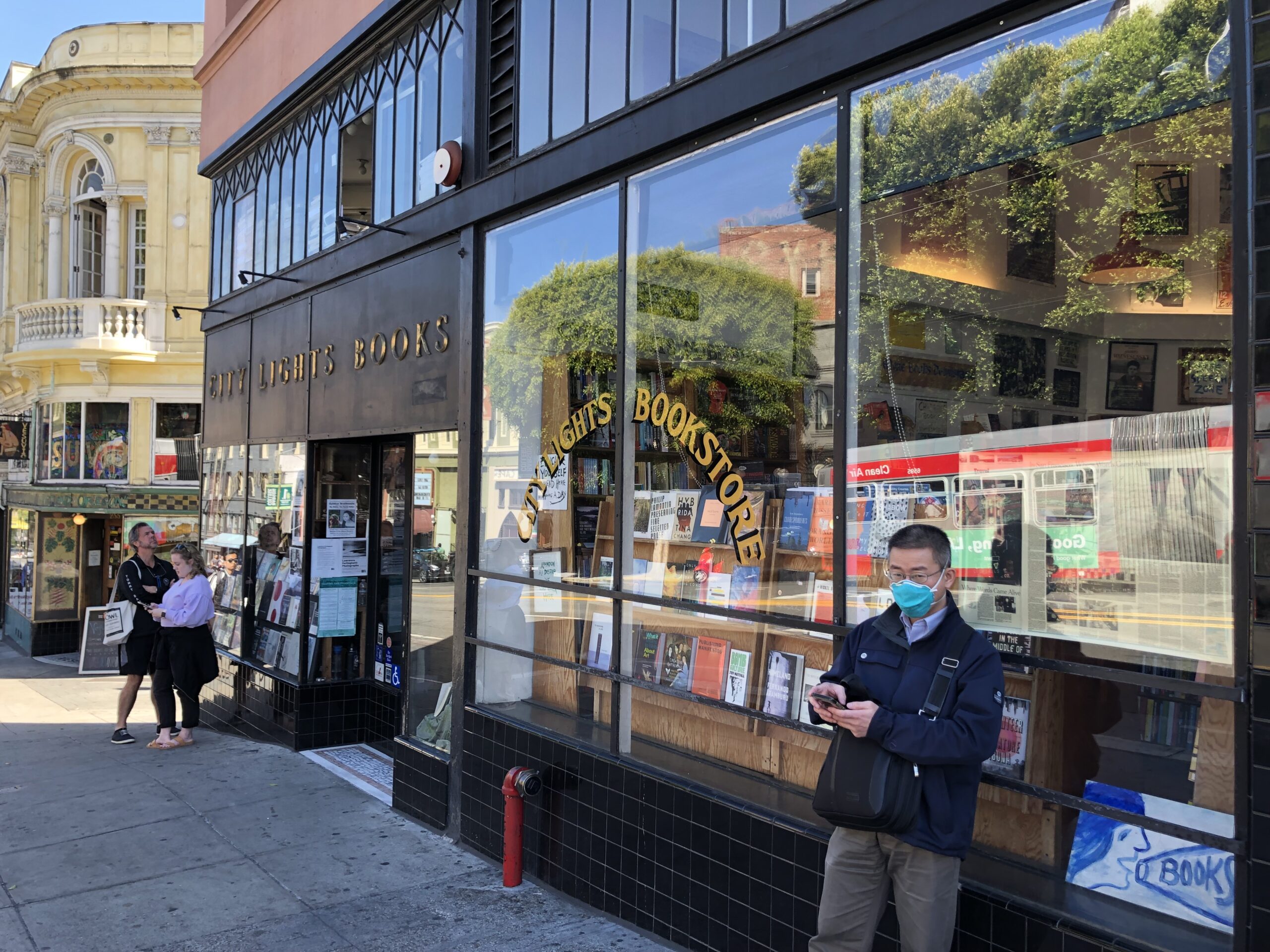
San Francisco, July 2019Man wearing a mask outside City Lights, 8 months before the pandemic
For all the bad press the city has gotten since, I relish any opportunity to travel these days, and the PhotoAlliance festival is being run by my friend Heather Snider, who is an amazing person, representing the best of Old School San Francisco.
(Meaning, she has the 90’s punk-rock attitude, has been in the city for decades, and is down with the best progressive values, like empathy and consideration.)
Plus, I’ll be staying super-close to the Bay, an In’N’Out Burger, and all the great food in North Beach and Chinatown, so you know I’ll come back with the goods for a proper travel story.
One of my favorite Chinese restaurants from back in the day, down by the waterfront
But writing on a Monday is not the only thing different about today.
No.
Unfortunately, I got some bad news this morning.
Really bad.
Stephen Starkman, a friend, and one of my Antidote students, has been battling cancer since last summer. (When he first told us about the diagnosis.)
Stephen is Canadian, and what we Jews call a proper mensch.
He’s kind, warm, thoughtful, and just an all-around good guy.
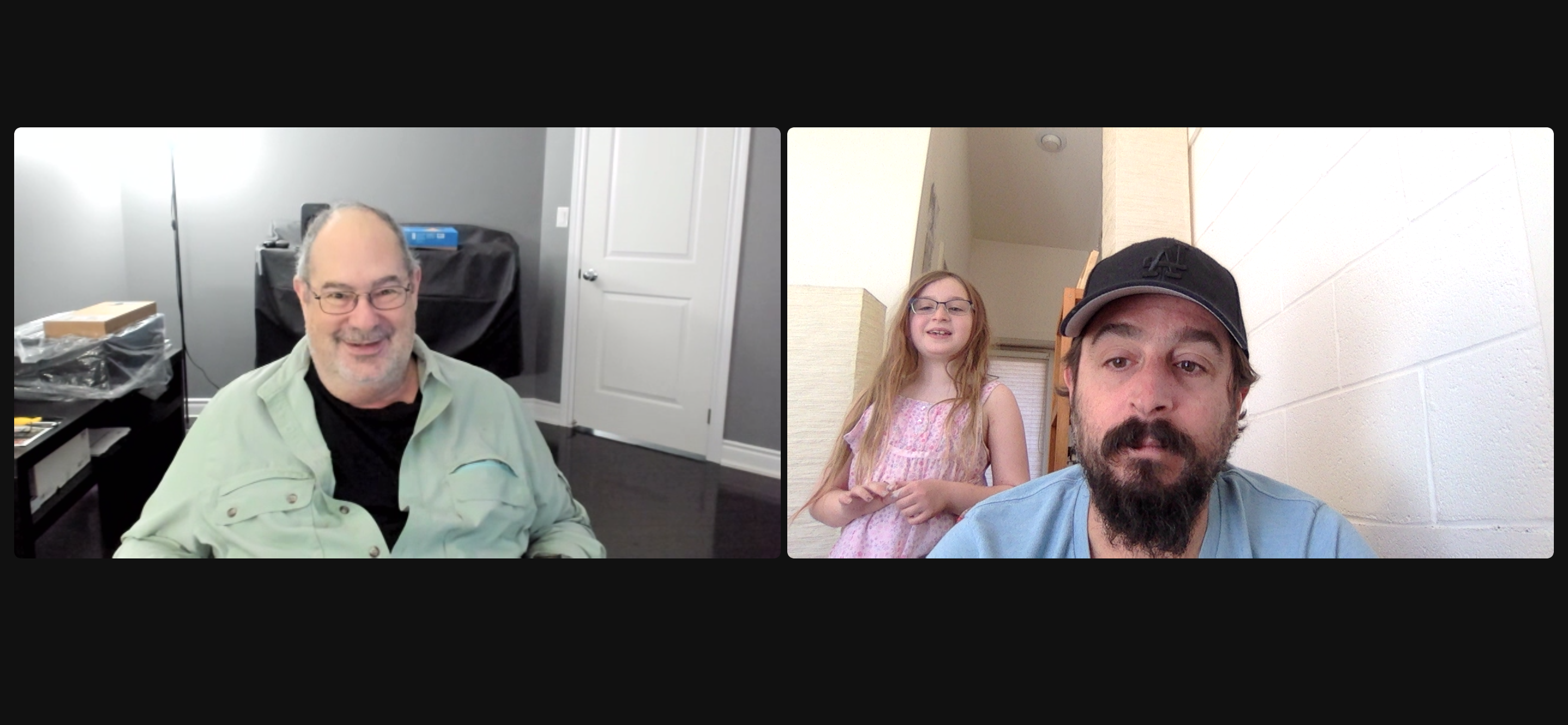
Zooming with Stephen on Tuesday. Amelie came to say hello.
Though I ended my monthly online classes last July, Stephen and I stayed in touch, and I cheered him on as he did the chemo, trying to beat back his lung cancer.
At some point in late 2021, he got a temporary clean bill of health, and we had a Zoom talk to celebrate.
We also did a teaching session at one point, where we discussed his interest in making a series about battling cancer, to inspire others, much as Tara Wray has done about using photography to grapple with depression.
Stephen got some inklings his cancer had returned recently, but just this morning, he told me he got the worst news of all.
His oncologist has declared his cancer incurable, and expects Stephen only has months to live.
A year if he’s lucky.
Holy Shit.
But this being 2022, where our digital lives are intertwined, Stephen also told me he’d read last Friday’s column, which was about how hard it must be to accept death, when the end is nigh.
I wrote speculatively, and philosophically.
(John Divola liked the review, which made me feel as if I’d captured something essential.)
Thinking about a theoretical, though, is just that.
My friend read my musings, knowing he’d reached the point where the end of his life was real.
And coming quickly.
It never occurred to me such a thing might happen.
That my words would be taken literally, by someone I cared about.
What a fucking bummer.
This afternoon, though, right after I came back from a walk with Jessie and the dog, I had a flash of inspiration.
Stephen has been making photographs since last summer, documenting his cancer battle in both literal and metaphorical ways.
The Art of the Personal Project is a crucial element to let potential buyers see how you think creatively on your own. I am drawn to personal projects that have an interesting vision or that show something I have never seen before. In this thread, I’ll include a link to each personal project with the artist statement so you can see more of the project. Please note: This thread is not affiliated with any company; I’m just featuring projects that I find. Please DO NOT send me your work. I do not take submissions.
My love for photography comes from seeing what something looks like when it’s photographed. The camera sees differently than the human eye. Different lenses see differently from each other. Shooting color (at least for me) is not the same as shooting black & white. Placing the frame of a camera and freezing a bit of time and space creates something new, something different from what was photographed. That something has its own rules and esthetic: a transformation that I find intoxicating. A photograph has no narrative ability so it cannot tell you what was happening at the time the shutter was released. The photograph must exist on its own, justifying itself by the intrinsic elements that it is composed of. Whenever all those elements are in complete balance, a photograph becomes something more, something mysterious, something fascinating. The best photograph is an enigma that asks more questions than it answers. Whatever that dynamic is, I can’t get enough of it.
Acting on a Whim
Bob Dylan has a song called, “Love Minus Zero”. He says he thought of the title before he wrote the lyrics. I did something similar. I thought of the title, “Edge of Texas”, before I tookthe photographs. I’m not the most analytical of photographers. What good ideas I have mostly tiptoe in unannounced and tap me on the shoulder. In the fall of 2018, it occurred tome that it might be interesting to see how people live at the very edges of our state. Culture, geography, accents, demographics…all differ a great deal from East Texas to West Texas. From the Rio Grande to the Oklahoma border. So, in February of 2019, I set out to drive theperimeter of this huge state. To find things to photograph. I’ve been a commercialphotographer for many years. My clients would give me parameters for what they wanted photographed. For “Edge of Texas” I would be my own client. I’d try to satisfy myself. No one else. I would follow my nose and take photos of what drew my interest. This would not be adocumentary where I felt obligated to take photos in every small town. If I saw something interesting, I’d shoot. I realized early on that this endeavor couldn’t be done all in one long trip. I divided my touring into what I call legs. I started south on Interstate 35 to Laredo on my first leg. I had no idea what I would shoot or if I’d find anything to shoot at all. I walkedaround downtown Laredo for most of a day, limbering up my photographic muscles,shooting what caught my eye. Then I headed west along the Rio Grande to Eagle Pass, to Big Bend, along what must surely be one of the most beautiful drives in America, FM- 170, the Texas River Road. Finally, to El Paso. From there I drove back to San Antonio to take a look at what I’d shot. For me, getting the photos on a big monitor is where I find out if I’ve beenwasting my time or not. The second leg was to Laredo again, then along HWY 281 to LosEbanos, where the state operates the last hand-pulled ferry across the Rio Grande. Down to Brownsville and Boca Chica, where the Rio Grande flows into the Gulf of Mexico. North to Kingsville and back to San Antonio. The third and fourth legs were much the same. Corpus to Newton, Jasper to Selfs, Powderly to Pecos. Young people with guns on the banks of the Prairie Dog Town Fork of the Red River, Big Tex Muffler Man in Conlen, an interesting ranchgate near Ft. Stockton. When I finished my trip, I did a rough edit of the 3,000 or sophotographs I’d taken. I put the best 200 shots together to see how everything held up. I’m happy with the result.
APE contributor Suzanne Sease currently works as a consultant for photographers and illustrators around the world. She has been involved in the photography and illustration industry since the mid 80s. After establishing the art-buying department at The Martin Agency, then working for Kaplan-Thaler, Capital One, Best Buy and numerous smaller agencies and companies, she decided to be a consultant in 1999. She has a new Twitter feed with helpful marketing information because she believes that marketing should be driven by brand and not by specialty. Follow her at @SuzanneSease. Instagram
Success is more than a matter of your talent. It’s also a matter of doing a better job presenting it. And that is what I do with decades of agency and in-house experience.
Heidi: How did your parents’ art patronage influence you, did you gravitate towards a specific genre of art? Lisa: My parents’ art patronage had a profound, immeasurable influence on me. Their passion for art was intoxicating. Growing up with it and always being surrounded by it left an indelible imprint. Their collection is truly eclectic but there is a predominance of the human form. There is that predominance in my art.
How the collection shaped your own creativity? My parents very eclectic collection with a predominance of the human form was ingrained in me, it was completely immersive. I know that kind of exposure was definitely the catalyst. Their passion for art was relentless; it was complete joy for them. The collection is comprised of a lot of sculpture and I have been told that a lot of my work appears sculptural. The three dimensional form of their sculpture informed my two dimensional photography, I see form and movement. I am grateful to have that exposure and parents so connected to art. My sister was also a photographer and photo editor, we both pursued creative endeavors, when I reflect on this, it makes sense.
How are you honoring your father’s legacy in both his art collection and his work as the founder of Designtex I have established The Saltzman Family Foundation in honor of my father to perpetuate his legacy and recently established the Ralph Saltzman Prize at the Design Museum in London, it’s a prize for emerging designers. To me, this was another way for me to express my love and admiration for his impact as a father, a mentor and visionaire. These qualities braided together helped me develop as an artist and photographer.
When did you make the transition from creative agency to creator or photographer? Having founded an advertising/promotional merchandise company and working with very high profile brands I understand brand identity. It was several years later that I decided to apply that knowledge and create as a photographer. I owe so much to my Father and am so grateful as he had a tremendous impact on my career, I am the fortunate recipient, he was a pioneer and innovator in design, his acumen, passion and love of art was unrivaled. He bought me my first camera and tripod when I was 9, the tripod was almost as tall as me. Both my parents have incredible taste.
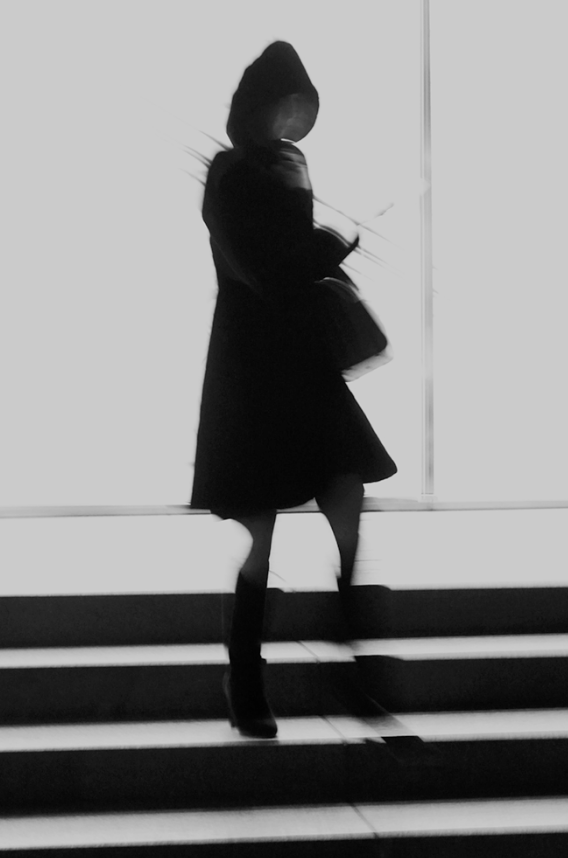
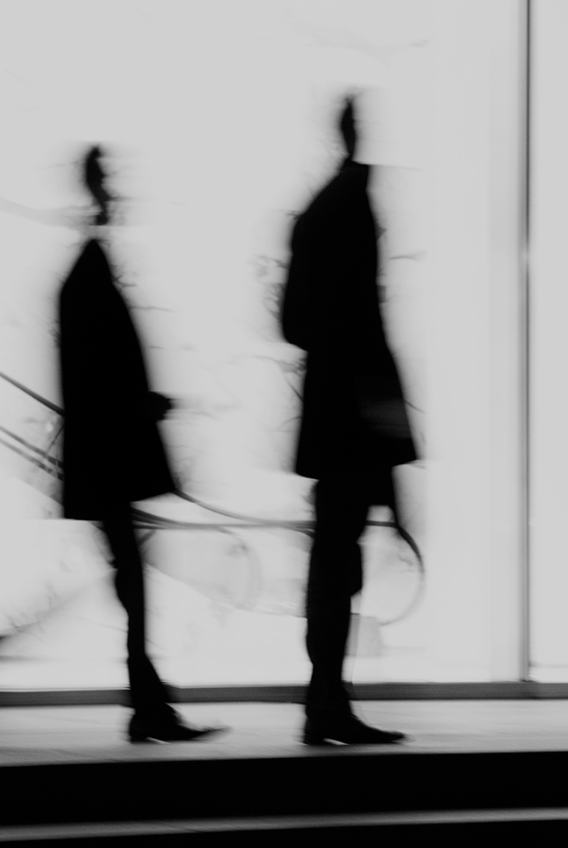
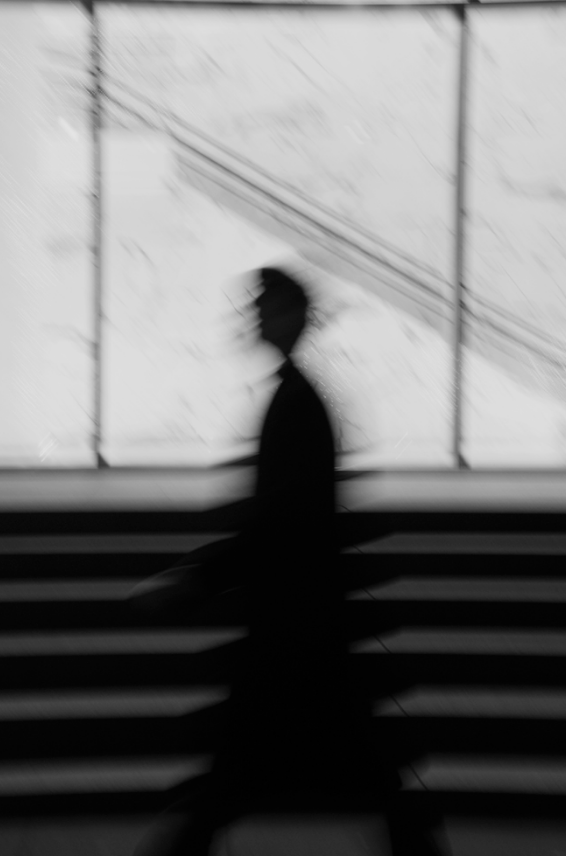
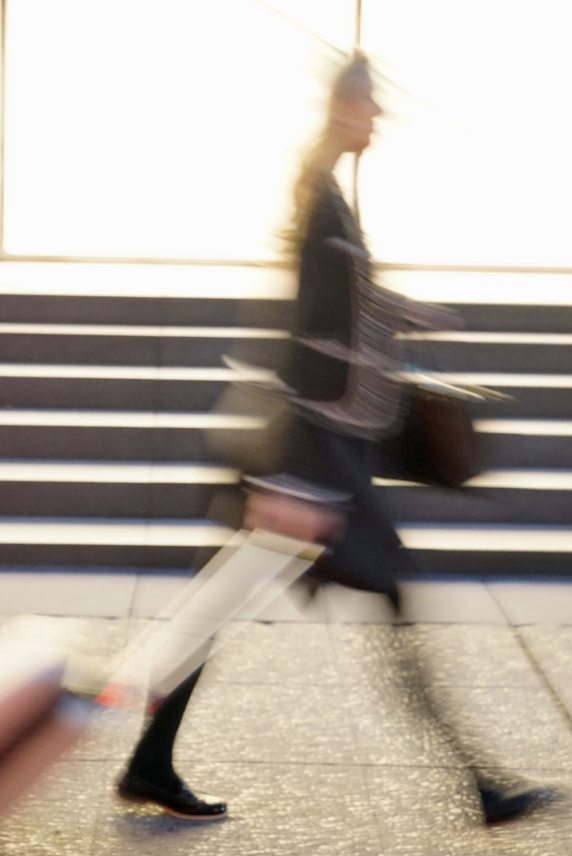
Where did your love of street photography develop? or how did the streets of NY inform your eye? Born and raised in New York, I have always been part of the hustle of New York. The energy on the streets is ripe for photographic exploration. Much of my art focuses, pun intended, on the quotidien passerby. We can never fully engage the people we pass by, I don’t want to lose sight of that fact. Capturing my subjects the way I do ,in the midst of their fleetingness, where time is slightly stretched, renders them extraordinary, unfamiliar, with no possibility of recognition but also strangely sculptural.
When and why did you choose to explore color? Much of my photography focuses Black and White but this prestigious award affirmed my use of color.
In the series City Anonymity® did you visit the same area over and over again?
I see the stairs as a recurring element. City Anonymity® depicts my images on the streets of New York, there is so much opportunity and possibility, there is one particular location that was exceptionally magical. I am looking forward to the next one.
In a time when we’ve been isolated due to the pandemic, what do you hope these images resurrect?
I believe my photographs bring us back to pre pandemic times, kinetic energy and a lot of movement
Where do you hope to see this body of work evolve?
I hope that my work can be incorporated in editorial and branding.
Who printed it?
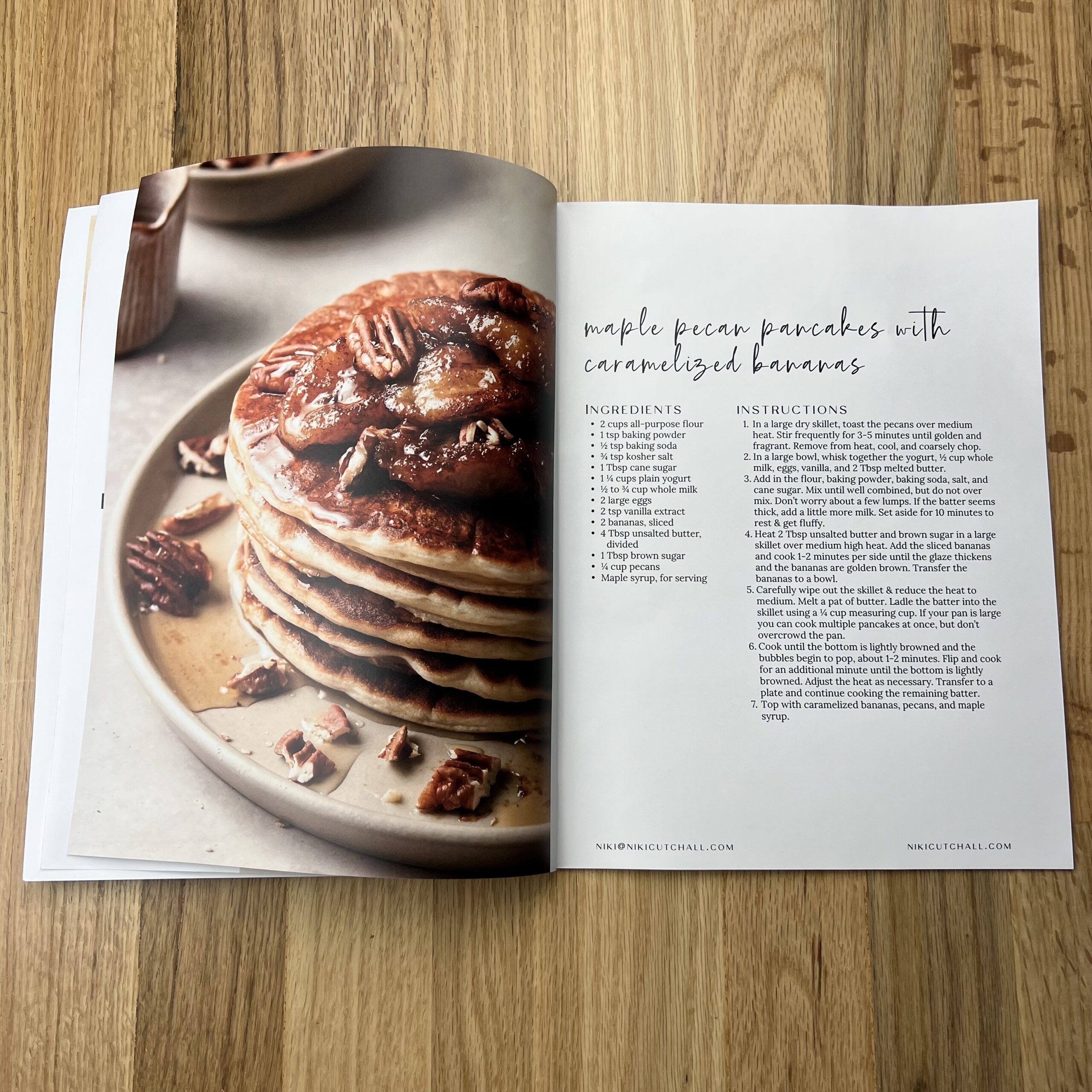
I printed the magazine through Blurb. Another photographer recommended them. After comparing their products to a few other companies, Blurb was my best option for the type of promo I created. They made it easy to start with an Adobe InDesign plugin, and I appreciated that I could order a single copy as a hard proof. I went with their magazine and upgraded to premium paper. The postcard was printed through Moo.
Who designed it?
I did! I don’t have a background in graphic design, but I felt confident that I could create something that made me proud. I started it in Adobe InDesign because Blurb had a template and plugin for the tool. My photography trends towards a more minimal, elegant style, and I wanted the magazine’s design to complement that. This was my first print promo, so I wore every hat on this project, from creative director and graphic designer to photographer and stylist. It pushed my creativity as a photographer and made me appreciate all the work that each function puts into a piece of content.
Tell me about the images.
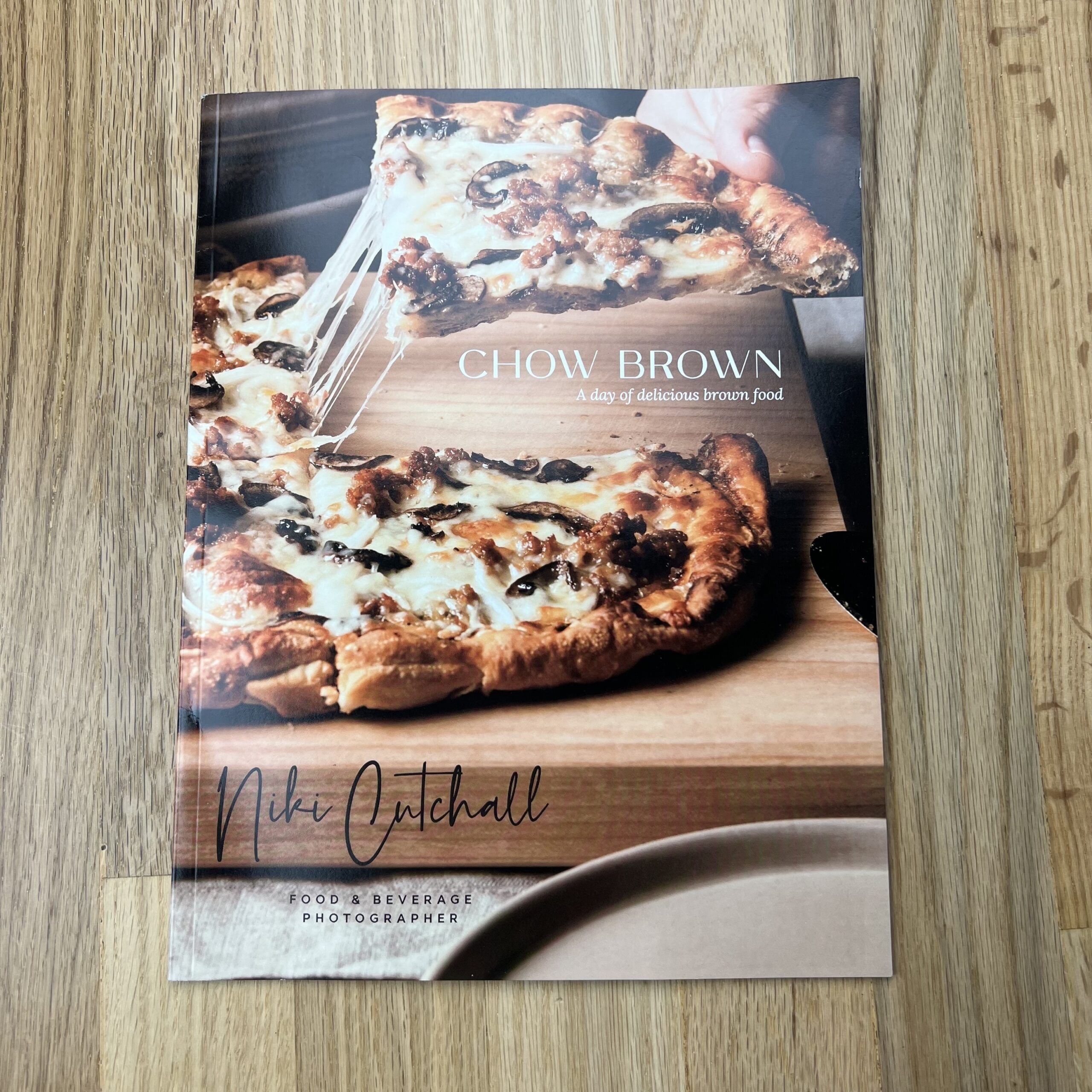
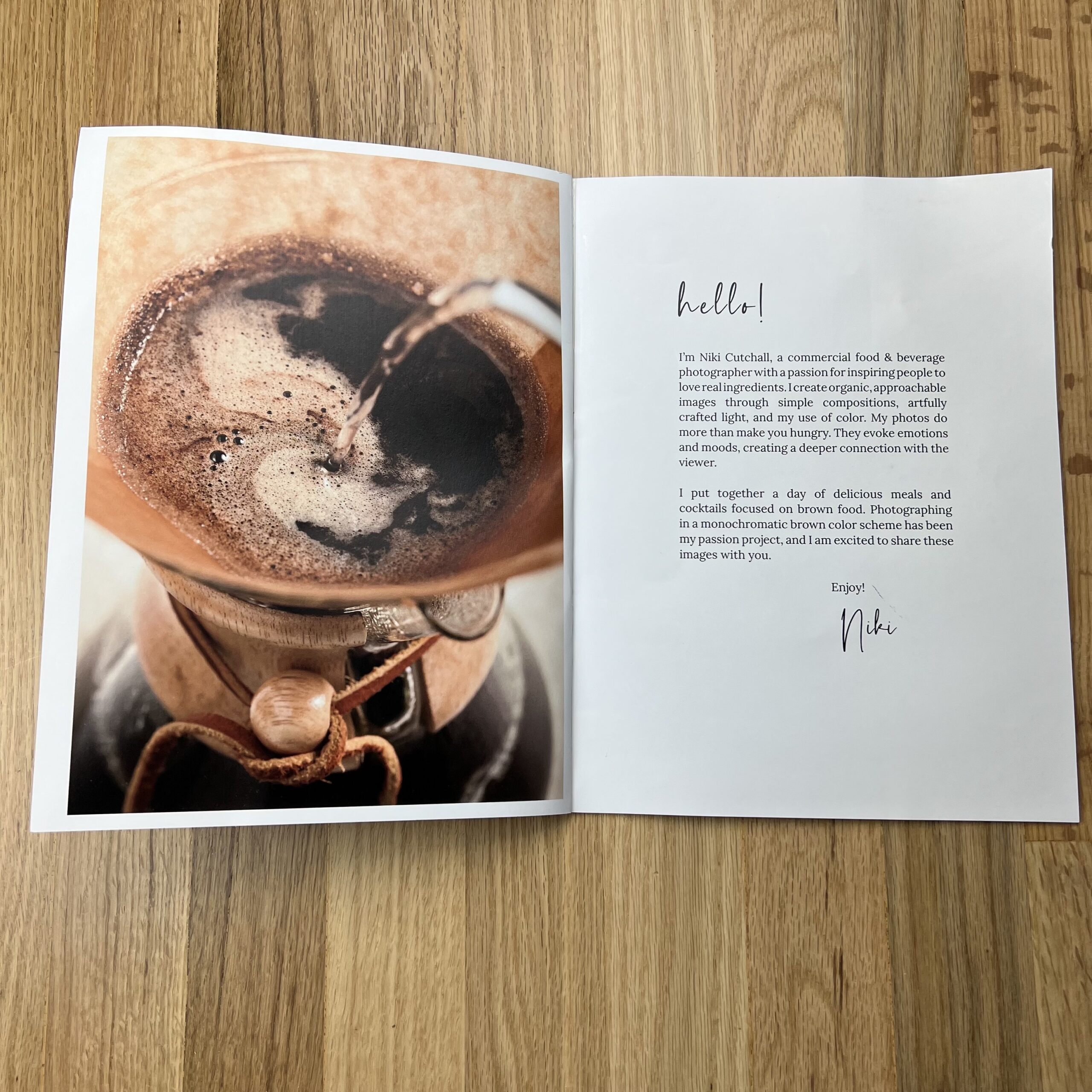
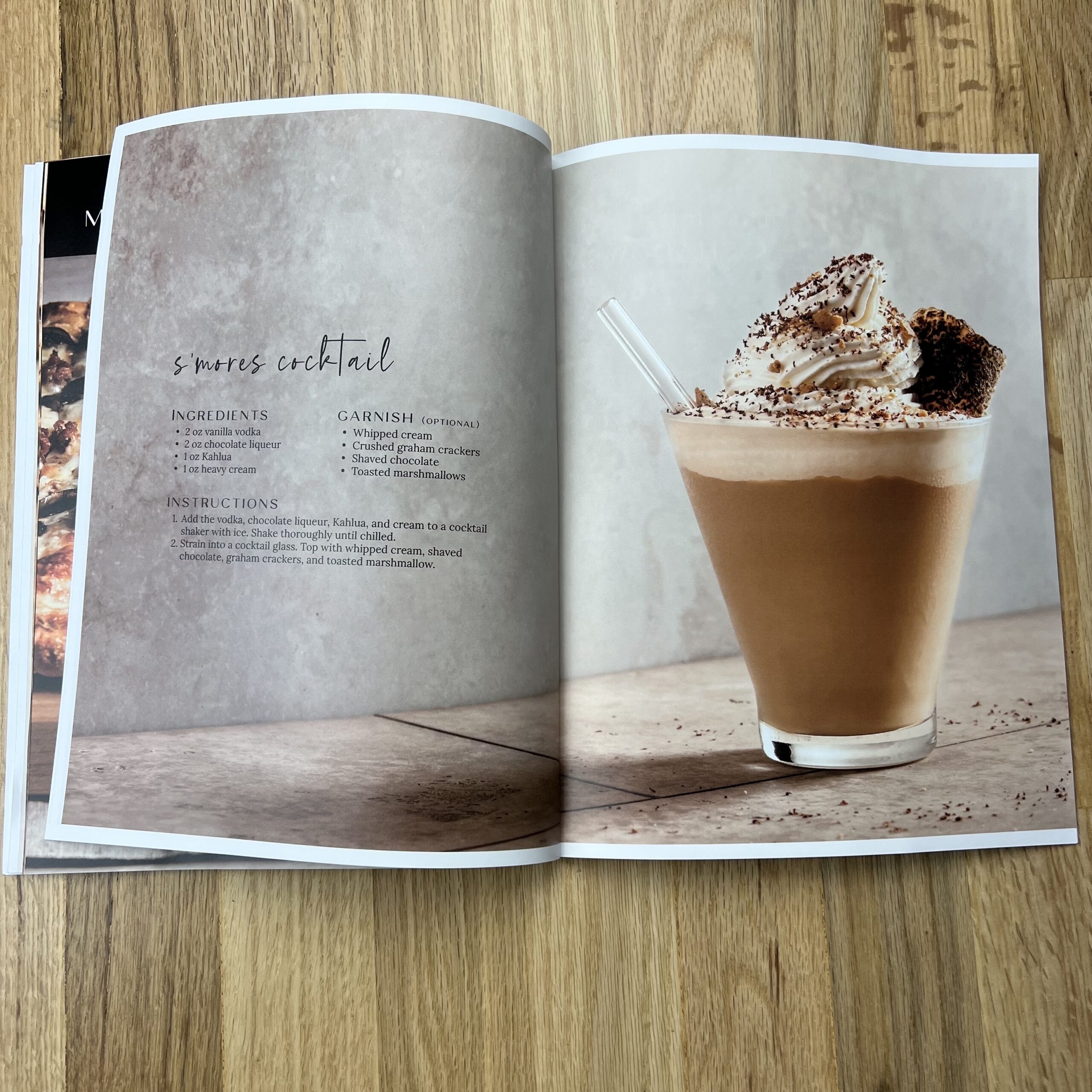
This was my first print promo, and it started as an assignment in a small group fellowship run by Andrew Scrivani. I wanted to create something that felt like me and powerfully debut my work. As I was brainstorming ideas, I kept returning to an image I shot of brownie batter (the image on the postcard) and an idea I had to do a monochromatic series on brown food. It’s a color I love working with, and I knew I could capture it beautifully. Andrew encouraged me to run with the idea, and I took off with it.
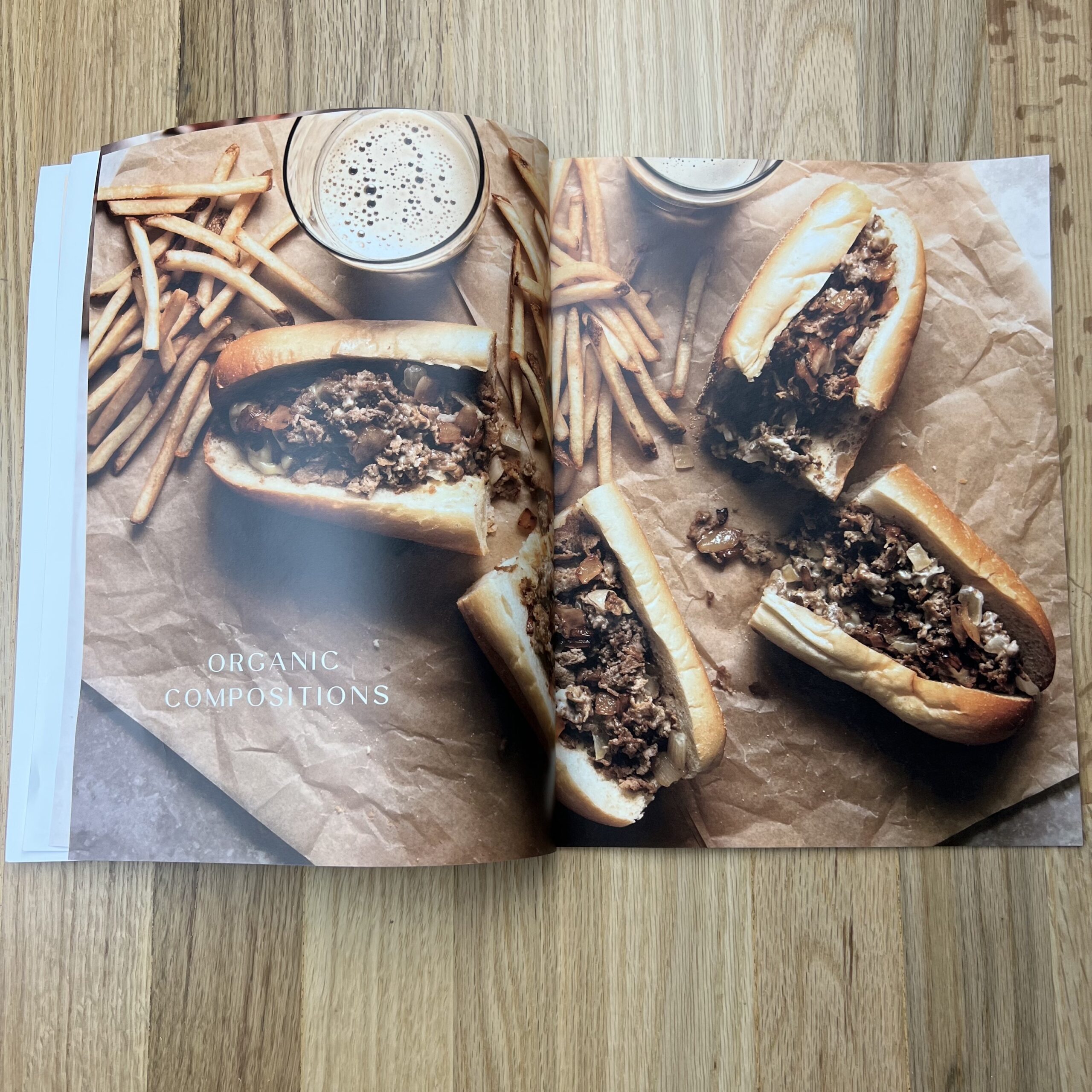
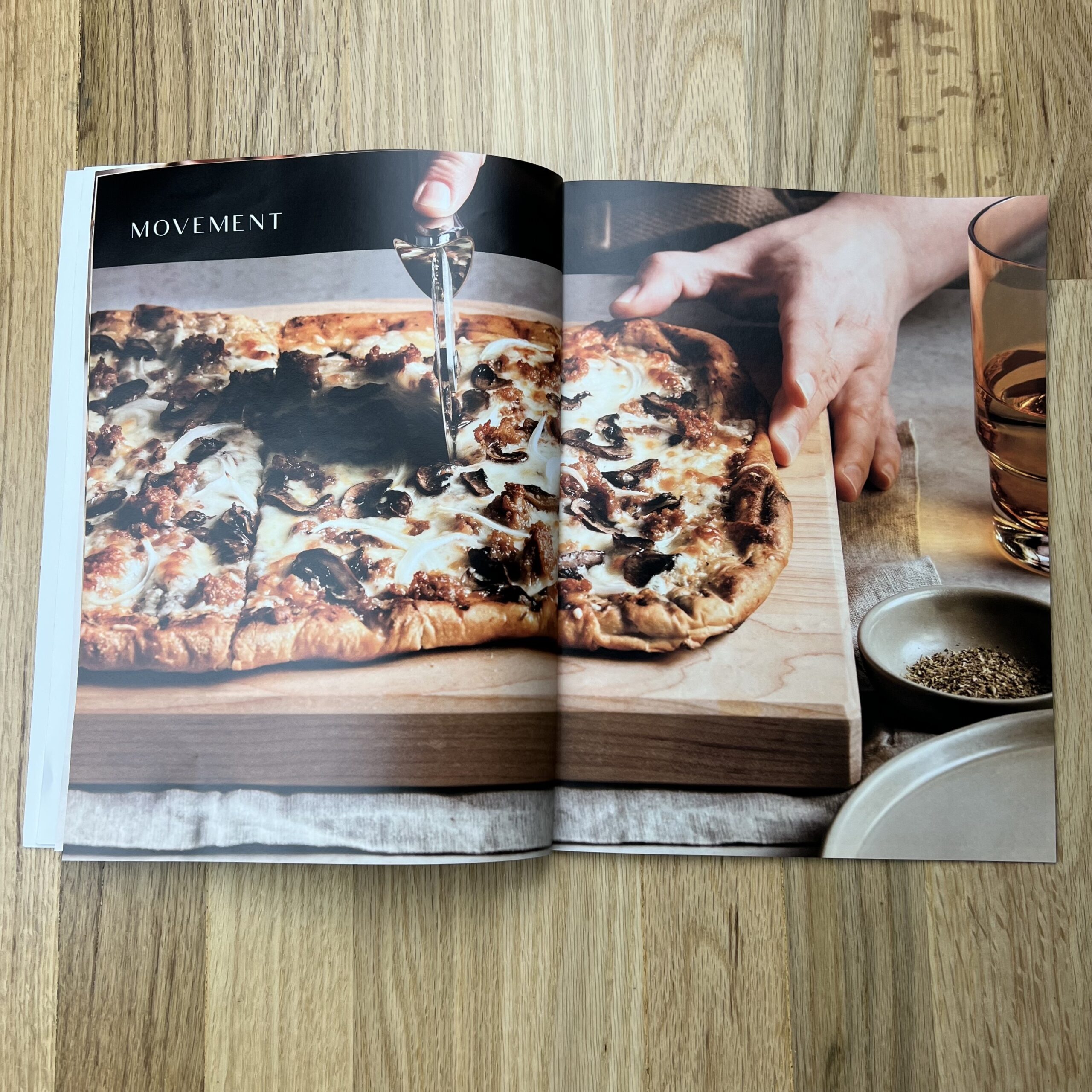
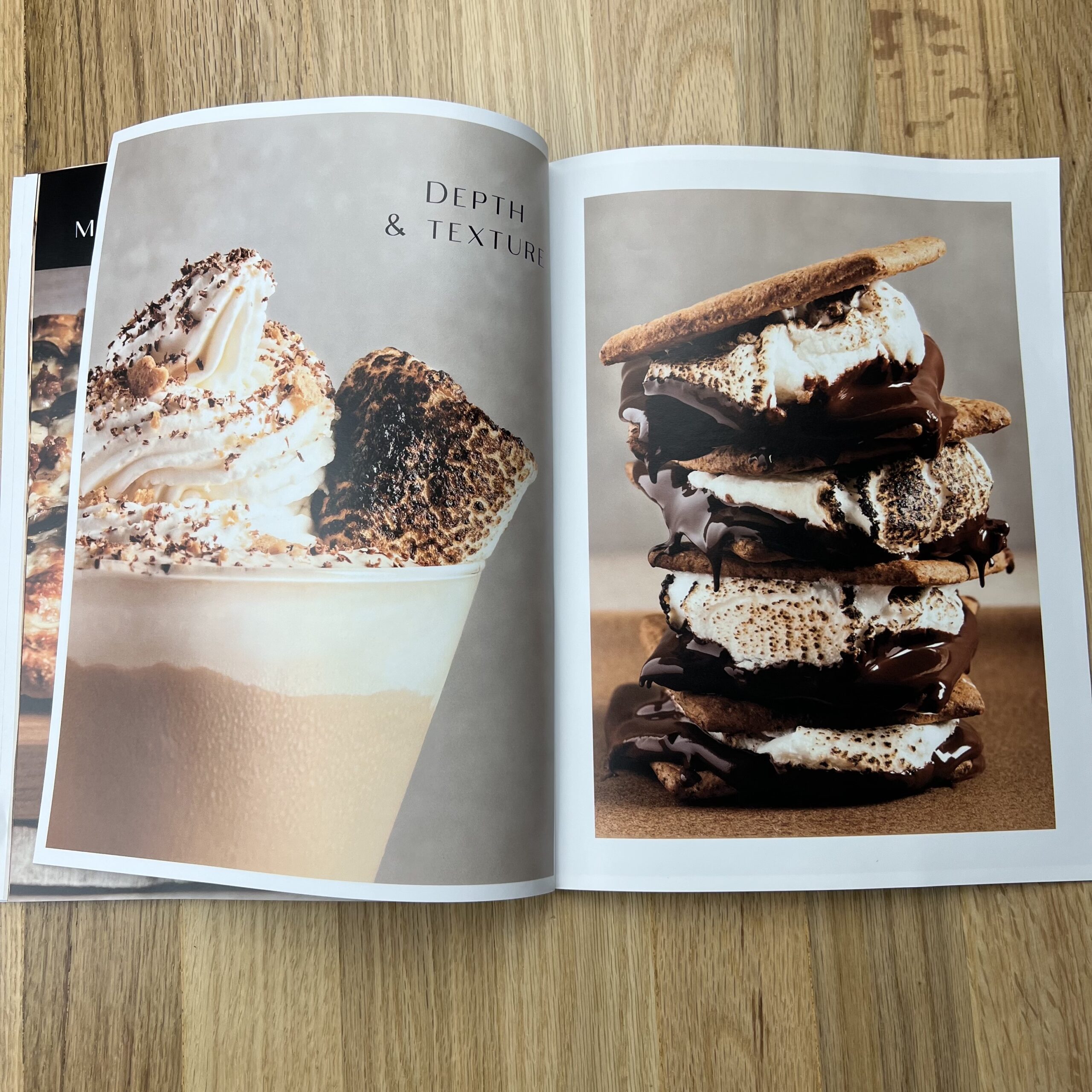
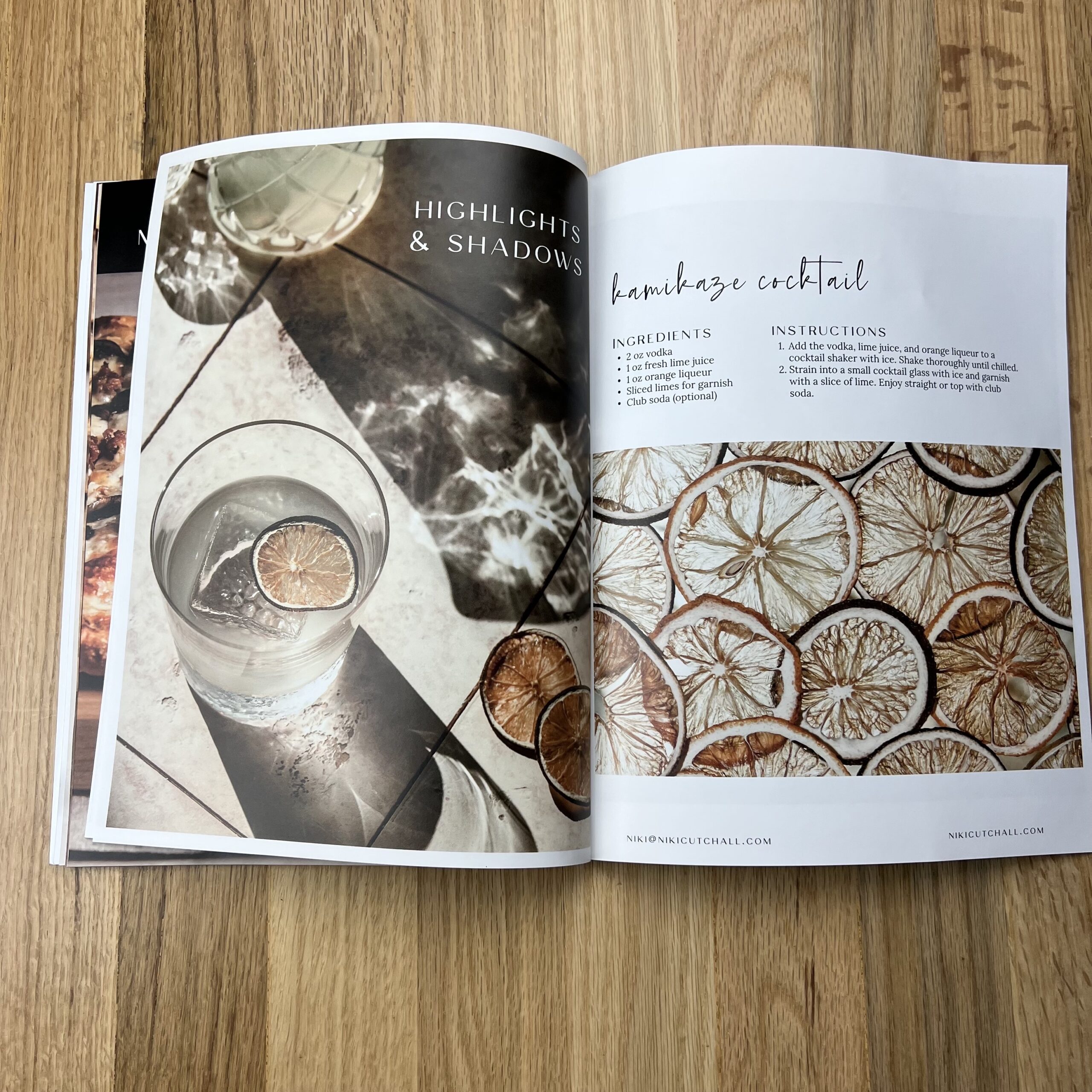
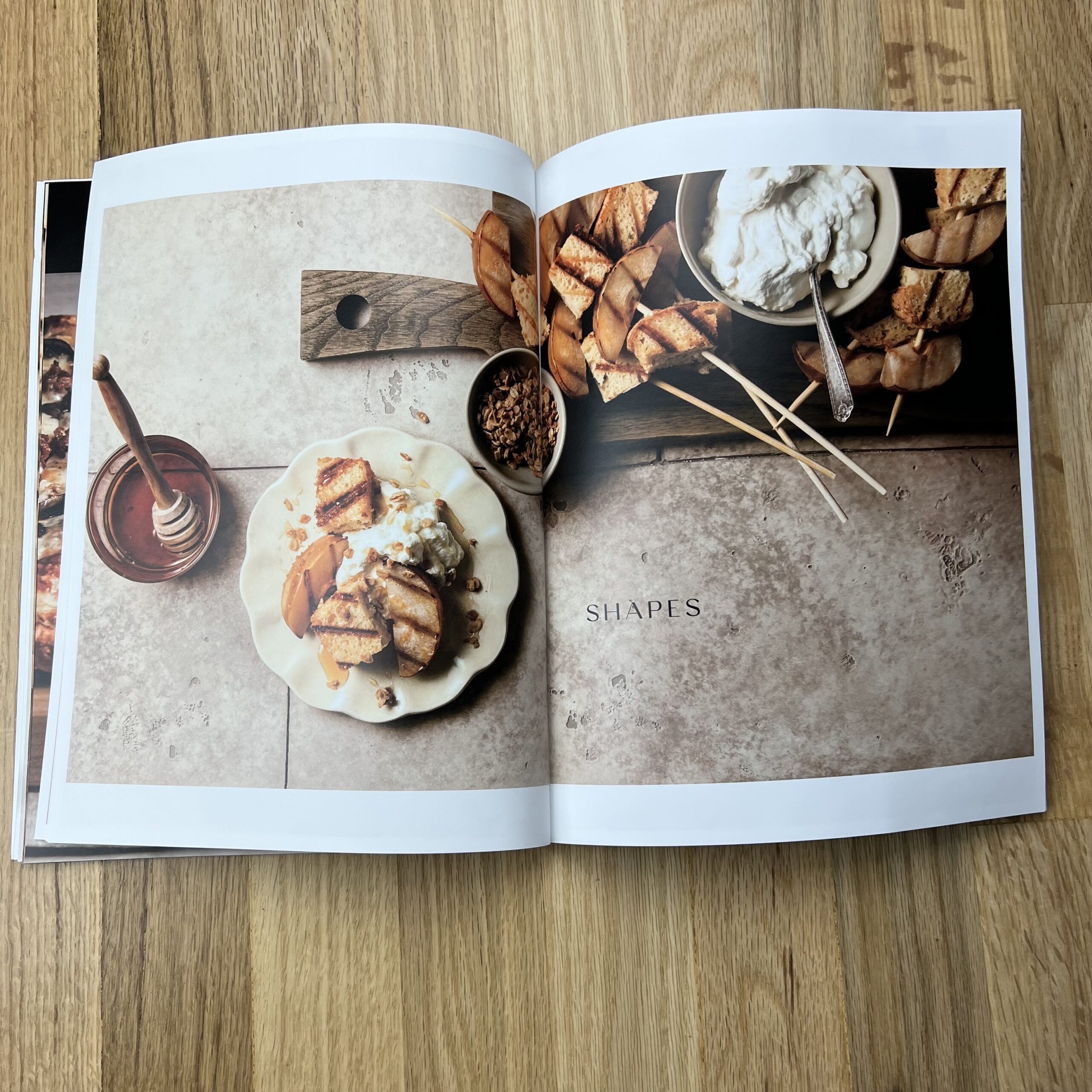
I started by brainstorming a list of brown foods. I knew I wanted to include recipes and focus them around a meal. I ended up going with a breakfast, lunch, dinner theme because it gave me a good range of foods to choose from. The challenging part was identifying recipes that are naturally monochrome. I could have included some images of single ingredients to keep with the brown theme, but I wanted the challenge of photographing a final dish that was entirely brown. I decided on four recipes and a cocktail; then, I sketched out my shots. I planned each recipe to have one main hero image and 2-3 supporting photos. I shot and styled all the photos, specifically for the promo. As I was designing the magazine, I had some additional space that I didn’t plan for initially. The Kamikaze was a last-minute addition. It was shot for a different purpose, and it was a happy accident that it worked with the brown color palette.
I live outside of Philly, so I had to include a cheesesteak! Those photos are my favorite in the series. I love the composition, the lighting, and the texture; everything about them. They are an excellent example of bringing the idea in your head to life.
The hero image for each recipe includes a descriptive word or phrase. These are words I use to describe my style. I included them as a way to clearly express my strengths without being too lengthy or adding in additional text. I planned to include them initially, but I did not shoot specific recipes to match a particular description. I matched them up after everything was shot based on the strongest qualities in the photo.
Lastly, I like creating GIFs, and I wanted to include those because it’s part of my services. I planned a GIF for each recipe. Then I made a dedicated page for the series on my portfolio. I included a QR code on the back of the magazine that would take you to that page.
How many did you make?
I printed 85. I thought it was a good number for my first promo. Not so large that I would struggle to mail them out, but not so small that I would have a hard time choosing who gets one.
How many times a year do you send out promos?
This was my first promo, but I plan on sending them out at least twice a year. They won’t always be on this scale. The next one I have planned will be something simple, like a postcard.
Do you think printed promos are effective for marketing your work?
I think it’s too soon to tell. I think it’s a long game and part of a broader marketing strategy. I’m going to keep trying, see if it works, and reassess at a later time.
How can you tell what works and what doesn’t?
Food photography is a second career for me. I was a data analyst for several large corporations for ten years. I specialized in web analytics, looking at how clients are moving and interacting with the companies website. I use a lot of the same techniques in my photography business now. Collecting data can get overlooked, but I think it’s important to understand the health and growth of your business. From the beginning, I intended this promo to live across multiple channels. I knew I could track traffic to my portfolio from social and email, but I was a little disappointed that I couldn’t follow it from the print version. It would be nice to know if the print promo drove traffic to my site. Then I realized the QR code I included on the back serves as that tracker. I created a unique URL called a UTM tracking URL. It’s a URL with additional parameters at the end where I could specify that this link came directly from my printed promo. I embedded the UTM tracking URL into my QR code. Anytime someone with the print promo scans the QR code, I see a marketing channel called “print” come through in my Google Analytics. This only works if the recipients scan the QR code, but regardless, it’s better than not tracking interactions with the promo at all.
Now that Bonnie has settled into a status quo, in which she can’t really communicate, or move around much, one would imagine that would be rock bottom.
But it’s not, actually.
She’s relatively happy, under the circumstances, and clearly wants to live.
(Her body just outlasted her mind.)
It’s fucked up, though, as prior to her decline, she asked her daughters to kill her, before she completely lost her faculties.
While Bonnie was still mentally competent, she did not want to live like this, but lacking an assisted suicide law in New Mexico, my wife and her sister were unwilling to comply.
Now, here we are, yet she eats up a storm, and chimes into conversations with meaningless babble from time to time.
Every medical practitioner I’ve heard speak on the subject, (as well as Bonnie’s experienced care-givers,) all say the same thing: when a person is ready to die, they stop eating.
They give up, hasten the process, and pass on.
And that’s not happening here.
Bonnie wants to live, so she lives.
She assumed she’d rather die than live like this, (when she could still think clearly,) but her body and spirit have different plans.
How strange.
May 14, 2021. (The last photo I took of Bonnie, b/c after this, I no longer felt she could give consent.)
The phase where every day, Bonnie would be less and less capable, was horrifying.
At first she’d simply forget words, or lose her wallet, but it quickly spiraled into personality changes, (like physically attacking my father-in-law, insisting he was an imposter,) and then truly tragic moments, where she knew what was happening, but was powerless to stop it.
I remember the time she looked at me, smacked her head hard, twice, and said, “my bran is broken.”
Not brain.
Bran.
That was awful.
Here in March 2022, though, she keeps on trucking.
I think about that, as I watch the horror of what’s happening in Ukraine, and keep landing on humankind’s survival instinct.
Staying alive is so deeply ingrained in our psyche.
In our souls.
Because no one knows what comes next.
It’s the great mystery, and almost everyone alive is terrified to find the answer.
(Better to not know, and keep living as long as possible.)
Truth be told, I wouldn’t be me if the above rant were not inspired by a photo-book.
I had no plans to write any of it.
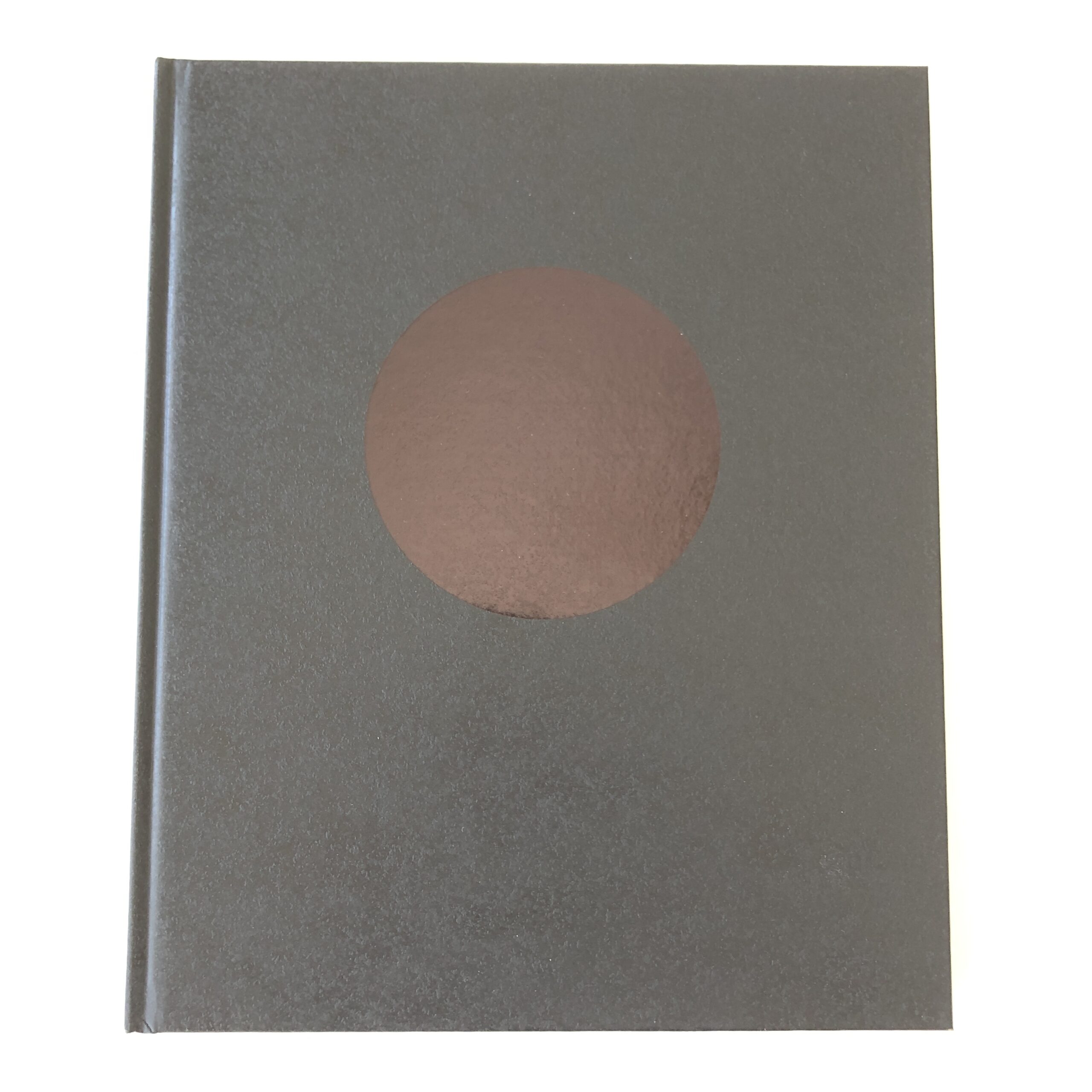
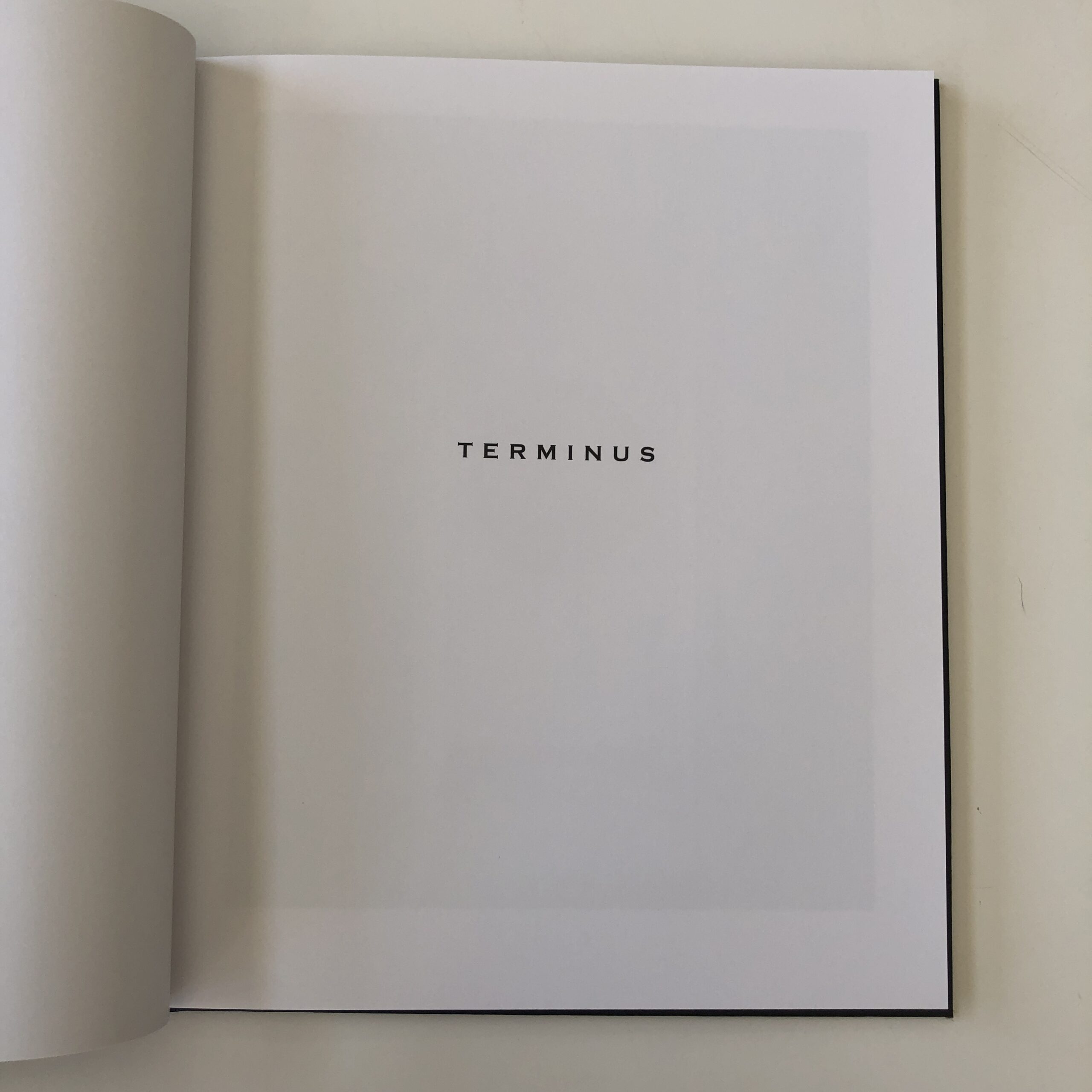
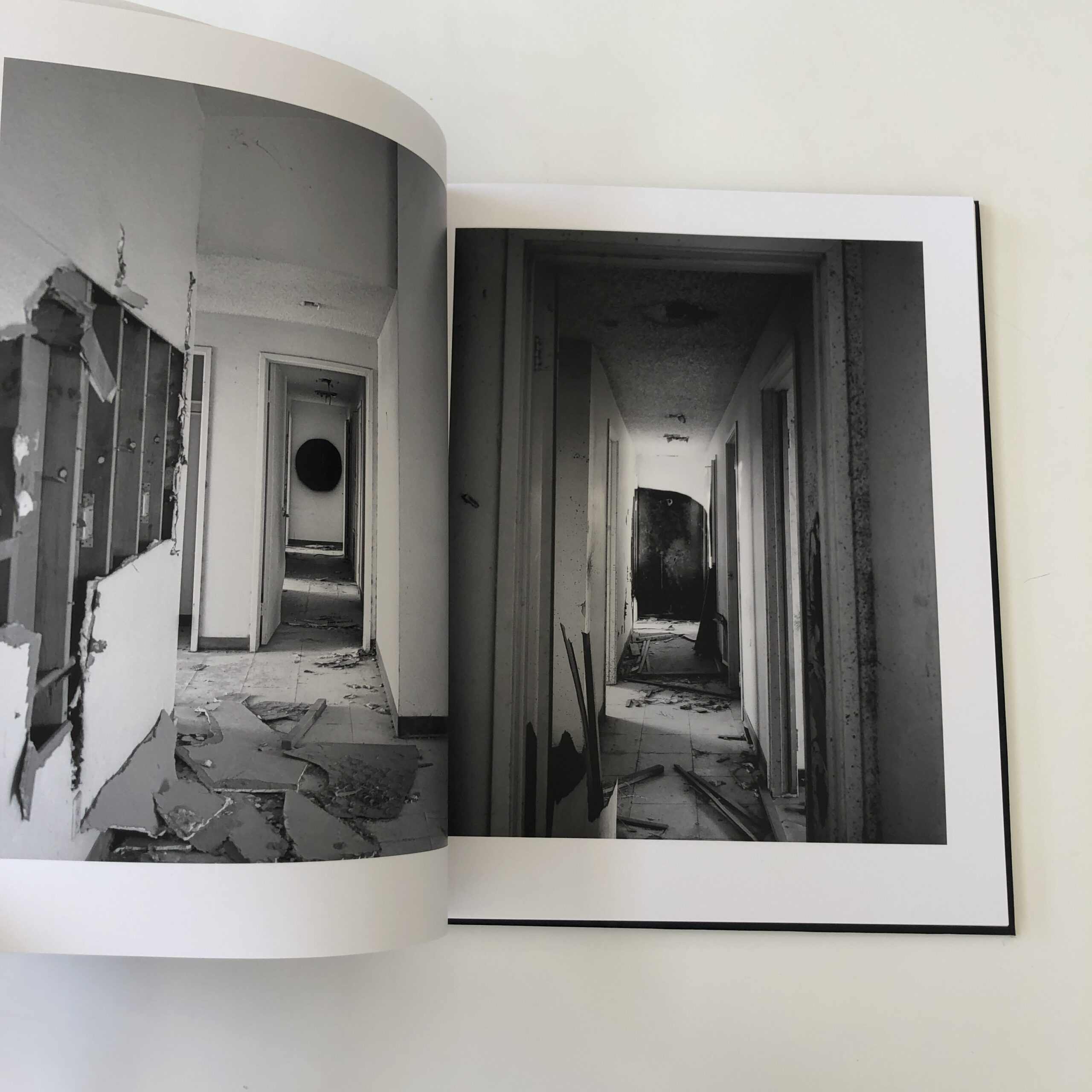
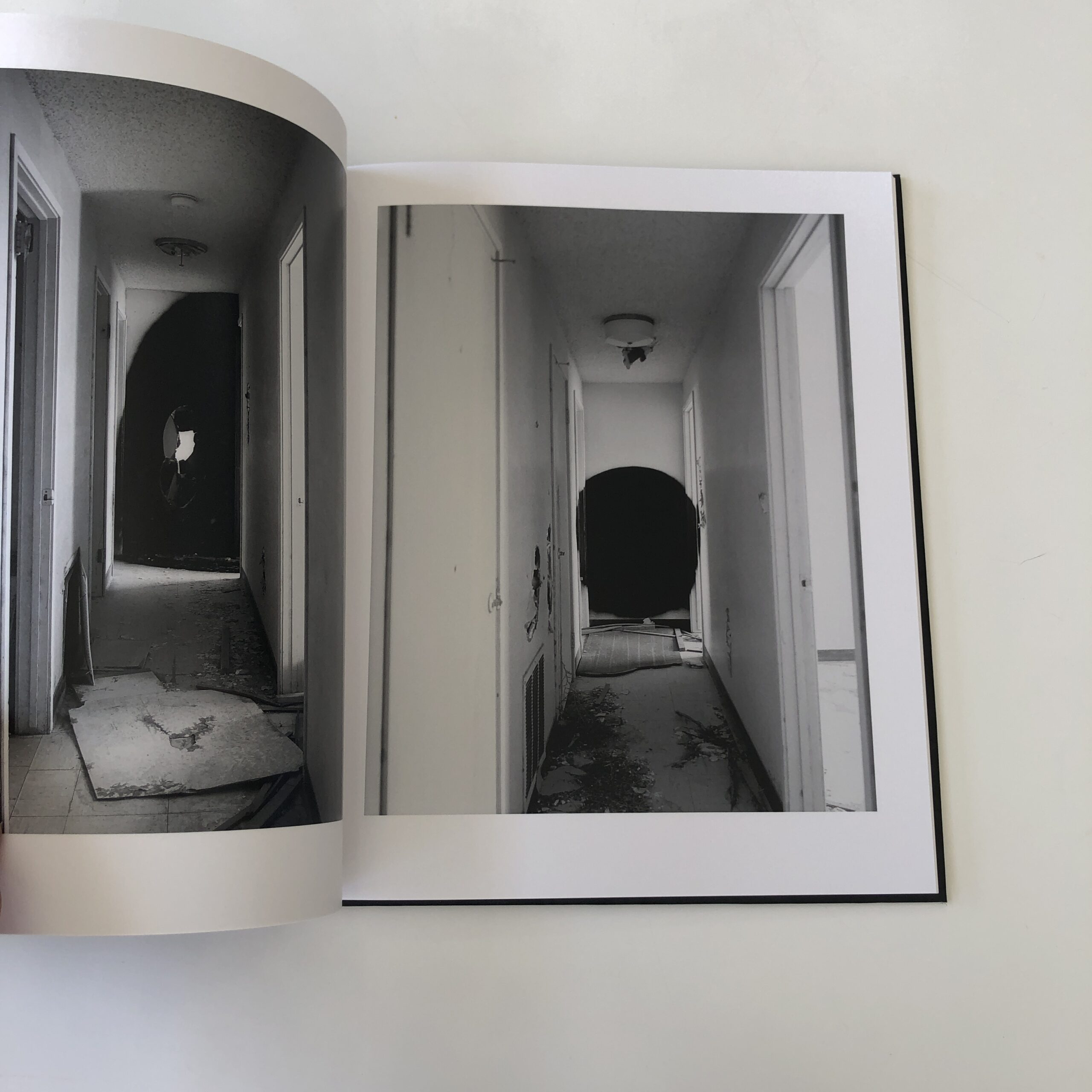
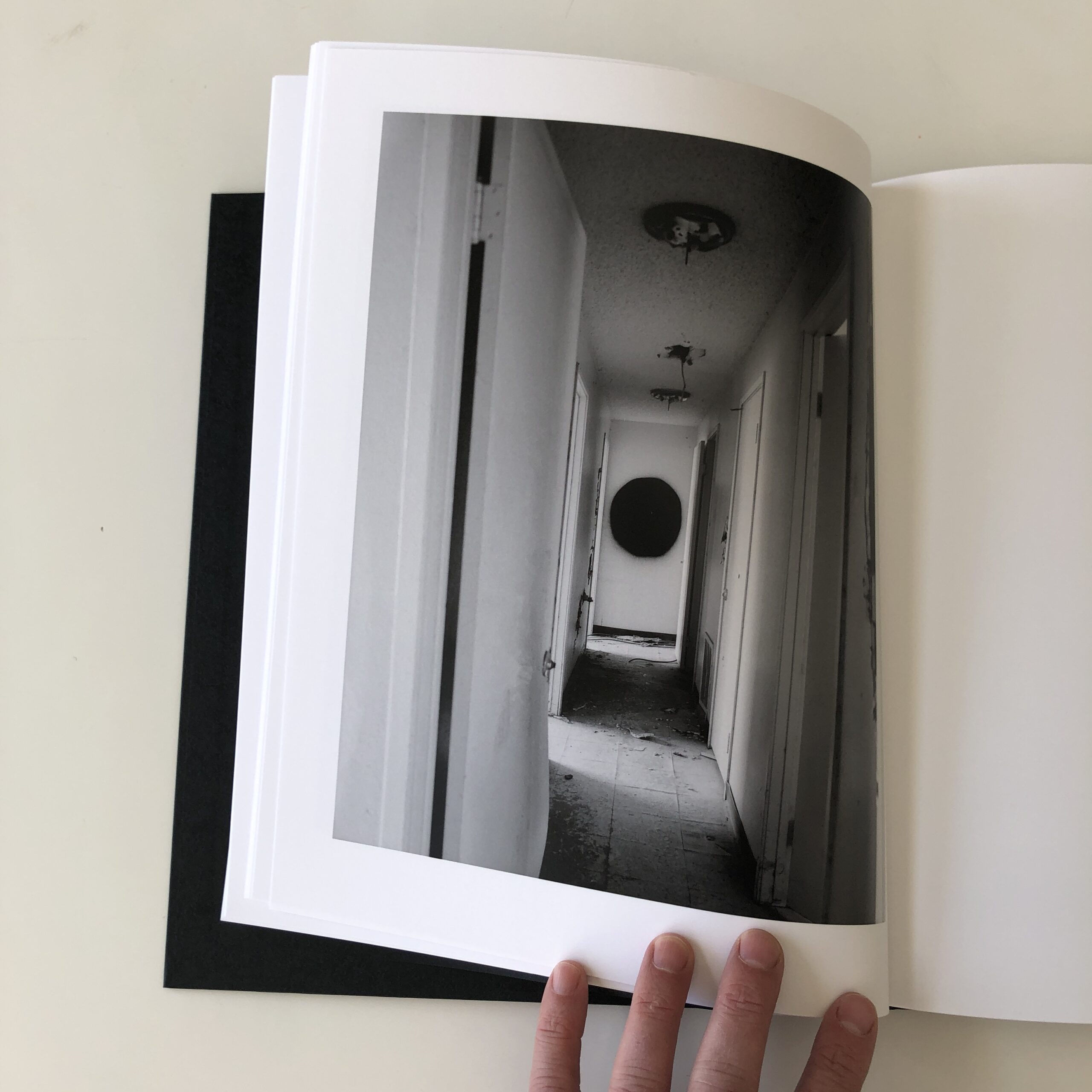
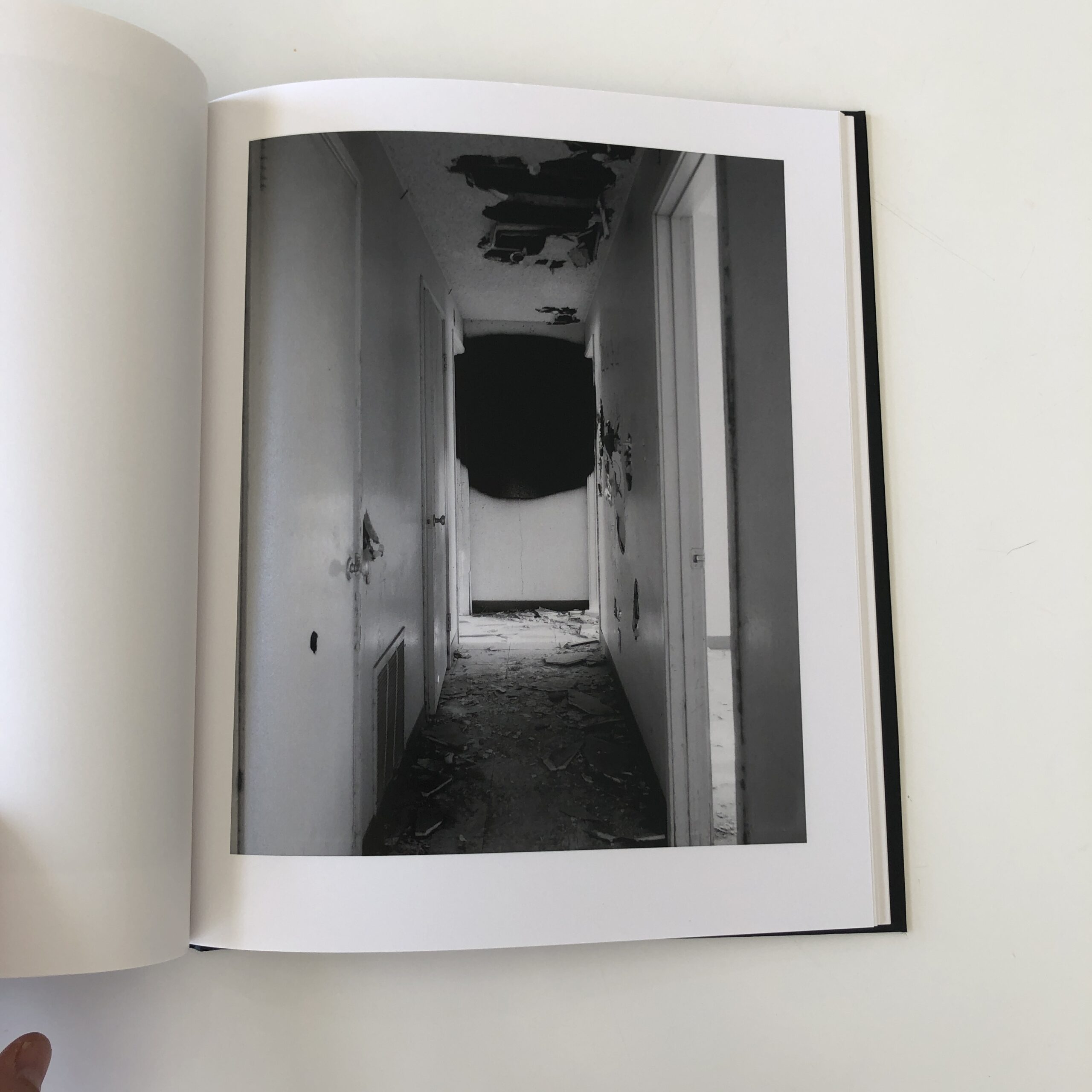
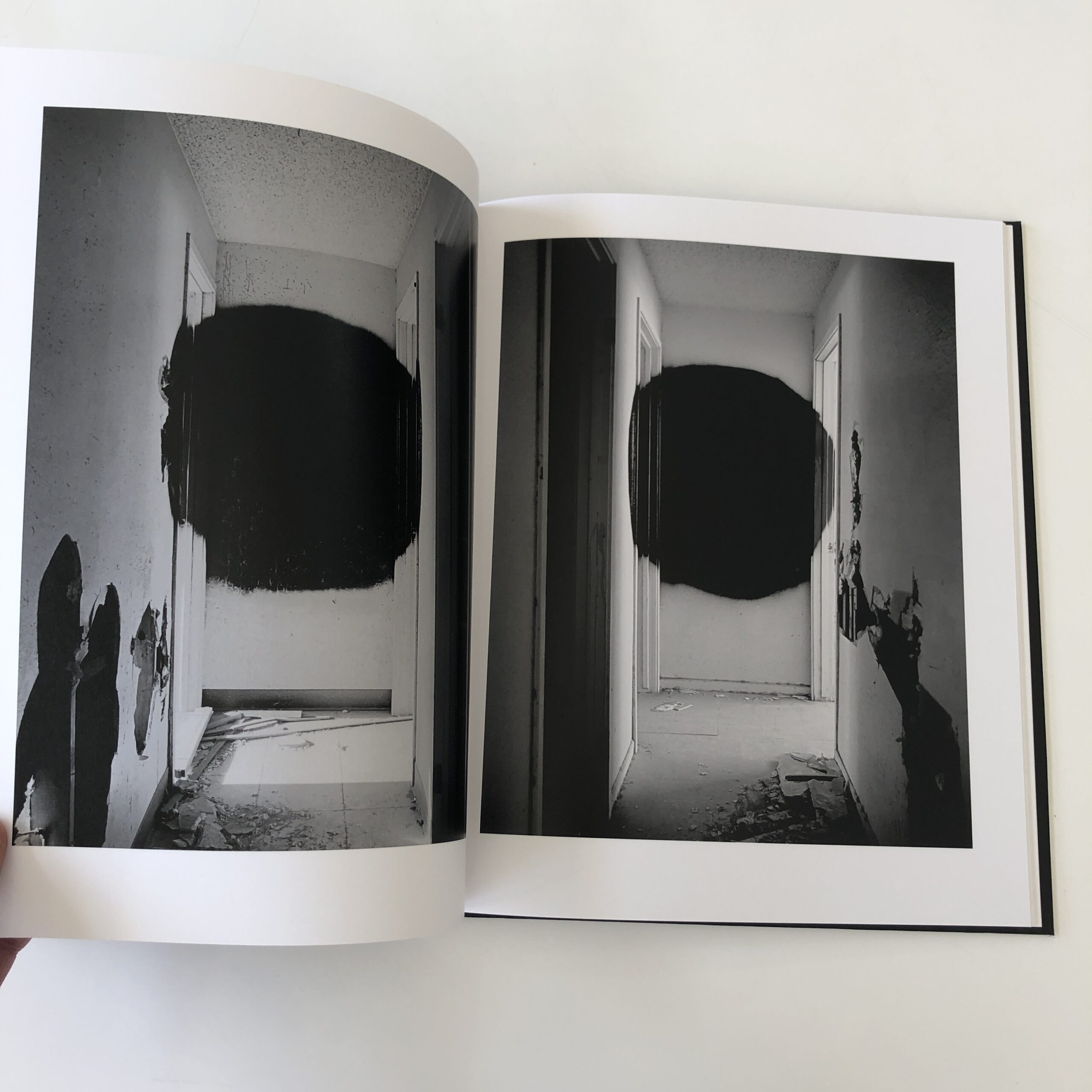
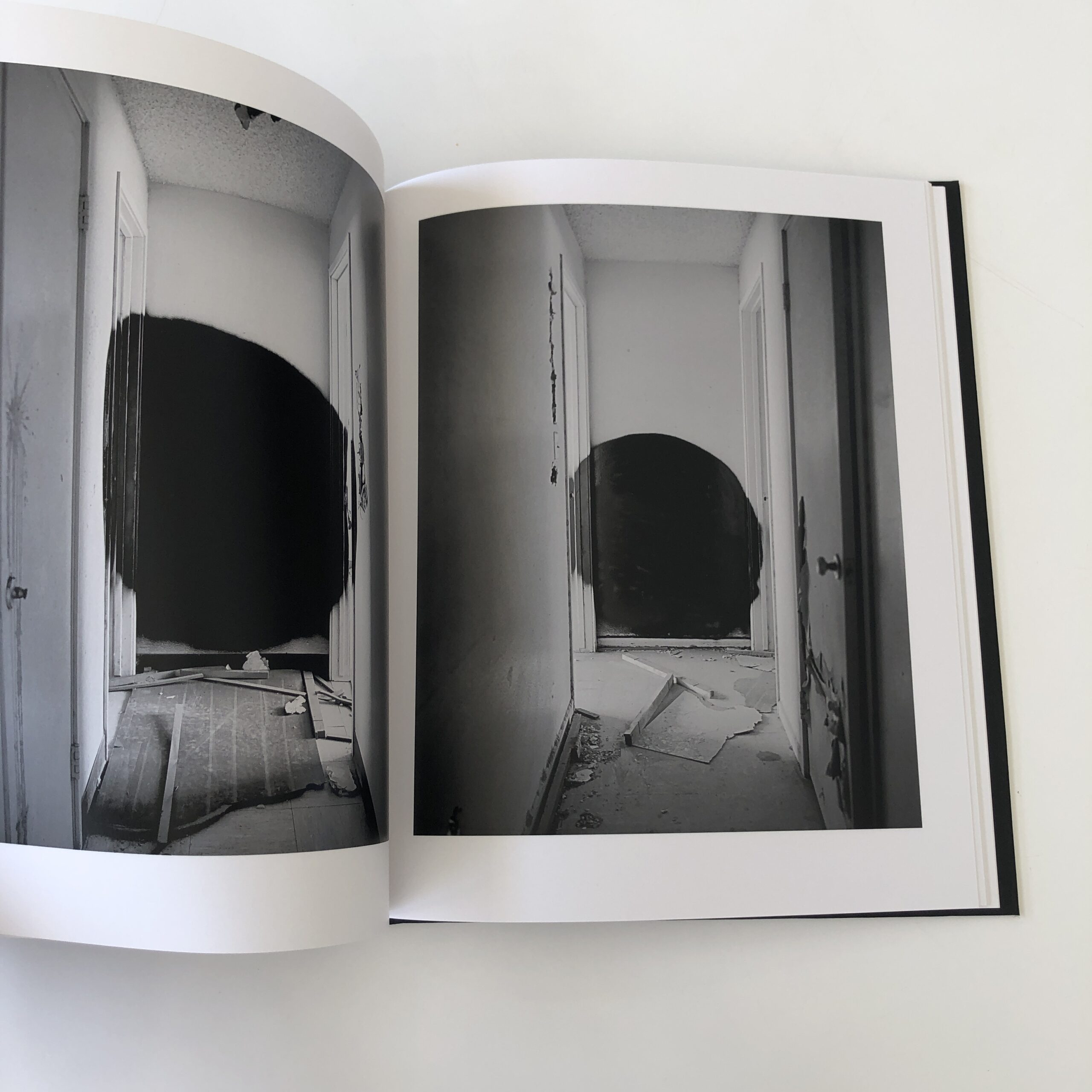
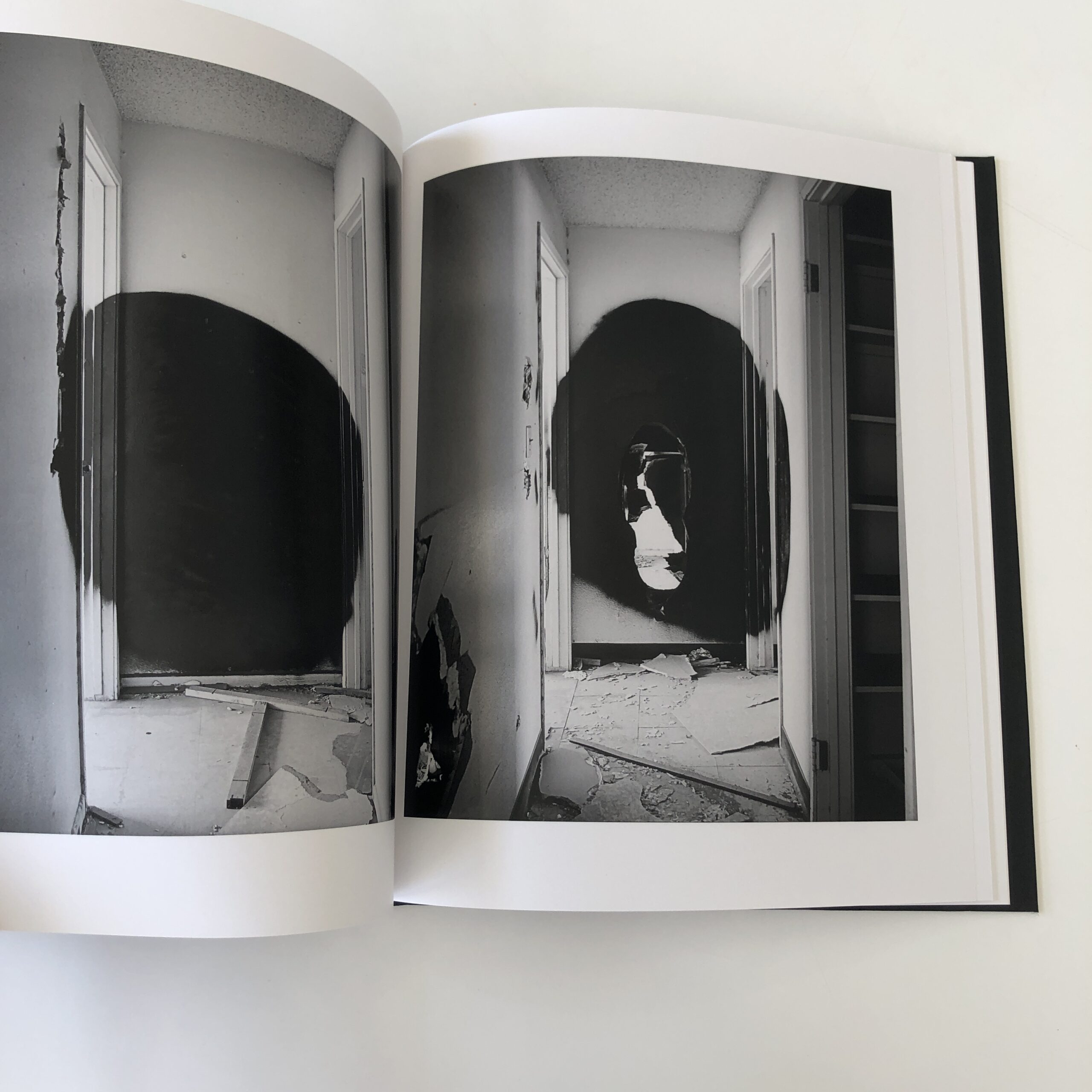
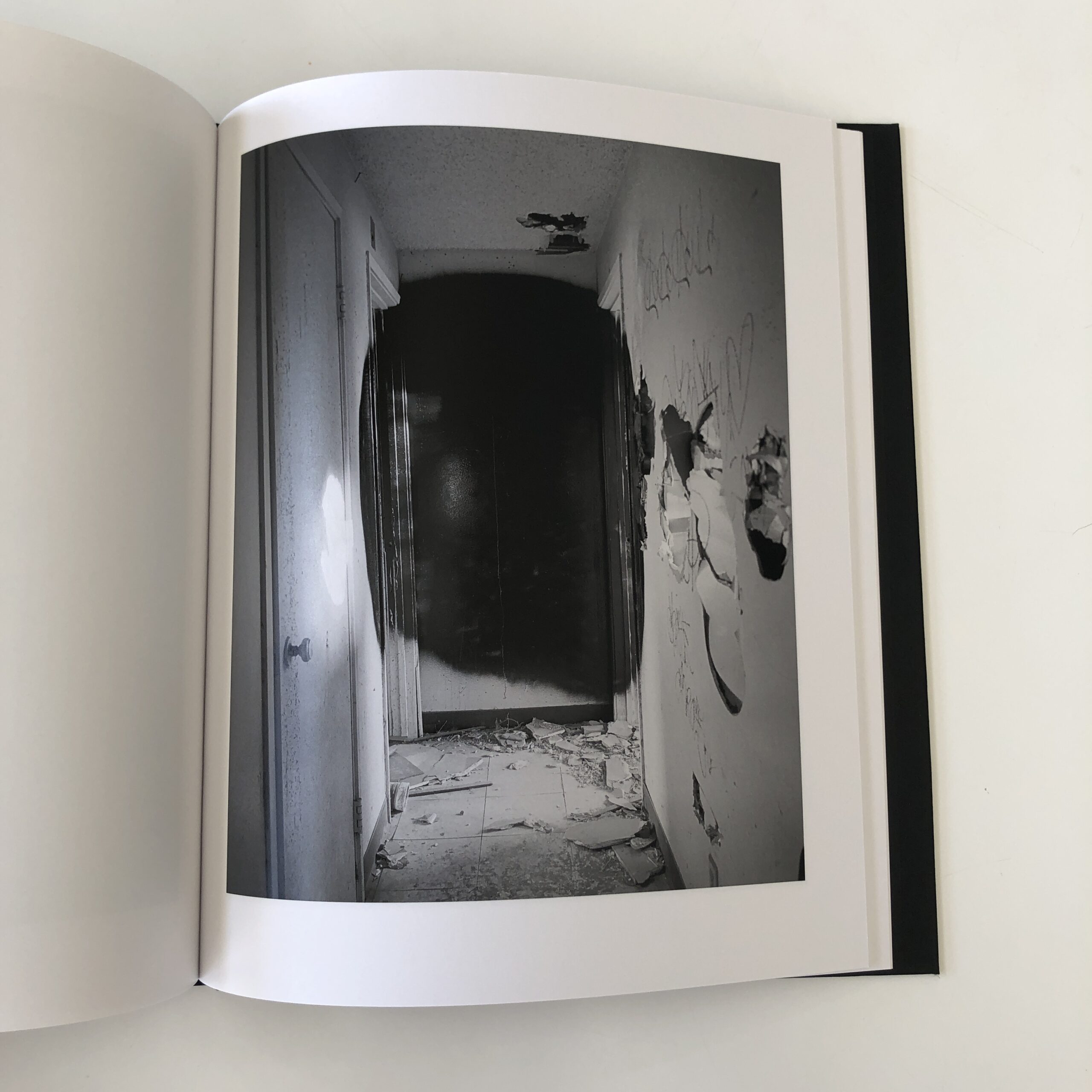
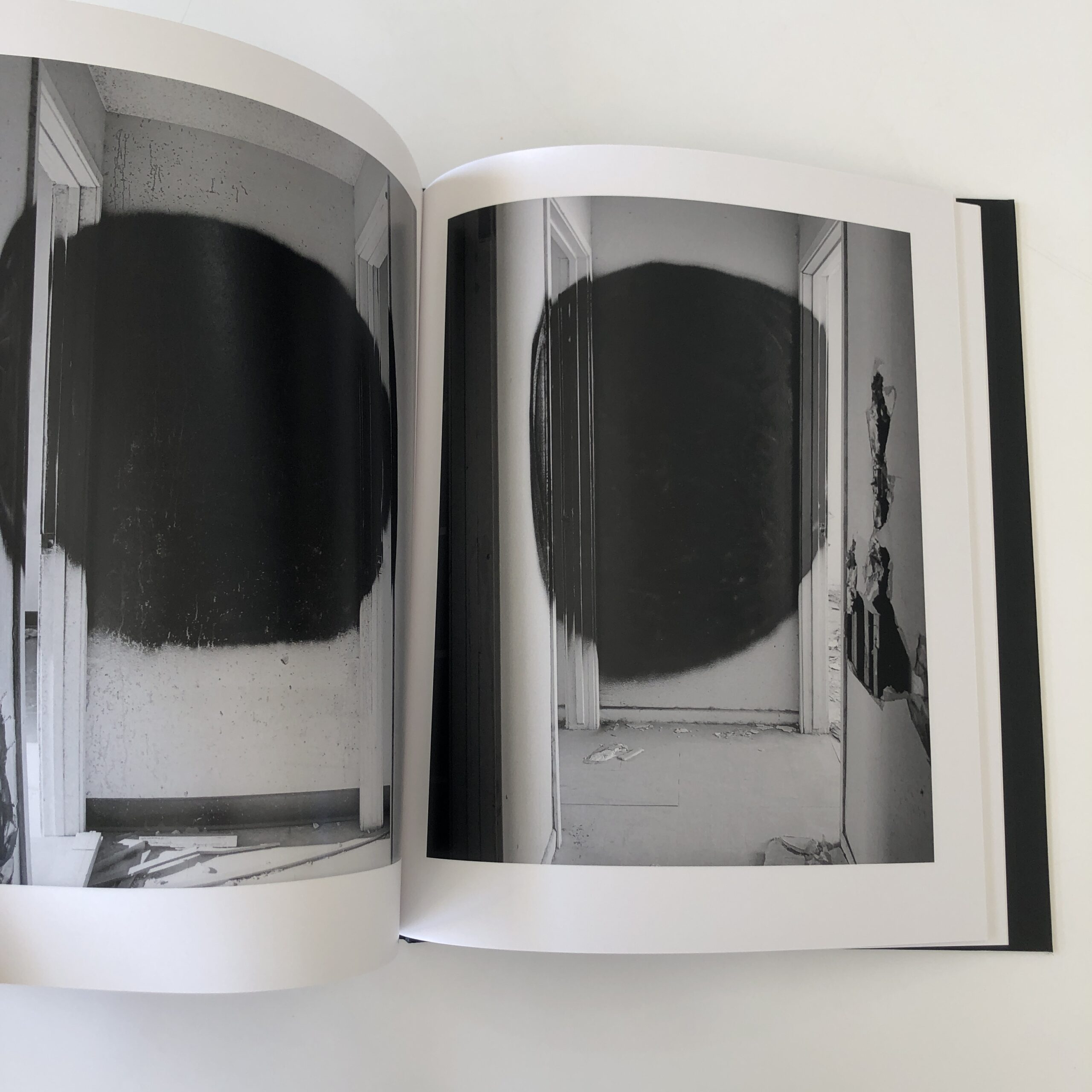
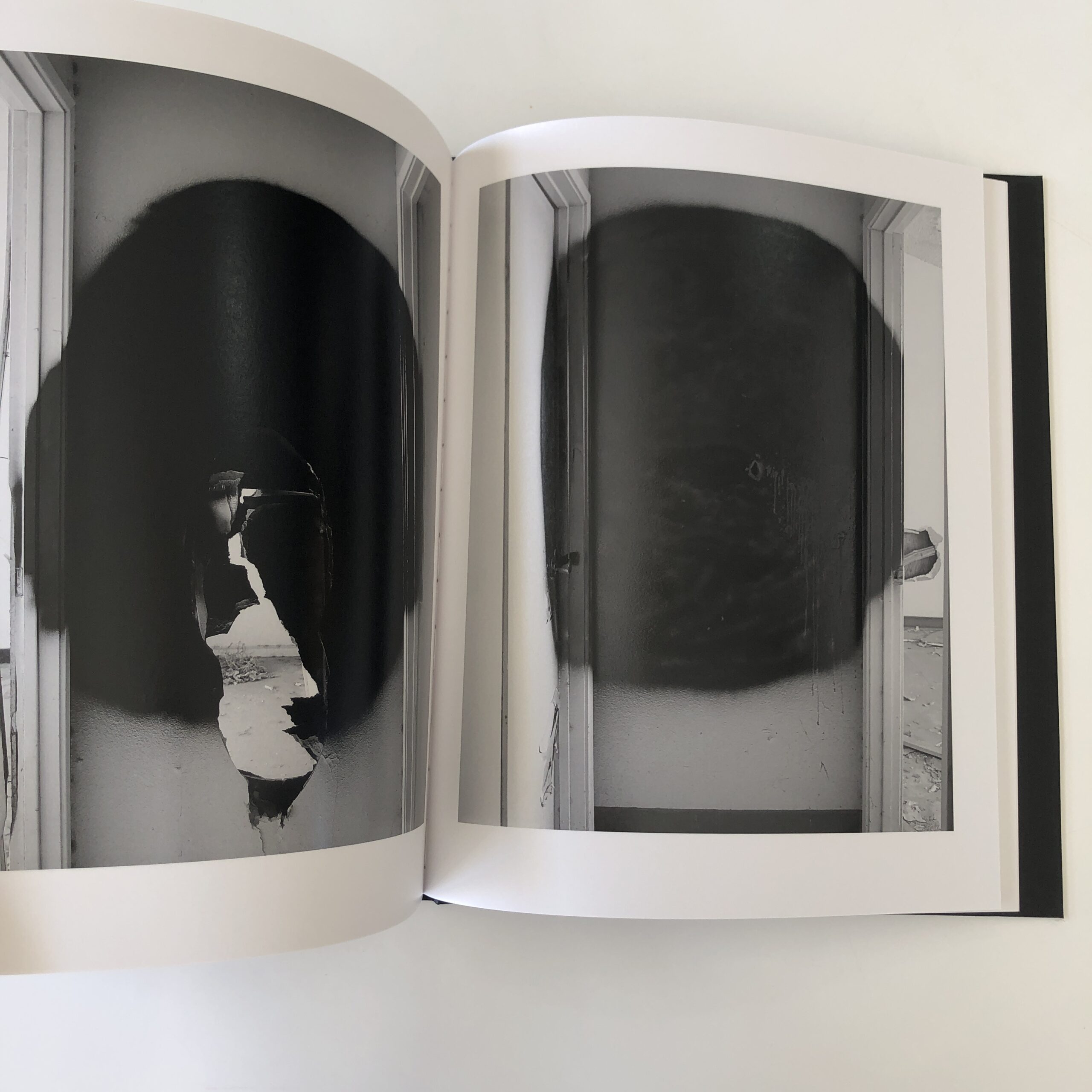
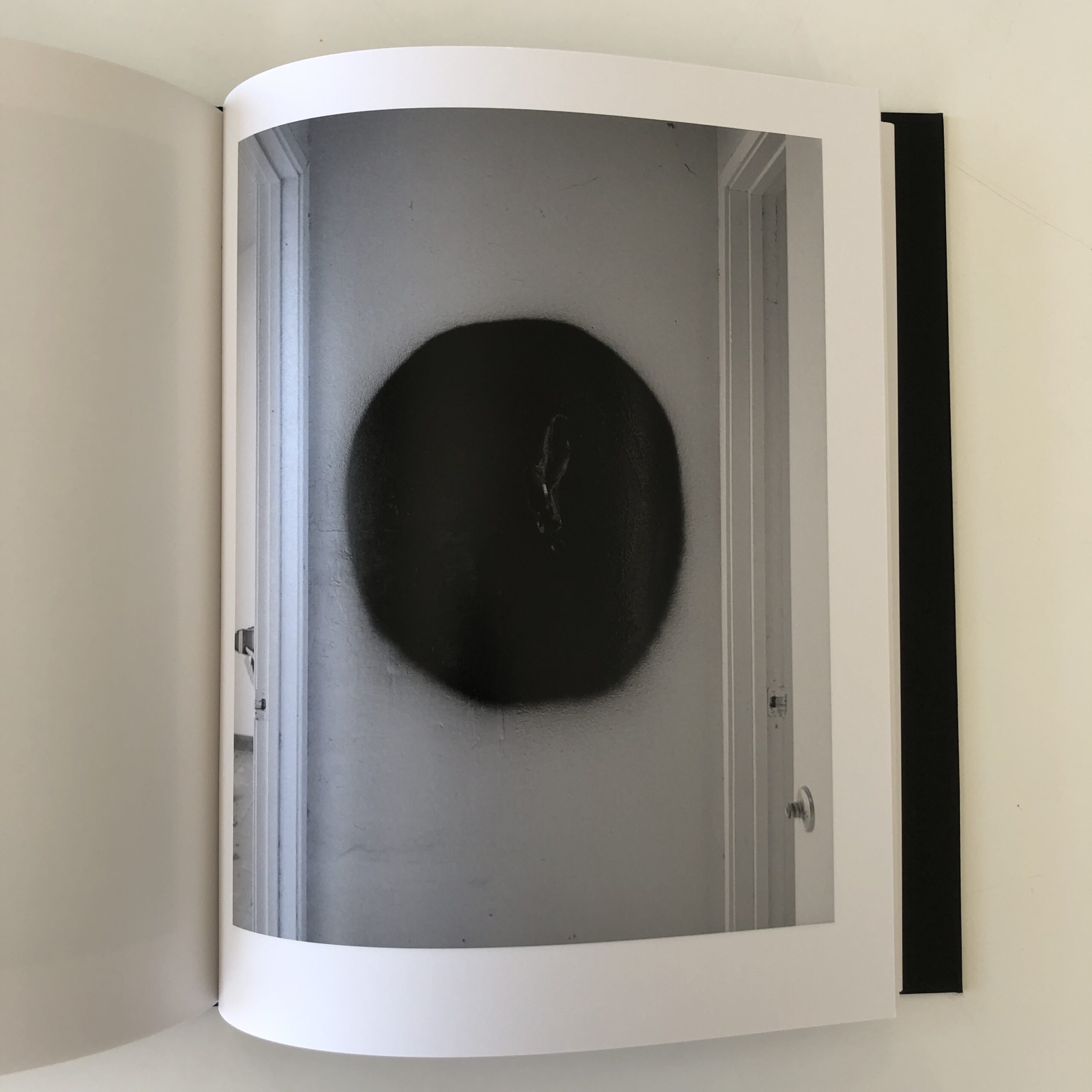
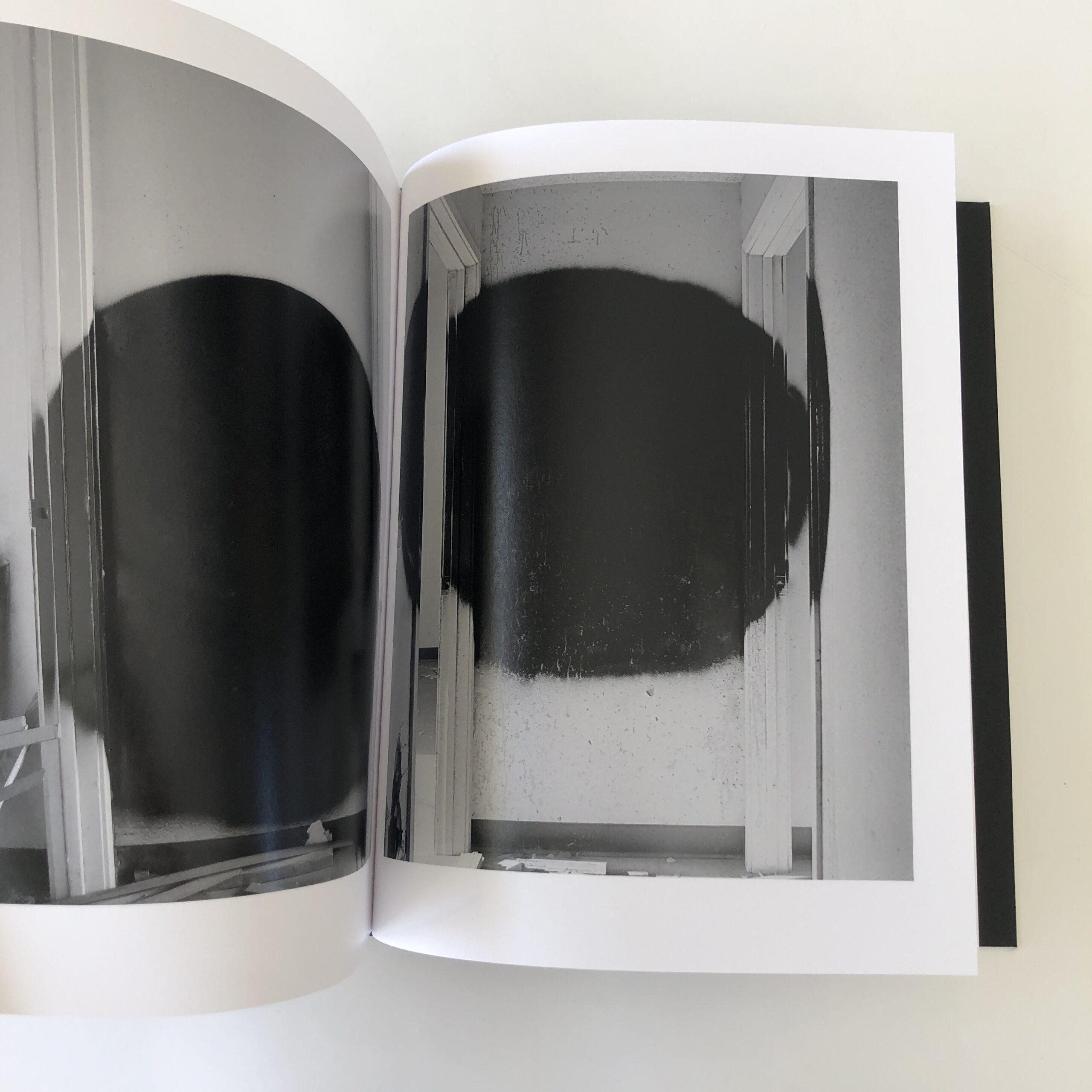
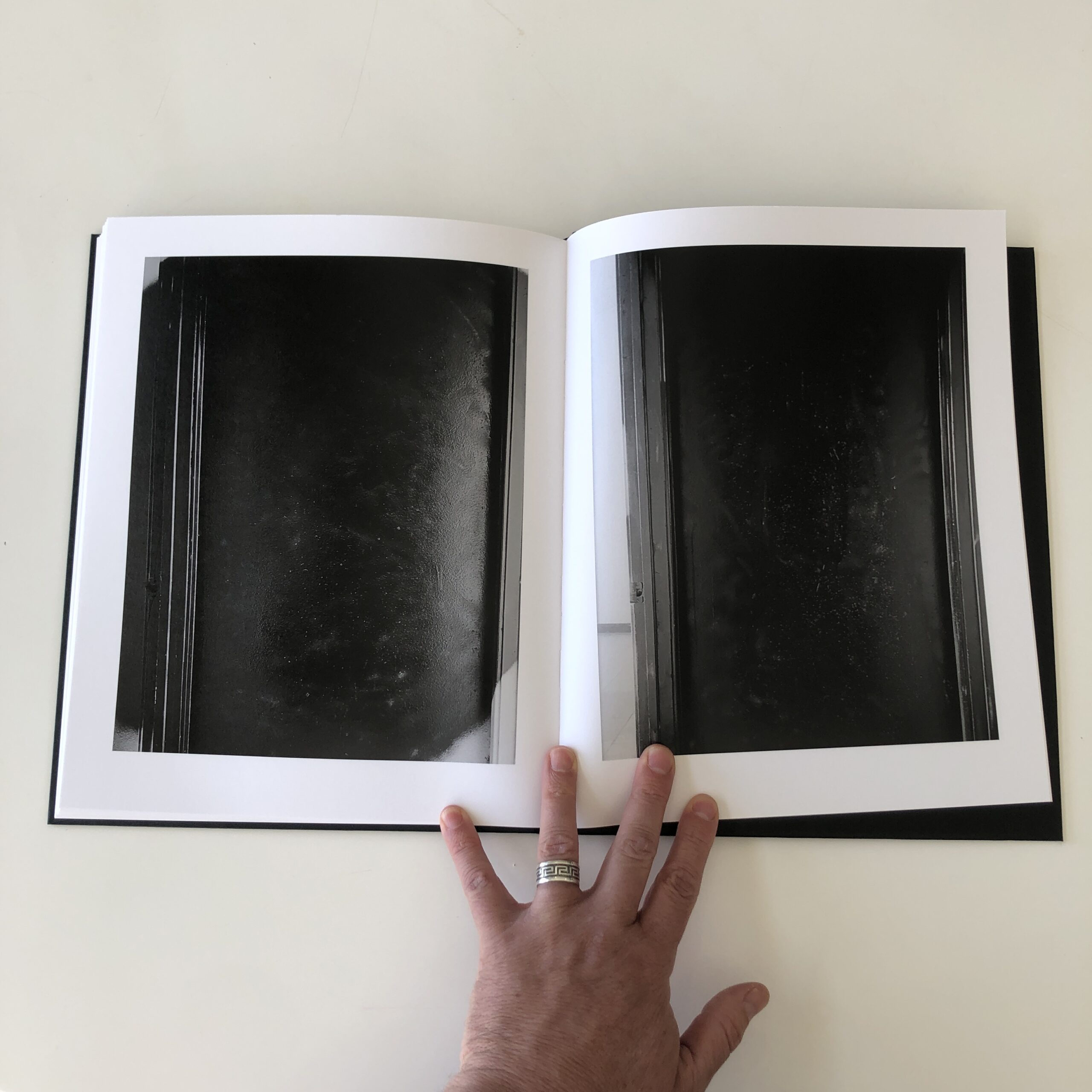
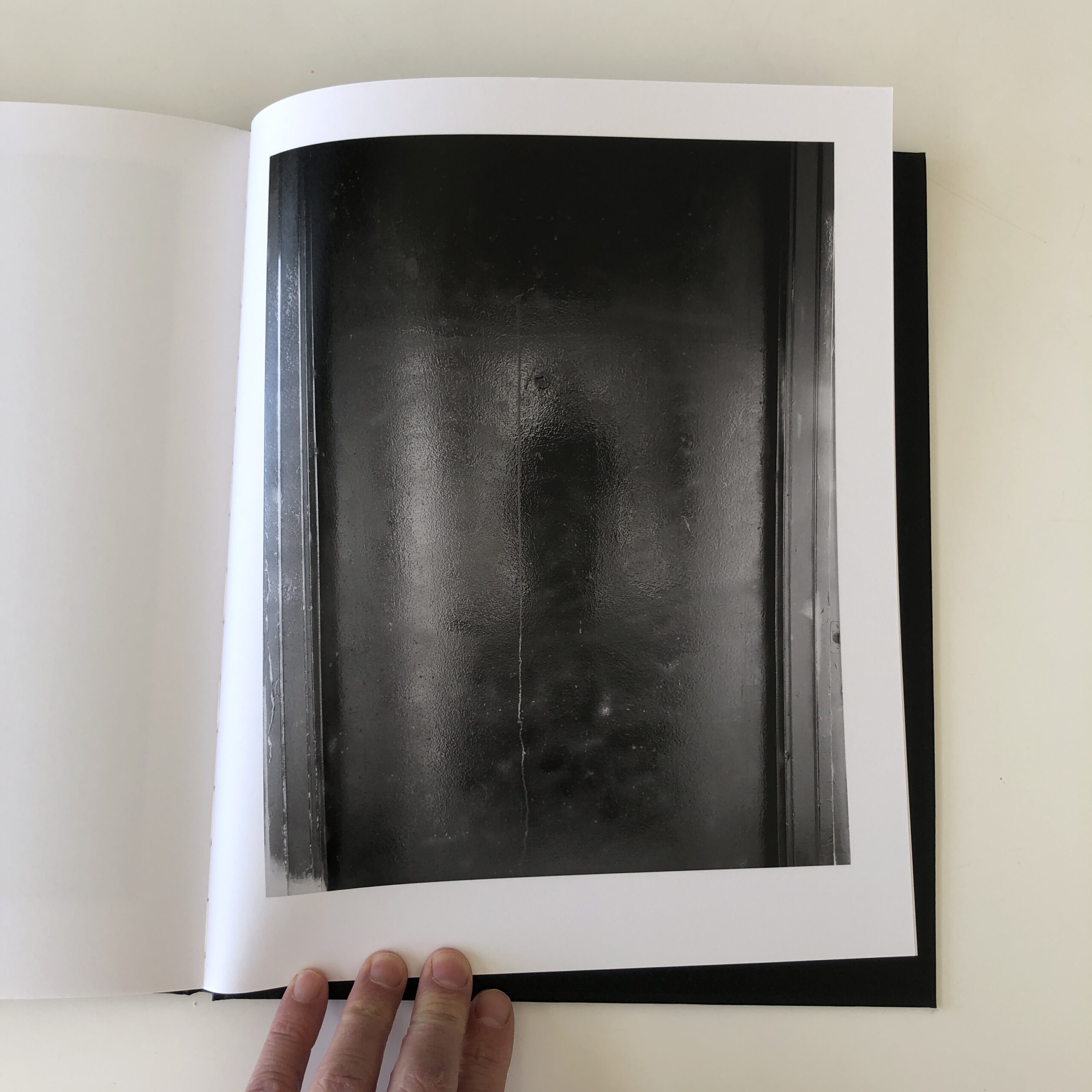
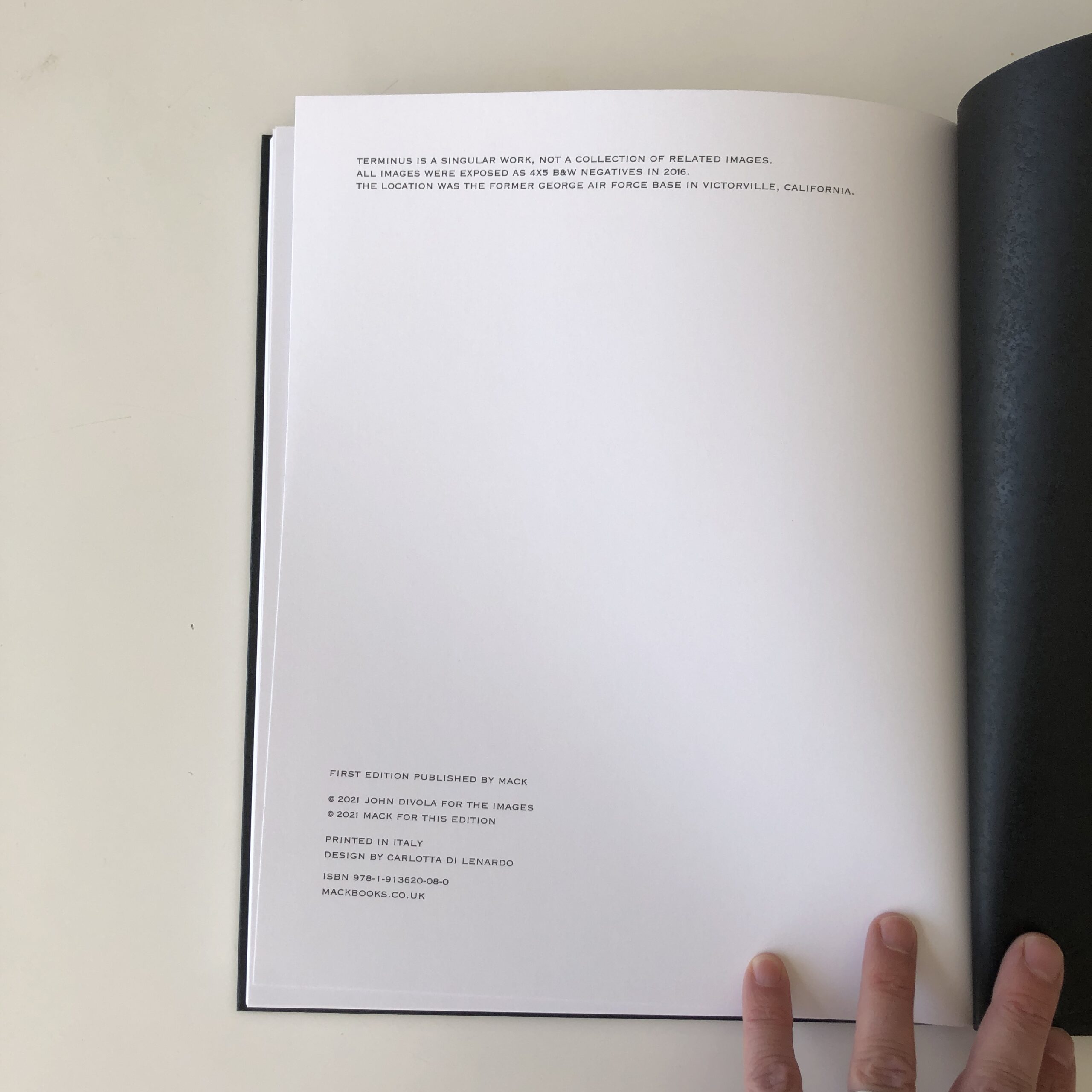
Rather, I spent a few minutes with the short, sleek, supremely-well-designed “Terminus,” by John Divola, published by Mack in 2021, and came out with a new set of ideas.
Full disclosure, (as they say,) I know John personally, having interviewed him twice for Vice and the NYT, and then we had brunch and lunch together IRL.
I’ve reviewed many books by people I know, but as John is something of an art-star, with a recent history of controversy, I thought it appropriate to come clean.
Because I wouldn’t want you to read this without context.
Frankly, for a while there, as I was turning the pages, I was more worried about how he’d respond to a negative review.
(Which is where we were trending, until near the book’s end.)
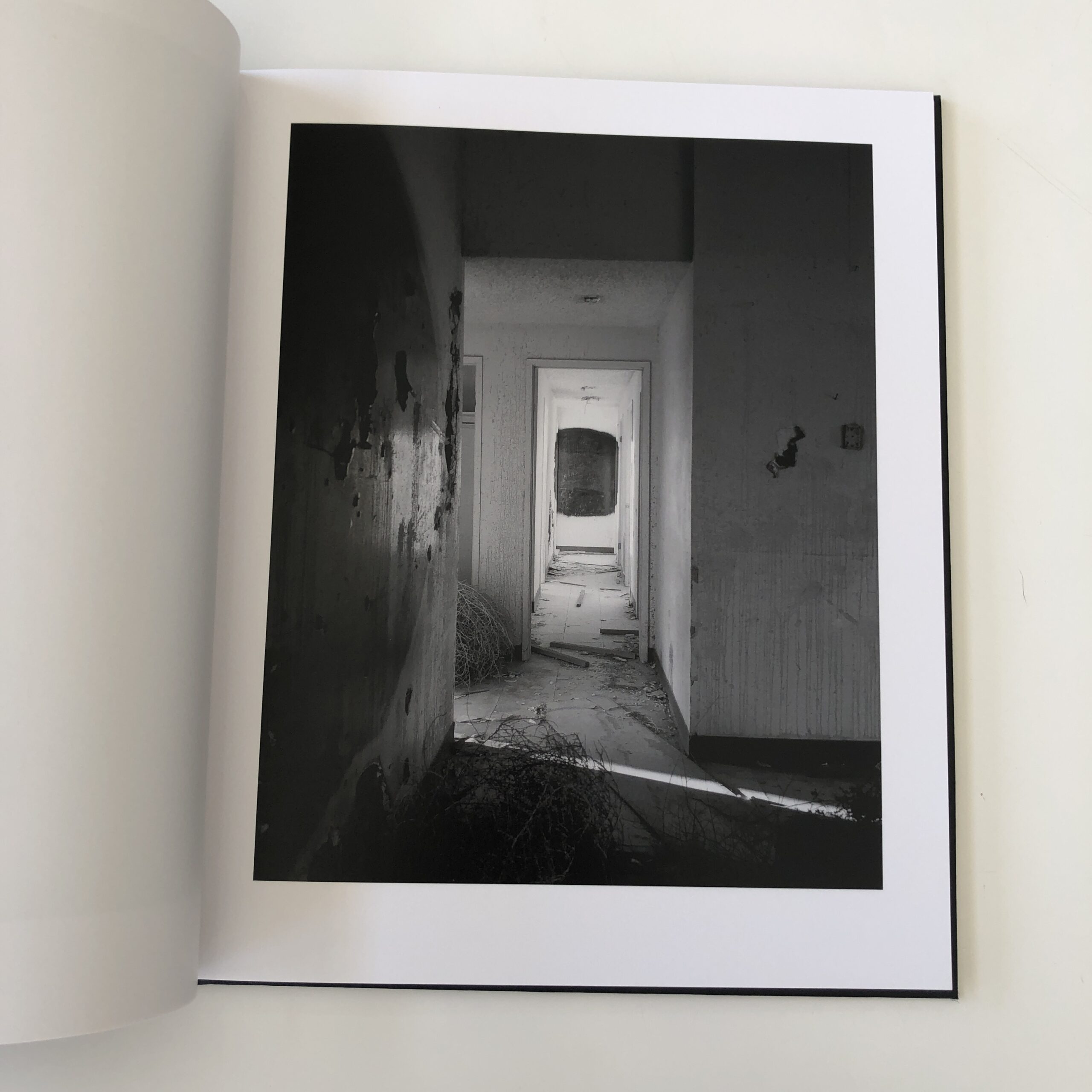
I know from speaking with John, and from his Instagram and FB feeds, that he’s been working for years at an abandoned Air Force base in Victorville, California.
I also know he’s insanely bright, and has his own ideas about what his work means.
When I interviewed him years ago, convinced he was just being a graffiti punk, back in the 70s, wreaking havoc in abandoned buildings, in the spirit of “The Warriors” era time period, he shot all my theories down.
No, not at all, he said.
He was making marks.
Painting abstraction.
The spaces were there, empty, so he made his paintings in the quiet.
The broken glass, piss on the floors, and general mayhem evidenced in his seminal “Zuma” series, shot in Malibu of all places, was incidental to the process.
Not the point.
These days, I feel more comfortable disagreeing, because of course he knows what his motivations were, but he can’t claim supreme knowledge of what the art is actually “about.”
All “Zuma” images courtesy of Divola.com
I’ve loved most of what I saw from his new project.
It’s anarchic and cool.
Like a late-career revisiting of “Zuma,” but now he’s transgressing on American Military property.
And there is a nice range of imagery within the larger work.
But not in “Terminus.”
No.
The title, (which means the end of the line,) is foreboding, but still the book reveals itself slowly.
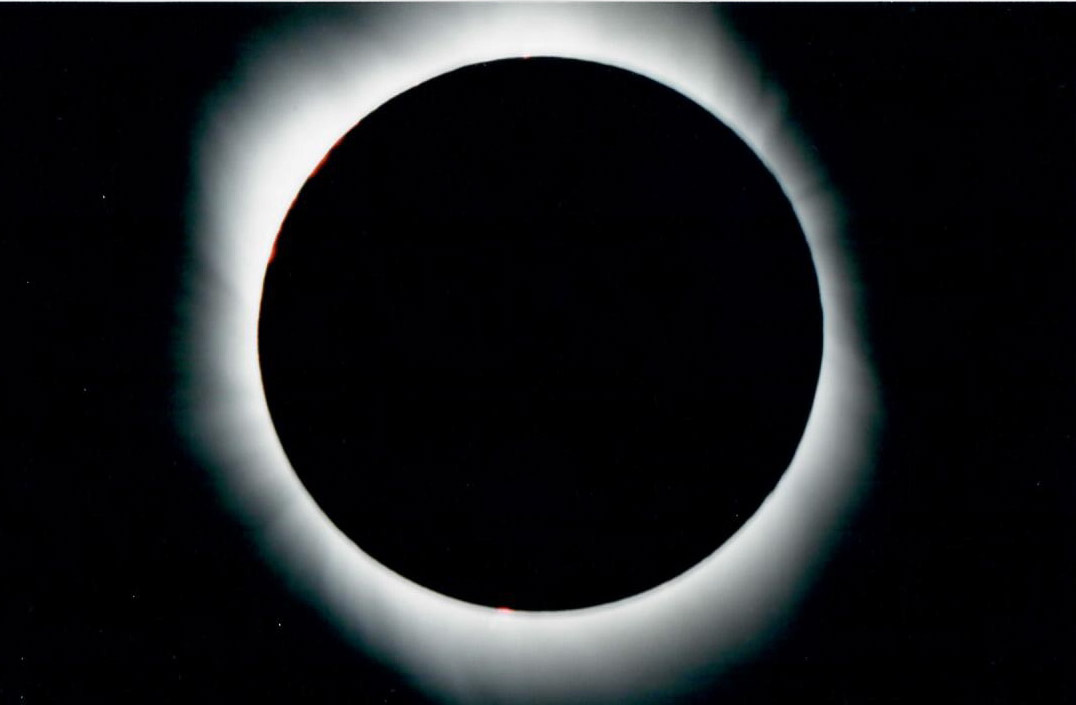
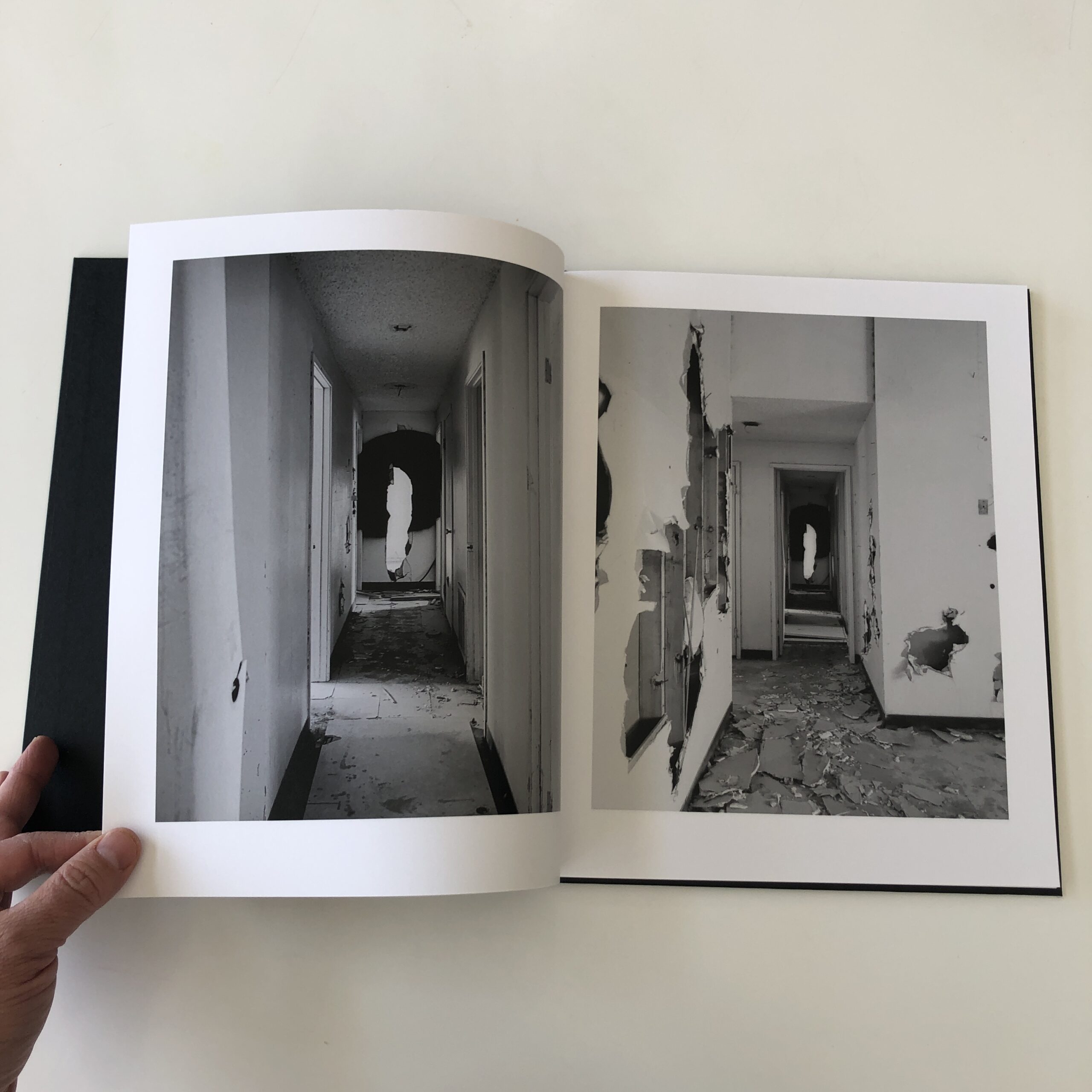
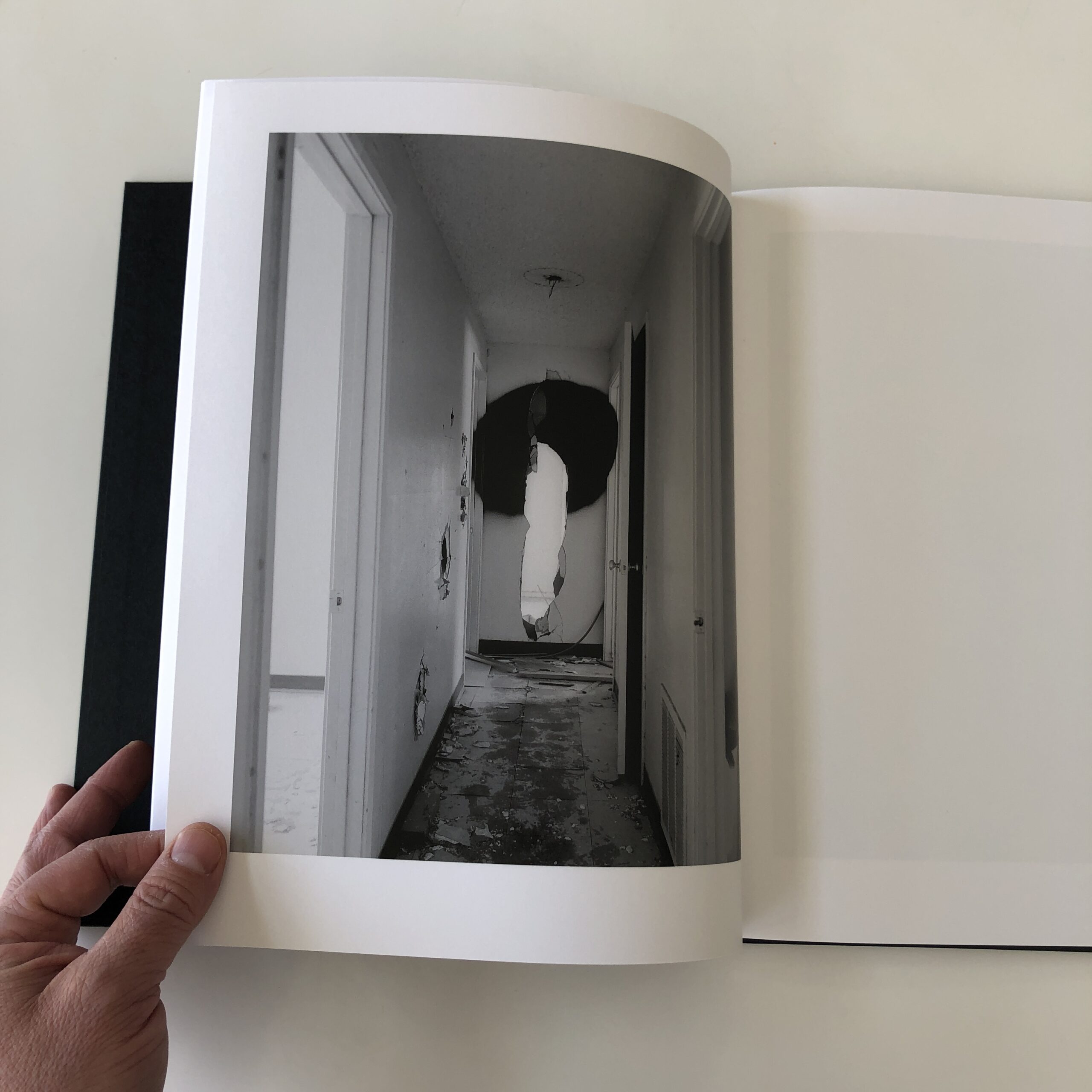
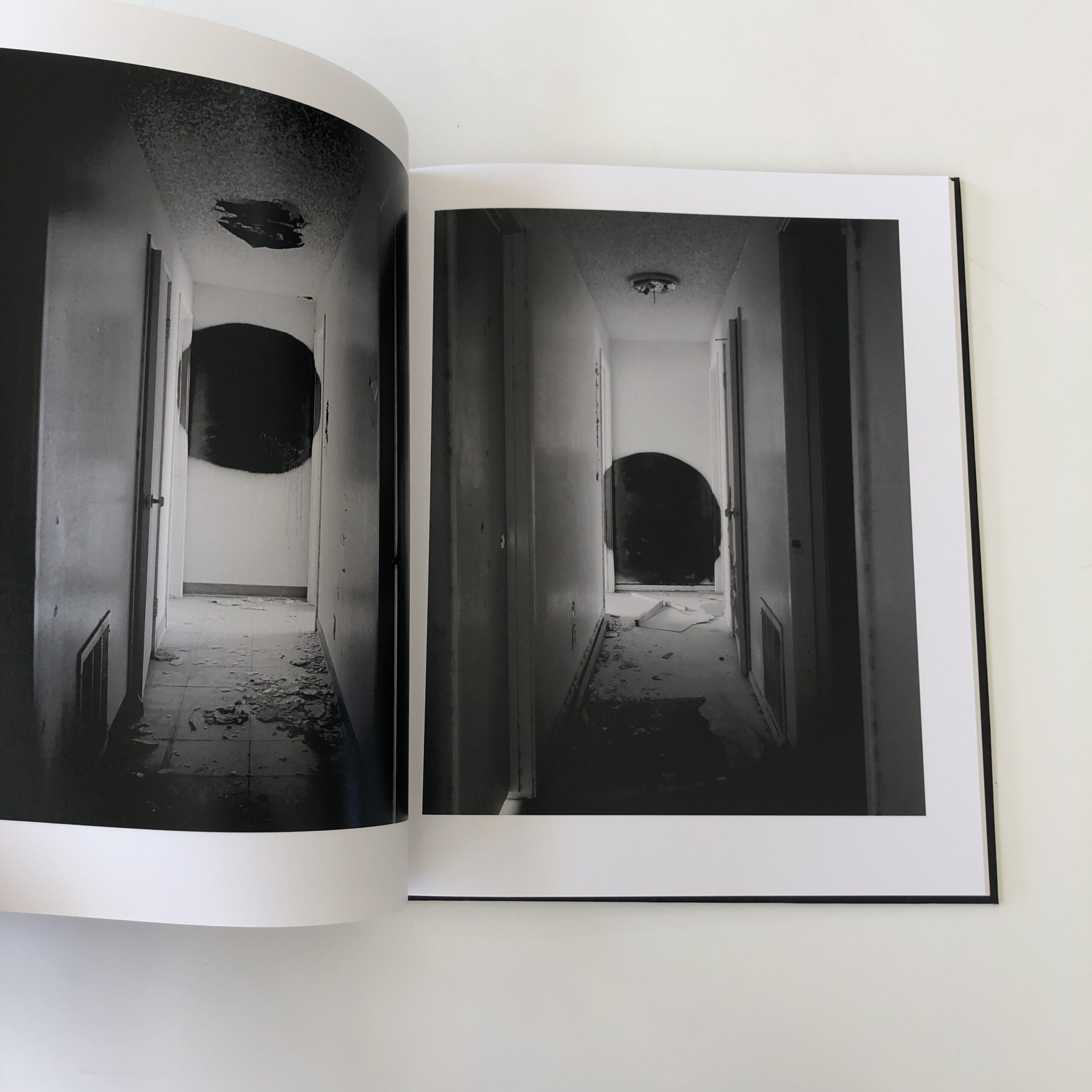
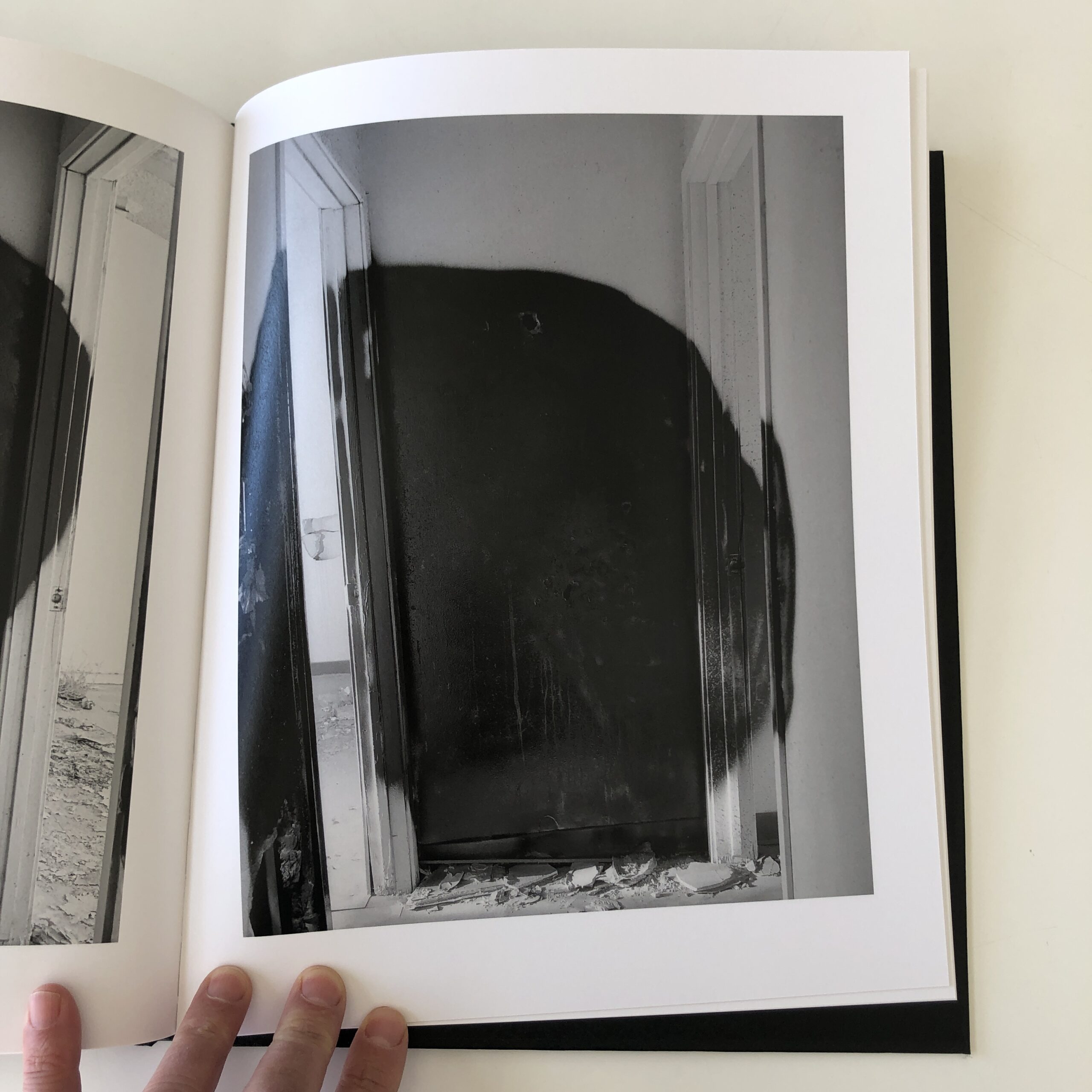
Like the gorgeous black orb on the cover, page after page, we see orb-like black paint, graffiti style, as the end of a hallway.
(Rather, I assume it’s several hallways.)
As I turned the pages, I literally thought to myself, “Damn, the audience is going to hate this one, and hate me for reviewing it.”
They’ll think, “How myopic can you get? One meta-image, over and over again? Why make a book?”
I wondered, in a project with a range of images, why just this one repeating motif?
Over and over again.
The orb in the distance.
But then, something changed.
The orb was no longer looming ahead.
It was getting closer.
And closer.
Until finally, it was close enough to make me feel compressed.
Claustrophobic.
WTF?
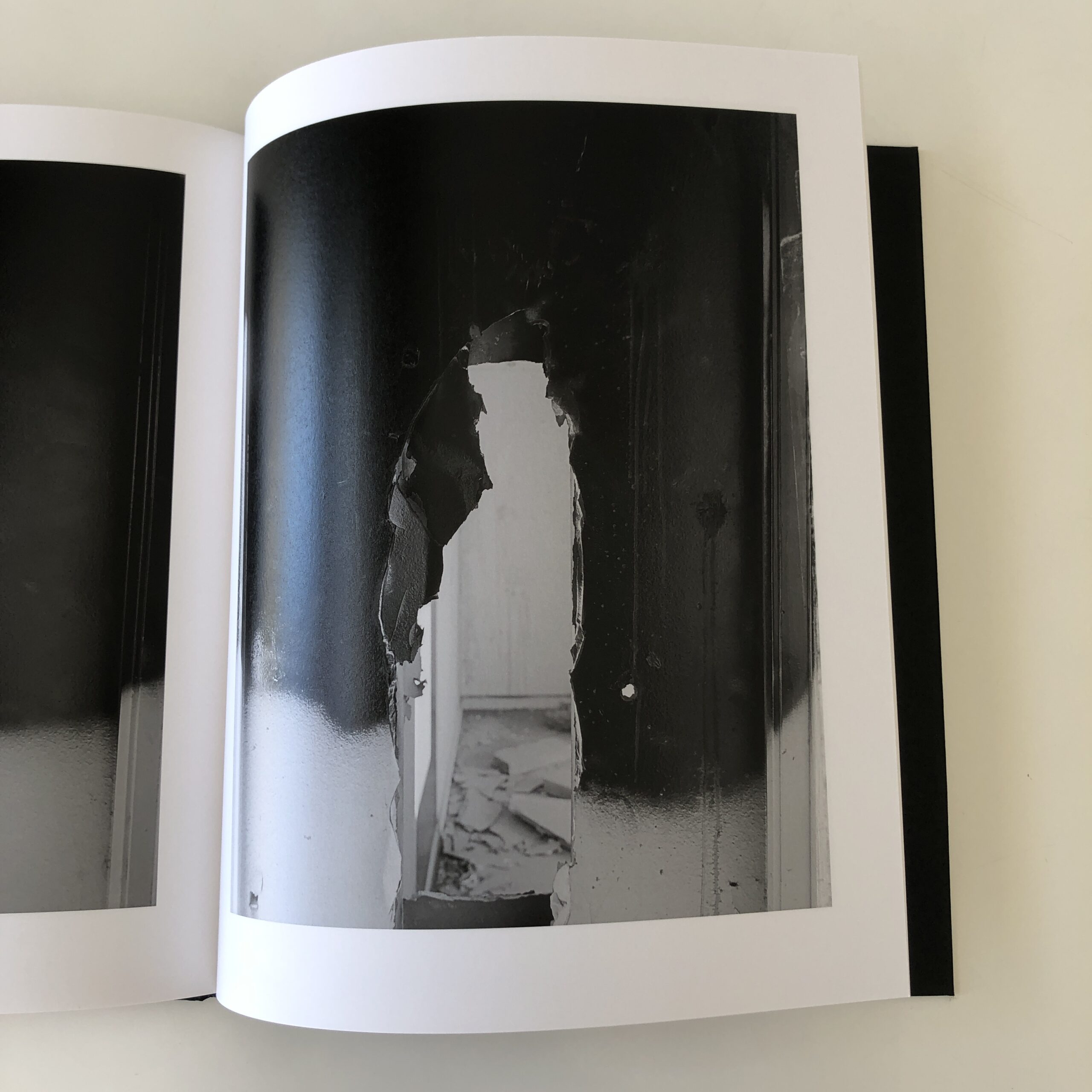
Then it was there, so close you could touch it, and after literally breaking through, to see to the other side, what did we get?
More black void.
Right in your face.
I reminded myself to take a few breaths, because my understanding of the book changed so quickly.
So drastically.
This is about death.
The end.
And just when you think you can peek behind, to see what’s there, it’s even bleaker.
More void.
(That’s heavy, dude.)
As with many Mack books, this one is lean and spare in its textual offerings.
There is almost no text at all.
But on the last page, the artist writes, “Terminus is a singular work, not a collection of related images.”
(Tell me something I don’t know.)
John Divola can, and might, disagree with my reading.
Perhaps he’ll find it too literal.
Or metaphorical?
If so, I would say he’s wrong.
This book is about as good a symbolic representation of the the human condition as I’ve seen.
We all know we’re going to die, eventually.
But no one wants it to happen, and we all hope to get the longest possible lives.
Because Death is so permanent.
My mother-in-law, Bonnie, is/was one of the fiercest people I’ve ever met.
Strong of body and mind.
Capable of intense love, and a massive maternal instinct.
She thought she’d never want to live in such a compromised state.
But she was wrong.
Because, as I’ve seen with my own eyes, she isn’t ready to die.
And neither, (I suspect,) is John Divola.
Hopefully he’ll keep making provocative art for us, to nourish our minds and our spirits.
If you’d like to submit a book for potential review, please email me at jonathanblaustein@gmail.com. We are particularly interested in books by artists of color, and female photographers, so we may maintain a balanced program. And please be advised, we currently have a significant backlog of books for review.
The Art of the Personal Project is a crucial element to let potential buyers see how you think creatively on your own. I am drawn to personal projects that have an interesting vision or that show something I have never seen before. In this thread, I’ll include a link to each personal project with the artist statement so you can see more of the project. Please note: This thread is not affiliated with any company; I’m just featuring projects that I find. Please DO NOT send me your work. I do not take submissions.
I love working on personal projects, especially when they’re part of a series that I can fully explore. It just gives me so much freedom and a chance to play around with unusual ideas and techniques without having a concern for what the commercial value might be. Oftentimes a series like this one starts off with an idea that I’ll daydream about for a week or so until I’m ready to talk a friend or family member into helping me out. I have a group of muses that I tap into for favors like this and the crazier the idea is the better they like it.
What makes this series somewhat different is that I’ve kept coming back to it over the past 8 years with new ideas and lighting approaches. I don’t want to give away too much in terms of technique (the idea has already been knocked off by others), but I will say that it’s a pretty elaborate set. One thing I’ll share is that since my “models” are under water it’s not always easy to communicate with them on what I’d like them to try, so sometimes after a little coaching I’ll give them the cable release and let them shoot the portraits when they feel they are at their photogenic best!
APE contributor Suzanne Sease currently works as a consultant for photographers and illustrators around the world. She has been involved in the photography and illustration industry since the mid 80s. After establishing the art-buying department at The Martin Agency, then working for Kaplan-Thaler, Capital One, Best Buy and numerous smaller agencies and companies, she decided to be a consultant in 1999. She has a new Twitter feed with helpful marketing information because she believes that marketing should be driven by brand and not by specialty. Follow her at @SuzanneSease. Instagram
Success is more than a matter of your talent. It’s also a matter of doing a better job presenting it. And that is what I do with decades of agency and in-house experience.
Heather Elder of Heather Elder Represents reached out to me yesterday to get the word out about helping the people of Ukraine through donations for beautiful photographic prints. There is a link for other photographers beyond her roster to join in the efforts to help. Together we can make a difference.
Photography has a unique ability to connect us to people in ways that words simply cannot. And, when disaster or life changing events hit, photography has the power to bring us together and remind usof our collective experiences and shared humanity.
With this understanding, Giving Photography was created to connect people and artists who want to make a difference, all while making the world a little more beautiful. And, right now, we want to focus our attention and efforts on aide to Ukraine. Whetheryou are a photographer, or someone interested in making a donation in exchange for print, we invite you to join us.
Link here if you are a photographer or artist who would like to use the #Giving Photography and your own social platforms to offer prints in exchange for donations.
Link here if you are looking to make a donation in exchange for a print. Or explore the #GivingPhotography for more options.
Giving Photography understands that people want to make a difference in the world and want to lead positive and impactful lives. By connecting photographers to buyers with shared philanthropic interests, Giving Photography can become the catalyst to start meaningful conversations around urgent issues and raise money to help support them; all while making the world a little more beautiful.
To see more of the prints and charities being supported, check out our website or follow us on Instagram.
APE contributor Suzanne Sease weekly post “The Art of the Personal Project” can be viewed every Thursday.
Heidi: Nearly 1/3 of your life has gone to protecting the old growth and co-founding Ancient Forest Alliance. When did you realize you could blend photography and activism as a career? TJ: I started to consider that possibility during photo school way back in 2007 when I was volunteering with environmental groups and shooting photos to help with their campaigns. I could see it was a powerful tool but it was hard to imagine it becoming a full time job though. Then, in 2010, the opportunity arose to launch the Ancient Forest Alliance with my friend Ken Wu. All of a sudden I was able to dedicate the time needed to explore and document the forests of Vancouver Island and BC. There were surprisingly few, if any people doing that at the time so it was exciting to get out there and really start highlighting the good and the bad. Here we are 12 years later, stronger than ever.
When you came across the 216 foot tall Douglas fir called “Big Lonely Doug” standing tall amongst the clear cut on Vancouver Island, what emotions came up when you took photos of the tree? Seeing Big Lonely Doug for the first time was heartbreaking. I had gone out that day in February 2012 to explore that exact location and when I arrived, all the trees were freshly cut down. Two years before I had explored the forest adjacent to Big Lonely Doug (now known as Eden Grove) and was returning to see what else lay hidden in the woods. I often wonder how history could have played out differently had we found Doug before the forest was clearcut around him. We had recently been successful in protecting Avatar Grove just down the road and with that momentum, we might have been able to do the same there. But things didn’t go that way. Maybe Doug’s higher purpose was to draw lasting attention to the plight of ancient forests in BC to the world abroad, which he continues to do to this day.
What’s your creative approach to photographing a 216 foot tree from the ground?
I’ve captured photos of Doug in a variety of ways: wide angles from the base, telephotos from a distance, fisheye from the top, drones from the air, and hanging out the side of a helicopter. It’s been a really interesting subject and friend to return to time and time again. Of course, one of the most unique things about Doug is that you can actually see the full height of the tree from top to bottom. Placing a person at the base really gives you a sense of the monumental scale of a tree that’s more than 4m or 12ft wide and over 20 stories tall. When we teamed up with professional tree climbers to help measure the tree, having a person dangling from the side of the trunk was also a wild perspective.
Did you expect these images to go viral? In this case I think we did. As a photographer trying to explain a complex issue, the more you can distill the various concepts and feelings into a single image, the greater the impact be. Big Lonely Doug tells the whole story in one scene. It highlights both the beauty and grandeur of BC’s ancient forests and their unfortunate destruction. I think it also shocked people that logging like this was still happening during modern times here in Canada. It looks more like a scene out of the 1800’s before people may have known better. But instead, here we have the second largest Douglas-fir tree in Canada, surrounded by giant stumps, in a logging operation approved by the BC government. People were shocked and still are today.
Tell us about your photography process and set up, since you are in several of your own photos I assume to add scale and a human element. Since I’m often exploring alone, I have to be self-sufficient. In my pack I carry my photo gear, tripod, food/water, and emergency gear and communication. Pre-trip, I will have scoped out a specific forest via satellite imagery and then have those maps loaded on my phone in the field. I then hike in and when I find something I would like to photograph, I set up my tripod and walk into the shot. I can control my camera from my phone which helps me determine where to stand and not have to run to beat the timer! Having a person for scale is the only way to truly grasp the size of these trees or stumps. I feel it also allows people to step into the scene and imagine being there themselves.
How difficult is it to get to these groves? Most of the areas I’m photographing are quite remote and difficult to get to, which is a big part of why conservation photography is vital in getting the word out far and wide. Here’s a trip from yesterday for example: woke up at 4am, drove four hours to reach a remote valley, bushwhacked and photographed from dawn to dusk in a beautiful grove of giant trees that sadly are at imminent risk of being cut down, then a four hour drive back home, arriving at 10pm. The terrain and weather can be challenging as well. There are no trails in the woods or clearcuts so it’s up and over logs, skidding down steep slopes, scrambling through bushes well over your head, getting cuts and bruises from various sharp things, while often getting completely soaked from the rain (it’s a rainforest after all). But on the other hand, being alone in a forest that looks like something out of a fairy tale can also be one of the most peaceful and serene experiences a person can have. You’re surrounded by five hundred to one thousand year old trees, colorful little mushrooms, sunbeams cascading through the foggy air – it’s worth every bit of effort. Especially knowing that it might not be there the next time you arrive.
“Art is the highest form of hope,” is a line first expressed by the German painter Gerhard Richter in 1982, with your photography what are you hoping for? My hope is to make people stop and feel something. I believe art can open doors into a person’s heart where it might otherwise be closed. Once that door is open, new information can be allowed in, including ideas and views they might not previously have been open to receiving.
My hope also is to expose the magnificent beauty and continued destruction of highly endangered ancient forests in BC to as wide of an audience as possible, ultimately helping to bring about the change needed to protect them.
Right now we are at a critical point in the history of the campaign to save ancient forests in BC. The government has accepted – in principle – recommendations from an independent science panel to temporarily defer logging of millions of hectares of the best old-growth across the province, pending approval from First Nations. This is in response to years of public pressure, fueled in large part by viral images we have shared of giant trees and giant stumps. Ultimately, permanent protection is necessary because, under BC’s current system of forestry where trees are re-logged on average every 50-60 years, old-growth forests are a non-renewable resource. Tree plantations do not adequately replicate the complex and diverse ecosystems that they’re replacing, so we have just one chance to keep ancient forests standing for the benefit of the climate, tourism, wild salmon, endangered species, and many First Nations cultures.
Though it’s sometimes too late to save the trees pictured in my photos, I hope the images motivate people to get involved and advocate for the protection of the forests that are still standing.
Aside from social media and its ability to scale and tell the uncensored truth of the logging, what other photo based technology are you using to protect the trees? In recent years I’ve found the use of drones really helpful. Technology has come a long way and now in as little as five minutes you can be up in the air, surveying and photographing forests or clearcuts from above. It’s such a unique perspective and cheaper/easier than flying. My next experiment with drones is to try and retrace flight paths after a forest has been cut to fade between the standing and fallen trees. Trail cameras are also pretty handy as well. I’ve just experimented using the basic game cameras you can buy online but they’re proven useful at capturing images of wildlife such as black bears and elk undisturbed. I keep hoping for a photo of a cougar.
How can folks help and get involved? We need everyone involved at this critical time. Folks can learn more and take action on our website at www.ancientforestalliance.org Sign up on our email list and follow us on social media so you hear about the latest action alerts, photos, and news. And always remember, we have more power than we think we do. Collectively, we can – and will – change the world.
AFA Instagram: www.instagram.com/ancientforestalliance | @ancientforestalliance
Instagram: www.instagram.com/tjwatt | @tjwatt
From my perspective, they’re the life-blood of the photo world, here in the US.
Few things have the potential to change your career, (and your life,) more than spending time among a group of your talented peers, where you can make new connections, create friendships, receive feedback on your work, see new art for inspiration, listen to lectures that light up your ideas, discover new opportunities, eat different food, and walk around a fresh environment.
It literally builds new neural pathways in your brain.
Photo festivals rock!
Our regular readers know I reviewed portfolios at most of the major American photography festivals, in the years leading up to the pandemic.
At one point or another, I attended Medium in San Diego, Filter in Chicago, PhotoNOLA in New Orleans , the NYT review, LACP’s Exposure, the Academy of Art University review in San Francisco, a festival in Santa Fe, and Photolucida in Portland.
Additionally, I was meant to go to the MOP Denver reviews last year, but they were held online, and I’ll be visiting the PhotoAlliance review in San Francisco in two weeks.
Courtesy of PhotoAlliance.com
For some reason, there has always been push-back against the idea of “pay-to-play,” and I was resistant to attending festivals myself, before a few colleagues talked sense to me in 2009.
I’ve reaped tremendous rewards, both as an artist and writer, and I’m telling you: it’s worth the financial and time investment.
(Plus, your tuition goes to support a non-profit organization, which is putting its energy directly into the community.)
The phrase “it takes money to make money” is correct, but that doesn’t mean it has to take A LOT of money.
Rather, it’s about finding value.
Good output requires good input.
Just as you wouldn’t expect to be healthy if you ate like Morgan Spurlock, when he filmed “Super Size Me,” it’s hard to make your best work if you’re not learning and growing.
Courtesy of MorganSpurlock.com
If you can’t see great art IRL, and share energy with people who are like-minded, but also very different from you, you’ll get stuck.
Which is where the festival circuit comes in.
If you attend a local event, you can likely save a lot of money on travel and accommodations.
So that’s a route to take, if your budget is tight.
(Many festivals also offer online components now, which is another value play, though you’ll miss out on most of what I’m hyping.)
Just off the top of my head, we’re talking about San Diego, Los Angeles, San Francisco, Denver, Portland, Houston, Chicago, New Orleans, Santa Fe, Boston, New York and Atlanta.
Which means most American photographers have a proper festival within a day’s drive.
(I guess the Hawaiians and Alaskans are shit out of luck.)
And the great thing about going to an event, with an open mind, an open heart, and the intention to press the flesh, is you simply don’t know what will come of it.
The combination of learning, wandering, listening, looking, laughing, eating, talking, drinking, thinking, and meeting new people is always worth the cost, because you’re guaranteed to emerge from the weekend a different person.
(Again, if you put yourself out there. Sitting quietly by yourself, and refusing to engage with others, or get out of your comfort zone if you’re an introvert, will undermine the effort, and exceeds the limits of my guarantee.)
One of the last festivals I attended before the world shut down was Photolucida, in Portland, April 2019.
The memories are so vivid.
I walked for miles, saw scores of photo projects, and ate amazing Thai food.
Walking around Portland.
I attended my first Hardcore Metal show, and was introduced to an entire subculture I didn’t even know existed.
I interviewed the bouncers there, at Dante’s, and then reported to you about the organized street fights, between different left and right-wing “gangs,” (for lack of a better word,) which was pretty cutting edge info, given what happened in PDX the following year.
(And is still happening, unfortunately.)
At Dante’s, where earplugs were a necessity
I’d never been to Portland before, and trying to understand an entirely new local culture, walking around the oddly-compressed downtown, (where I struggled to find the perfect vantage point to get my bearings,) smoking weed on the famed river bridges while talking to a great friend, it all made me richer, emotionally.
Smarter.
Happier.
Better.
If I close my eyes now, I can see events play out in my mind’s eye.
These are the types of experiences we all need, to rebuild our psyches, our creativity, and our sense of self, after one of the most brutal two-year stretches in American history.
(As the President himself said, in his State of the Union address the other night.)
And that’s without even mentioning the PTSD people feel this week, watching an unjust war play out in Ukraine, on their device screens, helpless to stop the onslaught of death and misery.
You feel me?
While I was in Portland, I also met some of the members of the local arts group, the Small Talk Collective.
Courtesy of Smalltalkcollective.com
Like many artists before them, these women joined forces, to support each other as people, as creators, and to make new opportunities for themselves, and members of the “female-identifying, nonbinary, BIPOC and LGBTQIA+” community.
When positive, supportive people stick together, and pull in the same direction towards a common goal, really good things happen.
And wouldn’t you know it, but today, I pulled a little envelope sleeve from my book stack, (which arrived in June 2021,) and it had a postmark from the Small Talk Collective, featuring a slim publication to publicize a new venture.
According to the letter affixed to the outside of the attached ‘zine, the group started their own gallery, Strange Paradise, in the Disjecta Contemporary Arts Center, which is pretty phenomenal.
(And their text mentioned how important such gestures are, coming out of a period of intense isolation.)
The very simple ‘zine, called “Reverberations: Vol.1,” featured work from the first two solo shows the gallery presented, in May/June/July 2021, by Kelda Van Patten and Marilyn Montufar.
It’s a sleek, cool little offering, for sure.
The ‘zine reads more like a promotional piece, than a proper art object in its own right, but so what?
(Not everything can nail the gestalt effect, where the whole becomes greater than the sum of its parts.)
Partly, it’s because the writing skews towards artist statement, rather than audience engagement, and because the two included projects are not an obvious fit.
They compliment each other with color palette, and overall image quality, but Kelda Van Patten makes IRL/digital collage work, from still lives, and Marilyn Montufar documented local culture in the hinterlands of Northern Mexico.
(In Chihuahua, where most tourists never, ever go.)
Now, before you assume this is one of those reviews that skews negative, I like this ‘zine a lot.
It’s well-produced and engaging, featuring strong photography within, and all the information you need to figure out its intent.
Furthermore, given most people focused on the high-end production fees I shared, in my recent “Making a Book” column, few seemed to grasp the embedded advice, that a professional-looking publication can impress, on next-to-no money.
This is a great example.
I’m assuming it was printed with a fine-art inkjet printer, double-sided, on a simple, low-weight rag paper, (or newsprint,) but it’s possible these pages come from a high-quality color copier.
You can imagine the Small Talk Collective members, (Audra Osborne, Jennifer Timmer Trail, Kristy Hruska, and Marico Fayre) patiently folding the 4-printed-pages together, with a straight edge, then carefully jamming two staples into the middle, thereby taking separate papers, and making them into a holistic object.
How much could each copy possibly cost to produce? (Not including postage.)
$1?
$2?
$3?
There’s no way it cost more than that, yet here I am, impressed, writing about it.
I now know who these artists are, (again, a benefit, if you’re promoting their exhibitions,) I know the Small Talk Collective has a gallery, and that they’re making publications.
I like this ‘zine, which means I also now have a positive impression of the Small Talk Collective, whereas yesterday, they were not in my consciousness.
If you think back to the mega-column on publishing, I wrote about combining your budget and your vision, with a sense of value and purpose.
Today’s publication is a perfect example of that.
Don’t spend more than you can afford.
And don’t overcomplicate things, if you don’t have to.
If you’d like to submit a book for potential review, please email me at jonathanblaustein@gmail.com. We are particularly interested in books by artists of color, and female photographers, so we may maintain a balanced program. And please be advised, we currently have a significant backlog of books for review.
The Art of the Personal Project is a crucial element to let potential buyers see how you think creatively on your own. I am drawn to personal projects that have an interesting vision or that show something I have never seen before. In this thread, I’ll include a link to each personal project with the artist statement so you can see more of the project. Please note: This thread is not affiliated with any company; I’m just featuring projects that I find. Please DO NOT send me your work. I do not take submissions.
“People are afraid to merge on freeways in Los Angeles.”
—Bret Easton Ellis
Los Angeles could be described as Surrealism in full sunlight.
The physical debris of Los Angeles—sooty palm fronds littered along crooked sidewalks, a maze of intertwined freeways, electric LED sunsets—is reminiscent of Ray Bradbury’s “city of the future.”
As a follow up to Cerro Gordo, David Black’s debut monograph from 2017, The Days Change at Night explores the paranormality of everyday life in Los Angeles. Part two of an LA trilogy, Days Change picks up where Cerro Gordo left off, evoking the early 1980s punk aesthetic projected in Alex Cox’s Repo Man—a city on edge of an existential threat.
The images present a cyclical, day-to-night narrative, using the city’s landscape as a depository of our collected dreams. These visual glitches suggest the point of view of a passenger in a fast-moving car, racing past on LA’s expansive freeway system, capturing the stark polarity of the city’s opposing forces: light and dark, commercial and artistic, micro and macro—and they fuse together to pose questions about illusion, mortality, and truth.
As Raymond Chandler famously wrote, “A city rich and vigorous and full of pride, a city lost and beaten and full of emptiness.”
APE contributor Suzanne Sease currently works as a consultant for photographers and illustrators around the world. She has been involved in the photography and illustration industry since the mid 80s. After establishing the art-buying department at The Martin Agency, then working for Kaplan-Thaler, Capital One, Best Buy and numerous smaller agencies and companies, she decided to be a consultant in 1999. She has a new Twitter feed with helpful marketing information because she believes that marketing should be driven by brand and not by specialty. Follow her at @SuzanneSease. Instagram
Success is more than a matter of your talent. It’s also a matter of doing a better job presenting it. And that is what I do with decades of agency and in-house experience.