Ash Adams
The Art of Leaping Out of Planes to Fight Wildfires
Heidi: How did this assignment first come about, and what did you know about smokejumping before you began?
Ash: New Yorker photo editor Gabrielle Farina reached out, and I’m so glad she did. I was familiar with smokejumping in advance (from in and outside of Alaska), and I was delighted to work on this.
Was there a particular image or idea you wanted to pursue from the outset?
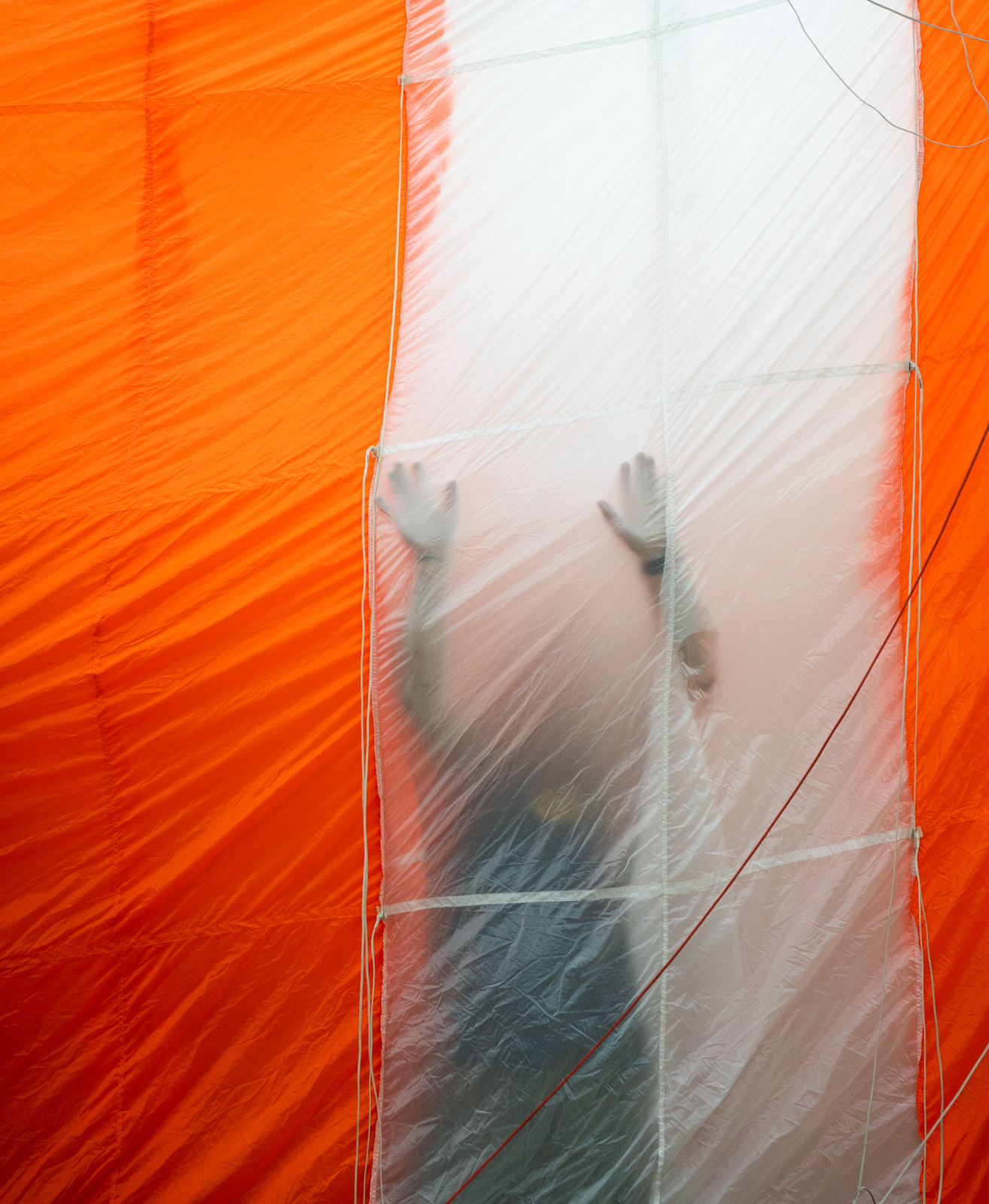
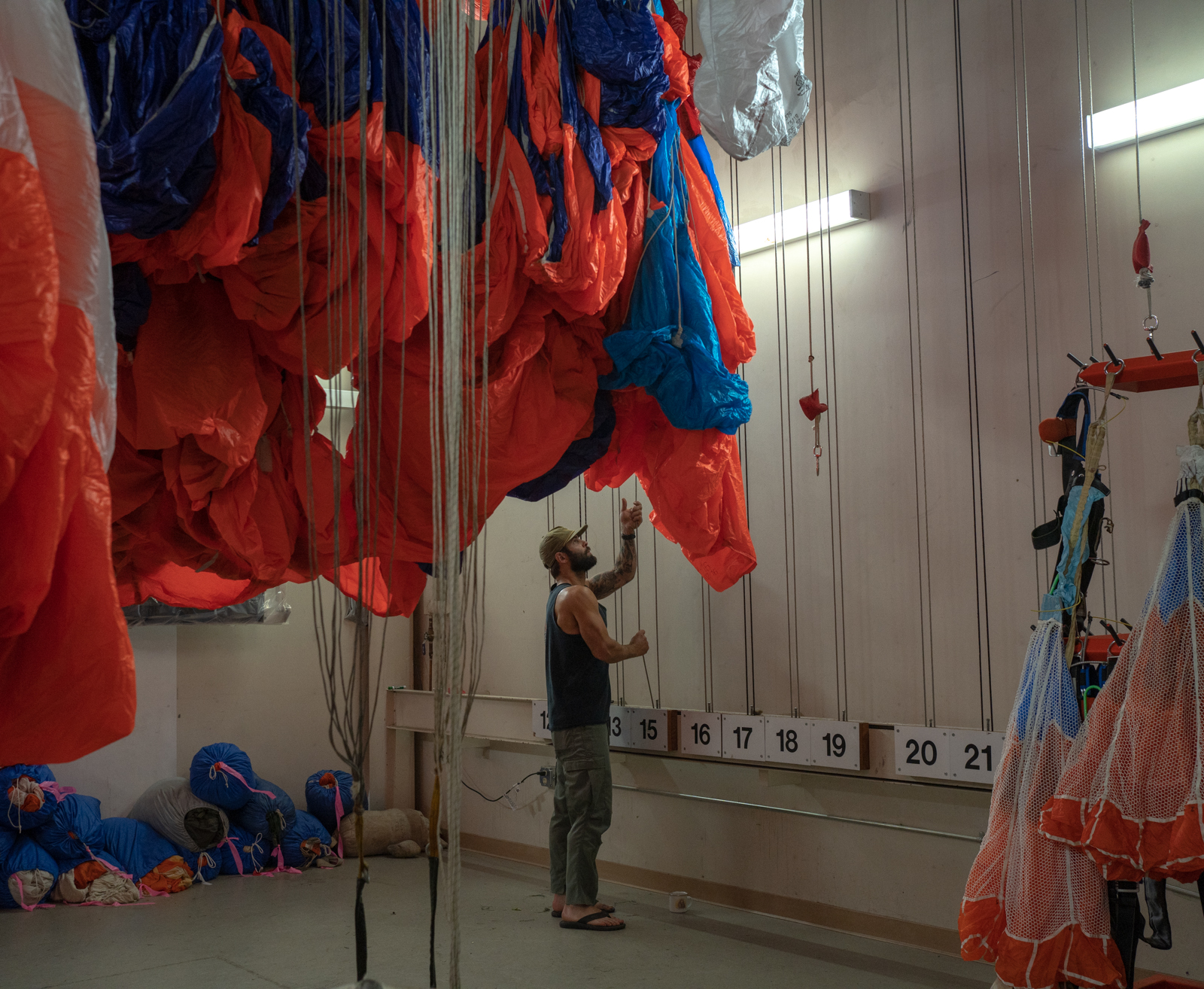
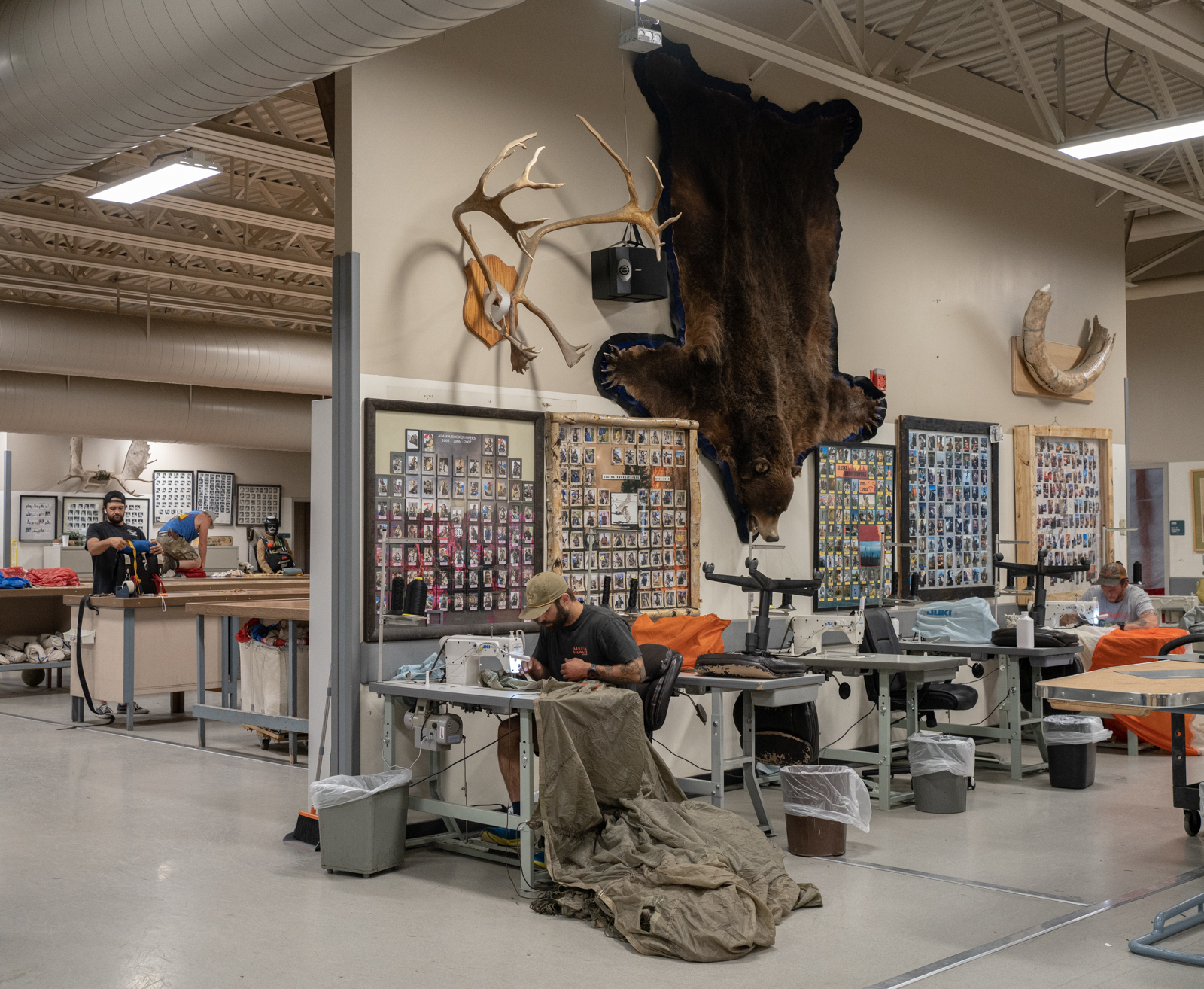
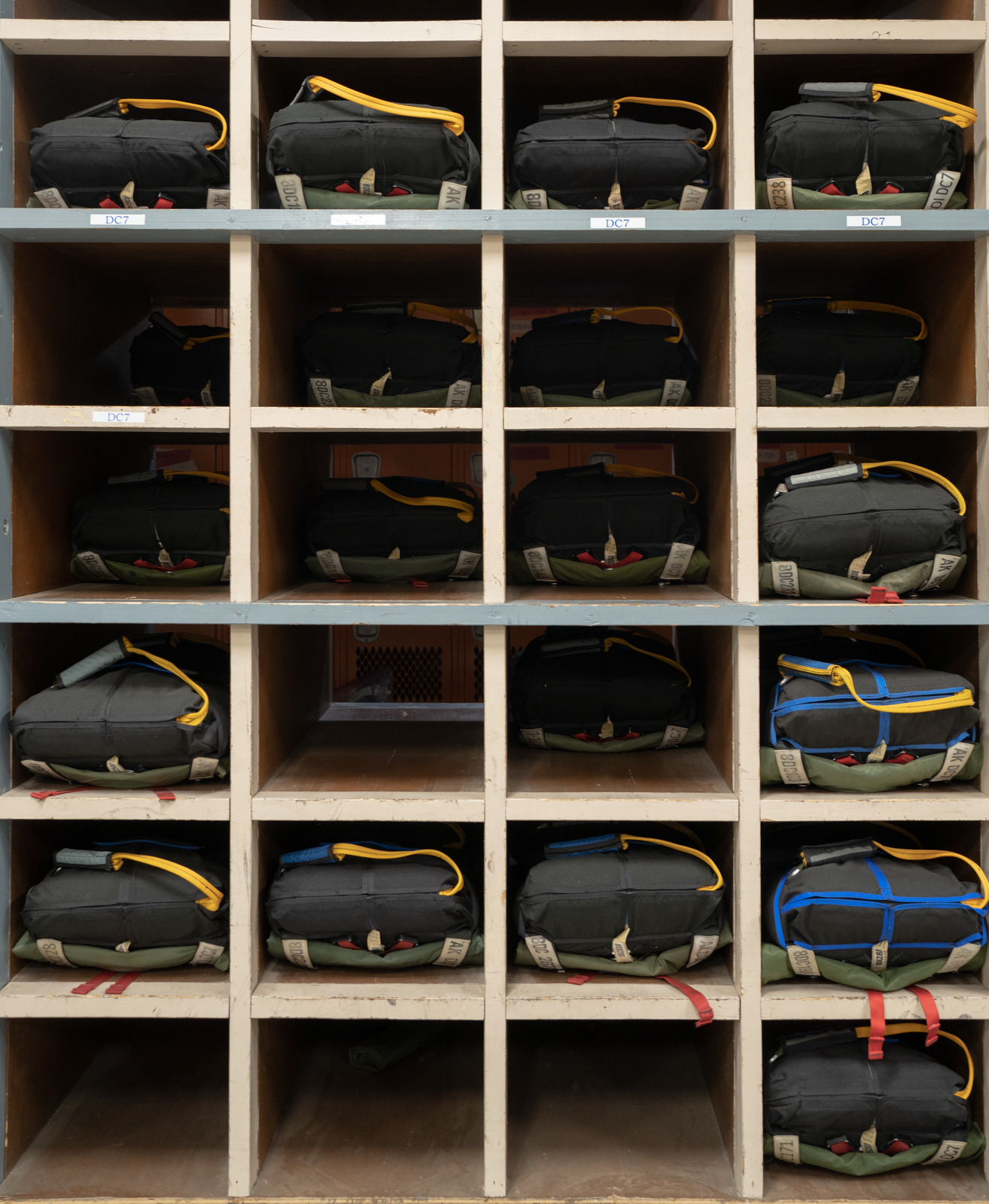
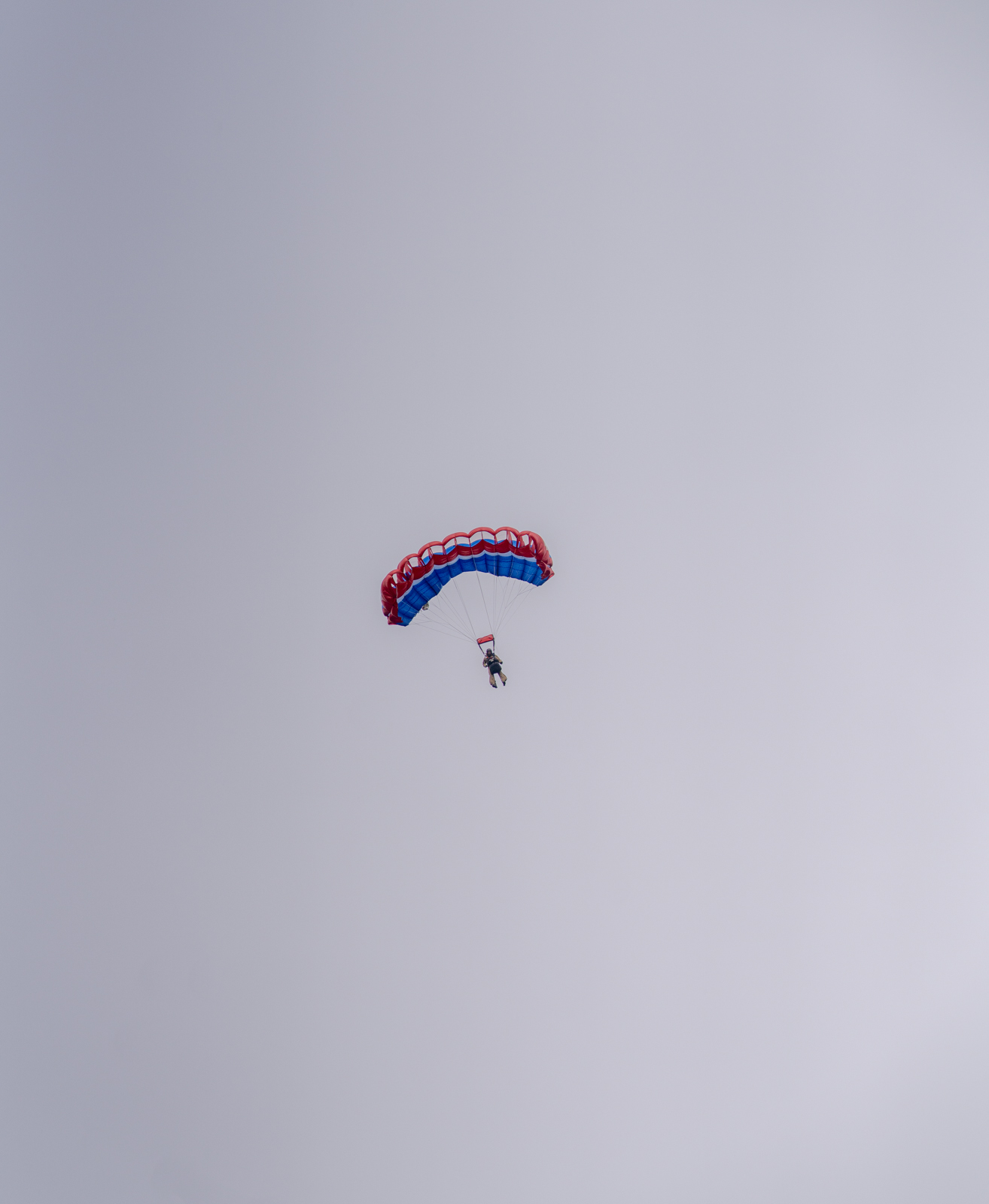
I was most interested in documenting days-in-the-life on the base. Instead of following an active fire, that felt like the most authentic way to show what the job looks like and the part people see less. Proficiency jumps show the skill required in jumping, but people know what that—jumping out of a plane—looks like. But I think few imagine jumping out of that plane with a thirty-year-old parachute you yourself inspected and stitched—that takes the skill required for the job and the stakes to a new level.
The smokejumpers’ work combines extraordinary risk with very ordinary routines. How did you try to hold both of those things in the same visual story without making the job look either too heroic or too mundane?
I am one of those photojournalists who does not ever go into a story trying to make it look a certain way beyond maybe committing to film or digital, flash or no. That said, I am absolutely in the room; I am as objective as I can be, but still in the room. I bring with me the facts I have in advance and then take in the visual and environmental information of what’s there, which includes what it feels like, and intentionally put frames around scenes to try to communicate those things.
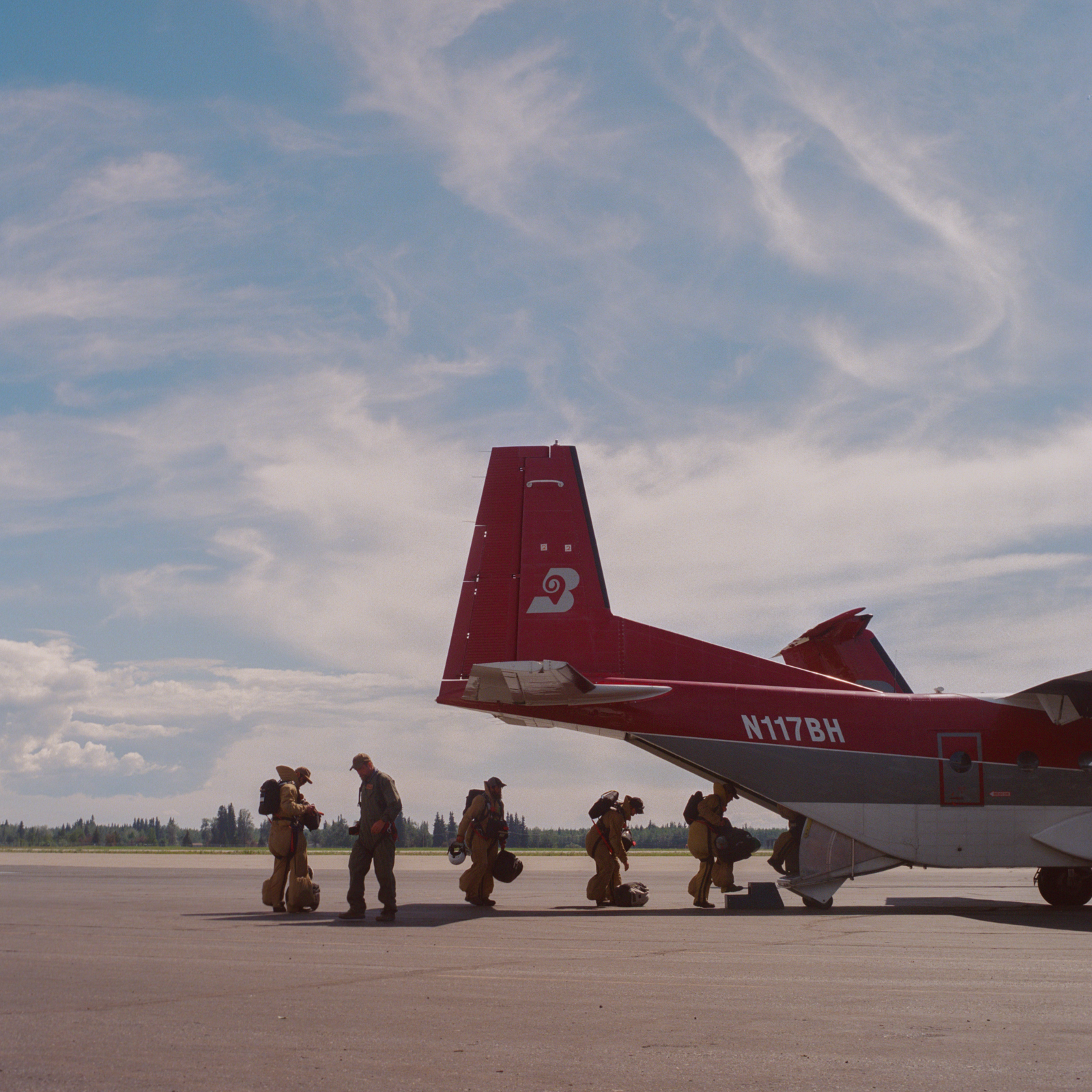
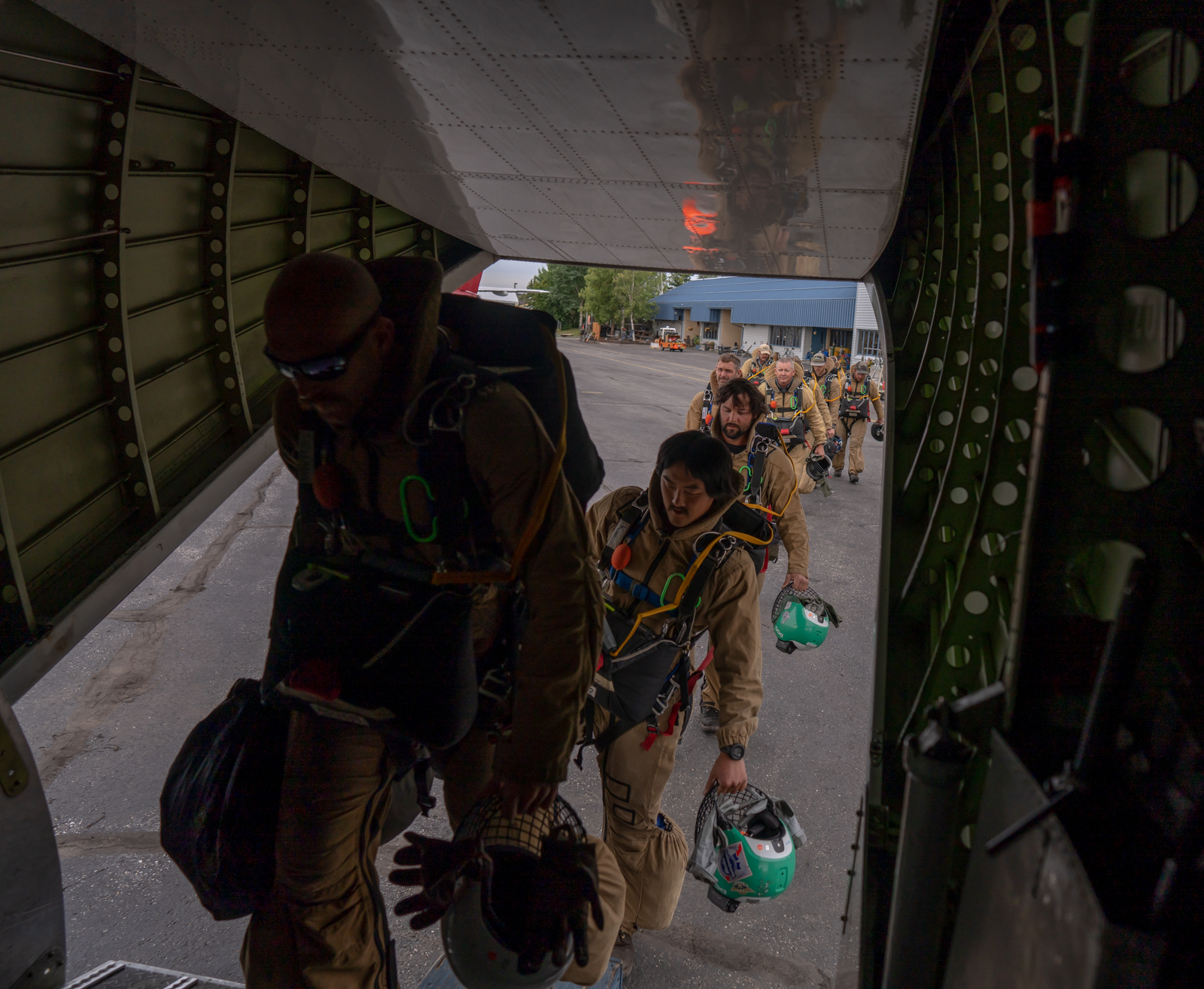
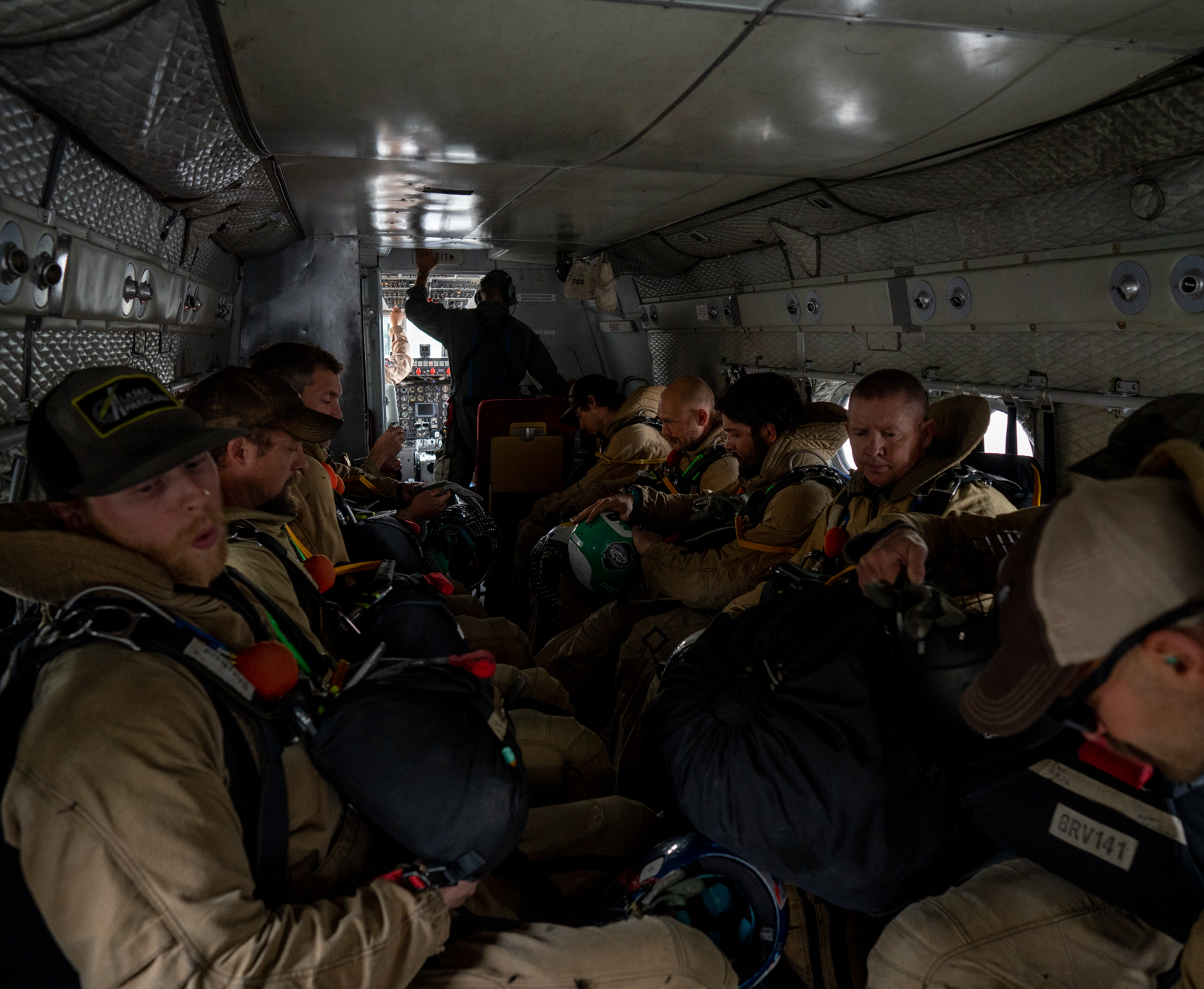
When the alarm sounds at the Alaska Smokejumper Base at Fort Wainwright, the crews have to mobilize quickly and move through routines that they have moved through many times before—some people are getting the gear on, while others are helping them get the gear on, and there’s a lot of motion and sound, but, within that, well-worn patterns. And after the smokejumpers heading to the fire are on the plane, everyone else goes back to the parachutes they were working on or the gear they were loading or storing, etc. So I think just showing those realities—the preparing, the leaving, the returning, the in-between—was all I could do to tell the visual story that for these people, the job is making the doing of heroic things mundane.
Personally, the idea of sewing a parachute that needs to open for someone else or myself even is wild—there is so much responsibility in every corner of that base. So I tried to show that as well as I could.
Your photographs show smokejumpers both preparing for a jump and doing quieter work, like sewing and packing parachutes. What do they reveal about the job that the dramatic images might miss?
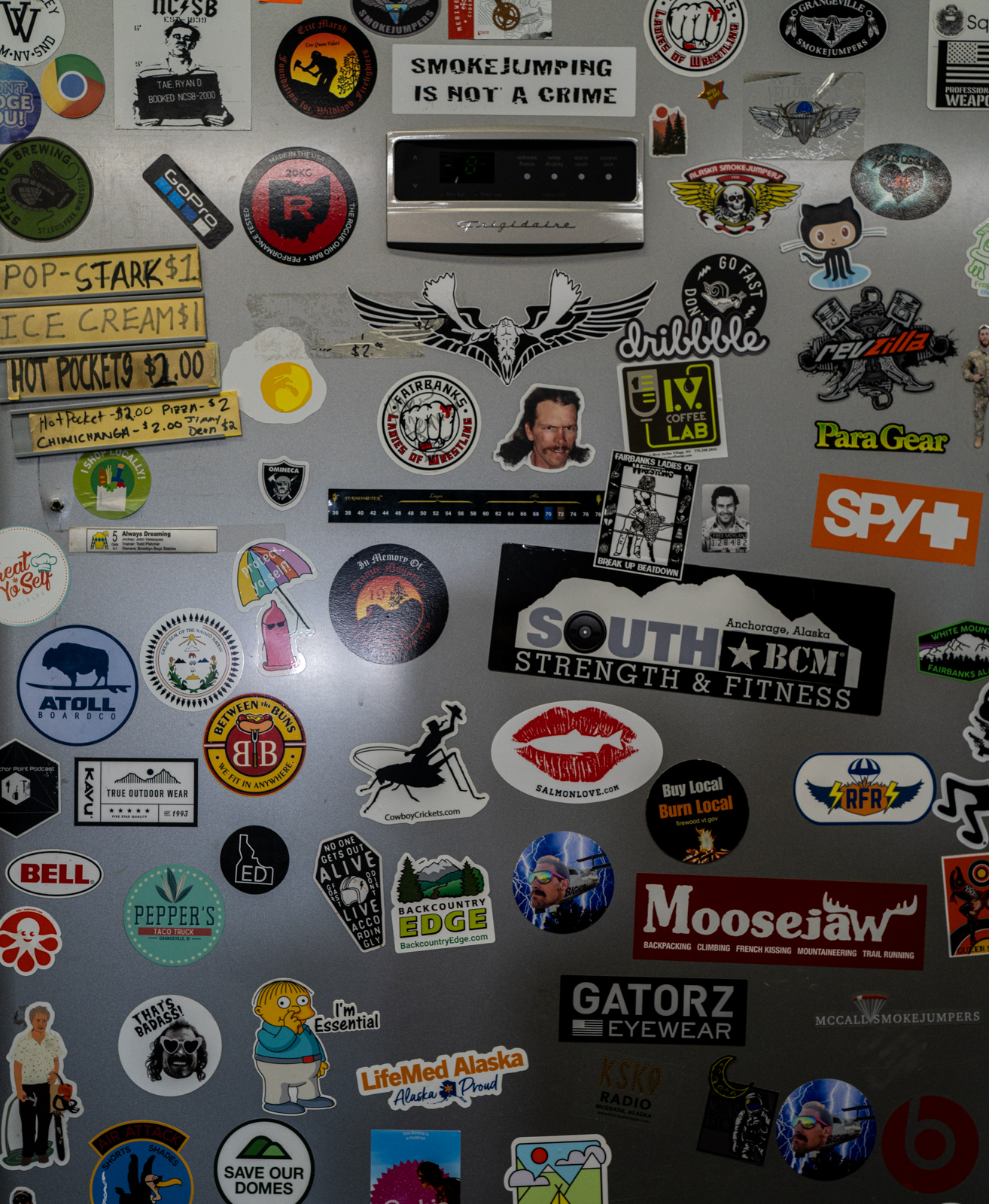
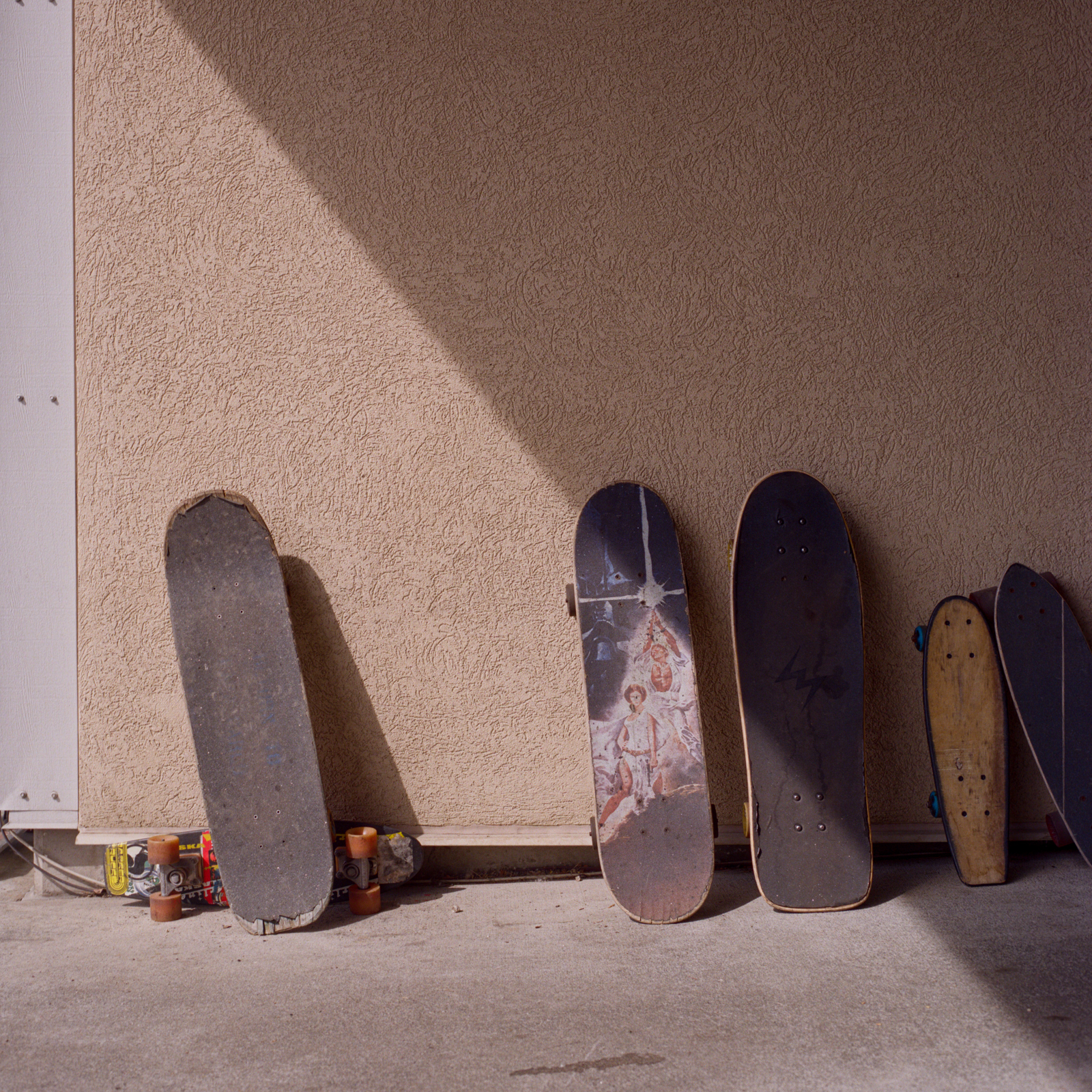
In terms of what I was drawn to, I just photographed what was in front of me as it was as best as I could. There is a lot of waiting and then a lot of being out, carrying a lot of weight, and I think the images reflect that. But I think something that more people might miss about the smokejumpers isn’t that they’re brave and doing a wild job—which is obvious—but that they’re extremely skilled in delicate, life-saving skills that take a long time to learn and perfect. That there’s a lot of doing something and then doing it again and again and slowly getting better at it with time and the help of others. And also, I wanted to show that the crews are so fun. It helps that the base has skate crew (as in, skateboarding) vibes and that I’ve been immersed in skateboarding culture for most of my life, which has a similar kind of tender-yet-risk-taking-and-tenacious energy that I found there.
Alaska’s landscape is such a powerful presence in your work. How has living there shaped the way you see and photograph the relationship between people and the land?
Alaska is hard and a place of extremes—it must be a character in any story here. It is a state that is highly dependent on the weather and always at its mercy; the natural landscapes and climate here are defining. And they become personal—living with the dramatic shifts in light and the quick shifting of seasons inevitably makes a person more aware of the natural world around them. And the way things connect in a geographically complex state is not simple. So regardless of what landscape I’m in in Alaska—be it in a community or out on the land—the connections and relationships between people and place are always a part of the story. Why people come here, why they stay, how they love, cope with, or just exist with the harshness.
Before I moved to Alaska, I was absolutely terrified of the backcountry—when I would so much as approach a well-trafficked trail and read a “You Are Entering Bear Country” sign, I would have to talk myself through it to face the trail. With time and the necessity of immersing myself in the wilderness for work, I’ve become a bona fide wilderness woman; I spend as much time in the backcountry as I can and often with my children who have grown up heading into wild places with me since they were very young. And it’s changed me—the way I see the world has shifted in countless beautiful ways, not the least of which is feeling like I belong to this world in a broader sense. Being in the wilderness wakes up a kind of presence we can lose in urban environments, and my goodness, it wakes up a sense of awe that I have found deeply healing. I could never take that part back out if I tried. (I’ve never gotten used to the small population, which is another story. But that has taught me more than a few things about accountability as it relates to storytelling.)
While my own experience doesn’t inform the work itself, it does influence the questions I ask with my camera and my words. I’m looking for how things connect and why because that is where the story is.
In terms of the smokejumpers, there’s so much I could never understand as I’ve never been a smokejumper. But as a photojournalist who works in a wild place, I understand how alive I feel doing a job where I don’t know where I’ll be tomorrow and in a place where a person can really disappear into the landscape. And how cool it is to feel that small in a big place but also make up a big percentage of a small population, which means to be able to make a real impact. I can’t claim that every smokejumper feels that way, but I know some of them do because it came up several times. Would it have come up naturally with any other journalist? Maybe. But Maybe not.
What did the smokejumpers understand about your presence that you hadn’t expected?
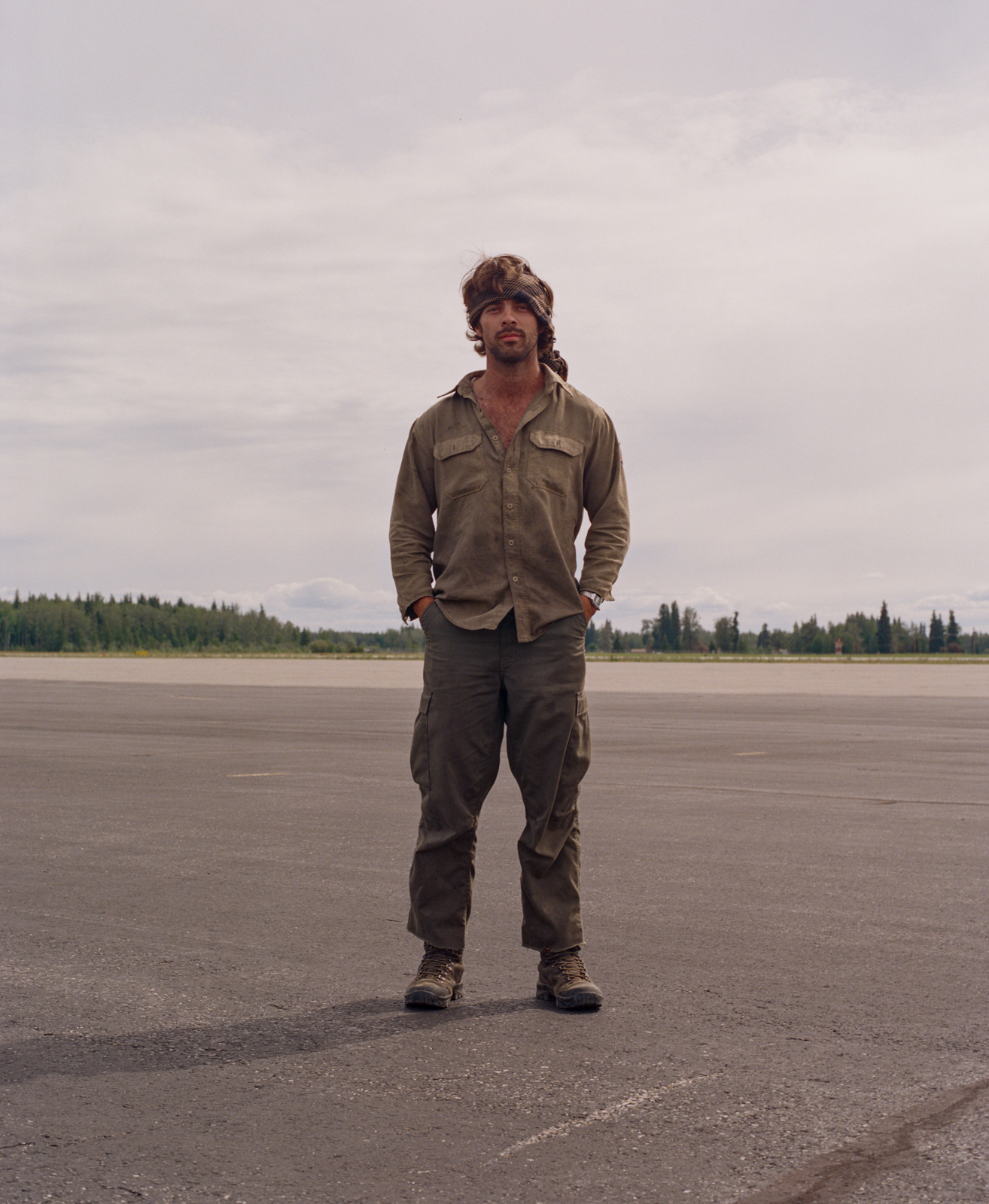
The smokejumpers knew I was there for The New Yorker, and honestly I don’t think there was anything I didn’t expect. I love talking to anyone and am transparently a curious weirdo wherever I go (smokejumpers, if you read this—chime in to confirm!), so I tend to introduce myself and ask questions along the way, learn people’s names and where they come from and how long they’ve been in Alaska or where they’re typically based (during fire season, there are a lot of “boosters” up from other bases). I am a no-surprises person in the field—I want people to know what I’m doing and why whenever possible.
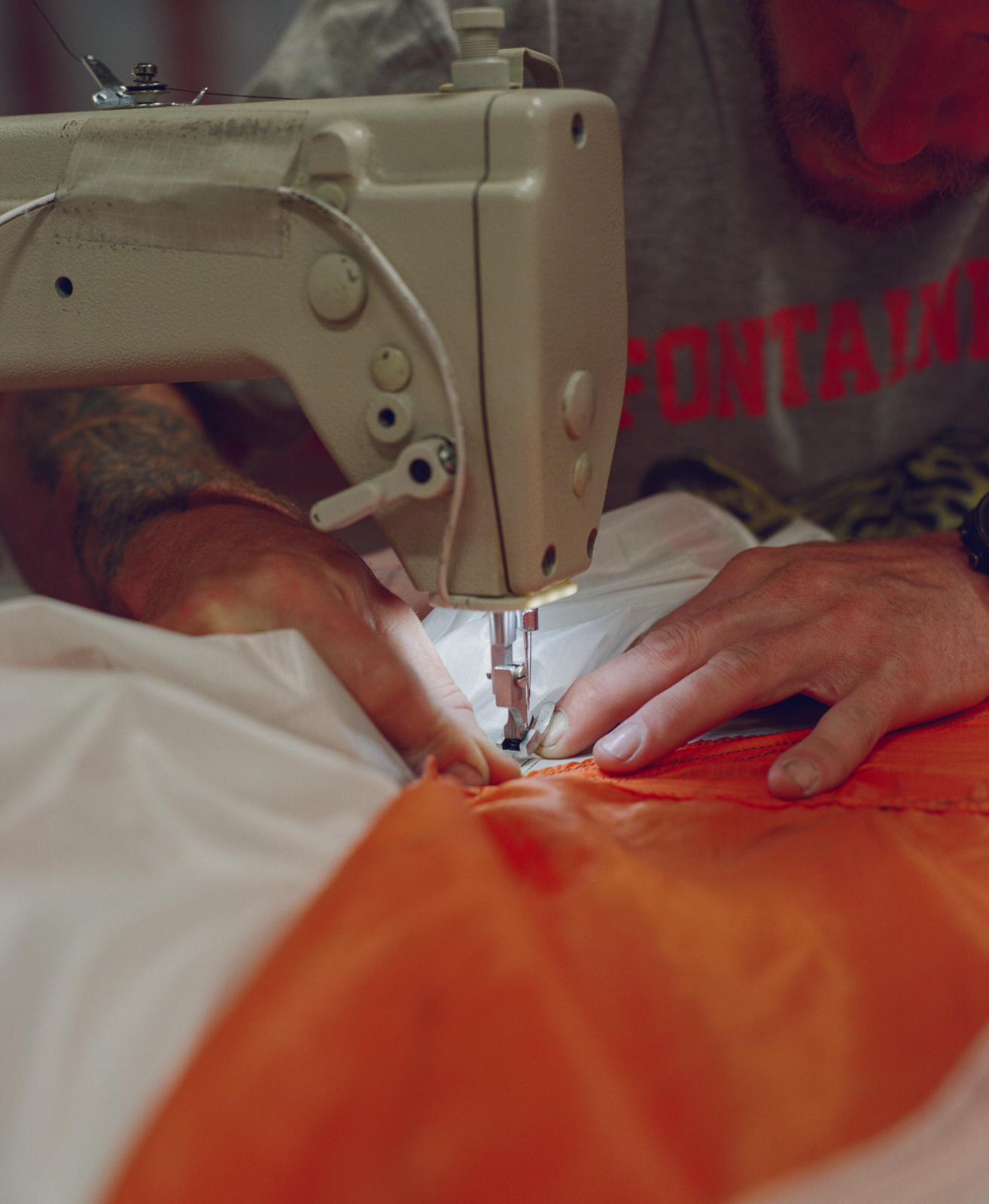
There is something absolutely strange to both make images and have them made of you, and I love remembering that always. One of my favorite interactions during the course of this story was with one of the smokejumpers who was very camera aware—he clocked me wherever I was. Eventually, every time we saw each other or passed each other, we both would just start giggling, because it’s funny! How funny to try to be normal with a camera documenting you! But one of my favorite images of folks on the base sewing is a close-up of him sewing, which was made after so much giggling and then just sitting, talking about the work, the job, etc. It’s refreshing always when someone calls out the fact that we can’t close most of the gaps between us, that the photos can only do so much to tell the story of someone.
Did anyone respond to the photographs in a way that changed how you saw the work?
The response to the photos has been really cool. Parents of the smokejumpers have reached out via Instagram asking if I have photos of their children. Smokejumpers have reached out to say they like the images and can I send some to their bases, etc. It’s so cool to make something objective that lands that way to the folks in the photographs. It’s the best.
If you could return to the base with no assignment and no deadline, what would you photograph next?
I would want to try to figure out how to follow an active fire in Alaska with the smokejumpers—something we were unable to do for this. I usually get farthest in terms of access by being on the ground and working directly with folks, and getting that kind of access just takes a little more time that we had for this. Alaska firefighting is unique to other kinds of firefighting—and every smokejumper I spoke with said that. They’re landing in bogs where they’re sinking into the earth with every step. They’re protecting remote villages and infrastructure that’s far from any road system. I understand the terrain they’re working in—what it looks and feels like without the fire—and it’s something I’d like to document.
No comment yet, add your voice below!