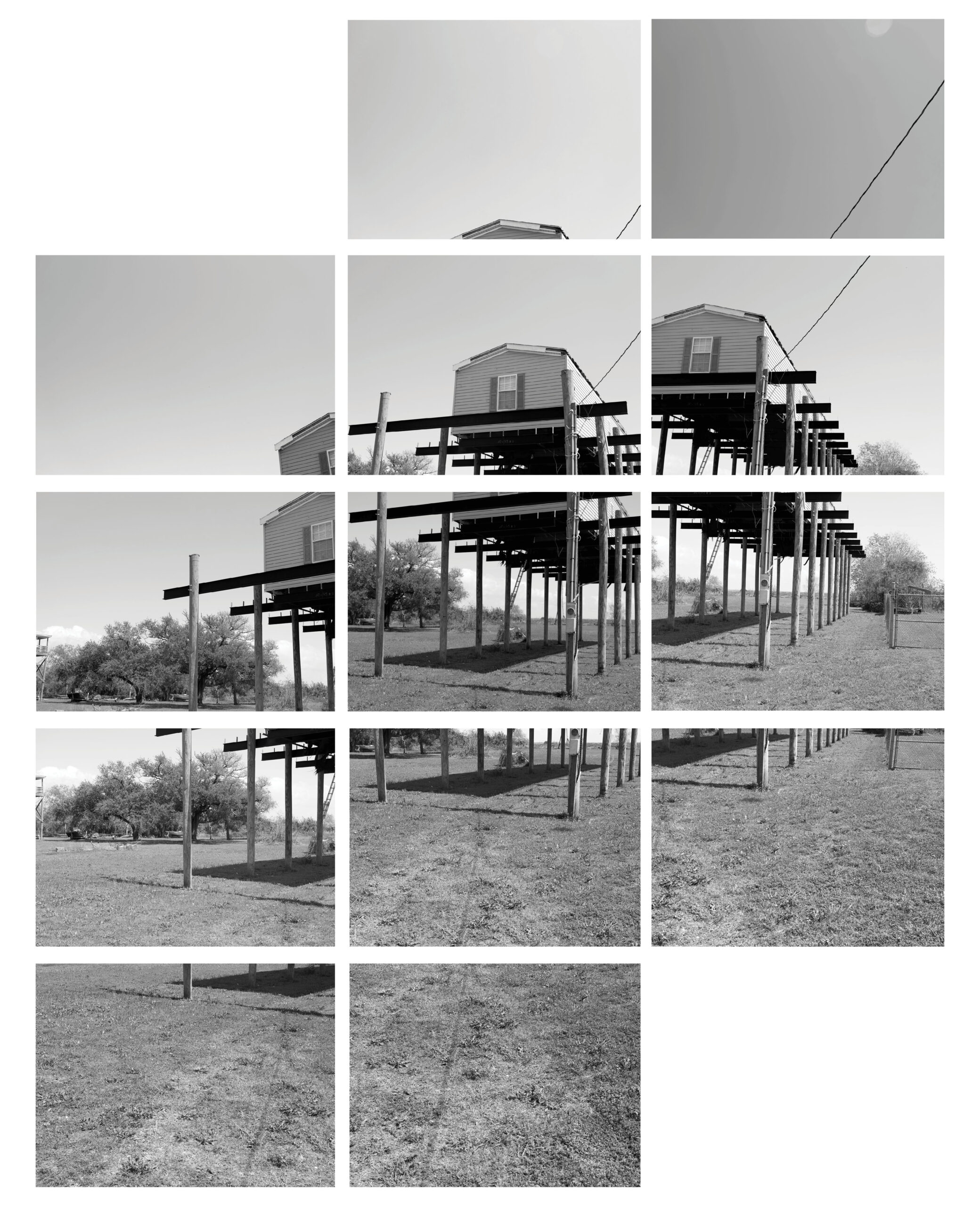
Property Study #2, St. Bernard Parish (2026)
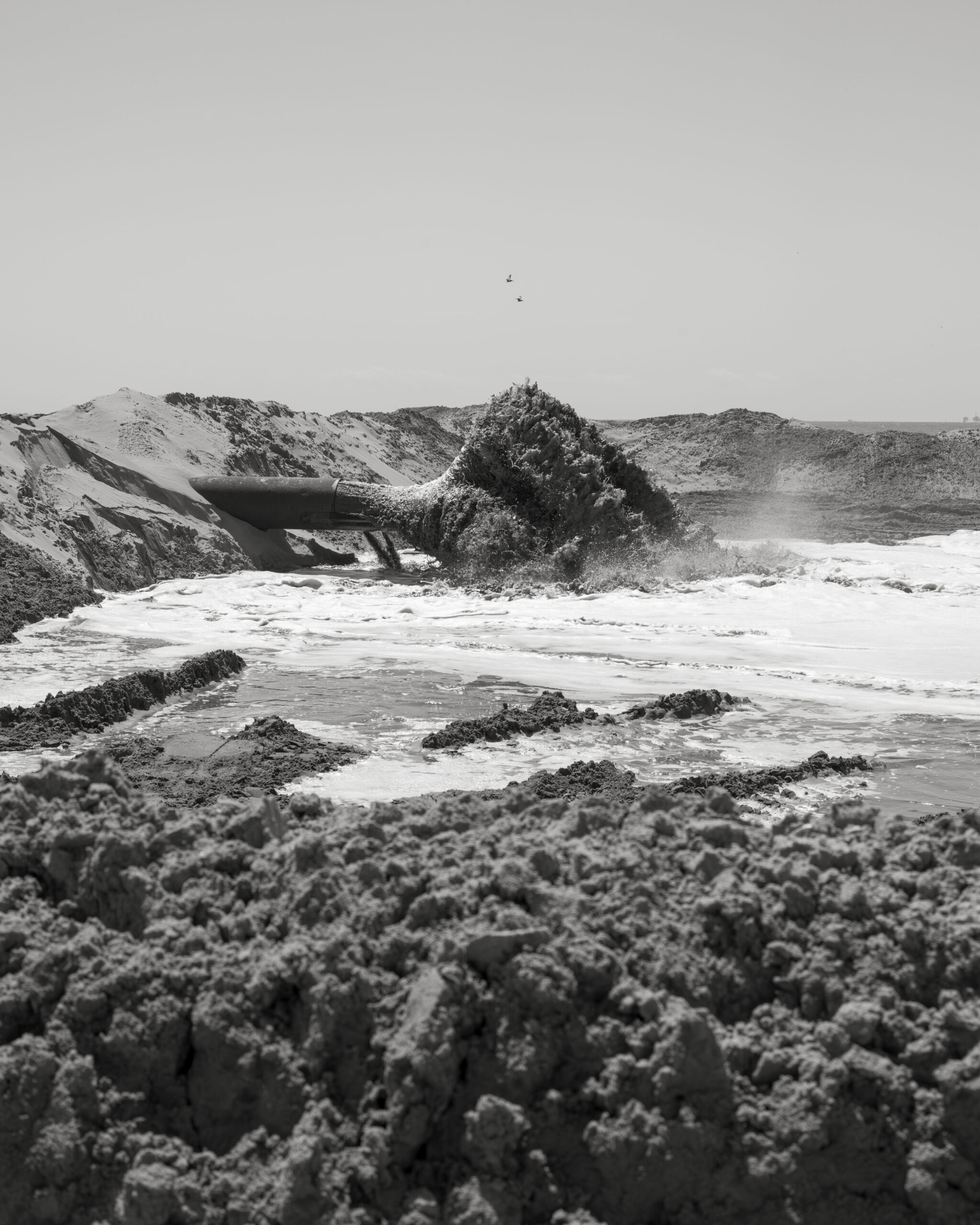
Sand Pipeline, Trinity Island (2022)
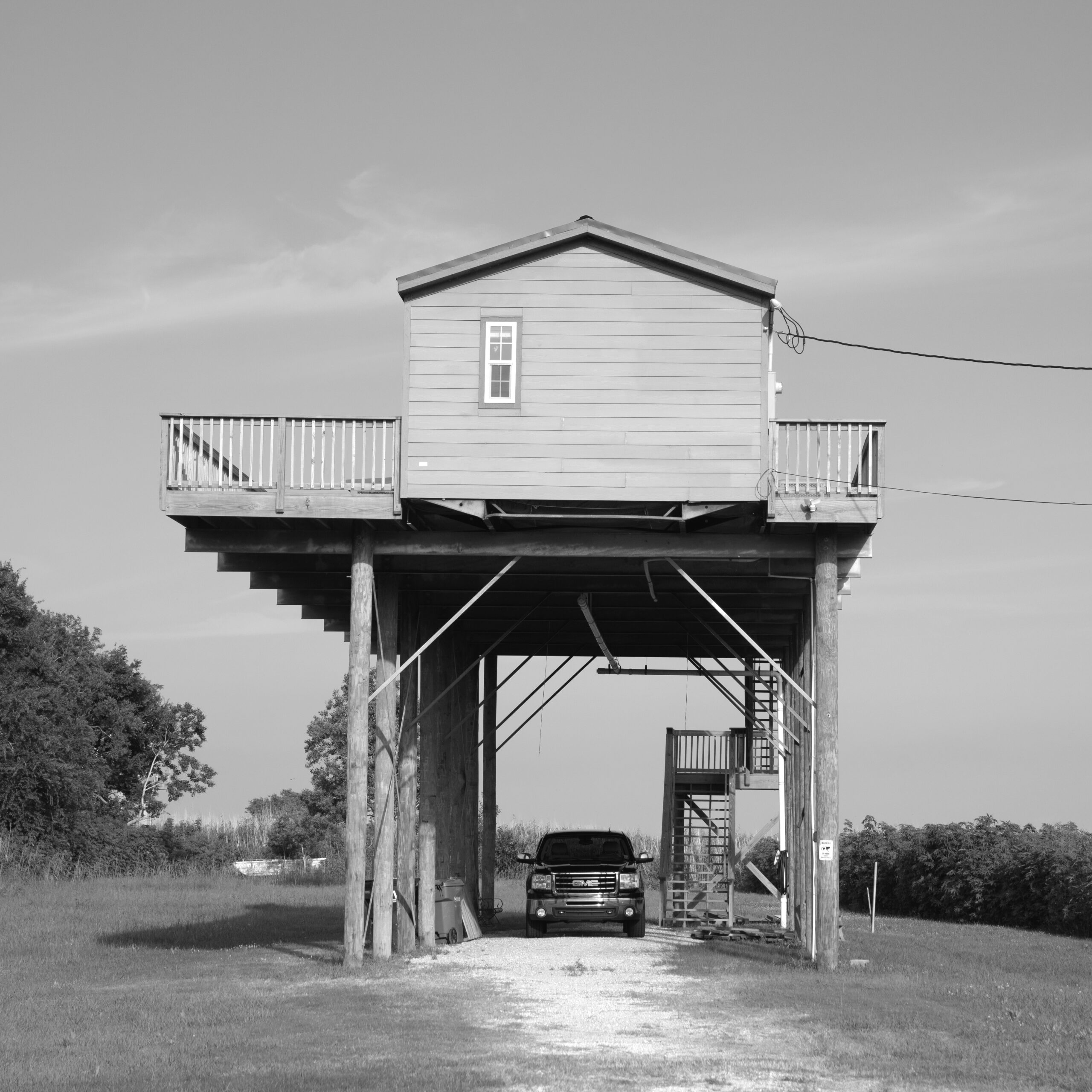
Raised House, Delacroix (2023)
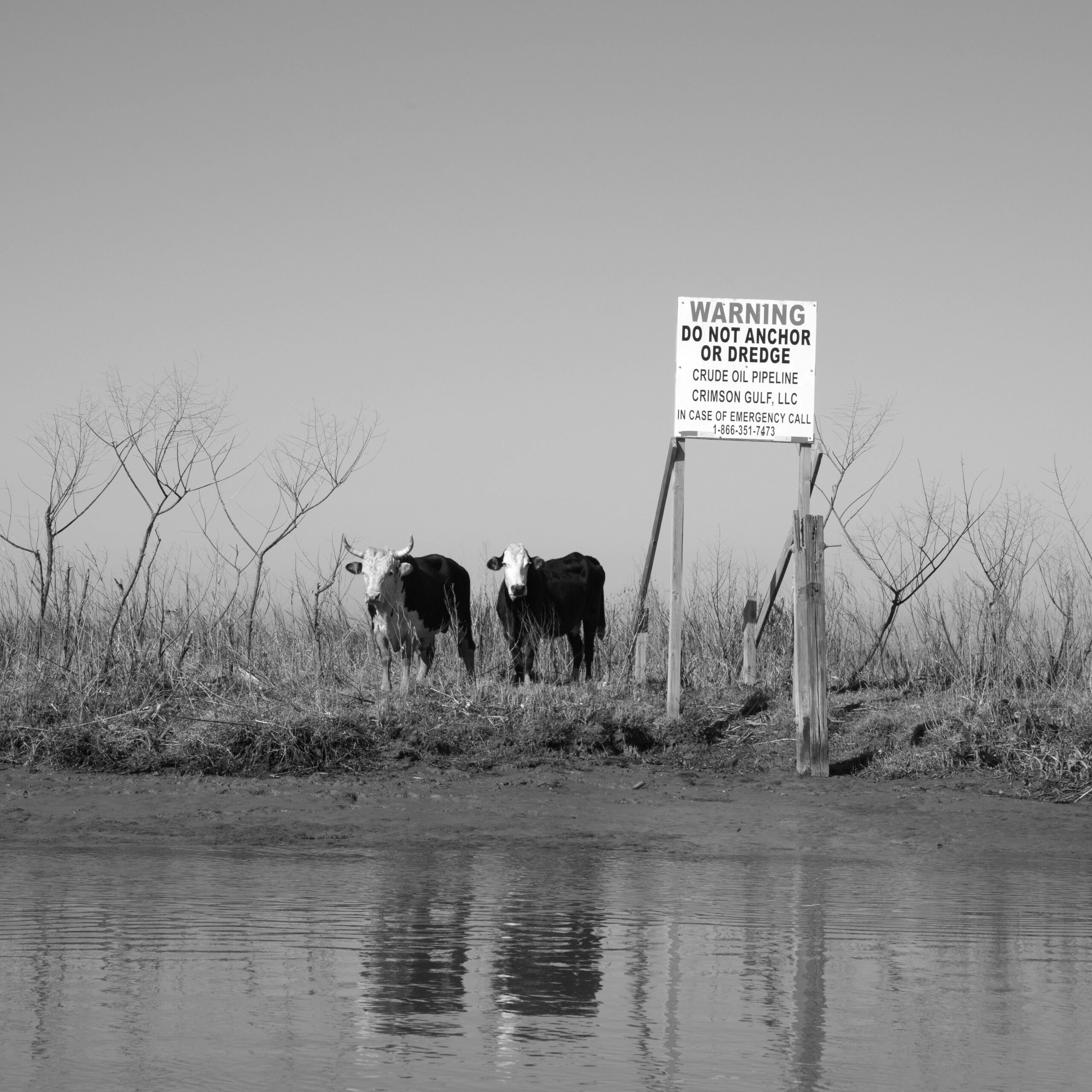
Marsh Cows, Venice (2022)
Heidi: Your father was a welder and sheet-metal worker, and your mother was an electrician. How did growing up around people who worked with their hands influence your interest in architecture and photography?
Virginia: I have a lot of respect for the invisible labor that goes into architecture and am from a family that takes great pride in skill and craftsmanship, particularly as it relates to objects that exist in the world. Architecture is a discipline that often platforms a singular visionary, but I’m interested in the various groups of people that enable the idea to manifest into physical form. The building trades are a large part of that and it’s important to me as an artist to render this hidden labor visible.
Your recent New York Times feature presents your ‘Property Studies’ project as a grid of images showing a house raised on stilts. Can you talk about this modular approach and why you chose to break the image into individual sections?
In this body of work, I’m turning to the domestic sphere and focusing on the house as a site of perceived permanence within an unstable coastal landscape. Using photographs printed on paper, wood, and metal, I create sculptural and spatial works that explore generational ties to land in regions vulnerable to environmental change. The house, often understood as stable, becomes precarious amid erosion, rising sea levels, and shifting terrain, and the modular approach emphasizes the layering of time and material.
You grew up in New York’s Hudson Valley and first came to Louisiana while volunteering after Hurricane Katrina. What drew you back to New Orleans in 2014, and how did living there change the way you approached photography?
I volunteered for a student-run organization at Bard College that started right after Hurricane Katrina in 2005 by a student who was from New Orleans. By the time I made my first trip in 2011, I was volunteering at a neighborhood improvement association that was responsible for monitoring the disbursement of recovery funds and housing reconstruction in the Broadmoor neighborhood. After I moved to New Orleans full-time after graduating from college, I worked at a nonprofit that was doing coastal restoration work and the site visits that I traveled to became the origin of my photographic work in Louisiana.
Your first book, Into the Quiet and the Light, brings together nearly a decade of photographs of South Louisiana with stories and perspectives from people in the region. What inspired you to turn this body of work into a book, and how did you approach the editing and sequencing of the photographs?
I had been making photographs for about a decade when I was approached to turn the work into book format. It was a process that took several years and involved a large number of contributors – ranging from historians, to activists, to chefs, to musicians – who all have influenced the way I see Louisiana. I don’t see the book as a standard coffee table book, but rather a collection of images and stories that are often in conflict with each other. That messiness is a reflection of experience living in a region that is undergoing rapid landscape changes due to climate change and the fossil fuel industry. The book weaves through hope and despair, joy and mourning – sustaining our physical, mental, and emotional connections to these landscapes
No comment yet, add your voice below!