The Daily Edit – Ethan Pines: Limitations and discipline foster creativity, not AI typing

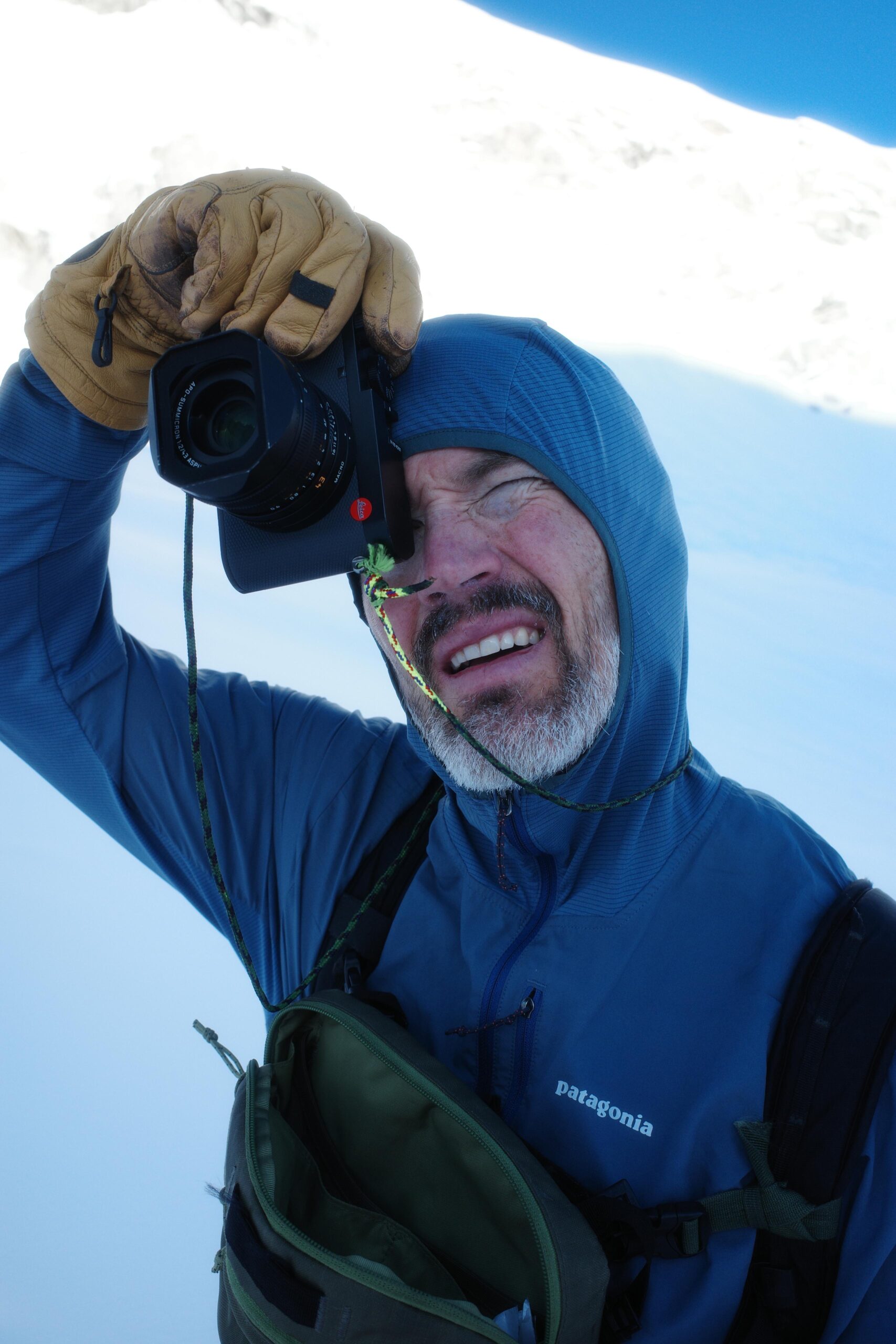
Ethan Pines

Heidi: You’ve added fine art to your commercial photography business. How does one inform the other?
Ethan: The commercial and fine-art sides are certainly informing each other. I’m applying the commercial discipline and drive to the fine-art work. And I’m applying those practices honed in the Snow project — exploring deeply, clearing my mind, making unorthodox choices — to my commercial work.

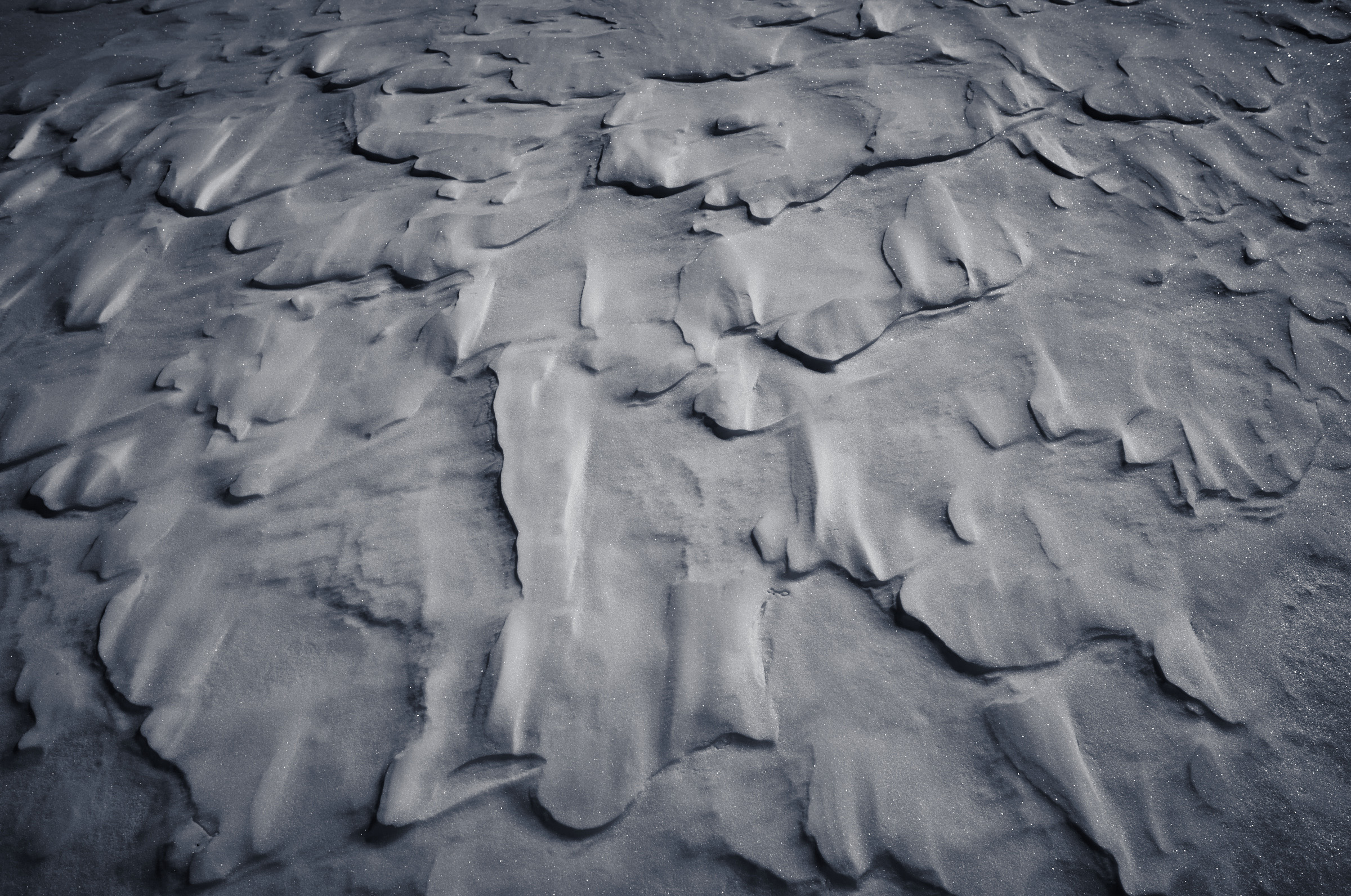
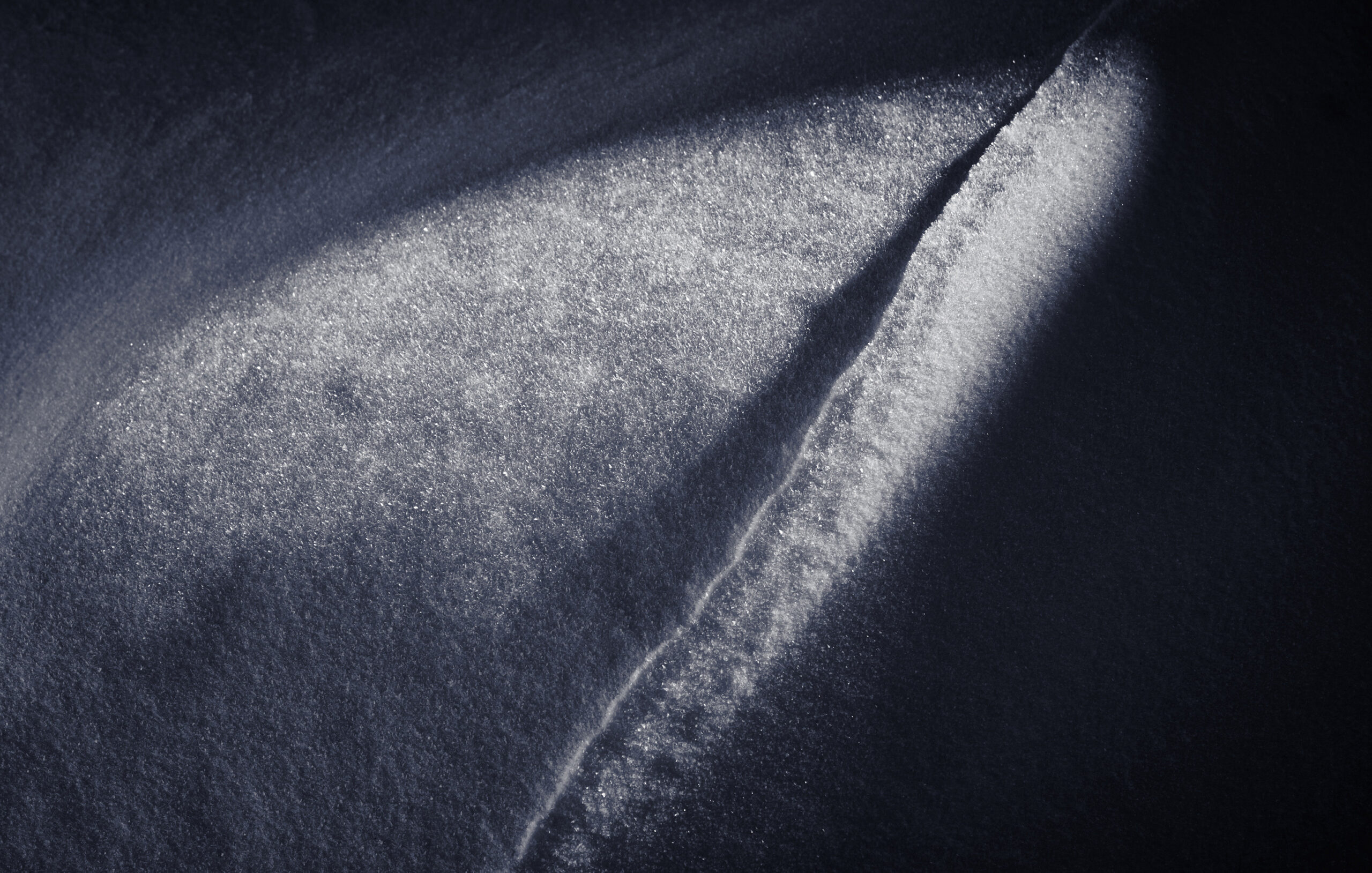
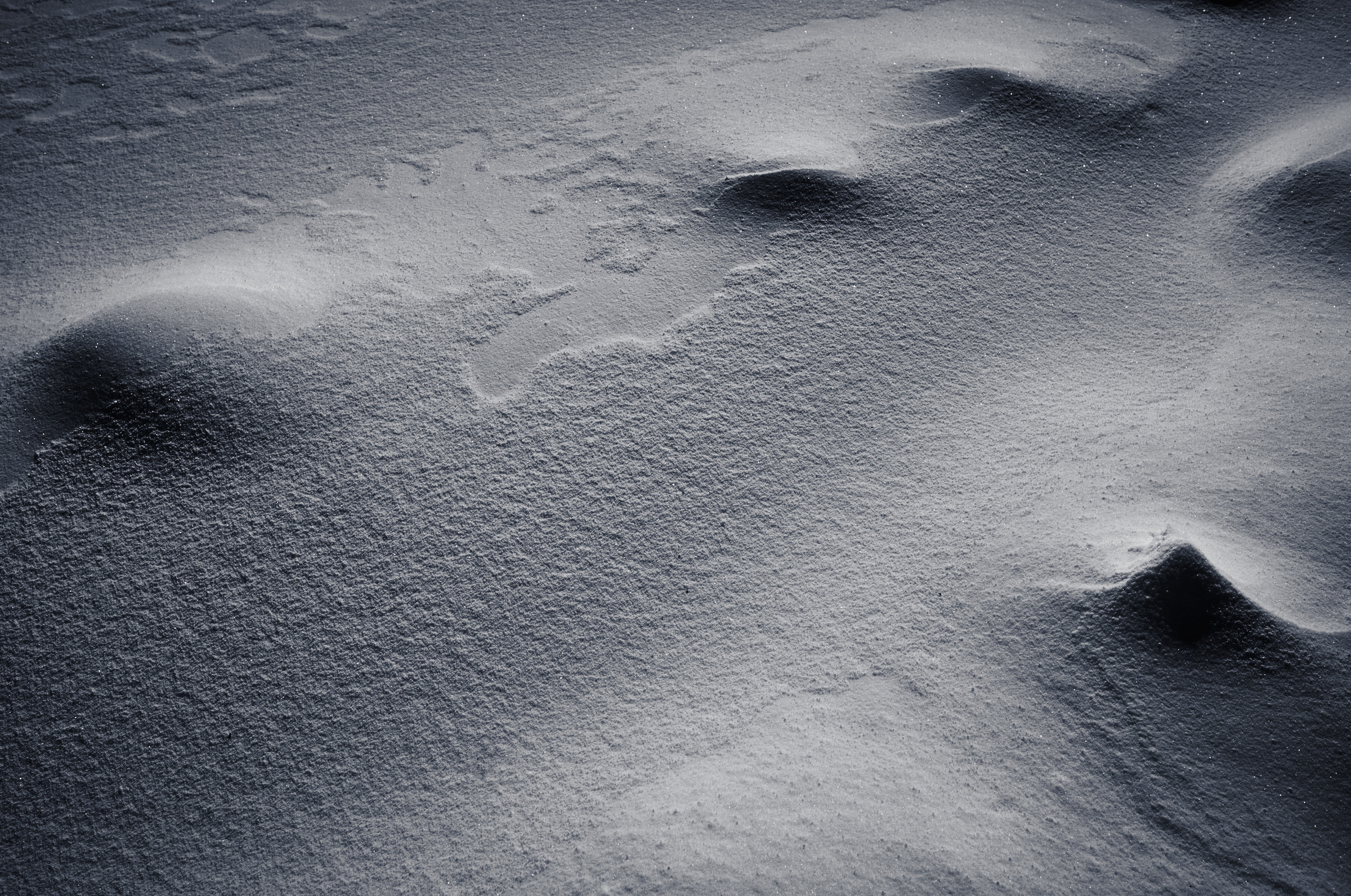
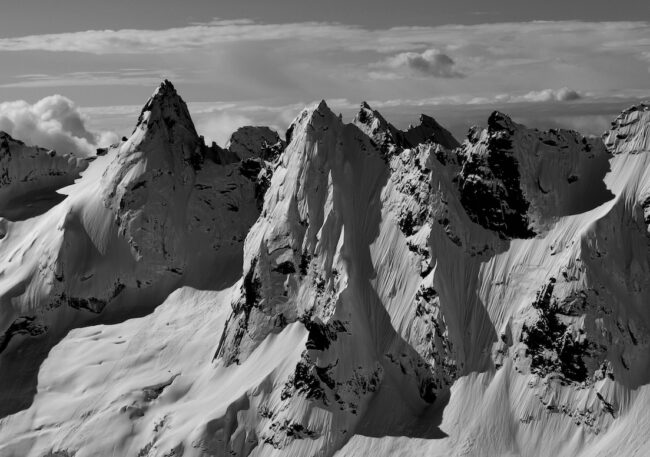
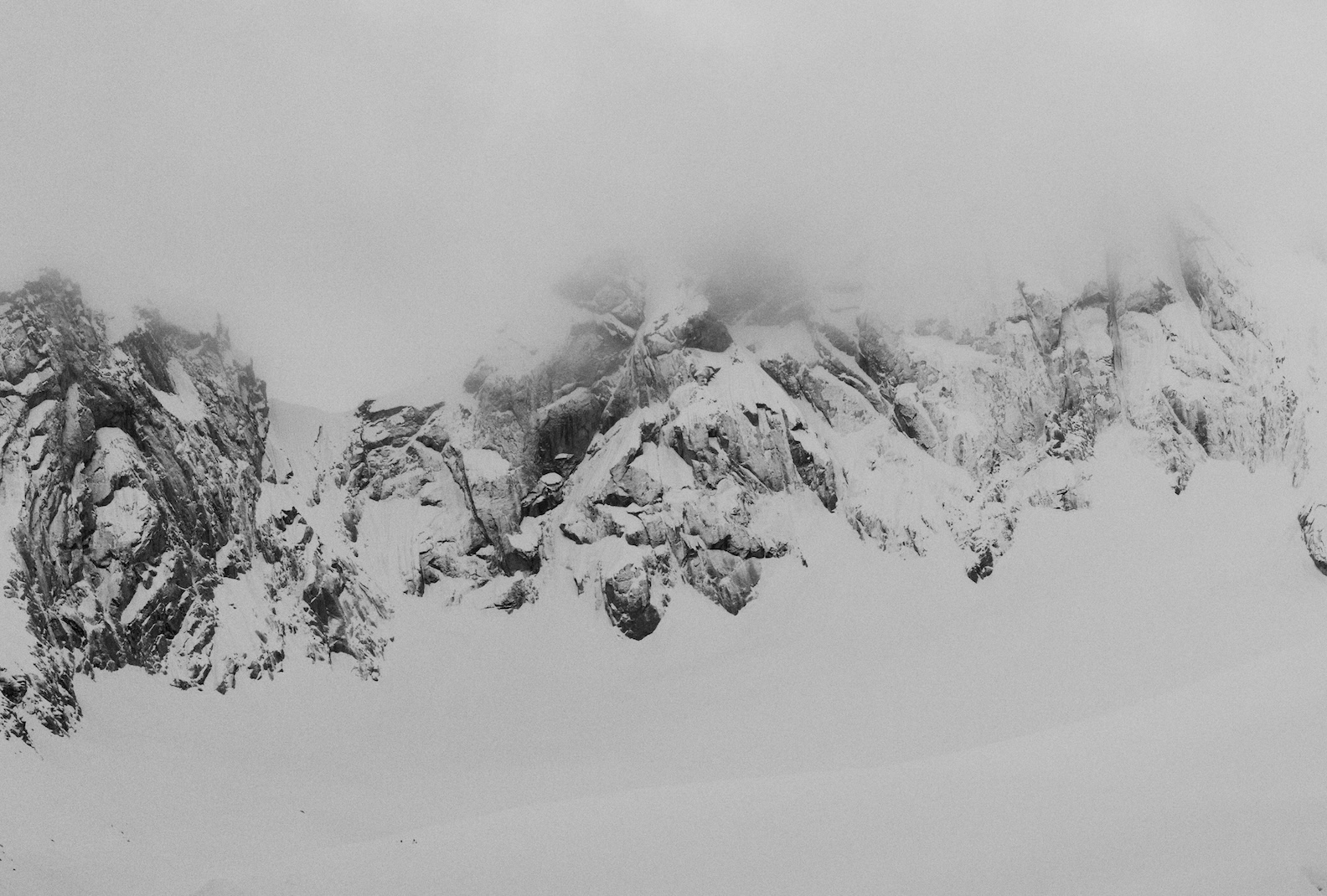
That transcendence I mention later — the transformation that happens when interesting content is framed artfully — emerges at least partially from working within the limitations of the medium and the project you’ve chosen. In the case of Snow: a two-dimensional medium; the limitations of the frame and the lenses; what can be found in the natural world; what is reachable on foot; natural light; and real elements unaltered in post.

I’ve long felt that the greatest creativity and achievements come from working within limitations. And this too is where the commercial and fine-art sides overlap: whether working from a client brief or from my own self-assigned project, the limitations and parameters are what create discipline, drive, creativity, out-of-the-box thinking and achievement.

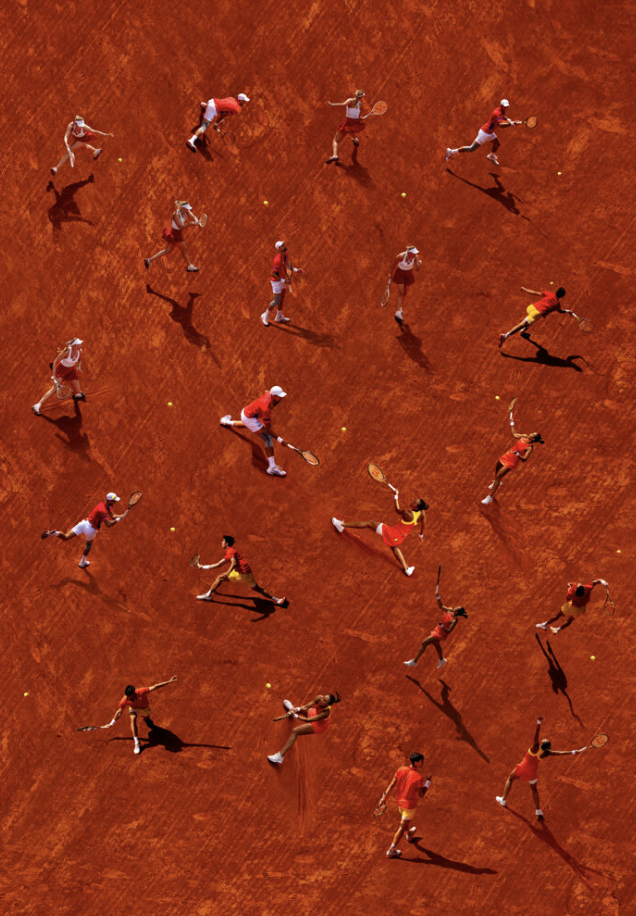
This is why athletes are continually excelling and breaking records: they have to perform within the rules and restrictions of their sport. If a tennis player could hit the ball anywhere, they’d be a lot lazier, and we’d never see the incredible shots that we do. The same goes for artists and musicians. If you had a camera that made all the decisions for you, or a guitar that sounded amazing no matter what you did with it, you would never need to push yourself, master your craft and expand the boundaries of what’s been done before. I know a guitarist who prefers to play with obscure and temperamental instruments because they force him to work harder and come up with creative solutions, and they ultimately produce something unique. As a photographer, it’s the limitations of the medium that result in newness and greatness. If you can create absolutely anything with a few prompts on the computer, do those creations mean anything? Are you still a photographer? Are you even an illustrator? Or are you just a typist? As AI advances, I feel that artwork created with craftsmanship and discipline, with real materials in the real world, will separate from the pack and increase in worth, both monetary and subjective.

What do you hope viewers take away from experiencing the Snow series—both visually and conceptually? Have you had any reactions thus far?
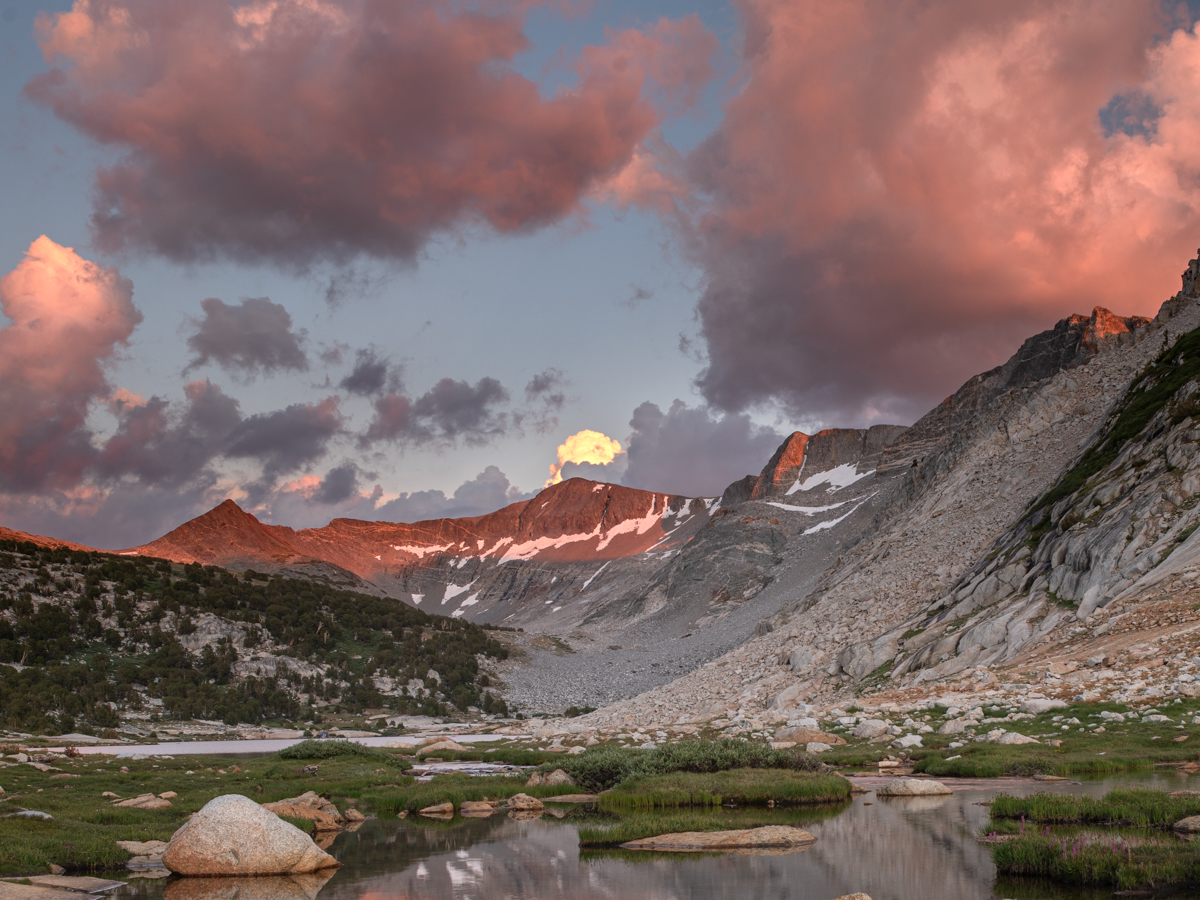
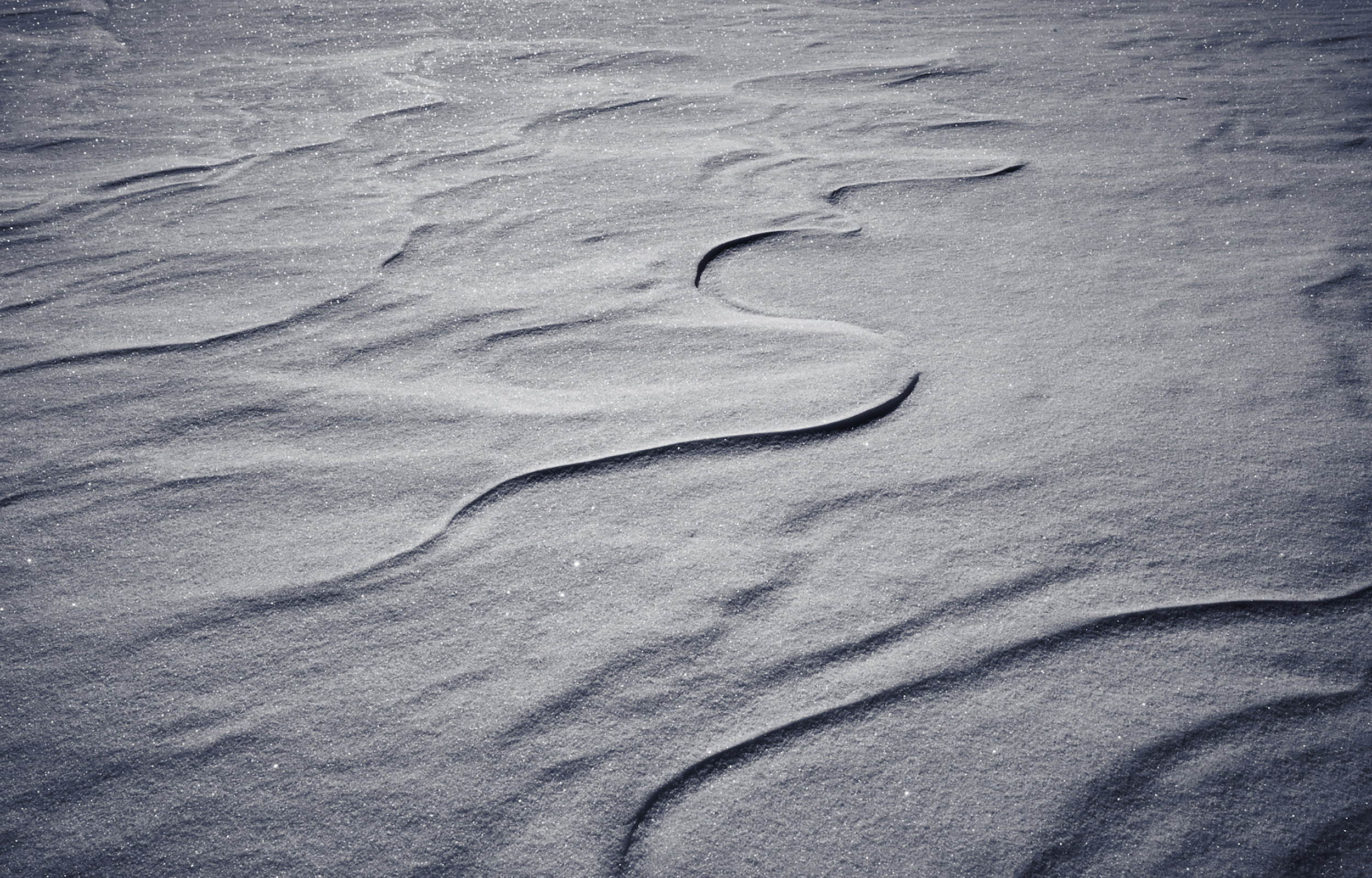
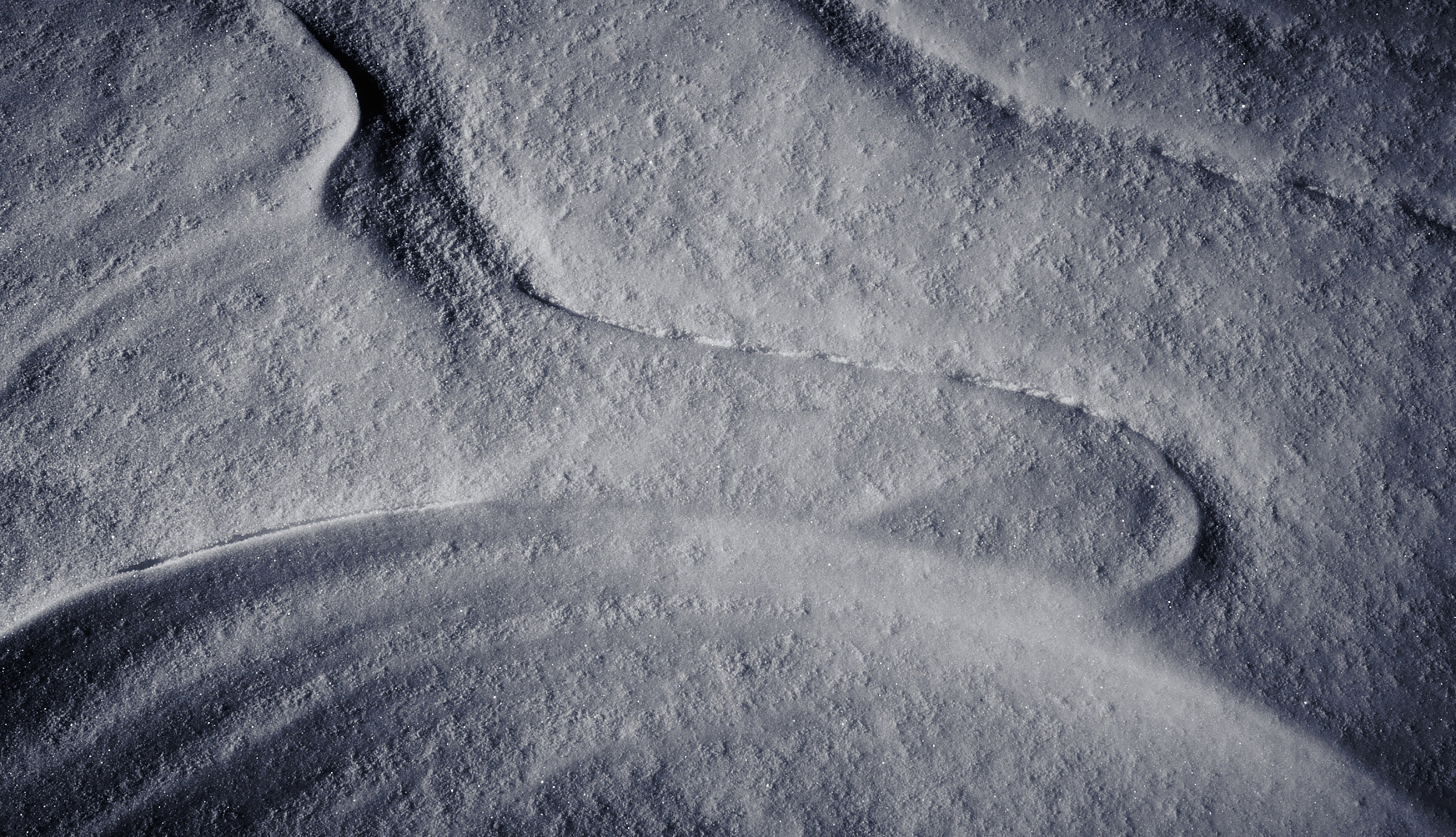
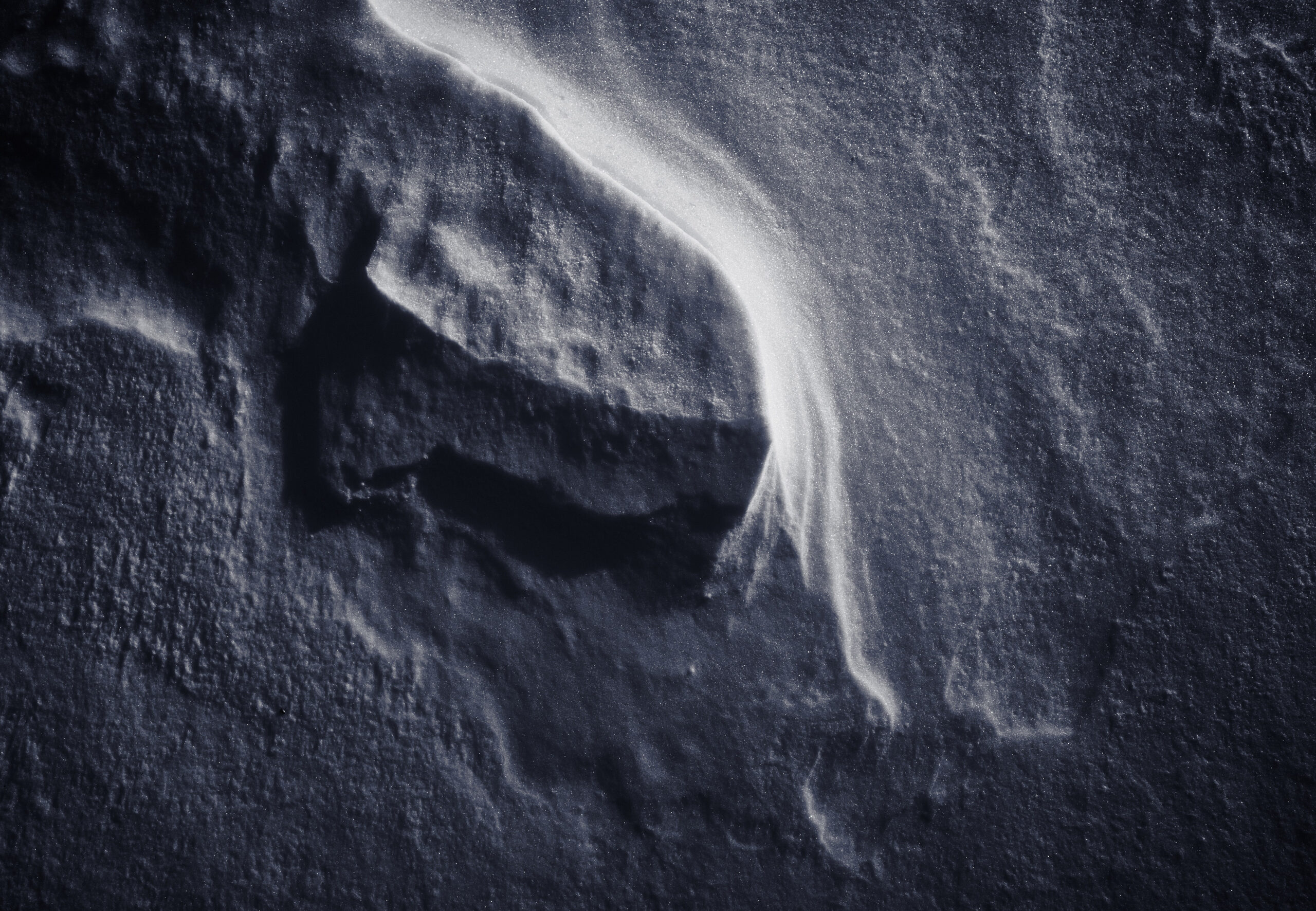
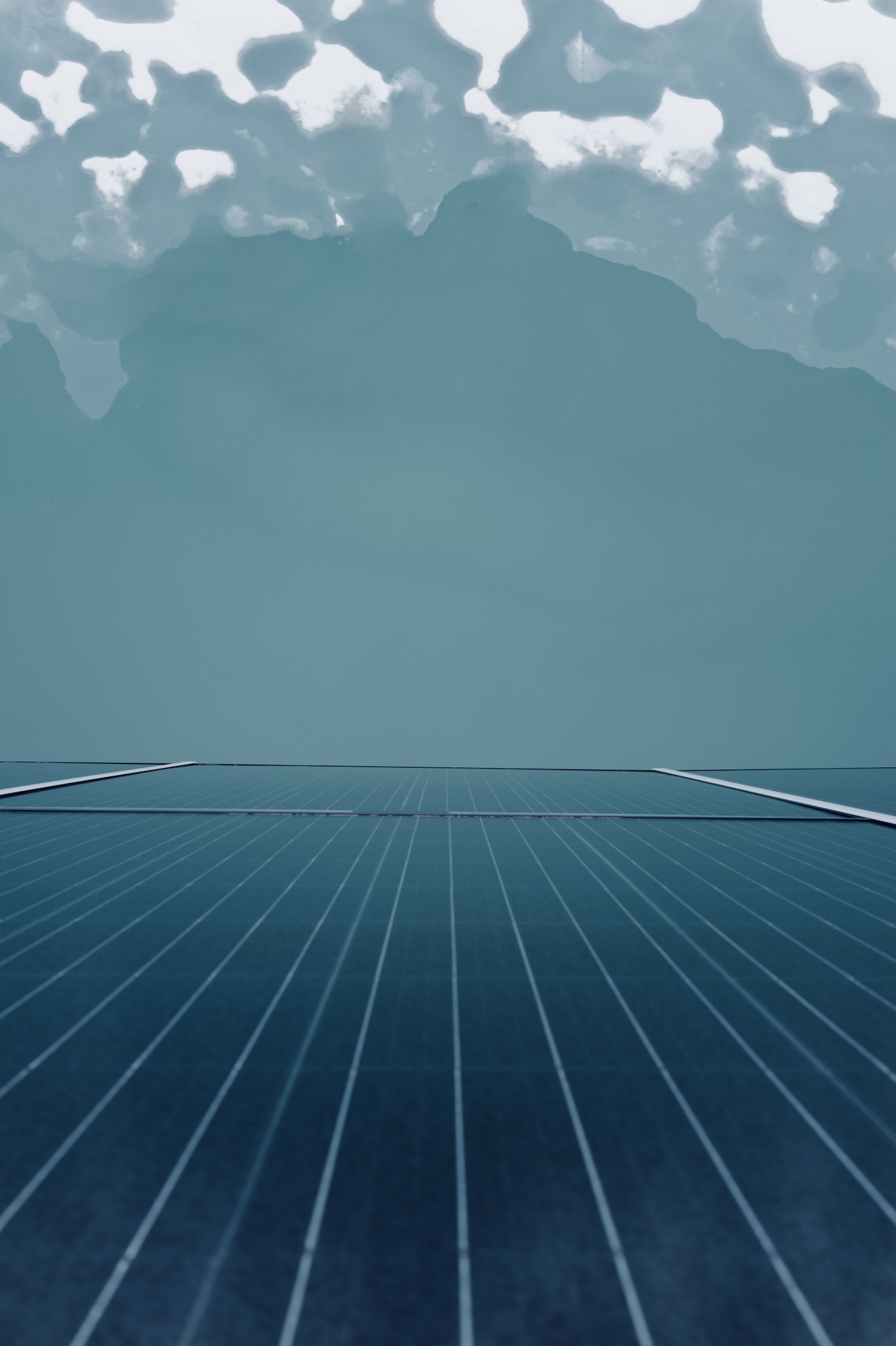
That snow — and by extension, the natural world as a whole — is vastly more complex, varied and surprising than we suspect. That there is truly magic under your feet and, in fact, just about everywhere when you look deeply. I suppose you could say that about all of photography; I’ve always felt that something transcendent happens when compelling content is composed and framed in a thoughtful, artful way.

The reactions I’ve had thus far match many of my own thoughts while working on the project: That you can’t tell what it is, but snow wouldn’t be your first guess. That there’s an uncertainty to the scale of what you’re seeing — is this under our feet or the side of a mountain? That these formations uncannily resemble other things: waves, the ocean floor, lava, clay, windswept sand, crop circles, cave paintings, the surface of the moon

How has this focus on snow changed your way of seeing or understanding the natural world?
It has taught me look afresh at what’s around me and in the camera’s frame, to experiment, to question my own choices. In the middle of shooting, I will even look at the compositions I’ve just created, and at what’s in front of me, then wipe my mental slate clean to approach the material again in a new way. I will sometimes think to myself, what if I inverted this composition? Or turned it sideways? Or only captured a fragment of it? What if I moved myself around and framed it from a spot I normally wouldn’t? What’s behind me? What if I used a lens that I normally wouldn’t? It’s a process of sketching. There isn’t one single master shot for each worthwhile batch of snow. I try to dive deeply, exploring, picking apart what’s there, trying to pry loose the secrets and hidden gems.

Walk us through a typical winter expedition for this project—from scouting locations to the moment you decide a particular formation is worth photographing.
It entails a lot of driving and hiking. If you’re in the snow, you’re likely also in a heavily treed area, so the first step is simply finding areas not covered with pine needles and debris. I try to head to the mountains right after storms, when the snow is fresh and untouched. It helps if there’s been a lot of wind to carve the snow in unexpected ways.

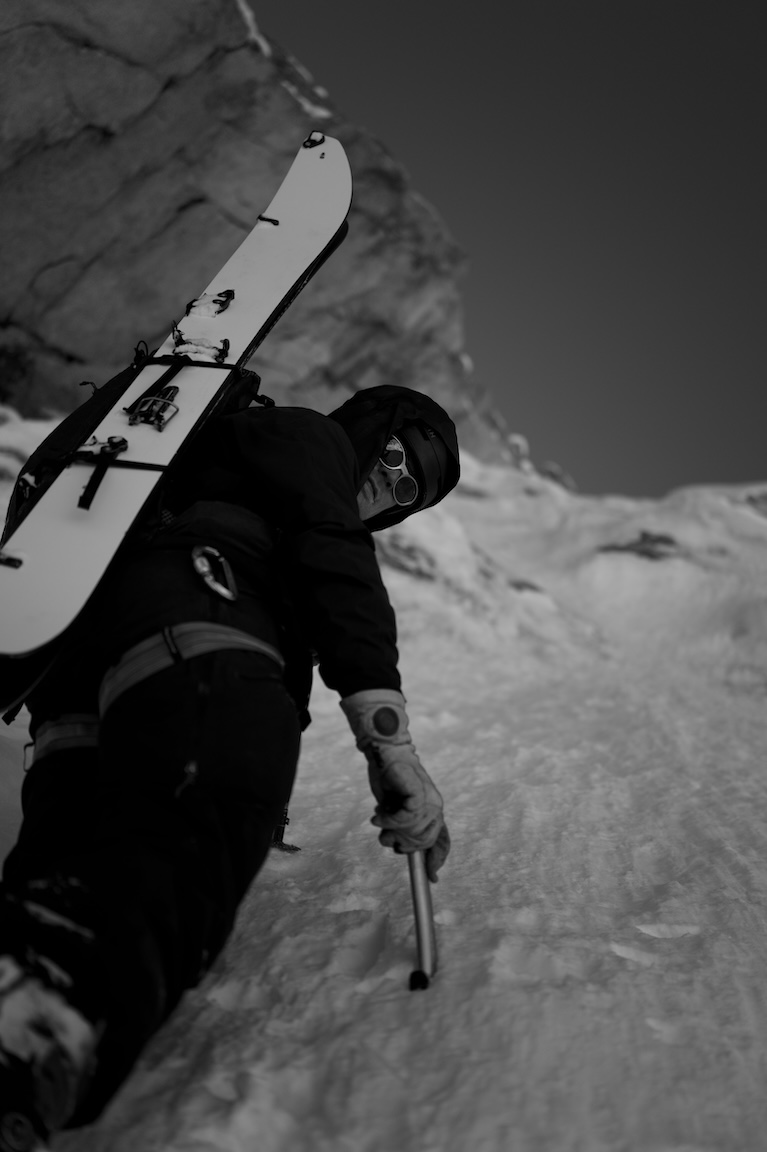
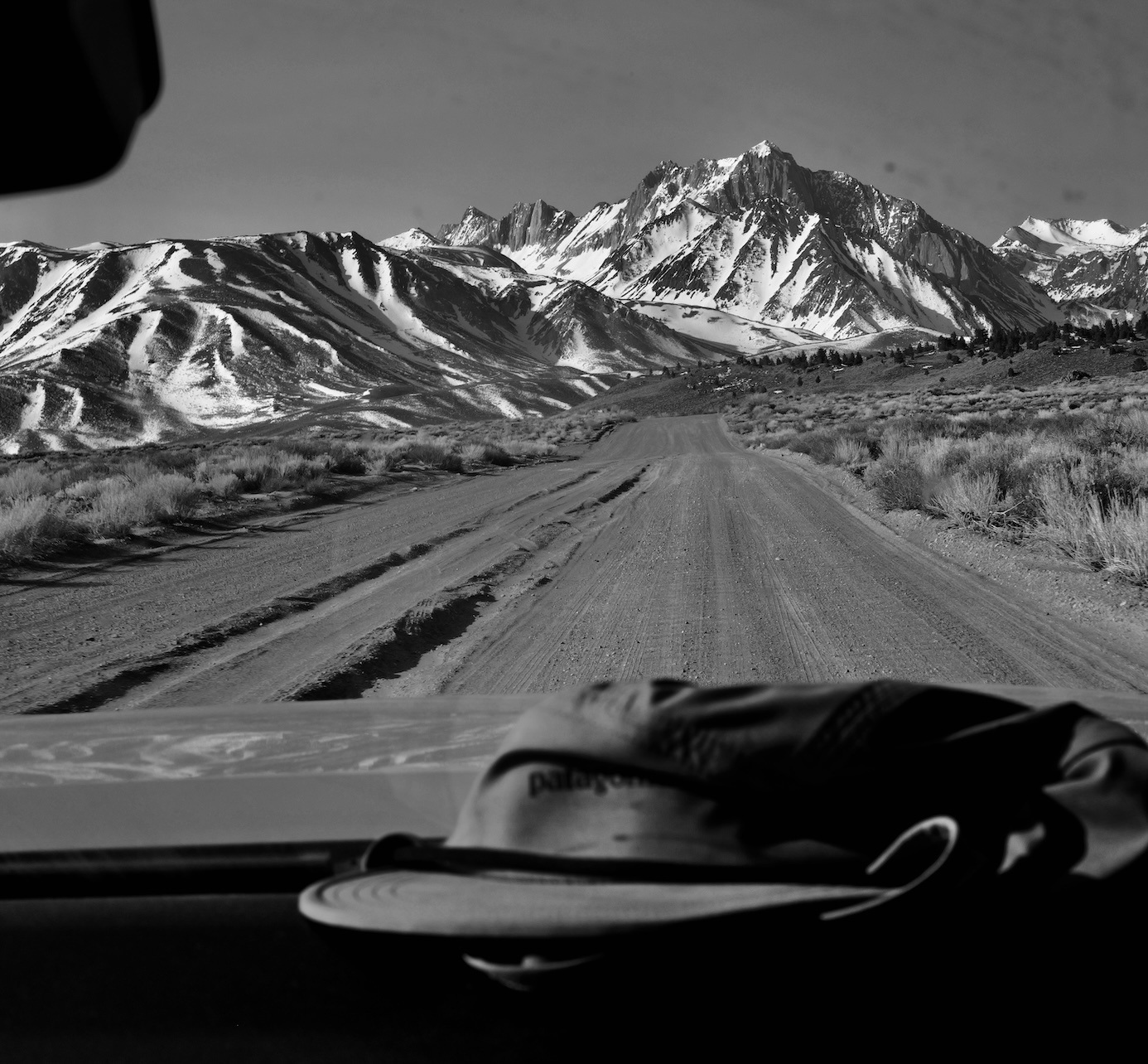
The hiking is arduous. Here’s what comes with me: snowshoes, water, snacks, charged phone, sunblock, hat, batteries, cards, and two shoulder bags (worn cross-body) with the camera and three prime lenses. In the car: a blanket and a battery jump-starter, just in case.

The outings are often fruitful, but not always. If I manage to find interesting formations when there’s good light on them, I’ll shoot right then. If not, I return early the next morning to capture them in that low, beautifully raking dawn light.

What drew you to see snow as a subject worth pursuing for the past 4 years?
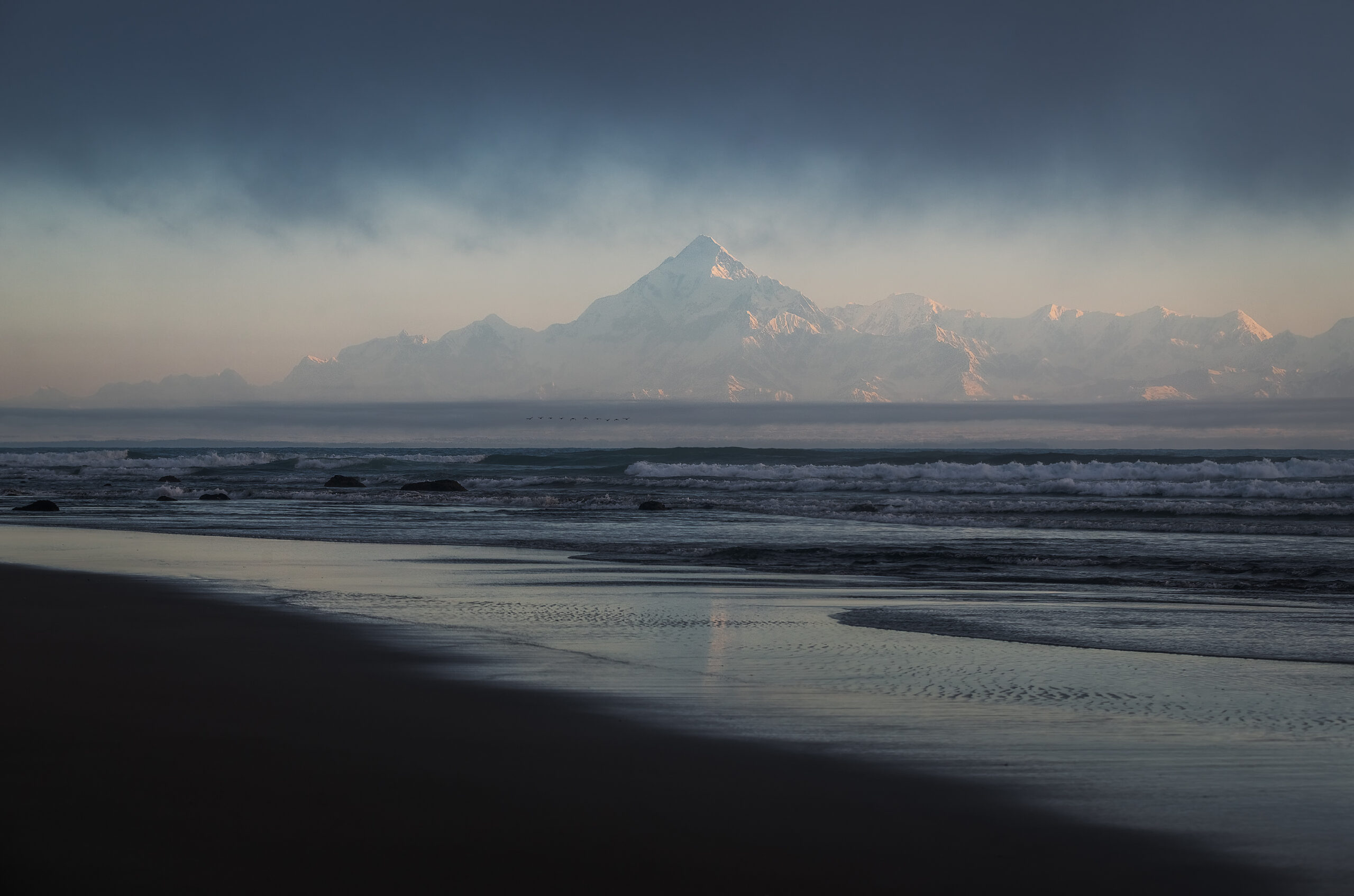
The project began with a hike on a glacier in Alaska. I had my Hasselblad film camera with me at the time. I love composing in that square viewfinder.  I felt that I was creating interesting compositions with the ice formations. After that trip, I wanted to continue that work, but it’s actually quite difficult to find glaciers you can walk on. They’re far away and hard to access, and hiking often isn’t allowed. It’s dangerous, you need a guide, and you need to be tethered to the surface. I very much do not want to die.

The next winter, I decided to see what I could do in the Sierras. I found some worthwhile spots, but shooting the series on film proved to be impractical. Dealing with film and loading backs in freezing temperatures is brutal, especially when the wind is blowing snowflakes everywhere. The following year I went all in on the Leica S3, Leica’s medium-format system. It’s tightly weather-sealed. All the lenses are incredible. The batteries last forever, since it has an optical viewfinder. It’s portable, rugged and ergonomically lovely. It was perfect for this series. For the next three years, I took multiple expeditions each winter.


New WSJ Contract

By now, many of you have received the new Freelance Photographer Contributor Agreement from Dow Jones/Wall Street Journal. While the effective date is 2026, they are asking for signatures now.

After legal review and discussion, it is clear that this contract represents a significant step backward for freelancers. It introduces a “Work Made for Hire” clause and allows WSJ to sublicense our work to third parties for profit. They have said that they will increase the rate to $600, but we feel that is not given how much they gain from this contract as well as the increased demands for video and long hours.

Many of us have already sent individual responses, but there is power in numbers. We have drafted a collective letter to Lucy Gilmore and WSJ leadership asking them to pause the rollout and rewrite the contract with actual freelancer input.

Please read the letter below and share it widely with freelance colleagues. If you agree, please add your name to the list https://forms.gle/BZHh3nzYdFMS7a4V9 by midnight PST on December 23rd, 2025.

We value our relationship with the WSJ, but we need to stand together to ensure it remains sustainable.

Hello, colleagues.

The new WSJ freelance contract is yet another example of a national newspaper not compensating photographers fairly (not to mention the effects of inflation and ACA premium increases).

We’re writing to flag critical issues we should all be aware of before signing this new contract effective Jan 1, 2026. 

Afterall, the WSJ has no staff photographers. Freelancers and wires illustrate 99.99999999% of their stories.

We hope this can be an opportunity for the WSJ to do the right thing. We need to push back collectively on the WFH language and the rates by emailing Timmy Huynh (timmy.huynh@wsj.com) and DoP Lucy Gilmore (lucy.gilmour@wsj.com). Also please feel free to write to other WSJ photo editors or anybody else in the industry who should see it.
You can use the language below as a template. Add what you want and tweak what you want:

Template:
I have reviewed the new contract terms and would like to discuss critical concerns regarding the “Work Made for Hire” classification, sublicensing and the current rate structure.

1. Work Made for Hire & Copyright Structure: Section 1.2 classifies our work as “Work Made for Hire.” While I appreciate the subsequent clause assigning a joint interest back to the photographer, classifying freelance work as WMFH is legally problematic for independent contractors. It alters the fundamental authorship of the work and strips creators of rights under the Copyright Act. Proposal: If Dow Jones requires joint ownership, this can be achieved through a direct assignment of specific rights rather than a Work Made for Hire framework. I ask that the WMFH language be removed in favor of a standard assignment clause.

2. Compensation & Sublicensing: The move to a co-ownership model grants Dow Jones significantly more value — specifically the right to sublicense images to third parties (Section 1.3) without paying royalties to the photographer. This is a major departure from the previous contract, which allowed secondary market sales to generate revenue for the creator.

Furthermore, the base day rate has remained static despite inflation and increased scope, specifically:

* Video Demands: We are increasingly asked to capture video, which adds significant workload in the field and post-production.
* Hours: Day rates often do not account for days that stretch well beyond 8 hours.

To ensure this partnership remains sustainable, we need a review of the rate and sublicensing structure and copyright language. 

Decisions regarding rights, rates, and liabilities must include the voices of the people doing the work, particularly when a new contract fundamentally shifts so far from the previous agreement.

I strongly urge Dow Jones to pause the rollout of this contract and reconsider these terms by convening a working group of regular freelancers to assist in a rewrite. If you need assistance identifying a representative group of photographers, organizations such as Women Photograph or Diversify Photo would be excellent resources to help facilitate this conversation. 

This must be the standard for any impactful contract change in the future.

The Daily Edit – Nicholas Wolken talks about his creativity revolving around movement


Kora Shapes Snowboards
Nicholas Wolken

Heidi: Your creative world revolves around movement. How do snowboarding, photography, and design inform one another — and which came first?
Nicholas: Snowboarding shaped it first. I’ve always looked at the world through movement — asking where you can do something, how it would feel to ride or jump of something. Design slots into that as the tool that lets the idea become real — boards that make those visions possible. I see Photography as another tool: it captures the feeling the moment. All three share that when it’s right, you know it in your body before you can explain it.

What role does restraint play in your creative process? Your images feel timeless and avoid falling into overproduced snow-sports clichés.
I’m on the mountain as a rider first. So I can’t be shooting in the obvious moment or from the obvious angle when the riding is going on. On the other hand there’s no pressure for me to come home with photos — I shoot because it’s fun. I’m quick, a bit lazy with settings, and I look for angles on the go, letting the shots come to me rather than working for them. If I remember the camera, I pop it out, grab what’s there, and move on. I like the less obvious frames that feel closer to real life. The classic action snowboard shot is often similar so if you have seen a lot of them over the years a lot of them loose their uniqueness and it gets a bit repetitive and boring and it only represents a tiny slice of the reality and what it means to be in the mountains; the in-between moments say more about the day.

You studied psychology before dedicating yourself fully to riding and creative work. How does that background influence the way you approach photography?
Likely, but not in a way I can diagram. I feel like training as a psychotherapist also makes you a little bit more aware — of your own emotions, your state of mind, whats being said behind the words and awareness of the relationship. I can see how that would seep into everything, including how I sense and choose to capture a moment, but it’s more undercurrent than a aware technique.

You’ve mentioned the tension between being in the moment as a rider and documenting it as a creative. How do you navigate that balance of riding vs creating an image?
Snowboarding comes first. I use the in-between times — waiting, hiking, catching my breath — to shoot. That means I end up with more lifestyle, atmosphere, and rarely the big action frame. I’m not trying to balance anything; I’m just adding another layer of being creative and having fun to the day, zero pressure.

You’ve spoken about the psychology of attention and presence – does the camera interfere?
No not really I’d rather the camera disappear so I can stay in the flow connected to my self and my surroundings. I miss plenty of fleeting moments as is; a fast easy, tool helps me. Ironically, the best images often appear when it’s the last thing on your mind: too steep, too cold, a bit scared — that’s when the magic is happening and thats when I want a fast tool.

Your films like “Turn of Mind” connect snowboarding to environmental awareness in subtle, emotional ways. Do you see your photography as a form of activism or resistance?
Not knowingly yet, but you know I just realized I really should be using and seeing it as such and I hope it eventually will become just that, like my role within our Snowboard company eventually led us to work with 1% For the Planet or Snowboarding in movies for POW about important climate votes in Switzerland, I can see my photography eventually become a tool for change as well. Most of us in privileged positions have the ability to make change with what we already do. Thanks for reminding me of this!

The Daily Edit – Vjaybombs: Projections as non-violent protest


Vjaybombs

Heidi: Who or what inspired you to become an activist-artist working with guerrilla projection tactics in public spaces?
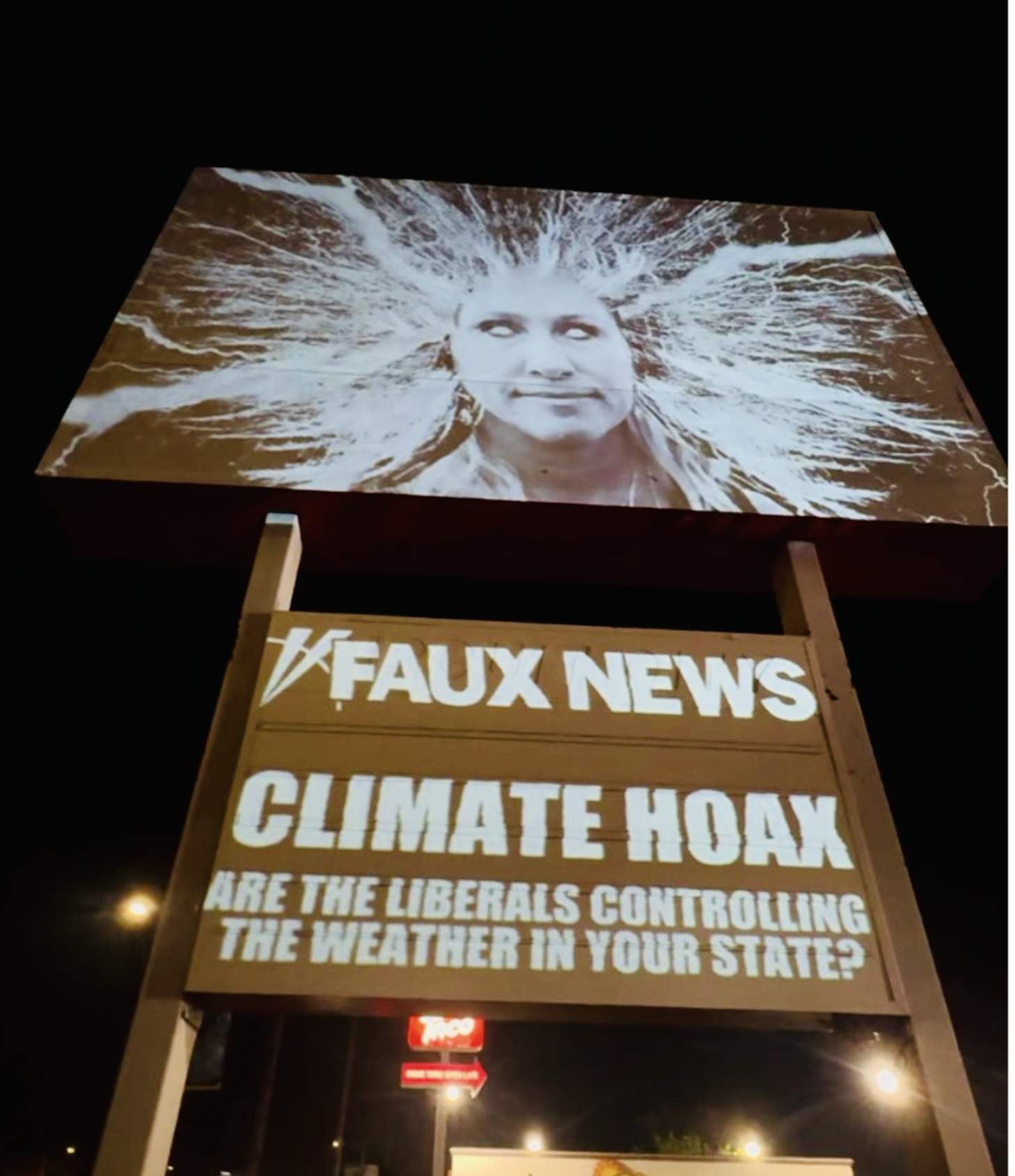
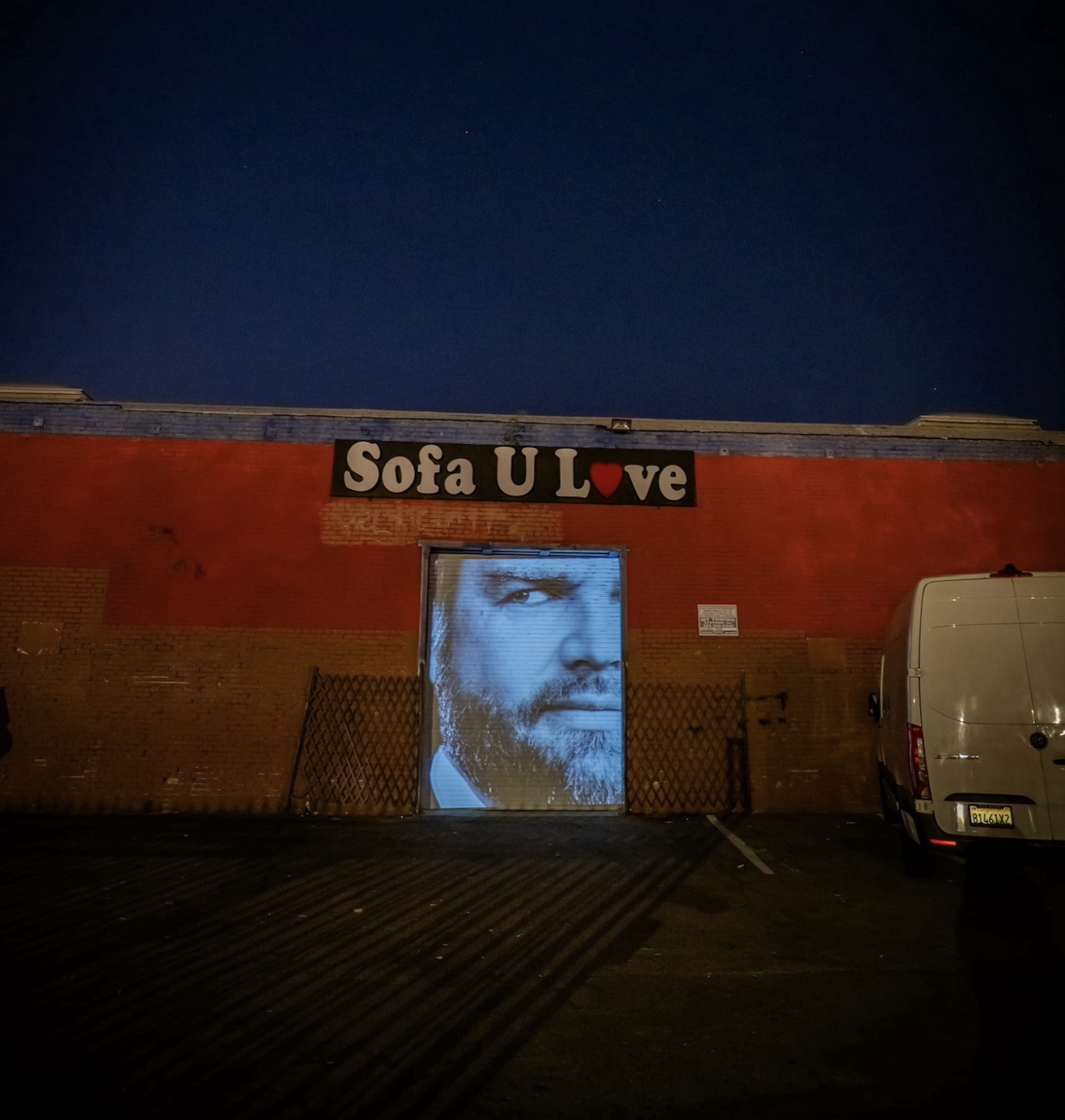
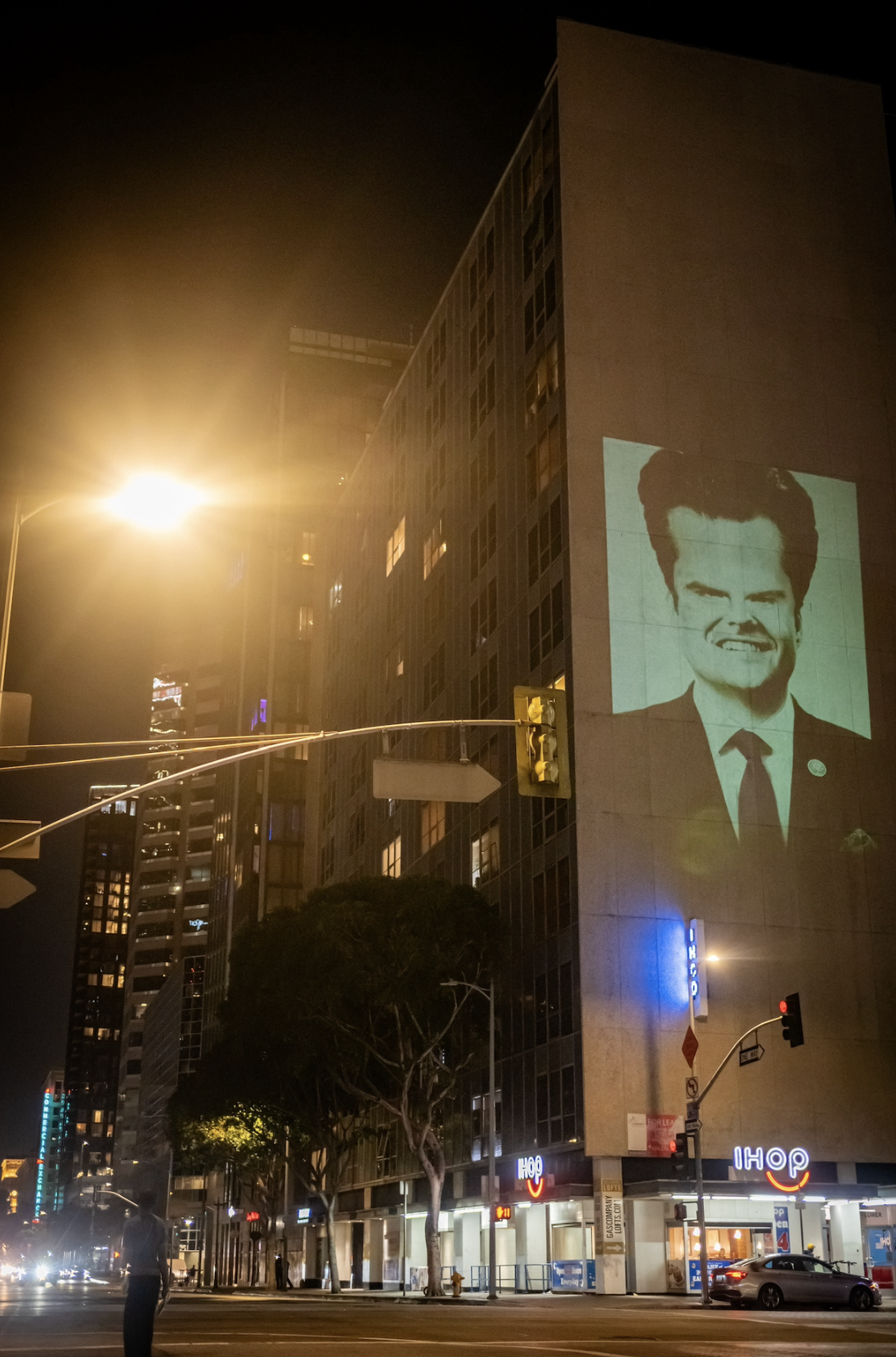
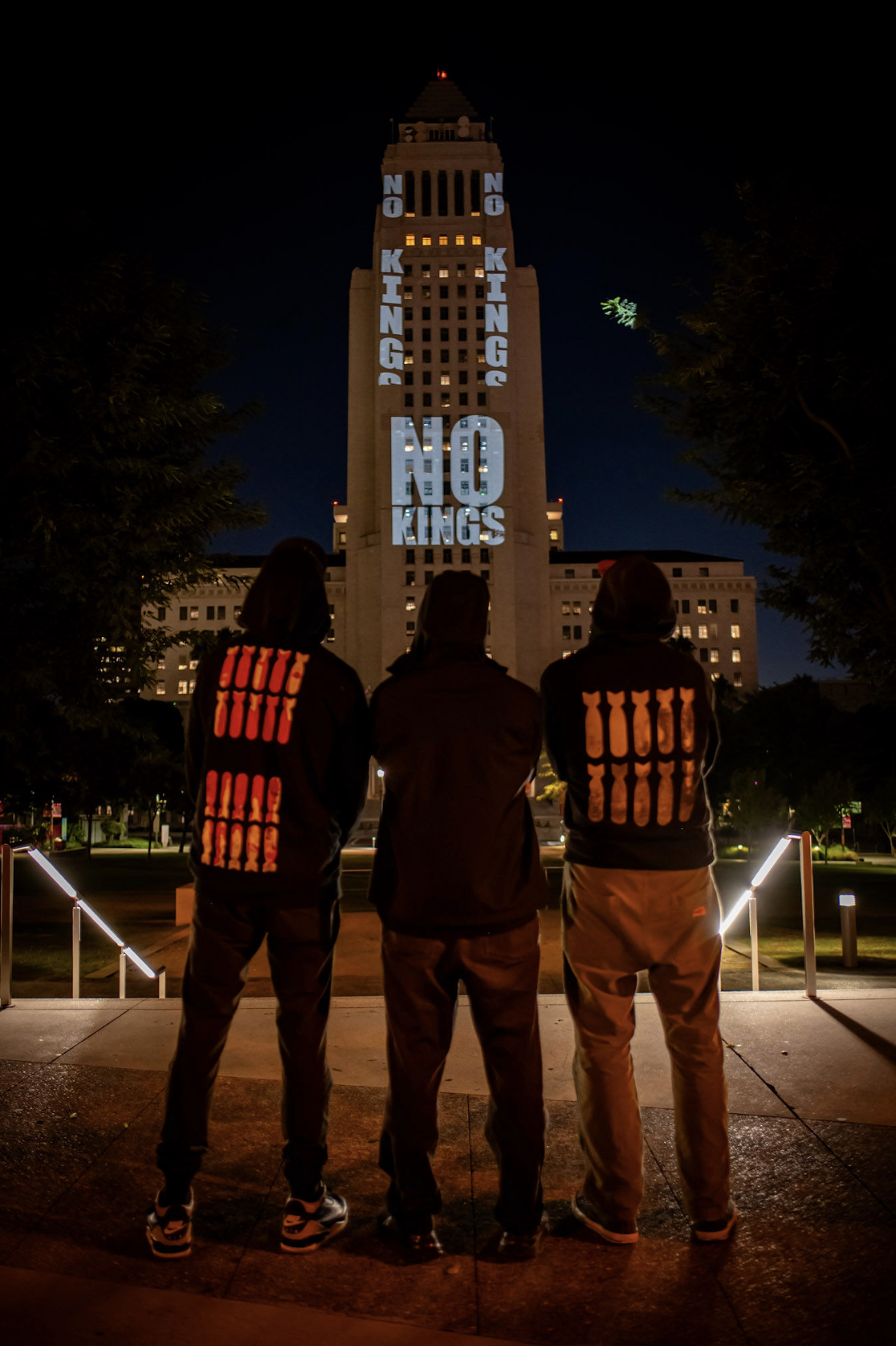
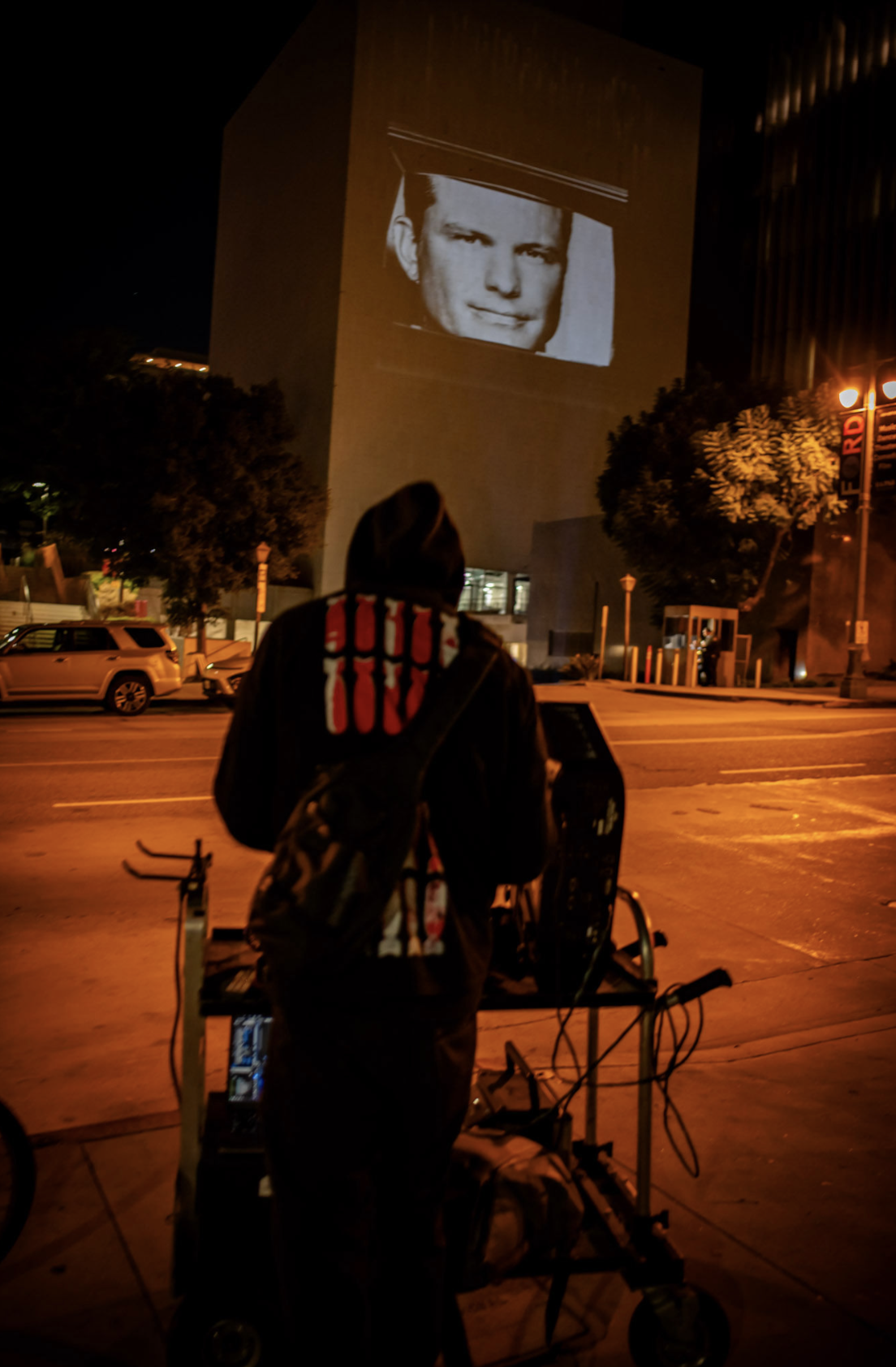
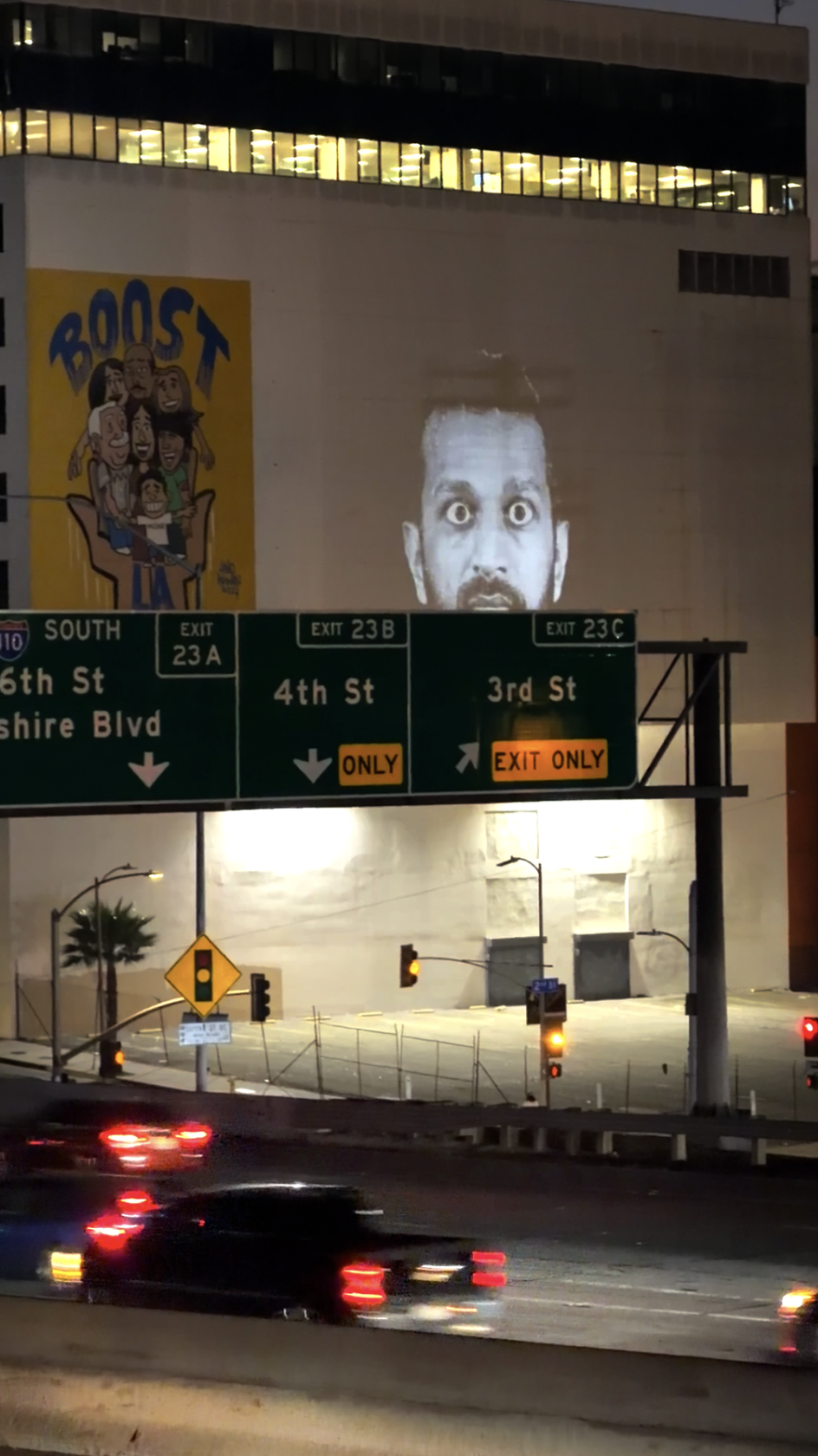
Vjaybombs: We’re all filmmakers by trade, and projection bombing sits right in the sweet spot of all our skill sets – documentary filmmaking, animation, and beyond. Our first dabble in projecting in public spaces was about ten years ago. Back then, we’d throw these huge house parties and project onto nearby buildings – mostly abstract visuals, stuff we shot ourselves, mixed live with movie clips and music videos. It wasn’t until the lead-up to the 2024 election that we started using guerrilla projections as a form of peaceful protest.

Which came first, the merch or the projections as temporary canvases of dissent?
Projections came first. We only started making and selling merch as a way to help fund the project. Projections are accessible, disruptive, but not violent.

What change do you hope to see in the world through your work?
We want to show that it’s possible to make your voice heard and protest peacefully. Hopefully, we can inspire others to do the same. Right now, it feels more important than ever to use whatever skills we have to push back against the rise of fascism and fight for our freedoms. We all have more power than we think. It’s easy to feel overwhelmed or tune out, but we urge people to stay engaged. Real change doesn’t come from one big event – it comes from countless small acts that, together, move the needle.

How did the “projection bombing” concept get started for you and what does the name Vjay Bombs mean?
“Vjay” stands for “visual DJ,” and “bombs” comes from “projection bombing.” Both “VJing” and “projection bombing” have been around for a while – we didn’t come up with them ourselves.

How has your setup or equipment evolved?
Honestly, we were total novices when we started. The first time we went out projection bombing, we blew a fuse in our car trying to run power from the projector through a lighter adapter – rookie move. Luckily, a guy from a nearby bodega let us plug into his shop for a couple of hours. Since then, our setup has evolved a ton. We’ve upgraded from a cheap projector off Facebook Marketplace to a legit home theater model, and now we use a large-venue projector – the kind you’d find in a movie theater.

Can you walk us through your process from scouting a wall to pulling off a full-scale nighttime projection?
Everything starts in our group chat – that’s where all the ideas are born. We’re constantly talking about current events, sharing articles, and throwing around projection concepts. Whenever someone spots a great wall or surface, they snap a photo, drop it in the chat with the location. When something happens in the world that inspires us to respond, we start bouncing around ideas, exchanging visuals, and then move into animating the video. Depending on the concept, that process can take anywhere from a few hours to a few days. That said, each piece really has its own process. There isn’t one formula that works every time – but there are certain elements we like to think about when coming up with ideas. We start by pinpointing what we’re trying to say with the projection: What aspect of an issue will resonate with people? What is the emotional reaction we would like to invoke? How can we communicate a message clearly in a matter of seconds? We’re essentially creating digital billboards, so it’s crucial to grab people’s attention immediately and deliver the message as efficiently as possible. If the piece leans more satirical, we think about how to highlight the absurdity of a situation. Sometimes humor is the easiest and most effective way to get people to engage with something serious. Ideally, each projection unfolds like a mini-story – almost like a comic strip – with a beginning, middle, and end. Once the animation is ready, we move into the projection phase. This is where the environment becomes a key part of the work. The sweet spot for us is when the architecture and the message intersect – when the building itself becomes part of the story we’re telling. If the surface somehow relates to the theme or subject of the piece, that’s double bonus points. For each projection we think about what the priority is – to get as many eyes as possible or to draw attention to a specific location. And finally, there’s the posting and social media aspect of the process. Documenting everything is very important. How can we give a piece the longest legs online. We love marrying the visuals to the perfect soundtrack. Sound adds another emotional layer – it can amplify the tone, be a punchline, and deepen the impact of the message. When all those elements align – the concept, the visuals, the location, and the music – that’s the ultimate goal.

How does projection bombing fit into the larger ecosystem of street art and activism?
Projection bombing is a really unique form of street art because it’s still so new. What we’re doing would’ve been extremely difficult ten years ago (though people were definitely doing it!). With how fast technology has advanced, you can now get powerful, compact projectors for a reasonable price – something that just wasn’t possible before. As they keep getting more accessible (and brighter), we think projection bombing will become a more common form of street art and protest.

What’s next for you?
We recently hosted our first nationwide projection protest – people from across the U.S. and Europe all went out and projected on the same night. The enthusiasm and support were unreal. Watching all the videos come in was emotional – from massive city buildings to barns in the middle of nowhere. It was truly inspiring to watch. There are a lot of people who want to contribute but don’t know how. Not everyone sees themselves as creative or has time to make protest art, but the concept of the projection protest gives people a new way to engage – and allows people to make art themselves. The animations are just the first piece of the puzzle – the projection itself, and how it’s presented, is equally important. Each person becomes their own curator and part of the artwork through their own setup and location choices. Seeing everyone’s interpretations the night of the group protest was incredible. The group protest really opened our eyes to all the ways this project can grow and connect people. We definitely want to keep mobilizing the community. We’ve talked about collaborating with other digital artists on a visual album, throwing live events, and even starting a podcast.

Despite Success, Oriana Koren Chose Happiness Over an Industry That Didn’t Care If They Survived

Part 3 in a series called Shifting Perspectives by Angie Smith

Angie: Tell me how you first discovered photography.

Oriana: I grew up in South Florida. I was 13. My dad, who as far as I’m concerned was the original geek, had gadgets everywhere. He would take apart the family computer piece by piece and put it back together again. He was always on the cutting edge of technology. He had a Wired magazine subscription that I would flip through as a kid.

I was an indoor kid for a lot of reasons I didn’t understand at the time. Growing up I just thought, ‘I’m shy. I’m scared of people. I don’t like people. I like my books. I like my quiet.’ I could control the stimuli in my room. Later I was diagnosed autistic — I got that diagnosis in 2022.

One day my dad knocked on my door and tossed this brick at me. It wasn’t an actual brick — it was an HP digital camera with 1.2 megapixels. He said, ‘Go outside and make some pictures.’

I said, ‘No, I don’t want to go outside.’

And he said, ‘You have to. Spend an hour taking pictures.’

So I stayed on our block. I avoided eye contact with people, looking down at my feet the whole time. I made pictures of shadows, dew drops on the grass and flowers– just inanimate objects that I could get close to and observe. I ended up staying outside for three hours. After that first shoot I thought, ‘Wow, that was really fun.’

I started carrying that brick everywhere I went. With a camera in my hand, I felt in control of how I was moving through the world. All of a sudden, I felt like talking to people.

That turned into me taking AP studio art in high school. I started making photographs of my friends. I got really interested in feminism at the time and how women were being portrayed in photography and in art. I ended up submitting a self-portrait to the 2006 Scholastic Art and Writing Award. I won a national silver medal for my self portrait and then matriculated into college and I got my BA in documentary photography.

Once I decided I wanted to be an artist, I thought, ‘I’ve got to get the fuck out of Florida.’

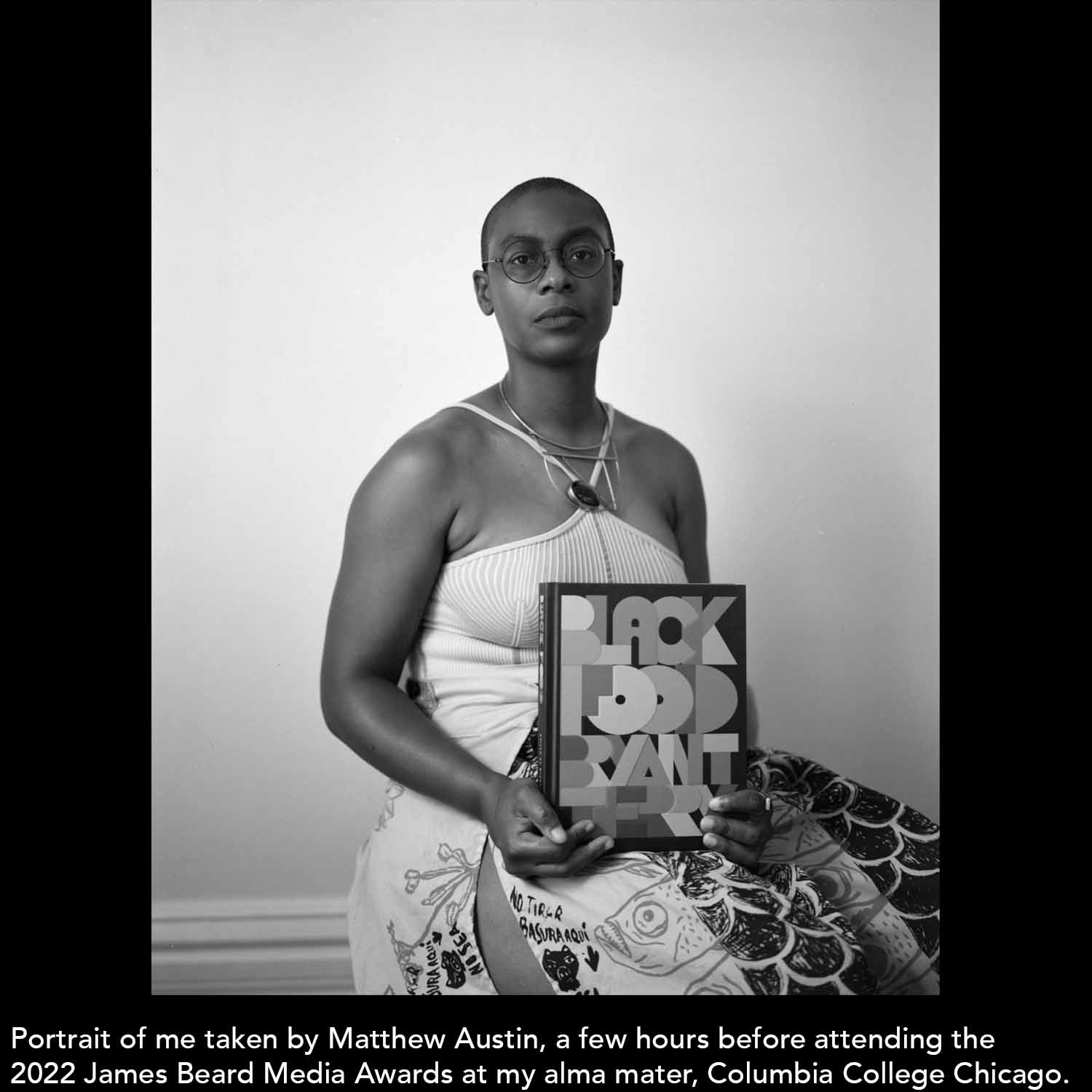
I went to Columbia College Chicago, which is a small private art school. I don’t even remember how I first heard about Columbia. We had spent quite a few holidays in Chicago—my dad still has family here—and it was a 360-degree experience compared to how I grew up in South Florida.

Museums were accessible, libraries were important, the city was vibrant.

Angie: How did you get into shooting weddings?

Oriana: I was doing weddings and food photography in Chicago from 2010 to 2014. Growing up, I loved cooking and was constantly checking out cookbooks at the library. At one point, I thought I wanted to be a pastry chef. I loved watching the Food Network.

I started doing wedding photography because I was sold on the idea that you could make good money as a wedding photographer and use that to fund the documentary work you wanted to do. I am a Black, visibly Black person walking around in the world, and most of the people I was photographing—people who were getting married—were white.

There was no amount of qualification I could give clients where I didn’t have to justify why they should pay me what I was charging. It got to the point where, in my second-to-last year of shooting weddings, I literally broke down by the hour why people were paying me $2,000 to photograph their wedding. It was exhausting. So it wasn’t surprising when the same thing happened in the editorial space. I thought, ‘Oh, this again.’

My partner at the time and I moved to Los Angeles in late 2015. I had done one portfolio review earlier that year, in March, with the photo director of Los Angeles Magazine. This person told me, ‘We actually don’t have a lot of good food photographers in Los Angeles, and the city is really starting to become a food city.’

I know that when I signed my contract with The New York Times, they were still paying $200 a day for a day rate. I was one of the few photographers willing to shoot for newspapers. Everyone else was chasing magazine jobs, which I thought was insane. I remember thinking, ‘Oh, newspapers—they go out on a regular basis.’ I understood why people didn’t do it, but because others didn’t, I ended up covering every food story in LA and Baja for The New York Times for two and a half years. That led to The Washington Post and then to digital publications. That’s when the food work really picked up.

I was really lucky to get a digital story into Lucky Peach before it folded. That was a career high, because it was one of the things I had been aiming for. I just wanted to be in an issue of Lucky Peach. But the real thing that saved me—on top of photographing for newspapers—was that I could pitch. I had ideas.

I realized, ‘This is how you get work.’ Unless we do it—as people who are not adequately represented in the industry—no one’s going to do it. When those stories get accepted, and it’s something that came from your soul and your observation of the world, it becomes more like a collaboration with the photo editor. And it’s so sweet when it gets published.

So I became a pitching monster. I was constantly pitching stories.

That’s actually how I got the piece that really broke it open for me in terms of exposure—the California Sunday Magazine feature. I loved that magazine. I loved the photography in it. I told myself, ‘I’m going to be in that magazine one day.’

I pitched them a story about chefs in South Central who were harnessing Instagram to sell their food. The story was about the chefs and their ingenuity.I sent them at least a thousand images for my wide edit. When I received their hi-res order, there were no portraits of our subjects, which I thought was extremely odd for a people centered food story. It was about the chefs more than it was about the food—it was about the role they were playing in their community. And that’s how I pitched the story. That’s how the writer pitched the story. So then when I got the high res order, I was like, something is really amiss here.

I sent them some extra pictures and told them ‘It’s kind of not cool for there to not be portraits of the people.’

In my head, I was like, there’s no fucking way this is running without these people’s portraits. This meant something to my subjects. And I wasn’t going to disappoint them because they granted me access into their lives, and that was not something that I took lightly.

It ended up being a 14-page feature. I was fucking stoked. The designer did hand-lettered writing for each chef. Everyone got their moment to shine with their portrait. The moment that story hit the presses, it was nonstop. I got an agent. The feature was submitted to the SPDs for design, and we swept.

Around that time, I had a core group of collaborators—Black women, Black fems, other Black trans people. We were like, ‘Nothing is going to change if we don’t do it ourselves. If we don’t roll up our sleeves and figure out some solutions, it’s going to continue to be really difficult.’

We started doing something that some of the white guys in the industry had long bragged about. When I went to a meeting, I would bring one of my homies’ mailers and say, ‘If I can’t shoot this, the homie can shoot this.’

We just started circulating work amongst ourselves. Then the Authority Collective came into being in 2017 and we launched in 2018. We shared work within a group of 300 people and created a space of accountability when it came to working with publications. That took off in a way I wasn’t anticipating.

Angie: So how did you come to the point where you wanted to walk away from photography even though you were experiencing a lot of success?

Oriana: By March 12, 2020, I lost all of the work I had lined up for that year—email after email after email. In one day it was gone. I thought, ‘Okay, we’re done. There’s no clearer sign that this should be over.’ I came to recognize that I had been working really hard for an industry that didn’t care about my material well-being.

Working during the first Trump administration was a fucking nightmare—working as a Black person who was visibly queer. The things I had to experience on set can only be described as absolutely egregious. And it was every job.

My crews were always majority people of color, almost always women and femme. That was something I was dedicated to. I didn’t like being on set as the only one. It didn’t make any sense to me that it was happening.

The myriad of these experiences made me realize: the problem here is the people. The problem here is a lack of self-awareness, a lack of questioning the system you live under and benefit from.

People should not constantly have to worry about housing, putting food on the table, or having healthcare. The photo industry is not equitable. We’re not getting paid fairly. This industry is deeply racist, sexist, and homophobic. Getting an assignment or not getting an assignment is the difference between keeping a roof over my head or not. This is how I feed myself. This is how I keep myself clothed and housed.

I decided, ‘This is not worth it. My health is not worth it. My sanity is not worth it.’

I’ll be 100 percent real: if you can’t respect me as a human being, you don’t get access to my labor. There’s a reason you have to hire photographers to make pictures—you have to be willing to trust the people you’re hiring.

Whether or not my images are being published does not stop me from being a photographer. I will never stop making pictures. I just don’t want to fuck with y’all anymore.

Angie: So when you moved to Chicago and stopped working in the industry, what did you do?

Oriana: One of the things I started doing in 2016 was collecting books by Black women authors. During Trump’s first presidency, I thought, ‘The censorship is going to come down any moment. This is just the fascist playbook. Let me start collecting these books.’

So when 2020 hit, I read 51 books. That’s when I thought, ‘Okay, I’m going to open a bookshop. Chicago is a great place to do this. This is a city of readers.’

At the same time, I was writing my newsletter and teaching classes. I was thinking about how language works, and what it means to be Black under another wave of repression and dictatorship.

In the back of my mind I knew: ‘I want to do something different. I don’t know what that looks like yet, but I know I’m interested in ceramics. I’m interested in sound and sculpture. I’ll give myself the time and space to figure out this new practice. I’m not going to put expectations on it. I’ll try whatever I feel called to.’

My rent was really affordable and I had an entire pottery studio in the basement. What I had been asking for just fell into my lap. So I started hand-building. And I felt grounded again, in a way I had once felt when I was making photos.

When the Biden election happened, I got blindingly angry. I had to do something with that energy. I started playing with natural ink. I was making coffee, grinding that ink with some other stuff, and I just started drawing. It was helping me get the energy out. I asked myself, ‘What would I do if I wasn’t concerned about making money?’

Long story short, I fell into this new practice—works on paper, ceramics, and sound—where language itself became a medium I was using. And it had been there the whole fucking time, but I couldn’t see it because of photography. I had been laying down the groundwork for the practice without even realizing it.

So full circle, the moment I put ink to paper, I just knew: ‘This is it.’

Angie: Have you worked on any editorial jobs since you moved to Chicago and left the industry?

Oriana: I’ve had really exceptional experiences working for the Chicago Reader. The writers are exceptional. The editor-in-chief is exceptional. The moral clarity that team carries is beyond anything I had experienced before.

I documented the cover story they did on Black femme sex workers post-pandemic. It felt so good to hand someone my work and have them engage with it deeply enough to know I could handle that variety of assignments. That had not been the case when I was doing editorial before.

When you work at the level we work at, everyone is making excellent work. What distinguished me is that I like to run my mouth and I can speak in coherent paragraphs. That has always been my strength, which I now realize is directly connected to my disability. I’m hyper-verbal, autistic.

I will never stop making pictures. I’ve been deeply invested in a vernacular photography practice because I’ve been thinking a lot about archival practices Black people have that we don’t always see as part of ‘the archive’—because we’re not given that language.

But I grew up looking at my grandma’s family album. That was the first seed planted for me. And it was also my grandpa’s collection of National Geographic magazines.

Angie: At this point, would you accept editorial assignments?

Oriana: I would’ve said yes prior to the election. Now I say no. The media landscape and its acquiescing to the dismantling of a free press is frightening. It puts journalists—visual or otherwise—at deep risk.

If there’s anything I’ve learned in the time I’ve been away from photography, it’s that it’s intolerable for me to have to put aside my ethics and my values. I can’t do it. I was jumping through hoops in my head around visibility and representation, telling myself, ‘These stories need to be told. These people need to be seen.’ And I do believe that’s true. But I also know that doesn’t change the material realities of the vulnerable people I was photographing. That’s a hard pill to swallow, because part of the reason we all do this is to change lives and change minds.

I think there are some things that are deeply important to consider. We’re in a crisis of conscience and a crisis of critical thinking. Pretending that what we’re living through does not have dire consequences for all of us is something I cannot participate in anymore.

It’s crazy to me for anyone to be like, ‘Okay, what’s the hottest restaurant?’ They are literally disappearing American citizens. I don’t want to talk about restaurants. I don’t want to take pictures of celebrities. How long do we do this until we can’t do it anymore? The apathy right now is truly frightening to me.

So no, I will not be picking up my camera. But I will be picking up my pen instead, because I think that actually has more power right now. I think truth-telling is an antiseptic to fascism. Artists are the ones who say, ‘This is not okay. It can’t be this way.’ That is supposed to be the role of the media and journalism.

I would not make money in this climate as an editorial photographer. I am a liability—and I’m really proud of that, actually. I don’t want to be seen as safe or as someone who would capitulate at this moment. That’s not my job as an artist.

I am the happiest I can remember being in my adult life. Every day I wake up engaged in work that is deeply meaningful and important to me. I’m not having to pretend to be palatable or behave a certain way, which is intolerable when you’re autistic. If something is wrong and makes me physically uncomfortable, I cannot deal with that, and it’s very difficult for me to pretend otherwise.

Angie: That’s a superpower. But I can also imagine it being really, really hard.

Oriana: We know how to communicate with one another and not take things personally. The fact that I get excited about believing that injustice is not something anyone should have to tolerate—that’s one of the things that makes me the artist I am. It was also the reason I was able to make photographs the way I did.

More than anything, seeing that you can have a successful career and walk away from it is probably the most deeply empowering thing I’ve done. To know that you are worthy in and of yourself, exactly as you are. That worth doesn’t need to be quantified by a paycheck. It doesn’t need to be quantified by marriage.

All of the times I was told I couldn’t survive—I have survived. And I’m thriving.

I think practicing bravery and courage is actually a deeply important practice. We don’t have many avenues to practice courage in the United States. I’m also seeing that a lot of cowards are running around, and it’s just because they don’t know they already have the power within them to be courageous. The powers that be don’t want them to recognize that.

If you decide to leave the photo industry, for whatever reason, that’s not a failure. You get to pick the life that makes you happy. And anything in your life that doesn’t make you happy—get rid of it. It’s not worth it in the end.

We have a very, very short time on this earth. If you don’t do it now, when will you do it? Just take the fucking leap. You’ve got nothing to lose and everything to gain.

The Daily Edit – Calla Fleischer: Stories Untold


Calla Fleischer

How did you decide which images or stories would make it into the final volume?
Calla: This was an enormously difficult task. My catalog is made of thousands of images taken over many years. I worked for several months both on my own and then with the help of Greg Gorman to reduce it to a few thousand and then again with Gary Johns to get it down to these few hundred chosen. Some of the images called for others to go with them to create a story. I could easily have made a book of completely different stories, but it would have the same feeling. I could also have made a book with no stories—just beautiful images—but that would be something else altogether.

Your artist’s statement mentions exploring where “culture and humanity intersect.” Can you share a specific image from the book that best embodies that intersection for you, and what the backstory was?
My Portugal project probably embodies this best. I have for several years photographed women in the rural north and urban south to show how women struggle. Their human struggle for survival has parallels in the centuries-old tenant-farming culture of rural northern Portugal and in the sexual commerce of Lisbon. They must get up each day and make it to the next. They have very little support. The men aren’t much help, if there are any. They are captured by circumstances, but the cultures in which they live are completely unalike. Two of those images are the 99-year-old woman on page 295 and a sex worker on pages 284 and 285.

As someone born in South Africa and now living in New Hampshire, how do your personal journey and identity shape the way you see, photograph, and interpret other cultures and lives?
I have lived in South Africa, England, Hong Kong, and the United States—and within the U.S., in New York, California, and now New Hampshire. In each of these places I have had to adapt: to see, feel, and read the local culture rather than brandish my own perspective, and to make new friends on their turf. Perhaps it makes me more sensitive, more of a chameleon, more able to relate one-on-one. I think this led me to be the kind of photographer that can hang back and wait before picking up my camera.

Were there ethical or emotional challenges you encountered while photographing in communities or places far from home? How did you navigate consent, representation, and vulnerability in those moments?
It really doesn’t matter how far from home I am. Many—or even most—of the people I have photographed are grounded in their own cultures and not part of mine. I respect that, and I try to capture aspects of their humanity despite the cultural distance. I wasn’t trying for any specific representation. These are stories of individuals, or small groups of individuals. None of my work is ethnographic or political. I do not take pictures where I sense or hear any reluctance to be photographed. I learned that lesson as a child when I took a picture without permission and was severely chastised by the subject. I believe I can, with most strangers—through my expression and gestures—communicate respect and a tacit request for permission, and I’m very sensitive to their reactions. You can see it in the eyes. There have been moments where I felt a little uneasy, potentially unsafe, but not many, and I’ve been able to back away when that happened. I’m not trying to steal the image in face of resistance, though I know some photographers do. Of course, in some of the shots taken on the fly or from a distance there’s no explicit consent, but I feel those are distant enough not to be intrusive.

Looking ahead, how do you envision Stories Untold influencing your future projects—in terms of subject, style, or narrative—and what new stories are you most excited to tell next?
I will continue to photograph people as I travel, trying to tell their stories. This project could go on and on, as it already has for decades. I don’t think I need to change it. But I have worked in other genres too, and maybe my next project will be a book of figure studies, celebrating the beauty of the body.

If you could sum up Stories Untold in one emotion or feeling, what would it be—and why?
It would be “sympathetic connection” to the lives I depict. Admiration, concern, inspiration, empathy, respect, wonder, delight — all positive emotions. There’s nothing to hate or to fear or to despise. I would like people looking at my book to feel the same connection and curiosity that I have felt.

In five years, what do you hope someone will say or feel when they pick up Stories Untold for the first time?
Then, as now, I hope people will feel that everyone deserves an audience, and that our humanity transcends our circumstances. Perhaps I’d also like them to give me a pat on the back for having pulled all this together—though that’s a bit self-indulgent, it’s true.

If you could go back to the first destination you photographed for this project, what would you do differently now?
I think I would spend more time listening before photographing. Early on, I was often driven too quickly by the subject and the moment. I had to learn to be aware also of the composition, the light, the mood, as well as the immediacy of the moment. Now I understand that patience reveals deeper layers of a person’s story. I would more often slow down, wait for the light, have more conversations, and allow those connections to shape the photographs in more profound ways. I think I am more confident now so can allow this to happen.

How long is your book tour, and what are the destinations?
The book tour will last about six months. It started in New York at the Leila Heller Gallery on October 9, and will include San Francisco, Sonoma, Los Angeles, London, Lisbon, and Cape Town.

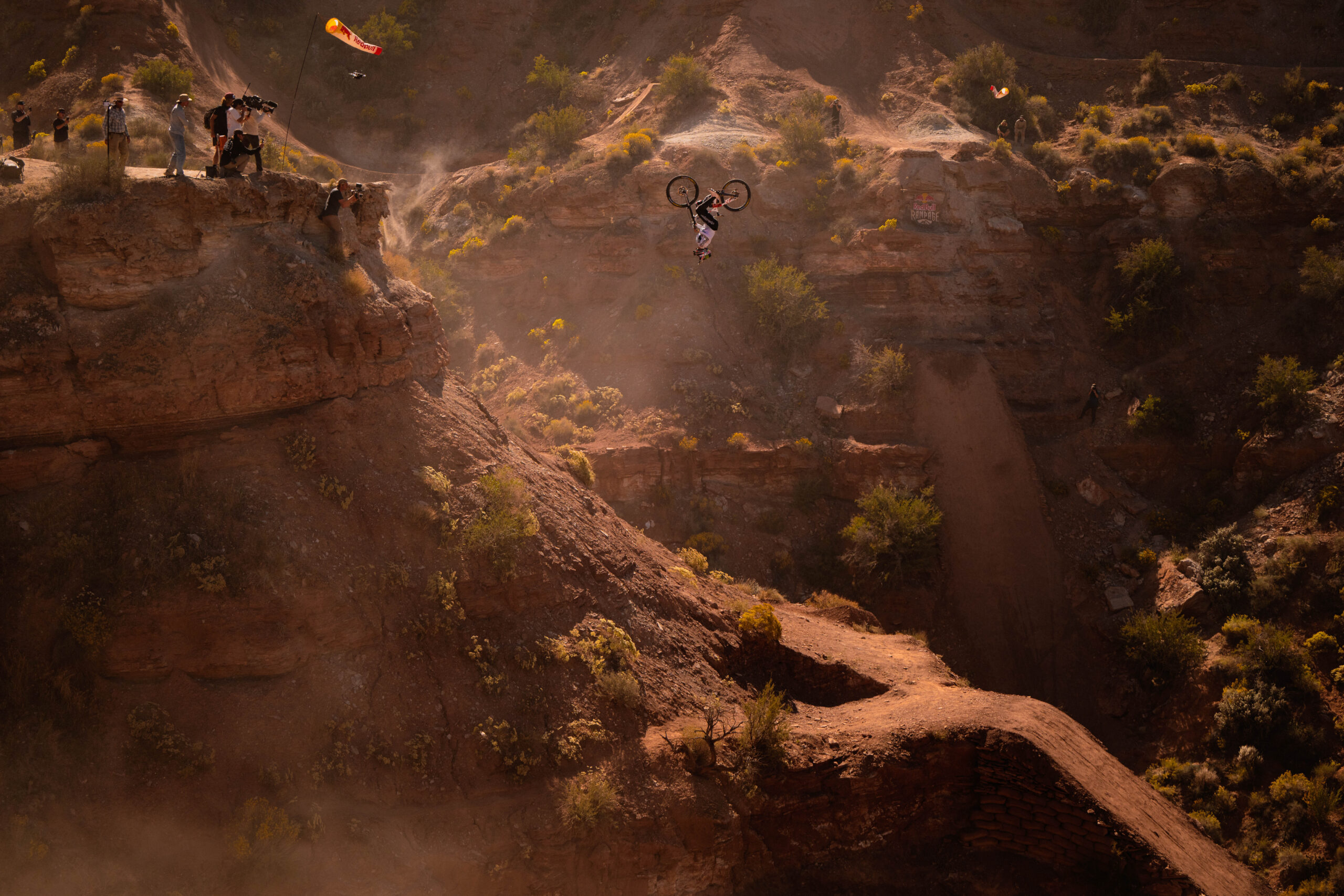
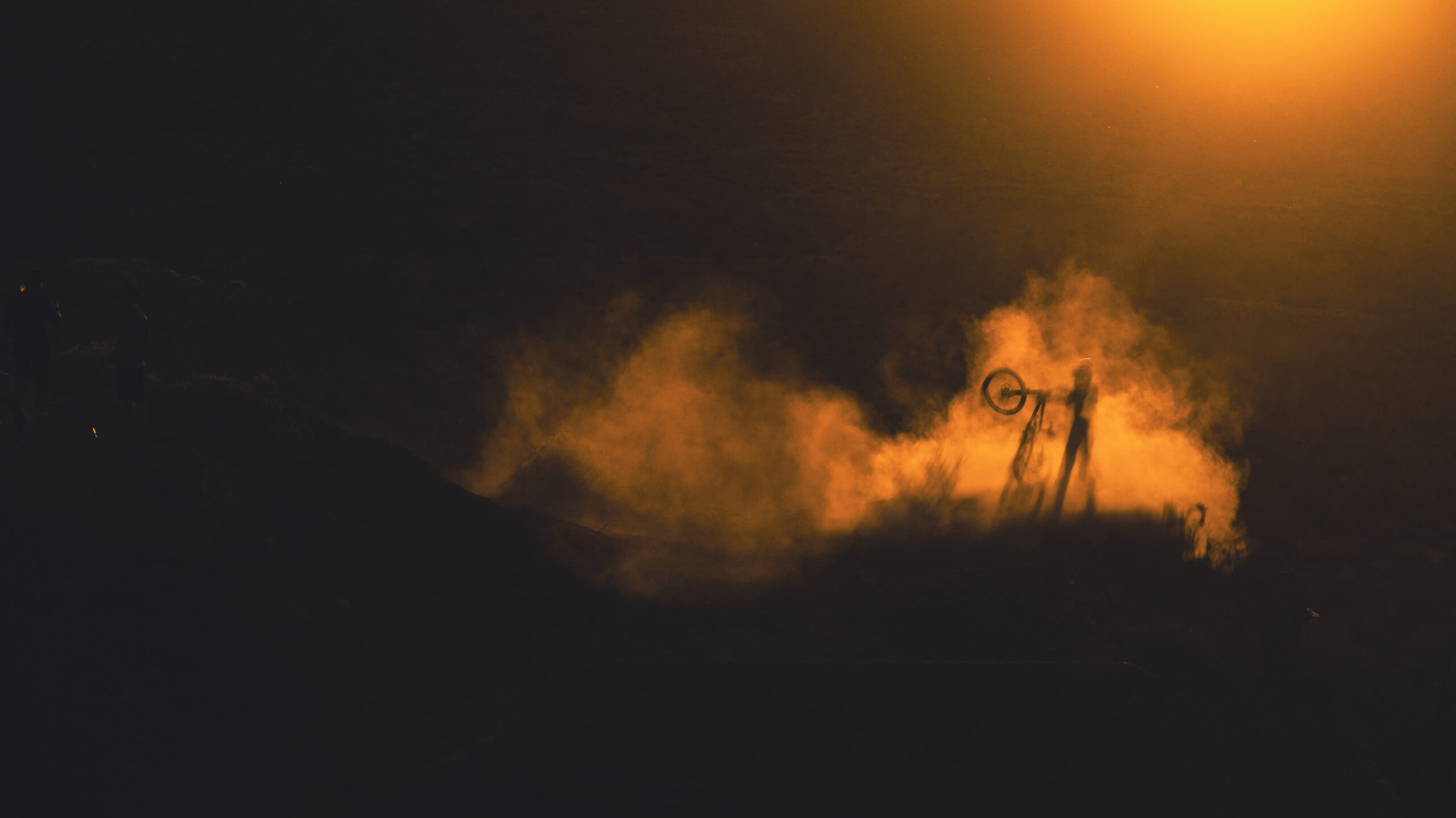
The Daily Edit – Paris Gore: Red Bull Rampage

Paris Gore

Heidi: Graham Agassiz said that even early on, you “always know where to be … you’re never getting in the way or calling out tricks” — how do you develop that sense of timing and positioning in these high-risk environments?
Paris: Developing a sense of positioning and not being in the way is really just being very observant and listening to riders. Staying in the shadows a bit, but having ears and eyes on what’s going on, which can sometimes be a lot of different things at once.

How much do you choreograph vs. adapt in real time? In other words, do you visualize every shot beforehand?
A lot is happening live so it really depends on where the light is and people are riding. But that said, there are shots I like to scout ahead of time before event day and have a good plan to where to go and what lens I should be using so I can make a switch while I am on the fly during the event. But most of the time it’s adapting in real time, which goes back to being very observational to calculate what’s going on and where.

Tell me about a shot you didn’t get — what went wrong?
The worst miss was watching Brandon Semenuk on his winning run tailwhip off a massive drop which was a crazy move at the time with my own eyes and not from my camera. It was really dejecting as I was blind to the action, meaning I could not see him coming up to the drop and there was a delay that the announcers didn’t make clear he was on course. He just came off the drop and I was like “F*** missed that one”

You have spent nearly 10 years perched on these cliffs — hiking 10+ miles a day, carrying 50-lb camera bags, working sunup to sundown. What keeps you going through that physical grind, and how do you maintain creative energy under those conditions – other than the endless quest for the 1 in a million shot?
It takes a lot out of you shooting the event, we are on site for about a 12-hour day and then still have to edit images for another 2+ so maintaining and keeping energy is really important. Especially during event day it can be really hot out and no break, so just managing water intake and food is super crucial. I generally am in the gym a lot leading up to the event to maintain a solid amount of fitness to be able to withstand the physical demand.

What changes have you seen in how you approach your craft — from planning, gear, or mindset — and can you point to a moment when your style or process noticeably shifted?
I’ve gotten more efficient over the years but also it still is very much the same madness in the 12 years I’ve photographed the event. Just more tuned into what riders are doing and what kind of images I am looking for. I’ve also started running lighter and more minimal gear kits, knowing what I need to go into it and don’t have to carry as much heavy gear around.

With more conversations now about including women in high-stakes freeride events (e.g. Red Bull’s “Formation” as a step toward women’s representation) — how do you see your role (as a visual storyteller) in supporting or driving that inclusion, and how has your approach to photographing women in these environments evolved over time?
I was lucky enough to photograph the first Formation event in 2019 which was awesome to be apart of at the time and witness their talents. With the full on Rampage event now for women I’ve been trying to showcase how gnarly some of the features are they are riding now that no other male riders even would touch back in 2015 when they were at the same venue which is really awesome to see.

How do you approach “landscape-first” compositions in Rampage settings — balancing epic environments with intense human action — and how has that balance shifted over the years?
Rampage is so expansive and has massive terrain that needs to be showcased in a certain way to really do justice to the scale of the action. There’s times where a tighter trick shot off a jump is important but also a wider landscape style to show the sheer scale of what they’re riding down.

You’ve lived in Bellingham, WA for a while now, and you also fly airplanes, snowboard, explore wilderness. How do your off-mountain passions (flying, snowboarding, exploring) inform your perspective and instincts when you’re shooting in extreme mountain terrain at Rampage?
I do a lot outside of just shooting and really love being in the mountains doing the sports I enjoy photographing. Flying for me as well has been an outlet for my own “thing” that is unique and extremely passionate about doing. Snowboarding really helps me think about Rampage a bit mainly just seeing photos from Blatt and other snowboard photographers approach to shooting big mountain terrain to apply that into a Rampage environment.


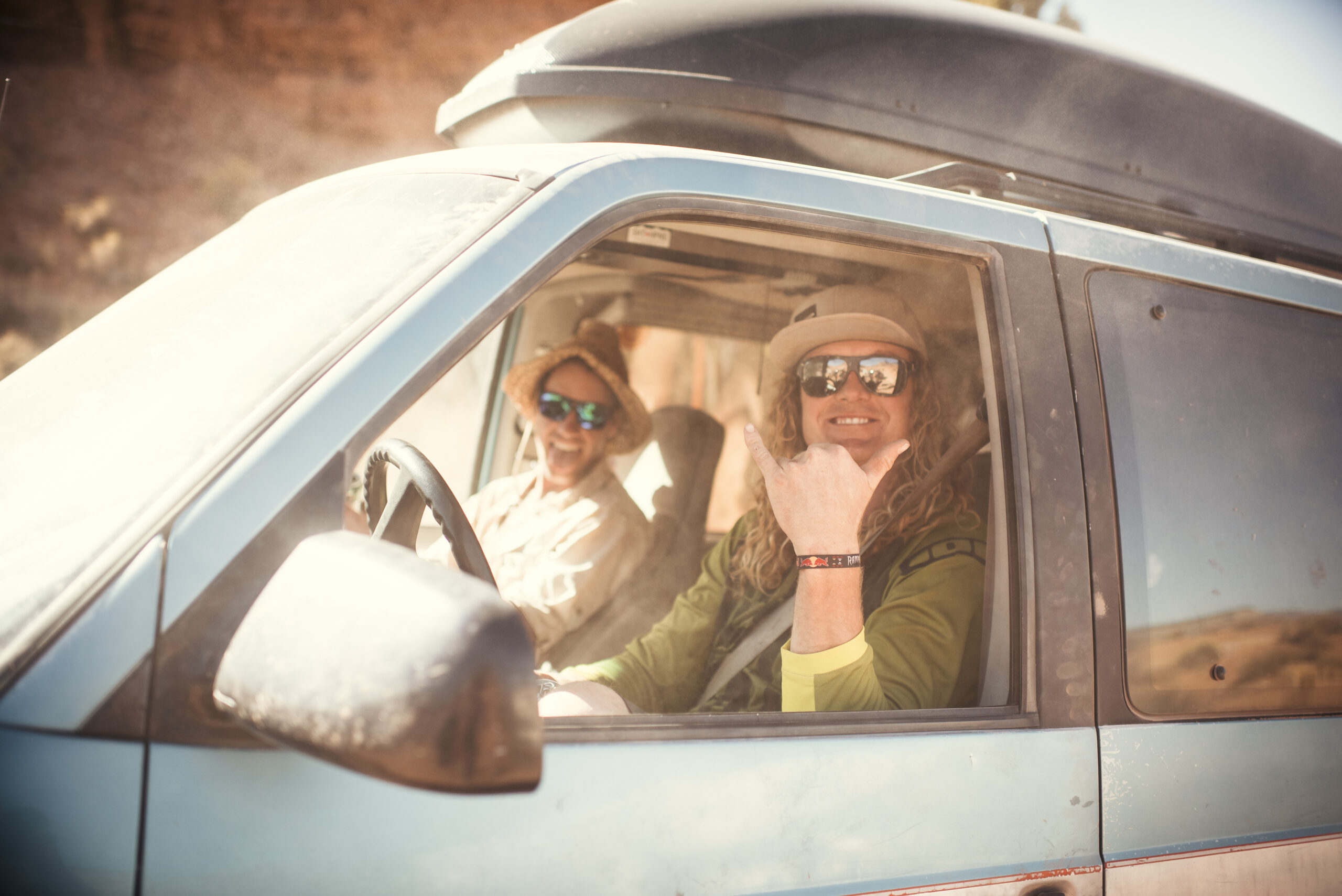
The Daily Edit – Roam Fest | Roam Media Core Wrap Up

Roam Media Core | Roam Fest 

Photography is rooted in the art of mentorship. As in all common ground, learning can be vulnerable, psychologically safe, and reciprocal. @roamfest and @the.roam.collective celebrated femme & women mountain bikers for everybody. The event was dusty, glittery, and full of unconditional support. Special shout-out to founder Patty Valencia for launching this mentorship program in 2024, Roam Fest for creating this space, and Jean-Baptiste Cotte from Patagonia for the opportunity. I was honored to participate in @the.roam.collective’s ’25 mentorship program alongside these talented female photographers—special shout-out to If you’re privileged to be a gatekeeper in the outdoor industry, welcome all women in front of and behind the lens, and follow these creatives. If you’re a fellow creative, consider community and the power of disparate voices and visuals. Who gets photographed shapes who gets seen. Inclusivity isn’t a one-off initiative; it’s forever work.
I asked both the mentors and the mentees two questions:
What was your biggest personal or creative takeaway from the Roam Fest and Media Core program?
What’s one change you hope for in the outdoor industry?

.


Anne Keller
My biggest personal takeaway was that we are most in tune and connected when we are working to elevate each other. I came into the program with the experience of having participated as a mentor the year before, so I already knew how impactful it was to be in a space where female creatives were actively supporting one another. Still, this year with a new group of mentees and several new mentors, I was reminded how true that remains. The idea that we should guard our secrets to success and not share what we know is a limiting misconception. Women seem to understand this. I left buoyed by the belief that every person in the program cared about helping guide others toward success, and the world needs more of that.

One change I hope for the outdoor industry is that brands make intentional effort to hire female and BIPOC creatives and expand their repertoire of who they consistently choose to work with. The stories that get told and the imagery that is produced is reflective of the storyteller, and to see a different perspective from the traditional narrative, we need to expand who gets to contribute. I look forward to seeing the increasingly diverse viewpoint that has been slowly starting to emerge in the outdoor world.

Katie Lozancich (mentor)
My biggest takeaway was the importance of community in nurturing creativity. I came into the Media Core program as a mentor, but I often found myself in the role of the student, and I learned immensely from both my fellow mentors and the mentees. We’re all pursuing unique paths in the creative process and can share those insights. Having a space like Media Core underscored the importance of community, especially in a career like photography, which can be isolating at times. 

We need more women in all facets of creativity in the outdoor industry as directors, producers, photo editors, filmmakers, and photographers. I hope that with this influx, we can broaden narratives and perspectives in outdoor media.

Michelle VanTine (mentor)
As a commercial photographer, my shoots are usually highly structured and charted out, often involving weeks or months of planning and strict guidelines from the Creative Director. During Roam, most of my focus was on supporting and guiding my mentee. But in the pockets of time when she was working, I had rare moments to step back.

I used that time to follow my curiosity—without the looming thought of a client reviewing the images or waiting on deliverables. I asked myself questions like, “What if I combined panning with ICM (intentional camera movement)? Would it be too much distortion, or could it work in some odd but interesting way?” Looking at the bikers against the landscape, I wondered if there was a new way to pair the two. I pulled out in-camera double exposures from my bag of tricks—a technique I hadn’t touched in years.

I took the opportunity to be an artist without a client at the end of it, to let ideas succeed or fail with no pressure to show the work to anyone. My biggest creative takeaway is the importance of carving out space to explore with no job on the line, no expectations, and not even the thought that anyone will see the images—just letting my imagination run loose to see what it creates.

I once read something to the effect of ‘representation isn’t charity—it’s the map that lets dreamers know a route exists.’
For years, as a sports photographer, I stood in front of billboards at places like Dick’s Sporting Goods or the Nike outlet, wondering ‘But how?’ and having absolutely no idea what the route was. That uncertainty isn’t unique to me—women make up only 5–15% of sports photographers in the U.S., and because we so often work alone, it’s easy to feel like no one else like us exists and we have no road map to where we want to arrive.  Since we are always the minority, there’s often a pressure to be tough or prove that we belong in our workspace. Roam Media Core is the only program I’m aware of that women can let their tough exterior down and ask, “I don’t know how to do that—can you show me?” without the fear of being discredited which we already have to battle simply by walking on the job site. Here, women can strategize, share struggles, overcome obstacles, and gain hope. It’s the kind of community that makes the impossible and lonely road feel possible and that others are walking alongside us. Now, if someone asks me, “How do I get a billboard?” I can actually tell them how as a mentor who has walked through the journey.

I would love to see more programs that support spaces like this for women to grow in an environment that doesn’t feel threatening. The change we need is enormous, and at times the gap feels too wide to bridge. I believe though, that the only way to close it is one person, one program, one opportunity at a time.  I hope to see more programs that help raise the next generation of women in sports and outdoor industries.


Linette Messina (mentee)
My biggest personal take away is the overwhelming feeling of acceptance. Working and learning alongside such incredibly talented women in the photography/ film industry, sharing stories through their lens was an experience I have never had before in my 20+yrs of working as a photographer. I felt accepted from my Media core peers and everyone I met at the Roam fest. But most importantly, I accepted myself for where I am in my life, my age, my body, my mindset on giving myself grace, and the work I must continue to put in to help create the change I hope to see in all parts of media and advertising, which is inclusivity and authenticity.


Emily Sierra (Mentor)
I’m walking away from the Roam Media Core program this year with an even greater community of creatives. Working a job that often feels isolating, having other folks—especially women—to lean on for advice or to bounce creative ideas is so helpful.

From a media standpoint, I’d like to see better representation in the outdoor industry. To me this goes beyond getting more women in outdoor spaces (and outdoor media), but showing folks of all backgrounds enjoying the outdoors—whatever that means to them specifically. Stories of the best climbers on the biggest mountains certainly are impressive, but I want to see more stories of ordinary people conquering their own battles.


Miya Tsudome (mentor)
The world becomes a better place when we build connections and community and have opportunities to learn from one another. The Roam Media Core program is a unique experience that doesn’t really exist elsewhere, and an invaluable tool for women in the outdoor industry.

Although times are changing, I still have been on so many sets where I’m the only woman. Seeing more women behind the camera is one thing I hope changes in the coming years, and programs like Roam really help encourage that.


Sabrina Claros (mentee)
My biggest takeaway is the sense of community among other creatives. We all have experienced similar phases of self-doubt, creative ruts, and uncertainty in finding work. But we all believe in telling stories that matter – and documenting them in our own way. I left Roam with a renewed commitment to the work I want to do and creating opportunities for myself and others.

I want the outdoor industry to see where there is a lack of representative storytelling, and act on it. Open doors to support, fund, and elevate voices that are drowning in a fast-paced, social-media-scrolling driven landscape. Authentic and intentional storytelling is slow – and fundamentally at odds with the current model. But real storytelling takes time to develop, creativity needs to marinate, and the story needs depth for viewers/audiences to feel it, rather than see it and forget it. There is always a push to do things faster, but many people love the outdoors because we appreciate a bit of slow-ness and the grounding of just being outside and engaging in the activities we love. The best recipe for good storytelling is the same.

Brynne Mower (mentee)
Biggest personal or creative take away from the Roam Fest and Media Core program: I realized that shooting bikes is where I light up, and being surrounded by women only amplified that feeling.

One change I hope for the outdoor industry: Less staged images and more storytelling.


Agota Frink (mentee)
It felt absolutely magical meeting so many badass women in person, women who are out there shaping the outdoor industry with so much courage and creativity. Everyone put a little piece of their heart into it and together it became something so vibrant and alive. Spending four days surrounded by that kind of energy lifted me up in ways I’ve never experienced.I left feeling deeply encouraged and reminded of the power of community. I hope the outdoor industry starts giving women creatives more room to lead, tell their stories and bring their vision to life.

I’d love to see more collaboration between women in the outdoor industry, more of us working together, supporting each other and creating space for shared growth instead of competition. I also hope brands start telling stories that people can connect to on an emotional level, not just through products or performance. When a photo makes you feel something, that’s what truly inspires people to get outside.


Ashley Rosemeyer (mentee)
To continue to shoot outside of my comfort zone and push myself creatively.

More women behind the lens and in the outdoor industry. The outdoor industry is welcome to all genders, backgrounds and personalities and the world should see the same behind the scenes.

Beatrice Trang (mentee)
The Roam Media Core program was everything I hoped for and more, I feel like I left with even more tools in my tool box. We all came into this program at a decently establish level with an awareness that not only did we have room to grow but more importantly, a desire to grow too. From chatting about rates, to types of deliverables, to how to talk to clients, to shooting at different angles, getting introduced to strobes and even seeing what our mentors were making financially, we had so much valuable information thrown at us, it’s really hard to narrow down a specific personal or creative takeaway from the experience, all I can say is the ceiling has risen for me and I feel like I’ve walked away a confidence photo and videographer.

In terms of change to the outdoor industry, there’s nothing specific I can think of since I’m just getting my toes in the door but I’m aware the industry isn’t where it used to be across the board, but when it’s at a good level again, I do hope that more women are given the chance to work in it and on a biased level, I hope to see more outdoor brands get involved with core cultures like BMX and Skate, coming from where I’m coming from, there’s a real opportunity to tap in that market

Photographer Scam Alert

The project specs and budget seems legit, and has a very credible and detailed shot list that seems like it came from an agency.

I decided to play along and the weirdest part was the professional and responsive two-way communication. We talked details, negotiated the contract, compromised on certain concessions, etc. They were ready to move forward, schedule the date and pay me half upfront asap.

From what I understand of these scams, they “accidentally” over pay you with a fraudulent check. Then ask for a refund before the check has been flagged by the bank. You have transferred real funds to them by the time the forgery is discovered.

This is a long running scam but since it’s popping up again it’s worth putting the information out there again.

One variation I’ve heard is they overpay you but ask you to pay an advance to the stylist or some member of the crew who works for them.

Here’s the emails:

First Name: William  
Last Name: Morris
Phone: 208-480-5114
Email: Will.Morris.E@proton.me

Message:
Hello,

My name is William Morris, Creative Director contracted by The Residence 1502, Austin, TX to conceptualize a two-concept lifestyle interior photoshoot to promote one of their luxury condominium residences.

Concept 1 captures the quiet elegance of everyday moments with a couple subtly engaging with the space to convey aspirational living.

Concept 2 features a young family of four, highlighting the warmth, versatility, and family-friendly appeal of the same luxury setting.

We aim to create 50+ final images that blend high-end architectural photography with natural, authentic lifestyle moments. We're seeking the right photographer who can balance clean, well-composed interiors with an unobtrusive, candid approach to people within the space.

You can view the full project scope and creative direction here: https://app.milanote.com/1UMTsd1qNQYG4C?p=wEijF185S97.

If this aligns with your style, please feel free to get in touch with any questions.

Warmly,
William Morris
Creative Director

— — — — — — — — — — — — — — — — — — — — —

Hello,

My name is Merlin Gauvin, Creative Director contracted by The Broadway Building, San Antonio, TX to conceptualize a lifestyle interior photoshoot to promote one of their luxury condominium residences.

We aim to create 26+ final images that blend high-end architectural photography with natural, authentic lifestyle moments. We’re seeking the right photographer who can balance clean, well-composed interiors with an unobtrusive, candid approach to people within the space.

You can view the full project scope and creative direction here: https://docs.google.com/document/d/e/2PACX-1vSwdS_mHLfUtOUwksBwmaTNUJZEfElN3EyX0bkp5d0NBkYvmJQHS_NSPpyFZmZiOsaN3CFQDH1w0Ddy/pub.

If this aligns with your style, please feel free to get in touch with any questions.

Warmly,
Merlin Gauvin
Creative Director

The Daily Edit – Jan Erik Waider: Abstract landscapes as fragile and transformative


Jan Erik Waider
Northlandscapes

Heidi: How did your background in visual design evolve into a deep connection with abstract landscape photography?
Jan: I have been self-employed from the very beginning of my career, starting out in graphic and web design long before photography became my primary focus. This independence allowed me to shape my own path and to travel early on, taking my projects with me at a time when remote work was far less common—and far more challenging—than it is today. Photography was always my passion and a constant companion on those journeys, especially in northern landscapes, which soon became my main geographical focus. I never had a traditional nine-to-five job—sometimes I wonder what it would feel like to actually have paid vacation. But then again, I’d probably spend that vacation the same way I already do on most of my trips—photographing from morning till night.
My design background strongly shaped the way I see and compose images. I’ve always been drawn to order within apparent chaos—structures that verge on the graphic or almost architectural. This naturally led me toward abstraction in photography, whether in ice formations, glacial rivers, or geological textures, often with a monochrome quality. Even in post-production, I approach my work much like design: reducing distractions, balancing tones and colors, and highlighting form. From the beginning, I cared less about the technical side of photography and more about aesthetics, emotion, and how an image resonates visually.

What draws you to work so closely with ice crystals, leaves, and bubbles, often in everyday settings?
I’ve always been fascinated by subjects with a fragile and transformative character. Ice is the most obvious example, but the same applies to weathered leaves, frozen bubbles, or patterns in water surfaces. These elements are constantly in flux, and each moment is unique—once it passes, it will never look the same again.
I’m naturally drawn to details and small structures, whether with a telephoto lens isolating fragments of an iceberg, a drone hovering low above a glacial river, or a macro lens capturing the texture of decaying foliage. These are motifs that most people overlook at first glance, but they hold an extraordinary beauty hidden in the mundane. I often describe this as nature’s own micro-architecture, offering endless abstract compositions—if you truly stop, look closely, and take your time. I sometimes joke that in another life I would probably have been a dog—constantly roaming around, sniffing out new things, and never getting bored.
This is also why I never tire of returning to the same landscapes. Even after dozens of journeys to Iceland, the rivers, glaciers, and volcanic landscapes never repeat themselves. Their transformations keep me curious, and every visit feels like discovering something for the very first time.

How many days are you creating seasonal imagery in these remote settings, and what is your set up?
Each year I spend around three to four months in the field, with one extended journey to Iceland lasting six or seven weeks and several shorter trips to other northern regions. I travel slowly, often with my converted off-road van, which doubles as a mobile workspace. It allows me to wake up directly at the location I want to photograph, or to simply wait out a storm—whether with a cup of coffee or by watching a favorite series—until the weather shifts.
My focus is usually on the transitional seasons—spring into summer, or summer into autumn—when landscapes are in flux and light can be particularly dramatic. Being alone in remote areas is not always easy, and solitude comes with its challenges. At times it can slip into a sense of true loneliness, but over the years I’ve learned to manage those emotions and to simply accept such days as part of the process. Traveling this way has taught me a great deal about myself—what truly drives me, what I am afraid of—and it has profoundly shaped who I am.
Of course, my camera bag is always too full—like everyone else’s—but in the end I keep returning to just a few lenses. I work with a Nikon Z8 paired with a small but versatile set: the NIKKOR Z 24–120mm for flexibility on hikes, the Z MC 105mm for macro details, and the Z 100–400mm with a 1.4x teleconverter for distant structures and abstract compositions. A DJI Mavic 4 Pro drone, along with a backup unit, completes the setup, offering aerial perspectives of glacial rivers and coastal terrain. For me, reliability and adaptability matter far more than carrying an extensive kit—this way I remain agile and focused on the experience of being out there.

Maintaining a visual diary across remote expeditions takes careful planning. What’s your workflow from the moment you return from a trip until images are archived?

My workflow actually begins while I’m still in the field. I aim to import and back up the day’s captures almost every evening, make a first rough selection, and sometimes even start editing inside the van. This early process helps me identify potential series and keeps me from being overwhelmed once I return home. At times it’s only after importing that I fully recognize the potential of a subject, which gives me the chance to return the next day and expand on it.
Back in Hamburg, I approach the images with fresh eyes and more distance. That’s when I refine the editing—mainly tonal adjustments, color grading, and contrast—to translate the emotion I felt on location into the final photographs. I don’t alter the content itself—no adding or removing elements, no replaced skies. My approach is about refining atmosphere and mood rather than reconstructing reality.
Archiving is a structured process: final selections are keyworded in Lightroom Classic according to a consistent system, backed up both locally and in the cloud, and also exported as high-res and low-res files for website and social media. From Lightroom, images are then uploaded directly via PhotoDeck to my searchable online library, for clients such as photo editors, magazines, and print customers. My library also features curated galleries based on themes, colors, and locations. This structure allows me to quickly respond to client requests, even when I’m traveling.

Do you work alone, or is there a team or network supporting image licensing, post-production, or logistics?
Most of the time I work alone, both in the field and in running my business. Solitude is an important part of my creative process—it gives me the freedom to shape my days entirely on my own terms and to connect more deeply with the landscapes I photograph. At the same time, I enjoy collaborating when it makes sense and value the exchange with others.
For certain aspects I rely on trusted partners: I outsource the production of prints to specialized labs, and my PhotoDeck library provides a professional infrastructure for licensing to clients worldwide. I also consult regularly with colleagues and peers, and I’m well connected within the photography community in my niche. When it comes to specialized topics—such as licensing frameworks, pricing, or marketing—I often seek out coaching, which helps me stay sharp and navigate an industry that is constantly evolving. And of course, I outsource my taxes as well—otherwise I would probably lose my sanity.
Through my many repeated journeys to Nordic countries such as Norway, Iceland, and Greenland, I’ve also built a strong network that extends far beyond photography colleagues. It includes production companies, logistics contacts, and local guides—connections that make complex projects in remote areas not only possible but also more efficient.
In the past, I worked with a photo rep, which gave me valuable experience in client relations and licensing. Today I handle most of these aspects myself, combining my design and marketing background with the independence I value as a photographer. This mix of autonomy in the field and selective collaboration behind the scenes ensures that my work stays personal, consistent, and true to my vision.

The Daily Edit – Yogan Müller talks about photobooks and stories hiding in plain sight


Tracy Hills, Outrigger scaffolding kit, June 2022.


Tracy Hills, Independent Construction Water Truck, August 2021.


Newly-Paved Streets at Sunset Southwest of the I-580, Tracy Hills, CA, December 2023.

Yogan Müller

Heidi: Your Tracy Hills imagery highlights ecological crises—like water access and wildfire risk—in a New Topographics context. What visual strategies did you use to balance documentary clarity with emotion?

Yogan: What I discovered in Tracy Hills took what I’ve been exploring for the past 10 years to a whole new level. In 2015, I documented a similar development in SW Iceland. Think new streets encroaching on rough lava terrain. Iceland prepared me for Tracy Hills, where scales were multiplied by 10.

On the first trip to Tracy Hills in August 2021, the entire Central Valley was shrouded in smoke from the Dixie Fire, which became one of the most devastating wildfires in California’s history. Setting foot in Tracy Hills, the noonday sun was filtering through the high-altitude haze, all the while casting an incredibly bright light on hundreds of houses under construction. It was 100°F. The raging fire up north and the marching construction enterprise seemed so dichotomous.

It was hard not to feel emotional when photographing this material, because it was a 1:1 reflection of the developments The New Topographics photographed in the region fifty years ago. That, of course, became a huge photographic challenge. However, for someone who hails from France and had the opportunity to further the conversation laid forth by the New Topographics was something very special. All the landscape books and photobooks I had poured myself into, all the sprawl pictures I’d avidly studied, had found a contemporary manifestation in Tracy Hills.

Walking the landscape made me feel solastalgic. Solastalgia refers to the emotions we feel when we know we are seriously altering the climate without taking sufficient action, despite the unequivocal evidence of change. At the same time, I felt the urge to photograph everything around me. I was shooting like a crazy fool. That was wonderful. So much material for my art laid around in the form of objects, textures, colors, and materials. I couldn’t stop.

The clarity you mentioned is crucial to me. In my recent projects, I have strived to distill complexity into cohesive pictures. If I think about it, it comes from my math background. Mathematics is so elegant, abstract, and simultaneously practical. Theorems, for example, often compress extremely complex concepts into a single proposition or, better, one absolute formula, from which the most vivid representations emerge. I like this idea. It informs large swaths of my work from the past several years.

All those concepts, concerns, and emotions are baked into the book, which launches this fall with Radius Books. Britt Salvesen and Greg Foster-Rice generously wrote two essays for the book. I am beyond grateful. With Radius Director David Chickey, we decided to shortcut some of the pages. That strategy creates powerful visual encounters and collisions between images and spreads. You can visibly see Tracy Hills sprawl into the edges of the ecosystem that supports the sprawling development, which has been my ultimate goal while photographing there.


Tracy Hills, double-page spread, photo courtesy of Radius Books.


Drones and LA Water Narratives, self-published book, UCLA Design Media Arts, March 2024.

Tell us about your self-published water-infrastructure book?
This self-published book is the culmination of my winter 2024 undergraduate class at UCLA Design Media Arts, where I introduced drone photography.
Students learned FAA rules, safety, and how to fly. They utilized this knowledge to focus on the Los Angeles Aqueduct that brings life to Southern California. By happenstance, my class convened shortly after the 110th anniversary of the Los Angeles Aqueduct inauguration on November 5, 1913.

I’ve always thought of drones as tools to enrich our sensory perception. I want to embrace this positive outlook and steer clear of all the other negative connotations drones are associated with.

We surveyed the aqueduct from Sylmar to Owens Lake, CA. Sylmar is where the aqueduct enters the city. The Cascades, visible from the I-5, are rather spectacular. Owens Lake, on the other hand, is, historically, the first source of fresh water for Los Angeles. Today, however, it is an engineered behemoth where the LADWP conducts dust mitigation experiments called “Best Available Control Measures.” I spent time flying there to


Airborne view of one of LADWP’s dust mitigation techniques (sprinkler irrigation), Owens Lake, CA, February 2024.

Downstream, the self-published book is a collection of diverse voices, co-designed, printed, and hand-bound by my students. I led the design and printing, and we had a lot of fun working together. This water class, survey, and book inaugurated a long-term project with the LA-based 501(c)3 Pando Populus. I will be glad to share more when the opportunity arises.

What unique storytelling potentials do photography books offer compared to exhibitions or online platforms?
A photobook is, in and of itself, a magical device and an art form. Once a show is done, it’s done. It may endure in installation pictures, memory, and sales, but it’s fundamentally done. Whereas a book circulates, reemerges, can be subject to awards, new printings, and pops up in fairs and shops far from its place of production, and years after its release. In other words, a book lasts longer and may reach a wider audience over time.

When pictures, pacing, typography, and paper work in unison, a whole world unfolds in a photobook. The very act of turning pages elicits strong visual relationships between pictures and spreads. The viewer is taken on a journey of visual encounters, emotions, and perception.

For me, a photobook opens a space for an intimate relationship between the viewer and the content. Turning pages is a sensual experience. A freshly printed book smells good. The paper has a texture that rubs on your fingertips. And pictures are visual stimuli. A photobook transforms distant subjects into an up close, felt, and even embodied experience.

I think it’s anthropologist Tim Ingold who, somewhere, wrote about the words printed in the silent pages of a book. This holds true for a photobook. I like to populate this silence with pictures that visibly encapsulate sound. Flipthrough video here

Online will always be a place in flux. For me, it’s a good space to design complementary, immersive experiences through full-screen galleries and otheri nteractive interfaces. As such, a website can be a wonderful space to share the research and creative decisions that shaped a photobook.

Your practice includes photogrammetry, drones, AI, and book design. How do these tools influence your creative process and storytelling in both personal and editorial work?
Embracing photogrammetry, drones, and AI pushed me to undertake a profound overhaul of how I use photography.
That came from teaching and engaging with faculty, students, and staff at UCLA Design Media Arts. Our department embraces new technologies wholeheartedly. Over time, I increasingly saw and used photography as an expanding field, and a medium porous to rapid, often radical technological advances–think of generative AI, for example–and a medium that has never ceased to shapeshift since 1839.

Teaching these tools and topics had me learn them inside out, which naturally pushed me to stay curious, alert, and hungry for the newest iterations. That’s one of the wonderful gifts of teaching.

Now, bearing the ecological crisis in mind, I can’t help but ponder the overlap of exponential technology and our exponential environmental footprint, a hallmark of the Anthropocene. I guess both are rooted in the idea that there are no limits to what we can do, which is, in a way, true – human ingenuity often seems unlimited – although it’s clearer and clearer that this is undermining the very conditions limitless endeavors are predicated on.

Practically, photogrammetry has thrust photography into the third dimension. Drones take it to the skies. AI taps into the enormous visual archive that is the Internet. Books open photographs to a fuller sensory pictorial appreciation that is tactile and intimate. It’s incredible to think we have easy access to such tools. At the same time, they have a dark side that can’t be ignored. That’s what artists have been doing: using the tools while critically engaging with their underlying problematic dynamics and foundations.

I am really into drones at the moment. Flying high, you decenter yourself by seeing the complexity of the world around you. I am here, on my feet, immersed in the world, piloting, and simultaneously aloft, contemplating it in flux, 50, 200, 350ft in the air. That’s what I mean by “drones enrich our sensory perception.” I am fascinated by the artistic and technical possibilities of remote sensing, so much so that I’ve launched a drone photography business called Topographica. I serve architecture, construction, and public art clients in SoCal. Drones are incredible tools to contextualize and elevate installations and constructions. They are also incredible tools to create 3D, 1:1 digital twins of real-world projects through photogrammetry. With them, artists and operators can document, map, archive, and tell stories based on data-rich, airborne images.

“Overshoot” launched in 2025 how did this idea come about?
I am grateful to Aline Smithson, Founder and Director of Lenscratch, for letting me create a dedicated space for ecologically-minded visual practices and conversations. Overshoot stems from a deep care and love for the environment, ecological arts and justice. We live in ecological overshoot. That is the central premise of the column. In homage to Donna Haraway, I want to “stay with the trouble”.

Overshoot also stems from the central claim of my practice-based PhD thesis–completed in 2018: photography is one of the tools that brought us into the Anthropocene. In hindsight, this line of inquiry, which I’ve explored in my manuscript and fieldwork in SW Iceland, was a reaction to what I learned when studying photography in Brussels. I’d often hear: “That’s just an image,” which always resonated as “photography is nothing more than an image.” That not only seemed at odds with all the time and care I’ve always put into planning trips to Iceland and making photographs there, but also didn’t take into consideration the historic and metabolic ties between photography and energy.

Overshoot holds space for conversations, portfolios, and scholarly essays that directly engage with this moment of ecological overshoot. Ecologically-minded works and practices abound and are incredibly diverse. My goal is to offer artists a platform to share, discuss, and promote their work. I am also curious to know how they’ve come to grapple with the ramifications of ecological overshoot.

I’ve just interviewed Siobhan Angus. Siobhan published an important book with Duke University Press last year titled “Camera Geologica. An Elemental History of Photography,” in which she traces the mineral extraction, use, and flows that have shaped photography over space and time. That is a fascinating and richly-layered history I’d encourage everyone to read. Her interview will be out on September 12. As a brand, Overshoot attempts to capture the exponential rise and use of photography. We still say we “shoot” images, and frequently mention the information and visual overload we experience online every day. That is also what informed Overshoot’s visual identity.

Working through a Seismic Industry Shift

 Working Through a Seismic Industry Shift : Balancing visibility and vulnerability in a constantly changing landscape.

Image courtesy of Steve Korn from his project “The Ballo Conservatio Project“.

Lately, I’ve been hearing from more and more photographers who feel stuck, like the ground beneath them is moving and the usual paths forward no longer apply. I’m sure you’ve noticed, our industry is changing. While big budget ad campaigns and large-ish editorial shoots still exist, theyve become more elusive: fewer in number, harder to secure, and more tightly budgeted. At the same time, the industrys public-facing rhythm hasnt changed much. Photographers continue to share behind-the-scenes social media posts, announce new commissions, and keep their websites fresh. This isnt dishonest; its a form of forward momentum. But it can also mask a deeper truth many are feeling. The structure itself is undergoing a seismic shift, slow in some ways, sudden in others.

This disconnect is not a sign of delusion, but of survival. Many photographers are quietly anxious, burned out, or disillusioned, not because they lack talent or drive, but because the industry they built careers around no longer behaves predictably or sustainably. This disconnect can breed a particular kind of paralysis: the knowing that things are wrong, paired with the fear of stepping outside the illusion. Its easier, and often more professionally acceptable, to play along with the facade than to confront the reality head-on.

It can be disorienting. On one hand, were encouraged to keep up appearances, to maintain visibility, to show were still working. On the other, many creatives quietly admit to uncertainty about where the next job will come from or how to adapt to the growing presence of AI and the shrinking demand for traditional production. This isnt failure. Its a rational response to change. Acknowledging the gap between how things look and how they feel is not a weakness. Its the beginning of recalibration.

This recalibration doesnt have to mean abandoning the craft. In fact, continuing to share your work, especially the honest, messy, beautifully human parts, can be a quiet act of resistance. Whether you’re shooting a big budget campaign for an agency or brand, or working on a personal project, your images and stories still matter. They remind others that the work is not only possible but still worth pursuing, even as the industry continues to shift. By recognizing the change, staying visible, and adapting to an evolving process, photographers can help shape what comes next.

Instagram 

About Christopher Armstrong

Chris began his career as a photographer in Los Angeles, eventually moving through the worlds of film, television, and advertising before returning to photography in a new role as an agent and producer. Along the way, he worked with legendary filmmakers like Robert Altman, top production companies in Los Angeles and London, and global agencies including Wunderman, Publicis, and Deutsch. With 30-plus years of international experience, he has a panoramic view of the creative industry, one that’s occasionally dysfunctional but always worth sharing. That breadth of perspective informs everything he does, from creative strategy to mentoring emerging talent.

In 2012, Chris founded PhotoPolitic in Stockholm as a response to the shifting landscape of commercial photography and production. Now operating between Amsterdam and Los Angeles, the invite-only platform connects elite photographers, directors, and digital artists with leading advertising and editorial clients worldwide. Carefully curated and fiercely independent, PhotoPolitic represents talent recognized for both aesthetic excellence and real-world impact.

Today, the PhotoPolitic network includes some of the most respected names in advertising, editorial, architecture, interiors, documentary, reportage, and fine art photography. At its core, PhotoPolitic exists to champion creative integrity in an industry that often compromises it, working only with professionals whose reputations are built on craft, ethics, and results.

The Daily Edit – Blind Forest: Alex Turner resists literal interpretation


Alex Turner: Blind Forest

We caught up with photographic artist Alex Turner, whose work lives where vision meets sensation and ecology meets memory. In his acclaimed Blind Forest series now showing at Marshall Gallery, Turner uses thermal imaging to reveal the hidden life of trees—turning them into living witnesses, storytellers, and  ethereal portraits of our changing world.

Your images often make the invisible visible. What drew you to thermal imaging as your primary tool in Blind Forest?
Alex: What drew me to thermal imaging was its ability to reveal what’s normally invisible not just heat, but a different way of seeing vitality, presence, and change. In Blind Forest, I wanted to portray trees not as passive background elements, but as active, responsive organisms—beings that store energy, regulate their environments, and bear witness to time in a way few other living things can. Thermal imaging allowed me to visualize those hidden dynamics: the conservation, transmission, and loss of heat within and around each tree. But it wasn’t just about ecology—it was also about cultural memory. Many of the trees I photographed hold long histories, both ecological and human. Some were cultivated by Indigenous communities for food and medicine; others stand on sites of forced labor, displacement, or violence. Trees have absorbed these layered histories, and the thermal camera offered a way to suggest that embeddedness. Heat becomes a kind of residue, a trace of what a tree has lived through or is currently enduring. In that sense, thermal imaging became a way to look at trees not only as biological subjects, but as cultural witnesses.
I was also interested in repurposing a technology typically used for surveillance, hunting, or fire detection—tools often associated with control or extractive thinking—and turning it toward something more reverent and speculative. The resulting images resist literal interpretation; they ask the viewer to slow down, to sit with ambiguity, and to consider the forest as a place where both natural systems and human histories are in constant flux.

What are the ethical considerations behind obscuring or withholding your image locations?
Withholding specific locations is both an ethical and conceptual choice. On one level, it’s about protection. Many of the trees I photograph are old, vulnerable, or located in ecologically sensitive areas. Publicizing exact coordinates can unintentionally invite harm—through increased foot traffic, extraction, or even vandalism. In an age of geotagging and digital overexposure, some places need anonymity to survive. But there’s also a deeper philosophical and cultural reason. Many of these trees hold significance not just ecologically, but culturally—especially to Indigenous communities who have long-standing relationships with these species as sources of medicine, food, and spiritual meaning.

Withholding location becomes a gesture of respect, recognizing that these trees are not simply photographic subjects or aesthetic objects, but beings embedded in cultural systems of value and care that precede and exceed my presence as an artist.

More broadly, I’m less interested in offering a precise where than I am in encouraging a deeper look at the land, how we relate to nonhuman life, how we carry stories of place. By withholding coordinates, I invite the viewer to encounter the tree not as a destination or trophy, but as a living presence. This choice also pushes back against the extractive tendencies of both landscape photography and colonial mapping practices. Naming a place, claiming it, and presenting it as “known” can flatten its complexity. In Blind Forest, I want to keep some things partially obscured—not to mystify, but to honor the idea that not everything is ours to name, frame, or expose.

What role does fieldwork play in your practice—how do you locate and build relationships with your subjects?
I spend a lot of time hiking, researching, asking questions, and building relationships. With Blind Forest, that meant working closely with arborists, forest ecologists, historians, and Indigenous knowledge-keepers to locate trees that carry not just ecological significance, but cultural and historical weight as well.
Sometimes a tree is introduced to me through a historian or ecologist; other times I come across one by accident, and then spend weeks or months trying to understand its context—how it fits into a broader ecosystem, who has cared for it, what it has witnessed. I try to return to sites multiple times, sometimes across seasons, to watch how the tree responds to heat, drought, wind, or fire. That temporal intimacy feels crucial.

It’s not just about finding “beautiful” trees—it’s about seeking out complexity, endurance, and entanglement. And it requires a certain kind of humility. These aren’t blank canvases or passive subjects; they’re living beings embedded in systems that far exceed my own timeline. Fieldwork, for me, is about cultivating a practice of attention—being present, doing the research, and recognizing when to step back.

How does your work address climate and ecological loss without relying on traditional documentary tropes?
I’m interested in climate and ecological issues, but I try to approach them through a slower, more reflective lens—one that resists the spectacle and elegiac tendencies often found in traditional environmental documentary work. Rather than show devastation directly—burned forests, parched landscapes, suffering wildlife—I focus on subtler forms of presence and absence. The thermal images in Blind Forest don’t depict disaster as bluntly; they reveal systems under stress, energy in transition, and histories held quietly in living organisms. It’s a way of inviting viewers to feel their way into these questions, rather than confront them with fixed narratives. I think traditional documentary often relies on visibility to create impact—showing what’s been lost, what’s on fire, what’s at risk. And while that has real value, I’m drawn to a more speculative, even poetic approach. One that makes room for ambiguity, wonder, and grief to coexist. Thermal imaging helps with that—it doesn’t render the landscape in familiar terms, but through a register of energy that is less about appearances and more about relationships: between organism and environment, between past and present, between perception and reality.

If you could pass on one technical or philosophical principle to photographers working with landscape today, what would it be?
If I could pass on one principle, it would be to slow down—both technically and conceptually. Landscape photography has long been associated with grandeur, clarity, and conquest—the wide view, the decisive moment, the untouched wilderness. But in reality, landscapes are layered, politicized, lived-in, and constantly changing. They deserve more than just aesthetic appreciation; they deserve attention, patience, and humility. Slowing down might mean spending more time with a place before photographing it. It might mean learning its ecological and cultural histories, or questioning your own presence within it. Technically, it could mean working with processes that stretch time—like stitching, long exposures, or analog materials—not for nostalgia’s sake, but to make space for complexity. Philosophically, it’s about resisting the impulse to extract a single, striking image and instead engaging with the landscape as a collaborator, not a subject. There’s so much urgency in the world right now, especially around climate and ecological loss— but I think slowness can be a form of resistance. It lets us listen more carefully, look more closely, and imagine more responsibly.


Can you walk us through that moment in the clonal Aspen grove—when you realized the coyote was there? What were you feeling, and how did that experience shape the resulting image?
I was camping alone in the middle of the aspen grove when, late at night, I heard something rustling nearby. It was pitch black—I couldn’t see a thing. I reached for my thermal scope and spotted a coyote, no more than twenty feet away, perfectly still, staring directly at me. It sent a chill through me. There was something unsettling in that moment of mutual recognition, but also a profound sense of asymmetry. The coyote, with its excellent night vision, could see me plainly. I could only return its gaze through the mediation of a camera.

That moment shifted something in me. I became acutely aware of how dependent I was on technology to perceive what was otherwise invisible to me. The thermal scope didn’t just reveal the coyote—it revealed the limits of my own perception. And in that same instant, the forest around us—specifically, the clonal aspen colony I was there to photograph—took on a different kind of presence. The coyote wasn’t a singular visitor; it was part of a continuous ecosystem, one in which I was the outsider, looking in.

What made you decide to keep the coyote out of focus, and instead focus on the tree behind it? Was that choice aesthetic, conceptual, or instinctive in the moment?
In my previous project Blind River, I used remote sensing technologies triggered by movement to capture subjects as they passed through the landscapes of the U.S.–Mexico border. That process—especially the AI recognition software attempting to isolate figures from their surroundings—raised compelling questions about how we determine what is distinct from a landscape, and why. Who or what is considered a visitor? A trespasser? A part of the scene or apart from it? With Blind Forest, I wanted to invert that logic and shift the focus entirely toward the landscape —specifically, the trees—as enigmatic, sentient, and sometimes charismatic subjects. It was a move toward a more ecocentric perspective. Everything else—humans, wildlife—would become secondary. Deliberately placing the coyote out of focus was shaped directly by my experience with the animal. It became a way of acknowledging that this place wasn’t about the drama of my human- wildlife encounter. It was about the quiet, persistent presence of the forest itself—an ancient, interconnected organism. The coyote became part of the story, but not the center of it.

There’s a lot of talk in photography about capturing the ‘decisive moment.’ But your process seems to stretch that moment across time and space. How do you think stitching affects the way we experience time and presence in an image like this one?
I think it’s important to explain the stitching process, because it speaks directly to some of the deeper conceptual undercurrents of the work. At first glance, it may seem like you’re looking at a singular moment in time. But each image is actually composed of over a hundred smaller frames, stitched together over the course of up to an hour. That temporal stretch is embedded in the final image, even if it’s not immediately visible.

I’ve always struggled with the idea that photography is primarily a medium for capturing a single, decisive moment. That notion implies a kind of narrative closure—that the moment photographed contains the essence or climax of a situation. But in reality, most events and environments are far more layered and unfolding. Freezing a single frame can flatten that complexity, and at worst, it can project the illusion of objectivity—a supposedly ‘truthful’ instant that’s actually shaped by countless subjective decisions: where you stand, when you click the shutter, what you include or exclude. In Blind River and again in Blind Forest, I’m interested in challenging that sense of fixed truth and instead suggesting that narrative—and presence—is continuous. With Blind Forest, the subject matter itself encourages this shift. Trees appear still, even static, to the human eye. But they are constantly exchanging energy with their surroundings.

Thermodynamics upends our assumptions about their stillness. Heat moves, radiates, dissipates—those rates of change make time visible in subtle, surprising ways. The thermal camera doesn’t just record temperature—it reveals time embedded in matter: a burned scar, a cooling trunk, a stressed limb. The forest becomes not a frozen scene, but a living system in flux. And through the stitching process, I’m trying to honor that slowness and complexity—to hold space for presence that isn’t defined by the instant, but by duration, accumulation, and transformation.

The Daily Edit – Kriston Jae Bethel: Photojournalism and coaching fosters resilience and empathy

PHILADELPHIA – JUNE 14, 2025: An American flag extends across the steps of the Philadelphia Museum of Art as an estimated 80,000 participants joined the “No Kings” protest.

Participants in Philadelphia join the national “No Kings” protest on the same day as a military parade in Washington, coinciding with the Army’s 250th anniversary and President Donald J. Trump’s birthday.

Kriston Jae Bethel

Heidi: You studied journalism and political science at Temple University and transformed into a lecture adjunct. How did that academic foundation shape your approach to documentary and protest photography?

Kriston: I think my choice to study both journalism and political science was more a function of who I am and what I want to see in the world, so in a sense, the same thing that drives my approach to photography is what led me to my academics. The two are intertwined, but a core part of who I am is that I like to understand people and I love to learn how things work. I do believe having that formal background allows me to think more deeply about the issues I cover and try, as much as possible, to see what’s unfolding without inserting my own emotions. Of course, as a visual journalist, I’m also trying to capture the feeling behind that, so I can build a connection with the audience. But it also lets me have much more nuanced conversations, which can help people feel at ease or even open doors that may otherwise remain closed.

As noted in Diversify Photo’s “Solutions Photography” talks, trauma-informed long-form story creation is central. How do you ethically build trust with protest participants—especially in emotionally-charged environments?
When you’re working in a crowd of people, whether it’s dozens or tens of thousands, I think the first, and hopefully easiest part, is to just be a genuine human being. I take the time to talk to people, I’ll answer questions about what I’m working on, or even make a portrait of someone just because they asked. You’re not there to participate in a protest, but that doesn’t mean you can’t have humanity. I think this is even more important when you’re working with people whose viewpoints may differ from your own. It’s the little things that I think go a long way, even non-verbal communication like a smile or a nod, that help people feel at ease. Authenticity is key.


How do you maintain that journalistic neutrality when covering emotionally charged social justice issues, where public sentiment often runs high?

I think there’s a misconception about what neutrality means and how we handle it as journalists. I mean, nearly everyone wants to believe that they’re neutral, that they’re completely unbiased, that they’re thinking with their head and not their heart. If that were true, politics would probably be a lot more boring and social media would be a much kinder space!

But the fact is that we’re not robots. The important part of being a journalist isn’t that you exist without personal opinions or feelings, but that you don’t let those get in the way of your coverage. We all come with our own life experiences that shape who we are and how we see the world, but when you’re doing the work, it’s important to discern how those may affect your perceptions. I think good journalists learn to allow themselves to feel, without letting it override their reporting.

There are a thousand tiny moments where decisions are made as a photographer – the stories we pitch, where you choose to point our camera, what we leave out of the frame, what makes our final edit. Things like gender, ethnicity, orientation, religion, economic background – all of these qualities shape our world view, giving us unique knowledge and insight. But it’s important to acknowledge these, especially in cases where they may lead to privilege, so we can minimize blind spots.


In high-pressure work, how do you stay flexible—able to fully feel intense moments and then bounce back—and what small habit helps you reset?

Something you and I talked about is this idea of “emotional elasticity” – being flexible with your experiences, your life, your emotions. When talking to my colleagues and friends who work in the industry, a lot of people are feeling the toll of working in a field that’s often driven by high pressure moments, while capturing intense emotions that you’re deeply embedded in. It can be a lot to manage, but it’s important to stay healthy through that. Whether you’re seeing a therapist or journaling on your own, talking it through with someone else or just doing mental check-ins with yourself. For me, I try not to center my entire being around the work, but have outside interests. I rock climb, I coach and overall practice cultivating a positive mindset. I think trying to push things down without recognizing your own experience is a good way to burn out. That’s where the ability to remain flexible and resilient becomes important, so that you can experience everything in the moment, but still come back to who you are.

How do you, as a coach, foster resilience and empathy in your athletes—helping them face failure, handle negative thoughts during long runs, and grow not just as runners, but as people?
I coach high school track and cross country, predominantly working with distance athletes. This is something I do simply because I enjoy being there for them, but it’s a lot less about the athletics than I think most people think. When you have to run a distance event, there can be a lot of time in your head for negativity to creep in and take over. What we try to teach is resiliency, the ability to overcome, how to come back after failure. It’s not about never having those negative thoughts, but how you deal with those emotions. These are the lessons we’re really working on and sport kind of just comes out of it. I hope the thing they’ve learned after graduating isn’t how to be a better runner, but how to be a better version of themselves.

There really is a tremendous amount of pressure on young people today. I think we’re suffering as a society from a lack of empathy and willingness to actually listen to one another. This has us pushing further and further in opposite directions, looking for confirmation more than critical understanding. Combine that with the internet and social media that allows us to see what we want – this has us in a very challenging position right now. Bringing it back around, I hope that my work helps us build a more resilient society, that helps us grow closer together, to see the tough things and understand more about what the other is feeling.

You were embedded in the flagship Philadelphia action, among an estimated 80,000 protesters on June 14. How did you ensure your images reflected both the collective voice and the individual stories within such a massive crowd?
Scale is always impressive and often provides a sense of how important or urgent an issue may be. It’s the big picture. However, it’s also crucial to take viewers into the ground level and create images that capture emotion (something I seem to be talking about a lot). I’m constantly looking through a crowd and trying to find a variety of emotions and moments that tell us how people are feeling. There’s always something that stands out to me. And in addition to that, I’m always trying to find something that may subvert expectations. I’m not always successful, but It’s definitely something I’m keeping an eye out for.

Crowd density and police presence bring unique risks. How do you assess and manage personal risk while on assignment—especially in fast-moving situations?
I want to preface my answer by saying I’m not a HEFAT (Hostile Environment First Aid Training) instructor and anyone looking to learn more about how to stay safe in potentially hostile environments should definitely look into taking a course. That said, there are a lot of steps you can take to keep yourself safe, but the first thing to know is your level of risk tolerance. You have to be honest with yourself about how much you can handle, depending on your training and experience, and to not exceed that. Then you have to have a risk assessment. Who might be working against you, what threats do they pose and how do you mitigate that. In regard to physical safety, having eye protection, head protection and respiratory protection are all things you should have on hand.

What are two key things to consider for anyone covering fast moving situations?
I think the two most important things are 1. Good communication and 2. Having a field buddy.

To the first part, always talk to your editors about your plan, then remain in communication with them throughout the day. And if you’re going into something alone, make sure you have someone at home to keep updated. This could be a partner, friend or family member. Before the protest, I reached out to several other freelance colleagues that were going to be covering the protest and got us all in a chat with one another. While we were all working for different publications, I wanted us to all be able to rely on one another on the ground. This was all in addition to remaining in contact with my editors and security team.

To the second part, having someone in the field with you that you can rely on really does increase your safety level. During the protest, my colleagues and I checked in with one another throughout the day and later in the evening, many of us traveled together, so no one was alone. Things can get more unpredictable when it starts getting dark. A group of protestors separate from the “No Kings” event gathered outside the Federal Detention Center and marched through the city, leading to some conflict with law enforcement. Having someone that can see the things you miss, especially in situations like these, could be the difference between going home and taking a trip to the hospital.

There’s a lot more that can be said about this, like maintaining situational awareness, deescalation (whether it’s with protestors, law enforcement or just someone on the street), when to blend in and when to stand out, but I would highly recommend taking a course for those interested in pursuing more of this type of work.

At the end of the day, the number one thing to remember is to use good judgement and avoid risks beyond what you’re prepared for, because you’re more important than a photo.

###

The Daily Edit – Mountain Gazette: Mike Rogge


Mountain Gazette

Editor: Mike Rogge
Art Director: John Coleman
Copy Editor: Kim Stravers
Managing editor: Doug Schnitzpahn
Office Dog Boss: Quinn, Mike’s BF 

 Mountain Gazette has had multiple lives since its origins in the 1960s, including its most recent resurrection in 2020 under your lead. What drew you personally to this legacy publication, and how are you preserving its original spirit while modernizing it for a new audience?
I liked the alternative side of Mountain Gazette. I’m drawn to creative, outside-the-box thinkers and you would be hard pressed to find anyone more outside the norms than the 60s and 70s writers, photographers, and artists of those early issues of Mountain Gazette. The late-Tom Benton designed the second ever cover of MG. He also did the first ever Earth Day poster and much of Hunter S. Thompson’s Gonzo campaign for sheriff of Aspen. It would be wrong for me to try to find the next Hunter or John Fayhee. Rather, I search for writers, photographers, poets, artists, weirdos who carry that spirit of seeing the world differently than those writing the ins and outs of gear reviews, advetorials, and overblown everything-ness of modern outdoor writing.  I’m editing a Best of Anthology book to celebrate the sixtieth anniversary of Mountain Gazette’s founding. I have discovered the spirit of those early writers—embedding in a rodeo, following an obscure sport to obsession, writing about music and the outdoors—spans across generations. As far as modernizing it, we allow readers to subscribe with a credit card. It used to be a check or cash in the mail. Other than that, we try to keep it real. Keep it core. Keep it us.


Your love and print and its revival run deep for you, can you share with our readers your POV on independent publishing?
Independent publishing gets a bad rap sometimes. The image of ordering 1,000 books, selling none, and having boxes in a garage for eternity is not lost on me. The reality is without private equity backing you, independent publishing is a bootstrapper’s endeavor. And I like that. Sales not going well? Do something about it. Magazine sucks? Do something about it. As an independent publisher I’m free to work with whomever I’d like whether that’s Harry Bliss and Steve Martin or some young dirtbag journalist making a really good point in a Substack post. Independent publishing is freedom.  Recently I came to terms through my agent on a book deal with Penguin Randomhouse and their subsidiary Clarkson Potter. As a 20 year-plus ski writer, it’s a dream project, dream team over at Clarkson Potter, and dream scenario. Next week I will go to work just a few blocks south of Central Park. As an Adirondack born and raised kid, that feels like walking on the moon. I am greatly looking forward to learning how it all works in traditional publishing. I see the benefits of both indie and traditional publishing. I’m grateful I no longer have to choose which path to follow. “I can ski both lines” is how I’ve been thinking about it.  At Mountain Gazette, I’m the editor, owner, publisher, trash guy, HR, and what I’m getting at is I wear many hats. Our General Manager Austin Holt has taken a lot off my plate as has Meghan Rogge who is our VP. Conor Sendak our VP of Sales has taken excellent care of our advertising partners by setting realistic expectations and delivering.  We’re a small team and we’re constantly refining our way of doing things. We’re in the pursuit of making our title the gold standard when it comes to publishing, working with contributors, and taking care of our readers. We are not perfect. Far from it. The work is never done. There are a lot of indie titles, but there is only one Mountain GazetteWith this book I’m working on, I get to work with longtime contributors from the ski world who I consider family. I’m still meeting the team at Clarkson Potter, but they’ve been nothing but supportive. It’s nice to join a team. It’s nice to build one, too. 

You famously bought the rights to Mountain Gazette for “a few hundred bucks and a Coors Banquet.” Beyond the romance of that moment, what were the biggest challenges you faced in relaunching a print-focused magazine in a digital era—and how did you build a passionate readership around it?
I have been called a romantic person by more than one person in my life. I tend to get romantic about the small moments in life. The world was in the middle of the global pandemic, pre-vaccines, and I figured I should spend my time making something good for the world rather than freaking out about everything. My original intent was to grow the subscriber base to 1,000 people or so. A friend and former Mountain Gazette editor Peter Kray has always told me to write what I wanted to read. I wanted to make a magazine I couldn’t find anywhere else. I wanted it to be big, really big, pages, great writing, surprises, and just find things in the world that made me say, “Wow. That is fucking cool!” I haven’t gotten bored yet.  I’ve always believed if you focus entirely on the editorial the readers will find it. They did. My favorite stories from subscribers are when they have friends over for a dinner party or to have a drink and the magazine is on the table. Their guests stumble upon the magazine and say something to the effect of “What the heck is this?” I believe we get a lot of new readers that way. We hear a version of this story all the time.  We’re also print-focused, but in no way digital ludites. I’ve made what’s called “digital content” for two decades now. Print gave me a chance to focus. It gave me a page count. We could all use more page counts, some limits. Just because everything can be posted all of the time doesn’t mean it’s good. McDonald’s makes a quick meal, but it also gives you a stomach ache if you eat it all of the time. It’ll actually kill you. Digital media is fast food. It’s hard to find the good stuff online. The good stuff is in the real world. We should all try to remember that more.

The NYT referred to Mountain Gazette as “gusty and wise” – You mentioned that “we went too far in the digital realm — and now we’re pulling it back.” How does Mountain Gazette intentionally design its print experience to provide that “lean back” feeling and stand apart from the overwhelming pace of digital media?
John Branch did a great job with that piece. The first thing we, John Coleman, our art director, and I did was talk about how a magazine should be pieced together. The best way to do anything, in my opinion, is to talk a lot about what’s wrong with the way things are done. Start by not repeating someone else’s mistakes. Print magazines for a while now used crappy paper, too many poorly designed ads, not enough pages…it all reeked of desperation to do anything to keep the lights on. We pushed our advertisers to make ads that were above all beautiful. We also took a note out of podcast formatting and made it clear that ads would appear at the beginning of the book and at the end of the book. The feature well would be uninterrupted by ads for the benefit of the reader’s enjoyment. John and I determined we could do four-page features, but bigger ones would be better. The early Gazette had cartoons, so I reached out to my friend Cy Whitling and he’s had a cartoon in every single issue of the revival. Later, we found Mike Handzlik also known as The Dead Dirtbag. He pairs so well with the Jaded Local column. He and Hans are a good team. I brought on Harry Bliss and Steve Martin. Harry is one of the best artists I’ve had the privilege of working with. I like the way his mind works and how he dissects the world with a pen. Saying Steve Martin is funny is an obvious thing to say, but in our email interactions we can debate the funniness of a single word. He emailed Harry and I about the strip a few hours after he hosted the monologue of Saturday Night Live’s 50th anniversary show. Steve and Harry are dedicated to the strip and for that I am grateful. I feel this dedication to editorial cartoons is a major thing that separates us from others.  On our features, we get weird, we get soulful, we get rad, we get serious, but everything has to have heart and a perspective. We don’t phone a single page or line in. We try to publish what others would not. That’s not to be provocative. We don’t do anything for shock value in the magazine. That’s for the internet. We don’t need to get you with a headline. If you have the magazine, we already have you in the community. So we just lay it all out in a way that’ll make you put down the phone, pour a nice beverage, and take a deep breath. And to be honest with you, I don’t think any part of digital media does any of what I mentioned above. That’s what sets us apart. We don’t do silly dance videos. Maybe that sets us apart? Maybe we should do silly dance videos. I don’t know. I think I’d rather make two good magazines then go do literally anything else. 


As part of a broader resurgence of high-end, niche outdoor journals, Mountain Gazette has embraced collectible large formats and minimal online presence. How do you balance being “unapologetically analog” with the need to grow a modern readership and engage digitally without diluting the print experience? What was your inspiration for the large format – or was it simply to represent vast and wild spaces?
We have never shared a single story in the magazine online. And we won’t. Our readers pay good money for the magazine. It’s their magazine. We owe it to them to not cheapen by giving it away for free. We can use the internet for what it was intended to be—a tool. We’re sitting with around 30,000 subscribers right now. I don’t believe there are other titles sitting at those numbers. It’s our job to communicate with our readers. We keep our magazine exclusive to print. Our online presence is mostly for advertising to get the title in front of more people, make a few jokes, sell a few t-shirts. I find the more our team engages online the less happy we are. Recently, we threw a show at the Crystal Bay Club here in North Lake Tahoe with the band Grateful Shred. We had over 300 people show up. I met local readers, but also a group of 9 people who drove up from Los Angeles to Tahoe to see the band and hang with other Mountain Gazette readers. It’s a community. No hashtags needed. The large format was inspired in large part by Victory Journal and coffee table books. I wanted to make a coffee table book twice per year. I don’t know what I was thinking but it’s worked out so far. 

Congratulations on the reprint of issue 203 – what makes that issue so special in your mind, Drew Smith shot the powerful cover story. How did the story pitch unfold?
Thank you. We have 6,000 additional copies coming off the press at the end of the month. We’re close to having our tenth sold out issue in a row. That makes me the single worst product forecaster in the industry. We typically slow down business-wise in June. School is ending. Summer is beginning. So I ordered a few thousand more copies than we needed, but when the world saw Drew’s cover…it just went nuts. We sold out in about three and a half weeks. We actually didn’t even use our marketing materials to promote the issue. They weren’t ready in time. The cover did all the work. That felt special and it’s really a testament to Jim Morrison, his vision for skiing the Great Trango Tower, and then pitching the story to me on the Granite Chief chairlift at Palisades Tahoe. He’s the only person to ever successfully pitch me on a chairlift. Another first for Jim.

Trango (TNF movie)  is set in one of the most dramatic alpine environments on Earth. What were the biggest challenges editing the 18 page spread story to show the scale and vertical exposure of the Great Trango Tower as well as the isolation for the reader?
John and I did our best to edit down the selections, but ultimately we leaned on Jim over a Zoom session or two and a few phone calls to share with us the ins and outs of the journey. When Jim’s eyes lit up at parts in the story, we knew those were the images we needed to find a home for. Authenticity is important to our stories. There were plenty of rad shots Drew took that didn’t make the cut. That’s what happens when you work with insanely talented people in print. It can’t all get into the feature. The Trango film does an excellent job telling the story of the expedition. We wanted to tell the story of Jim’s experience, what his heart was telling him to do or not do, and the consequences of decisions in the mountains. For me, the film and the feature are entirely different and complimentary. For the design, we try to stick to singles and spreads for images. An 11×17 page lends itself to vertically oriented shots. The spreads can show the vastness and remoteness of the range. Drew has a great eye and the variety we had to work with was a ton of fun for John and me. 

Mountain Gazette began as Skier’s Gazette in 1966 and evolved into a cultural touchstone by the 1970s, featuring icons like Hunter S. Thompson and Edward Abbey. Looking back, what do you think made the magazine resonate with readers during that era—
and what lessons did you learn over the past few issues?
Counter culture is needed in the world. We can’t let those in power tell us how to have fun, how to love, how to feel, or how to live a meaningful life. Skiers’ Gazette began with horror stories of the US Ski Team from former members. That’s just not something people wrote about in 1966. Powder wouldn’t come along until 1972. I like to think it was directly or indirectly influenced by that anti-establishment story in Skiers’ Gazette. I’ll have to ask the Moe Brothers one day. It’s not hard to see one story show folks that “this is not the way” and then another picks up the narrative and says “actually this way is kind of fun and funky.” That kind of speaking out is important. As storytellers we focus too much today on the intended outcome of a piece, but I believe the message and the medium are more important. We can pretend, as editors, that we can control outcomes, but we cannot. The best we can hope is we put something powerful into the world. We don’t build the fires. We can, however, create the spark. 

Abbey and Thompson, they lit the match. The Jaded Local column by Hans Ludwig, today, he does the same thing. Cy Whitling does the same thing. Jason Roman, Megan Michelson, Amanda Monthei, Ari Schneider, George Sibley, Emily Leibert…they write and shoot and create art from their hearts. It’s never mailed in. That way of creating resonated then and it is what resonates now. We work with people who genuinely give a shit. 

Over the last few issues I’ve learned a few things. Number one is that if our team at Mountain Gazette isn’t right, nothing can be right. Thankfully, I have the best team with me right now. Two is that there is no end to editorial. Just when I think I’ve figured out the formula, it needs to change. The world evolves and so does the magazine. What someone loved about MG 194 might not be what they love about MG 204 this fall. We have got to evolve our editorial as the world changes. We’re at our best when we reflect how the outdoor world actually is. That is an on-going job. I’ve been wrong about many things. I don’t enjoy running a business as much as I love making a magazine. We switched printers. That was unexpected, unfortunate, but the right move for the future of the magazine. Being wrong is just a chance to grow and learn. I’m grateful our readers allow me to do that. If I end up being more wrong than I am now, from an editorial standpoint, if I feel like I’m slipping or the readers let me know the edge is gone, I’ll step aside and allow the next editor of the magazine to take it down the next path. The goal here is to not die in this chair. The goal of this revival is that another one will never be necessary. 
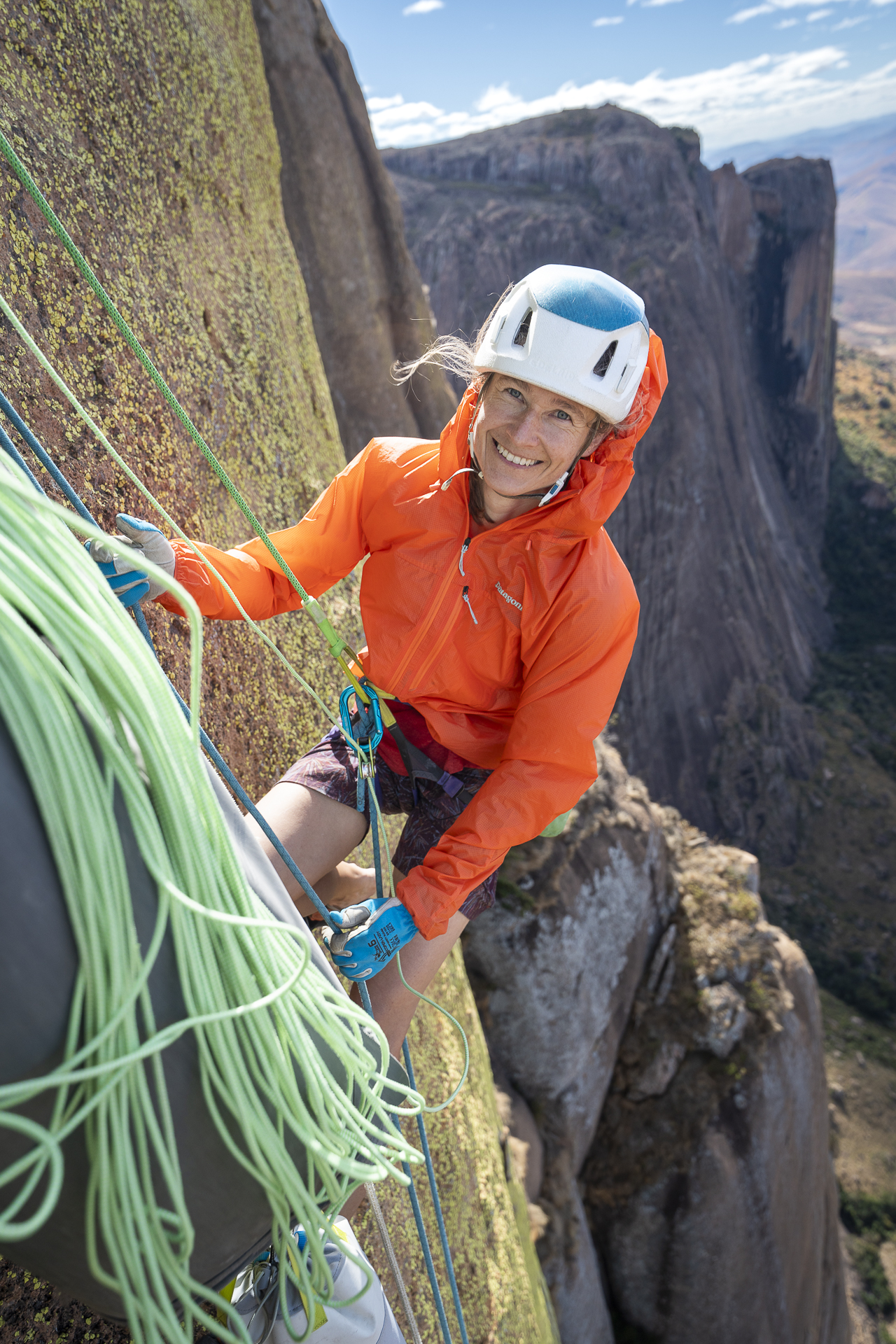
How do photographers get in touch for potential story ideas?
We have a submissions page at MountainGazette.com. We receive over 6,000 story submissions per year for around 40-45 slots over two stories. It’s hard to get in our pages, but I promise when you do it’ll be worth it.


Issue 200 marked a creative milestone for Mountain Gazette, with Tom Benton’s golden aspen leaf not just serving as cover art, but as a visual metaphor for the magazine’s deep Colorado roots, artistic, “soul ride” aesthetic
What made that particular image—and Benton’s legacy—so essential to this moment in the Gazette’s history?
I love Tom Benton and all of his work. He’s someone I wish I could have met. Powerful messaging through simplicity is the hardest creative act in the world. Benton was a master. I have one of his originals hanging in my living room. For the 200th issue, we felt it was deeply important to pay homage to the Colorado roots, specifically Aspen, Colorado, and the freak, gonzo, dirtbag, ski bum culture that inspired our magazine and generations of people.


How big is your creative team?
John Coleman is our art director. Kim Stravers is our copy editor. Doug Schnitzpahn is our managing editor. Quinn is my dog. I am the editor/Quinn’s best friend. We work with a handful of contractors on retainer.

What’s something you want photographers to know about Mountain Gazette?
Shooting with your subjects dead center works for Instagram, but not for magazines. Use the rule of thirds and quit putting all the rad stuff in the middle. It ends up in the gutter. Shoot for print. Shoot with a goal in mind. Intention is everything. Have fun. Be different.


David Burnett talks about “The Stringer” and what he saw in Trang Bang when Nick Ut took the famous “Napalm Girl” image

For those who haven’t been following the major rift in the world of photojournalism a quick summary of what is going on: A film called “The Stringer” directed by Bao Nguyen (previously directed The Greatest Night In Pop) and produced/starring Gary Knight (VII Agency co-founder and ED) premiered at The Sundance Film Festival on January 25 claiming and attempting to prove that 53 years ago Nguyễn Thành Nghệ actually took “The Terror of War”  (AKA Napalm Girl) image and not Nick Ut. AP photo editor Carl Robinson claims his boss, Horst Fass, told him to switch the credit from Nguyễn, a stringer, to Nick, an AP photographer. The filmmakers find Nguyễn, and he says, yes, he took the picture.

Prior to the film’s premiere, the AP released a preliminary report disputing the claims of the film. At the premiere, the AP watched the film and followed up (May 16) with a 100-page report saying that there’s not enough evidence to remove Nick Ut’s credit.

Then, on May 16, World Press Photo released a statement saying they investigated (David disputes the characterization that they investigated and rather they simply got a private screening of the film and agreed with the conclusion) and are suspending Nick Ut’s credit on his 1973 Photo of the Year award.

This sparked outrage on social media with posts from what appears to me to be the VII camp (Ashley Gilbertson, Ed Kashi, Sara Terry) and the Nick Ut camp (David Burnett, Pete Souza, David Kennerly).

And the real zinger in the whole dust-up is that David Burnett was there! He’s an eyewitness to the events at Trang Bang, where the famous image was made.

Ok, one final note: besides the premiere at Sundance and private screenings, the film cannot be watched until a distributor is lined up. I’m aware of a screening in DC next month, but most people, including David and myself, have not seen the film.

I talked with David over the phone, and here’s a condensed and edited version of our conversation.


Screenshot from AP Report: Investigating claims around ‘The Terror of War’ photograph

Screenshot from AP Report: Investigating claims around ‘The Terror of War’ photograph

Screenshot from AP Report: Investigating claims around ‘The Terror of War’ photograph

Screenshot from AP Report: Investigating claims around ‘The Terror of War’ photograph

Rob Haggart: I want to start by asking if it’s really difficult for you to go back and rehash all this stuff.

David Burnett: No, I mean, I have these moments from not just Vietnam, but the jobs that I worked my whole life, French elections, Ethiopia, Chile, and it’s not really something that causes me great pain. There are so many of these things that I’ve lived through that the memories of them and what I was doing in them as a photographer is very, very clear in my head. And Trang Bang is really no different than almost anything else.

The first time I was under fire and had the crap scared out of me, it’s one of those things where you don’t just think, will I ever get over it? Because you don’t, they become part of what your life is about.

The running joke about Trang Bang and me was that, well, I missed the shot because I was changing film in my old screw mount knob wind Leica which is kind of a slow, kludgy film camera. It was not an easy camera to operate.

And yet, Cartier-Bresson shot with them for something like 20 years before the M2 and the M3 came along and made some pretty great pictures, so I mean, I think part of why I even bothered shooting with that camera instead of getting another M2 for 200 bucks, was kind of a historical thing with the old Contax and Leicas, you felt a little more attached to some kind history if you’re shooting with this kludgy old camera and um you know, and I was trying to reload it and anybody had ever owned one of the cameras knows that if you take a 35-millimeter film where you have the little cut-down tongue that you really need to cut an extra inch or inch and a half away from that one side that’s cut so that when you drop the film in the camera, it will seat itself perfectly.

I never bothered doing that, so I was always stumbling, trying to get the camera reloaded. So I was reloading it when the plane came in to drop the napalm. I was holding the open camera in my left hand and shooting with a 105 in the other hand. When the napalm hit right next to the pagoda, there was this Gigundo fucking fireball, Nick has that picture, and I kind of have it a few seconds later. But it was the in the days when you didn’t shoot with three motor drives, you know, you weren’t going out there to shoot 25 rolls of film. I think I shot maybe three or four rolls that day, and it was a fairly long period of time we were there because we were kind of hanging out waiting to see what was going on.

You could hear firing and shooting coming from the village. Then the planes came in, and there was that fireball, and then like three minutes later, the kids started running out of the field and onto the road toward us, and that is the moment, more than anything in my mind, where Nick was the one guy who was in a position to shoot the picture, and nobody else was. There was this line of journalists, and we were all within a few feet of each other lined up across the road. As soon as we could tell that, there were people on the road racing out toward us, and the kids were running as fast as they could run. Nick and this guy Alex Shimkin, who was killed a few weeks later up north, took off running towards them, and no one else did.

RH: When did you first hear a film was being made about this event and that there were questions about the author of the famous image?

I was sitting at a Walgreens parking lot in Florida 3 years ago going in to go get some stuff, and Gary Knight called me and said tell me everything you know about Trang Bang, so I spent a couple hours on the phone and told him everything I know and then said you know there’s this guy and he’s kind of a horses ass, ex AP guy and he says that Nick didn’t shoot the picture and I kind of think he’s full of crap as does everyone else but along the way you’re gonna run into Carl Robinson.

Carl had this real chip on his shoulder about AP, and he was never afraid to let people know how he felt like he’d been screwed over by the AP.

RH: So you’re telling me this rumor has been around for a while?

Yep, a long time. It’s not new. The last time I saw Horst Faas was in 2008. There was a gathering for a memorial wall at the news museum in Washington, and if you lived near the East Coast and worked as a journalist in Vietnam, you pretty much were there that day. Somebody at that point could have said, hey, Horst, let me talk to you about this thing that Carl’s been telling everybody that you told him to put Nick’s name on the image, and it was really some stringer’s film.

And no one ever, no one ever asked Horst.

No one ever just asked him point blank.

I guess Carl makes a pretty reasonable case for trying to talk about how the guilt of 50 years and being able to unburden his guilt when he finally met this guy. But you know, every crackpot theory that ever was has at least a 2% chance that it happened.

Could Horst have said it? I suppose he could have. But it would have been very out of line with what always happened.

If you talk to Neal Ulevich, who was in the AP bureau as a staff photographer for, I don’t know, six or seven years in Asia and was in the bureau the whole time, he will tell you about the sacrosanct policy of never allowing anyone’s film to have any name on it other than the actual photographer that shot it.

He said, “All the time I was in Asia, never once did I see anybody do anything like that.”

It just didn’t happen.

I was in that group of people who were looking at the first print of Napalm Girl when it came out of the darkroom, and I did what every photographer in the history of photography would have done, which is I look at this picture and I try and think to myself without having seen my own film, hm, I wonder if I have anything better. I’m thinking, yeah, that’s pretty good. That’s probably better than anything I have.

There were 3 or 4 of us looking at this little 5 x 7 print that was still wet, and Horst, without making a big deal out of it, just turned to Nick and said, “You do good work today, Nick Ut.”

I still have the memo I wrote when I went back to my office at the Time-Life Bureau. I said there was this accidental bombing in this village called Trang Bang, and I said, Nick from AP got a pretty good picture, and they tell me they’re shipping the negative to New York on what’ll be the same flight that my negatives are gonna be on, so you’ll be able to get an original print made in the lab rather than rely on a wire service photo.

So that’s what they ended up doing. It was in the front section of the magazine called the Beat of Life; there were always 3 or 4 of these big picture spreads.

Usually one picture, sometimes two or even three, and they ran one of mine of the grandma with the burned baby and Nick’s picture side by side, and when you look in the photo credits, it says page four and five, David Burnett, AP. I mean, it was the wire services in the 70s. They weren’t going to put a photographer’s name on it. It’s kind of funny that way.

RH: What are the chances, if you’re Nick, that you don’t know beforehand you made that picture?

There’s no way that either of those guys would not know they took that picture. It was such an enpassant moment, and I’m sure there was just one frame that was the one.

For sure, there are times when you’re surprised by something you’ve done when you move from wherever you shot it, and now, you know, we’ve kind of shut out the middle man, and you go right to the computer and see if what’s on there is anything like what you remember, but in the film days I would find it really hard to not know that you had something.

I can’t imagine that the camera wasn’t up at the eye; it’s not like a chest-high Hail Mary, although technically, it was never great, but maybe at the same time, some of the imperfections add to the raw reality of that moment.

RH: That leads me to this talking point I see from the film’s defenders saying that this is not a critique of Nick, but that would mean that Nick didn’t know he took the photo. But you think there’s no way he didn’t know he took the photo, so the film is saying he’s been lying for 53 years about this.

He’s a 21-year-old kid with a camera, and I think incapable of that. Yes, it was a good picture, but there were a lot of good pictures out there.

And, you know, some people have said, oh, but Horst knew right away that that was gonna be a great picture, and he wanted AP to have the copyright on it instead of a stringer. But the thing is, you’ve got all these little sub-arguments if you accept a certain premise, and you can walk yourself right off a cliff of trying to figure out what it is you believe or don’t believe.

Gary called me back at one point, and he said, you know, I think there’s really something to Carl’s statement here, but you know, once you get the first bit of the Kool-Aid, you just gotta drink the whole pitcher, and I just don’t see it.

I mean, like I said, it’s possible.

Everything’s possible, you know?

I mean, you know, once you start to believe part of it, you kind of end up believing the whole thing, or you believe none of it.

To me, it looks like Gary’s trying to make himself into a big documentary producer, and this is his launch pad.

Gary said you ought to be in the film, and I just said, Gary, I don’t wanna do a goddam Mike Wallace interview where I have no control over how you cut it or anything else. I’ve watched 60 minutes too many times where Mike managed to hammer somebody, and I had no confidence that it would be a fair representation.

Fox Butterfield was the reporter I was with that day working for The New York Times, and he got a call from Gary’s wife, a producer on the film, he started to tell her his version of what took place, and she told him everything you’ve said is wrong. That’s not a really good way to coax people into a discussion. She said he would have to sign a non-disclosure agreement, and he said, what the hell for? I’m the one telling you stuff; you haven’t told me anything.

Gary said to me last time I talked to him like six weeks ago, he said, well, you know, we’ve done all this forensic stuff, and we’ve proven that he couldn’t be down there to take the picture.

And I said to him, in my mind, because I remember the way he ran out on the road ahead of everybody else when the kids were coming down the road, he’s the only one who could have taken that picture because it was in the very first moments that the kids were coming down toward where the journalists were lined up, and it was after that everybody else started wandering around, but that was another five or ten or 15 minutes later.

And I just don’t see how anybody else was out there in front, and to me, that picture was taken out in front. It wasn’t taken right next to the press people.

It was out there away, maybe, I don’t know, 20 yards, 40 yards. 50 yards.

RH: How do you think the filmmakers should have handled this? What should they have done with the information they got from Carl?

You don’t ever want to get to a place where people are afraid to posit things, but I don’t know what the answer is, but you know, unlike a lot of people who don’t shut up about it, I’m not sure I have an answer to what the most perplexing question is.

And I never said I was right behind him when he shot that.

I saw him, I was changing my film, and it was a minute or two minutes later, and in those moments, that could be a long time. I offer it strictly as a witness to what happened that day and nothing more.

I find one of the most curious things of all, aware of the fact that Nguyễn probably had to leave Saigon with almost nothing, that he left everything behind, and  I totally get that.

But apparently, he never sold another picture to anybody, and in the last 50 years, no one has even seen one picture that he’s taken.

Other than the most famous picture of the Vietnam War.

That is a really weird leap of faith.

The Daily Edit – Sacha Stejko talks about balancing vulnerability and power infront of and behind the lens

Photographer: Sacha Stejko

I had the pleasure of serving on the 2025 Communication Arts Photography Competition jury—a fantastic opportunity to step outside my usual discipline and review photography alongside my esteemed peers. One standout moment was discovering Sacha Stej Sacha, an Auckland-based photographer represented by Image Driven Content. Her accolades include being named one of the top 200 advertising photographers globally by Lürzer’s Archive and being recognized as one of the 23 World’s Best Sport Photographers by The Agents Club in 2023. I recently had the pleasure of catching up with Sacha to discuss her award-winning image.

Your photography is known for its cinematic and powerful portrayal of women—what are the key elements you look for when capturing intensity and resilience in your subjects?
When I’m gearing up to capture my subjects, there are a few key elements I always keep in mind. First and foremost, getting to know my subjects is essential. I want to know what shapes who they are. Before the shoot and even during it, I dive into conversations that reveal what makes them tick.
Once I have a sense of them, I try matching their emotional tone; if they’re fiery and passionate, I want that to jump off the frame. I aim to include a piece of who they are in every shot, whether it’s a glimmer in their eye or the way they hold themselves. I strive to create an image they can recognize, one that resonates with their energy. It’s all about connection, and that’s what I love most about photography: being able to freeze a slice of someone’s narrative, a moment of resilience and intensity, in time.

In your “Girls in Sports” campaign for 2 Degrees, you highlighted both strength and vulnerability in your subject. Can you talk about how the casting went and what direction you gave?
This campaign was shot alongside a TVC, and the fantastic Director Taylor Ferguson did the casting. When I met these young women I could see that they radiated talent and spirit. For this brief, I wanted to capture that passion and grit. They don’t just play the game—they own it. I love the dichotomy between their sweet appearances and the fierce determination they display on the field – there is nothing more badass than seeing these girls in their element. Take the rugby girl, for instance. I asked her to sprint full speed towards the camera, like she was dodging the opposing team. In that moment, she transformed into a powerhouse charging at me like a freight train, the fire in her belly blazing as she zoomed closer. It was exactly the energy we were after.

How do you balance storytelling with advocacy in your visual work, particularly around gender representation?
Women in sports face a harsh reality—they often get overshadowed, and it’s disheartening to see that women’s sports internationally don’t get the same spotlight as men’s. That’s why campaigns like this are so crucial; encouraging fans—especially from a young age—to rally behind these amazing athletes.

In my visual work, I find that storytelling and advocacy naturally go hand in hand—probably without me even realizing it. As a woman photographer, I’m drawn to capturing fierce, strong women because I know just how powerful we can be. In a society that often tries to box us in or undermine our strength, it’s crucial to keep that fire alive. That passion burns even brighter as a mother to a spirited young daughter. I want her to see women as capable and unafraid, sensitive and kind, just like the women I photograph.

How do you ensure your images challenge traditional portrayals, particularly of femininity and athleticism, while still maintaining authenticity and emotional depth?
I’m usually guided by how I want the image to feel, especially when it comes to capturing femininity and athleticism. My images become a deep dive into an energy that connects the viewer to the subject. I want to create an atmosphere where the audience feels confronted, pulled into the frame, and unable to look away.

I find authenticity through genuine human connections, digging beyond the surface, whether I’m photographing a seasoned athlete or someone new to the sport. There’s something superhuman about athletes; they possess more than just physical strength; they embody resilience and discipline. There’s a profound sacrifice that comes with striving for excellence, and that narrative fascinates me. Each image I capture is a testament to that journey—an exploration of what it truly means to balance vulnerability and power.

Can you talk about the role visual media plays in shifting public perception and promoting equity, especially in underrepresented communities and activist movements? 
Photography holds a unique power in shaping public perception and promoting equity. As a visual person myself, I’ve always felt that a single image can convey emotions and stories far more effectively than words ever could. It’s the raw authenticity of a photograph that can resonate with someone’s heart, breaking down barriers and connecting us all on a fundamental level.

Through the lens of a camera, we can reveal the complexities of human nature and amplify voices that often go unheard. In this visual storytelling landscape, images become tools for change, not just documenting reality but actively reshaping how we view each other. Ultimately, photography fosters a shared humanity that can inspire action and fight against injustice. They remind us that, at our core, we are all just humans with similar desires for love, acceptance, and dignity.

The Daily Edit – Climate Visuals: Alastair Johnstone-Hack

A school playground in the neighbourhood of the Belchatów coal-fired power plant. Kleszczow, Poland.  November 14th 2023.

Climate Visuals: Alastair Johnstone-Hack

Heidi: Archival and historical records play an important visual role in the future of accountability – who did what, when, and with what impact? What type of photography are you looking for to support these themes?
Alastair: Absolutely, and photography can bring this kind of accountability to life in ways that words and data can’t. At Climate Visuals we are predominantly working with photojournalistic imagery, prioritising photography that tells real stories and engages, educates and informs audiences. 

In the most obvious sense, photography can powerfully highlight what is going on, raising awareness and driving public concern. This could be in an immediate, more news focused context, or over a longer period of time. With the latter, the value really comes through in the power of images to show a change over time, to make clear what has happened, changed, been lost or damaged. Some of these changes may be visibly dramatic and obvious, but they could also be more discreet, happening at a scale or pace not immediately visible day to day. In both instances, photography can be a powerful tool in recording and archiving, and in highlighting and proving a reality. 

To maximize this potential for engaging audiences we are often looking for images that distill wider issues into tangible, relatable human-focused stories – what was the effect on a community? How did that community adapt to the changes? We’re also looking for images that go beyond overly familiar visual stereotypes and tell stories in new, compelling ways. We are now all familiar with images of polar bears clinging to melting ice, forest fires sweeping across hillsides, and smokestacks pumping out pollution into the air – and there’s no doubt that these photographs have powerfully contributed to the public image of climate change. But it is our responsibility as photographers and picture editors to build on this and seek new ways of telling these stories and to continue to develop how we visualize these issues. Think about how complex, intersecting issues can be distilled into tangible stories, how your audience might approach an issue and what kind of imagery they are likely to respond to. 

Photography has the potential to fulfill an evidentiary role and then go further, going beyond literal illustration to demonstrating to an audience why something matters. We are looking for photography that can do this – telling the stories of what is happening and then providing a compelling narrative for the viewer to engage with. 

Abandoned homes along the only road traversing Isle de Jean Charles. Home to the Band of Biloxi-Chitimacha-Choctaw Indians that have inhabited this narrow island since the 1830s. Located in the Terrebonne Parish, LA, the island and its residents have been in direct threat from hurricanes and sea level rise, which has led to a controversial resettlement project for the community. The increased and consistent threat of climate related events for the island has resulted in a majority of residents moving away, with only 5 families remaining on the island. February 8, 2020. Photo credit: Juan Diego Reyes / Climate Visuals

Proof of degradation, before and after comparisons and human rights angles come to mind, what else?
All of those themes are very important. I’d add highlighting the impacts of climatic changes both locally and globally, the inequality of how impacts are felt, and foregrounding any systemic issues at the heart of a story.

I’d also say that connecting all of these angles into a compelling narrative is an essential role for photography. From an editorial perspective, photography presents a powerful opportunity to knit all of these elements together, again coming back to the idea of helping audiences to engage with what is going on, why a story matters, why they should stop scrolling and engage in more detail, and why this subject deserves their concern. In distilling complex issues into tangible stories, photography can play a vital role in taking climate storytelling out of the abstract, humanising technical details and building a compelling, relatable sense of why stories matter. 

What examples came across your desk recently that felt powerful to you?
We recently worked on a project looking at the effects of air pollution on communities in Indonesia, Poland, South Africa and the UK. In South Africa, photographer Gulshan Khan made some great work with communities in the Highveld region, showing the serious health effects of air pollution in the area. These effects were part of the so-called Deadly Air Case, where the poor air quality over the Highveld Priority Area was deemed a breach of residents’ section 24(a) constitutional right to an environment that is not harmful to their health and well-being. These photographs, combining striking portraits of affected individuals with documentary images of daily life and compelling general views really tell the story of the effects on the local community.

Maria Nkosi* demonstrates how she uses a few times a week for her asthma at her home which is a street away from a mine in Clever, Witbank, Emalahleni, South Africa, on November 28, 2023. In 2021 the High Court in Pretoria confirmed a judgement in what was called the Deadly Air Case, that the poor air quality over the Highveld Priority Area is a breach of residents’ section 24(a) constitutional right to an environment that is not harmful to their health and well-being.  *not her real name. Photo credit: Gulshan Khan/Climate Visuals

Samuel Nkosi* walks through a plot of land next to a mine where he farms vegetables which he donates to the church in Witbank, Emalahleni, South Africa, on November 28, 2023. *not his real name. Photo credit: Gulshan Khan/Climate Visuals

A map of the Vosman area drawn by founder Vusi Mabaso hangs on the wall of the offices of Vukani Evironmental Movement (VEM) discuss the issue of informal miners called Zama-Zamas at their offices in Witbank, Emalahleni on November 28, 2023. VEM is a non profit organisation that was established in 2016, focused on environmental justice issues like Air Pollution, Climate Change and Energy, Water and Sanitation. Photo credit: Gulshan Khan / Climate Visuals

Similarly, in Indonesia, photographer Aji Styawan photographed taxi driver Istu Prayogi in Jakarta who was part of a group of residents of the city who filed a lawsuit relating to air pollution problems. In portraits and reportage of daily life, these images help to ground an expansive problem in real world, relatable stories.

Istu Prayogi (58) working as an online taxi driver, looking for passengers amid the traffic in Jakarta, Indonesia, on November 16, 2023. Every morning he coughs and spits out ripples of thick blood, affected by the air pollution. In 2016, Istu was diagnosed with respiratory problems, referred to as Acute Respiratory Infections (ARI). In August 2019, Prayogi as part of a group of 31 residents who are members of IBUKOTA (Capital) Coalition filed a citizen lawsuit to the Central Jakarta district court related to air pollution problems. They sued the President of Indonesia, the Minister of Health, the Minister of Transportation, Minister of Environment and Forestry, Governor of Jakarta Capital Special Region, West Java and Banten Province. One of their demands is regarding improving regulations for handling air pollution in Jakarta and its surroundings. Photo credit: Aji Styawan/Climate Visuals

Away from our work, I thought that Chris Donovan’s photography of St. John, New Brunswick, recently featured in the New York Times, was a standout example of the power of deeply reported visual storytelling to communicate complex, intersecting stories to an audience and I was really pleased to see the work given the space to tell the story in this way. 

Ewa Pisarzowska worked for over 25 years in the coal mines and salt extraction industry in Rybnik. She lost work during the pandemic and so did her partner, they soon could no longer afford to rent an apartment and for a few months lived at their friend’s place. Recently they rented a studio apartment with central heating, but without furniture. They struggle to pay for food or electricity. Ewa sometimes helps at the “Wspolny Stol” center, she looks for food, still edible but not for sale, in dustbins near big grocery stores. To save money on electricity and still know what is happening in the world she often uses TV as the only source of light in the house.  Rybnik, Silesia, Poland. December 14 2024. Photo credit: Kasia Strek / Climate Visuals

While photography could be a game-changer for climate litigation, there are real, structural, and even ethical barriers that prevent the kind of visual storytelling and documentation that would truly support justice-centered climate work. What do you see as the biggest barriers?
Firstly, time and money. Much of what Climate Visuals advocates for has detailed, in-depth, photographic storytelling at its heart, which as we all know is often expensive and time consuming to produce and all too often out of reach for many. Relatedly – display space. This kind of photojournalism needs to be afforded the space on publication to get into the detail and hold a narrative structure. Whilst there are outlets publishing fantastic, long-form and in-depth, visual reporting, the opportunities for this are only ever decreasing, whilst all the while the dominance of single-image distribution via social media grows. This is a challenging environment for the kind of imagery our evidence tells us audiences want to see. 

Interlinked with these three challenges is the appetite for a less literal, limited and illustrative role for photography in the coverage of climate change. As above, much of what our evidence base encourages becomes more possible when photography’s role in storytelling is not restricted to place-holder, generic images at the top of web articles and in social media thumbnails. Whilst digital platforms provide near limitless opportunities for complex and in depth visual storytelling formats, all too often comprehensive reporting is accompanied by generic, familiar imagery and the potential for compelling and engaging photography is missed. 

As a photography industry we need to continue to push for the expanded role that I’m sure we all believe images should fulfill. We need to seek evidence and rationale for this expanded role to build that justification – be it research evidence like at Climate Visuals, or case studies of high performing exemplary content through audience metrics. It is with these kinds of insights that you can build a case and achieve the necessary buy-in. 

Beyond those structural barriers, I would highlight a couple of other key issues, firstly the safety of participants. This must be at the heart of any considerations about visual coverage of climate litigation and include the full spectrum of potential image uses into the future. Appearing in imagery and being linked to litigation could bring with it significant personal and community risks for participants. Truly informed consent and frank, detailed and empathetic conversations including all available information with any potential participants is essential. Added to this is the ethics of using individual stories to represent wider, more systemic issues. This needs to be carefully considered on a case by case basis, and individuals and their stories need to be appropriately protected, for example with clear limitations on how, where and when imagery can be used. Ensuring that a diverse range of perspectives contributes to the visual coverage is also key. As commissioners and photographers we must collaborate with communities in telling their stories, seek to work with photographers connected to the stories, locations and contexts they are photographing and prioritise expanding the diversity of perspectives seen by audiences. Only by doing this can the full potential for engaging, empathetic and ethical, justice-centered climate visual storytelling be realised. 
Visual evidence-based imagery can serve as critical documentation in legal cases – how are you verifying these images are not manipulated?
Climate Visuals works to, and promotes, photojournalism industry best practice with regards to image manipulation. With commissioned work we are collaborating with trusted photographers who know, understand and actively represent the values and ethics that underpin our work. With submitted images we work with a set of submission guidelines that include standards for manipulation as well as ethical best practice. In addition to these safeguards we carry out verification checks on imagery through a mix of processes including OSINT analysis of content, scenes and locations, fact checking of details and caption information, and working with trusted local partners to confirm image and story details. 

We also prioritise accompanying images with detailed caption information and encourage its inclusion when images are used to ensure that further detail, context and nuance accompany the images.

The solar park located outside the village of Feldheim, Germany on February 21, 2023. The park produces  enough energy to meet the yearly electricity demands of approximately 600 households consisting of four individuals each. Feldheim is the first village in Germany to be completely self-sufficient in energy. With the help of wind energy, photovoltaics, biogas, biomass, a regulating power plant and a local heating network, the village covers its own needs. The large amounts of surplus energy generated in the process are fed into the public grid. Photo credit: Ingmar Björn Nolting / Climate Visuals

What role do you see photography playing within political activism to support the themes of climate change and justice?
Photography can play an important role in helping audiences understand and relate to complex issues. From performing an evidentiary role, recording and highlighting what is happening around our planet, to driving public concern and opinion, there’s a long history of photography playing a powerful role in the issues of climate change and justice. In our ever increasingly image-saturated world I still believe that photography has an essential role to play here, but I do think that the way in which it can play this has changed. I believe that the potential for single photojournalistic images to take on ‘iconic’ status and go on to represent whole issues is now greatly reduced, the volume of new imagery being produced and consumed, and the speed of its consumption, is just too great. Instead, photography’s power as a tool for in-depth, empathetic storytelling, across different platforms and use contexts, should be prioritised. In a highly competitive visual environment, compelling visual reporting presents an opportunity to capture audiences’ attention, inform and build understanding, concern and empathy. To do this however, photography’s role in telling stories of climate change and justice needs not to be restricted to pure illustration, but instead to have the scope and freedom to tell these stories in depth, from a diverse range of perspectives, and with adequate space on publication. Only then can photography fulfil its full potential to humanise complex issues and build empathy, ground stories in a reality that audiences can relate to, and build a weight of evidence behind concerns. 

I also think photography can play an important role in helping audiences to visualise a future. It can show how a situation could be improved, how a community elsewhere came together and solved a similar problem, and what opportunities could come were a cause to be fought. Photojournalism’s role in telling constructive stories shouldn’t be overlooked – we know from our research that images of climate change impacts are very emotionally powerful, but they can also overwhelm audiences. One way to combat this is to pair them with images highlighting tangible, relatable actions that audiences can take, or visual reporting that shines the light on ‘what happened next’ – it’s vitally important to record and show the devastating impacts of climate change, but don’t stop there, seek ways to demonstrate future potential through imagery too.

Firefighters are surrounded by a scorched landscape as they continue to work to tackle a large moorland wildfire in the Goyt Valley, near Buxton in the Peak District. Derbyshire, England. 3rd May 2025. The blaze caused extensive damage to vegetation in the area. Credit: Alastair Johnstone-Hack / Climate Visuals 

Rachel cycles her children to school on a cargo bike, through busy traffic, in Didsbury, Manchester, UK. 2nd February 2024. Photo credit: Mary Turner / Climate Visuals

How did you get involved in Climate Visuals and what are your core themes?
I came to Climate Visuals from my previous role as Deputy News Picture Editor of The Times and The Sunday Times newspapers in London. Before that I was an agency news photographer in south west England. I have long been a keen follower of the work Climate Visuals was doing to combine research insight with practical, usable guidance and resources, and jumped at the chance to get involved. 

At the heart of what we do is our evidence base – this underpins our guidance and the resources that we provide users. It is founded in an original piece of research looking at audience responses to different climate images and led to our 7 Climate Visuals Principles. Since then, we have continued to expand our understanding through further projects, including ones focussed on photographing the ocean and climate link, diversity in images of England’s green and natural spaces, best visual practice for working with those with, or who are from, Indigenous and forest communities of Central and South America, and guidance for photographing extreme heat.
Alongside our guidance resources we run an image library which contains thousands of images that exemplify our findings. Many of these are available through licences that allow for free non-profit, editorial and educational use – making compelling and engaging images of climate change available for those who often find them out of reach. You can browse the library here.

If a photographer wanted to submit images, are you centered around specific themes?
I’m always interested to hear from photographers and see any work people think we might be interested in. Our thematic focus depends on the specific projects that we are working on, but broadly I’m always excited to see images and stories that fulfil our guiding principles/evidence and tell new, compelling environment and climate stories. Whilst we aren’t always able to accept submissions, I am always seeking to expand our network and awareness of photographers working on climate and environment stories in case the opportunity arises for collaboration.  

How does the funding work and is there any assignments, or is this all submission based?
It depends on the project we’re working on – we work with a mix of commissioned assignments, such as with this project on air pollution, and submissions such as with our Ocean Visuals and Visualising Climate Change initiatives. For updates on what we are currently working on you can follow us on social media @climatevisuals.